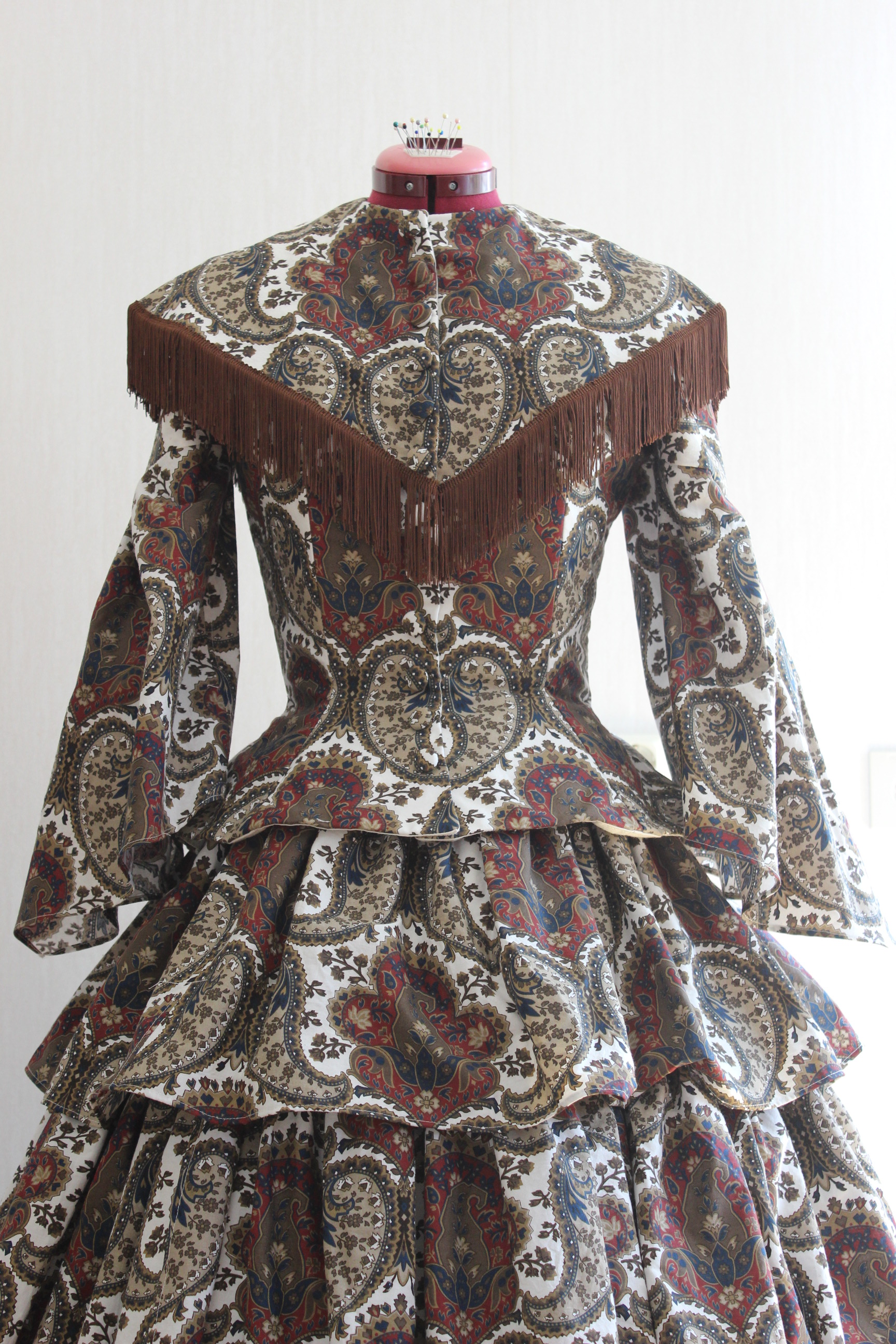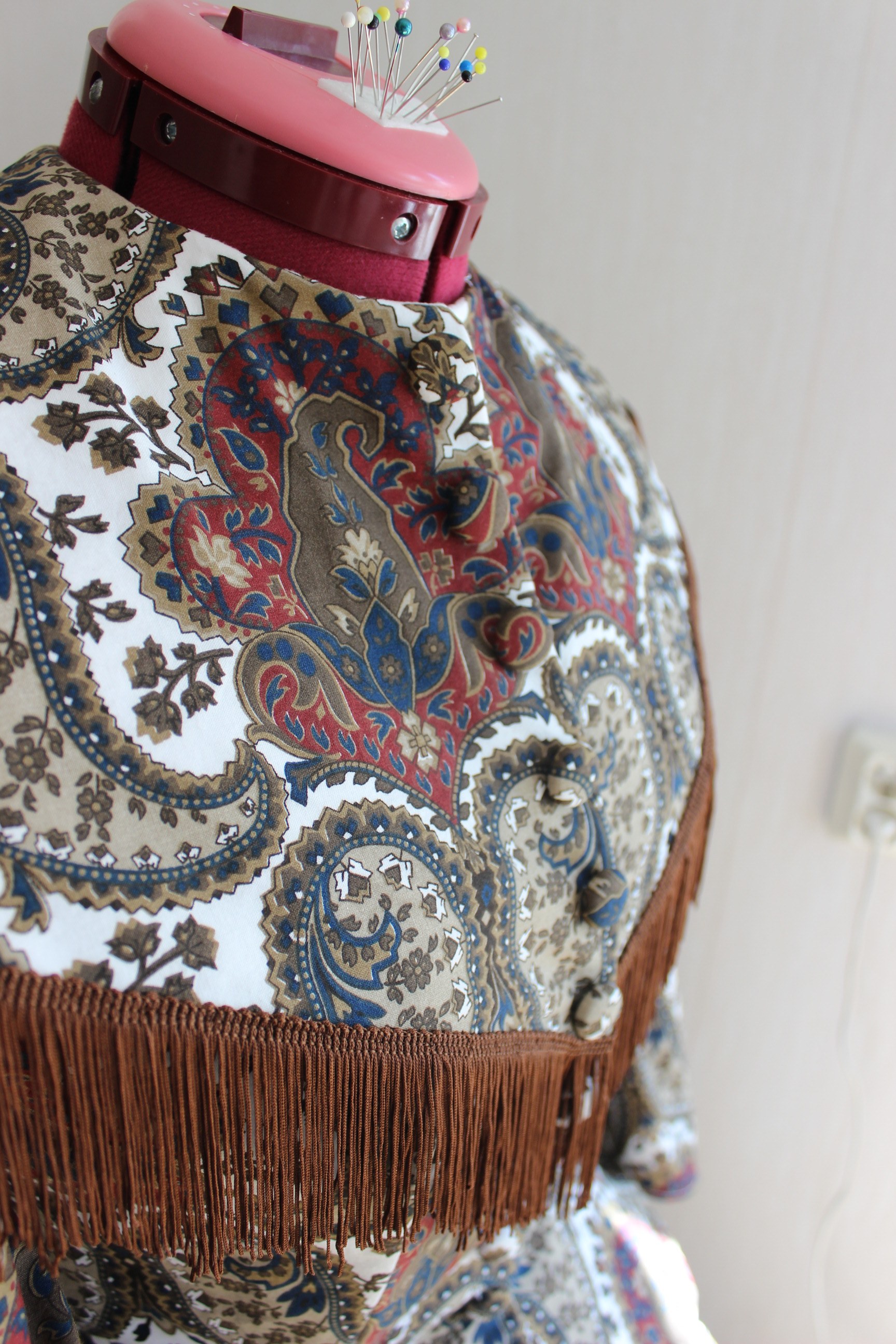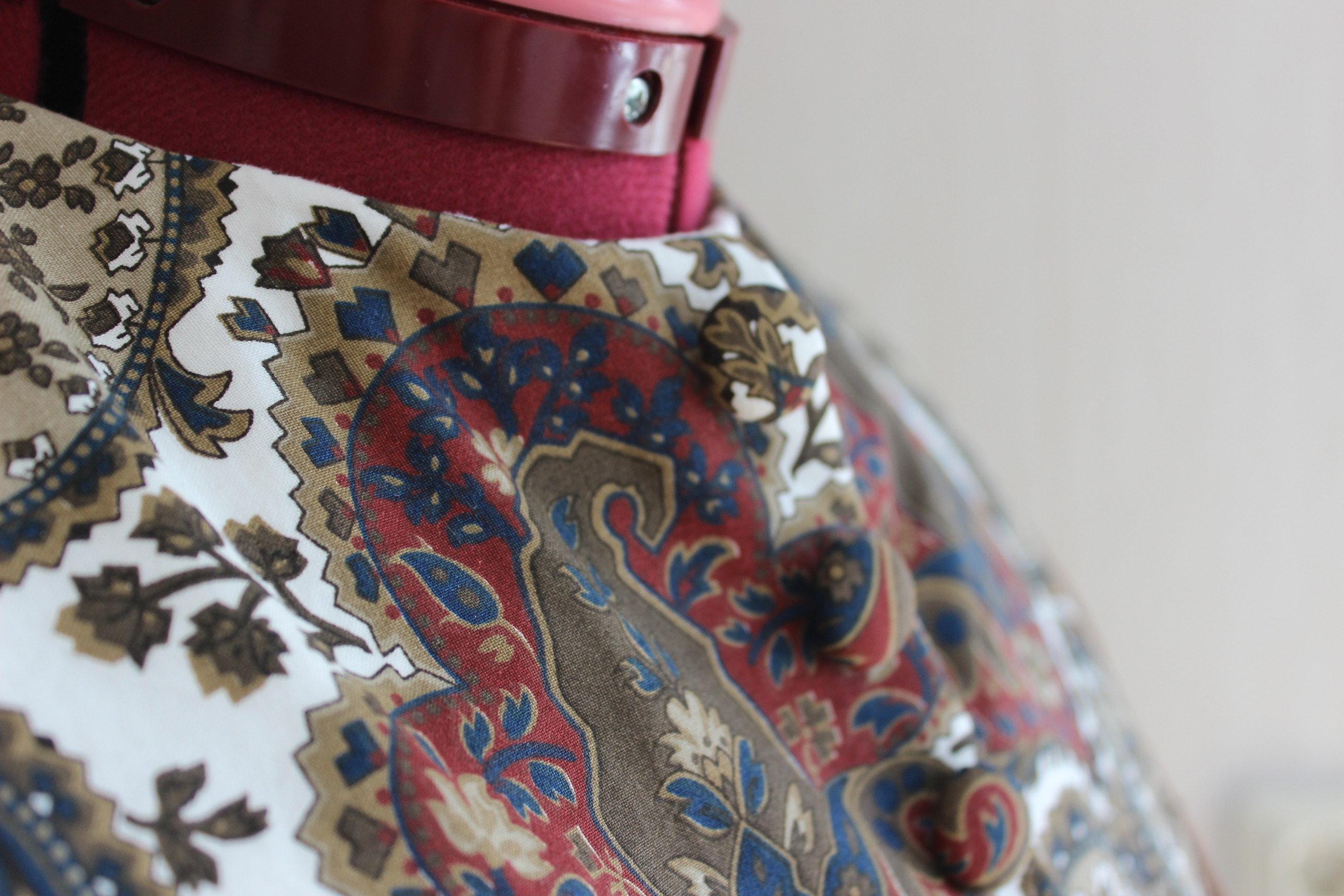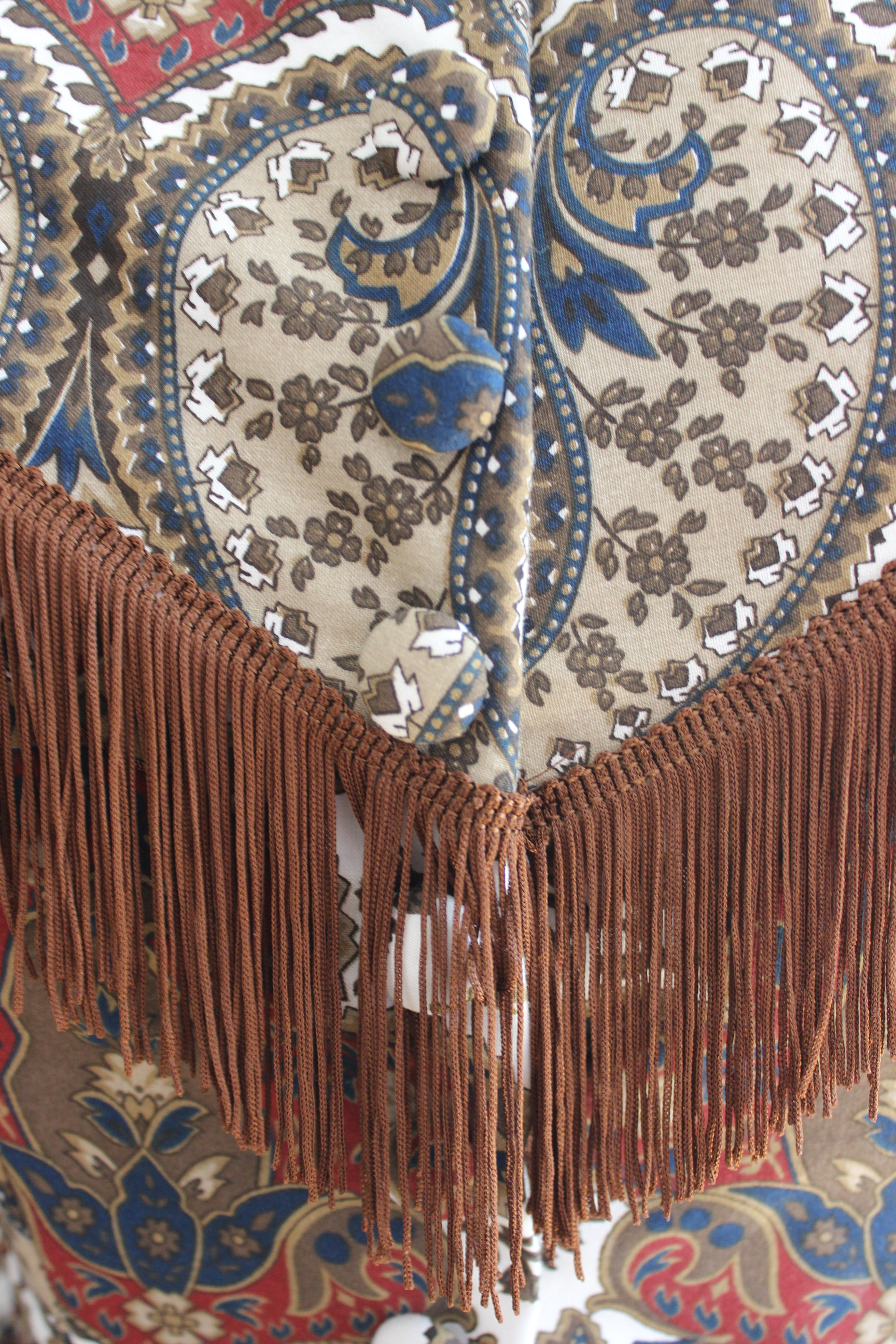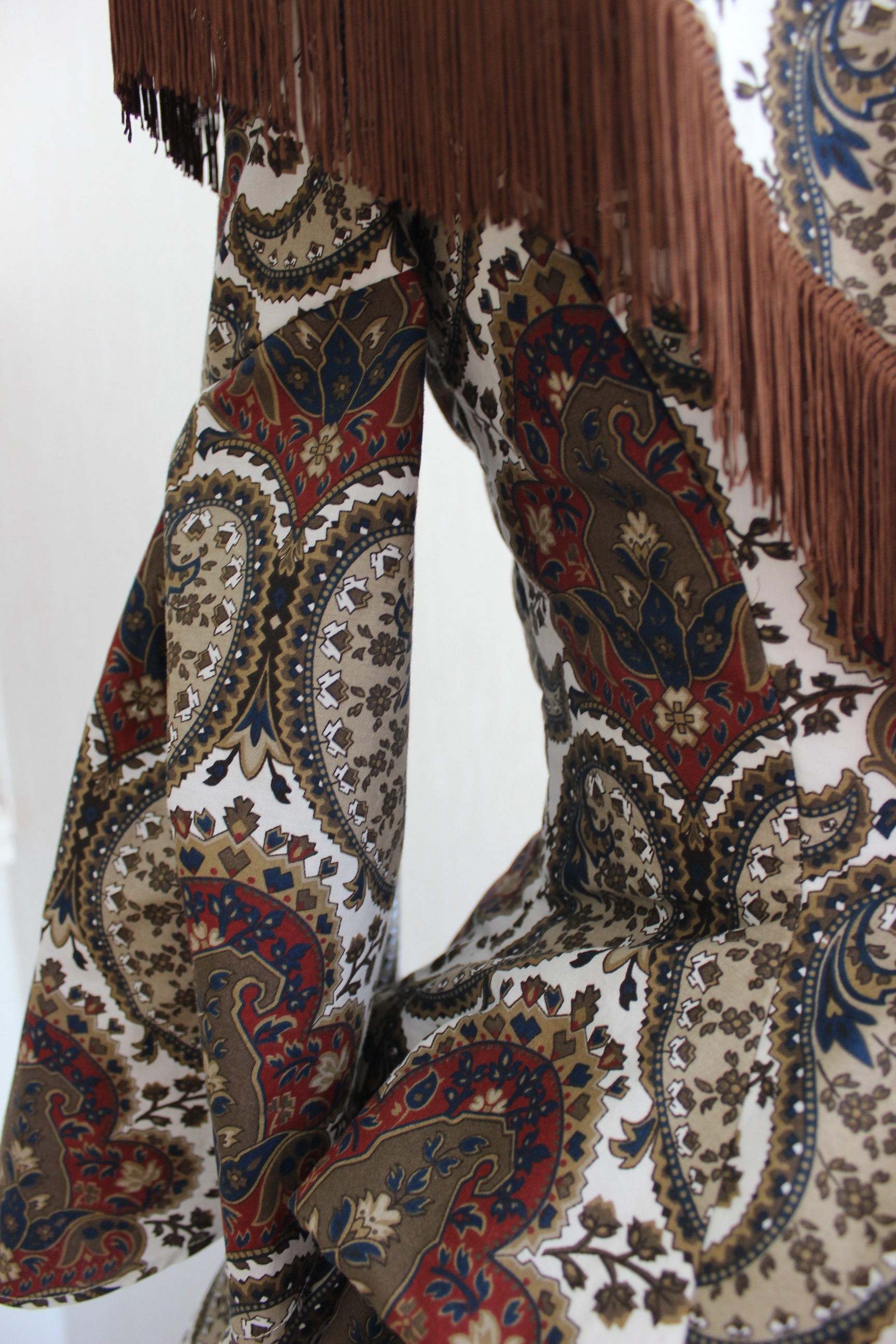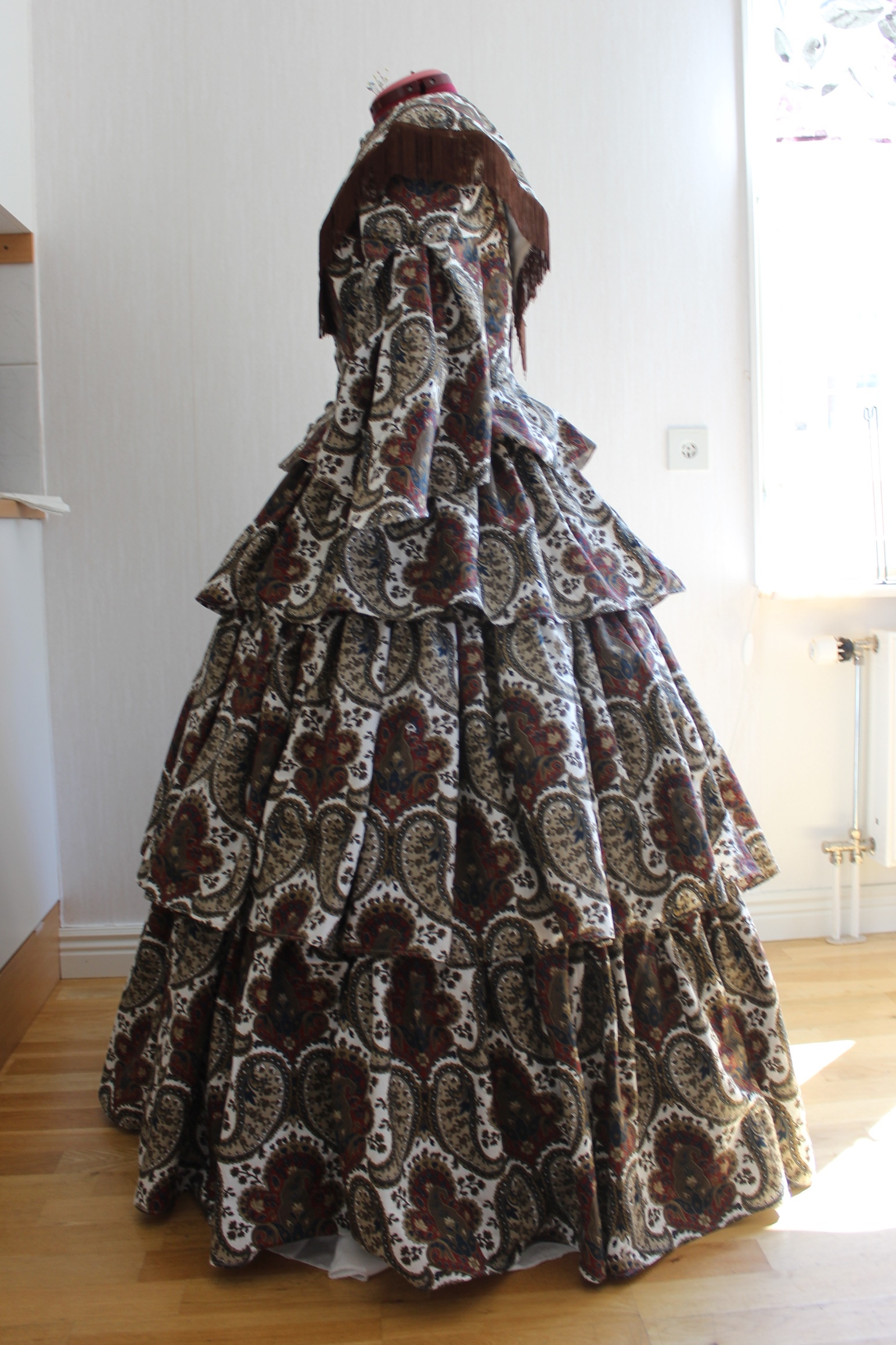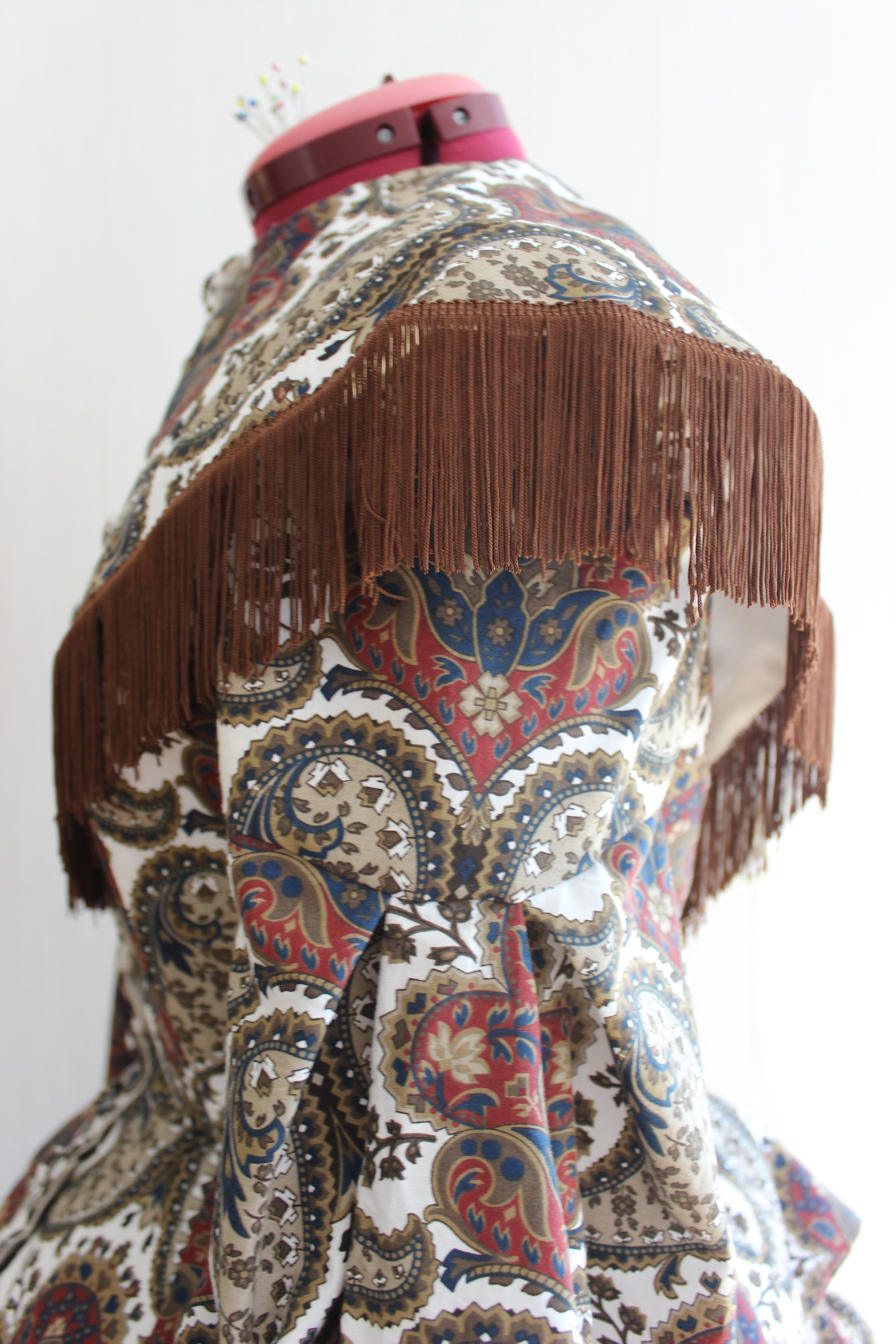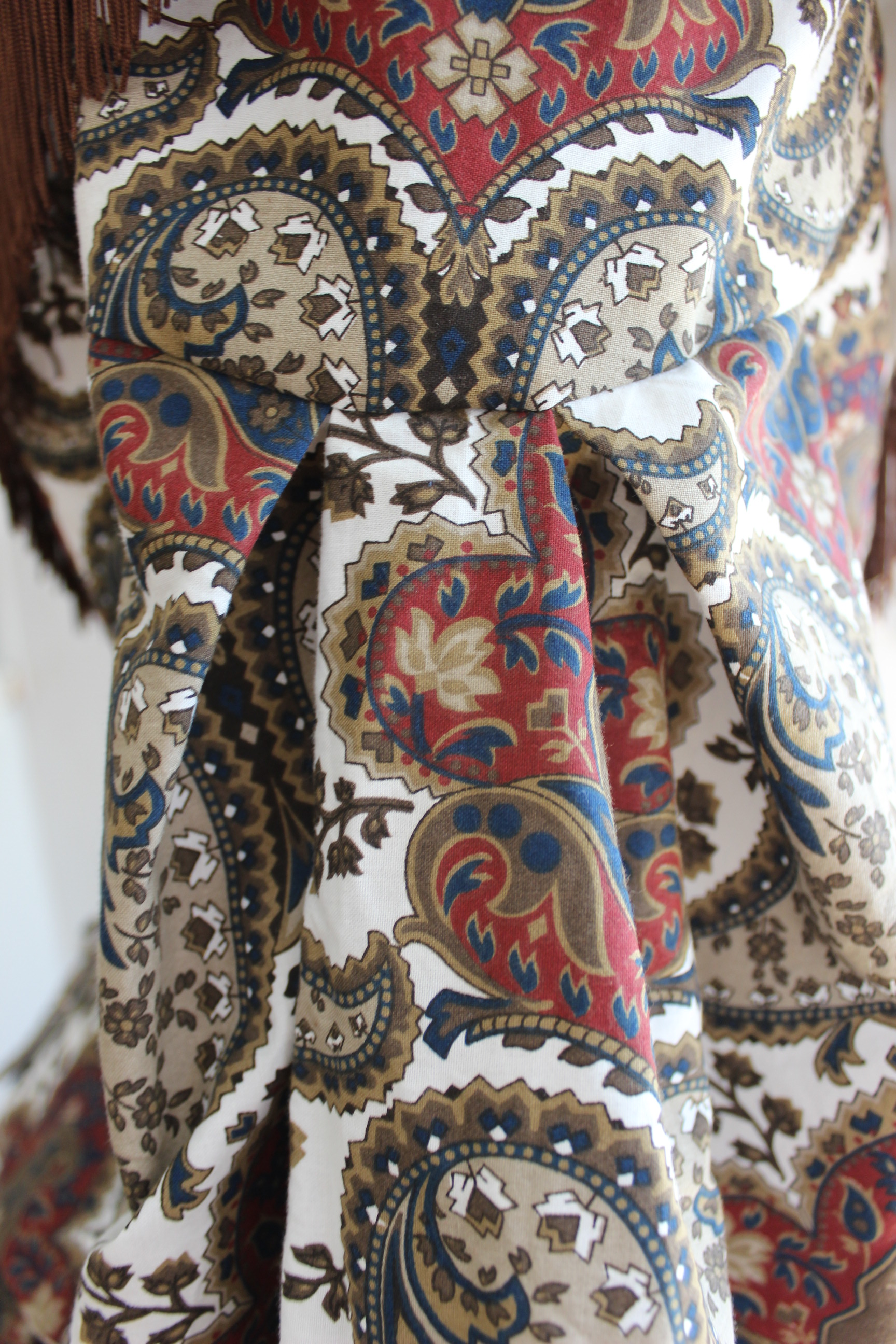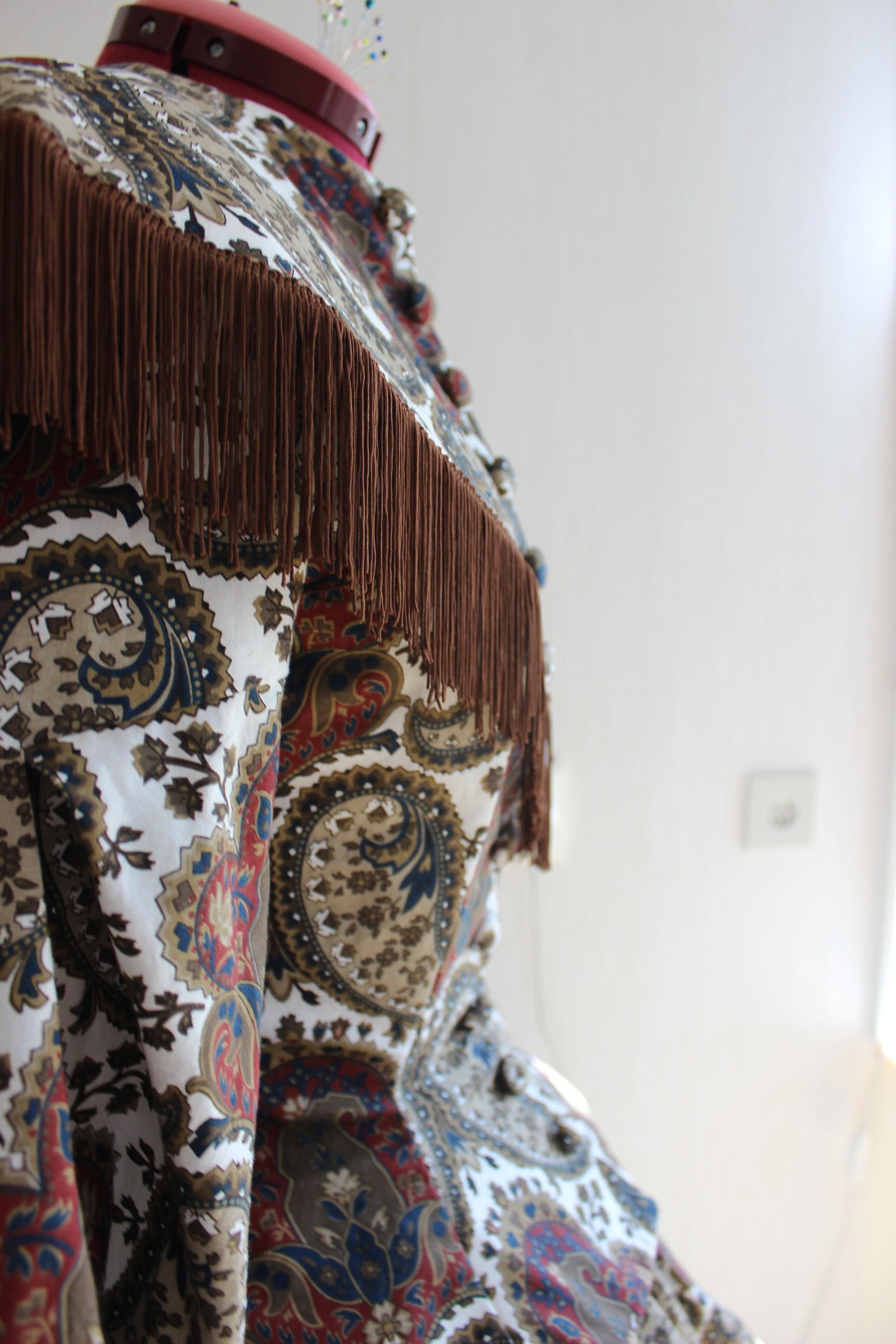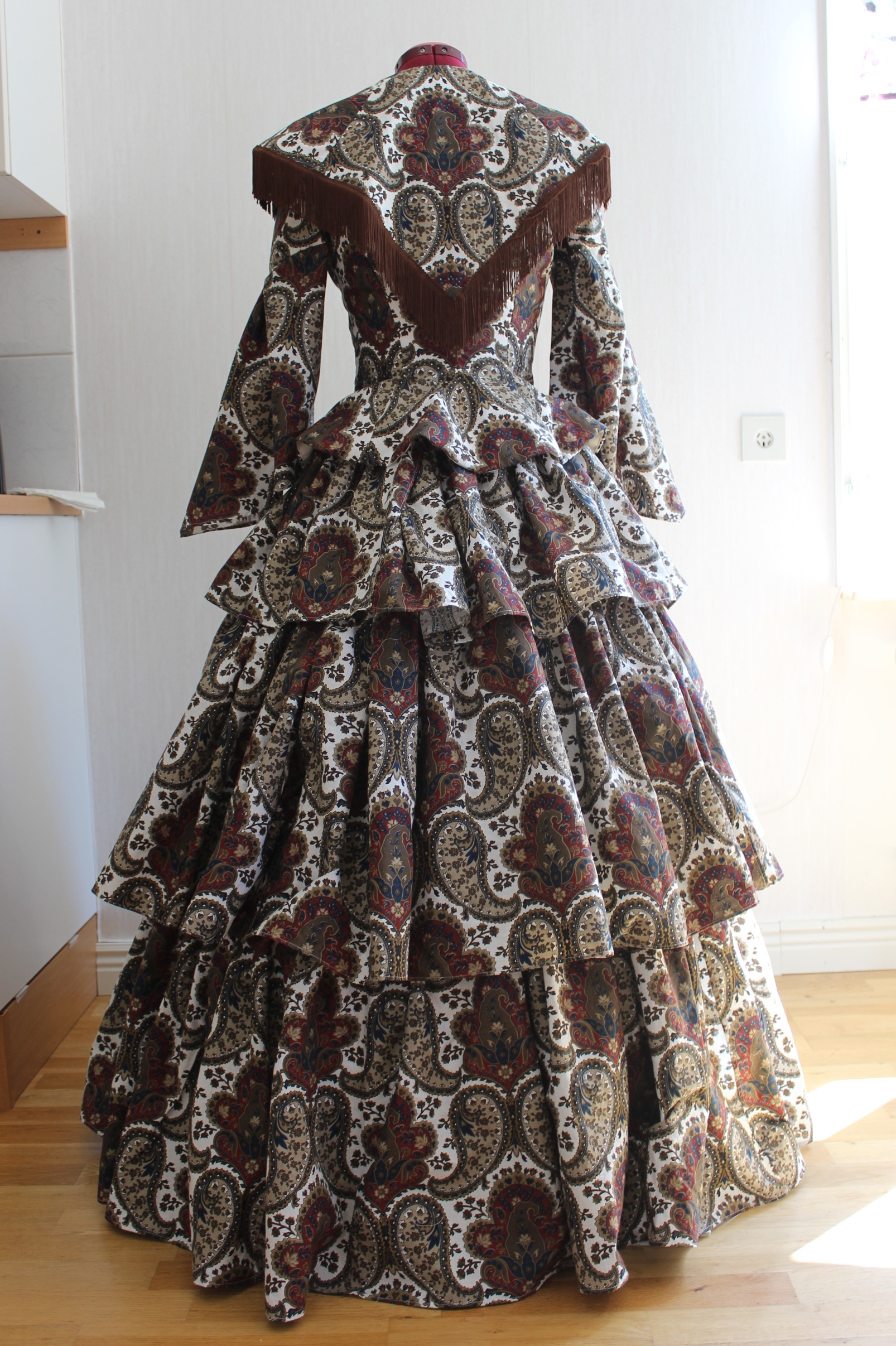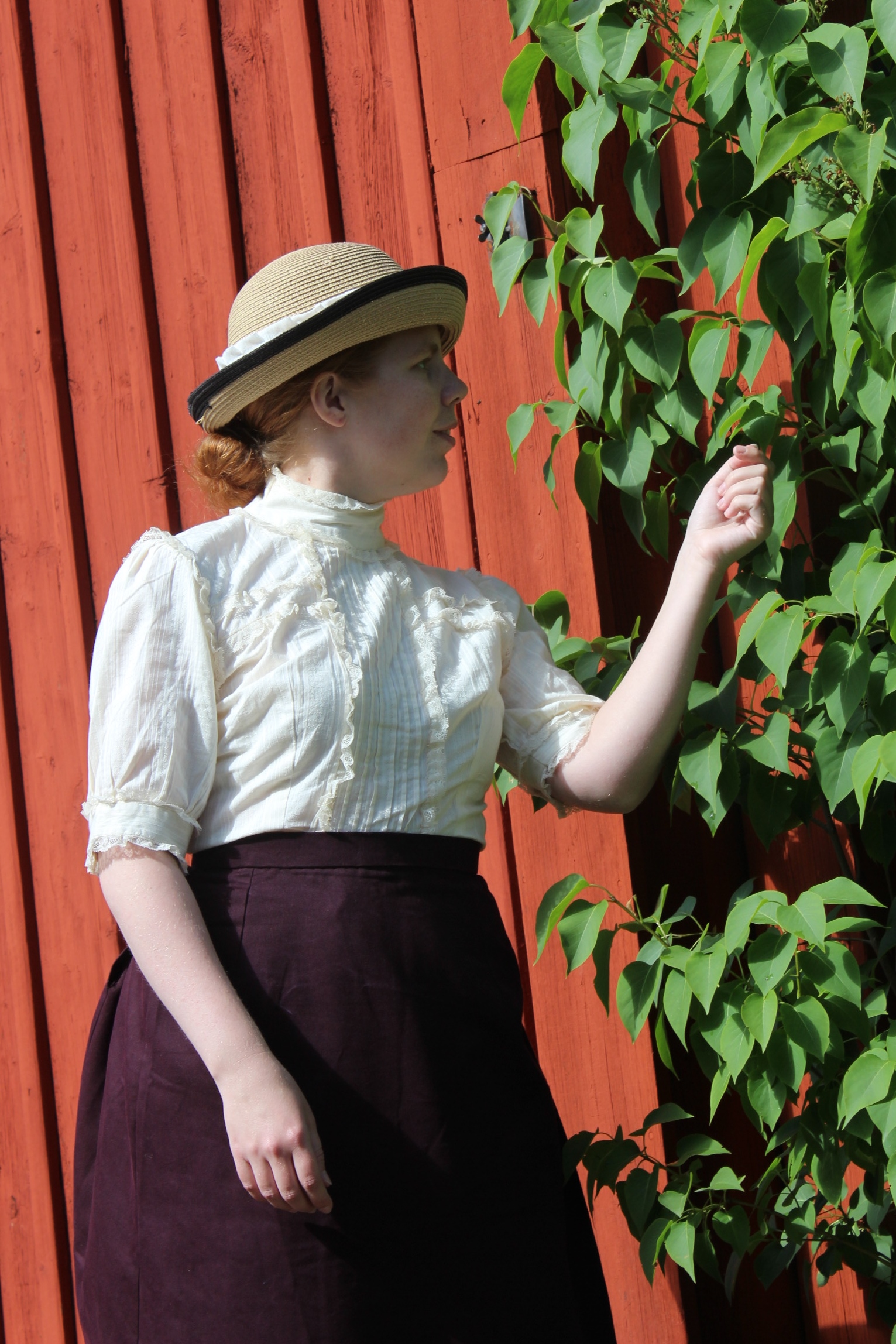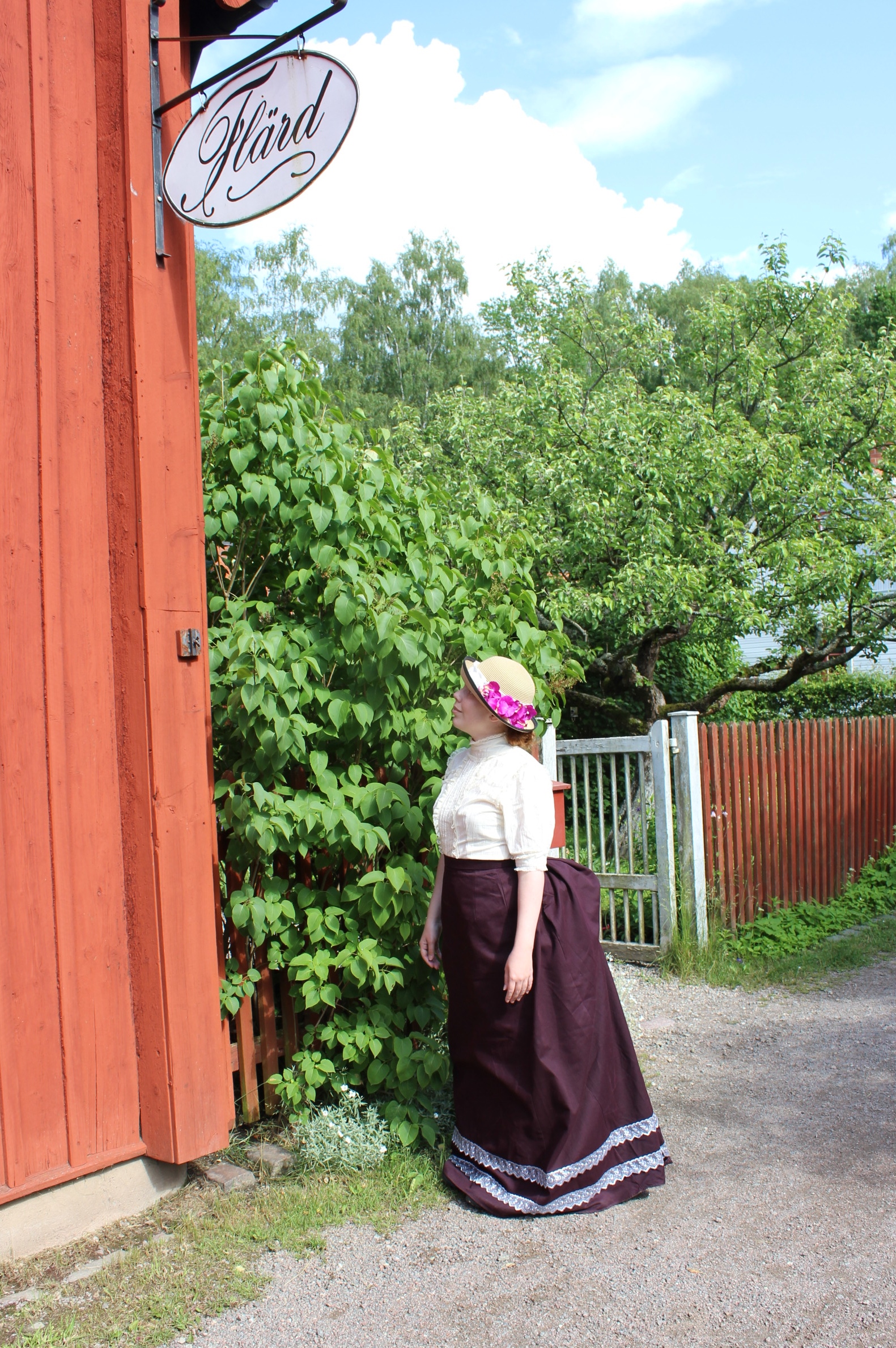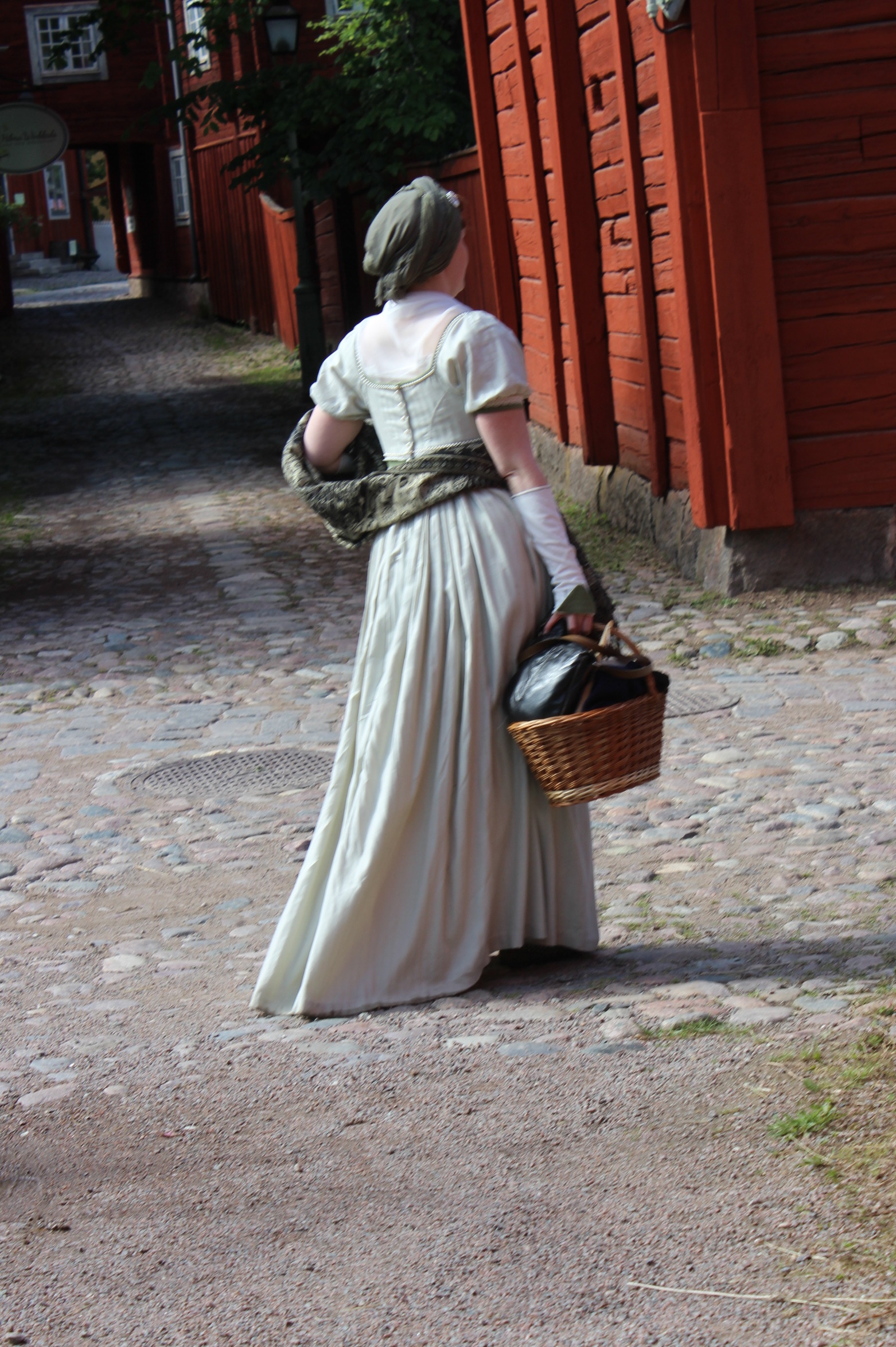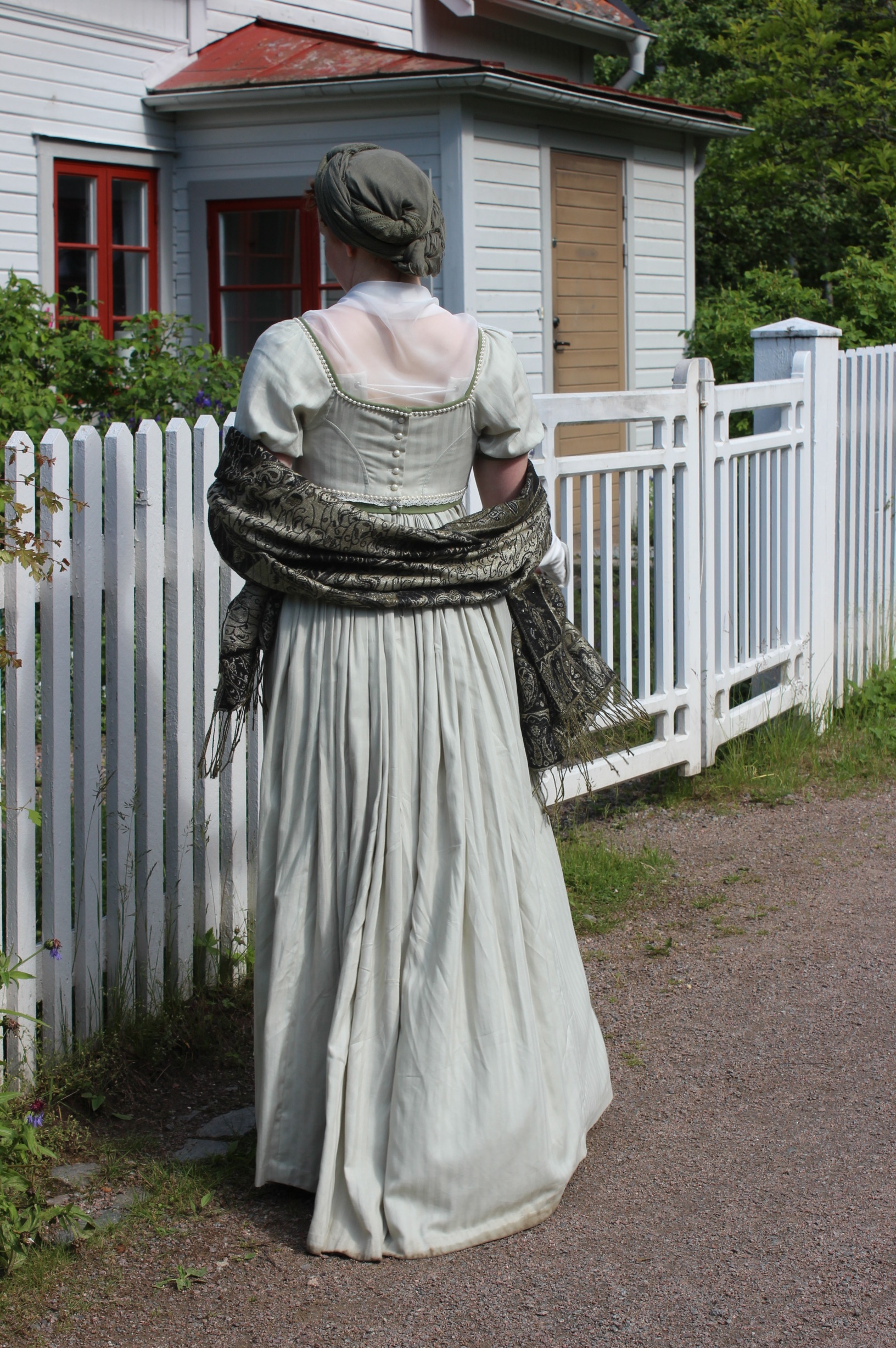
1850s Paisley Day-bodice

After finishing the 1850s skirt for the 14th HSF challenge I started on the jacket.
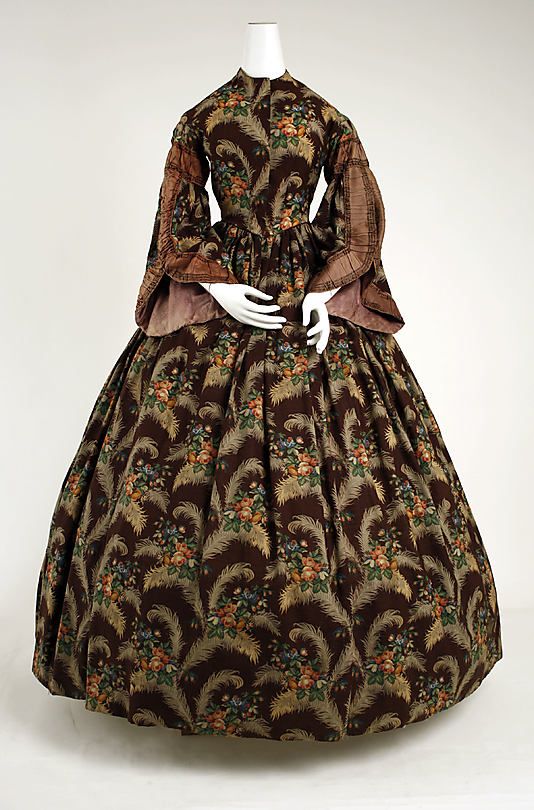
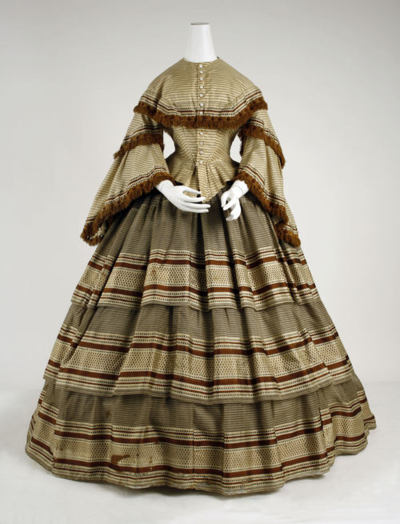
I knew I wanted a fitted jacket with a bit of a peplum and a sculpted neckpiece on top, like the ones in Nancy Bradfeilds “Costume in Detail” DSC_1449 (1)
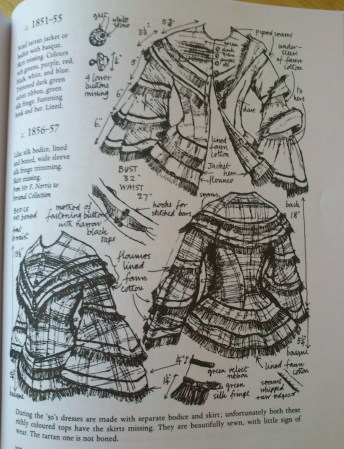
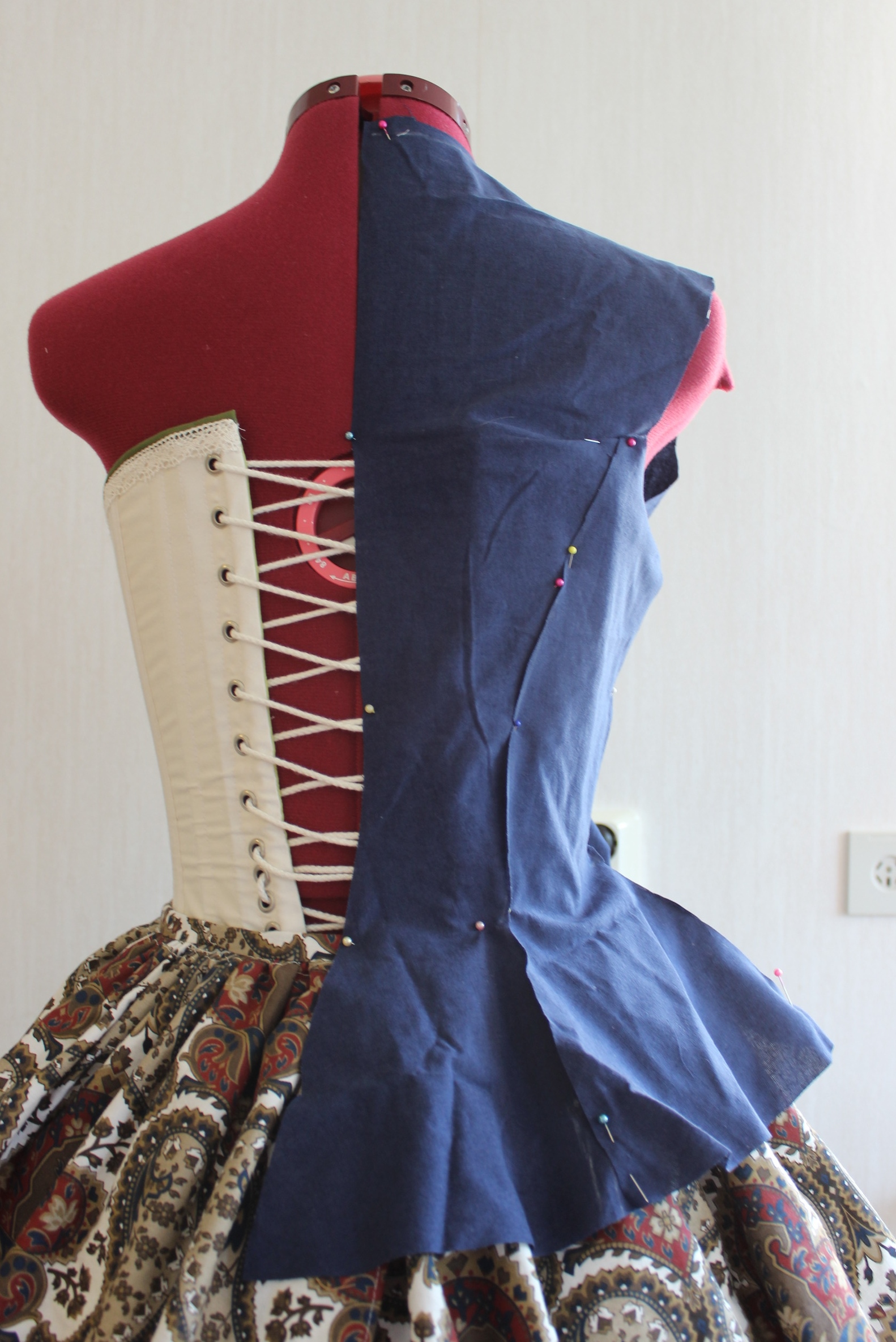
Draping the pieces on my dressform.
IMG_9730 IMG_9729

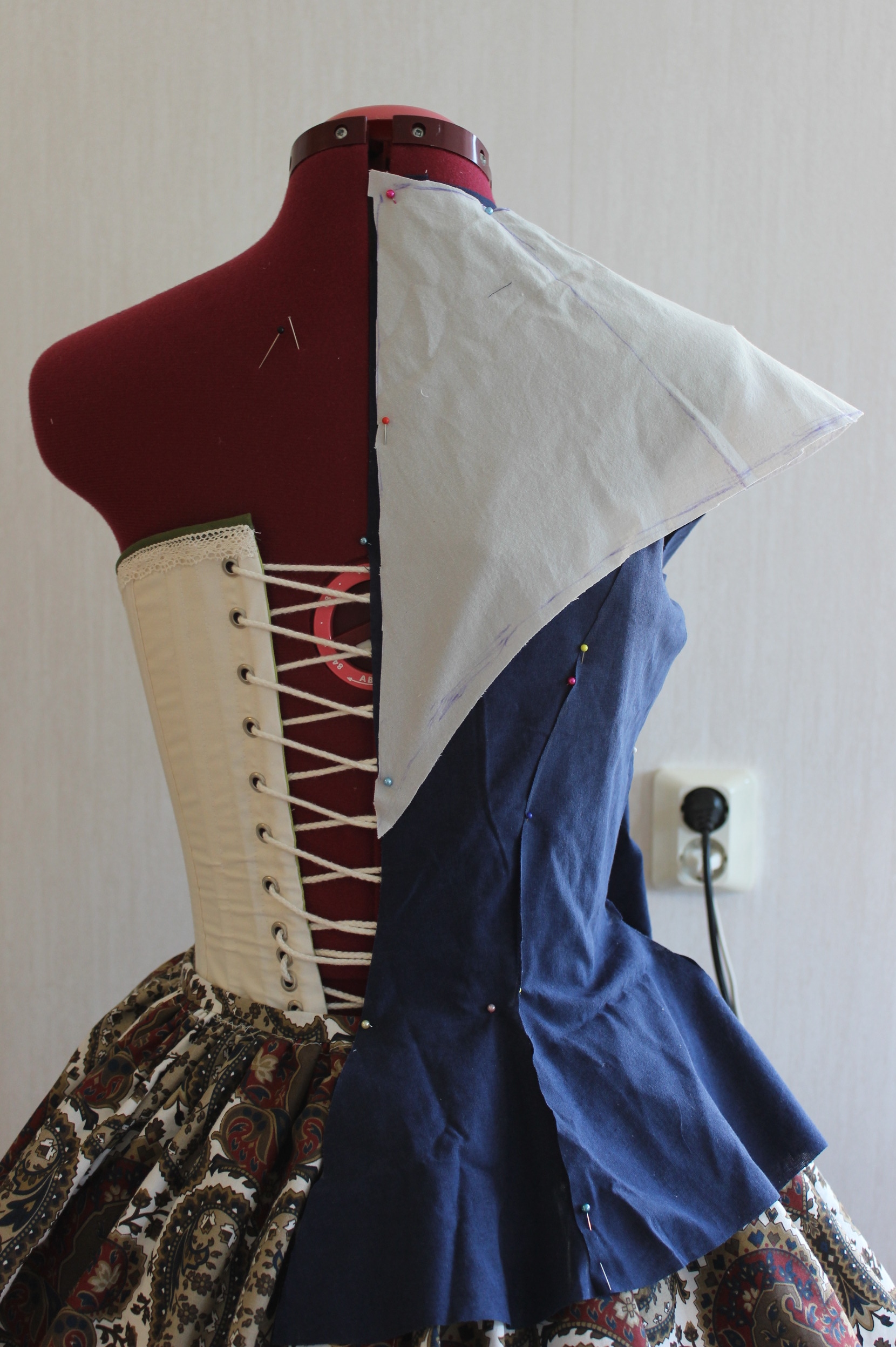
And the neckpiece.
IMG_9732 IMG_9731

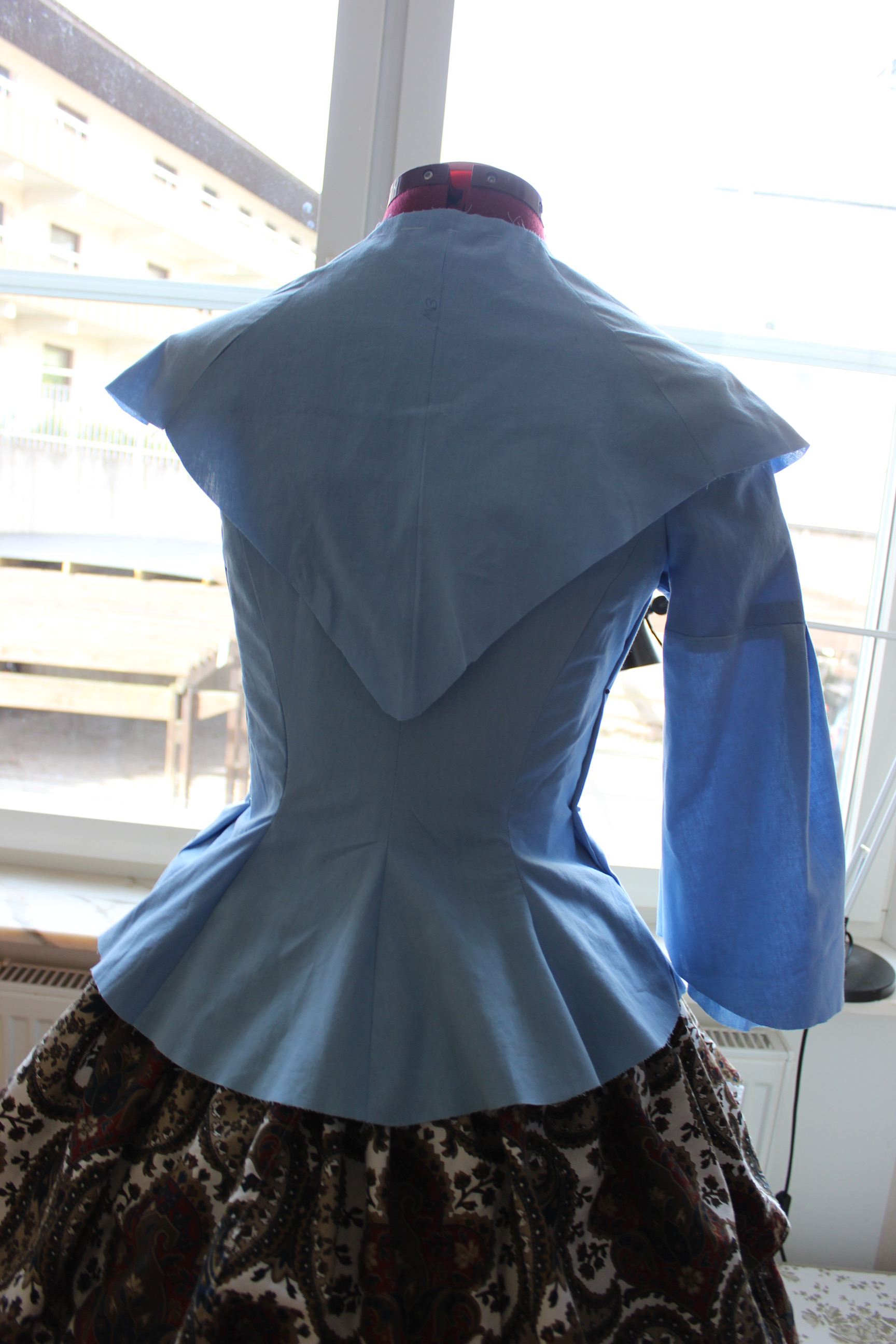
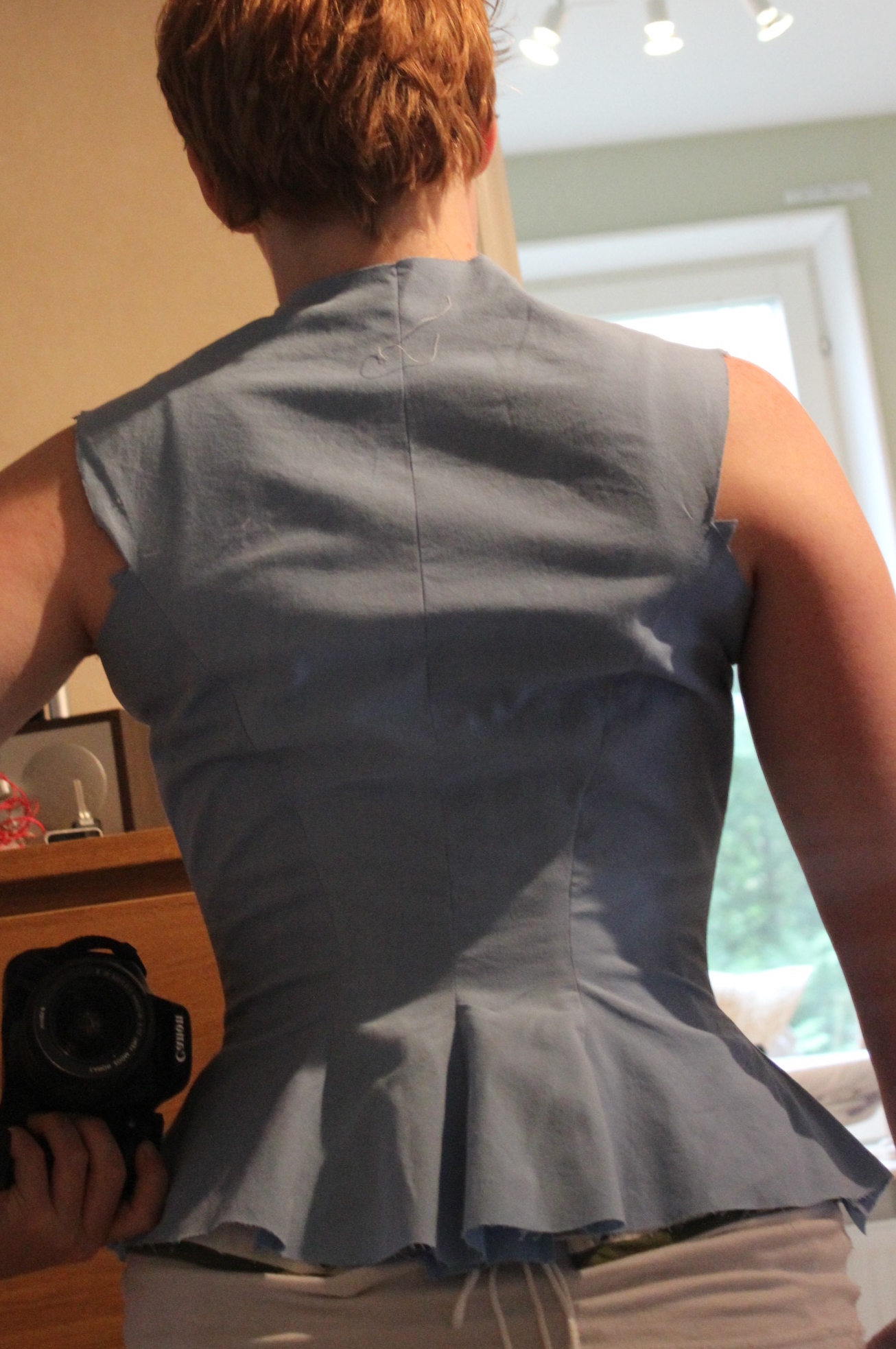
I then cut and made a mock-up, and let it rest upon my dressform for a week when we were abroad on vaccation.
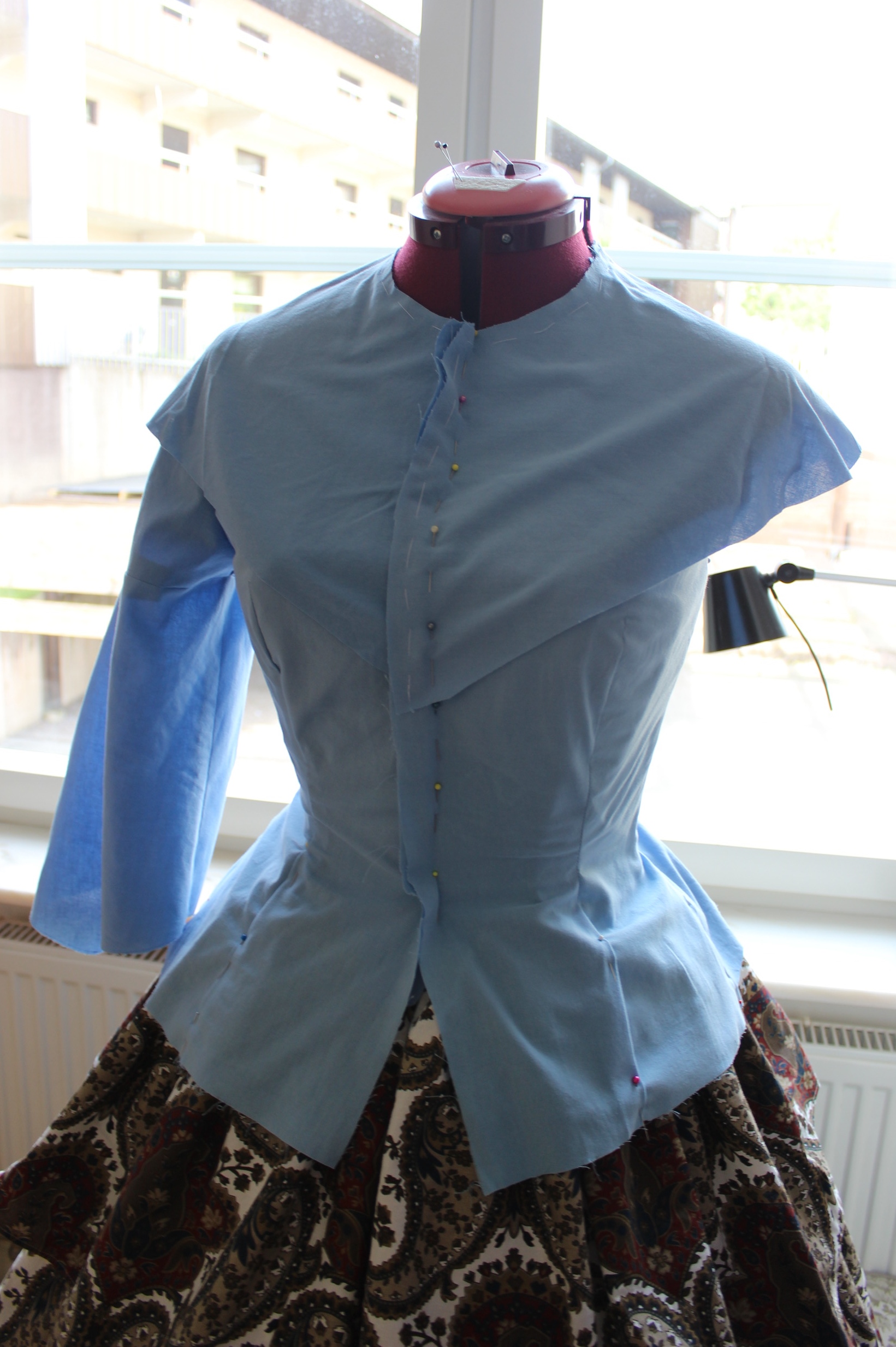
IMG_9946 IMG_9947

Coming home again, I put it on to check the fit.
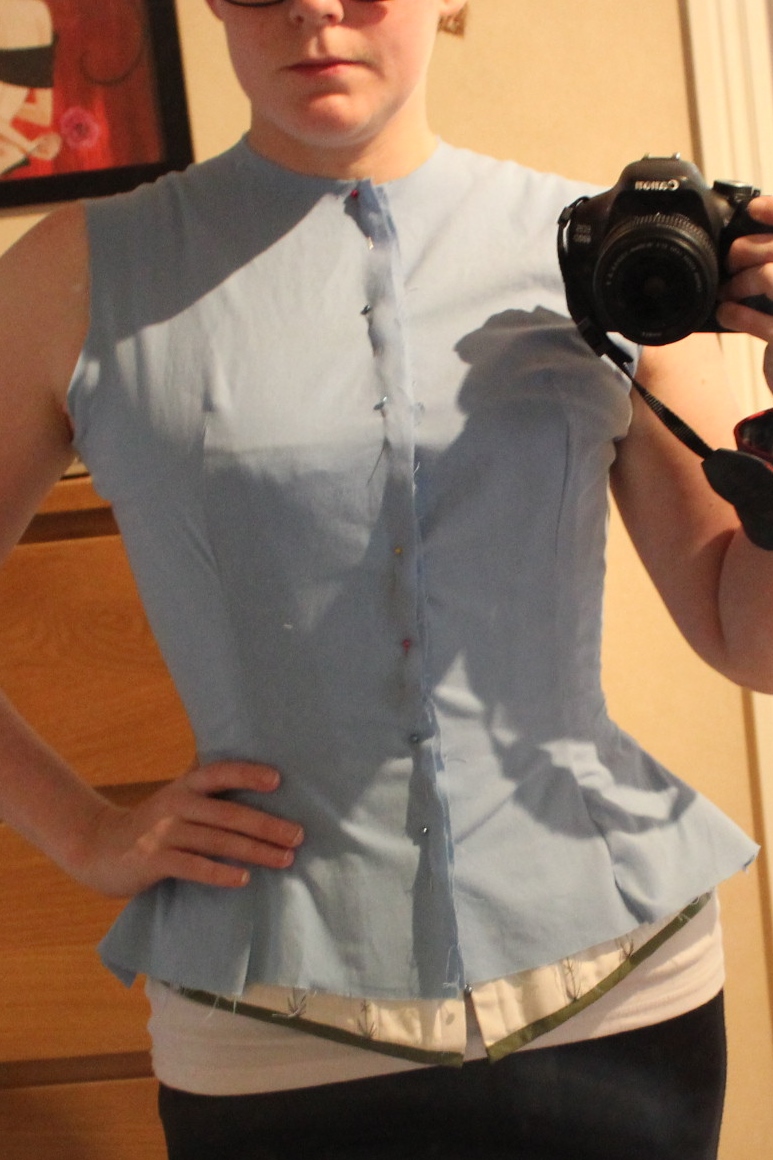
IMG_0003IMG_9987
It did needed some changes (hard to se in this pick due to the pining I’ve made on the inside), but for the most part it worked pretty good.
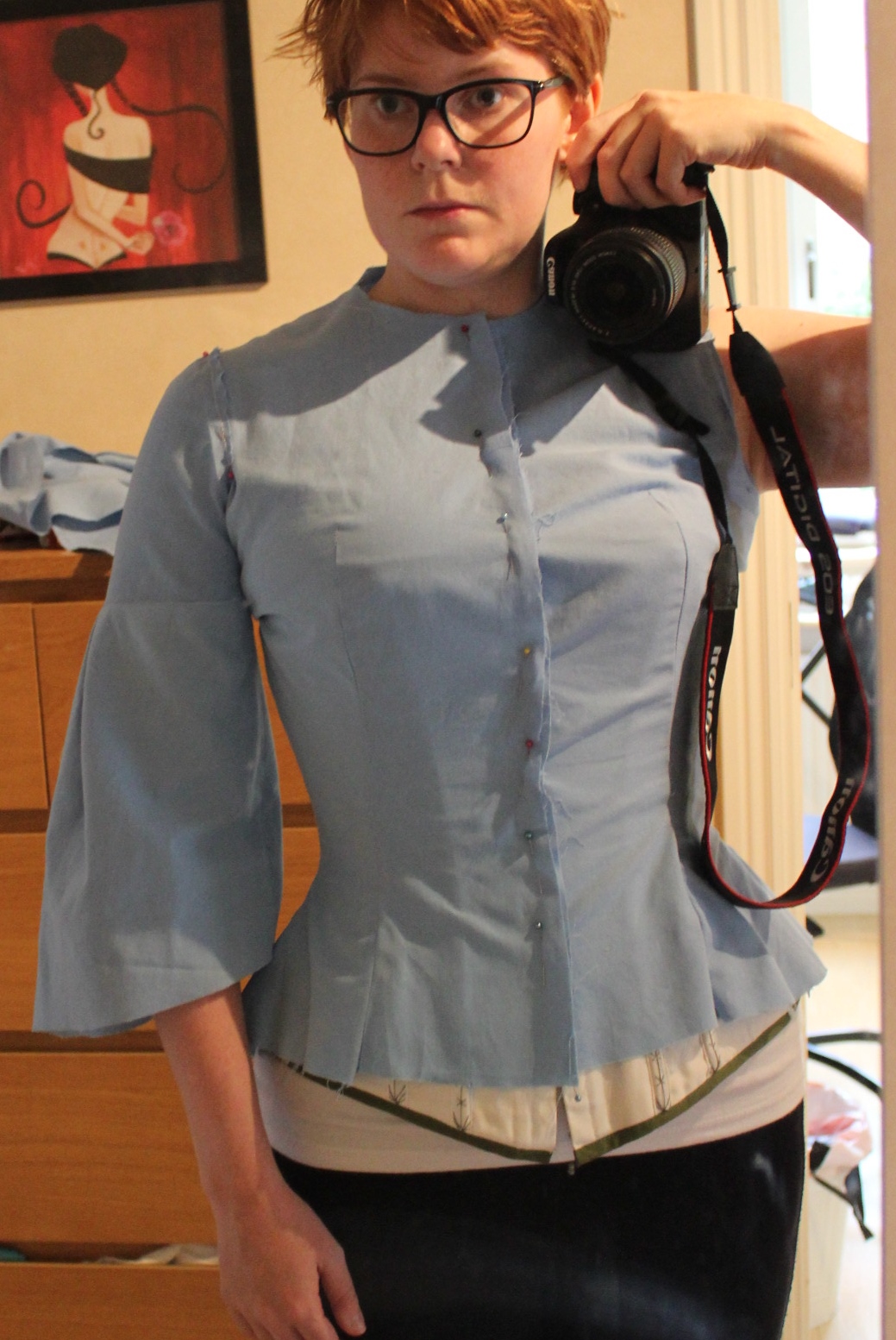
IMG_0009Trying out the sleeve pattern.

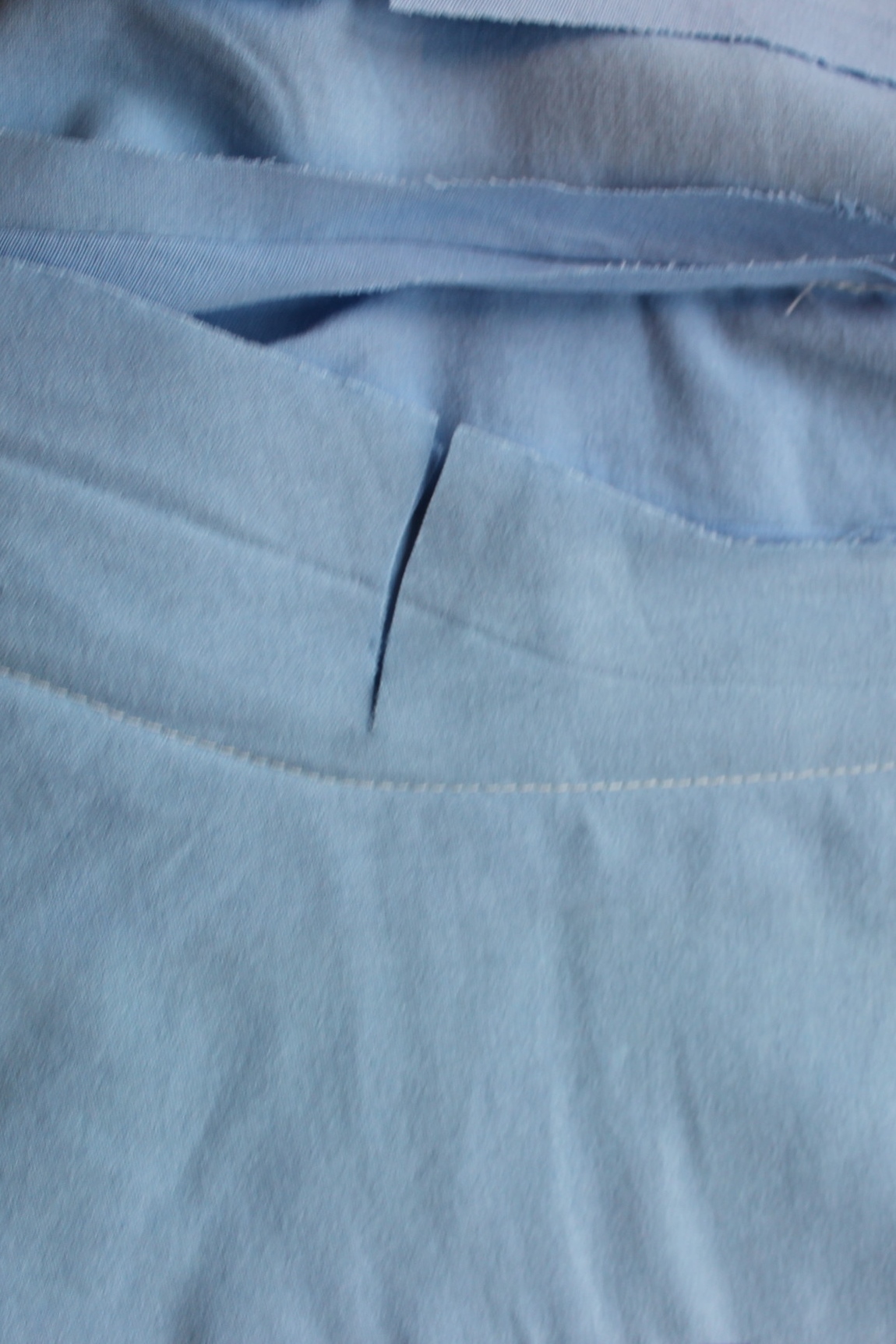
IMG_0013The biggest change I neede to make was to lover the wasit and to take it in a bit more.

Here you can see the new lower, and the old un-picked waist placement, and the amount needed to be taken in at each seam. IMG_0014
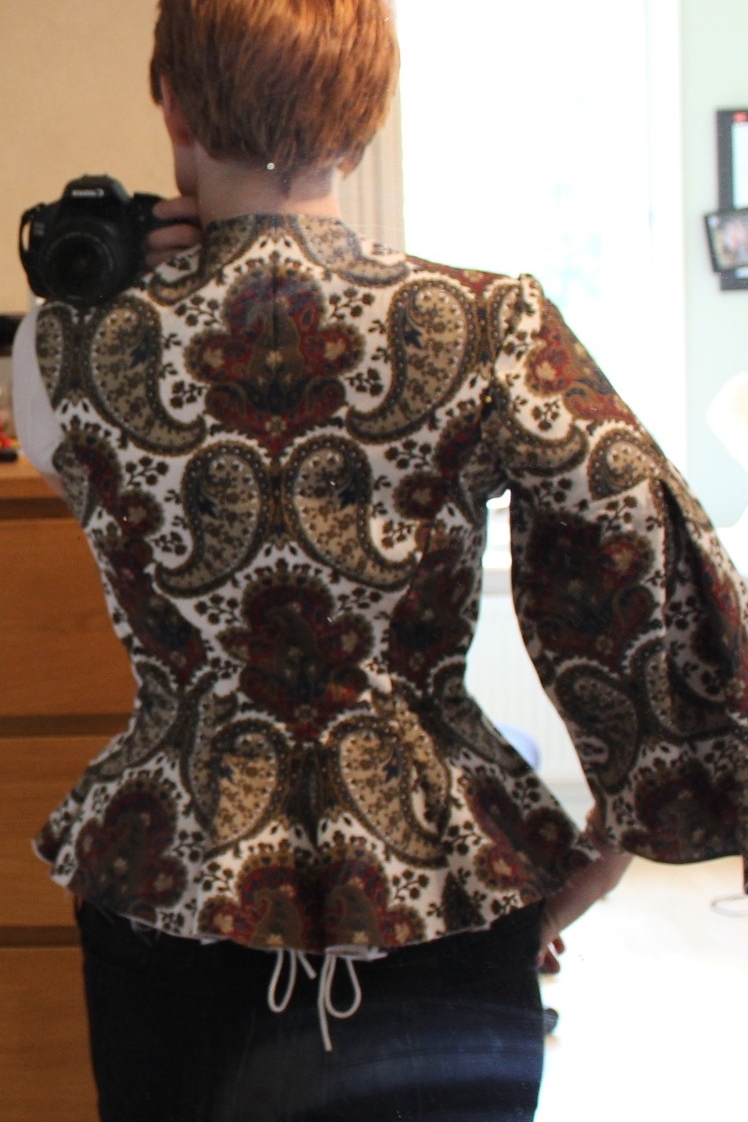
Then it was time to cut the pieces.IMG_0017I needed to ration the fabric very carefuly to make sure I had enough to get the print matched on each piece. It was a bit tricky but I manadged to fit all the pieces pretty much the way I wanted.

I’m particulary proud of the center back (which unfortanly won’t even show beeneth the neck piece).IMG_0018After basting the interlinig to the paisley, I sewed the pieces together and tried it on.
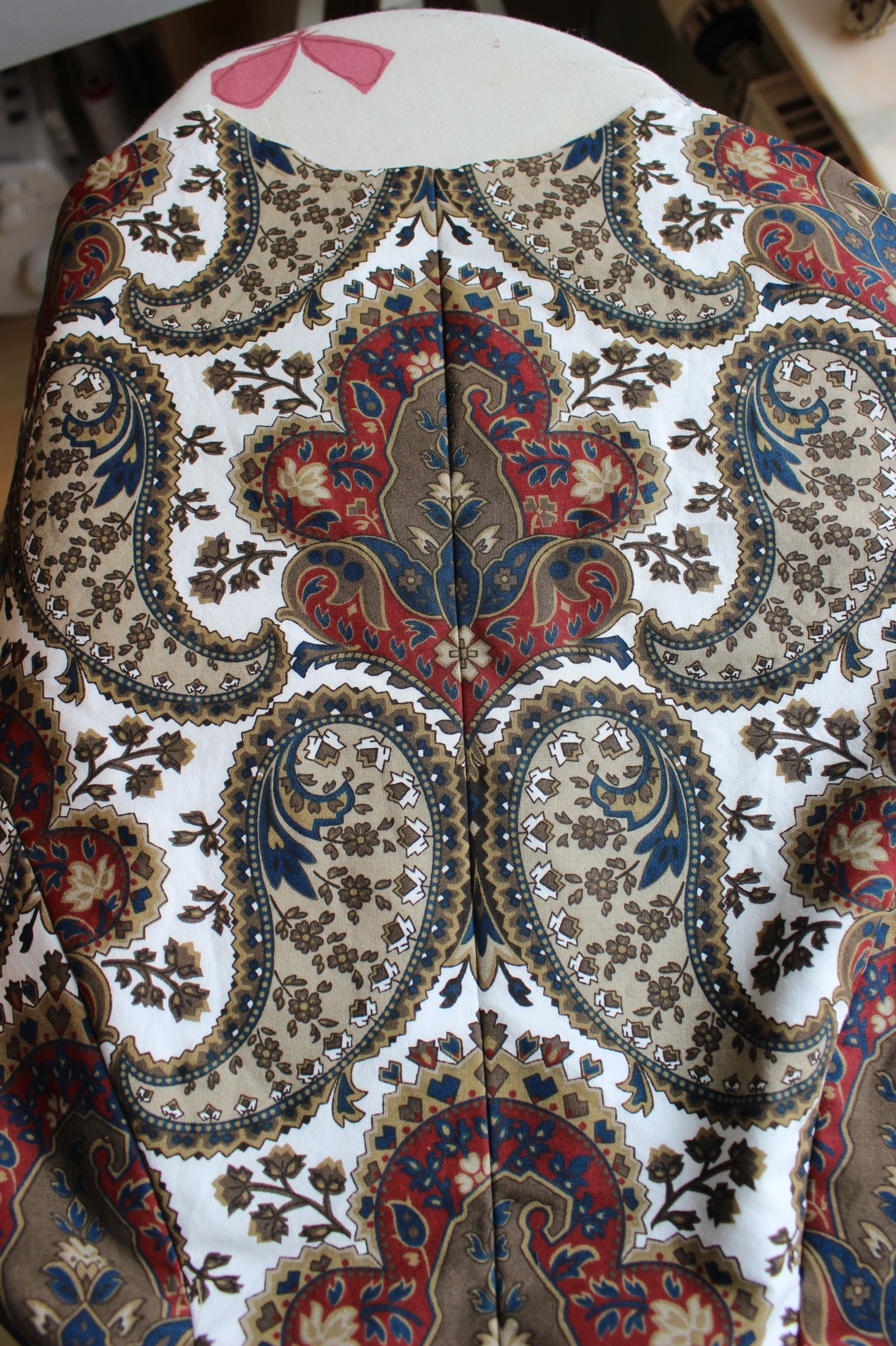
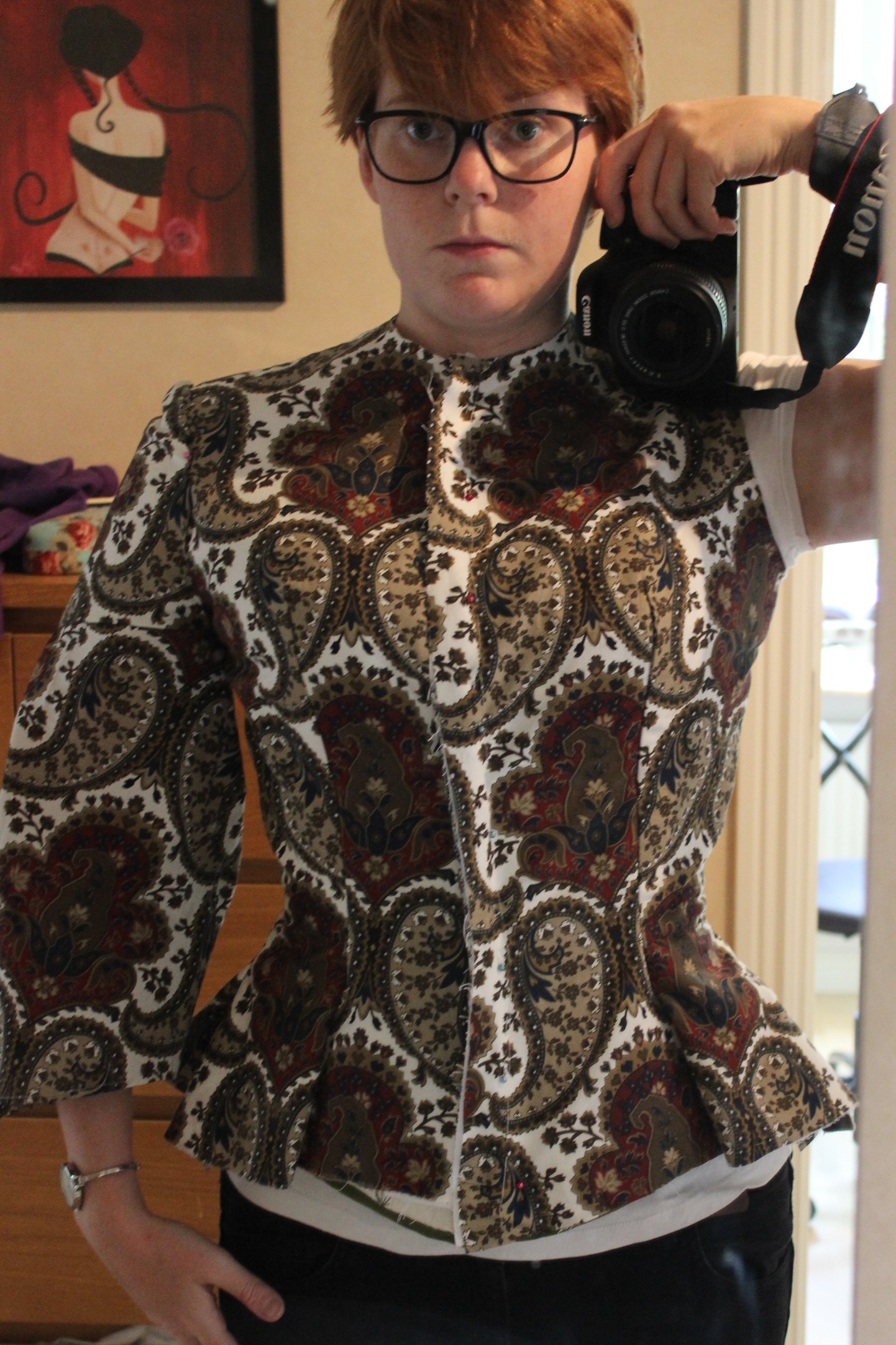
IMG_0040 IMG_0046
This time it looked rater good.

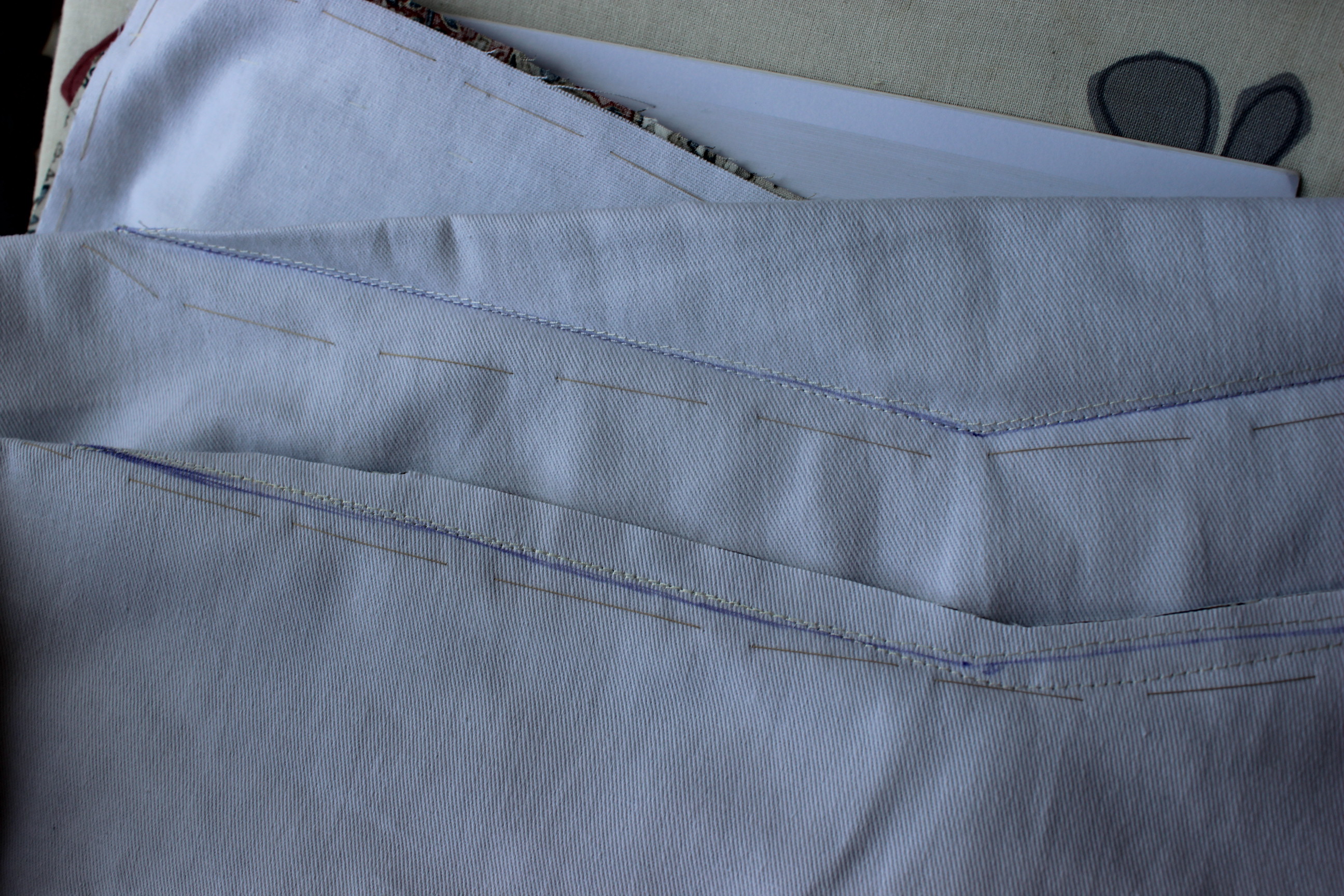
When I was sure about the fit, I cut all the wide seam allowence down, and trimmed away all the exess fabric at the darts.IMG_0064Huge un-cut and cut dart.
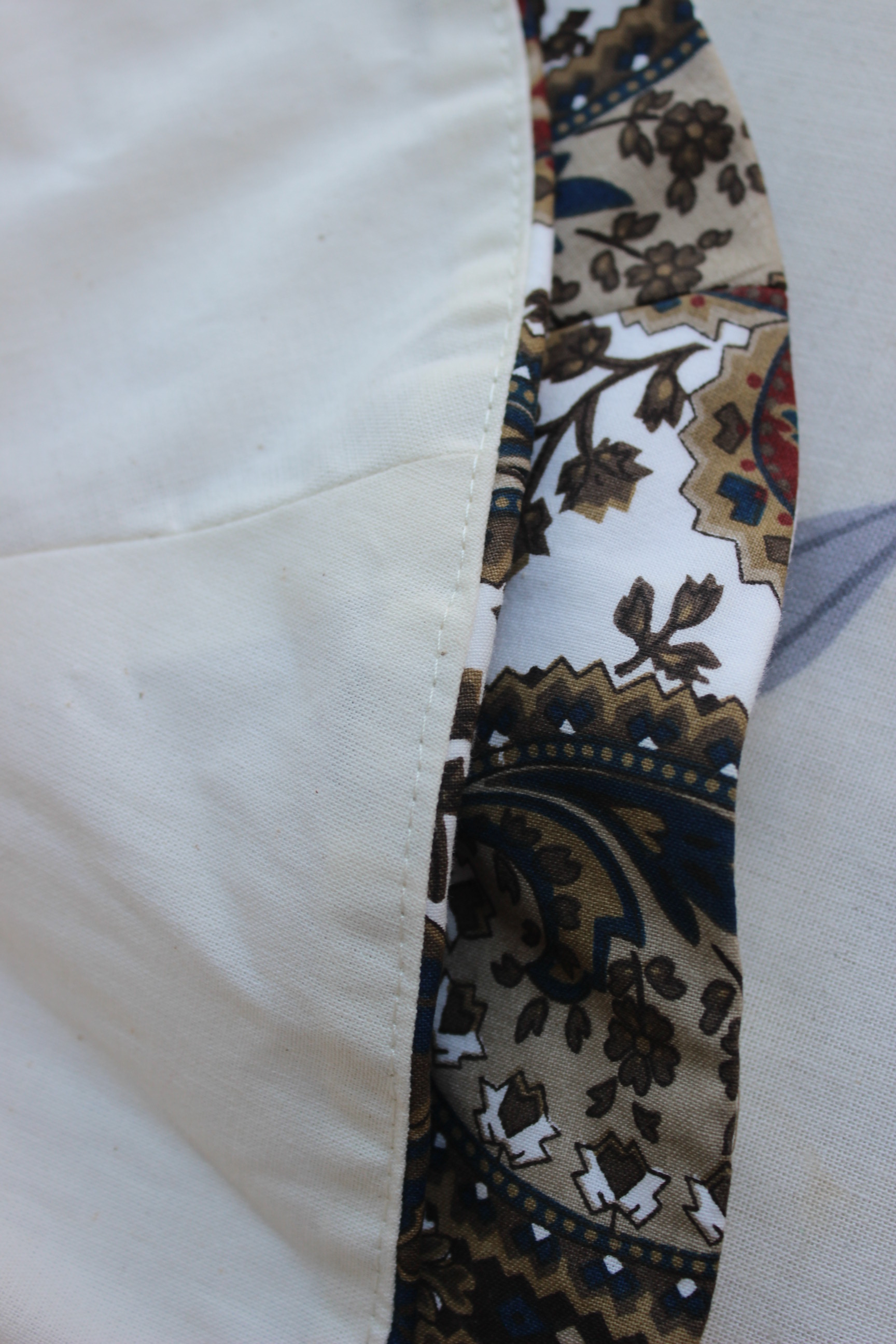
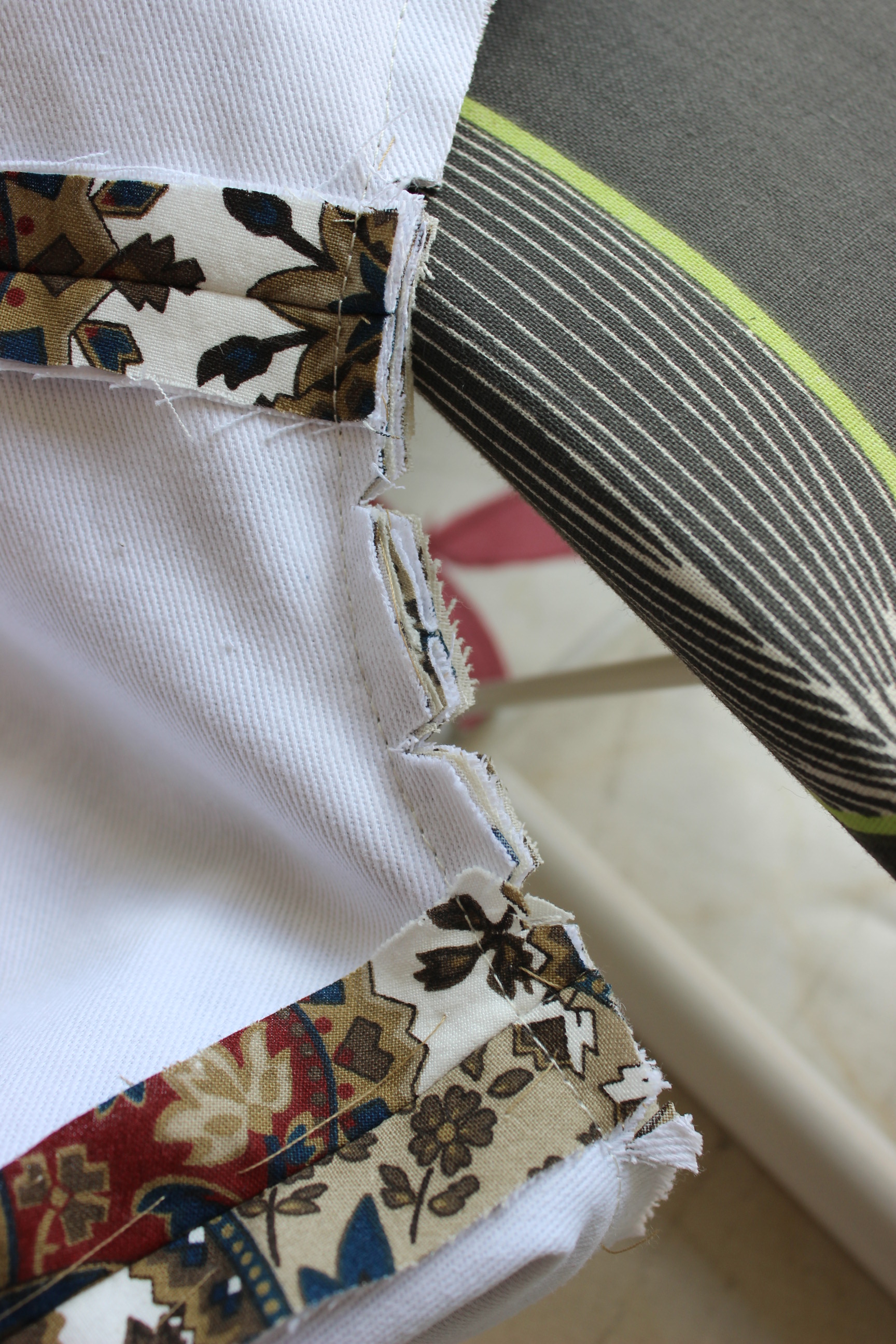
Then it  was time for the linnig, which I putt in using the “bag method”. and to make sure all the edges would turn nicely I made notches in the allowence of all the curved seams.IMG_0094Notches on the neck-seam.
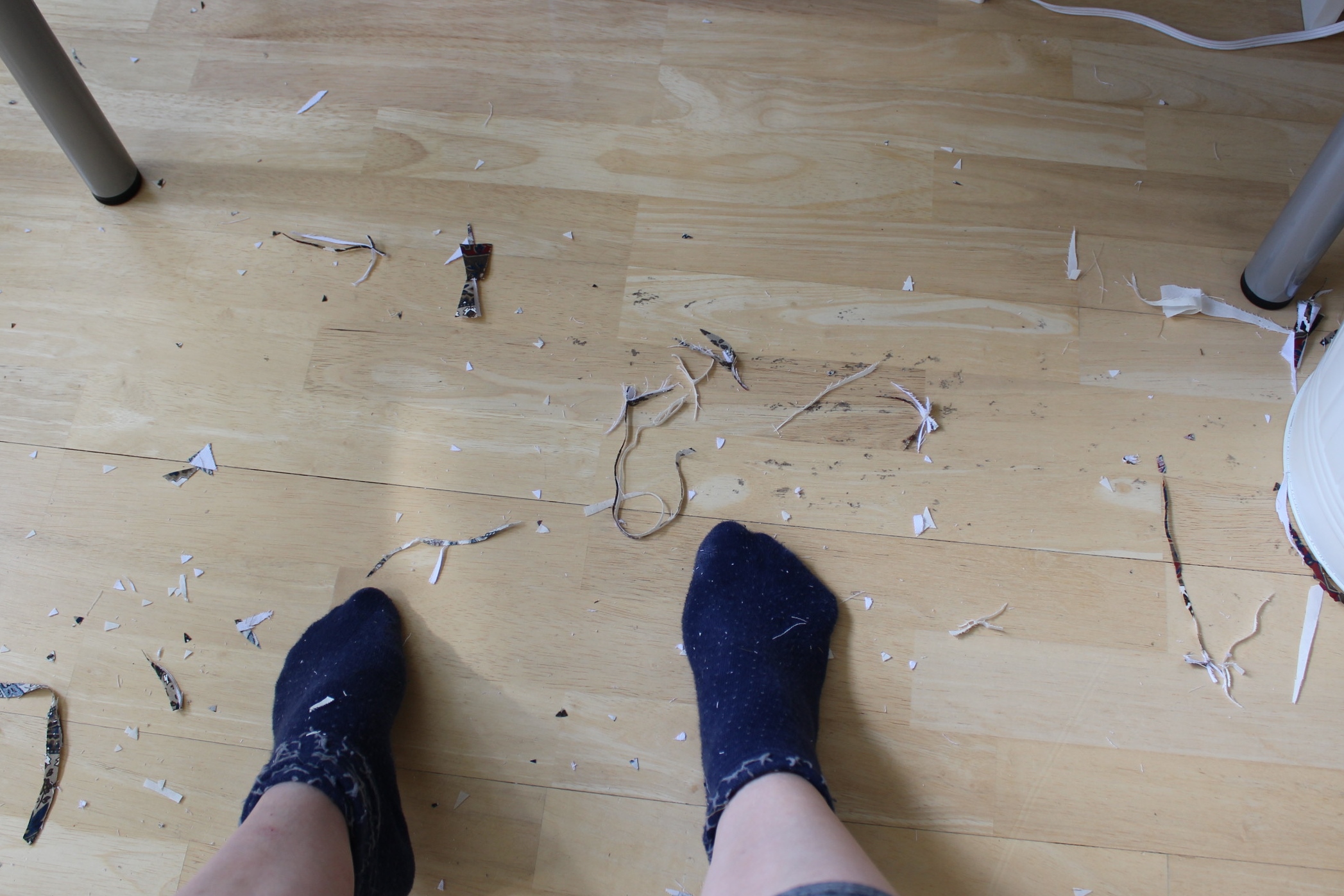
All this trimming and notching left my sewing room a mess. IMG_0097Lots of thread and fabric scraps.
I also took the time to under- stich the neck and hem to make sure the edges was nice and crisp, and would not be able to peek out.
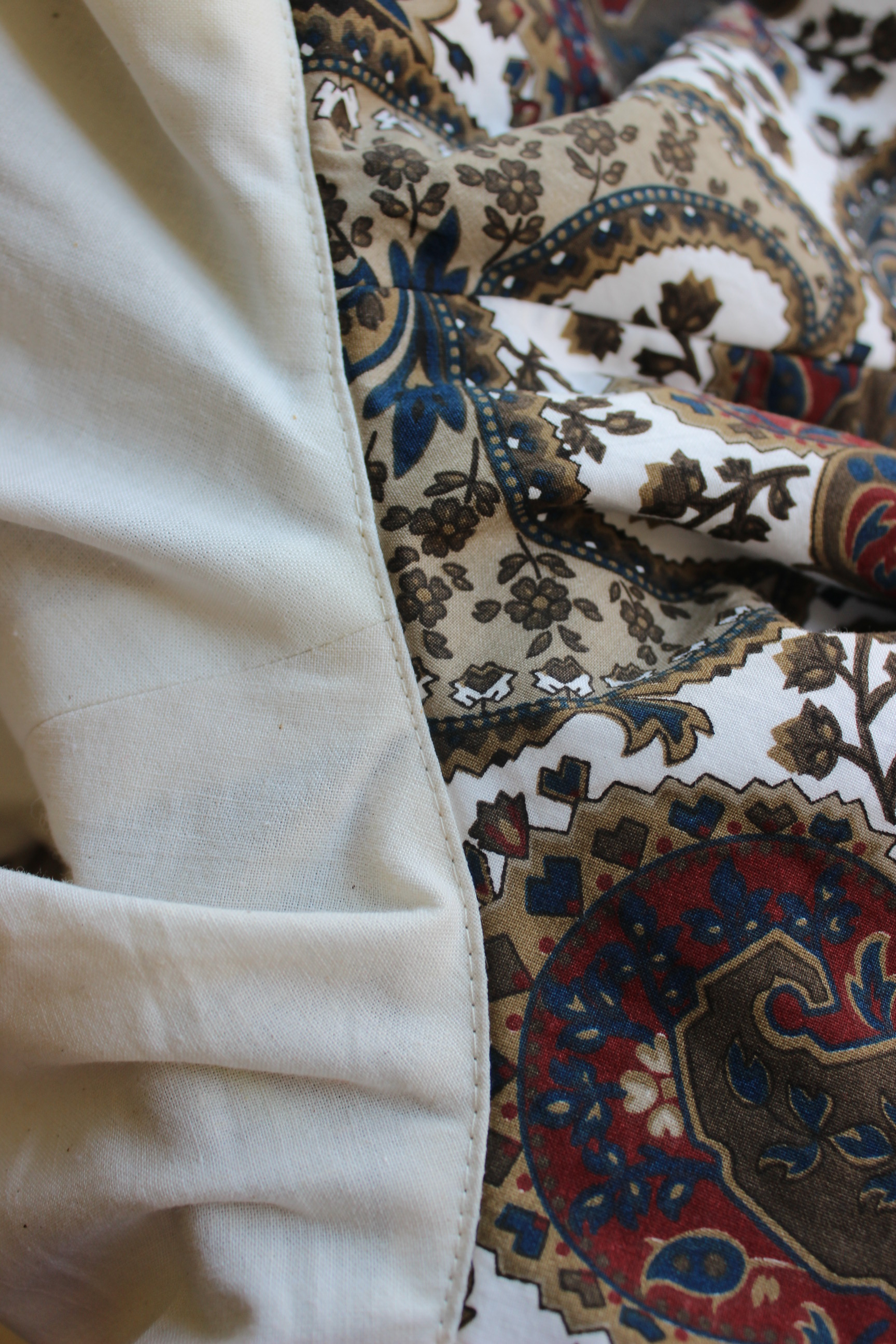
IMG_0098 IMG_0101

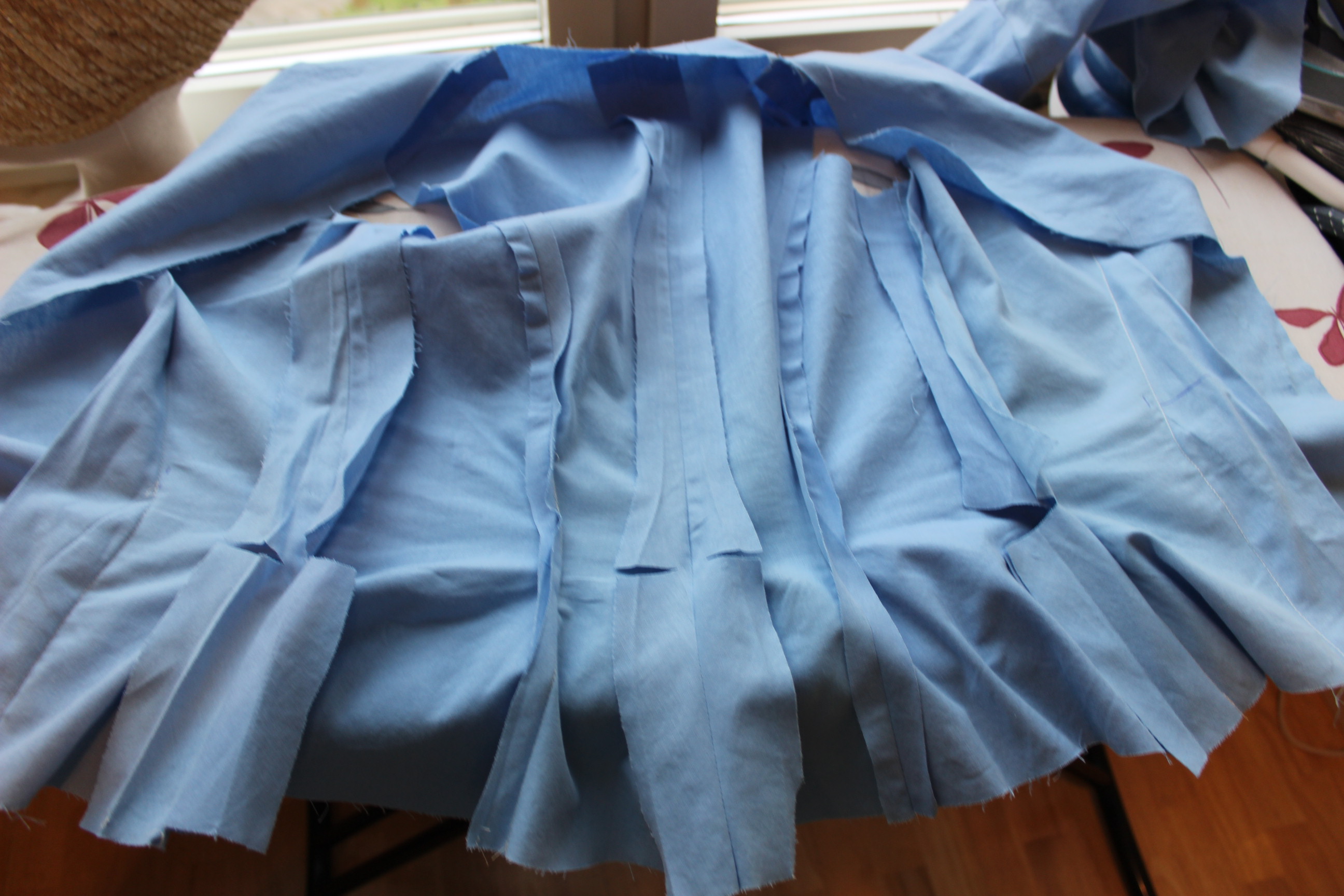
Then it was time for the boning. Well actually I should have done this before putting in the lining, but forgot and thous needed to do it the harder way, trying to avoid getting the lining intangeled with the chanels.IMG_0123anyhow, I sewed the boning chanals to the seam allowences using self made bias-strips. Then I cut, shaped and put in the plastic whalebone, starting on the sleeves.
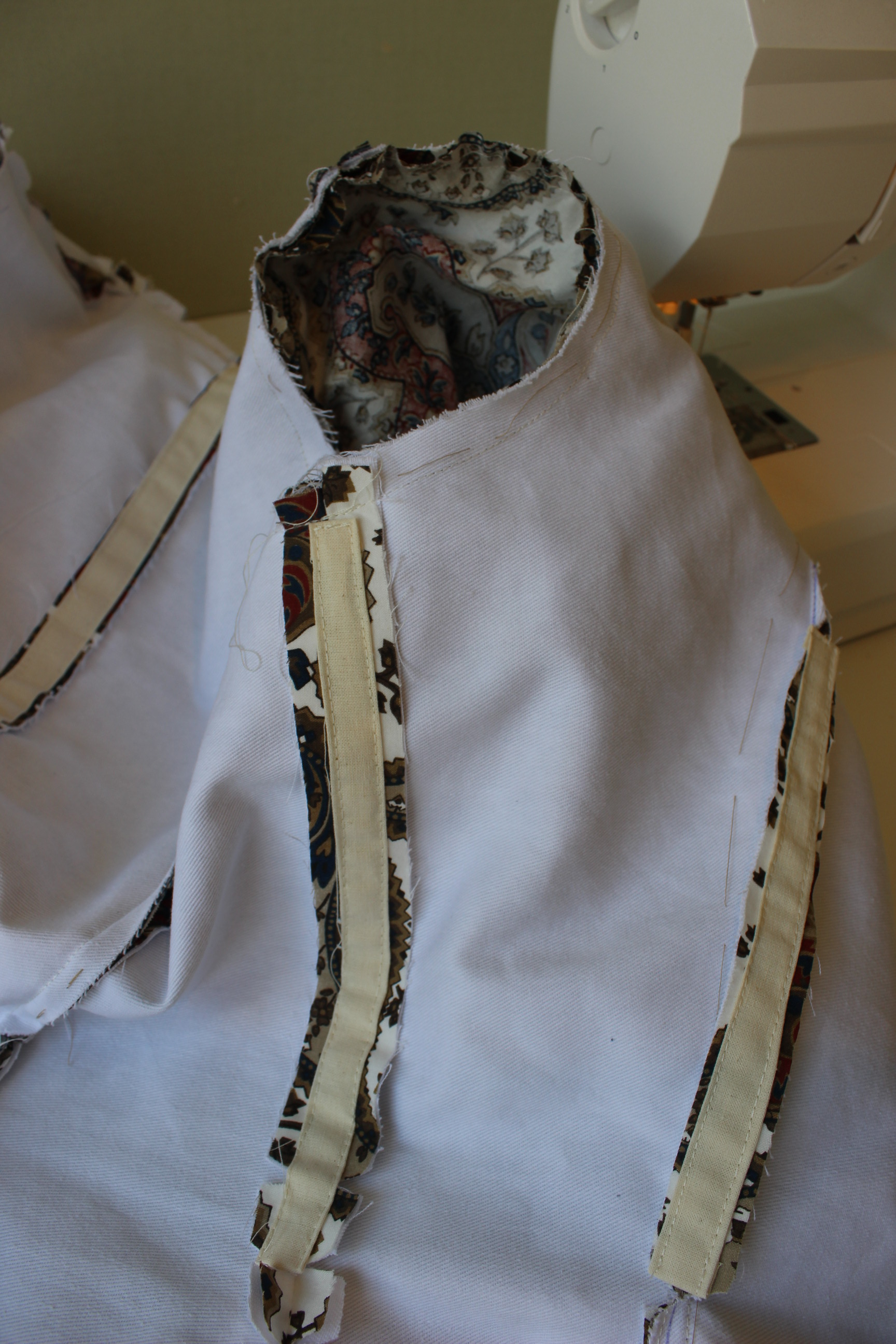
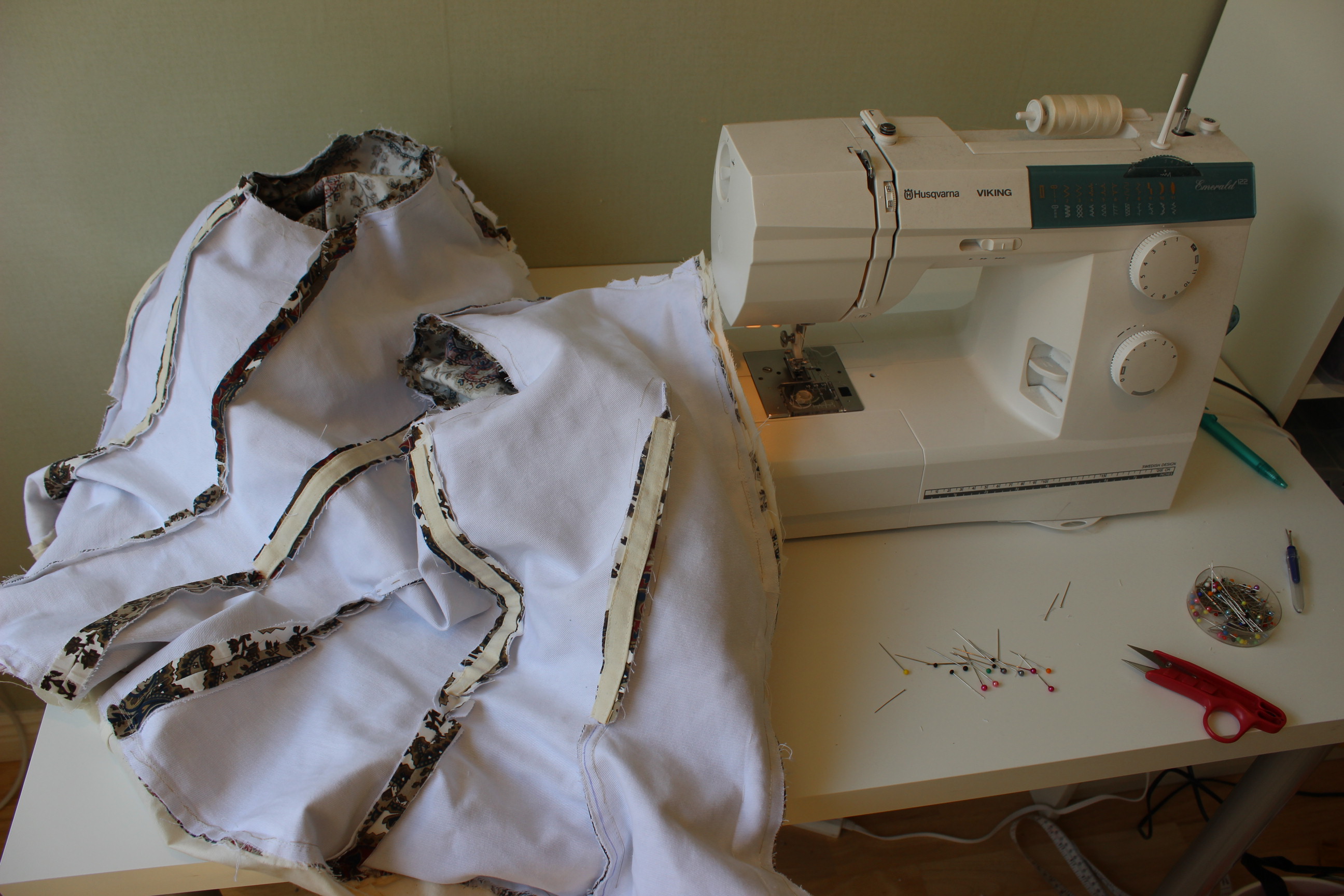
IMG_0120The jacket almost done, inside-out, on my sewing table.

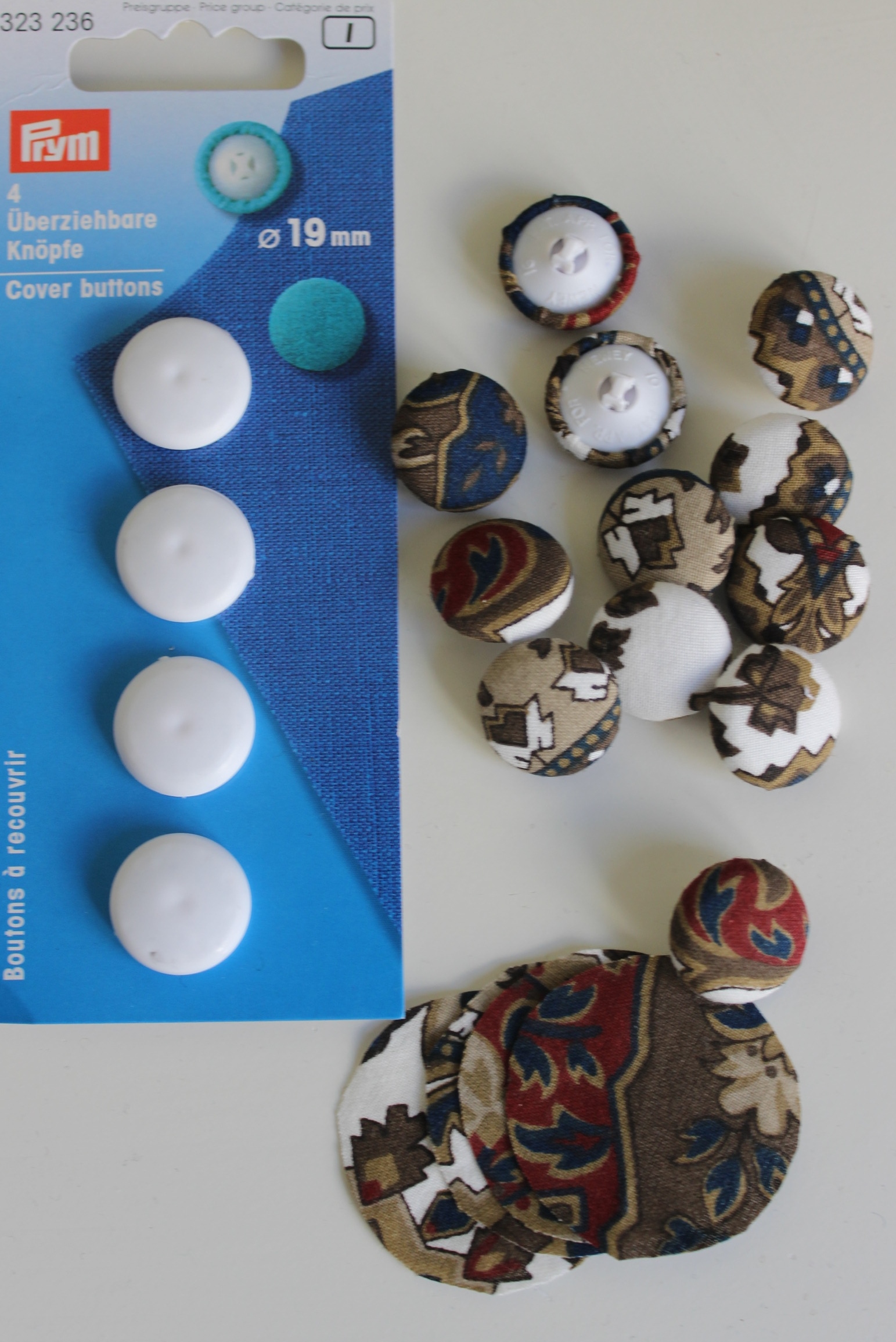
When the bones and the sleeves were inserted and the lining was sewed down nicely it was time to deal with the clouer of the garmnent. I used several self covered buttons and stiched them to the front. IMG_0072But since I didn’t had the energy (nor time) to make buttonholes I put the buttons on the outside, and stitched hooks and bars underneat to use as clouser.
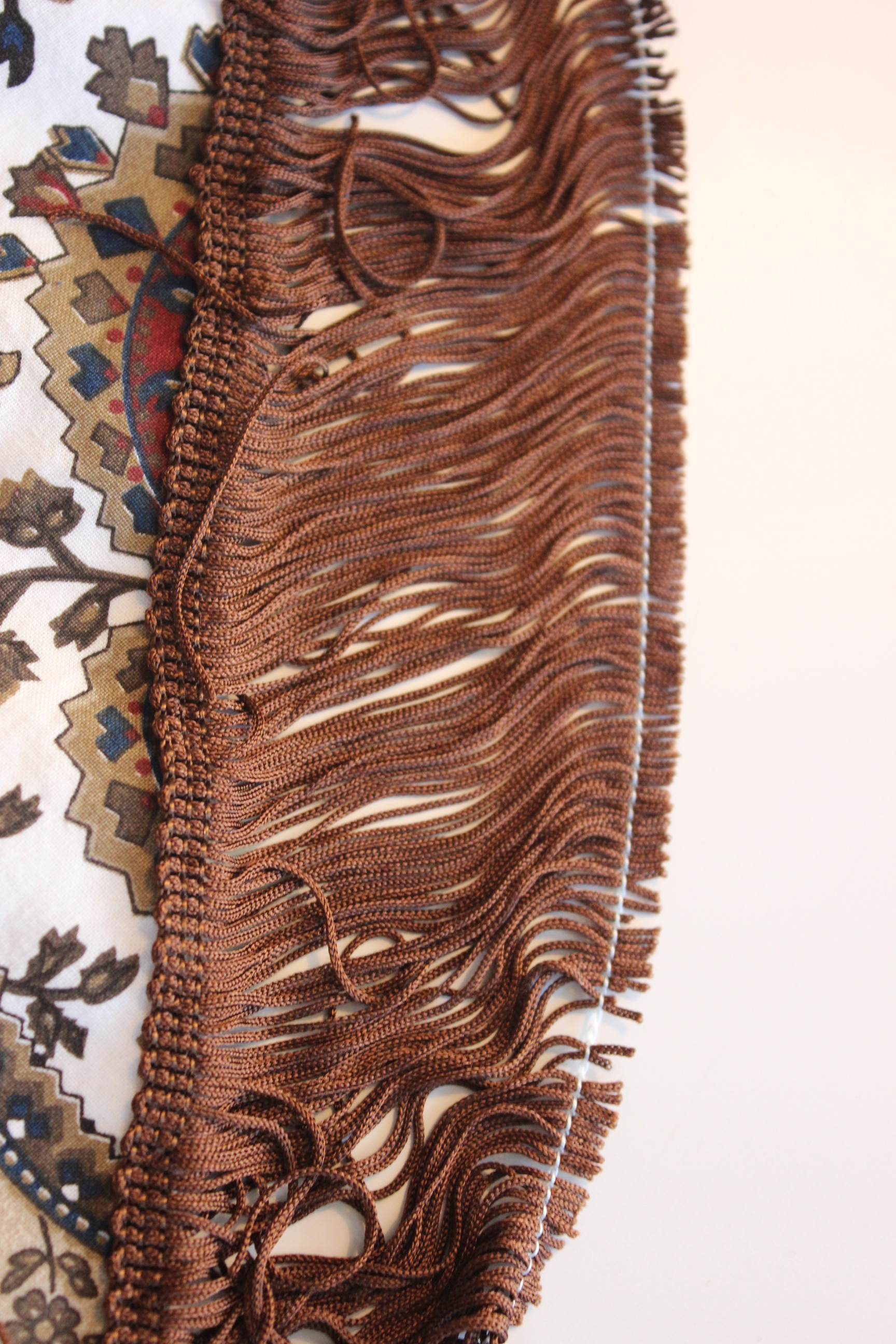
And lastly I pinned and sewed on the brown fringe to the edge of the neckpiece.IMG_0142This is the only fringe I’ve ver used, and I love how it’s sewed at the end to prevent the fringes from getting caught in your stiches. When finished sewing you just cut the stich away, and you have a nice straight fringe. It’s great.
The finished dress (Jacket and Skirt)IMG_0144

IMG_0145

IMG_0159

IMG_0160

IMG_0155

IMG_0154

IMG_0149

IMG_0157

IMG_0158

IMG_0162

IMG_0152

IMG_0165

Just the facts:

Challenge: nr 14: Paisley & Plaid.

What: a 1850 daydress (bodice and skirt).

Pattern: None, draped my own using “Costume in detail” as a general guide.

Fabric: Two bedsheets with duvet covets from IKEA, 1,5 white cotton sheets for lining and 1 m cotton twill for interlining.

Notions: Jacket – Thread, 3 m of plastic boning, 3 m of self mde bisatape, 12 buttons, 14 pair of hooks adn eyes, 1,5 m of brown fringe. and only thread and hook and eye for the skirt.

How Historical accurate: So so. I think it does look the part but I’m not sure about the messy pattern. Cotton is legit and paisley was a popular pattern during this time, but I doubt that the dressmaker using cotton in her daydress would have had a sewingmachine.

Time: About 15-20 hours total.

Cost: 300 Sek (48 Usd) for the whole dress.

First worn: Ony for photos so far. I meent to wear it at a victorian picknic in july but the weater was way to hot for all the layers, so ended up using another costume instead.

Final thoughts: I’m not totaly happy about how messy the print looks made up in this dress. And I could have spent some more time getting the pattern to mach up and also making the neckpiece fit better.
All in all I think it was a funny project and I hope I get to wear it sometime.
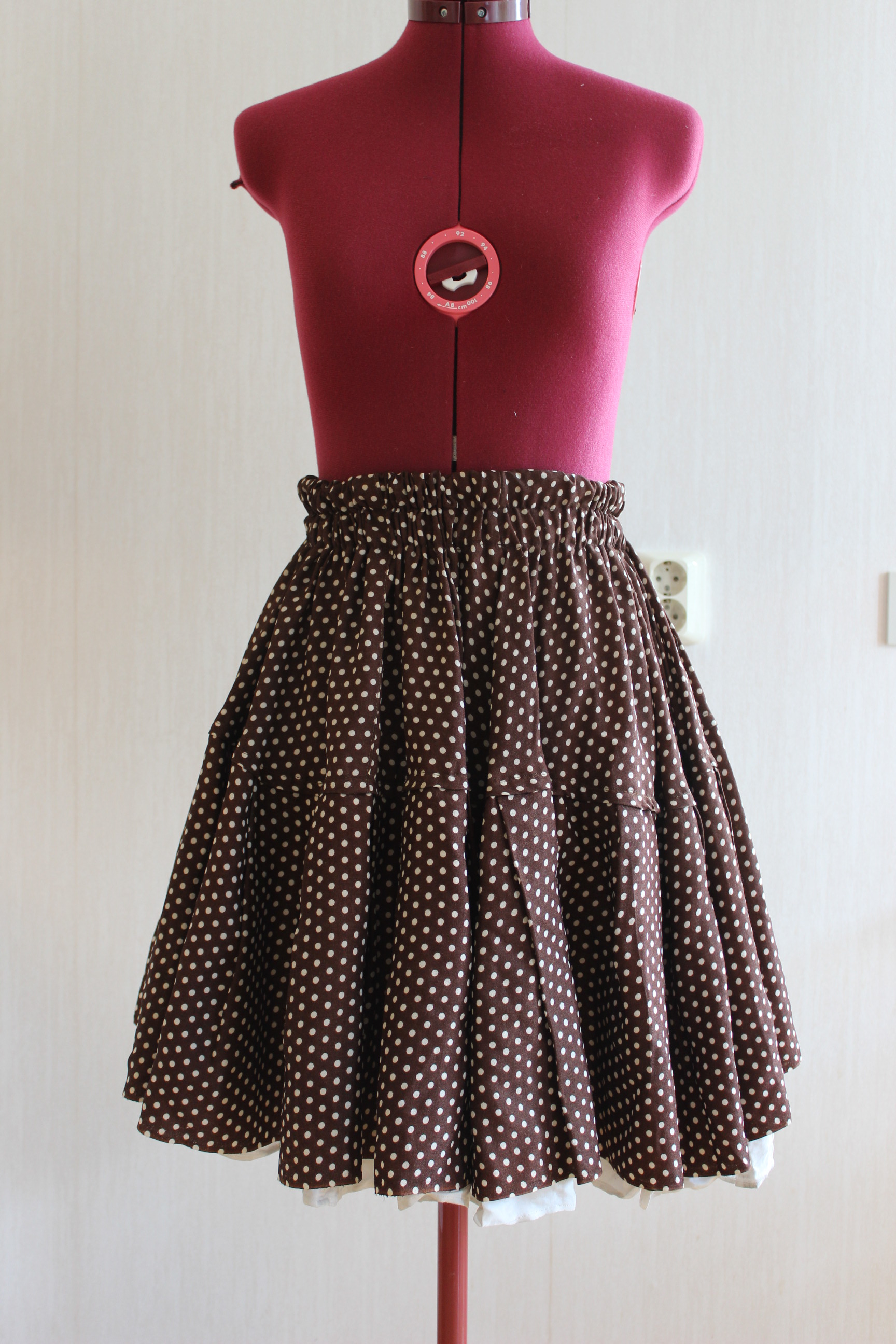
1850s Paisley Skirt

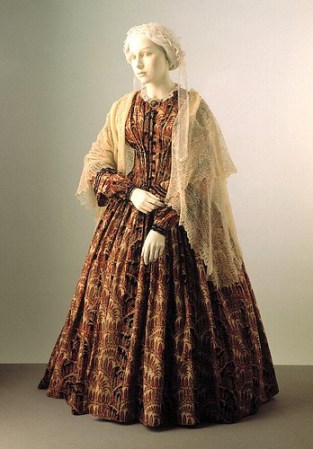
Back in january when I did my sum-up on what to make for this years HSF challenges, I decided to make a 1850s daytime dress for the HSF 14. Paisley & Plaid. 2922460163_61fd26c808My original inspiration.

de01d5b580936f605fda22d833698d89

tumblr_lp4a0qjvHA1qf46efo1_400Love the skirt, and the fringes.

I had this great brown/white paisley bedsheet from IKEA that I was dying to use.

So when the challenge deadline approached, I got the fabric from my stash and started working.
This outfit took me a great while to compleat and I did take lots of photos while working on it, so I decided to choop the dress up into three different posts.

Starting with the skirt:

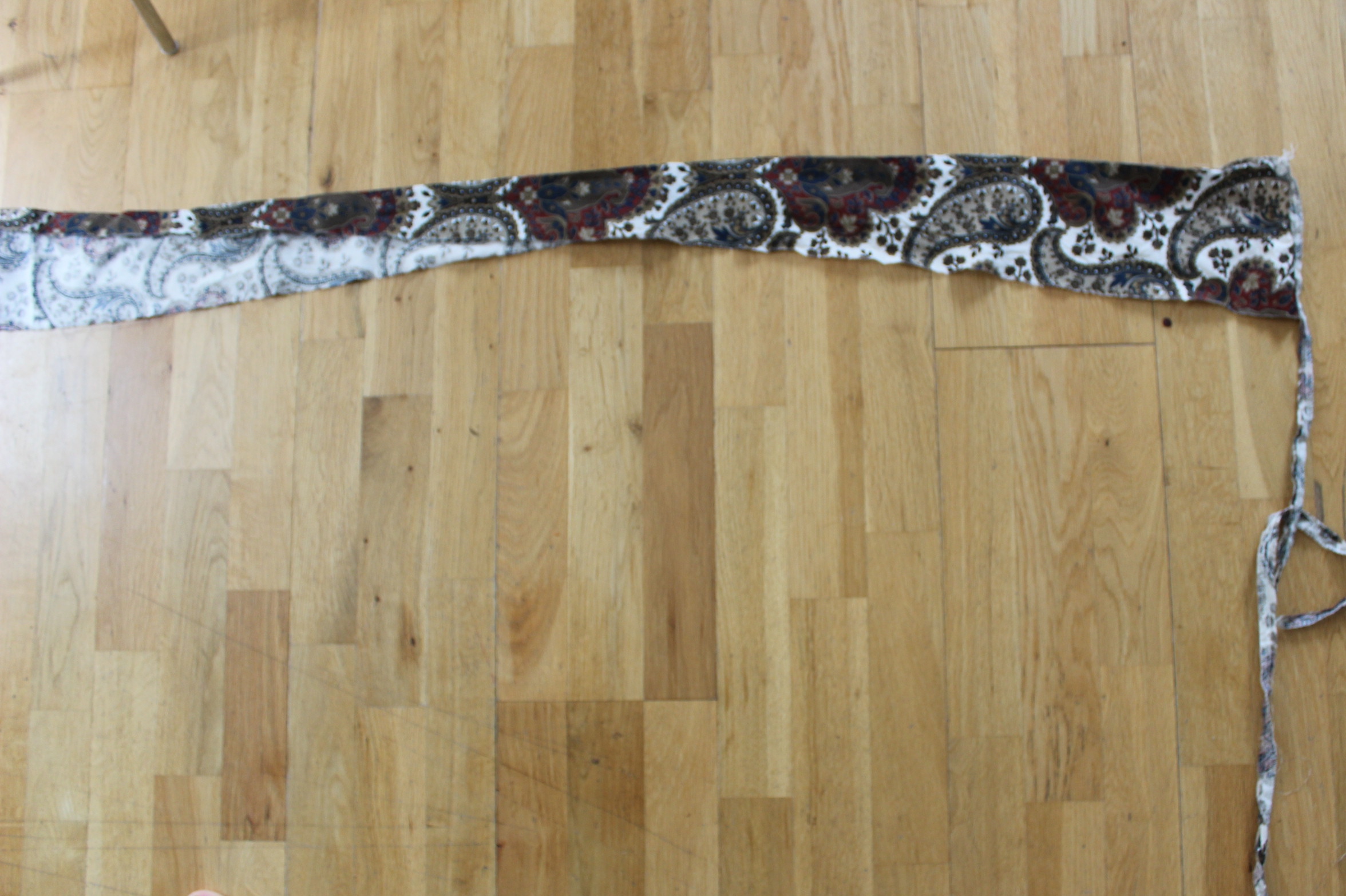
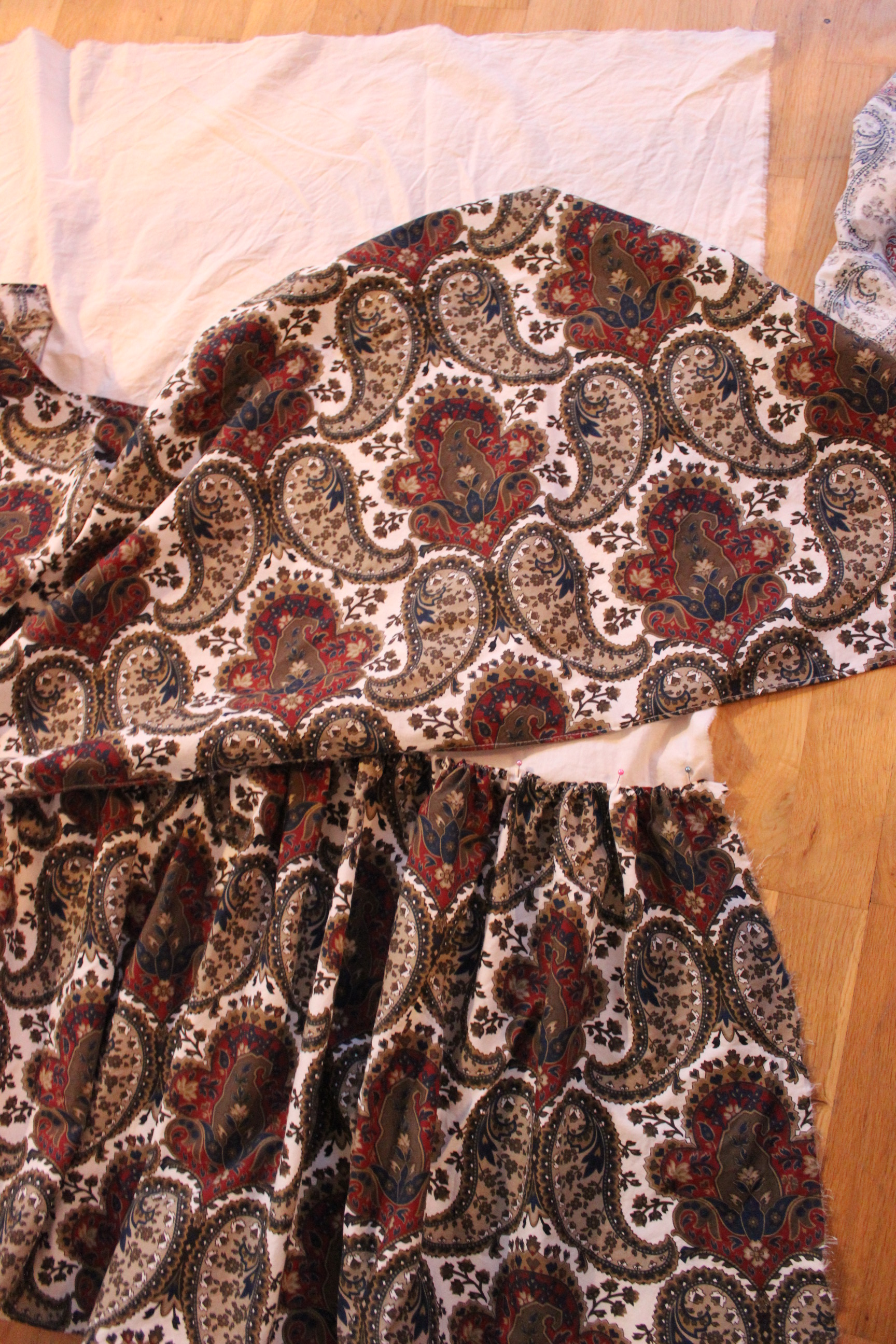
I ripped the selveges from the sheets to be sure to get straight edges. But I emedetly regreted that idea…IMG_9682This is how of the grain line the sheets were made. It differs about 15 cm from one edge to the other. And on top of that I discovered the print was made to match the crocket grain line, leaving me with lots of un- centered paisley prints. Bummer.

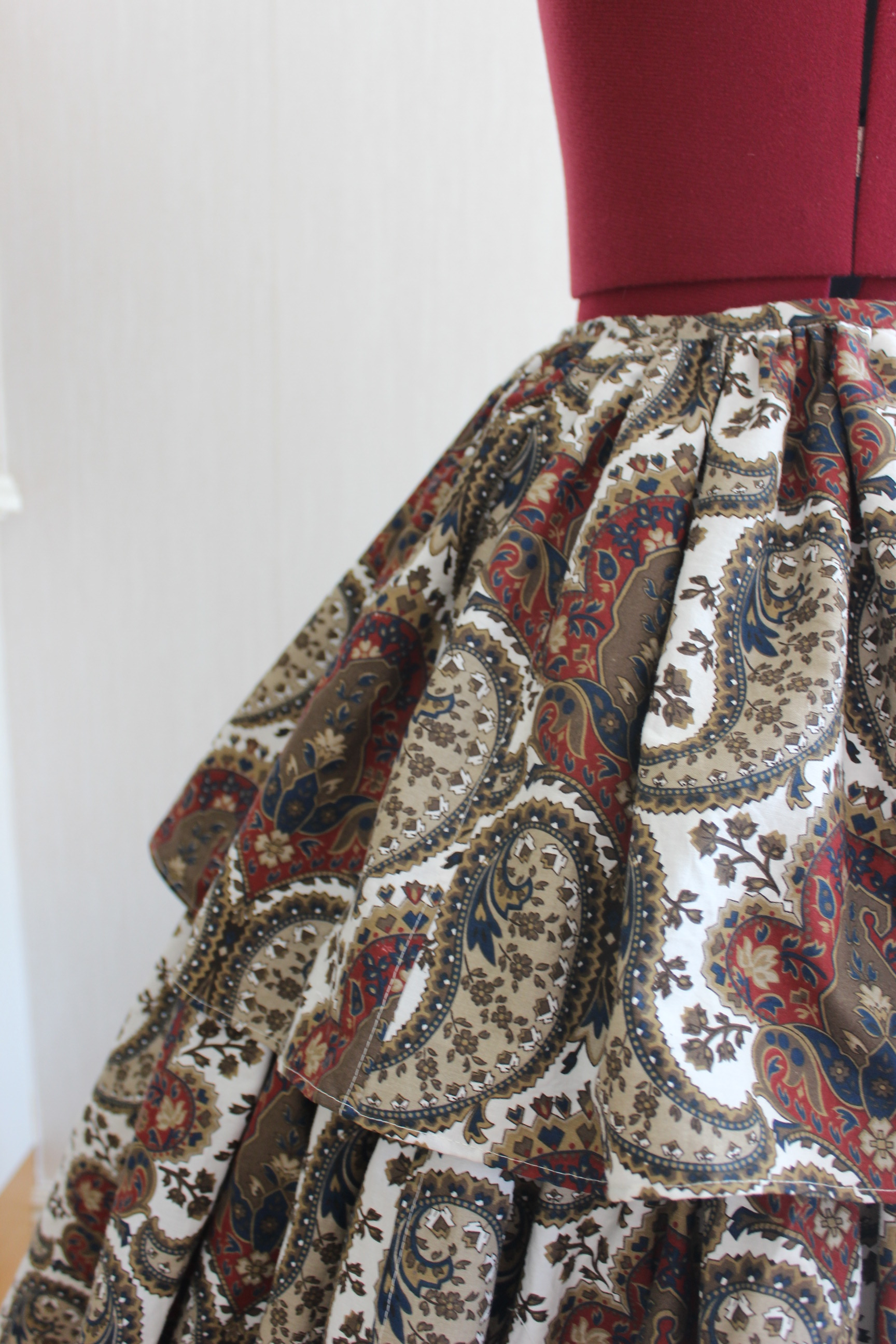
Well, that was too late to do anything about, so I just continued working. Ripping rows of fabric to make into gattered flounces.

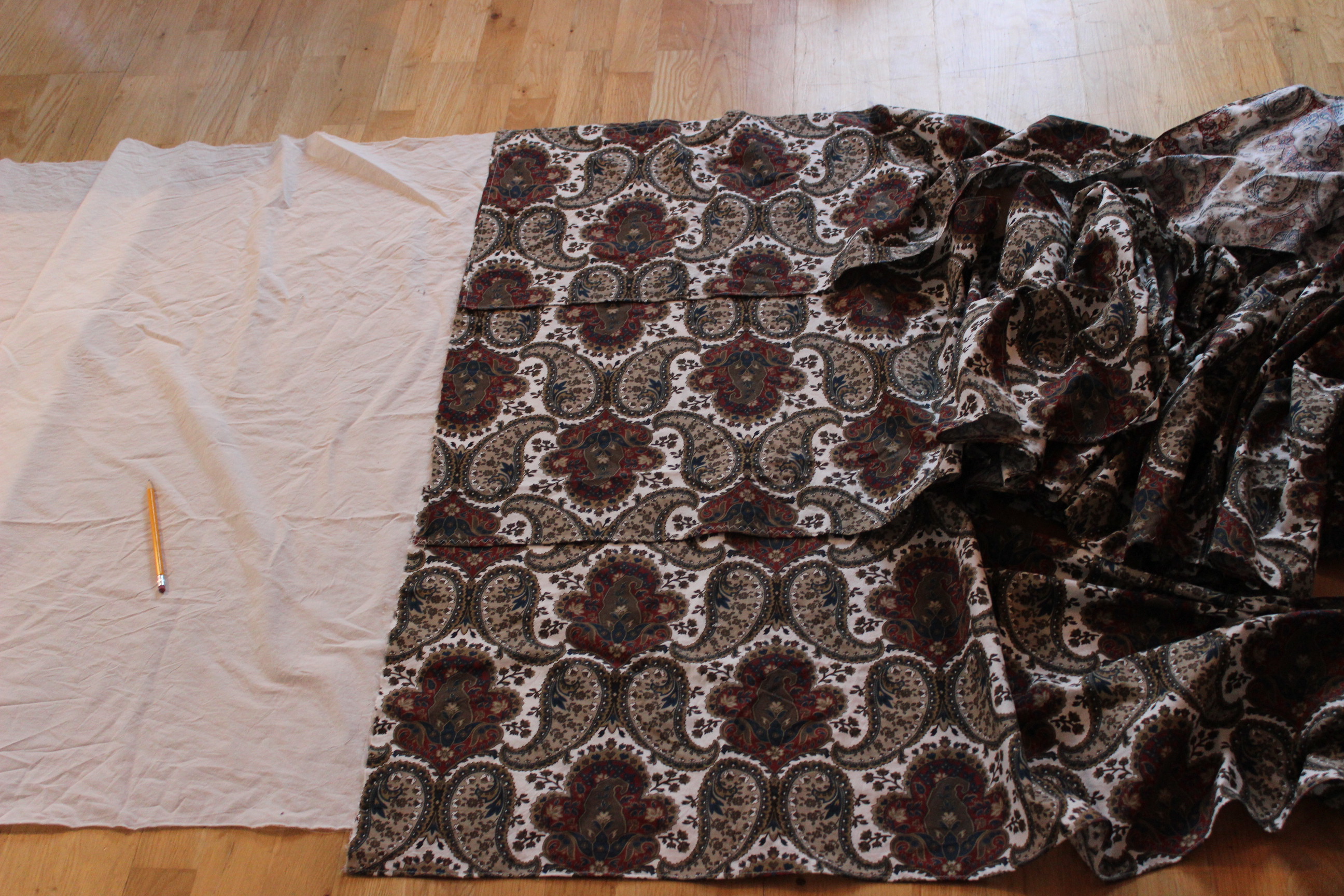
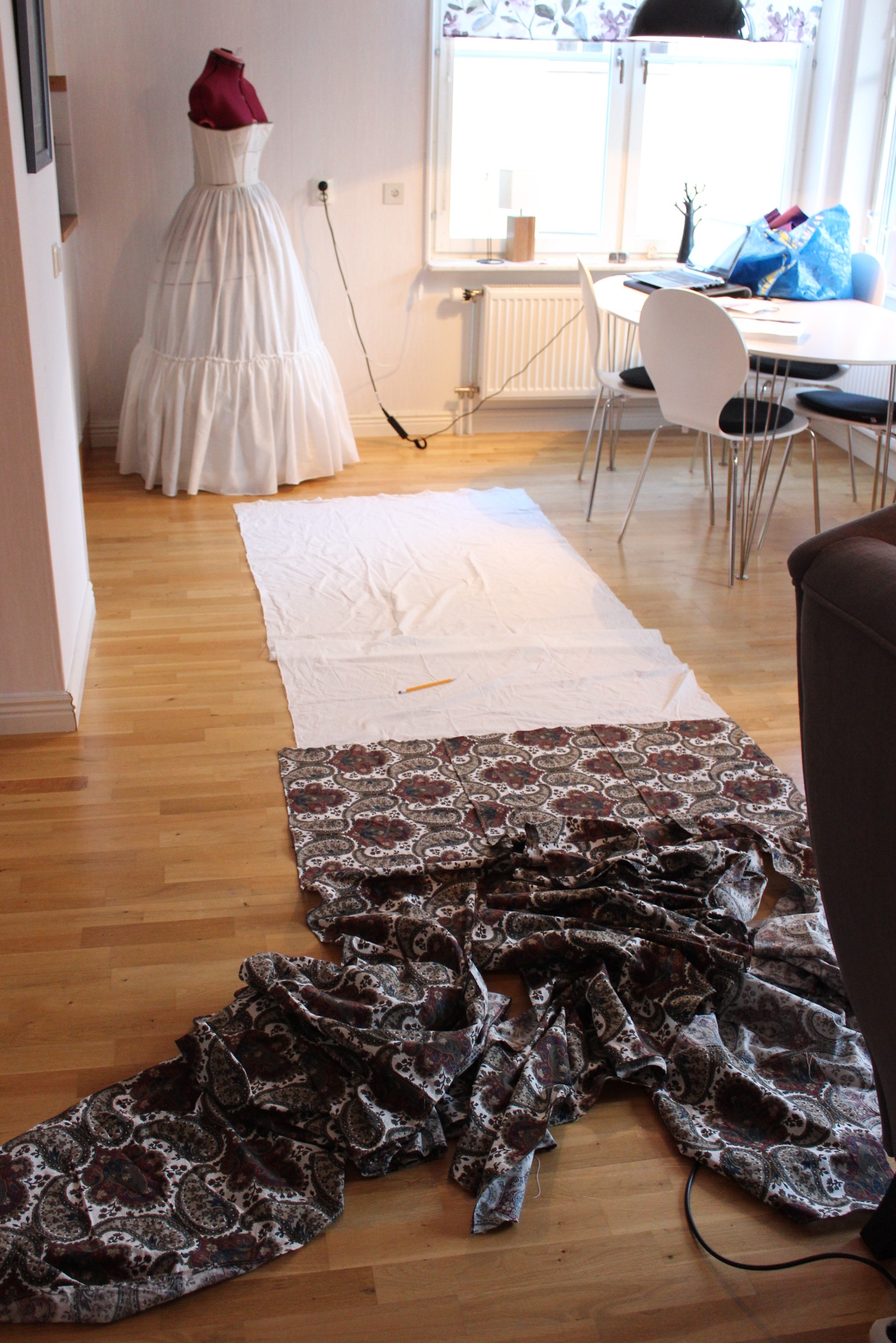
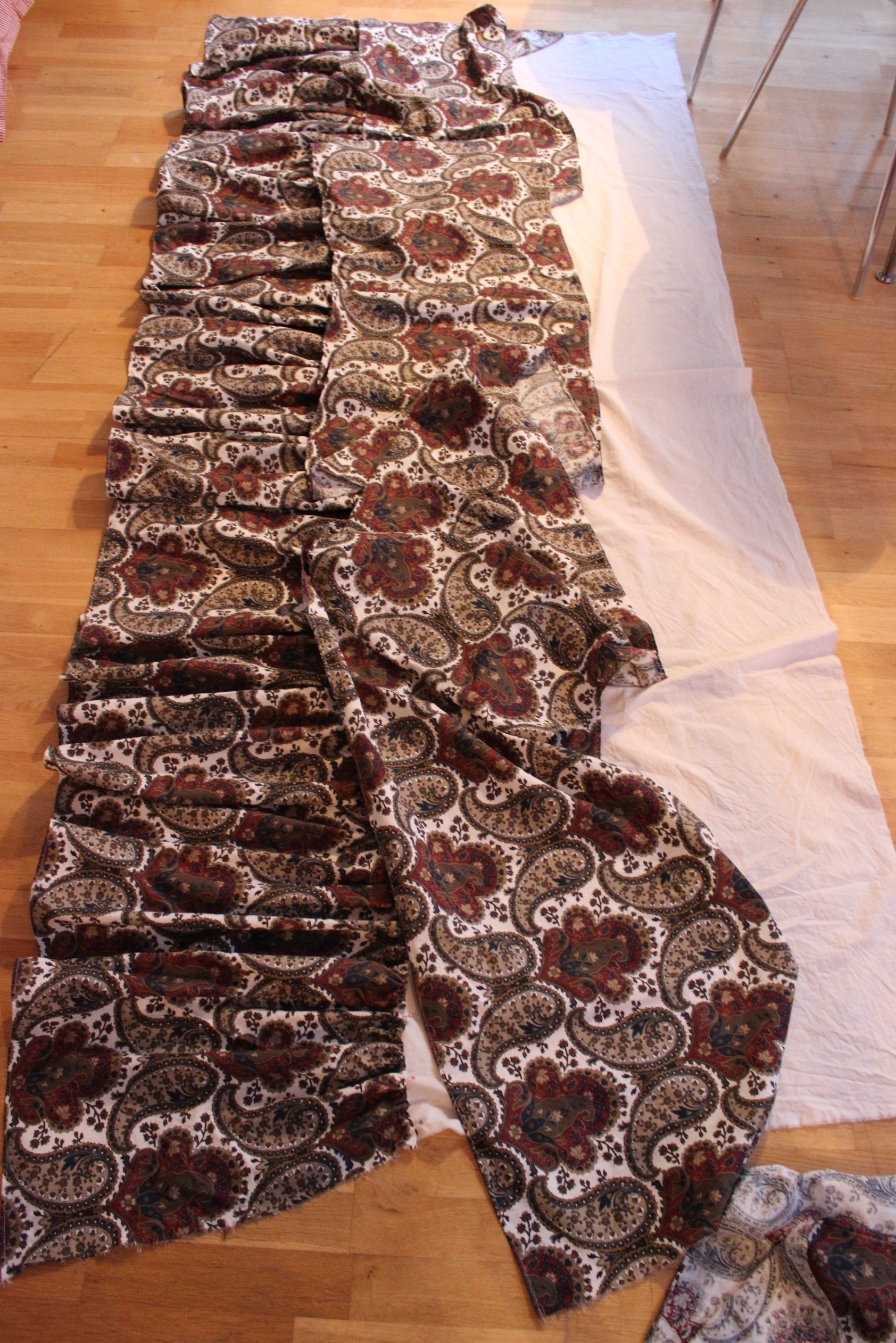
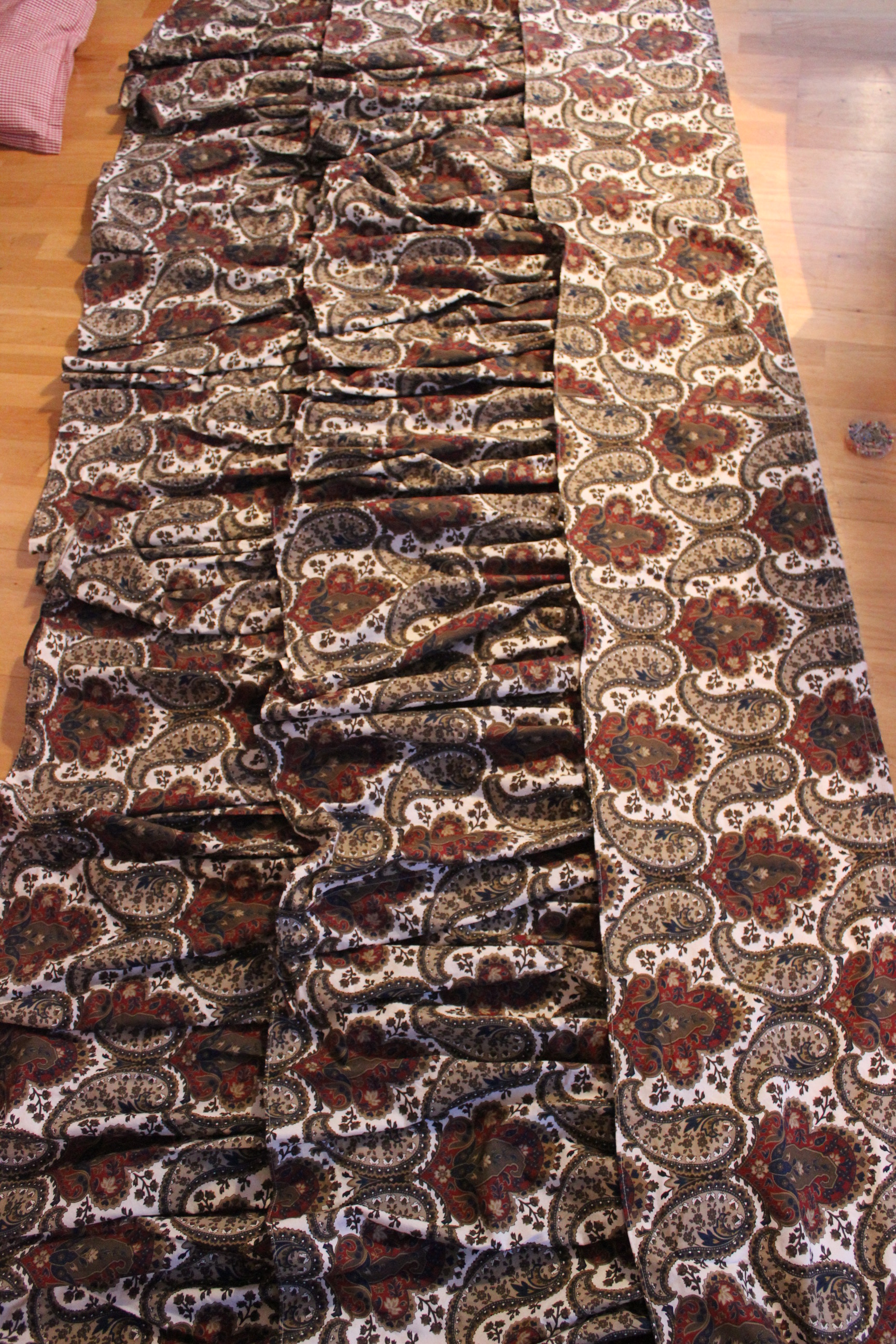
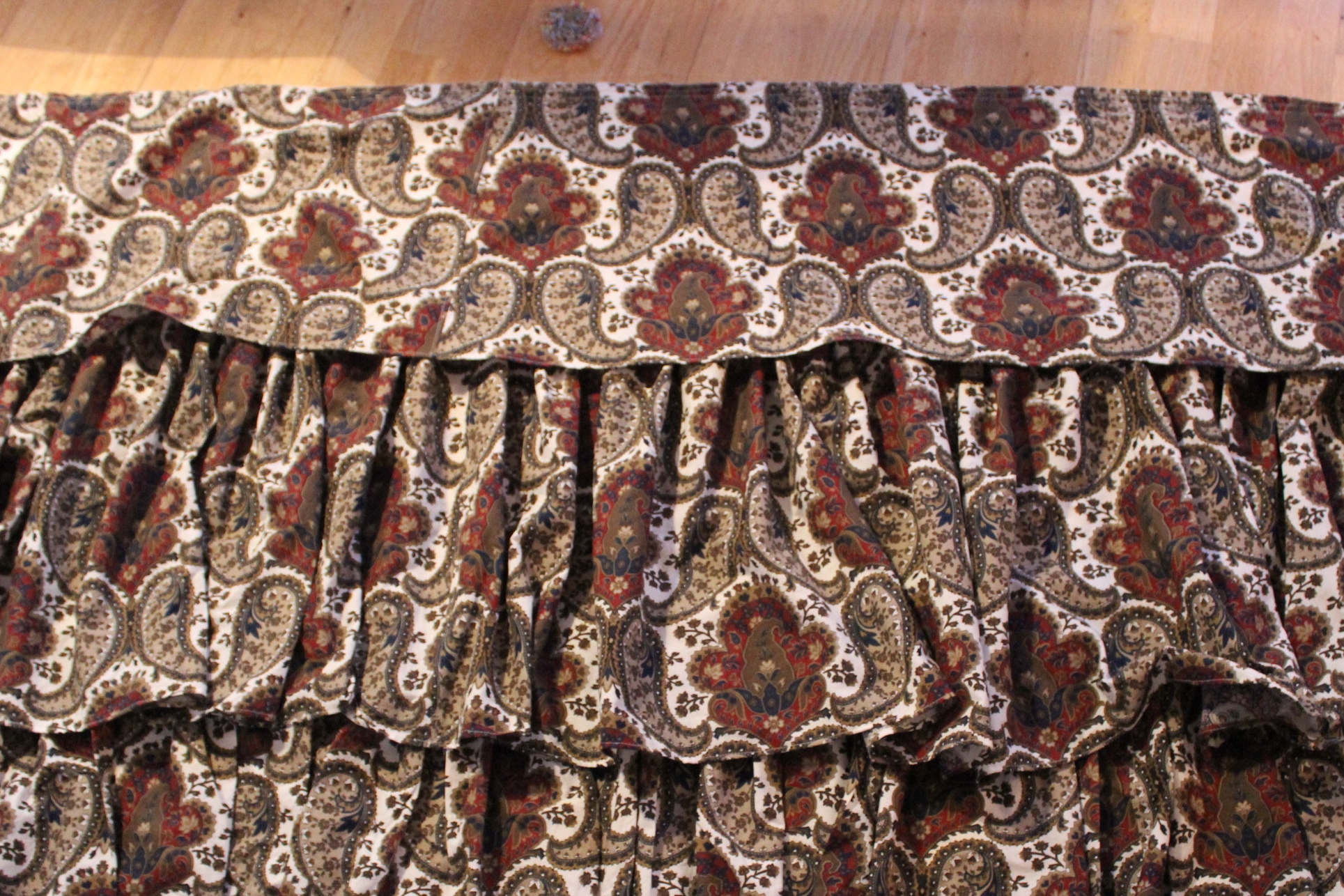
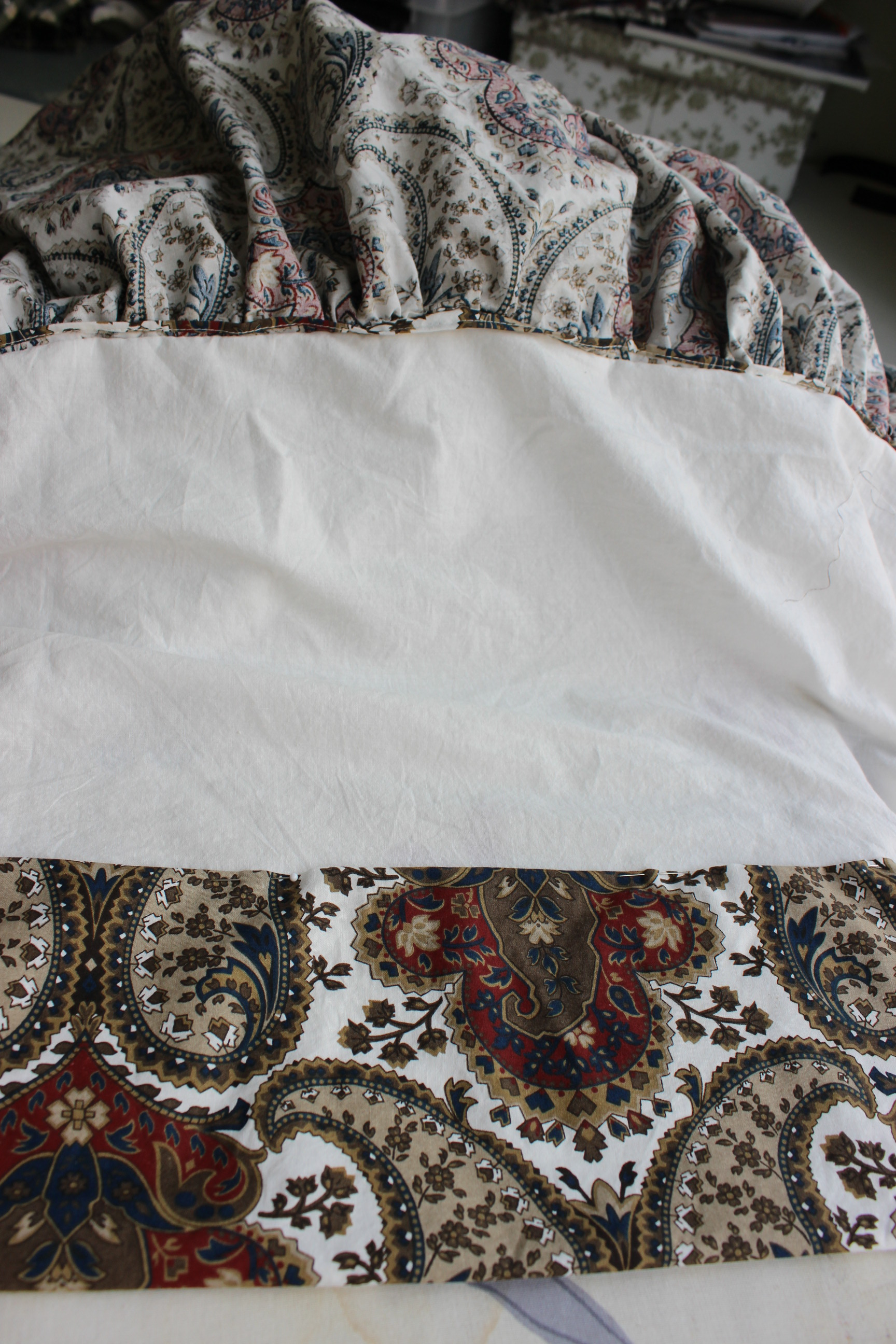
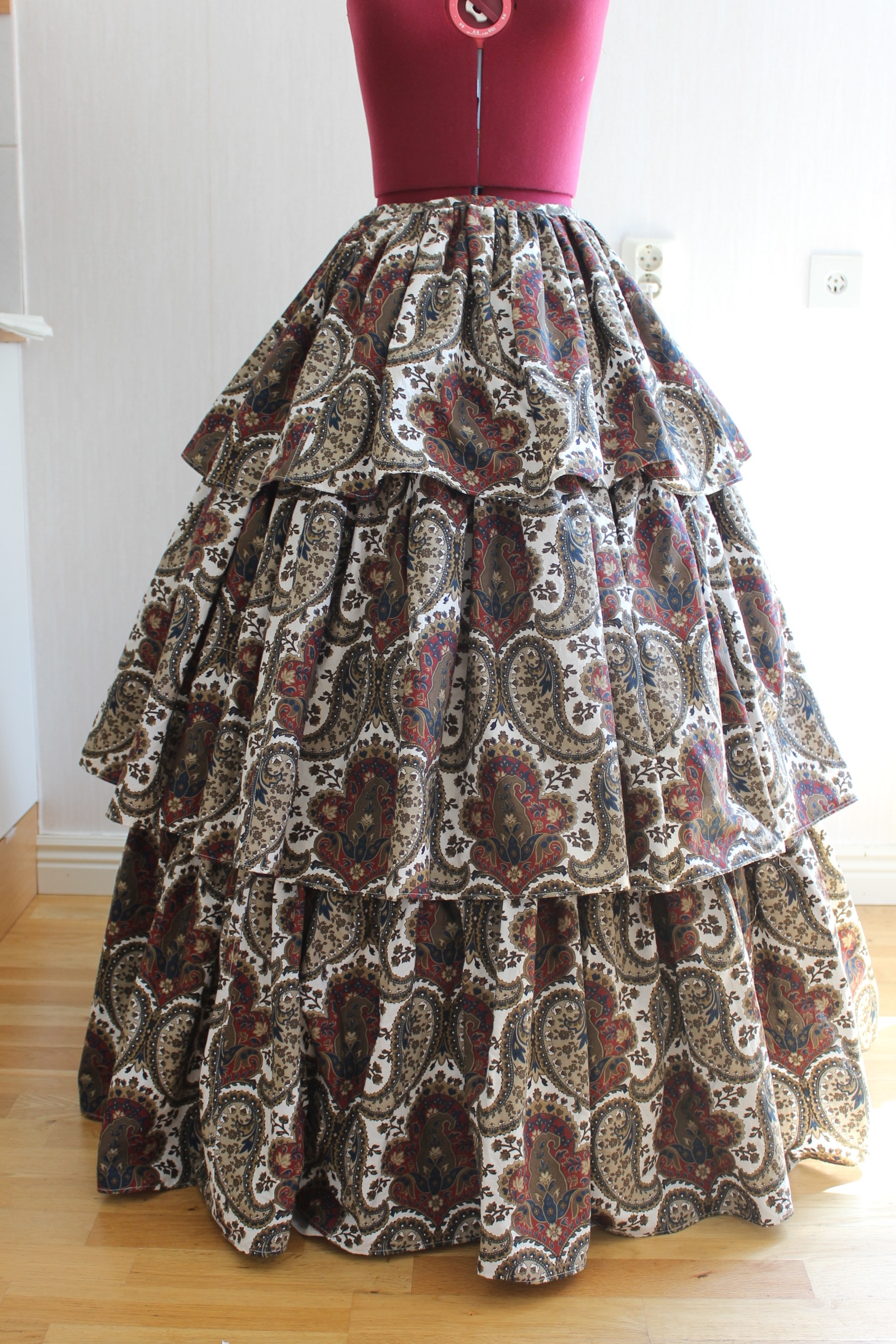
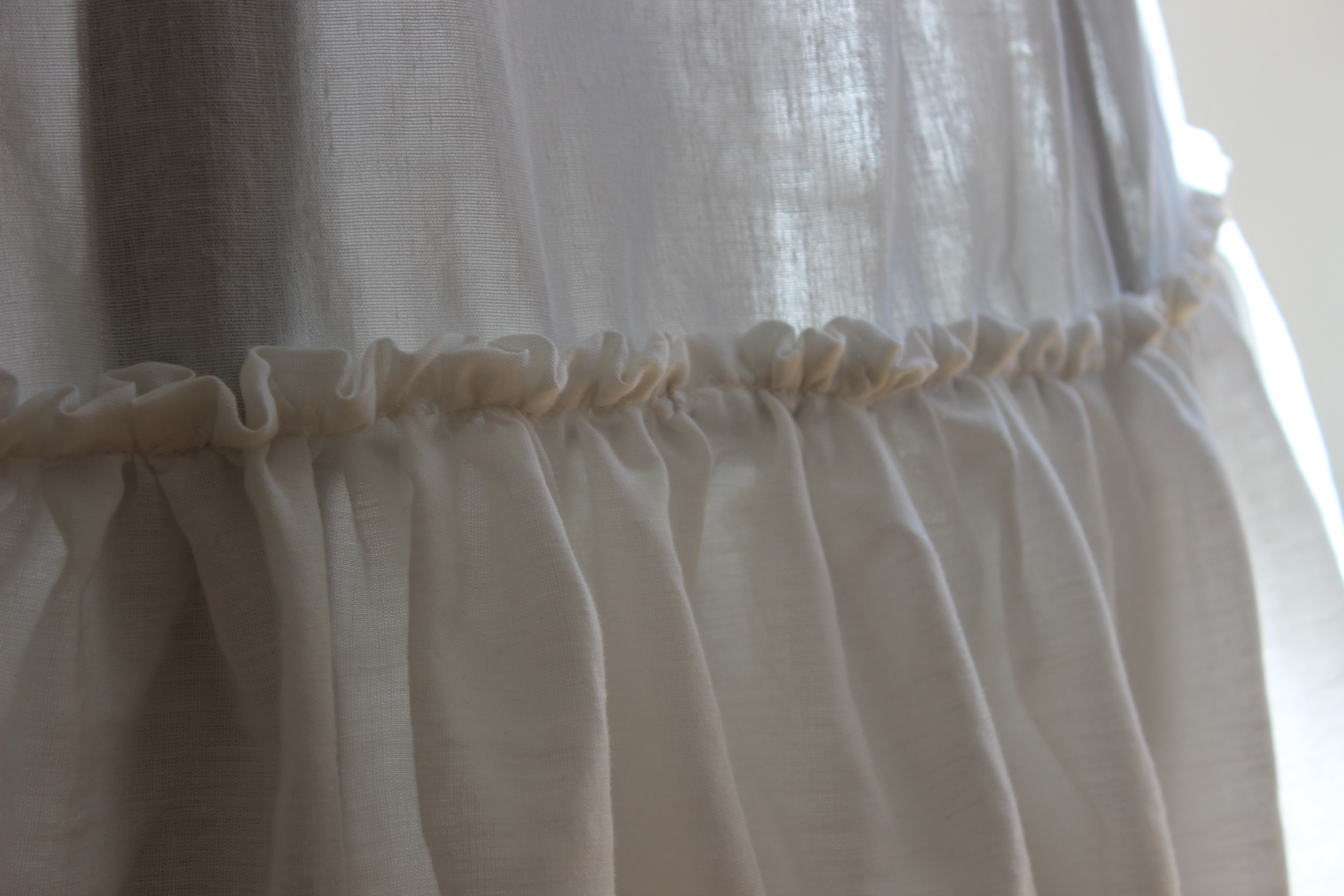
I decided to make the skirt in three sections, attached to one big piece of underlayer, using 4 times the width of the base for each of the ruffels. I made sure they were all wide enough to overlap each other, and stiched them togeter, hemmed and sewed a gattering thread along the top.

Then I marked the placement on the white cotton under layer. IMG_9711

IMG_9712Using all of the apartment for this.

Then I gattered one row at a time, and pinned it in place at the markings to get them perfectly straight.IMG_9714

IMG_9715Starting on row two.

When all the rows where in place it looked like some huge ugly curtain. IMG_9716

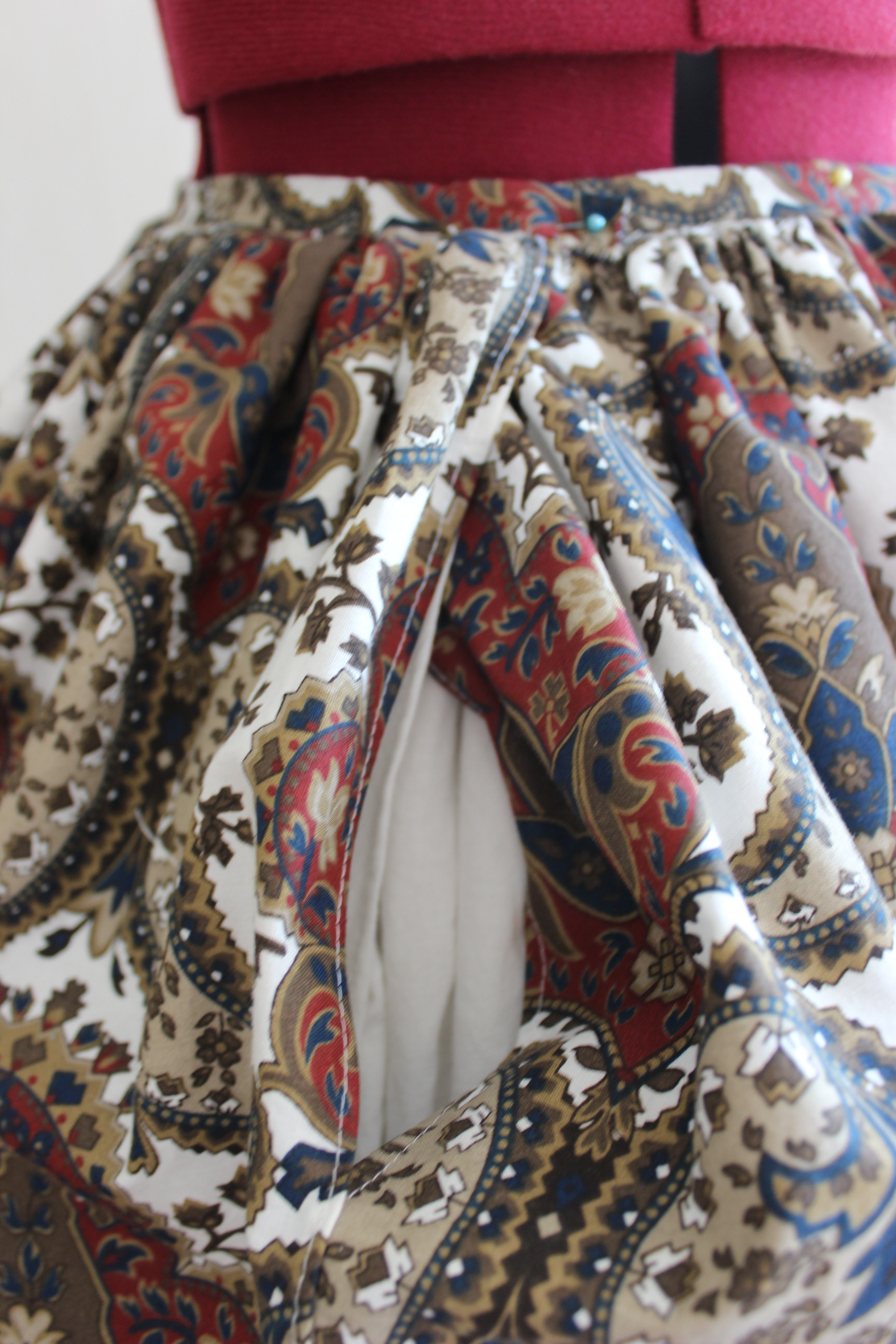
As you can see, I almost didn’t gattered the top row at all. Because it will be gattered anyway when I attach the whole thing to the waistband.IMG_9718
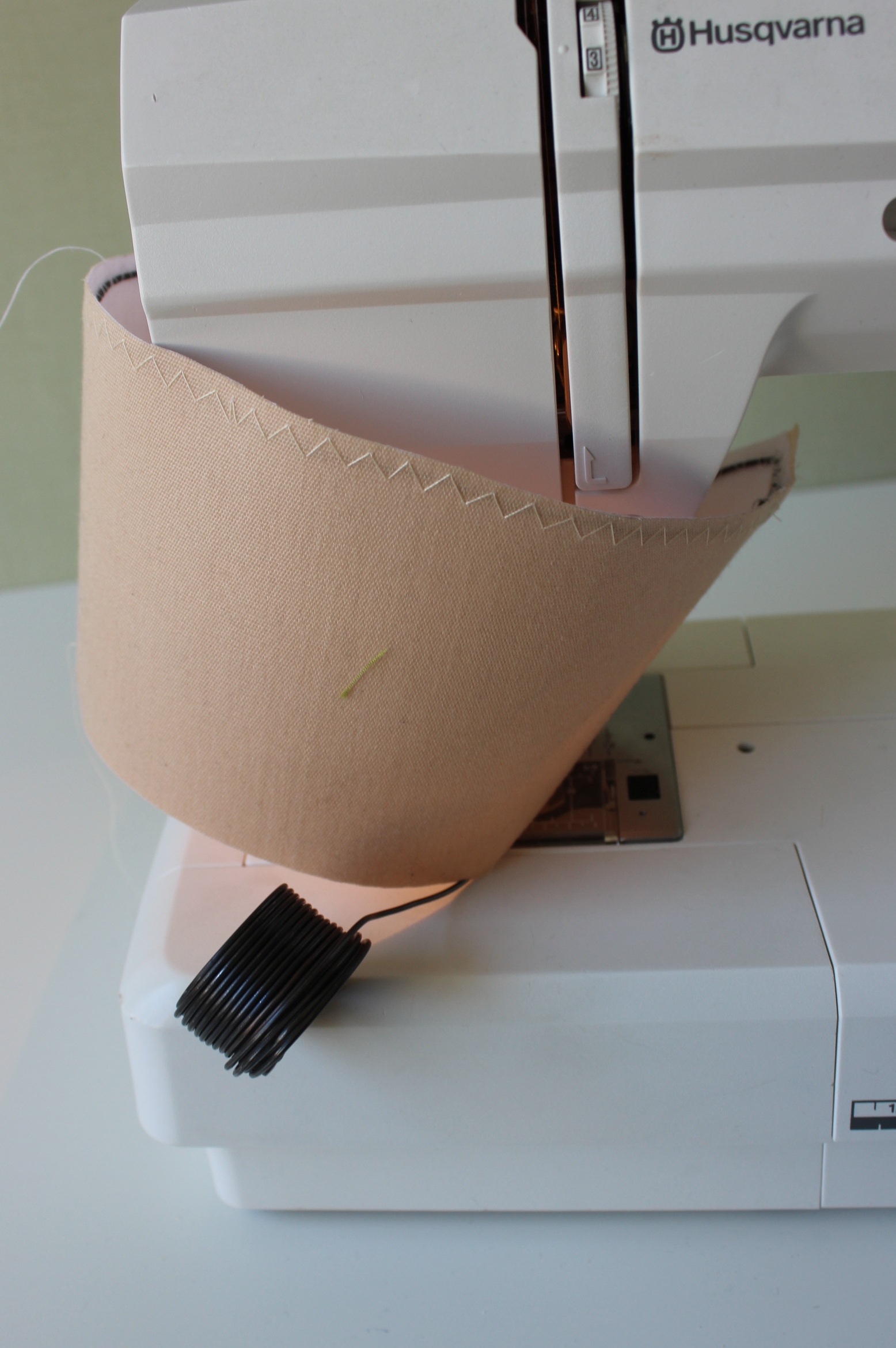
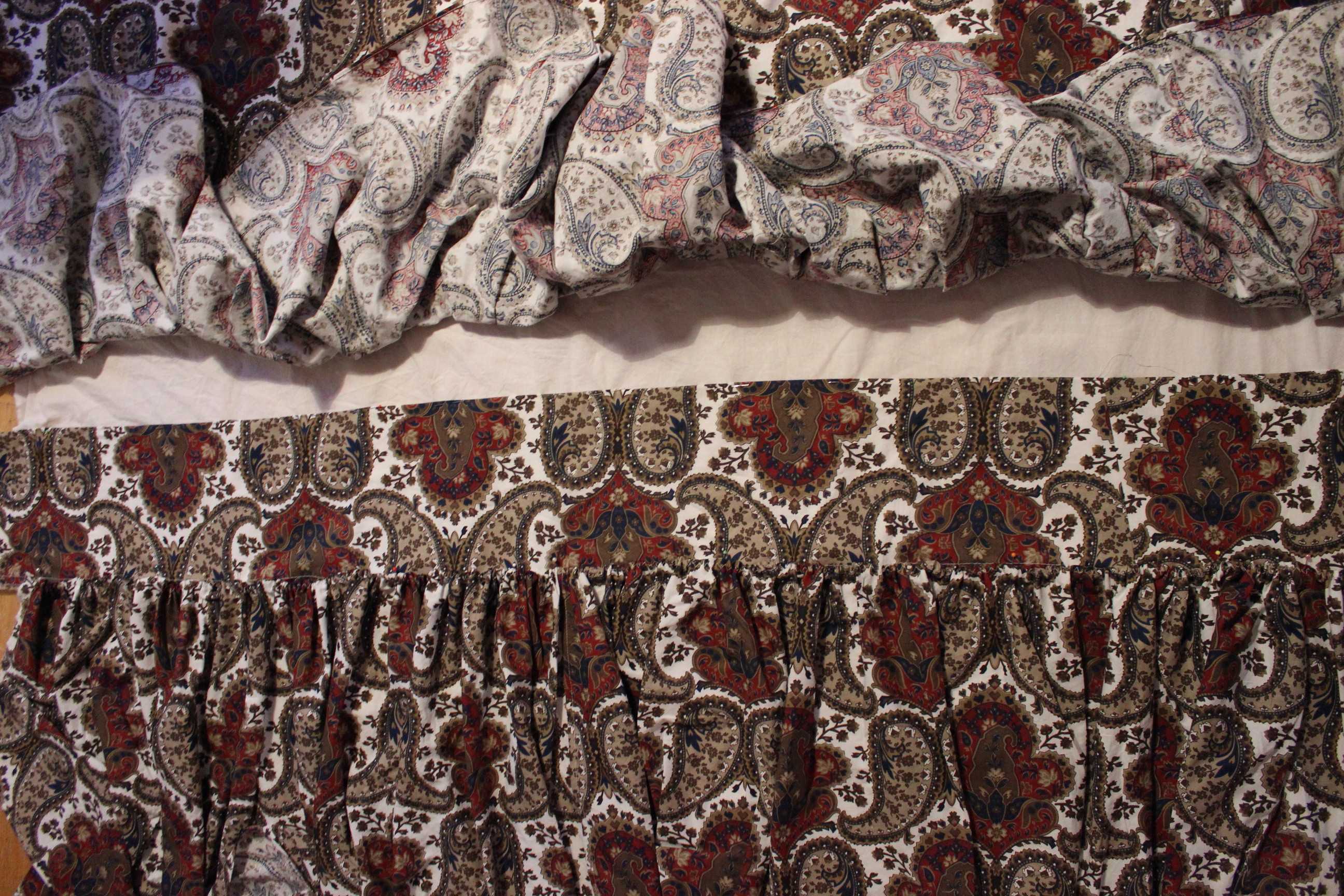
Even though the ruffels overlap each other, I decided to put some exess fabric in between the rows to make sure no white will be visible once worn.IMG_9719

I did the same at the bottom, using the strip of pasisley to make a nice  whide hem.IMG_9724

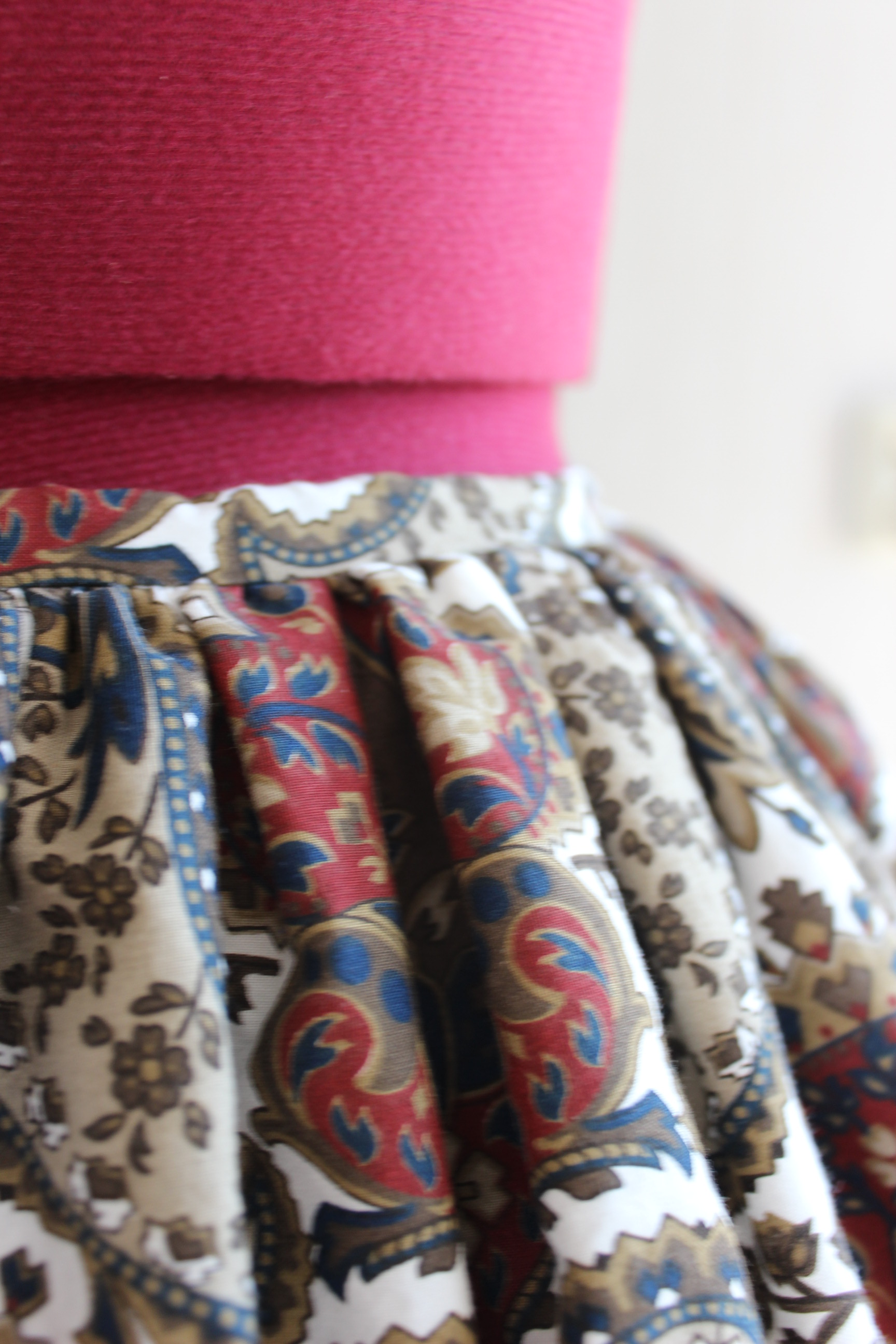
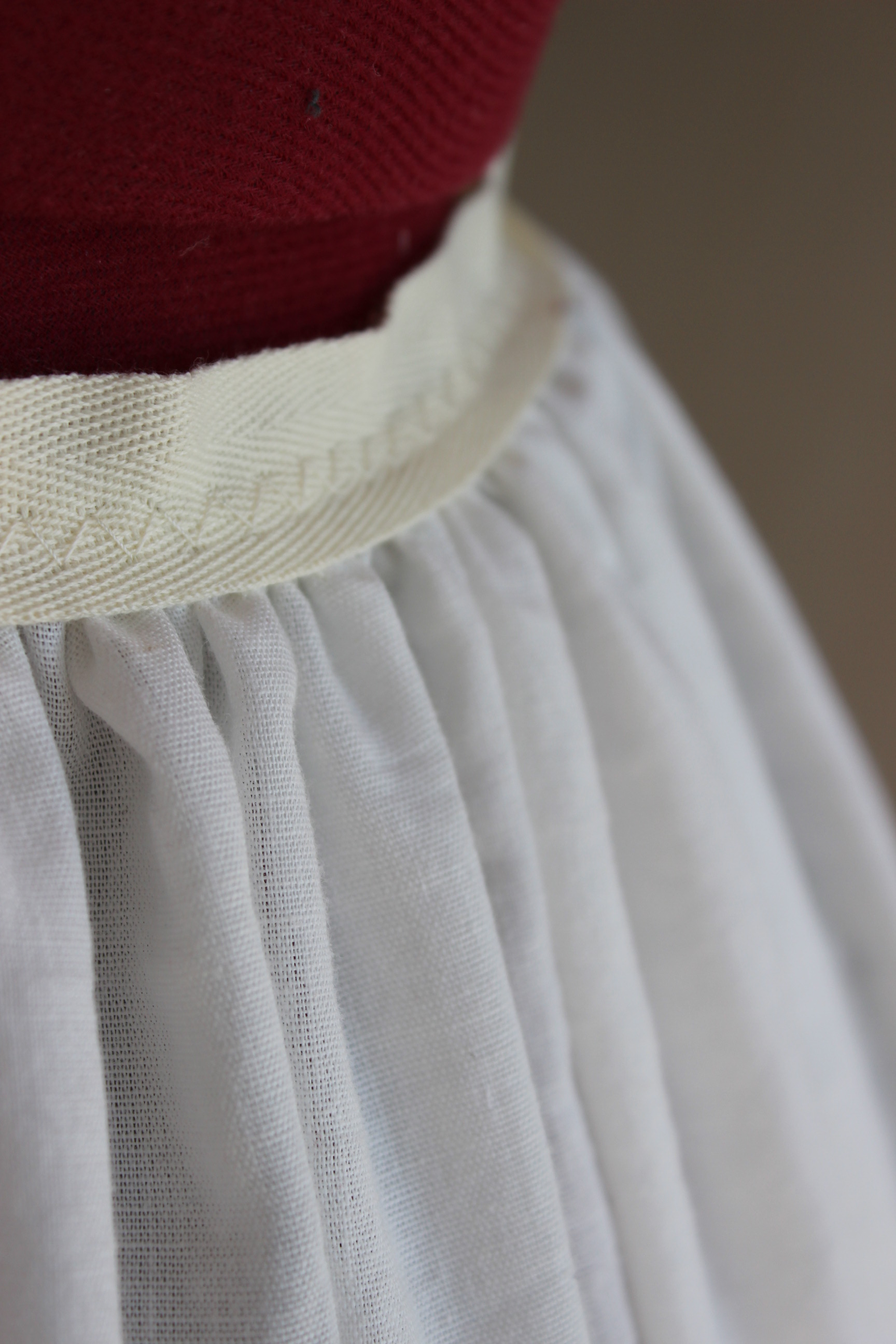
Then I stiched the whole thing togeter, gathered the wasit and stiched it to the wasiband, and attached a hook and eye for clouser.

The finished skirt (worn over a crinoline):IMG_0167

IMG_0169

IMG_0170

IMG_0171

IMG_0168

The HSF facts will be included in the next post (where I’ll show the bodice), but I will give you some skirt facts right now just to make myself remember.

What: A 1850s skirt.

Fabric: 1 white cotton sheet (IKEA) and 1, 5 paisley cotton bedsheet (IKEA).

Notions: Thread, hook and eye.

Time: about 8 hours.

Bonnets and a Bergeré

This spring/summer have been quite intense regarding sewing for me. And as every costume requires it’s own special headwear I haven’t just been making clothes this spring – there have been quite a lot millenery going on as well.

And since The Huge Picture Hatt alredy got its own post, I thought it was time to show a bit more about some of the other pieces of headwear I’ve been doing/re-doing this summer.

Lets start with the 18th century Bergere.

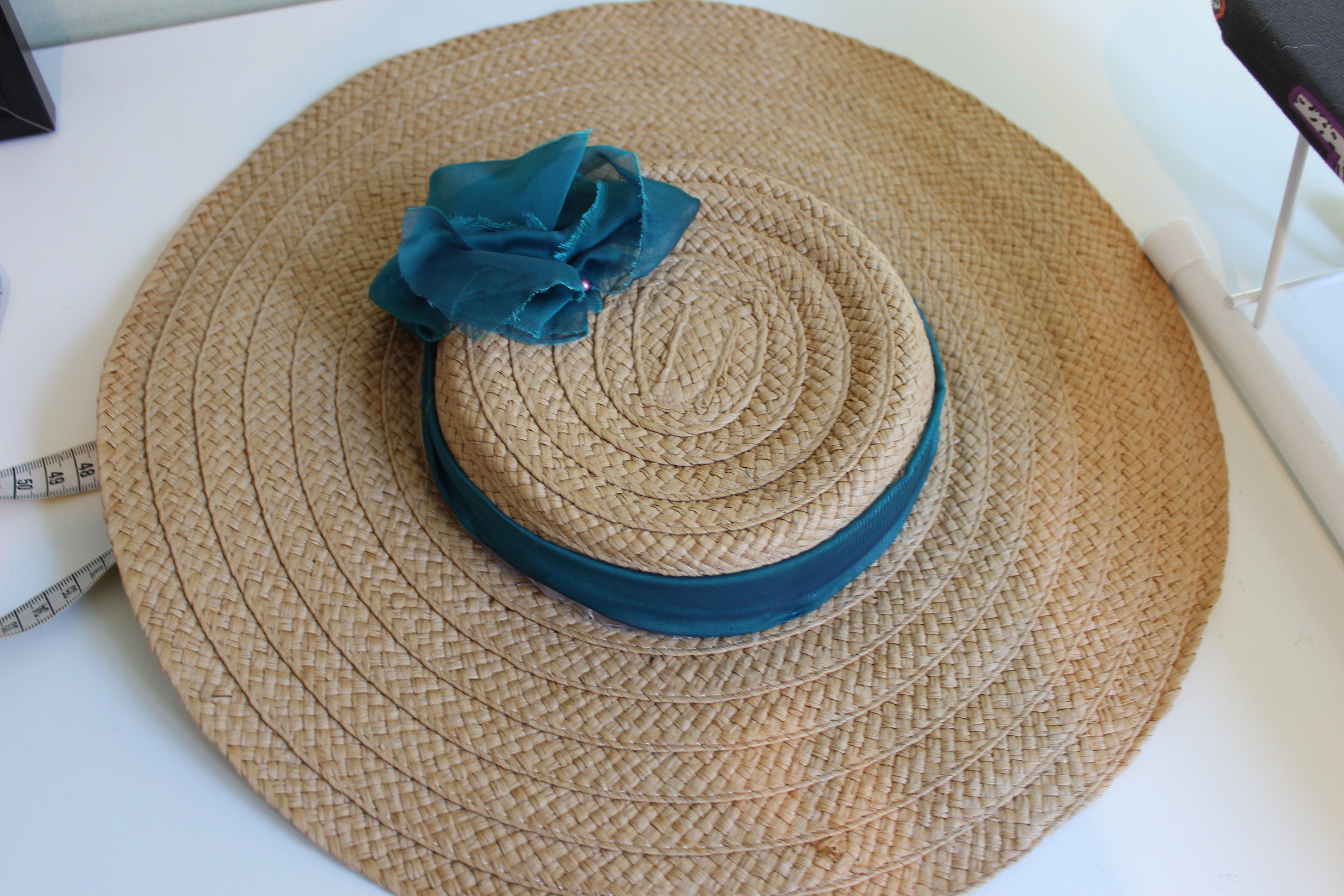
You might remember it from last year (when I made it from an regular sunhat).IMG_2593

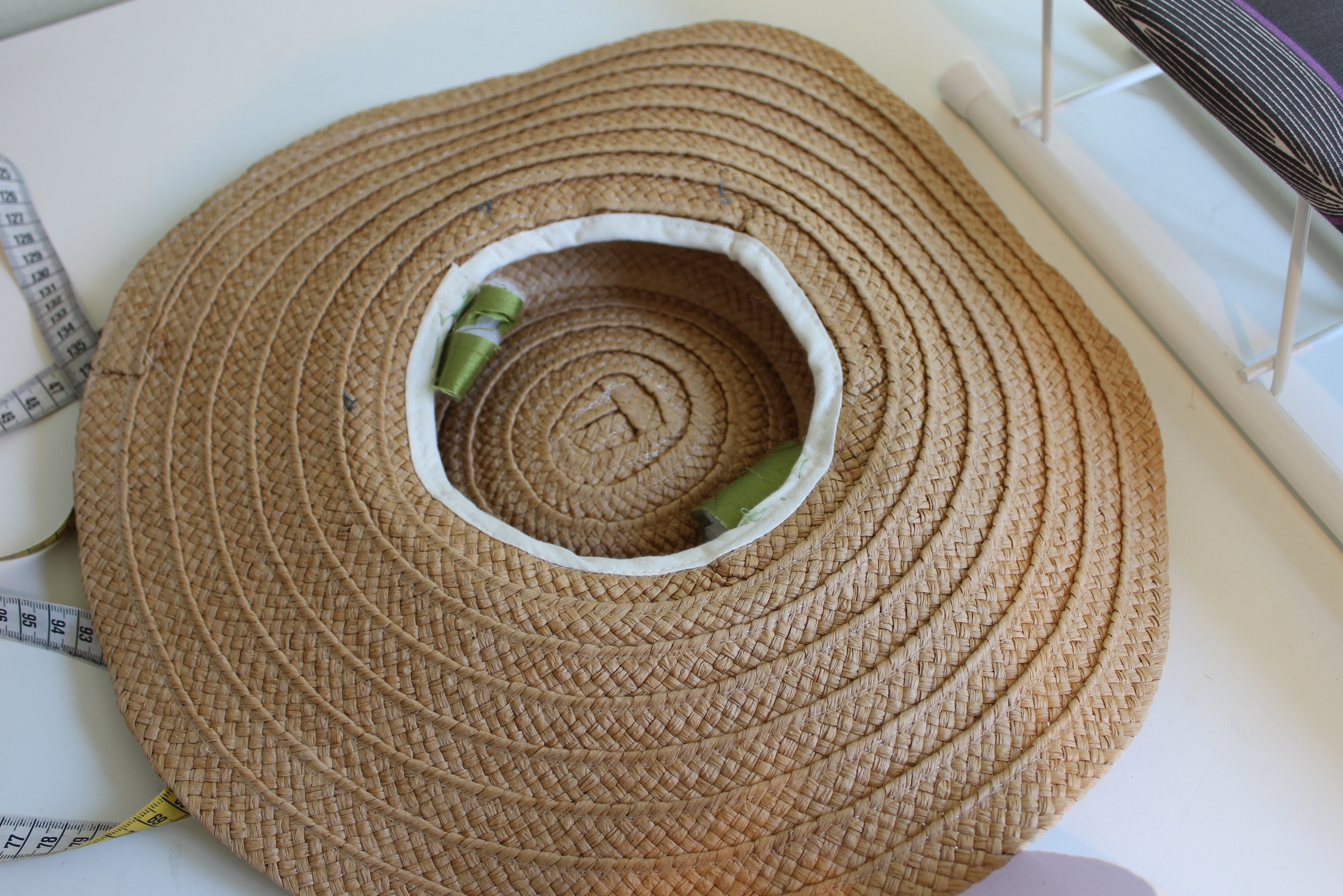
This is how it looked when I found it in my big hat box, and decided to make some changes to it.
IMG_7859IMG_7858

So I un-picked those green pieces of fabric inside the hat (I put them in last year to get something to attach the hair pins in, but it does work better to just push them through the hat).

Then I stitched on some metalic wire at the edge of the brim, and covered it with white bias-tape.
IMG_7891
IMG_7892Then I re-trimmed it with a plain green twill-tape.

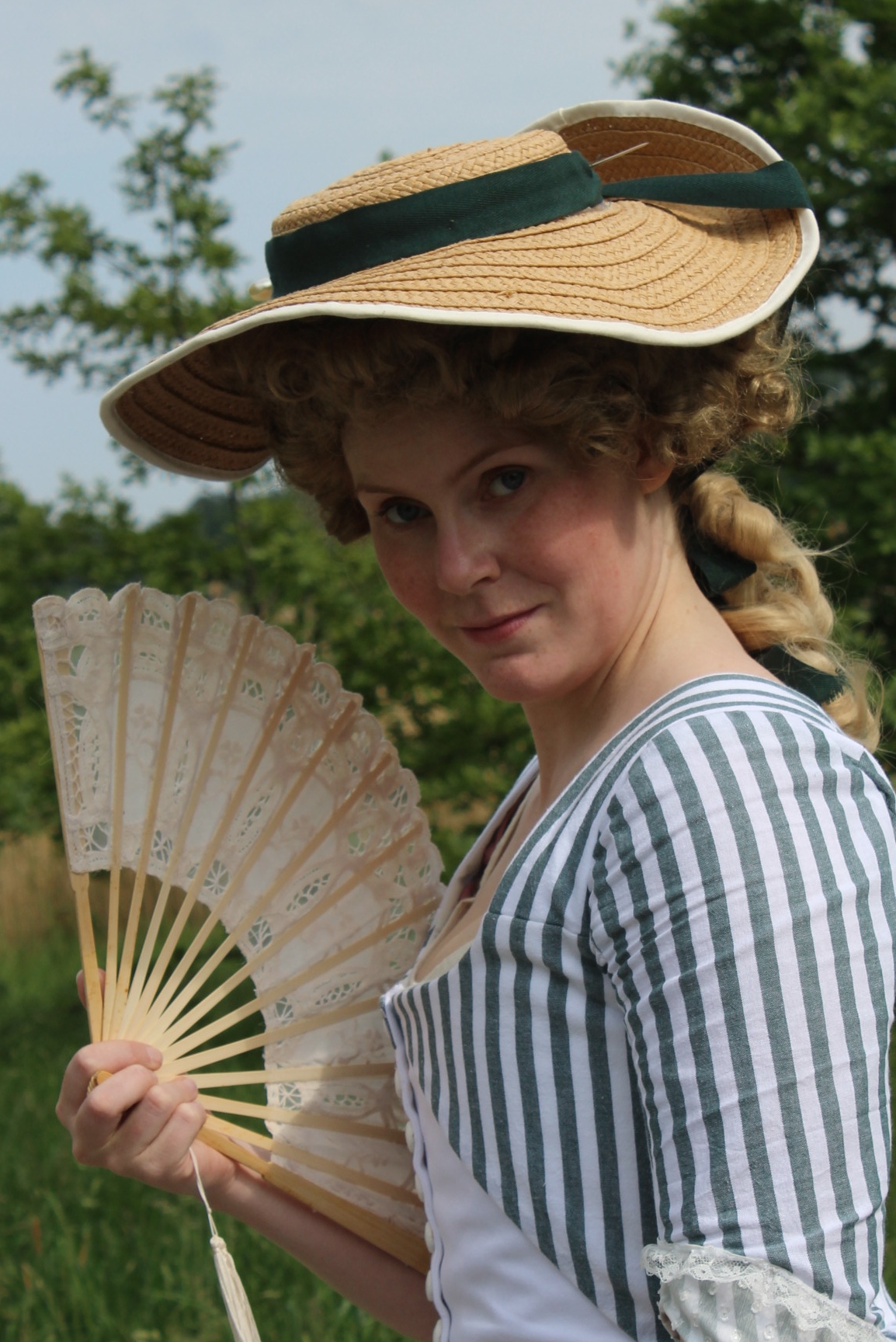
And this is how it looked when I wore it with the brim tured up, at the big historic picknic.IMG_8785

***

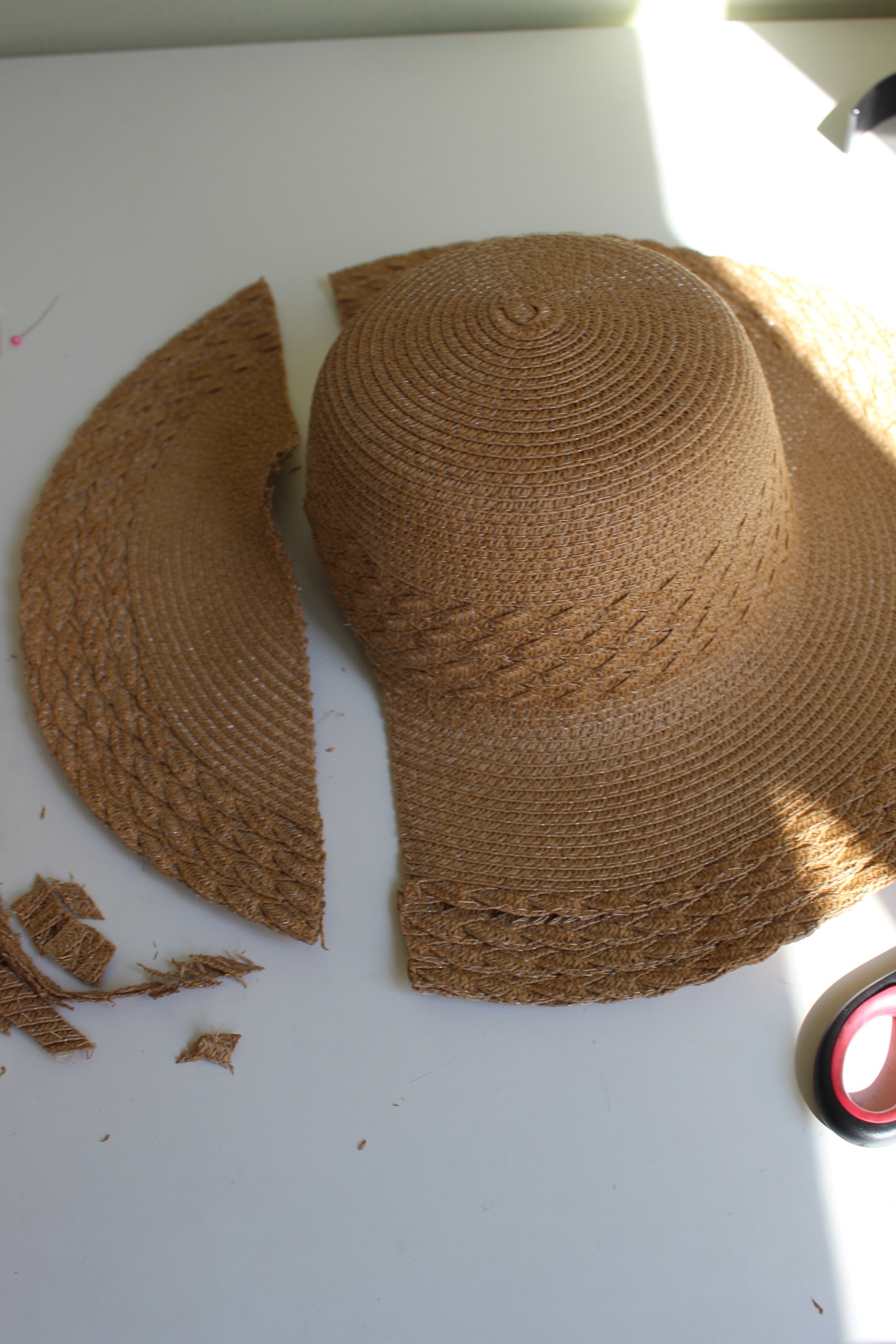
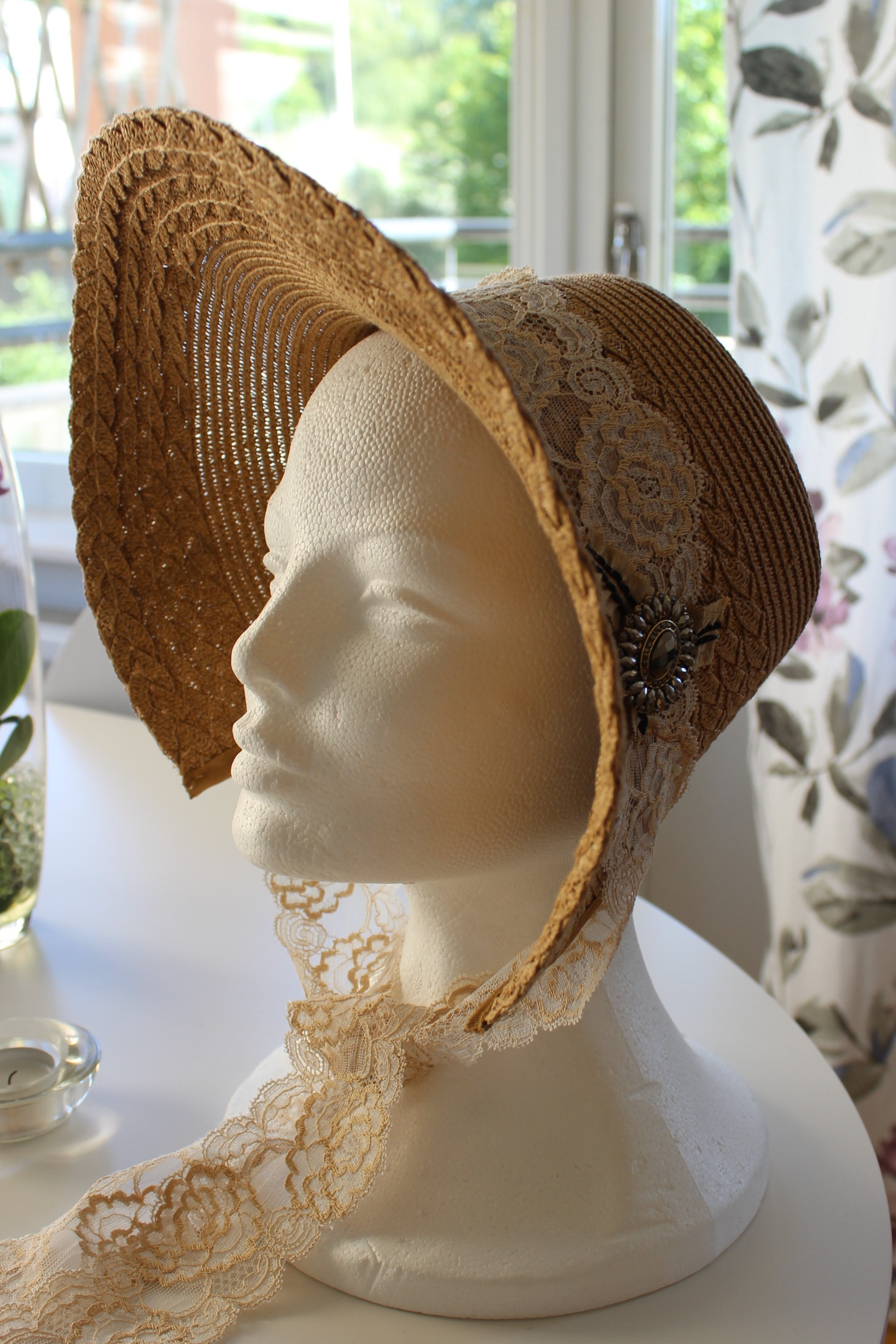
Next up is a  regular straw hat that I’ve turned into a regency bonnet.IMG_7073

I folded the hat in two, made a mark where to cut, IMG_7879

and grabbed the scissors. Make sure to stich the rows down before you cut, so the hat dont un-ravel.IMG_7880

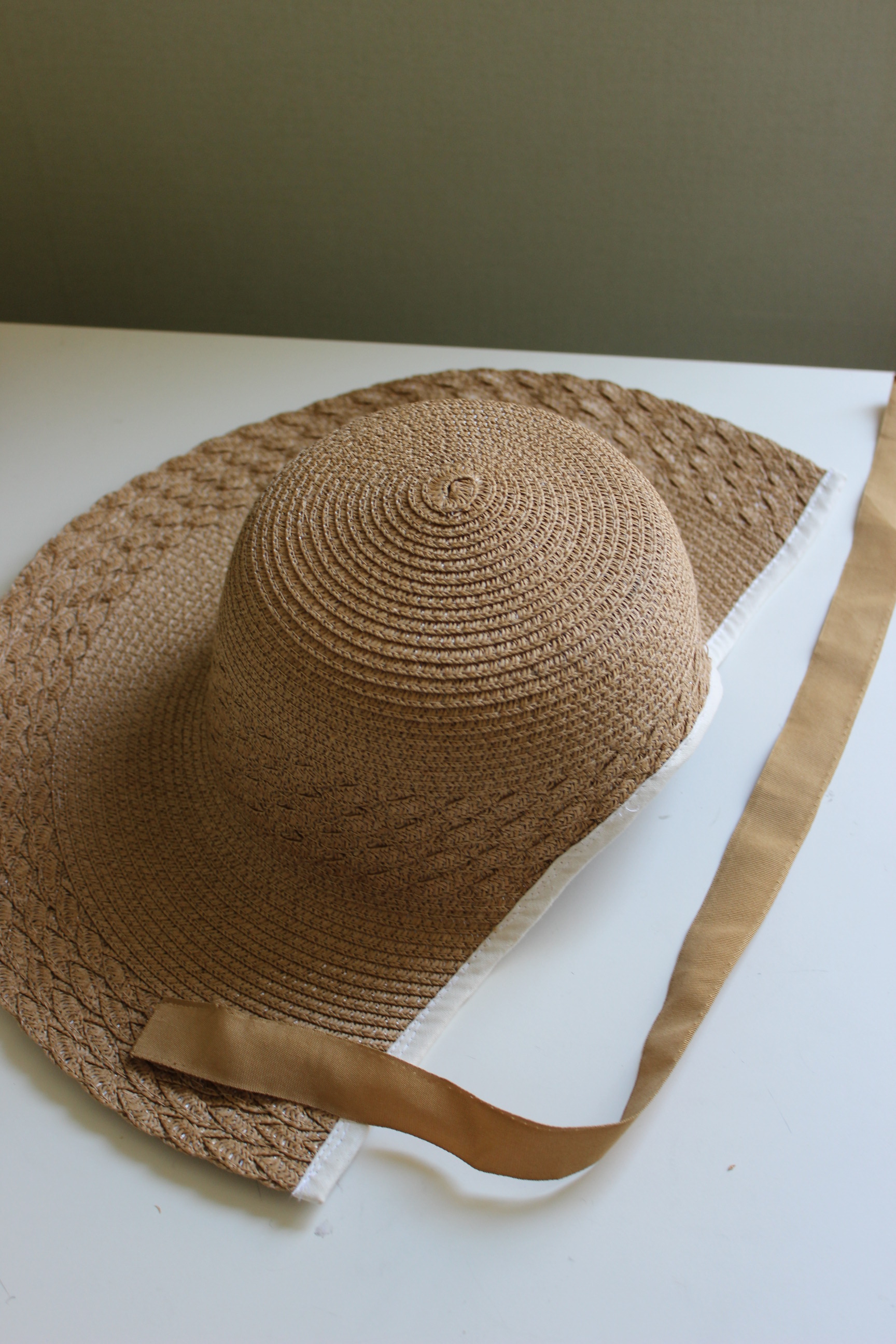
Then I stiched on metal wire along the cut line, and covered it with bias tape.IMG_7889I used white bias tape at first , but decided to change it to a  nude tone twill tape instead, to make it more inviseble.

IMG_8656Close up of brown/nude twilltape.

The un-trimmed hat.
IMG_7895 IMG_7894
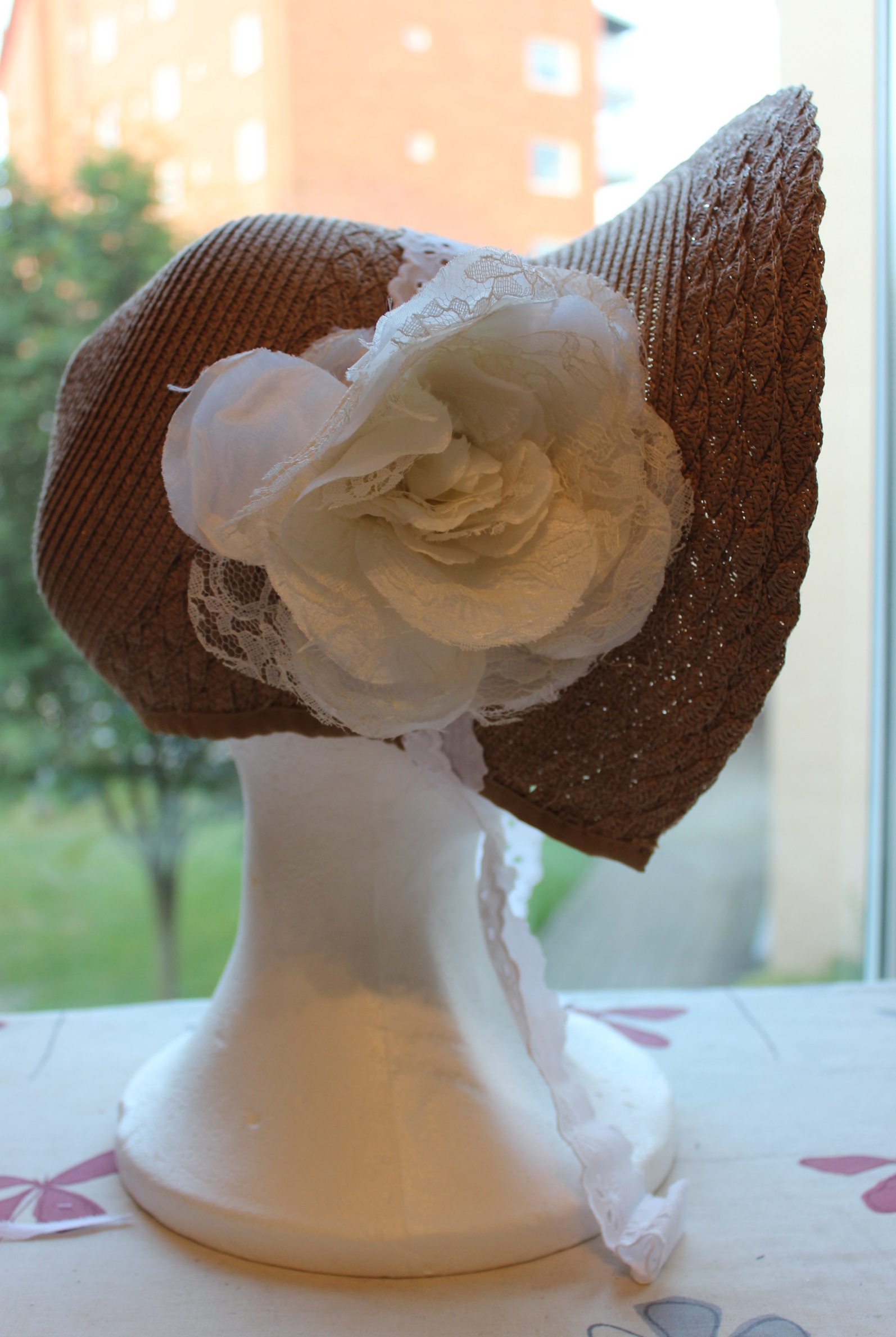
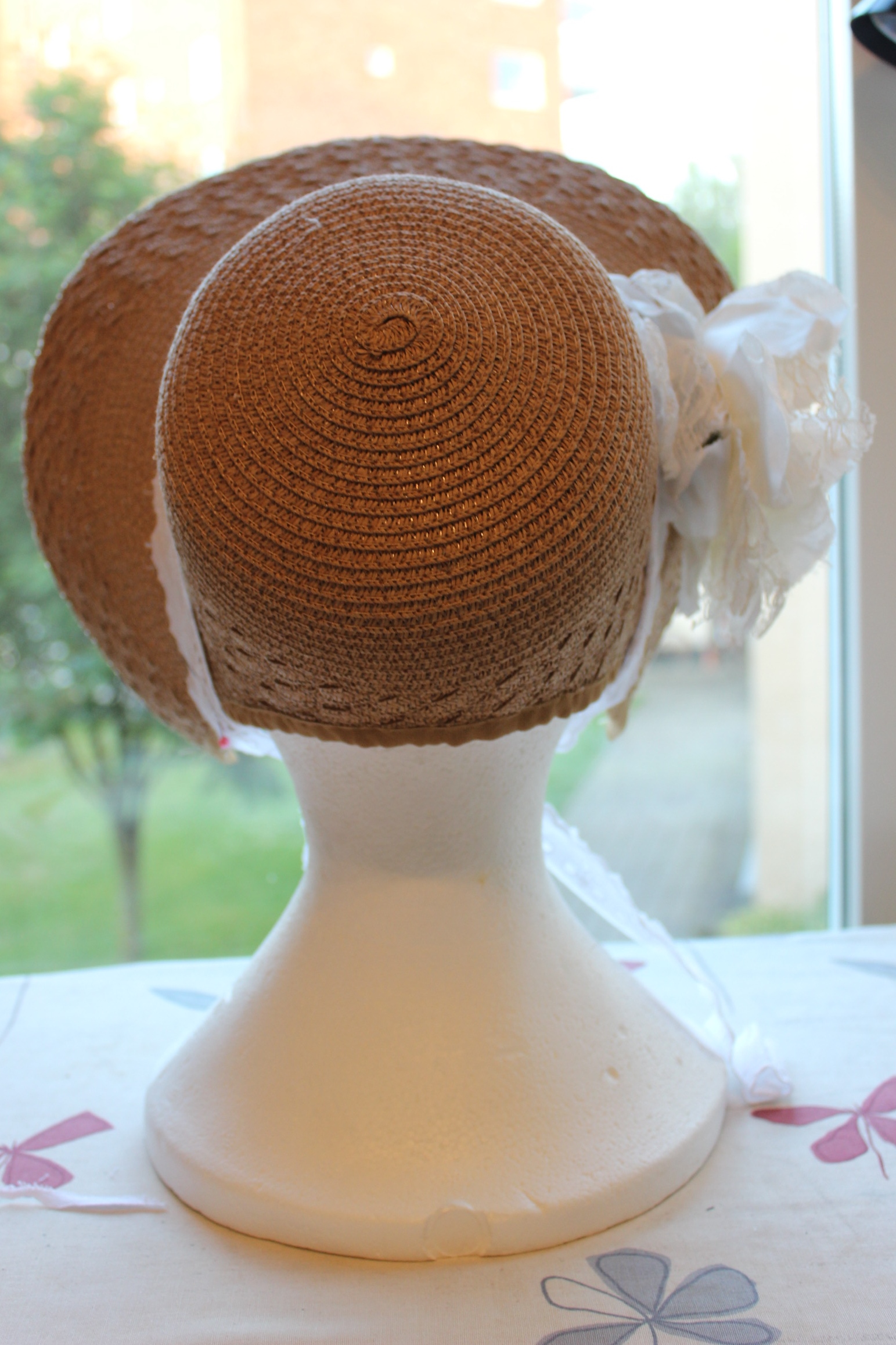
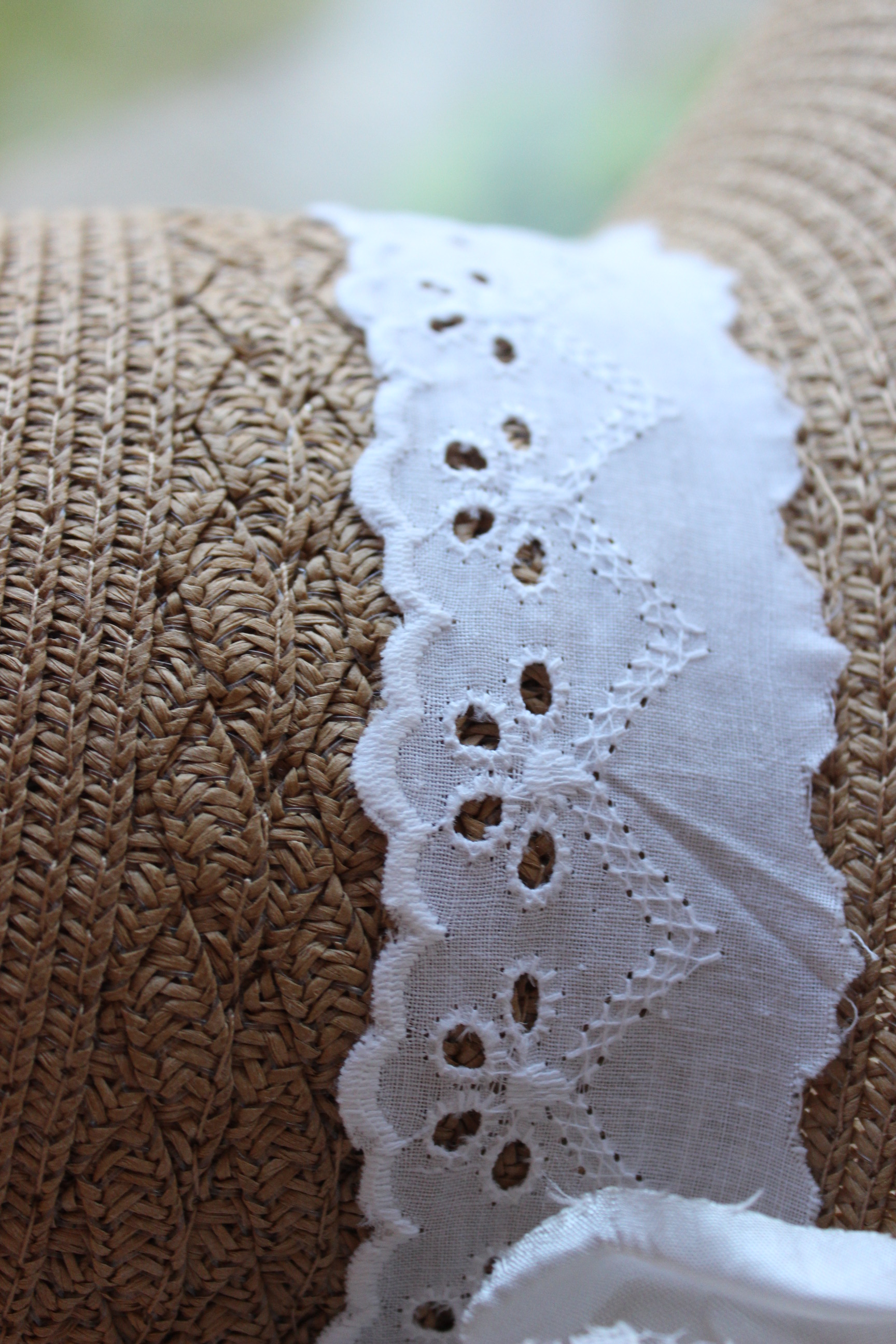
Then I pinned on some white lace and a big flower brosh I had in my stash.

IMG_8654

IMG_8653

IMG_8655

IMG_8657Altough it does look pretty, it looks a bit too costumey for my taste.

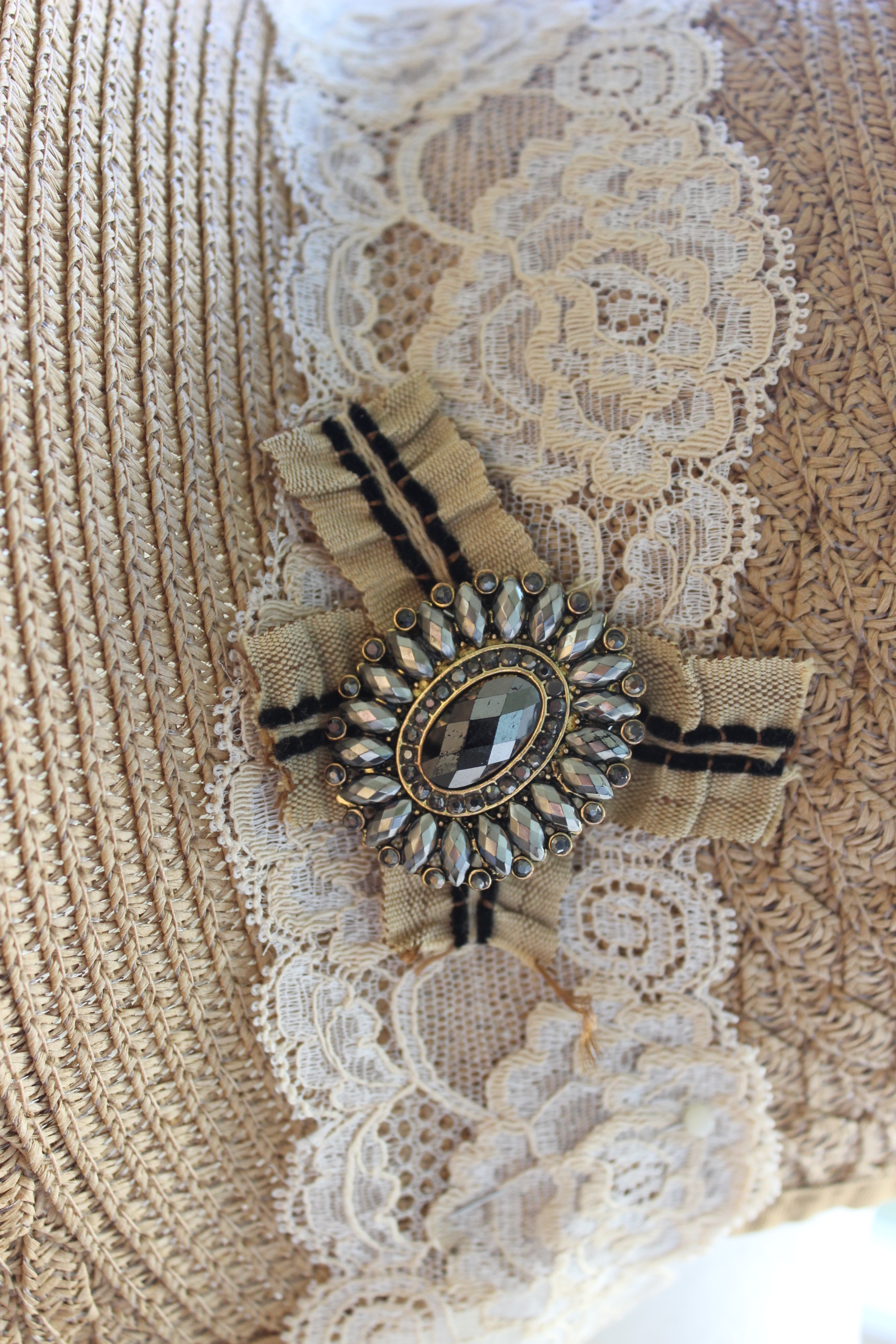
So I re-trimmed it using another piece of lace and some leftover ribbon from my yellow regency gown paired with a black brosch. Much better.IMG_9198

IMG_9195

IMG_9197

And here is how it looked worn togeter with my yellow regency dress.IMG_9132

 ***

And finaly a 1840s bonnet made from skratch.

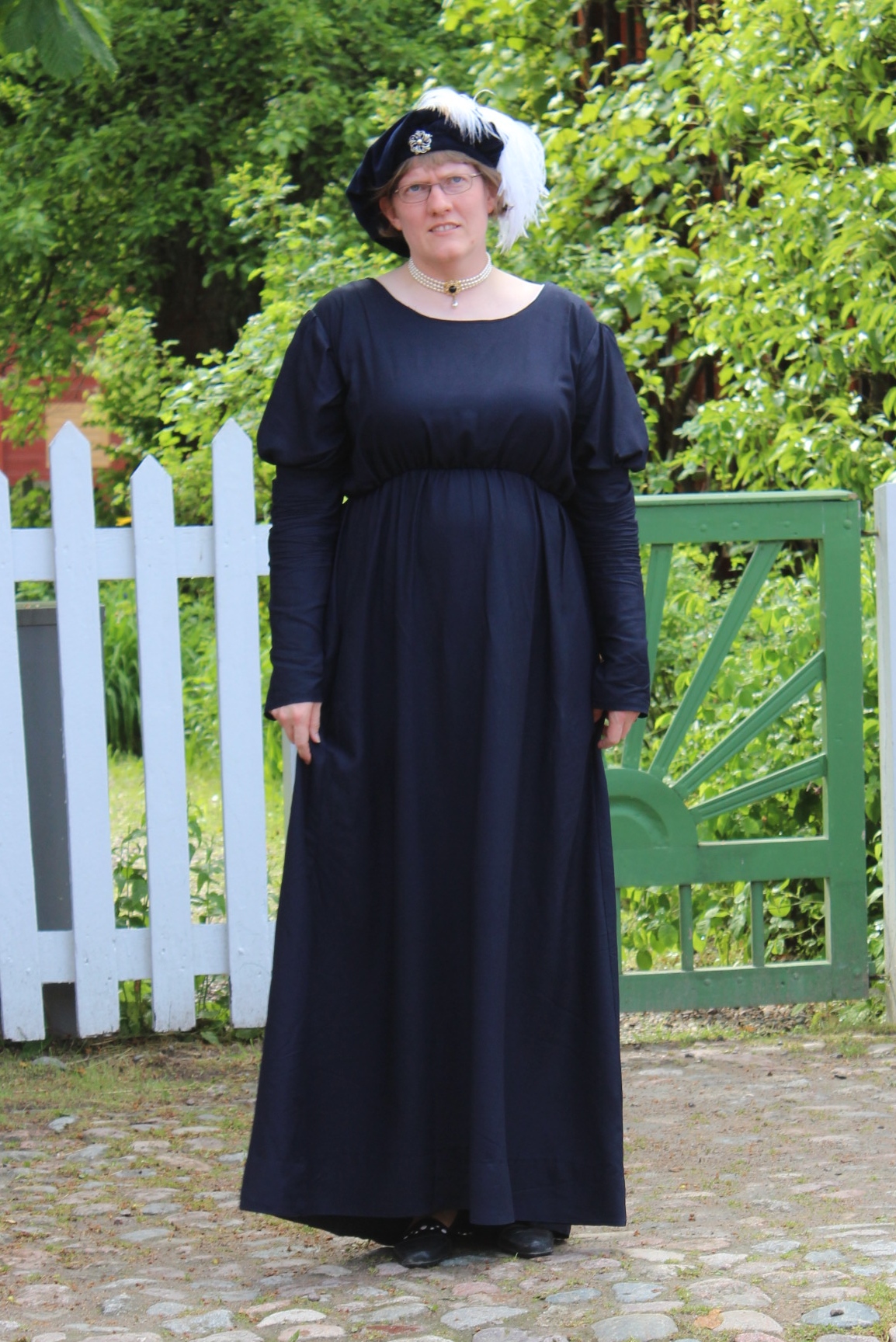
I used the same pattern (and tecniques) as my brown velvet bonnet, only cut it a bit smaler to get a slimer model for this bonnet.

I used thick canvas and super stiff  interfacing as the inner layers. And a white striped cotton voile for fashion fabric.IMG_7870

Before sewing anything togeter I stiched wire to all the pieces.IMG_7875

It was a bit tricky to sew inside the hat piece.IMG_7882

At least I only broke one needle…IMG_7887

Then it was time to start the hand sewing.  IMG_7890I attached the “lid” and covered it with fashion fabric.IMG_7900Then I stiched on the brim and more fashion fabric (no pictures sorry). And finaly I attached the lining on the inside.

At this stage I was ready to throw it out, it looked so terrible. The fabric was puckering and nothing I did would make it lay flat. I did a final try and decided to trim it to see if that would make it look any better.

It is fantastic what some pieces of lace can do to a domed project. It does actually look presentable.IMG_0454

IMG_0452

IMG_0457

IMG_0449

IMG_0451

IMG_0453

An this is how it looked this weekend when I wore it for a photoshoot.IMG_0207(You even get a sneak a peak of my next HSF project)

19th century Day with Dance-recidal

It’s been more then a month since I attended the 19th century day “Vid pumpen” in my citys old town, but I haven’t got around to write about it until now. So sorry for the delay, but here it is now.

In the beginning of June (the day after the big multi historical picknic) I put on my Regency attire for a day in the 18th century.
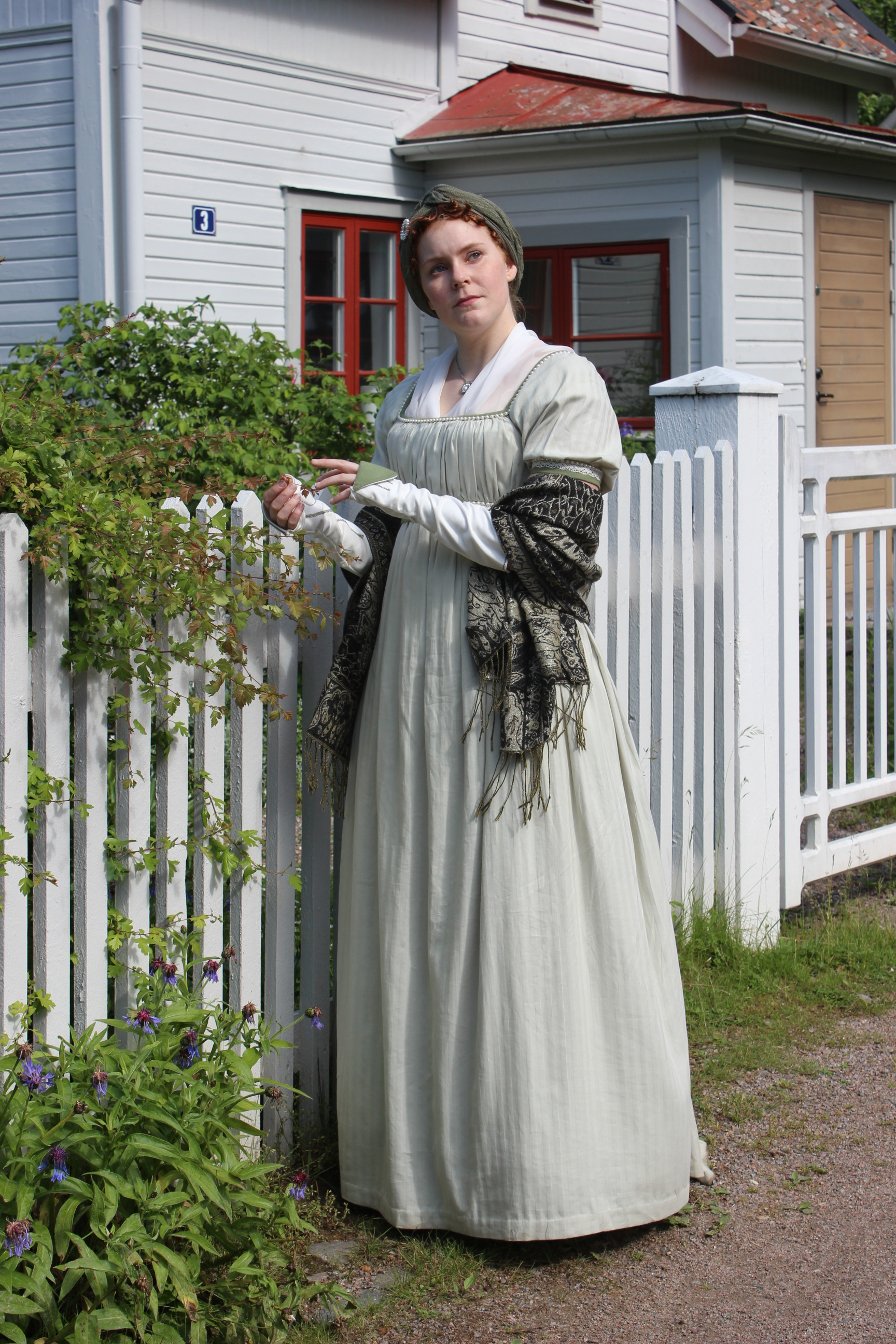
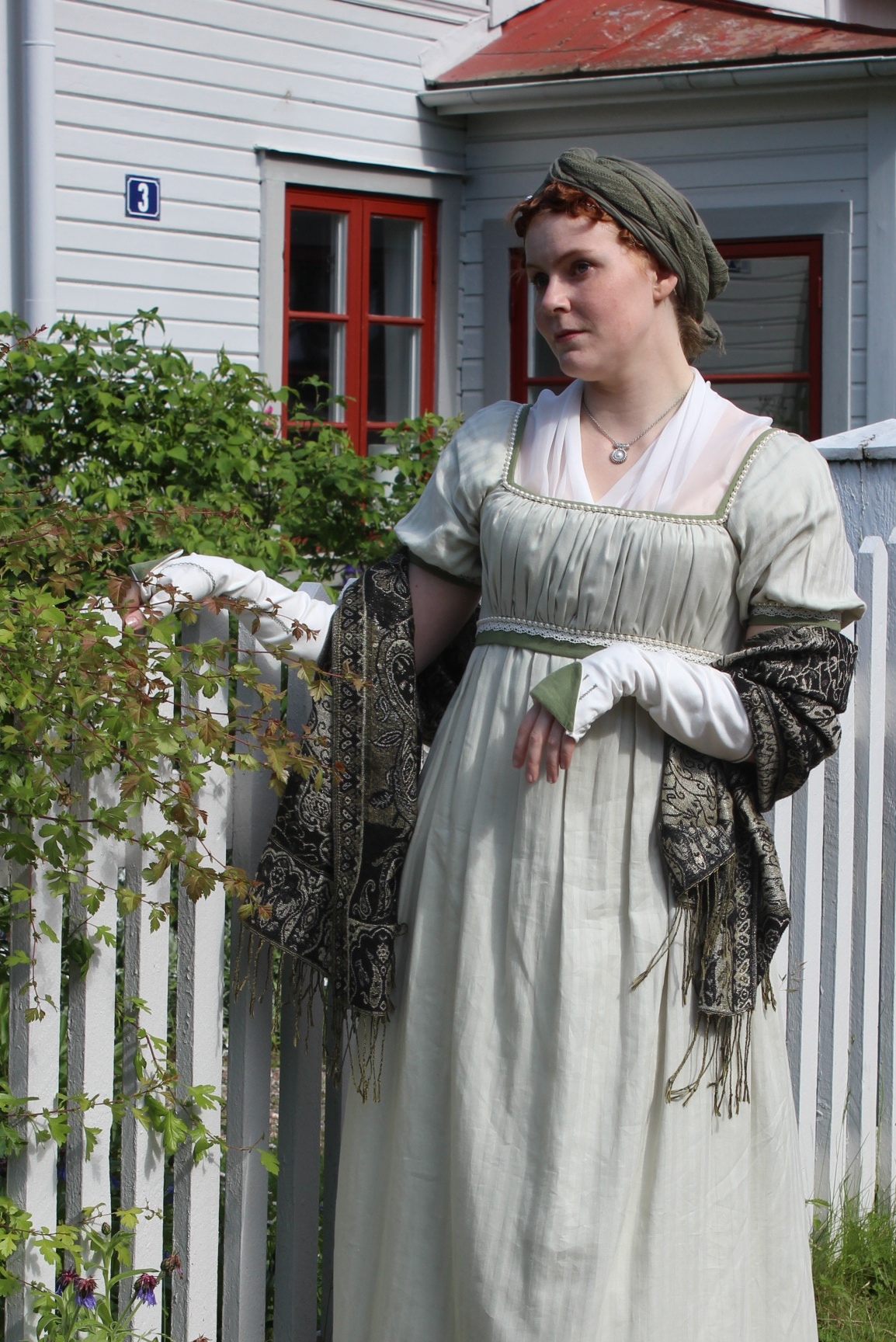
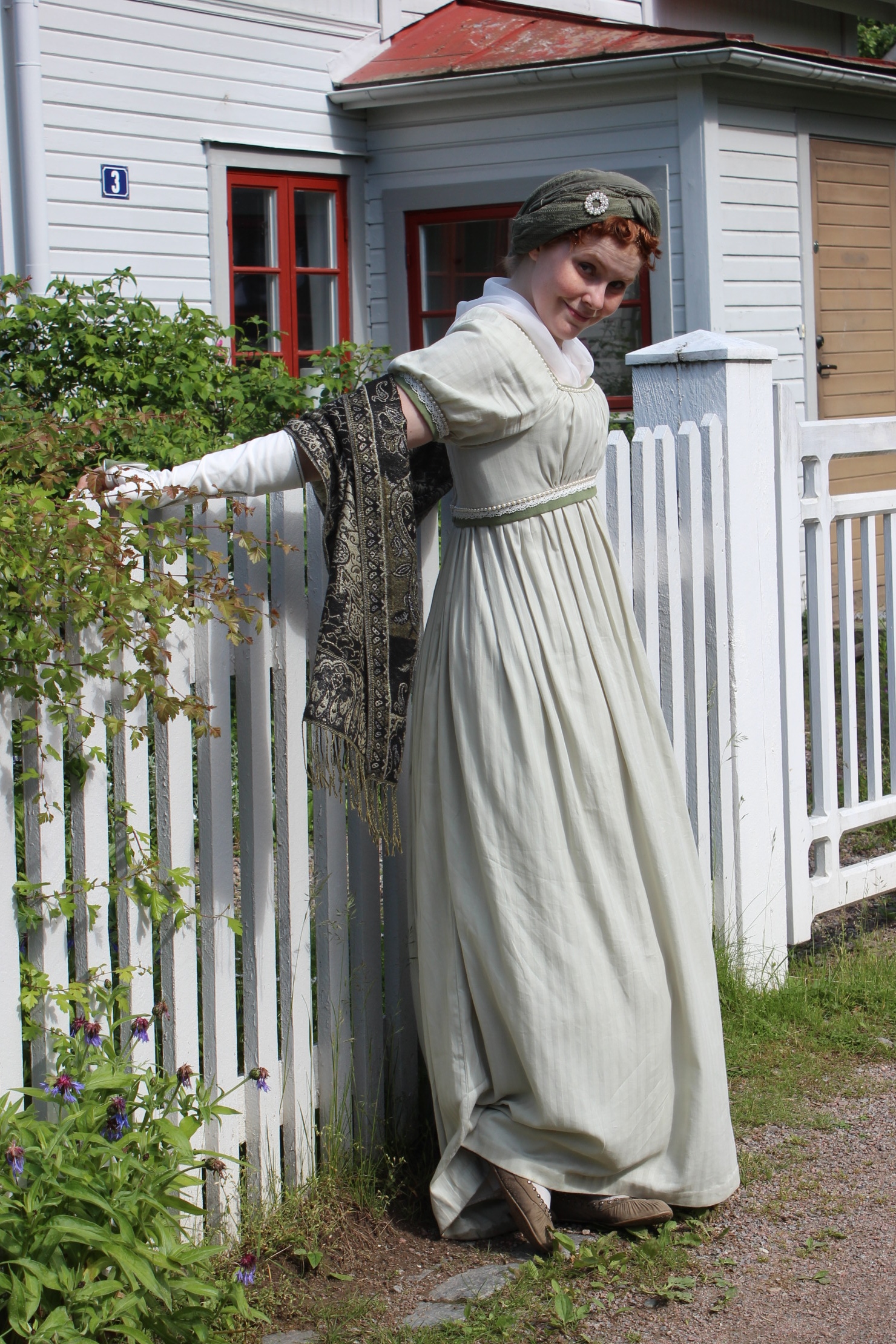
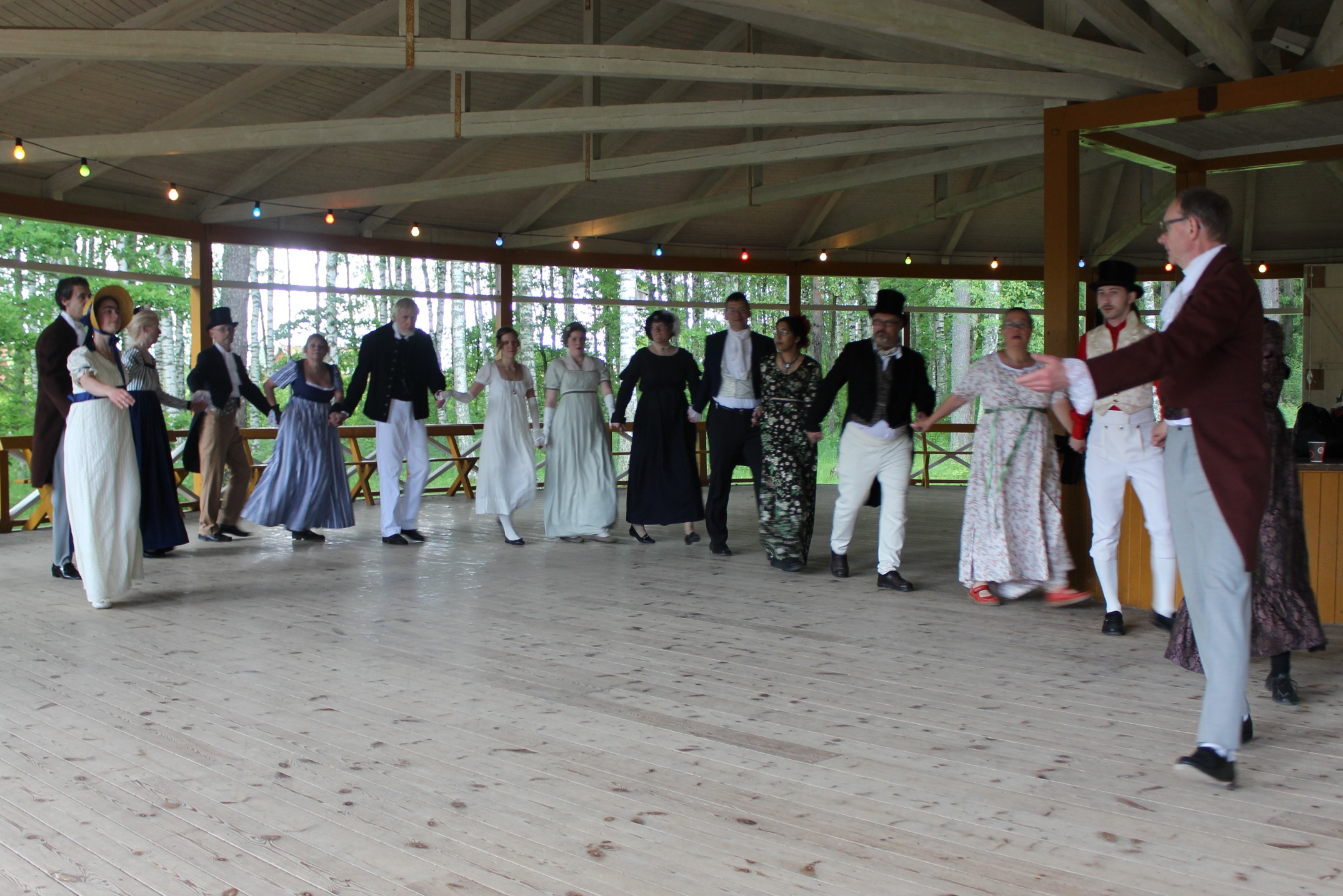
I would ratter have worn something else from this century, but since I was to participate in the regency dance recidal I feelt it would be to much work to change. So I wore my green striped regency gown pared with turban, fichu and mittens.

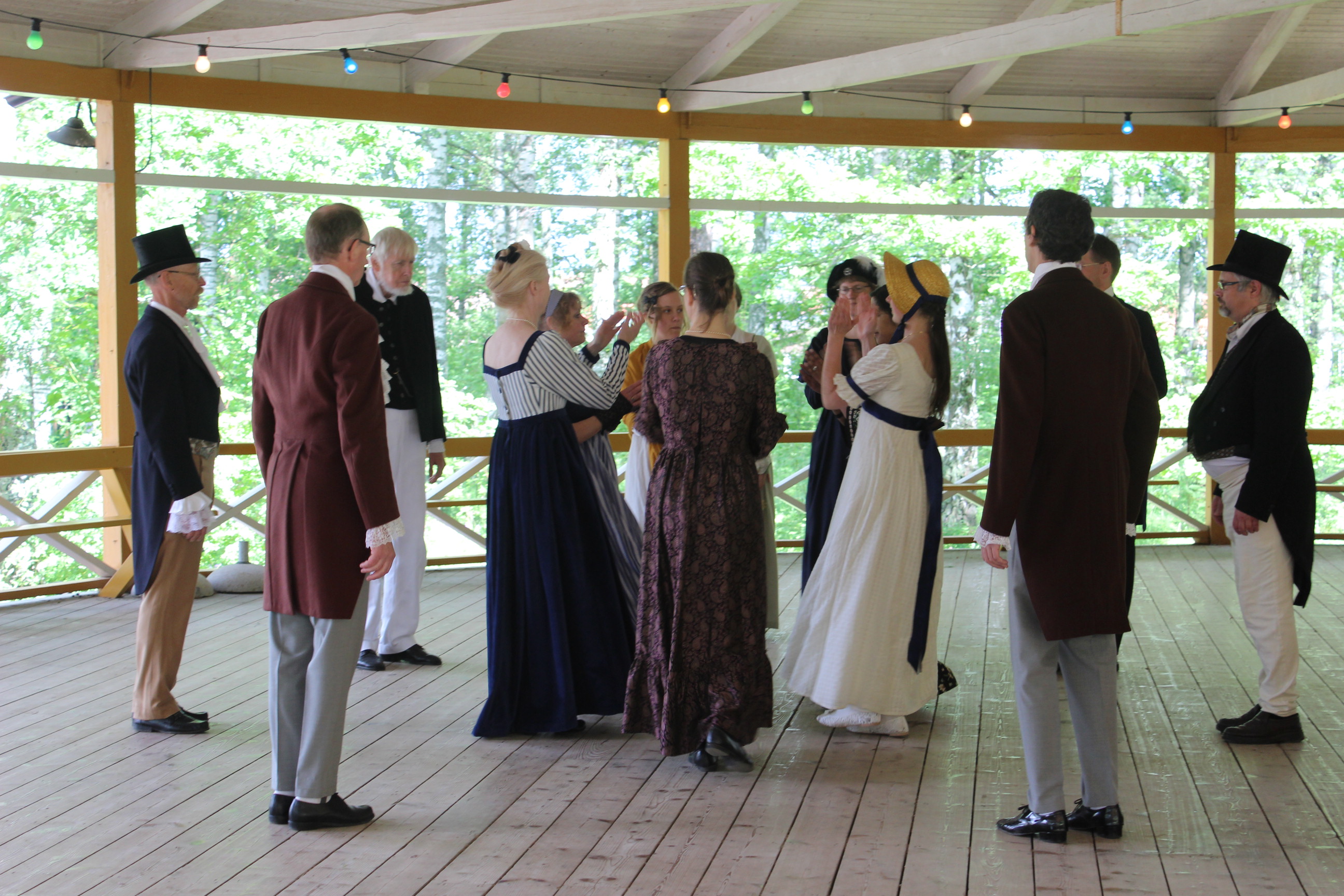
We started the day with a course in historical dance. Then we moved on to attending a dress-class hold by the wounderful Sofia J (webpage), about the dress and layers of a fairly wealty 1815s lady.IMG_8885Love all the grabbing hands looking at seams and clousers of her dress.

Then it was time for our dance recidal.IMG_8914

IMG_8891

IMG_8909

IMG_8893

IMG_8906Ankles showing! Oh my…

IMG_8915

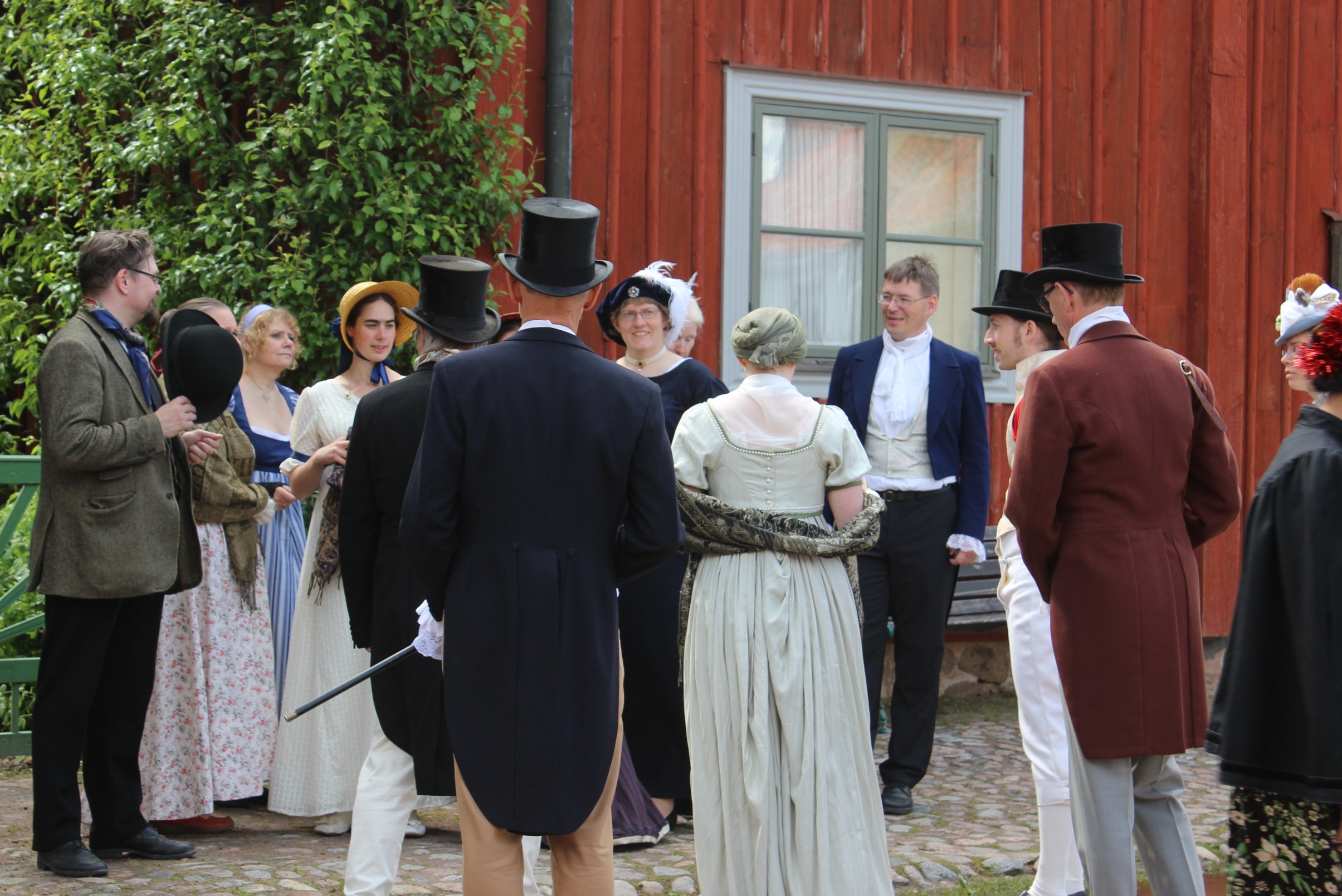
 Then we gattered at the square to do a quick “show and tell” of our costumes.IMG_8941

Here follows some pics of some of the costumes of the day.IMG_8965

IMG_8948

IMG_8950

IMG_8963

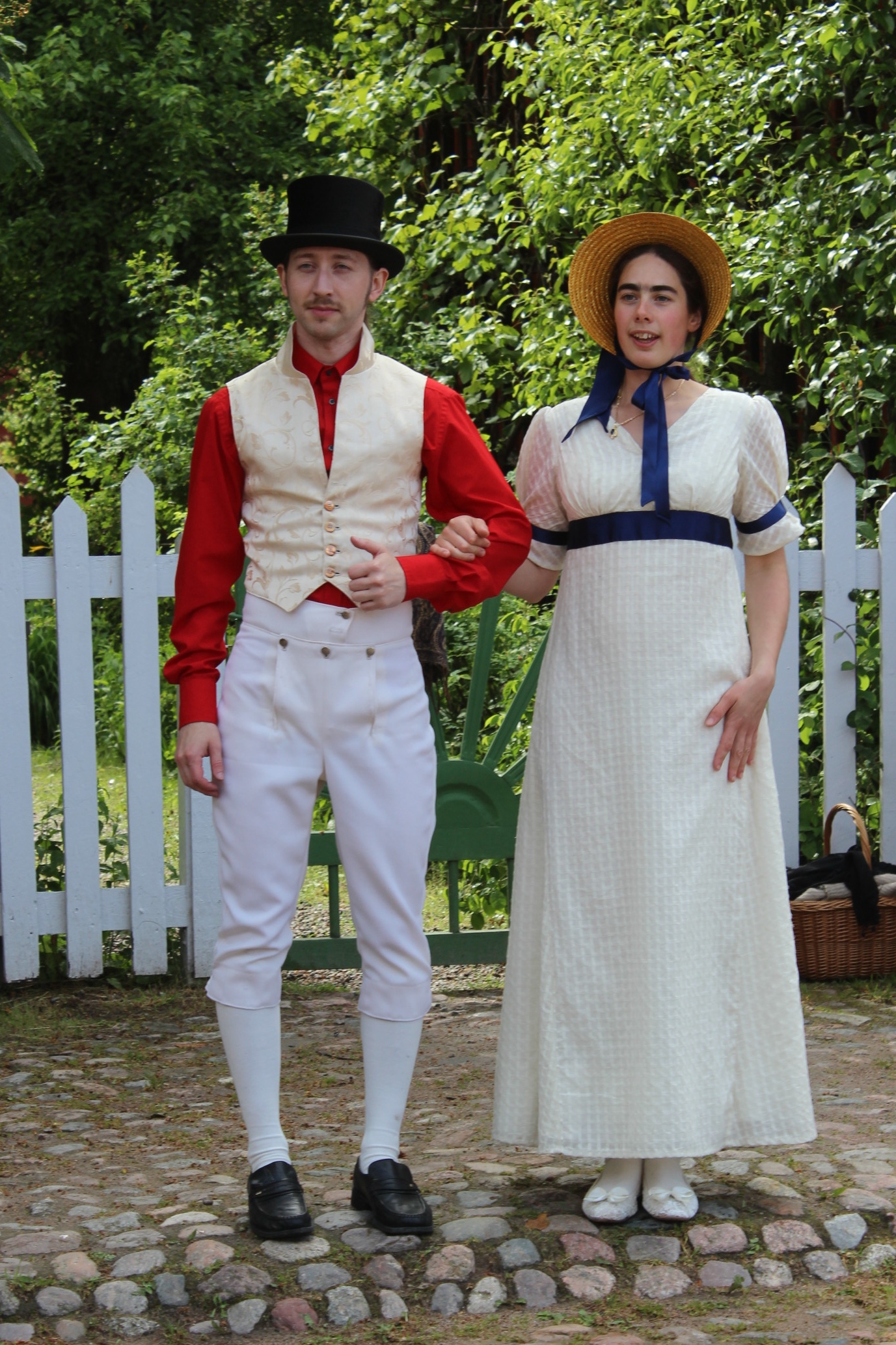
IMG_8956Two dresses made by me from the same pattern.

IMG_8957

IMG_8958

IMG_9002My sister wearing her “Cherry Blossom” travel suit.

IMG_9004

IMG_8924

IMG_8929I love this picture!

Then we did some group shots.IMG_8972All the attendans att the “Vid Pumpen” 19th century day.

IMG_8987And just the dancers.

IMG_8989And one pic with me and the guys.
(If you didn’t notice in the dance pics – I was dancing the gentleman part for the day.)

Then the other participants headed of to dinner, while me and my sister went home to get some much deserved rest after two full days of historic costuming and dancing. (But we did take the time to do a litle photoshoot which I will post about next time).

Old Stuff Sold Of

I’ve just posted about all these fabolous books and patterns I’ve bought this spring/summer. And as my friend, whos working in a fabric store, asked after my umpteenth visit to the shop; How do you afford it?

There are acctually sveral reasons I can spend the amout of time and money on this hobbie as I do (even though I try to reduce the costs as much as possible).

The biggest reason being – I don’t make that much money, but I don’t have lots of expences either (no kids, animals, house, car ect.), so the only thing I spend it on (after rent, food, savings ect.) is fabrics and costuming pieces.

But me recent spending spree, comes from another sorce.

I’ve been selling of some of the clothes I’ve made trough the years.
And since the money earned came from sewed things, it is olny fair that I could spend them on more costume related stuff… Right.

Here is what I auctioned out so far.

A jacket in 1950s style, made in some wool/syntetic blend.207I really liked it, but somehow never wore it so better to get some space in the wardrobe.

A 1950s dress, made from a self drafted pattern in a green/black polyester fabric I bought on sale. The skirt is a “double cirkle” and contains about 5 m of fabric.322I adored this dress, and was a bit sad to let it go. But I know it will have a loving home with a girl who’s going to use it for swingdancing.

Another 1950s dress, made from the same pattern and fabric (only in another colour) and with a sligh variation on the waist and neck treatment. 237

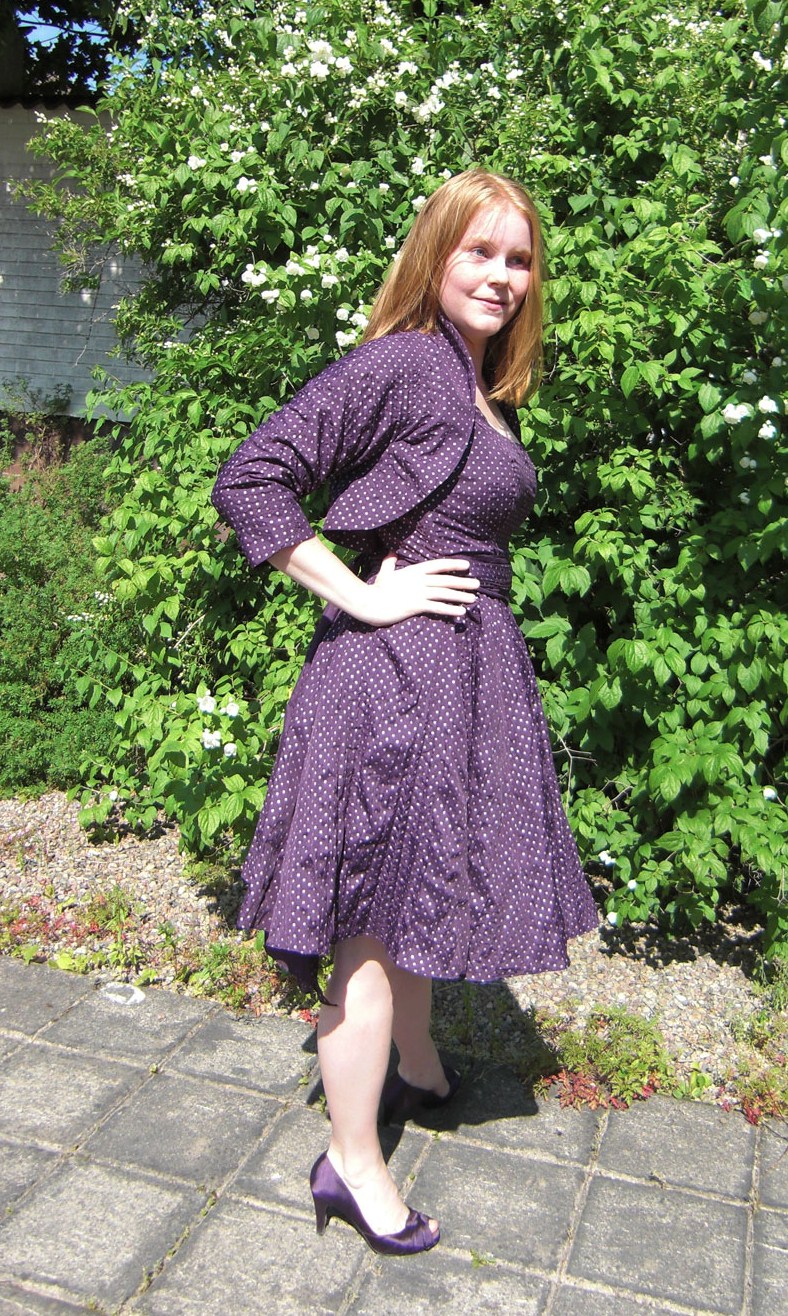
A purple dress and bolero, I made about 5 years ago. The patterns are self drafted and the outfit are made in a purple dotted polyester fabric. CIMG2636 - KopiaThe girl who bought it also took the shoes :-).

Another purple dress from a few years past. The dress are made in purple polyester satin and black lace, from a pattern I downloaded for free from the internet.120I never liked this dress. I had to much trouble making it, and there are way to many flawed parts, for me to get over. For someone without my exreamly critical eye, it’s probably perfectly fine.

A green yearsey dress made from another free download pattern. 066I made this dress to wear to a party, but hated the way I looked in it, so I never used it (I wore the green/black 1950s dress on top instead).

A seersucker jacket made from a comercial pattern. IMG_4832I worn this maybe one time and didn’t like the way it fit, so this also had to go.

And here are some things that I will putt up for sale during this weekend.
If you se something you like don’t hesitate to take a closer look at: http://www.Tradera.se search for: asa86.

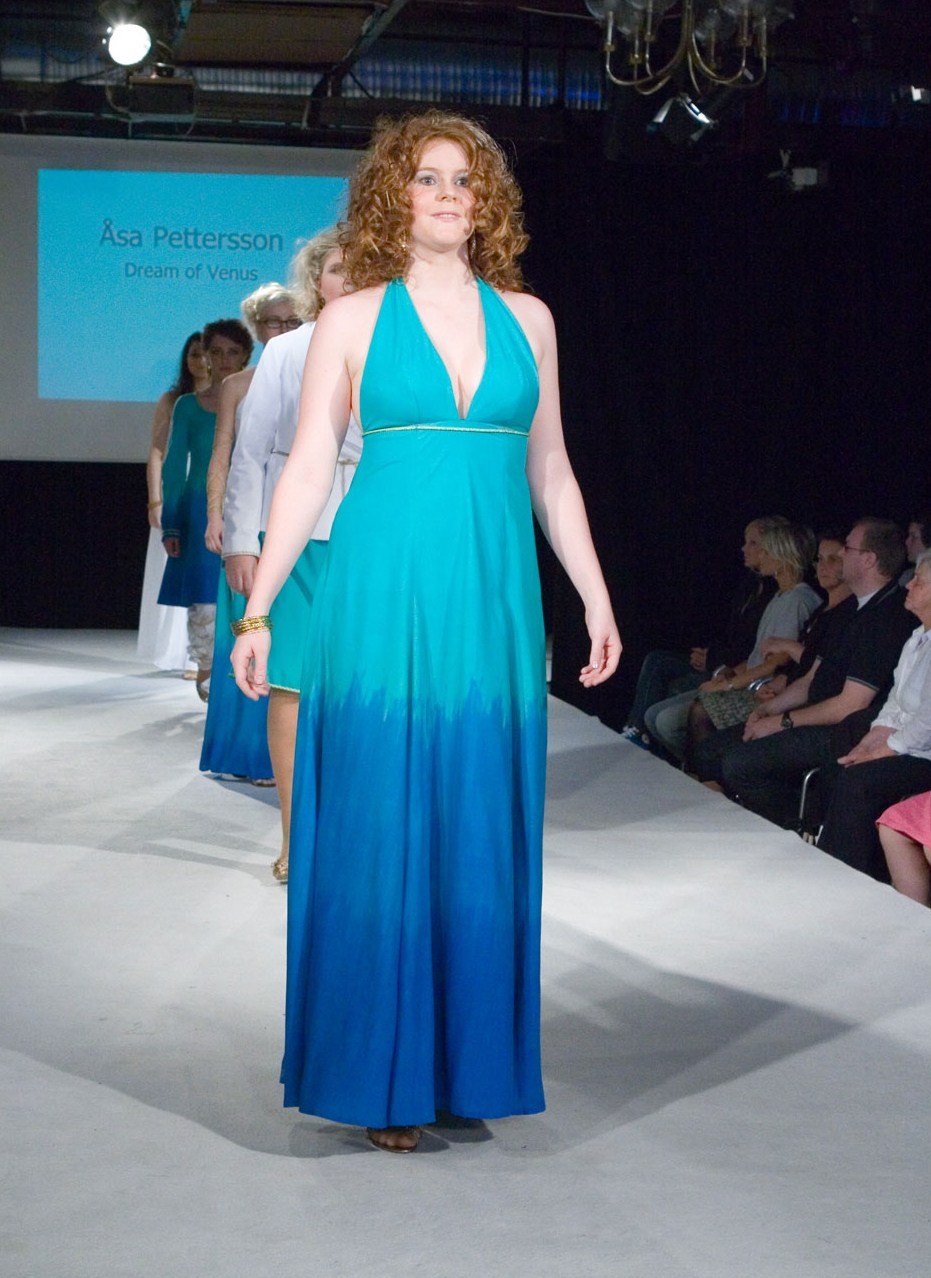
A halter top dress I made as part of my graduation collection at fashion school.halterneckklanning_modellI do think it is lovely, but the plunging clevage and halter top neckline are not something I can pull of. I think it is time for it to get a more loving home.

The bridesmade dress I wore to my sisters wedding about 5 years ago. The pattern are my own and the dress are made in purple polyester satin.lila tärnklänning i kyrkanI only worn it this once, and it looked great, but I’m over it.

A yersey tunic/dress made as yet another school project. The pattern are my own and it is made in a soft drapery grey yearsey. I think it is pretty cool.IMG_0671The hood can be used as collar or hood, and the back of the dress had lots of volume pleated into “wattaue-pleats”. And it is comfy to.

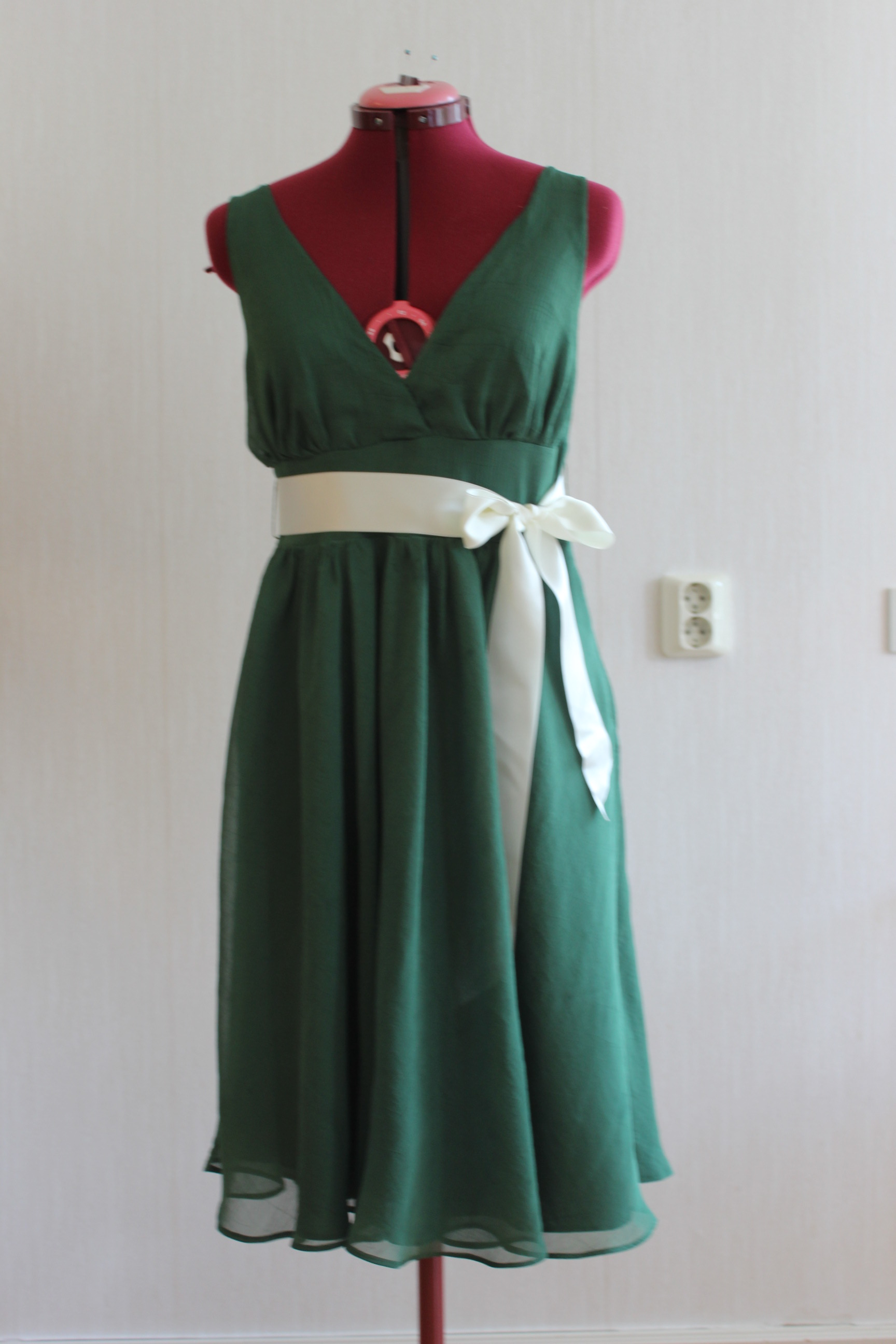
A black/white chiffong dress I made for my sister a couple of years ago.feab1af55d6d504cd345f3180029bc89

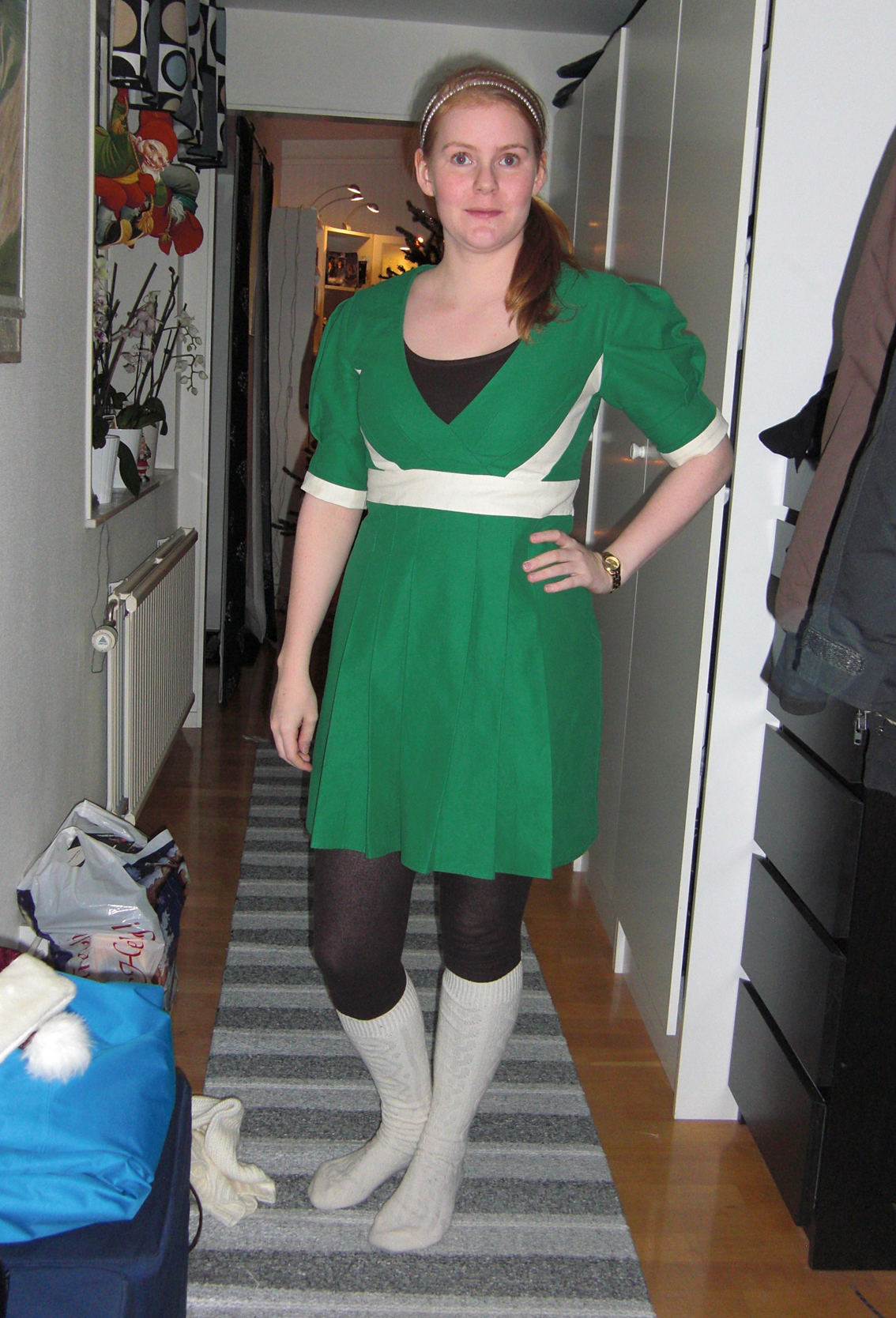
Another “worn once” dress from a free download pattern (I think I begining to see a pattern). The dress is made in green and white sturdy cotton (twill?) and zips up the side.CIMG3465I never liked the sleeves on this one, and thougt it made my arms and shoulders look huge. On a person with slimer shoulders it should look great.

This is acctually a dress I didn’t make. It is from the clothing company “Vila” and are made in a really soft and lovely printed chiffong.IMG_9621

A green chiffong dress from about 6 years ago, made from a comercial pattern.IMG_9630I never wore it since the gathering at the bust and the shape of the neckline and bust made me feel huge and way to top heavy.

Another bough piece. A circular skirt with lots of widths at the hem. IMG_9613I bought it at ” Urban Outfiters” and wore it once. I think it was the elastics at the waist that made me not like it, but looking at it now it do looks pretty cute.

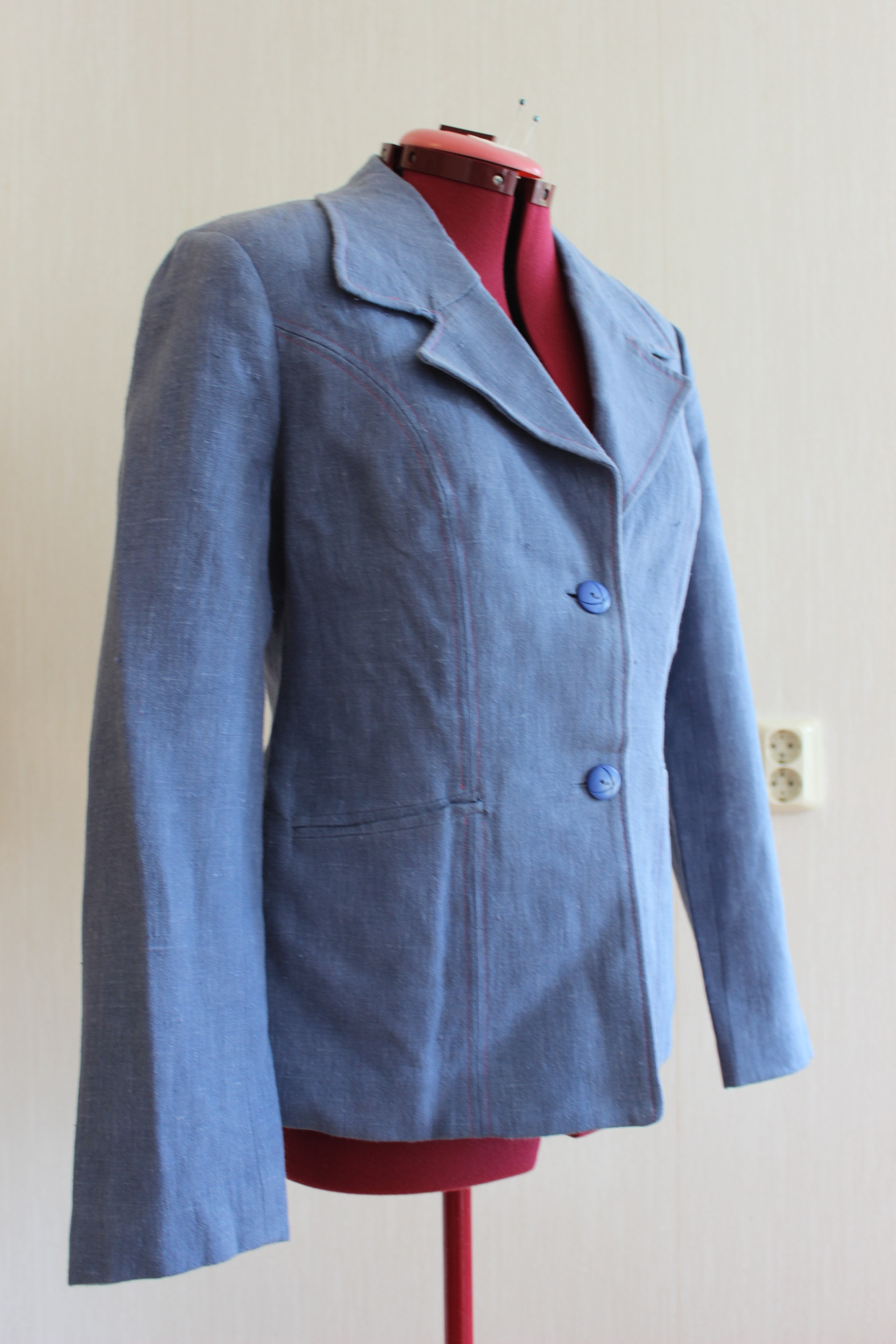
And lastly, a light blue linnen jacket I made in fashion school.IMG_9642You know how it is with these “school projects”, the huge amount of effort and time you put into them, just to realise you hate the damnd thing by the end of it. There are absolutly nothing wrong with it, only I would never wear it.

I will also get rid of some bags, shoes and other smaler stuff.

So, there you have it – This is how I afford it…

New Costuming books

As you might now by now, I’m a real sucker for costuming and fashion books. So when I recently had some money to spair I, spend them on my favourite online book store.

Here are the goddies I got this time.

Dress Design by: Talbot Hughes 
IMG_9683A new to me book, that contains lots of quick sketches of historic fashions and some  patterns.
At first glance I’m not particulary impressed, but I will have to get into it more in depth to give it a fair review.IMG_9684

Everyday Fashions of the Thirties by: Stella BlumIMG_9686I adore this book series (and own the voulmes on theens and twenties  since before), and it did not dissapoint. IMG_9688

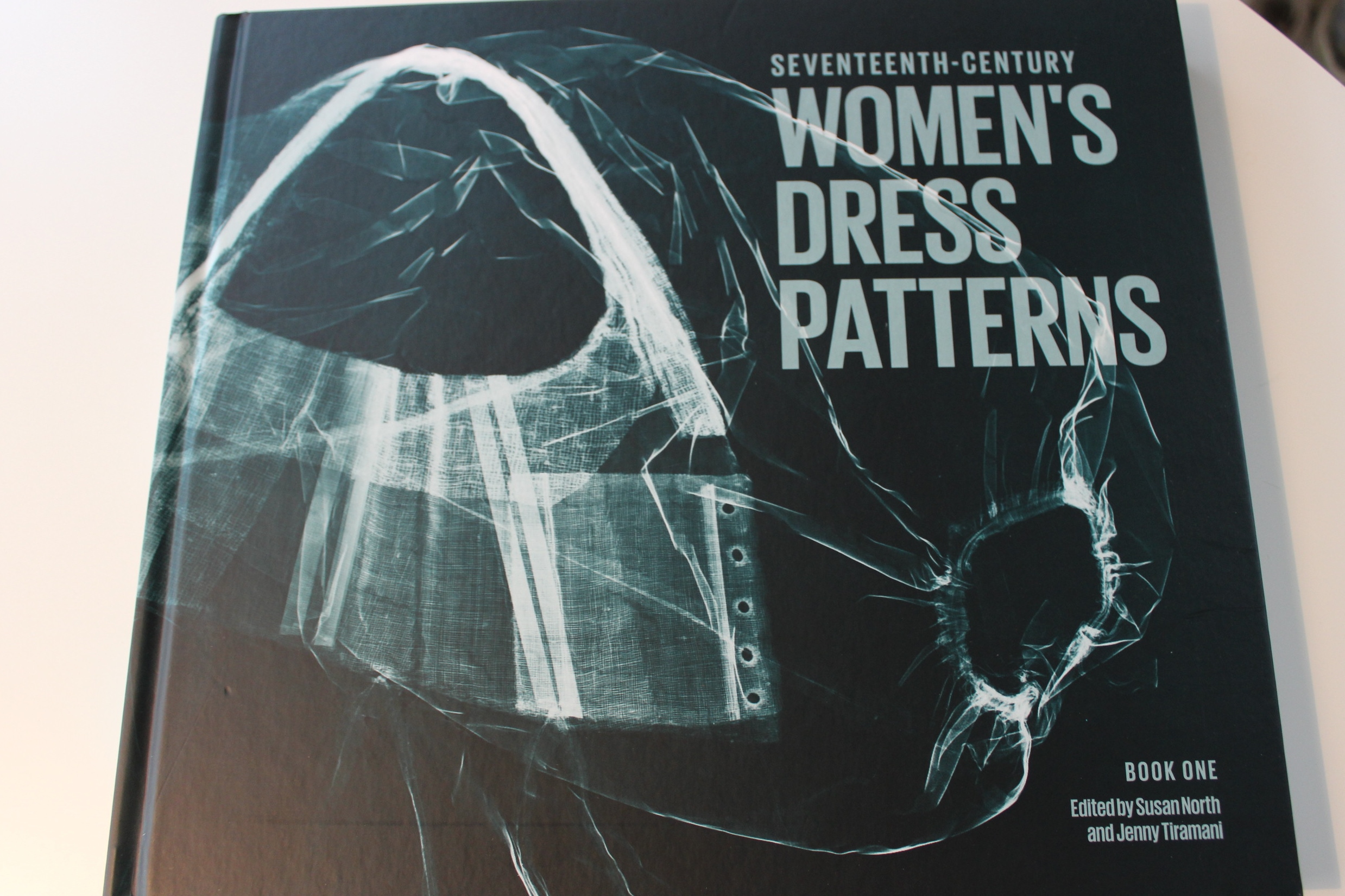
Seventheenth-century Womens Dress Pattern part 1. by: Susan North & Jenny Tiramani.IMG_9689I finaly took the plunge and bought this book after at least a year of pining. And it is great – full of  pictures, patternsa and detailed skethes of lots of pretty and interesting costume pieces form this (for my part) un-discovered er.IMG_9690

Seventheenth-century Womens Dress Pattern part 2. by: Susan North & Jenny Tiramani.IMG_9694And while I was at it, I bought the second one too.IMG_9695

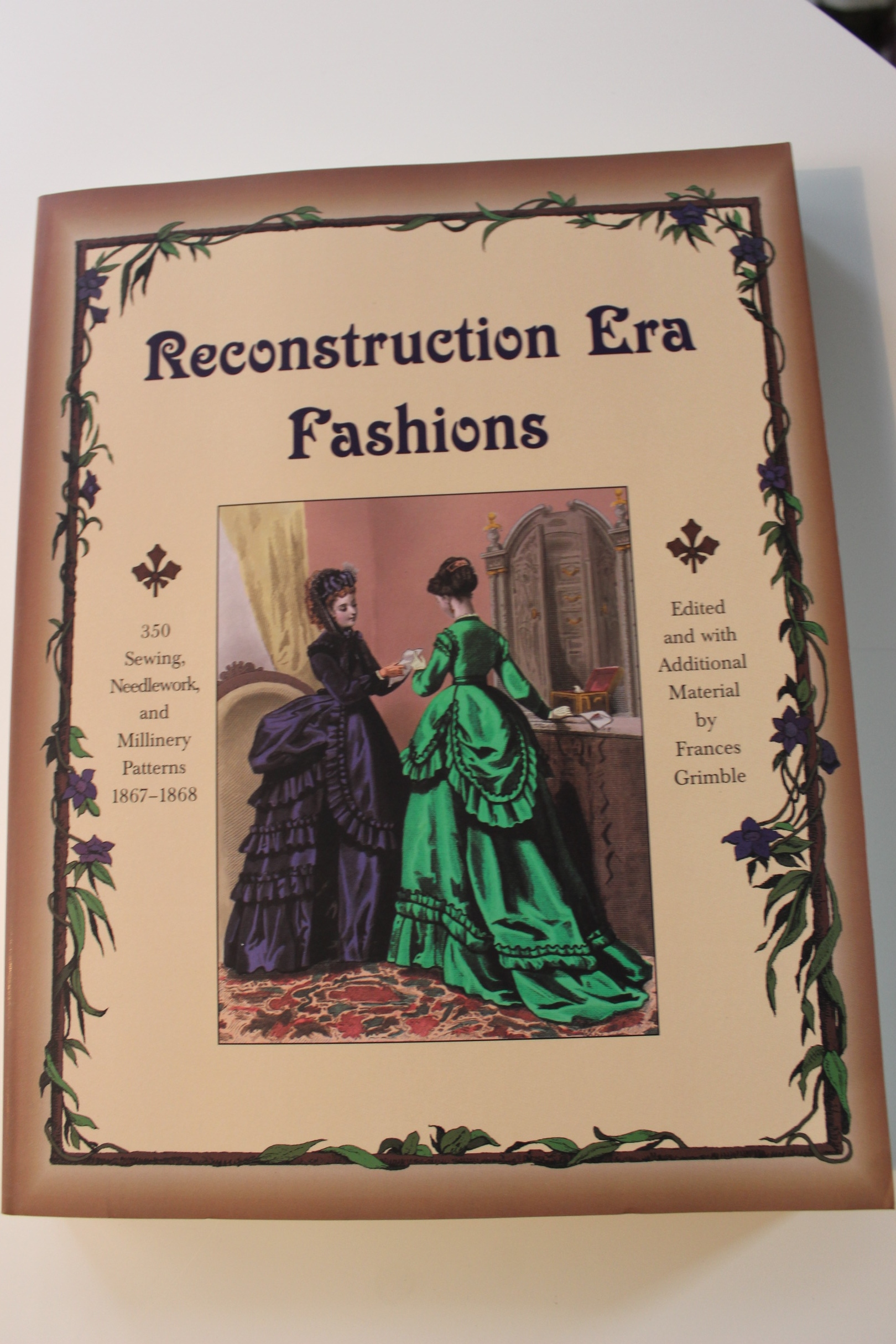
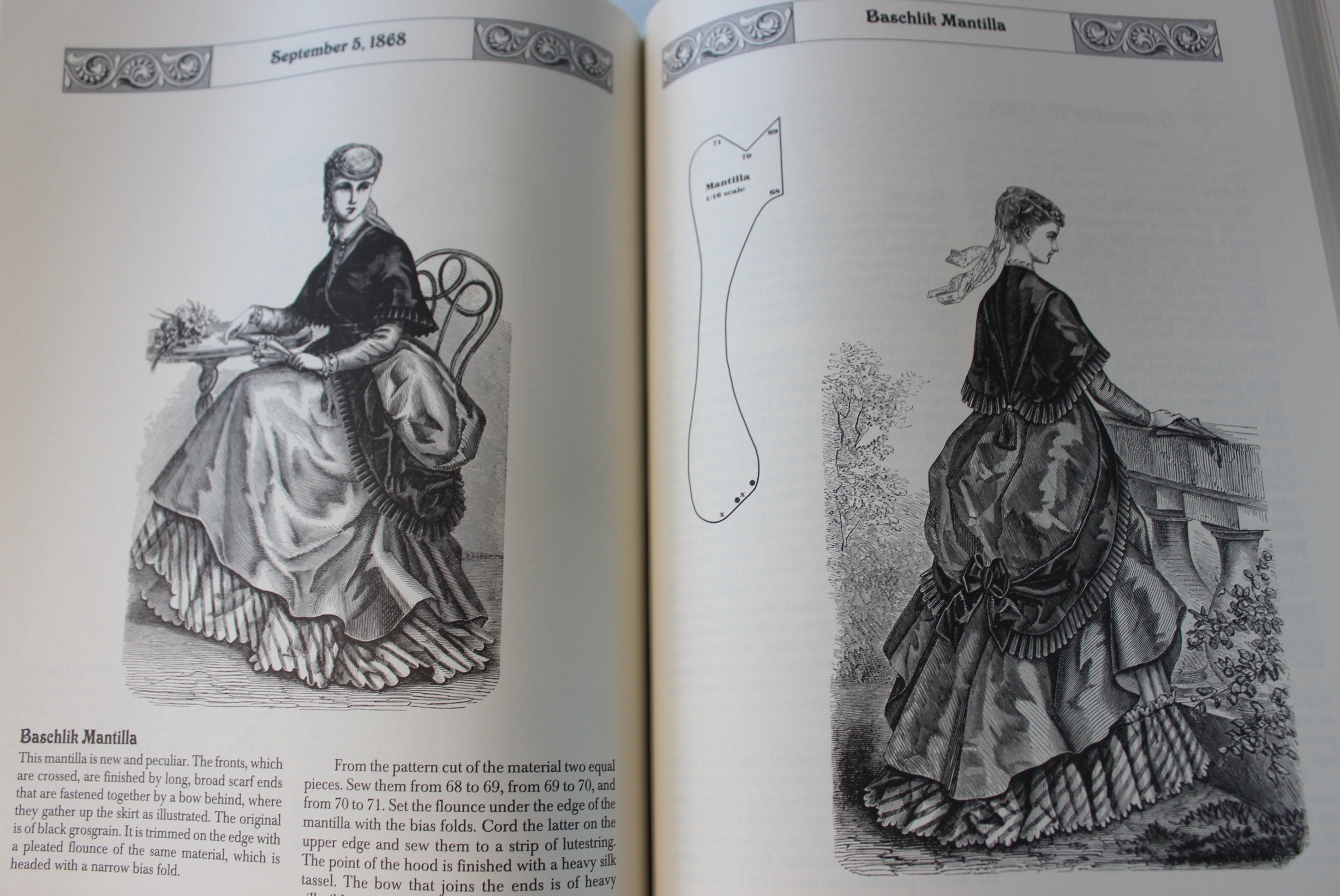
Reconstruction Era Fashions by: Frances GrimbleIMG_9700Already owning one of these big beauties I was suprised to discover this book was well past my expectaions. It contained so many and waried patterns and pictures of different items for the 1860s wardrobe.IMG_9701
Historic Costumes in Pictures by: Braun & schneiderIMG_9707
Perhaps you have encountered these types of books before – the ones that promises so many gorgeous drawings from all of costume history, but instead uses half of its pages for pre historic, military and national costumes. Don’t get me wrong – I love me some nice national costumes, but then maybe I could have bough a different book. There are however some lovely dawings of  both high and low fashions.IMG_9710

Creating Historical Clothes – Pattern Cutting from Tudor to Victorian Times by: Elizabeth FriendshipIMG_9704I own the mens version of this book and totaly adores it. And the womens version are just as great.
It is a pattern drafting book however, and recures you to have some knowledge of pattern drafting before hand.
IMG_9705And that was that.
Lets the summer reading begin…

New Patterns

This spring and early summer I’ve been indulging in some serious costume related internet shopping.
I’ve been bidding on the most awsome stuff on online auctions (some of which I already shown you here), but for this post I will focus on some of my new sewing patterns.

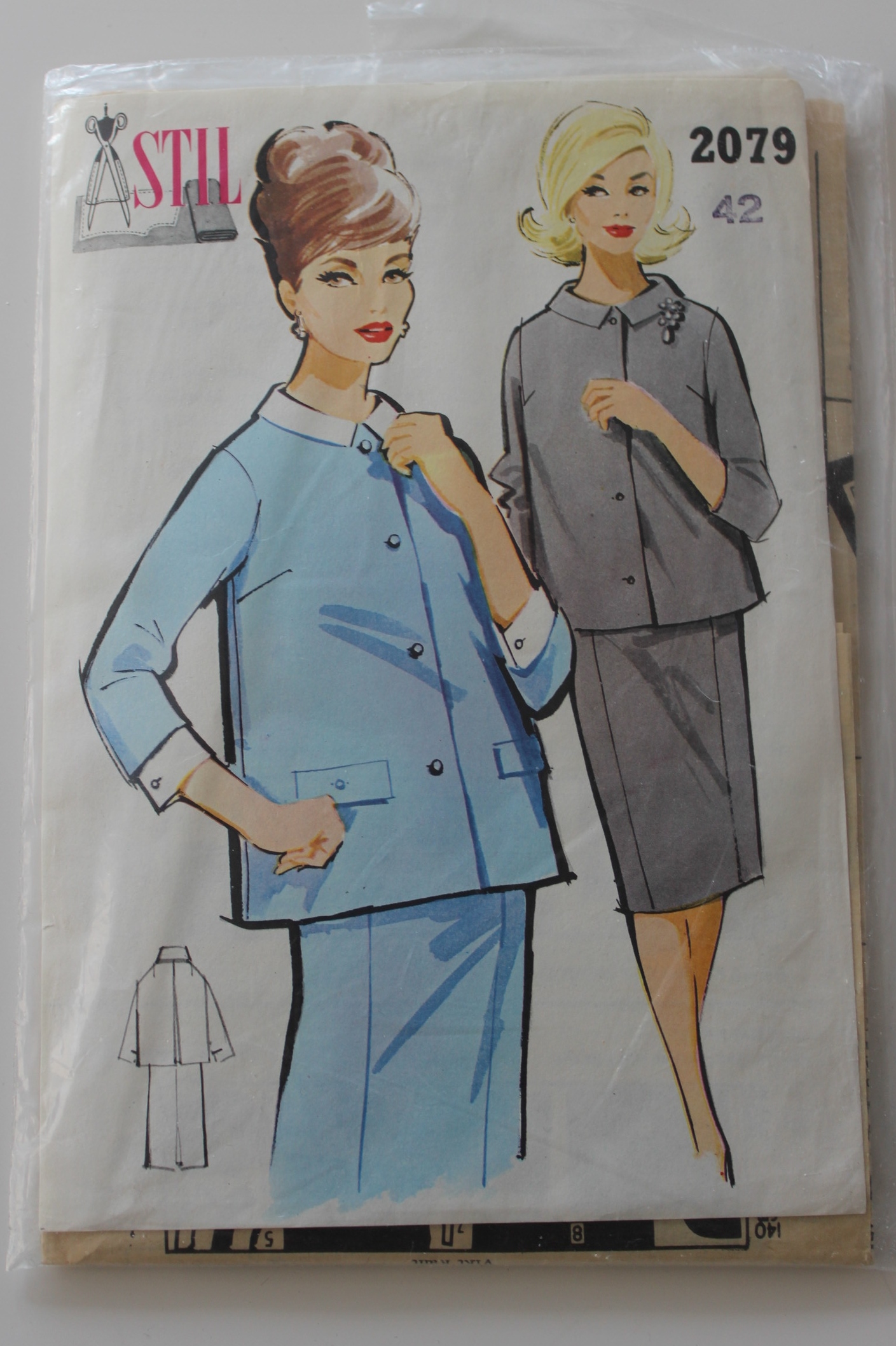
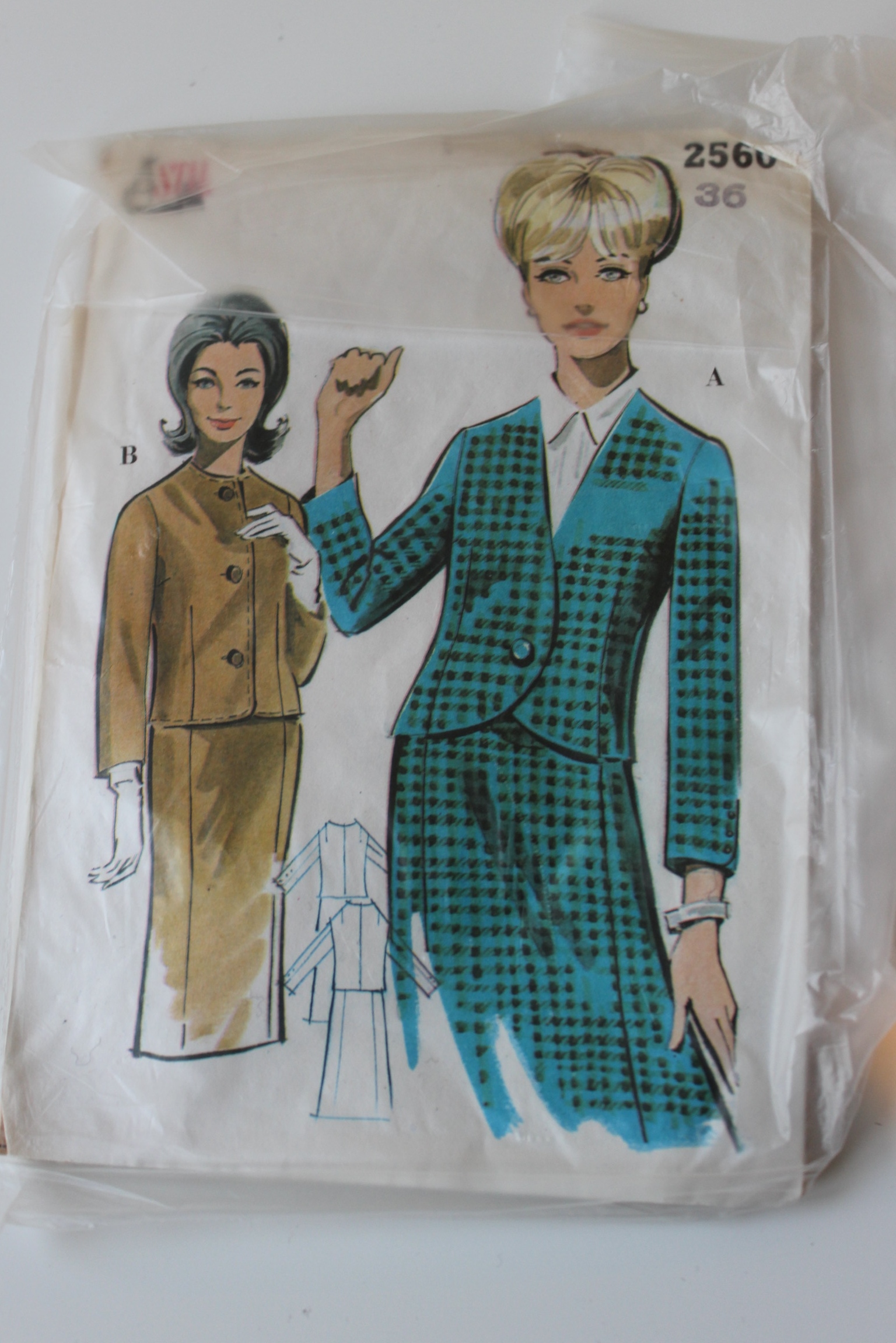
Lets start things of with some lovely 1950-1960s fashion.IMG_8424Stil nr 2079.

IMG_9281Stil nr 2560

IMG_9722Stil 1564. This one is about 3 sizes to big but I don’t think it is that hard to re-size it.

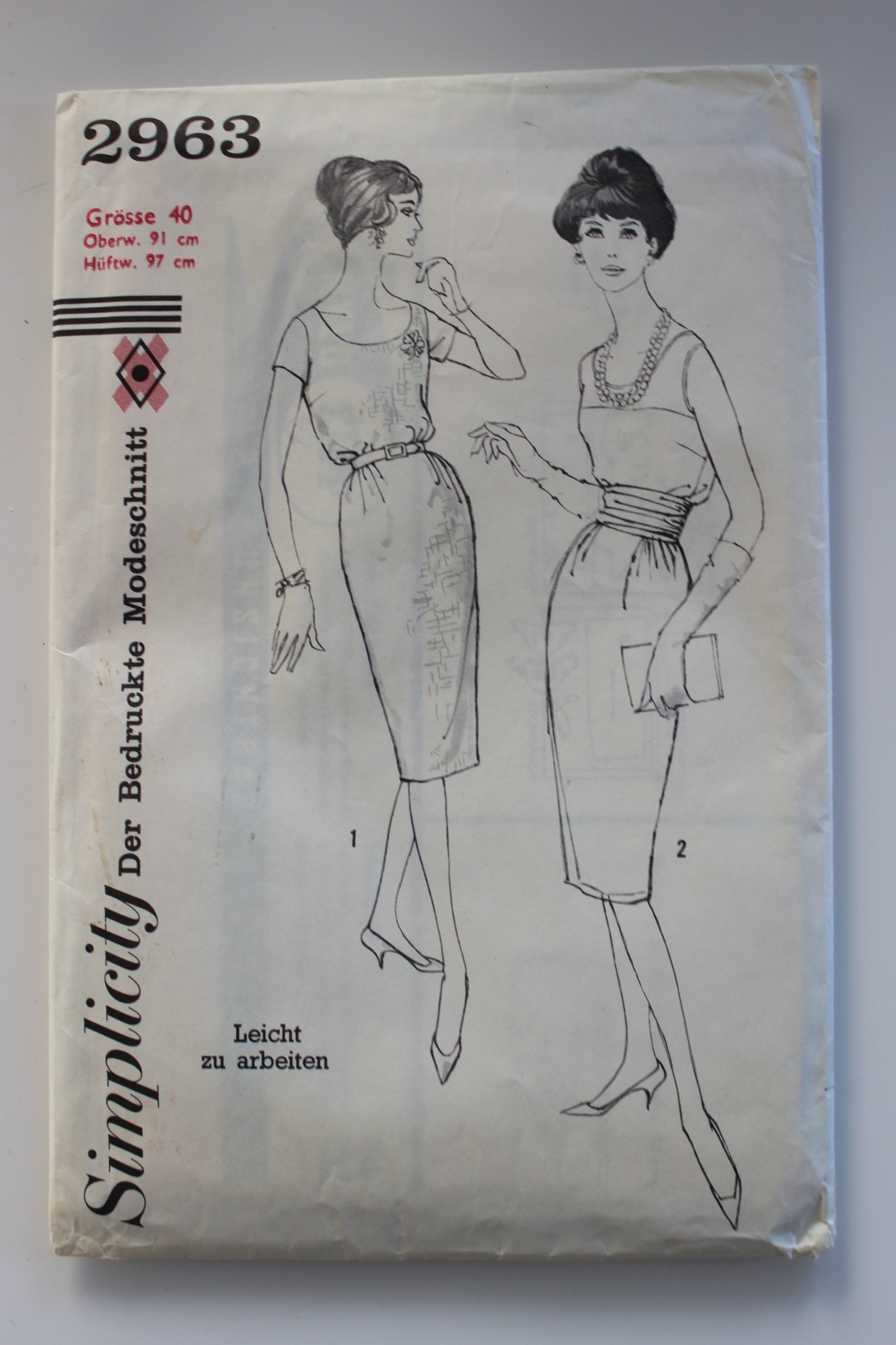
And some dresses.IMG_8544Simplicity 2963.

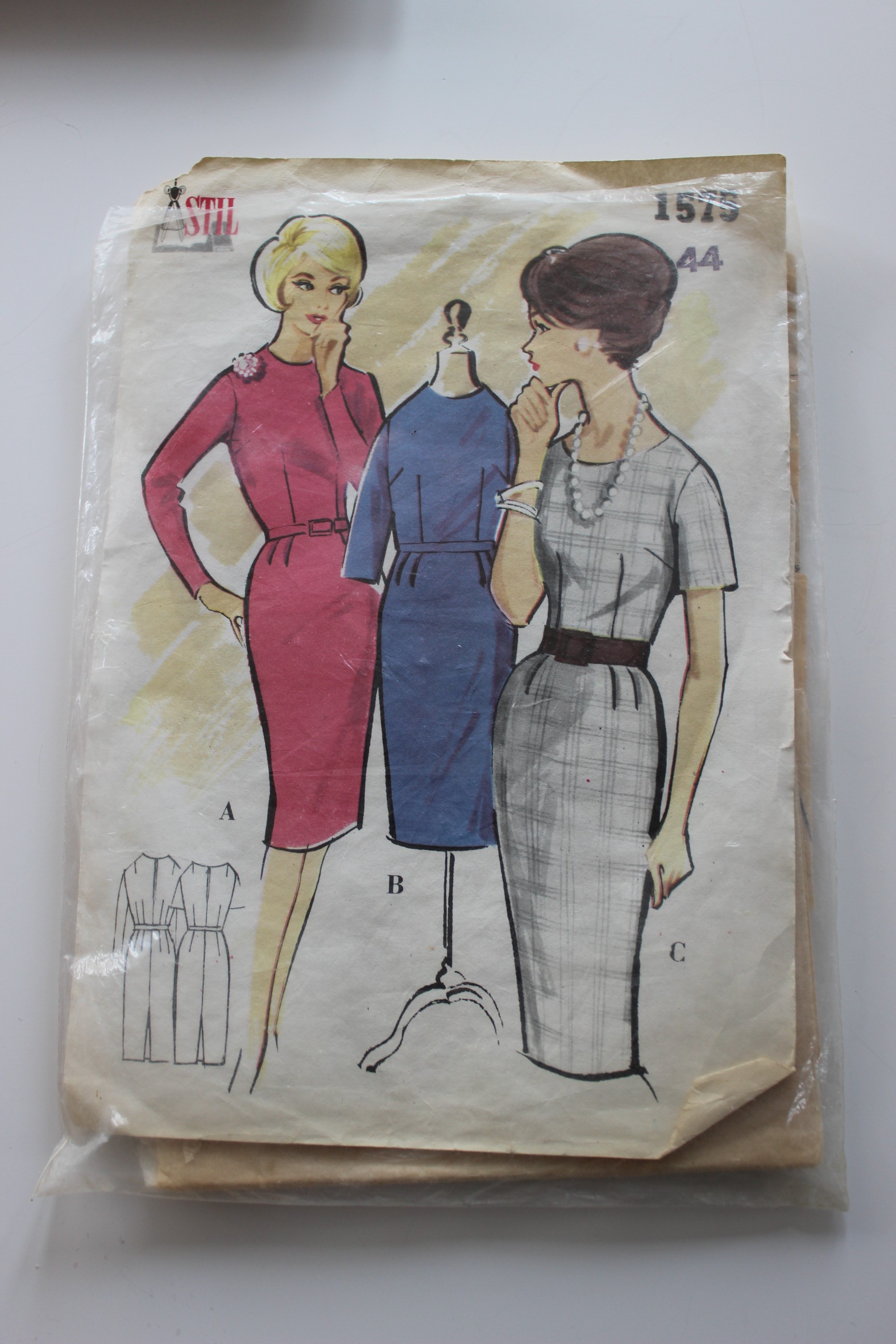
IMG_9743Stil 1975.

IMG_8376Simplicity 3069. This one is my favourite, I can defenetly se myself making the green one to wear to parties this fall.

Then some childrens pattern.IMG_9314Stil 8609.

IMG_9313Stil nr?

And a modern baby patternIMG_8547Burda 9636.

Lets move on to the historical patterns.

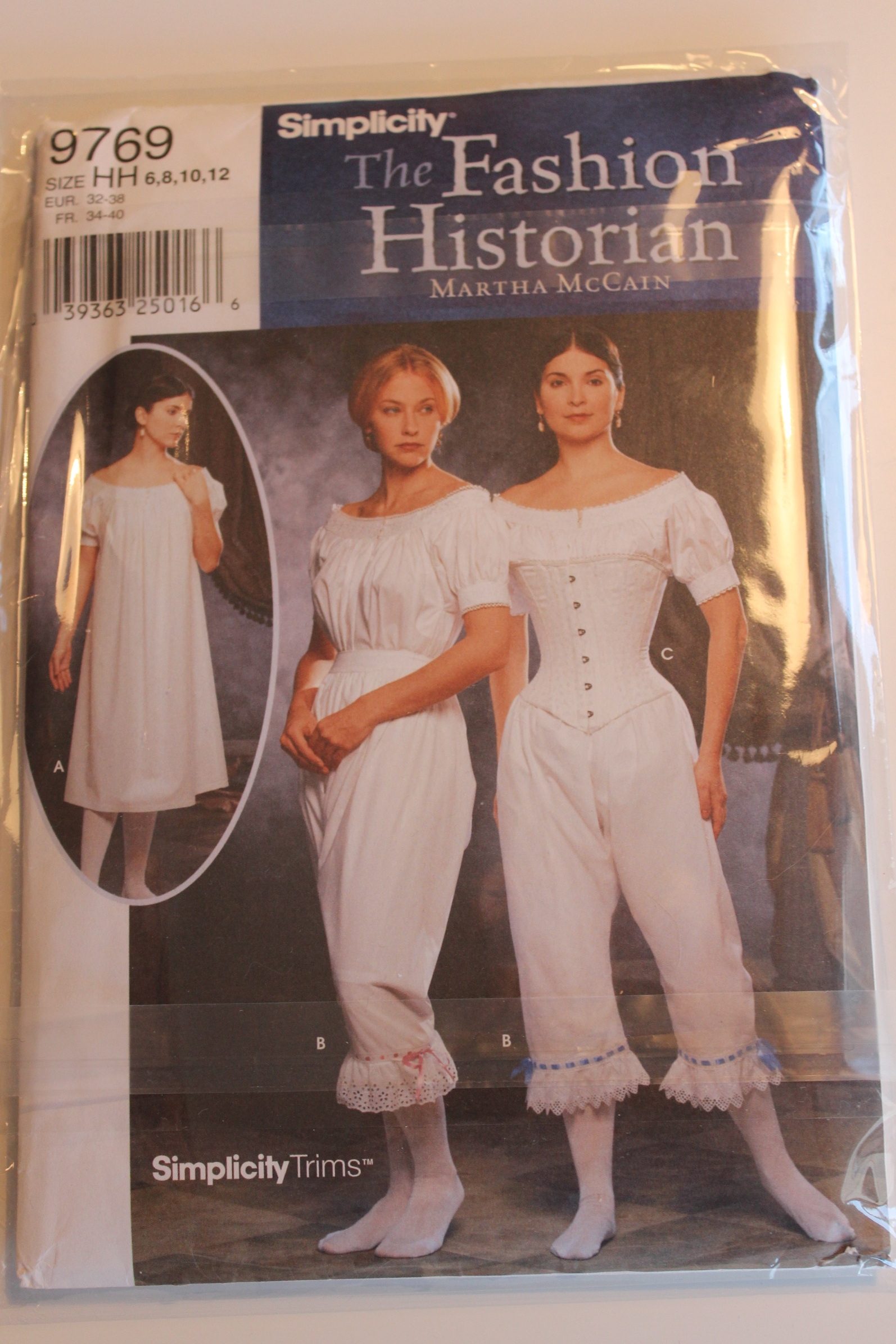
19th century underwearIMG_9312Simplicity 6769. I made the Chemise for the last HSF challenge from this pattern.

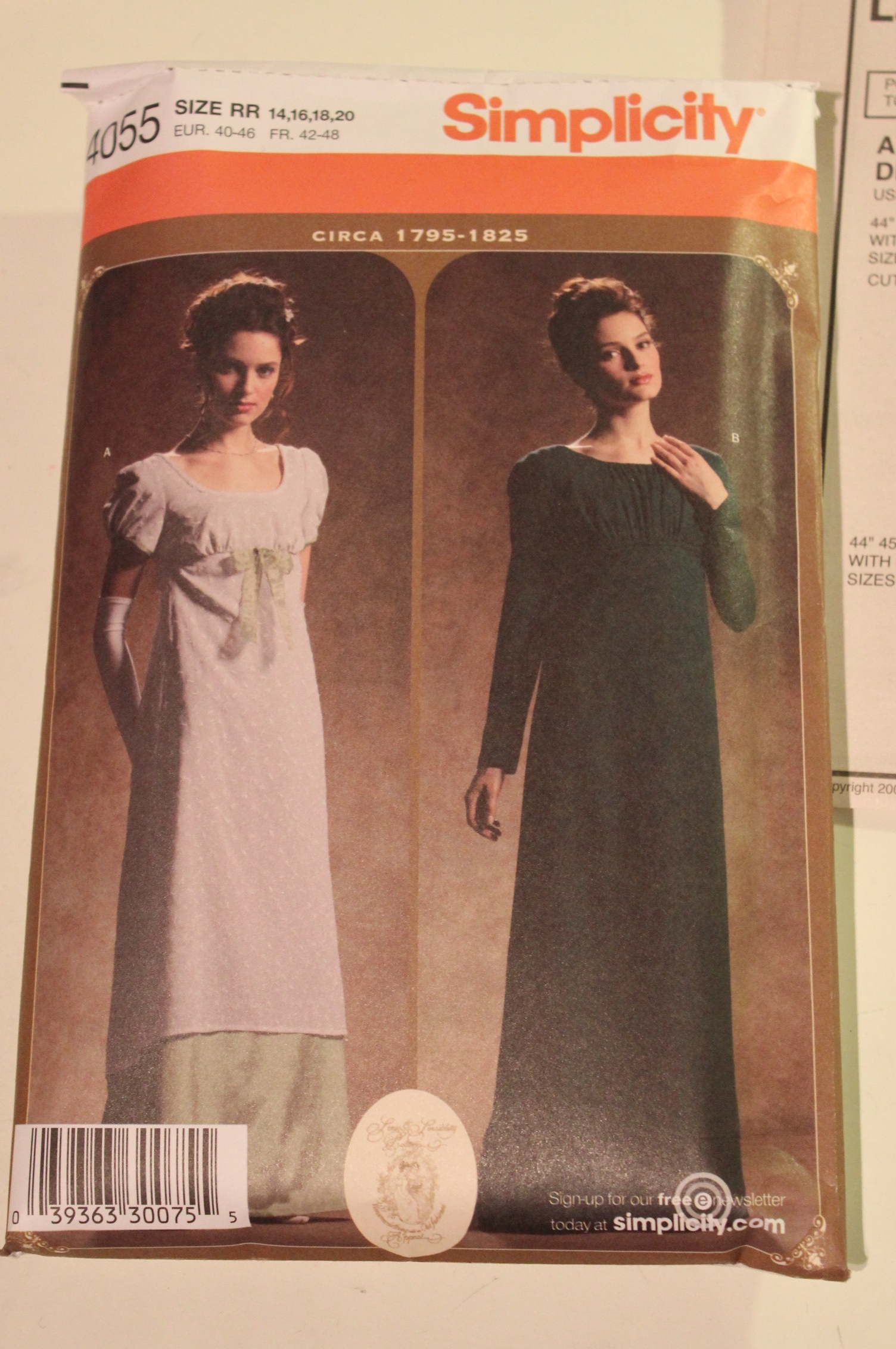
Regency gownsIMG_8293Simplicity 4055. And my yellow regency gown was made using this pattern.

16th century gownsIMG_9745Simplicity 3782. My dream of a Tudor/Elizabethin gown came one step closer with this pattern.

Ok, not historical (No, Westeros do not actually exist), but I couldn’t resist this “Game of thrones” pattern.IMG_9744Simplicity 1487.

Pretty impressive for somebody who use to draft all her patterns herself.

Well my indulgence didn’t stop there. So talking about Historical pattern, I also found some lovely reproduction ones from Neheleniapatterns.com, which all were to tempting to resist.

A Regency spencerIMG_9315Period Impressions 461

Some gentlemans waistcoats.IMG_9320Kannik’s Korner – Man’s Waistcoat

Gentlemens BreechesIMG_9317Country Wives – Narrow fall-front trousers.

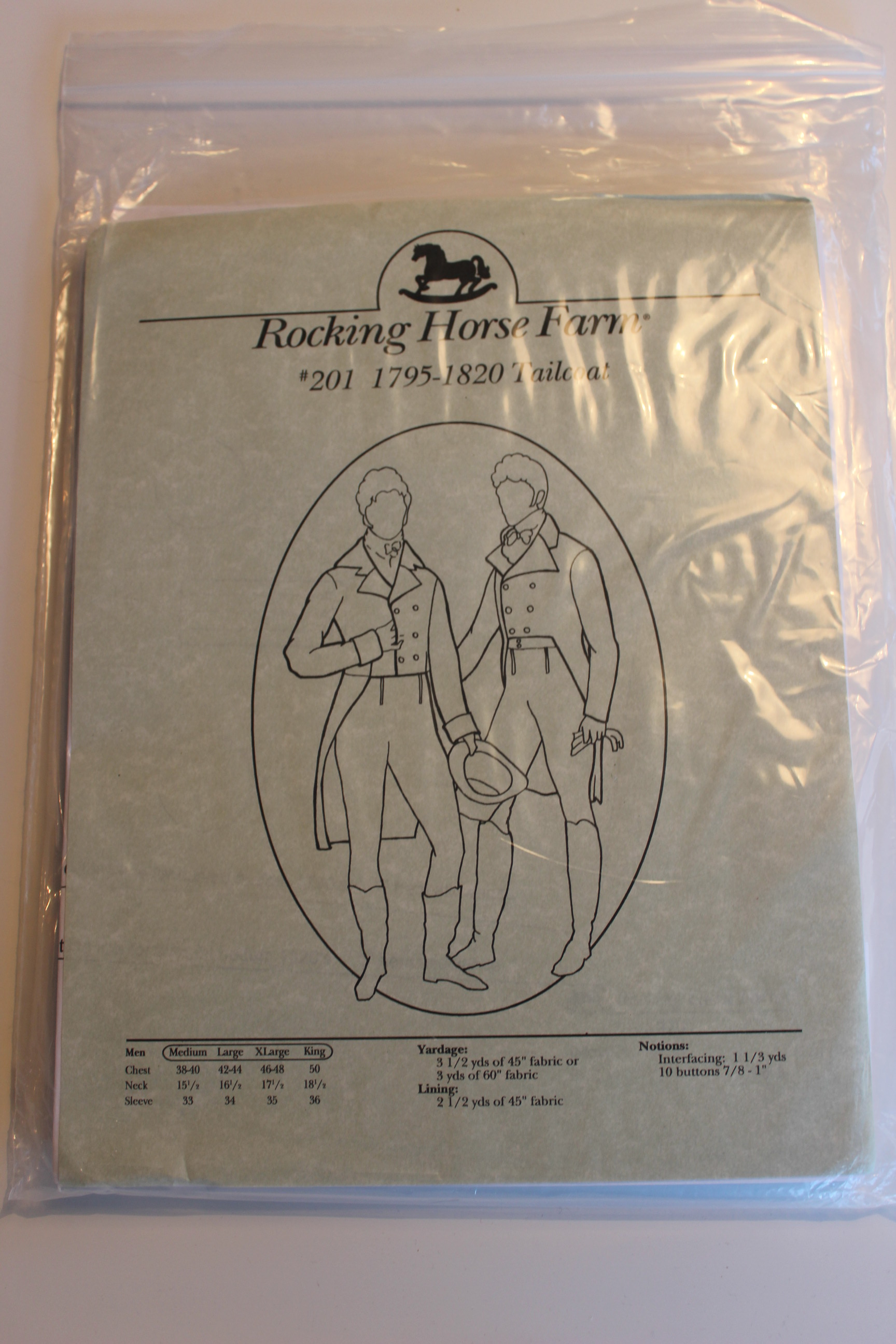
Mens Regency coatIMG_9318Rocking Horse Farm – 1795-1820 jacket

A mens military uniformIMG_9319Rocking Horse Farm – Dragoon Uniform

And a late 18th century riding habitIMG_9316Nehelenia Patterns – 1790s Redingote

Well, that was that. Or at least the patterns.
I will show you my new costuming books next time.

1850s & 1880s underwear – photoshoot

Last weekend after finishing all the 19th century underwear for the HSF 12 and 13, I talked my boyfriend into helping me take som photos.

He agreed on condition we waited until there were breaks in the fotball games on Tv.
This turned the photoshoot into 3 hectic periods of shooting and then 45 min of down time in between (where I took the time to change clothes and re-arrange the settings), making the whole process drag out through the evening and not being finished untill midnight.

Anyhow here it is – And a warning: This is a picture heavy post.

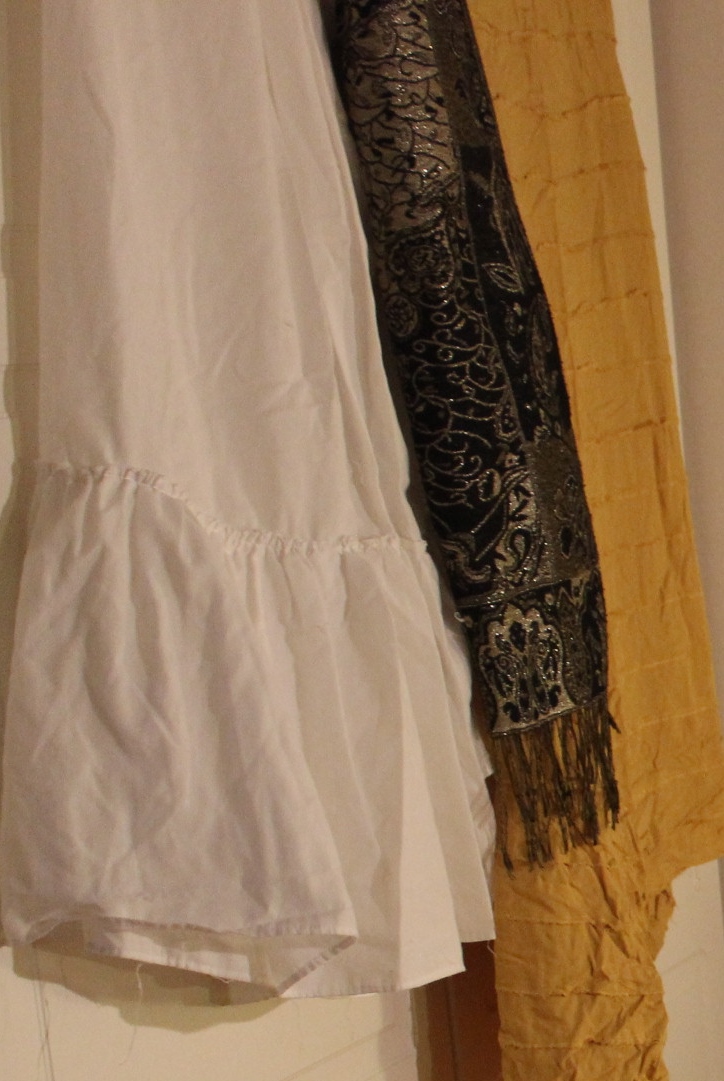
I started by arranging some settings in my bedroom.IMG_9418 - kopiaShawl, petticoat and skirt.

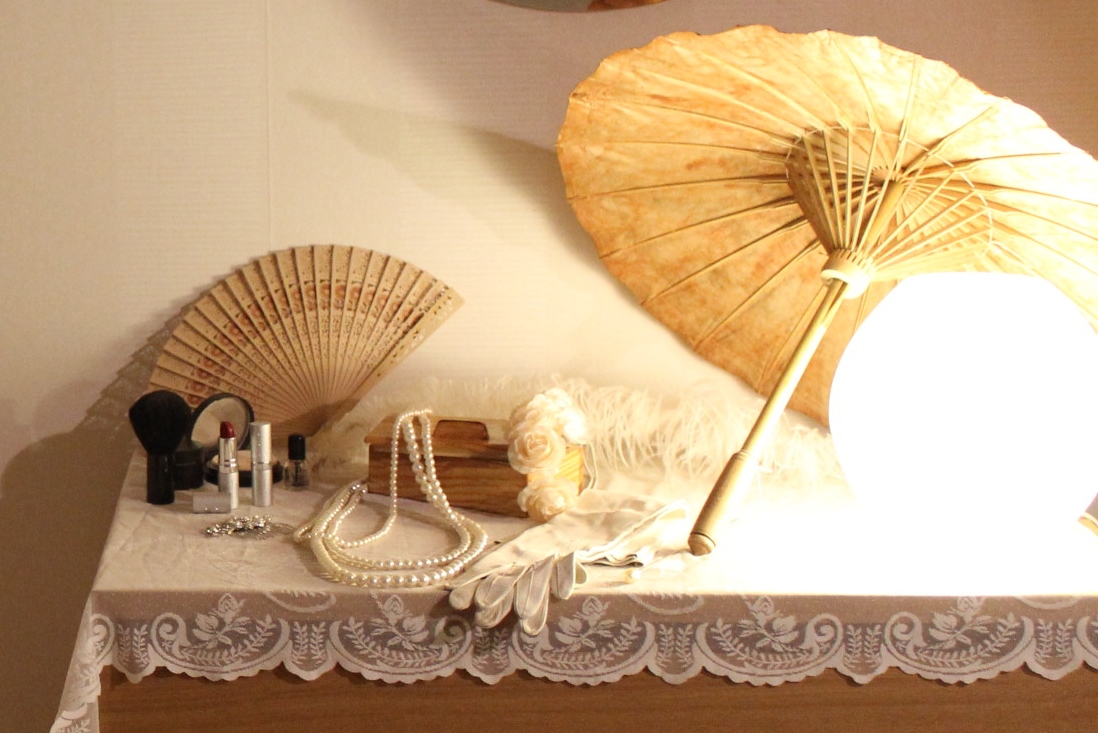
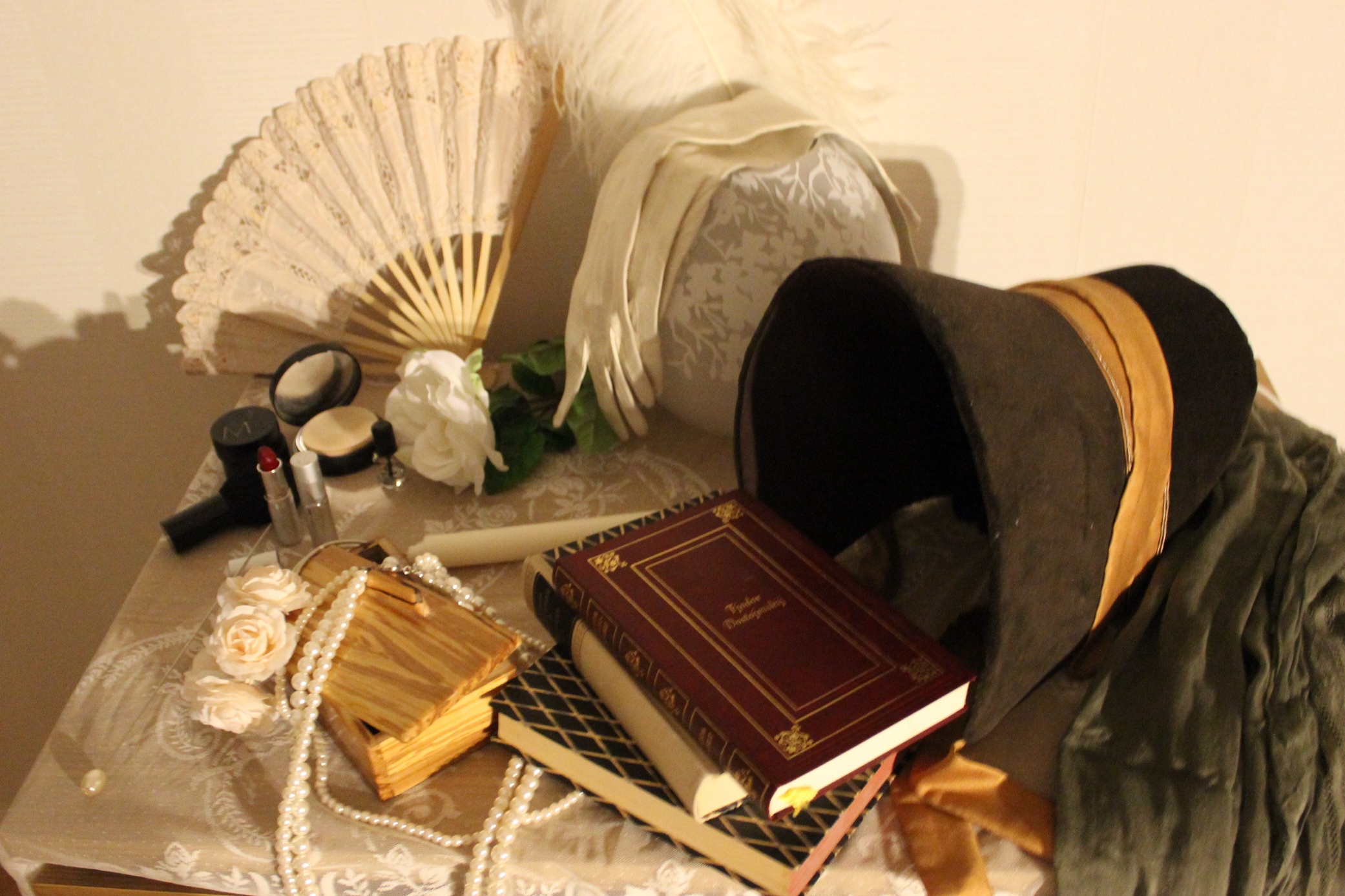
And some boxes, juwvelry, glowes nad fans on my drawer.IMG_9418Then we were ready.

Starting with the 19th century chemise.IMG_9449

IMG_9453

IMG_9455

IMG_9459

IMG_9460

IMG_9462

IMG_9466

IMG_9471

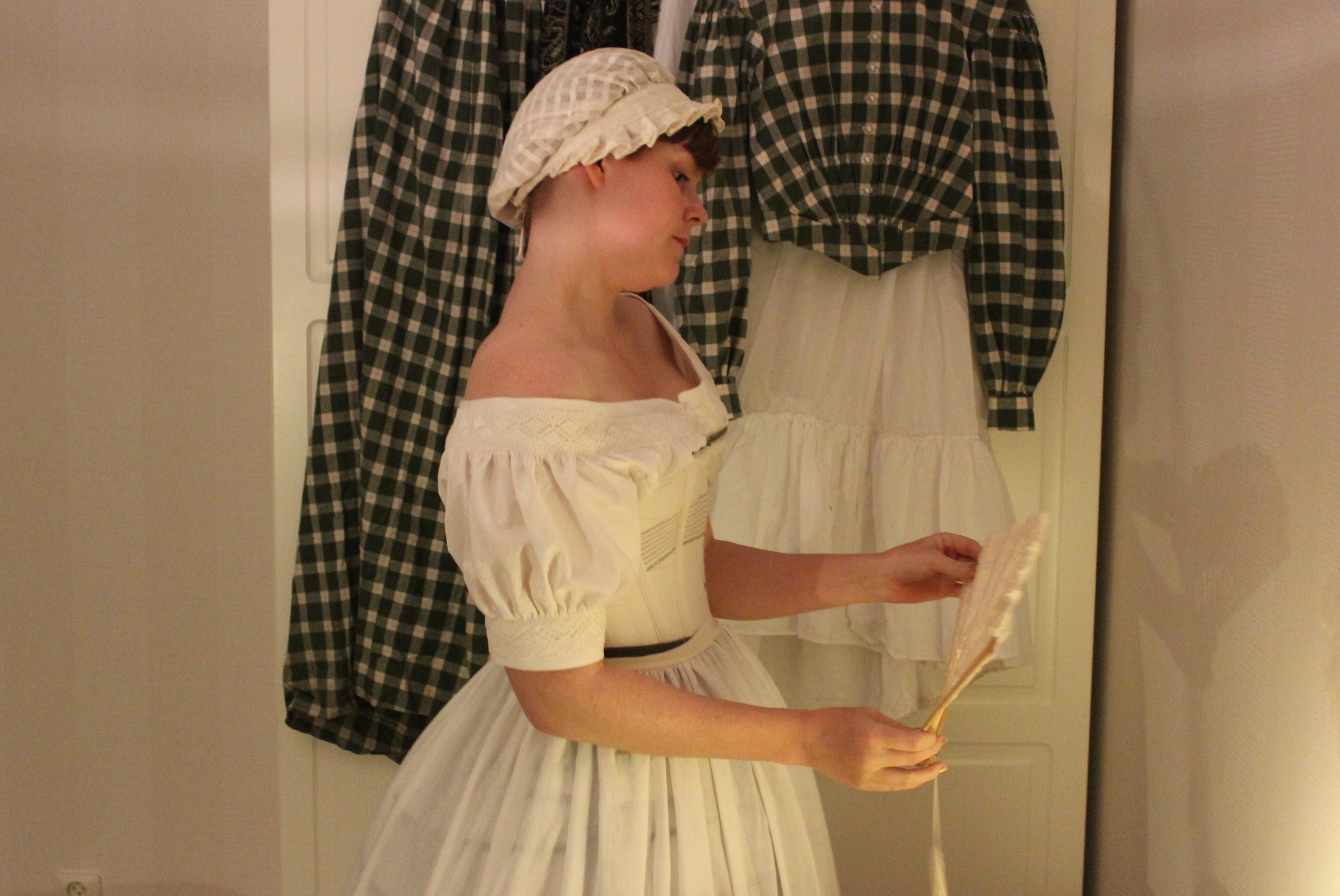
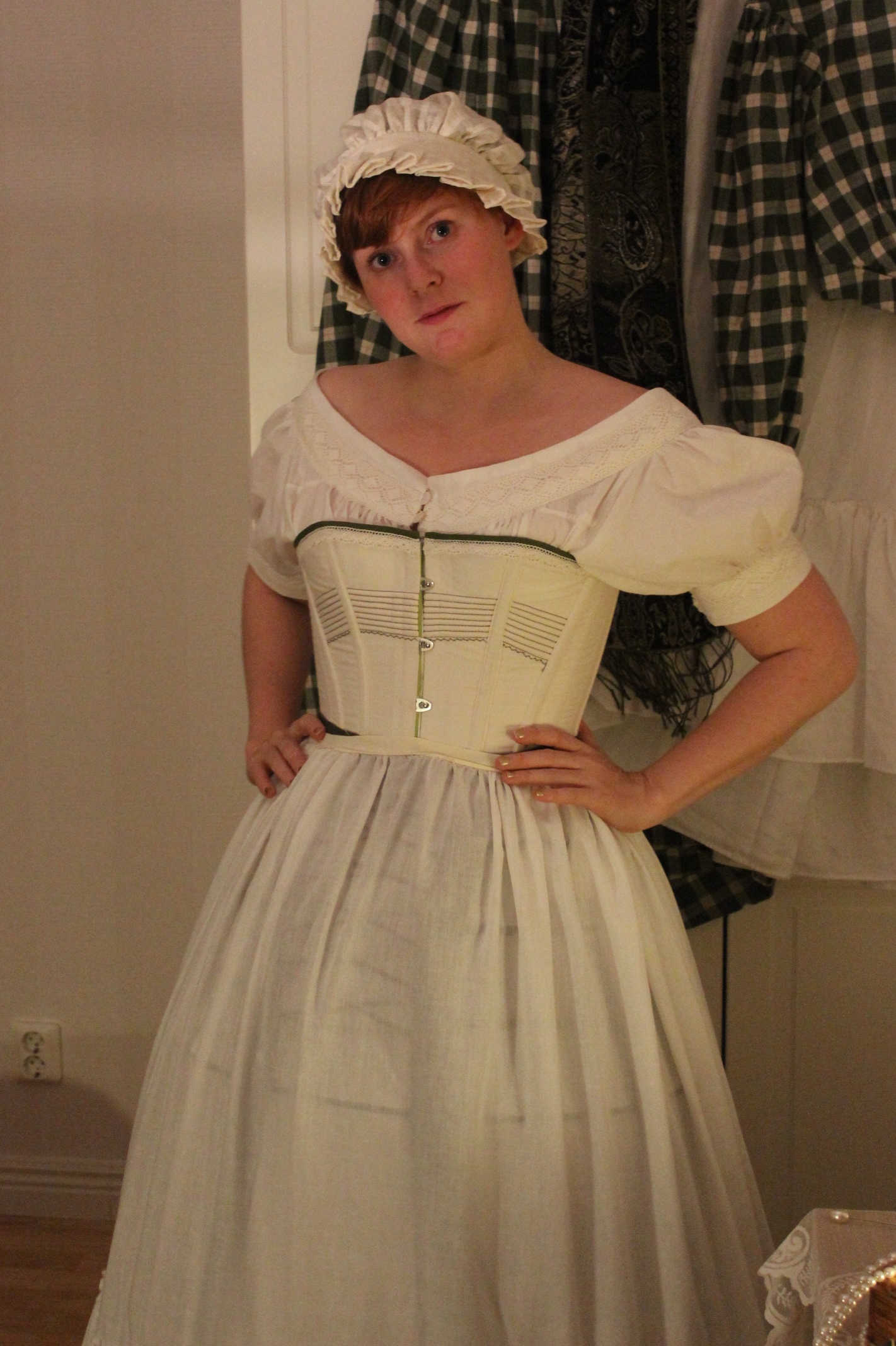
Then I put on my 19th century corset and the new 1880s bustle.IMG_9476

IMG_9482

IMG_9485

IMG_9486

IMG_9489

IMG_9492

IMG_9512

IMG_9515

IMG_9516

IMG_9518

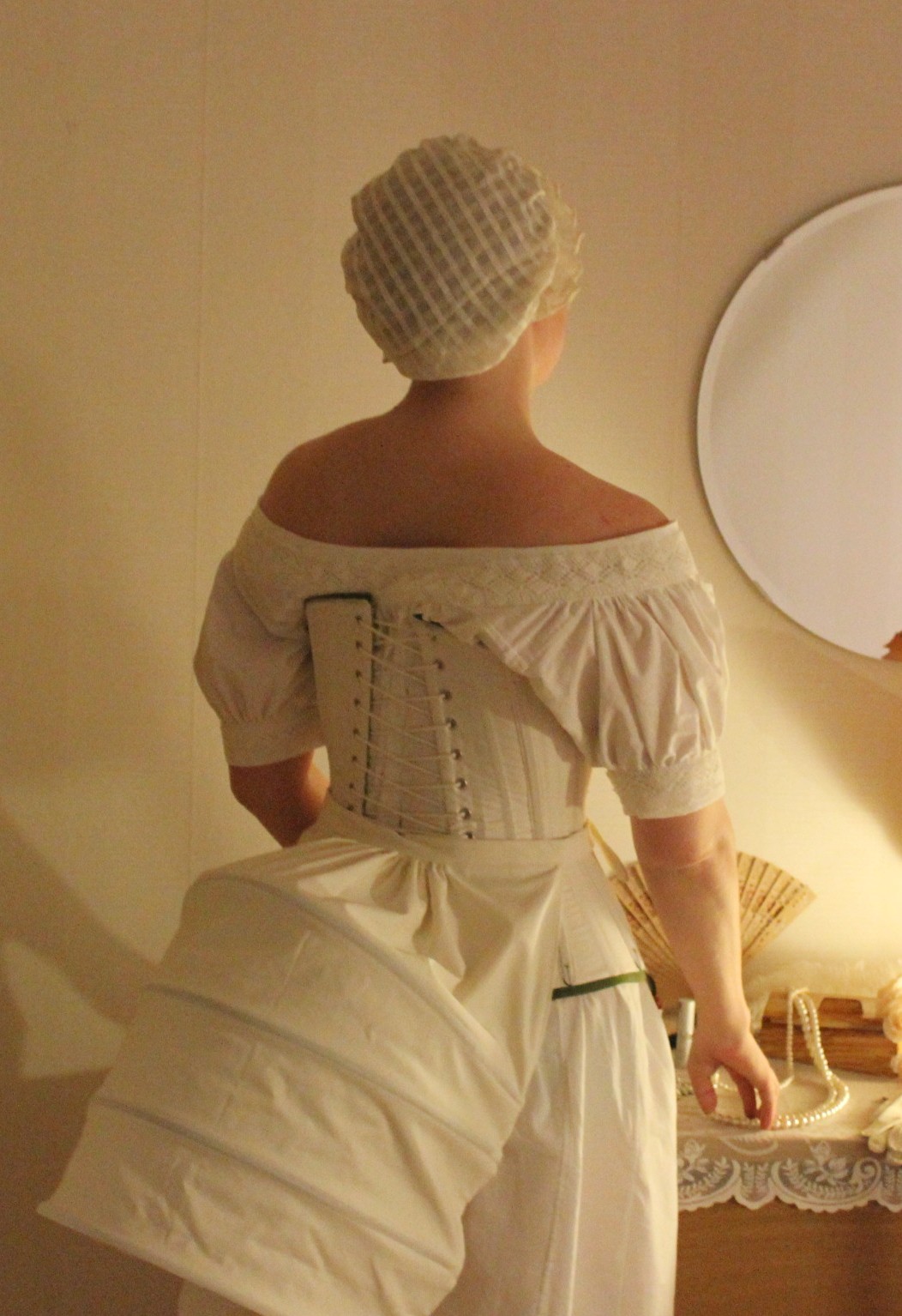
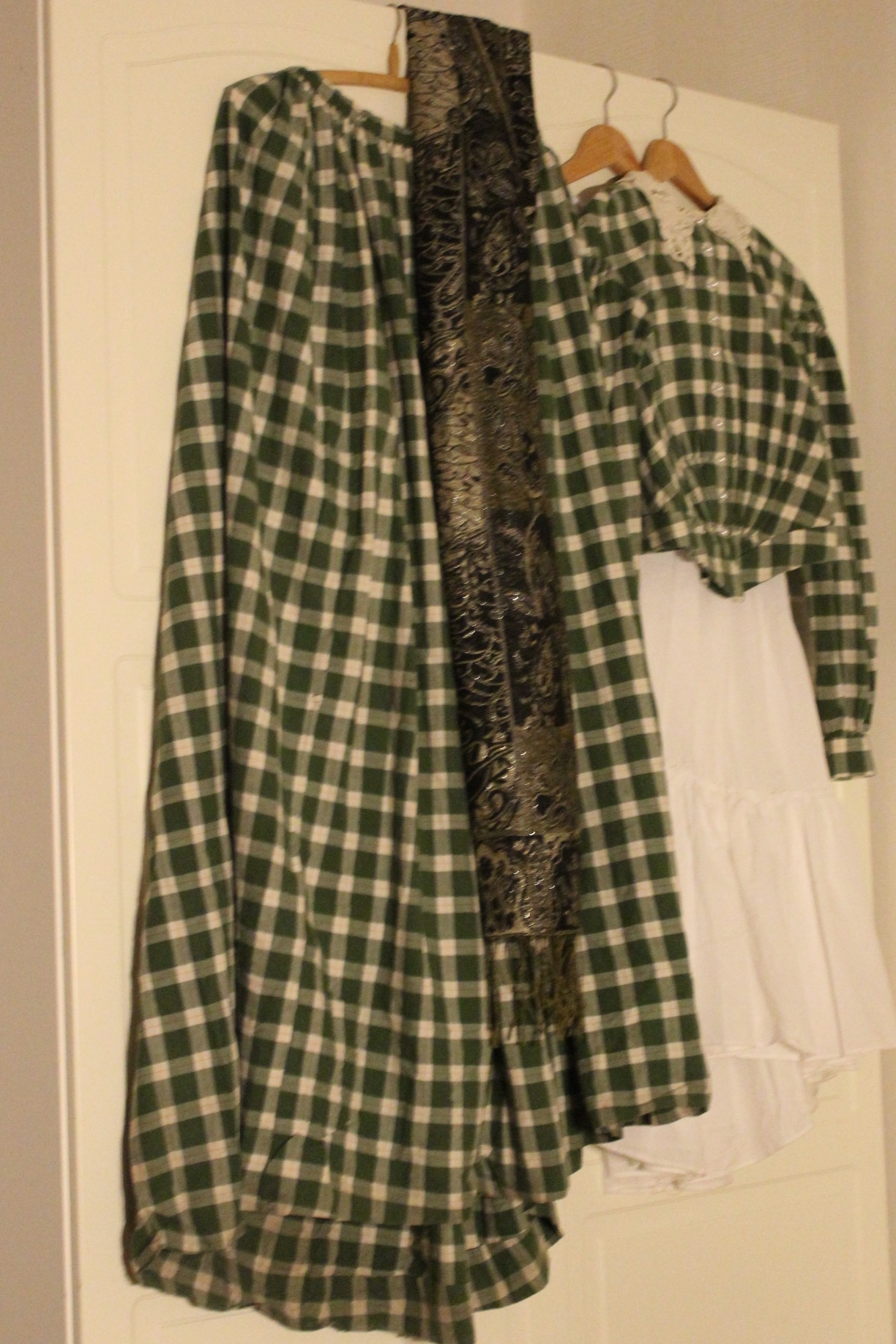
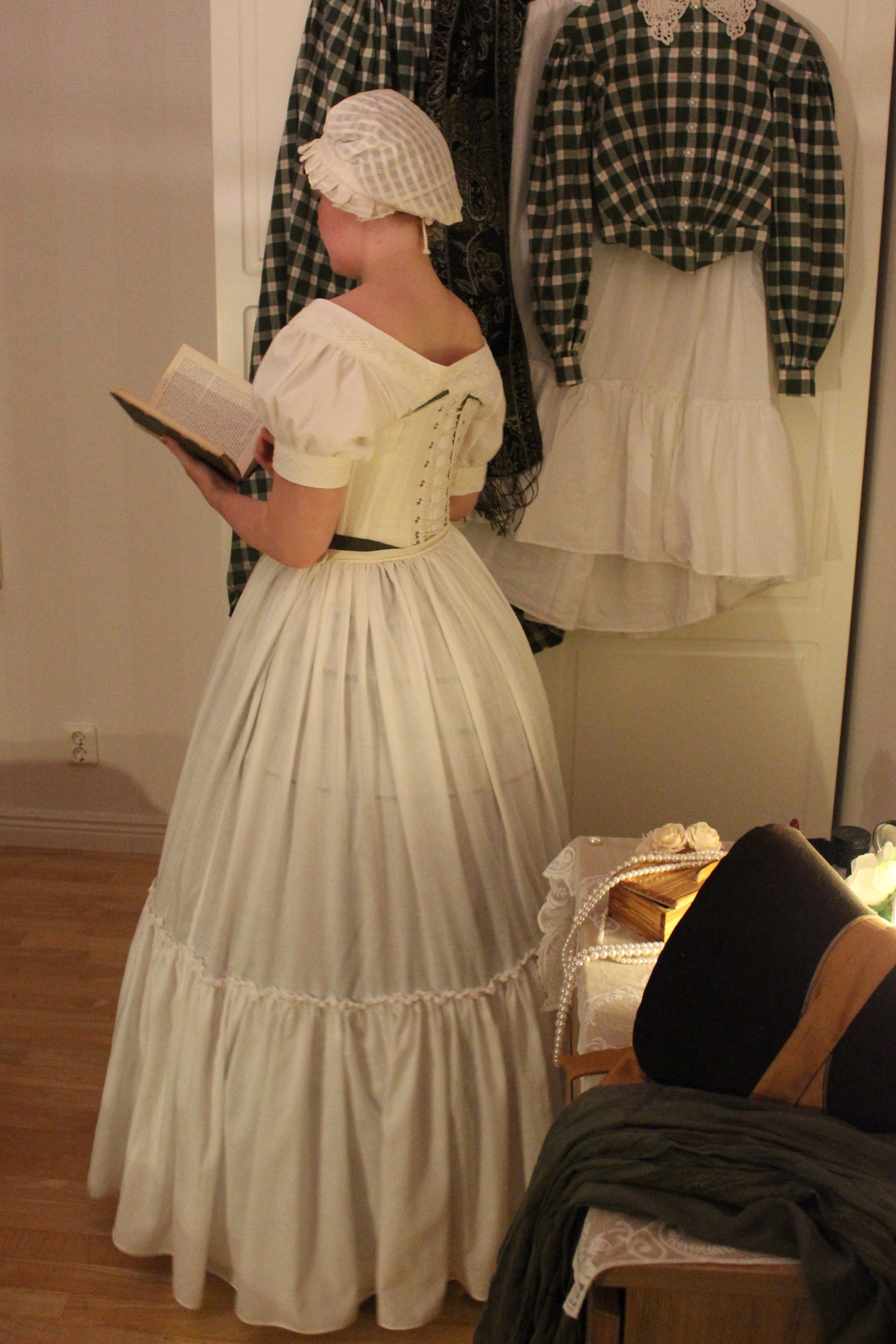
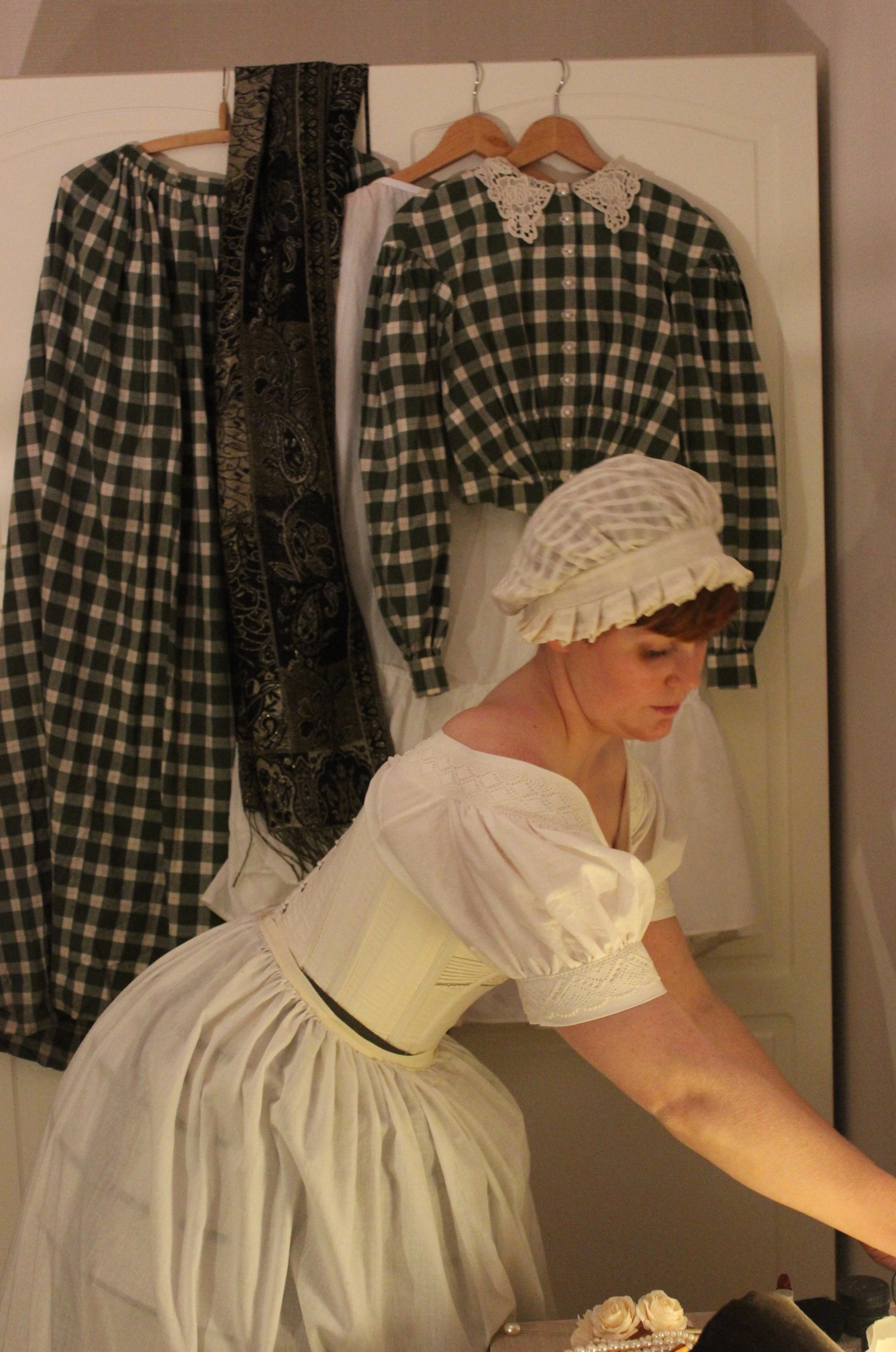
Then it was time to re-arrange the settings, and time tavel back another 30 years to 1850s. IMG_9593I hung my plaid green 1840s dress combined with a shawl and petticoat on the wardrobe door.

And placed my 1840s velvet bonnet on the table together with a lace fan, some faux flowers and juwvelry. IMG_9603

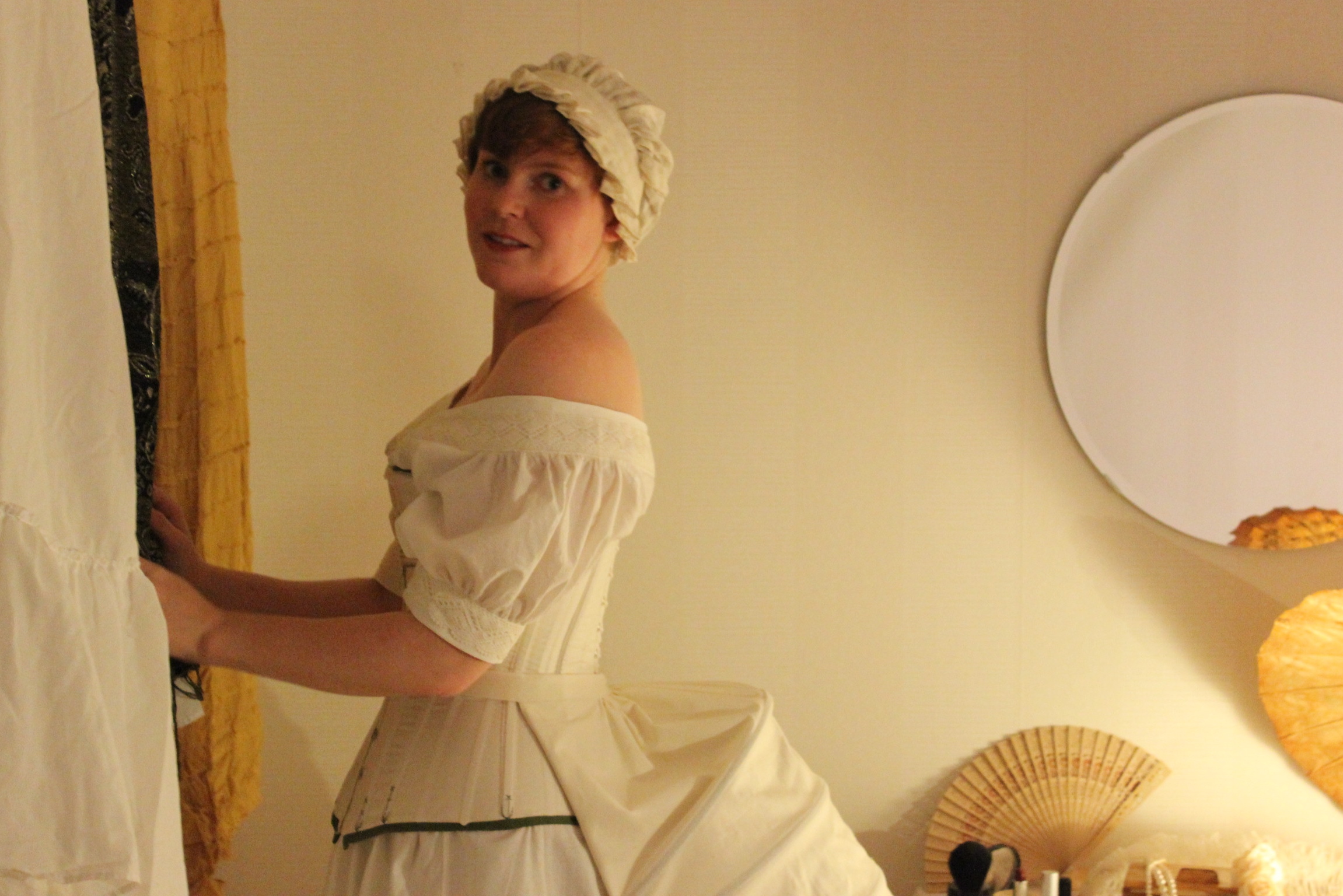
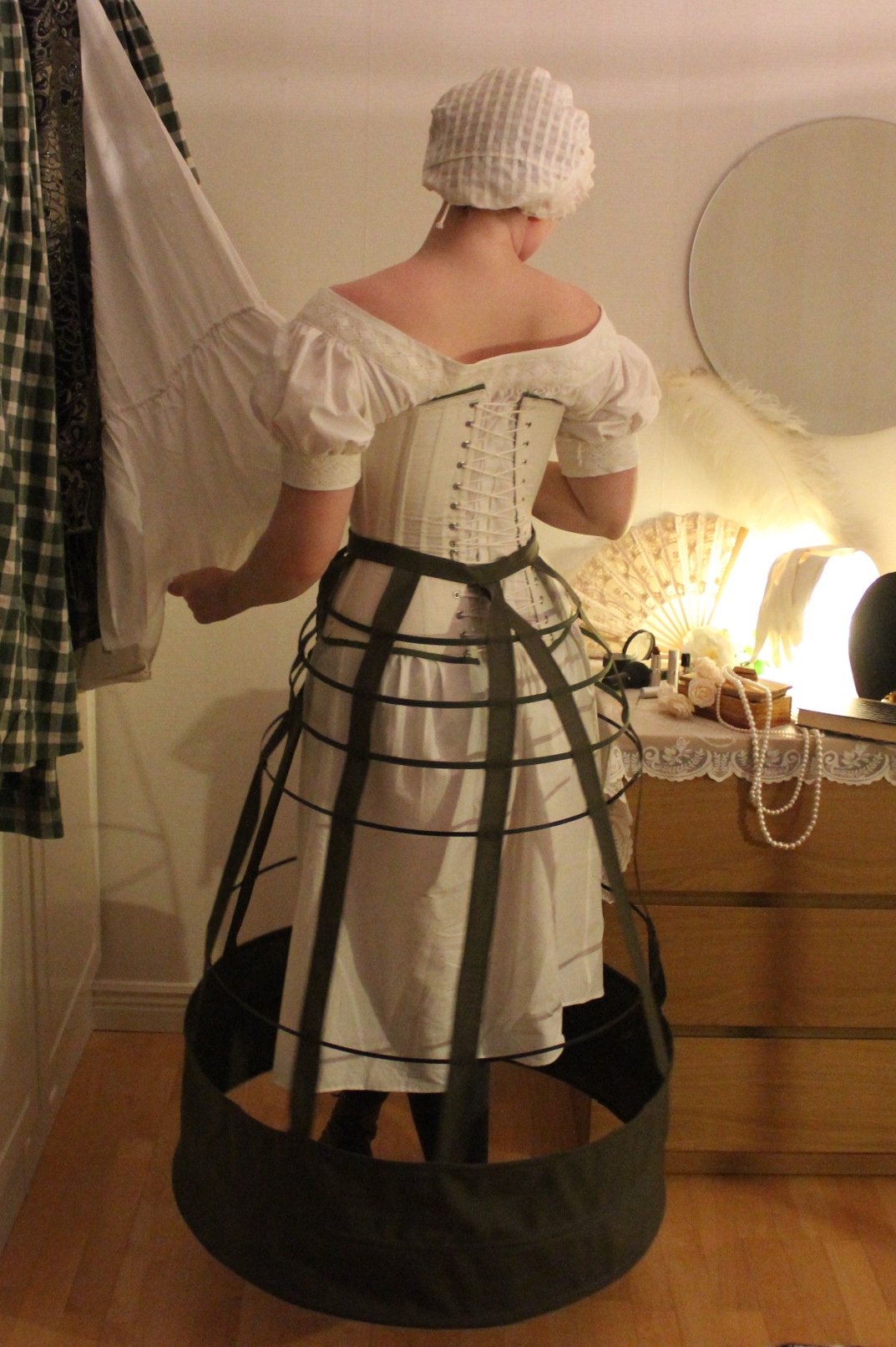
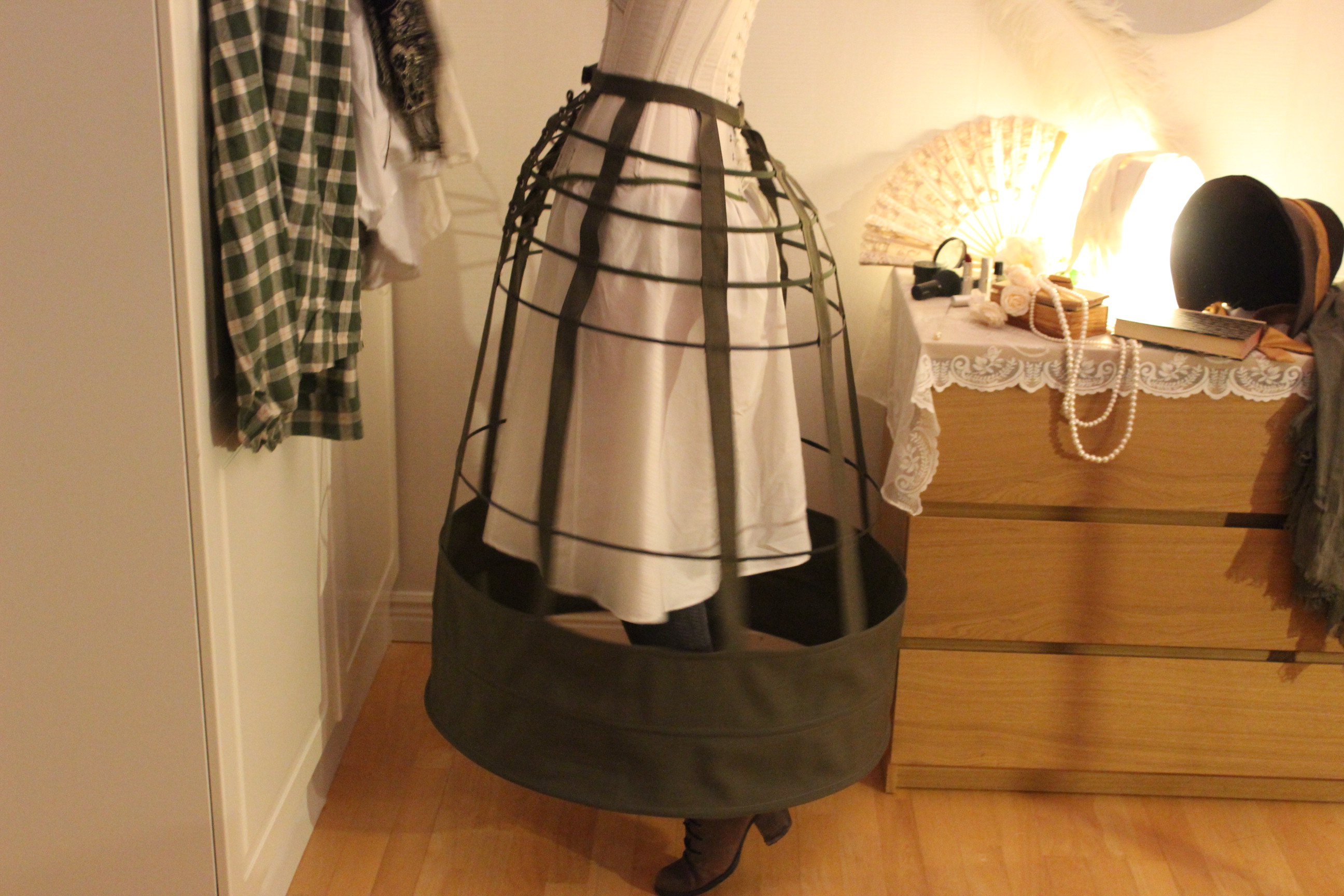
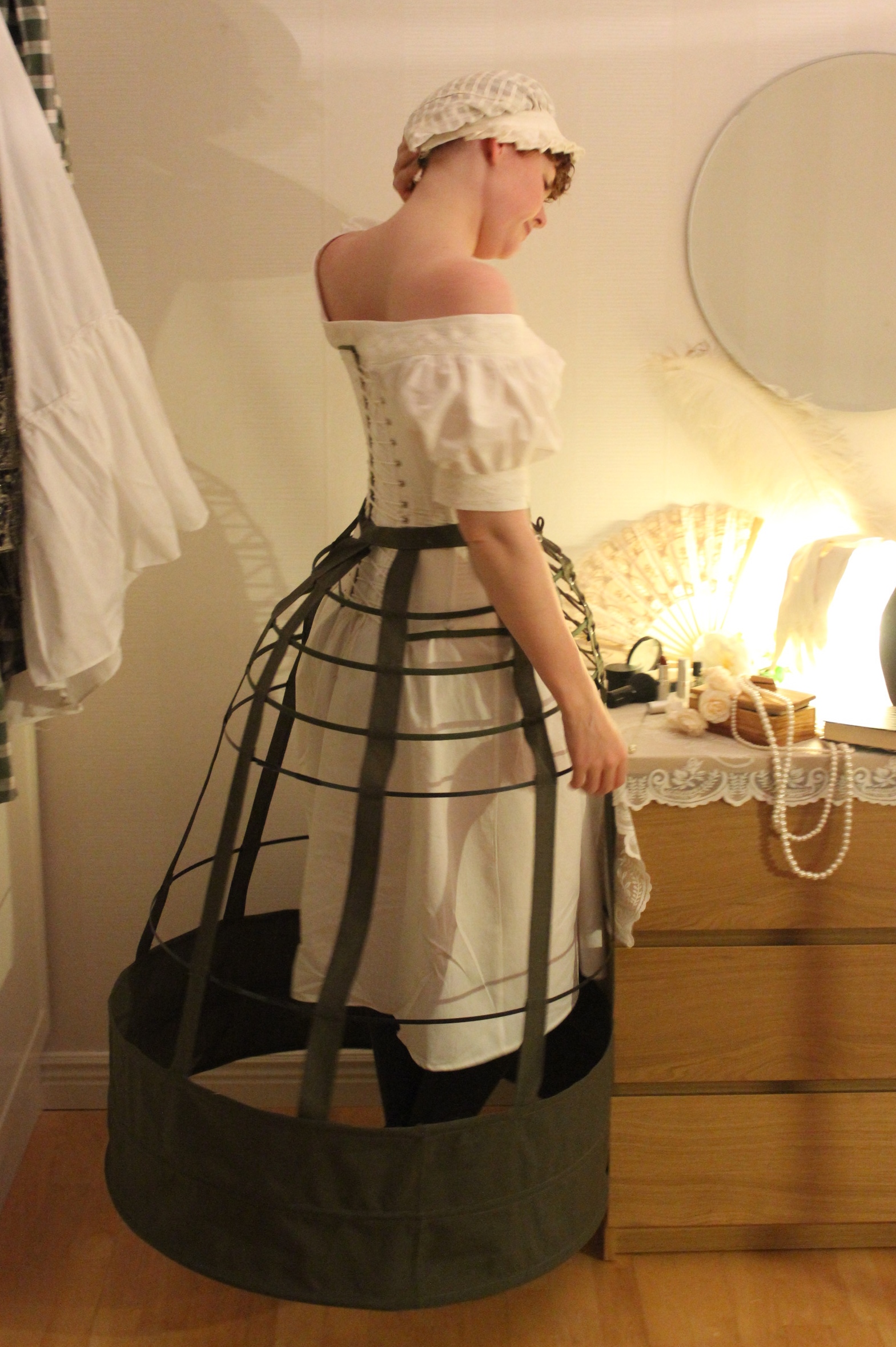
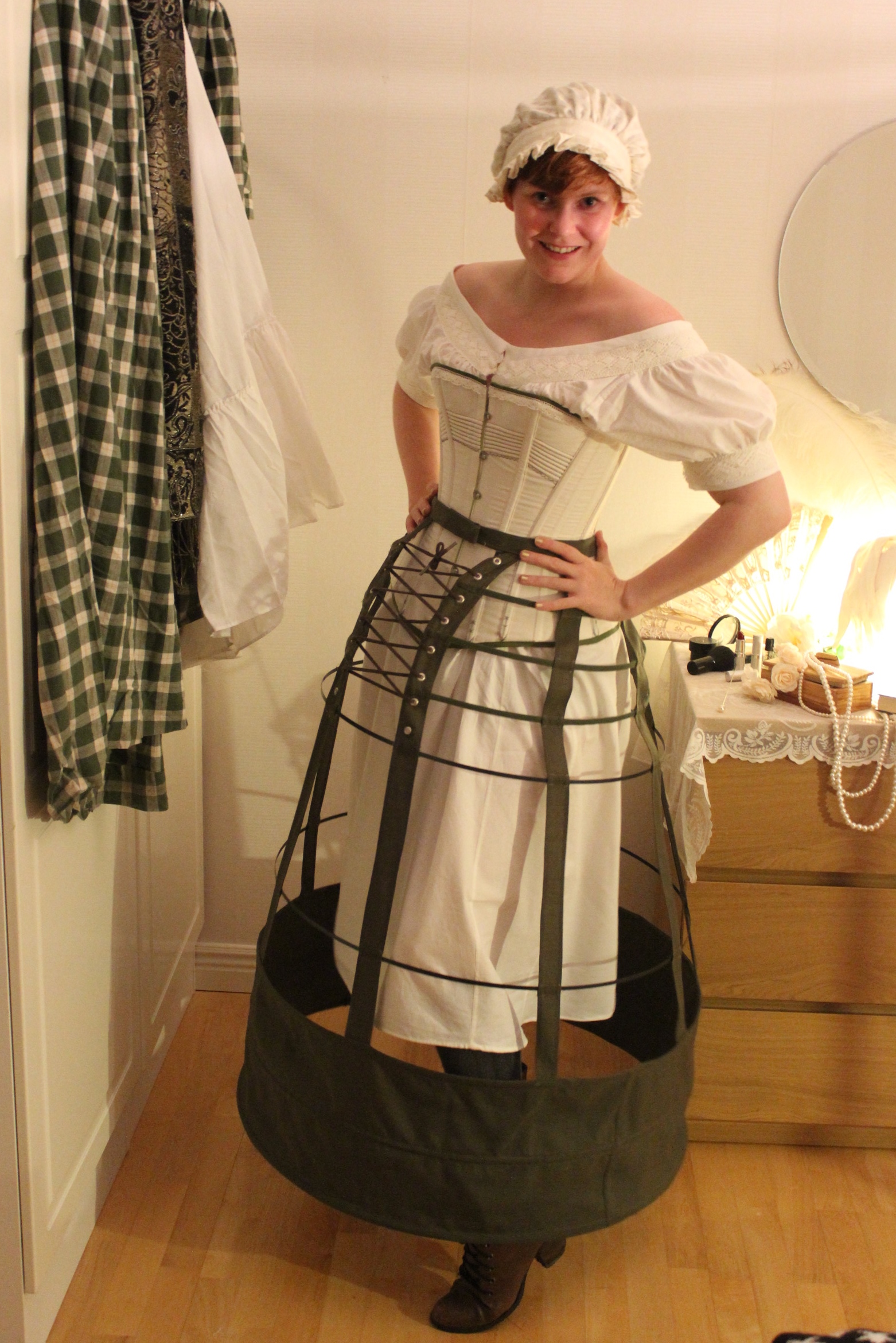
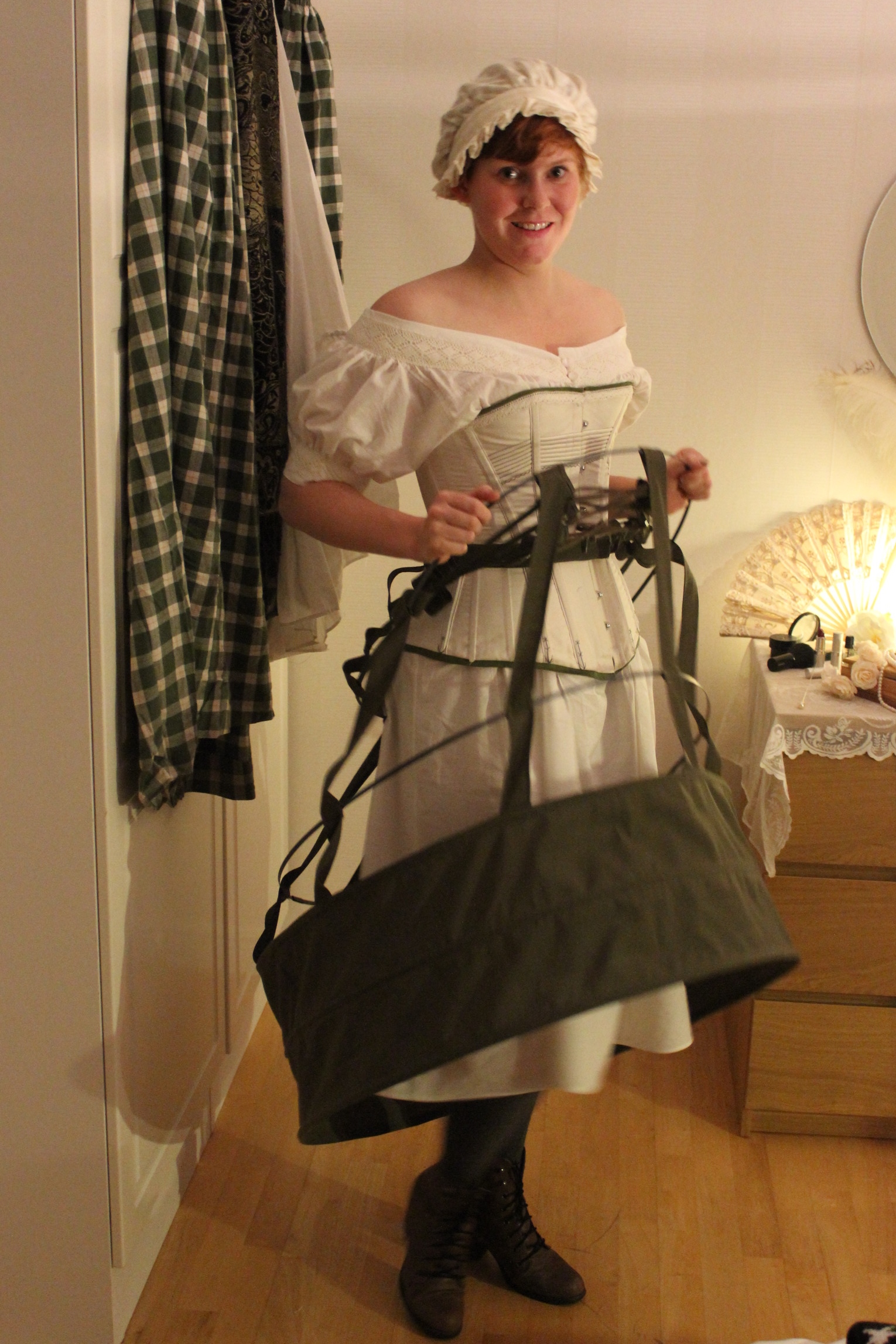
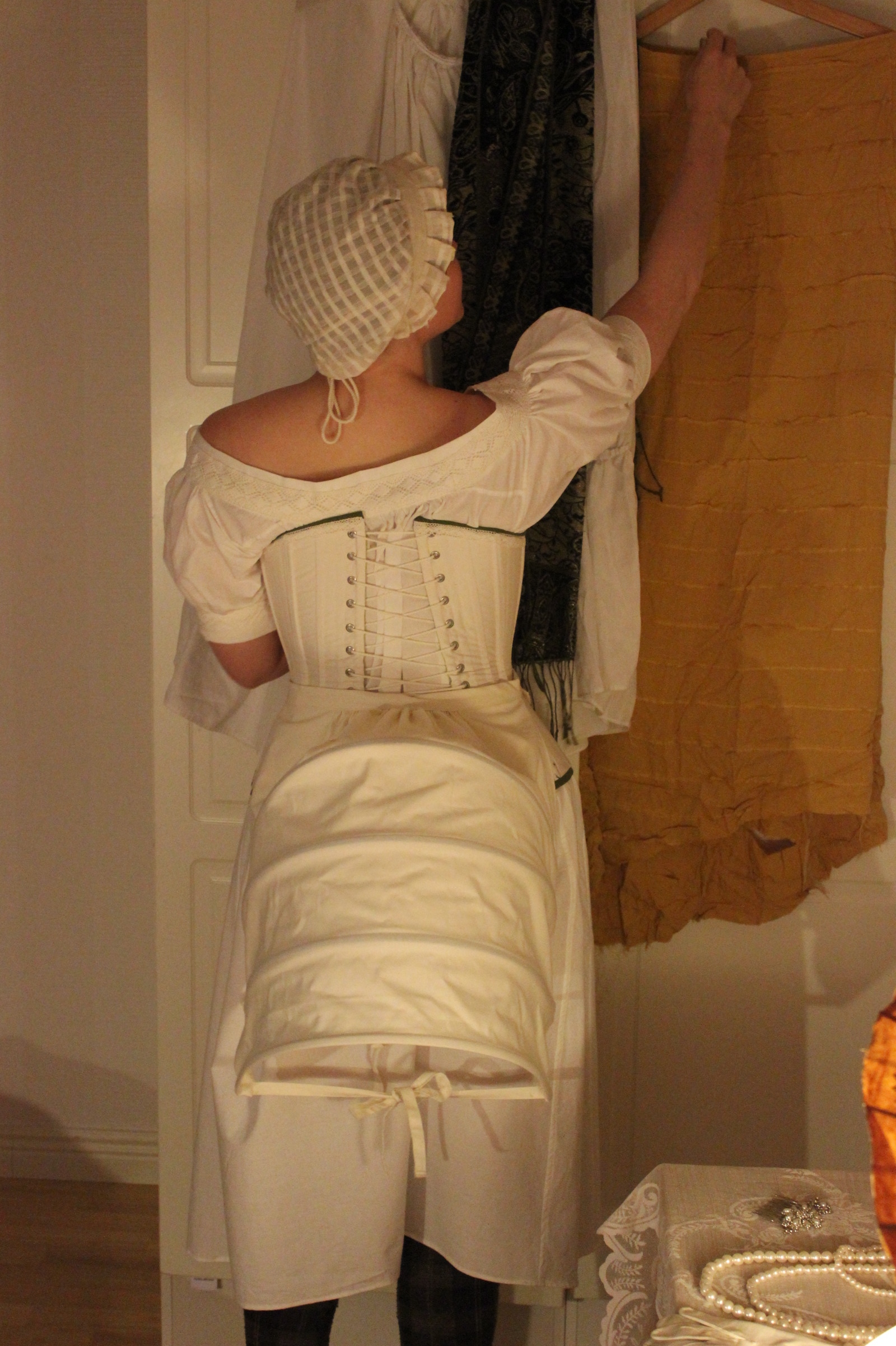
I keept the basic underwear like chemise and corset, but changed my shoes and stockings. And then I put on my new 1850s cage crinoline.IMG_9561

IMG_9567

IMG_9565

IMG_9571

IMG_9572

IMG_9578

IMG_9582

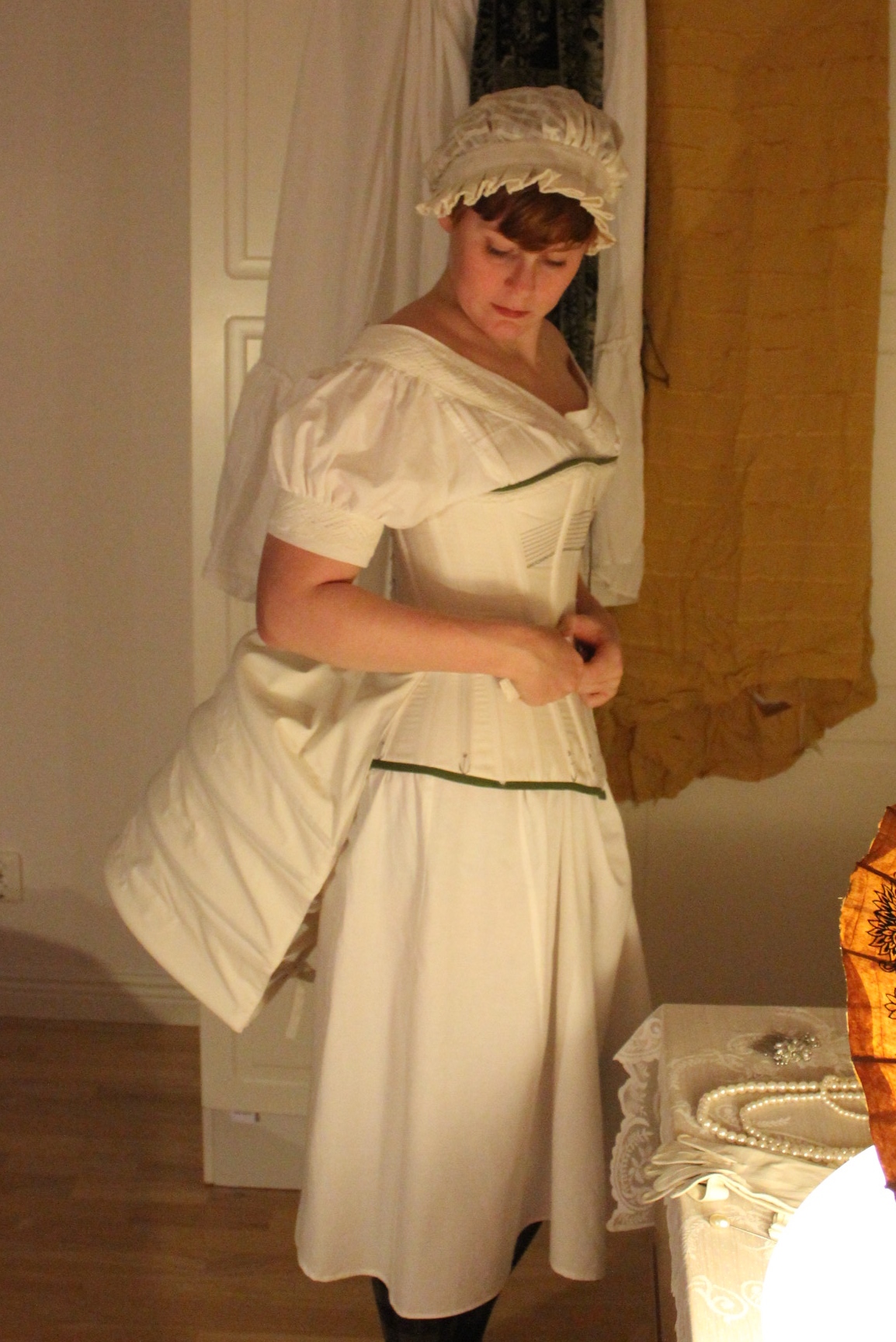
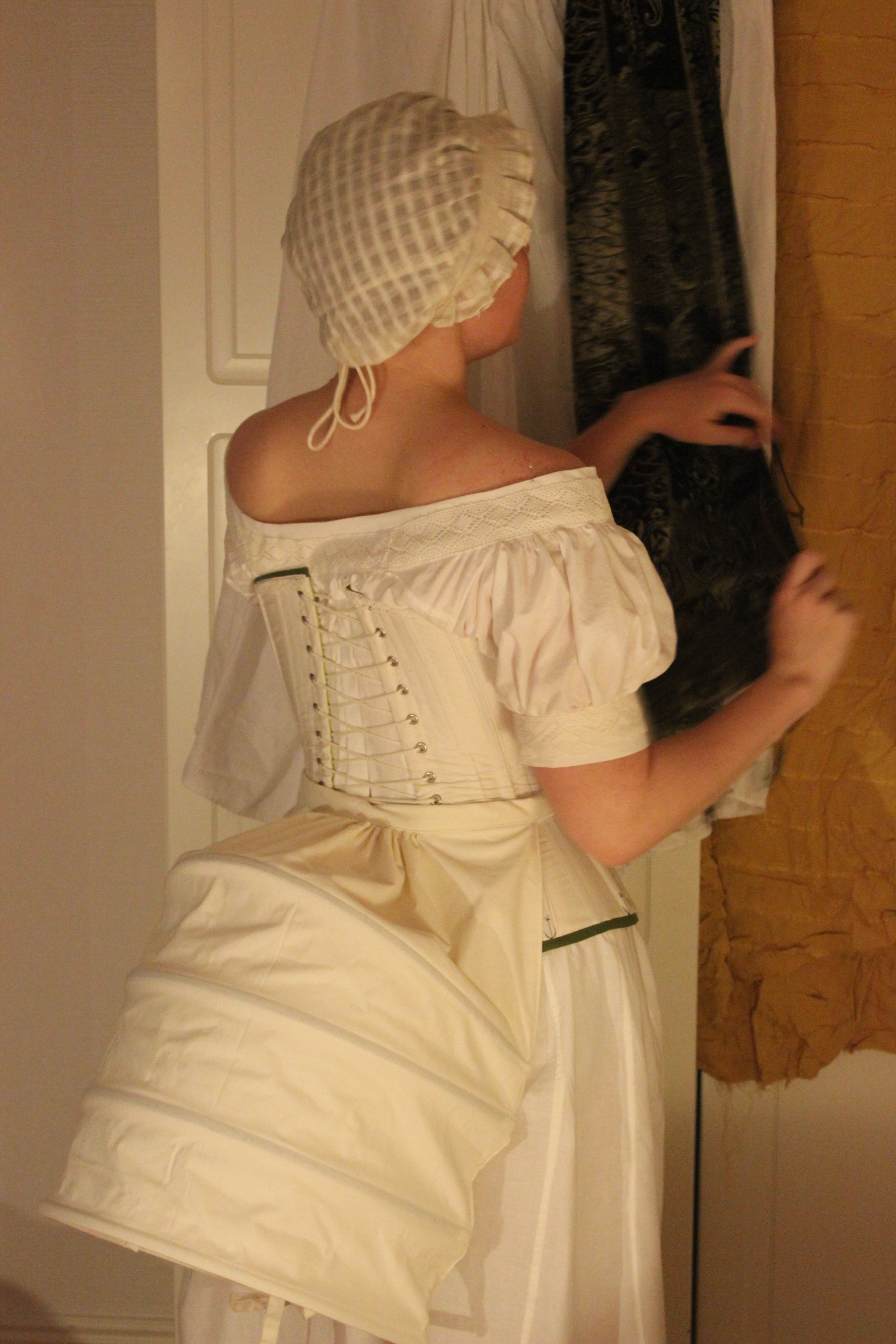
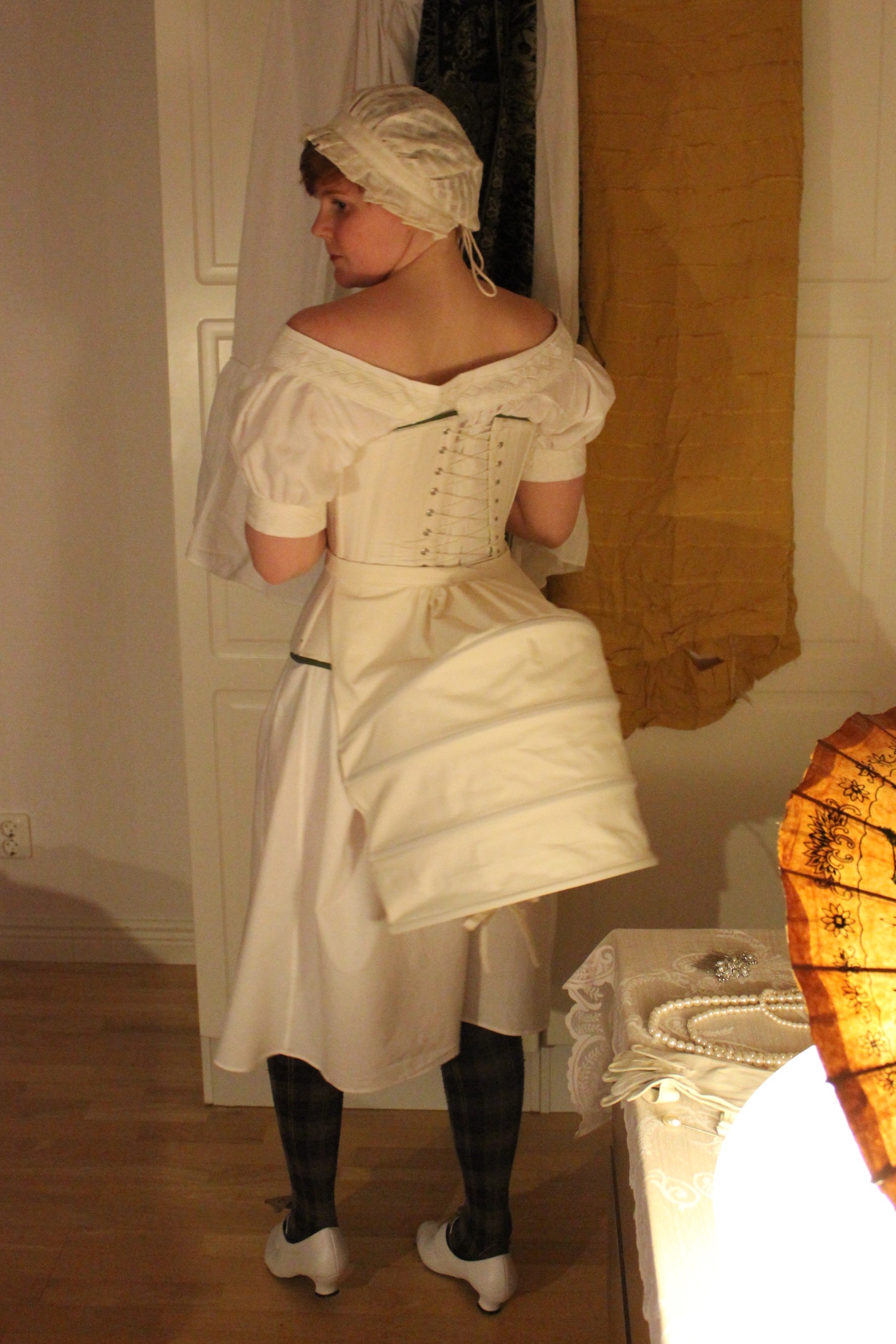
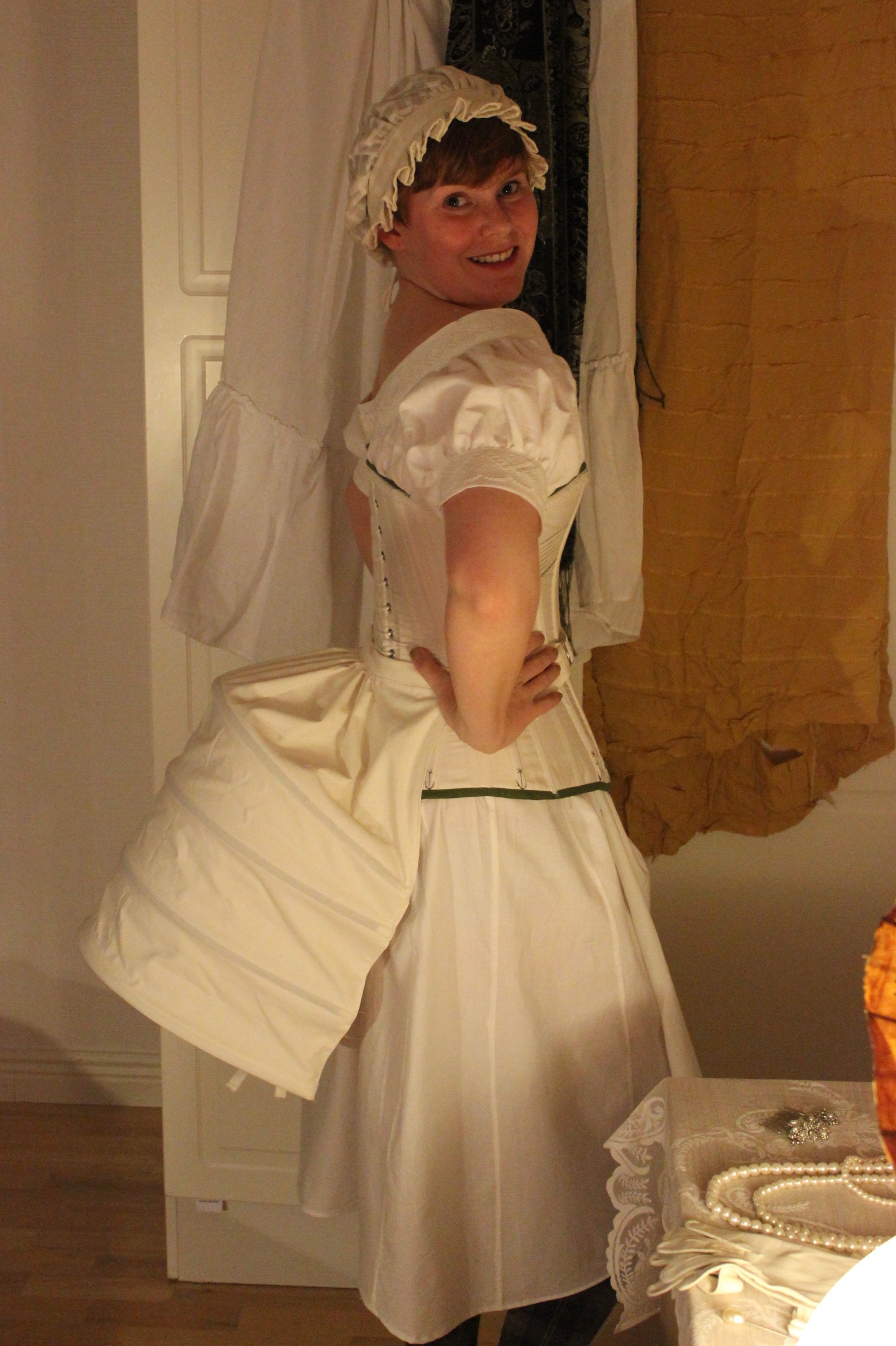
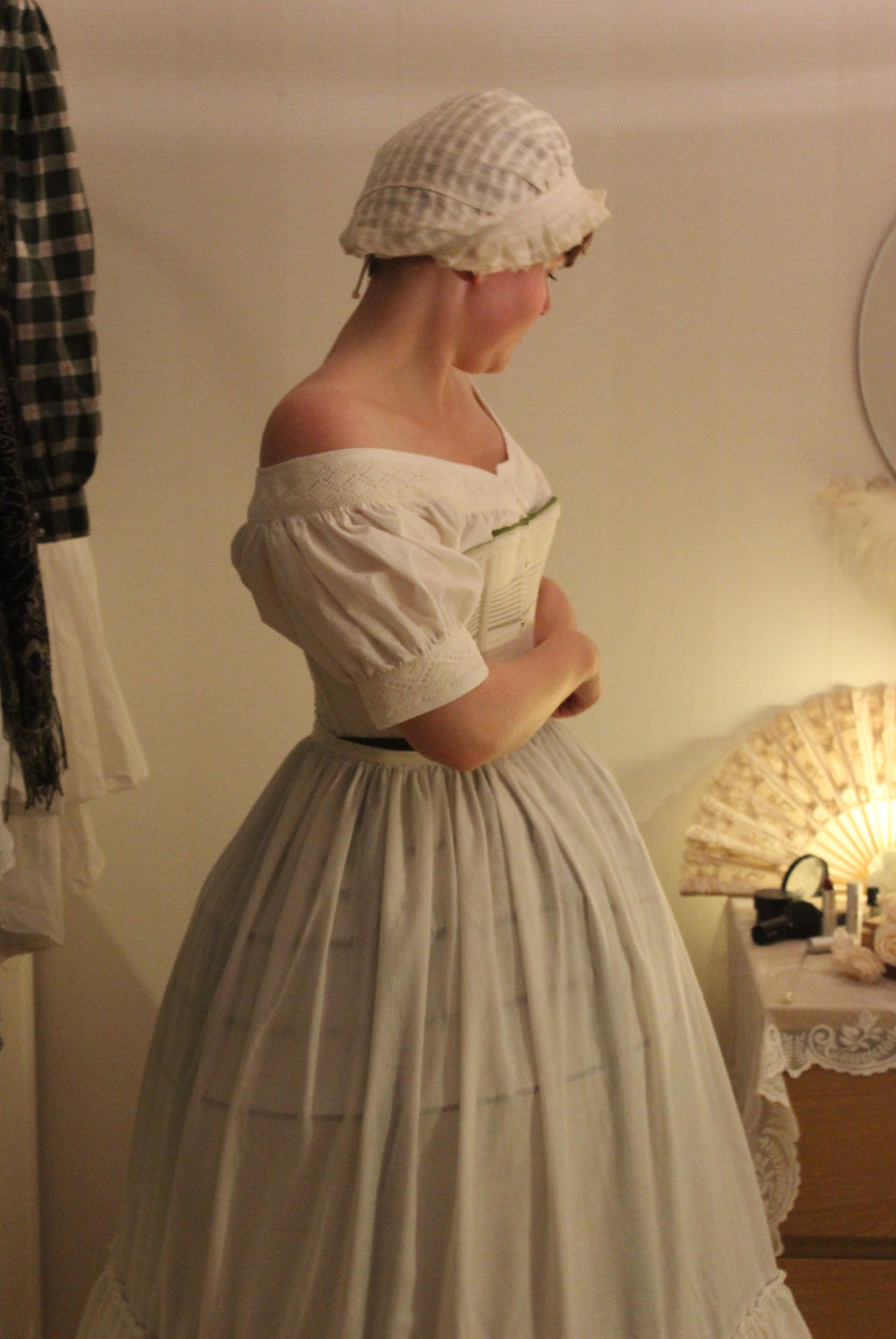
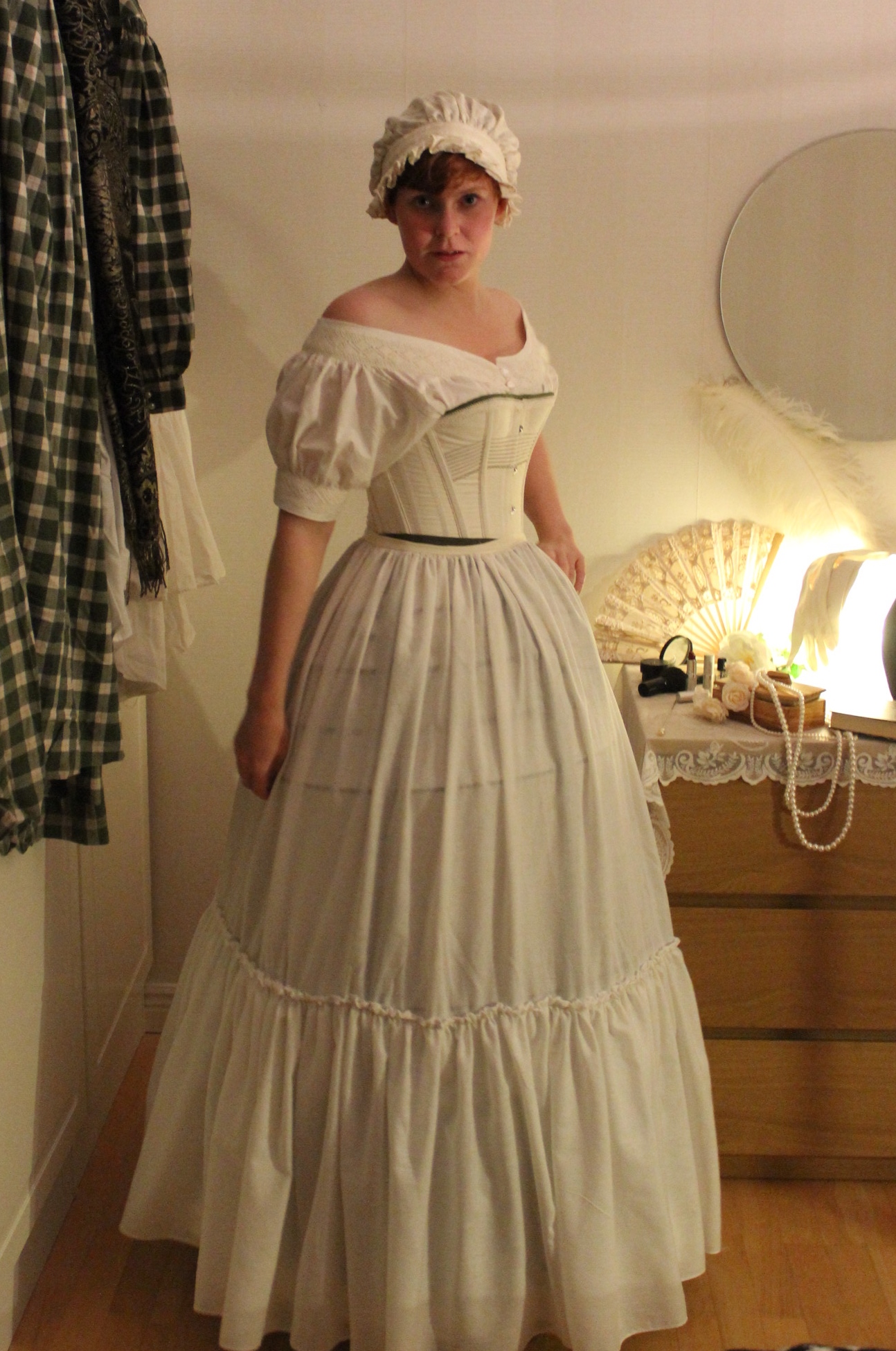
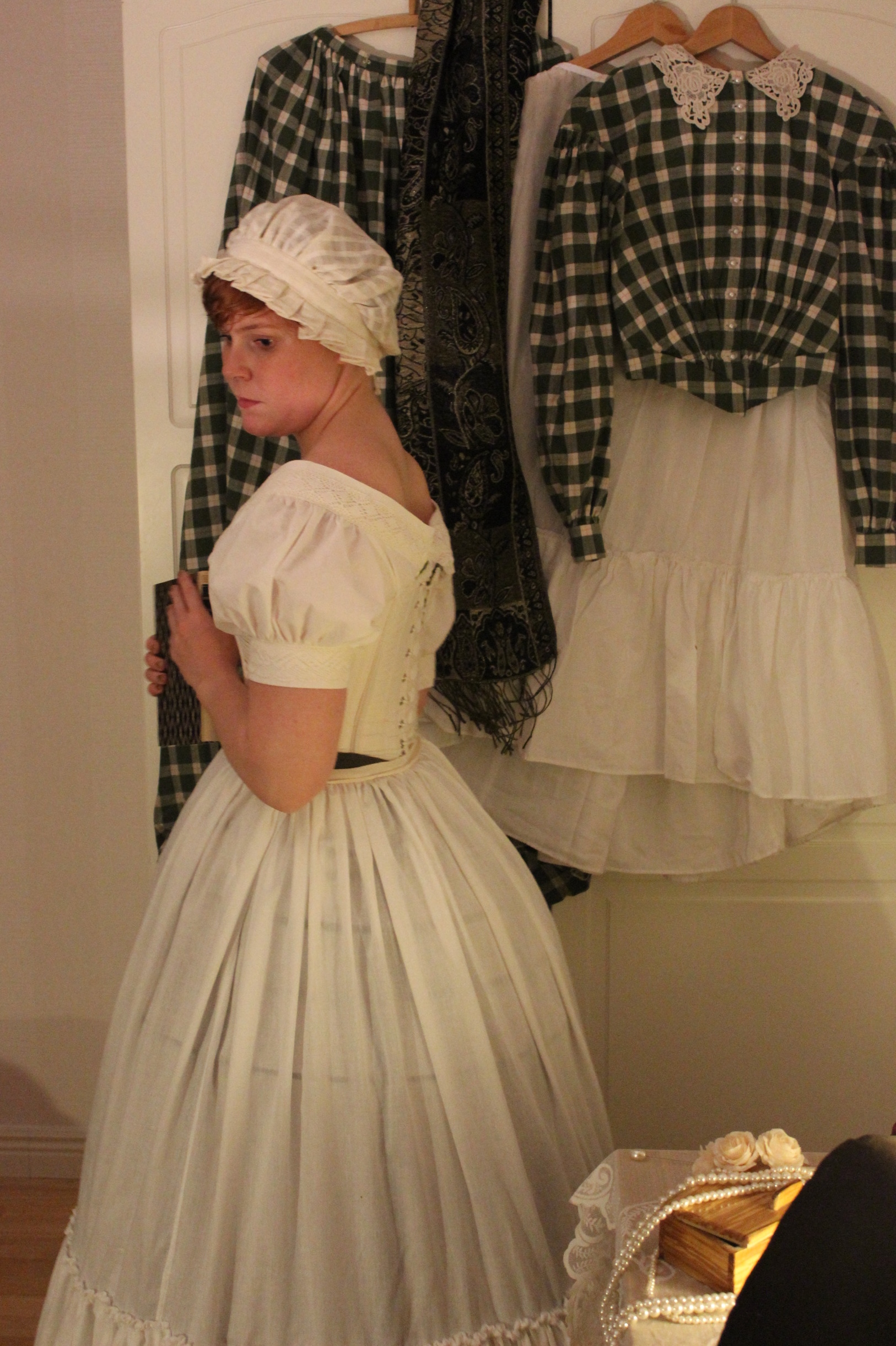
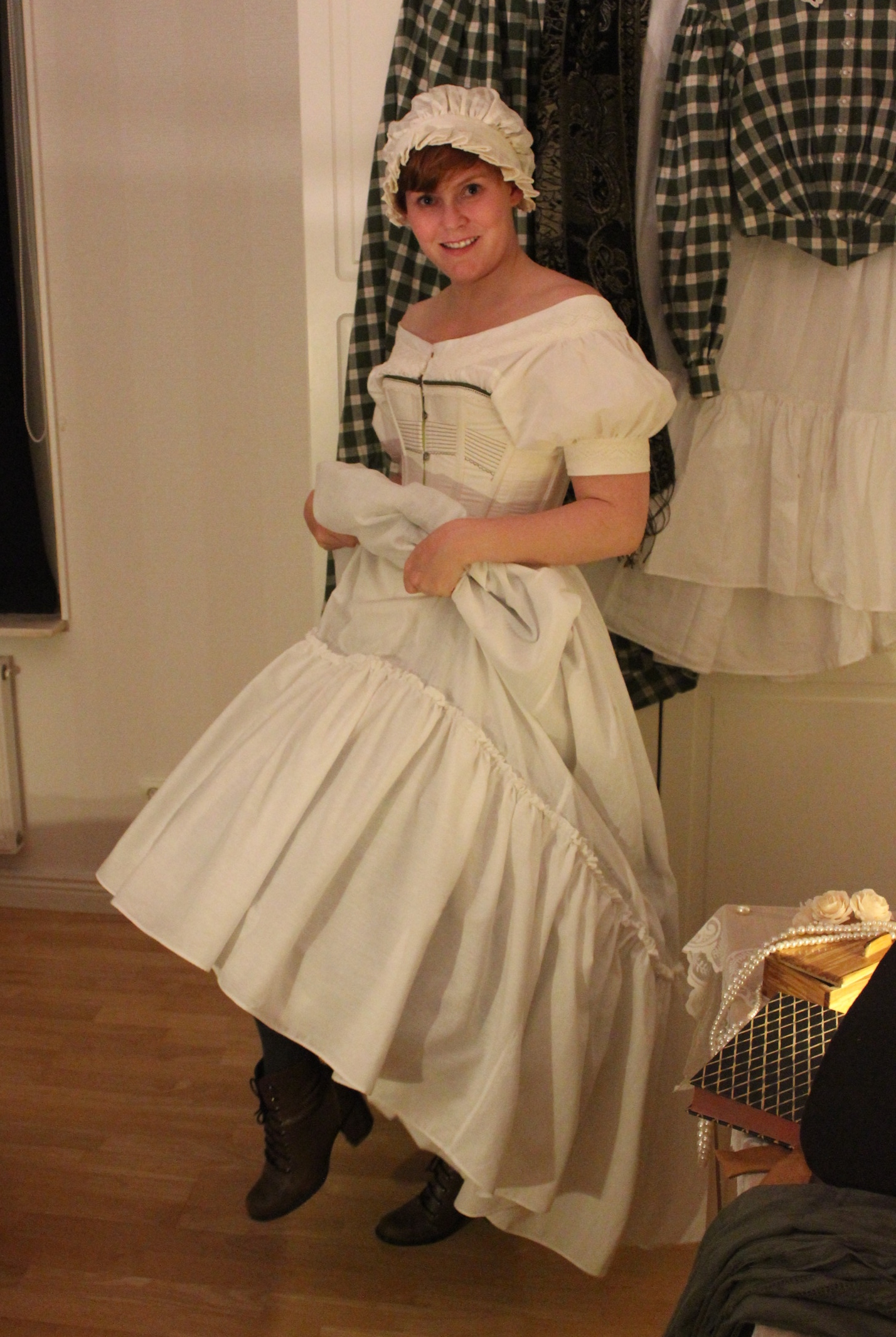
And lastly I put on my new cotton petticoat. IMG_9555

IMG_9558

IMG_9525

IMG_9528

IMG_9534

IMG_9535

IMG_9539

IMG_9544Bouncy buttom.

IMG_9542So there you have it, 4 HSF items in one photoshoot.
Well actally the corset, brown bonnet, and green plaid dress are HSF items as well.

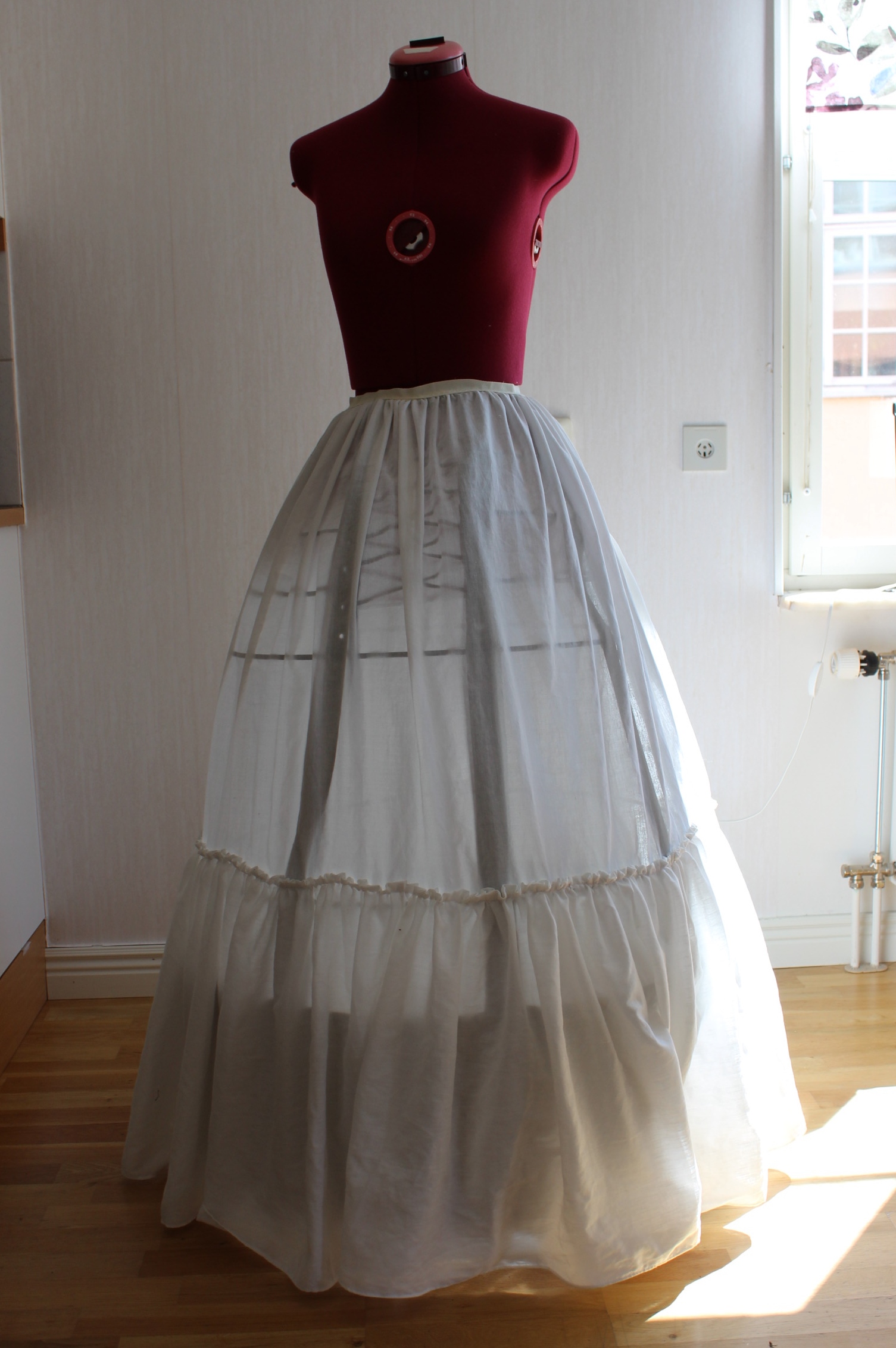
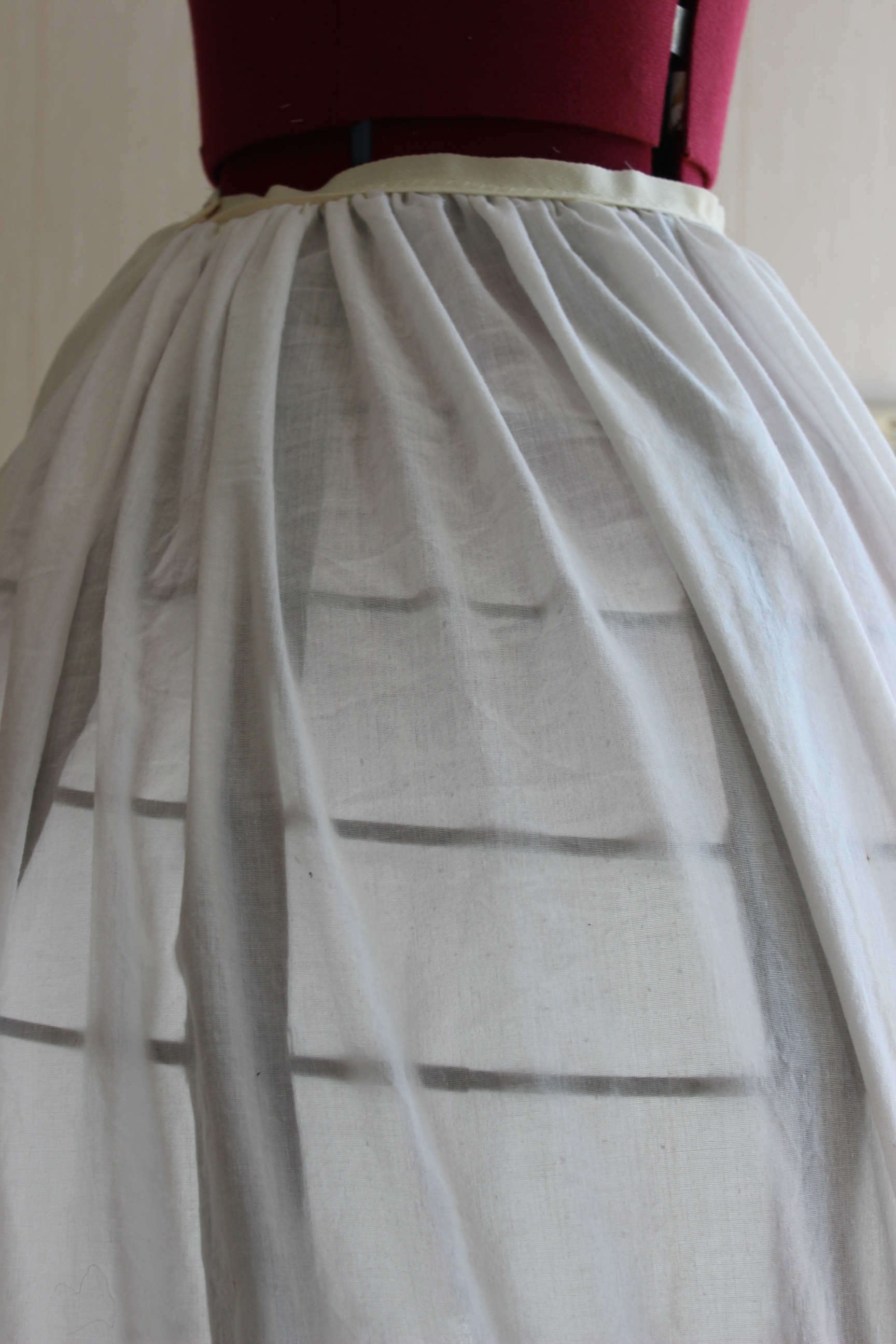
A cheap 1850s petticoat

With the sewing steam already up and running there was no use to stop now. So I did a second entry to the HSF Challenge 13 – Under 10 Usd. I decided I needed a flounced pettiocat to wear over my new crinoline, and that was that.

I grabbed two cheap cotton/poyester blends sheets from the linnen cabit and got to work.

Using one as the base, and ripped the other one in four to create the flounce. I originaly planed to have three or at least two rows of flounces but I overestimated how much fabric whent into even one of those poppies.

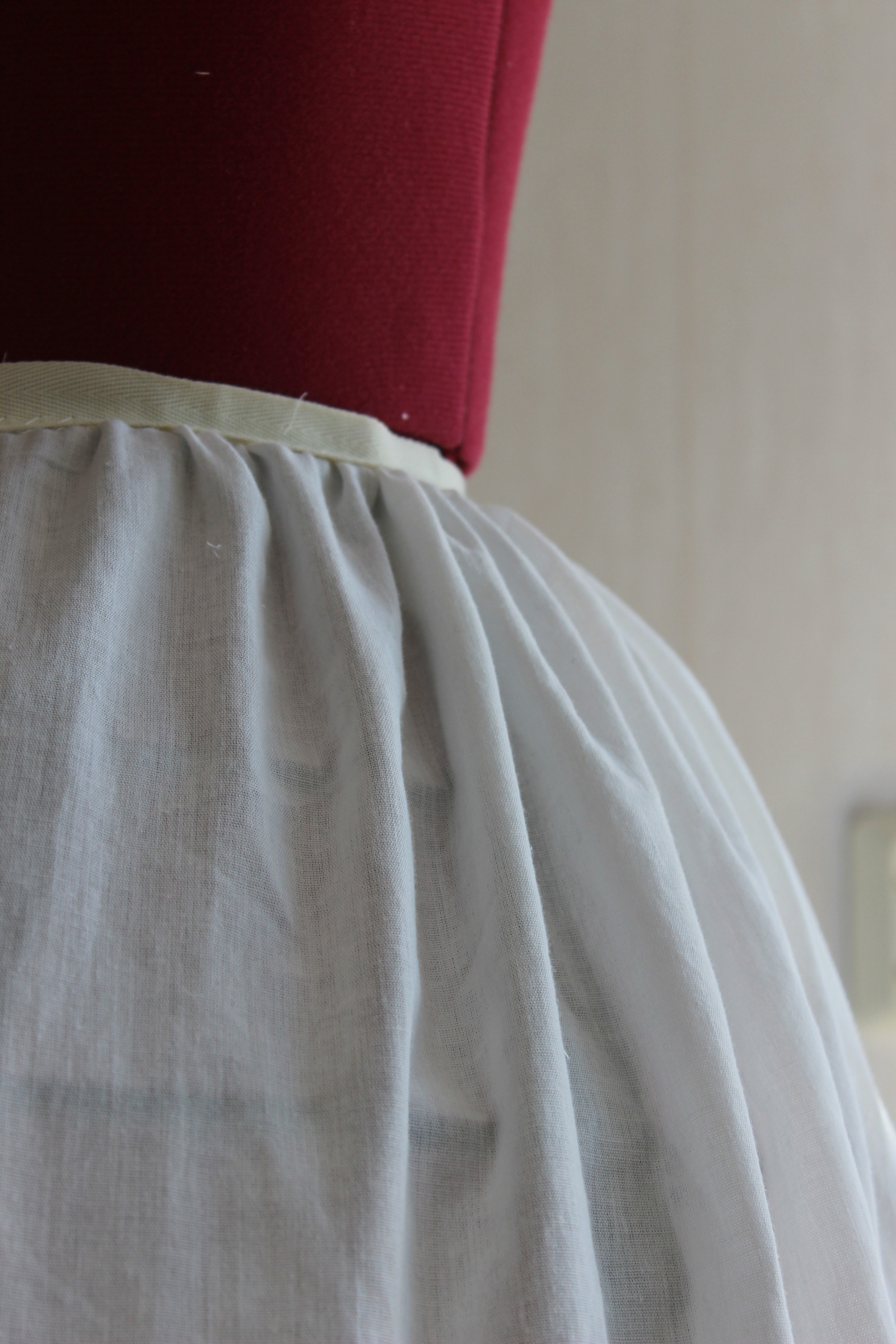
Full speed ahead as I where I also forgot to take progress pics, but the construction was really simple. Just used straight pieces, sewed them togeter and gathered the waist. Popped on a hook and eye for clouser and that was that..

IMG_9349

IMG_9360

IMG_9356

IMG_9364

IMG_9353

IMG_9351

IMG_9359

IMG_9350

Pic from the photoshoot:IMG_9555

Just the facts:

Challenge: 13 – Under 10 Usd

What: a 1850s petticoat.

Pattern: None, just cut stripes and sewed.

Fabric: 2 cotton bed sheets.

Notions: Thread, 80 cm of twill tape, hook and eye.

How historical accurate: Exept for the use of sewing machine I think the accuracy is pretty good. The fabric, method and shape are all about right. 7/10

Time: 2 hours.

Cost: 65 Sek (10 Usd)

First worn: Around the house for photos.

Final thoughts: I wished I had had some more fabric to make two more rows of ruffels from, but then it would have been to exensive and wouldn’t have fitted the challenge. Anyhow I think it looks pretty good and works just fine.