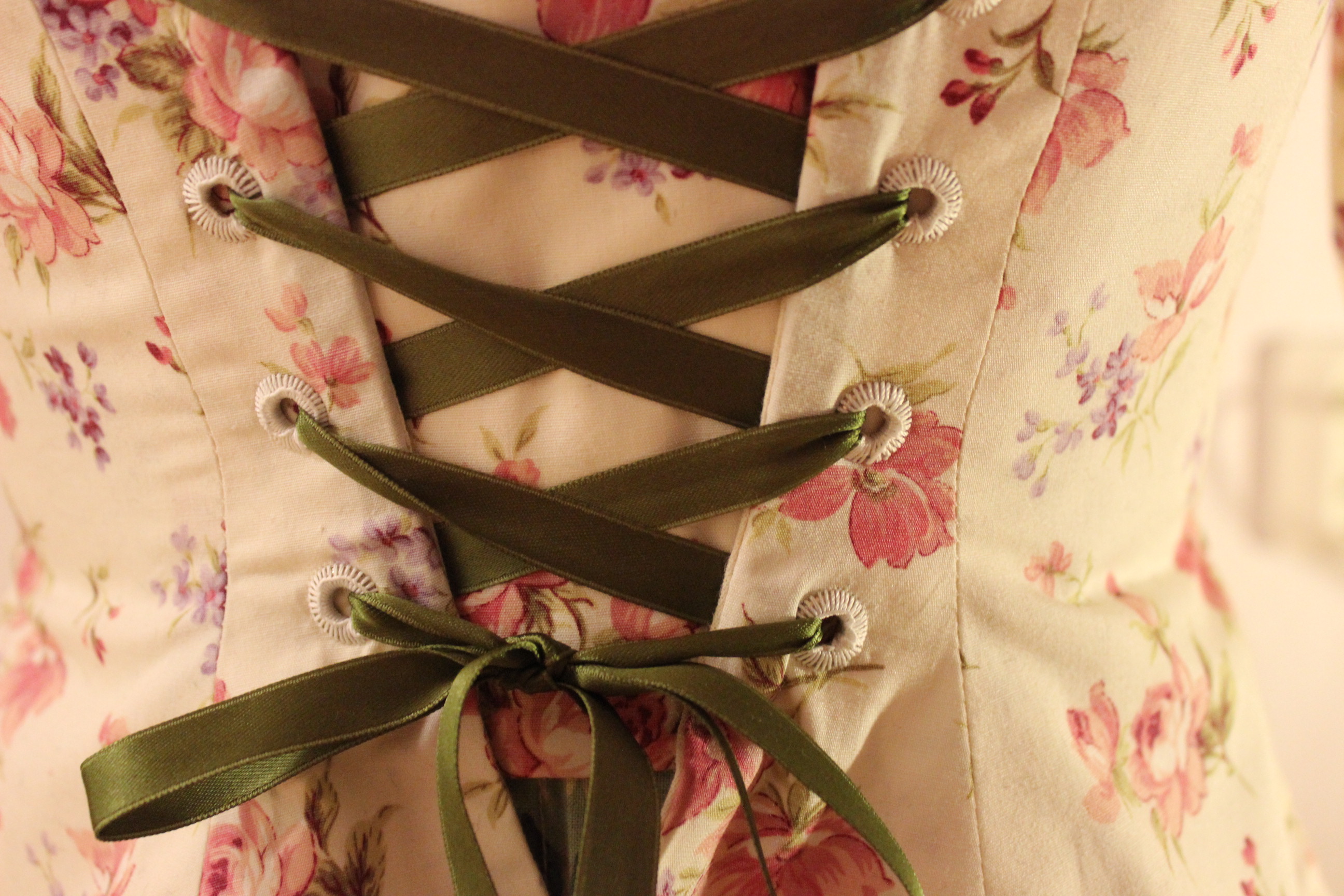
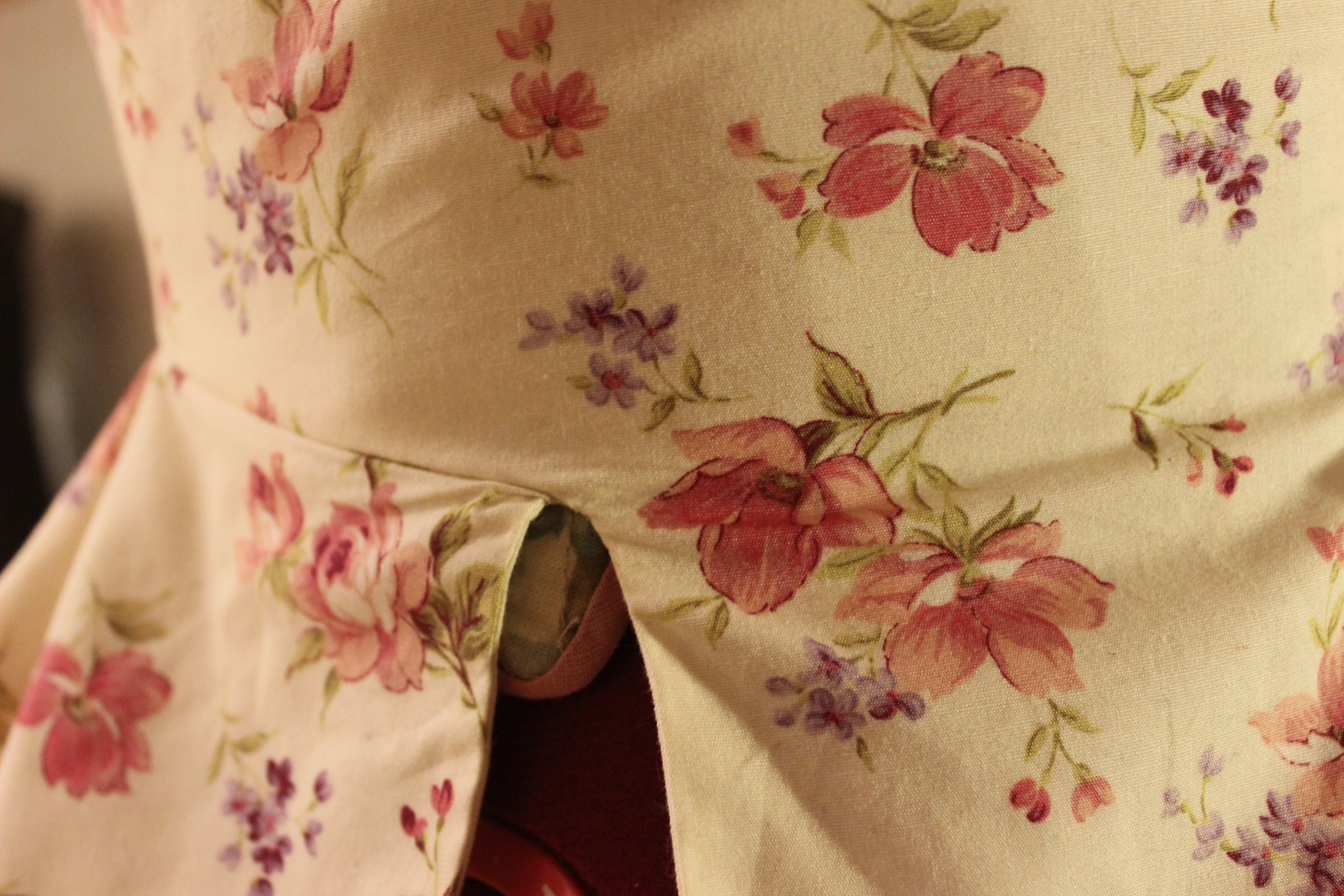
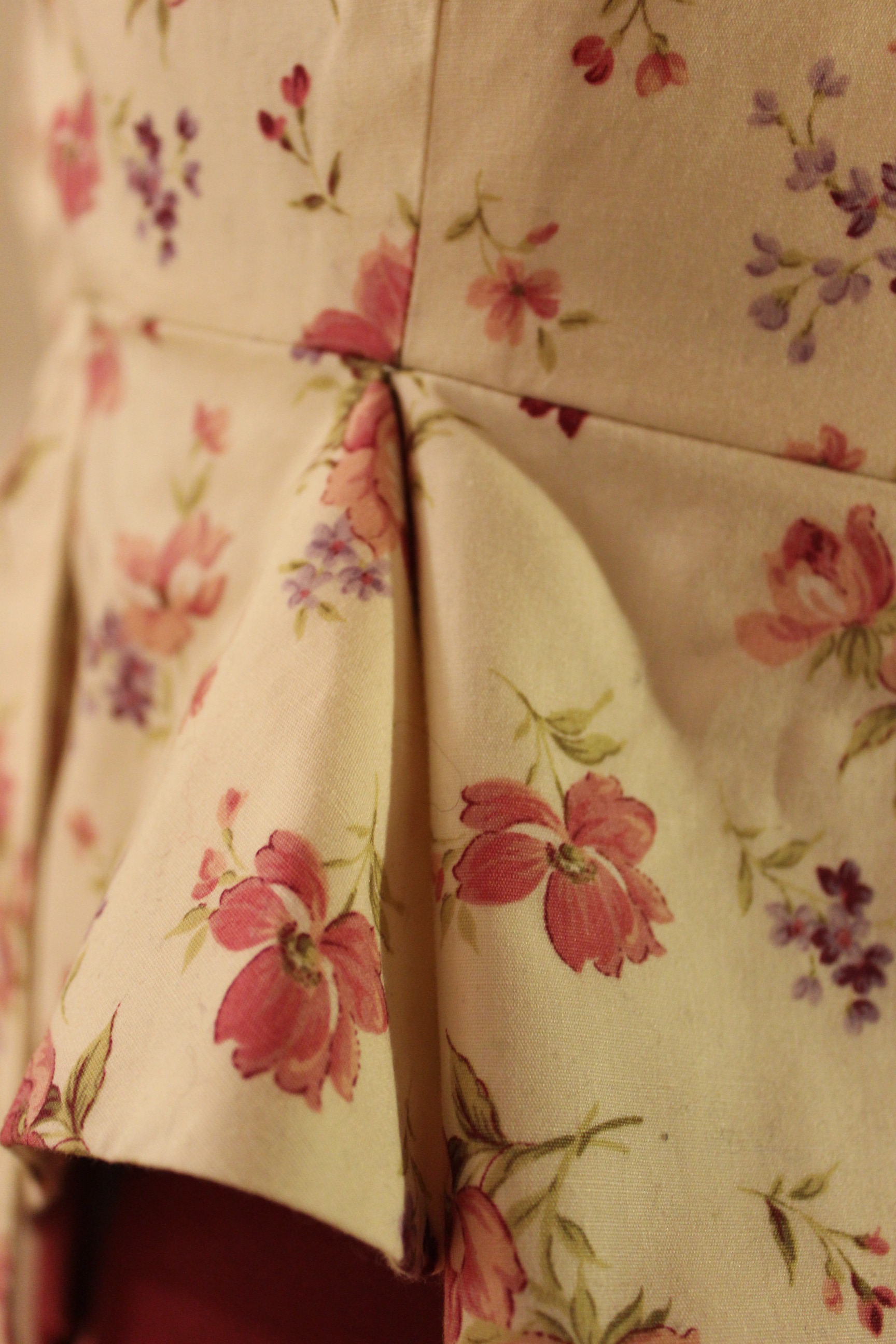
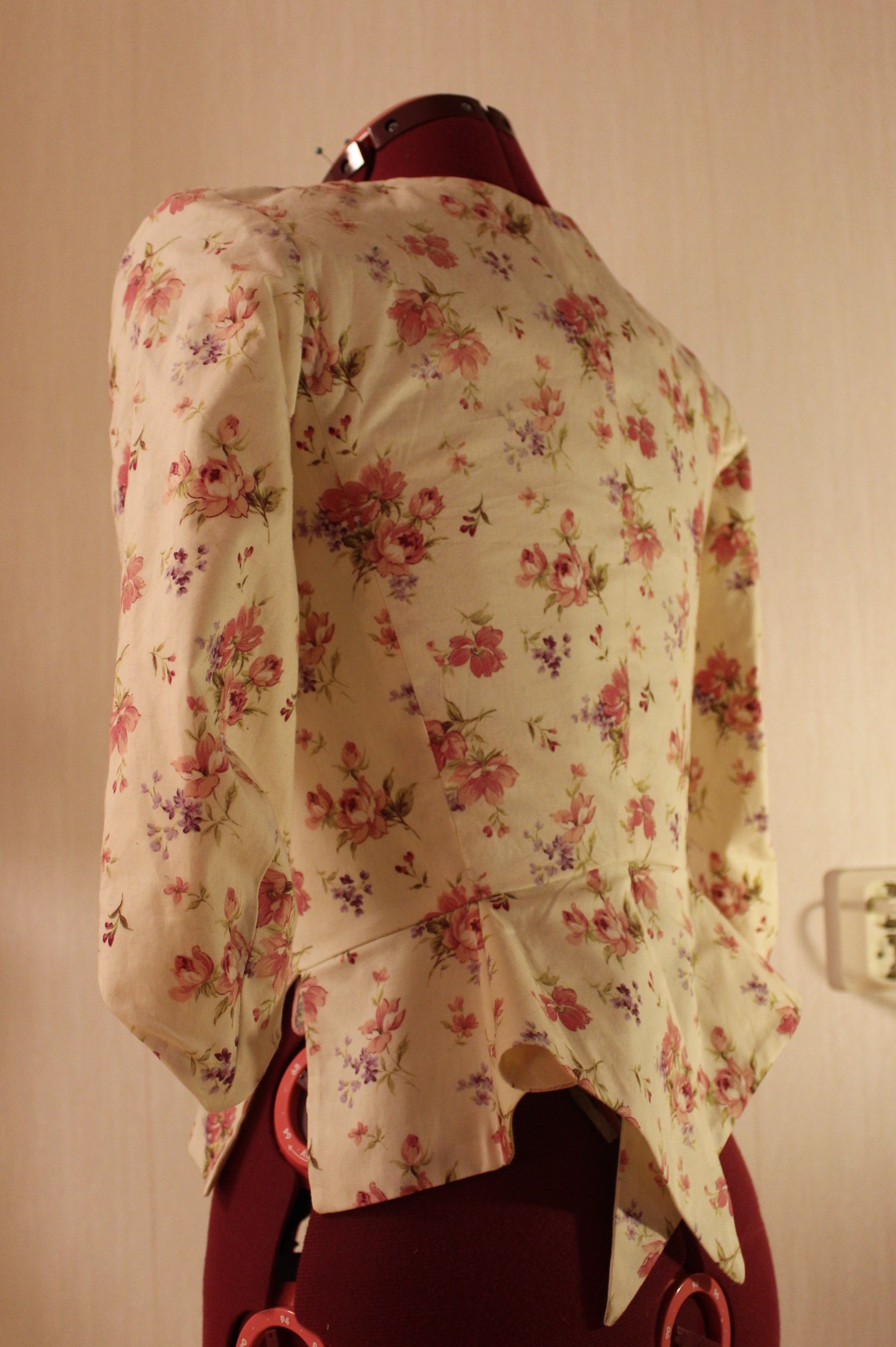
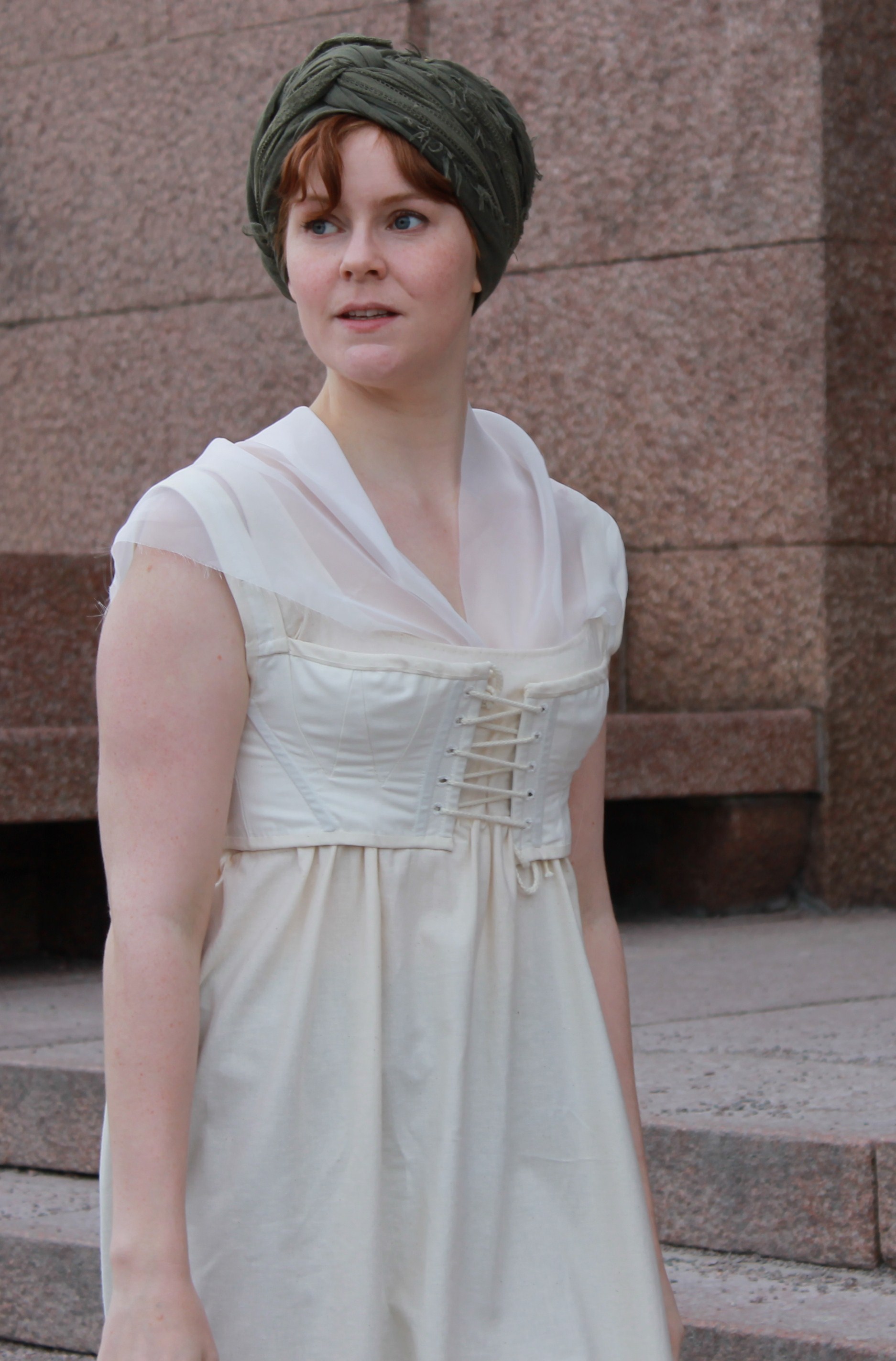
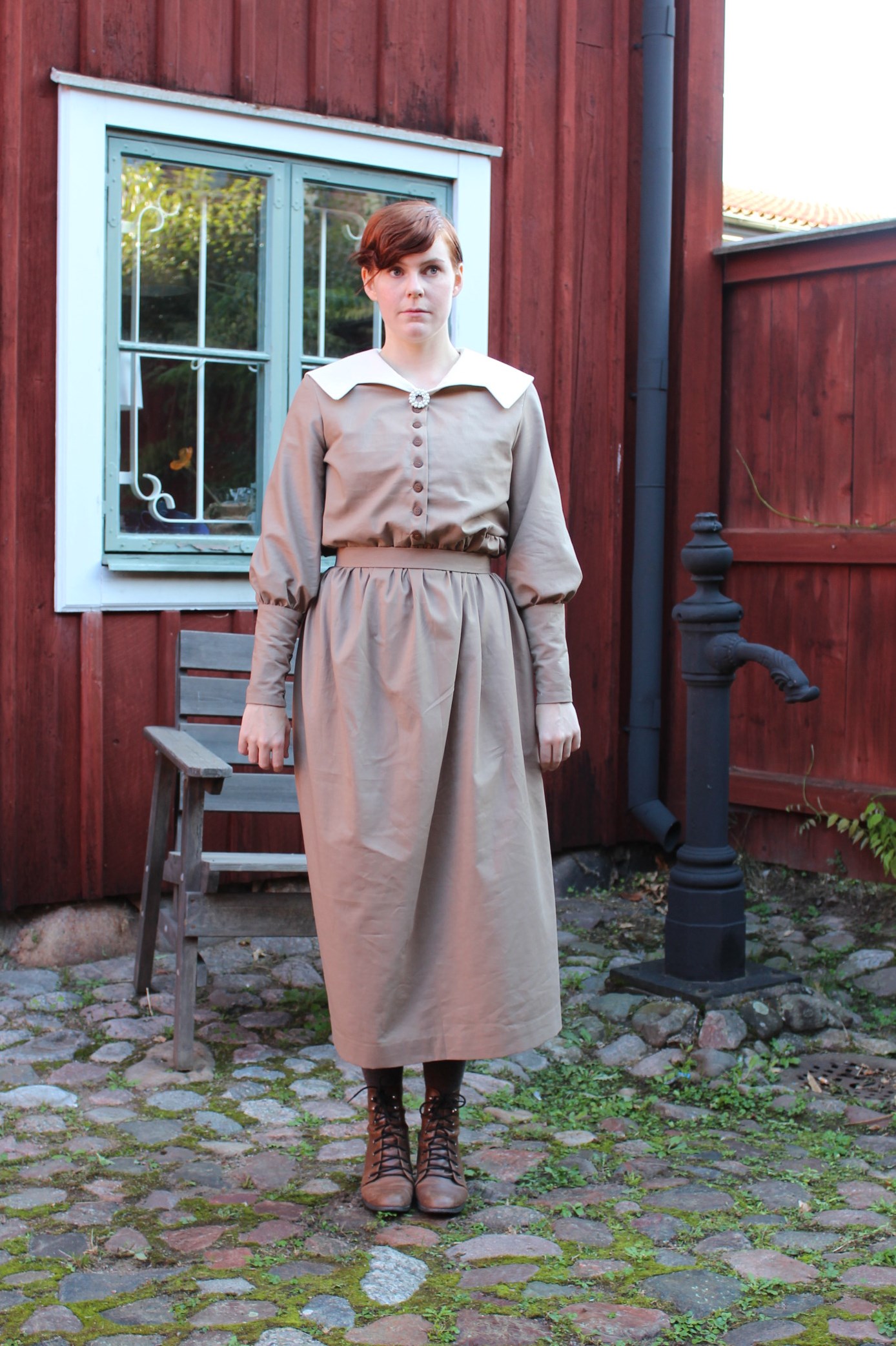
Edwardian Corset Cover

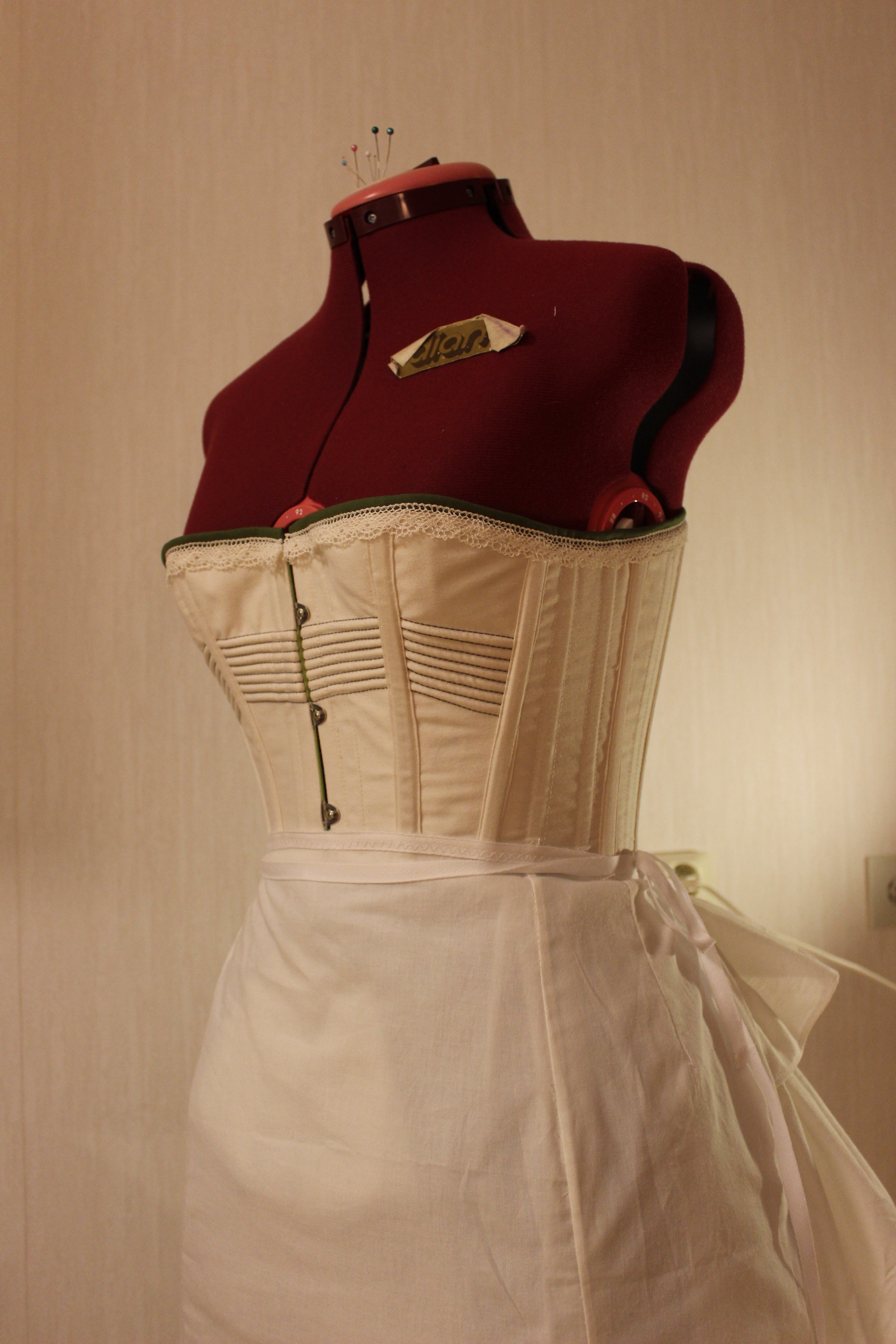
When the HSF challenge 5 – Bodice was announced I had no idea on what to make.

But reading about some of the other particapants ideas, gave me one of my own.

I have needed a corset cover for quite some time now – somehow a modern tank top don’t feel quite the same, even though I must say it does do a good job.

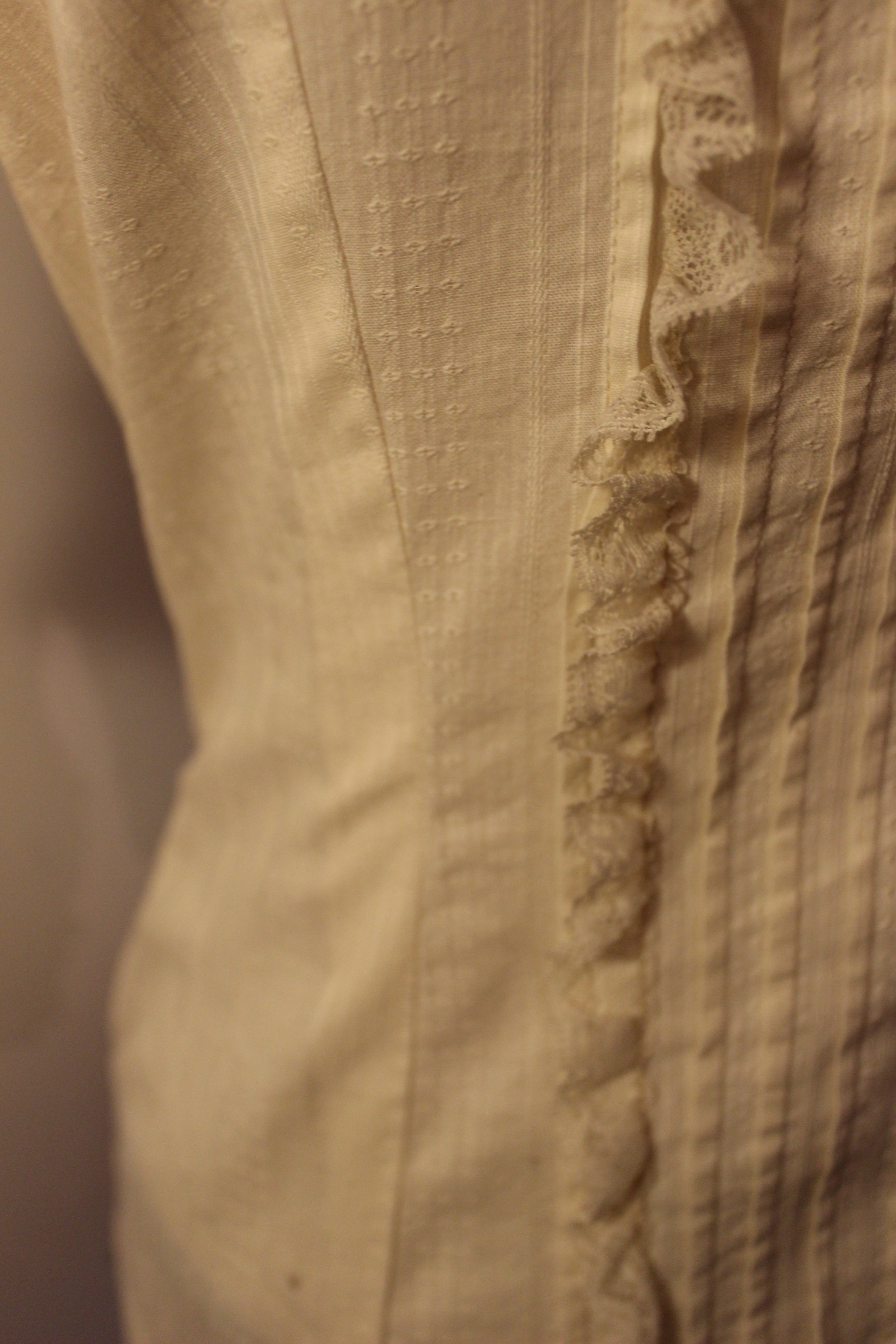
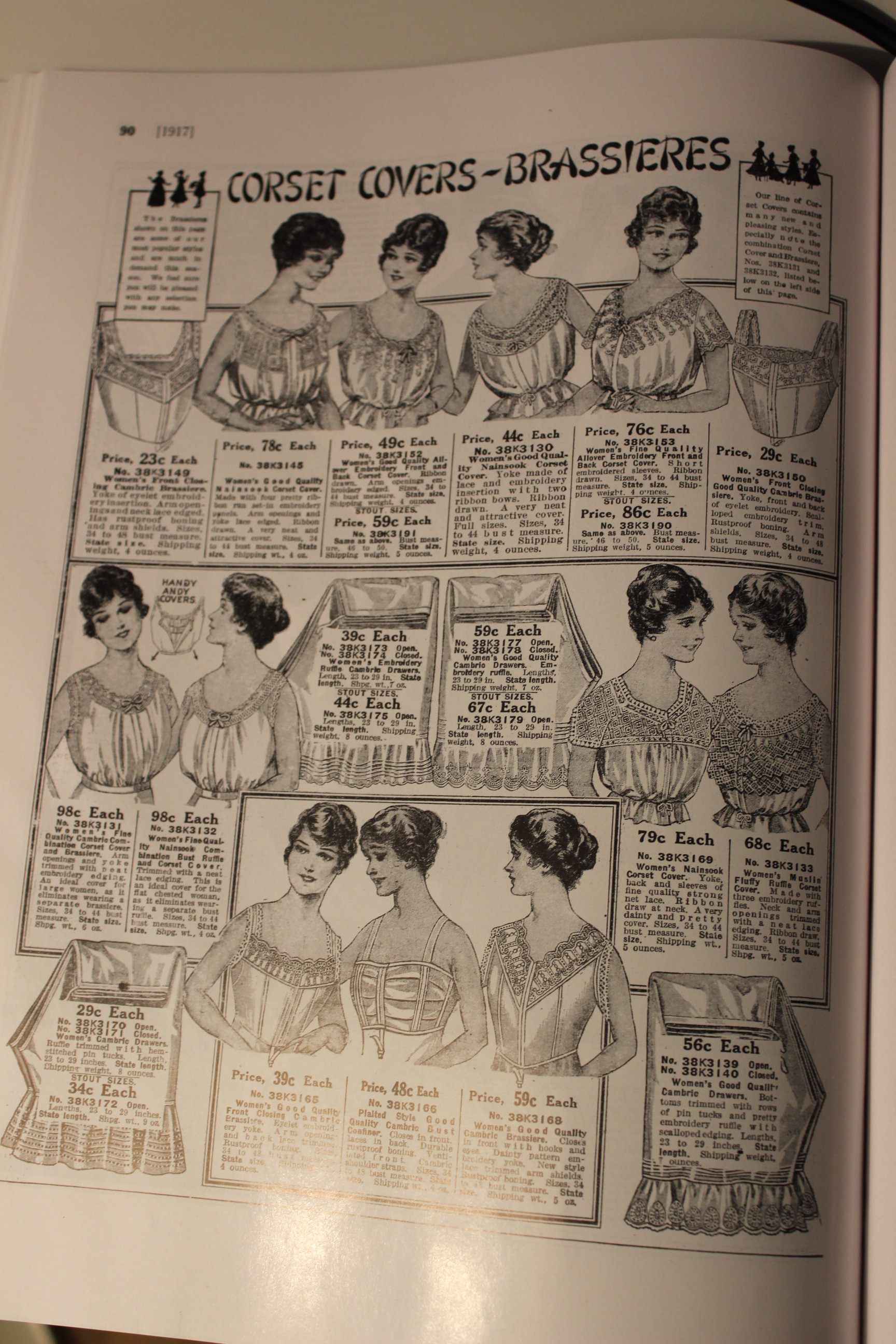
So I went searcing for inspiration, finding this in one of my costuming books.IMG_6433Corset Cover ca 1917.

I decided to try to make the one to the left.

And drew a quick pattern sketch.IMG_6441

And scaled it up.IMG_6442

Then I cut the pattern in paper and tried it on my dressform.

IMG_6446IMG_6447

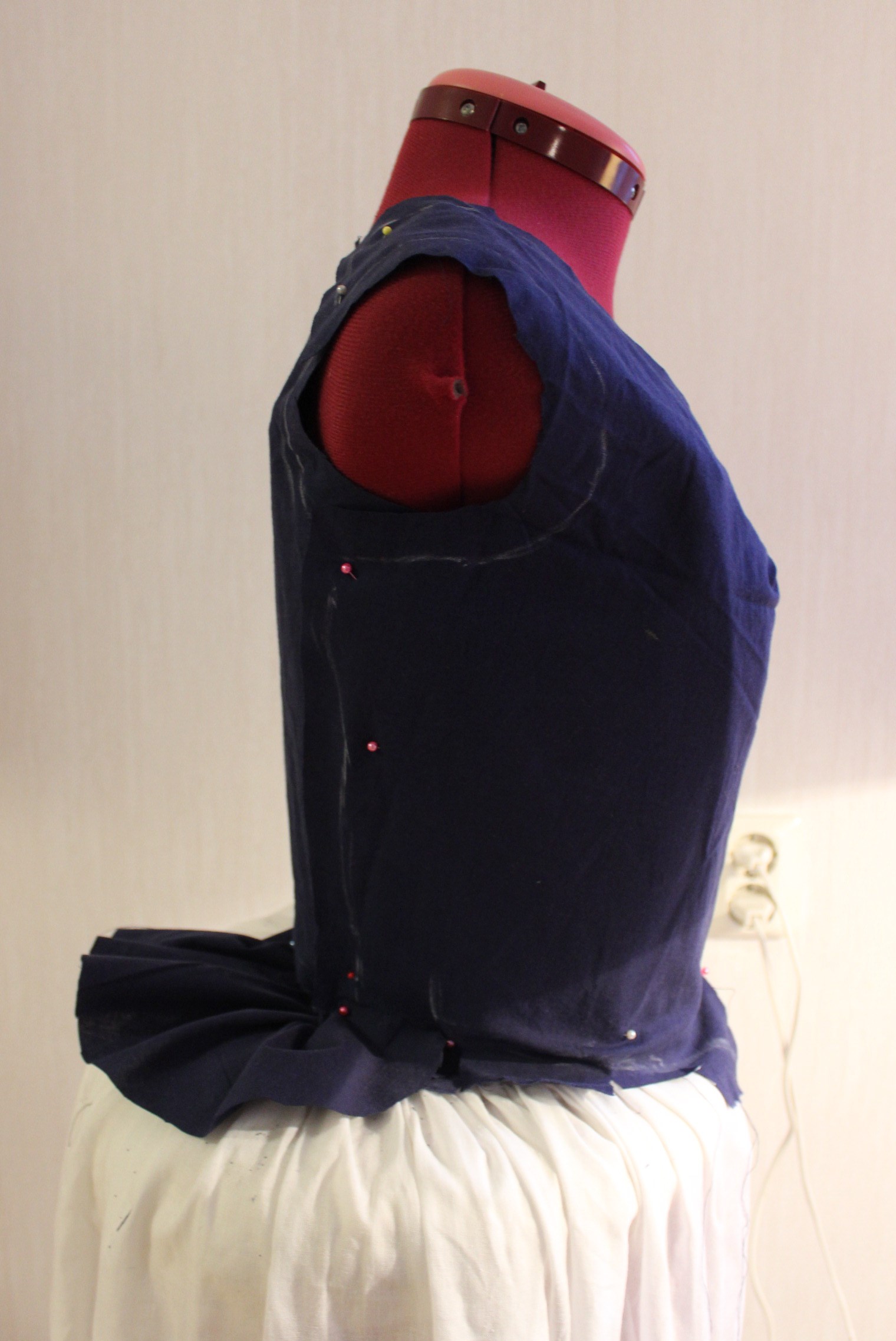
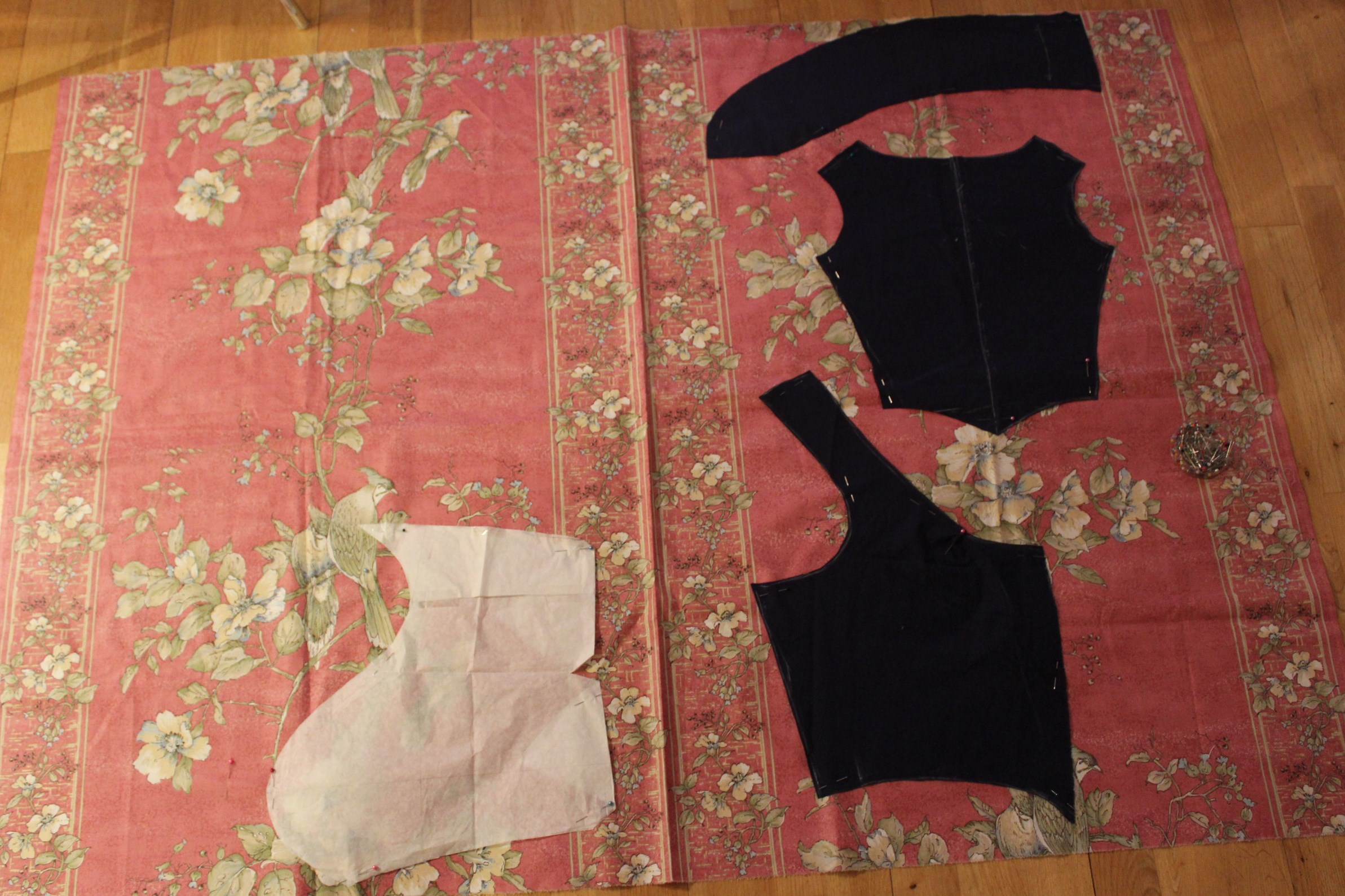
Using a nice cotton voile I cut the pieces.IMG_6450And stiched them togheter.

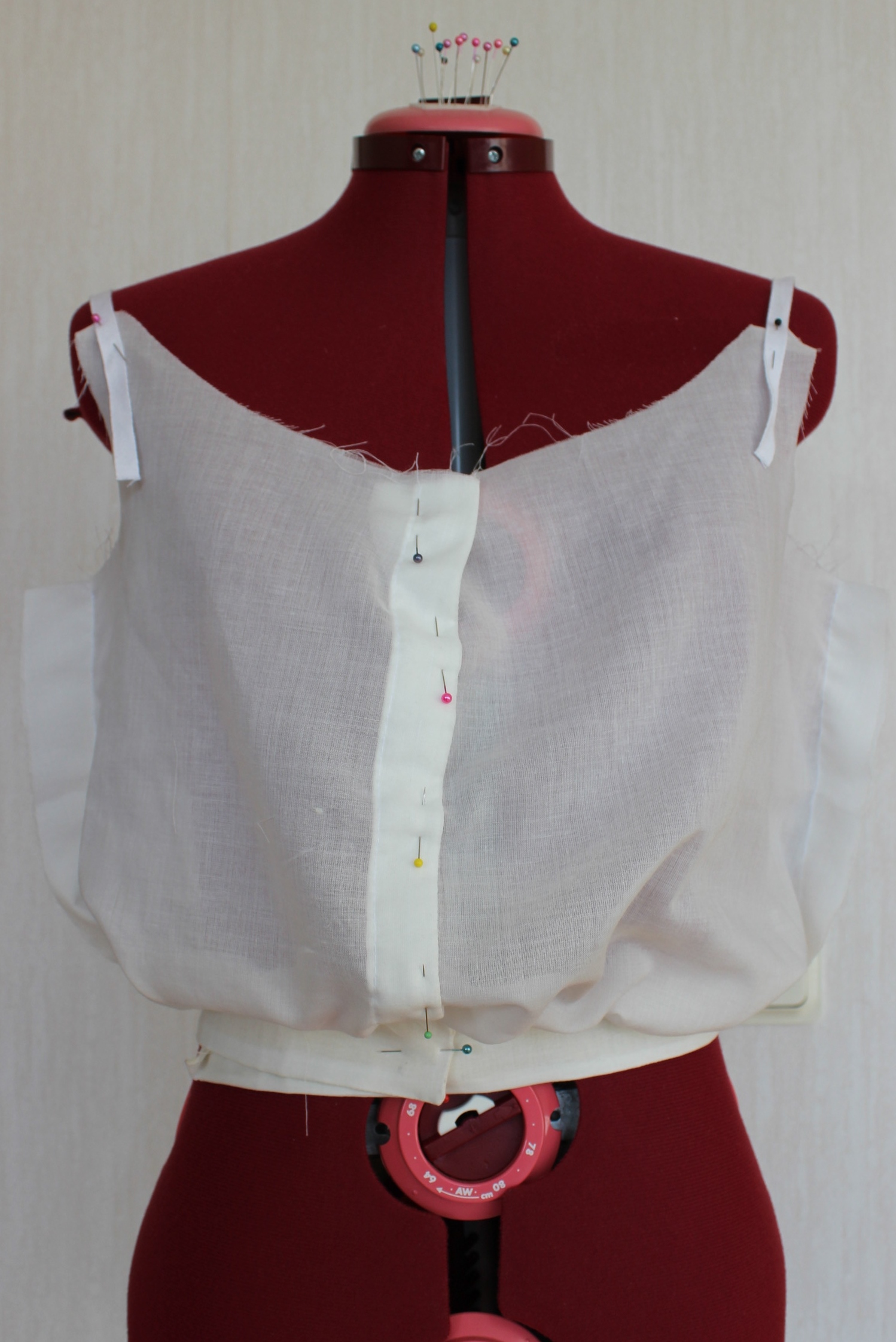
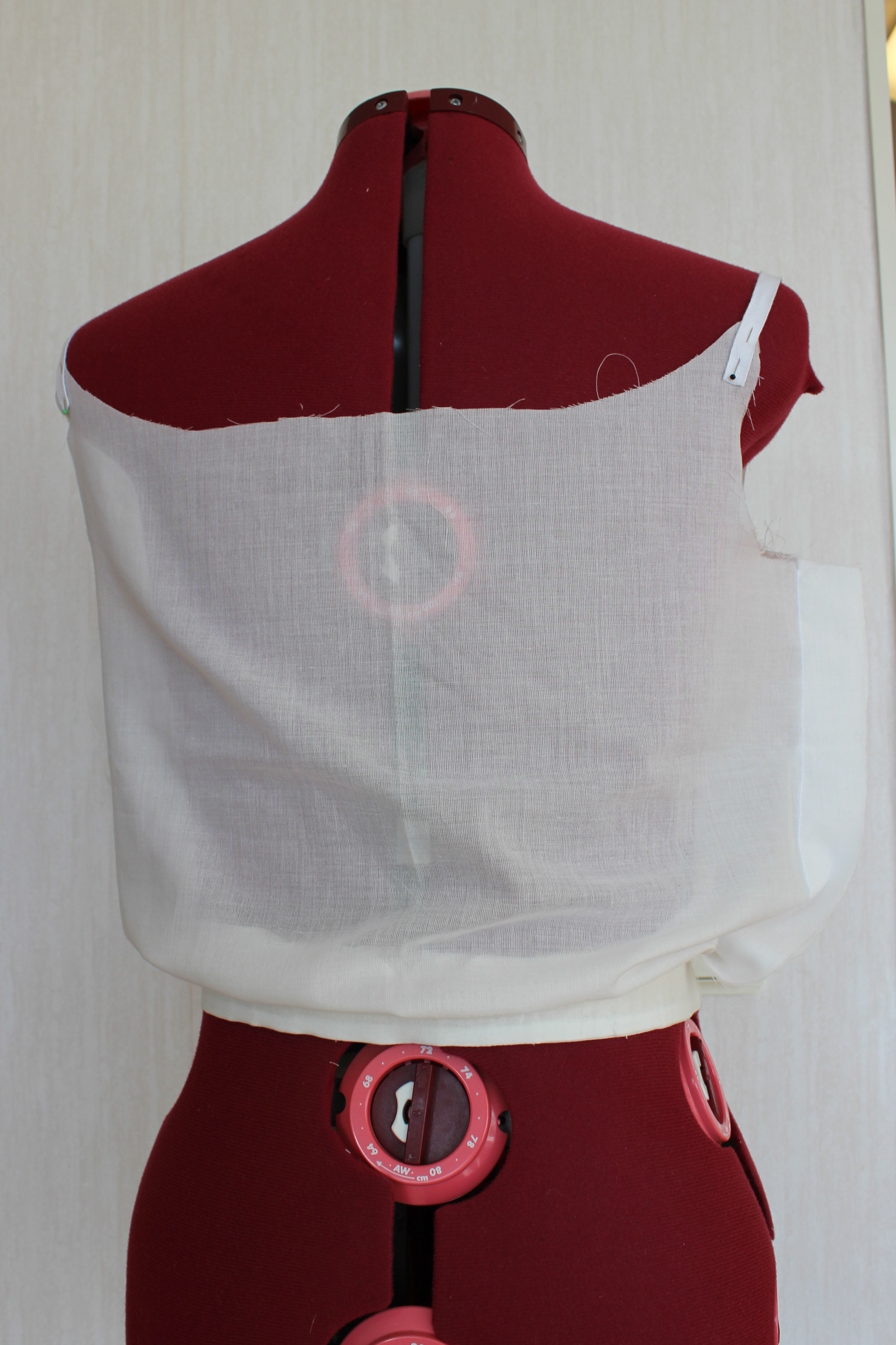
Putting it once more on the dressform, I tought it looked rather big.

IMG_6459IMG_6460

So I decided to take out about 8 cm in each side, thous making it more figure hugging.

IMG_6462IMG_6464

The next thing needed to be decided was what kind of trim I wanted.

IMG_6425IMG_6423

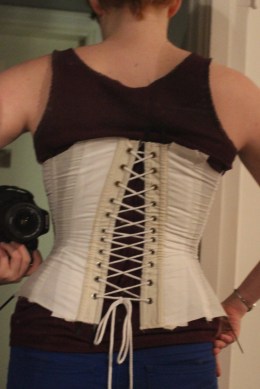
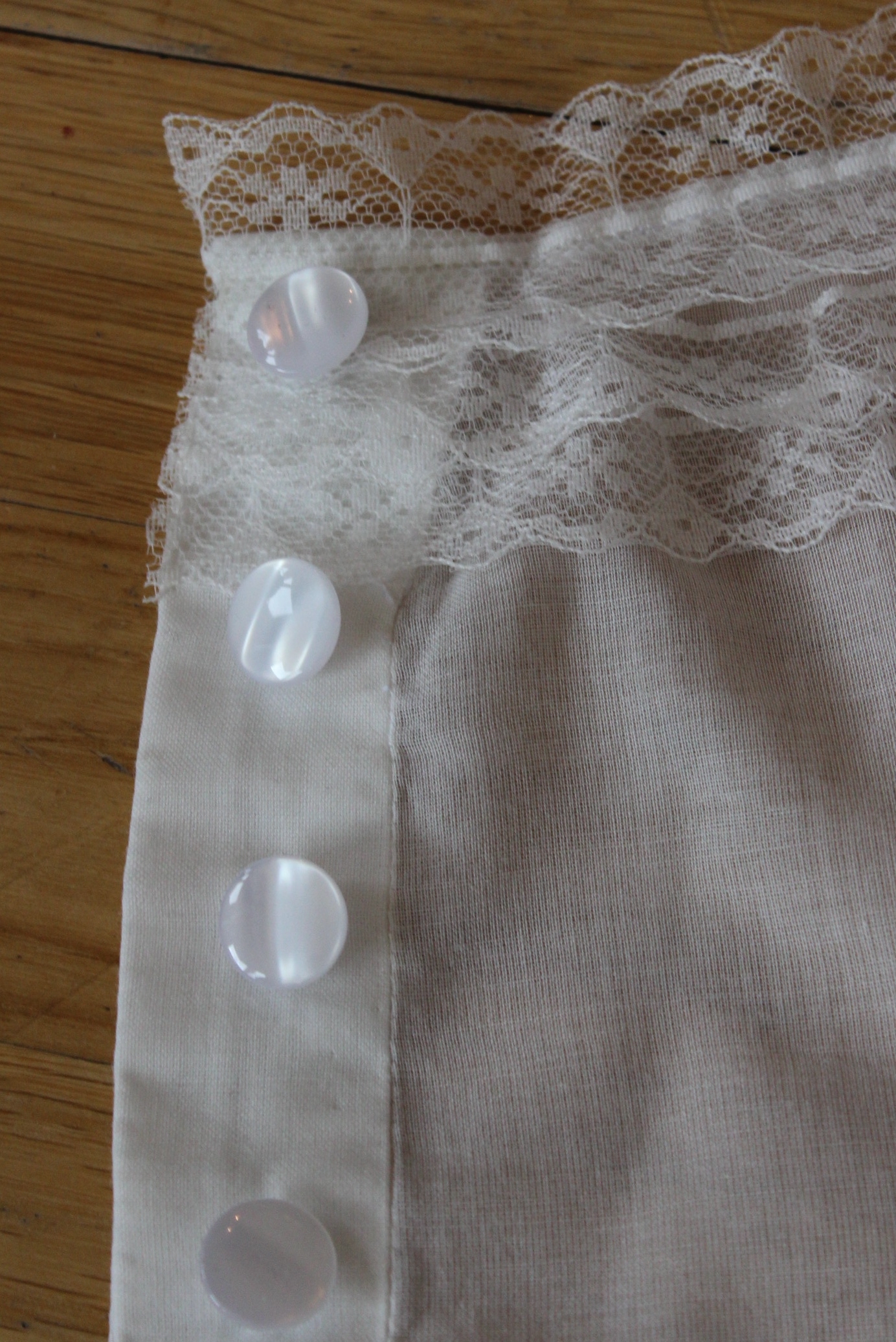
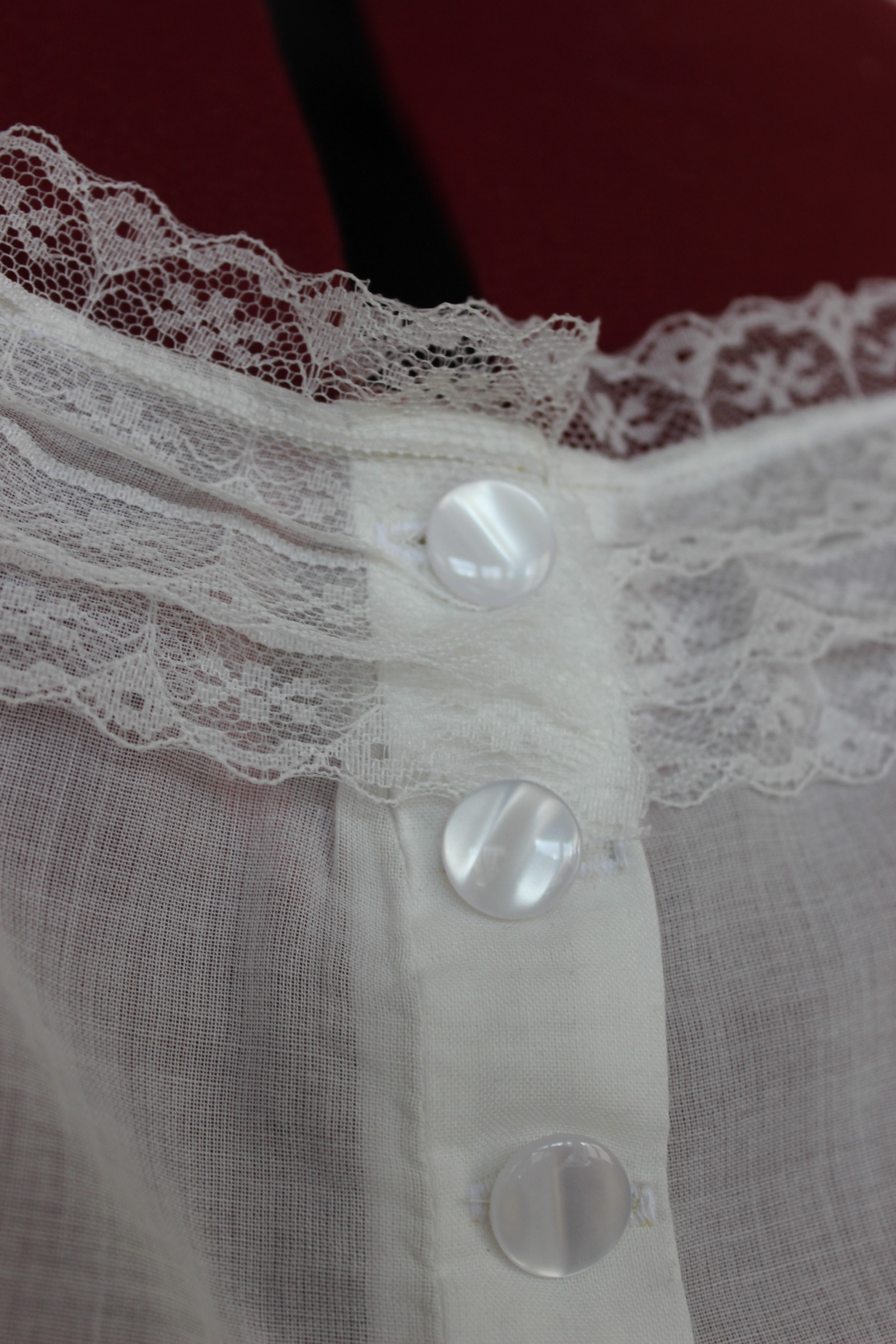
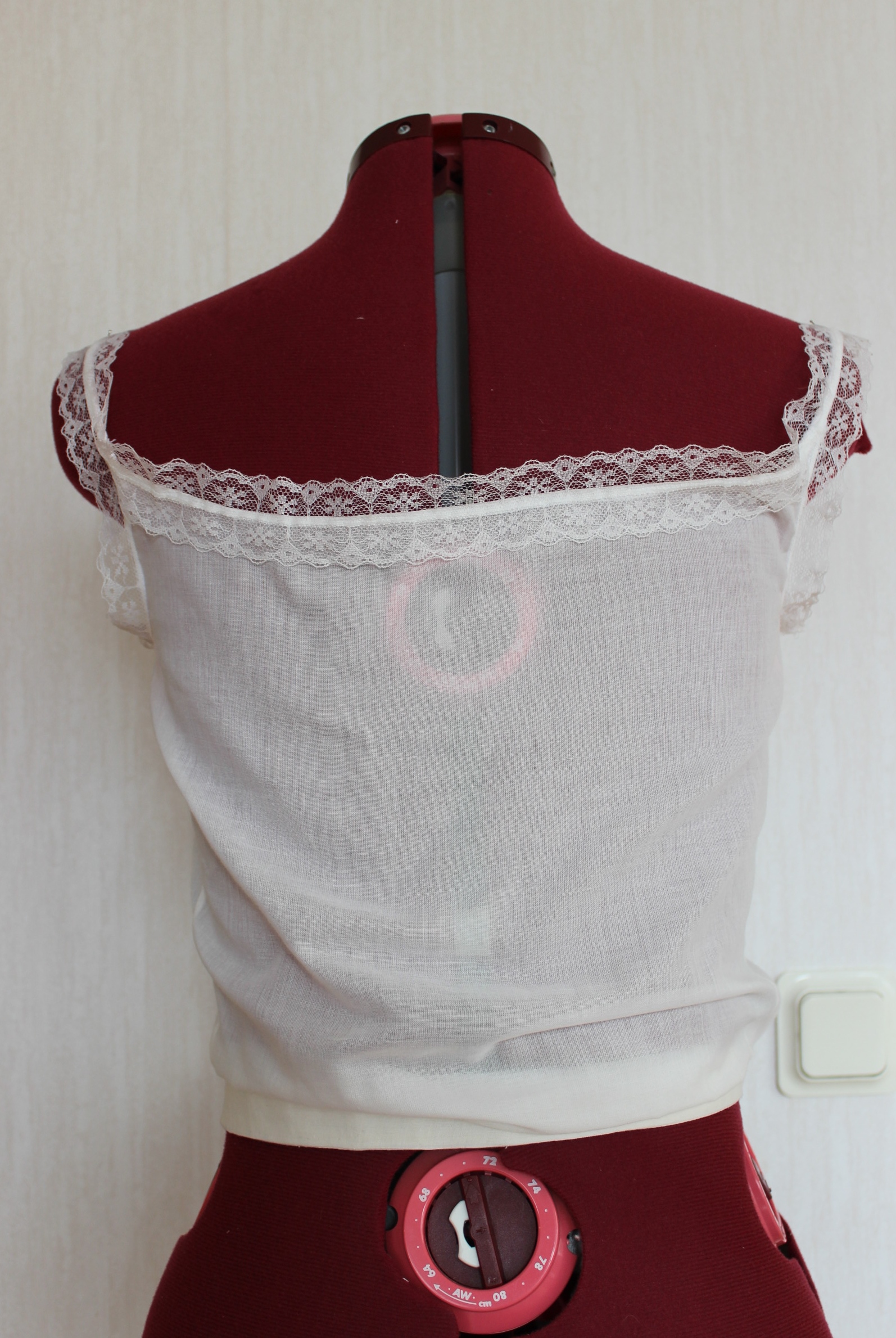
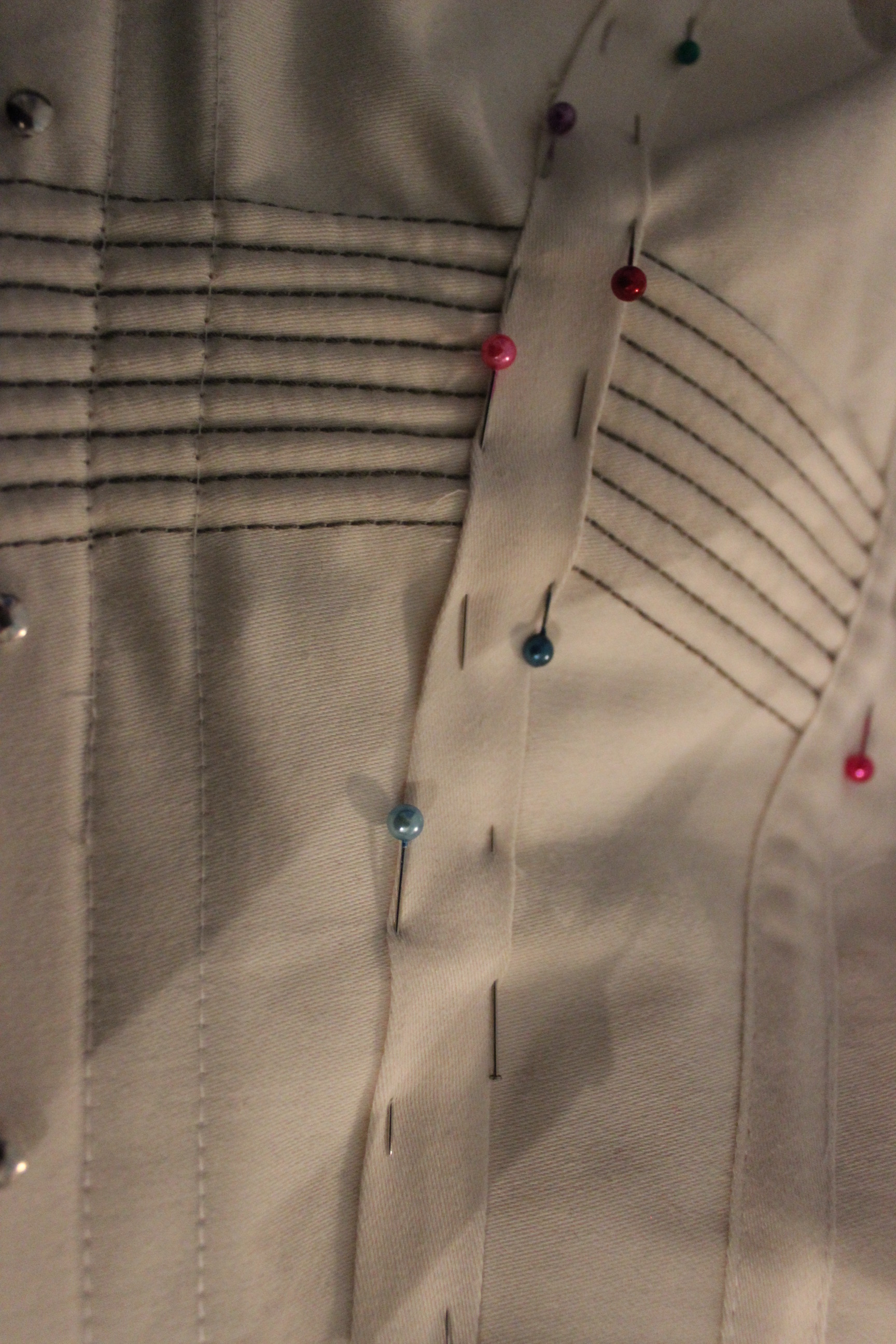
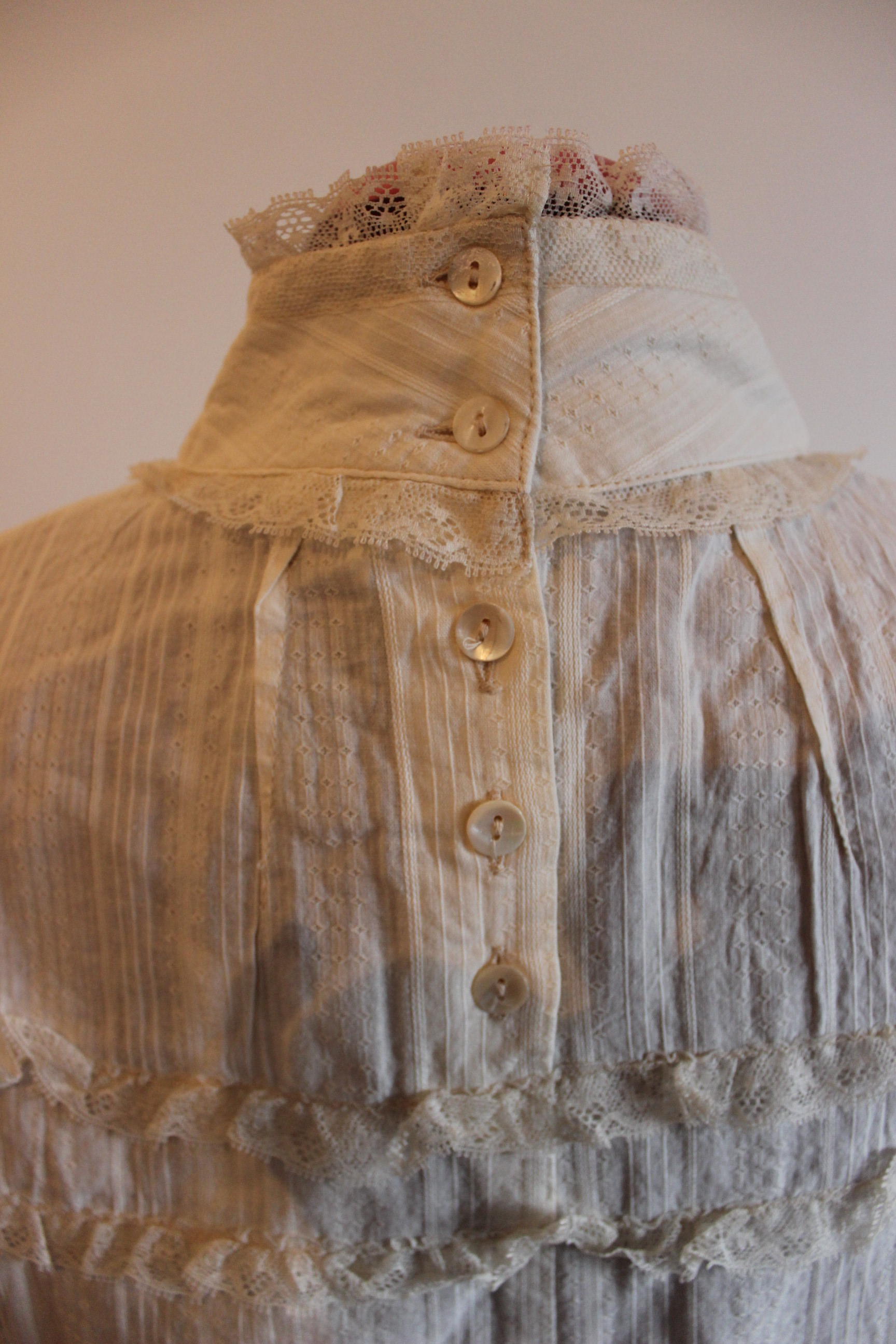
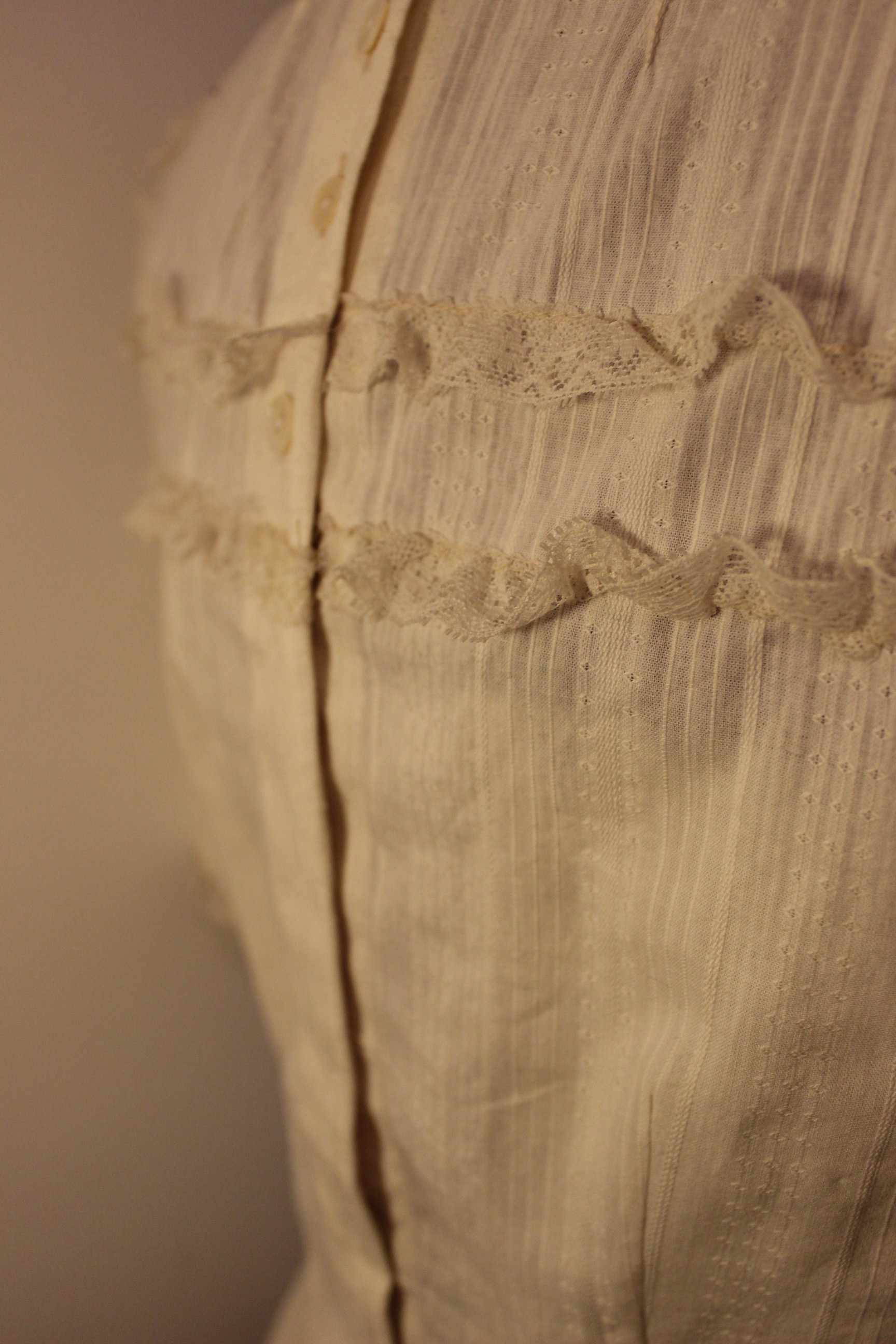
Deciding on a couple of rows of the narrow trim, I pinned and stiched it on.IMG_6498Backside view.

Then I sewed the buttonholes and stiched on the buttons.IMG_6500

IMG_6497On the floor.

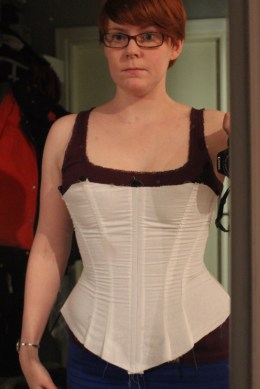
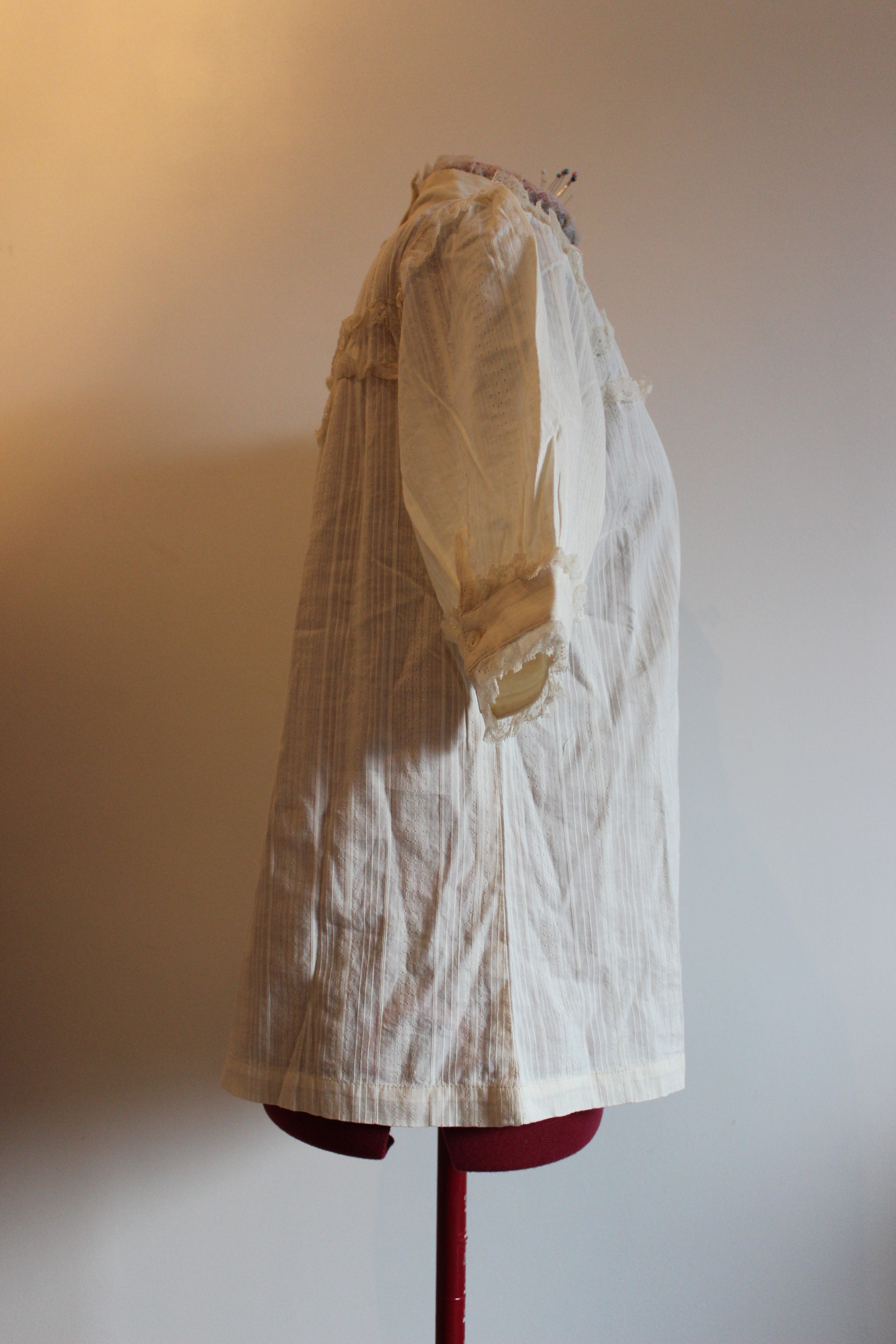
Finished:IMG_6476

IMG_6478

IMG_6482

IMG_6483

IMG_6480

IMG_6489

IMG_6485

IMG_6486

IMG_6487

IMG_6477

Just the facts:

Challenge: 5 – Bodice

What: A 1910s Corset Cover.

Pattern: Drafted my own.

Fabric: 0,5 m of cotton voile.

Notions: Thread, 8 buttons and 4 m of narrow lace,

Historical accurate: So so. The lace is polyester and the buttons are plastic, but the fabric is accurate. And I think it is to slim to really look accuarate. 5/10

Cost: Les then 100Sek (16 Usd)

Time: Way to long. About 8 hours.

First worn: I only tried it on so far, but hopefully I get a chanse to wear it at a Suffraget lunch in may.

Final thoughts: I regret taking in so much of the widht in the sides. The cover is very tight on me as it is, and I would have liked it to have a bit more space and drape at the front. I’t does look pretty though.

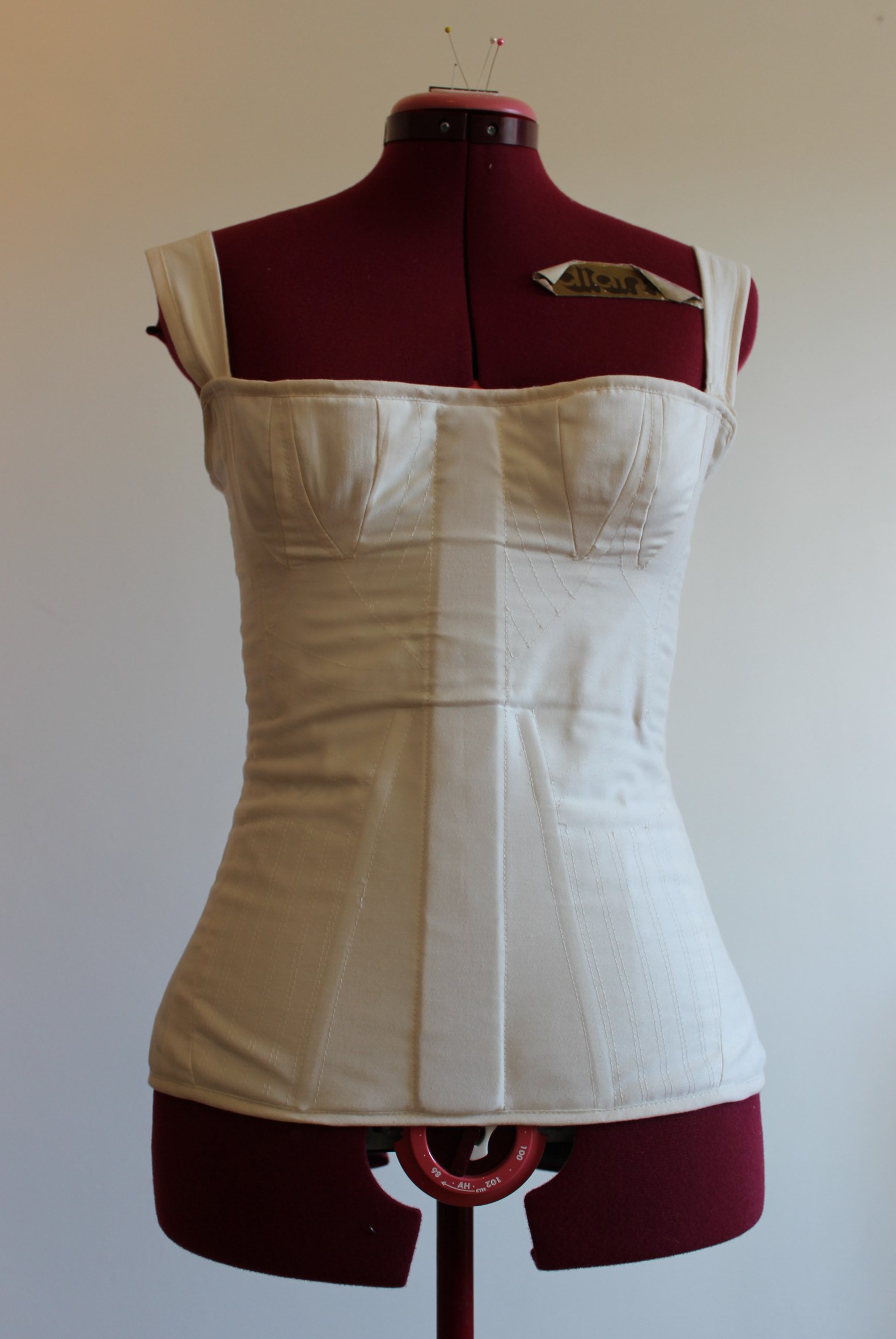
1900s S-shaped Underwear

The item for challenge 4 of the HSF14 was quite simle to decide – Looking at my intended “sewing list” where a 1900s evening gown is the next big thing, I of course needed the proper undergarmnents.

Since this is a new era for me (I’ve done 1980s and 1910s, but they are not at all the same) I needed to start from the bottom. So a corset it is.

Looking through the internet for inspiration I really liked this one. 72867cfdcae740e03be80aca71d75b95

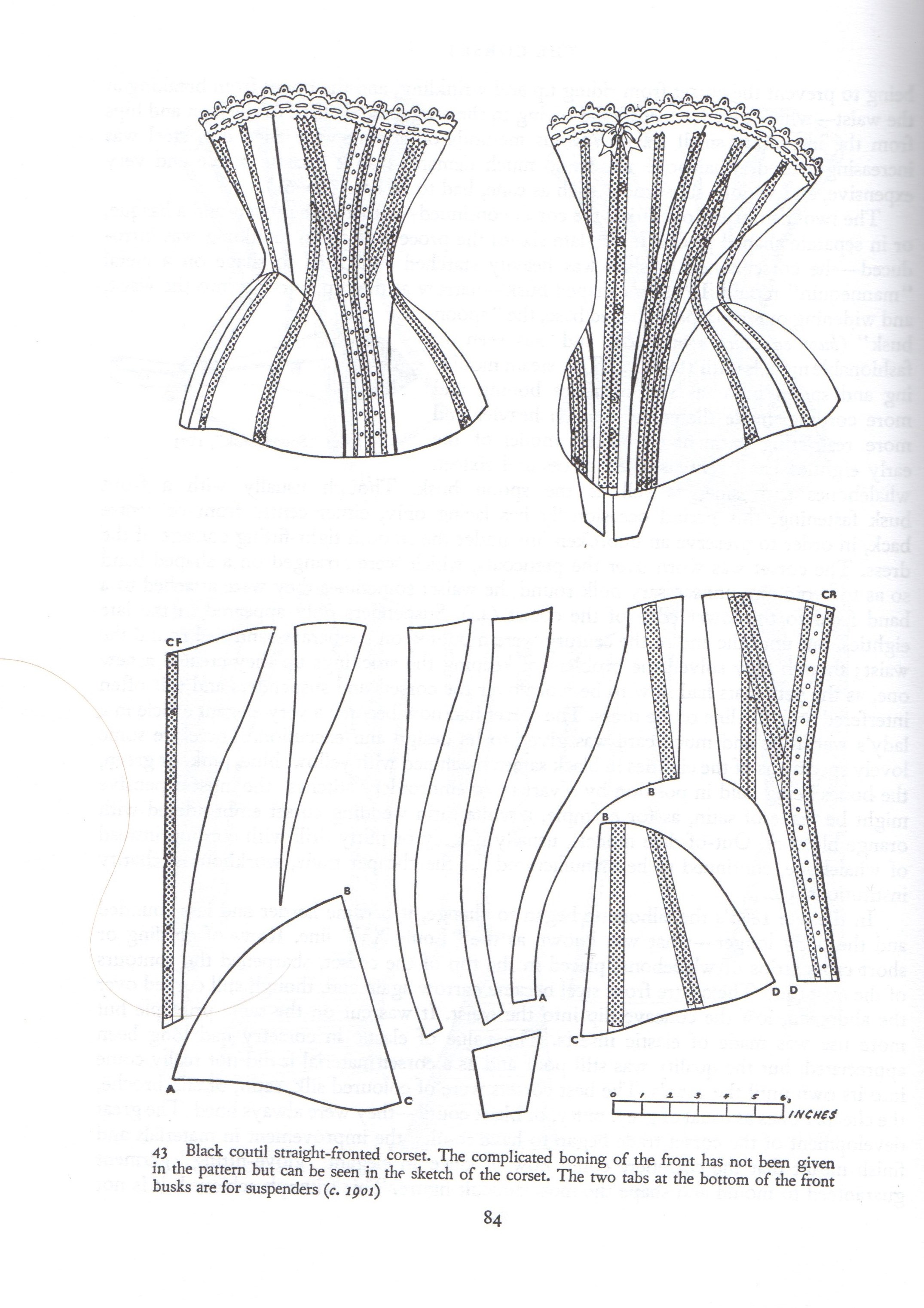
And amongst my patterns I found the 1901s corset from Nora Waughs “Corset and Crinolines”. 1901 waugh

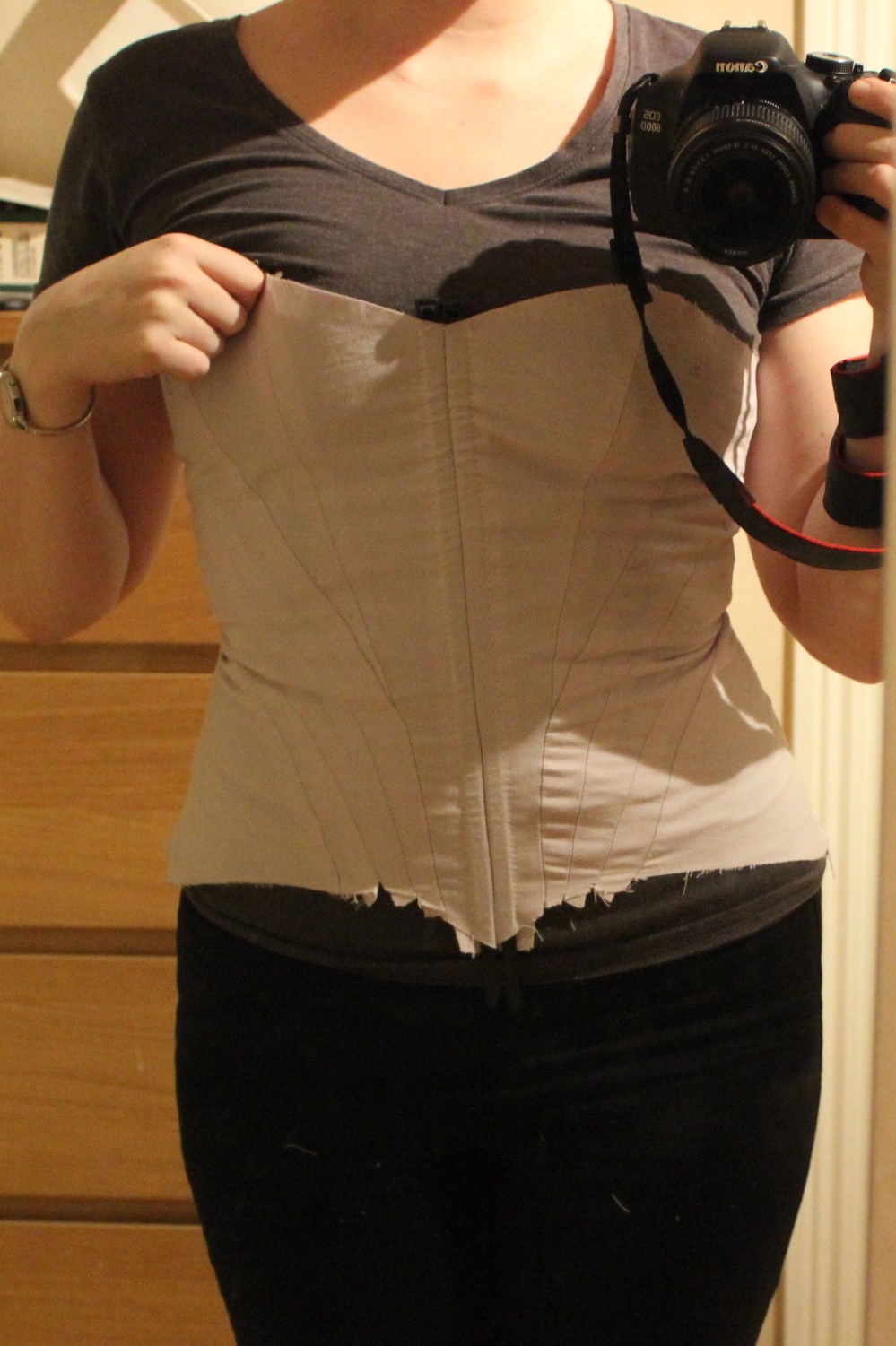
My original thought was to make the corset in ivory cotton sateen, but when searching my stash I discovered it was all gone (I’ve already used it all on a couple of other corsets). And the only other strong ivory colored fabric I had was a rough unbleached cottonblend. So on to the fabric store I went, finding this nice striped cotton upholstery fabric instead. IMG_6291

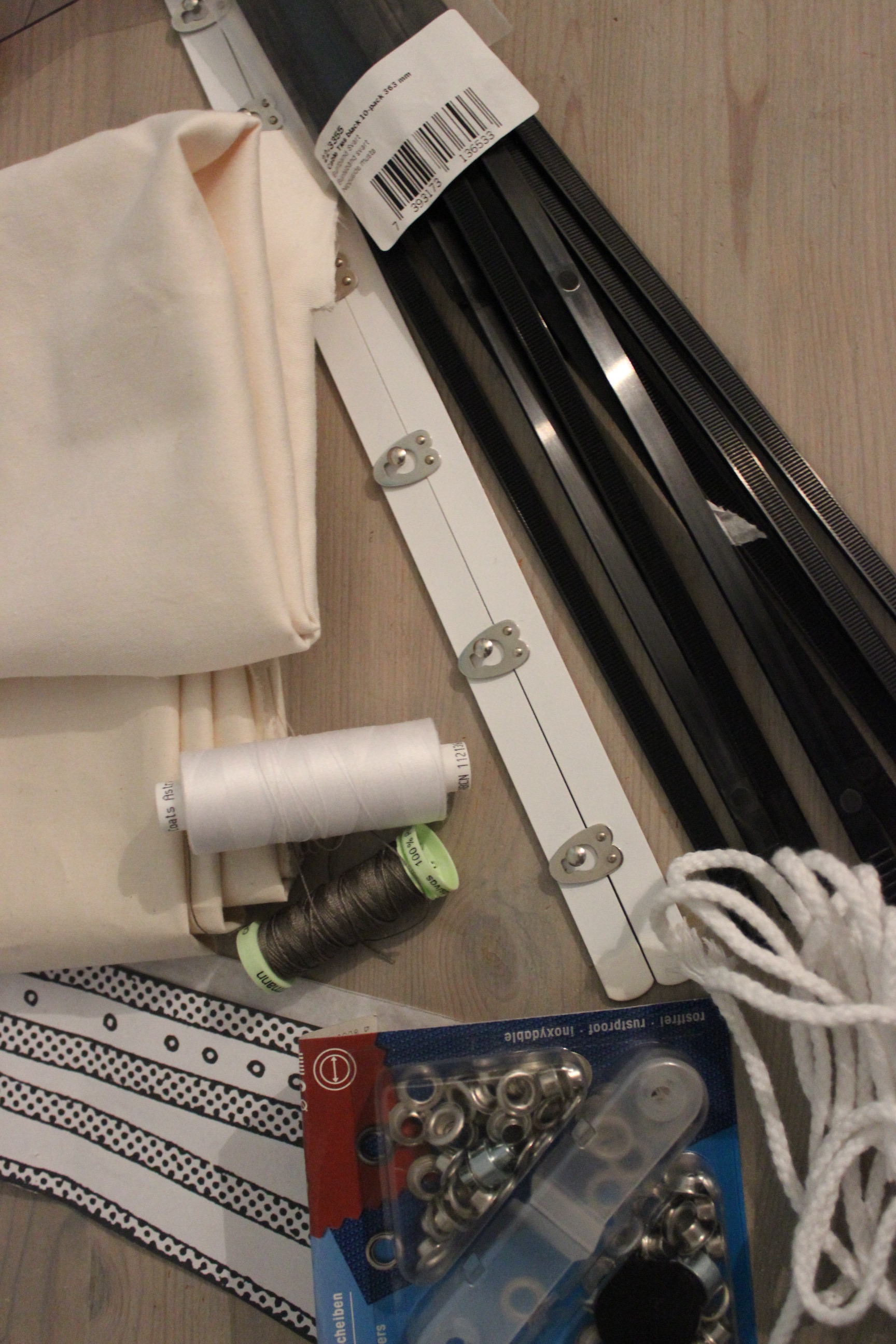
I had wished to make this a quick and dirty stash busting prject, but found I already had had to many of those lately – thous leaving my stash of notions almost empty (sigh). So I also needed to buy gromets, lacing cord, suspender grips and plastic boning (the planchett and decorational lace thankfully already in stash). IMG_6324

I originaly started this project 9 months ago till the HSF13 “White” challenge – before I realised I had other more pressing costuming needs.

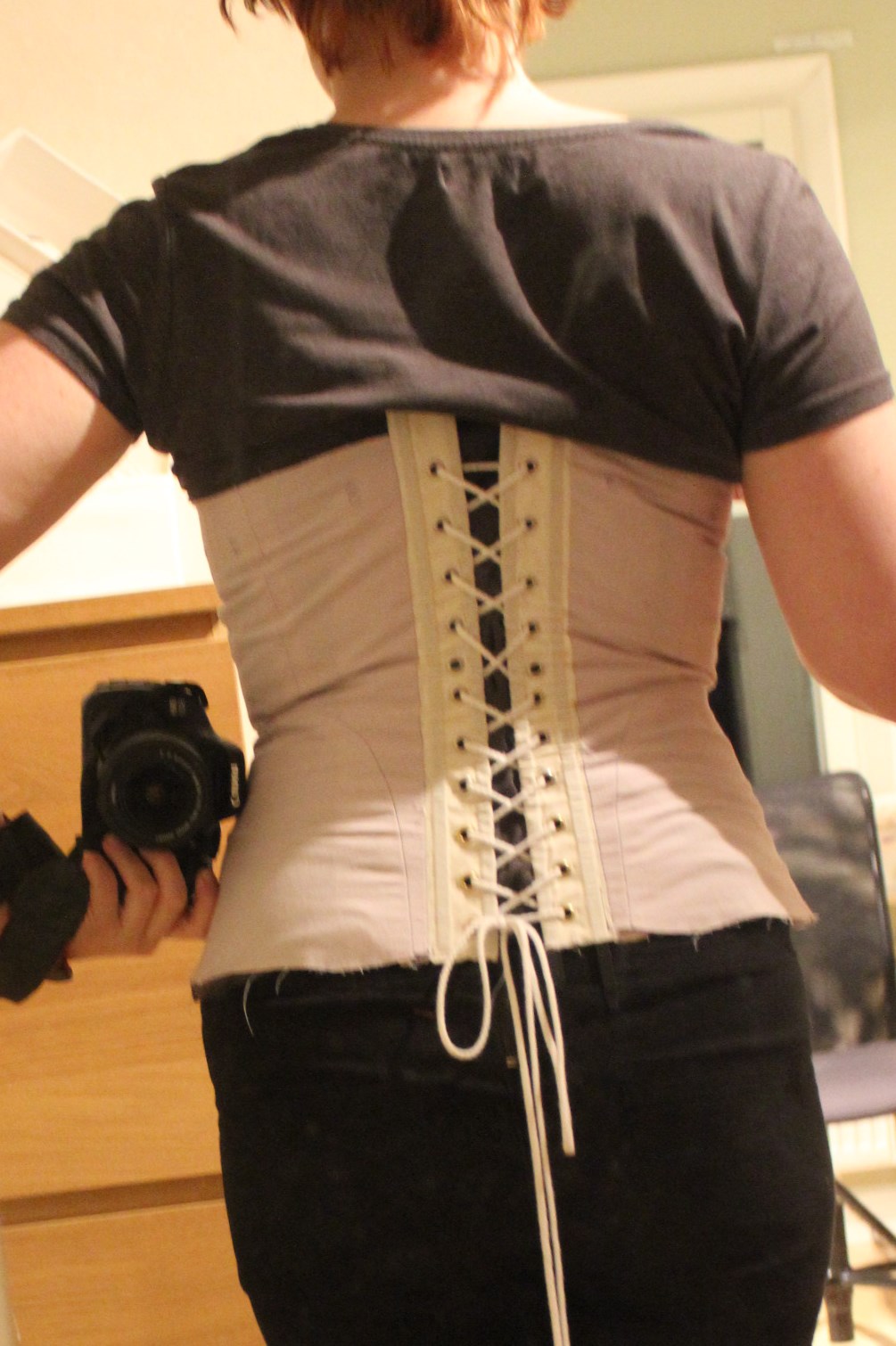
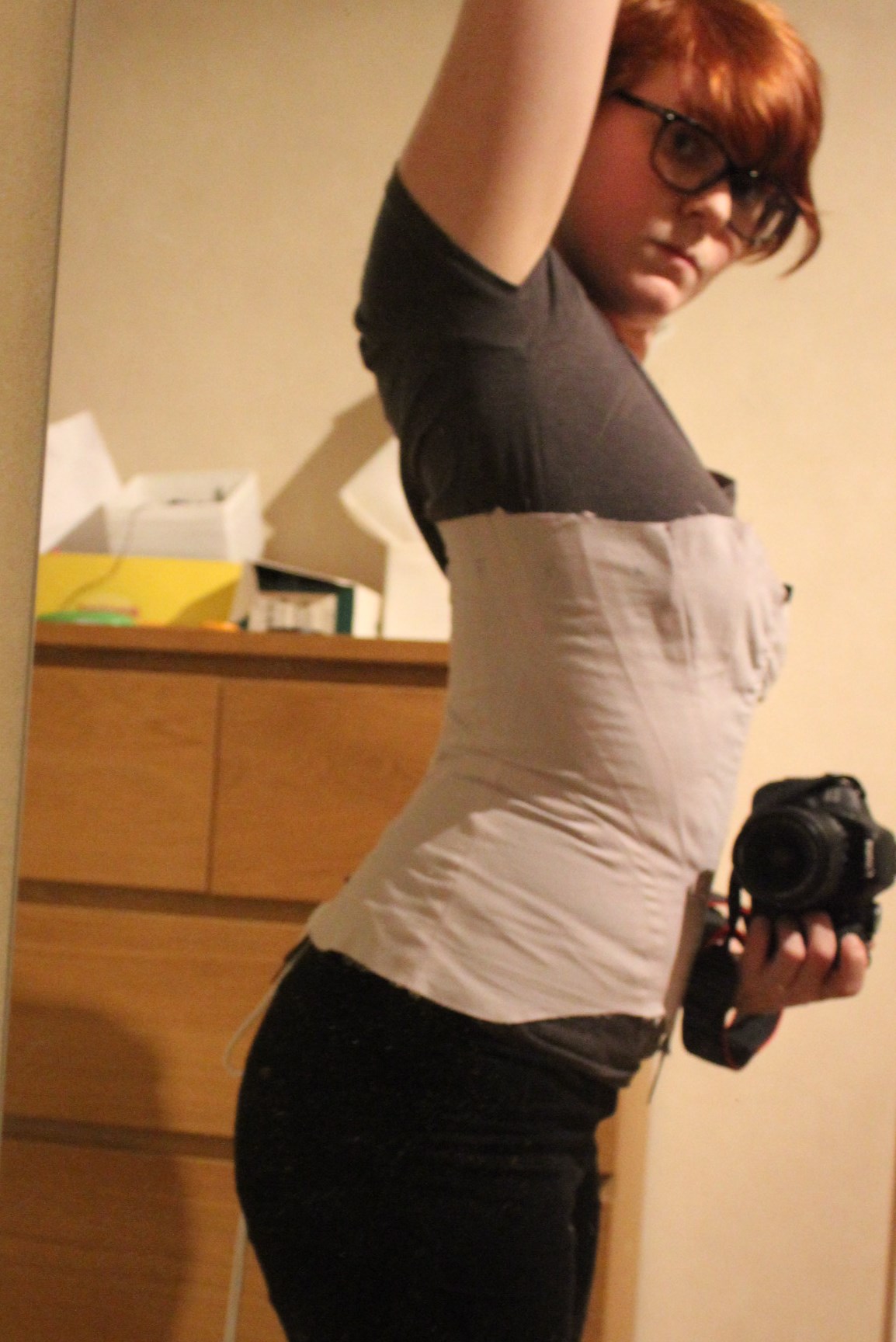
So the pattern and the toile was already prepeared. And since I had absolutly no idea of the measurments I used making the mock-up, I just tried it on.  

IMG_6231 IMG_6233

IMG_6242 IMG_6244

And as could be expected, it didn’t fit at all.

So I took out a total of about 10cm on the size, and added some lenght to make the front bottom smother. The rest of the fitting isues will be corrected once made up in a sturdier fabric and properly boned (I hope).

After the adjusments had been done, I cut the fabric, linning and interlining. Using as litle fabric as I posibly could. IMG_6289

IMG_6281

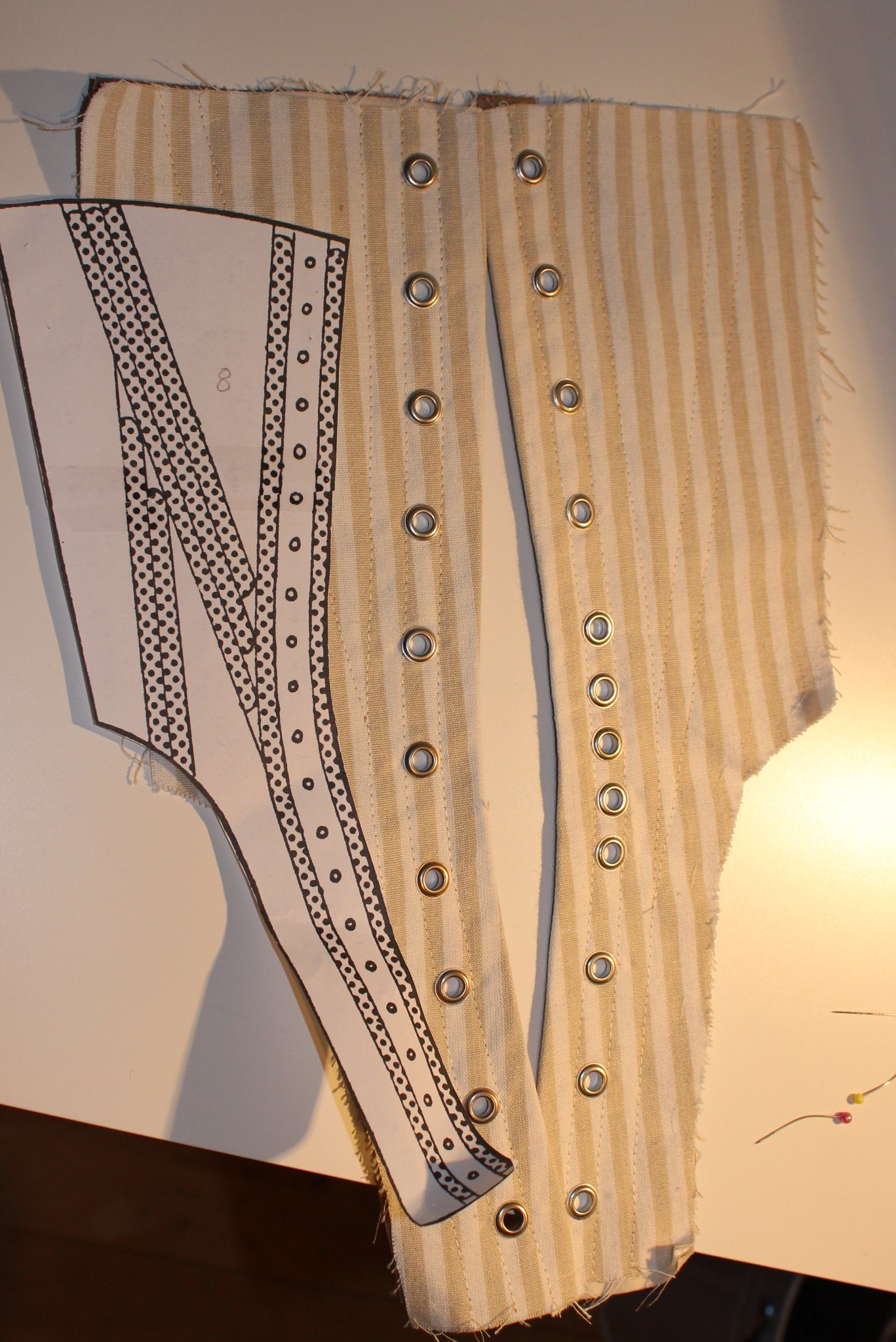
Then I started to sew it togehter, begining with the narrow side pieces. IMG_6297

And continuing on to the busk…IMG_6304

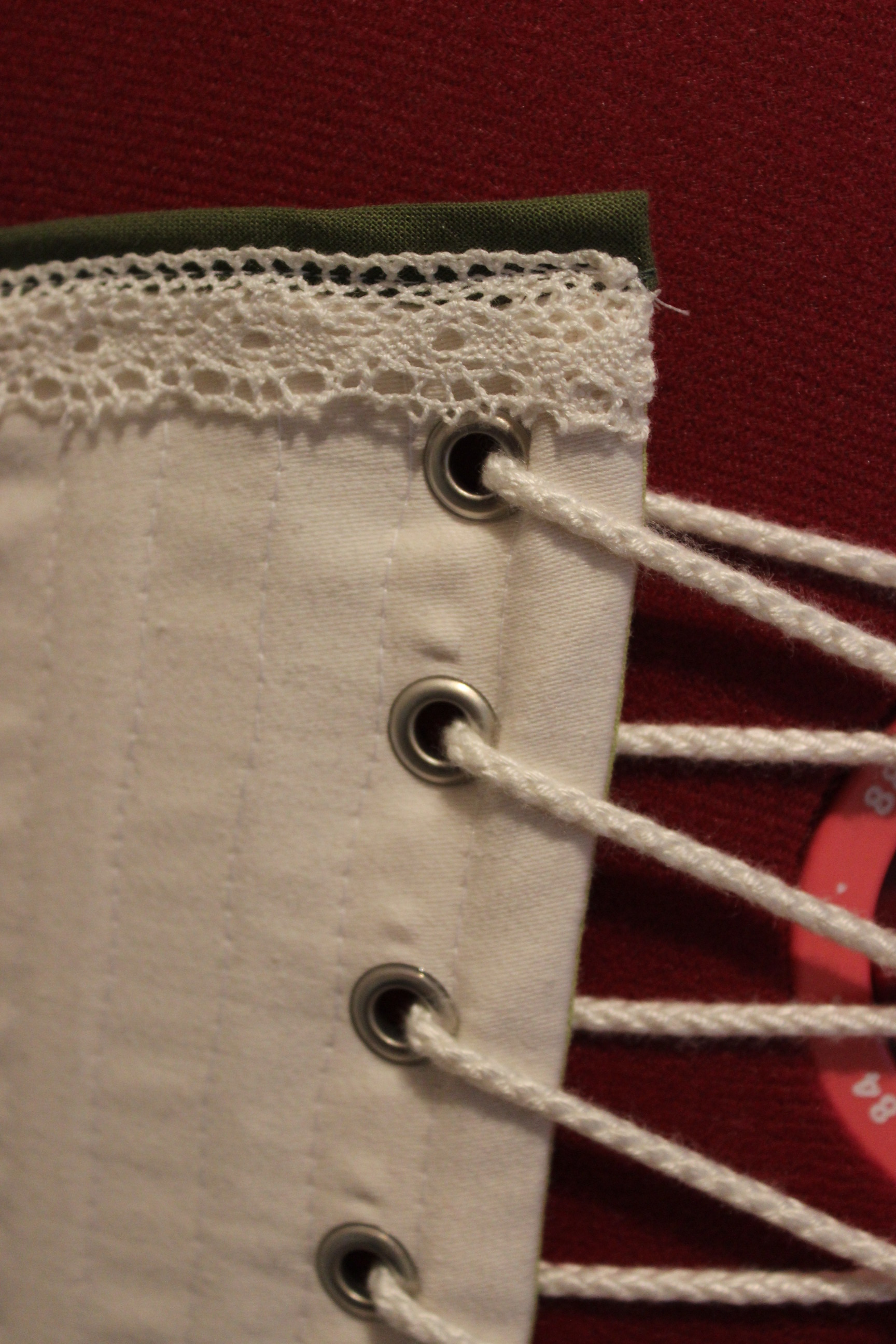
…and the gromets… IMG_6306

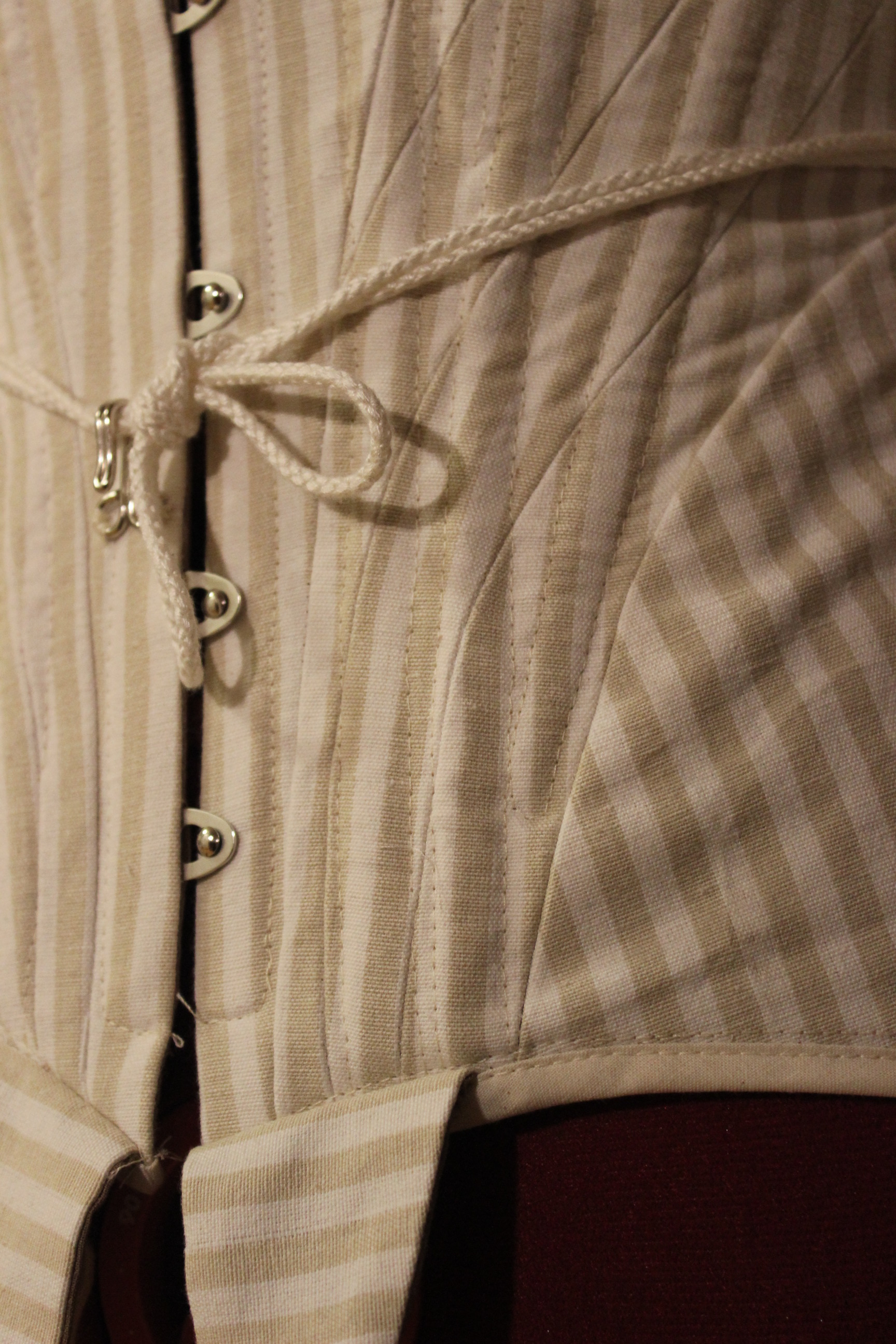
Realising to late I’ve put the gromets to far appart.IMG_6310I tried to fix it by putting some extra gromets at the waist (as in 1880s corsets).

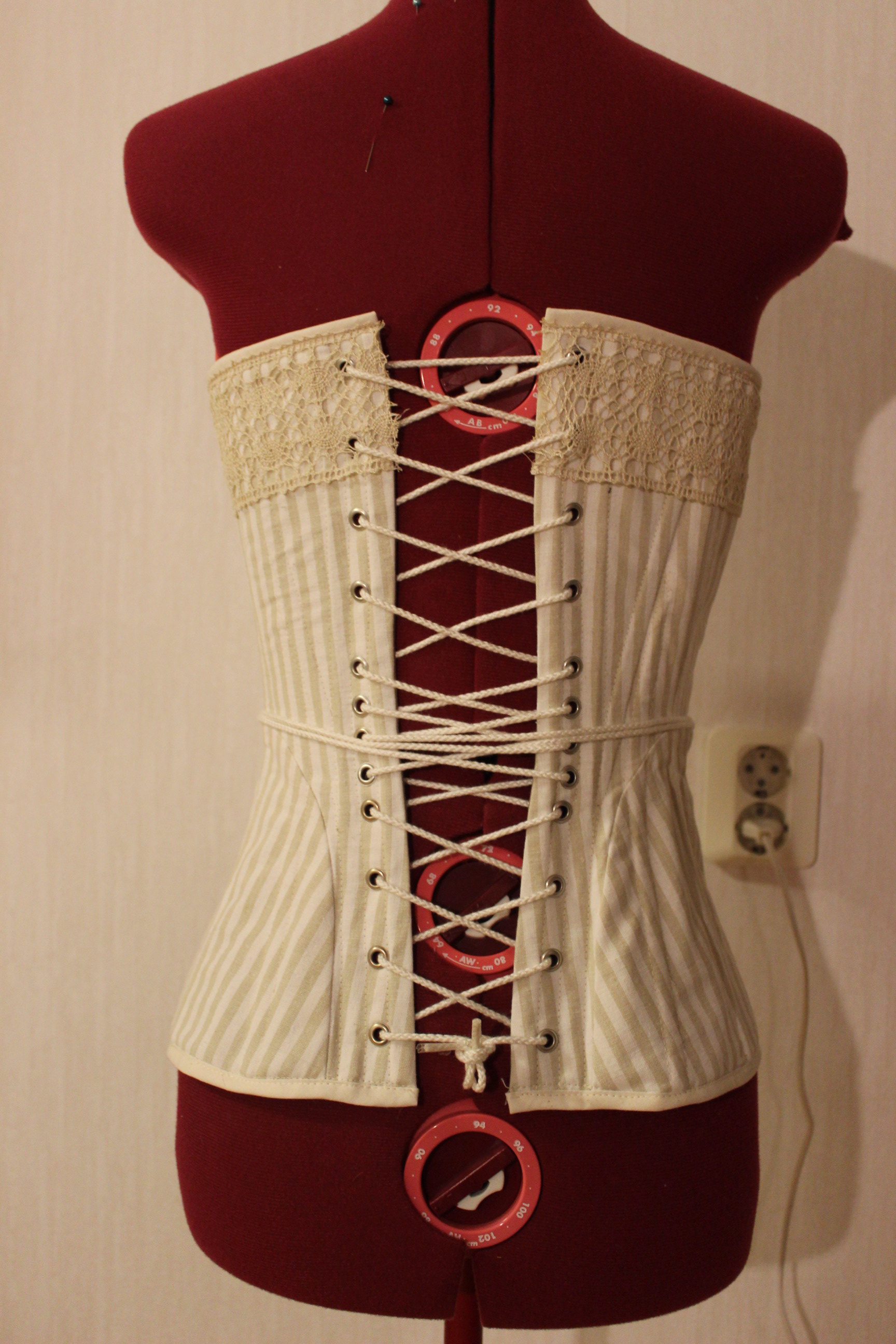
Then I sewed the pieces together and made the boning chanels, using self made bias tape, and sewed them on. IMG_6327

When all the boning was inserted I sewed and trimmed down the top and bottom of the corset, prepeared it for the biastape.IMG_6332

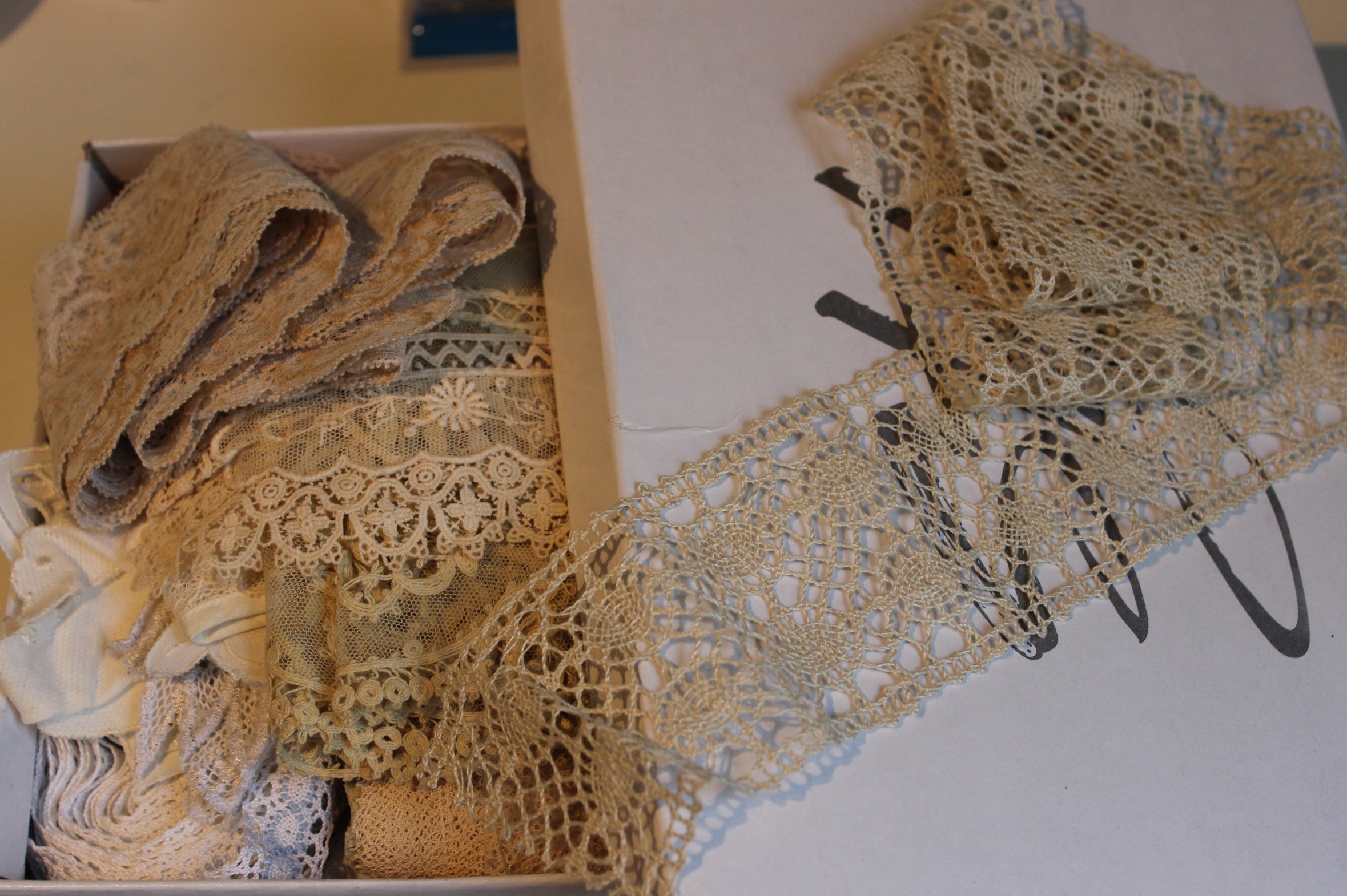
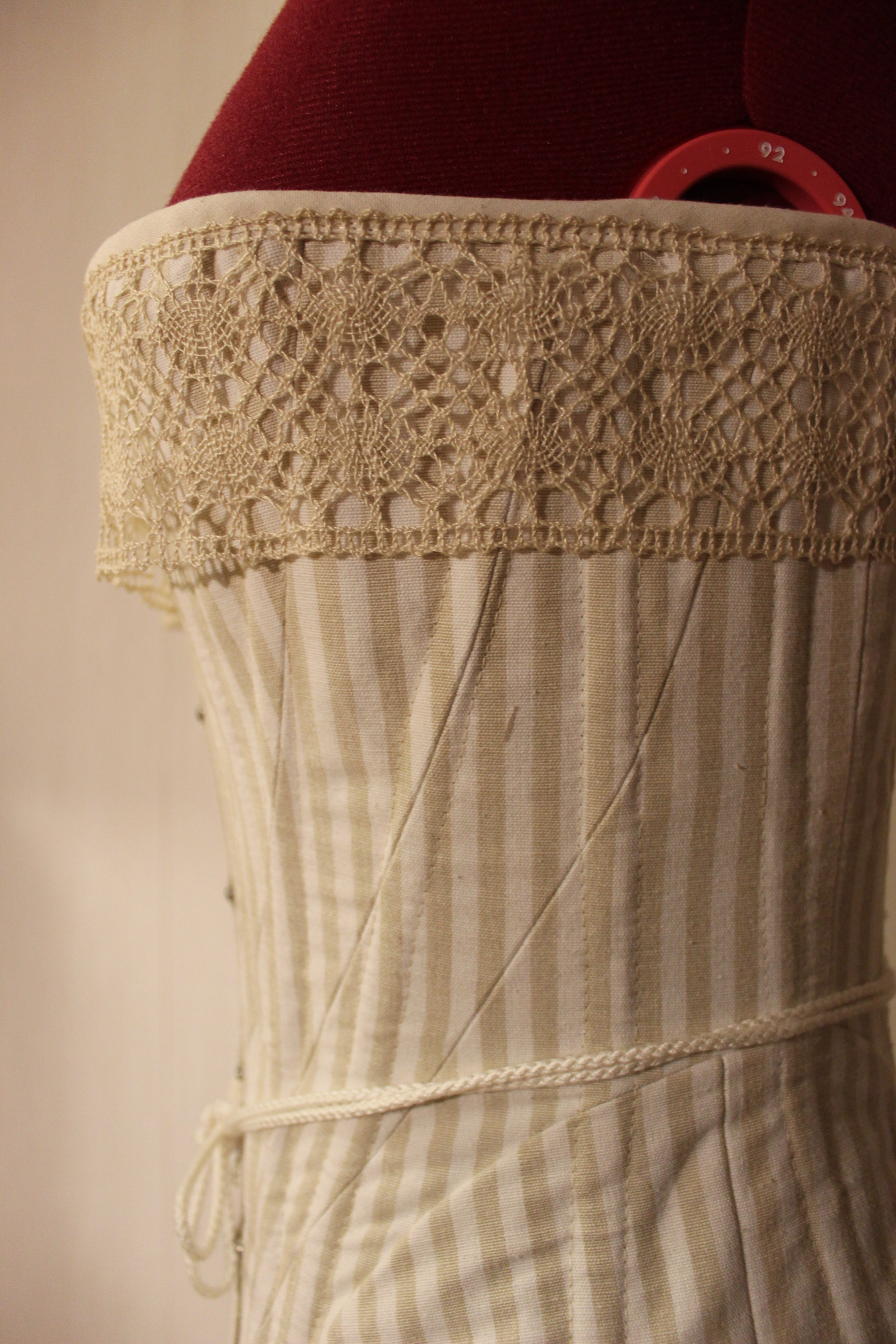
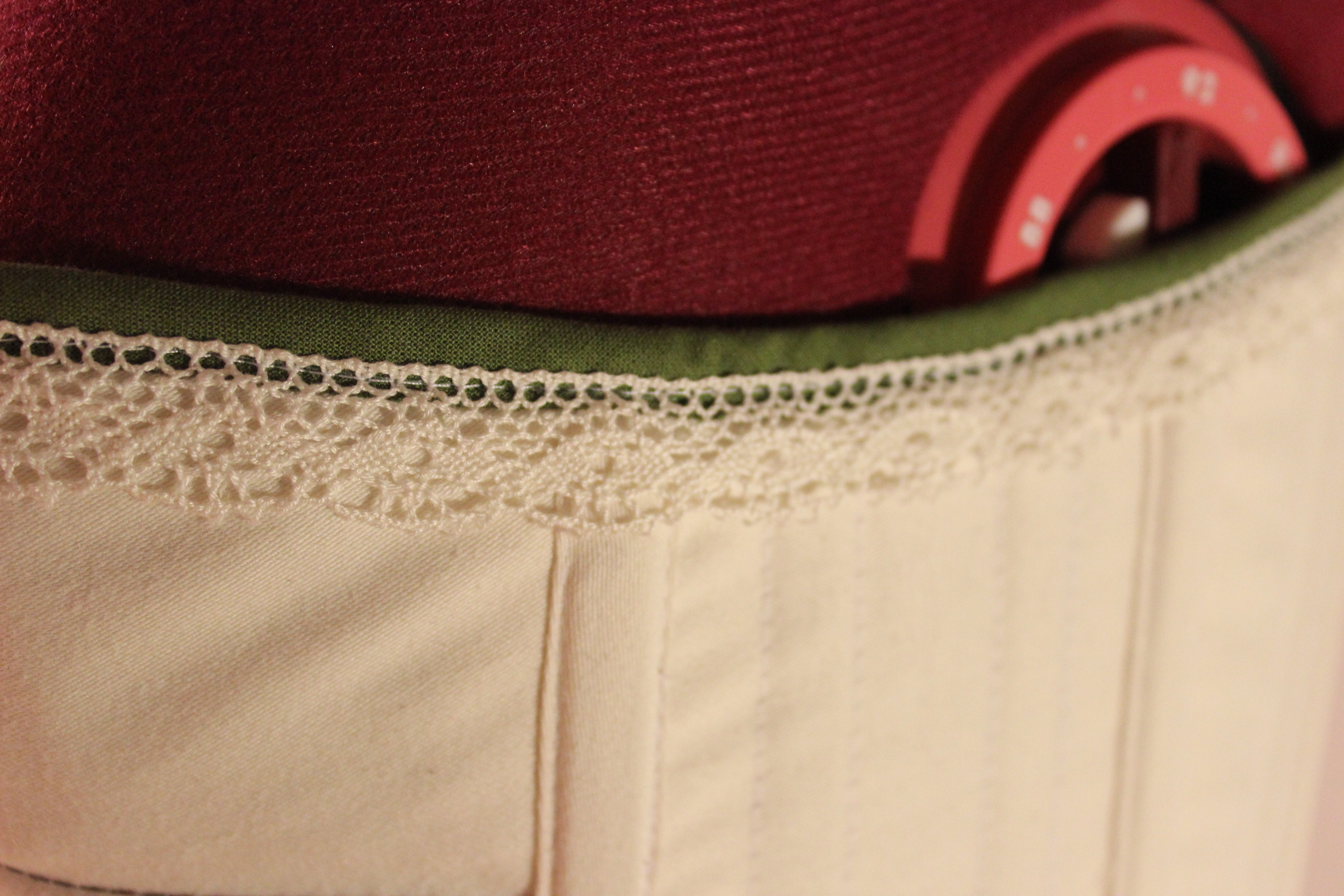
Then I stiched on the pretty lace (which I picked from my “Lace box“).IMG_6317

Finished:IMG_6405

IMG_6407

IMG_6418

IMG_6417

IMG_6409

IMG_6412

IMG_6415

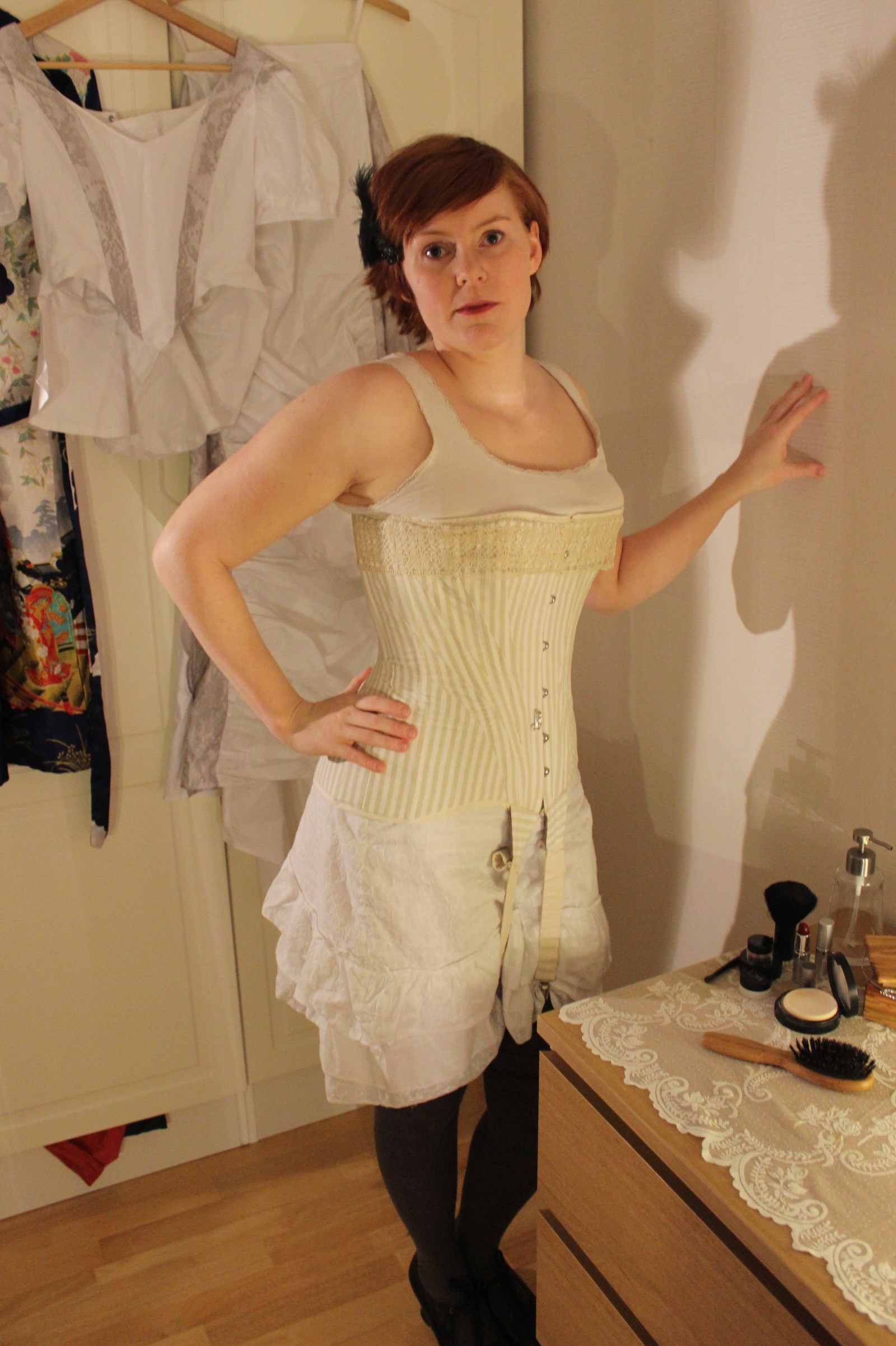
And being worn:IMG_6359

IMG_6384

IMG_6382

IMG_6377

IMG_6372

IMG_6400

Just the facts:

Challenge: 4 – Under it all.

What: a 1900s S-shaped corset.

Pattern: Nora Whaugh’s 1901s corset from “Corset and Crinolines”.

Fabric: 0,5 of striped cotton upholstery fabric (50Sek), 0,4 m of nougat cotton lawn for lining and 0,5 m ivory cotton satten (used on bed-bolsers) both from stash.

Notions: Thread (stash), 32cm Busk (80Sek), 20 gromets (35Sek), 4m of lacing cord (50 Sek), 2 m of ivory biastape (stash), 5m selfmade biastape for boning chanels (stash), 5m plastic cable ties for boning (30sek), 2m steel boning (stash), 1 m lace (stash), 0,5 m elastics (stash) and 2 suspender-grips (50Sek).

How historical accurate: The fabric and pattern are all good. But the plastic boning and the construction tecninques are modern. so maybe 6/10.

Time: About 12 hours.

Cost: Money spent: 275 Sek (42Usd). Actual cost (including stash worth): about 400 Sek (61Usd).

First worn: For photograps 1 mars. But hopefully on some suffraget events and some summer picknics.

Final Thoughs: I’m pretty happy with it, but I think I will need to add some stuffing at the bum to get a more pronounced S-shape.

A Pink Caraco Gift

When the HSF challenge 3- Pink, was announced in december I was more then sceptical. I am certainly not a fan of pink, I wouldn’t even think of wearing it.

But a challenge is a challenge…

And I decided to face my fears (not a fear really, more of a huge distaste) and do the challenge – and do it all the way.

So searcing my stash for something pinkish (yeah right, good luck) I actually came up with two workable fabric options. One pale pink cotton sheet, and a couple of metres of pink/white checkered linnen curtains – both fabric’s been given to me at some point.

Still not sure of what to make, thinking about something regency, 18th century or early 20th century, I decided to wait until the big opera gown was finished, in late januray, to decide.

Perhaps it was faith, since I found the most wounderful fabric at an internet auction 2 weeks ago.180551824_21ee55d7-97ff-4039-a871-e3a62da1ef96 I emedetly know I needed that fabric. So I bidded on it and won. And a week ago it arrived.

Despite the fact the amount of fabic was really limited (only 1m), I decided to try to get a 18th century Caraco jacket out of it.

But since I’t will need to be a fairly smal jacket, I decided to make the jacket as a “thank you” gift to sister M. She is always so nice and wounderful and helps me with my projects, and without complaining photographs my costumes out in the freezing snow. Thank you so much for everything!

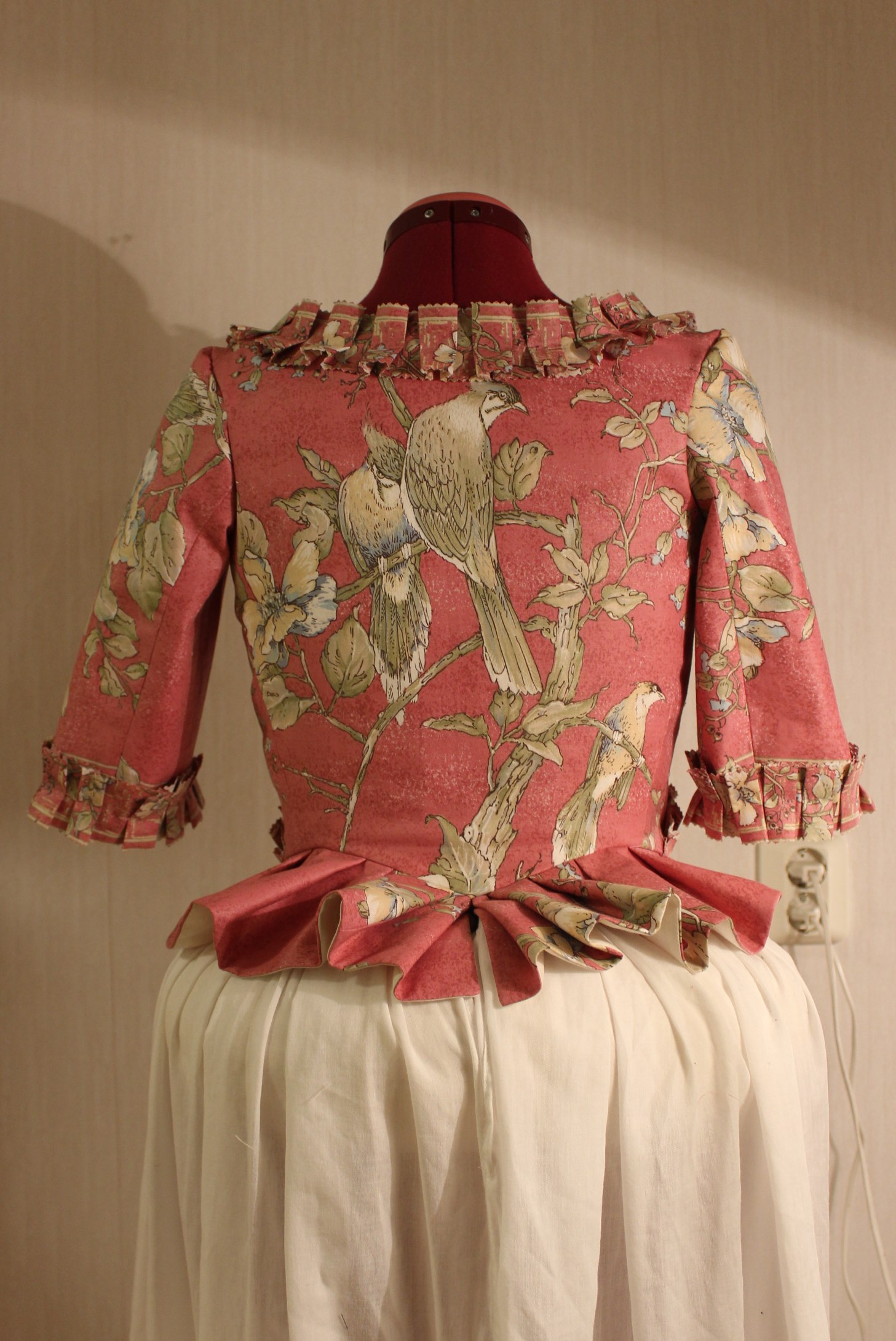
I’m thinking something like this.274015958547564766_VevBYigl_f

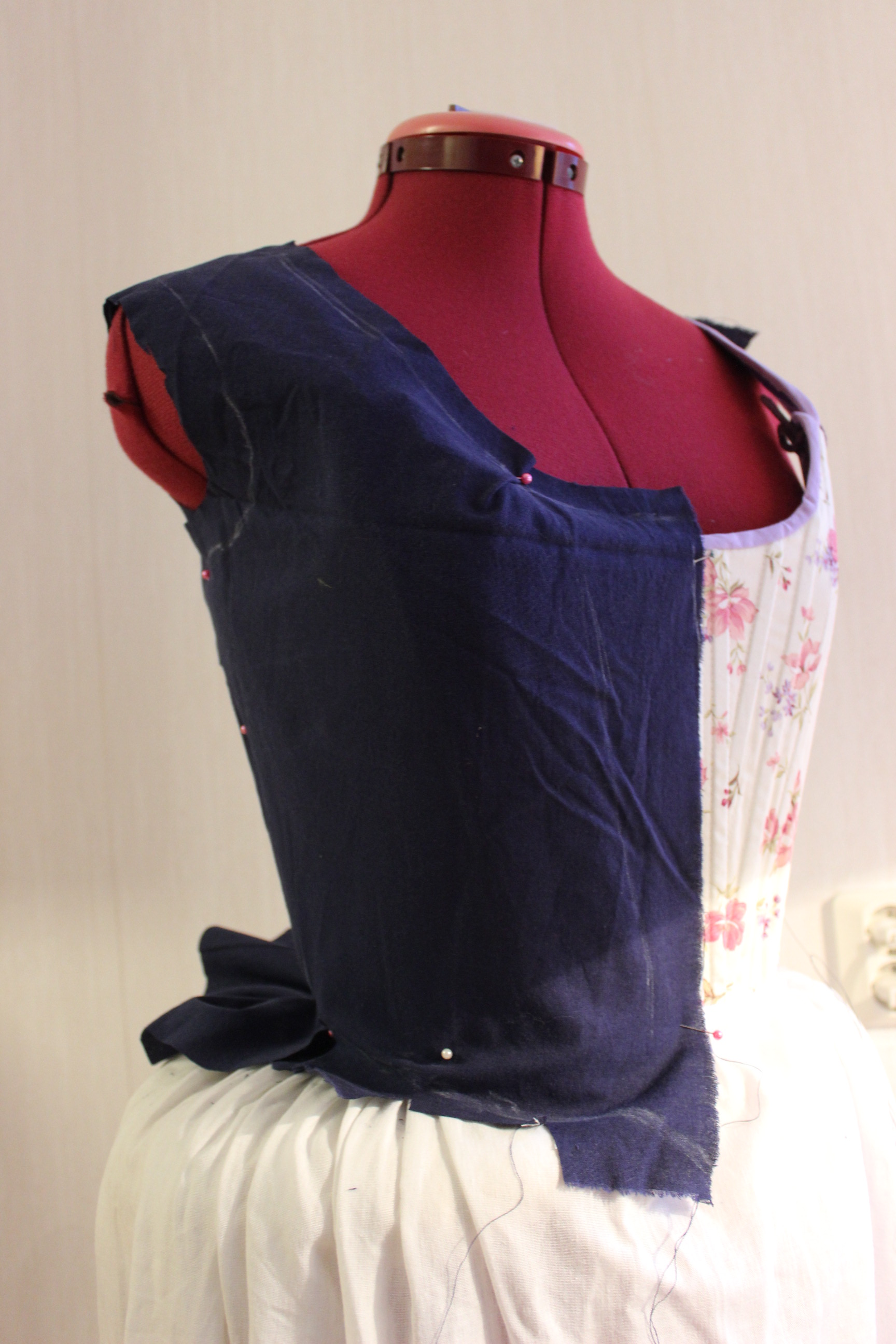
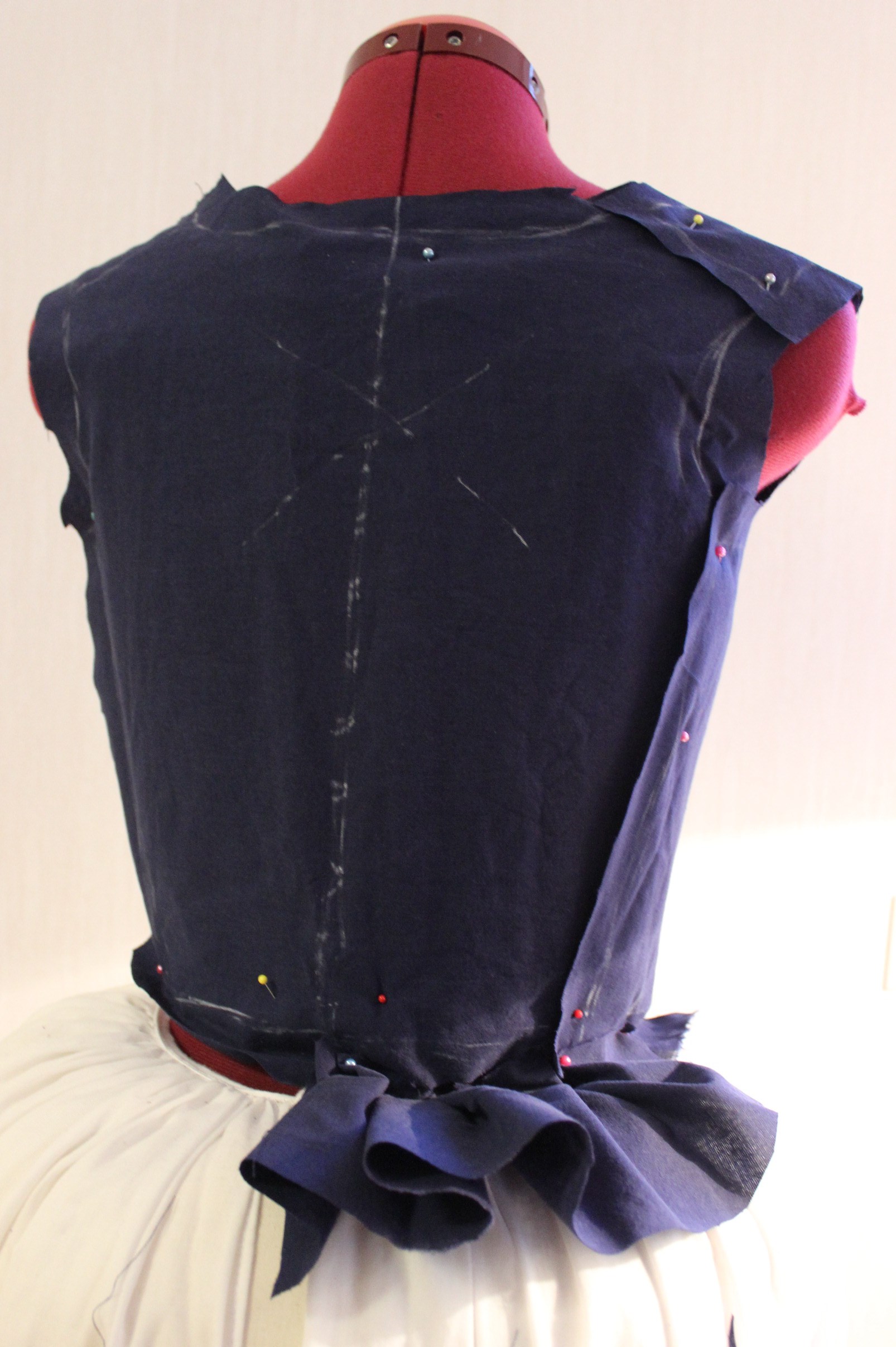
So I put my sisters corset on my dressform and started to drape the pattern.

IMG_6070 IMG_6067

IMG_6068

Then I used a good hour trying to get the pieces out, getting the print in the exact way I wanted.IMG_6077

I sewed it togehter using modern sewing methods.IMG_6118

Snipping the allowence to keep the curved edges nice and smooth.IMG_6120

I put the bodice back on the dressform to get a feeling for how it would look.

IMG_6122 IMG_6123

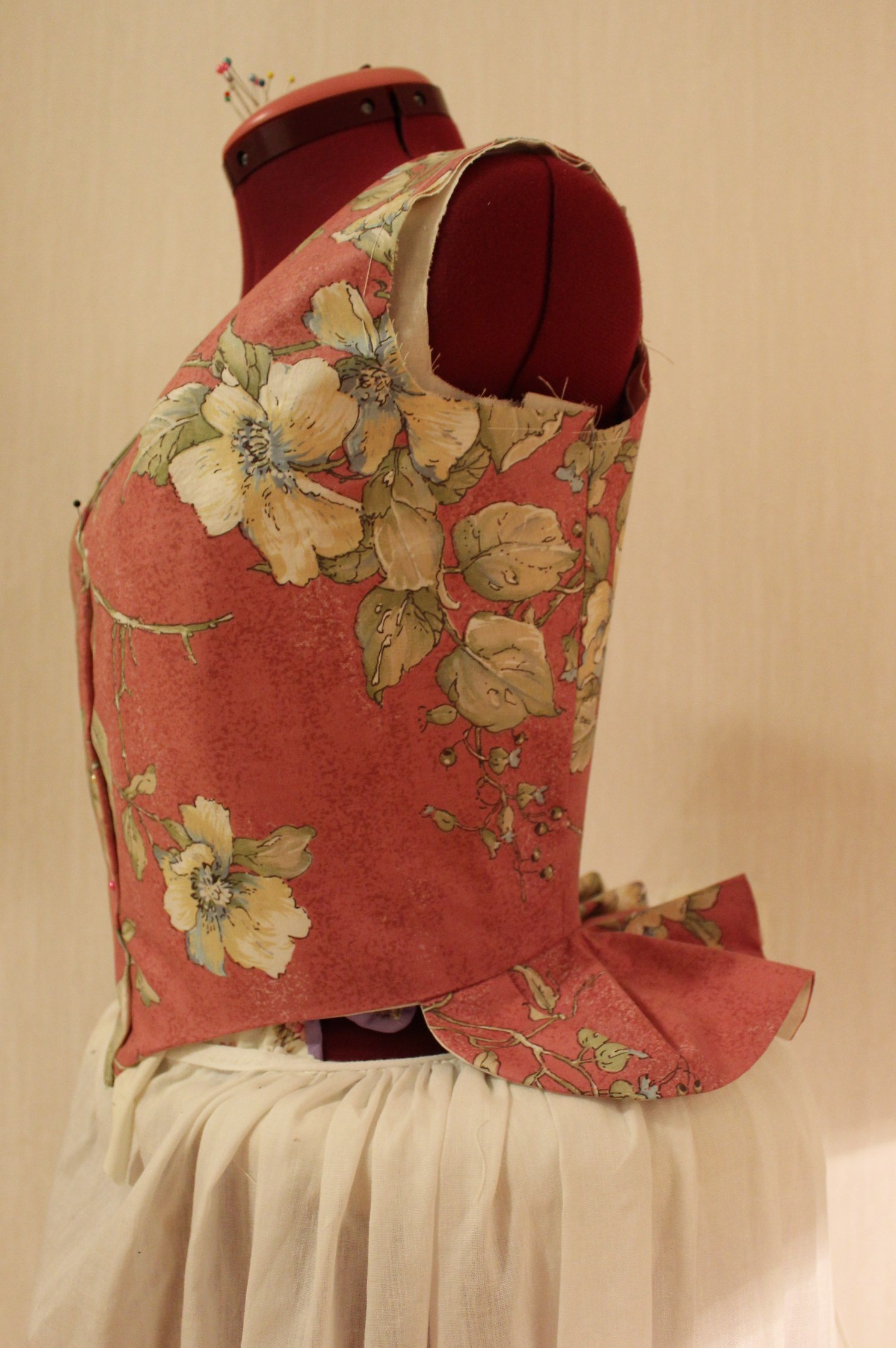
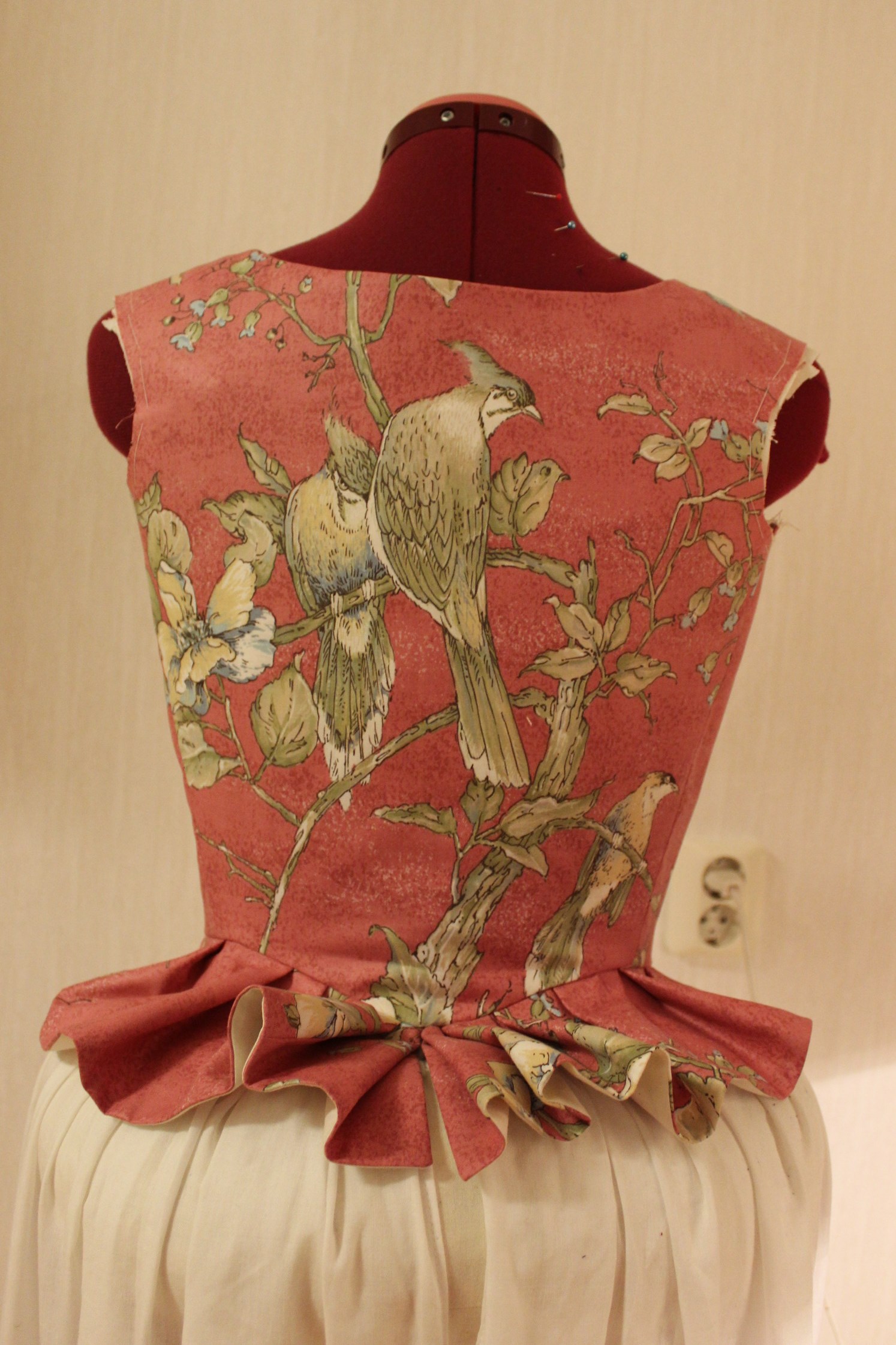
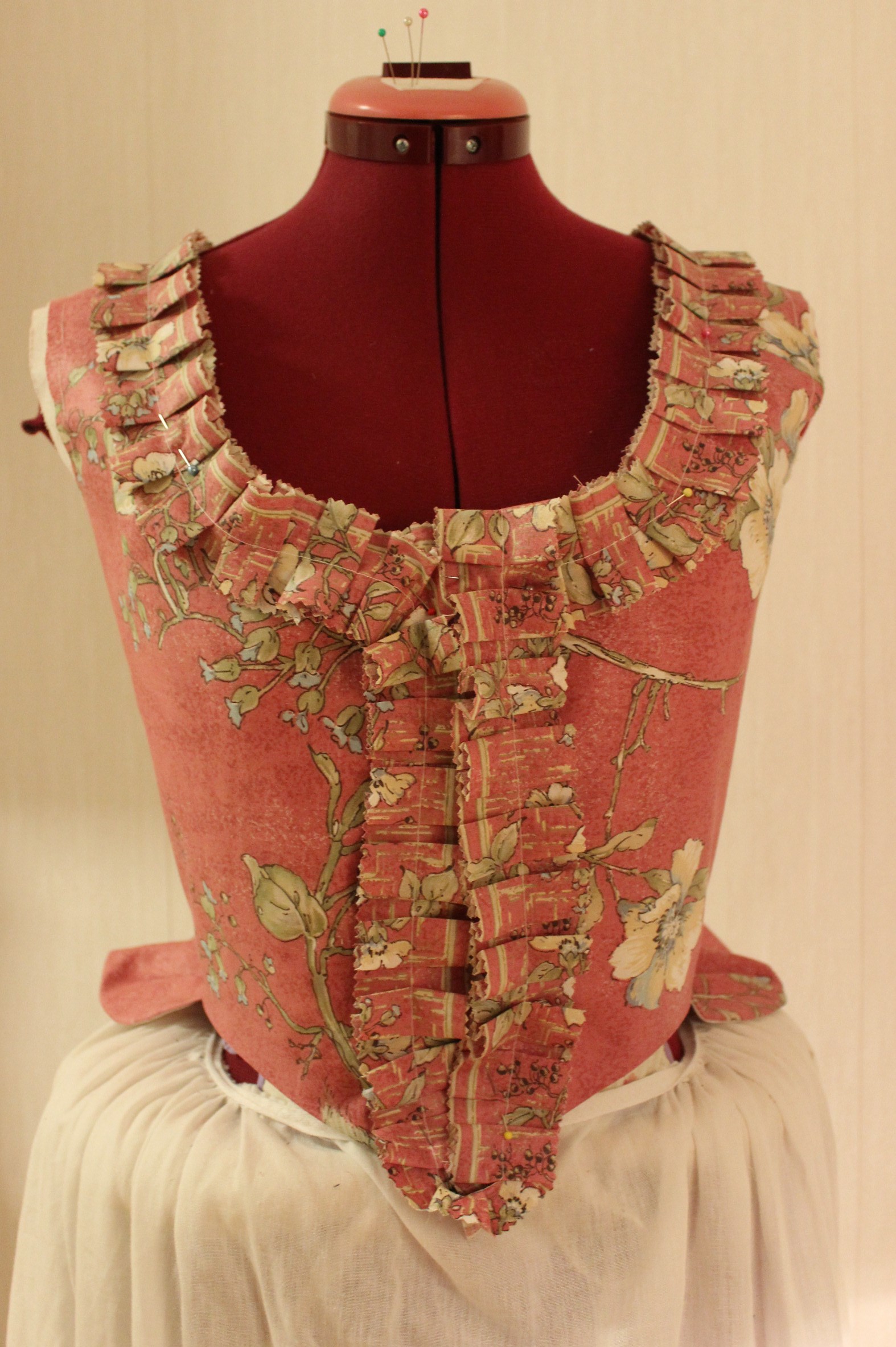
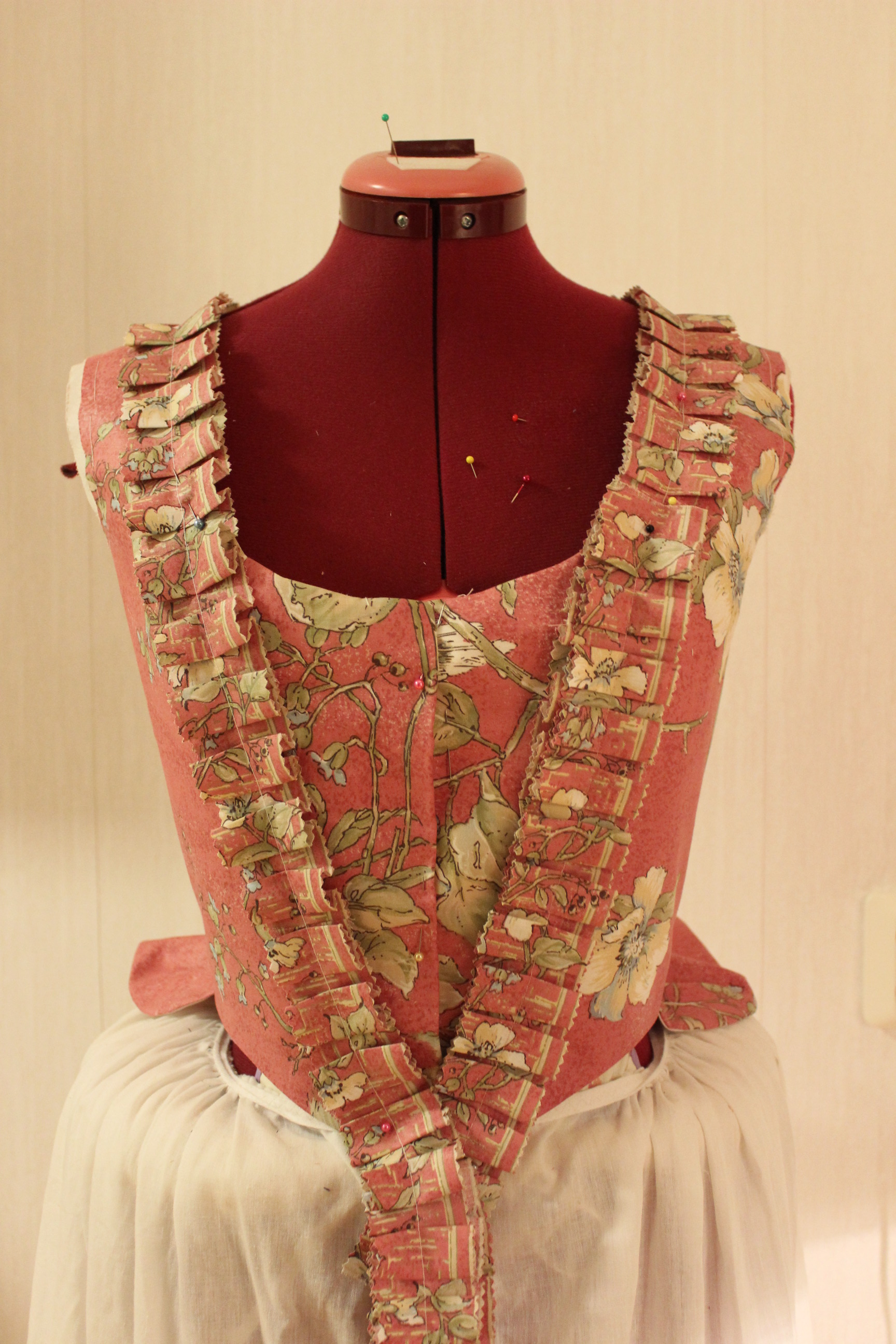
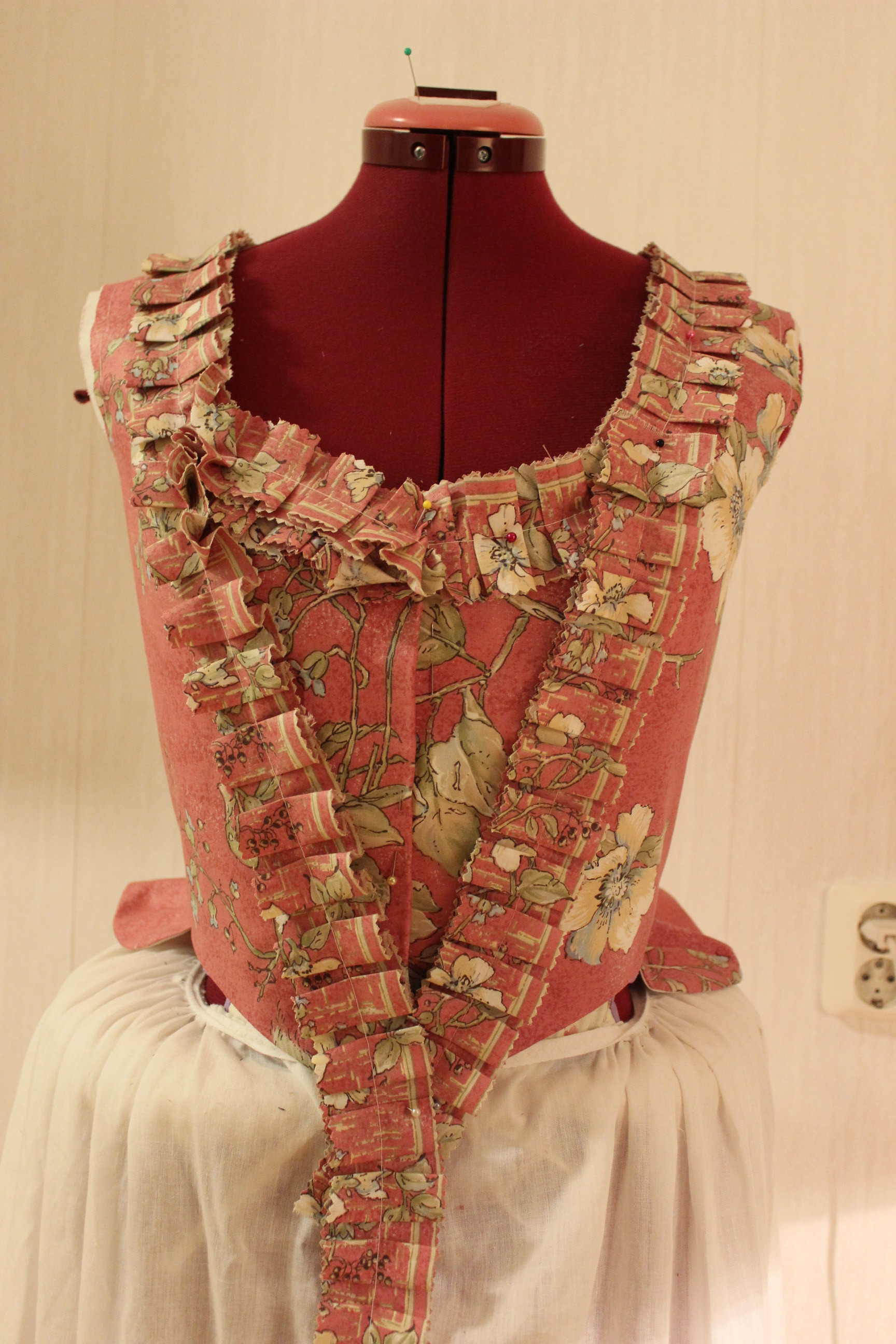
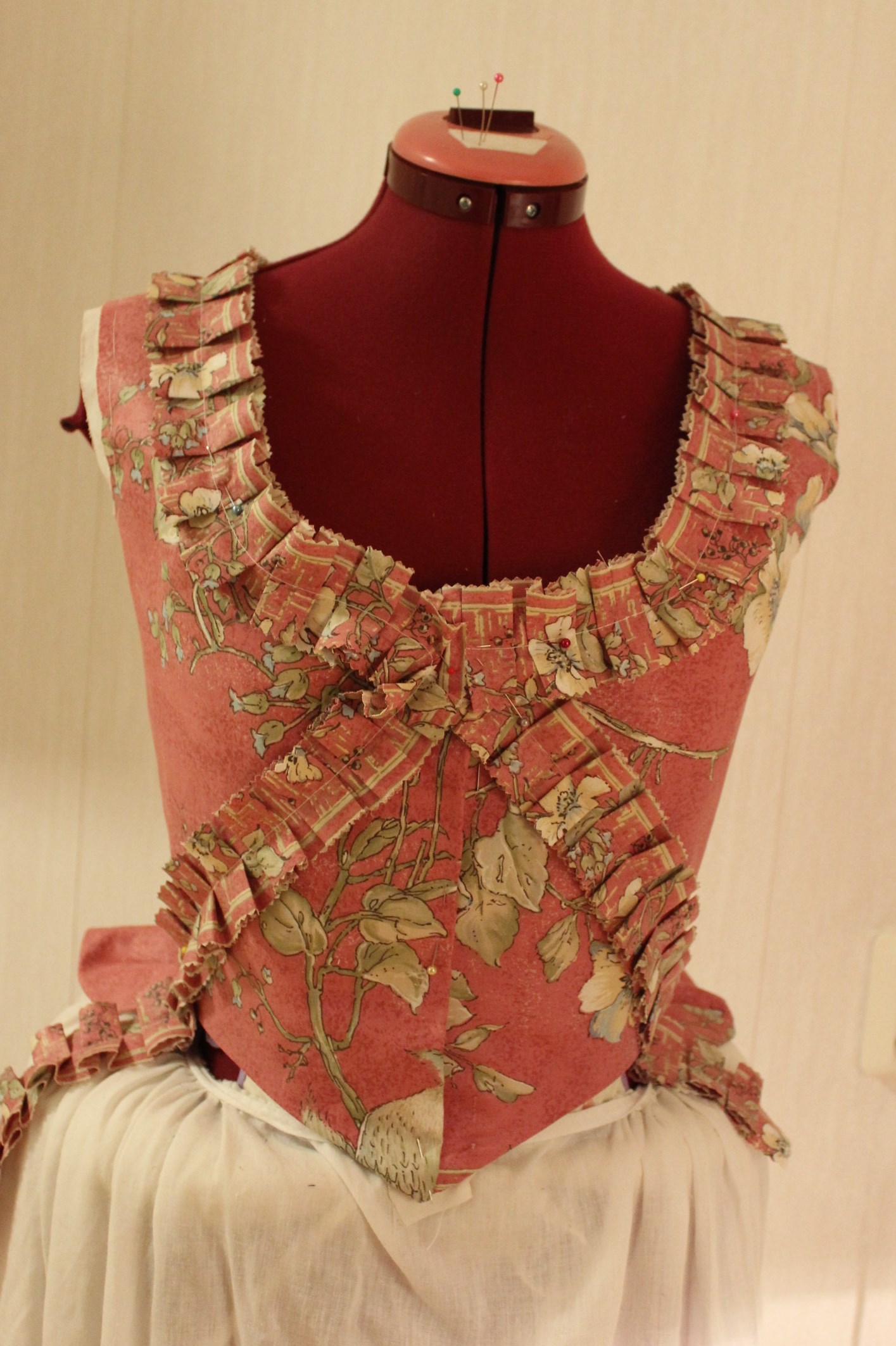
Pretty nice, and I particulary like the birds placements on the back.IMG_6125

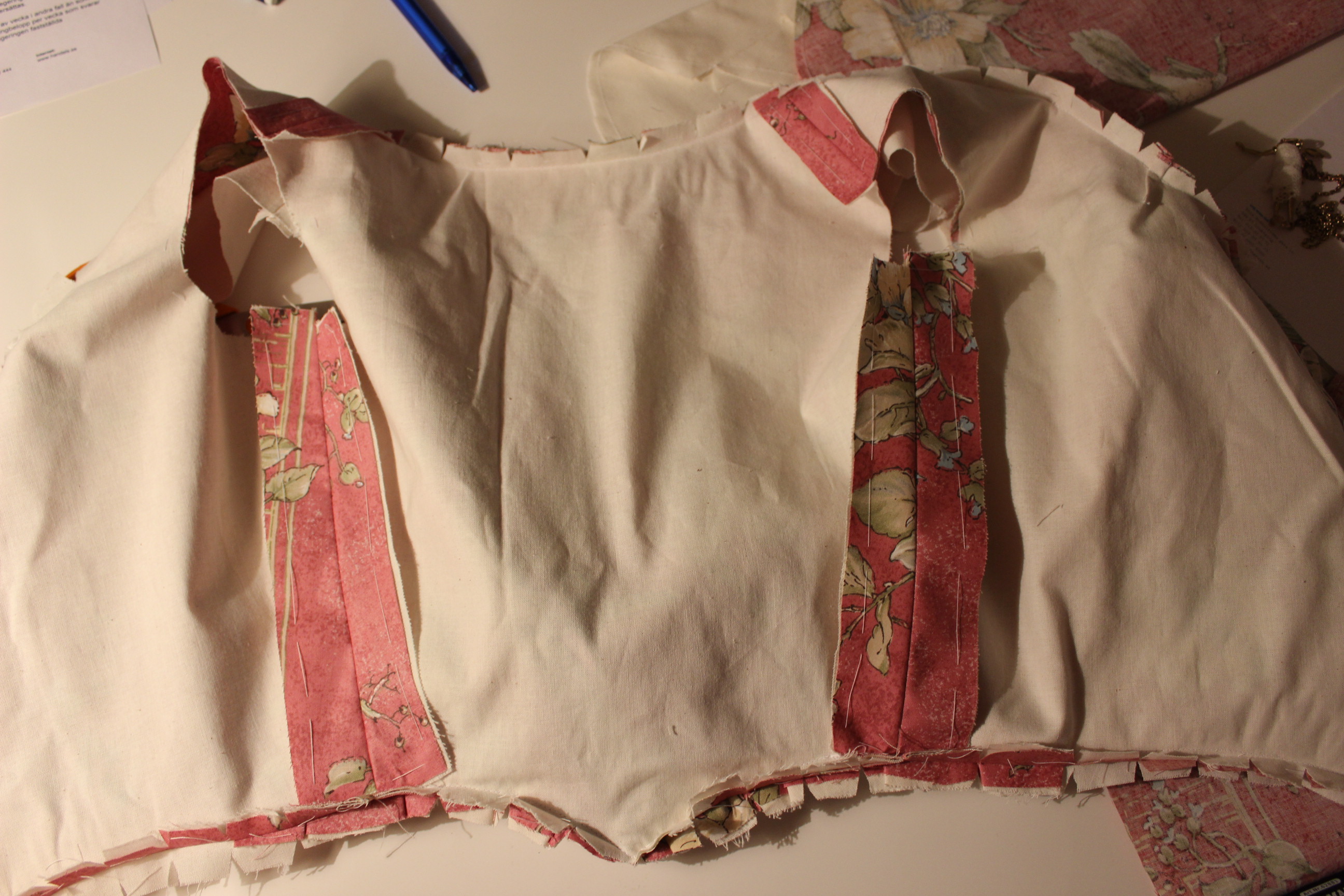
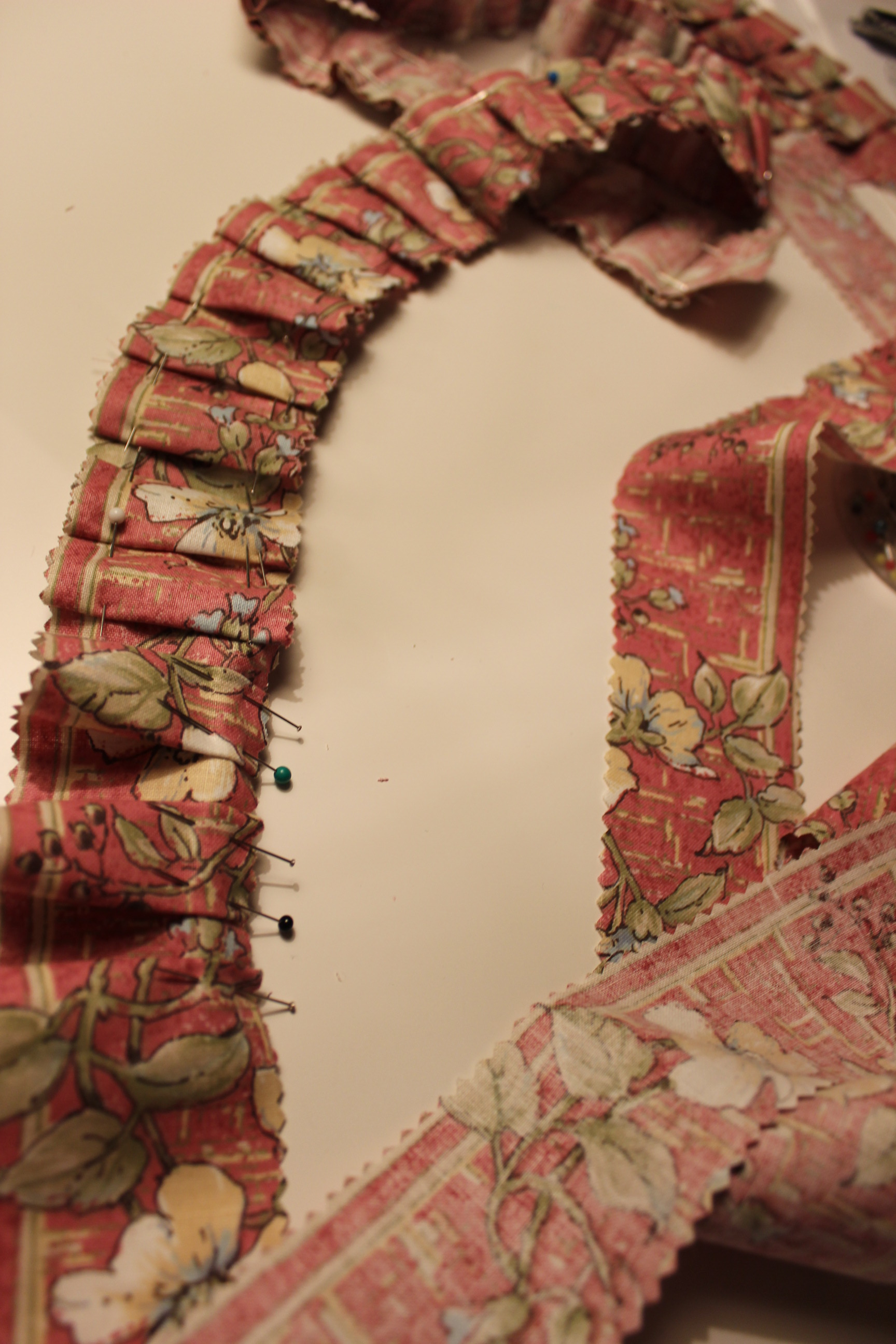
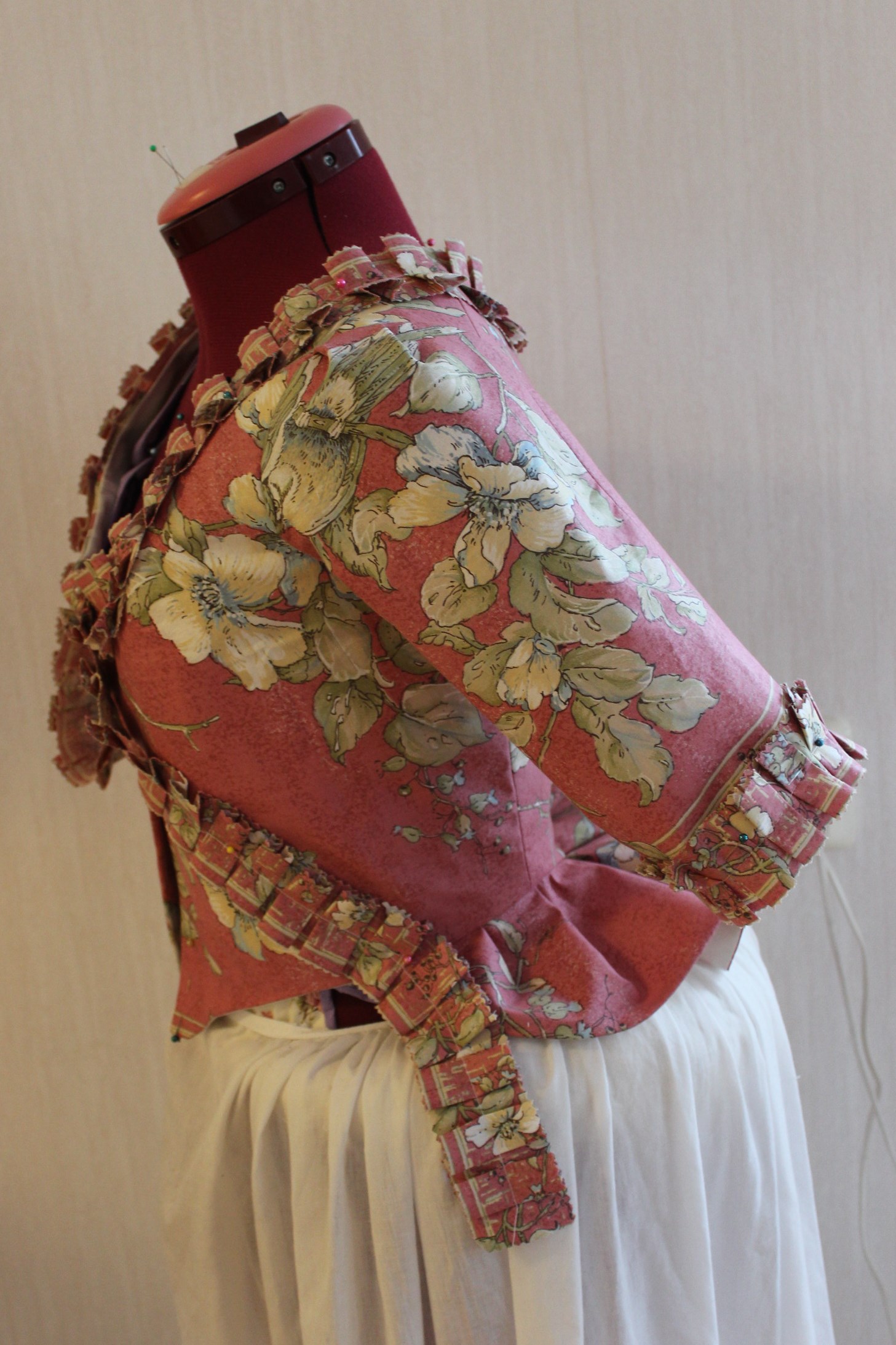
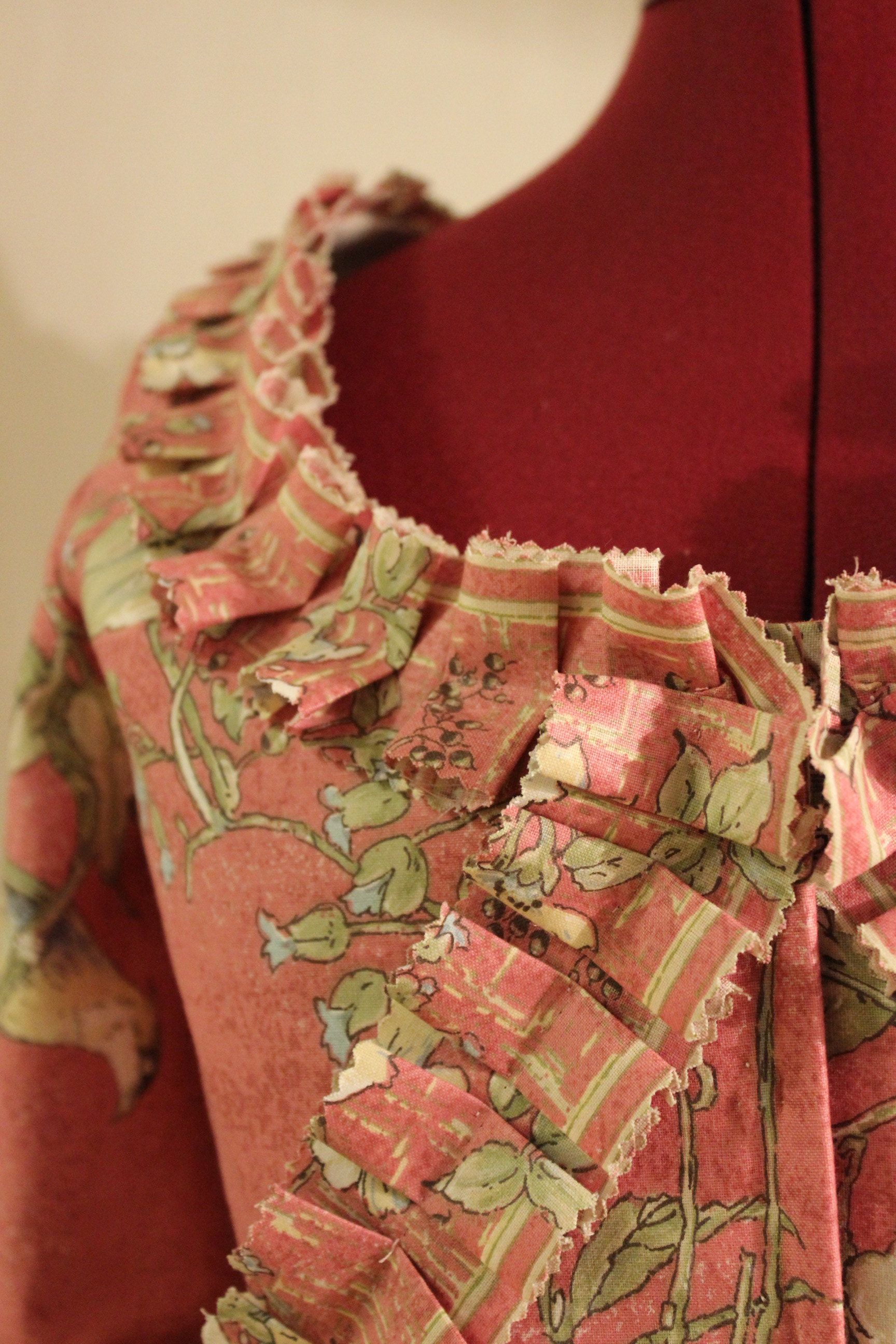
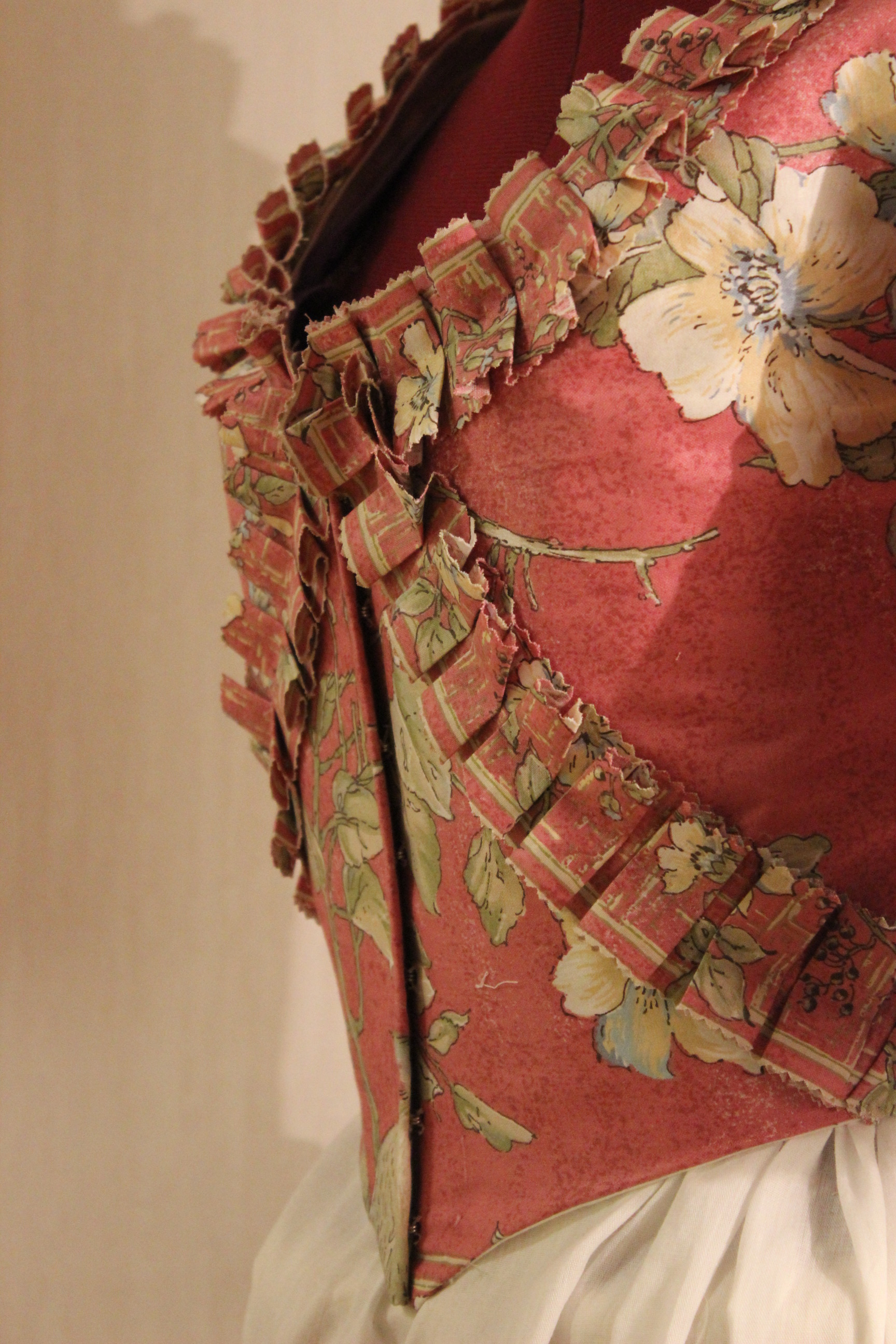
I pleated the trim which I cut from the fabric edges.IMG_6082

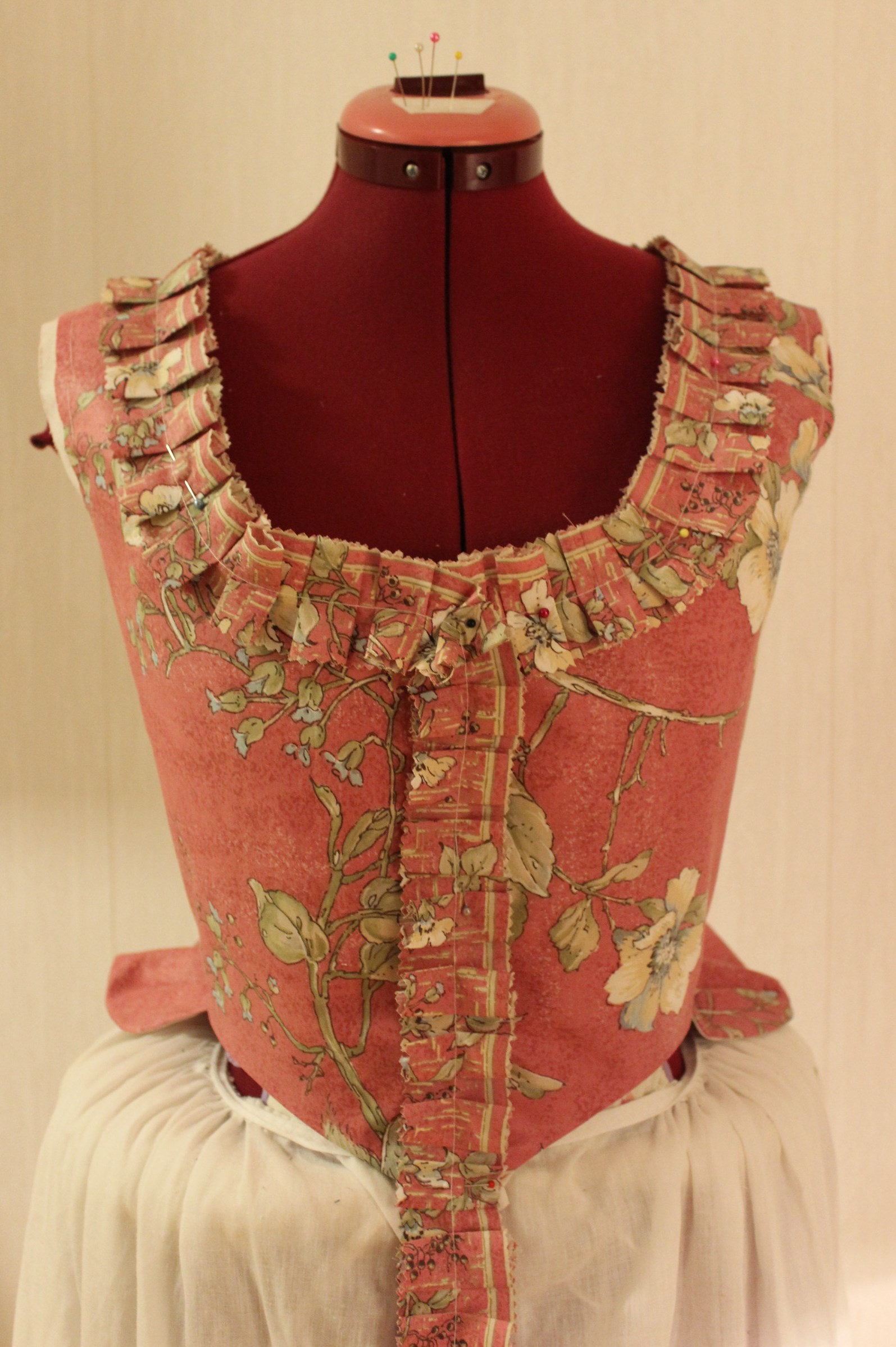
Then I needed to decide on how to place it. Playing around with it, I came up with 5 alternatives.

IMG_6134IMG_6136

IMG_6142 IMG_6139

IMG_6137I think I like this one the best (let’s just hope my sister like it aswell).

Then I put in the sleevesIMG_6144

Getting all the seam-allownces between the layers.IMG_6145

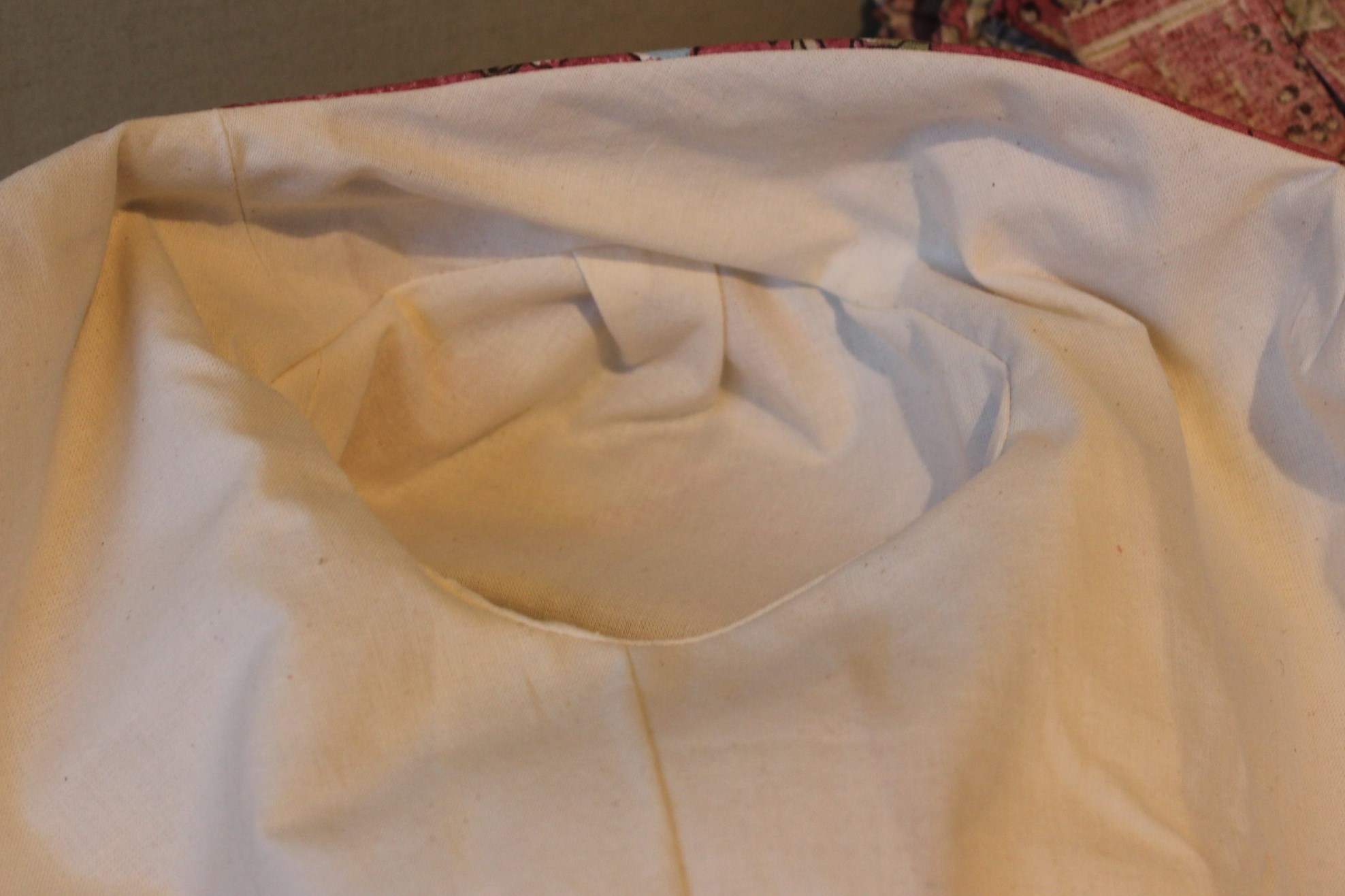
When I started to pin on the trim, I discovered something strange…IMG_6150…A hint: You will have to keep your hands behind your back…

So I ripped the sleeves out (all four of them) and switched the sides. But the result was the same, only worse. So for the second time in on hour, I ripped the sleeves out. Grrr. IMG_6152I gave up the idea of a nice finished inside, and basted the lining and the outer fabric together. And stiched the sleeves in one last time (after pinning it in on the dressform).

IMG_6178

Then I pinned and hand-stiched on the trim. I used the hooks and thread eyes to lock the light bones on the outer edge of the front.

Finished:IMG_6154

IMG_6168

IMG_6163

IMG_6156

IMG_6159

IMG_6160

IMG_6161

Just the Facts:

Challenge: Nr 3 – Pink.

What: A 1770s caraco jacket.

Pattern: Draped my own using Janet Arnolds “Patterns of Fashion”.

Fabric: 1 m of printed pink qvilting cotton, 1 m of white cotton sheet.

Notion: Thread, 8 hooks and 0,6m of syntetic whale bone.

How Historical Accurate: Not at all. The general look of it is plausable, but the fabric, the print and the construction methods are all wrong and modern. But to be fair – this project was never meant to be accurate.

Time: 12 hours.

Cost: 100 Sek (16 Usd).

First Worn: Not yet (I’m not even sure it will fit her).

Final Thoughts: I like the jacket and would gladly wear it if it would have fit me. Hopefully my sister will like it as much as I do…

An Innovative Corset

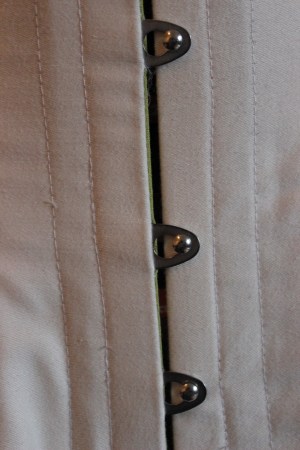
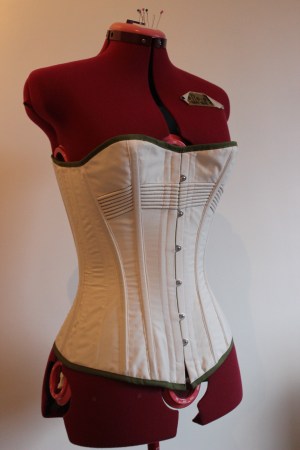
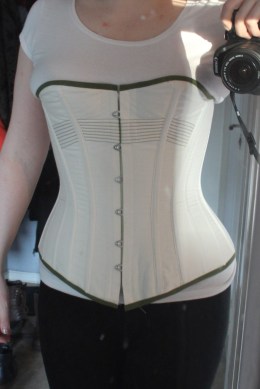
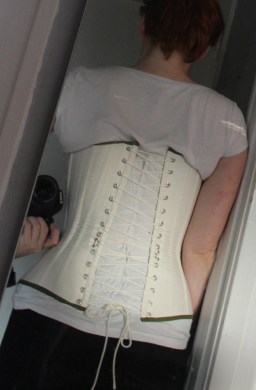
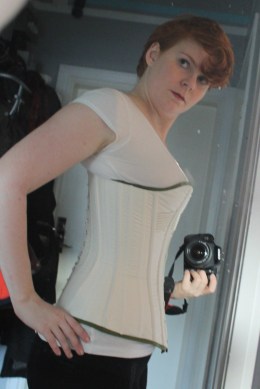
For the HSF nr 3 this year: Innovation, I knew I needed to make something usable for the up-coming bal. And since you can’t make a balgown without the right foundation wear, I decided to use this challenge to make a 1880s corset.

I re-used the 1880s corset pattern from Nora Waughs Corset and Crinolines. (I prevously made a black corset from this pattern for my sister). 1880 waugh
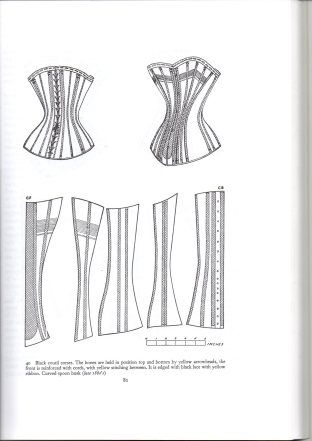
I started by adding some extra widht to the pattern to bring it closer to my measurments.IMG_4330
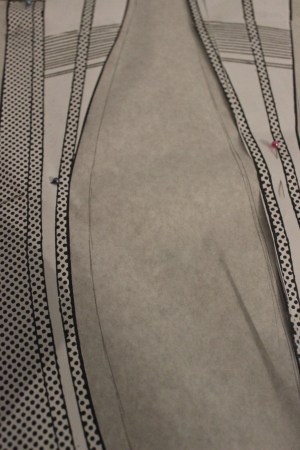
Then I cut it out in a sturdy cotton bedsheet,IMG_4335
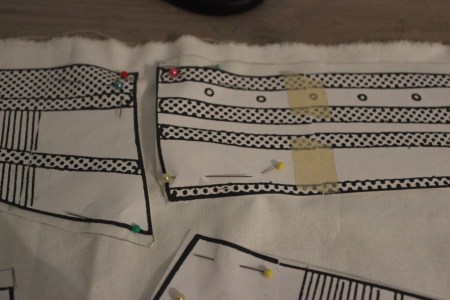
sewed it together and tried it on.

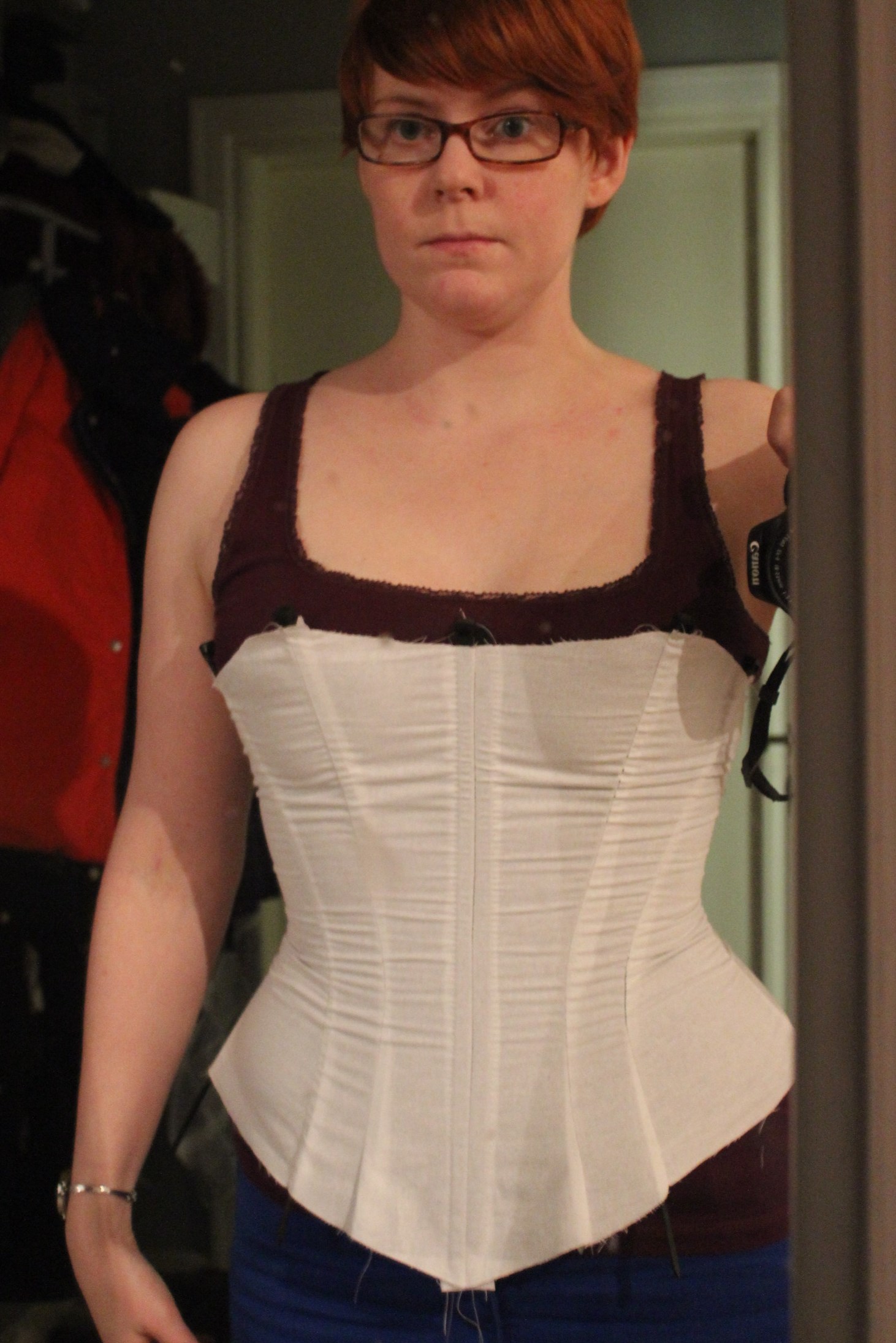
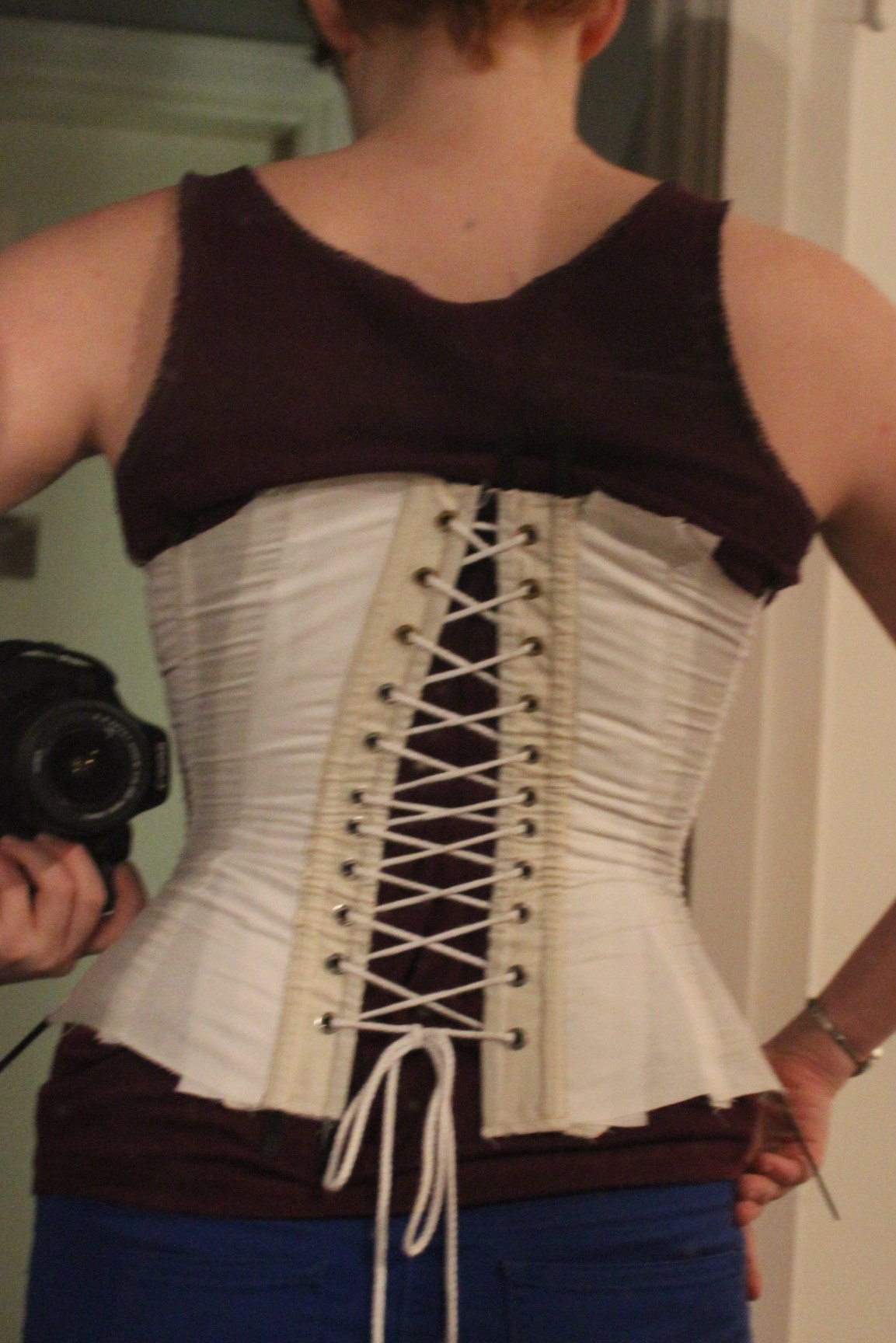
IMG_4338 IMG_4344

It fits suprisengly well. The only thing that needs to be changed is to take out a bit on the top back, to get a more even lacing, and to re-shape the bottom front to make the curve over the stomach nice and smoot.IMG_4359

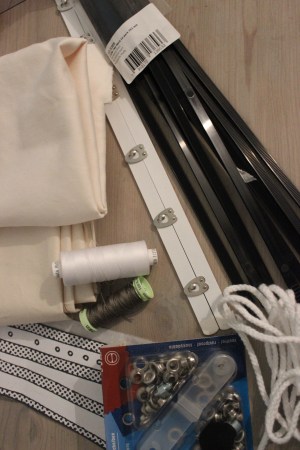
Then it was time to bring out all the fabric and notions. (here I got: a cream cotton sateen, a cream cotton interlining, a busk, lots of plastic bonning, thread, the pattern, grommets and lacing cord).IMG_4368
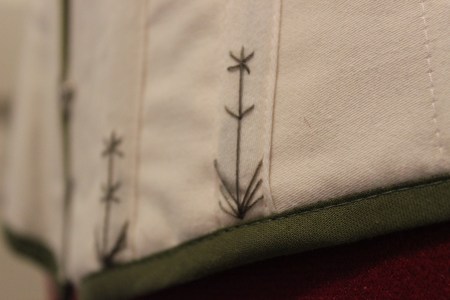
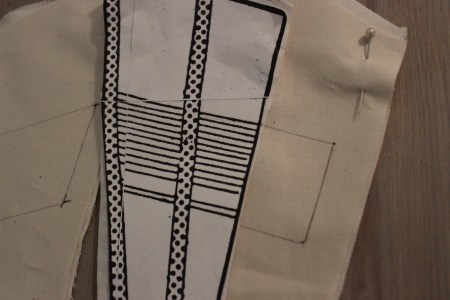
Then I cut the fabric, basted on the interlining and marked the space for the piping, and sewed them in.IMG_4364
IMG_4375 IMG_4373

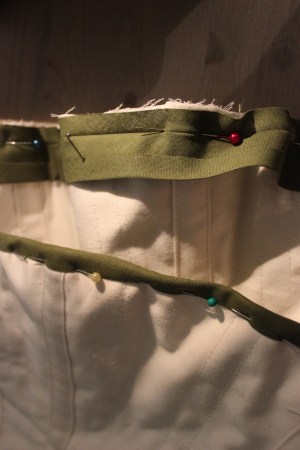
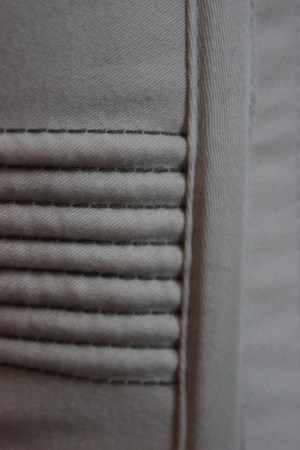
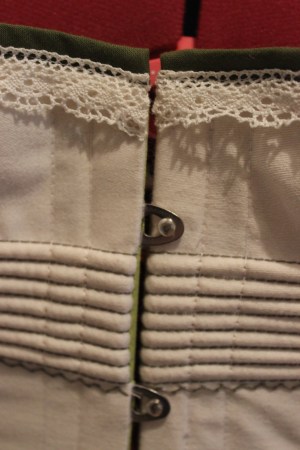
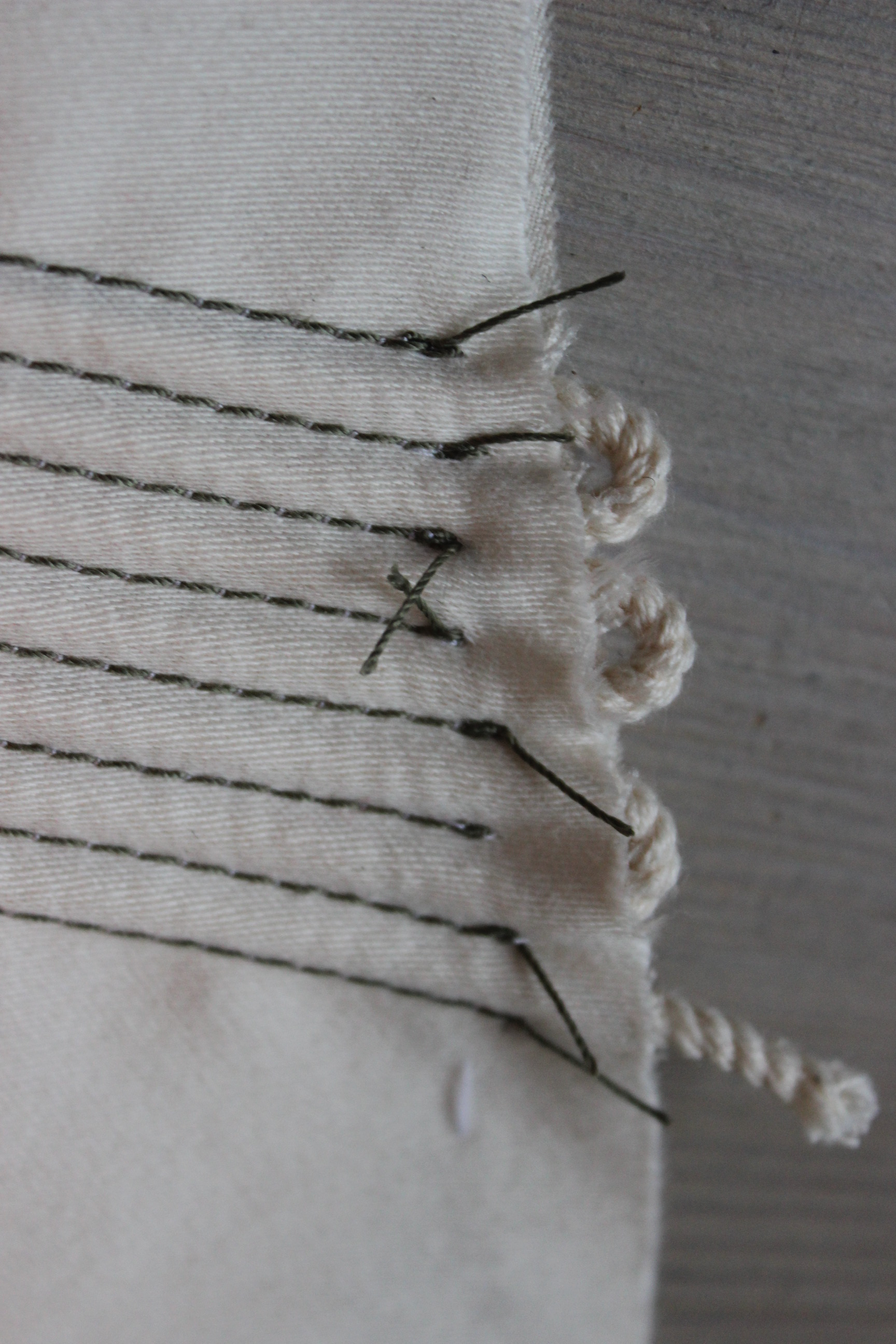
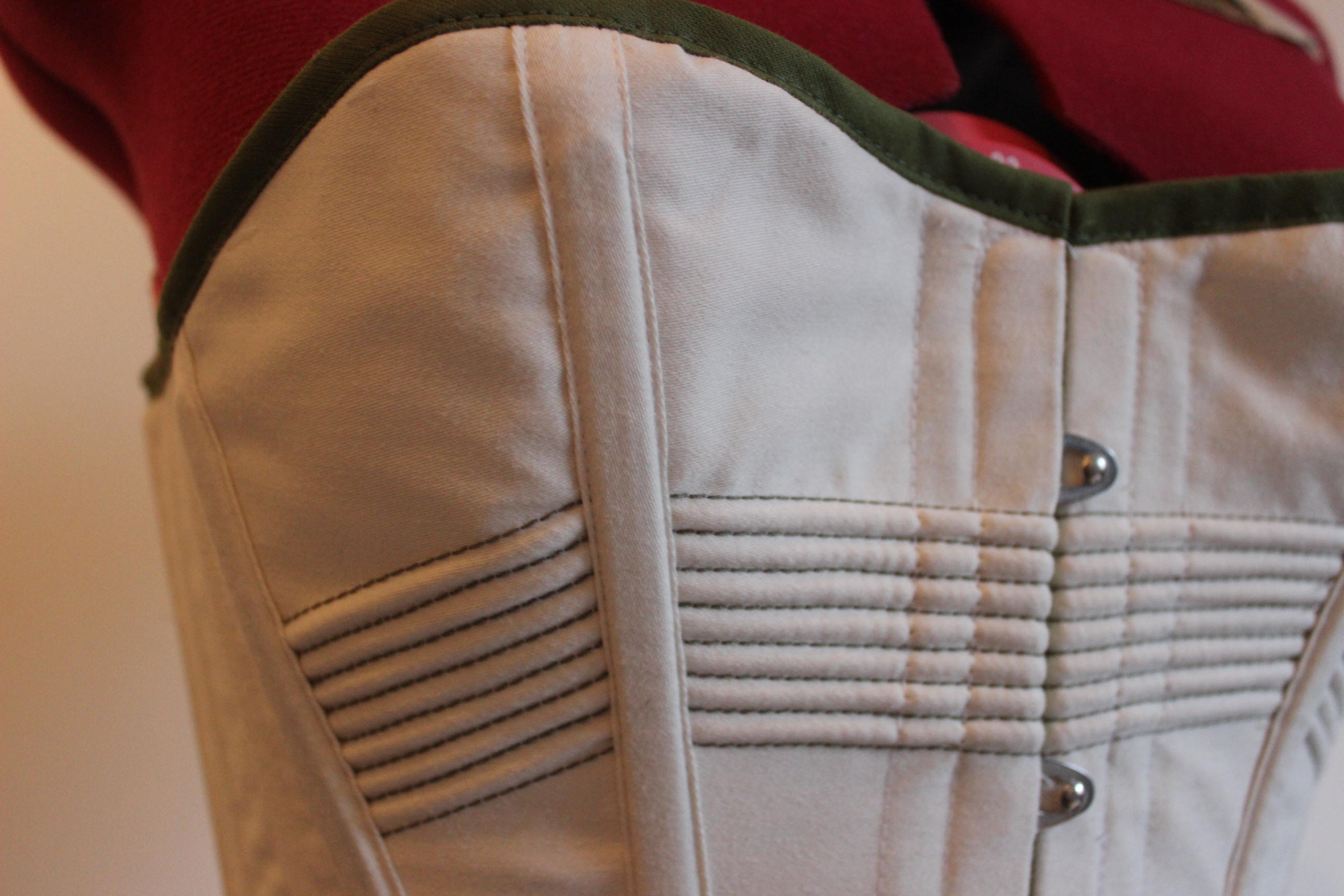
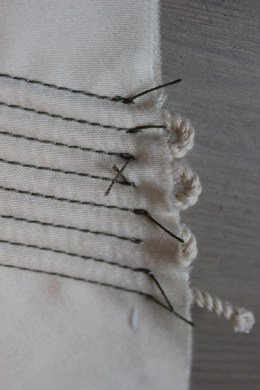
Close-up of the piping, sewn in green button-hole thread.IMG_4377
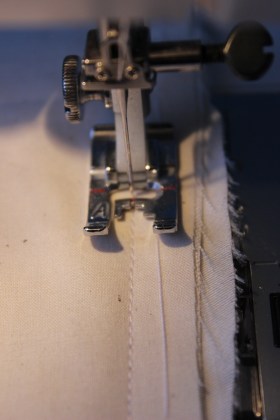
Then I sewed the pieces together twice – for strengt.IMG_4370
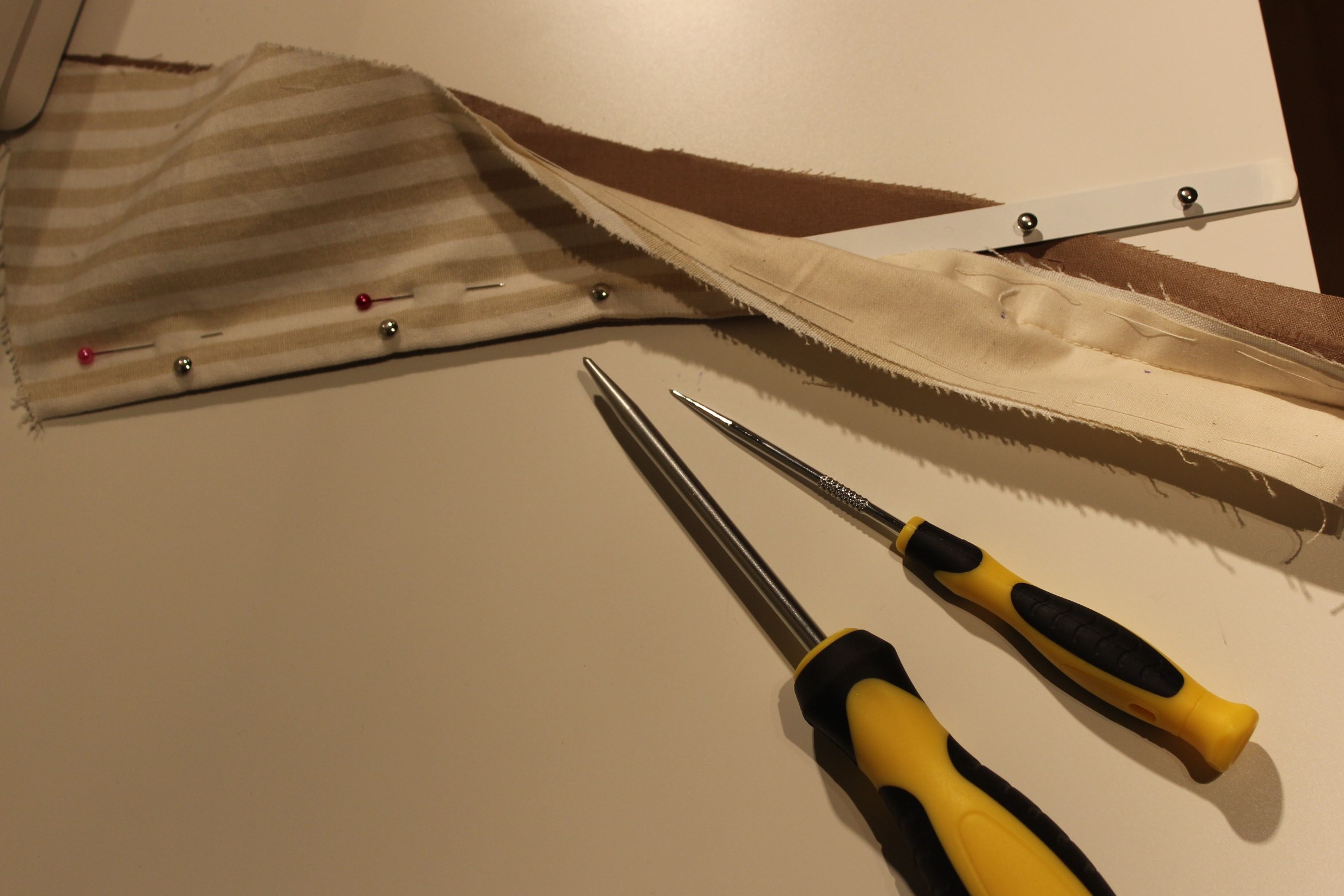
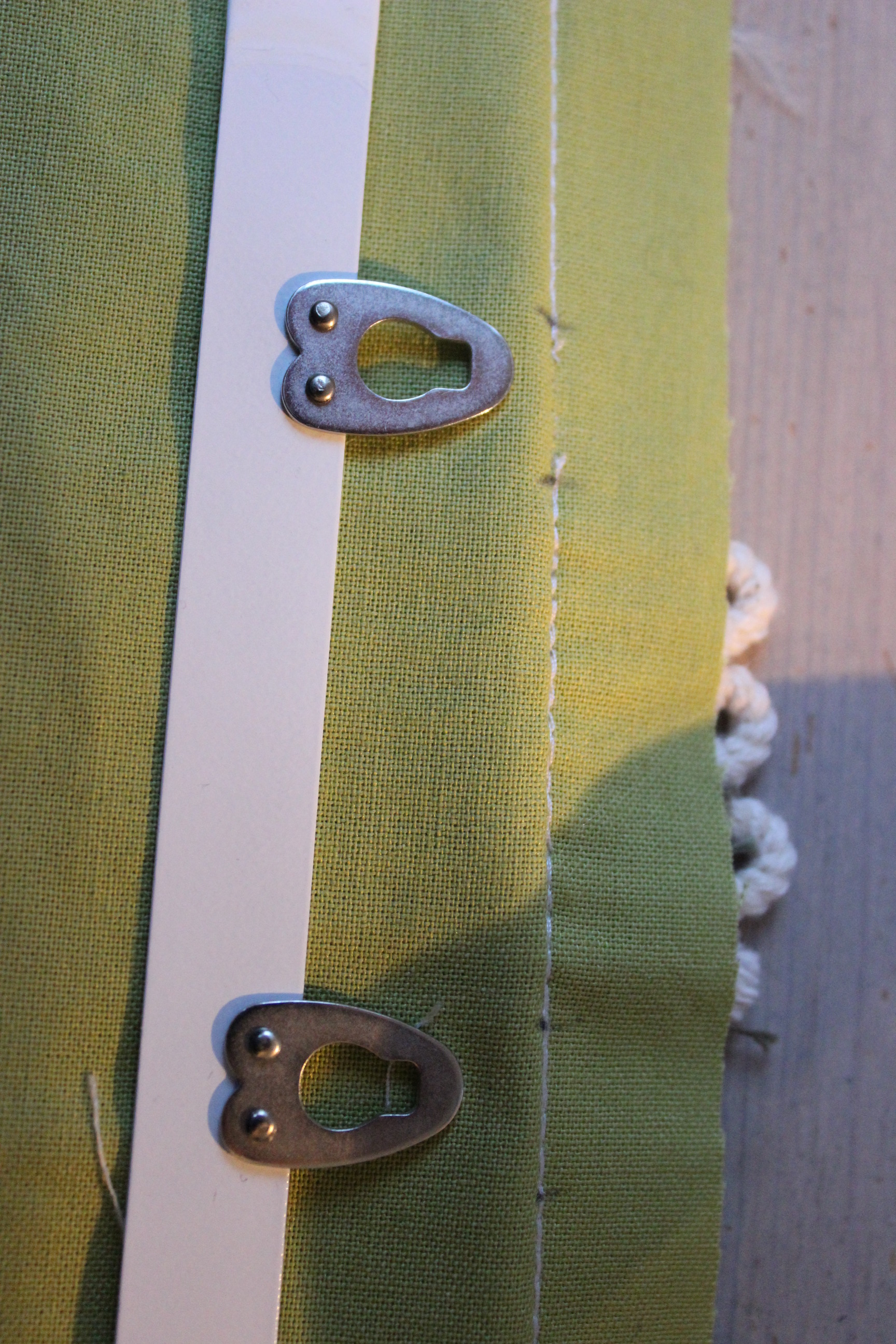
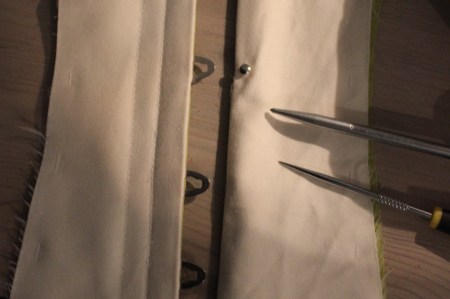
Setting the busk using awls to get the studds through the fabric without ripping it. IMG_4387
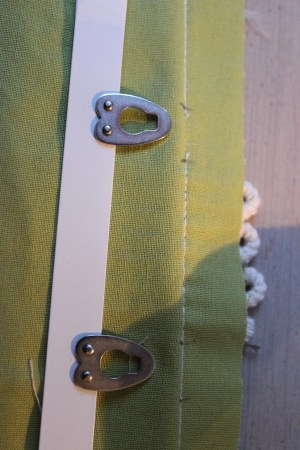
And leaving holes while sewing to get the eyes through.IMG_4381
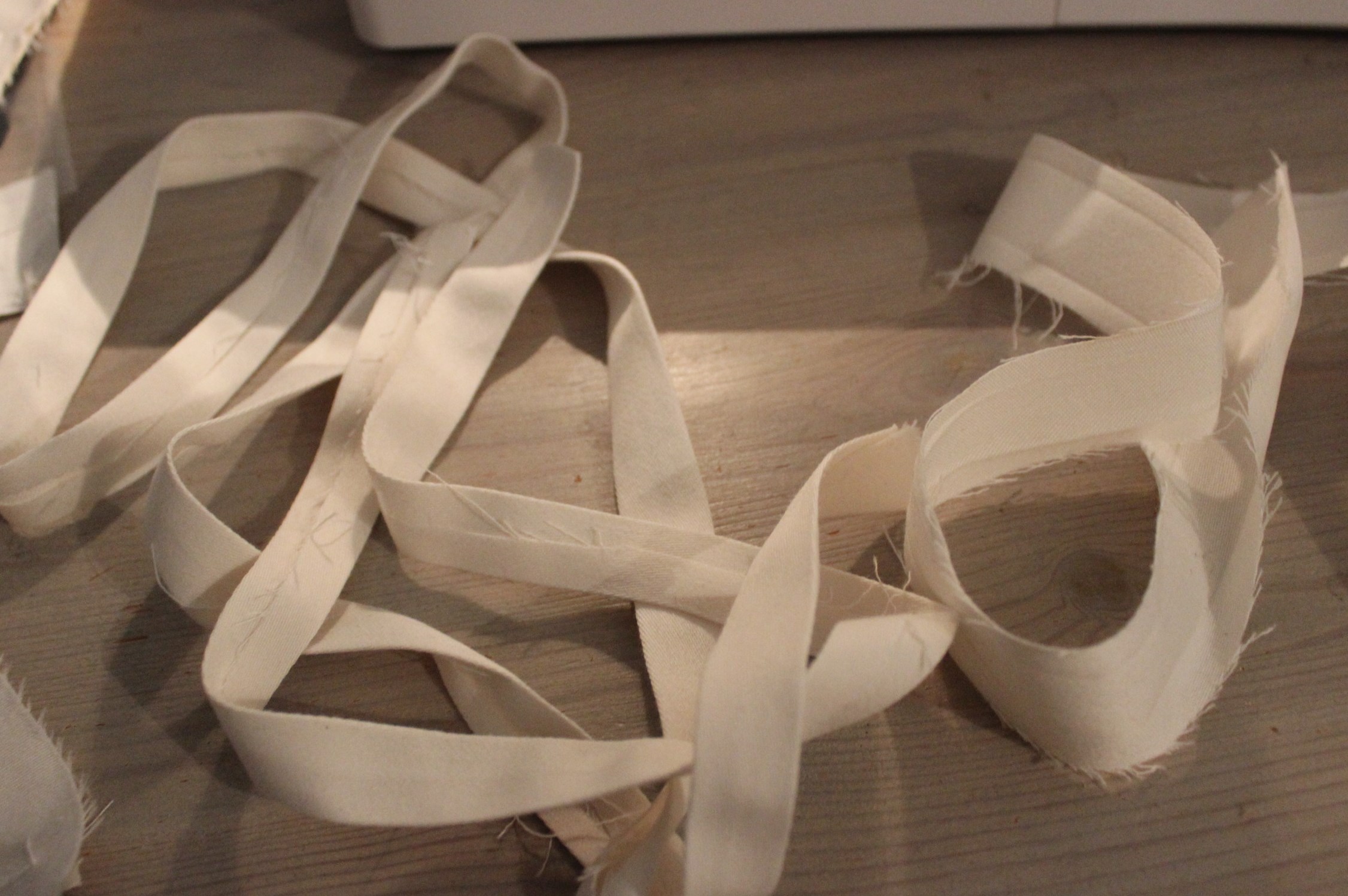
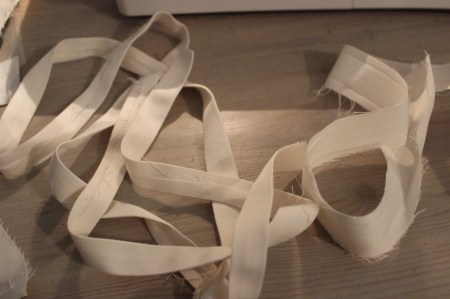
I made lots of self fabric bias trim to use as boning chanels.IMG_4397
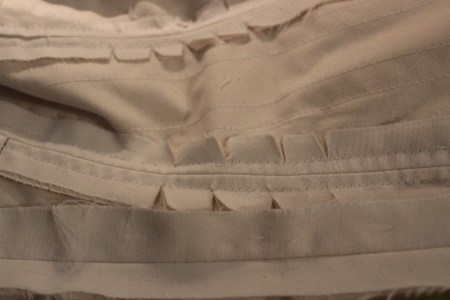
Sewing them on from the outside.IMG_4400

And snipping the seam-allowence on the inside.IMG_4403
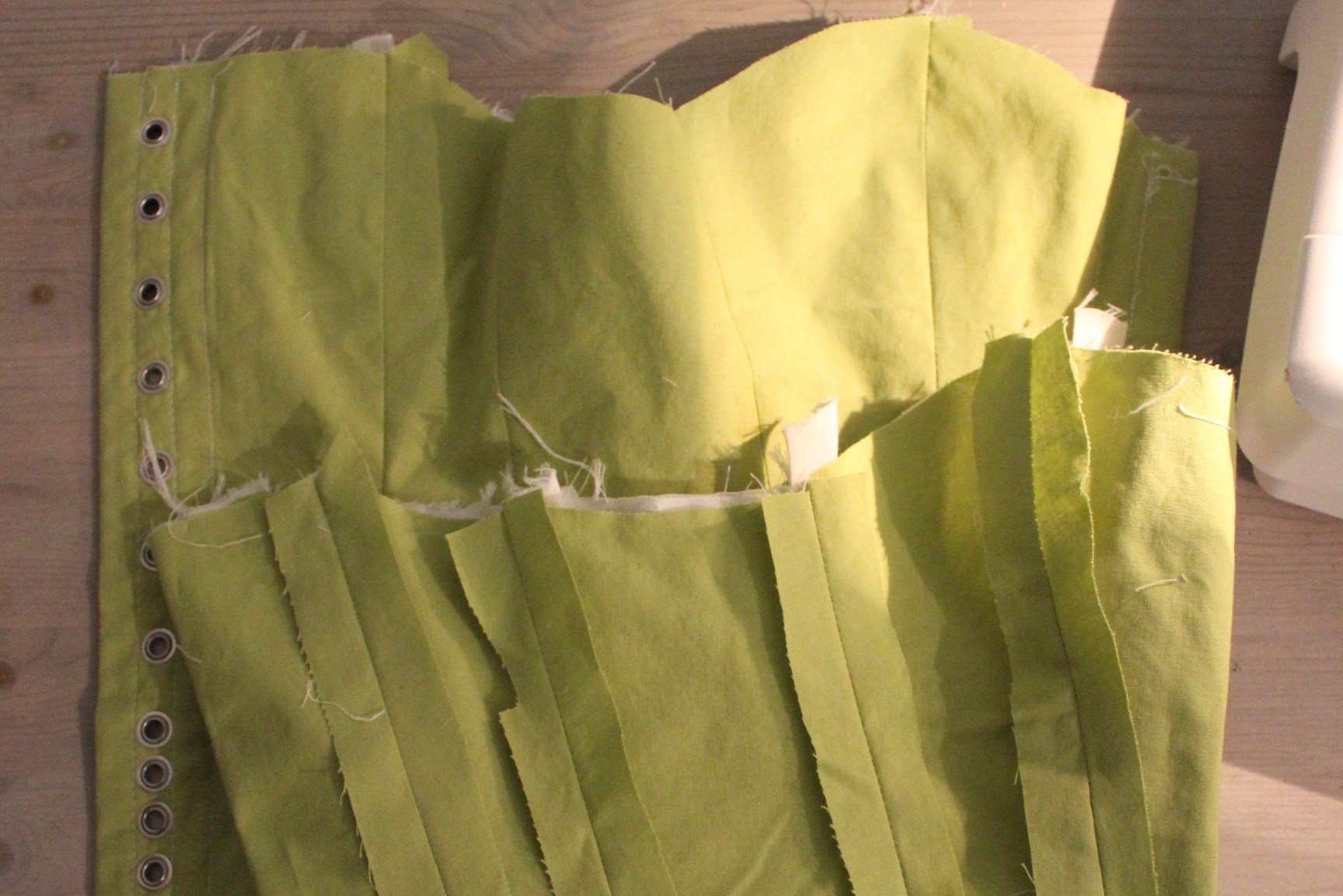
When the gromets, the busk and the boning chanels (no bonning yet) are done, its time for the lining. I choose a light green cotton lining from my stash.IMG_4411
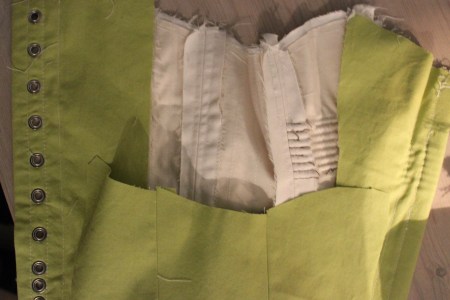
Corset with lining sewn on – before turning.IMG_4416
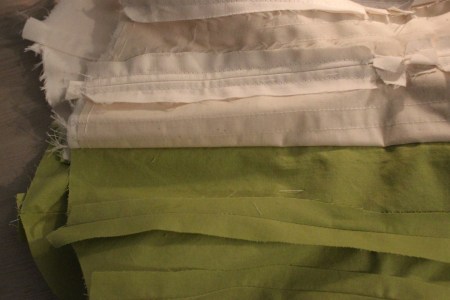
The lining sewn in. (One side turned and pressed, and the other one still in-side-out).IMG_4422
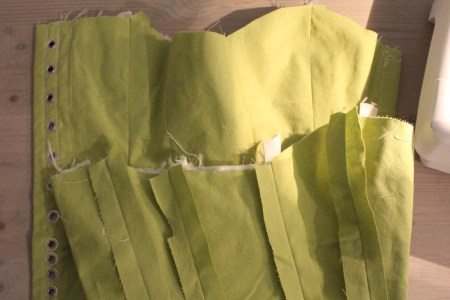
Now it’s time for the boning. If you put them in to early you will have big trouble with lining and sewing.

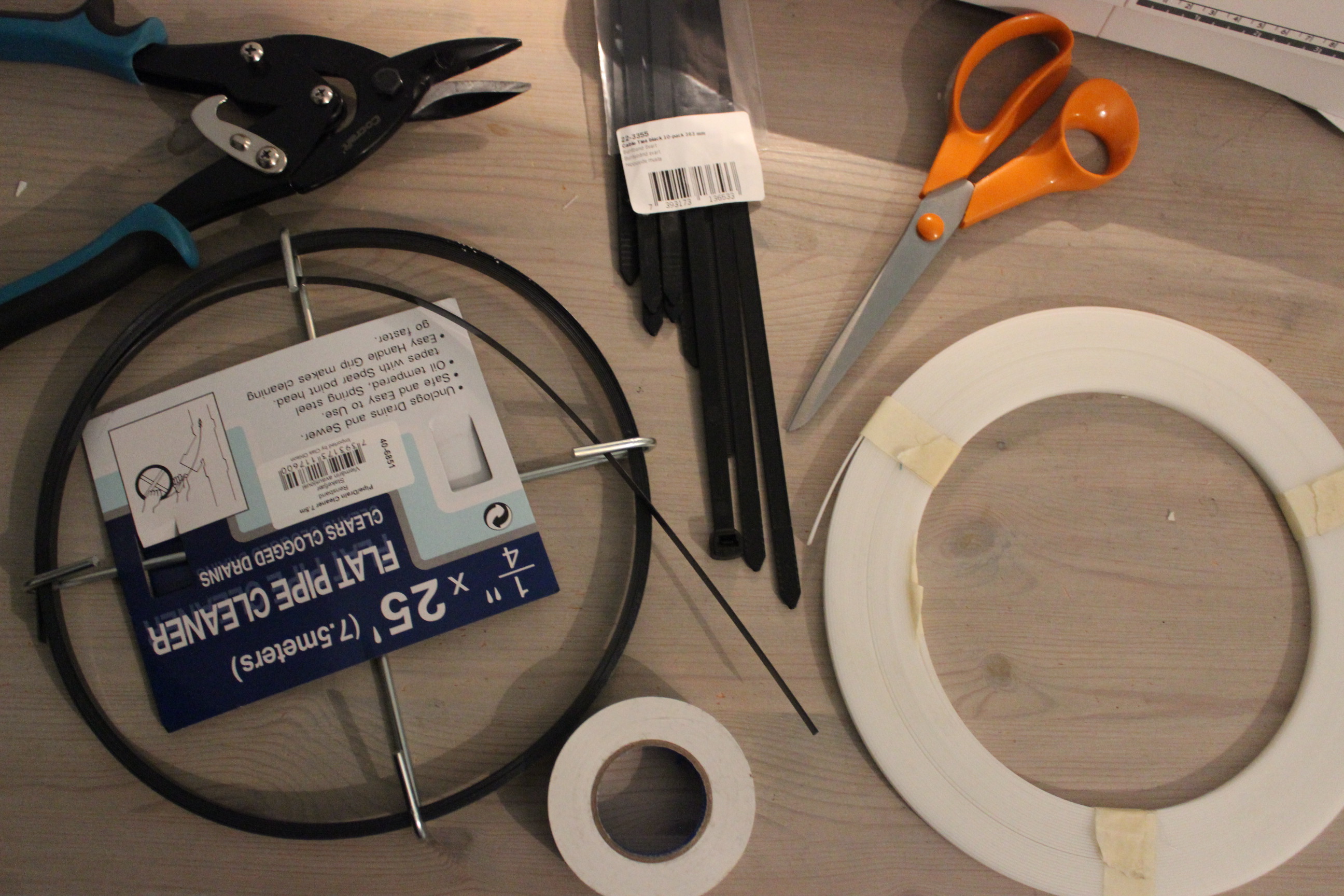
This is what I used for boning. (Left to right: Heavy pliers, methal pipe cleaners, electrical tape (to cower the sharp edges on the metal), plastic cable ties, siccor and plastic whale bone).IMG_4438
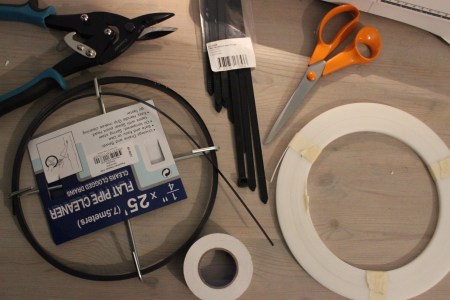
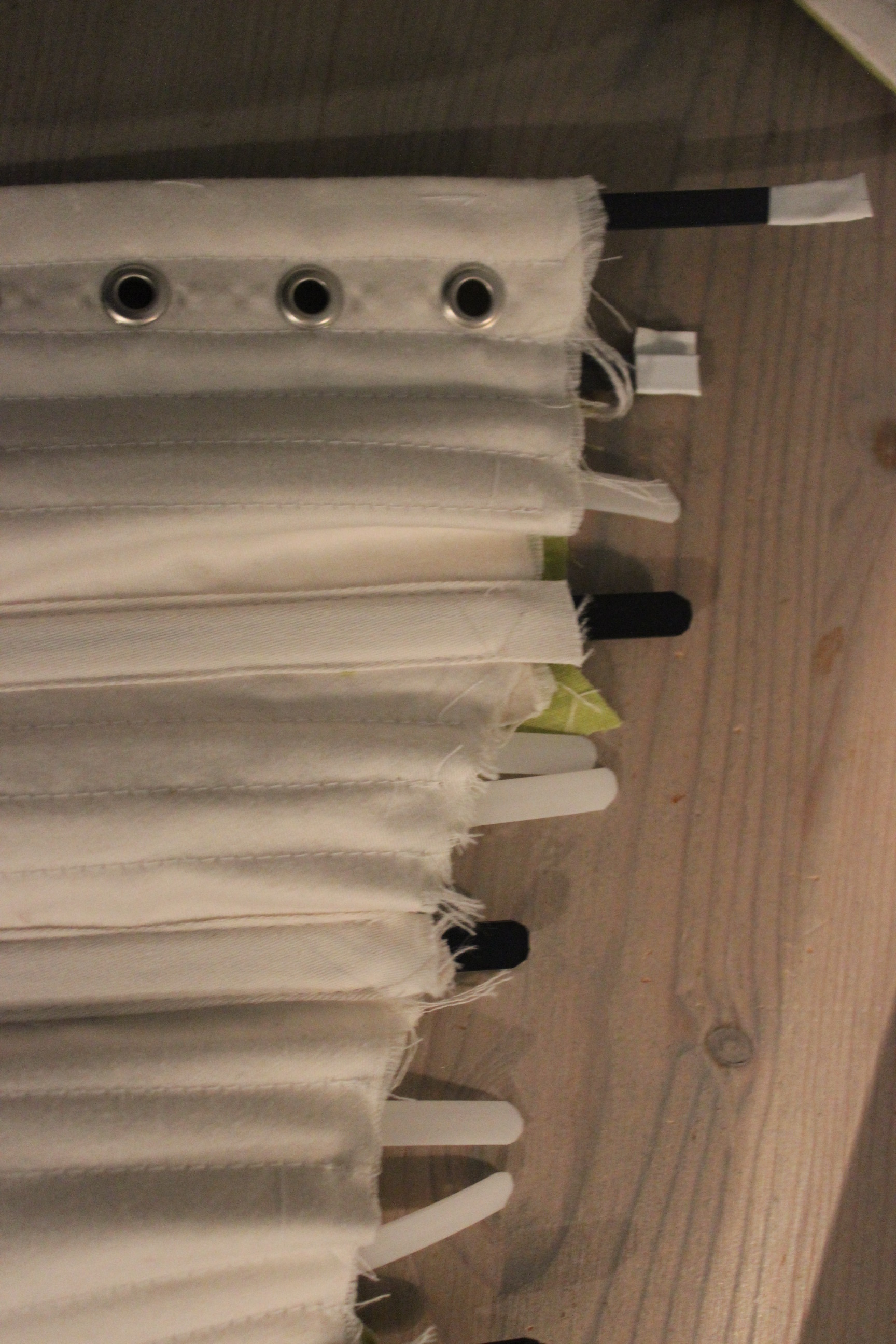
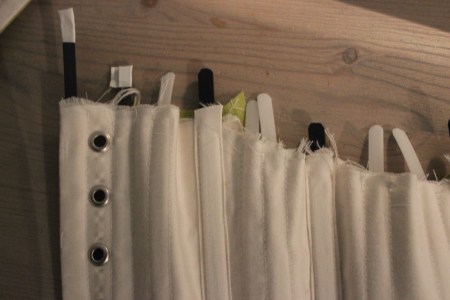
As you can se I used all of my three boning options on different parts of the corset. Using the strongest (metal) ones close to the lacing, and the regular cable ties in the boning chanels, and then using the softer syntetic whalebone in between.IMG_4444
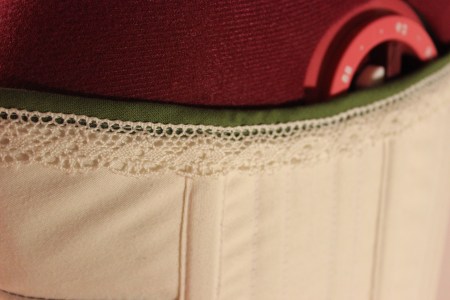
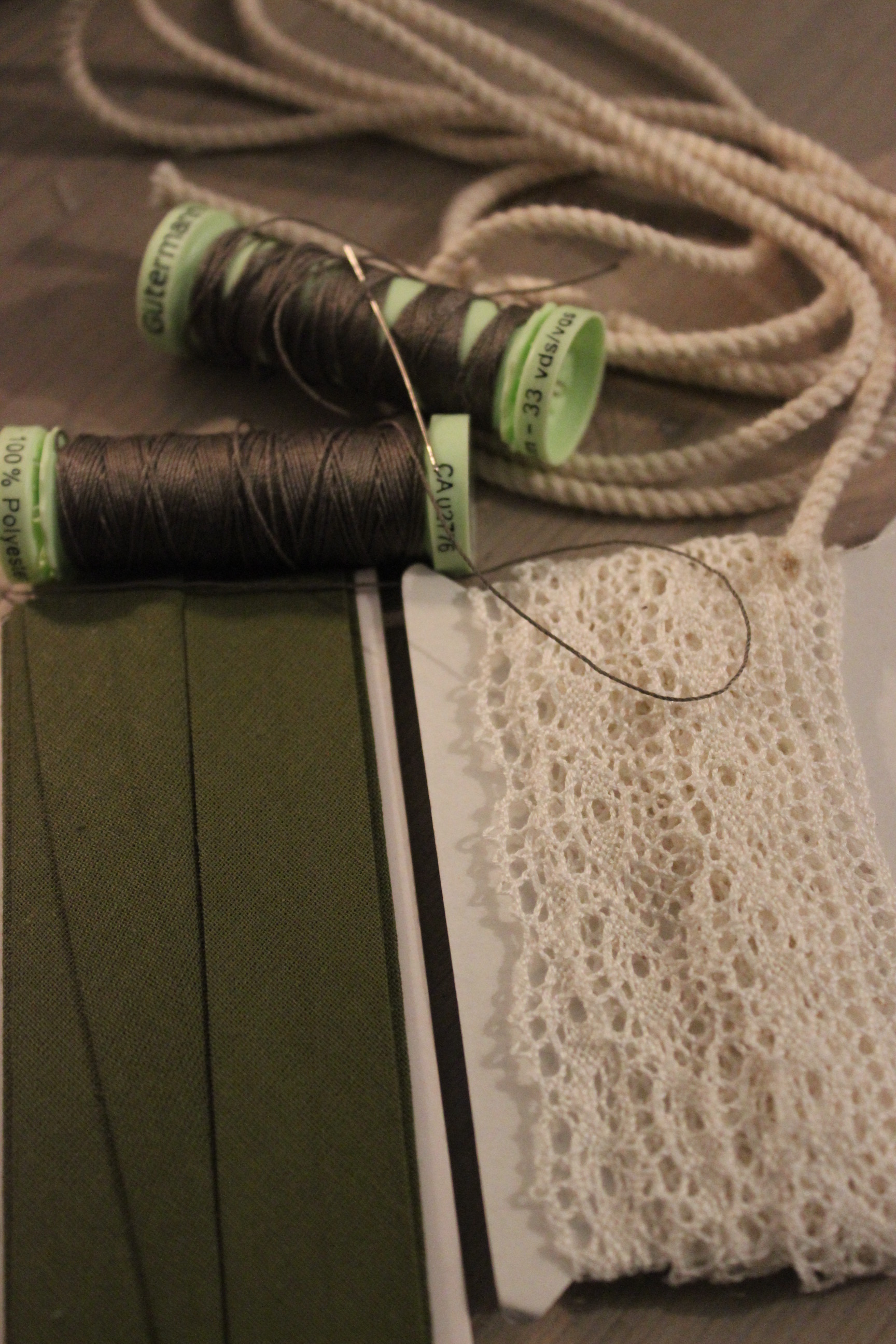
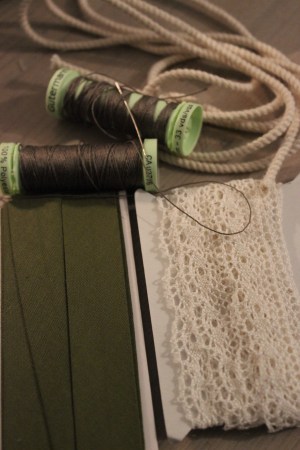
Then I grabbed my finishing/decoration kit (green cotton bias tape, white cotton lace, green button hole thread and cord for  piping (which I did in my first few steps).IMG_4436
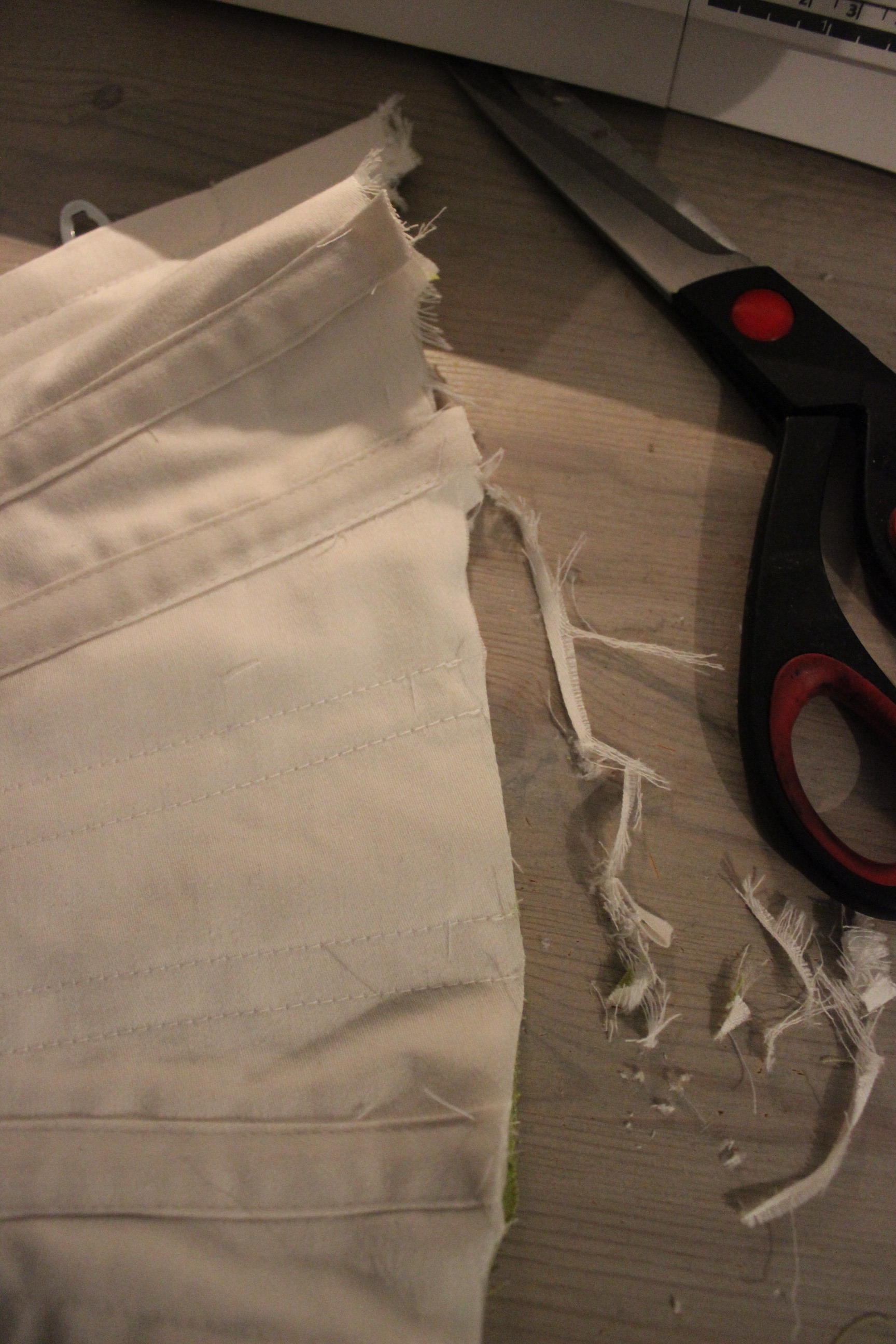
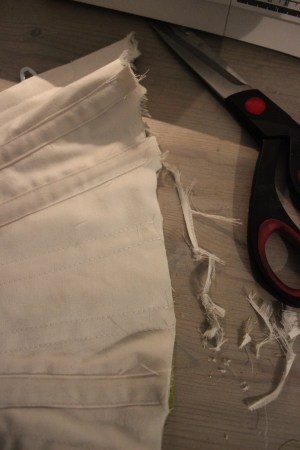
Cutting the un-even top and bottoms of the corset, IMG_4426
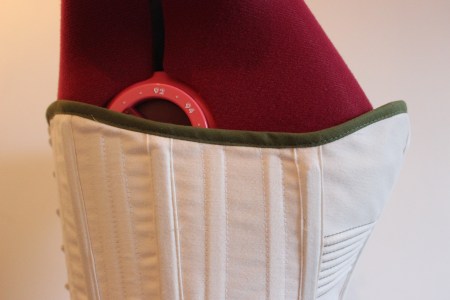
and then attaching the bias tape.IMG_4431

At this point it was time for me to stop working on the corset, and leave it for a couple of weeks.

You see, I started this project begining of december, since I needed to have the corset to be able to start on my opera gown. And since the HSFs rules says that no item should be finished more then 6 weeks before the challenge du date, I needed to paus sewing for a while. And since it was only the decorations left, the corset was fully functional and could still be used to build my gown upon.
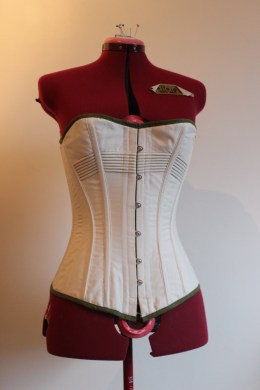
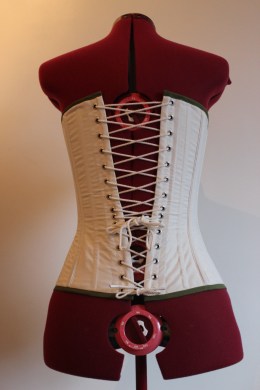
IMG_4517IMG_4520

IMG_4519

IMG_4522

IMG_4526

IMG_4524

IMG_4518

IMG_4655 IMG_4667

IMG_4658

***

So, last week (3 days before the grand bal) I finaly had the time to finish it.

By now I had tried it on several times, and had realised the bust needed to be re-shaped to get a smoother look. So I ripped some of the bias tape of, re-cut the top and stiched the bias tape back on.IMG_4716
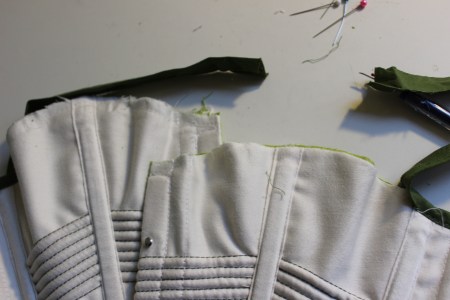
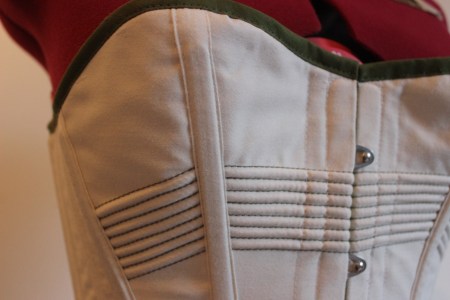
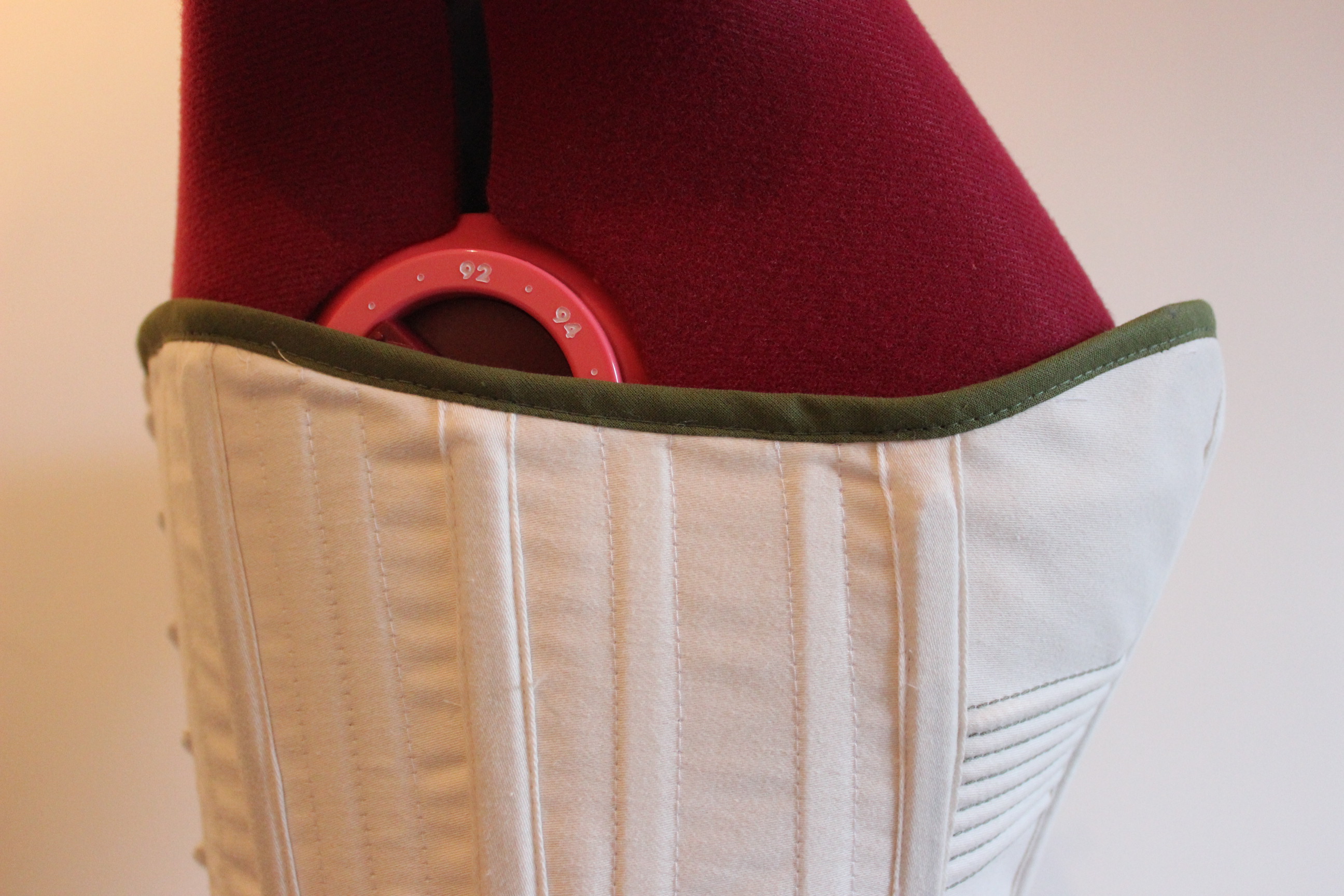
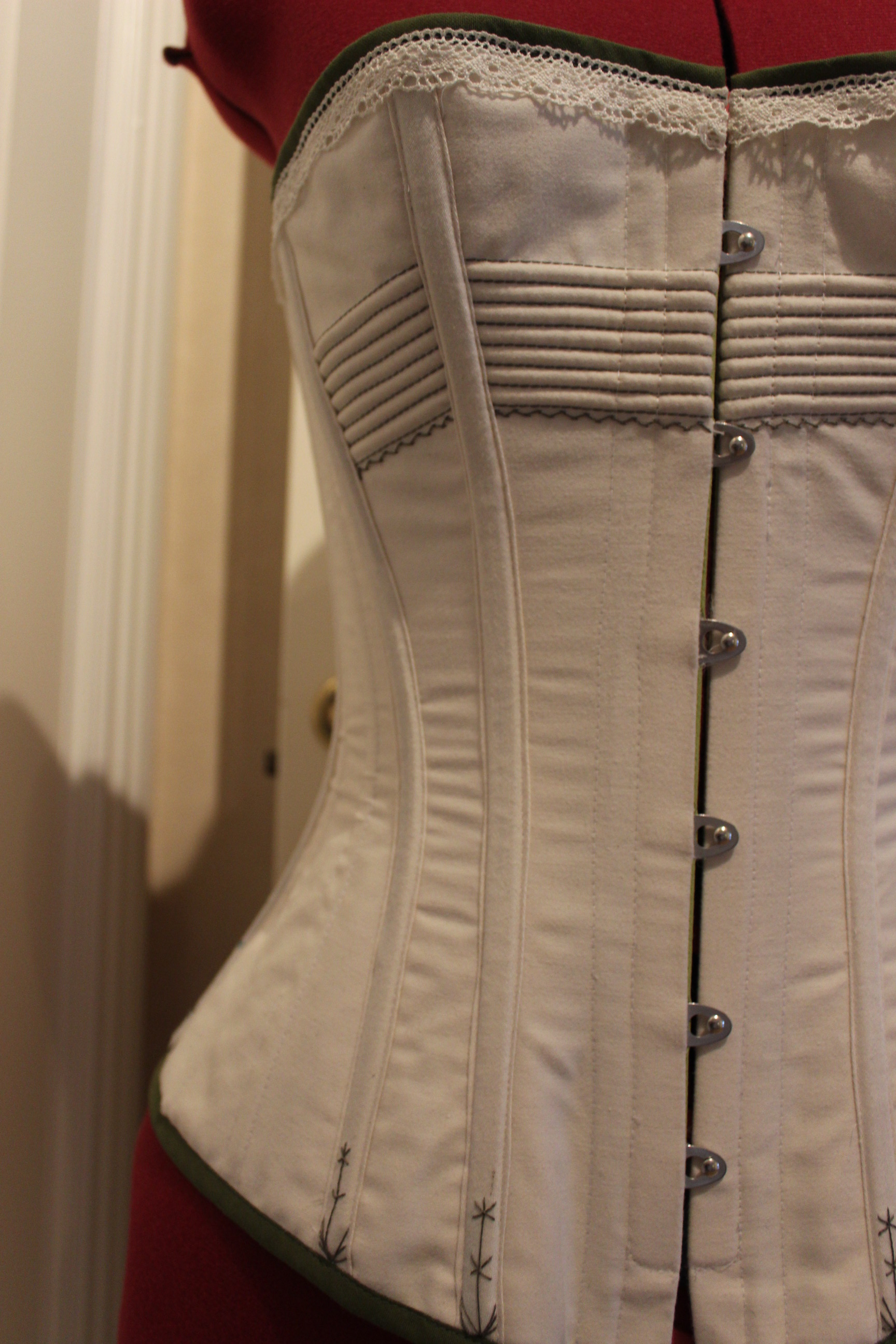
Then I decorated it with the white lace and some green flossing.

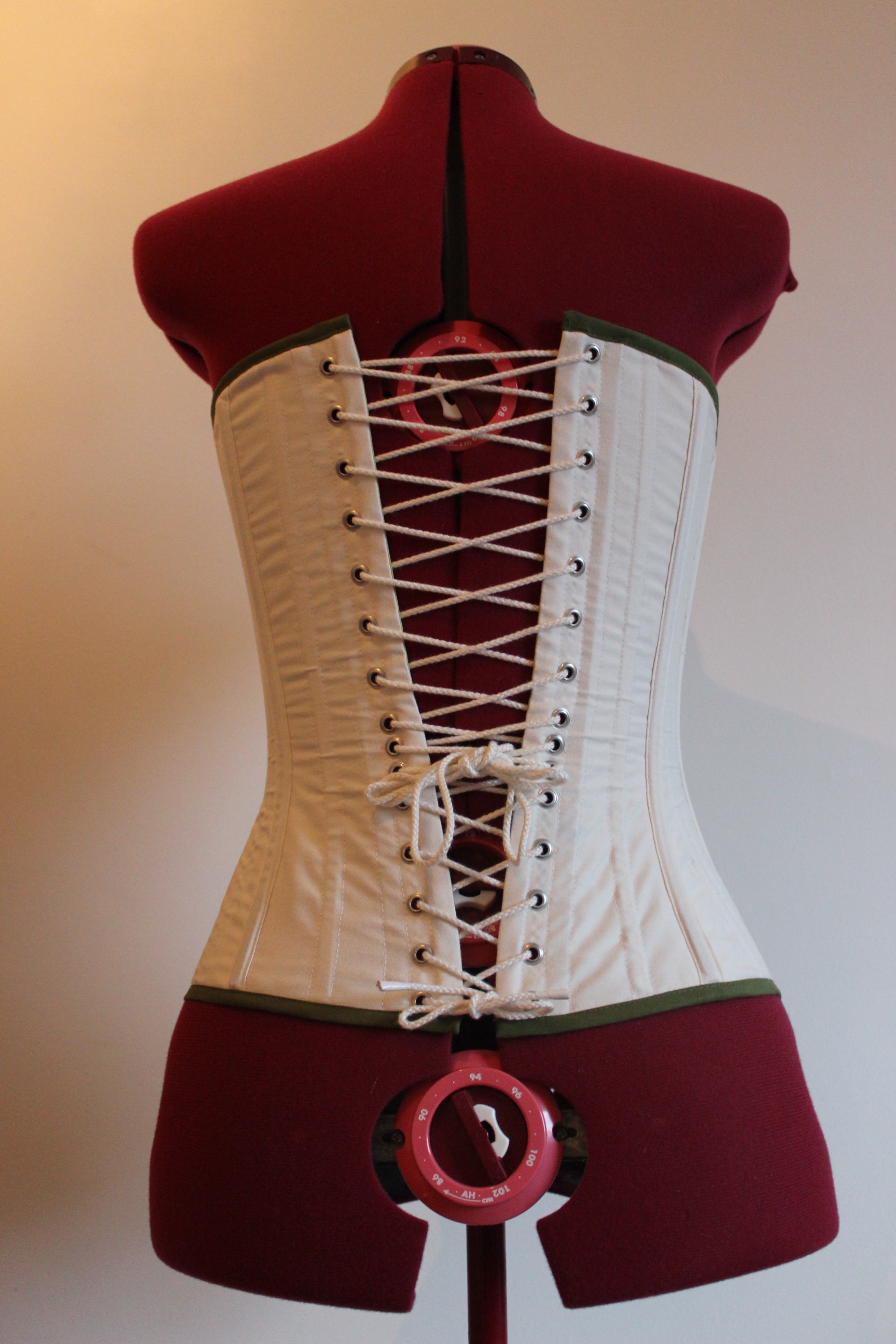
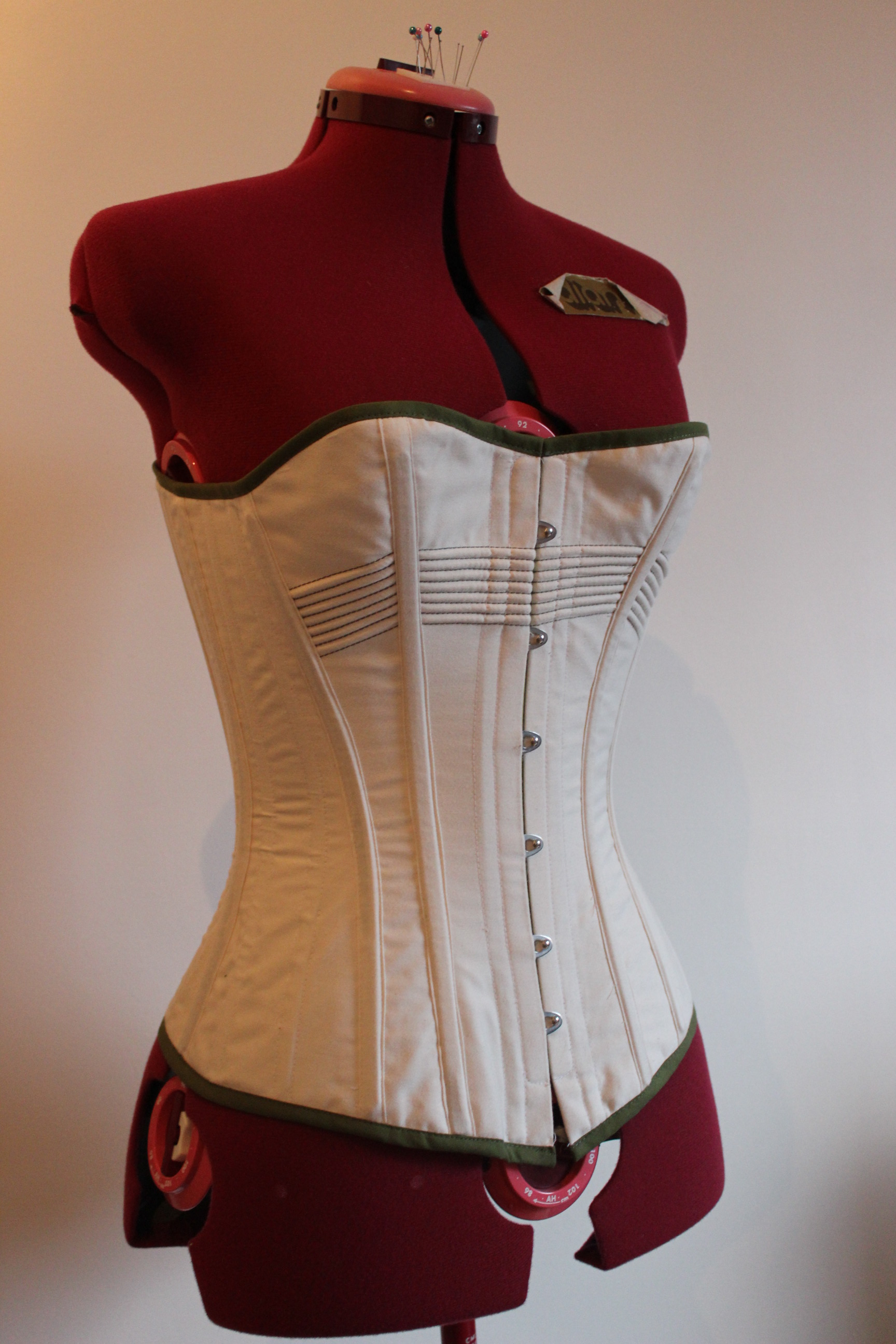
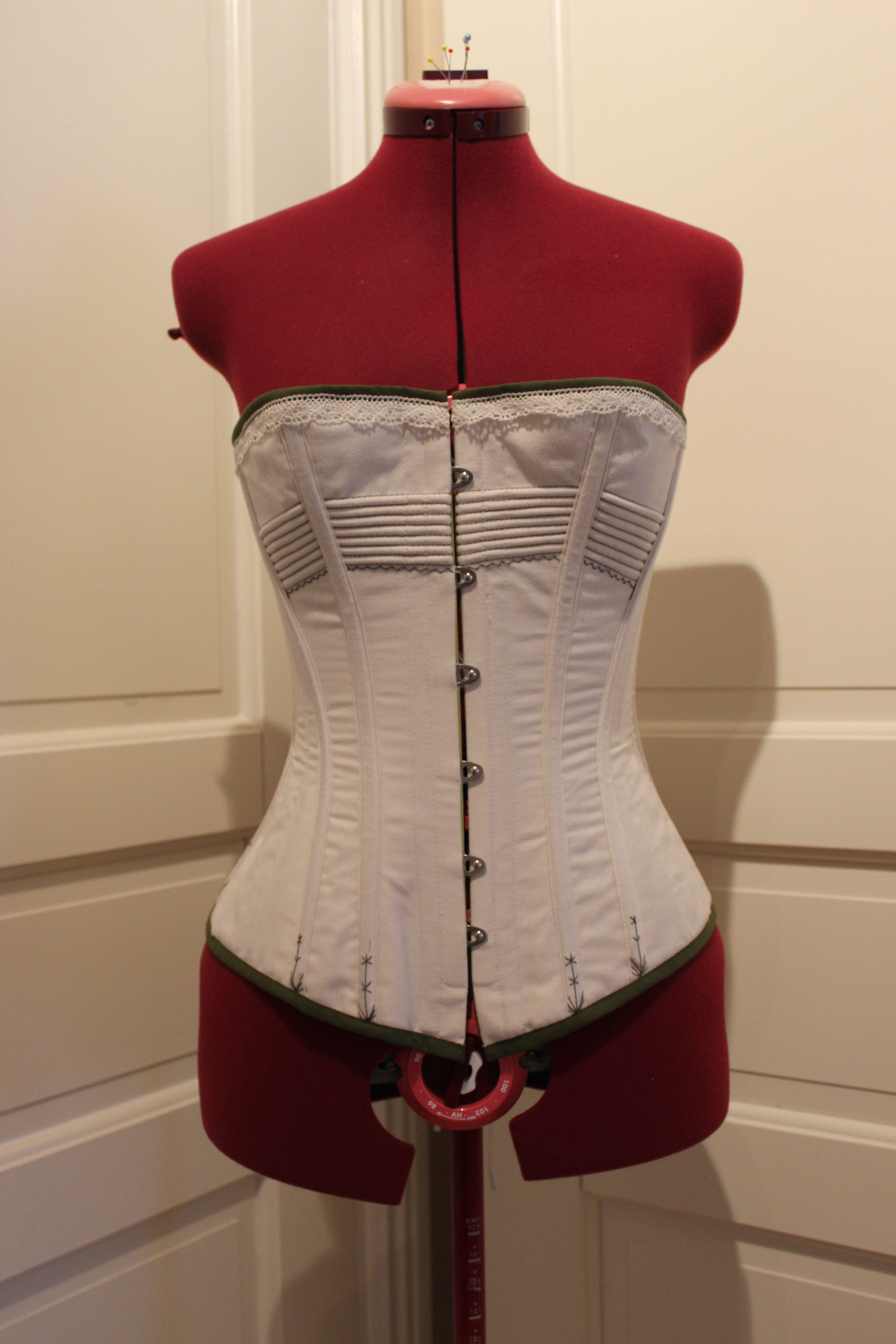
And finaly Finished:IMG_5281
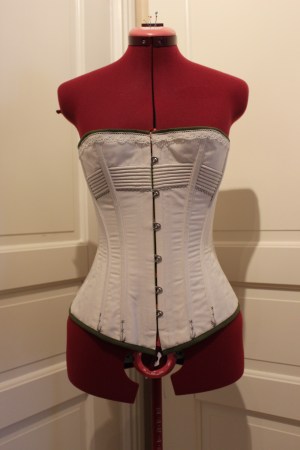
IMG_5293

IMG_5287

IMG_5289

IMG_5284

IMG_5285

IMG_4760

IMG_5296

Just the Facts:

Challenge: nr 2 – Innovations

What: A 1880s Corset

Innovation: The 1880s was known for it’s innventions (actually the whole 19th century was). My item can both represent the whole era, or the new style of hourglas figure and bustled skirts made fashionable and  avalaible thue to both the steel manufacturer, and the comercial sewing factories. Some relativly new innventions in the 1880s corset was: The split busk, the metal gromets and the steel boning – all innvented during the 19th century.

Pattern: Nora Waugh “1880s corset” from Corset and Crinolines.

Fabric: 0,5 m ivory cotton sateen, 0,5 m ivory cotton lawn and 0,5 m light green cotton.

Notions: A 33 cm planchett, ivory thread, green buttonhole thread, 30 silver gromets, 4m cotton string for piping, 4 m ivory cotton laces, ca 10 m of boning (2,5 m steel, 8 heavy duty cable ties and 3 m syntetic whalebone), 2 m green biastape and 1 m ivory lace.

How Historical Accurate: Pretty good. The pattern’s correct and the sewing machine was widly used by this time, even though I’m not sure of the right assebly tecniques. The material used are accurate, part from the plastic bonning. So maybe 7/10.

Time: About 10 hours

Cost: 400kr (44Usd) (all those notions make it so expensive).

First worn: On January 25 for a grand bal (Oskarsbalen), and then a few days later for a photoshoot.

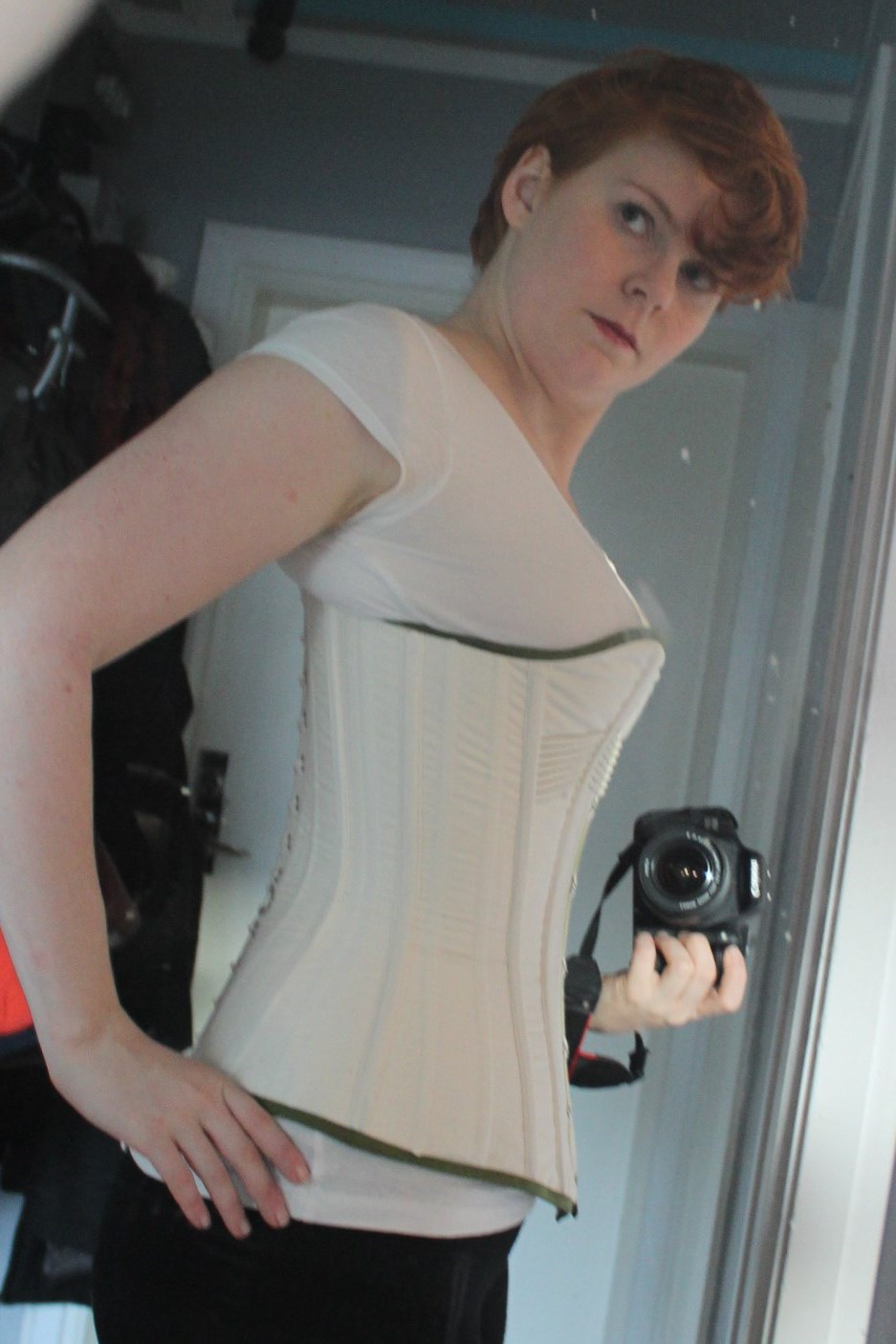
Final Thoughts: It tured out great. It’s quite comfortable (even after a couple of dancing hours) and stil gives me the desired hourglas figure. I think this will be my “go to” corset for many costumes.
To make-do a 1880s Petticoat

And so we start of the new sewing year with HSF14 Challenge nr 1: Make-do/Mend.

As I stated before, I’m determend to try to fit the challenges this year in to my list of items which needs to be made. So with a bit of bending the rules on this challenge, I got to use it for that 1880s ruffled petticoat I desperetly need for my up-coming balgown.

untitledJGI’m thinking something along these line. (pic from Iza of http://adamselindisdress.wordpress.com/ you should check her out to.)

For this challenge I made a petticoat out of a bedsheet.

I started by ripping the sewn hems of it, and throw it into the washer.IMG_4728

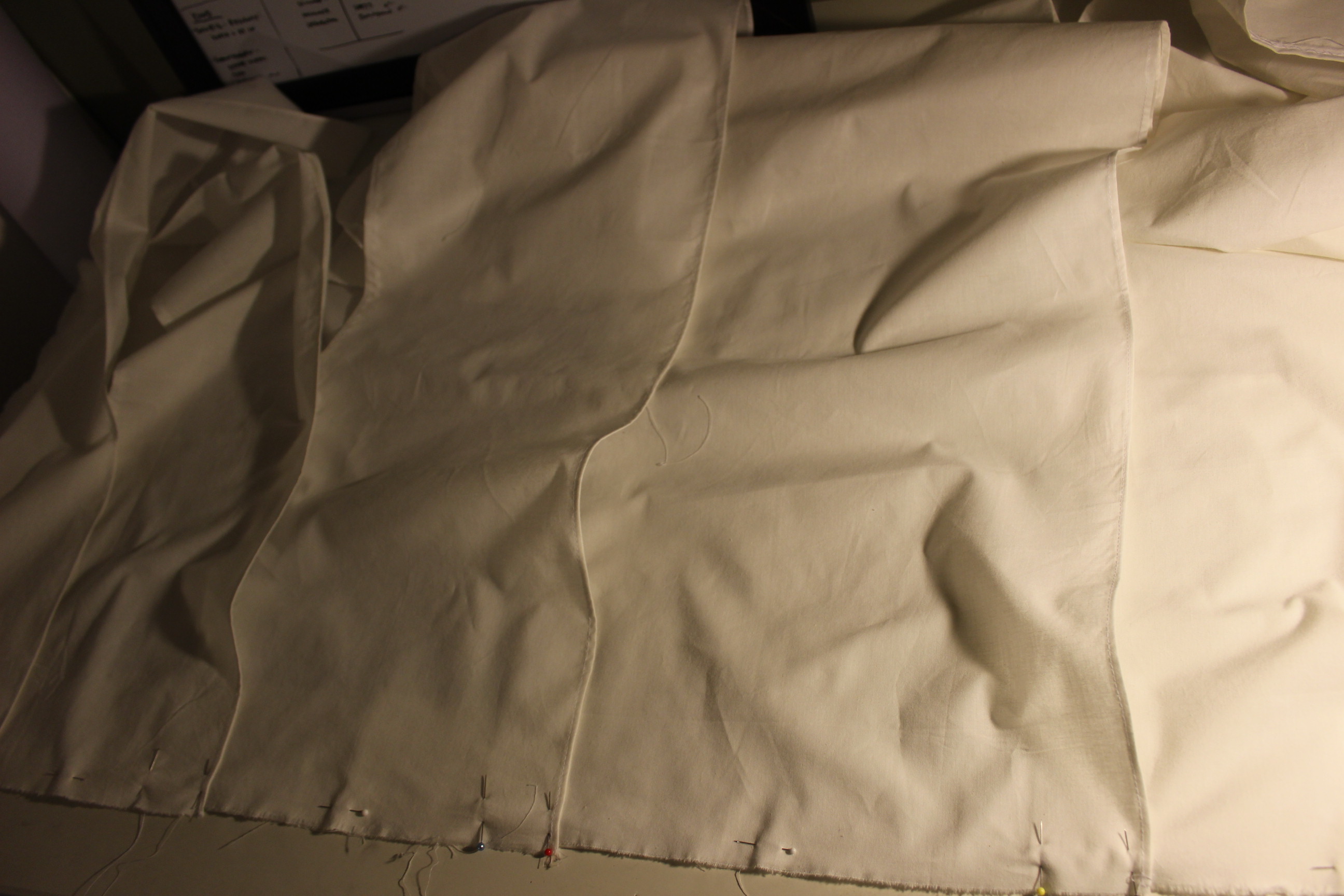
I used no pattern – only some diagrams and pictures for reference. IMG_4736And cut the skirt pieces out of half the sheet.

And the ruffeling pieces from the rest, making them bigger and longer further down the skirt.IMG_4740

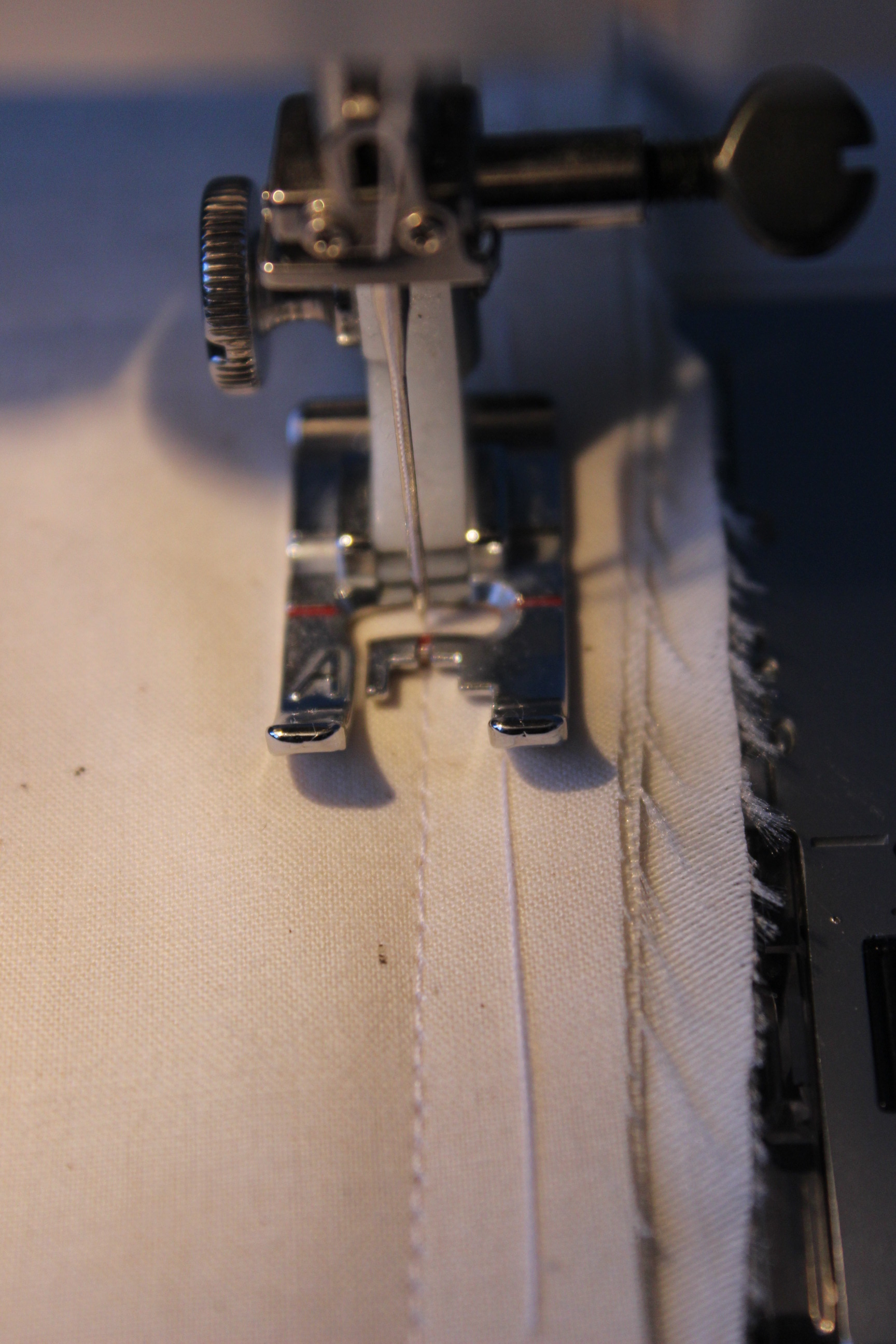
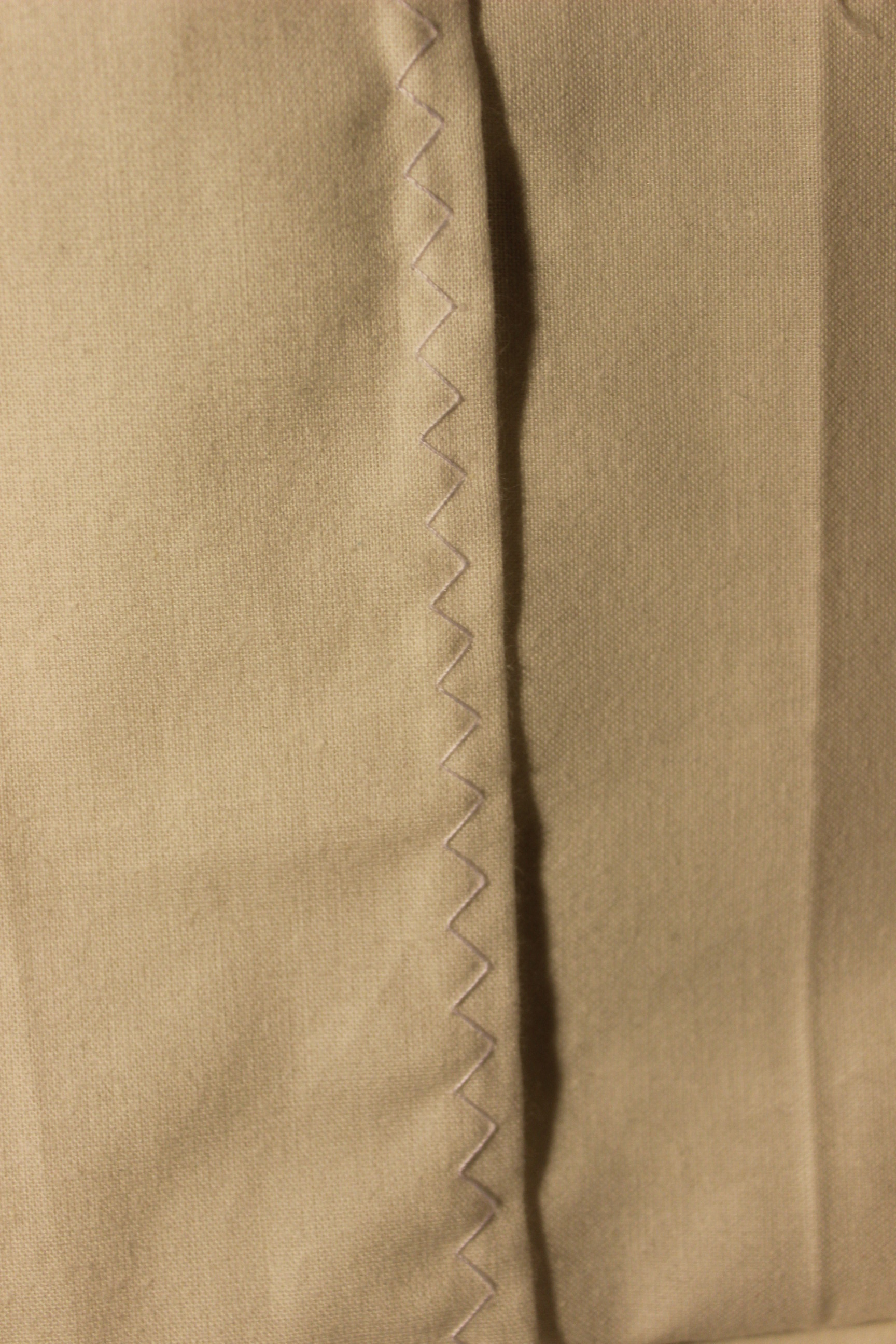
I sewed gathering thread on all the ruffels using a strong button-hole thread and sick sack stitch, hemming them at the same time.

IMG_4743IMG_4744

This technique makes it very easy to gather the ruffels later on.

Then I hemmed and measured the spacings of all the ruffels.

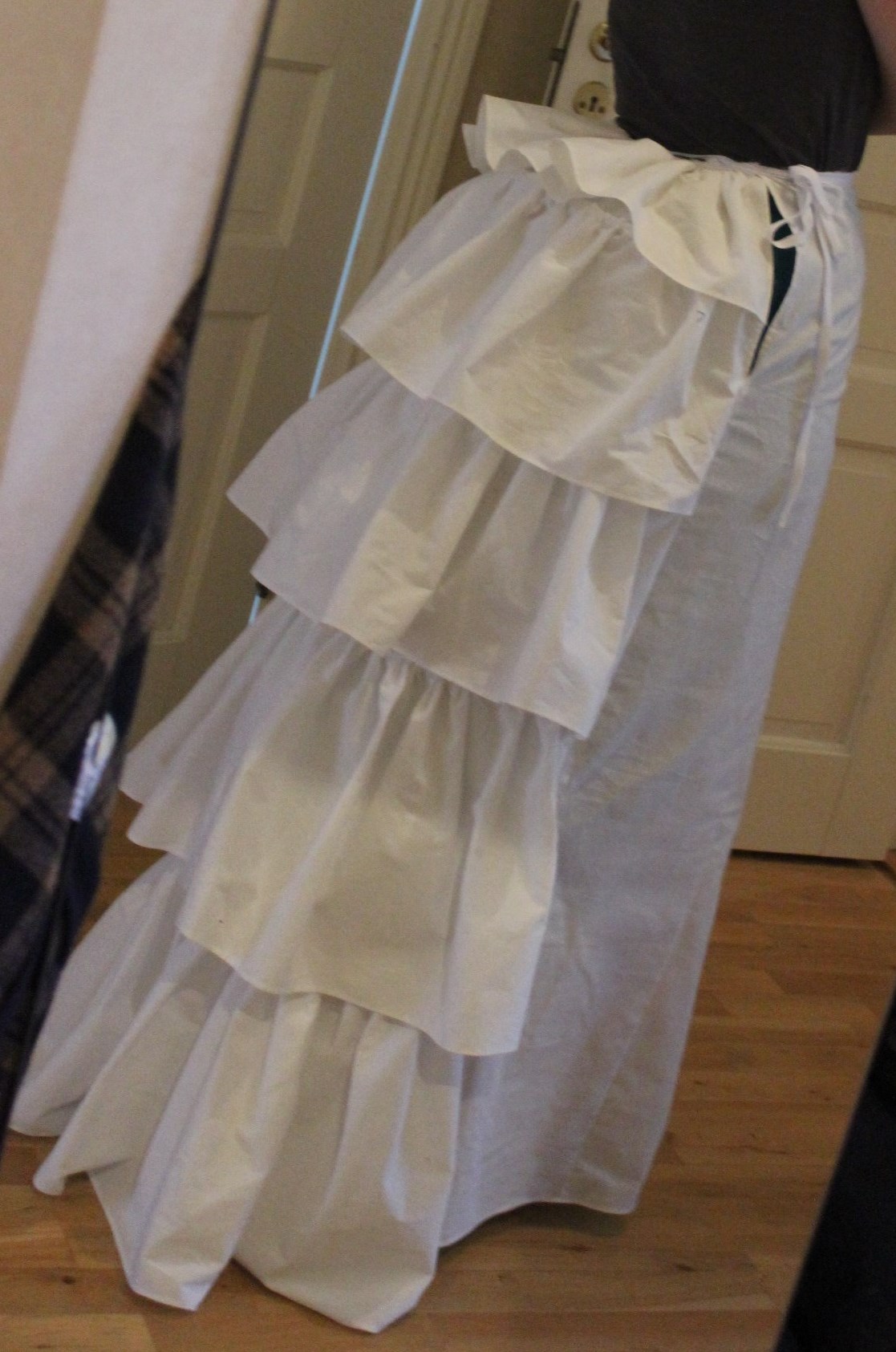
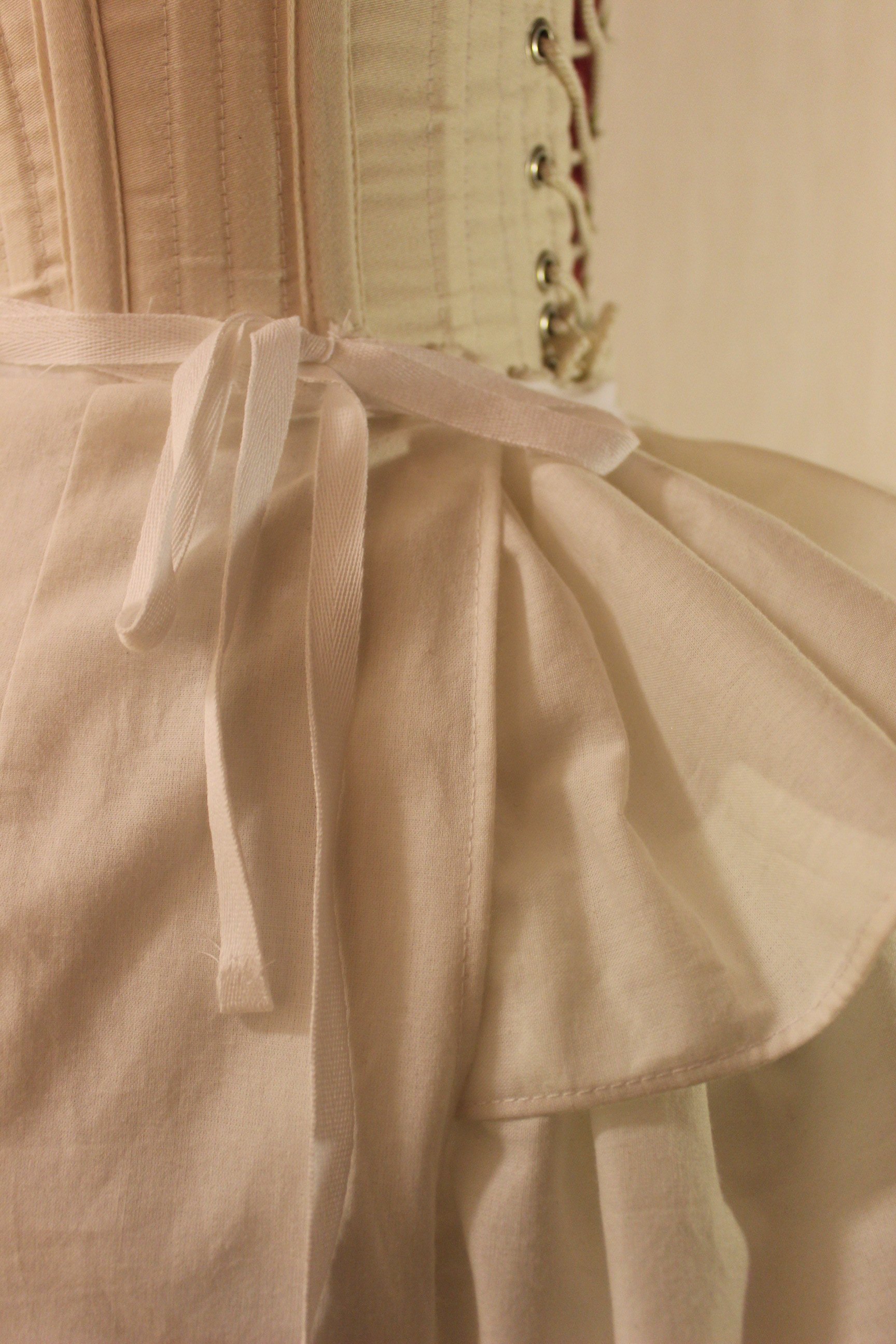
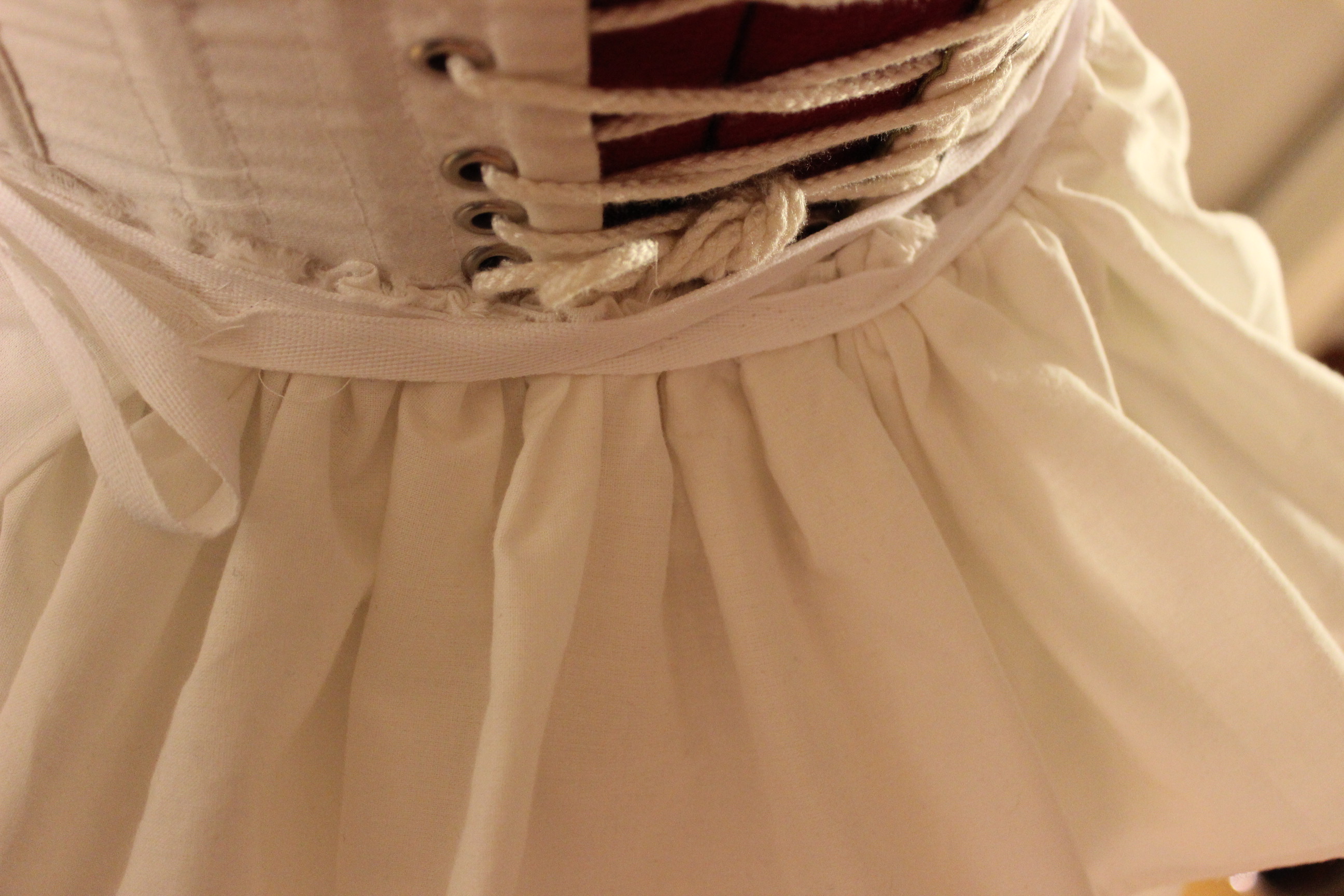
IMG_4742Then I gathered all the fabric and stiched it down on the back piece of the skirt. And lastly I Sewed the front skirt to the back and stiched on a cotton twill tape as a waistband.

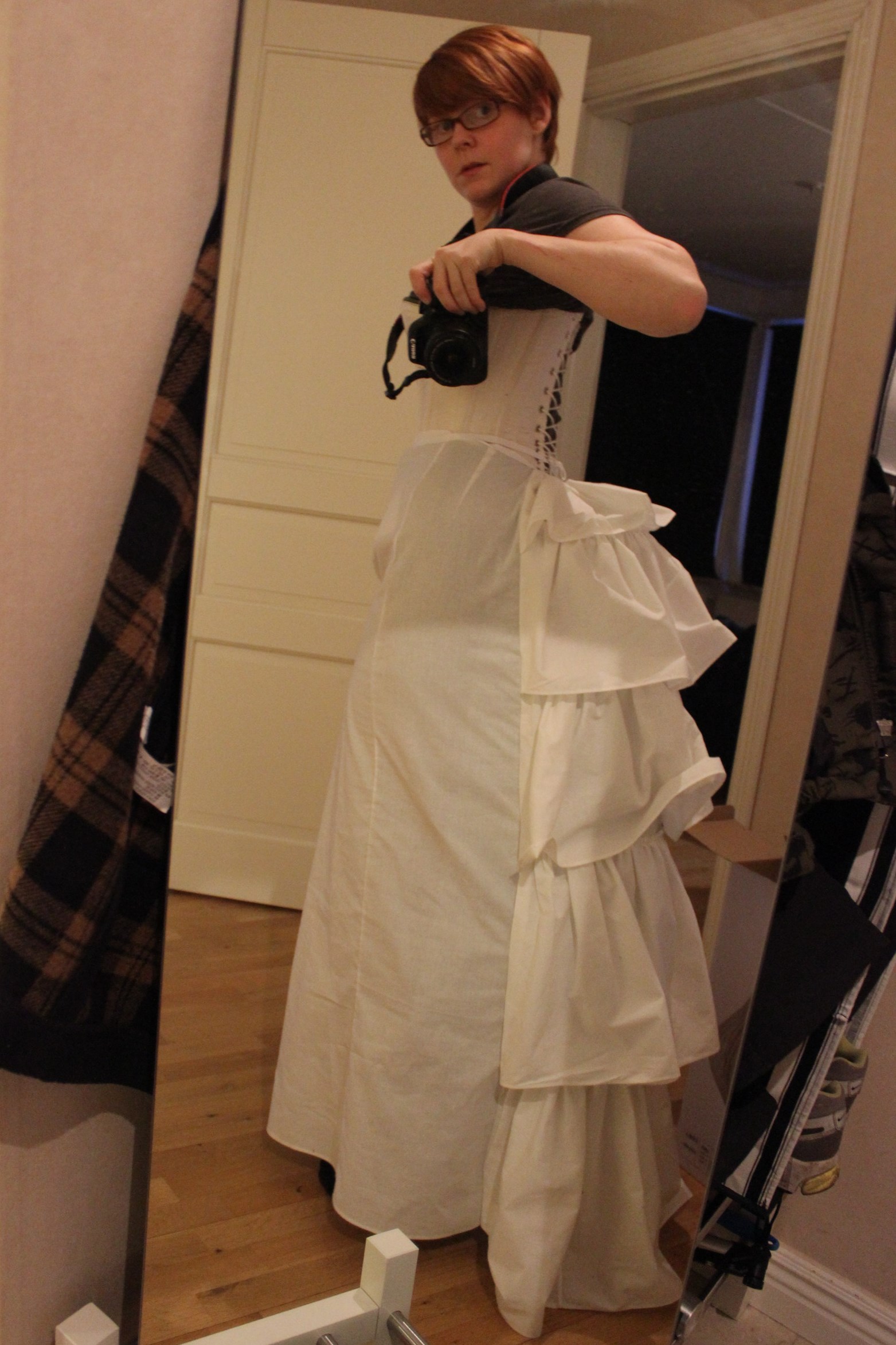
And then I tried it on – and I hated it.

IMG_4808IMG_4817

It is way to narrow in the front (making me look huge) and the ruffels need to be at least twice as fluffy.

IMG_4829And I do think something is of in the lenght proportions of the ruffels.

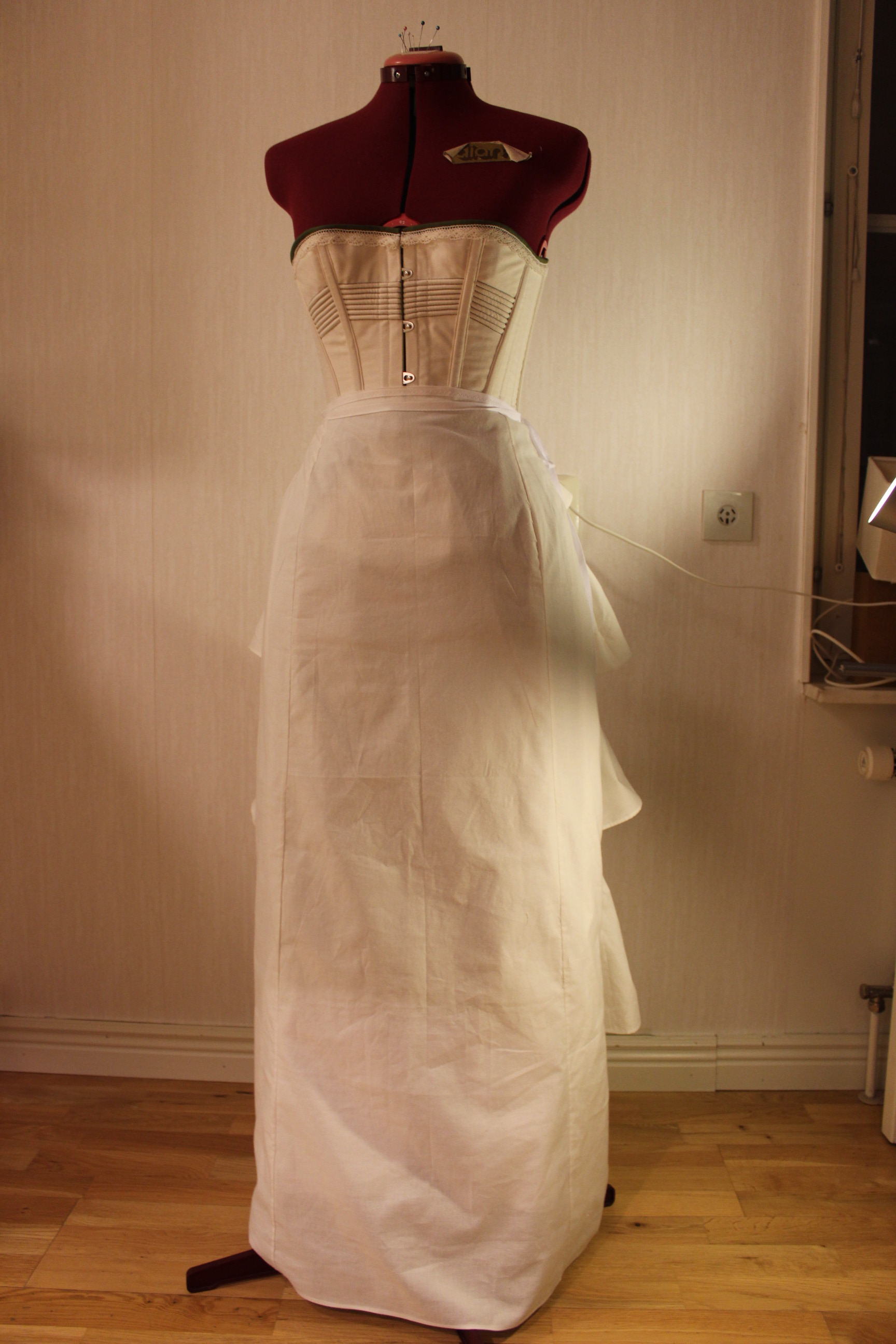
Well here it is on the dressform looking a bit better but still way to slim in the pouf department.

IMG_4758

IMG_4747

IMG_4746

IMG_4752

IMG_4749

IMG_4765

IMG_4756

IMG_4748

IMG_4927With a night to sleep on it, I do think it will work for my purpose, but I know it will probably go straight into the re-make pile once the present event has past.

Just the Facts:

Challenge: 1 (2014) Re-Make.

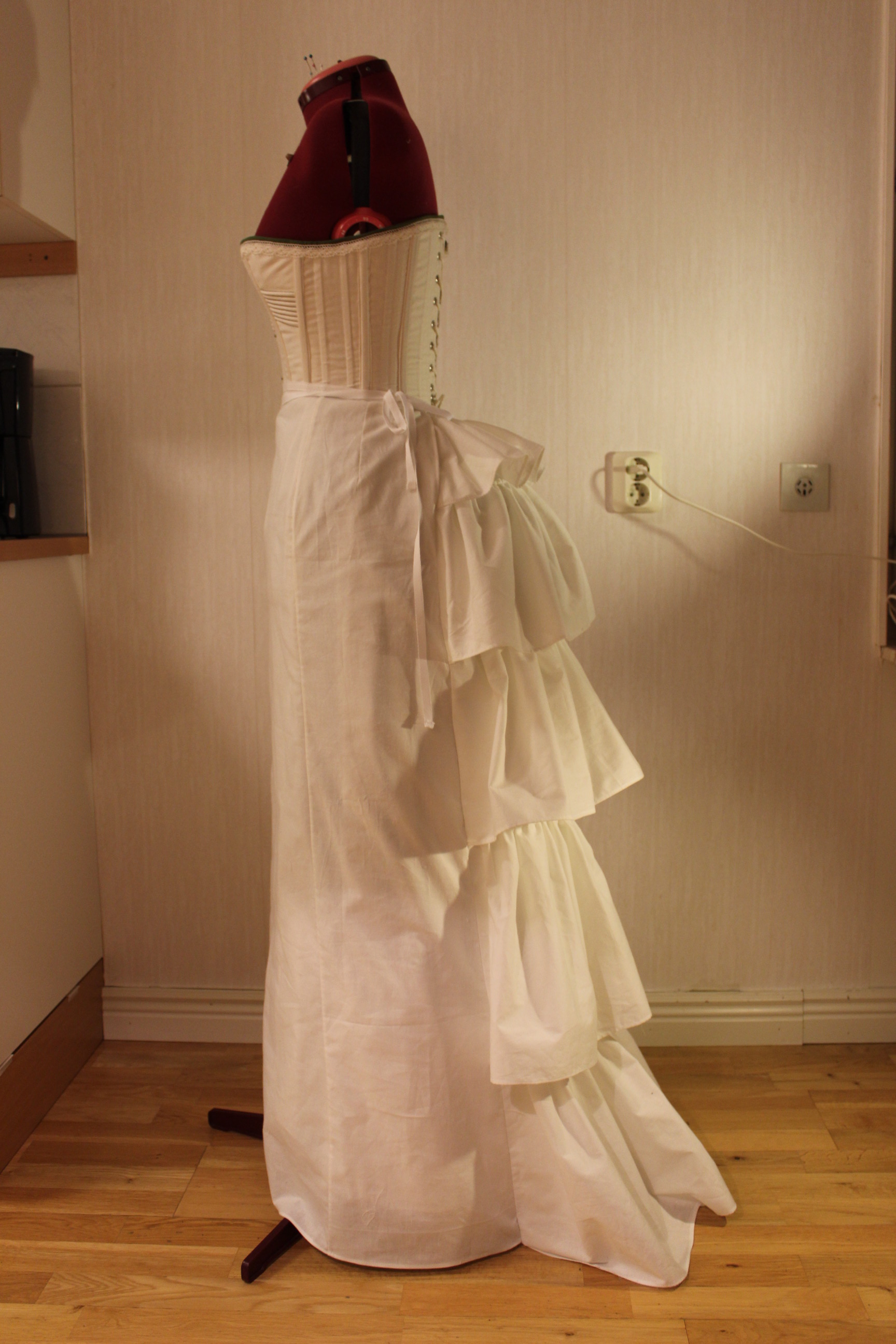
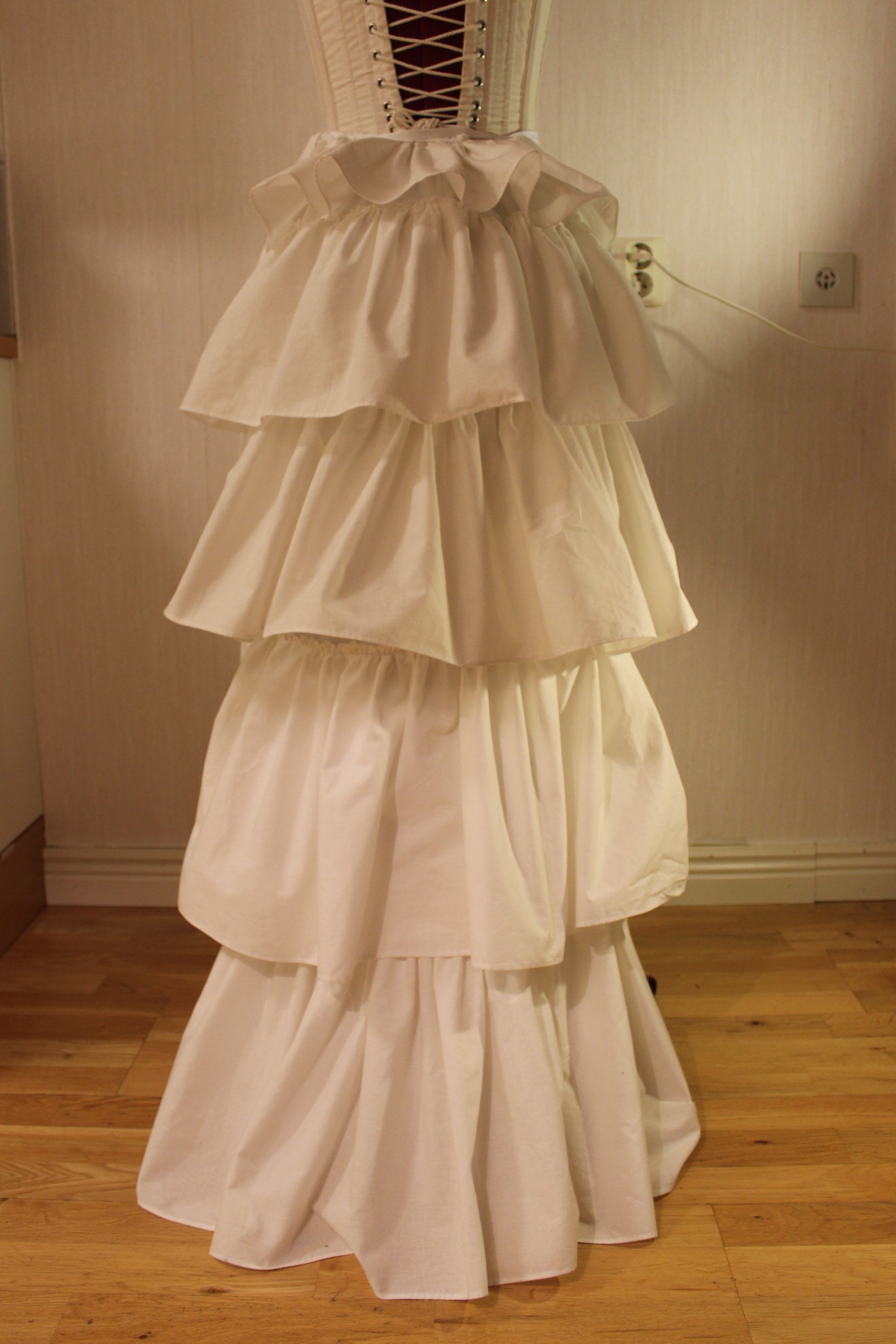
What: A ruffeled bustled petticoat made out of a bedsheet.

Year: About 1870 – 1890s.

Pattern: None

Fabric: One white cotton bedsheet – 1,5 x 2 m.

Notions: Thread, strong thread (björntråd) and 2 m of 1 cm wide cotton twill tape.

Historical Accuracy: So so. The style and siluett is about right, but I’m sure the ladies of the day knew not to scrimp on the fabric in this kind of grmnent. Maybe 4/10.

Time: 4 hours.

Cost: 90 Sek (10 Usd).

First worn: Around the house for photos (and testing the toile for the gown…) But it will get a proper outing on january 25, for the gran bal at the opera.

Final Thoughts: I think this petticoat was to much of a rush job to begin with. I wish I had taken the time to make it proper and use enough fabric to get a nice ruffeled bustle. Instead I spread the ruffels to whide and gathered them to losely. It’s a good thing it will be hidden beneath the skirts.

Re-make of the Flowery Jacket

This is my first entry to the HSF14, and I submit it as a “Light Entry” for the 1th challenge: Make-do/Mend.

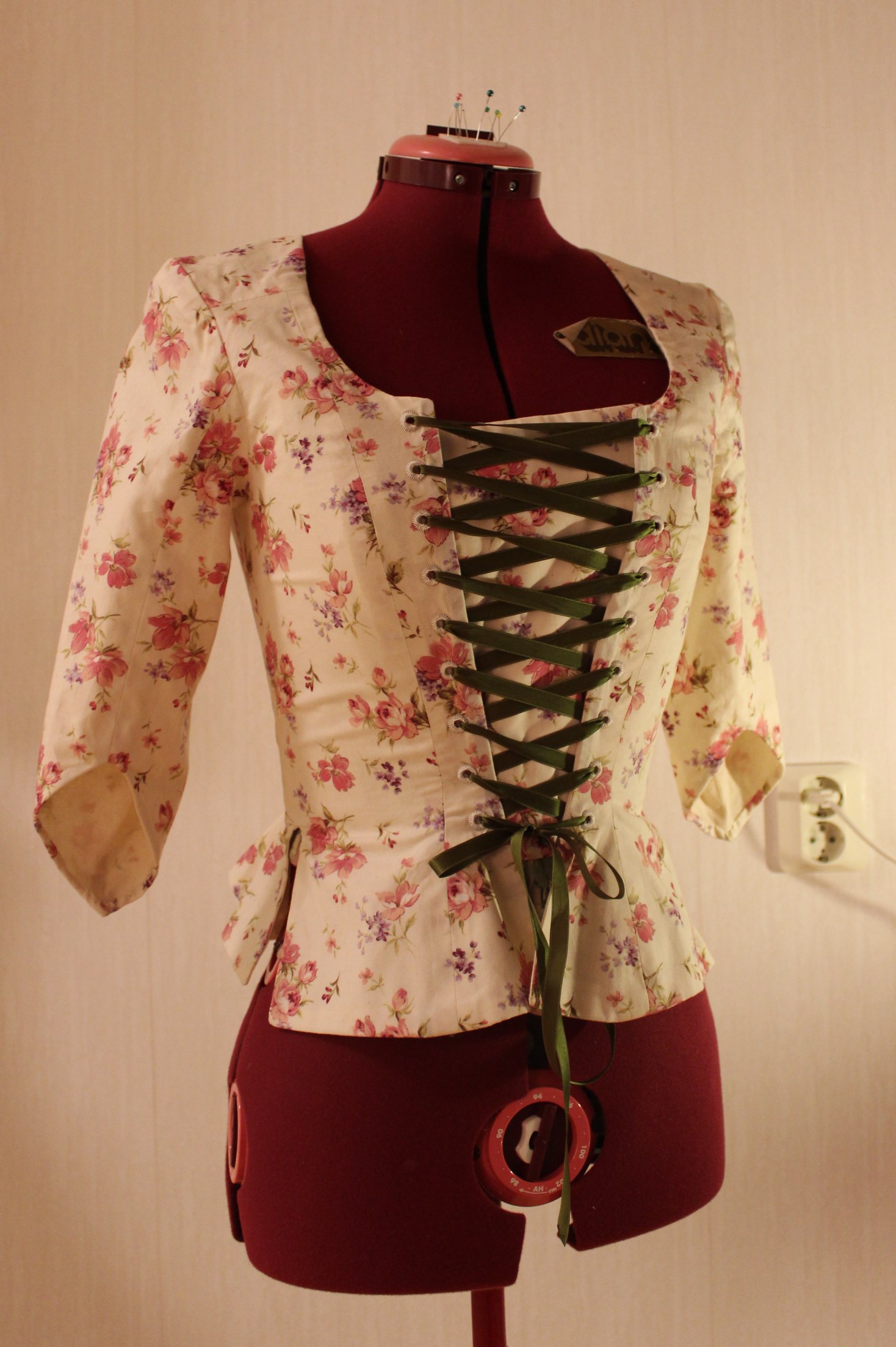
Ive been so pre-ockupied with all my other sewing and work and moving recently, so there has really not been any time left to fix those litle things thats been bugging me about some of my costumes. But now I finaly got the time (at relatives on chrismas) to finish the re-modeling of my 18th century flowery jacket. You can reed more about the original jacket here.

I loved this jacket ever since I made it  2 years ago, even now when I lernt a bit more about historic clothes it’s still one of my favourite items. But latley the fit of it have been bugging me.

2013-04-07 13.37.55 2013-04-07 13.37.34

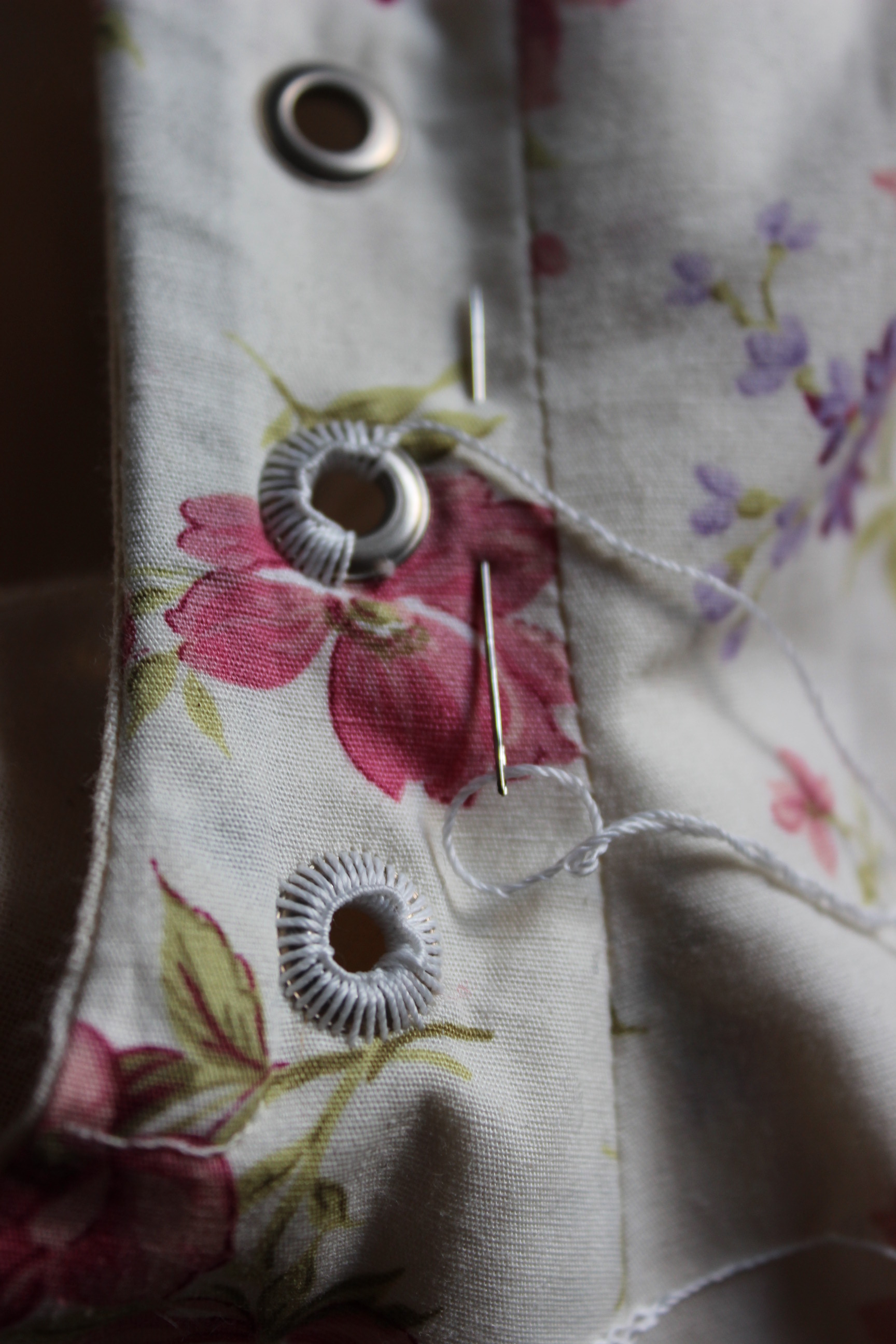
It’s a bit long in the back and the gromets really need to be covered with thread.

And this challenge gave me the motovation I needed to finaly get it done.

Since there’s not much interesting going on in the sewing I forgot (read: decided not to) take any process photos. But I did snap one with my phone on christmas-eve when working on the eyelets.

IMG_4447

Finished:IMG_4781

IMG_4784

IMG_4799

IMG_4786

IMG_4791

IMG_4792

IMG_4789

Just the Facts:

Challenge: nr 1 – Make-do/Mend. (Light Entry)

What: Fixing some issues on a 18th Century Jacket.

Pattern: None this time (originaly from Baumgarthers “Costume Close-up”)

Fabric: None

Notions: Sewing thread and ivory buttonhole thread.

How Historical Accurate: Not much. Re-modeling and re-fitting of clothes was common practice, but since gromets didn’t even existed back then I’d say 3/10.

Time: 3 Hours

Cost: 30 Sek (2Usd)

First Worn: Hopfully this summer for picknicks and plays.

Final Thoughts: The back of the jacket, do look very short on my dessform. But I decided that’s because she is somehow lening forvard, and I have a realy straight posture, which causes my back to look shorten then it realy is.

2013 Round-up

This past year I’ve really been sewing a lot. I actually think this would be the year when I made the most clothes and crafts ever – including my 4 years in fashion/sewing school.

Basicly I think the most of my sewing inspiration this year have ben due to the HSF challenges – which not only made me whant to make stuff, but also made sure I did finish them in time.

So lets do a round-up of all the little things I’ve manadged to make during 2013.

The Historical Sew Fortnightly:

January:

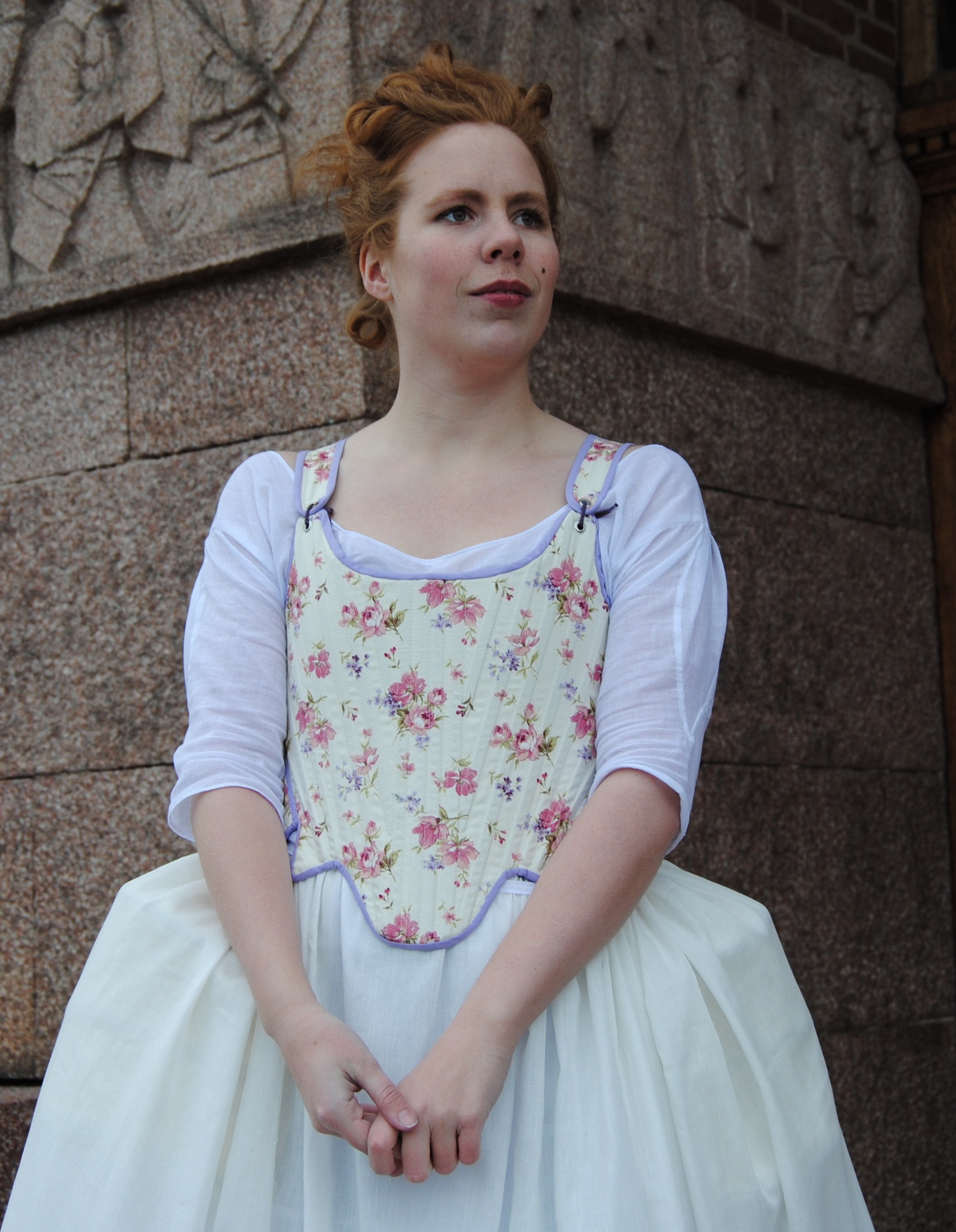
1770s CorsetDSC_0362A corset and petticoat for my sister who been wanting one for ages.

February:

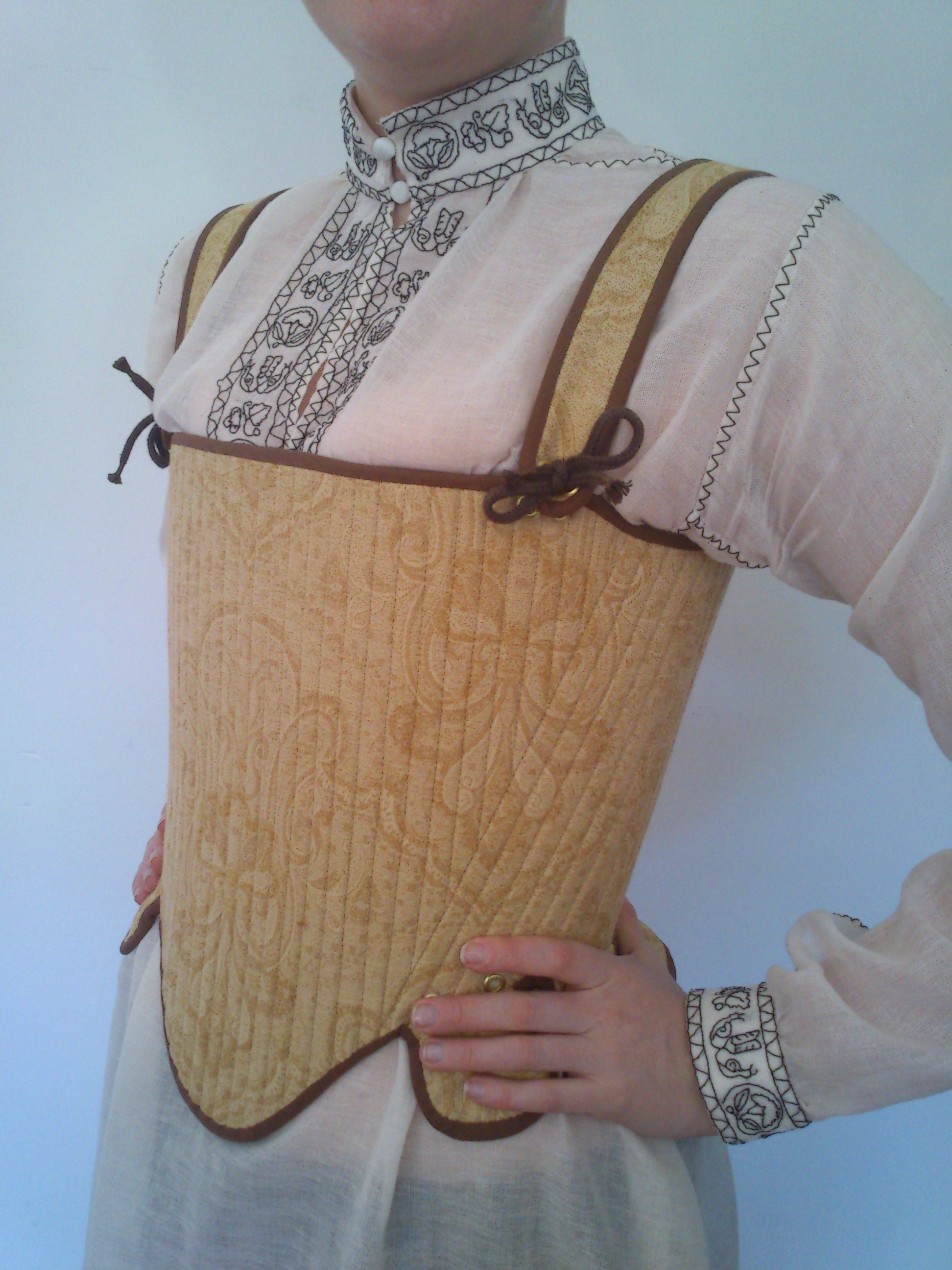
1580s Corset and Shift2013-03-01 14.33.57Blackwork emelishments on a shift. I also made another shift and the gold/brown corset to be used under a planed renesance dress.

Mars:

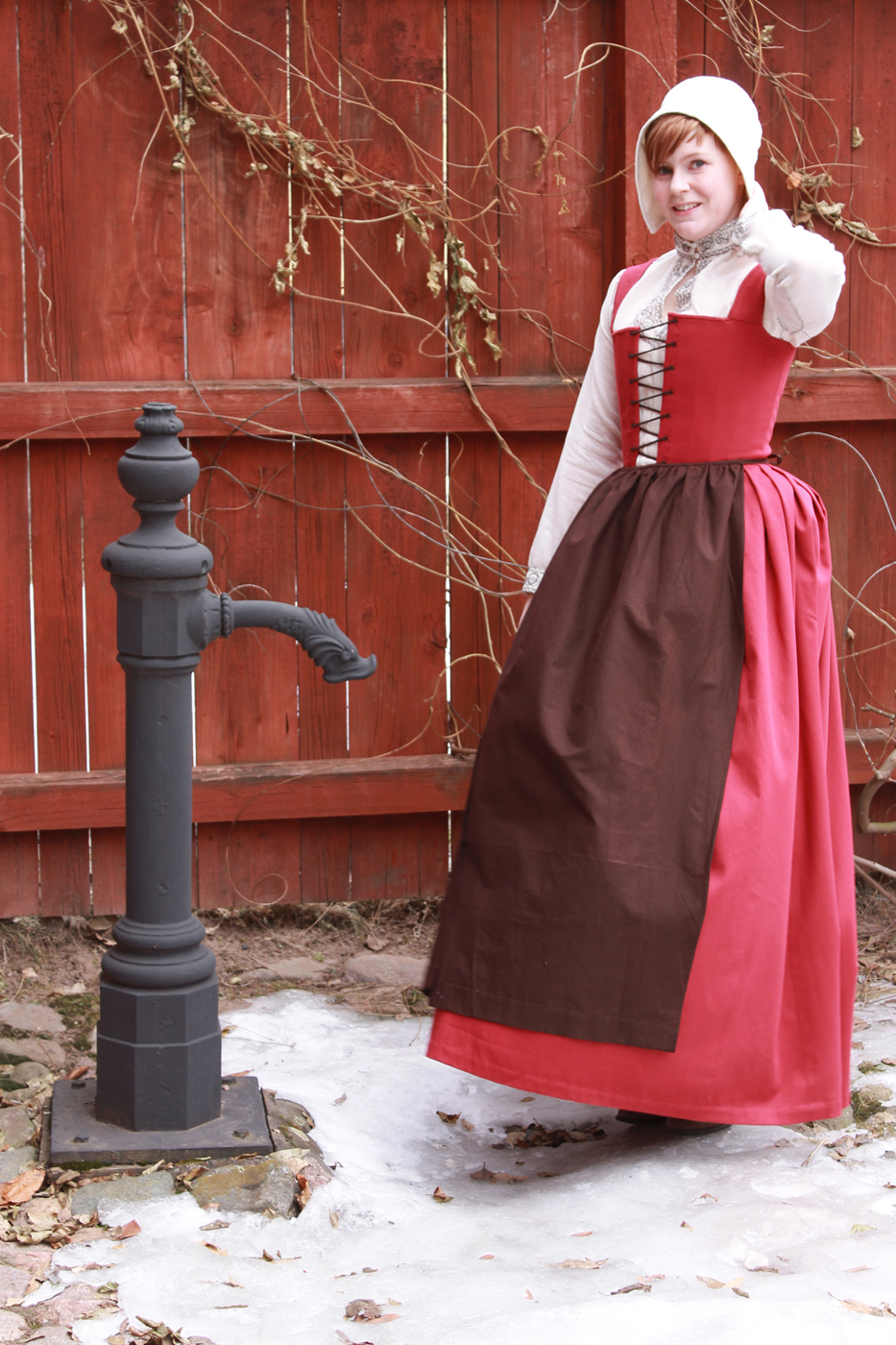
1550s Peasant Gownpump-ståA peasants costume containing a red kirtle, a brown apron and a white coif.

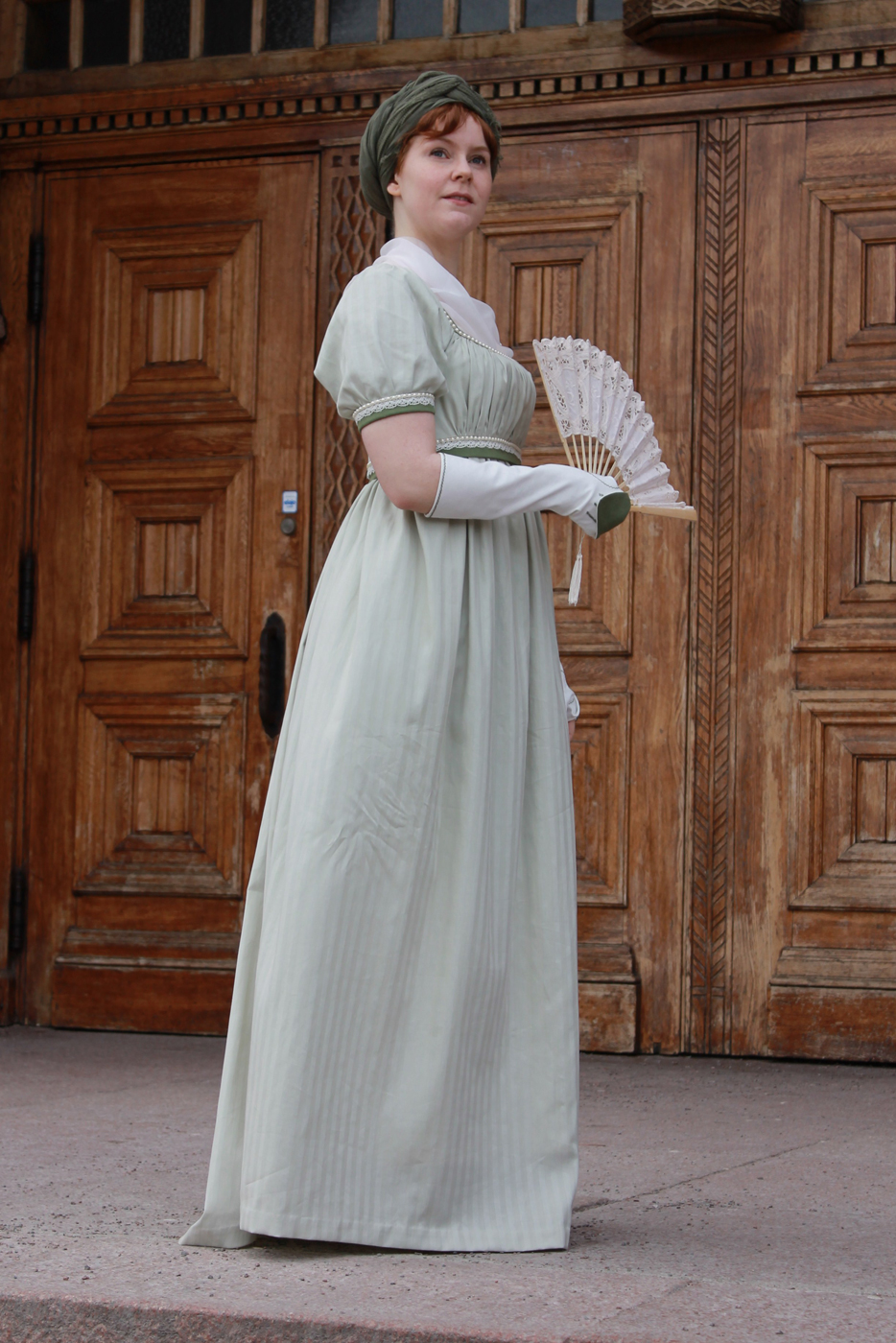
Regency Gown and AccessoaresIMG_1539Regency dress in pale green, and some accessoares like white mittens, green turban and a sheer fichu. Worn to “Mickelsmäss” Party and dance show.

April:

1930s DressIMG_2035A Sailor dress in green/white cotton, and a straw hat to match.

May:

1780s GownIMG_2421A Robe a la Anglaise in flowery polyester sateen. The dress was a pain to make but it did turn out great (dress construktion part 1, part 2.). I also made the Bergere hat and had a photoshoot of the dress.

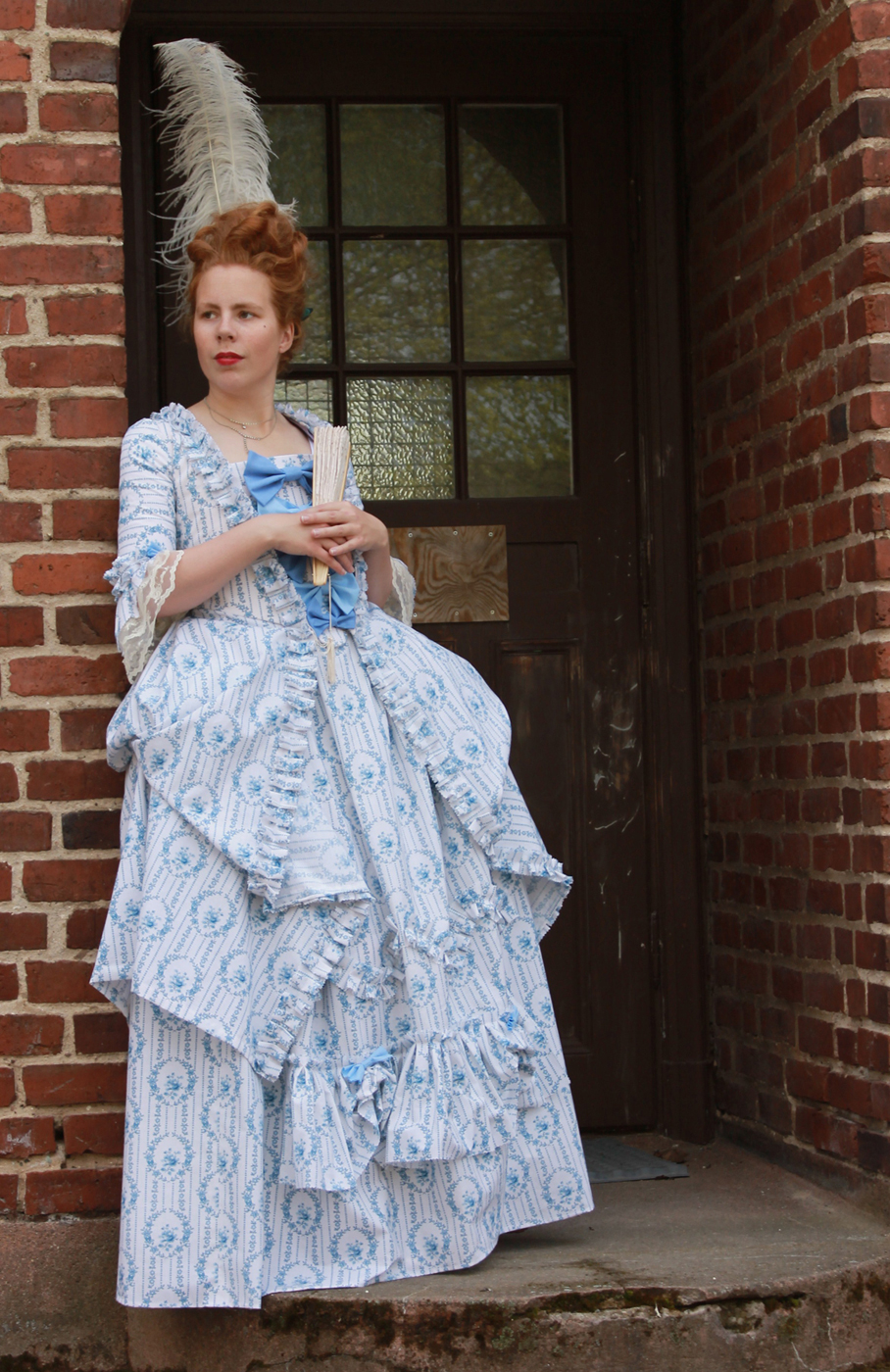
1770s GownIMG_2664The white/blue flowery Robe a la Franchaise to go over my sisters corset. And the pictures from the photoshoot.

1760s  Skirt/PetticoatDSC_0096This skirt/petticoat is so useful. I’ve worn it under several other dresses – to get some extra bounce and for warmt, and it even looks pretty on its own.

June:

1780s Chemise DressDSC_0369A Chemise a la Reine inspired by the princess Lamballe. This dress is so comfortable and easy to wear it’s a shame I only have worn it once (yet) (to a picnic,) apart from the photoshoot.

1880s UnderwearIMG_3092A late victorian Corset and Bustle for my sister. We had a blast taking photos both Historical and Punk-Victorian.
July:

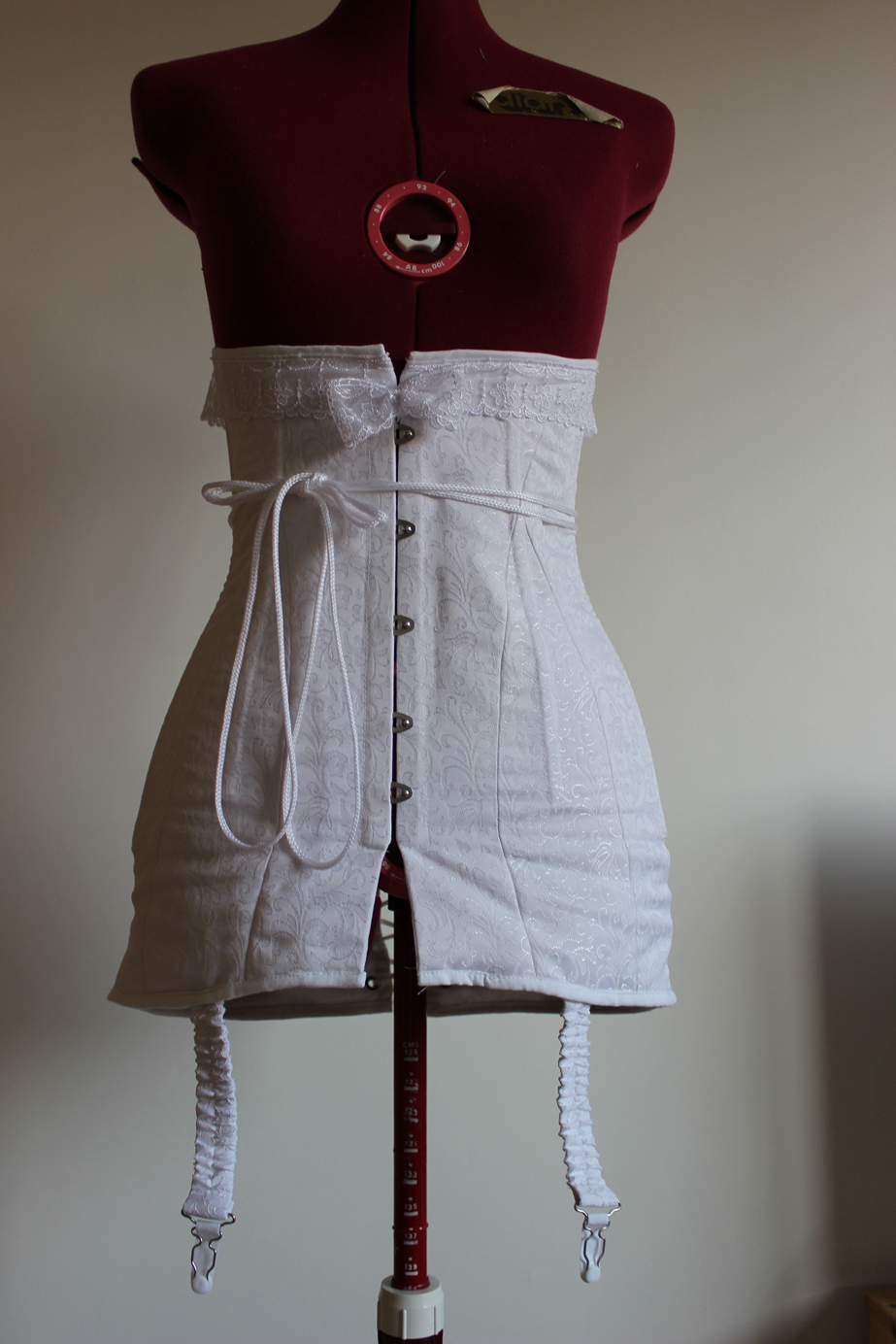
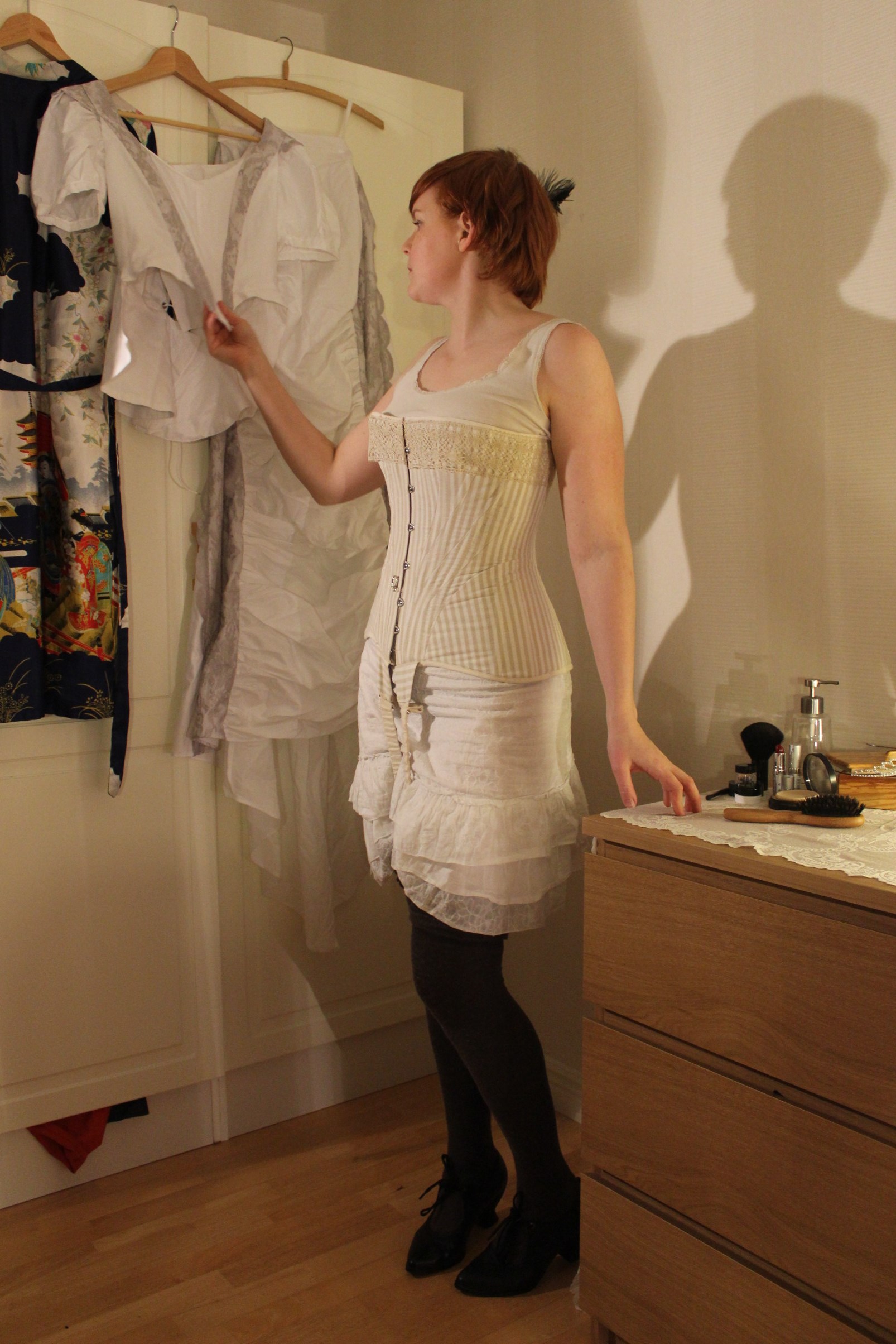
1910s CorsetIMG_0814A early 1910s corset made to be worn under some Titanic era dresses.

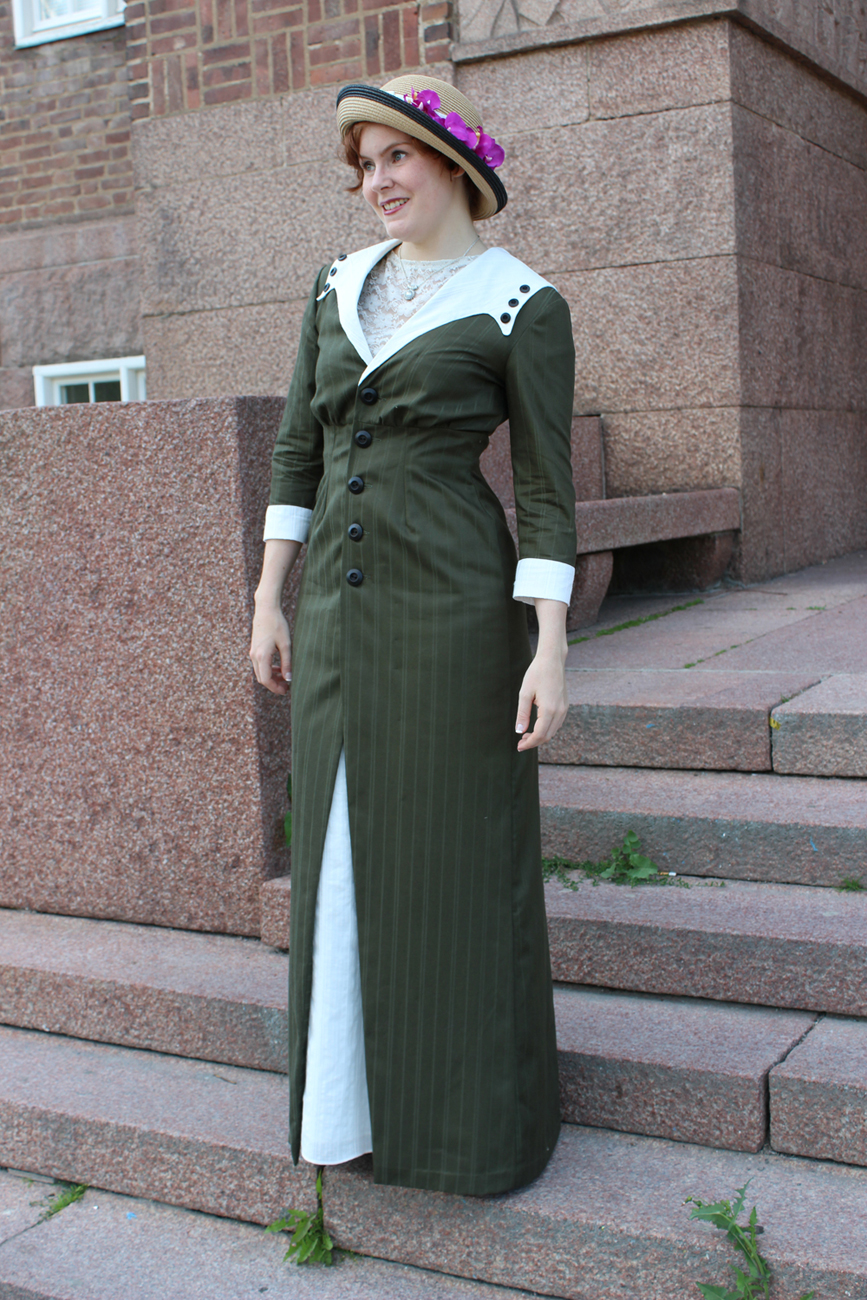
1913 Day DressIMG_0640A 1913 Daydress and hat made to be worn at the Titanic exhibithion. I also made a pattern for this dress.

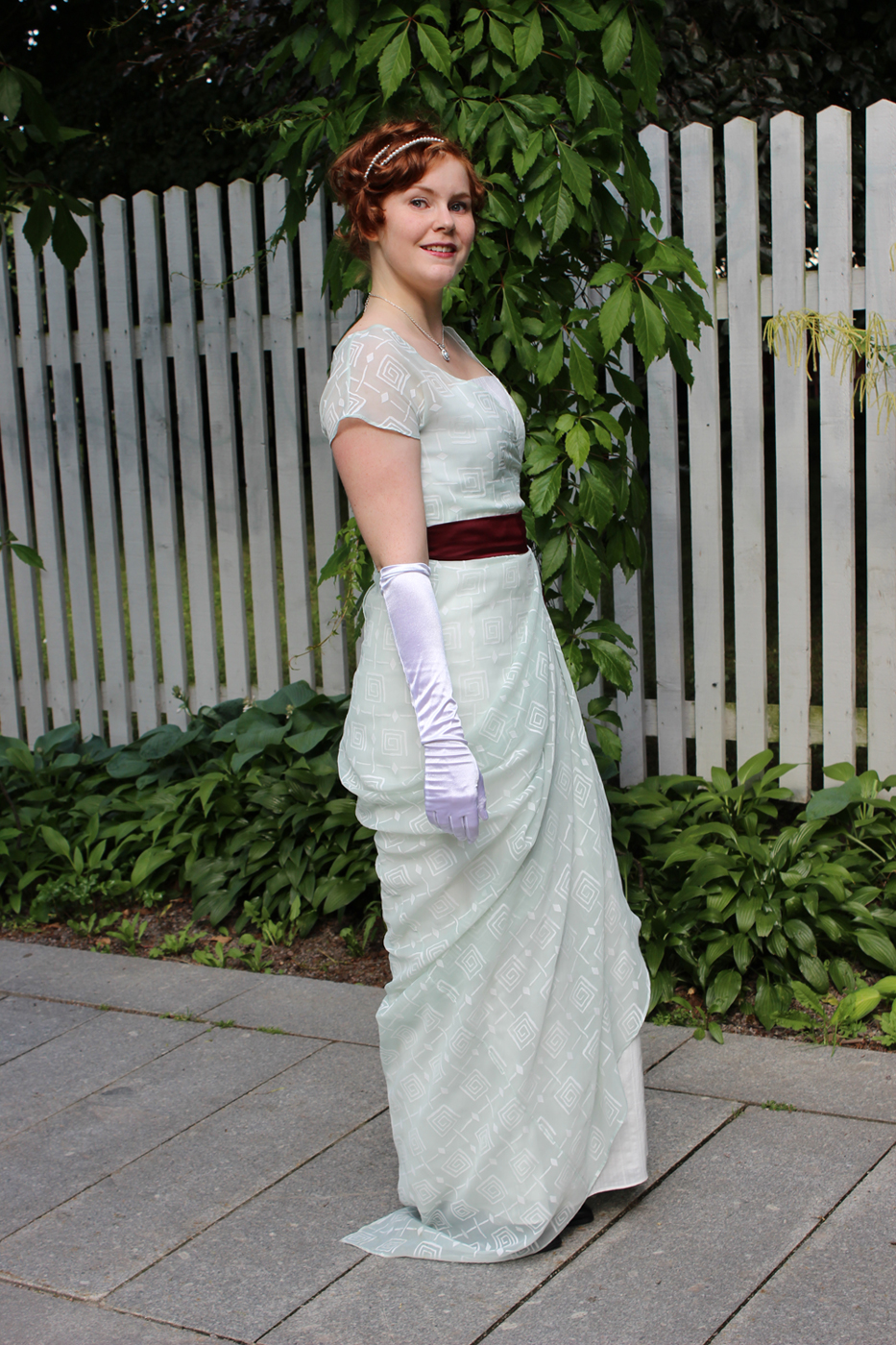
1913 Evening GownIMG_0522A 1914 evening gown in pistage green organza.

August:

September:

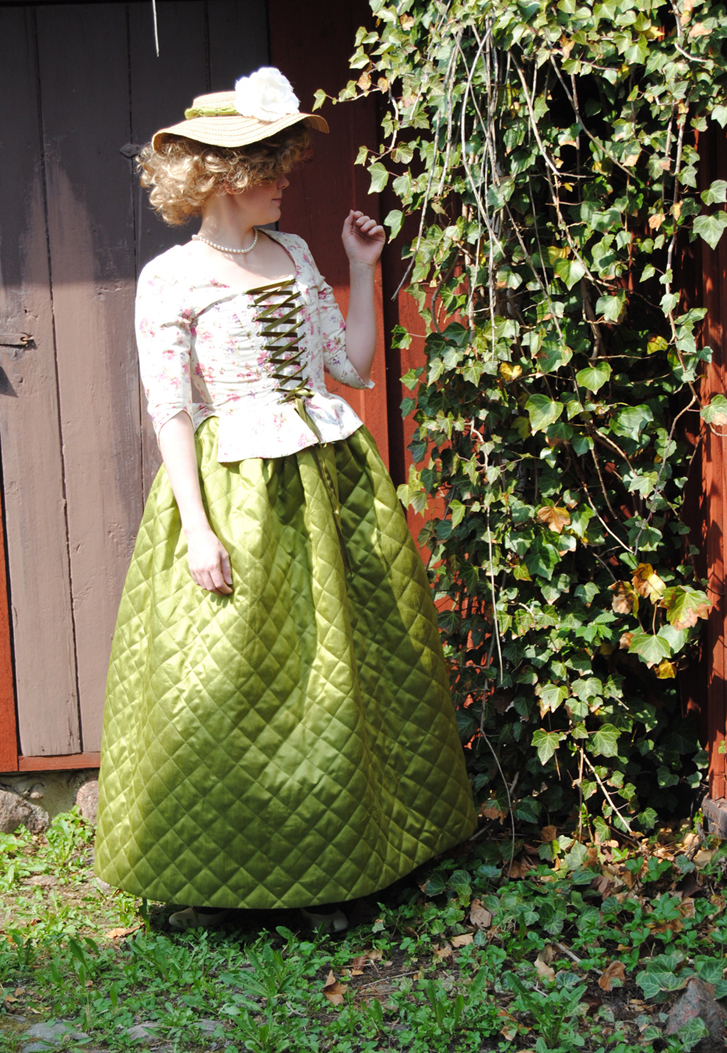
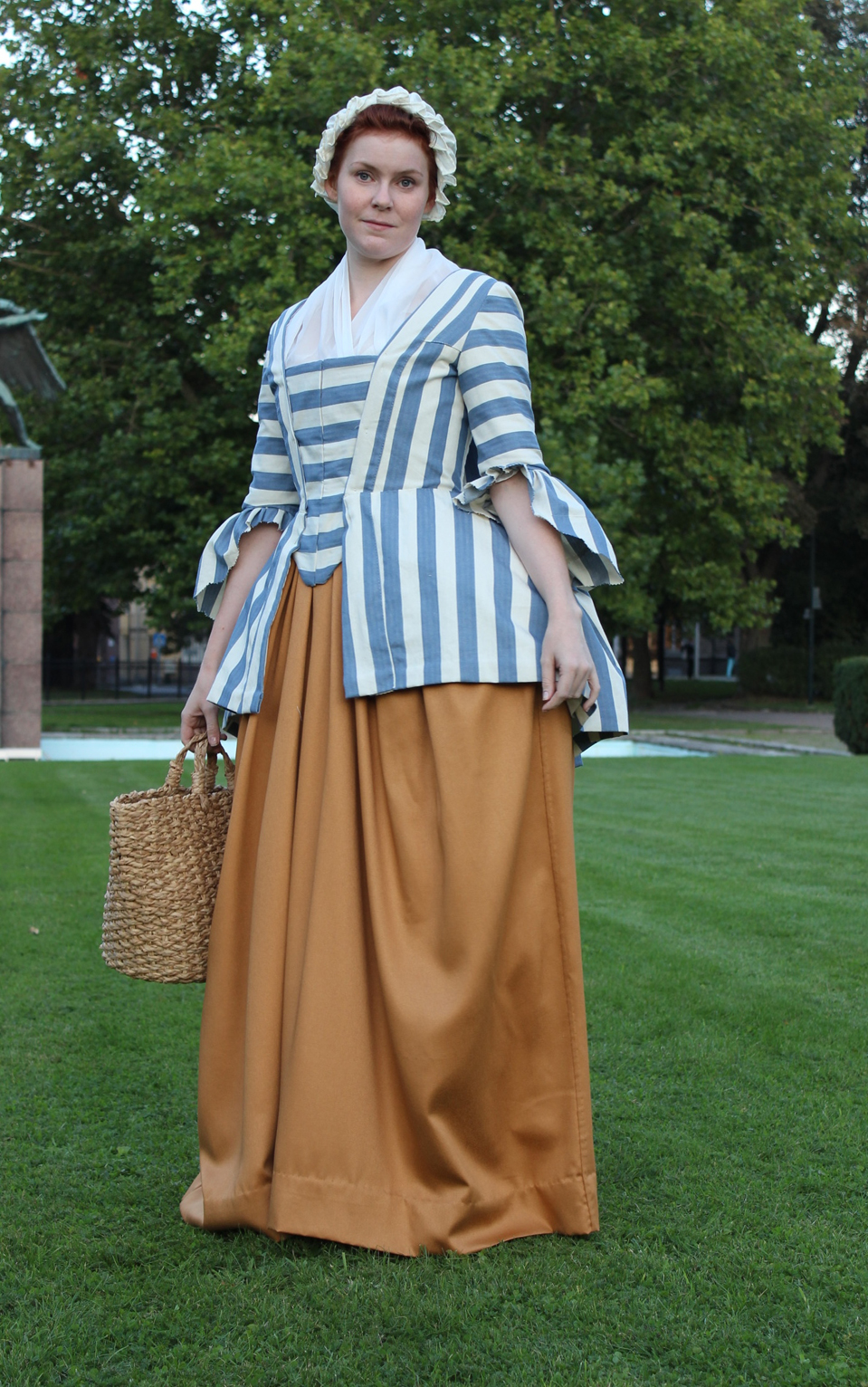
1750s EnsambleIMG_1594A 1750s striped Pet-en-l-air jacket and a gold colored skirt, worn with a cap/hood in sheer cotton. And pictures from the photoshoot.

October:

Regency CorsetIMG_2396I really needed a real Regency Corset to use during a “Jane Austen” dance performance.

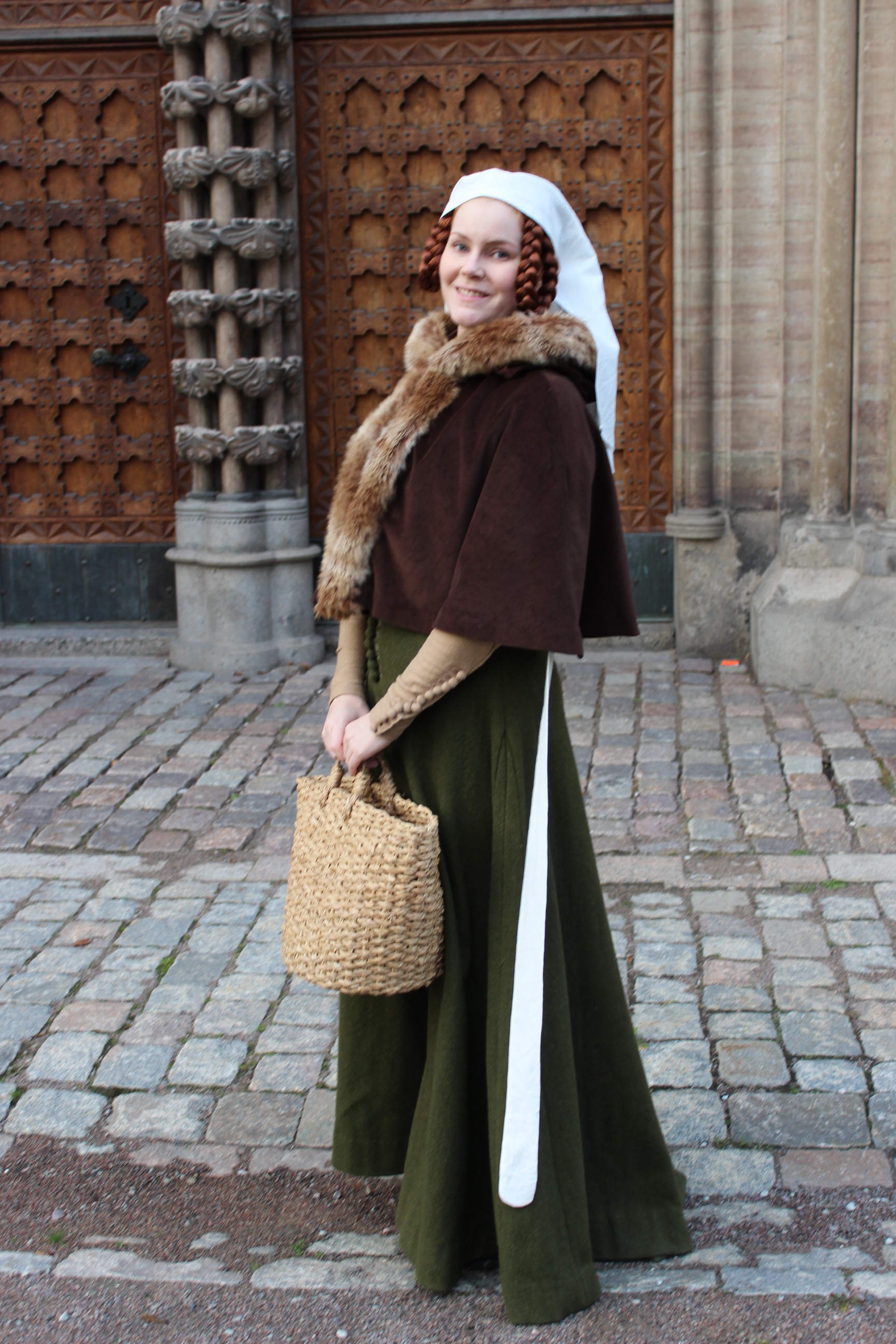
Medieval GownIMG_3600I made this outfit for a Medieval Fiest in November. It contain a Green Medieval Gown in thick wool, a pair of beige woolen Faux Sleeves, a fur trimmed brown velvet Cape and a white linnen Headcoth. And of couse pics from the Medieval Photoshoot.
  November:

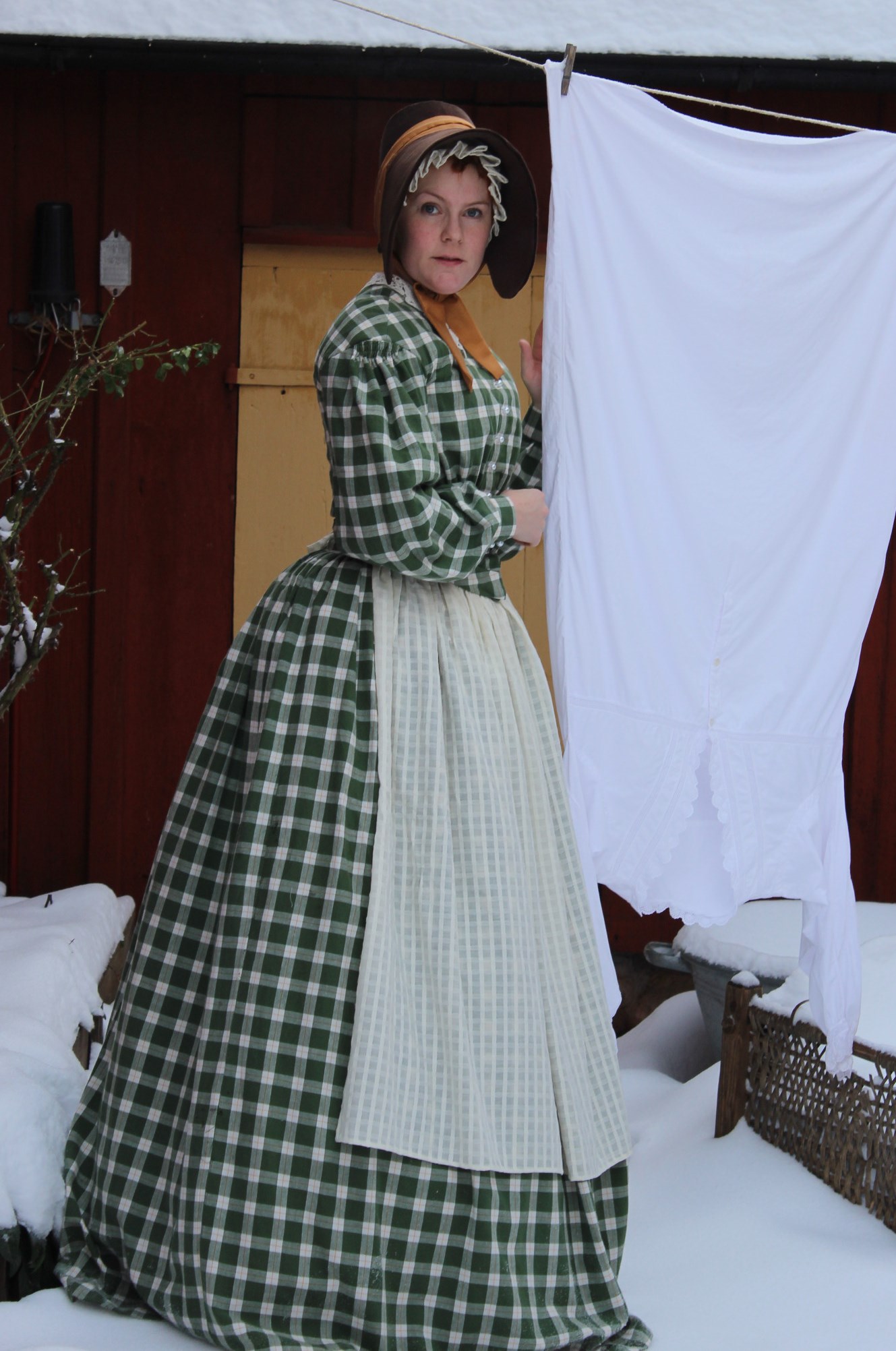
1840s Day DressIMG_4195A 1840s dress used at a 19th century Christmas Party. The Dress is a green cotton plaid, worn with a cotton Apron and a brown velvet Bonnet. And pics from the 1840s Photoshoot.

December:

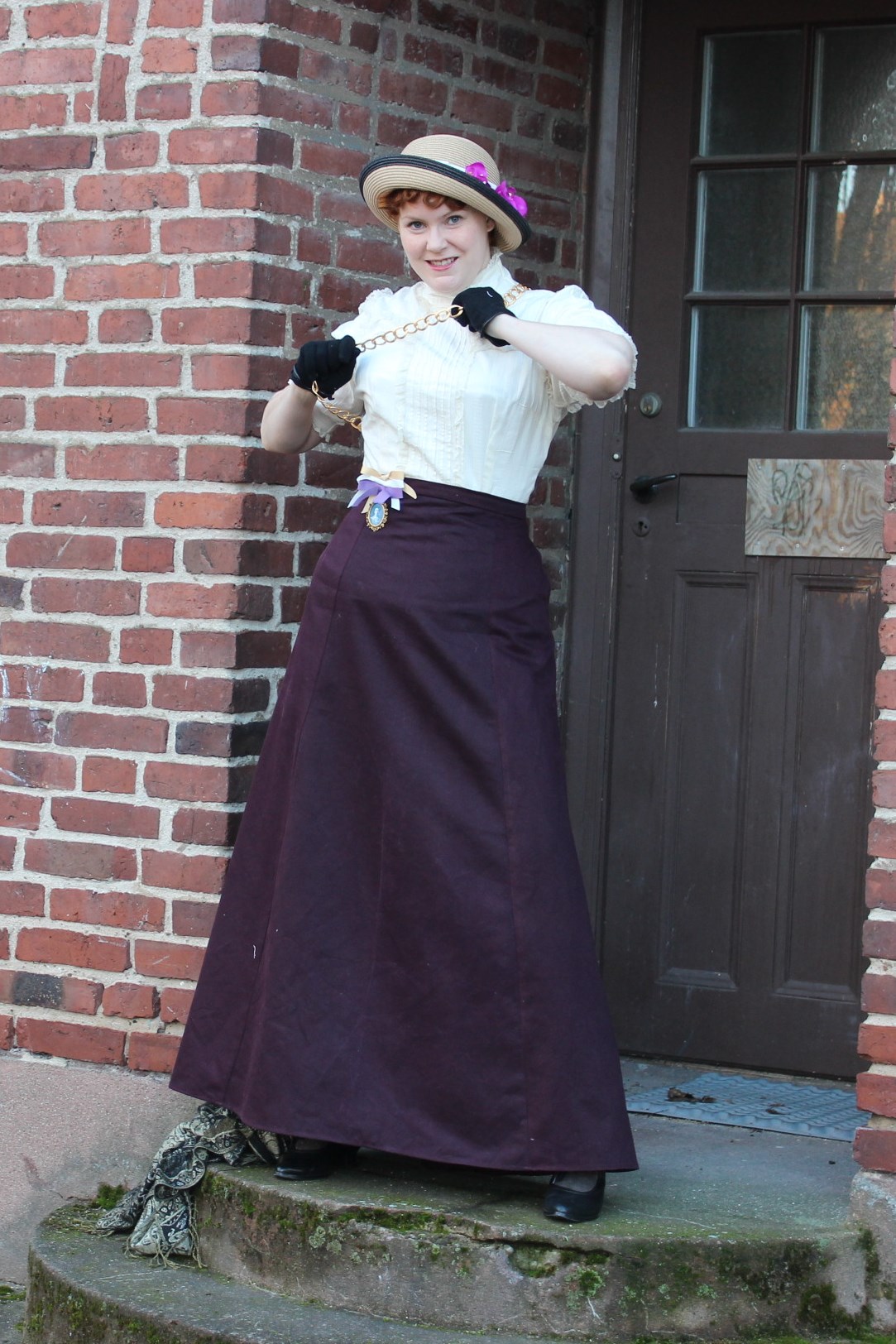
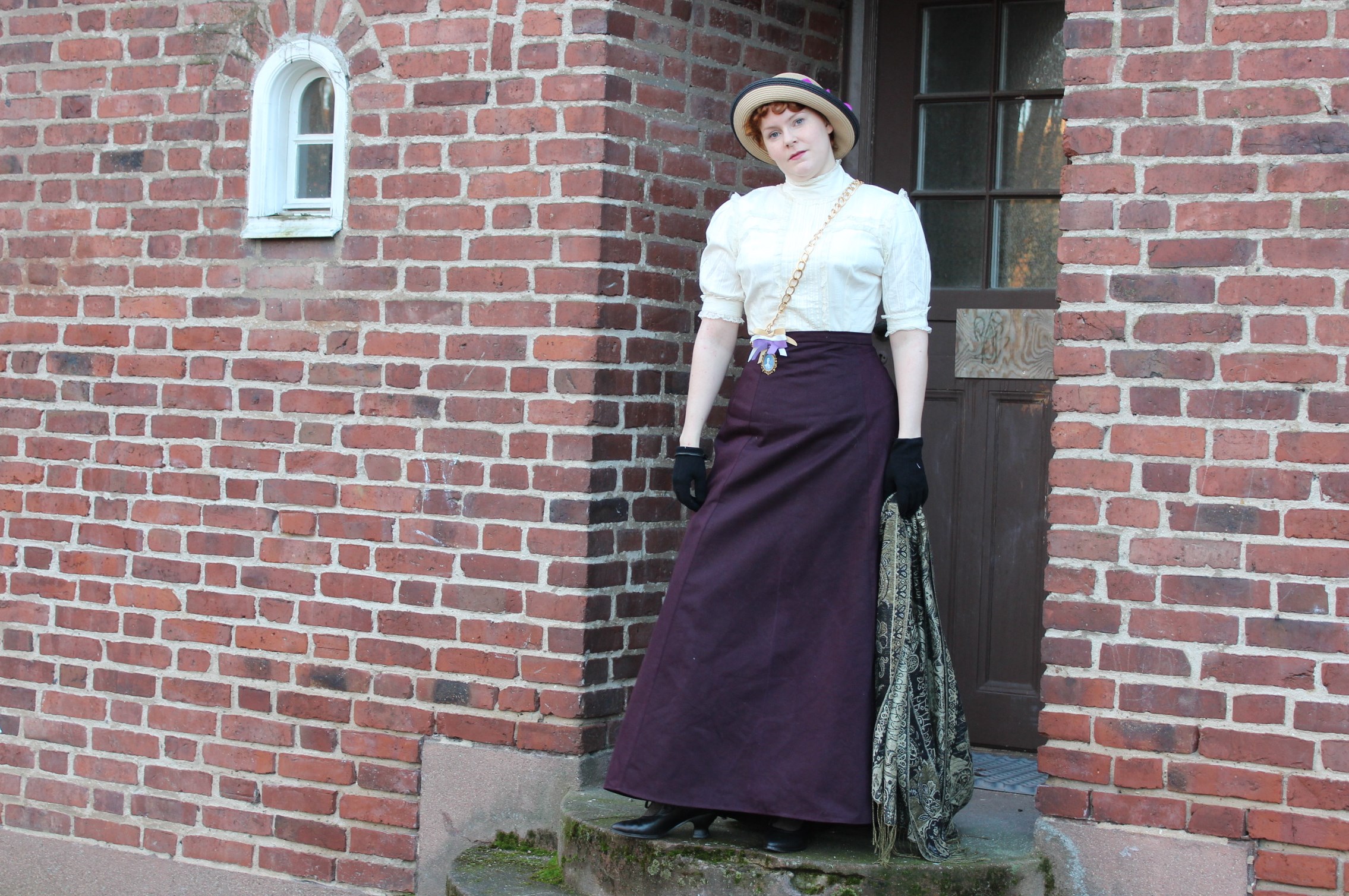
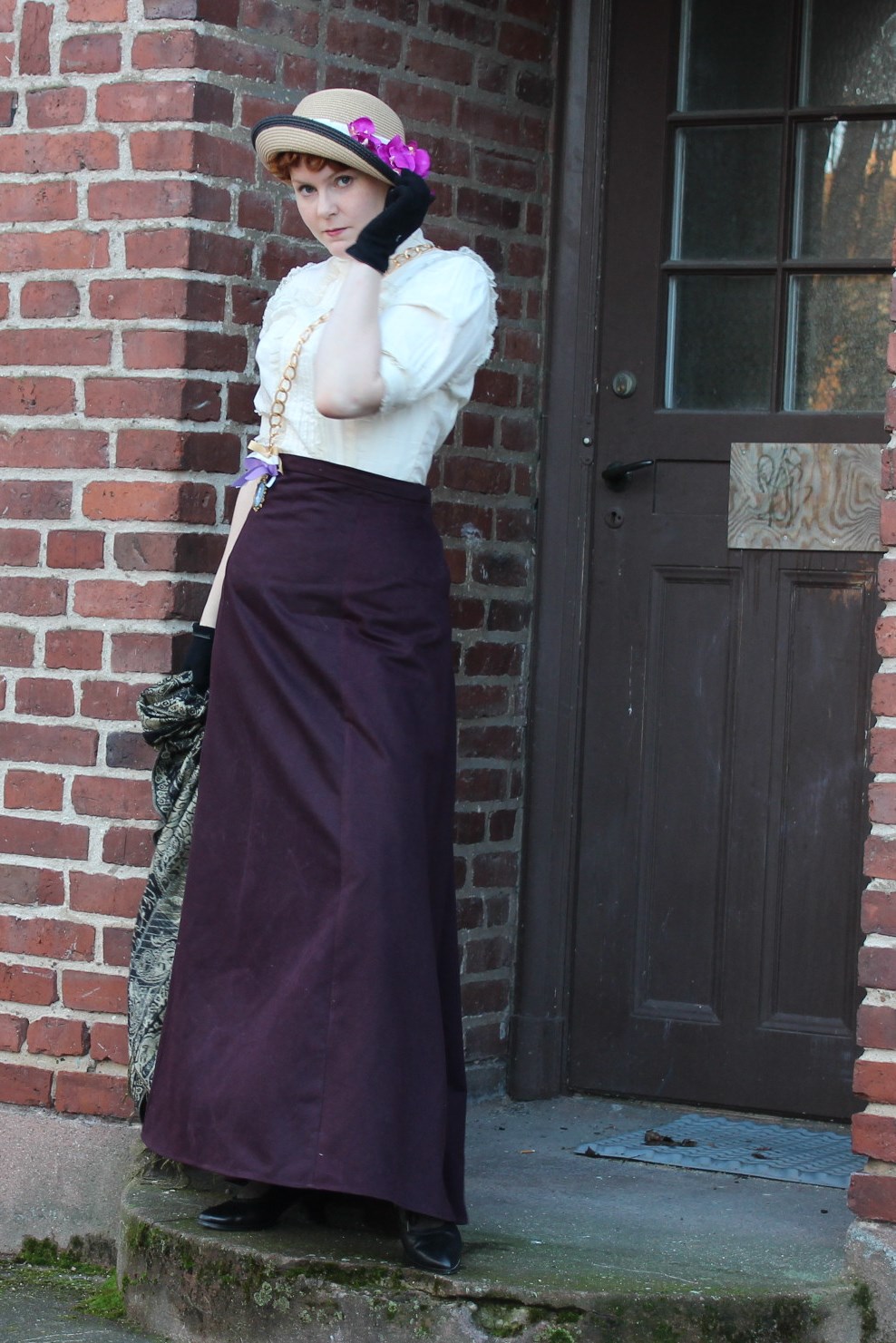
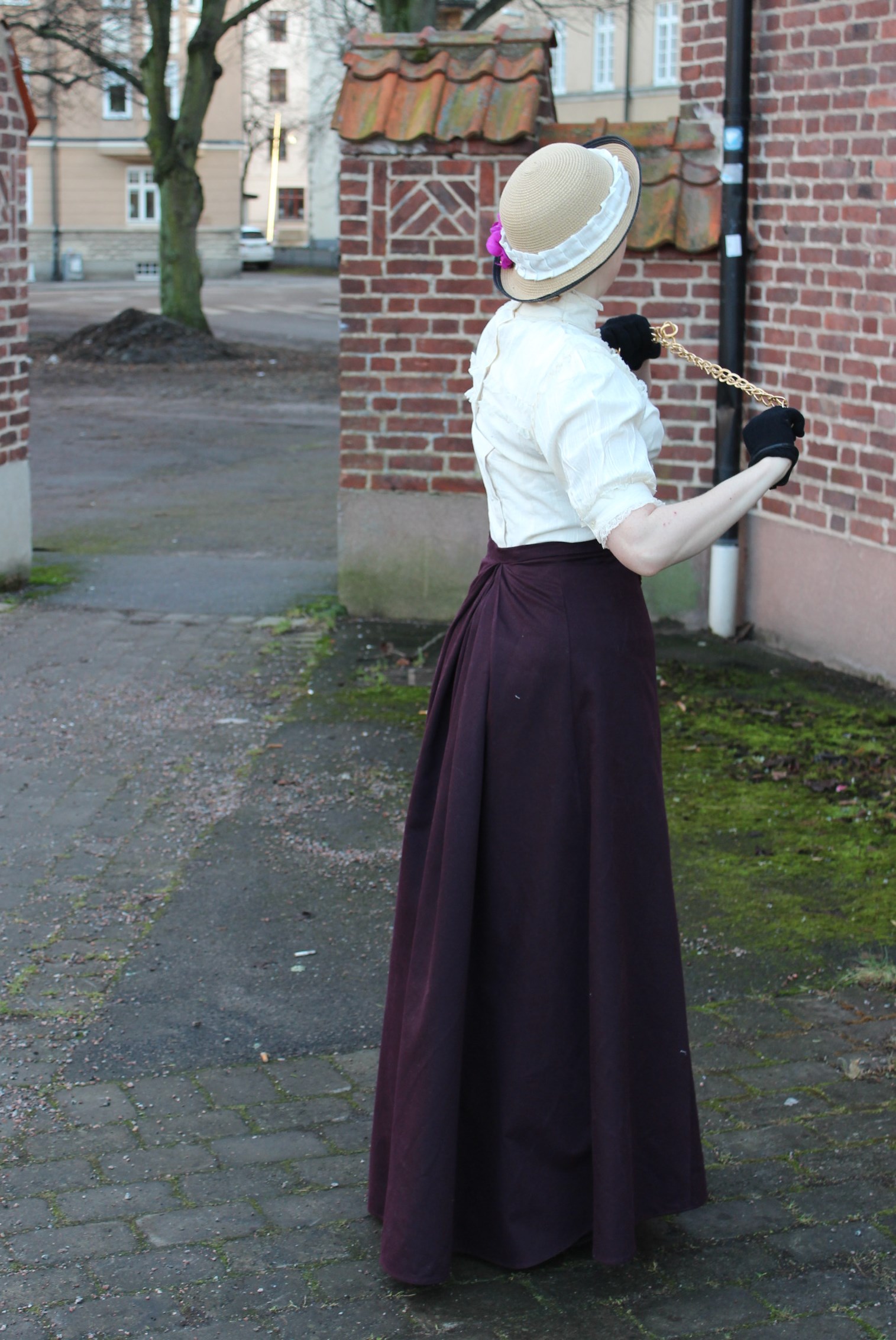
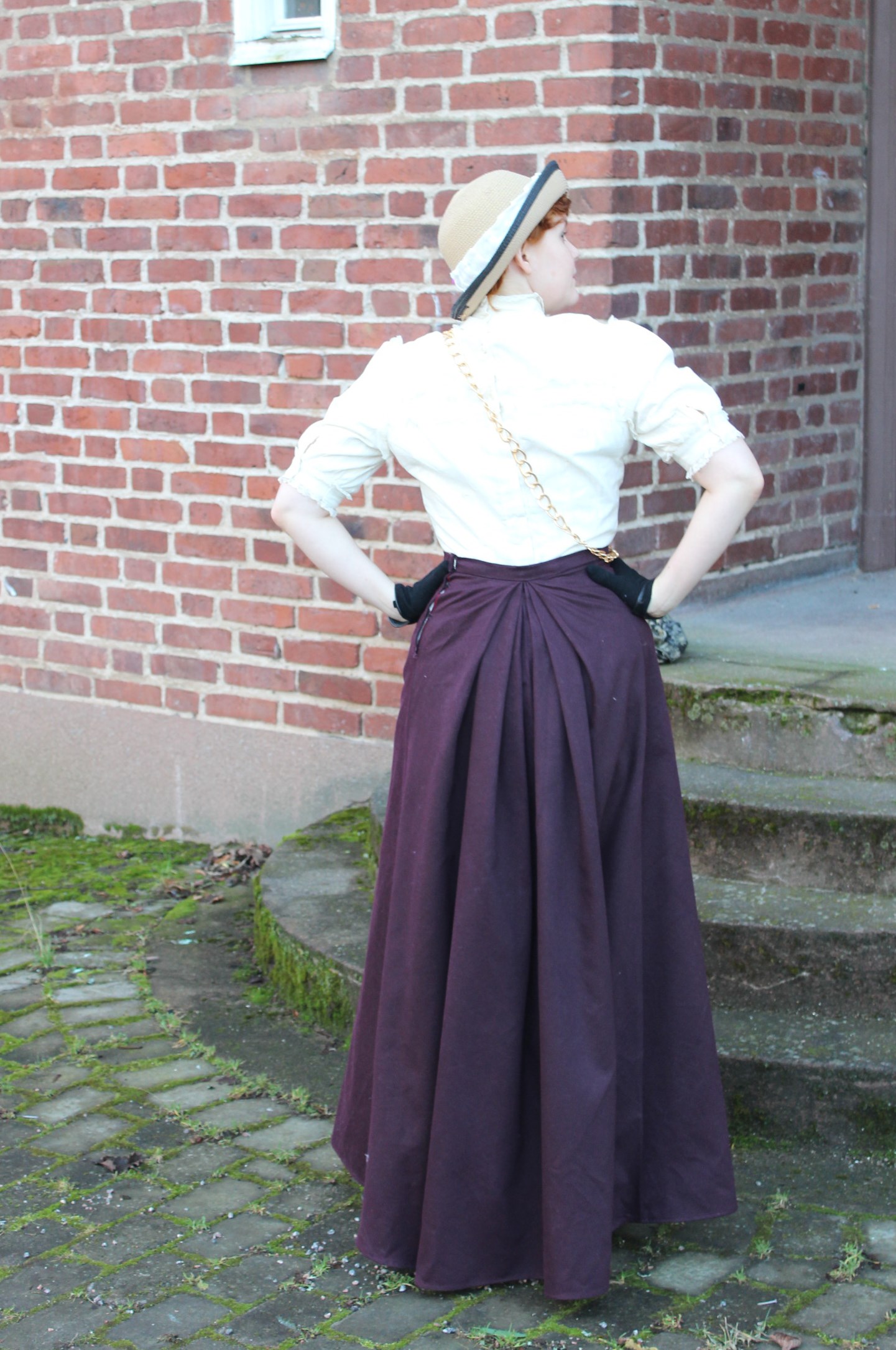
1900s Suffragett outfitIMG_4593A 1900s shirtwaist re-modeled from a modern blous and a skirt in cotton twill, worn with a golden chain and brosch to make a Suffragett outfit.

And thats the re-cap of my HSF13 items.

The total amout count as: 5 Corsets, 3 Chemises/Shirts/Blouses, 1 Bustle, 6 Skirts/Petticoats, 10 Dresses, 8 Hats/Headwear, 1 Outerwear, 7 Accessoares.

Omg! How do I ever do anything other then sew…

And then we have the other clothing items of this year.

Jan:

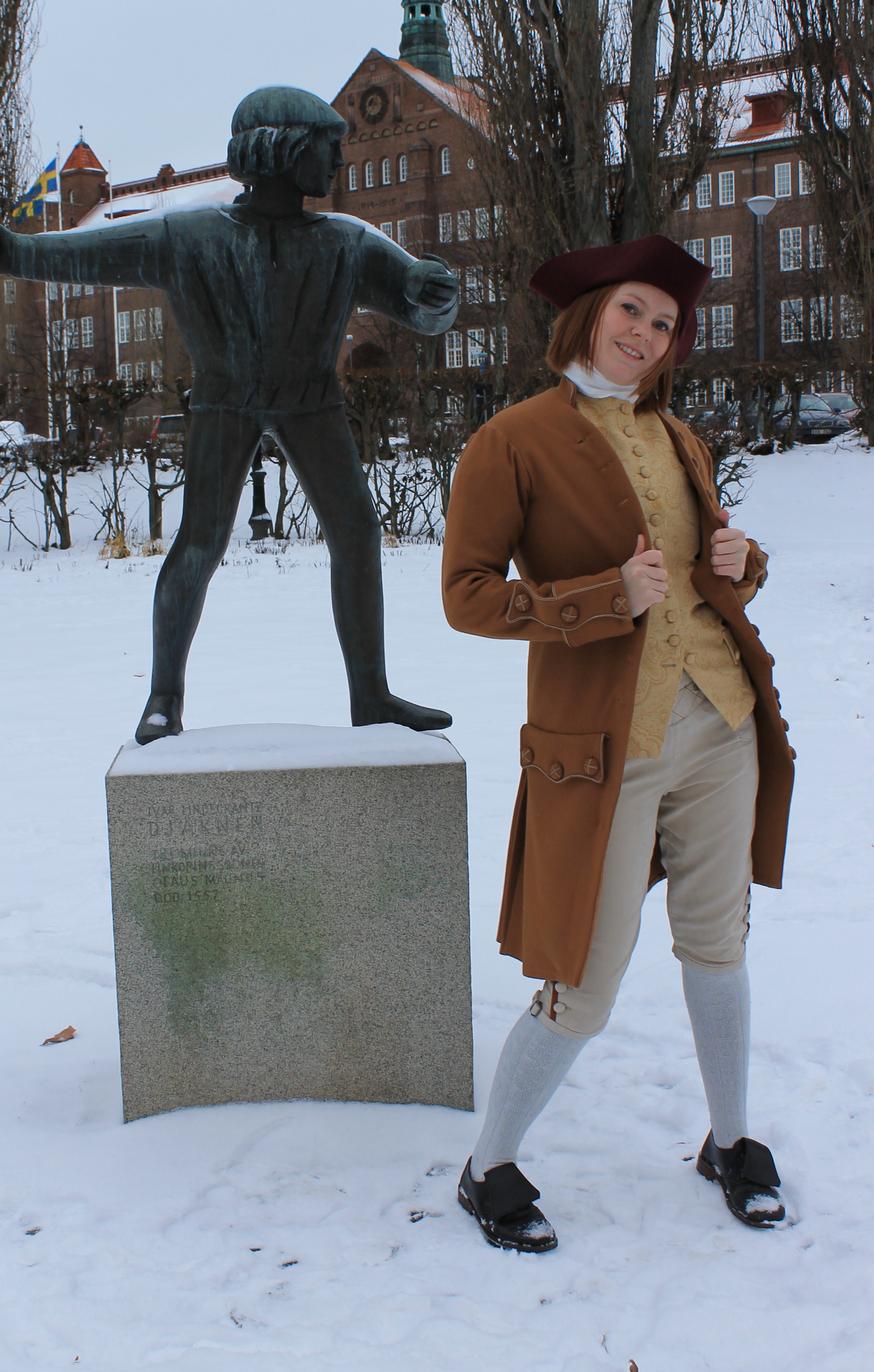
1780s MenswearIMG_1115Brown wollen coat, golden pysley west, beige faux sweade breeches and a re-shaped wollen hat. All made as part of a school project. (not yet posted about)

February:

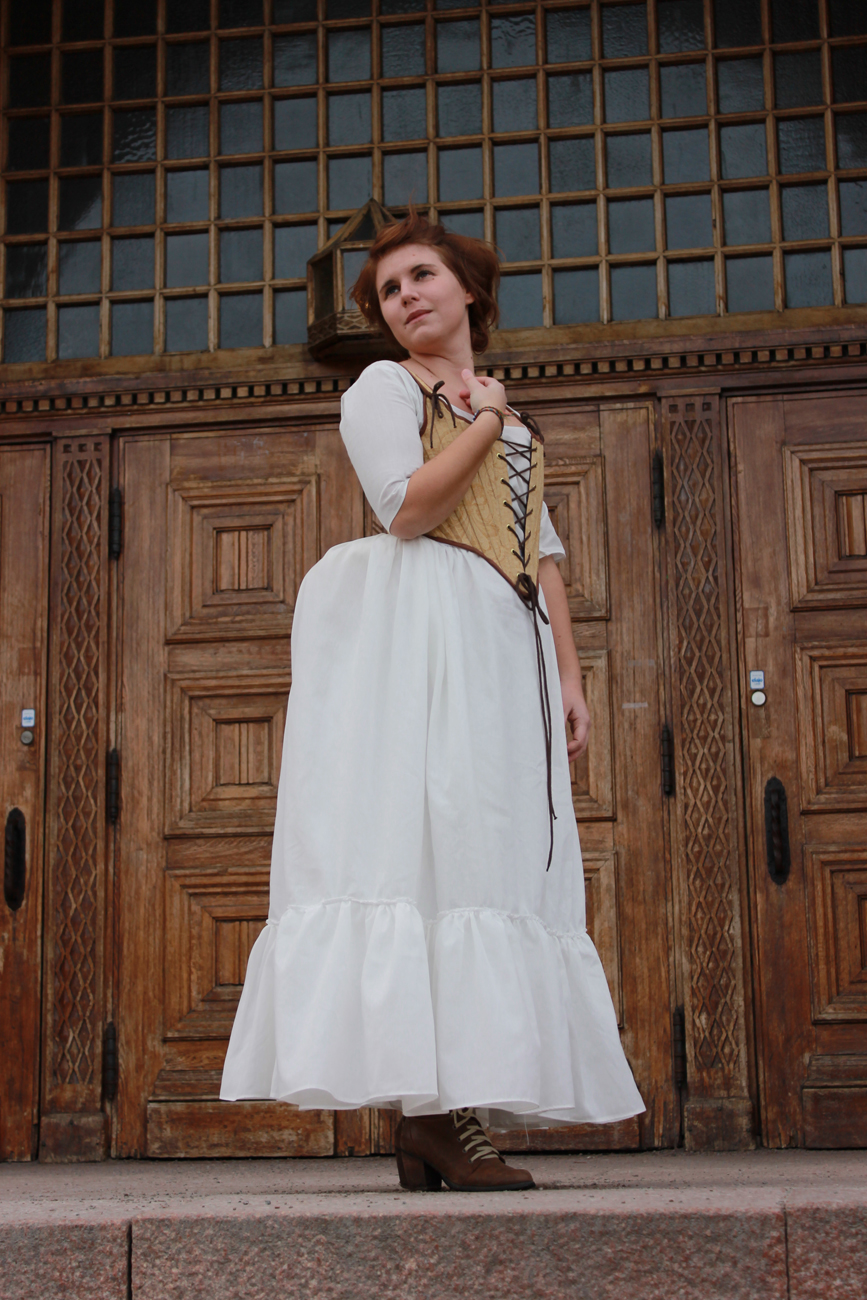
1780s UnderwearIMG_1731A golden patterned corset, white petticoat and bumrole – made as part of a school project. (not yet posted about)

Mars:

Regency UnderwearIMG_1678A regency chemise and half stays to be worn under the regency gown. (not yet posted about)

April:

May:

June:

July:

1910s Evening GownIMG_0391A 1910s evening gown made for my sister to wear at a Titanic event.

Mother of the bride dress 2013-07-21-20.16.25A dress and jacket made for a costumer to wear at a wedding.

August:

September:

1930s DressIMG_2032A dress made from a picture of a girl living in the house in the backround. I made the dress as part of a exhibithion of the houses and how people lived in the 1920-1930s.

October:

November:

Medieval GownIMG_3444A dress sewn to my sister in about 10 hours, for a Medieval party.

December:

I think thats it.

Not to bad for one years worth of work.

Looking at it I realise that the only month I didn’t produce an intire outfit, is August – where I didn’t made a thing. But actually I did. I worked on the movie Huldra all August and made lots of things amongst several medieval inspired capes, some sheer flowy skirts and dressses and lots of repairs and aleration to existing garments. But non of that would have looked fancy enough in the countdown…

Well, I do plan to continue the sewing into next year, even though I think I need to reduce the pace a bit (and not keep going at this crazy speed).

Today was about what’s been done, tomorrow (or next post) will be about whats coming (hopefully) in 2014.

Celebrational 1900s Skirt

As the time ran away into the days between christmas and the new year, I needed to whip something up for the final HSF challenge this year, nr 26: Celebrate.

Between the christmas and a up-coming move there was really not much time, so I looked at a few of the others HSF participants prevous projects and decided to make a skirt maching the newly modeled 1900s shirtwaist.

It would be a fairly simple project and it would be celebrating my surviving of the entire HSF13.

I searched my stash for apropate fabric and found a burgundy cotton twill that I bought on sale a couple of years ago.

IMG_4545

It is not the ideal fabric for this type of garmnent, but both time and money was lacking at the moment so it would have to do.

I drafted a pattern using some diagrams from Waughs “Cut of Womens Clothes”.

IMG_4550

I cut and basted the skirt togheter. Then I tried it on and discoverewd the skirt was a bit on the short side, but since it meant to be a walking skirt it will do.

IMG_4546 IMG_4548

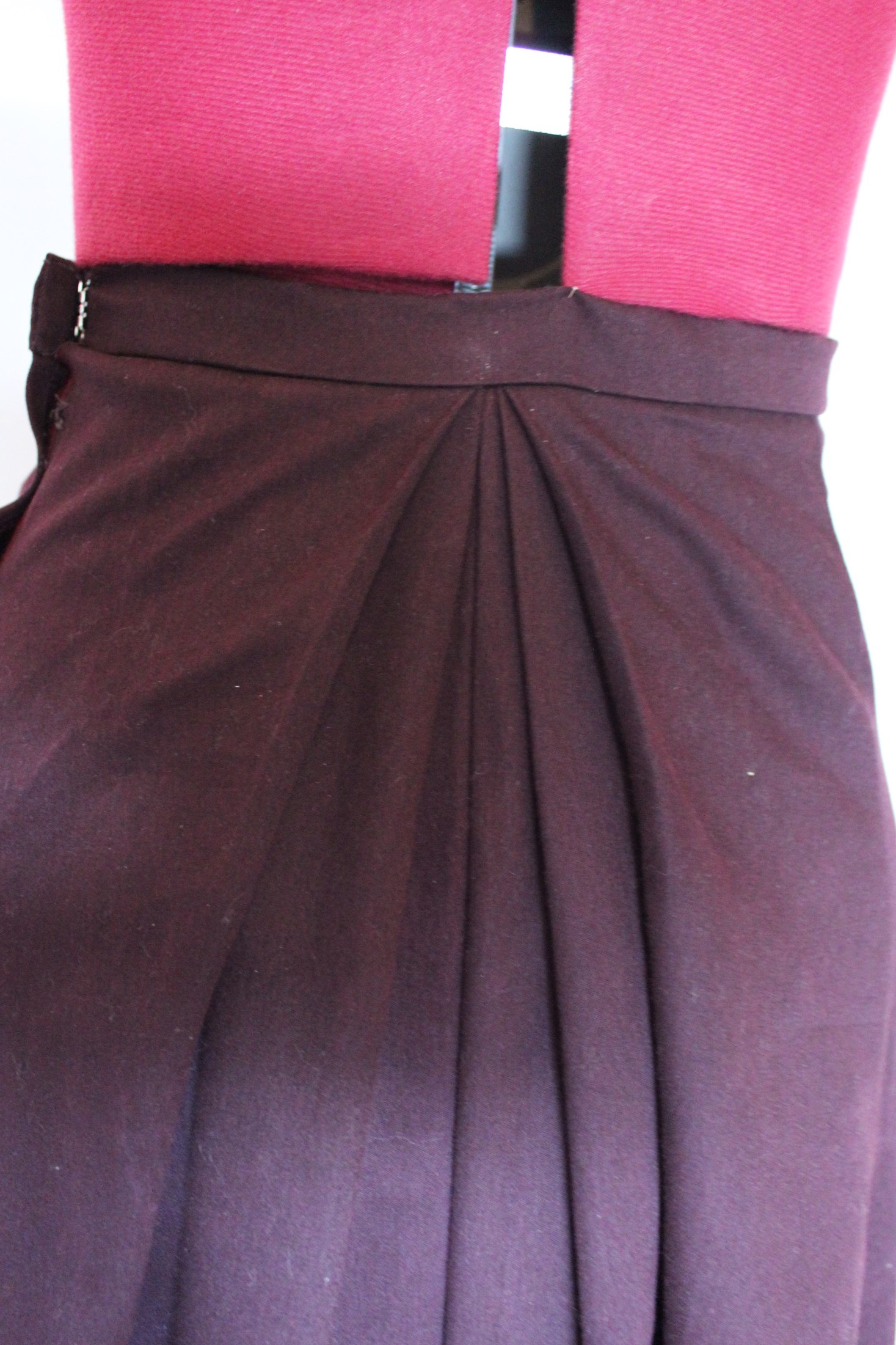
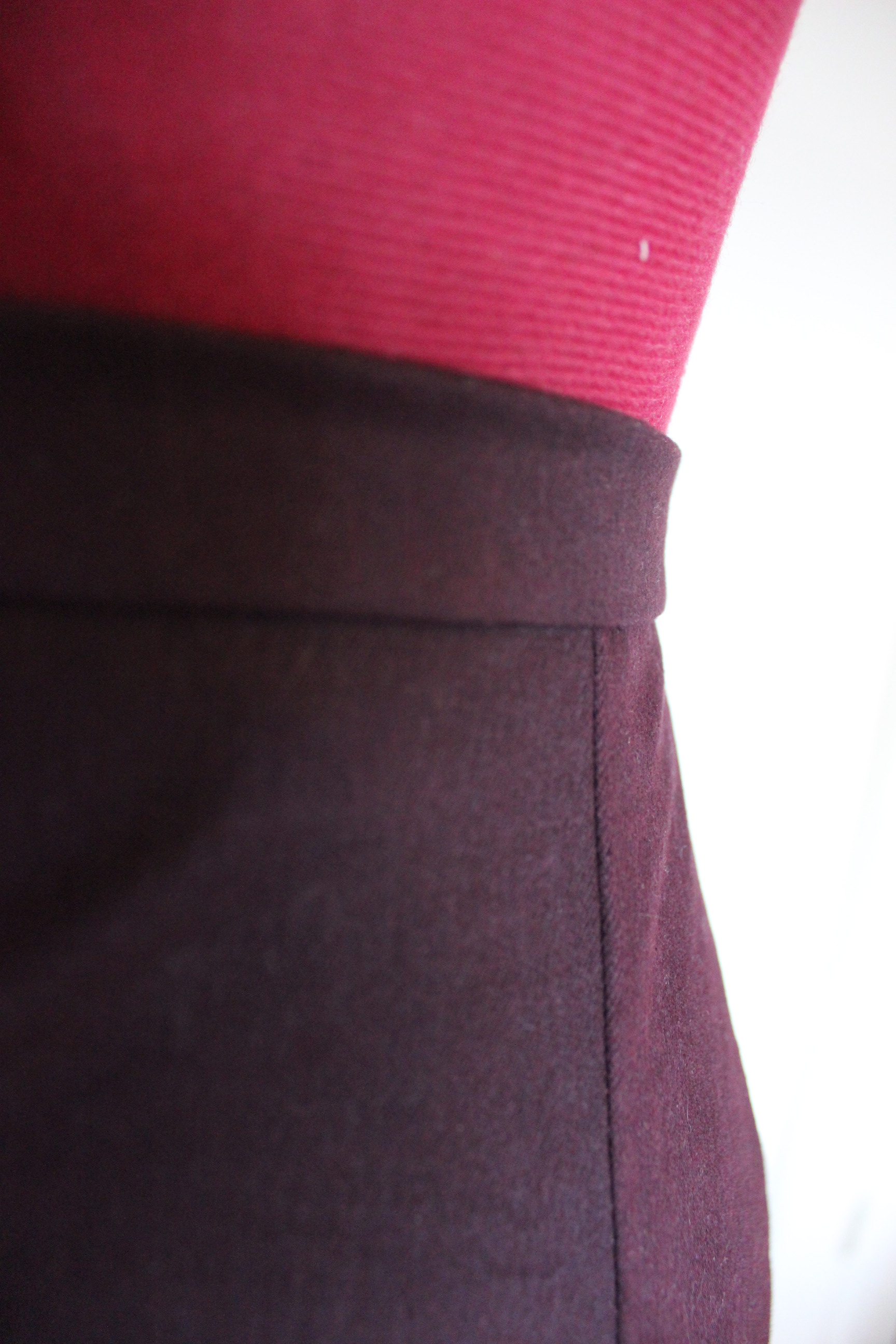
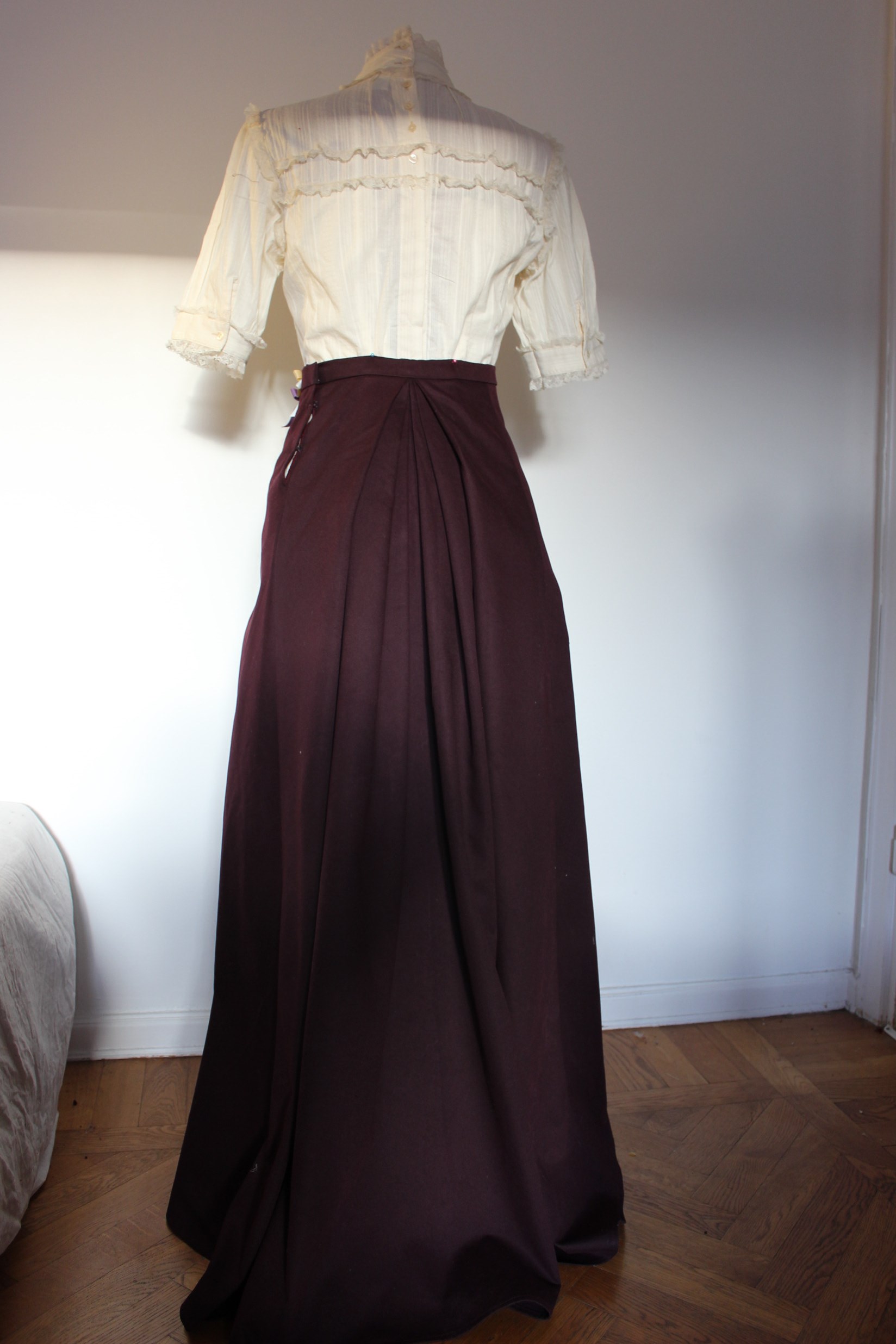
The sewed it togehter and made the tucks in the back and side fastening.

The finished skirt.

IMG_4687 IMG_4690

IMG_4693

IMG_4695

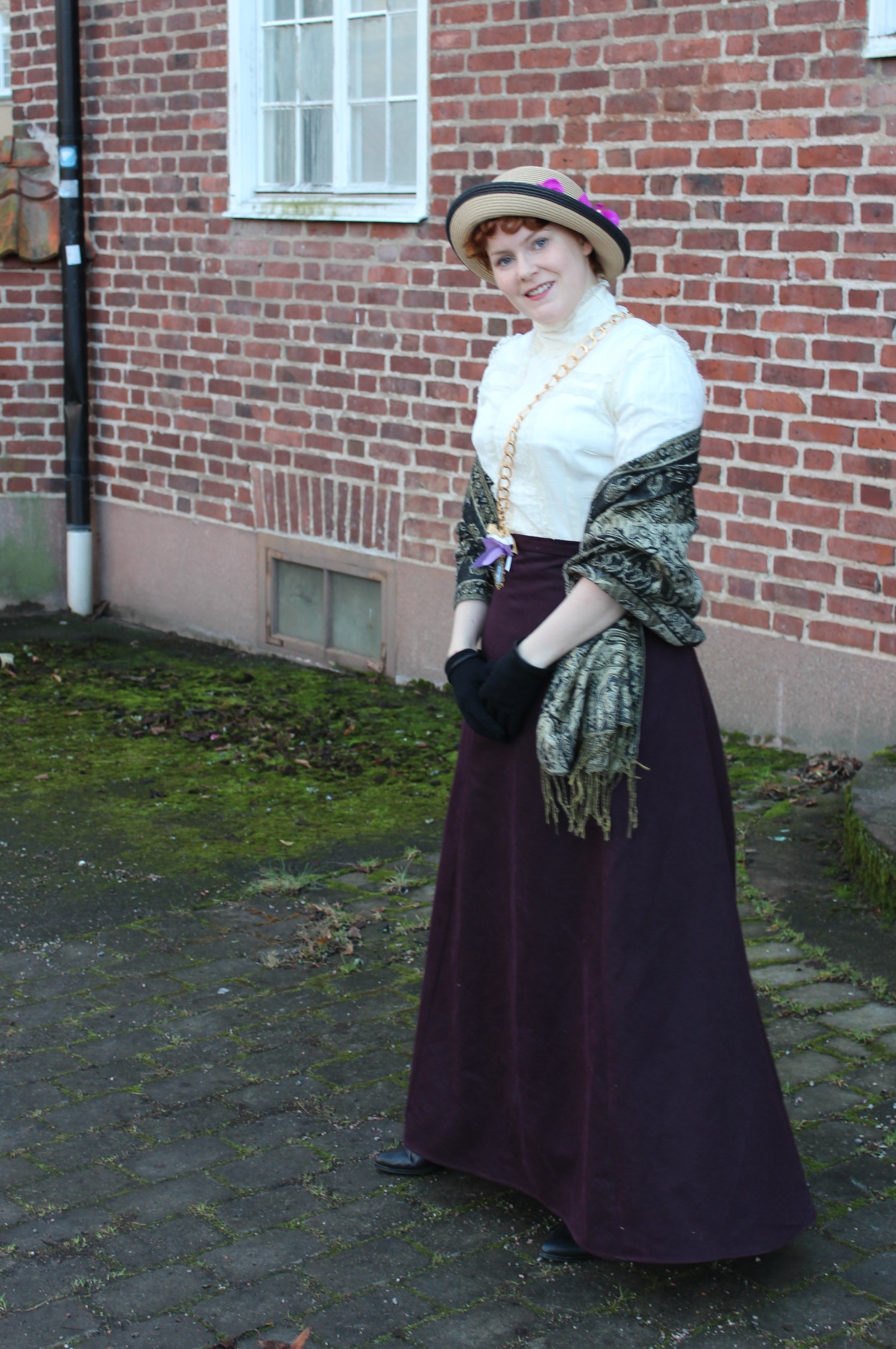
While dressing the form and thinking about the perfect way to style the skirt I realised the real celebration it symbilsed: The Suffragets struggel for womens rights.

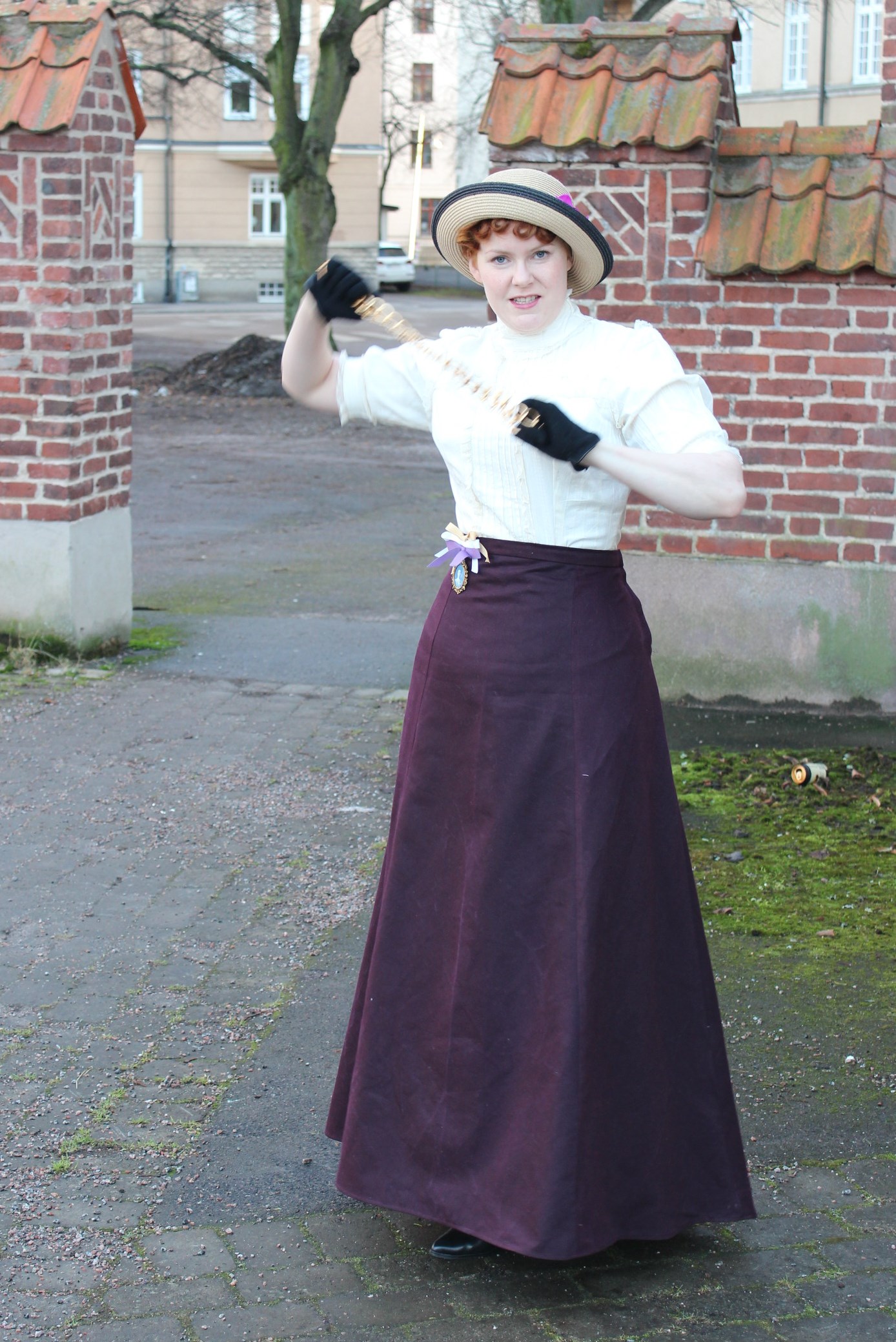
The skirt togheter with the 1900s Shirtwaist and Suffragete brosh.

IMG_4556 IMG_4559

IMG_4558

And then I dressed up and took a couple of shots in the mirror.IMG_4634

Adding the golden chain to symbolise both the acctual chain the suffragets used during their struggle, and the figuraly chains who even today keeps women from real ecuallity to men.IMG_4641

I’m in love with the symbolism and style of this picture.IMG_4654

Then I manadged to talk my boyfriend into taking some better photos of me in the outfit.IMG_4567

IMG_4581

IMG_4586

IMG_4589

IMG_4600

IMG_4593

IMG_4632

IMG_4611

IMG_4618Lets break those chains!

Just the Facts:

Challenge: nr 26 – Celebrate.

What: A 1900s walking skirt.

Celebrate What: The womens rights movement.

Pattern: None, but I studied some pattern diagram from Whaugs “Cut of Womens Clothes”.

Fabric: 2,5 m of burgundy cotton twill

Notions: Thread, hook and eyes.

How Historical Accurate: So so, the shape and fabric of the skirt are acceptable, but the contruction are modern. So about 5/10

Time: 3 hours.

Cost: 100 Sek (11Usd) fabric from stash, but I did buy it one time.

First Worn: On photoshoot on new year.

Final Thougts: I loved wearing this outfit, and already plan on using it for a up-coming suffraget luncheon.

Re-make a 1900s shirtwaist

A very late entry to the HSF challenge 18: Re-make.

I’ve been so busy with work, moving and life it-self that I totaly forgot I didn’t do the 18th challenge back in aug/sep. But now finaly I’ve manadged to make it.

I found this blouse on a sale two days ago and emedetly feelt it would be perfect as a late 19th century/early 20th century shirtwaist. The model is completly straight (no darts or shaping what so ever), but do have some lovely detalied tucks and lace work.

IMG_4512 IMG_4511

IMG_4516

IMG_4513

IMG_4514

To make it look a bit more historical I needed to make a few changes.

Firstly I needed to give it some shape in the waist era. Sewing the sides and creating a few darts to give it that desired hourglas shape.

Then I needed to lenghten the button clouser n the back – now when the blouse is much tighter you can’t put it on over your head as you could before. Ripping the back seam open and creating a longer buttonhole stand, then sewing the buttonholes and attaching the buttons.

IMG_4531

And as this was a stash project I could only use buttons I already owned, resulting in lots of different buttons.IMG_4529

And lastly I needed to strenghten the neck collor a bit, to keep it standing straght.

As it was a bit to big I started by taking it in. Then I was thinking about putting smal plastic bonning into the created chanels, but with the extra bulk, the collar now manadged to hold itself up. So no bones where needed.

IMG_4530

And that was that, quick and simple. And now it fitt perfectly over a corset.

IMG_4536


IMG_4538


IMG_4540


IMG_4543


IMG_4542


IMG_4534

Just the Facts:

Challenge: nr 18 – Re-Fashion.

What: a 1900s Shirtwaist out of a modern blouse.

Pattern: None

Fabric; A smal stripe of ream coloured cotton for the buttonhole stand.

Notions: Thread and 8 asorted buttons.

How Historical Accurate: Not at all. The look is accepteble and so is the fabric, but the blouse is factory made and reshaped using modern tecniqukes. So about 2/10.

Time: 2 hours.

Cost: 150 Sek (16 Usd) for the blouse, none for notions who have been in my stash for ages.

First worn: Not yet, but hopefully will be when its gets a litle bit warmer.

Final Thoughts: The re-fashioning was quite easy to make, and I guess you can do this to a lots of garmnents.

The blouse does look a bit odd on the dressform though, but it fits me perfectly, and worn with a high waisted skirt I’m sure it will look faboulus.

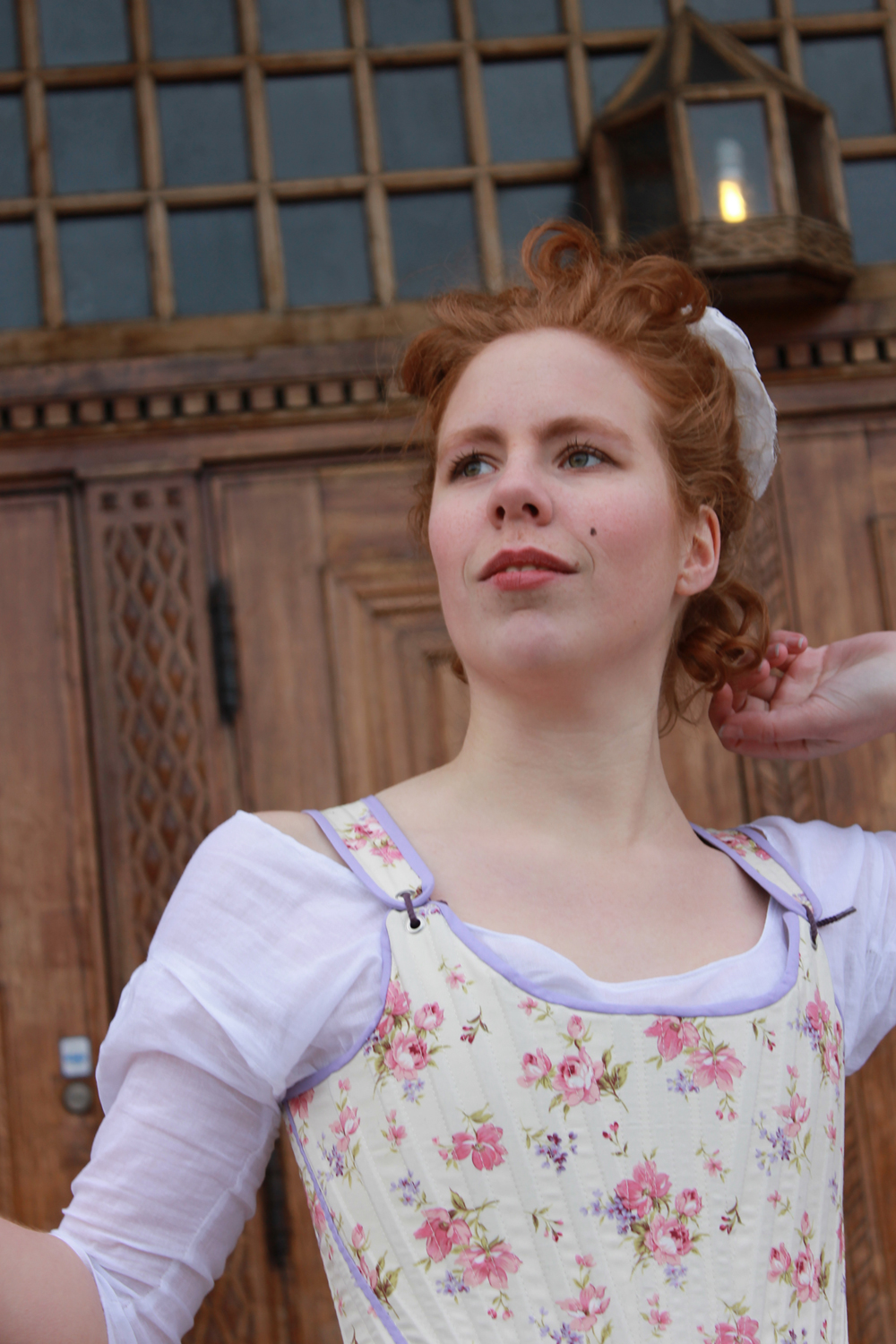
A 1700s Corset UFO

And so it’s time to present the last (of my old, prevously compleated) HSF entrys. The Challenge nr 2: UFO – Un Finished Object.

As a novice in costuming I didn’t had many UFOs laying around. But I did however have a costuming piece, not yet started but, promised to my sister.

A 1700s corset.

I’ve already made her one in the previuos year, but it was noting but a mess. Lets take a look at my very first atempt at historic corset making.

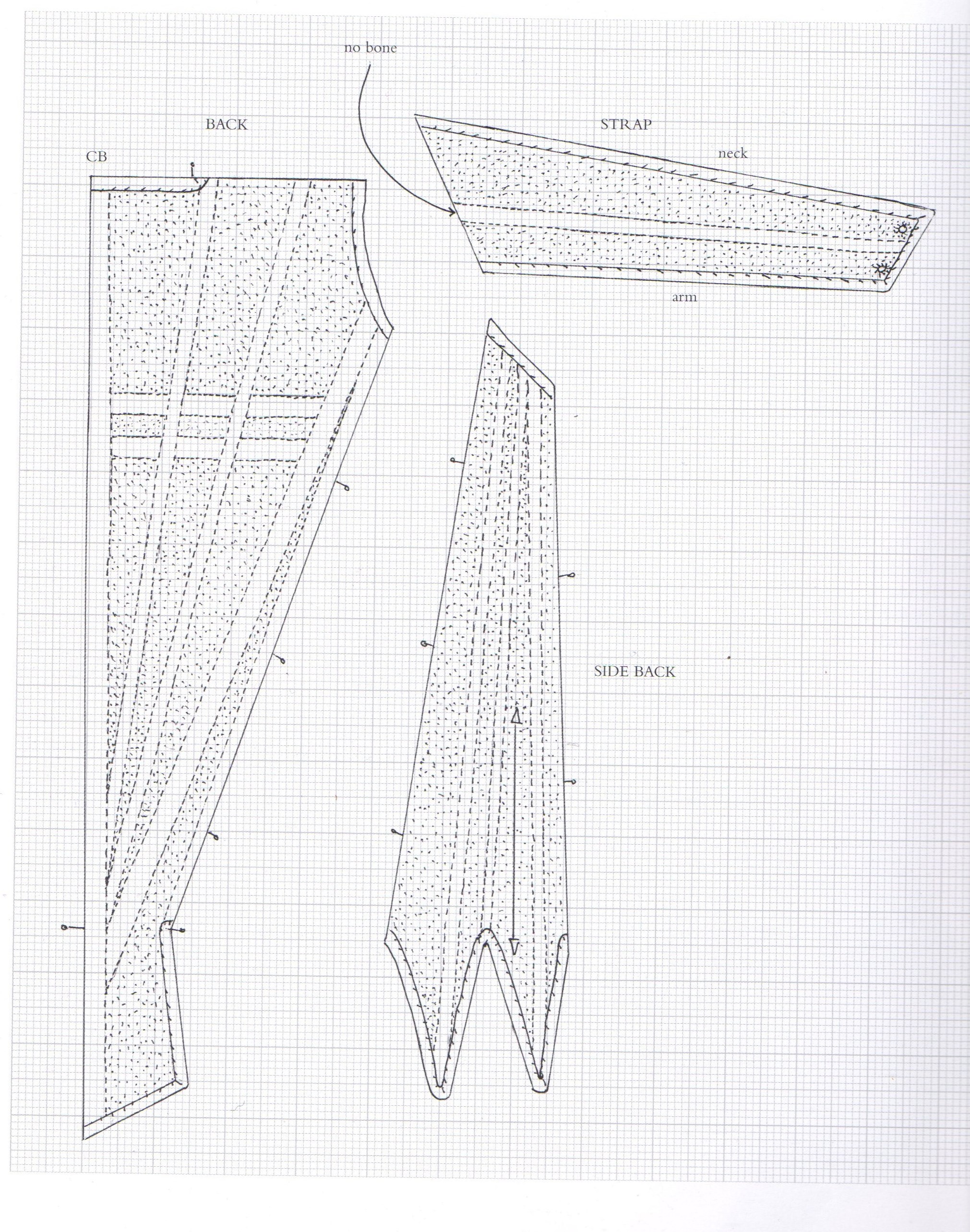
I used a pattern from Jill Salens book “Corsets”.

1970 halvbenad1790 halvbenad 2

The fabric is a lovely cotton print (which I still love, by the way).IMG_4055

I even made her a design sketch.img235

Then I started to sew.

And this is what I came up with.CIMG5938

Ok, its not that bad for a first try- if you ignore the gromets.CIMG5951

CIMG5948

It acctualy look pretty decent…IMG_4044

IMG_4049IMG_4046

Until you realises how extremly smal it is.IMG_4053It wouldn’t even fit my size 36 dressform.

My sister is not particular big, and even after some serious skwezing the darn thing still didn’t fit her.

We did get some pretty picture though.ghf

DSC_0777 And the minute we where done photograping, the whole thing whent straight into a box in the basement.

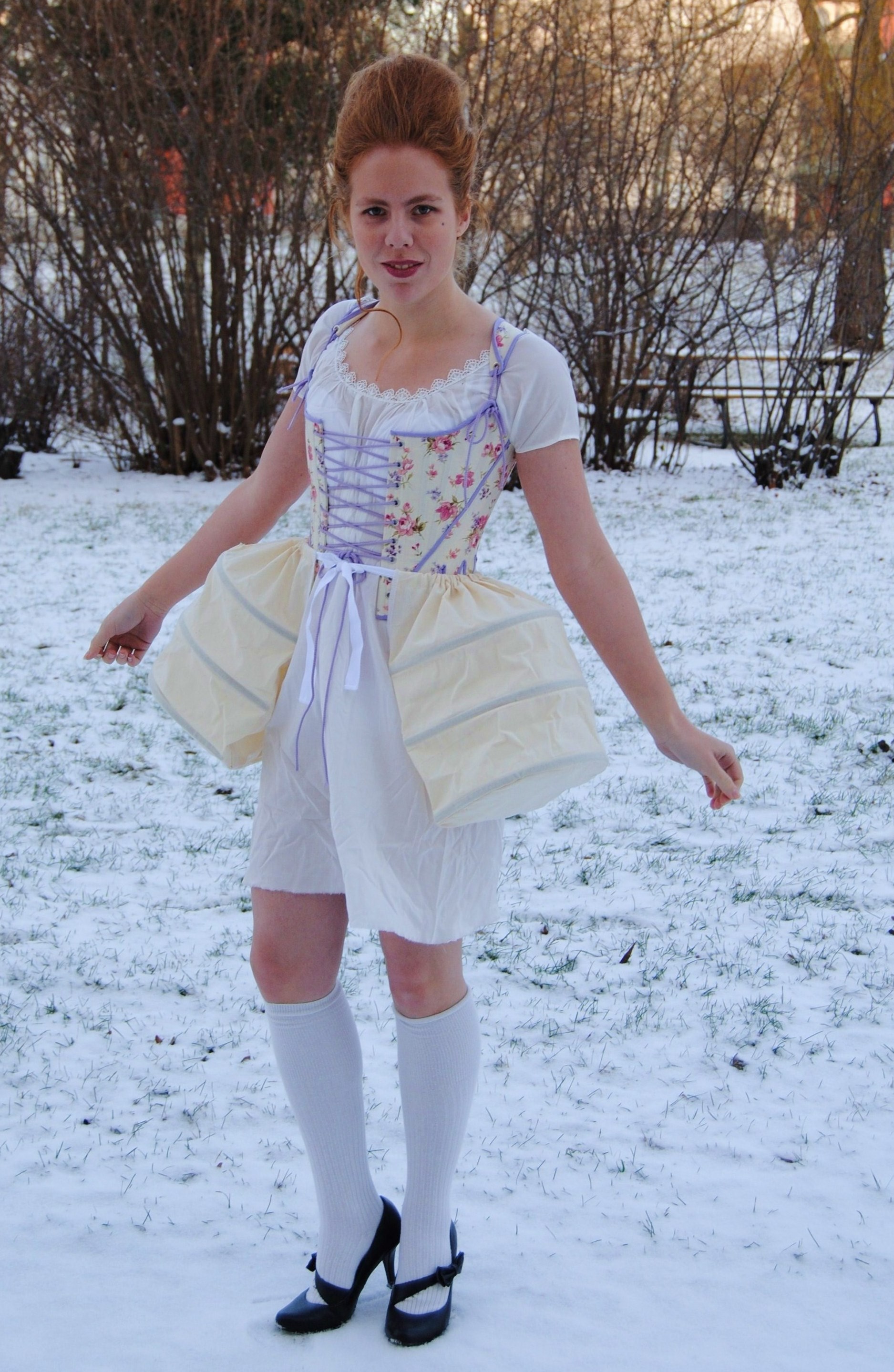
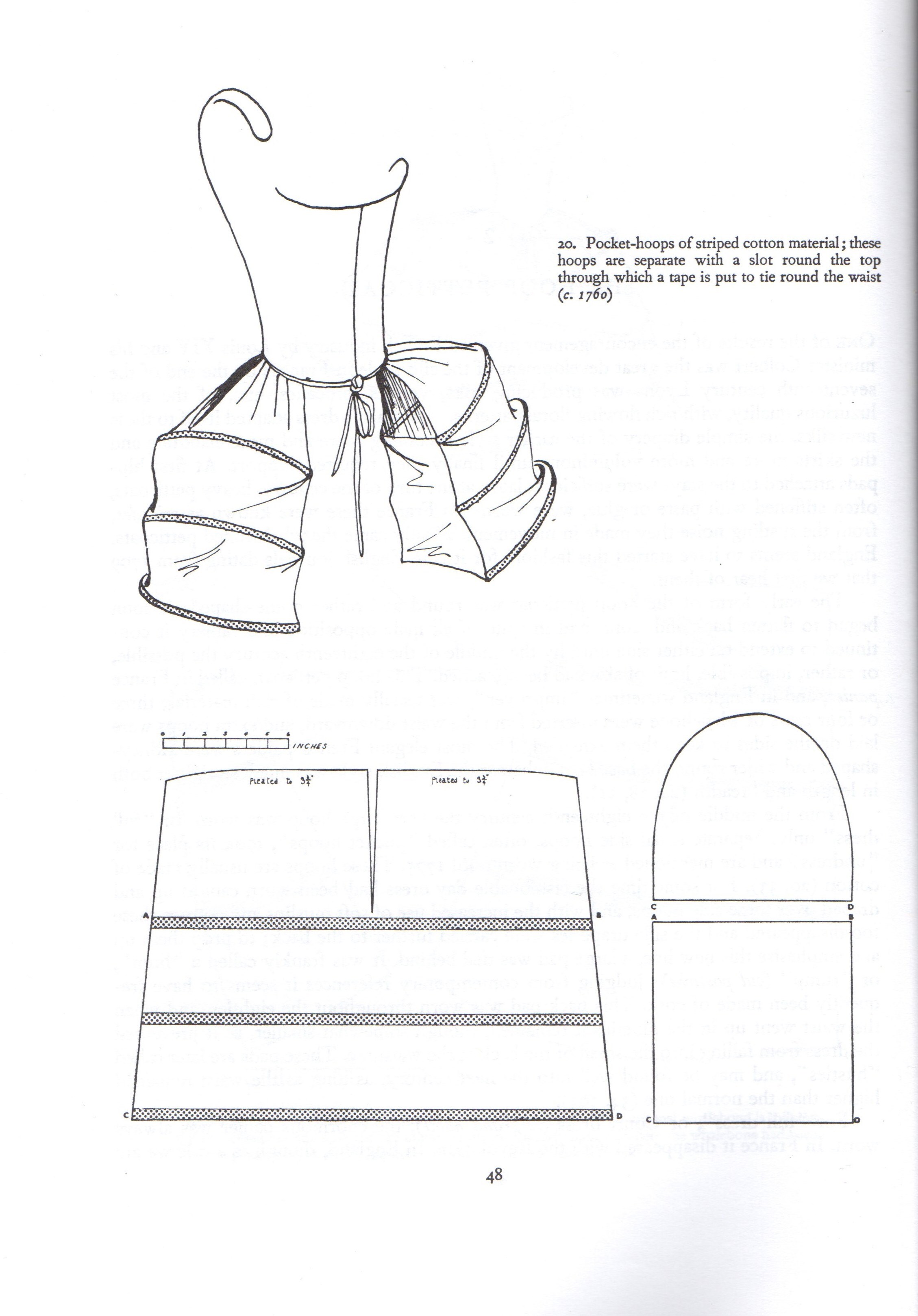
The pocket hoops are made from Waughs pattern and still works perfectly.1760 pocket hoop waugh

***

Now back to the UFO.

After I’ve promised my sister to make her an other corset, that would actualy fit her.

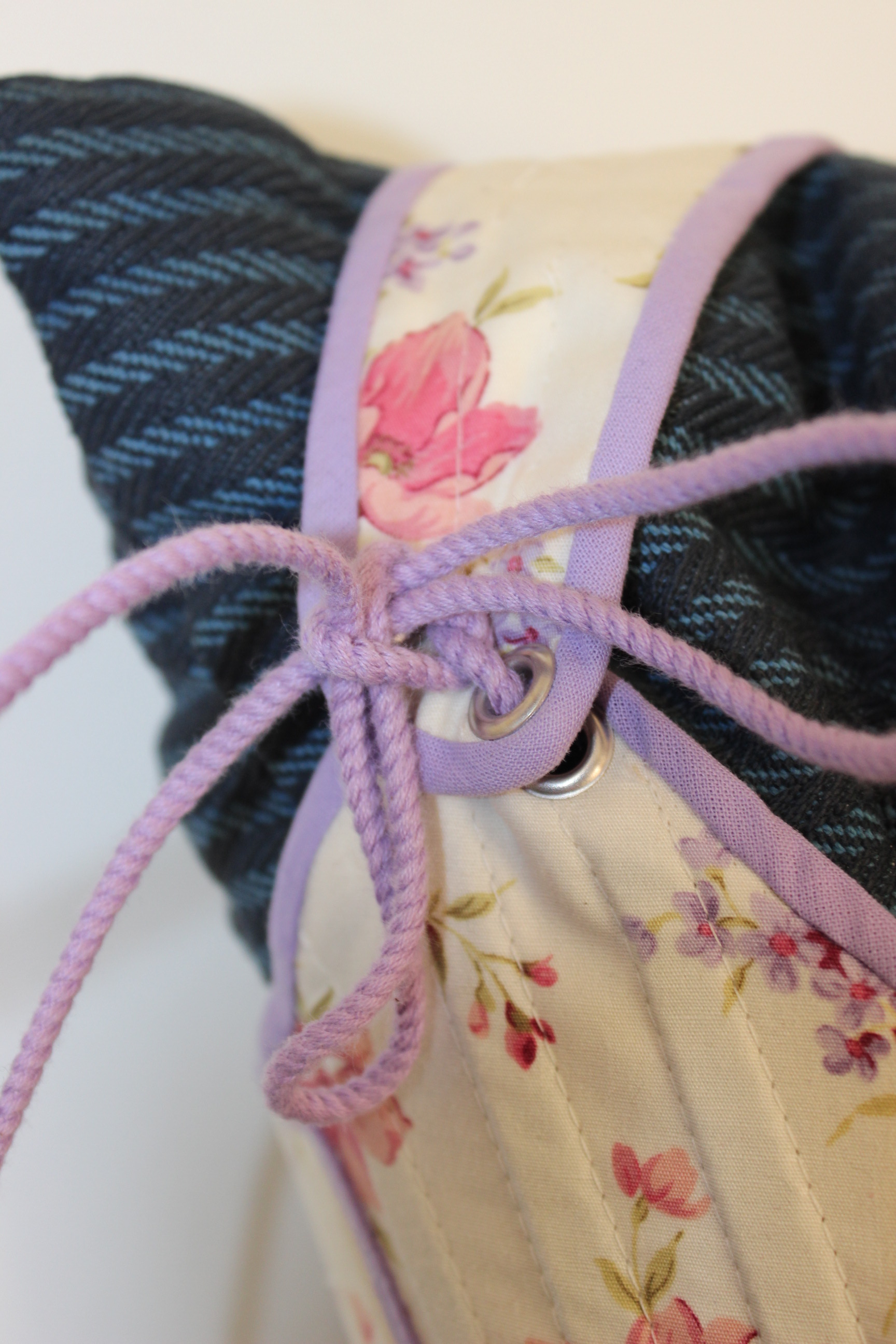
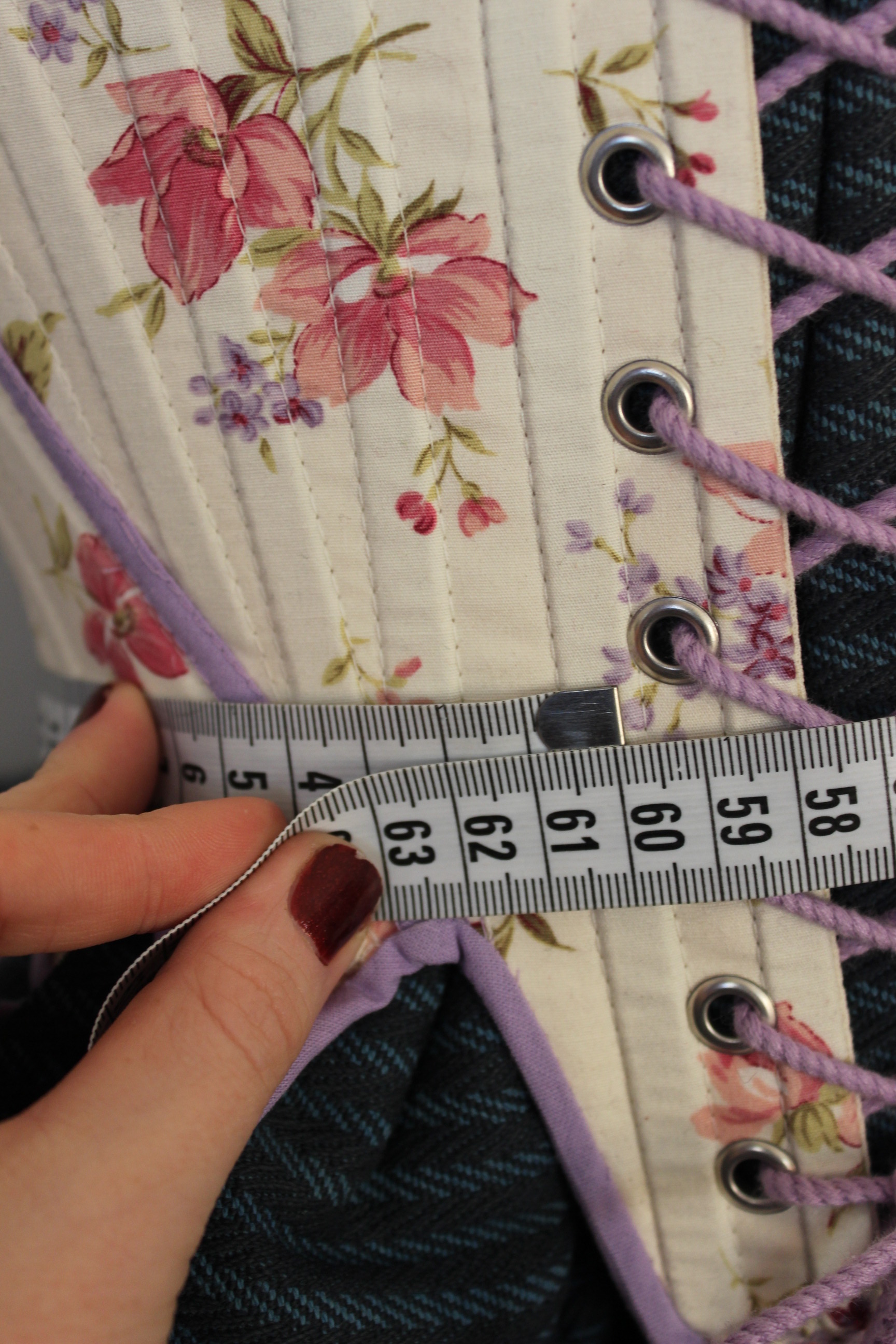
We trashed the old pattern, starting from skratch, and drew her a new one using Waugs “Corset and Crinolines” – 1790s corset pattern, and modified to fit my sister. I also took away the front lacing, and added tabs at the waist.

So I made a toile, fitted it and started on the corset itself. Since me and my sister lives in oposite sides of the country I didn’t have the chans to try it on her until it was finished.

Looking much better.halloj-116

But it is still to smal!halloj-119

This time I fixed it by ripping it open and inserting some godgets at the back seams.

CIMG6587

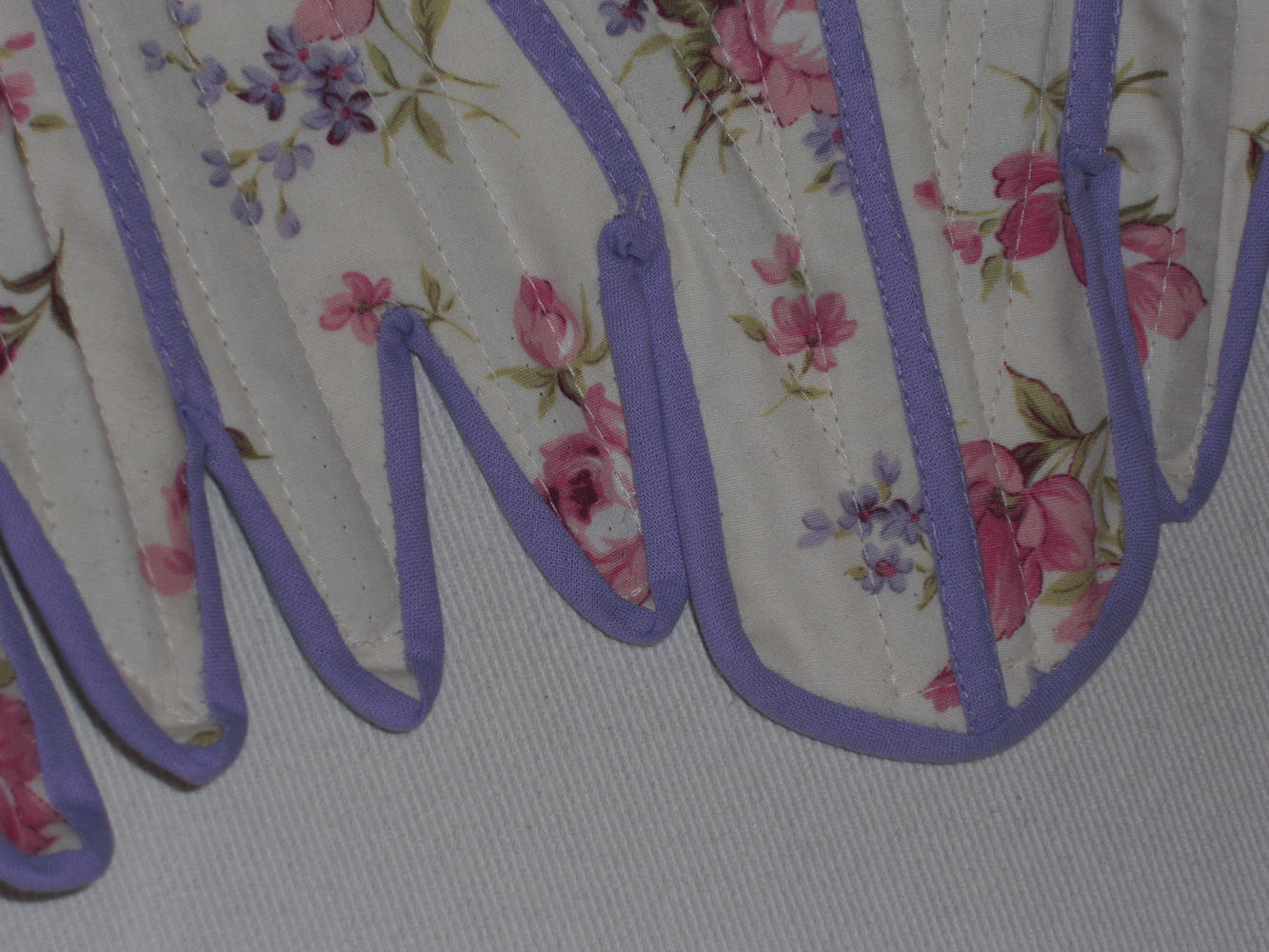
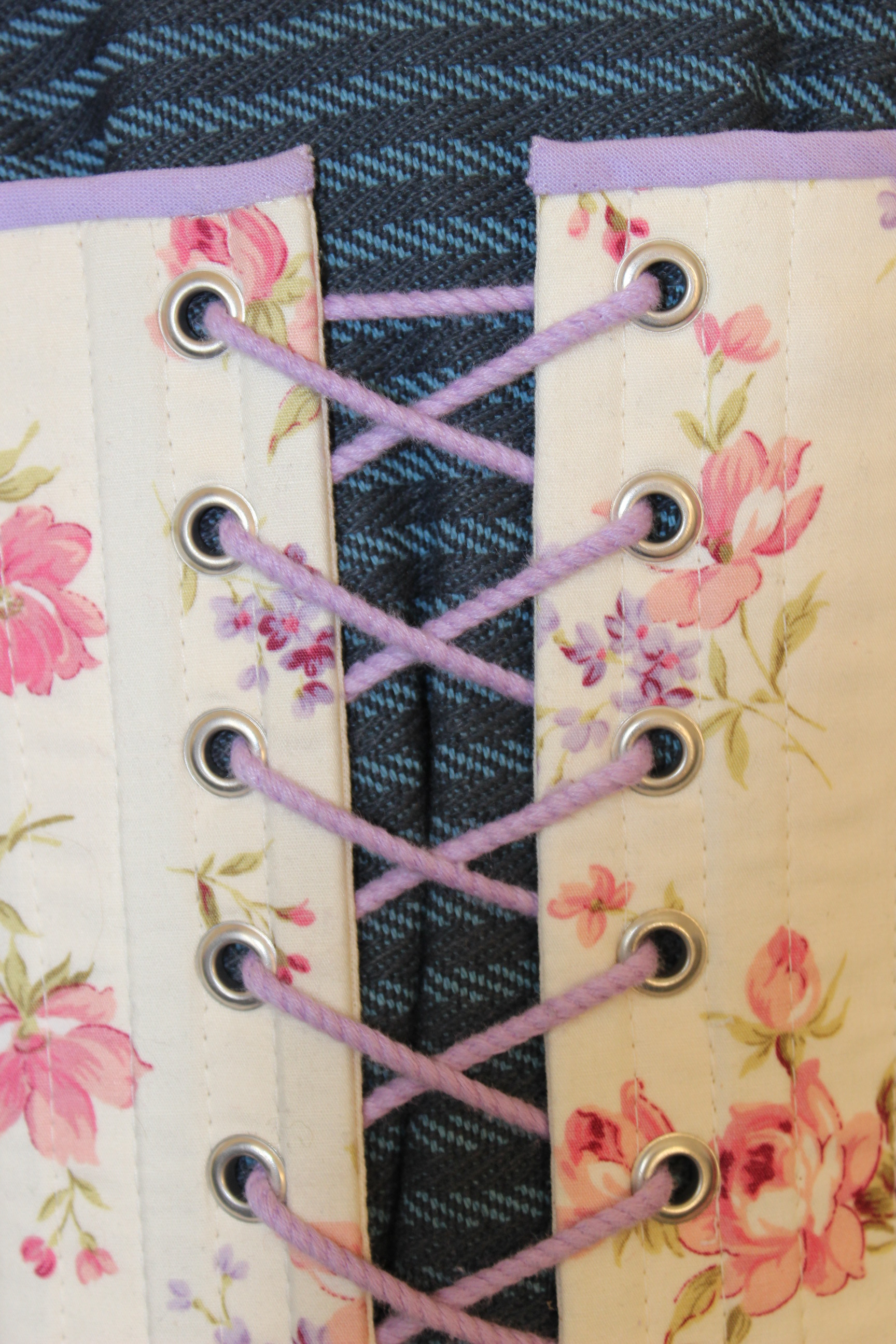
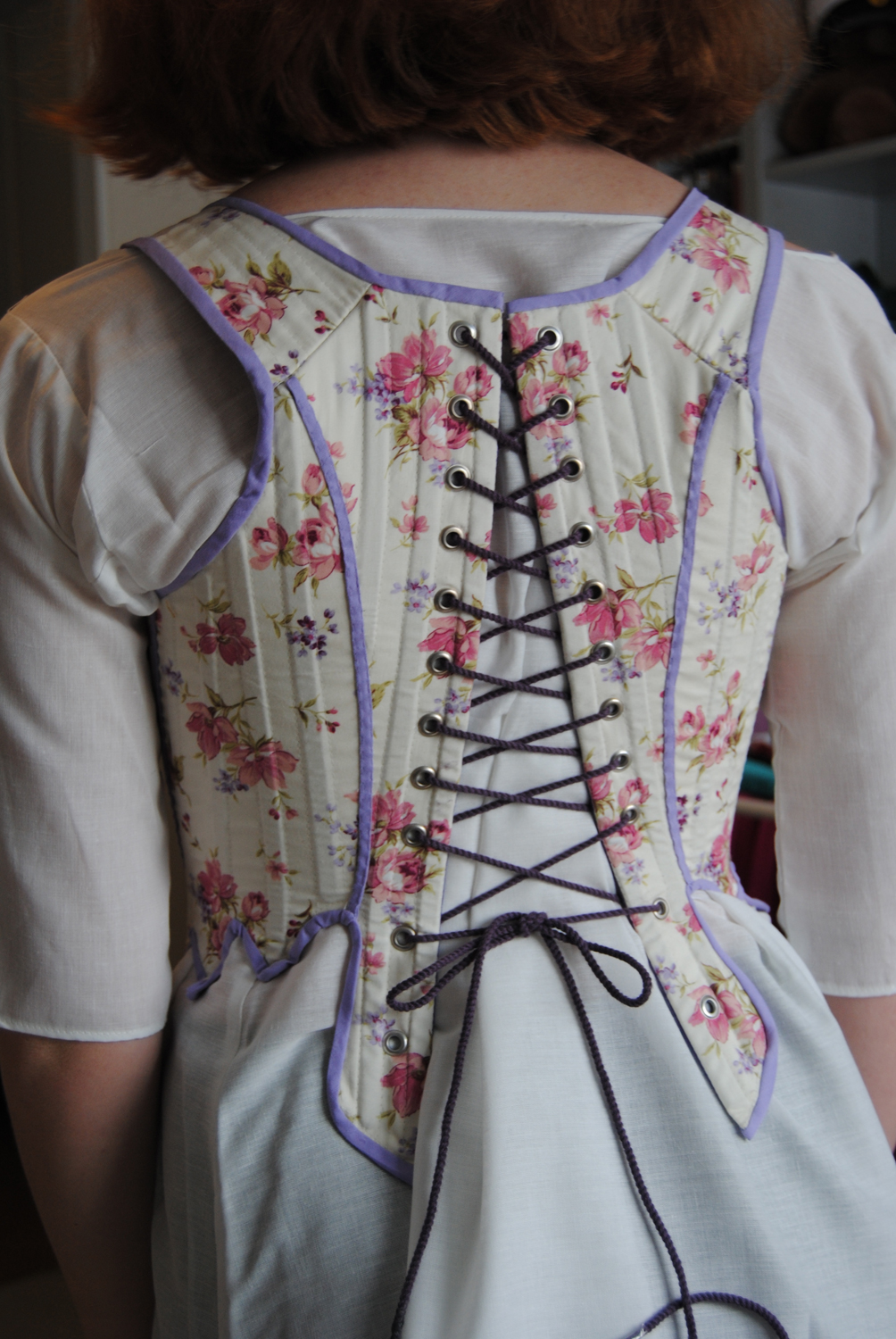
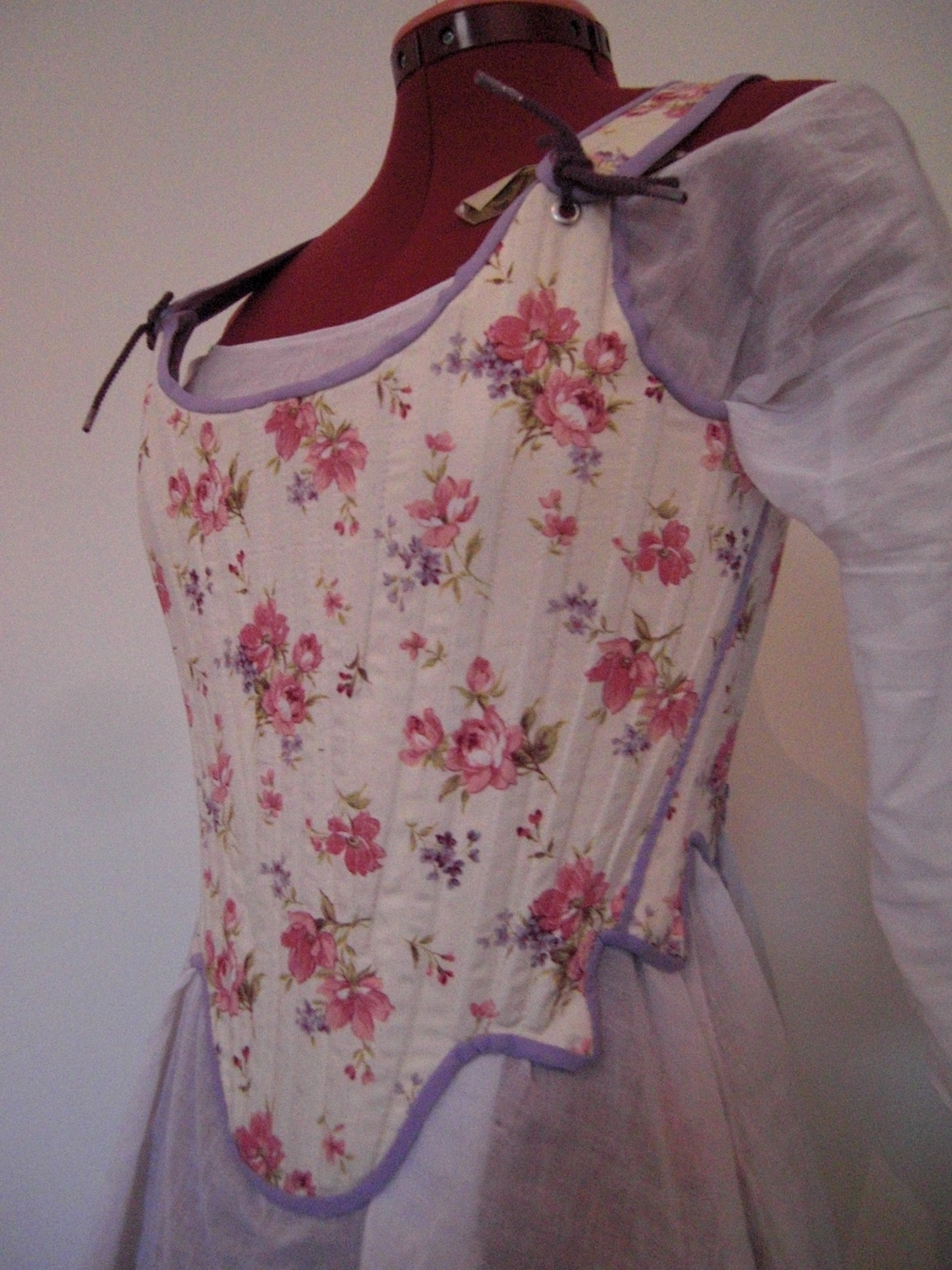
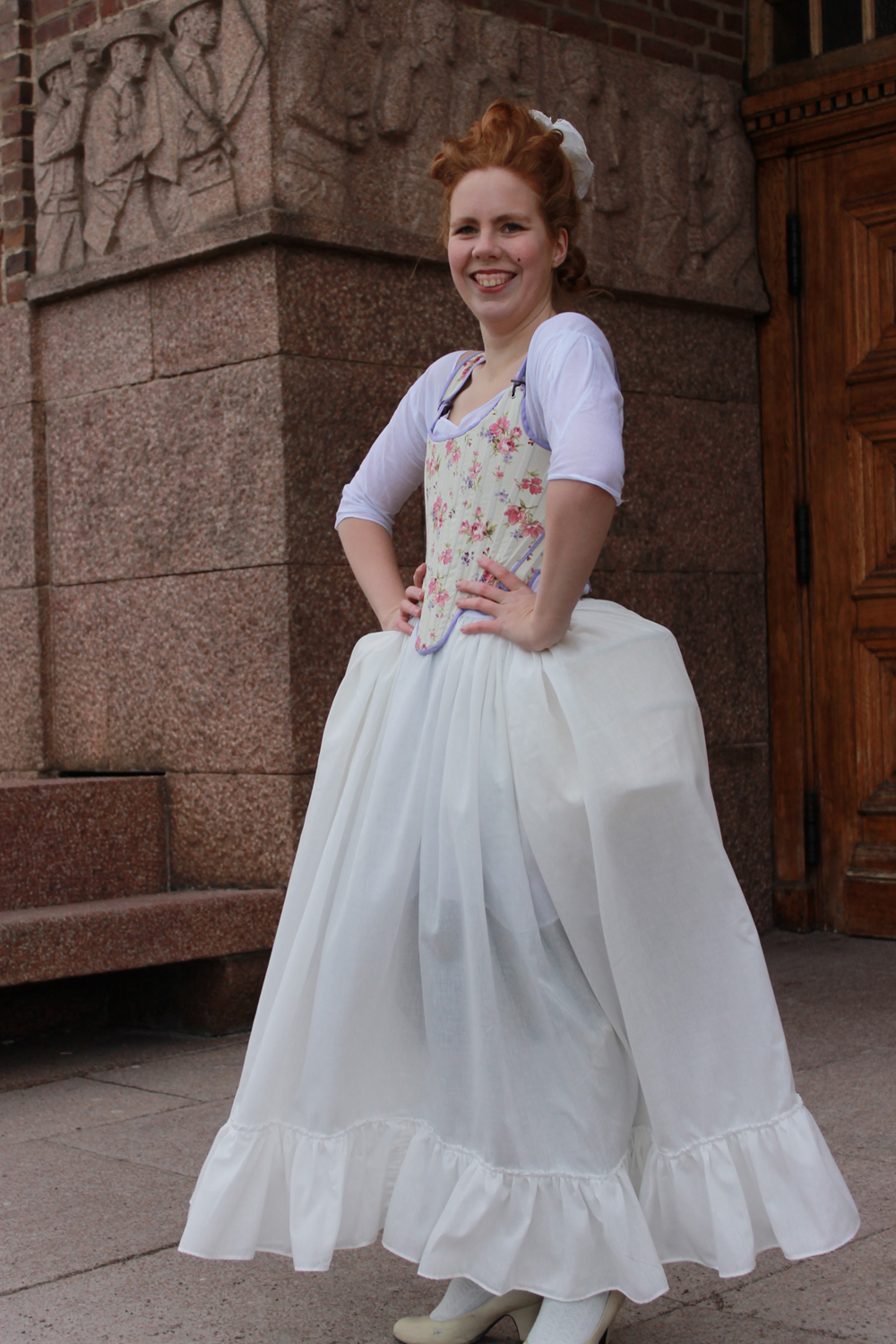
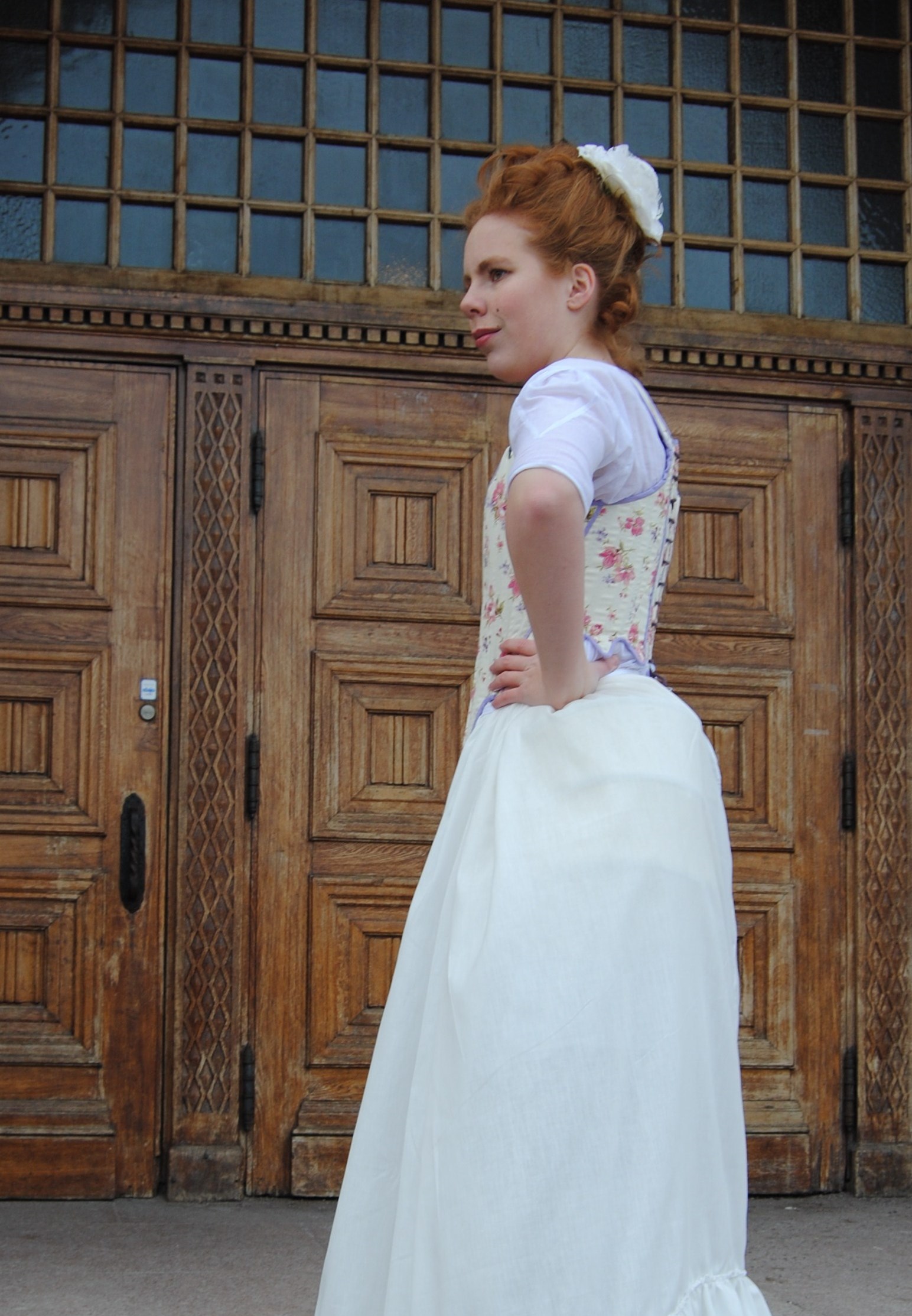
The finished corset.IMG_1827

DSC_0362

DSC_0374

DSC_0379

IMG_1854

DSC_0382

Just the facts:

Challenge: nr 2 – UFO

What: A 1740-1780s corset

Pattern: Jill Salen “Corsets – 1780s corset” re-worked.

Fabric: 0,5 m of cotton print and 1m of white cotton lawn.

Notions: gromets, thread, lacing cord, cable ties and purple bias tape.

How Historical Accurate: Not really. The decorative printed corsets didn’t exist until 200 years later, and the sewing and construction are all modern. It does however give her the desired body shape. So maybe 2/10.

Time: 25 hours.

Cost: 200 Sek

First worn: At the photoshoot in february 2013.