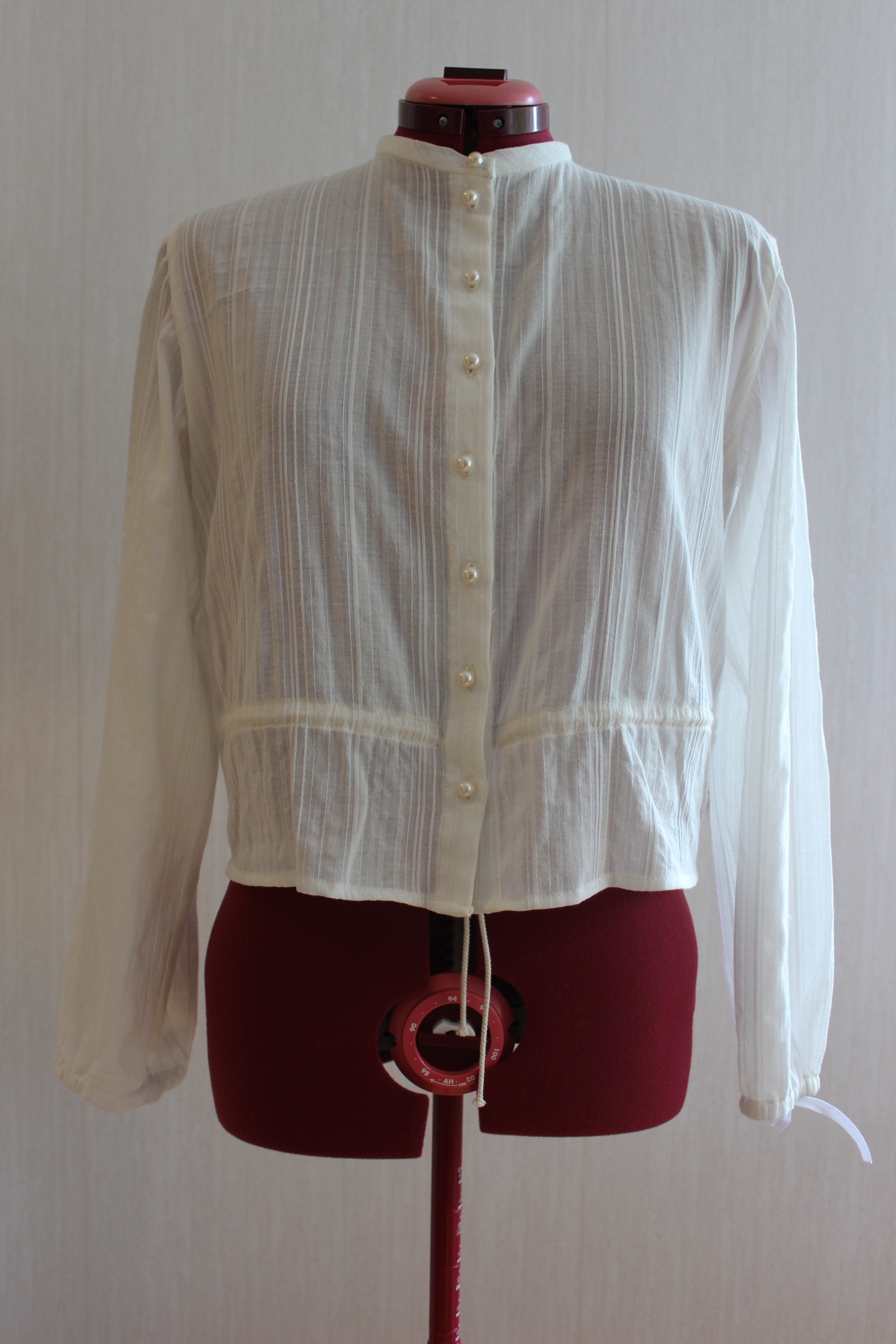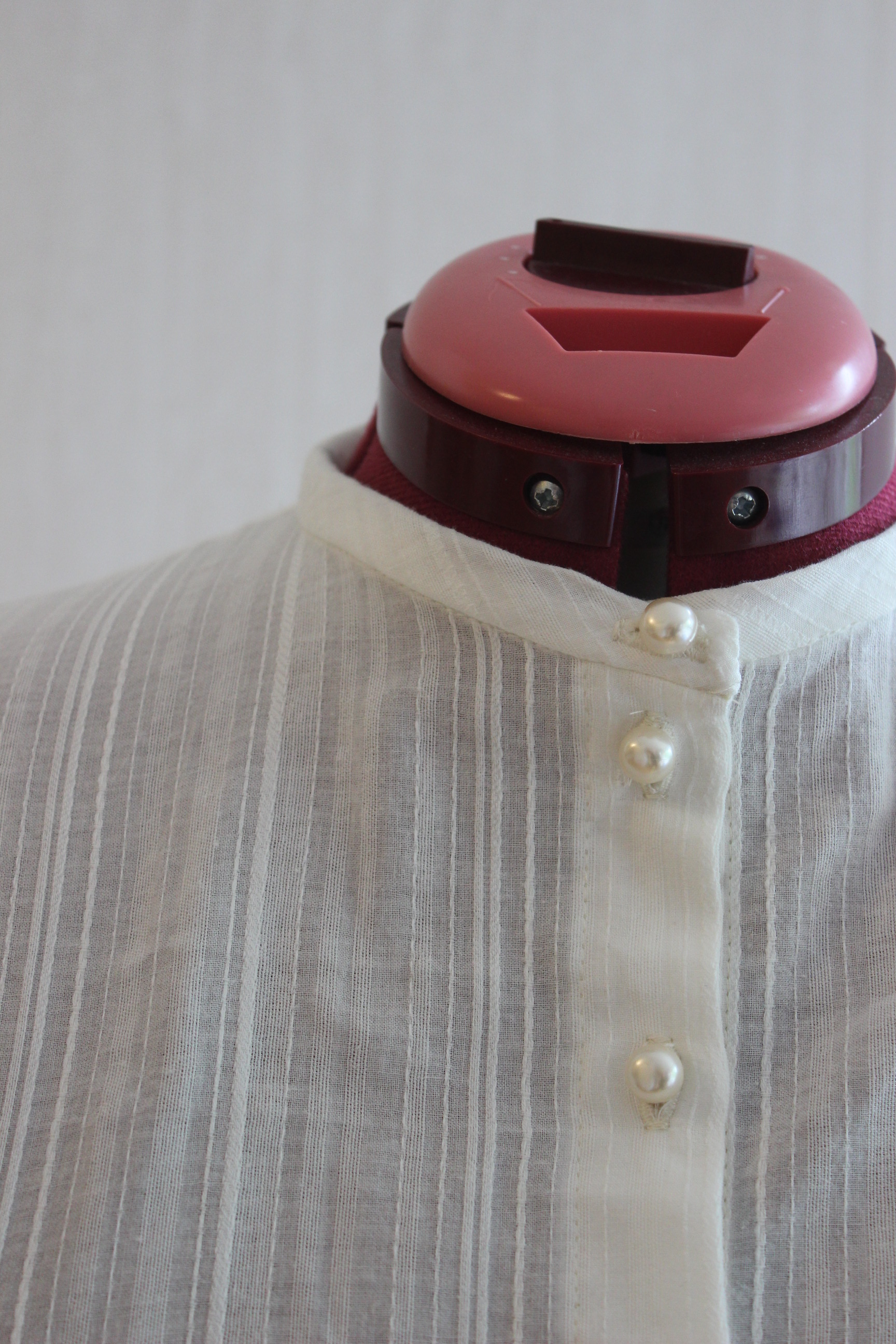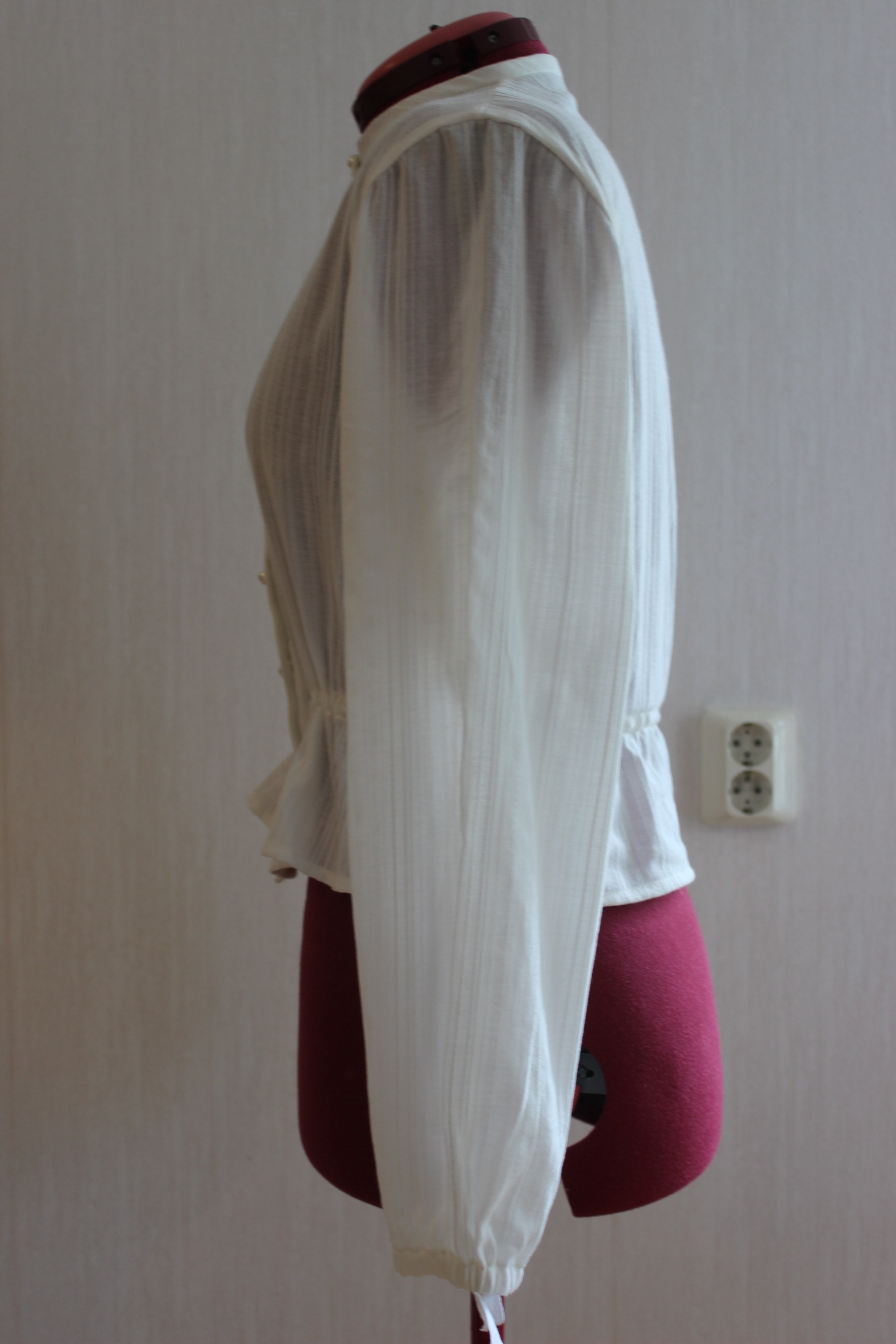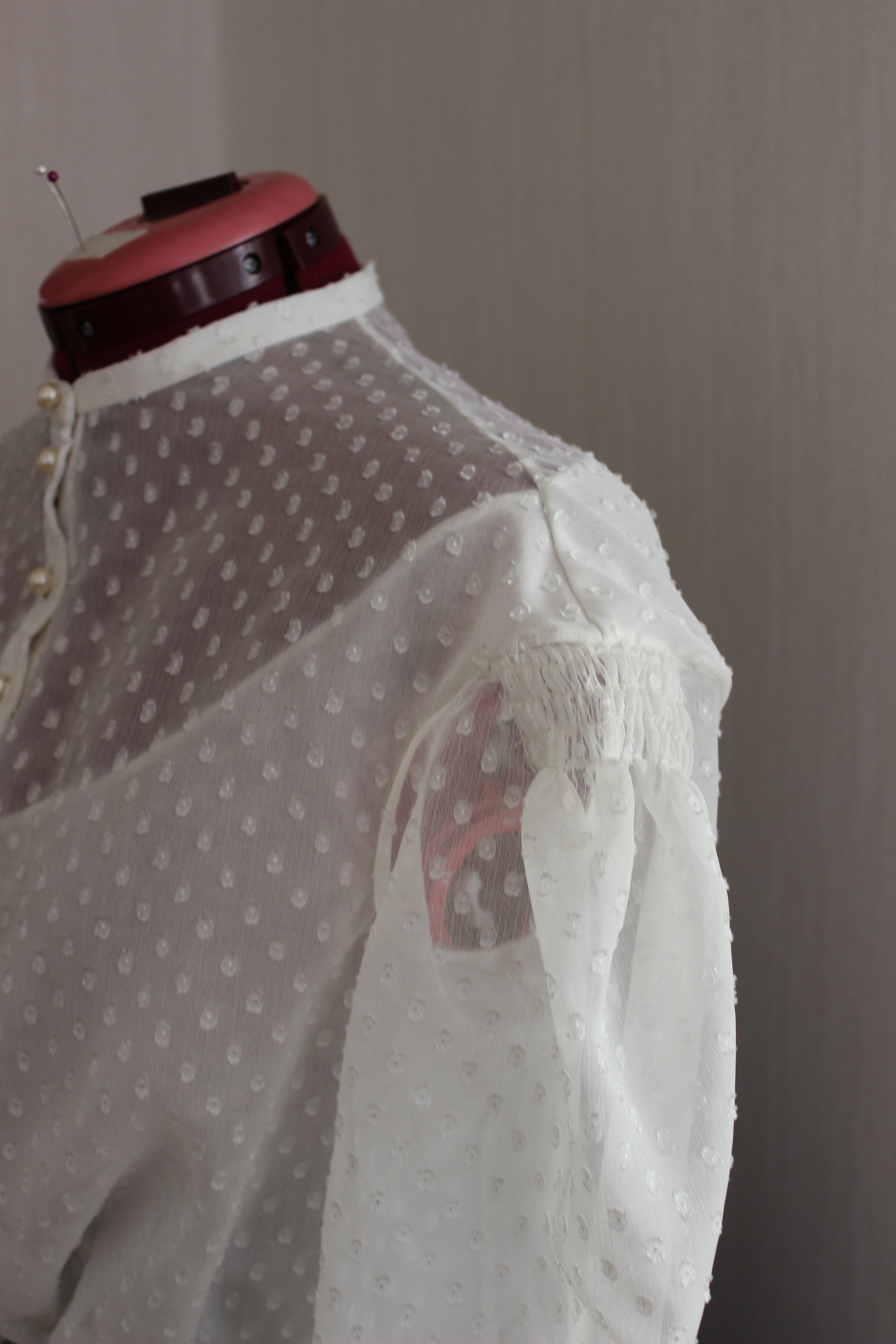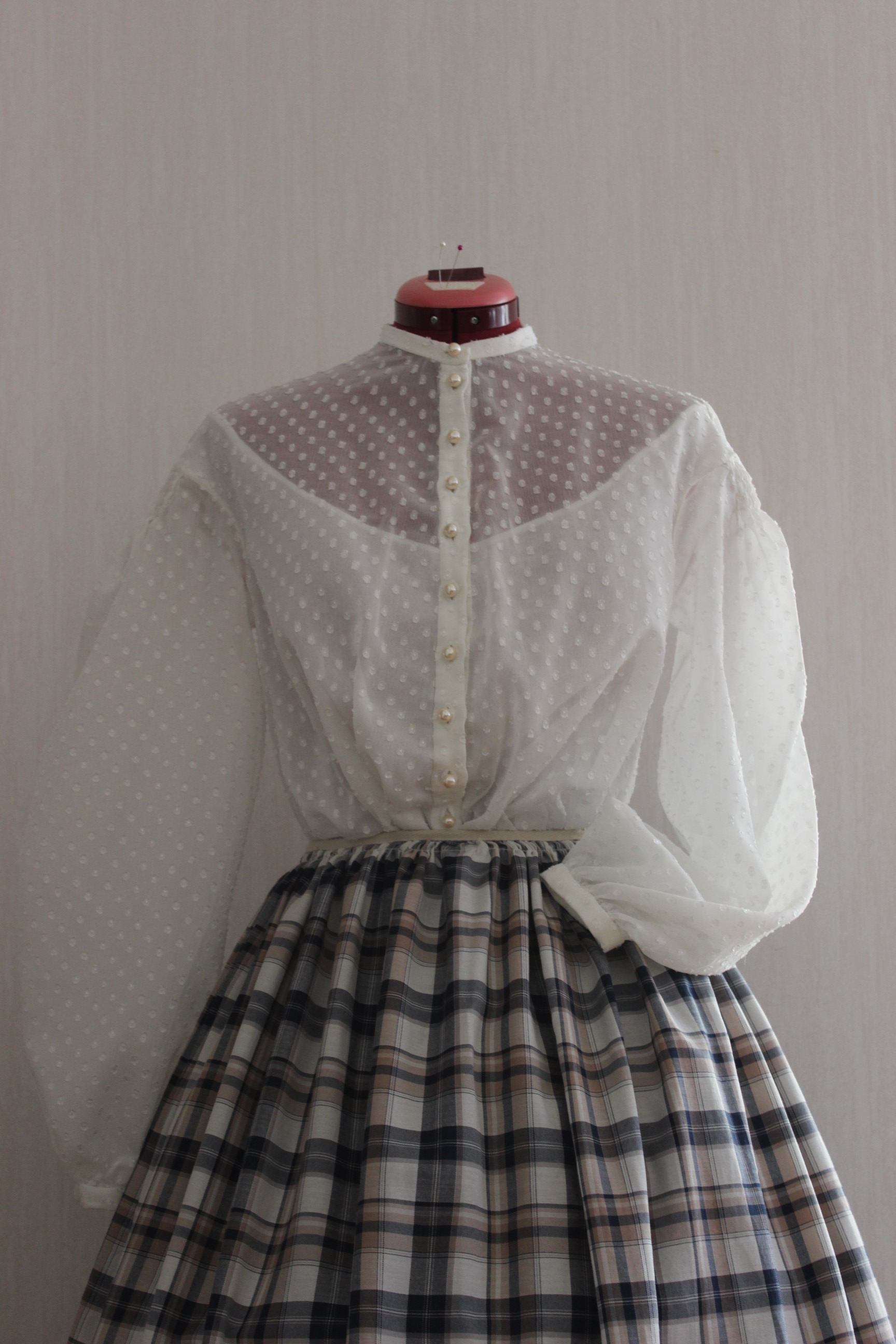
Practical (and quick) 1860s blouse

My original plan for the HSF15 challenge 5 – Practicality, a regency day-dress, needed to be postponed so to get time to finish this springs biggest undertaking – a hole new 1850-1860s wardrobe.

So after finishing my not a Garibaldi blouse a few weeks ago, I decided I needed yet another blouse in almost the same style, for my sister to wear at the upcoming “Crinoline day”.

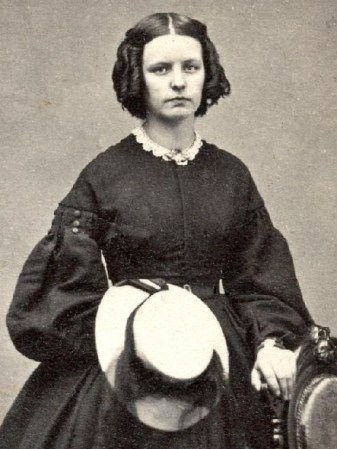
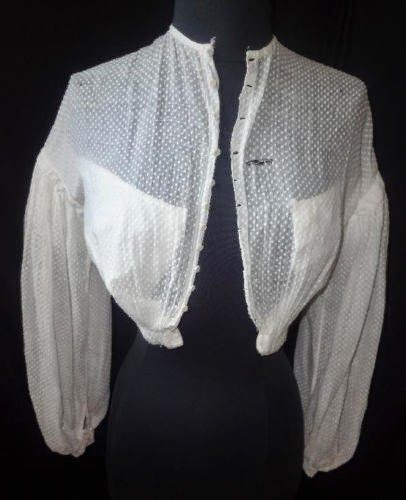
89cd5d40c071b5494b98ca322cef5991My main inspiration was this sever looking young lady.

Since time was sparse, I decided to use the simplest way possible in all things for this blouse.

Staring with the pattern, I used the basic pattern blocks for a regular shirt (just like the picture below), and omitted the collar and cuff.
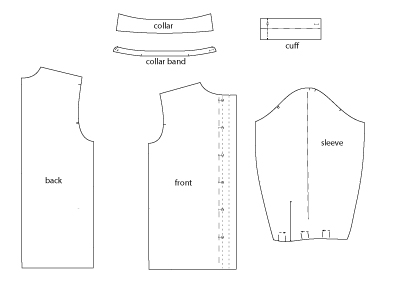
shirt-sewing-pattern-pieces-540

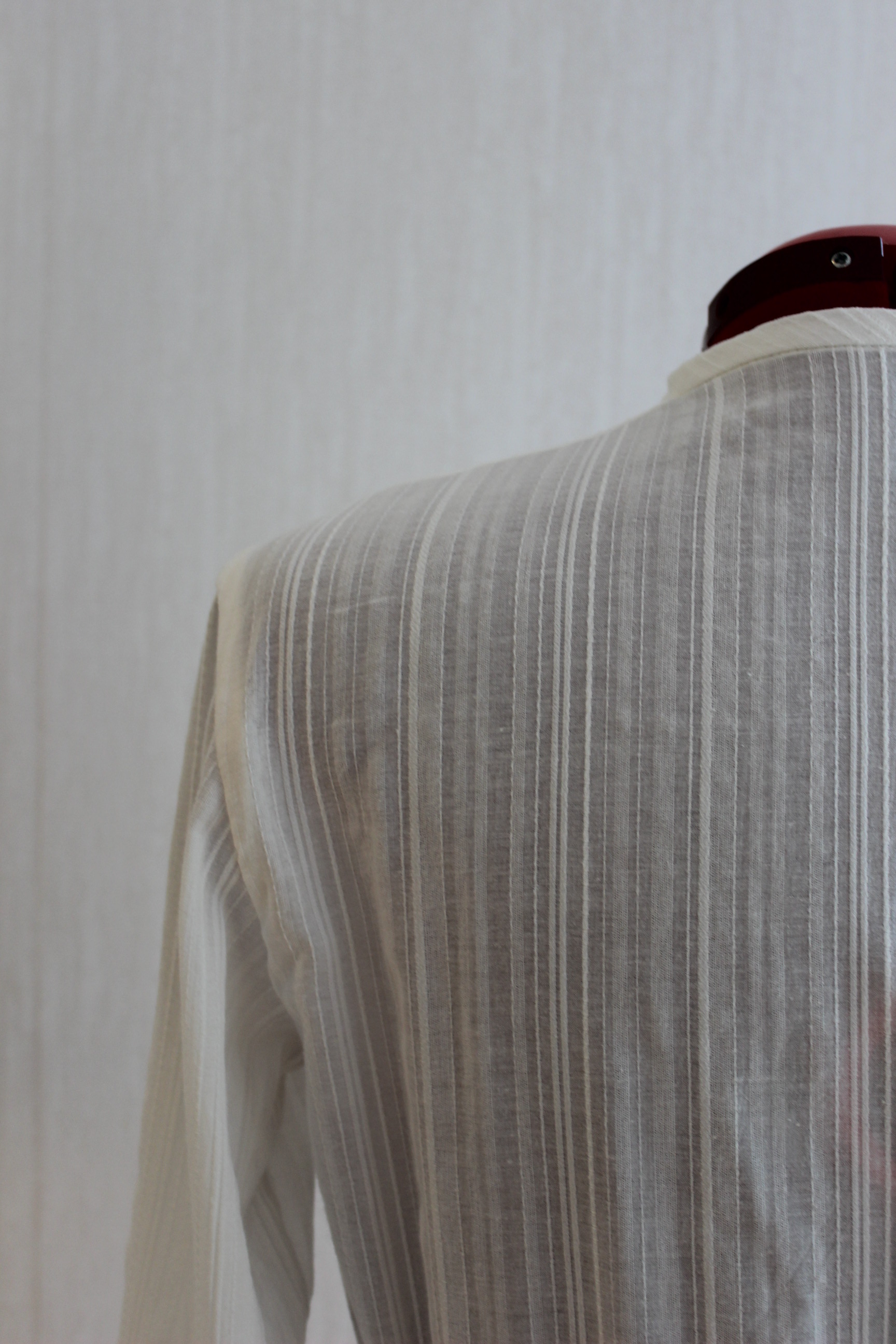
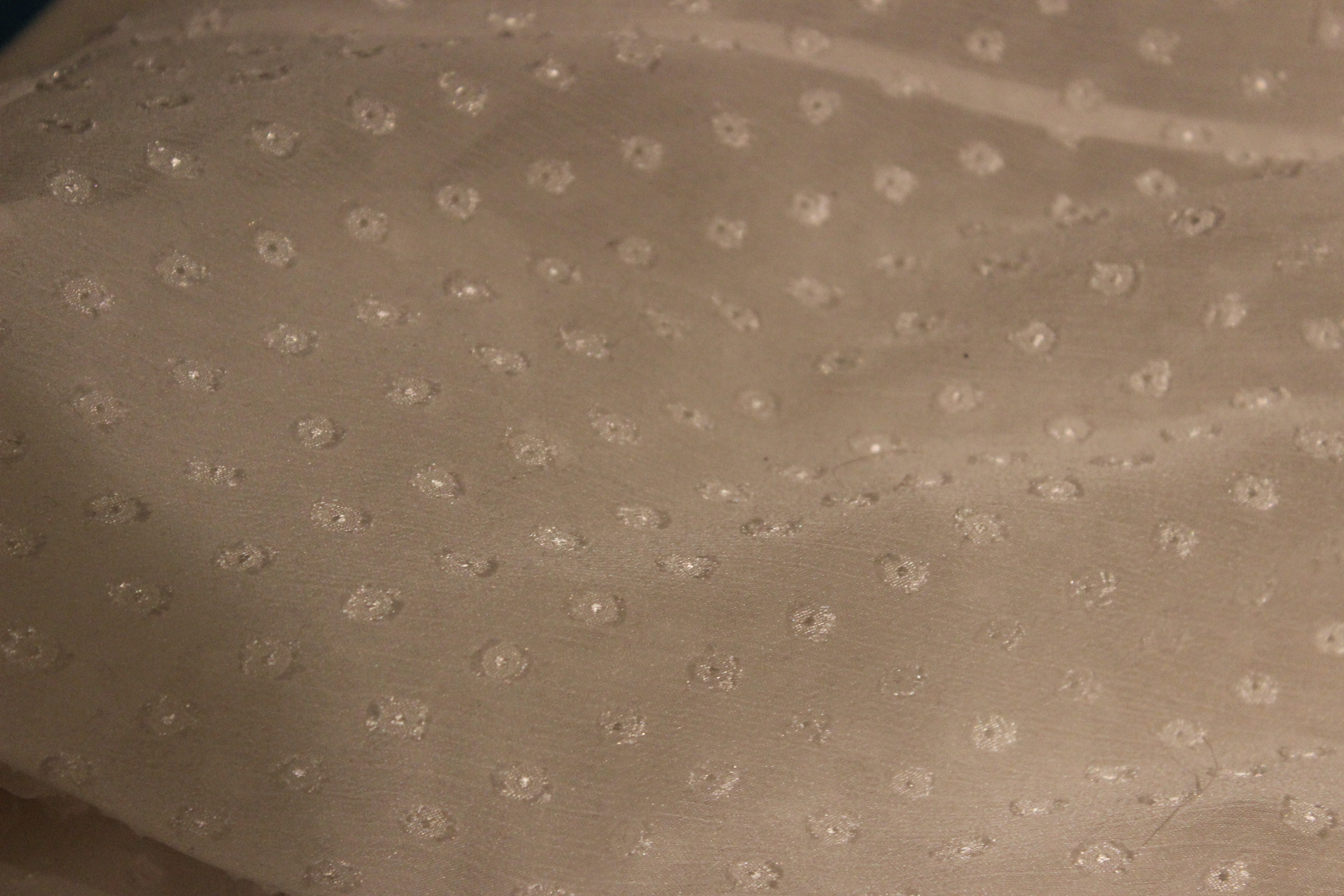
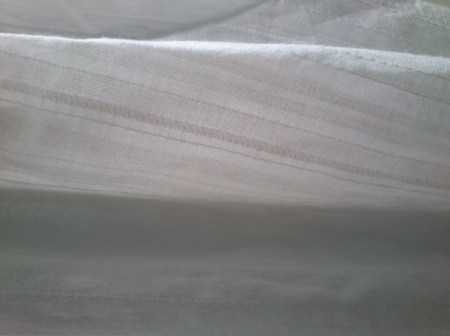
For fabric I used leftovers from my “Chemise a la Lambelle” & ” Ariel/Camille” dresses, A really nice and strong structured cotton voile(?)2013-05-29 17.38.05
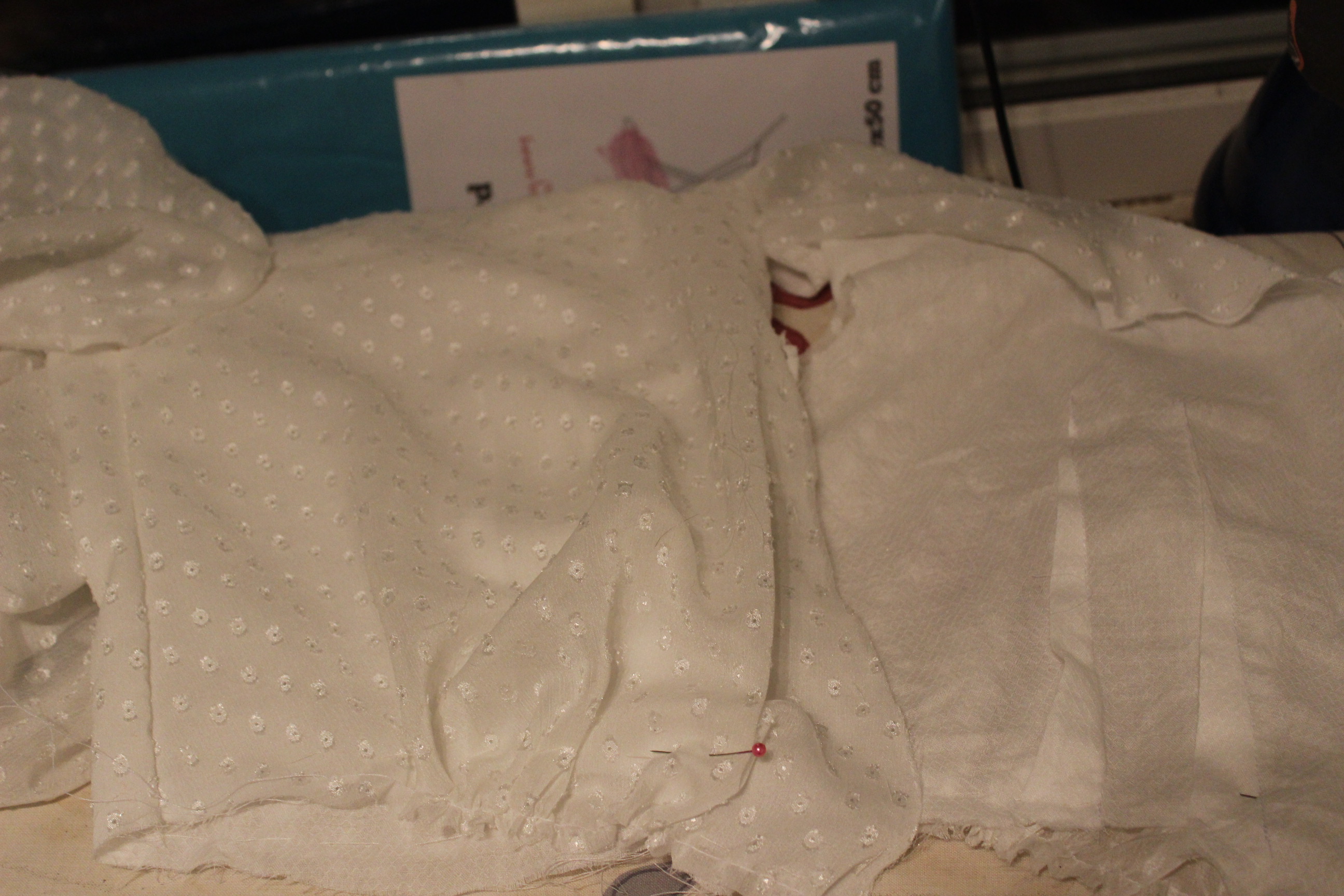
Unfortunately I forgot to take any photos of the construction process, but it was so simple and went so smooth that I just kept sewing and finished over one afternoon.
IMG_6828

IMG_6826

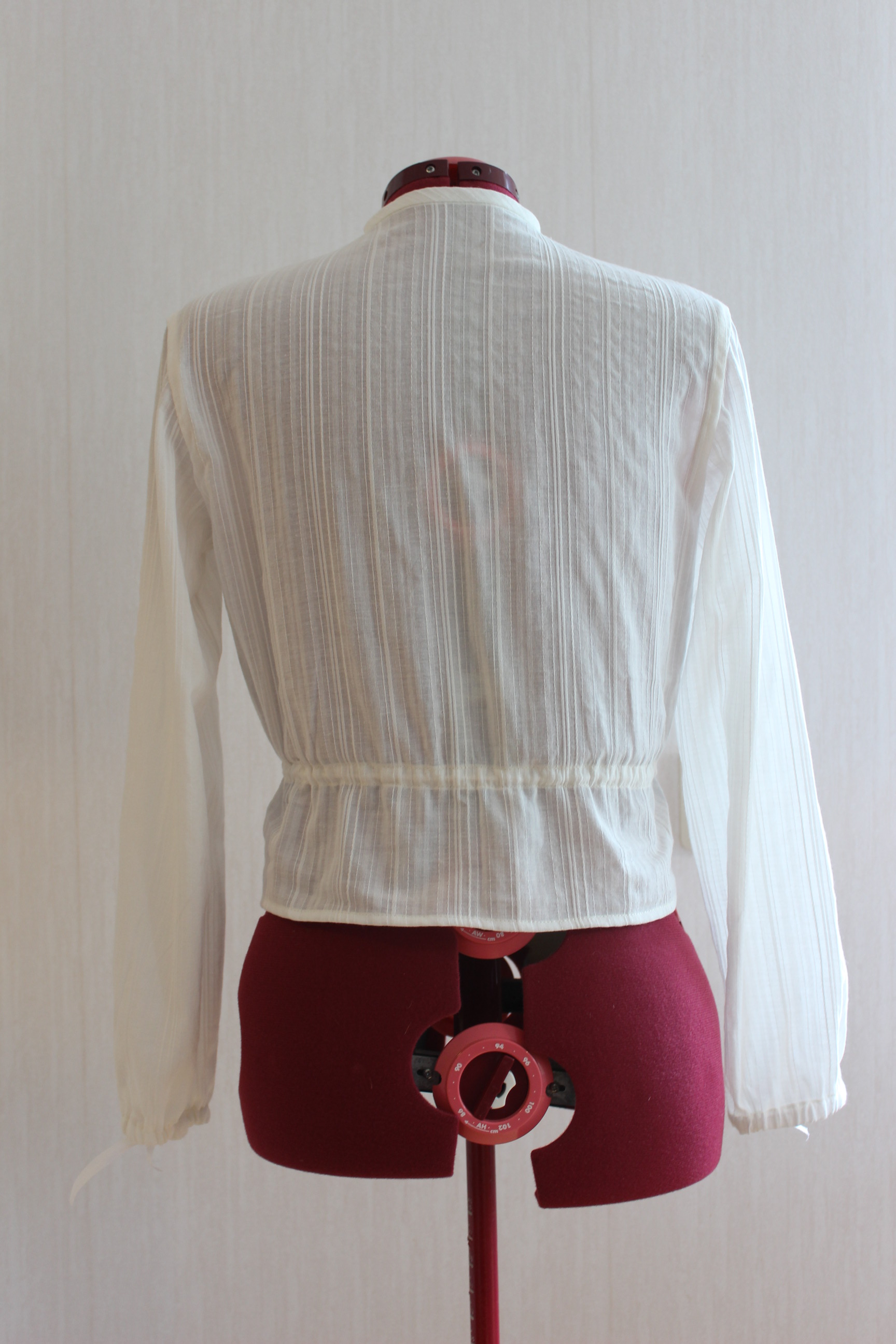
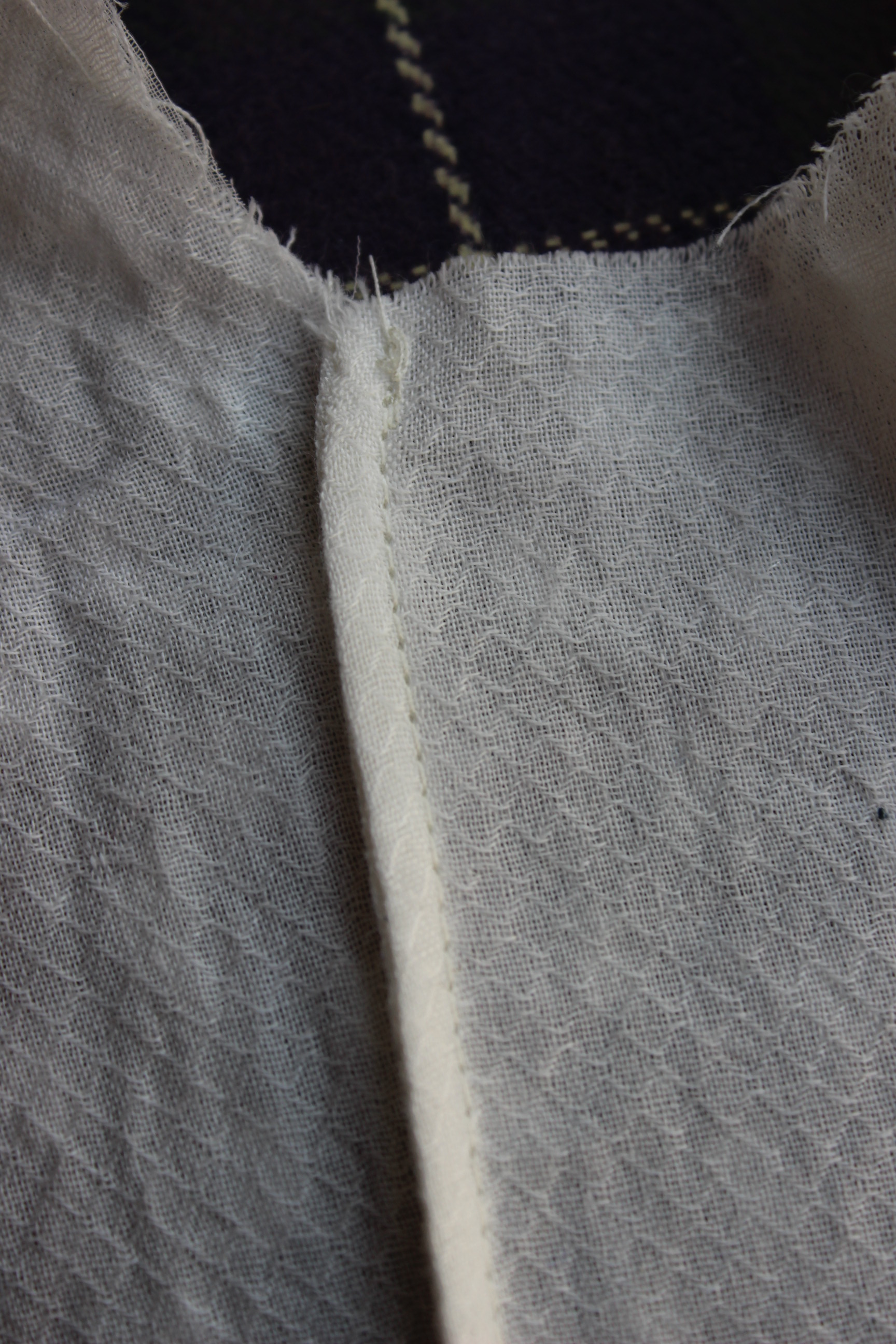
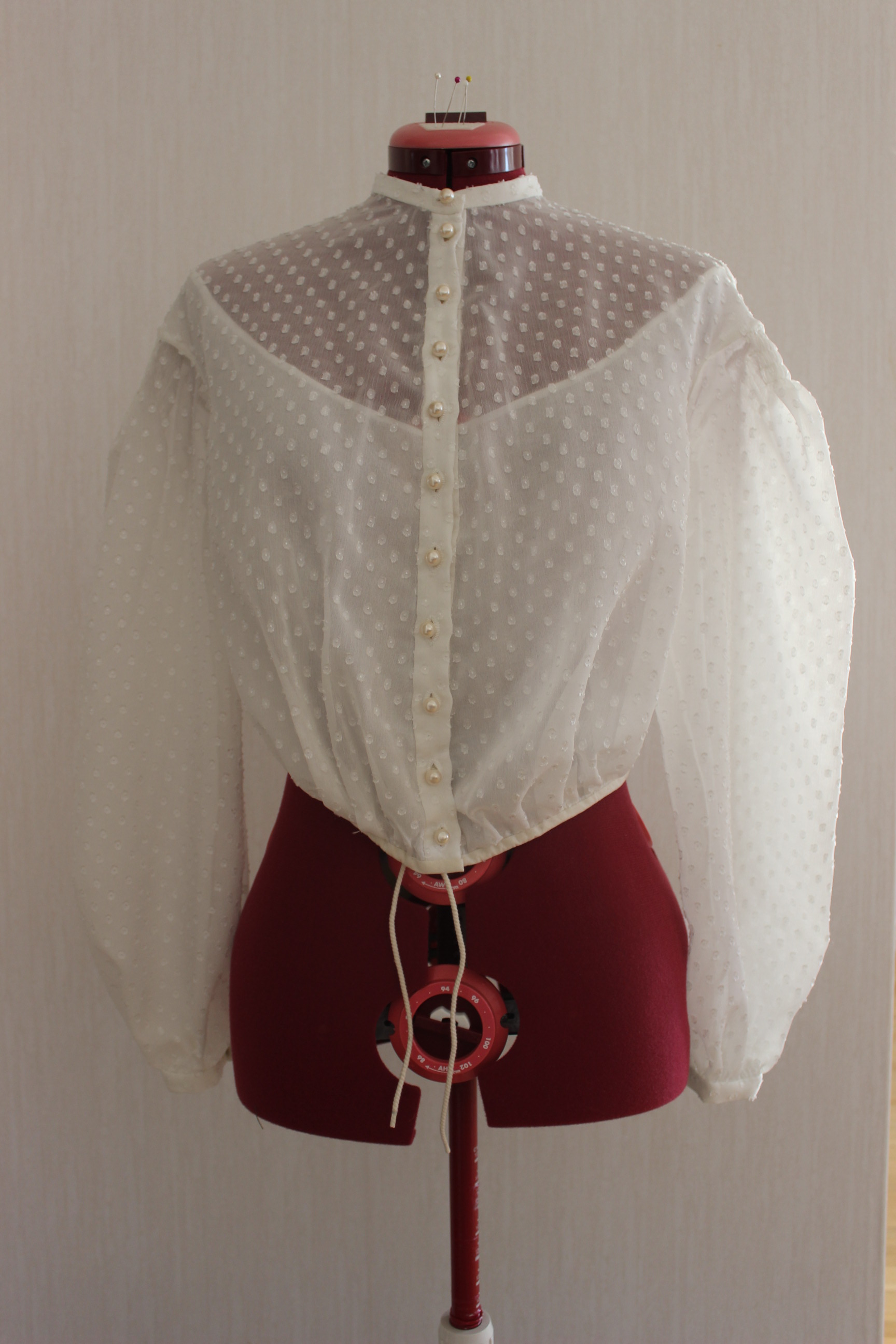
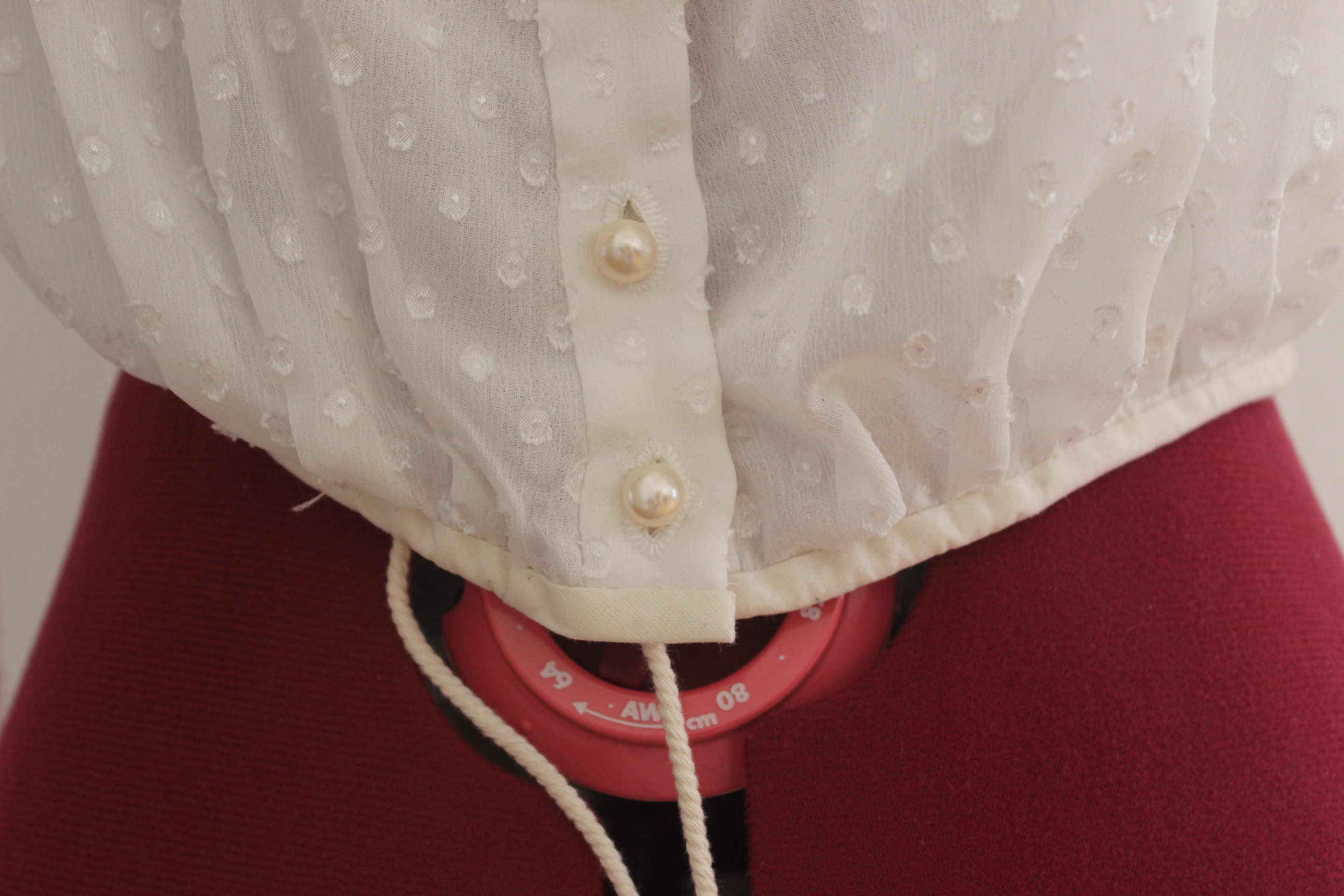
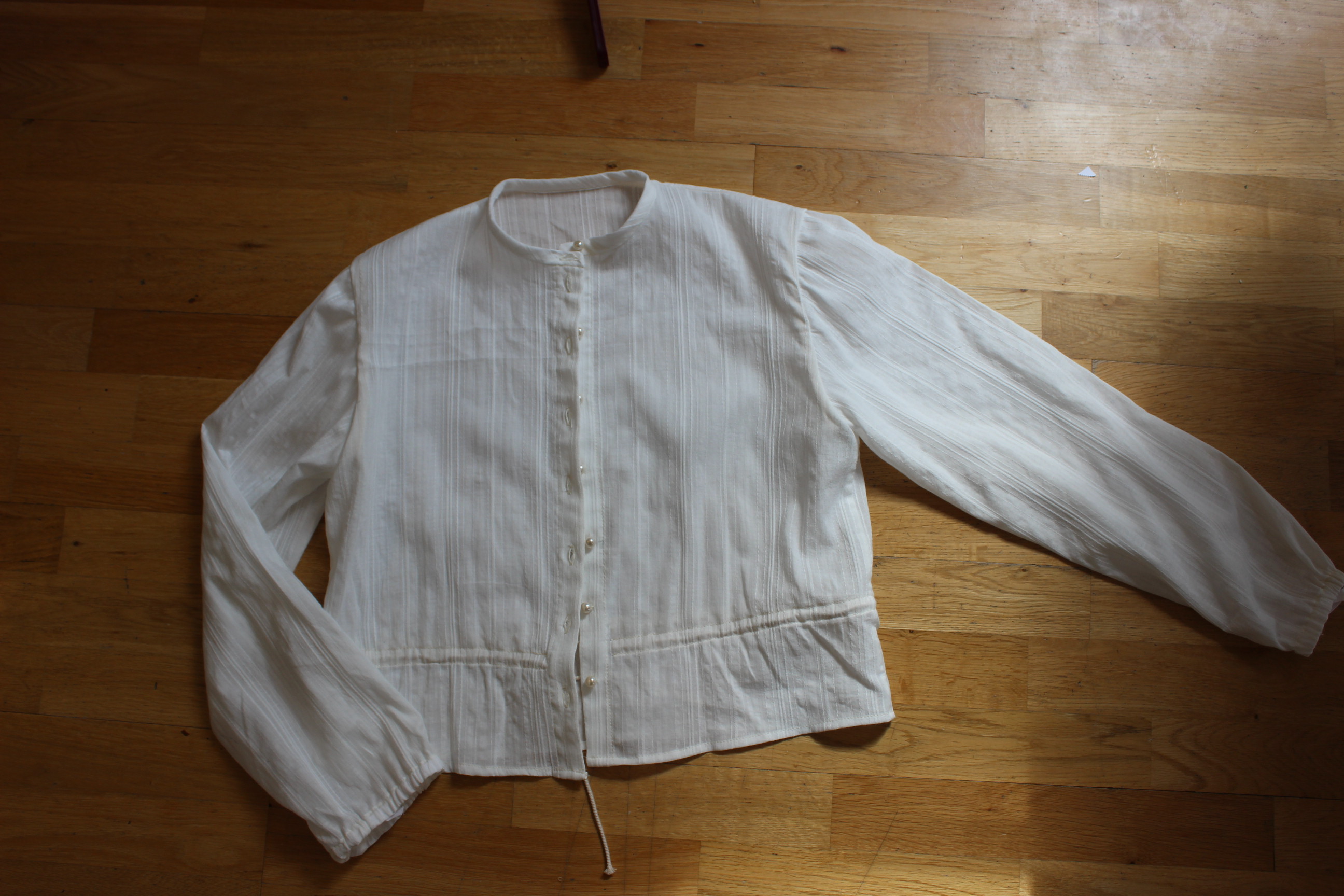
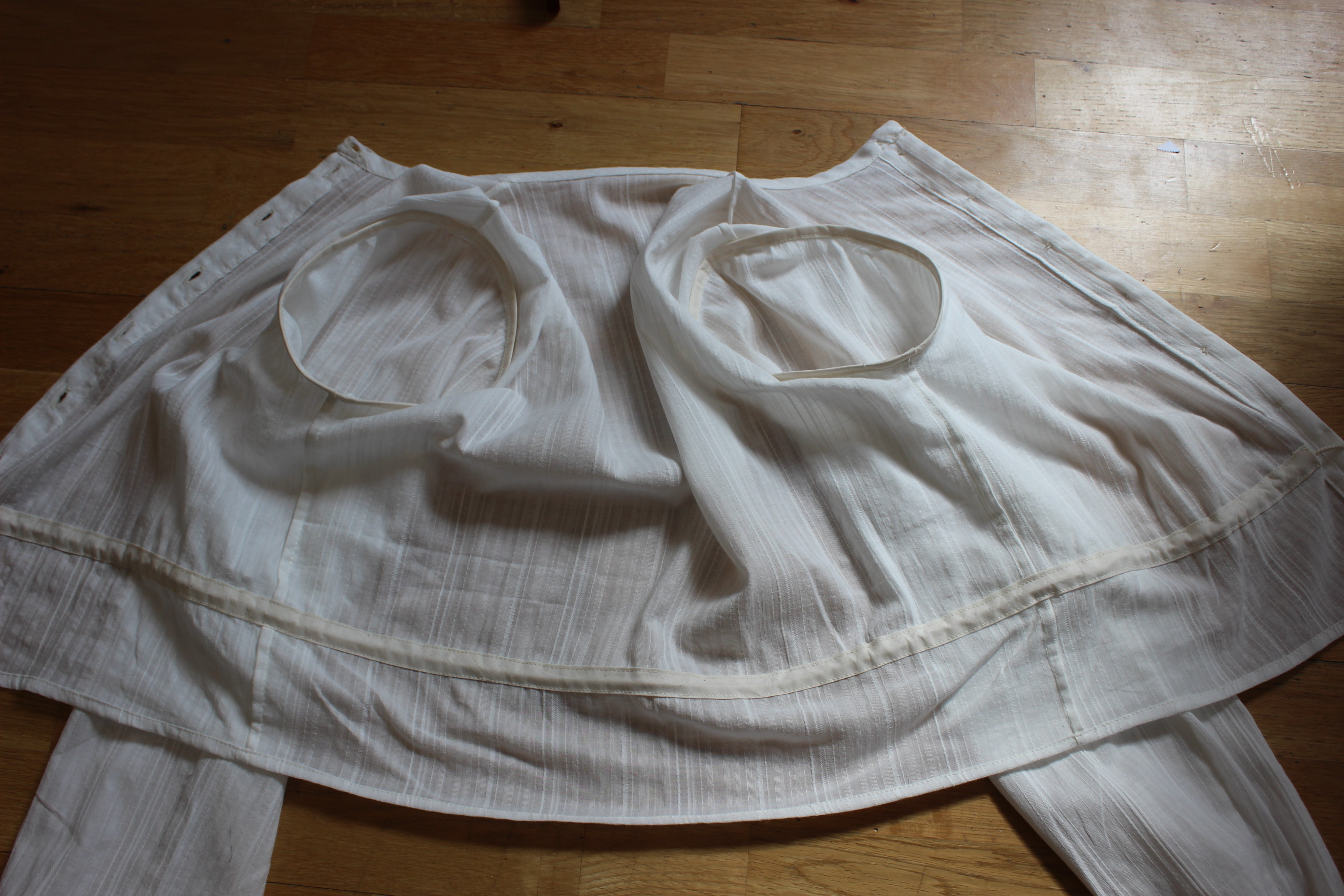
Basically I just stitched the bodice together using french seams, added the small collar, sewed the buttonhole-stand and added buttons and (machined) buttonholes.IMG_6829Sewed and set the sleeves, covering the seams with bias-tape to get a clean finish. Then I hemmed the shirt, added the bias-tape for the drawstring waist.IMG_6819
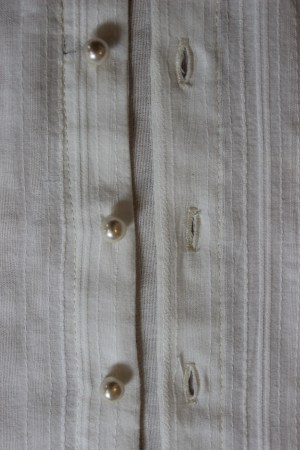
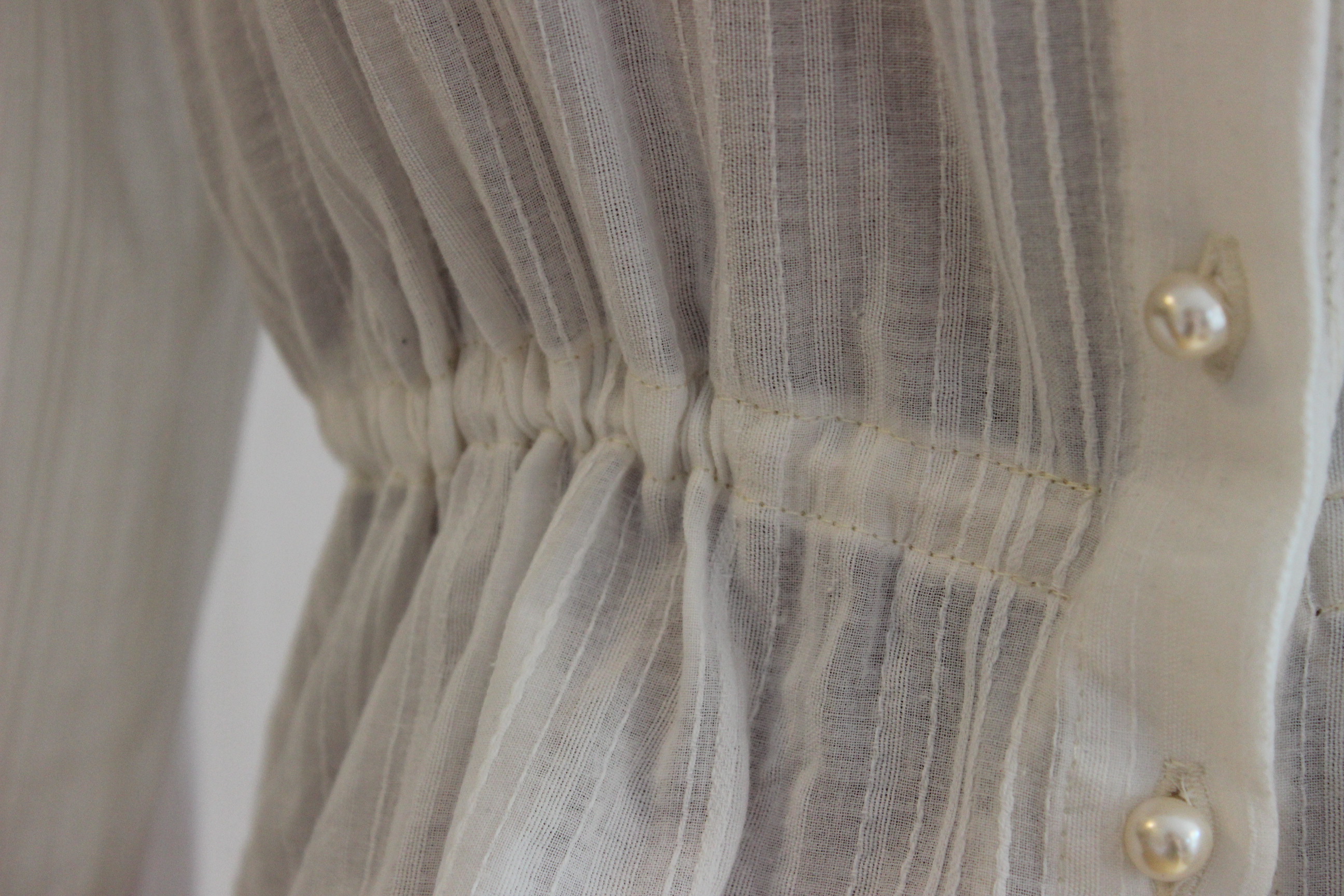
And finished of by folding, stitching and adding the ribbons for the wrist ties. IMG_6835
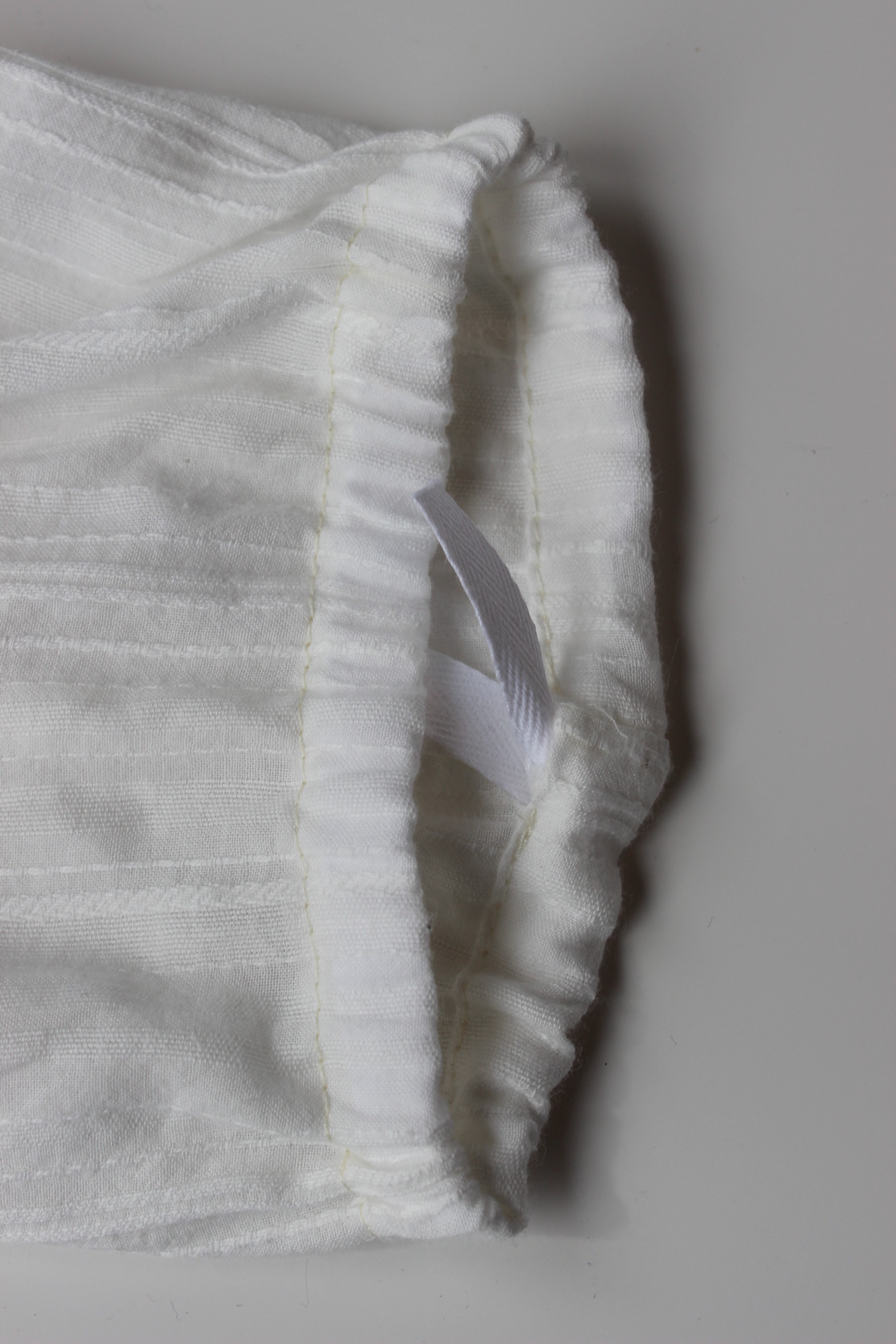
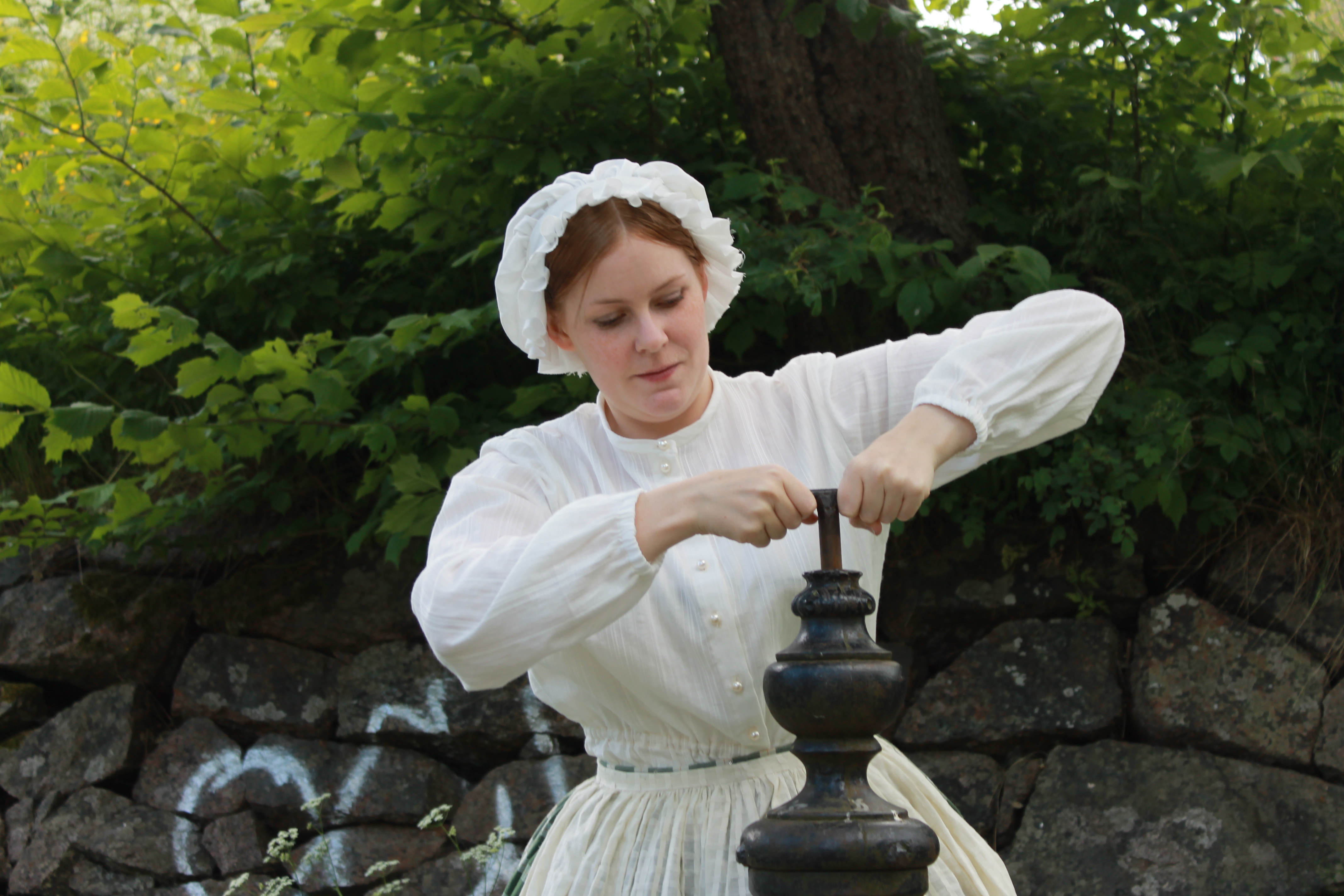
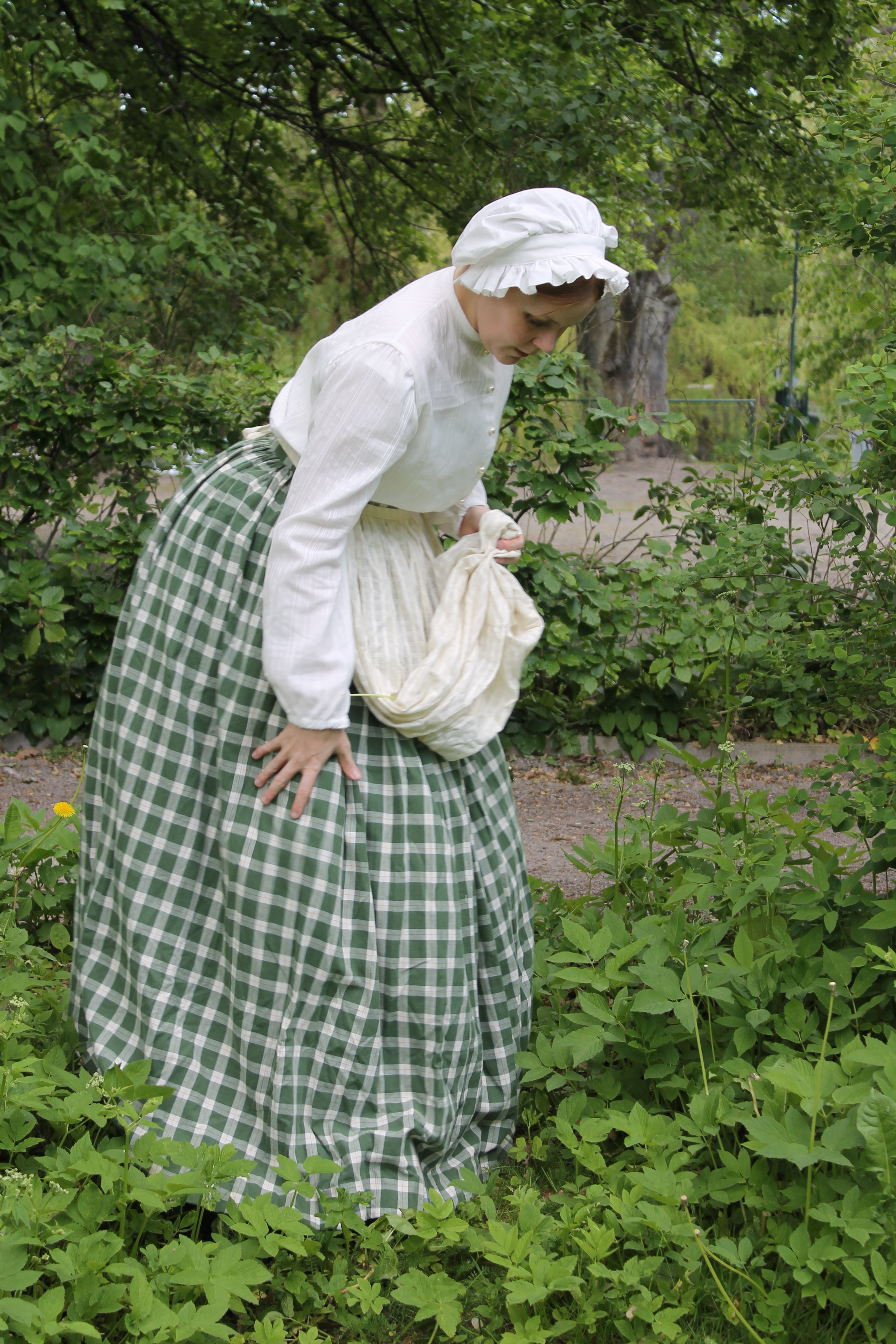
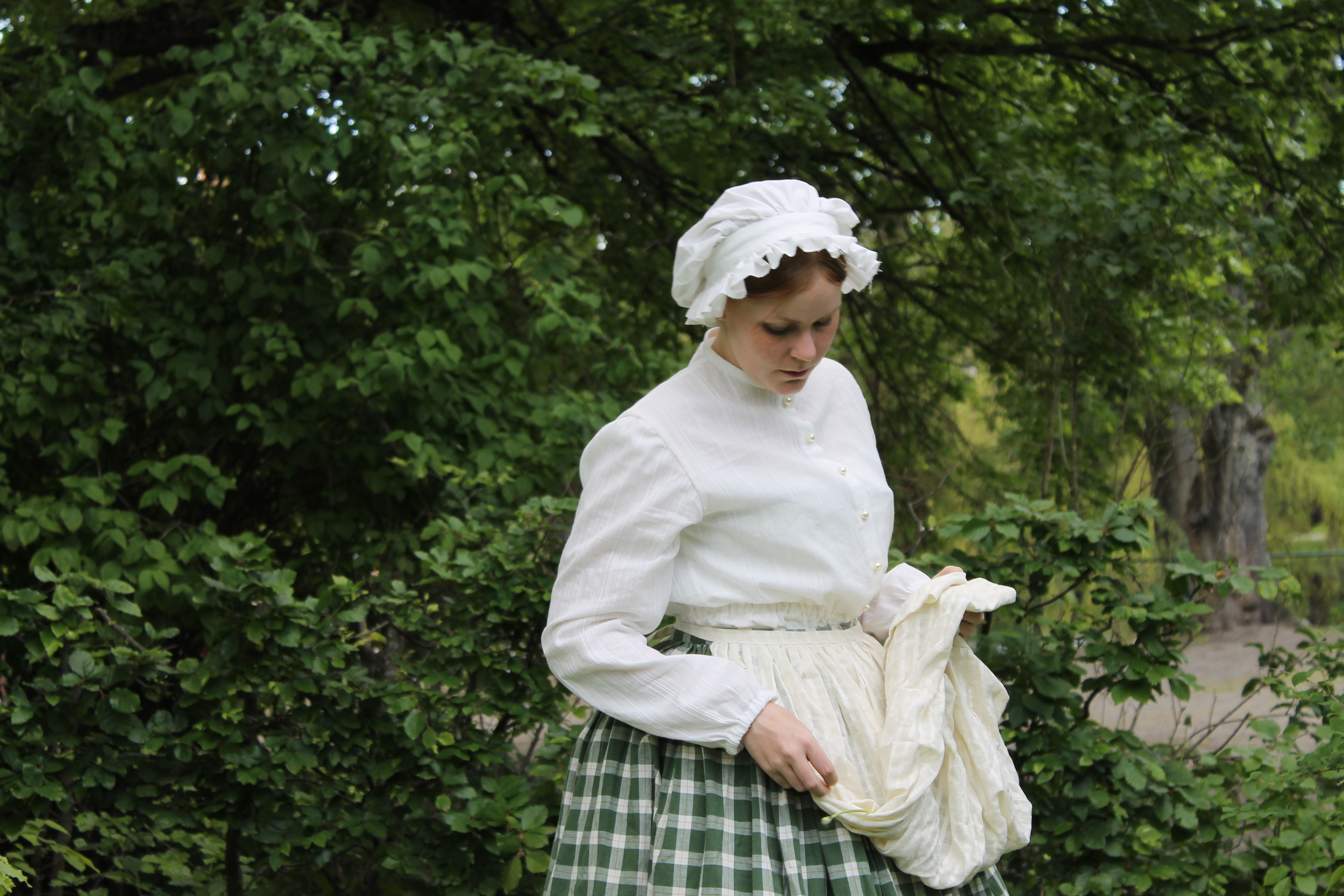
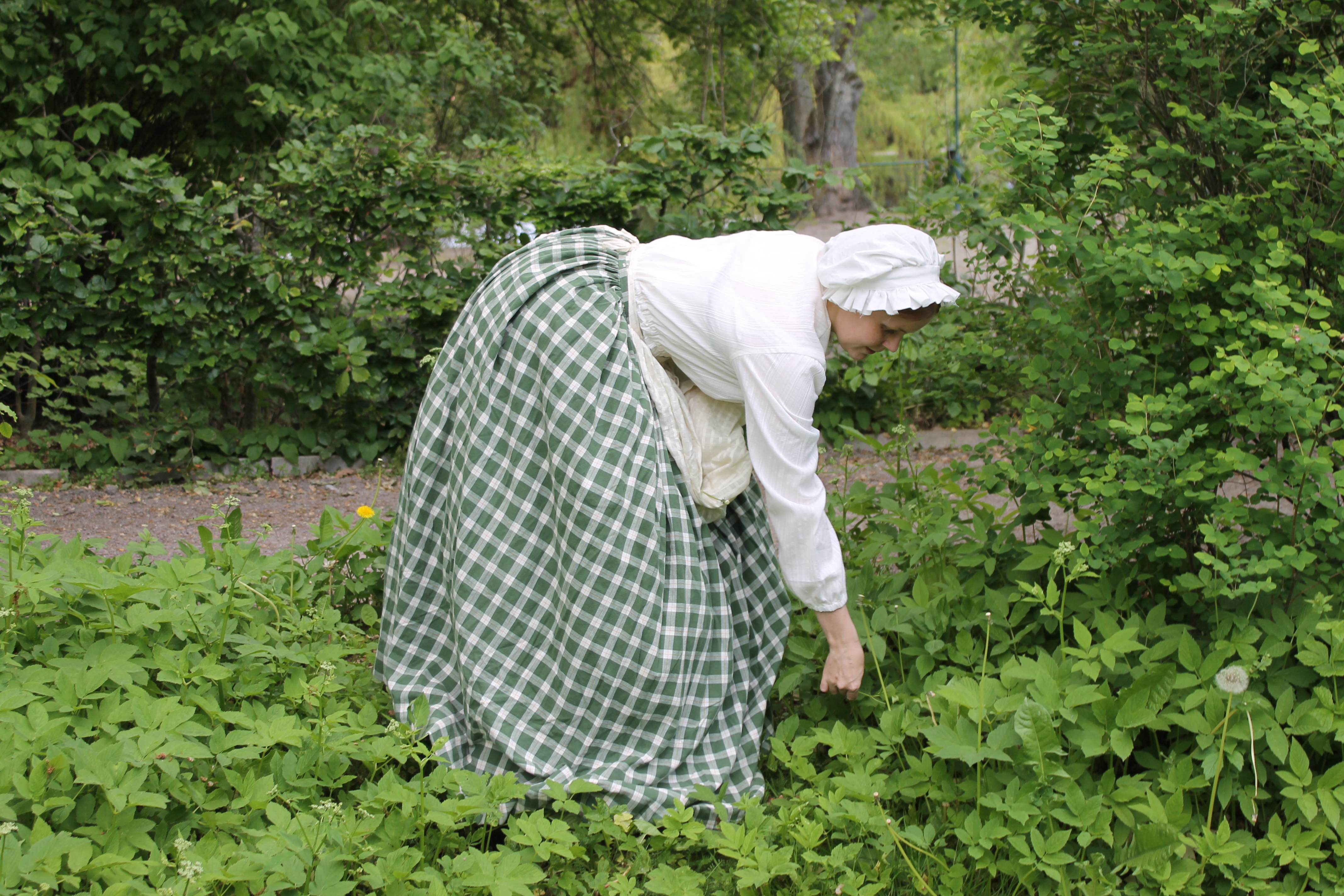
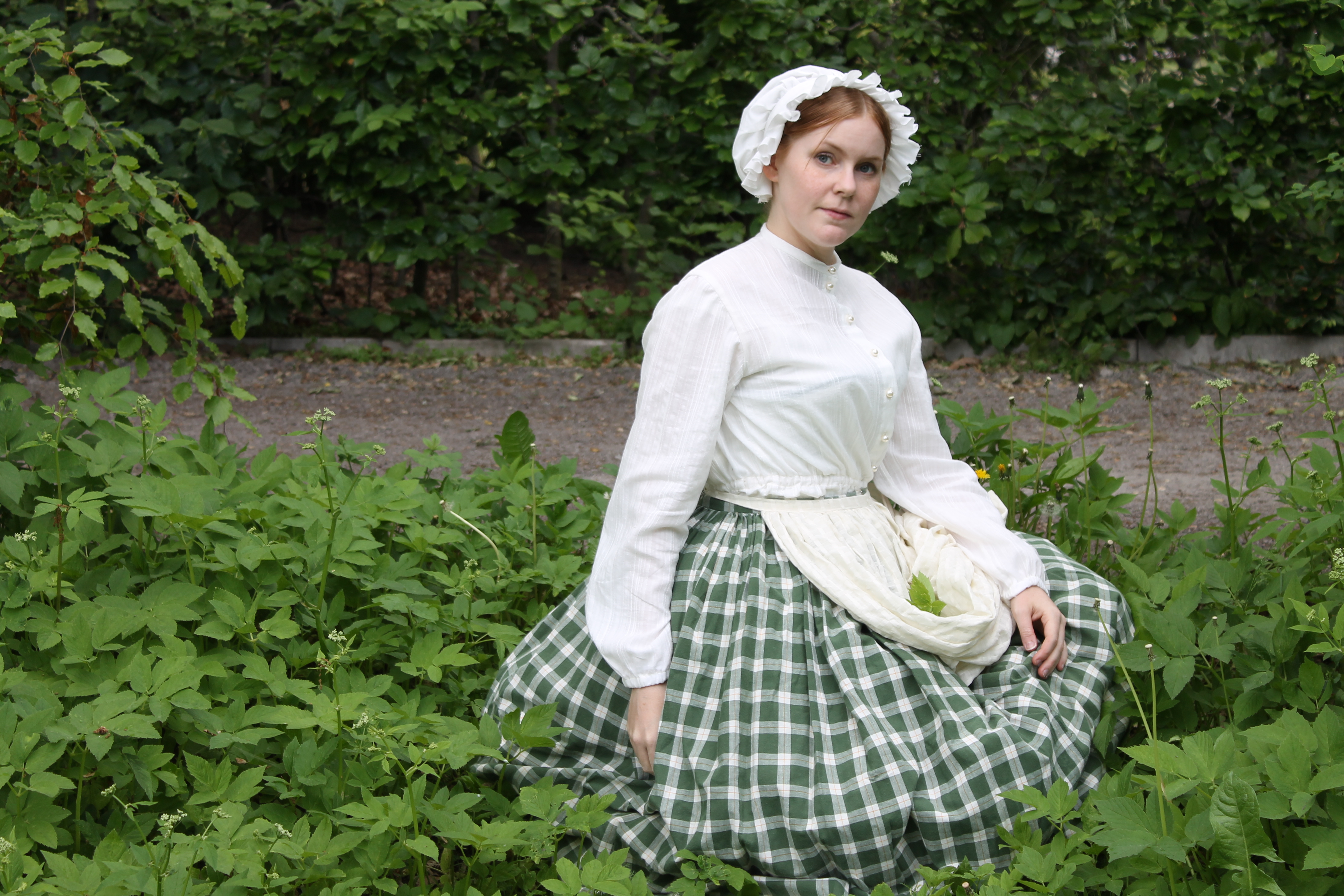
The finished Shirt:IMG_6825As its biggest size

IMG_6813

IMG_6816

IMG_6814

IMG_6820

IMG_6821

IMG_6823

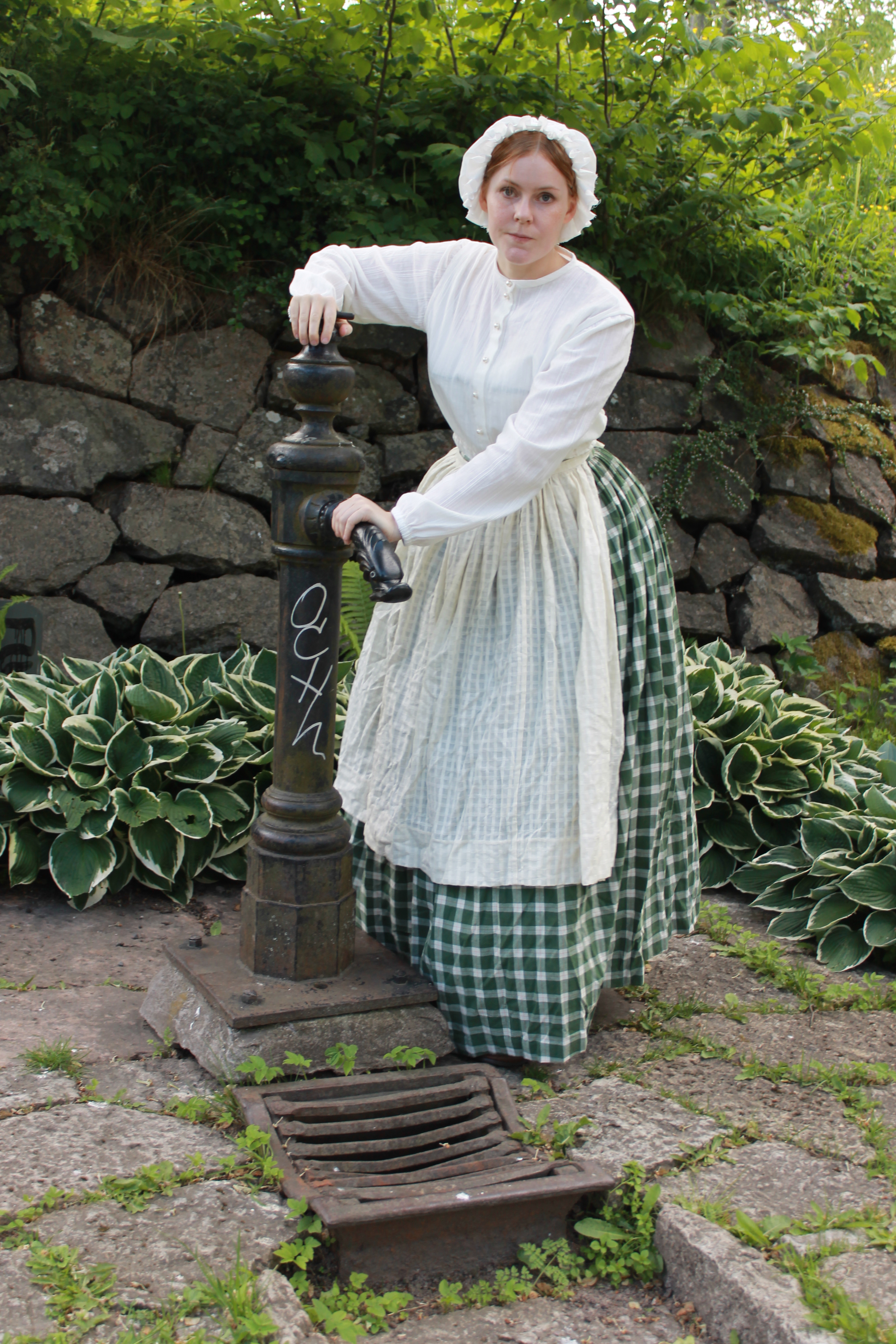
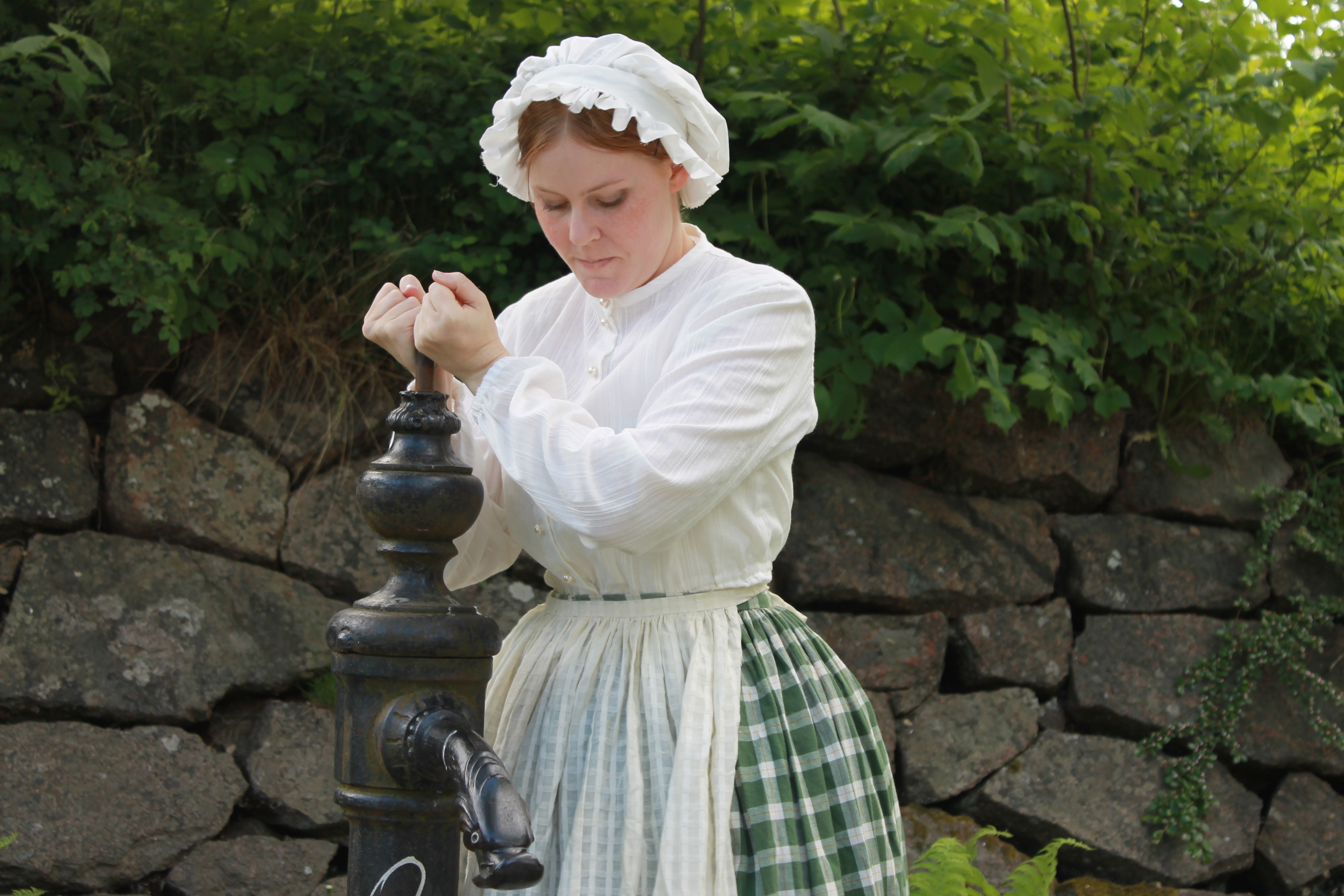
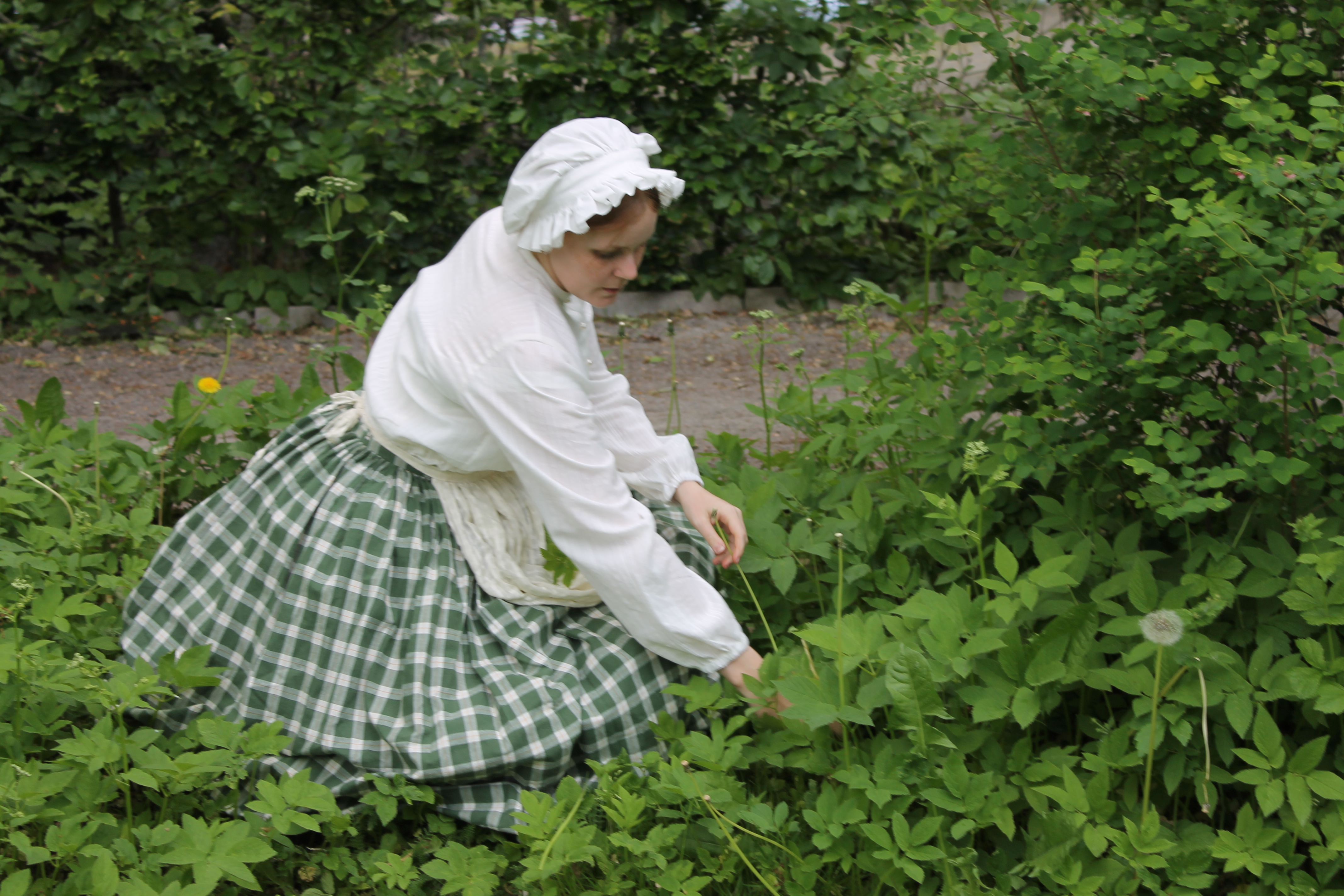
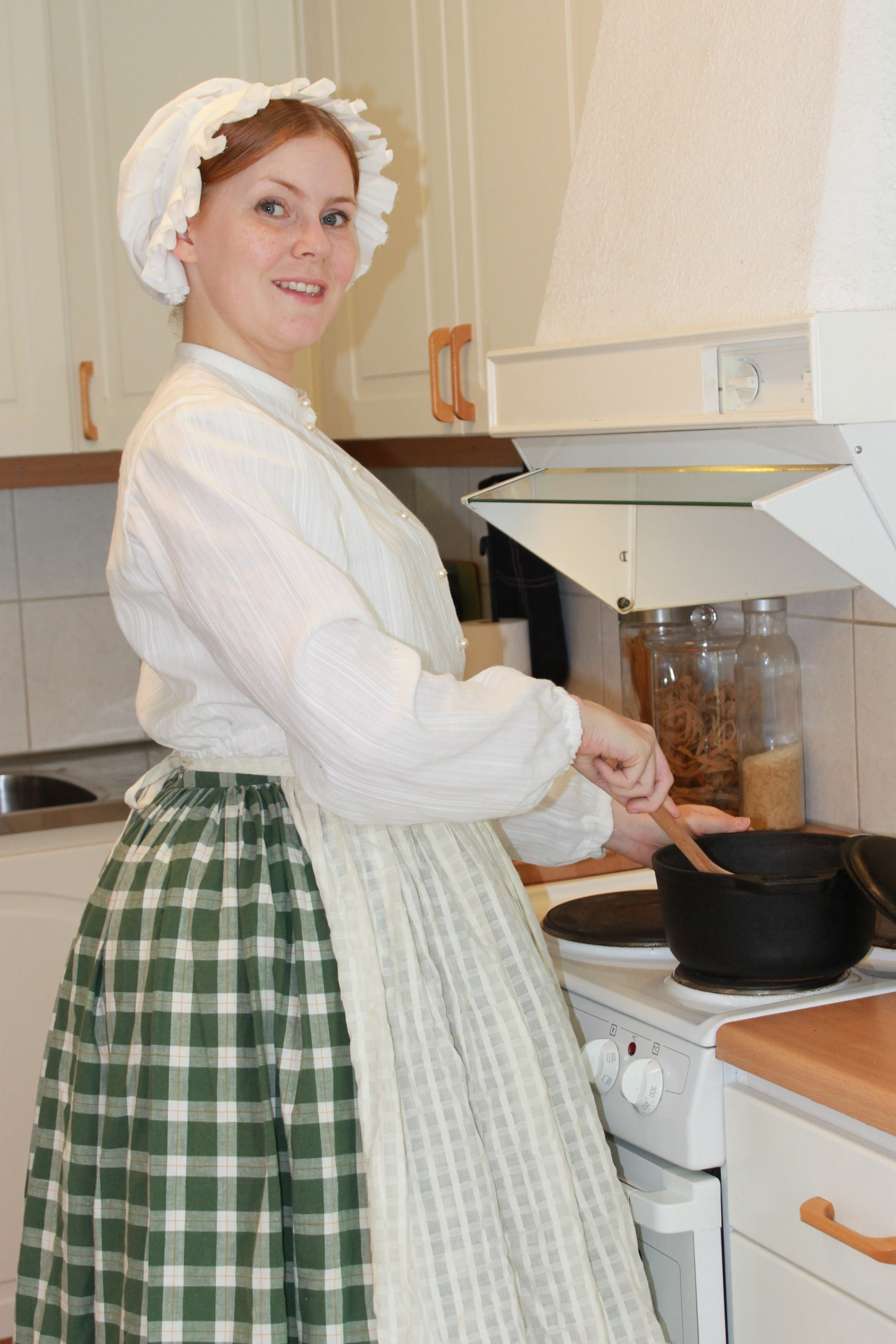
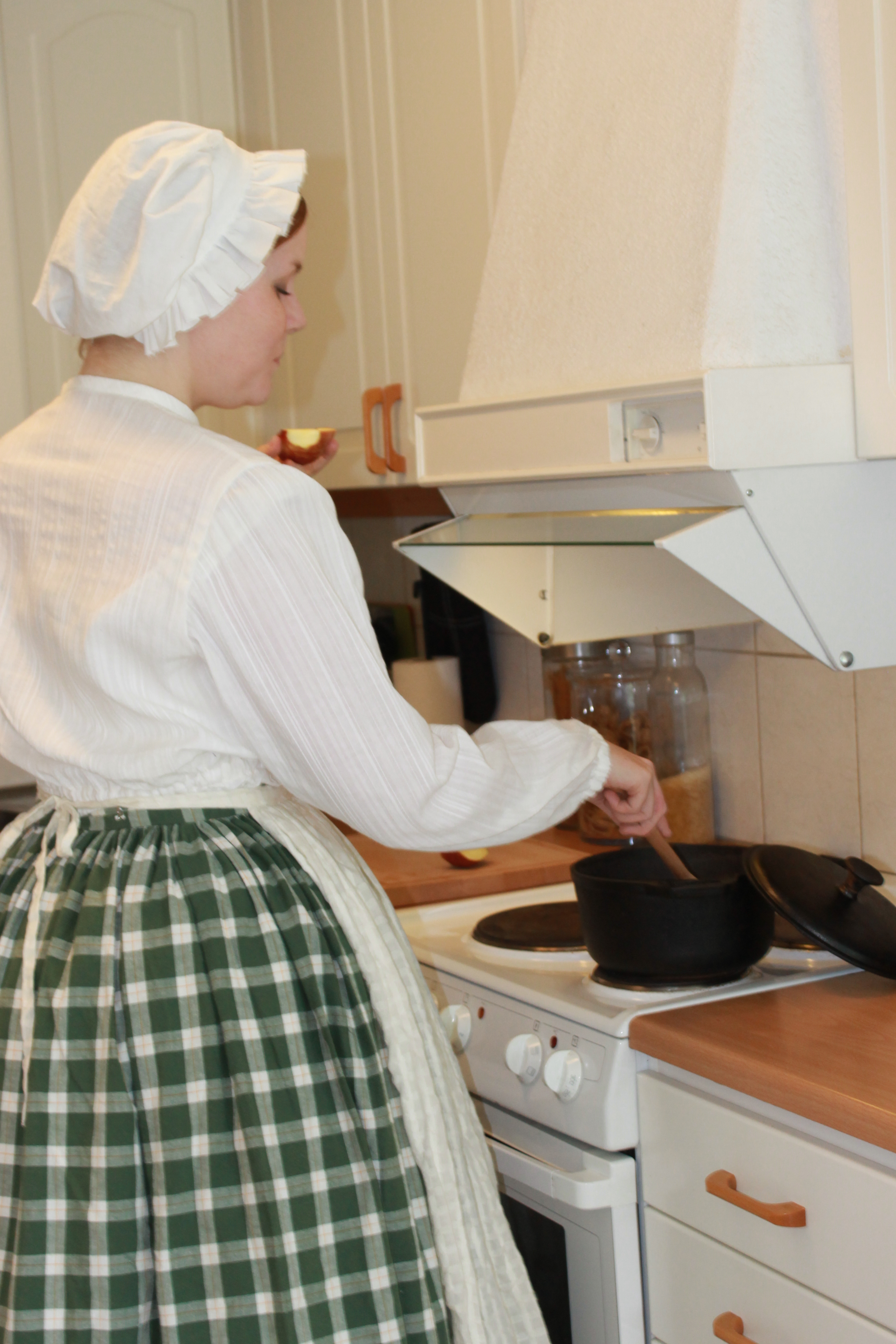
And a quick “practicality” photoshoot:IMG_4982Cocking food in my extremely old fashioned kitchen…
IMG_4989

IMG_5003

IMG_5012

IMG_5019

IMG_5043

IMG_5038

IMG_5030

IMG_5052

IMG_5057

Just the facts:

Challenge: nr 5/2015 “Practicality”

What: a 1850-1860s shirtwaist

How it fit into the challenge: The shirt is perfect for the everyday wear of a lower(or higher) class women doing households chores or taking a stroll in the park. That fabric is durable and easily washable and the style of the shirt with its drawstrings at waist and wrists makes it fit several different sizes of women.

Pattern: None, I just used the basic shapes of any shirt pattern.

Fabric: 1 m of structured cotton voile.

Notions: Thread, buttons, scraps of cotton ribbon at wrists, cotton string and  bias tape for waist shaping.

How historical accurate: So so, the garment (and fabric) did exist, but I didn’t used any accurate pattern, and I did sew it all on my sewing machine – even the buttonholes. I would say about 5/10

Time: about 4 hours

Cost: at most 100Sek (16Usd) – Everything was from stash and leftovers from other projects.

First worn: at June 6th for photos, but will get a proper outing June 13 when my sister wears it for our “Crinoline day”

Final thoughts: I loved how fast and easy it went together, and I think it looks great both paired with”Peasant” garb and “finer lady’s” garb (as is the way my sister will wear it).

1860s blue/white hat

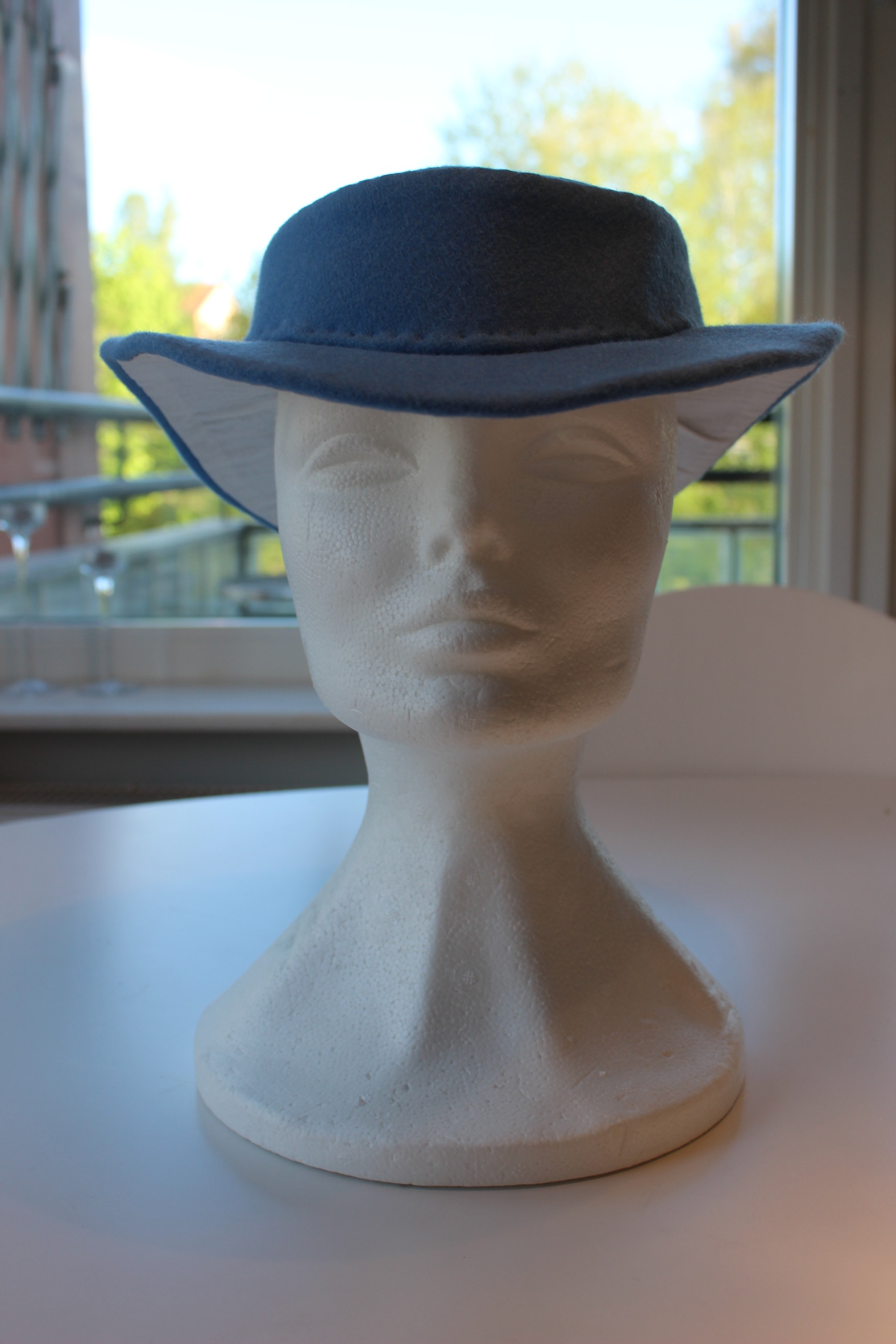
Wise from my previous try at millinery, I ordered a pattern without even trying to draft my own for my sister 1860s hat.  IMG_6343Lynn McMasters “1860s summer hat”

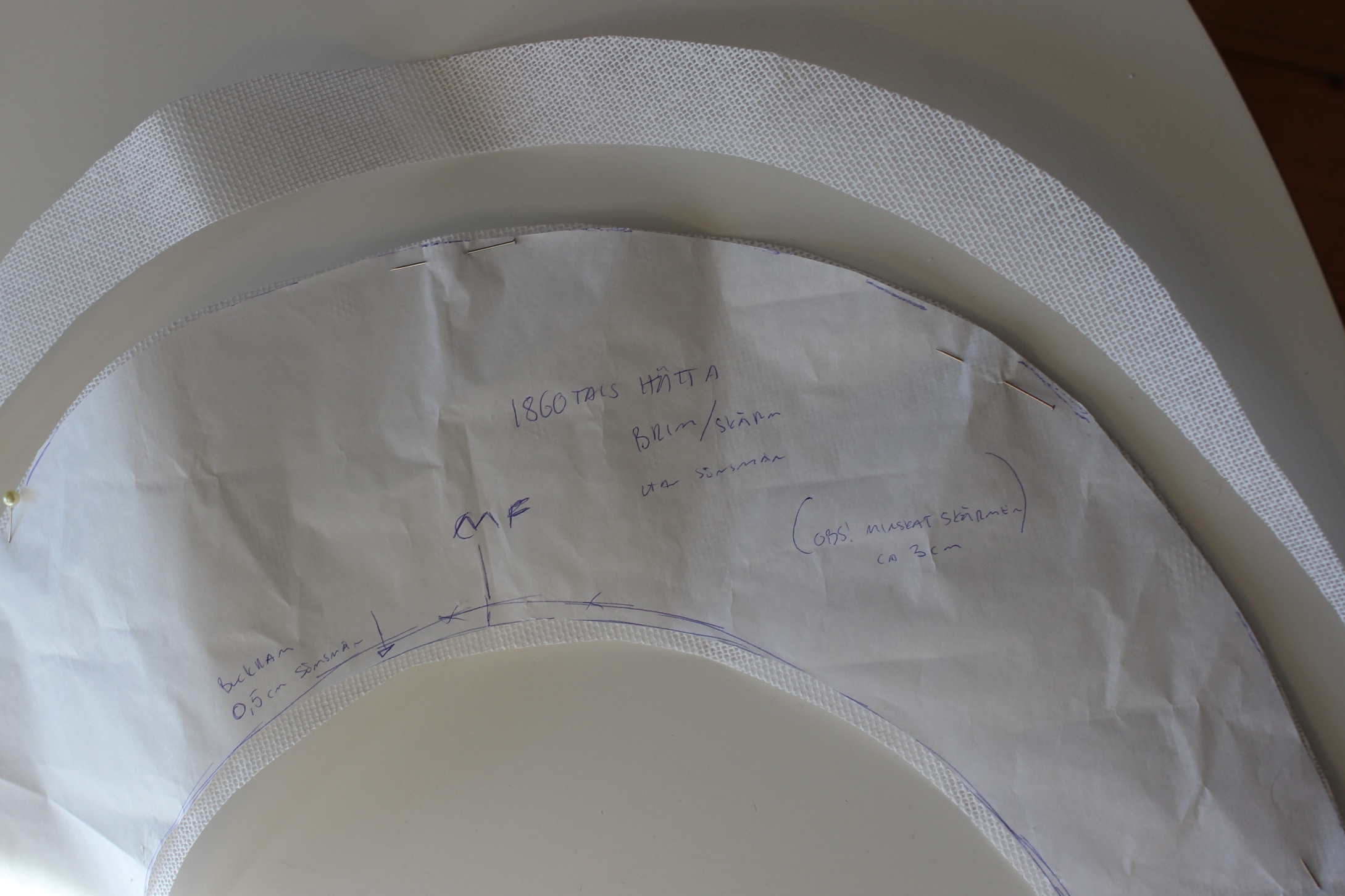
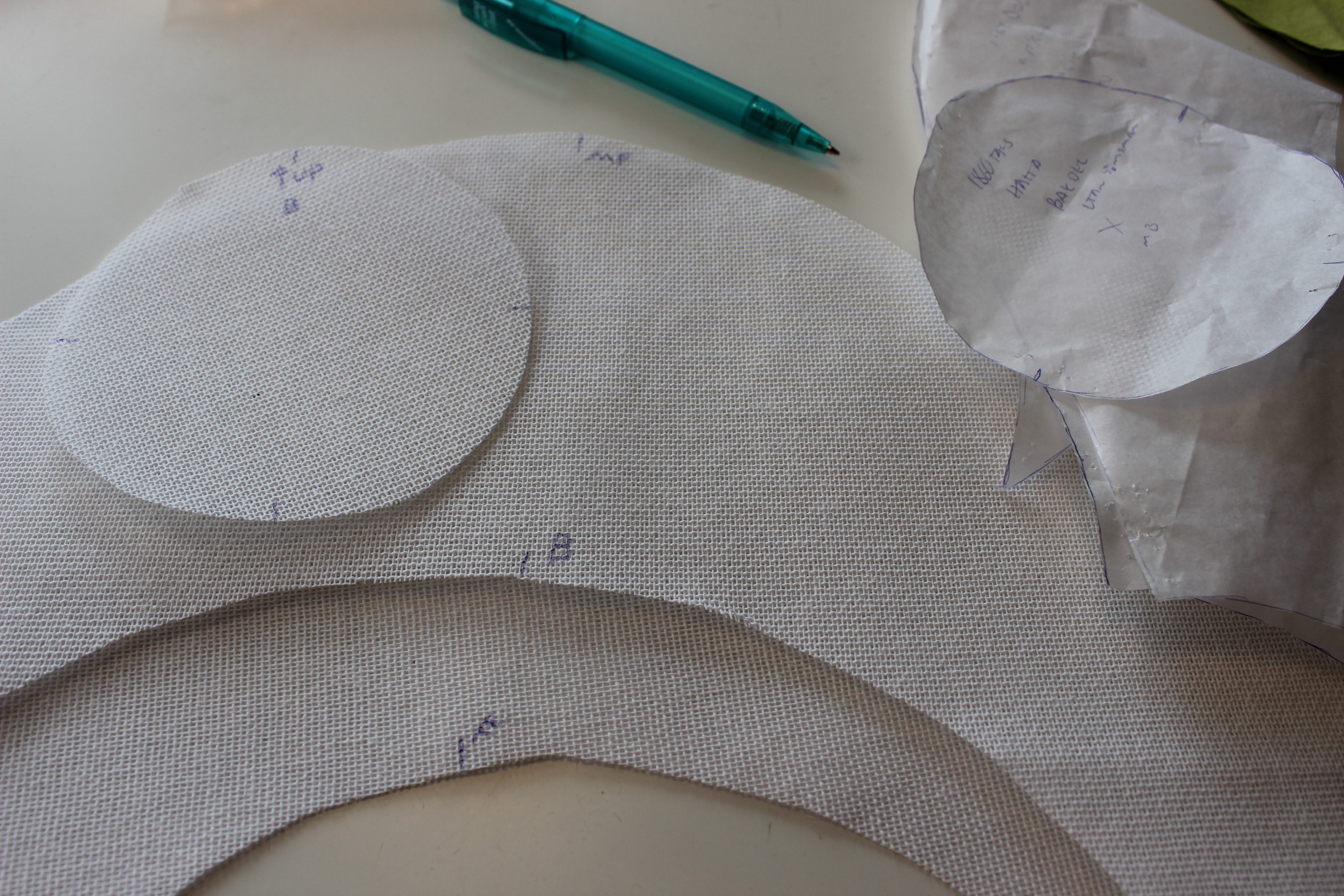
I drafted and cut the pattern for a medium sized hat and got to work on the buckram.IMG_6372

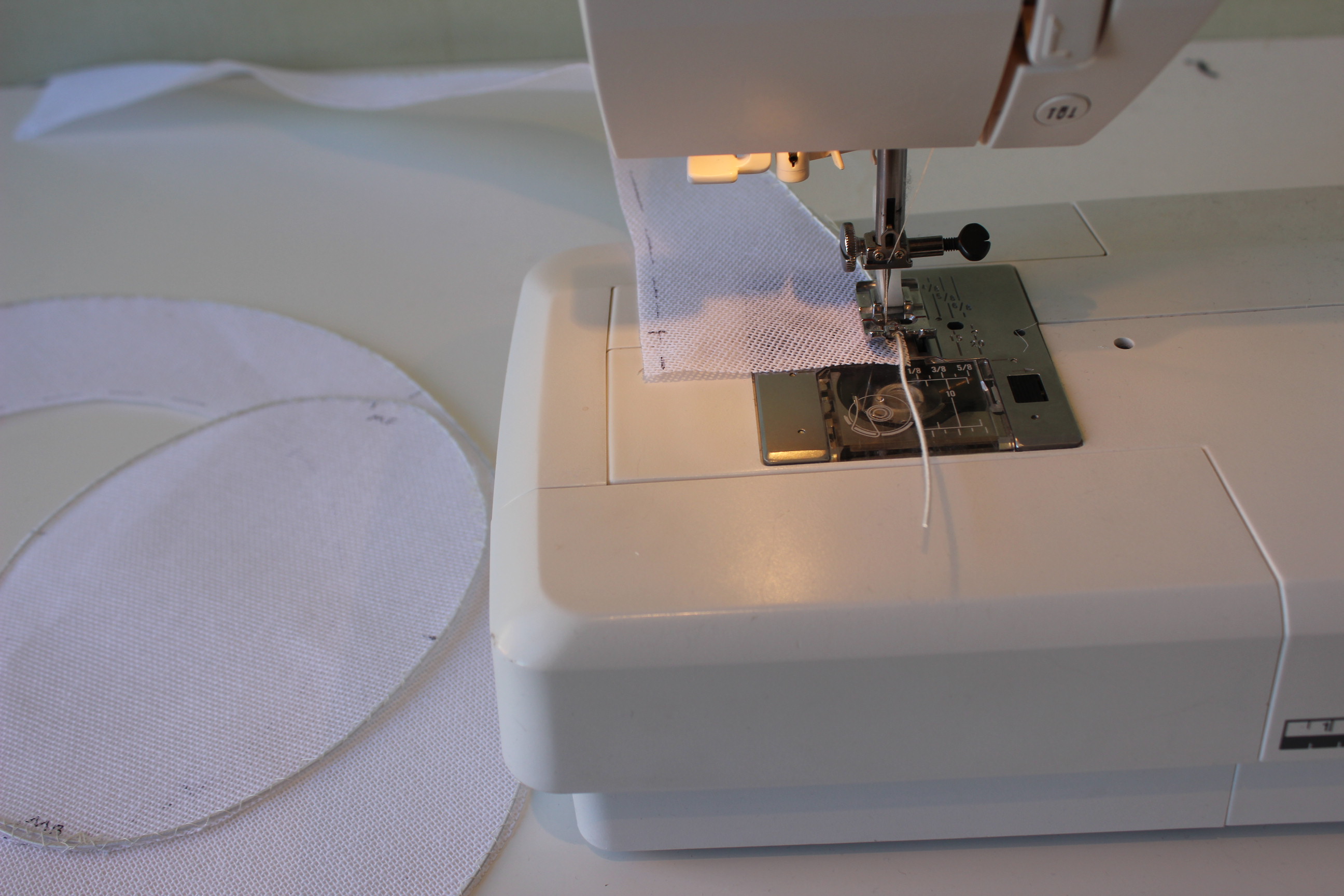
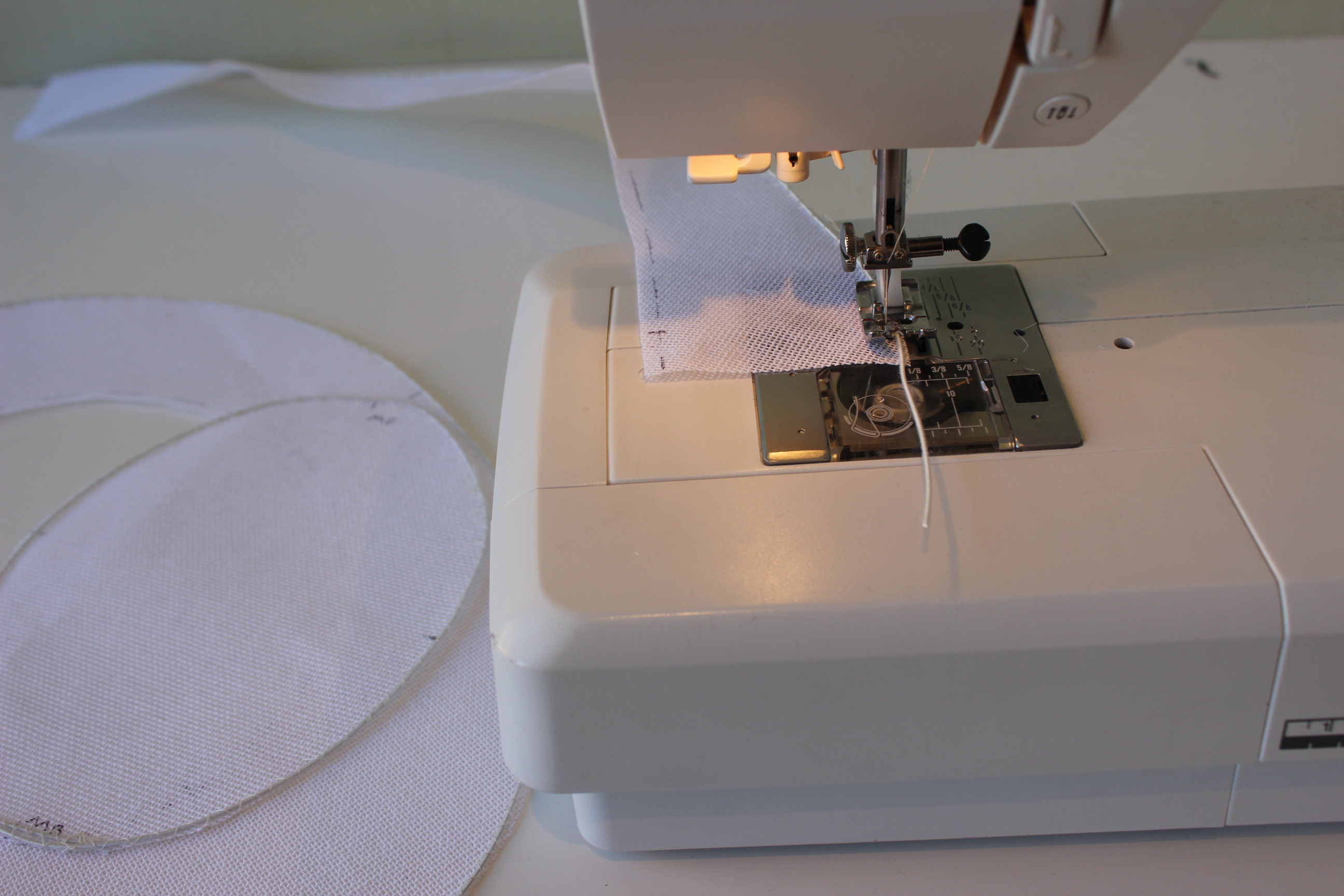
IMG_6373Stitching the millinery wire to the buckram.

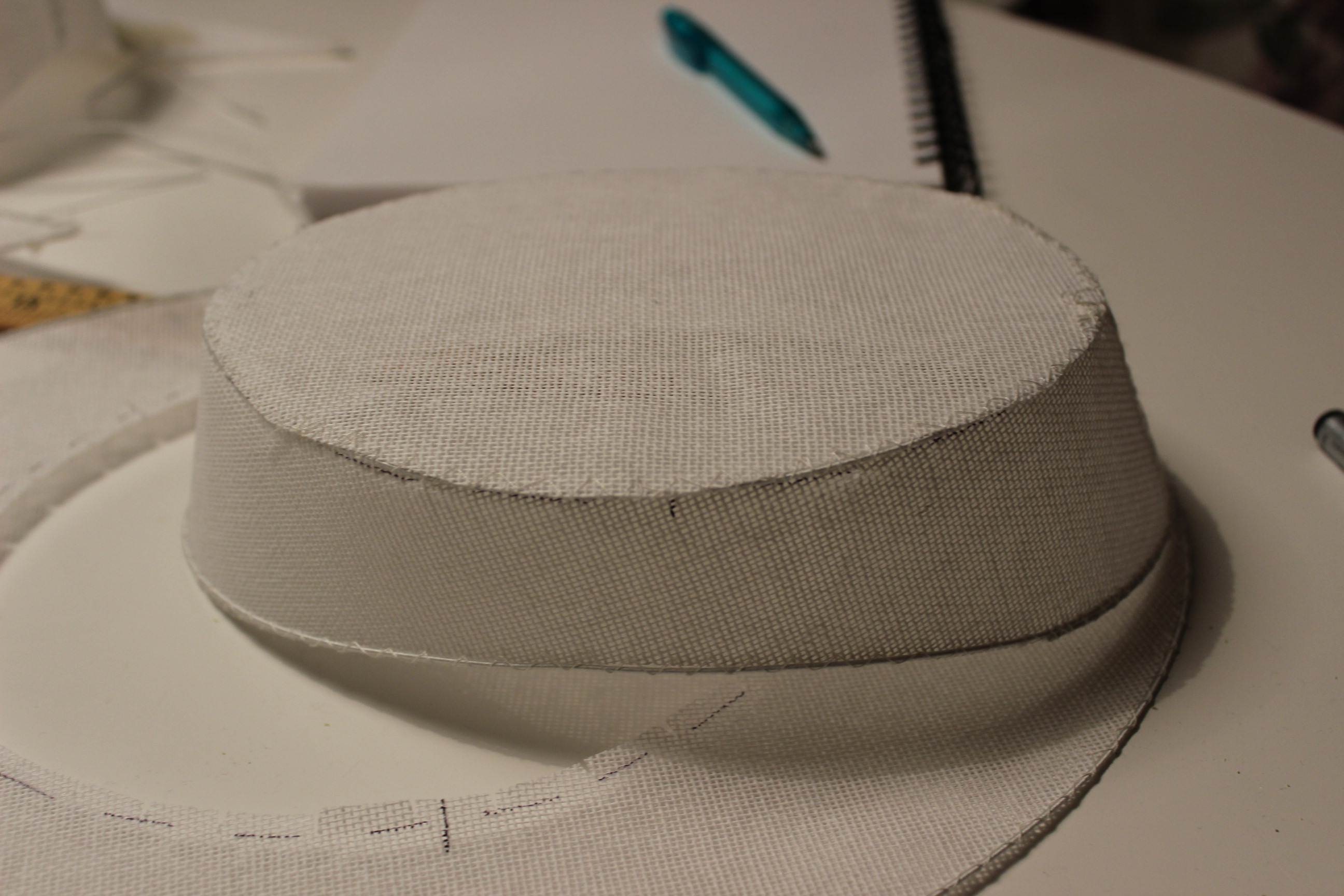
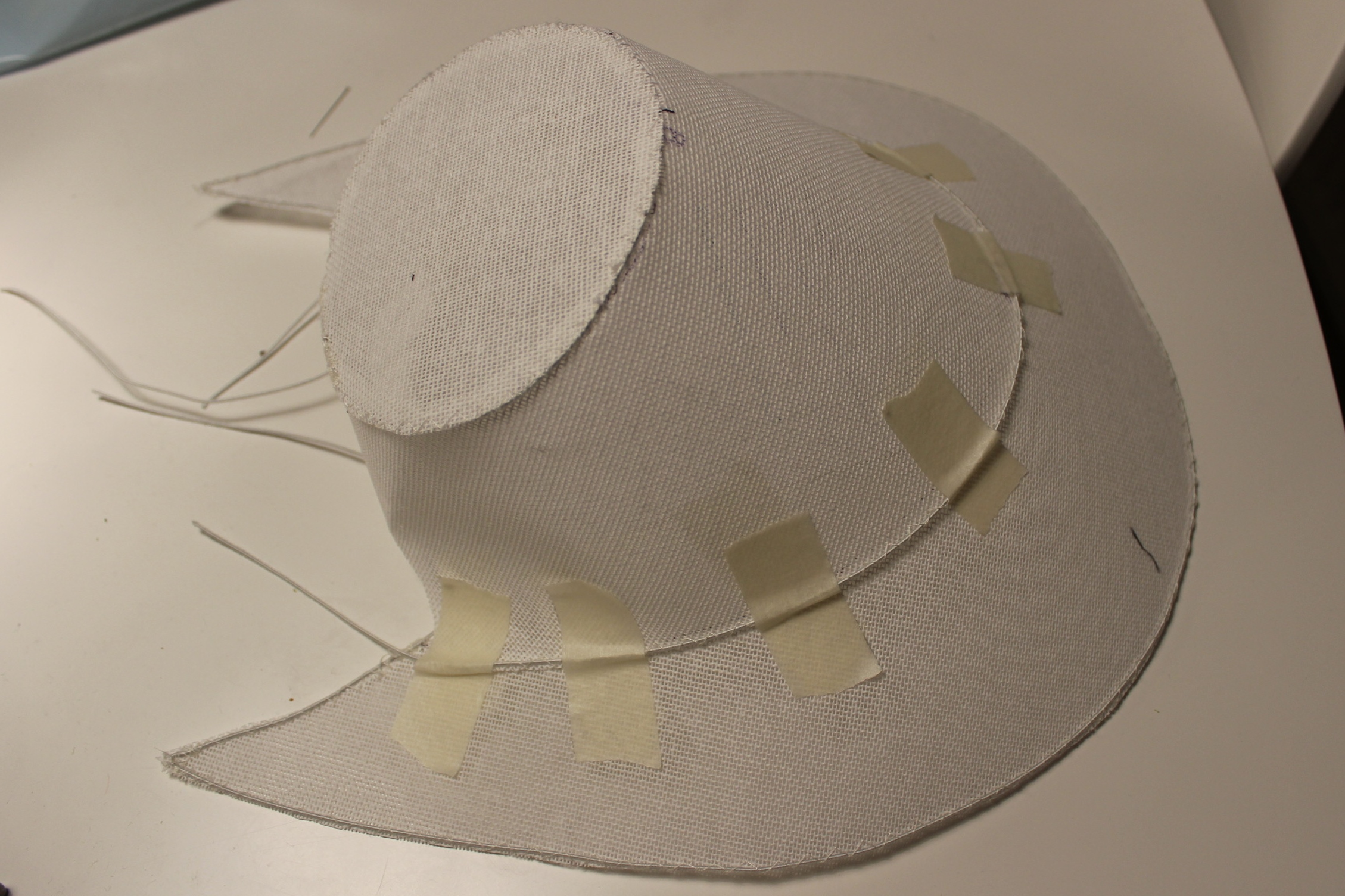
Then I taped and sewed the top and side piece together by hand.IMG_6427

I covered the edges with bias tape.IMG_6434

Then it was time to cut the fabric.
Knowing my sisters fondness for blue, and having just recently finished my 18th century Redingote in a lovely blue wool, I decided to use the scraps for her hat.
IMG_6352Cutting the wool.

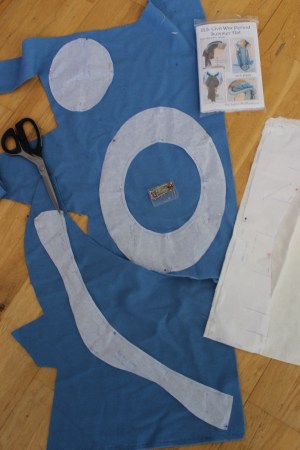
I also cut the pieces in cotton thin bathing for interlining, and white linen for lining.IMG_6354left to right: Buckram, bathing, blue wool, pattern piece and linen lining.
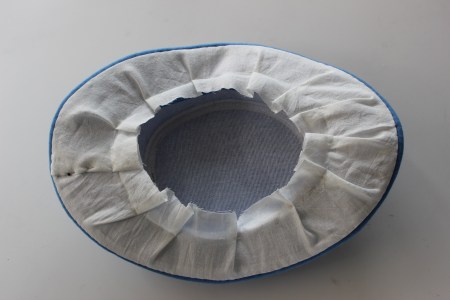
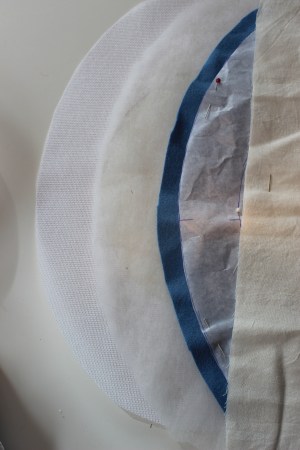
I carefully covered the buckram base with first bathing and then wool.IMG_6570

Then it was time for the lining. The piece underneath the brim was pleated, pinned and stitched on.IMG_6564

And the crown part was covered in two steps – first the top, and then the sides.
IMG_6621 IMG_6626

Then I stitched the brim and the crown part together.IMG_6630

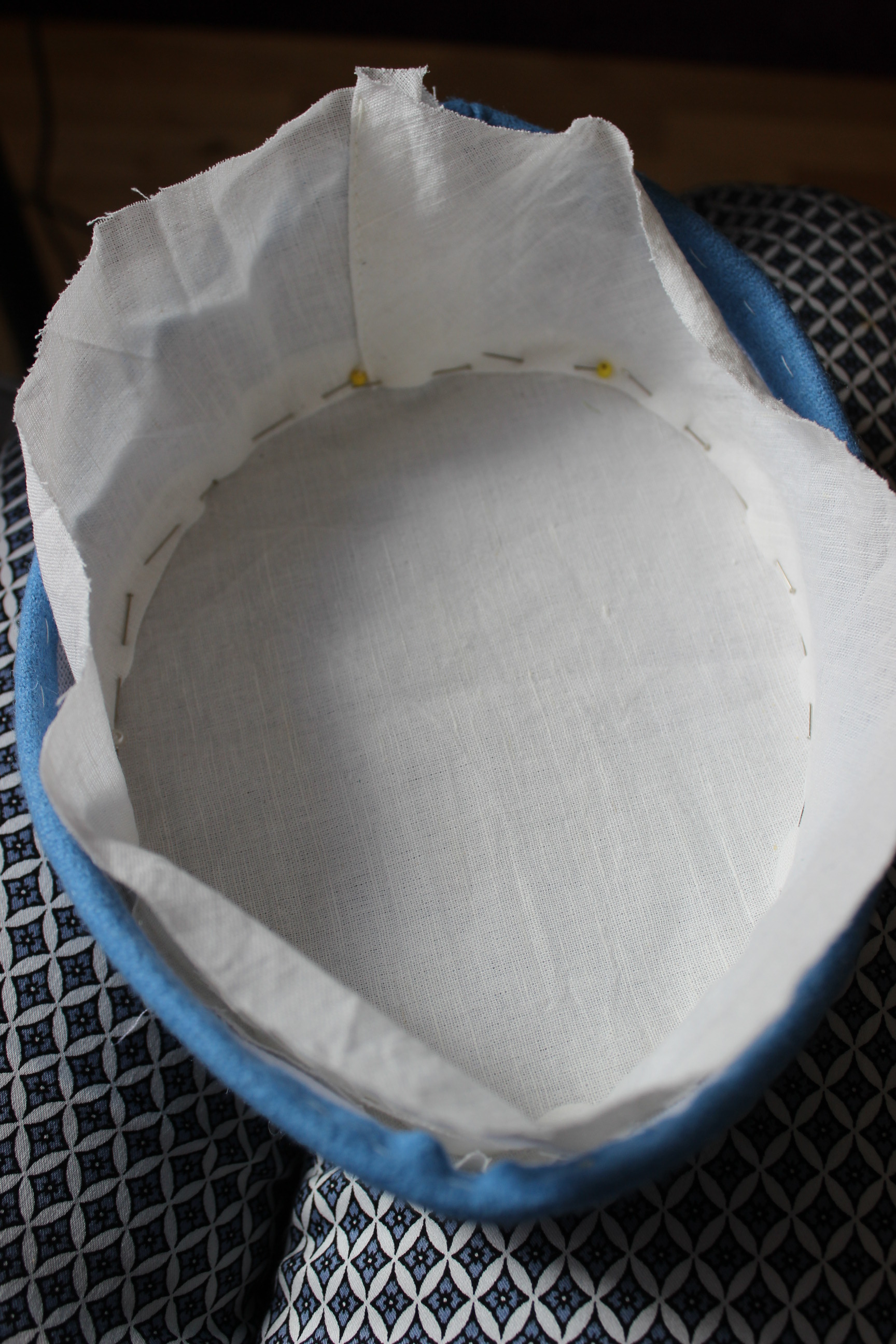
And flipped it over to sew the lining together.IMG_6629

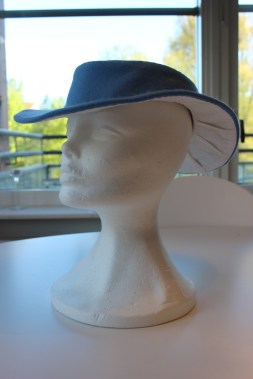
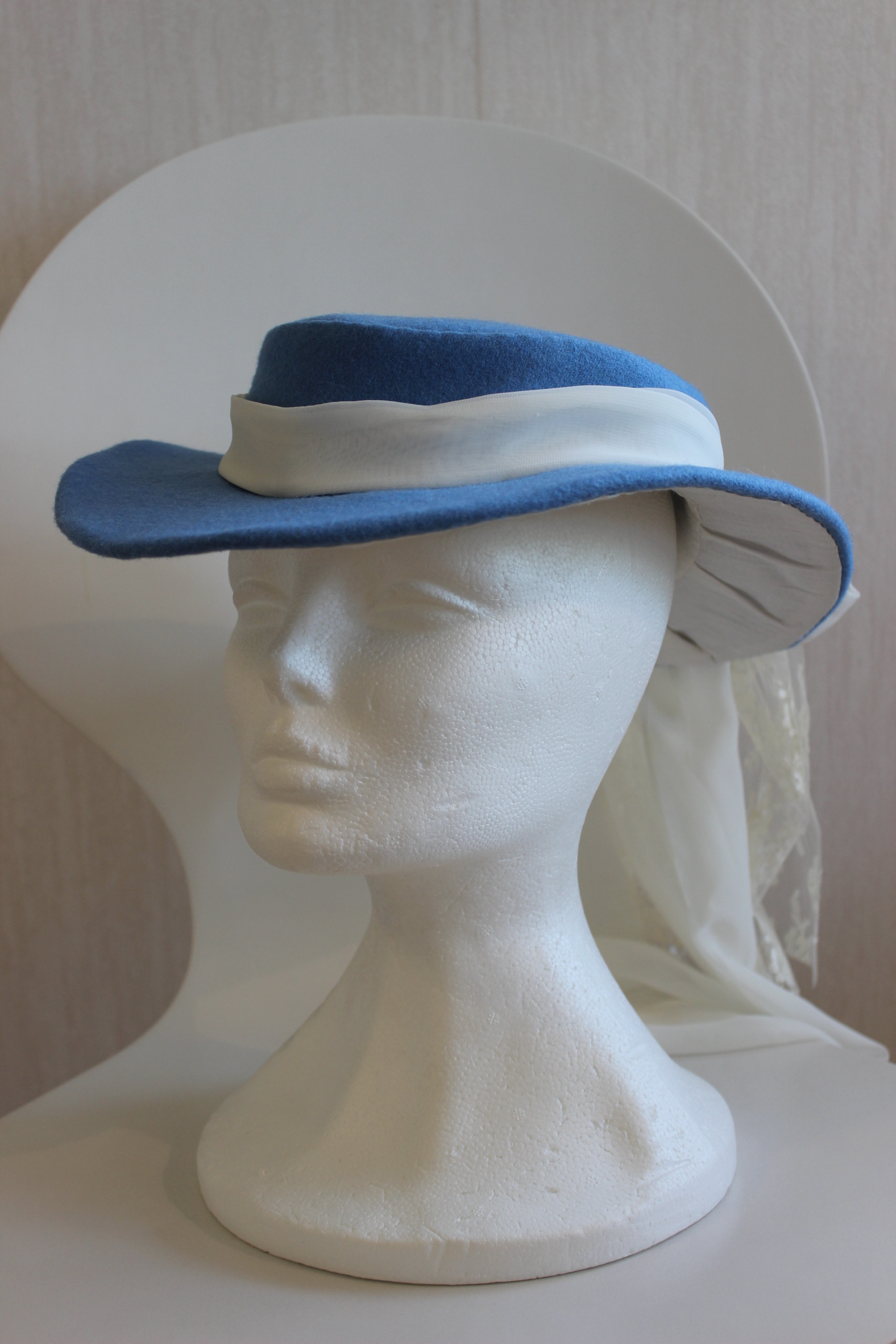
The finished (un-trimmed) hat:
IMG_6636IMG_6641
 IMG_6638IMG_6645

But no hat is complete without some decoration…

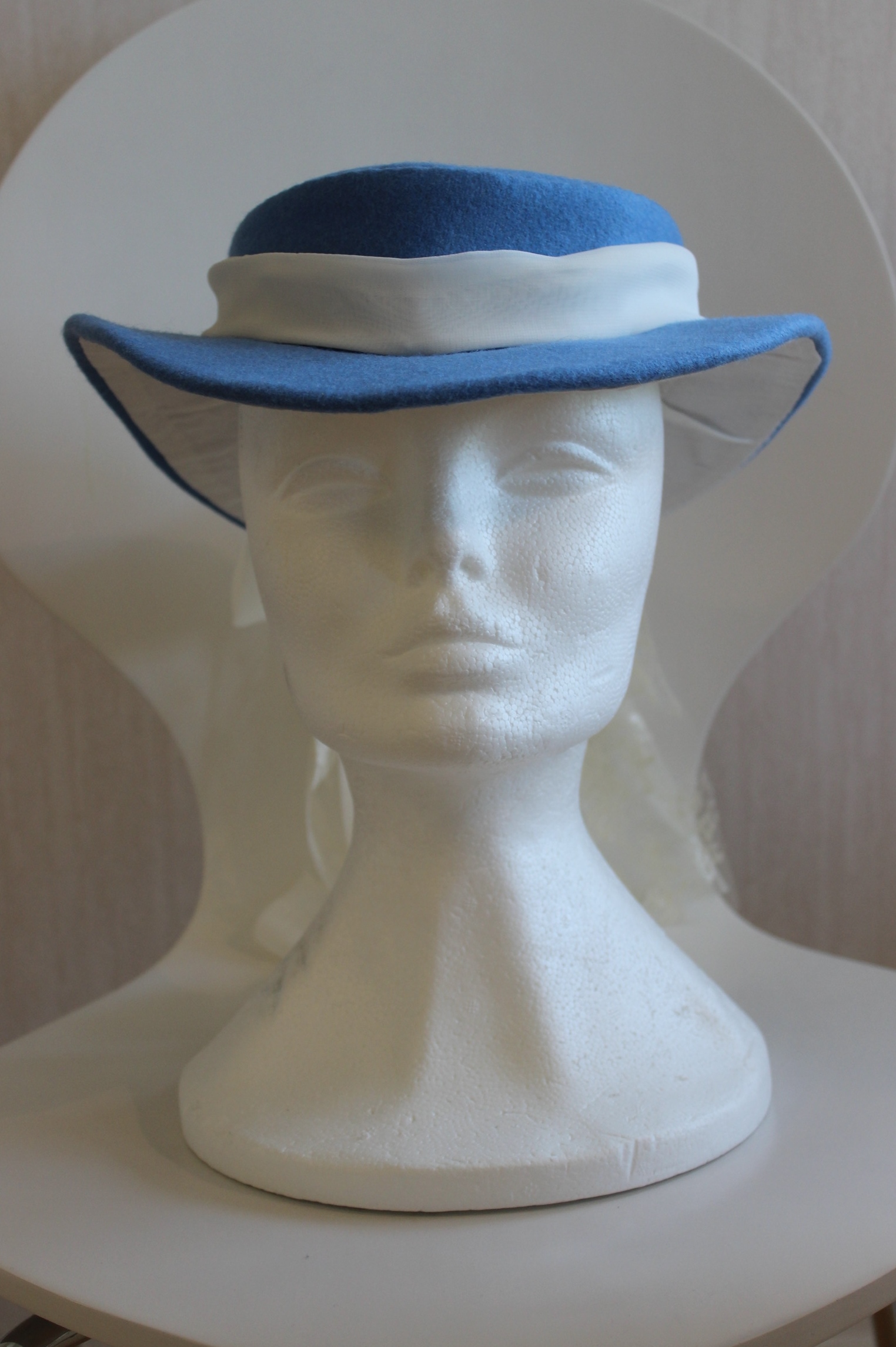
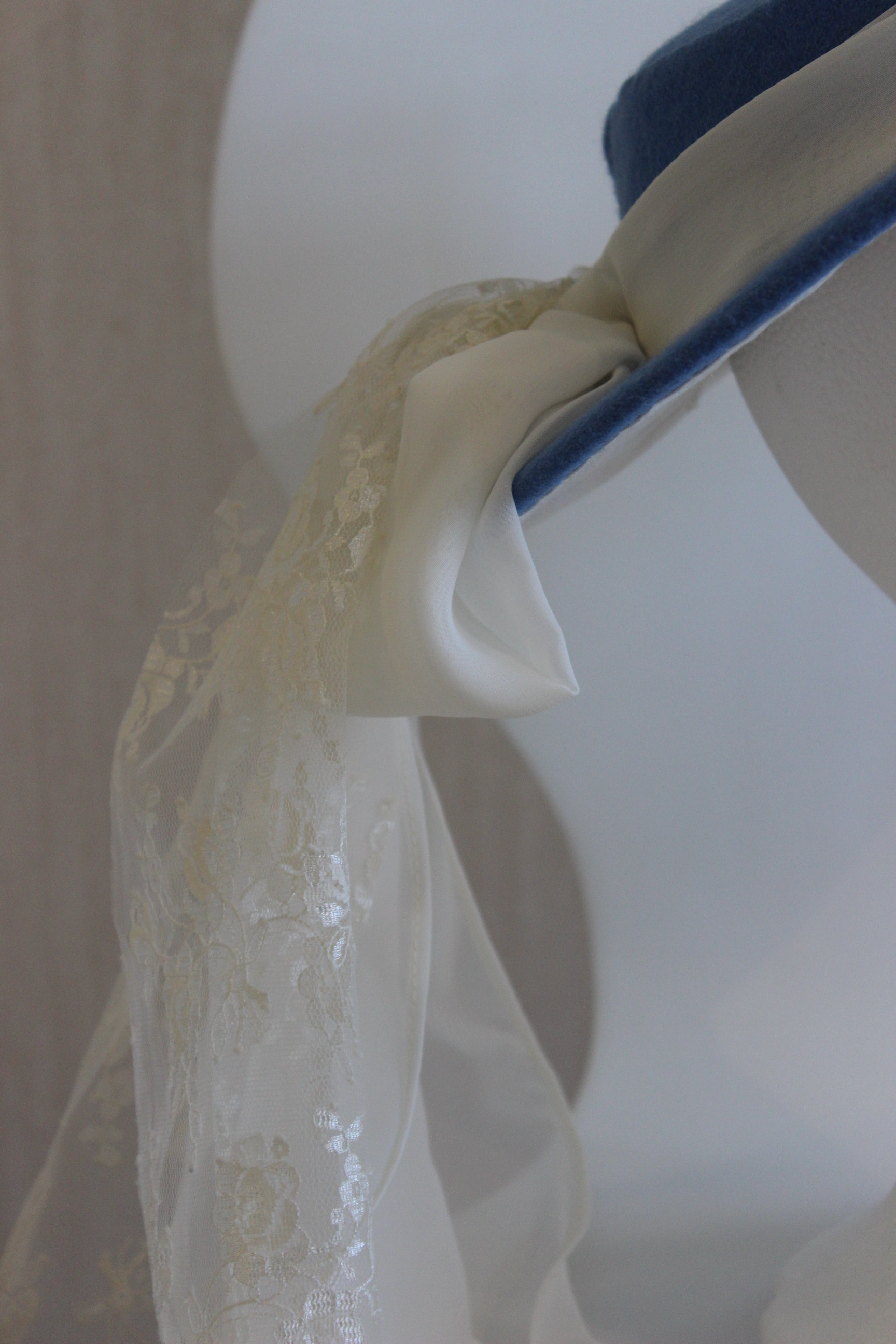
I cut stripes of white chiffon to put on the hat. IMG_6653Looking pretty good.

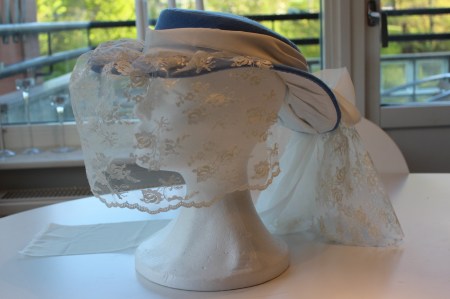
I also wanted to ad a lace veil… IMG_6652..But decided not to since it looked so stupid, and I doubt my sister would want to wear it like that.
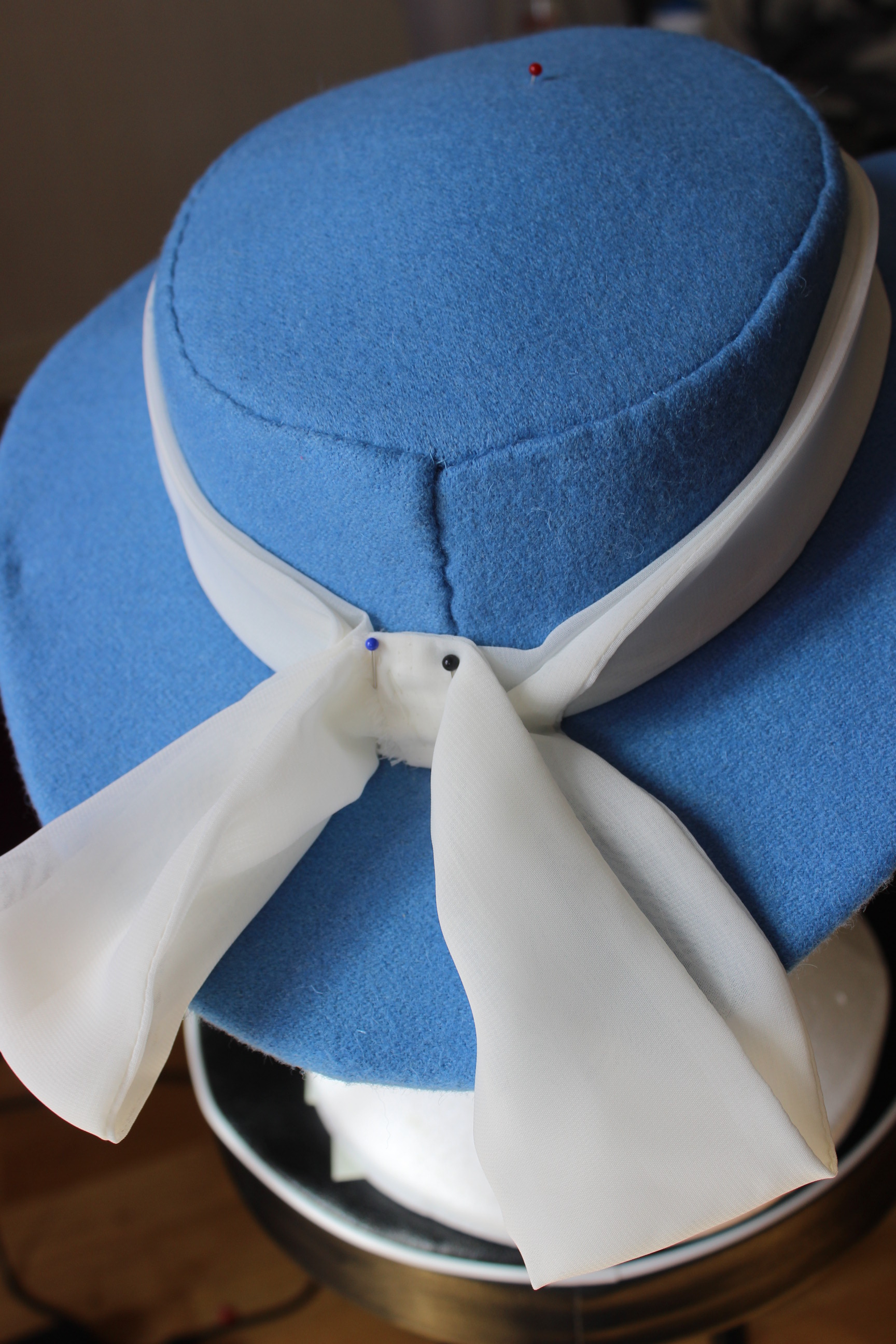
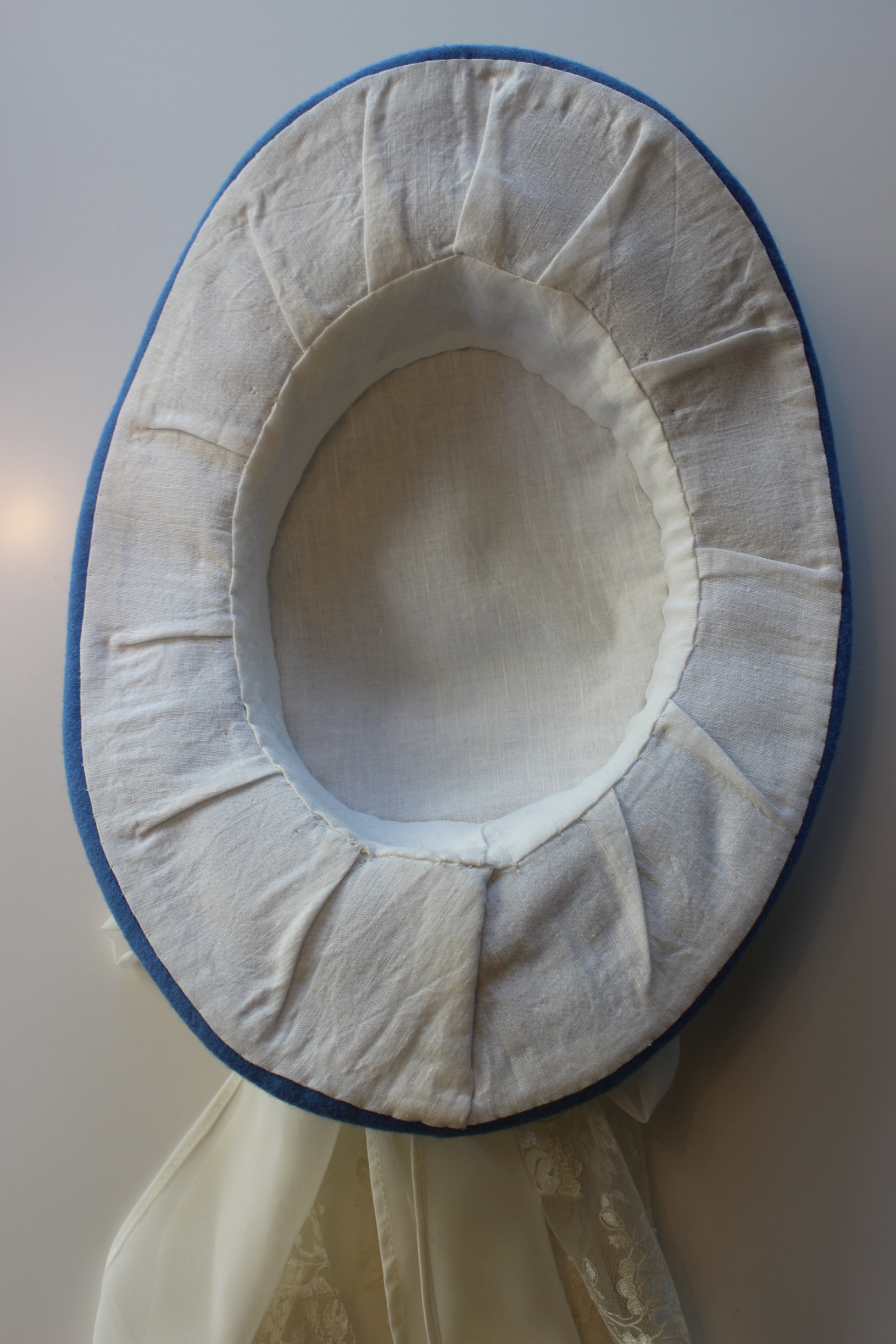
I pinned and sewed the chiffon to the hat in a shape of a bow with long tails.
To get some more interest to the look, I also added a bit of lace to the bow.IMG_6700

And that was that.
IMG_6736 IMG_6738

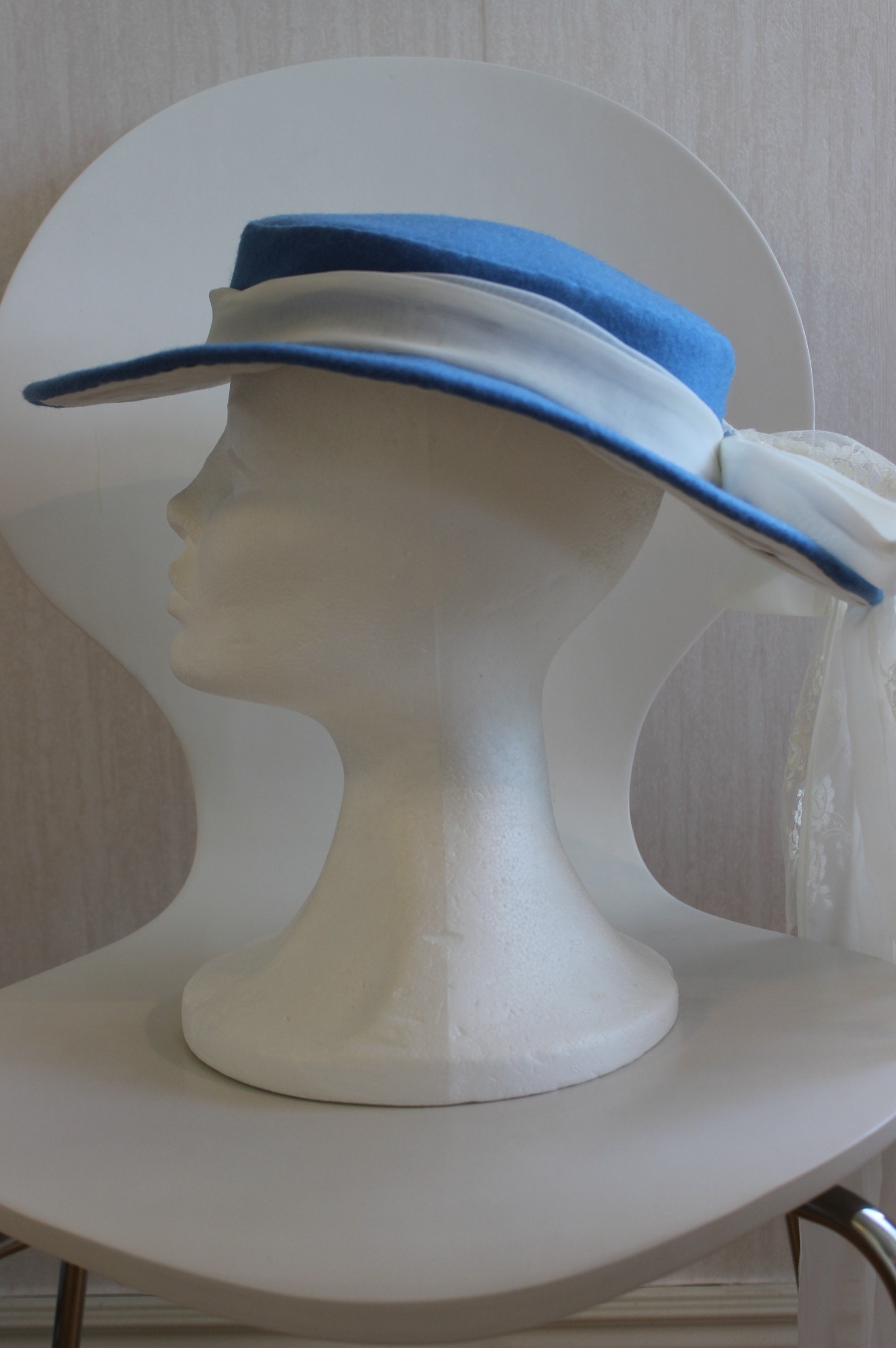
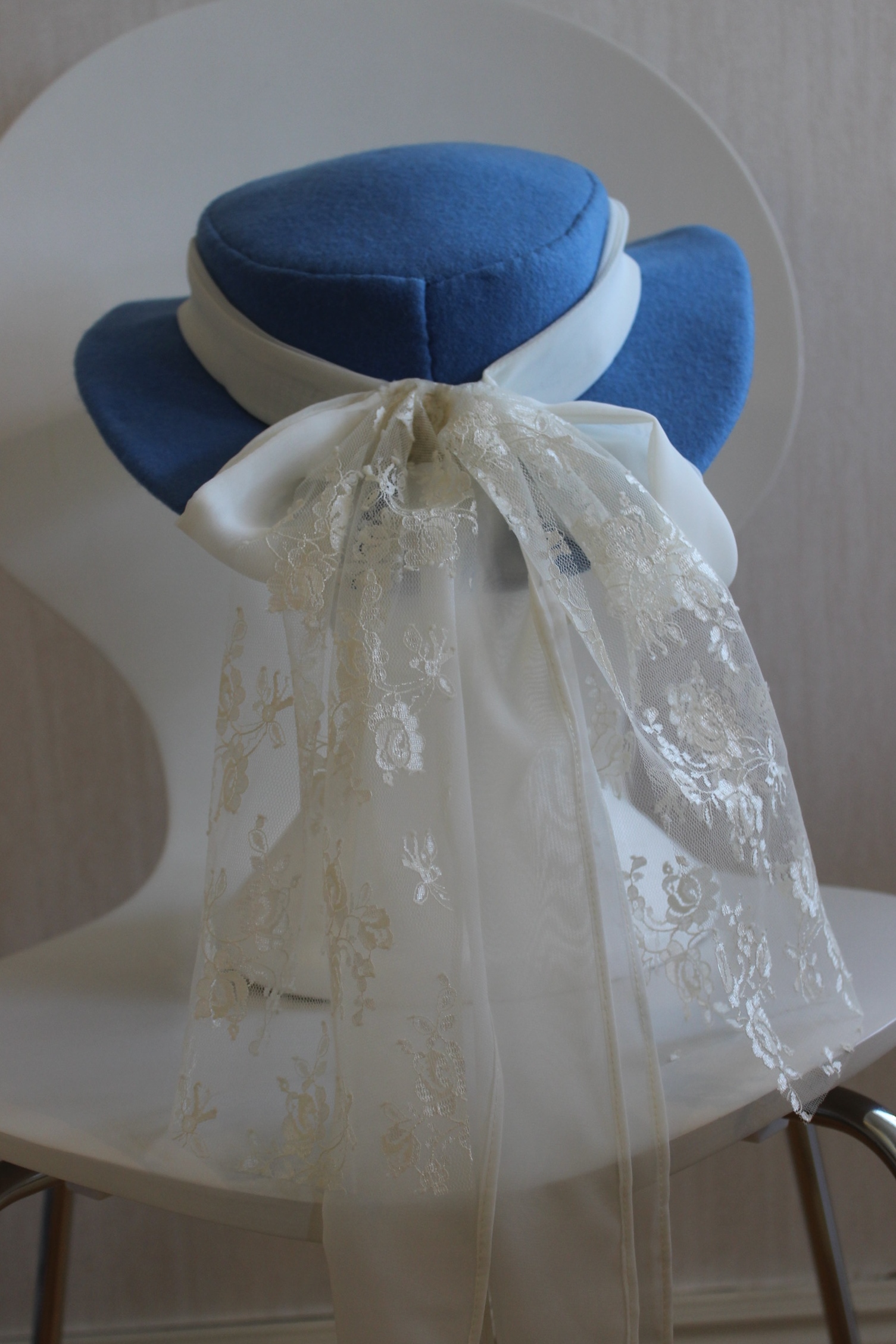
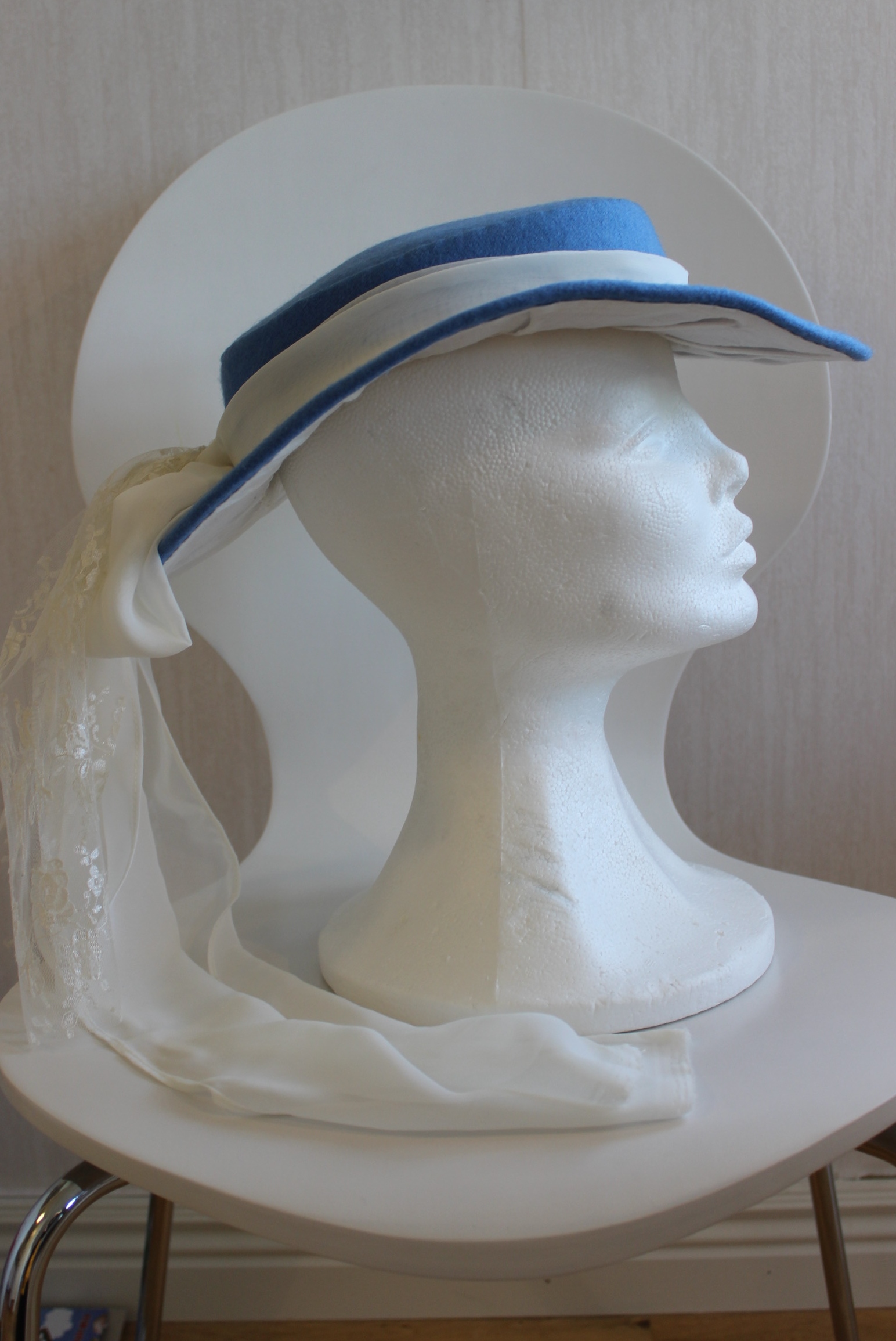
The finished hat
IMG_6739

IMG_6742

IMG_6743

IMG_6744

IMG_6746

IMG_6747

IMG_6749

IMG_6750

IMG_6752

The facts:

What: a 1860s hat

Pattern: Lynn McMasters 1860s summer hat

Fabric & Notions: scraps of blue wool, white linnen and cotton bathing, 30cm buckram, 2m millenery wire, thread, 30cm polyester chiffong and 10cm polyester lace for decoration.

Time: About 20 hours.

Cost: ca 200 Sek (32 Usd) – all fabric from stash.

Final thoughts: I think it look really good and I hope my sister likes it – because I do.

1860s silk bonnet (part 2) – decoration

Continuing on the 1860s green silk bonnet:

To get my bonnet to look like my inspiration it needed a bit more work (part 1 – making the bonnet)

IMG_66117a42b6b21b6ade8740f6dc978540db72
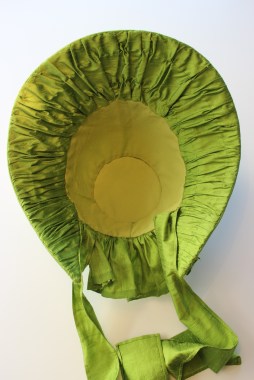
To make it go from this to this

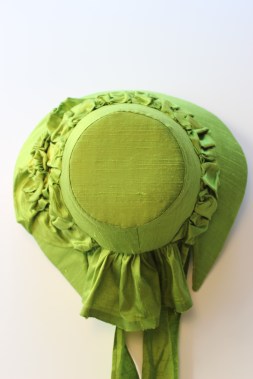
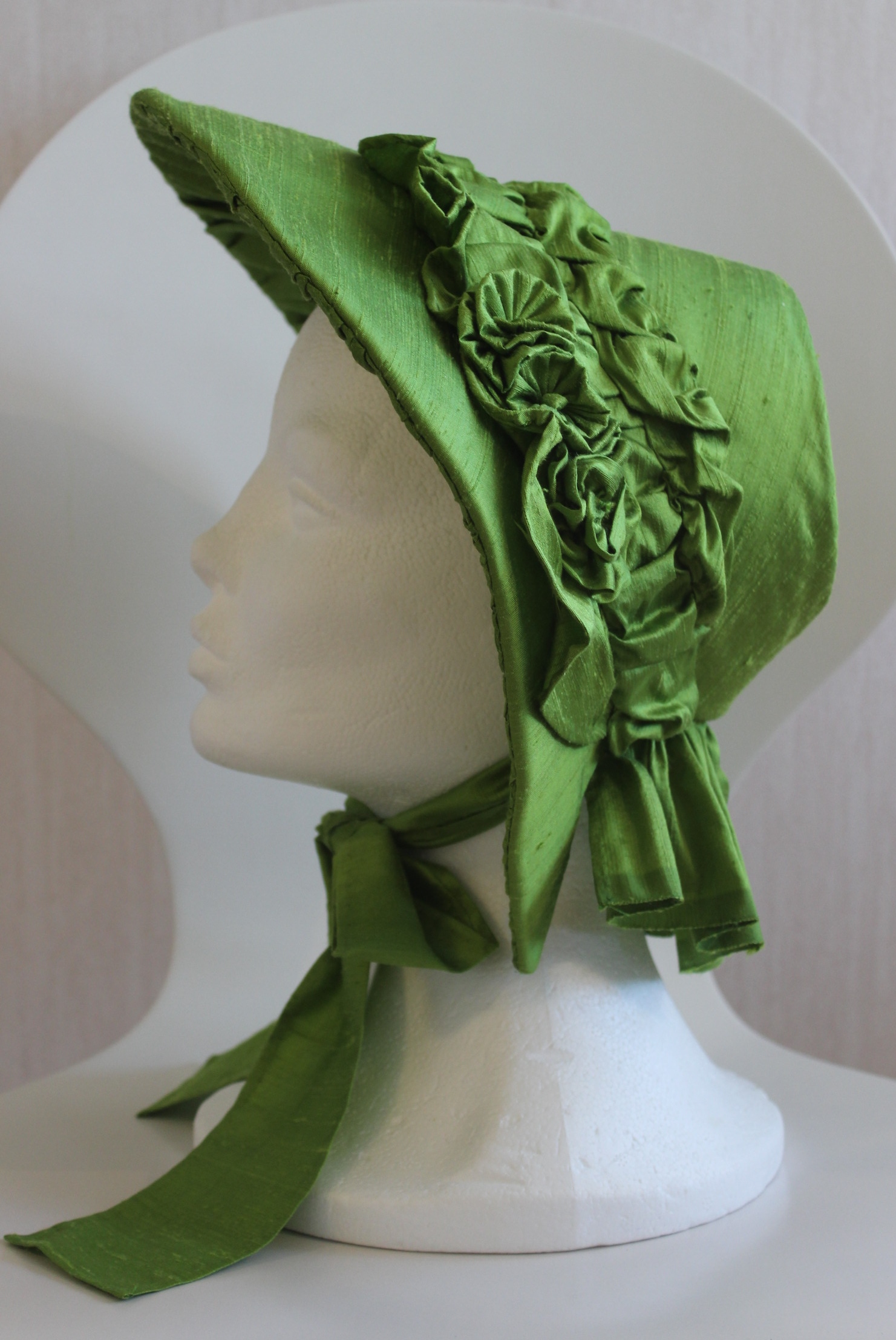
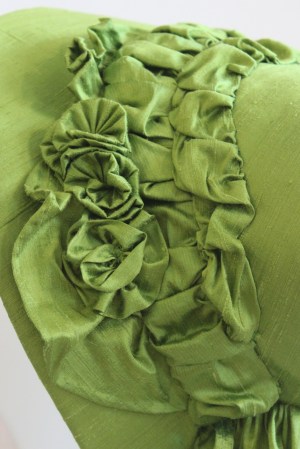
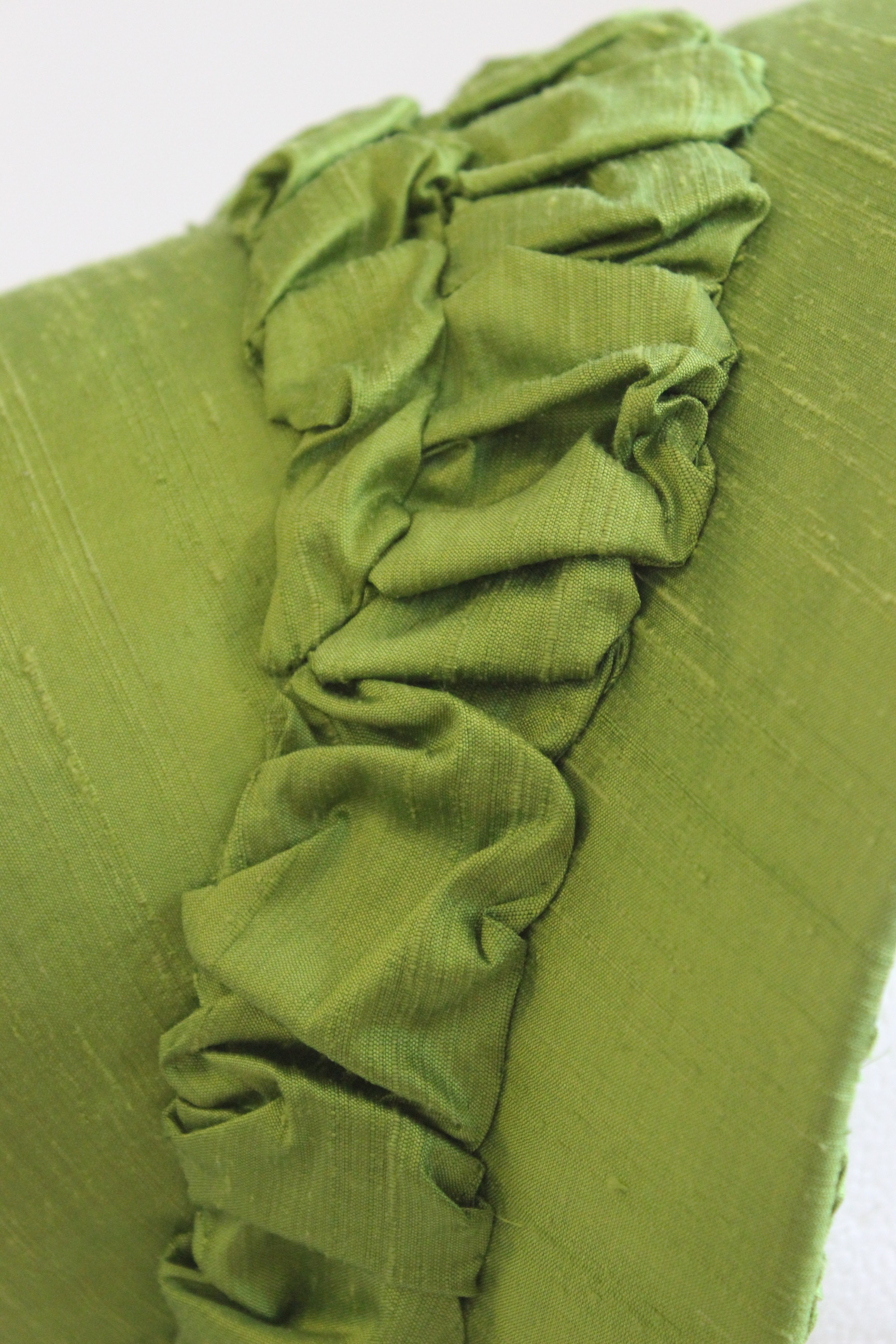
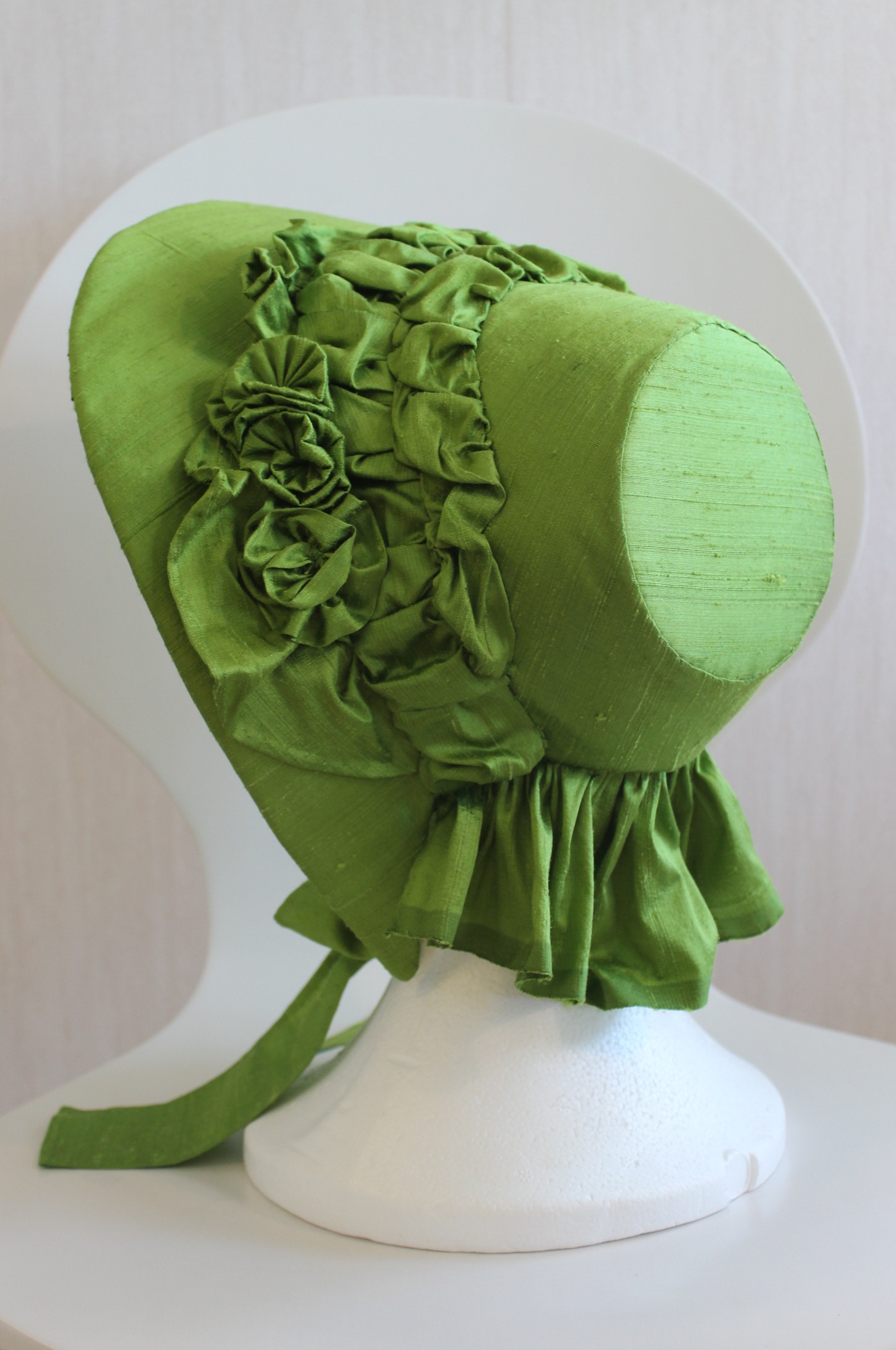
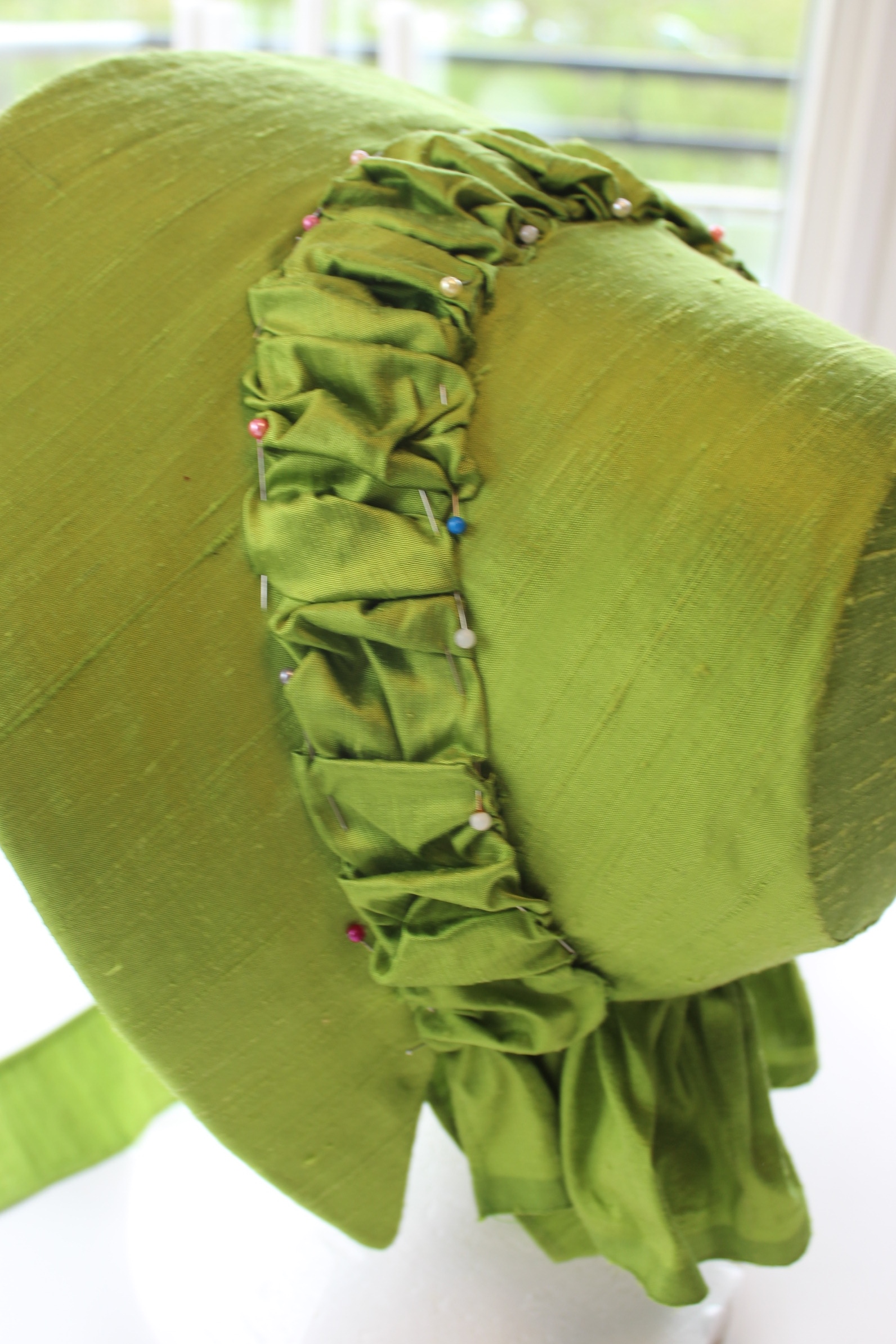
For the trimmings I cut stripes of “whatever left of the silk” and gathered them by hand to get a nice and “poufy” trim. IMG_6617

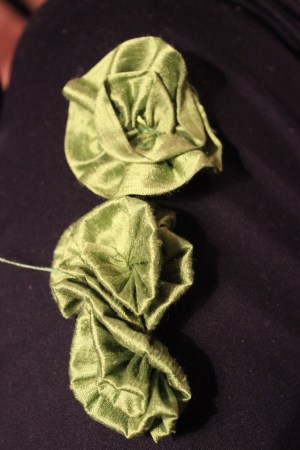
I also made a few flowers using scraps of the fabric. IMG_6710These are so easy to make and takes really no time at all.
I only wish I had more fabric to make more.

I then pinned the trimmings to the bonnet and stitched them on by hand, one by one until I was satisfied
(or ratter until I run out of scraps to turn into trim…).IMG_6619The first trims pinned on.

IMG_6734IMG_6735

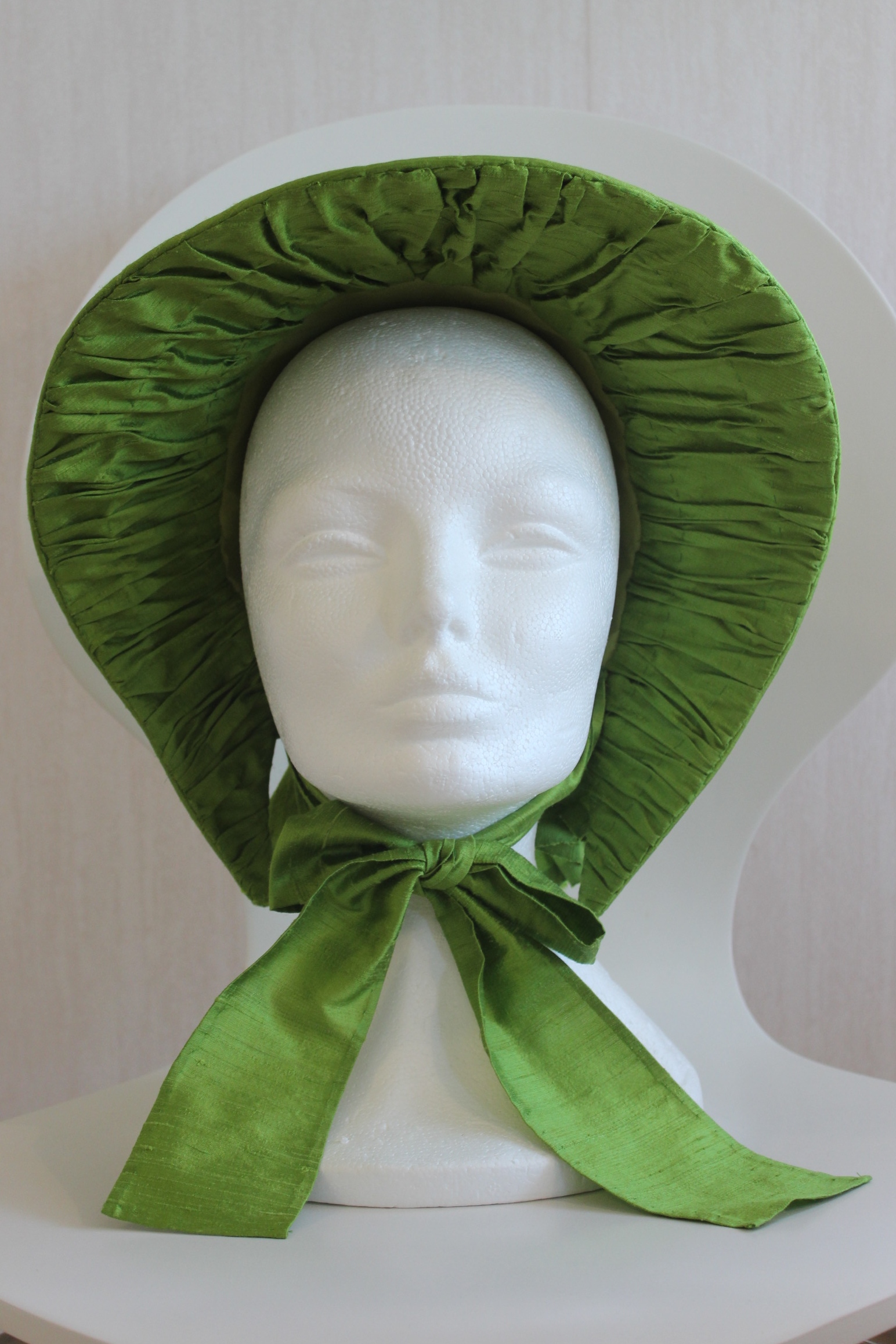
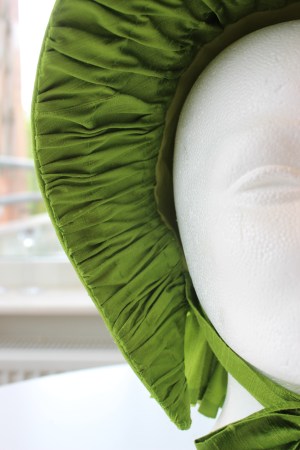
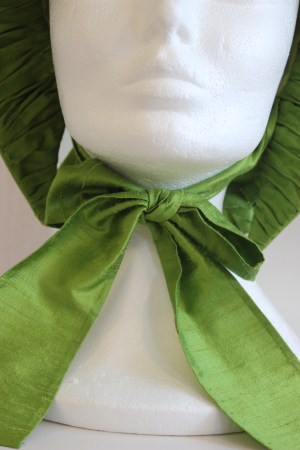
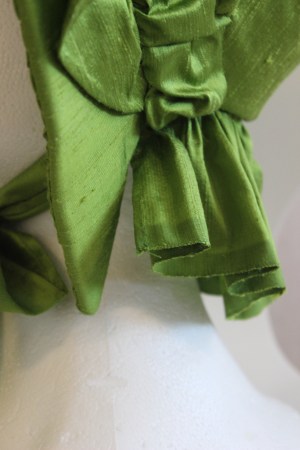
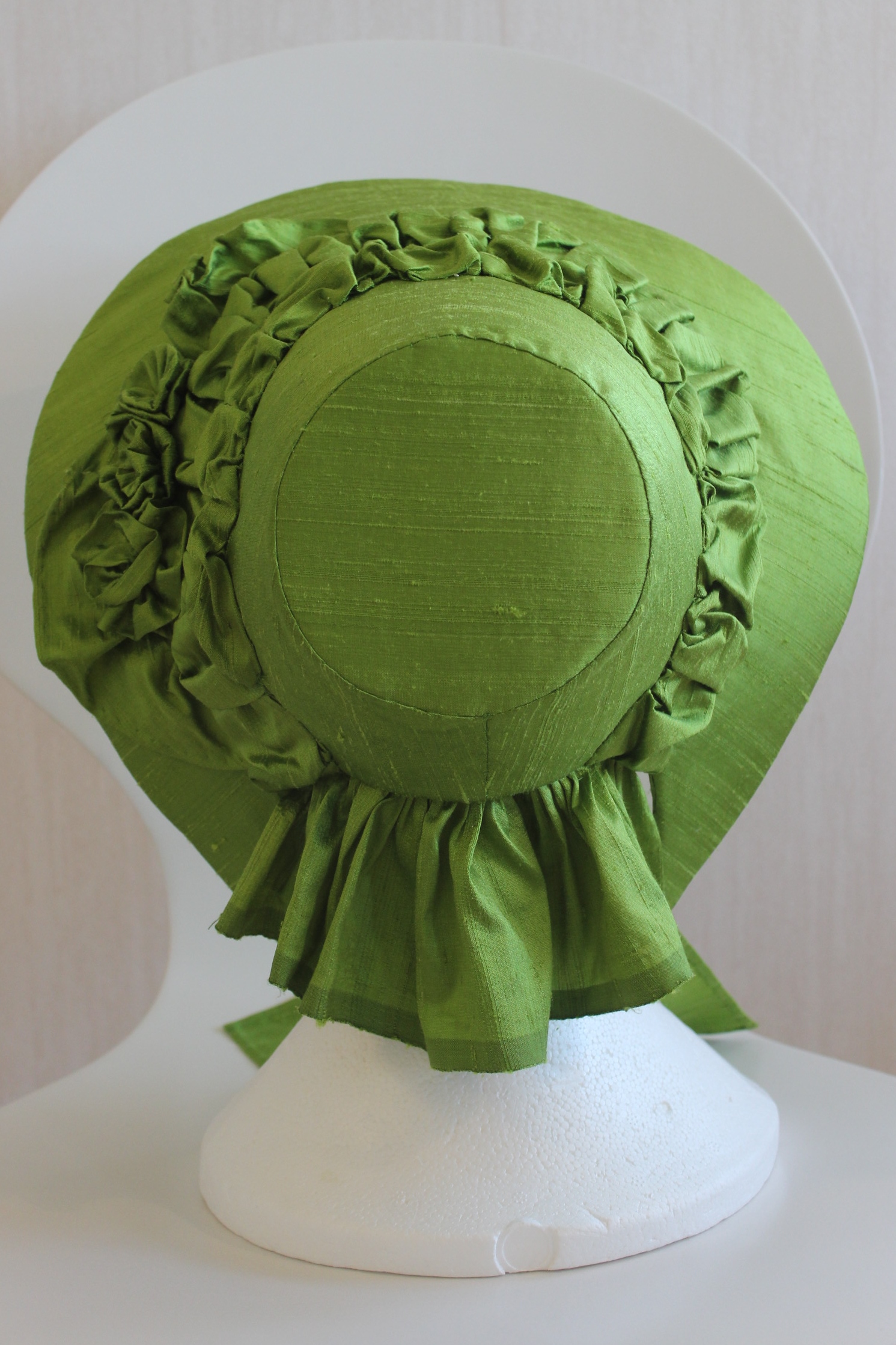
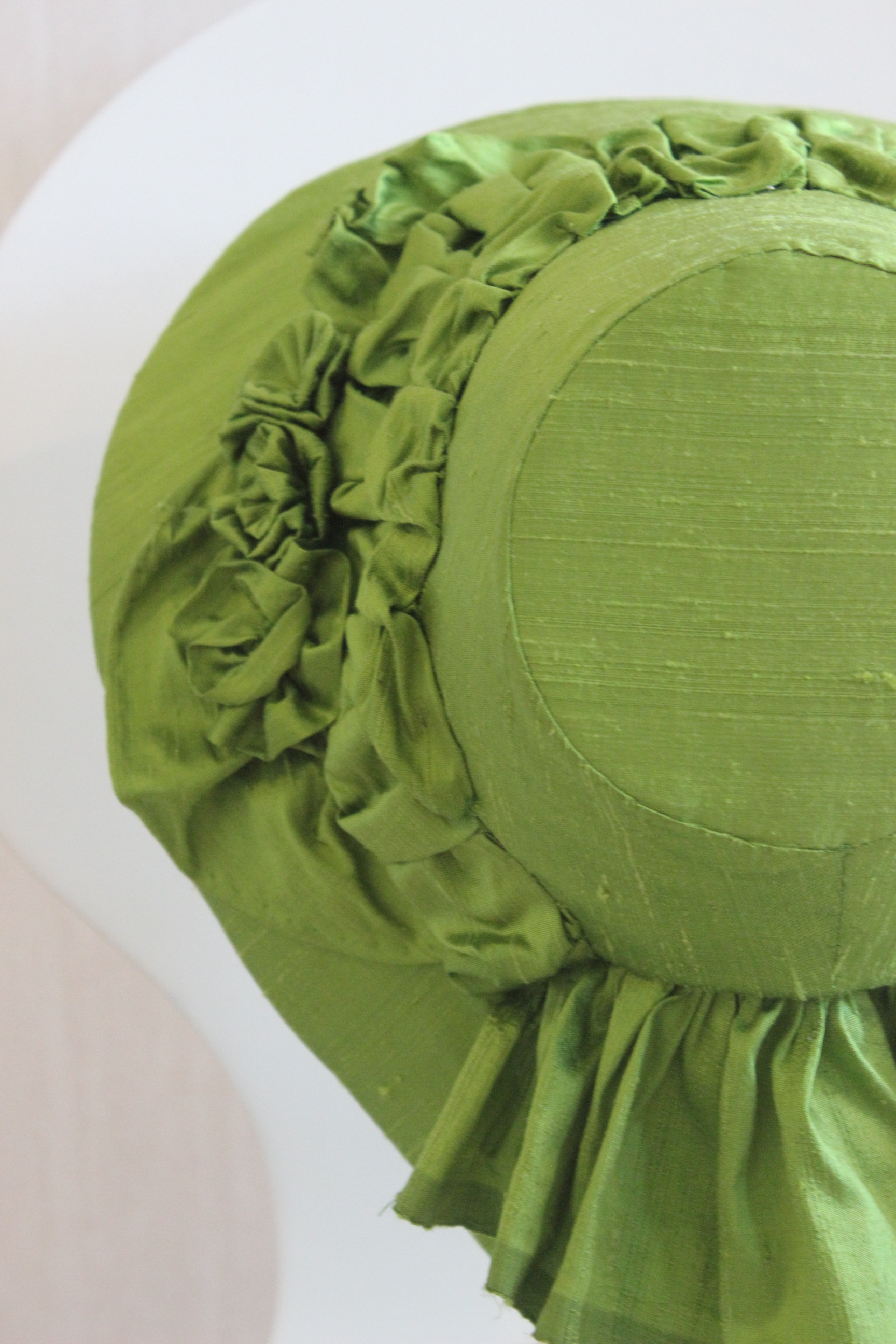
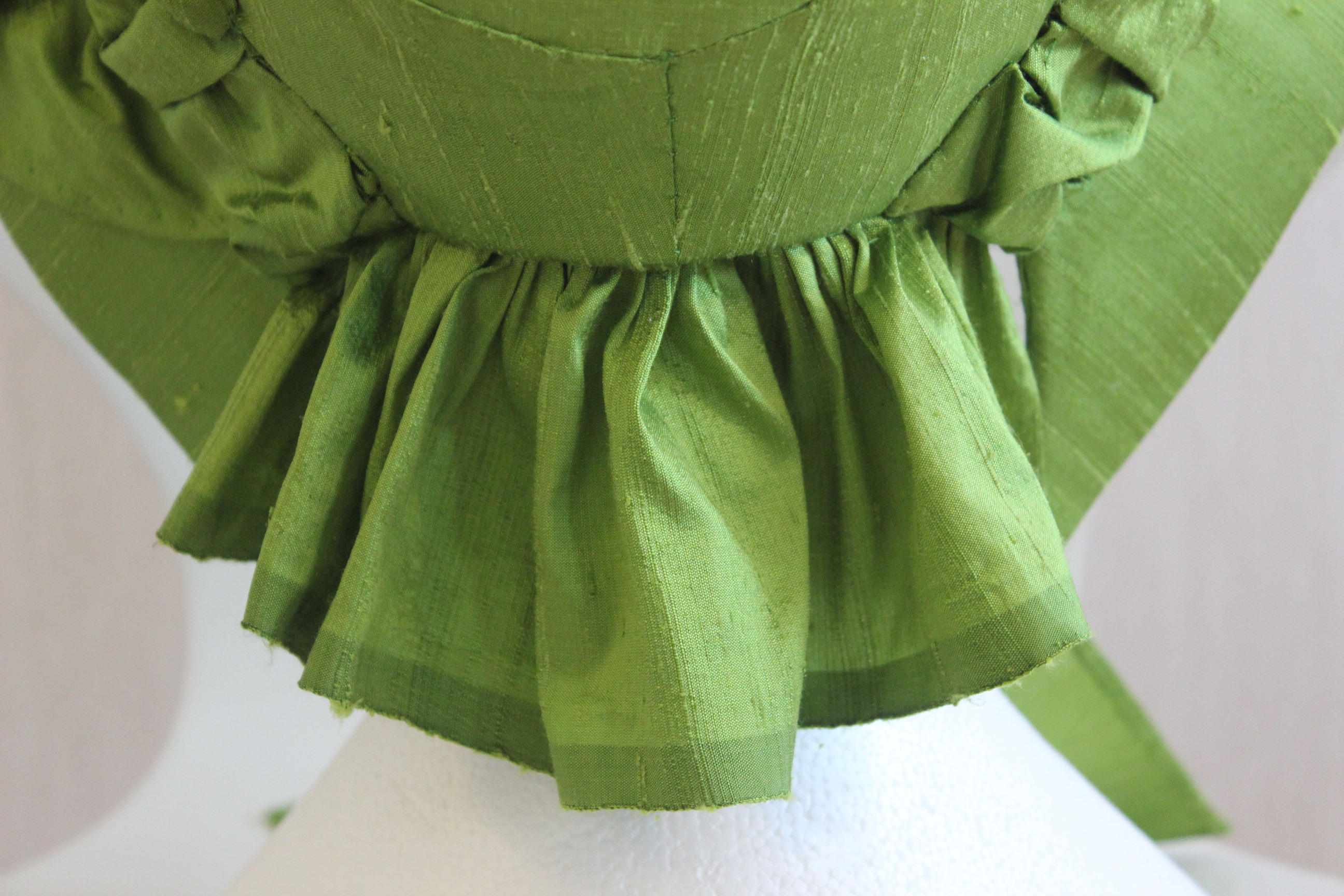
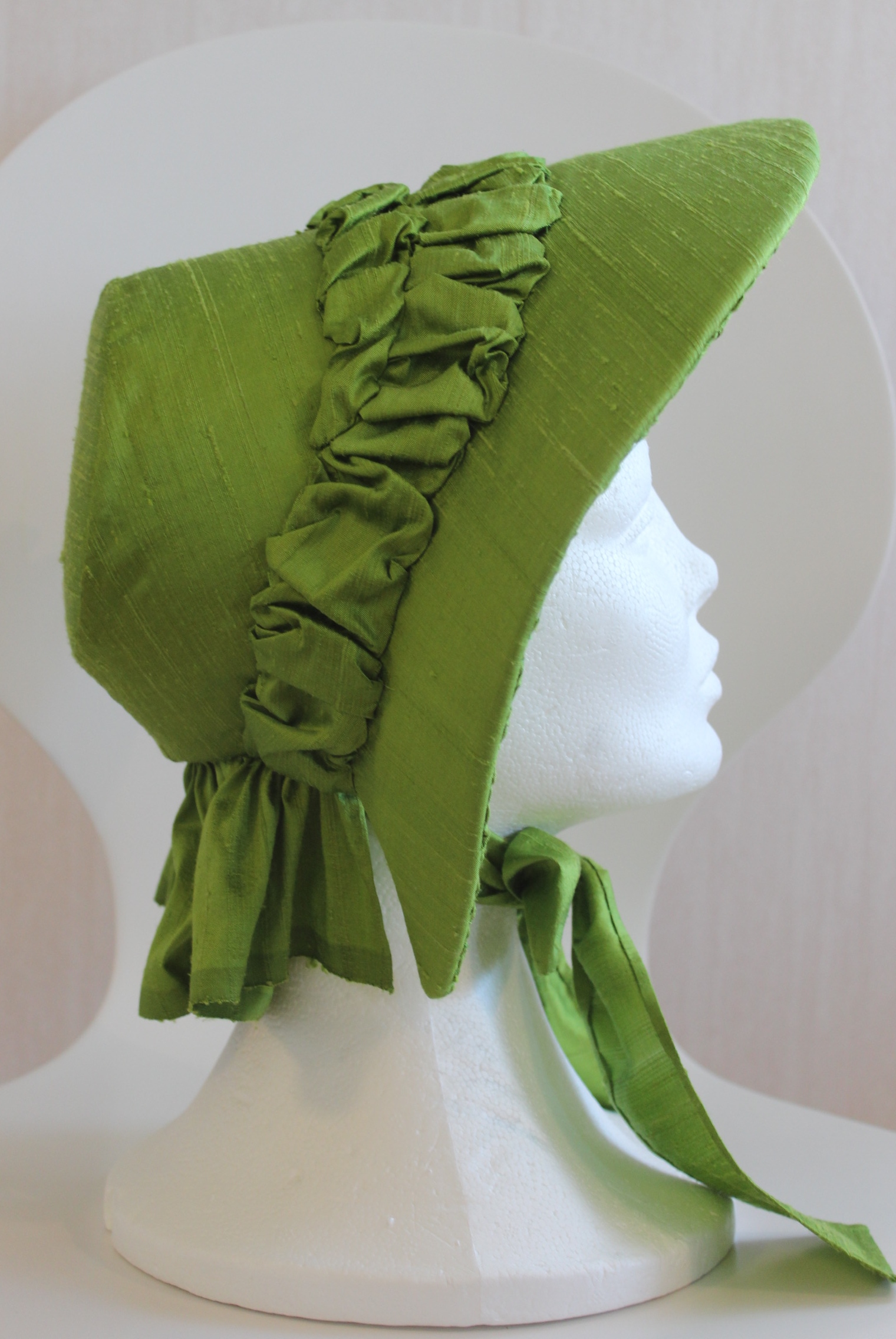
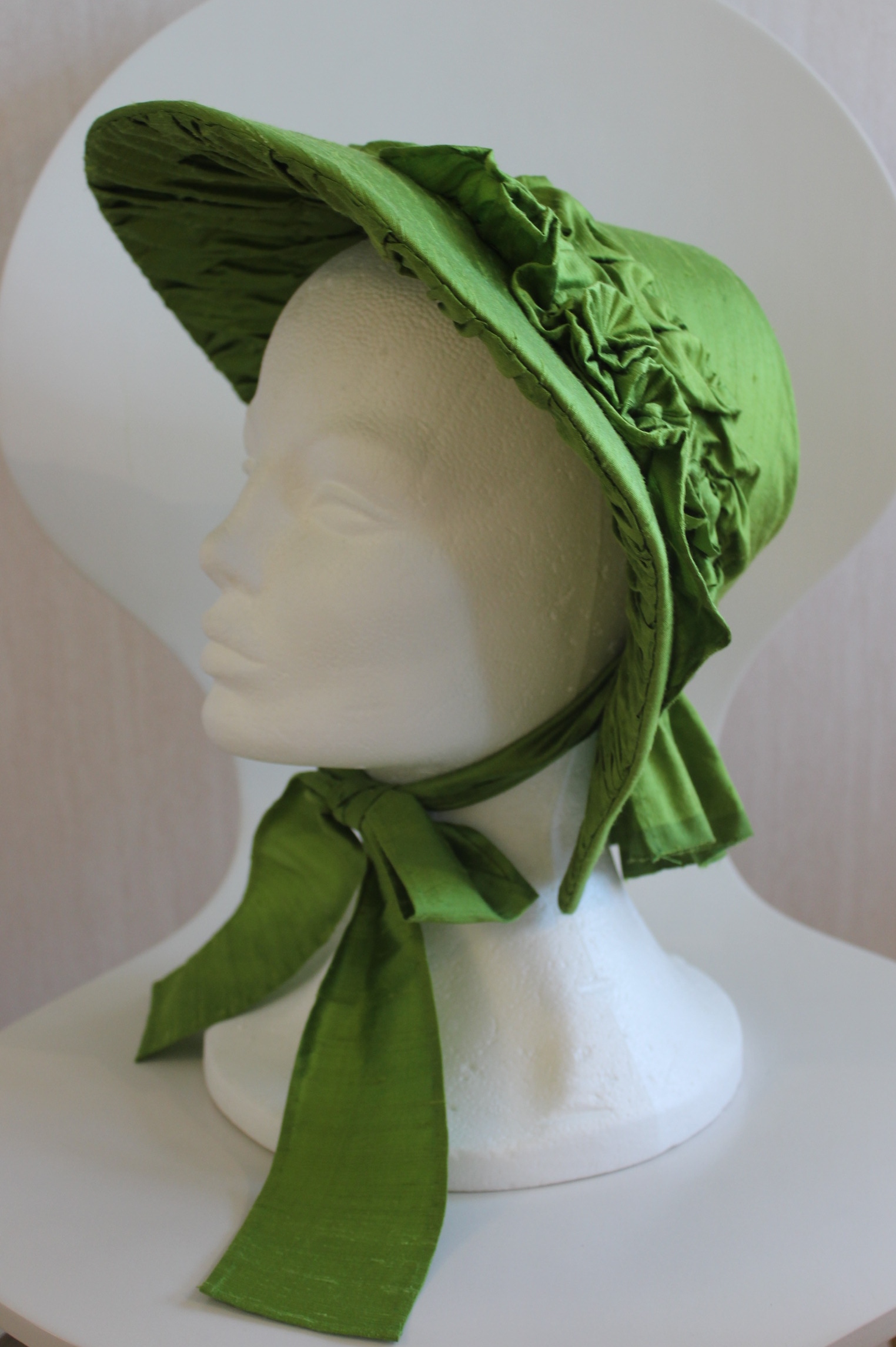
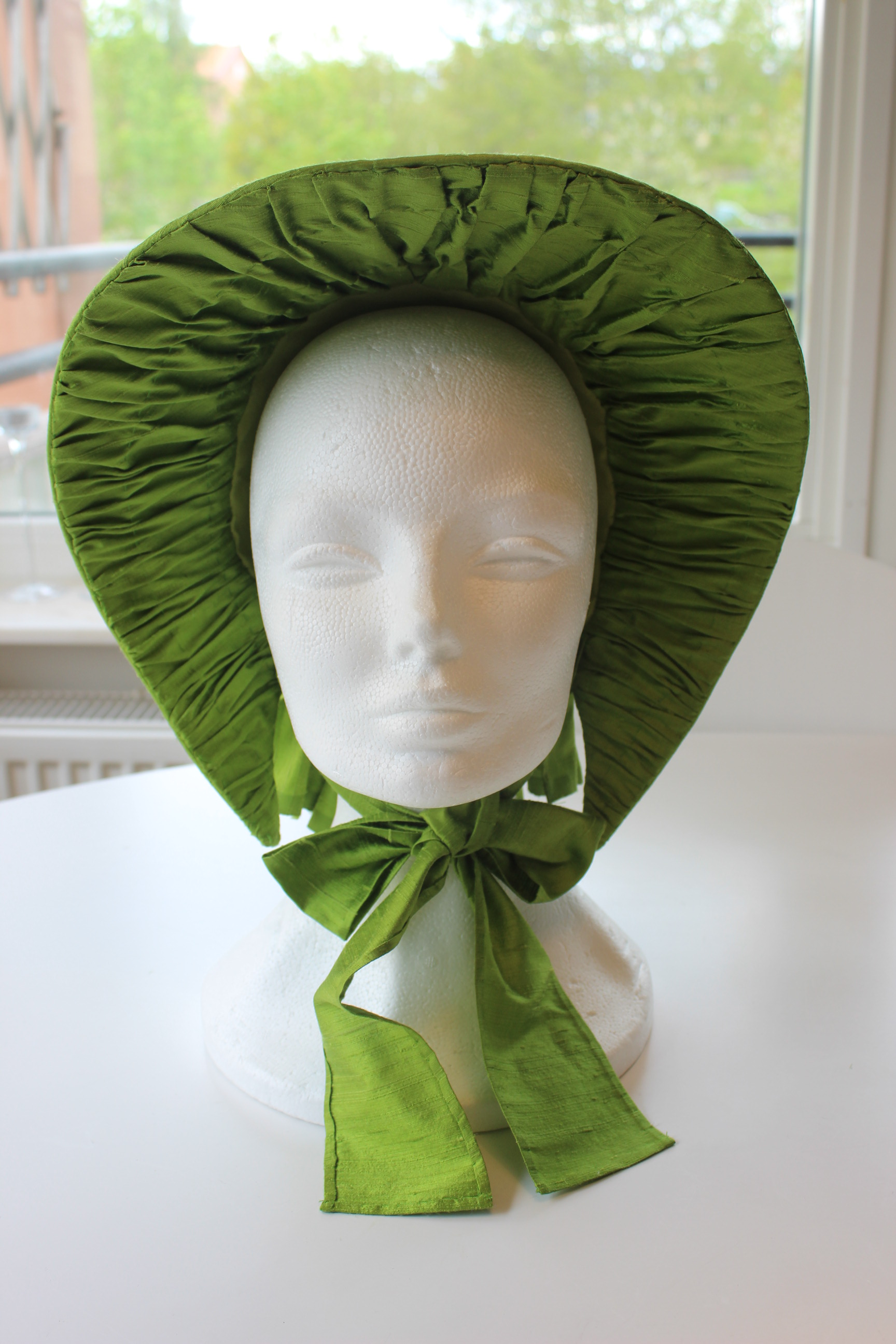
The Finished Bonnet: IMG_6712

IMG_6615

IMG_6715

IMG_6718

IMG_6731

IMG_6720

IMG_6723

IMG_6724

IMG_6725

IMG_6726

IMG_6727

IMG_6729

IMG_6733

The Facts:

What: A 1860s bonnet

Pattern: Lynn McMasters “1860s civil war bonnet”

Fabric: 60 cm of green silk taffeta, 30 cm of green cotton for lining.

Cost: 350 Sek

Time: A lot – about 30 hours.

Final Thoughts: I think it came out really pretty, with enough decoration to look right for the period yet being pleasing in my modern styizied eyes.
I can’t wait o wear it.

1860s – silk bonnet (part 1) – making the bonnet

After the mandatory inspiration searching, were I decided on a style of bonnet to make, I got to work,

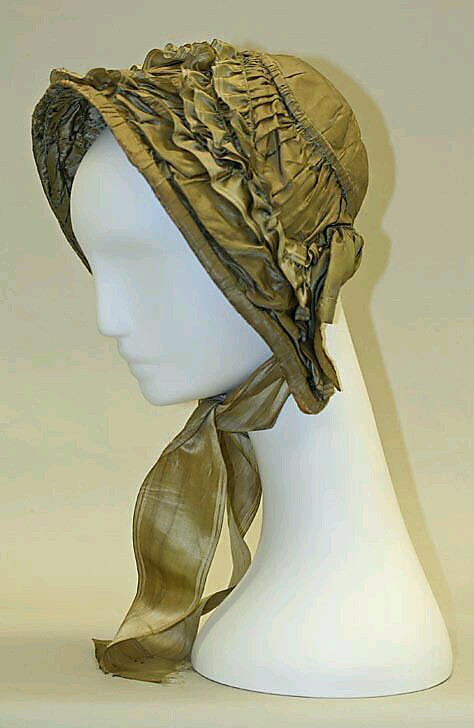
7a42b6b21b6ade8740f6dc978540db72Inspiration

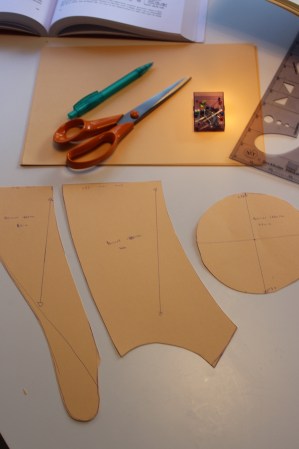
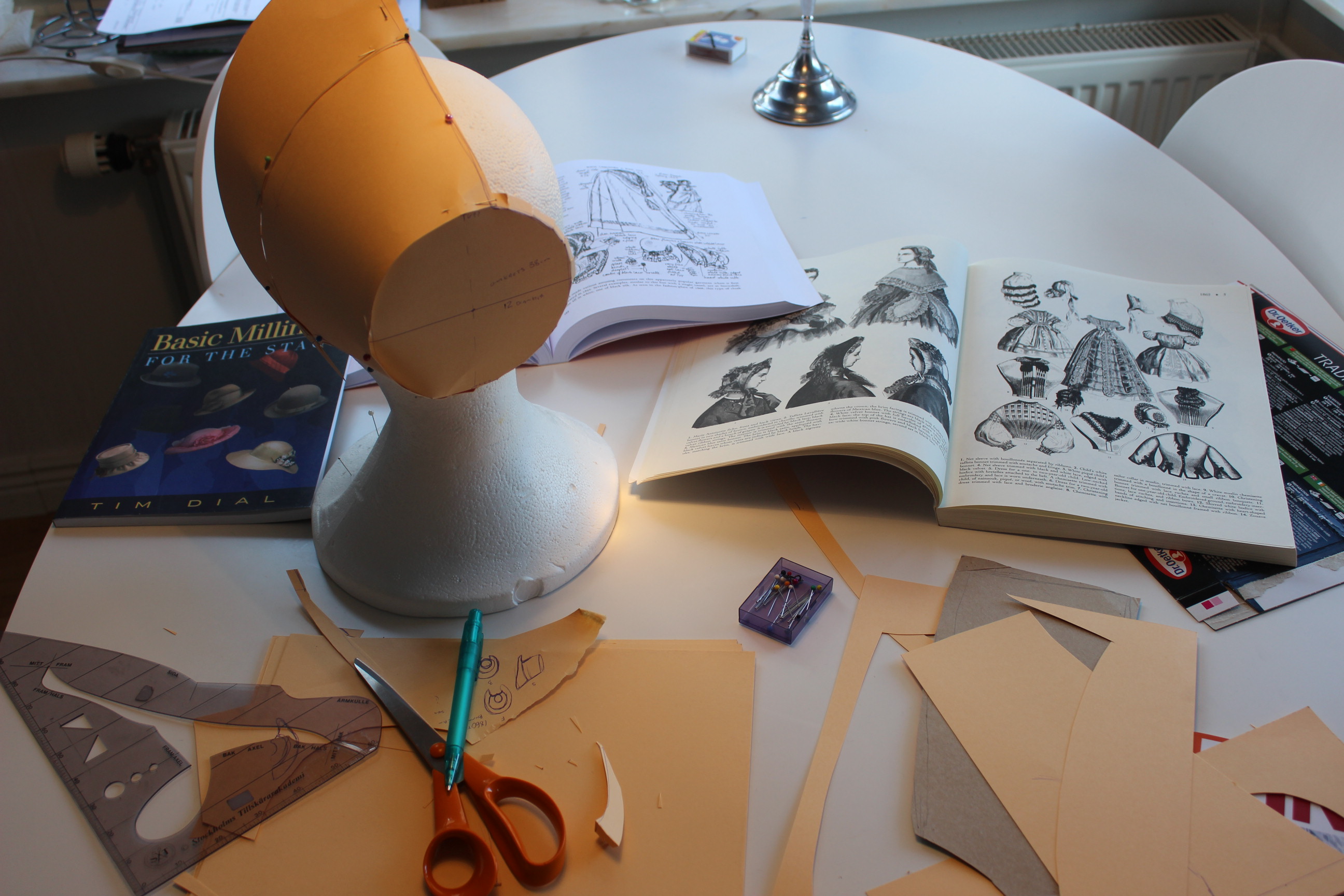
I decided to drape my own pattern using thin cardboard, pictures and millinery books.IMG_6244

After some fiddling and pinning I got a pattern for a bonnet…IMG_6233Which looked like a total disaster…

No, this would not do, time for plan B.

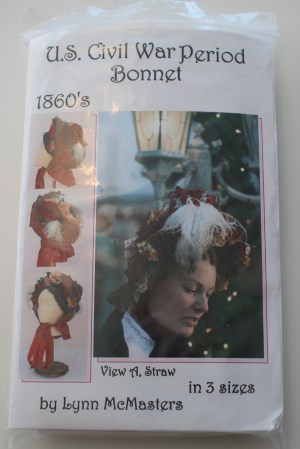
I ordered Lynn McMasters “1860s bonnet pattern” and started all over again.IMG_6342

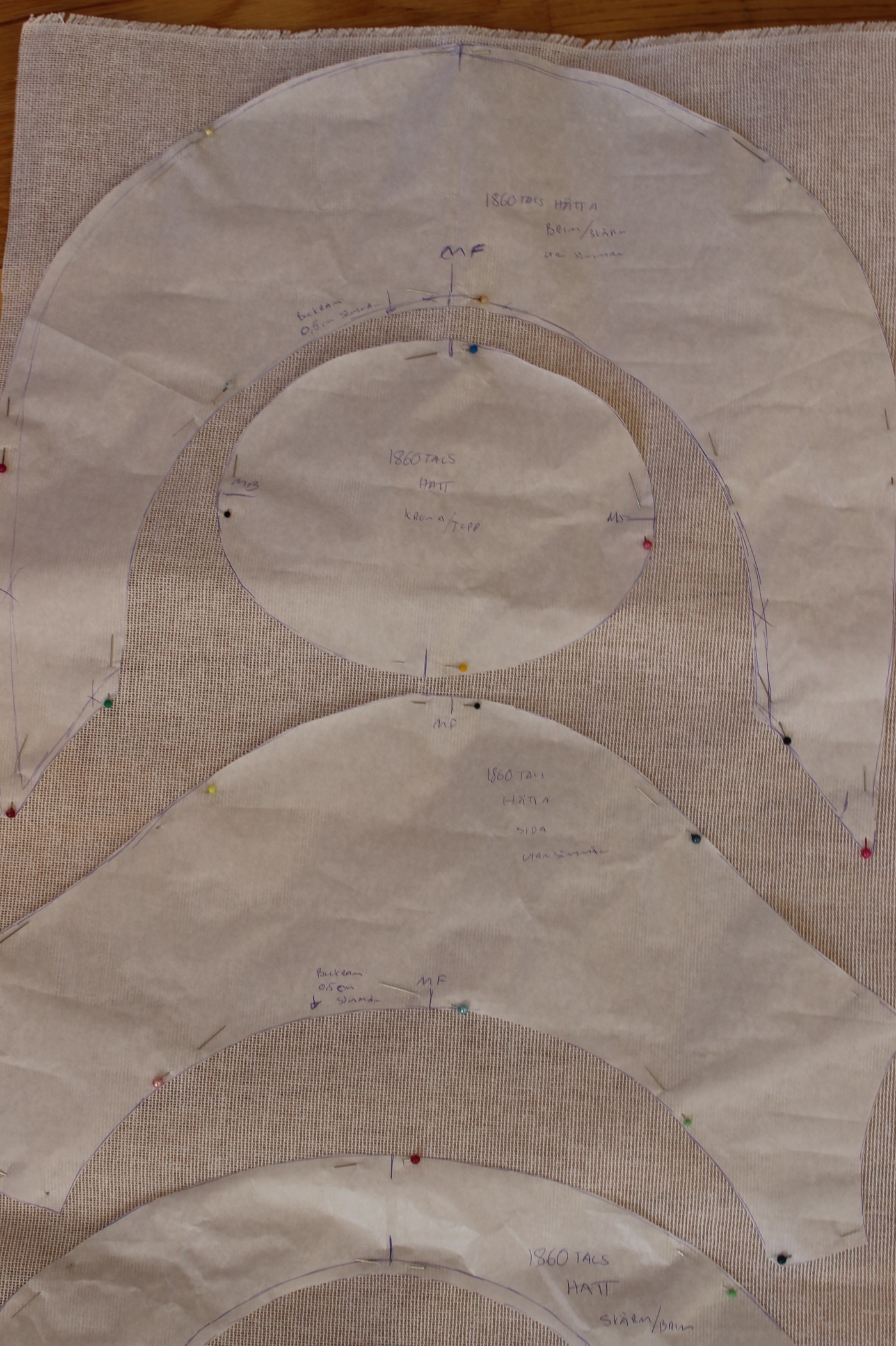
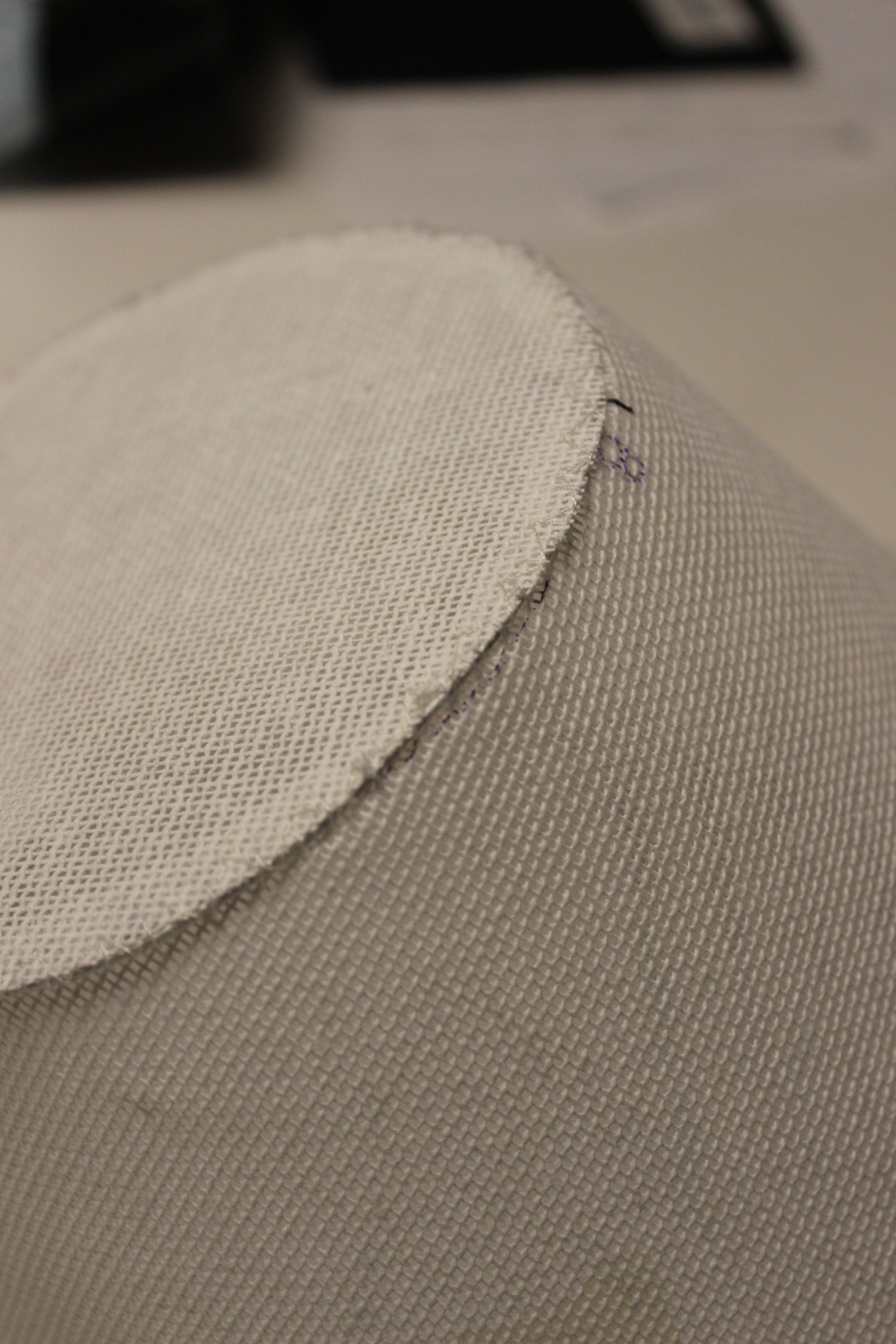
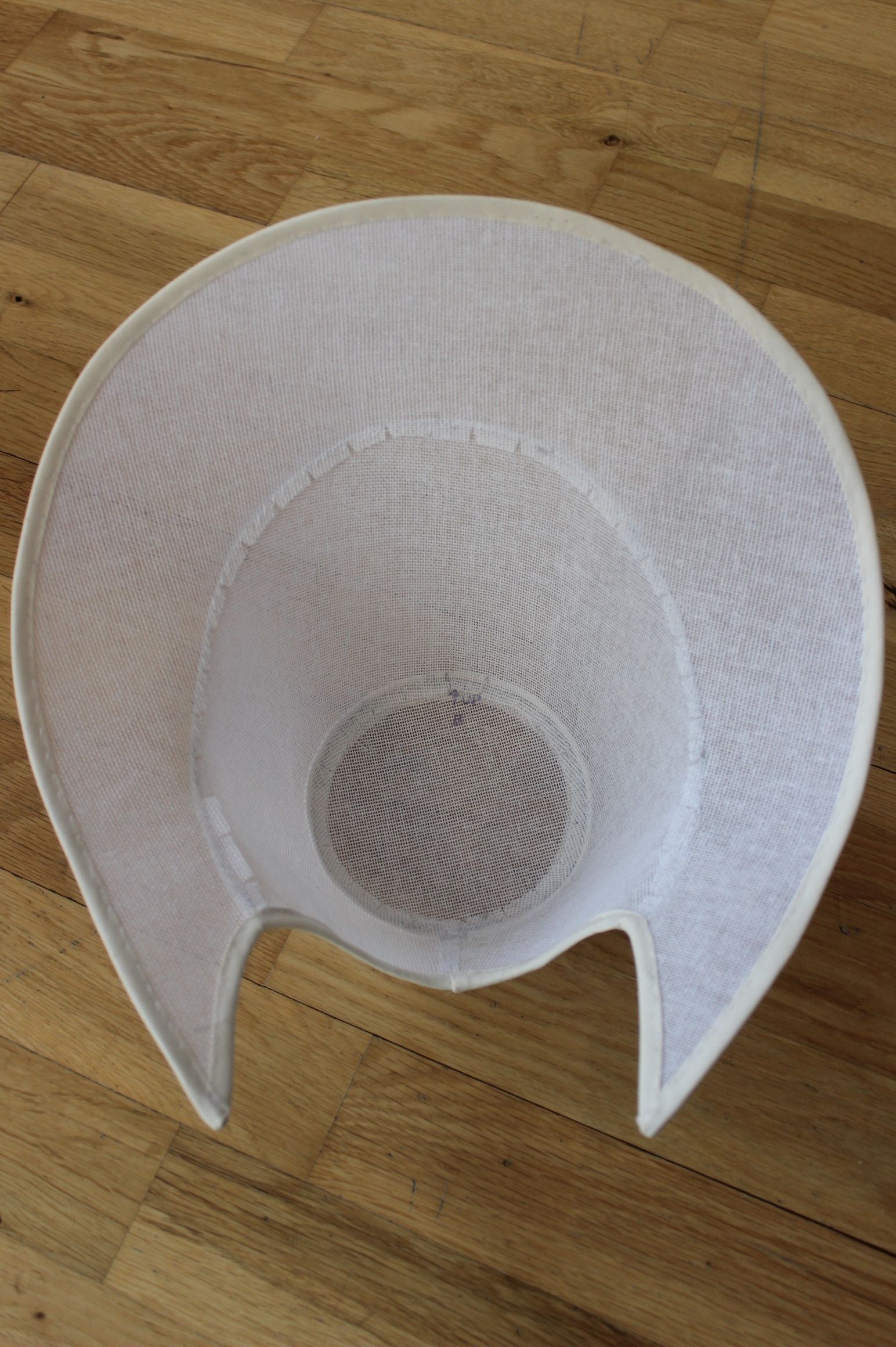
After copying the pattern I cut it out in buckram.     IMG_6339

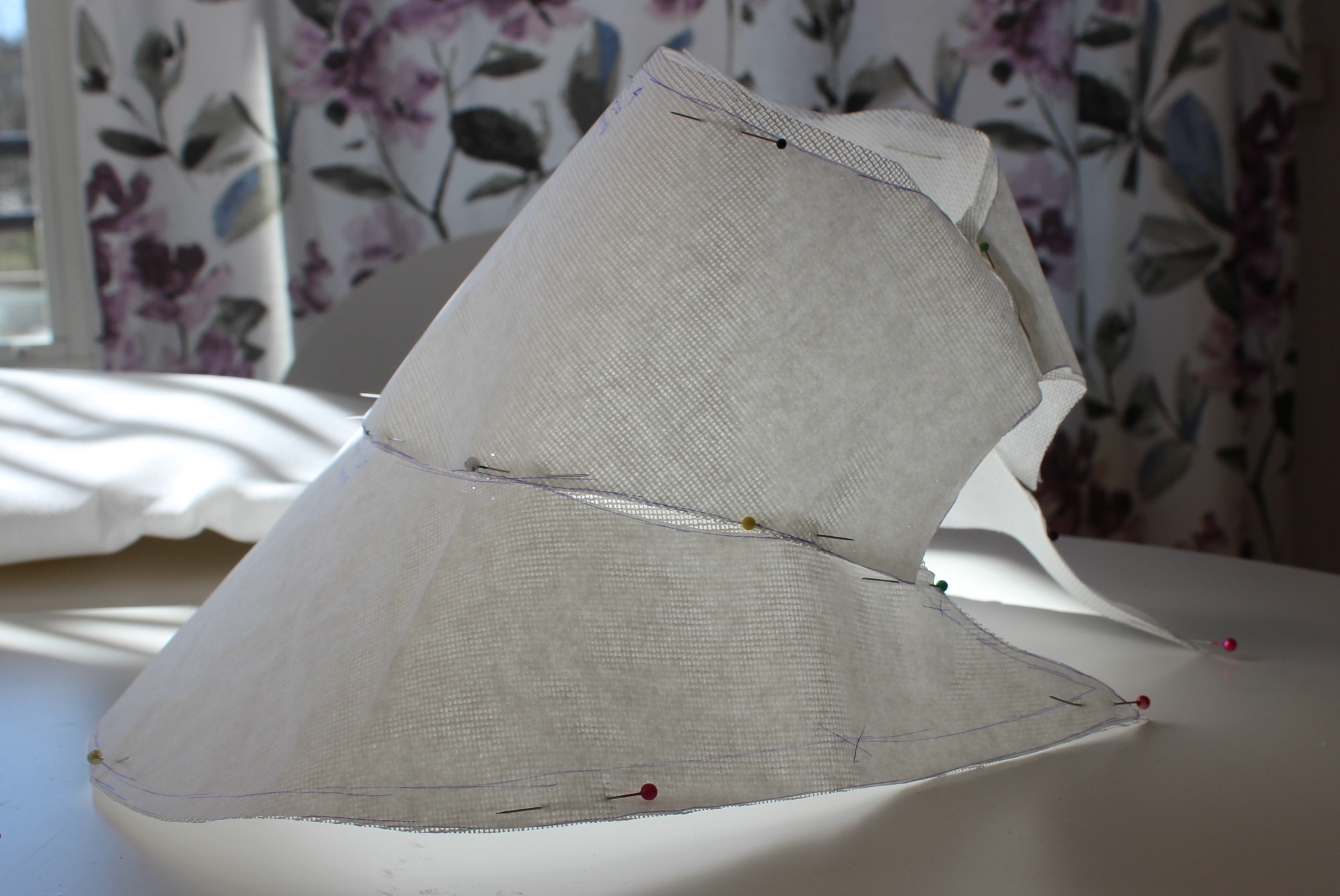
To get a better view of how the bonnets shape, I pinned the pieces together for a better look.IMG_6346

After trying it on, I decided to cut a few cm of of the brim.IMG_6349

IMG_6370Marking the pieces

IMG_6373Sewing the millinery wire to the buckram pieces.

Then the pieces was ready to be stitched together.

To get them to line up perfectly I taped the together before I sewed.IMG_6429

IMG_6433Back piece stitched to side piece.

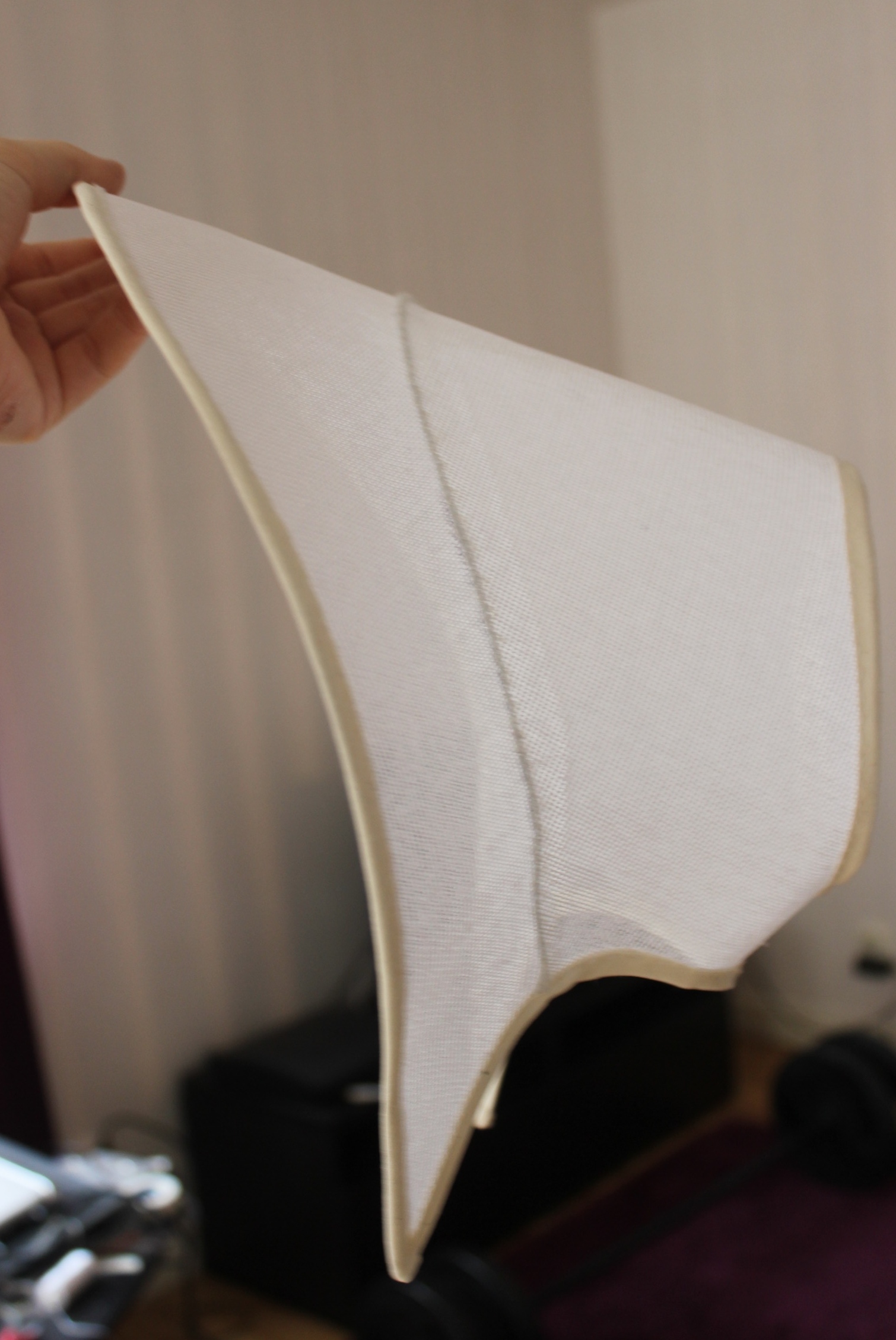
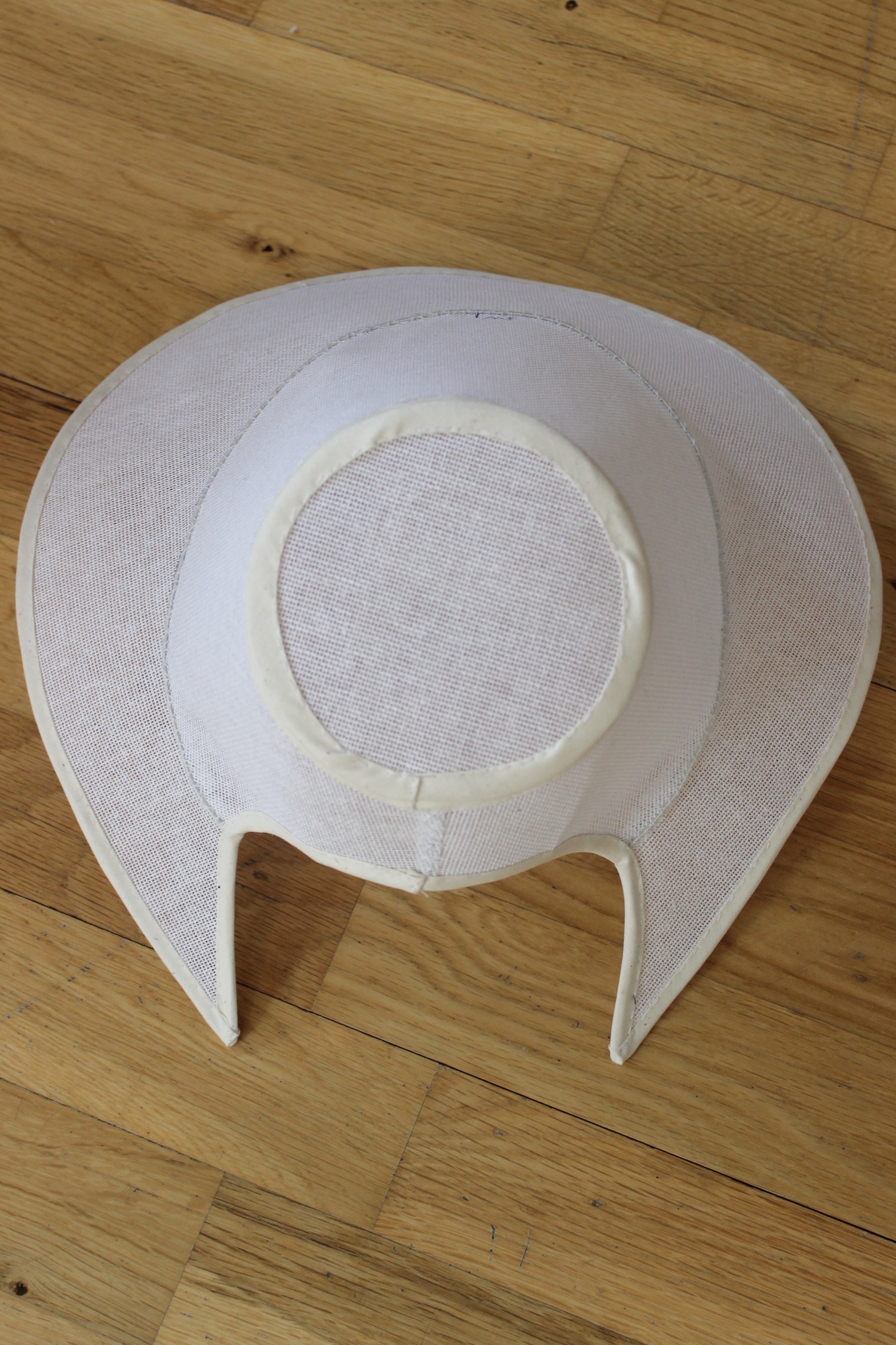
IMG_6468A pretty nice buckram frame

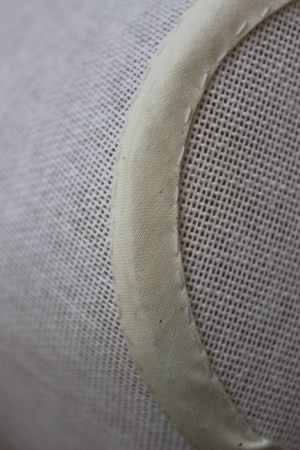
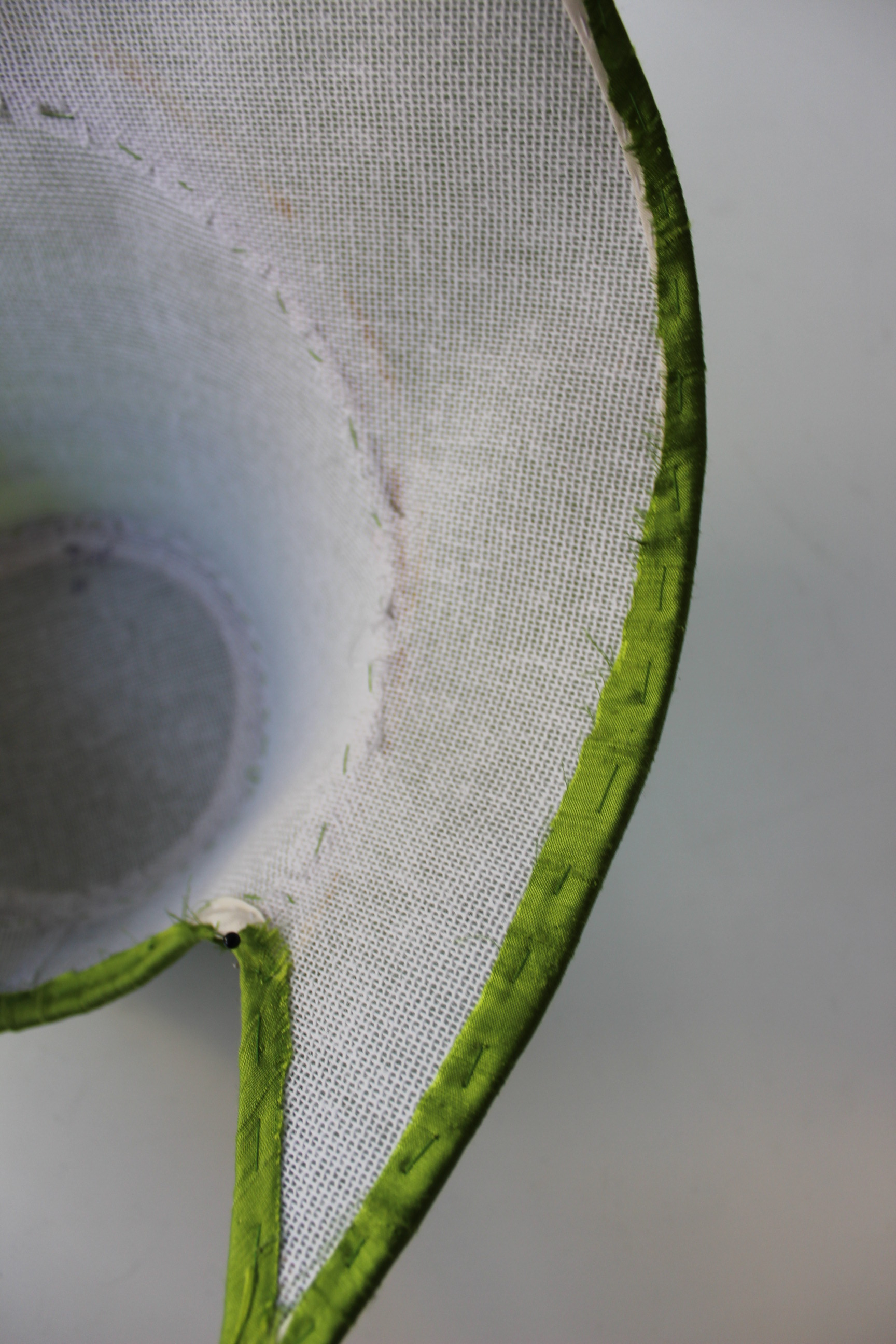
Then I stitched bias-tape round every edge to keep the corners smooth underneath the fabric.IMG_6472

Finished frames:
IMG_6469 IMG_6470

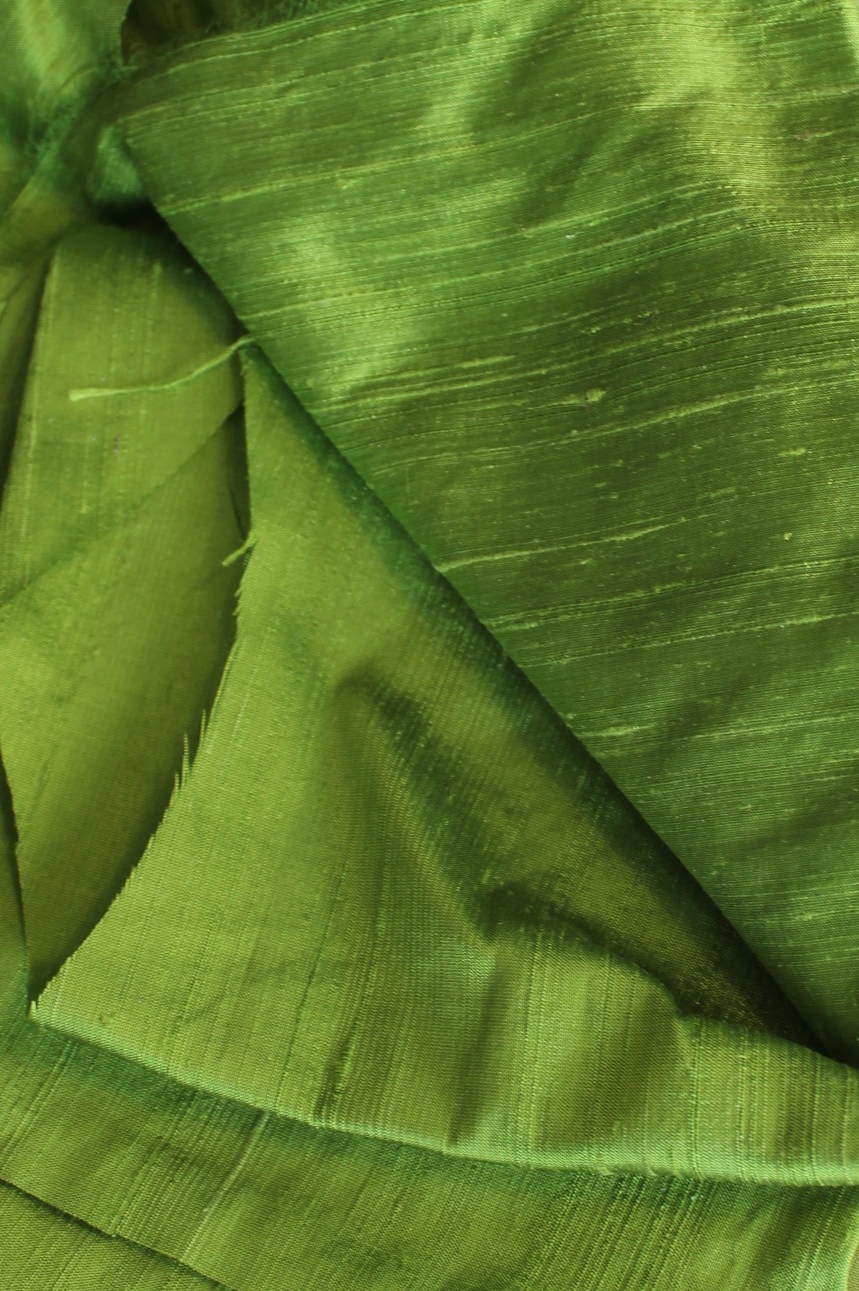
Then It was time to buy some fabric – deciding on green since that was one of the few colors in the store that would work with my dress (plaid white/blue) without being to obviously matching. IMG_6364

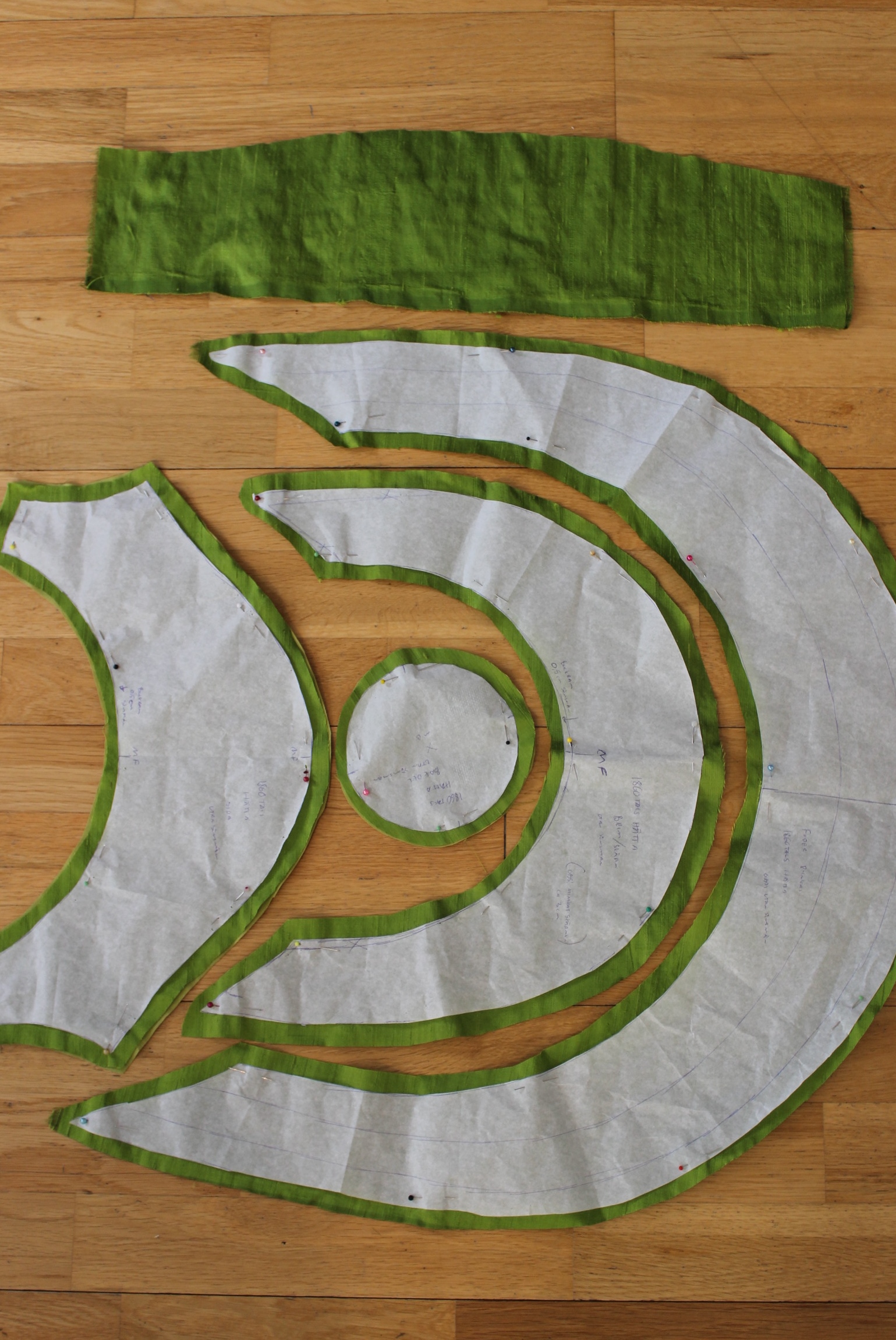
IMG_6366The cut pattern pieces.

As directed in the pattern I also cut cotton bating and some scraps of light green cotton for lining. IMG_6358

Before the fabric was to go on I needed to glue/stitch the batting on te frame to get an even smoother under layer for the silk.

Sadly I forgot to take pictures of this step, but basically I just glued around the edges of the frame pieces and carefully attached the batting to it.

Then it was time for the outer fabric.

(bad at photographing here too – I was working late at night, and didn’t had the camera on hand)

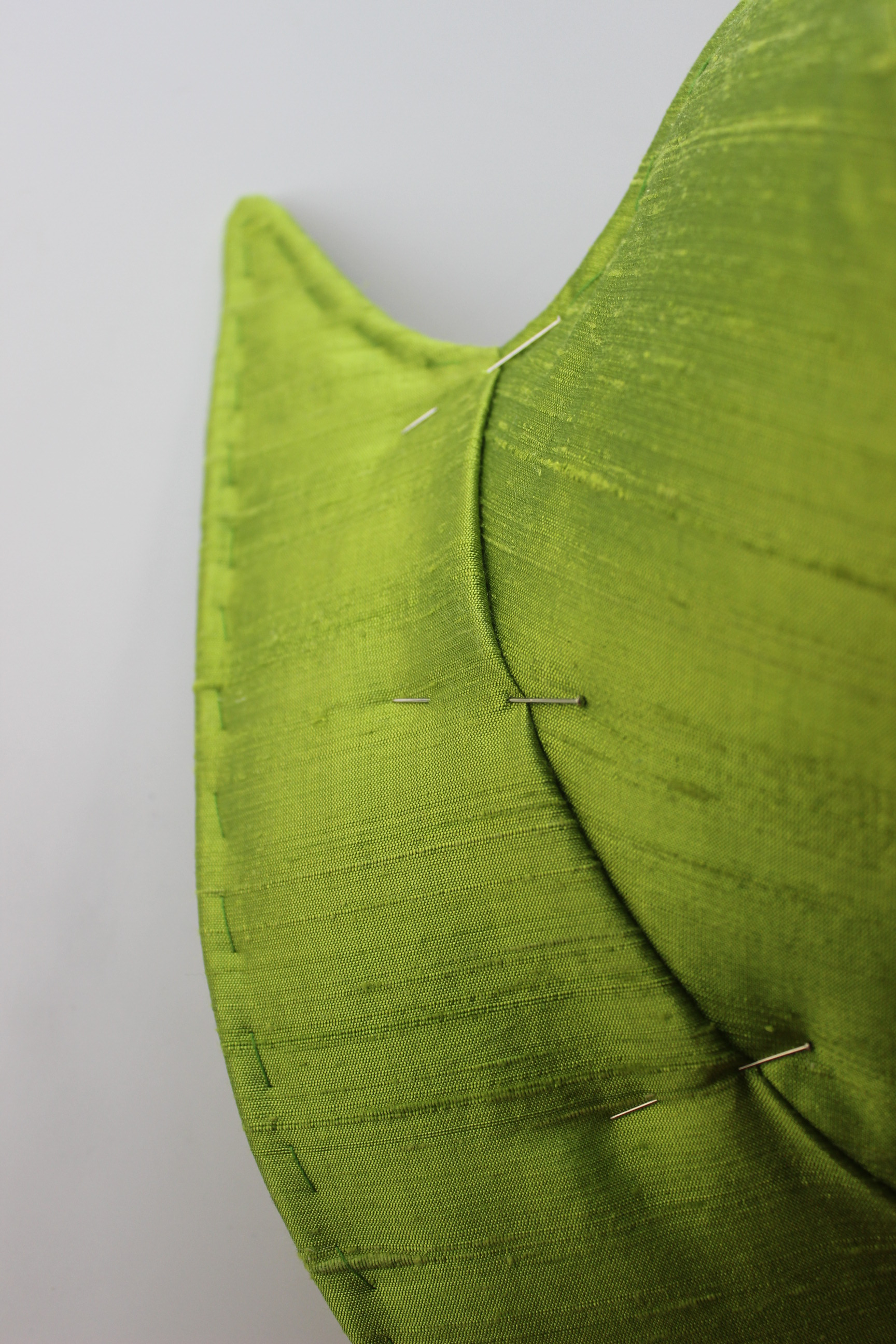
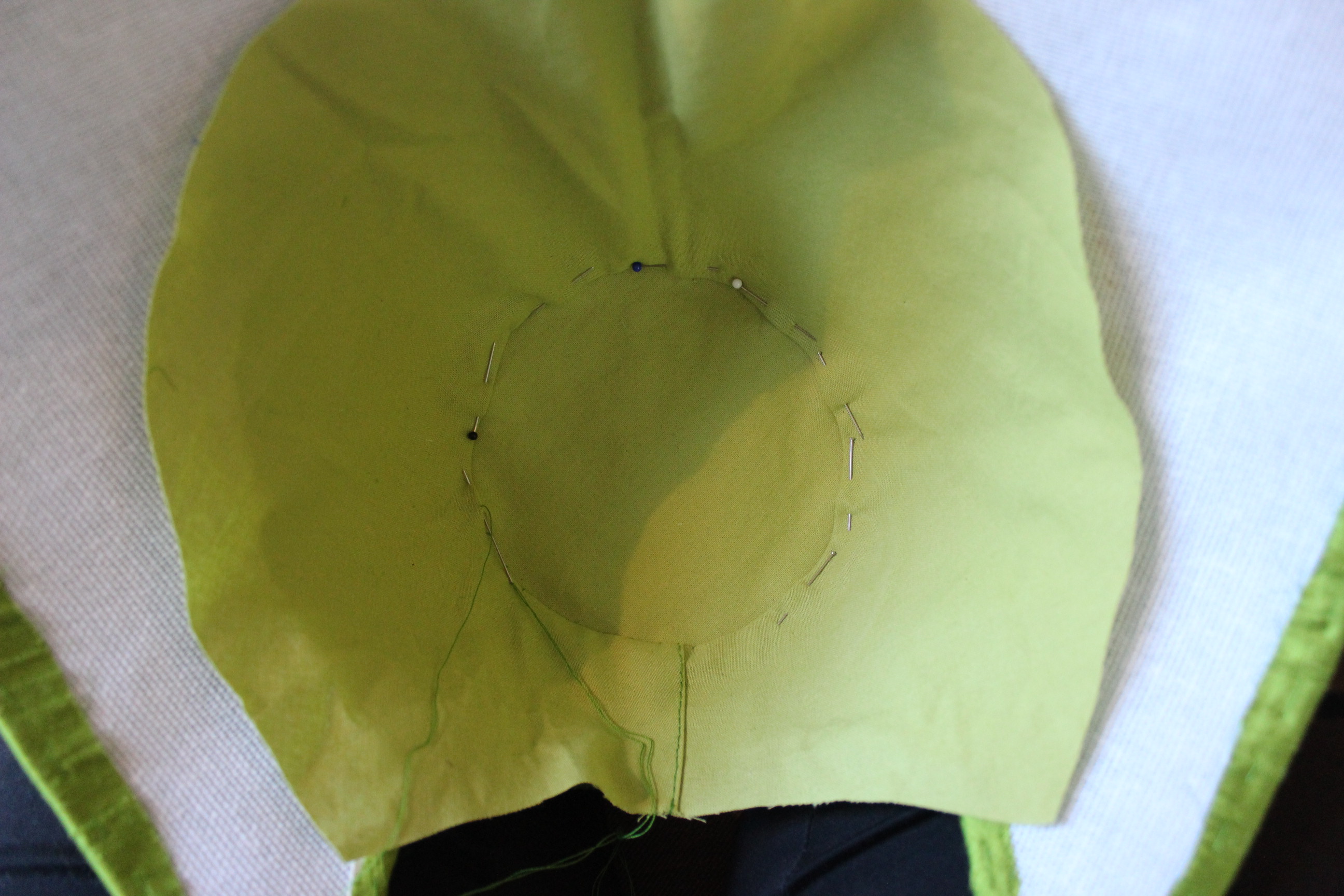
But I started with the crown, working downwards, basting all the edges and the carefully stitching the fabric pieces together.IMG_6580

IMG_6577 IMG_6585

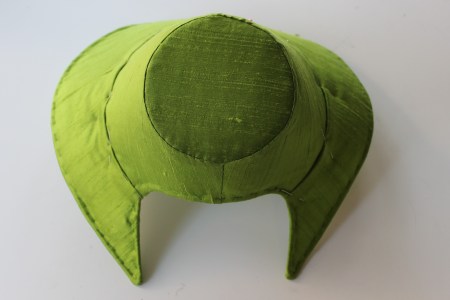
IMG_6574Silk all stitched on.

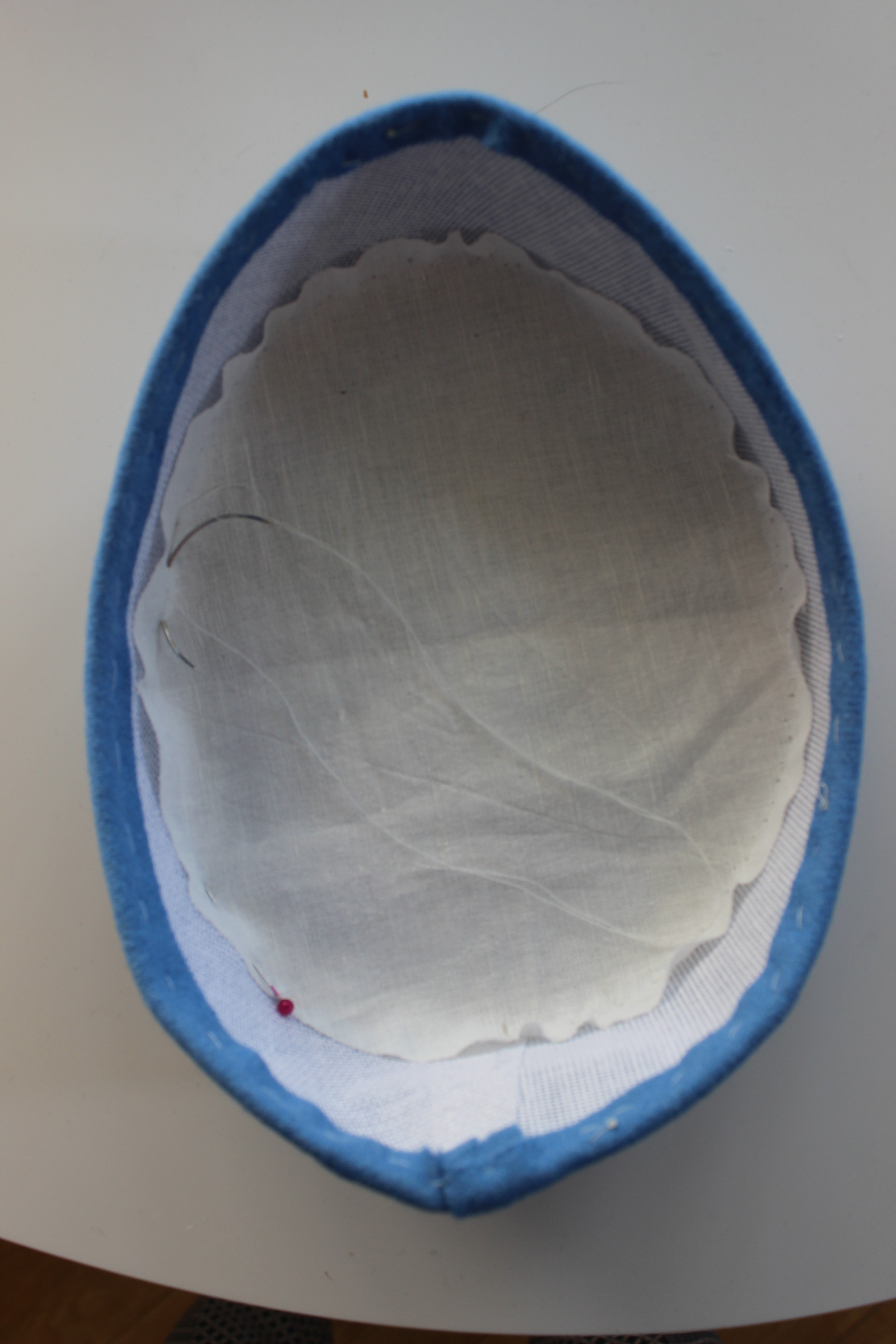
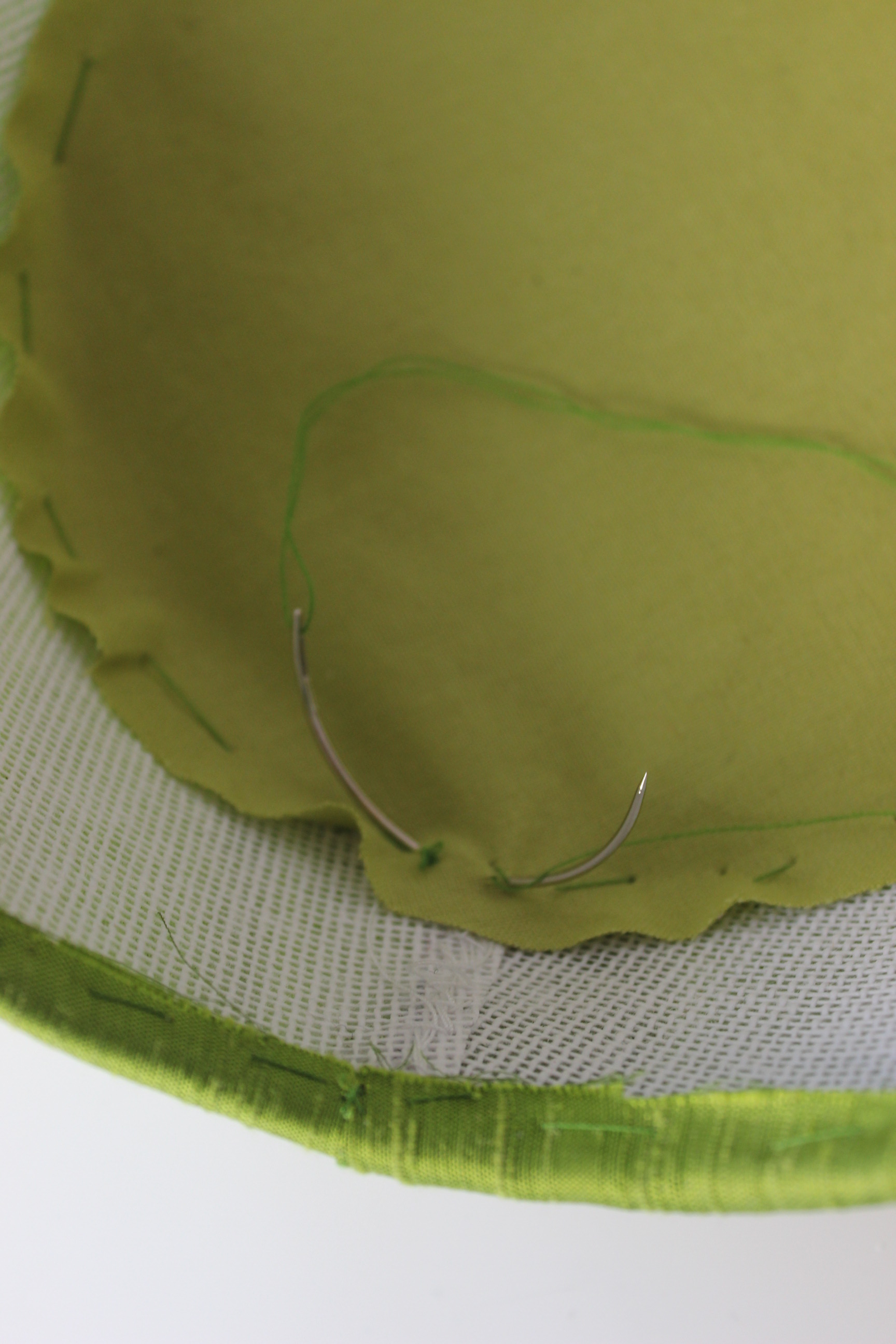
Then it was time for the lining.IMG_6589Using a curved needle to baste the crown to the inner corners.

Stitching the fabrics together using small invisible stitches.IMG_6591

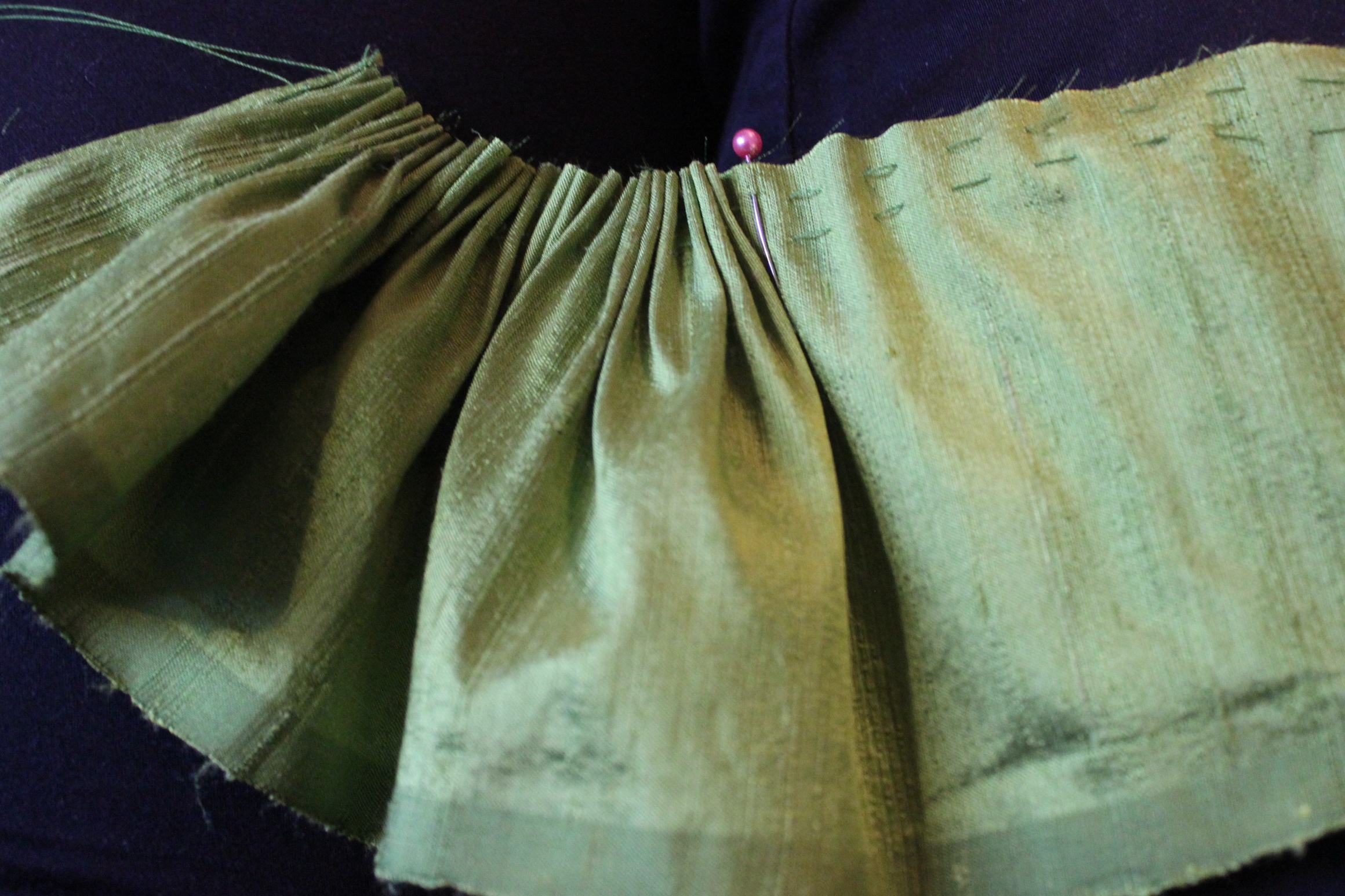
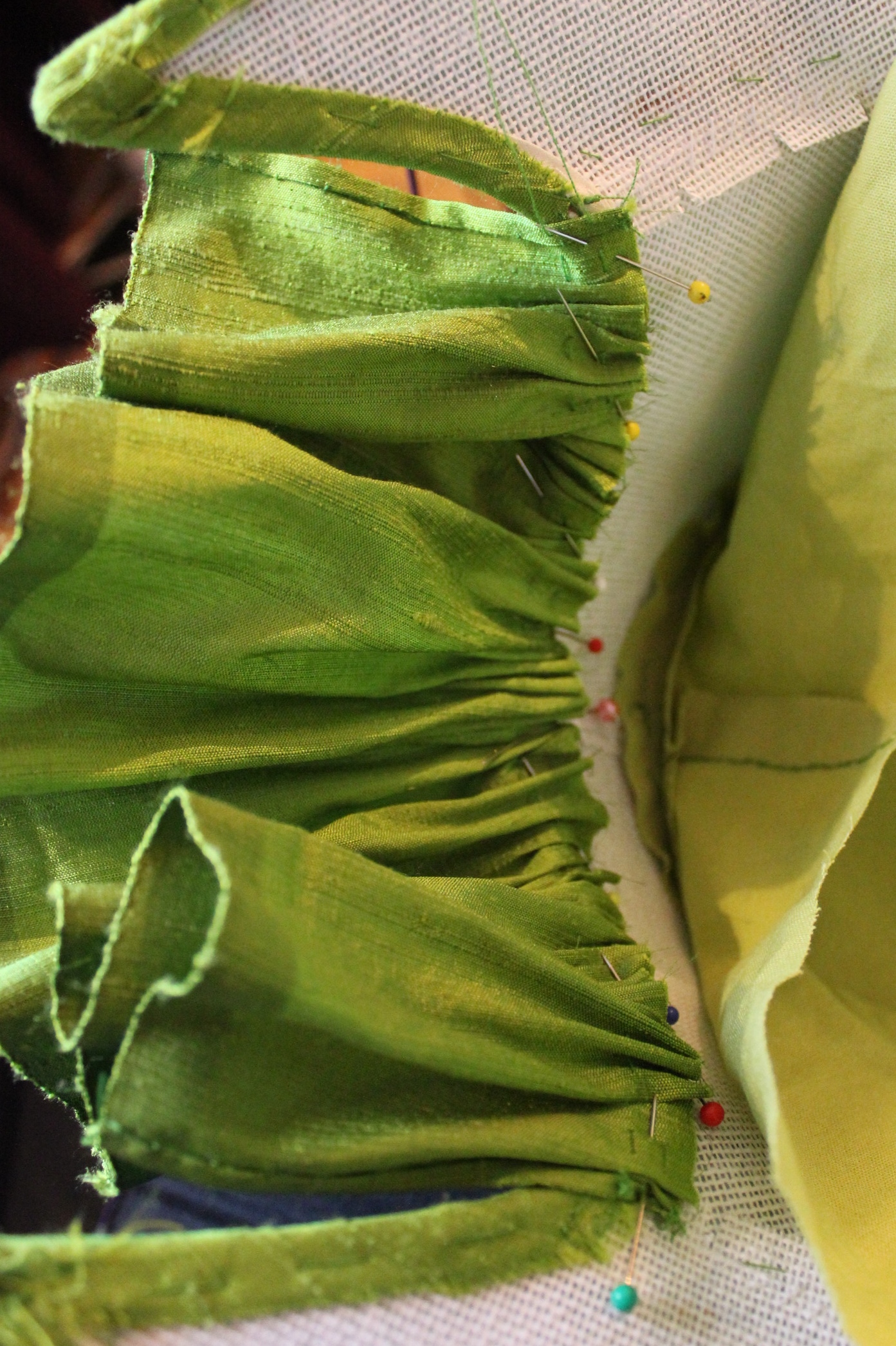
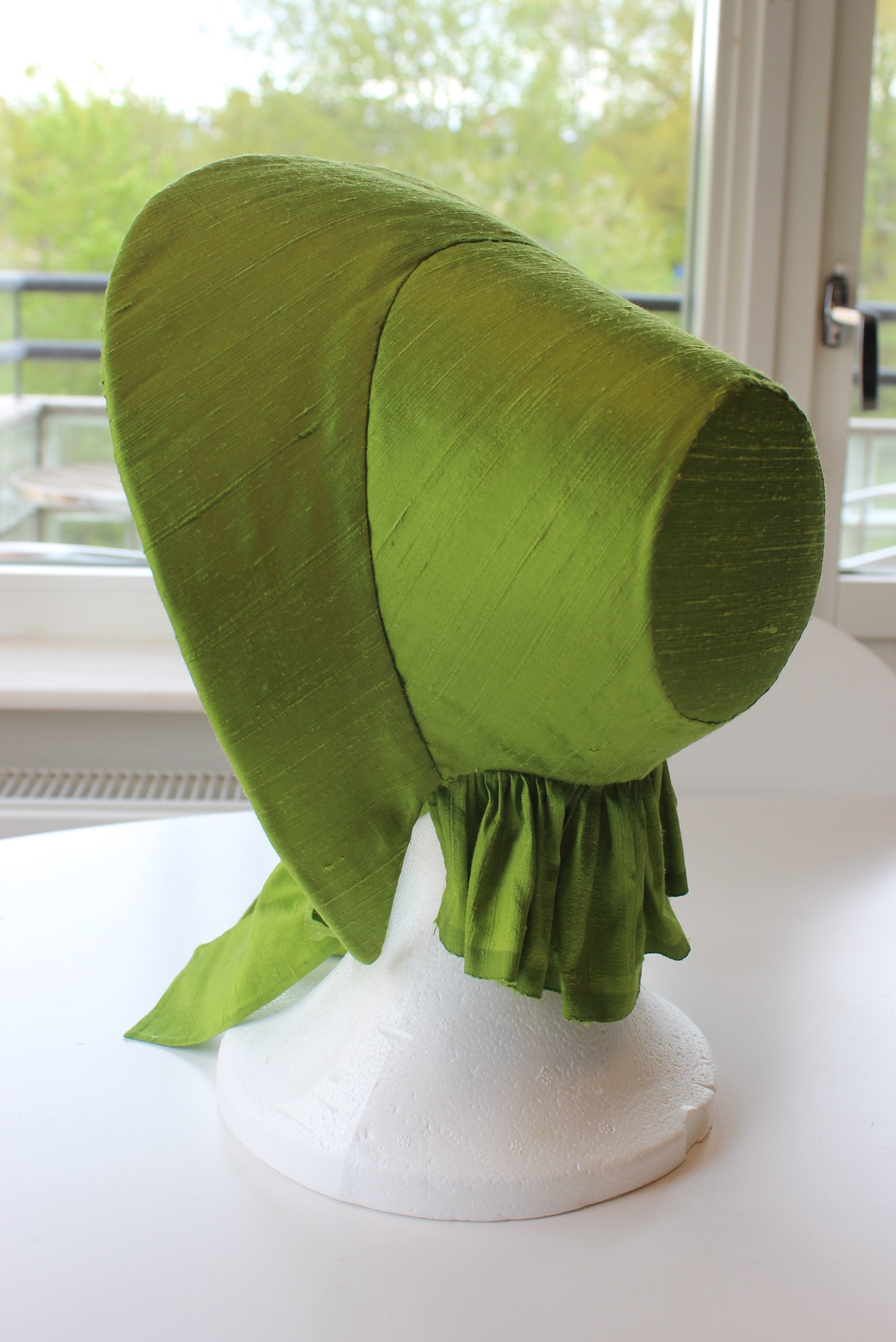
Before finishing the last piece (the gathered front) of the lining, It was time for the “curtain”/neckpiece.IMG_6593I basically just gathered a straight piece of silk and pinned it to the curved neck of the bonnet.IMG_6596Then I stitched it on.

Then I gathered, pinned and stitched the last piece of lining to the inner brim of the bonnet, and added some silk ties.IMG_6598

The base for the bonnet was now finished, and all that’s needed was the decoration.
IMG_6609 IMG_6611

IMG_6613I think it looks stunning and was a bit hesitant of even adding trimmings and decorations.

To be continued…

1850/60s (Not a Garbardi) Blouse

Once I’ve decided to make a blouse for some upcoming mid 19th century events this summer it all went pretty fast.

I selected an inspiration pic to base my design upon.
7b7d4d08edbf772307a80f15be56bffc 22fcb4ef48632fecc39c391e2f9e1a89
059d04d3e45d5b72b7ba36bc6a2cd407Shoulder and sleeve detail.

I decided to use the white dotted organza I’ve bought on sale a year ago (which I also used as contrast in my Ariel/Camille dress)
IMG_6253Sorry for the dark photo – I was working late at night

I made a pattern using my green 1840s dress bodice as a base.IMG_6114

To keep the blouse from being totally see through I made a lining in a soft loosely woven cotton fabric. IMG_6267Thin french seams on the lining.

I basted the blouse together, combining darts (in the lining) and gathers (in the organza) to get the right look for the bloused waist. IMG_6255Here you can see the gathered organza (left) and the darted lining (right).

Once I tried it on I found the lining to be a bit high in the neck and cut it down about 4-5 cm.IMG_6259

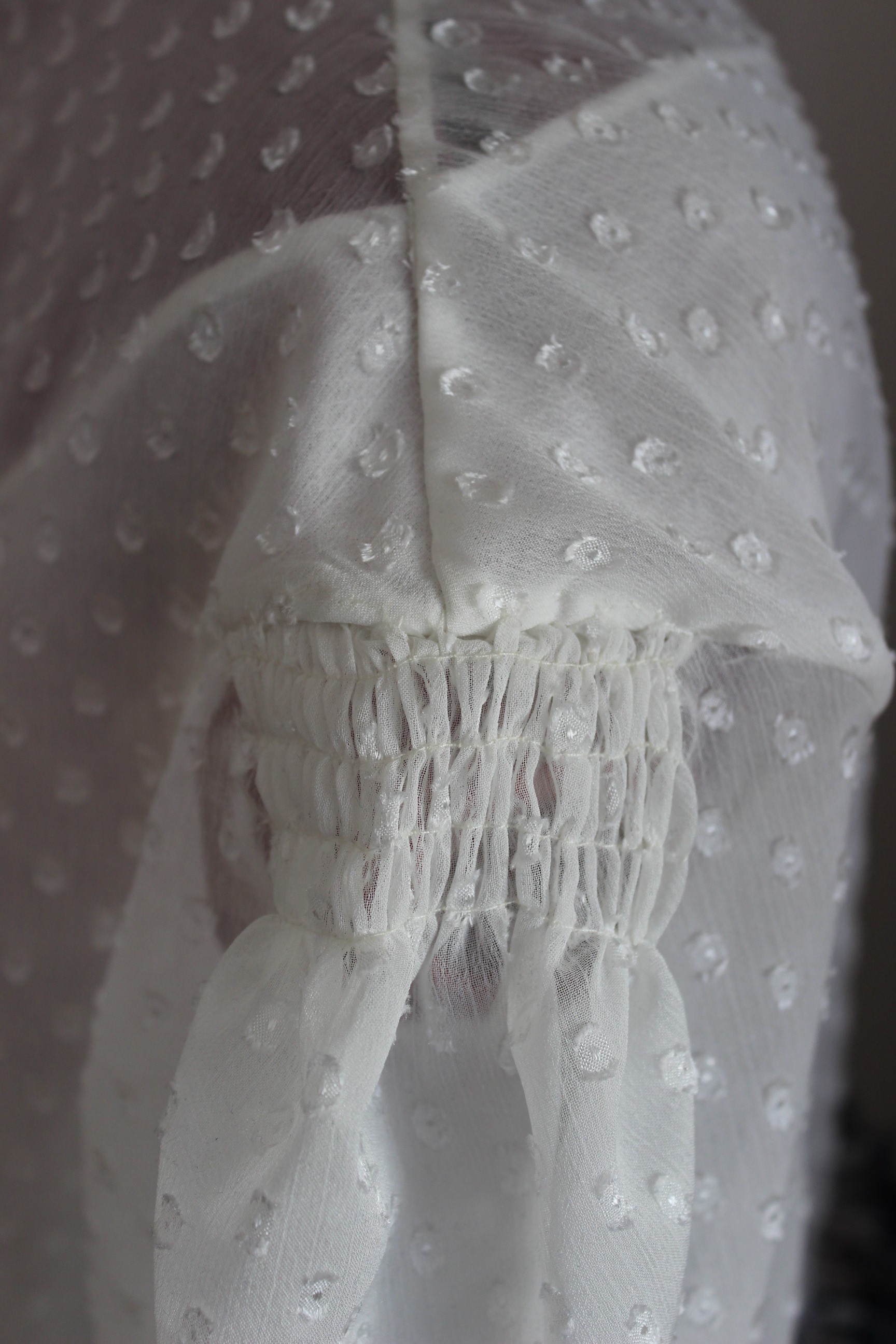
I stitched the sleeves using french seams and rushing at the cap.
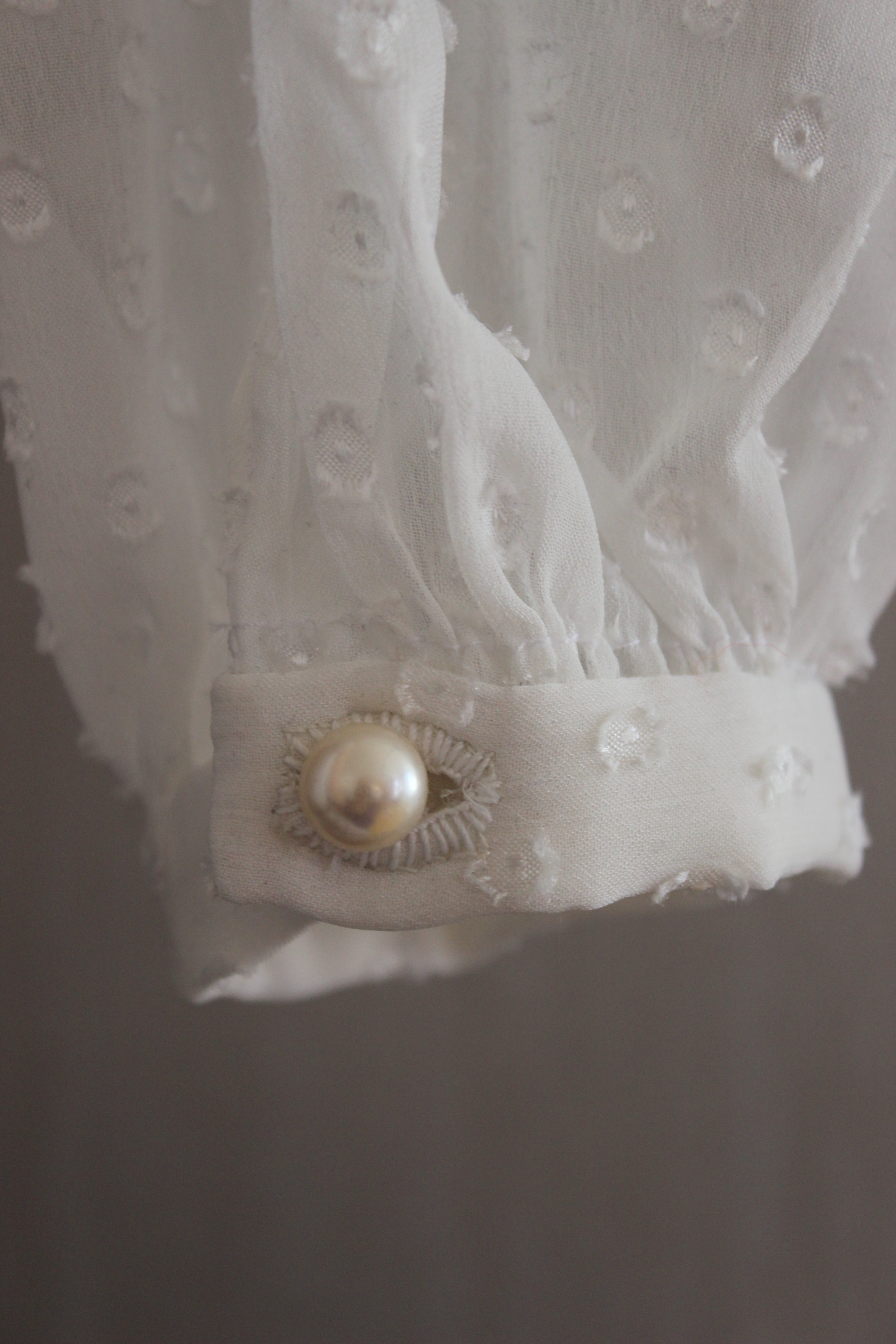
The cuff is just one reinforced, folded piece of organza, closing with a button, to which I gathered the sleeve to. IMG_6274

IMG_6281Sleeve set.

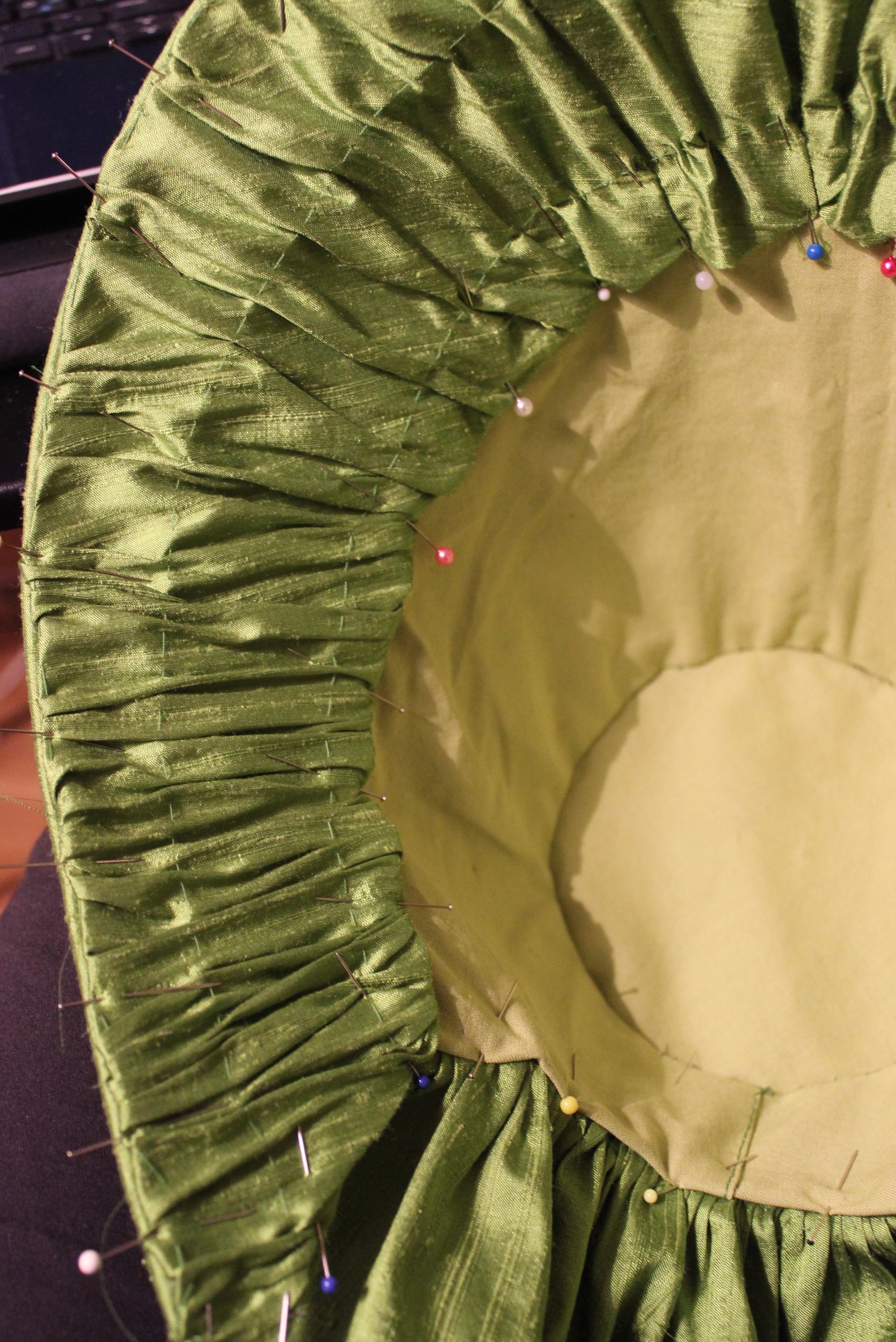
The biggest mistake I made on this project was steaming on fusible interlining to the buttonhole stands. Once sewn to the thin blouse the buttonhole stand looked really bulking and heavy (and white).
So I ripped them of, and not having enough lining fabric left to cut new ones I carefully peeled the interlining of the fabric. IMG_6269What a mess.

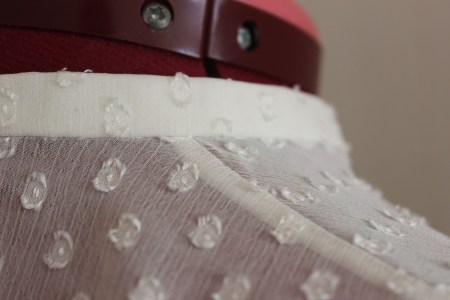
Once re-sew (without the interlining) the buttonhole stand looks much better, and it was time to move on to the collar and buttons.IMG_6283Its just a slightly shaped thin strip of organza and lining folded over to make the low standing collar.IMG_6311Then I made all the button holes by hand, added the pearl buttons and sewed on a piece of bias tap to make a casing for the cotton cord used to control the fullness and size at the waist.
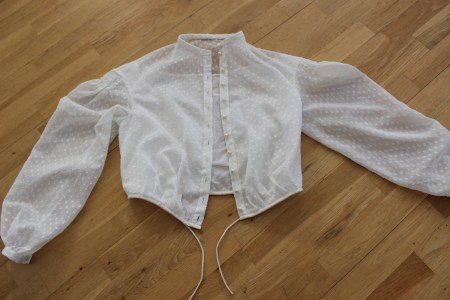
IMG_6312Looking neat from the outside…
IMG_6313…And just as neat from the inside.

The finished blouse:

IMG_6304

IMG_6292

IMG_6297

IMG_6305

IMG_6310

IMG_6300

IMG_6309

IMG_6303

IMG_6294

IMG_6302

IMG_6295

IMG_6288

The Facts:

What: a 1850-1860s blouse/waist

Pattern: I drafted my own using my green 1840s dress bodice and pictures of extant blouses.

Fabric & Notions: 1 m dotted white polyester organza, 0,5 m soft white cotton, 12 plastic buttons, thread, buttonhole thread, 80 cm bias tape and 1,2 m cotton cord.

Time: About 10 hours.

Cost: About 100 Sek (16 Usd) – Everything was bought on sale or leftovers from previous projects.

Final thoughts: I like the look of this blouse, even though I’m not sure the polyester content will keep me as cool as I would have liked in the summer heat. I may make another one out of a more suitable fabric someday, but for now I’m pleased with it. And It was such a quick and easy project.

The myth of perfection – busting my myth

Lauren at “Wearing History” wrote a painfully true and honest post about our way to always appear “perfect” online and in social media.
How it is so easy for some people online, to write nasty comments and the following fear of anybody getting under our perfect polished surface.

This view of perfection we put up can have some serious consequences on other people who’s only seeing this polished shine all day, every day. I’s so easy to compare yourself to others perfection and put yourself down. We must all help each other and try to change this trend.

The simple truth is – No body’s perfect, and everybody have their own problems (big and small).

As a first (small) step to achieve this, I’ve decided to take Lauren up on her challenge – To tell what’s really going on behind the scenes in some of my posted photos.

Ok, here we go:

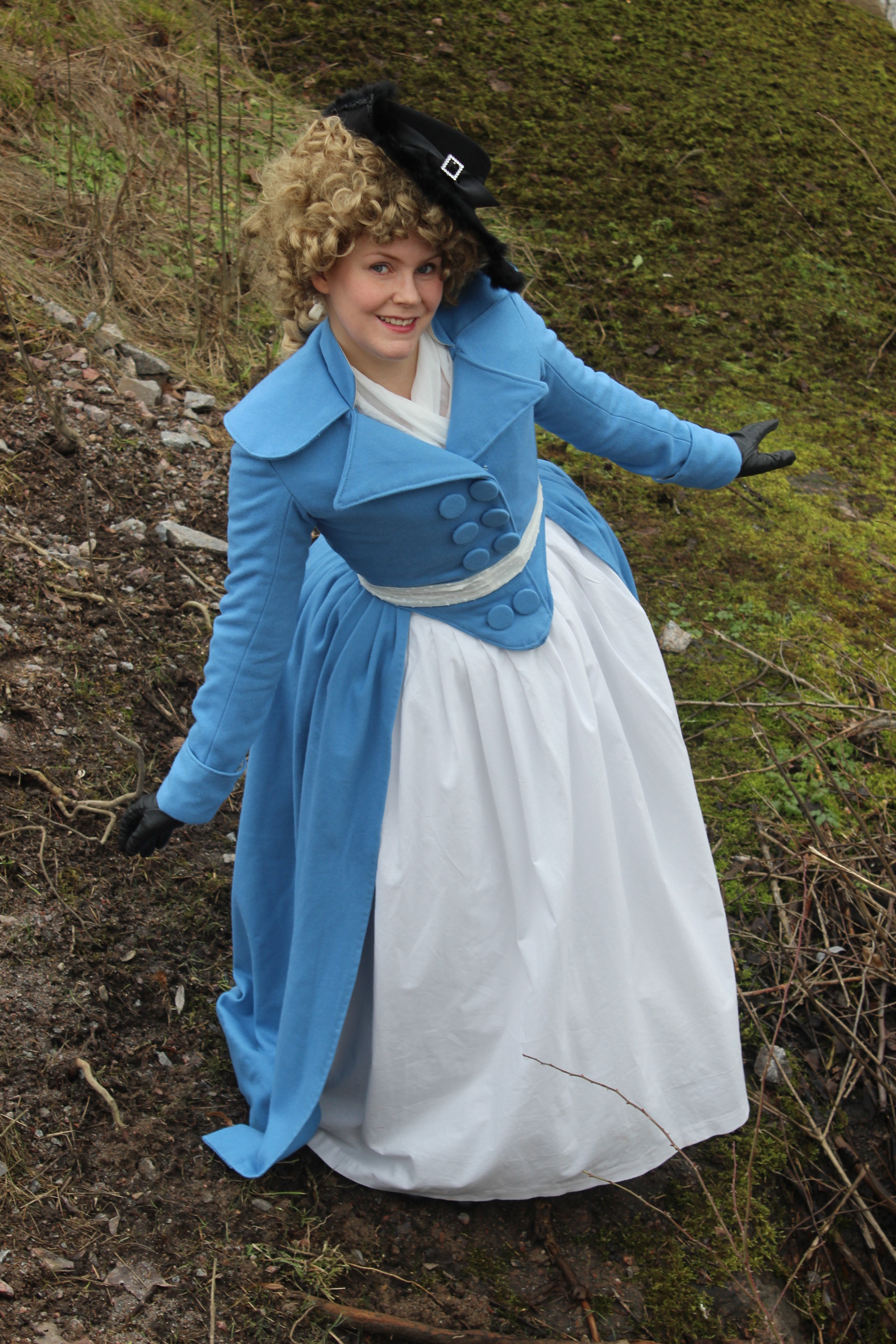
IMG_4766My legs was so sore and my feet so full of blisters, due to a rapid increase in my running schedule, I could barely walk and never the les wear my shoes.
IMG_20150315_181820I’ve had such a stressful week at work (covering for two sick co-workers while executing a big political meeting on my own), that I’d breaked down crying several times the past days (both at work and home at night).

IMG_58531_resizedI’d had the biggest argument with my boyfriend in our 10 years relationship over me wanting to take the job and do this movie. I feared we would not make it as a couple.
(on top of which I got harassed and grabbed at by lots of creepy drunkards at the party).

IMG_5615I’ve waited for weeks for the heavens to give us some snow, which I needed to be able to do this photoshoot – then I caved in, did the shoot without it.
That same night it snowed several cm.

IMG_3959I arrived at this event more then an hour late after getting completely lost on my way there. I’d sat on a bench lost in the capital late at night, without cell batteries, and not eaten anything that day, crying. Just to find the food all gone once a nice lady finally helped me find my way to the party.

IMG_4097My finger was stiff from cold during this November shoot, and I was freezing my but of in my sheer muslin dress.

IMG_2924 I needed to lace myself really hard to be able to close the jacket.
I feared I would either faint or bust the seams – or both.

CIMG4886My parents went through an awful, problematic and painful divorce,
and I just broken with my mother as a consequence.

IMG_0218This pic was taken on one of the warmest day of the year, and I was pretty much baking in my corset, bonnet and heavy skirts.

IMG_9131I talked my boyfriend into taking these pics – he hated every moments of it and refused to do anything then just push the button on the camera.

IMG_8785I was so tired (and hungry) from the travels and adventures it took me (and my sister) to get to this event, that all I wanted to do was to go home, un-lace, crawl into bed and sleep/cry.

IMG_8989I was suffering from the exertions of the day before (see above) and had the migraine from hell.
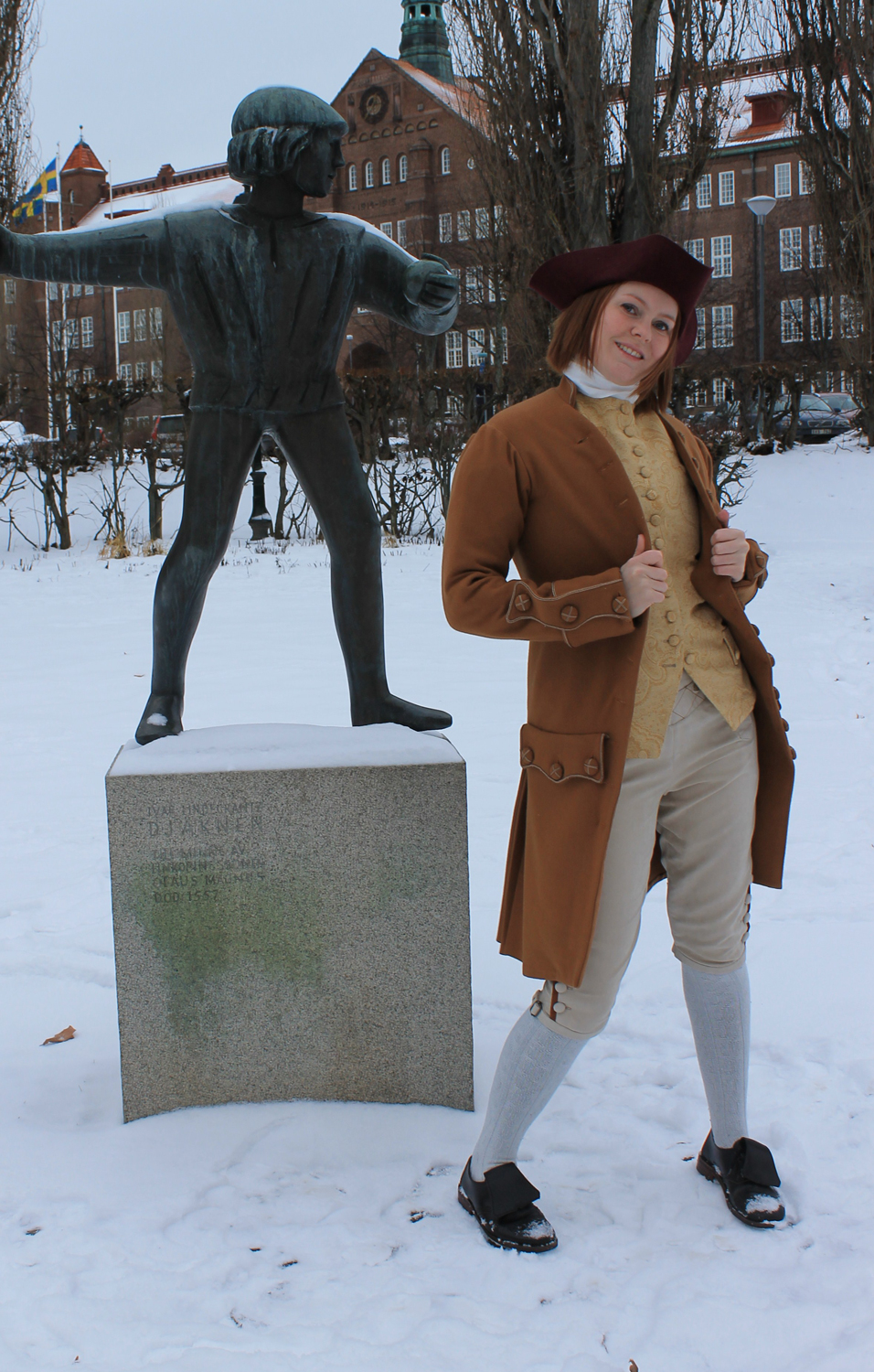
IMG_6982I hadn’t slept in weeks due to my terrible itching skin, which caused me to scratch the back of my thighs (and my arms, chins and neck) to raw open wounds. I got sleeping pills to stop the itching and help me sleep, but all it did was to make me les aware of my actions during the night, making my hands (and legs) even bloodier in the morning.
I could barley sit down, and was really afraid I would ruin the white dress with blood.

IMG_1115-okI’d just visited my grandpa at the senior home, trying to recognize him in his ever shrinking 45kg, cancer stricken body.

IMG_5561 näraI had such cramps in my back from the corset and weight of the gown, I was about to cry.

IMG_3663  I had an allergic chock caused by something in the green wool, and my hands, eyes and skin itched like crazy just being in the same room as the dress.

IMG_2035I had one of my (in-famous) menstrual related stomach cramps and was seriously thinking of going to the ER to get some more (and stronger) pain meed’s.

christmasMy sister was in the hospital – fighting for her life in IVF related complications.

This post was really hard for me to write.
Not just to tell the un-glamours truth, but also to re-live some of the worst things from my life.

The Start of a war – Downton Marys style – Photoshoot

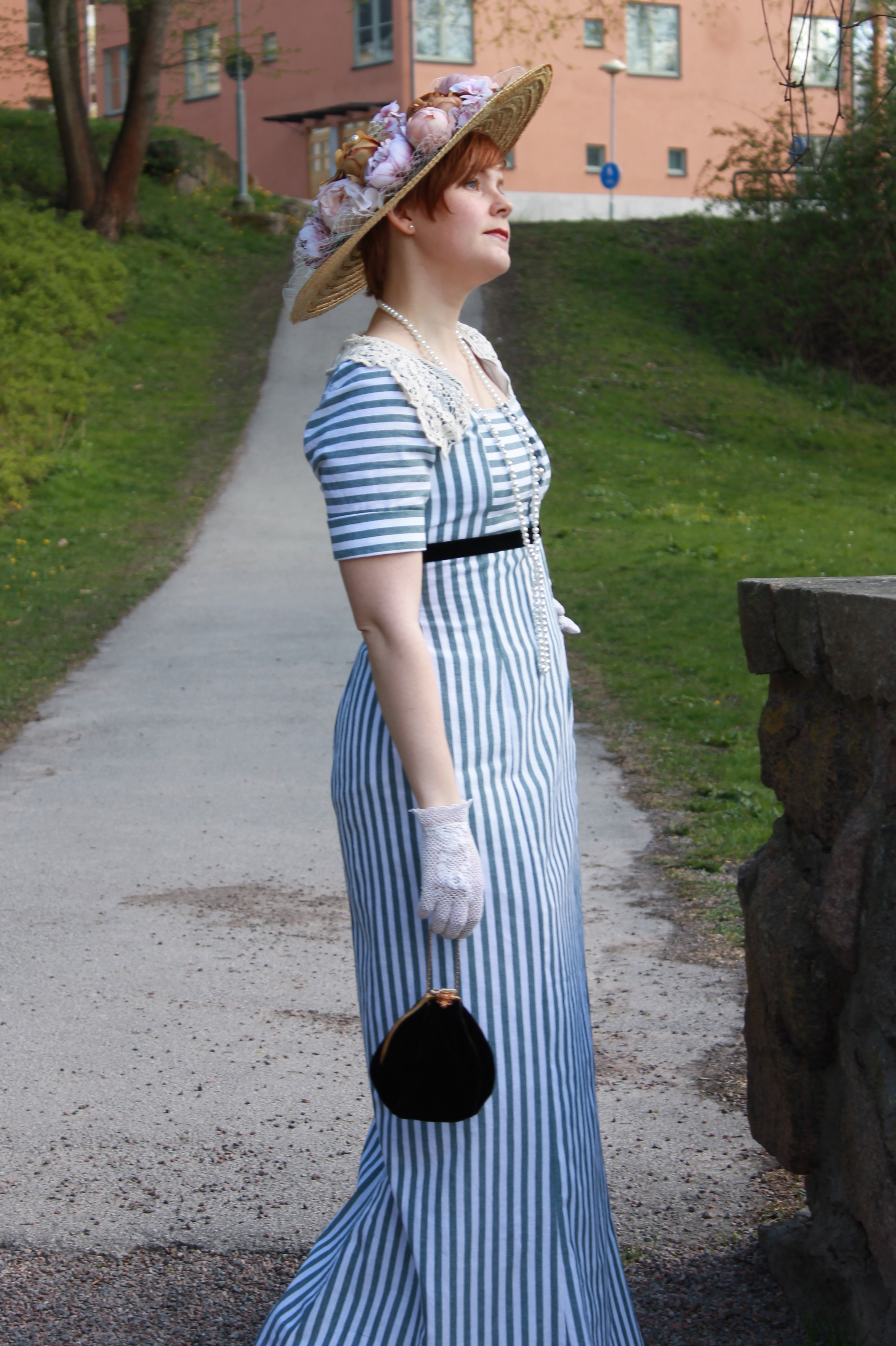
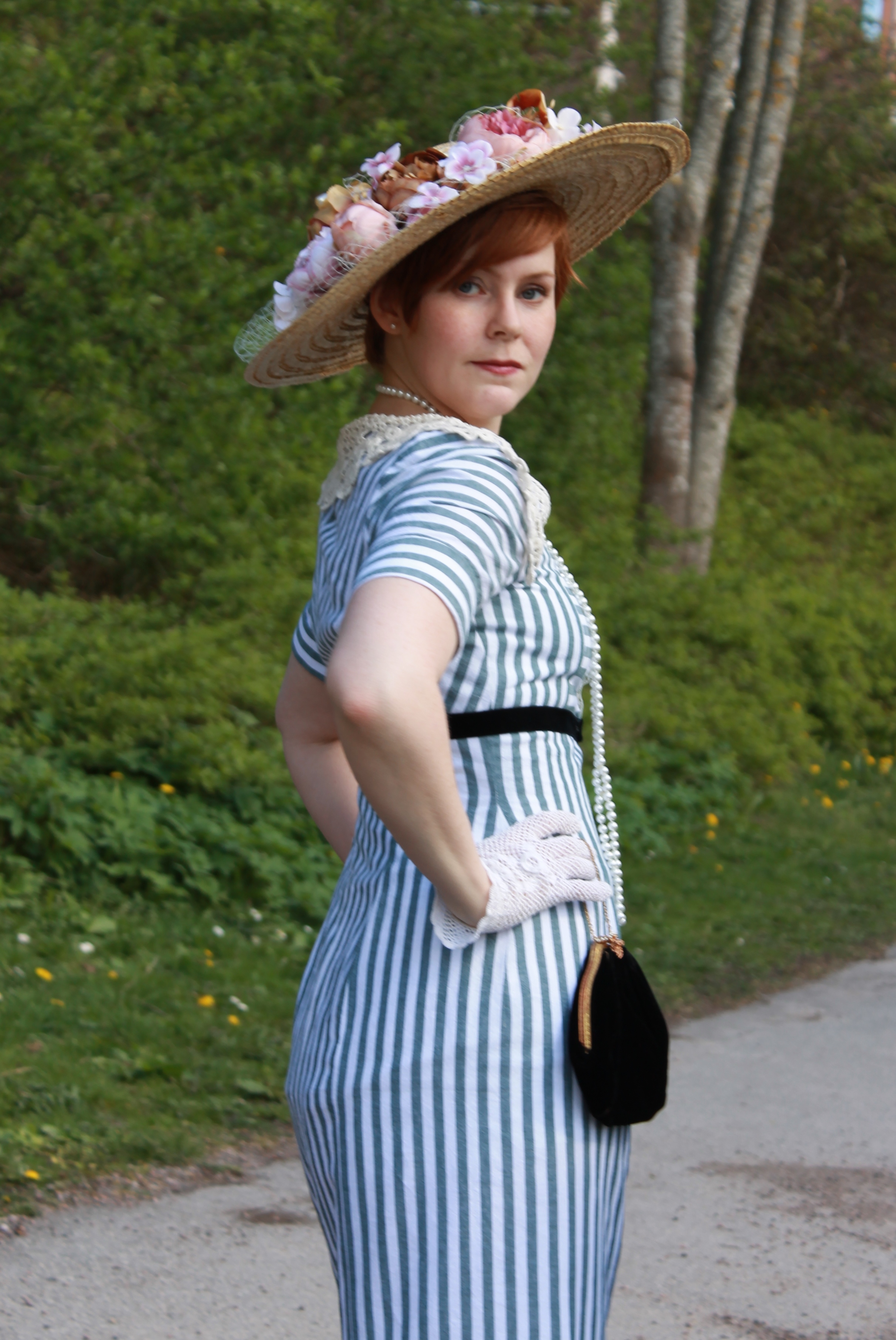
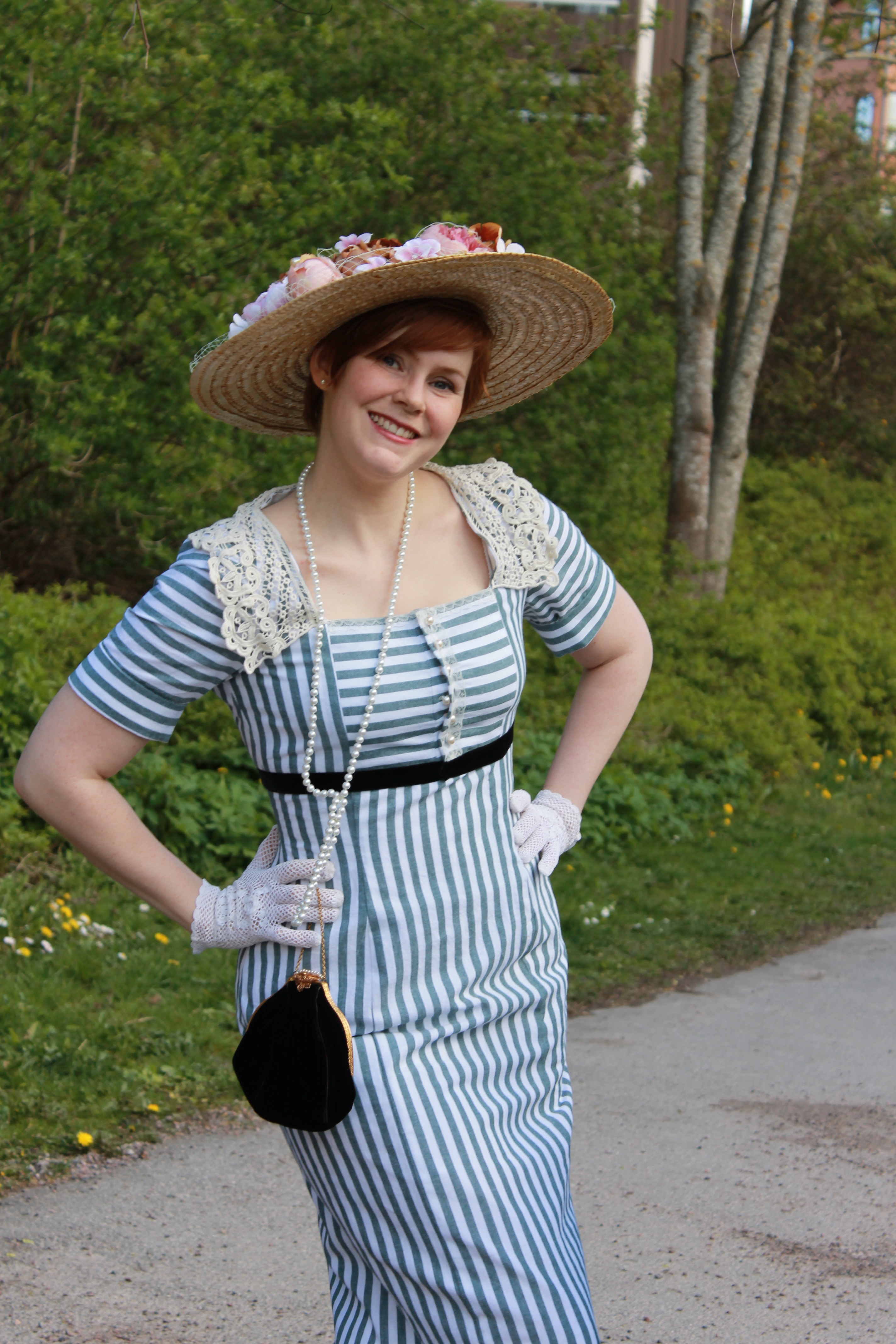
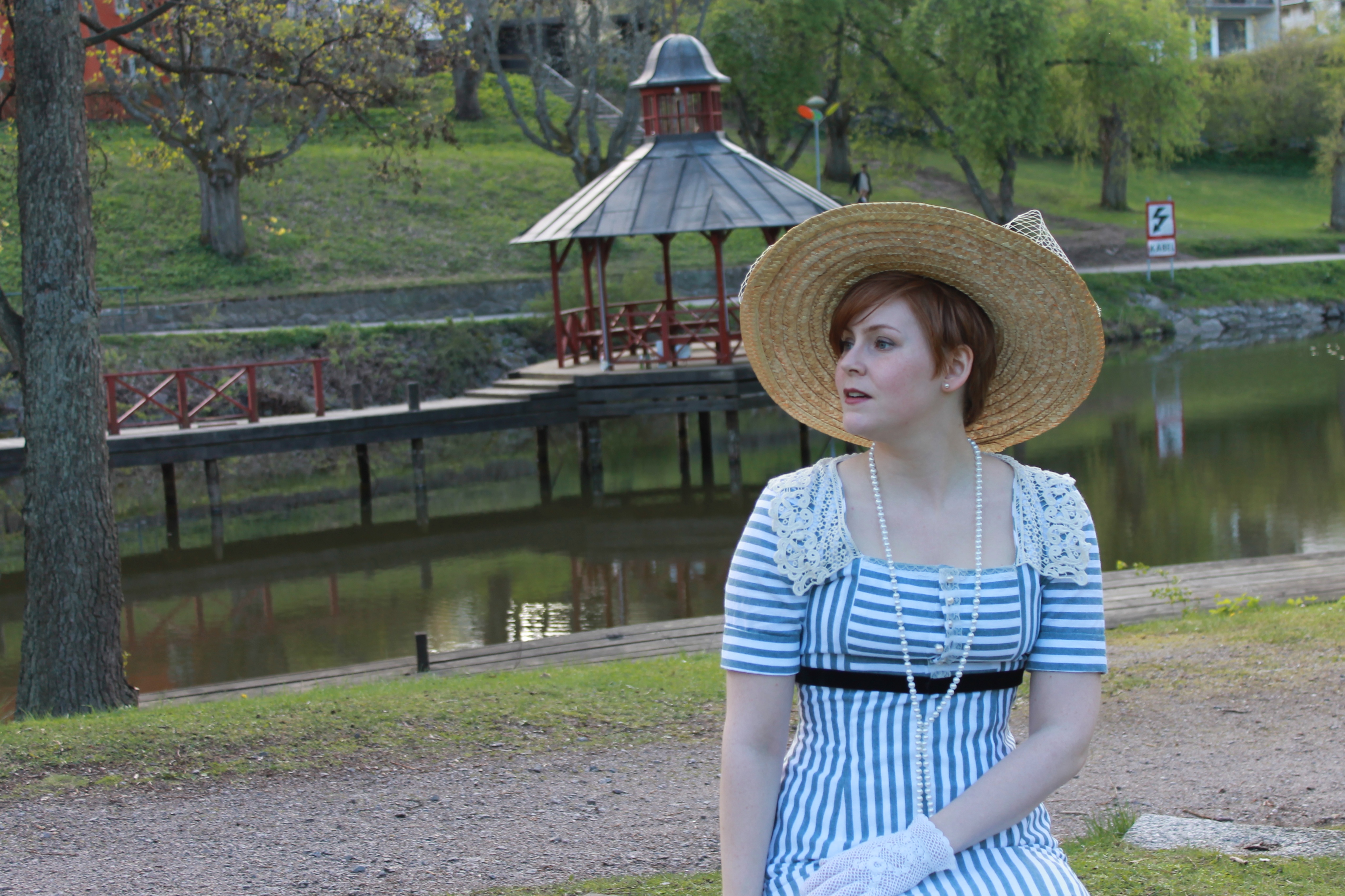
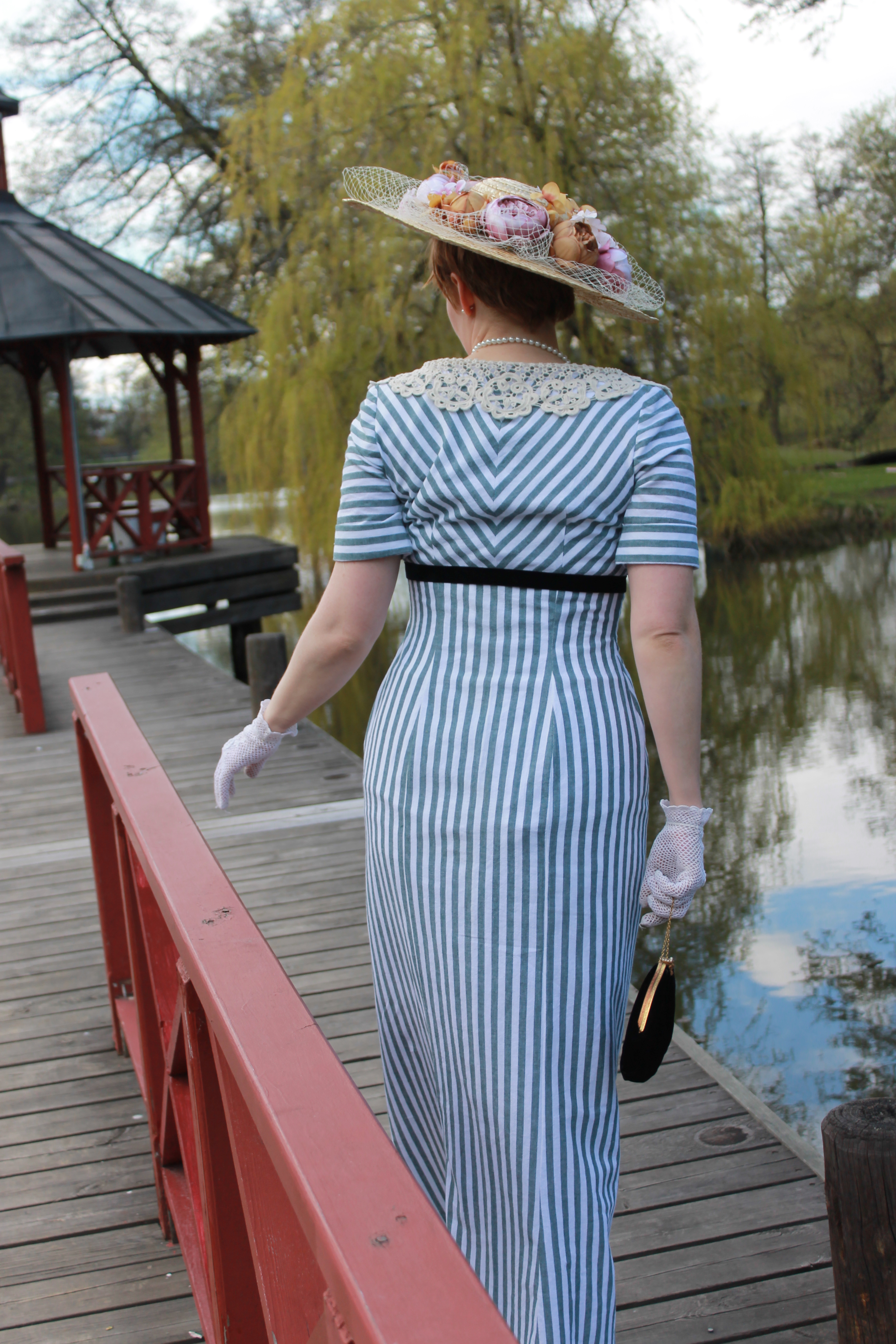
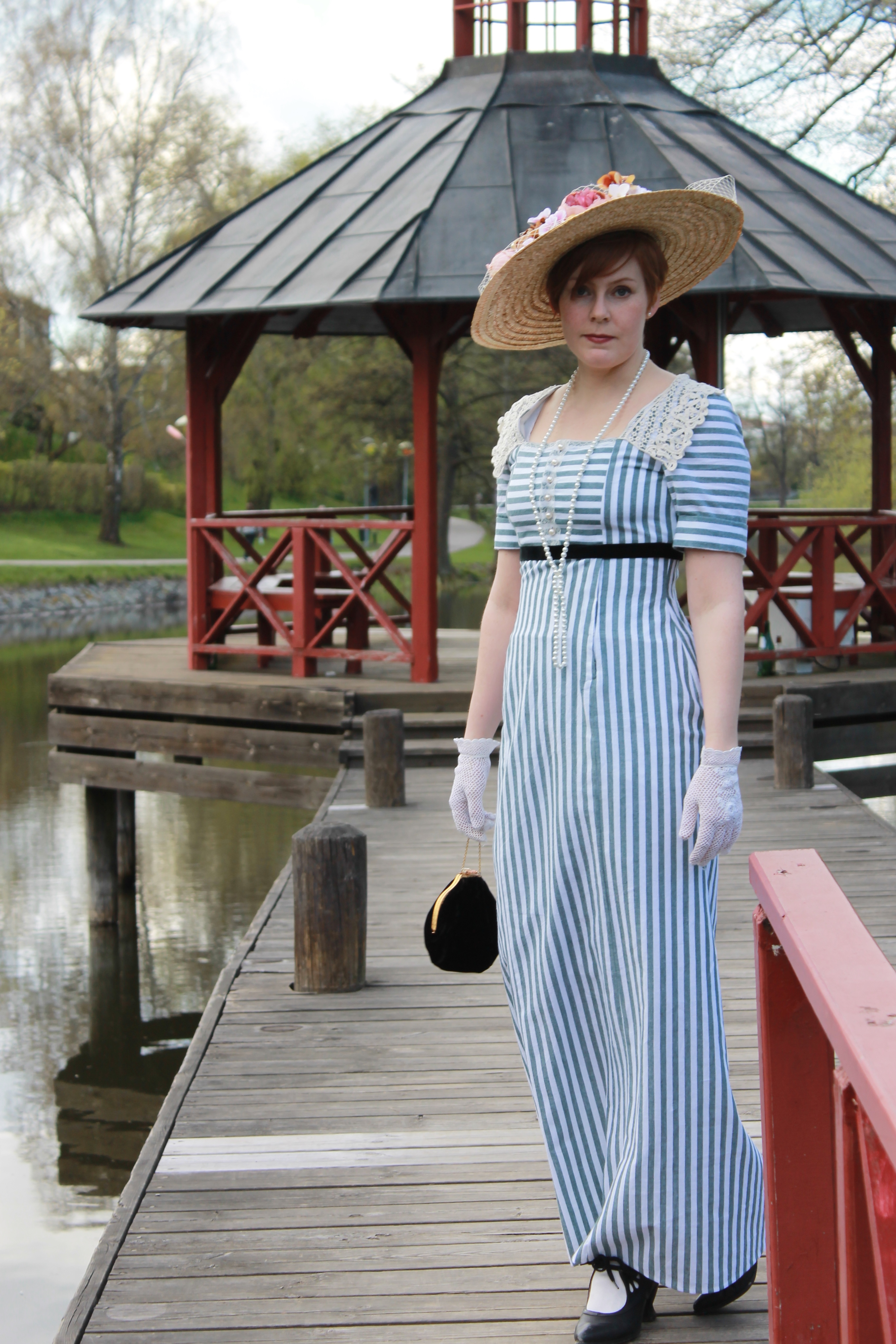
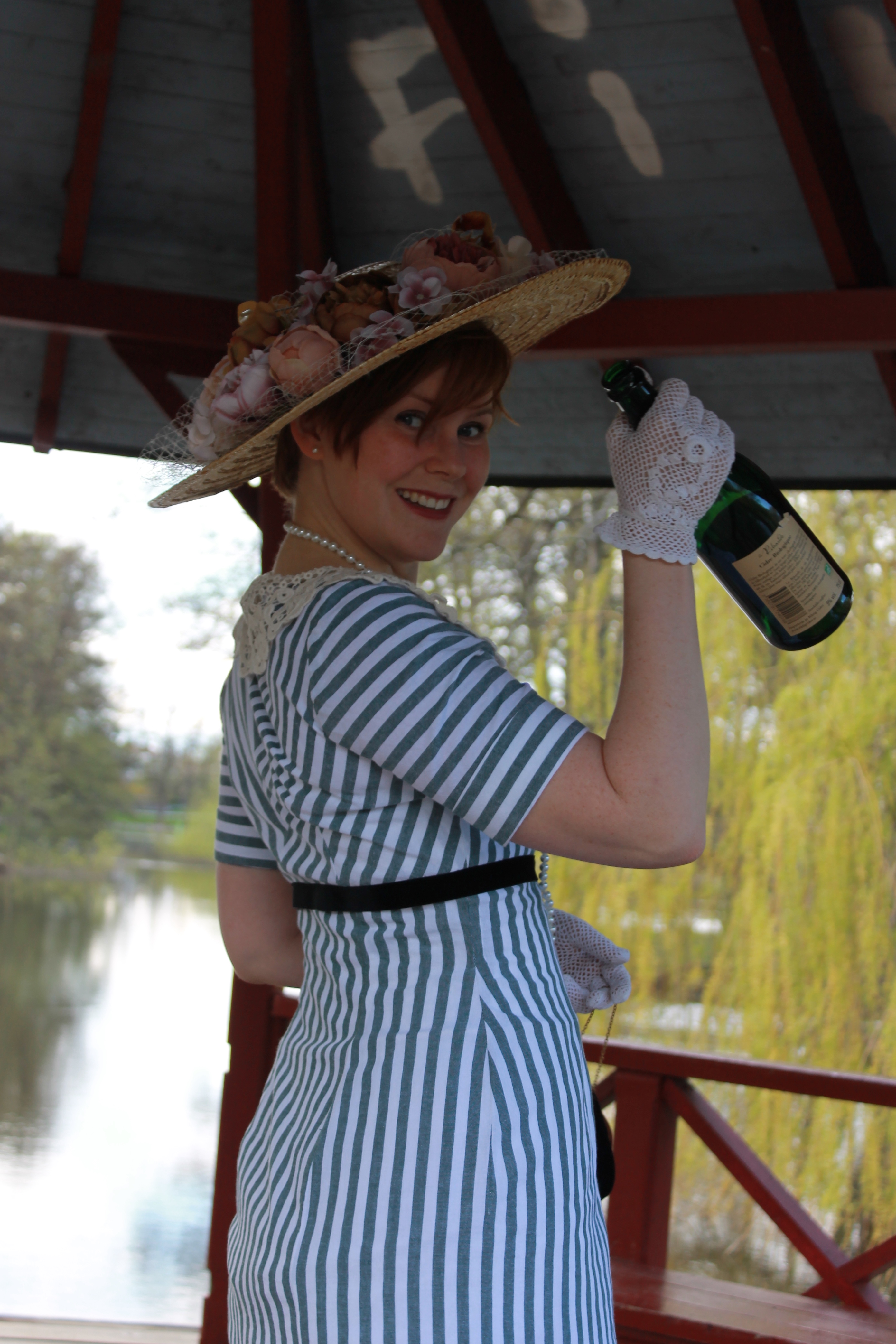
Last Sunday I took the chance to both see my sister, and to do a little photoshoot of my new striped Lady Mary/”Downton Abby” Dress (read about it here (Part 1) and here (Part 2)) The weather was warm but a bit cloudy, so unfortunately we didn’t get any sunny pictures. I wore my dress with my long line 1910s corset, Autumn garden hat, American Duchess Gibson shoes, stockings, a thin petticoat, and a few bits and pieces like crocheted gloves, antique velvet bag and long pearl necklace. IMG_4754 IMG_4761 IMG_4775 IMG_4773 IMG_4782 IMG_4779 IMG_4780IMG_4791 IMG_4792 IMG_4799 IMG_4803 IMG_4819 IMG_4828 IMG_4850 IMG_4854 IMG_4855 IMG_4861

IMG_4869Photo: Elin Evaldsdottra

The Start of a war – Downton Mary’s Autumn Flowery Hat

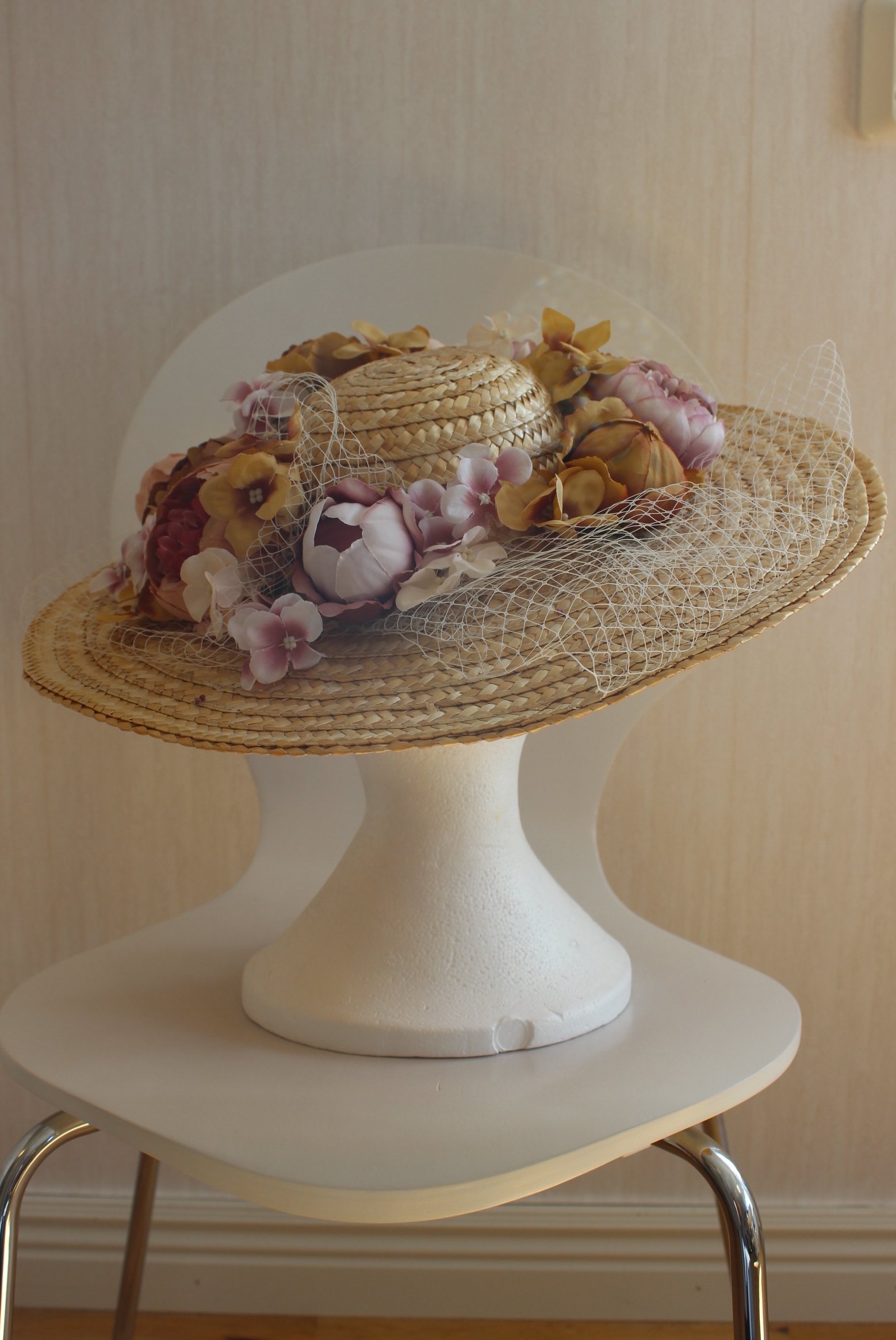
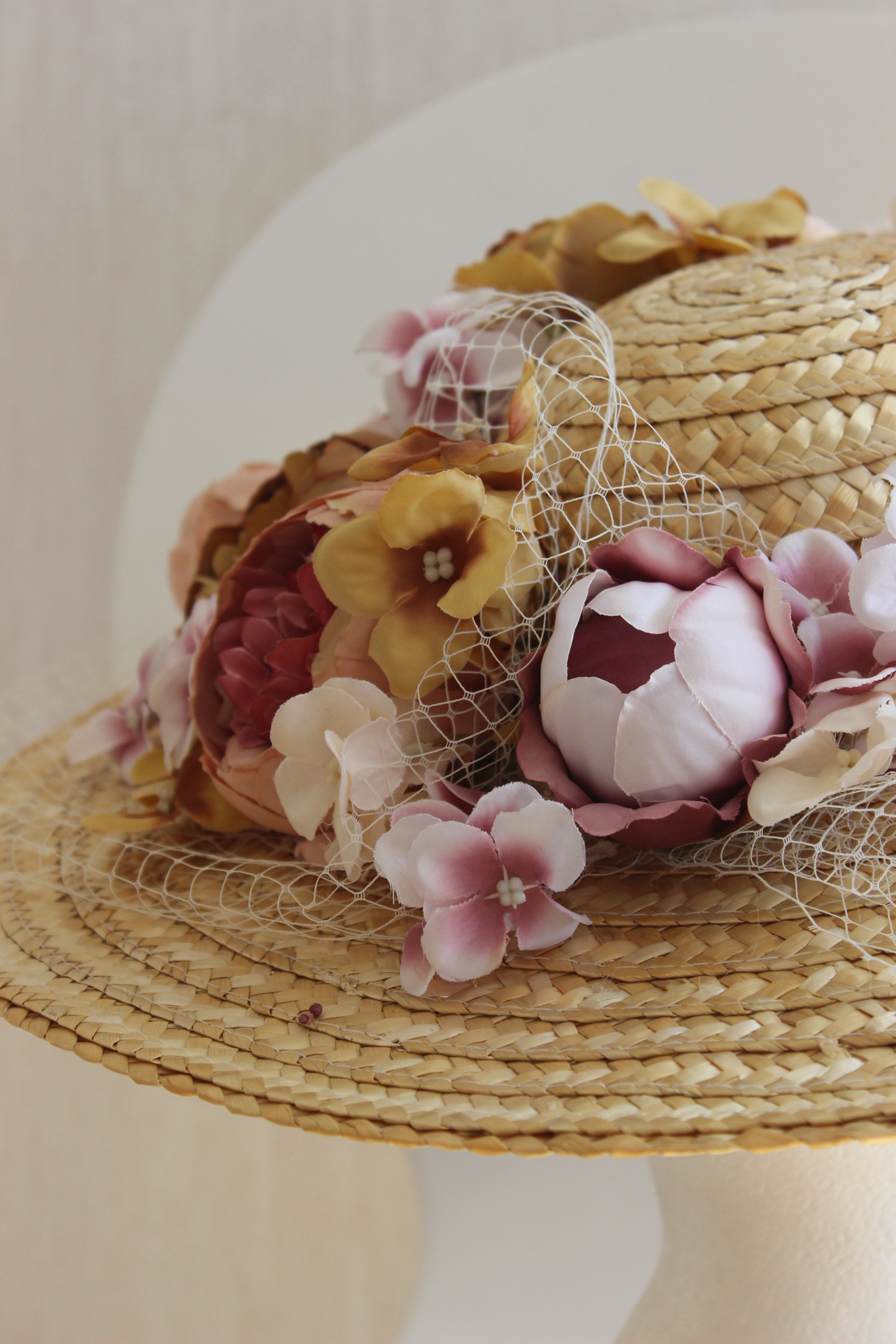
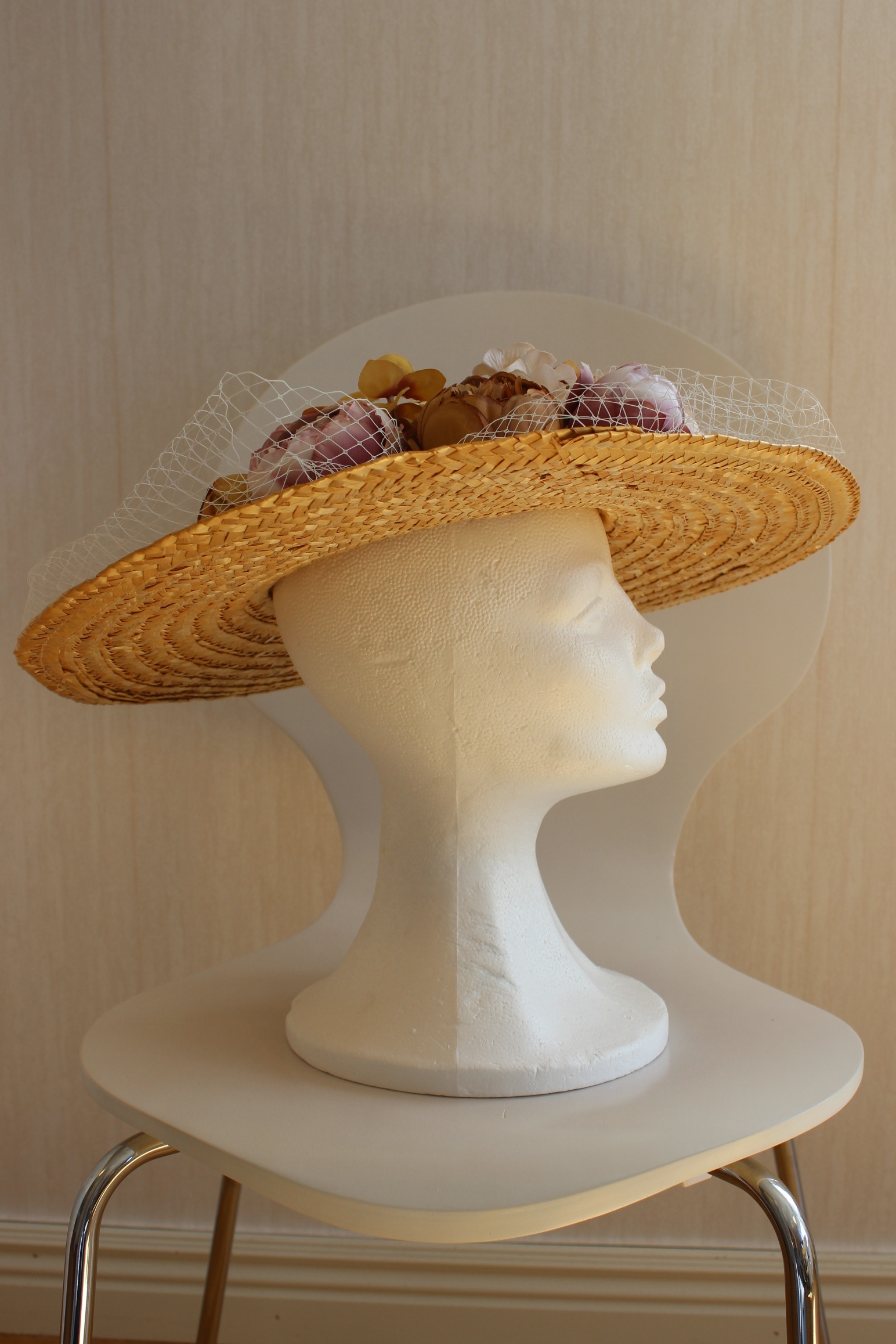
 Before I could call it a day and be finished with the Striped Lady Mary dress (part 1 & part 2) I needed to make the most vital (and biggest) of her accessorizes – The hat.

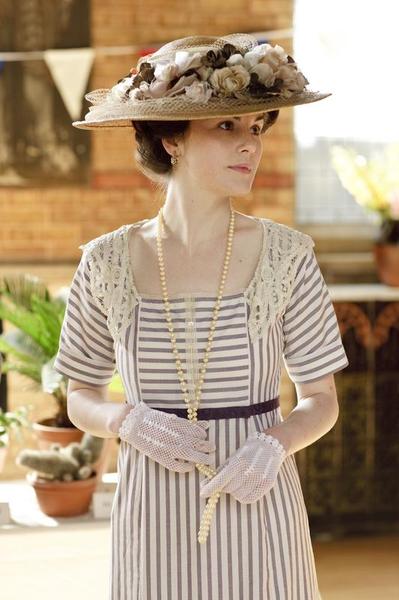
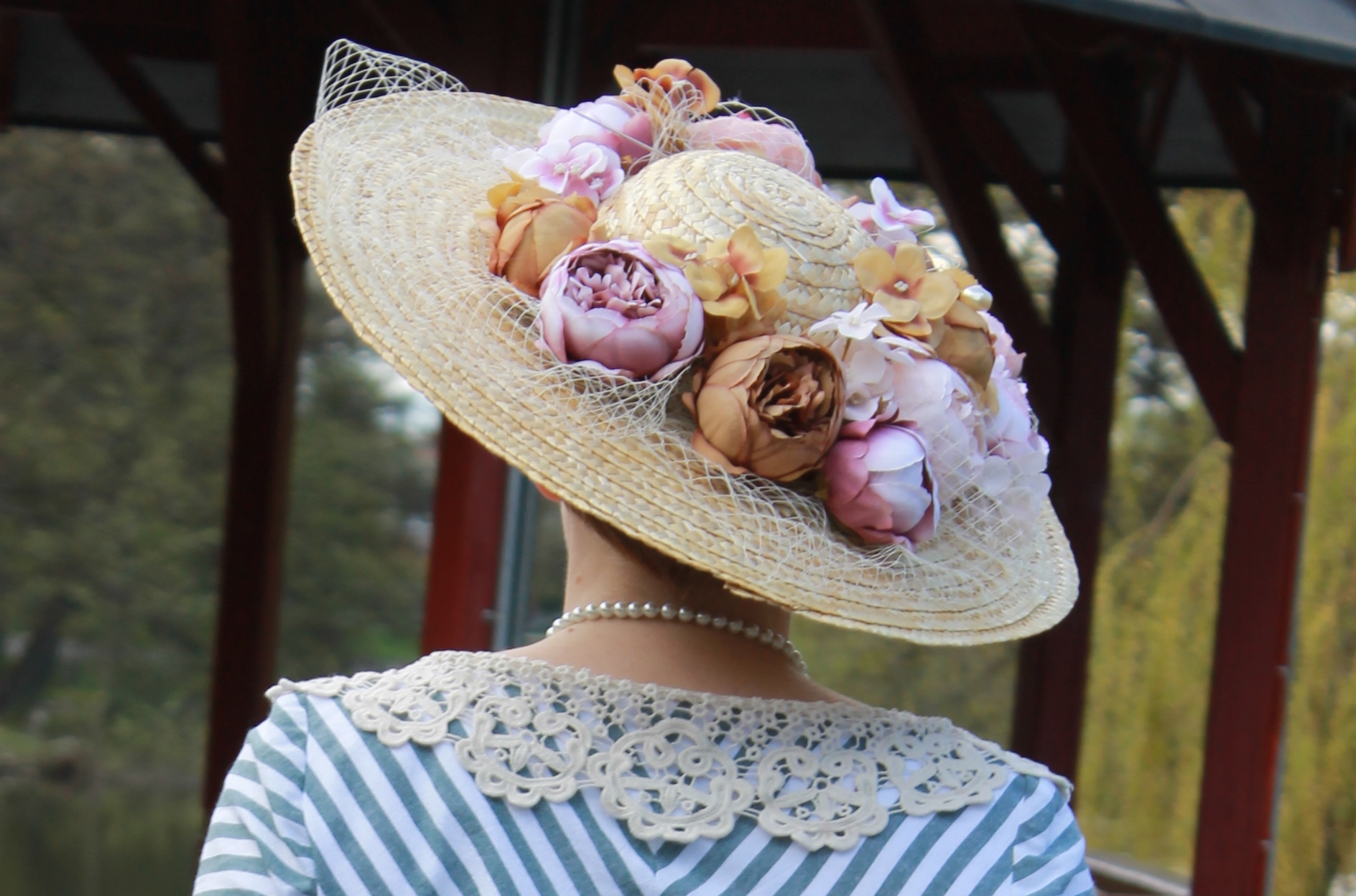
0x600The Hat Lady Mary wears in the series are huge and awesome – of course I needed one just like it.

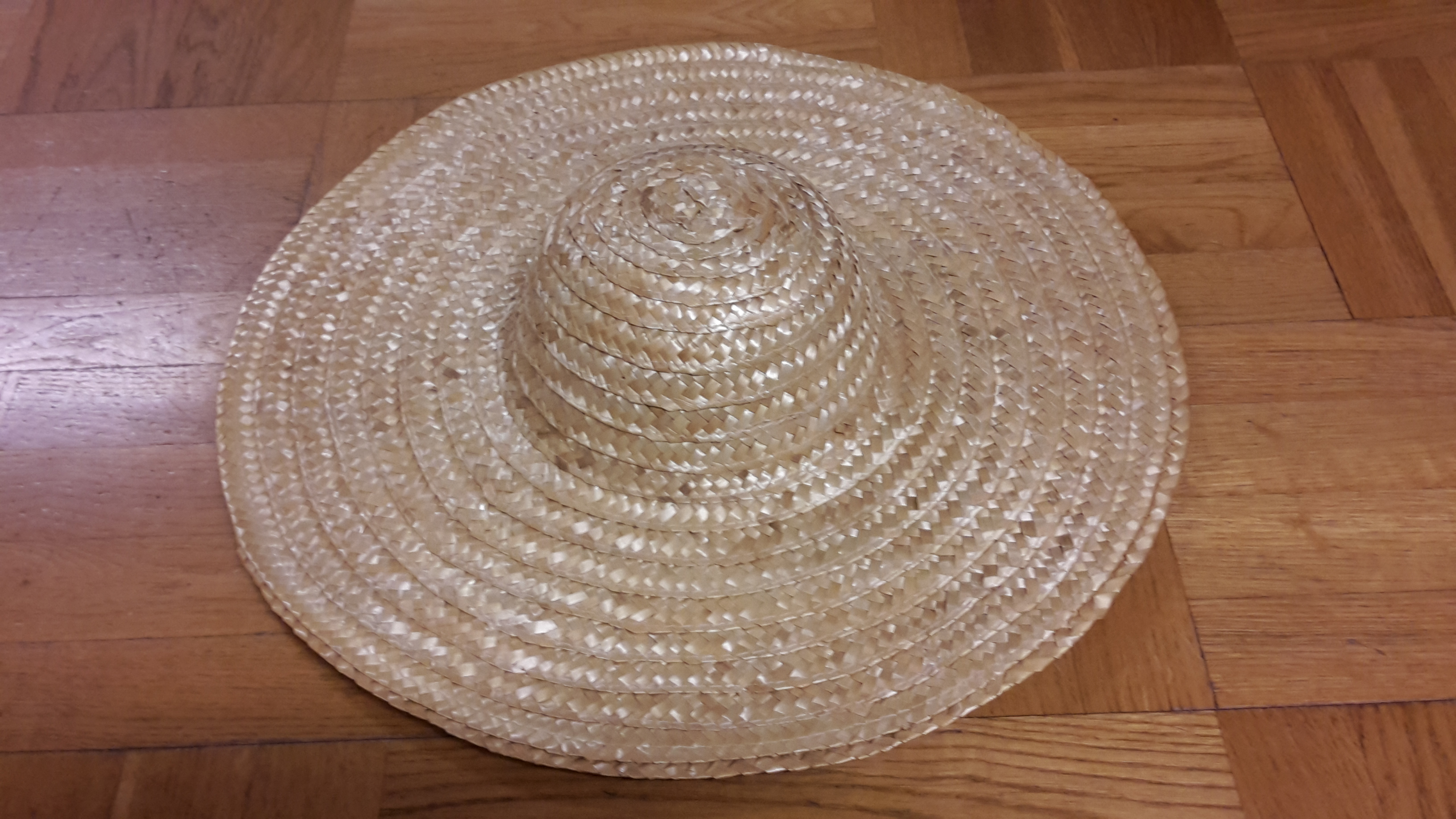
I started with a cheap straw hat as a base.
20150421_204022
The most important things I needed from the hat was a straw base, lightly colored and strong enough to carry all the decoration.

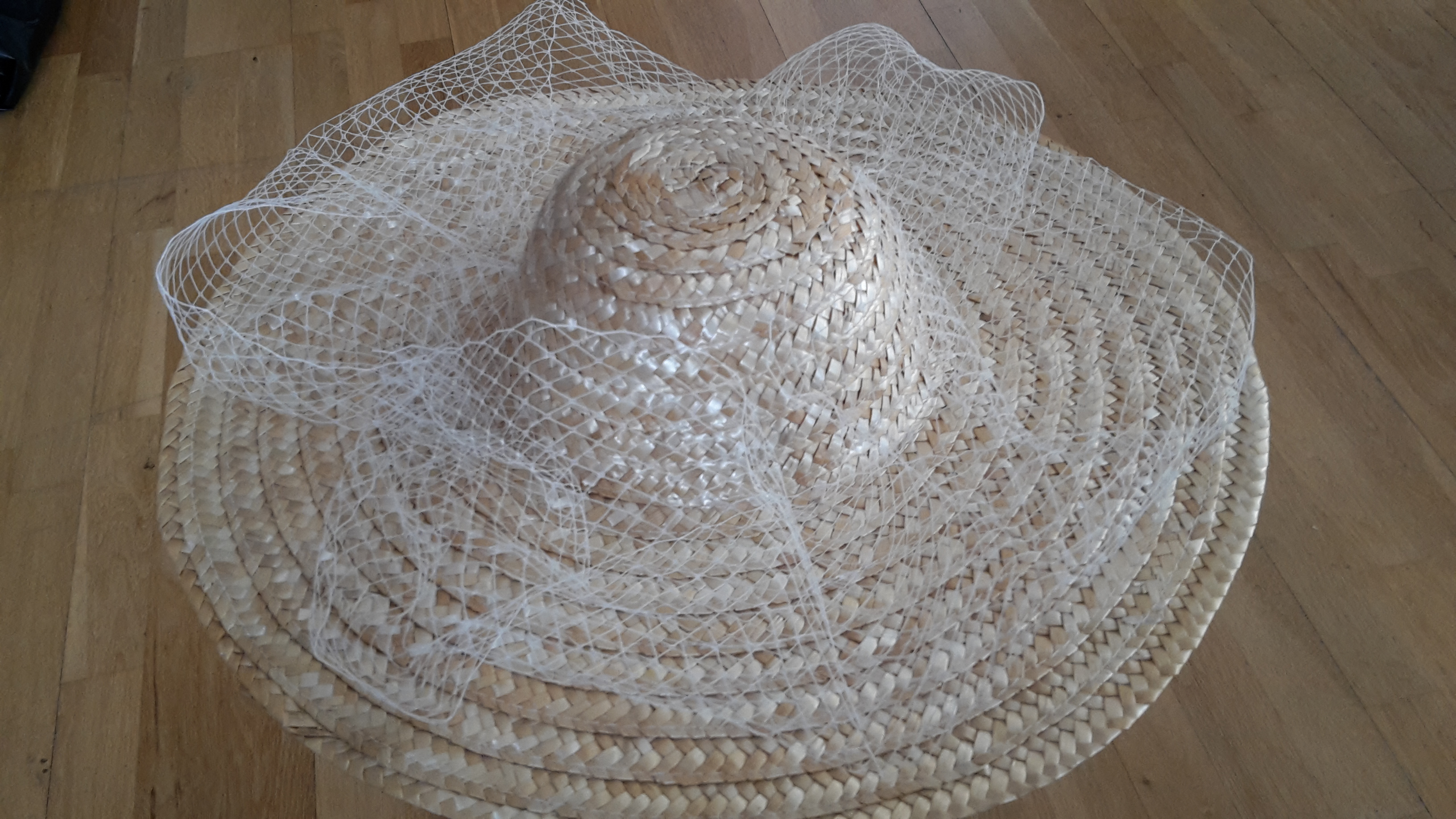
I stitched the netting irregularly and random to the brim of the hat.  20150502_120408

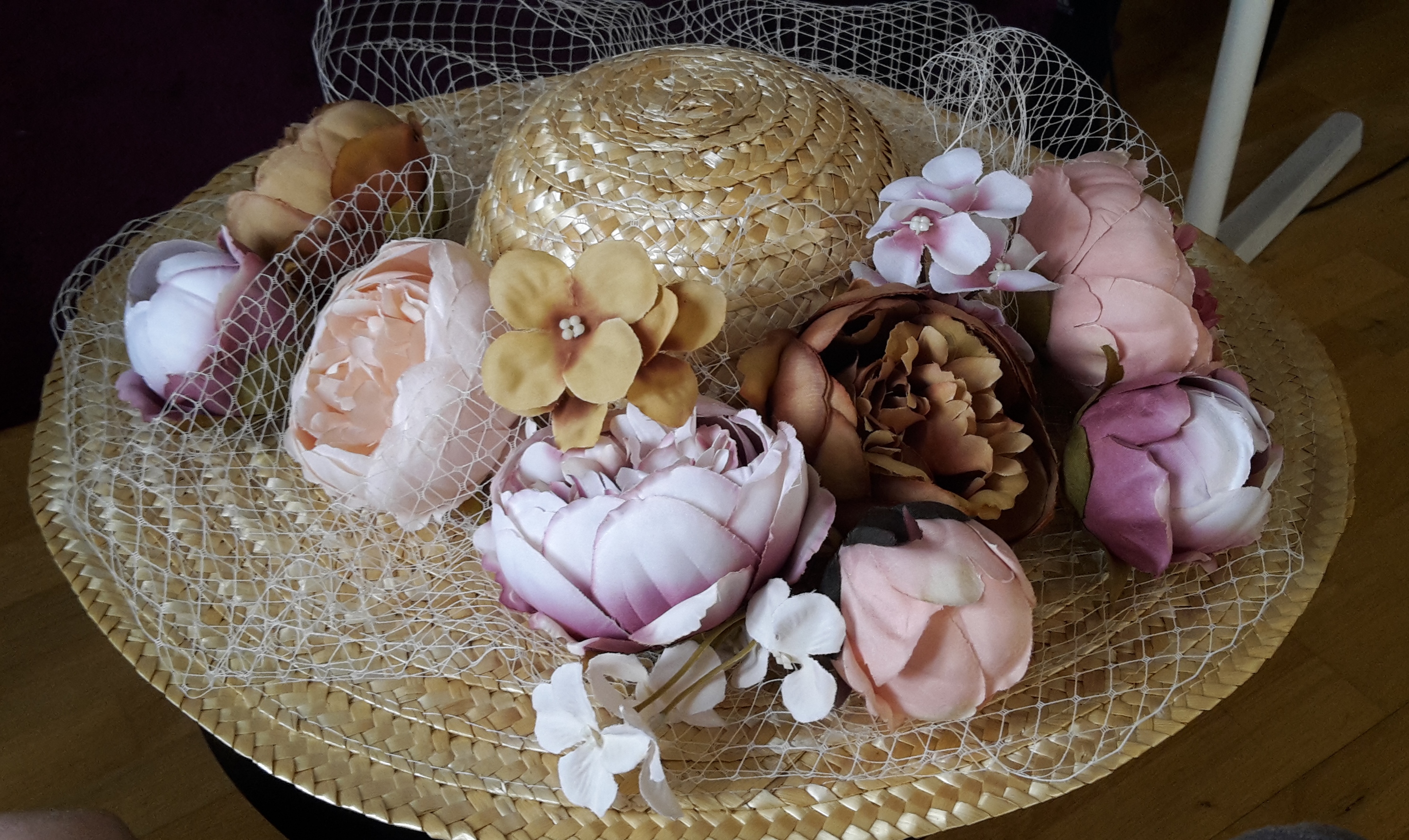
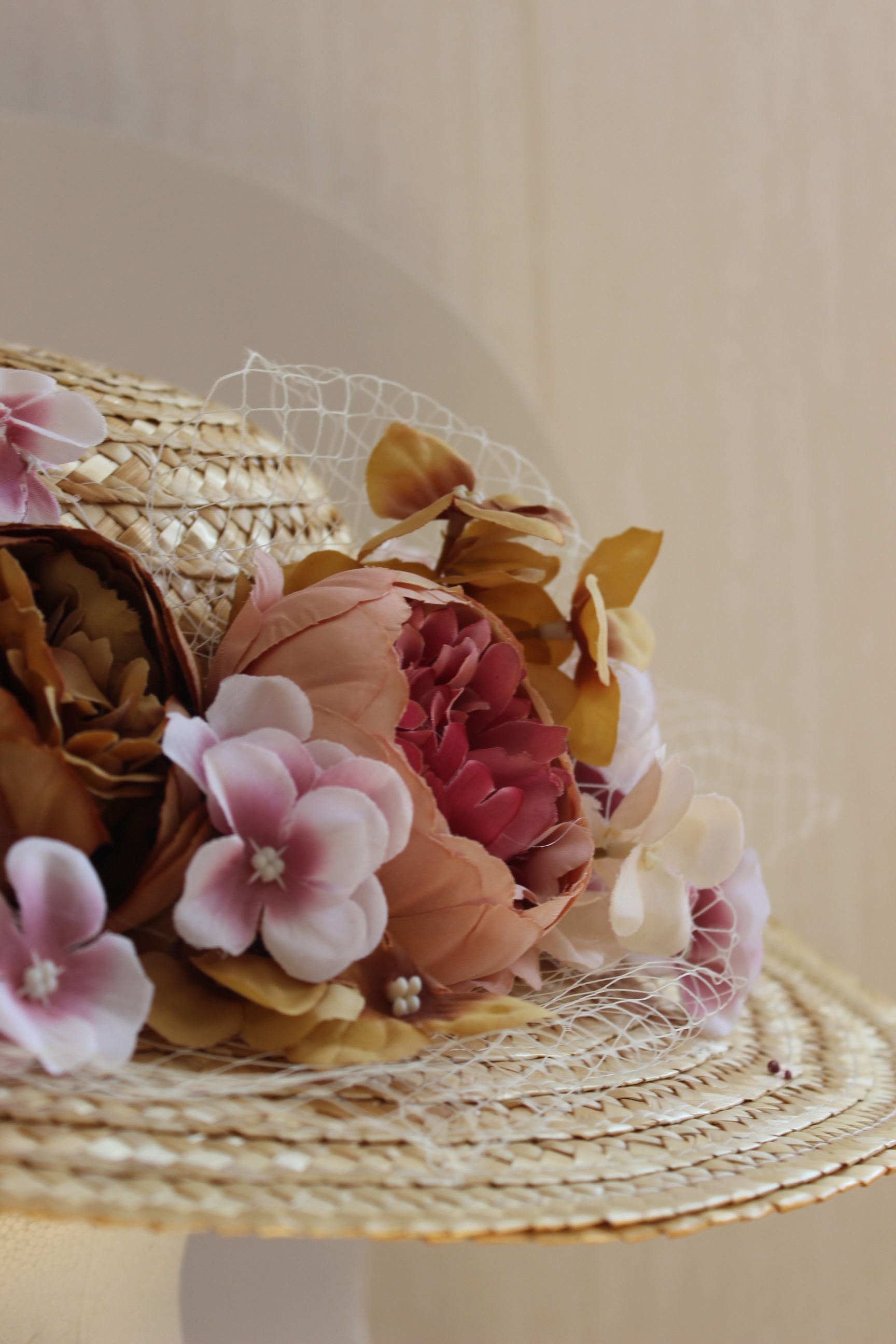
For the flowers I visited E-bay before Easter and ordered tree silk flower bouquets in muted brown, beige and violet colors, and the arrived in perfect time a week ago.

I needed to cut the flowers from the stems on each of the bouquets, but that went really easy and fast using a nippers, and then they were ready to be attached.20150421_203957

I placed a few flowers on the hat just to get a feeling for how many I would need, and how to best arrange them to get the flowing organic look of the original.

20150502_122222Looks pretty good I think.

I tried to stitch the flowers down but It didn’t work, so after some hesitation I decided to use the most loved (and hated) tool of them all – hot glue.

Then I got to work arranging and attaching the flowers as I went.
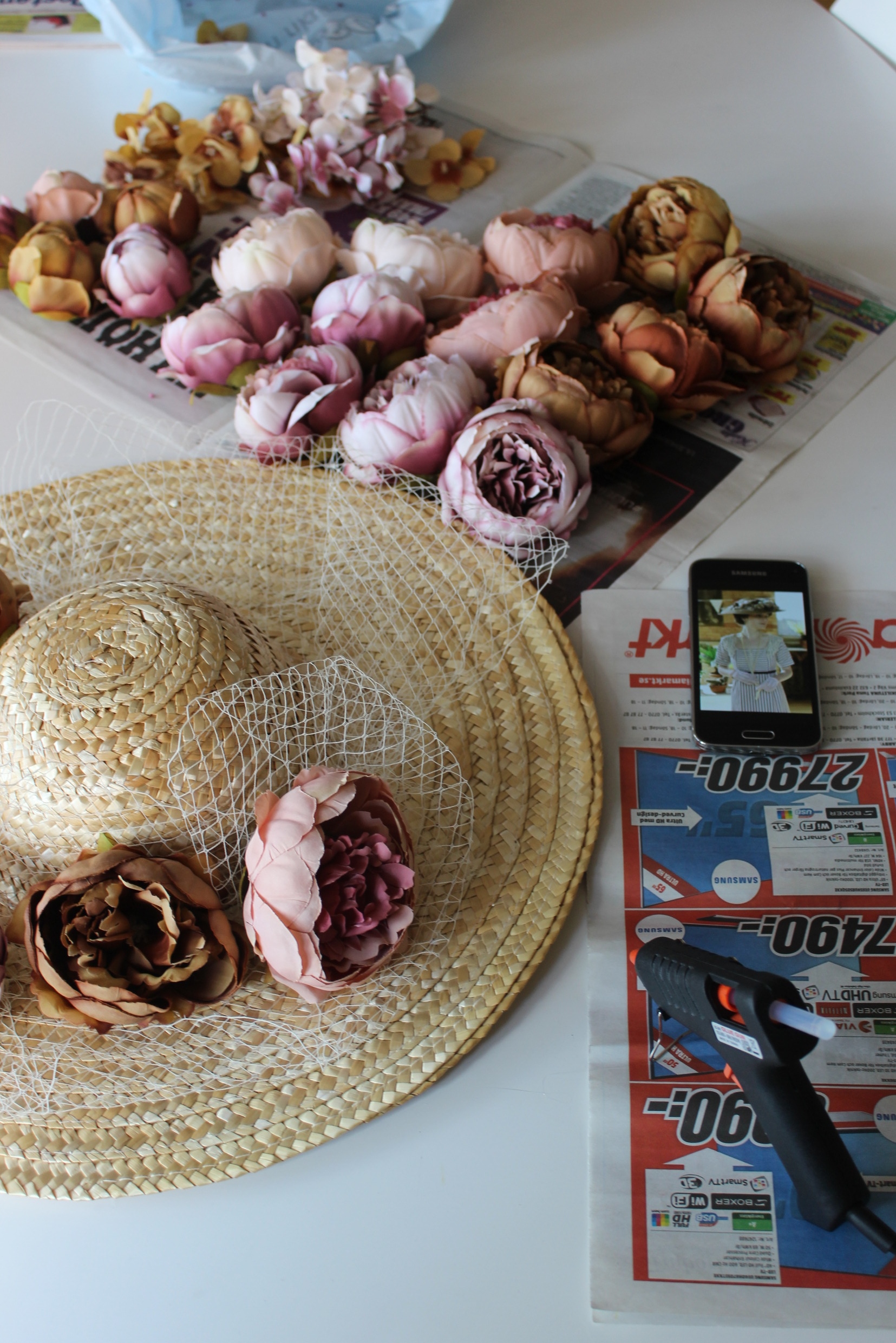
It was so easy, and went so fast, it almost felt like cheating.IMG_6512All you need for your hat project: Hat, Netting, Flowers, Inspiration pic and hot glue…

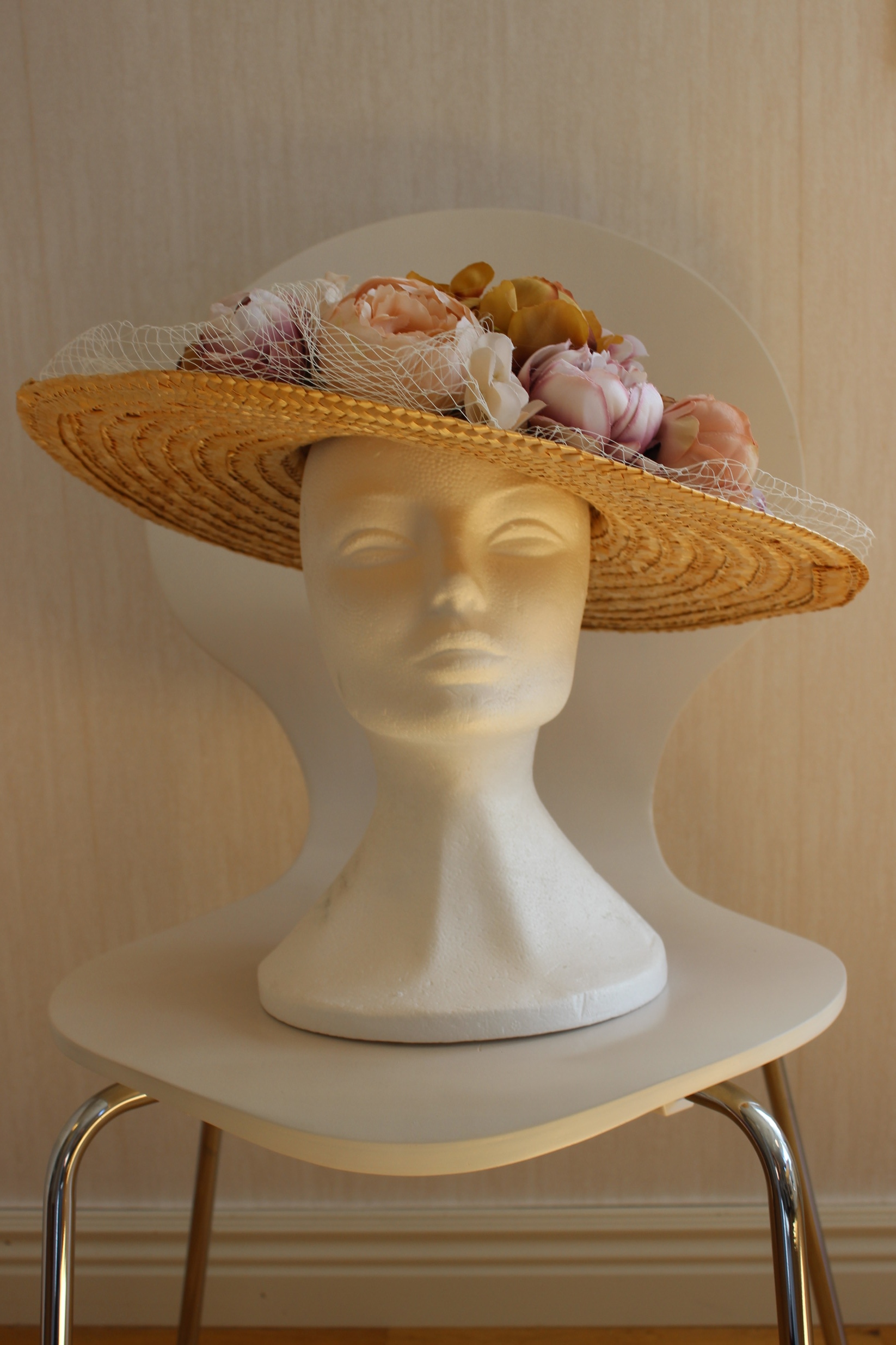
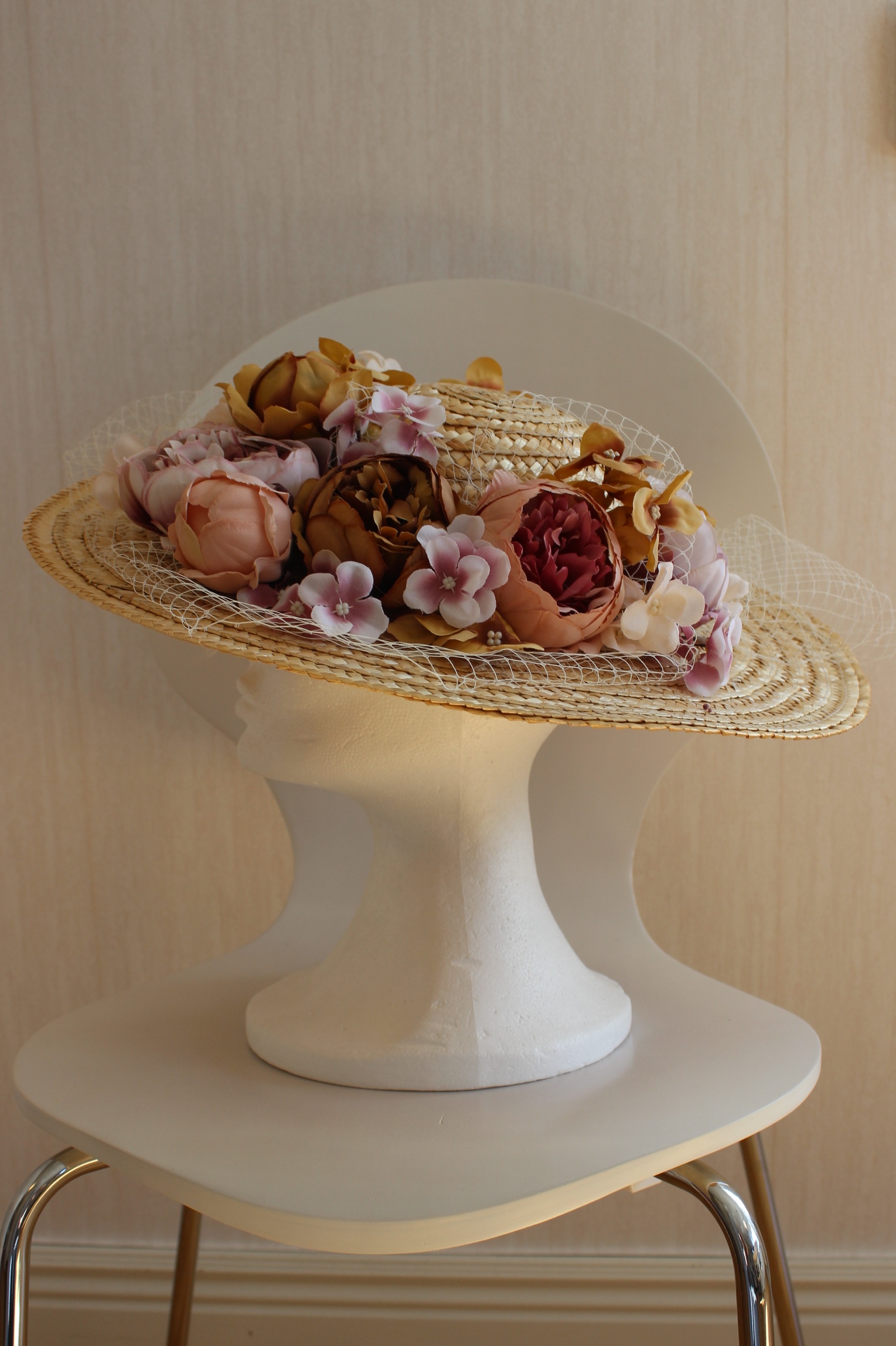
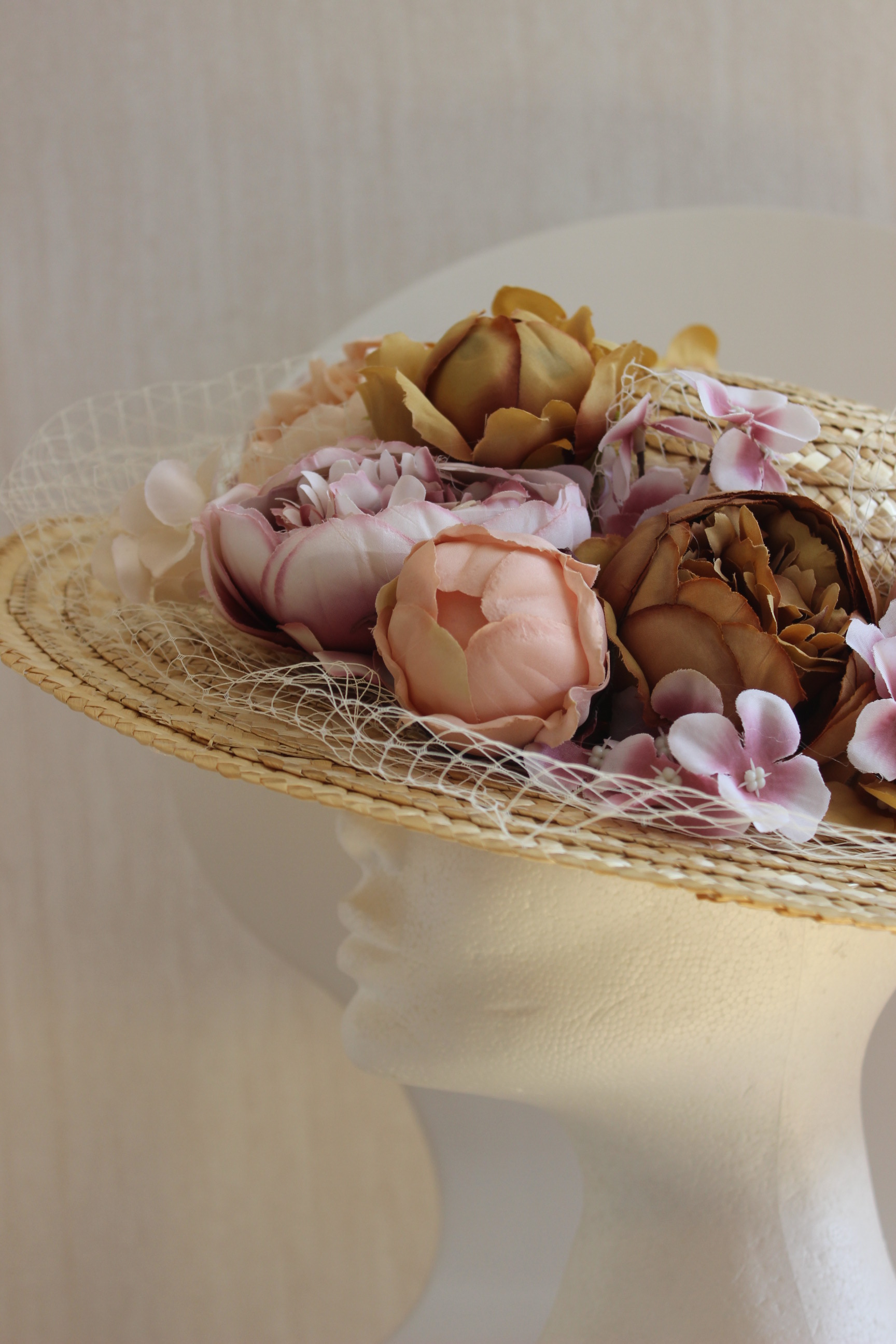
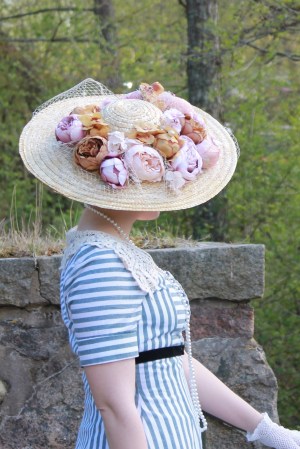
Finished Hat:IMG_6548

IMG_6553

IMG_6554

IMG_6563

IMG_6555

IMG_6556

IMG_6557

IMG_6561

And a few pics from the photoshoot:IMG_4788


IMG_4864


IMG_4758

The facts:

What: a 1914s summer hat (with autumn colored flowers)

Notions/Materials: A big brimmed straw hat, synthetic flowers in different muted colors, white hat netting, thread and hot glue (ops…)

Time: 1 hour

Cost: 250Sek (40Usd)

Final Thought: The hat is a bit to wide in the brim and a bit to small in the head to be perfect. Put considering the shape (and look) of most modern straw hats I won’t complain.
I think it turned out beautifully, and think it fits my “Lady Mary” dress just perfect.

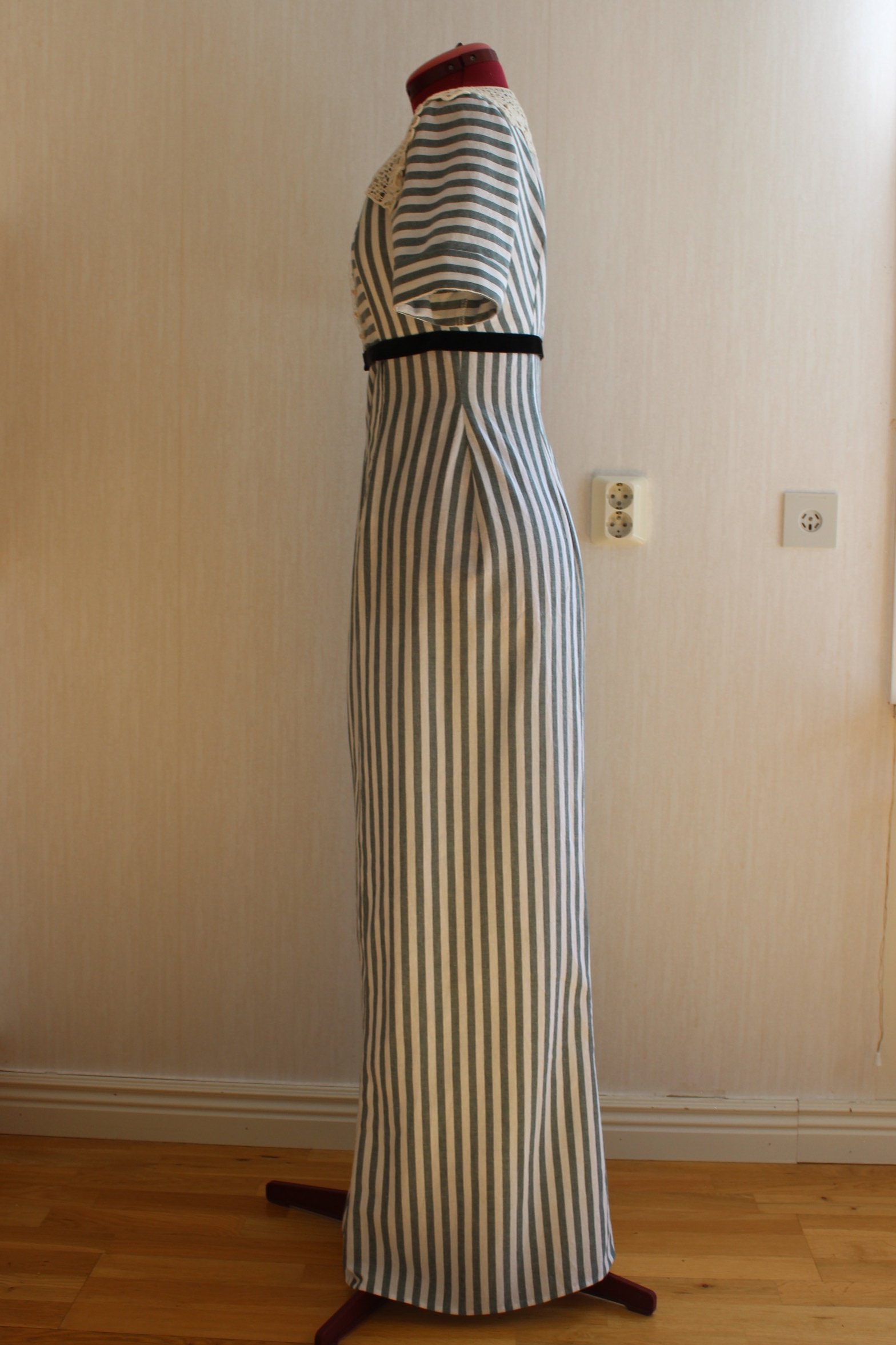
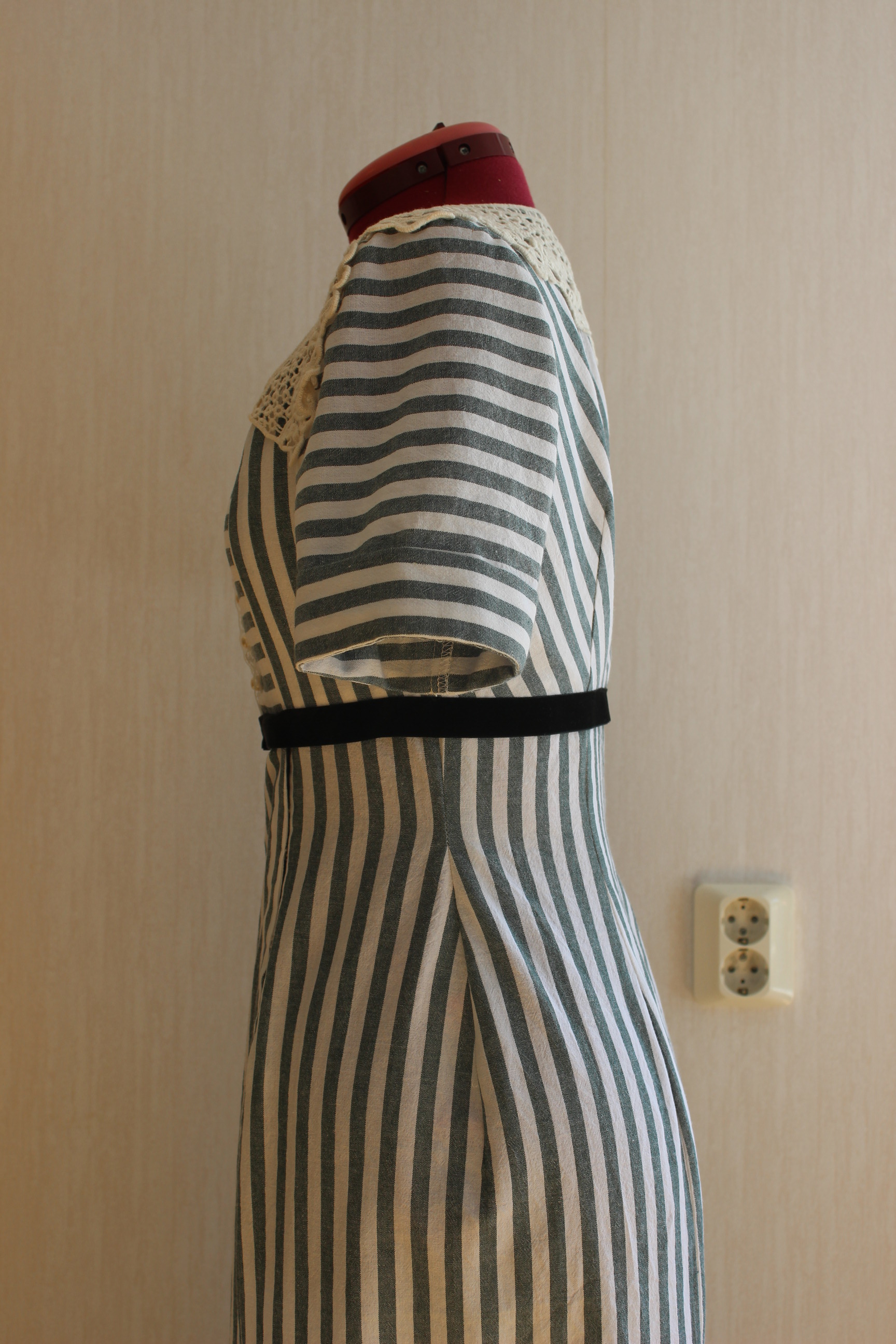
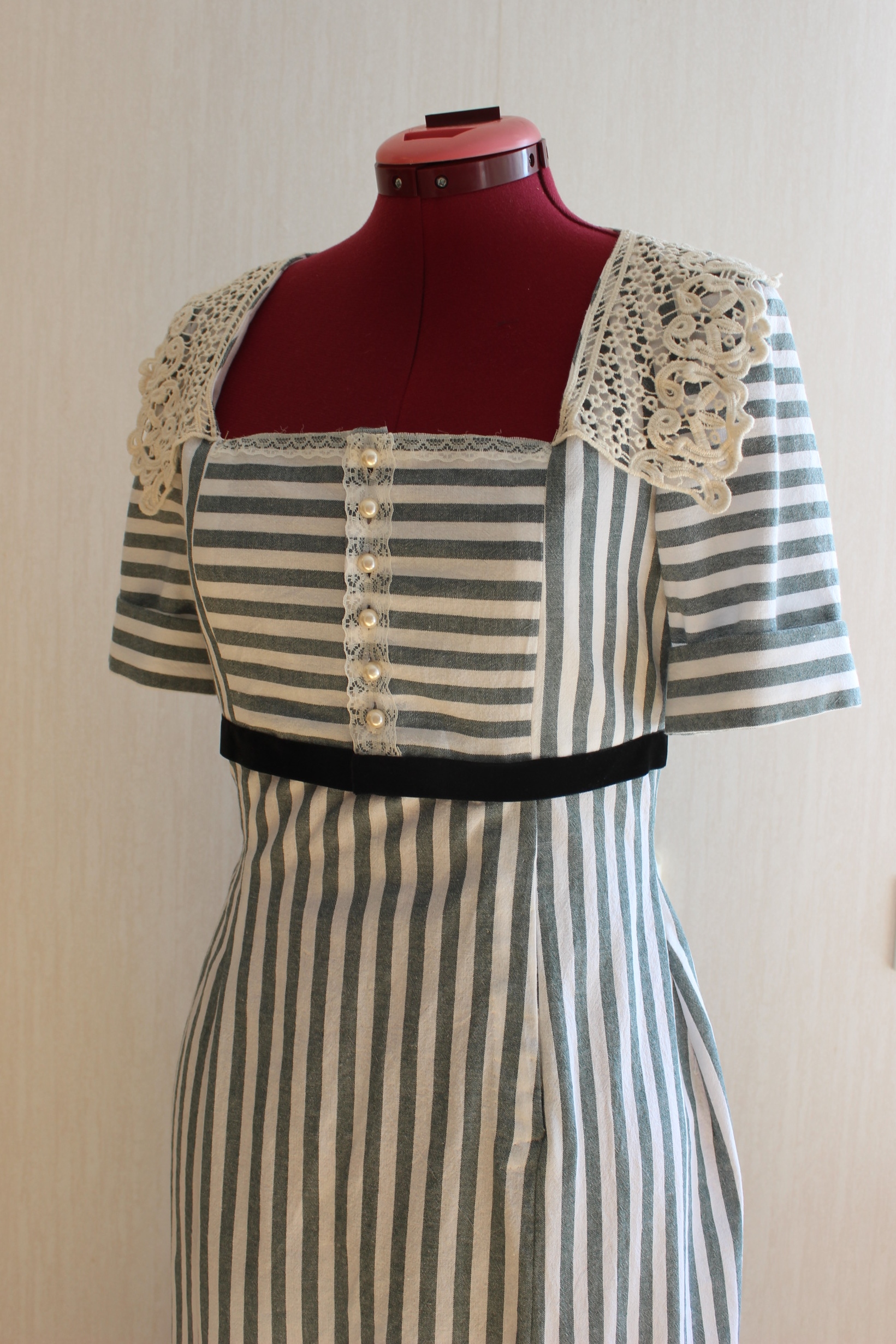
The Start of a war – Downton Mary’s Striped Dress (part 2)

I’ve been working on my entry for the HSM15 nr 4 – War & peace for the past week (Part 1), and here are the rest of my viral dress diary:
0x600Lady Mary in one of her signature dresses from the Tv-series “Downton Abby”.

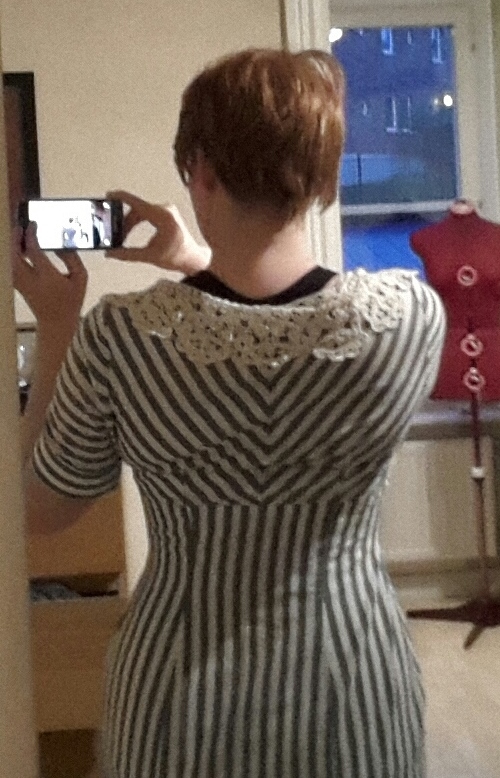
Once the bodice was finished and lined I attached it to the skirt, set the sleeves I once more tried it on to determent the exact placement of the hook and bars for the skirt closure.
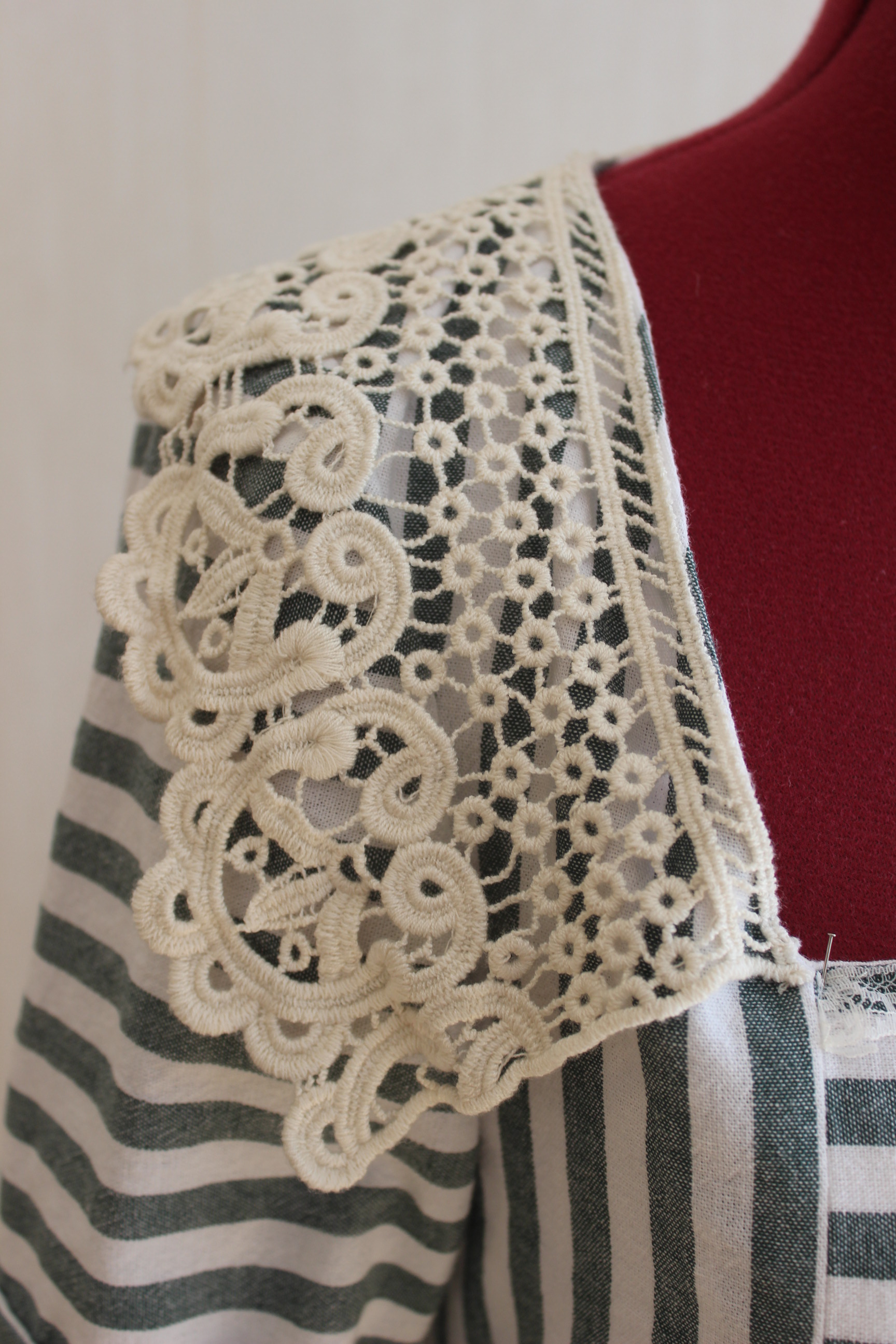
I also pinned on the collar to get a better visual of the completed look.
20150501_202039 20150501_202153-1
The fit looks good even though it’s more figure hugging and shaped then the one on Lady Mary.
(I’m pretty sure the actress have a completely different body then mine…)

Then I needed to pause the sewing for a few days over the May 1st celebration, so I put it on the dress form to keep me inspired (and to show of to our long distance friends coming over – don’t tell me you never done that…).
20150501_195003 20150501_195018

Once back at sewing, I pinned some narrow lace ribbons to the buttonhole stand and top front piece.20150501_225246Then I spent a few hours (at my in-laws) hand stitching the narrow lace, the collar, the lining, the black velvet ribbon and the hooks and bars to the bodice.20150501_225316

The Finished Dress:IMG_6516

IMG_6517

IMG_6537

IMG_6535

IMG_6521

IMG_6523

IMG_6524

IMG_6526

IMG_6528

IMG_6540

IMG_6532

IMG_6539

Just the Facts:

Challenge: HSM15 nr 4 – War and Peace

What: A 1914s striped summer dress

How it fit the challenge: WWI started in summer 2014.
My dress is also a re-creation of the dress Lady Mary Crawley wears in the TV-series “Downton Abby”, in the episodes (and at the garden party) it’s  announced that England will join the war.

Pattern: None, I drafted my own with influences from a small sketch in Janet Arnolds “Pattern of Fashion 2”

Fabric: 2,5 m of striped cotton, and 0,5 m white cotton for lining – both leftovers from previous projects.

Notions: Thread, buttonhole tread, 6 buttons, 2 pairs of hooks and eyes, 6 snaps, 0,5 m of narrow lace, 1 m black velvet ribbon, one extra long lace/crocheted collar.

How historical accurate: Not sure. I used modern techniques with lots of hand finishing. The fabric wold have existed in the period, but I think the slim silhouette are a bit to modern. Perhaps 5/10.

Time: About 15-20 hours. Lots of fiddling with both the fit and matching the stripes made this project a bit more time consuming then I expected.

Cost: About 250 Sek (40Usd) all fabric from stash – Bought on sale a few years ago.

First Worn: May 3 for photos.

Final Thoughts: I really like this dress. It came out exactly like I envisioned and I felt really pretty (and posh) in it.
I’m really happy with the decision to make the dress slim and figure hugging (contrary to the original which have a more straight shape) even though it diverts a bit from the fashion of the day.
But there are as always a few thing I would like to fix before wearing it again: The back bodice are still to long (what’s that about?) and the button holes need to be stitched shut about 2 mm each (those buttons needs to remain closed next time around).

 ***

IMG_6547Accessorized and ready for a photoshoot.