2015 – A year in rerview

I’m a bit behind in posting, but here are a summary of the items I made last year.

January:

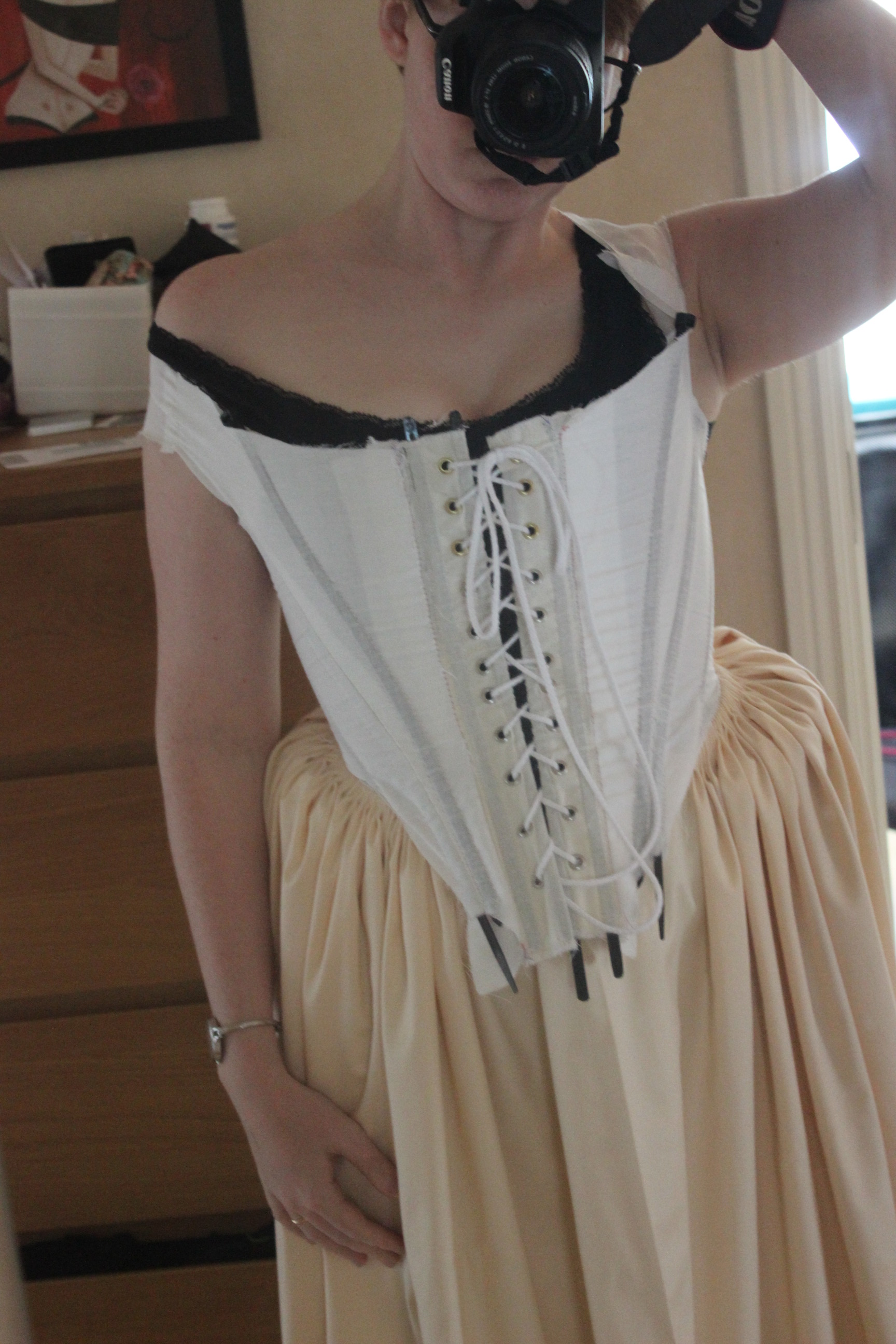
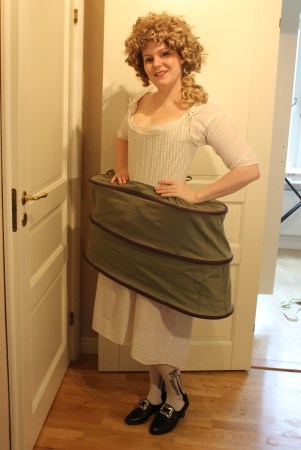
I started the year with grand planes (pun intended) and made pannier for the first HSM challenge of the year – FoundationIMG_5811
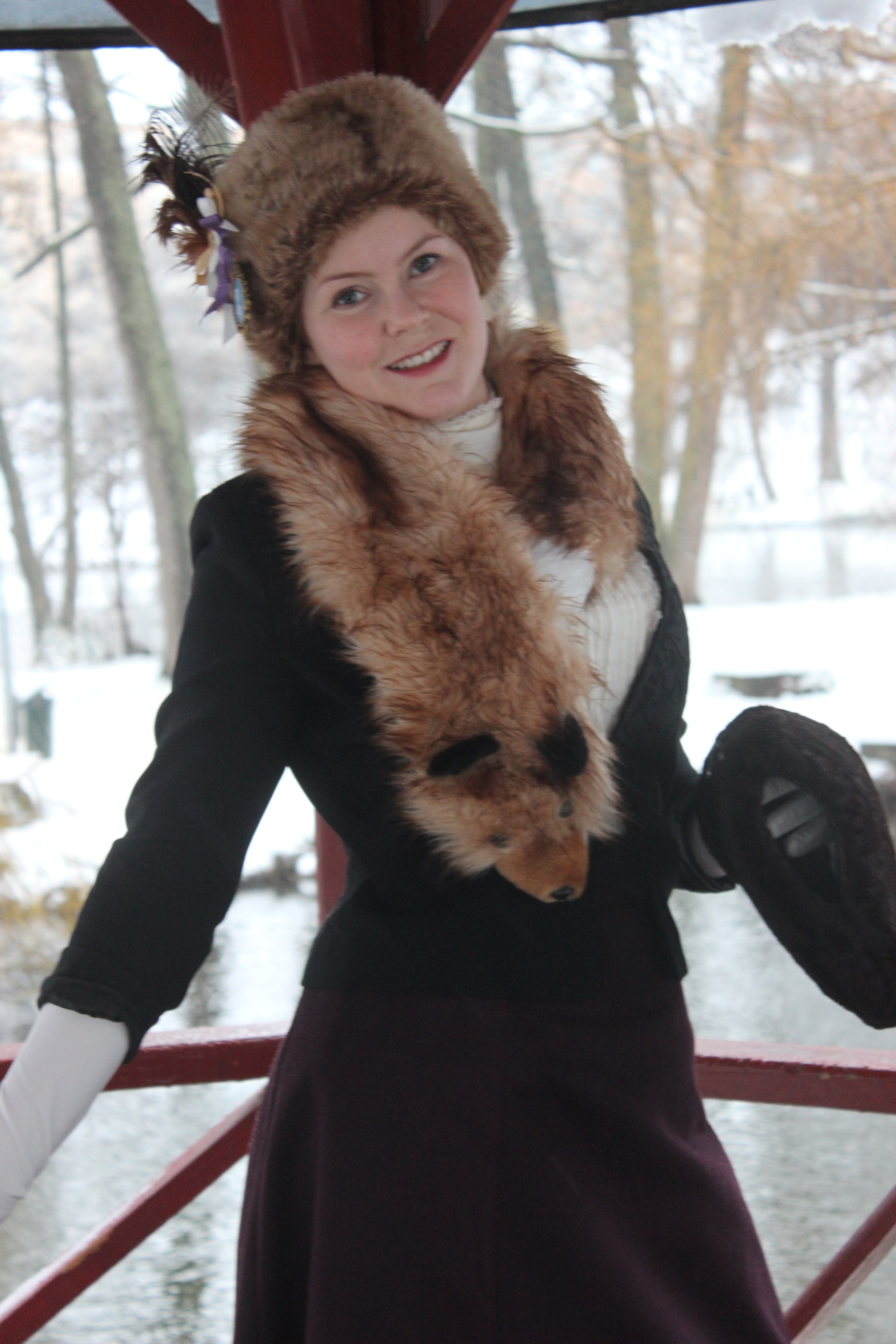
And one snowy evening I cobbled together a fake fur hat to match my neck-stoleIMG_5188
February:

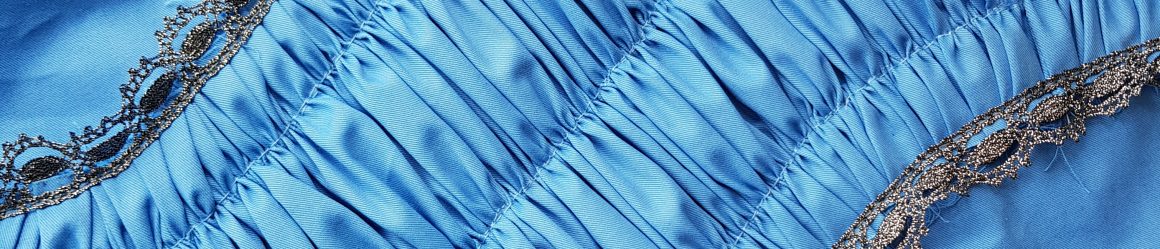
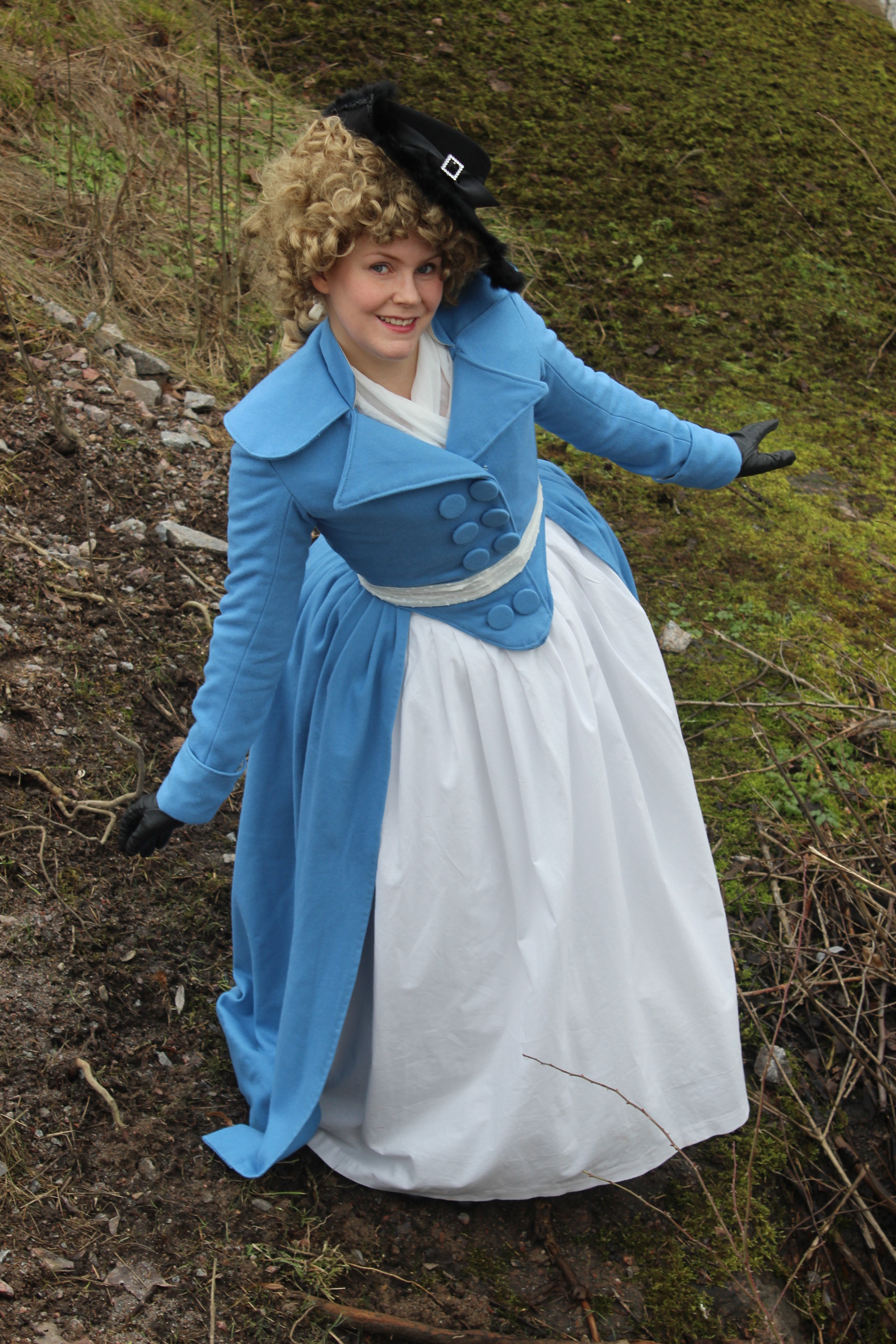
For Februarys challenge – blue,  I continued with the winter theme and finished my Redingote which I´ve started in the fall.IMG_5615
I also had the time to (start) and finish a 18th century maids outfit for the 3rd challenge – Stashbusting.IMG_4587

Mars:

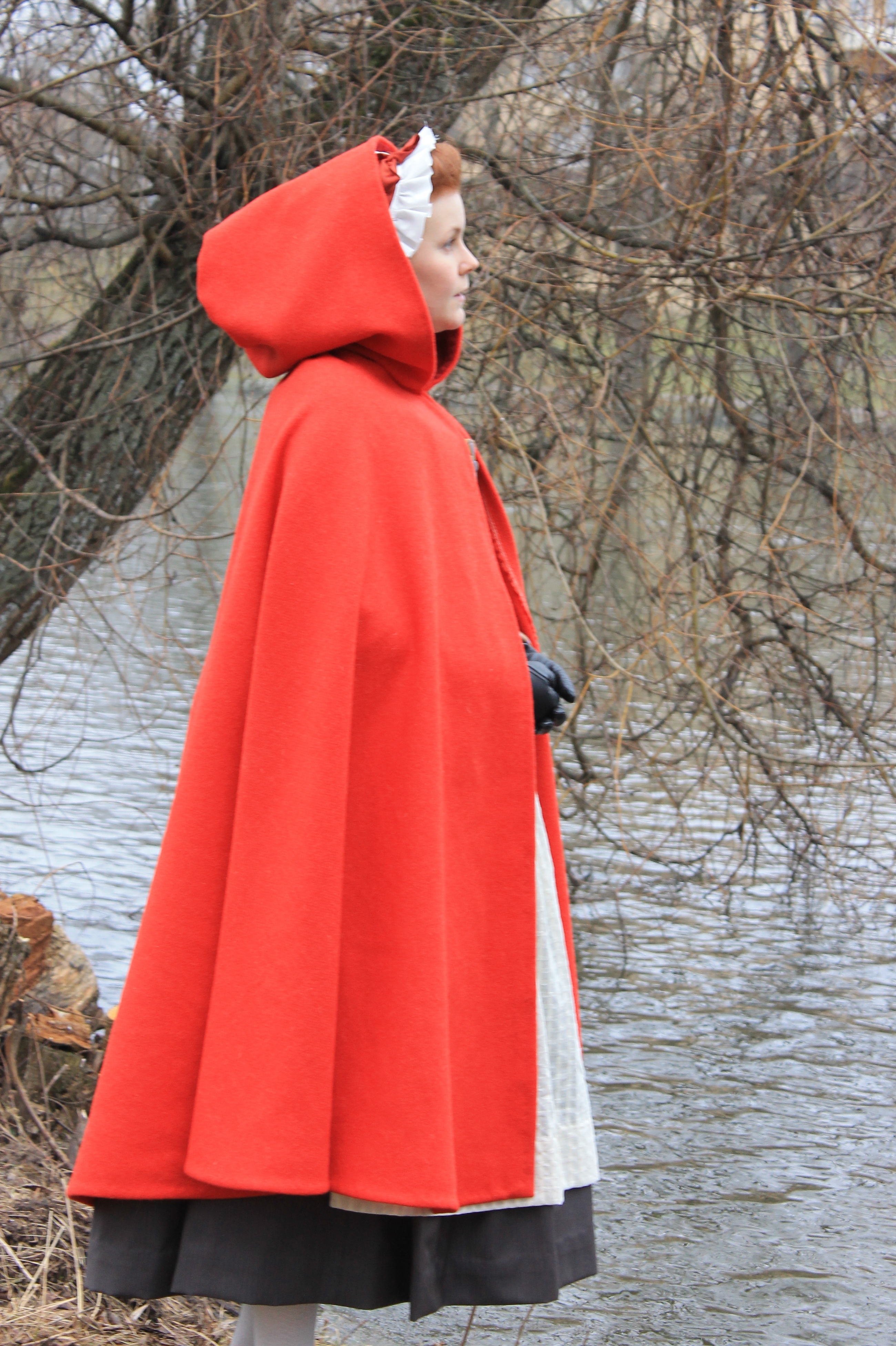
And while I was in the mood to clear out some stash I also made a “Little red riding hood” 18th century cape IMG_4563
and a brown wool skirt for my sister.IMG_6203

April:

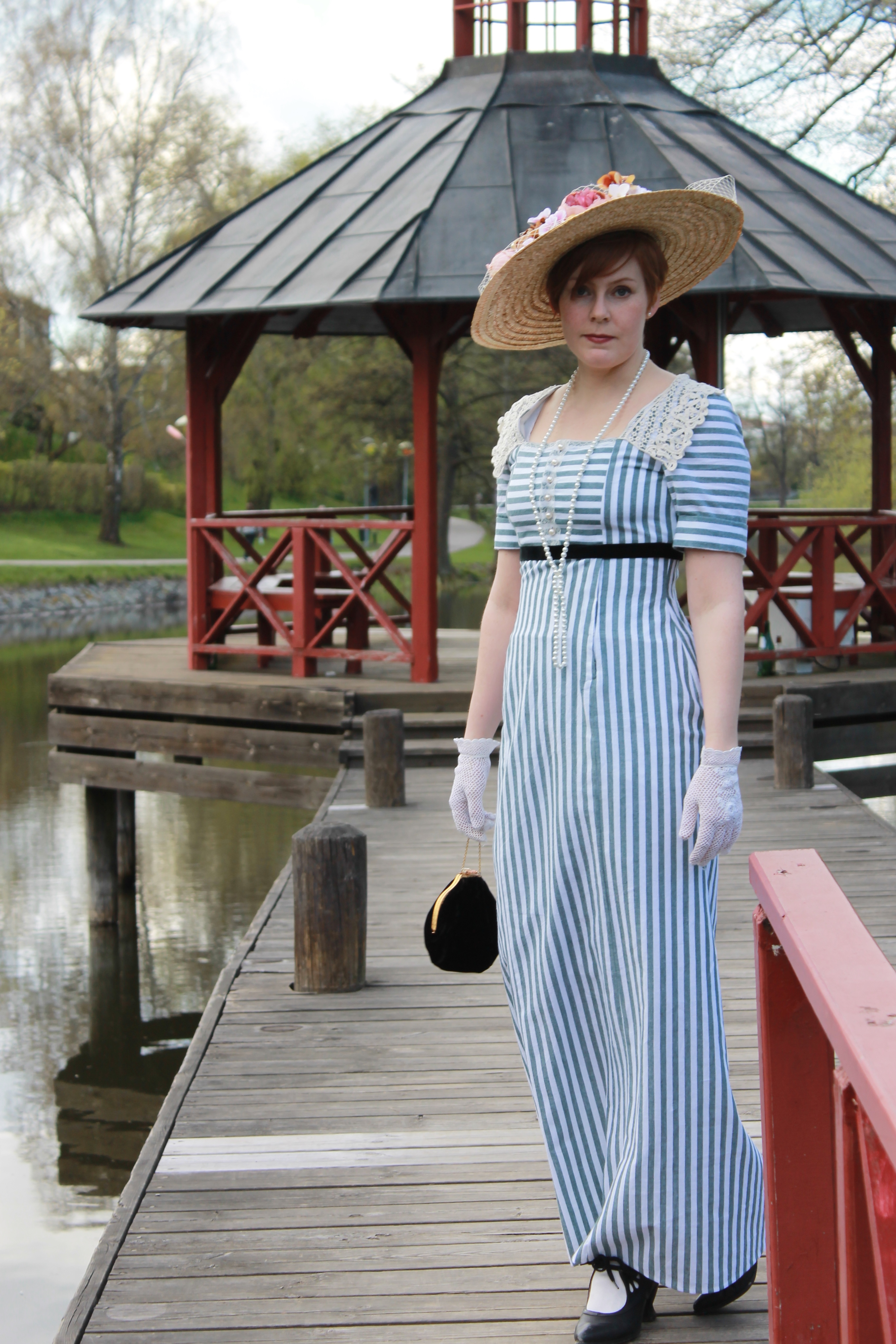
April came with spring, and I made a summery outfit for “Lady Mary” and the – War and Peace challengeIMG_4861
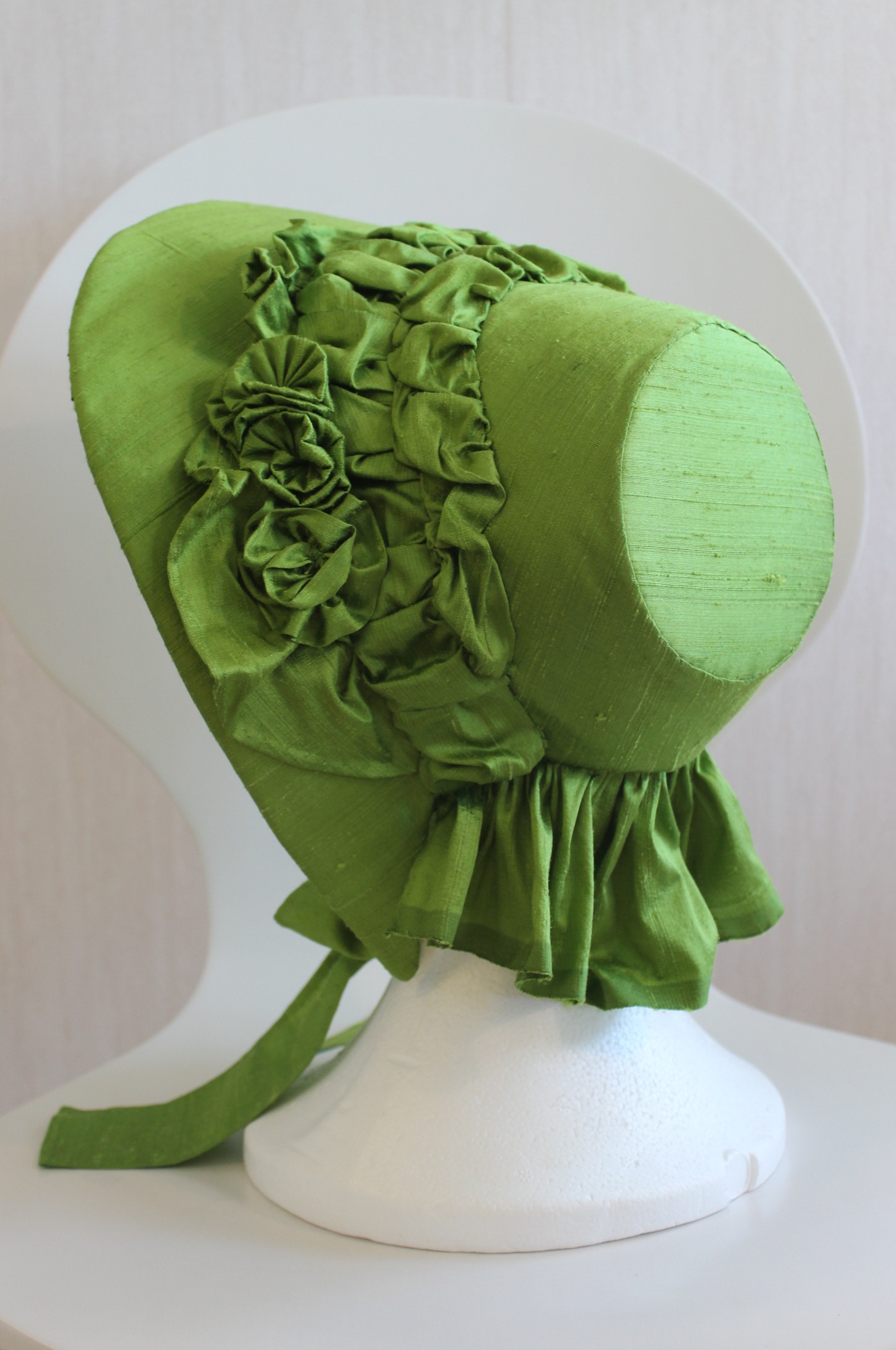
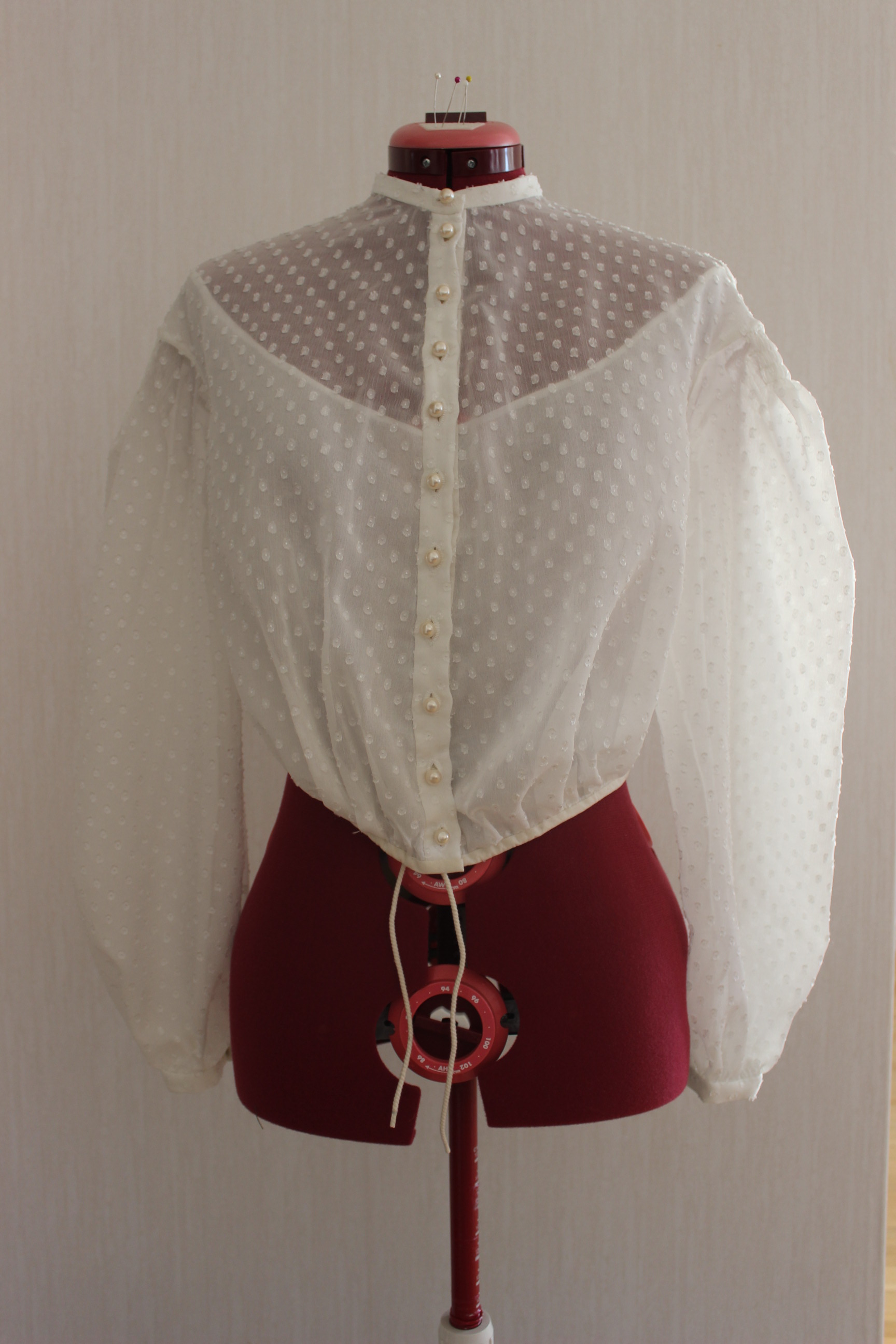
I also made a 1860s blouse and  1850s silk bonnet for a summer event.IMG_6304IMG_6729
May:

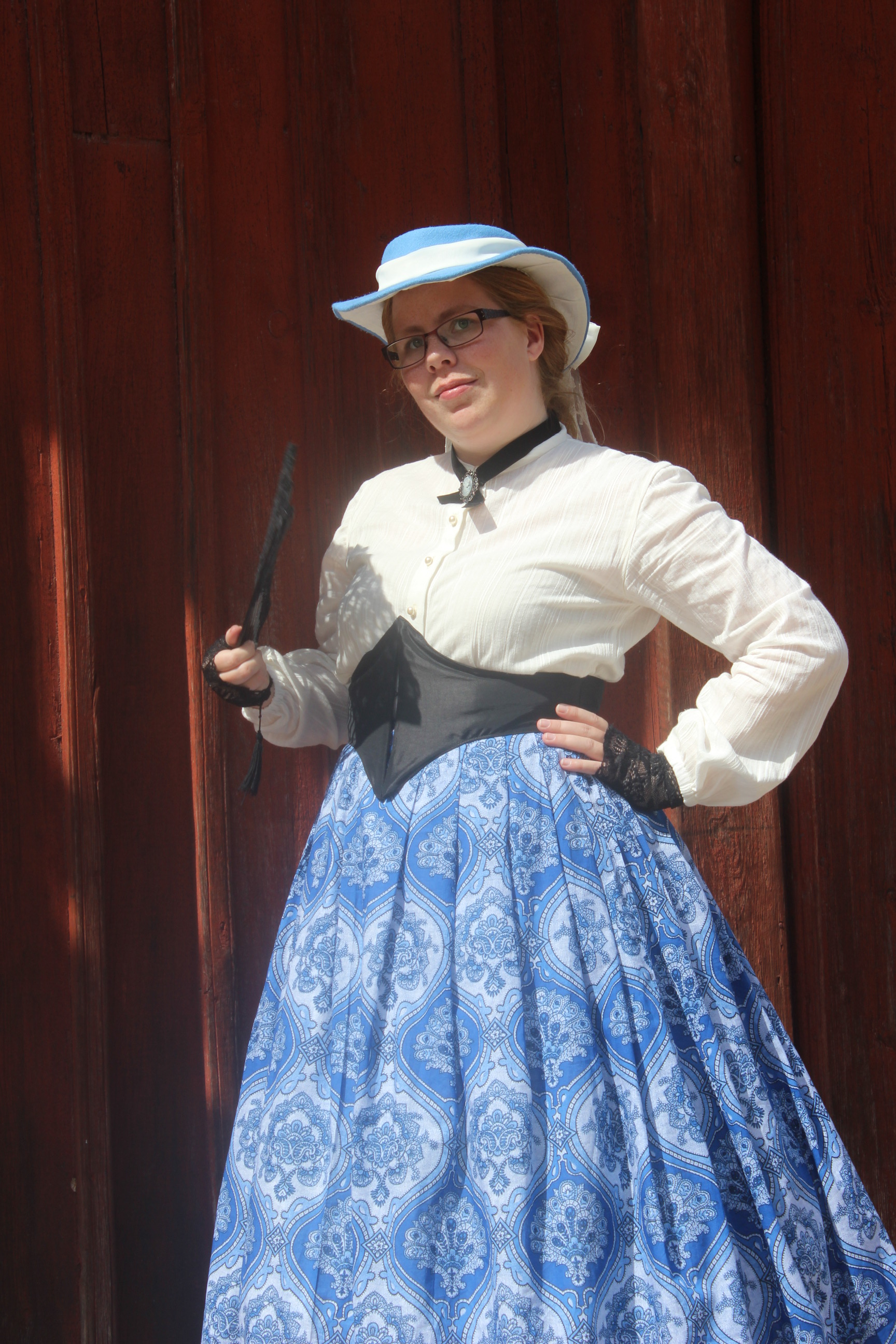
In May I made a cotton blouse for the – Practicality challenge and then a skirt, hat and belt to go with it.IMG_6963
June:

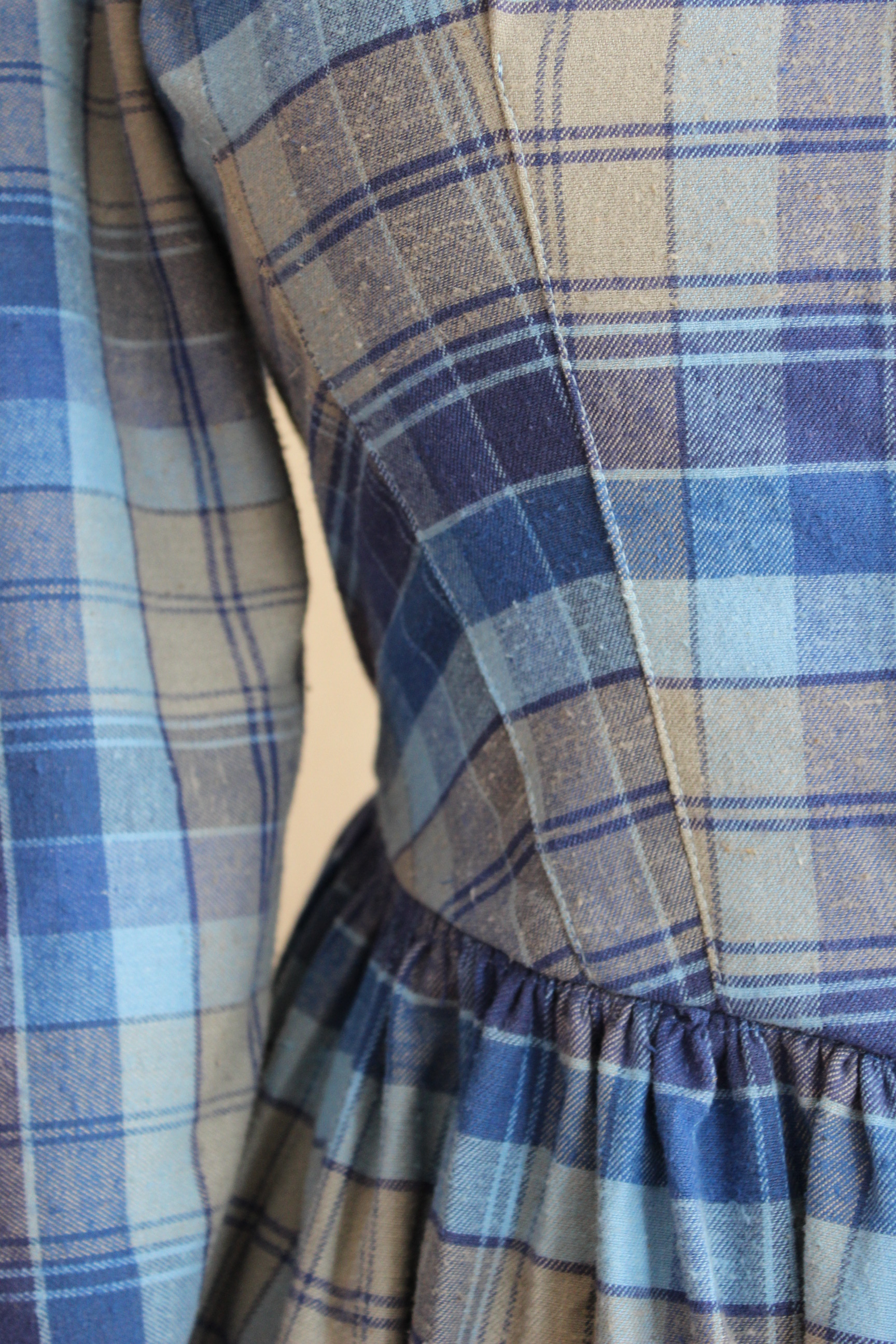
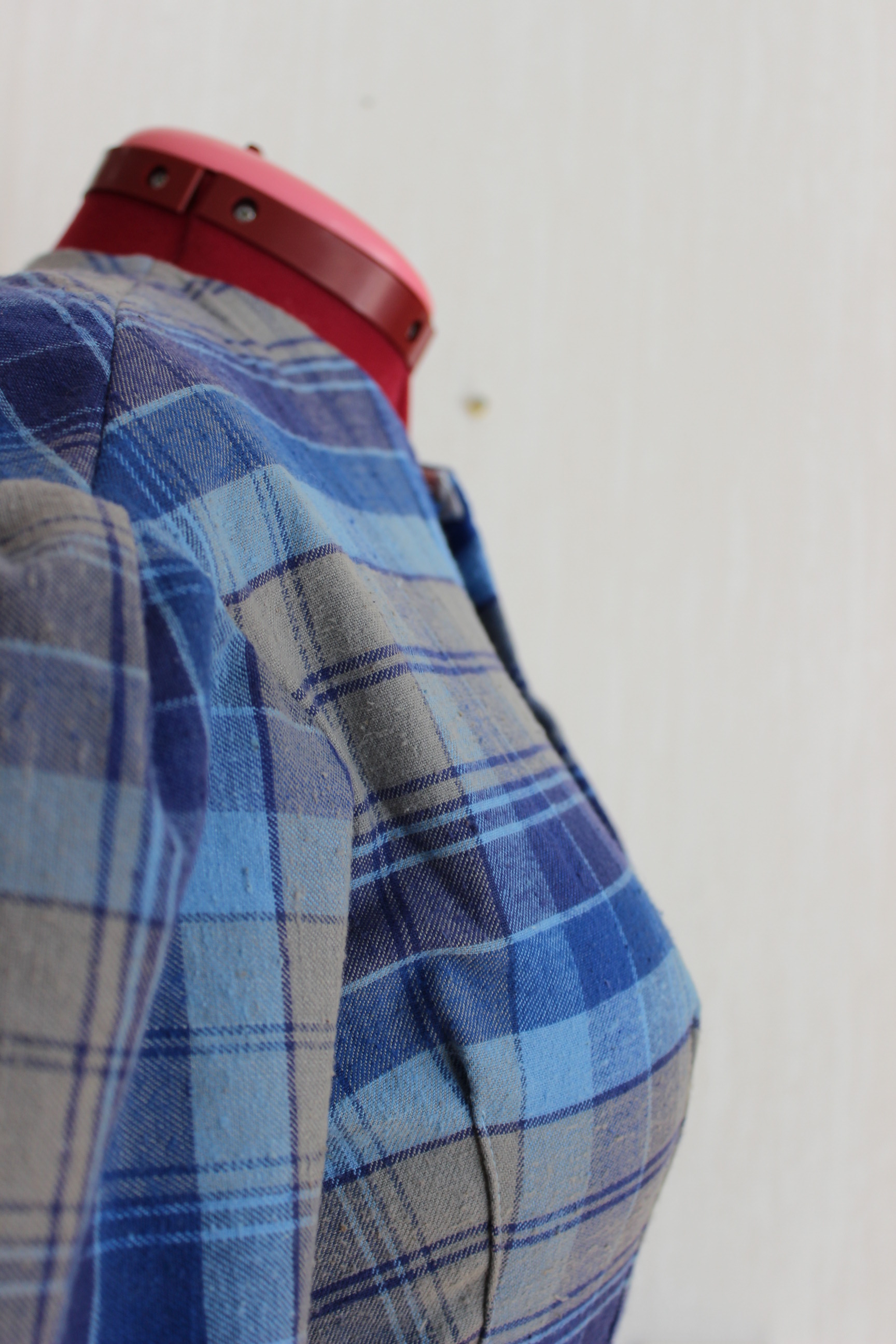
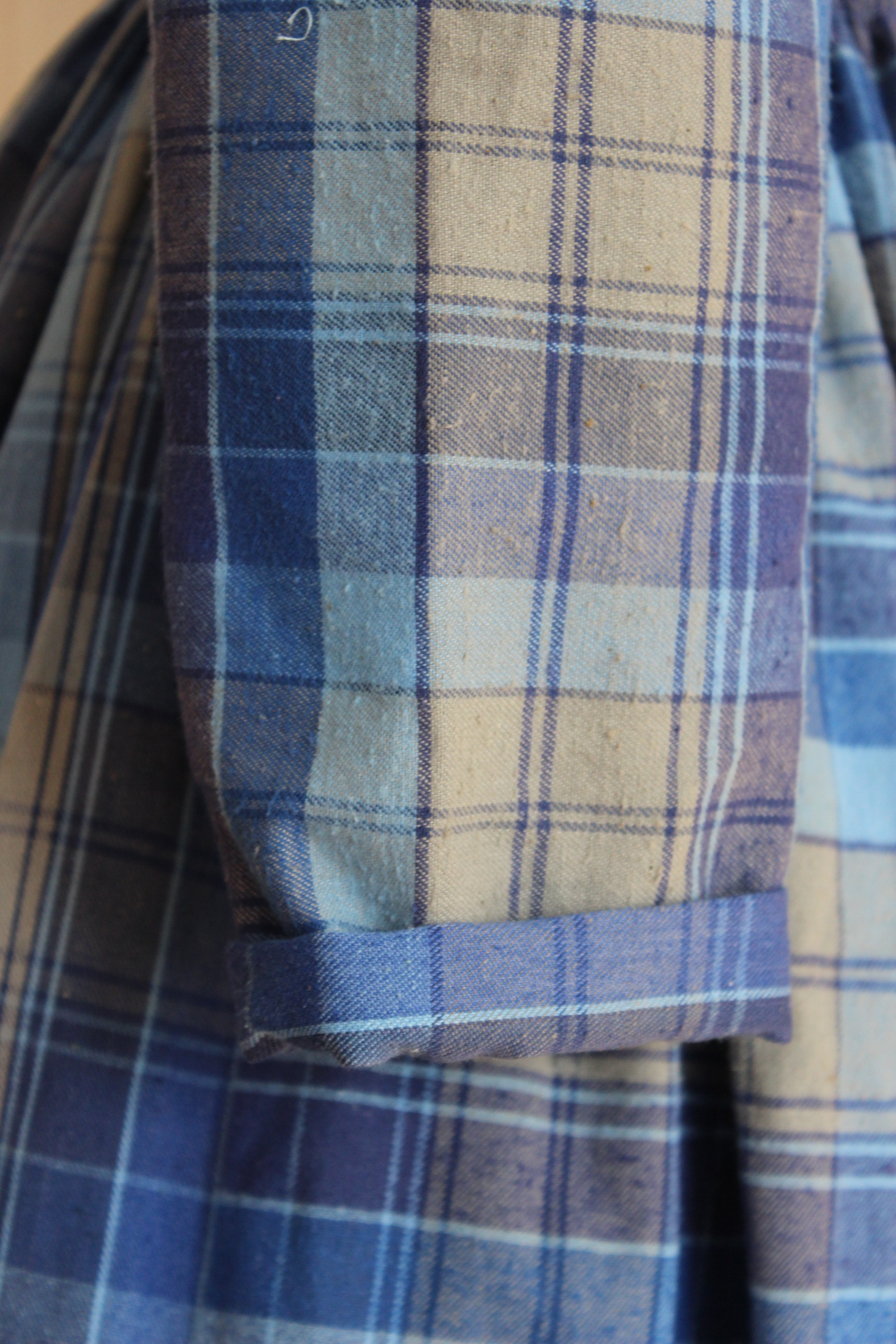
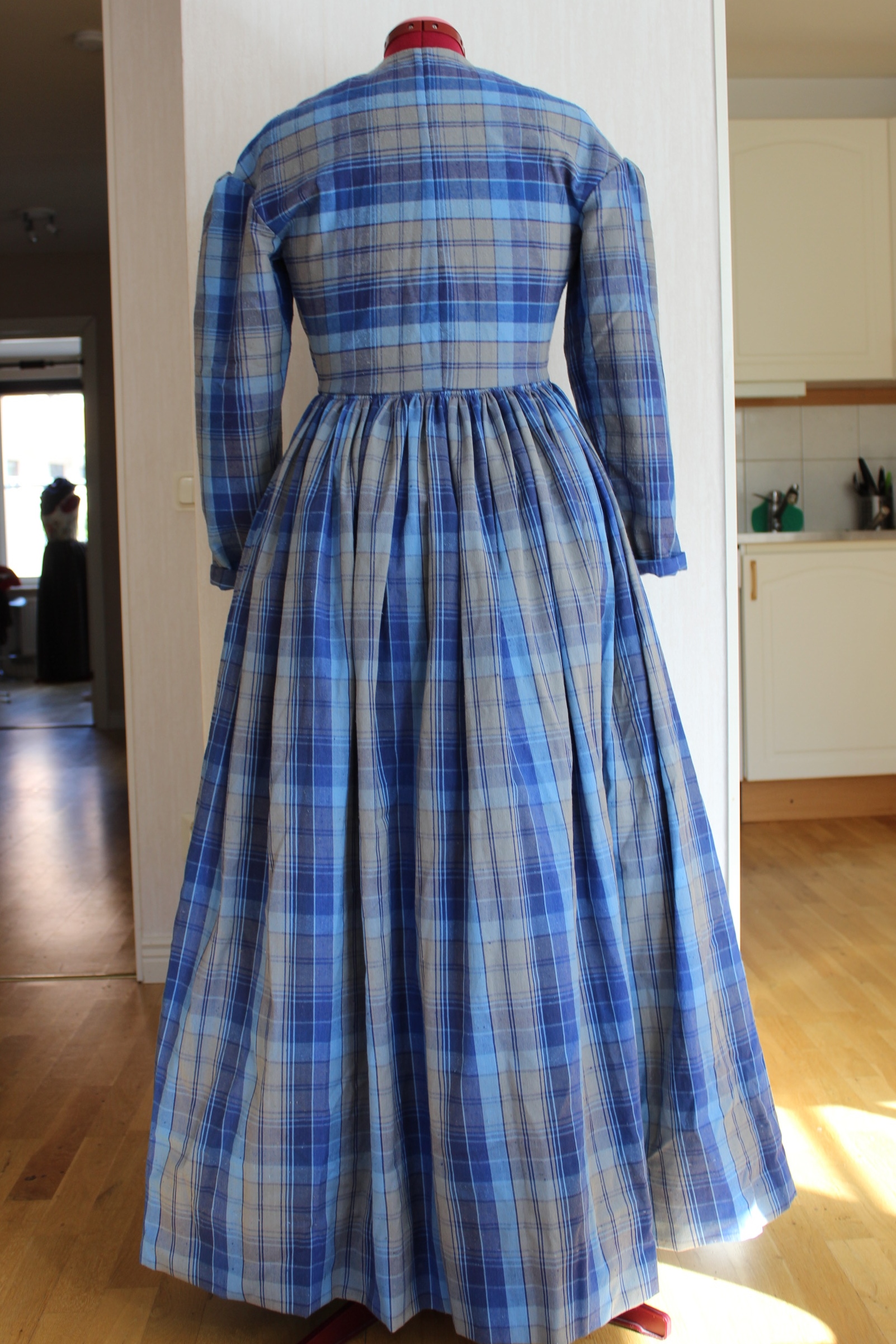
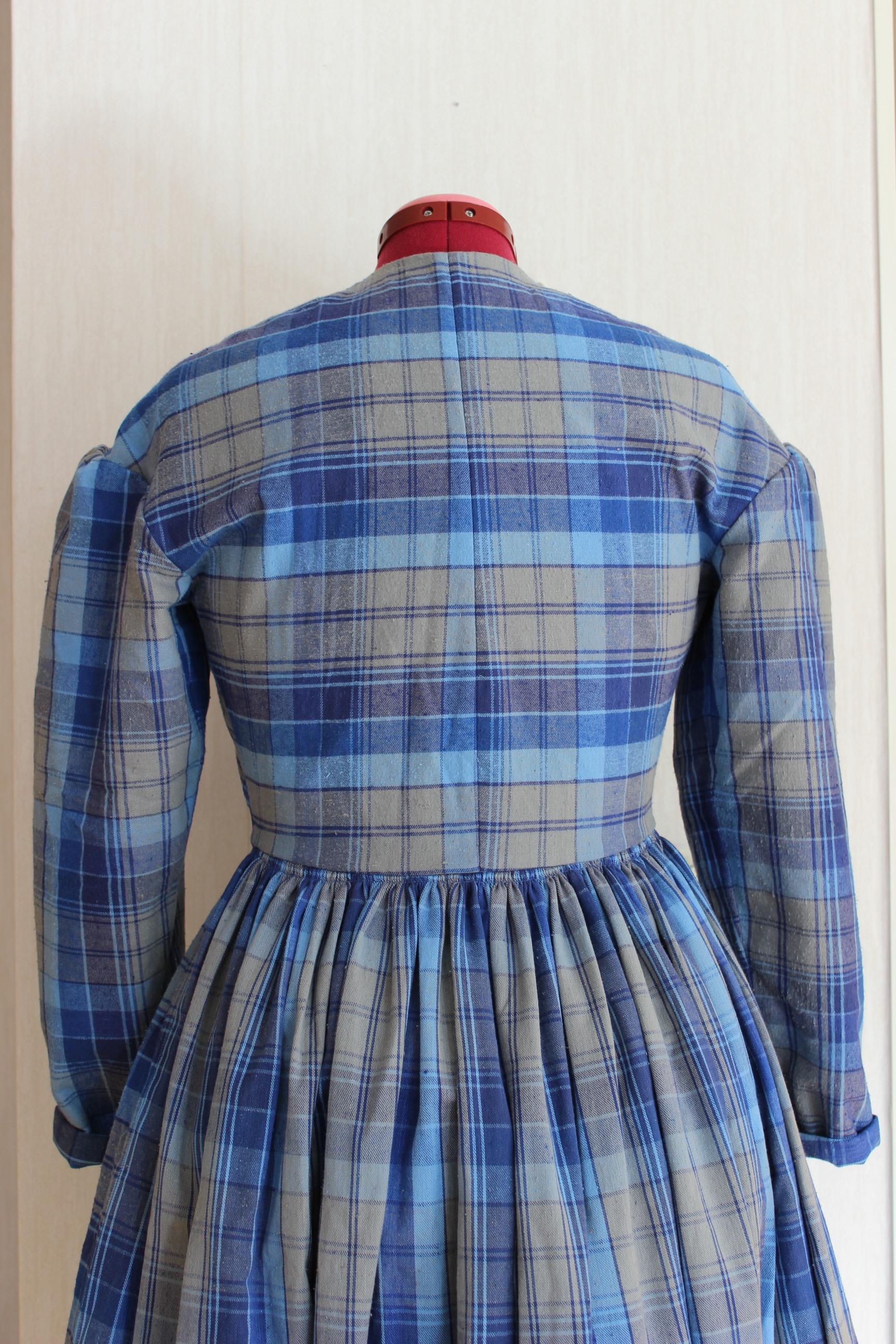
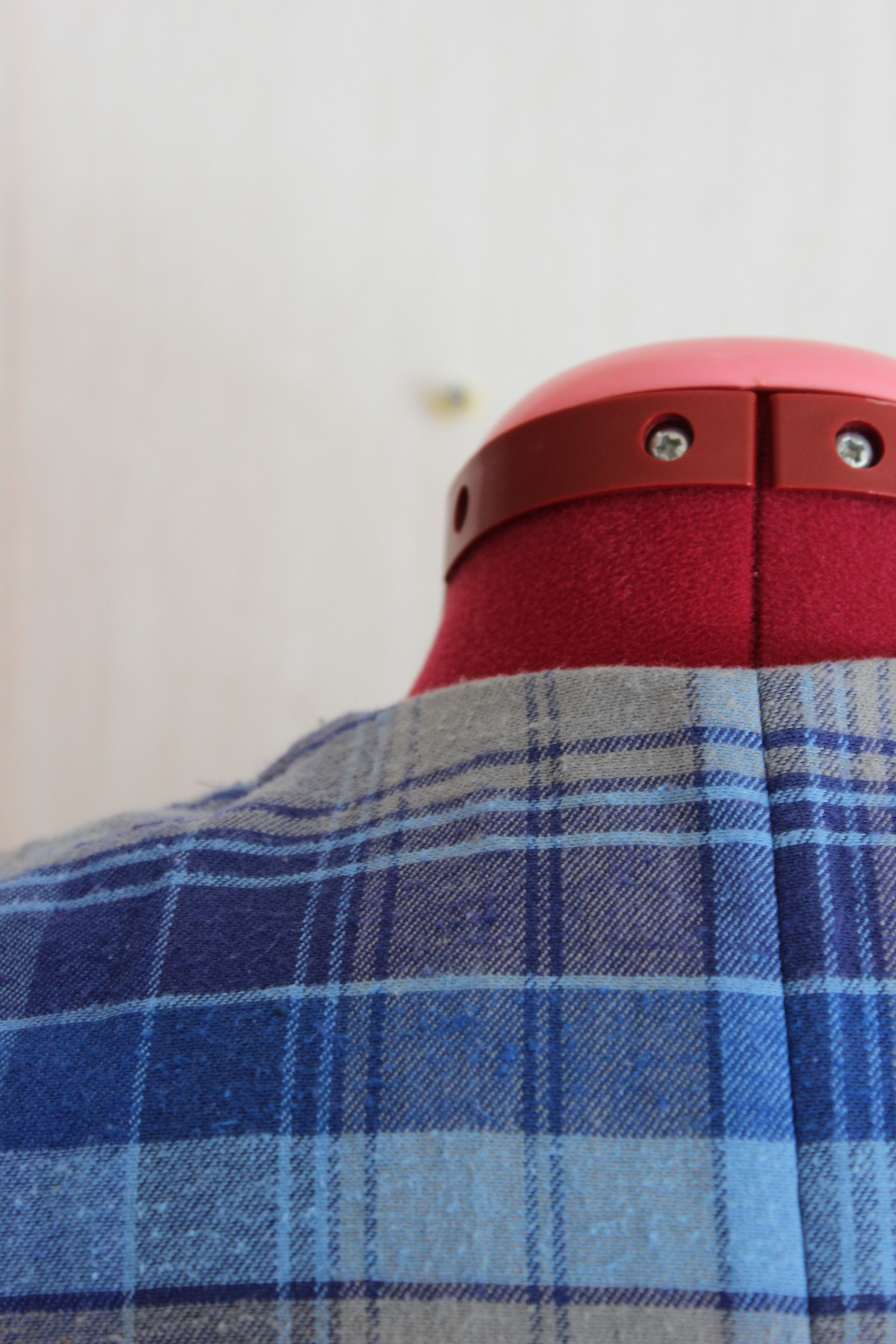
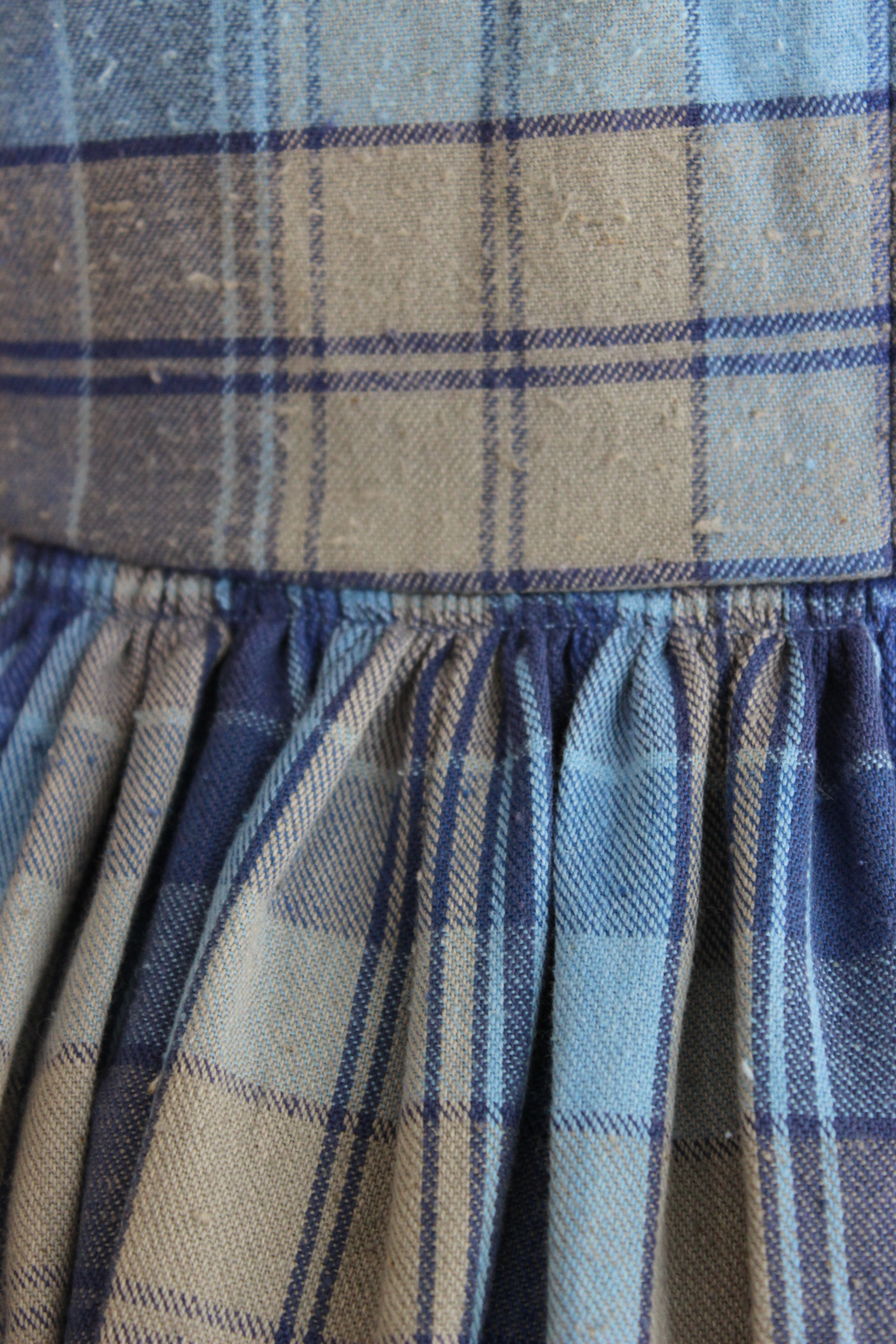
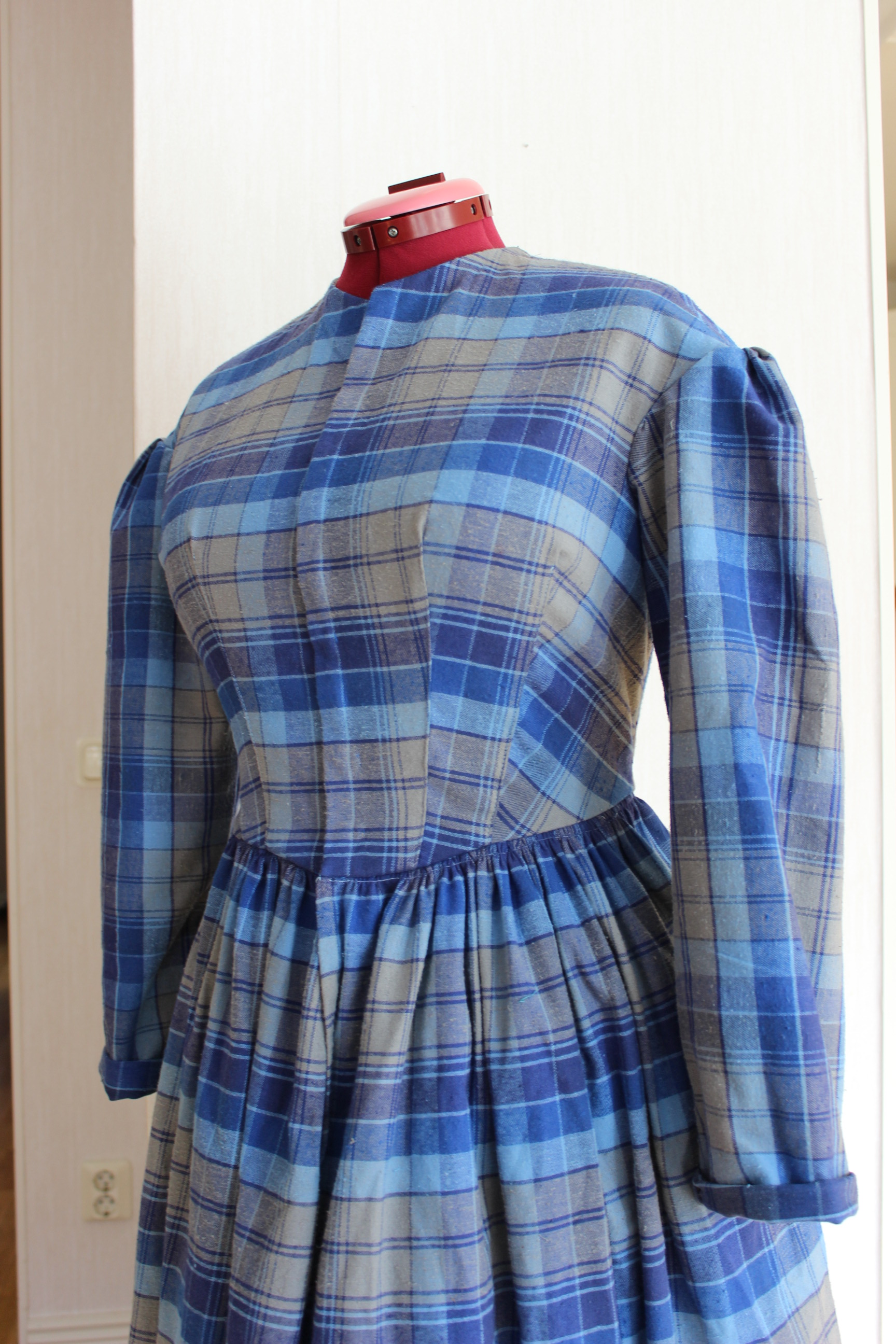
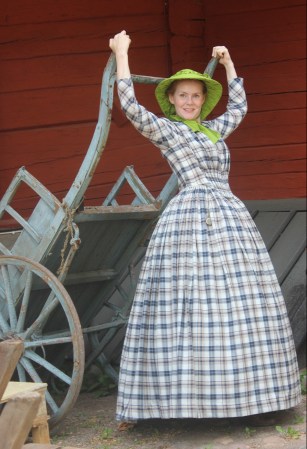
In June I scrambled to finish my 1850s plaid summer dress in time for an event. IMG_7059
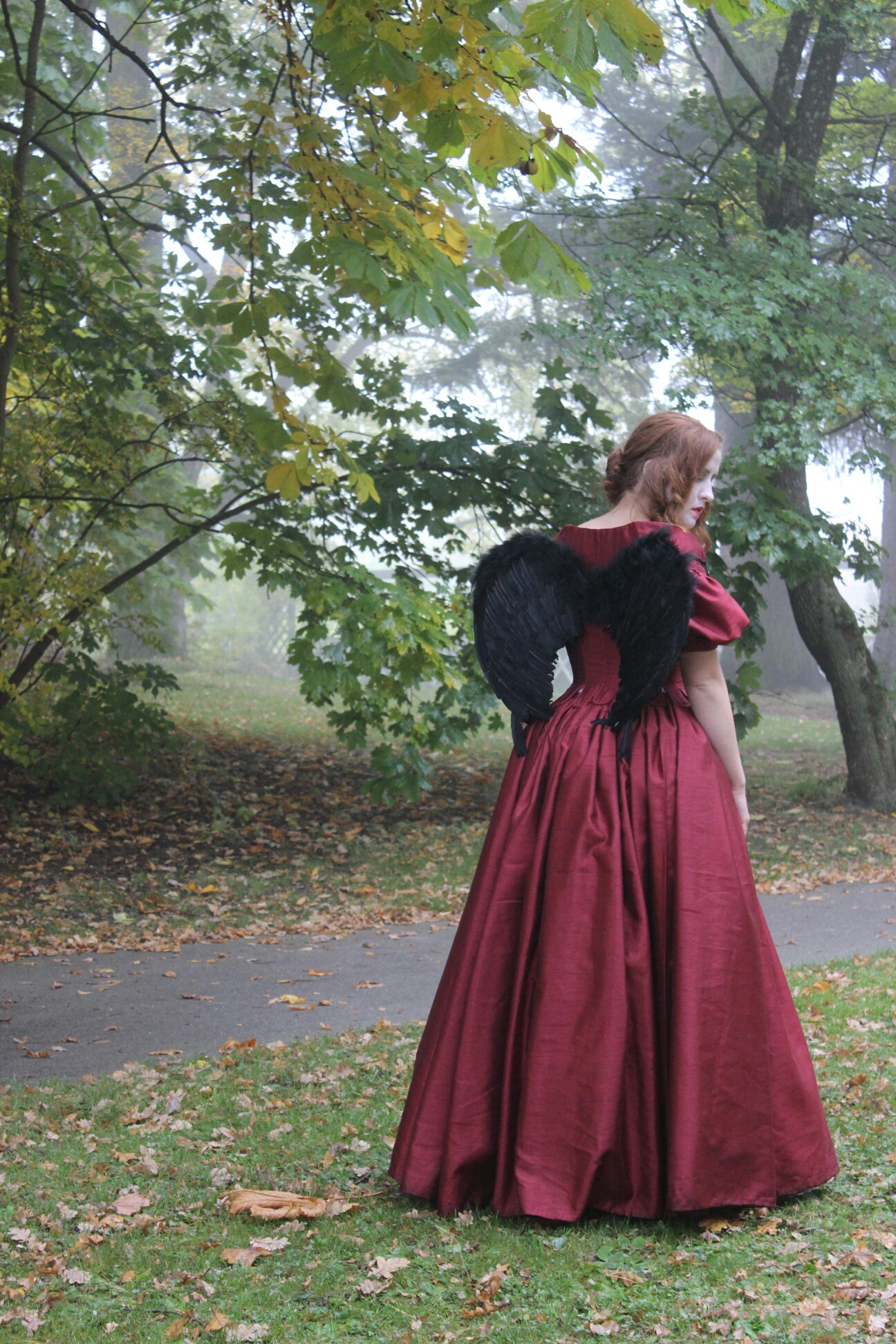
Then I had some fun designing and making a crazy 18th(ish) century masquarde costume.IMG_5079

July:

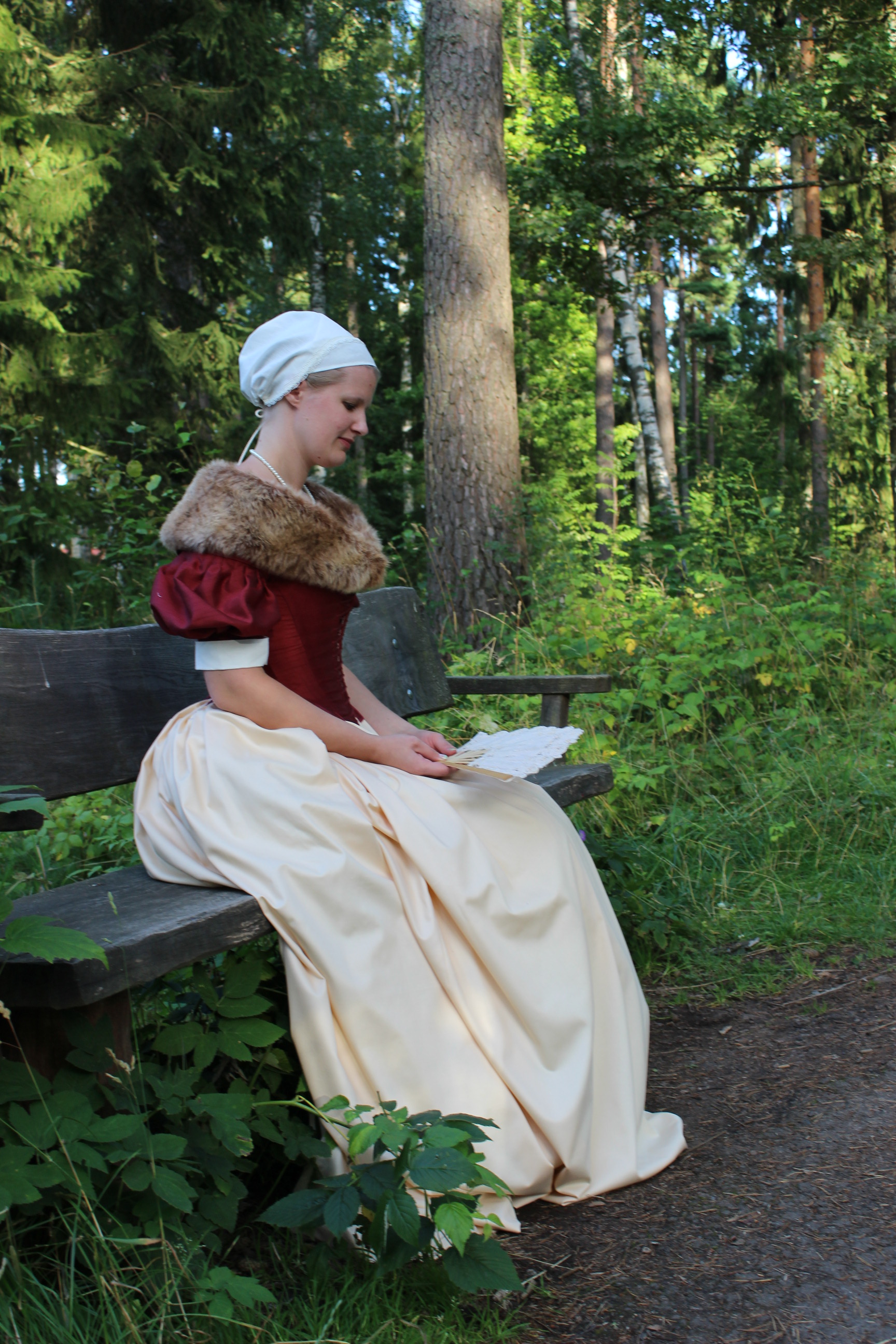
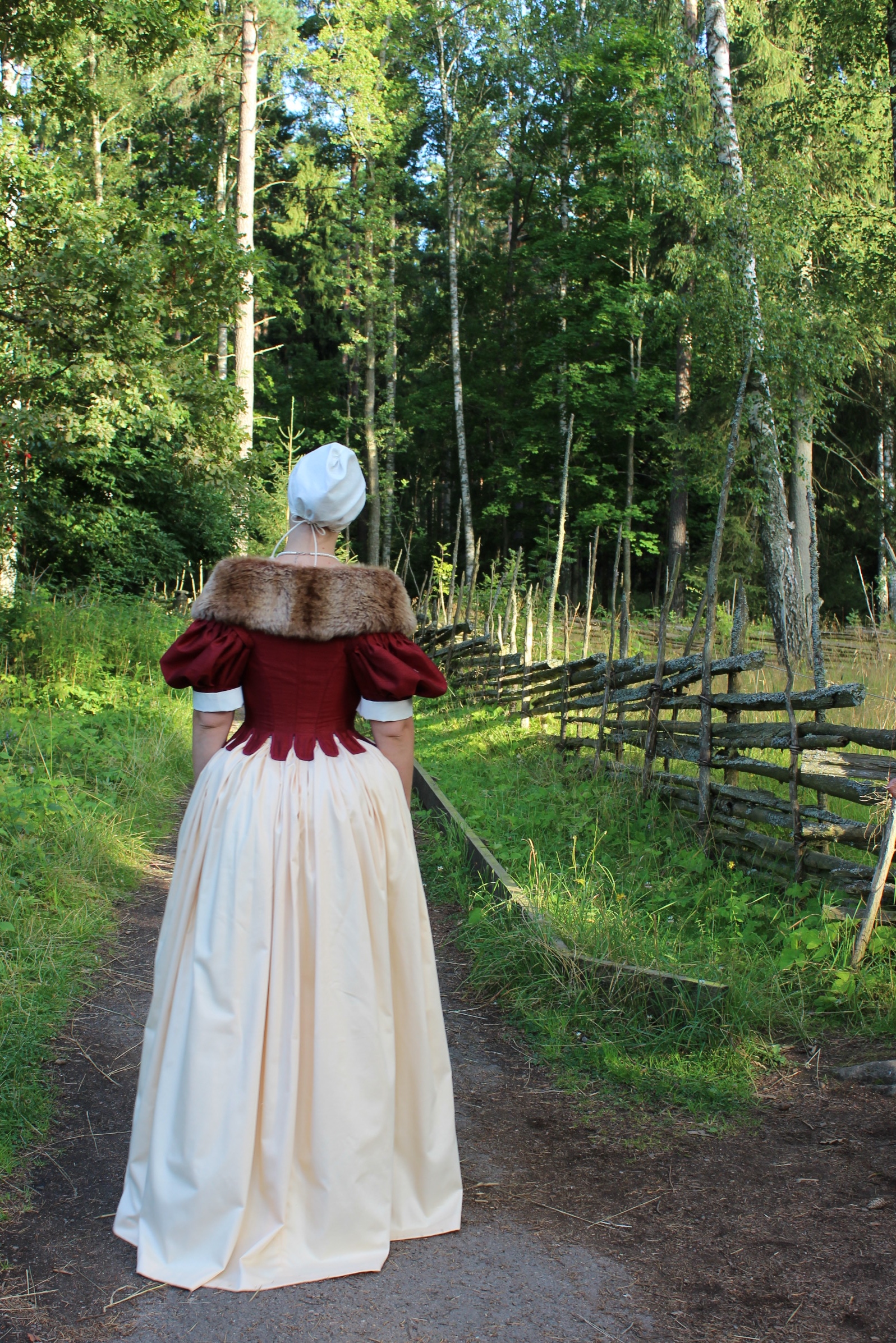
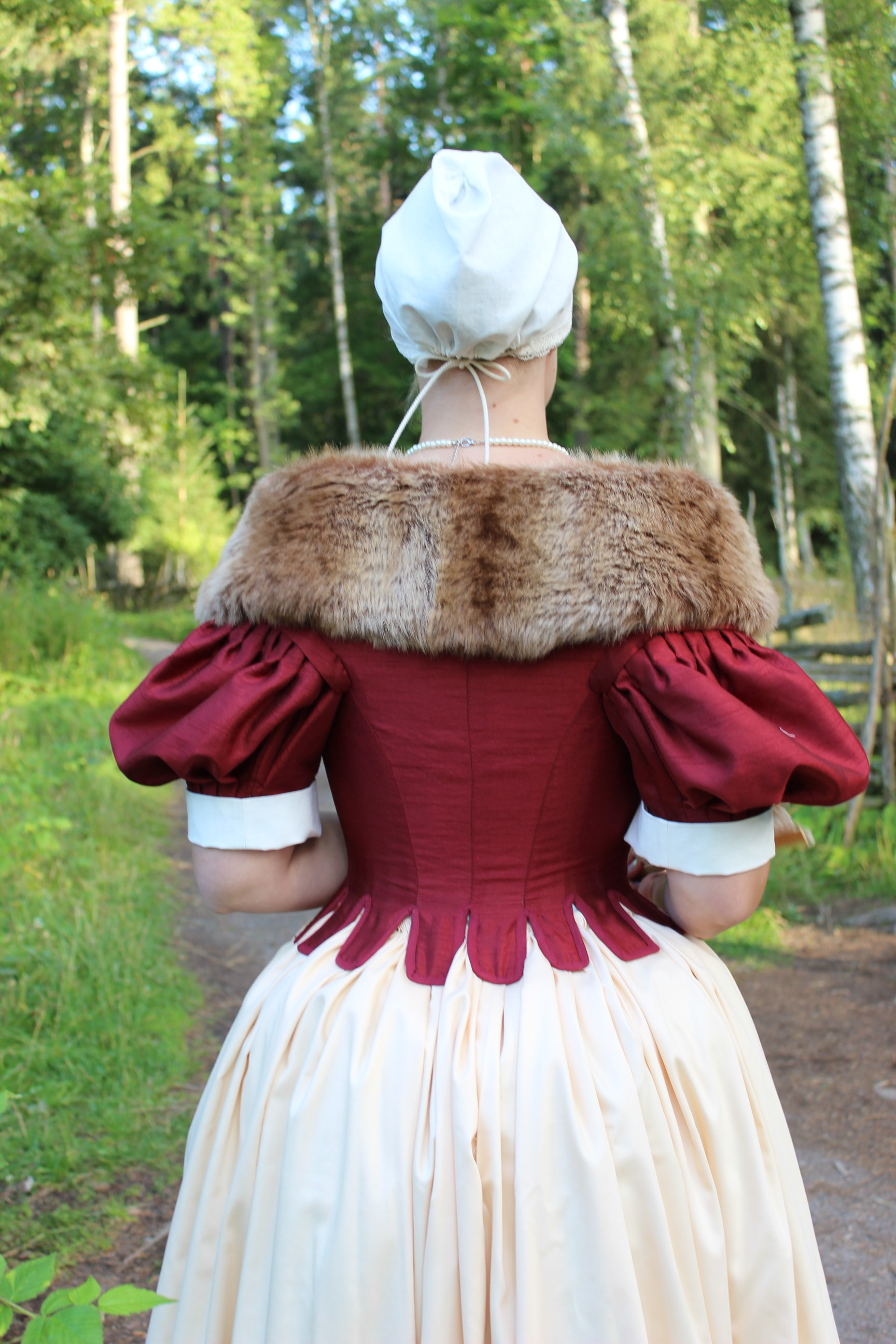
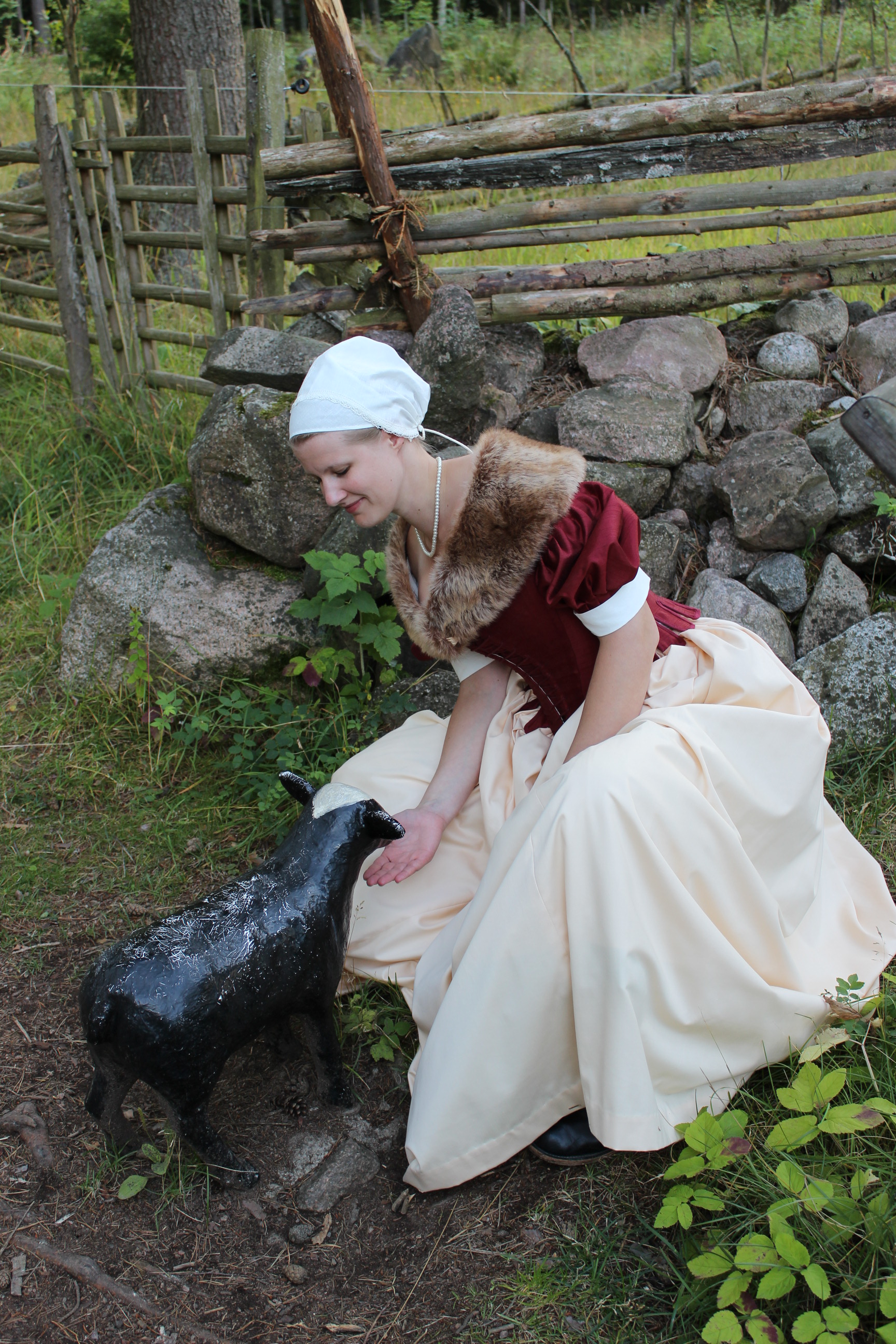
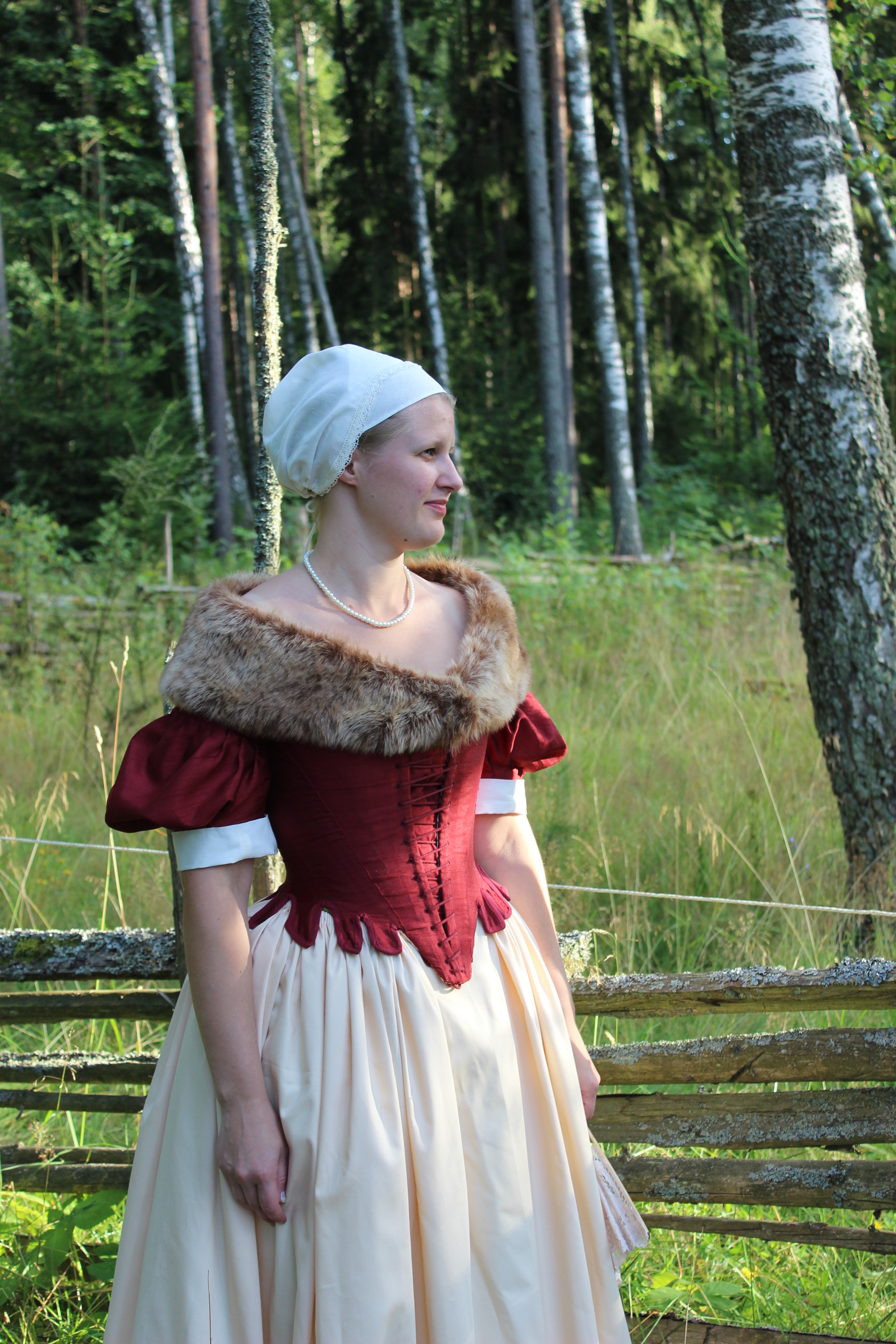
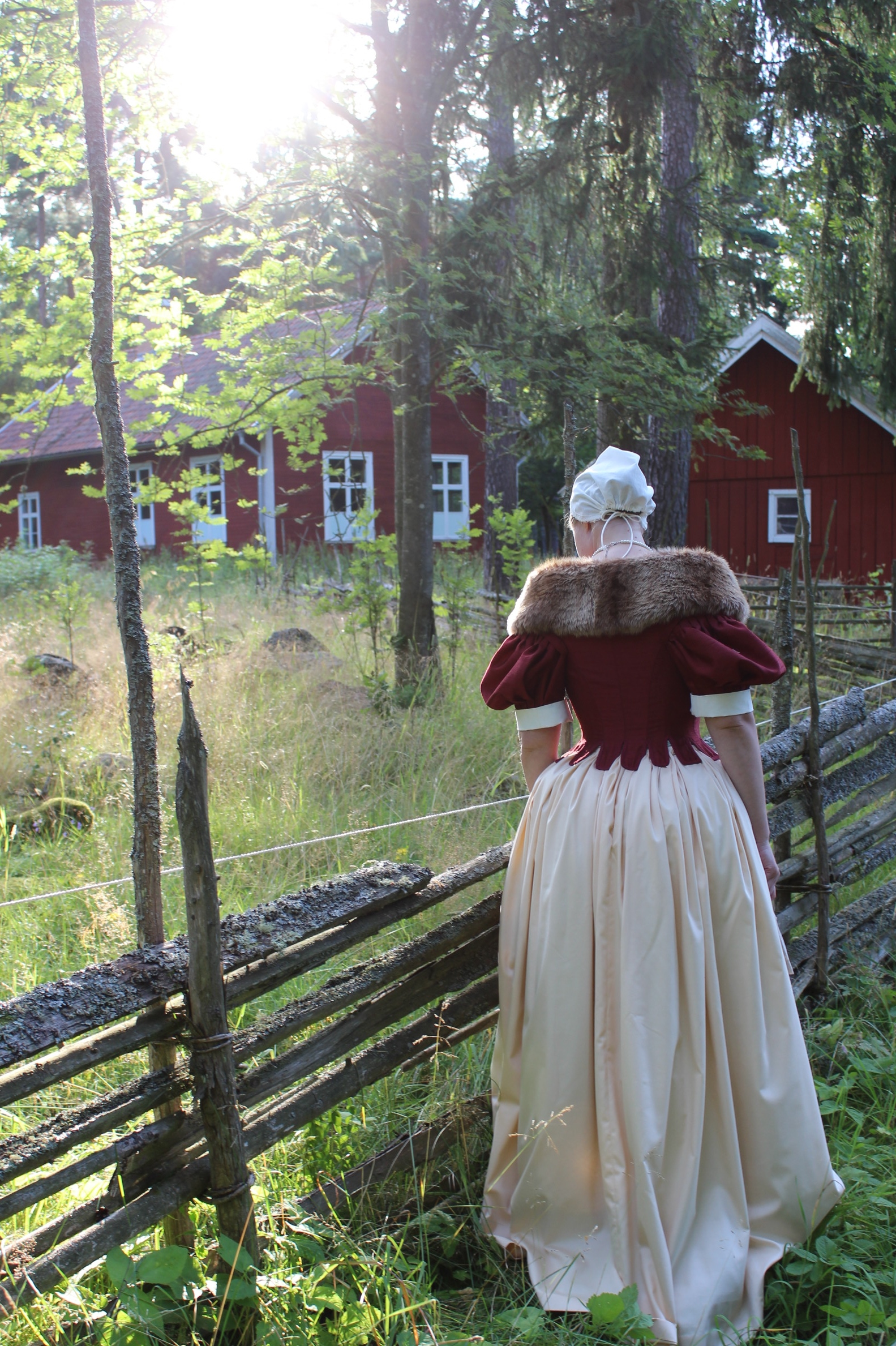
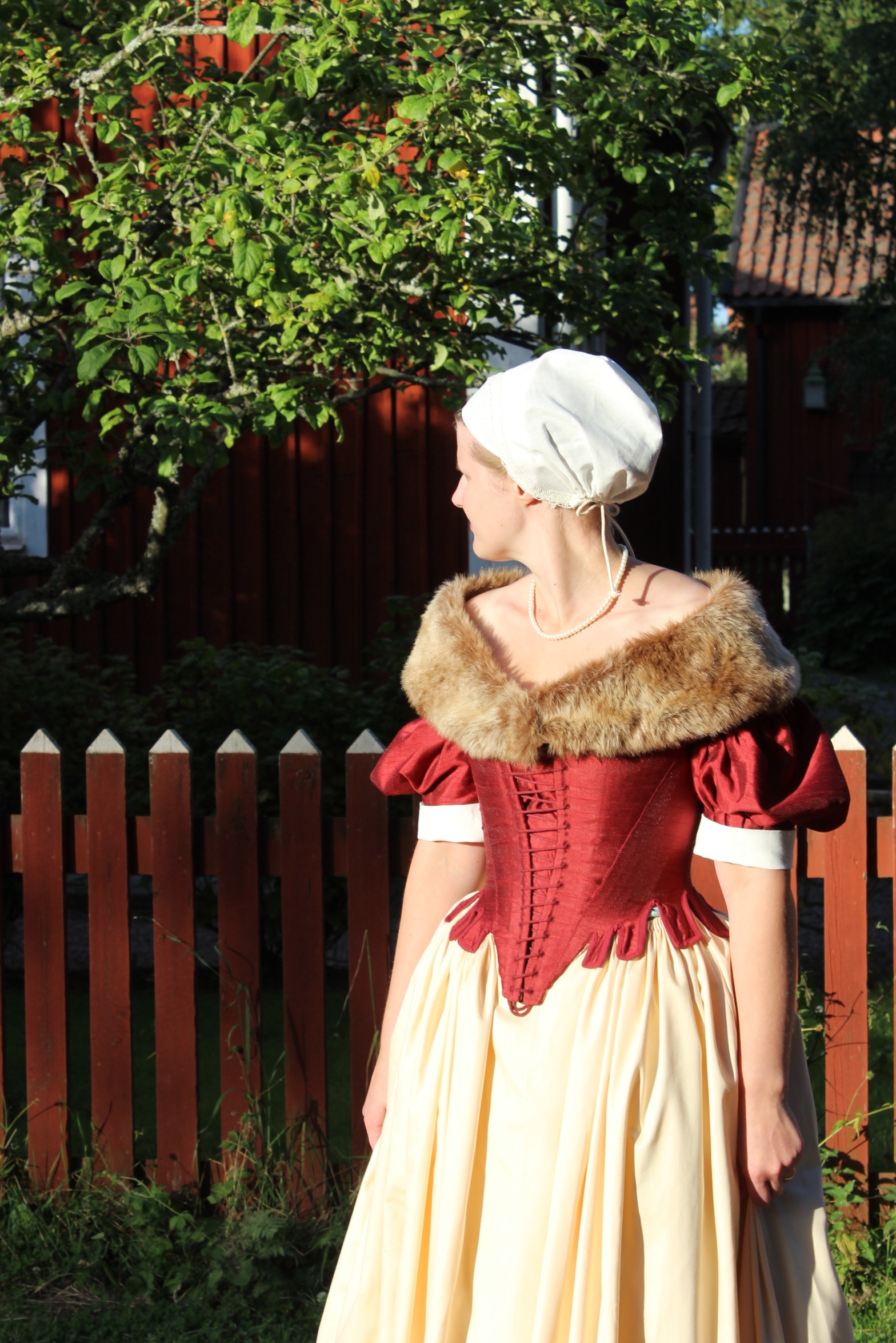
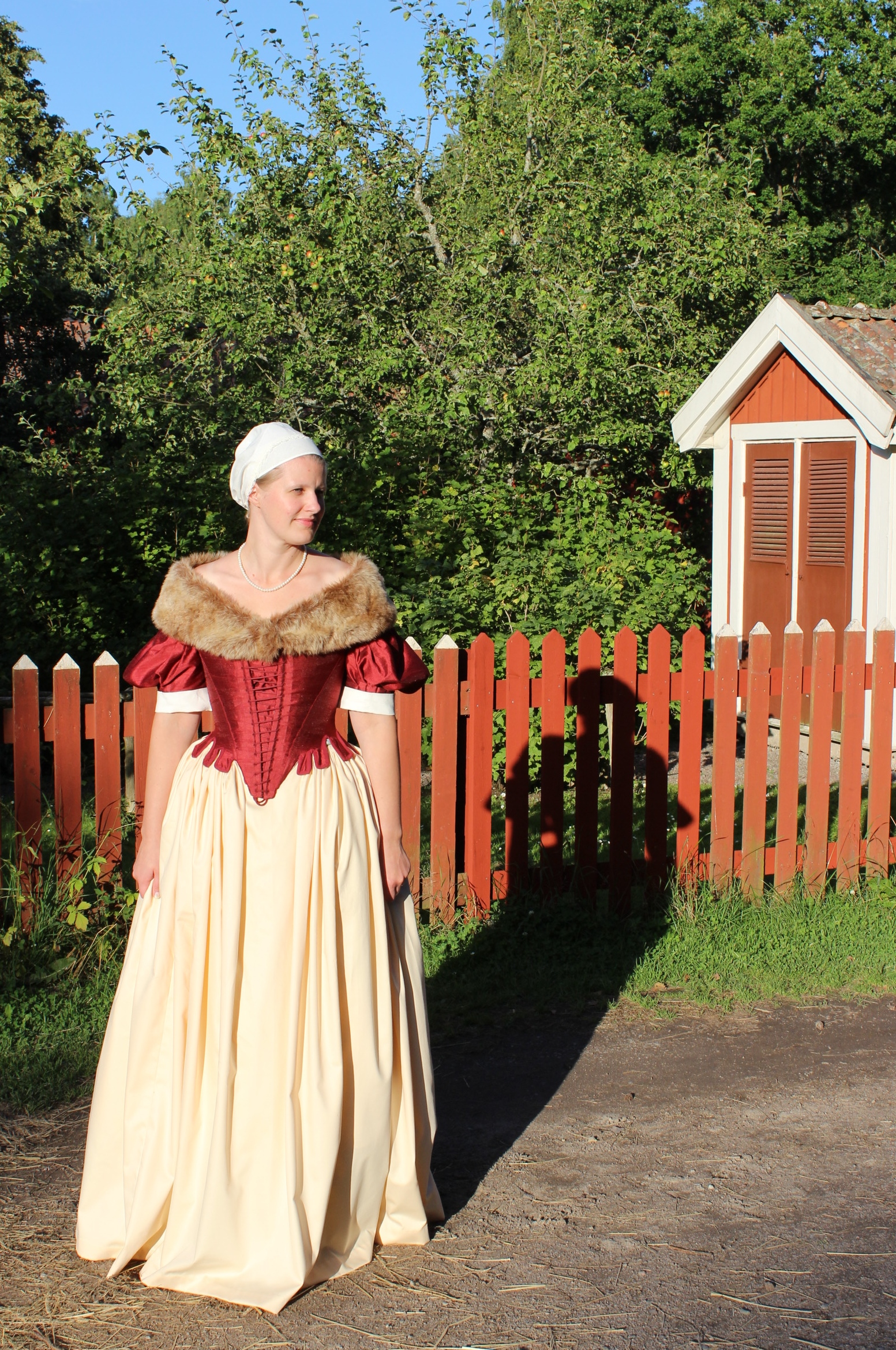
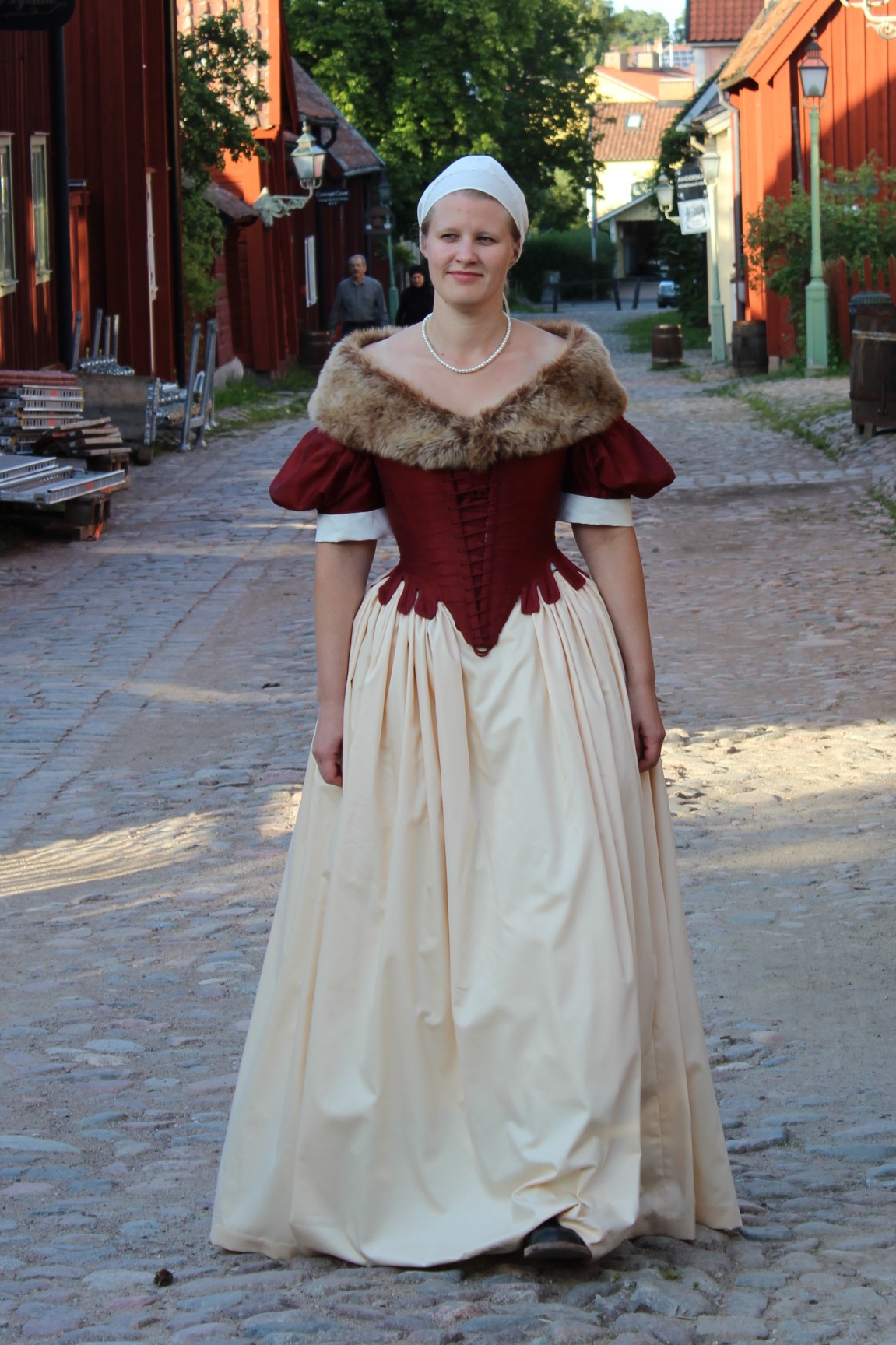
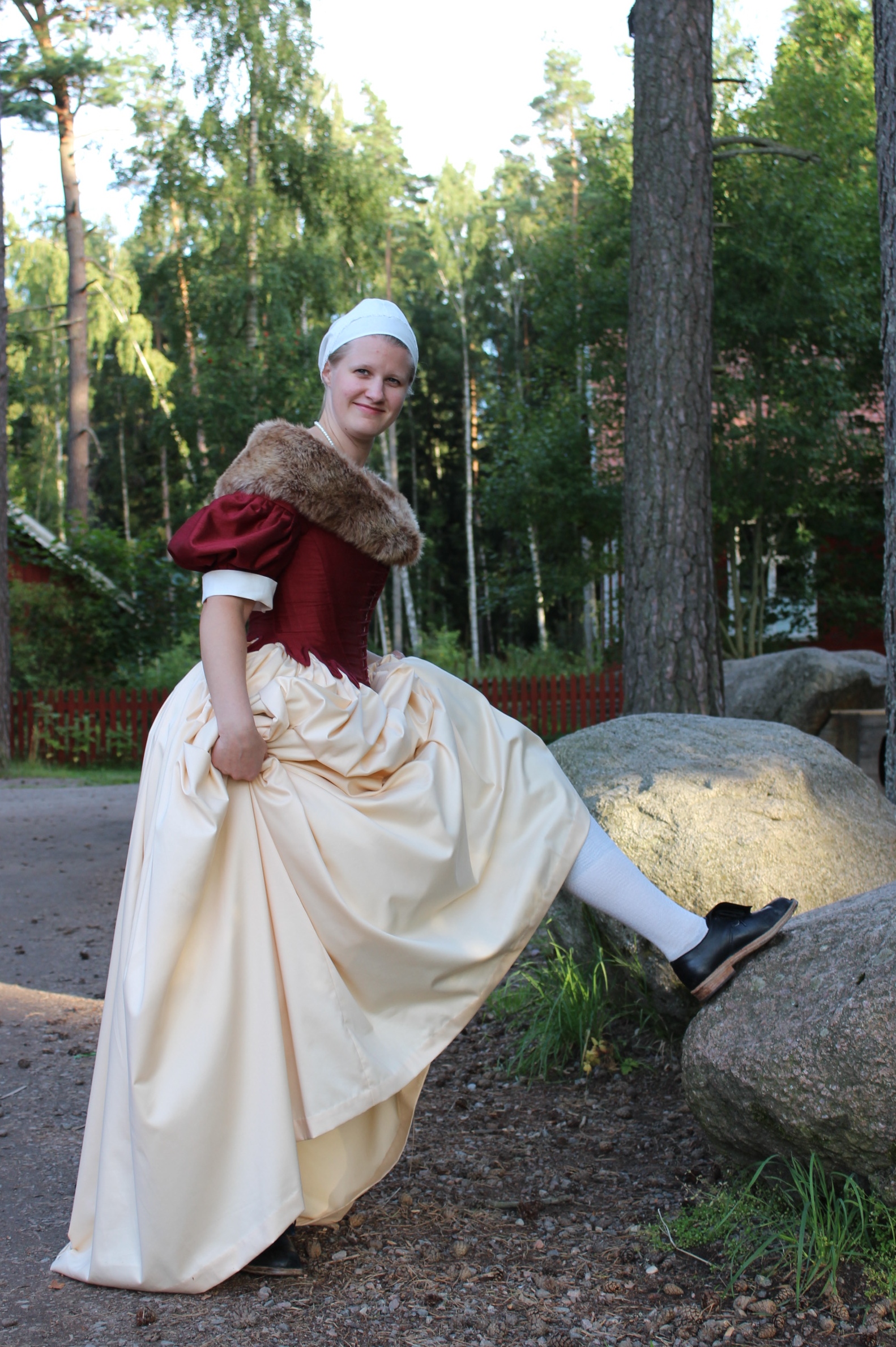
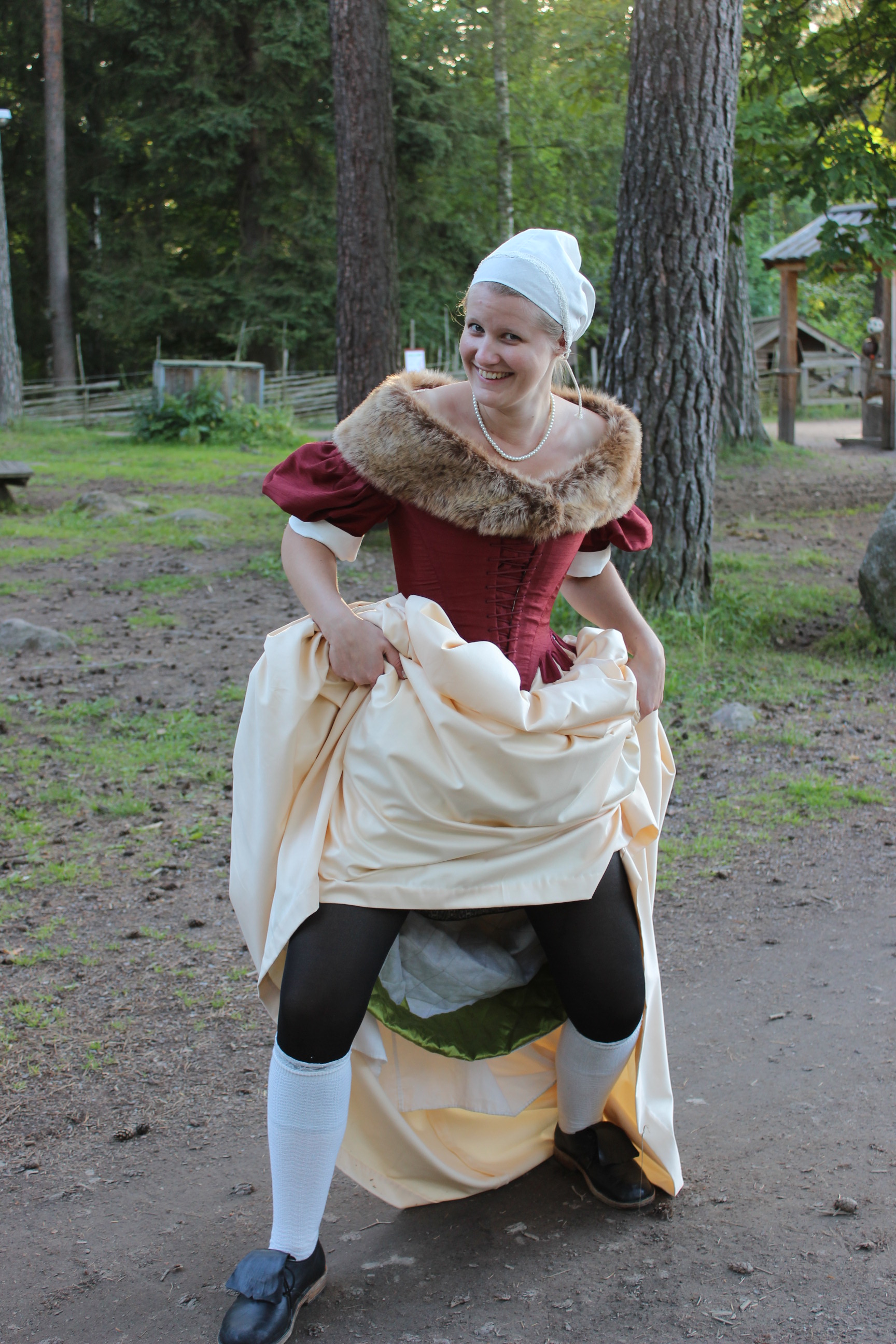
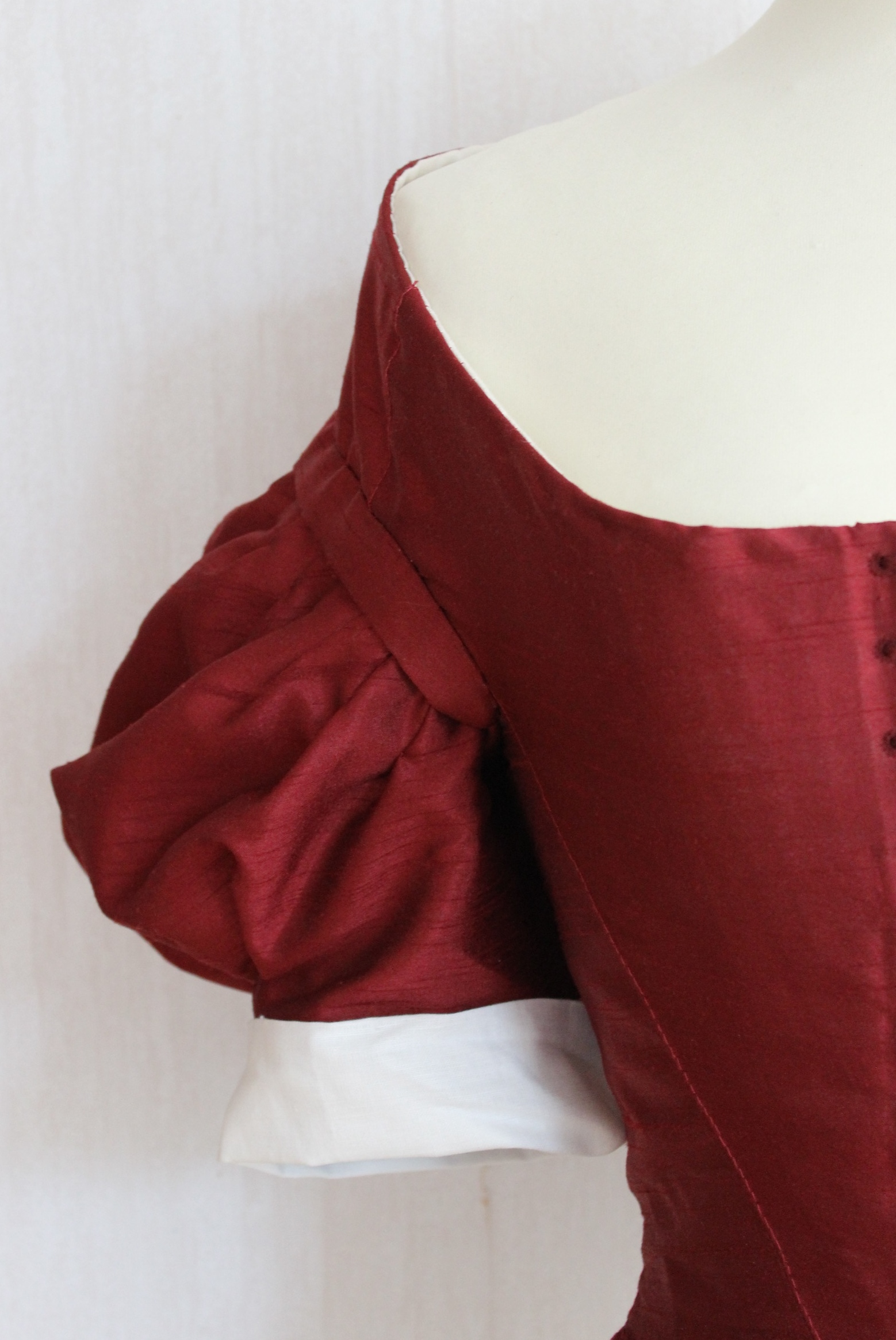
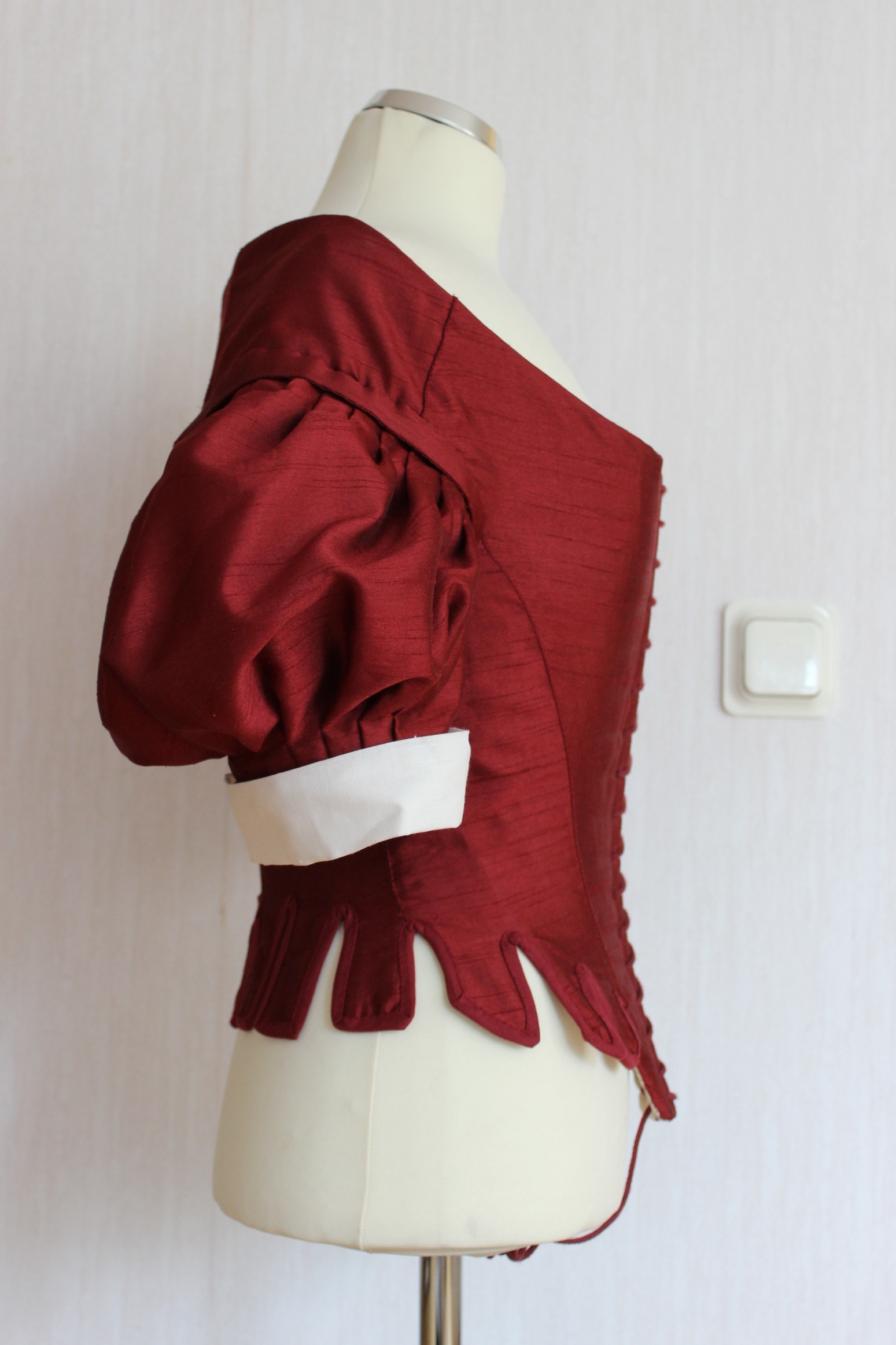
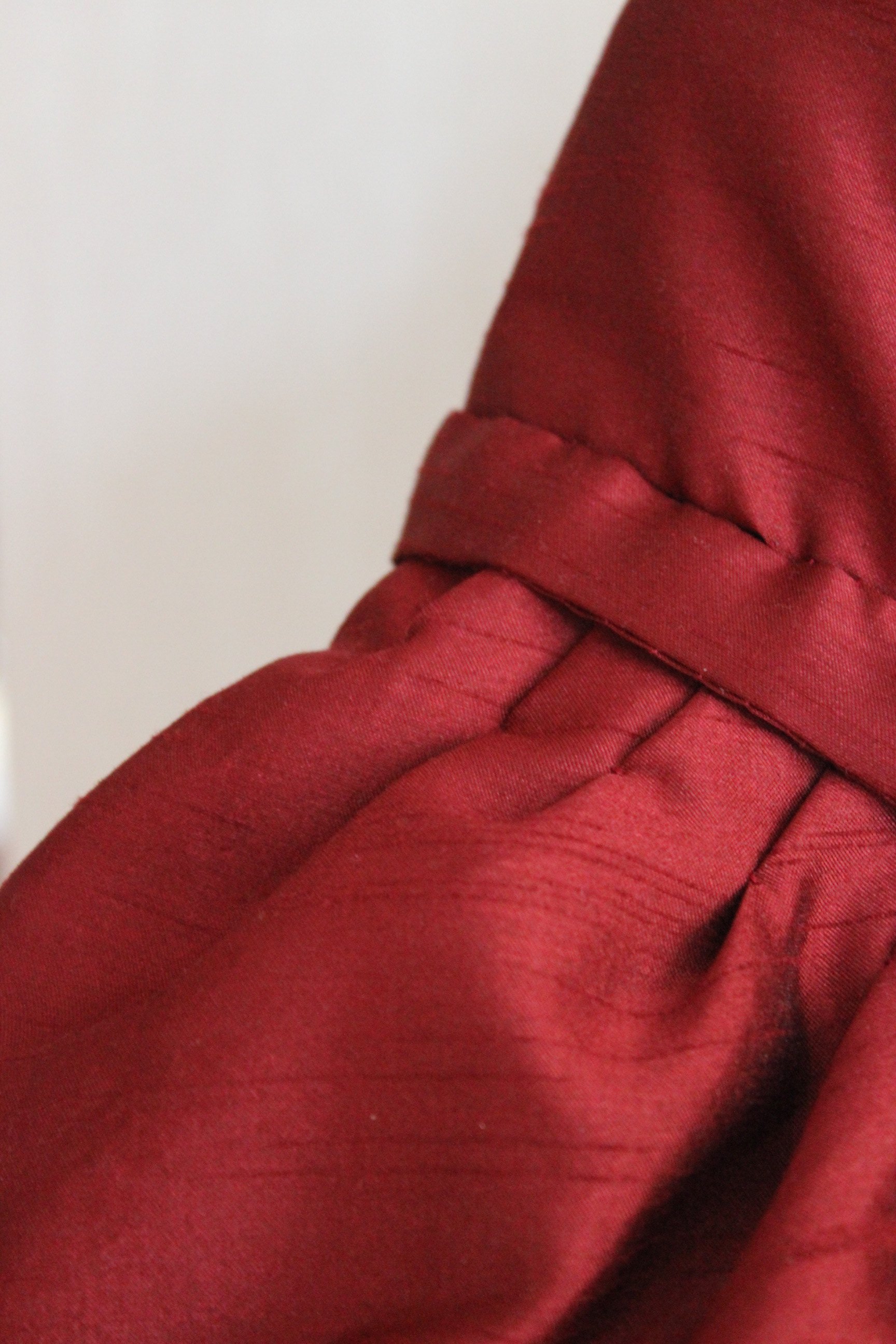
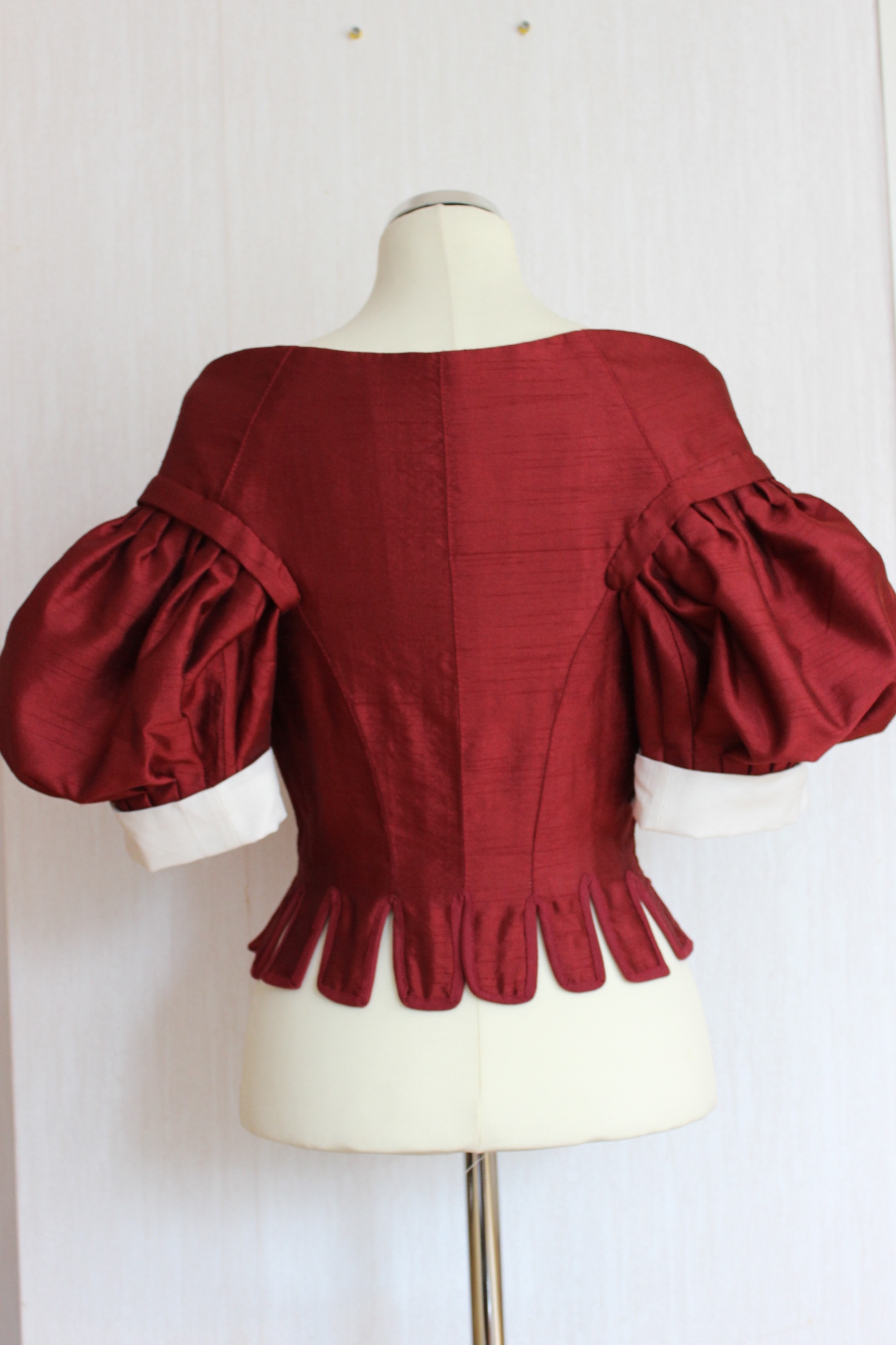
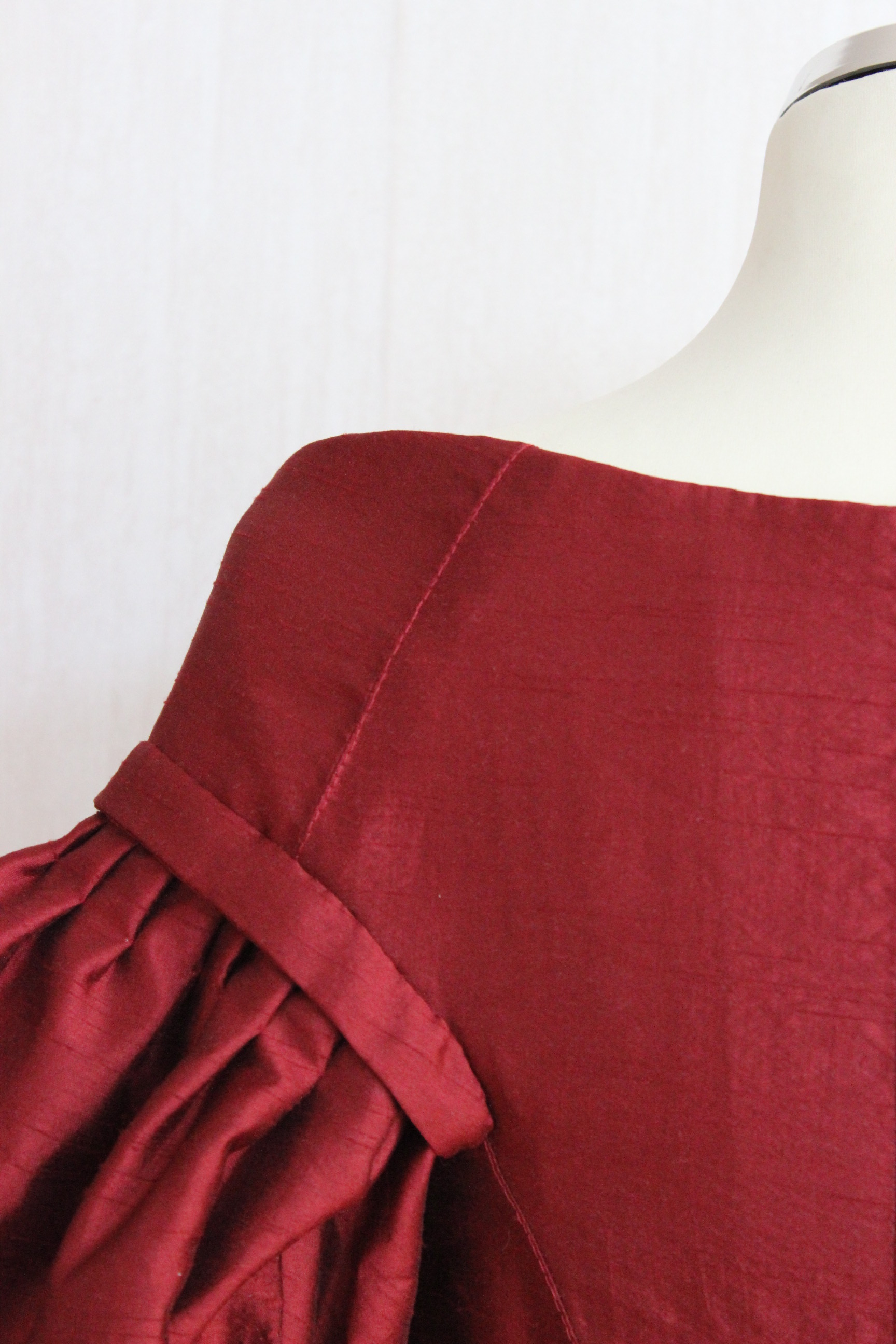
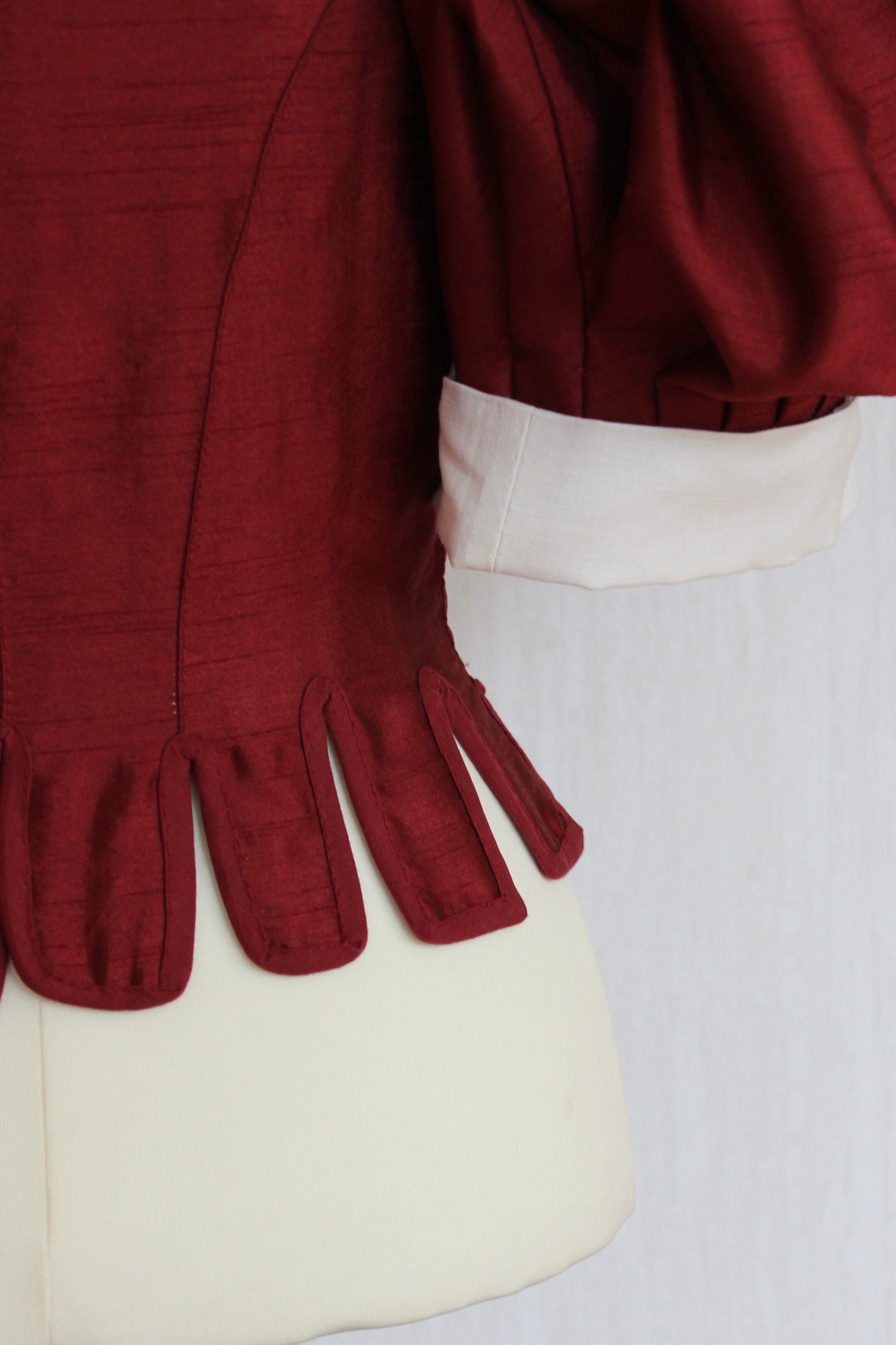
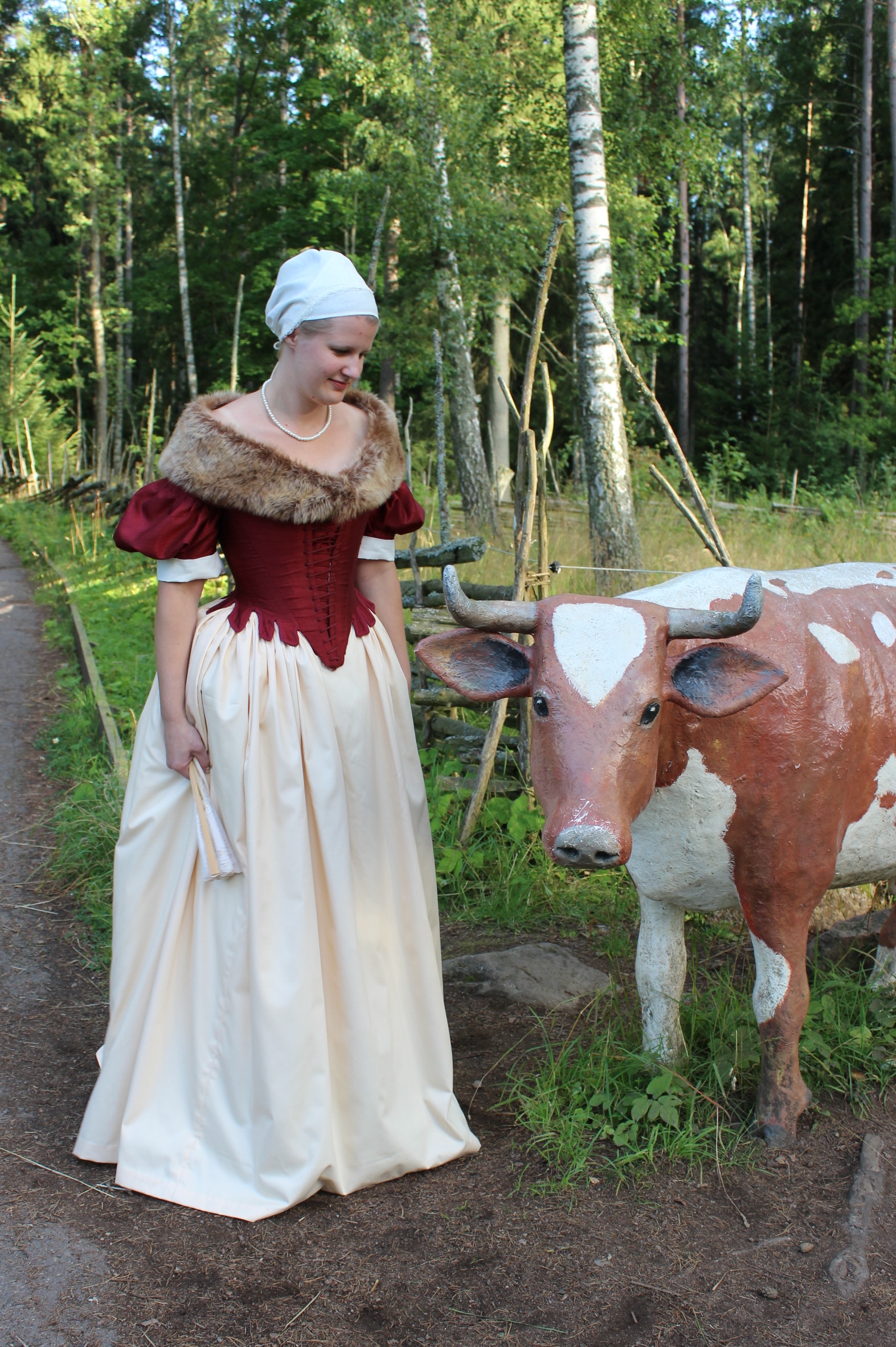
Almost all of July was spent on making this 17th century bodice (and skirt and accessories) for Isis wardrobes “Sew 17th century challenge”IMG_8019
August:

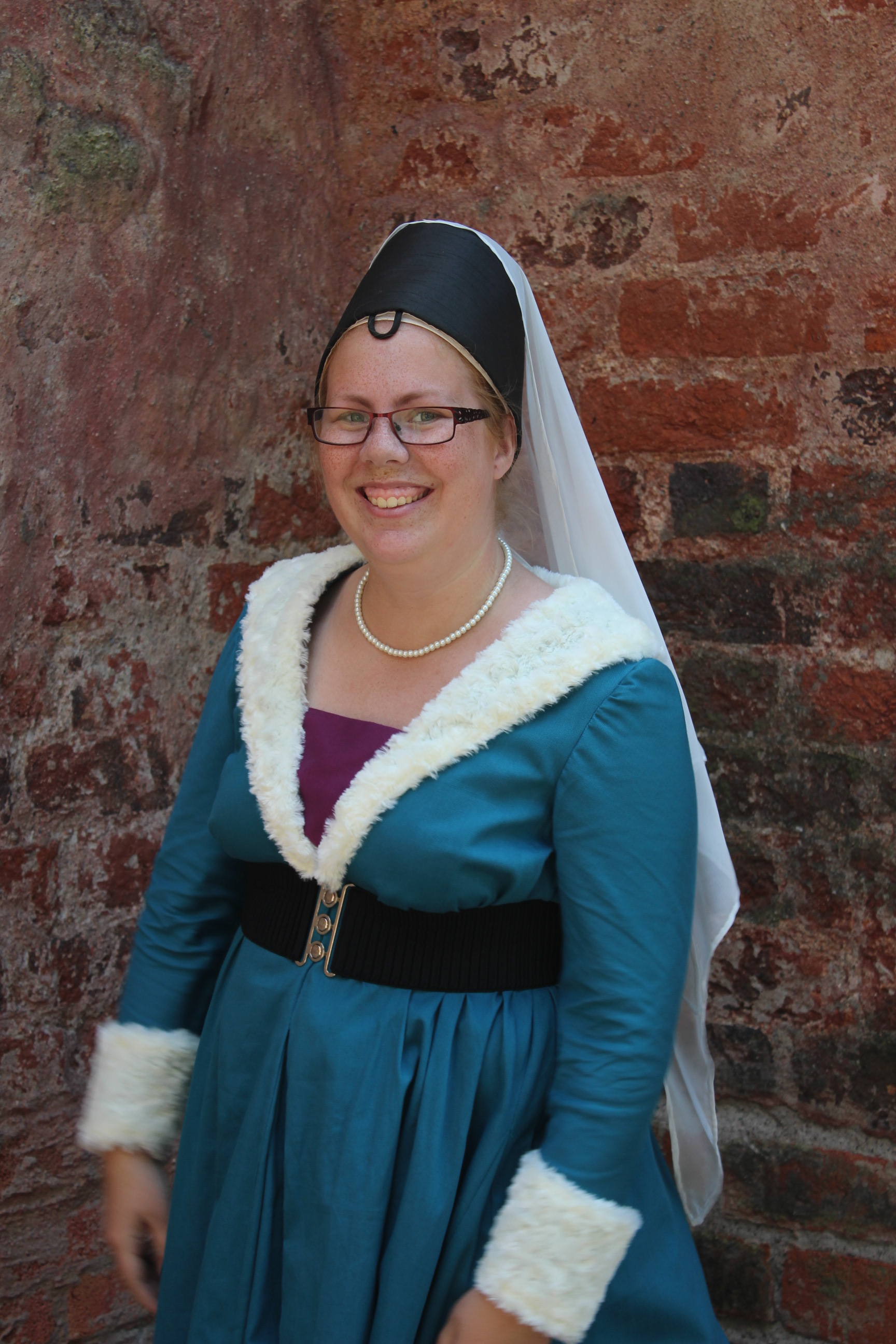
August is medieval month in our part of town so I made an 15th century Burgundian dress for my sisterIMG_8363
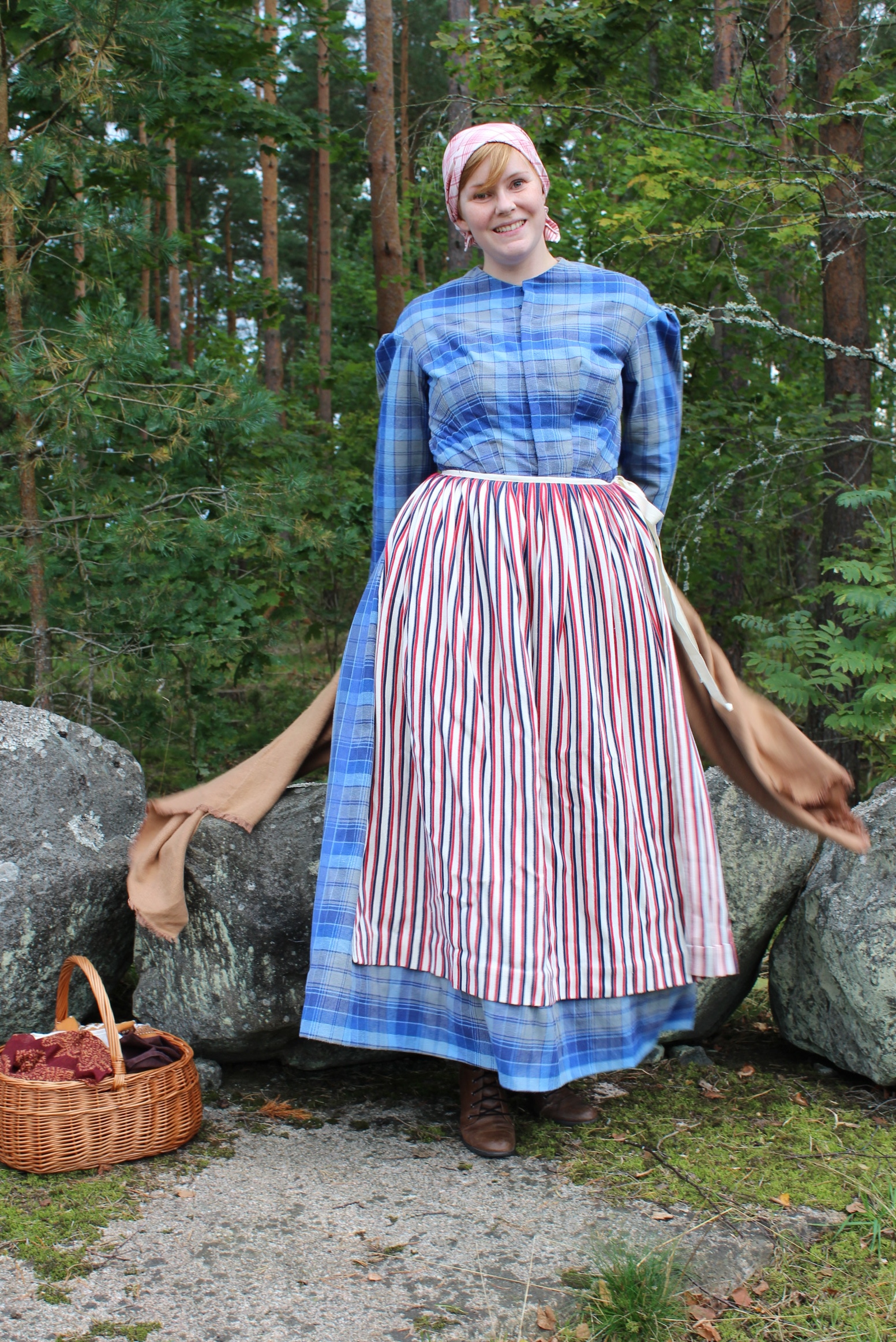
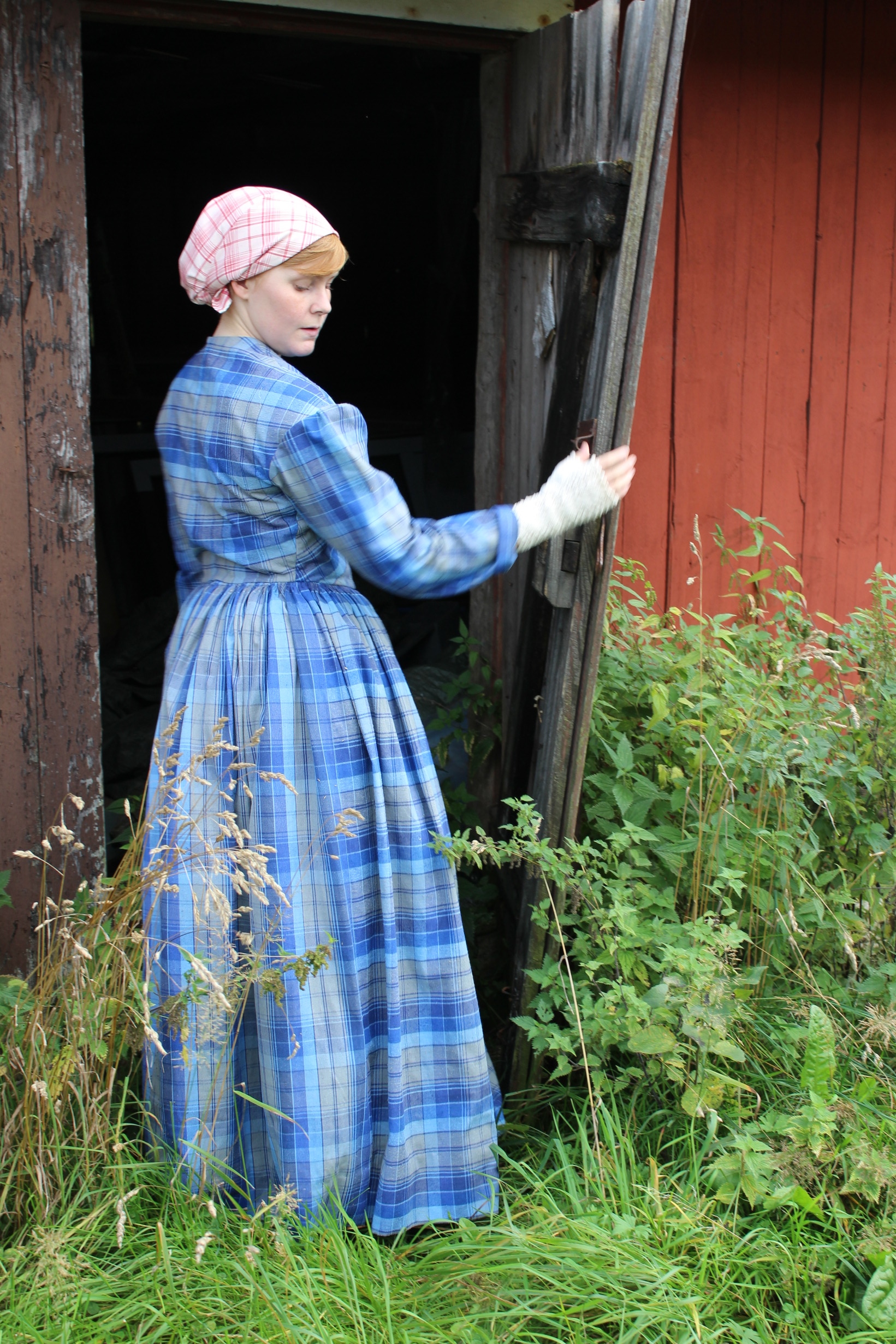
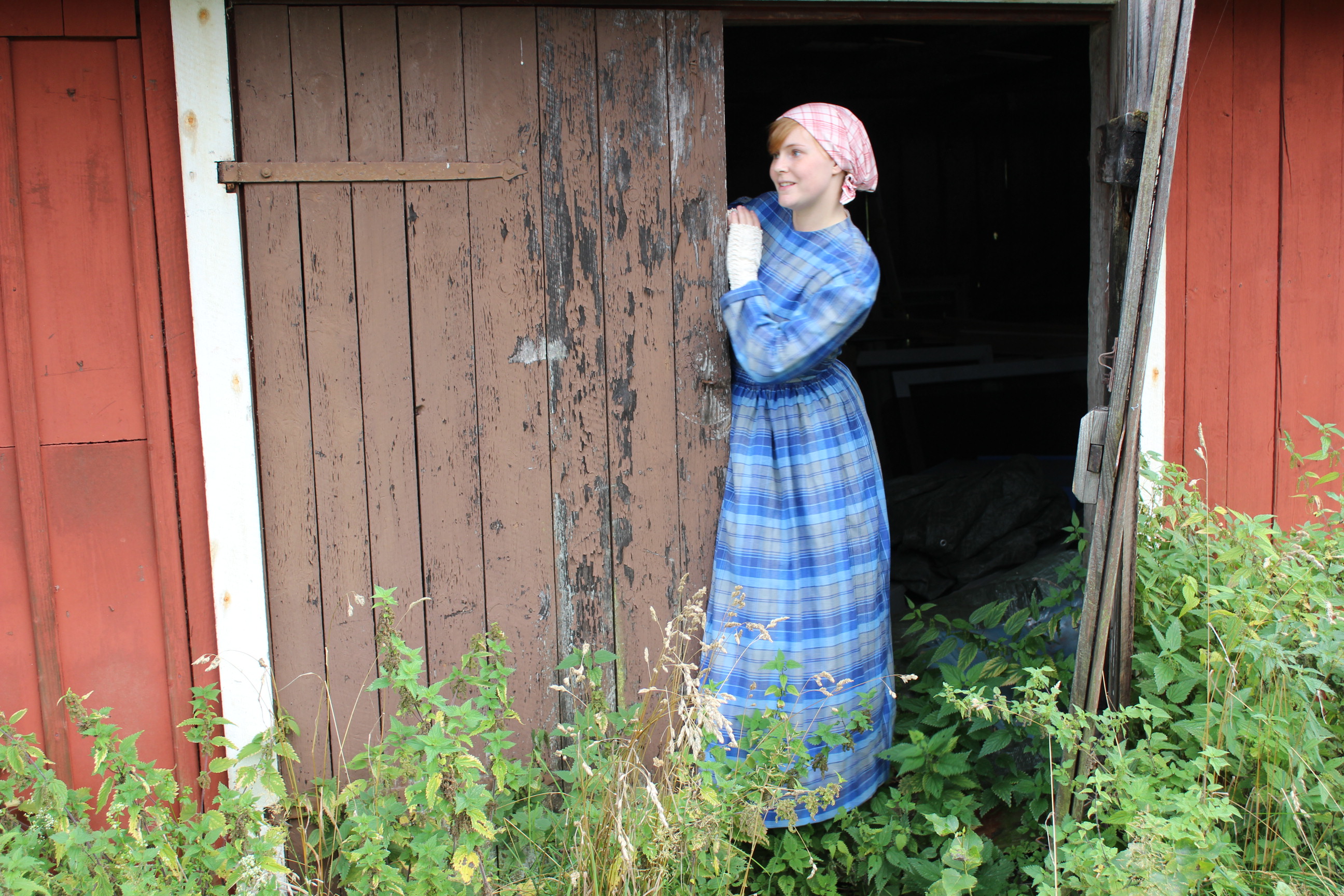
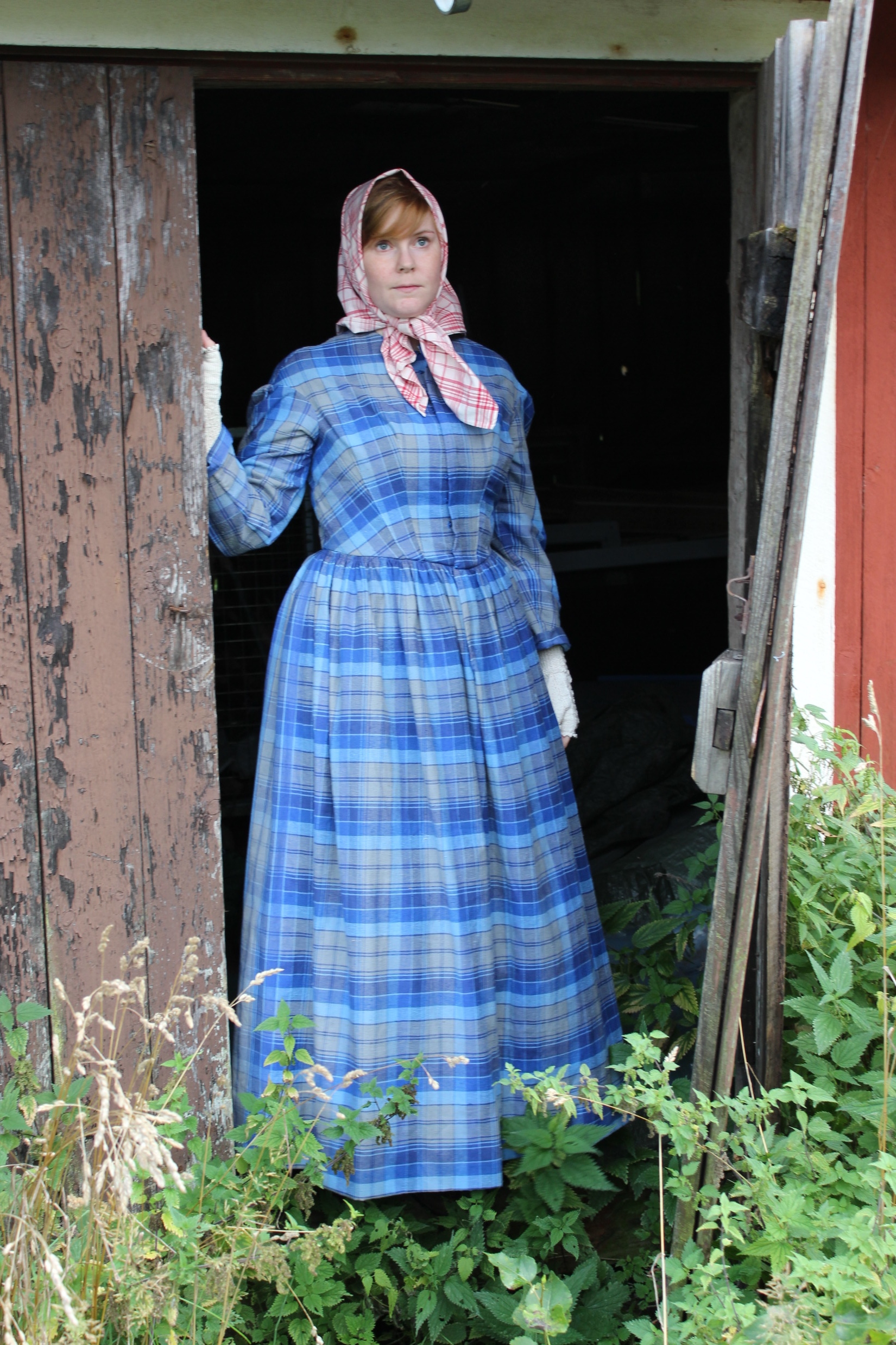
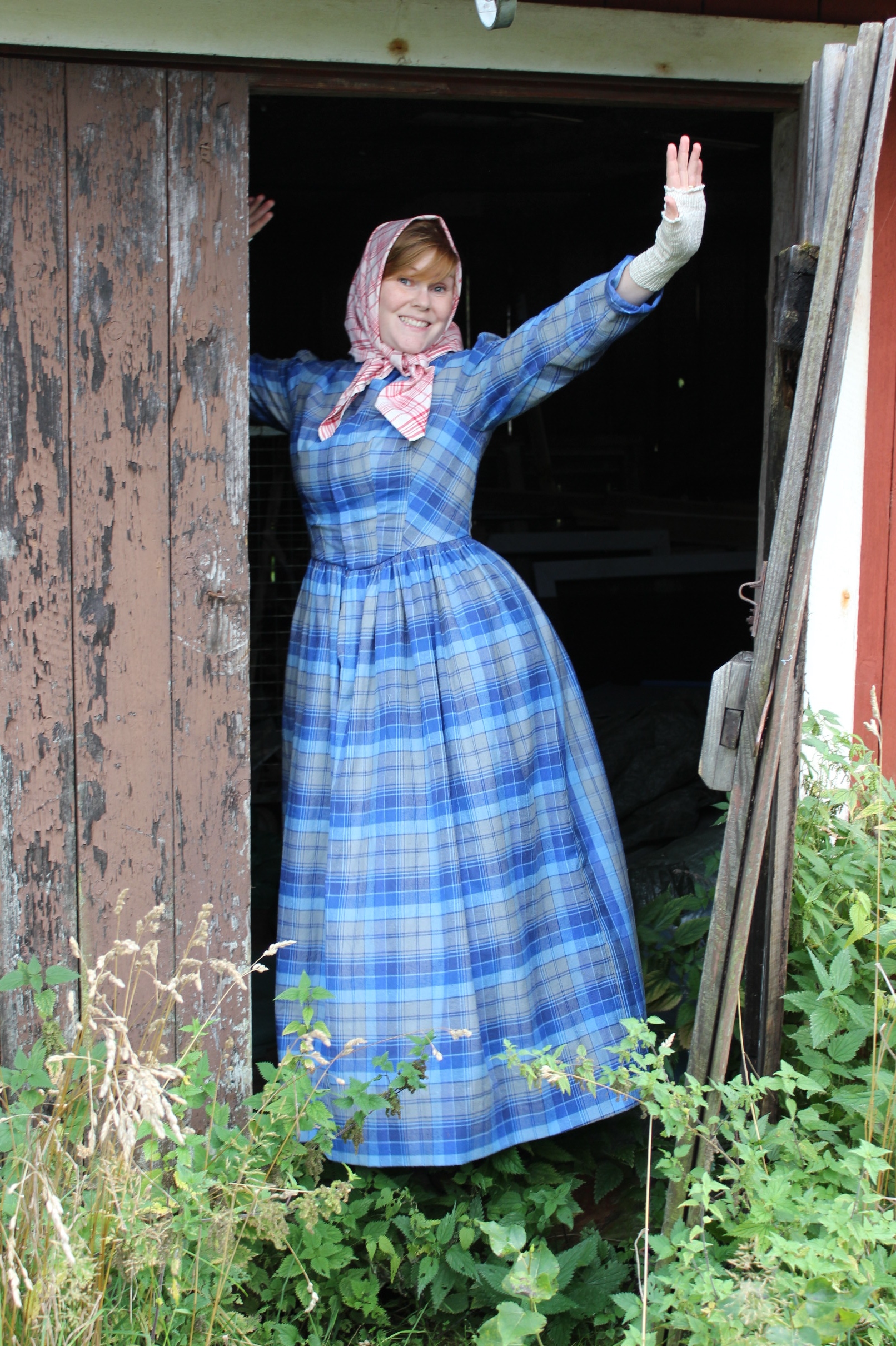
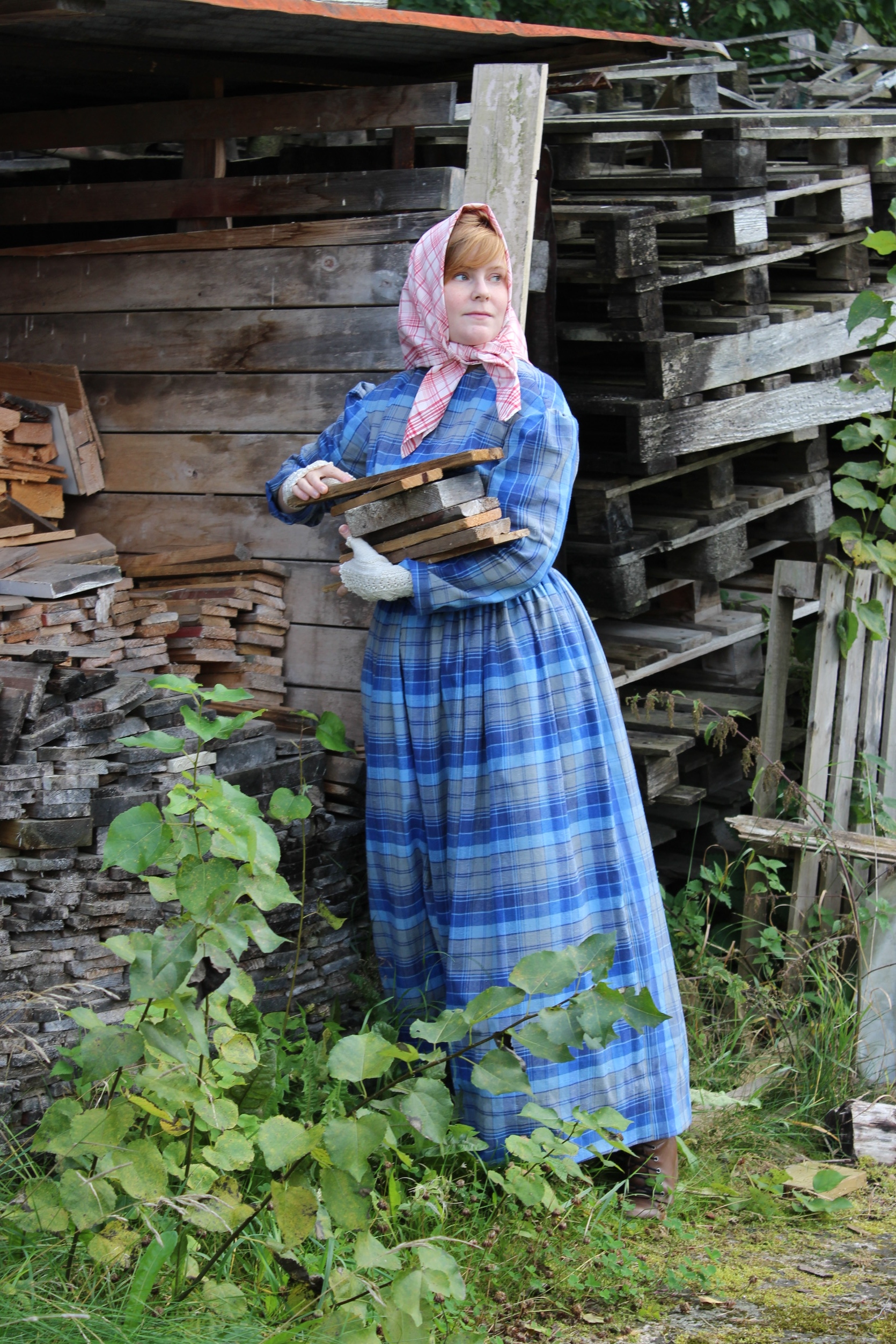
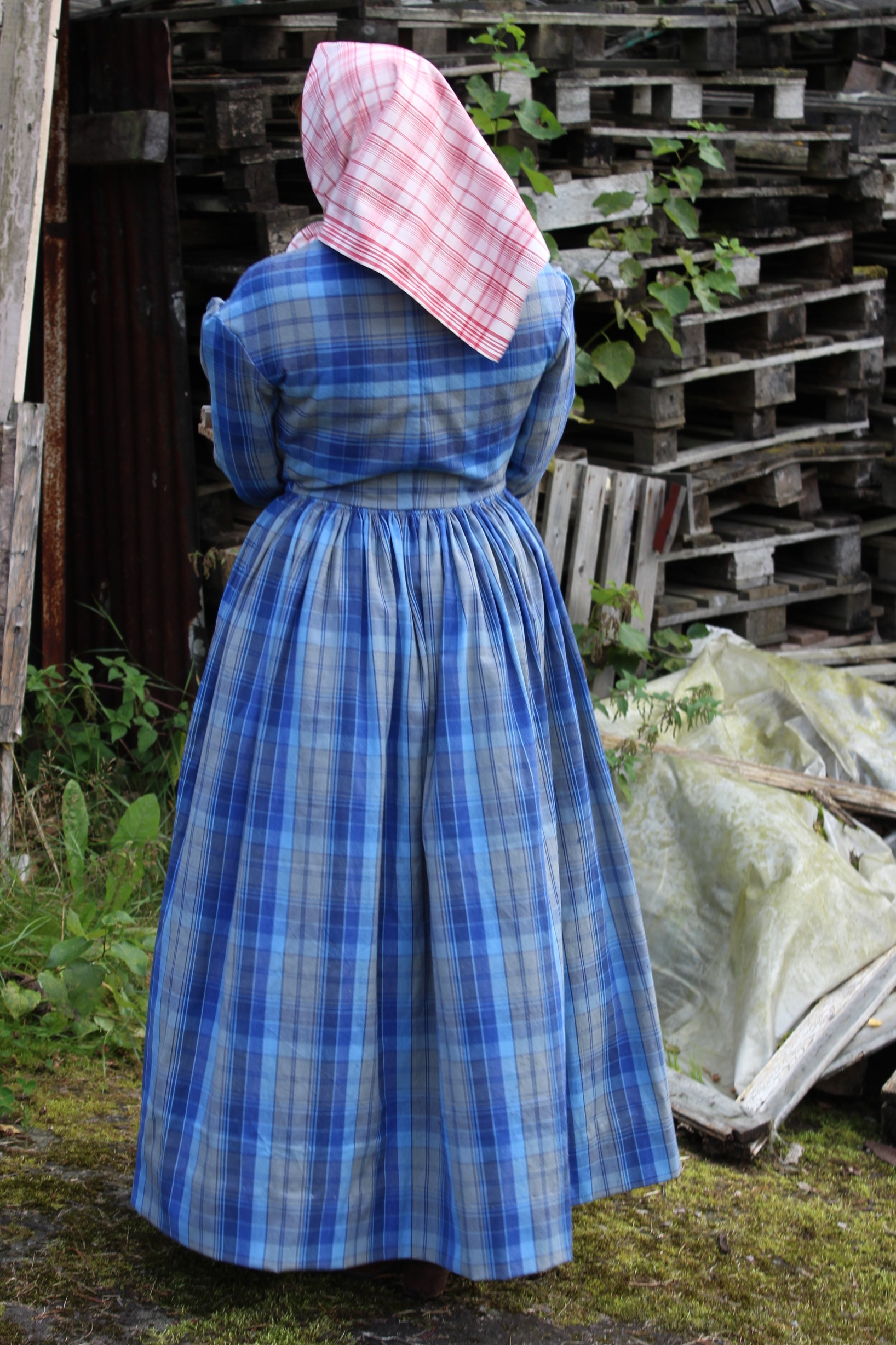
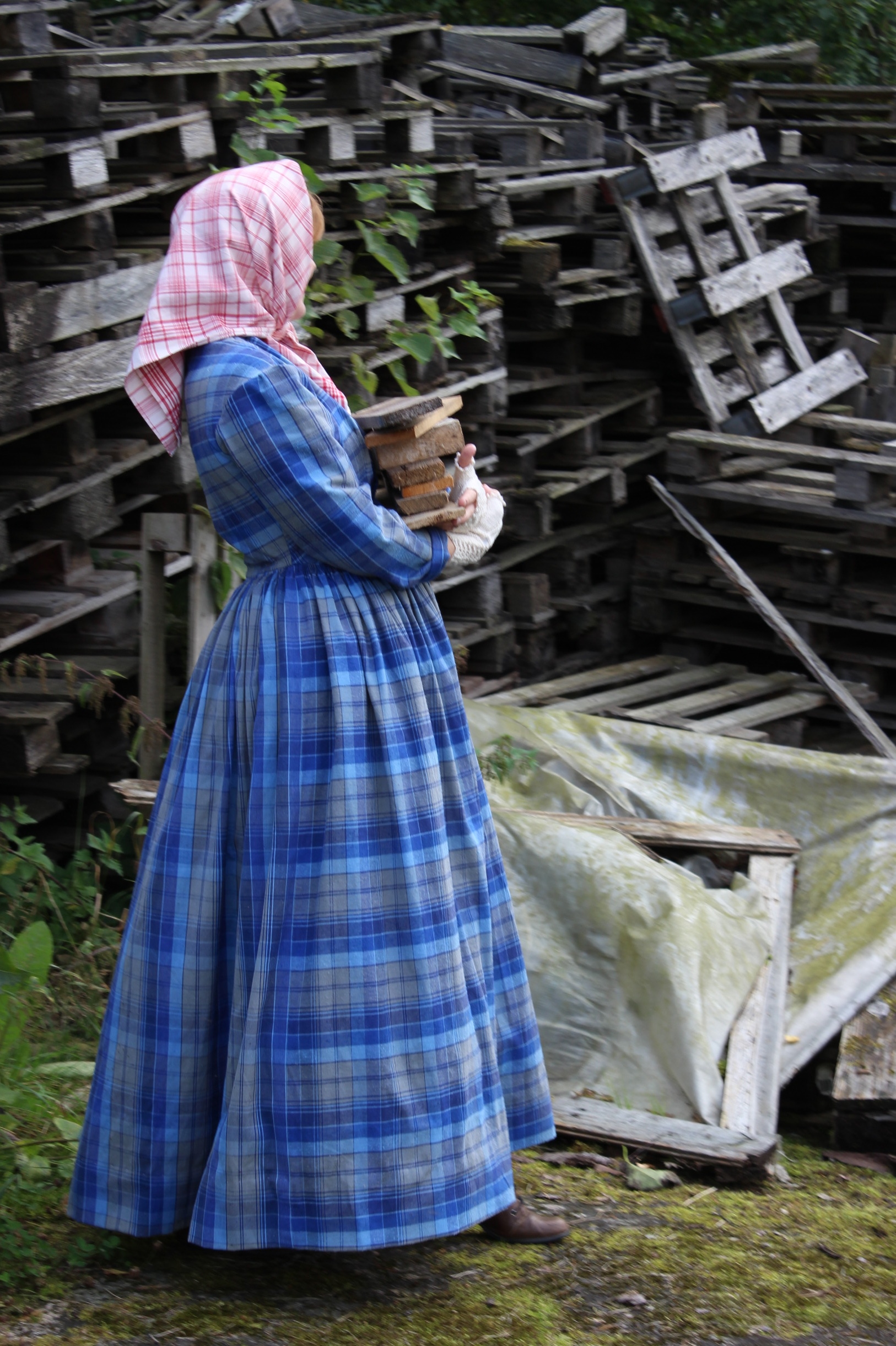
And used an old thrift store find to complete the -Heirlome challenge with a 1850s farmers dress.IMG_8518
September:

September, with its magical colors and a drawing to the forest, made me want to make an “Outlander” inspired outfitIMG_8724
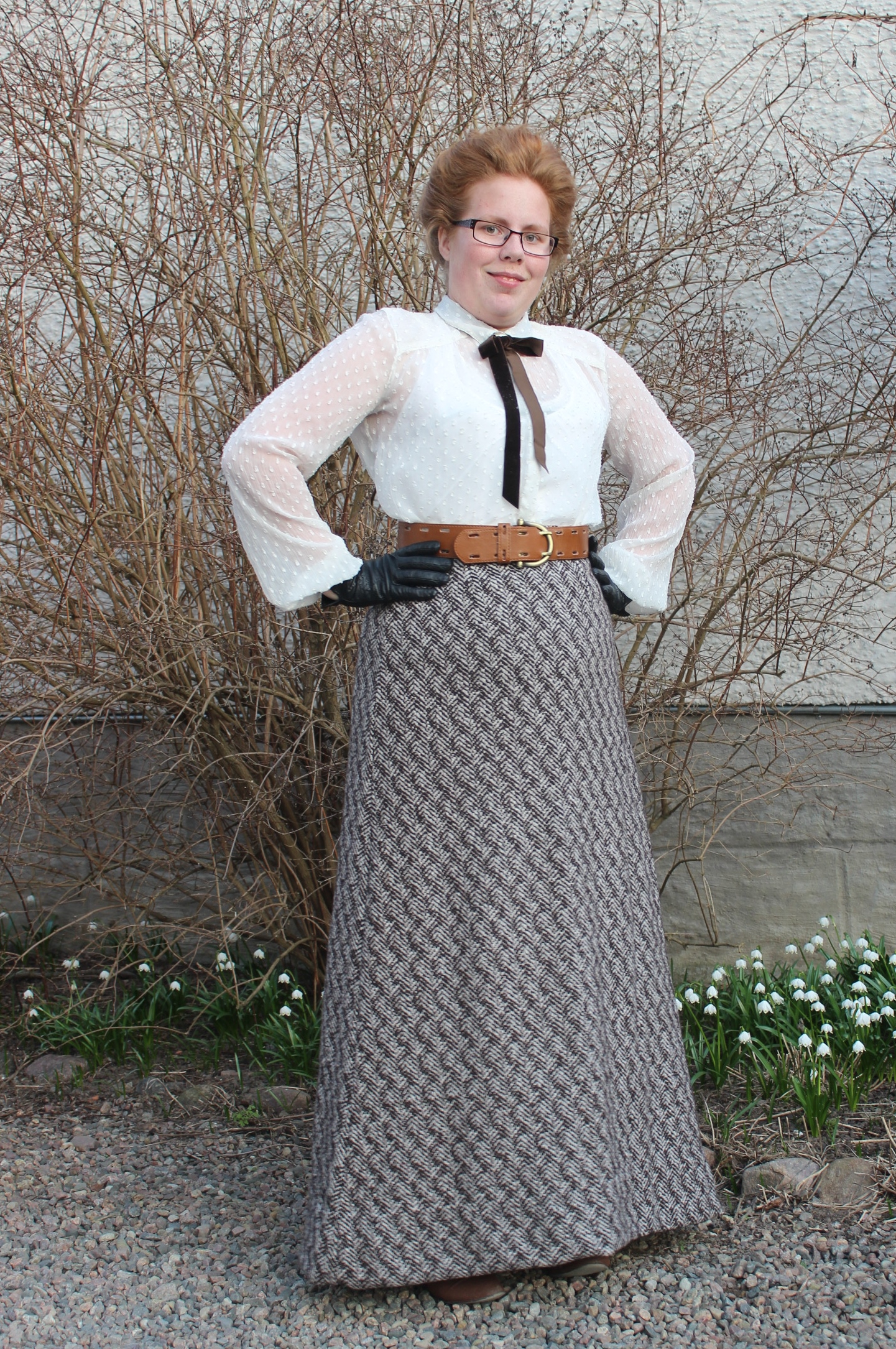
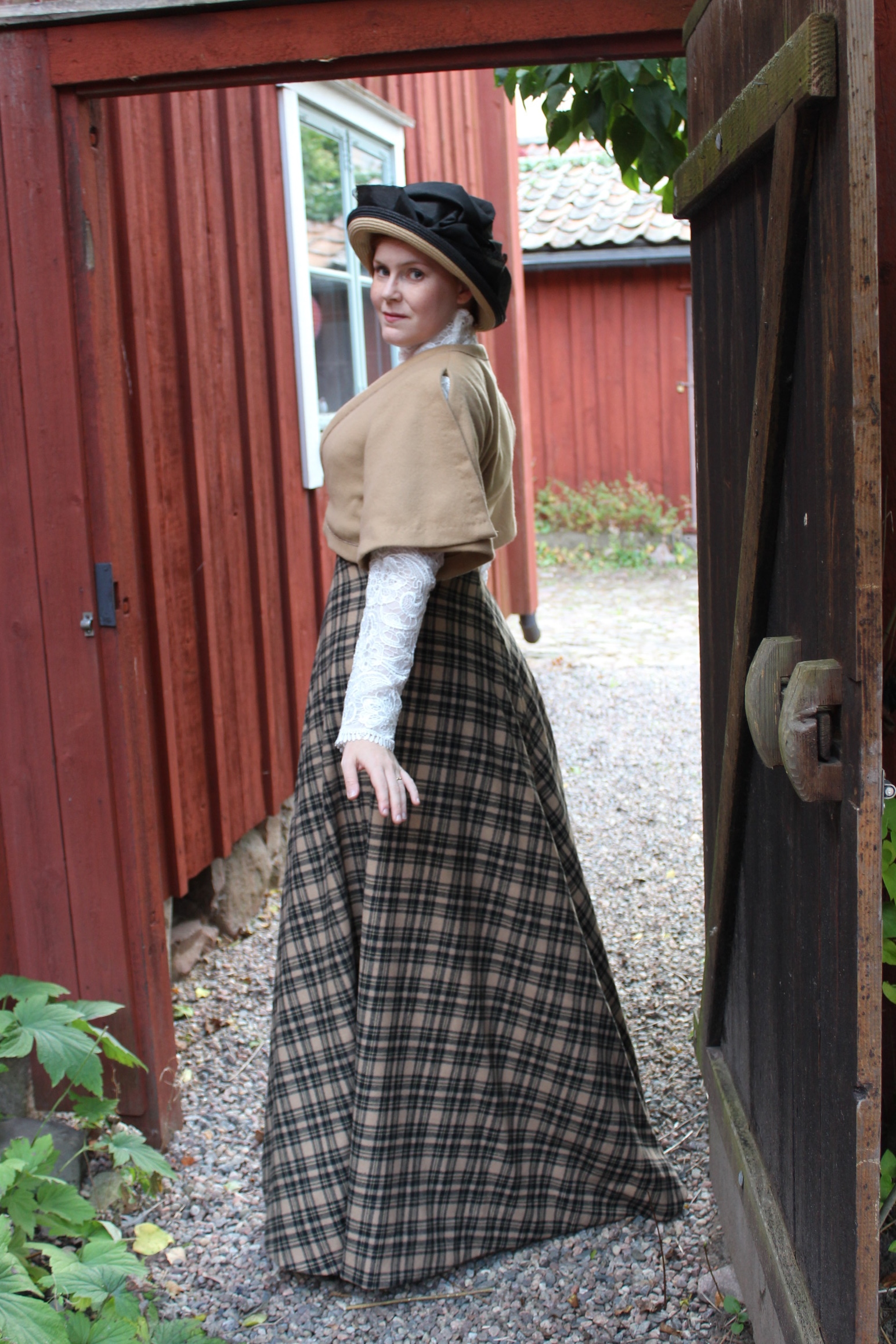
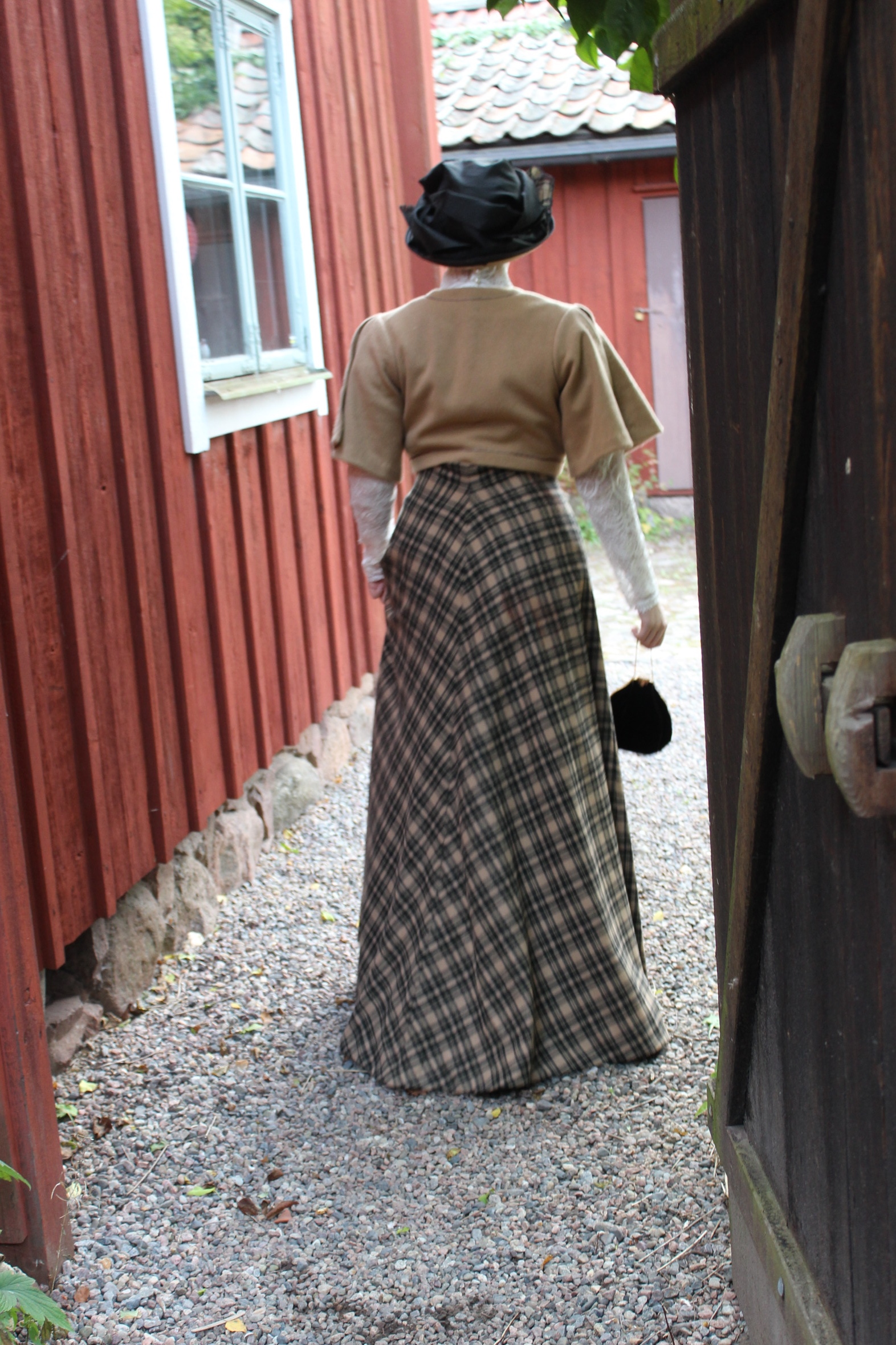
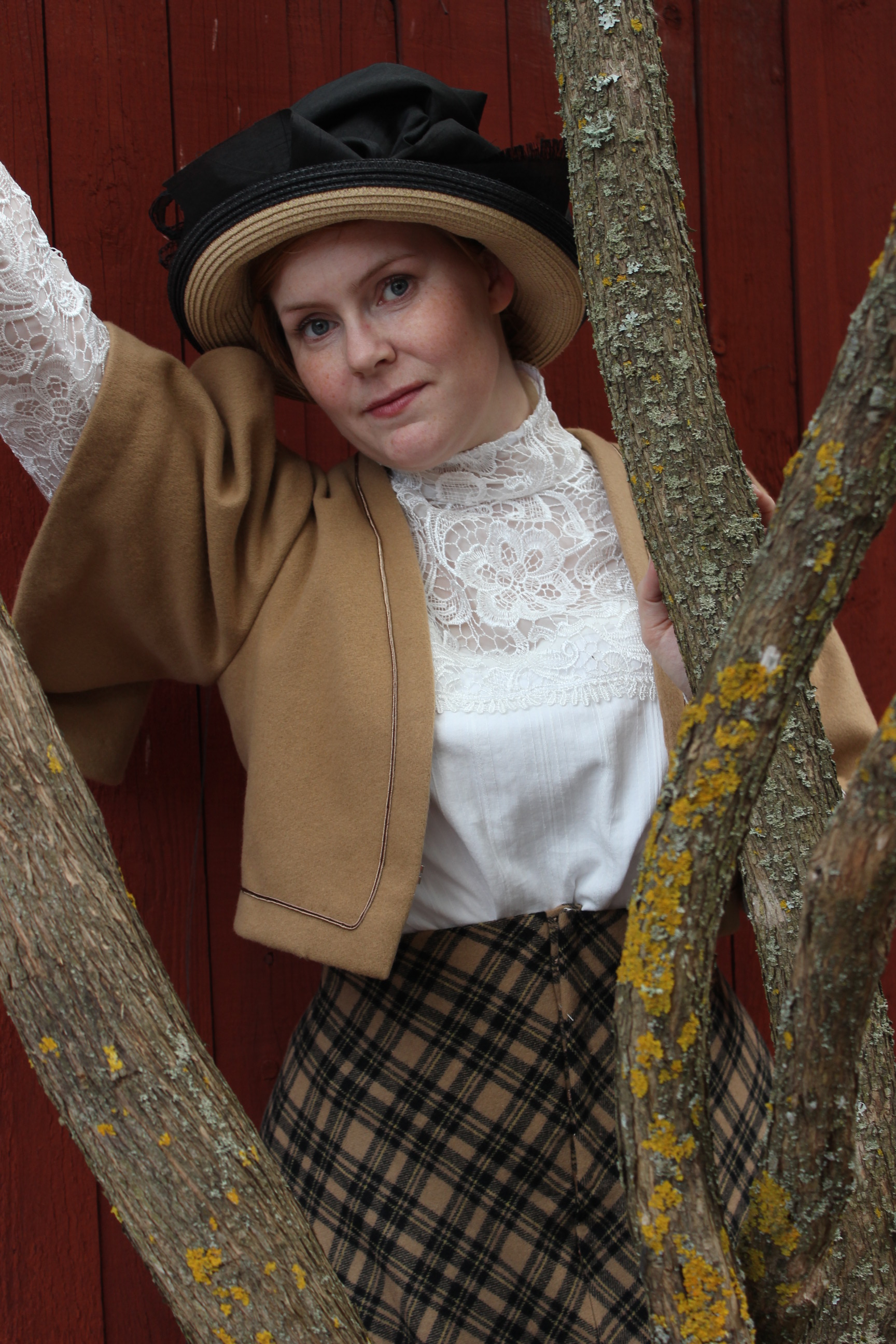
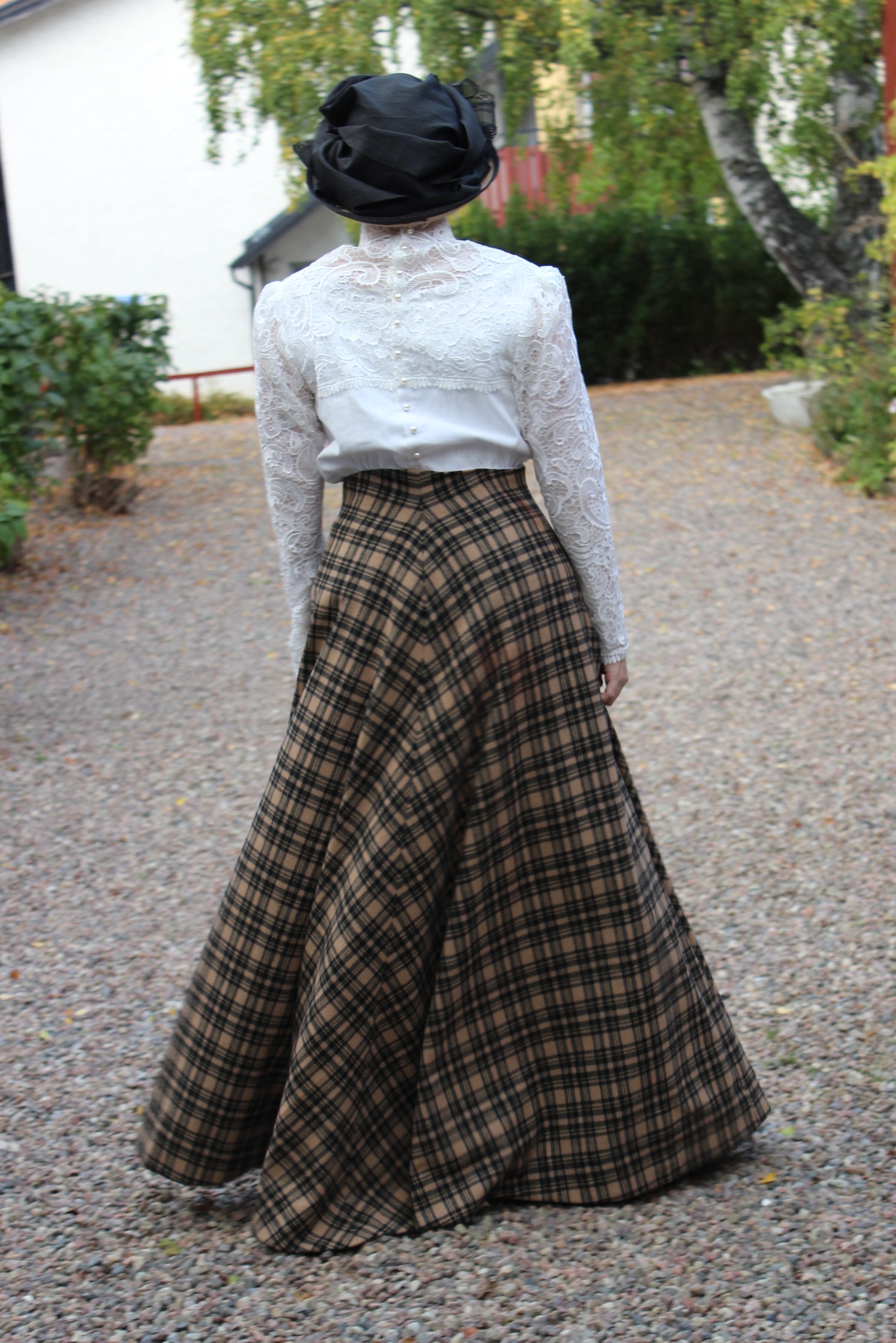
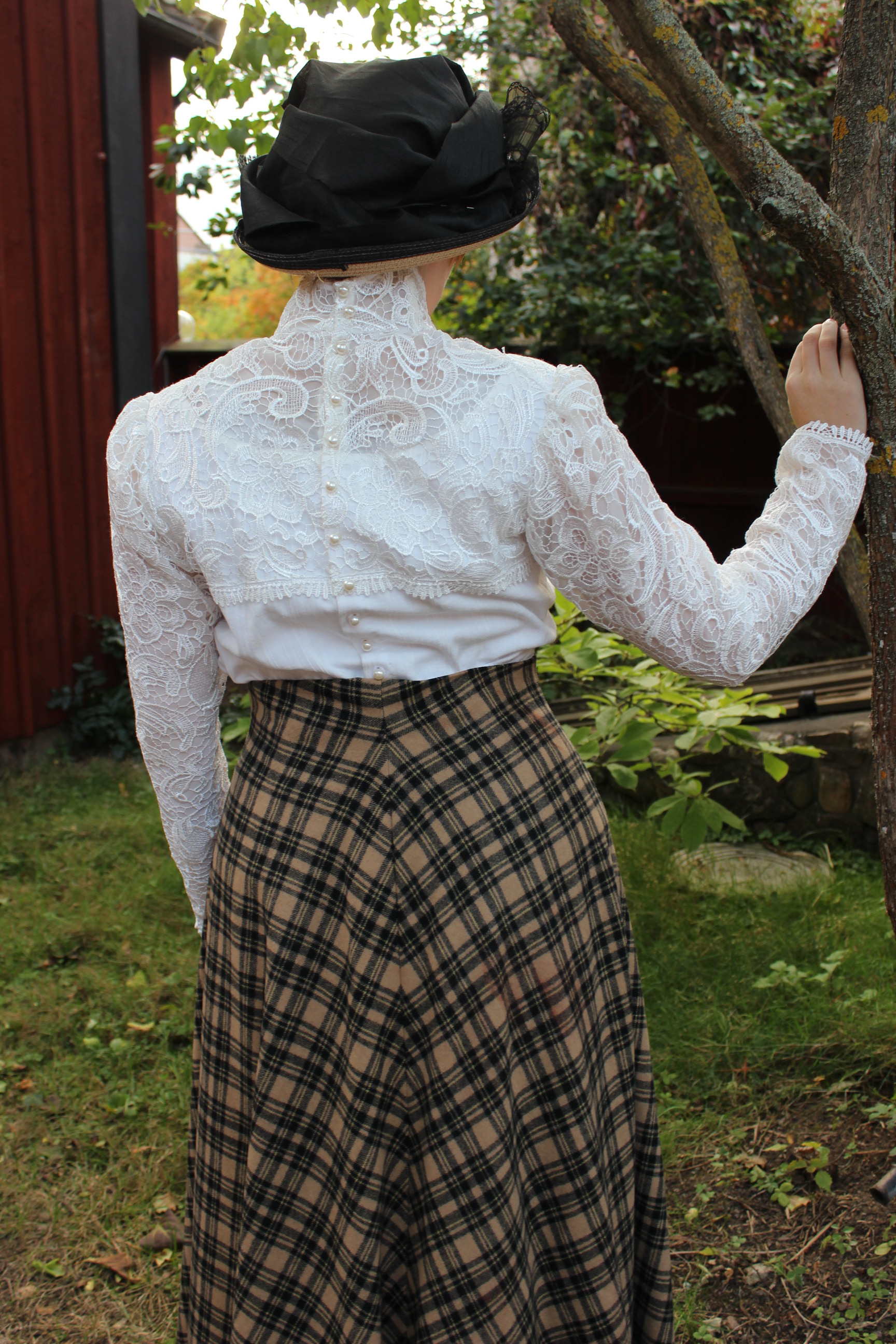
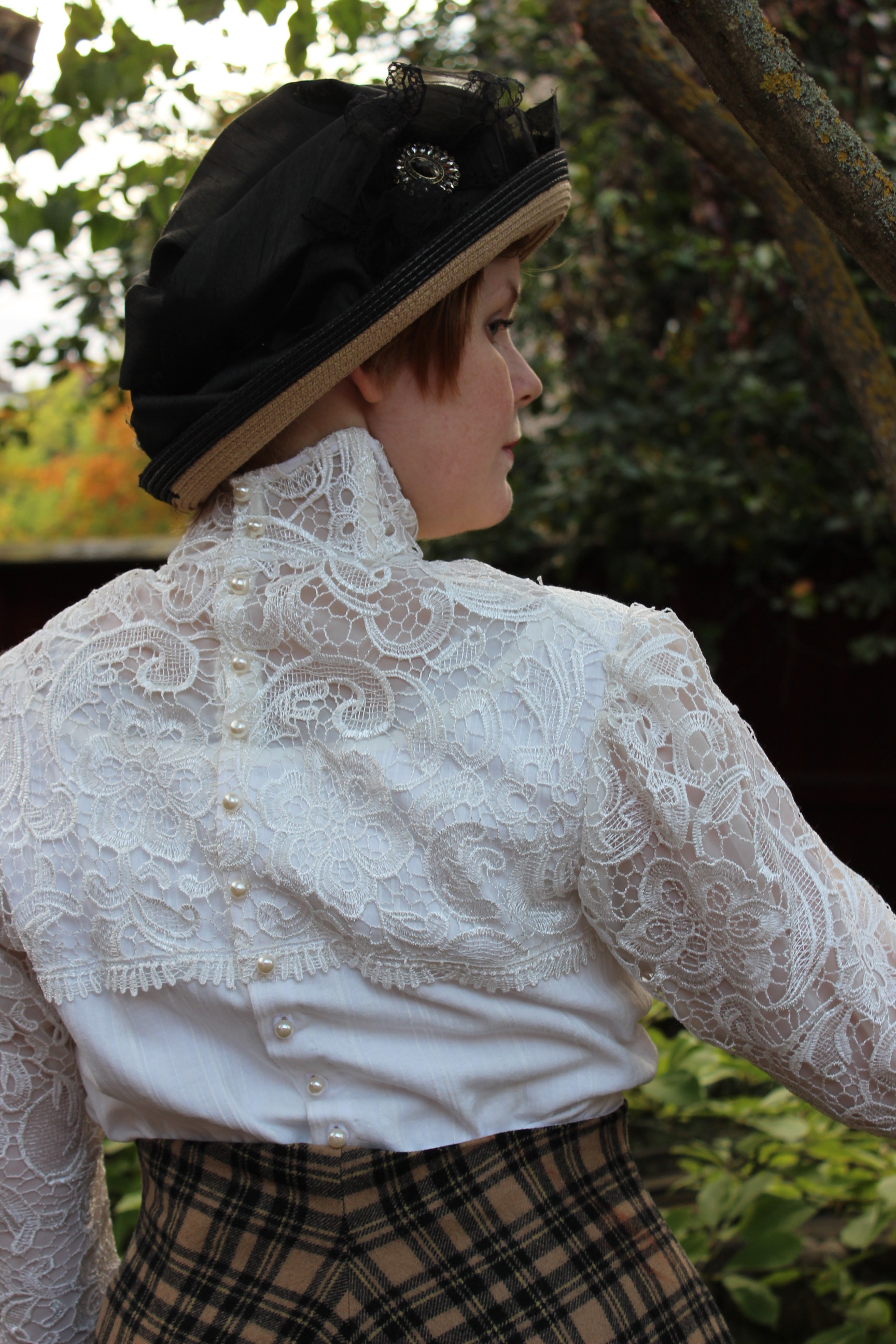
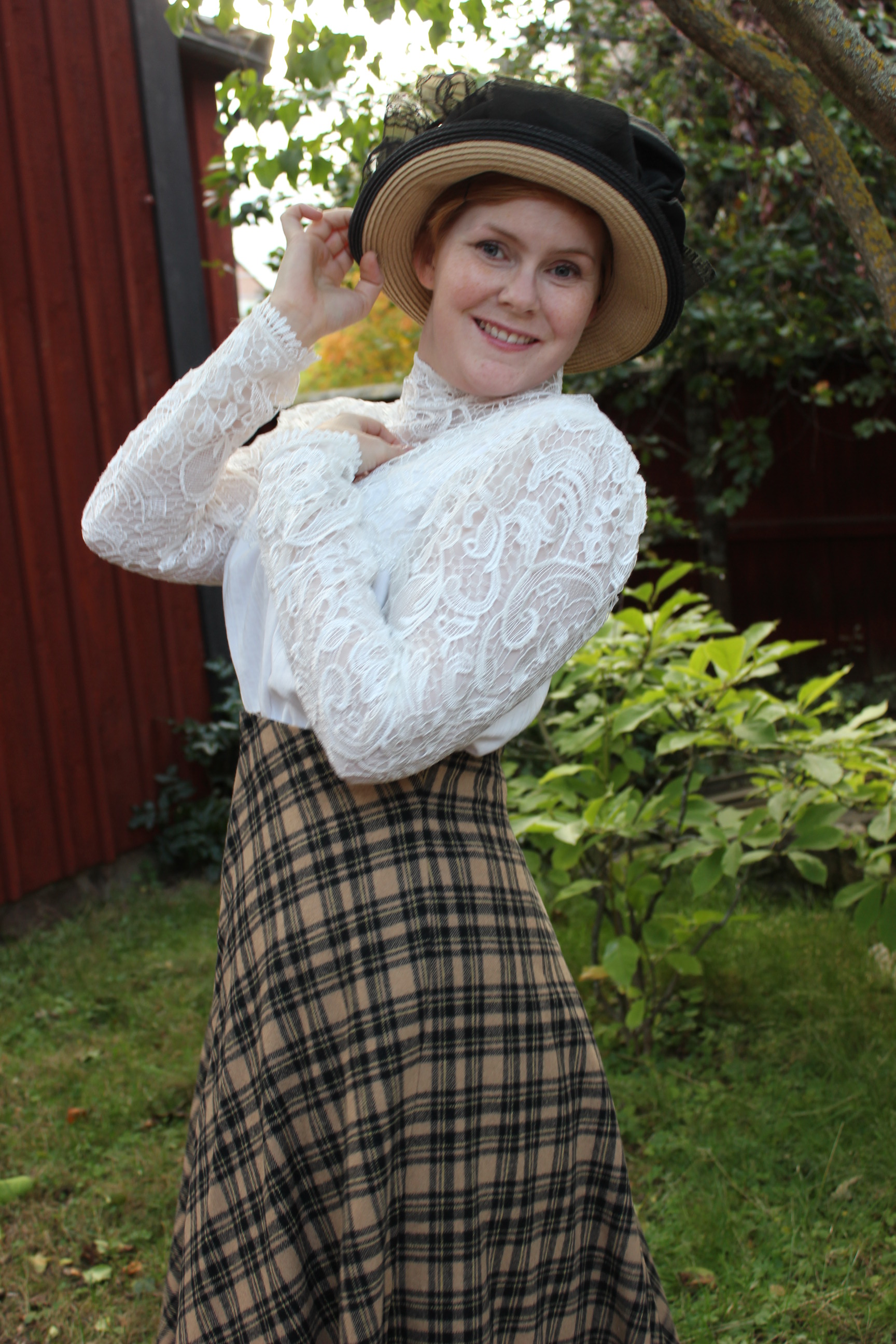
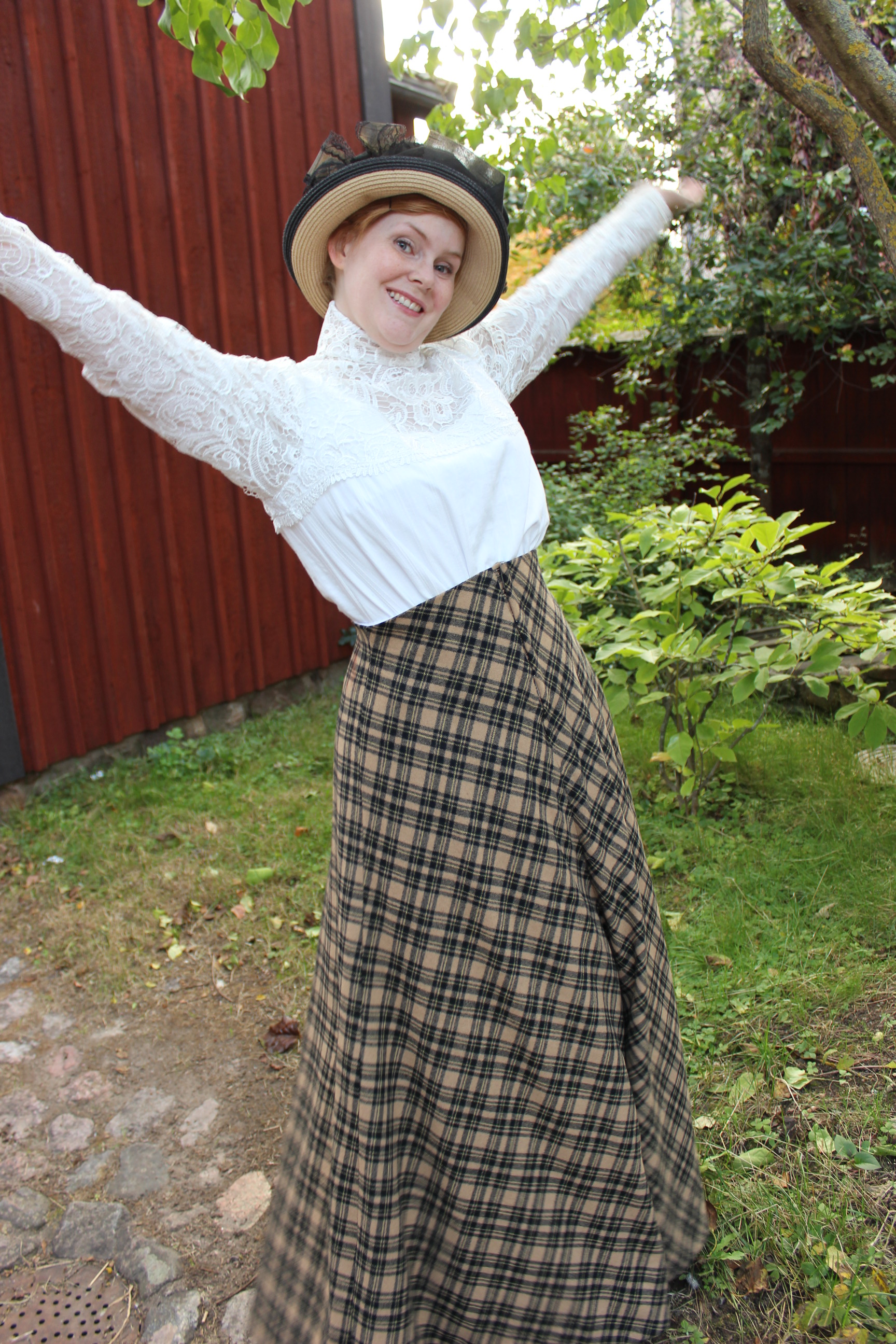
And to make a stylish (yet autumn inspired) 1900s day dress for the Brown Challenge. IMG_8890

October:

For the Sewing secrets Challenge, I made a new skirt to my 17th century bodice (not yet blogged about) IMG_9531_resized
It was around this time my head finally caught up with my body and realized I was pregnant, and needed to slow the heck down.
And that´s exactly what I did – I closed the door to my sewing room, and have just now started to once again peak through the key hole.

And so my sewing year of 2015 ends in October.

I´t will be some time before I´m back to more regular posting and sewing (but I finally starting to dream of pretty dresses again) so hopefully I can show you some new stuff in not so long.


*For more pictures and construction of the pieces take a look at the “Portfolio” page.
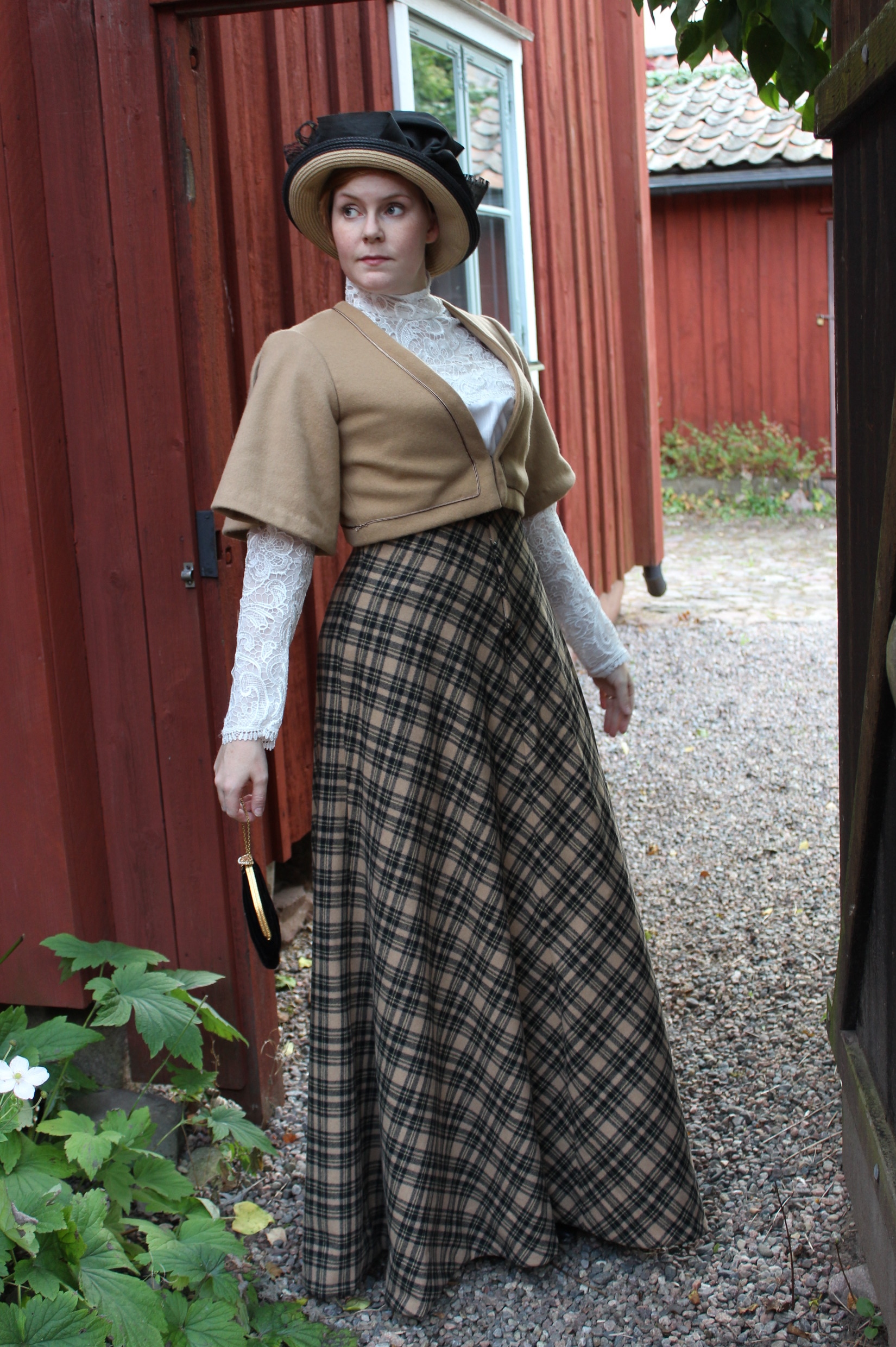
1900s Autumn Suit – Photoshoot

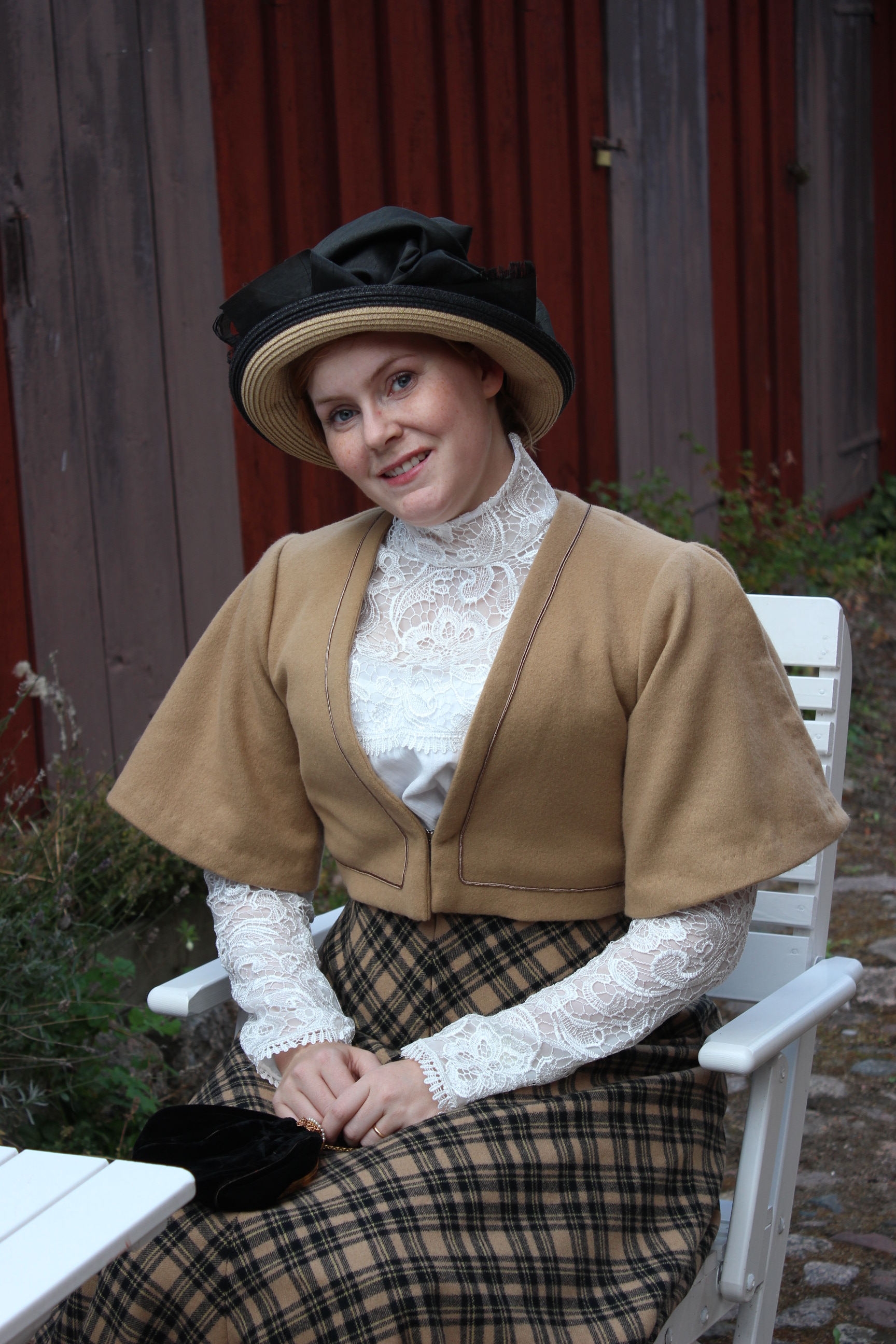
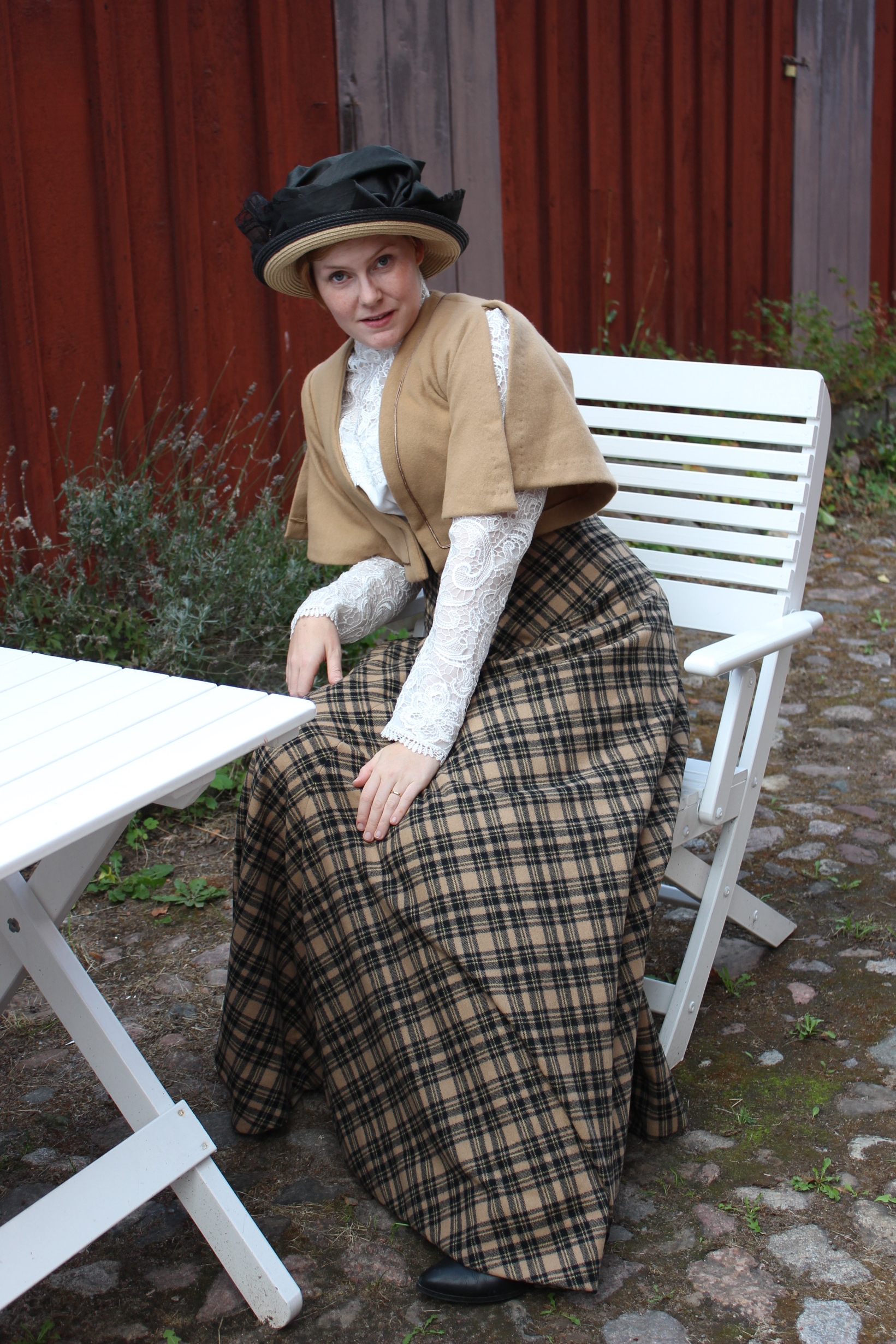
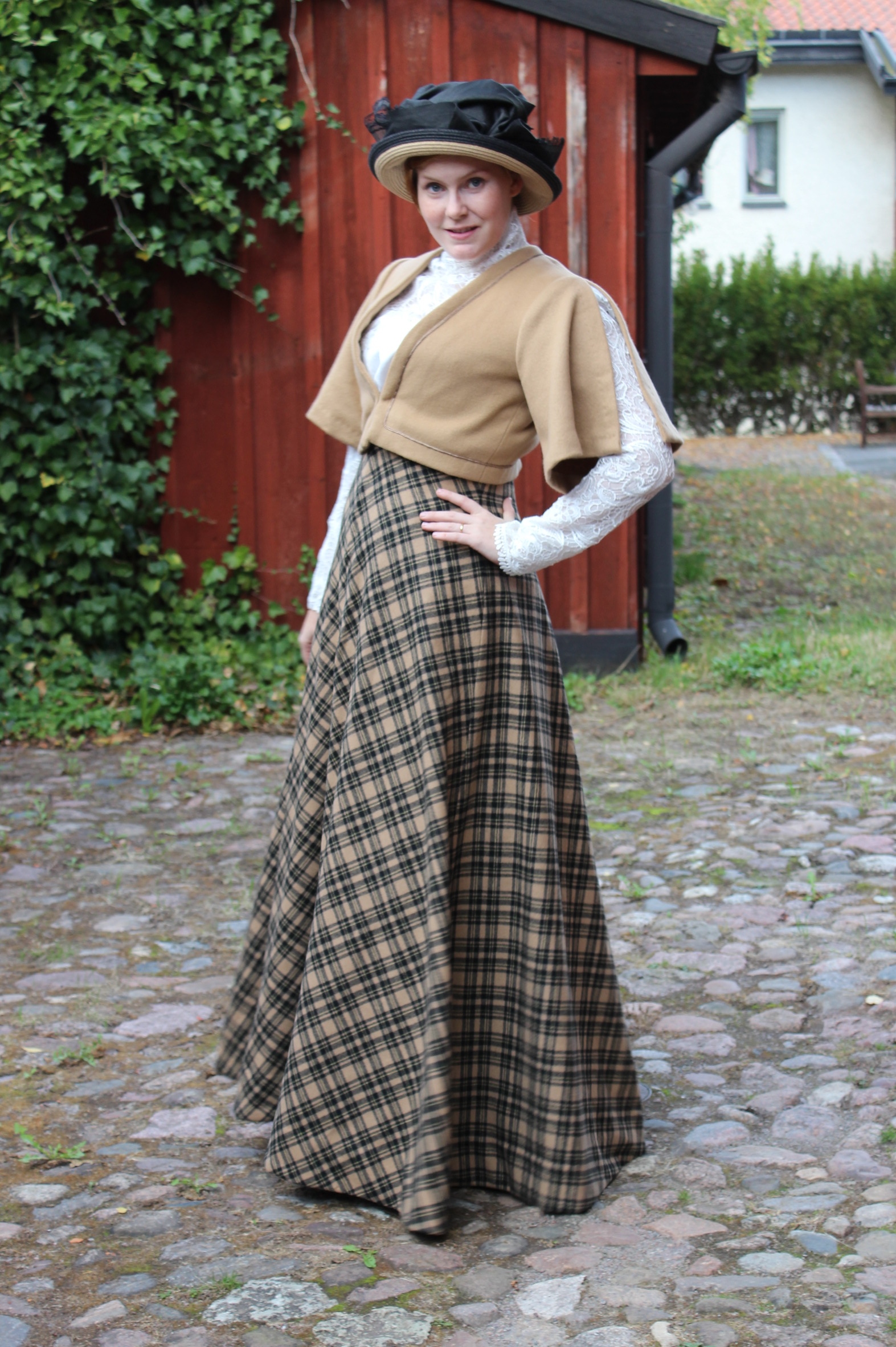
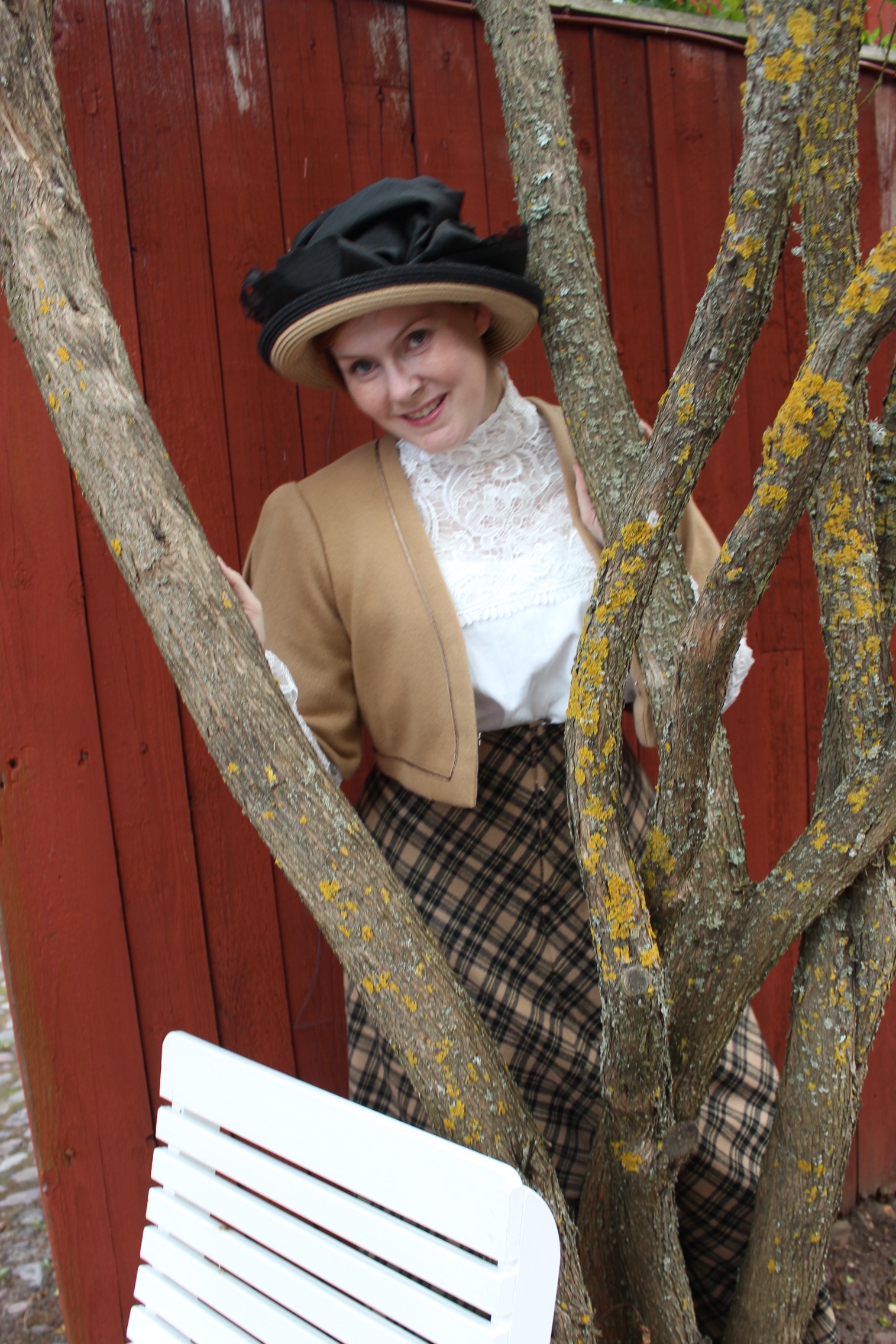
To get some photos of my new Edwardian wool dress, I took the opportunity to use my fiancees workplace as settings and my sister as photograph.

I’m wearing: The brown/plaid wool skirt, lacy shirtwaist, wool bolero and my Titanic hat (with a quick fix-up) Underneath I have my S-shaped corset, petticoat, chemise, corset cover, stockings and black “American Duchess” Gibson shoes.

IMG_8890

IMG_8898

IMG_8900

IMG_8902

IMG_8904

IMG_8913

IMG_8916

IMG_8935

IMG_8968

IMG_8971

IMG_9041

IMG_9034

IMG_8991

IMG_8993

IMG_9000

IMG_9001

IMG_9005

IMG_9011Photo: Maria Petersson

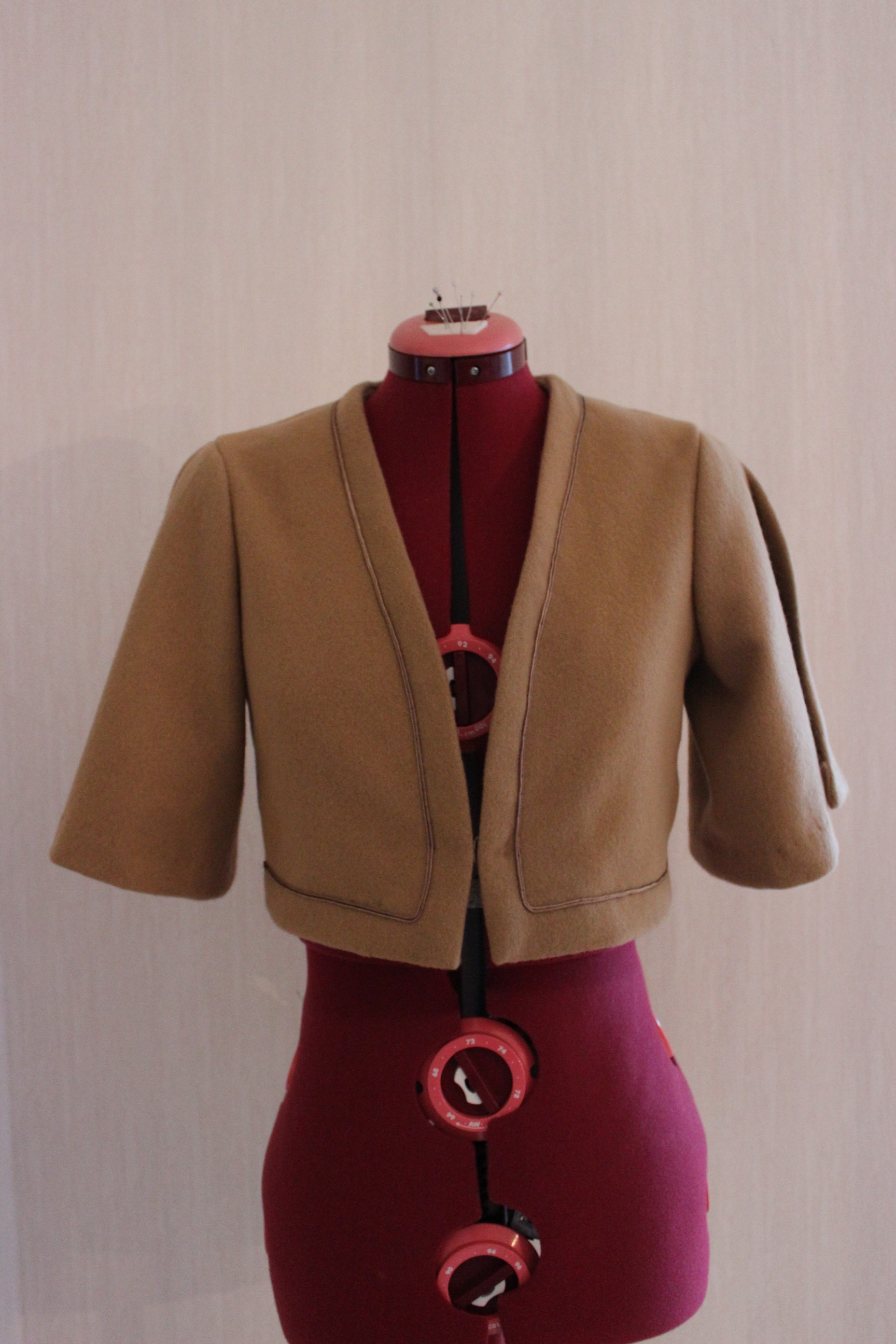
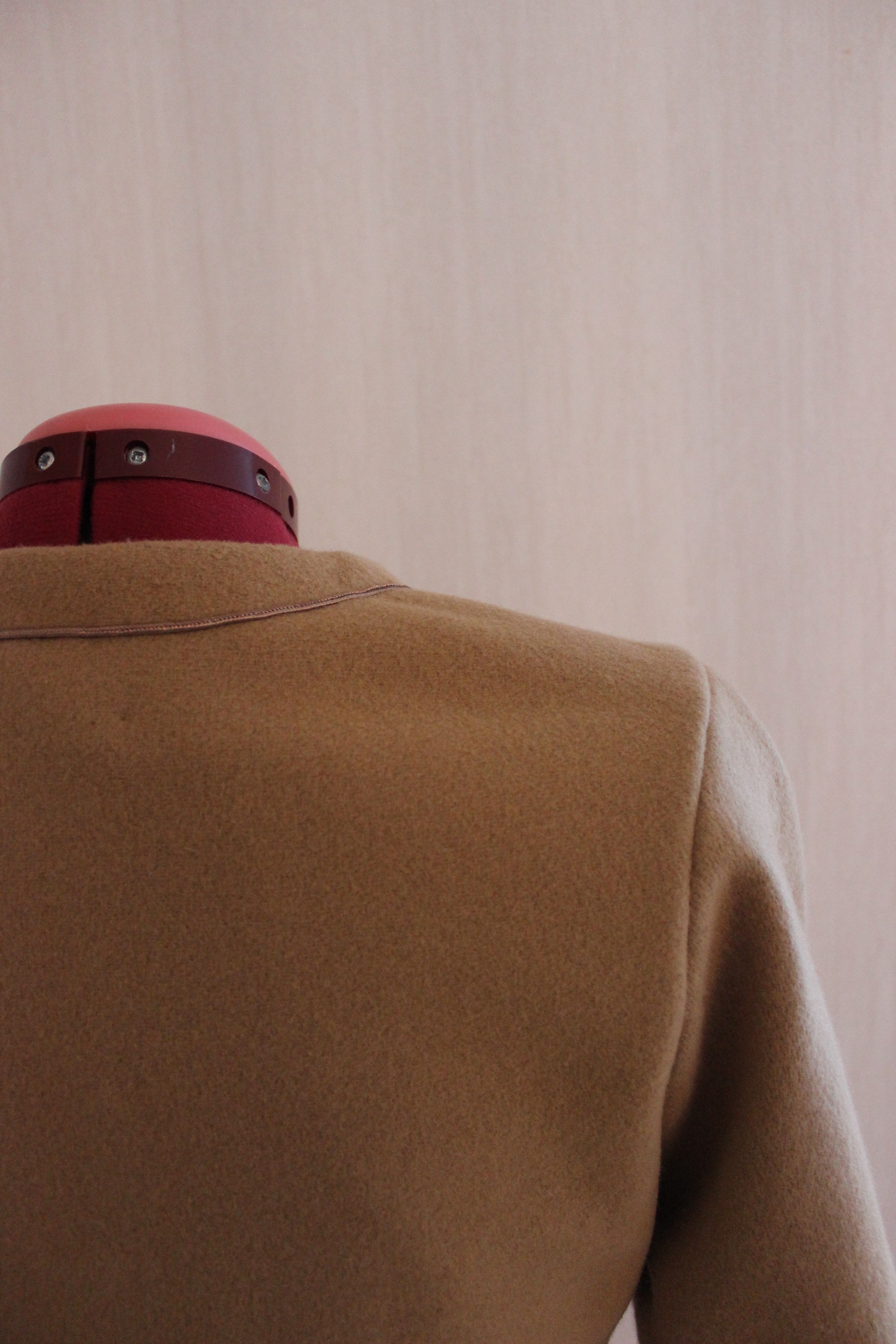
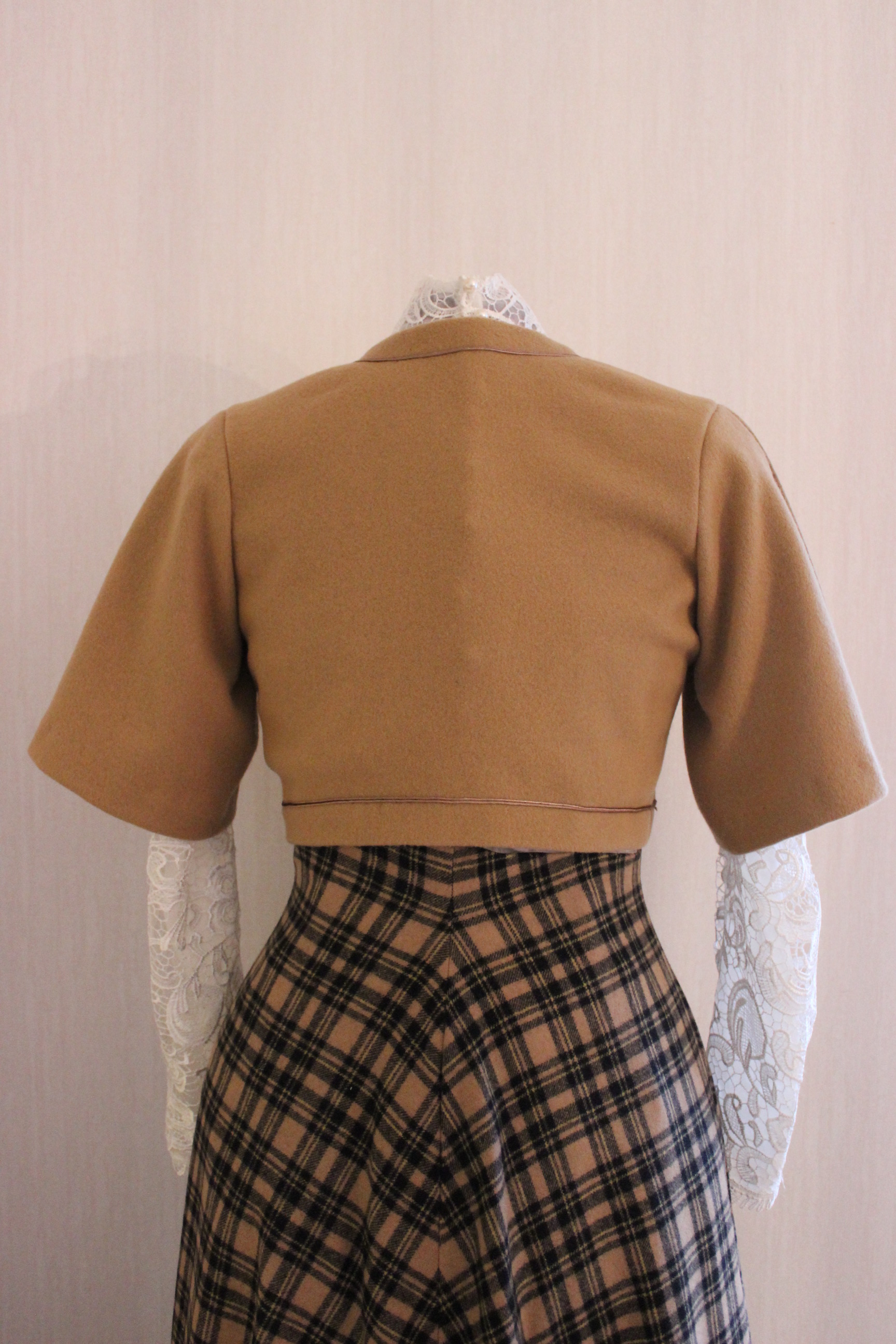
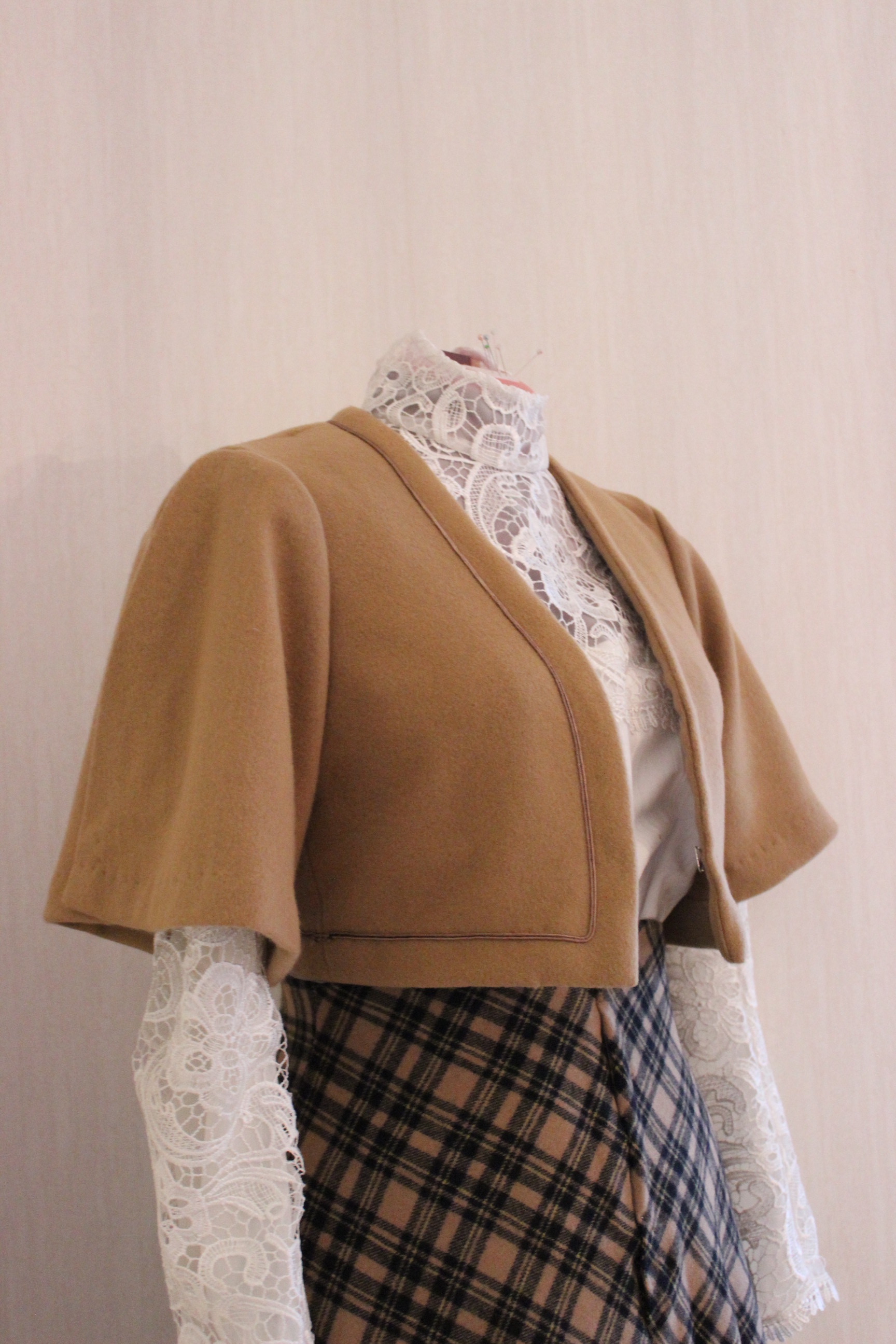
1900s Brown Bolero Jacket

The night before the photoshoot of my new Edwardian shirtwaist and skirt, I decided I also needed a jacket
(I know – Crazy!).

So while adding buttons to the blouse, I also drafted a quick pattern from “The Edwardian Modiste” by Frances Grimble, which I’ve been eyeing for quite a while.
20150915_074642_resizedSuch a cute jacket/bolero.
Then I grabbed a piece of soft wool, which of course matched the beige in the plaid skirt perfectly, from my stash and begun cutting and sewing.

It all went so fast and within, half an hour I had a functional bolero.

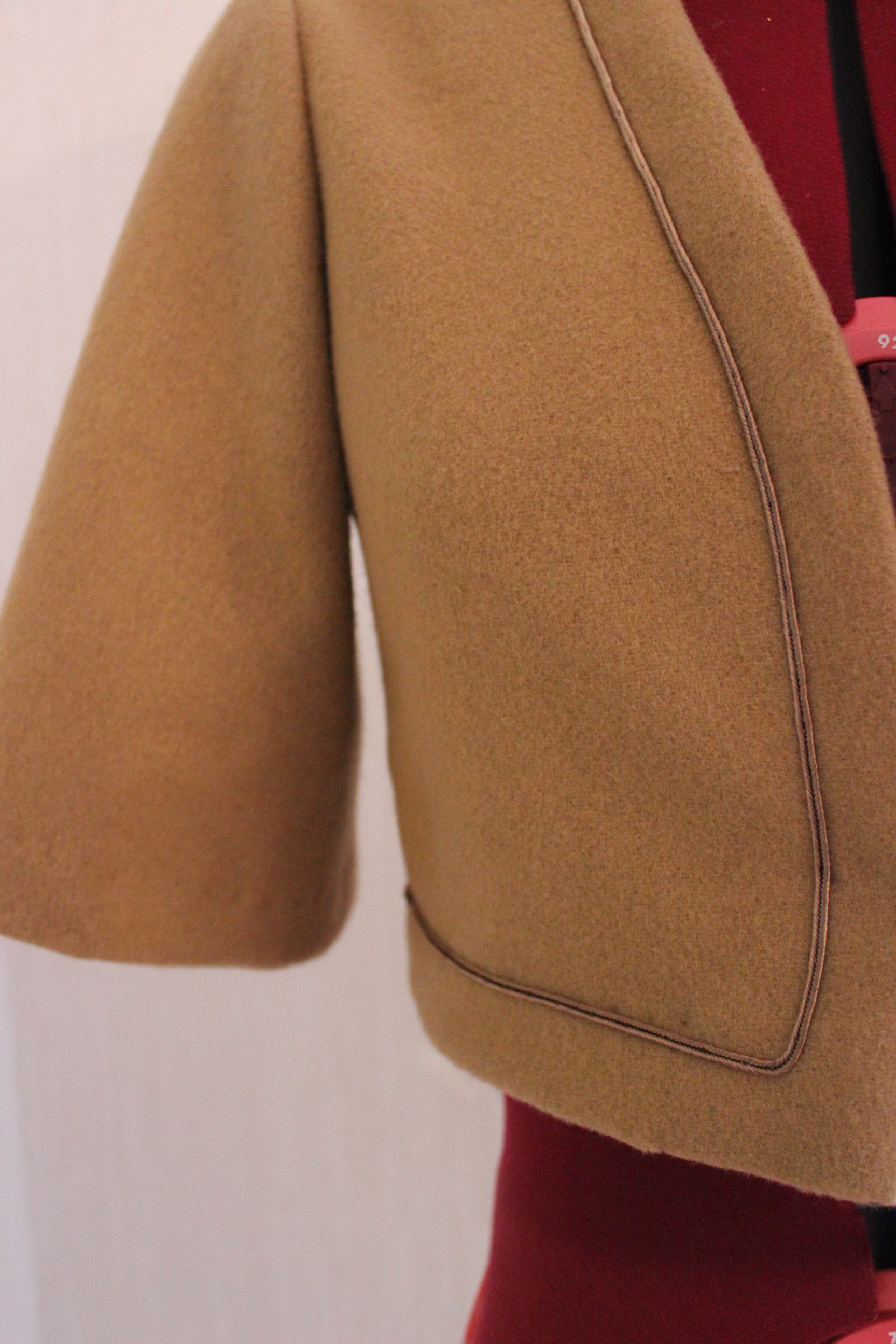
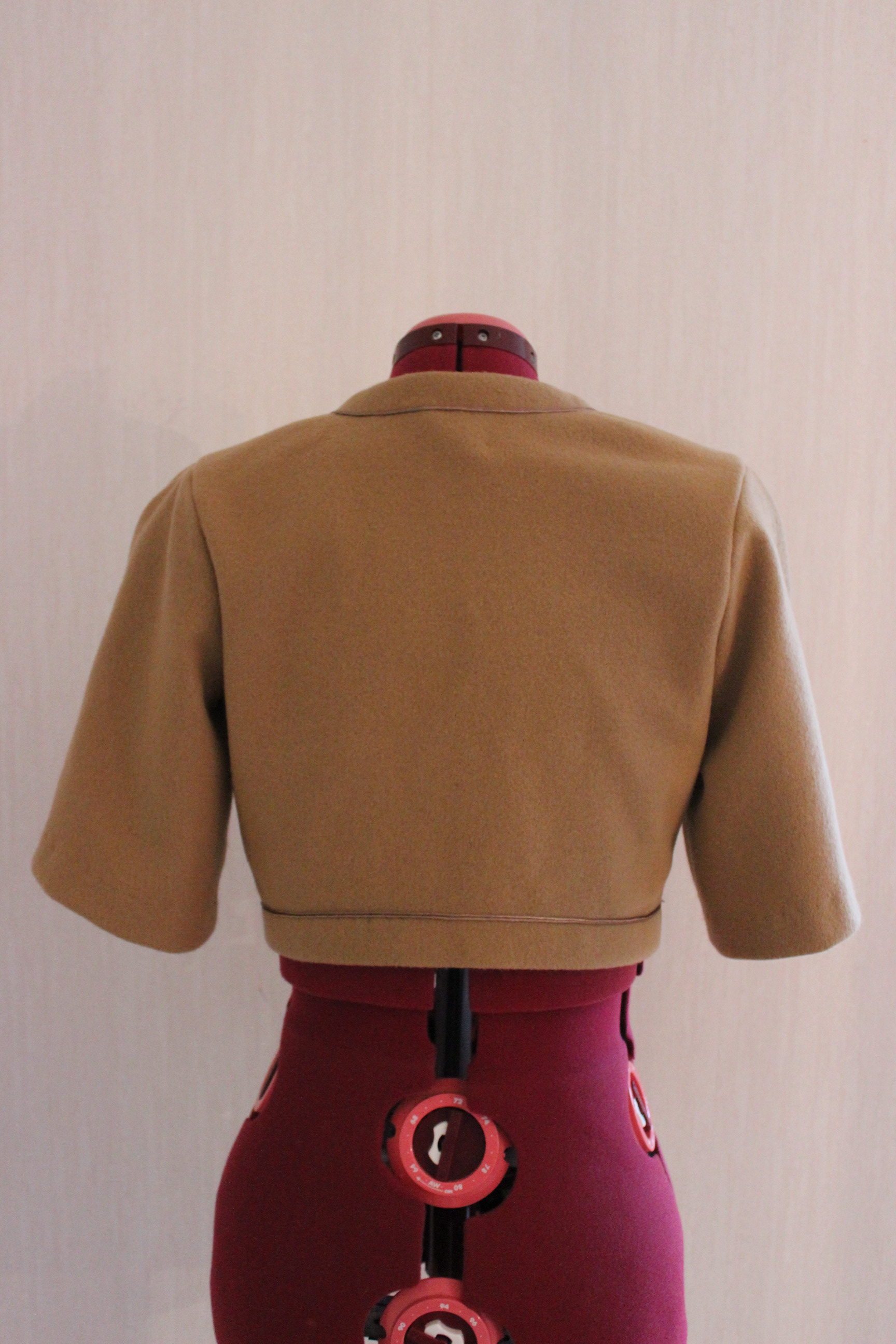
Then all I needed to do was to hem the sleeves and bodice and to decorate it.
I altered between some dark pom-pom trim and the simpler soutage ribbon in soft nougat. The later won the fight, and my only regret is that I didn’t had enough to also trim the sleeves.

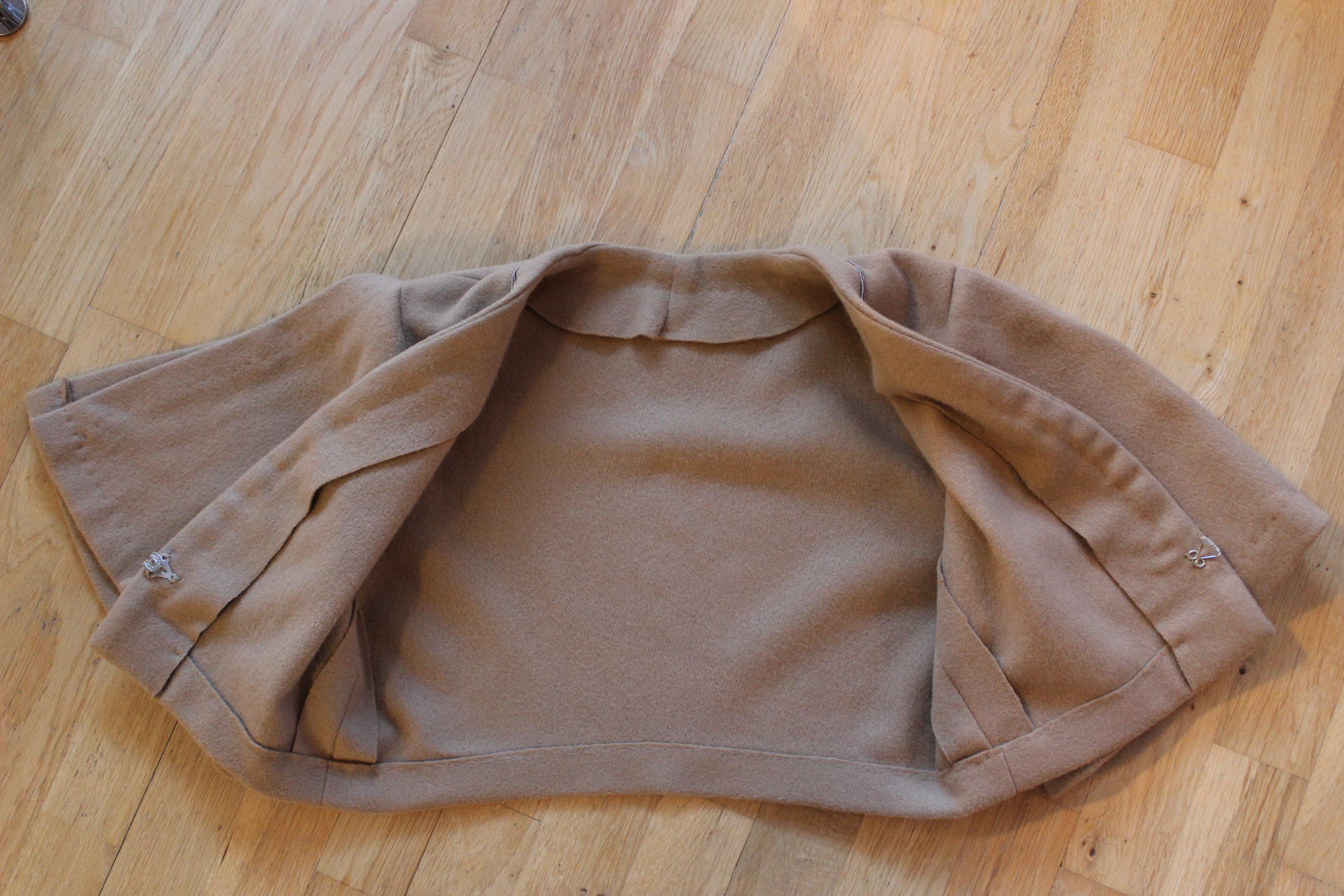
IMG_8882The bolero from the inside – all edges left raw.

I also added a hook and bar to wear it close if I want to.

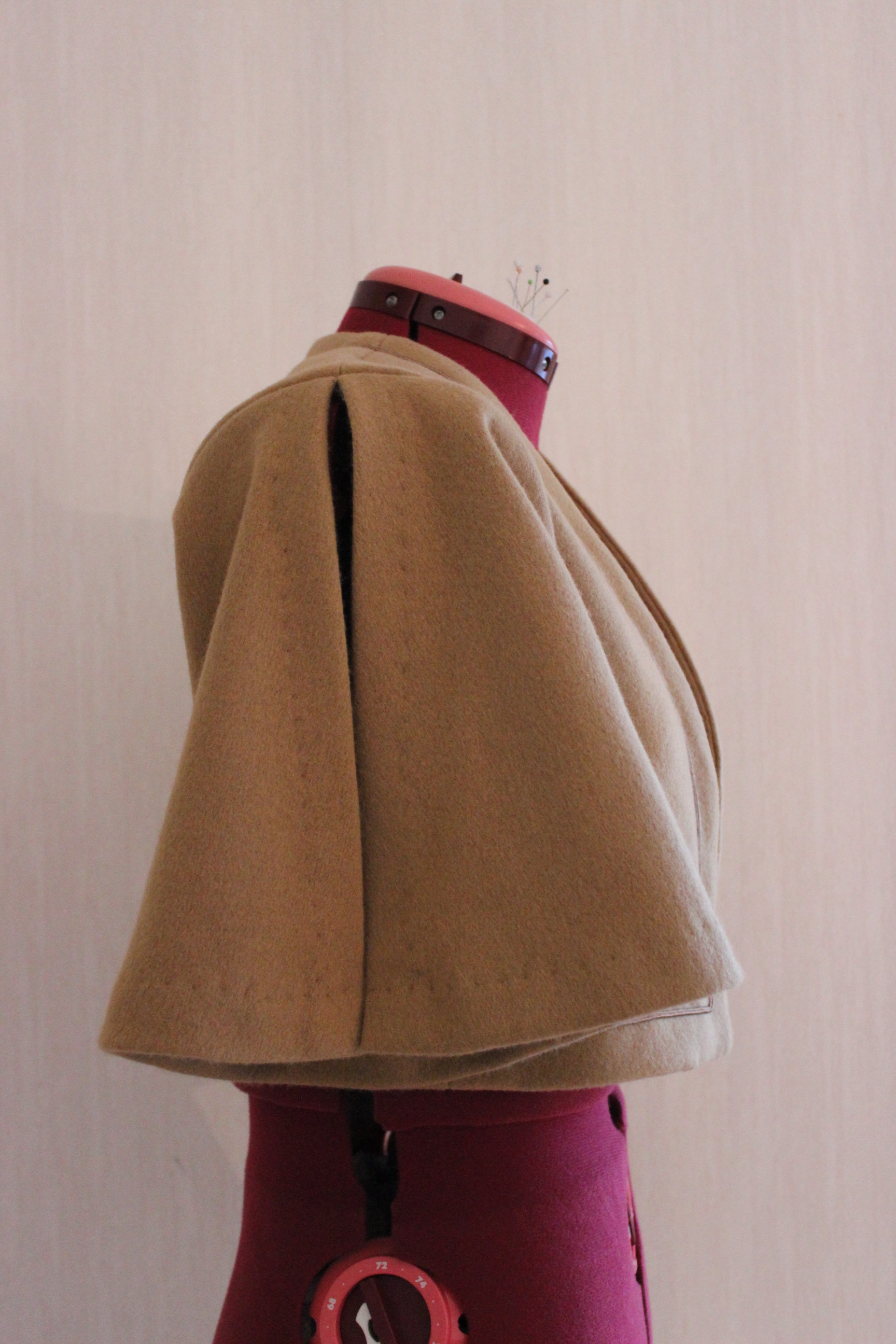
The finished bolero:
IMG_8868

IMG_8870

IMG_8871

IMG_8873

IMG_8877

IMG_8878

Just the facts:

Challenge: HSM/15 nr 9 – Brown

What: a 1900s bolero jacket

Pattern: I drafted my own using “The Edwardian Modiste” by Frances Grimble as a guide (basically a front + back bodice and a wide sleeve cut apart at the top)

Fabric & Notions: 0.5 of soft light brown wool, thread, hook and eye and 2 m soutage ribbon for decoration.

Time: 3 hours! Such a fun and quick project.

Cost: 45 Sek (6 Usd) – a leftover scrap, to small for anything really, I bought on sale a year ago.

How historical accurate: Not sure. The pattern is based on a actual pattern, but I might have modernized both it and the construction techniques. The internal seams are machined and all the finishing are done by hand – like in the period. The fabric is plausible and the silhouette are about right so I would guess about 7/10.

Final Thoughts: I love it so much! I could wear it to the office right now (I might have to reduce the sleeves a bit first though). The fabrics so soft and the shape is just lovely. The only thing i ca think of that’s not perfect is that I didn’t considered the stiffness of the wool when drafting the sleeves – thous making them a bit to wide. They will probably look better in a more drapery fabric.
I might also add some more trim later on when I find something I like.

The whole outfit:
IMG_8831

IMG_8836

IMG_8833

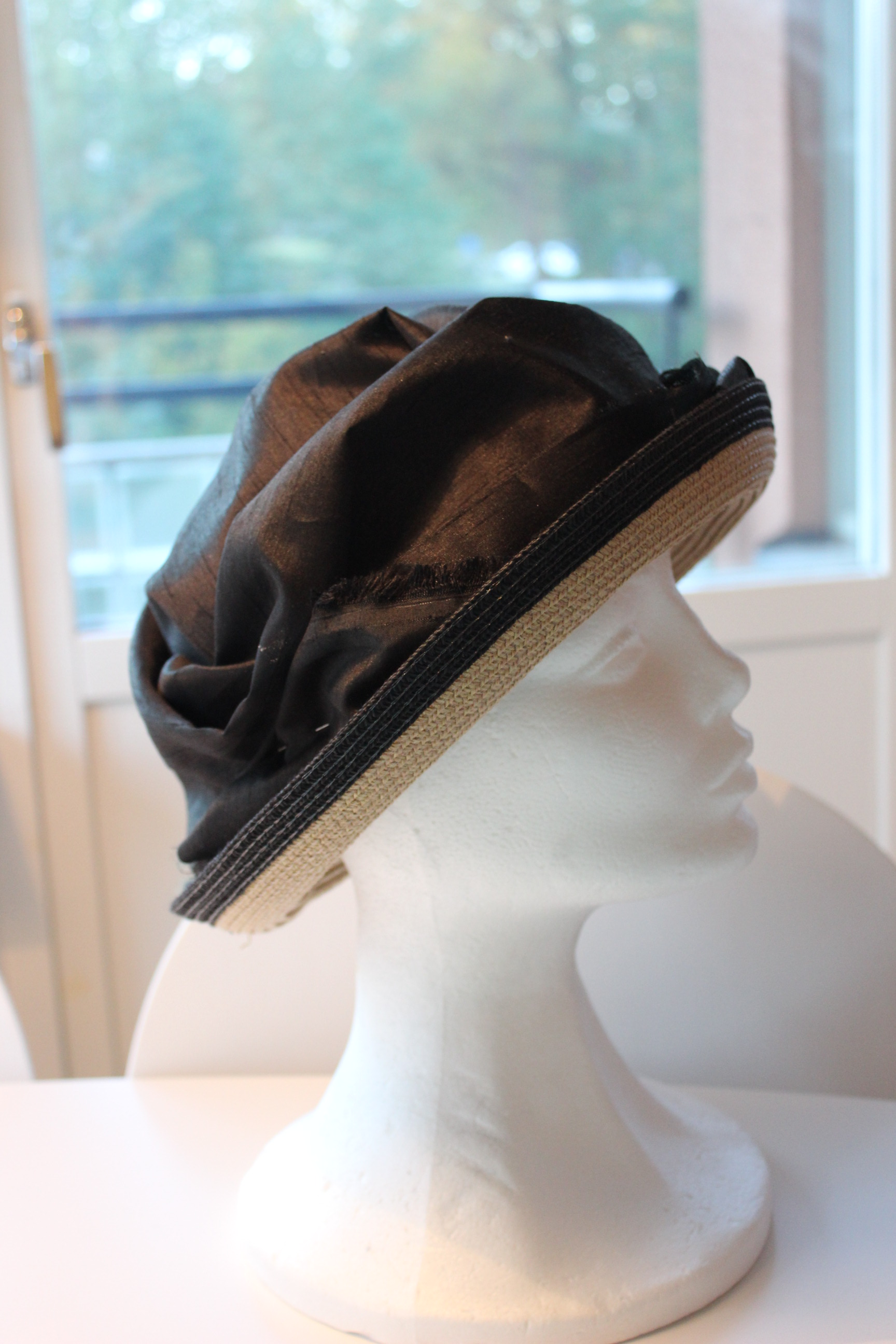
And since you always need something on your head I draped some leftover fabric on an modern straw hat, to get that big Edwardian hat shape.IMG_8884

Next up: The photoshoot

1900s Brown Plaid Skirt

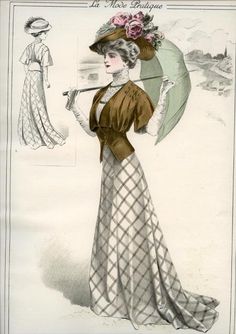
As soon as I laid eyes on this fashion plate I knew I wanted it
(and of course the costume ;-))0aa238a070b160e1062e58eda9df1551

Jen at Festive Attyre made the most fabulous recreation of it a while back.auto4And even though I knew I could never match her skill or perfect Edwardian look, I really wanted a similar look.

So when the HSM challenge 9 – “Brown” approached I scouted out my stash for the perfect brown and plaid wool fabric, and got to work.
IMG_8826

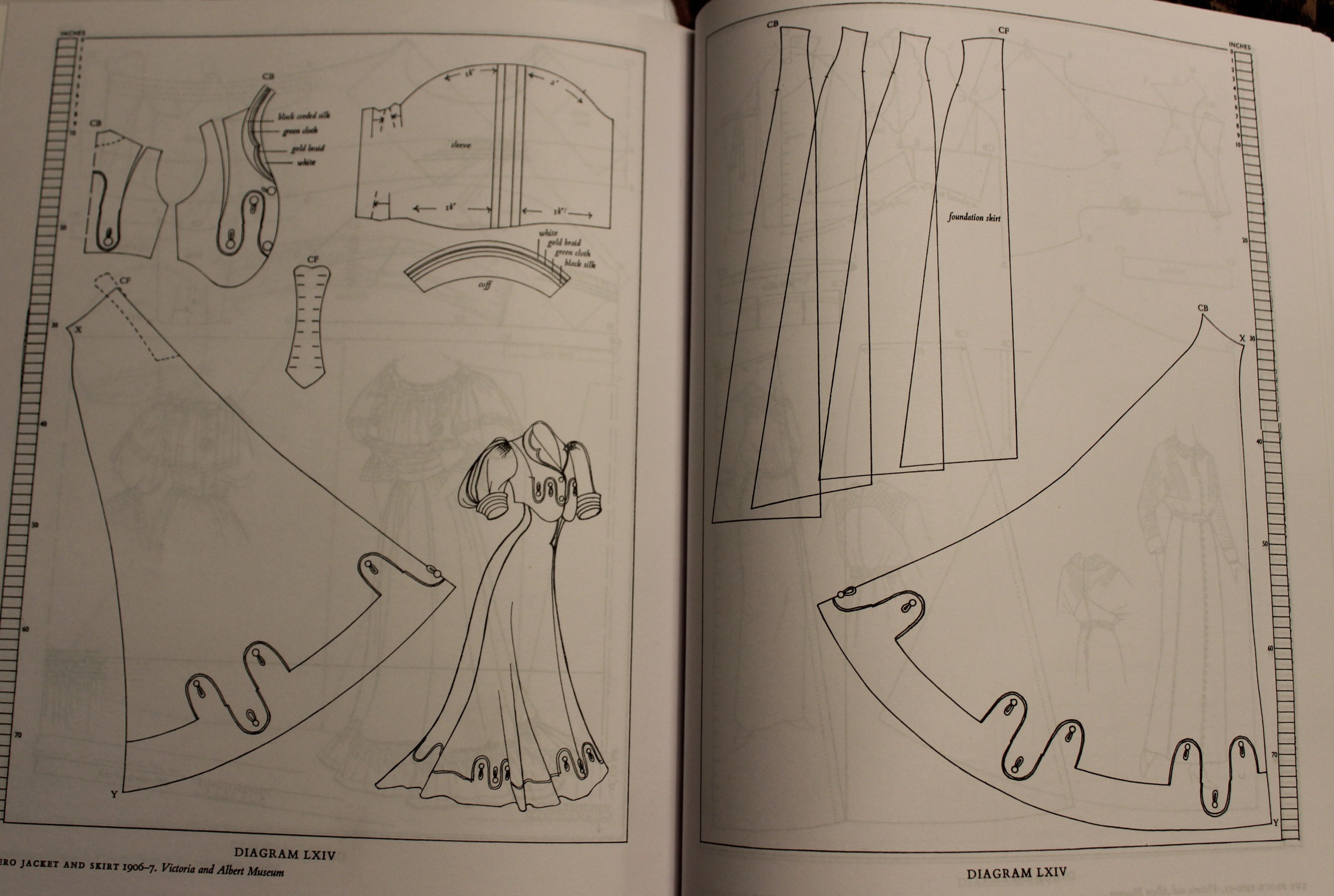
I drafted the pattern using Nora Waughs “The cut of women’s clothes”
IMG_8829

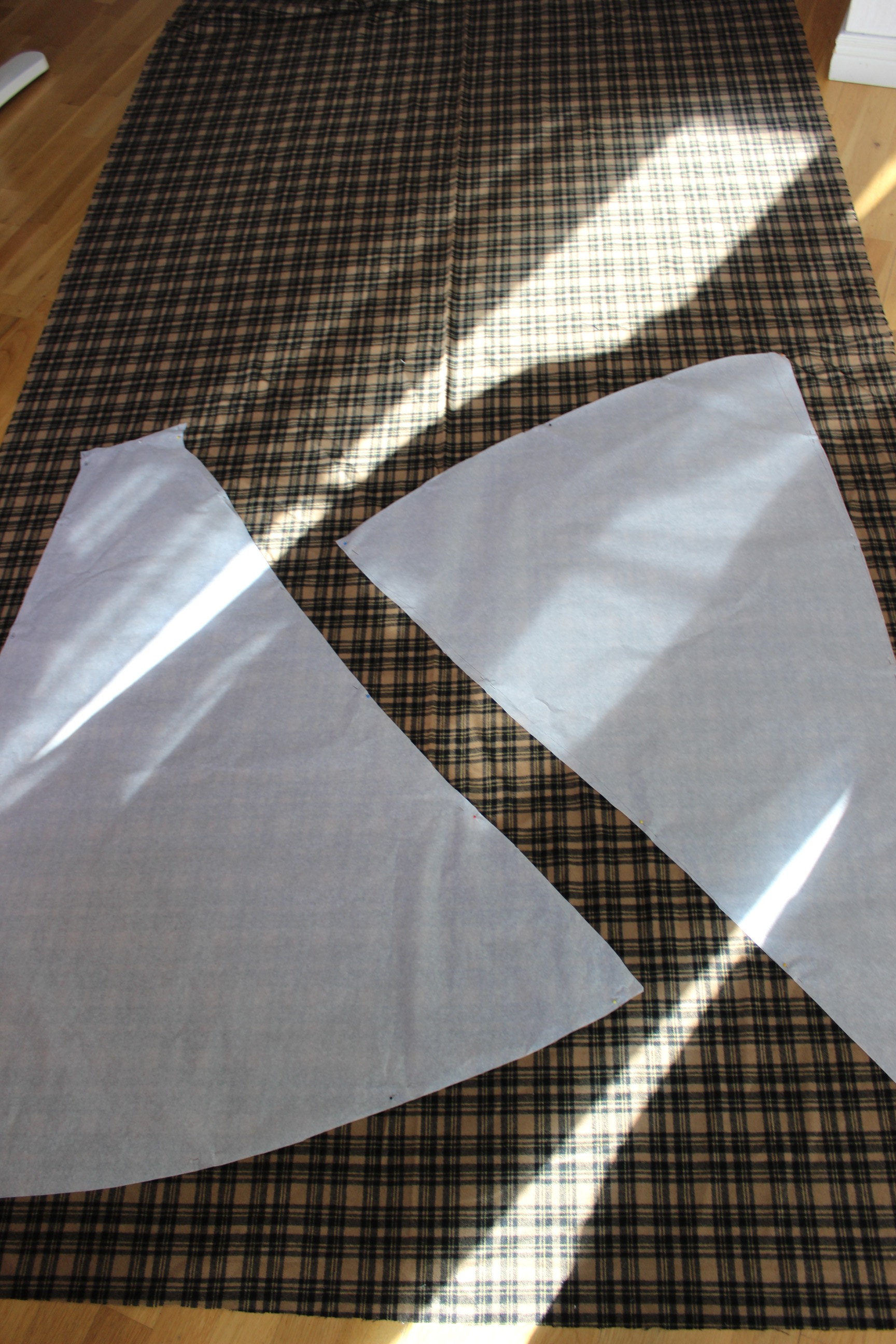
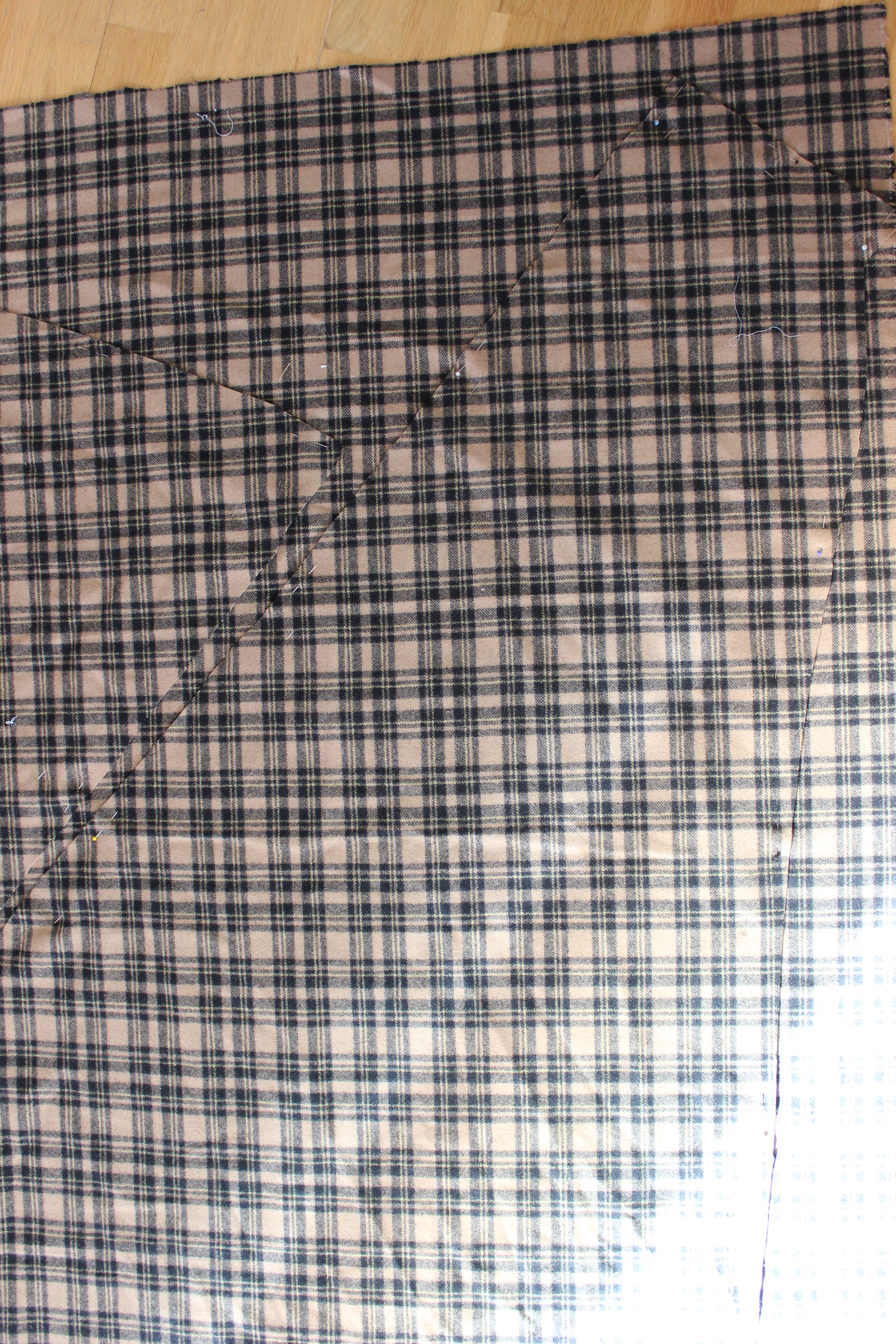
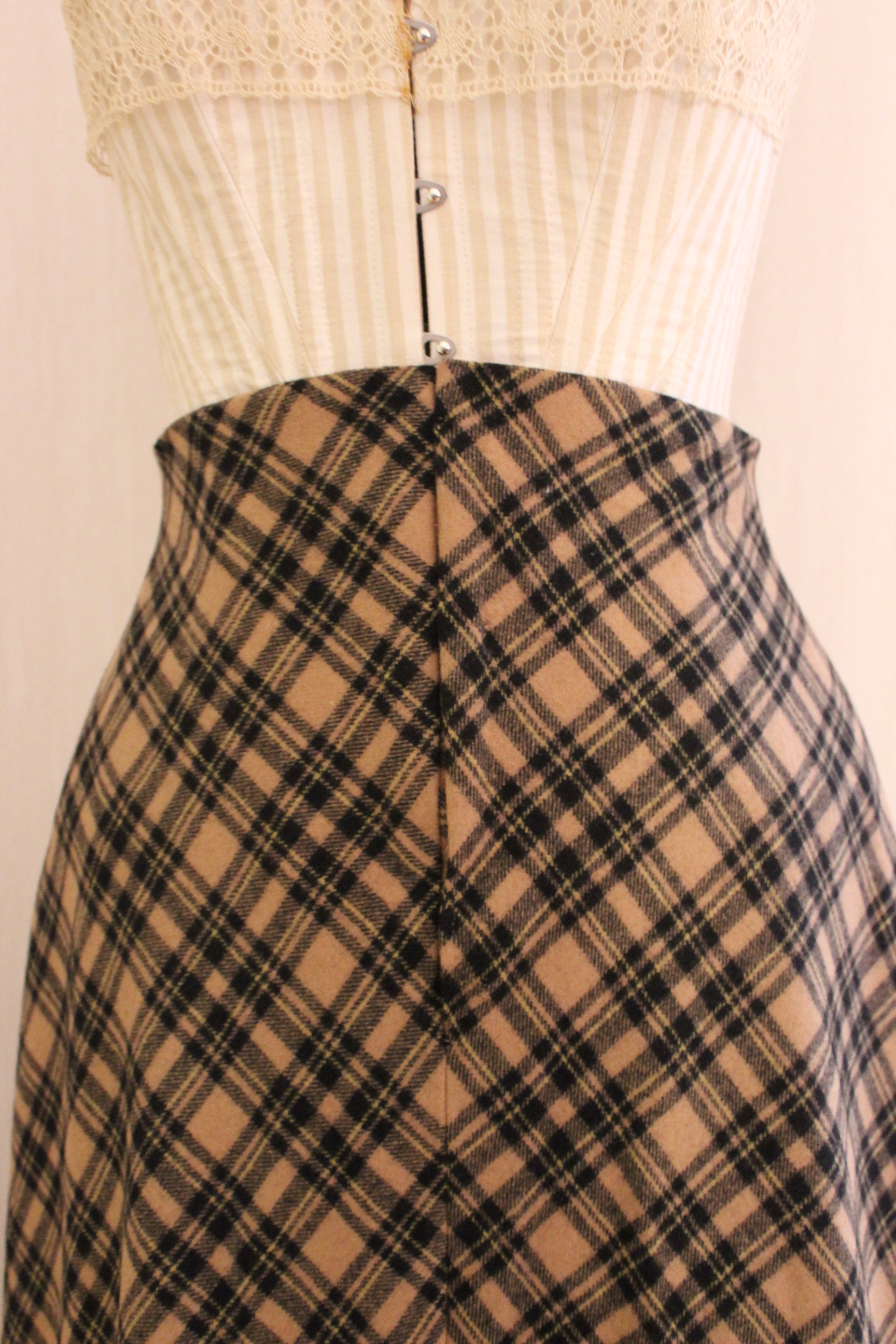
I cut the pieces on the bias, carefully matched the plaid to meet at an angel at the seams.
IMG_8788 IMG_8790Matching the plaid

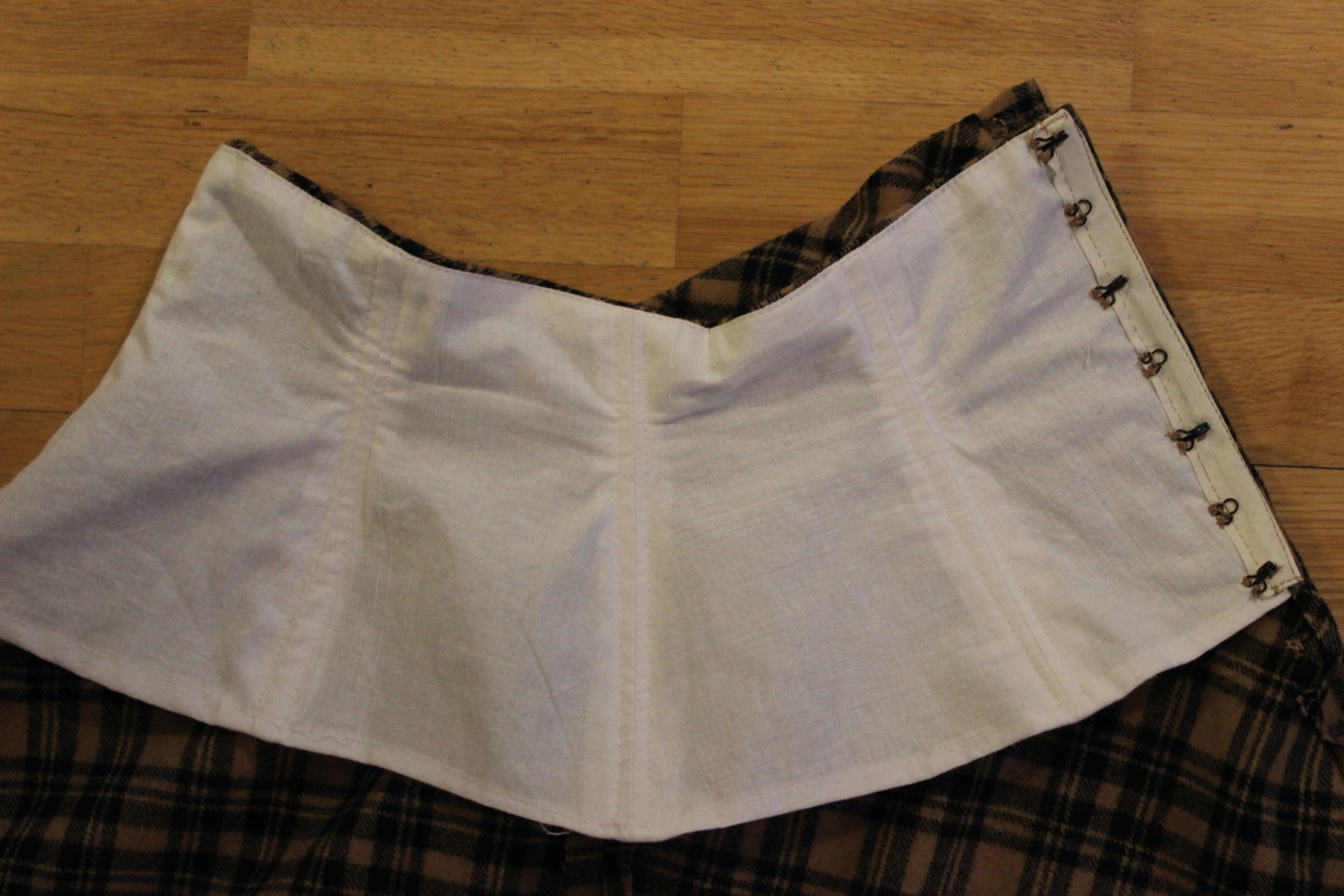
I used some white cotton for the foundation and stitched bias-tape to make boning channels to get that nice body-hugging look of the corseted skirt of this era.
IMG_8822
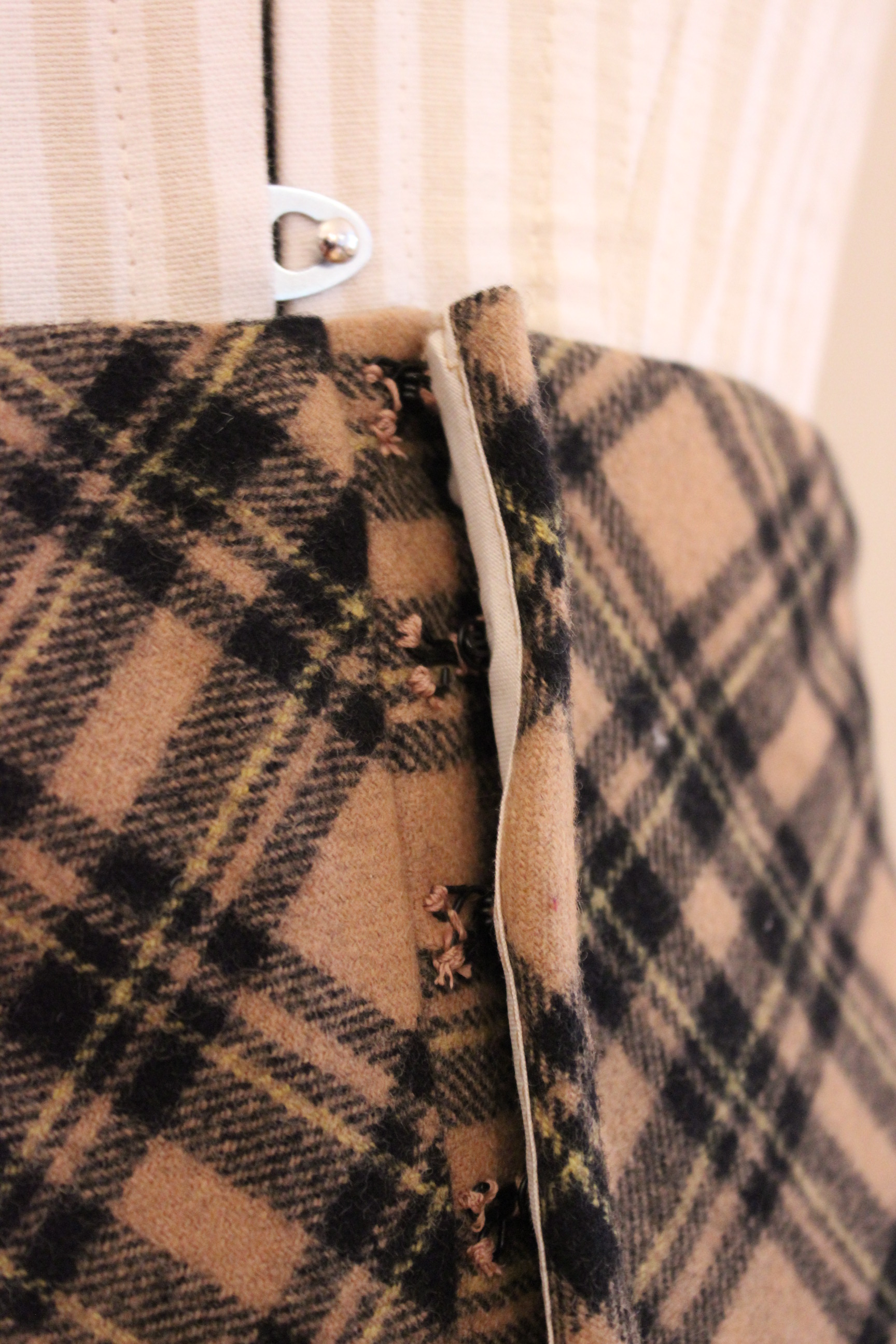
The skirt closes at the front with hooks and eyes, over a placket and secured with another pair of bones.
IMG_8821

I finished by hemming the skirt using a 10 cm wide strip of beige cotton for hem-facing.
IMG_8818

And that’s it.IMG_8823The skirt from the inside

The finished Skirt:
IMG_8795

IMG_8797

IMG_8814

IMG_8800

IMG_8805

IMG_8806

IMG_8810

Just the facts:

Challenge: HSM15 nr 9 – Brown

What: A 1900s brown/plaid walking skirt.

Pattern: I drafted my own using Nora Waugh’s “The cut of women’s clothes”

Fabric: 3 m of plaid wool an bits and scraps of cotton for interlining and hem-facing.

Notions: Thread, 2 m of bias-tape, 2m of boning, and hooks and eyes for clouser.

Time: About 10 hours – the fabric matching and hand stitched hem took more time then usual.

Cost: About 200 Sek (32Usd) – all material came from stash but I bought this fabric on sale about a year a ago with a similar project in mind.

How historical accurate: Pretty good. The fabric and pattern are all good. Even though most of the skirt is made by machine the finishing are hand-stitched, as it should be fr this period. I did use some modern techniques on the foundation piece. I’d give it a 7/10.

First worn: Will be worn for photos on October 4th.

Final thoughts: I like how it came out, both the sweep of the skirt and the pattern matching looks really nice, but I’m not completely happy with the raised waistline and I might go back to tweak it a bit later on. But a ll in all it’s a nice piece to have in the costume wardrobe.


Heirlome dress – Photoshoot

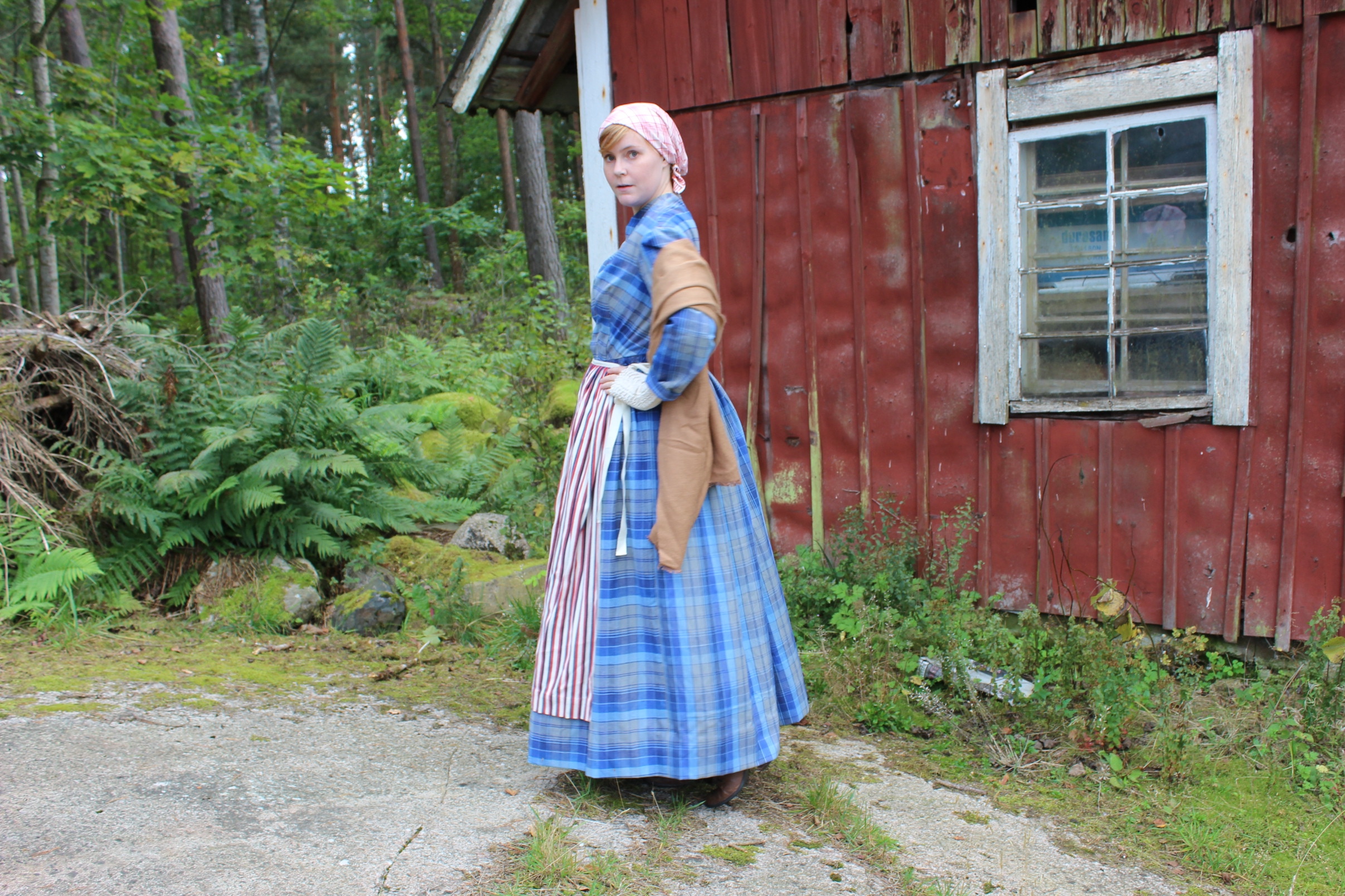
Only minutes after finishing my new peasant dress, I packed it and left for my sisters house (and her birthday celebration), where we took a few moments to take some photos around the yard – which was the perfect setting for this dress.

I’m wearing: My new Heirloom dress paired with apron and head-cloth/shawl from my National costume, beige woolen shawl, knitted mittens, chemise, petticoat, bloomers and lace up boots.

IMG_8420

IMG_8423

IMG_8426

IMG_8463

IMG_8439

IMG_8479

IMG_8482

IMG_8500

IMG_8502

IMG_8515

IMG_8518

IMG_8523

IMG_8563

IMG_8577

IMG_8569Photo: Elin Evaldsdottra

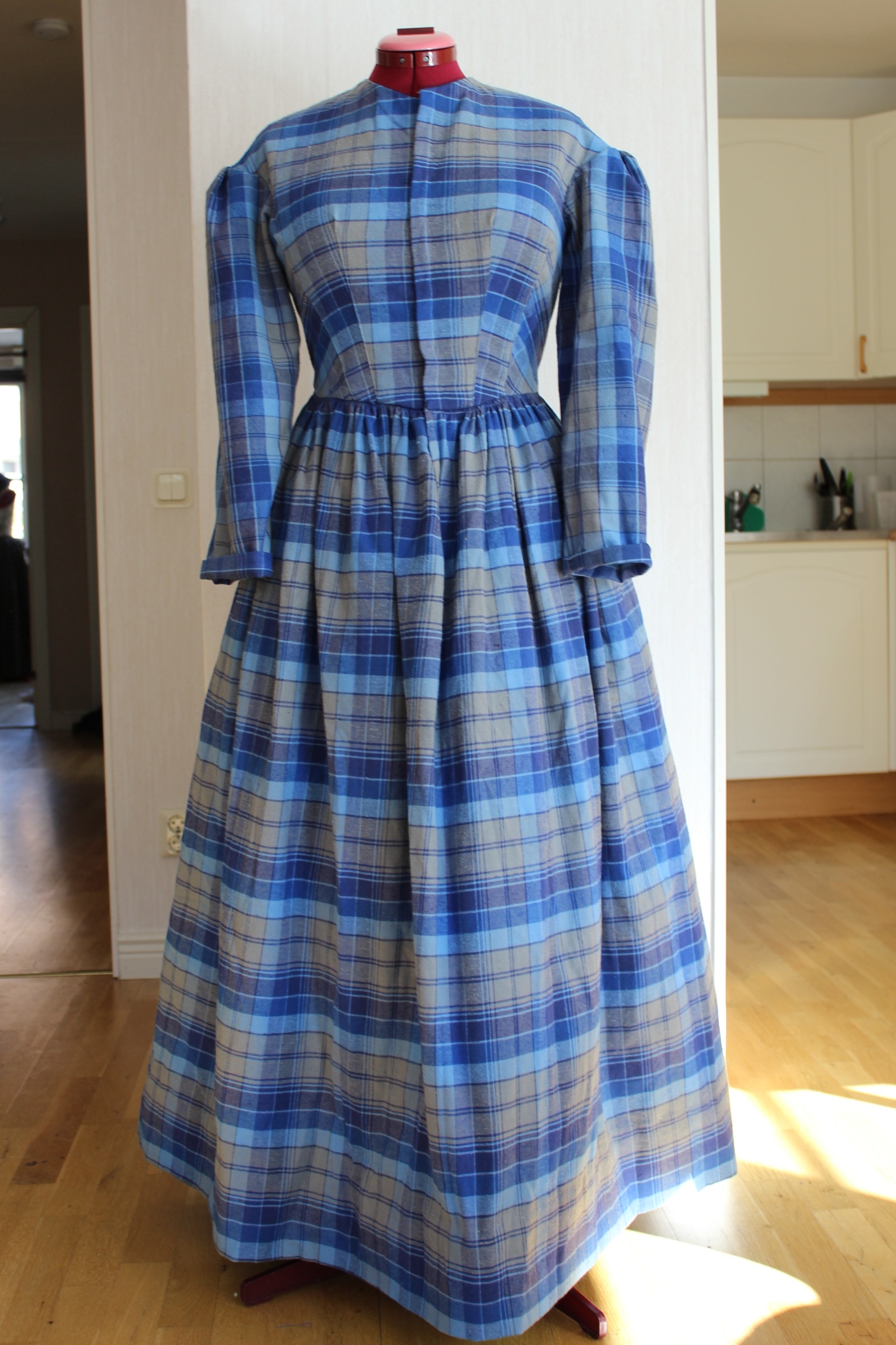
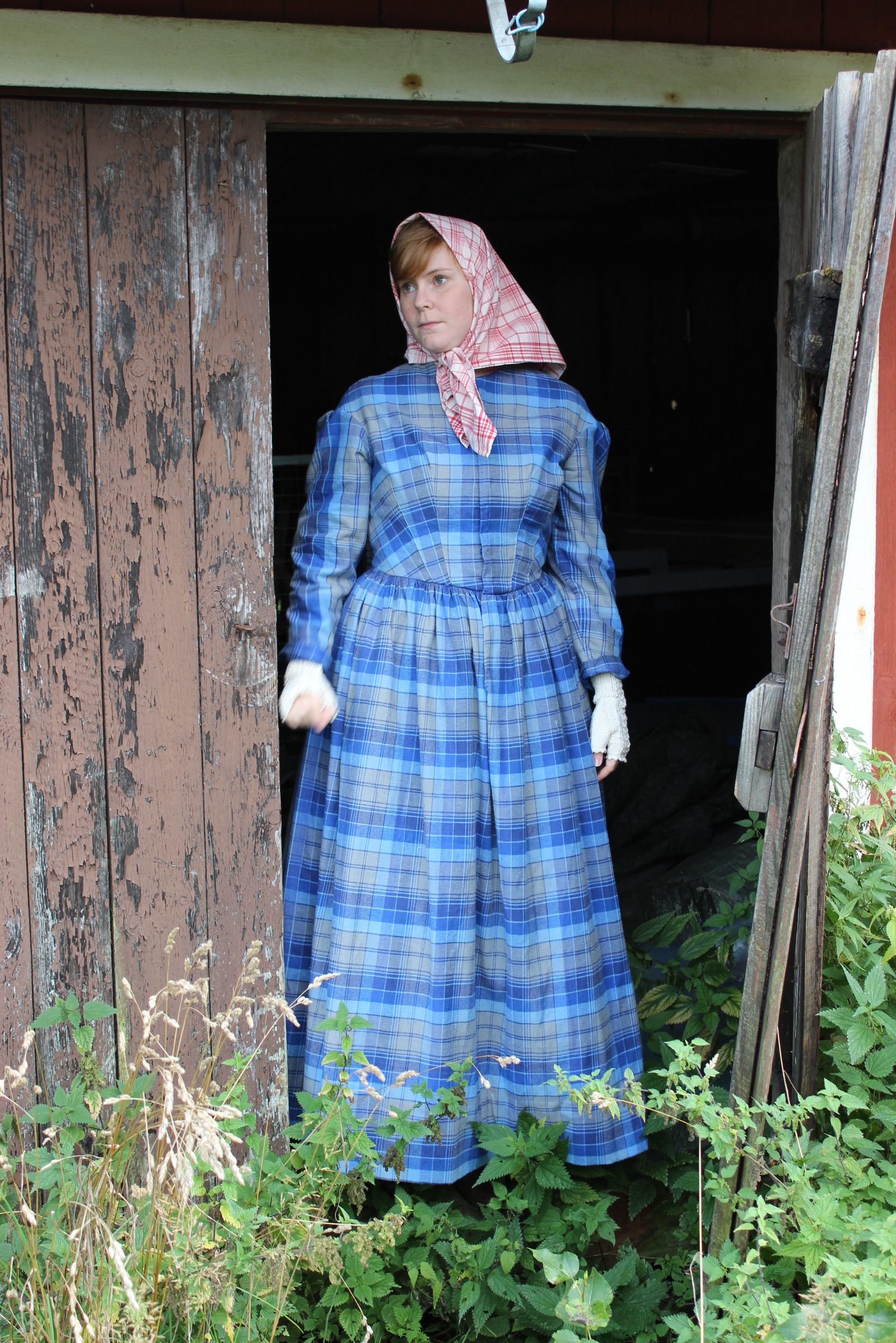
1850s Swedish Heirlome Farm-dress

Last months HSM15 Challenge was “Heirlome”, and as never inherited anything suitable and knew nothing about my ancestors I had some trouble deciding what to make for this one.

Basically, I could make whatever I liked as long as it heirs from Sweden.
Initially I thought about making another piece for my national costume – like the jacket, embroidered shawl or headpiece, but since time was short (starting 1 week after deadline) I decided to go with a more classic (and fast) alternative.
The 19th century farm girl.

dalsland4I love this pic of a girl in her finest clothes in front of her home. So refreshing an “real” from all the fancy dresses you see in fashion plates and preserved garments.

Since almost everybody in Sweden heirs from farmers, it seemed logical to assume that so did me and my ancestors.

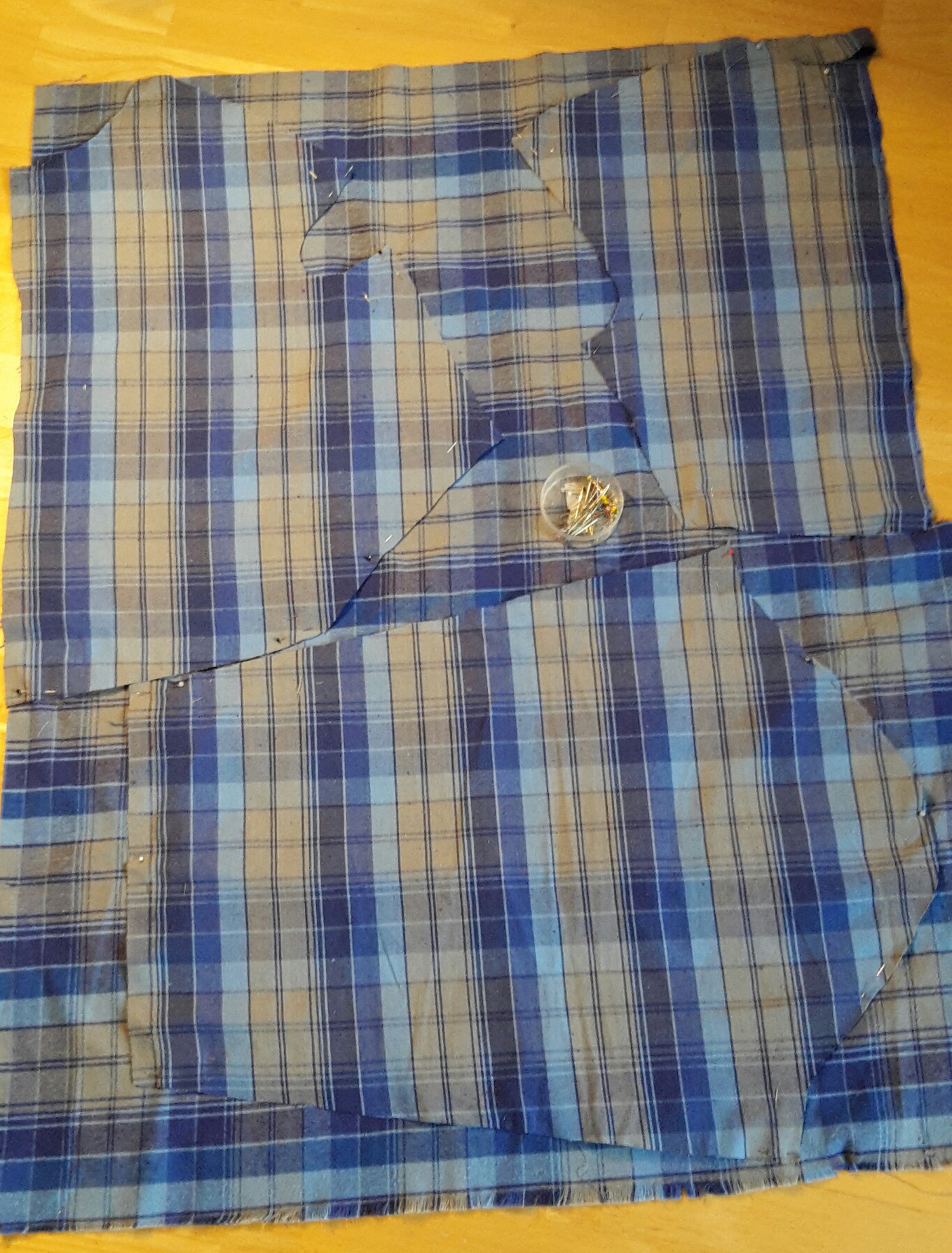
I found this fabric, 3 m blue plaid cotton flannel, at an online auction site for a real steal of a price.IMG_8614

I used my 1840s fan-front dress pattern and cut the fabric down to scraps, carefully matching the plaids.20150903_183856_resized

Then I sewed the dress together.
I made it all in three nights, altering between the sewing machine and hand stitching before the TV, and unfortunately “forgot” to take pictures. The sewing was pretty straight forward, so really noting to write in dept about (read about my last dress like this here)

I did however change a few things, from the original green dress, like:
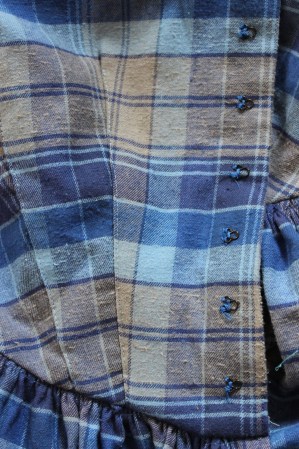
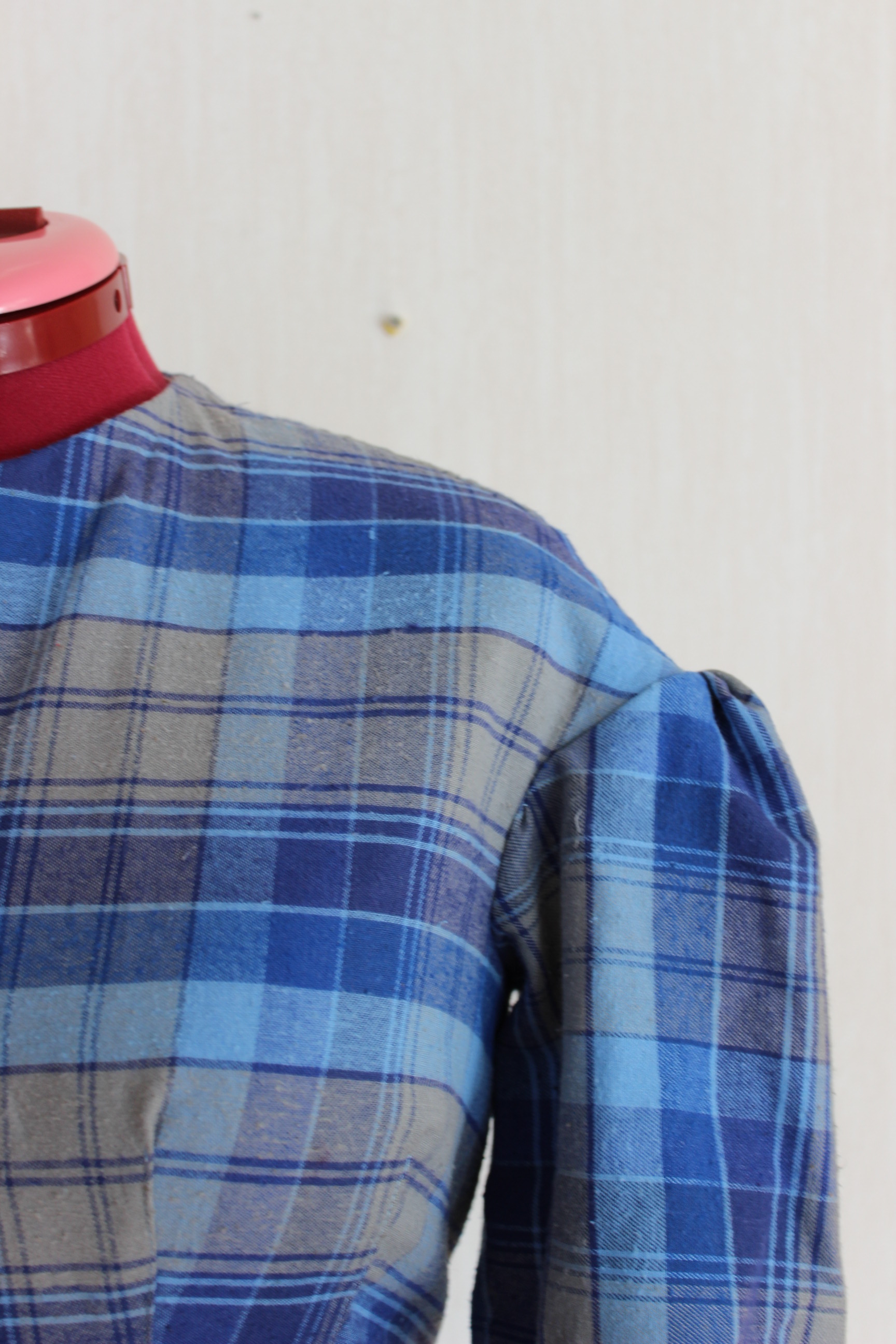
Using darts to shape the front bodice, instead of fixed gathers. IMG_8635Adding the bodice to the skirt as to make a “whole” dress, and switching the buttons for hooks and eyes.IMG_8638

The finished dress:
IMG_8589

IMG_8590

IMG_8592

IMG_8591

IMG_8612

IMG_8606

IMG_8613

IMG_8608

IMG_8598

IMG_8601

IMG_8605

IMG_8611

IMG_8597

Just the facts:

Challenge: nr 8/2015 – Heirlome

What: A 1850s working woman’s dress – As my ancestors might have worn.

Pattern: Self drafted about 2 years ago.

Fabric: 2,6 m of plaid cotton flanell, 0,5 m of white cotton lining.

Notions: Thread, hook & eyes, 2 m bias tape.

How historical accurate: So so, the look and fabric is plausible, but I sewed most of it on machine and put in some modern techniques. Maybe 6/10

Time: About 10-15 hours

Cost: About 150 Sek (22 Usd)

First worn: For photos September 12.

Final thoughts: Unfortunately I do not love this dress. I like the idea of it much better then the dress itself.
I’t came out a bit to big for me, and being made to work without a corset I feel a bit frumpy wearing it.

IMG_8583Accessorized with apron and head-cloth from my national costume

“Sew 17th century Challenge” – Photoshoot

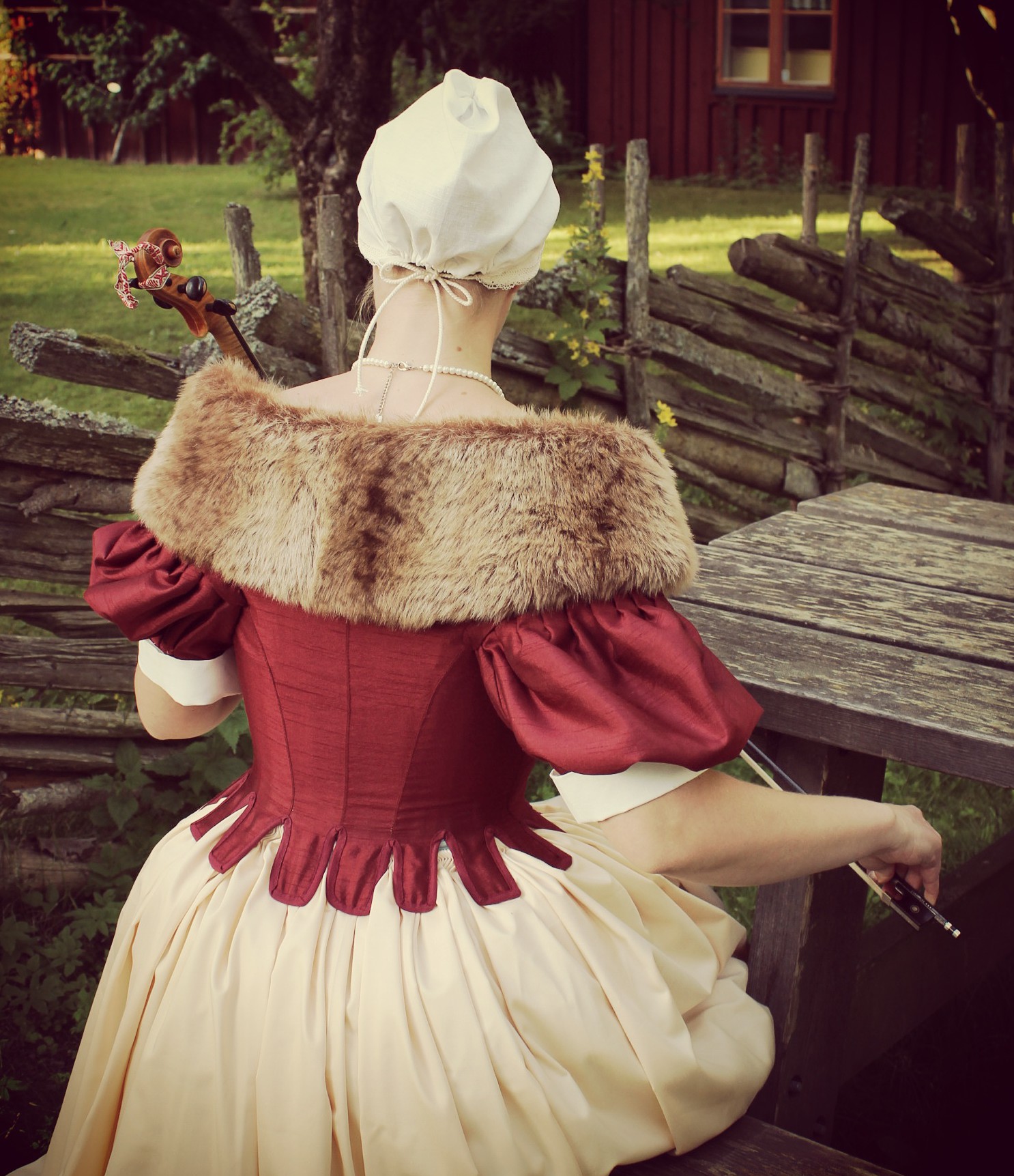
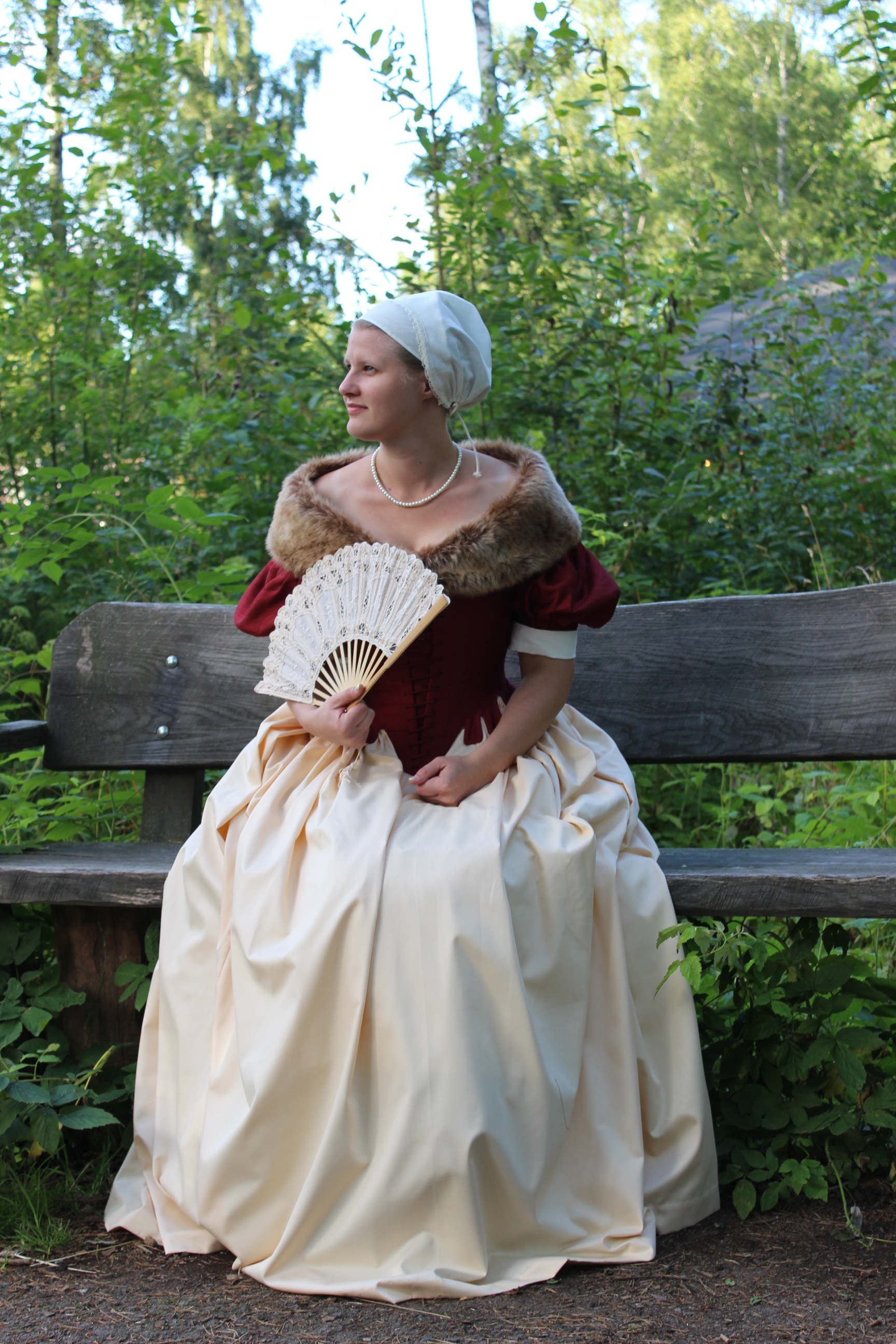
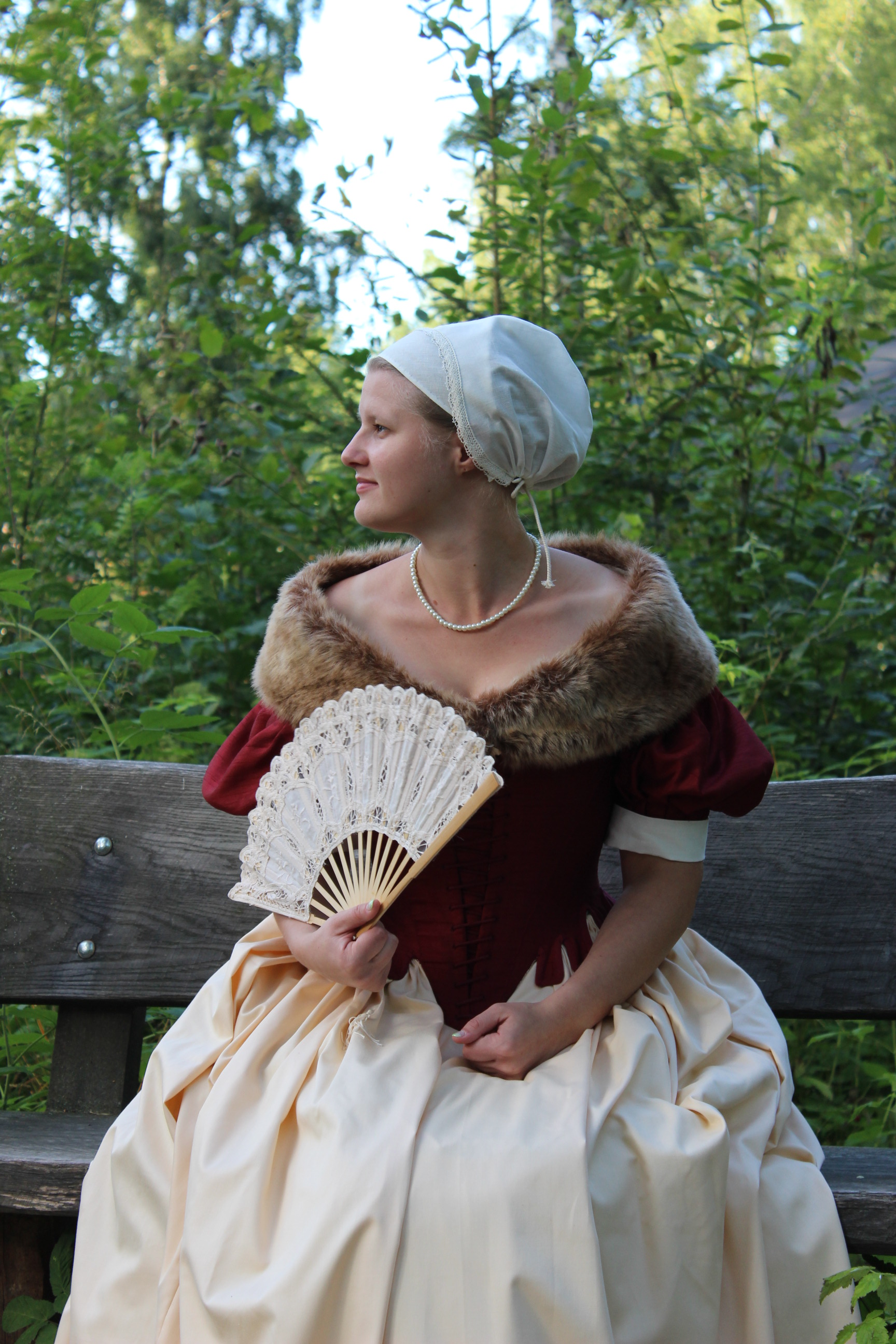
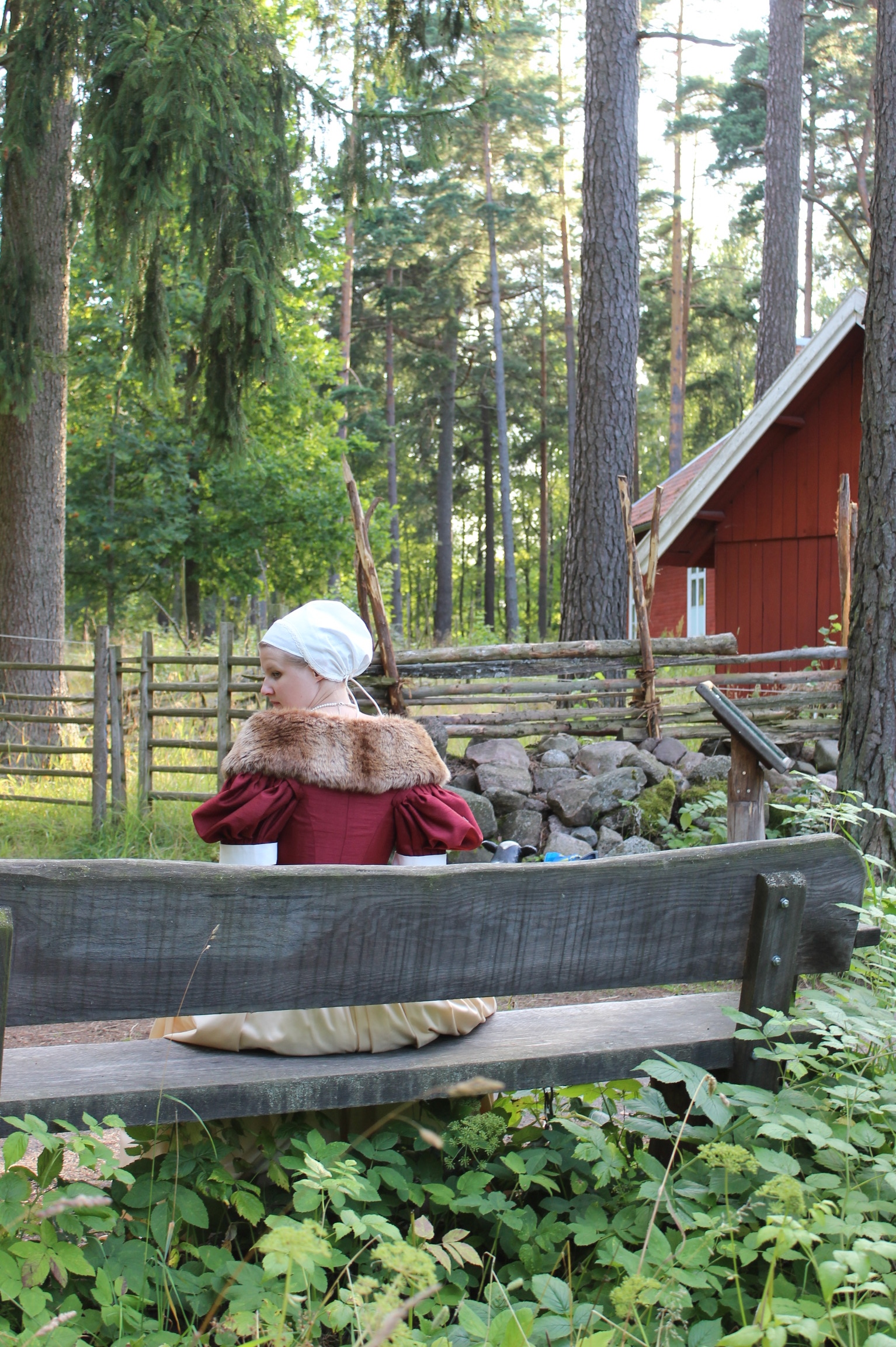
For the photoshoot I got some help from my friend, modelling my new 17th century outfit.

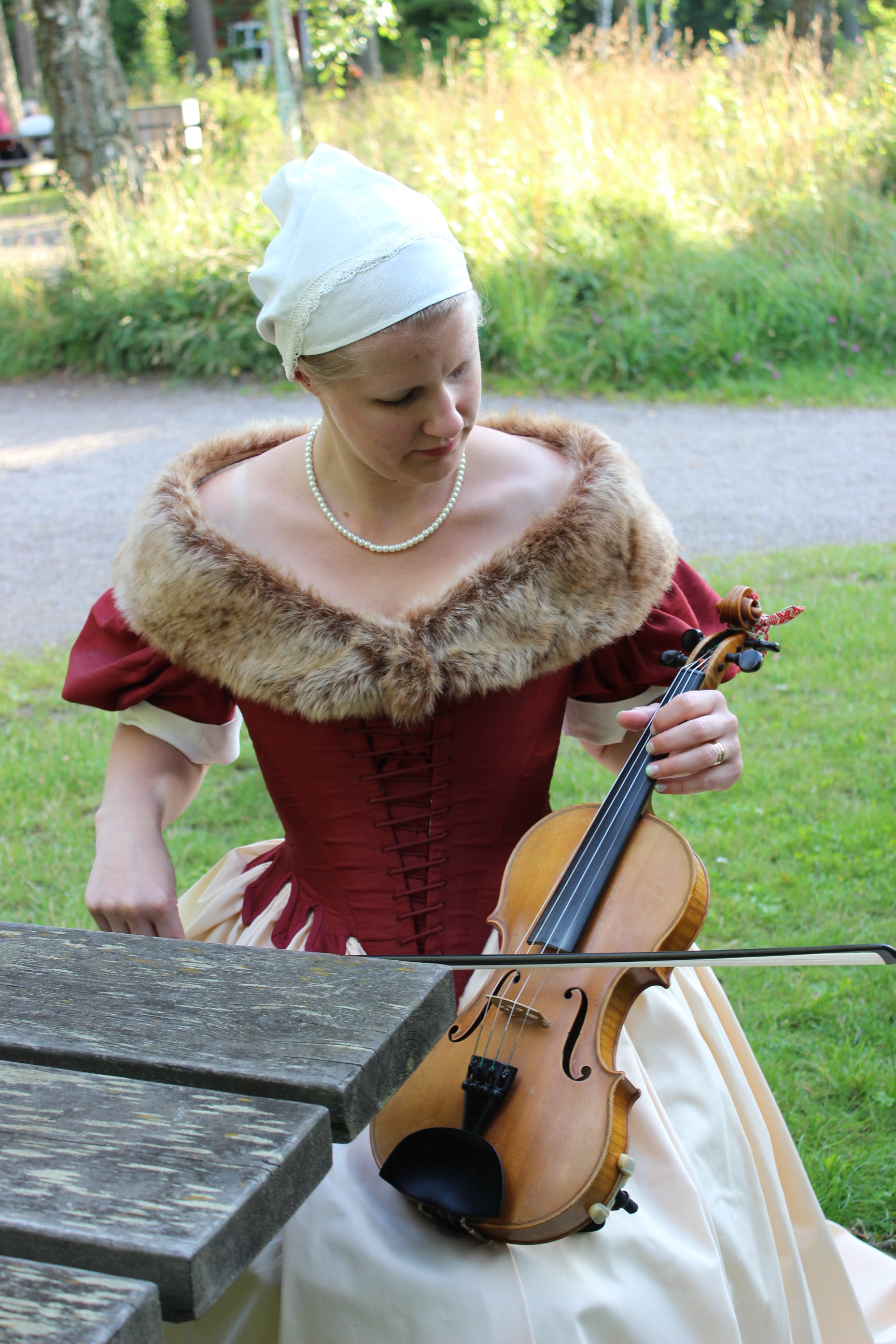
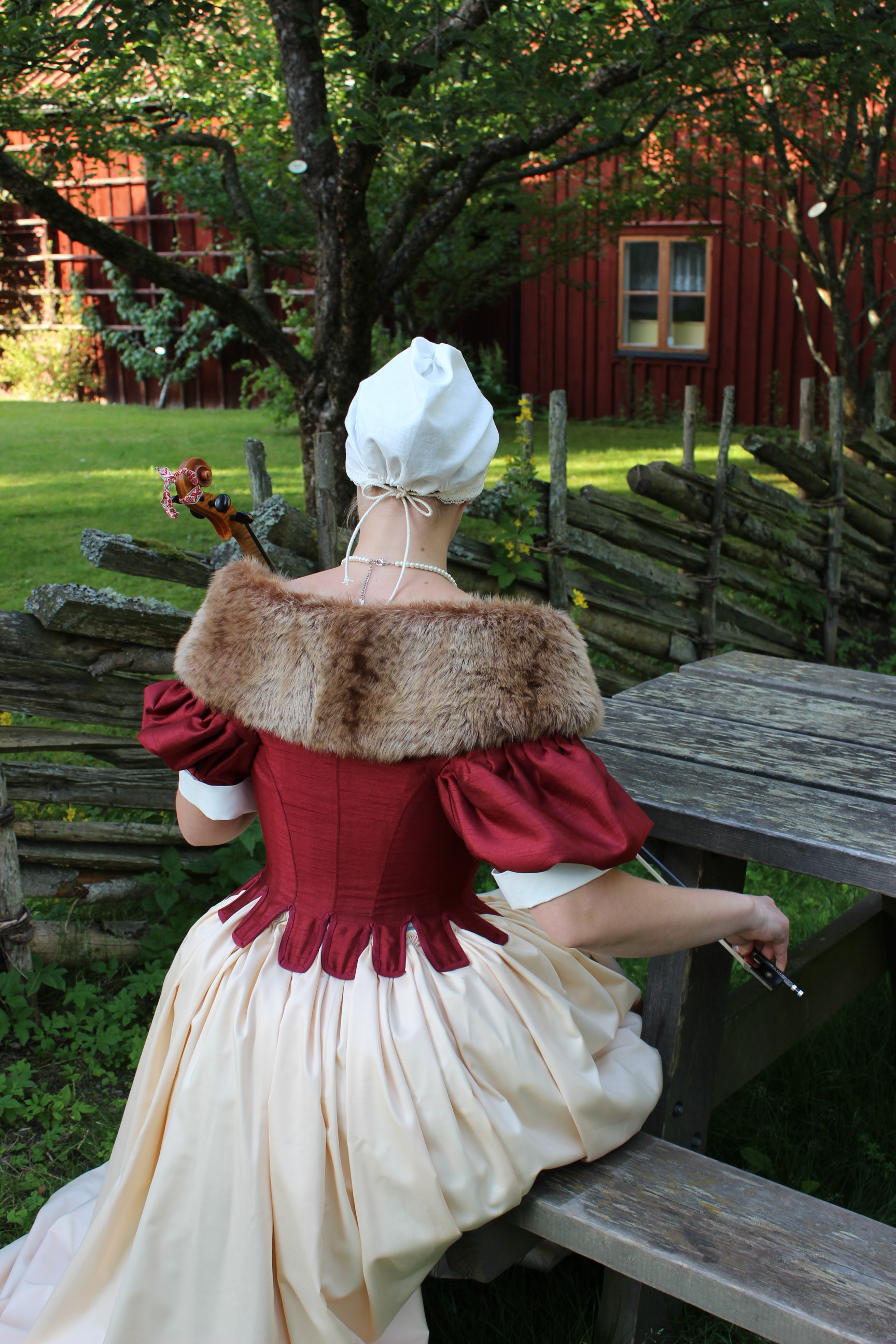
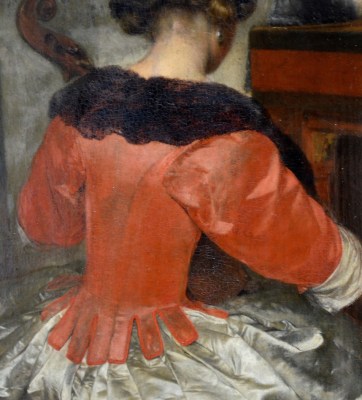
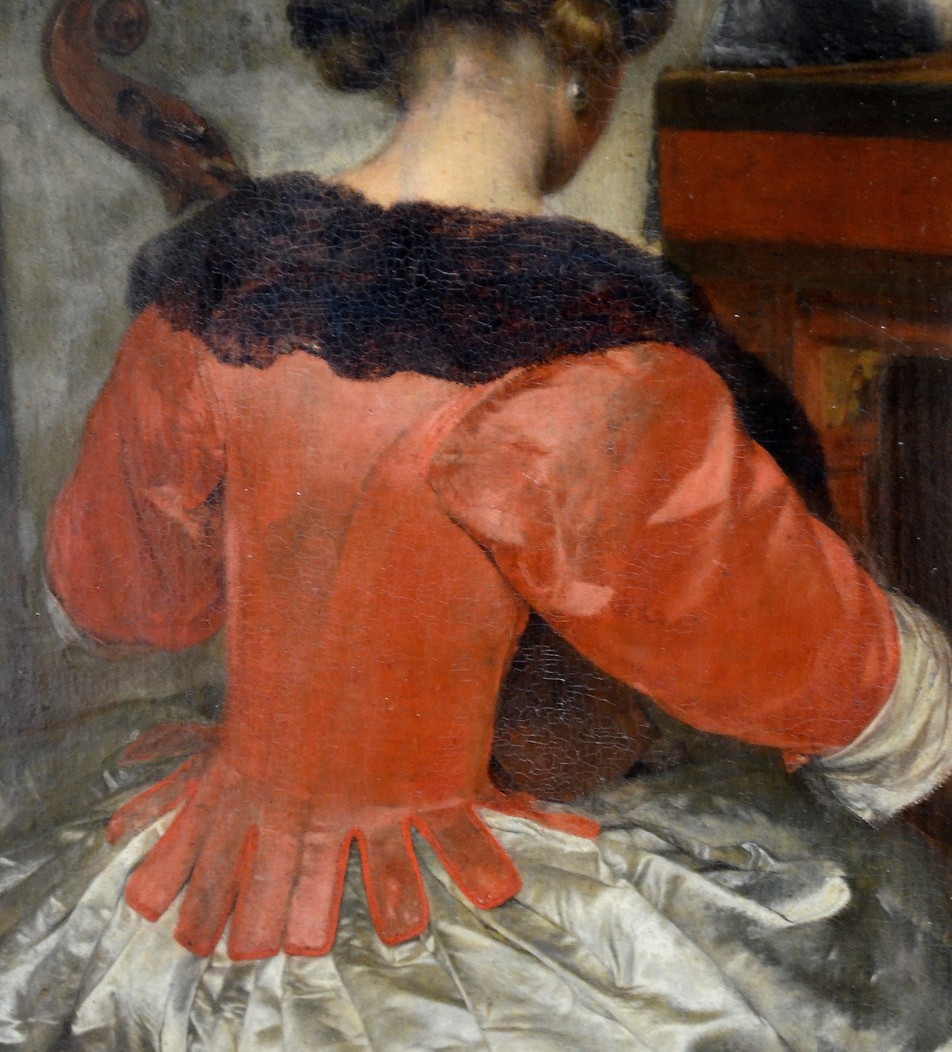
She wore the 17th century bodice, skirt, coif and fur over my quilted petticoat, accessoriced with a string of pearls and a Violine.
Here are the result:

Gerard_ter_Borch_(II) - The_Concert ca. 1675

IMG_7975

IMG_7973

IMG_8031

IMG_7985

IMG_7992

IMG_7969

IMG_8019

IMG_8094

IMG_8003

IMG_8014

IMG_8044

IMG_8039

IMG_8063

IMG_8064

IMG_8079

IMG_8081

IMG_8086Model: Annika Siljat

“Sew 17th century Challenge” – The Bodice (part 3 – Finishing)

And here comes the final part of the making of my new 17th century bodice. (Part 1 & 2)

12312767024_07604ef369_h

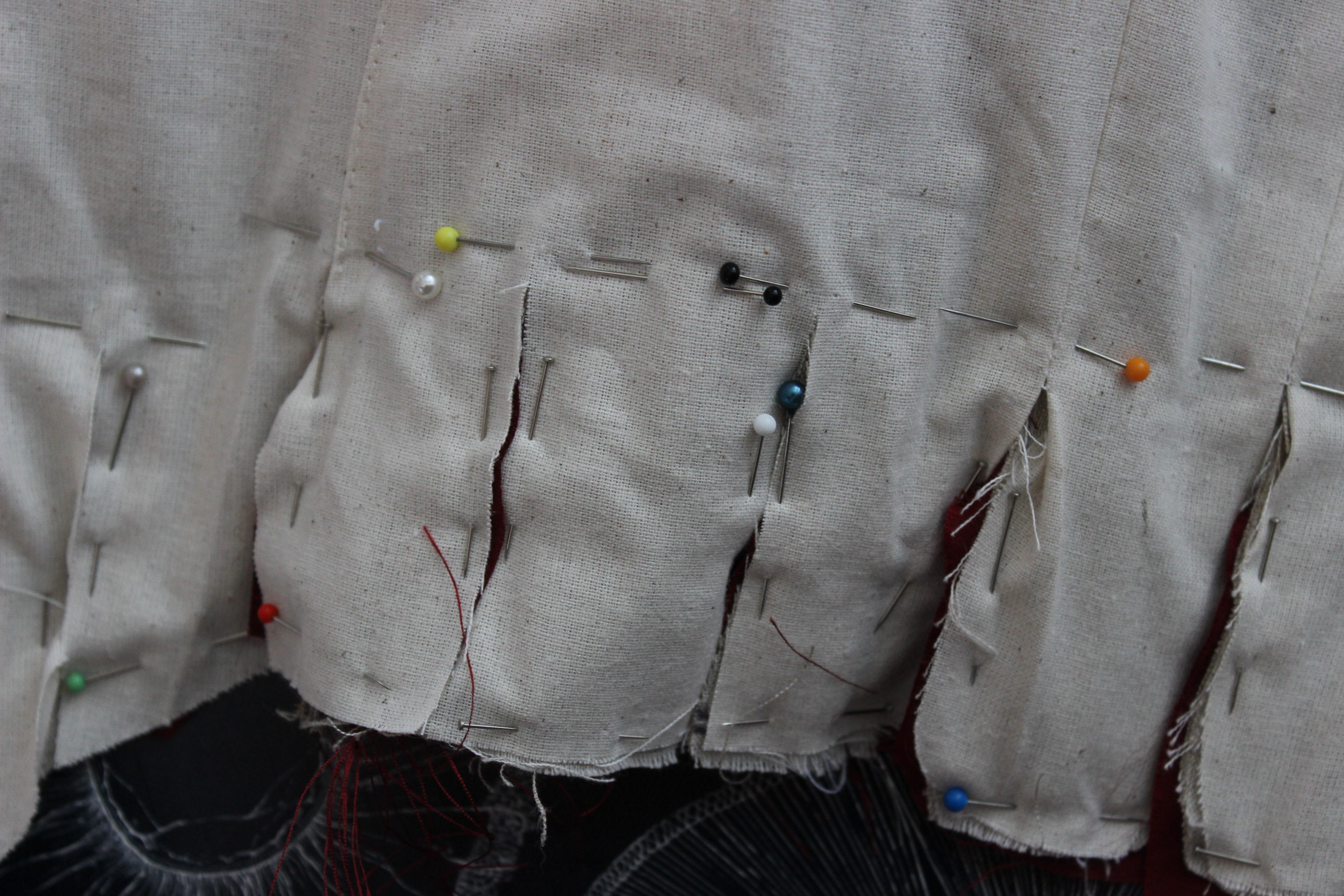
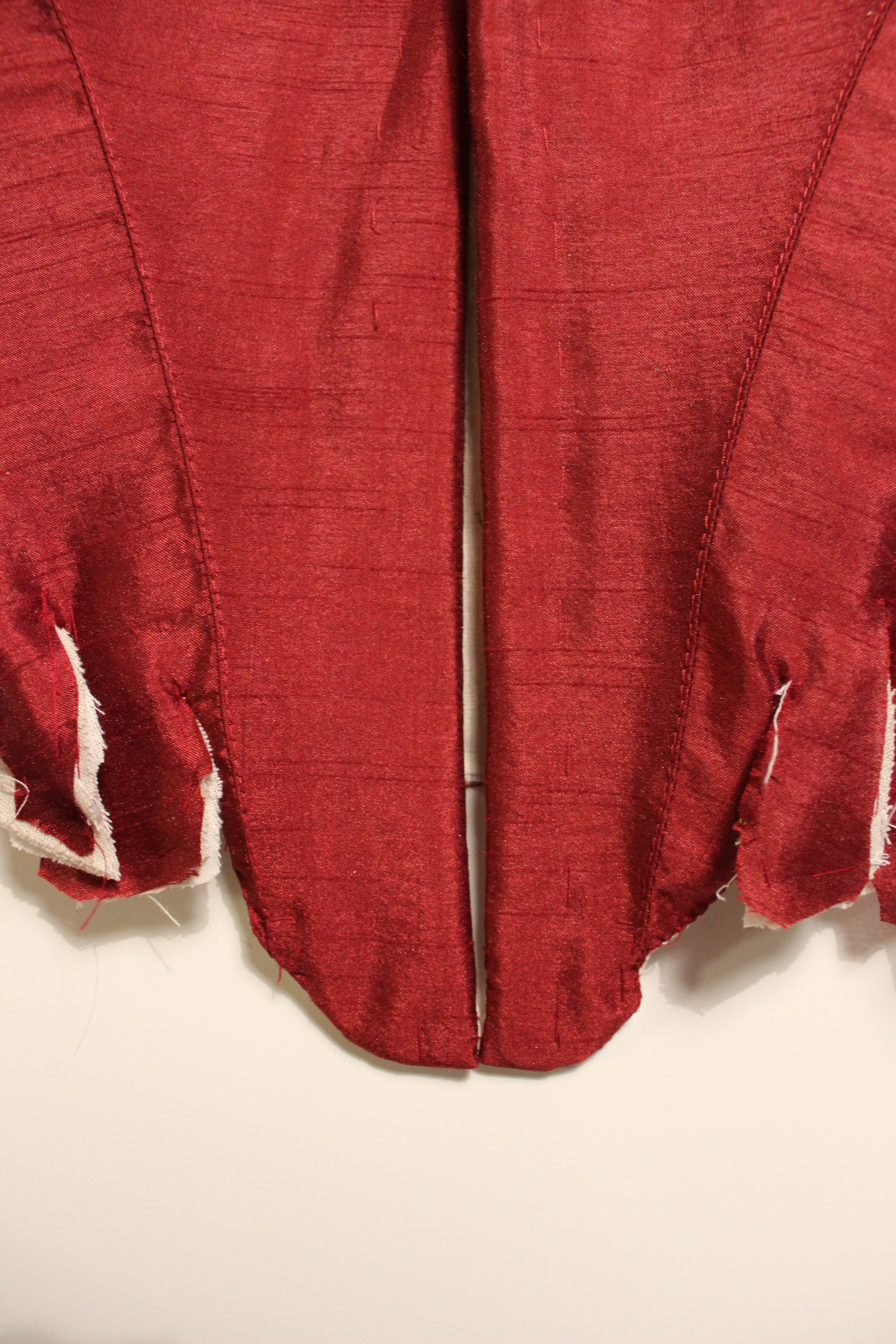
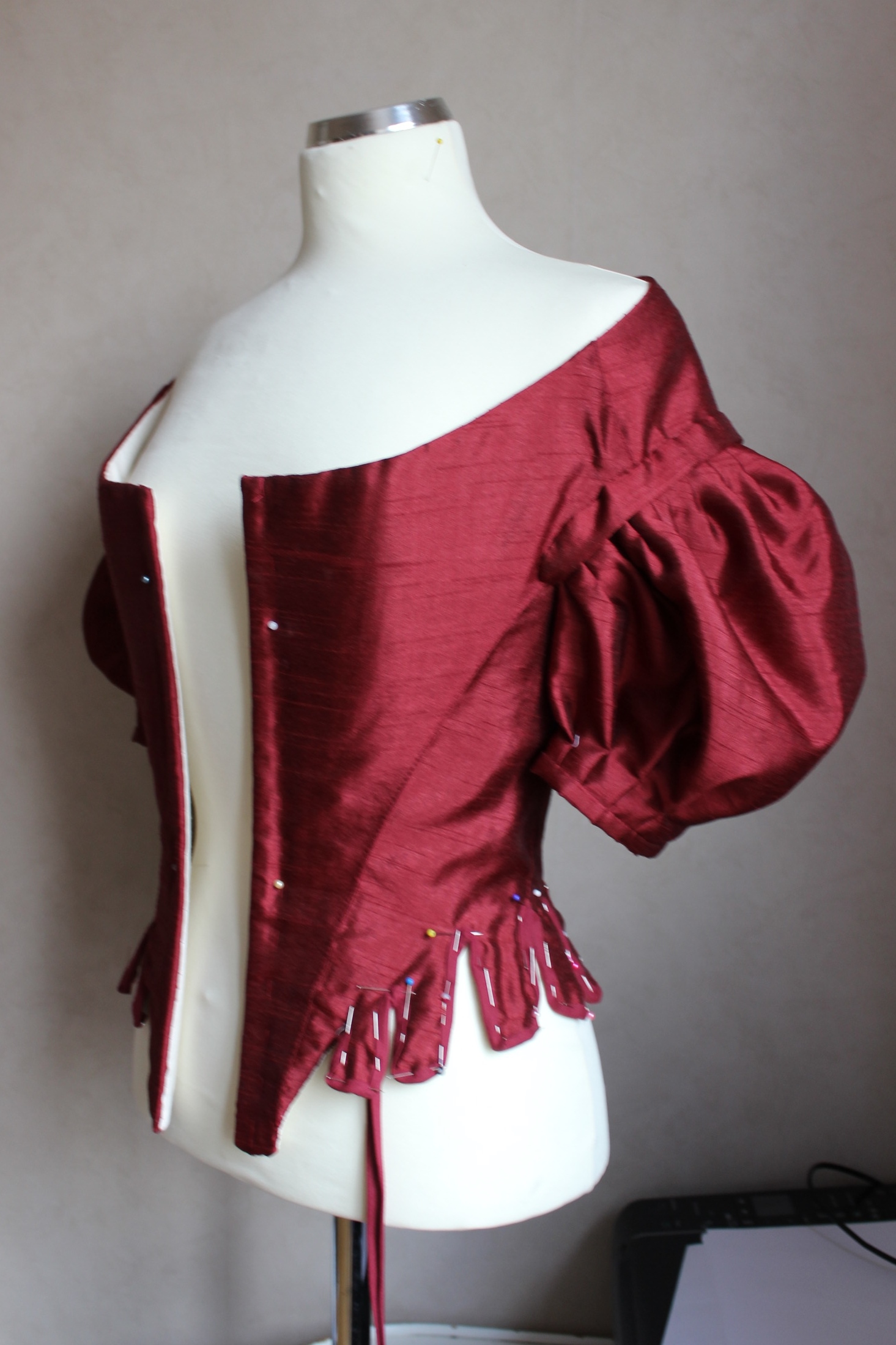
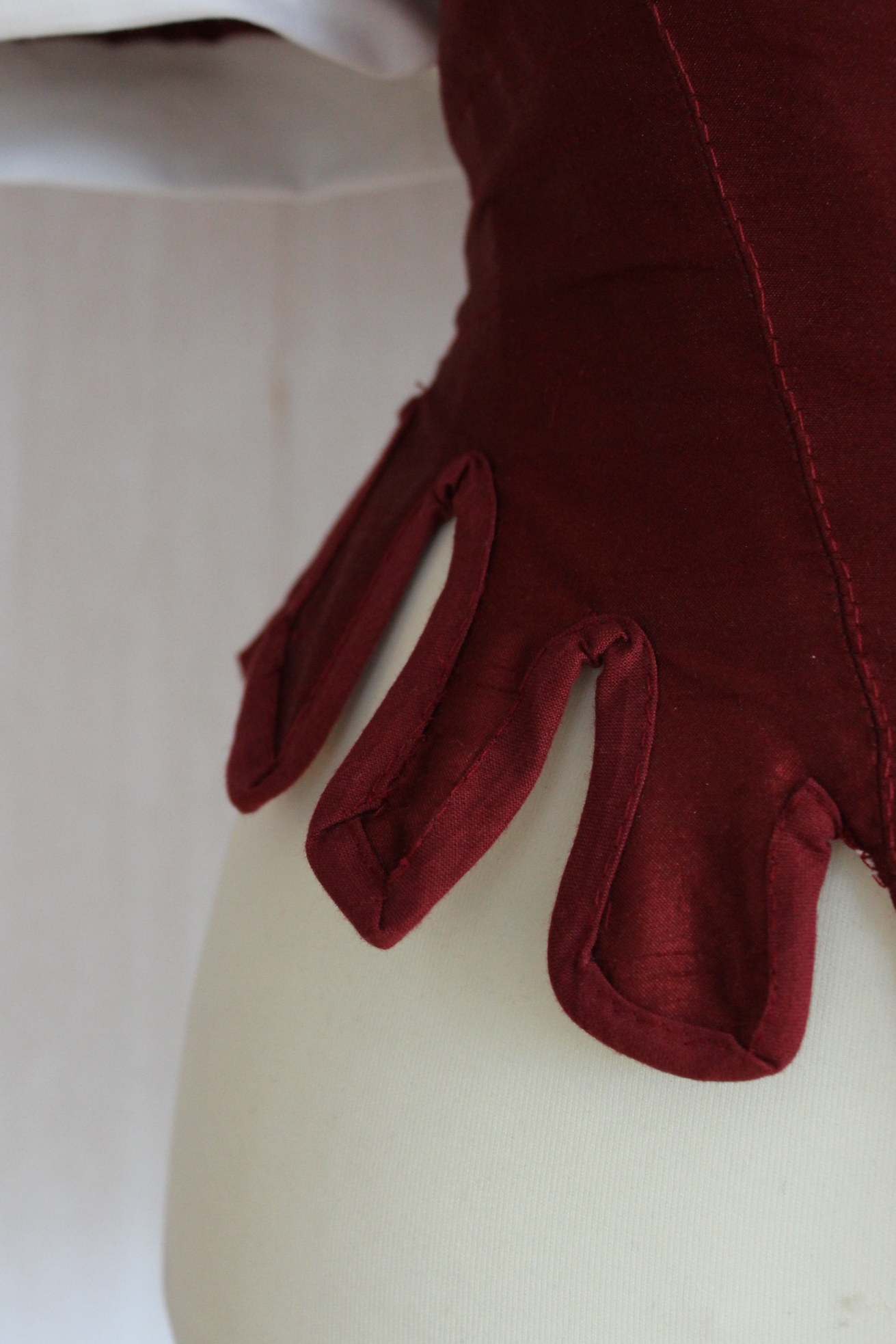
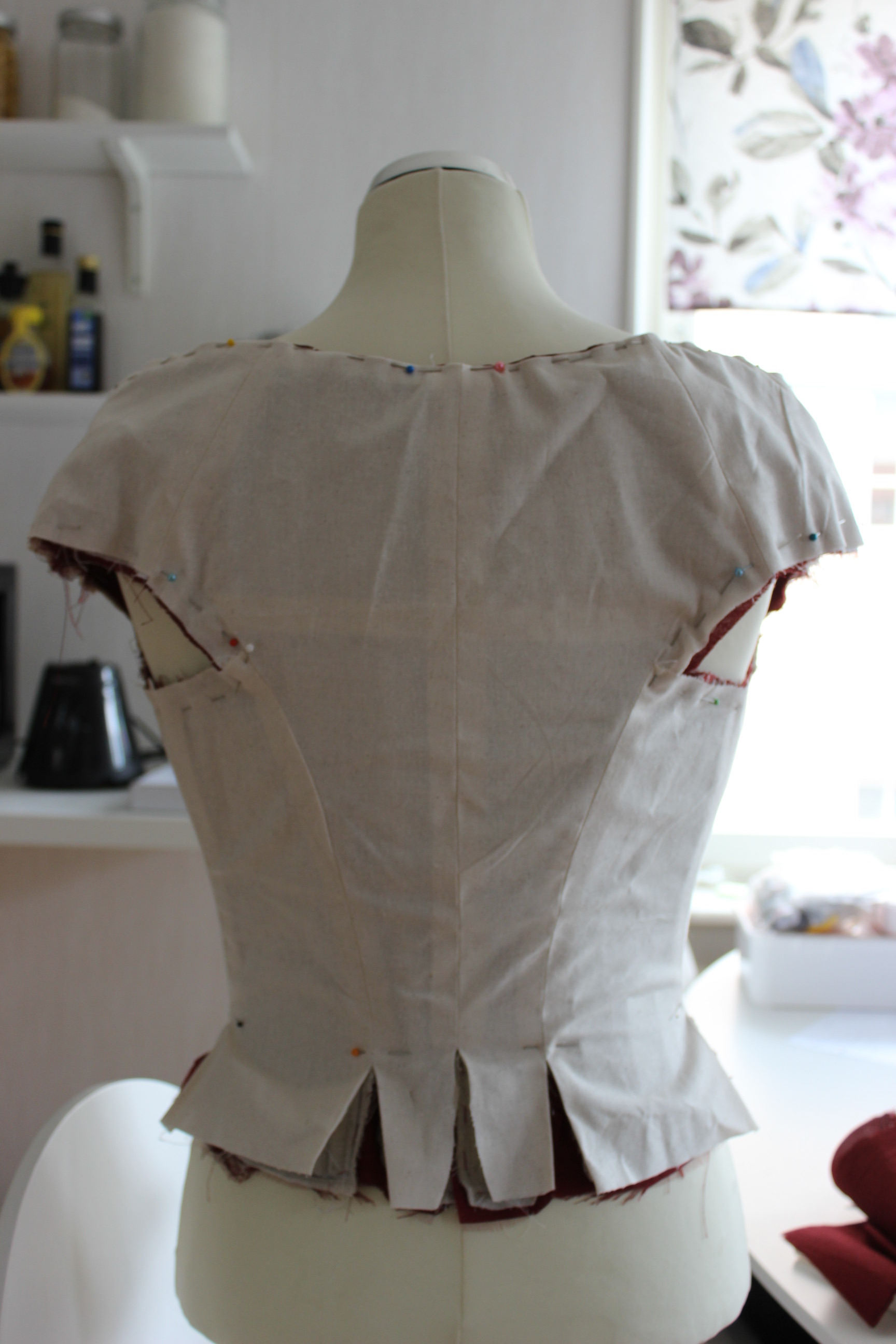
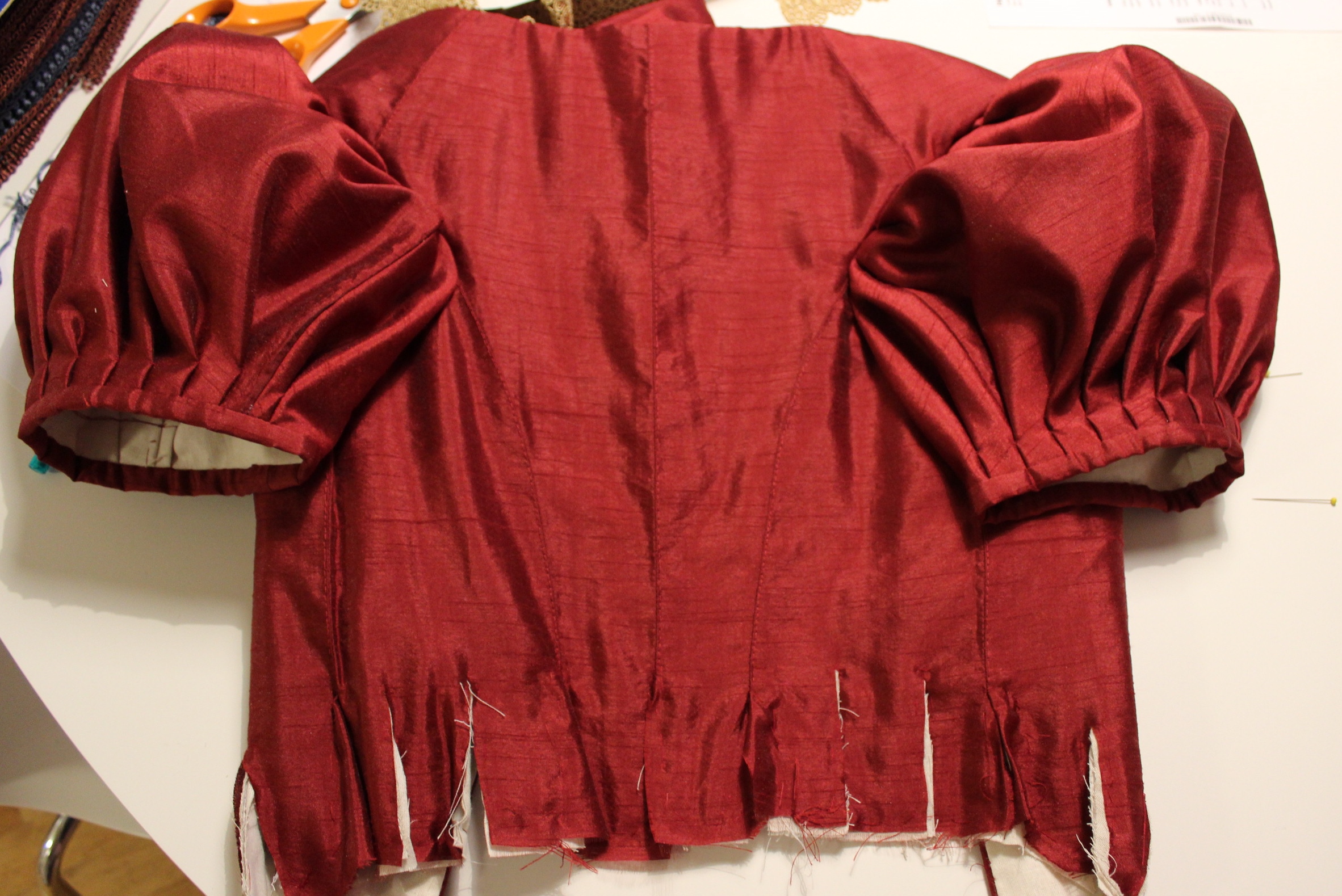
 Once the outer fabric, lining and sleeves where set it was time to deal with the tabs.
(Every stay makers dread)

I started by cutting them open and then I pinned the three layers together, and basted 
IMG_7832 IMG_7816

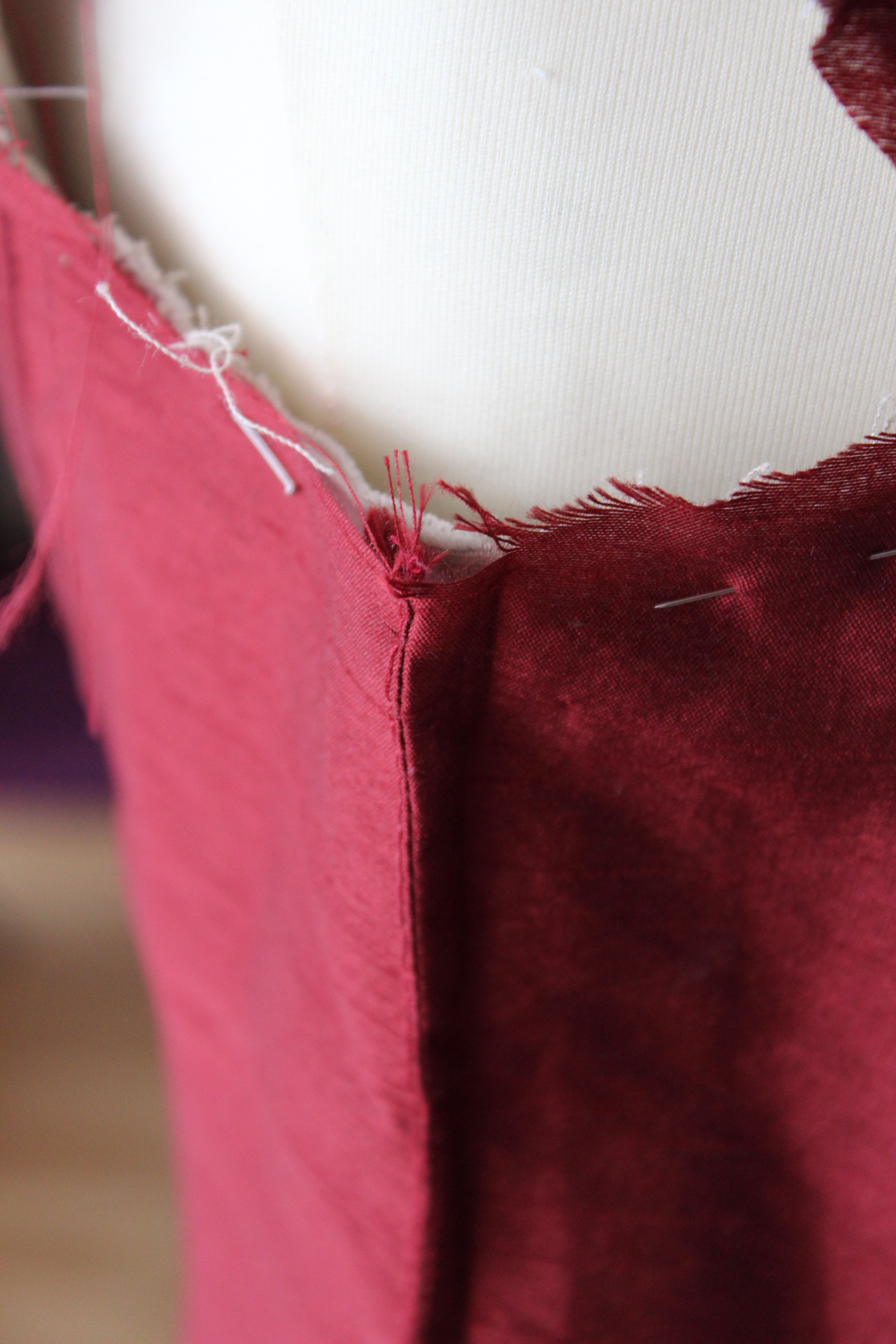
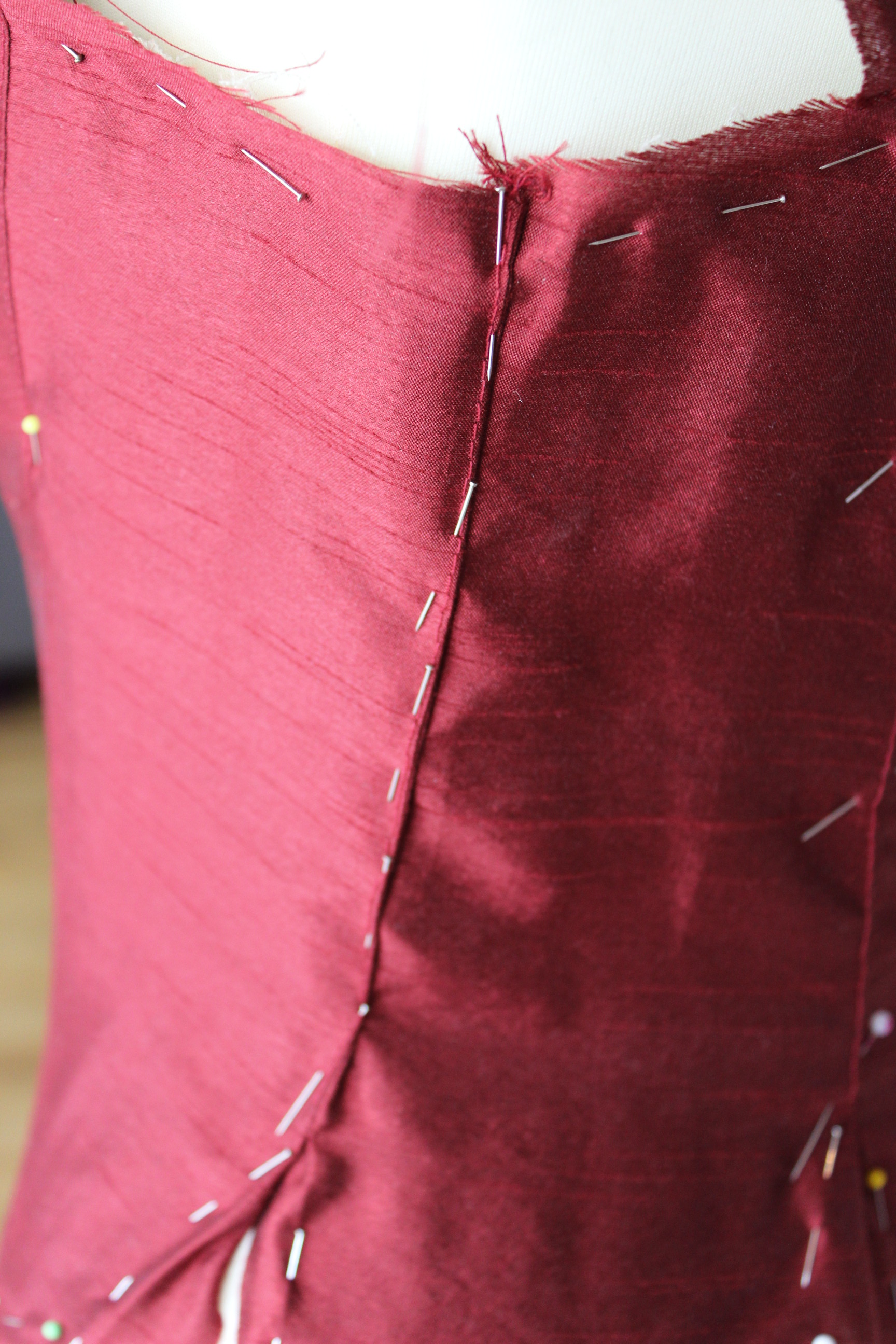
I ran into some problems when turning the front edges under, and no matter what I did they came out awfulIMG_7829This is seriously my third re-do, and unfortunately the best of my tries.

I had no idea how to fix i and the problem caused me to loose steam (and love) for the project.

After some nights to cool of and think, I figured to just hide it.
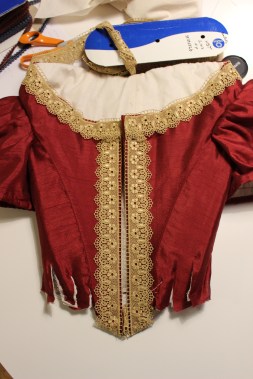
So I went trough my stash and found some lovely golden lace, to see if that would do the trick.IMG_7831 IMG_7827
In the end I decided not to use the lace, even though I still think it looks stunning (maybe something for a later date).

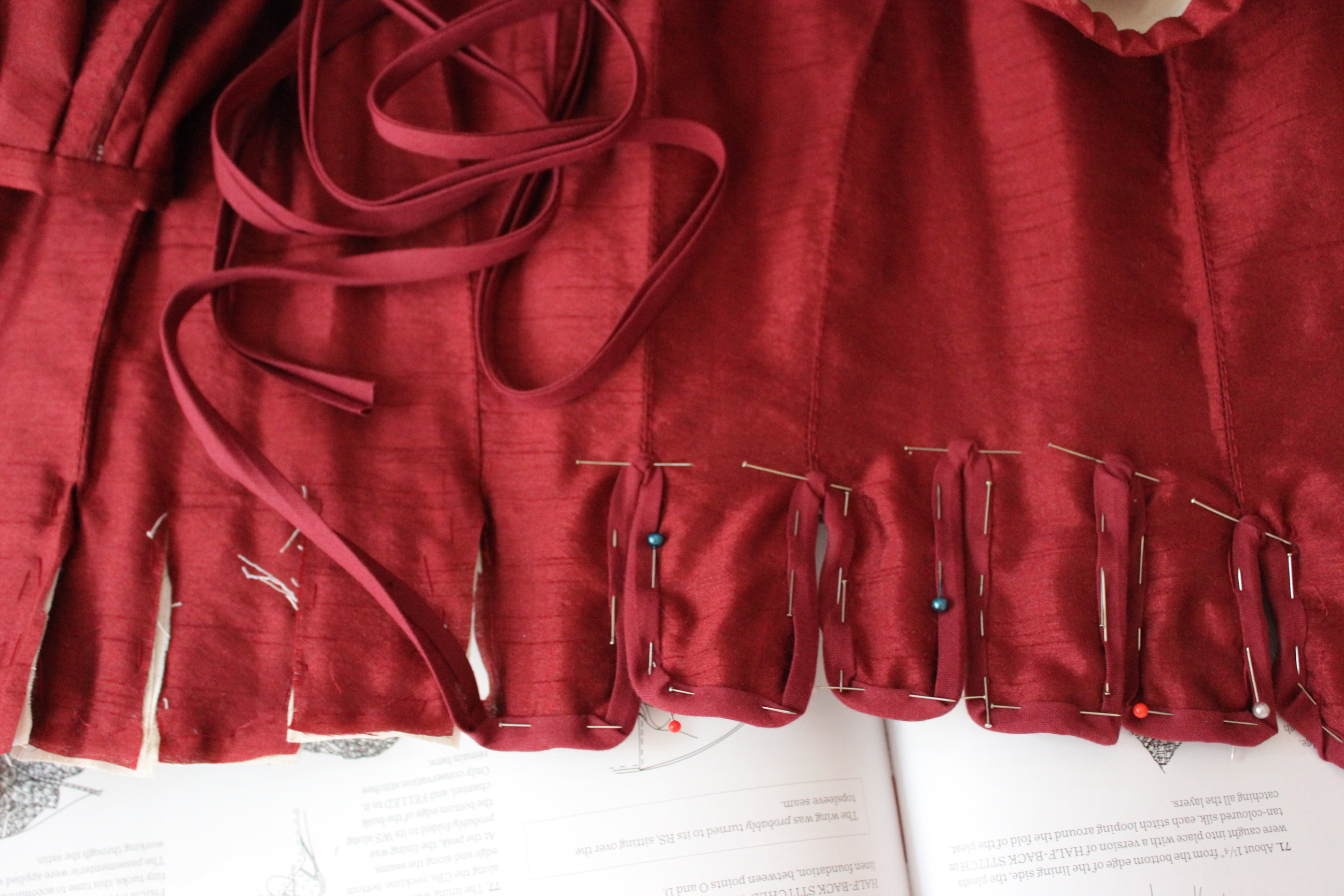
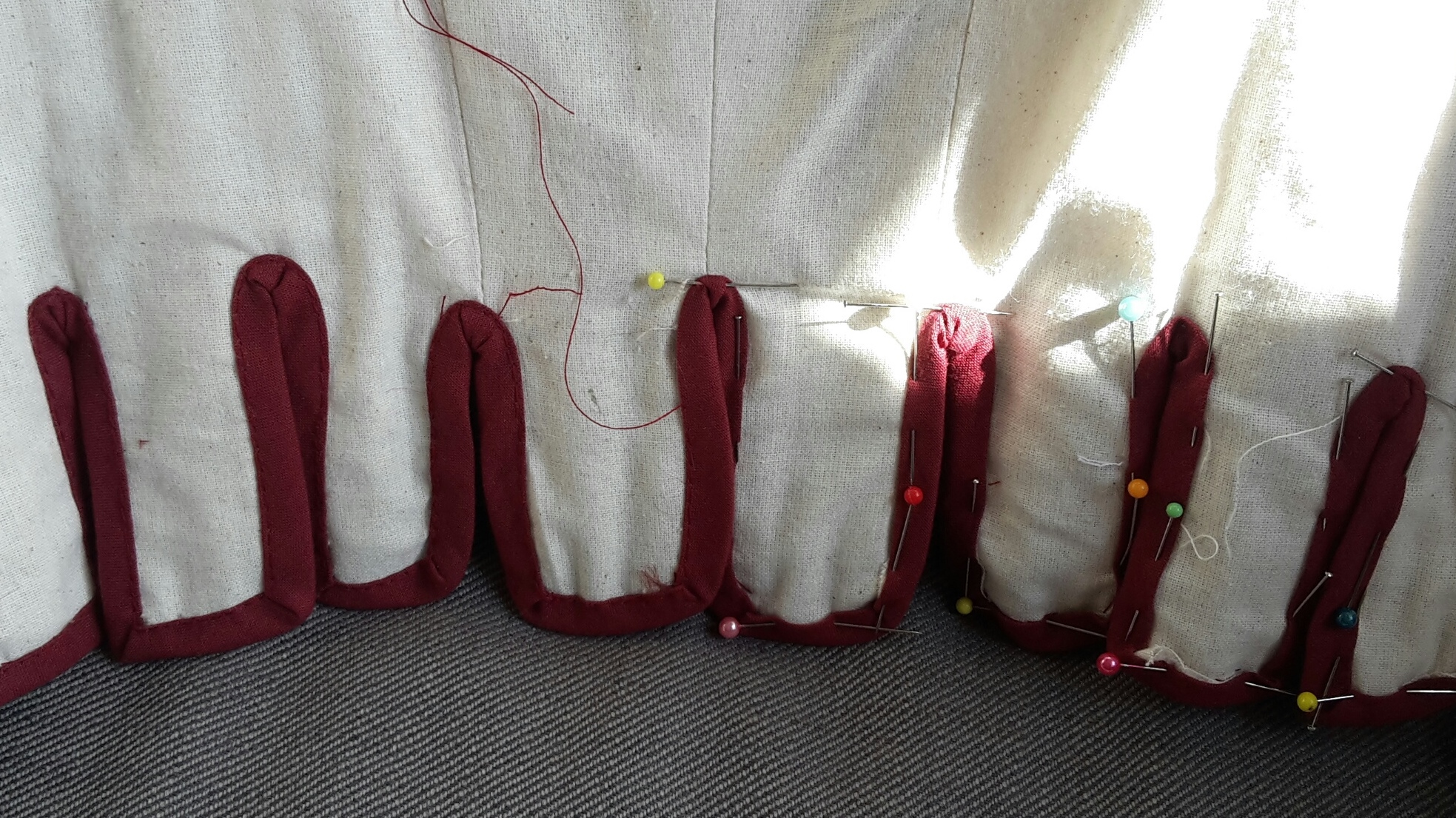
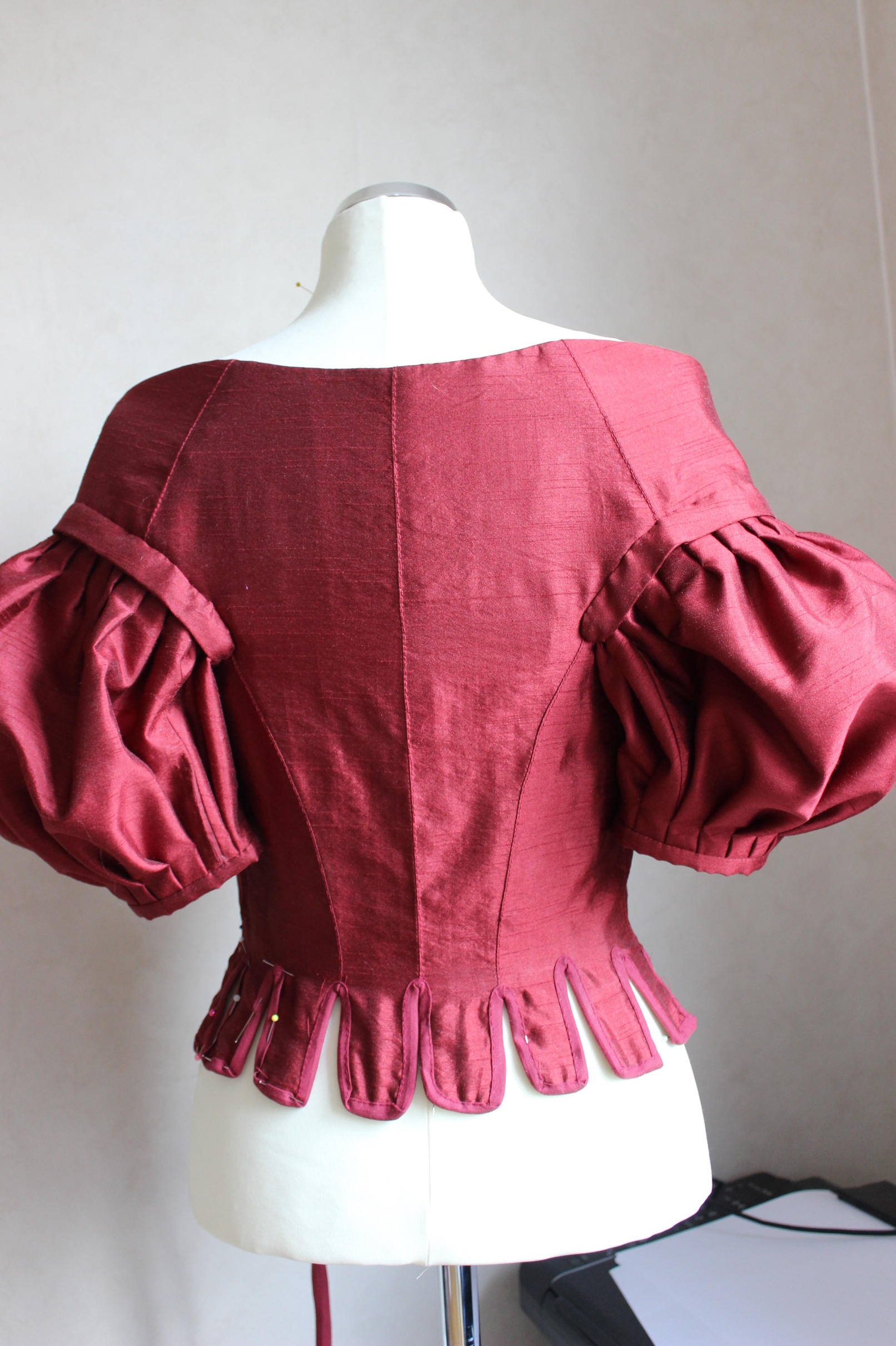
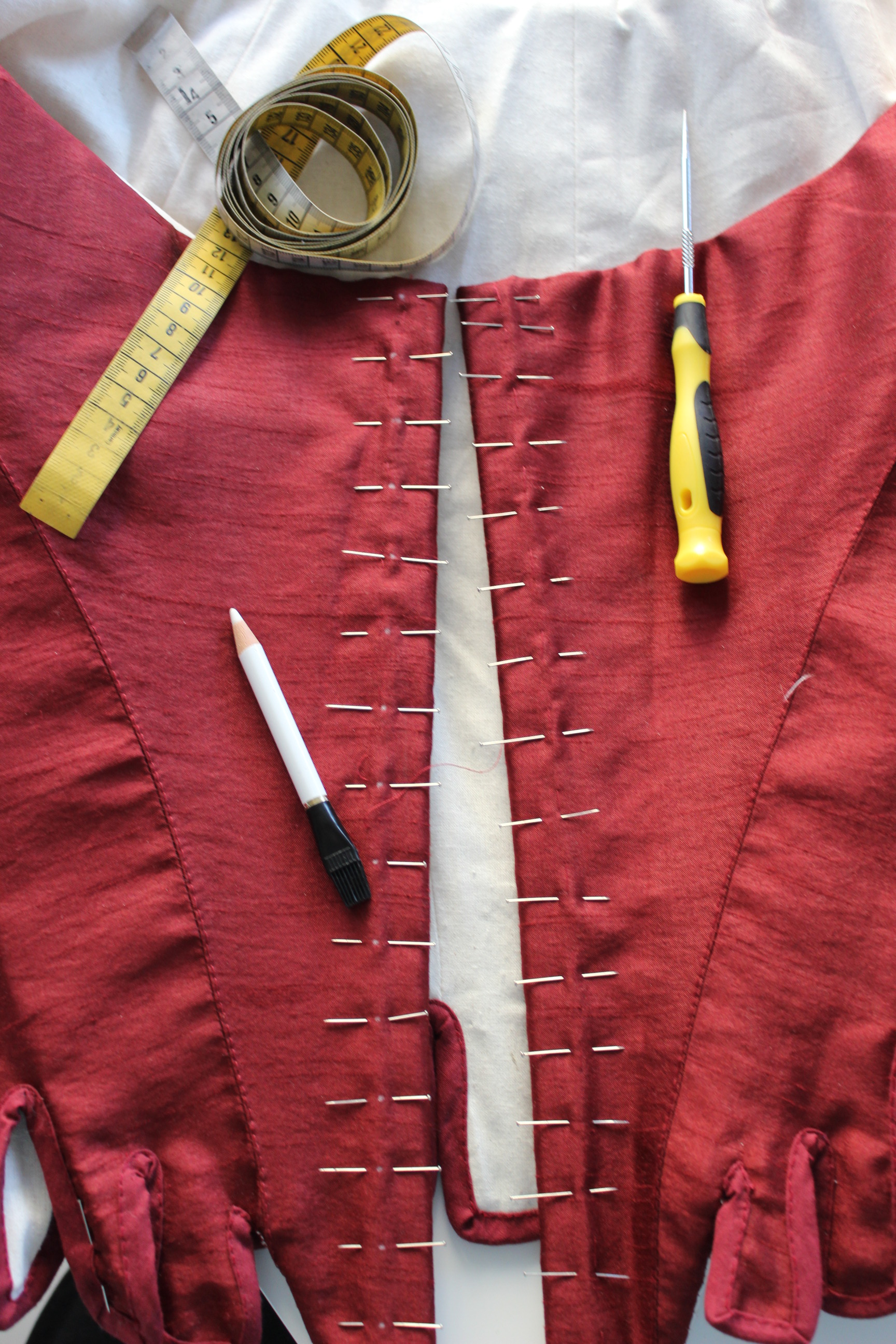
Once I excepted the less then perfect front, it was time to start covering the tabs.
IMG_7834
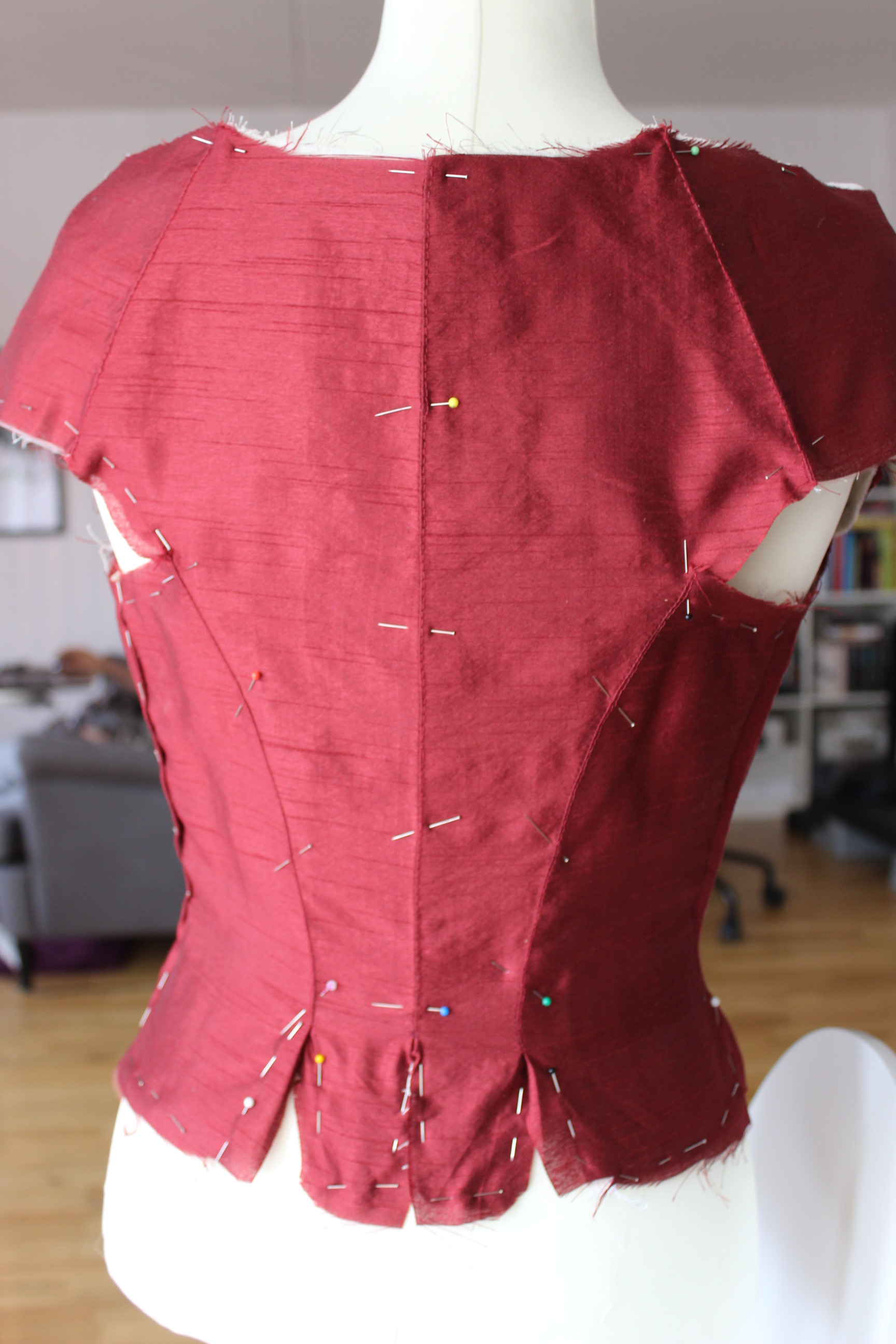
20150801_135414_resizedI used red cotton bias-tape cut to a smaller size.

IMG_7845IMG_7848
Starting to look like something….
But a lot of work remained.

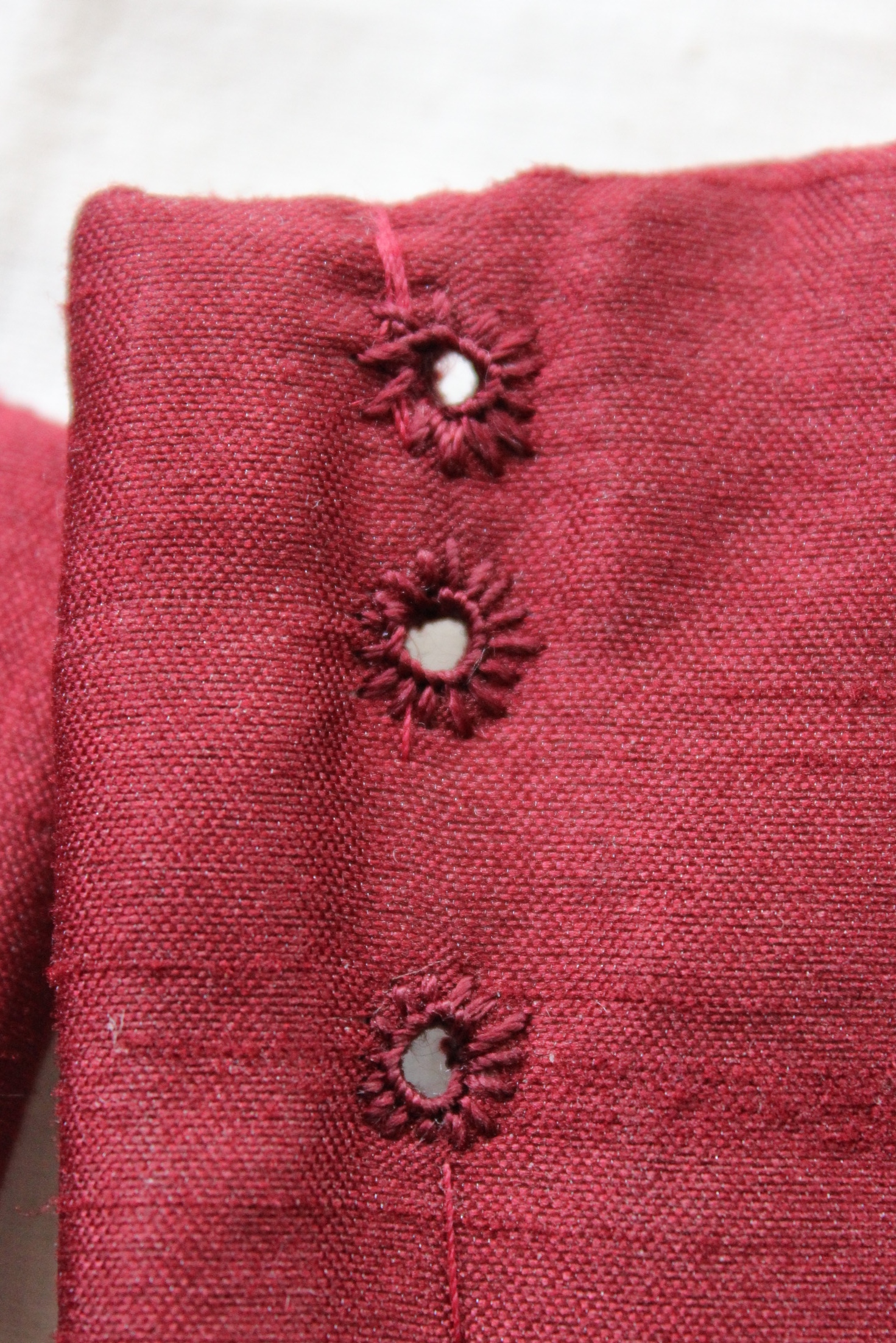
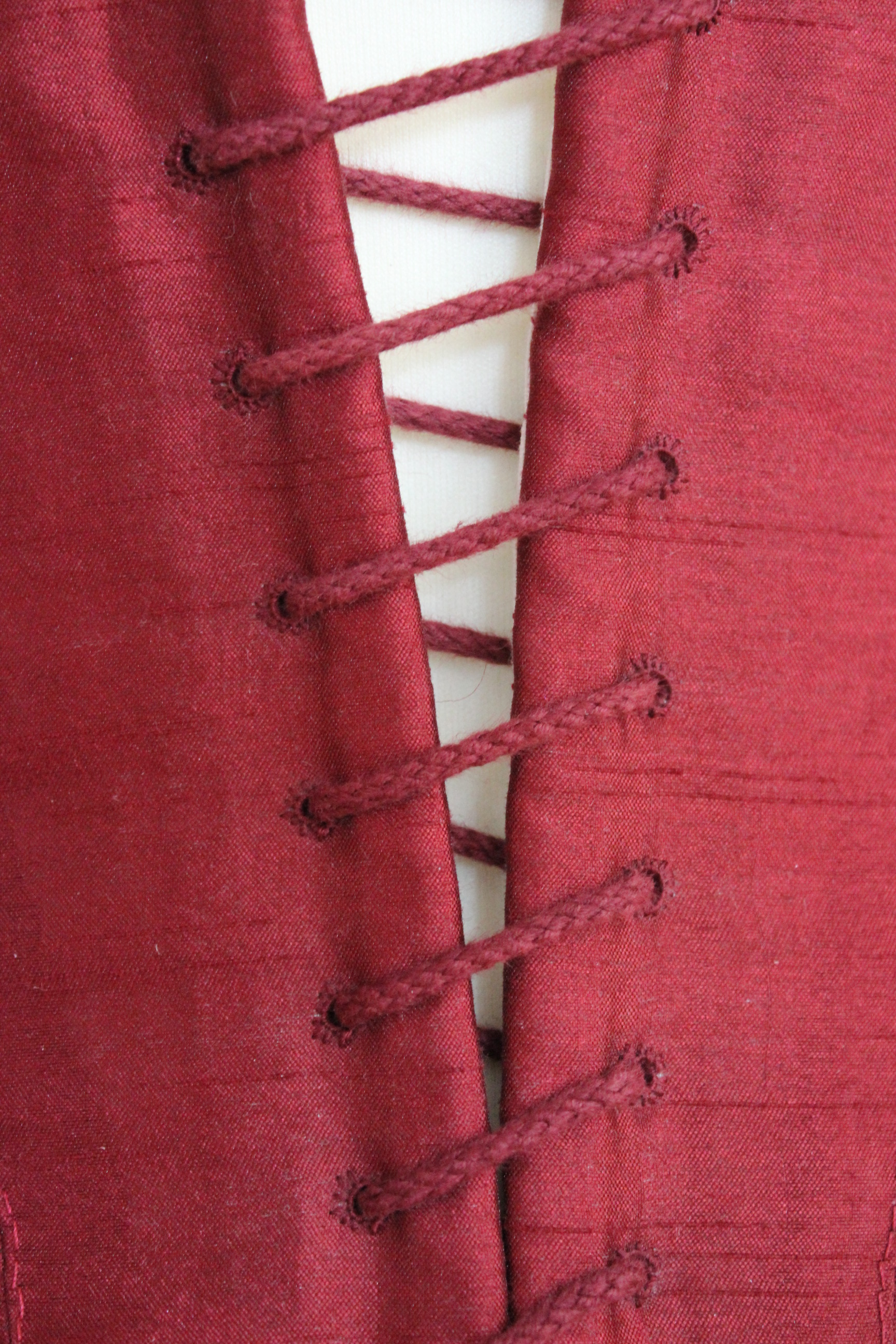
The last thing to do on the bodice was to make all the lacing holes.IMG_7867I use pins to mark the distance before I use my chalk-pen
IMG_7916Practice makes perfect.
Ok, not yet perfect but pretty decent looking eyelets if I may say so myself.

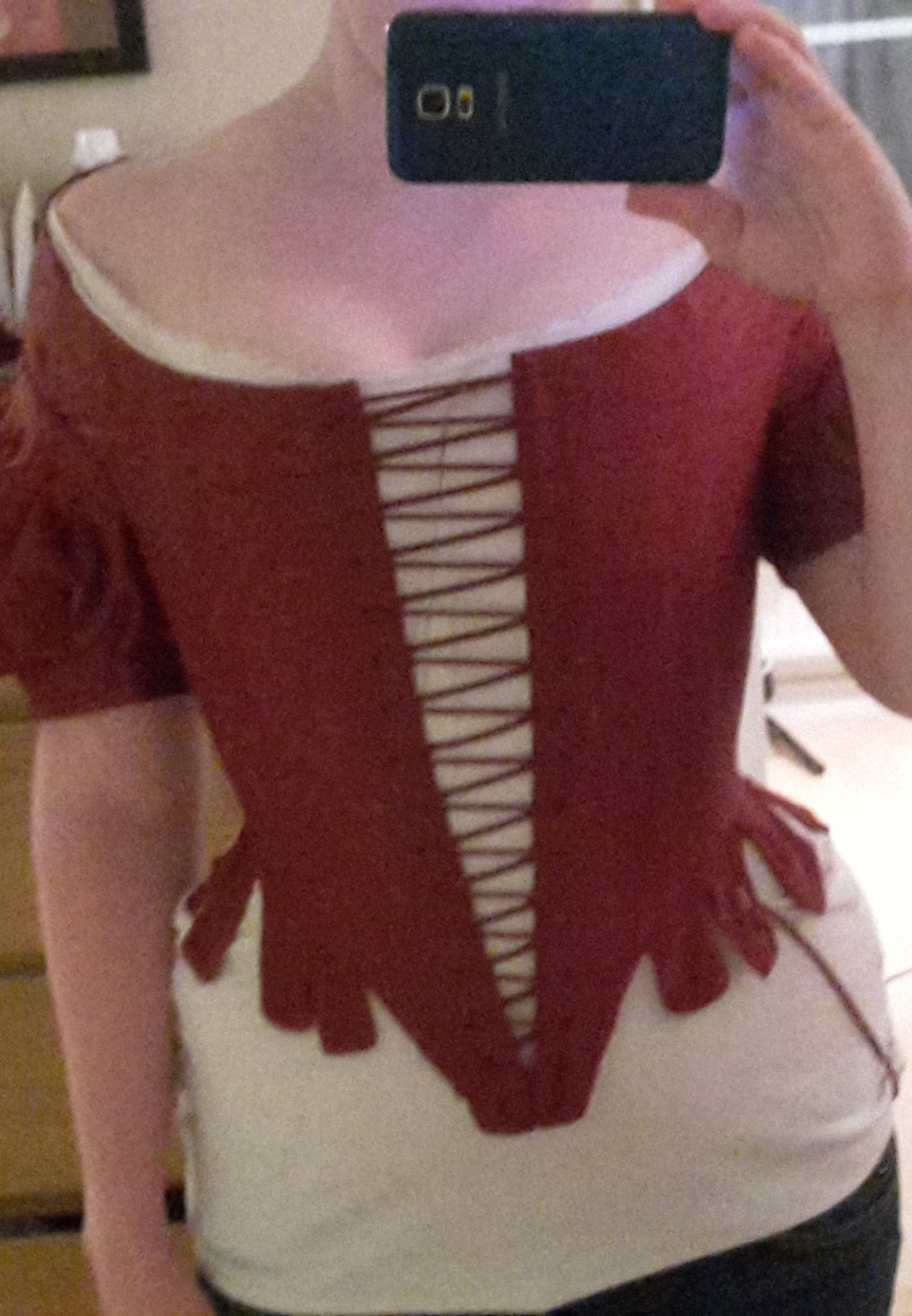
Then the only thing left to do was to try it on a last time…20150804_224828 Crap…

Yup, that’s the sad truth – the bodice I to small, and not “If I lace a bit harder it might work” to small, but “There is no way in hell I can close this sucker” to small.

Luckily my inspiration painting’s only shows the back of the bodice, so hypothetical there is a chance the girls wear a open laced bodice over a stomacher – far fetched I know, but at his point there was no way I would redo it or try to ad to the sides. And logically they must have size shifting back then too, right?

So I will make a stomacher for this bodice before the next wearing, but for now I’m considering it done.

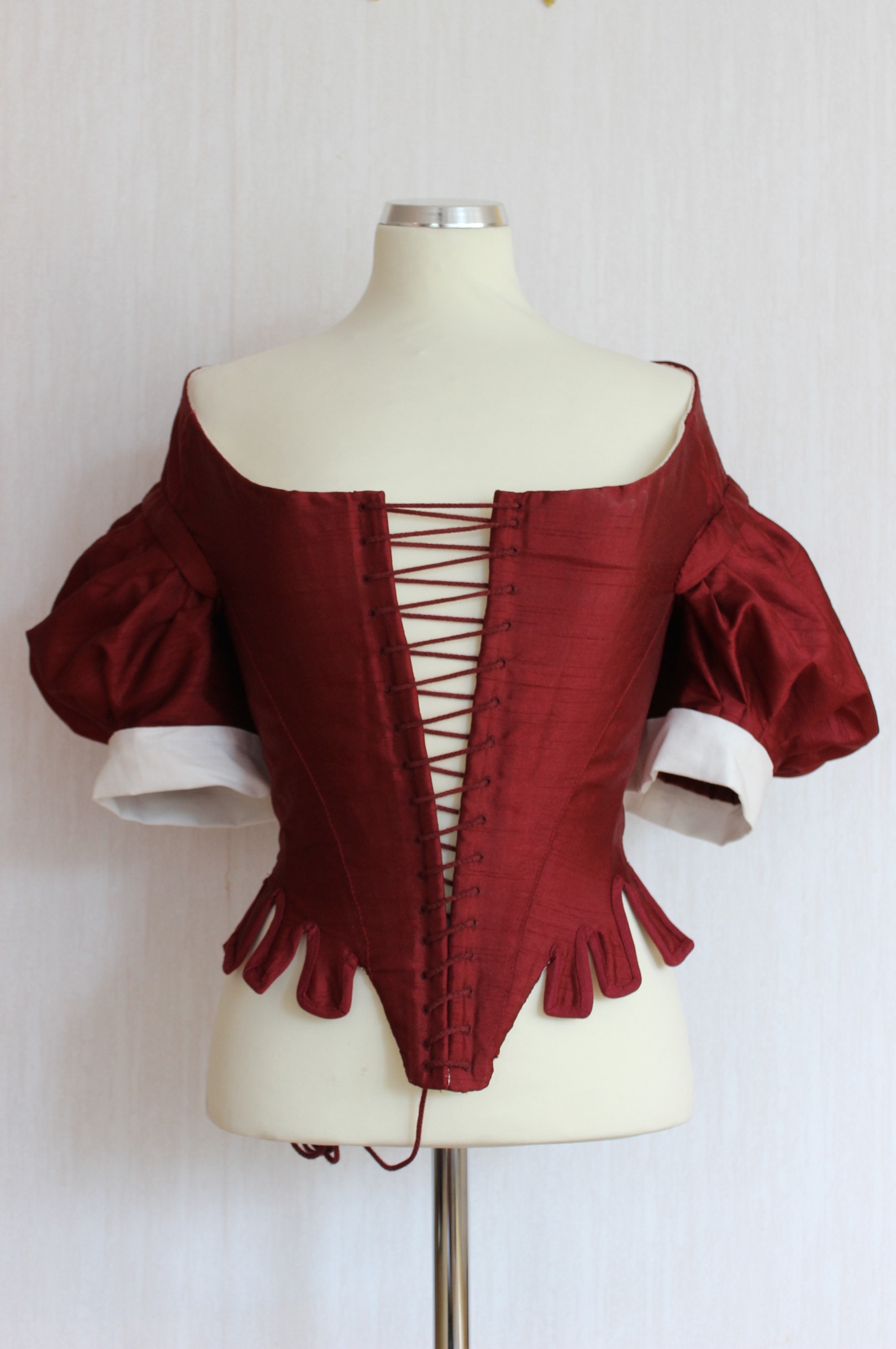
The finished bodice:
IMG_8099

IMG_8101
IMG_8135

IMG_8102

IMG_8112

IMG_8115

IMG_8119

IMG_8120

IMG_8122

IMG_8127

Just the facts:

Challenge: nr 6/HSM15 – Out of your comfort zone

What: A 1660s bodice

How it fit the challenge: This is my first venture into 17th century, and even though I made both bodices and stays before the way this garment combines the two was a new experience for me.

Pattern: “1660s bodice lining” from Waugh’s “Corset and Crinolines”, with some alterations.

Fabric: 1,5 m red polyester “silk”, 1,5m white cotton/linen blend for lining and 1 m un-bleached sturdy linen for interning and foundation.

Notions: Thread, button-hole thread, 15m plastic whalebone for boning,  5m cord for lacing, 60cm white bias-tape for edging the sleeves and 3 m red bias-tape for binding the tabs.

How historical accurate: So so, the bodice is made 50% on machine with all the outside seams made by hand. The fabric is modern but the shape and look of the garment is good for the time period. About 7/10

Time: A lot! probably about 60 hours – I worked on this for most of the summer.

Cost: About 300Sek (45Usd)

First worn: At old town beginning of August for photos, and I’m thinking on using it next weekend for a “all times” dance recital.

Final Thoughts: I’m so happy with the look and feel of it. My only concern is the size – Why do I keep making things to small? And no, I have not gained weight – I’m just constantly over estimate my “squeeze factor”, and underestimate the difference boning and extra fabric layers make to the size.
And if it ever is to be worn again I might have to redo the front, or just slap some trim over it…

“Sew 17th century Challenge” – The Bodice (part 2 – foundation)

Lets continue on with the bodice:
(read the previous posts in this series here: costume analysis, skirt, coif, fur shawl, bodice part 1)

12312767024_07604ef369_h

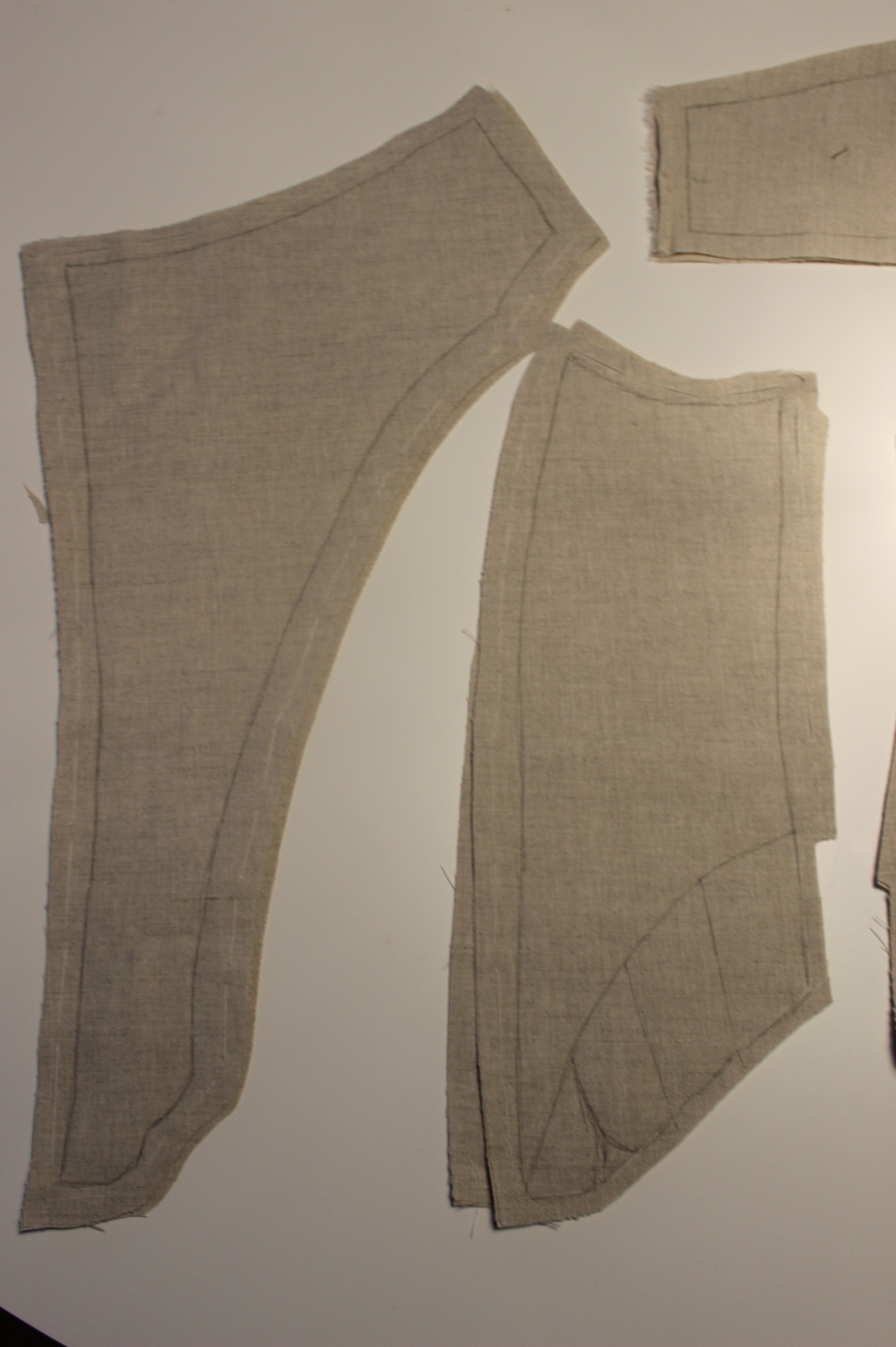
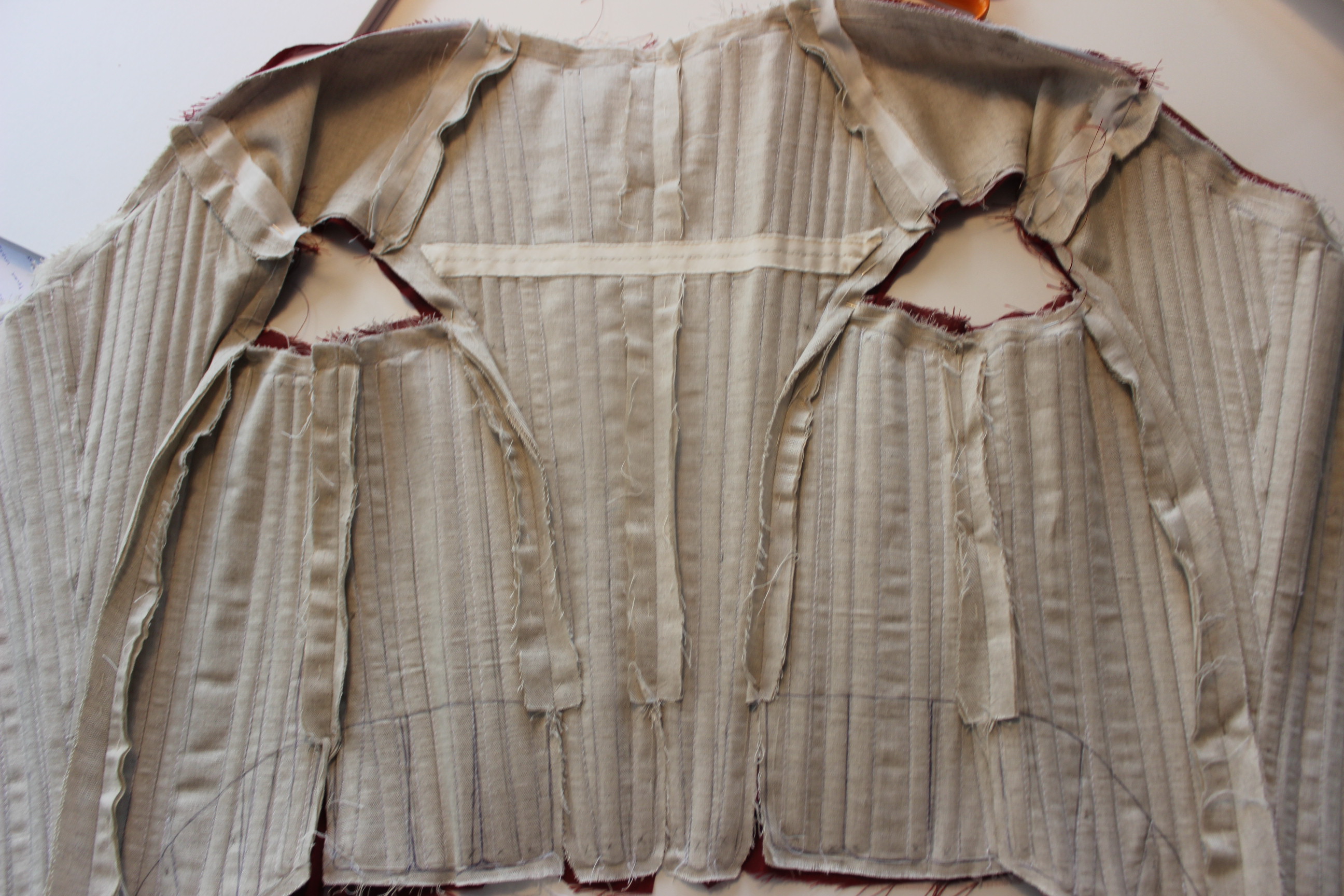
The first thing to do (once I had a working pattern) was to make the foundation for the bodice.IMG_7433So I cut two of every piece in a sturdy unbleached linen, and basted them togeter.

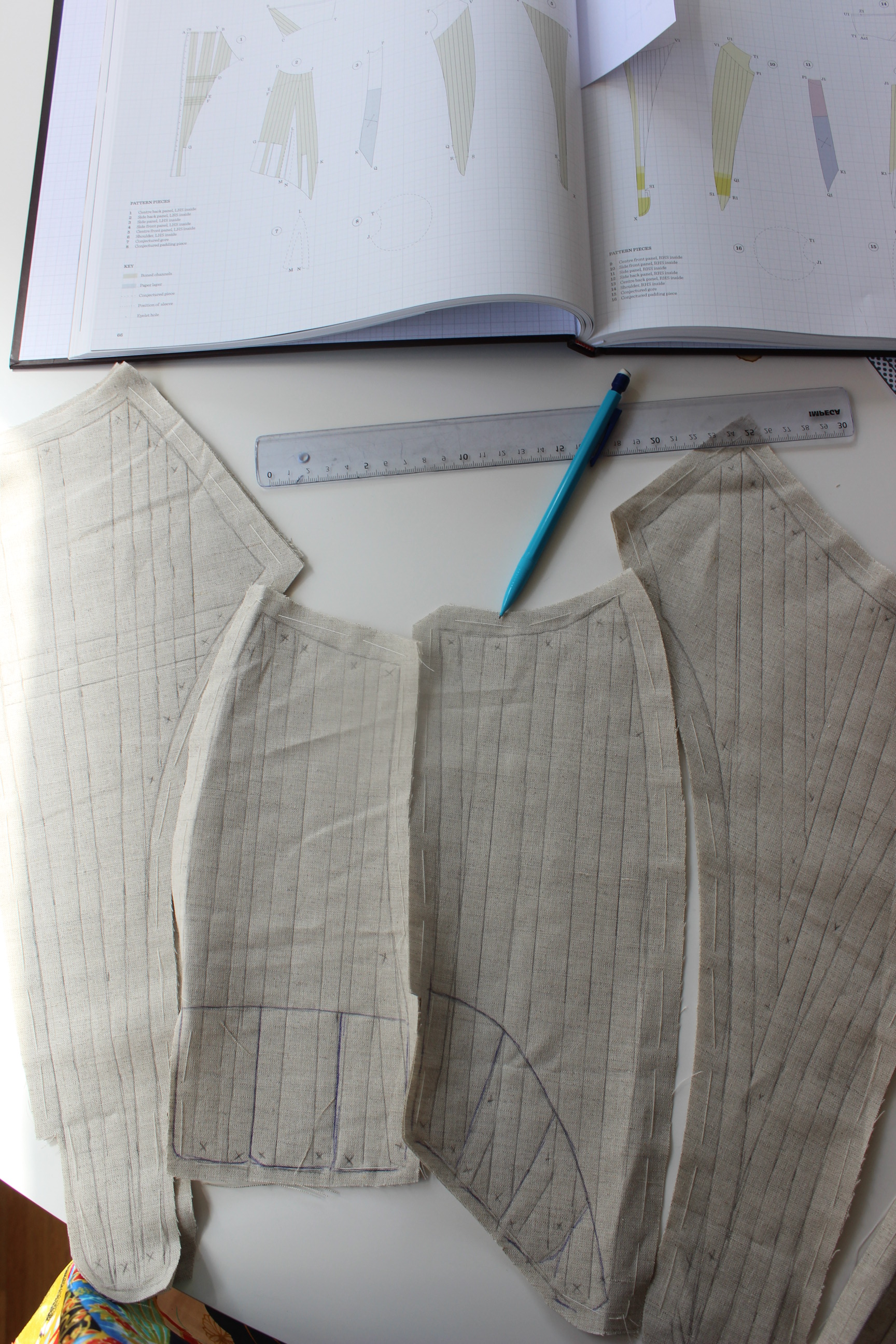
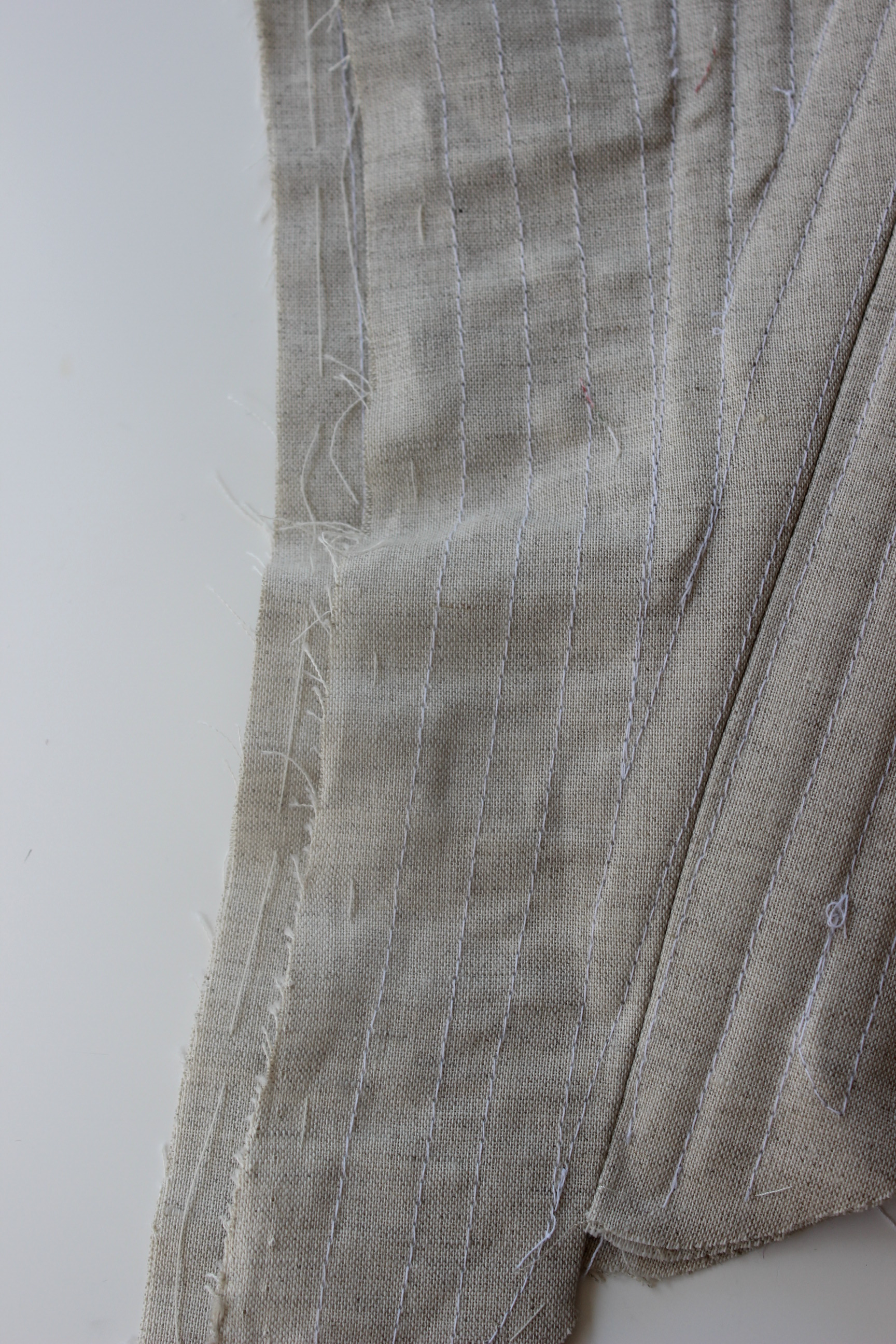
Then I penned the boning channels (using some of my books as guides).IMG_7435

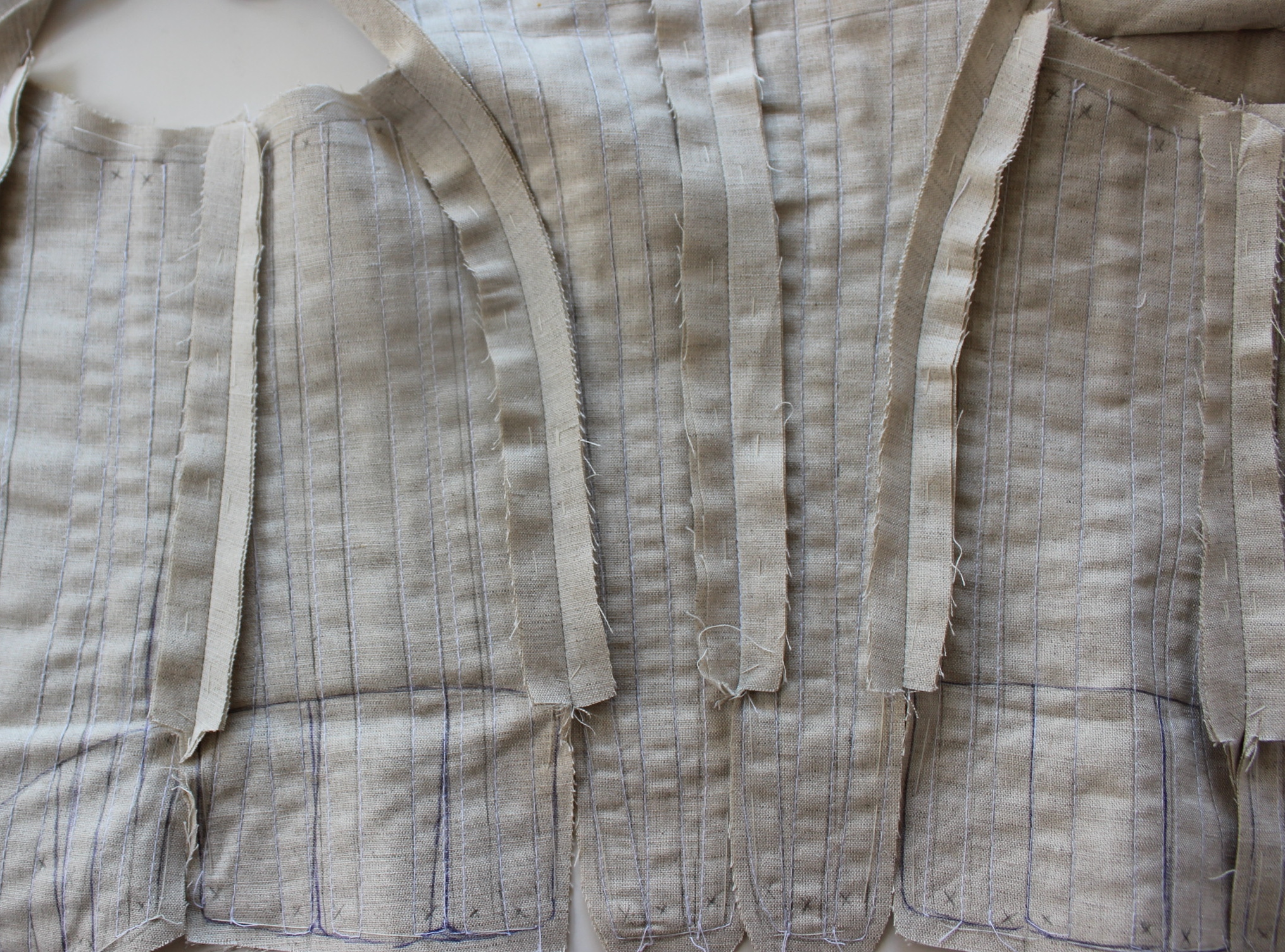
I stitched all the channels and then attached the pieces to each-other.IMG_7488

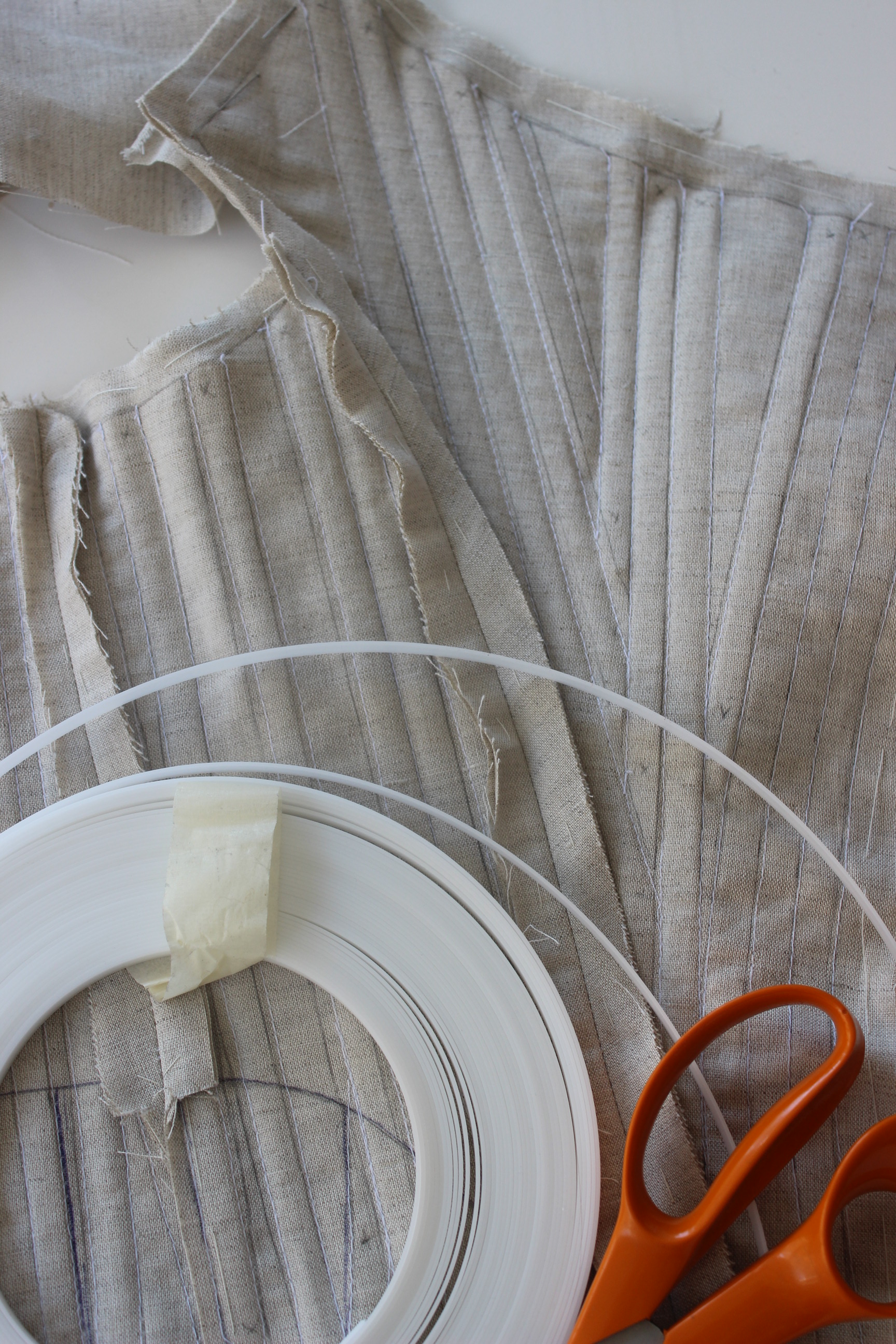
Then it was time to ad the boning.IMG_7507I used synthetic whalebone, and cut each piece to match the channels.
The whalebone itself is not as strong as metal or reed, but it is lightweight and in a fully boned bodice like this the thin quality is to prefer (in my opinion)

The one thing that worried me most was the “shrinkage” almost always caused by adding boning.
The thinness of the whalebone was really necessary to keep the difference in size as small as possible (the thicker the bones the bigger the size difference).IMG_7508You can clearly see the difference from left side (boned) to right side (un-boned) in this picture.

Once all the bones was inserted, I put it on for a try.
IMG_7518 IMG_7513

IMG_7524It looks awesome, and with some minor adjustments (like adding a few more bones to the front and back) I was good to go.

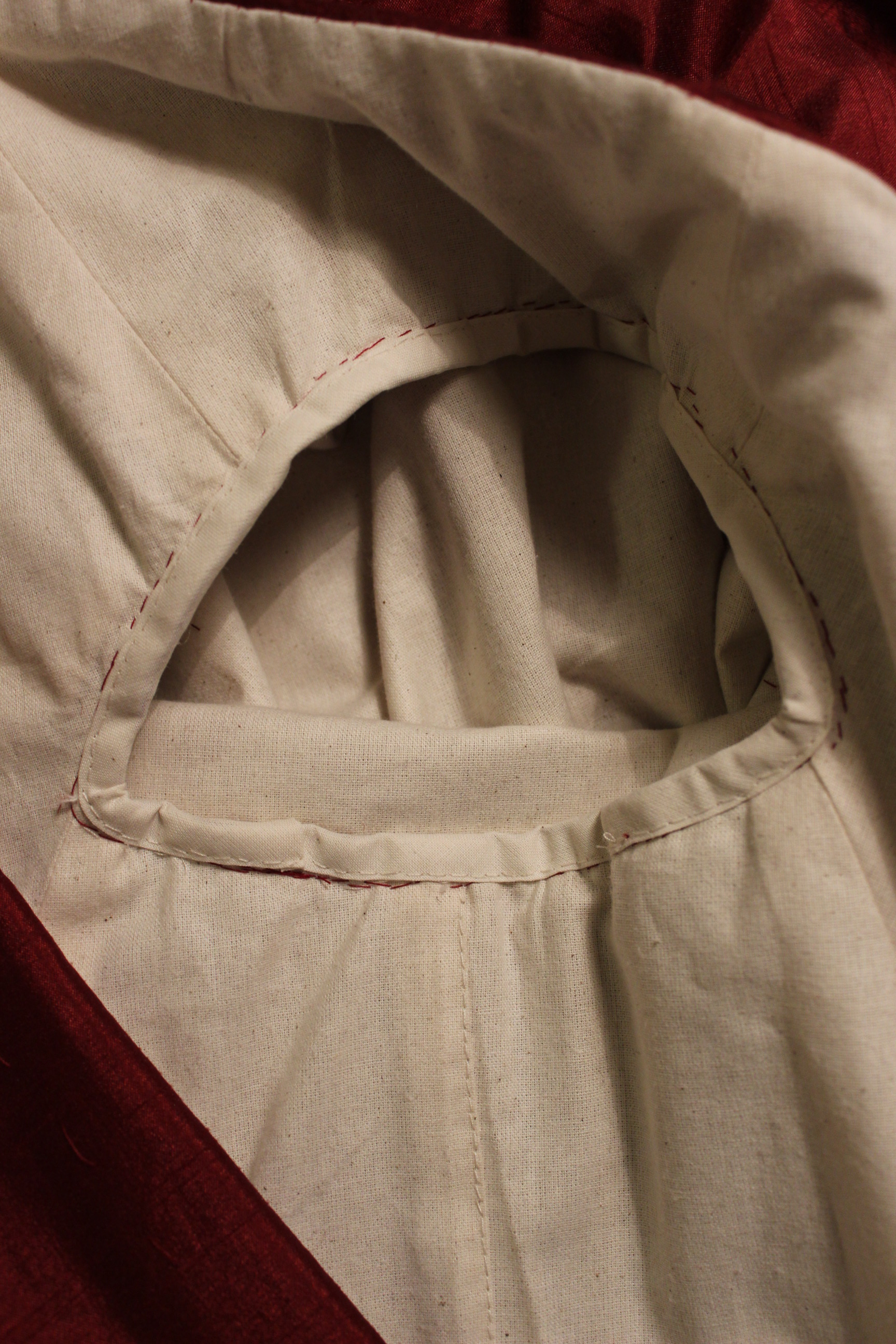
I love how beautiful the interior is before being covered up.  IMG_7786

Then it was time to start on the exterior fabric.

After keeping my eyes open in my local fabric store since January, in June, I finally decided to take the 1 hour trip to the next towns fabric store (which is awesome by the way).
And I did not regret it.

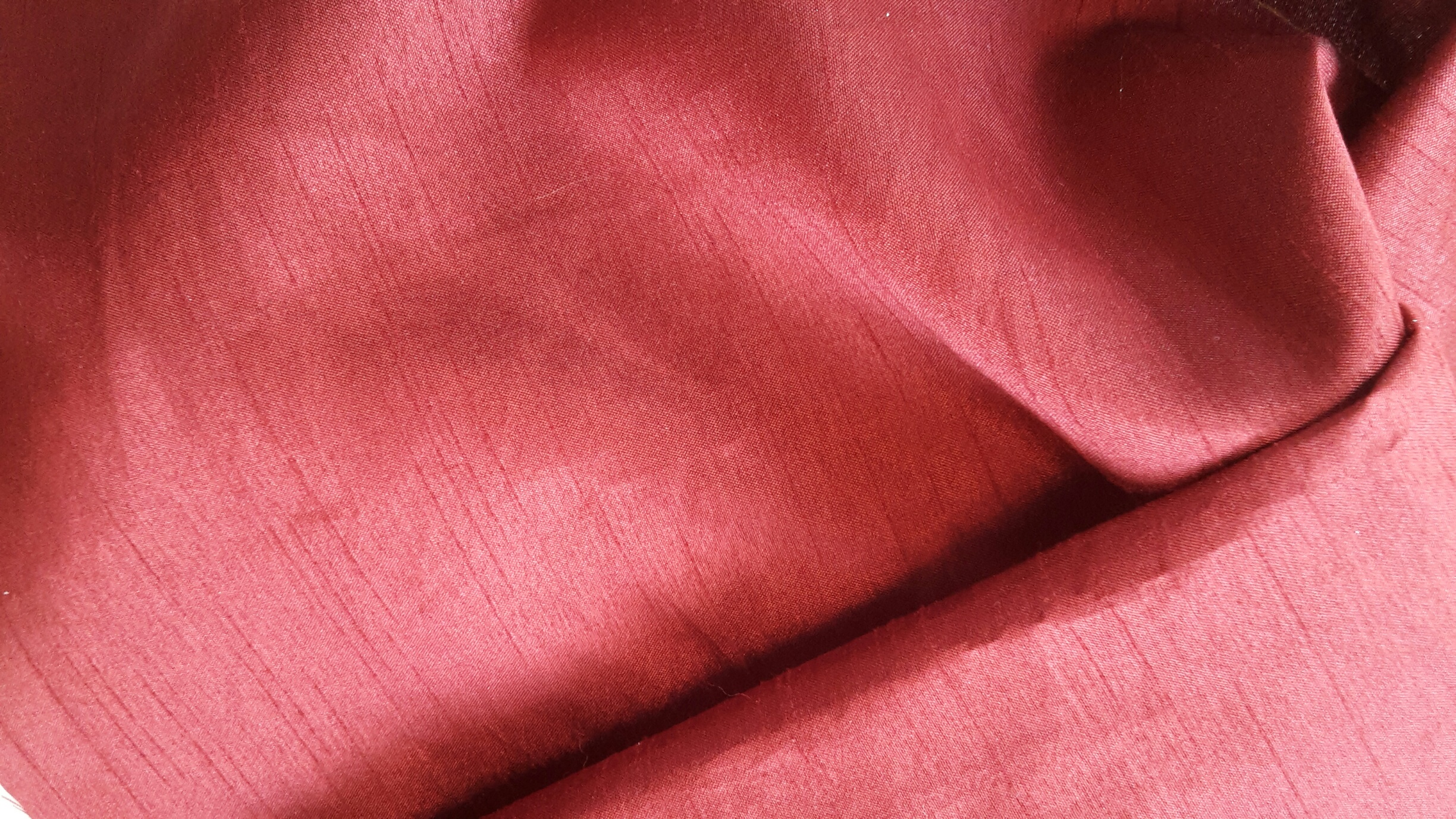
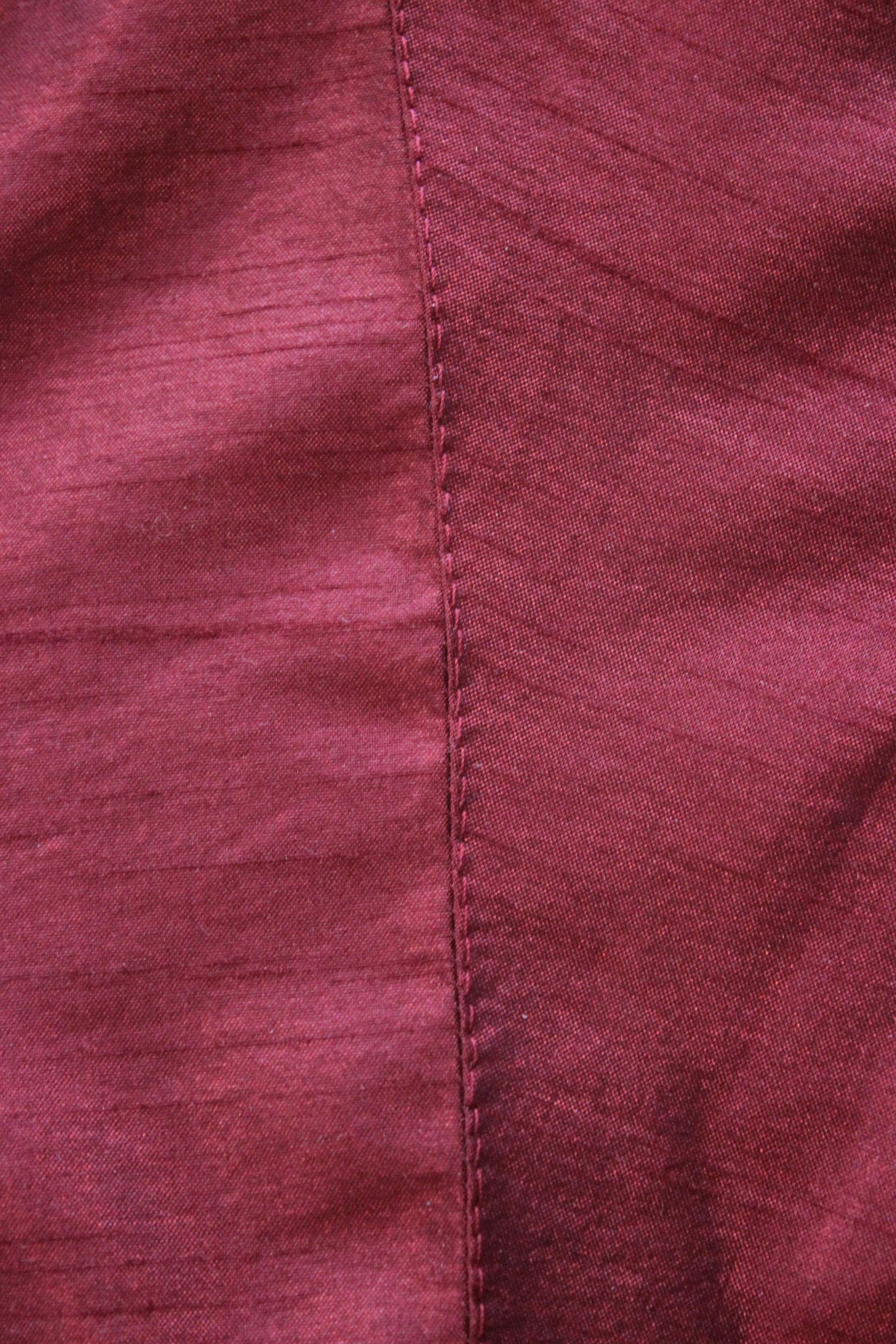
Not only did I find lots of delicious taffeta’s and viscose, I also found this perfect dark red synthetic silk. 20150808_121343_resizedIt’s a bit darker in real life

Since the fabric was a bit slippery and thin, I decided to stitch it together using my sewing machine before adding the strengthening and decoration hand finishing on top.
IMG_7789

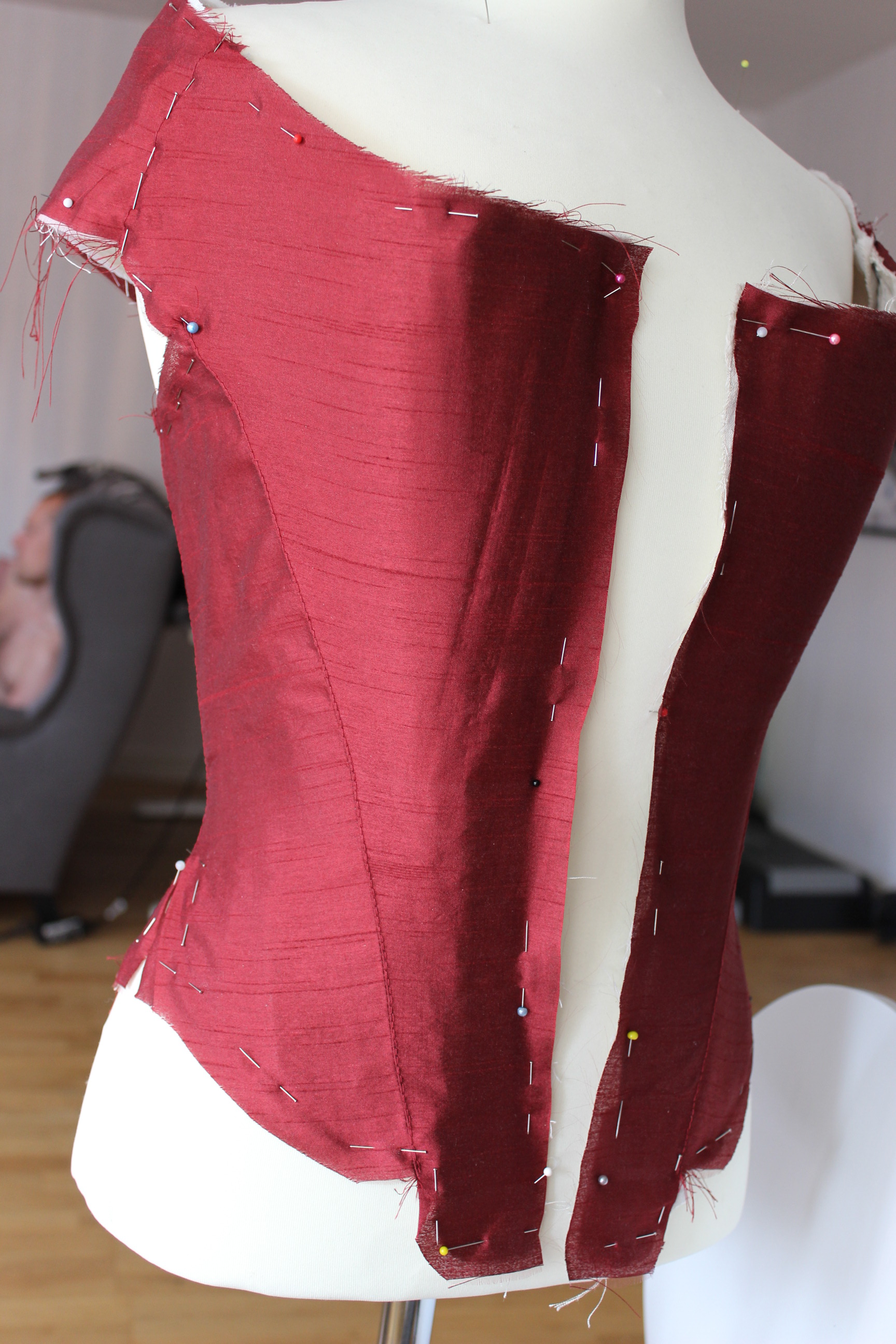
Then it was time to cover the foundation in red faux silk.
IMG_7802 IMG_7800

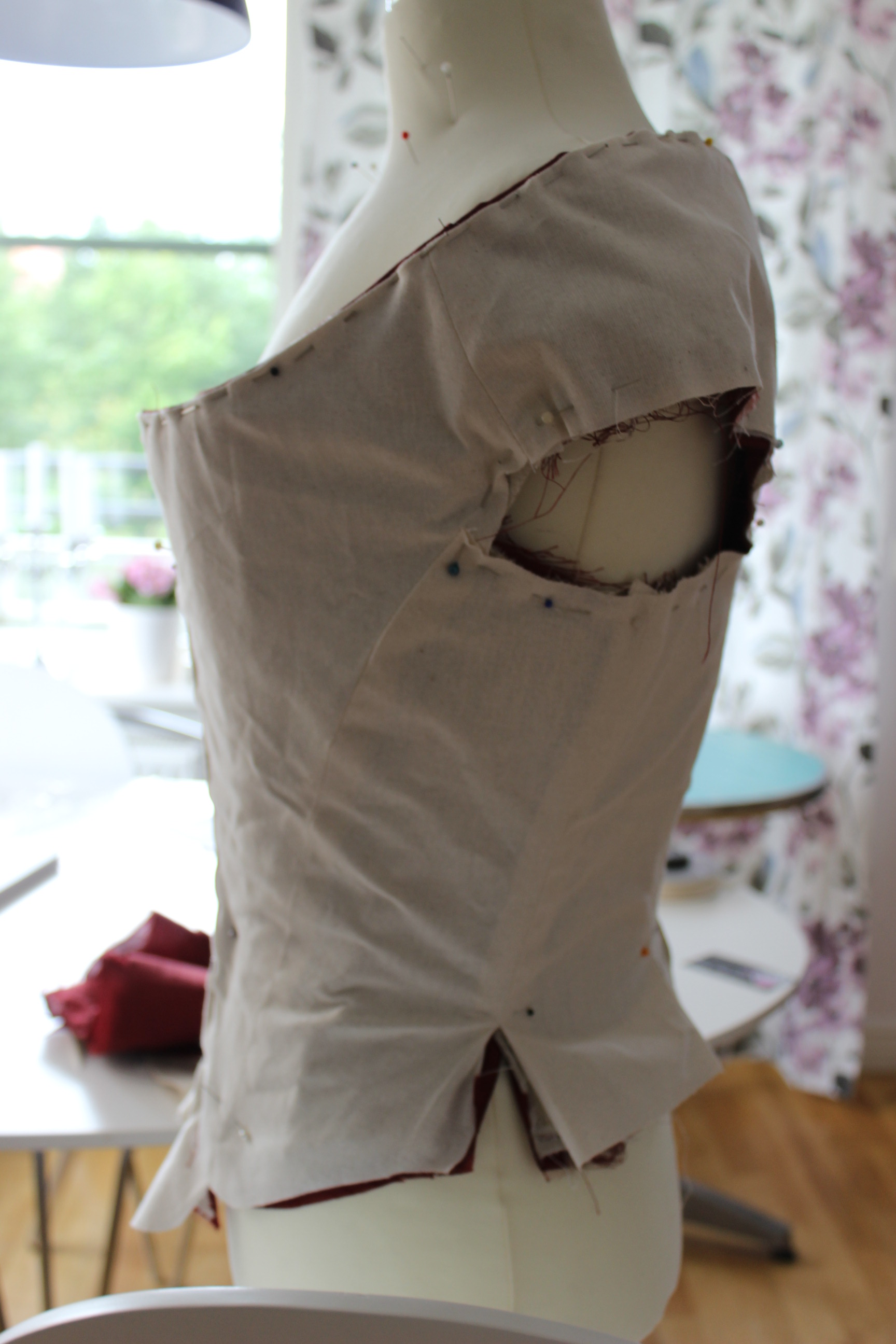
I’d accidentally made the outer layer a bit to big at the side seam, and tried to pin it down to fit.
IMG_7798 IMG_7799
After some fiddling I decided to let it be for now, and to take the excess in later if needs be – better to big then to small.
(a very wise choice as it proves later on)

The linen lining was a bit easier to fit into the bodice.
IMG_7812 IMG_7810

Once the main bodice pieces was basted down I started working on the sleeves.
Drafting the pattern using my books as a guide.
IMG_7542

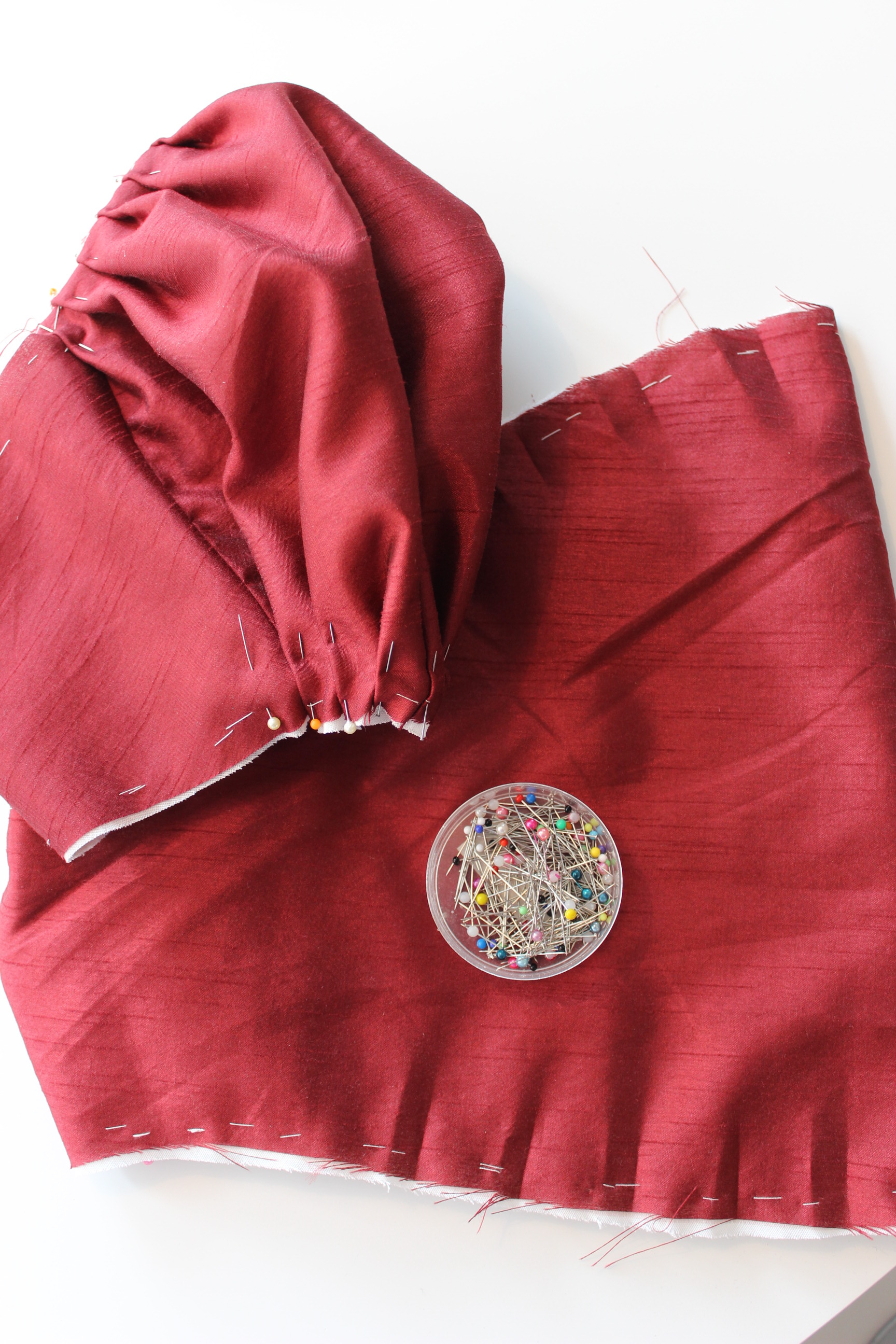
Then I just basted the red fabric to the interning (aka lining), stitched the seam together  and pinned the pleats.
IMG_7805

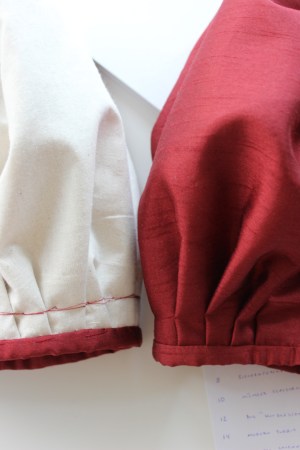
I pleated the sleeves by hand, and sewed chains of thread to keep the pleats in place.
And finished them of by folding some self fabric trim round the lower edge. IMG_7815The sleeves ready to be set.

Then I set the sleeves to the bodice and finished by binding the arm holes using bias tape.IMG_7833

Next up – the finishing touches

“Sew 17th century Challenge” – The Bodice (part 1 – The pattern)

The last piece I needed to complete the “Sew 17th century challenge” was also the main piece – the bodice.
Read about the other garments here: Skirt, Cufs,Coif, Fur Shawl
And to make this post a bit lighter I’ve cut it up in a few manageable pieces.
First up – The Pattern

12312767024_07604ef369_h

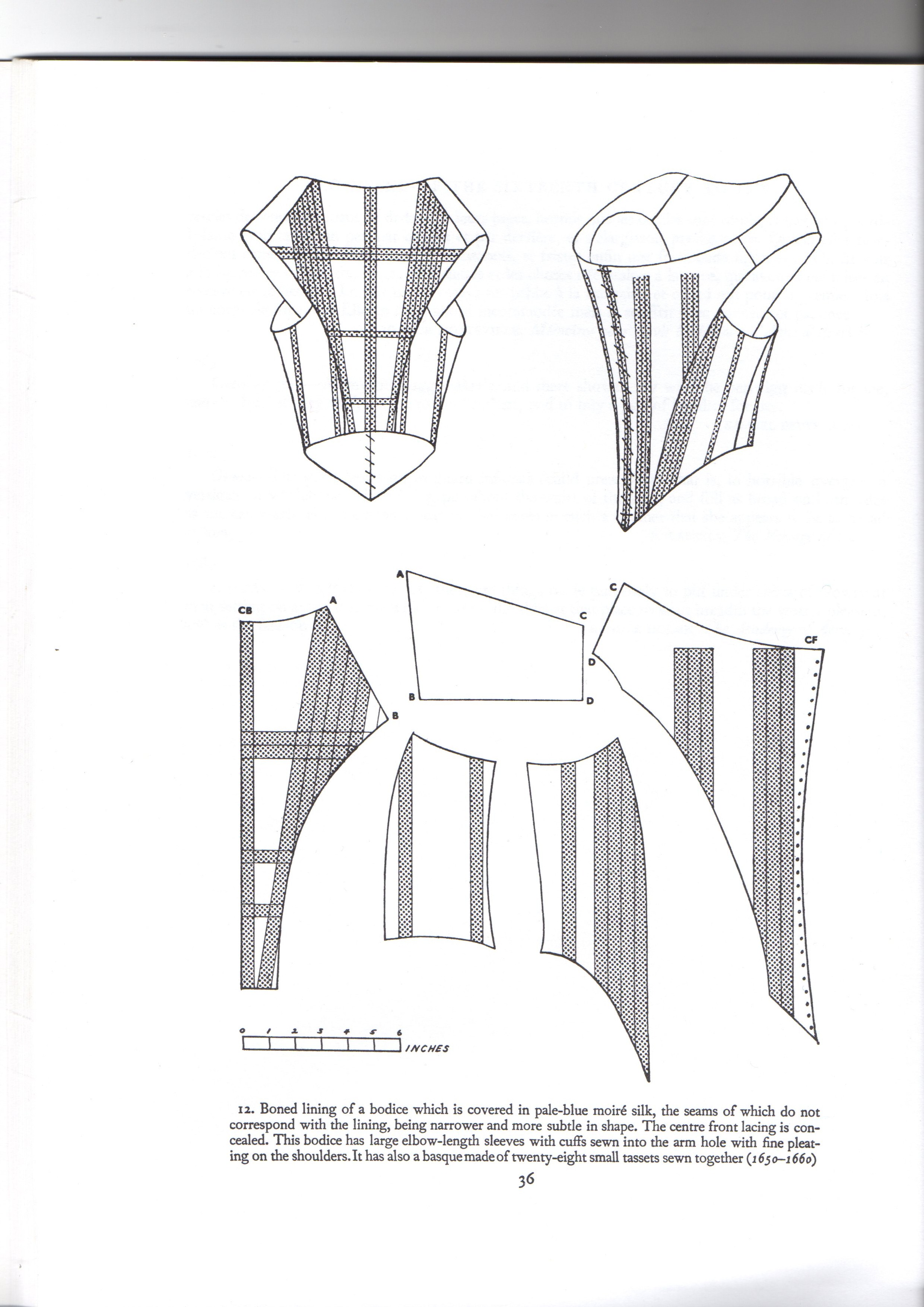
When researching the bodice I found several different patterns*, and after some narrowing things down, I ended up with two finalists to make into mock-ups. Both from Waughs “Corset and Crinolines”

The first pattern I picked was “1660s bodice lining”
It has the perfect neck scope and shoulders, and the much need lacing down the front.
The only thing I’m missing is the tabs down the hips.1650 waugh

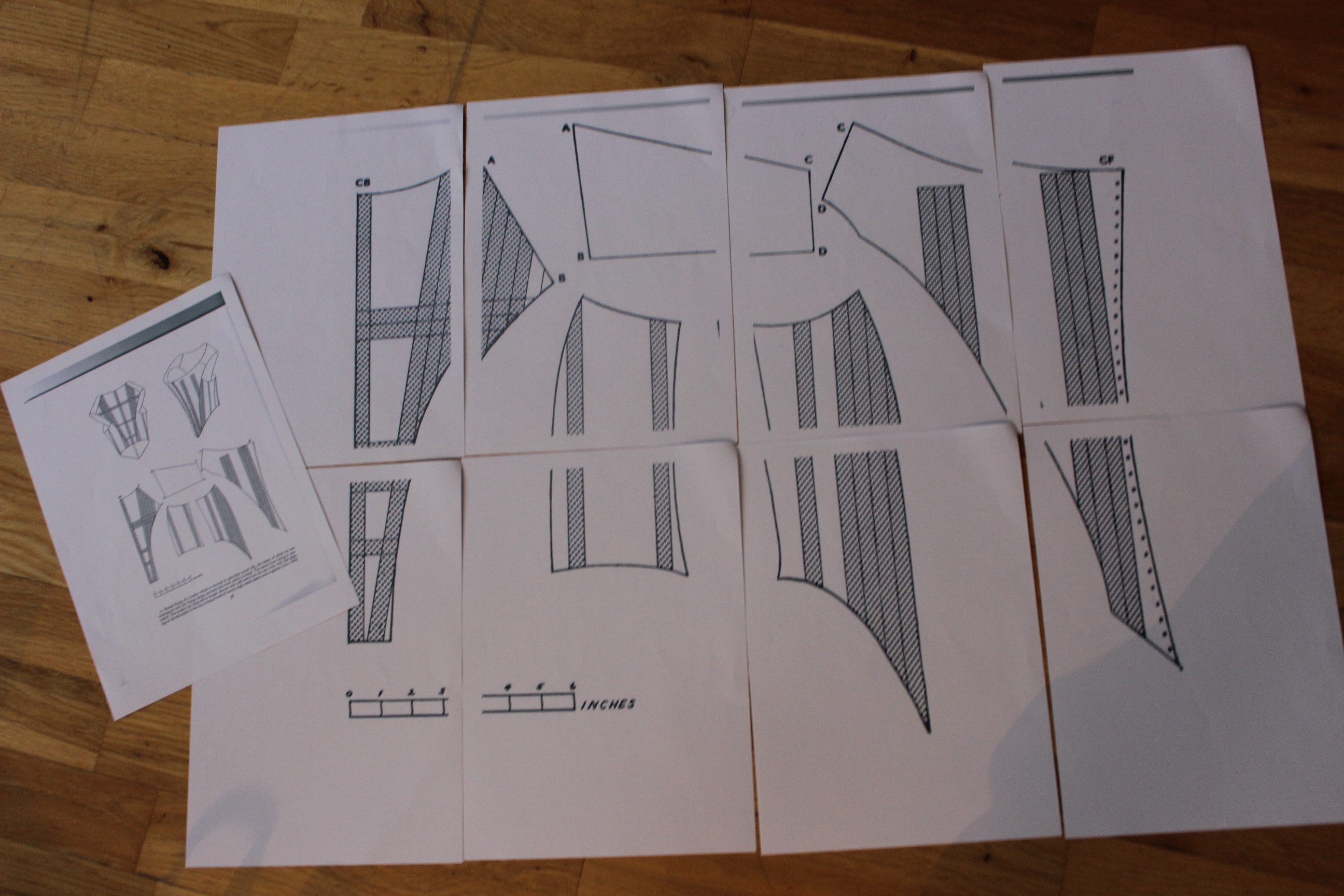
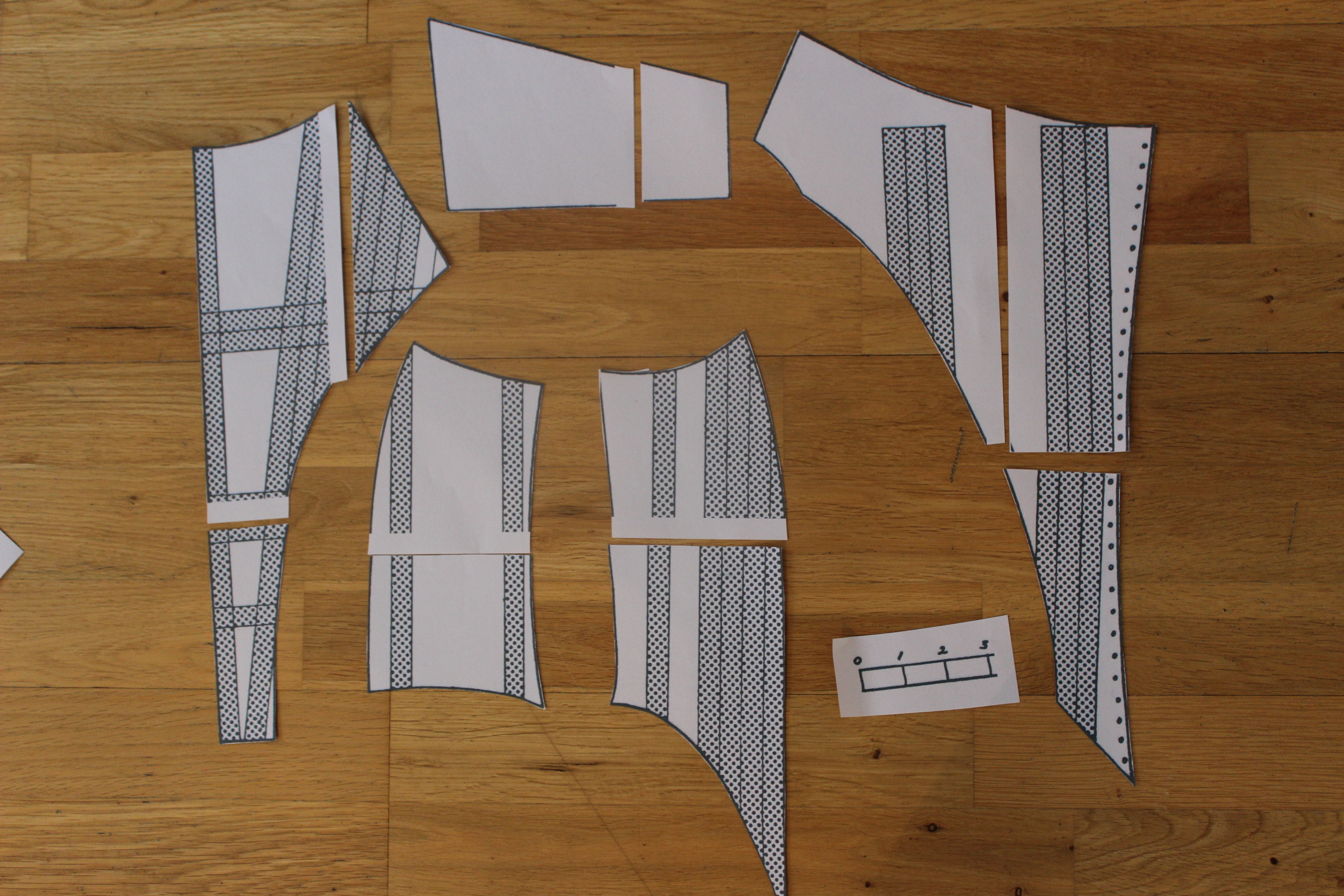
I scanned the pattern, opened it in Paint and changed the printer settings to 400%
IMG_7338

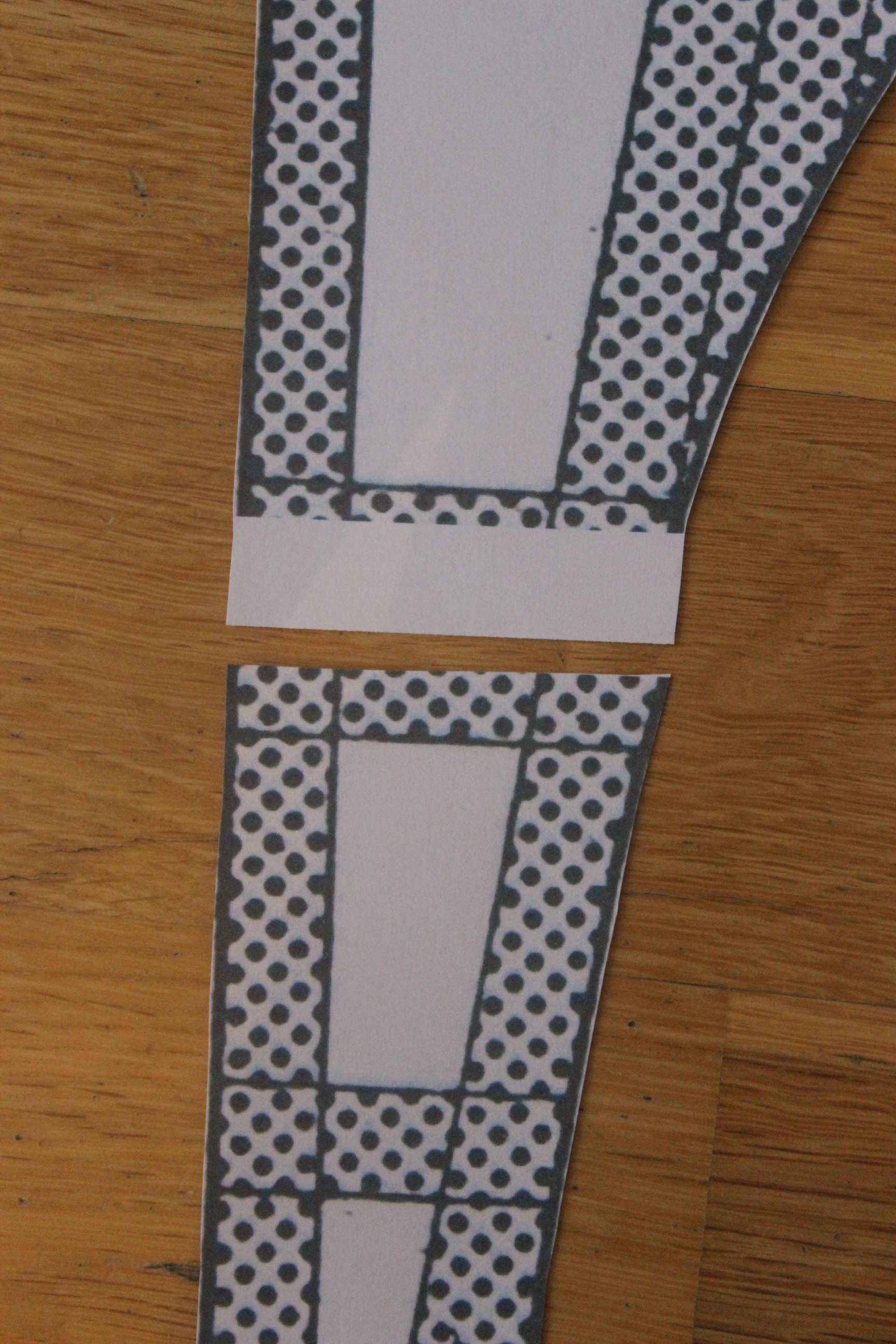
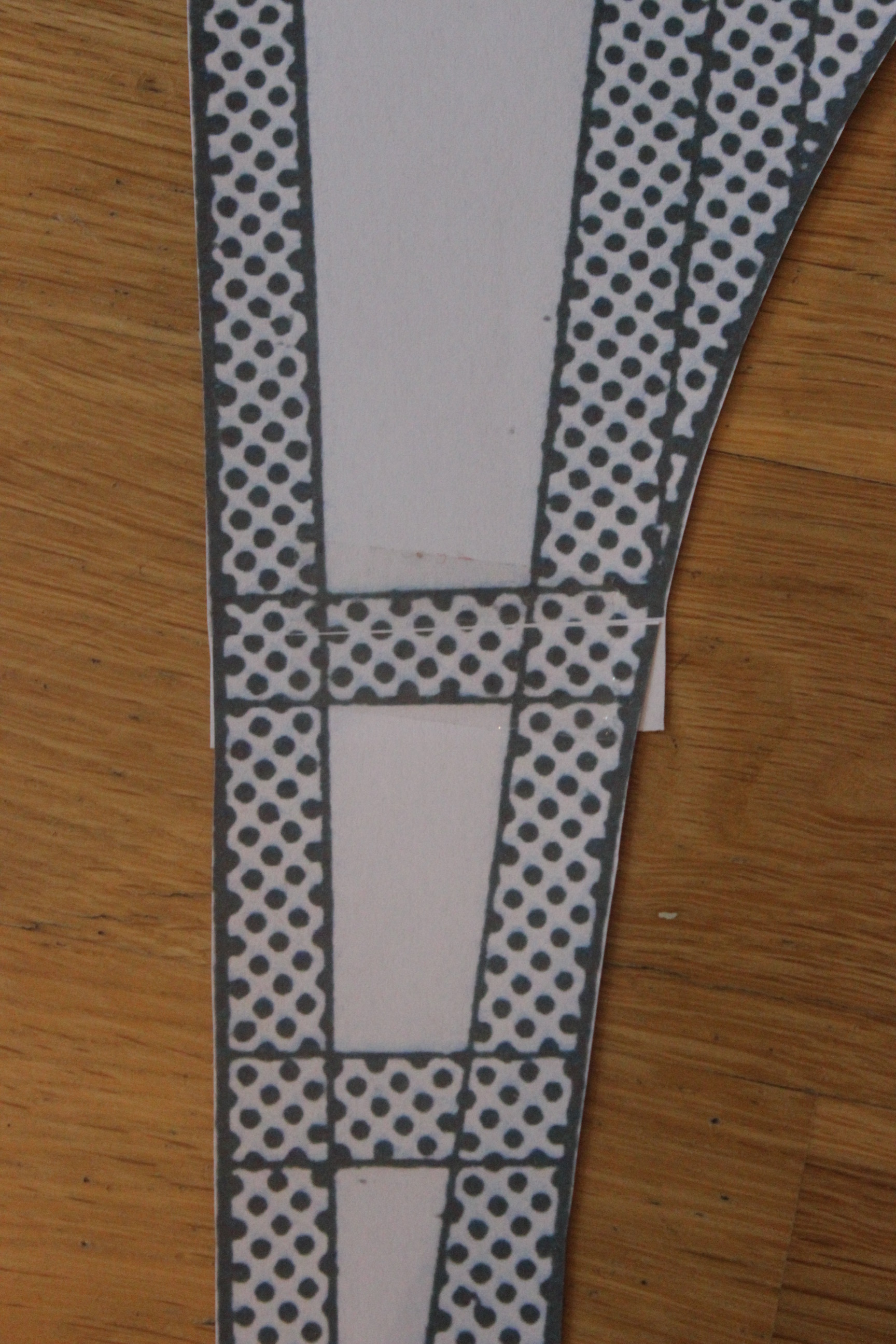
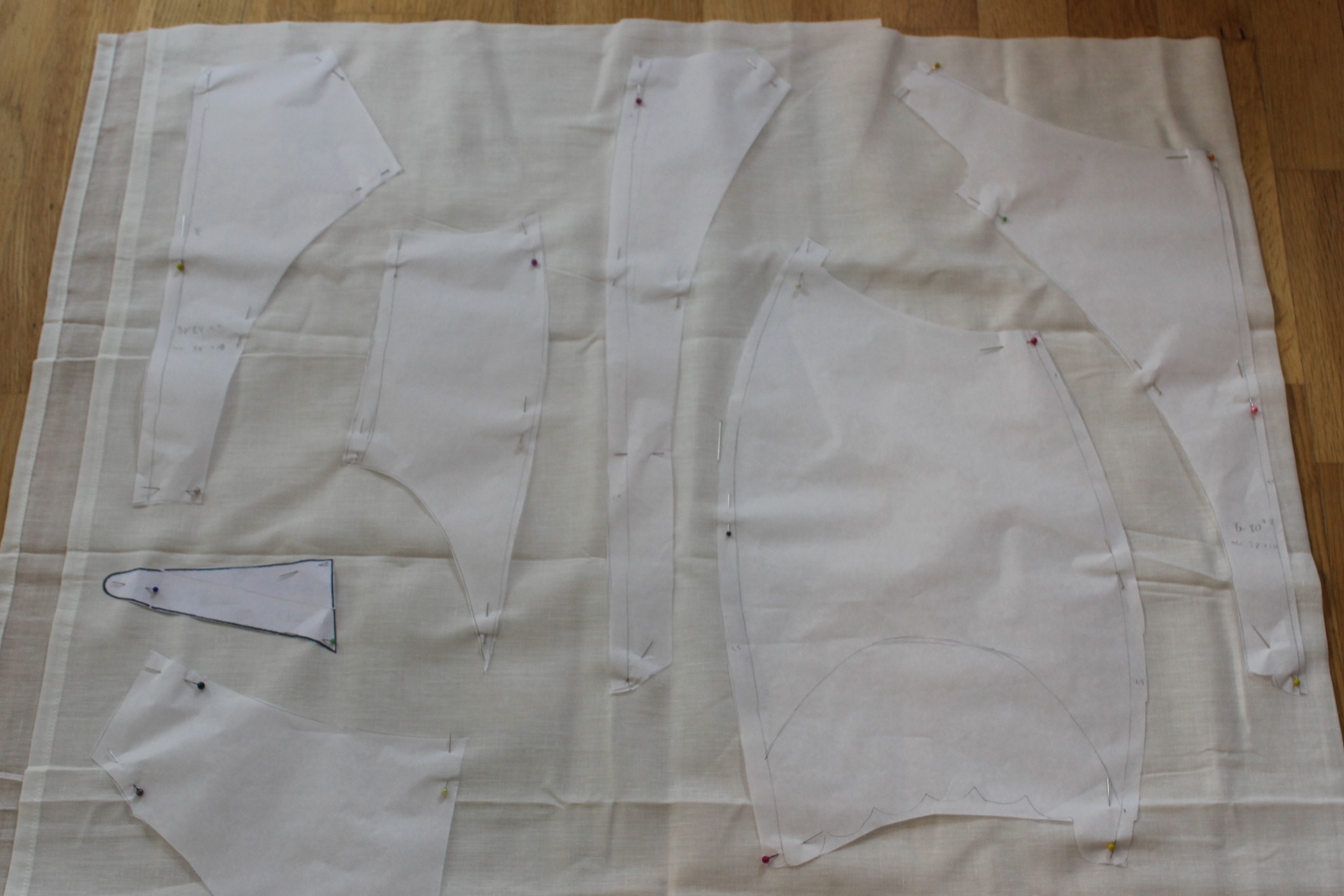
Then I cut all the pieces and taped them together. IMG_7342

IMG_7343 IMG_7344

I traced the pieces and made some alteration to my measurements.IMG_7354

Then it was time to bring out the cotton sheeting to cut the mock-ups.IMG_7356

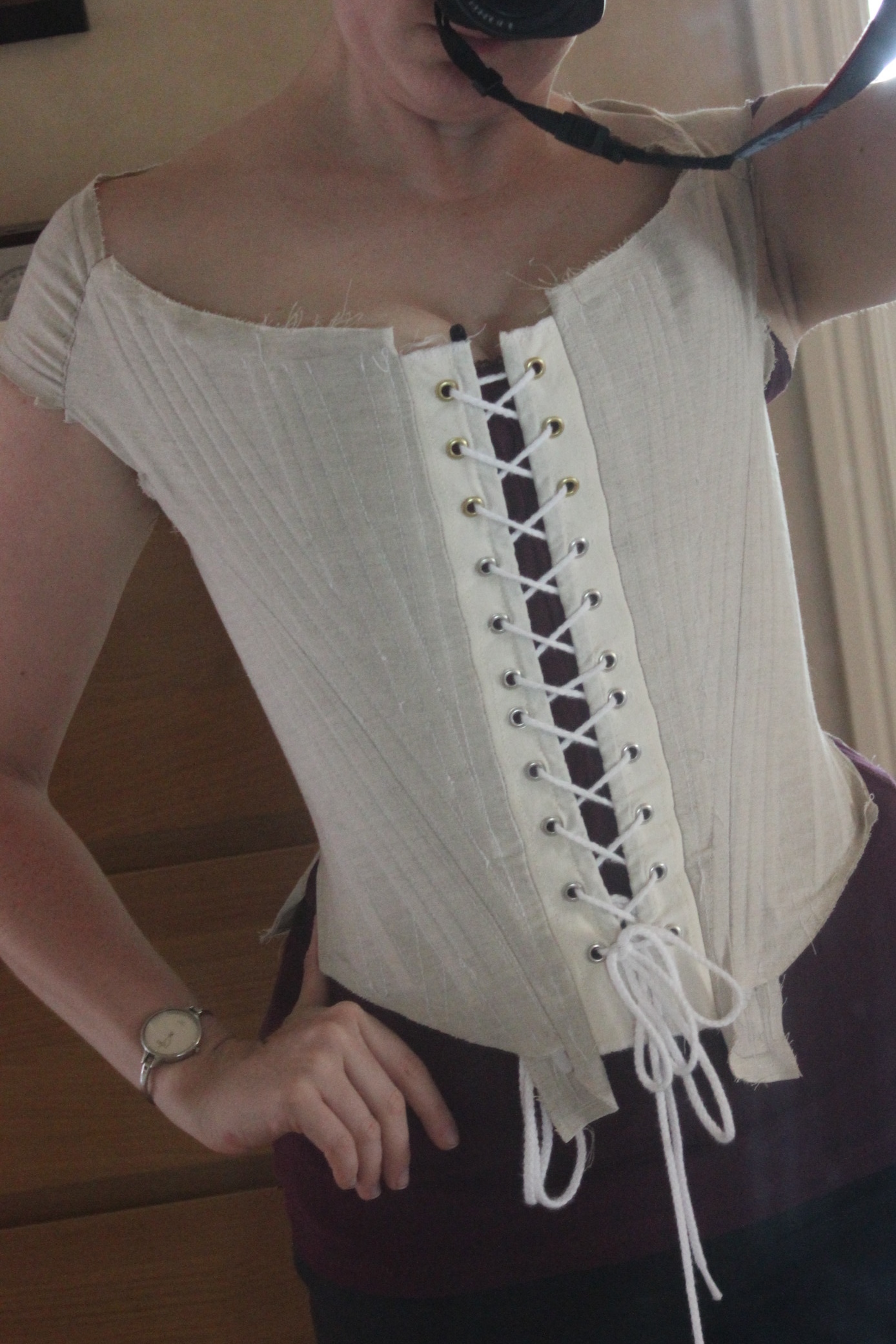
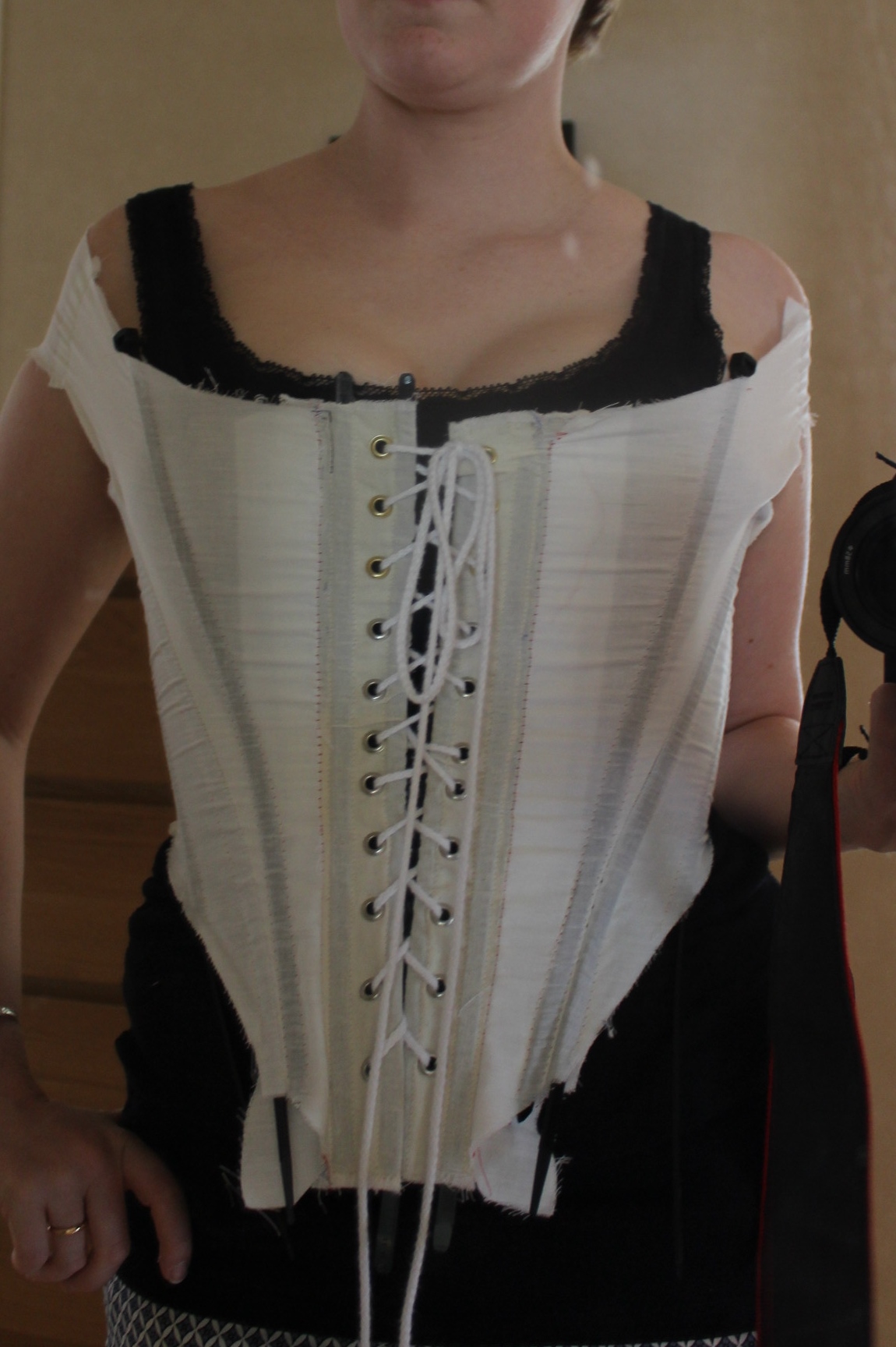
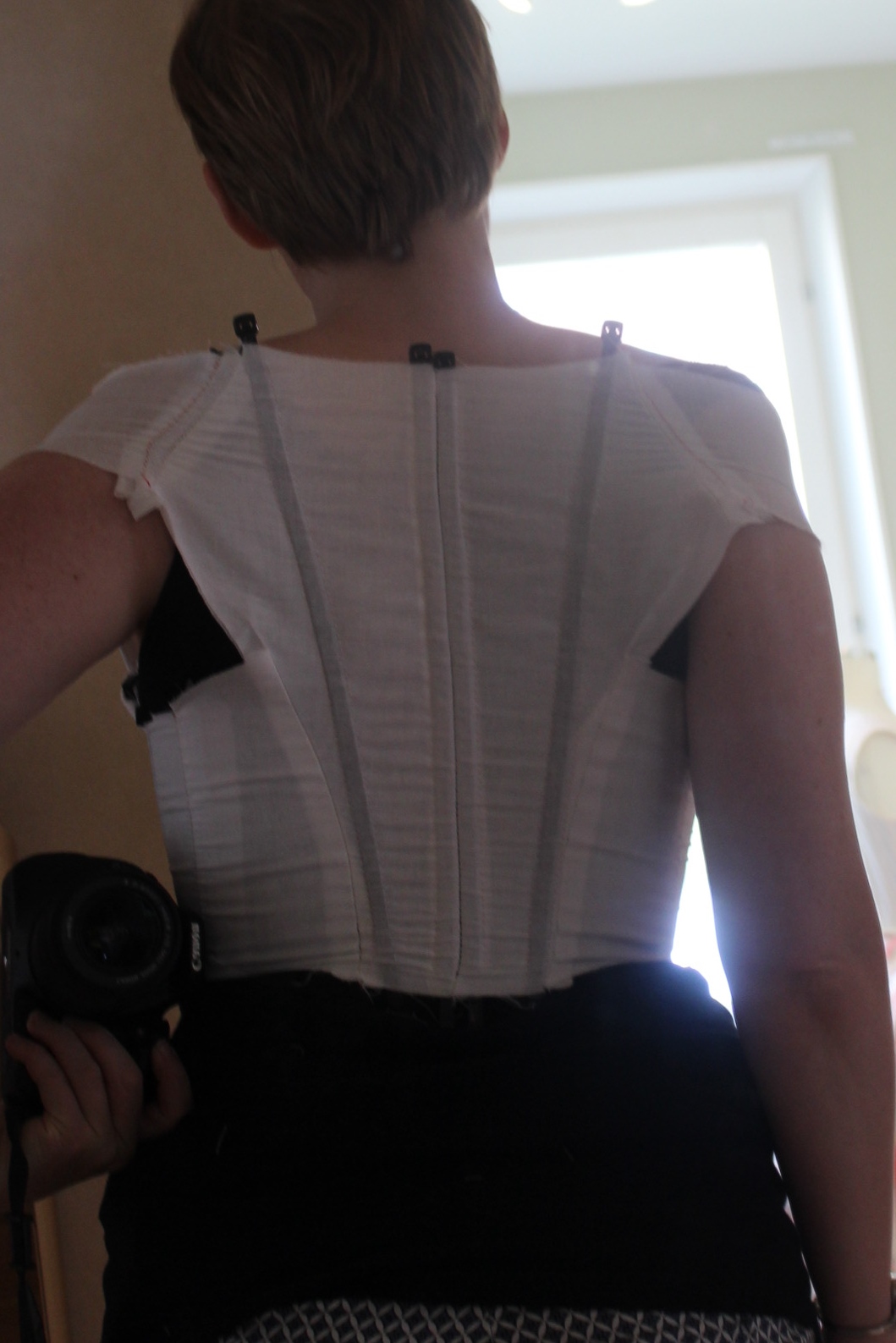
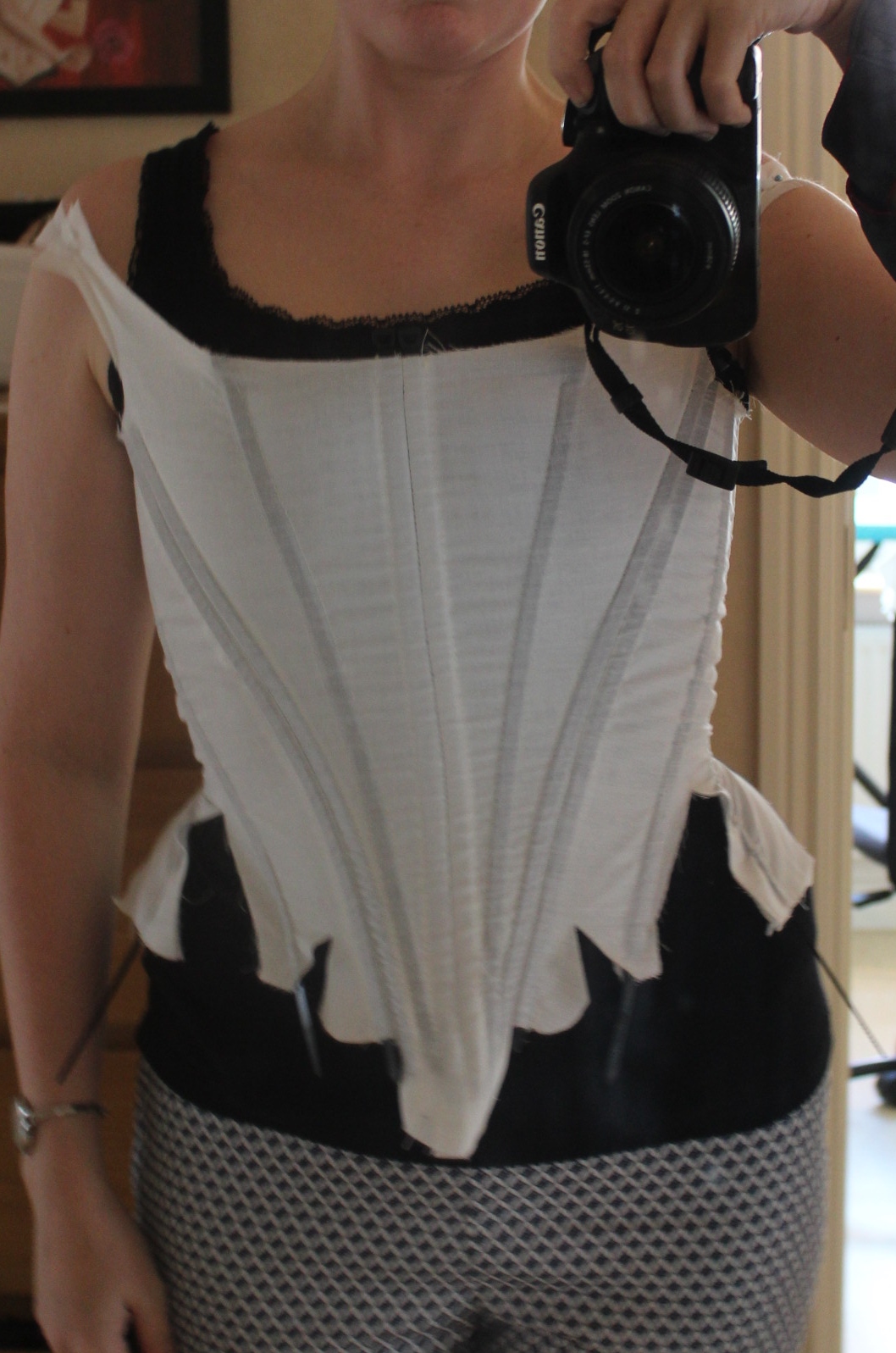
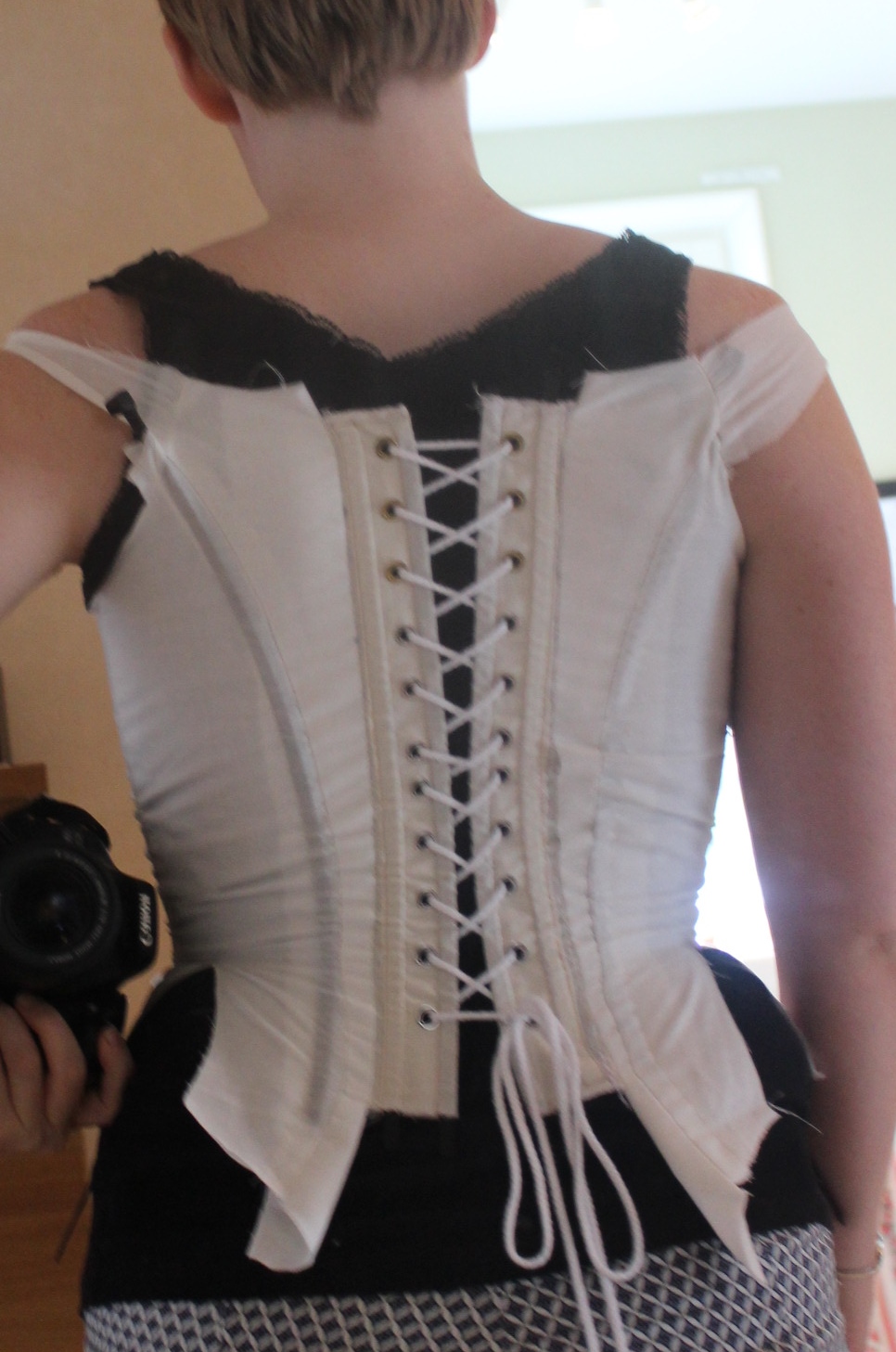
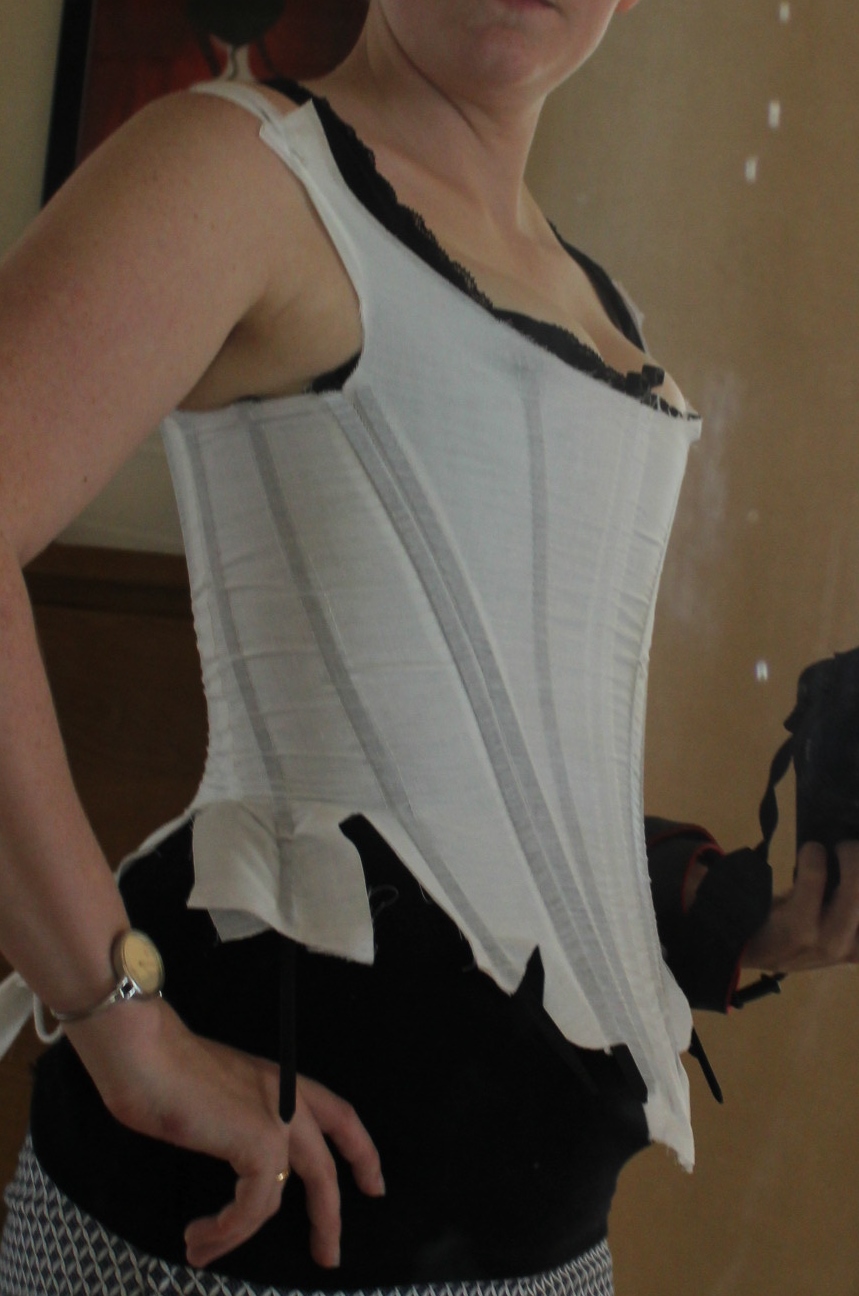
I added boning at some vital places, and my pre-made lacing strip to the font, to get a more accurate fitting.
IMG_7403 IMG_7397
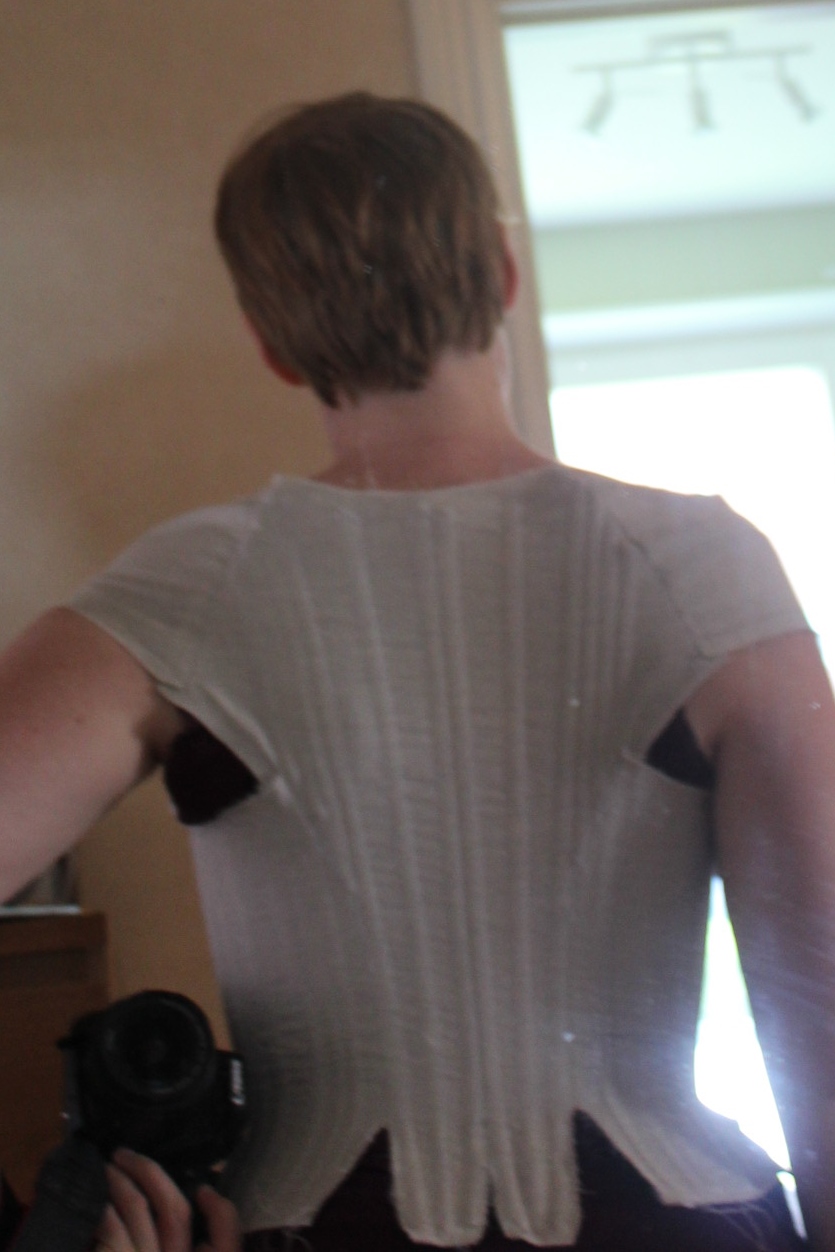
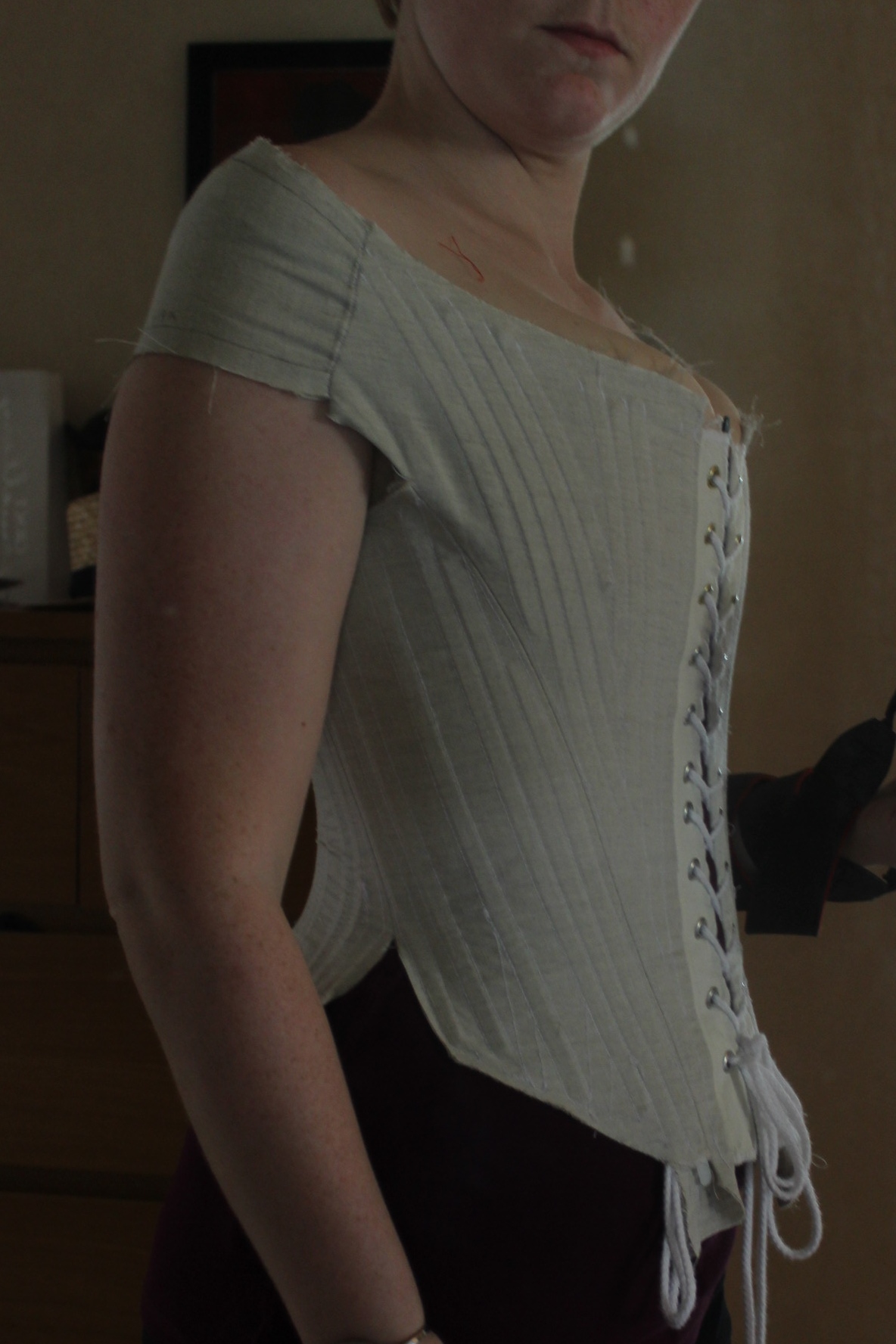
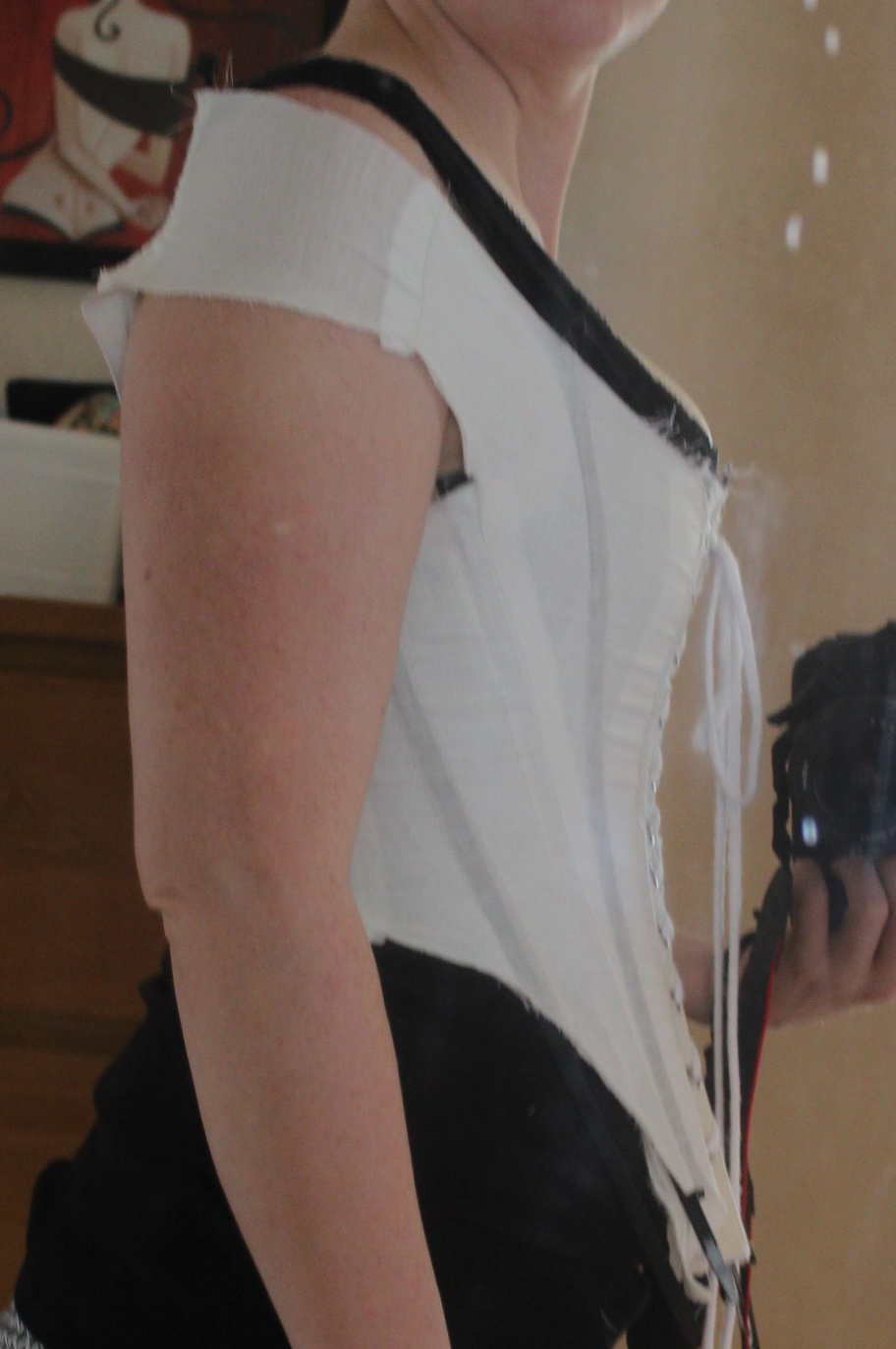
IMG_7396I really liked how the pattern fitted my body – both comfortable and strong.
I also like the look of the off-the-shoulder sleeves, even though I can hardly lift my arms.

The next pattern to try was the “1680s court bodice”.
1680 waugh

I printed, attached and sewed the pieces in the same way as before.
IMG_7367 IMG_7361
IMG_7378I love the shape it gives me, but It’s not nearly as comfortable as the previous one.
I’ll have to move the lacing to the front on this one, and to do some serious editing to the sleeves and neckline.

Hm, which one to choose…

In the end I opted for the “1660s bodice lining.

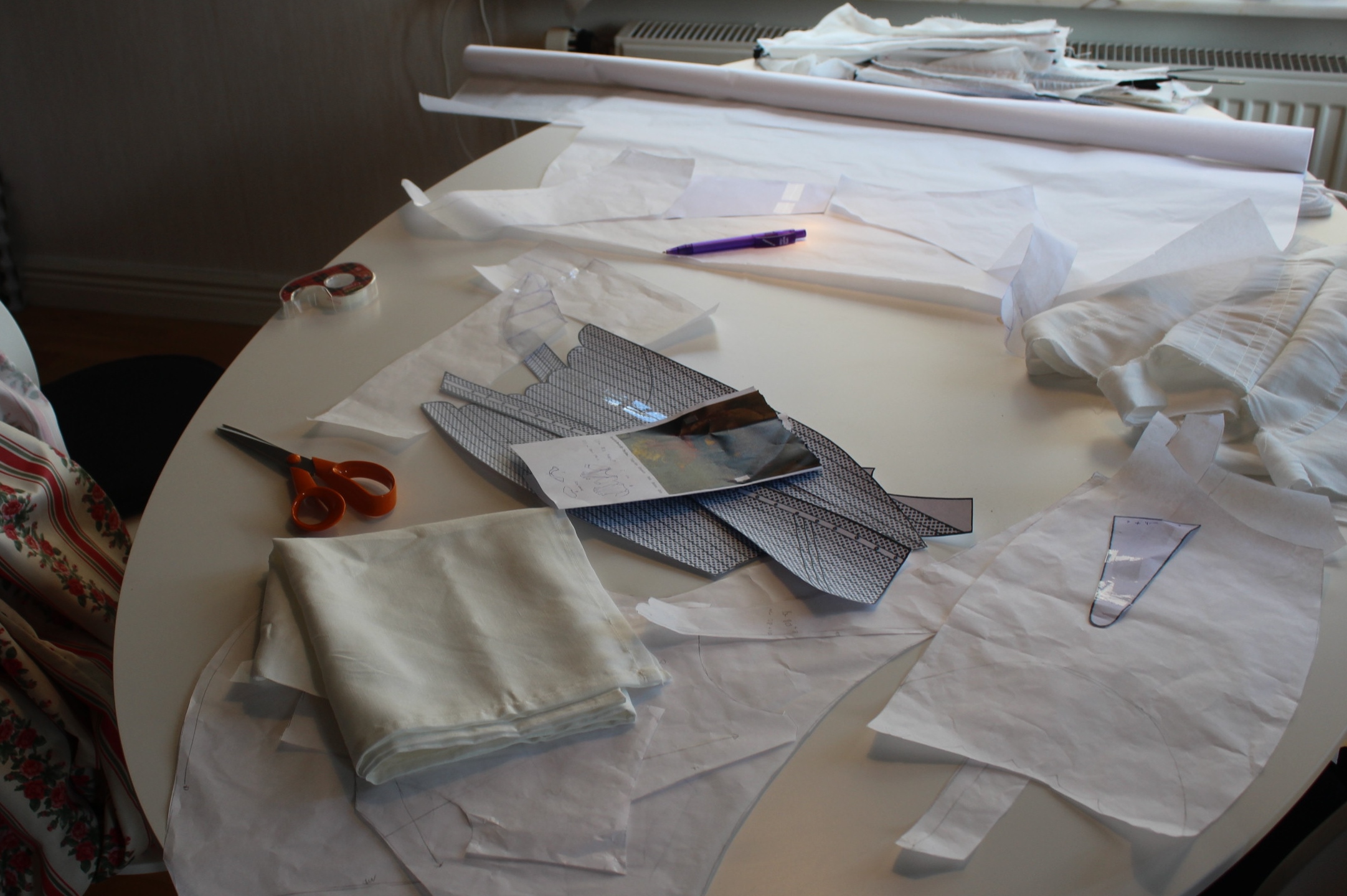
IMG_7406Creative mess, right?

So then it was back to the drawing table to ad some tabs to the otherwise perfect pattern.
IMG_7390I even tried it on with my (at the time) almost finished skirt.
Pretty rough, but you get the idea if the shape.

*I found patterns for 17th century stays and bodices in almost every book covering this period: Waugh’s “Cut of Womens Clothes”, Arnold’s “Pattern of fashion” and “Seventeen-Century Women’s Dress Patterns” by North & Tiramani.

Next up – making the foundation…