16th century Peasant

One of the challenges in the HSF I found the most interesting was the nr 5 Peasants and Pioneres back in Mars. Since I’m obviosly a “princess” when it comes to historical costuming, I found it verry educative to force myself down the heraldic scale to the common people.

I serced my books and the internet, and pretty soon found the pictures to use as my inspiration.

peasant

It is a painting of dancing towns-people in the 16th century England, from the book “The Tudor Tailor”. A book who also had some suiting patter for the costumes.

img302

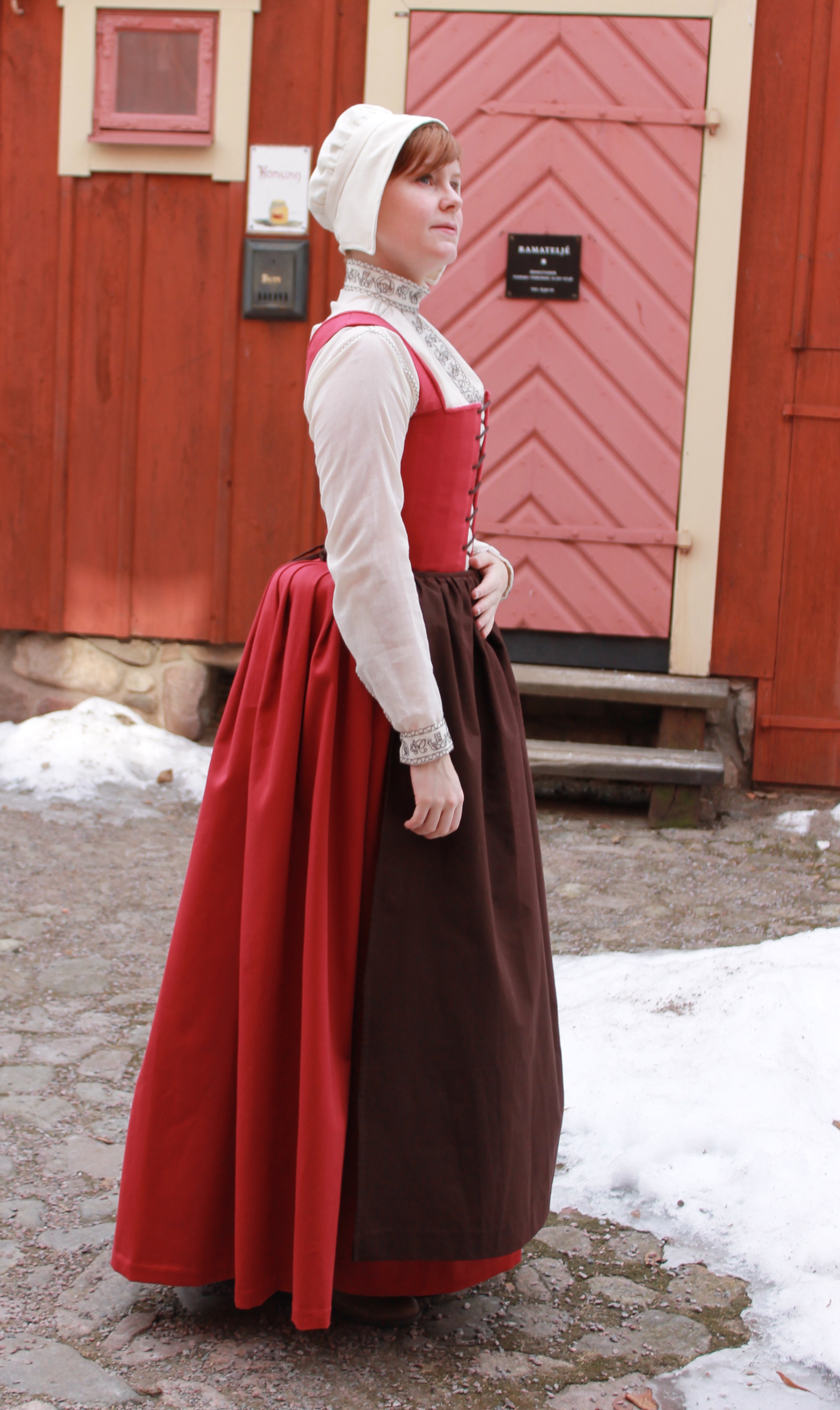
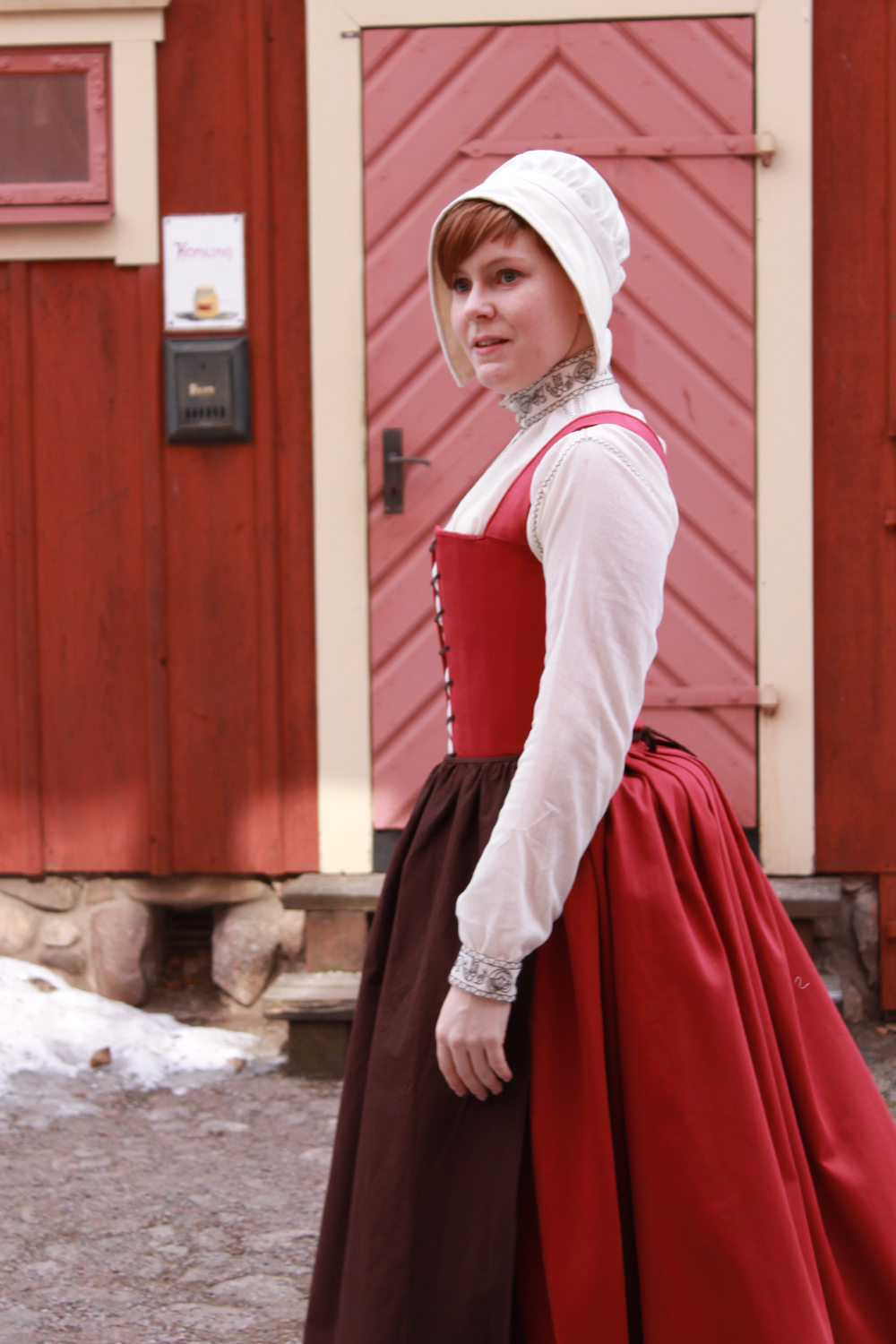
I decided on the pattern for the Kirtle (or underdress) with a front lacing and room for a smal bumroll. The fabric used where a red cotton twill.

The Kirtle went together pretty easy and I boned the bodice with some cable-ties, and handsewed all the lacing holes with brown button-hole thread. I pleated the skirt to the bodice and left an open slit in the front for size adjustments.

2013-03-03 18.37.38Pay no attention to the white sick-sack thread – For some reason I started to gather the skirt. But then I came to my sences and pleated it, as is the proper 16 th century way of doing this.

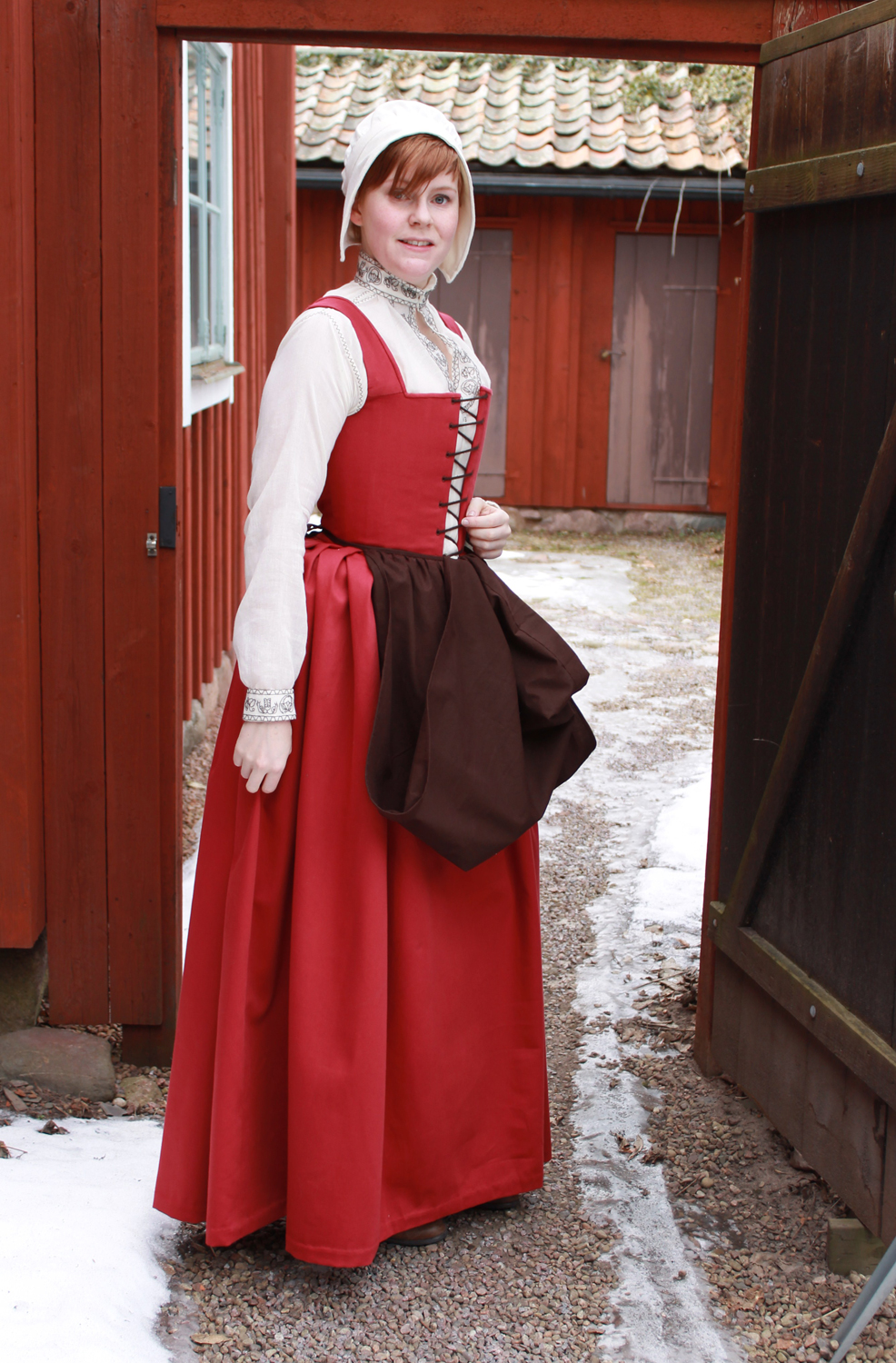
For the apron I used a brown cotton sheet from my stash and made the pattern as a rektangel gathered to a waistband.

I also needed to make some headwear, both out of decency and to cover my own short hairdo. I used the pattern for a Henrican coif in the same book. And made it out of some pieces of white cotton and some wire.

img301

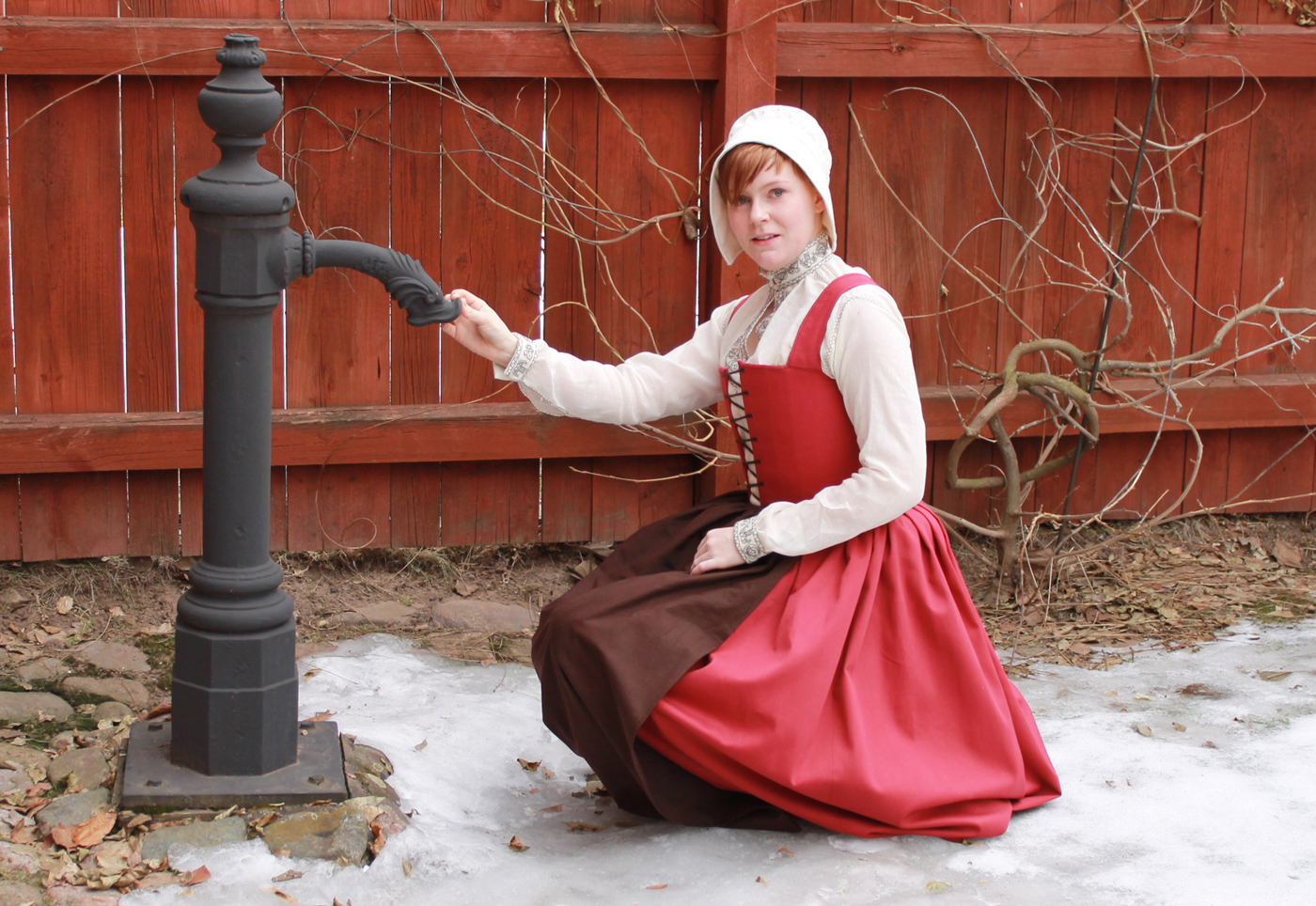
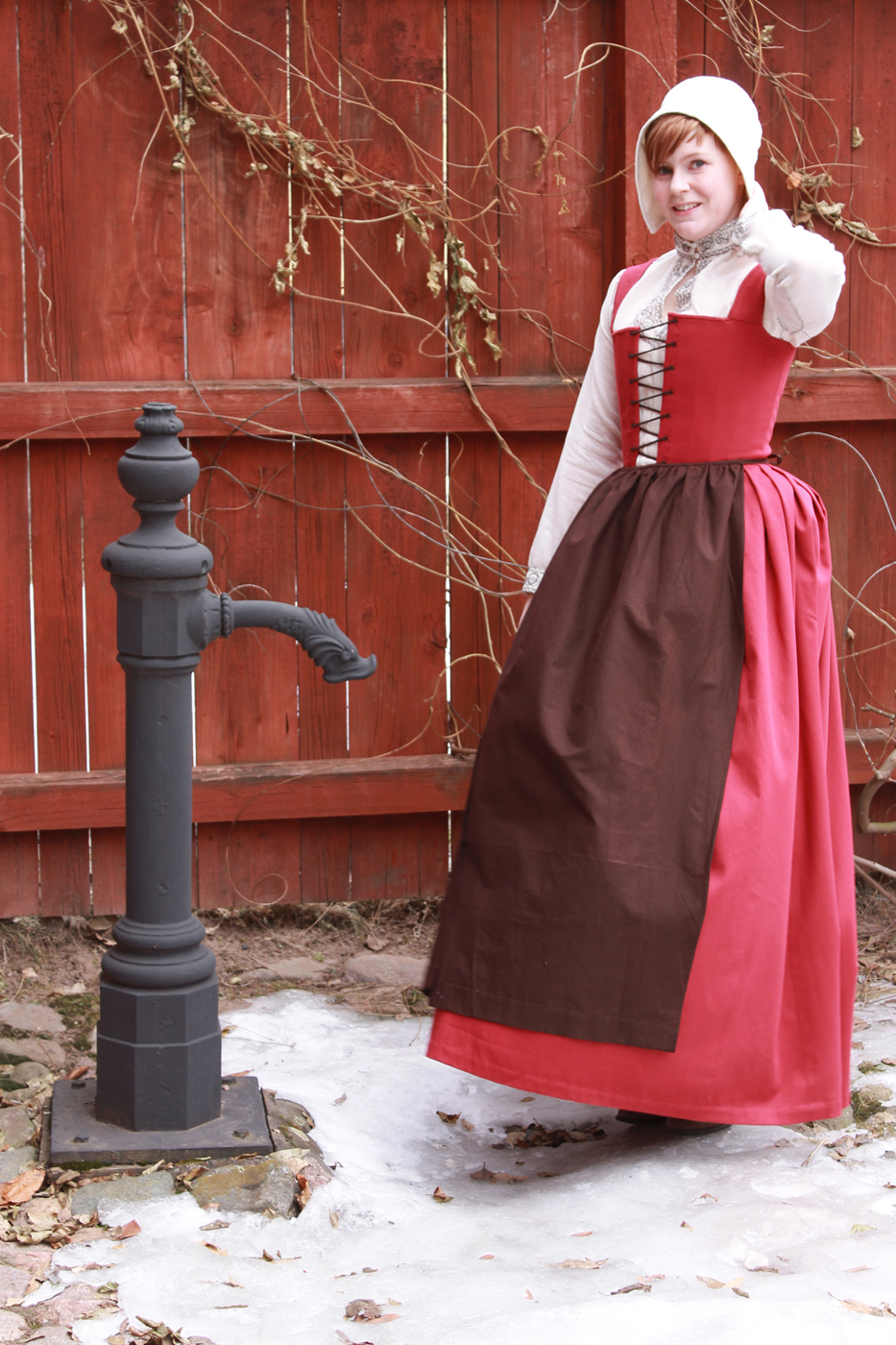
When finished, me and one of my sisters went to my favourite location to shoot some nice pictures. I’m wearing the kirtle, a bumroll, the coif and apron, and an embroided shirt from a previous challenge.

Some finished Pictures.
pump-stå

IMG_1339

IMG_1340

IMG_1350

IMG_1414

IMG_1418

IMG_1361

IMG_1406

IMG_1397

pump-sitt

sidan-solPhoto: Elin Petersson

Just the facts:

Challenge nr 5: Peasent and Pioneer

What: Early 16th century handmaiden, – Kirtle, apron and coif.

Fabric: Kirtle – 3m of red cotton twill. Apron – 1m of brown cotton. Coif – 40 cm of white/ivory cotton.

Pattern: Kirtle – “The Tudor Tailor” Basic women´s clothing – kirtle and petticoats. Apron – none. Coife – “The Tudor Tailor” Hats and headwear – Henrician coif with plane brim.

Notion: Kirtle – brown buttonhole-thread for the handmade eyelets, plastic bonning in the front, and brown cord for the front clouser. Apron – Brown thread. Coif – White thread, thin steal wire(?) for the shaping.

Historical accurate: Pretty good (exept for the cotton fabrics, which should have been wool and linnen). Lots of handsewing and historical methodes where used. The Apron and Coif are totaly handmade, and so are all the visual seams on the Kirtle.

Hours: About 20 for everything (3 hours each on the apron and coif).

Total cost: About 35 USD.First worn: On this photoshoot. But I would love too wear it again on some event, or even whitout one…

Regency accessoars

To make a historical outfit all you need is the right undergarnments and a plausible fabric in a color or pattern used during the intended era. (Honestly, in most circles you can get away with lots of inaccuracies if you have the overall silhouette down)

But how to make your costume go from “nice” to “wonderful”?

It’s all in the accessories.

What would your Elizabethian dress be without the starched ruff, or your 18th century Anglaise without the headgehog-hair/wig.

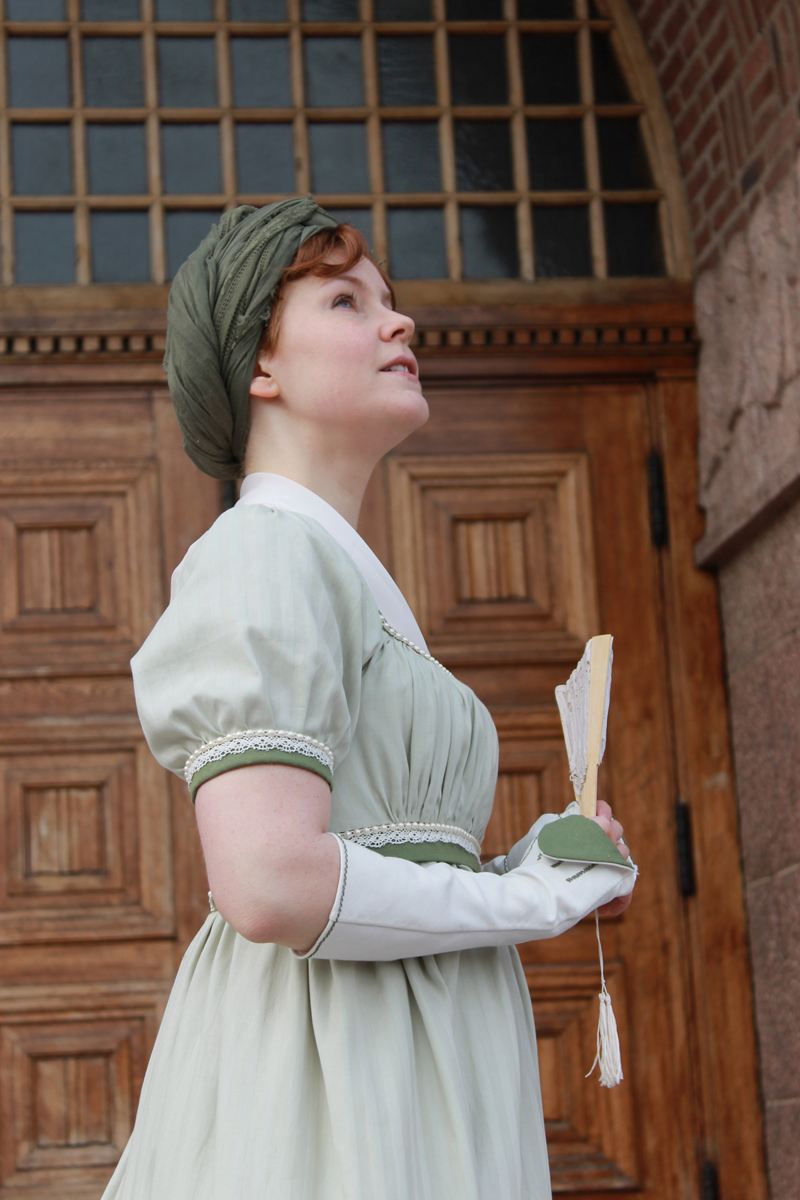
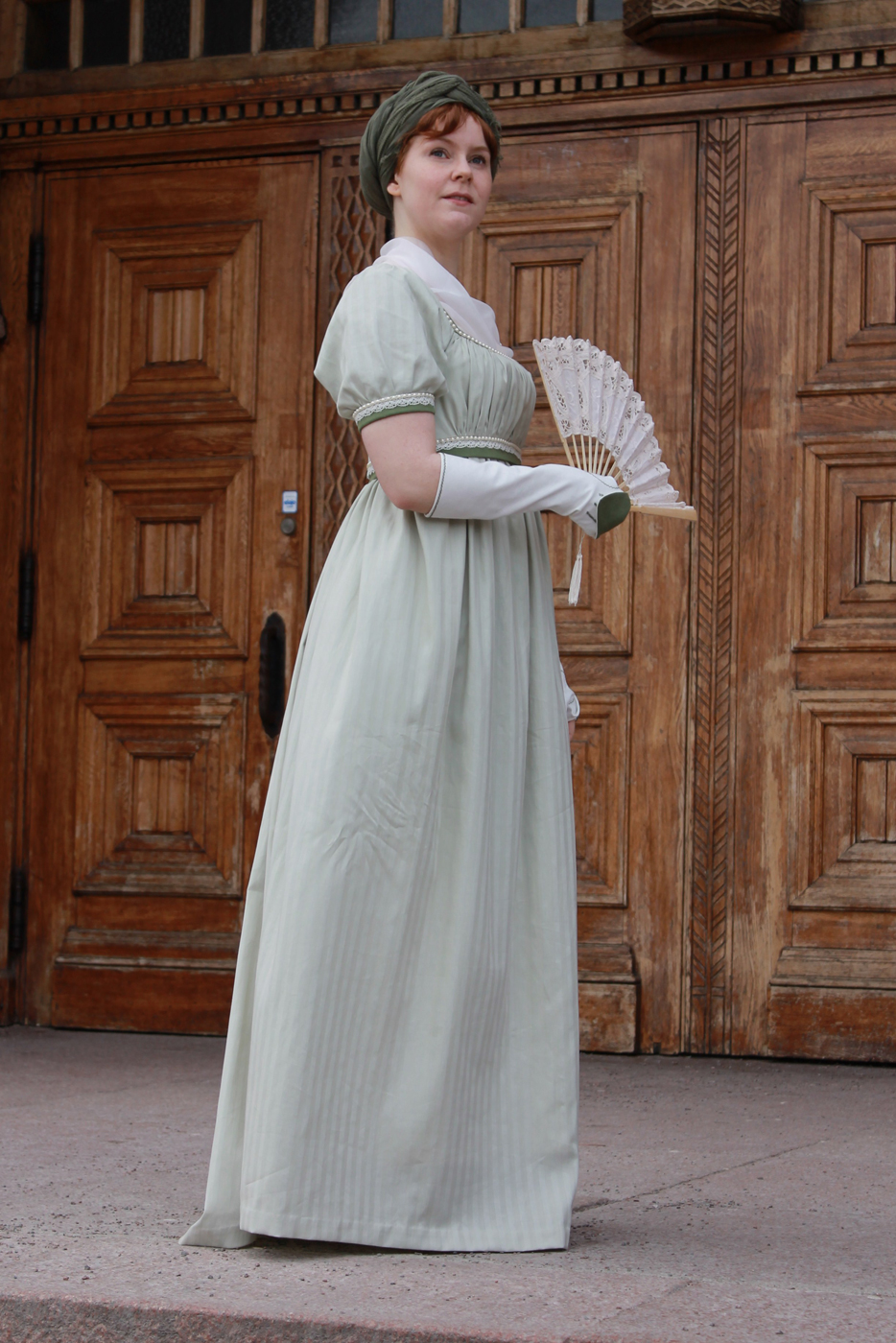
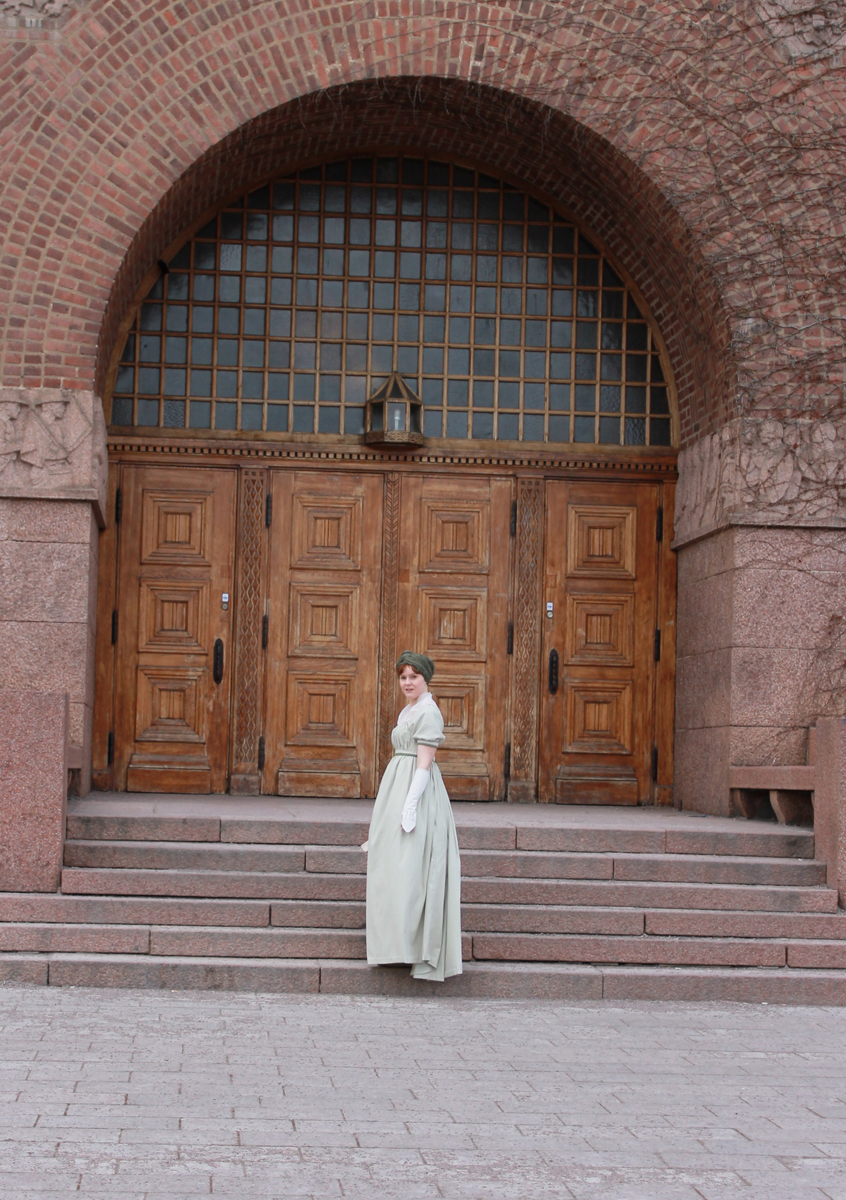
So for the HSF challenge 7 “accessorize” I decided to style my new Regency gown (which I made in the 6th challenge) with some matching accessories.

But what would I make? There are so many things the proper Regency lady would need.

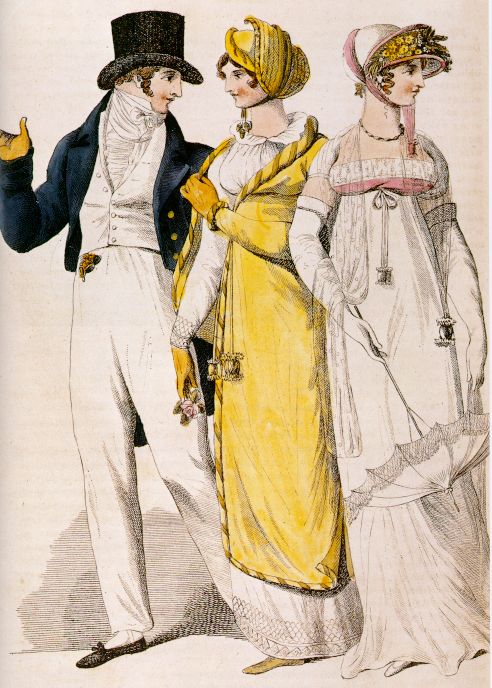
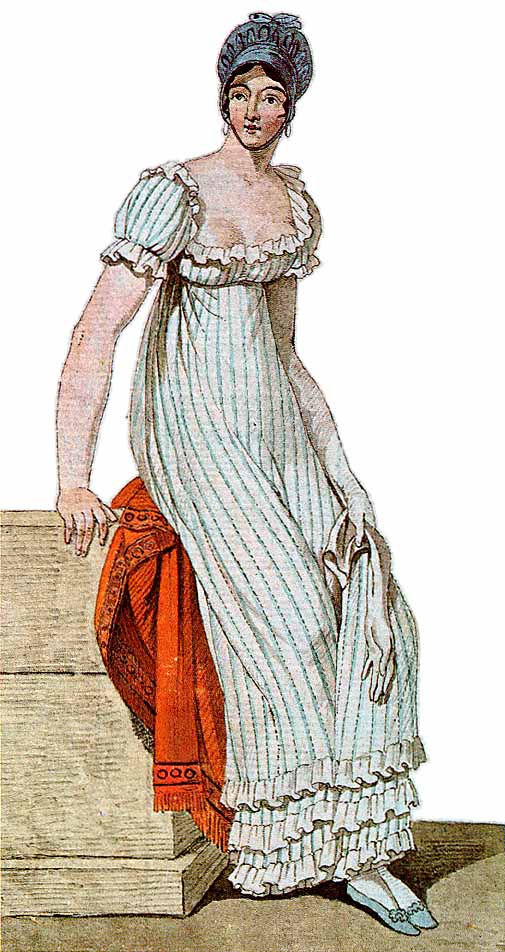
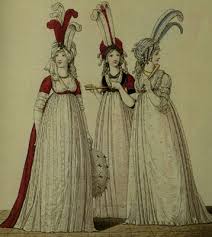
1817-walking-dress-la-belle-assemblee2Robes and ridicules …
imagesCAW6EP0V… turbans, open robe, spencer, fans and muffs …

regencyfashion… shawls, bonnets, gloves and parasols.

I decided to prioritate headwear – since my hair is cropped in a boyish style I would never be able to arrange it in the curly up-dos so popular at the time. So instead I need to cover it up.

I searched all the stores in town for a straw hat to make into a bonnet. But the sunbonnets was no where to be seen in the still cold and snowy march.

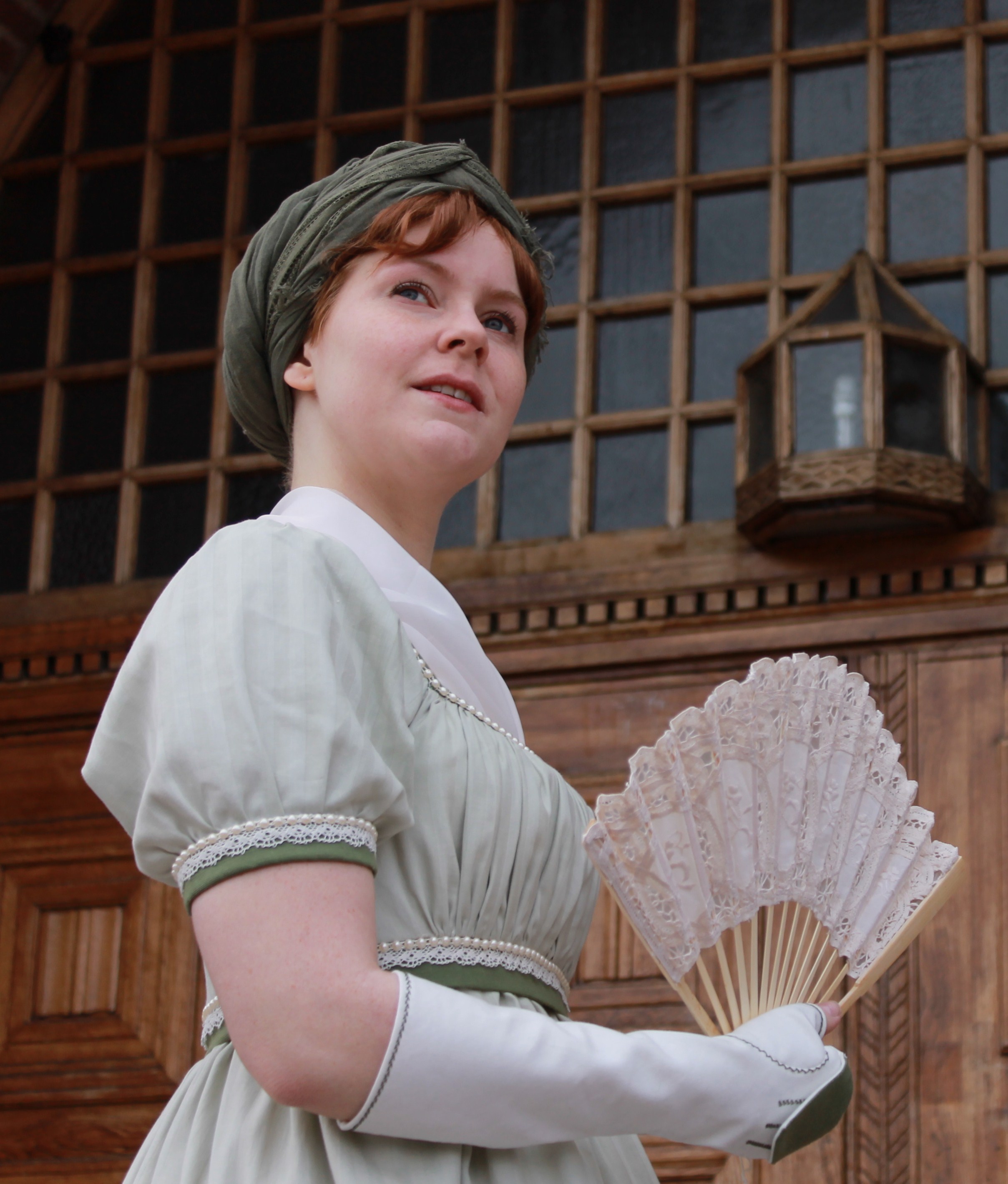
So I needed to re-think the bonnet and decided on the much simpler turban. I bouhgt a shawl in a similar green color as the trimmings on my dress, and practiced wraping and pinning the turban to my head. The American Duchess has a great tutorial which I used to get the shawl to co-operate.

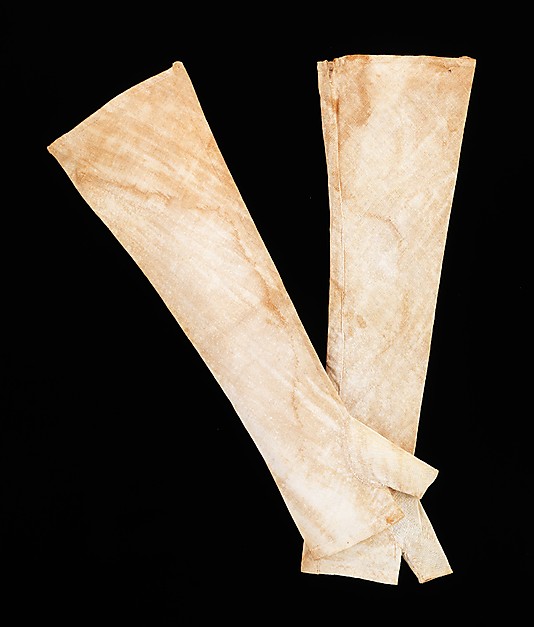
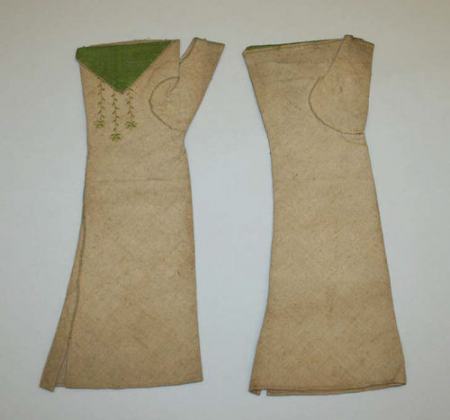
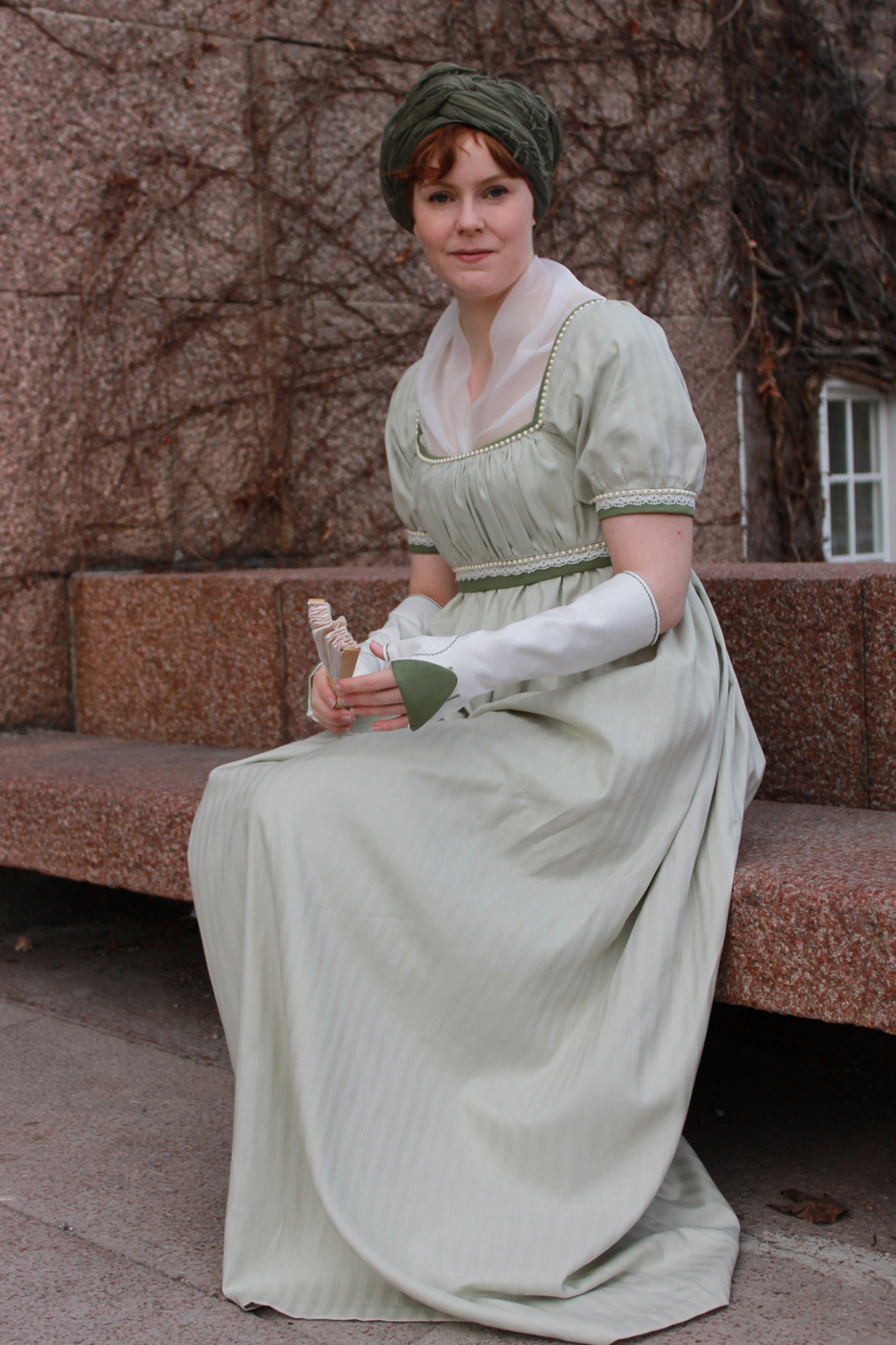
But since the turban seemed a bit too easy I also decided to make some gloves – or mittens to be exact.

26_598a-b_CP4

mittens-18th-c-met-musThese were my main inspirations

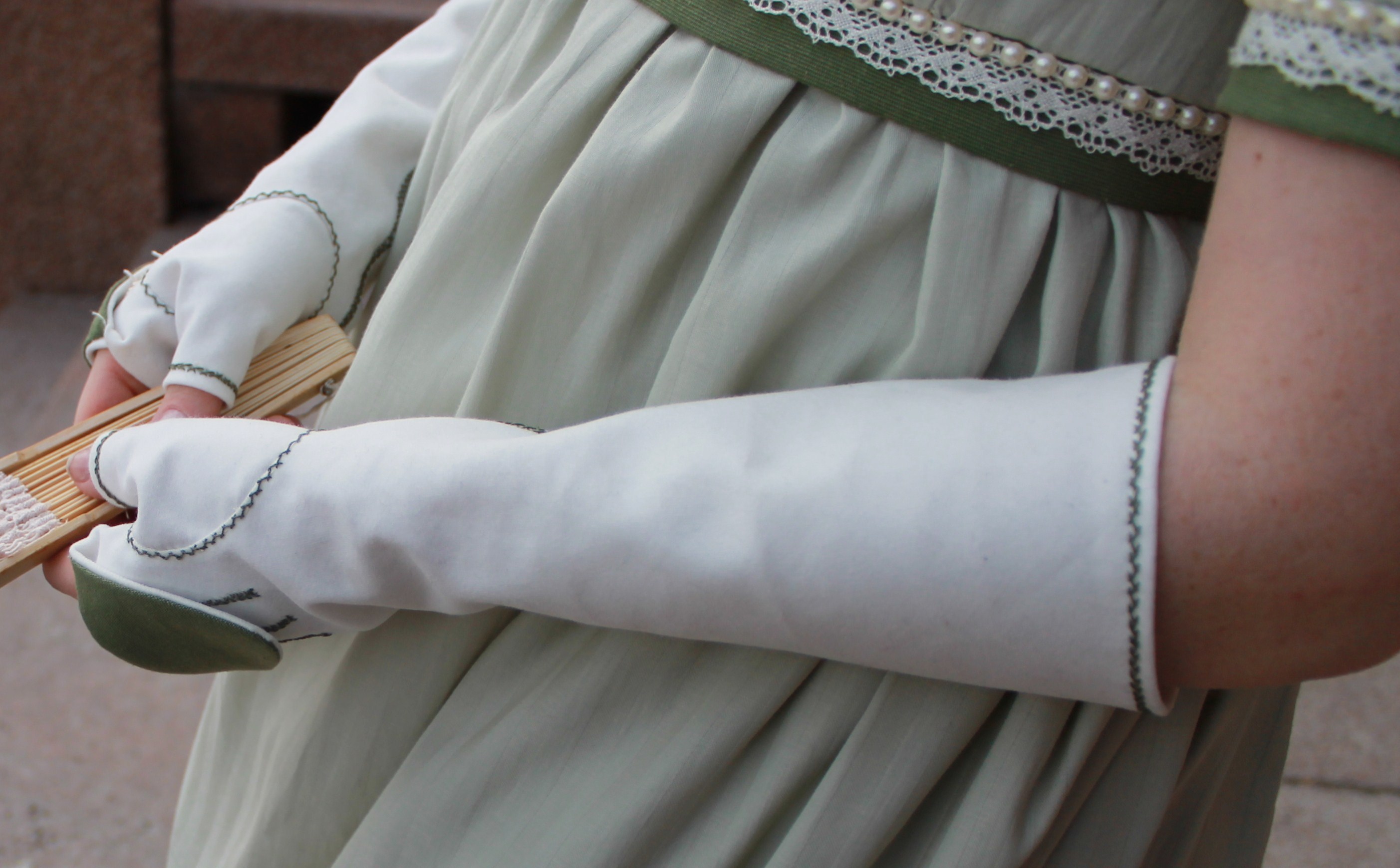
Using the pattern from “Costume Close-up”, I drafted and cut the pieces in an ivory cotton blend.

img311

They are completely handsewn and decorated with green buttonhole thread and the same green linnen as for the gown trimmings.

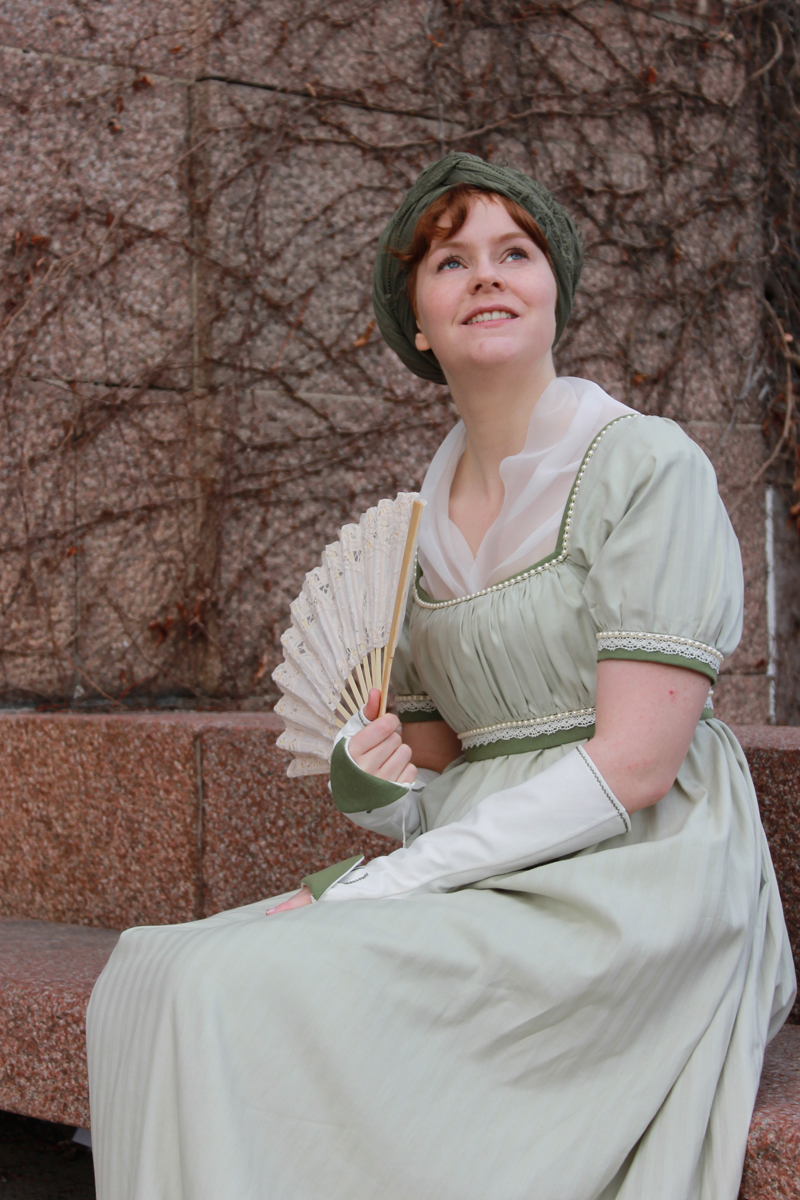
I also bought an ivory lace fan, and cut a big triangle of ivory organdy to use as a fichu (neck coverage) for the photoshoot.

IMG_1556

mittens

IMG_1614

accessorisePhoto: Elin Petersson

Just the facts:

Challenge nr 7 – Accessorize

What: White and green Regency mittens. And my light entries – the green turban (a scarf) and white fichu (a hemed piece of organza).

Fabric: 0,5 m cream colored, thick cotton fabric with a small soft nape.

Pattern: “Costume Close-up” By Linda Baumgarter – Mittens.

Year: 1740-1840.

Notions: Pieces of contrasting green fabric, sewing thread and green buttonhole thread.

How accurate: Pretty good – completely hand stitched with historical patterns and sewing techniques. So about 90 %.

Hours: 6 hours – lots of decorative handstitching.

Cost: 8 USD.

First worn: On Gods friday when we had the photoshoot.

Final thoughts: I love my mittens and plan to make lots of them in different colors and fabrics.

I also noticed that the hostess of HSF The Dreamstess mentioned my mittens as one of her favourite accessories for this challenge.

Regency Stripes

Well, as I haven’t been able to sew all the things I’d liked this month, I will continue to posts about the HSF-challenges finished earlier this year. And as soon as I manadge to find the time to make something new (and to photograph it) I vill share it whit you.

***

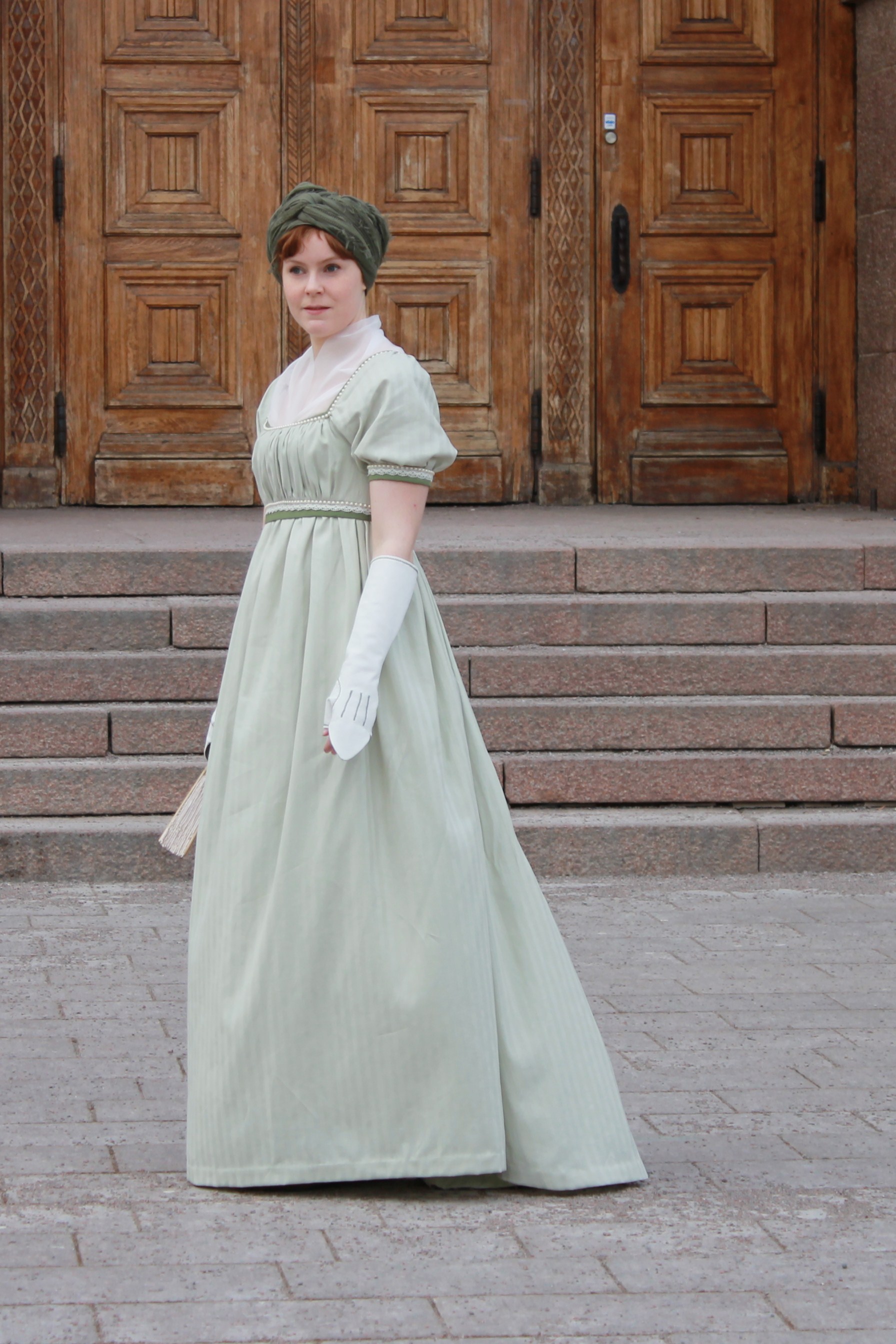
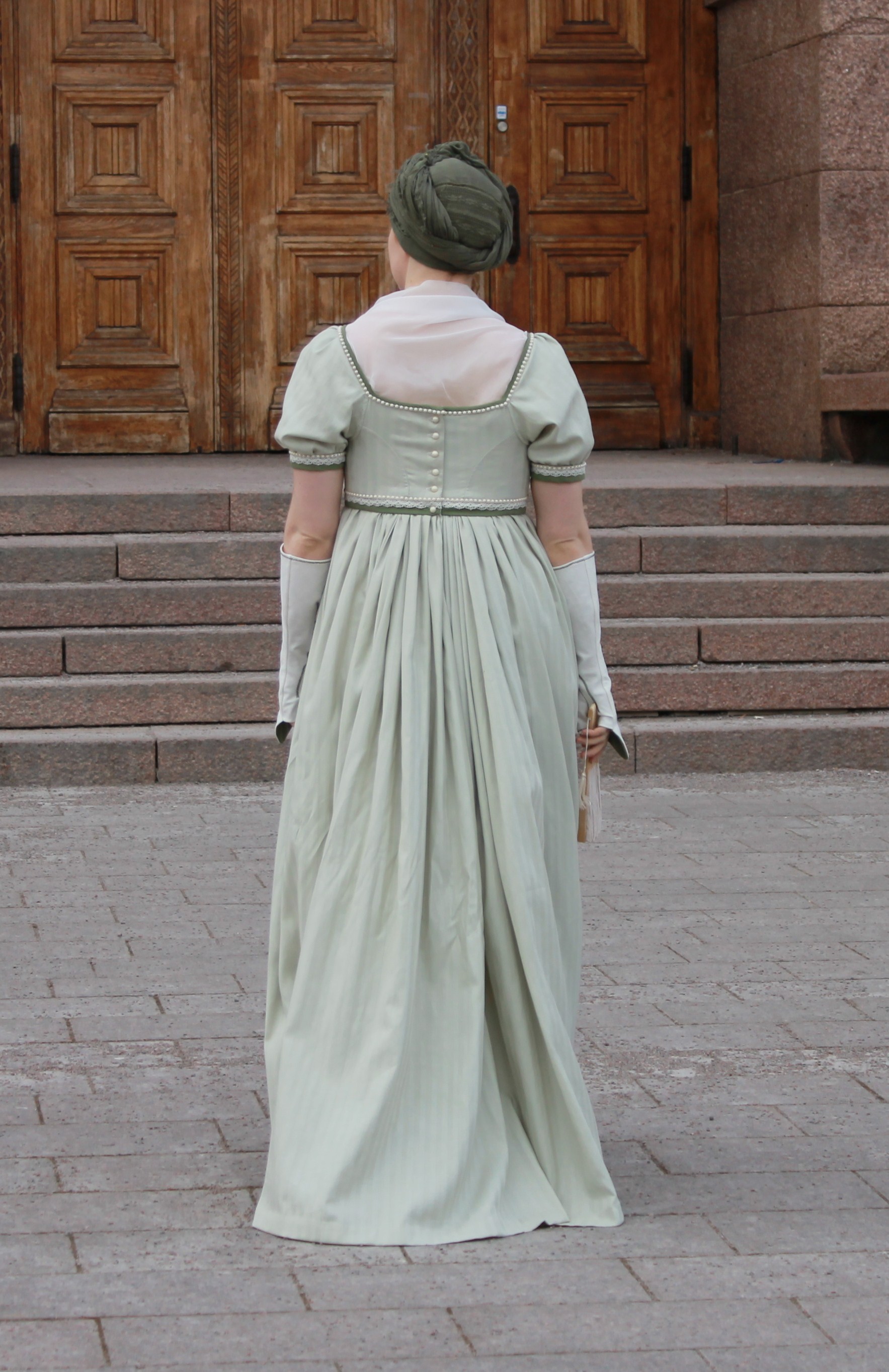
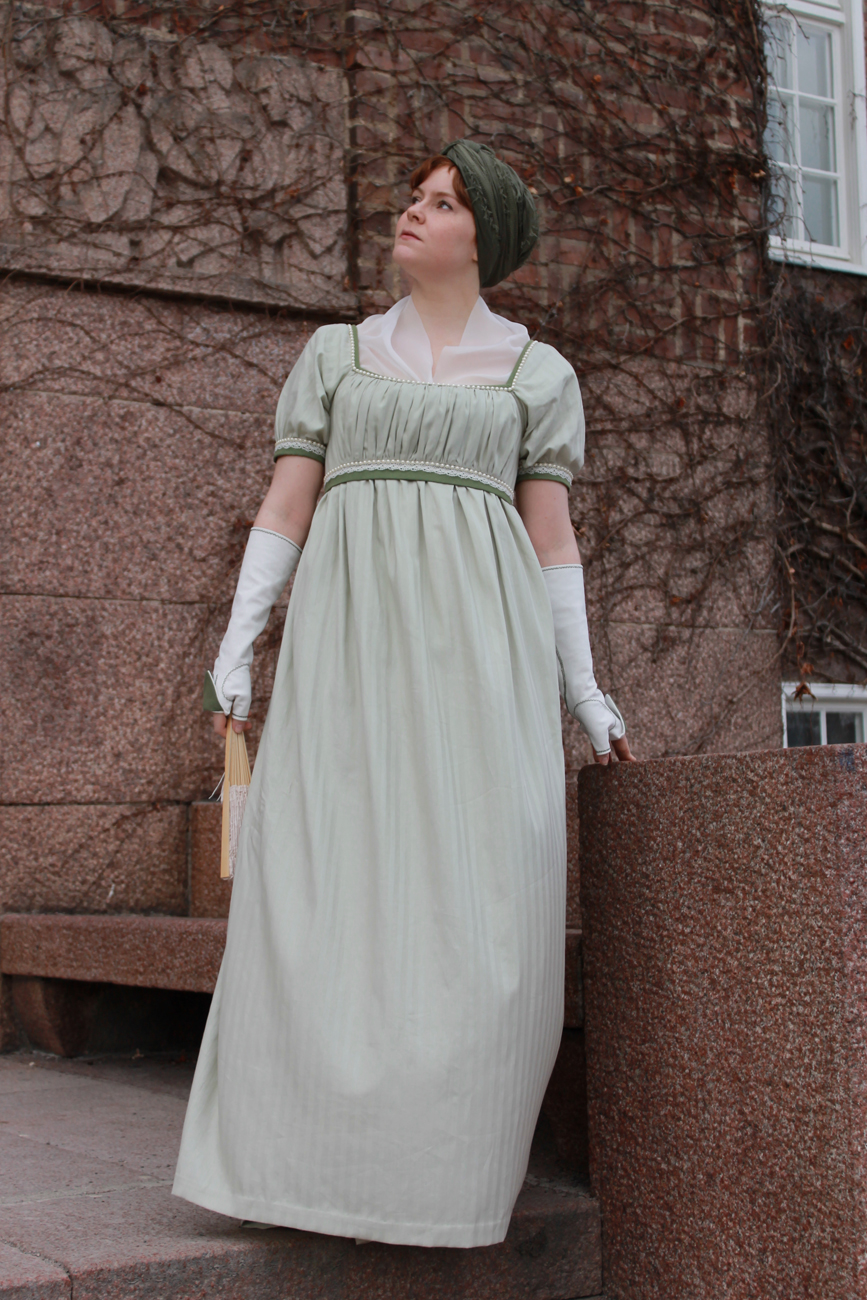
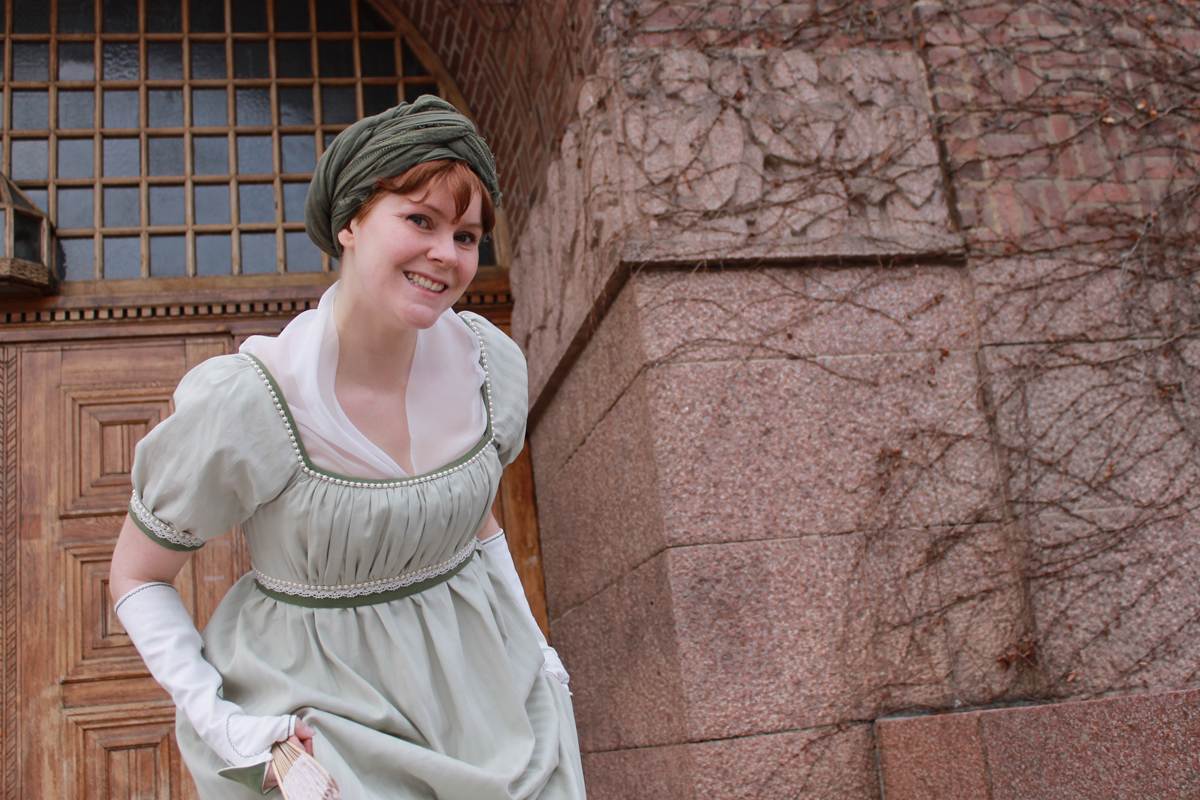
For the HSF challenge nr 6 – Stripes, back in mars I knew that I wanted to make a regency dress. Having recently finished my first attempt at this kind of dress for a customer in december, and was itching to give it an other try.

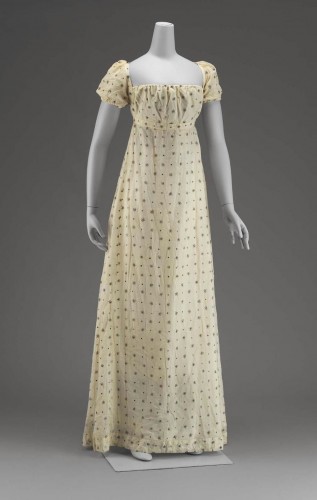
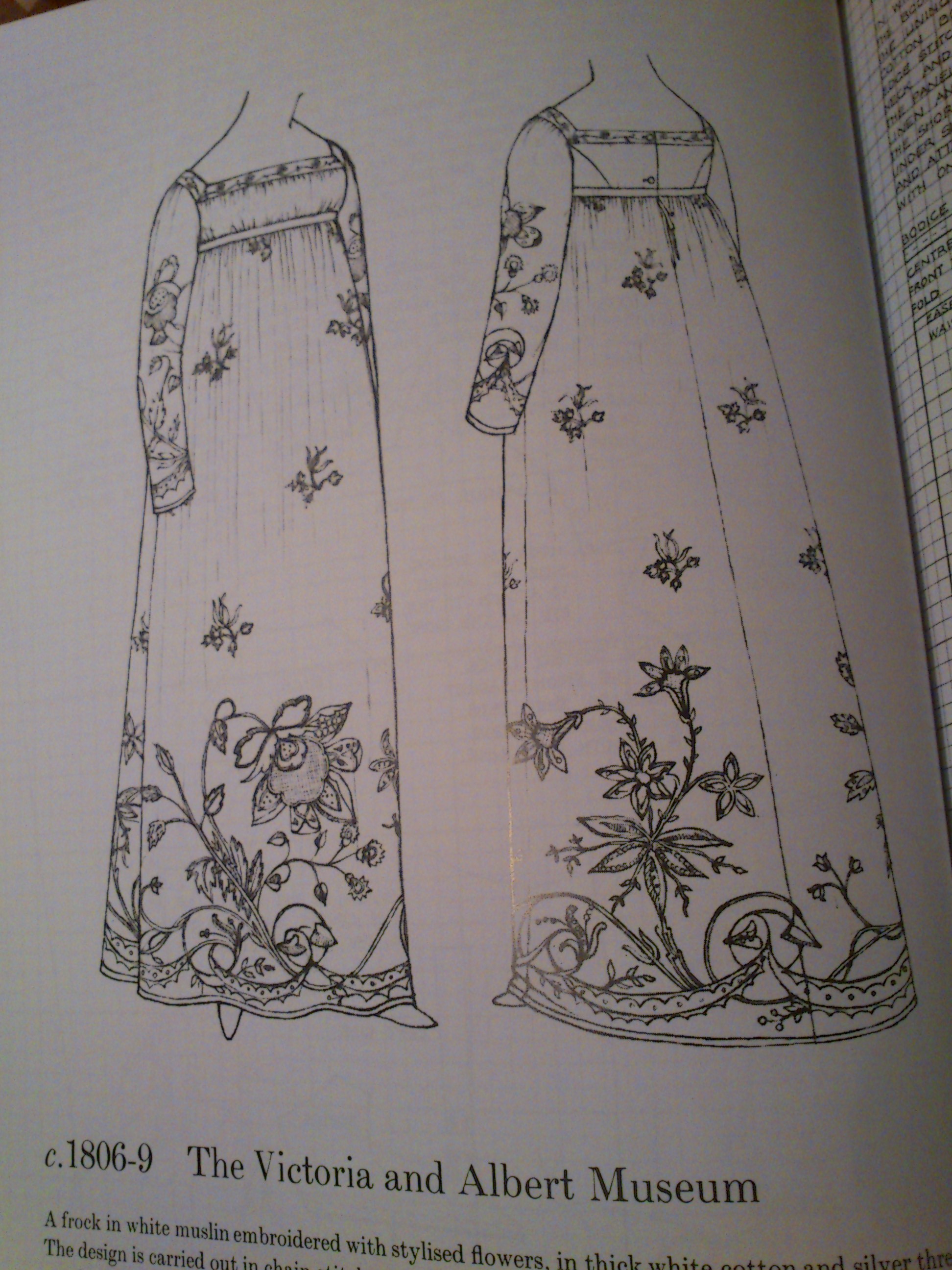
Here are some of my inspiraion dresses. 1810klein

Cotton-mull-with-silver-flat-metal-embroidery-linen-innerbodicecotton-ties-and-metal-hook-and-eye-closures-53_206-MFA-317x500

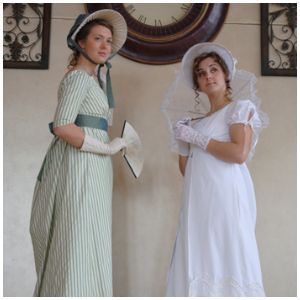
both-dresses2

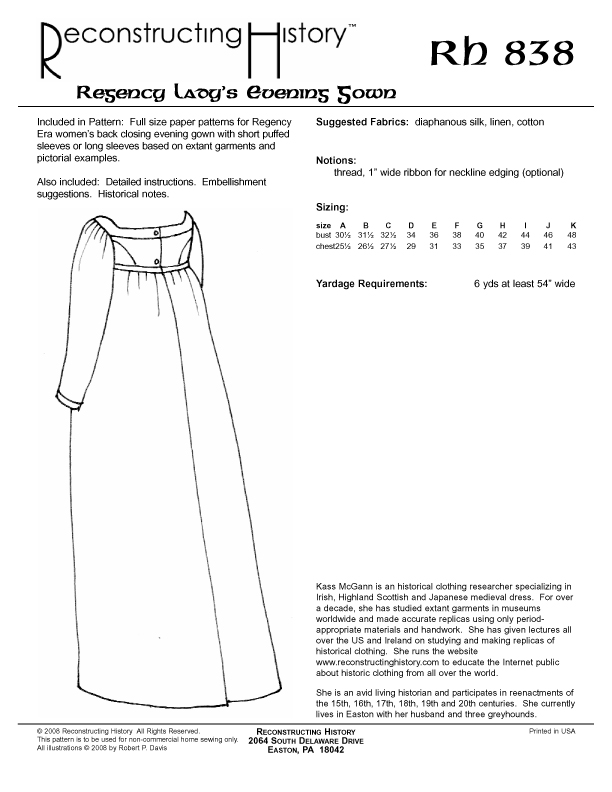
I already had the pattern since before: Reconstructing History- lady’s regency gown, but I hated it. Everything was wrong with it. The pieces didn’t fit togheter, and the gathering was just ridiculously massive. It gave me a serius head-ake trying too figuring it out the first time.

RH838backcover

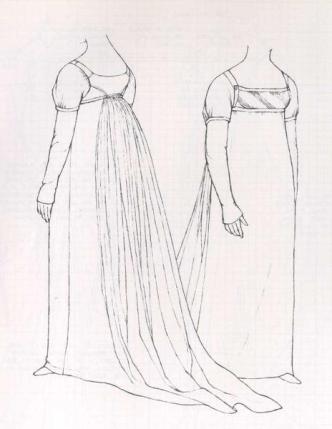
So I studied the pieces of Arnolds two regency patterns.2013-03-03 18.42.55

gilbert-gown

Then I re-cutt the pattern to make a lot more sence. I made a mock-up and did some final adjustments to the pattern.

Then I found the perfect fabric super cheap in my new favourite fabric store.

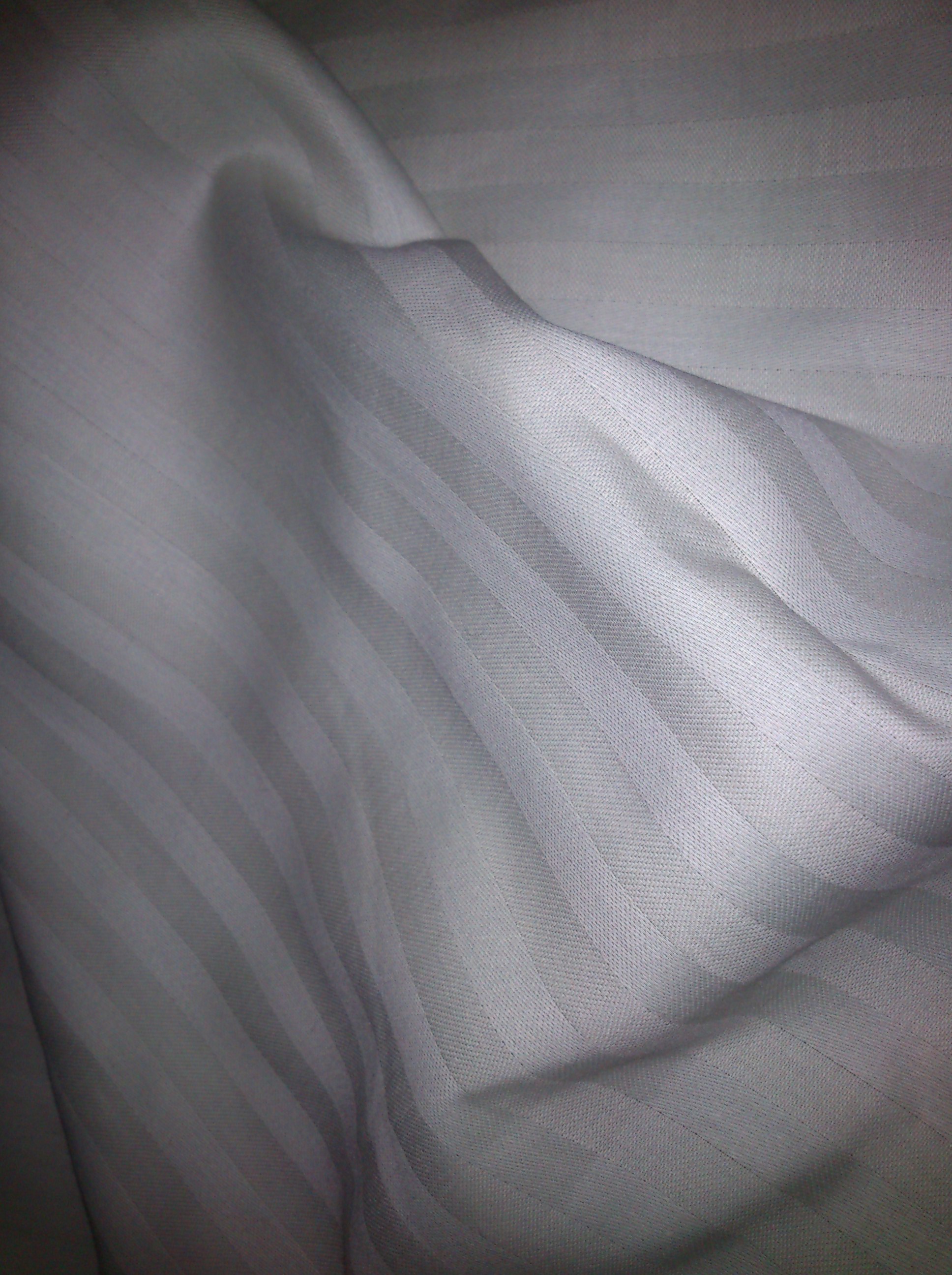
2013-07-21 21.24.43

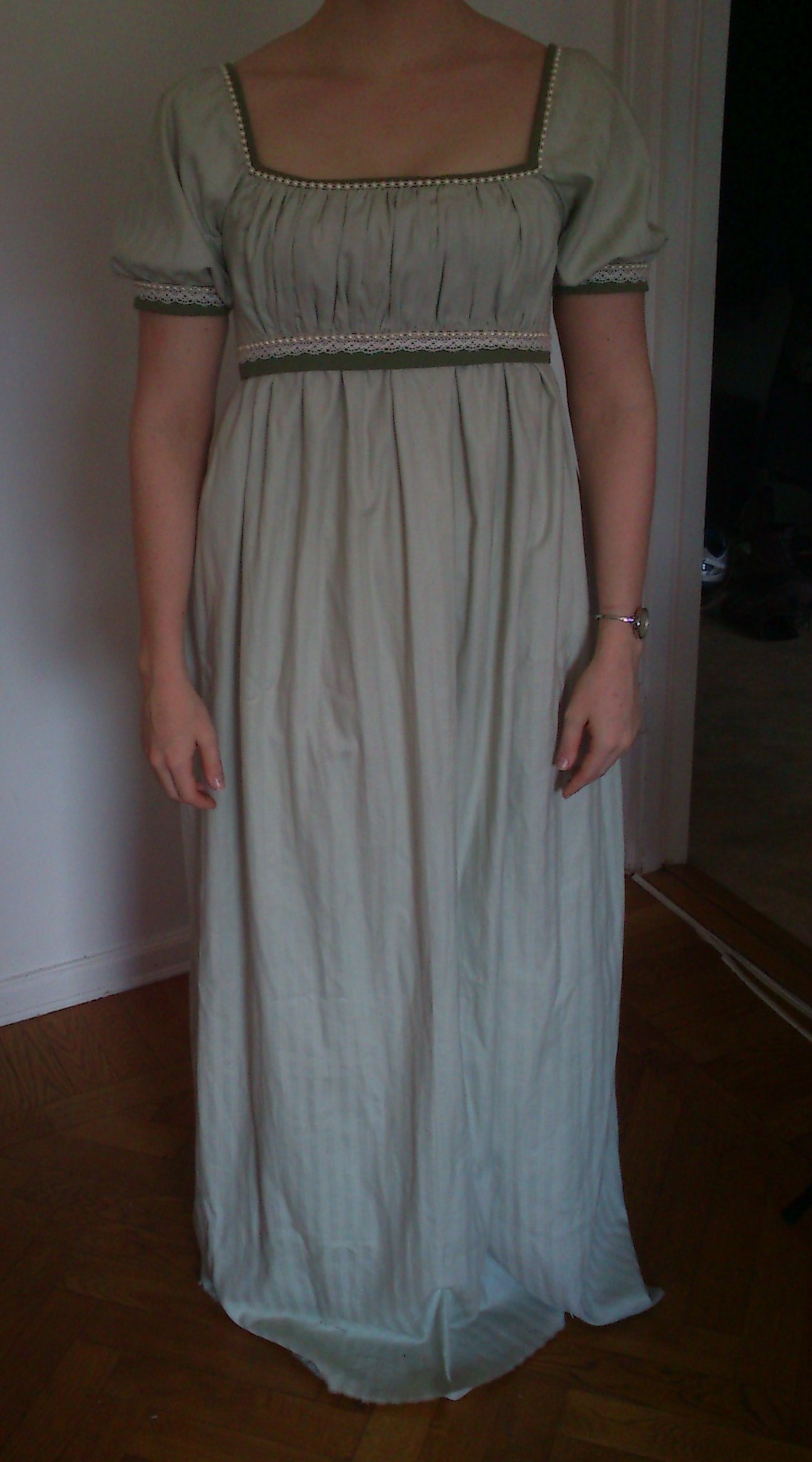
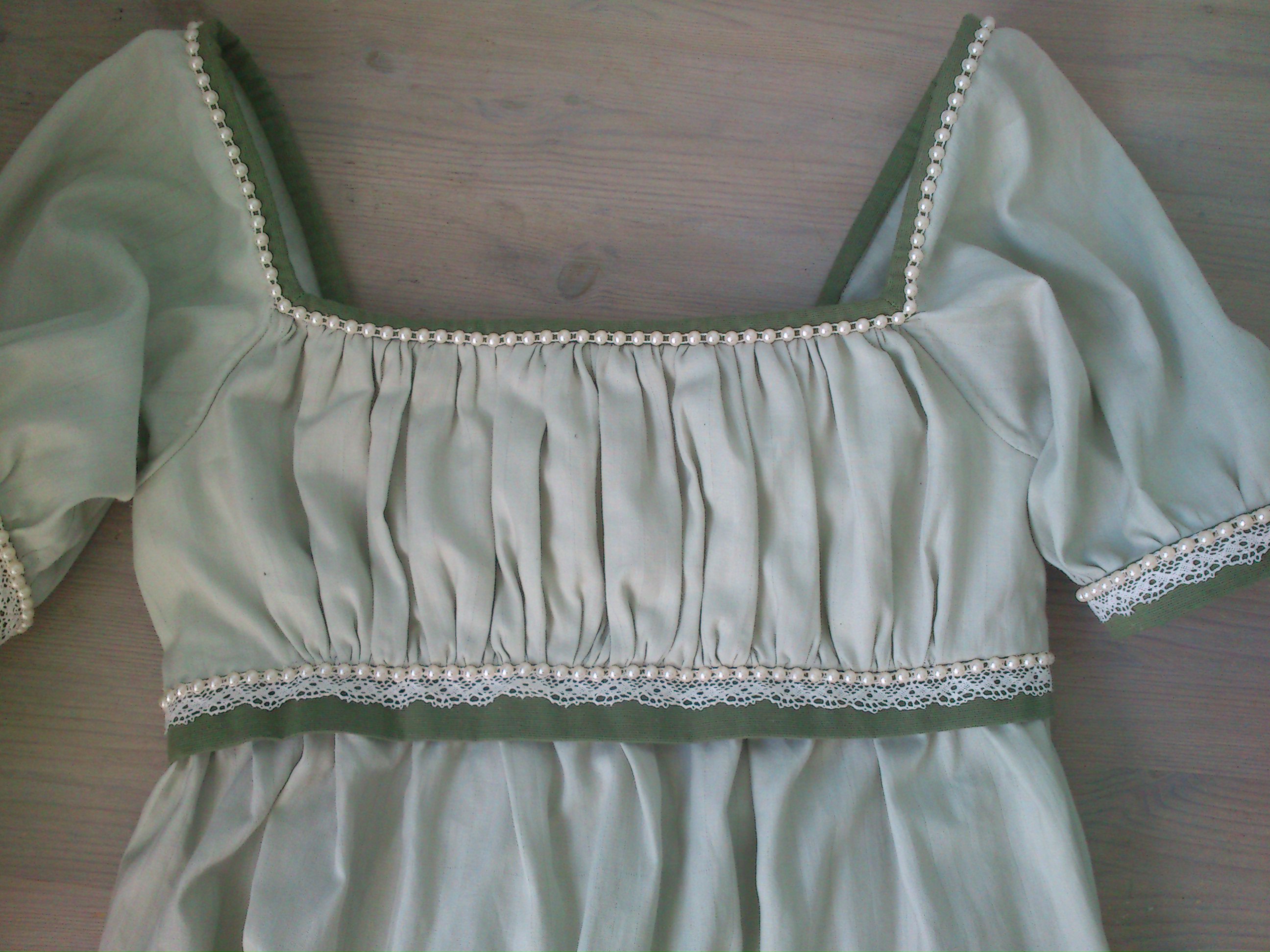
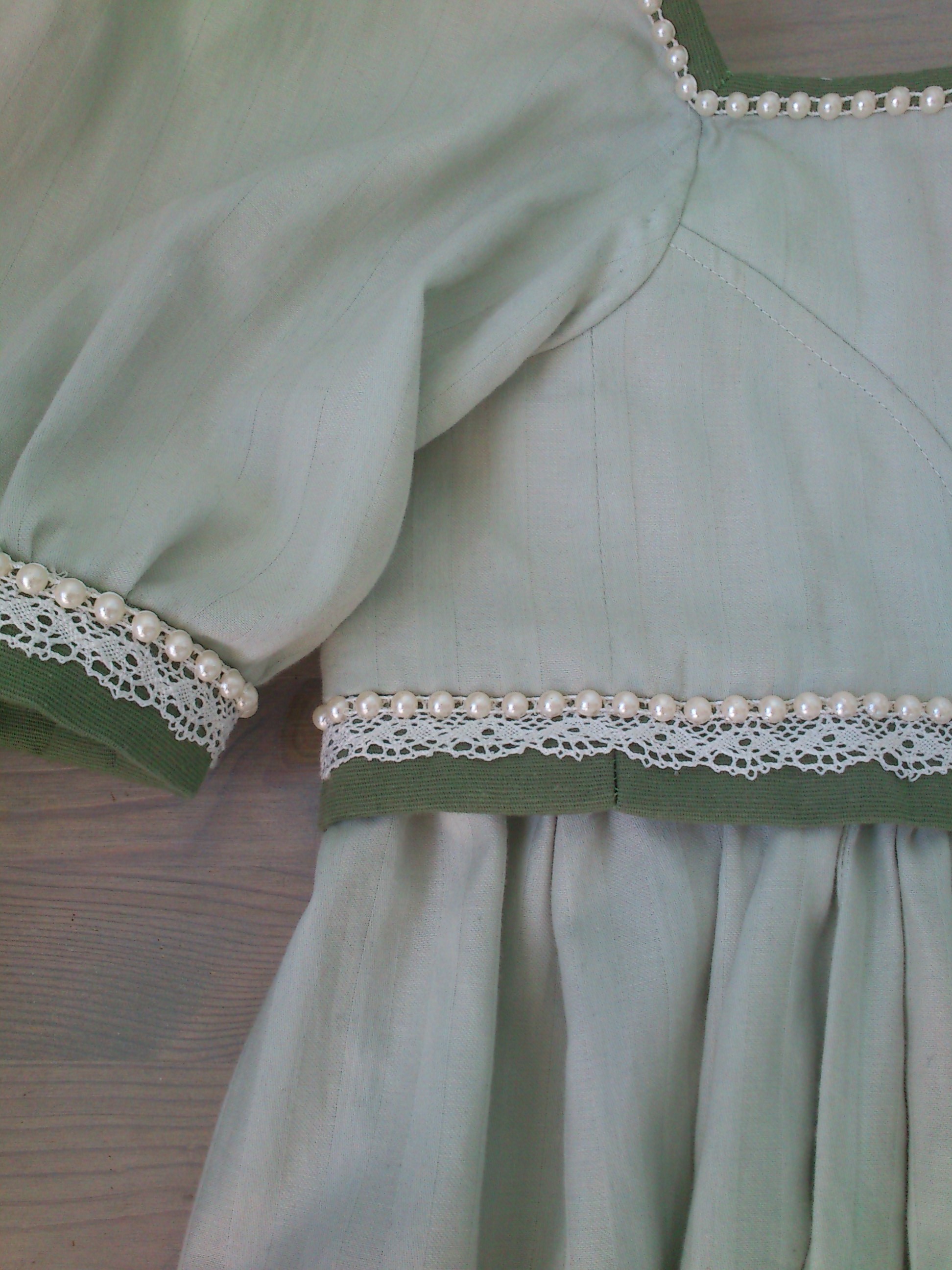
It is a pistage-green striped really thin cotton weave. I also got a darker green linnen, cream colored lace and a plastic row of pearls for the decoration.

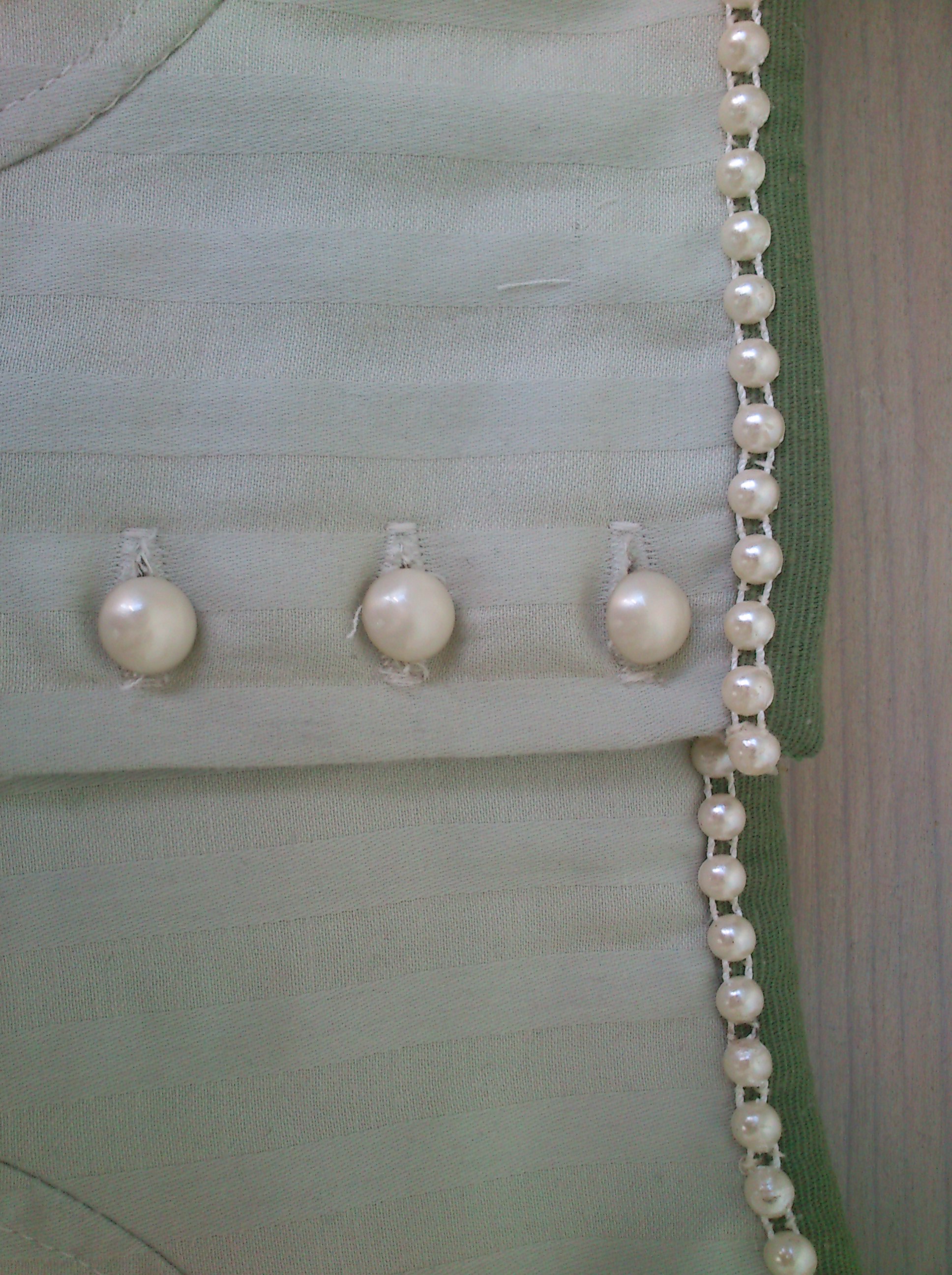
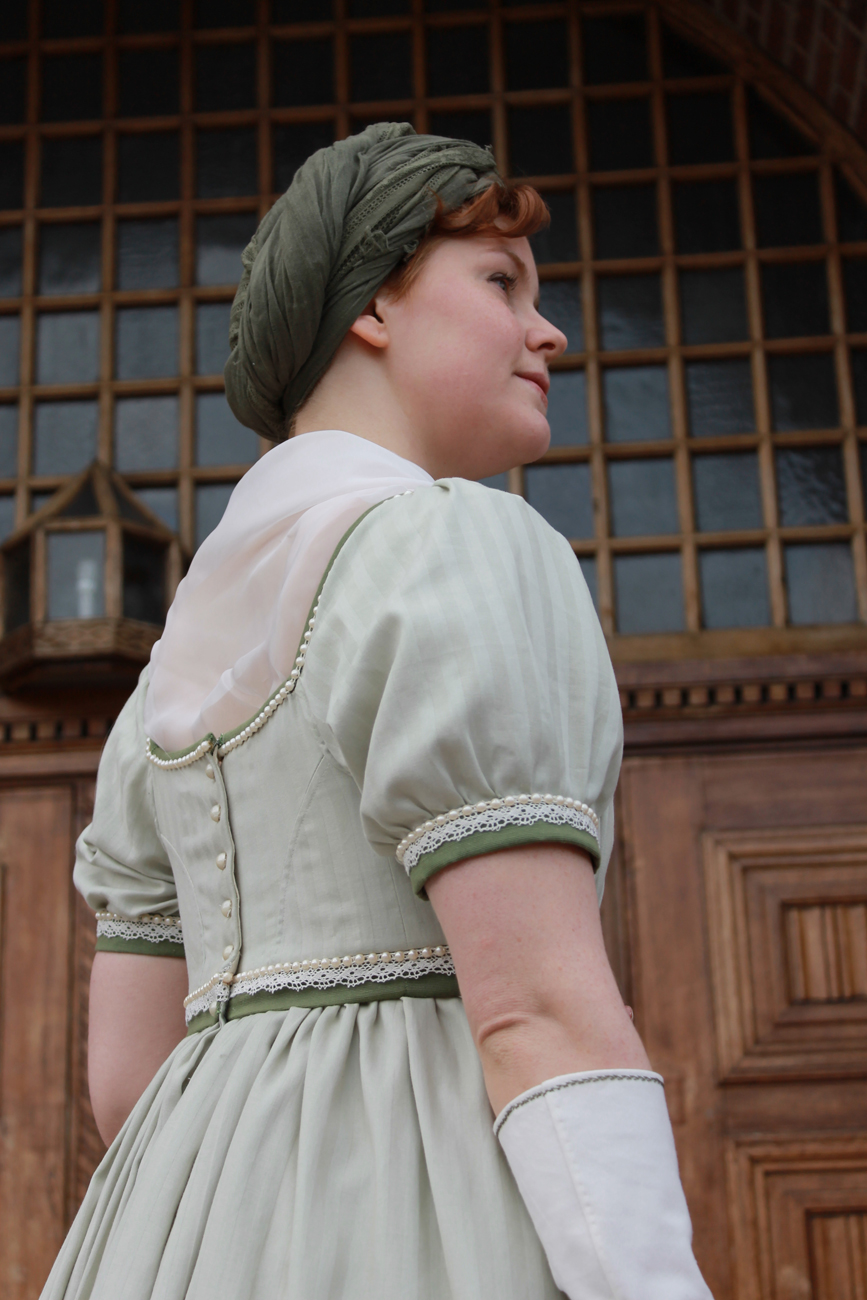
The sewing went fast and easy and after only one day of sewing I could try it on to check the lenght and back closure.

2013-03-24 13.42.33

Then I hemed it, and hand stiched on the lace and beads.

2013-03-24 13.54.28

2013-03-24 13.53.21

2013-03-24 13.52.16

And finished

IMG_1539

IMG_1543

IMG_1568

IMG_1513

IMG_1504

IMG_1501

stripes

IMG_1603

IMG_1562

IMG_1573Photo: Elin Petersson

Just the facts:

Challenge nr 6 – Stripes

What: A simple mint green Regency dress

Fabric: 3,5 m of soft and thin cotton fabric (almost like voile).

Pattern: “Reconstructing History” nr 838. Not a pattern I would recommend for a beginner. I had to change and alter almost every pattern piece. (I think it would have been both faster and easier to make a new one from scratch).

Year: About 1800 – 1810

Notions: Green contrast fabric, 5 pearl buttons for closure, thread, 2 m of lace and 3m of pearl-ribbon.

How accurate: Mostly made by machine, and with modern pattern reconstruction and sewing method. So except for the silhouette and the “look” of the dress – not accurate at all I’m afraid.

Hours: About 16 (with lots of handstitching on the decor).

Cost: About 30 USD

First worn: On Gods friday when we had the photoshoot.

Eastern Influences in 1914

I had some difficulties figuring out what to make for the HSF Challenge 14 – Eastern Influences. I didn’t want to start a too big project, being so busy with the Titanic dresses at this time.

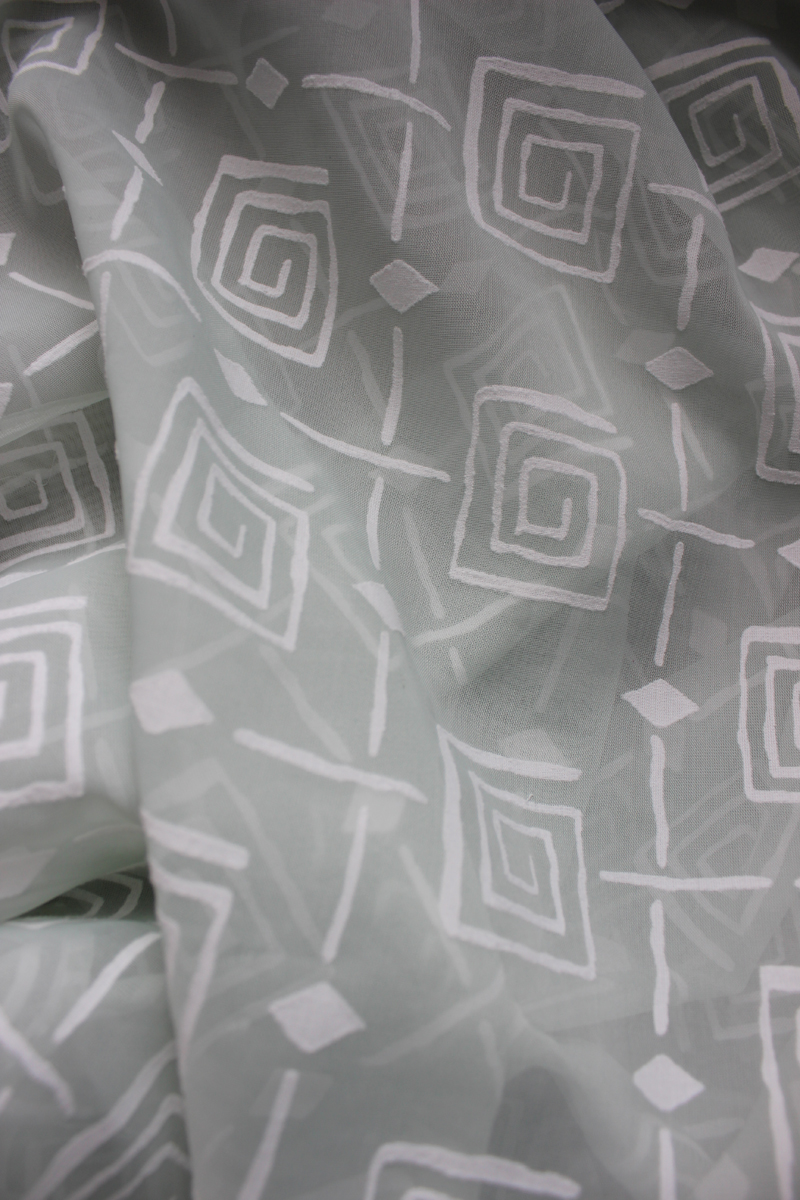
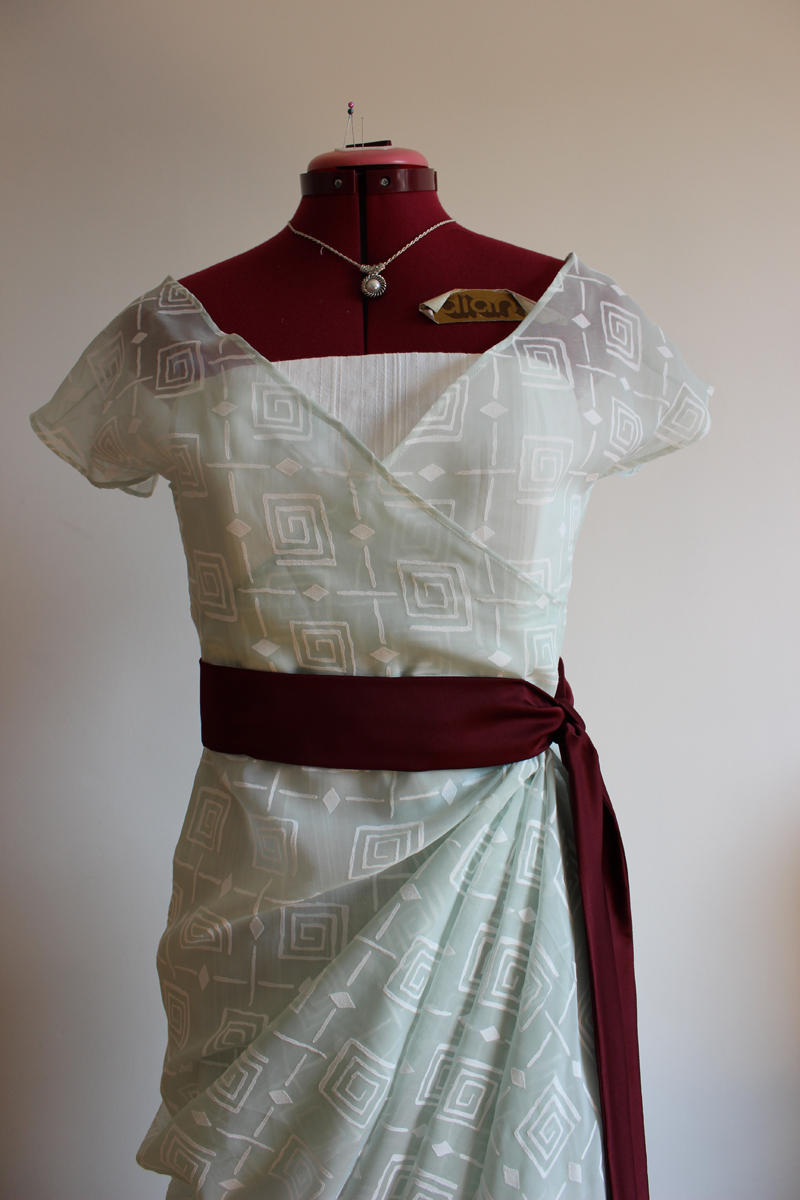
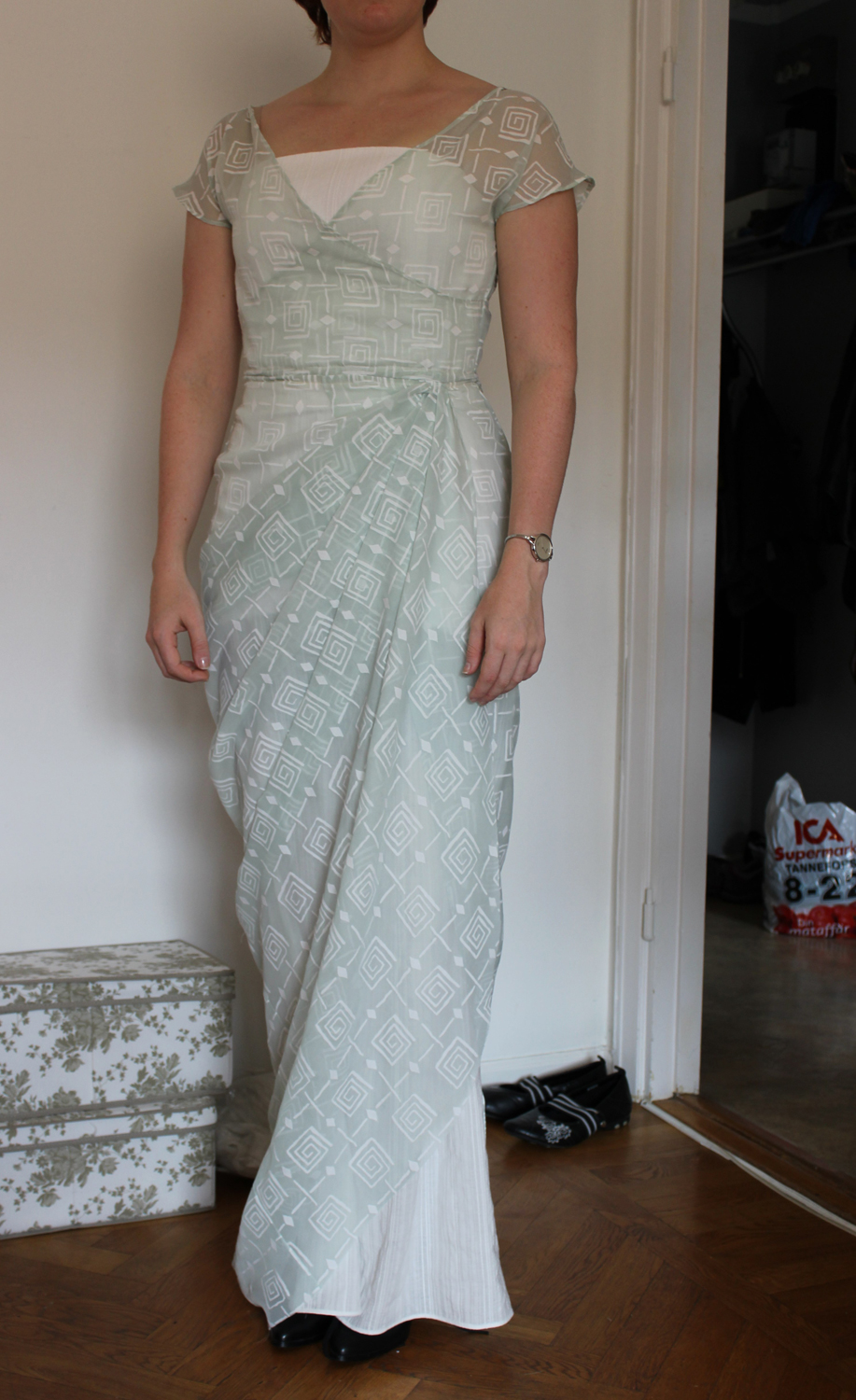
After much hesitation and changing my mind I finally decided to use the 1,5 m of light pistage-colored organdy already waiting in the stash. It is covered in a geometrical pattern in the shape of 4cm big grecian keys. So perfect for the challenge. But I’m not much of a print person, and feared that the geometrical pattern would be too obvious, too silly or just simply destroy whatever I made from it.

IMG_0302

Ok, fears aside – what exactly was I going to make with it (that wouldn’t look costumy or silly)?

I had not enough fabric for a regency-dress, and the fabric was not suitable for anything heavy like a round skirt or a stiff bodice. What to do?

The answer fell on me when searching the internet for inspiration for another project.

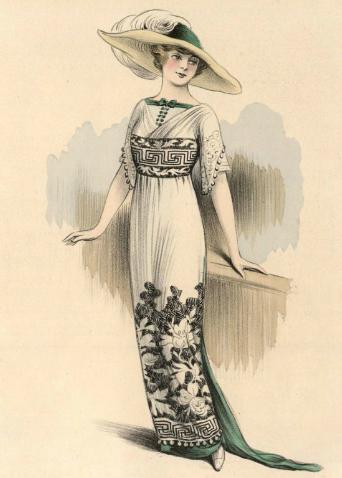
1912

A Titanic era evening-gown. It seemed perfect, and already being totally emgrossed by the early 20th century I didn’t hesitate.

I quickly made some sketches and played around a bit with the fabric on my dressform to get the basic shapes and cuts figured out.

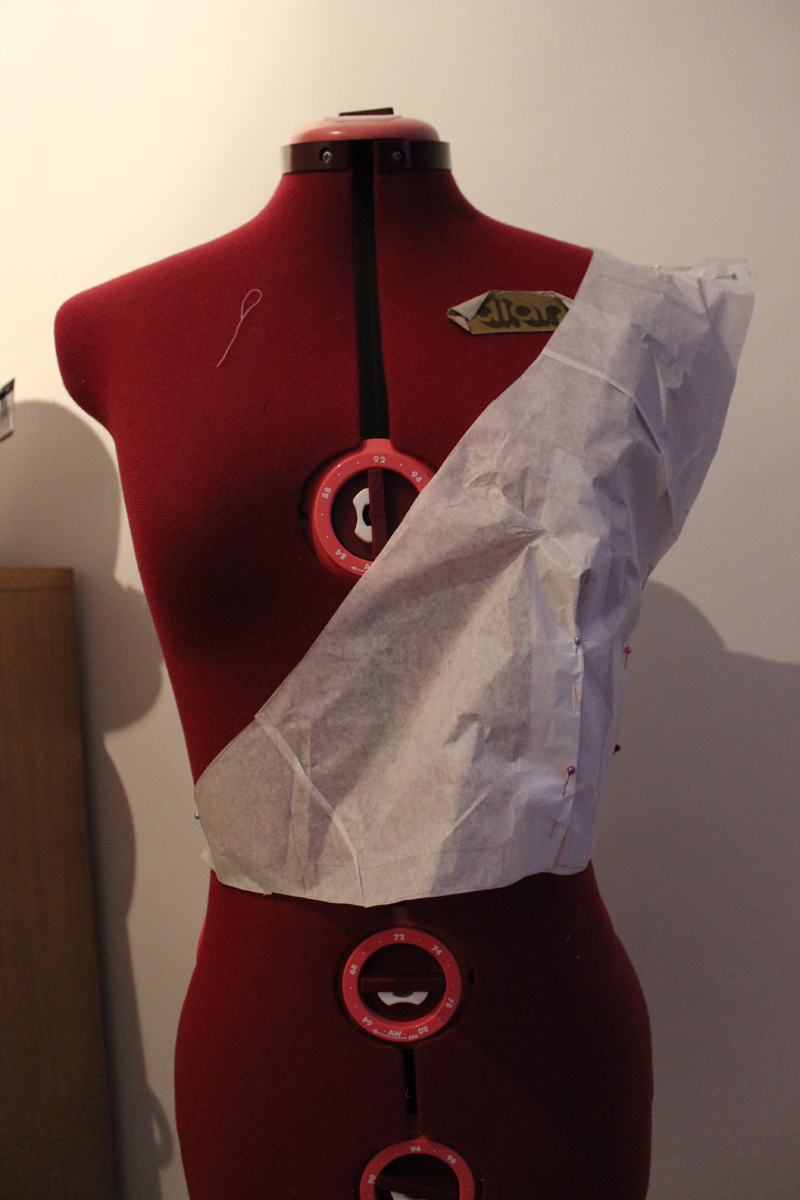
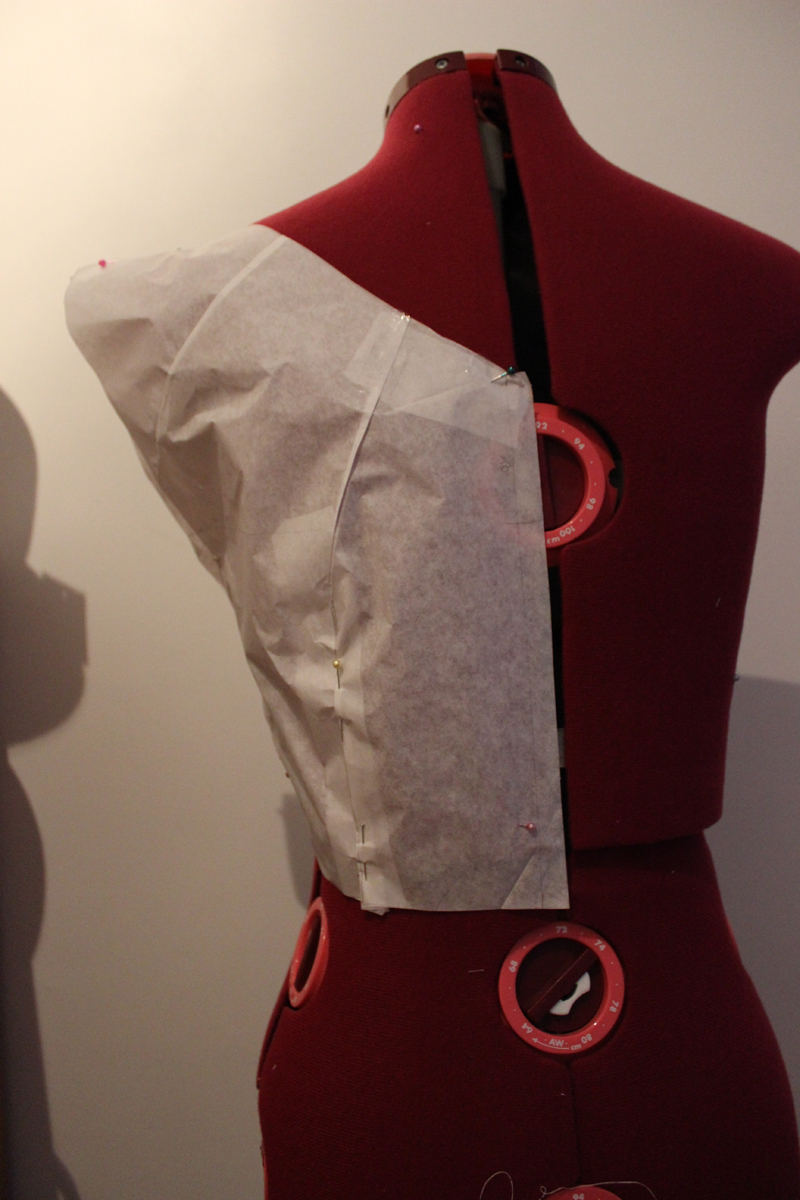
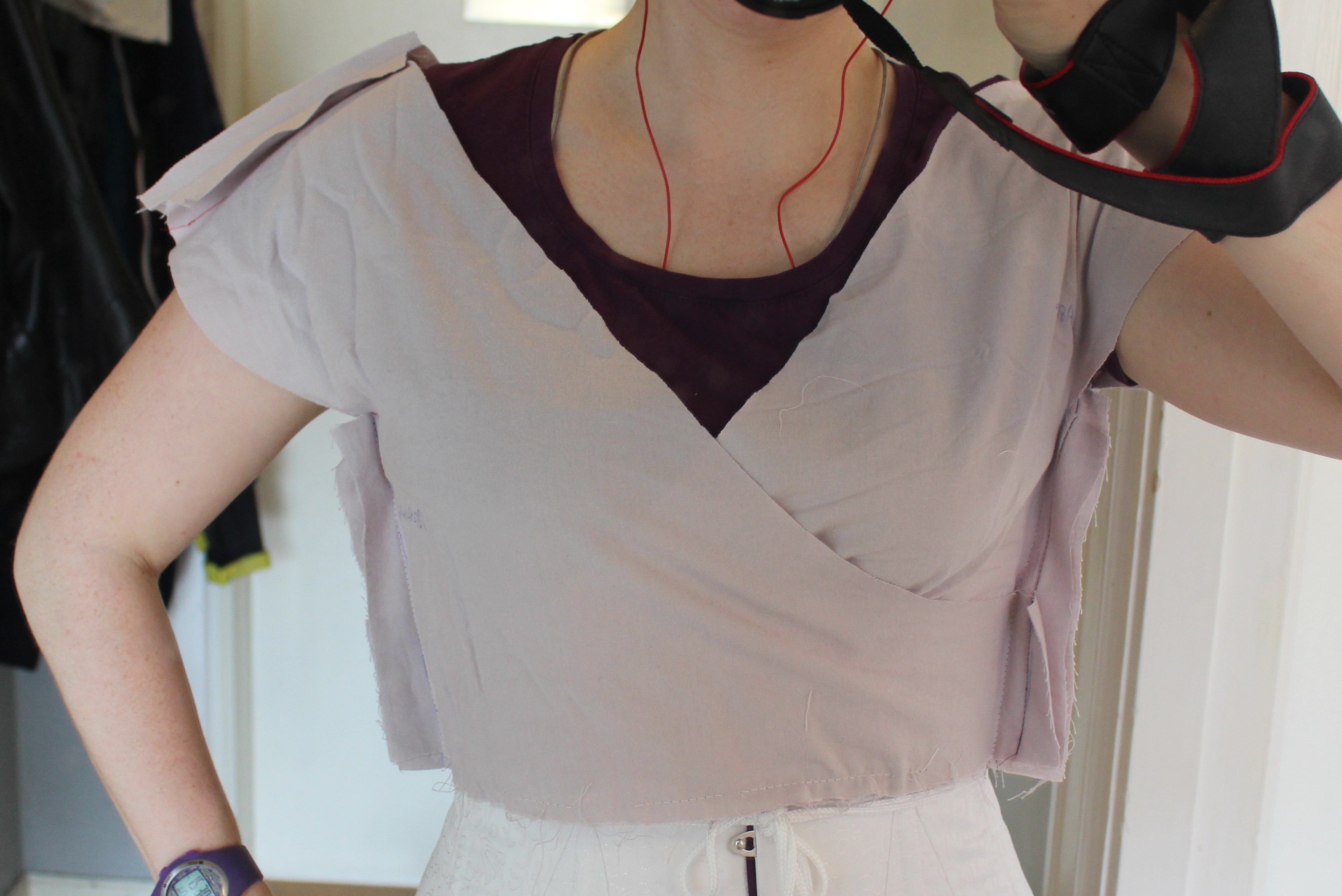
Then I started drafting the pattern. I wanted a cross-over bodice with a short kimono-sleeve attached to a draped skirt. The bodice was a bit tricky and I decided to try the paper pattern on my dressform before cutting a toile. That impuls saved me making a useless mock-up.

IMG_0266IMG_0267

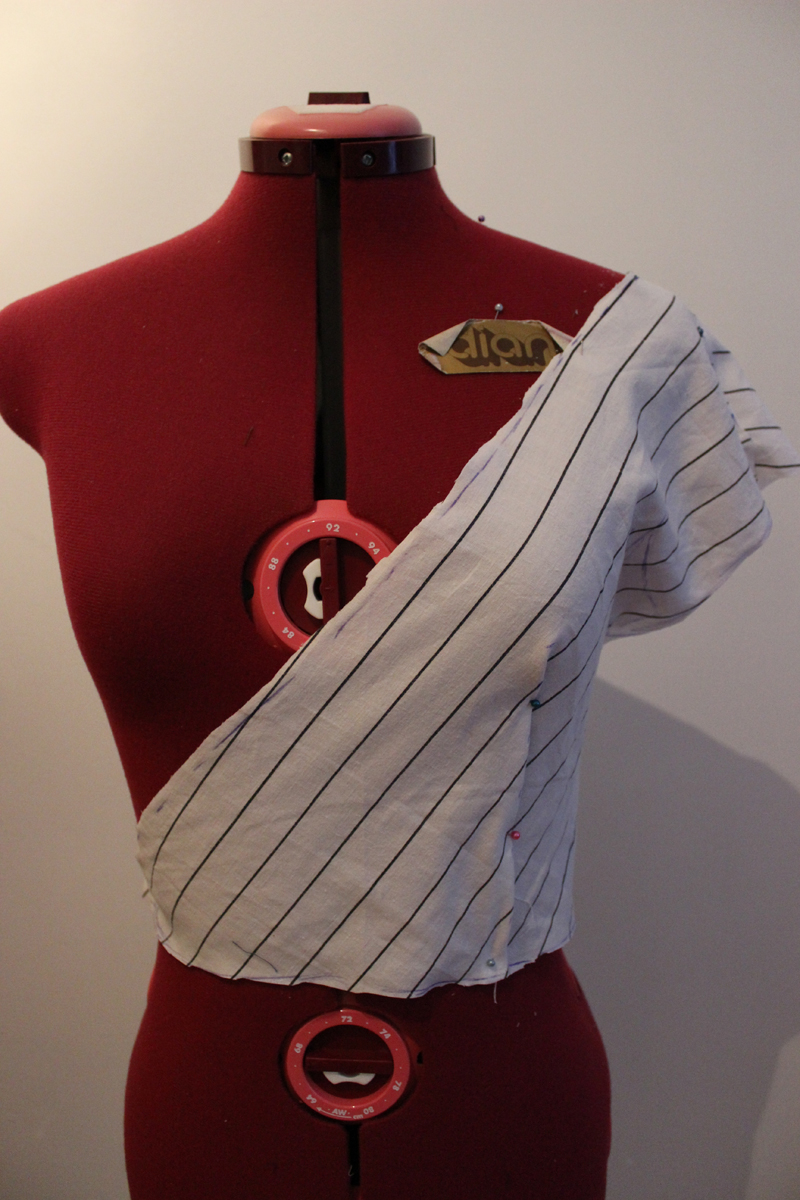
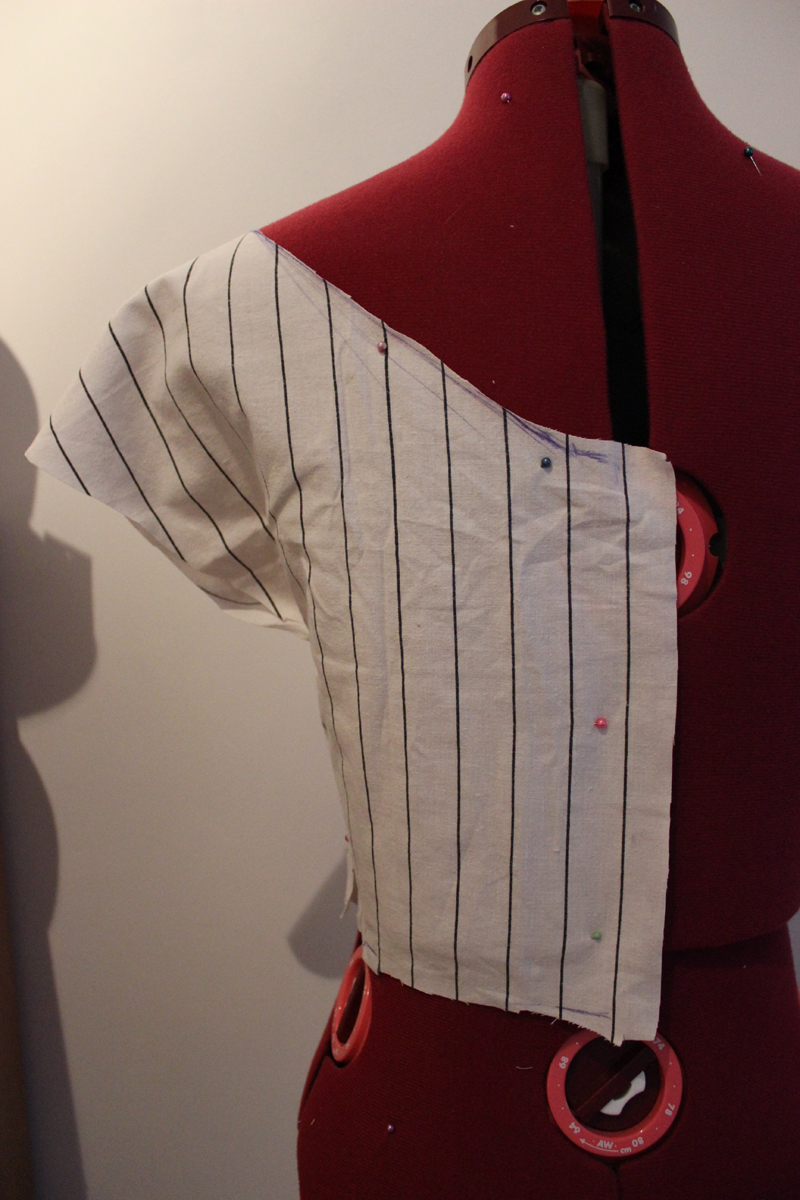
I tried but could not get the pattern and the dressform to co-operate, so I scratched the paper pattern and instead draped a bodice on the form. So much better.

IMG_0261IMG_0260

I then did the mock-up, tried it on and pinned all the necessary alterations. (It is not easy trying and fitting a back-closed mock-up by your self).

IMG_0284Ignore the huge seam allowance.

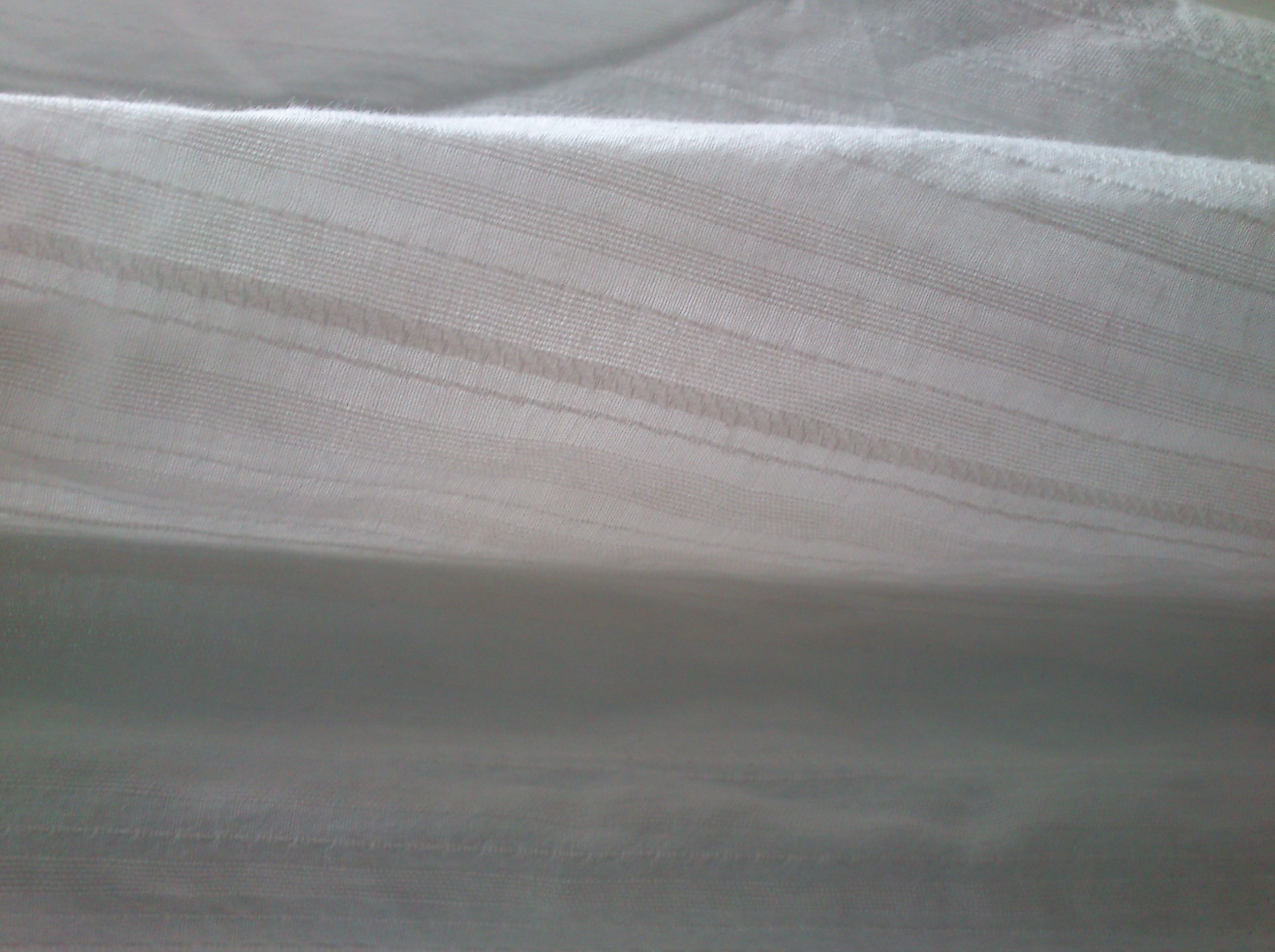
Since the organdy is so sheer I needed to make some foundation underneat – both for modesty and to get the right support and shape. I used the the same white skirt as for my late Titanic dress, and drafted a strapless dress-bodice to attach the organdy-bodice on.

Then it was time to cut the fabric. I sewed the foundation bodice and tried it on, then I stitched the organdy and draped the skirt on the dressform.

Everything went together fine and I just needed to make some minor alterations on the waist and shoulders. I tried the dress on and really liked it, but felt like something was missing.

IMG_0311IMG_0314

IMG_0316

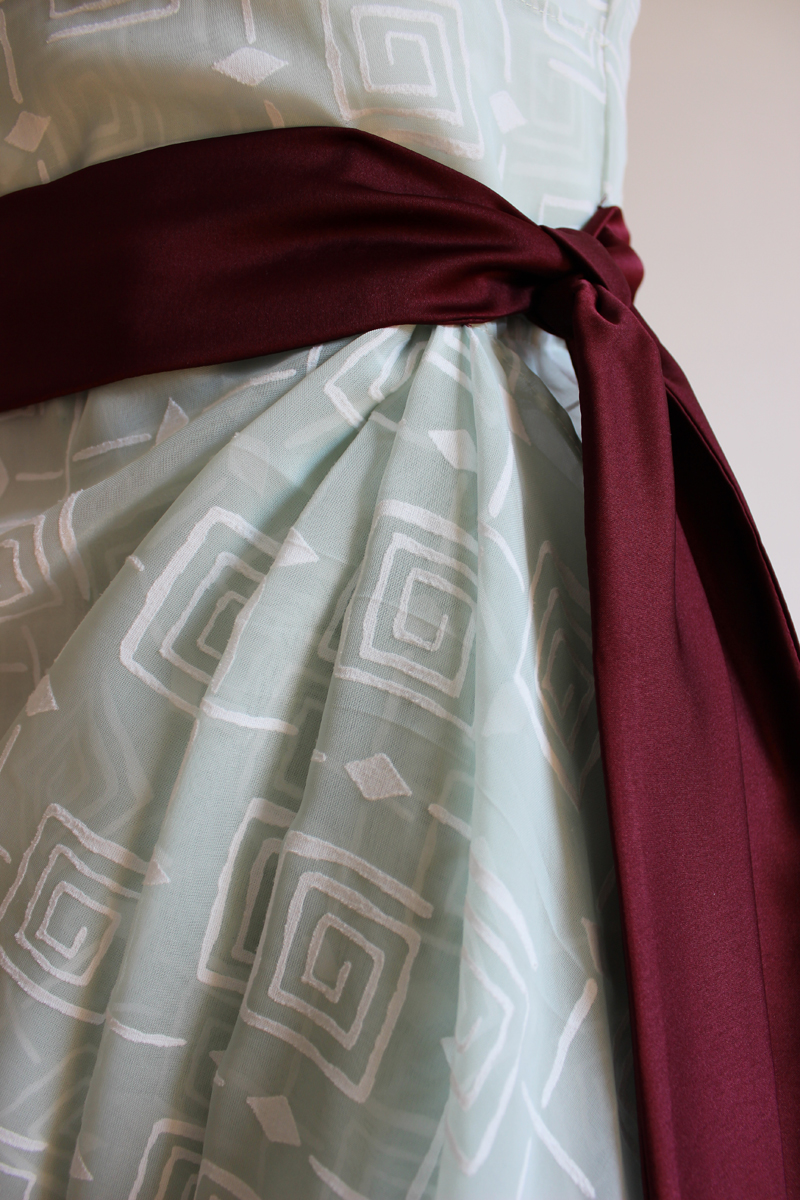
I rummaged around a bit for a suitable waist-sash, but neither white nor pistage seemed right. Then I found the vine colored sash for my sisters Titanic-rose dress, and it was perfect. So I used whatever leftovers I had and made another dark red sash.

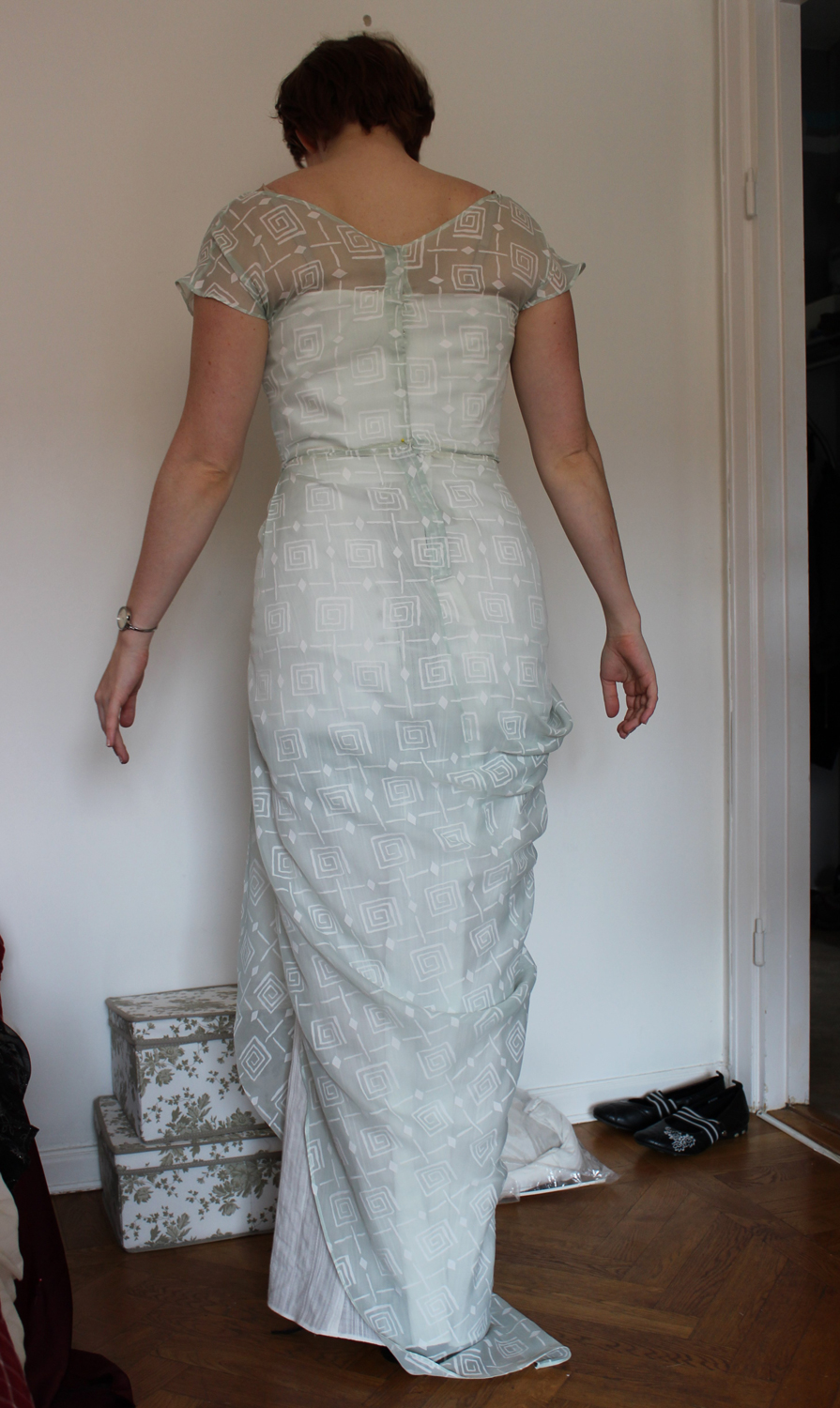
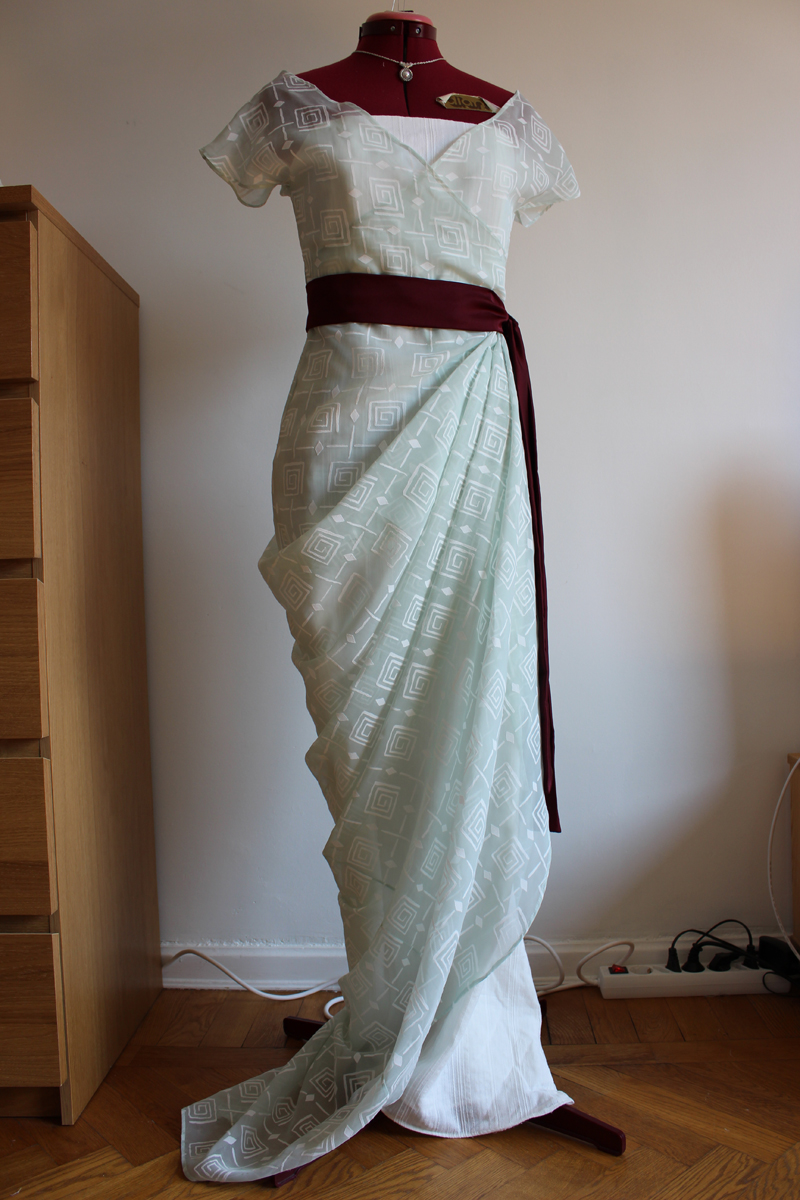
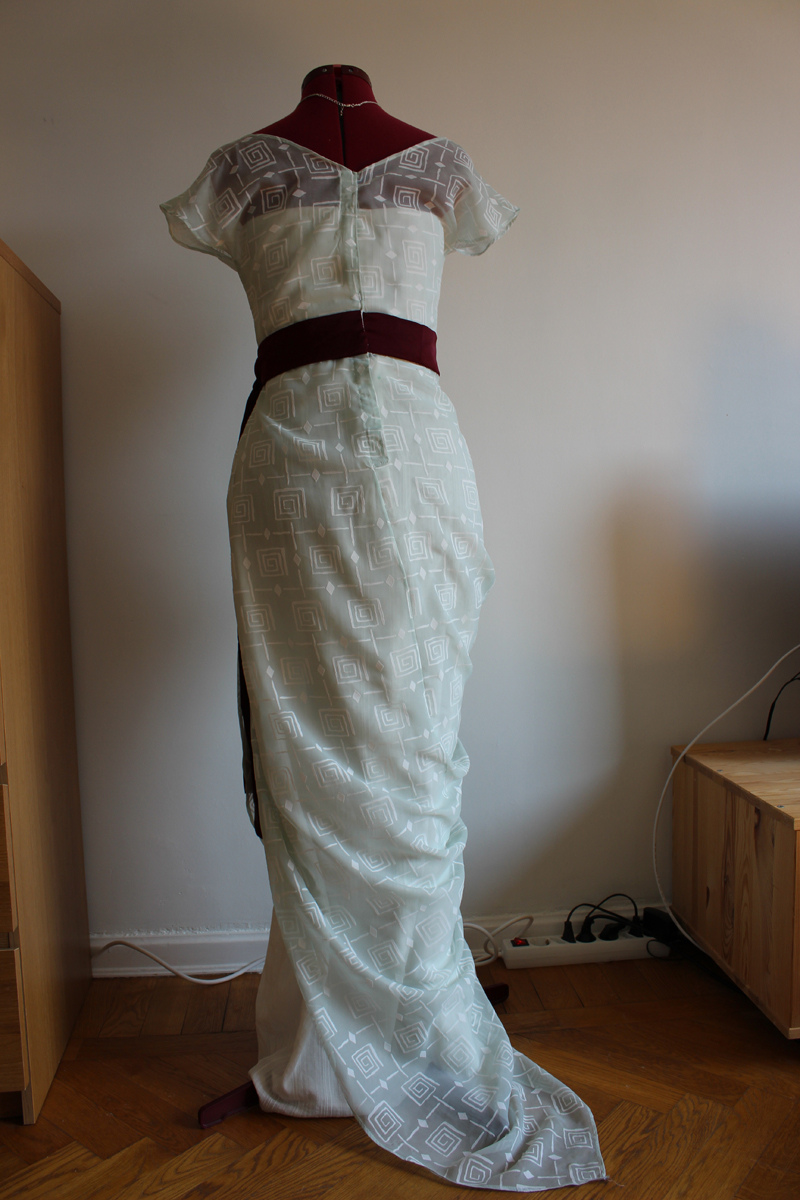
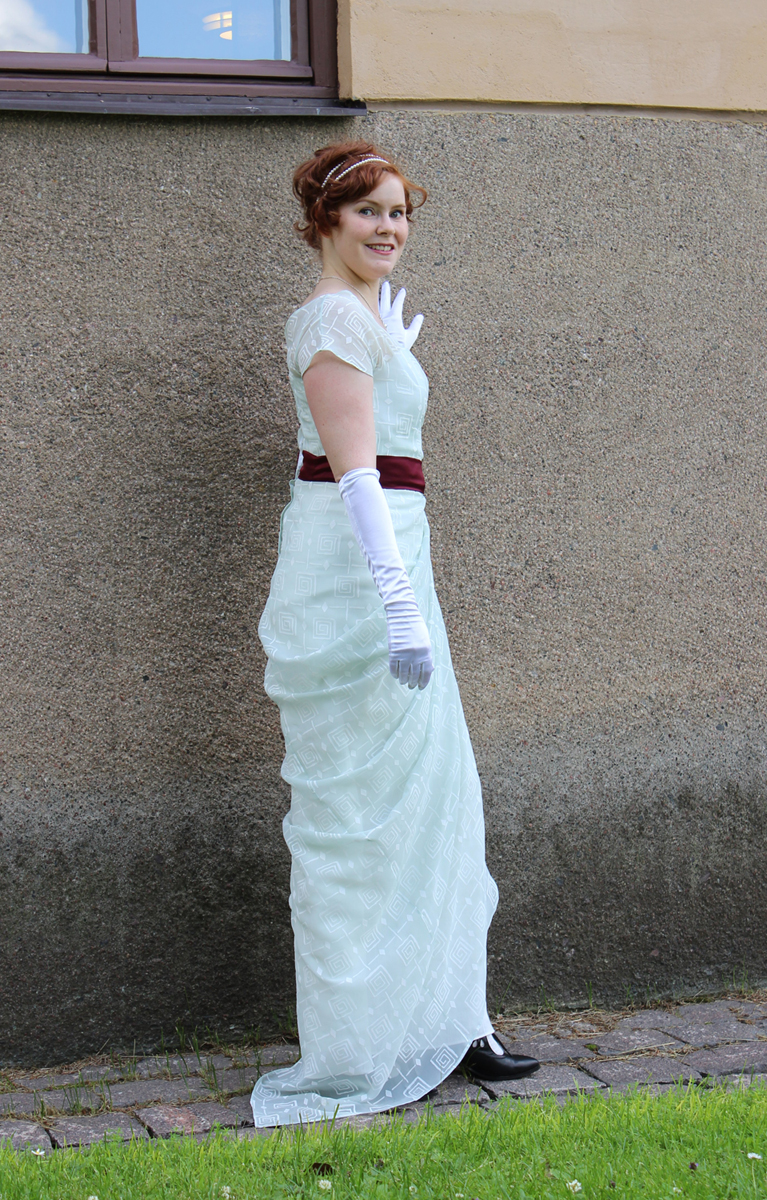
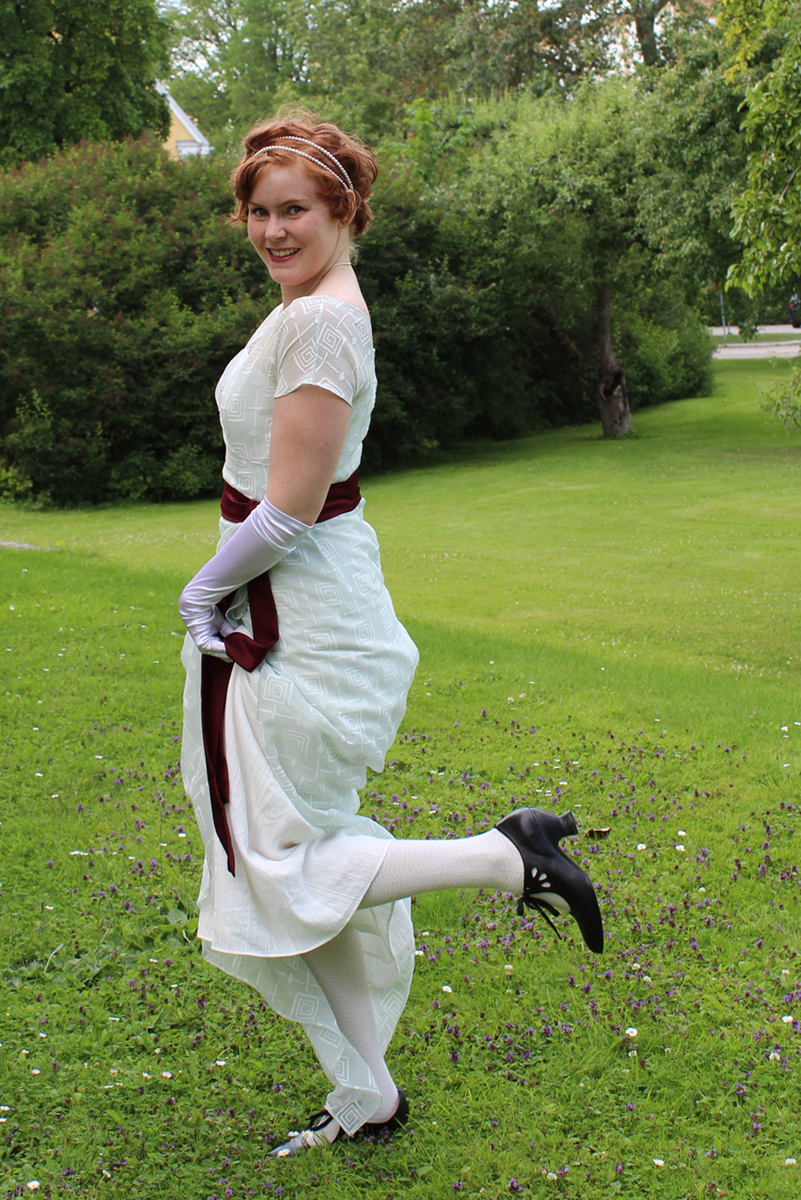
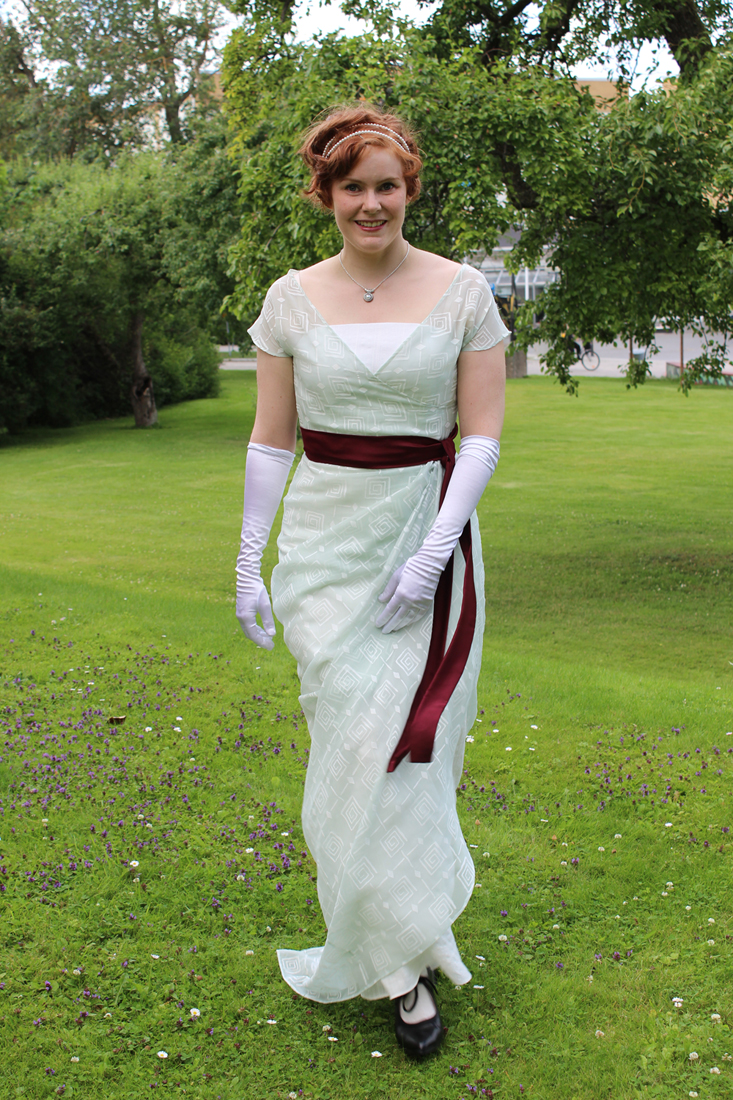
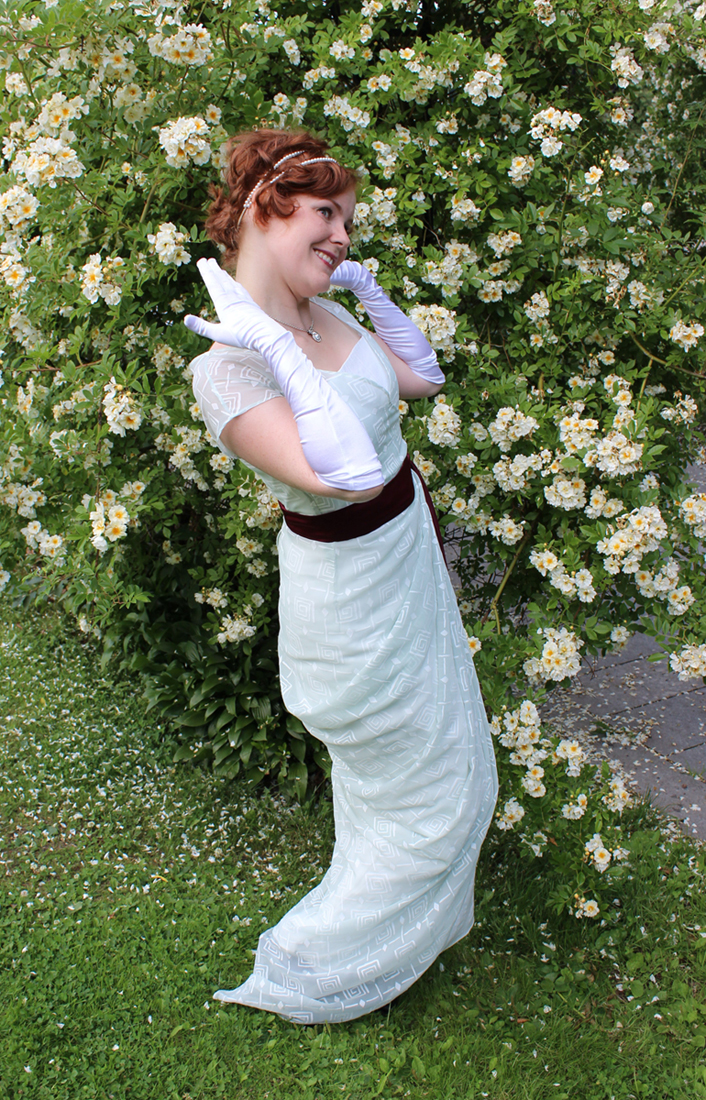
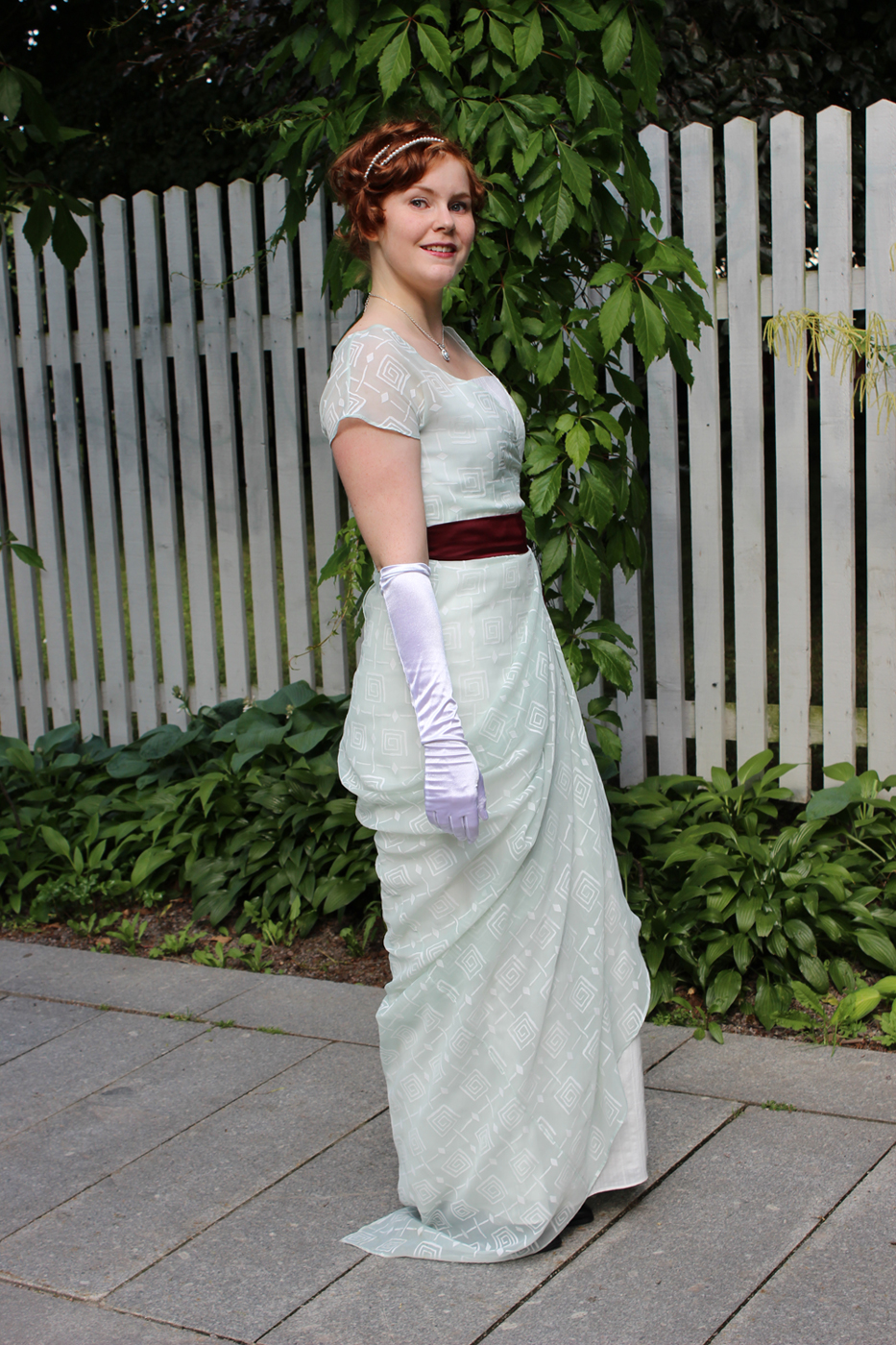
The finished dress.

IMG_0695IMG_0687

IMG_0684

IMG_0690Detail of sash and drape.

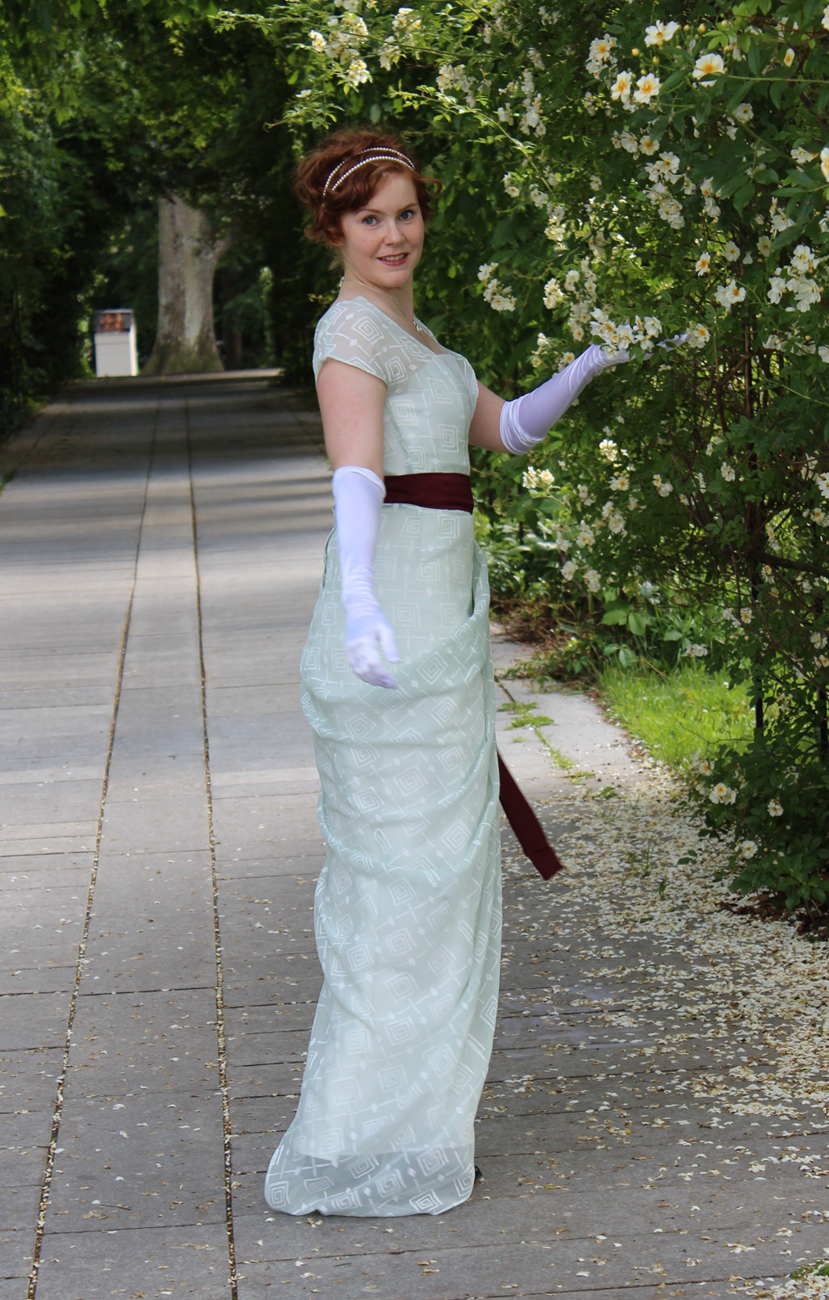
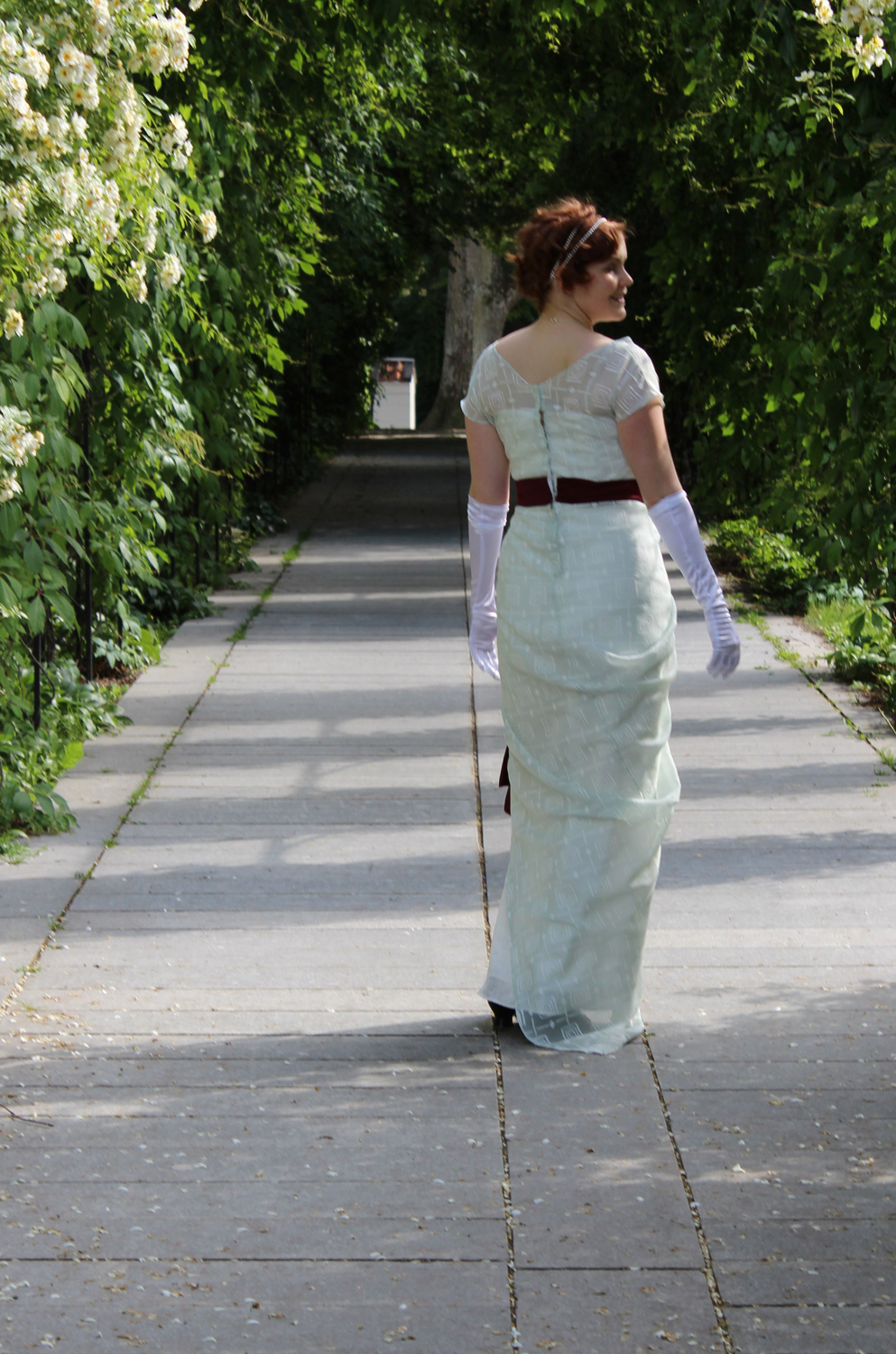
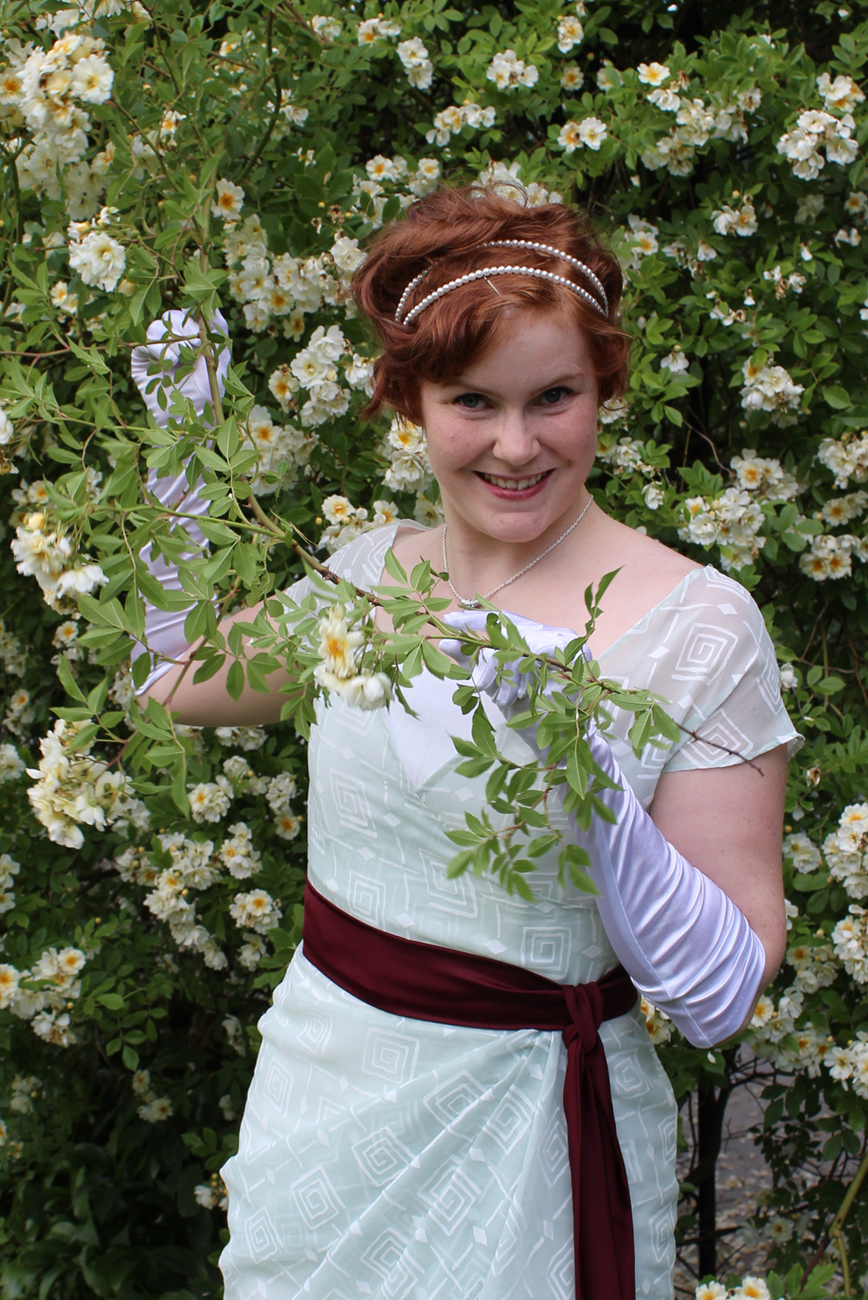
And the dress being worn.

IMG_0413

IMG_0416

IMG_0447

IMG_0450

IMG_0453

IMG_0469

IMG_0479

IMG_0485

IMG_0489

IMG_0498

IMG_0501

IMG_0522Photo: Maria Petersson

Just the facts:

Challenge 14: Eastern Influences.

What: A 1912 evening dress.

Pattern: None, I draped my own.

Fabric: 1,5 m polyester organdy, 0,3 m white cotton voile and 0,5 m white cotton sheets for lining and interlining the bodice. And 0,2 m vine colored viscose for the sash.

Notions: Thread, plastic boning, hooks and eyes and snaps.

Historical accuracy: There are way too much polyester in it to be any good. But I think the look and the overall feel of the dress is right. And according to Arnold they did use foundation-bodices beneath sheer and slippery fabrics. Maybe 6/10.

Time: 15 hours (made it in a two days speedrush).

Cost: 100 SEK (11 Euro).

First worn: On the photoshoot July 5.

1913 – to late for Titanic

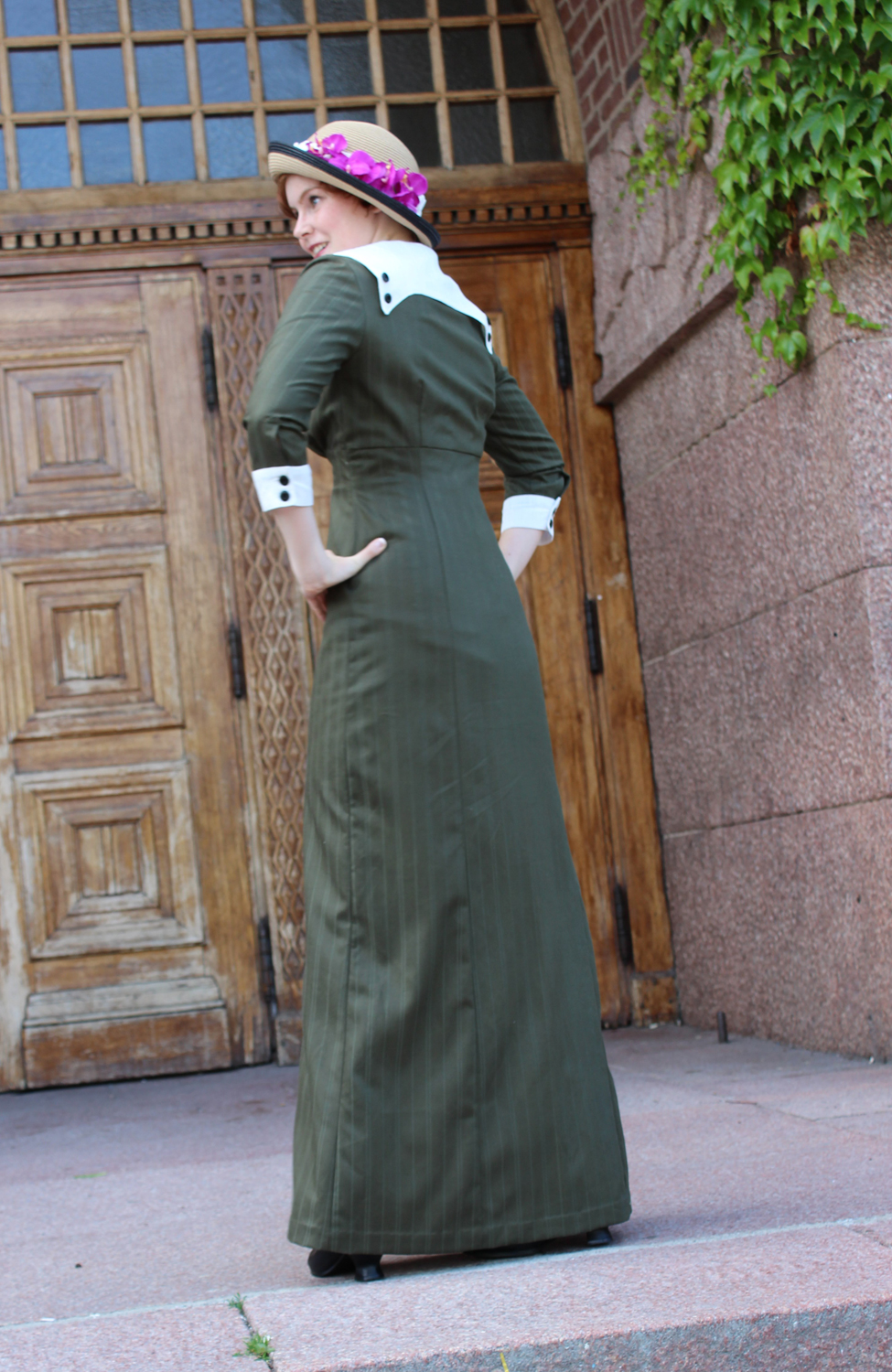
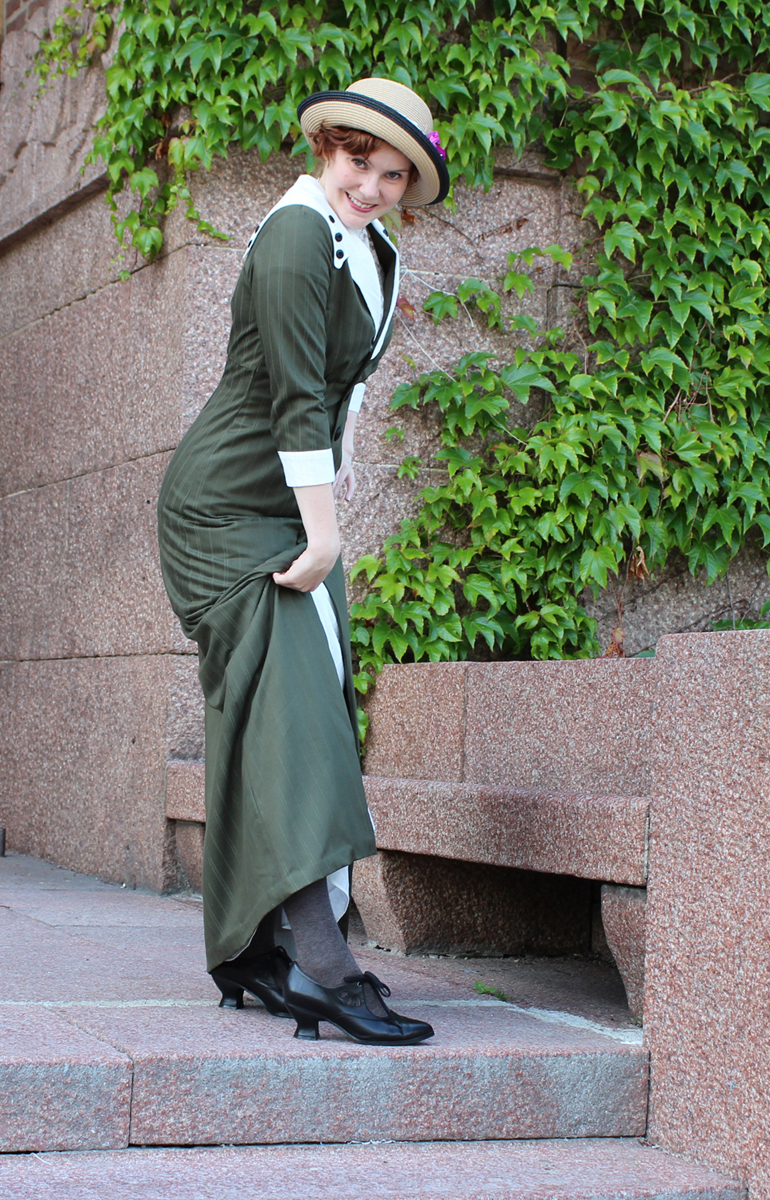
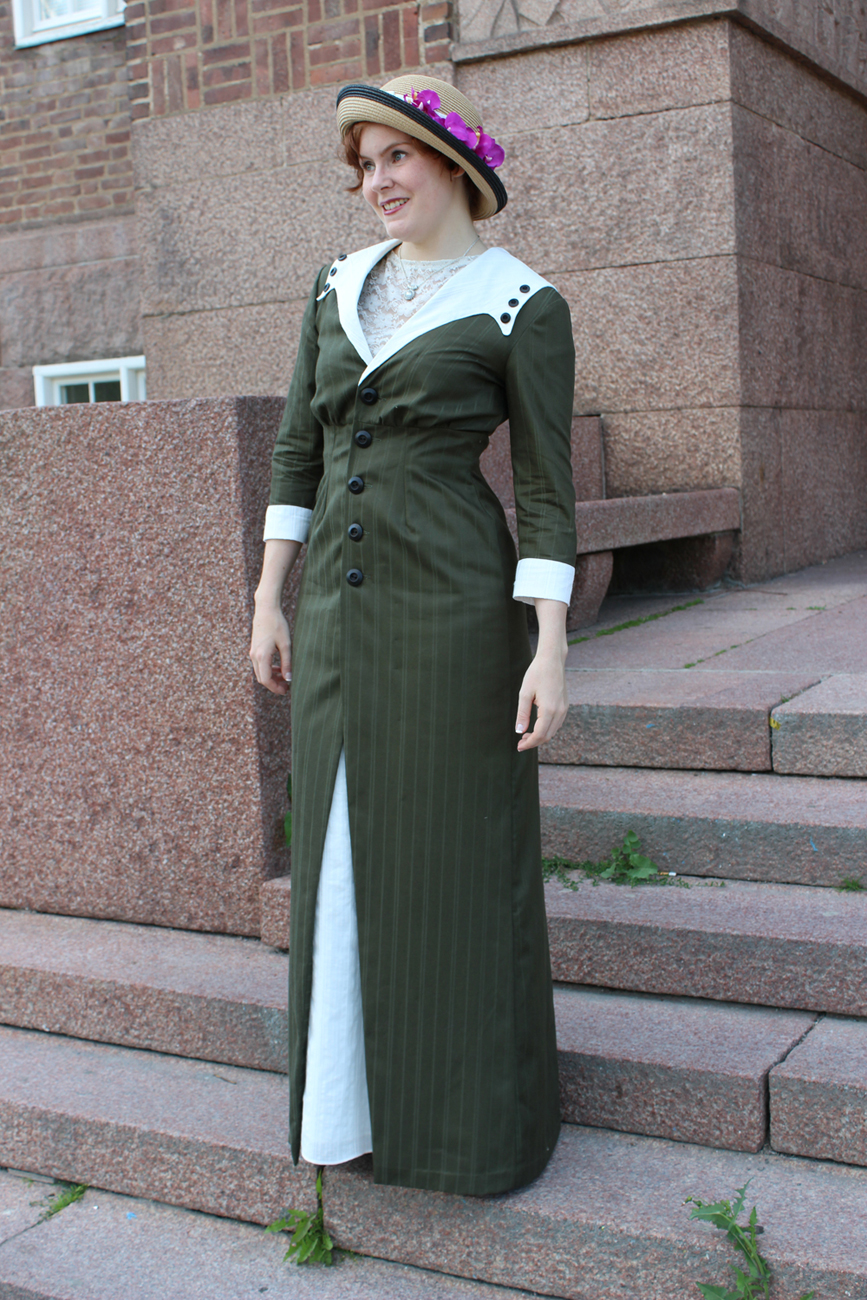
When deciding what to wear to the “Titanic exhibithion” I looked through a lot of pictures and patterns from the 1910-1912 period. Then I found this one.

fashion-plate-girls-1912

The dress has a bit more of a 1913 style to it, but nothing to apparent.

The fabric for the dress is a green striped wool that’s been in my stash for a couple of years.

2013-06-24 10.24.20

I also used  withe cotton voile left over from the “Chemise a Lamballe”

2013-05-29 17.38.05

The only thing that needed to be bought was the buttons, so it was a pretty cheap project. Even though buttons can be terribly expensive, and more often than not you will need a lot of them.

I drafted the pattern myself, using Waughs “Cut of Wlomens Clothes” as a guide to the general shape.

It wasn’t until I already begun sewing that I realised two things.

1. This dress would fit perfectly to the HSF challege 1. – ..13 (make anything from the year ..13) which is the only challenge so far that I missed out on. To my defense I didn’t know about the HSF until the second challenge  had already started. Better late then never right.

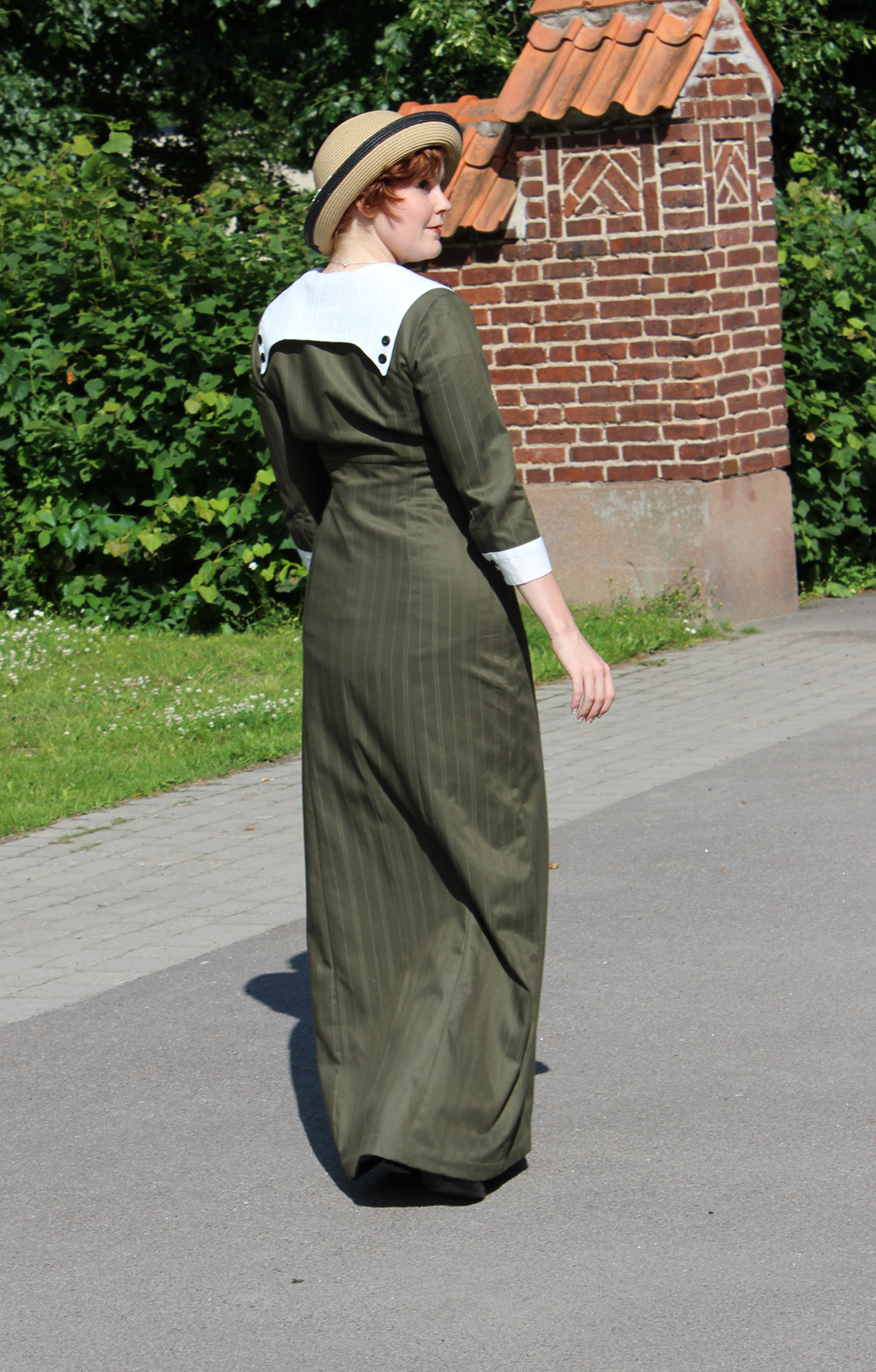
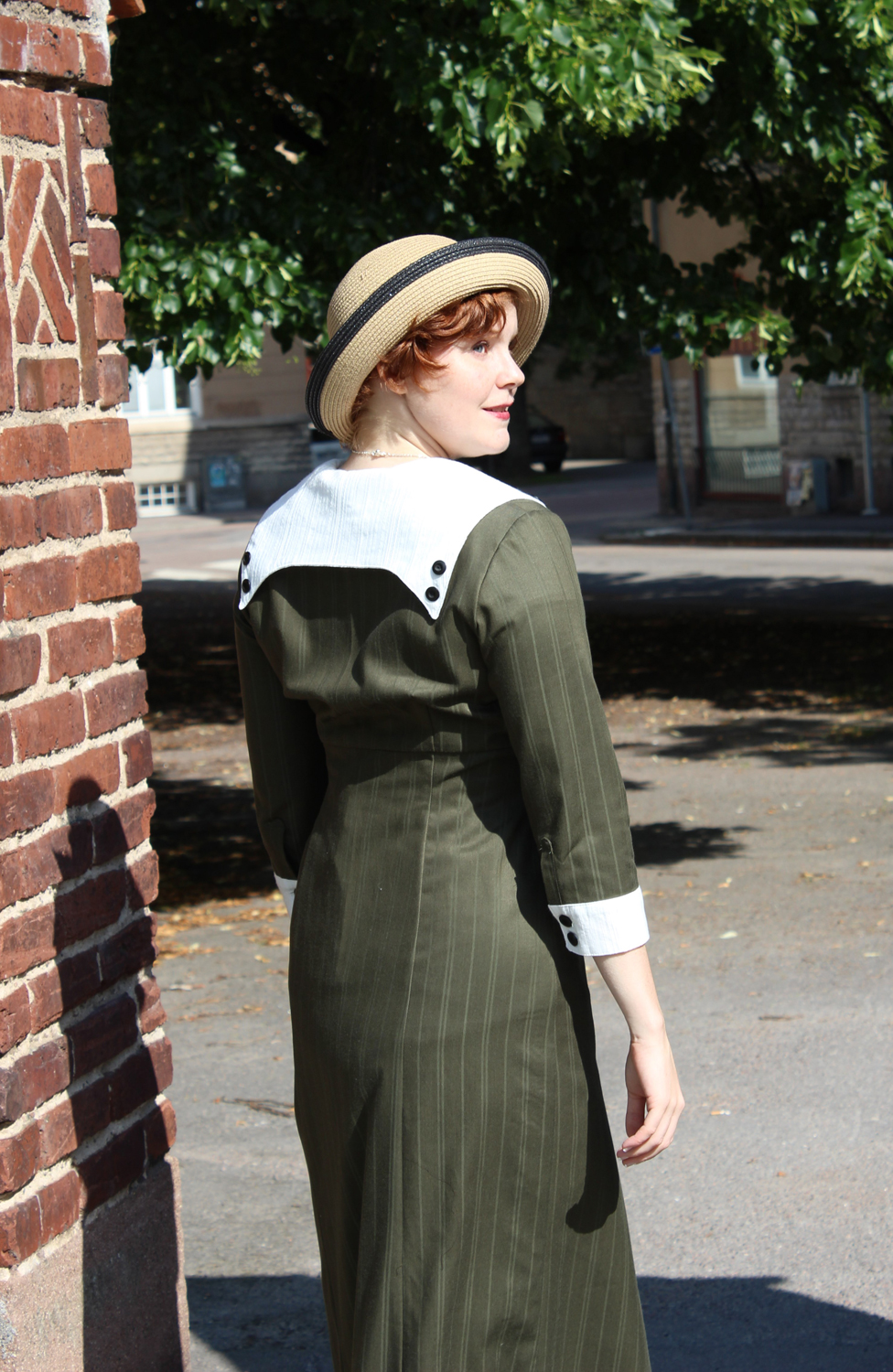
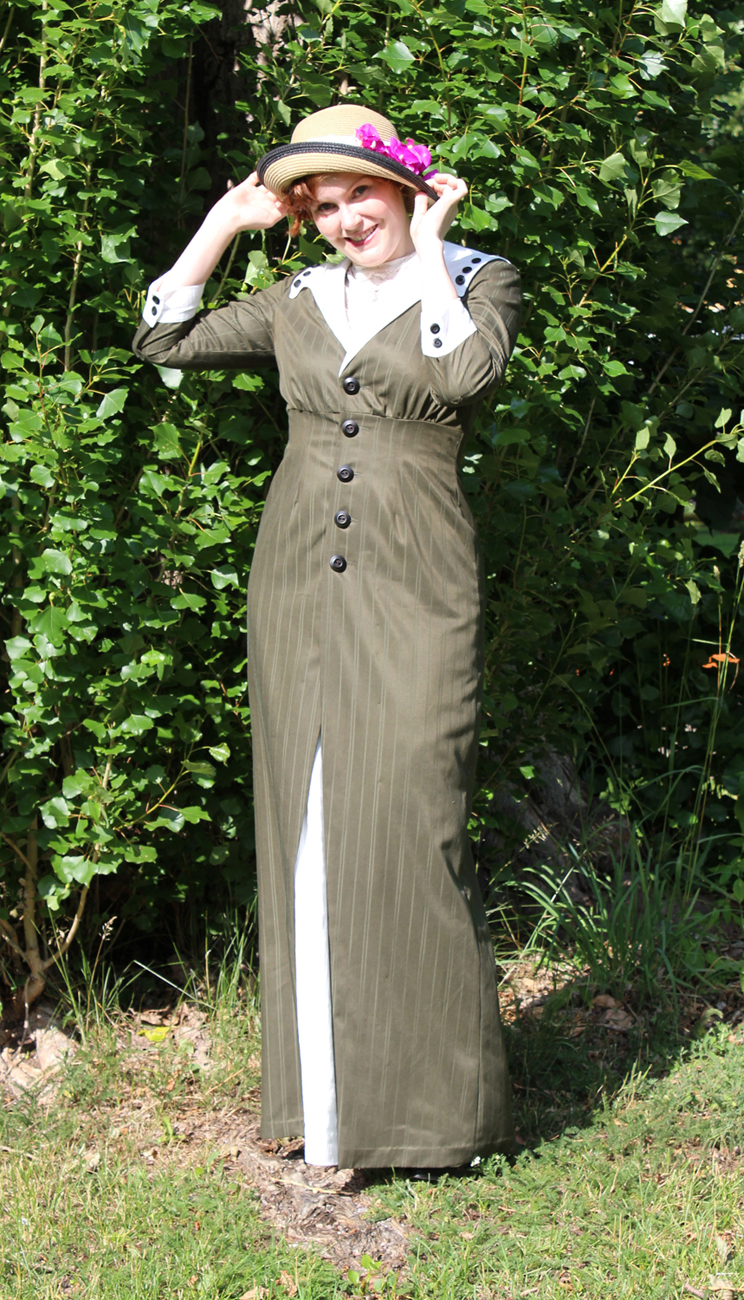
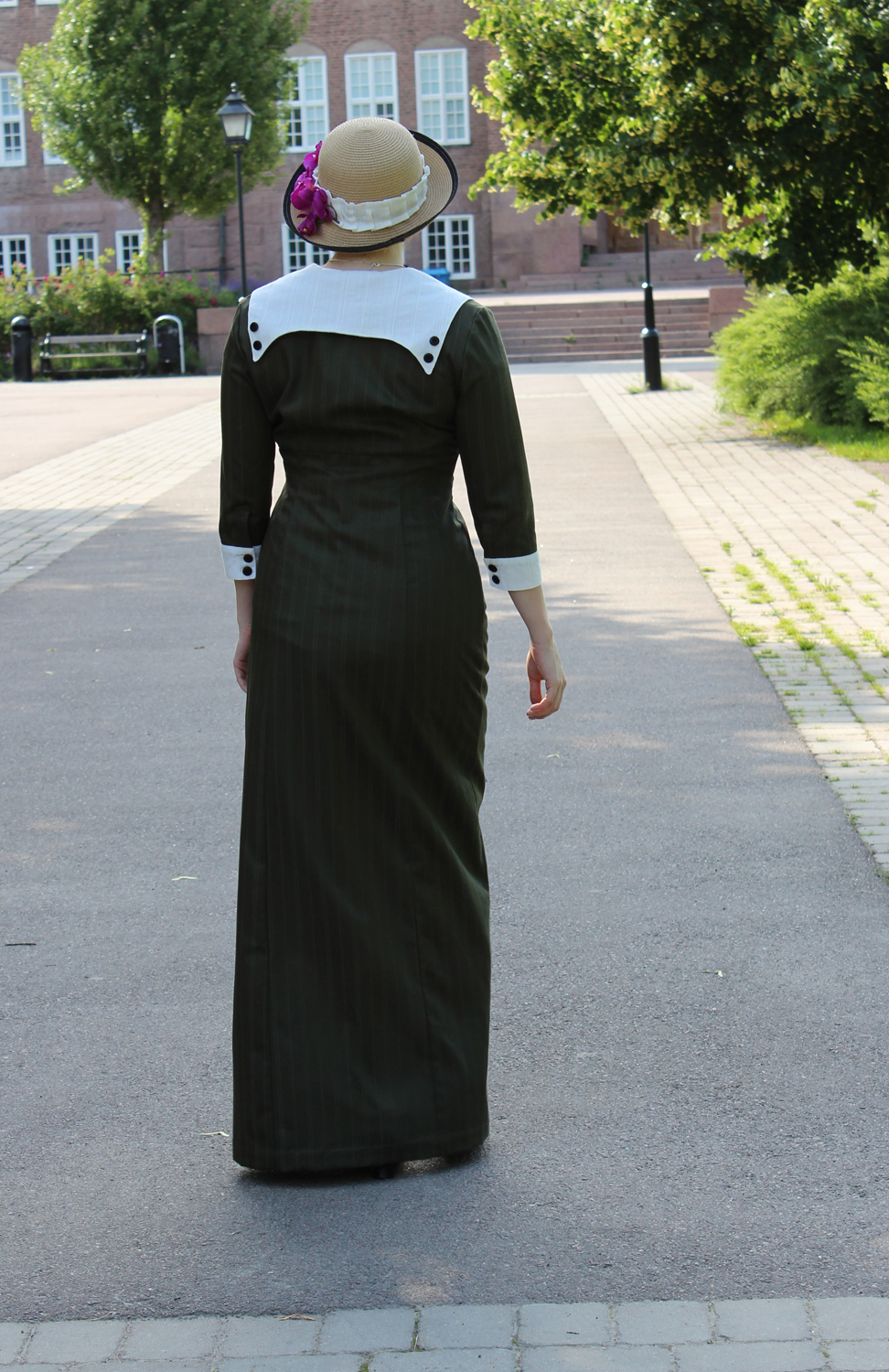
2. This dress was beginning to look a bit too much as my “By the sea” 30s dress. The silhouette, the color combination with the big white details, I even used the same fabric for the collars. Well, all the fabric was already cut – there was no use not to continue. And besides, I really did like that 30s dress.

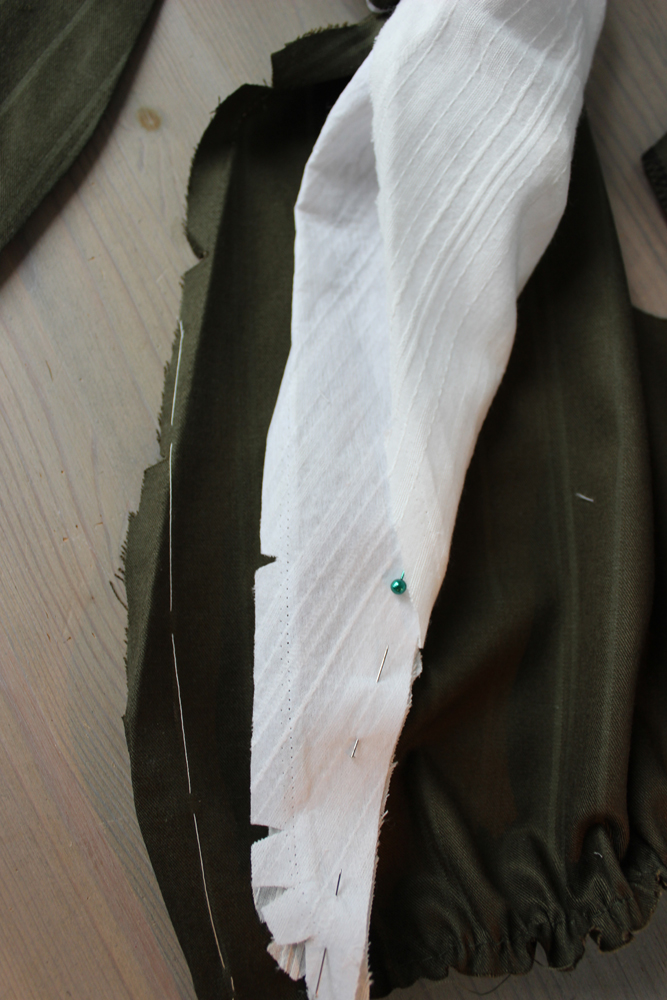
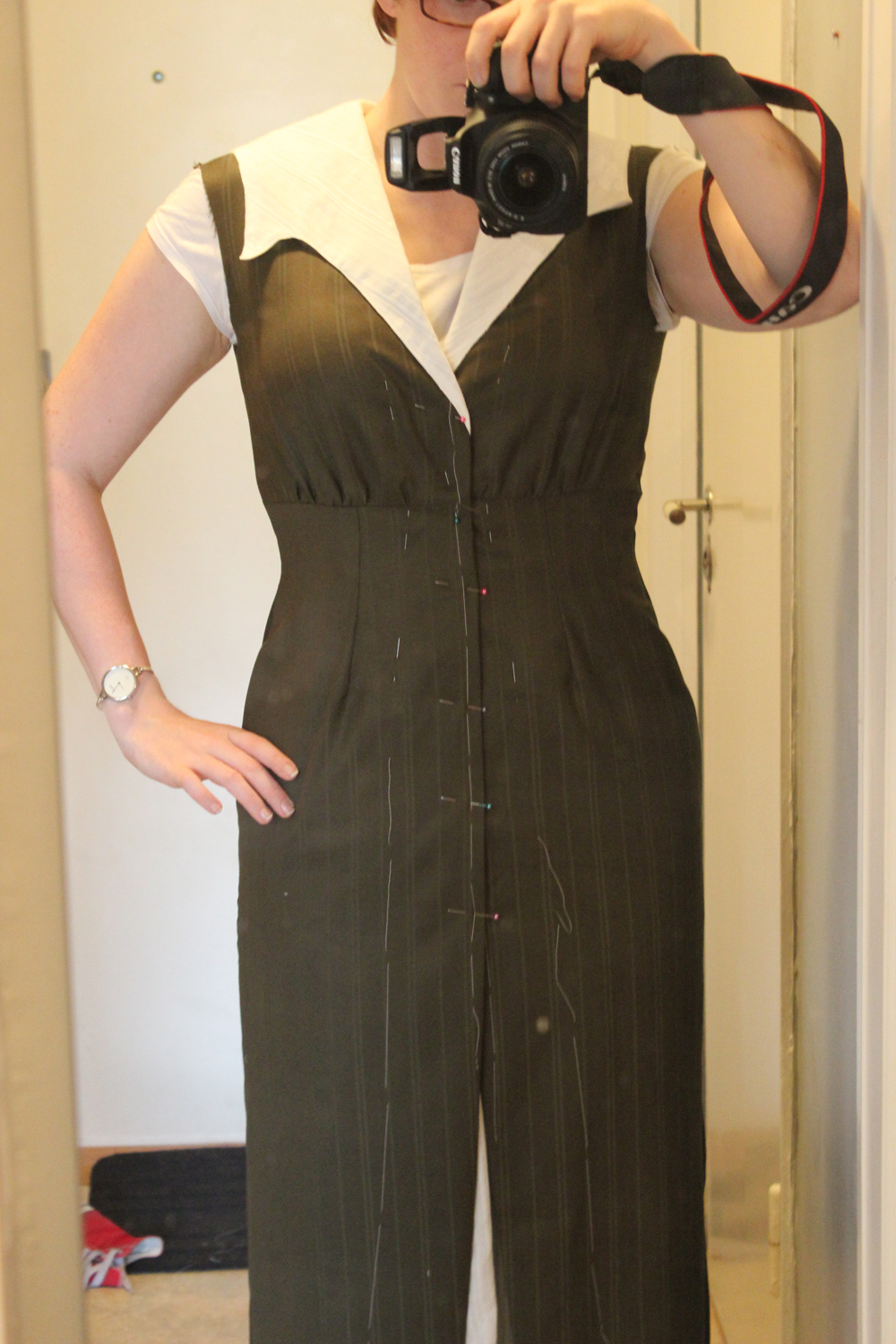
Getting the dress together went fast but I did have to reshape the collar a bit smaller – something I discovered after I had sewn it on. So I unpicked the seam and re-cut the front tabs to end a bit higher in the neck opening, and then sewed it back on.

IMG_0154IMG_0157

And then I tryed it on.

IMG_0175Starting to look pretty good.

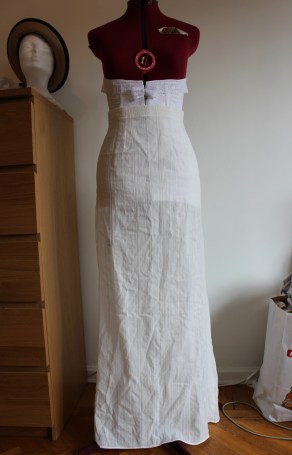
For the opening in the front of the dress I decided to make a separate skirt in the same white voile that I used for the collar and cufs. So I re-used the skirt pattern for the dress and cut a high waisted slim skirt.

IMG_0197

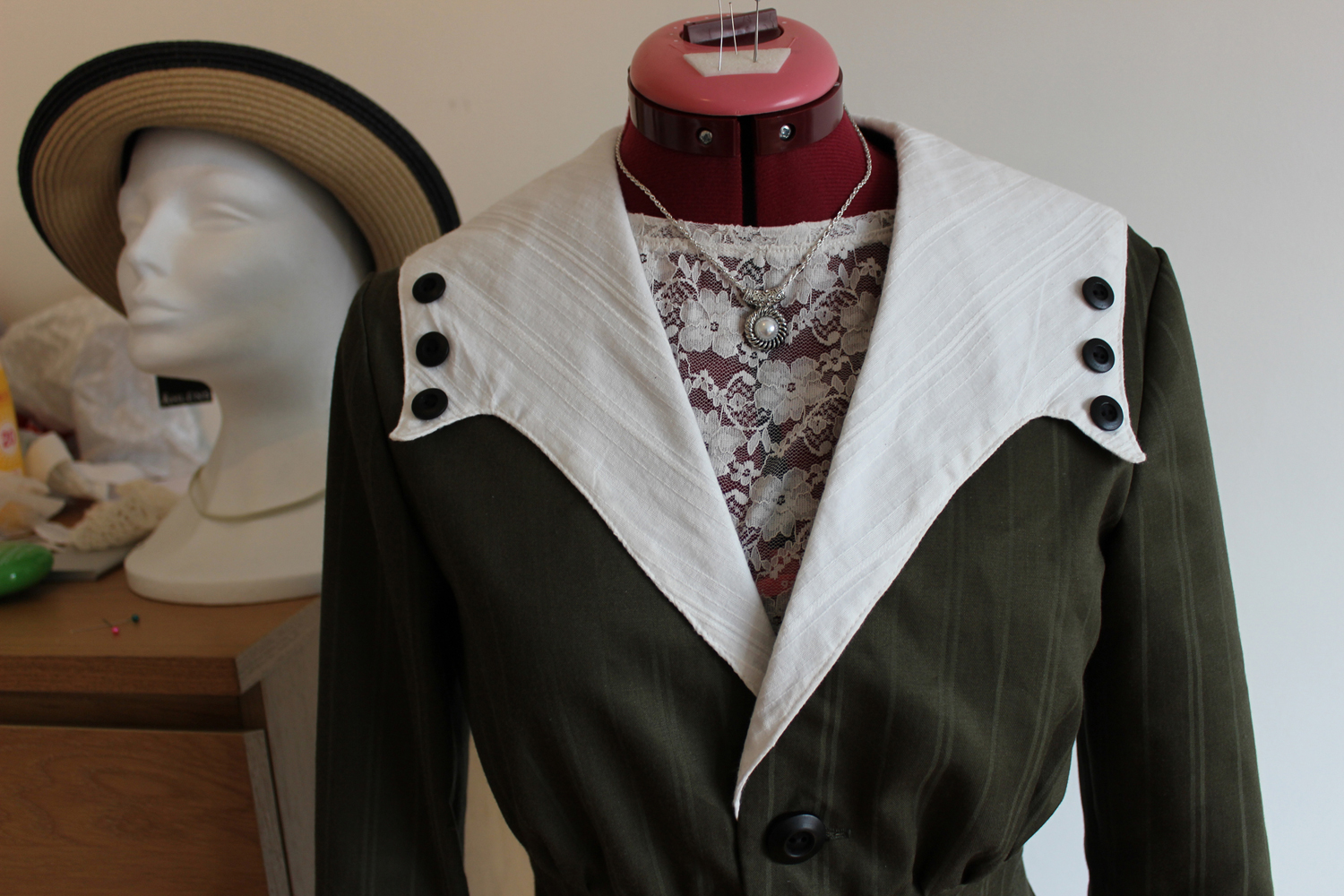
So here it is, my contribution to the HSF Challenge 1 – A 1913 dress – I’m only one year late for the Titanic.

IMG_0222

IMG_0229

IMG_0225

IMG_0232

And being worn.

IMG_0553

IMG_0558

IMG_0562

IMG_0578

IMG_0582

IMG_0589

IMG_0614

IMG_0620

IMG_0600

IMG_0607

IMG_0638

IMG_0640

Just the facts:

Challenge 1. year ..13.

What: A 1913s daydress.

Fabric: 2,5 m of green wool, and 2 m of white cotton voile.

Pattern: I drafted my own, based on Waugh’s “Cut of Womens Clothes”.

Notion: Thread, interlining, buttons (5 big and 14 small ones) and snaps.

Historical accuracy: I used modern sewing and drafting techniques, but the fabric and the over all look of the garmnent are about right.

Cost: 200 SEK total (half the amount now, and the rest for stash fabric).

Hour: about 15 hour

First worn: On the Titanic exhibition on the 6th of July, and the following photoshoot.

Laced in – Victorian corset

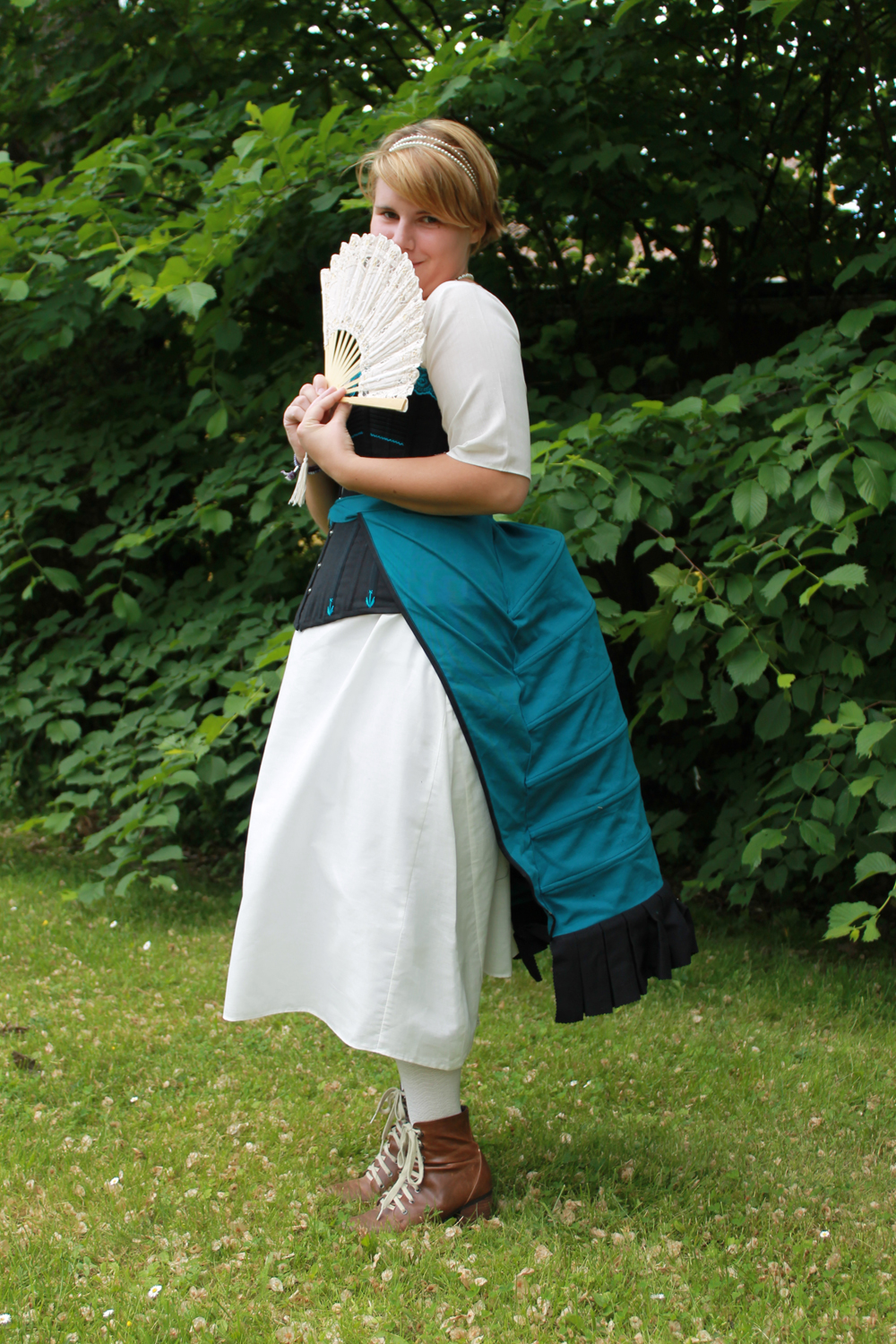
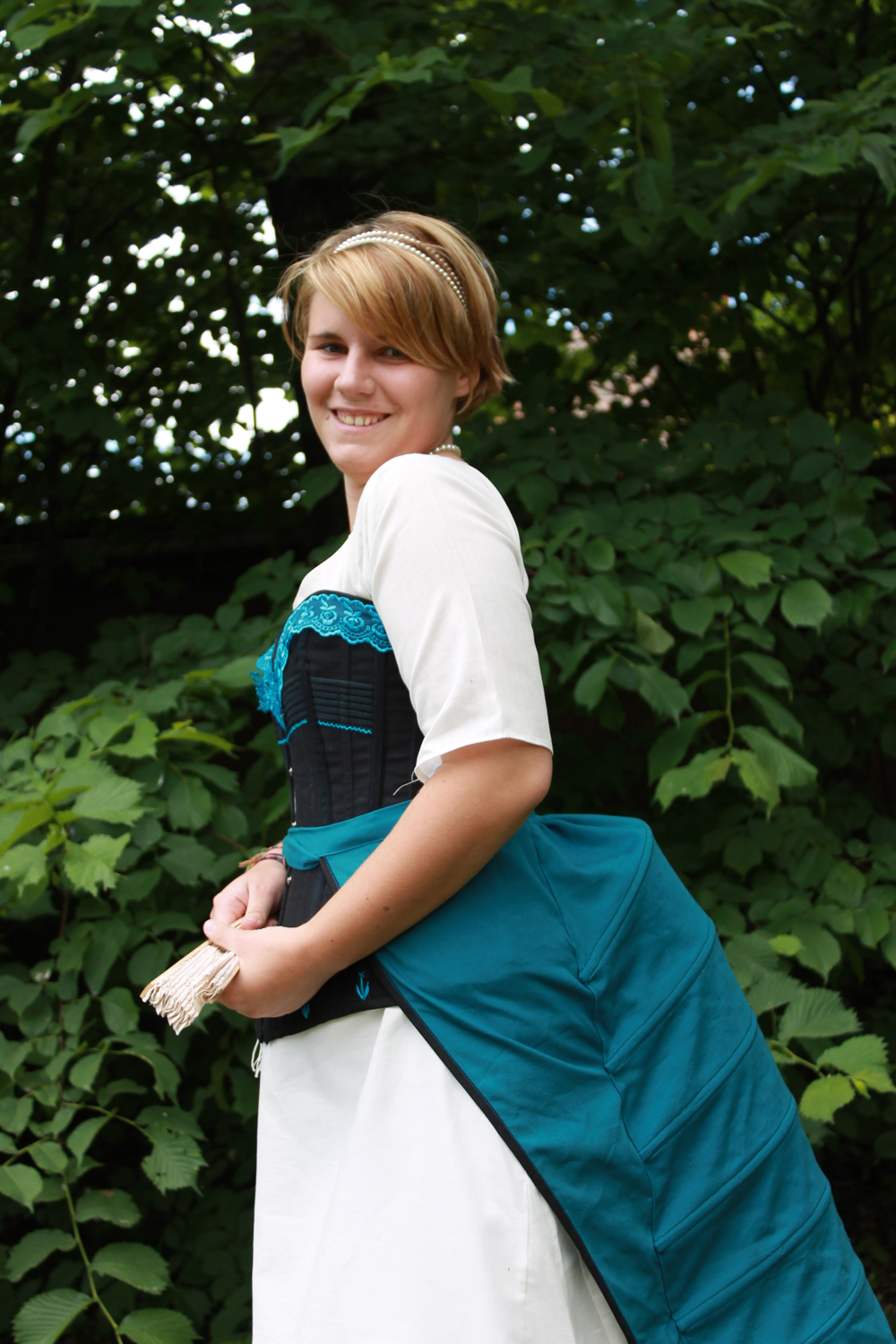
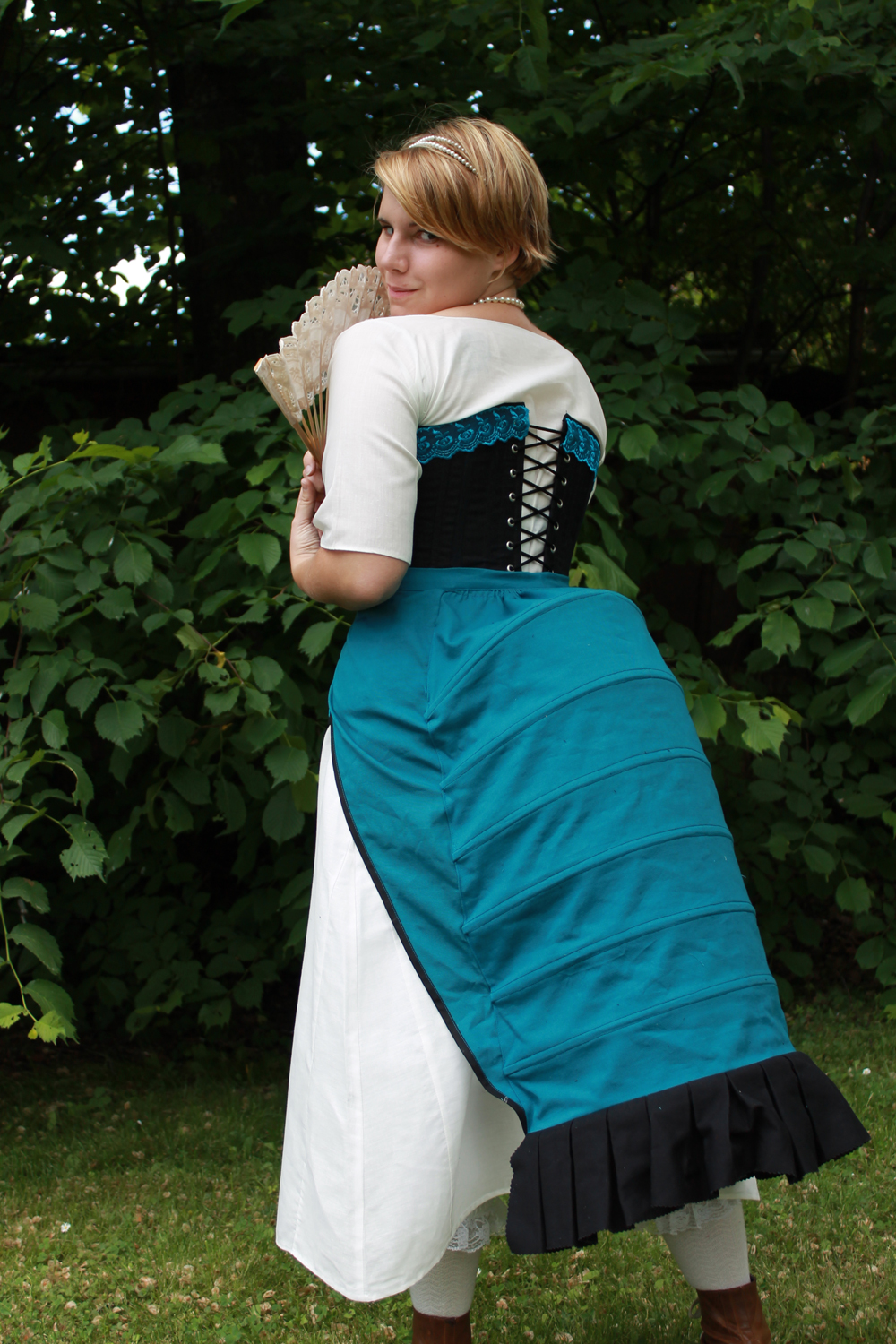
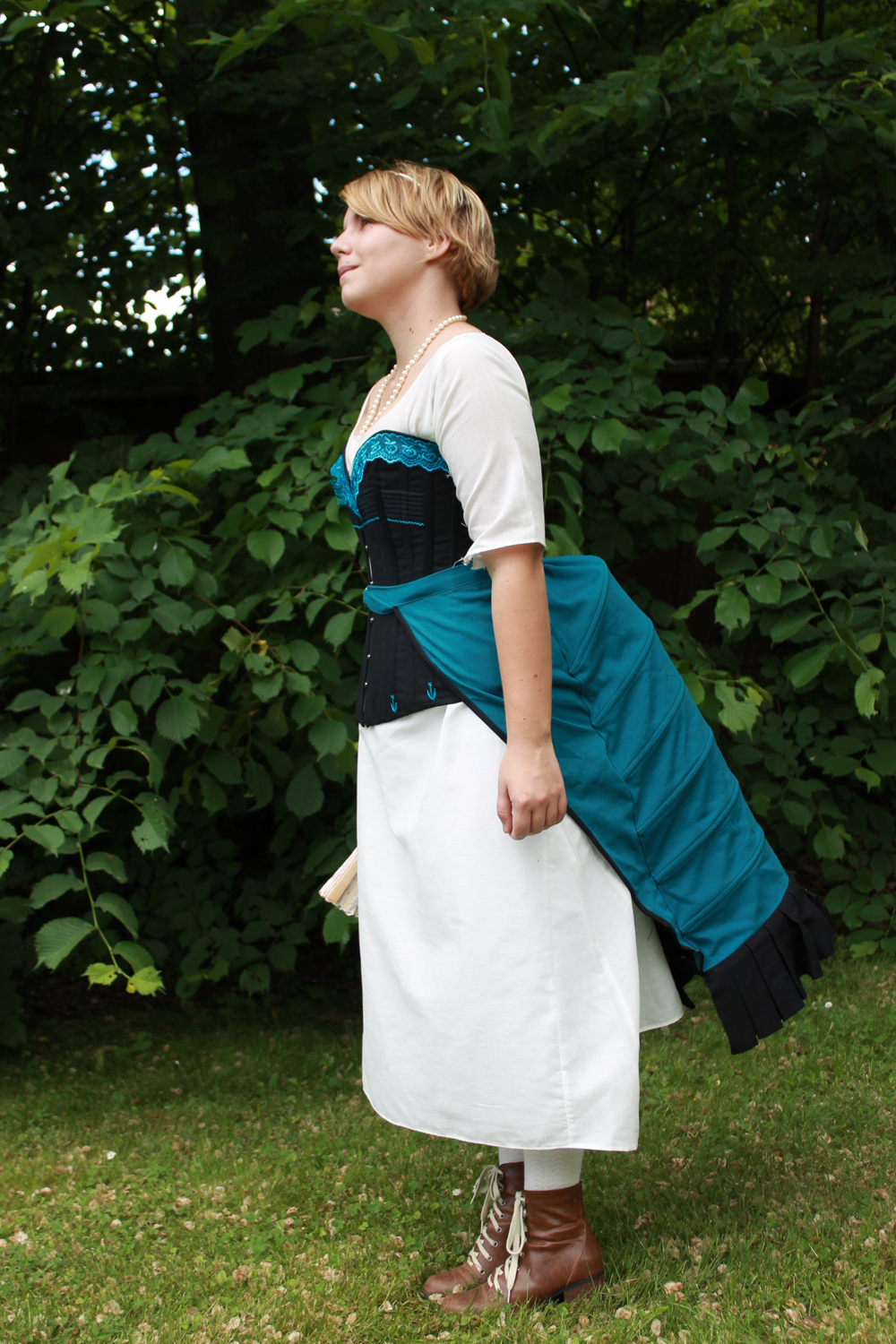
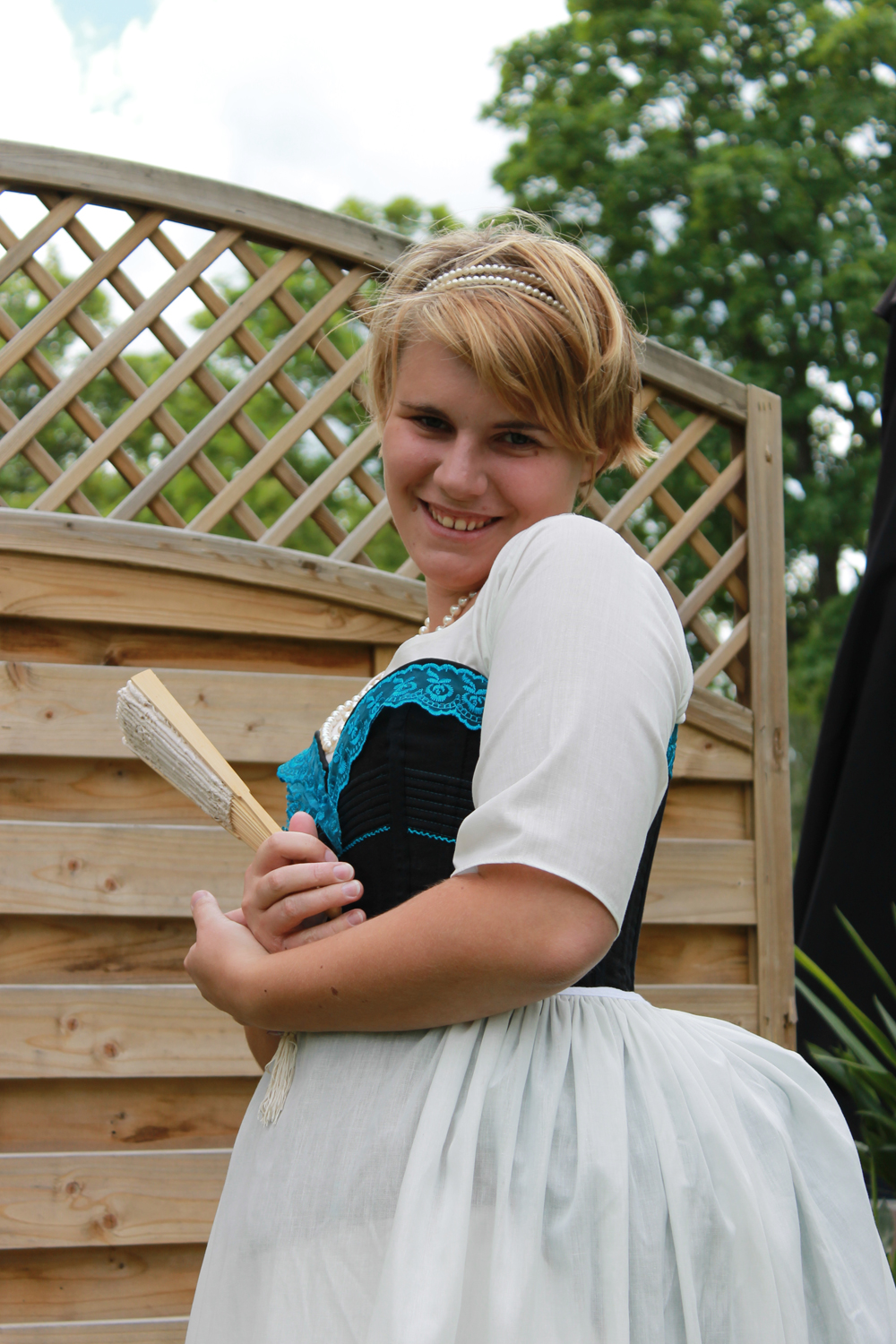
I’ve been promising a Victorian bustle dress to my youngest sister for quite some time, and when the 13th challenge in the HSF came out and read “Lace and laces” I decided it was time to start her off with some foundation garments.

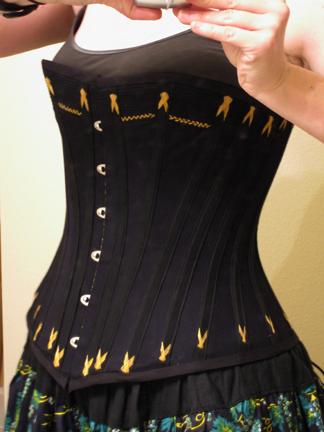
Together we looked at some patterns and finished corsets, and decided on Waughs 1880s pattern from the book “Corsets and Crinolines”

1880 waugh

We used this pic for our color inspiration, and decided on black twill with trimmings in turqouise.l

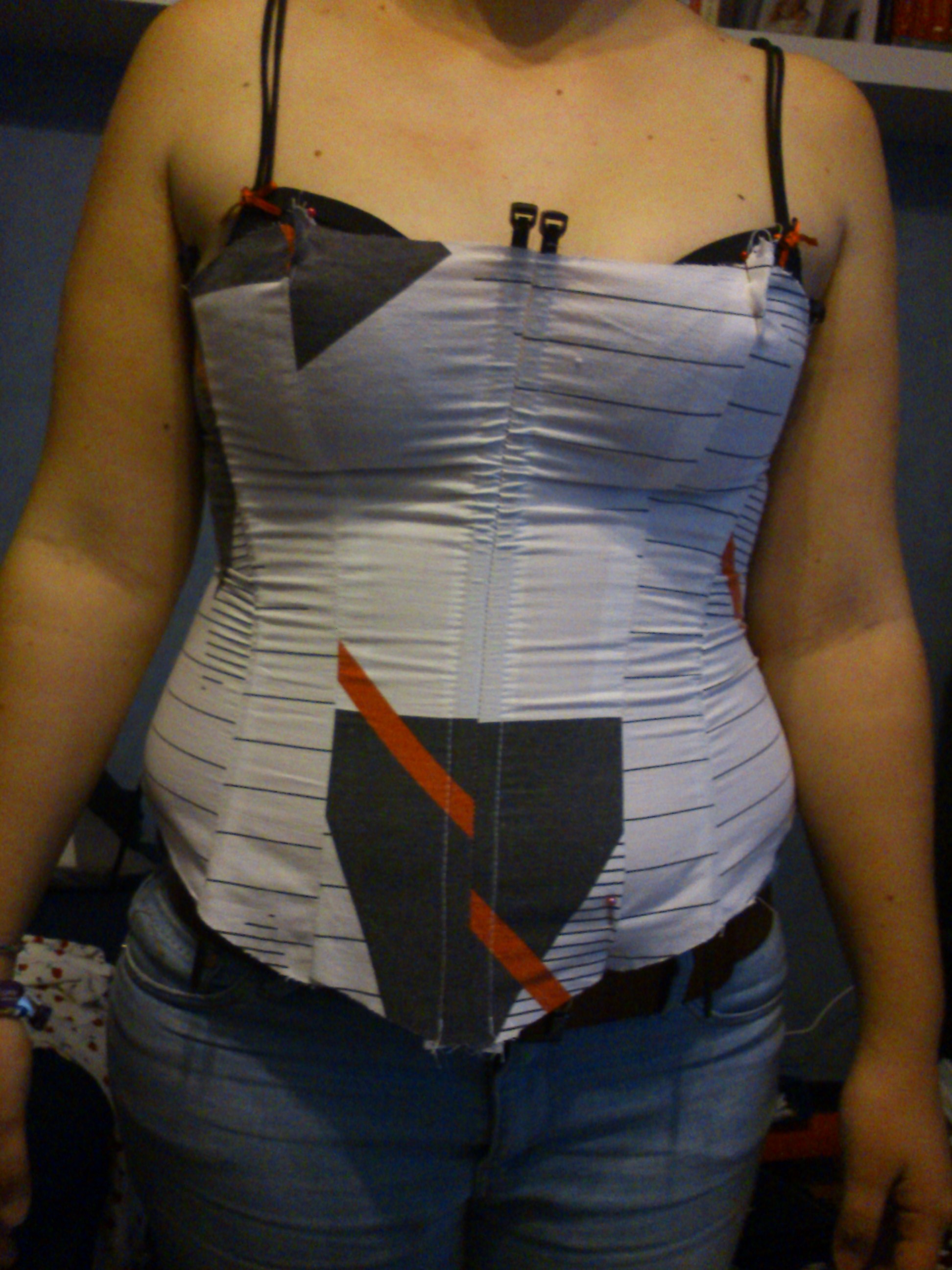
I drafted the pattern and quickly made the mock-up. It fitted her pretty well, if you don’t look at all the wrinkles which should disappear once the corset is made in a sturdier fabric and have gotten the boning inserted.

2013-05-21 18.47.572013-05-21 18.47.37

The only thing to adjust on the pattern was to make the bust and hip a bit smaller, and to reshape and add height to the bust for a more heart-shaped line.

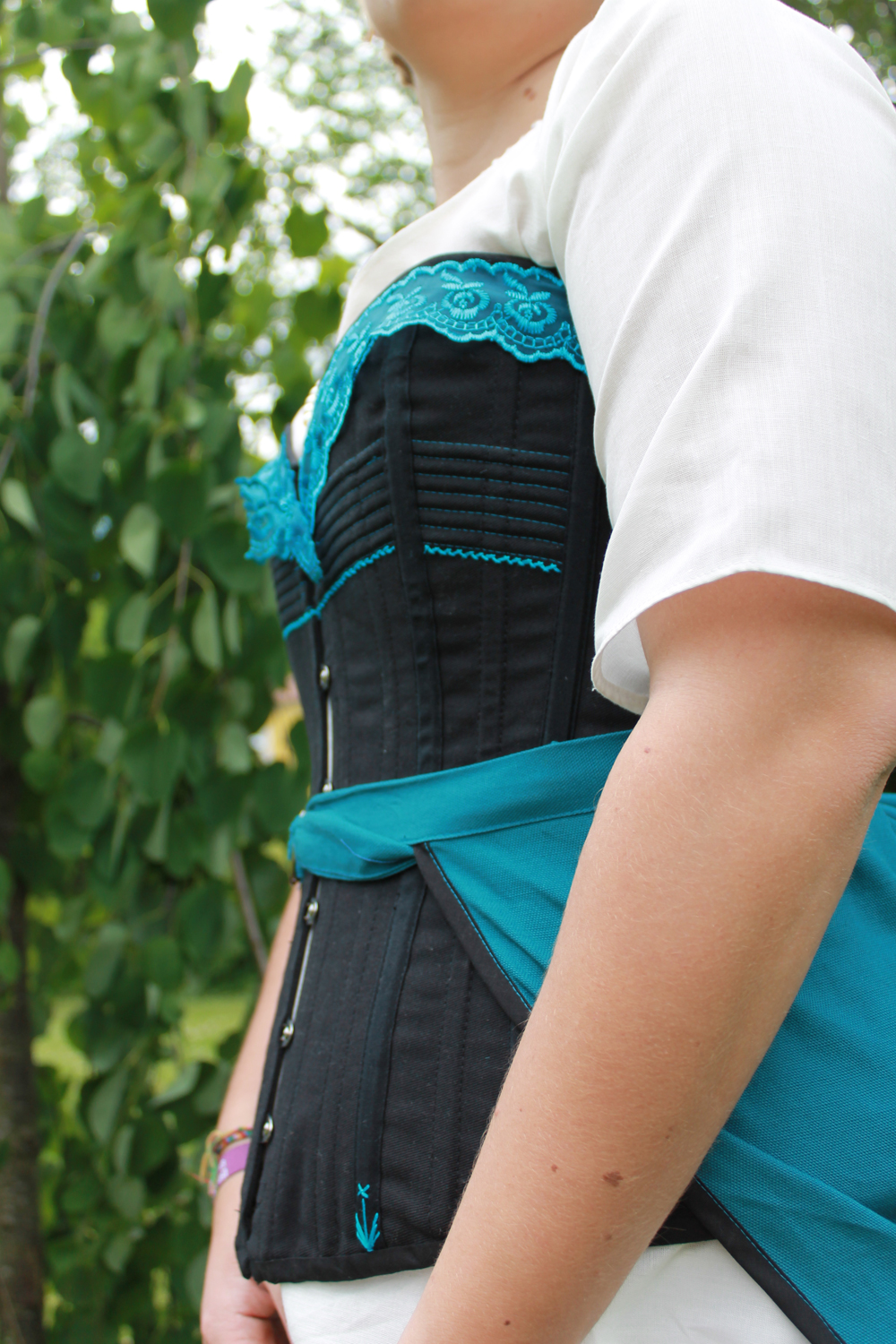
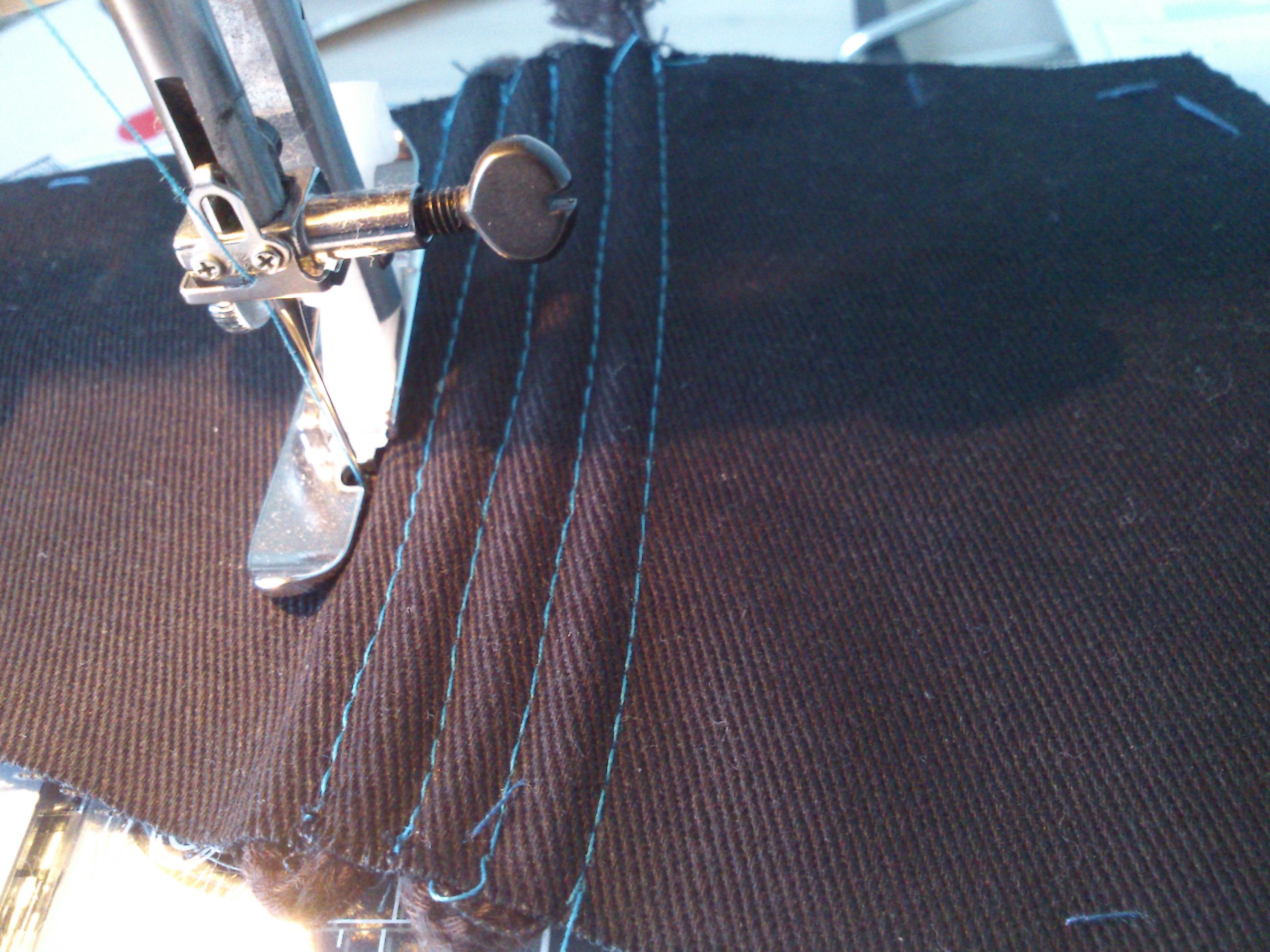
Once the pattern was done I cut the fabric, flat lined it and started on the contrasting piping for the bust.

This part was the most nerve wrecking, but it ran smoothly and ended up looking neat and good.

2013-05-30 20.44.16Piping with contrasting thread.2013-05-30 20.44.03

2013-06-05 16.16.212013-06-05 16.35.16Busk being inserted.

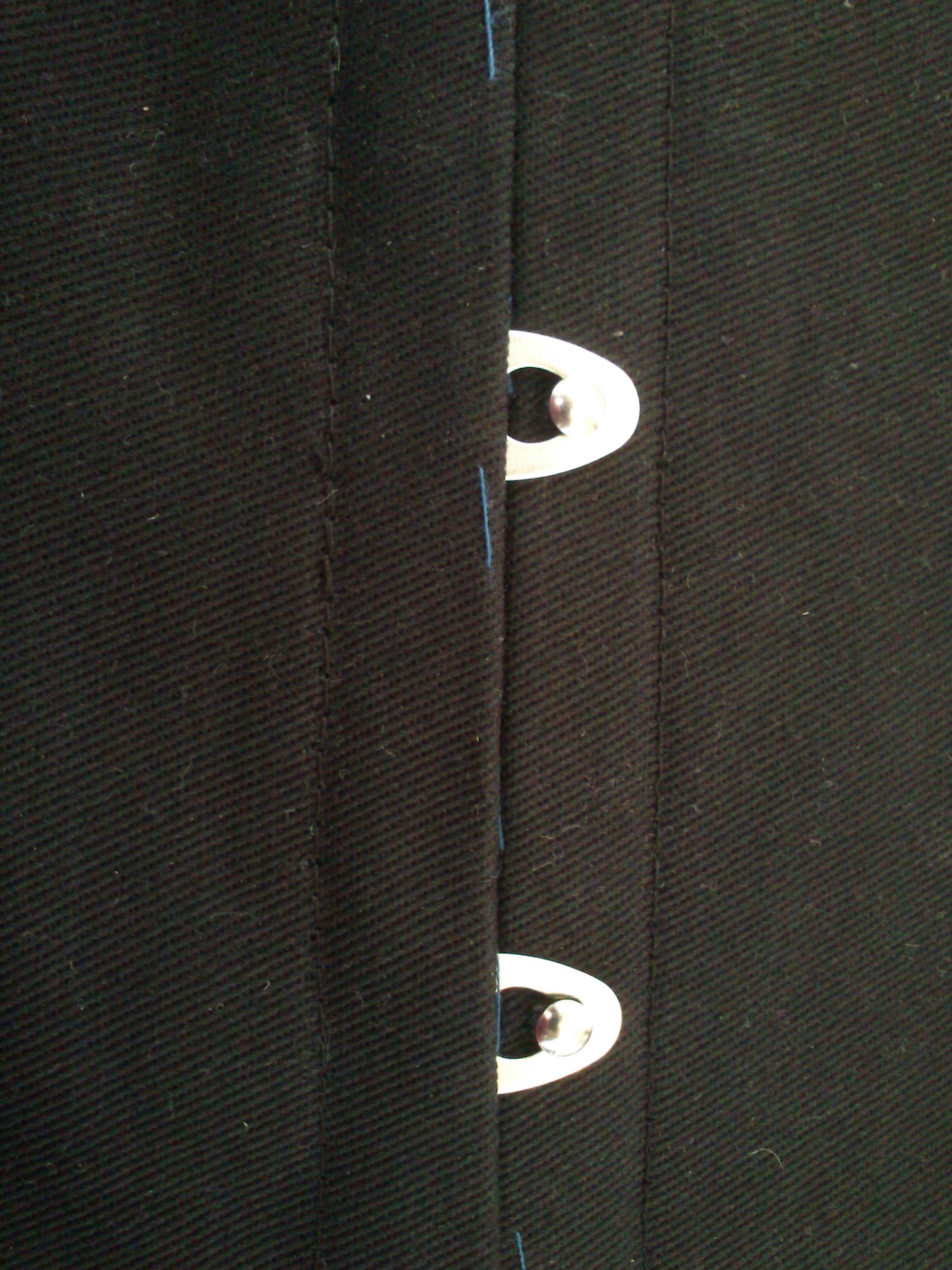
I set the gromets and the busk and then sewed it together for a try on.

2013-06-06 17.53.222013-06-06 17.53.50This time it looked pretty good – but still had a few wrinkles in the waist which needed to be dealt with. I think they would disappear when I got some heavy boning inserted in that area.

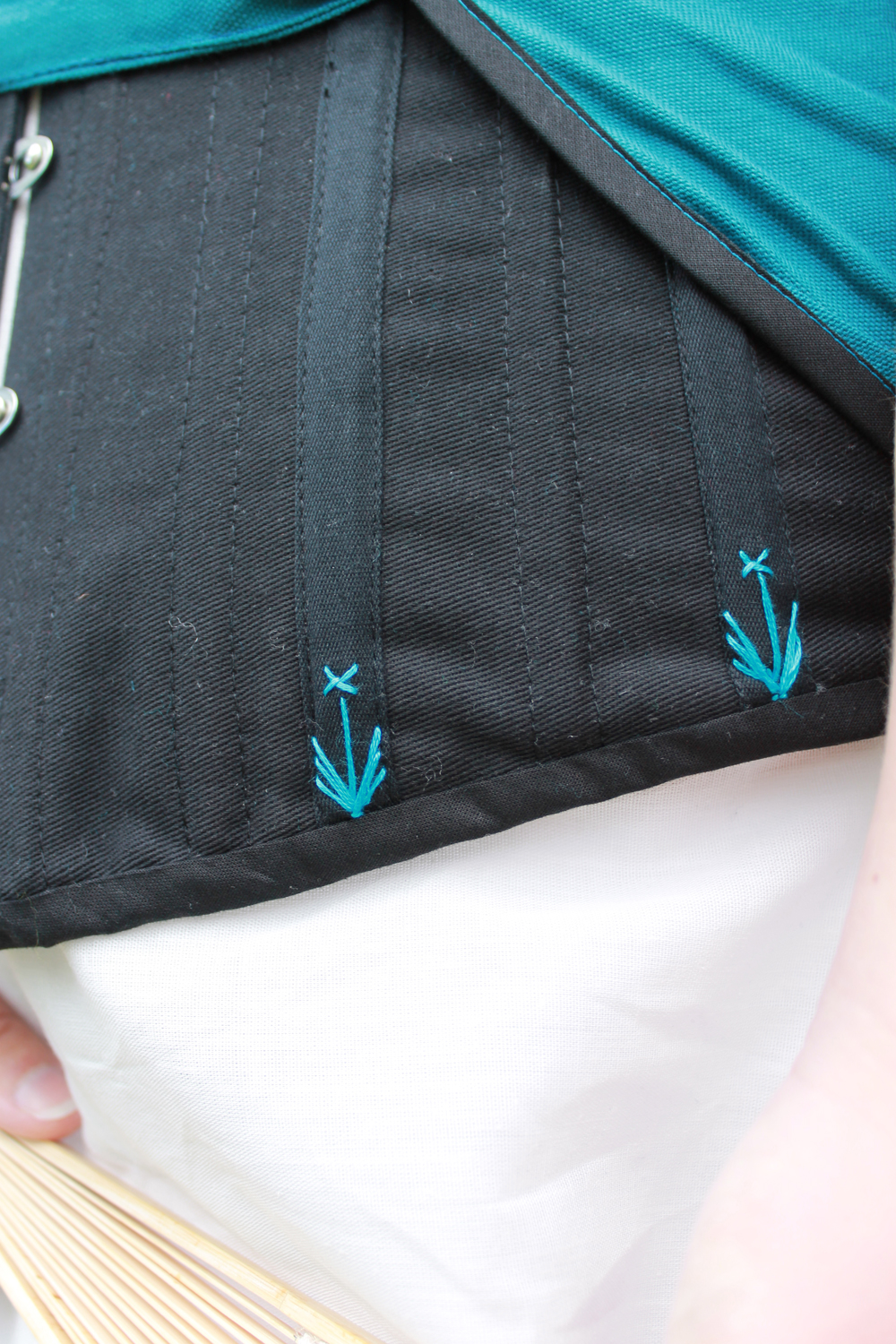
I decided to experiment with the boning, and used three different kinds of bones in this corset.

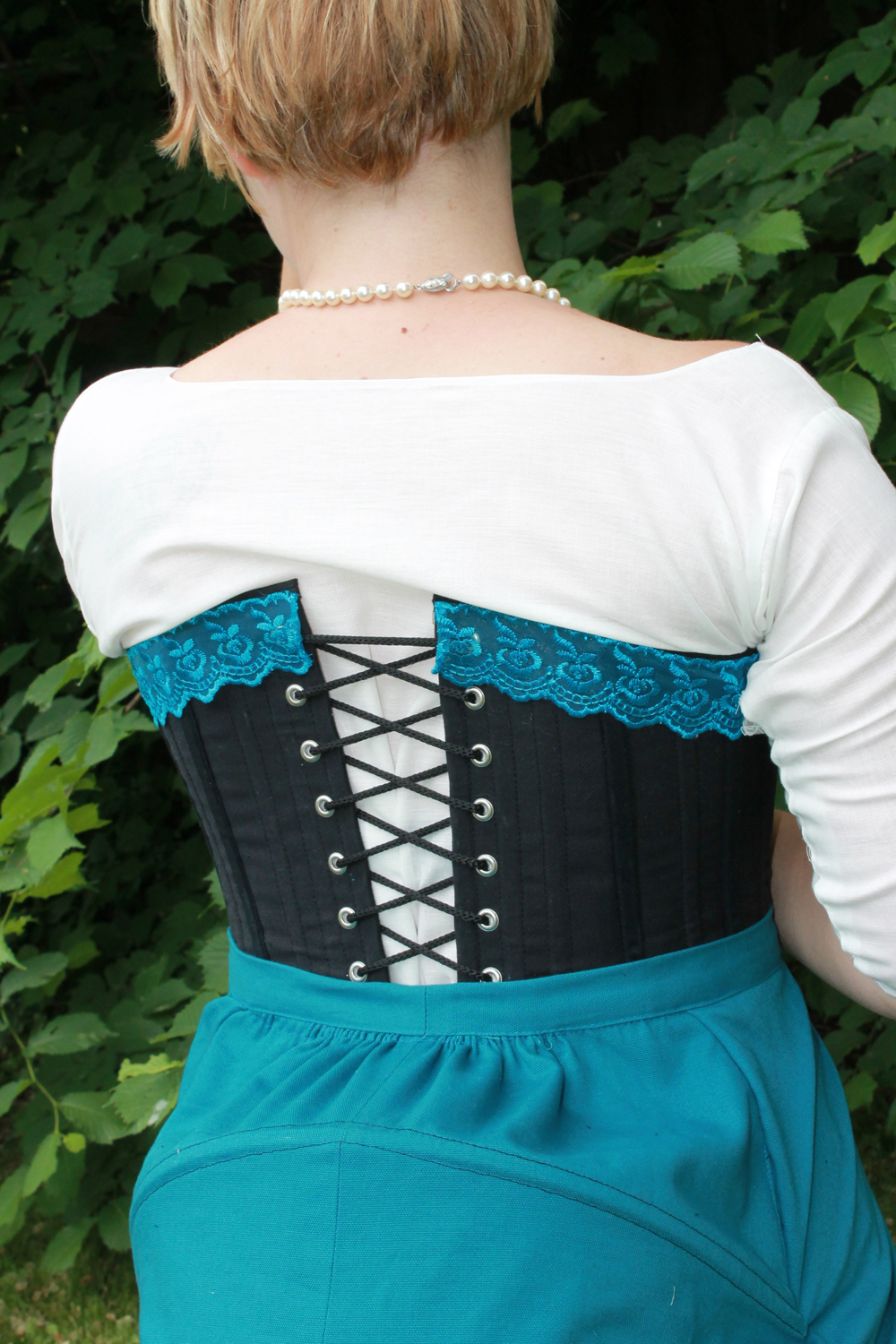
At the back – where you need the most strength to take care of the pressure from the taight lacing – I used metal pipe-cleaners from a utility store. I cut them with big pliers, then rapped the sharp ends in ducktape.

For most of the corset I used my regular boning – heavy duty cable ties. My only complaint about this kind of boning is that they are thick (0,3 mm) , and therefore steal more fabric and adds to the waist a bit more than other kinds of boning does. Which is a bad thing when you try to reduce the body measurments.

For the bust area (where the cable ties were too short) I used some synthetic whale bone. I thought it felt rather weak when inserting, but it ended up looking perfect in the end.

Finishing the corset went fast and I completed it in only two afternoons, sewing bone channels, bias-tape, lace and flossing, all in a crazy speed rush.

IMG_3115

Just the facts:

Challenge 13: Lace/laces.

What: A Victorian Corset.

Pattern: Waughs 1880s corset from “Corset and Crinolines”.

Year: 1880s 😉 (but I think the shape is good for 1850-1890).

Fabric: 0,5 m black twill and 1 m black cotton for flatlining and lining.

Notions: Busk, 36 gromets, 5 m of lacing cord (for lacing and piping), bones (sip-ties, metal bones and plastic whalebone), 2 m bias-tape, 1 m turqouise lace, black thread, turqouise yarn for flossing.

How historical accurate: Sewn on machine, with polyester thread. The pattern, techniques and looks of the garnment are pretty accurate though.

Cost: 300 SEK (33 euro).

Time: 15 hours

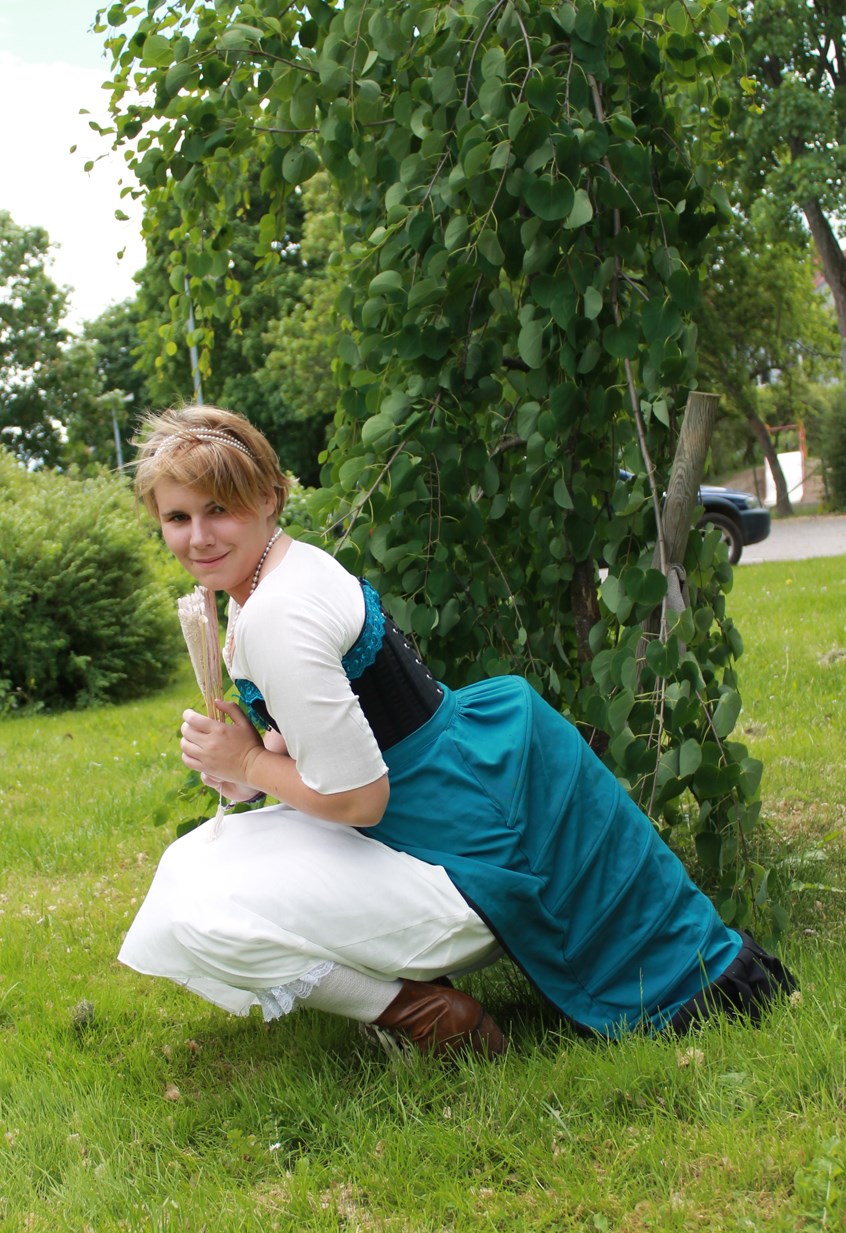
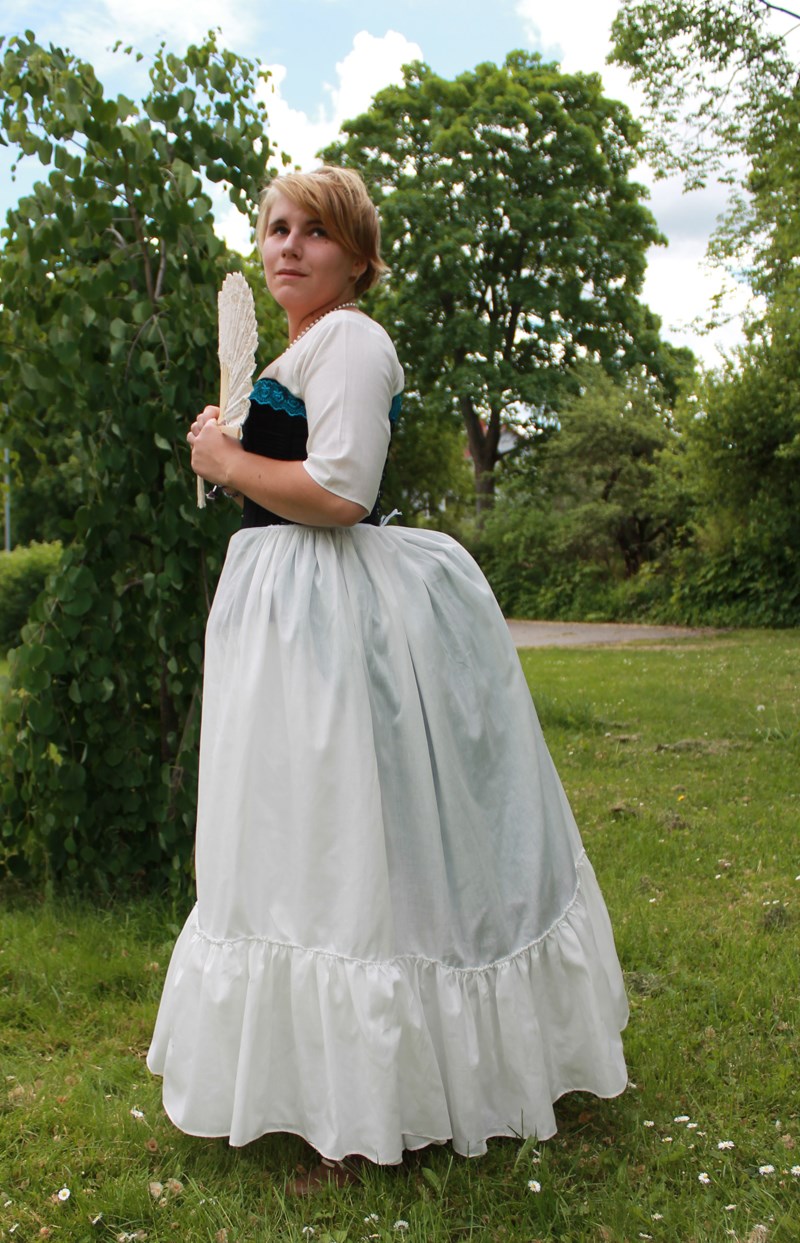
Fist worn: For the photoshoot mid june. And my sister says she will definately wear it again, and combine it with jeans or with a black skirt as part of a modern ball gown.

***

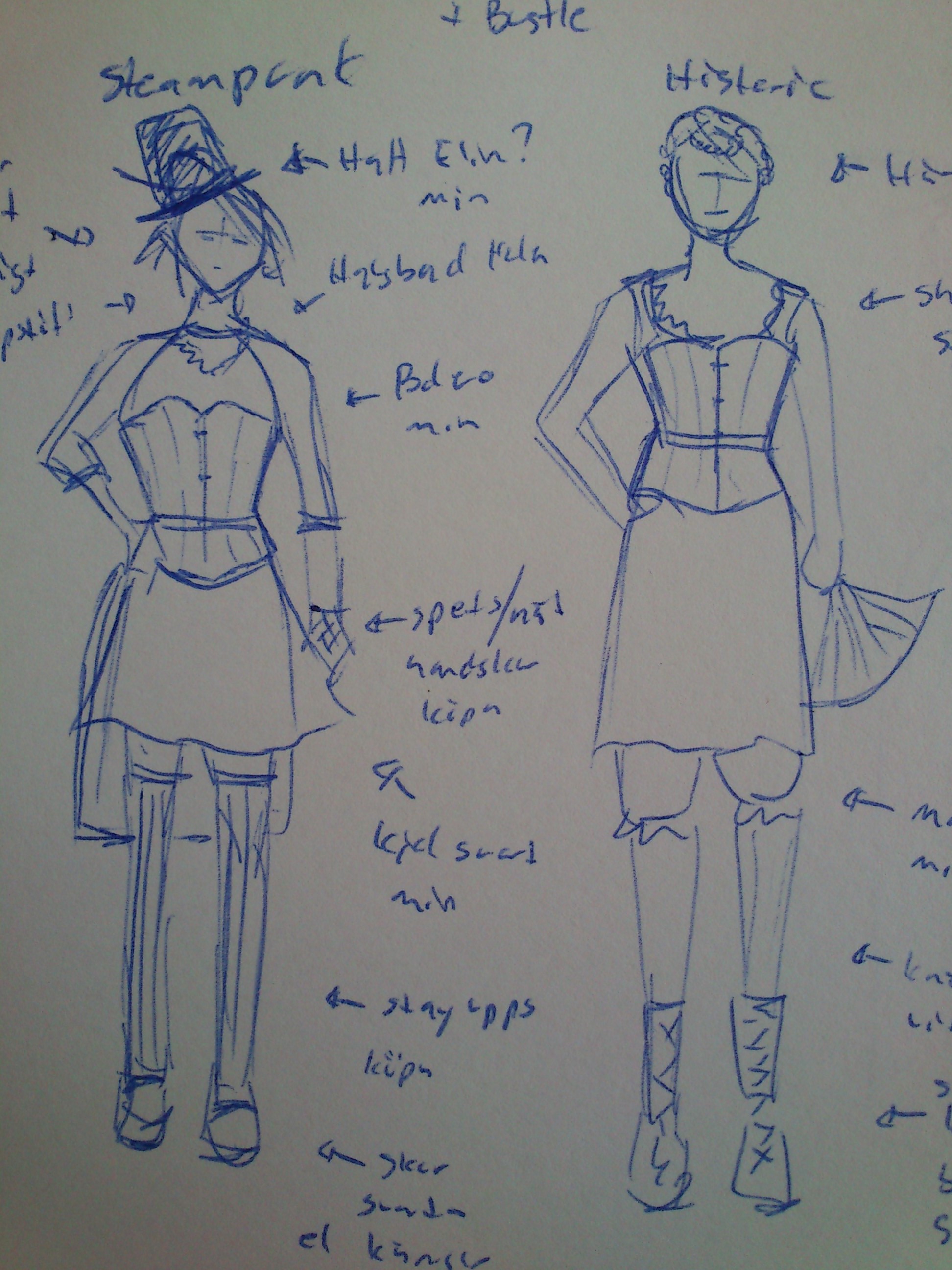
And as a teaser: Here is a quick brainstorming sketch for the awesome photoshoot we had, and which I will show you more about in my next post.

2013-06-03 11.22.34

Chemise a Lamballe – Pictures

For the Chemise photoshoot (construction post Here) me and my sister went to this amazing group of old houses from late 18th centrury, located in the middle of our town. It’s not like “Old Town” or something like that just these old wooden houses, with their lovely gardens left untouched in the midst of all the modern houses. (I will show you all of their beauty in a photo-post one day).

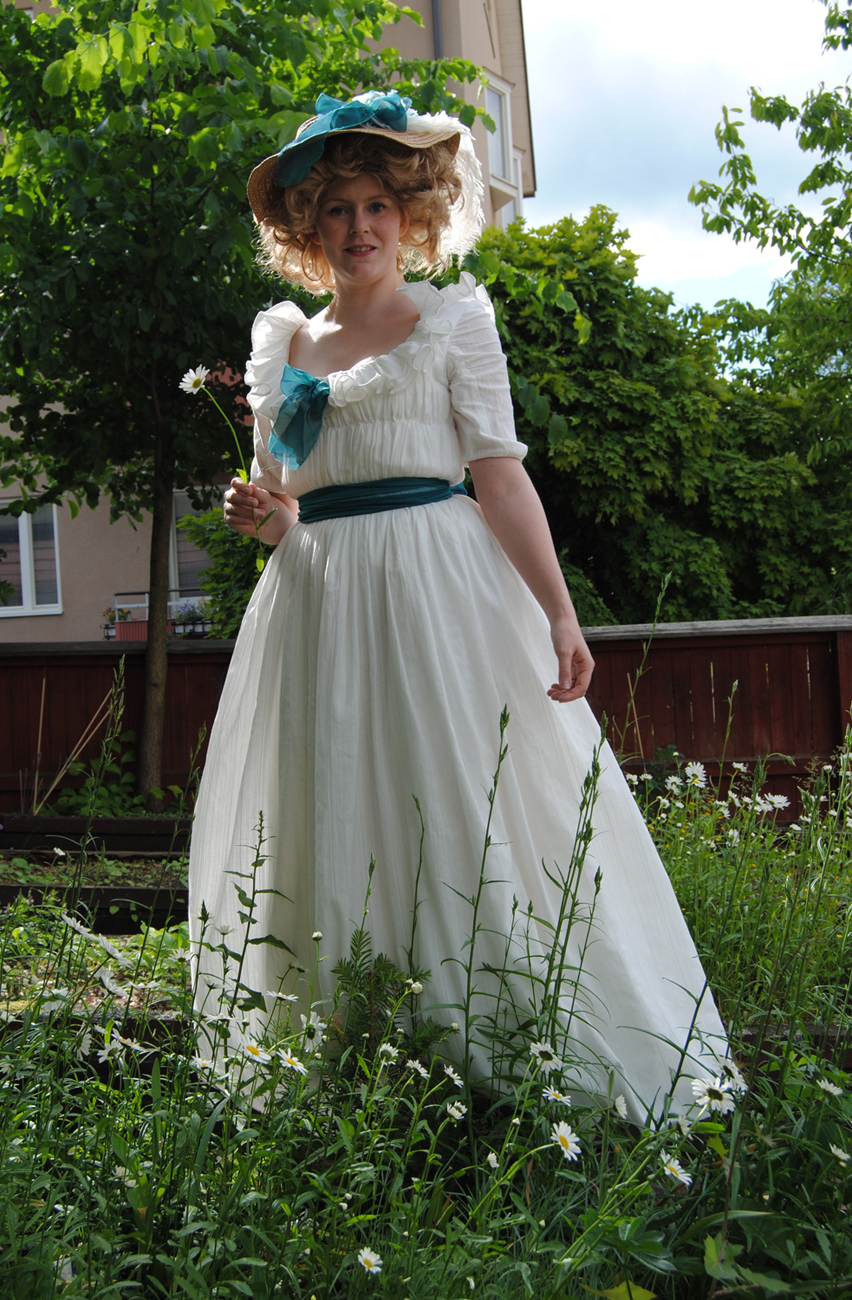
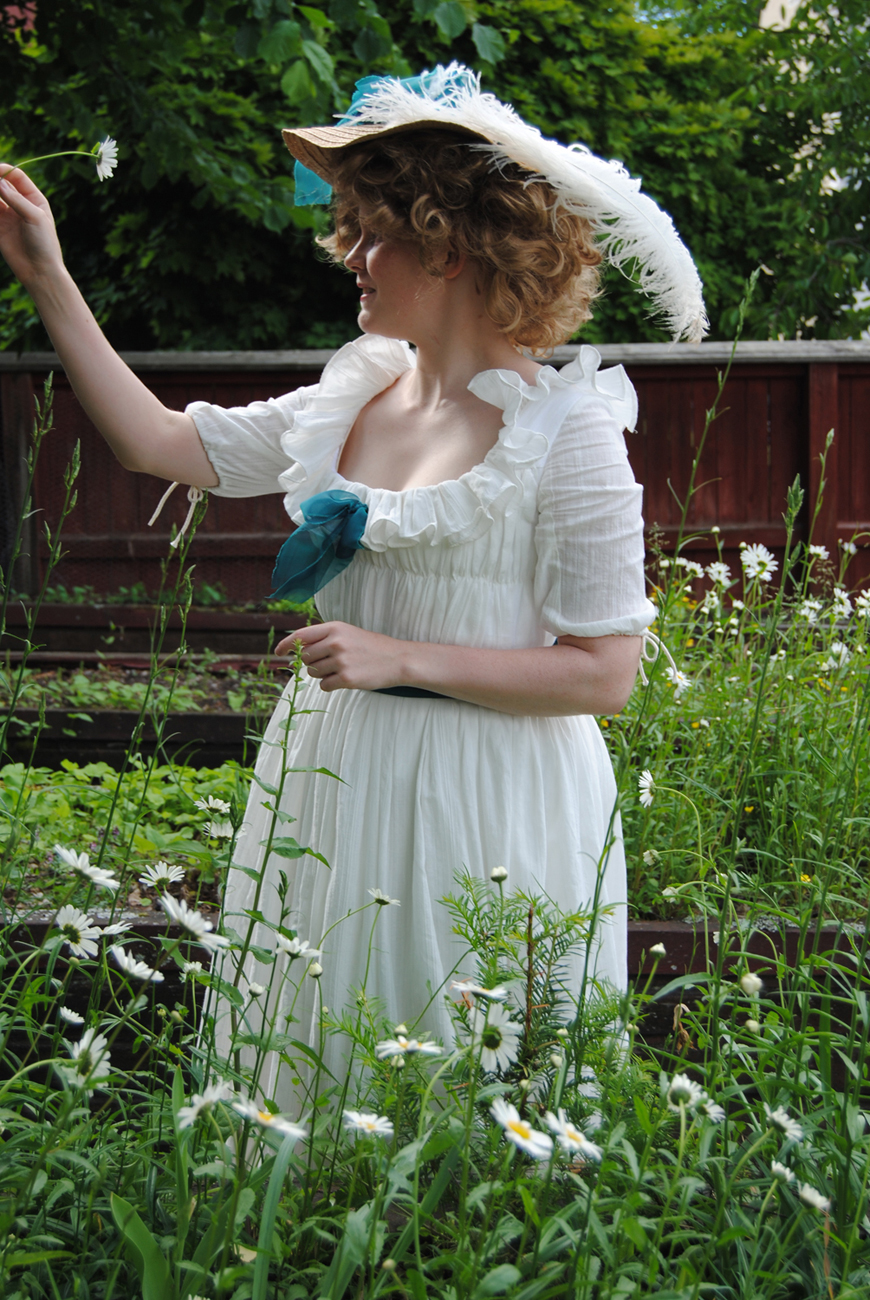
We took so many good and wonderful pictures, and it was soo hard to select only a couple of them to show you. But finally I managed to get the numbers down. So here are 12 of my favorites, which I think best captures the softness and beauty of the Chemise a la Reine.

DSC_0295

DSC_0301

DSC_0325

DSC_0332

DSC_0338

DSC_0369

DSC_0389

DSC_0394

DSC_0401

DSC_0409

DSC_0547

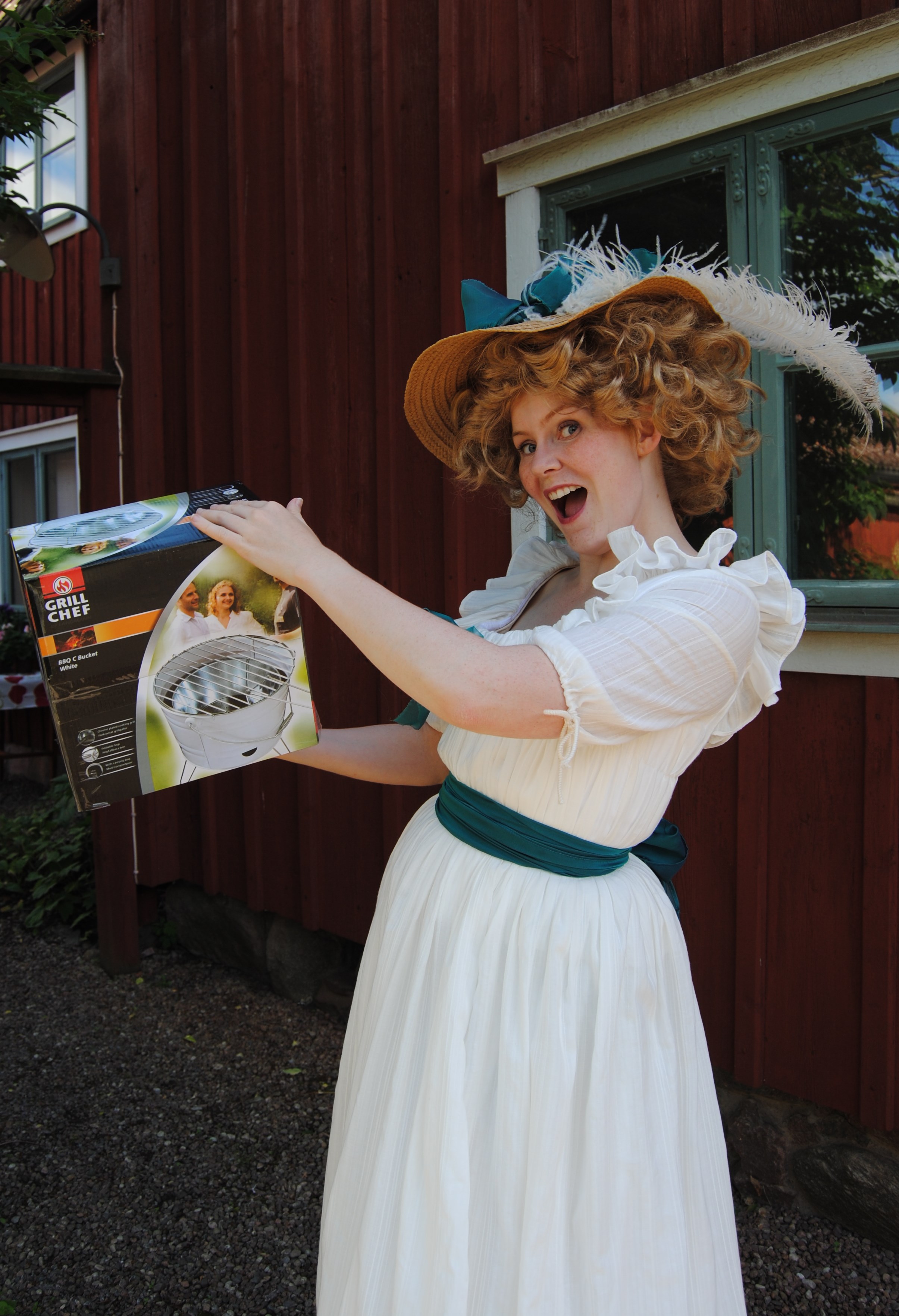
DSC_0566And of course we had to make some advertising for this fabolous grill – after all it’s barbecue season…

Photo: Maria Petersson

Chemise a Lamballe (Reine)

For the HSF:s 12th challenge – Pretty Princesses – I went trough my mental archive for all my favorite royalties.

Like Anne Boleyn…

AnneBoleyn3

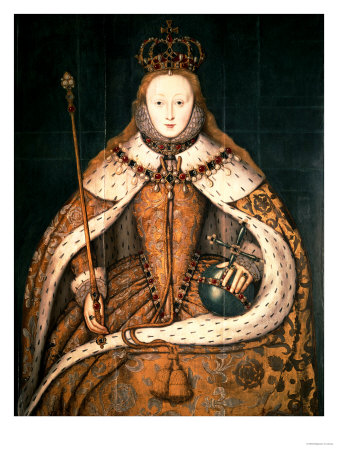
Or her daughter Elizabeth I.72707

Or perhaps the Swedish queen Kristina.drottning_kristina_av_sverige

And of course there are always the (in)famous Marie Antoinette.Marie_Antoinette_1775a

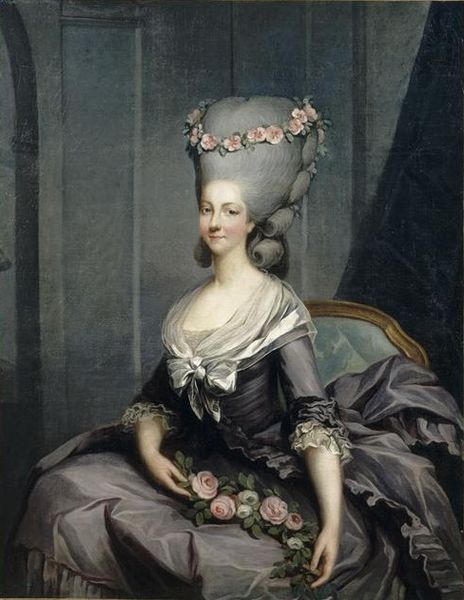
I knew I wanted to make something pretty but much simpler than what you normally visualise when you hear the word “princess”. And then I remembered the fascinating and really tragic faith of one of Marie Antoinettes friends – the princess Lamballe.464px-MadamedeLamballe

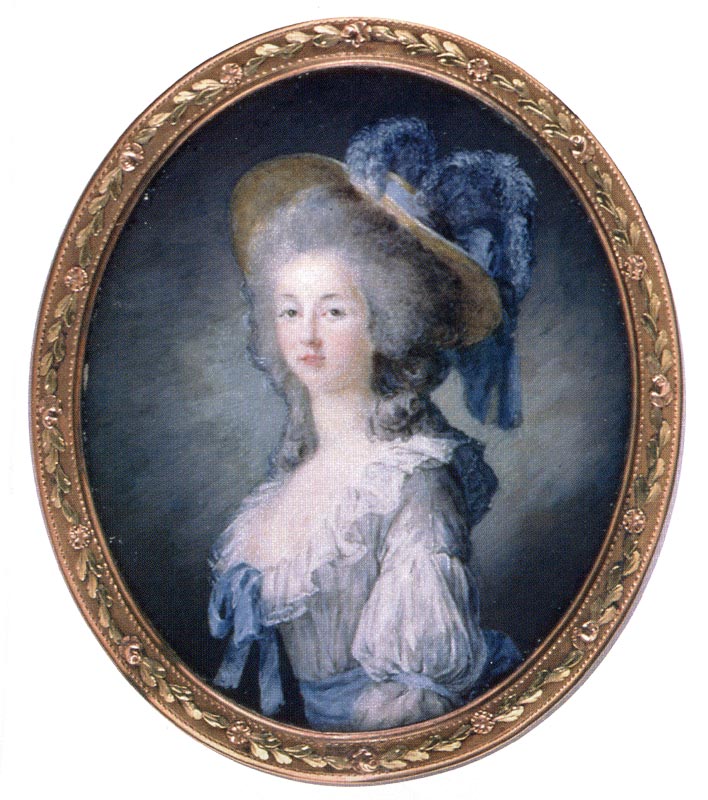
Married at 17 to  Louis Alexandre de Bourbon-Penthièvre (a marriage that lasted only one year, before the prince died of sicknes). She then moved on to Versailles and became a close friend to the new french queen. A friendship that would cost her life in the most brutal way when the revolutinaries in 1792 stormed her home, dragged her through the streets and threw her to the mob (which killed and mutilated her within minutes). They then put her head on a spike and paraded it down the streets outside Marie Antoinettes prison window.

In most of the princess portraits she is wearing the “chemise a la Reine” – a style Marie Antoinette made famous and Lamballe was known to favour.lamballe-miniature

So what would be more suitable to hounor the princess with than to recreate the dress she loved.

The pattern is from Waughs “cut of woman’s clothes” and the fabric is a lightweight cream coloured striped cotton voile.

2013-05-29 17.38.05

I originally planned to make the dress all by hand but soon realised that I din’t have that kind of time for this project. Since I am starting this dress with only 3 days to go until challenge deadline I decided that it needed to be sewn on  machine.

So I cut out the pieces, measured and sewed on the channels with the cord already inside. One at the waist and one about 10 cm above the waist.

Then I put it on my dressform to get a perception of what it would look like and to cut the neckline. As you can see, it is horrid. Way to much fabric and bulky gathering from the cord. It doesn’t look slim and neat as it should.

2013-06-11 15.52.072013-06-11 15.51.51

So I decided to start all over again – thank god I hadn’t handsewn the whole thing.

I took it down and cut the skirt off, and sewed it togheter in the front. I then re-made the gathering at the waist of the skirt without the cord, using only thread gathering.

Then I started to drape a toile for a foundation bodice on my dressform.

2013-06-11 17.37.022013-06-11 17.37.09

I also decided that the gathered sleeves had to go, and instead made a pair of fitted 3/4 sleeves.

I sewed the bodice together and draped and sewed a gathered front and back piece on the foundation.

And this time it looked so much better.

2013-06-13 12.26.352013-06-13 12.26.24

Then I sewed on the skirt, the sleeves and put on neck ruffle and the belt – made of turquoise/blue organdy. I hemmed the skirt and put the hooks and eyes in for the back clousure.

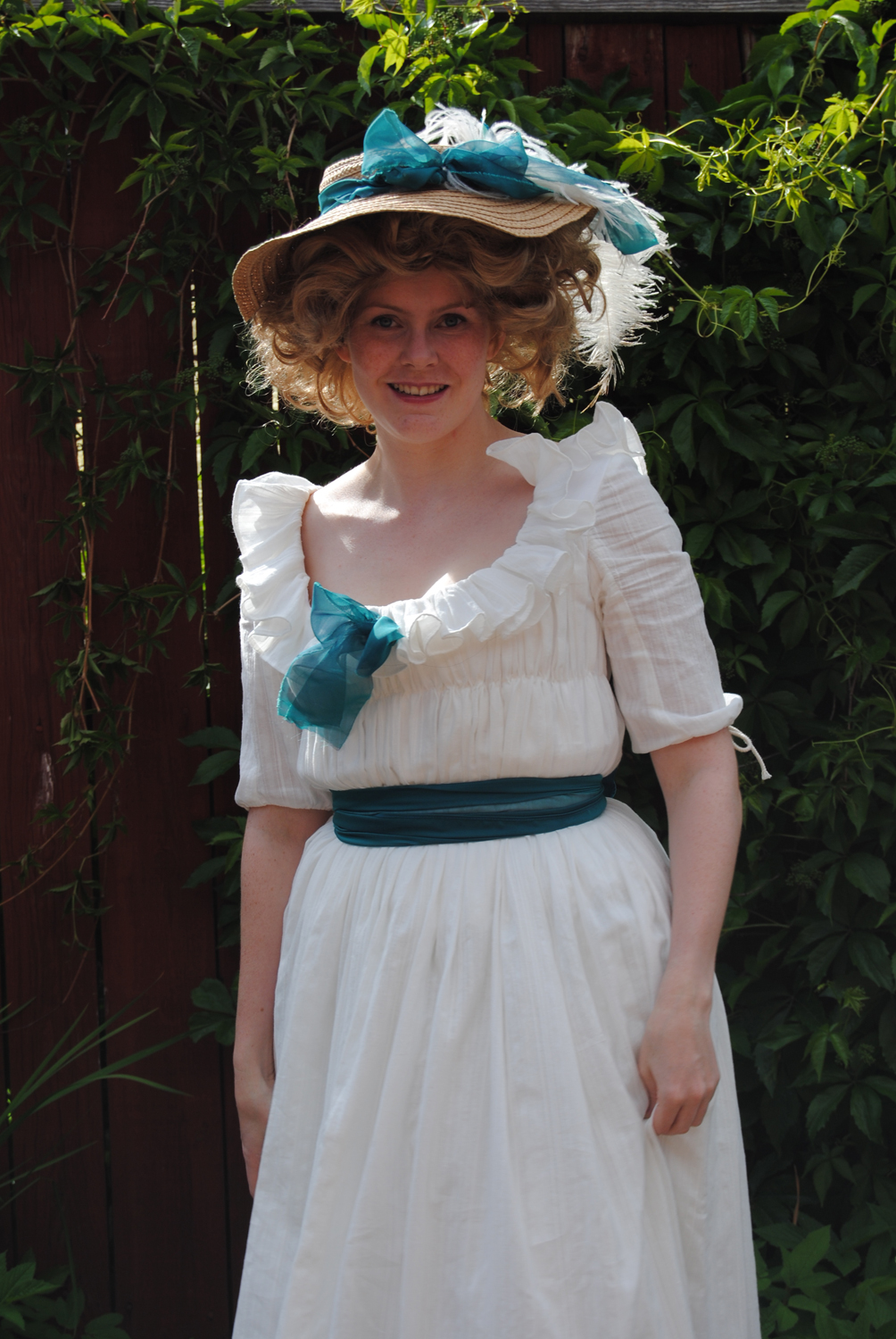
For this outfit I also re-trimmed my bregere hat.

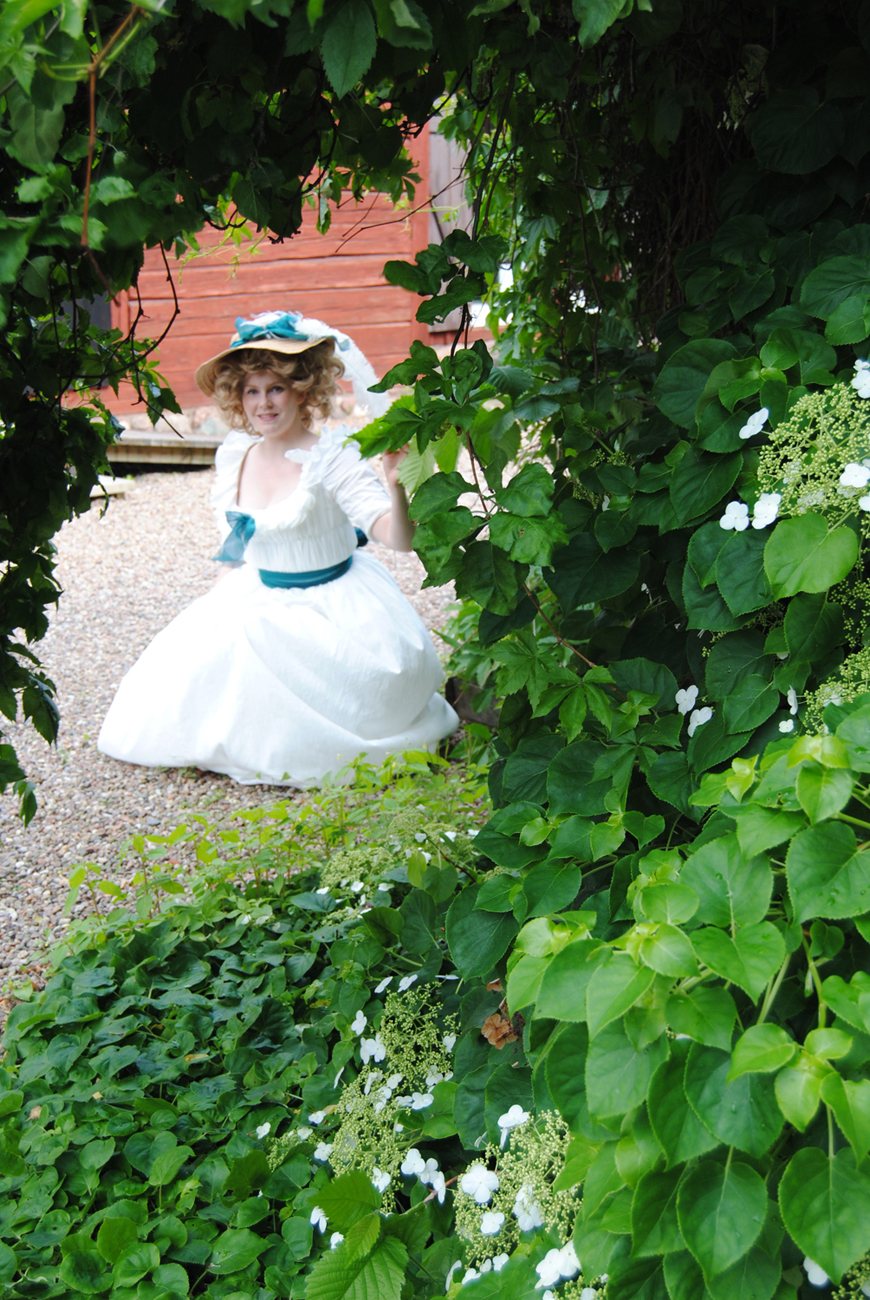
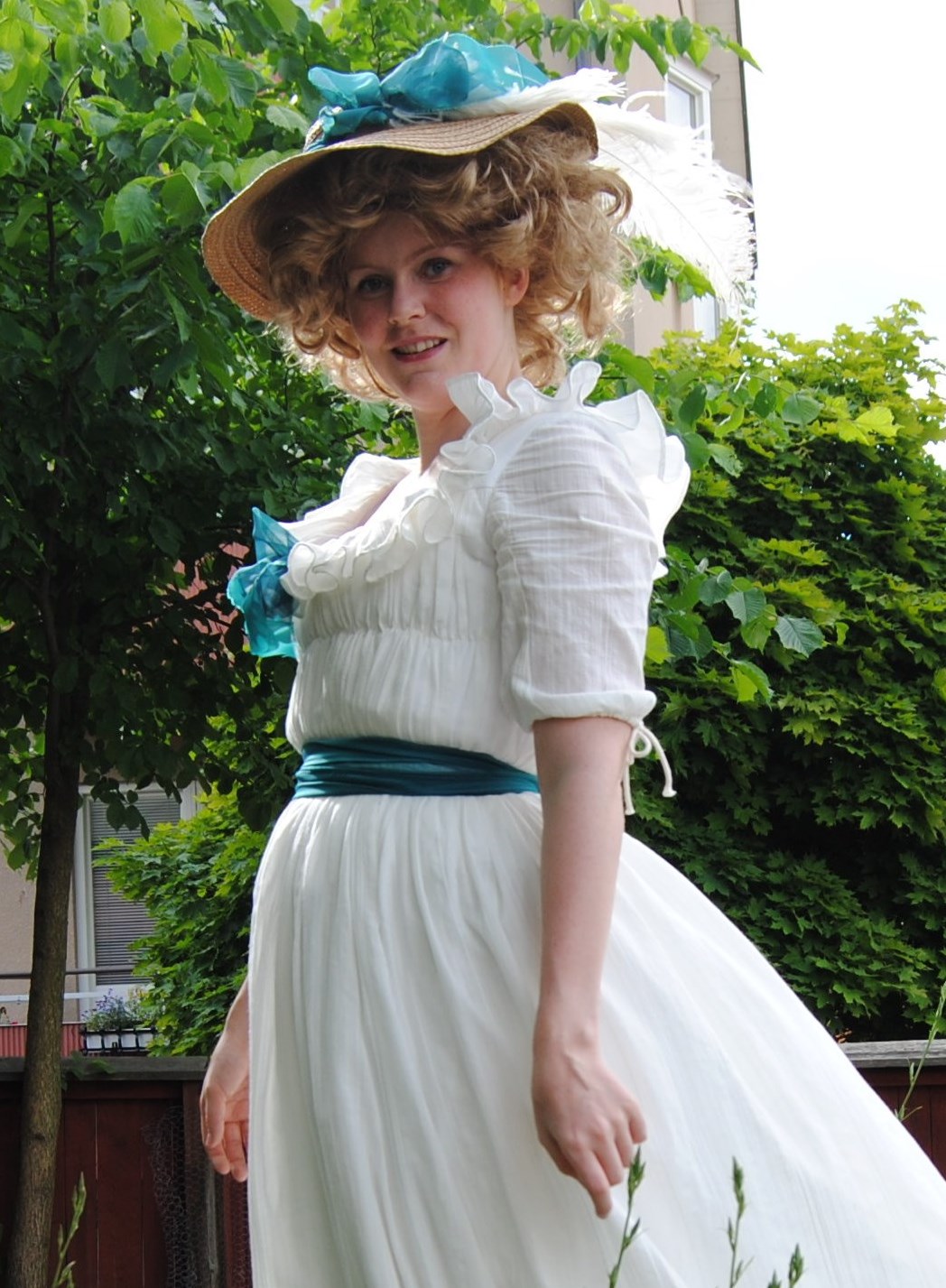
Then me and my sister went outside to shoot some gorgeous photos. (More pictures from yesterdays photoshoot will be shown in upcoming post.)

porträtt

Just the facts:

Challenge: Pretty Princesses.

What: A chemise a la Reine (Gaulle).

Year: 1780s.

Pattern: I draped my own.

Fabric: 4 m of striped cotton voile and 0,5 m white cotton fabric for interlining and lining, and 0,5 m turquoise organdy.

Notions: Thread, hooks and eyes.

How historical accurate: Not at all – totally machine sewn, in a way too heavy fabric. The only thing that is accurate is the color and the silhouette. 3/10.

Hours: About 15.

Cost: Approx. 16 USD (100SEK), everything came from stash.

First Worn: On the photoshoot yesterday.

1930s sailor outfit

The 8th challenge in HSF, By the Sea, needed some heavy thinking and decision making on my part. There where so much I wanted to make but at the same time I didn’t have a lot of time to make something (as this challenge was due right before the two big challenges “Flora/Fauna” and “Literature”). So something relatively simple was the plan.

I went through a lot of lovely inspiration pictures (which I will show you some next time), and finally decided on this beutiful dress from 1934:

1934leach-way19

So I went fabric hunting and straight away found this perfect green and white seersucker on sale for about 2 euro/yard (15 SEK/m). I also got some green bias tape and a grey beltbuckle. The white fabric for the collar is a striped cotton voile from my stash.

2013-06-10 21.17.05

I didn’t have a pattern that would work for the dress so instead I constructed my own after studying some patterns from Waugn’s “Cut of womens clothes”. I cut out all the pieces and pressed interfacing on the collar, cuffs and belt.
The sewing went quick and esay, but when it was time for a try on I realised that I still hadn’t got used to my new smaller measurments, and of course managed to make the dress about two sizes too big.

So I made the dress smaller and then sewed on the collar, cuffs, marked and sewed the length of the skirt.

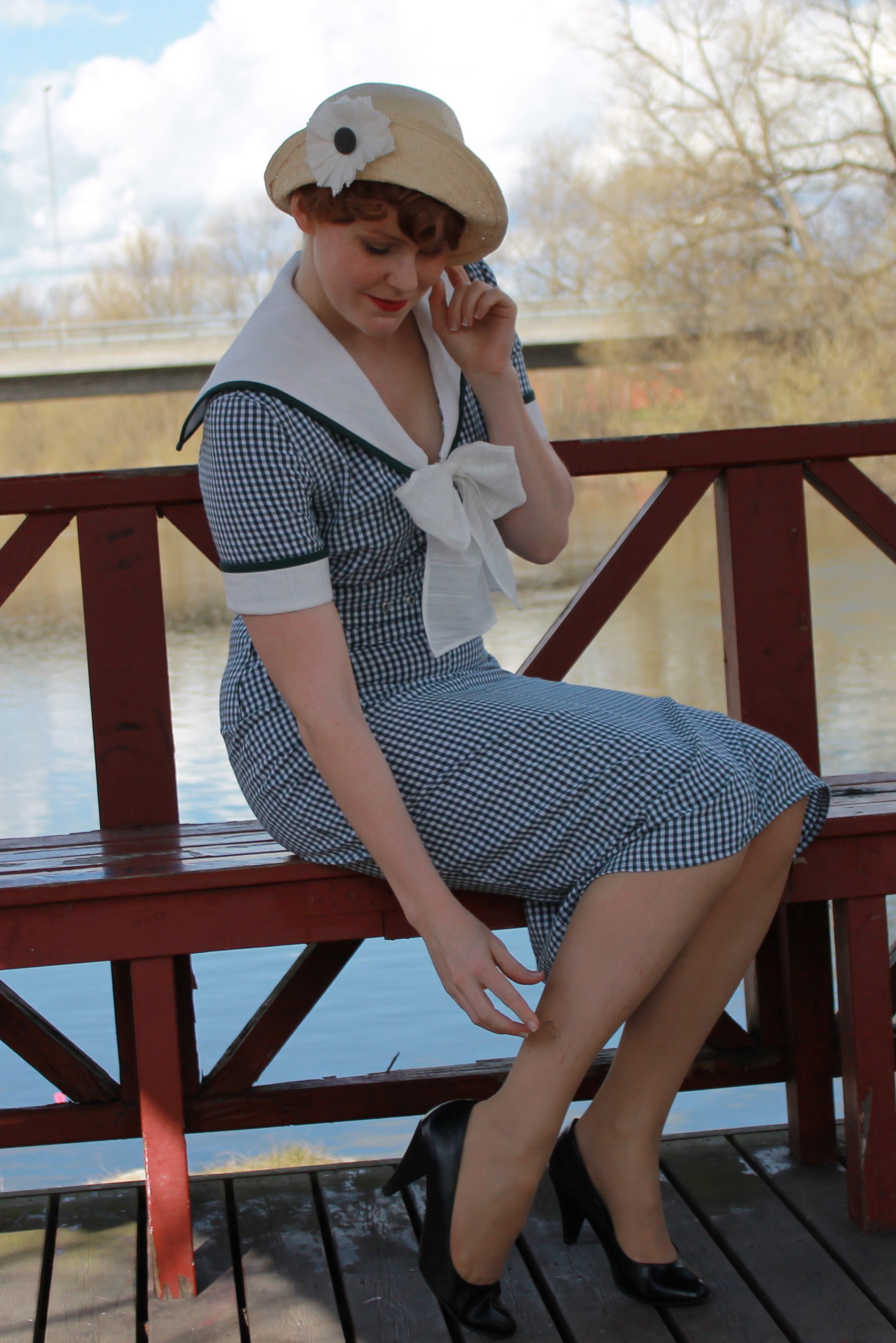
To really get the right 1930s look I decided to also make a matching hat. I bought a cheep straw hat and re-shaped it with some water and decorated it with a flower/bow.

Then I asked my sister to help me take some pictures down by the canal near my home. The weather was perfect, and we had a good time, got some lovely pictures and some really long looks by the tourists and joggers that went by.

IMG_1928

IMG_1937

IMG_1951

IMG_1961

IMG_1978

IMG_2010

IMG_2035

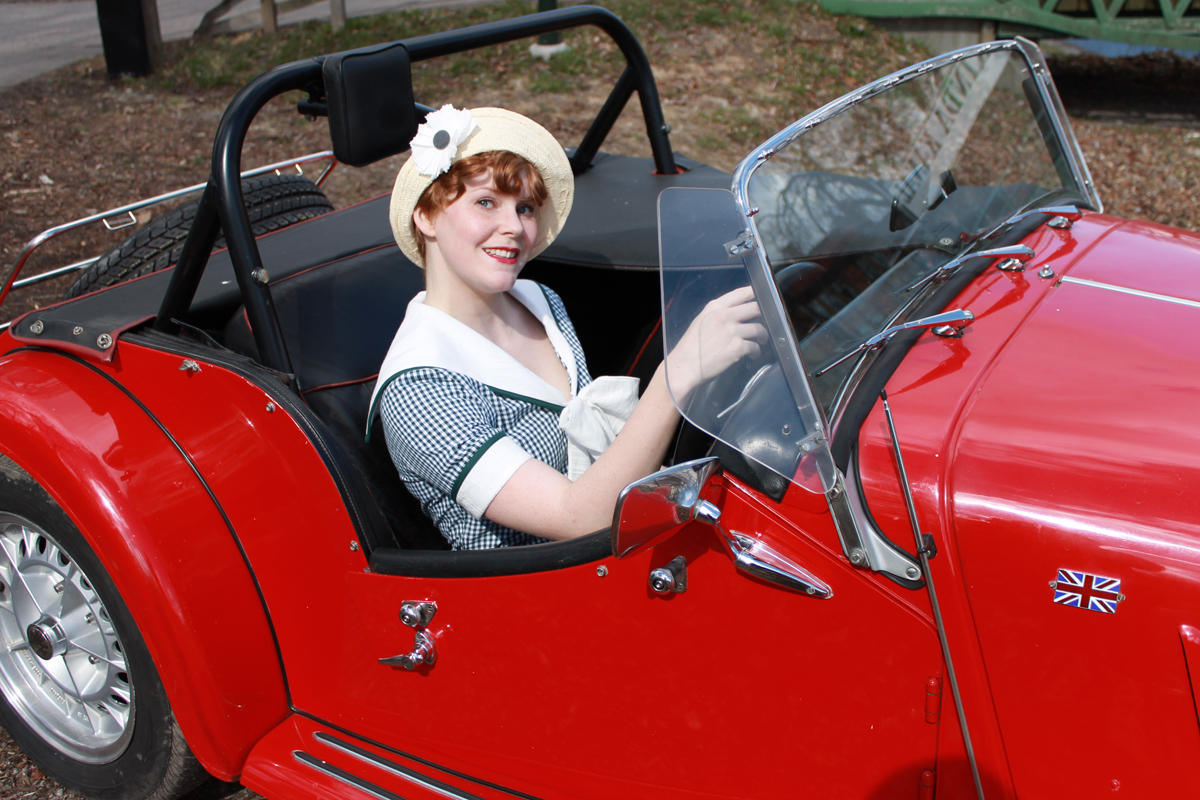
When we were done and on the way home, we spotted a beautiful old car, and asked the owners if we could take some shots of it. The owners were really enthusiastic and even asked me to step into the car. I know nothing about cars but strongly suspect it wasn’t from the 1930s – but it doesn’t matter, it was fun anyway.

IMG_2045

IMG_2053Photo by Elin Petersson

Just the facts:

Challenge nr 8: By the Sea
A 1930s dress worn with my soft entry – the straw hat

Fabric: 2m of white/green seersucker and 0,5 m white cotton voile

Pattern: I drafted my own

Notions: Thread, bias tape, beltbuckle and gromets.

How accurate: I really don’t now that much about 1930s sewing, but I guess they didn’t use sergers… but maybe 70 %

Hours: About 10 hours

Cost: 16 USD for the dress (the beltbuckle was about half the amount), and about 16 USD for the hat

First worn: On the photoshoot