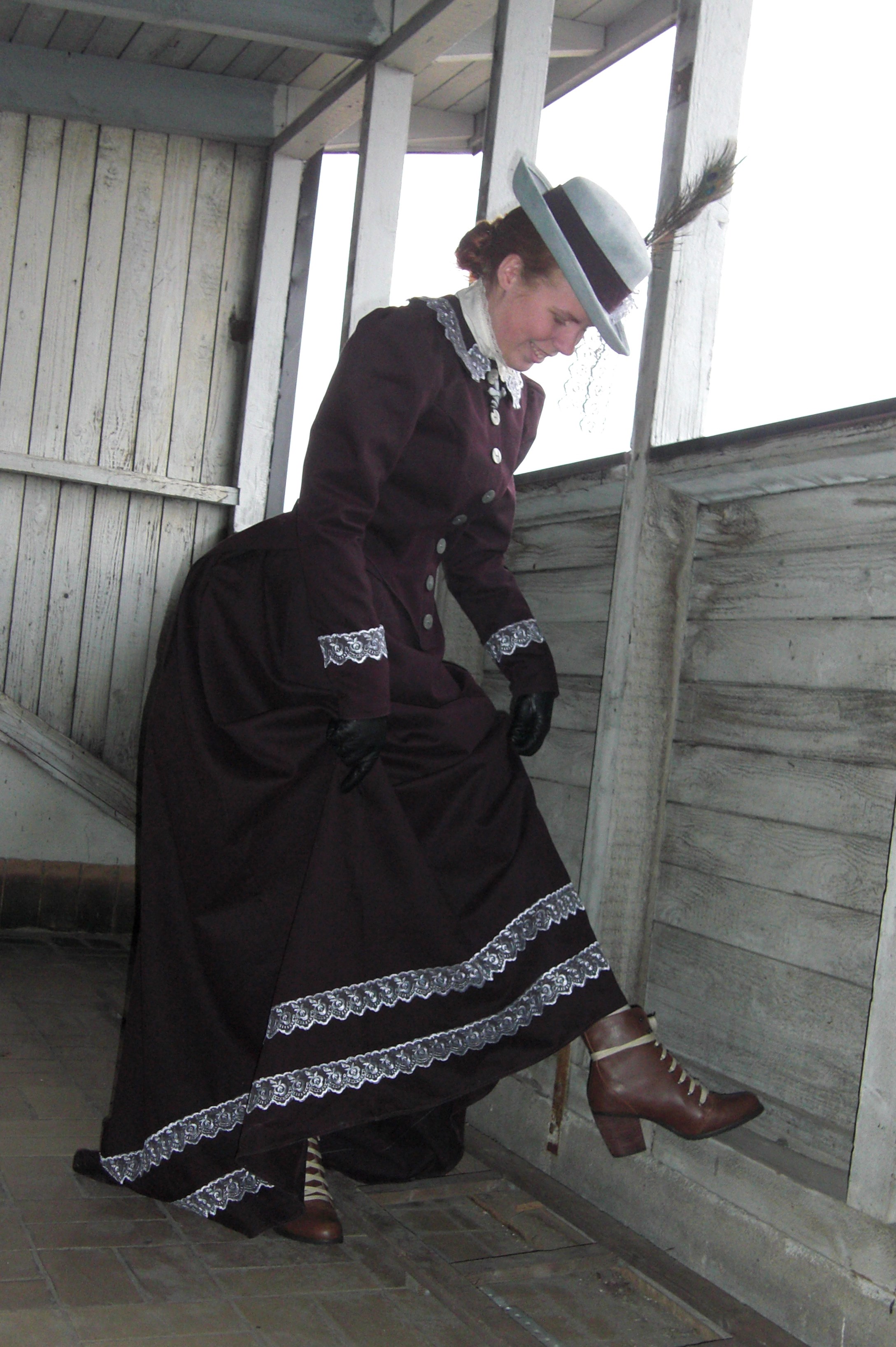
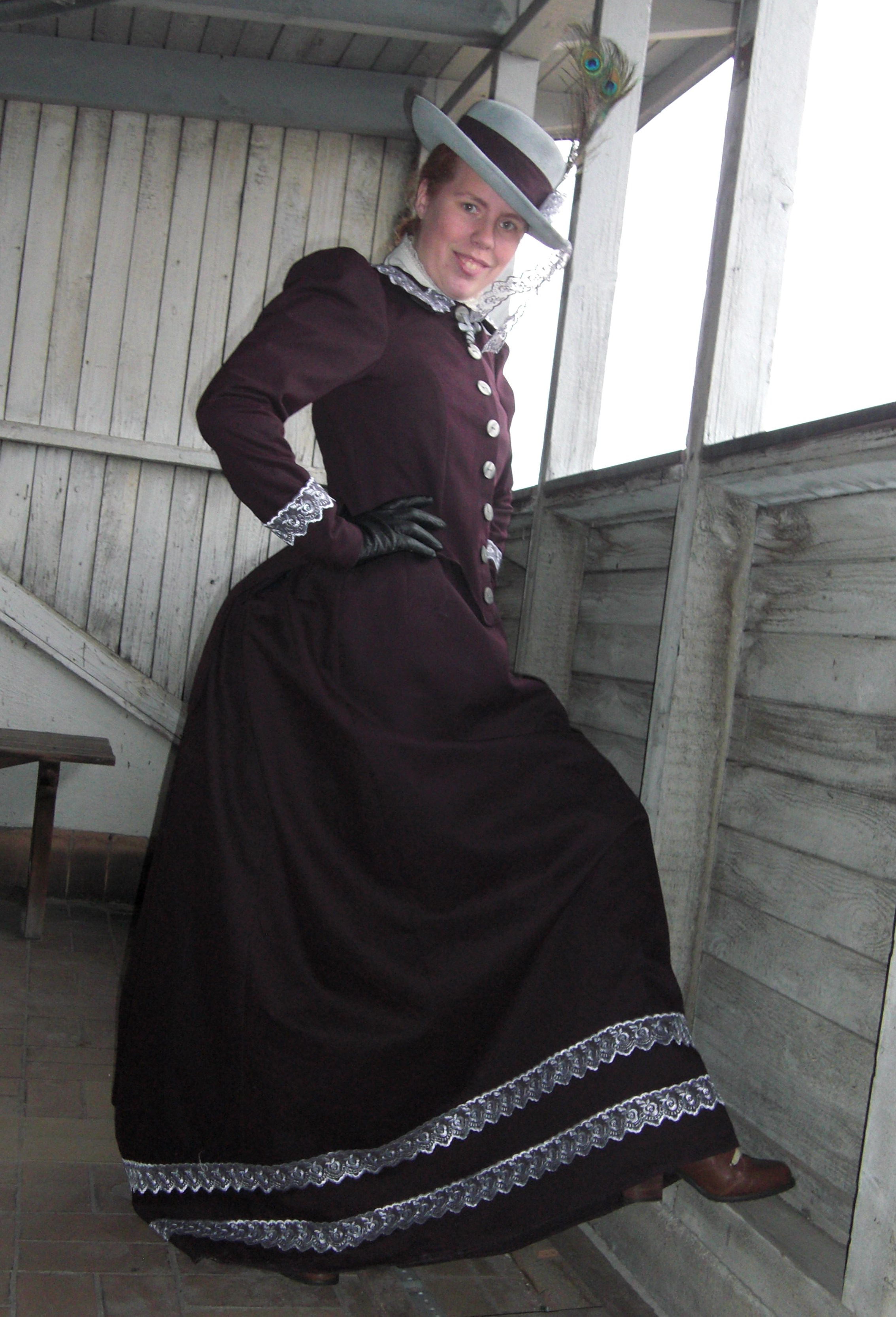
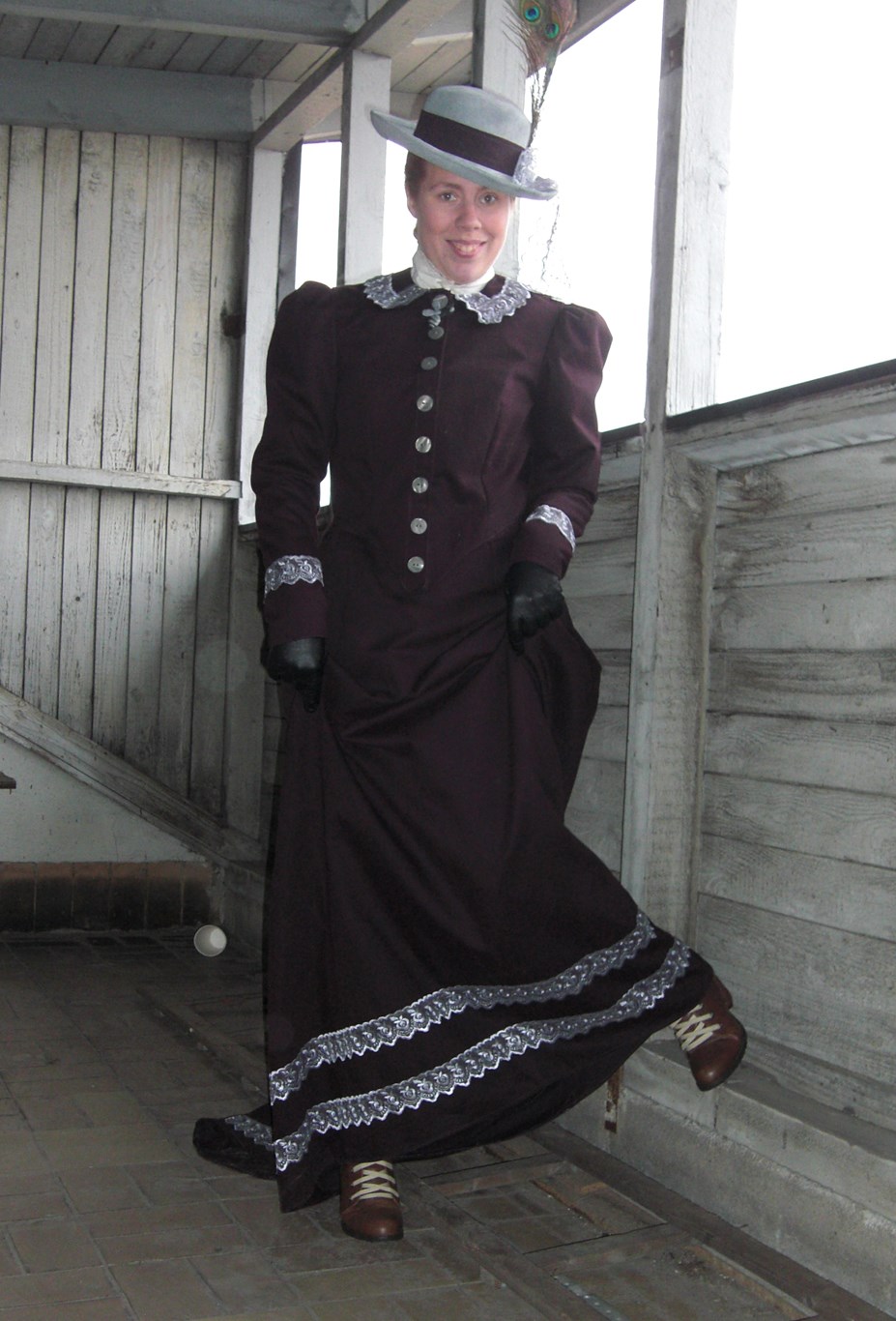
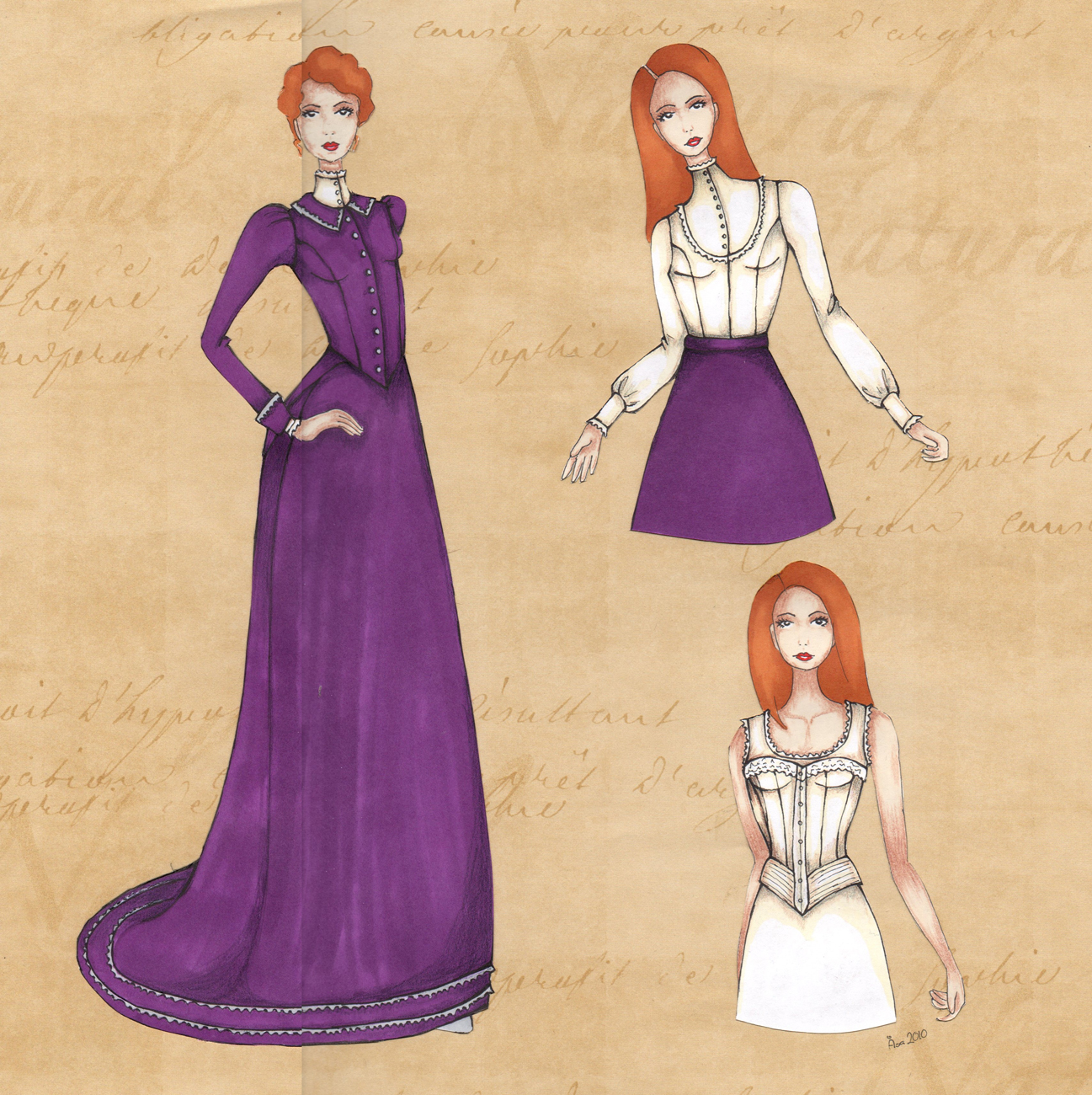
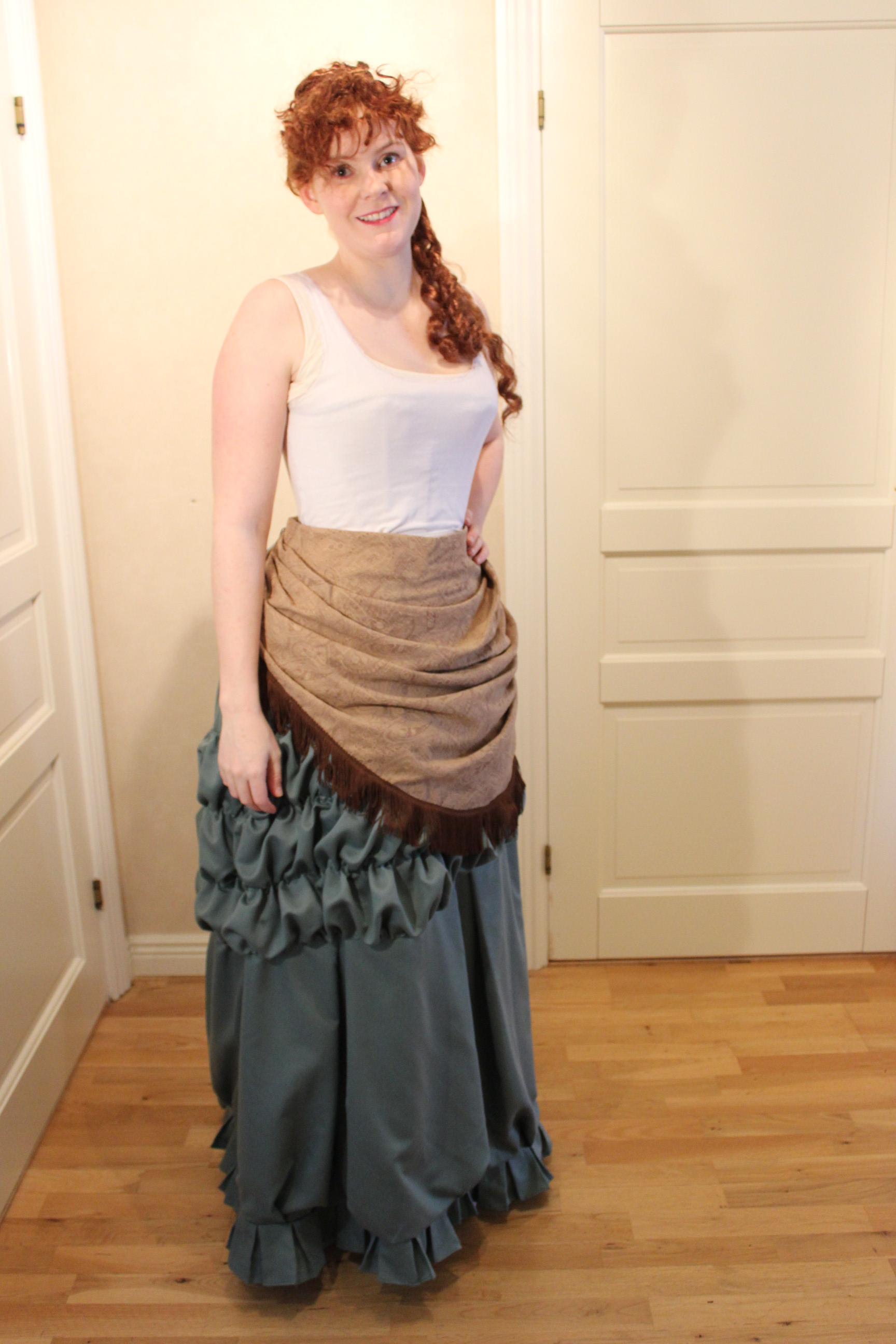
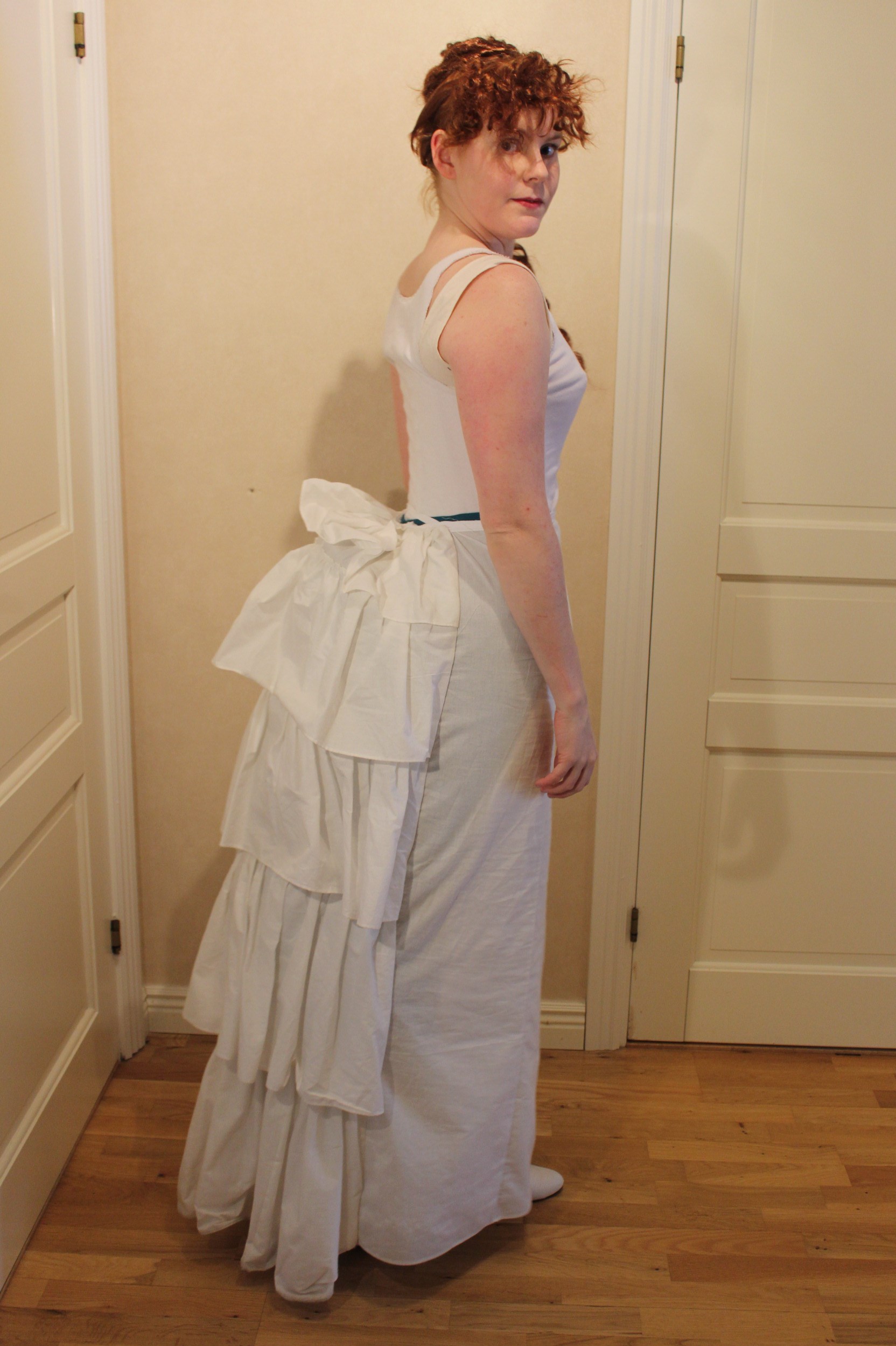
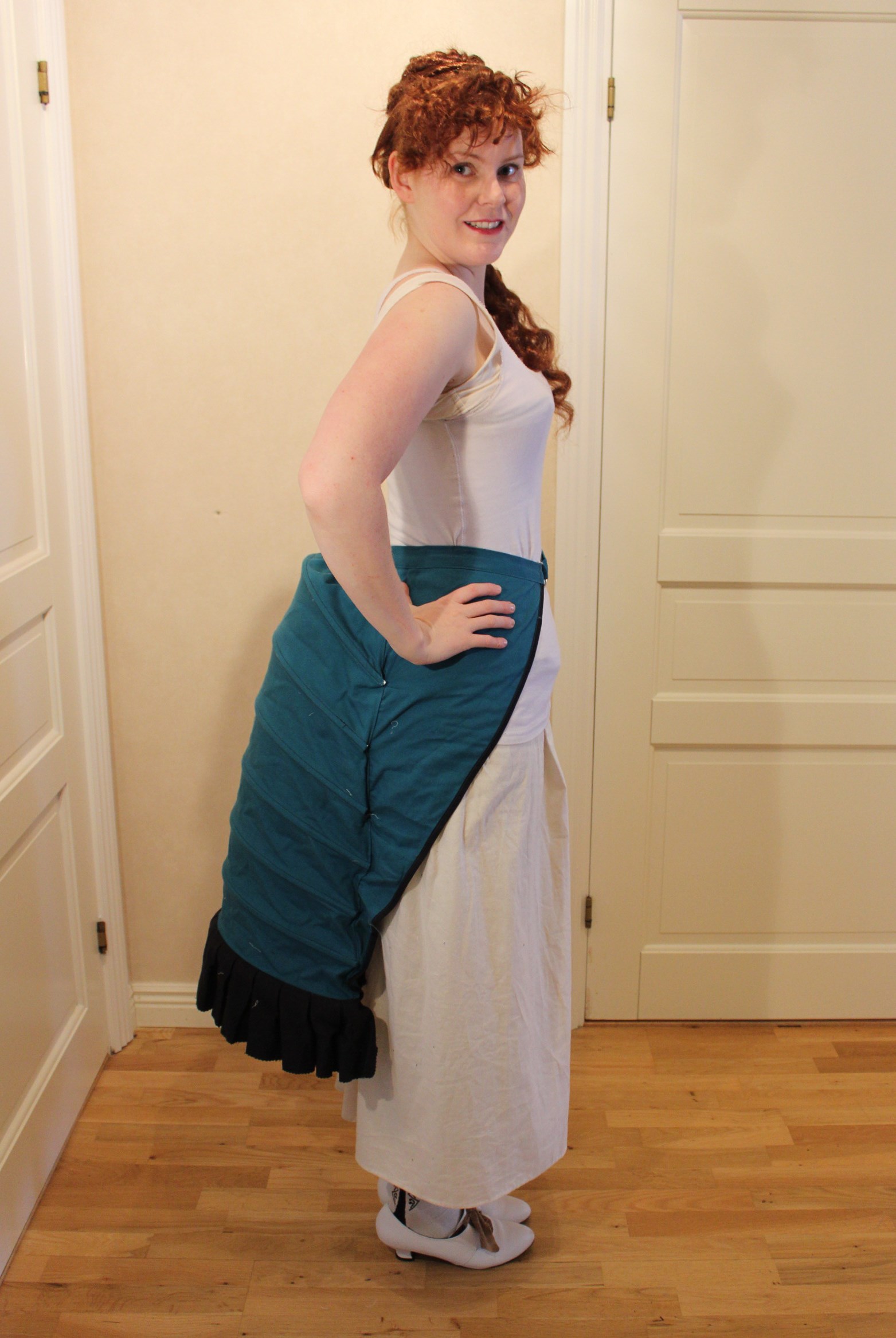
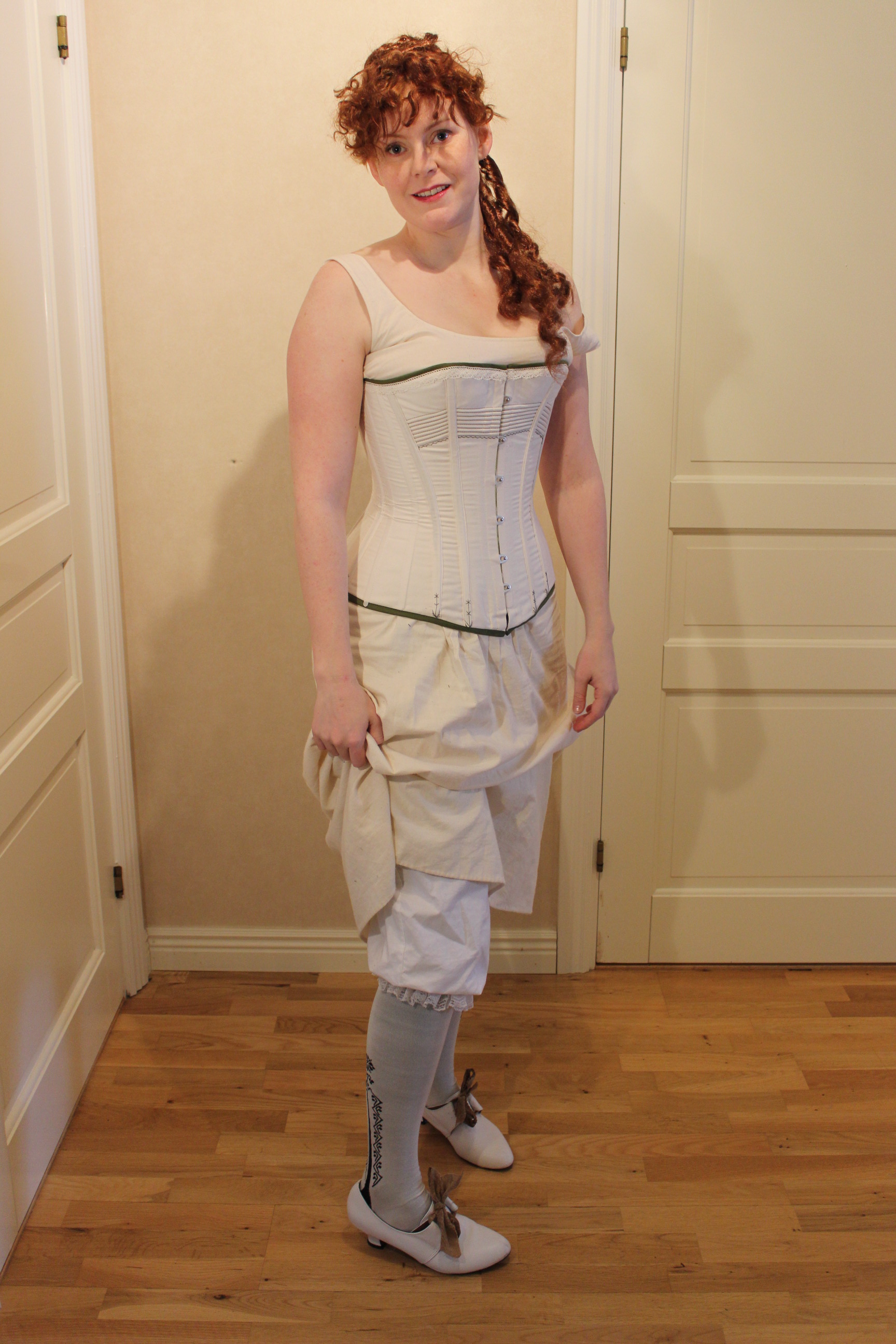
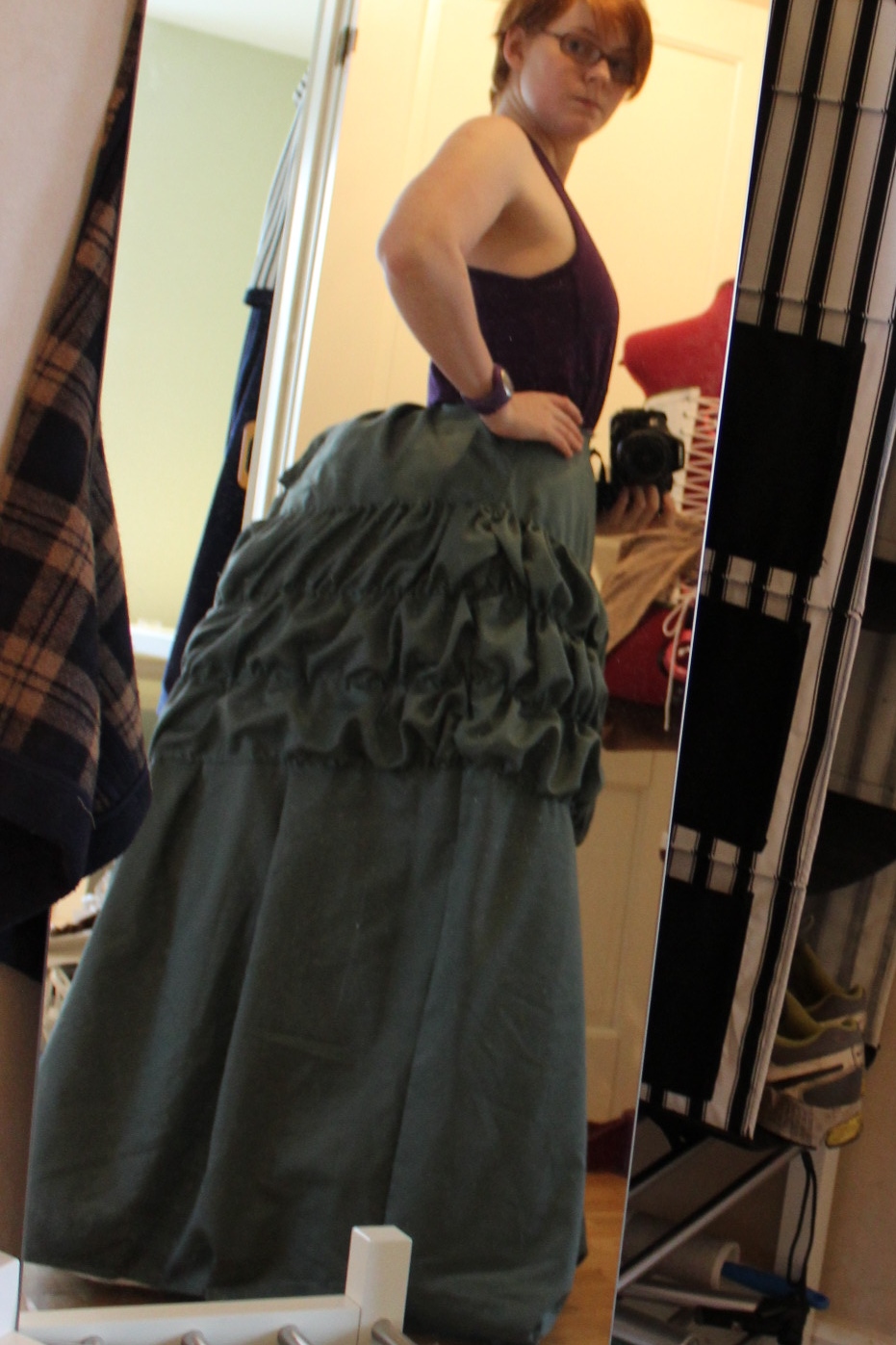
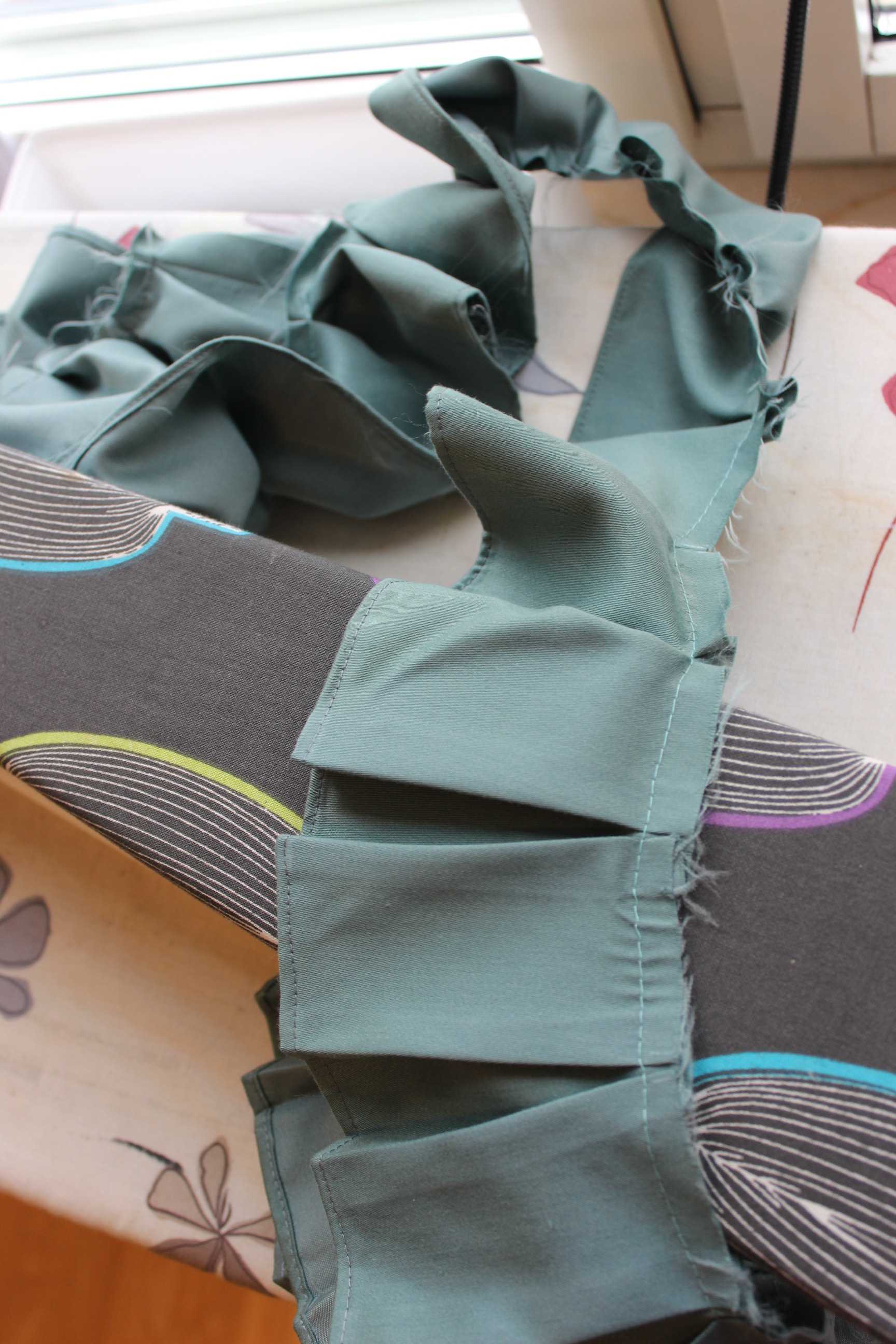
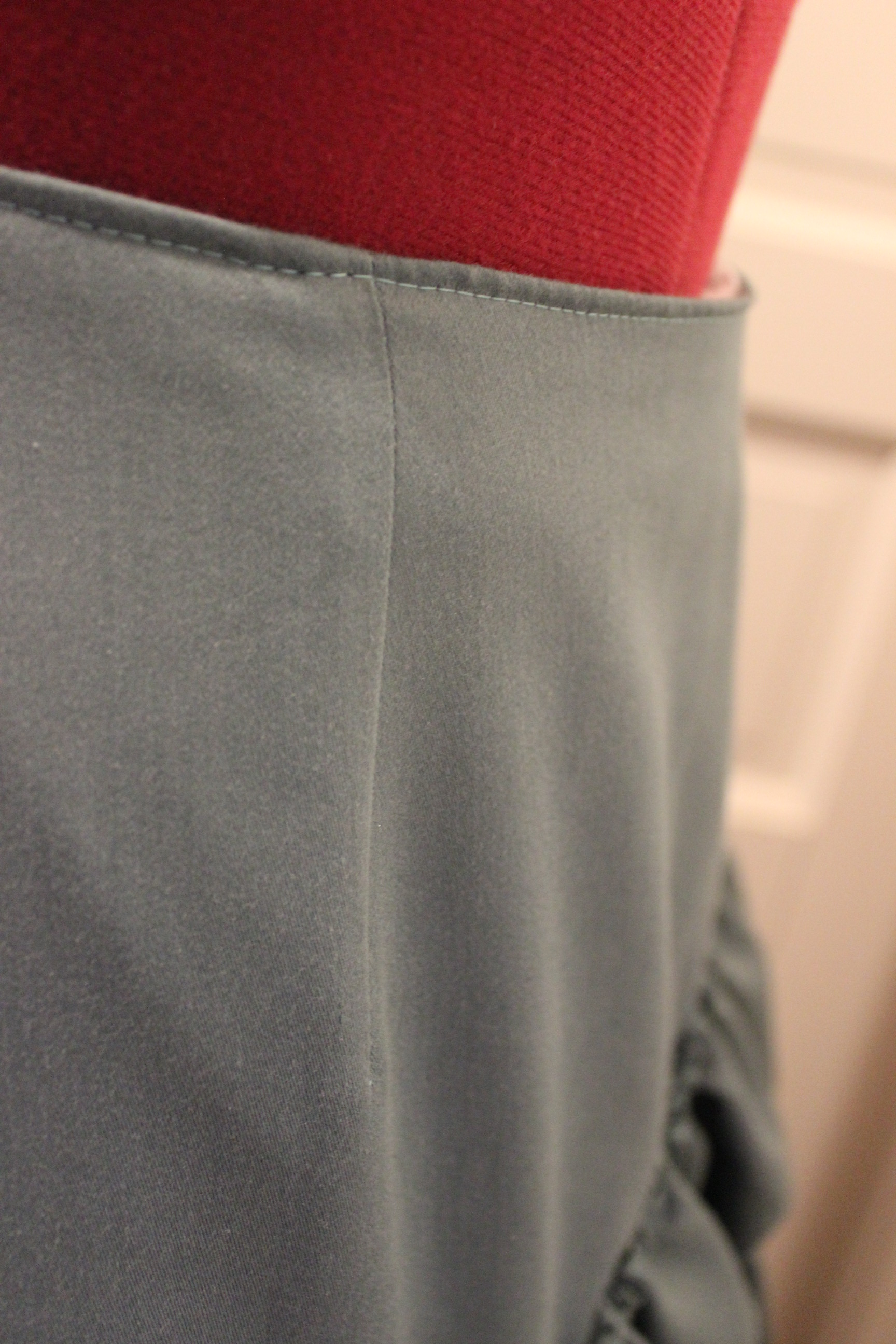
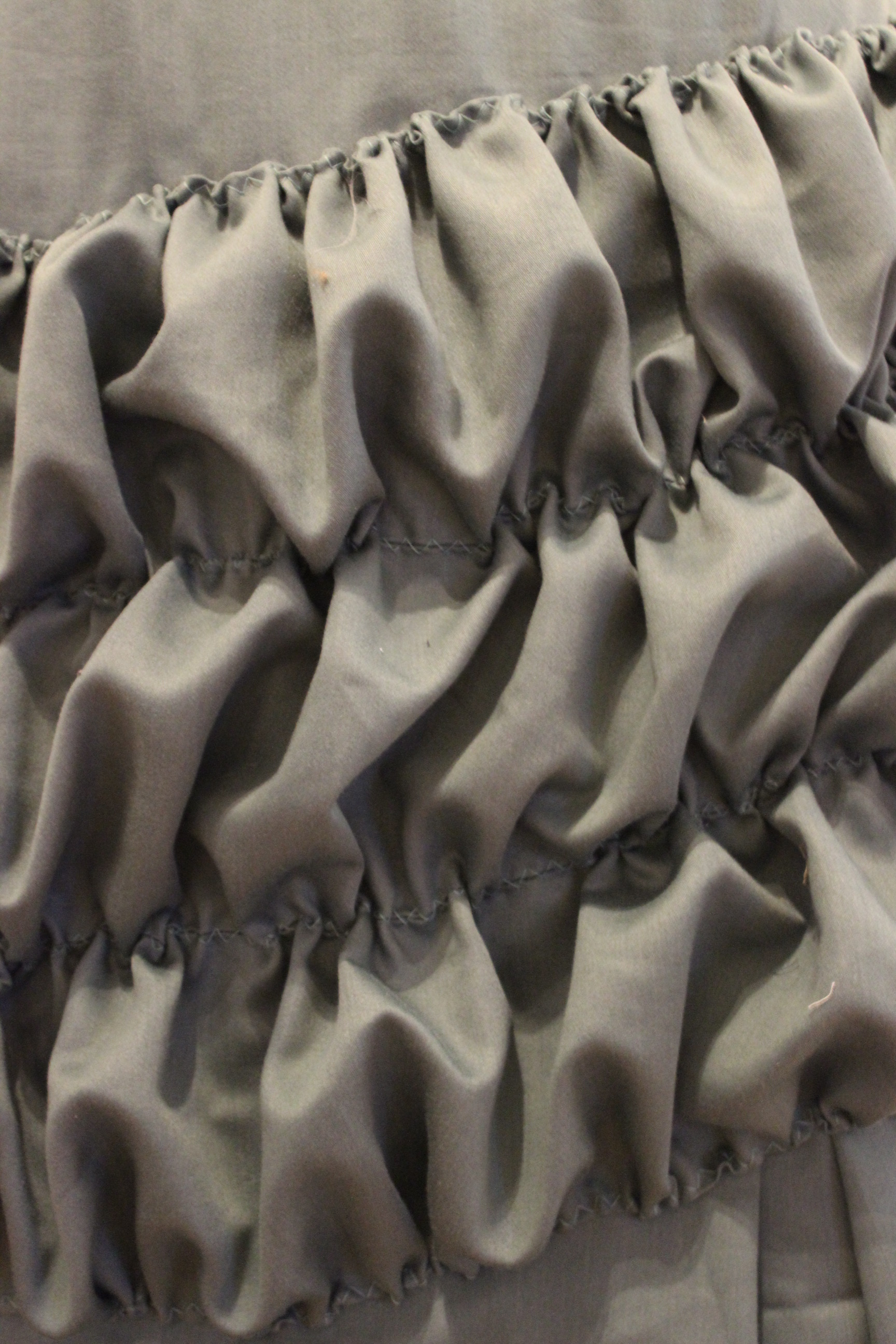
Cheap 19th century Chemise

As I had my sewing steam up from the crinoline and bustle challenge, I decided to push on and start on the next HSF challenge as well. I had no previous plan for the nr 13. Under 10 Usd. When setting the sewing/HSF schedule for this year I figured it depended on what I was in the mood/need for at the moment.

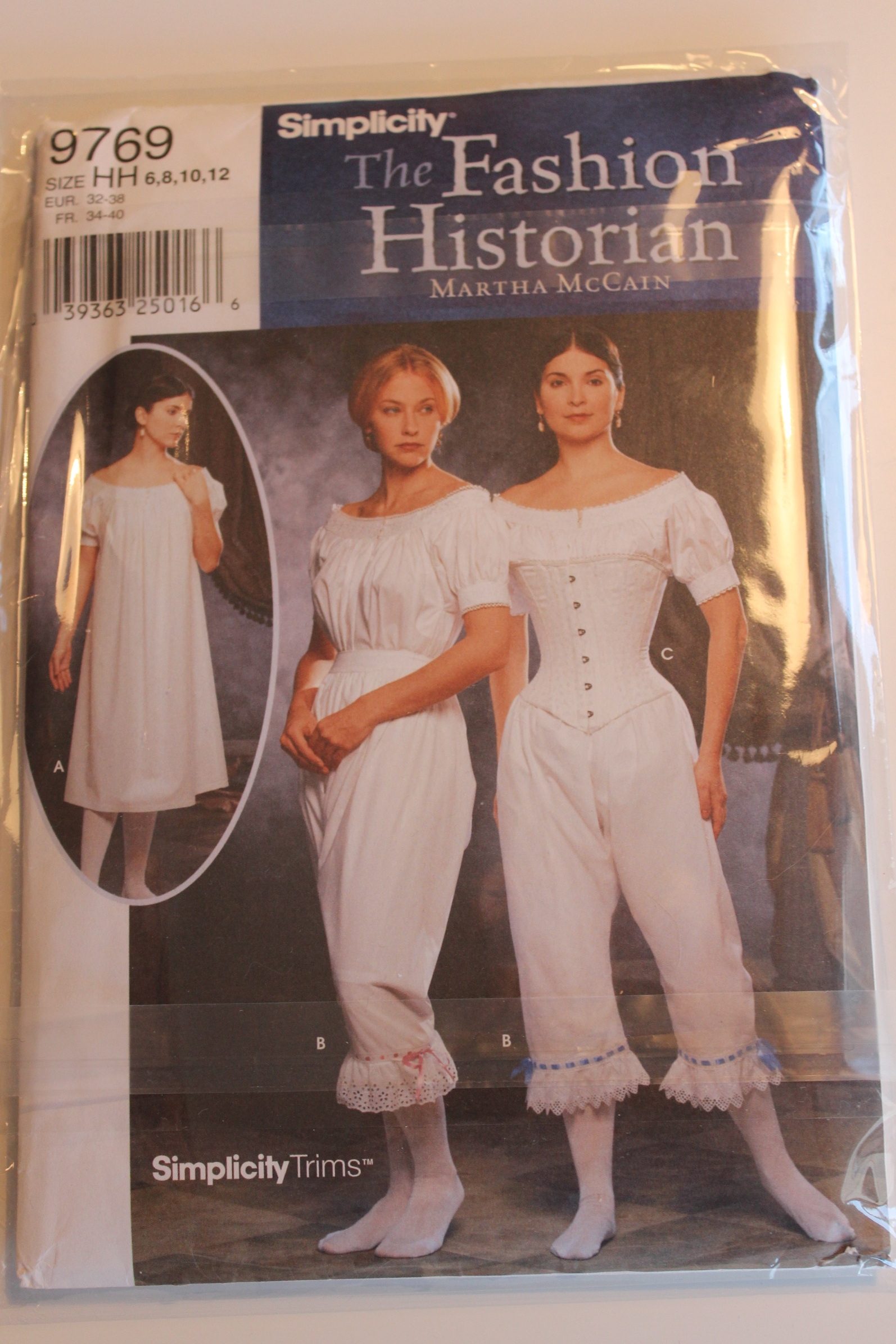
And what I was in the mood for now was a 1850s chemise.IMG_9312I bought this pattern from a friend clearing her sewing bits, and emediatly knew it would fit the challenge.

The purpose of this challenge was to make something really cheap, and to take in account the cost of fabric and notions in the past.
The fabric I choose was an old cotton sheet bought from IKEA a while ago (6 Usd).

I forgot to take process pics of this chemise, but here it is sewn togeter and only missing the neckpiece. IMG_9413

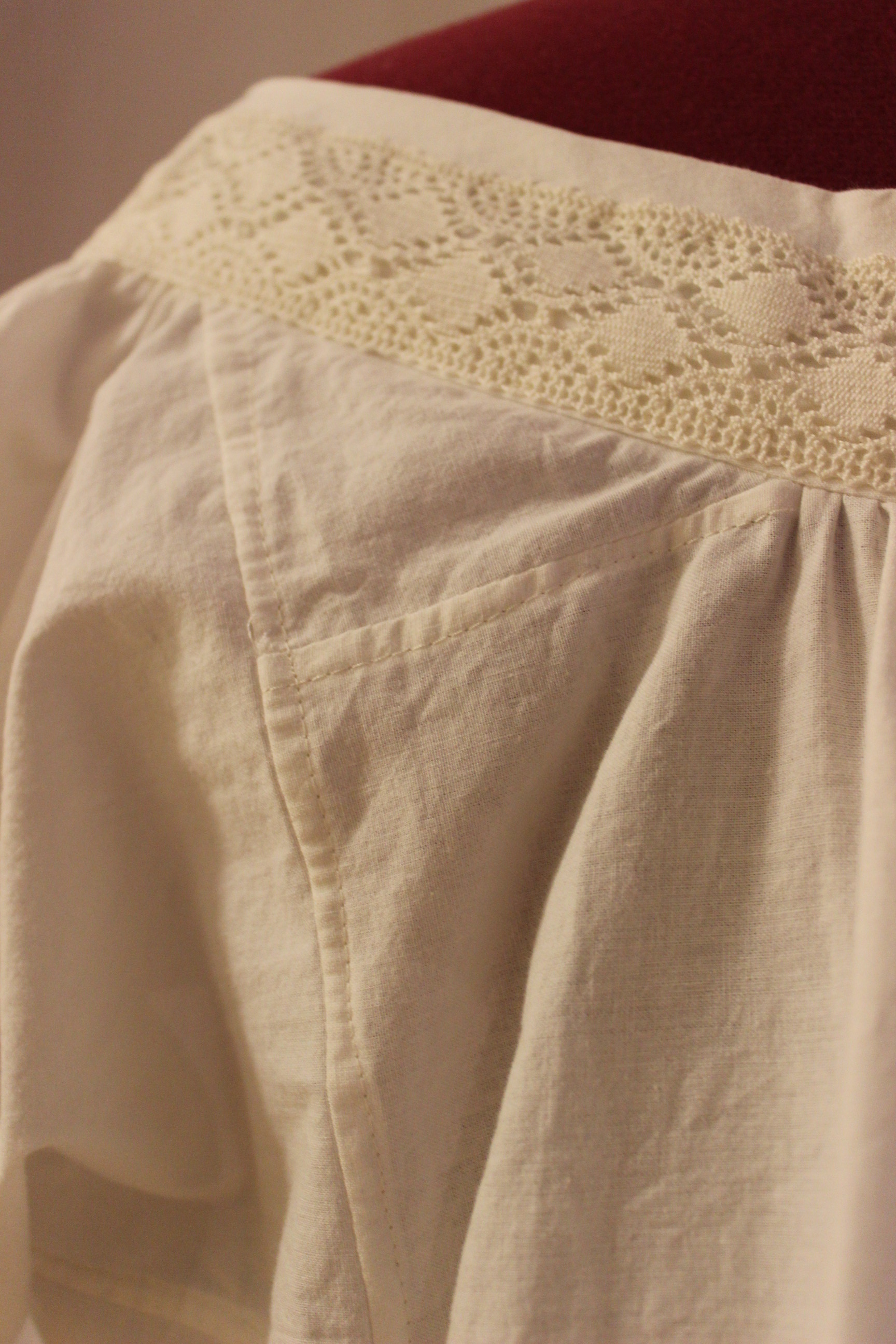
The side gores was a bit un-nececary I think, but since I followed the pattern (more or les) they had to be there.IMG_9415

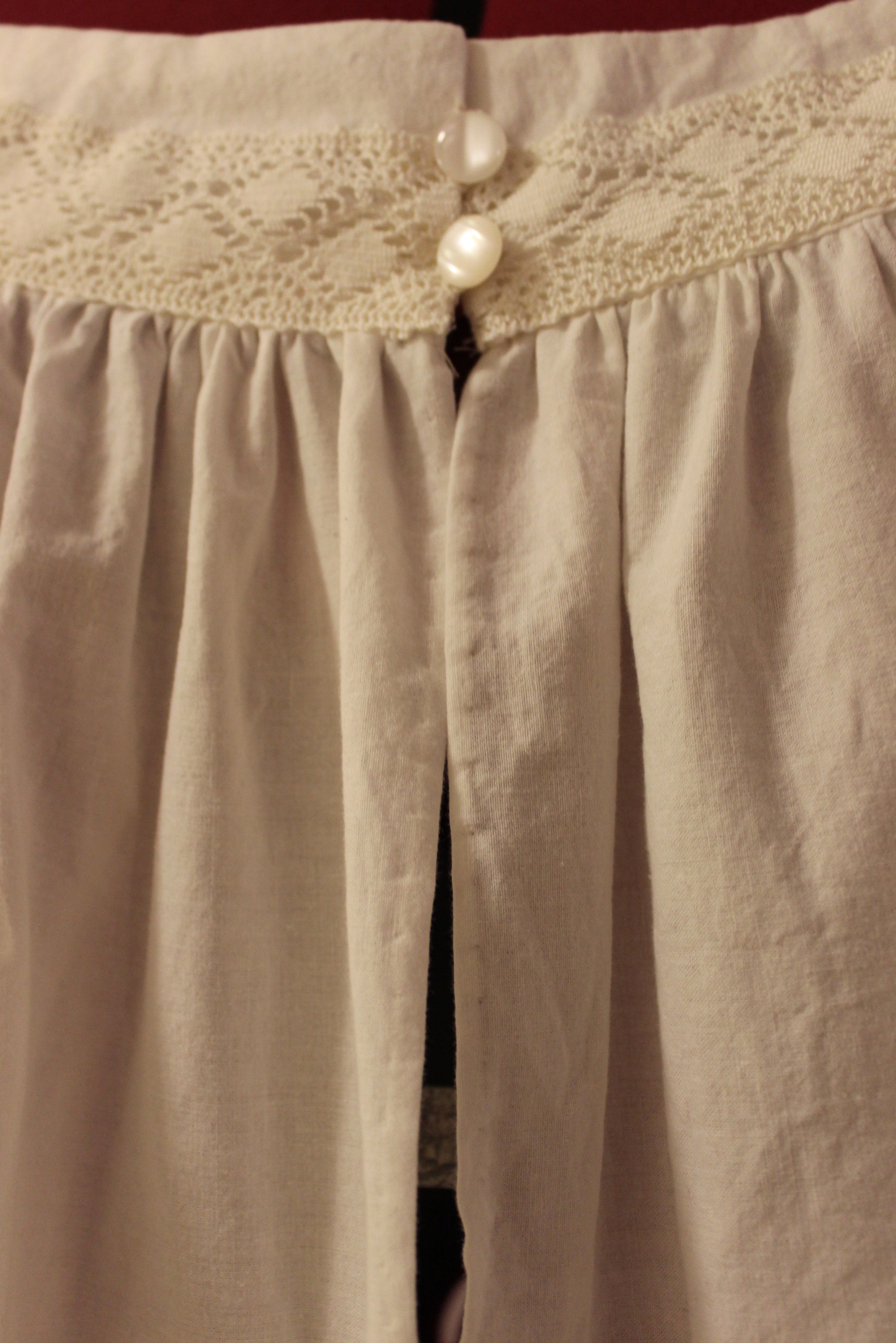
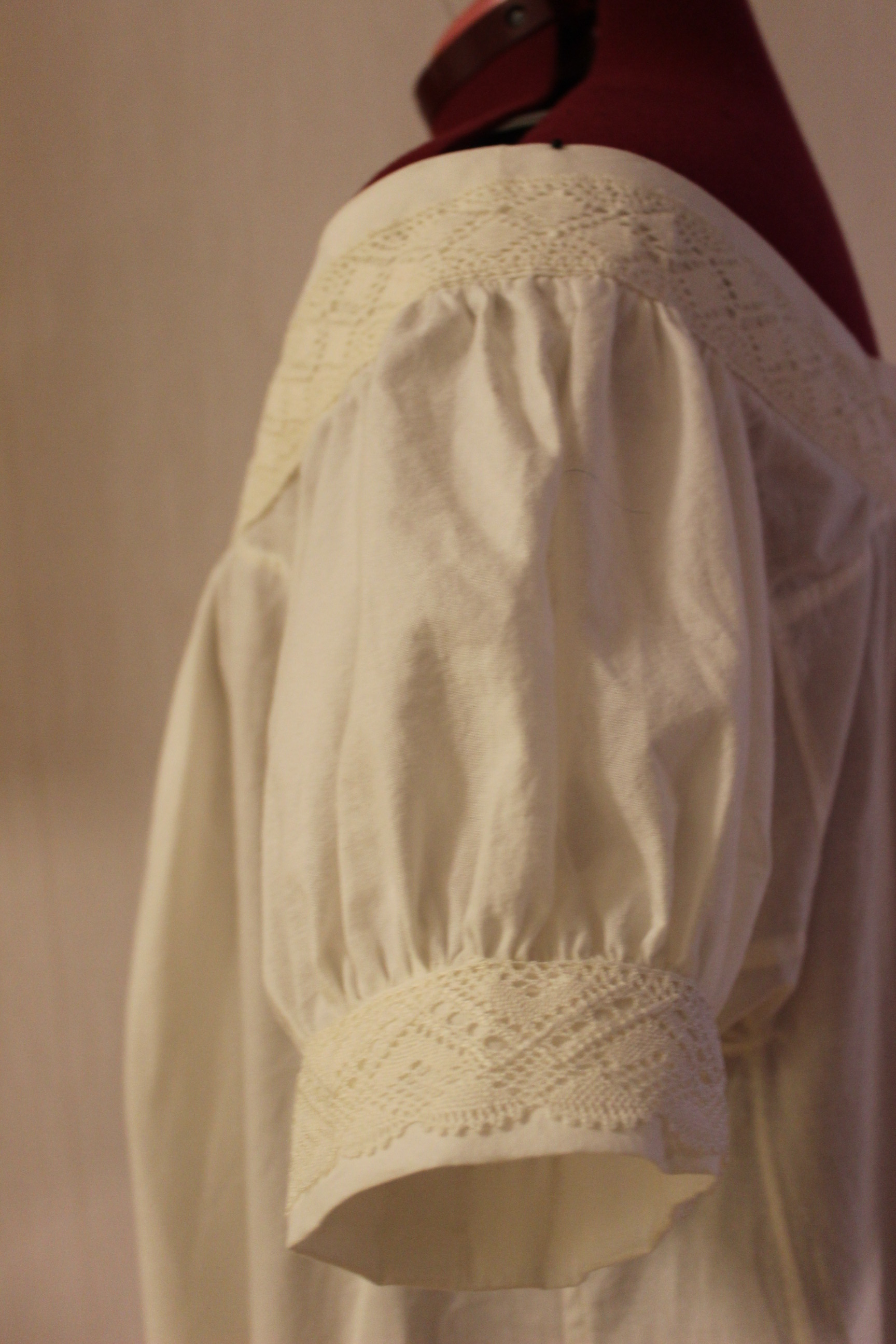
For decoration I used some of the vintage lace I bought a box ful of this winter.IMG_9416The two pieces of lace I picked may have cost me 0,5 Usd at the most.

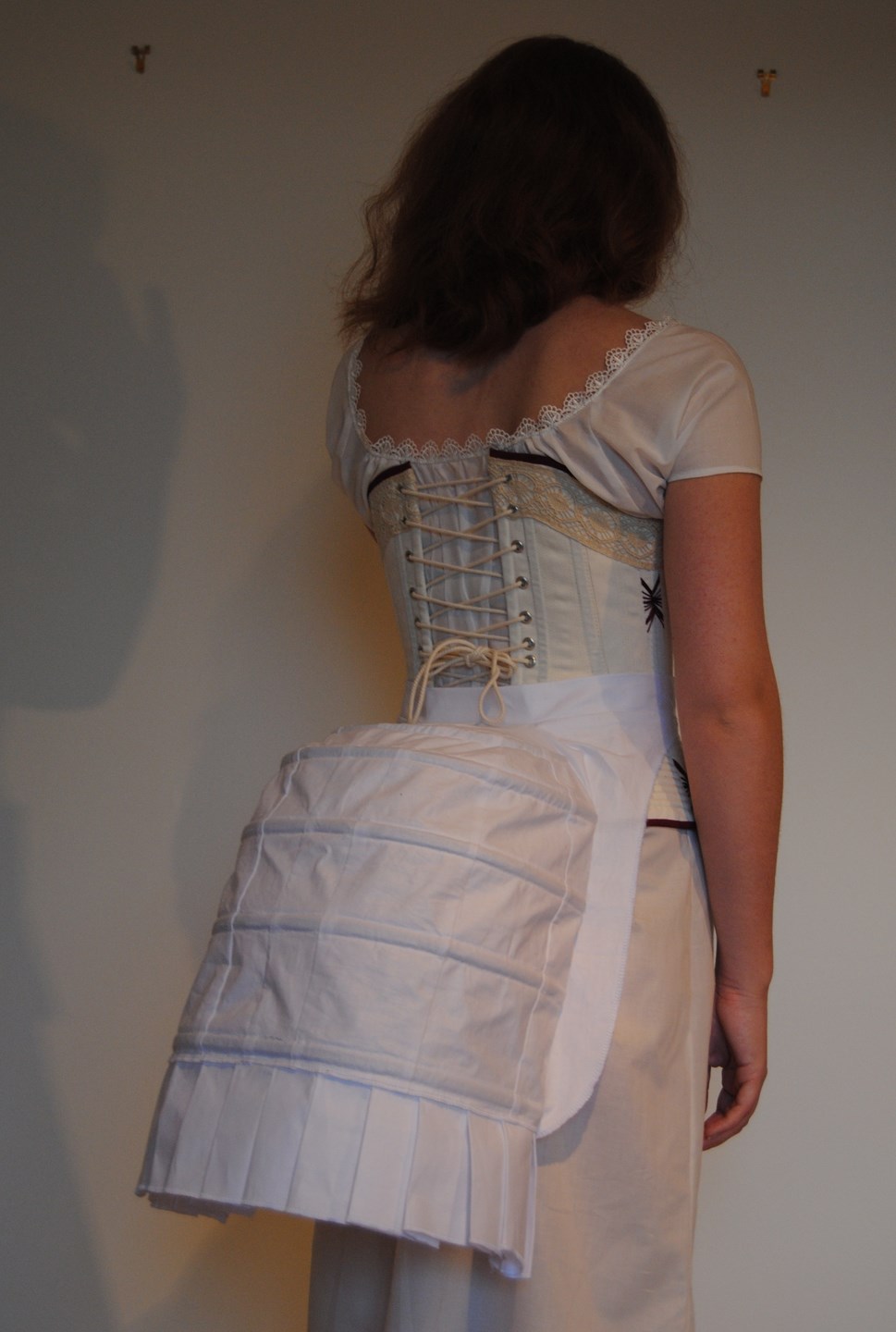
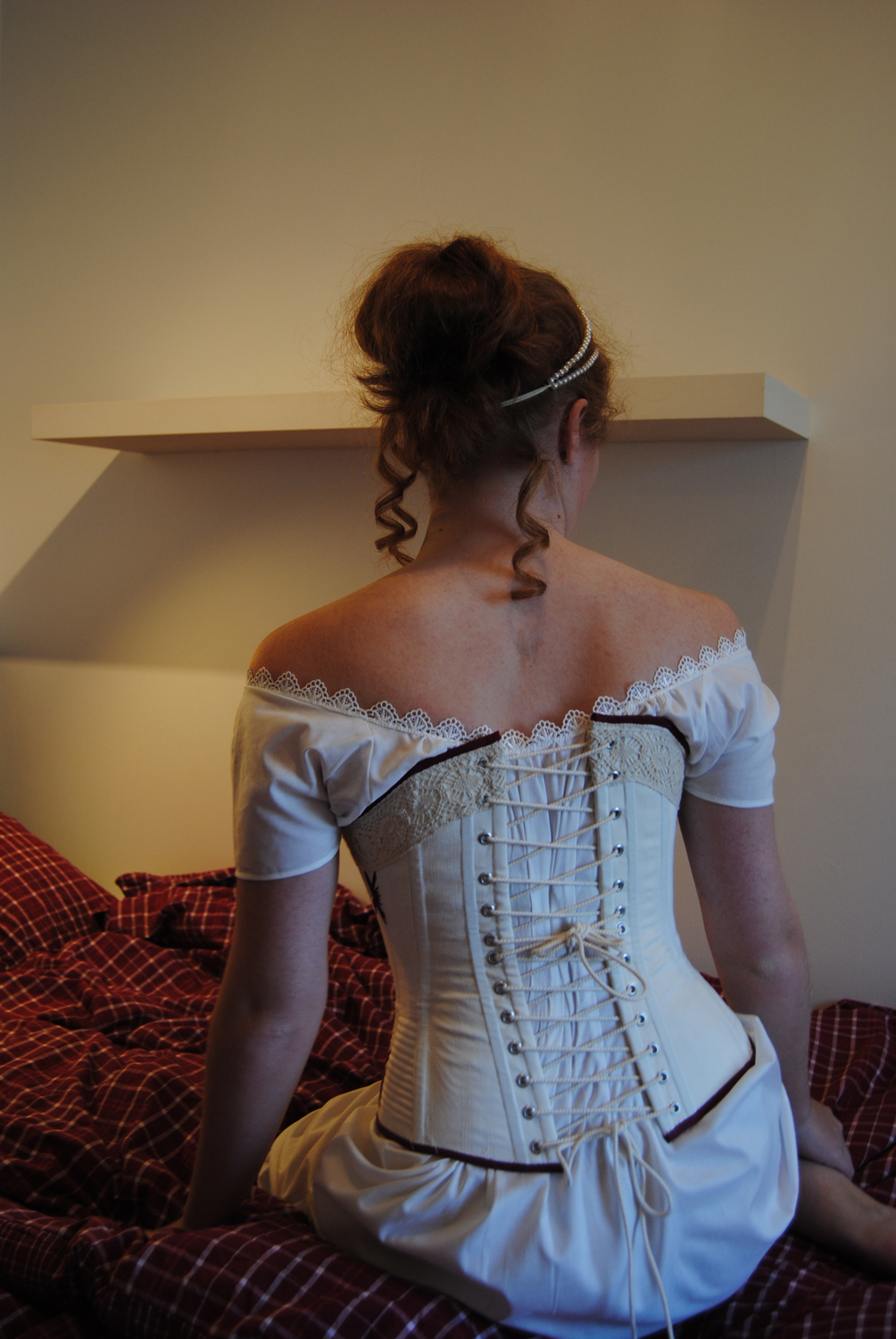
Finished photos:IMG_9421

IMG_9422

IMG_9445

IMG_9426

IMG_9427

IMG_9429

IMG_9441

IMG_9444

IMG_9443

IMG_9436

IMG_9431

IMG_9440

IMG_9438

IMG_9437

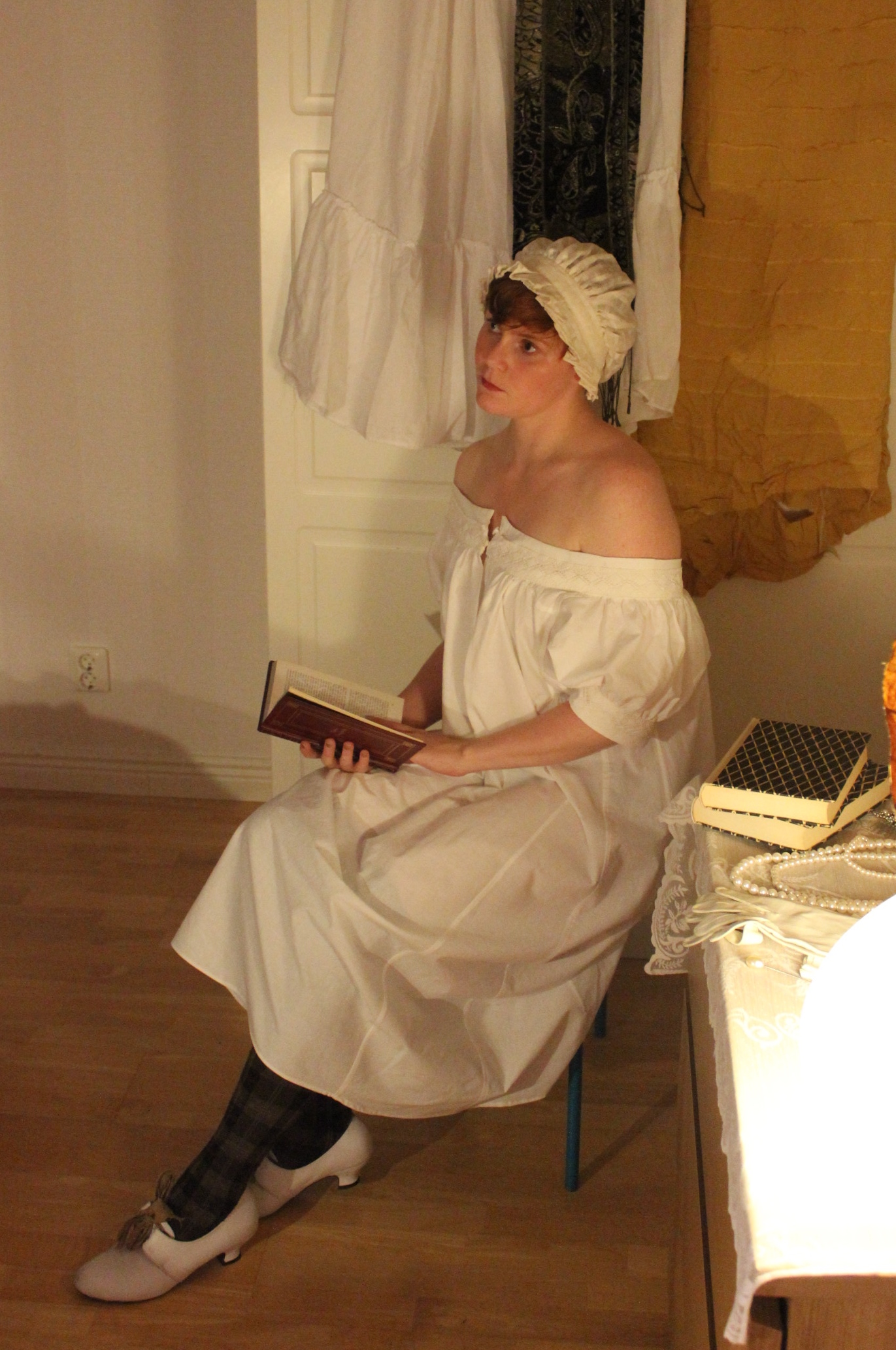
From the photoshoot:IMG_9466

Just the Facts:

Challenge: 13 – Under 10 Usd

What: A mid to late 19th century Chemise

Pattern: Simplicity 9769

Fabric: One cotton bedsheet.

Notions: 1,5 m of lace, thread and 2 smal buttons.

How historical Accurate: Pretty good. For 1850s not so much – machine sewn, but for 1880s (which I aslo will use it for) it’s perfectly legit. The pattern claims to be accuarte and the fabric are good too. So maybe 7/10.

Time: About 4 hours.

Cost: 10Usd or 65 Sek (100 Sek including the pattern)

First worn: Around the house for photos, but I know I will get good use out of it.

Final thoughts: It is so comfortable. I would have totaly have worn it to bed if my boyfriend hadn’t given me a quer look. 🙂

1850s Shaped Crinoline

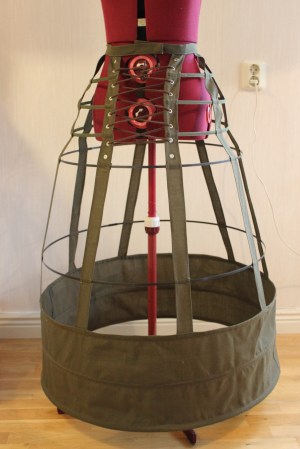
When planing the HSF items earlier this year, I decided to try to make a mid 19th century Crinoline for nr 12 Shape & Support.8715_424_249-1850-crinoline
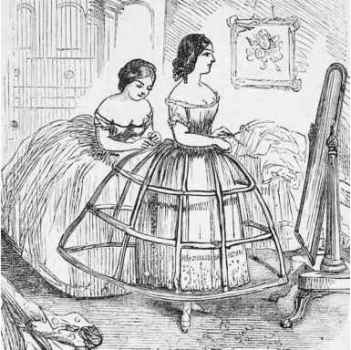
I’ve wanted one for about a year, and now there was no exuse not to make one.

I searched the internet and came up with two variations I liked. b20654dea73bc720bf10f76a2d708280

2d5b6a491e65c5ca91789ec49eee6b3b1860s, so a bit late but you get the idea.

I decided to do a mash-up of the two – keeping the first ones shape, but adding the fabric of the lower section in the second one.IMG_9251I didin’t use any pattern but made some calculations of the size and amount of rectangles I would need.

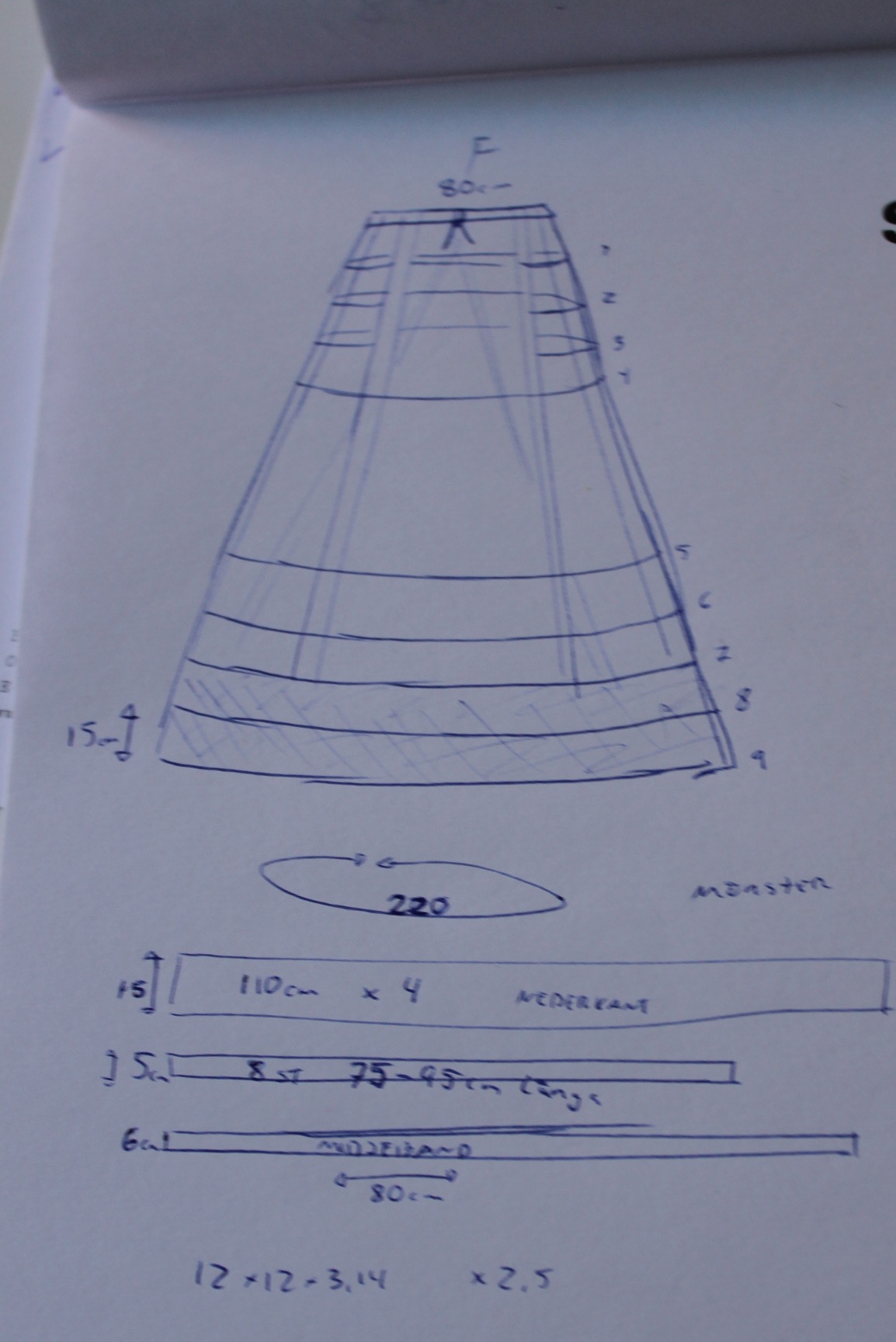
I found this thick green polyester in my stash, and figured why not. I cut the pieces letting the widht of the fabric decide the size of the bottom of the finished crinoline (220 cm). IMG_9252From left: Vertical ribbons, bone casings, bottom part, smal pieces of chanels and a waistband at the right.
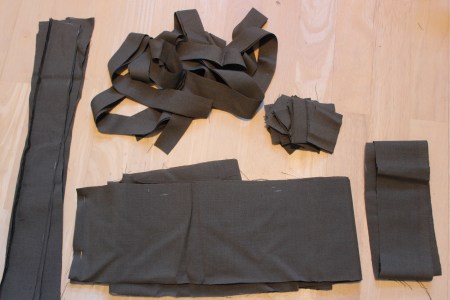
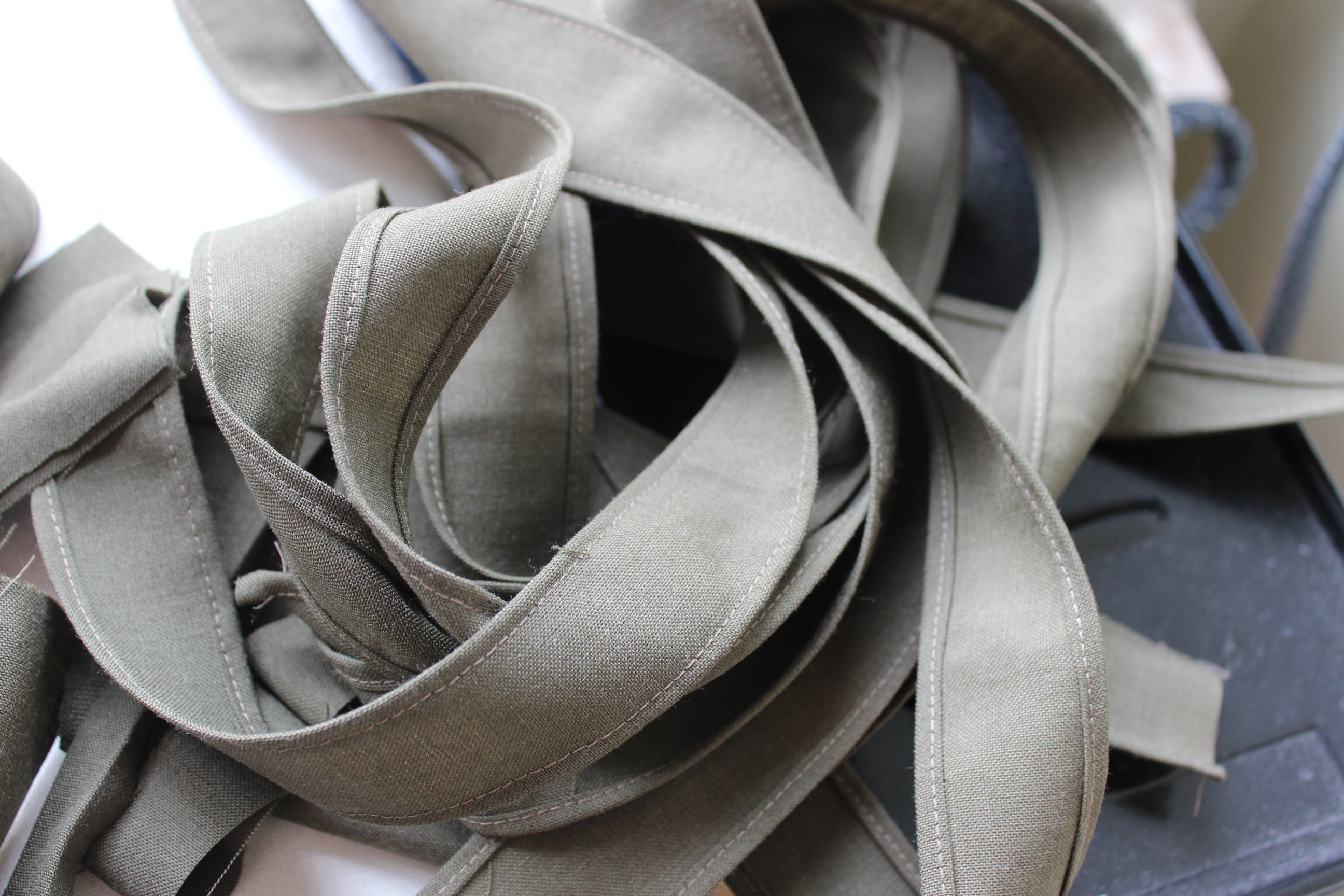
Then I pressed the long ribbons to turn them in to bone-casings.IMG_9254About 6,5 m or so.

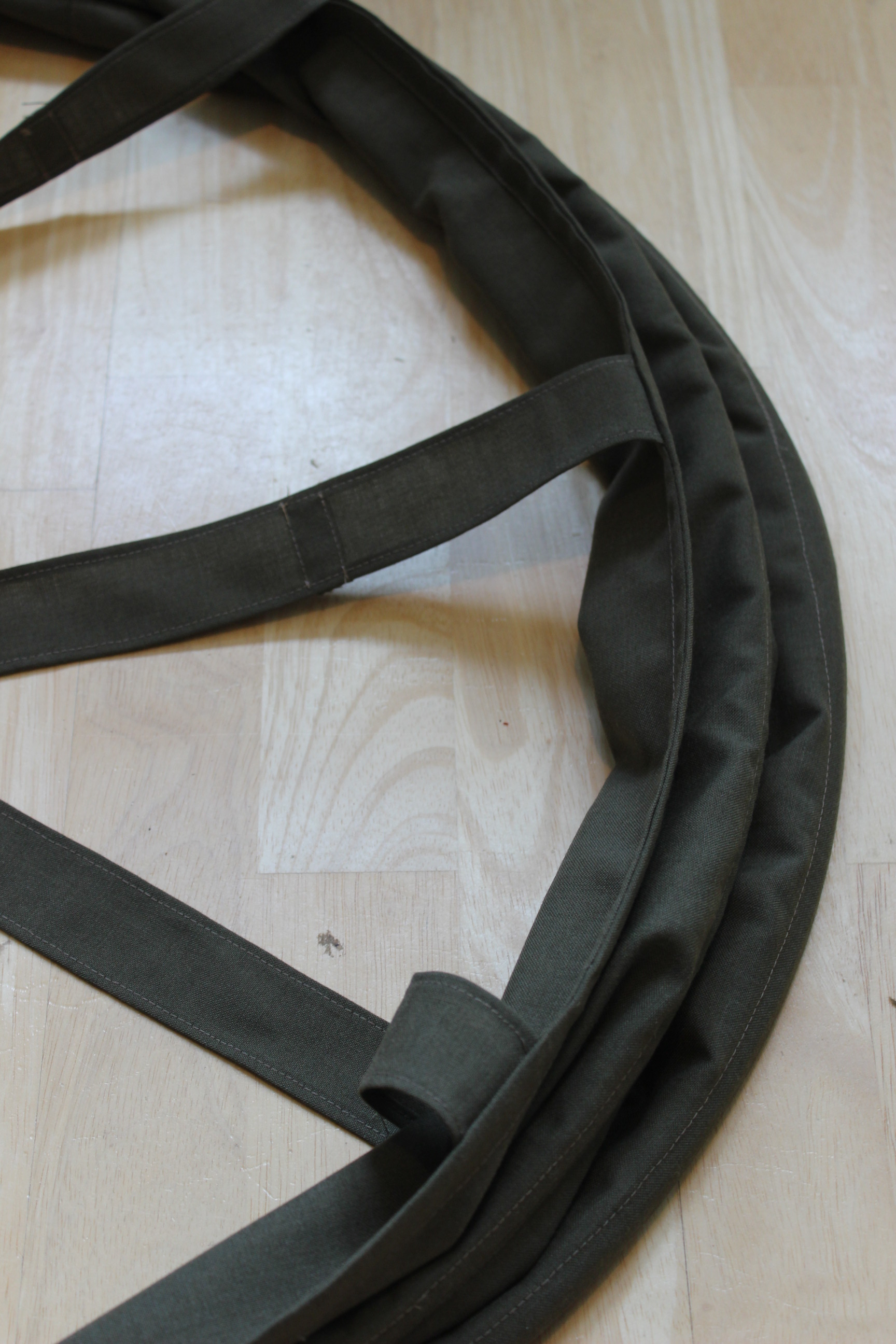
Then I sewed the boning chanels to the pieces to create the bottom part of the crinoline.
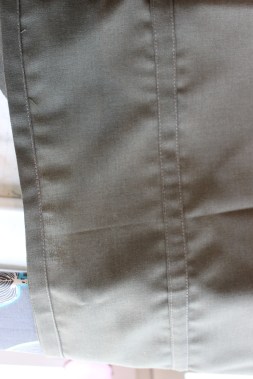
IMG_9255 IMG_9257
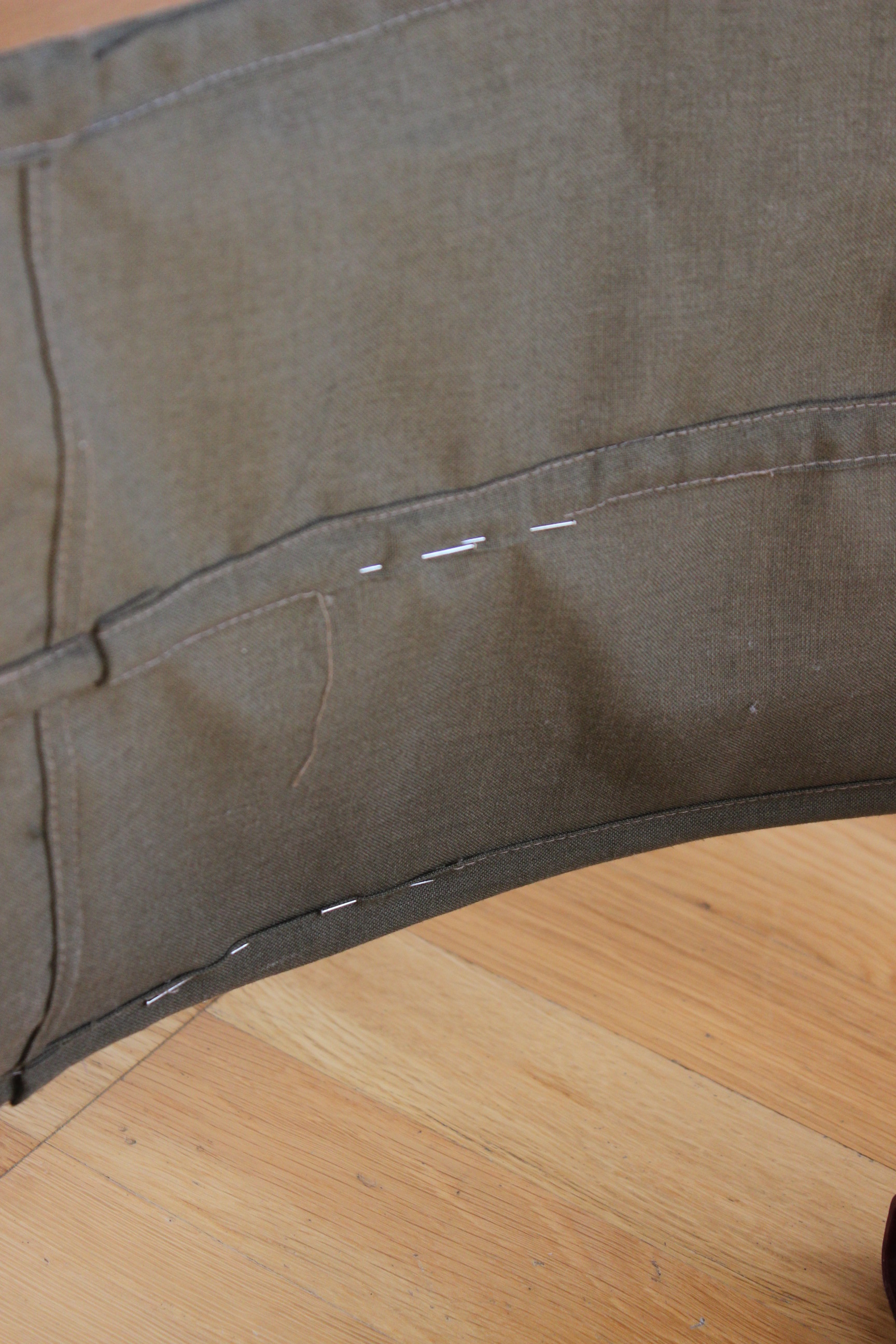
The chanels shown from the wrong side and the right side.

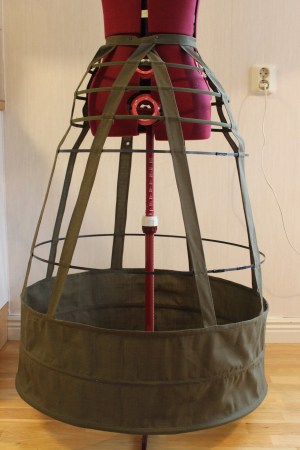
Then I hemmed the pieces creating the vertical support ribbons.IMG_9262 There are eight of them at 1 m a piece = about 16 m of hemming (its a good thing I decided to make this one on the machine).

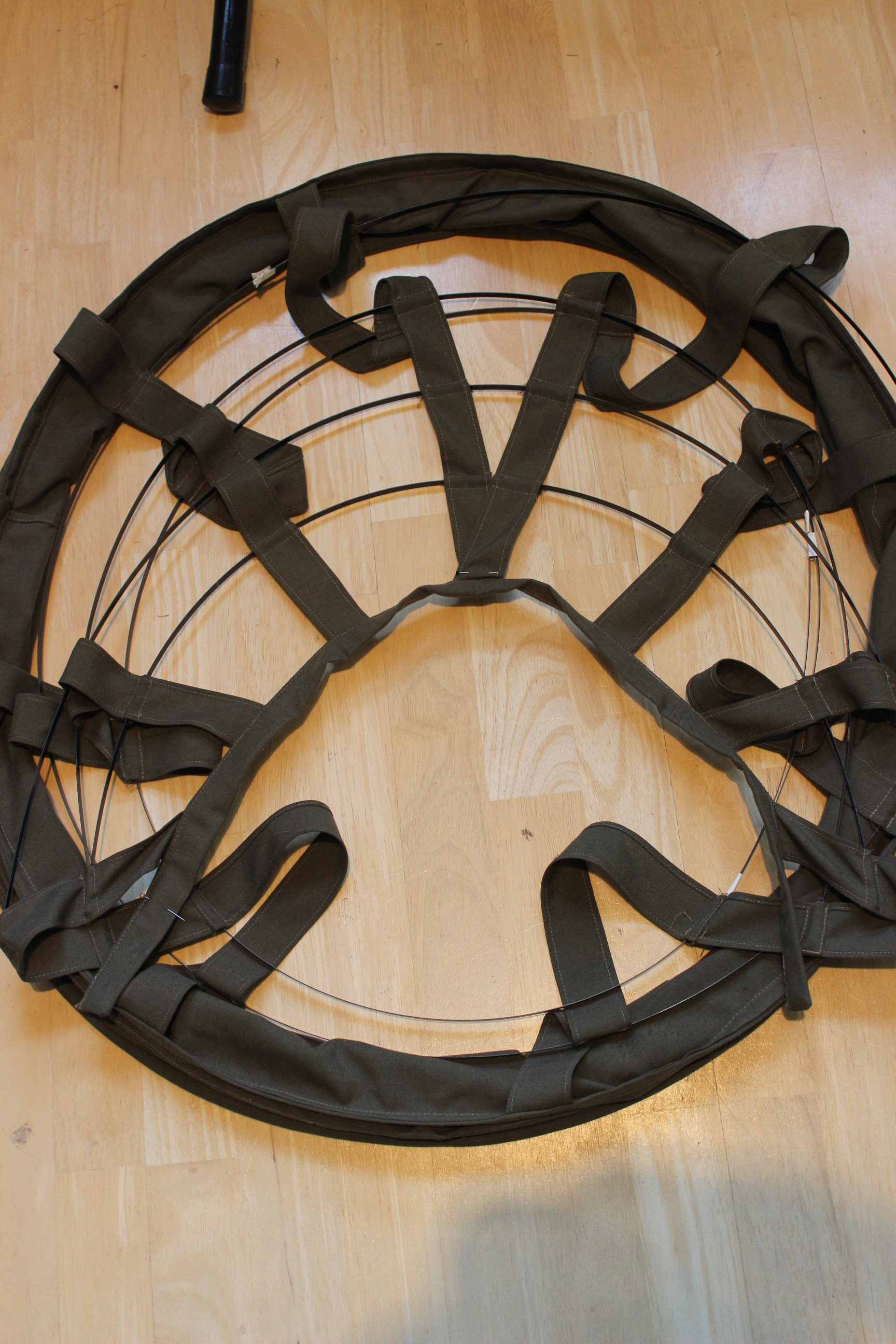
Then I lay it out on the floor to decide the size and placement of he ribbons.IMG_9261

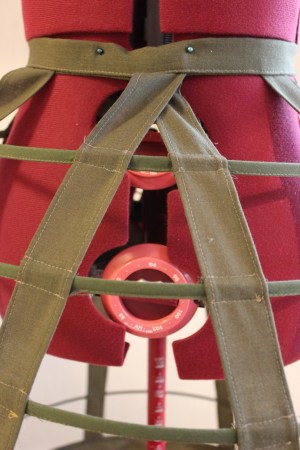
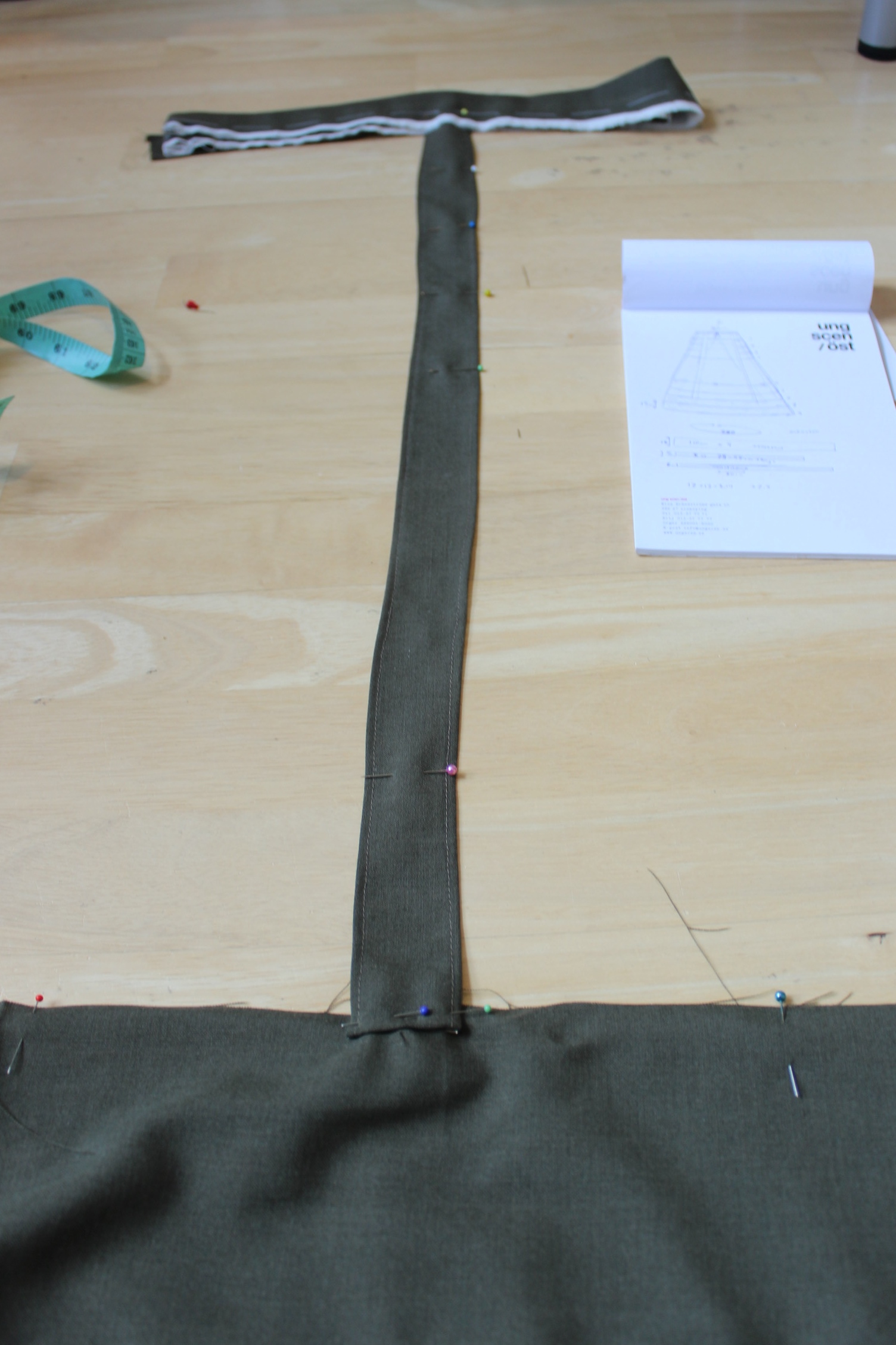
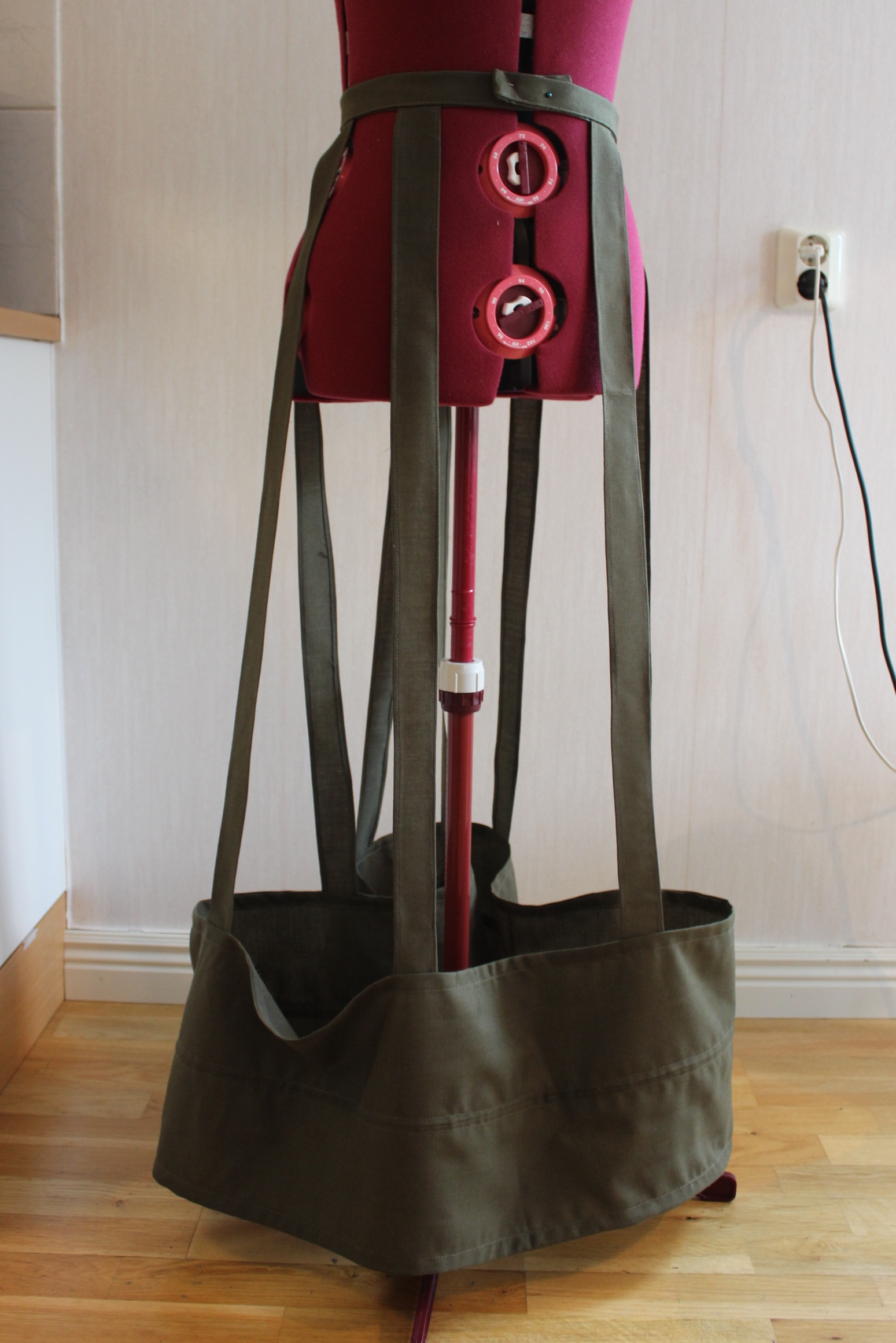
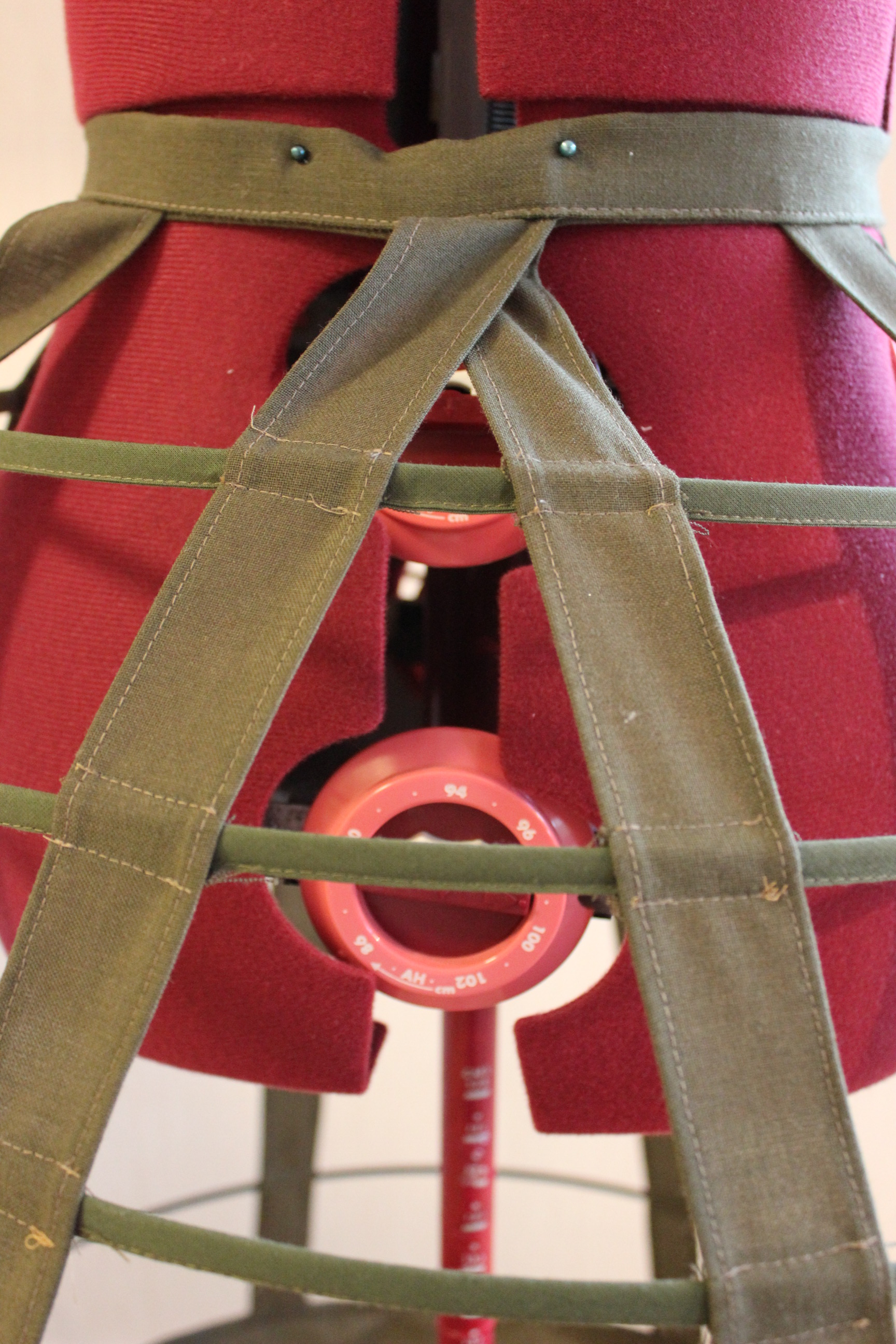
I put it on my dressform to make sure everything looked even.IMG_9265And stitched the ribbons down to the wasitband and lower section of the crinoline.
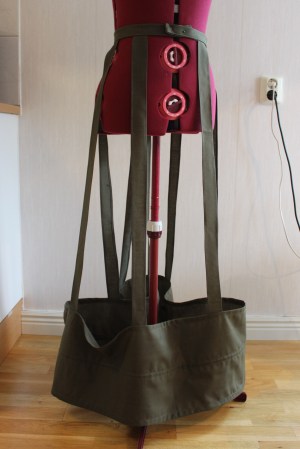
IMG_9266Looks kind of stupid without the boning.

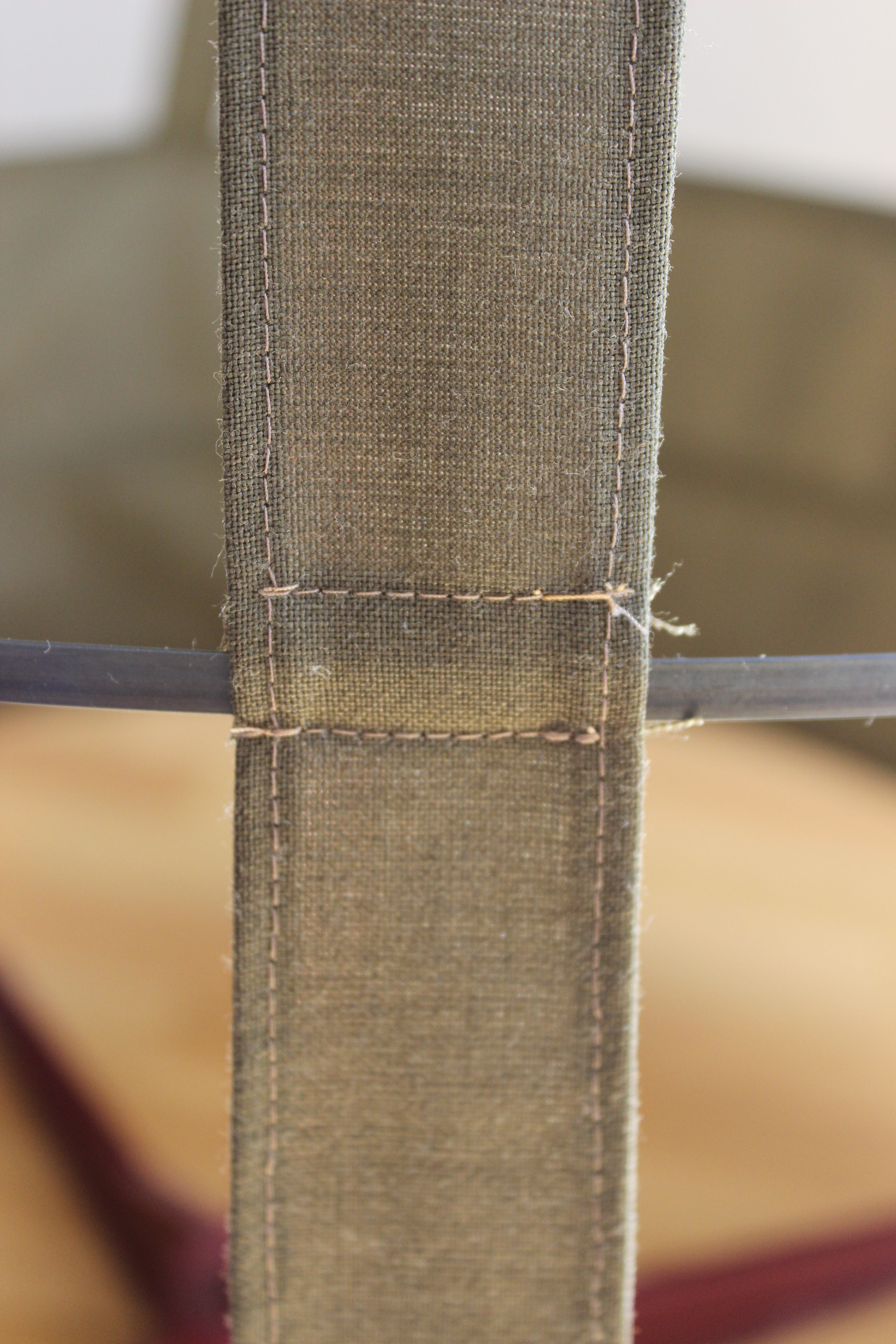
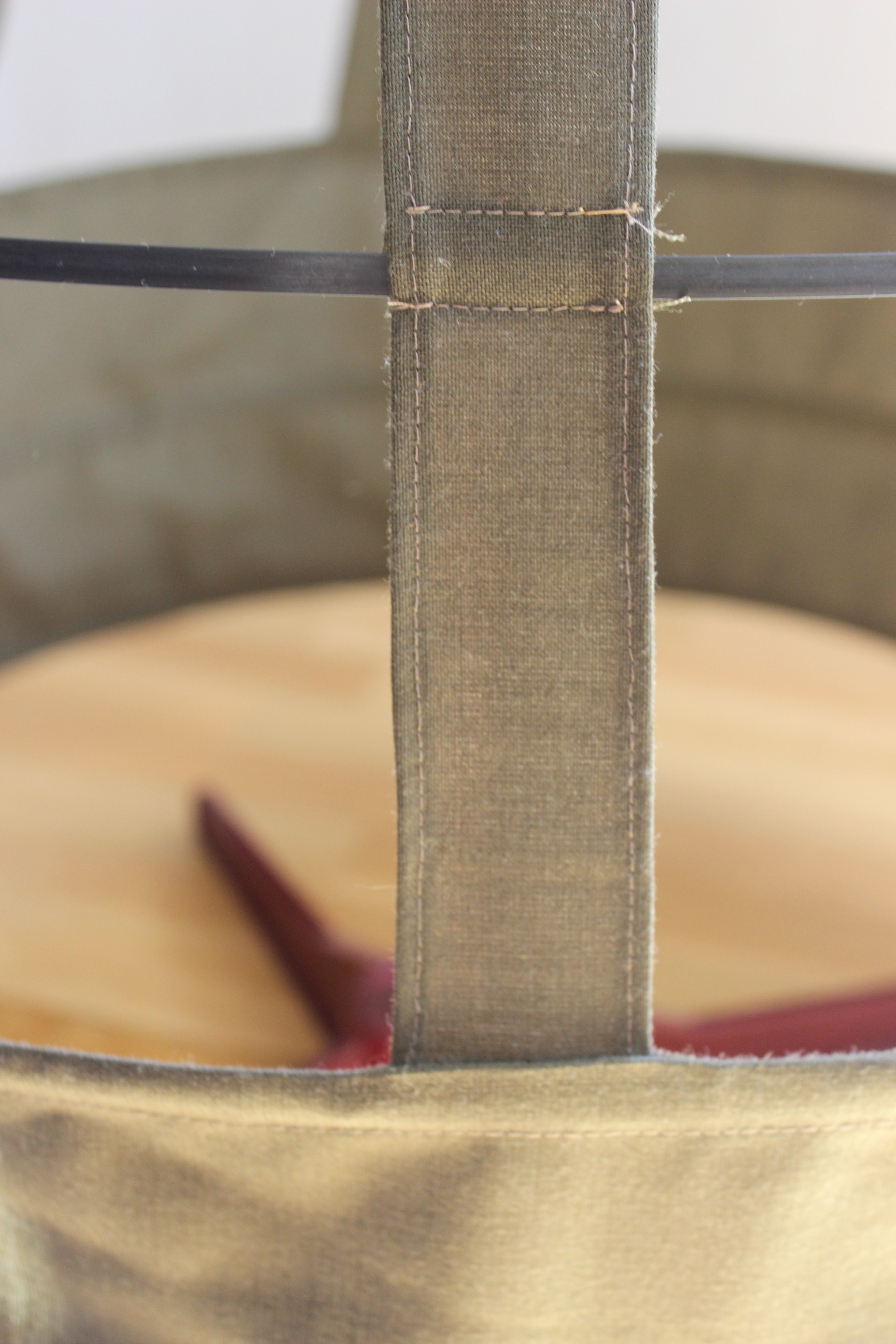
Then I pressed the smaler pieces to boning chanels about 3 cm long.IMG_9271I then stiched these on to the vertical ribbons, making places for the bones to conect to the foundation.
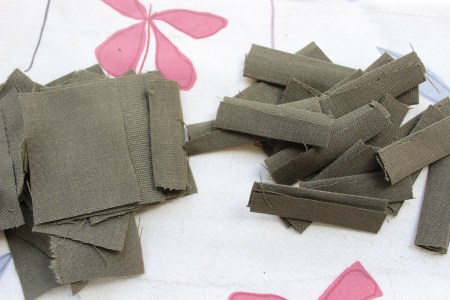
Then it was time for the boning. IMG_9253I used about 11 m of steel wire, originaly ment to be used to un-plug stop in the drain.

I used some electrical tape to cover the sharp edges, and taped the ends togeter inside the chanels in the bottom part of the crinoline.IMG_9272

IMG_9369Here you can se the places in which I taped the wires togeter. I then stiched the holes back up.

Working my way up from the bottom I inserted the boning and closed each hoop before moving on to the next.IMG_9273Three bones inserted.

When I got to the “free” bones I inserted them into the smal chanels at each vertical ribbon, and taped the hoop shut at the end.IMG_9370

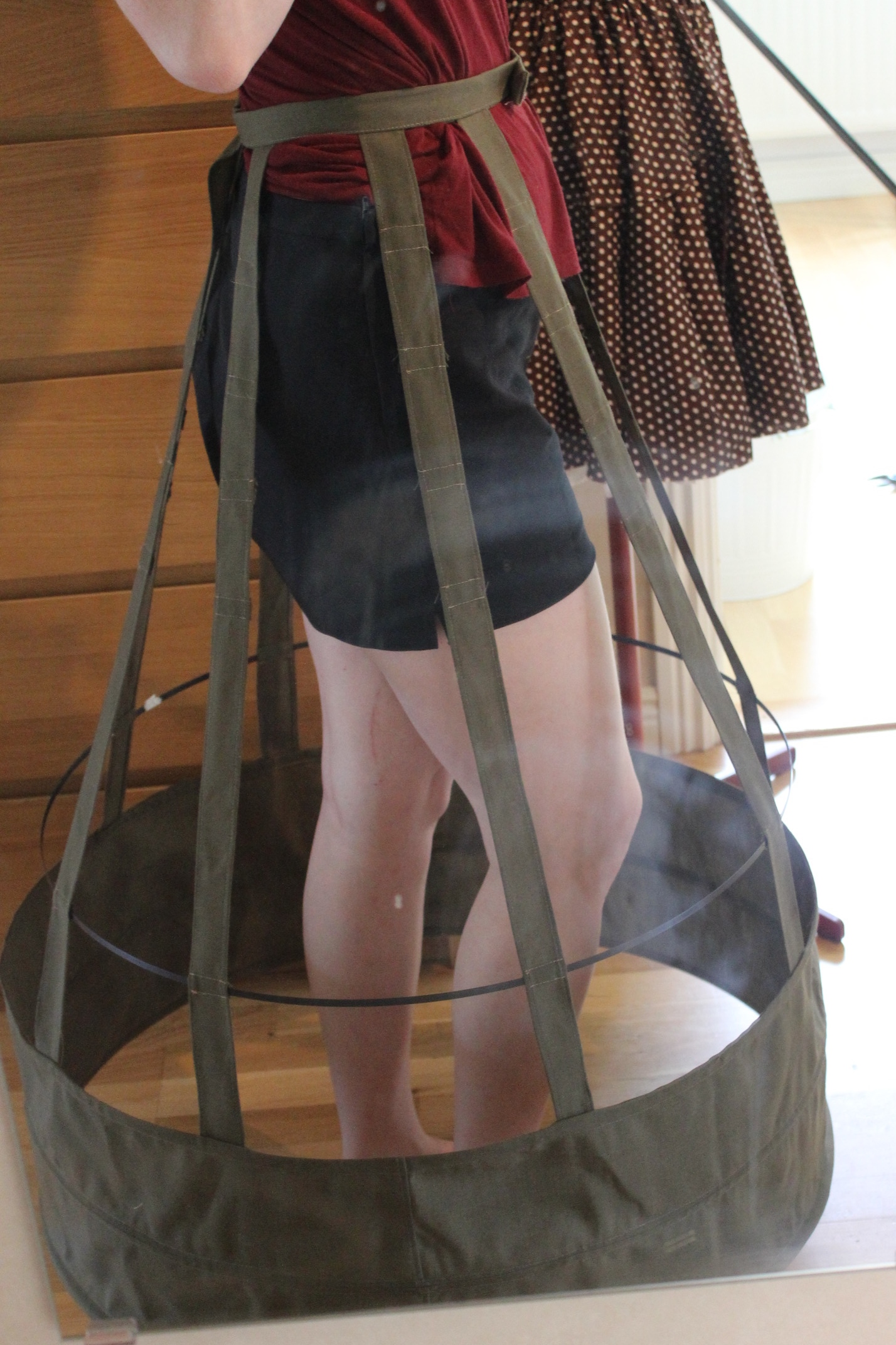
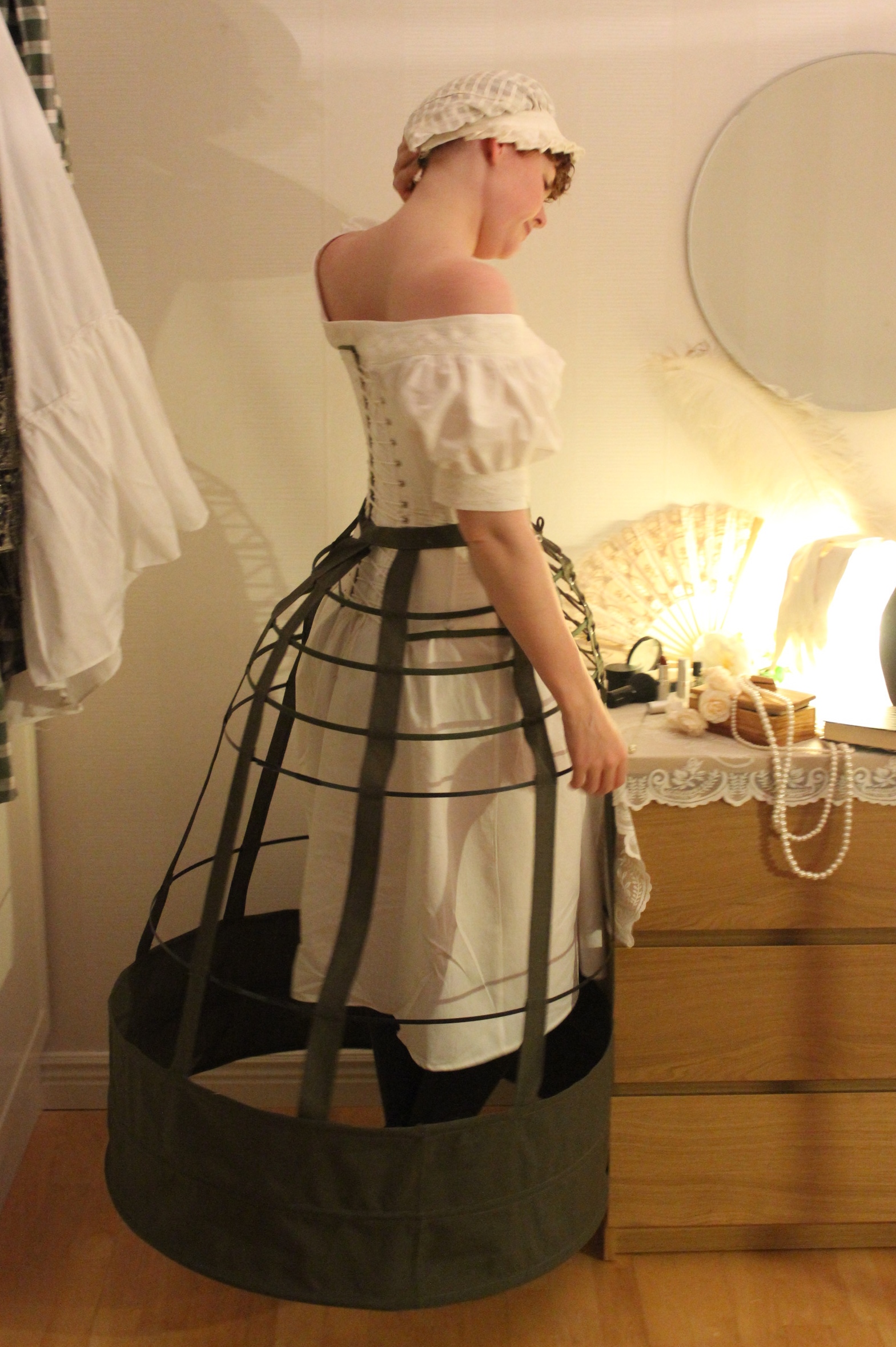
Then I tried it on to get a better look of how it would look.IMG_9280Pretty cool, but still 4 more bones to go.

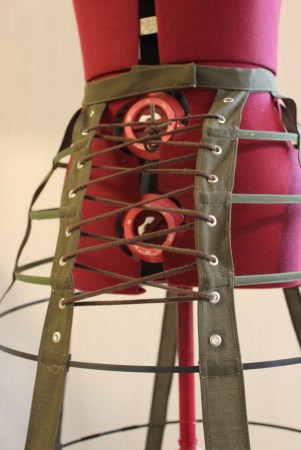
I left the top front open and free of bones to be able to get in and out of the skirt.IMG_9283
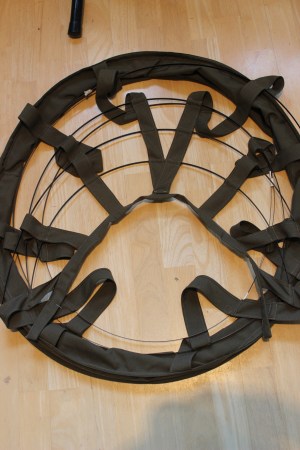
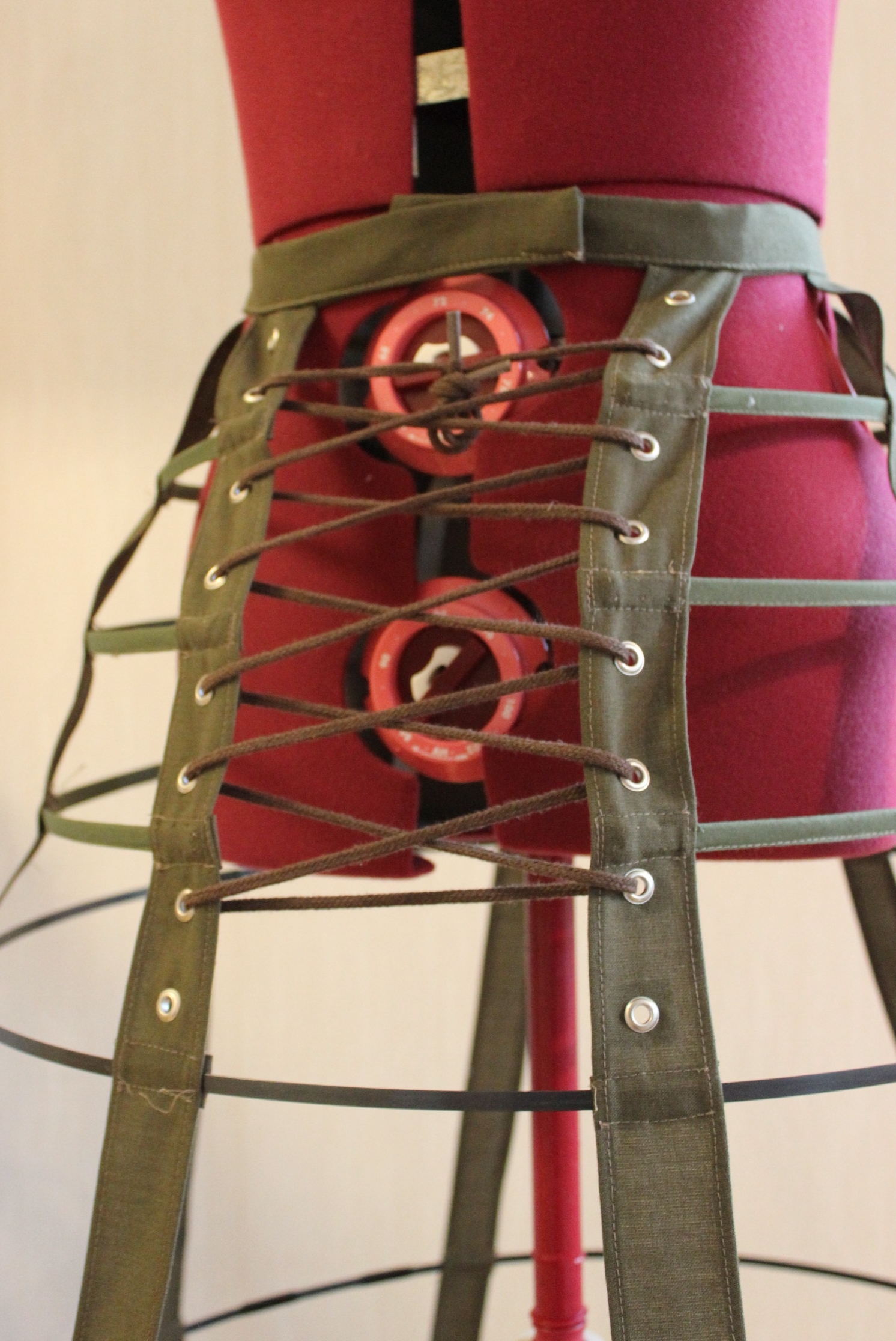
I inserted some gromes to make the skirt lace up the front.IMG_9375You can also see where the boning stops at the front ribbon.

IMG_9285Looking pretty on my dressform.

But one problem remaind.IMG_9392The bones very easyerly left the casings, and wandered away in other directions.

To solve the problem I decided to make holes in the boning and casing, to tie them togeter at the ends.

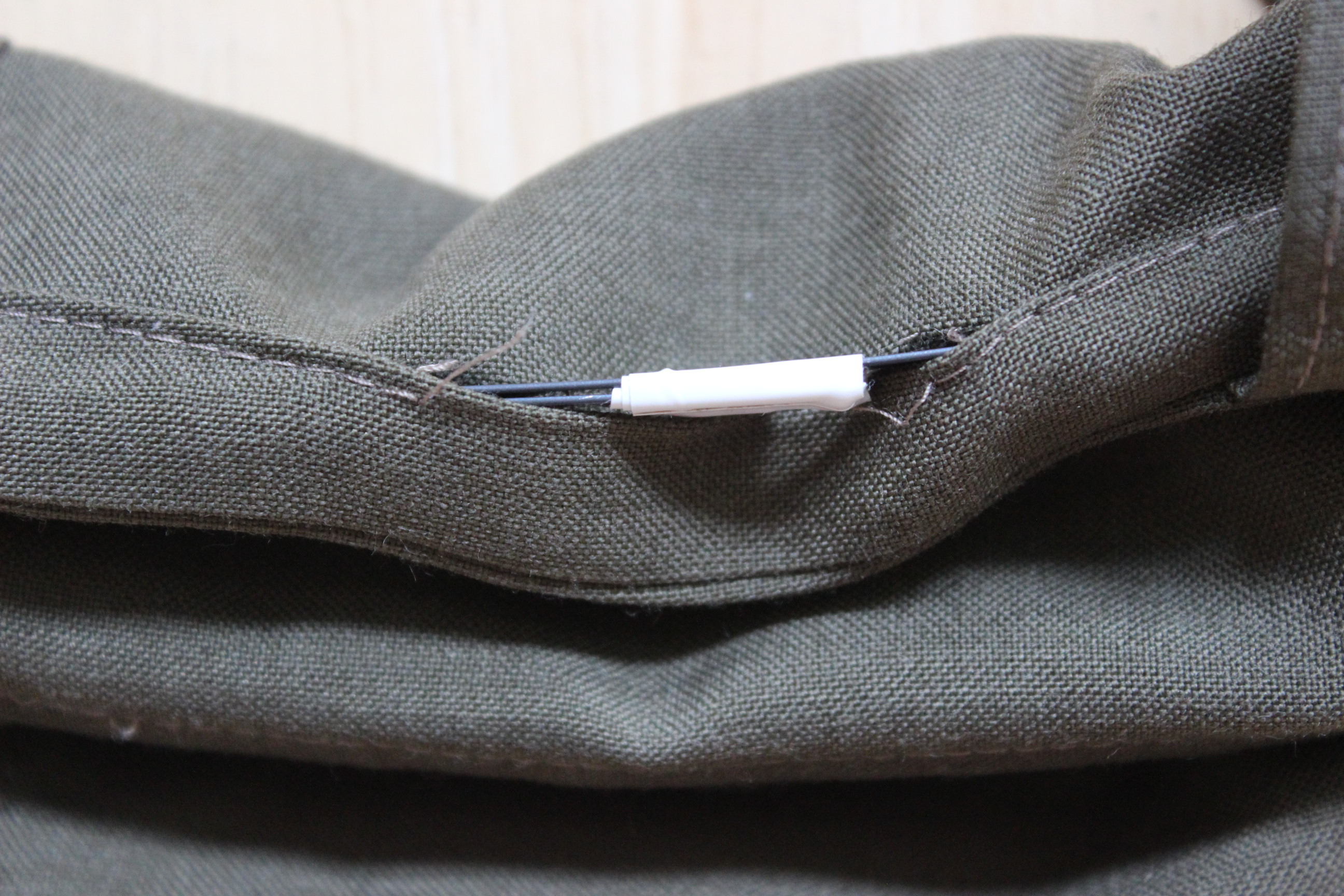
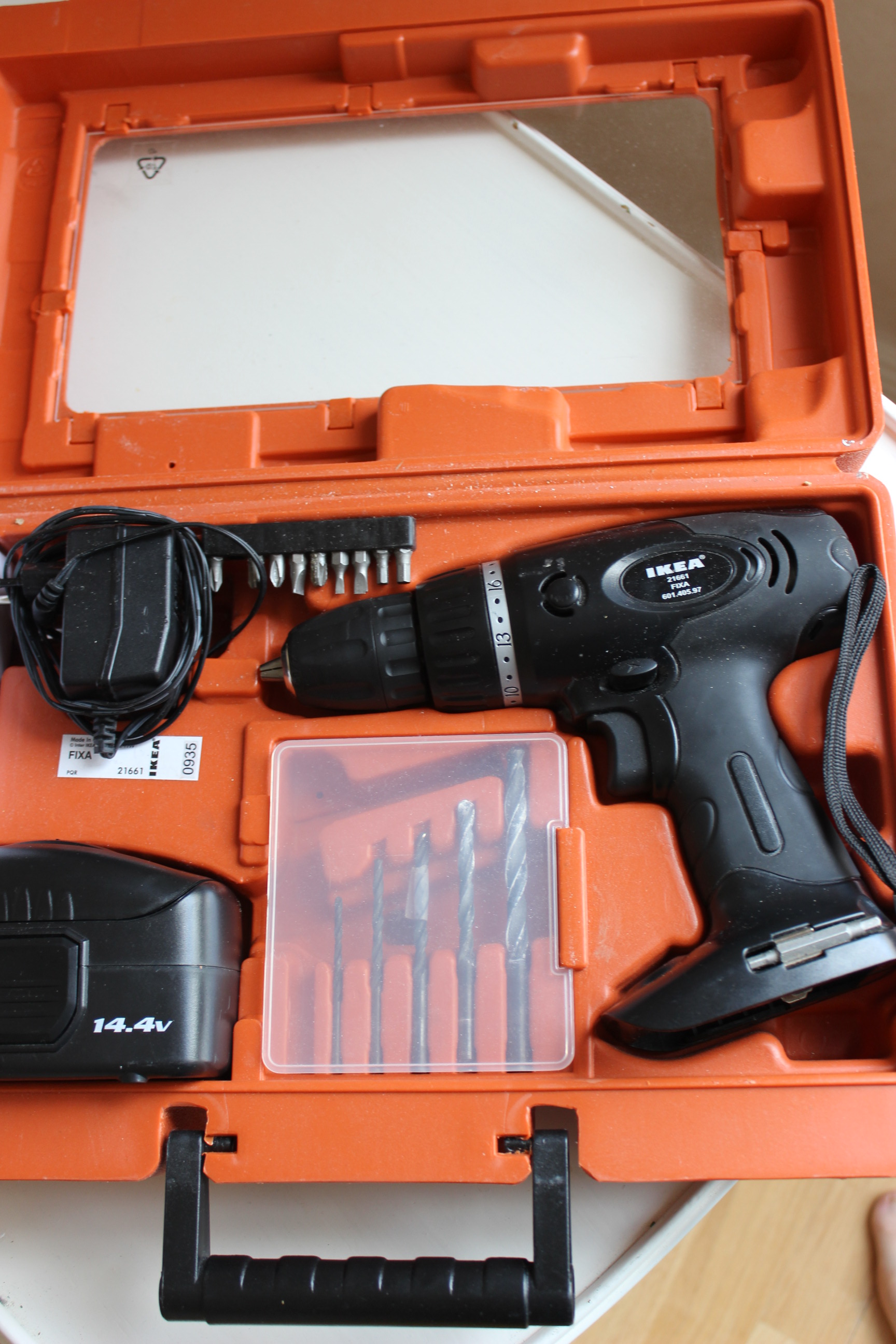
IMG_9612I borrowed my fathers elecric drill, but alas, not even a notch on the steel boning. Dead end.

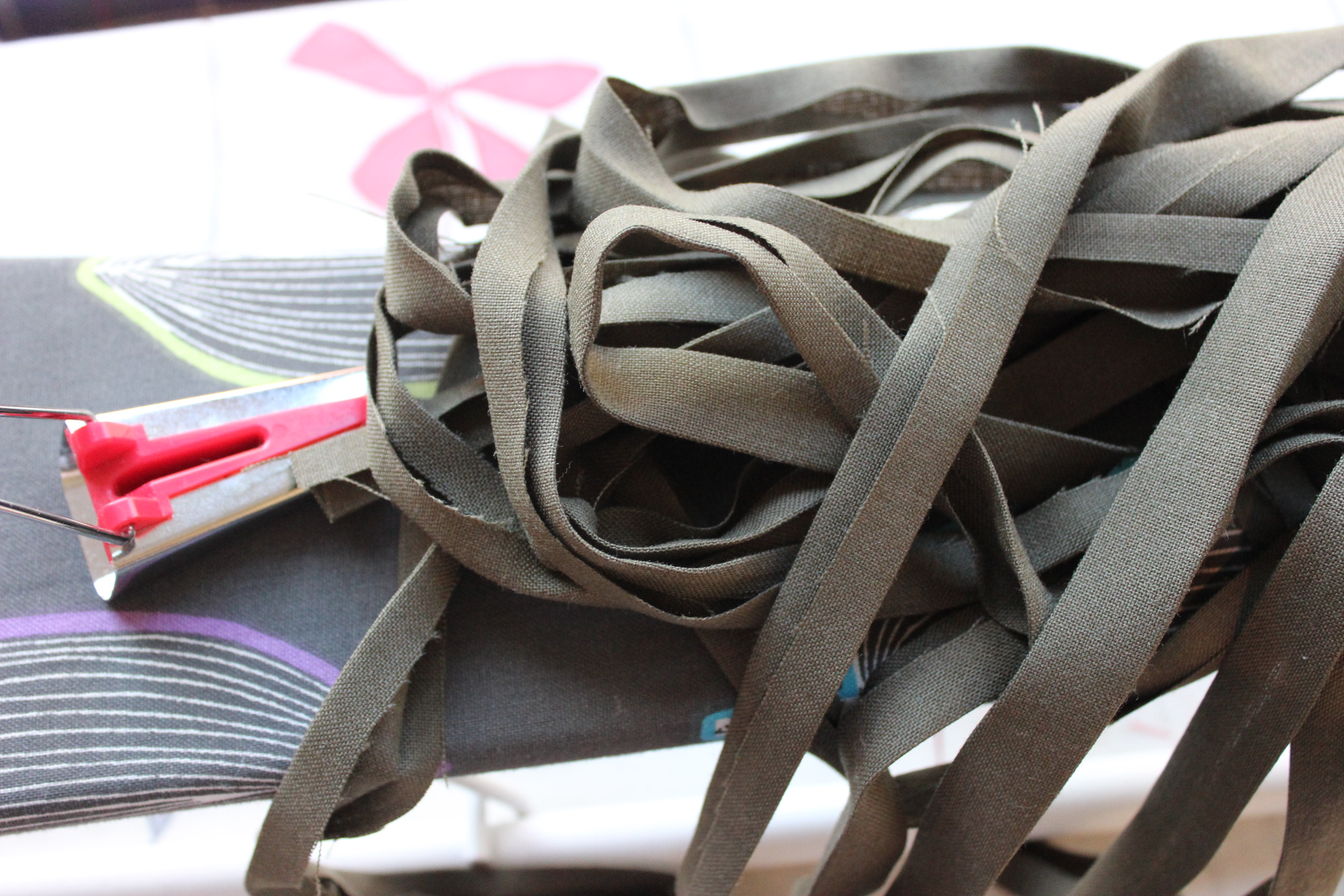
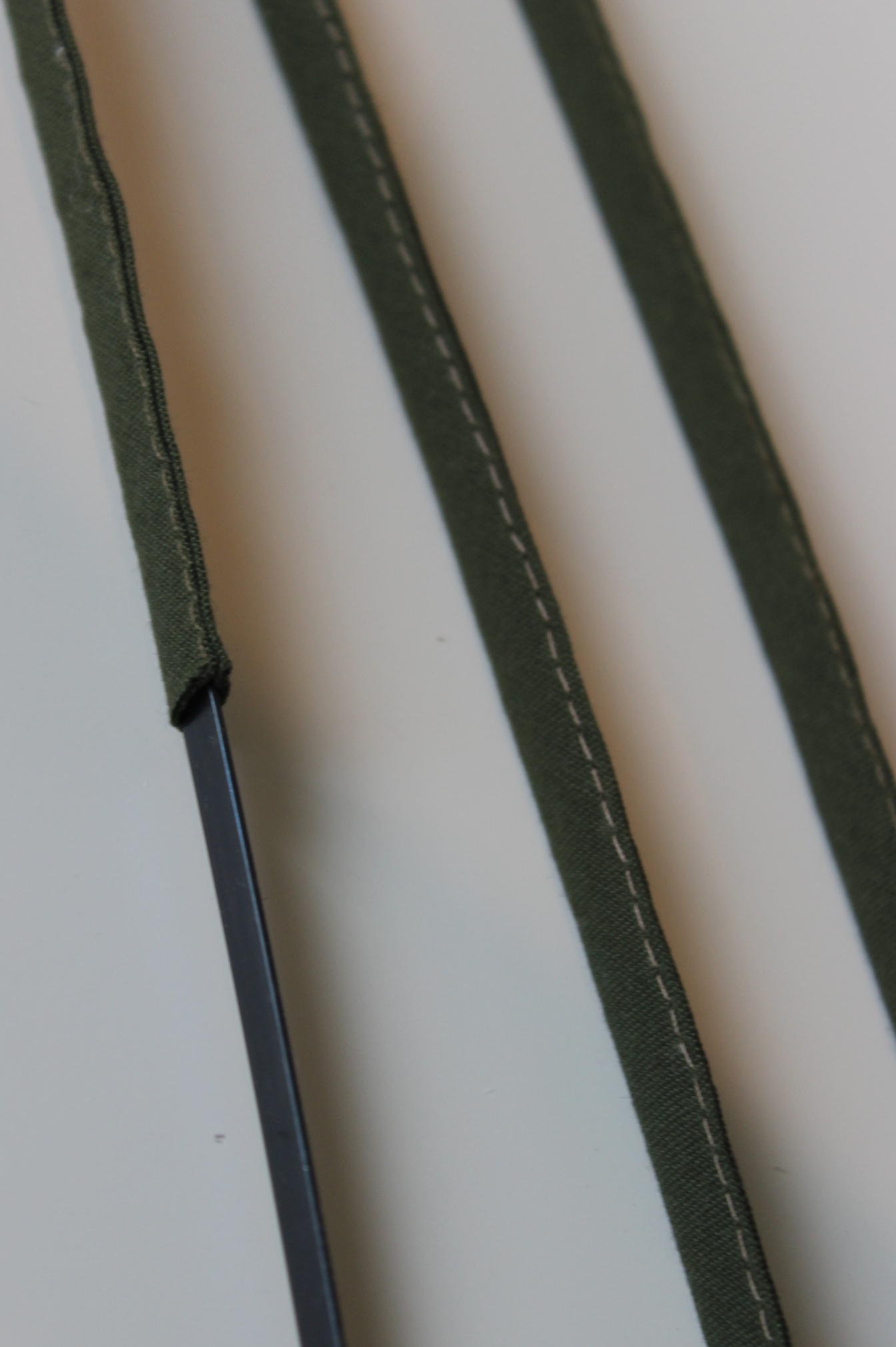
My other solution worked better.IMG_9390I bought bias-tape, aproxemently the same colour as the fabric, and made them into boning casings.

Insering the boning and sewing of the ends, left me with three grren fabric covered lenghts of steel.IMG_9394

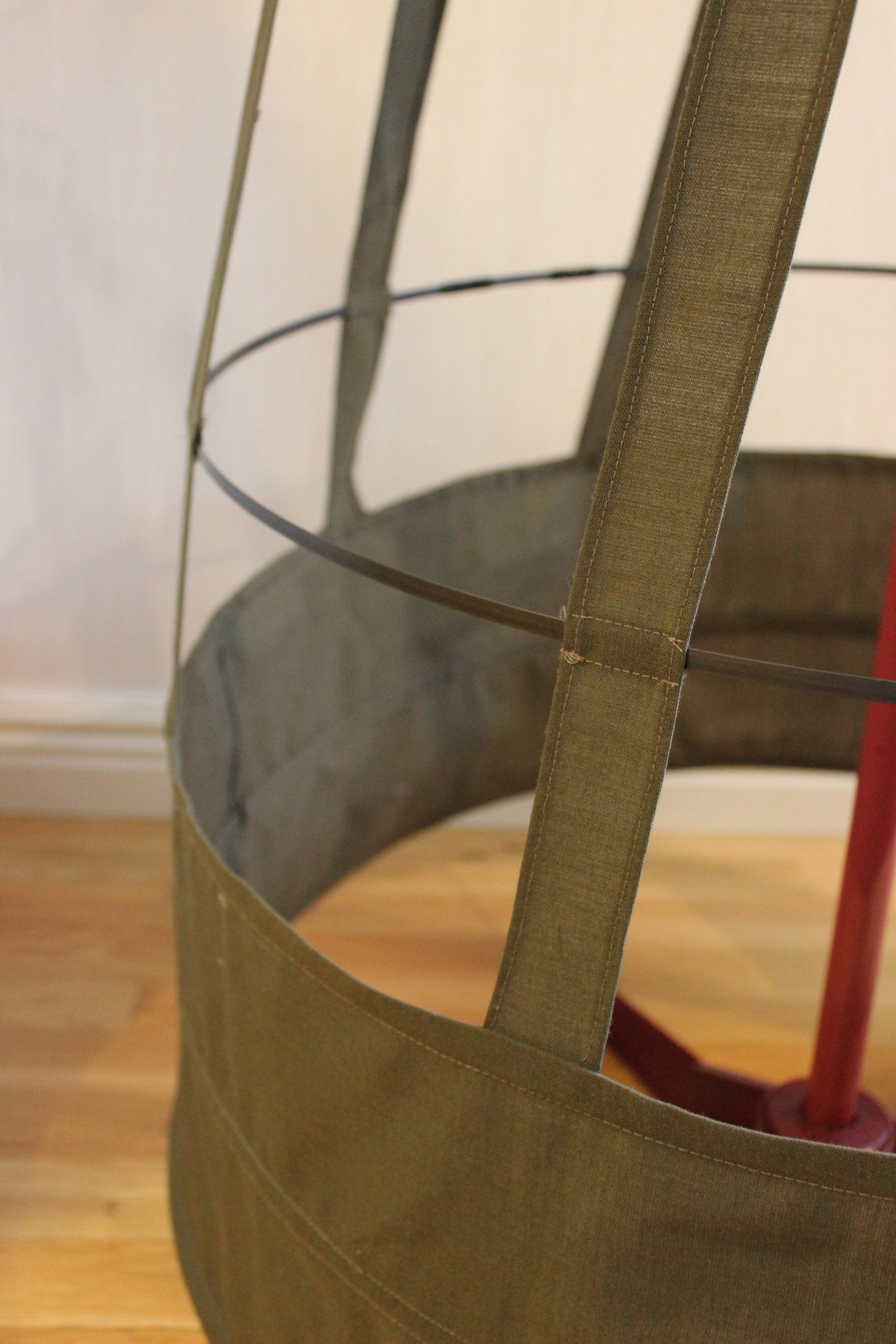
I then inserted the fabric covered boning in the chanels and stiched the ends down inside the chanel ends.IMG_9411And that was that.

Finished photos:IMG_9395

IMG_9398

IMG_9401

IMG_9405

IMG_9399

IMG_9371

IMG_9404

IMG_9406

IMG_9408


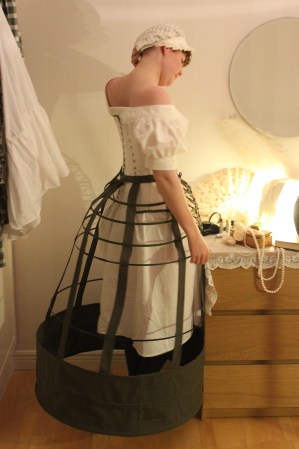
And a sneak a peak of the photoshoot:IMG_9572
Just the facts:

Challenge: 12 Shape and Support

What: A 1880s cage crinoline

Pattern: None – Just measured and cut stipes in desired lenght.

Fabric: 1 m of green cotton.

Notions: 11 m of steel bone, 1 spool of thread, 16 gromets, 2 m of green biastape (I didn’t had enough fabric to make my own), black duck tape, 3 m brown cotton cord and hook and eye for closuer at the wasitband.

How historical accurate: I don’t really know. Not that good I supose. The type of metal is wrong and I’m sure they did’n use biastape for bone-casings back then. I do think the over all look is ok, and worn with several layers of petticoats I think it will look very period. Maybe a 4/10

Time: About 8 hours.

Cost: Almost everything was from stash, but I have bought it at some point. I think it ads up to about 200 Sek (32Usd) all in all.

First worn: Just around the house for photos so far. But I would love to wear it out on a picknick this summer.

Final thoughts: I’m pretty happy about it. The hoopskirt went togeter more easy then I thougt an dit ws great fun watching it take form. I liked wearing it and strutted around the house a long time after finishing it. The size is really nice – not to big or to smal, and hopefull I can use this for both 1850s, Tudor and bridal wear.
 

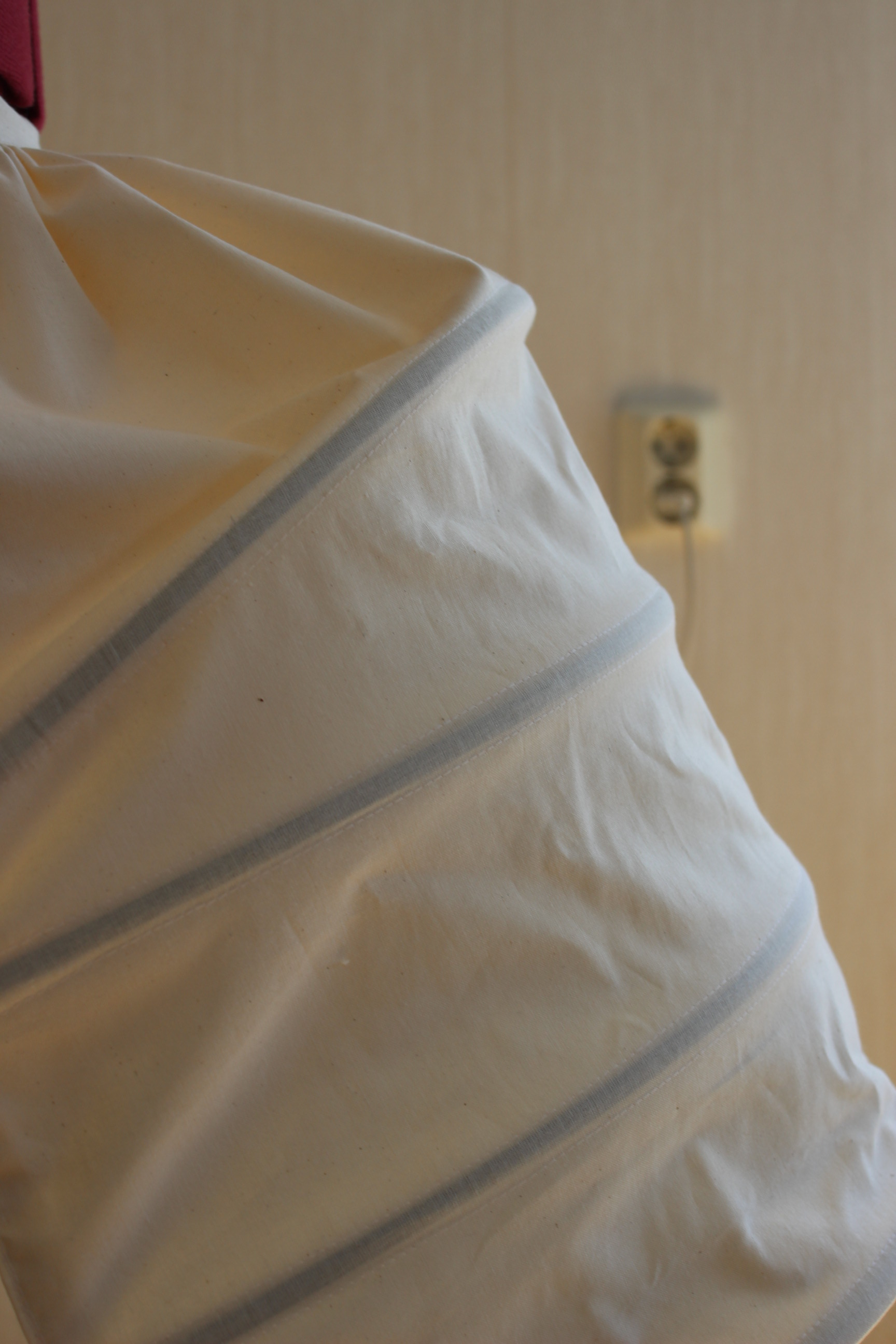
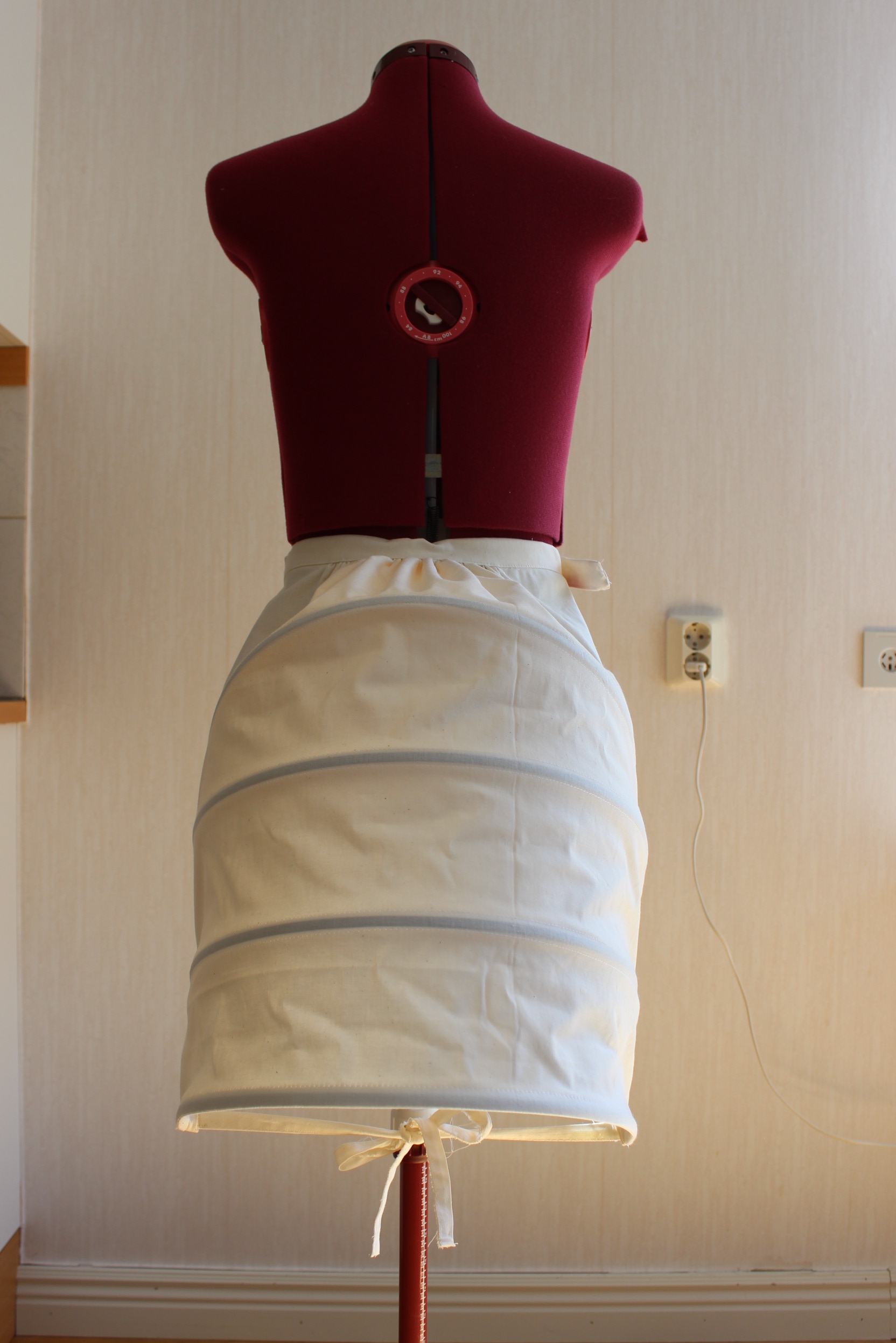
A Suportive Mini Bustle

For the HSF challenge nr 12, I decided to make an “light” entry as well as my original (which I will tell you about next time).

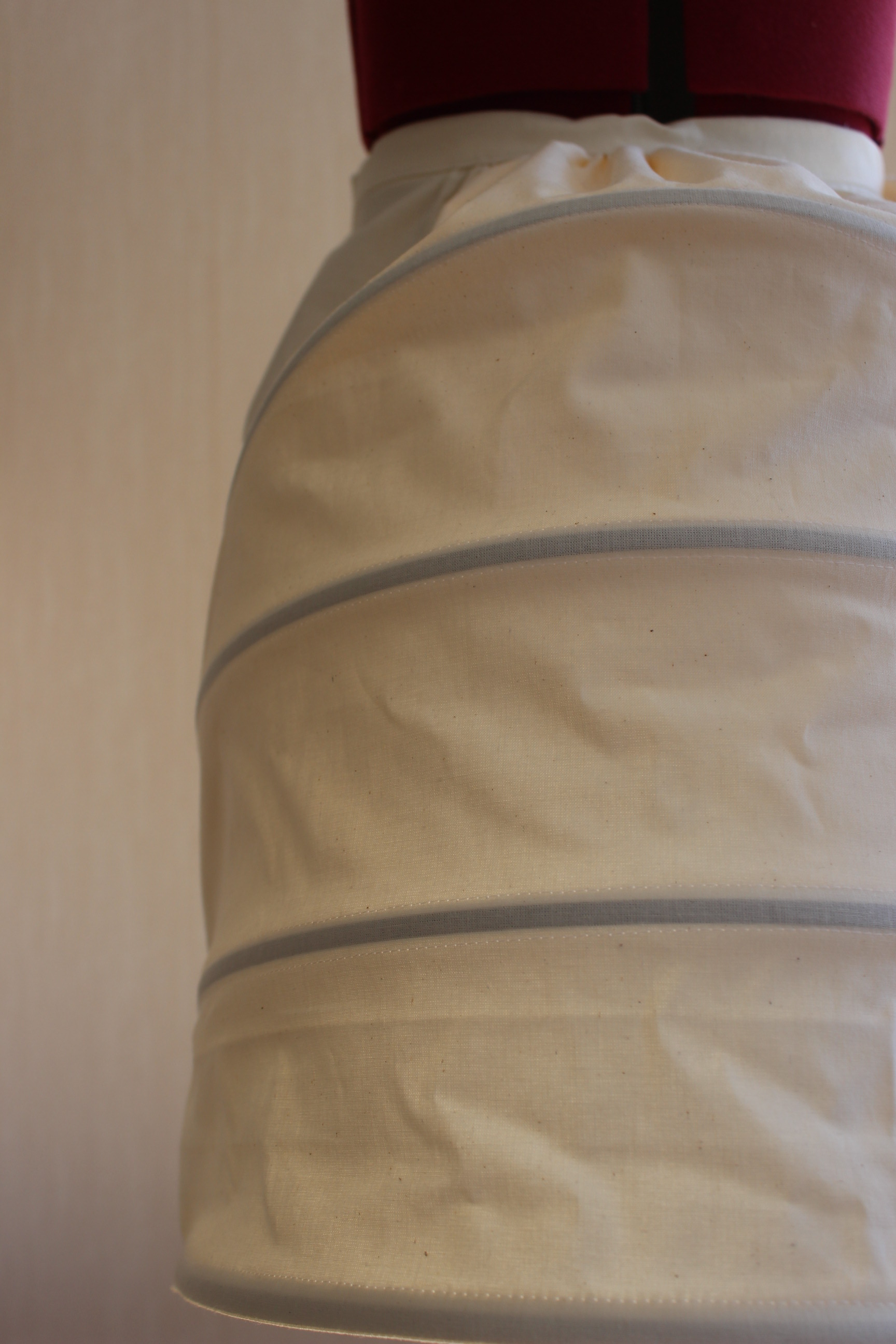
I’ve been pondering some different ways to get my upcoming steampunk outfit to bustle out nicely without the use of petticoats and big bustle cages. I’ve tried it on using my relativly smal “Lobster buste“, but that didn’t work since the bustle showed to much – I needed a smaler one.

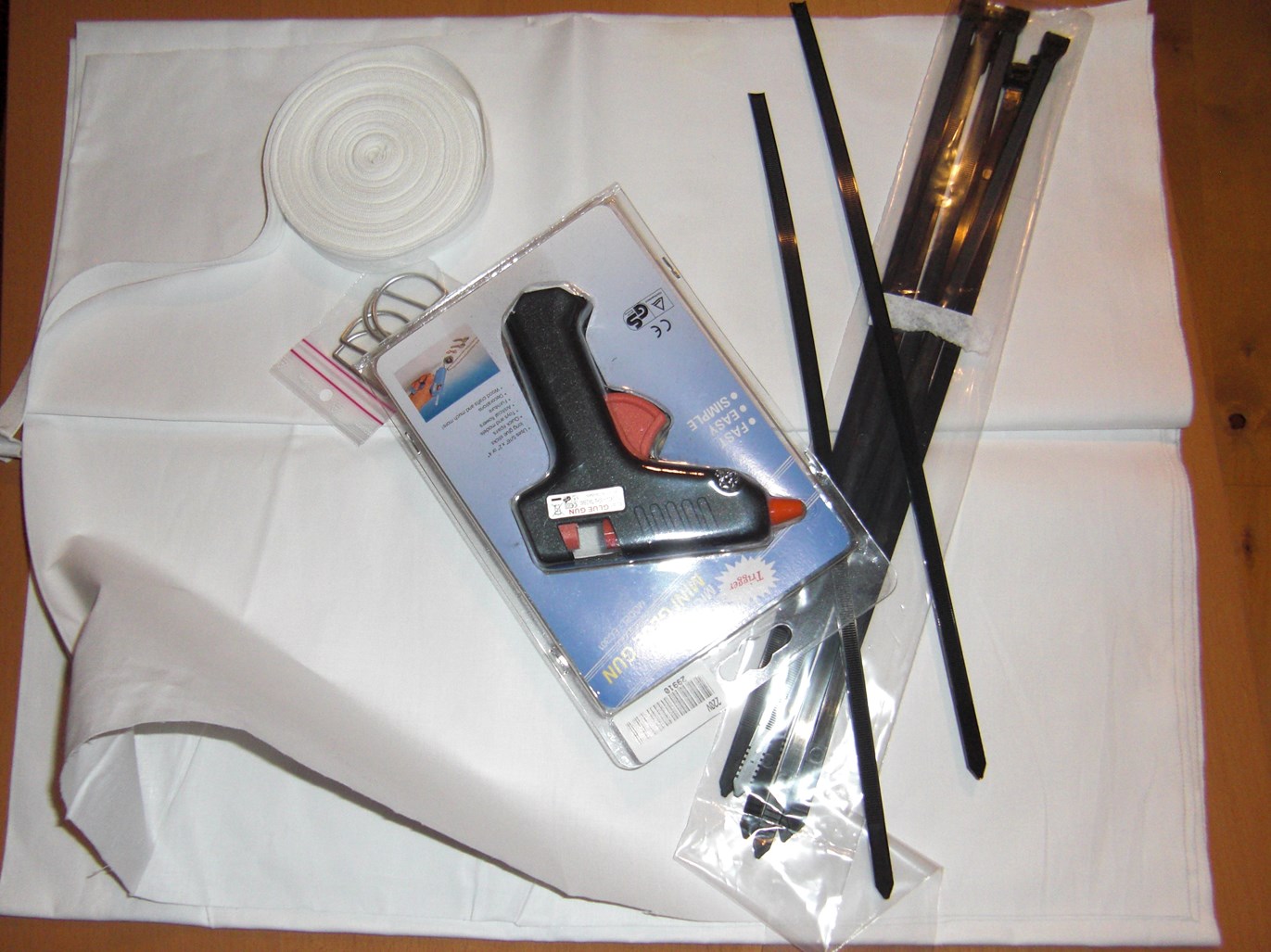
So I decided to make a taveling mini-bustle to use for this costume, and since you can never have to many underthingies it’s a go.

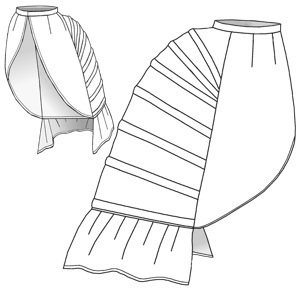
I looked at some inspiration on the internet and liked this one.9733ba7082cb2f3de4a36b1948a97143Only I couldn’t figure out how to get the bones to attached without drilling hole through the metal (more on the tomorrow).

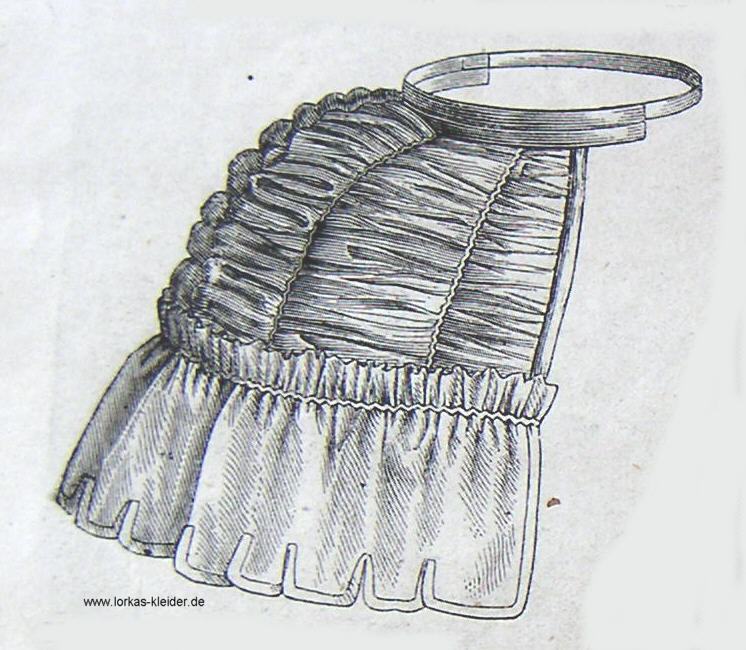
I also like this one.u8Making those ruffels shouldn’t be so hard, and as long as you have a regular bustle foundation beneath I think I could pull it of.

But in the end I decided to skip the ruffels and just concentarte on the foundation – much like this one, but shorter and without the side panels.20130303-214233

So I pulled out an old sheet and got to work.IMG_9306

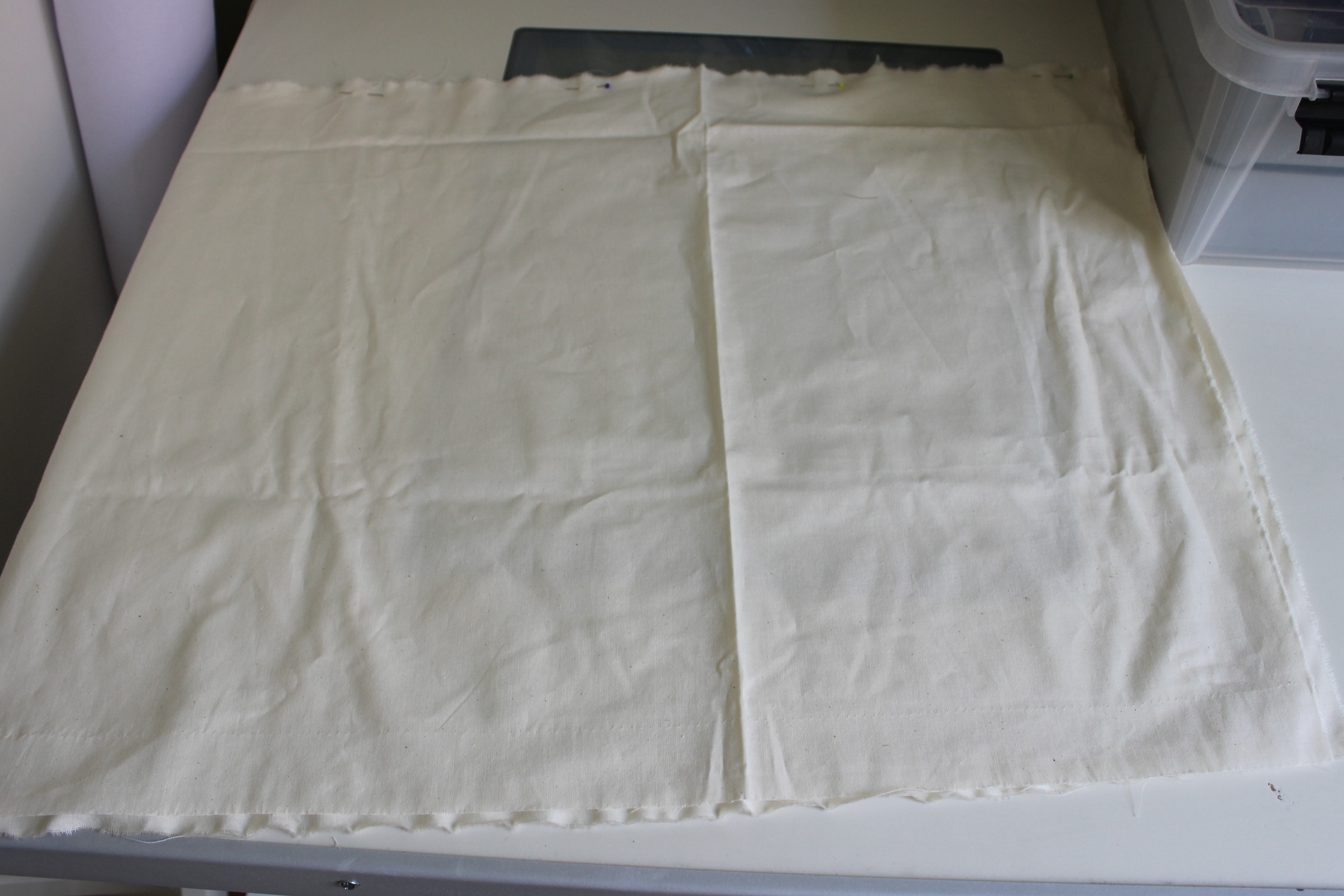
I didn use any pattern, but just cut two rectangels the lenght x the width of the finished bustle.IMG_9293

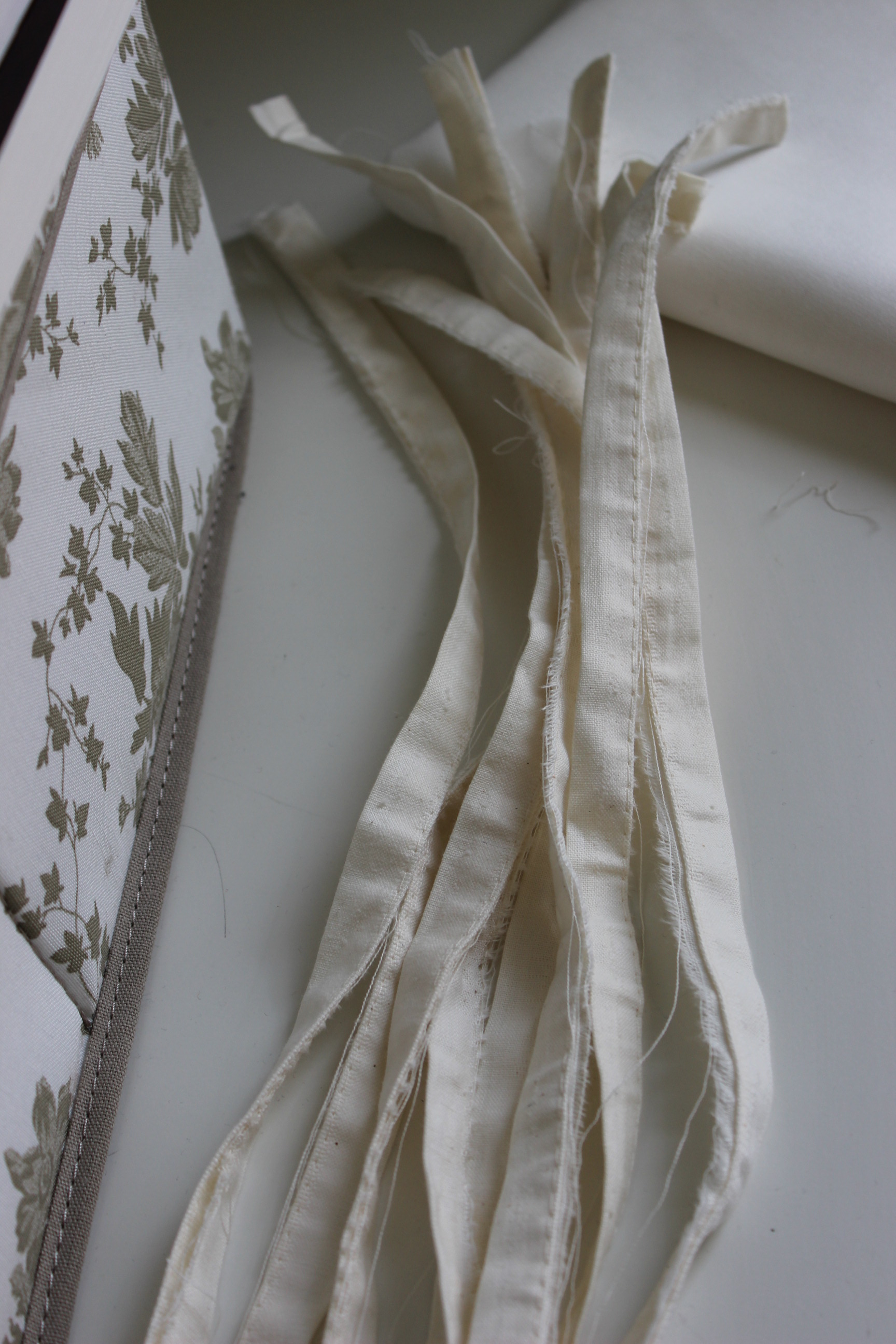
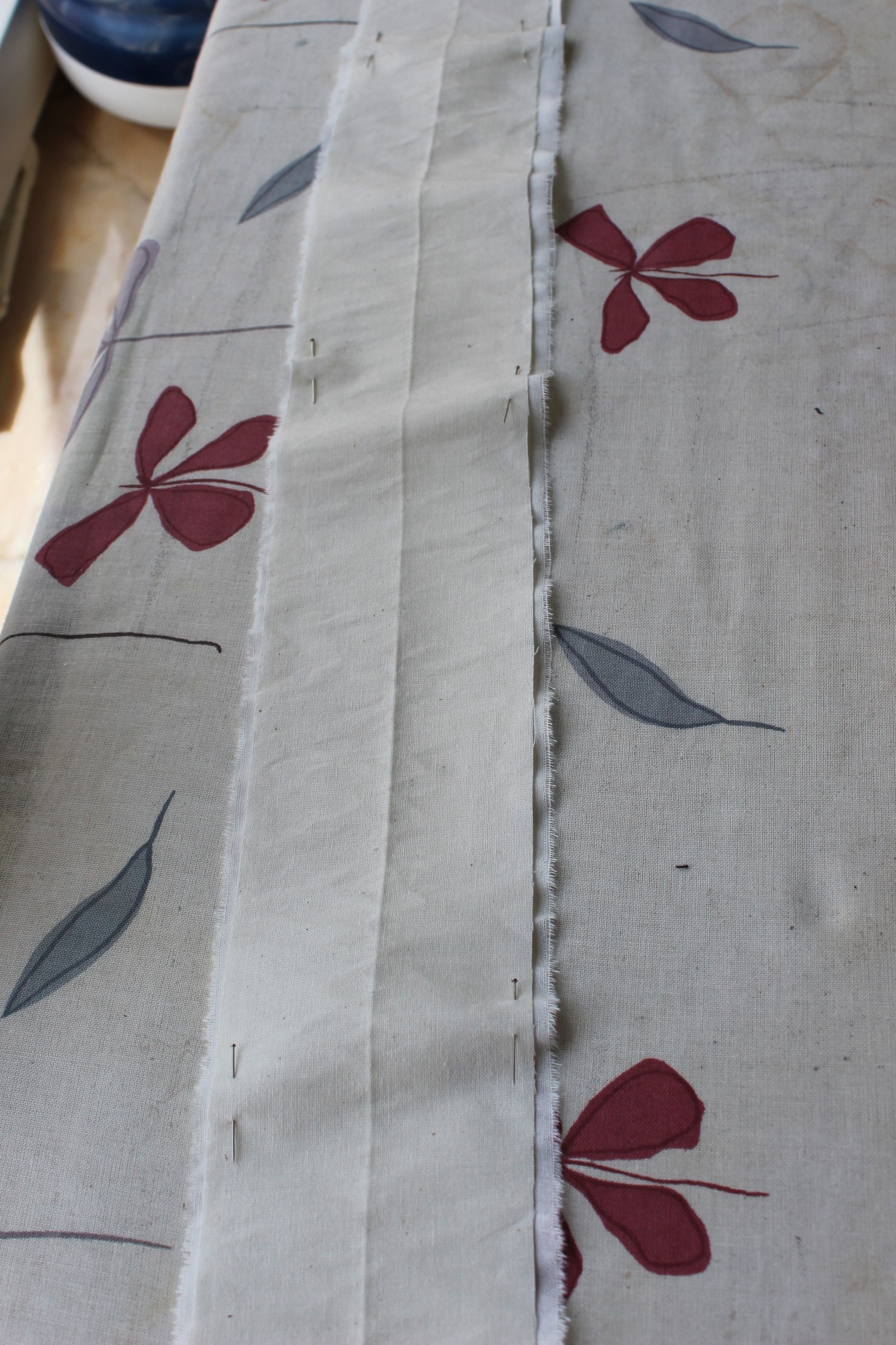
I also saved, and cut the sewn selvages on the sheet to use as ties.IMG_9296

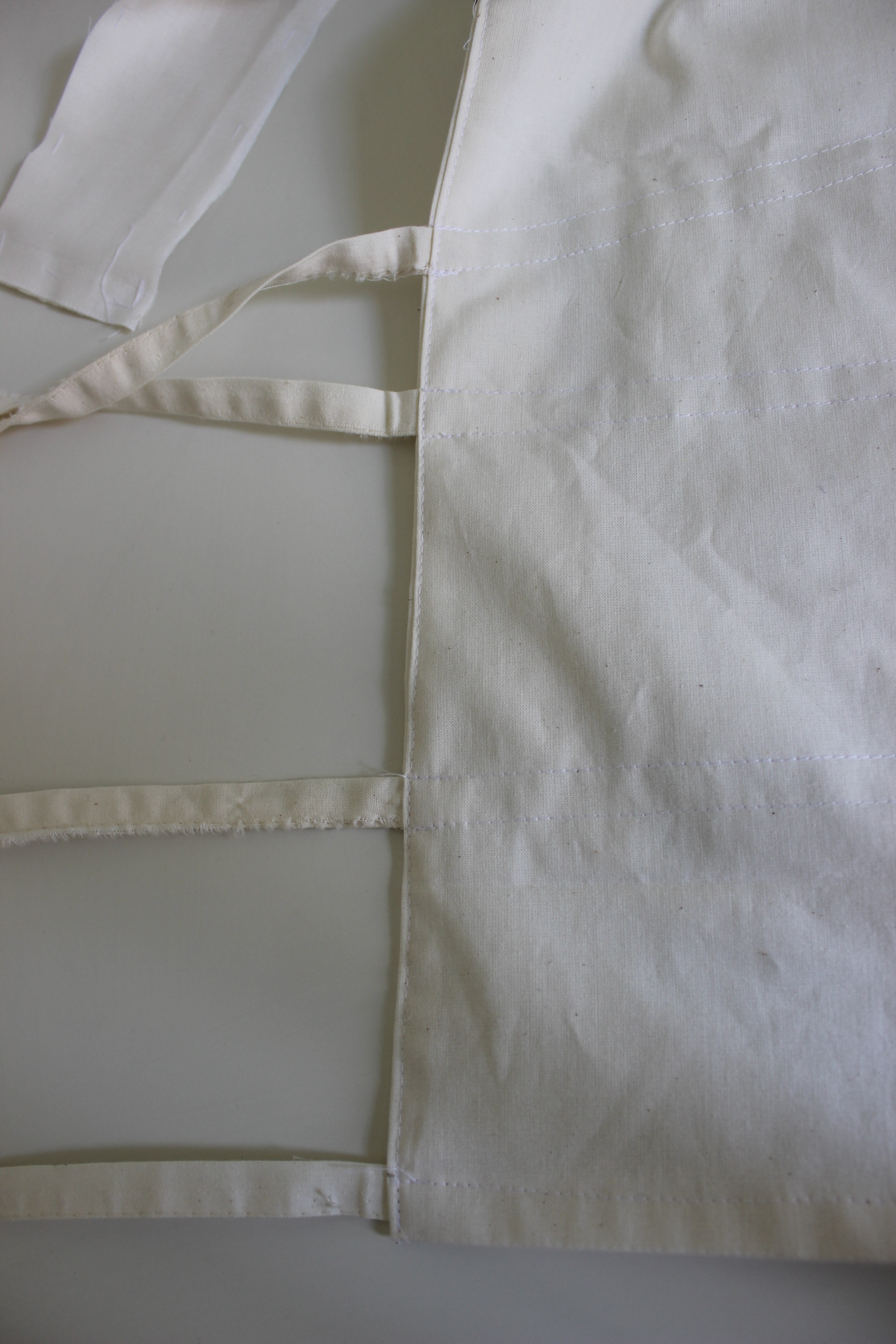
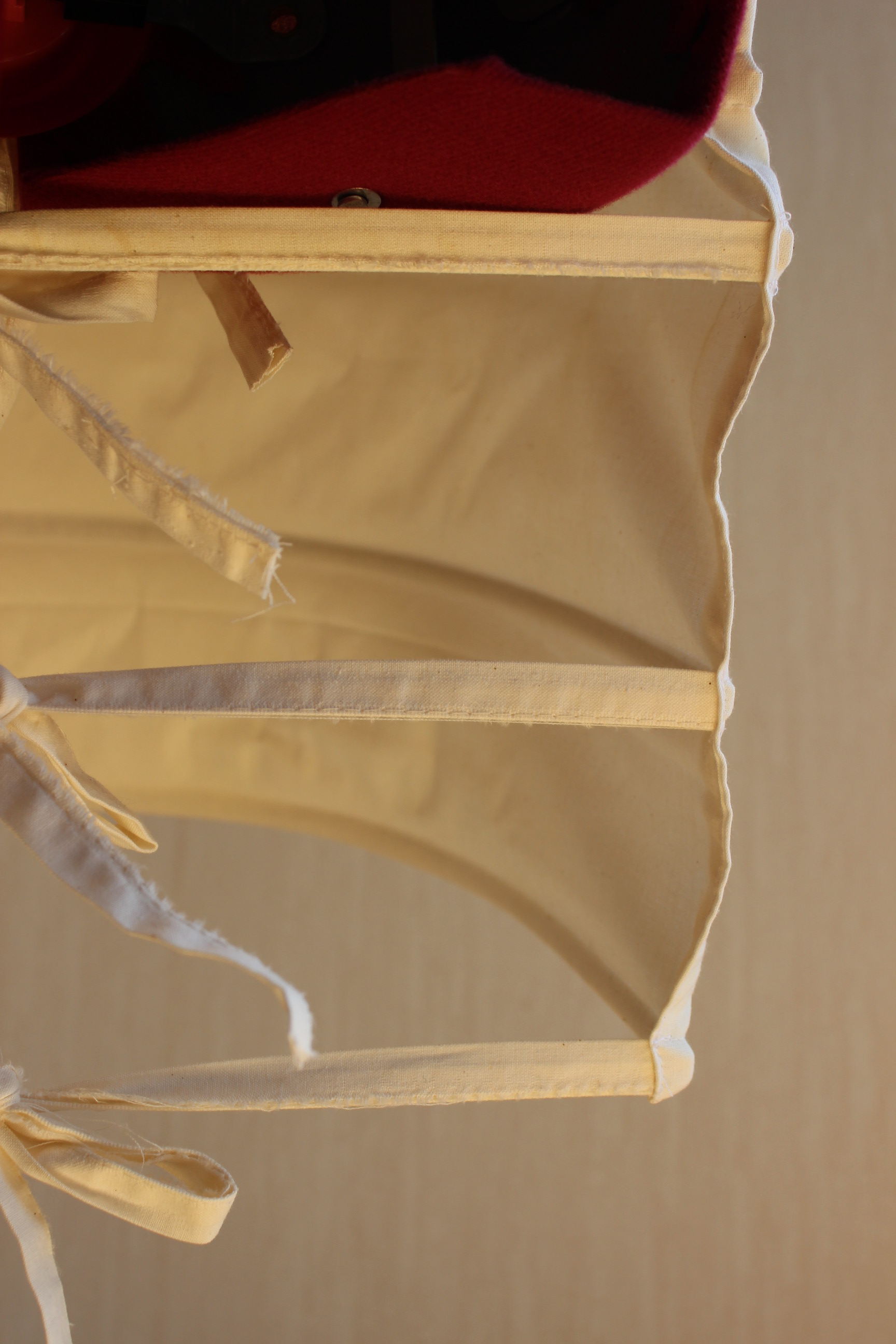
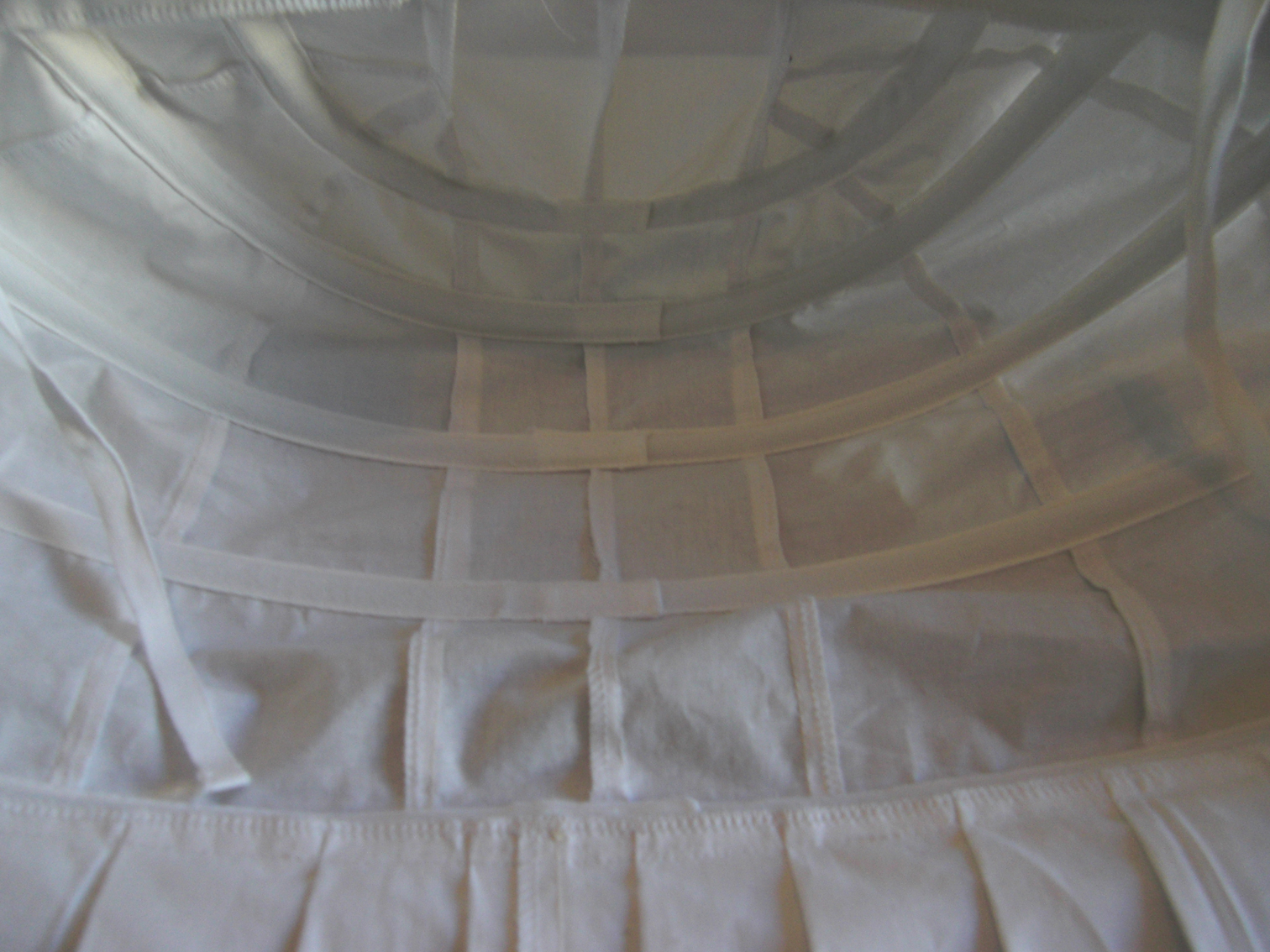
I then stiched the main pieces (right sides togeter, at the bottom) turned it over and sewed the boning chanels. IMG_9301At the same time I folded the edges under, and attached the ribbons. Making sure one side was open for the bones to go in.

Then I cut and basted the waistband.IMG_9298

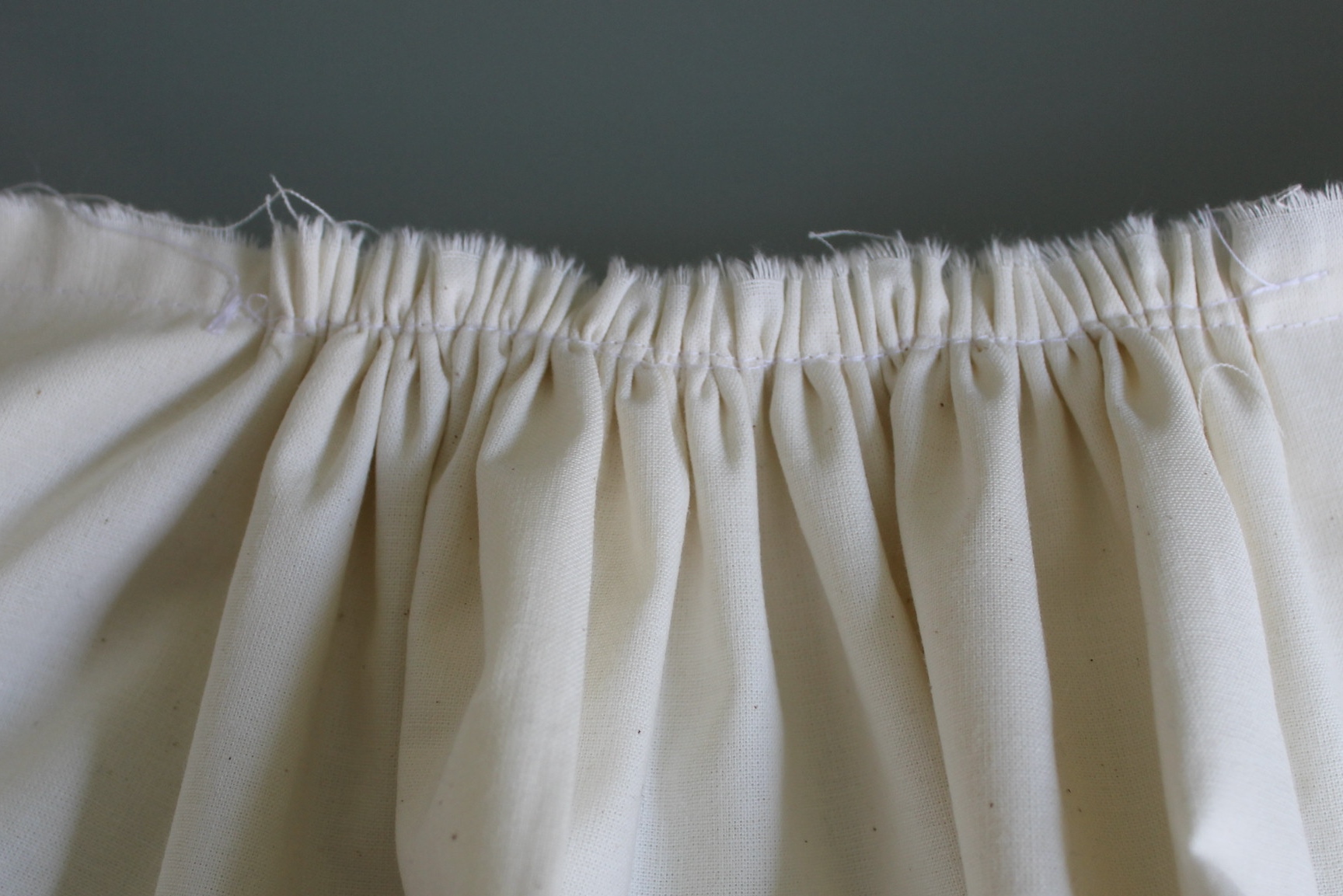
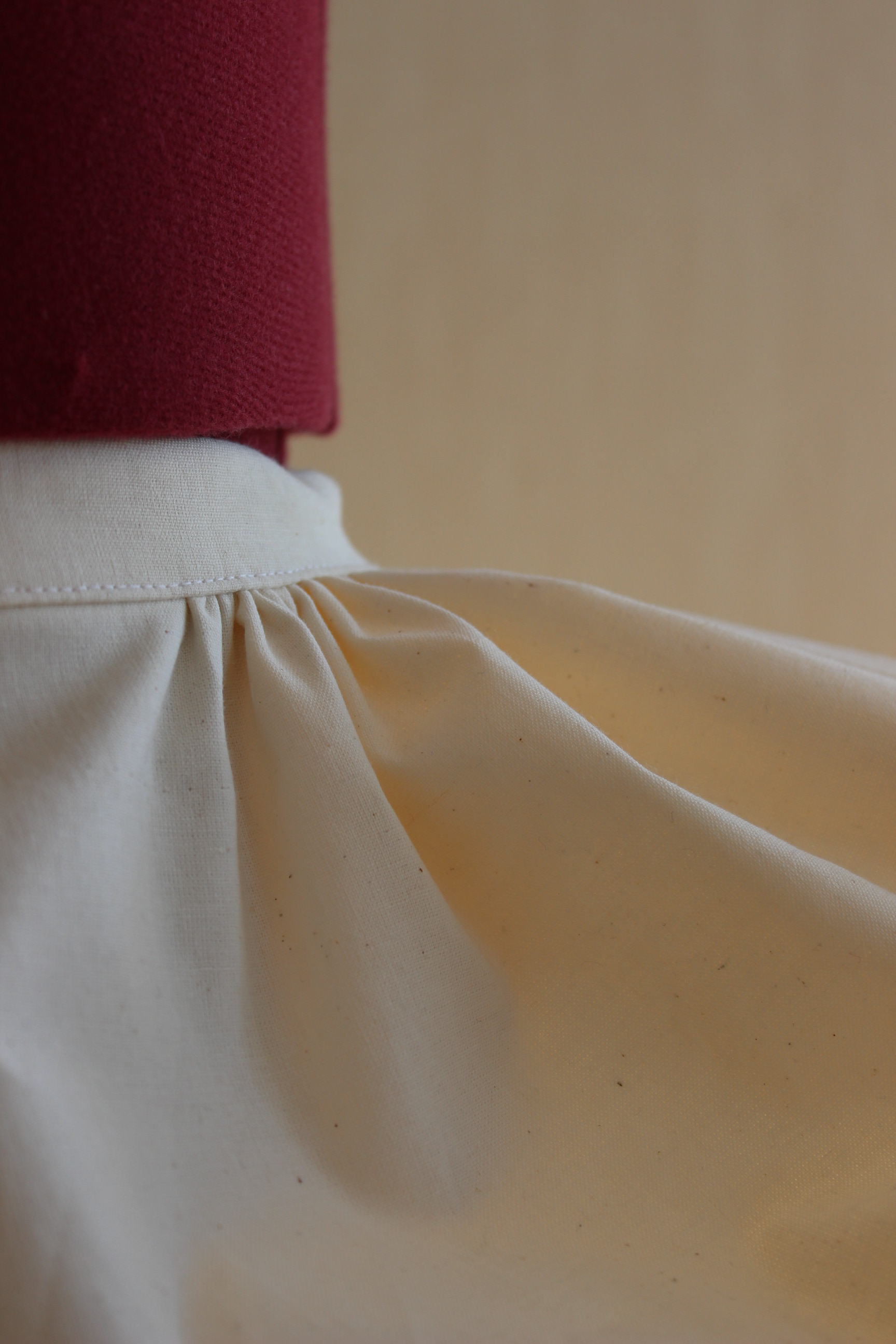
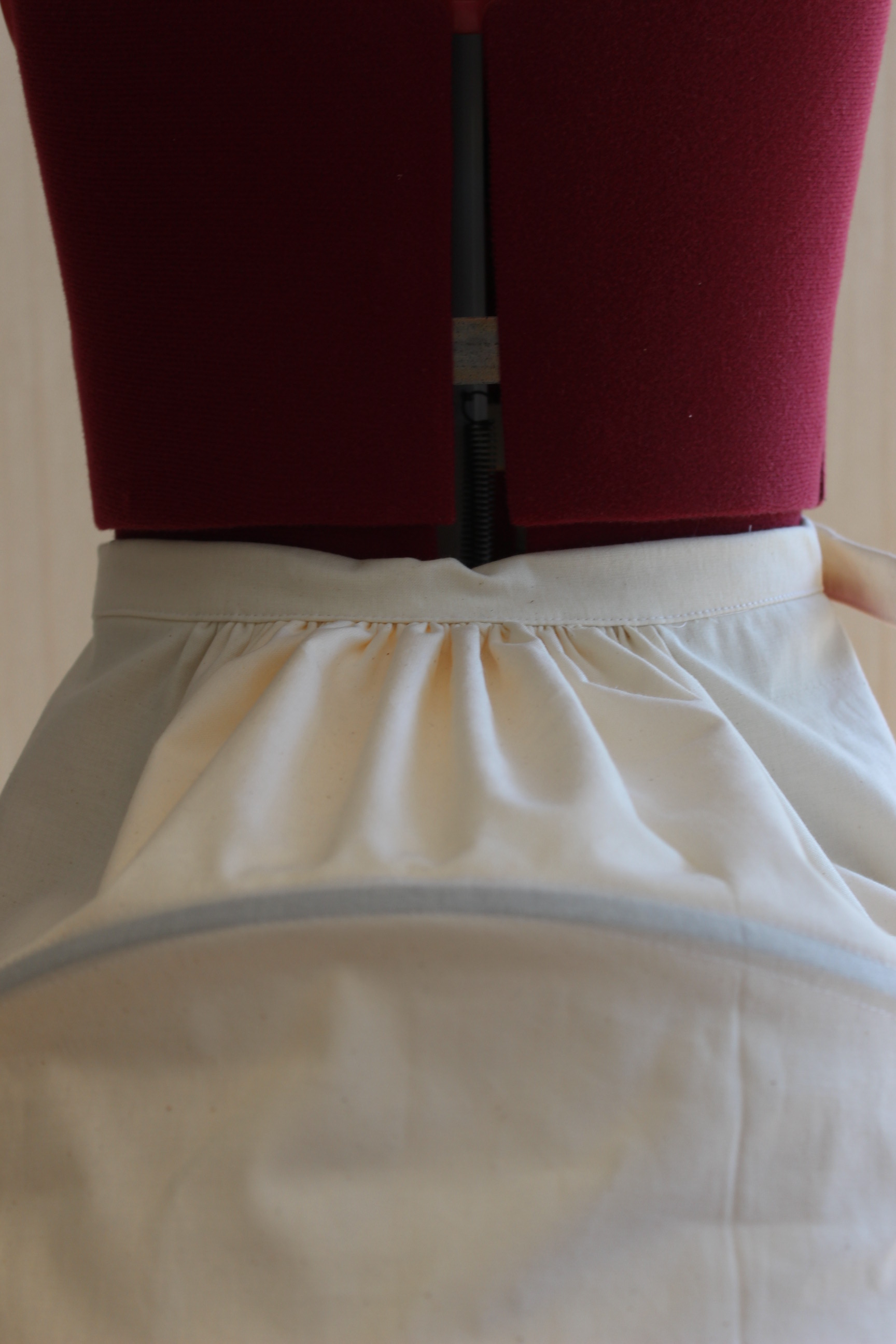
I sewed a gathering thread to the top edge, working the two layers as one.IMG_9300And gathered the center part to get the desired width, leaving about 10 cm at each side un touched.

IMG_9299Close up of the gathers.

Then I attached the wasitband, folded it over and stiched it down.

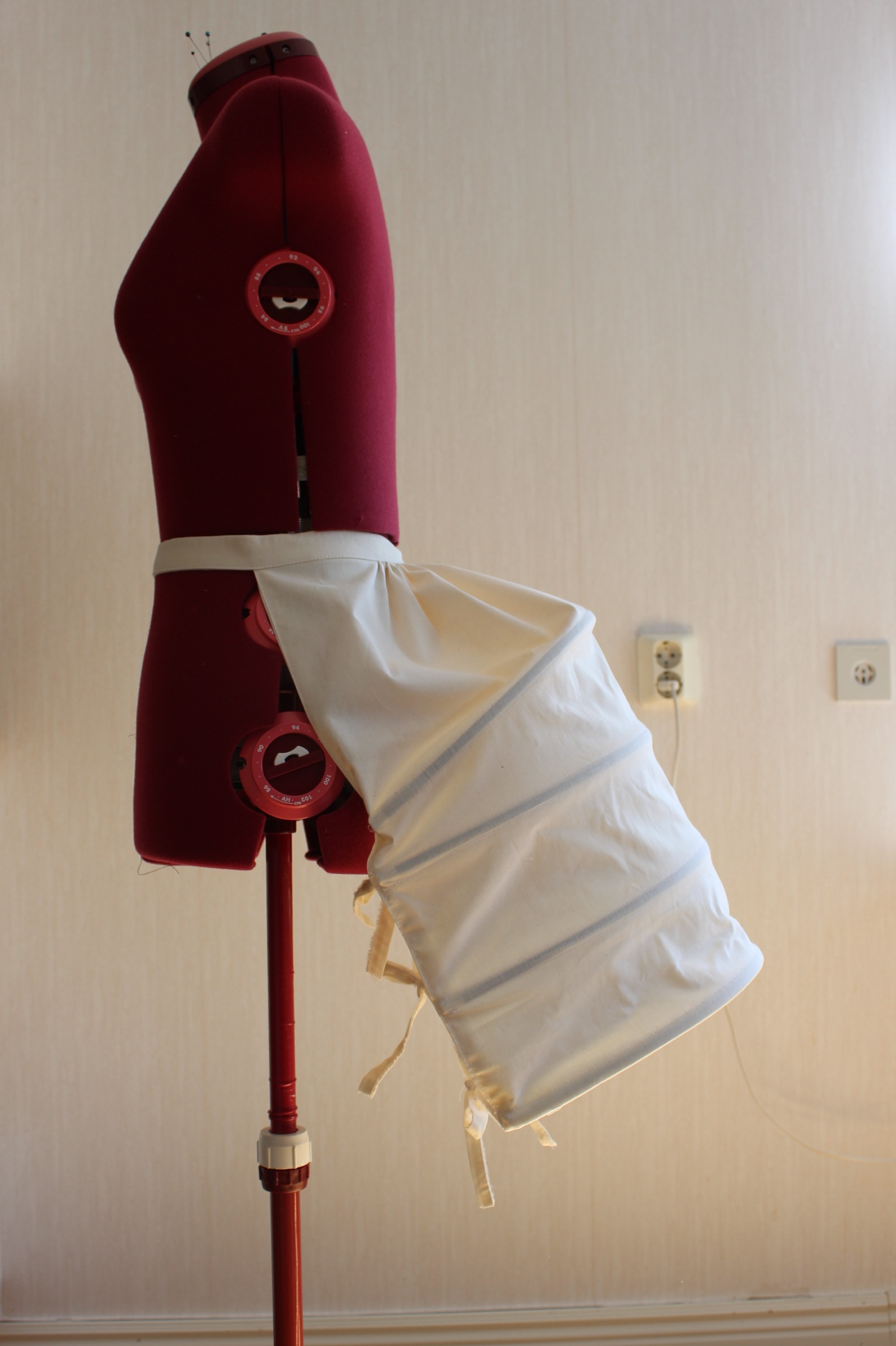
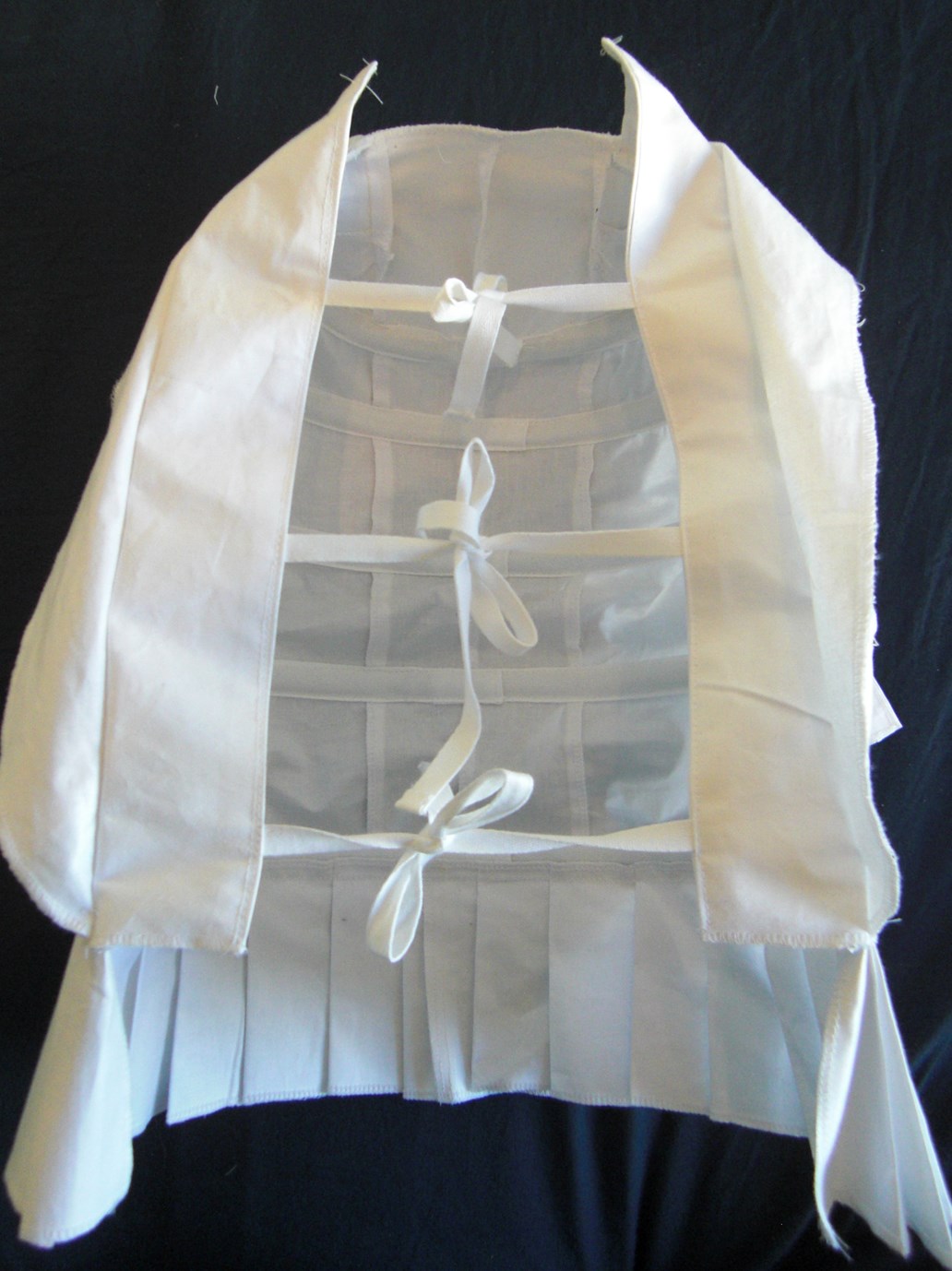
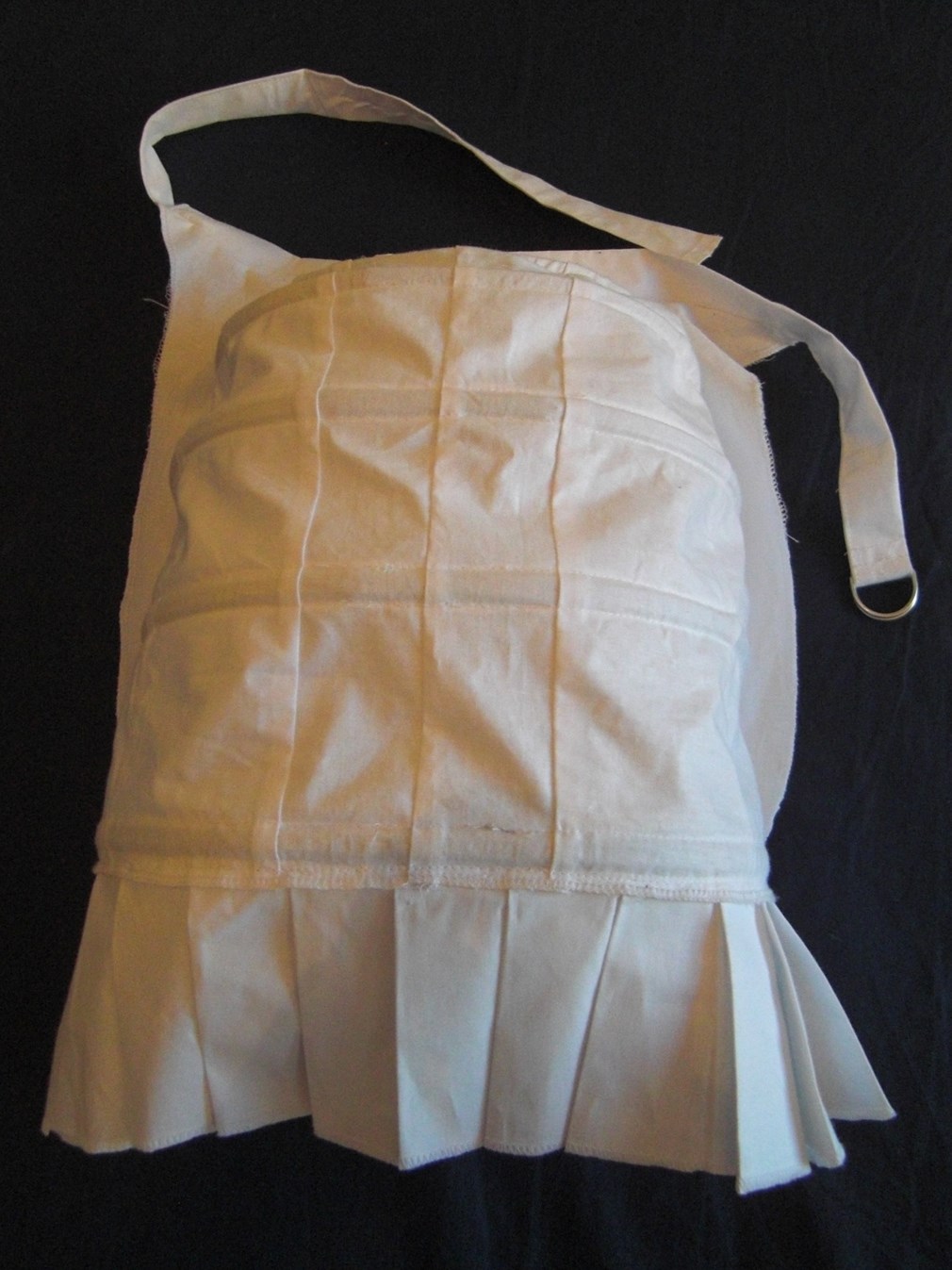
Lastly I inserted the boning, sewed the chanels shut and attached the metal rings for clouser to the wasitband. Then I tied the ribbons into rosets and had a finished worka ble mini bustle.

All in all this project took me about two hours to make, and it was so simple and fun.

Finished photos:IMG_9378

IMG_9381

IMG_9380

IMG_9377

IMG_9388

IMG_9389

IMG_9383

IMG_9382

IMG_9385

IMG_9384

And a sneak a peak of todays photoshoot:IMG_9512

Just the Facts:

Challenge: 12 Shape and Support (Light Entry)

What: A smal traveling bustle ca 1880s.

Pattern: None. Just one rectangel shaped piece and a waistband.

Fabric: 1 m of cotton sheet (donated to me a long time ago).

Notions: Thread, Belt hooks, 3,5 m of steel wire.

How historical accurate: Not sure but I think it is pretty good. Both the material and the sewing tecniques was used during he period. And since this seems to be the simplest and most straight forward way of making a bustle, I’m sure some peolple back then must have done so.

Time: 2 hours.

Cost: 50 Sek (8Usd) at the most. (Guess it fits into next weeks challenge to ;-))
First worn: only for photos around the house so far. But I’m planing to use it as part of my upcoming steampunk outfit.

Final thoughts: lookin at the pictures now I se that I should have made the top edge shorter, to bring thewhole thing up a bit thous making the top chanal sit a bit higher.

But all in all this was such a cheap and quick project. I loved how easy it went togeter, and it really helped me get past my recent sewing block.

A Cherry Blossom part 3 – Evening Gown

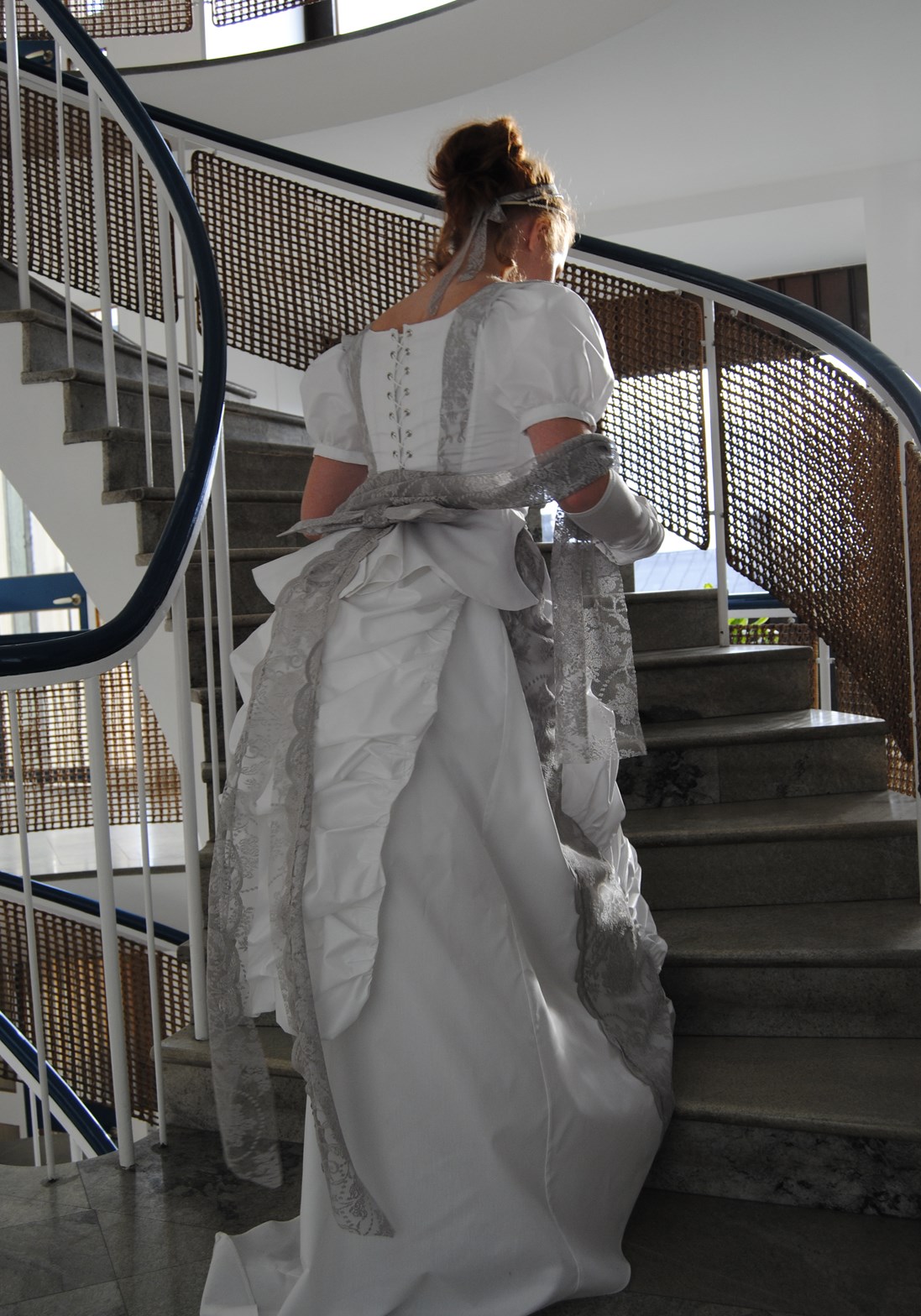
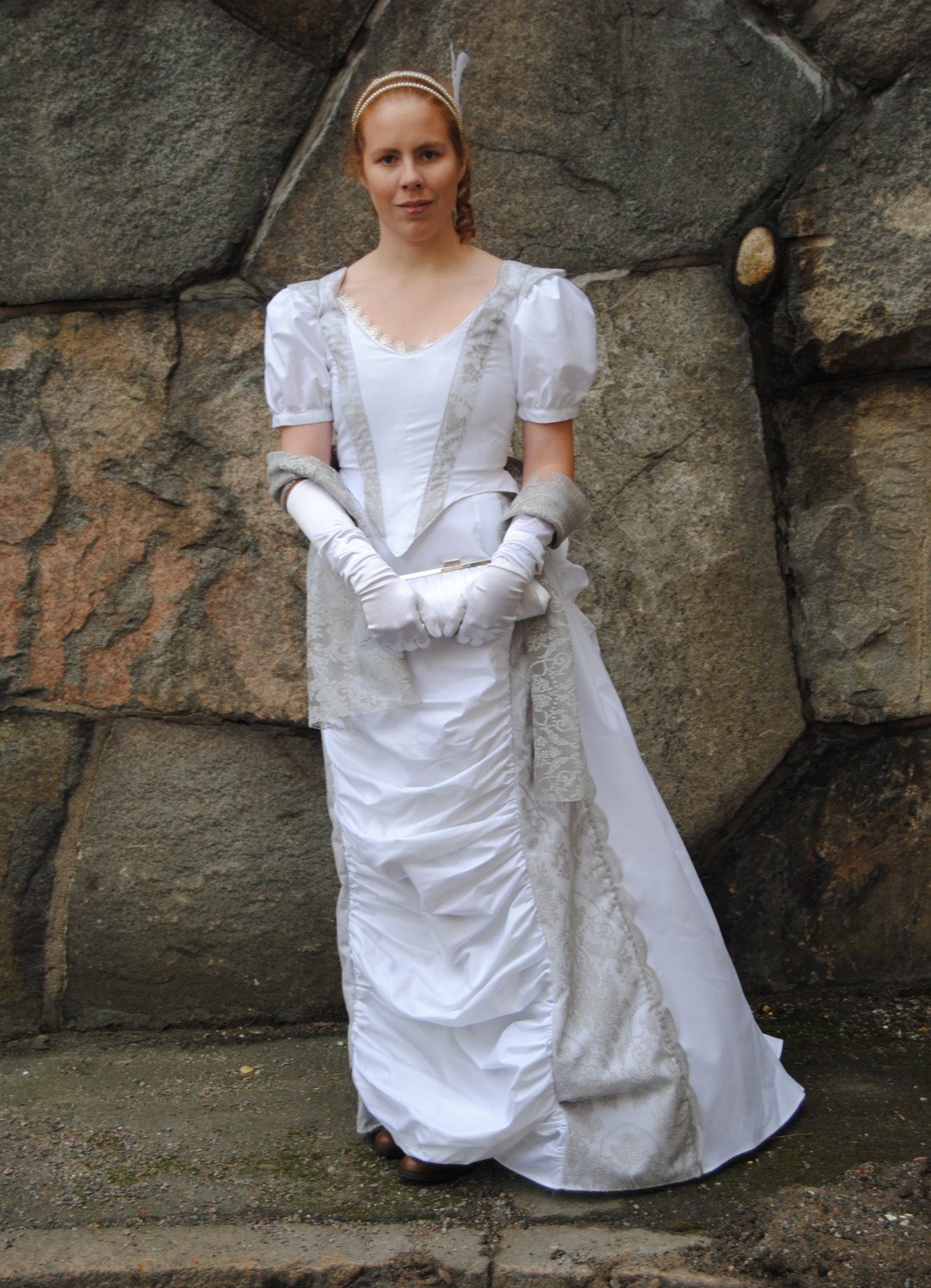
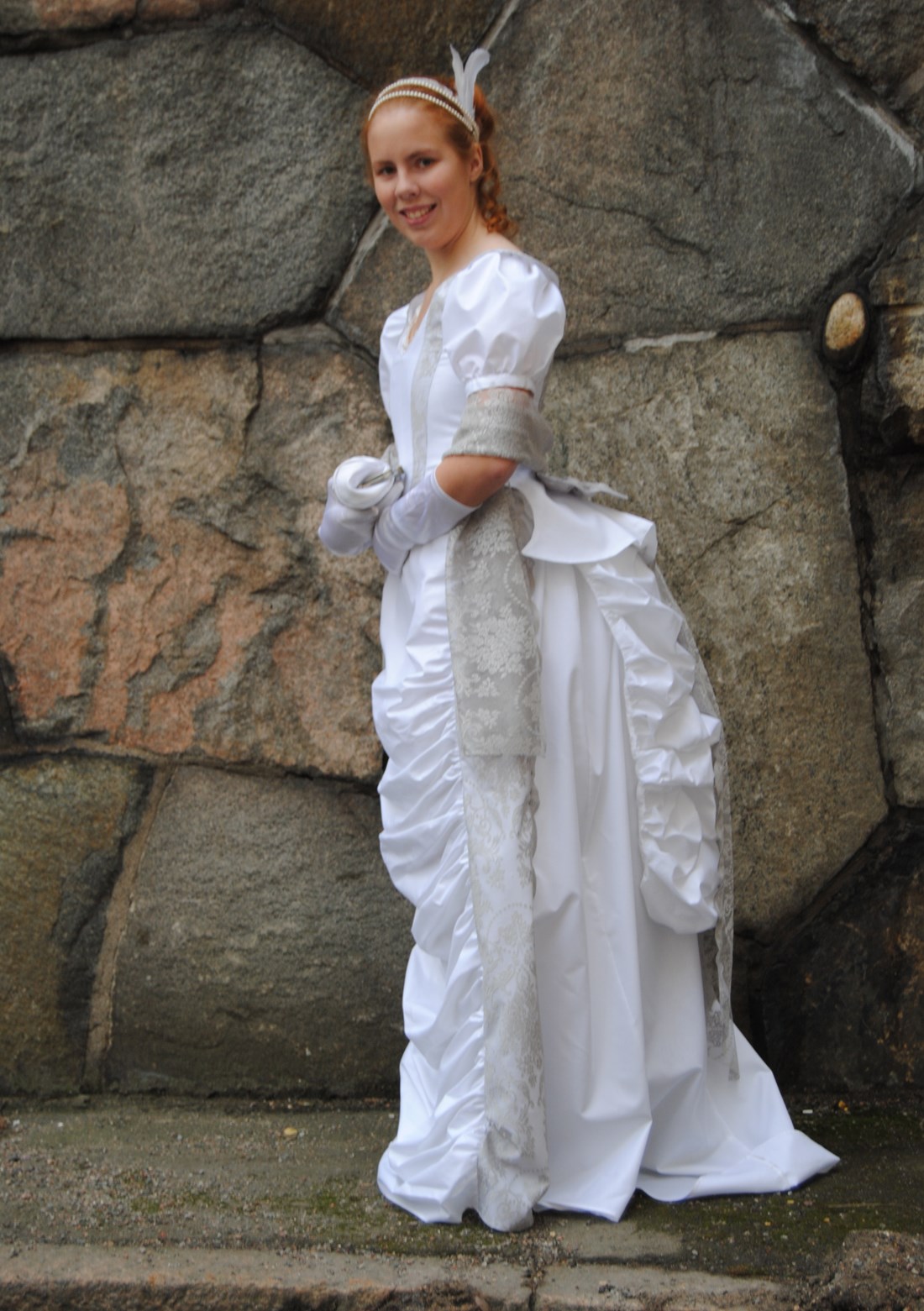
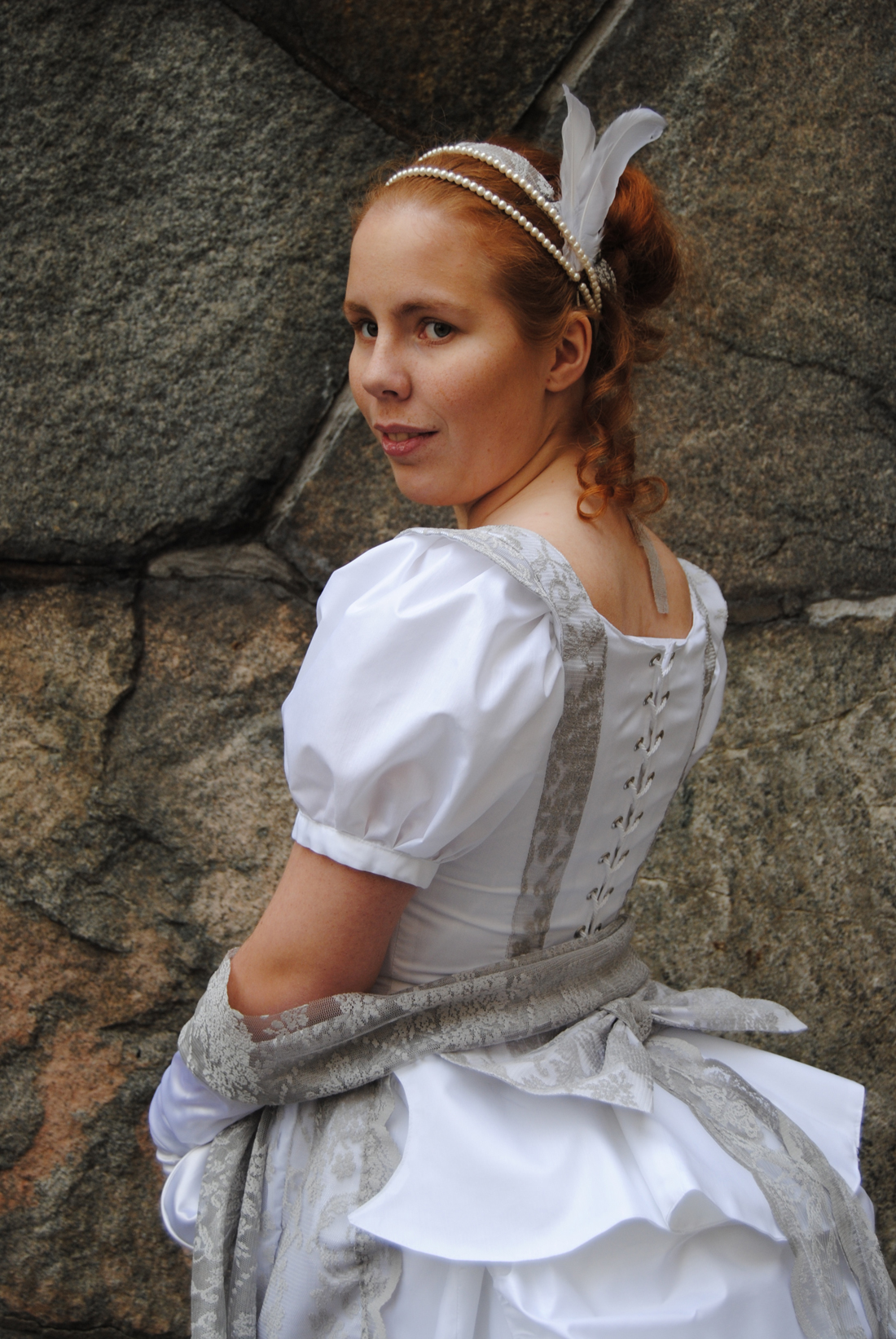
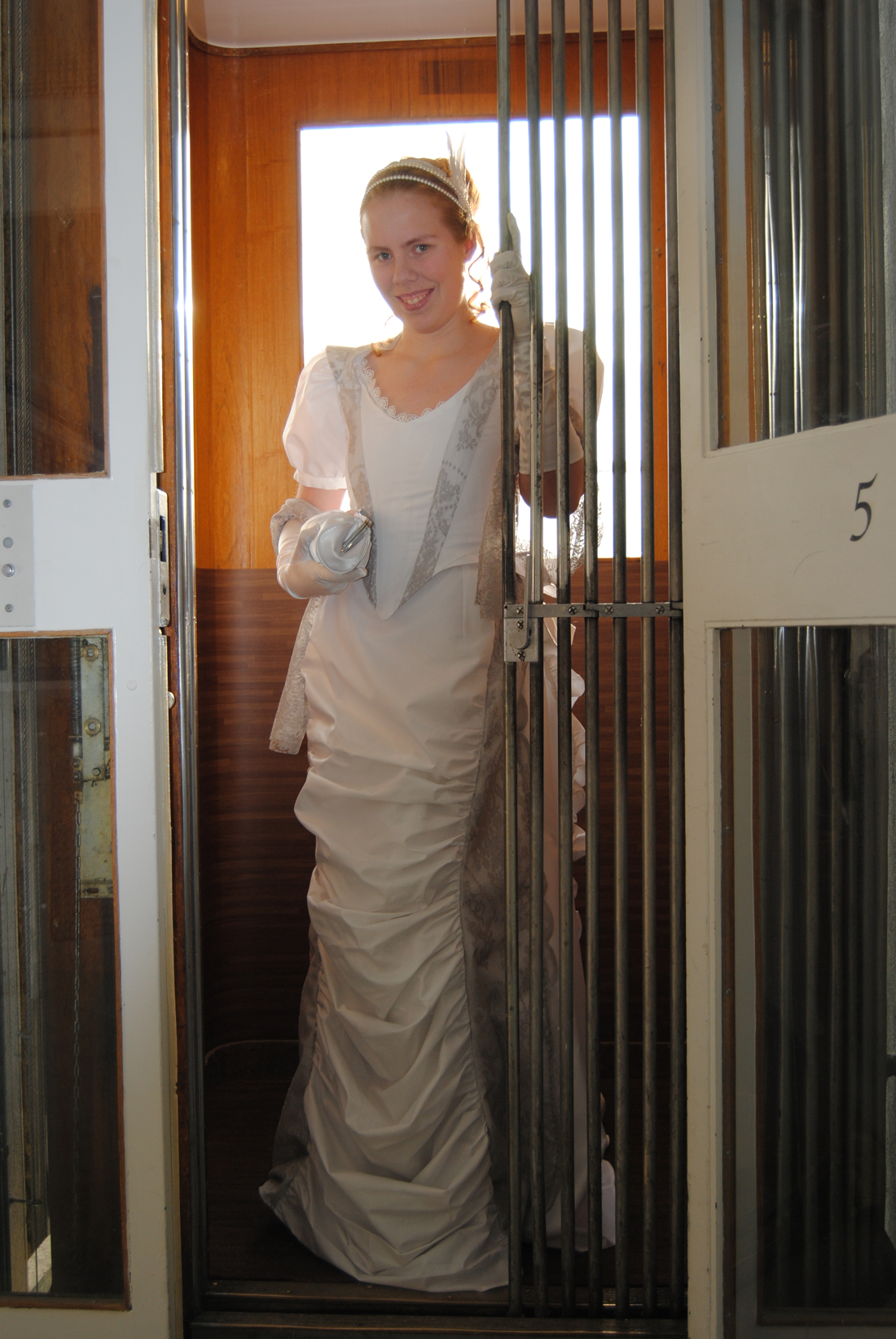
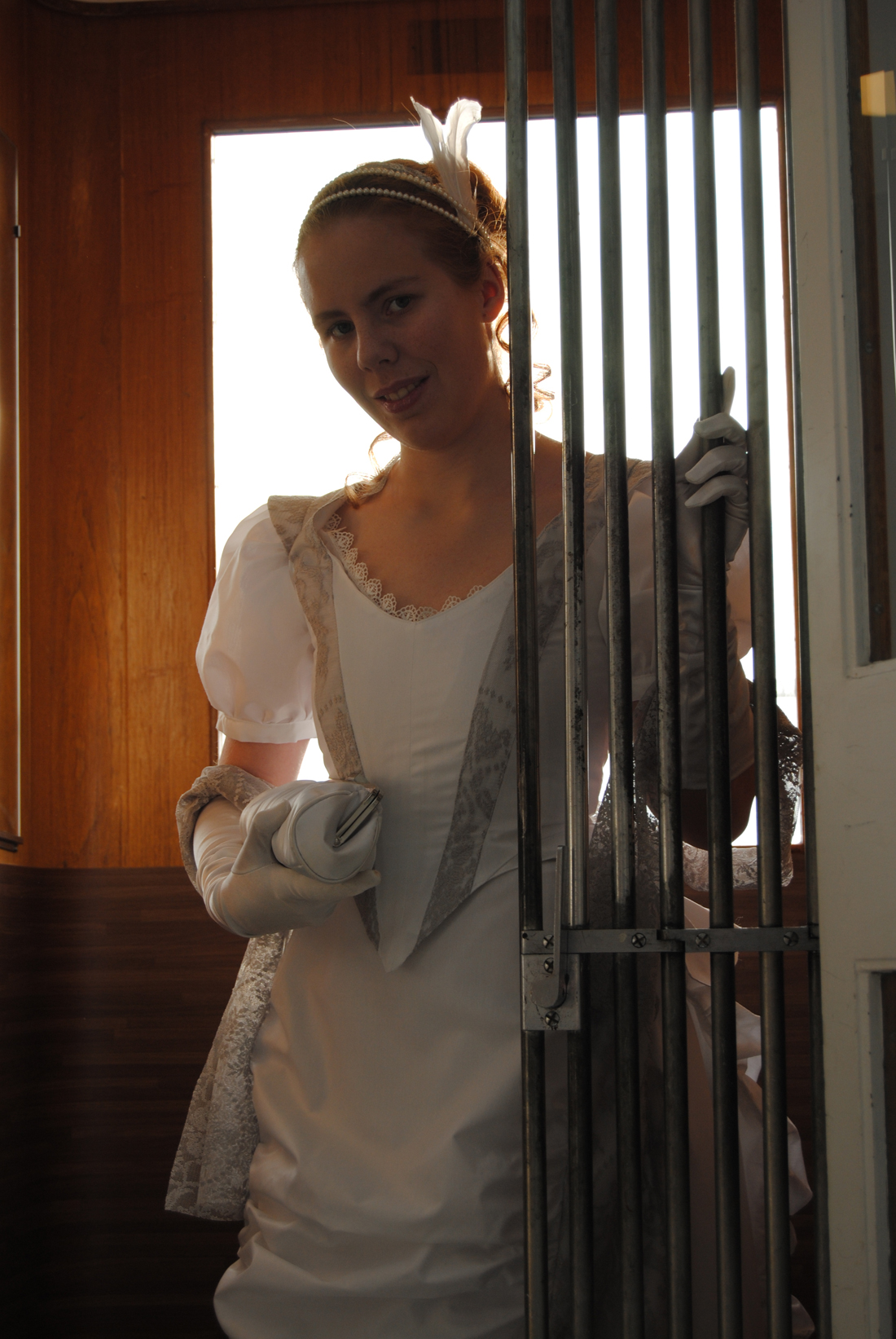
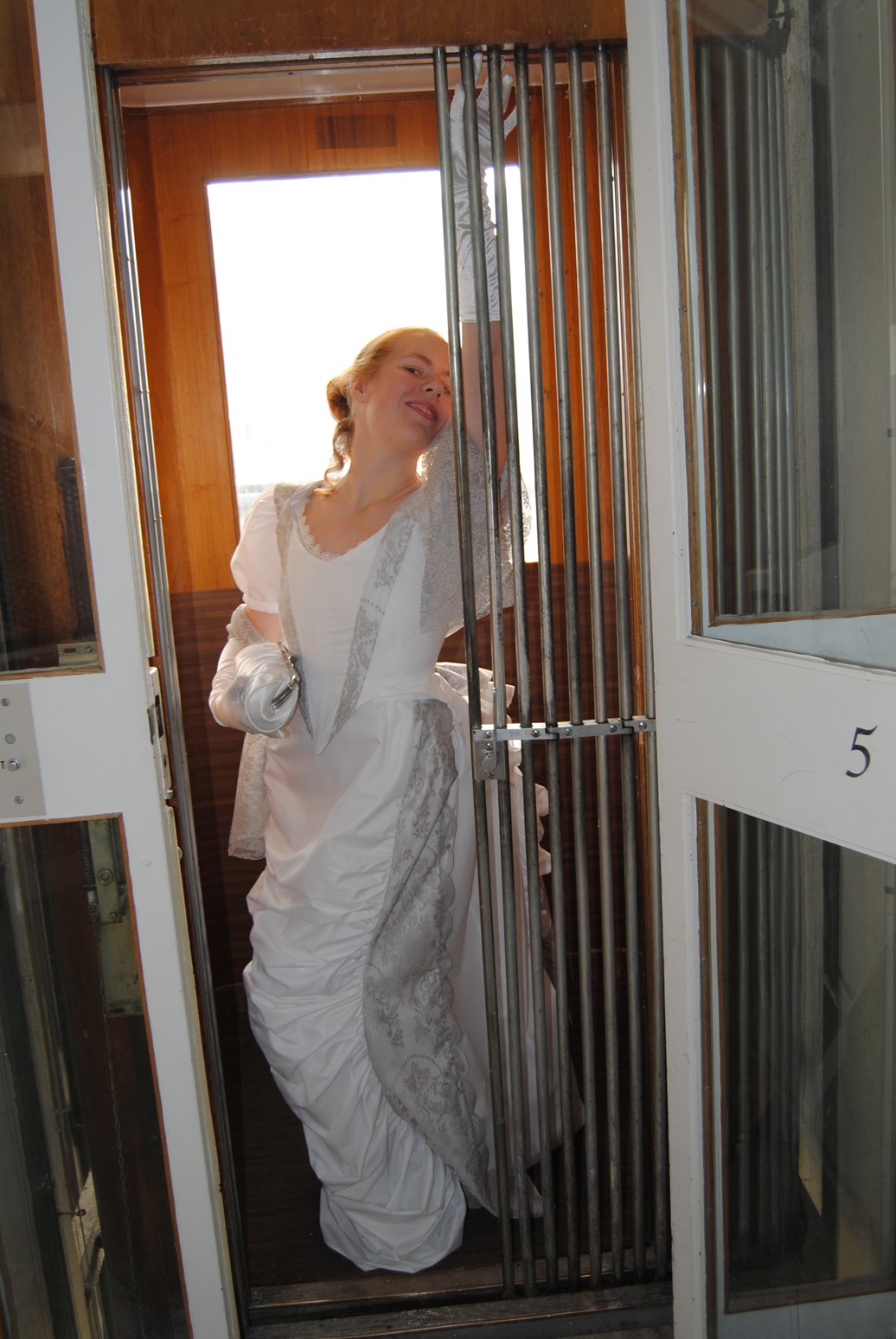
So, when I finished the Traveling suit (and underwear) for the school project back in 2010, I decided to also make a balgown for my caracter (Anja in “The Cherry Orchade”).

I found this pretty gown on the internet and used it for inspiration.far1

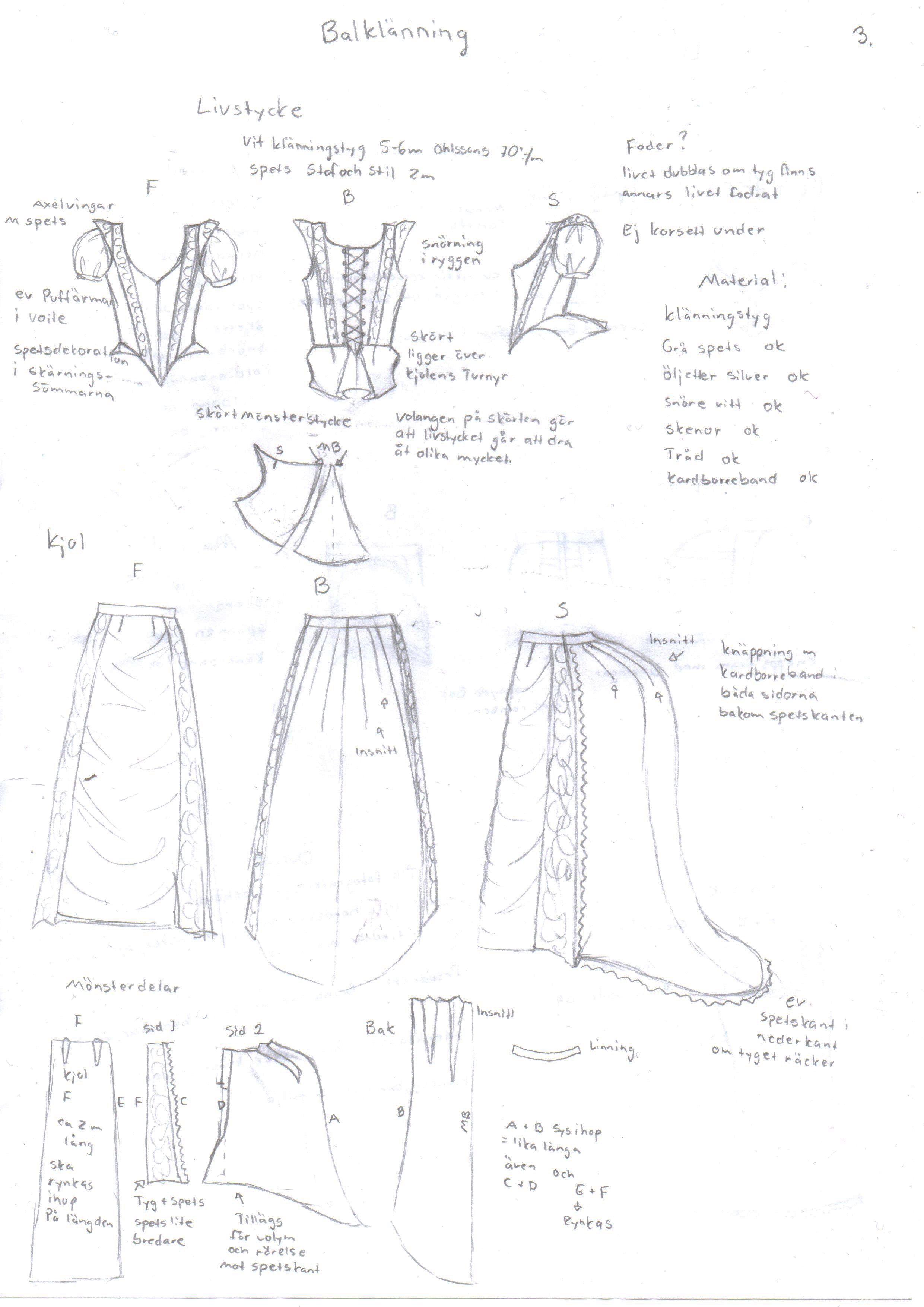
balklänning produktteckningTechnical drawing of the gown.

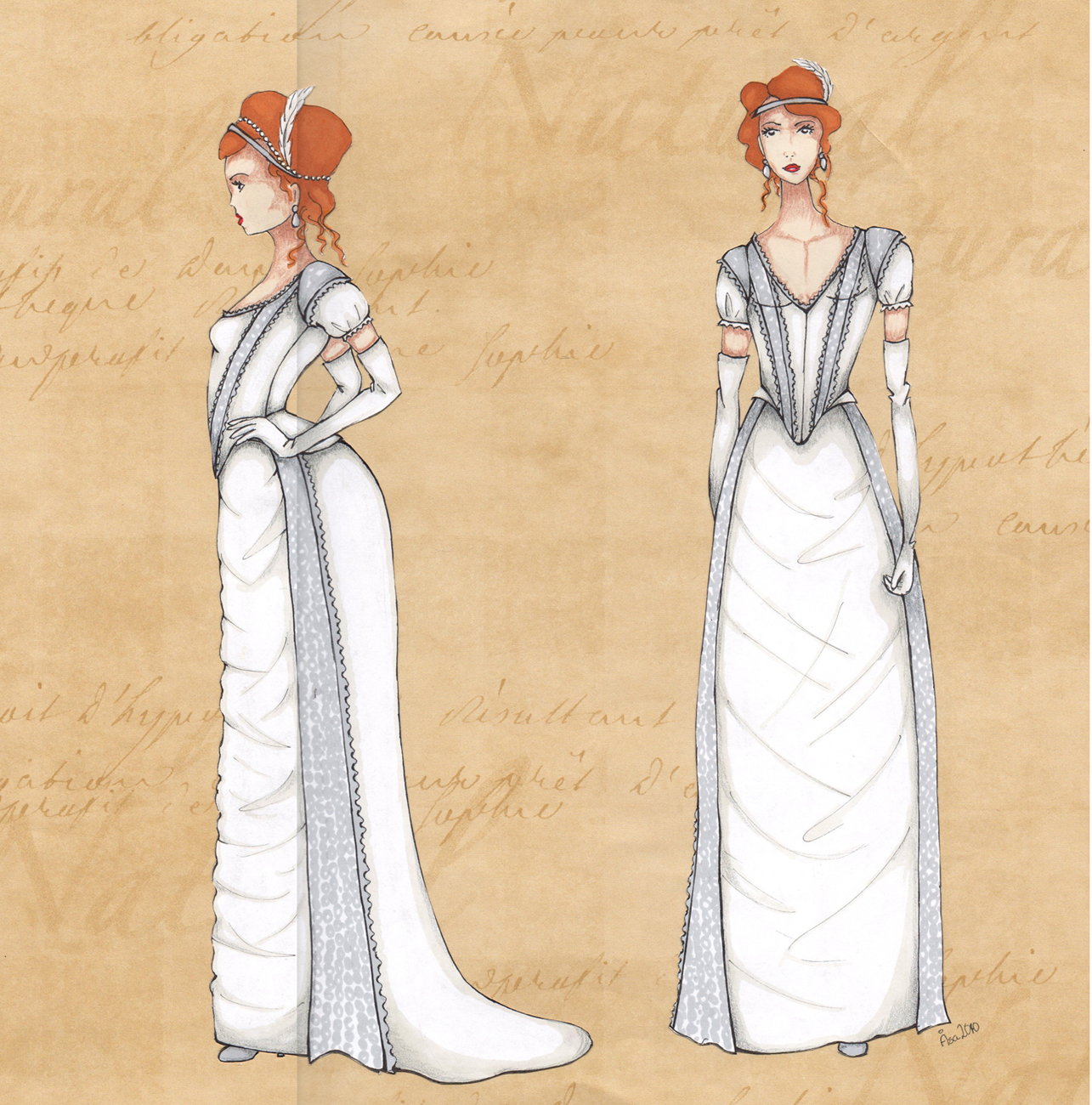
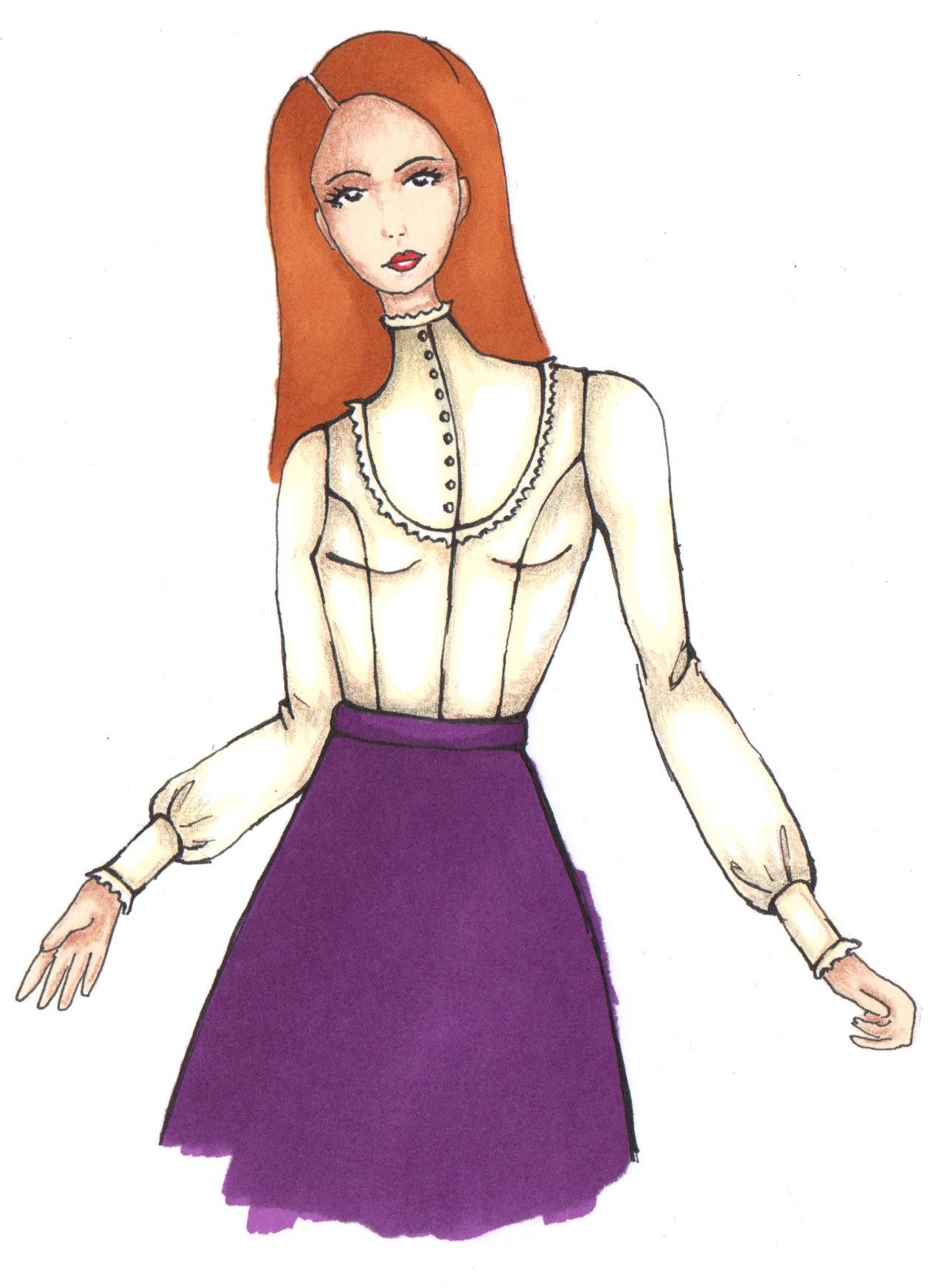
Anja-BalklänningAnd my costume design sketch.

I bought a white lightweight cotton fabric and some grey lace, and began the sewing.

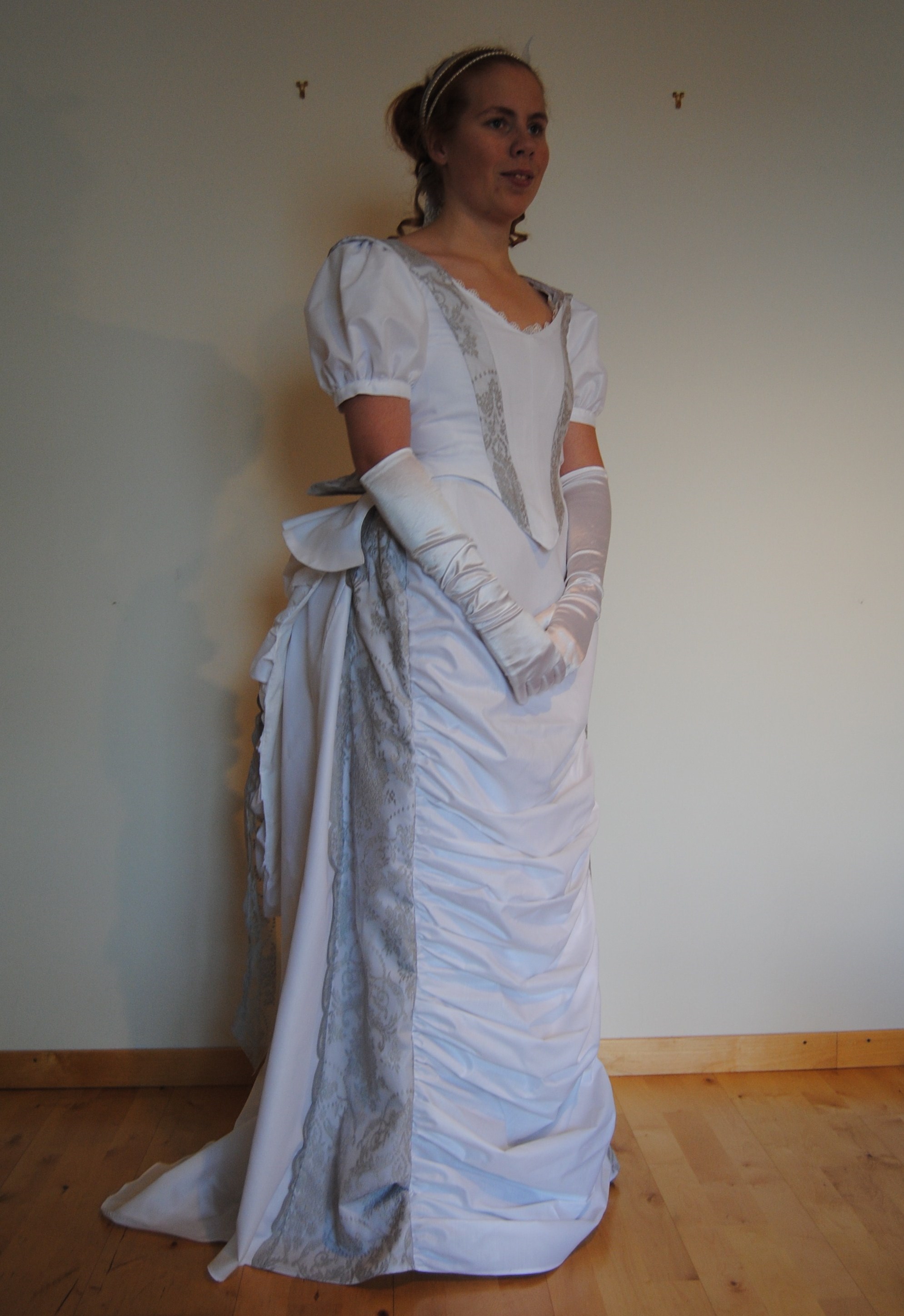
This was way before I started doing historical costume so the pattern making and construction are all totaly modern. I just did what I could to make it look historical. The costume is a two piece – skirt and bodice, with additional costume pieces added at the end of the proces to make it look even more historical.

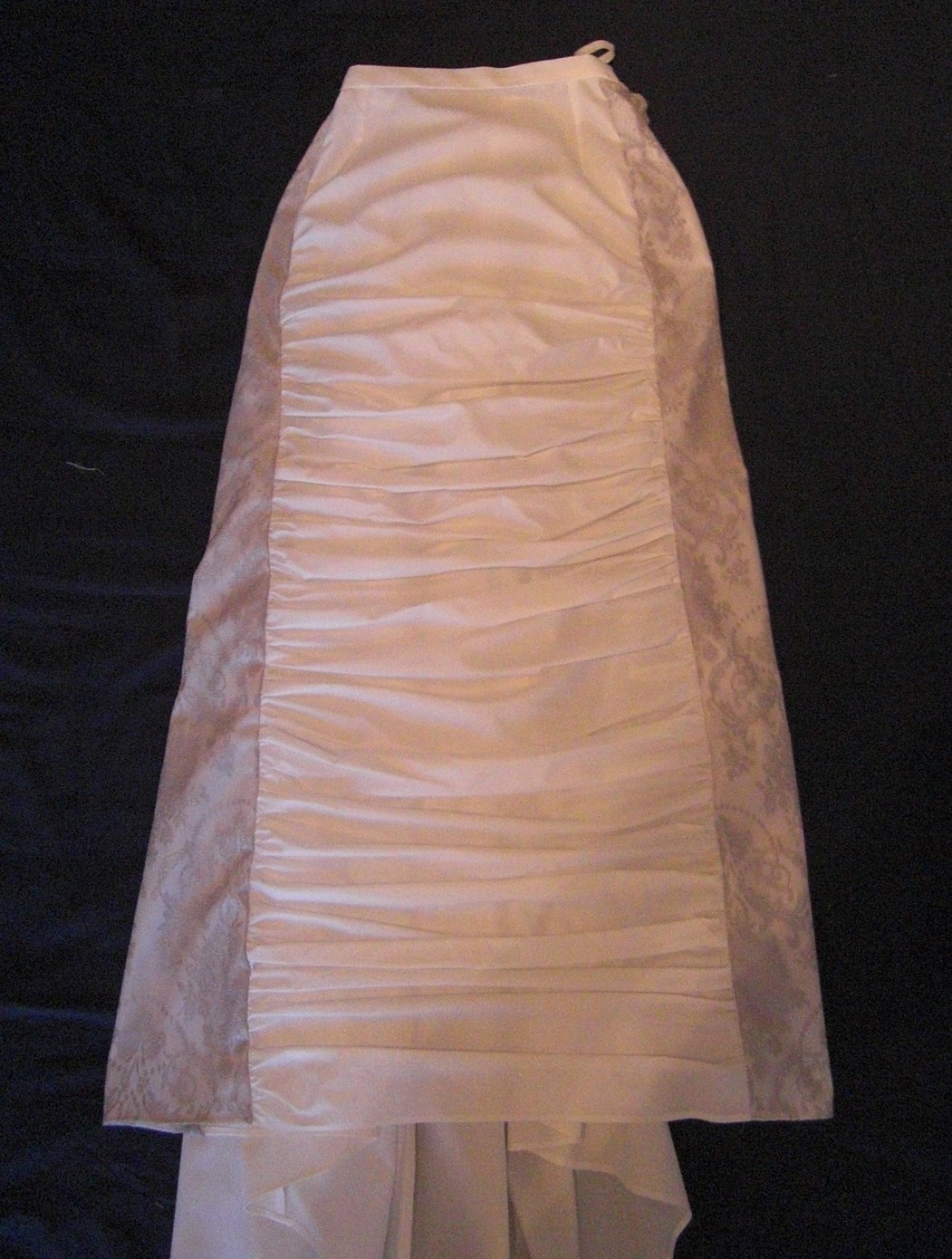
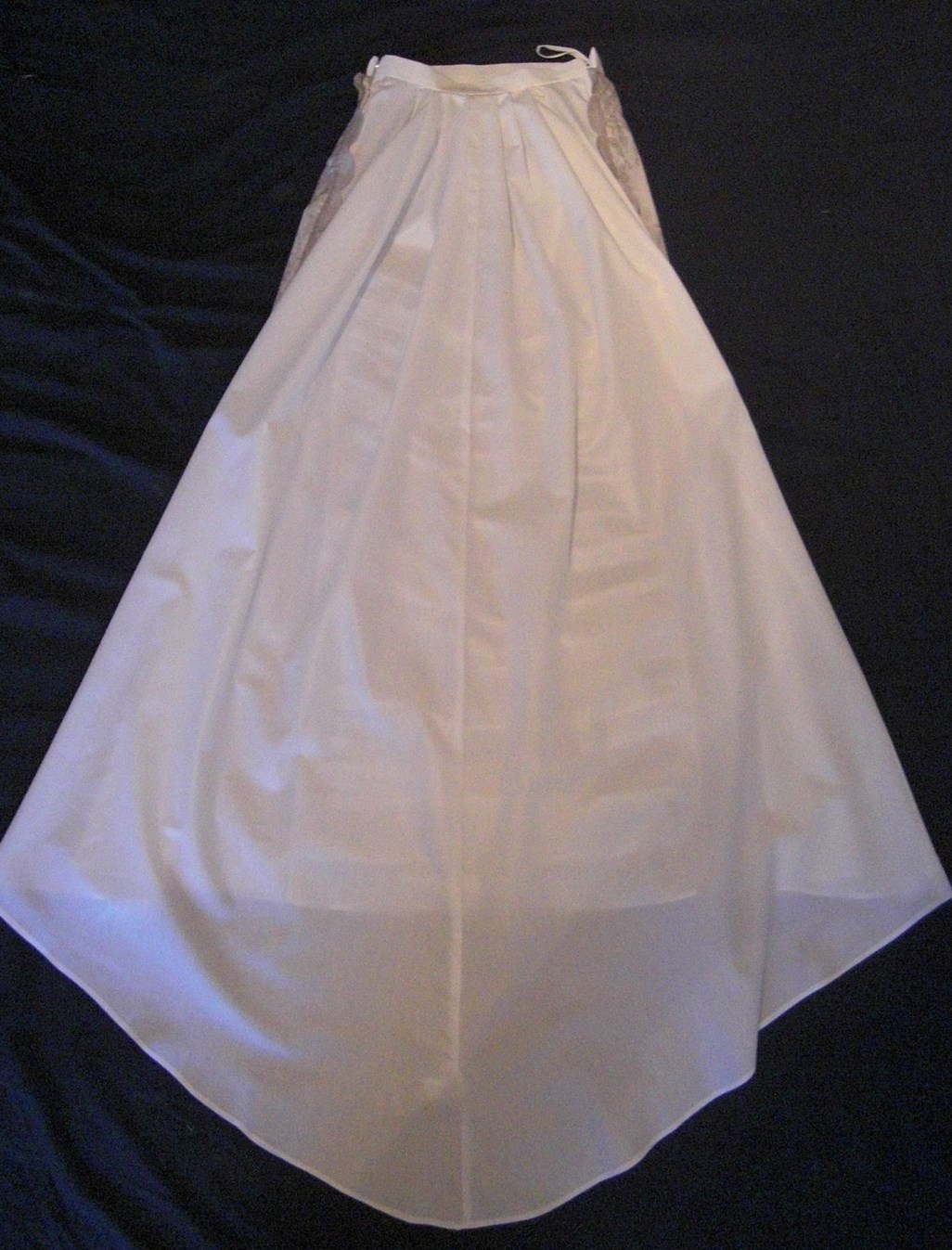
The skirt is made out of three pieces (front, side and back), where the front is draped to the lace-covered side piece.

kjol fram kjol bak

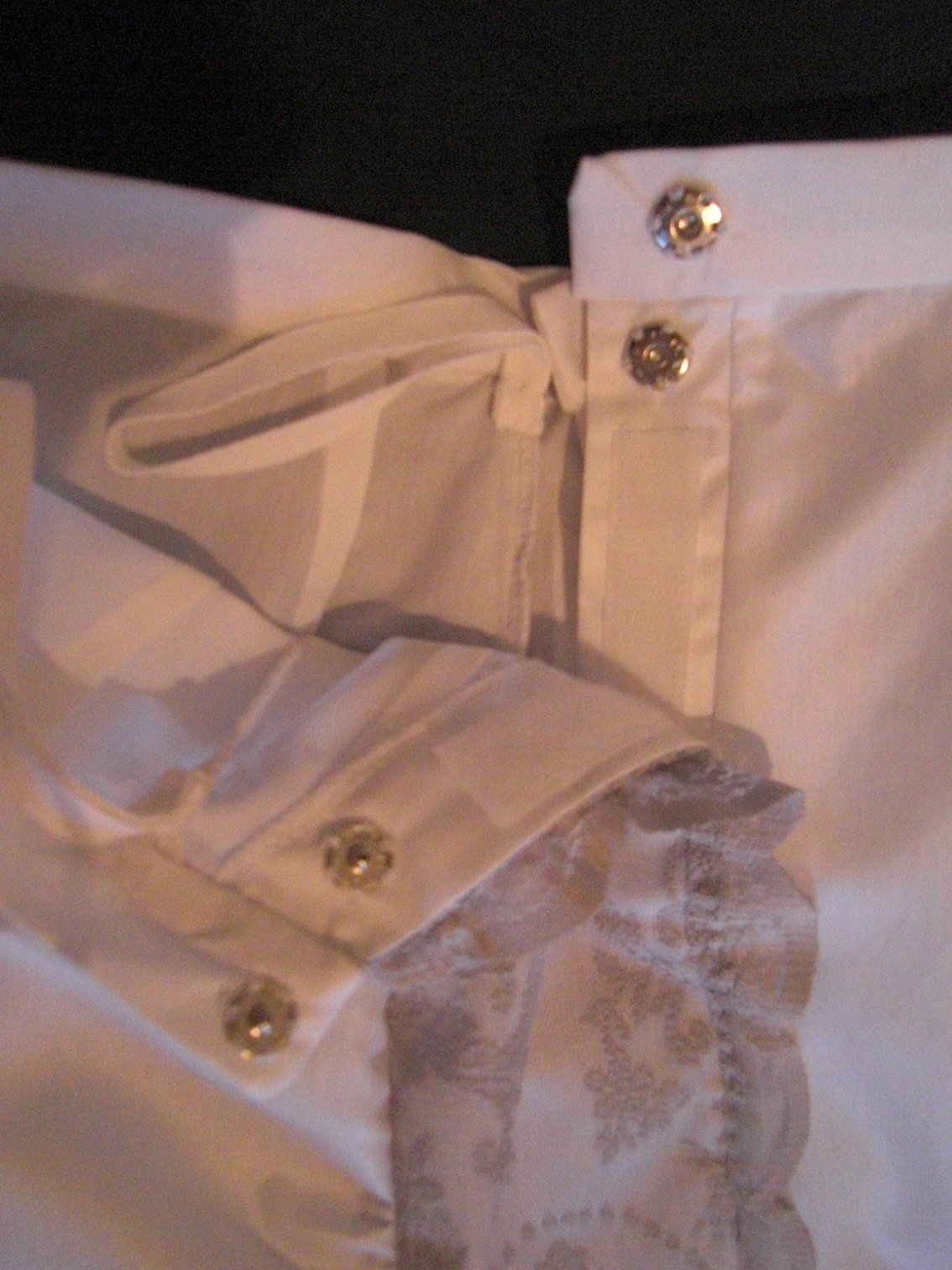
It closes with snaps at the side, hidden behind the lace.kjol knäppning öppen

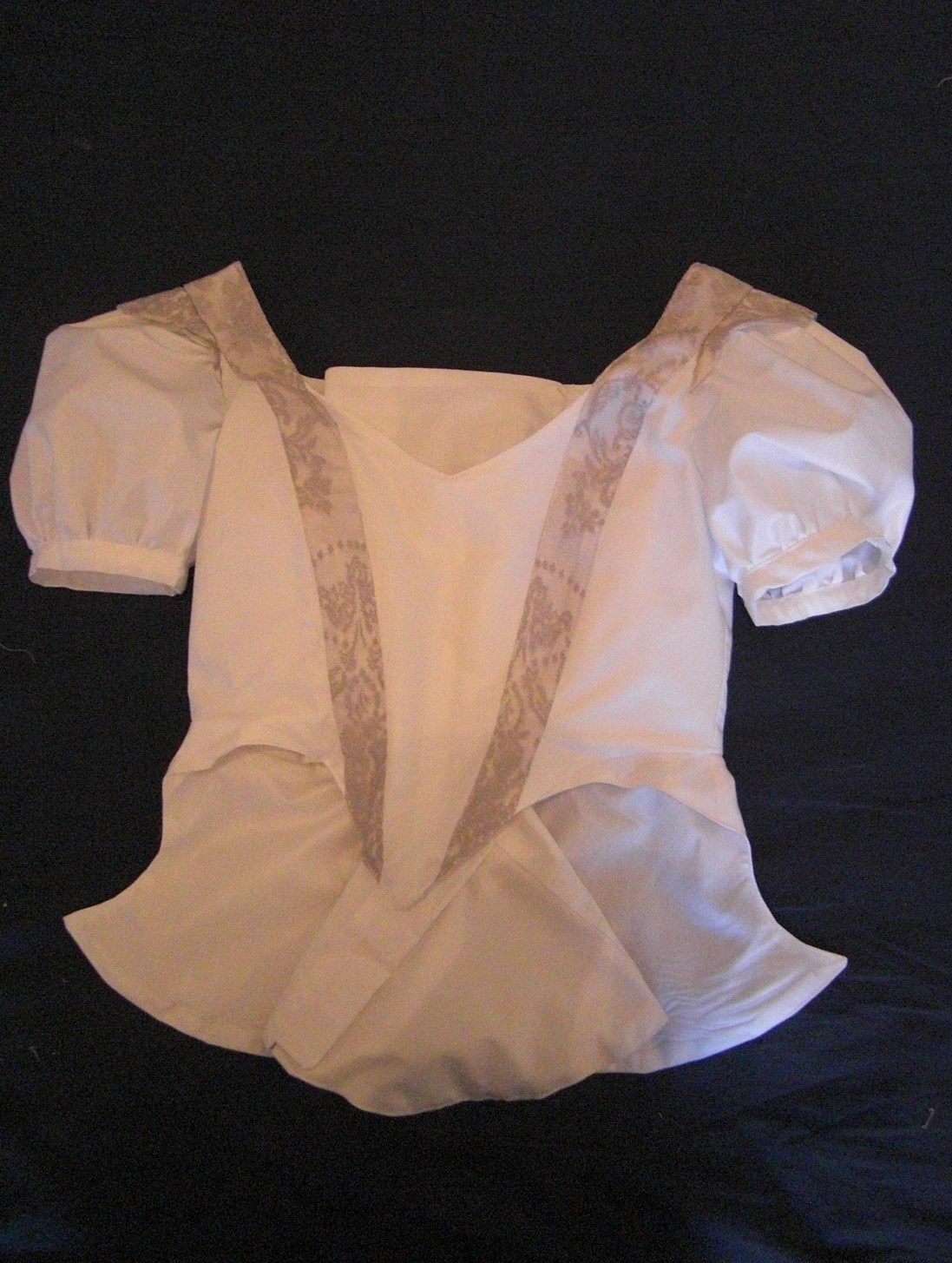
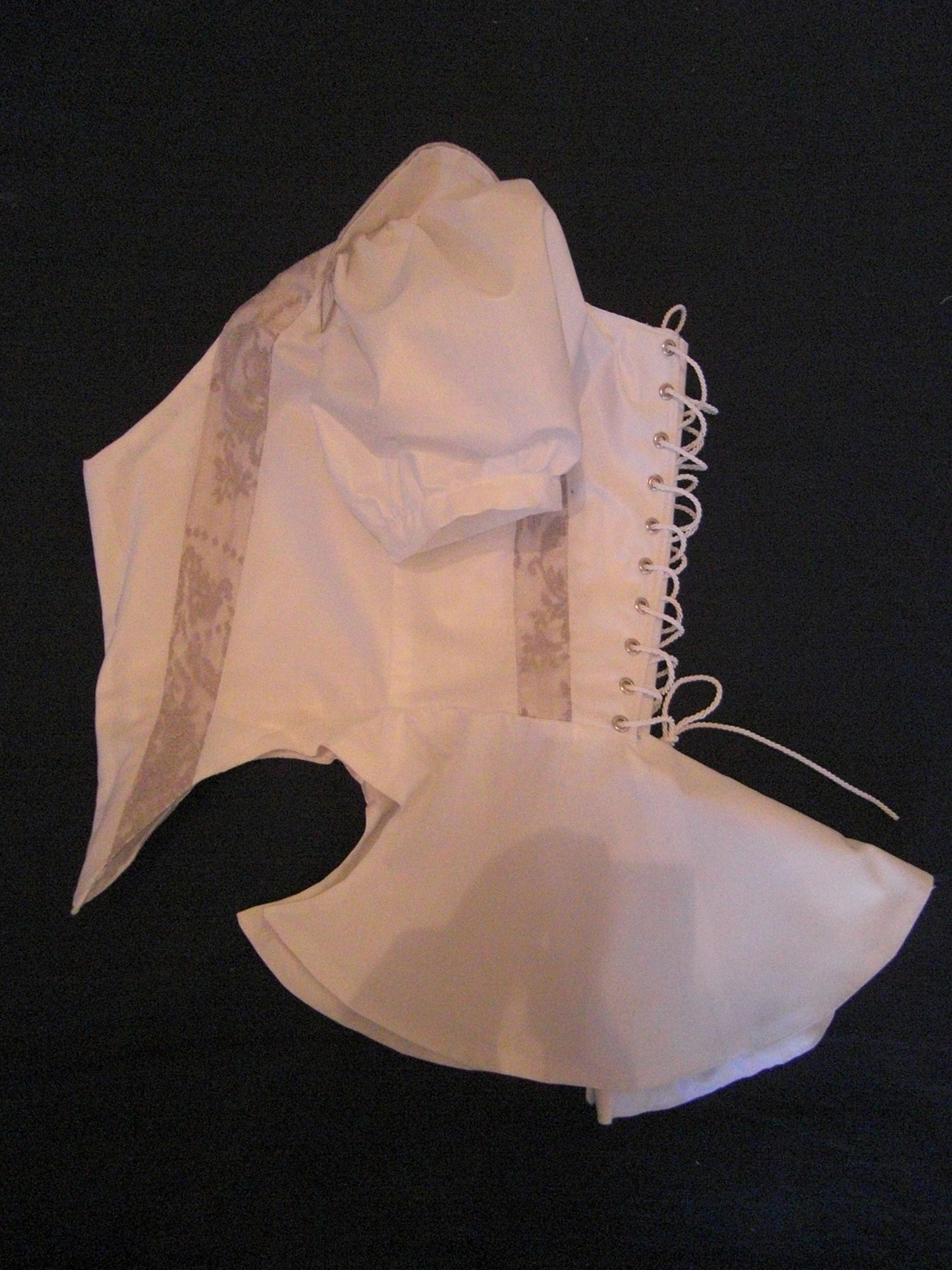
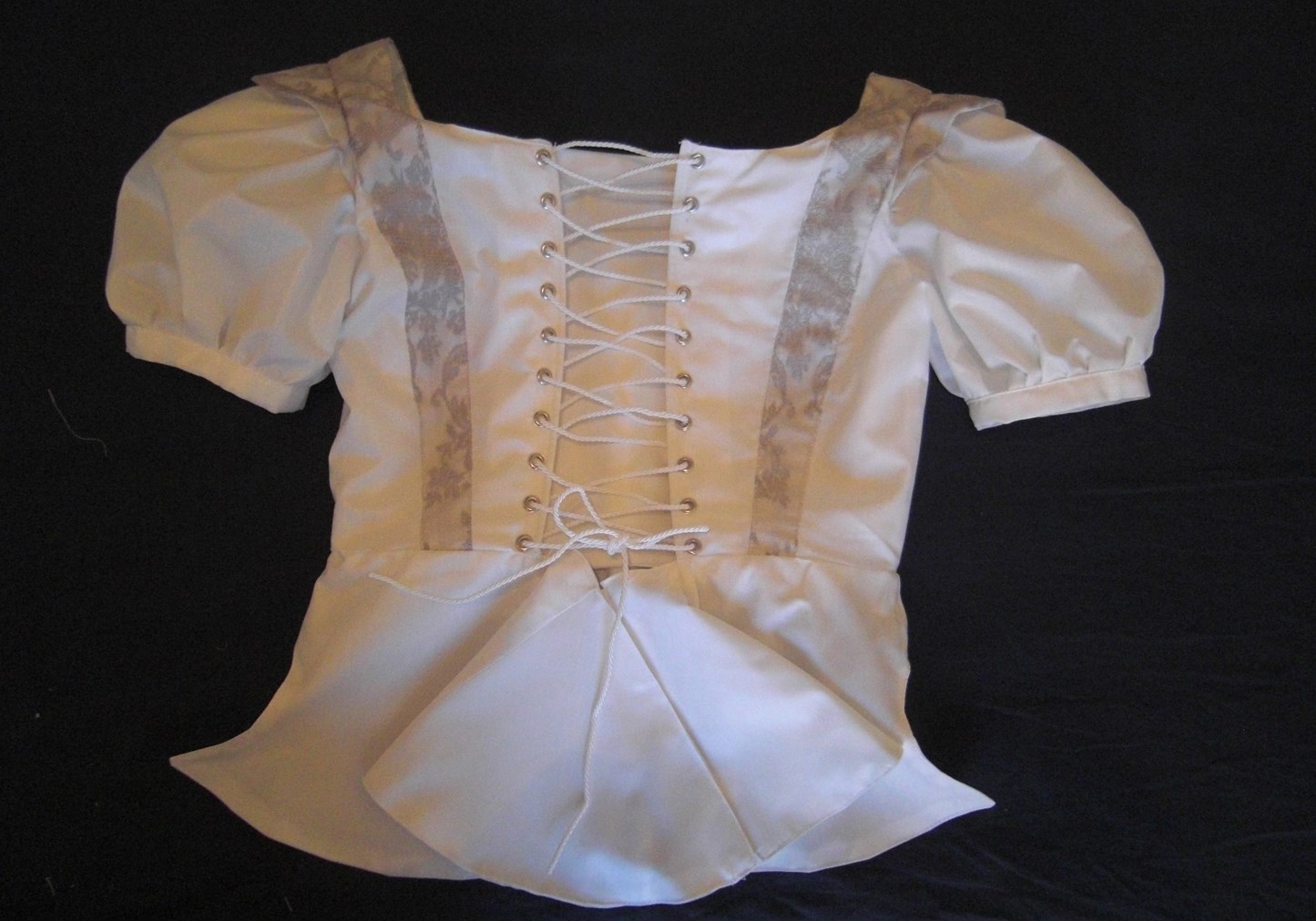
The bodice is laced up the back using gromets, and are stiffened with bones in every seam. It also have decorative stripes of lace, and a smal peplum at the back.

liv framliv sidan

liv bak

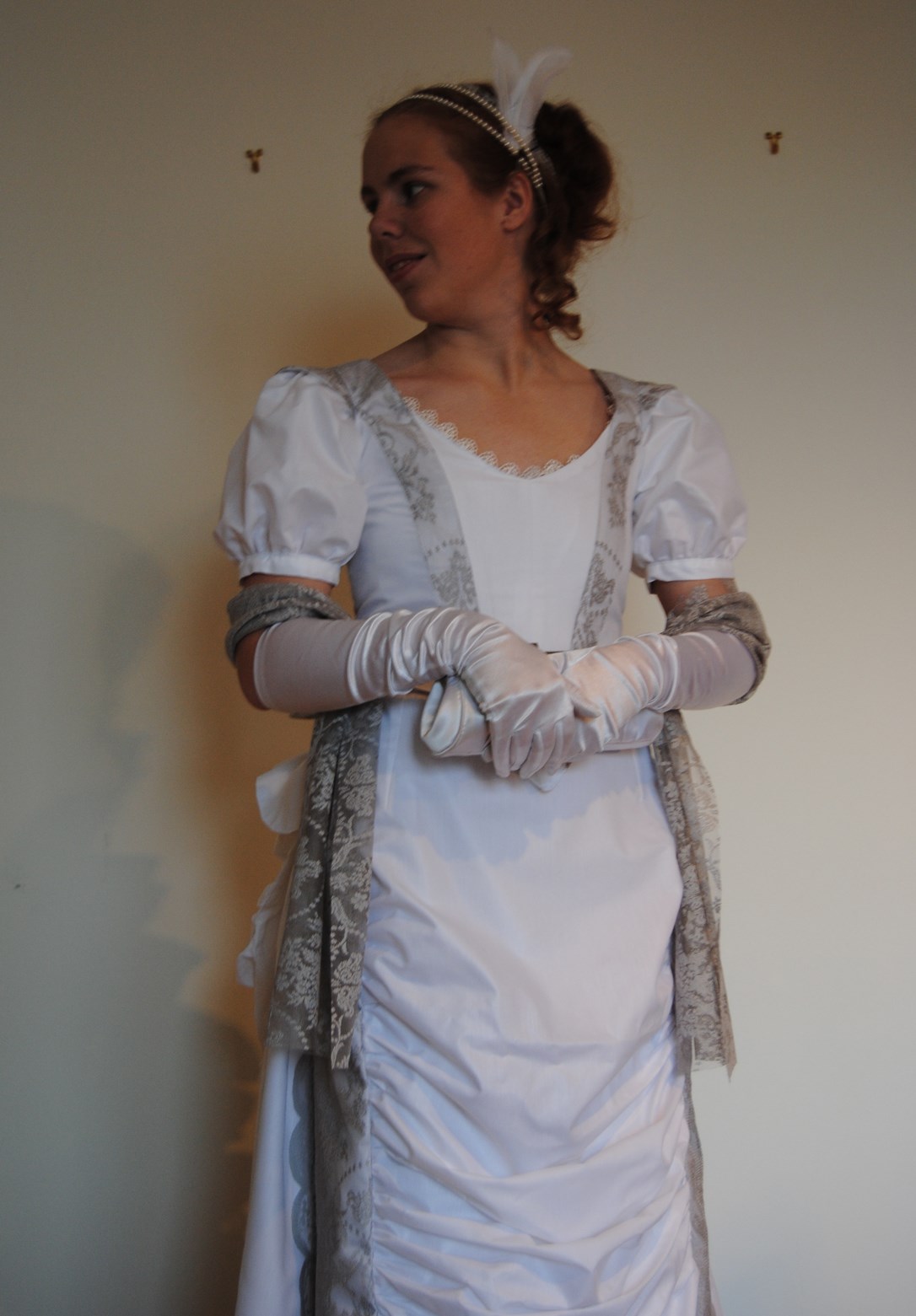
The night before my sister was coming for the photoshoot, I decided to use the last pieces of fabric to make a seperate draping to hide the bustle beneath the way to see-through skirt. I also made a bow of the lace and added it to the back for contrast.

Then I dressed my sister in the gown and had her model it.

DSC_0211

DSC_0221

16

DSC_0200

DSC_0238

DSC_0245

DSC_0260

DSC_0304

DSC_0293

DSC_0311

DSC_0281

DSC_0284

DSC_0278And a silly shoot.

Considering my very limited knowledge of historical clothes at the time, I think I manadged petty good with both the underwear, traveling suit and the balgown. But there are some things I would defenetly change if she would ever whant wear one of these costumes again.

A Cherry Blossom part 2 – Traveling Suit

When the underwear was finished (A Cherry Blossom part 1) It was time to move on to the “real” garmnents.

I decided to make traveling outfit for the caracter of Anja. She and her family rides the train to get to their country estate, and I thougt it would be fun to create a ensamble to wear while traveling.

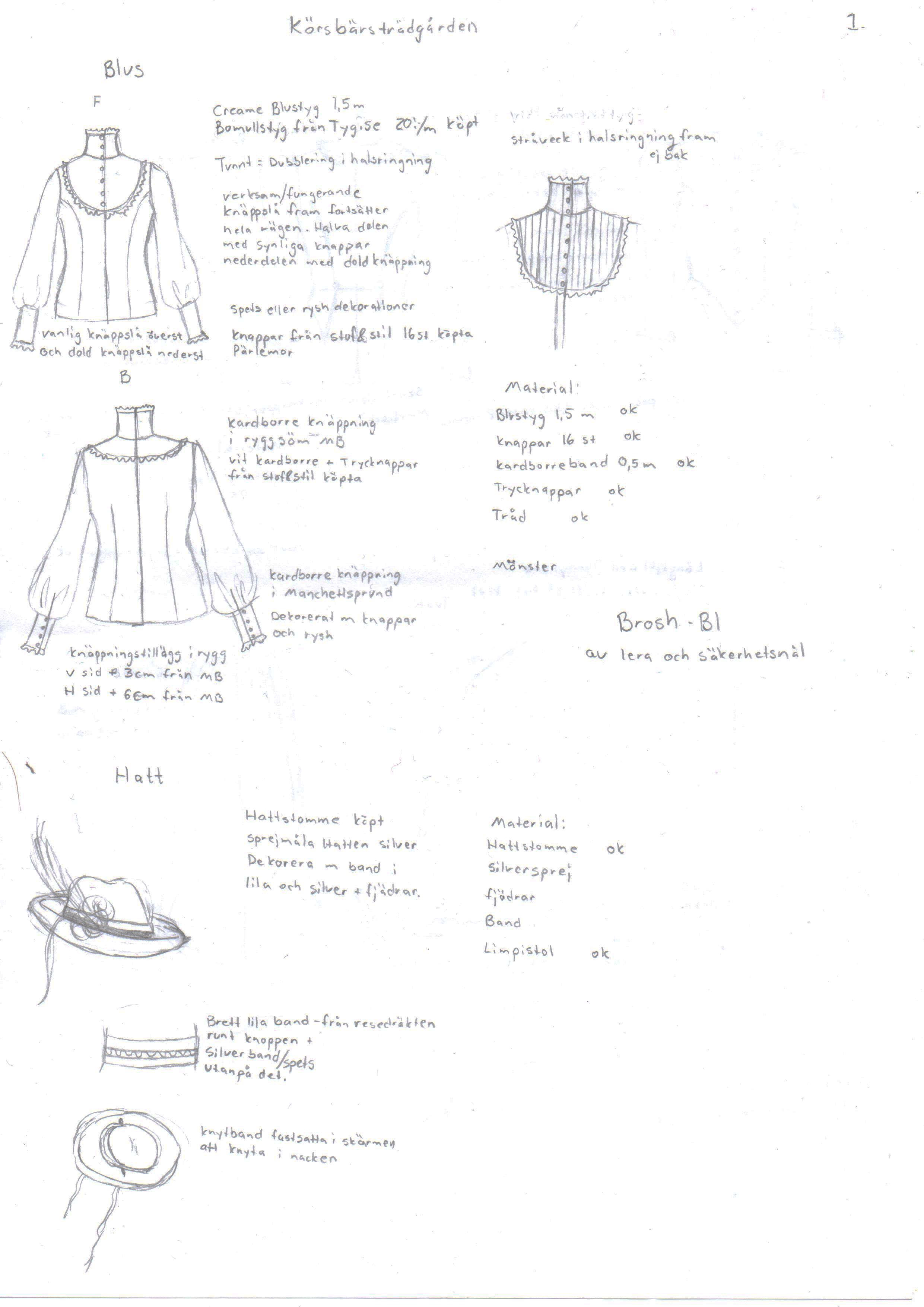
blusA design sketch of the shirt.

blus o hatt produktteckningAnd a construction drawing of the shirt and hat, including fabric notes and details.

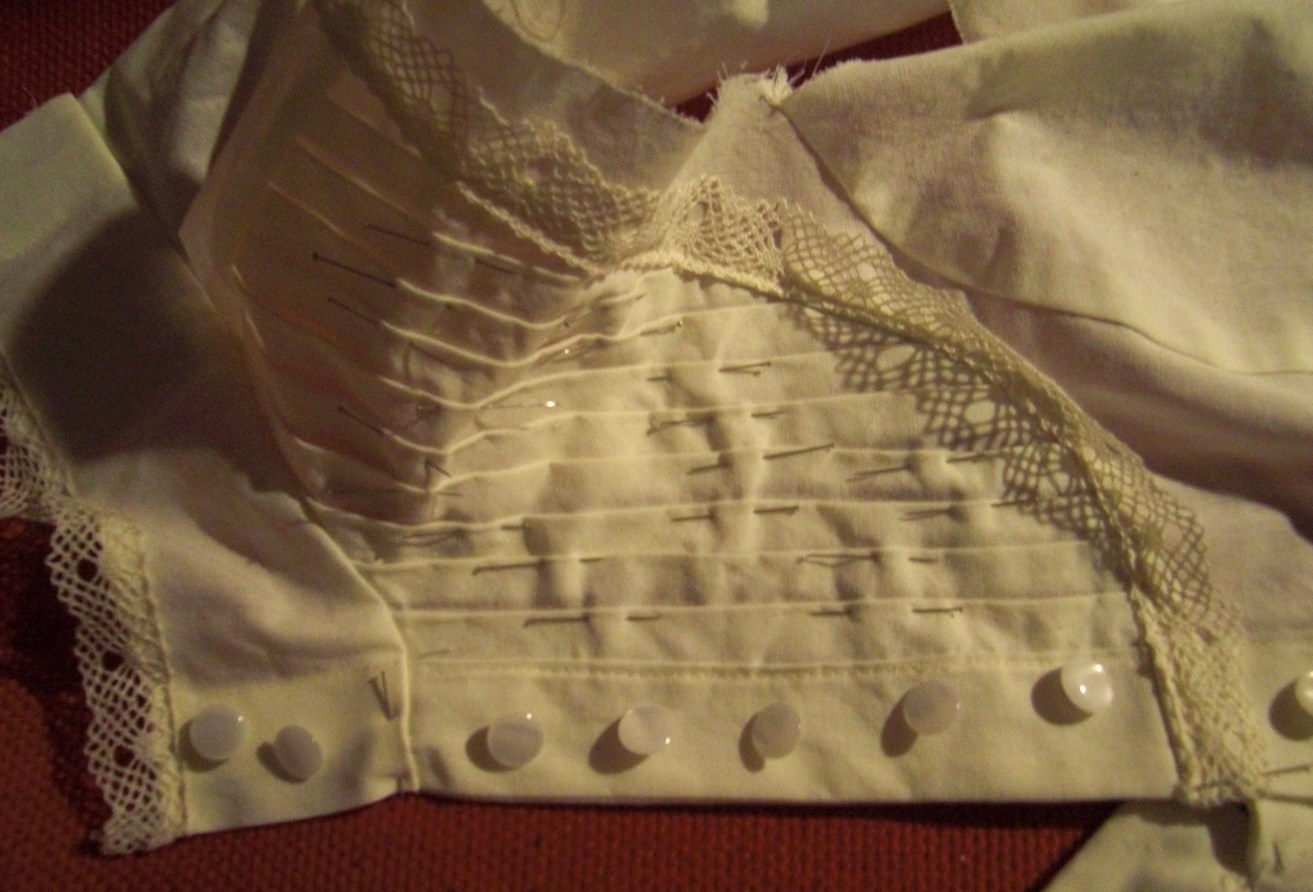
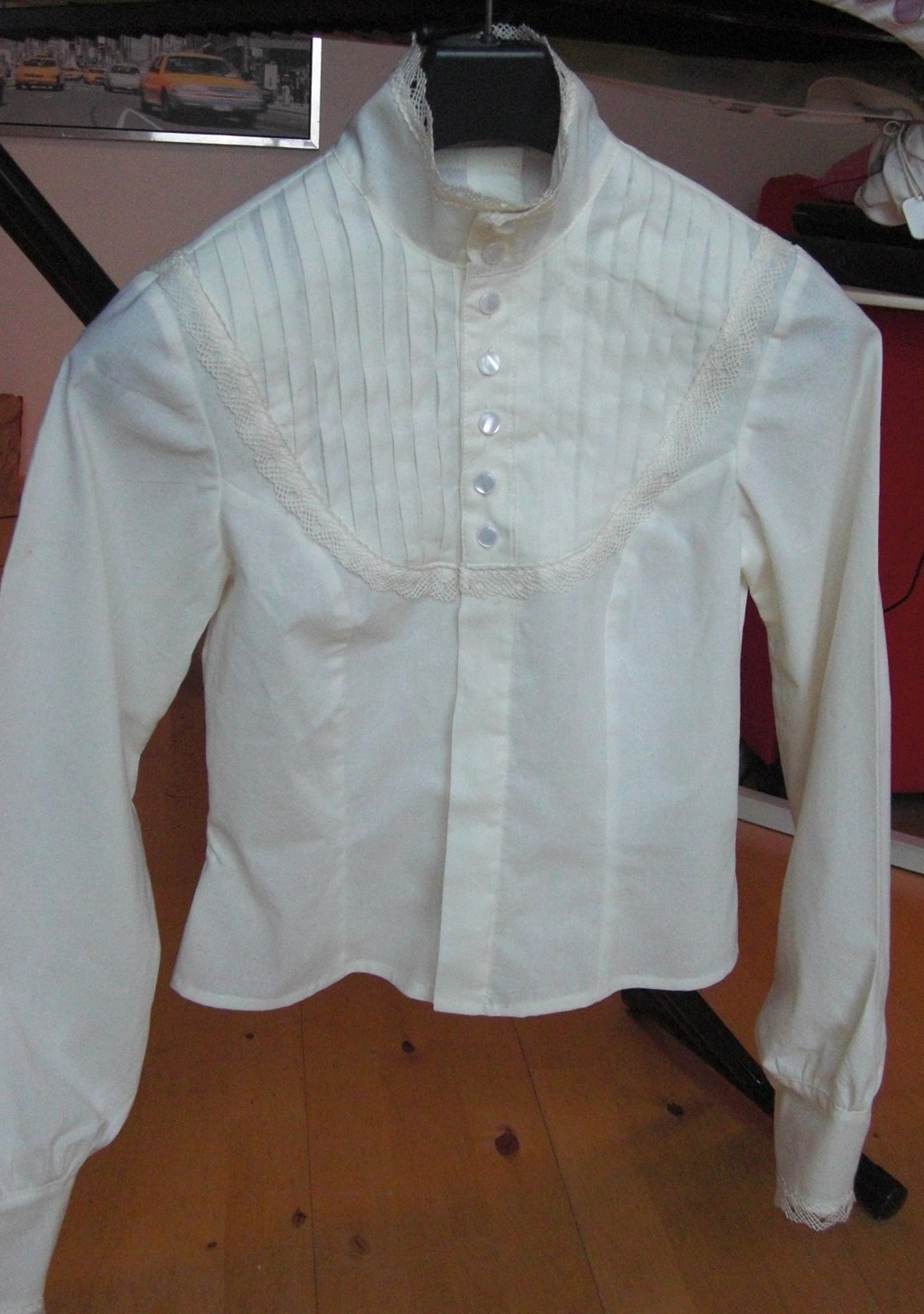
I used a nice cotton satin for the shirt and did pintucks, buttonclouser and lace decoration. Blus stråveck (2)

blus fram hängandesThe finished shirt.

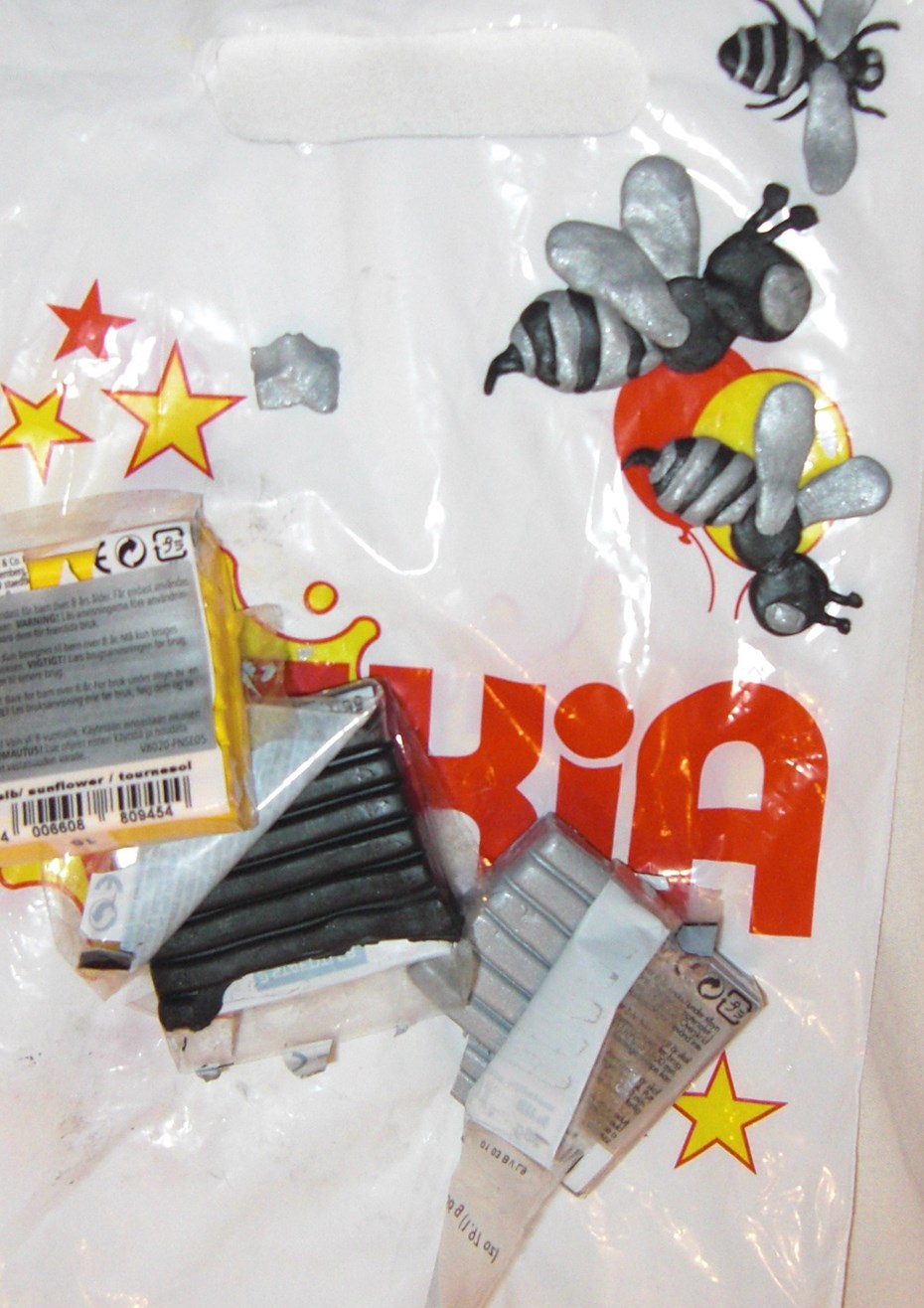
I also bought some modeling clay (cenitlera) and sculpted some bees for the bee-broch being mentioned in the play.bi-brosch i lera

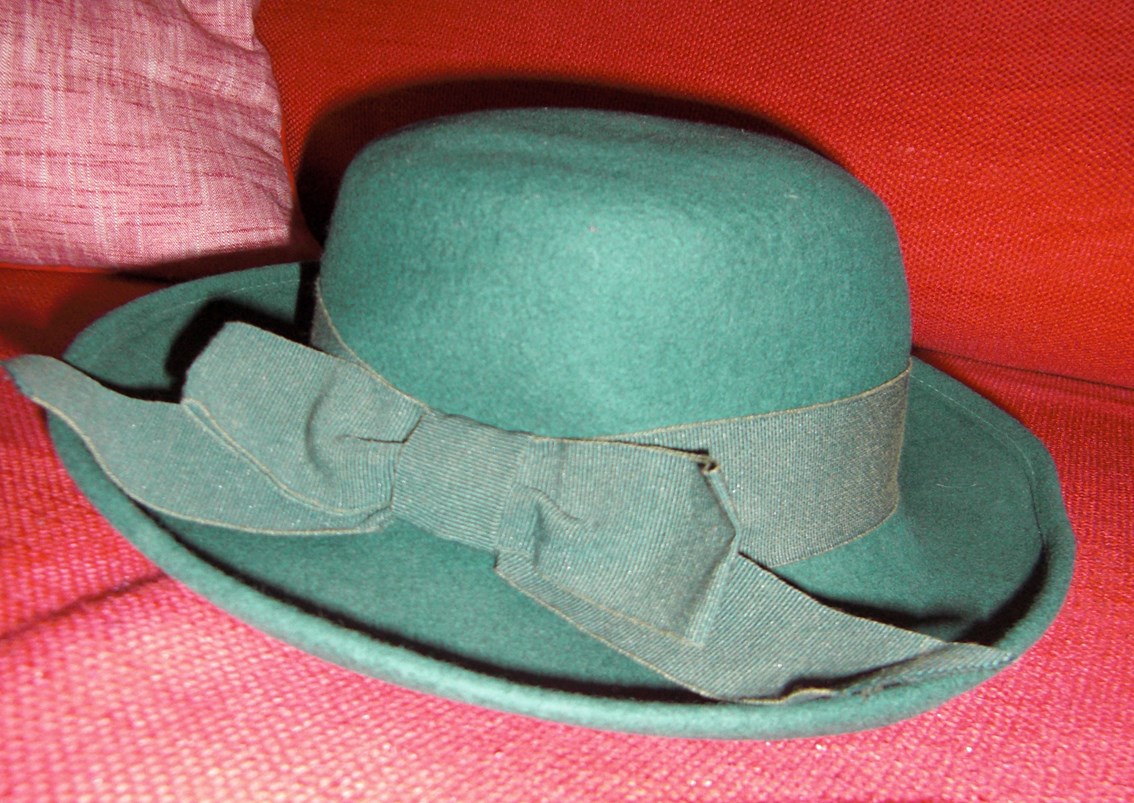
For headwear I bought a hat on an online auction.hatt innan

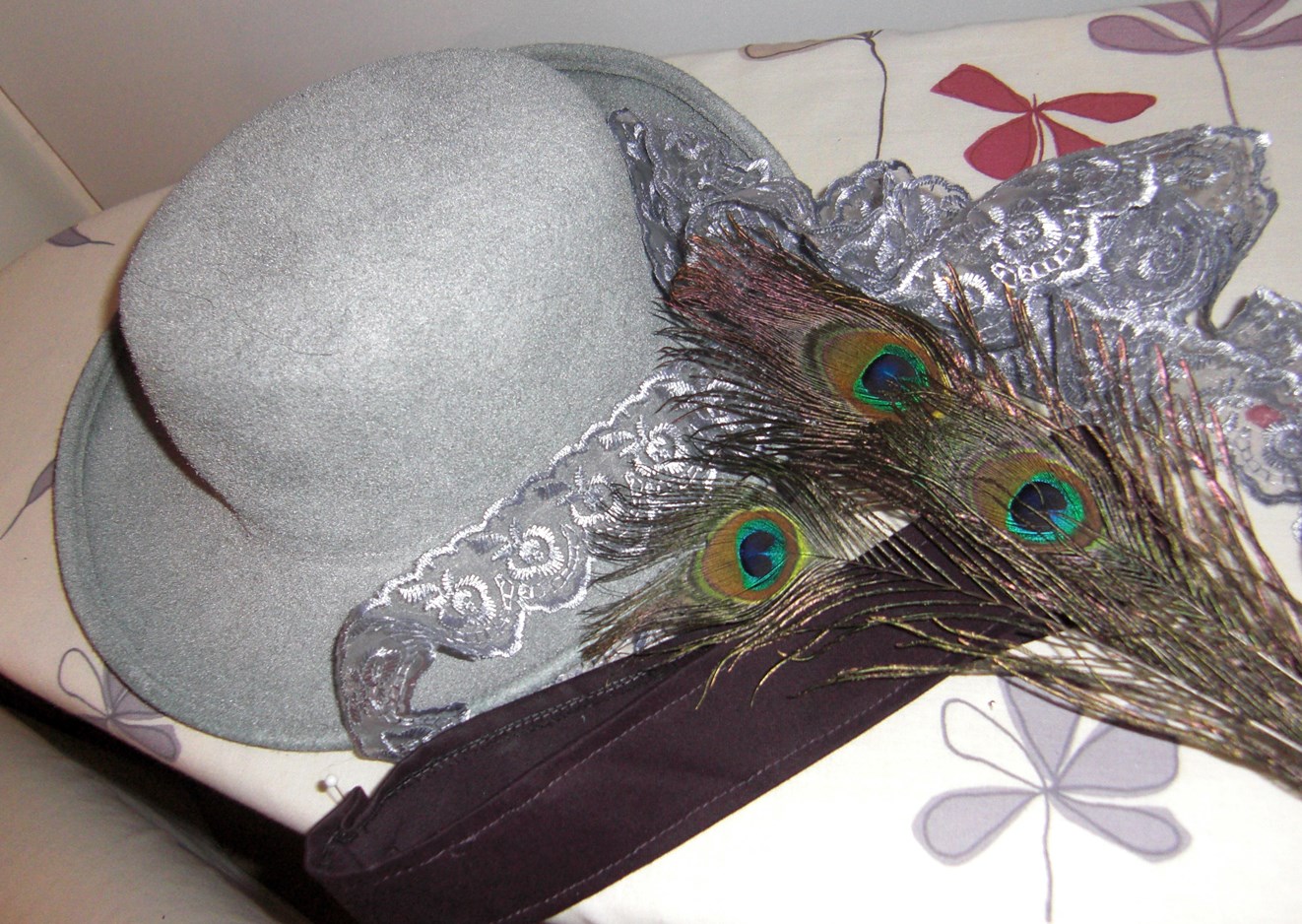
Which I sprayed with silver paint and decorated with ribbons, lace and feathers.hatt silver omonterad

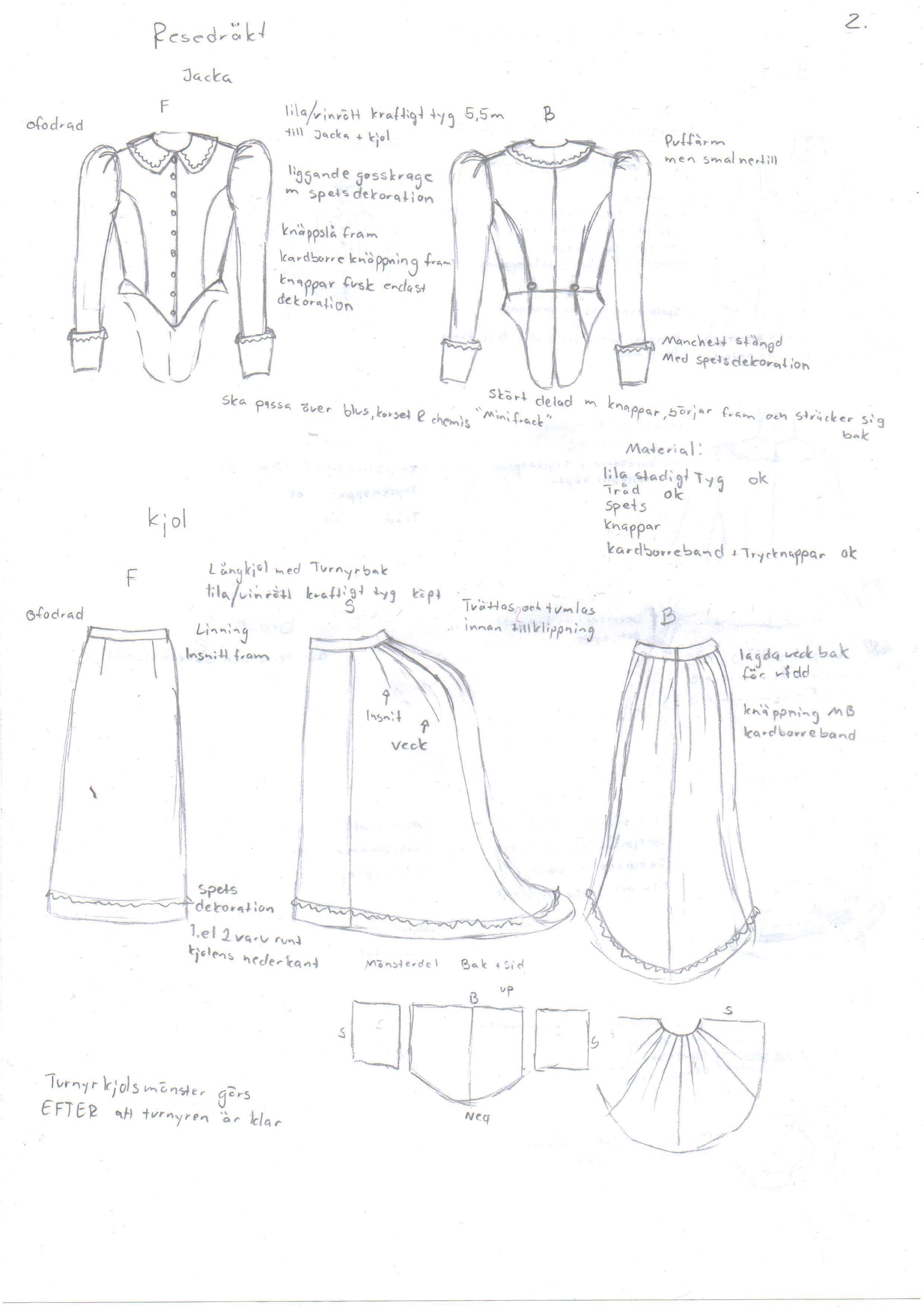
Then I continued with the outer layer of the costume.Resdräkt

resdräkt produktteckningConstruction sketch with fabric and stiching notes.

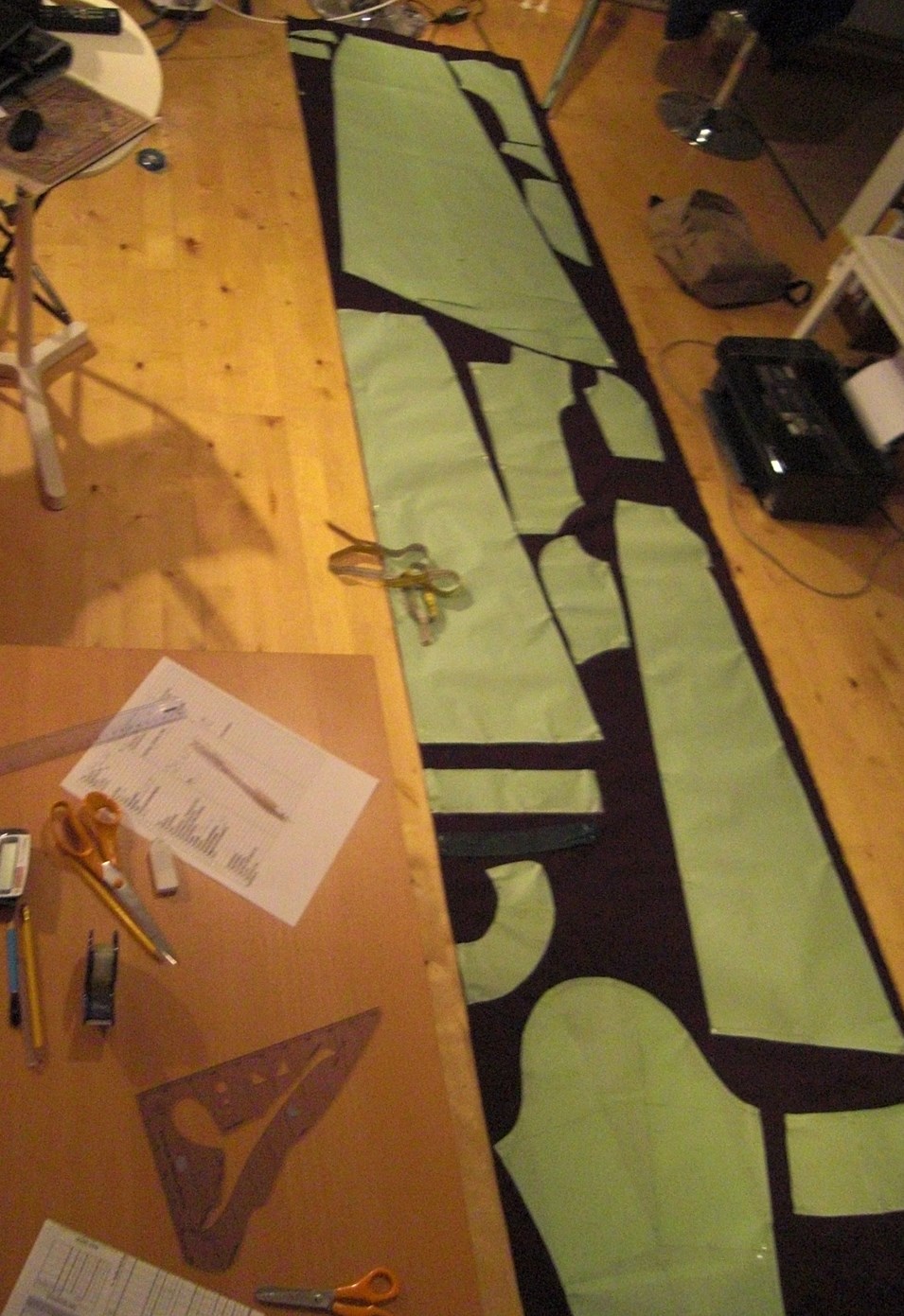
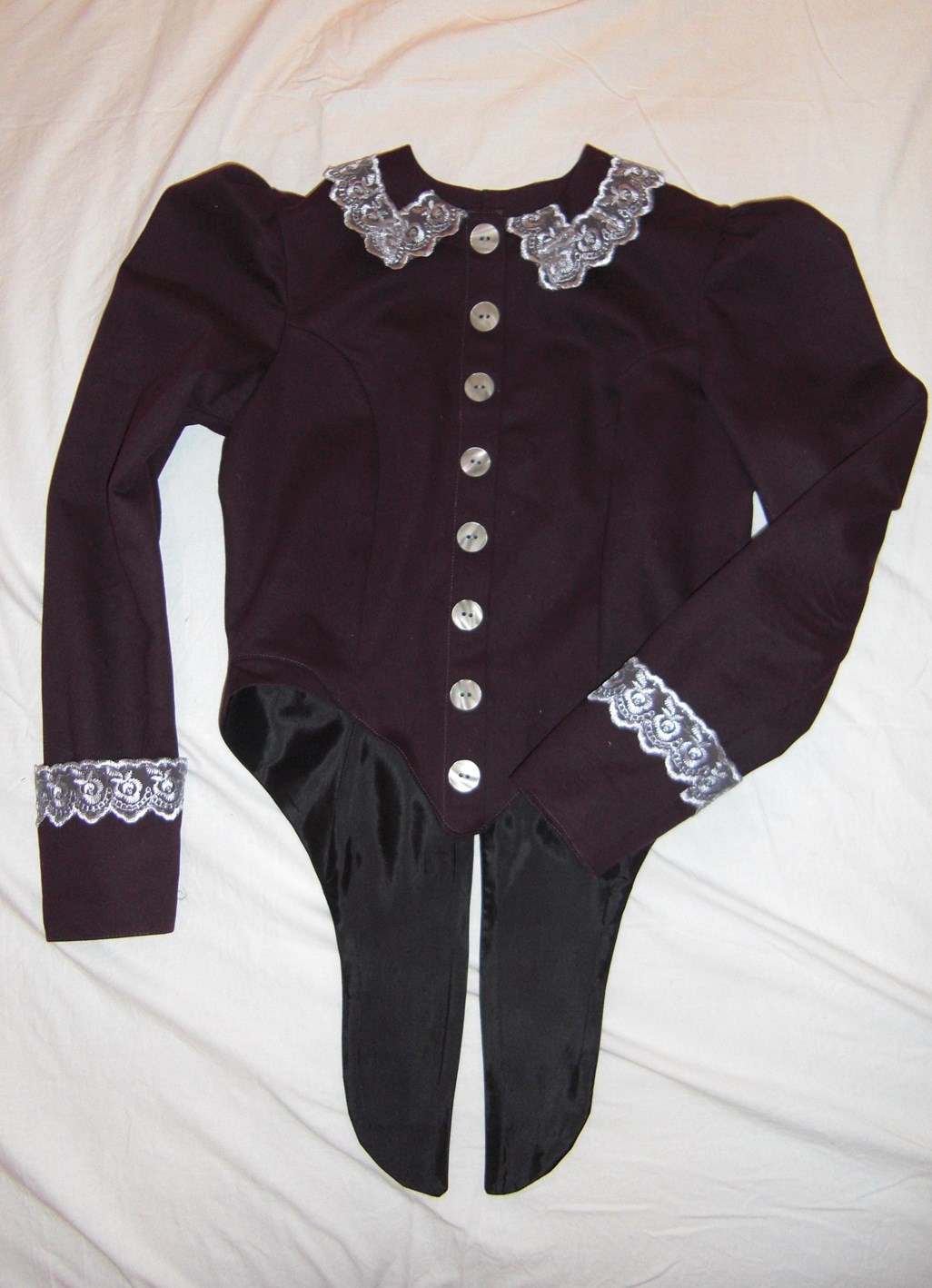
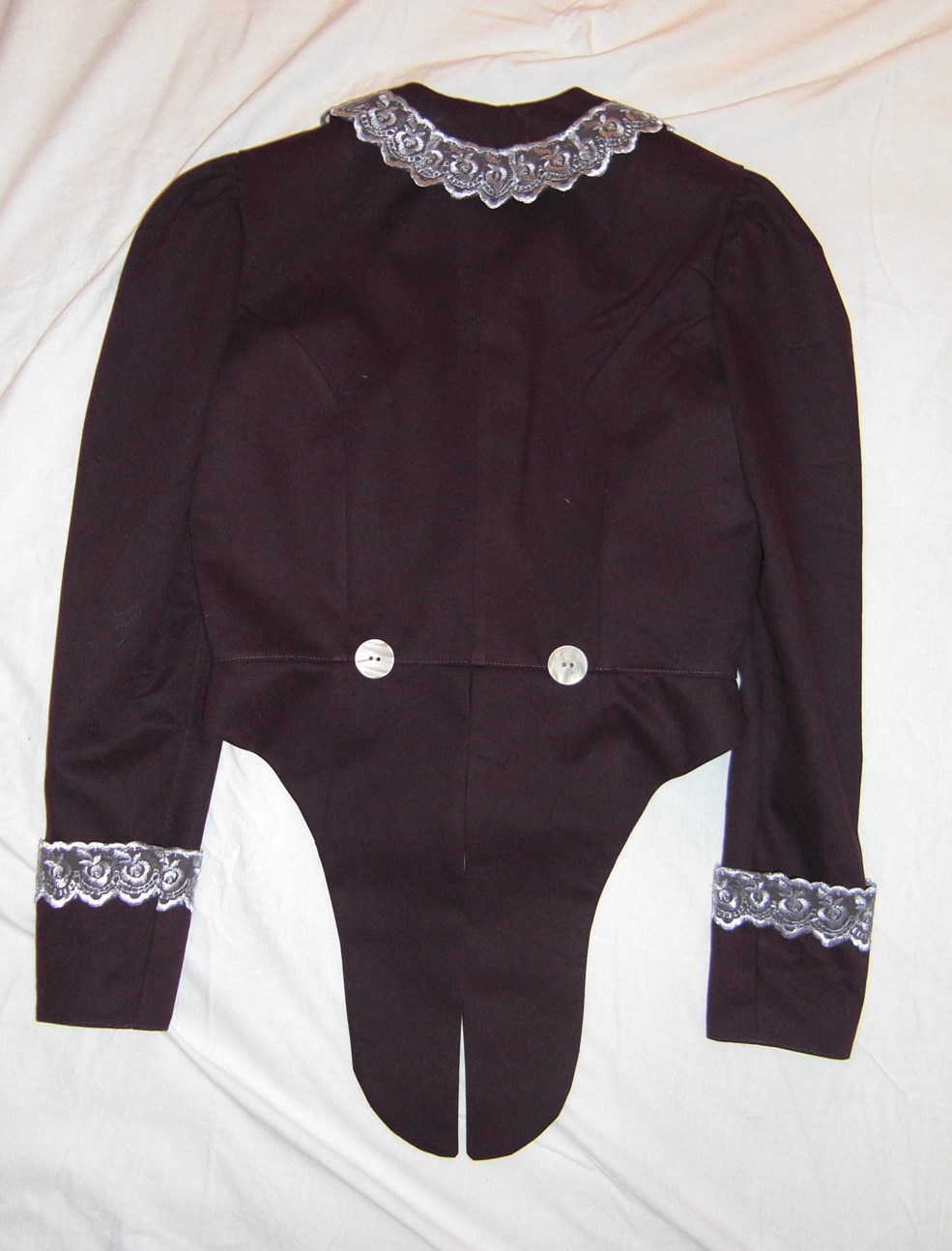
I drafted the pattern on my own, and used a purple cotton twill for the skirt and jacket.tillklippningCutting the pieces.

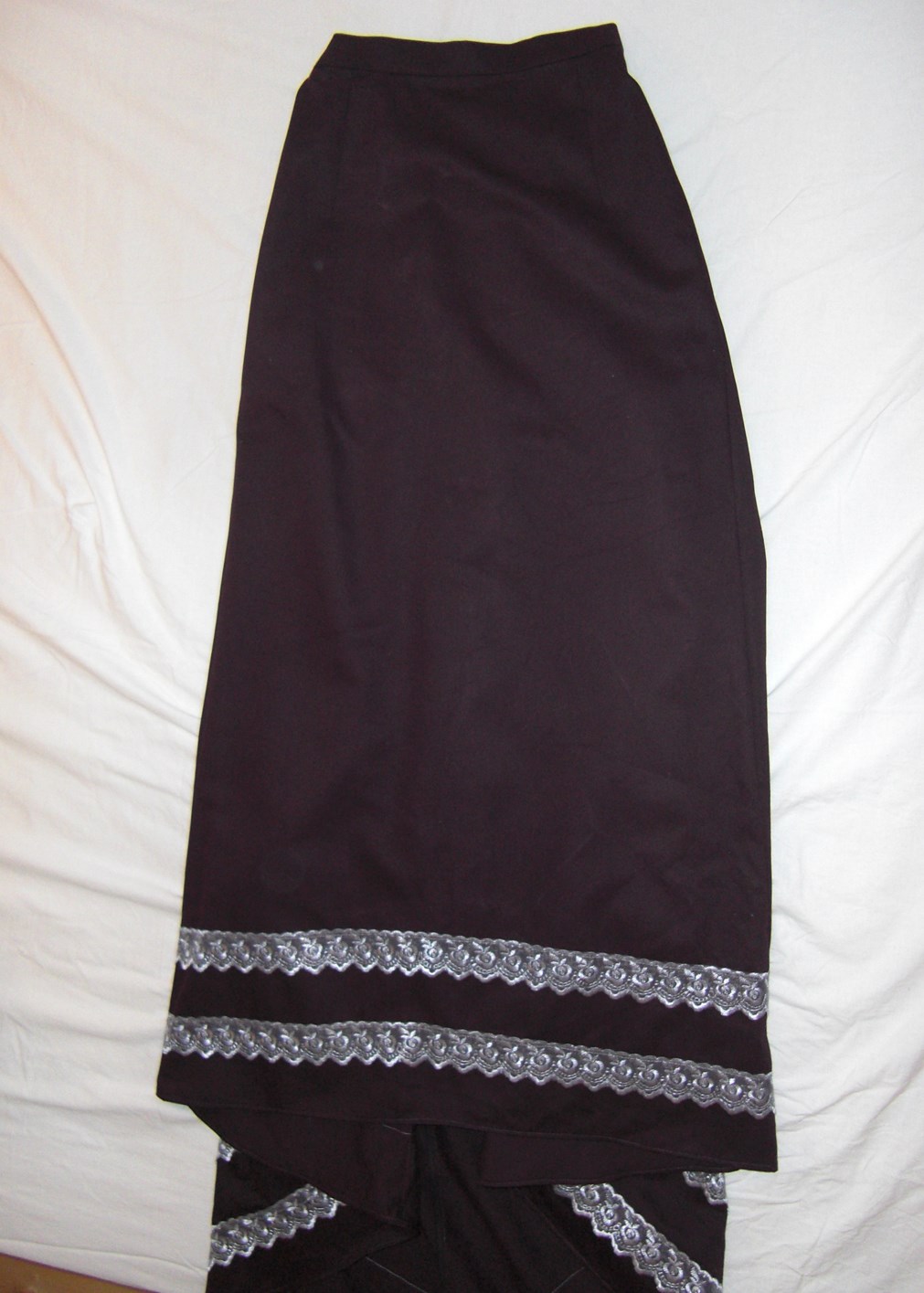
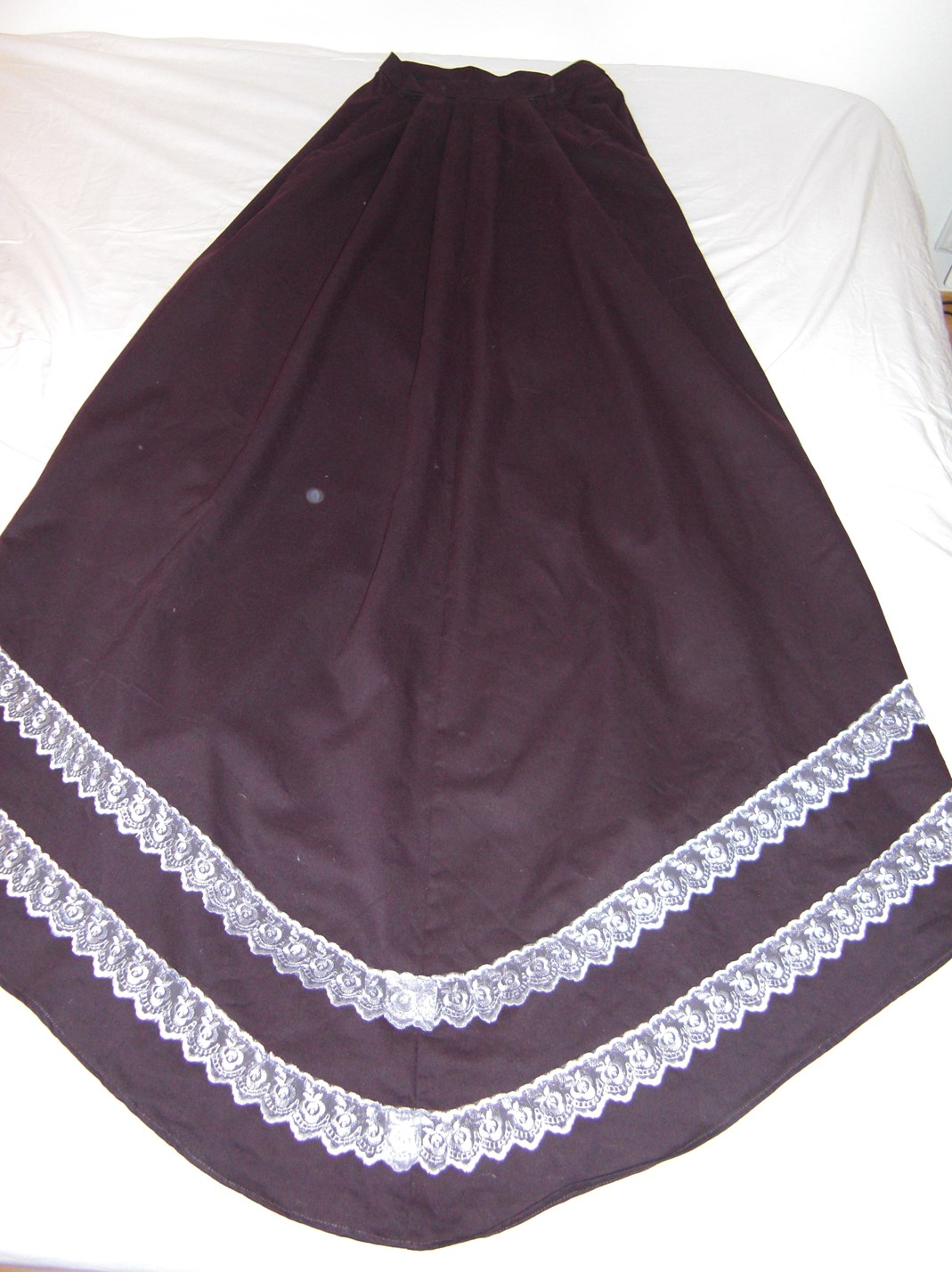
Then I decorated them with silver lace and buttons.

kjol fram kjol bak

jacka fram jacka bak

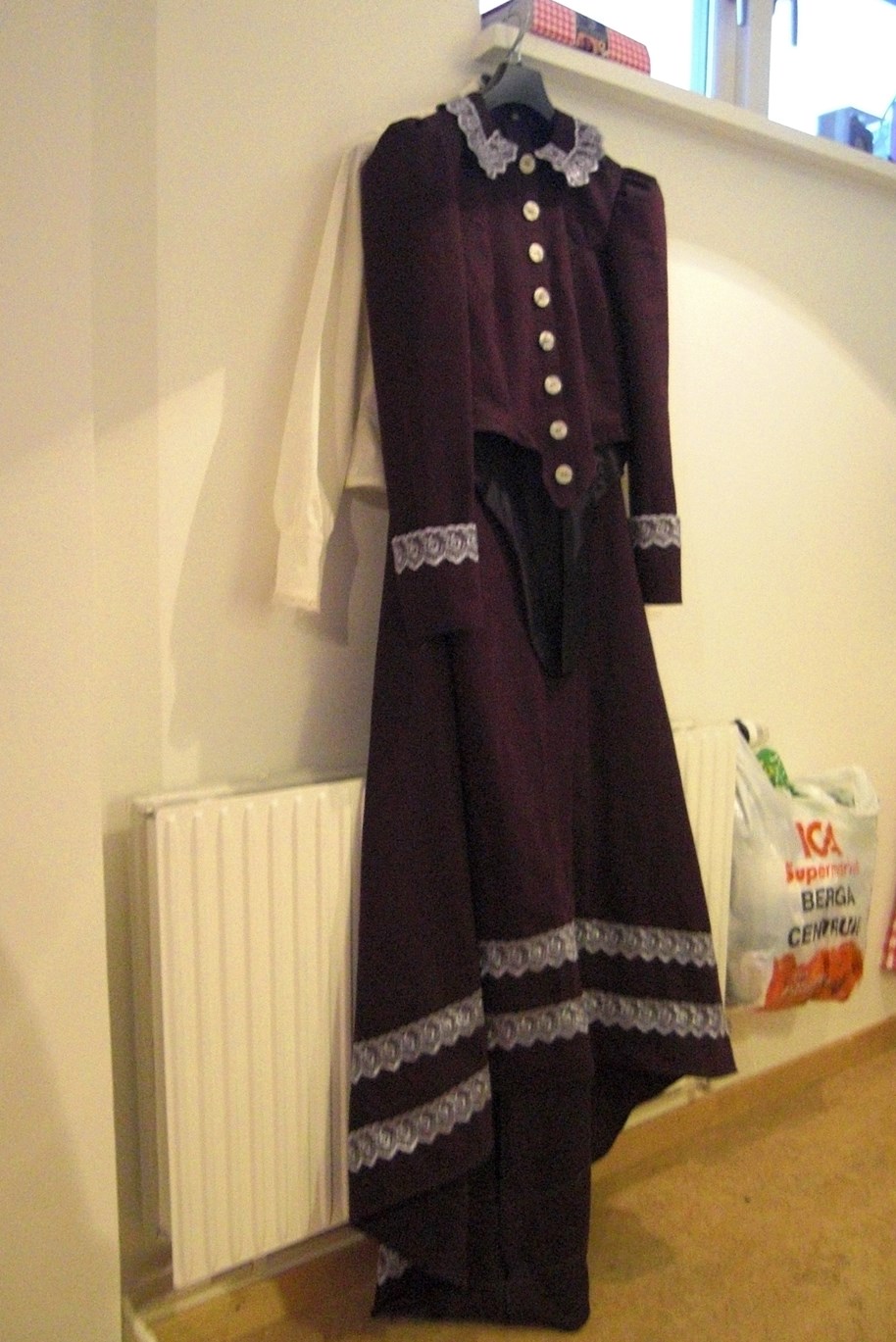
resdräkt hängandes

And then I asked my sitster to model the clothes.DSC_0071(She is wearing the shift, corset and bustle from my last post underneath.)

CIMG4046

CIMG4063

CIMG4051

4

7

9

6

8

3

CIMG4110And a silly shoot.

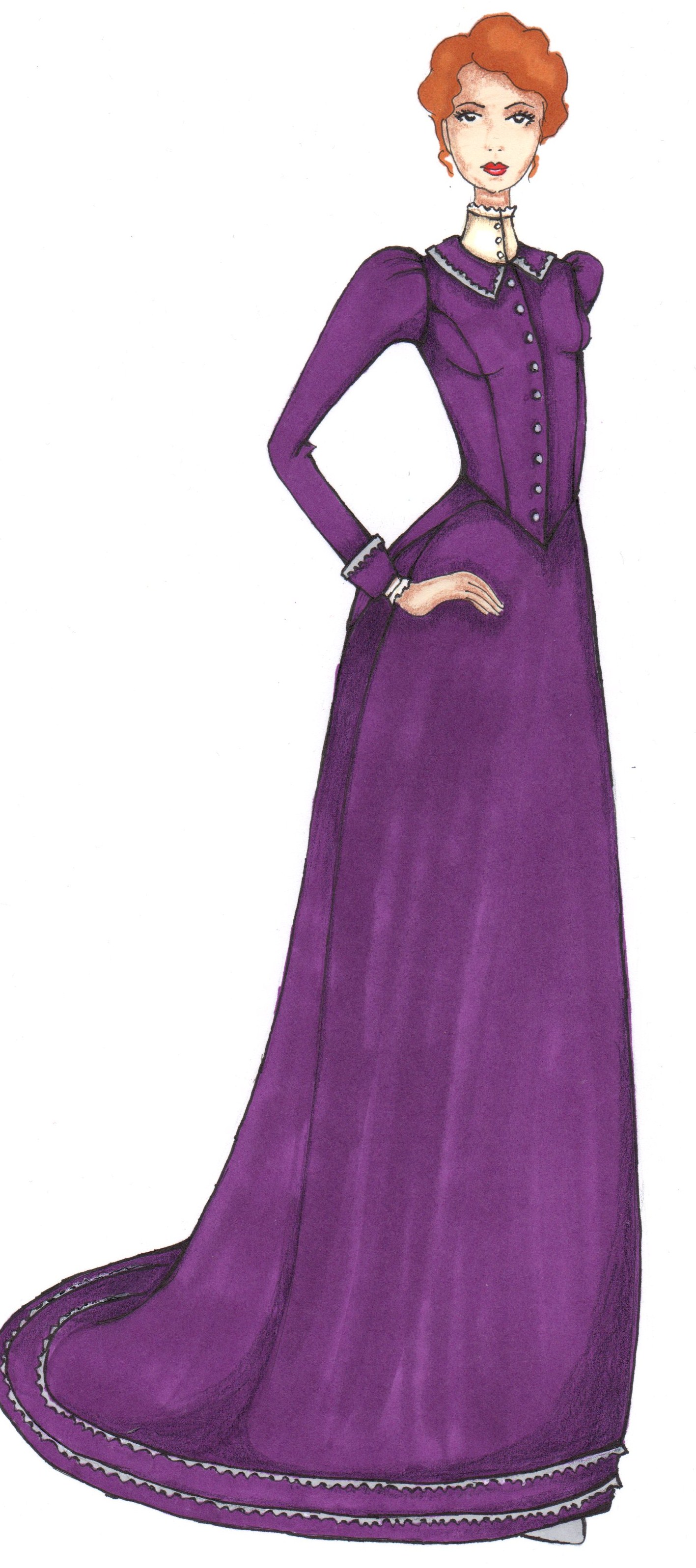
Anja-ResedräktMy final costume design.

This outfit would be more than enough to conclude the shool project. But since I’m a bit of an over-achiver (if you haven’t noticed), I also decided to make a balgown for the caracter (which I will tell you about next time).

A Cherry Blossom part 1 – Underwear

A couple of years ago I attended a class in “costume design”, and one of the plays we got to work with was The Cherry Orchard by Anton Tjeckov. The play is set in the late 19th/early20th century russia, and are about a familys last days on their recently sold country estate.

cherry_blossom

We where asked to choose one caracter to design a costume to fitt the narrative of the play. I picked the caracter of “Anja”, a young debutant who dreams of love and a fairytale lifestyle.

I decided to make the costume from the inside out (being me, I couldn’t just do one dress…).

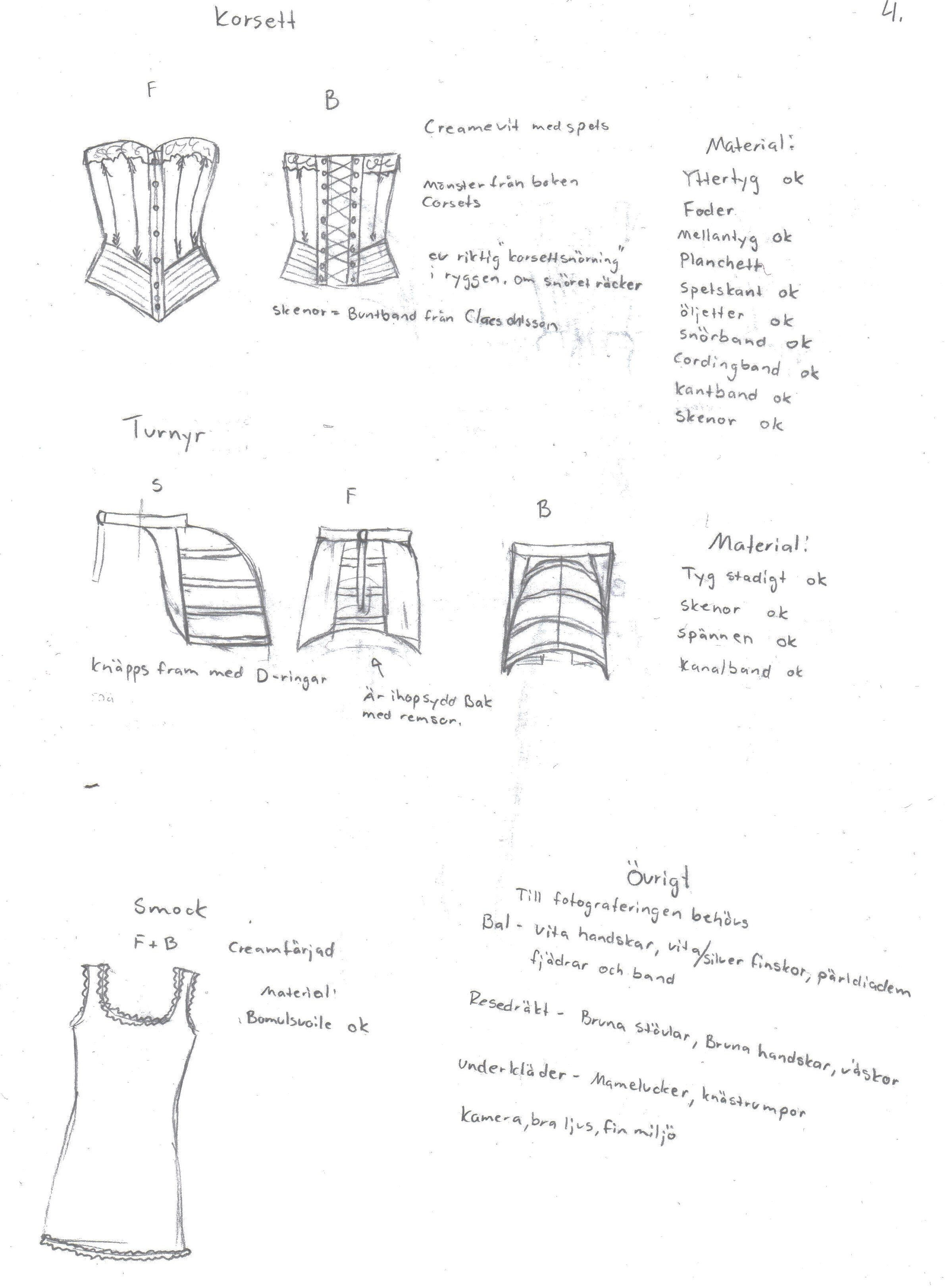
I started by deciding the underwear, doing a principle sketch combined with a lists of material and notions.korsett, turnyr, chemise produktteckningA corset, bustle and chemise.

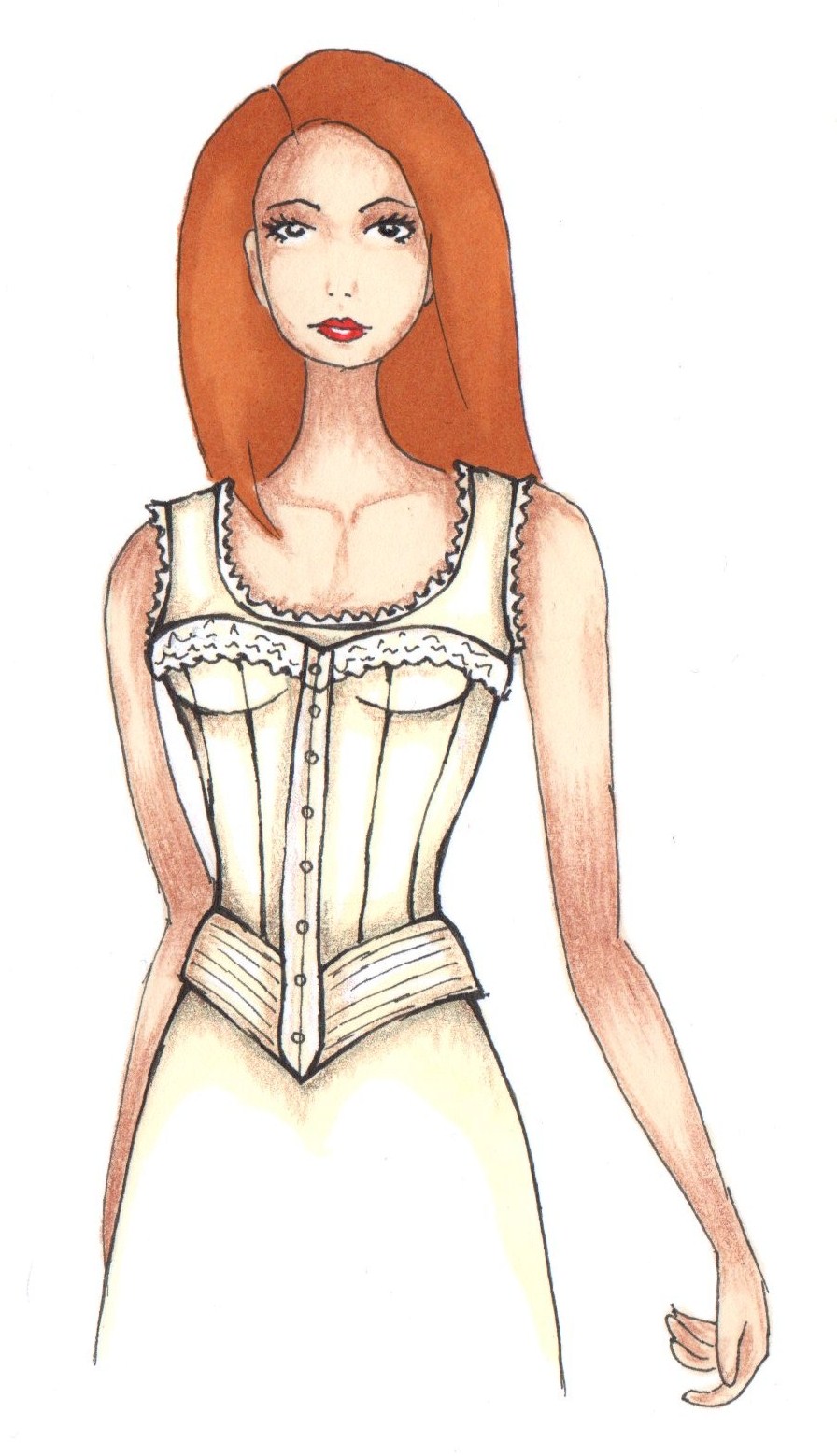
korsett, chemiseAnd a costume sketch.

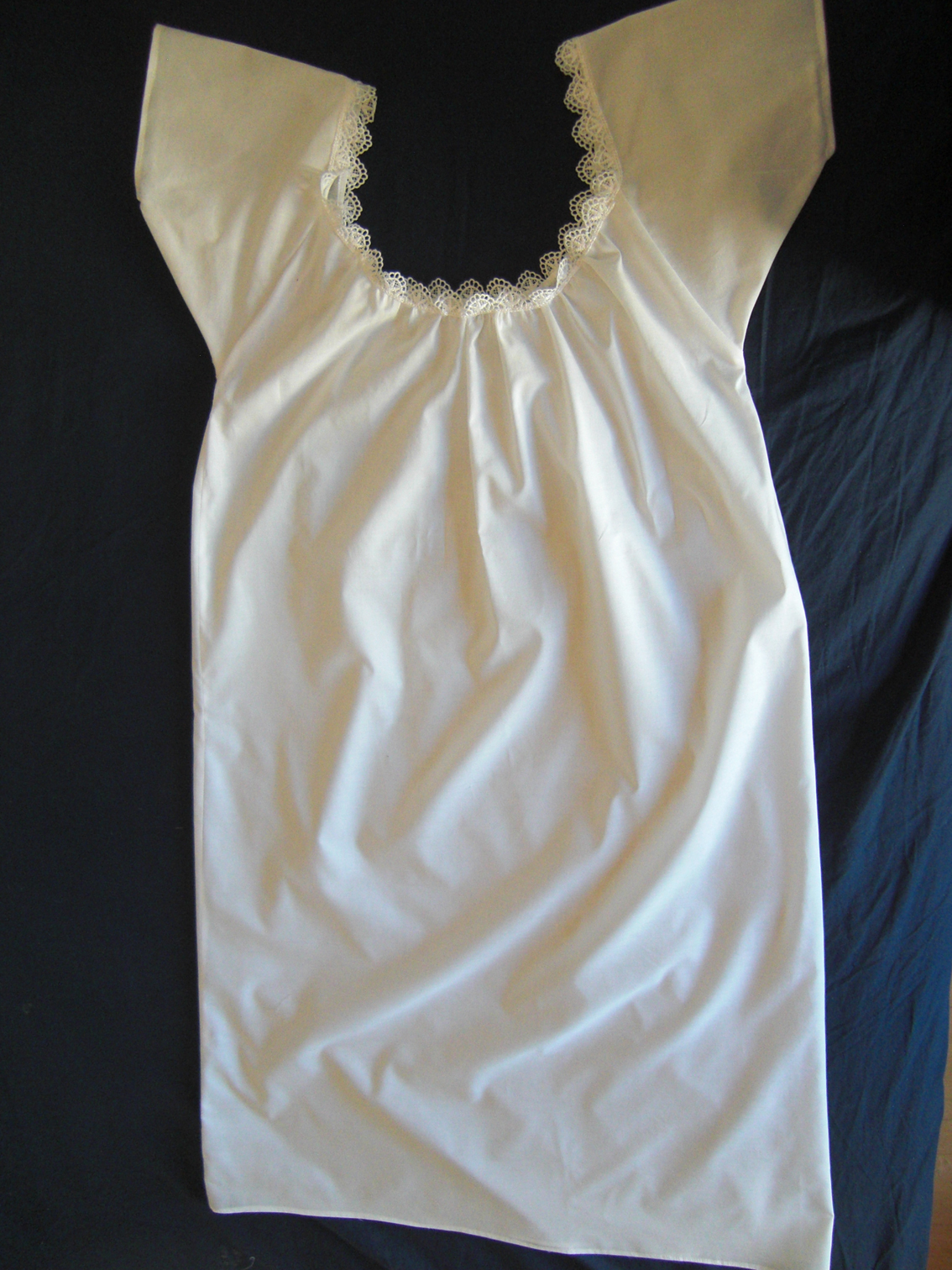
I started by making the chemise, in a soft cotton voile and decorated it with some lace. I used a free download pattern from the internet (which I unfortanly have lost the link to). chemise 1

Then I moved on to the bustle. turnyr tillverkningskittWith only pictures of bustles and no pattern I tried to draft my own, resulting in a pretty good shape – but probably not the easyest way to do it.

turnyr inutiInside of the bustle. You can se all the seamlines and the boning chanels.

turnyr stängdturnyr ovanfrån 2

Then it was time for the corset. I used Jill Salens pattern for “Pretty Housmaid corset” 1880s, which I enlarged using the computor and printer.

I cut the pieces in a lovely cotton sateen.Korsett tillklippning

The cording took  quite a while (it was my first time doing it).korsett helt cordat

I sewed it together, inserted busk, bones, gromets and then attached bias tape and lace. korsett divCreative mess.

korsett sidanDetail flossing.

korsett fram

I asked my sister to model the garmnents.CIMG3990

DSC_0011

DSC_0032

DSC_0042

1My favourite costume picture ever.

So now the underwear was ready, it was time to start on the dress.

But that will have to wait untill next post.
1880s Evening Layering

If you been reading my blog you would know about the 1880s evening gown I made for the bal at the opera late january. You might also know all about the underwear, corset and petticoat I struggeled to get finished in time for the event.
But I thougt I would show them again in a more structured way.

So today on the “Layering series” (I already done: 1750s, 1810s and 1840s) I will show you all the clothing of a Victorian ladys evening attyre.

So here we go.

IMG_5795 As always we begin fully dressed in gown, cape/cloak and muff.

IMG_5801 Then we remove the outerwear, to find the evening outfit compleat with glowes, juwelery and fan. You might also be carrying an evening bag or some other accessories.

IMG_5813 Removing the accessories we are still fully dressed in our tight fitting gown. The train is almost mandetory for  evening gowns, but not worn on everyday dresses.

IMG_5819 Then we take of the gowns bodice (in this case the bodice are attached to the train, in other gowns the train might be separate and are removed after the bodice), and reveal the compleat apron and some of the corset-cover. The apron was a nice fashion detail used during the late part of the 19th century. Women wore the apron style both to evening, day and sport dresses.

IMG_5827Then we unfasten the apron and get a good wiew of the highly decorated skirt.
IMG_5831 And removing the skirt we find the petticoat with it’s ruffeled backpanel, and the corset-cover – being just a regular tank top at this point (since I haven’t gotten around to make a real one yet). The purpse of both the petticoat and the corset-cover is to smoothen and hide the sharp edges from the foundation wear, and to help give the desired silouett.
IMG_5843Yet another layer is removed and we find the bustle. There are several variations of bustles out there. I wear a relativly smal “Lobster” bustle, but you can just as easerly go bigger or smaler using different styles. (I even know about ladys who use one of there 18th century pocket hoops tied to the back.)

IMG_5851 And finaly, after removing the bustle and the corset-cover we find the un-mentionables – the corset, chemise, bloomers, stockings and shoes. The purpose for the undewear are (of course) to keep the finer clothes free from dirt. The corset was used to both mold the body to fashionable shape and to give the gown a nice ad smoth base on which to be worn.

Many people can get quite upset when it comes to discussing corsets, and admittedly some ladys of the victorian age did tight lace, but they where rare exeptions, and most women wore their corsets as bust and back support, and as mentioned, to get a smooth look on their clothes.

So that was that.

And as you can se it still comes back to the same basic clothing items (underwear, shapewear, gown and accessories) during so manny of the different periods.

A Night at the Opera 1880s style

I’ve  purposely been waiting a bit to tell you about the grand bal at the opera out of  two reasons: one – I first wanted to tell you properly about my dress, and secondly I wanted to gather as many pictures as possible from other guests.

But now it is time.

As you might know by now, I attended the yearly 1880s bal at the opera in late january.

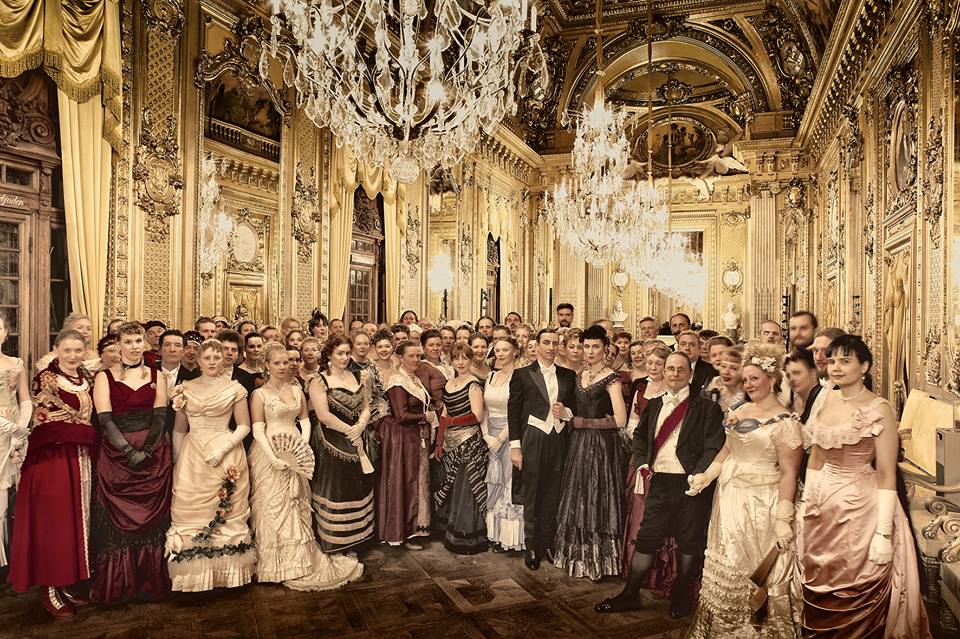
And it was wonderful.1723789_607606335955867_1883239920_nA group picture by the photograp couple caled Haapala. (I’m in the far back).

After arriving in the capital, I emedetly started to get ready. Laying all costume pieces out on the hostel bed, and then starting on the hair. IMG_5495Then I began dressing. This step turned out to be pretty interesting, using the hostels smal bathroom, trying to lace myself in looking over my shoulder in the smal bathroom mirror. A bit tricky…

IMG_5340IMG_5371

Then I finished the hair with a tiara, put on some lipstick and donned the velvet cape – ready to go.IMG_5486

When arriving at the opera, I emedetly feelt welcomed by both the atmosphere and the faubolusly dresses guests.

I was strucken by the amount of effort most participants (men and women) had putt into dressing according to the code, and the fashion of the 1880s. There were so many beautiful dresses and hairdos, I’m just sorry not to be able to photograph everything.

But I did get some pics – enjoy.IMG_5502The dancing was so much fun, but it was also werry beautiful to watch. *1618491_10151833413956736_1660265903_n* 1503391_10151833416281736_792841747_n* 993805_10151833413806736_1796644335_n

About the only mingel picture I’m in (at the far right with my back to the camera). *1545620_10151833399416736_655984548_n

Some lovely ladies.*1555269_10151833397136736_106995179_nThe theme of the bal was “Russian”. * 1653574_10151833397411736_1819508935_nAnd one couple dressed to the teeth as the russian tsar Nikolaj II and wife (the costumes are made by the very talented Caroline (in the picture)).IMG_5512 IMG_5503

IMG_5520

I love that striped fabric.

IMG_5529

IMG_5533

Some lovely bustles.

IMG_5536

And more…IMG_5527

…and more. (a lovely original 19th century dress).IMG_5516

IMG_5541

Merja from “Before the Automobil” in lovely pink, and two finish ladies.IMG_5564

We also had some 18th century guests, part of the dancing paus entertainment.IMG_5511

And some mandetory selfies… digging the bustle.**1608907_10151909878018027_236049251_n

And that lovely lace.** 1616522_10151909870498027_1598367868_n

And of course some pics of me.IMG_5522

I loved wearing my gown, and felt both pretty and comfortable (except when sitting down). Just before it was time to leave I manadged to get a lovely lady to take some photos of me. (Thanks again).IMG_5547

IMG_5561 nära* = Photos by: Caroline Eklund, ** = Photos by: Johanna and Aggi, Un-maked photos by me.

And to conclude the post, I must say it was faboulus.

I loved it all, the atmosphere, the costumes, the dancing, the people, and I particularly enjoied the gathering of the guest at a pub after the opera closed. Staying out for severa hours. Everything was so nice.

I’m will defenetly try to attend next year, and maybe I even will get one of my sisters to go with me.

1880s Green Bustle Skirt

I’ve been working non stop on my opera gown for the 1880s bal (I know I said this many times before), and once the trained bodice was finished I could finaly start on the skirt.

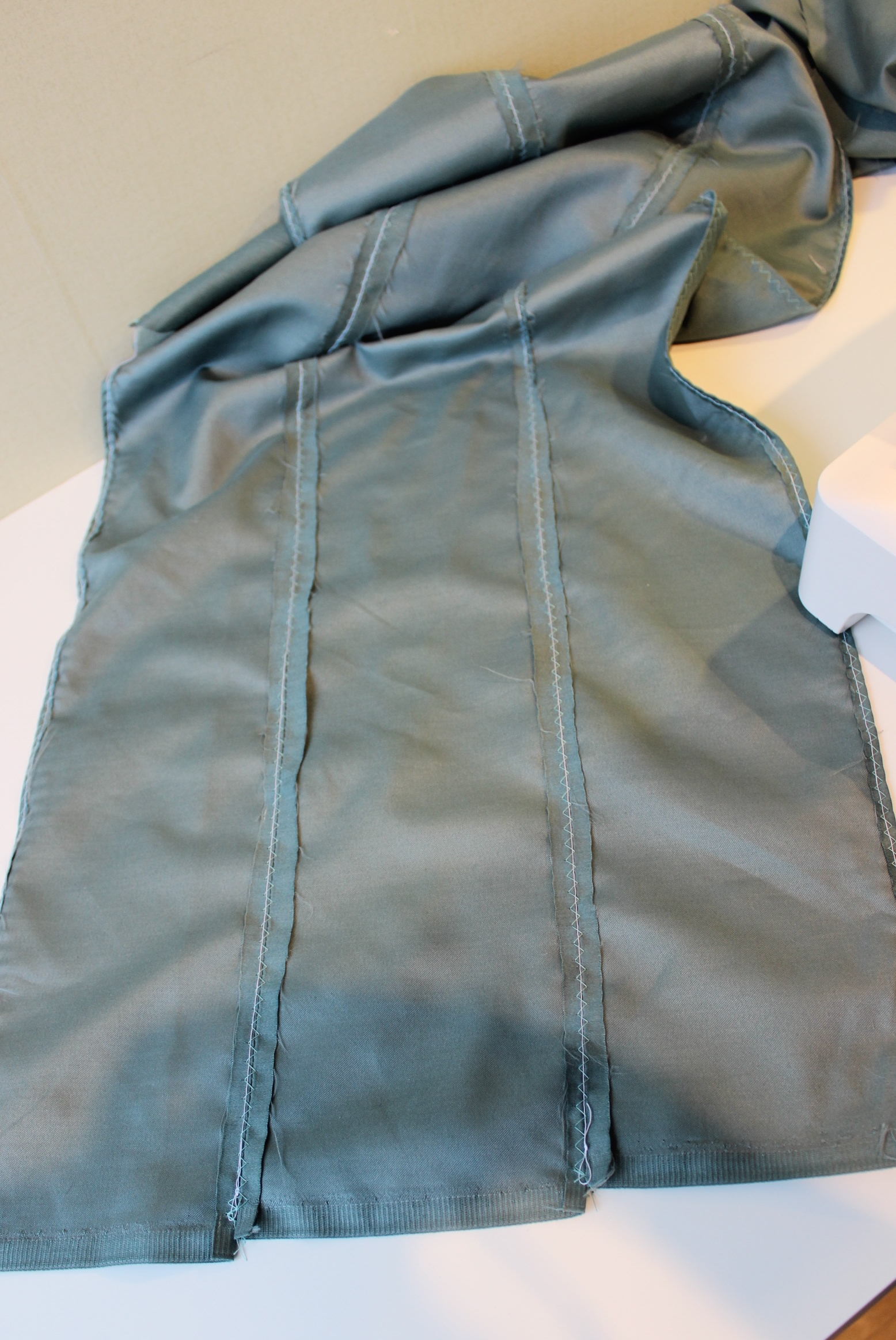
39.384 0002After some thinking I decided I would need a good and strong foundation to hold all the fabric madnes on this skirt. So I decided to make a straight skirt out of a cotton sheet, which would serve as both lining and interlining for the tucks and pleats.

The next thing was to separate the different elements of the skirt into smaler sections.

39.384 0002The part in the middle seams like it have been boxpleated at the top and bottom and then left lose, giving it a bit of a over-hang. And since I would avoid any extra bulk at the waist, I decided to start the pleating a bit farther down the skirt.

39.384 0002This part looks like gatered stripes attached to a foundation. And this part would also have to start a bit from the waist, and be attached at a diagonal angel.

39.384_side_CP4The boxpleated hem are a no brainer. A decorative hem stiched on beneath the poufines of the middle section.

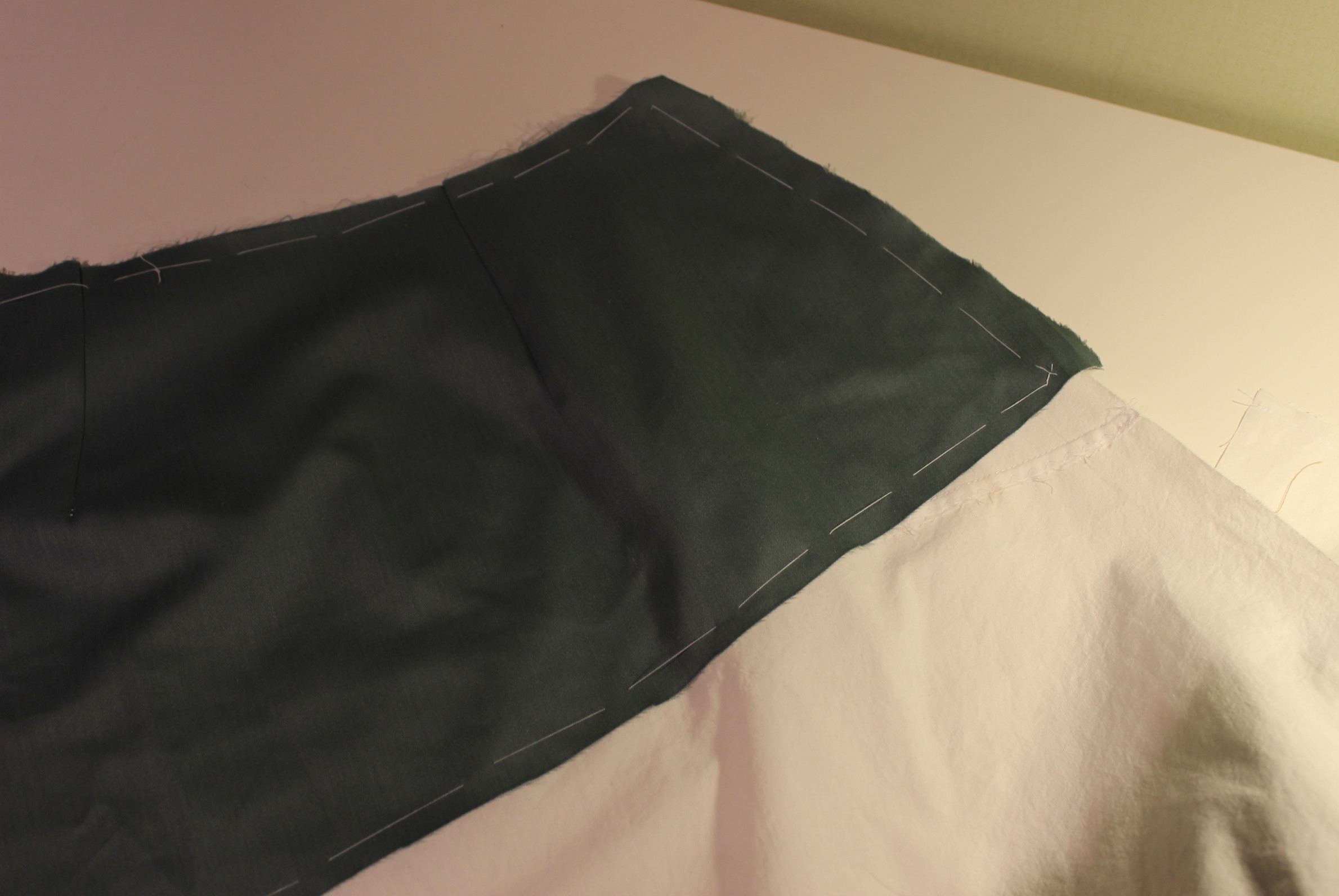
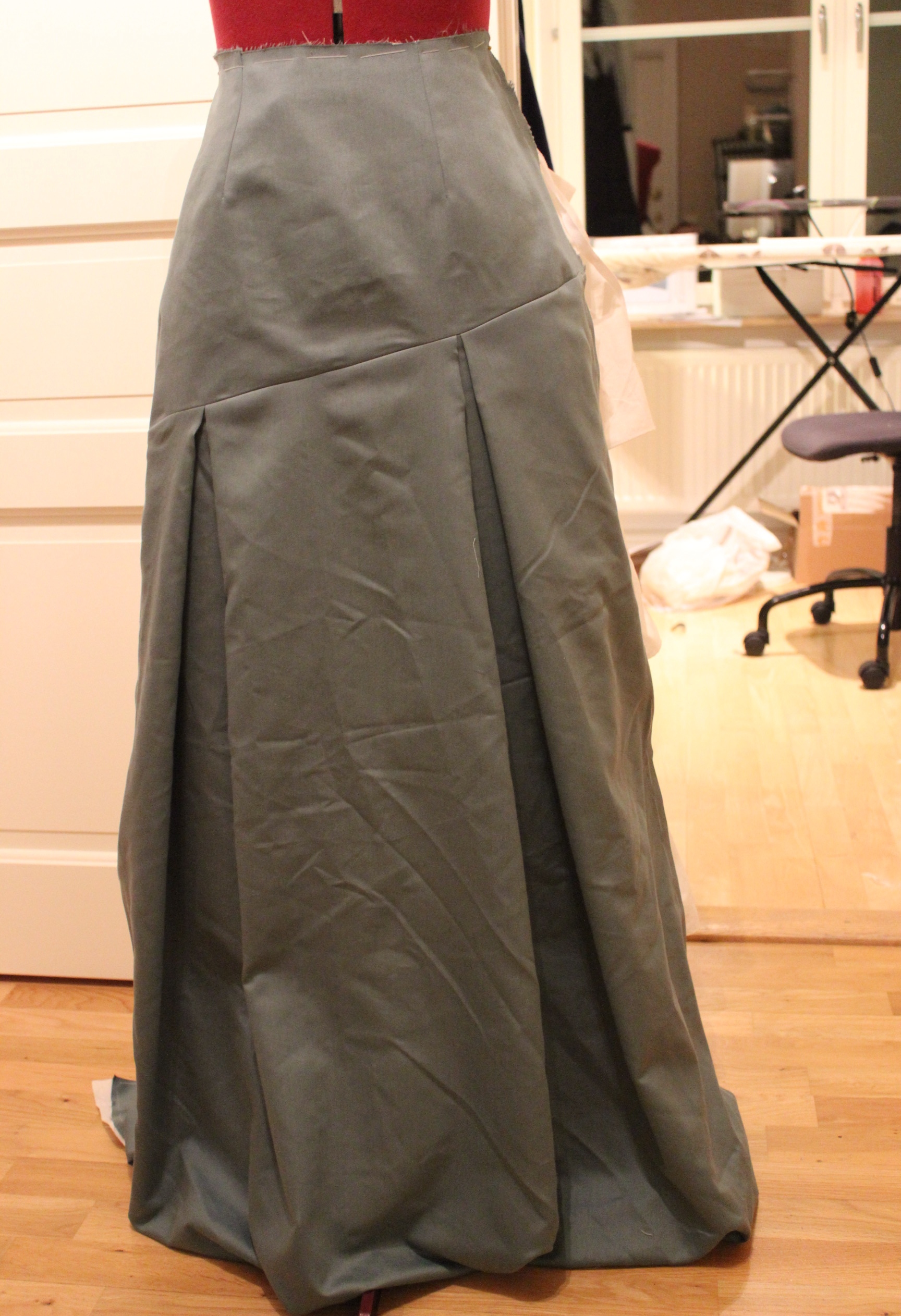
So I started by making the cotton foundation, using a cheap bed-sheet. Then I brought out my fabric – a dark pistage green cotton sateen with a beautiful sheen to it.IMG_5173

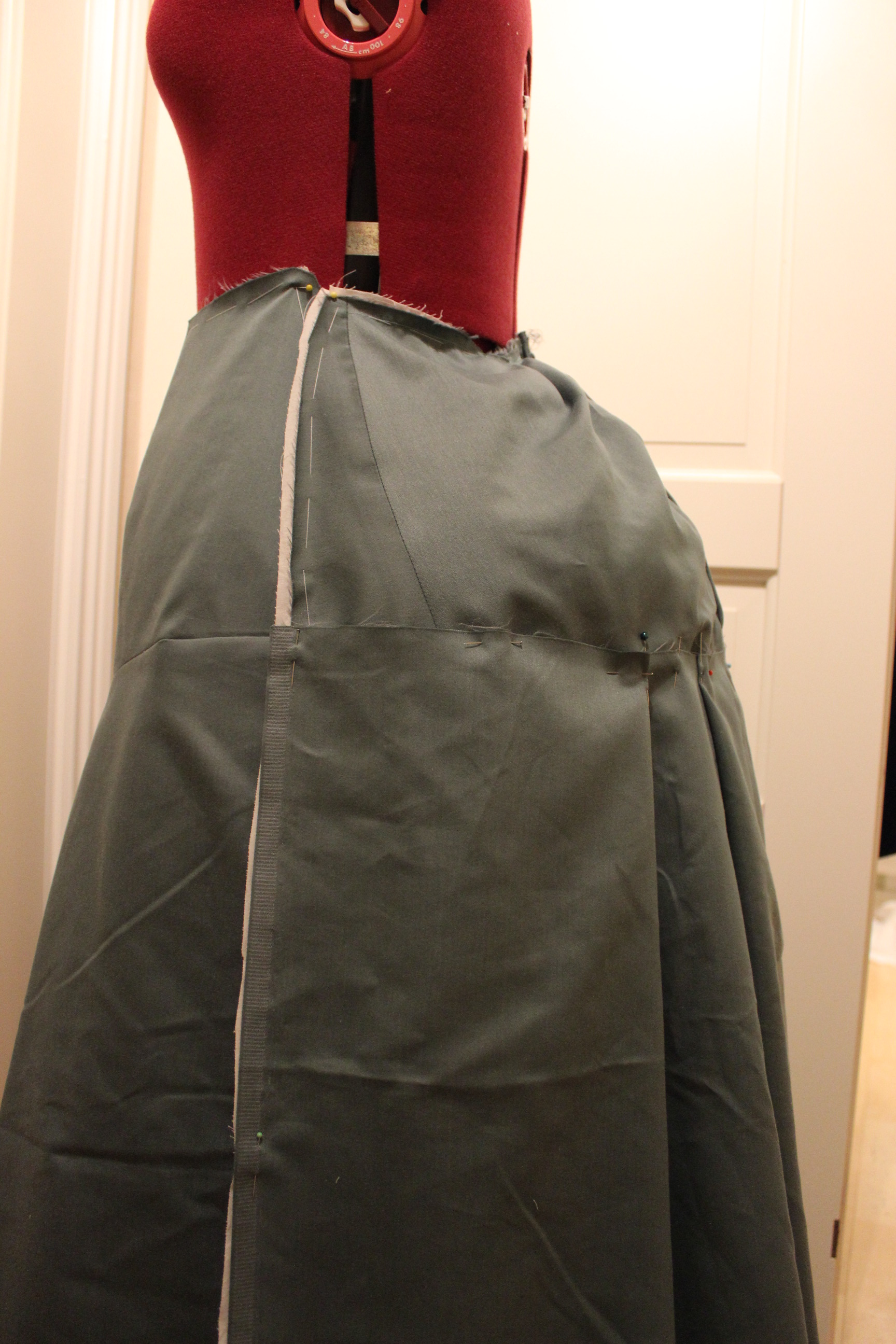
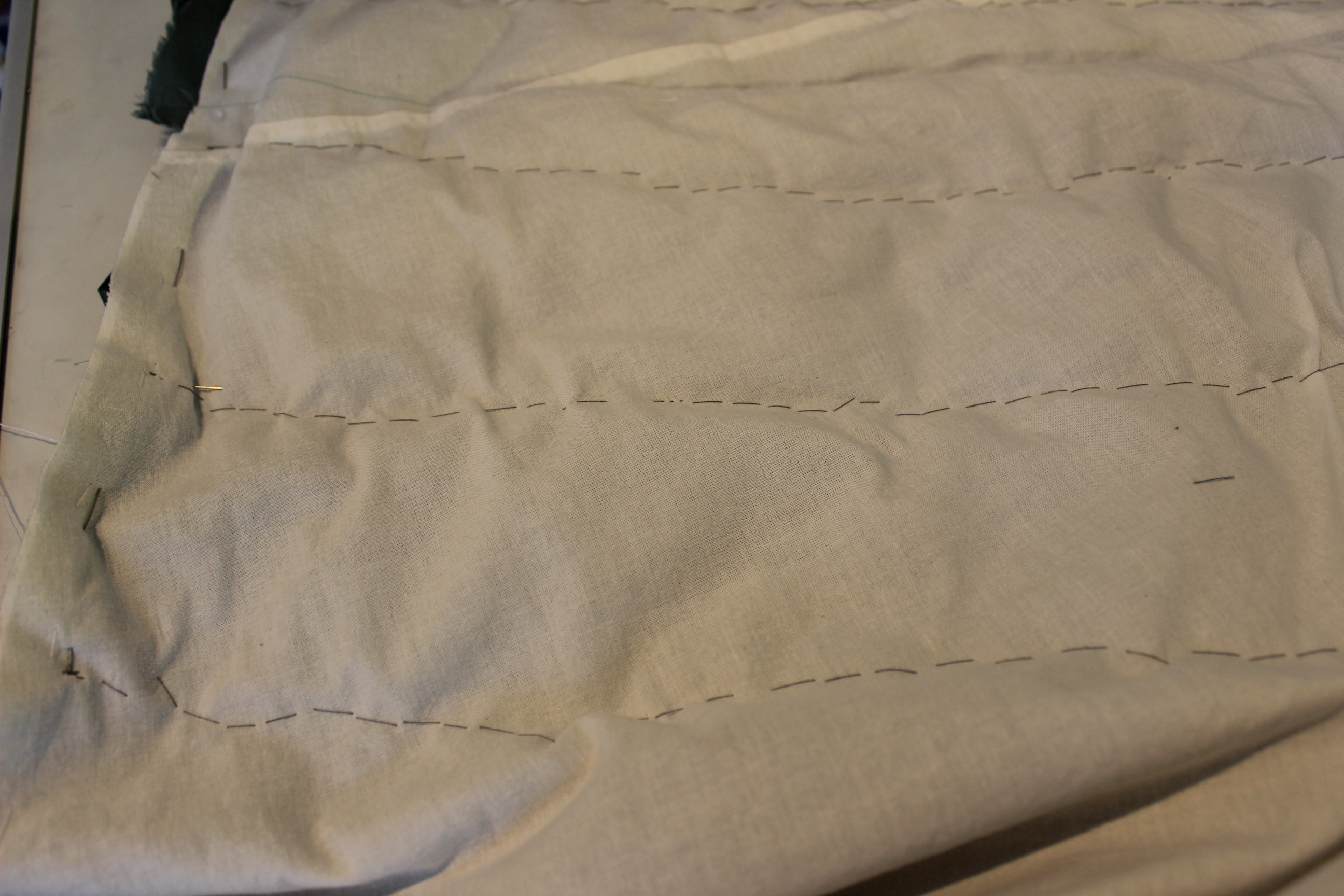
I draped the top of the skirt and basted it to the white cotton, using it as interlining.IMG_5179

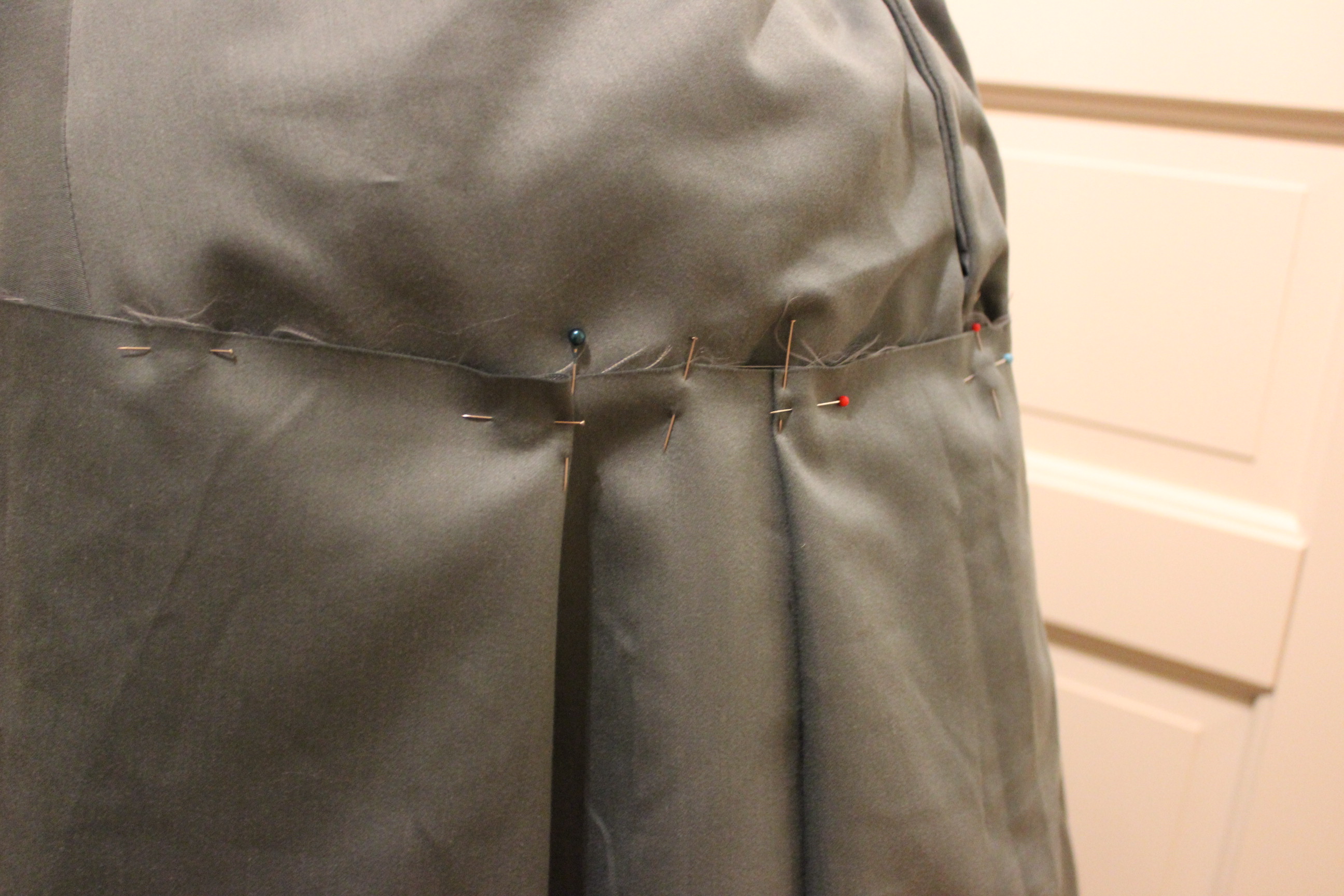
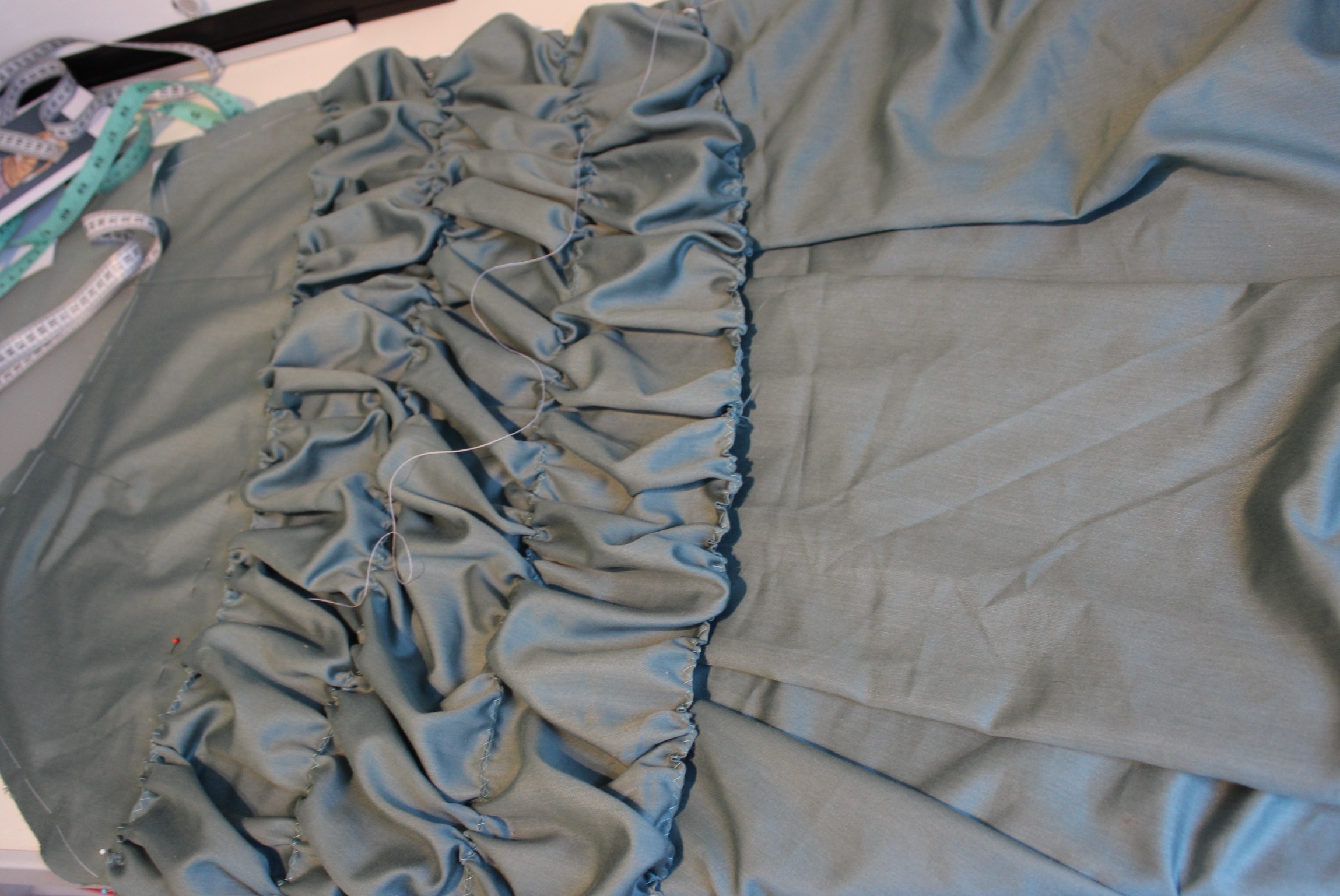
Then I cut the skirt lenghts and used the whole widh of the fabric to get some nice looking pleats. I sewed it on to the white cotton in a straight line, and then cut it down to the diagonal drape.IMG_5185

I pinned it to the dressform to get a feel of how it would look.IMG_5186The pleats at the bottom, and the slightly to long fabric makes the skirt drape nicely over the hem.

Then I did the same with the back pieceIMG_5189

Pinning the upper pleats straight on the dressform.IMG_5190

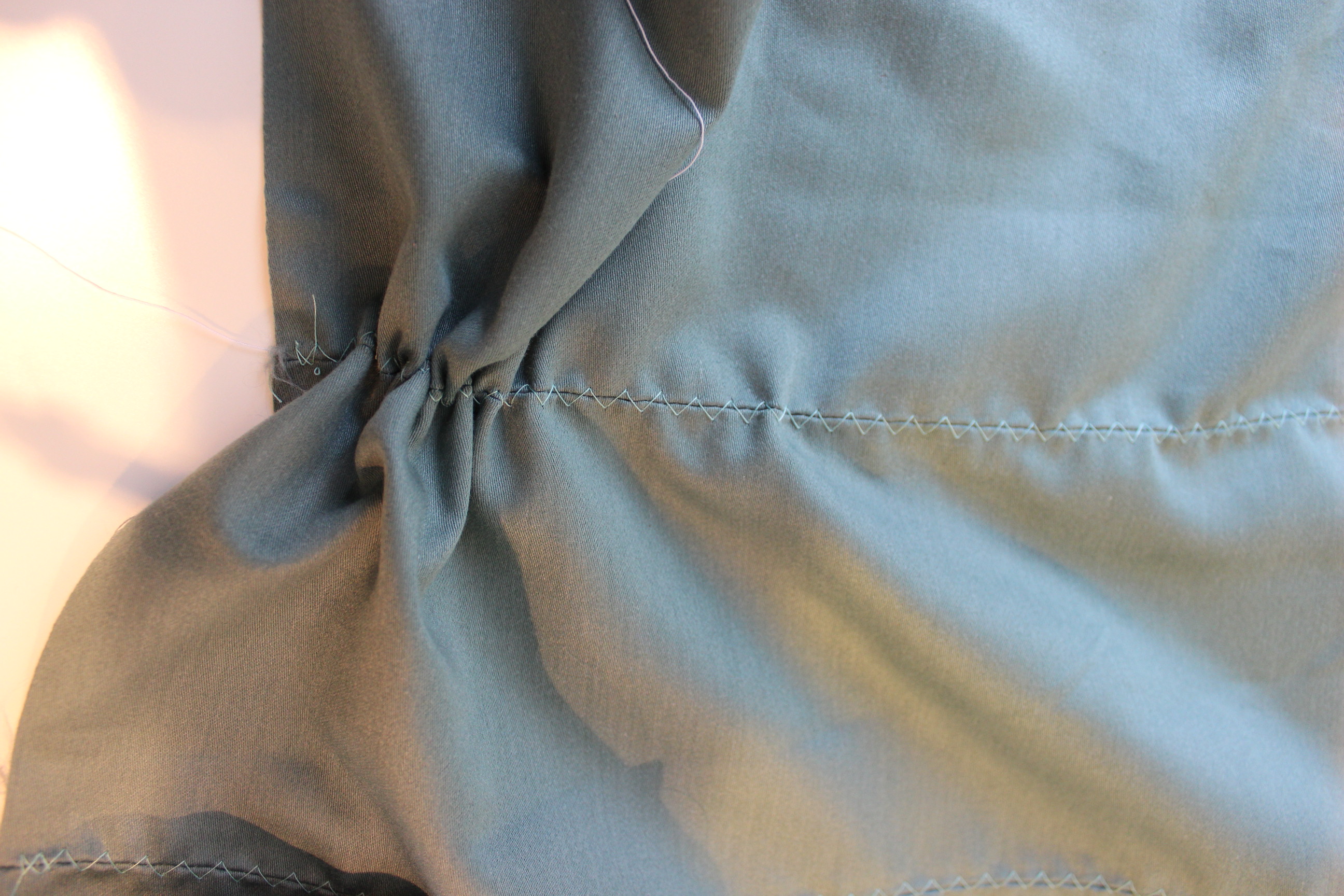
Now it was time for the diagonal ruching. Cutting 15 cm whide stripes.IMG_5170

Then sewing them togheter and attaching a gathering thread at the seam.IMG_5298

IMG_5299

Then I pinned and gathered the ruched fabric to the skirt base.IMG_5303

And hand stiched them in place.IMG_5305

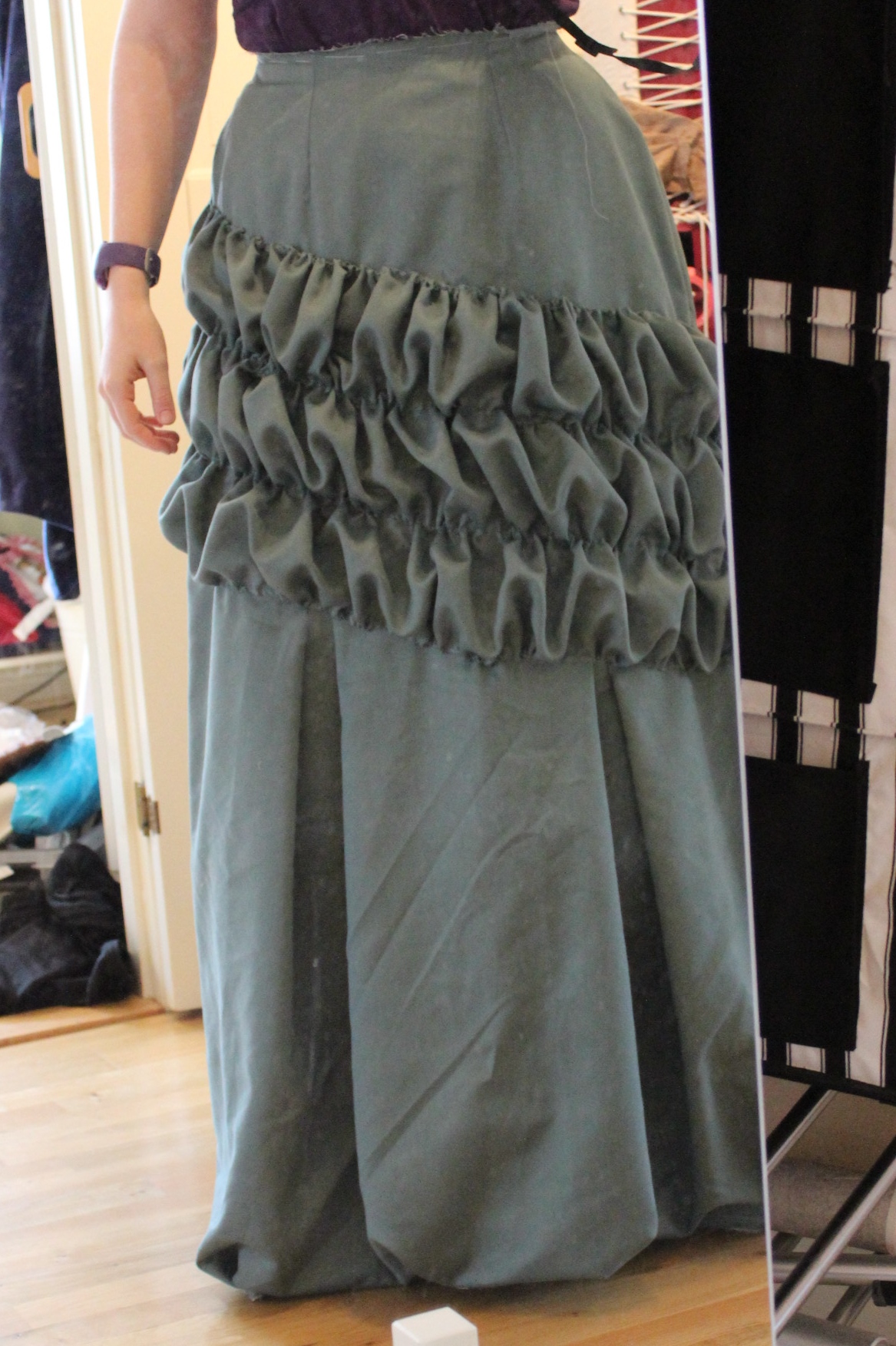
Then I sewed the front and back piece togheter and put it on for the first time.IMG_5309

It looks pretty decent.IMG_5315

I really like the look of the front ruching, but I think I should have used a bit more fabric on the back. IMG_5326

Then the last step was to finished the waist and to boxpleat the strip of fabric for the decoration on the hem.IMG_5328

And finished:IMG_5387

IMG_5394

IMG_5395

IMG_5397

IMG_5389

IMG_5391

IMG_5393

The Facts:

What: A 1880s bustle skirt (to be worn with the 1880s evening bodice).

Pattern: None – draped my own.

Fabric: 4m of dark pistage green cotton sateen, and 2m cotton bedsheet for interlining.

Notions: Thread, strong thread for gathering, hook and eye.

Time: 10 hours (the pleating and gathering took forever).

Cost: 300 Sek (45Usd).

Things I would Change: I would have liked the diagonal draping to have started a bit higher and been a bit wider, also for the back draping to be a bit fuller. This was not an option though, since I used up every sckrap of fabric as it was. Perhaps I also should have made the entire skirt a bit slimmer.

Final thoughts: I’m happy with it, but feel it would be difficult to wear combined with a train-les bodice, since the back of the skirt is a bit of a rushjob. But overall the skirt looks nice.

(And finaly (you have all been so patient): I will show you pics from the bal in my next post)