Cheap 19th century Chemise

As I had my sewing steam up from the crinoline and bustle challenge, I decided to push on and start on the next HSF challenge as well. I had no previous plan for the nr 13. Under 10 Usd. When setting the sewing/HSF schedule for this year I figured it depended on what I was in the mood/need for at the moment.

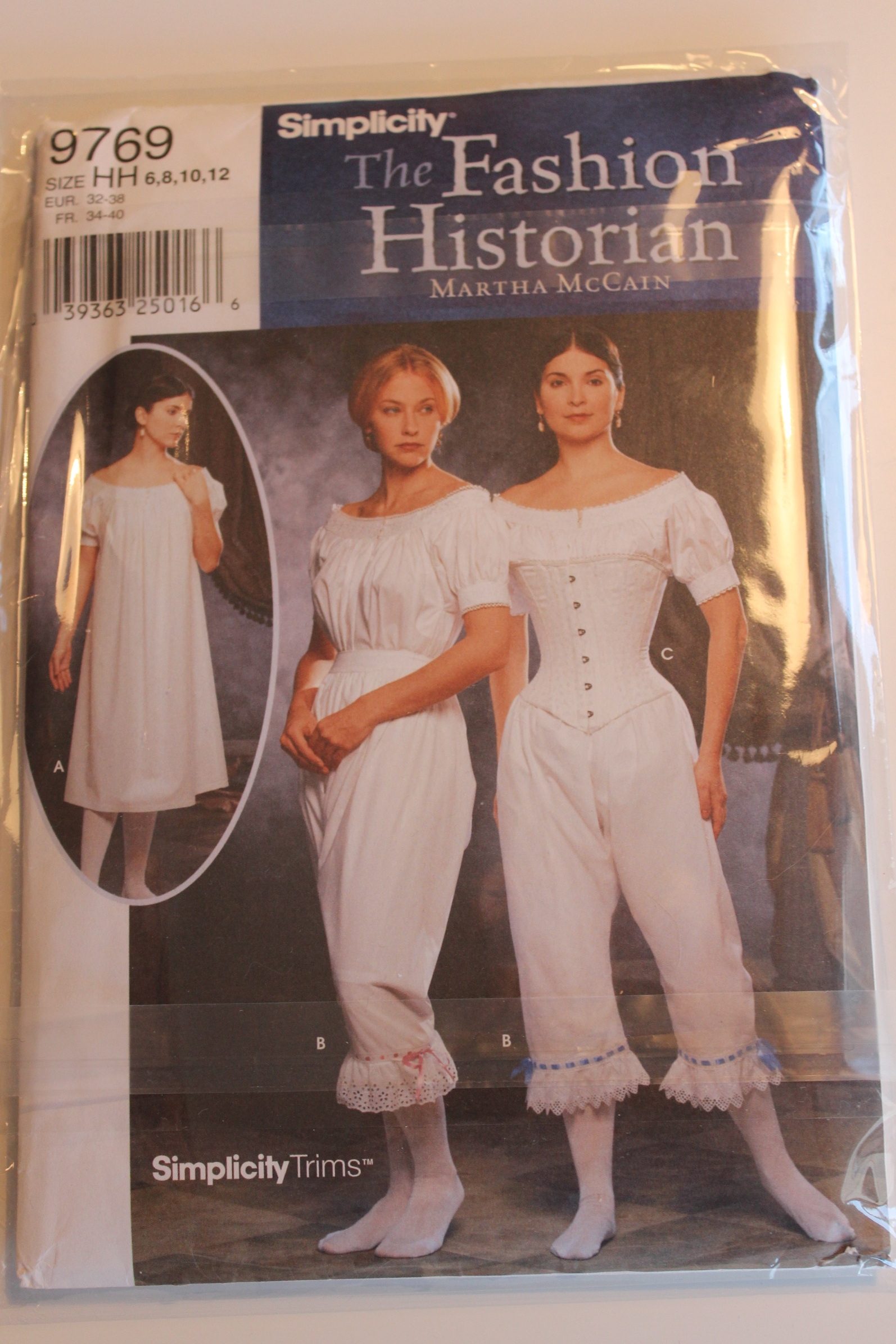
And what I was in the mood for now was a 1850s chemise.IMG_9312I bought this pattern from a friend clearing her sewing bits, and emediatly knew it would fit the challenge.

The purpose of this challenge was to make something really cheap, and to take in account the cost of fabric and notions in the past.
The fabric I choose was an old cotton sheet bought from IKEA a while ago (6 Usd).

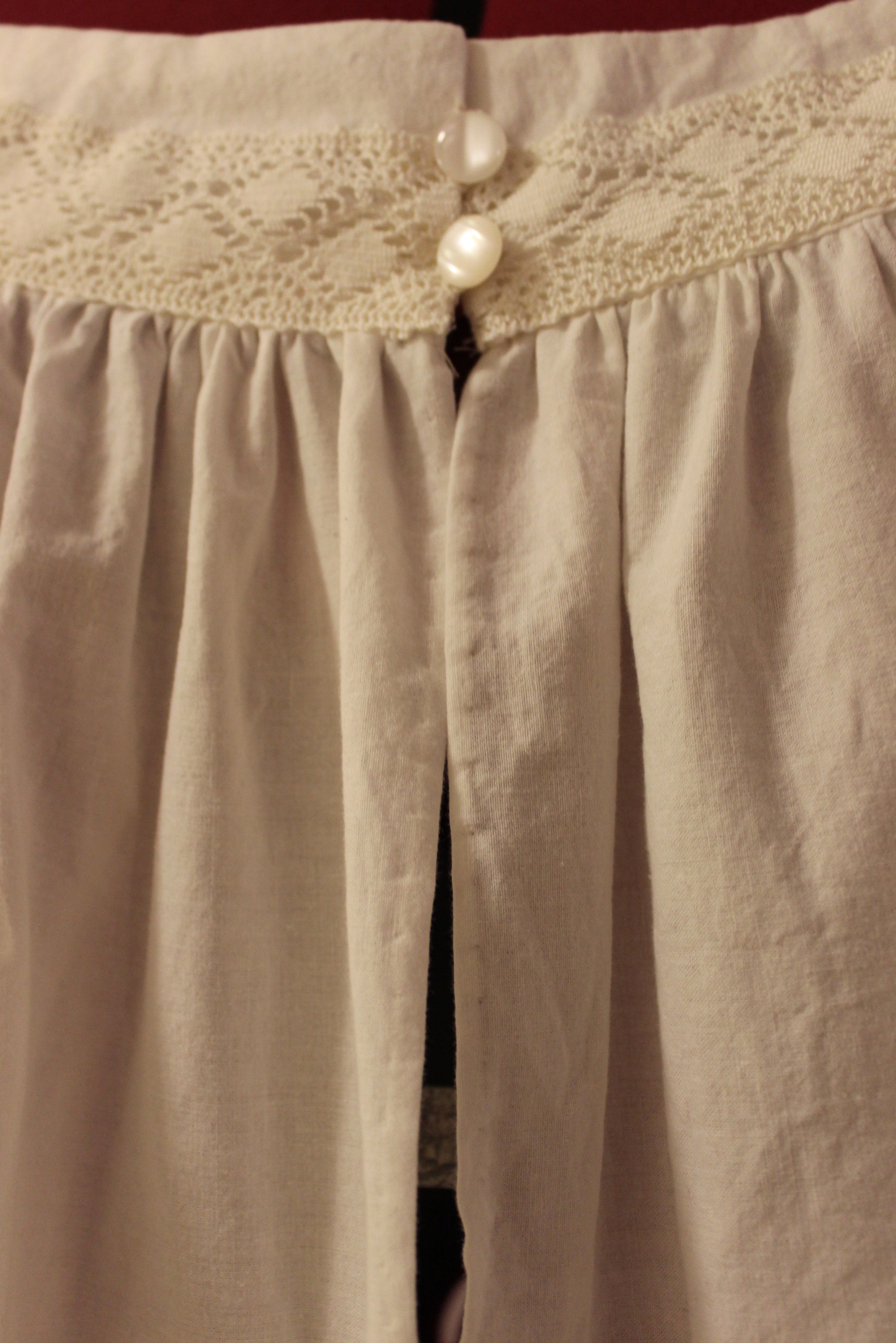
I forgot to take process pics of this chemise, but here it is sewn togeter and only missing the neckpiece. IMG_9413

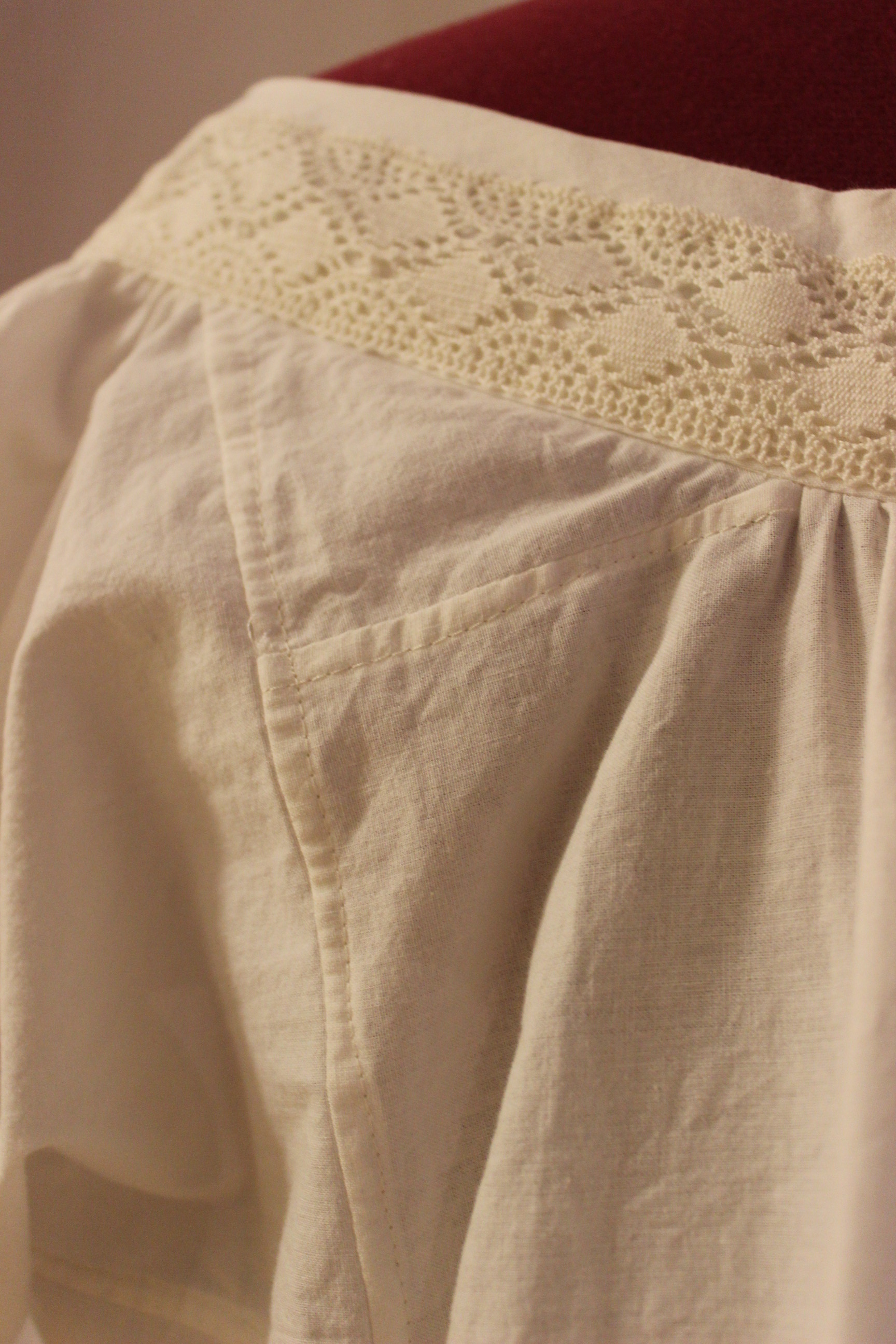
The side gores was a bit un-nececary I think, but since I followed the pattern (more or les) they had to be there.IMG_9415

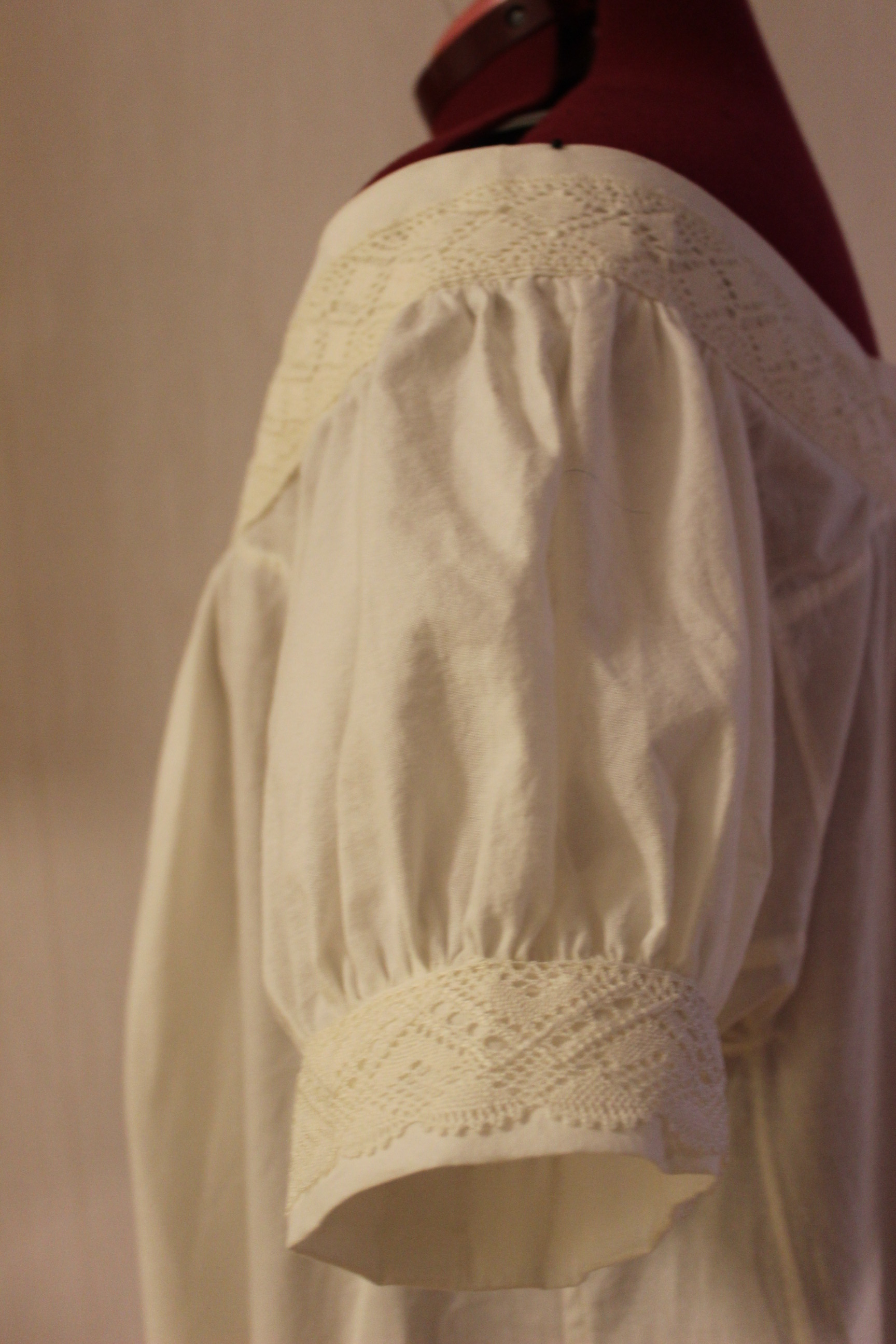
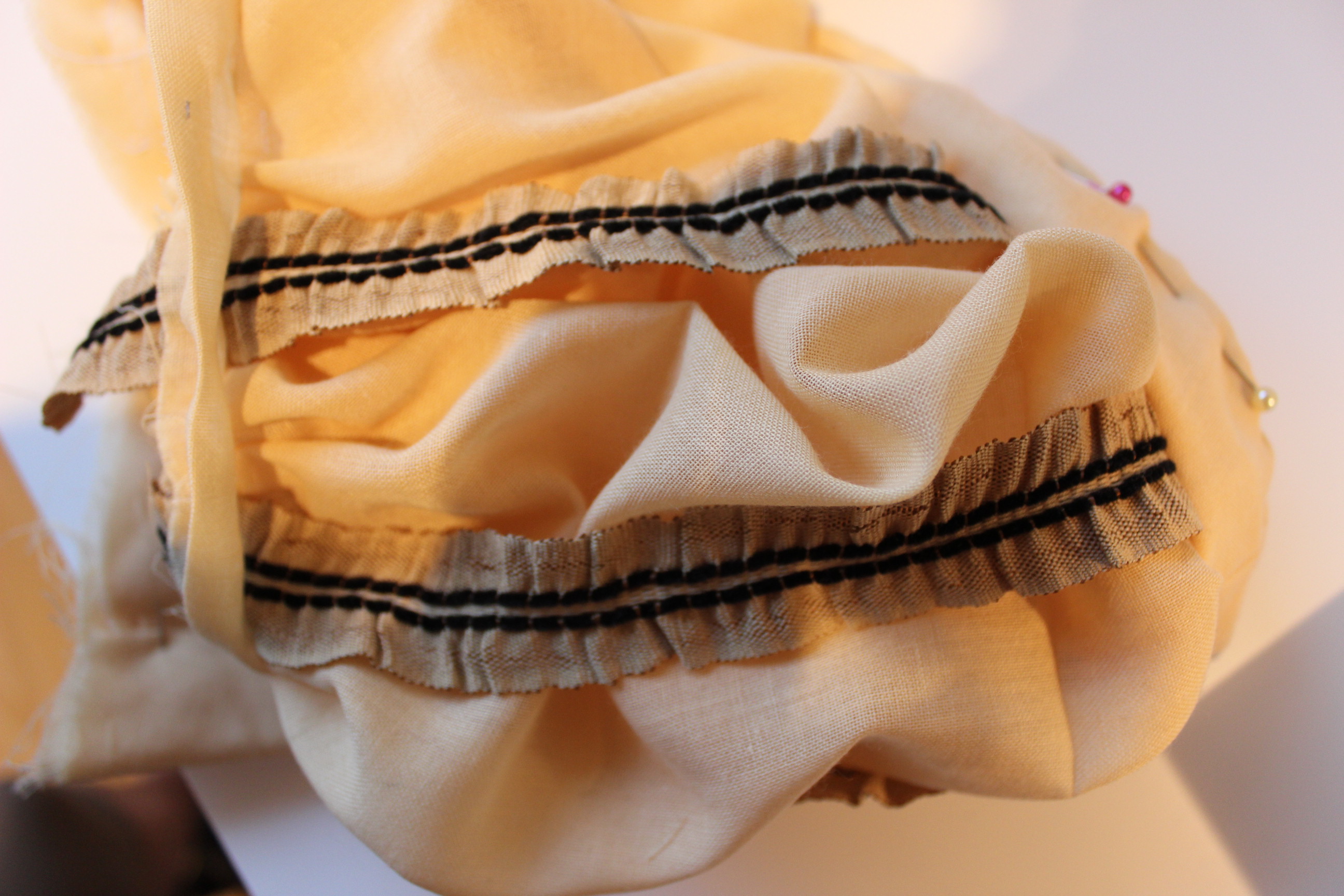
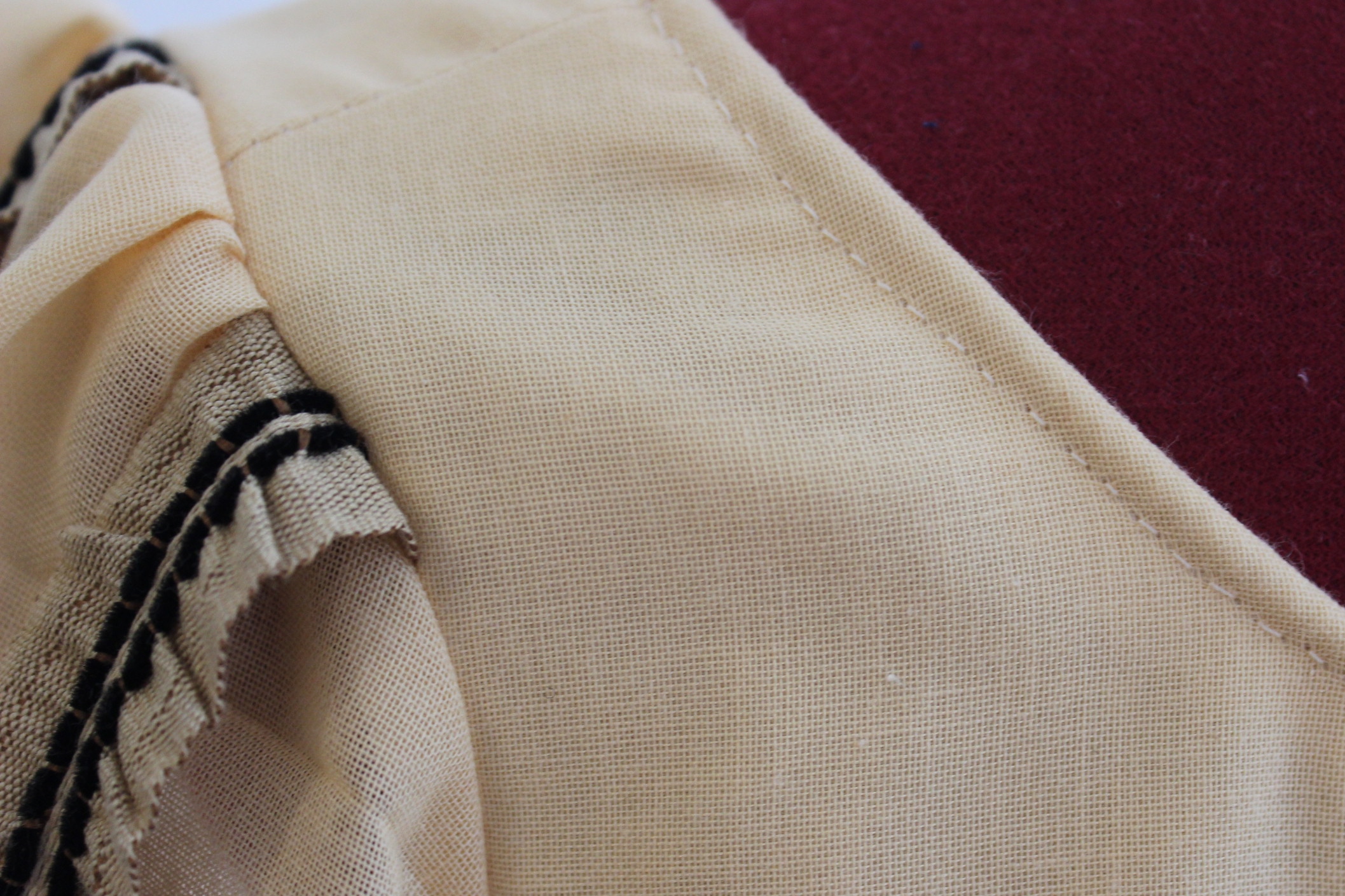
For decoration I used some of the vintage lace I bought a box ful of this winter.IMG_9416The two pieces of lace I picked may have cost me 0,5 Usd at the most.

Finished photos:IMG_9421

IMG_9422

IMG_9445

IMG_9426

IMG_9427

IMG_9429

IMG_9441

IMG_9444

IMG_9443

IMG_9436

IMG_9431

IMG_9440

IMG_9438

IMG_9437

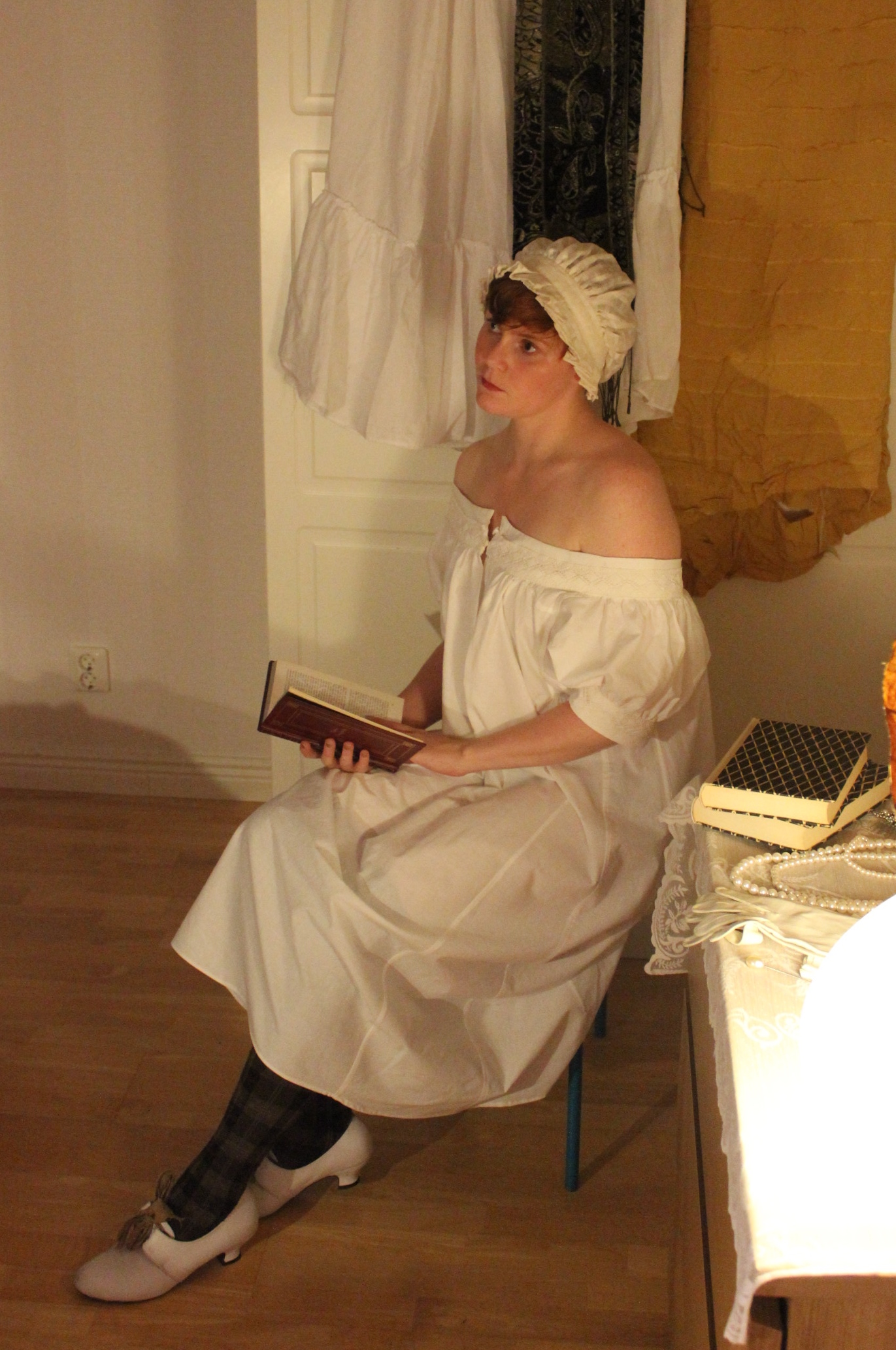
From the photoshoot:IMG_9466

Just the Facts:

Challenge: 13 – Under 10 Usd

What: A mid to late 19th century Chemise

Pattern: Simplicity 9769

Fabric: One cotton bedsheet.

Notions: 1,5 m of lace, thread and 2 smal buttons.

How historical Accurate: Pretty good. For 1850s not so much – machine sewn, but for 1880s (which I aslo will use it for) it’s perfectly legit. The pattern claims to be accuarte and the fabric are good too. So maybe 7/10.

Time: About 4 hours.

Cost: 10Usd or 65 Sek (100 Sek including the pattern)

First worn: Around the house for photos, but I know I will get good use out of it.

Final thoughts: It is so comfortable. I would have totaly have worn it to bed if my boyfriend hadn’t given me a quer look. 🙂

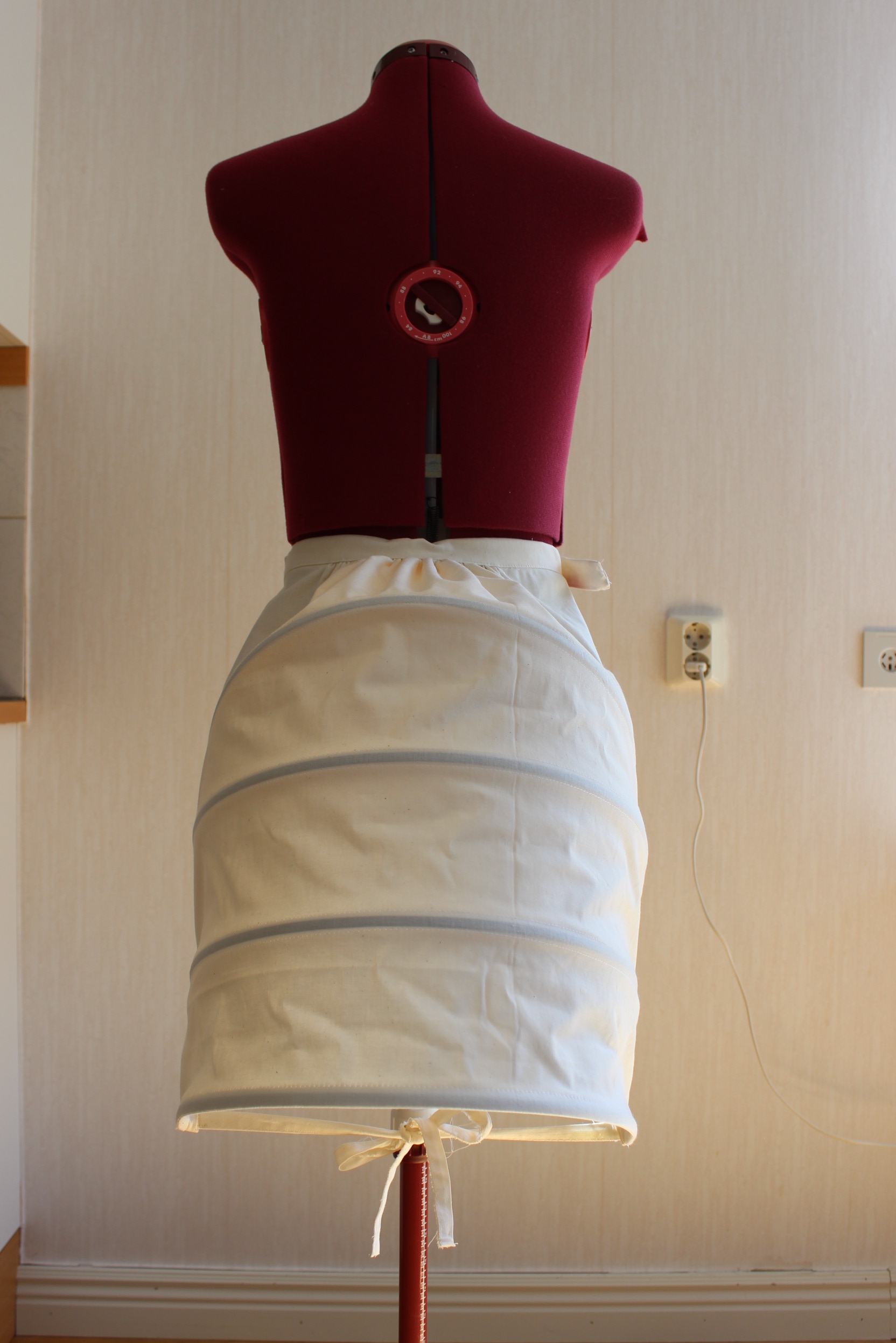
1850s Shaped Crinoline

When planing the HSF items earlier this year, I decided to try to make a mid 19th century Crinoline for nr 12 Shape & Support.8715_424_249-1850-crinoline
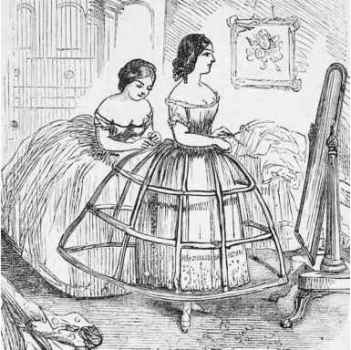
I’ve wanted one for about a year, and now there was no exuse not to make one.

I searched the internet and came up with two variations I liked. b20654dea73bc720bf10f76a2d708280

2d5b6a491e65c5ca91789ec49eee6b3b1860s, so a bit late but you get the idea.

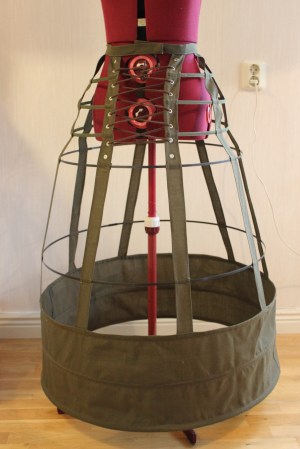
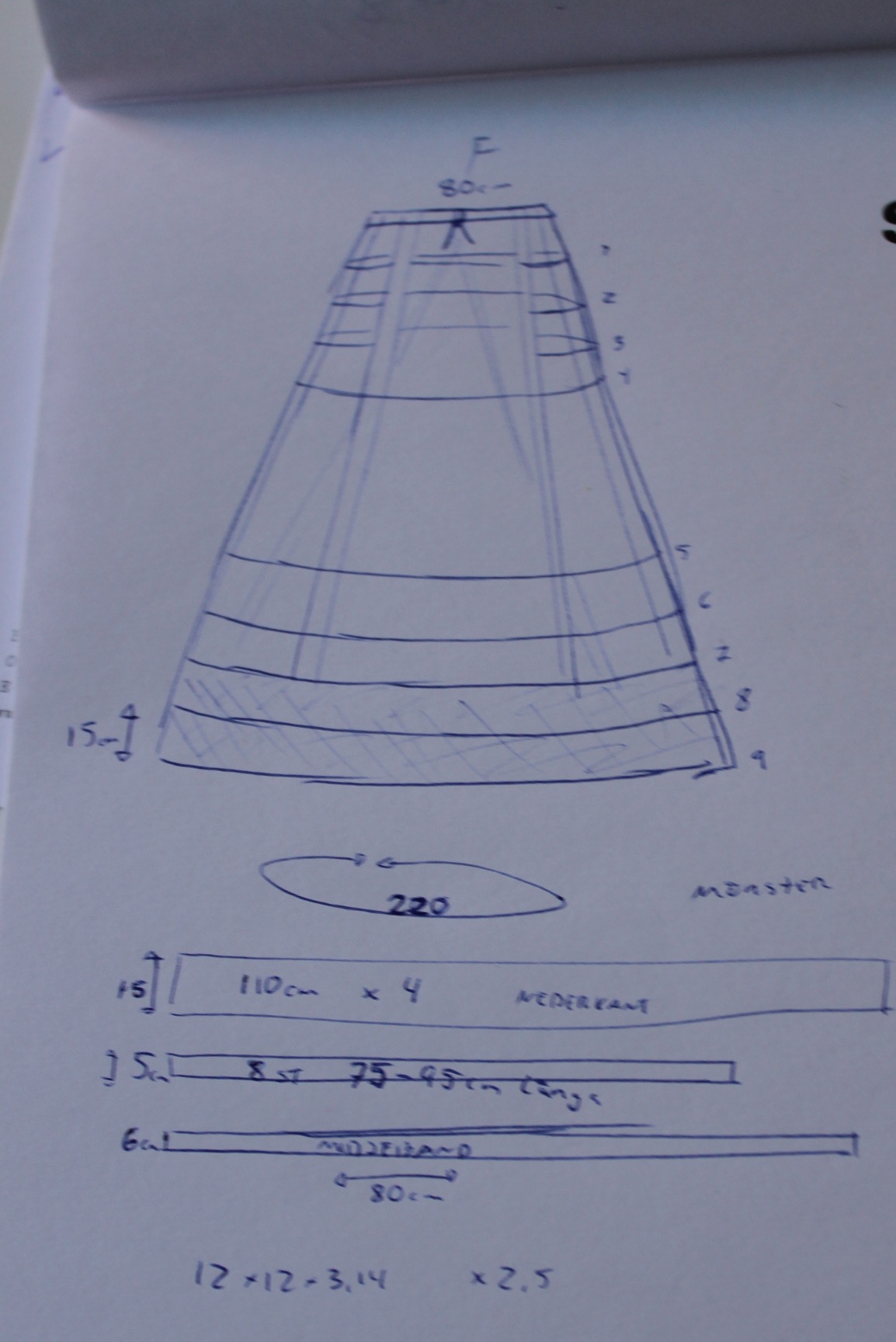
I decided to do a mash-up of the two – keeping the first ones shape, but adding the fabric of the lower section in the second one.IMG_9251I didin’t use any pattern but made some calculations of the size and amount of rectangles I would need.

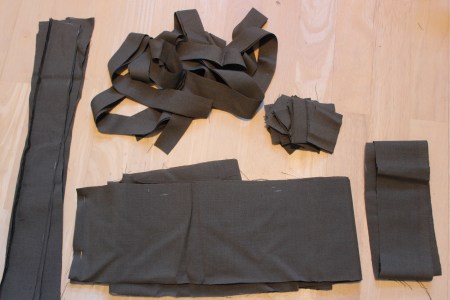
I found this thick green polyester in my stash, and figured why not. I cut the pieces letting the widht of the fabric decide the size of the bottom of the finished crinoline (220 cm). IMG_9252From left: Vertical ribbons, bone casings, bottom part, smal pieces of chanels and a waistband at the right.
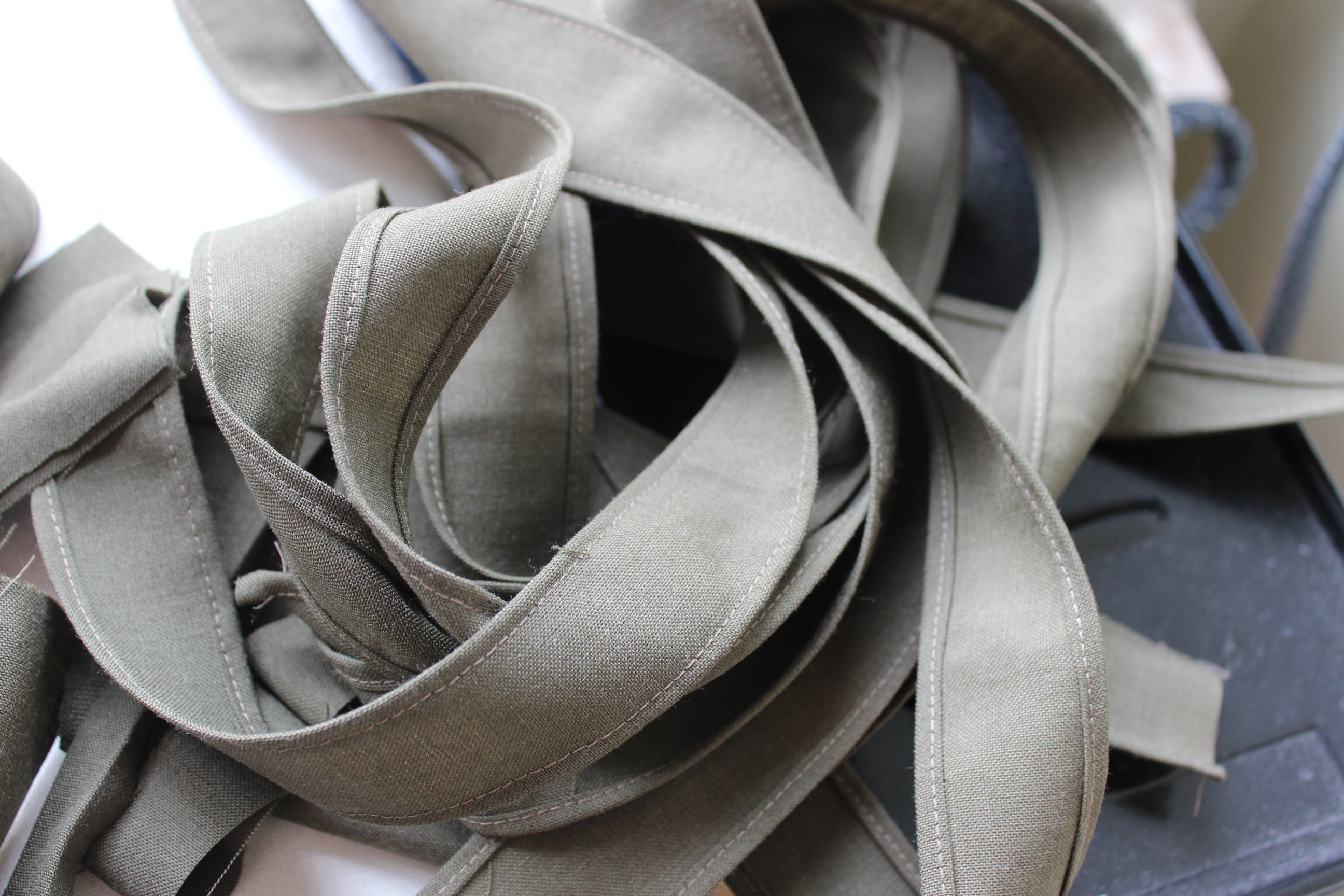
Then I pressed the long ribbons to turn them in to bone-casings.IMG_9254About 6,5 m or so.

Then I sewed the boning chanels to the pieces to create the bottom part of the crinoline.
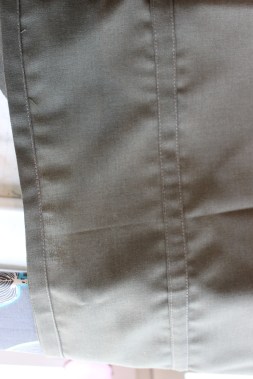
IMG_9255 IMG_9257
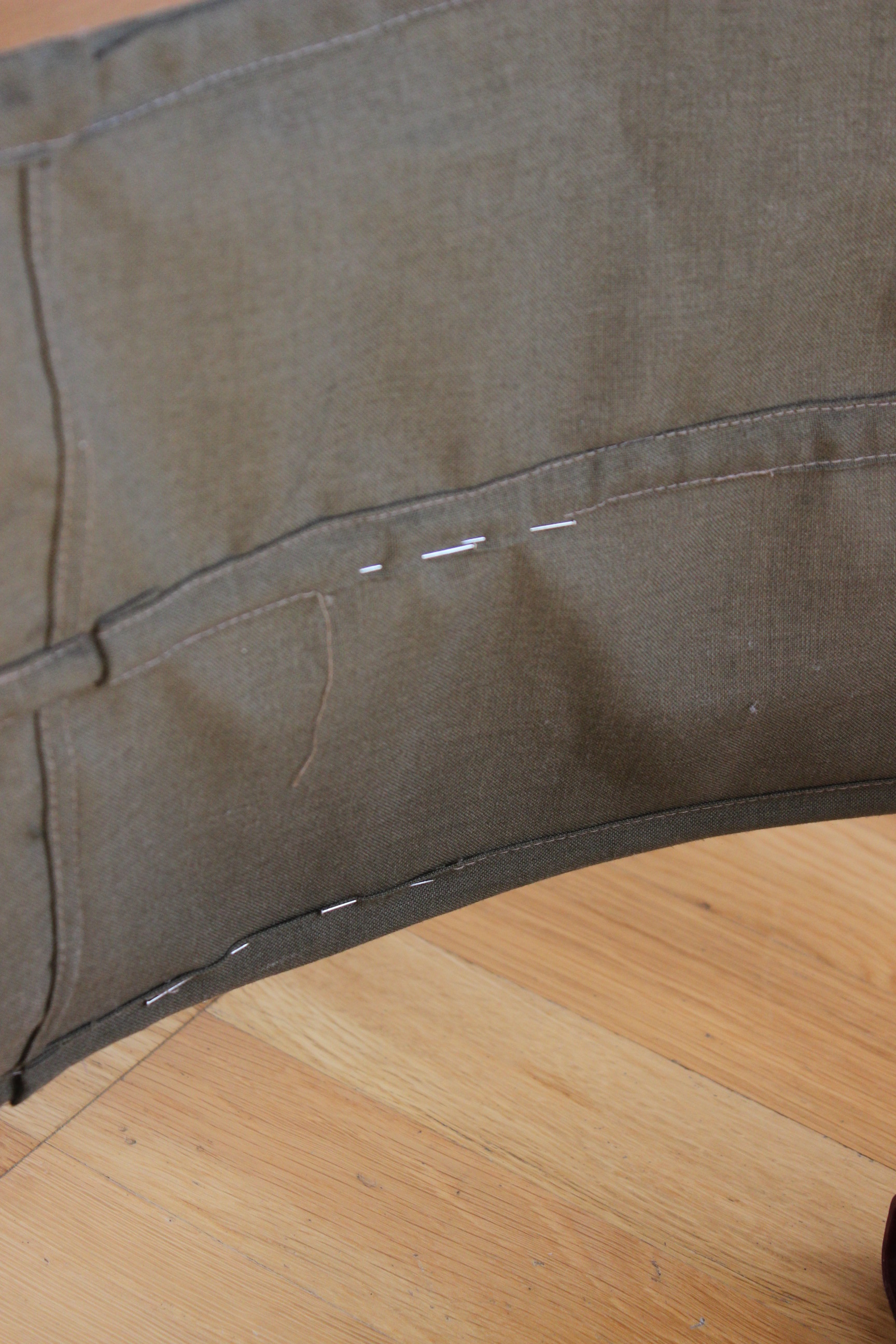
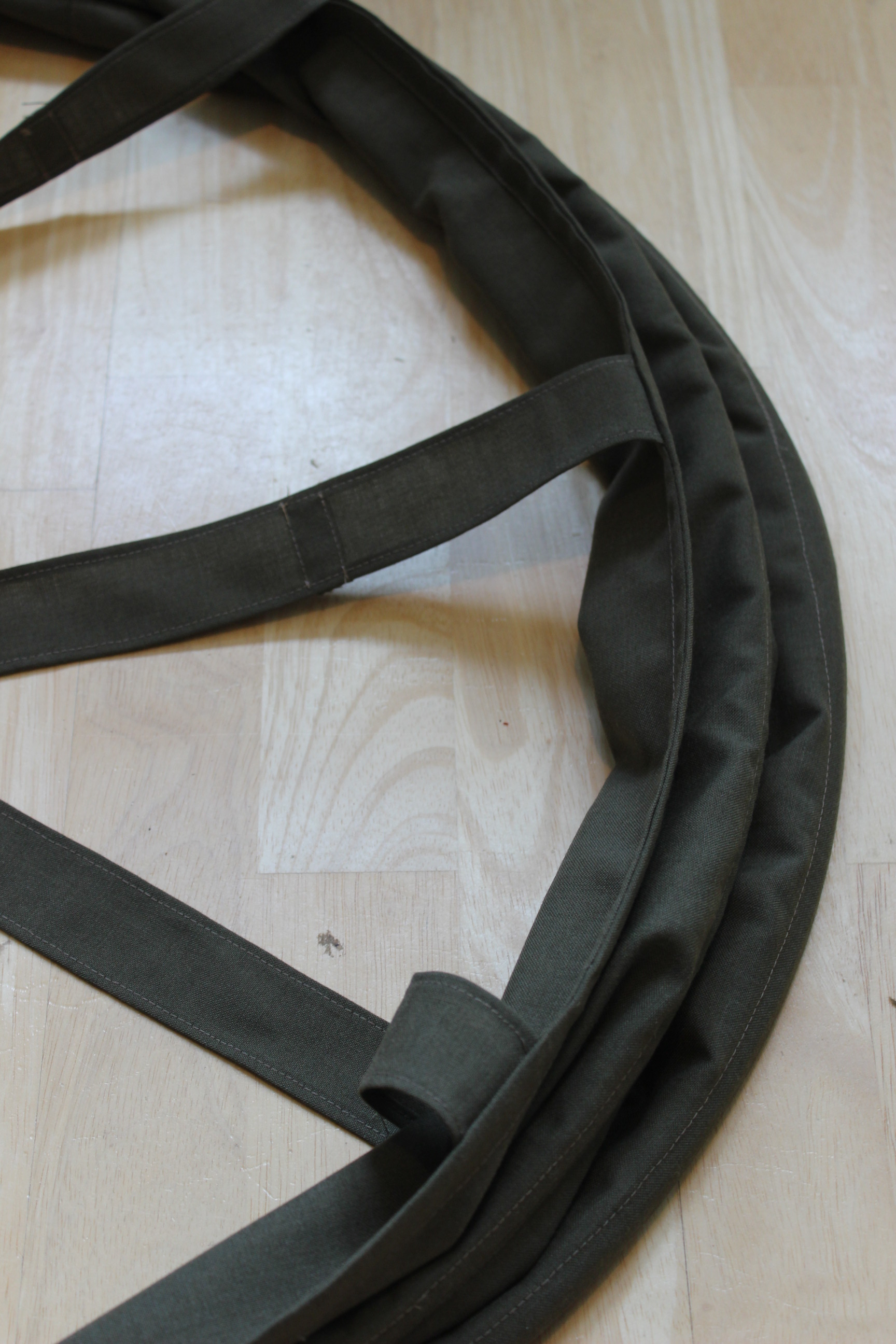
The chanels shown from the wrong side and the right side.

Then I hemmed the pieces creating the vertical support ribbons.IMG_9262 There are eight of them at 1 m a piece = about 16 m of hemming (its a good thing I decided to make this one on the machine).

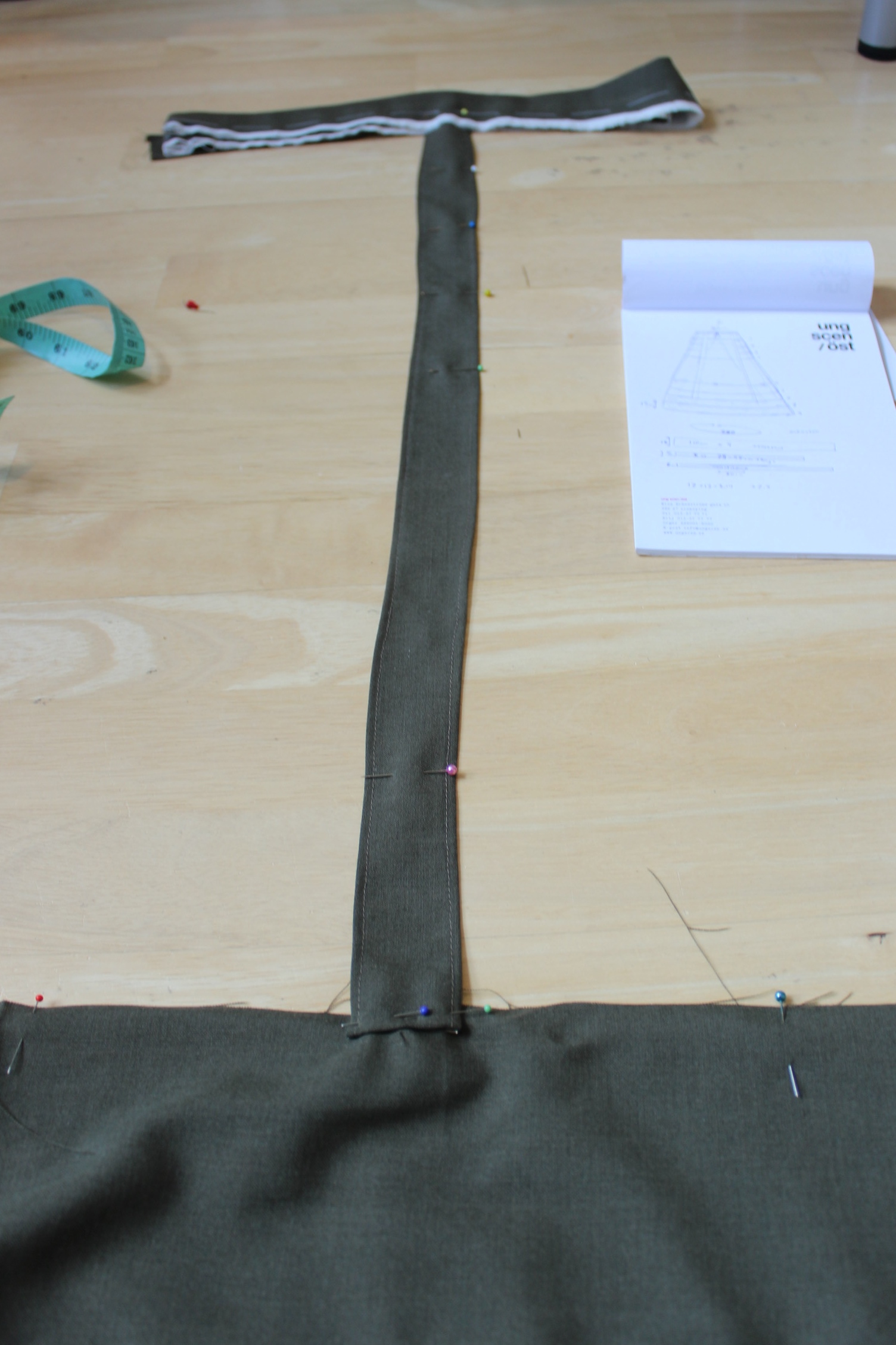
Then I lay it out on the floor to decide the size and placement of he ribbons.IMG_9261

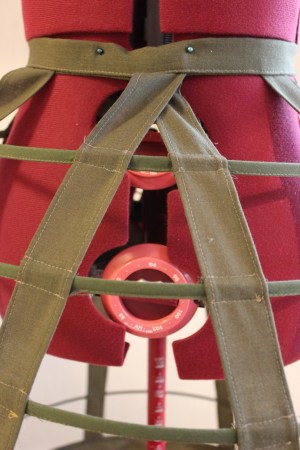
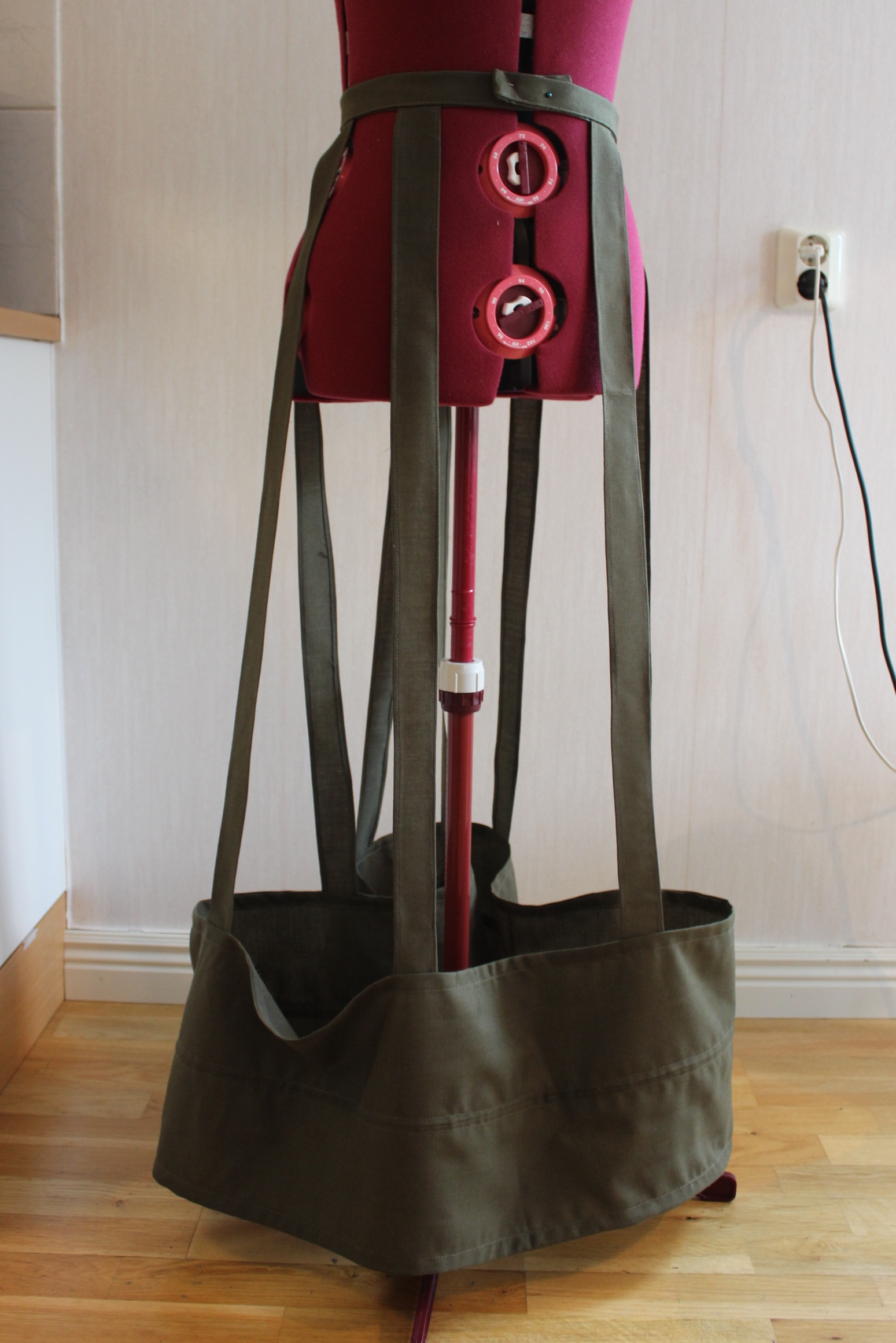
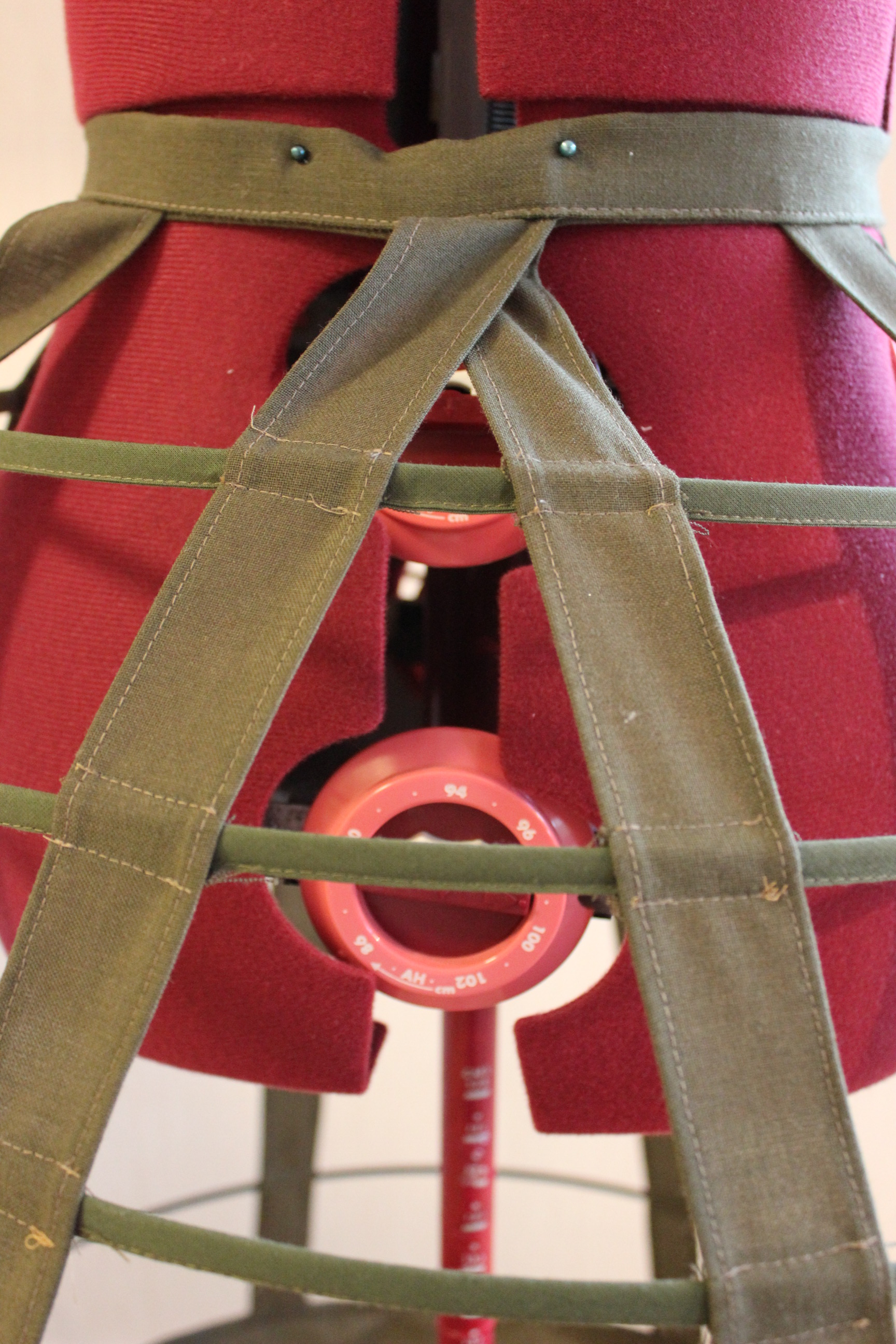
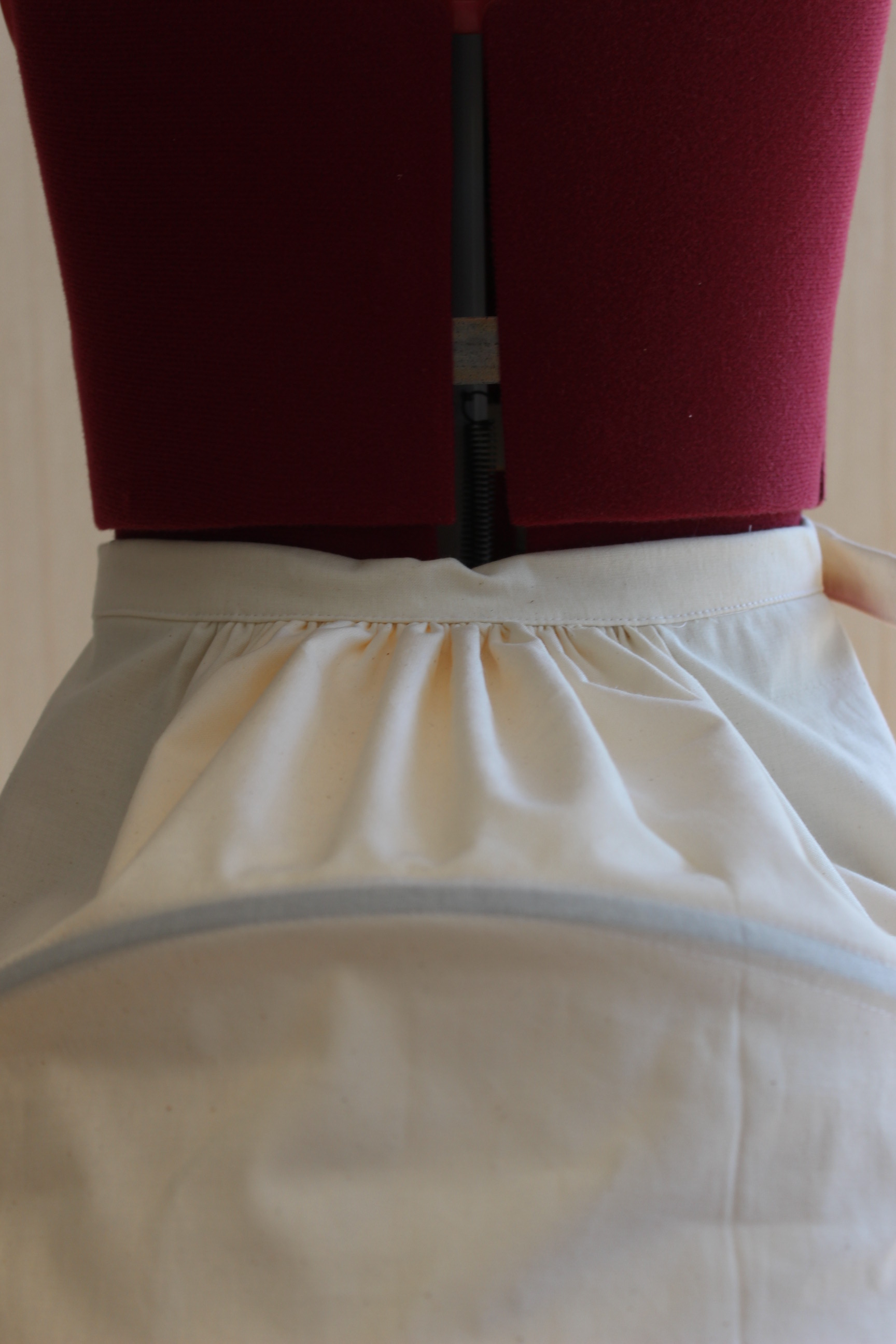
I put it on my dressform to make sure everything looked even.IMG_9265And stitched the ribbons down to the wasitband and lower section of the crinoline.
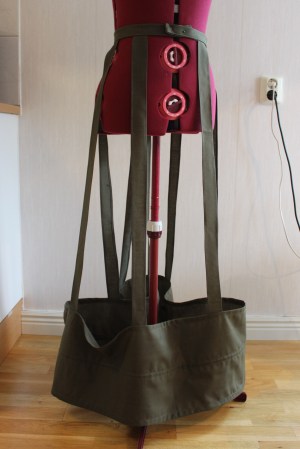
IMG_9266Looks kind of stupid without the boning.

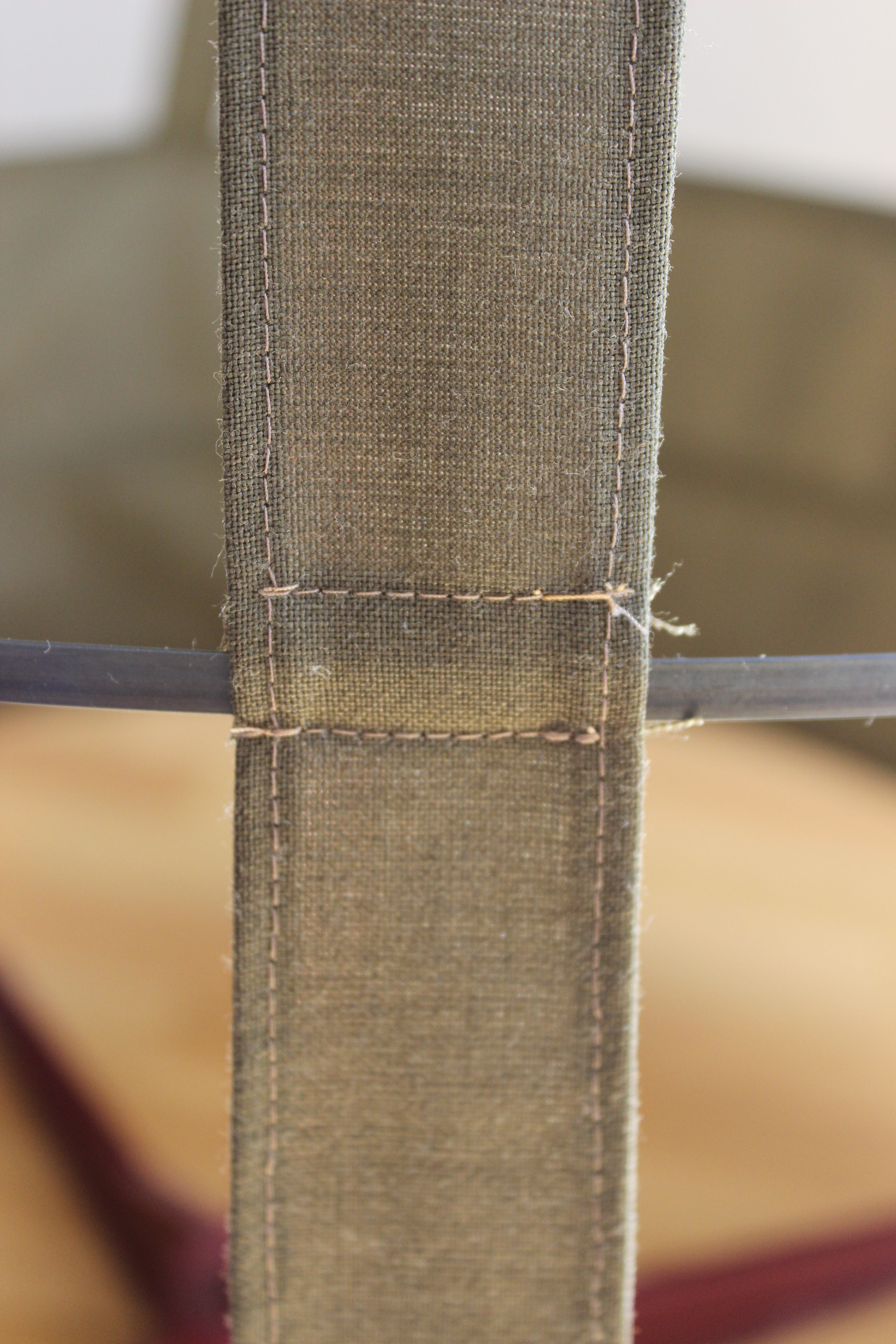
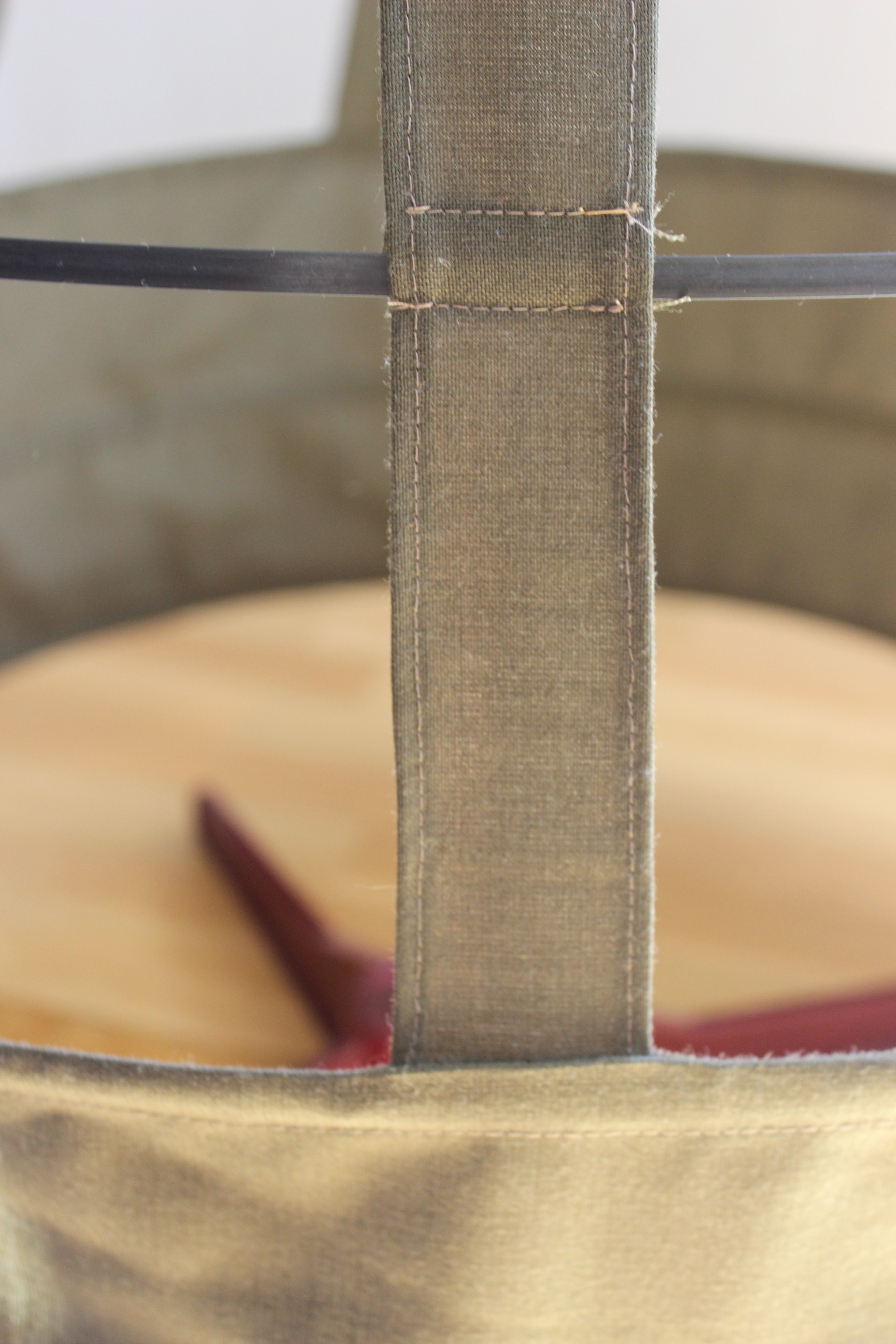
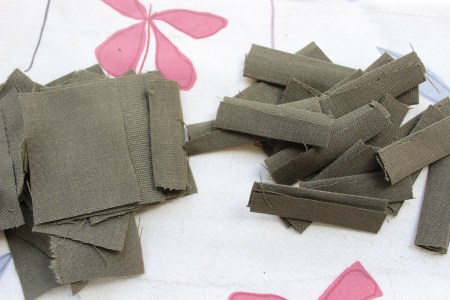
Then I pressed the smaler pieces to boning chanels about 3 cm long.IMG_9271I then stiched these on to the vertical ribbons, making places for the bones to conect to the foundation.
Then it was time for the boning. IMG_9253I used about 11 m of steel wire, originaly ment to be used to un-plug stop in the drain.

I used some electrical tape to cover the sharp edges, and taped the ends togeter inside the chanels in the bottom part of the crinoline.IMG_9272

IMG_9369Here you can se the places in which I taped the wires togeter. I then stiched the holes back up.

Working my way up from the bottom I inserted the boning and closed each hoop before moving on to the next.IMG_9273Three bones inserted.

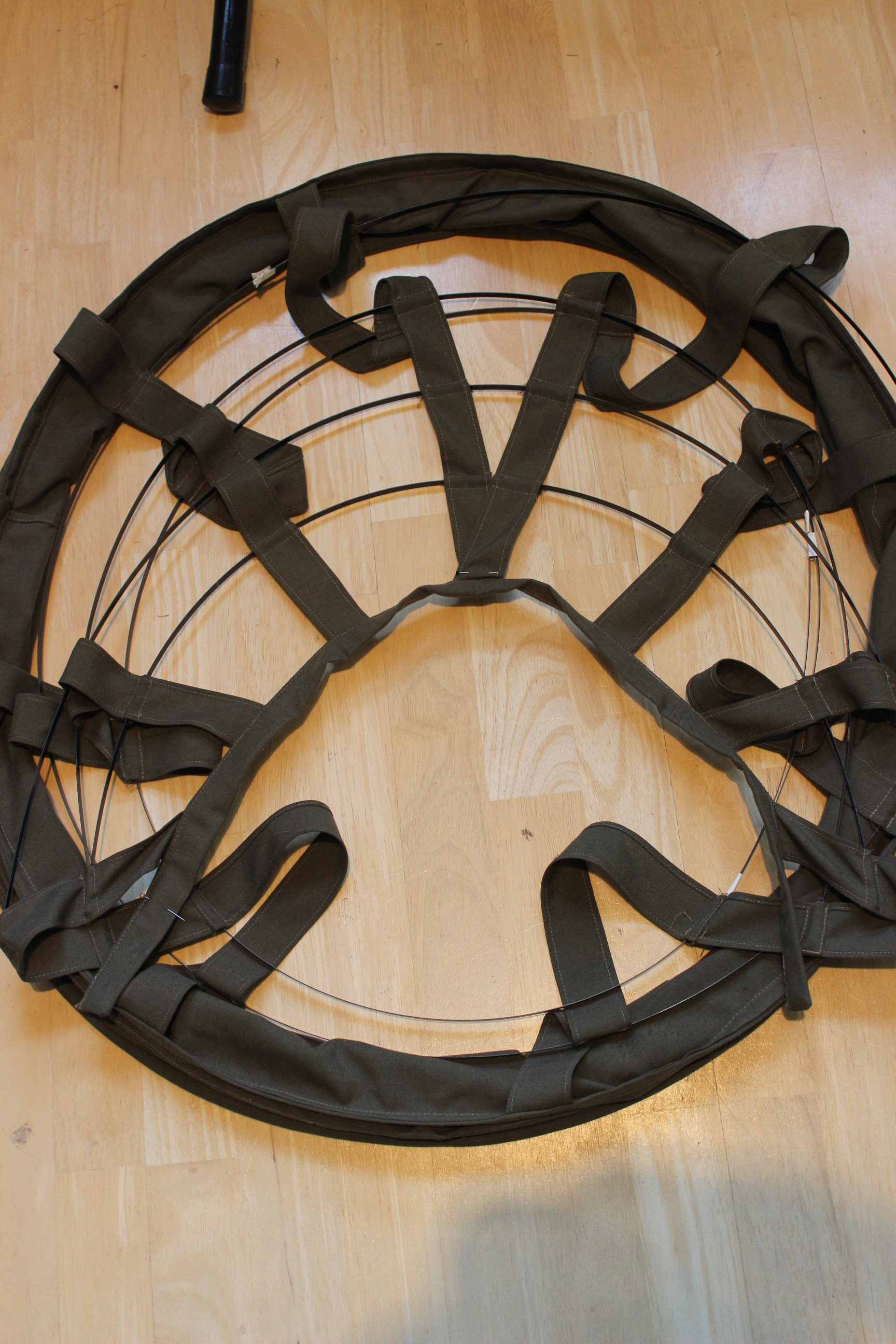
When I got to the “free” bones I inserted them into the smal chanels at each vertical ribbon, and taped the hoop shut at the end.IMG_9370

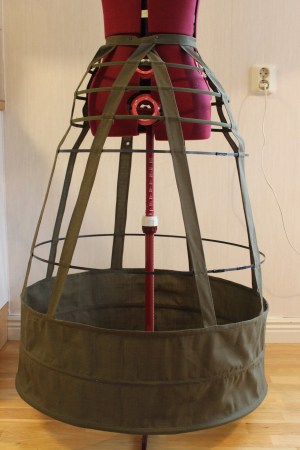
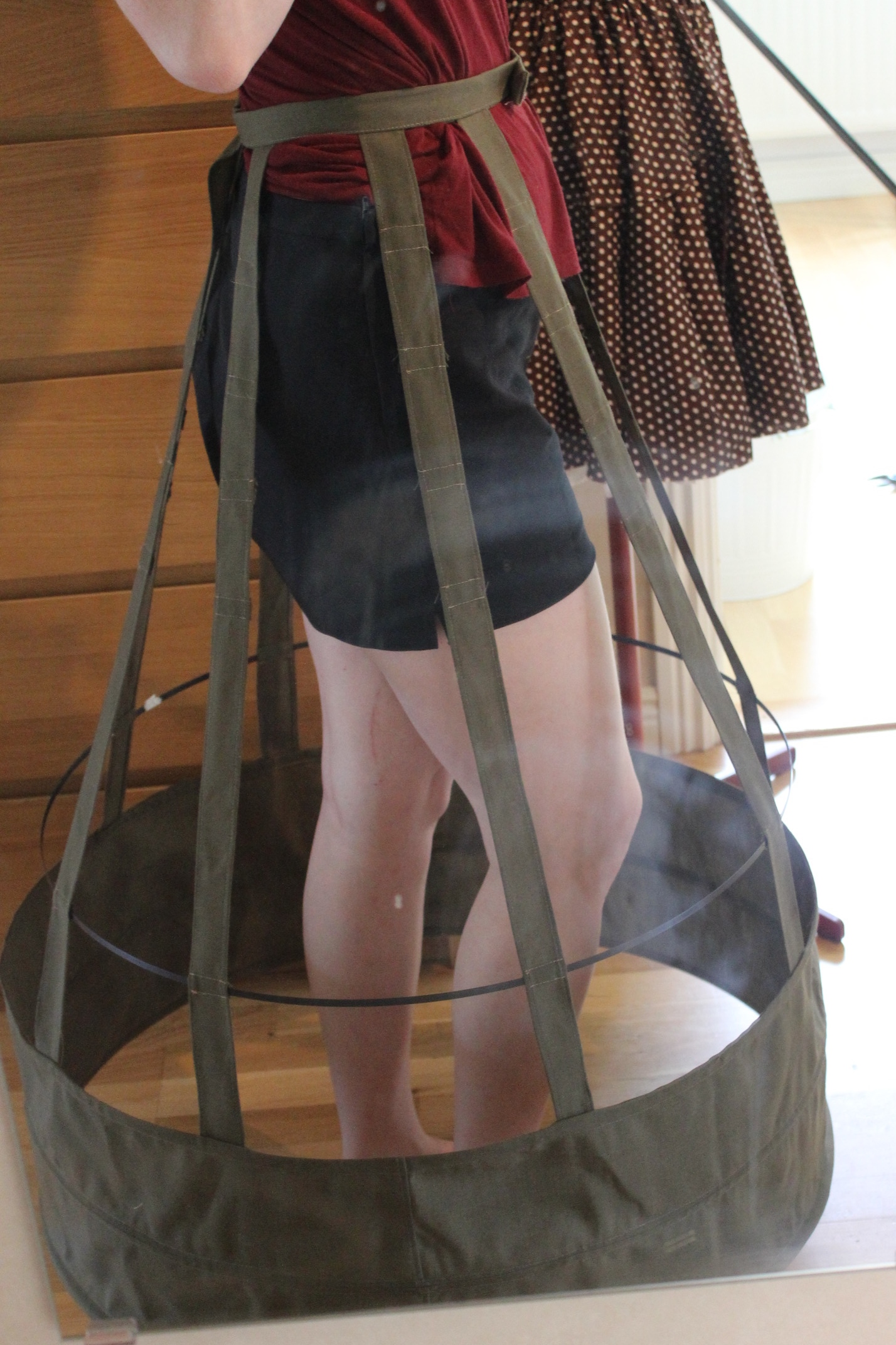
Then I tried it on to get a better look of how it would look.IMG_9280Pretty cool, but still 4 more bones to go.

I left the top front open and free of bones to be able to get in and out of the skirt.IMG_9283
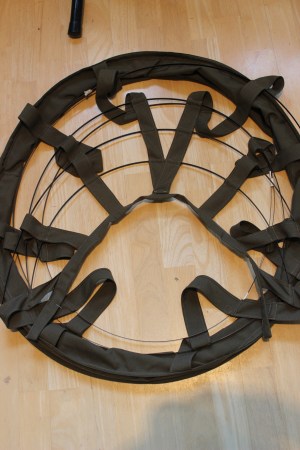
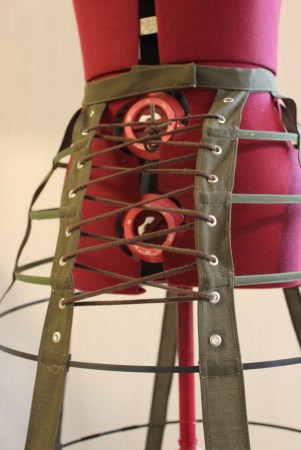
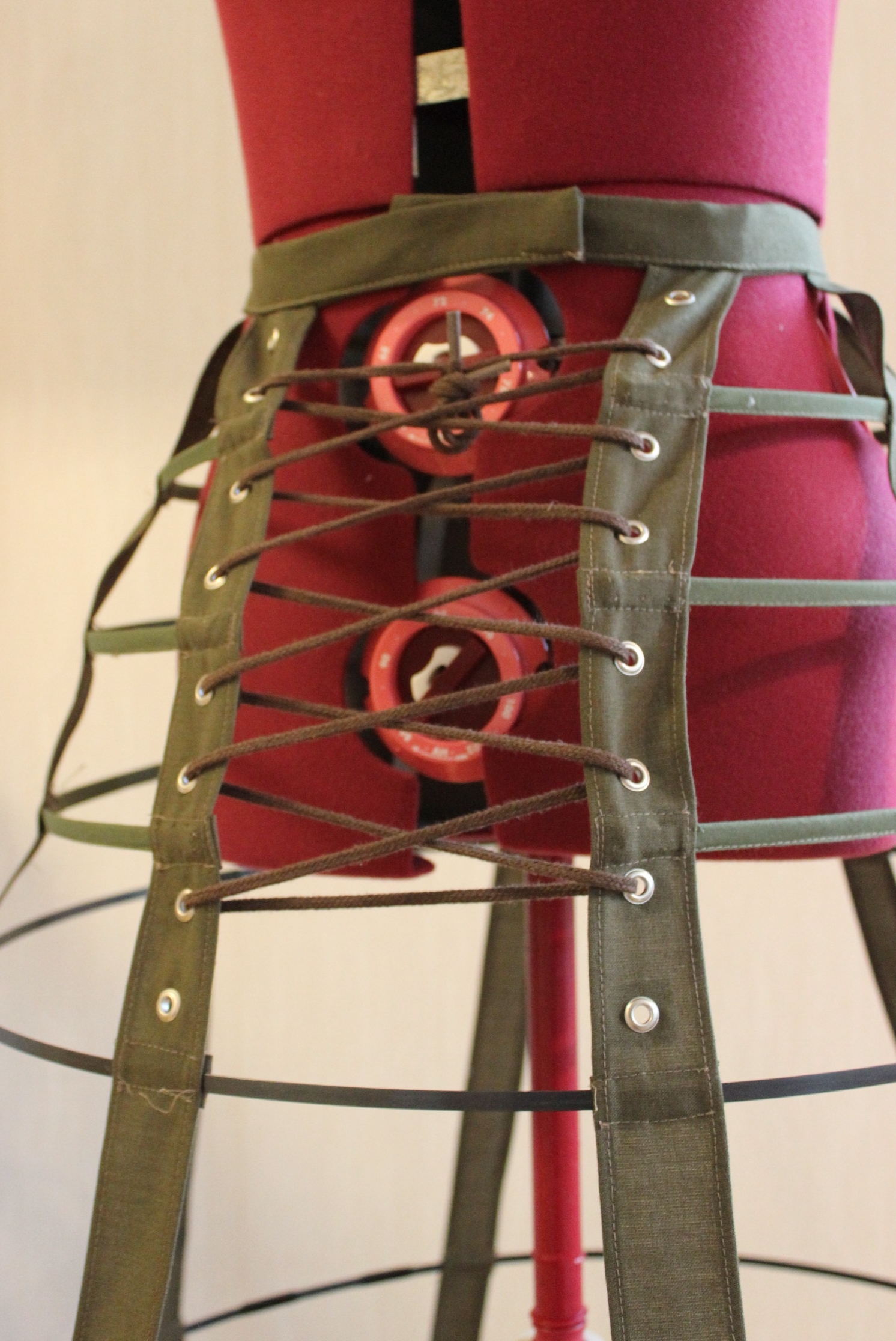
I inserted some gromes to make the skirt lace up the front.IMG_9375You can also see where the boning stops at the front ribbon.

IMG_9285Looking pretty on my dressform.

But one problem remaind.IMG_9392The bones very easyerly left the casings, and wandered away in other directions.

To solve the problem I decided to make holes in the boning and casing, to tie them togeter at the ends.

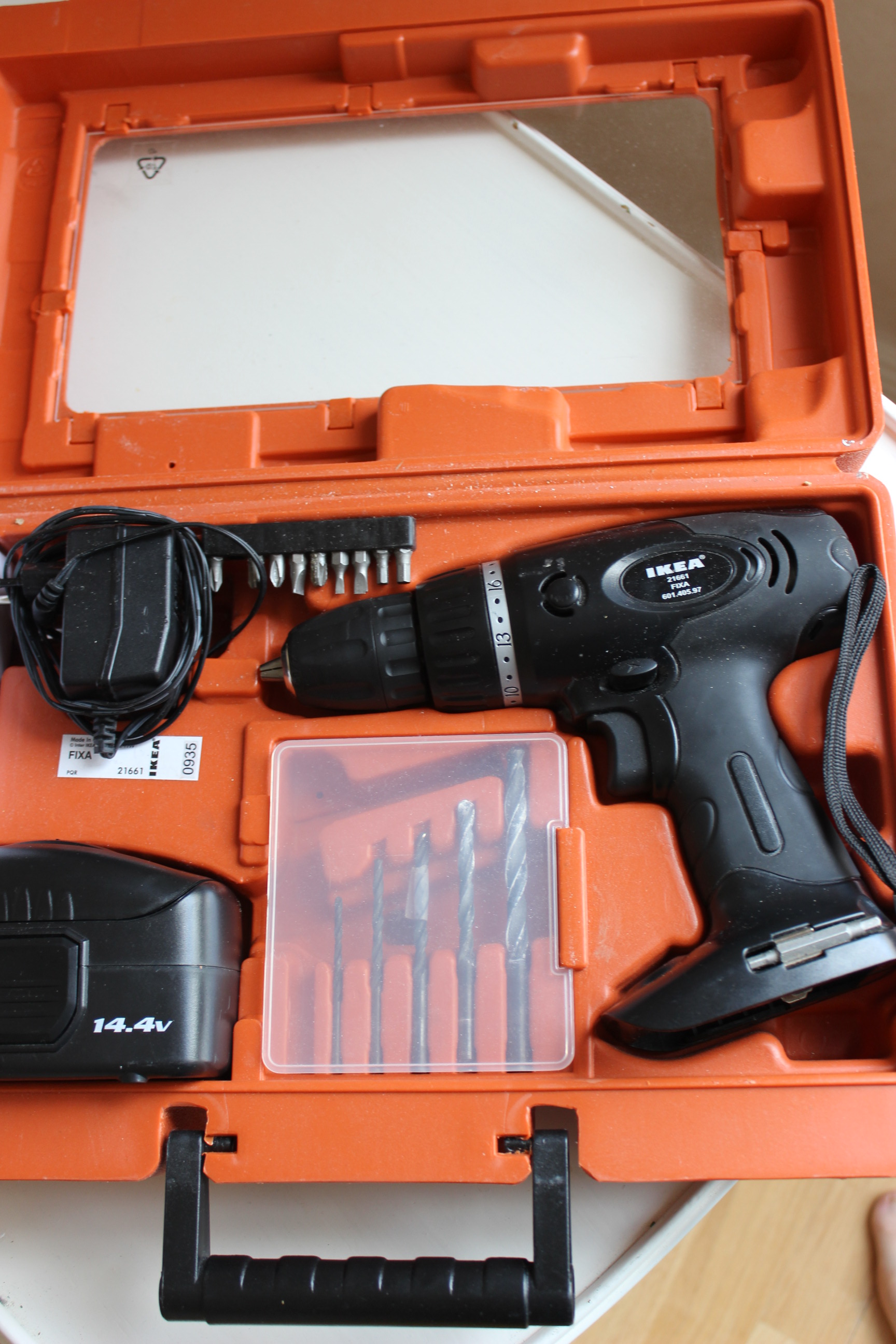
IMG_9612I borrowed my fathers elecric drill, but alas, not even a notch on the steel boning. Dead end.

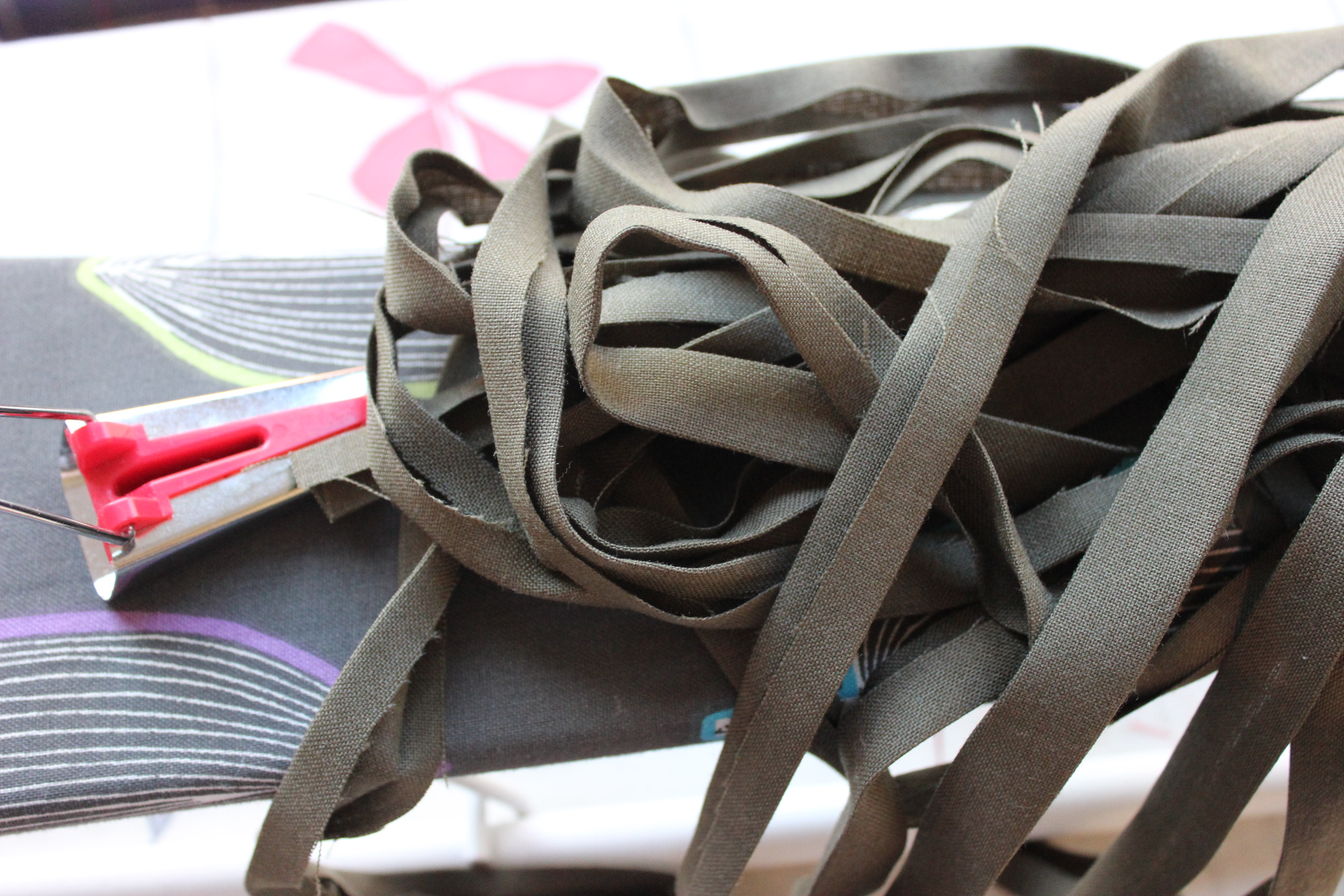
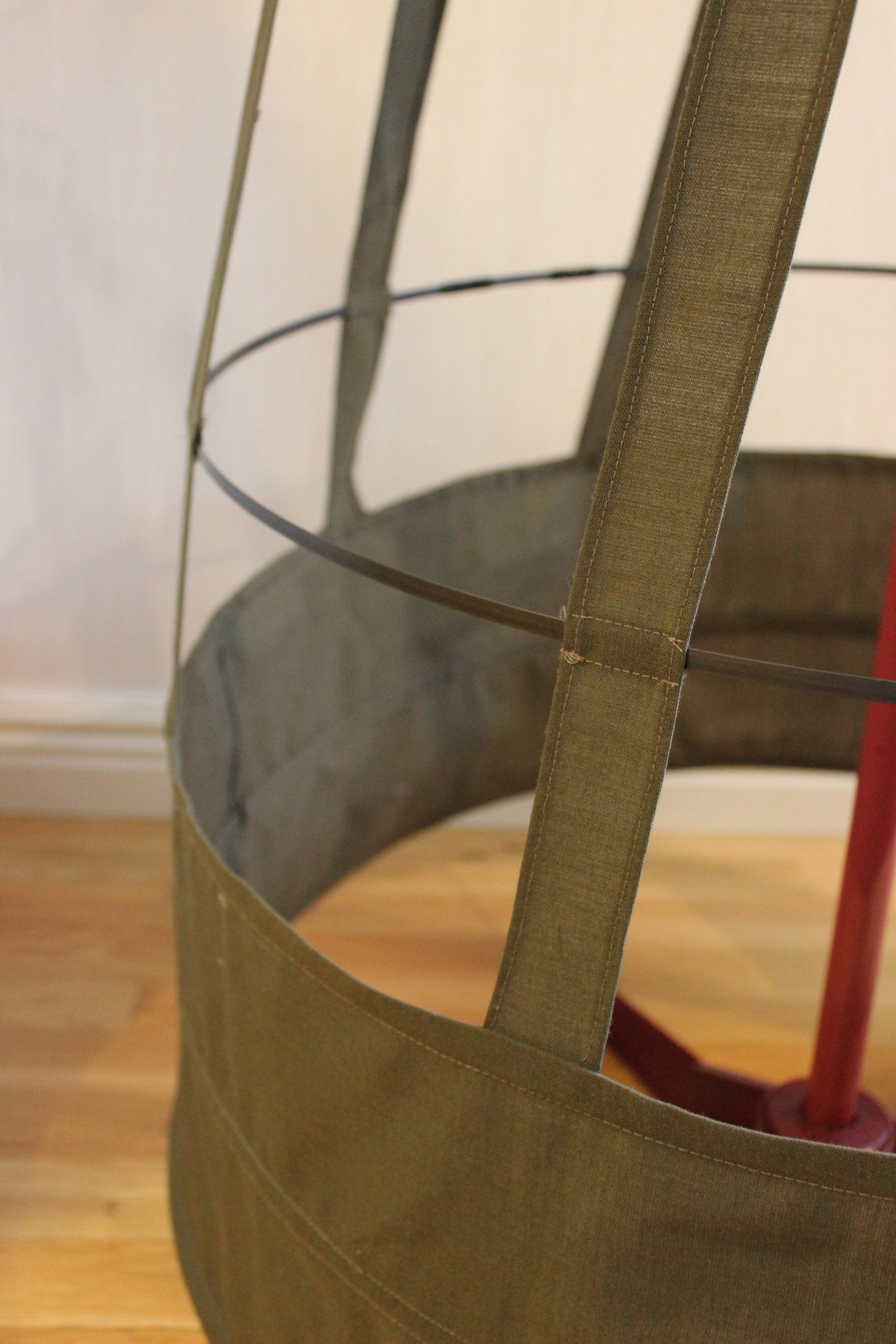
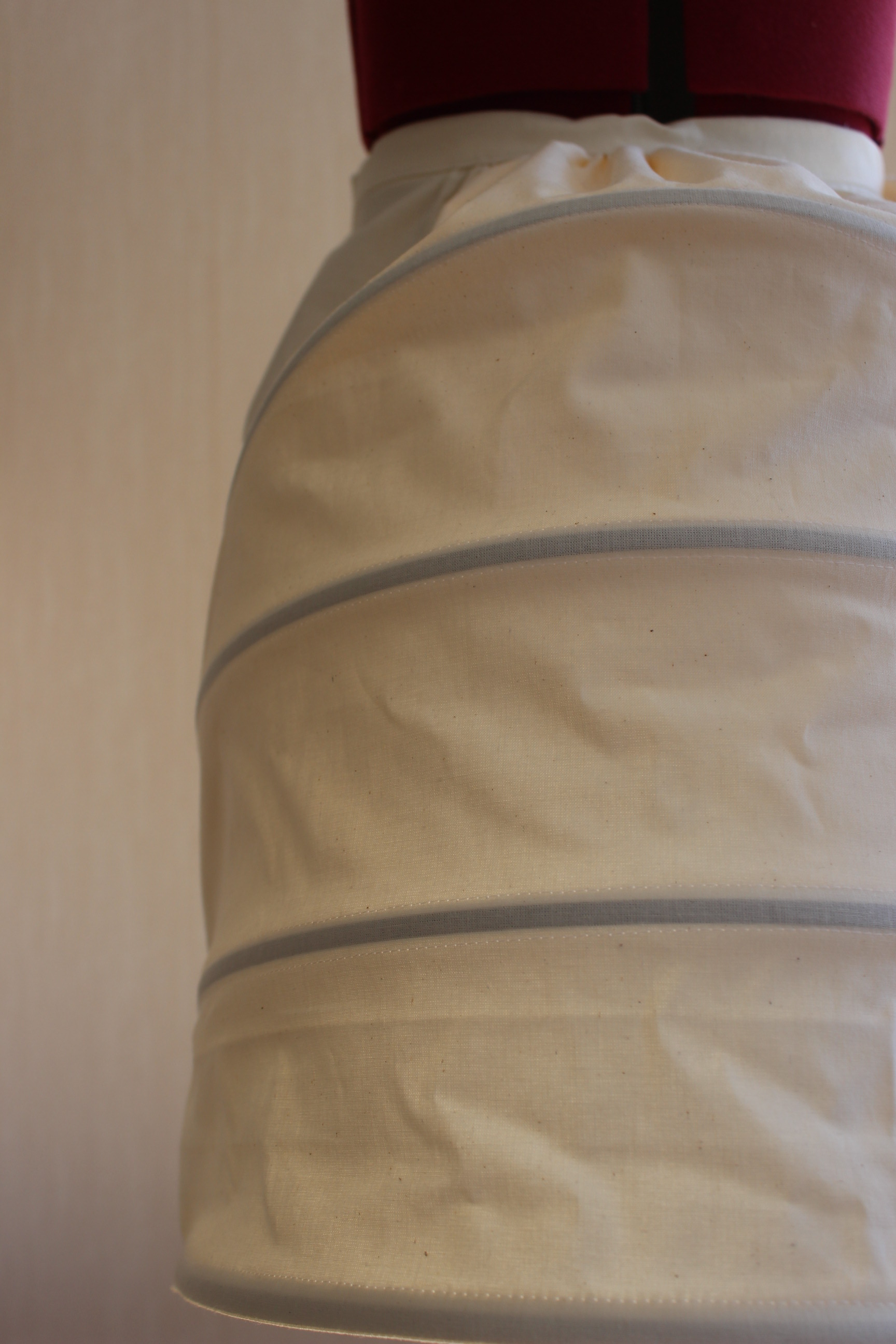
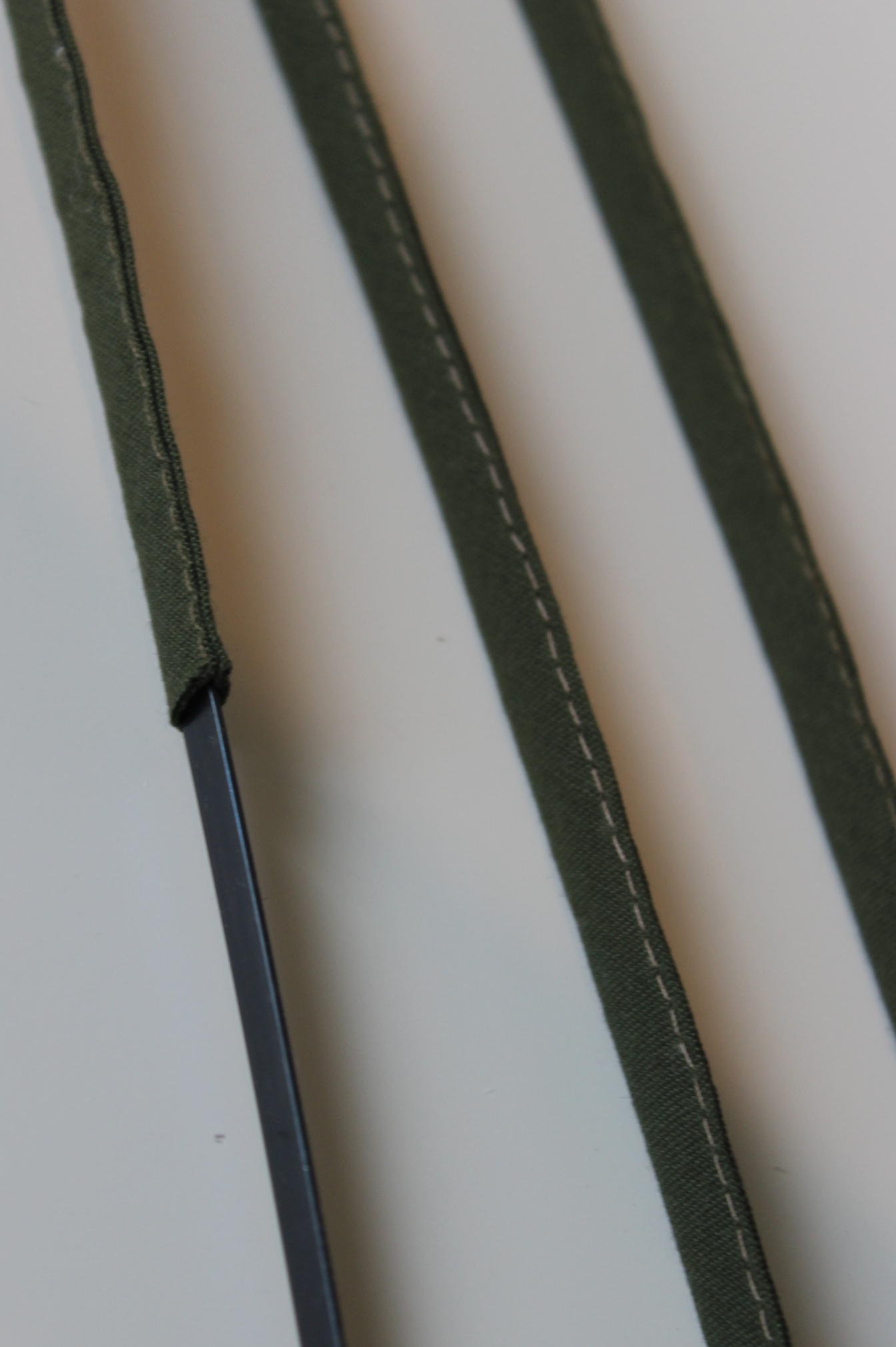
My other solution worked better.IMG_9390I bought bias-tape, aproxemently the same colour as the fabric, and made them into boning casings.

Insering the boning and sewing of the ends, left me with three grren fabric covered lenghts of steel.IMG_9394

I then inserted the fabric covered boning in the chanels and stiched the ends down inside the chanel ends.IMG_9411And that was that.

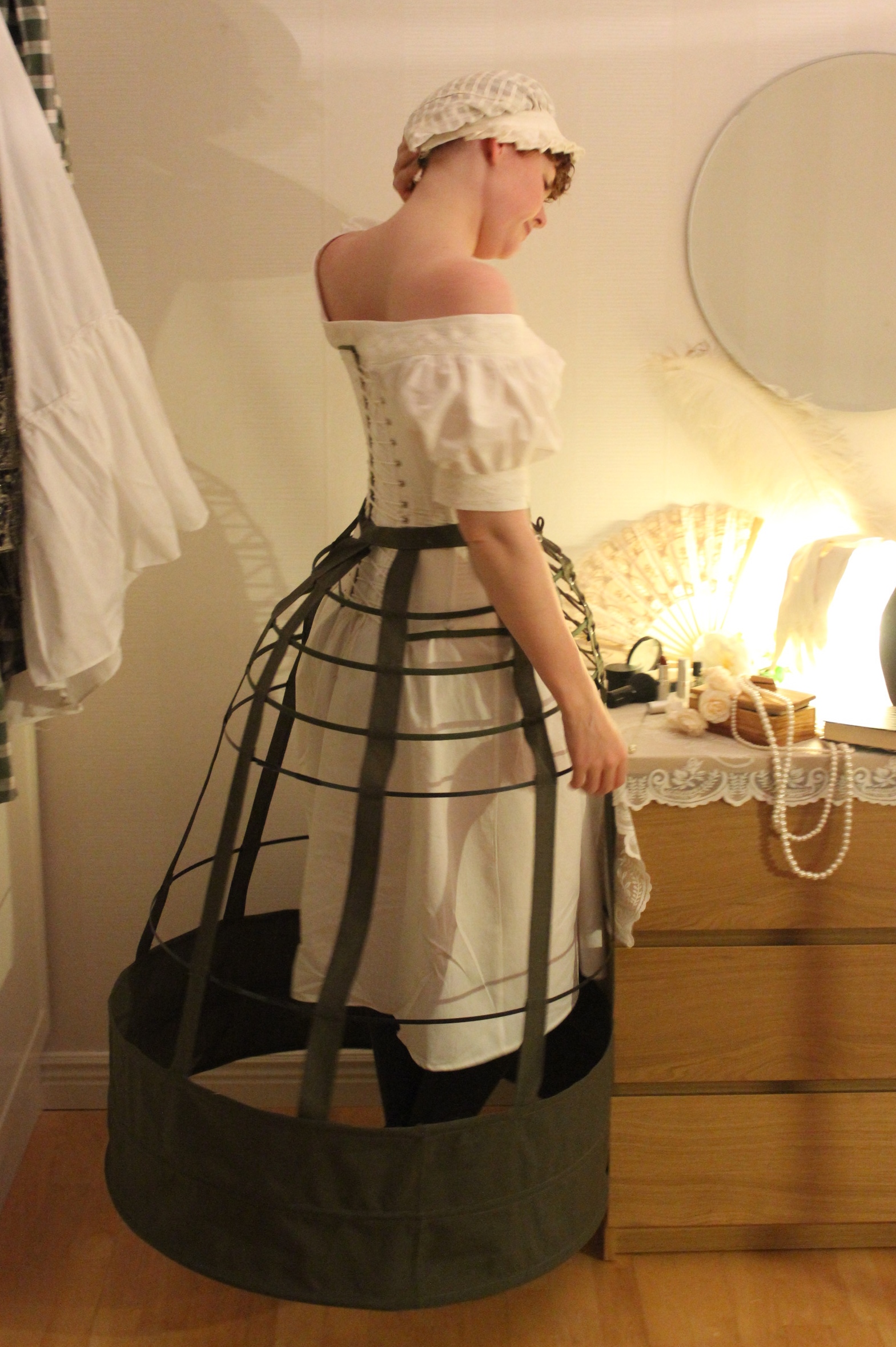
Finished photos:IMG_9395

IMG_9398

IMG_9401

IMG_9405

IMG_9399

IMG_9371

IMG_9404

IMG_9406

IMG_9408


And a sneak a peak of the photoshoot:IMG_9572
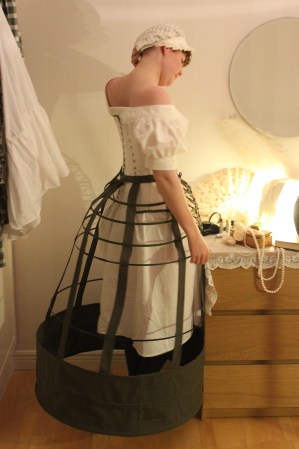
Just the facts:

Challenge: 12 Shape and Support

What: A 1880s cage crinoline

Pattern: None – Just measured and cut stipes in desired lenght.

Fabric: 1 m of green cotton.

Notions: 11 m of steel bone, 1 spool of thread, 16 gromets, 2 m of green biastape (I didn’t had enough fabric to make my own), black duck tape, 3 m brown cotton cord and hook and eye for closuer at the wasitband.

How historical accurate: I don’t really know. Not that good I supose. The type of metal is wrong and I’m sure they did’n use biastape for bone-casings back then. I do think the over all look is ok, and worn with several layers of petticoats I think it will look very period. Maybe a 4/10

Time: About 8 hours.

Cost: Almost everything was from stash, but I have bought it at some point. I think it ads up to about 200 Sek (32Usd) all in all.

First worn: Just around the house for photos so far. But I would love to wear it out on a picknick this summer.

Final thoughts: I’m pretty happy about it. The hoopskirt went togeter more easy then I thougt an dit ws great fun watching it take form. I liked wearing it and strutted around the house a long time after finishing it. The size is really nice – not to big or to smal, and hopefull I can use this for both 1850s, Tudor and bridal wear.
 

A Suportive Mini Bustle

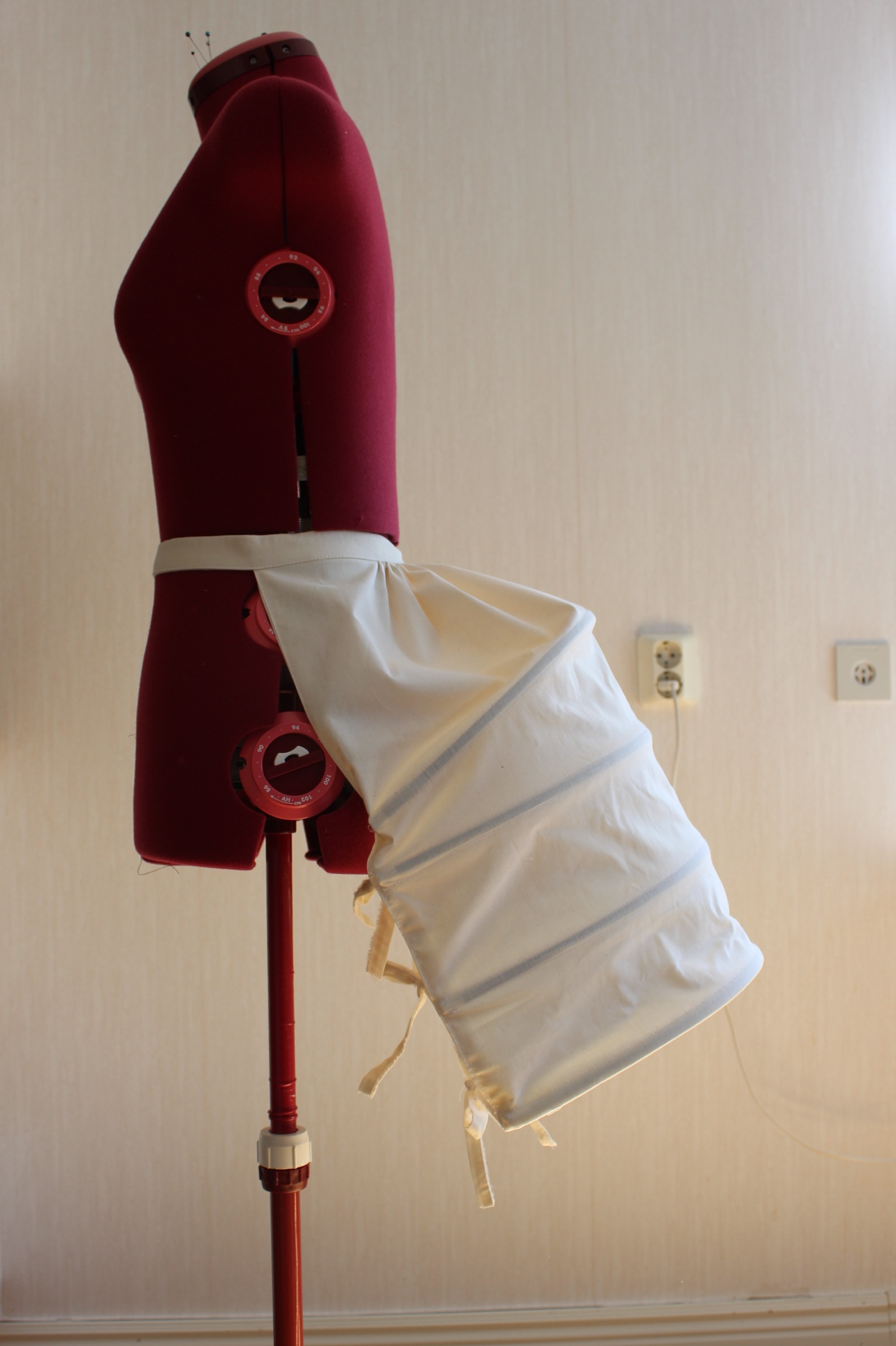
For the HSF challenge nr 12, I decided to make an “light” entry as well as my original (which I will tell you about next time).

I’ve been pondering some different ways to get my upcoming steampunk outfit to bustle out nicely without the use of petticoats and big bustle cages. I’ve tried it on using my relativly smal “Lobster buste“, but that didn’t work since the bustle showed to much – I needed a smaler one.

So I decided to make a taveling mini-bustle to use for this costume, and since you can never have to many underthingies it’s a go.

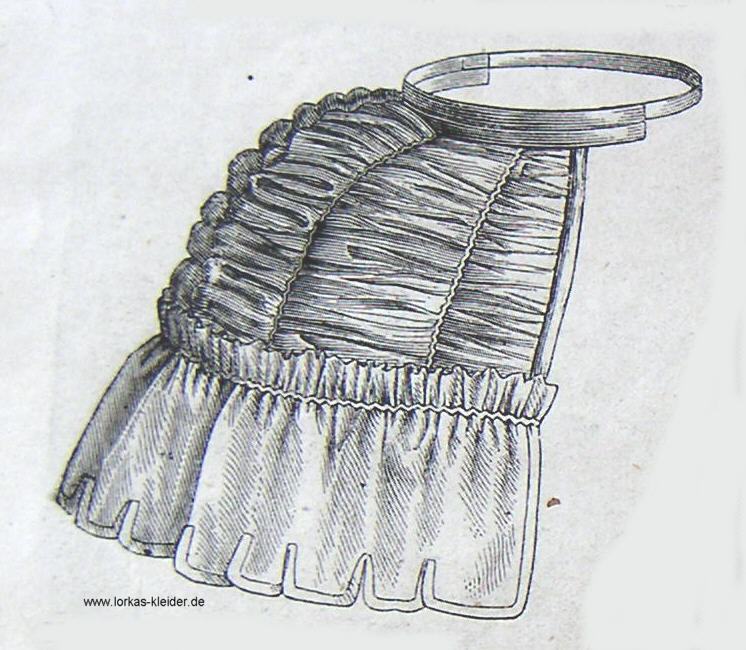
I looked at some inspiration on the internet and liked this one.9733ba7082cb2f3de4a36b1948a97143Only I couldn’t figure out how to get the bones to attached without drilling hole through the metal (more on the tomorrow).

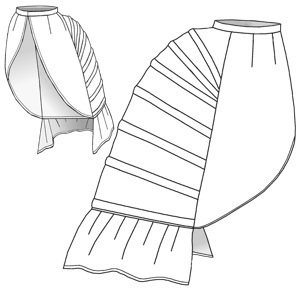
I also like this one.u8Making those ruffels shouldn’t be so hard, and as long as you have a regular bustle foundation beneath I think I could pull it of.

But in the end I decided to skip the ruffels and just concentarte on the foundation – much like this one, but shorter and without the side panels.20130303-214233

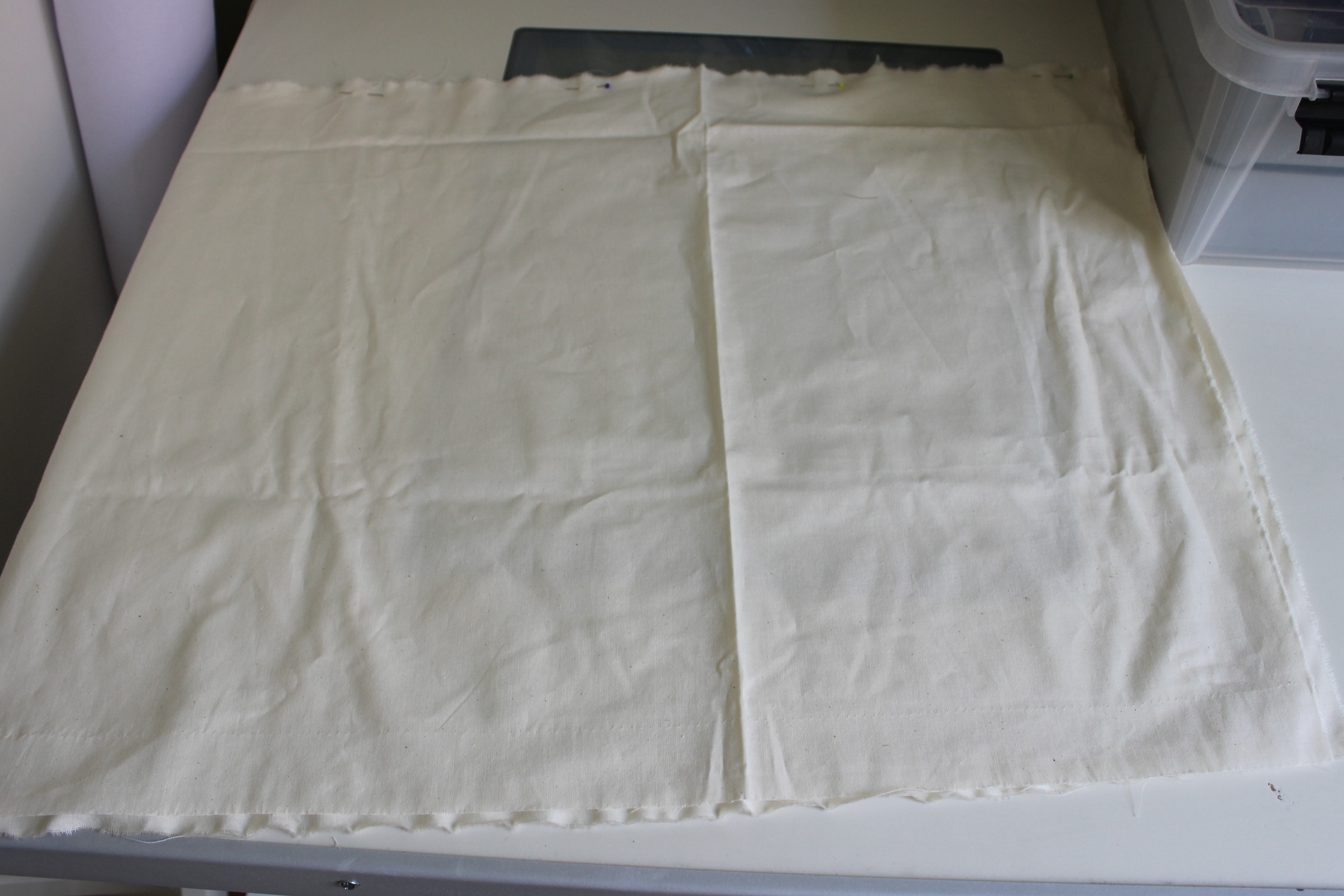
So I pulled out an old sheet and got to work.IMG_9306

I didn use any pattern, but just cut two rectangels the lenght x the width of the finished bustle.IMG_9293

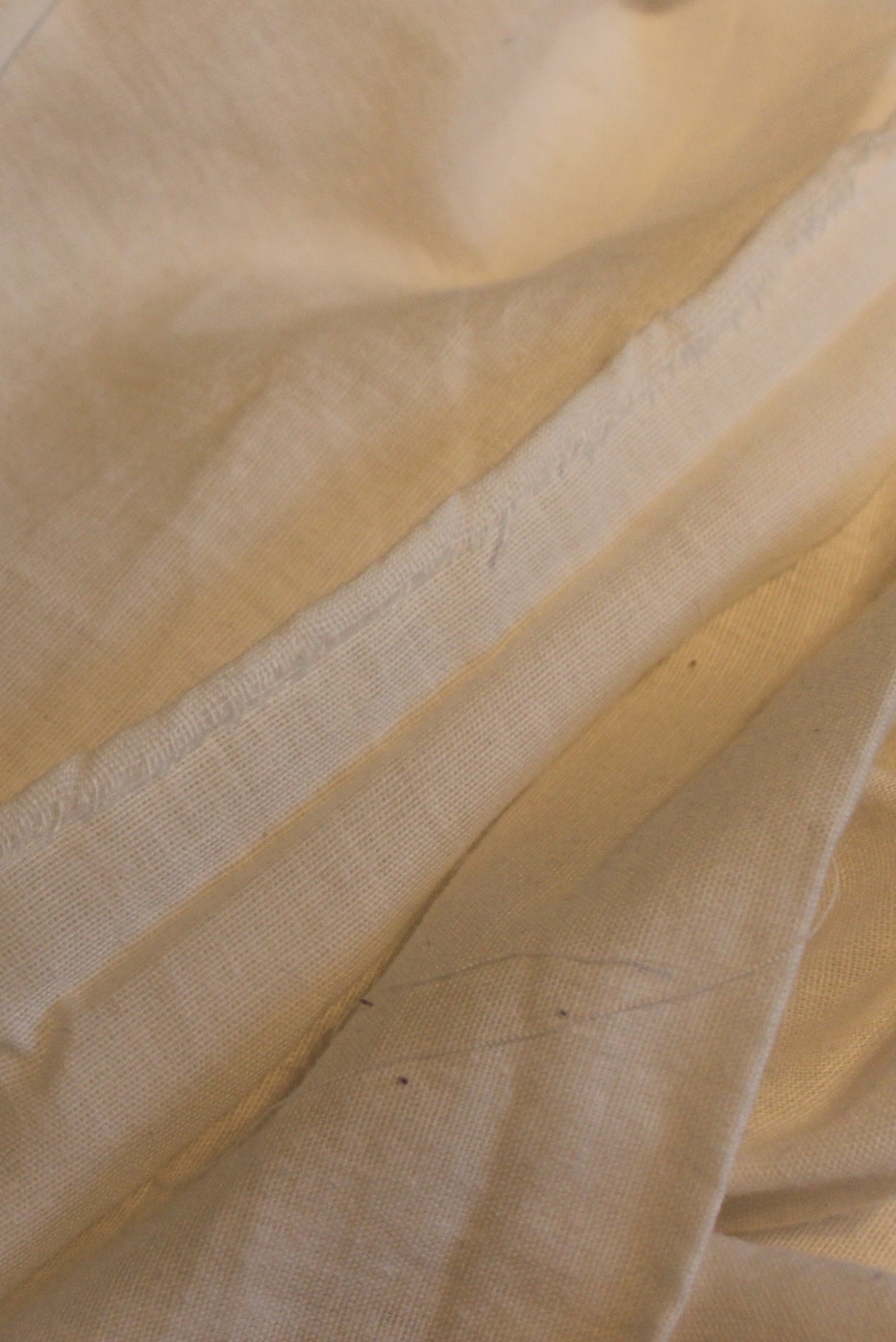
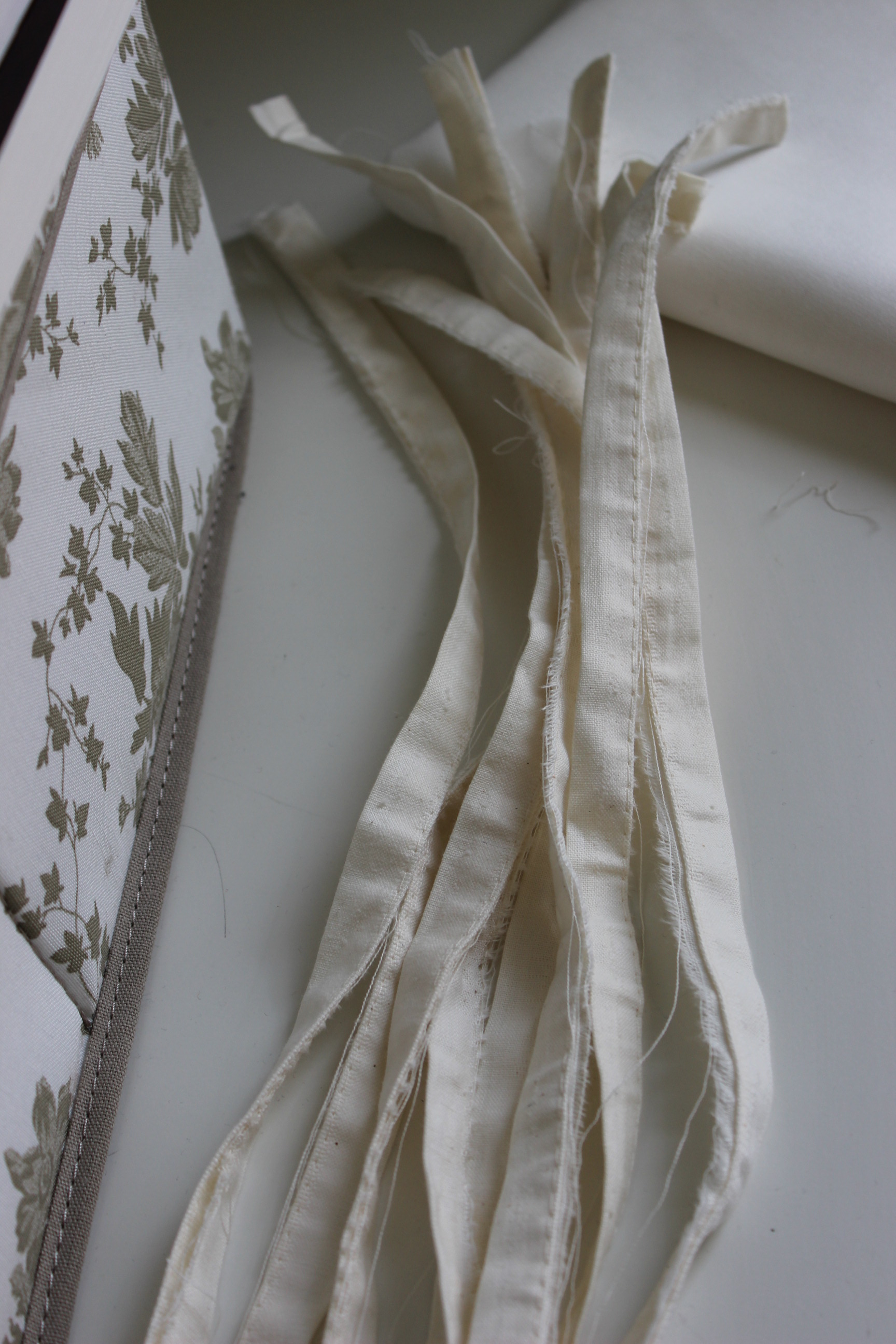
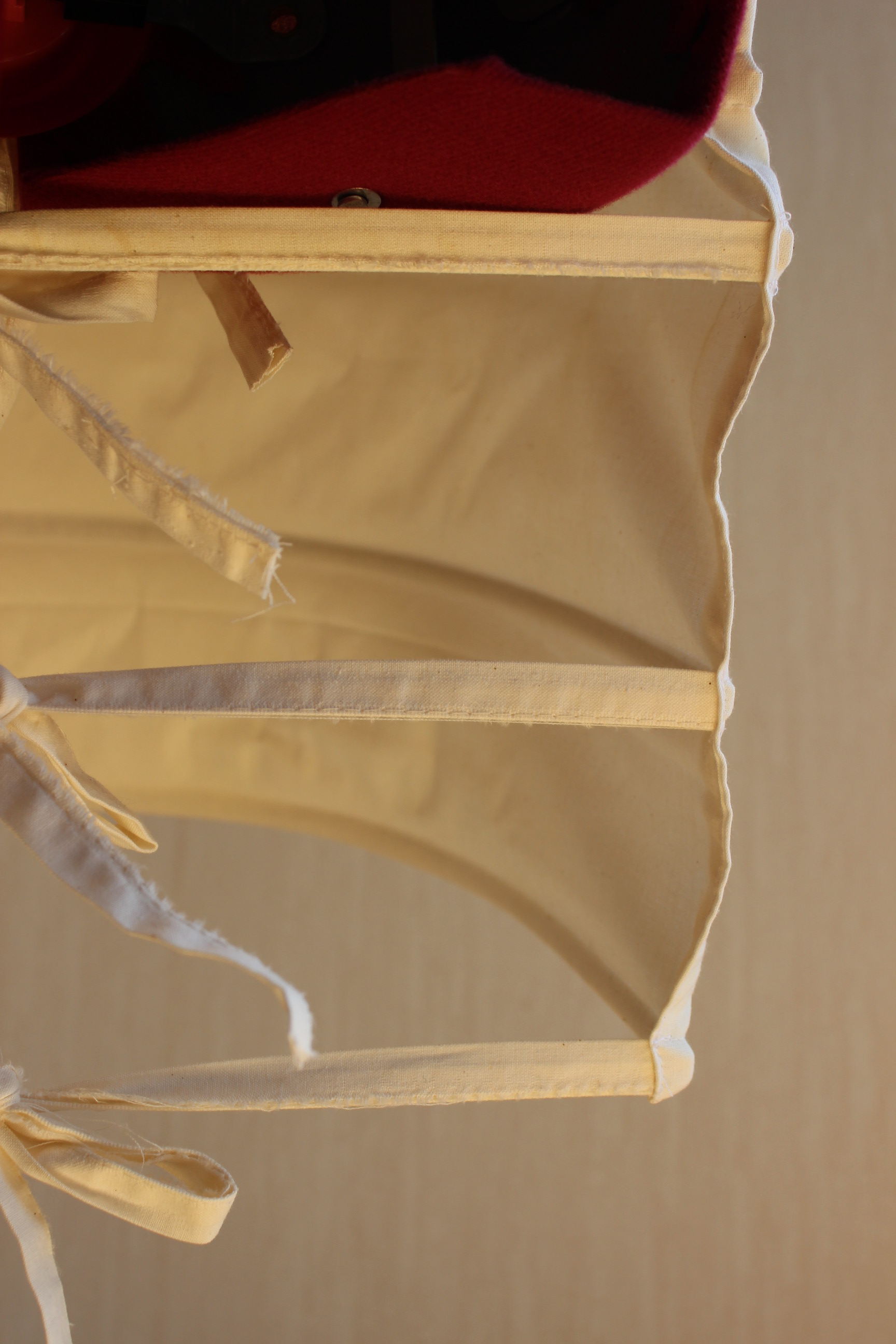
I also saved, and cut the sewn selvages on the sheet to use as ties.IMG_9296

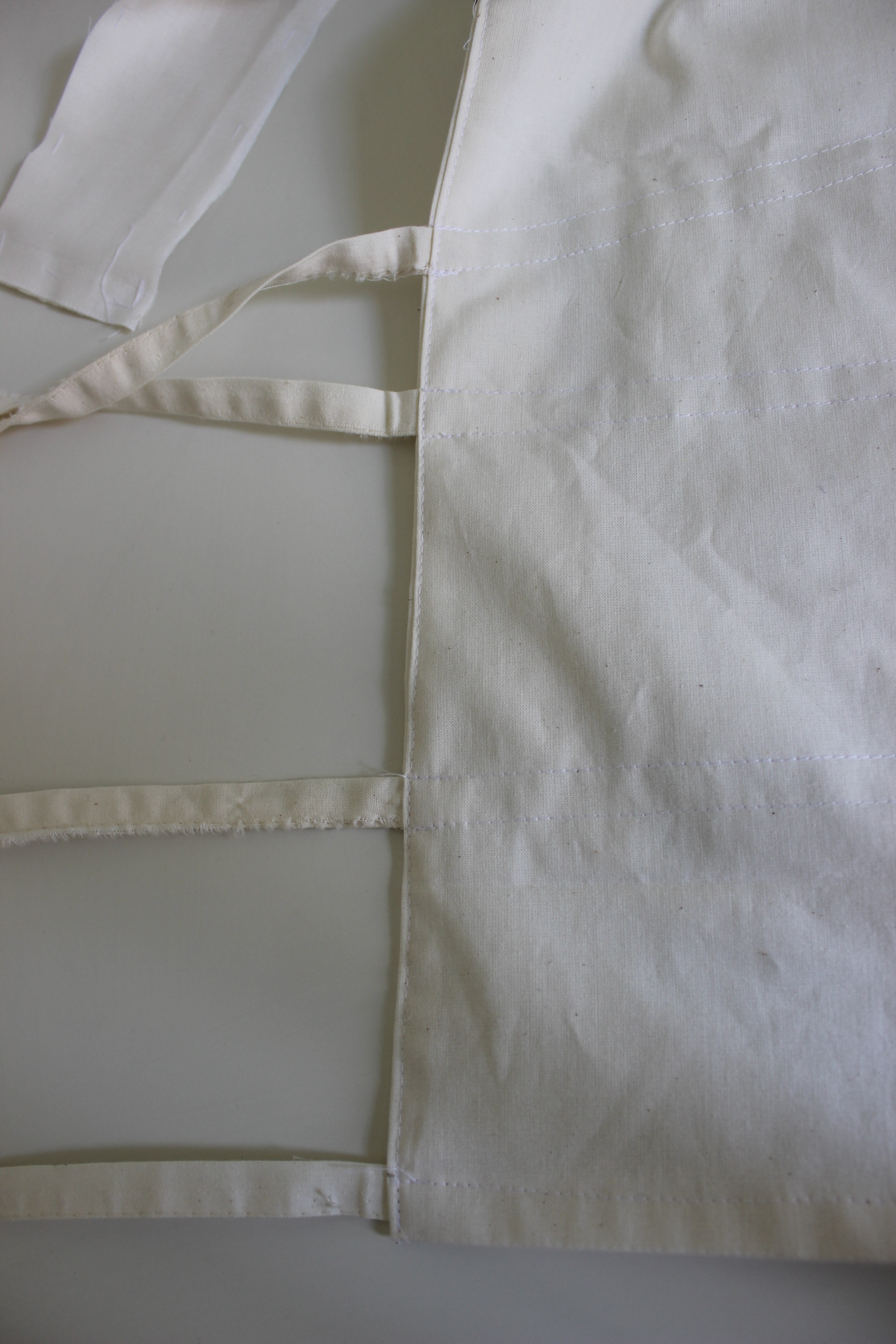
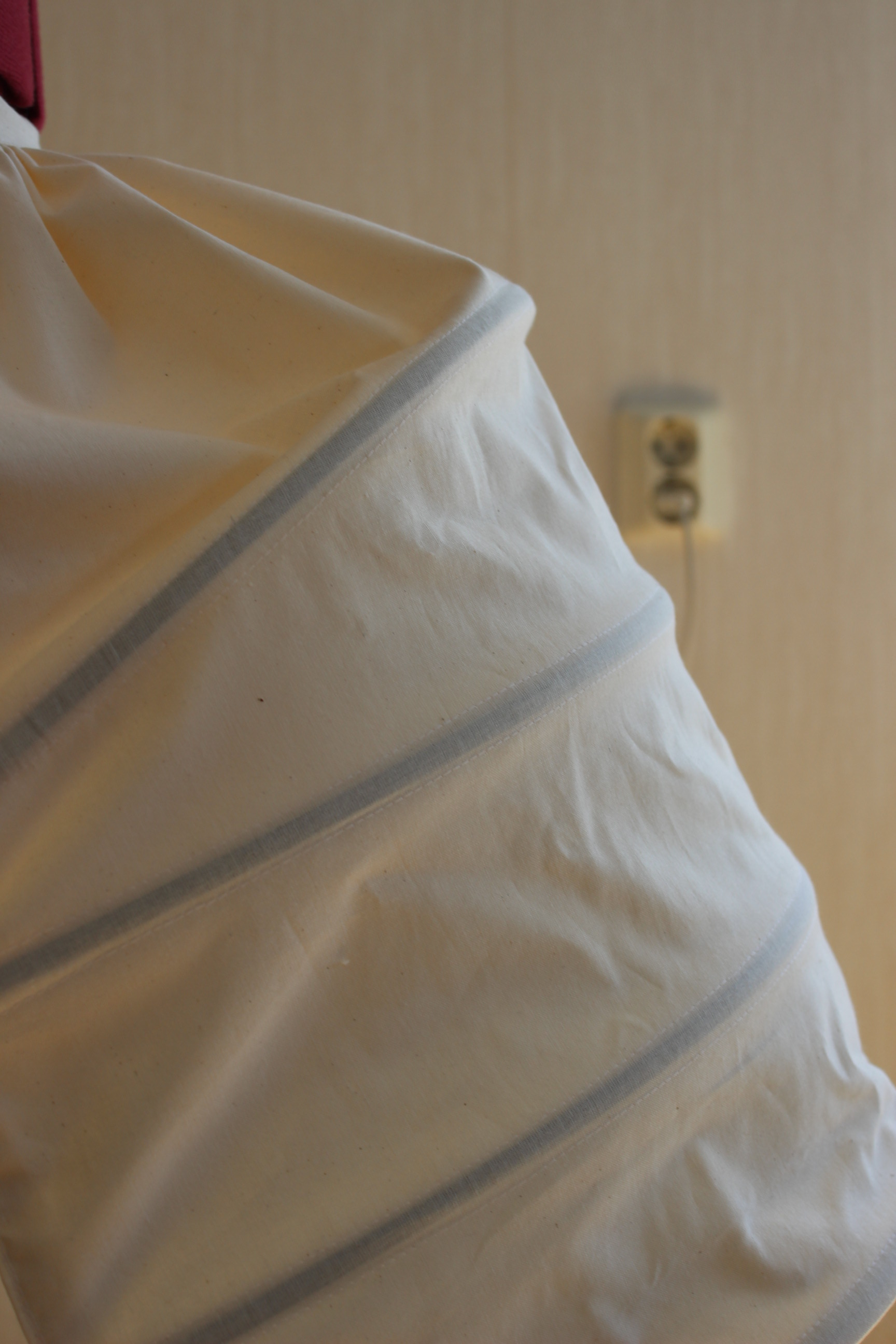
I then stiched the main pieces (right sides togeter, at the bottom) turned it over and sewed the boning chanels. IMG_9301At the same time I folded the edges under, and attached the ribbons. Making sure one side was open for the bones to go in.

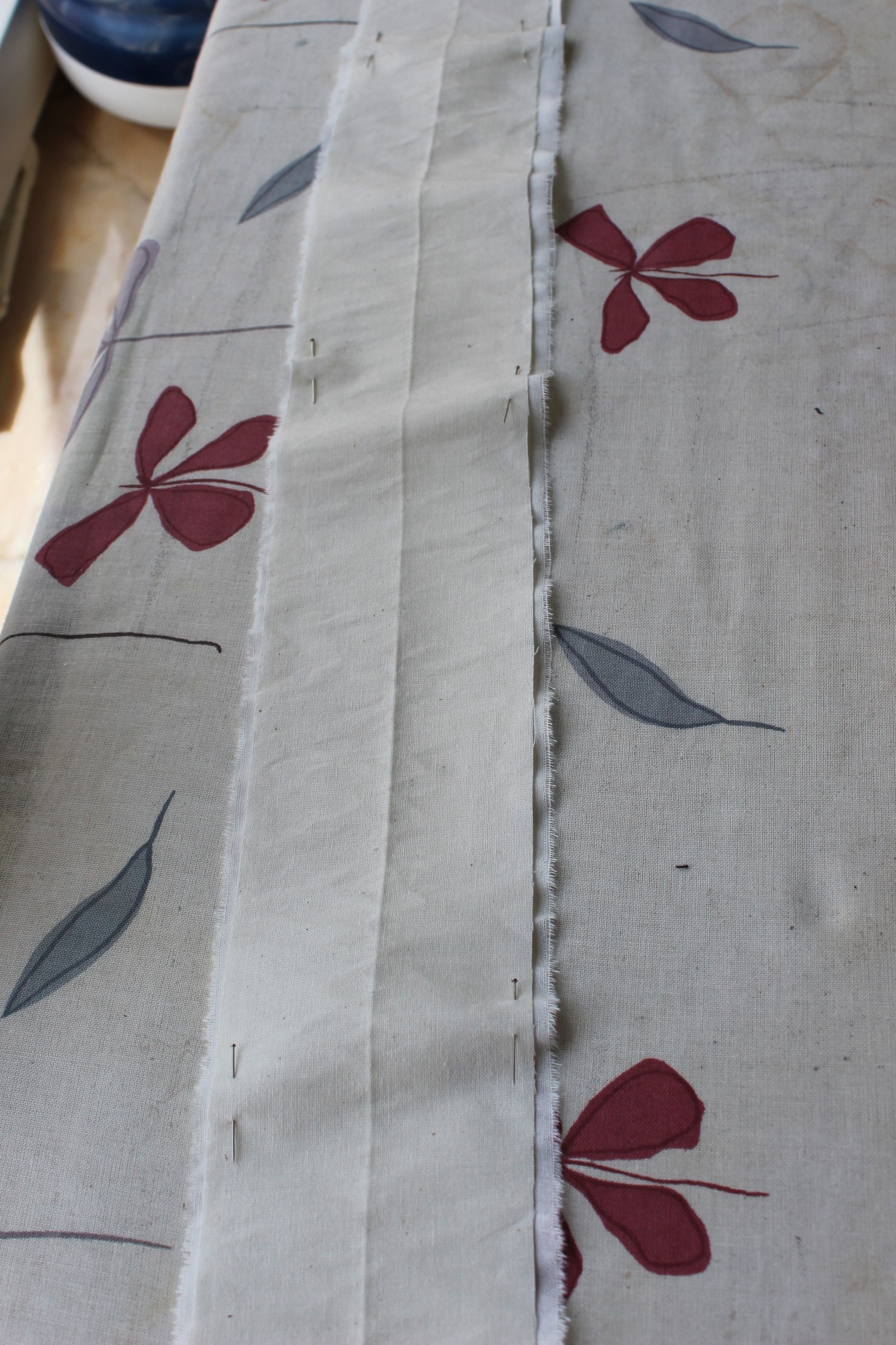
Then I cut and basted the waistband.IMG_9298

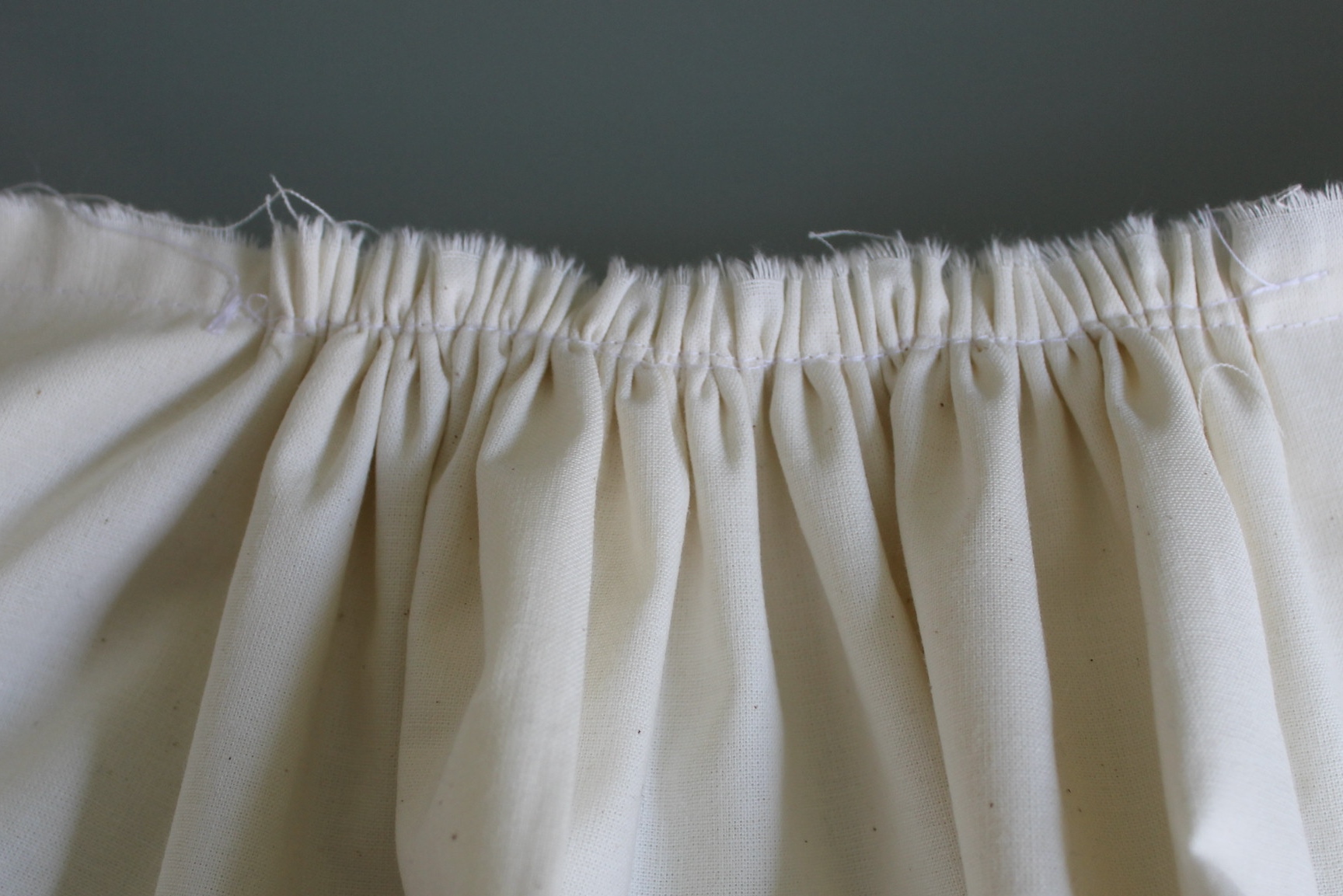
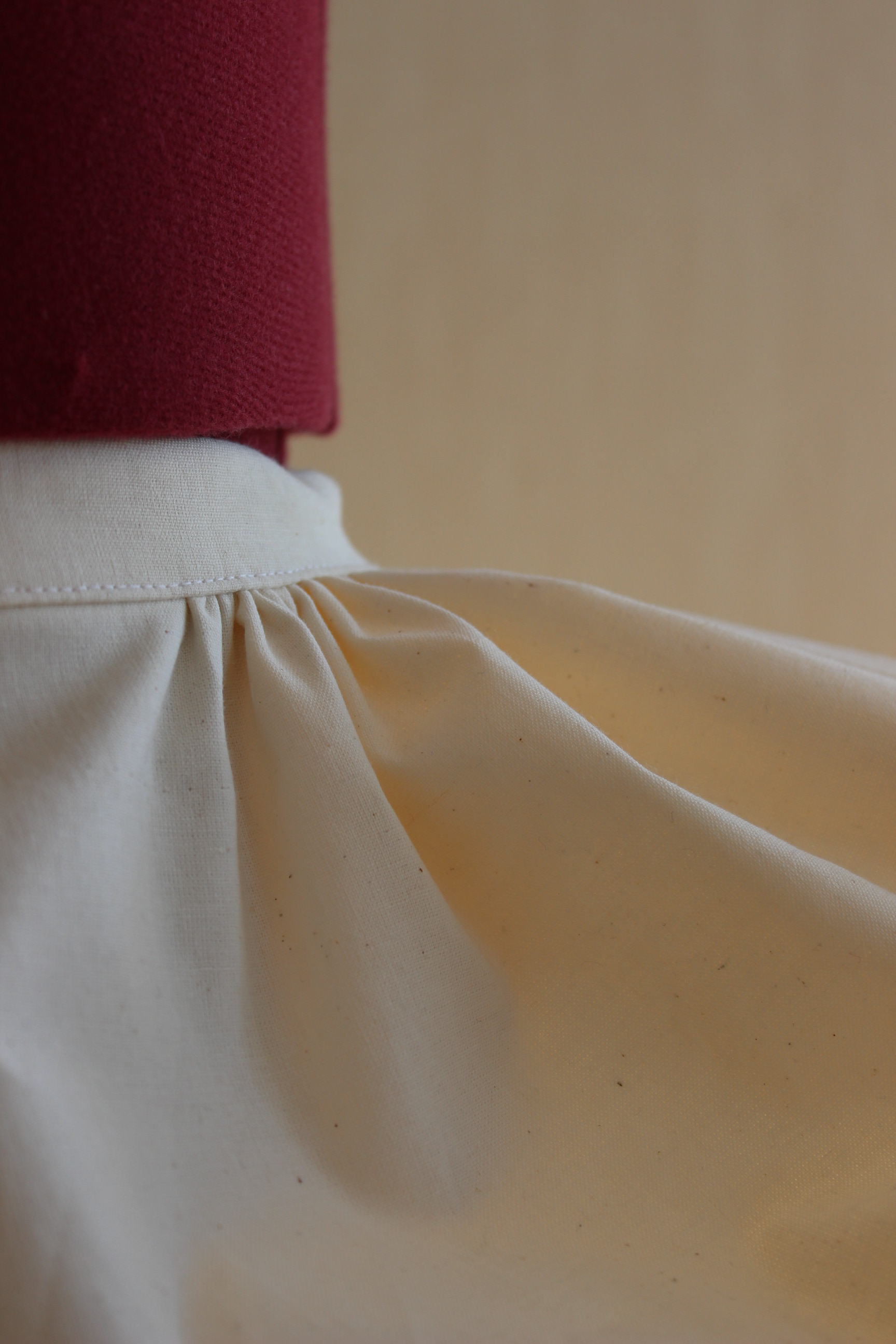
I sewed a gathering thread to the top edge, working the two layers as one.IMG_9300And gathered the center part to get the desired width, leaving about 10 cm at each side un touched.

IMG_9299Close up of the gathers.

Then I attached the wasitband, folded it over and stiched it down.

Lastly I inserted the boning, sewed the chanels shut and attached the metal rings for clouser to the wasitband. Then I tied the ribbons into rosets and had a finished worka ble mini bustle.

All in all this project took me about two hours to make, and it was so simple and fun.

Finished photos:IMG_9378

IMG_9381

IMG_9380

IMG_9377

IMG_9388

IMG_9389

IMG_9383

IMG_9382

IMG_9385

IMG_9384

And a sneak a peak of todays photoshoot:IMG_9512

Just the Facts:

Challenge: 12 Shape and Support (Light Entry)

What: A smal traveling bustle ca 1880s.

Pattern: None. Just one rectangel shaped piece and a waistband.

Fabric: 1 m of cotton sheet (donated to me a long time ago).

Notions: Thread, Belt hooks, 3,5 m of steel wire.

How historical accurate: Not sure but I think it is pretty good. Both the material and the sewing tecniques was used during he period. And since this seems to be the simplest and most straight forward way of making a bustle, I’m sure some peolple back then must have done so.

Time: 2 hours.

Cost: 50 Sek (8Usd) at the most. (Guess it fits into next weeks challenge to ;-))
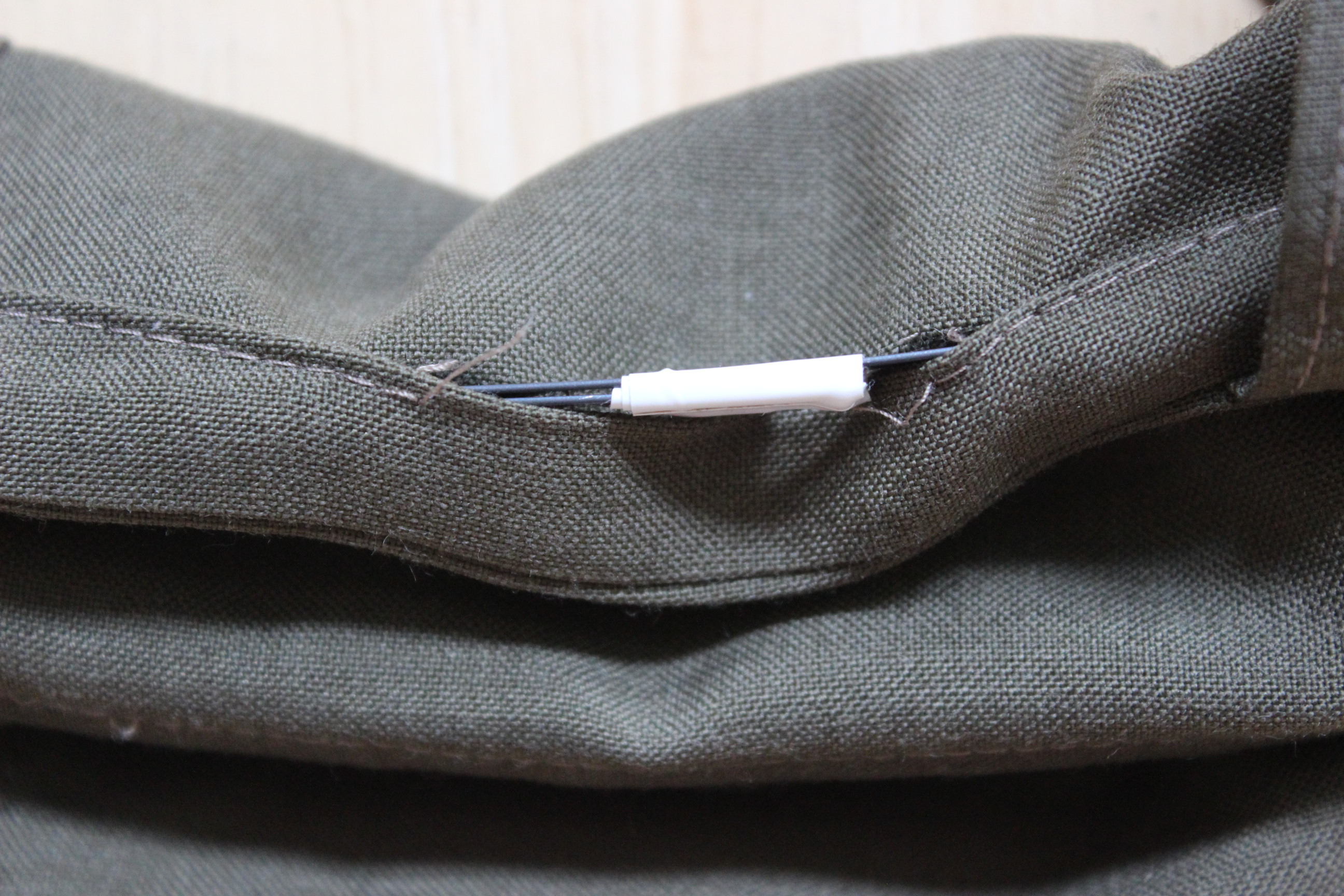
First worn: only for photos around the house so far. But I’m planing to use it as part of my upcoming steampunk outfit.

Final thoughts: lookin at the pictures now I se that I should have made the top edge shorter, to bring thewhole thing up a bit thous making the top chanal sit a bit higher.

But all in all this was such a cheap and quick project. I loved how easy it went togeter, and it really helped me get past my recent sewing block.

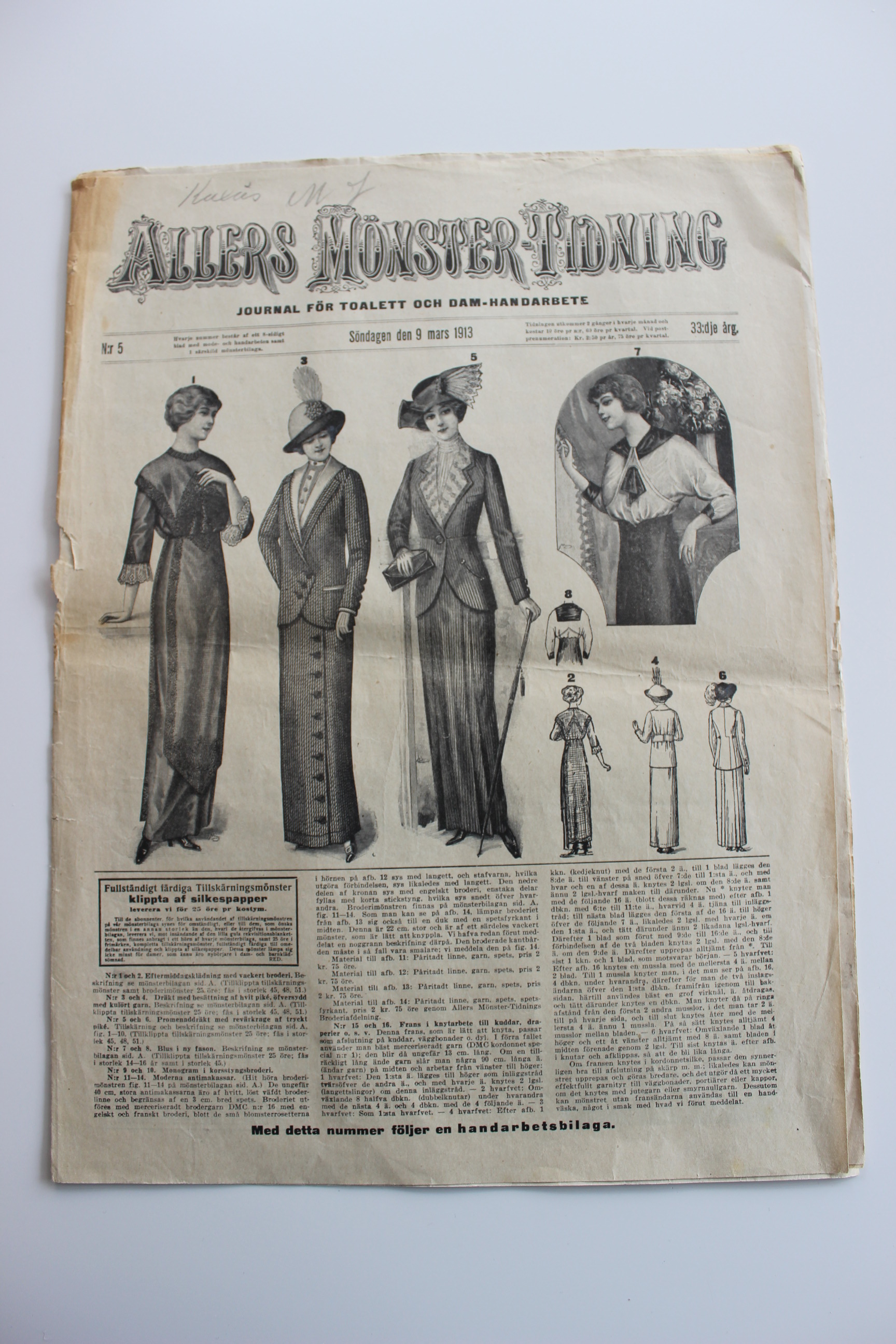
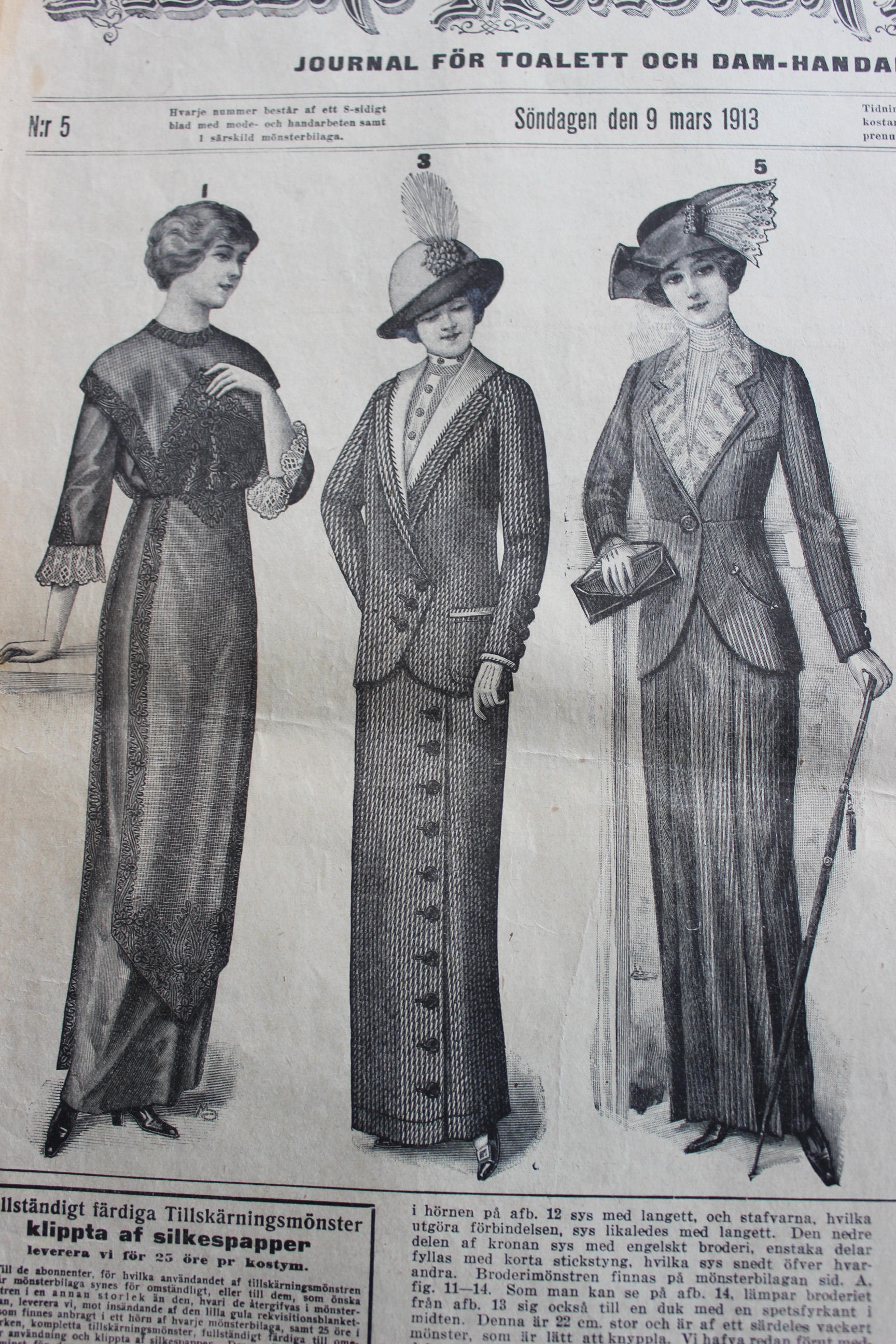
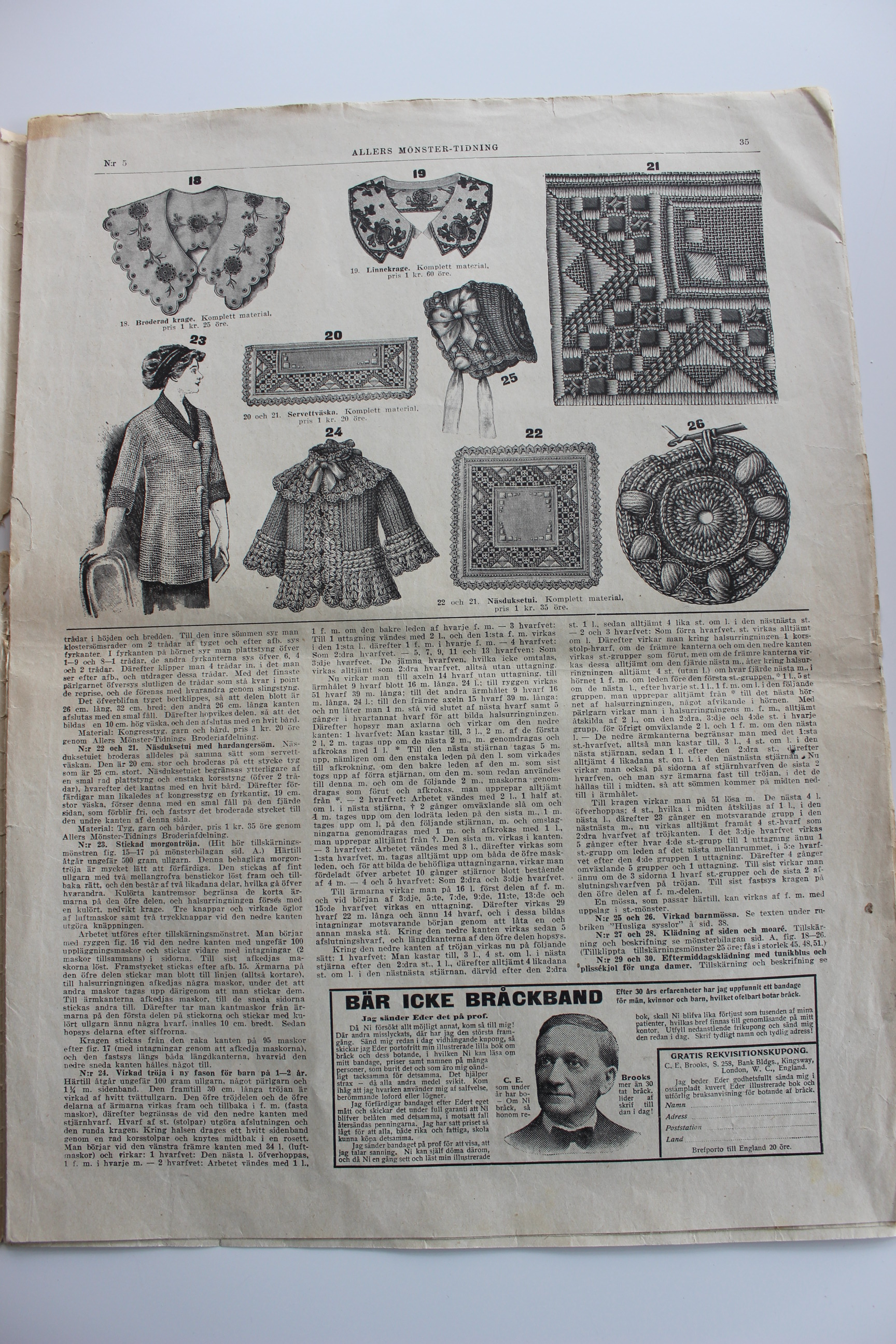
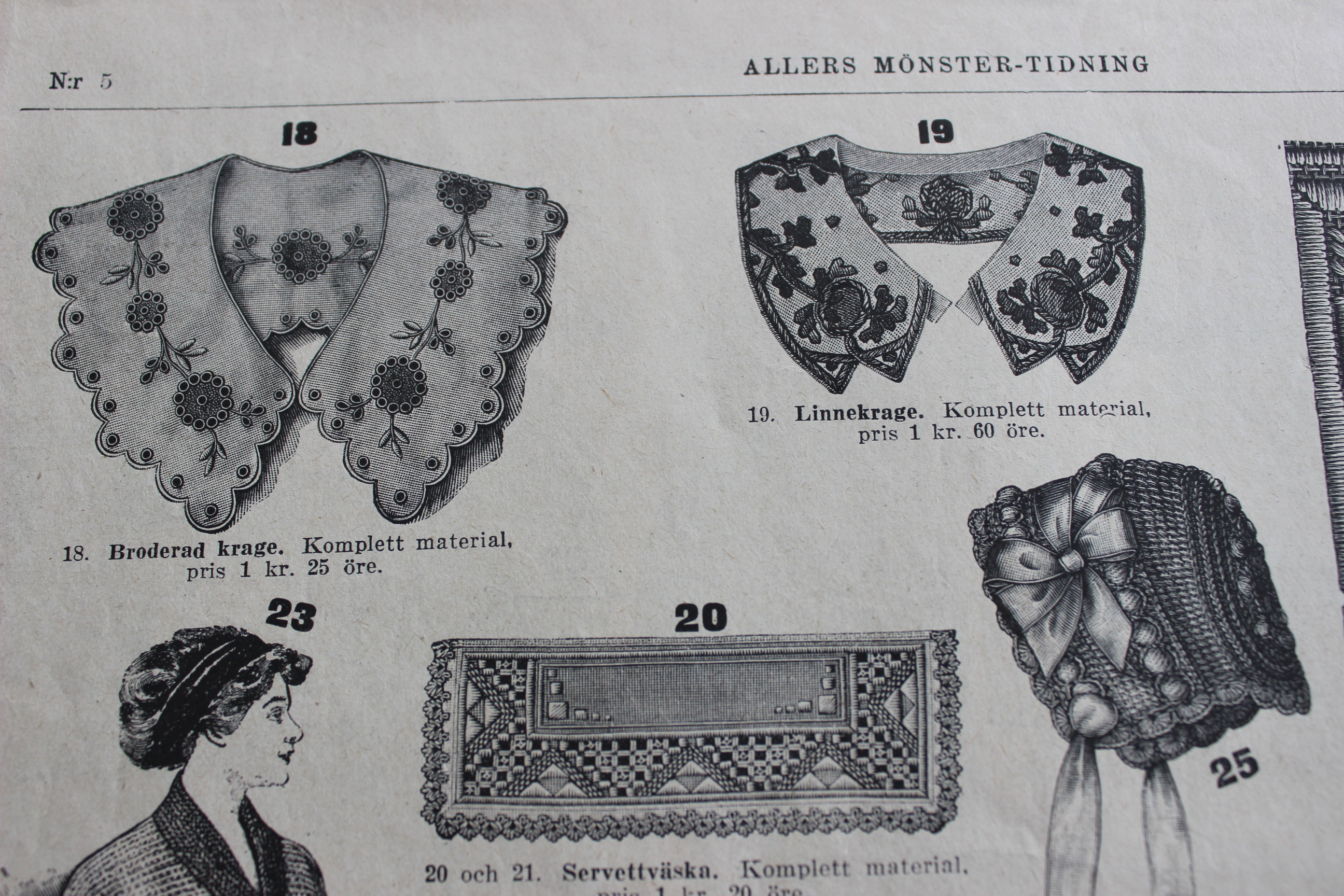
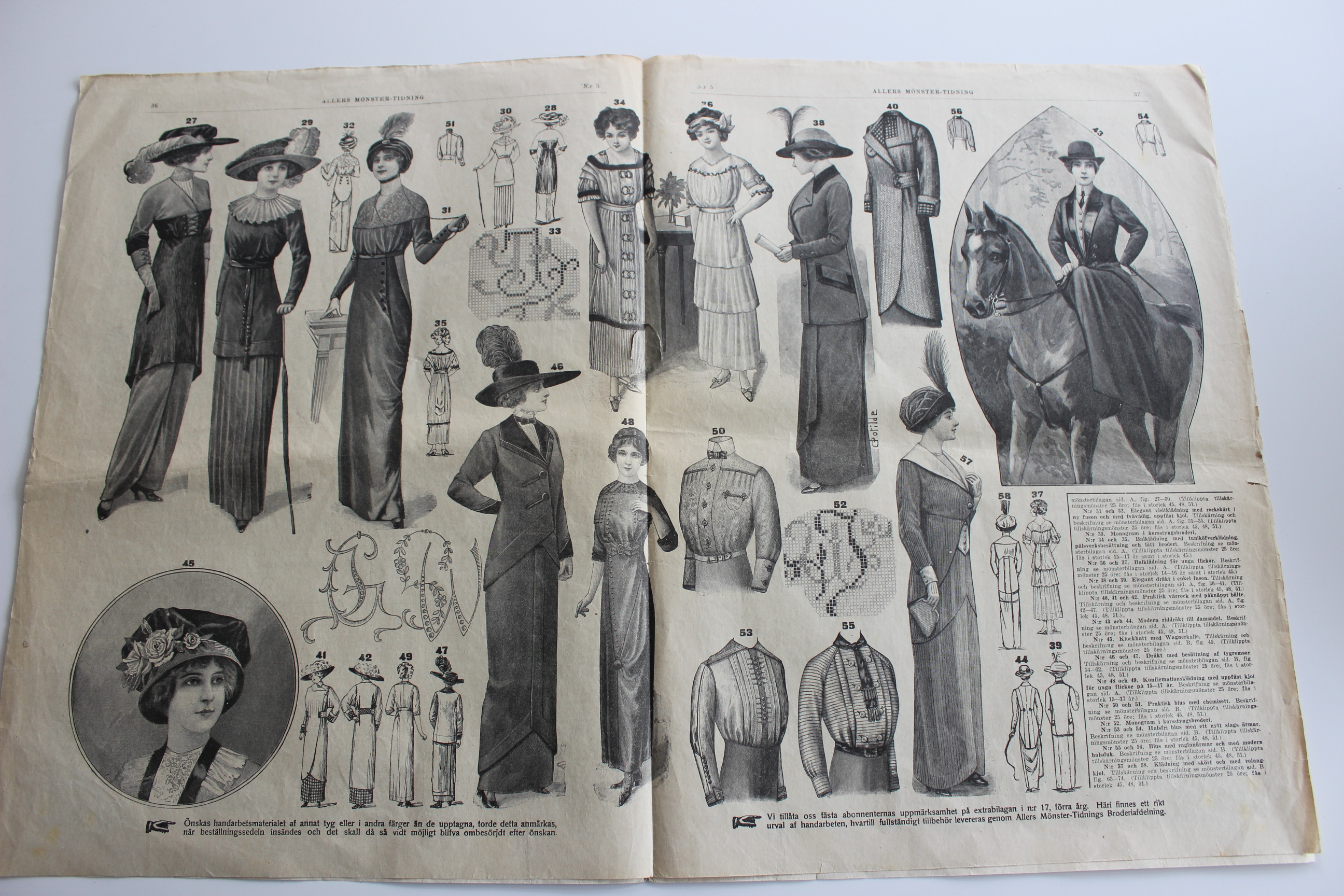
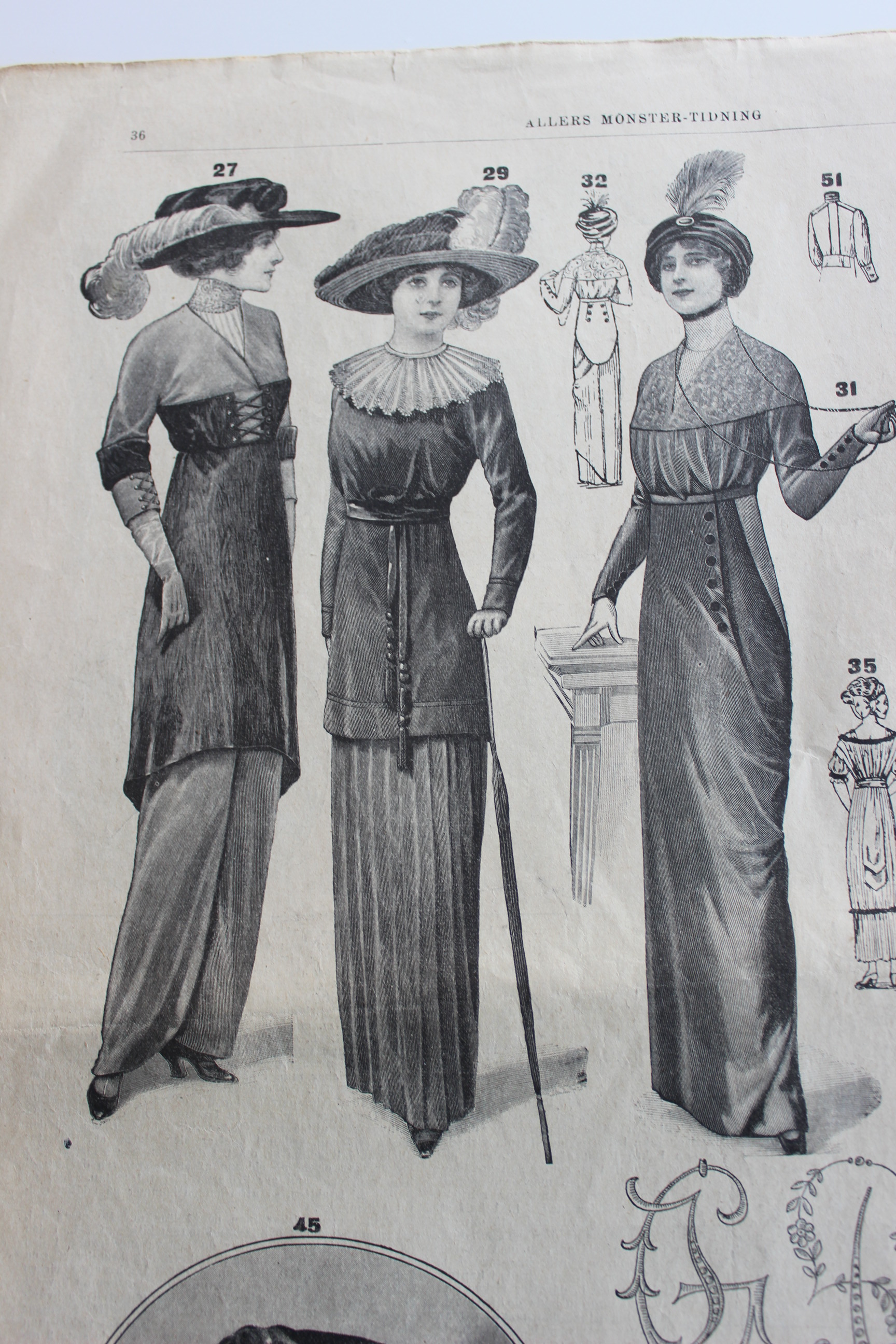
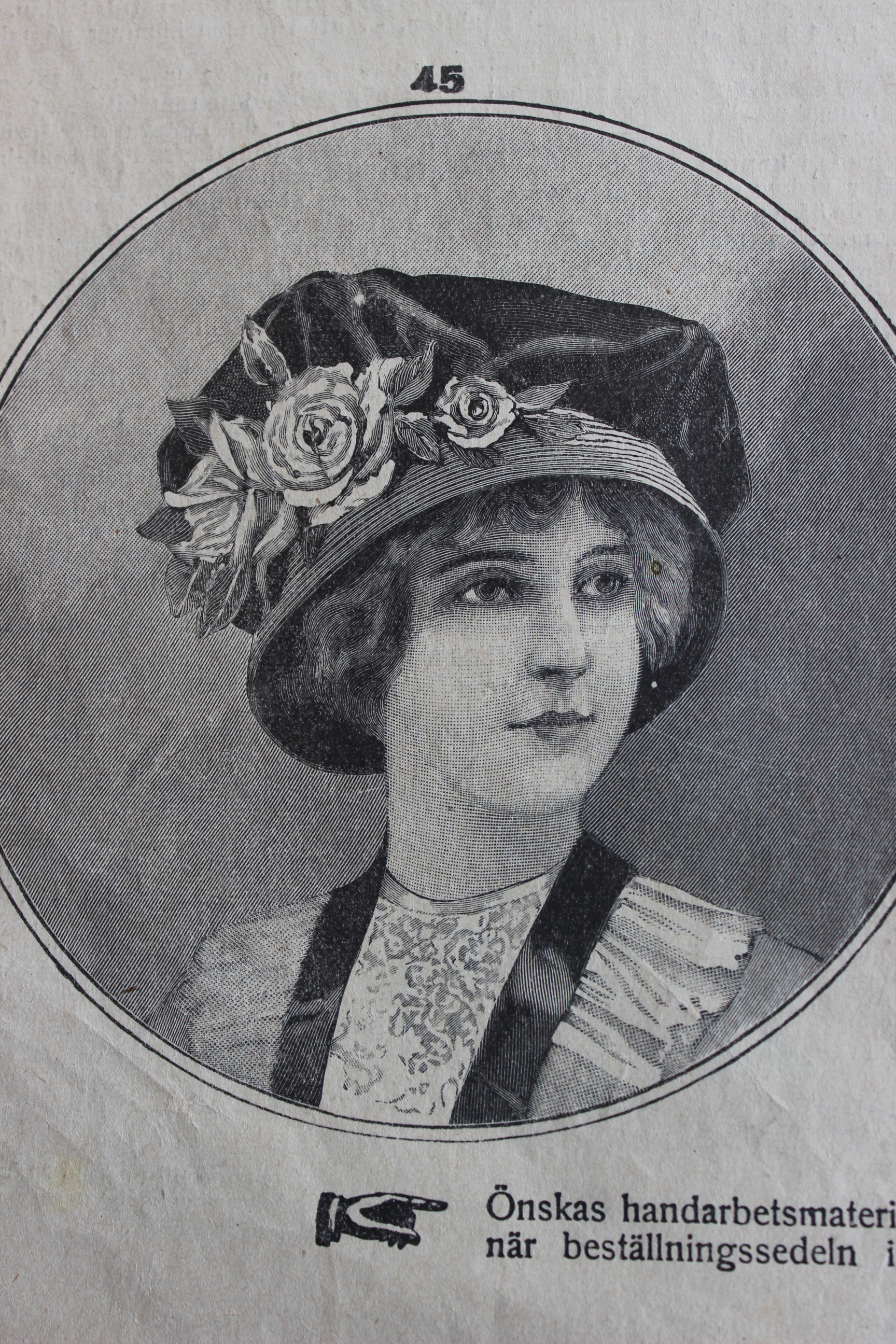
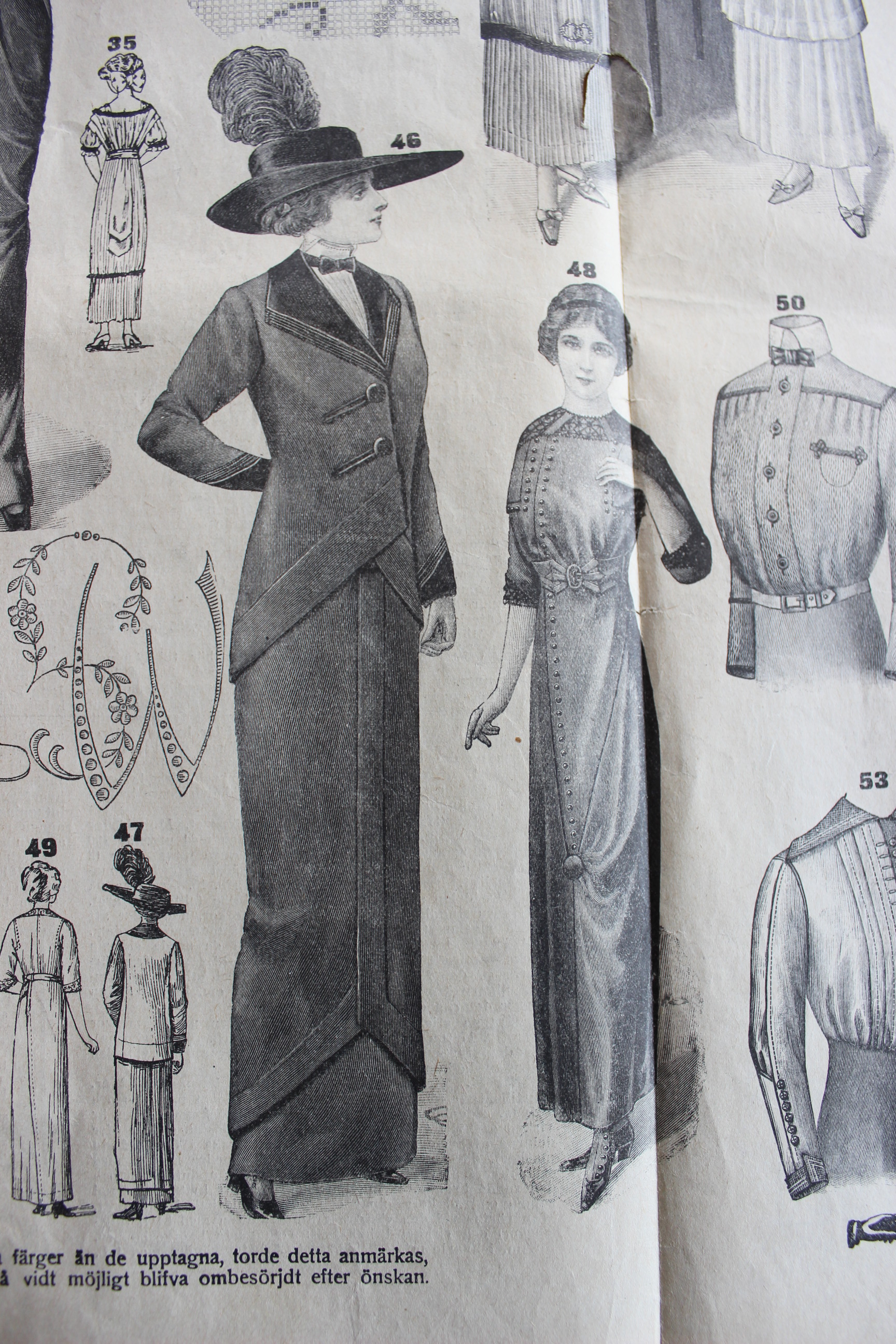
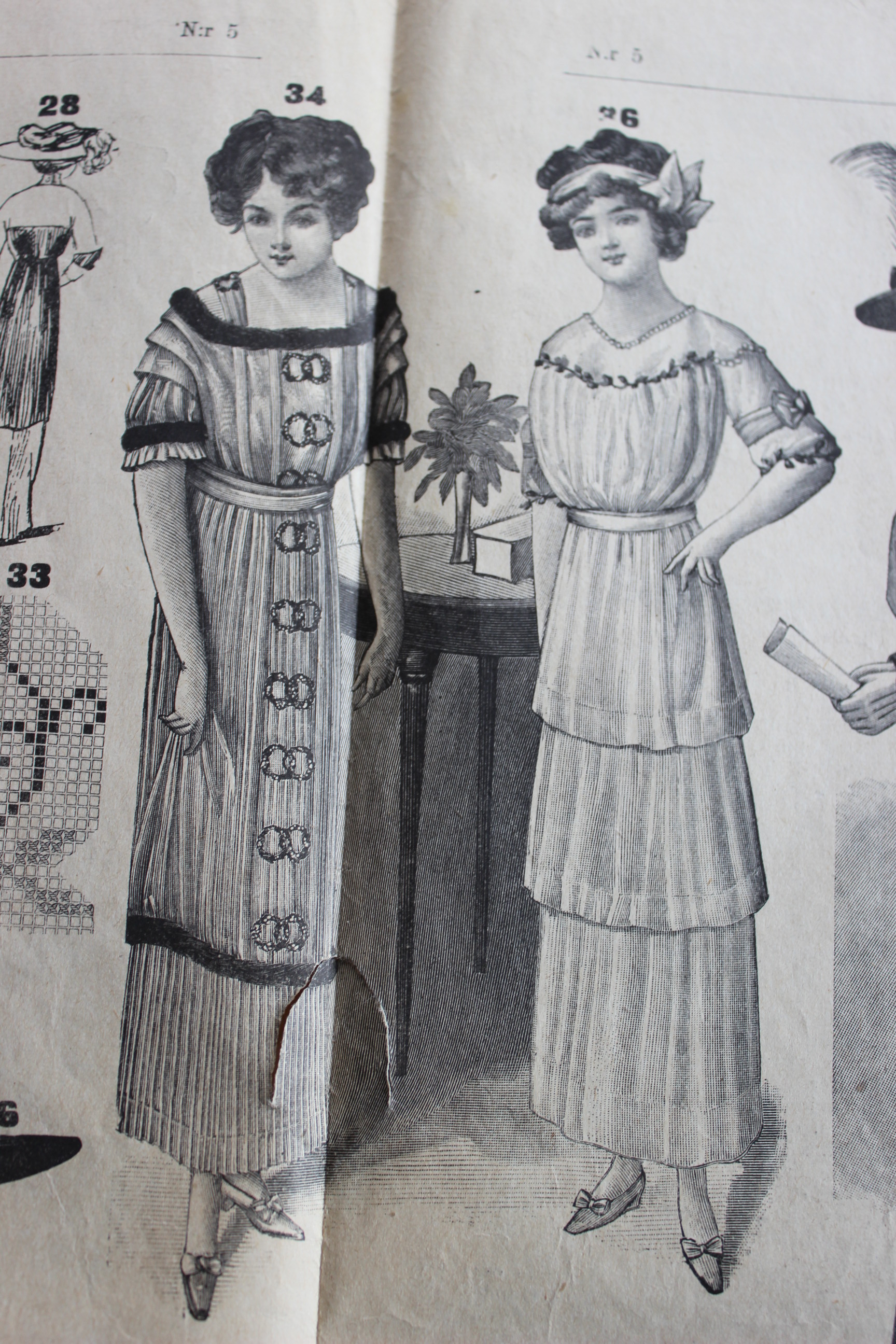
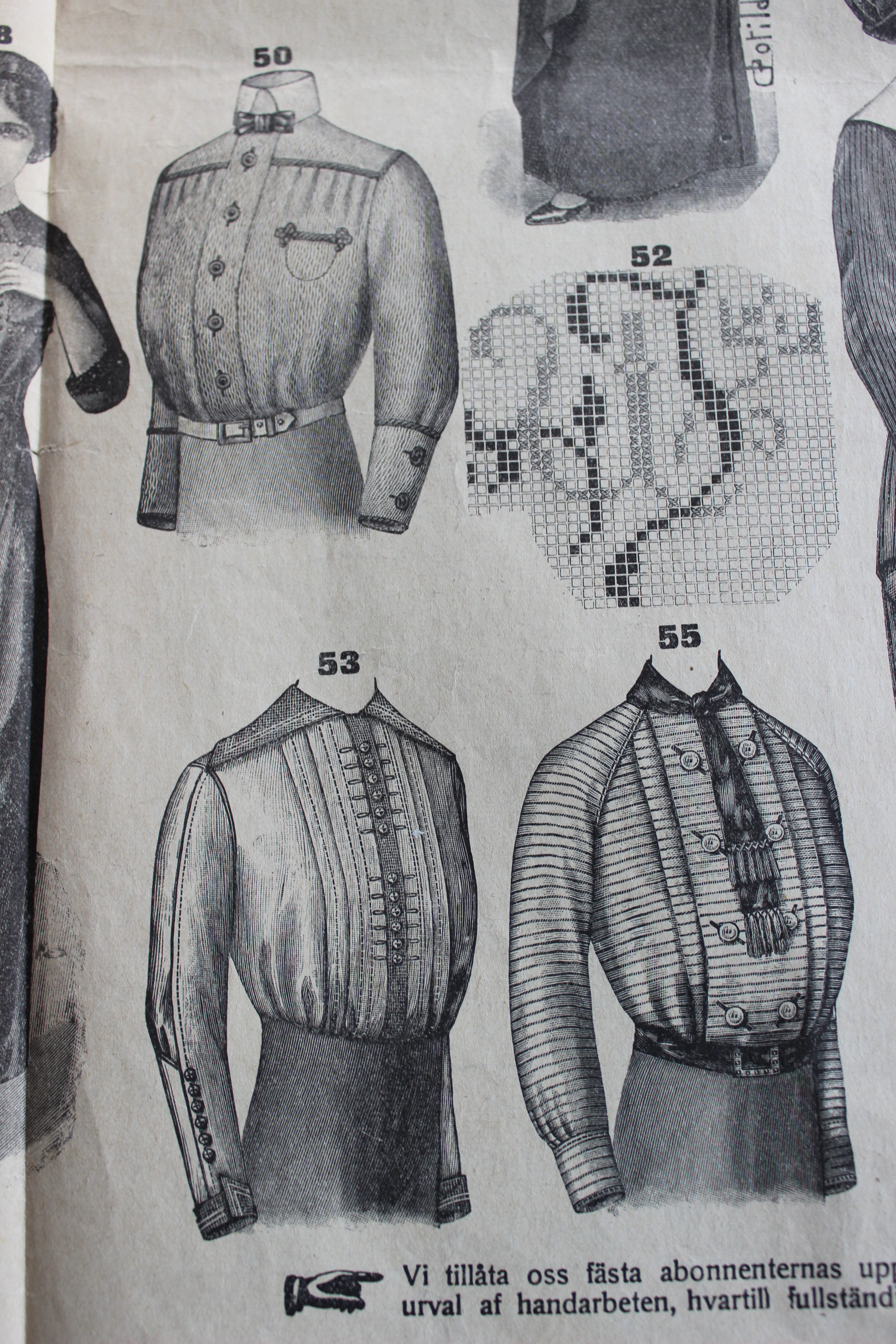
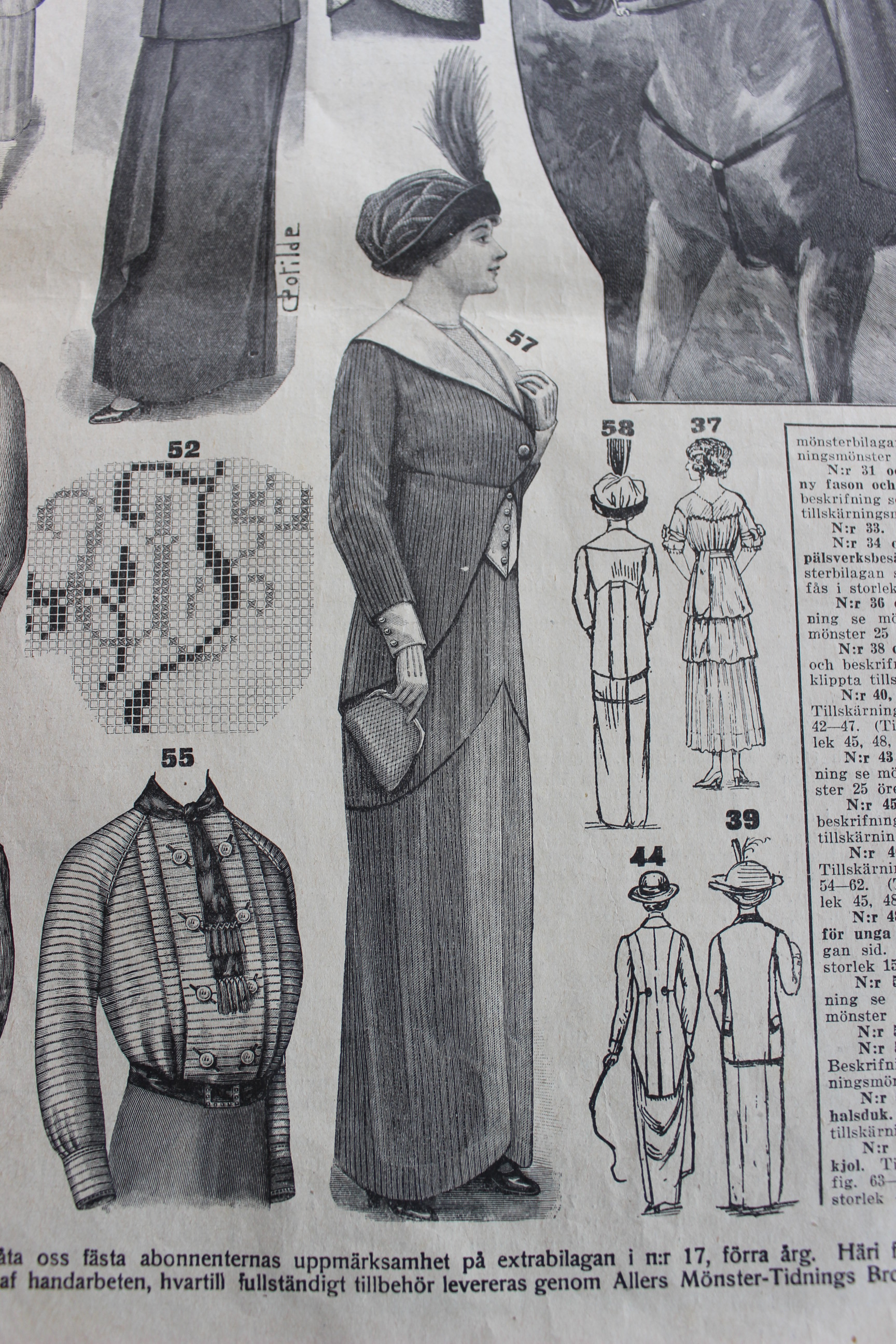
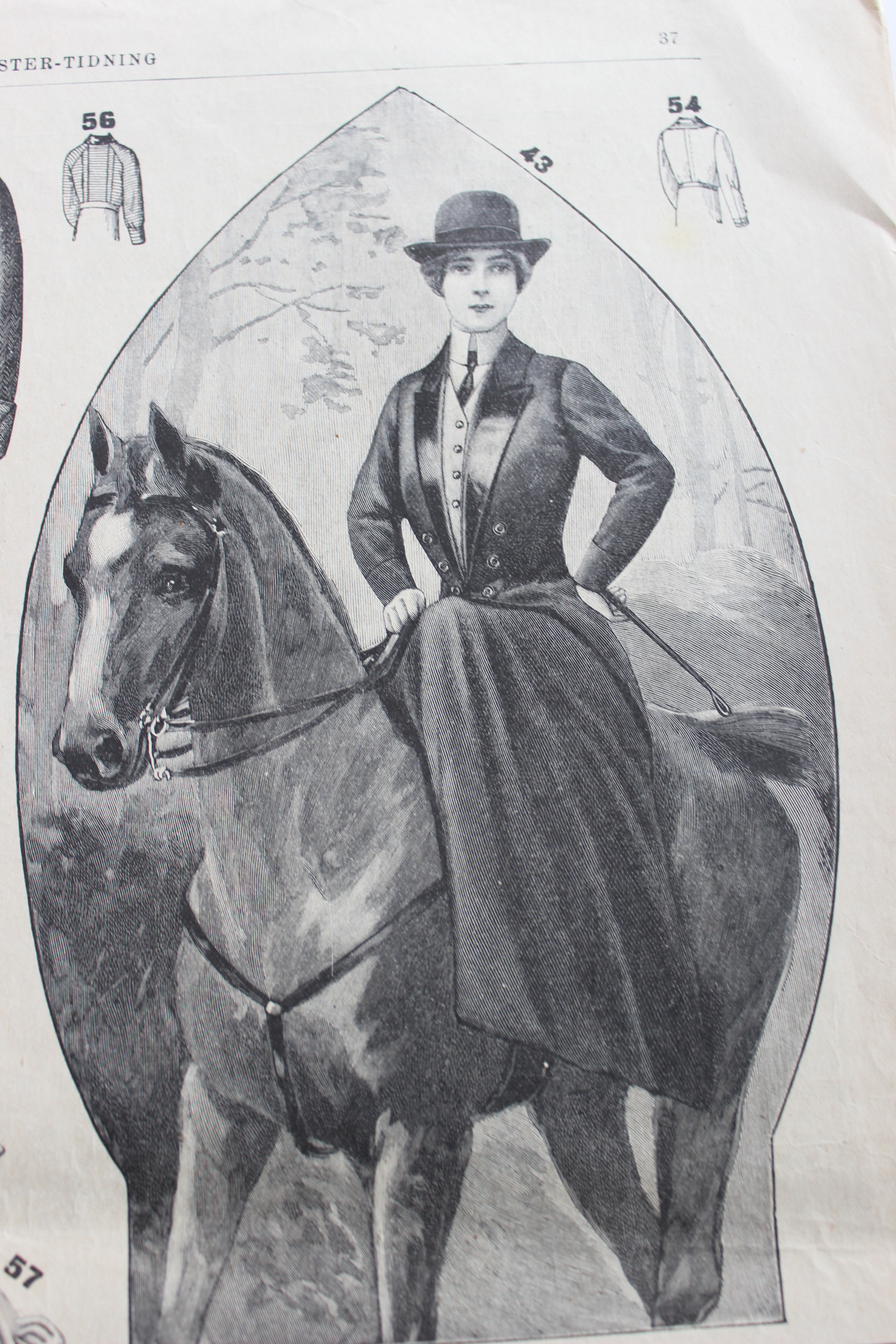
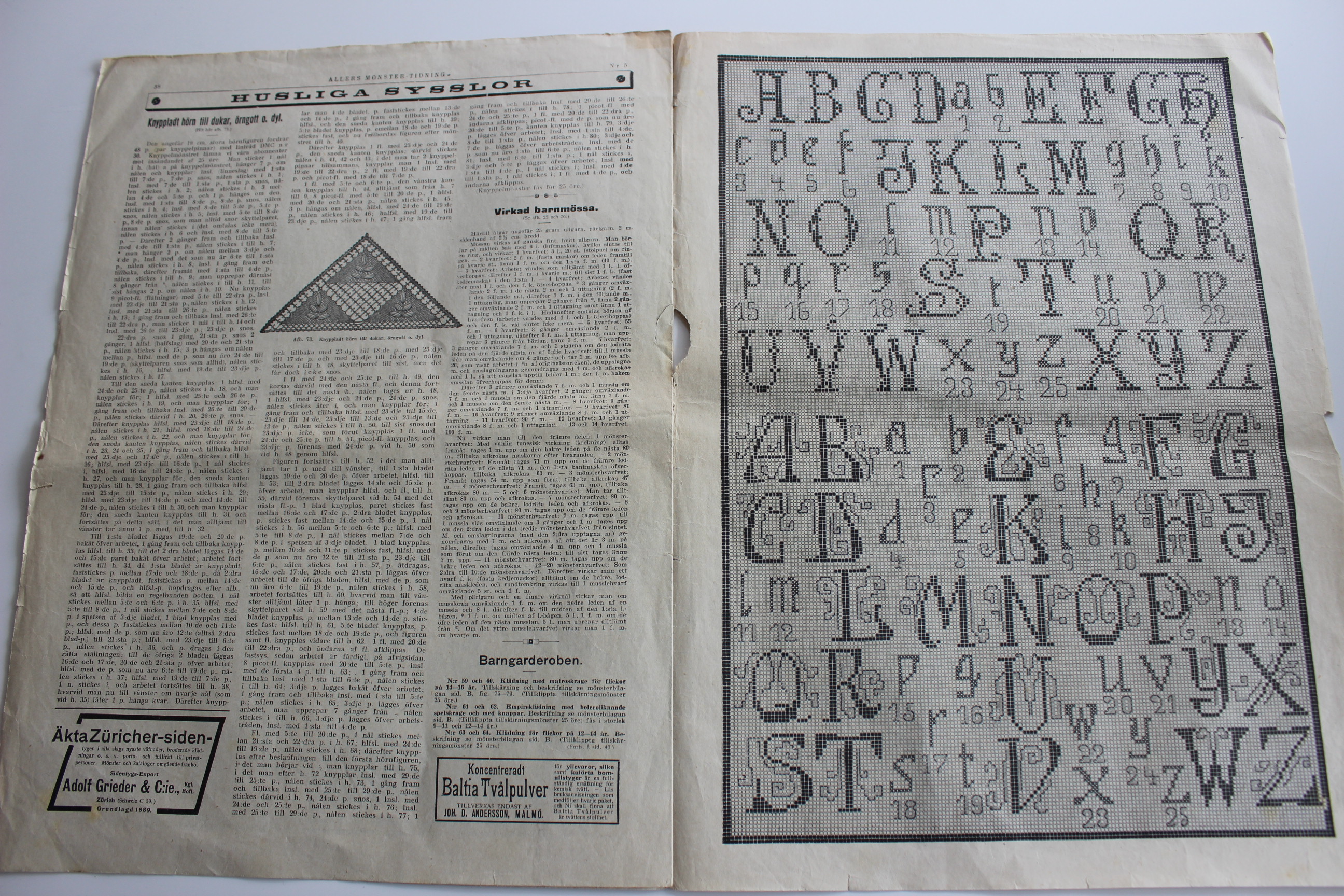
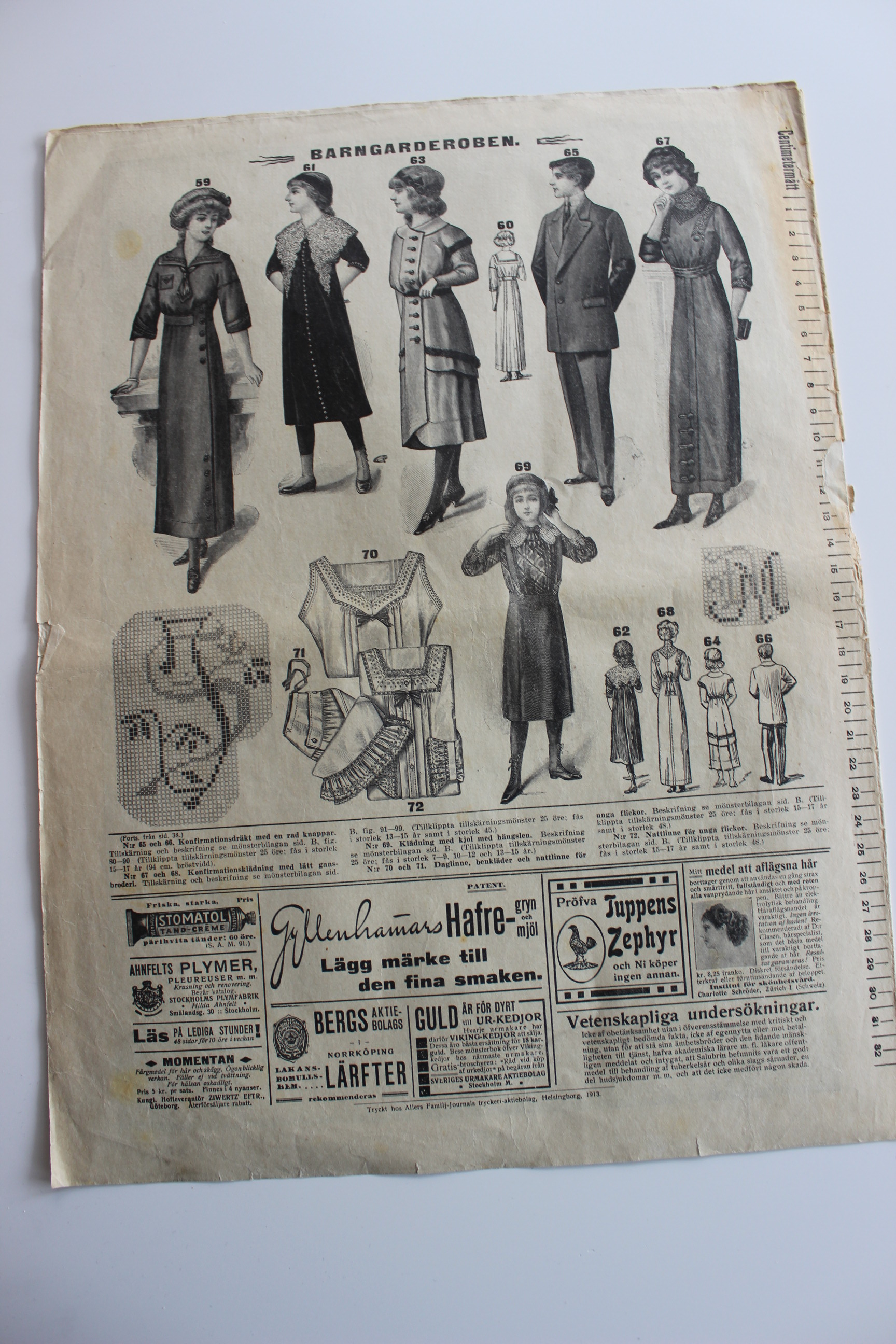
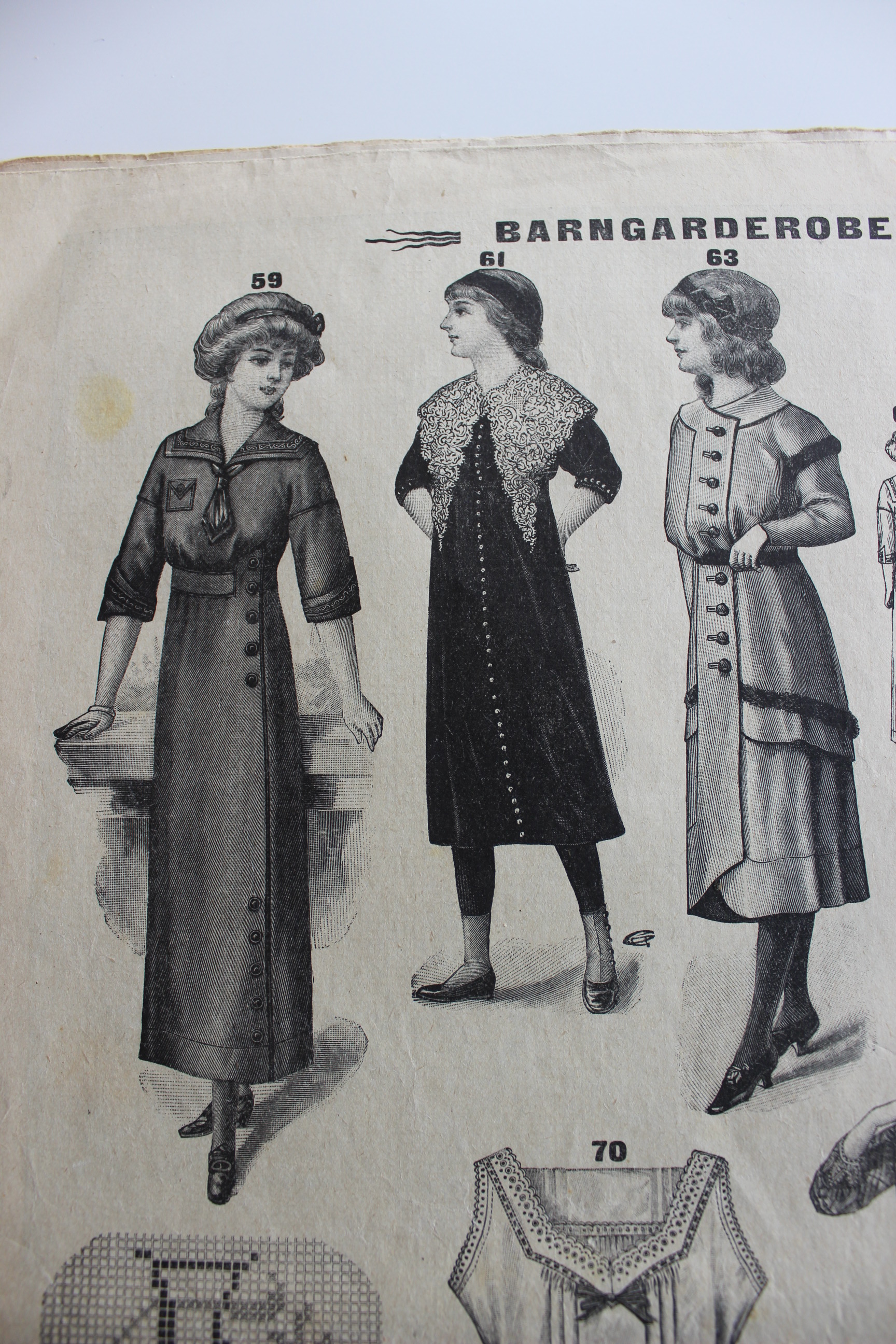
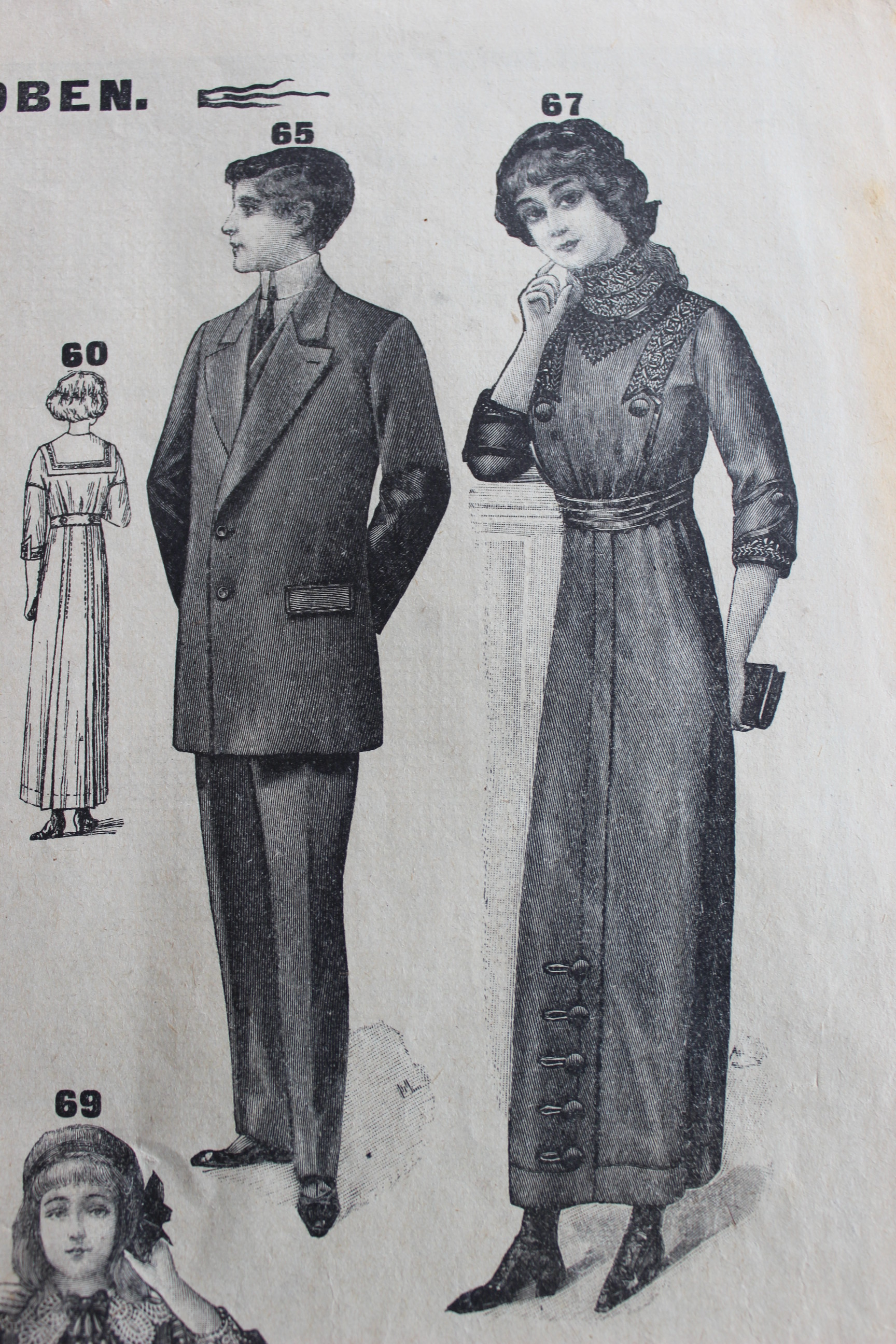
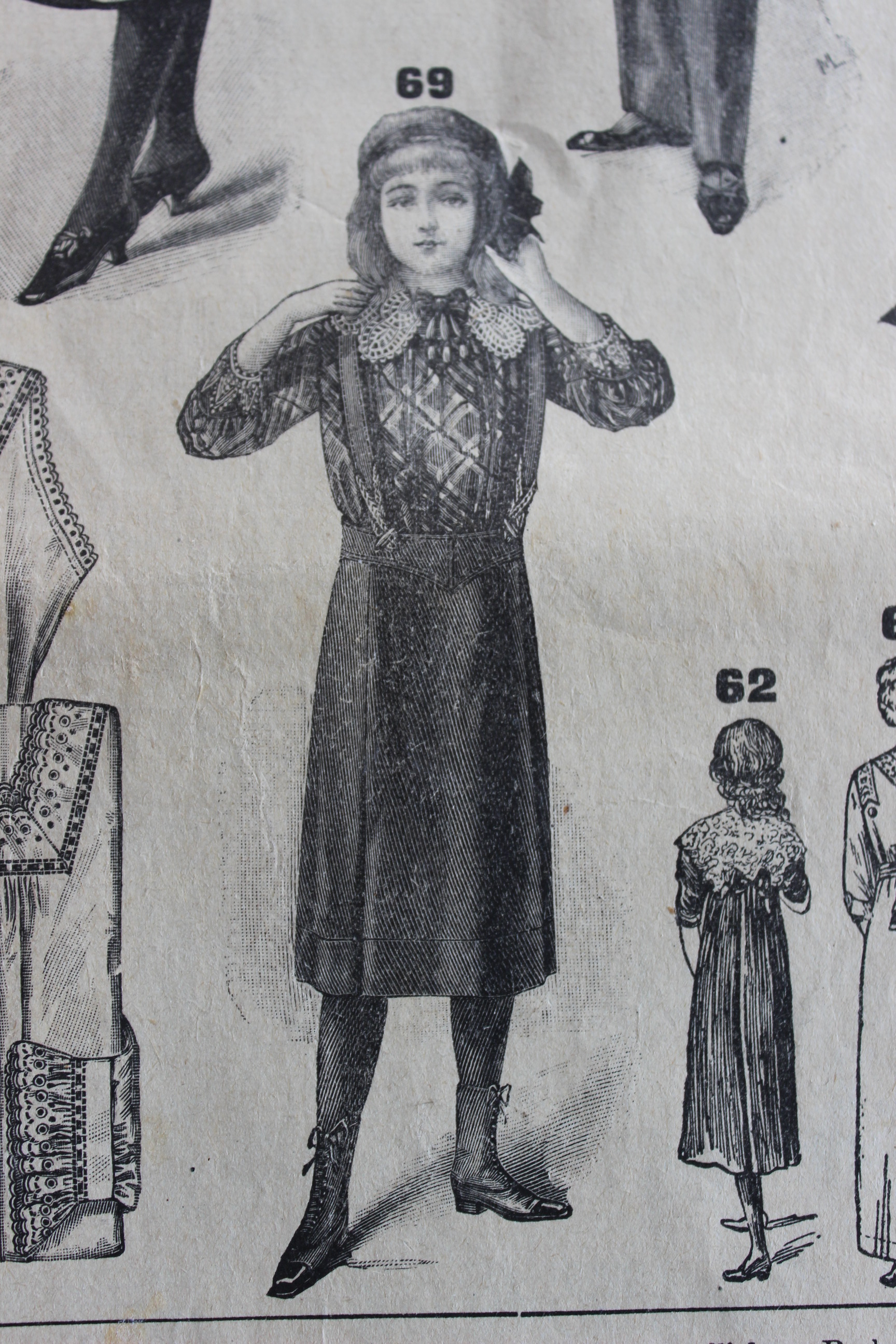
Allers Pattern Magazine 9 Mars 1913

I think it is time for yet another look at my (slowly) growing collection of “Allers Patterns Magazines”.
This magazine is from Mars 9th 1913.IMG_7669

IMG_7671Three lovely daywear outfits.

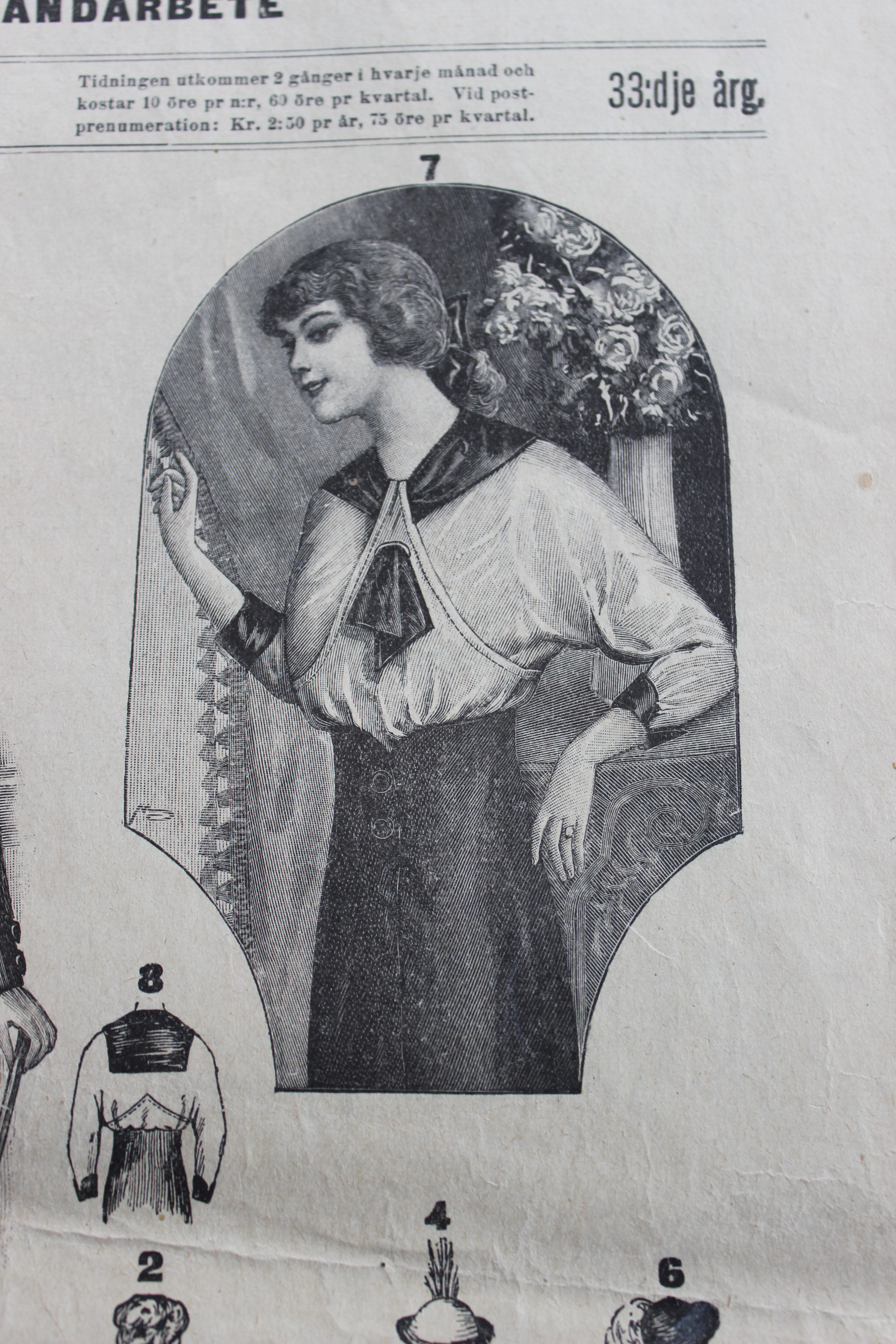
IMG_7670Love the cut of this blouse – sailor with a twist. I will definetly make it someday.

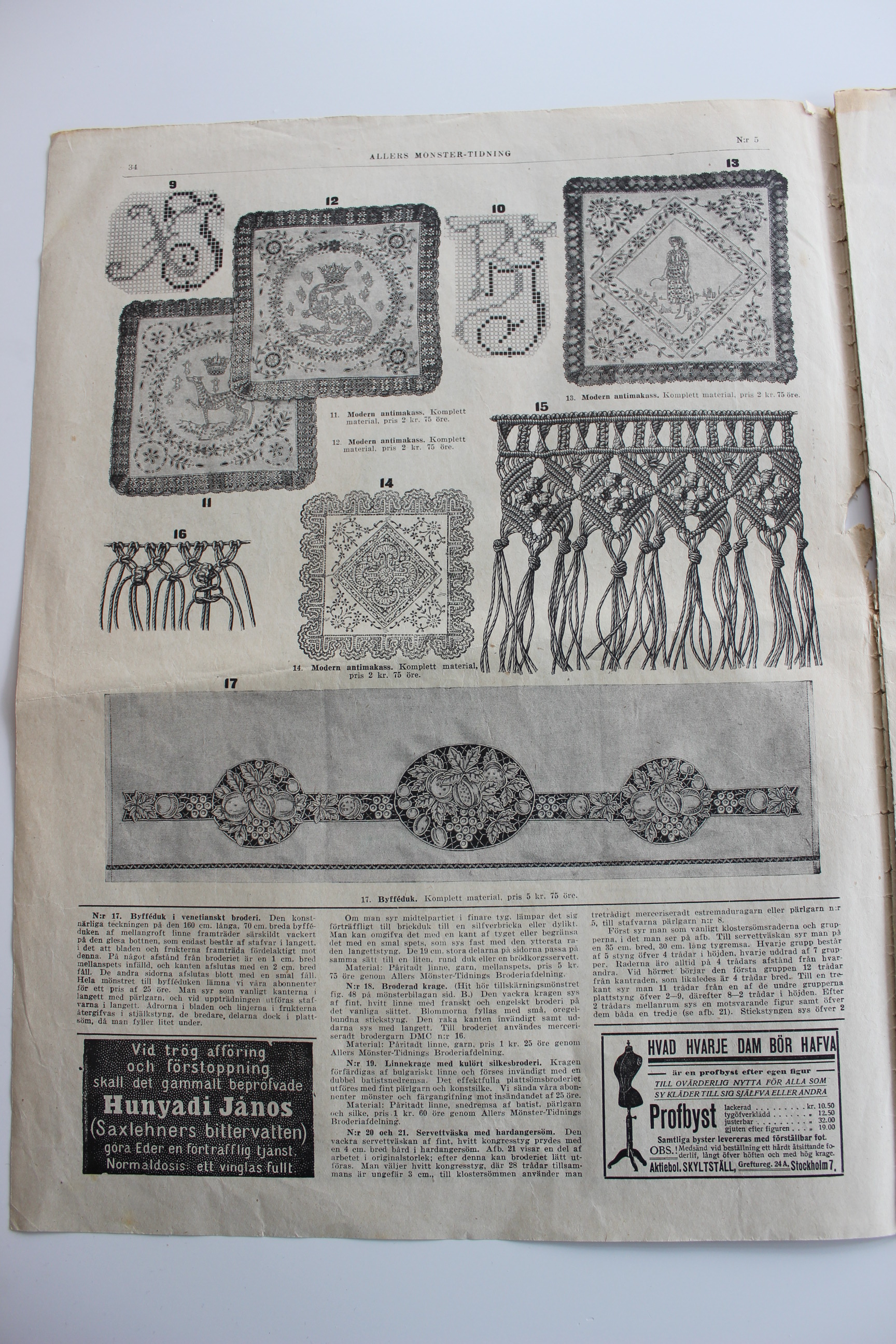
IMG_7672Embrodery and knotting designs.

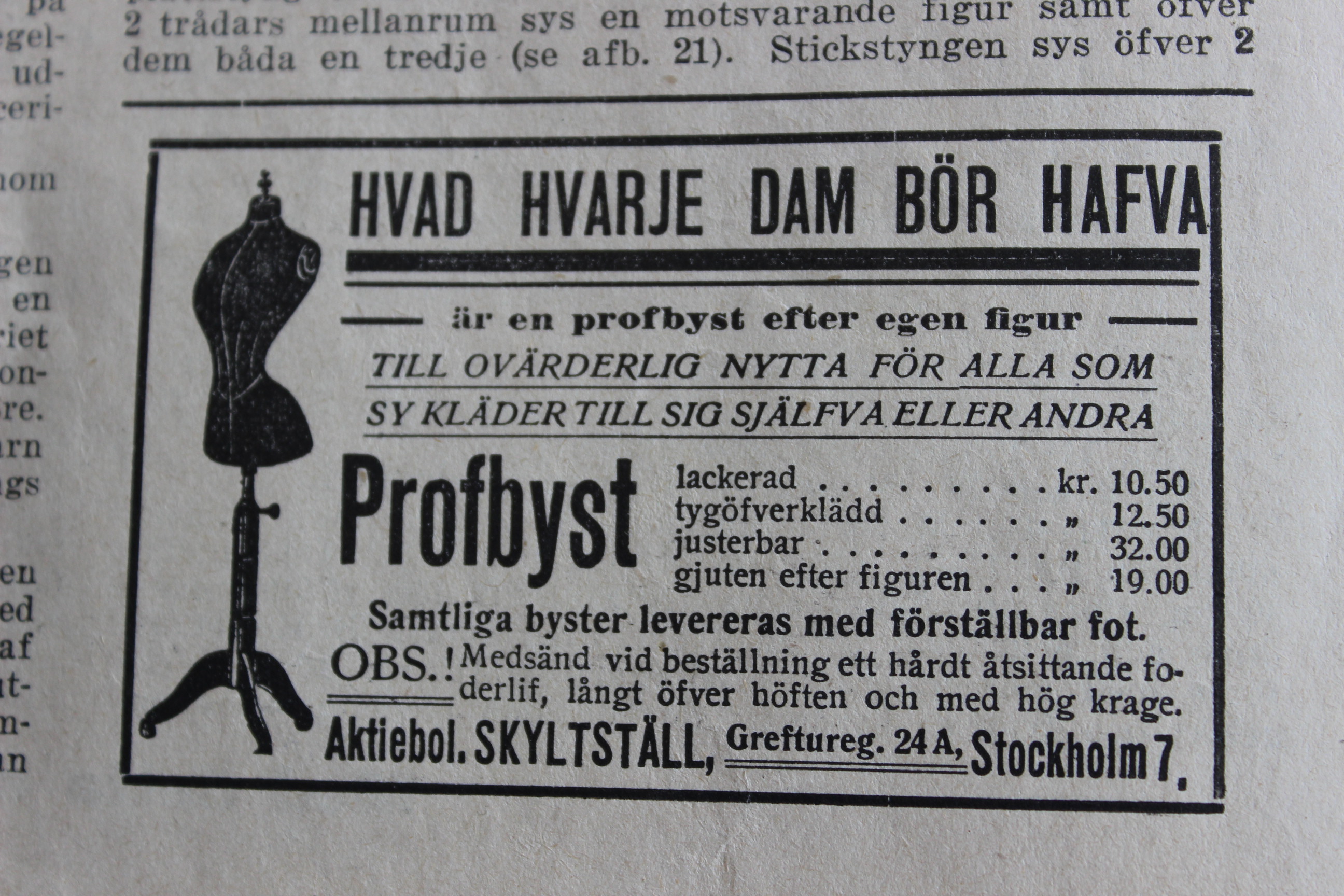
IMG_7676And an ad for a fashionable shaped dressform. “What every lady should own” is the headline. But I do think it is a bit funny that the from is so extreamly S-shaped, and the rest of the fashions in the magazine is more slender straight lined. Guess the dressform manufacturer didn’t quite keep up with the shifting fashion.

IMG_7673Collars and crocketing patterns.

IMG_7674Love the flowery collars, and there even is a litle bonnet in the pic.

The center fold of eye-candy dresses.IMG_7677

IMG_7679Three darling everyday dresses. Perhaps the right one even will work for dinner.

IMG_7678Great hat.
IMG_7680

IMG_7681Young misses dresses.

IMG_7684

IMG_7683

IMG_7682Awsome ridinghabit and picture.

IMG_7685Embrodery letters.

And the final page with childrens clothing.IMG_7687

IMG_7688

IMG_7689Young adults/theenagers

IMG_7690

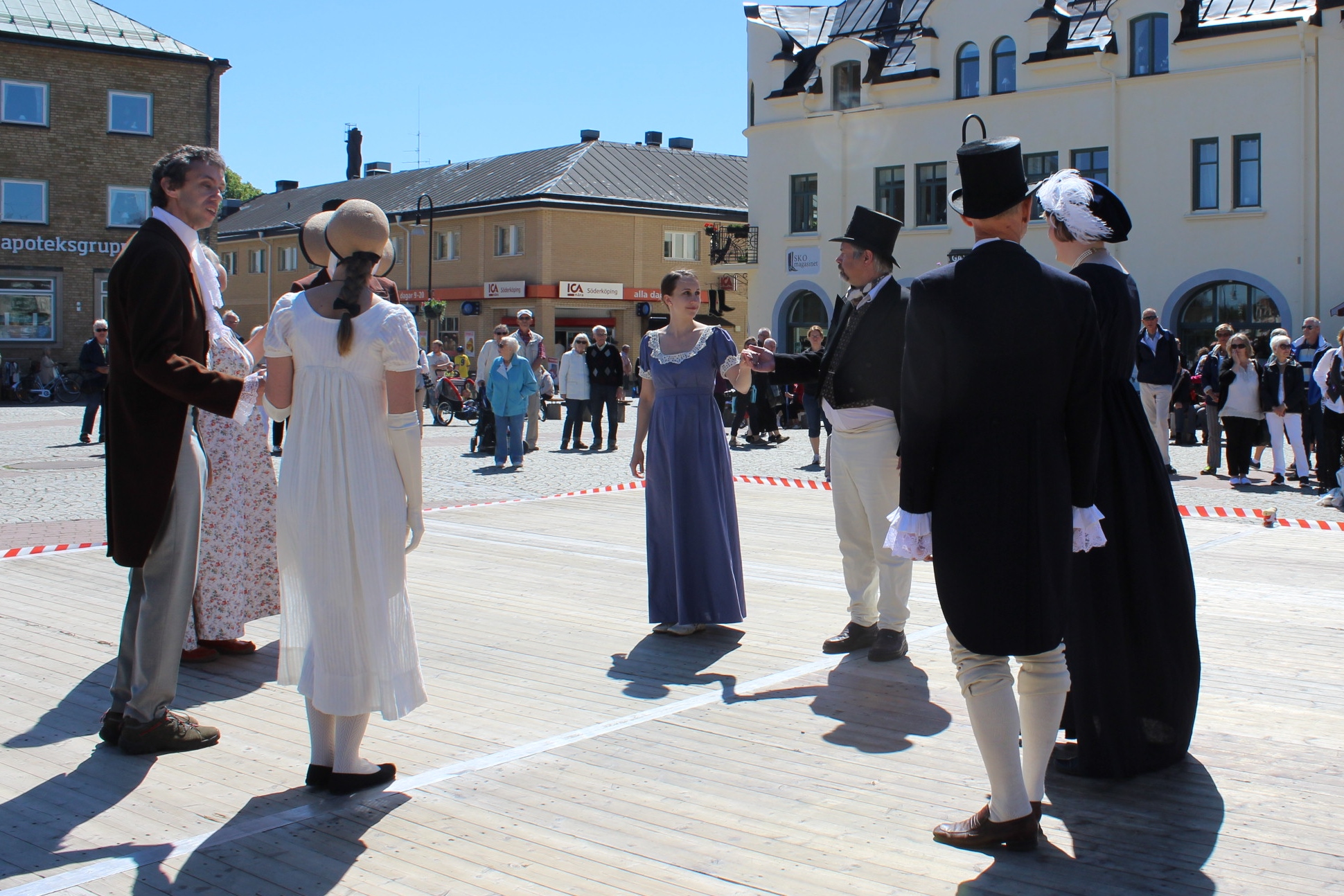
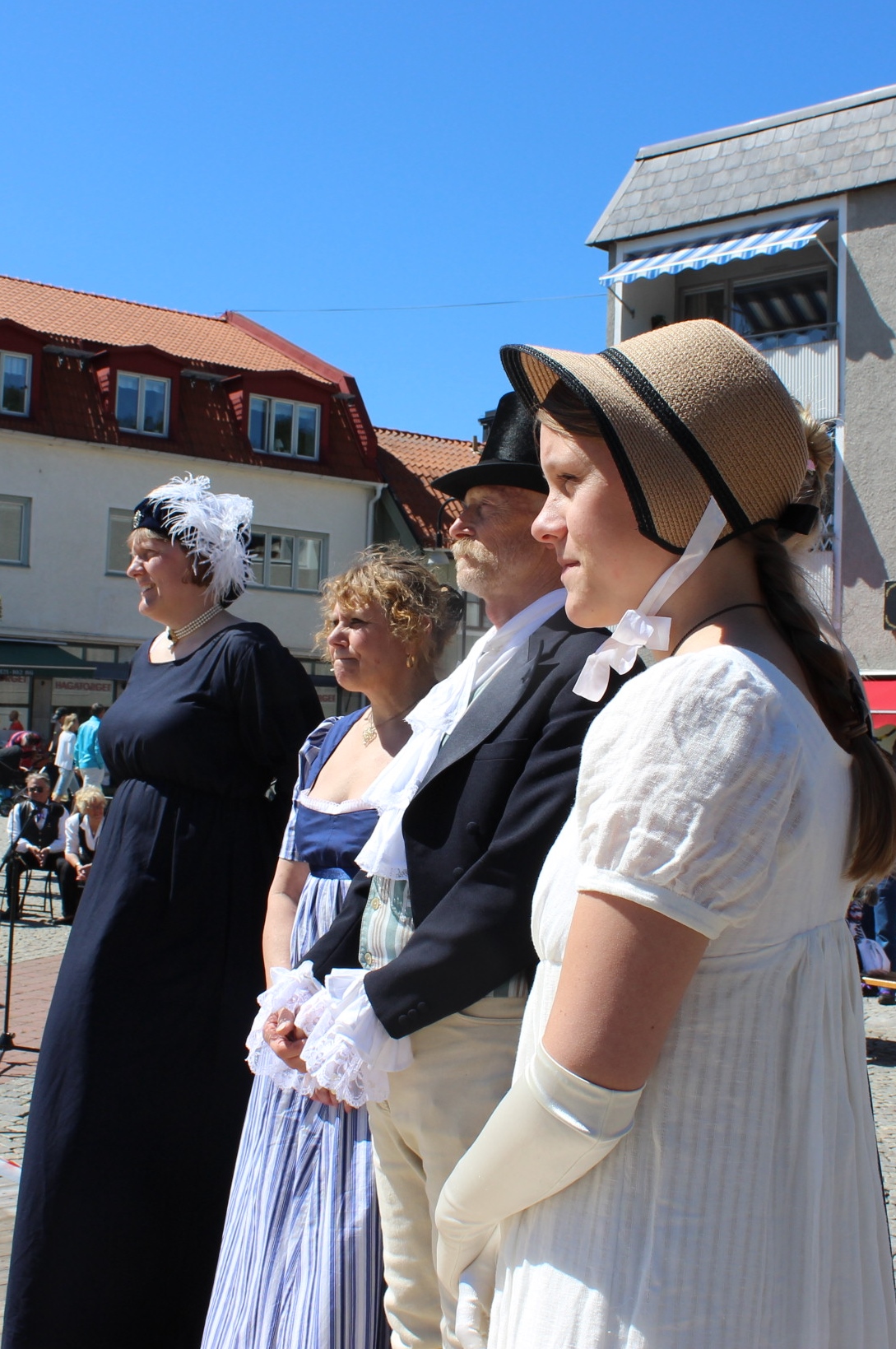
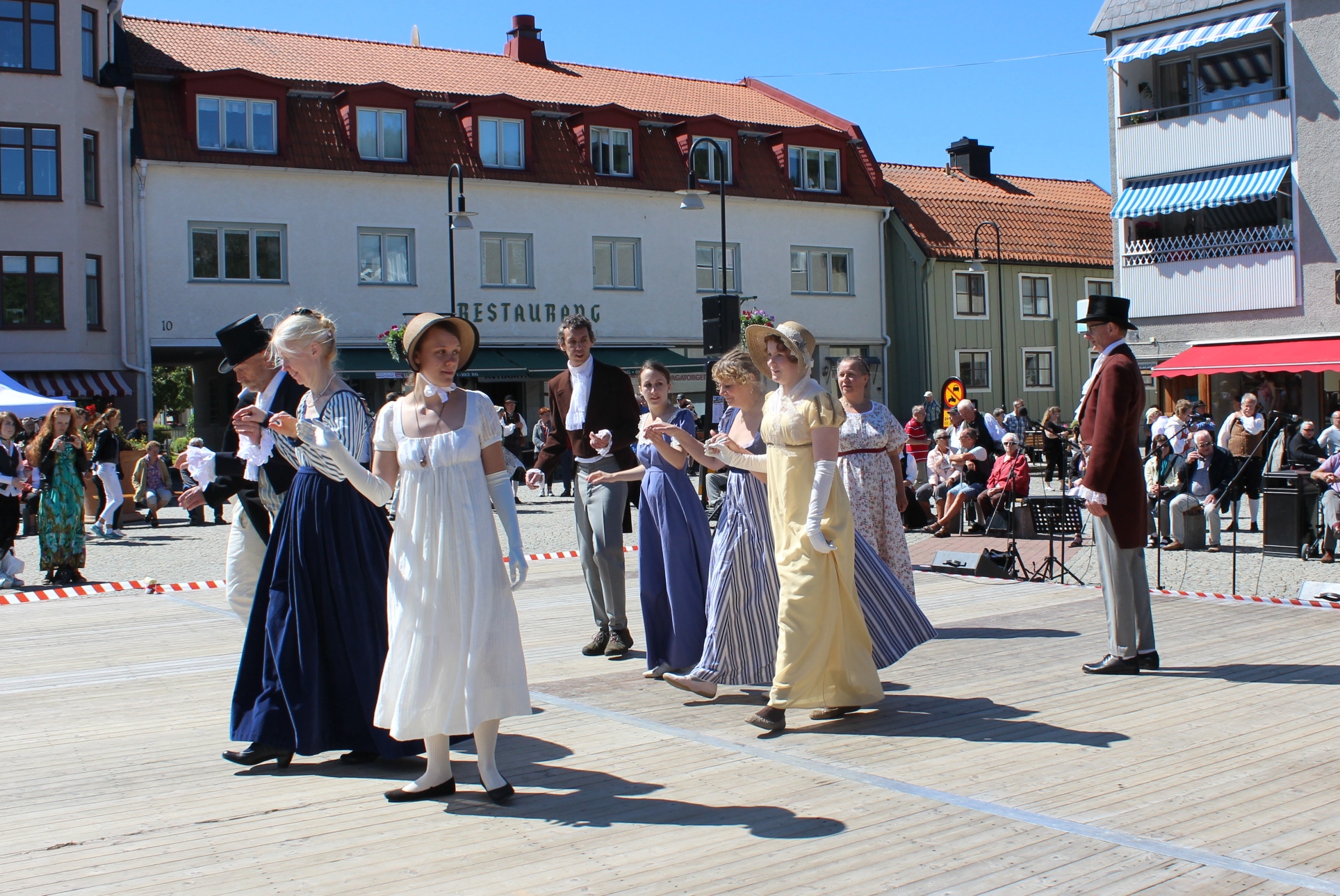
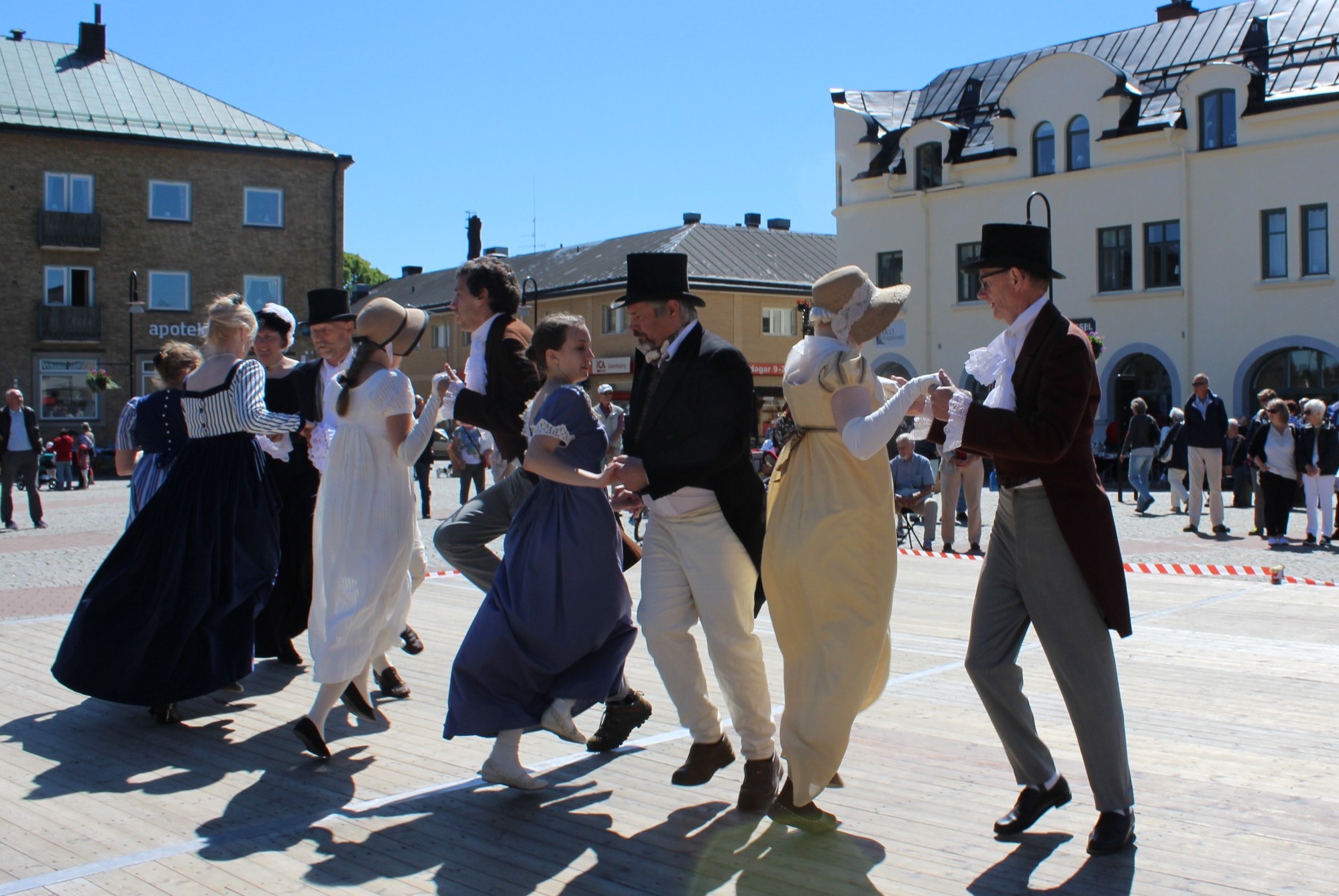
Regency dancing recidal

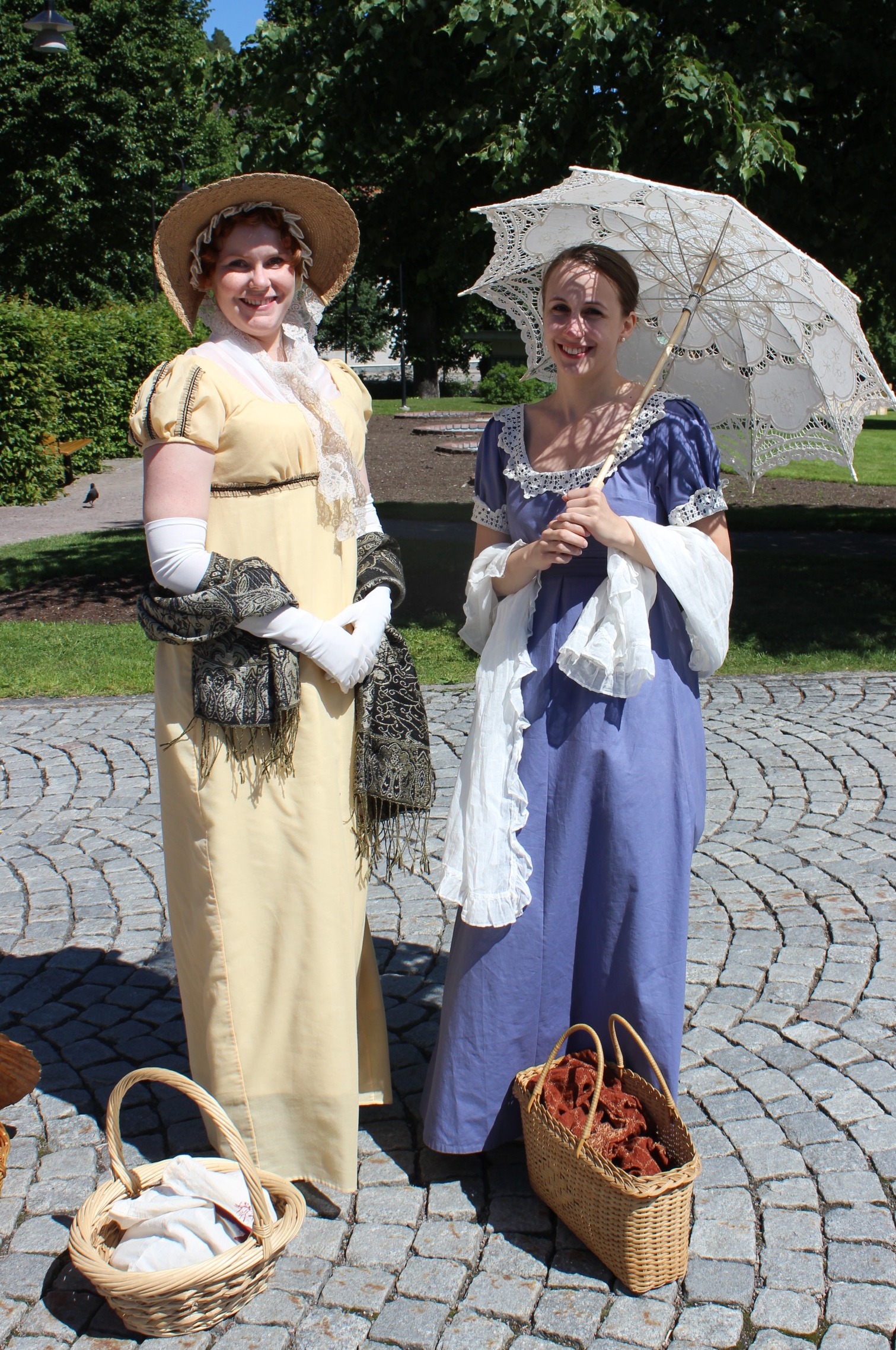
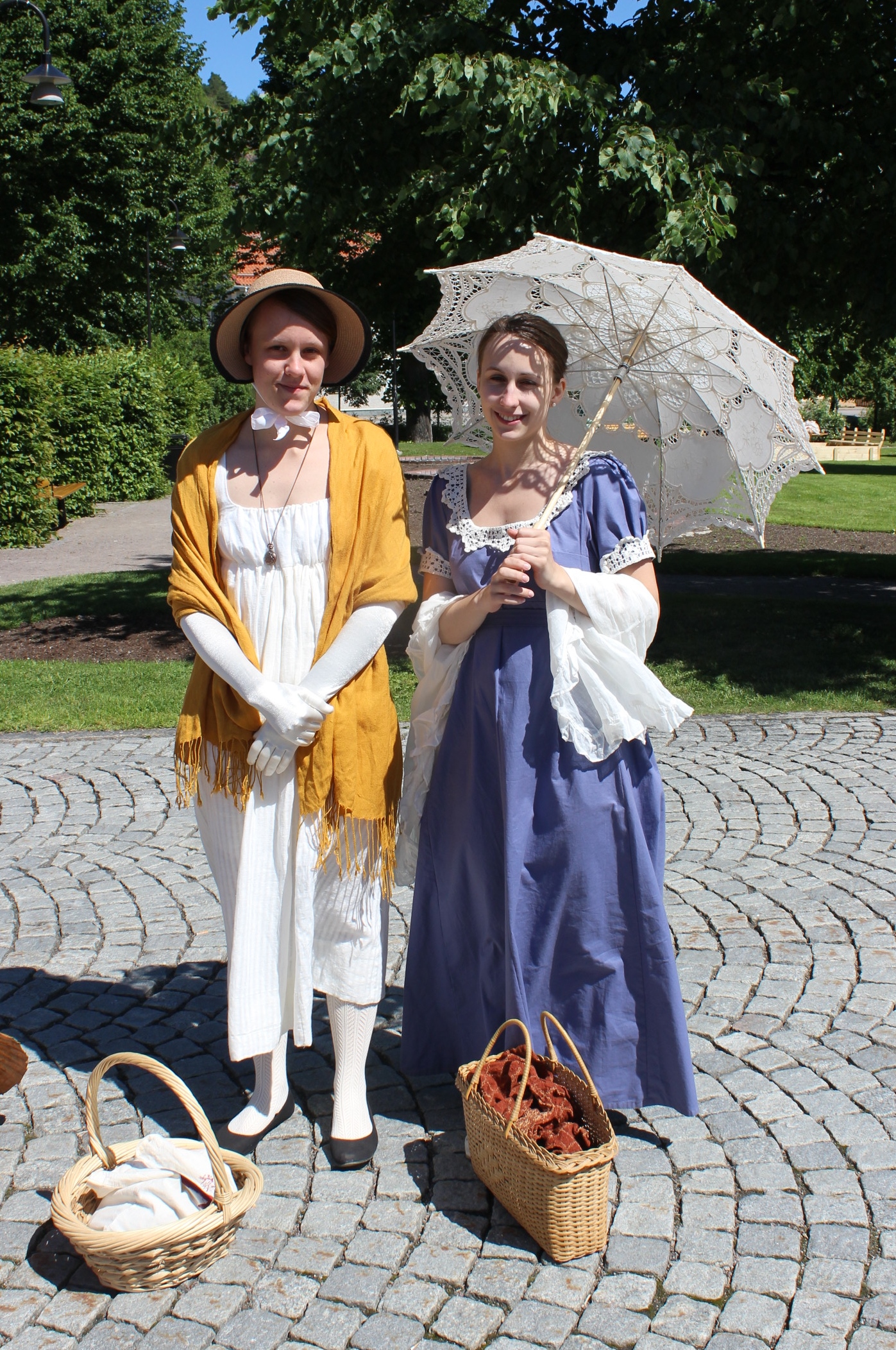
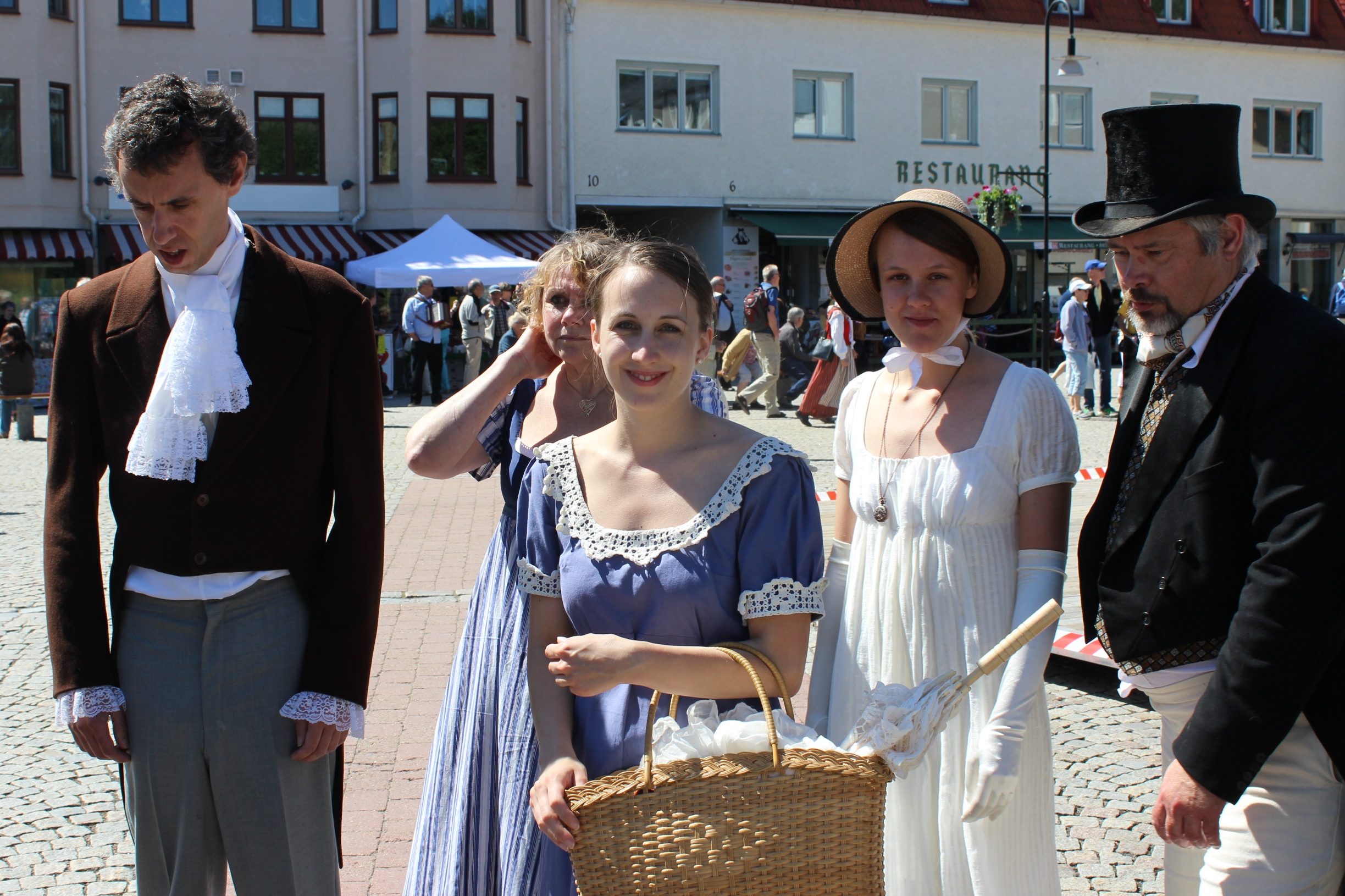
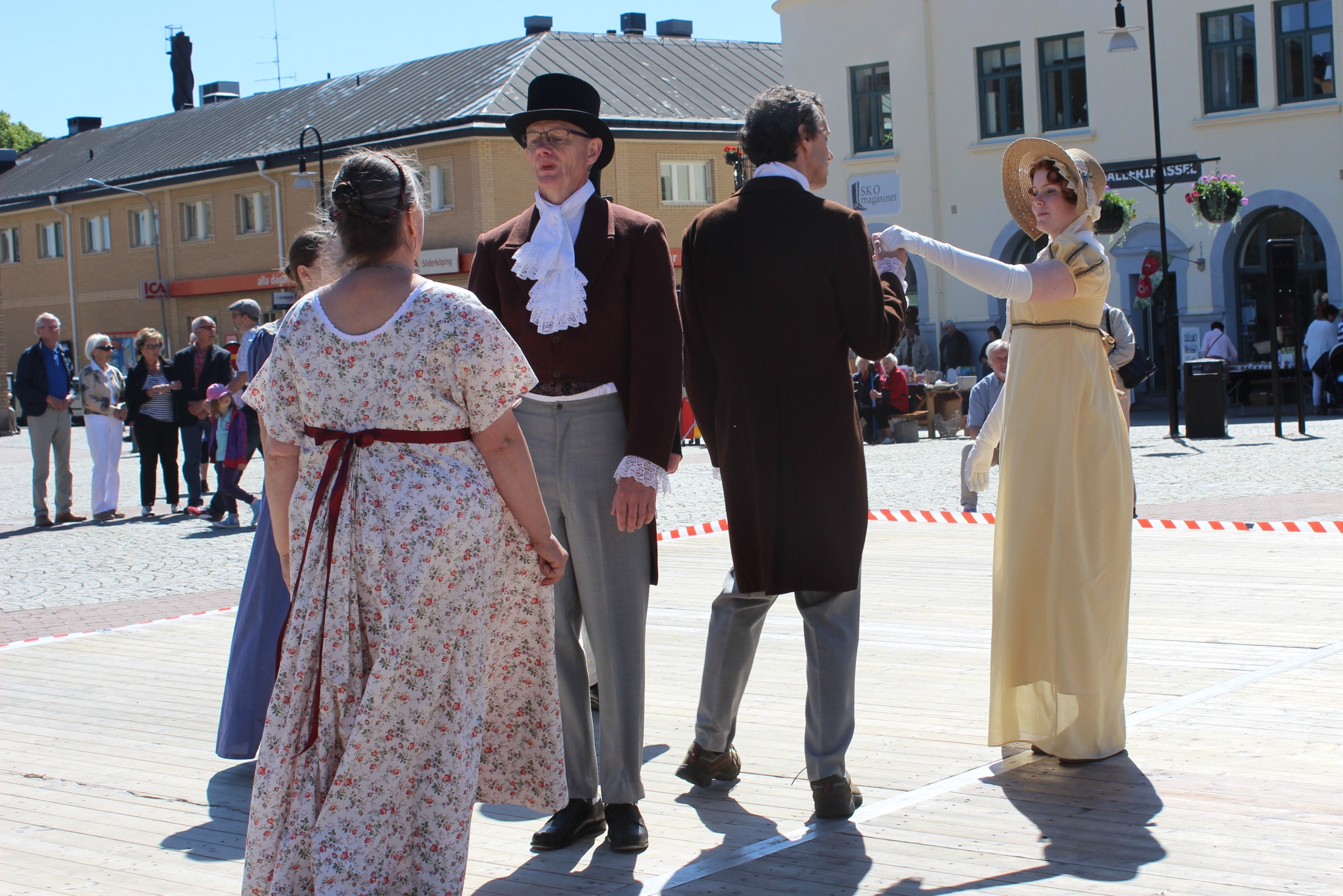
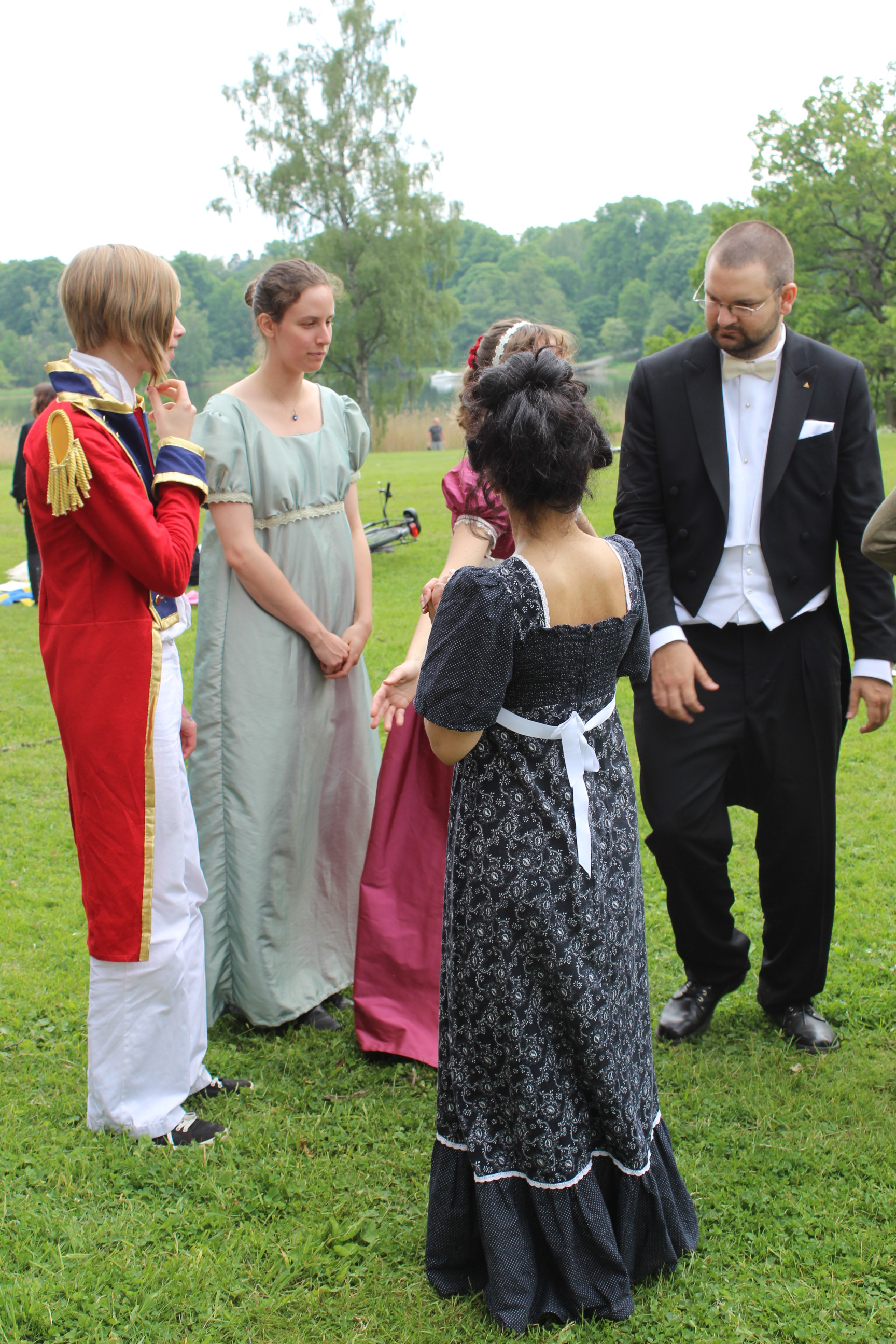
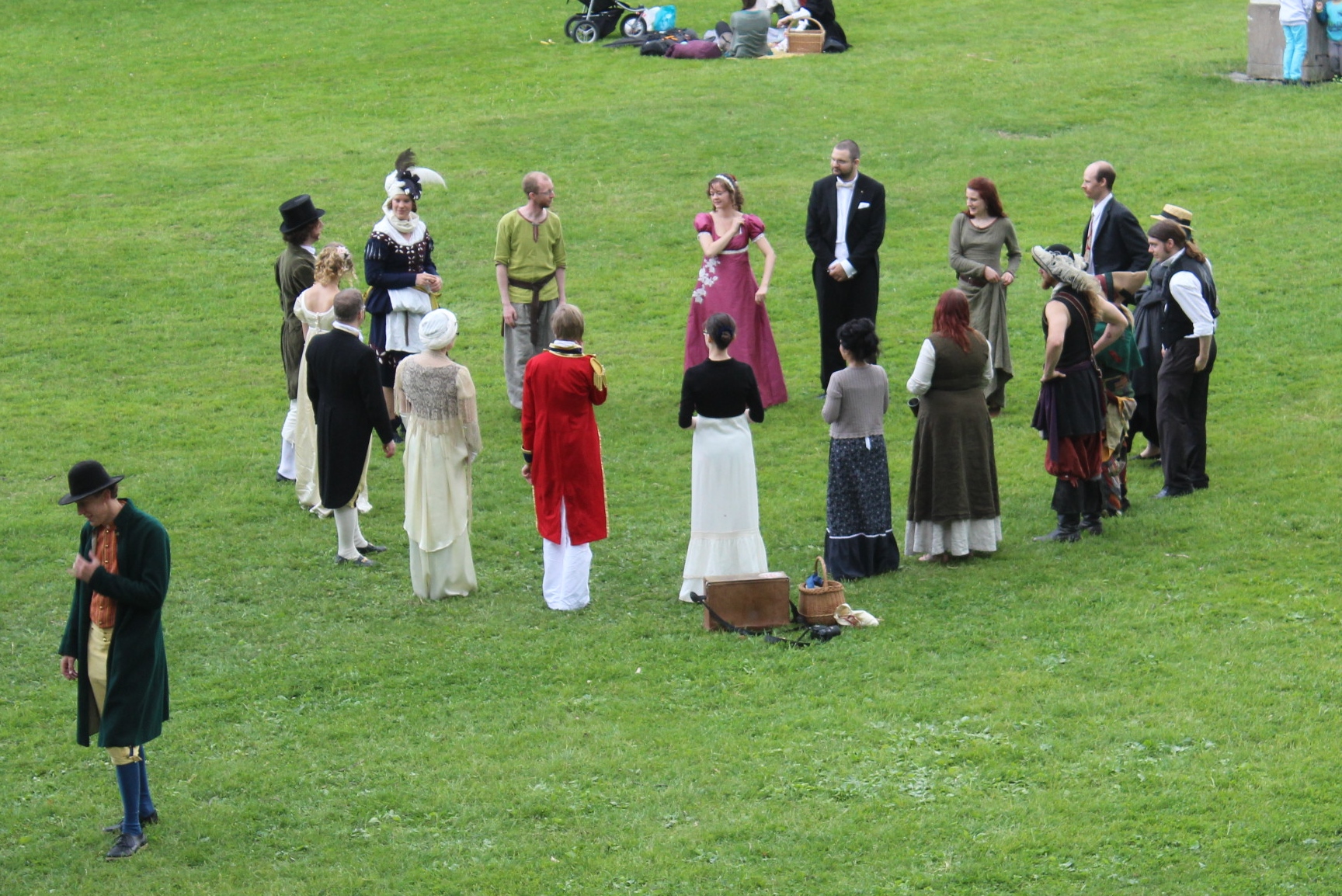
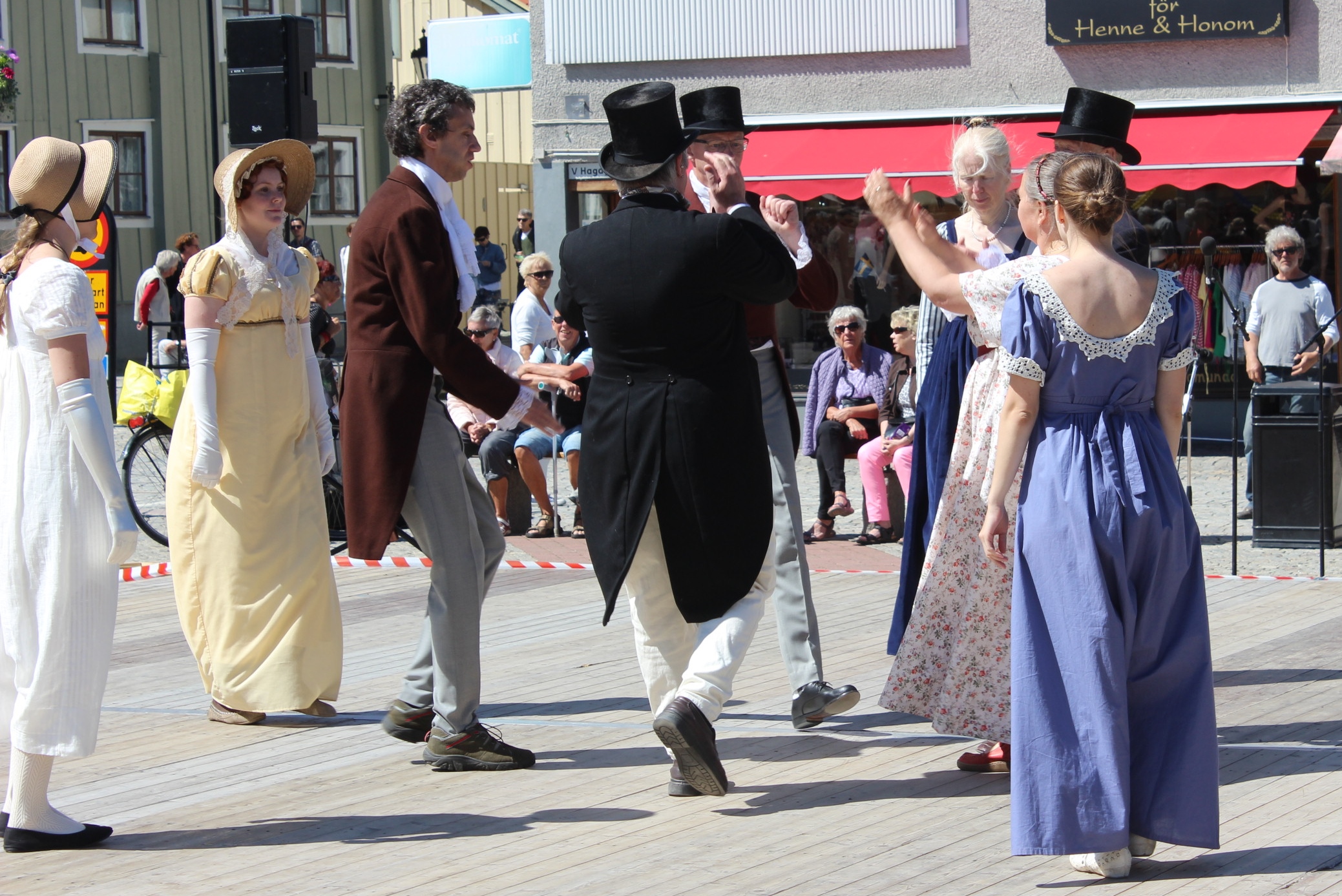
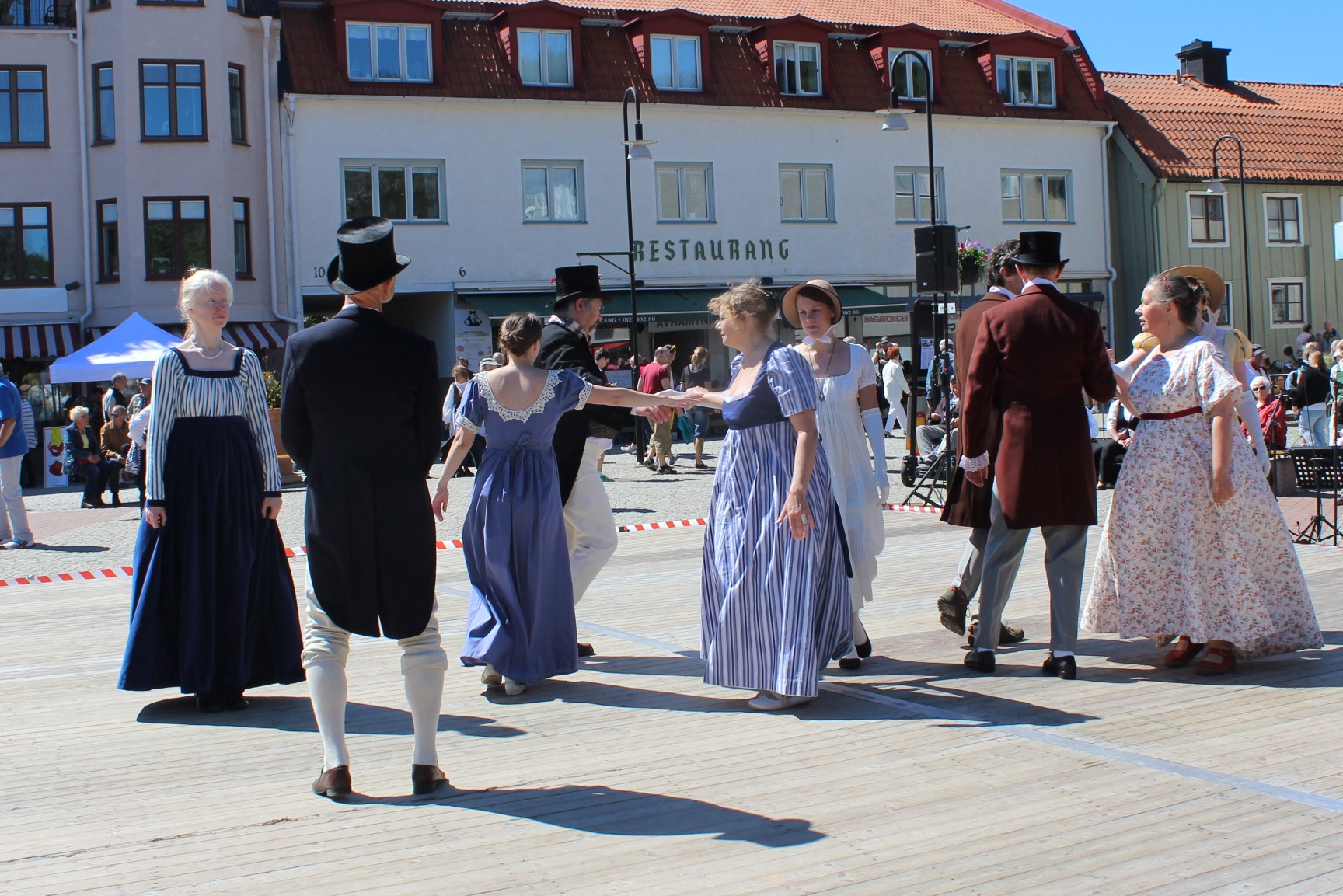
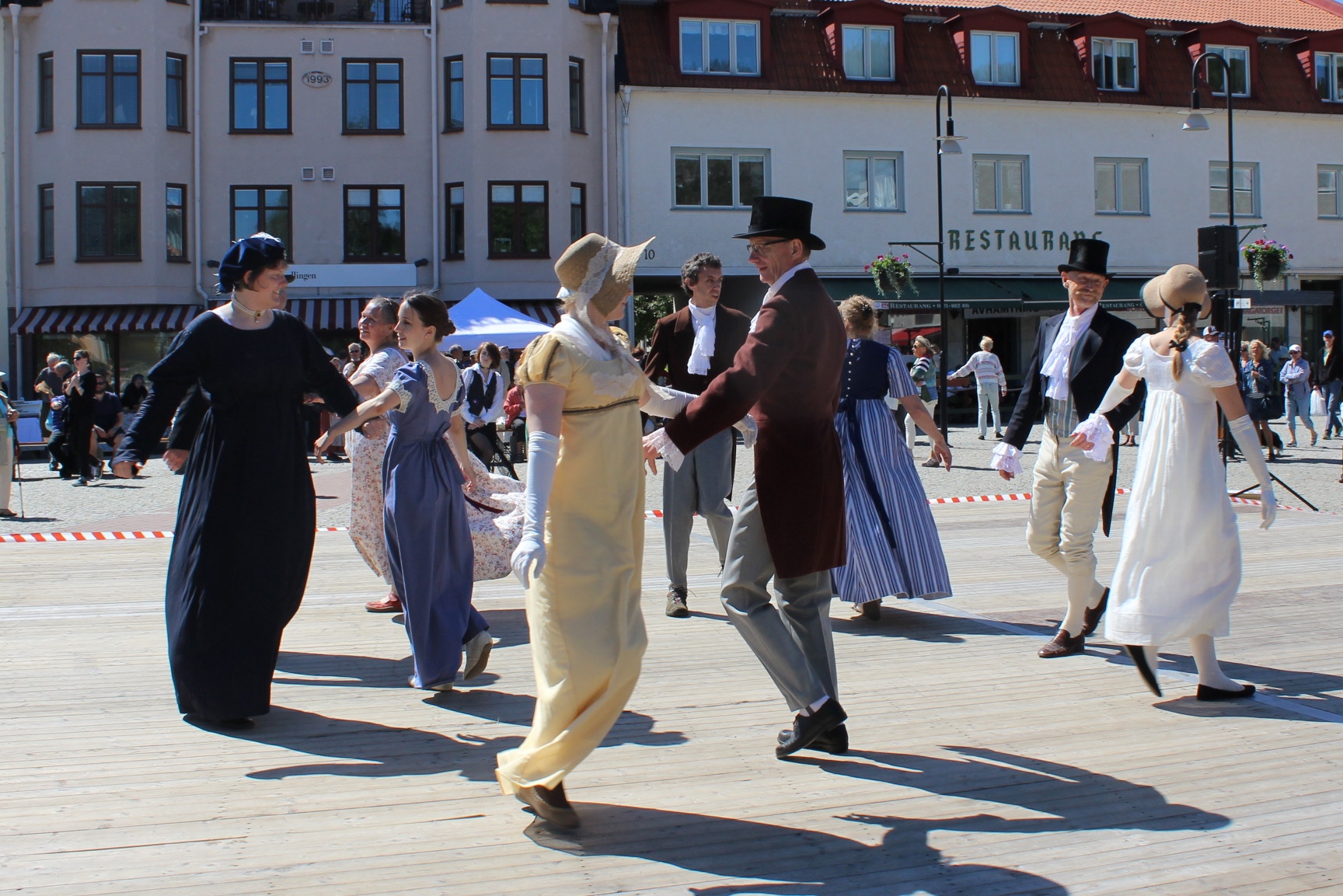
This past weekend, I joined up with the local historic dance group for a regency dance recidal. The city celebrated “The day of Dance” and we were invited to perform some of our dances.

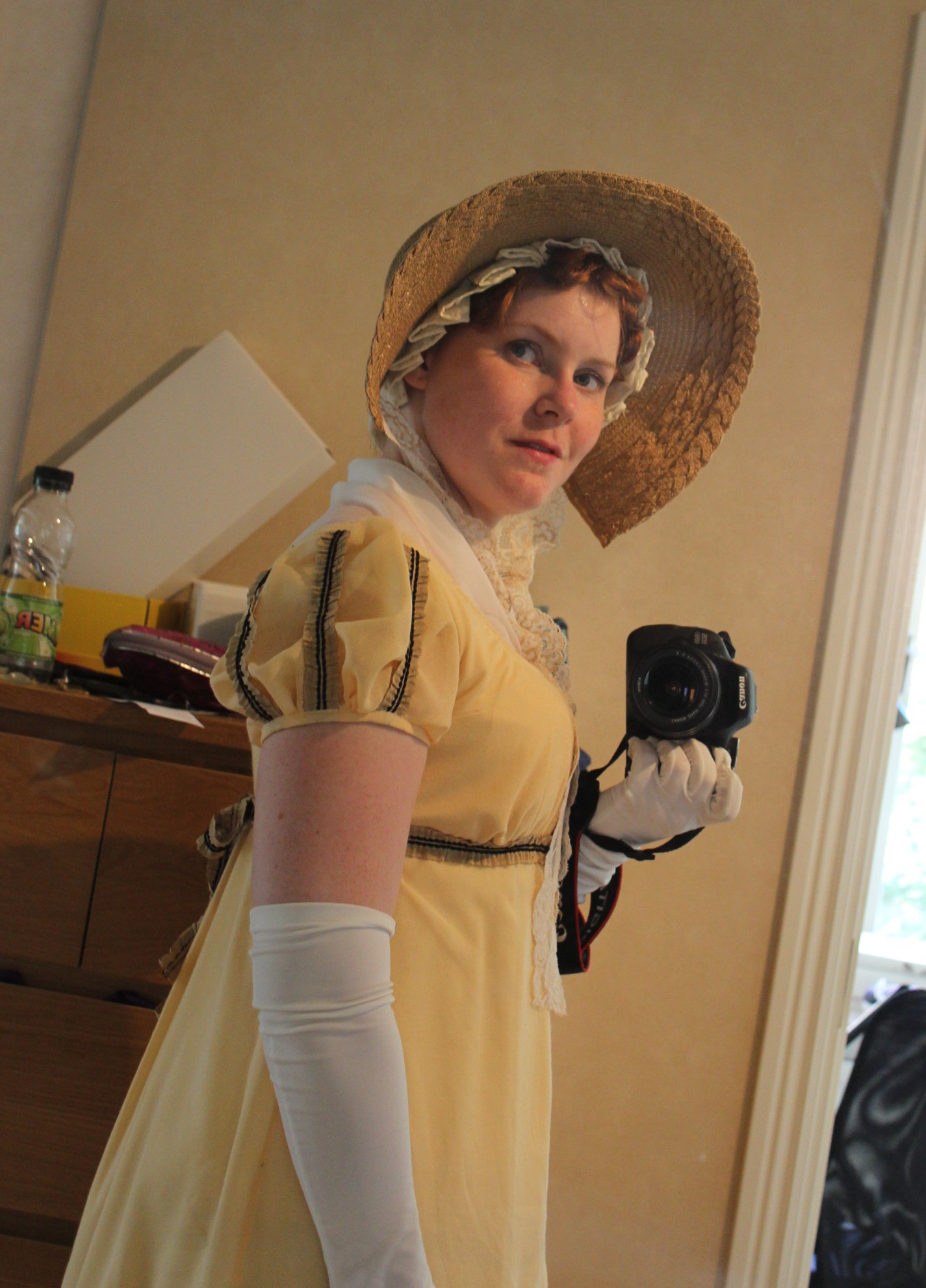
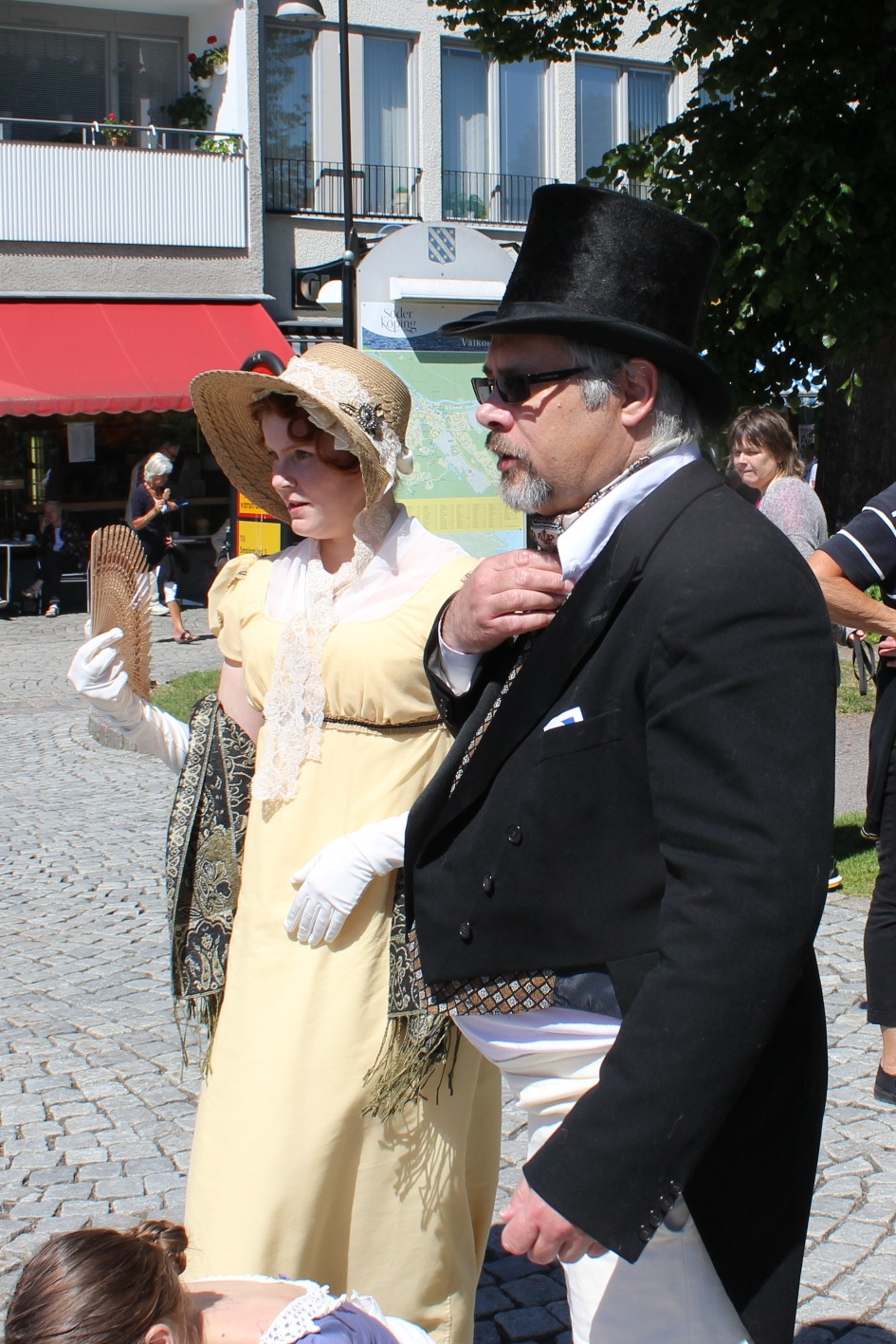
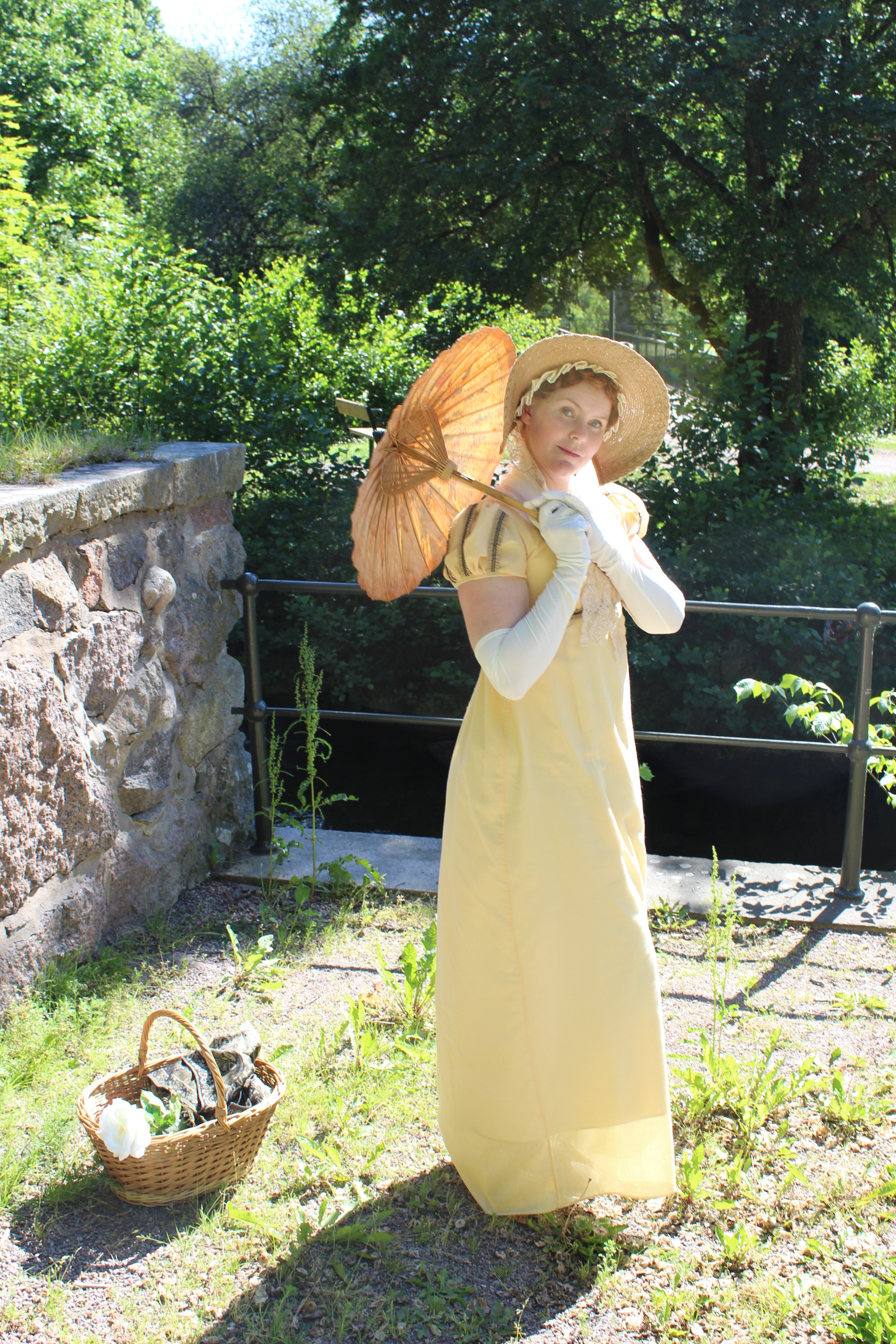
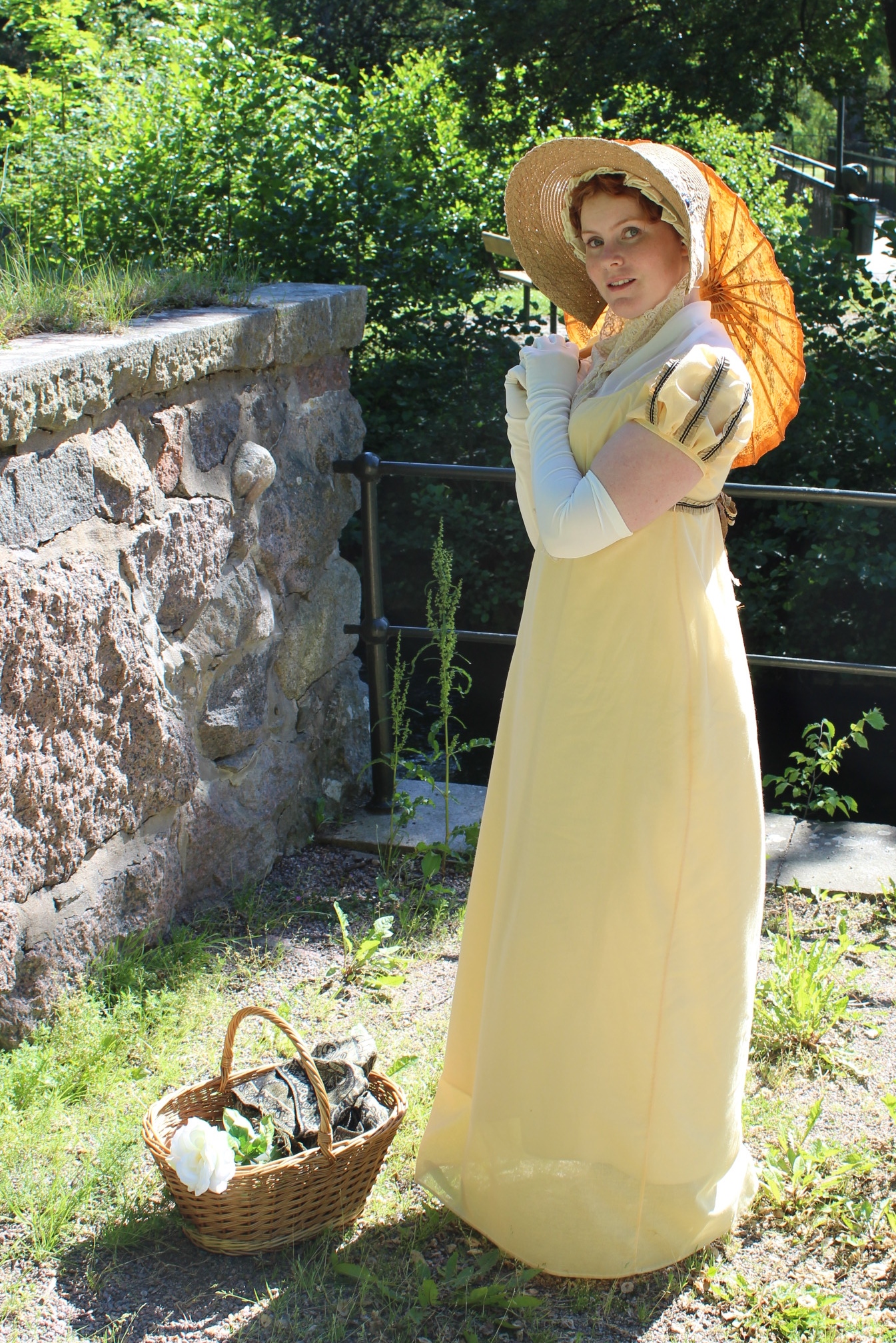
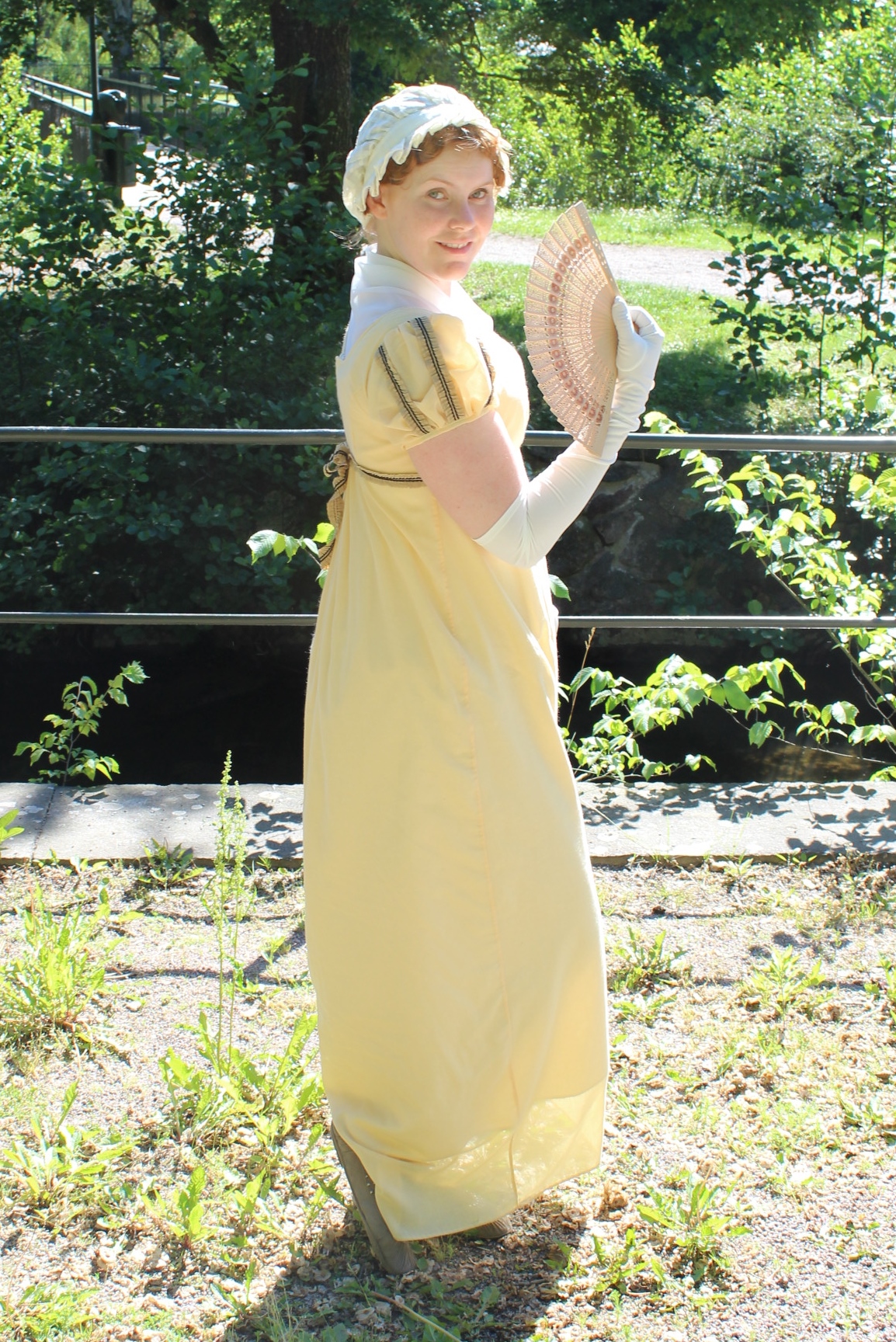
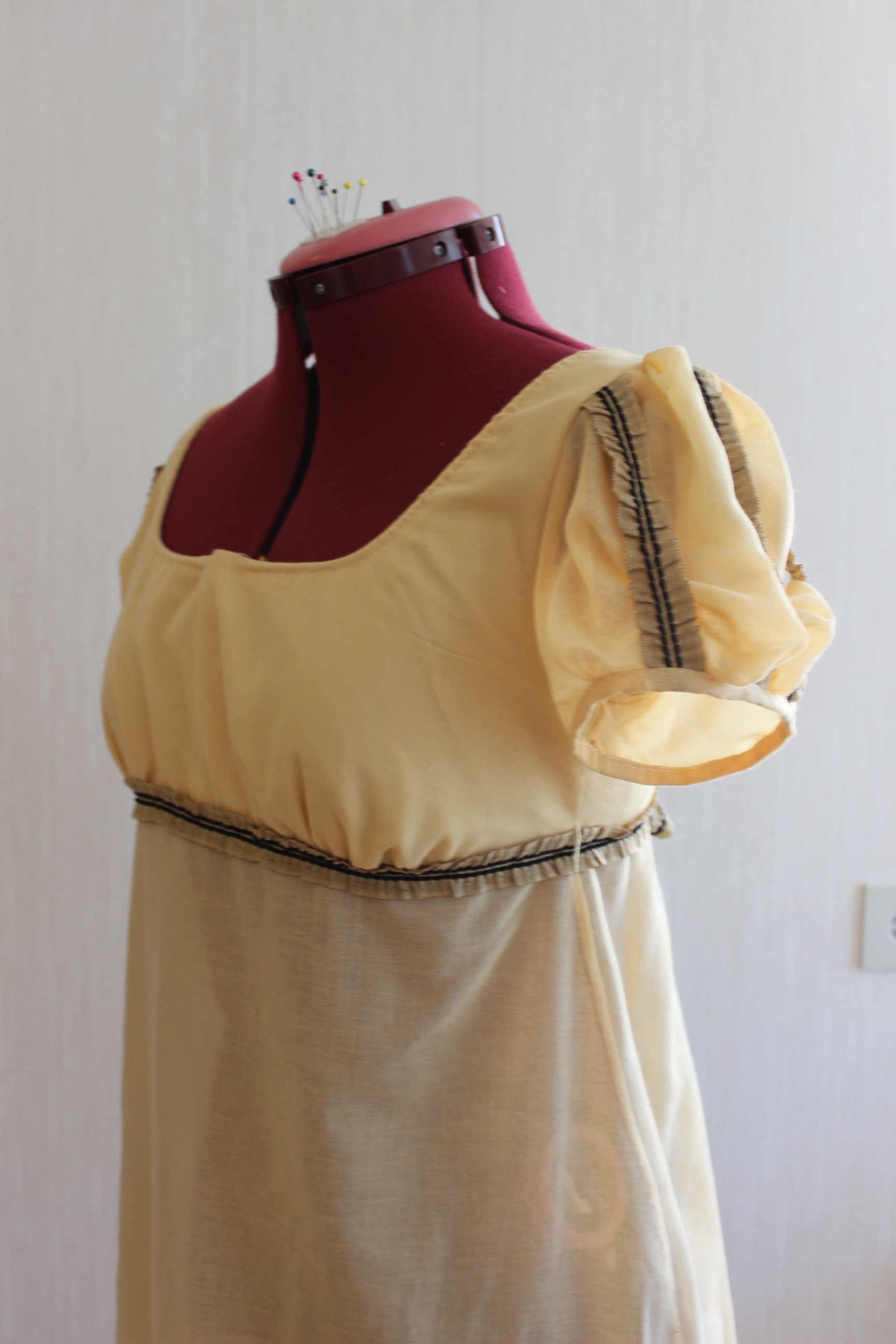
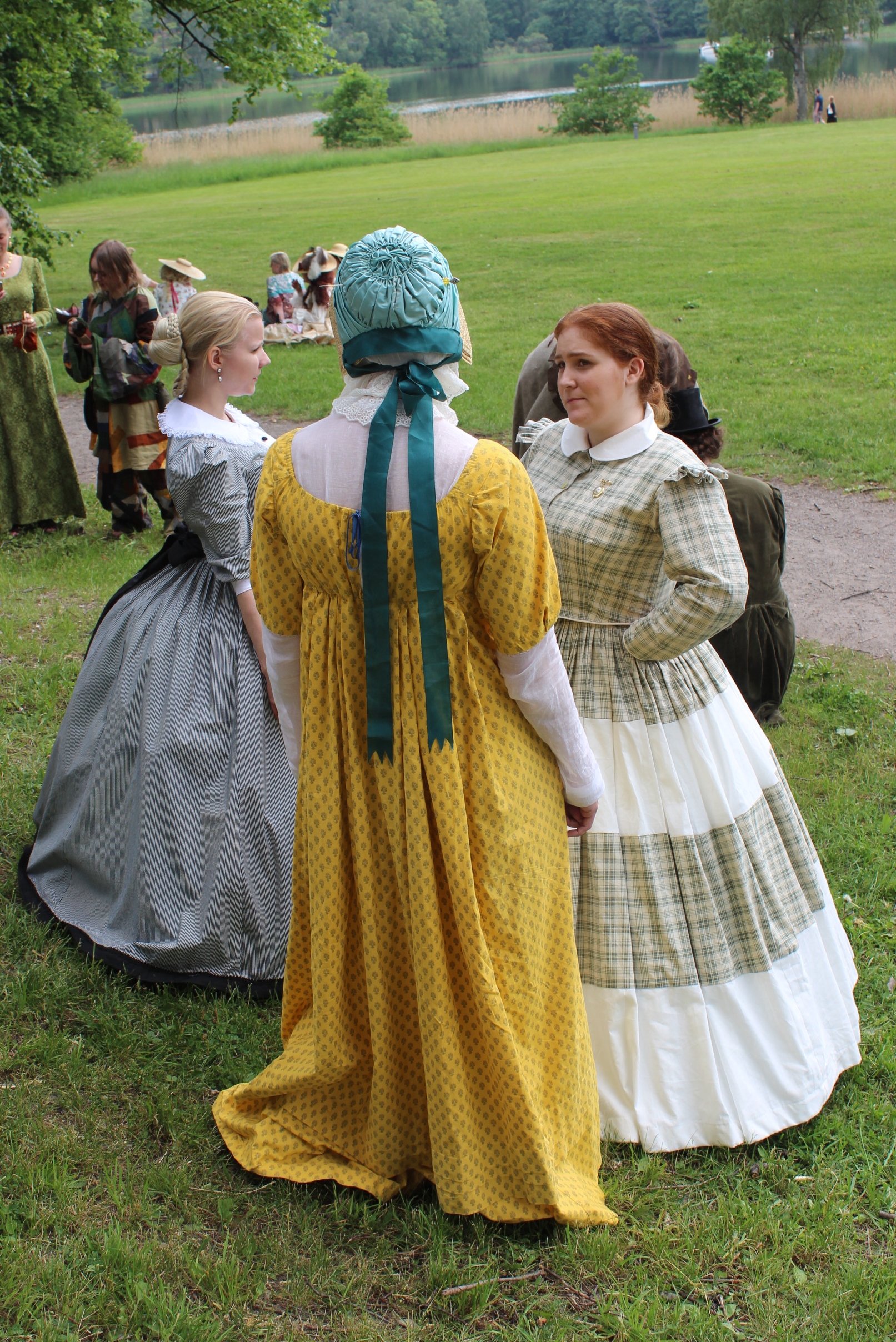
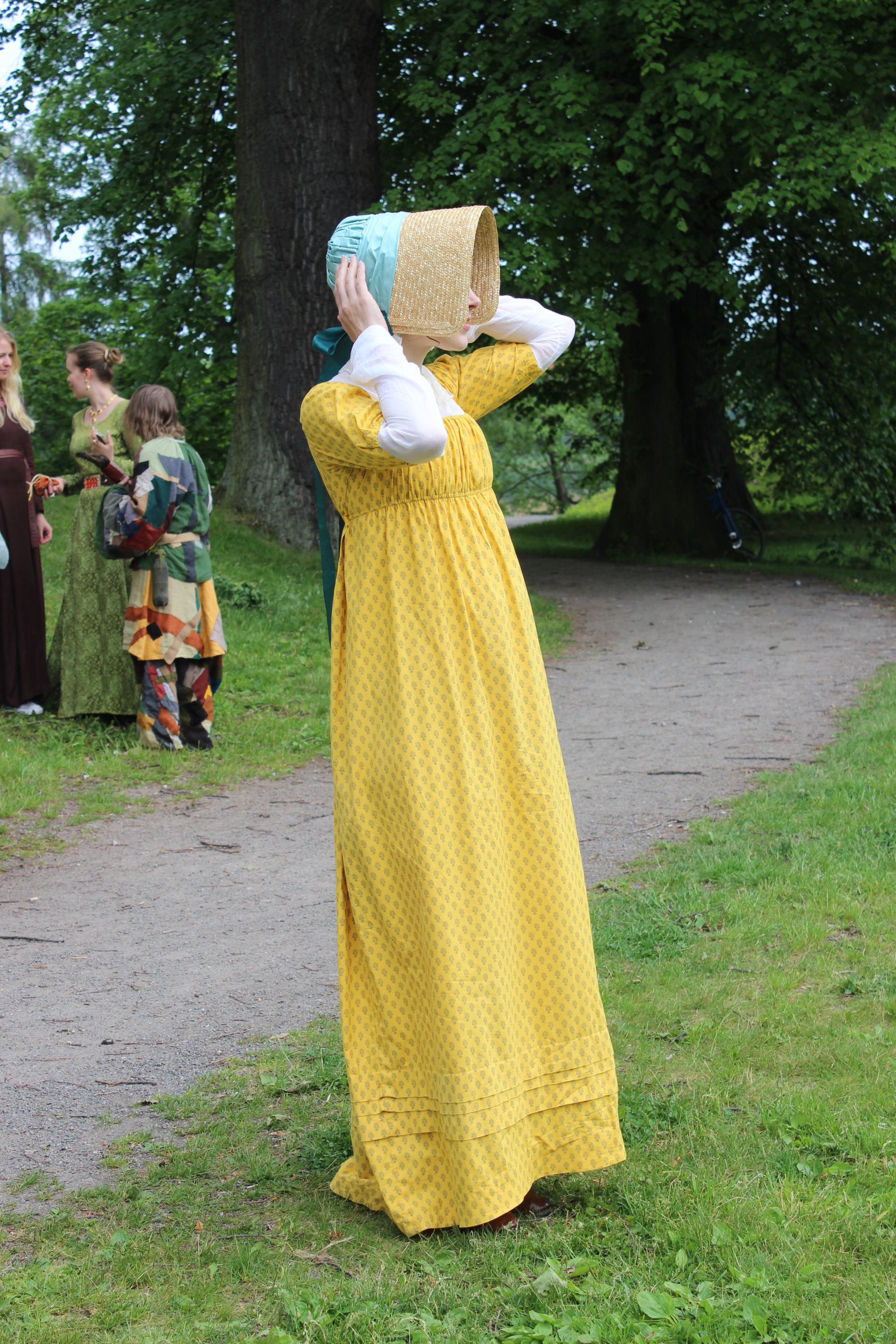
I wore my new yellow regency gown – which I just finished the same morning.And combined it with a new straw bonnet, fishu and white evening glowes.

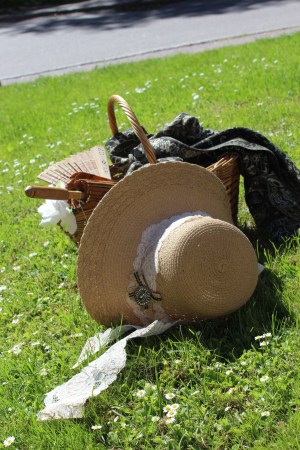
The weater was sunny and everybody had dressed to the teeth in their finery.IMG_9083I love Annas parasol – one day I will own my own.

IMG_9081Clara and Anna posing prettily with shawls and staw baskets.

We spent some time walking around the city, awaiting our turn to enter the stage.IMG_9111

IMG_9109Jan and Soleveig.

IMG_9090Me and Calle awaitning our turn in the heat. I was glad I didn’t needed to wear one of those thick wollen frockoats.

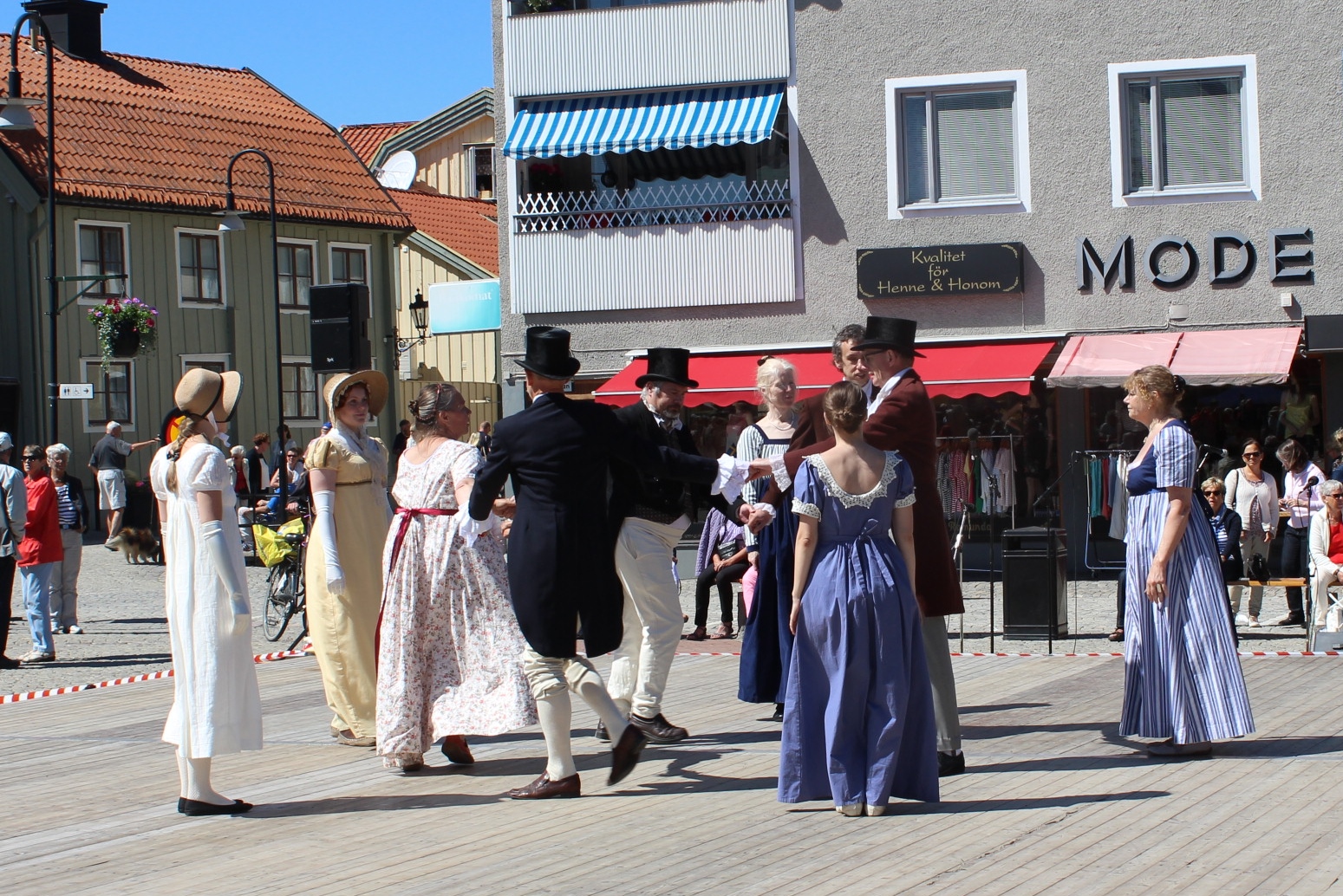
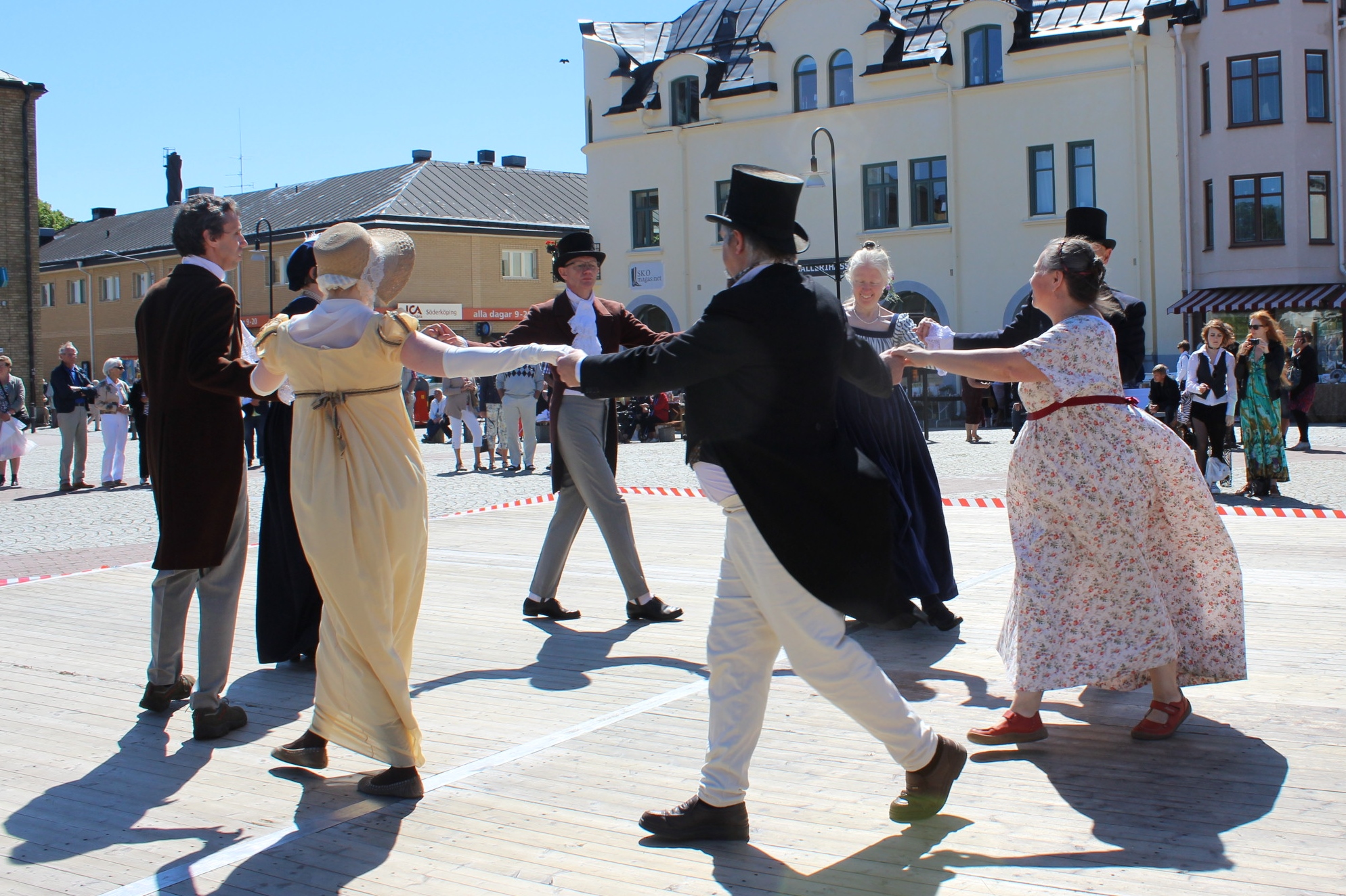
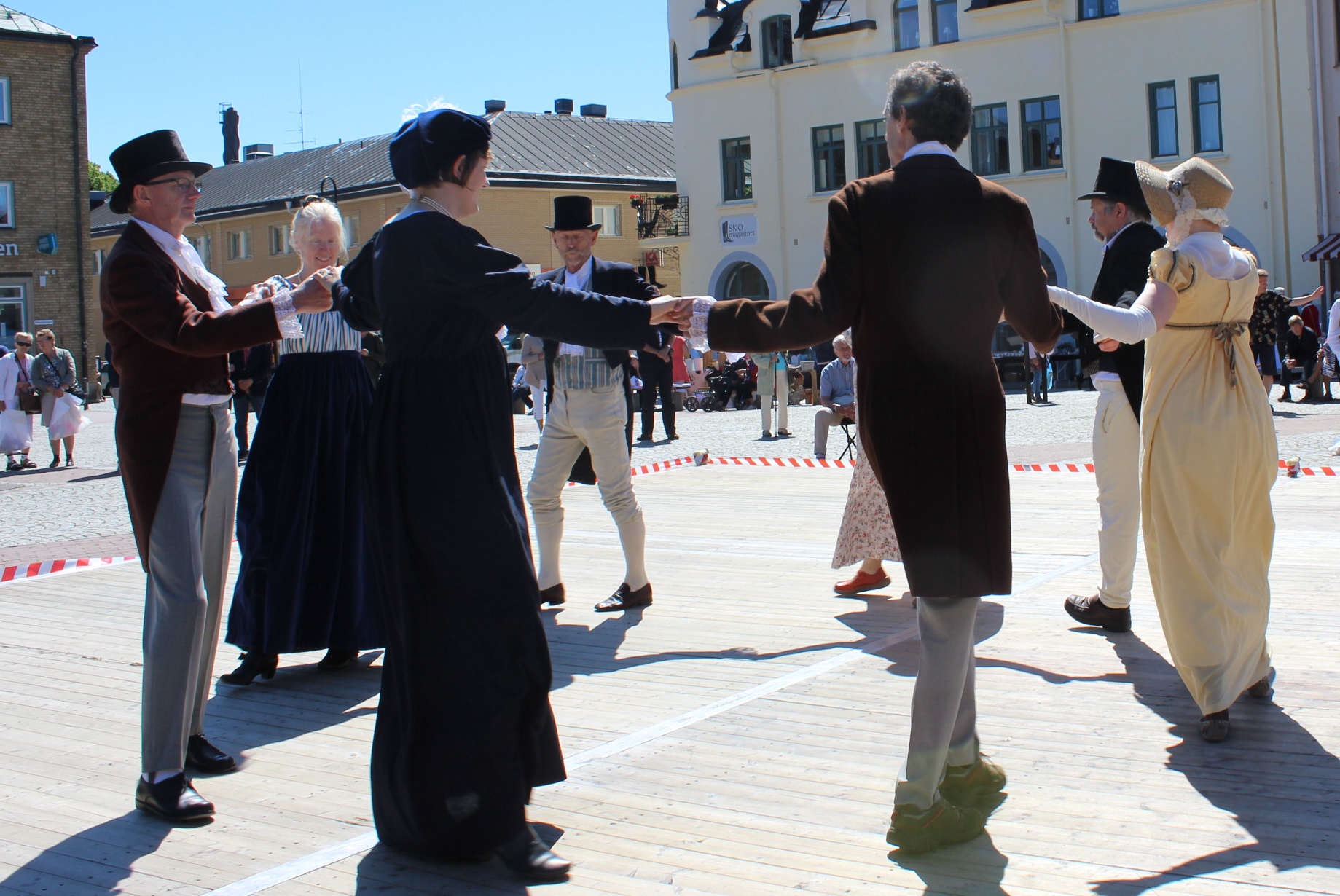
Then it was our turn to enter the stage.IMG_9094And since I’m pretty new to regency dancing I can’t tell you the name of the dances (and seartanly not tell them apart in photos), so we will just have to pretend to know whats going on.

IMG_9093Gentlemen in the middle.

IMG_9104Premiere doing a center cross.

IMG_9107

IMG_9100

“Sellingers round”IMG_9101

IMG_9097

Since we were uneven, at least one lady had to rest, and sometimes more depending on the dance.IMG_9098

IMG_9103

IMG_9096

“Jenny pluck pears”IMG_9099love the elegance in my pose in this picture…

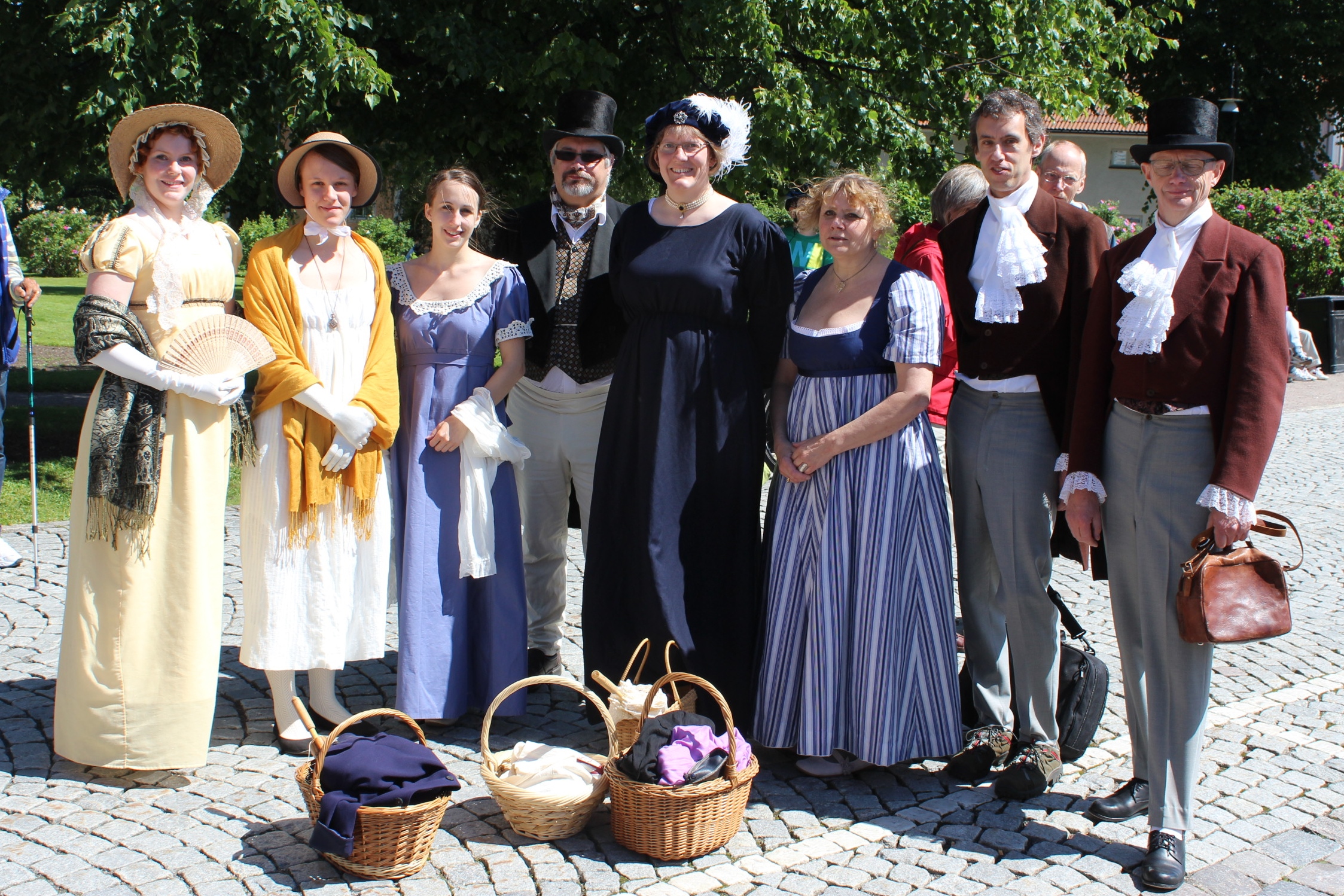
When the dancing was over we meet up for a quick summer goodbye, before we hurried of in different directions.

IMG_9087Some of the dancers from our group posing for the turists (and my camera).

My dress hold up suprisingly well, and I feelt rater good in it. I think it will have more outings in the future.

It was such a lovely event and perfect day, I didnt even thought about the sun baking my nose and upper arms all day – well, I did descovered it later that night though…
(I will never attend a costuming event without proper sunscreen again).


Politic Regency gown

This weeks challenge for the HSF was nr 11 and called “The politics of Fashion”.

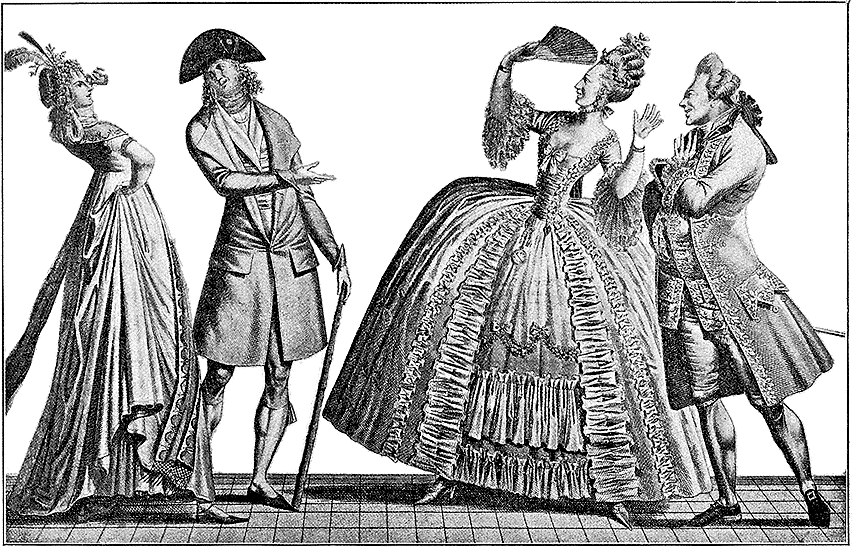
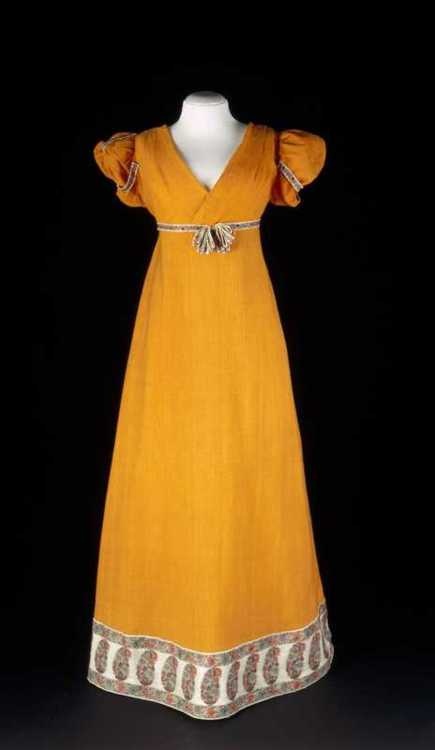
Going into this years sewing I already knew I wanted a new regency dress, and since I can’t even look at the sheernes of the empir-gowns without thinking about the french revolution, Napoleon and everything in between, the choise of challenge was an easy one.

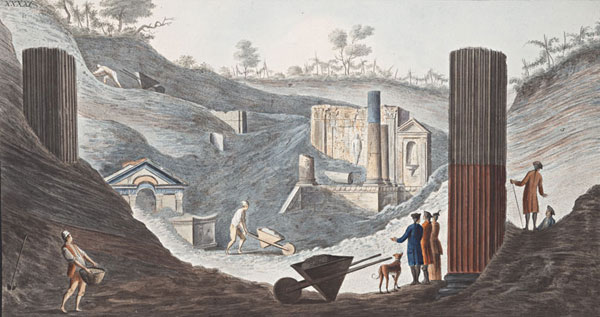
For those who don’t know, the style emerged from a mash up of: ladies freeing themself from the restrictive fashions of the 18th century, and the dream of a democratic state most like the one in ancent greece. 1778old-meets-new-french(The fact that the two citys Pompeii and Herculanum was just discovered beneath the ashes of mount Vesuvius, did their part in the sudden cravings for everything greek/roman styled I’m sure).rediscovery_lrg

I also had one other reason for picking this style of dress: I needed to try out some patterns for the regency sewing course I will be hosting this autumn.

So, after some searcing for suatable dress types, patterns and fabrics, I decided on this lovely yet stylistic shape as inspiration for my gown.69313281734961047_9TtejShl_c

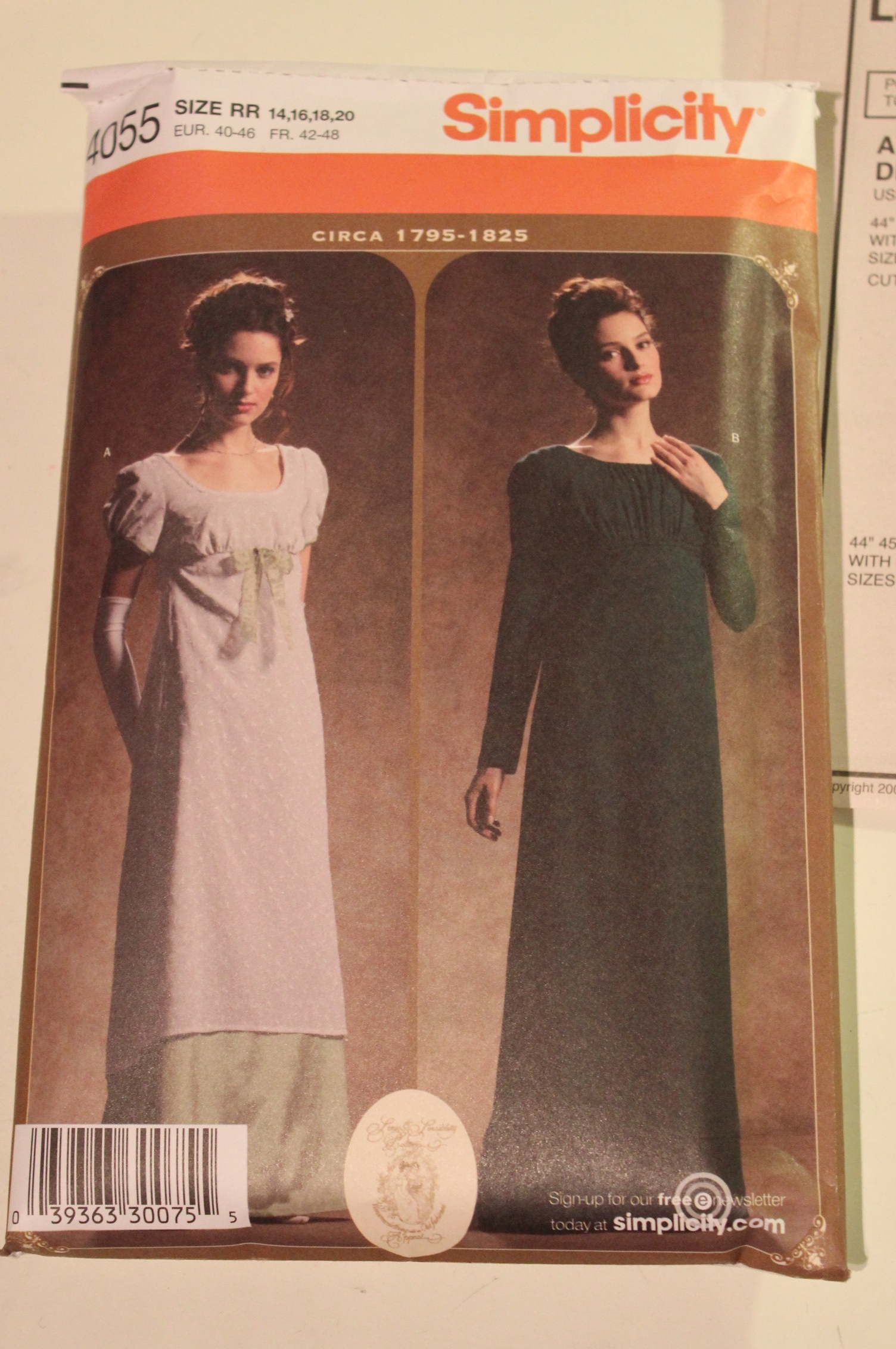
Using the Simplicity 4055 pattern. IMG_8293

And a soft light yellow cotton voile I found in my stash.IMG_9226

Since this was my first time using a comercial pattern in about 10 years, and thinking of my would be students, I decided to follow the instructions to the point. IMG_8295Well that didn’t happend, but at least I read them through…

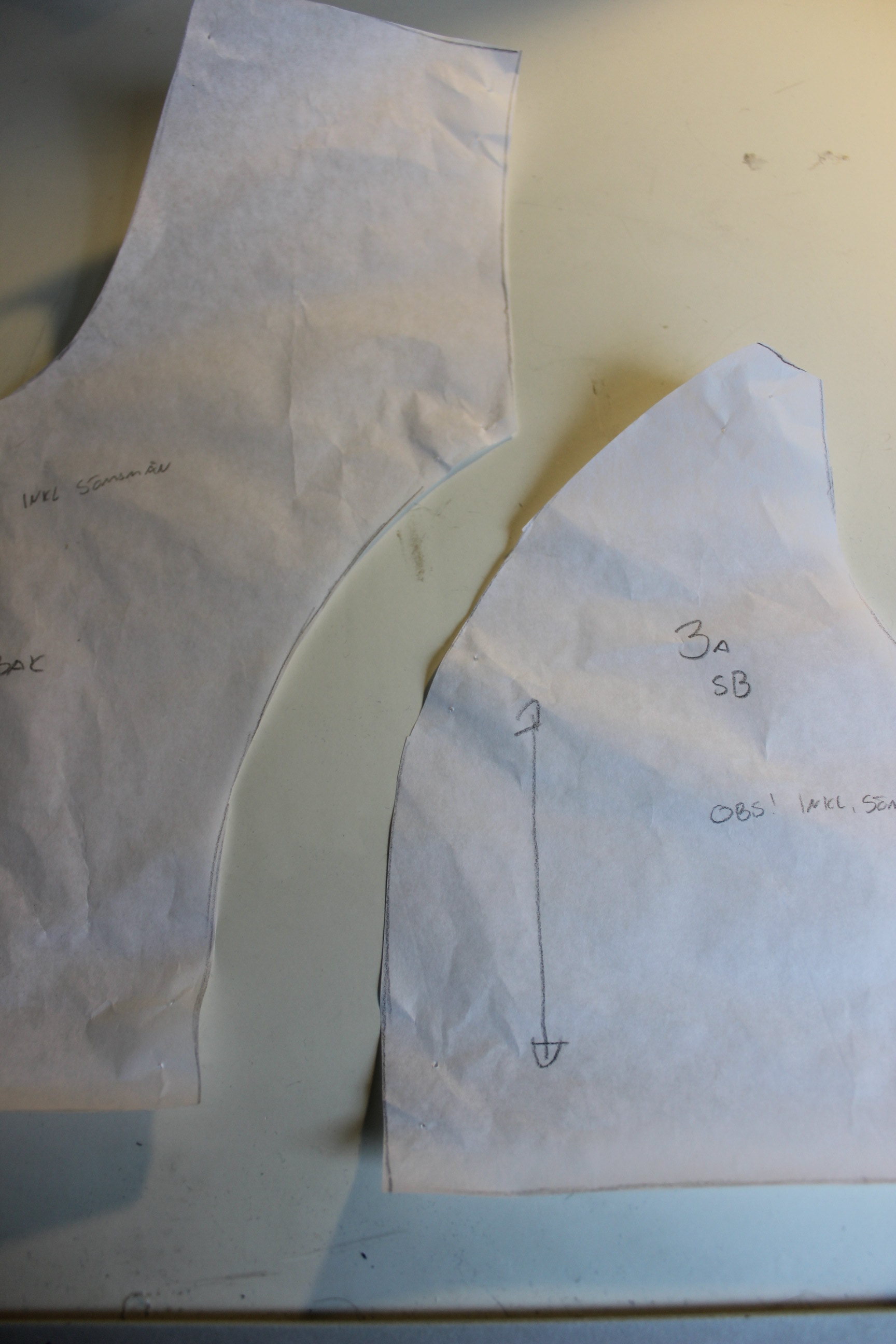
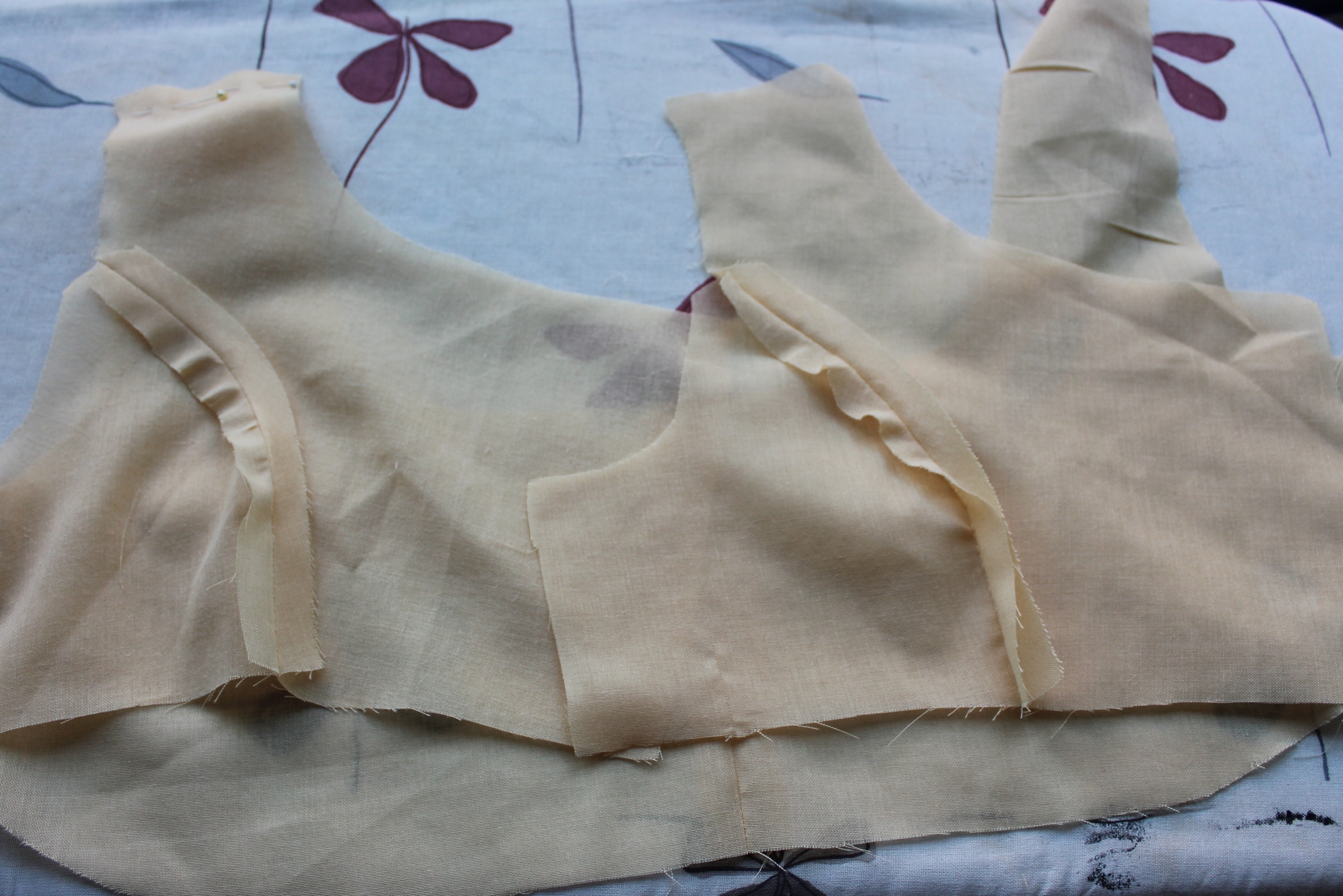
Or rater I did read them, but only after I discovered the back bodice pieces didn’t even come close to match up.IMG_8301After some iritation about “bad constructed comercial patterns” I discovered that the pattern company had included all the seam allowence beforehand. So cutting of my added allowence I sewed the back up – and it matched perfectly. Ops…IMG_8302

Putting that aside, I continued making the mock-up, and tried it on.IMG_8325

IMG_8329 IMG_8323
It looked pretty good, and only needed some smaler tweeks.

So on to the fashion fabric. And since I only had about 1,5 m of the voile, I relinquised from the pattern and drafted a slim skirt with only a litle gatering at center back (instead of the large skirt panels originaly recured).

Then I cut the bodice , basted the soft ivory cotton used for interlining to the bodice pieces, and pinned everything togeter.

My ambition was to make the wole dress by hand, so I stiched the skirt, bodice and sleeve pieces togeter and felled all the seams.
I gatered both the skirt waist, the bust draping and basted the puffsleves.

Then I run out of time.

And when I realised, the day before the dance recidal, that I sewed two right back pieces, I gave up and treaded my machine.IMG_9074From there on it went pretty fast.
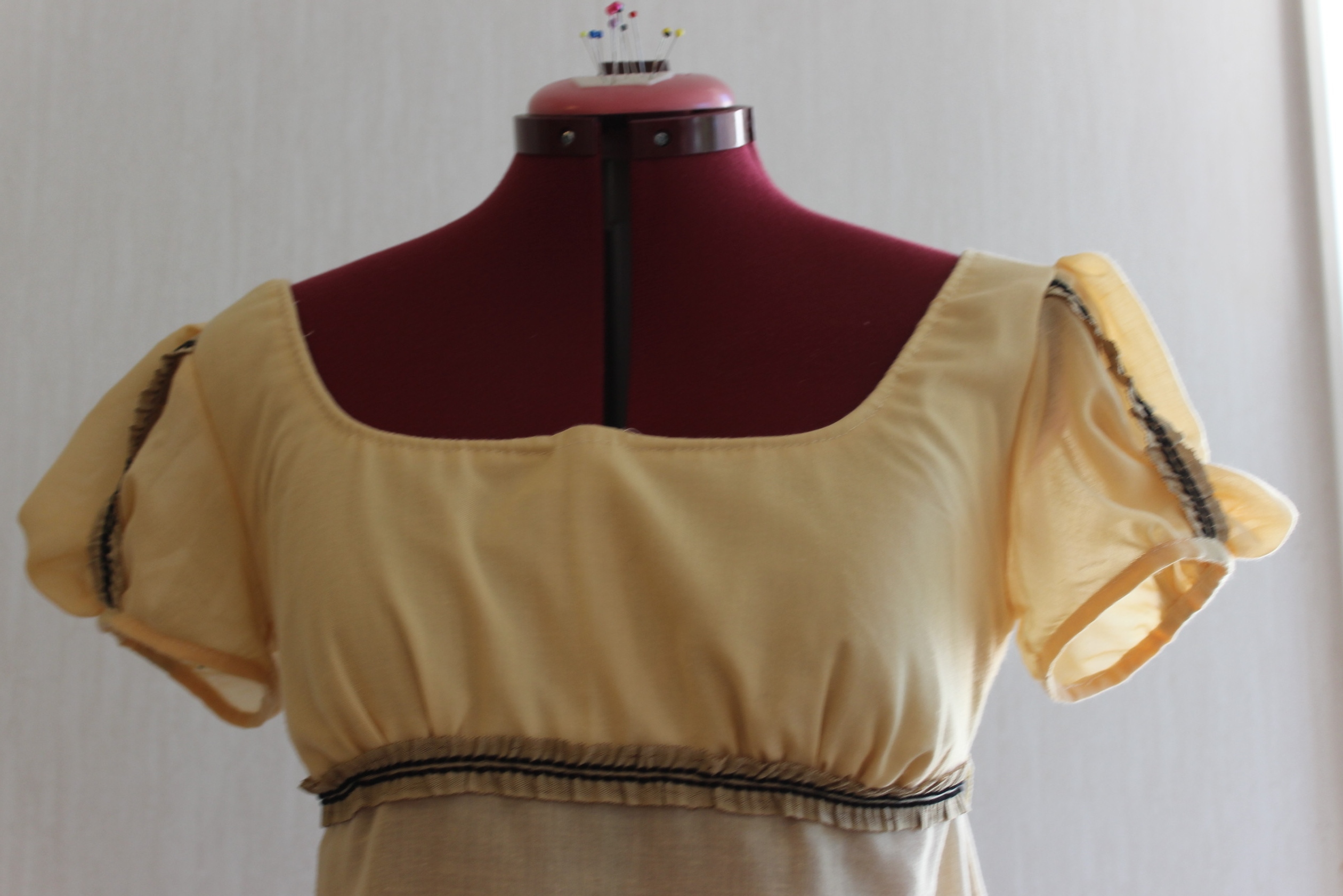
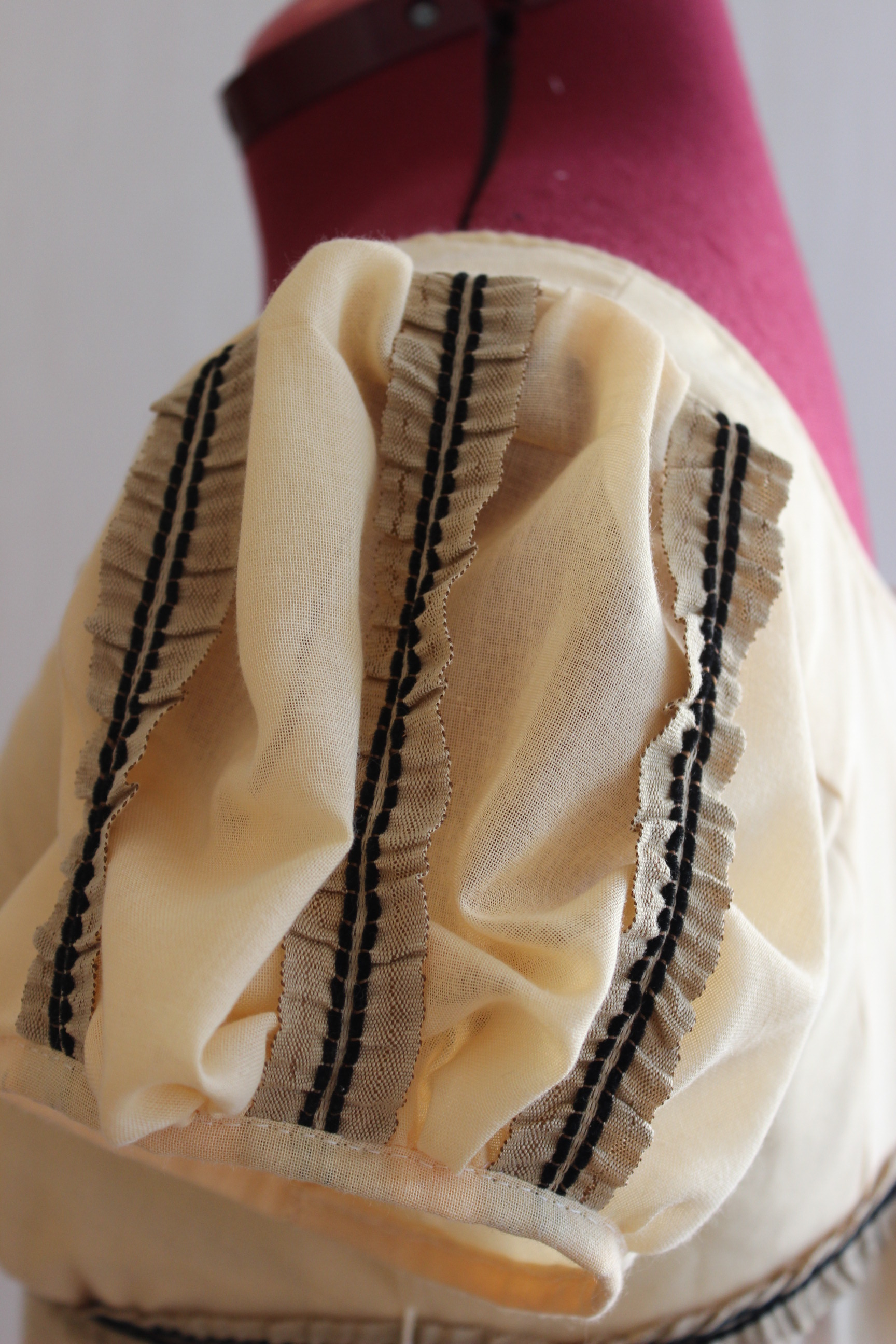
I sewed he bodice to the lining and set the sleeves. Decorating them with rows of trimming to make them even puffier, and ending them in smal self made bias strips.IMG_9078

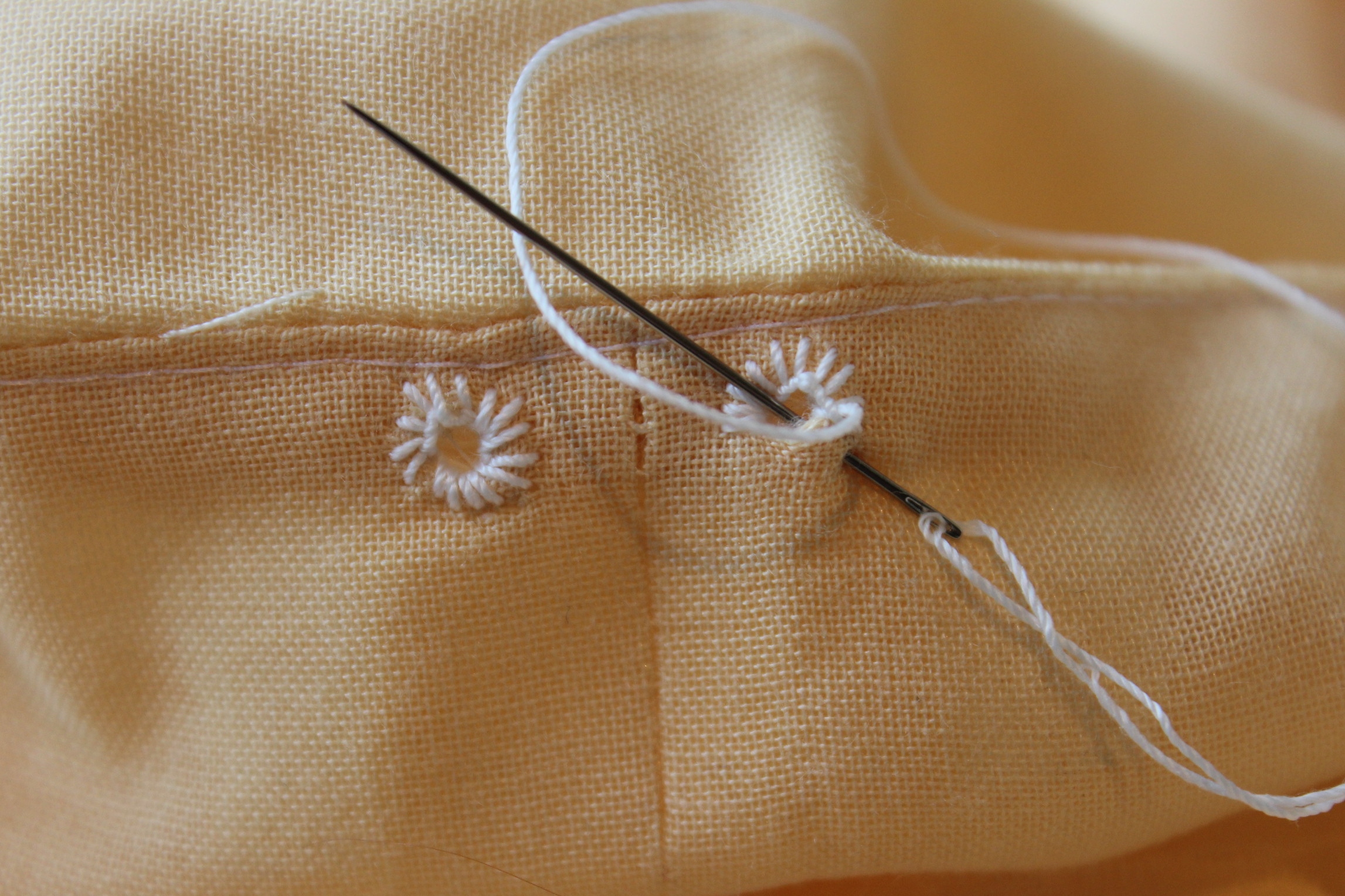
I worked some eyelets to the front lining, and stiched a chanal for the gatering-cord on the upper edge of the bodice.IMG_9075Then I attached the skirt to the bodice, put on some hooks and eyes for clouser, cut the lenght and sewed the hem (finishing about 10 minutes before I needed to put it on to be able to go to the recidal).

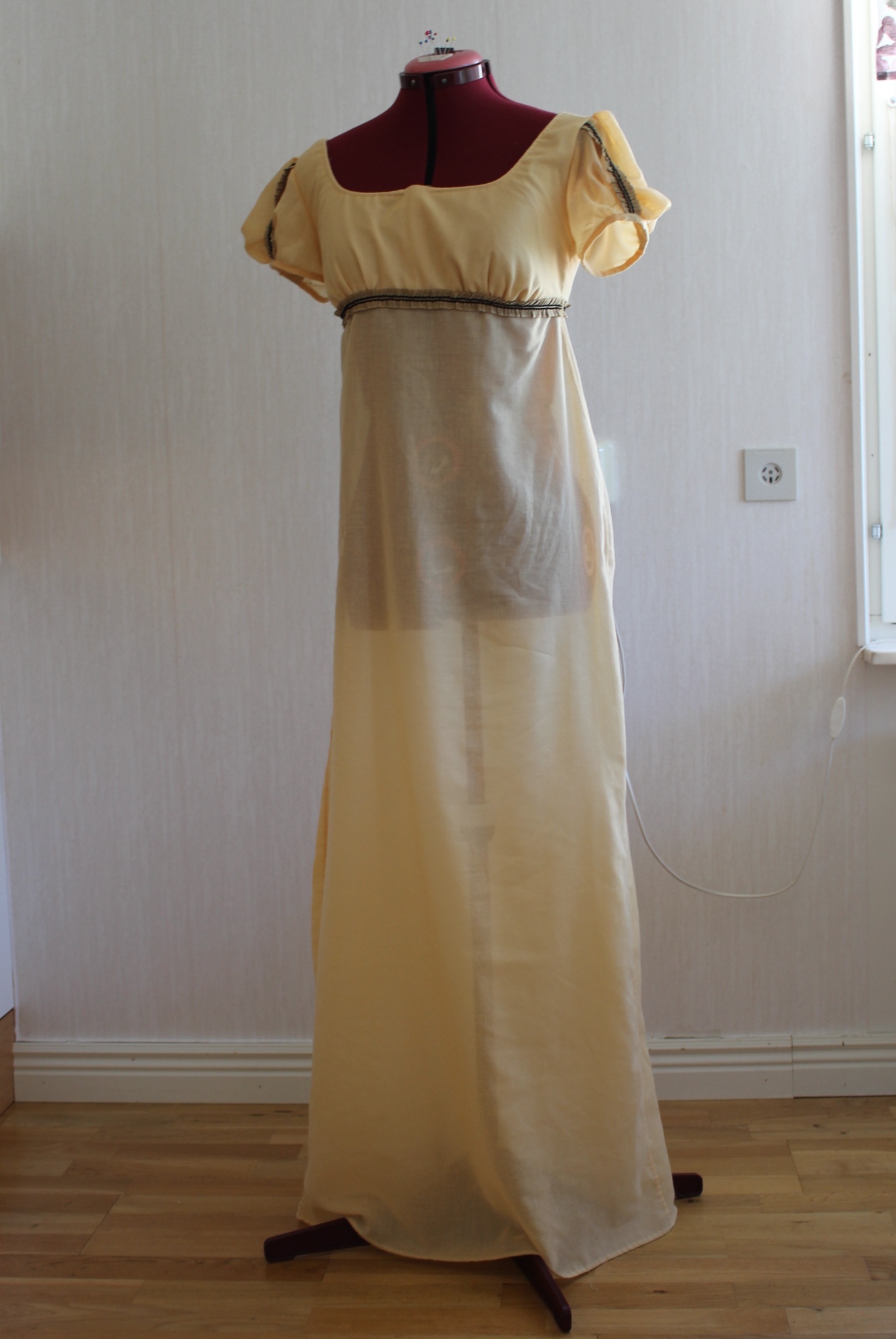
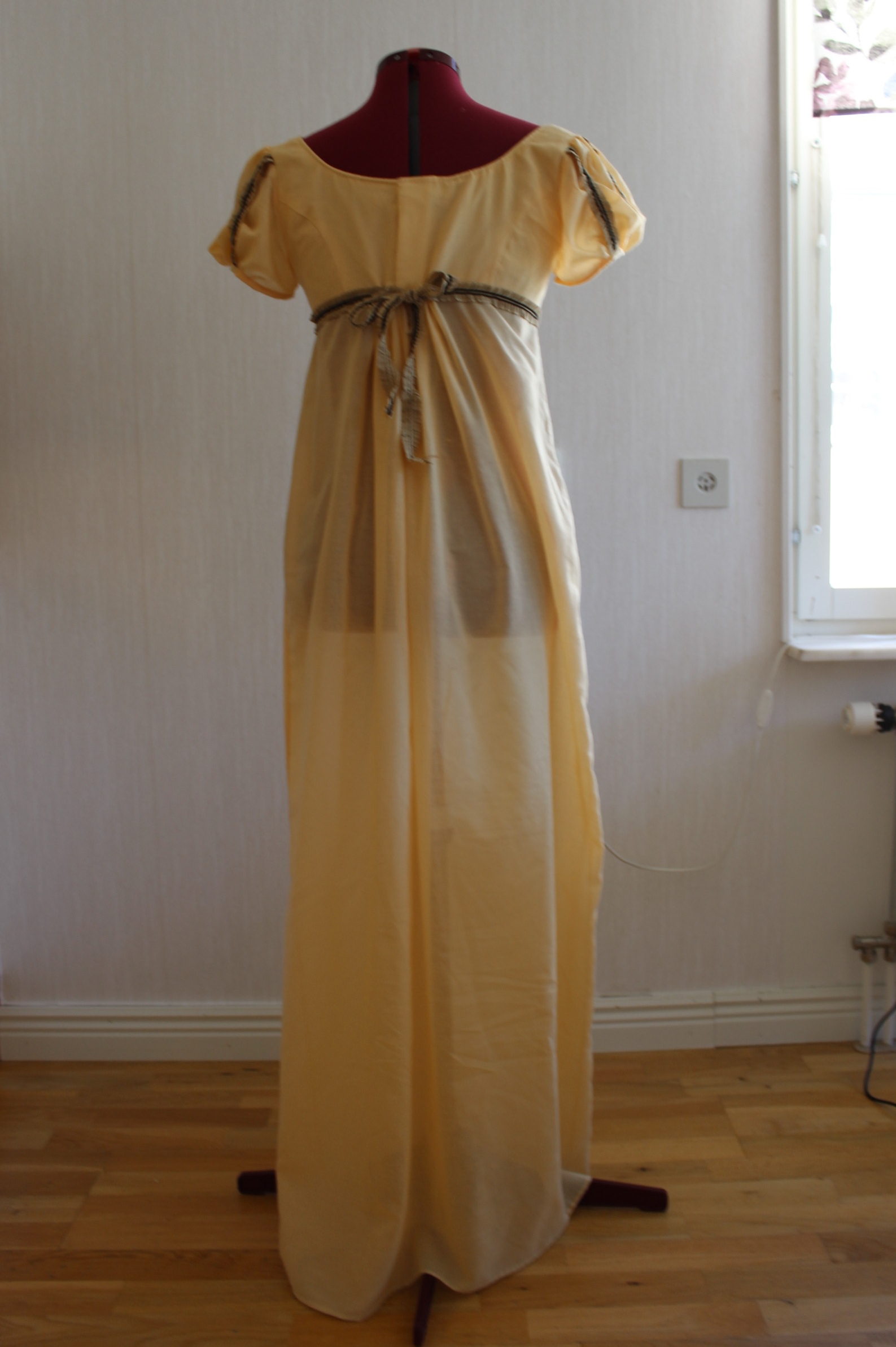
The Finished dress:IMG_9201

IMG_9202

IMG_9203

IMG_9204

IMG_9205

IMG_9208

IMG_9207

IMG_9222

IMG_9220

IMG_9213

IMG_9210

IMG_9216

IMG_9211

IMG_9212

Sneak a peak from the photoshoot:IMG_9142

Just the facts:

Challenge: Nr 11 – The Politics of fashion

What: An early 19th century regency gown.

Politic: The softer style developed in the late 18th century as a reaction to a lots of things:
-The opulance in fashion in the upper class leading up to the french revoultion.
-The introduction of the cheeper, more light weight indian cotton now being avalible to people all over europe.
-And the discovery of Pompeii and Herculaium, creating a dream of the ancient democracy, and a thous new cravings for more draped greecian clothing.
Read more on: http://en.wikipedia.org/wiki/1795%E2%80%931820_in_Western_fashion

Pattern: Simplicity 4055 regency gowns.

Fabric: 1,5 m of light yellow cotton voile, 0,3 m of thin ivory cotton for interlining.

Notions: Thread, buttonhole thread, hooks and eyes, 1m of cord and 2 m of decoation trim.

How historical accurate: The pattern are supposed to be from an autentic sorce, but since I adapted it to my likning and fabric measurments I really don’t know anymore. The fabrics and ribbons are right, but since some of it are made on the sewing machine I would say 6/10.

Time: Since such a big part of the dress are sewed by hand, I think the total tally are up to about 15-20 hours. (Made only on machine it wouldn’t have taken more then 6 I think.)

Cost: No more than 100 sek (16 Usd).

First worn: On june 14th at the local dance festival, where my historic dance group did a performance. (picture are comming soon)

Final thoughts: I wished I would have had a bit more fabric for the back gahtering, and also that I would have taken the time to get the bust gatering in the right place (now they are a bit to far at the sides, making the bodice line look a bit bulky). But otherwise I like the it a lot, even though it reminds me of bumblebees a bit with the darer stripes.
And I’m happy that the pattern turned out to work so well.

Styling a 18th century Hedgehog

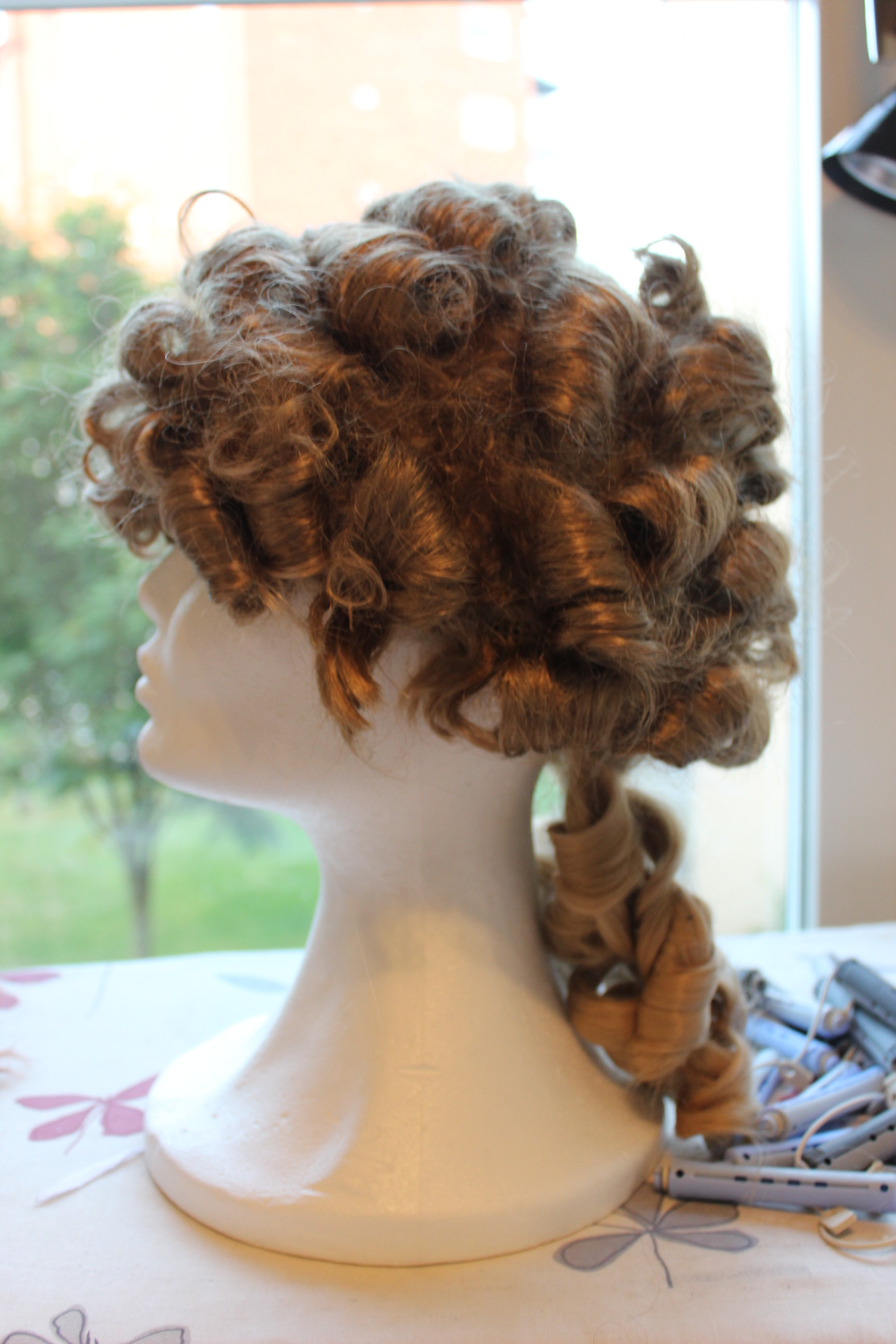
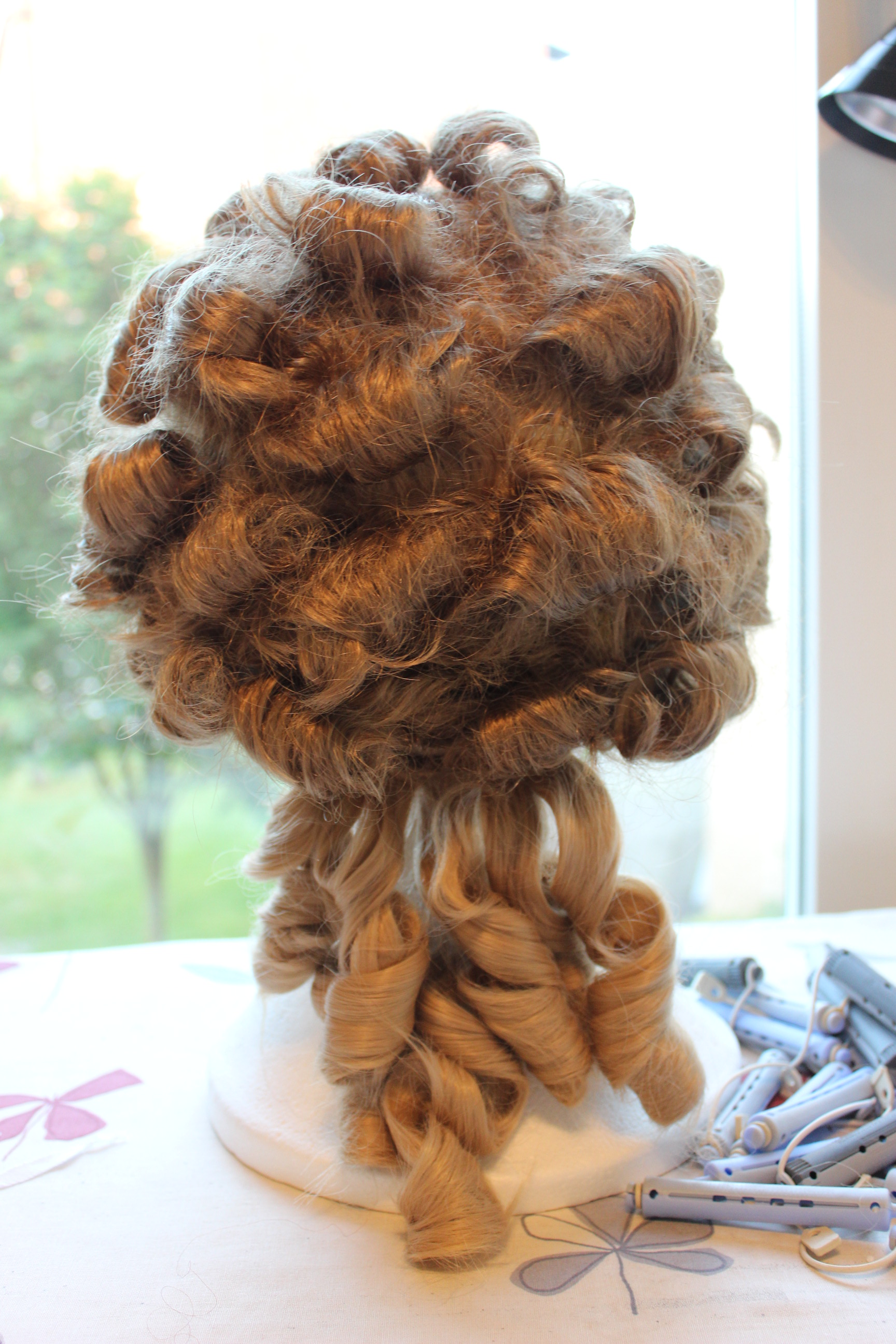
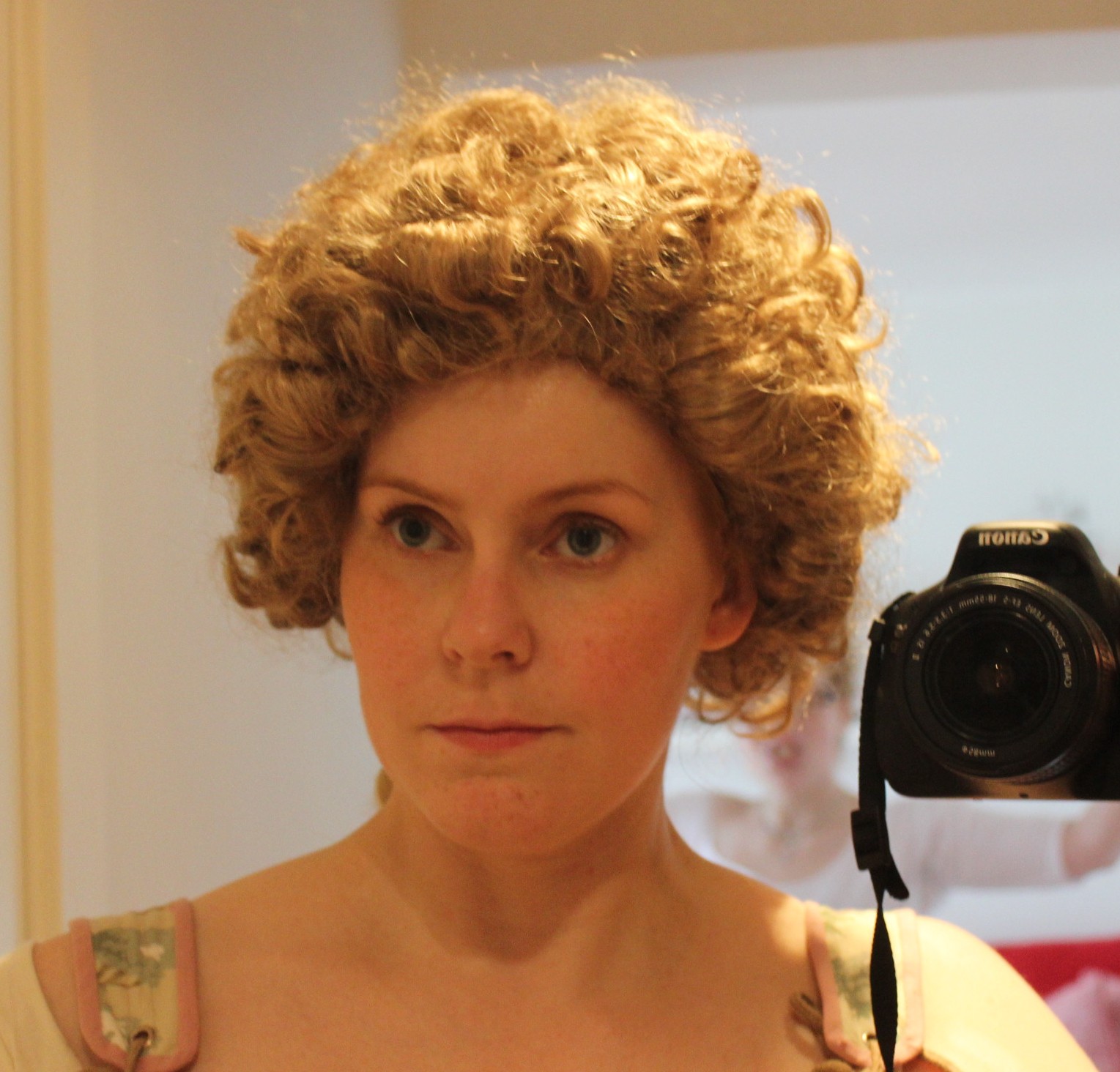
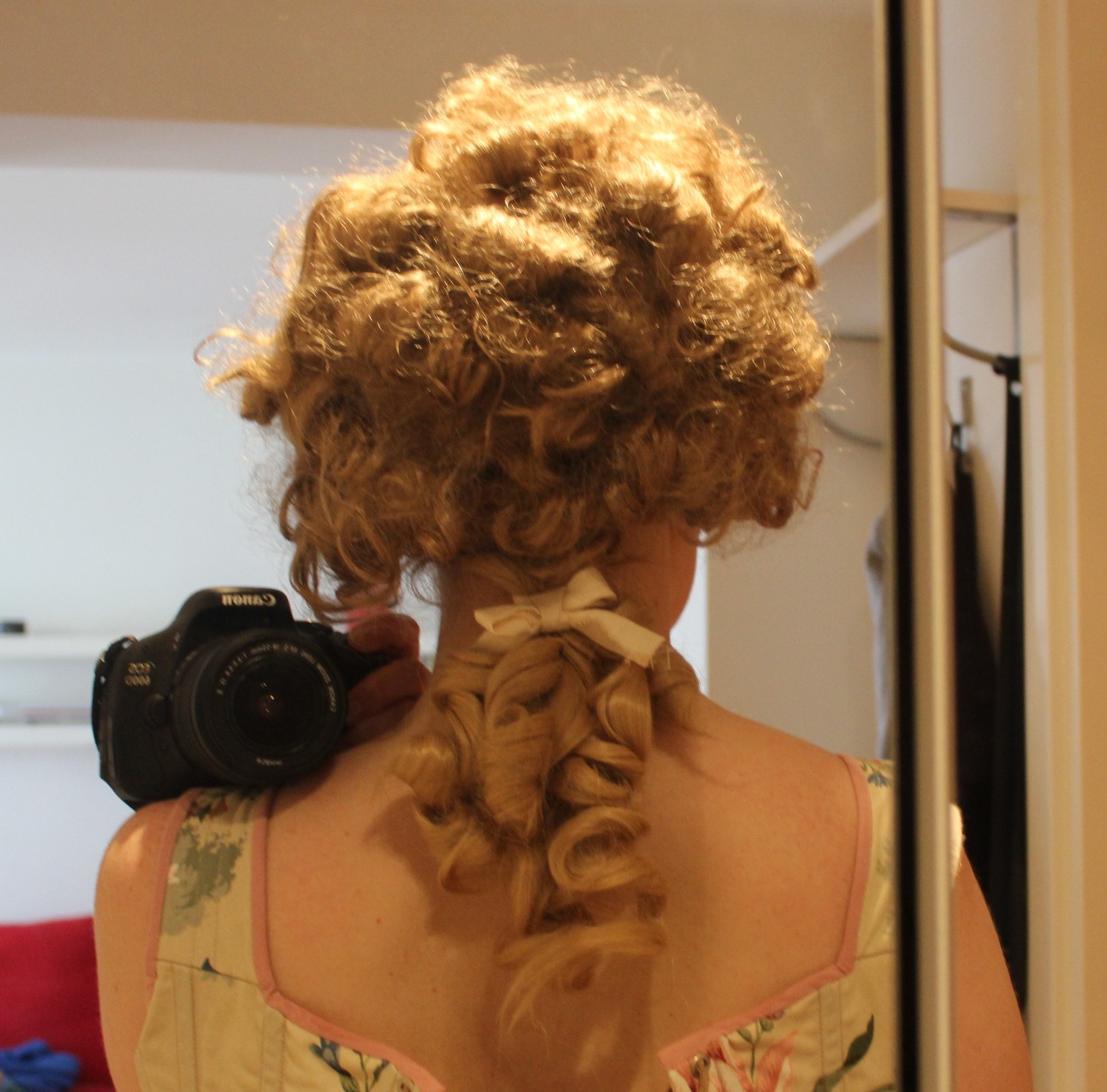
This weekend during the historic picknick I got quite a few coments on my hair (even though my sister got more), and since I normaly have short red hair, I had to confess I was wearing a wig.
Not very unusual for 18th century dress up, were you need tons of hair arranged in complicated ways to get the right look.

I only own one wig that is remotley sutable for 18th century, and it is in a poor state. (you can read about my previous attempt at styling the thing Here)

img_2422

I have ordered Demodes new book on 18th century hair styling, but since it wont arrive in yet another month, I figured I had to try to remodel the wig on my own.

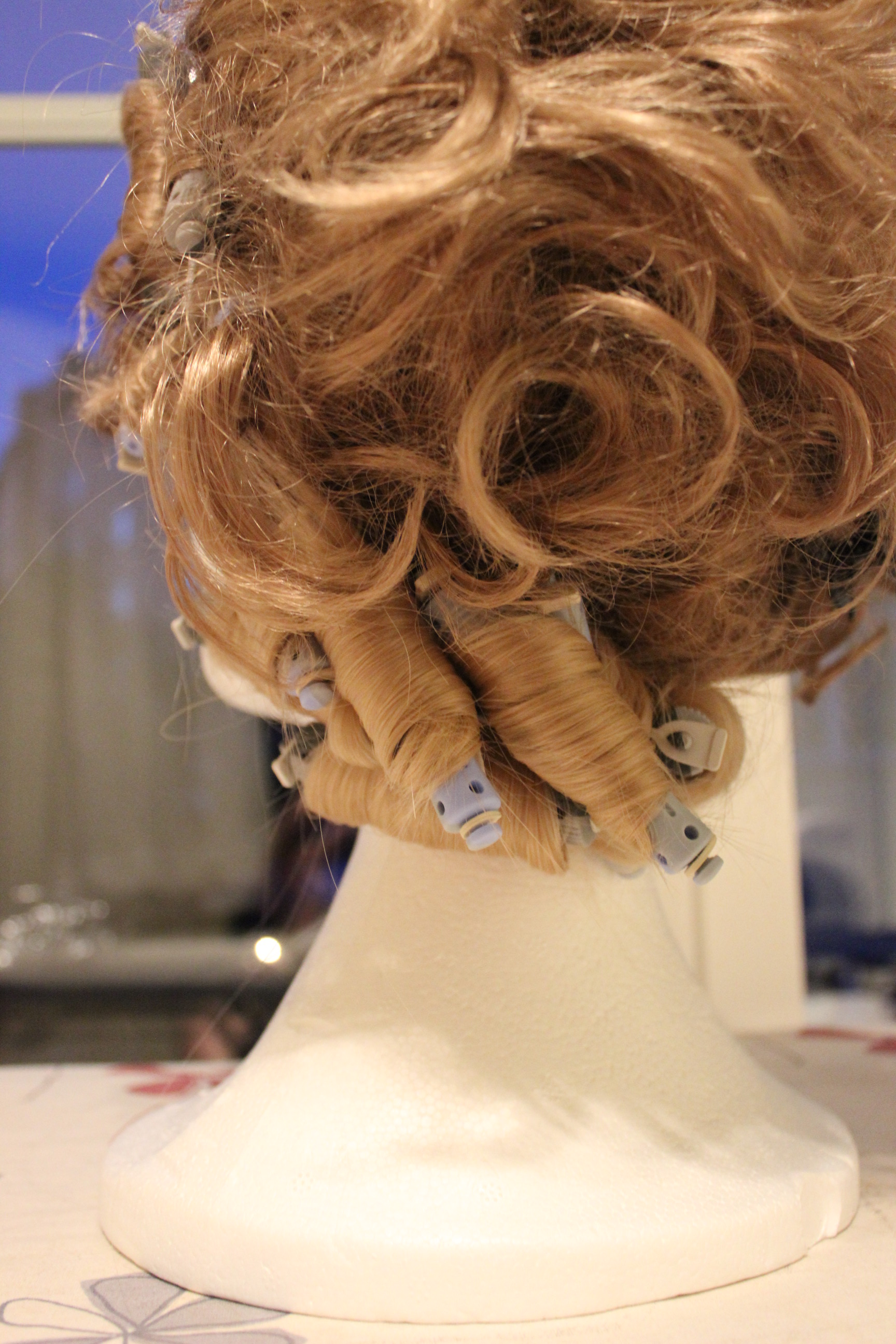
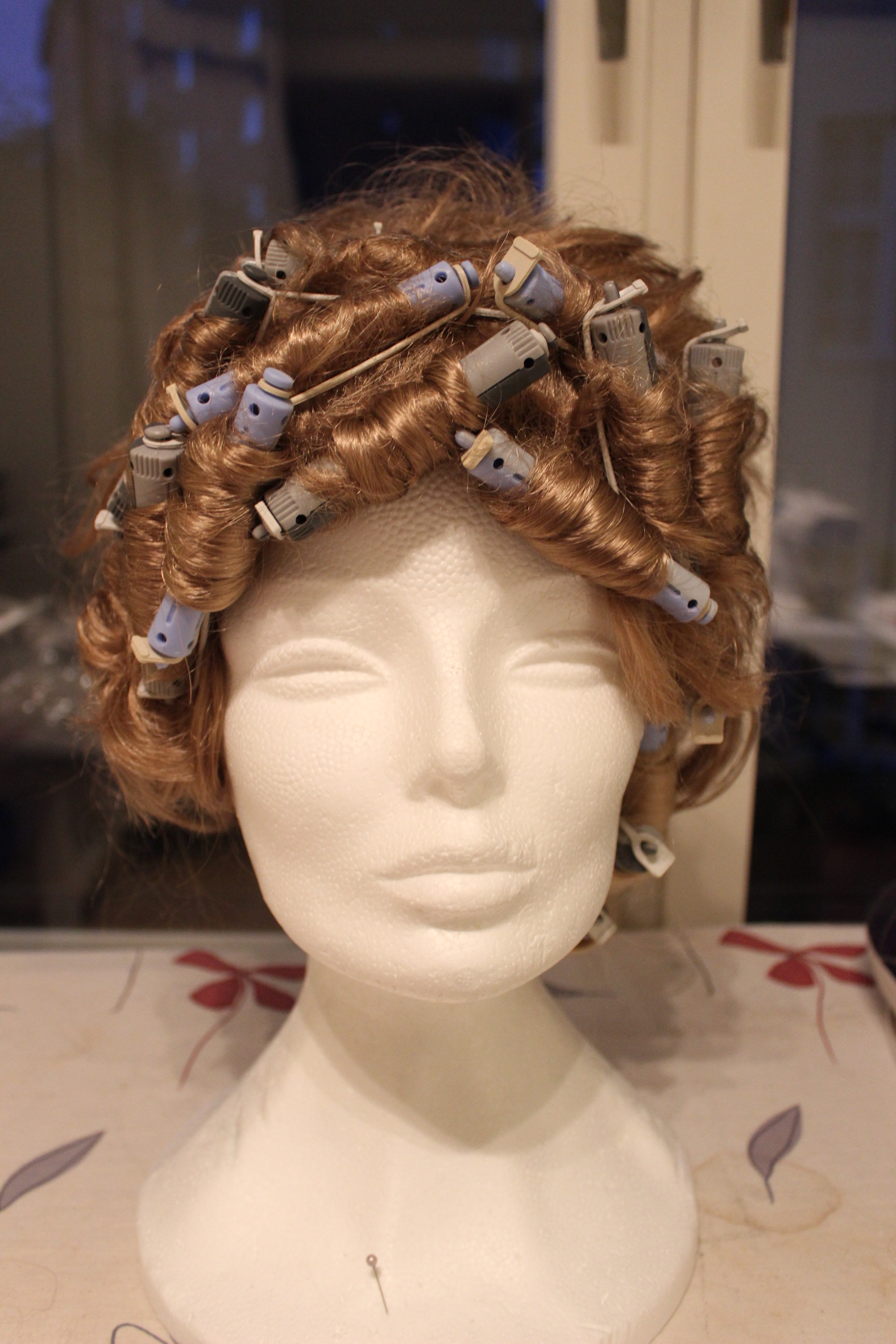
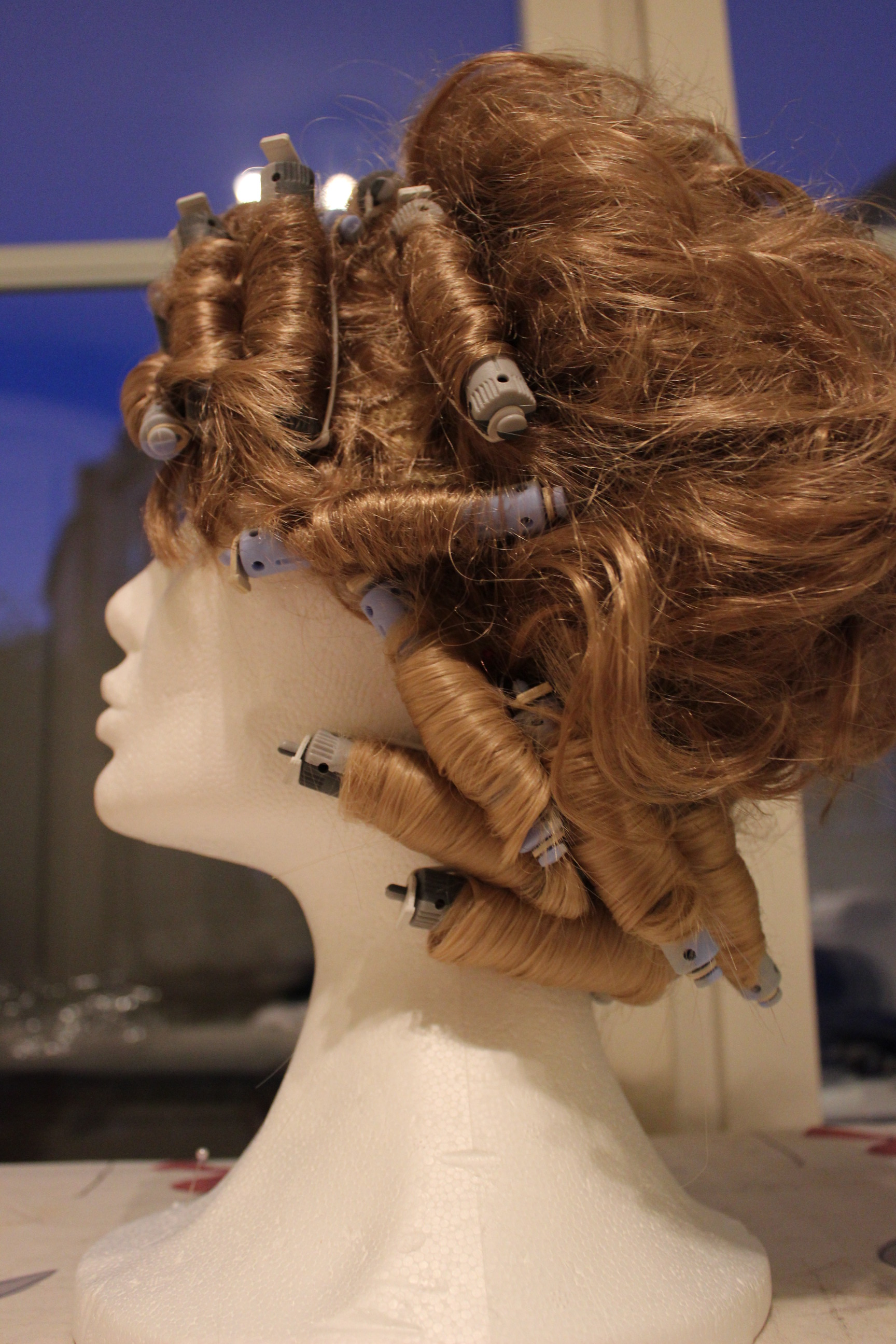
So two nights before the picknick I rolled the wig onto pin curls. Starting with the attached ponytail in the back.IMG_8553

IMG_8552IMG_8554

Then I held it under water for a while to get it totaly soaked, and then put it in the owen to heat.IMG_8603I put the owen on 50-75c and left it for about 3-4 hours.

When I took it out it was still wet, and I let it sit over night and the next day.

When I got home from work I started to unrol the curlers.IMG_8659And the curls where so strong they didn’t move an inch.IMG_8661

The wig right after I removed the curlers.
IMG_8665IMG_8664

IMG_8663

I used my fingers to mes up the curls and to gove them some bounce.

This is how it looked when I put it on the day of the picknick
IMG_8878IMG_8882

And finaly finished and styled with a bow and hat.IMG_8791All and all I’m pretty pleased by the result, but I would have liked it to look softer in the front hairline to make it les wigy. Hopefully the new book will help me with that.
 

Multi era National days Picknick

June 6 are Swedens national day and I usaly celebrate it either with friends barbequing, or with my dance group doing dance performances in lots of different retirement homes.
But this year I did something a bit different (even though it did contain both hanging out with friends, and making some old people happy).

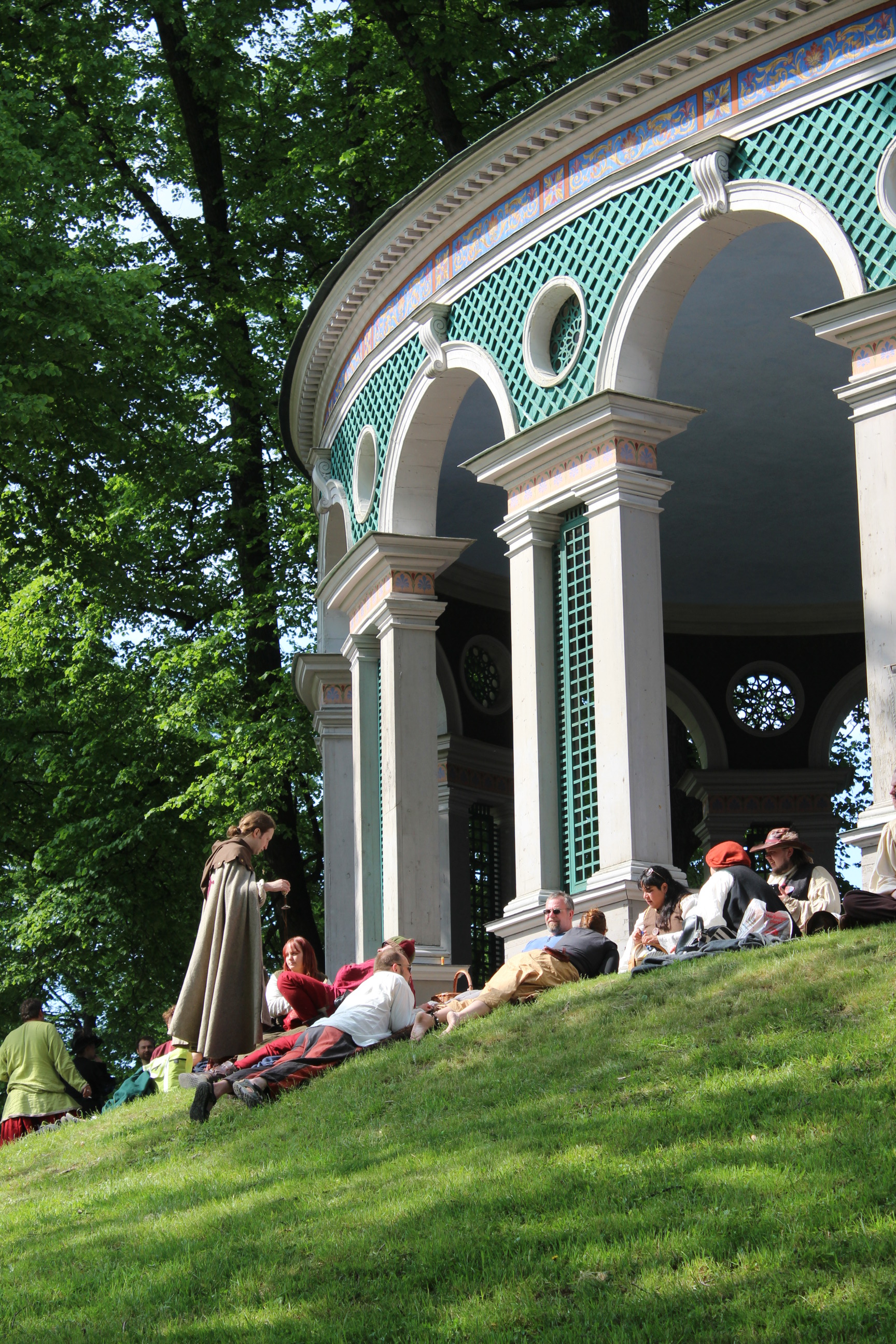
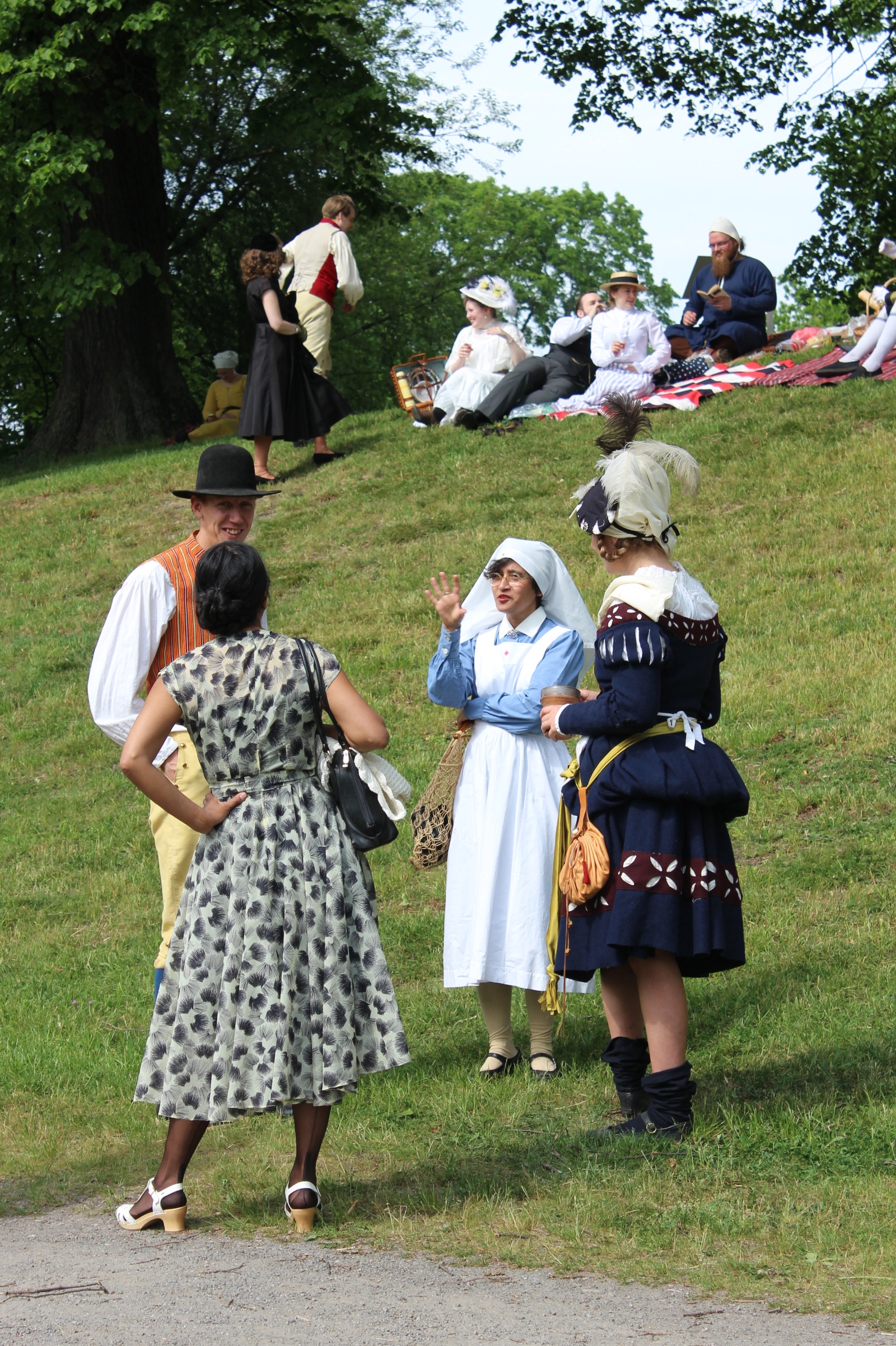
I went to the “Historic ultra picknic” in the royal park of Haga. It was the first (but hopefully not the last) event of its kind in our area, where all time periods and styles were welcome.
The idea of the picknick was to meet new interesting people, and to give the first timers a comfortable way of geting in to the comunity. There were room for everyone no mather how “good” or “bad” your costume was, and even if you didn’t knew anything about historical clothing at all.

picknick - Anna SundströmPhoto: Anna Sundsröm

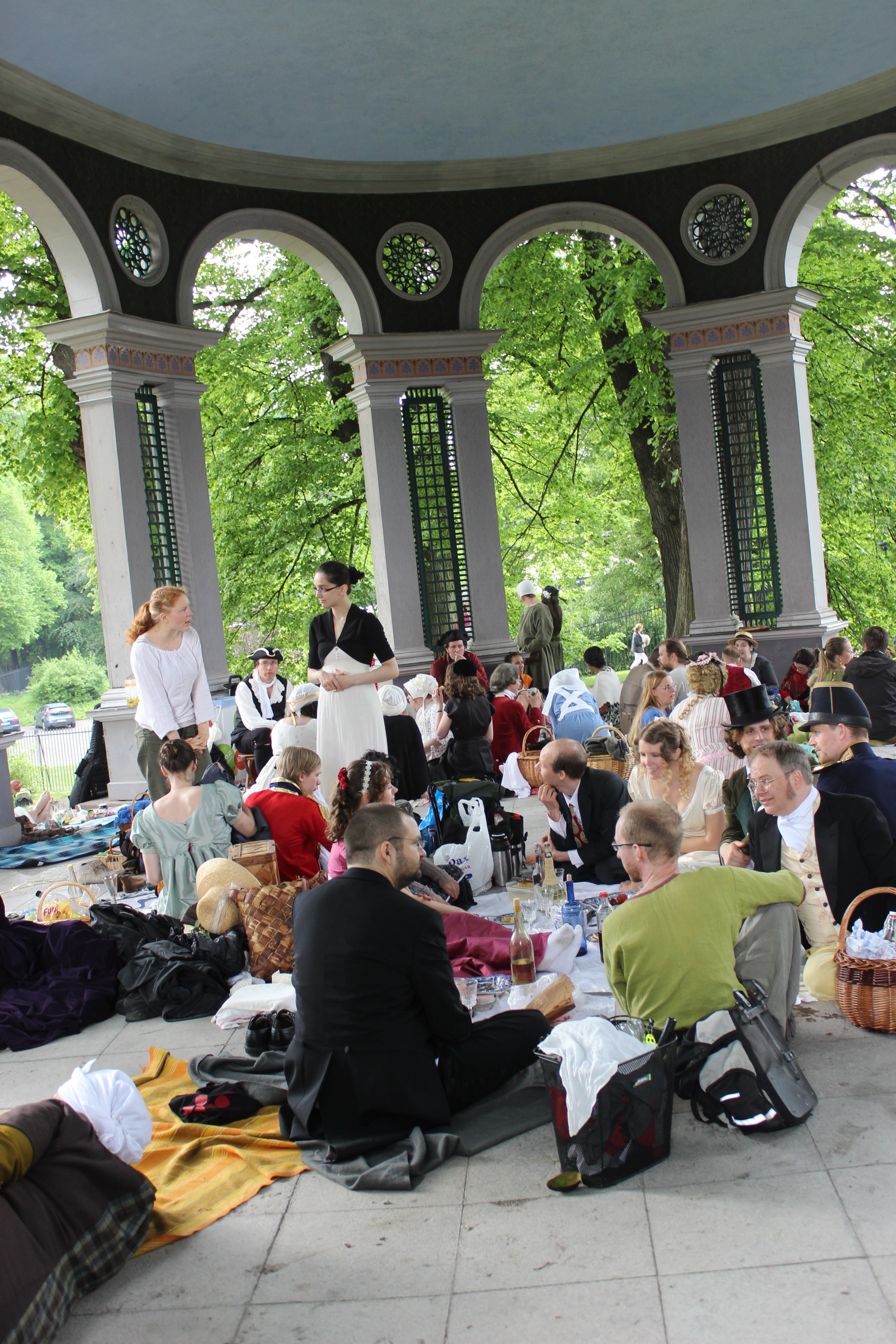
We were about 2oo people gattered andiIt was so nice to see all the different styles and fashions come togeter.

Me and my sister went as late 18th century ladies.DSC_9846_zpsbeccafb0She wore her Robe A La Francaise, and I took my new Robe anglaise out for its first try.

The park was beautiful, and the big old temple was just the perfect place for us all to join up.IMG_8714

IMG_8833Inside there was lots happy historicaly dressed people.

IMG_8855Me, finaly sitting down after a long walk, and even longer buss-ride to get to the temple.

IMG_8857

IMG_8835Huge 1860s purple velvet crinoline dress. It must have been so warm and heavy, but it did look great.

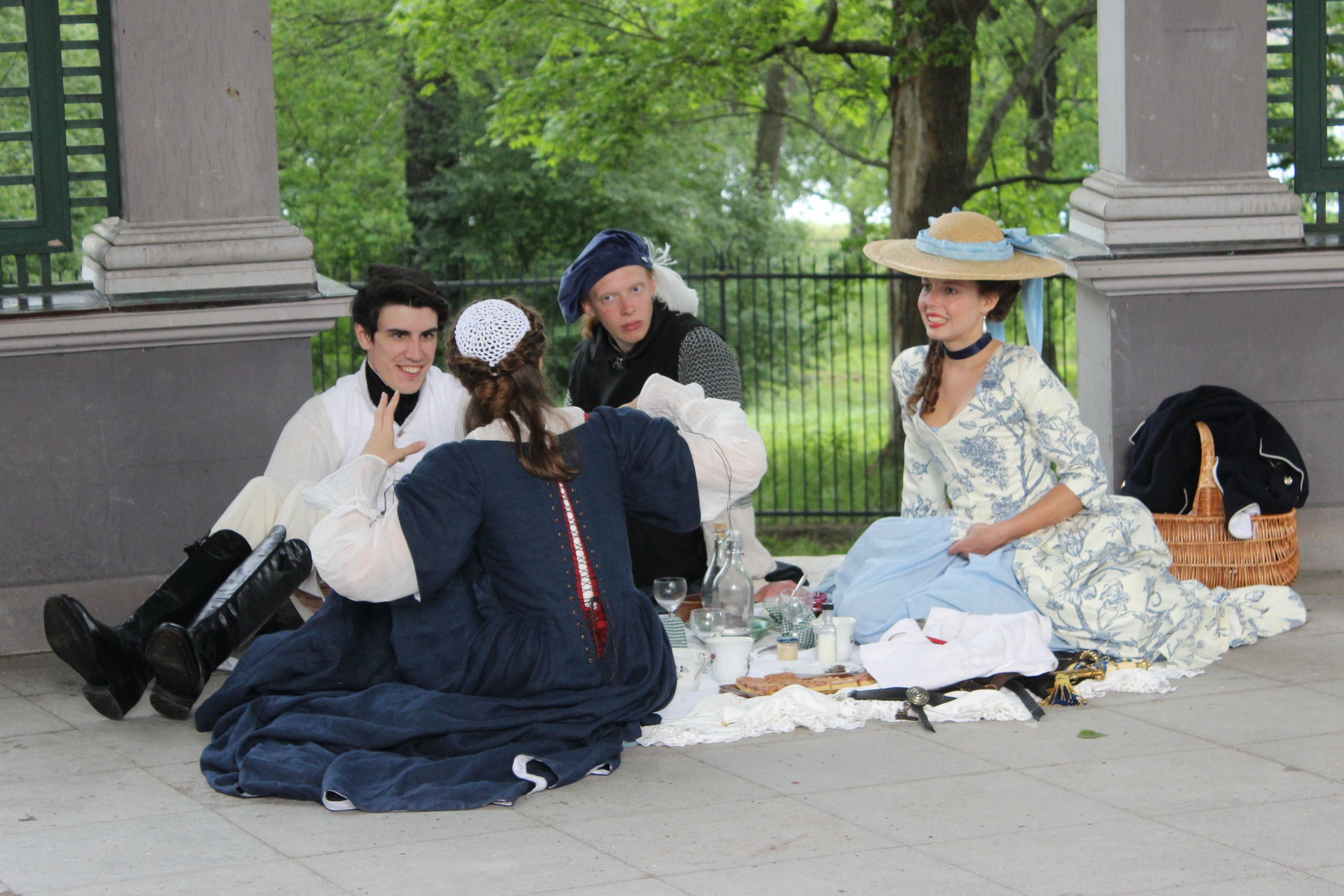
IMG_8691Some 18th century people having their own litle picknick.

IMG_8720We even had some (almost) nude vikings, pirates and medieval guys.

IMG_8689

IMG_8692

IMG_8686

IMG_8698

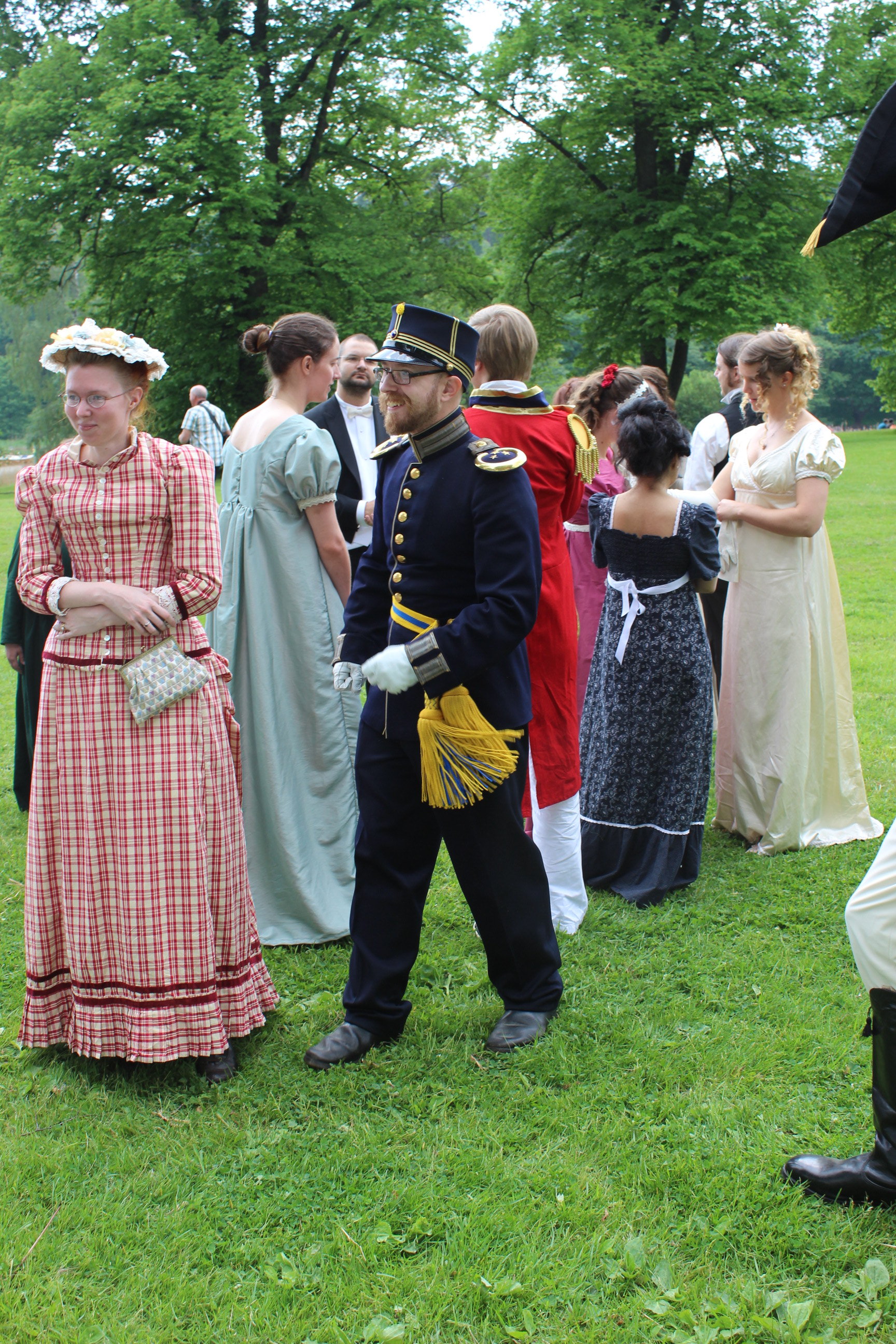
And of course there was dancing – regency style.IMG_8696

IMG_8700

IMG_8852

IMG_885818th century meet 19th century swedish national costume.

IMG_8836Is it just me, or does he look like he’s after something…

IMG_8690Lovely yellow regency.

IMG_8702Faboulus light coloured Edwardian and late regency styles. Fashions about 100 years apart.

IMG_8688Two Napolietic gentlemen.

A hundred years of fashion changes.IMG_8683Johanna in 1880s and my sister in 1780s.

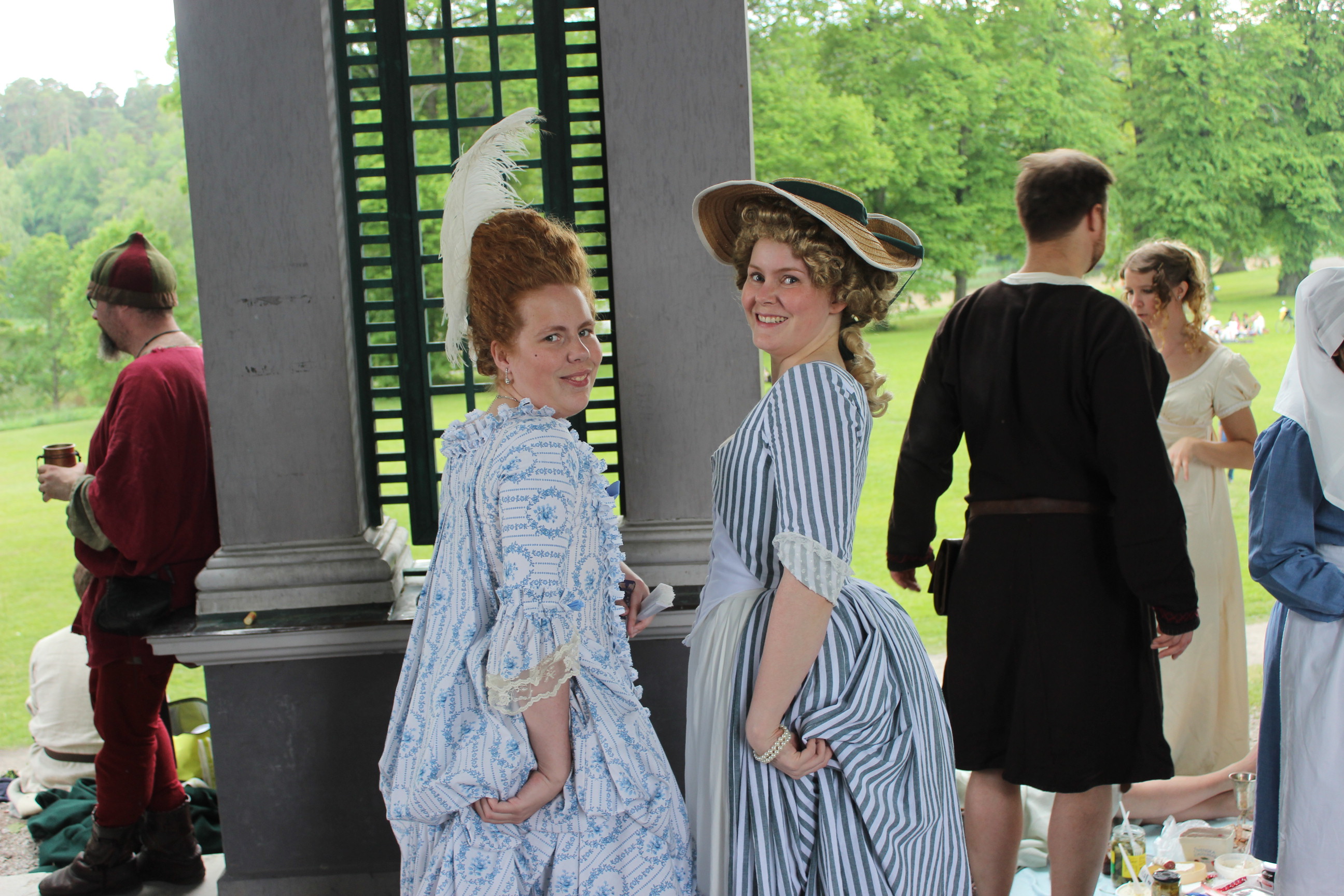
And I even found a dress twin.IMG_8675Even though they’re no exact match, they’re both green and white striped zone front 1780s gowns, worn with ruffeled petticoats and bergere hats. Pretty cool I think.

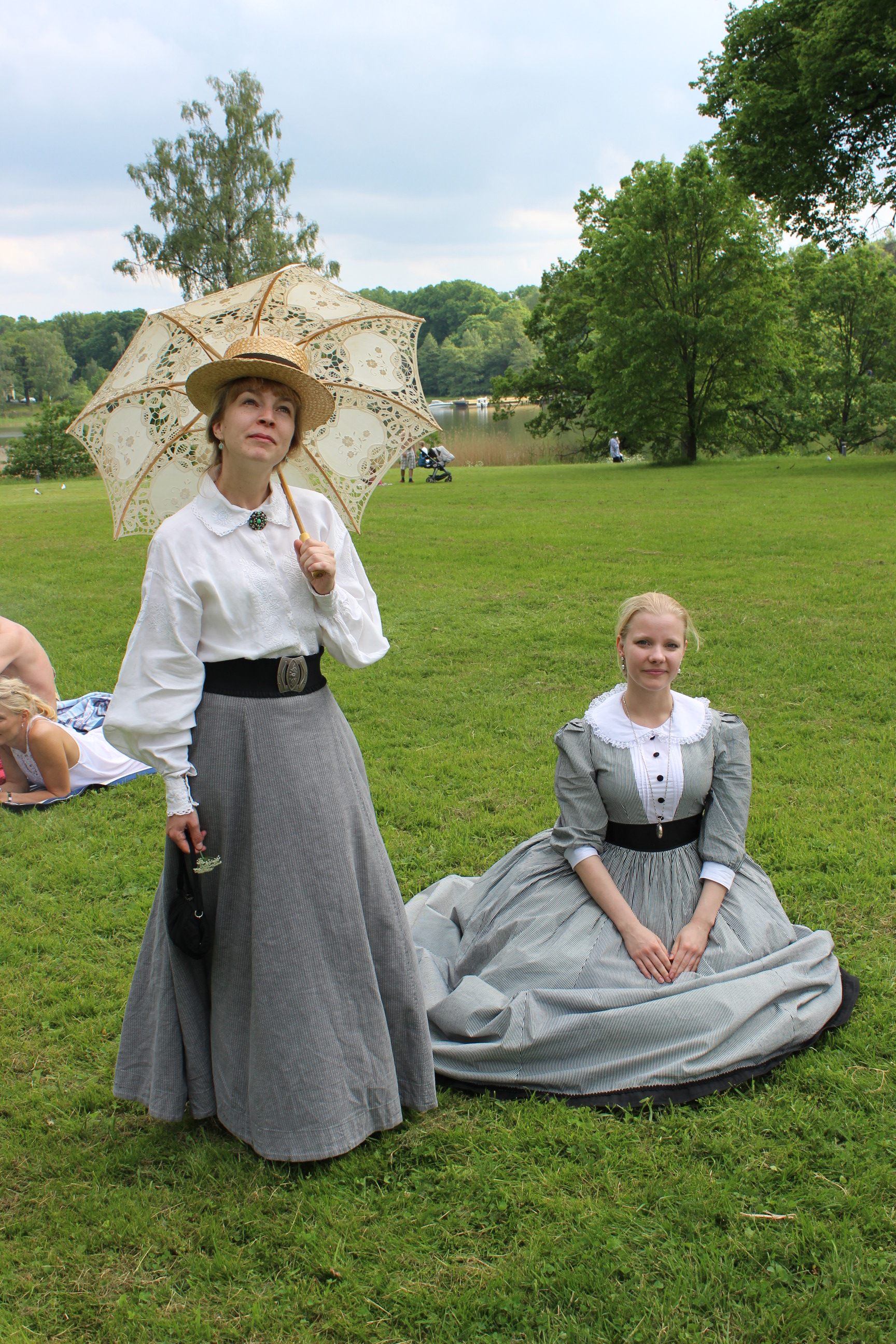
IMG_87241900s and 1850s grey and white dresses.

What secrets do you ladies hide underneath those big skirts…IMG_8717… it’s a woman!

Devine suroundingsIMG_8716

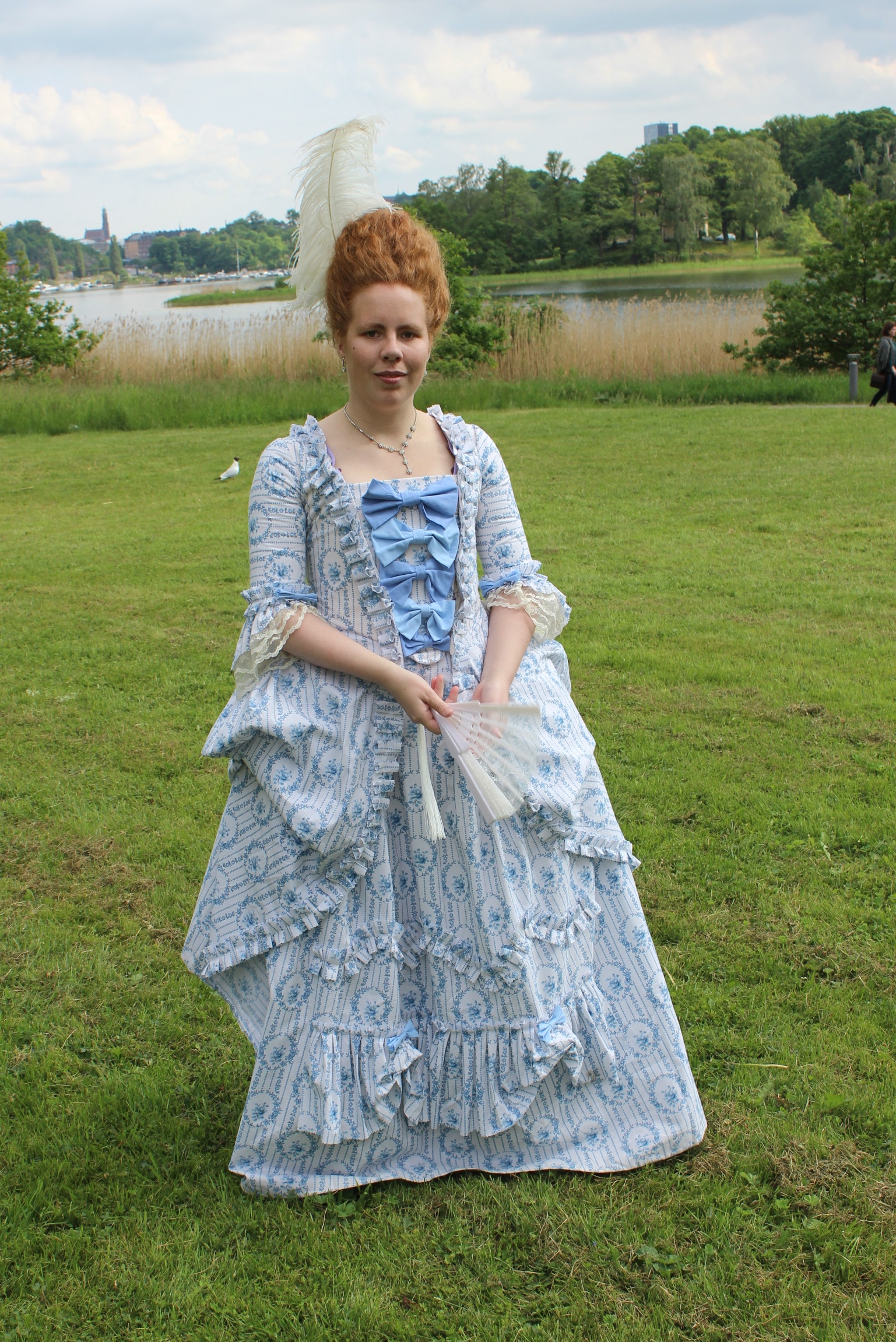
We also did a quick litle photoshot of our own dresses. I showed you mine yesterday, so now lets focus a bit on my sisters dress.IMG_8729

IMG_8727

IMG_8731

IMG_8725Big hair with flowers, butterflies and feathers – must be rococo.

IMG_8847Doing the regency but scratch (on comand I might ad).

And finaly, this is how I felt after this awesome event.IMG_8830So happy and exited, but also exhausted by all the comotions and planing to make everything about the day just right.
Hope to see some of you next year…

Artistic Anglaise – Photoshoot

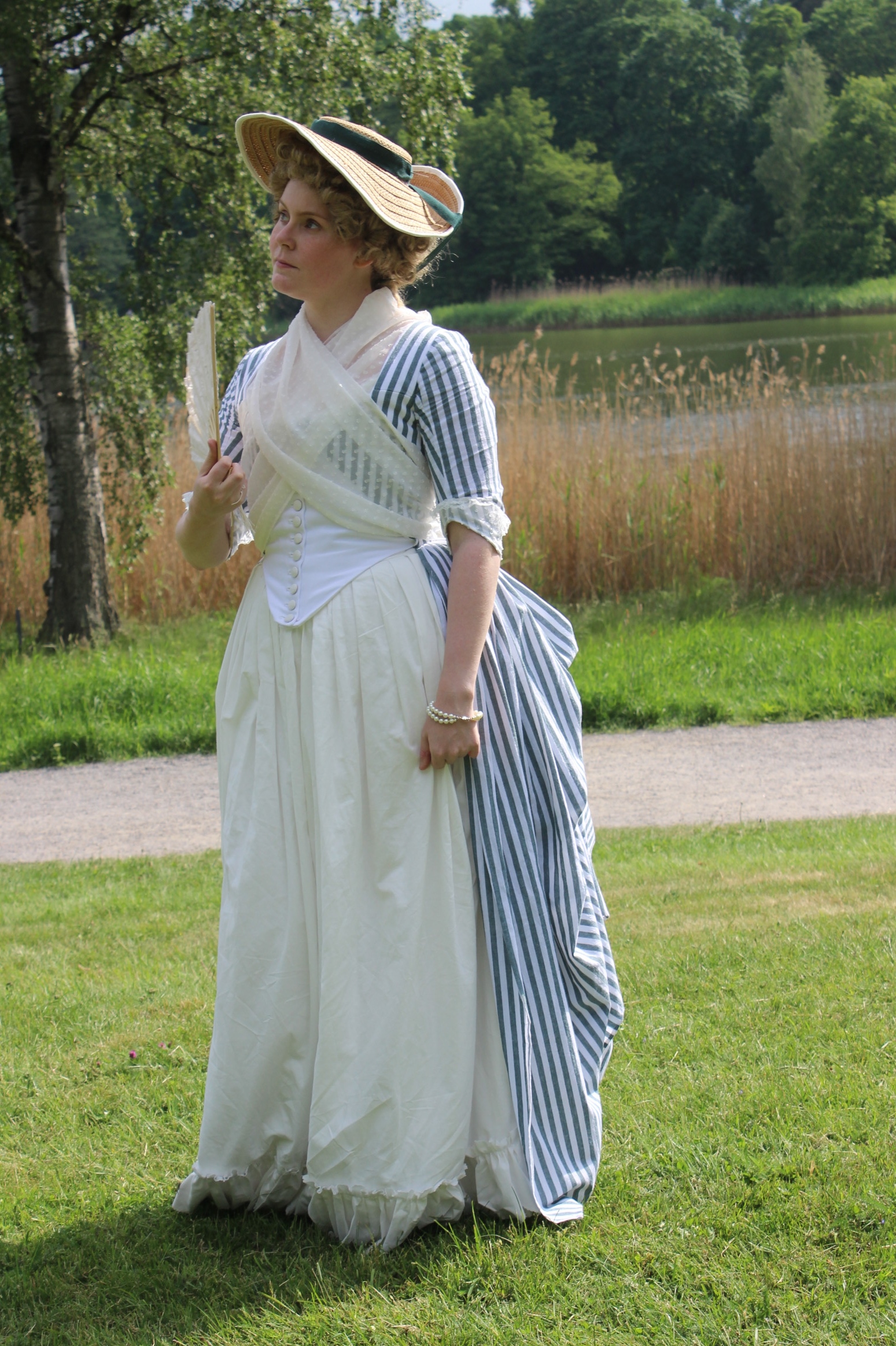
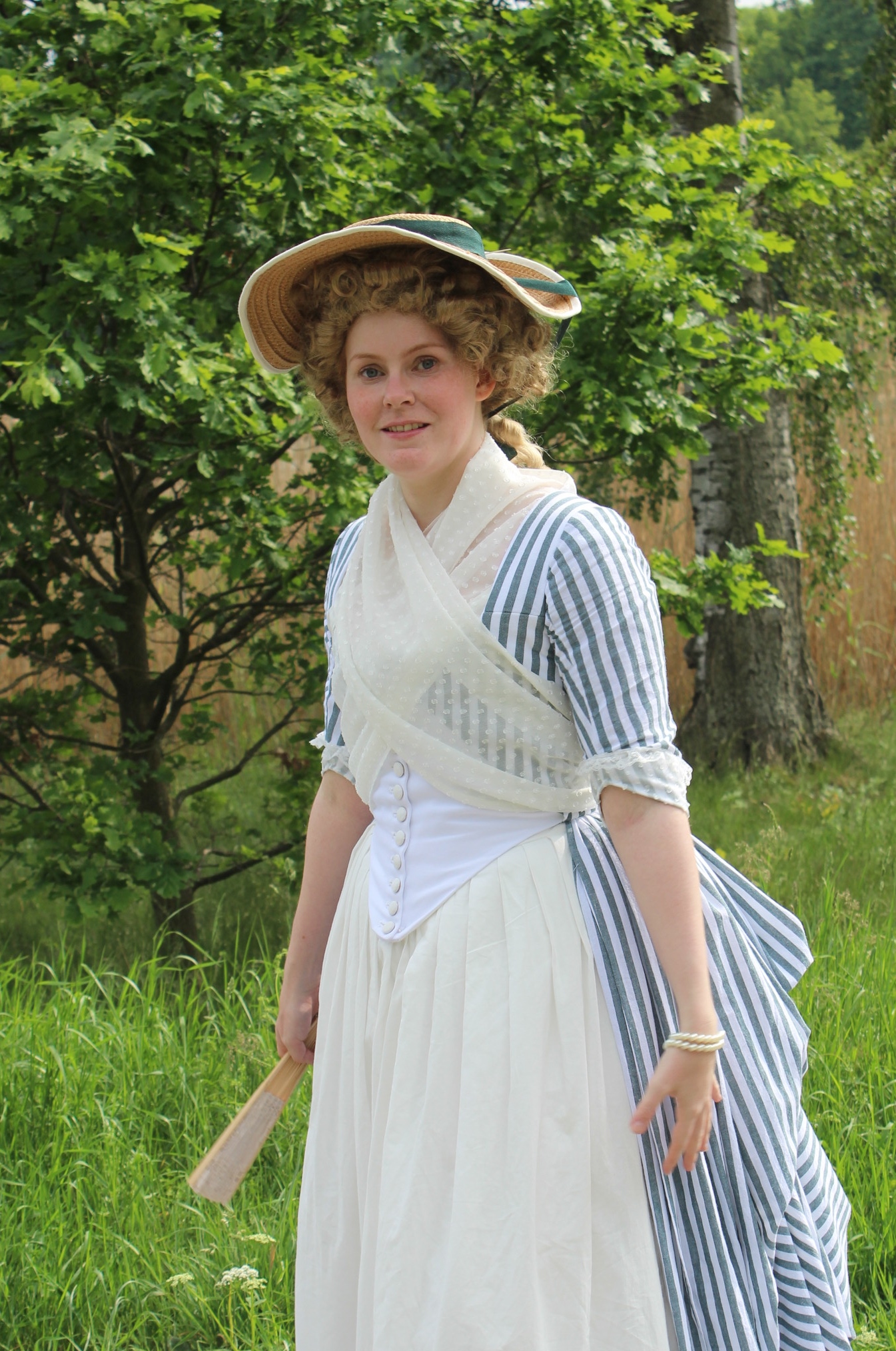
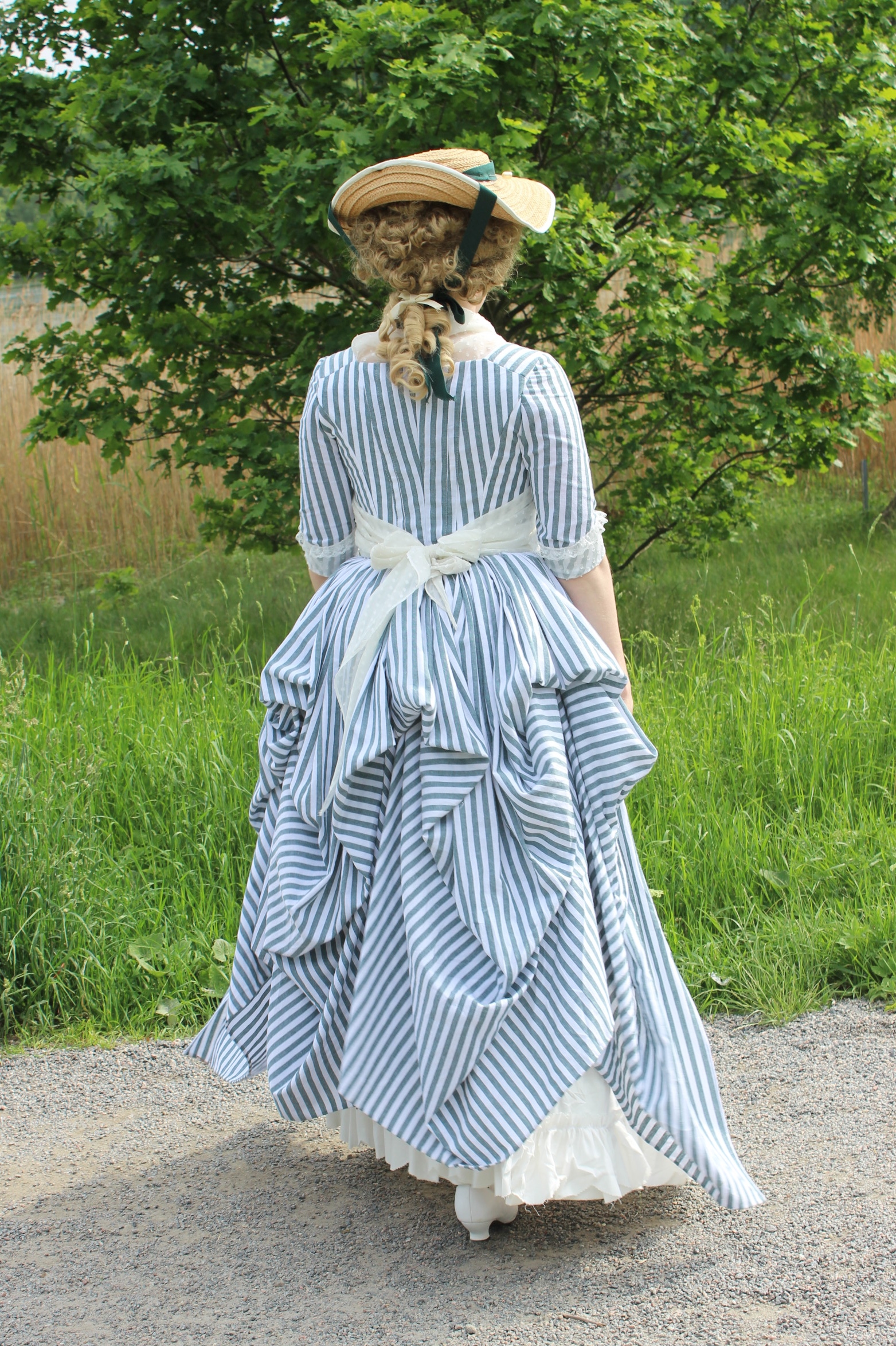
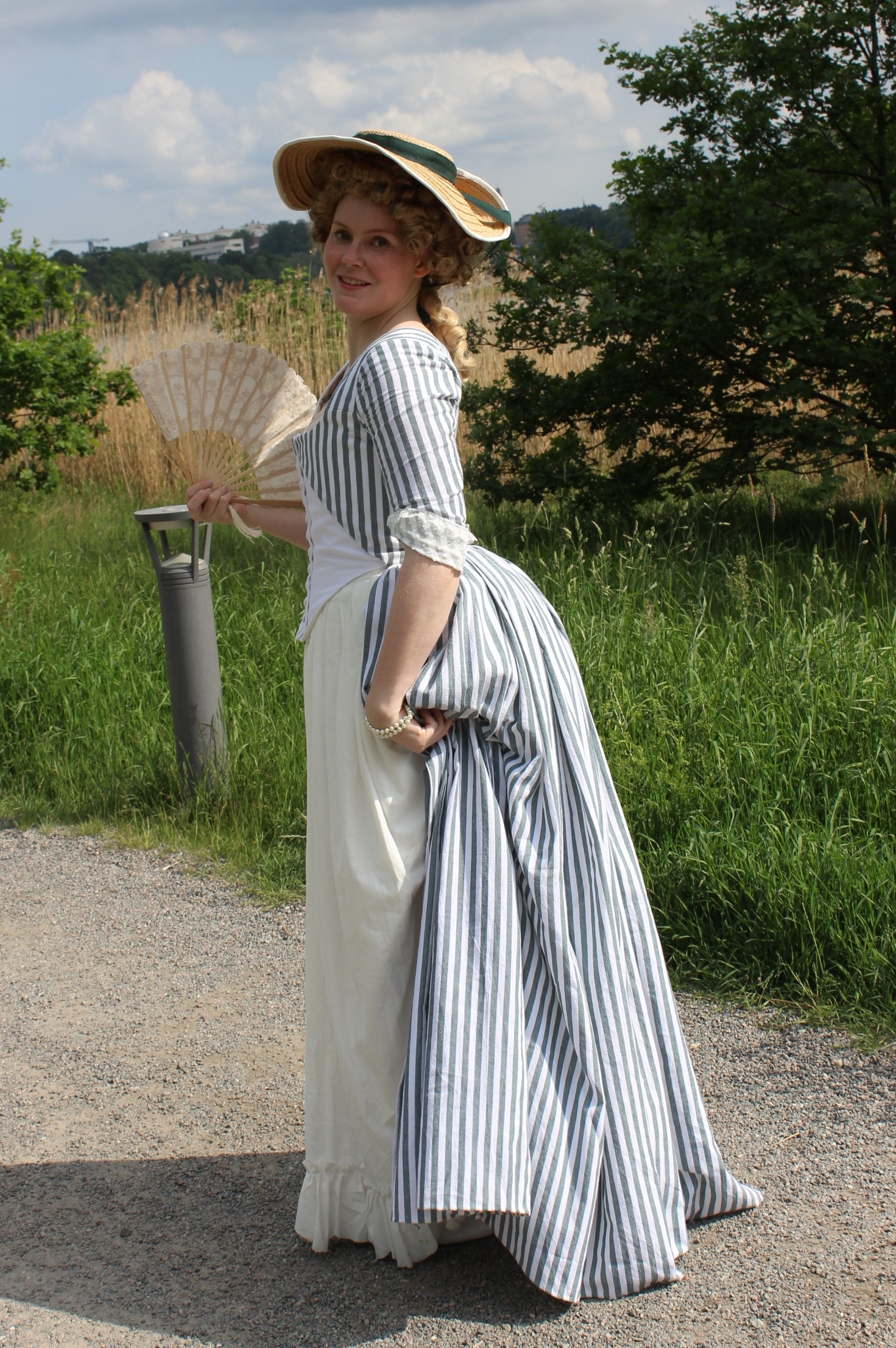
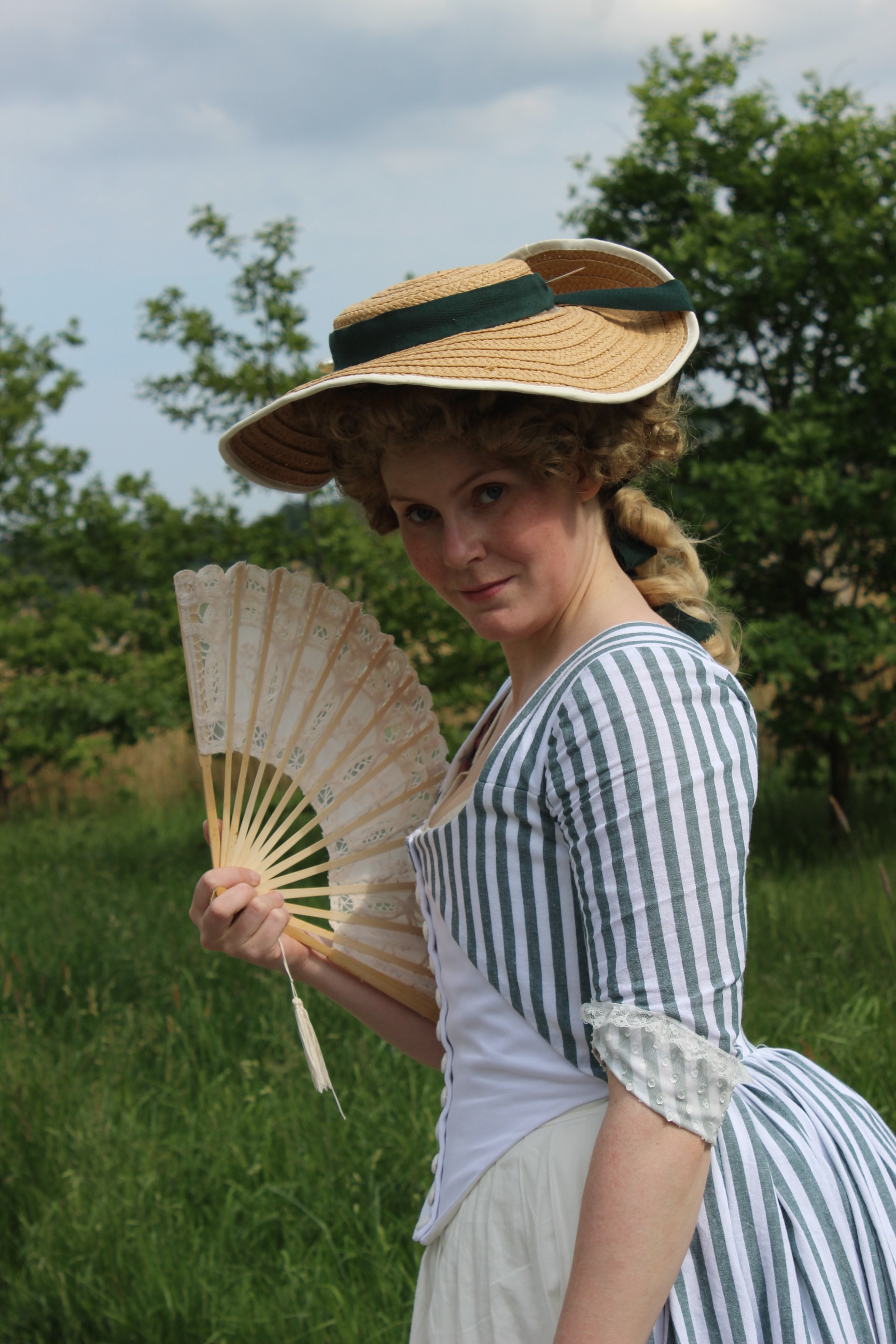
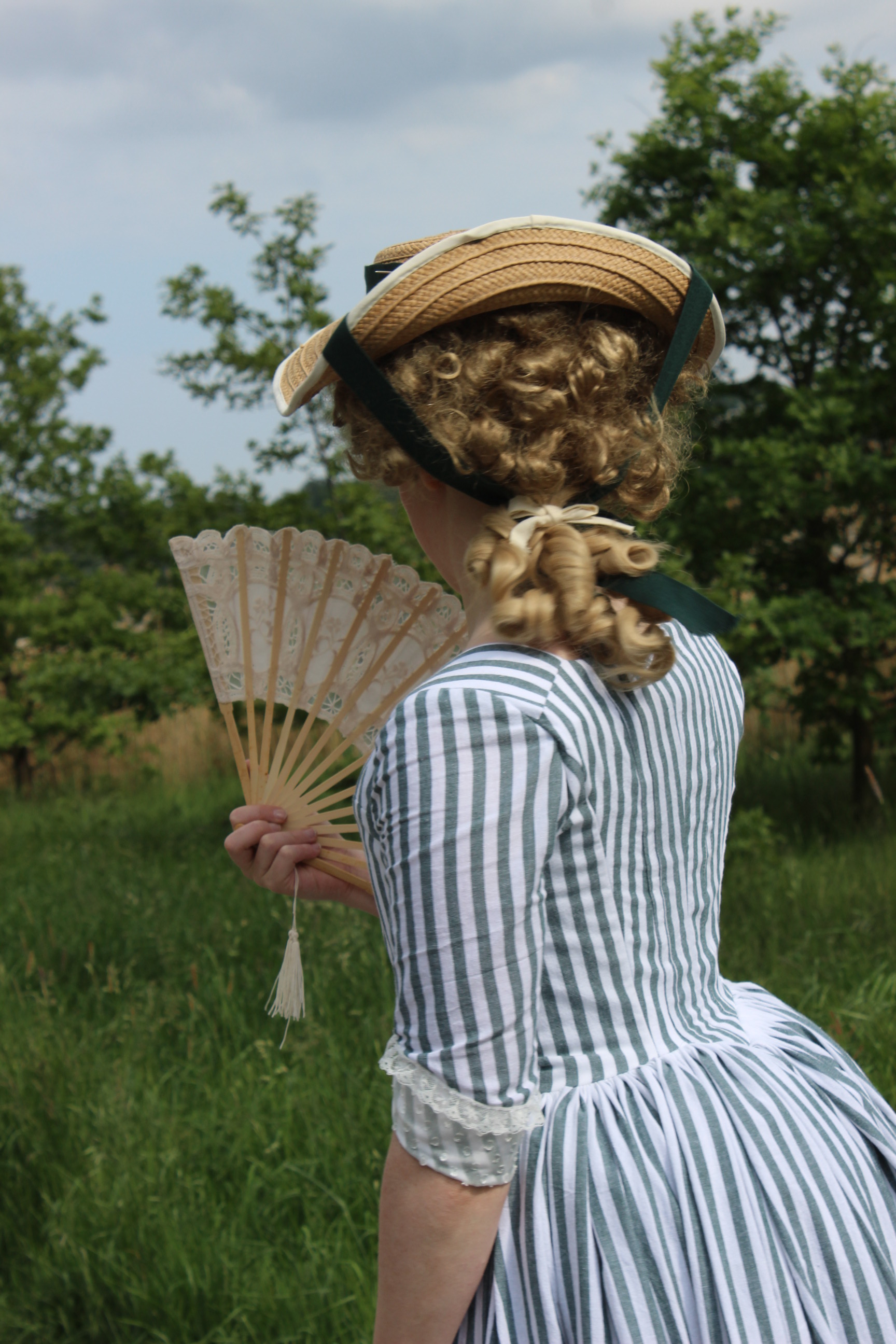
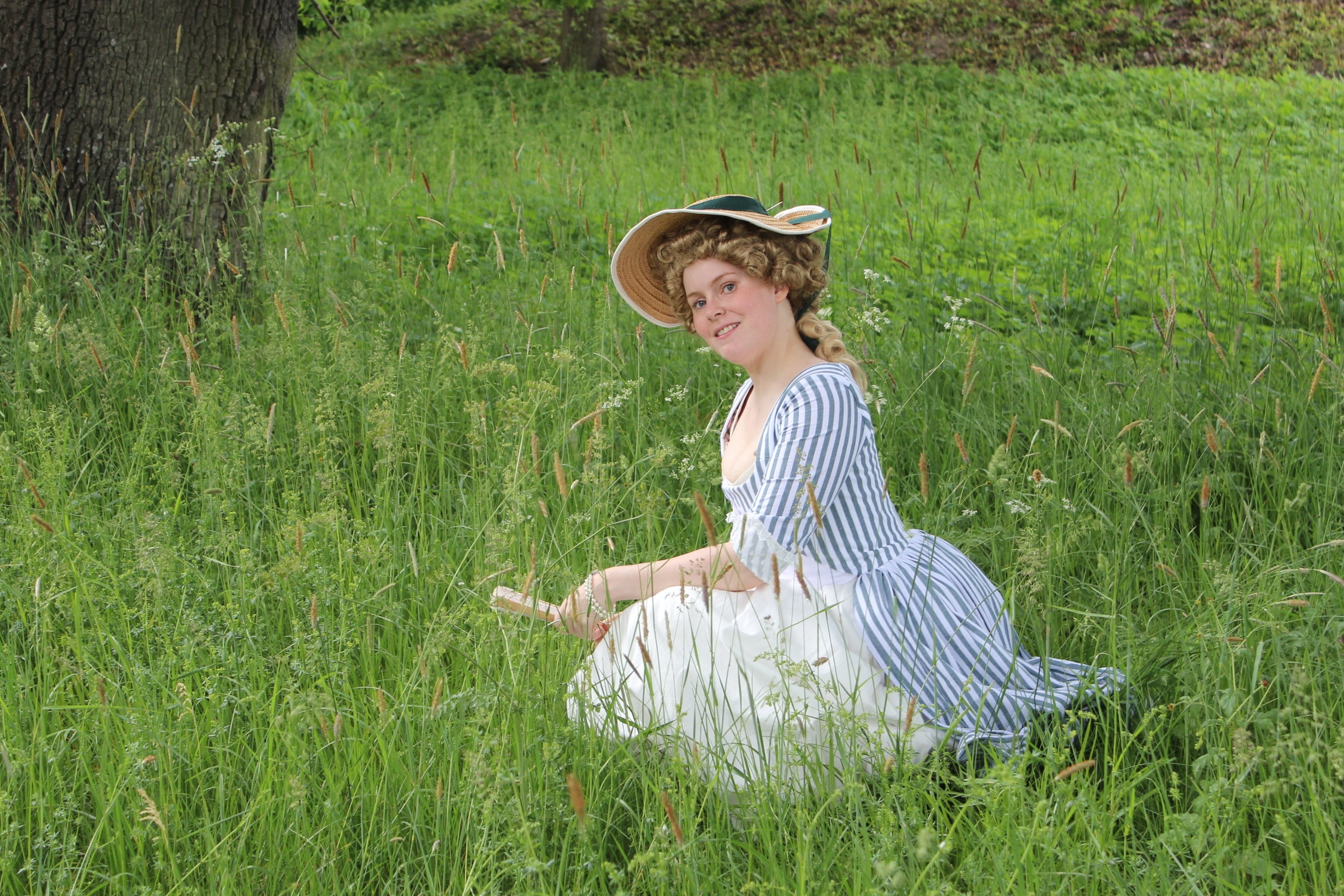
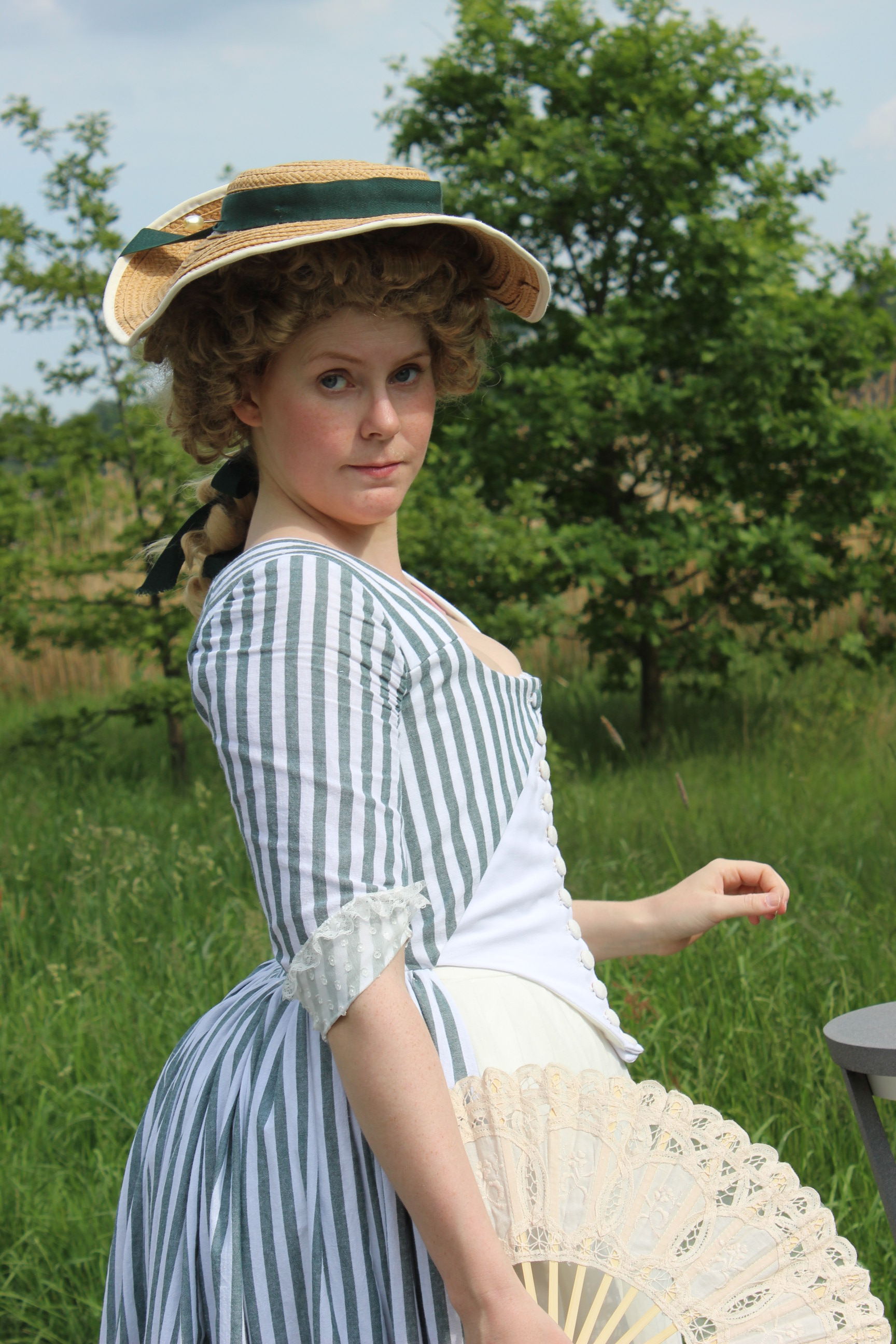
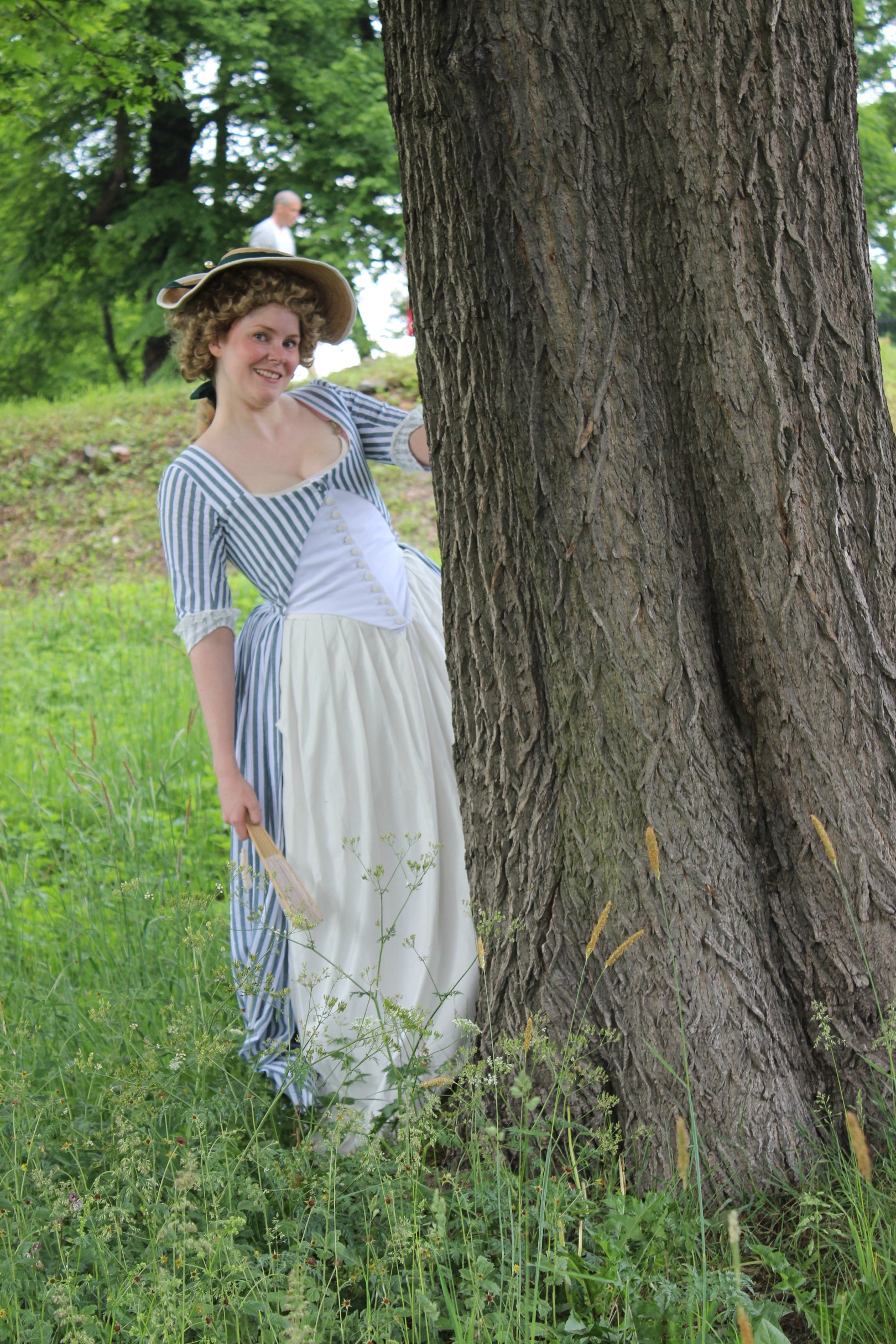
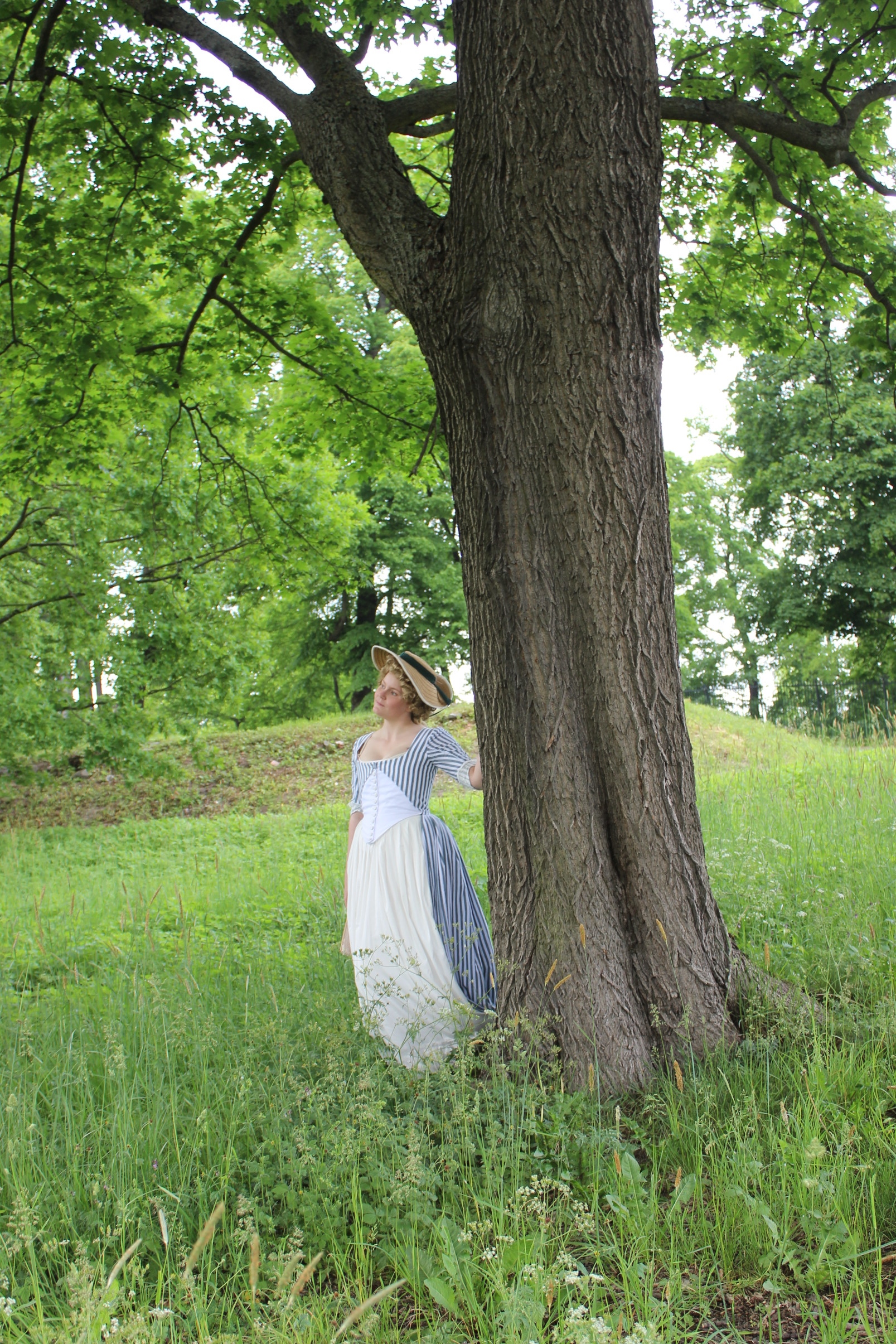
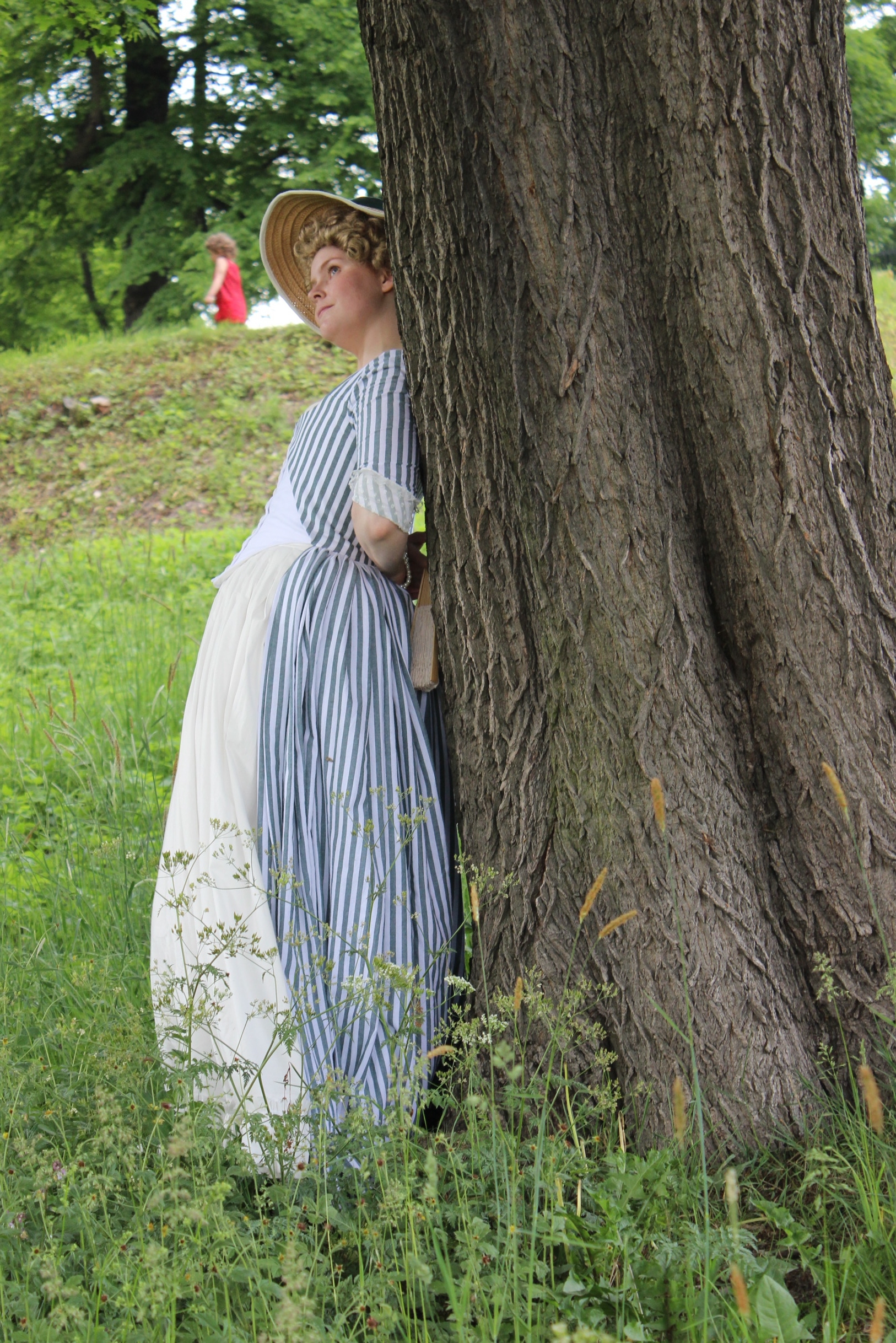
Yesterday I went to the beautiful park by the castle Haga in Stockholm to attend a costuming picknic (wich I will tell you about in my next post). And as it was the first outing for my new striped Robe Anglaise I made sure to get some good photos of me wearing it.

So here you go – my newest gown beautifully depicted by my sister using the enviroment of the park as a backdrop.

Wearing the skirt bustled up, and paired with a long fichu.IMG_8733

IMG_8743

IMG_8757

IMG_8759

IMG_8760

Then I let the skirt down and removed the fichu.IMG_8763

IMG_8785

IMG_8786

IMG_8772

IMG_8799

IMG_8800

IMG_8780

IMG_8804

IMG_8806

IMG_8808

IMG_8818Trying to pose with a harp, but with a tree…

IMG_8824

IMG_8829Crazy sillyness…
My new profile picture, don’t you think….

Photo: Maria Petersson