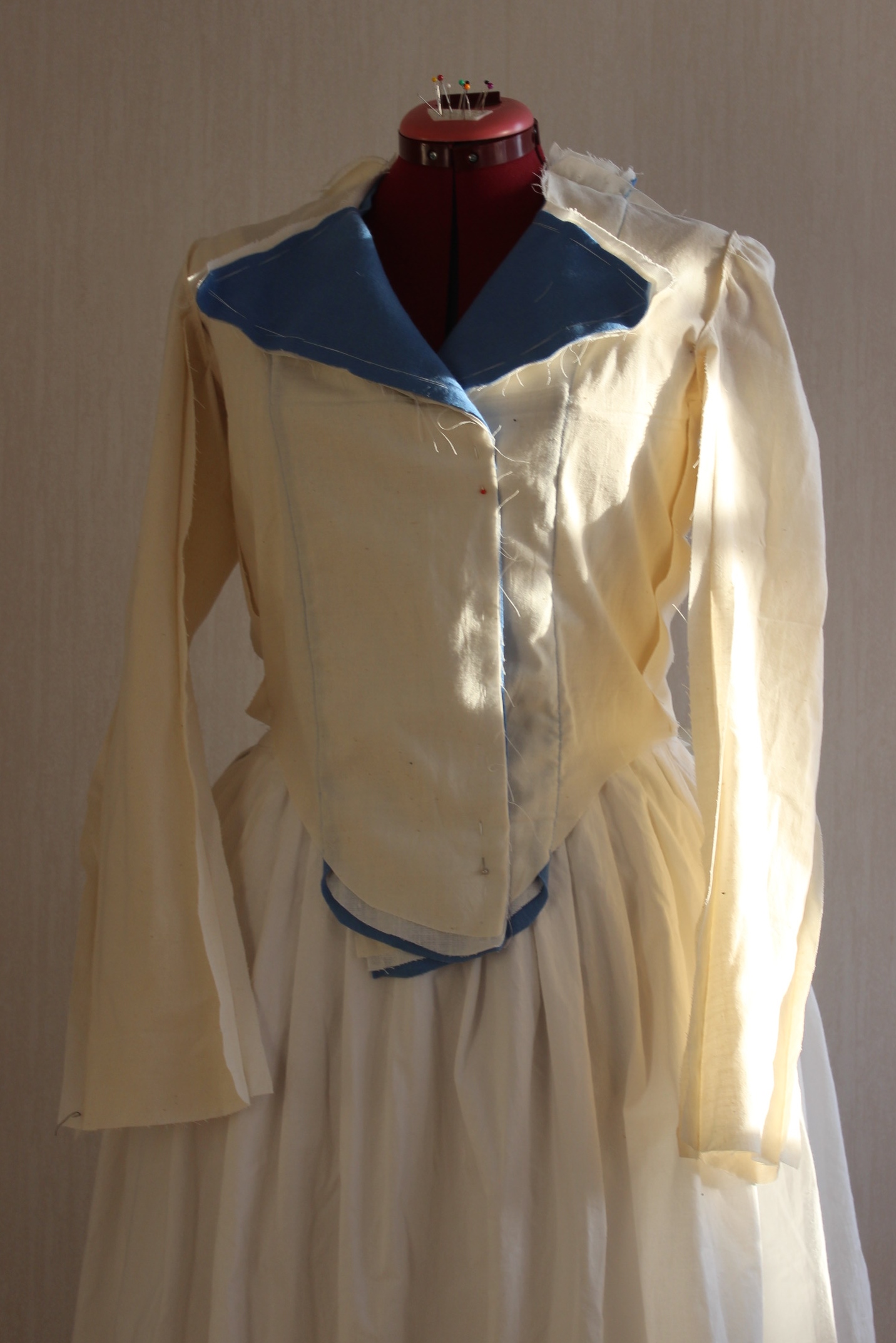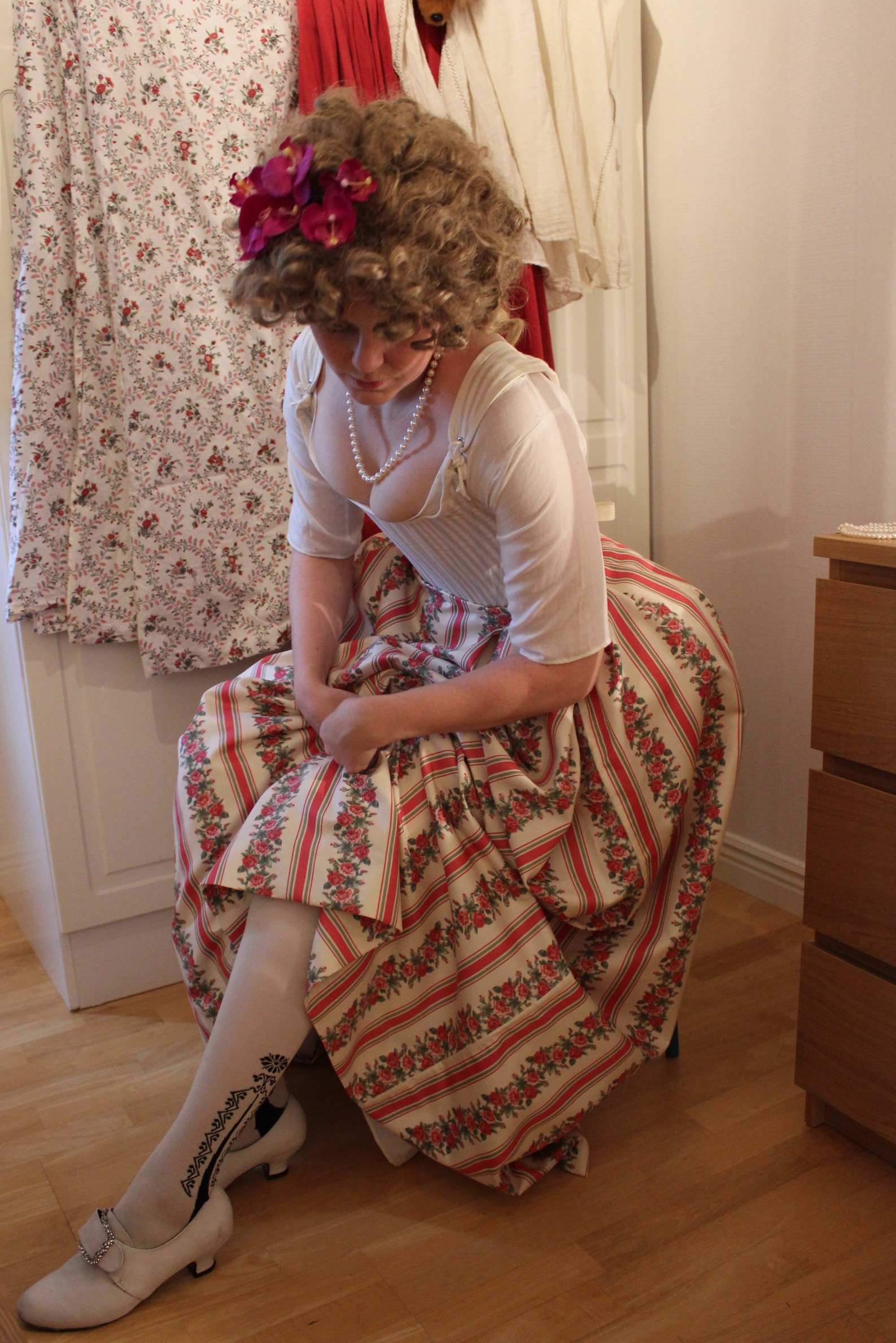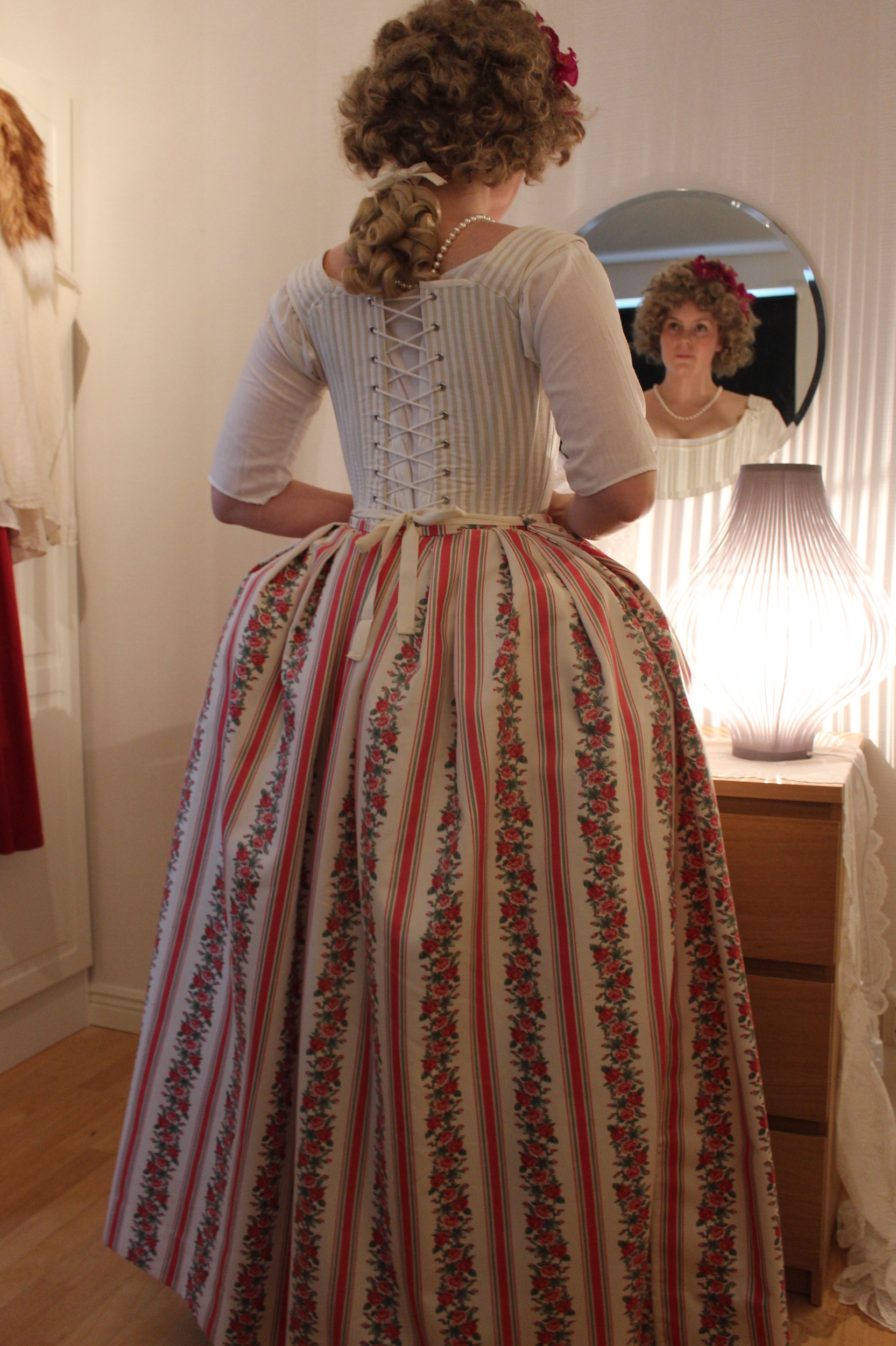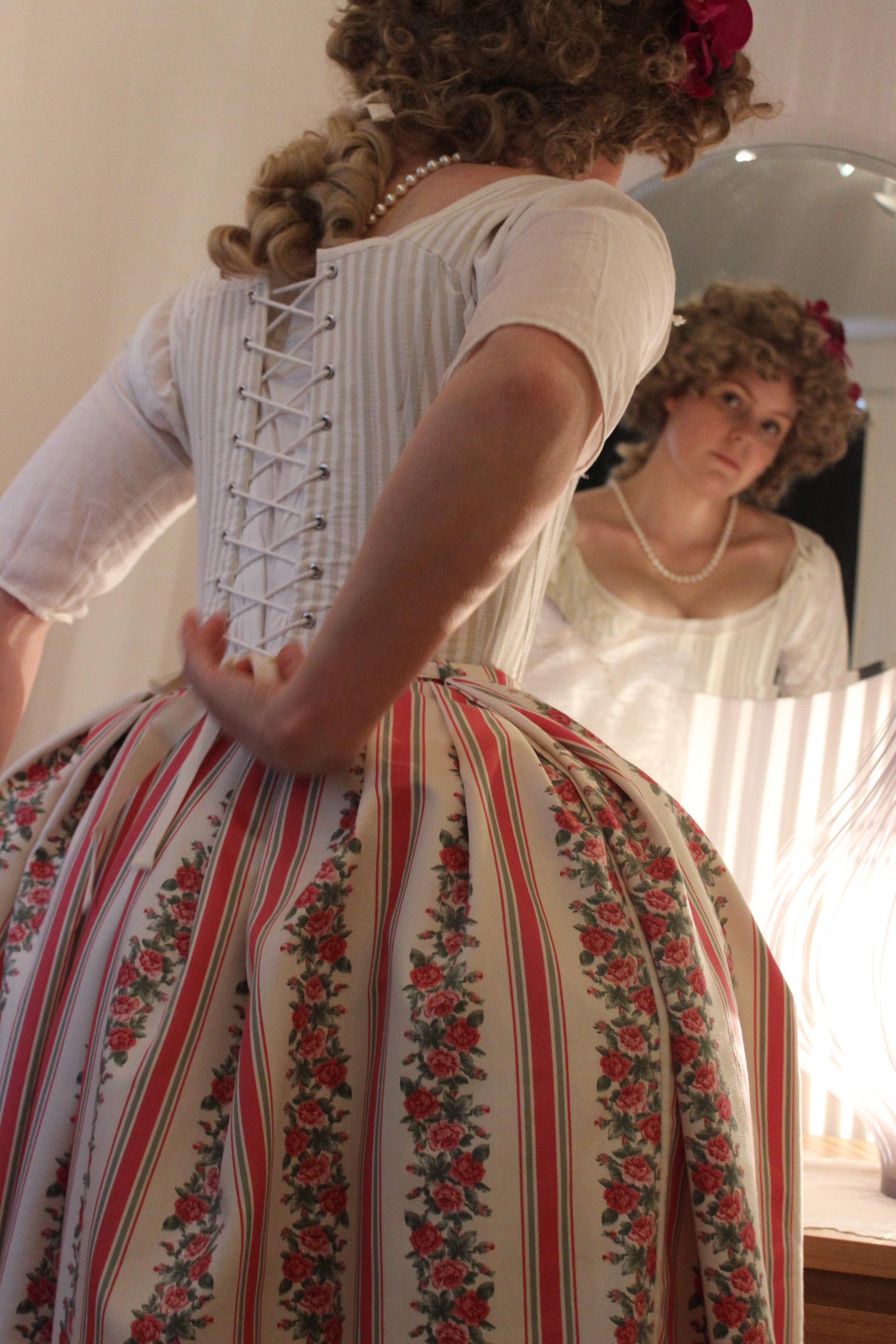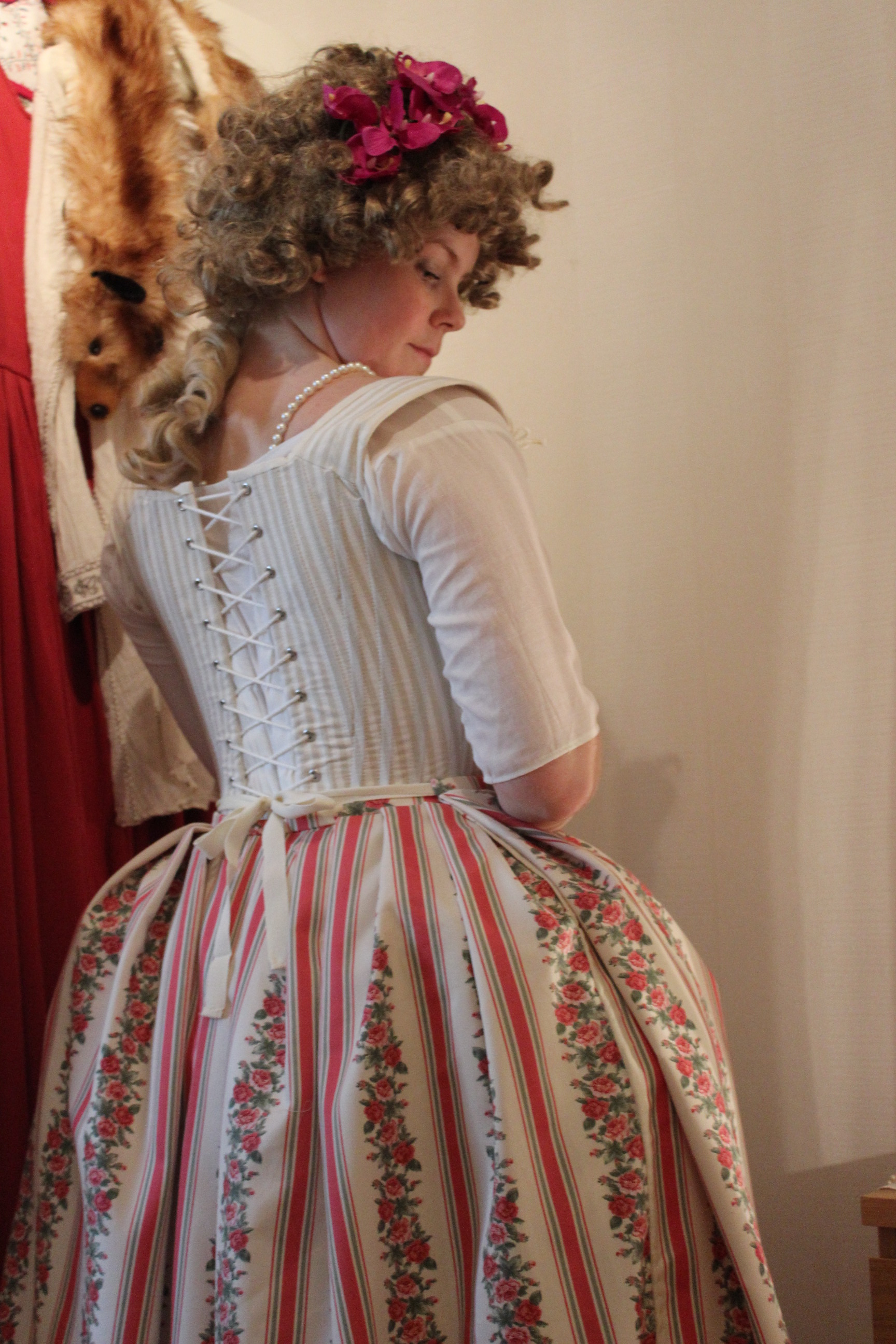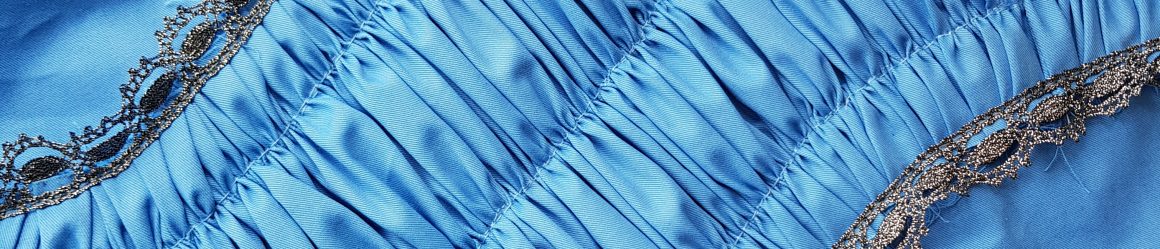
A Blue 18th century Redingote (Part 1)

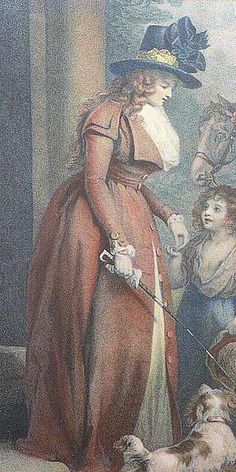
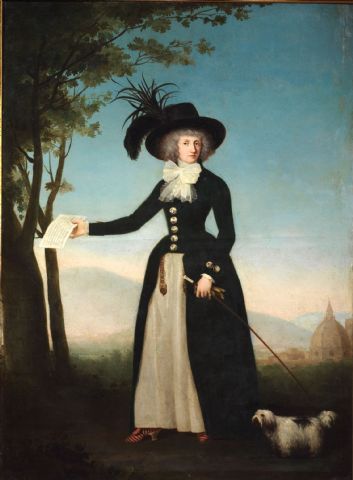
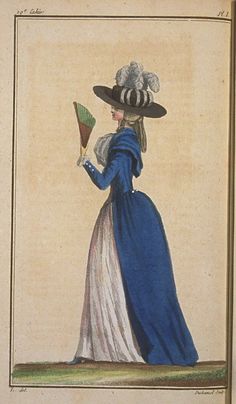
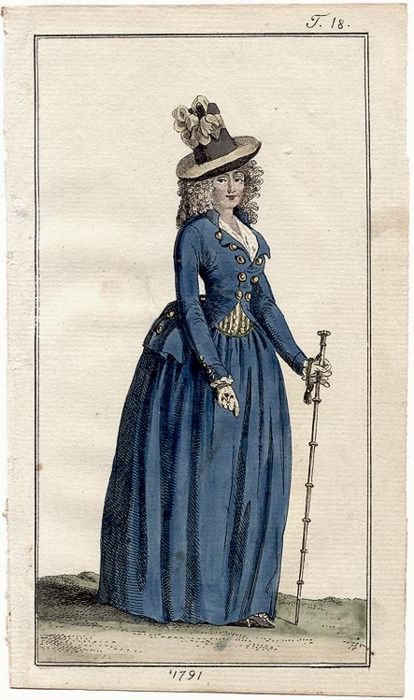
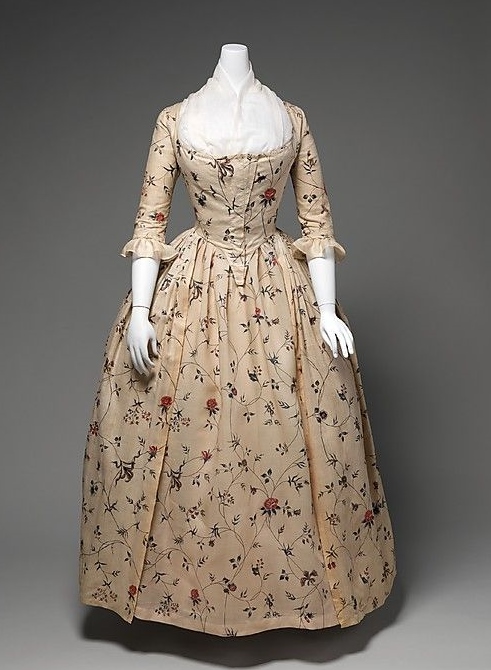
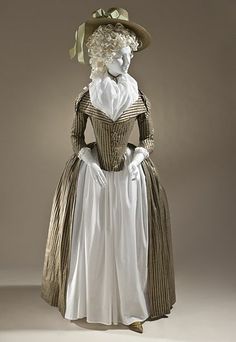
I’ve been totally in love with Jens (from “Festive Attyre“) Redingote since I first saw it about a year ago. 8312358697_ce6e37752b I knew at once I need something similar.
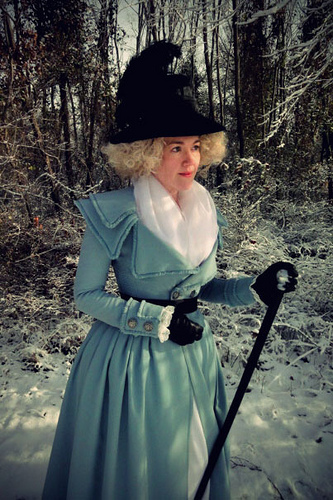
The problem was when…

A year ago I put the picture on my “to do in 2014“-list, and there it waited…

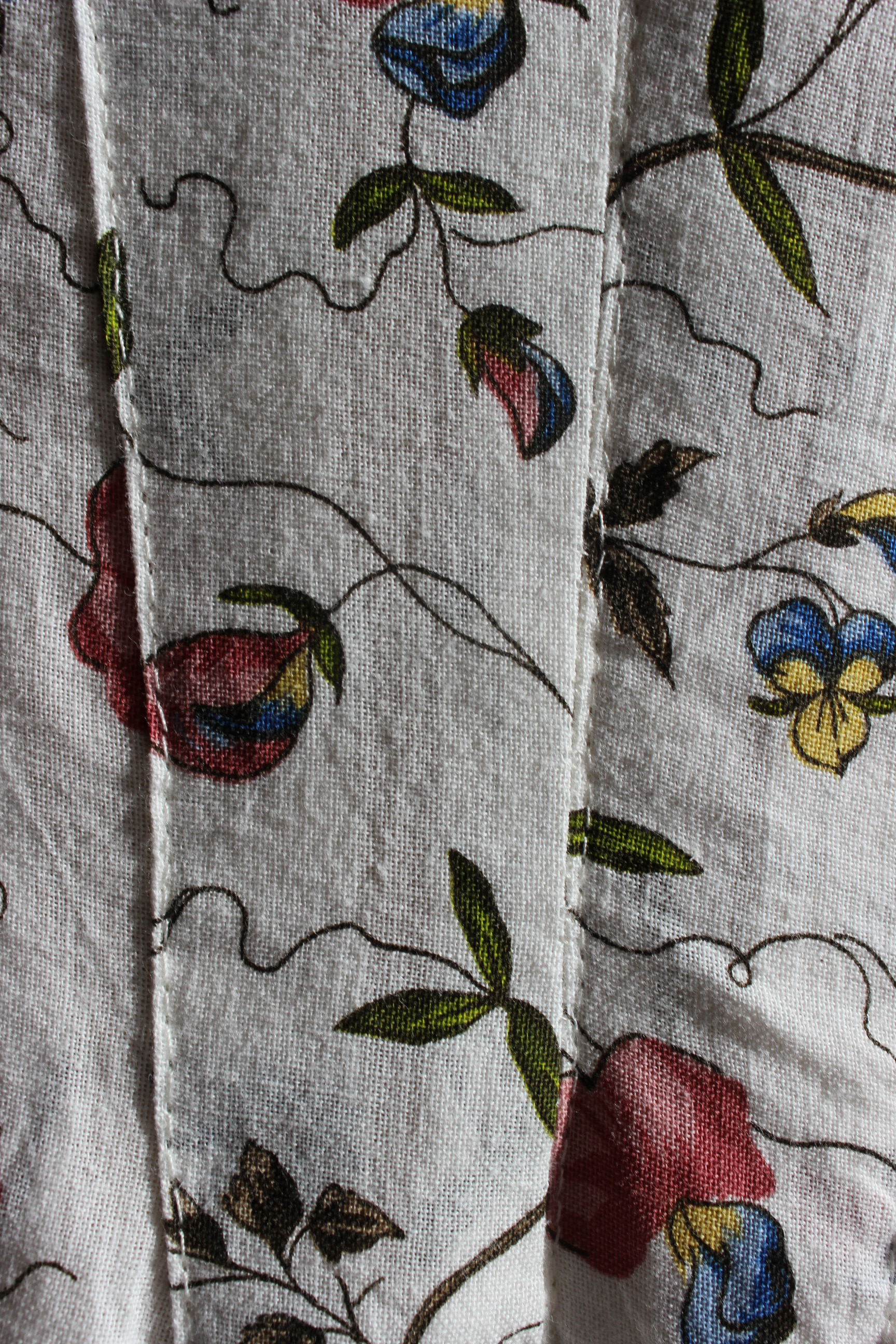
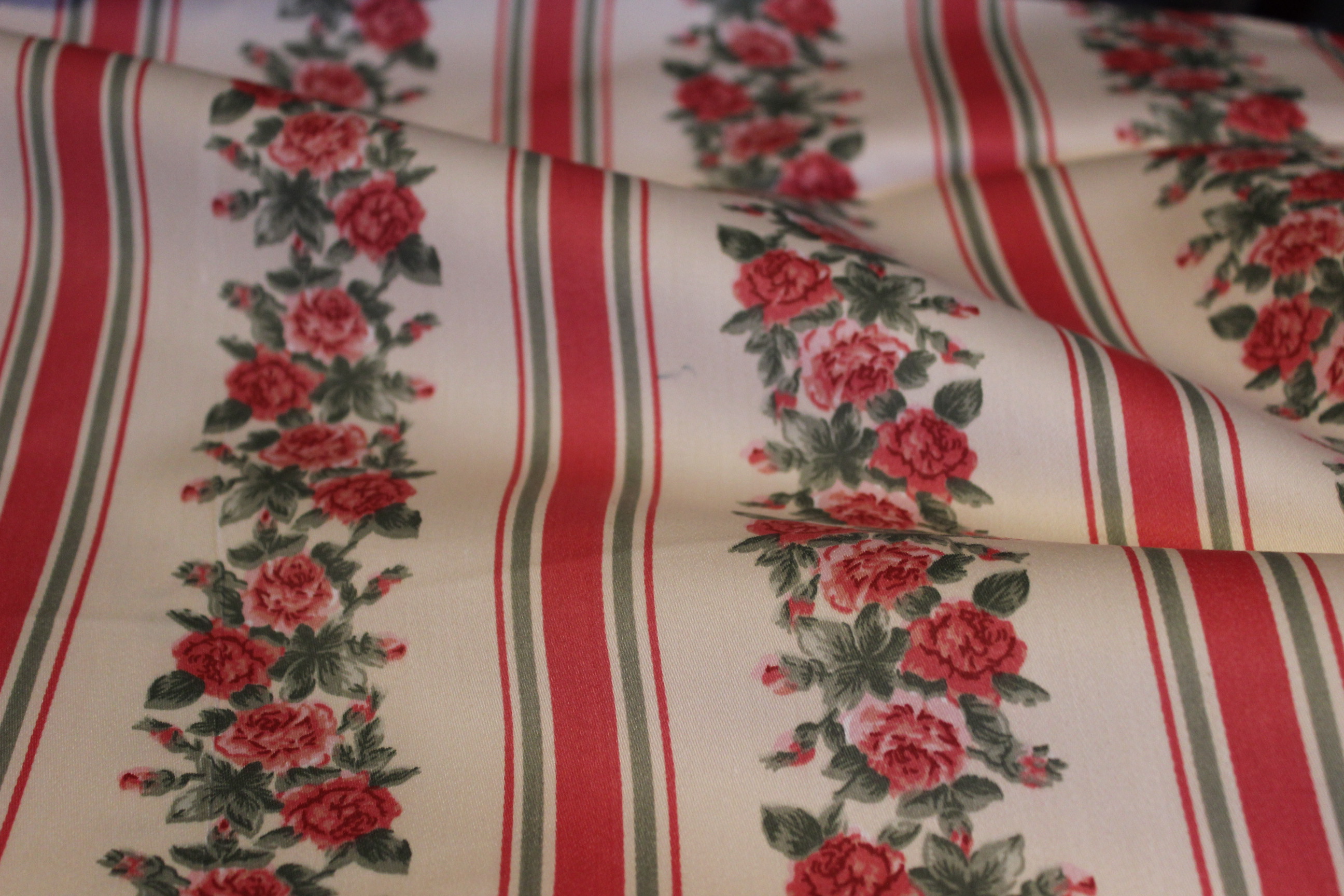
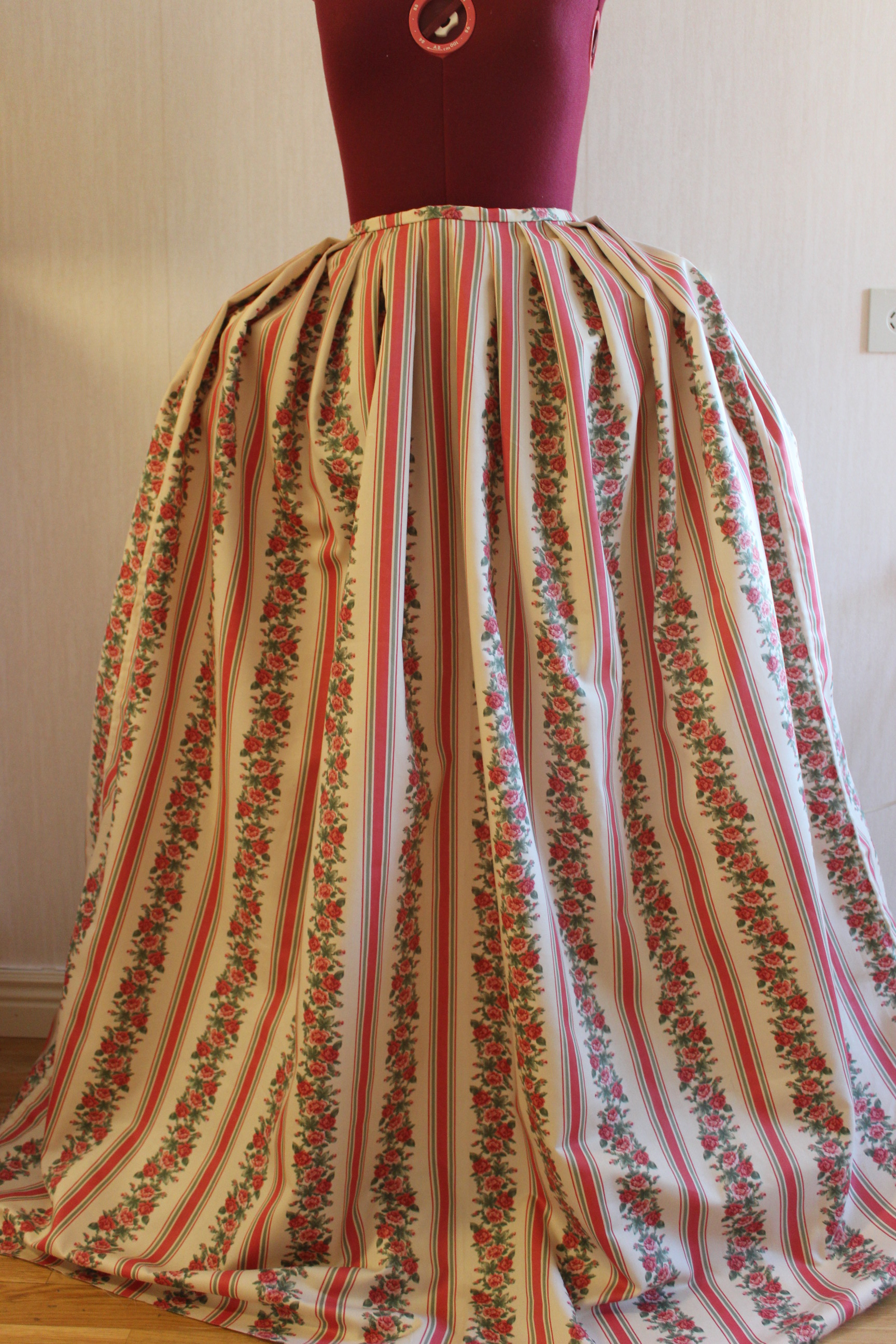
I found this fabric on sale last winter, and thought it perfect for this project. IMG_5580
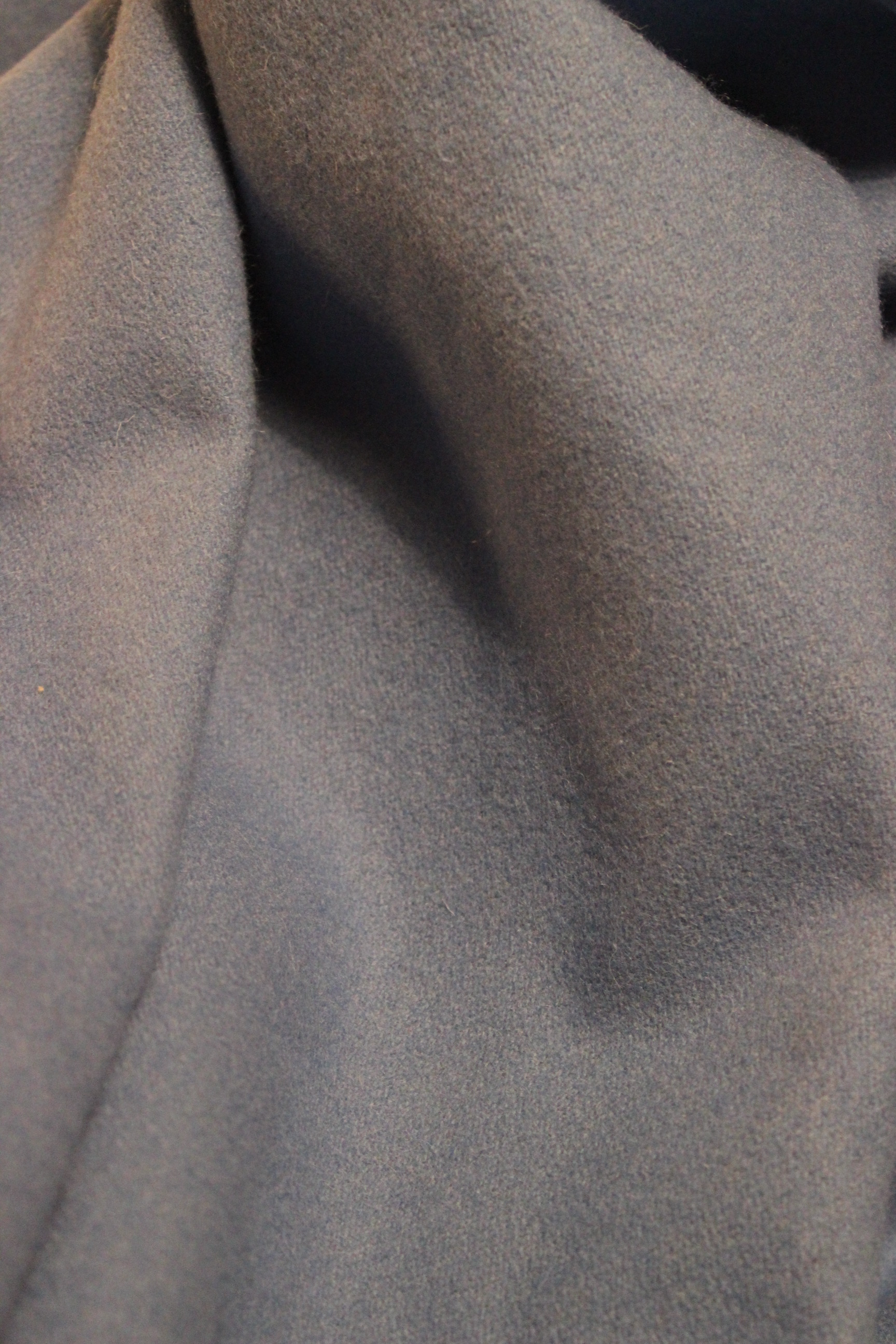
But I had so many other things to make for the HSF14, and when I could have had time I was already longing for spring and thinner clothing.
So I pushed it forward to the HSF14 nr 15 – Outerwear.

I bought this pattern in July determent to get the ball rolling in good time for he challenge. IMG_9316But as work got really busy after summer that didn’t happened.
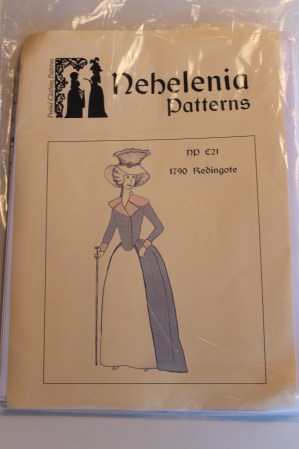
By then I had a new goal – to make it for the HSF14 nr 22 – Menswear.
Well, I did start working on it in October.

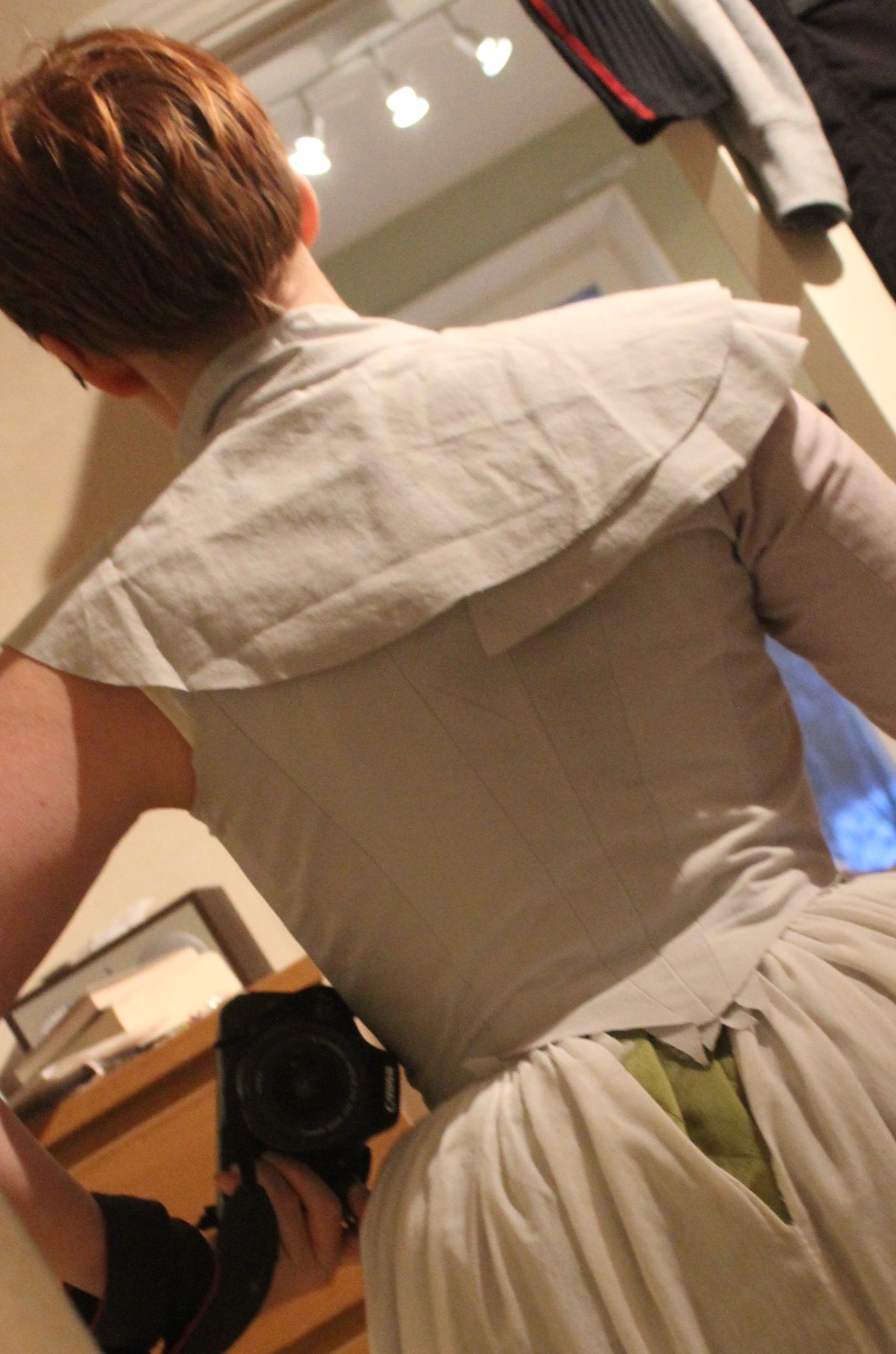
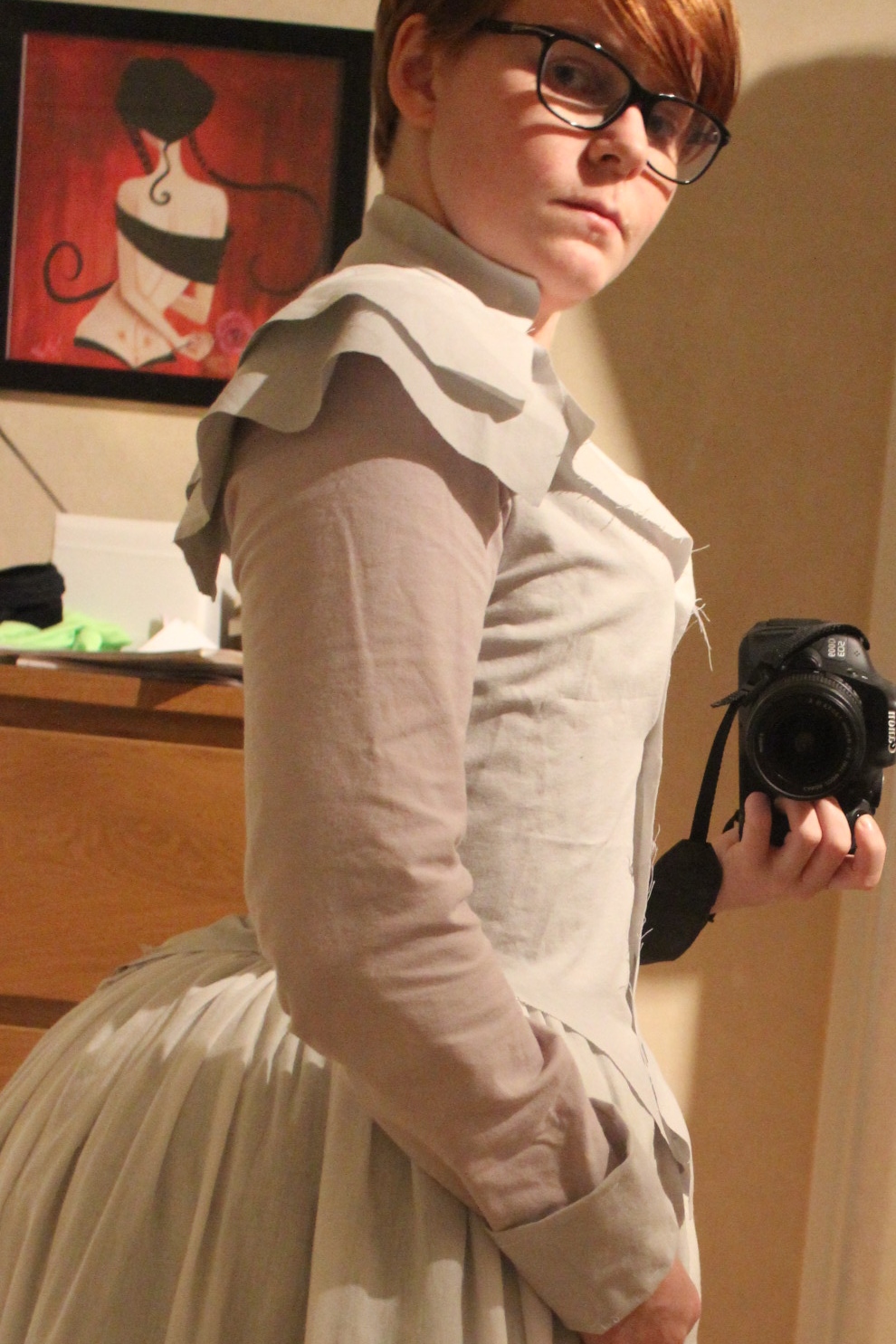
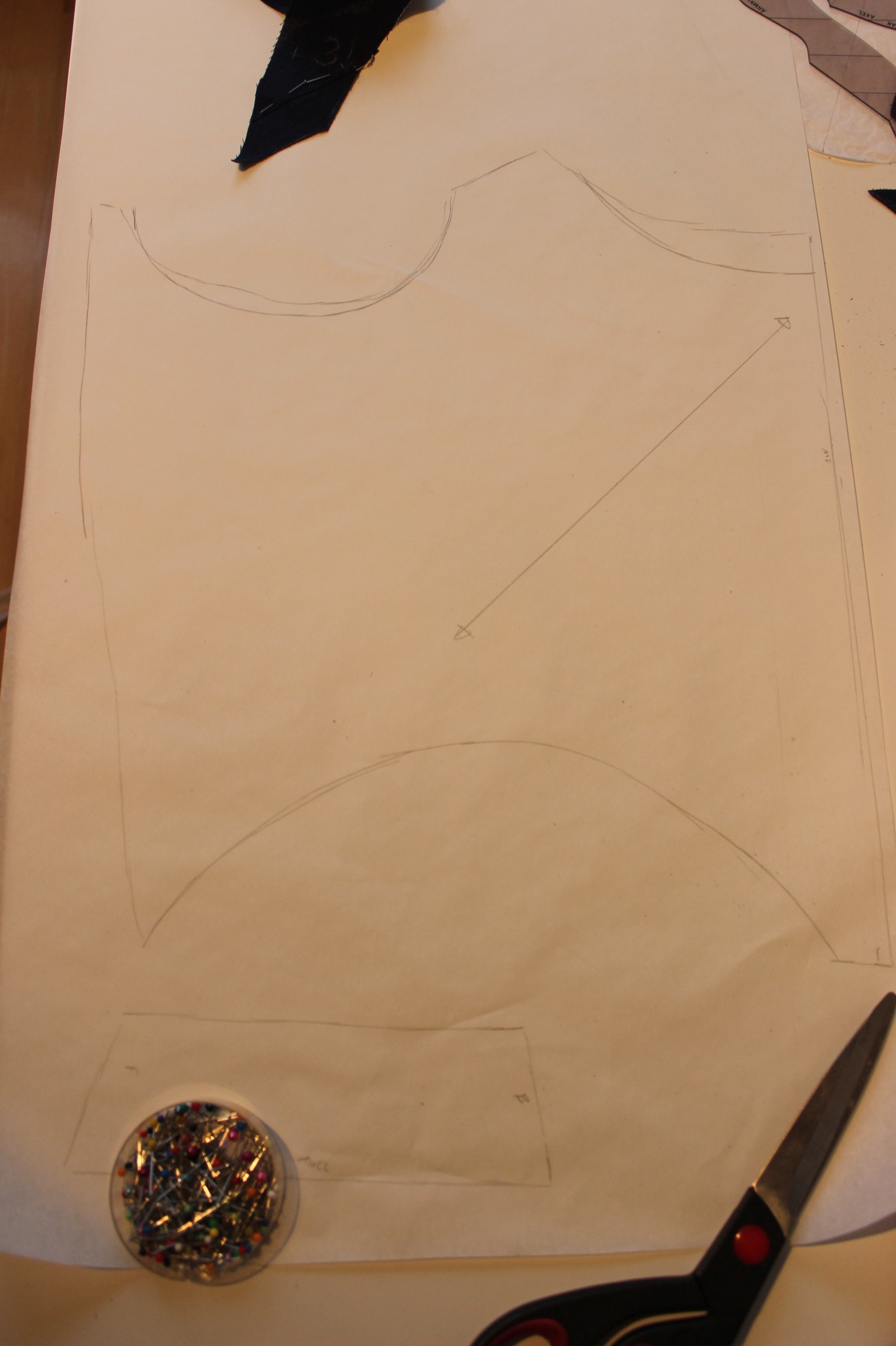
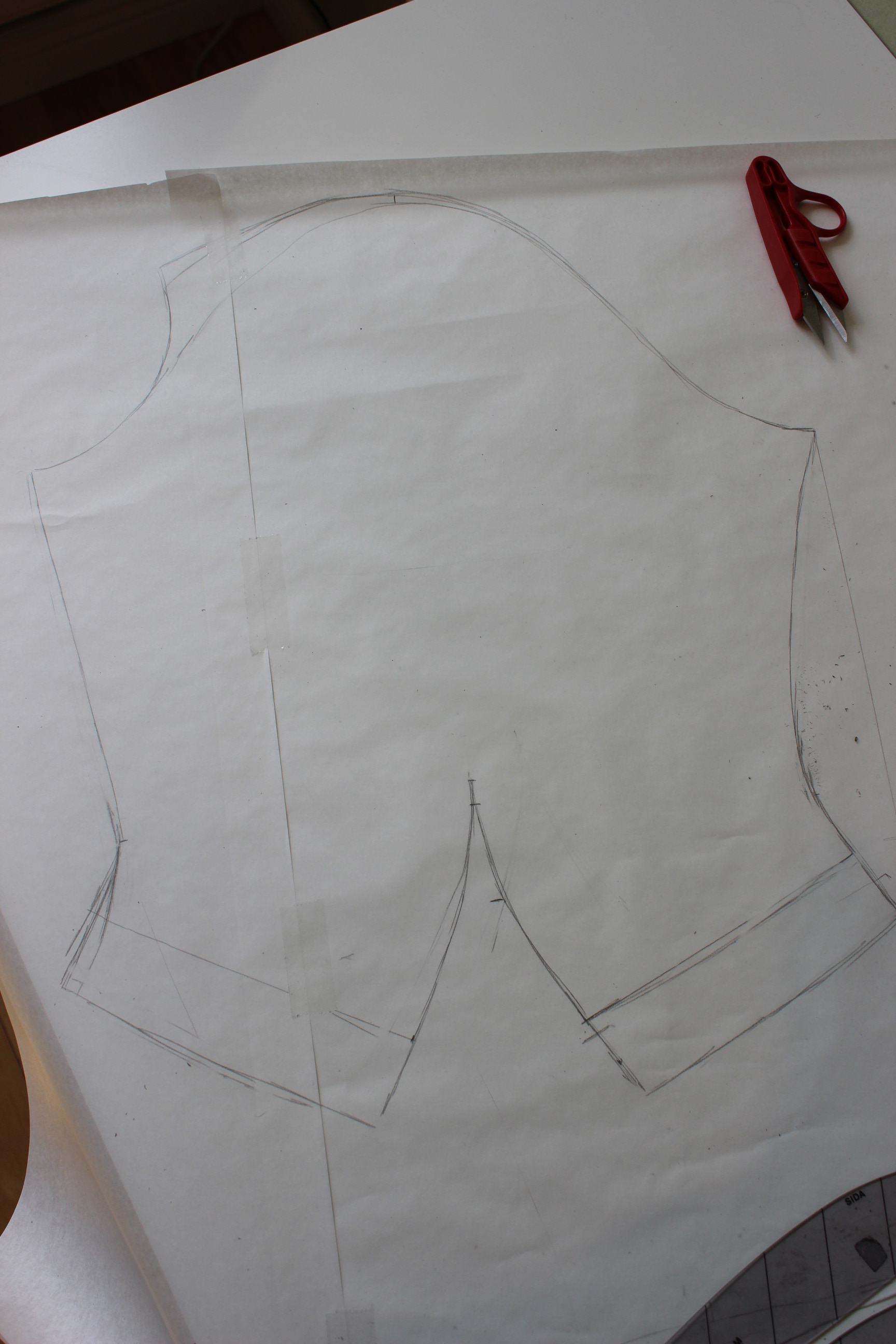
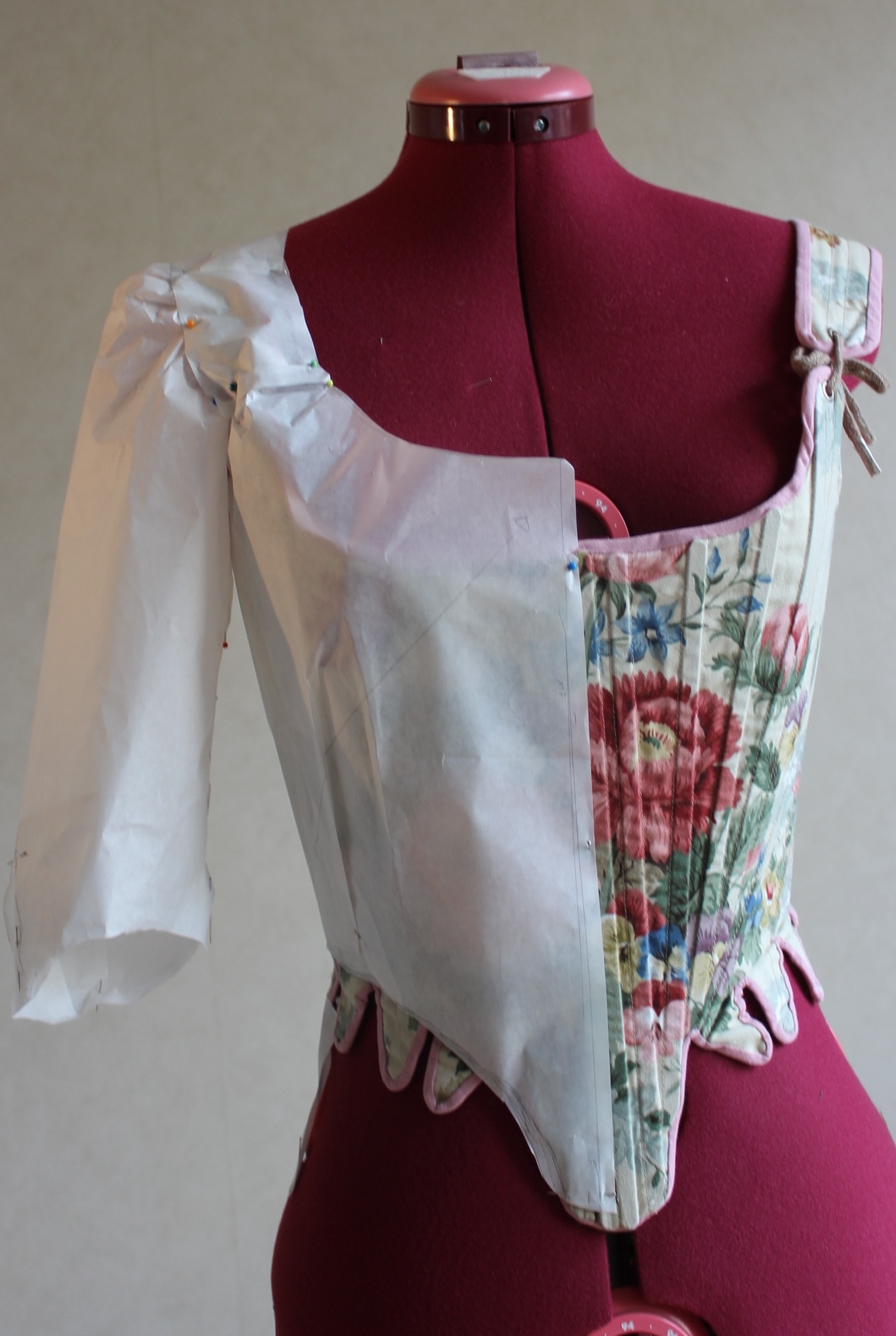
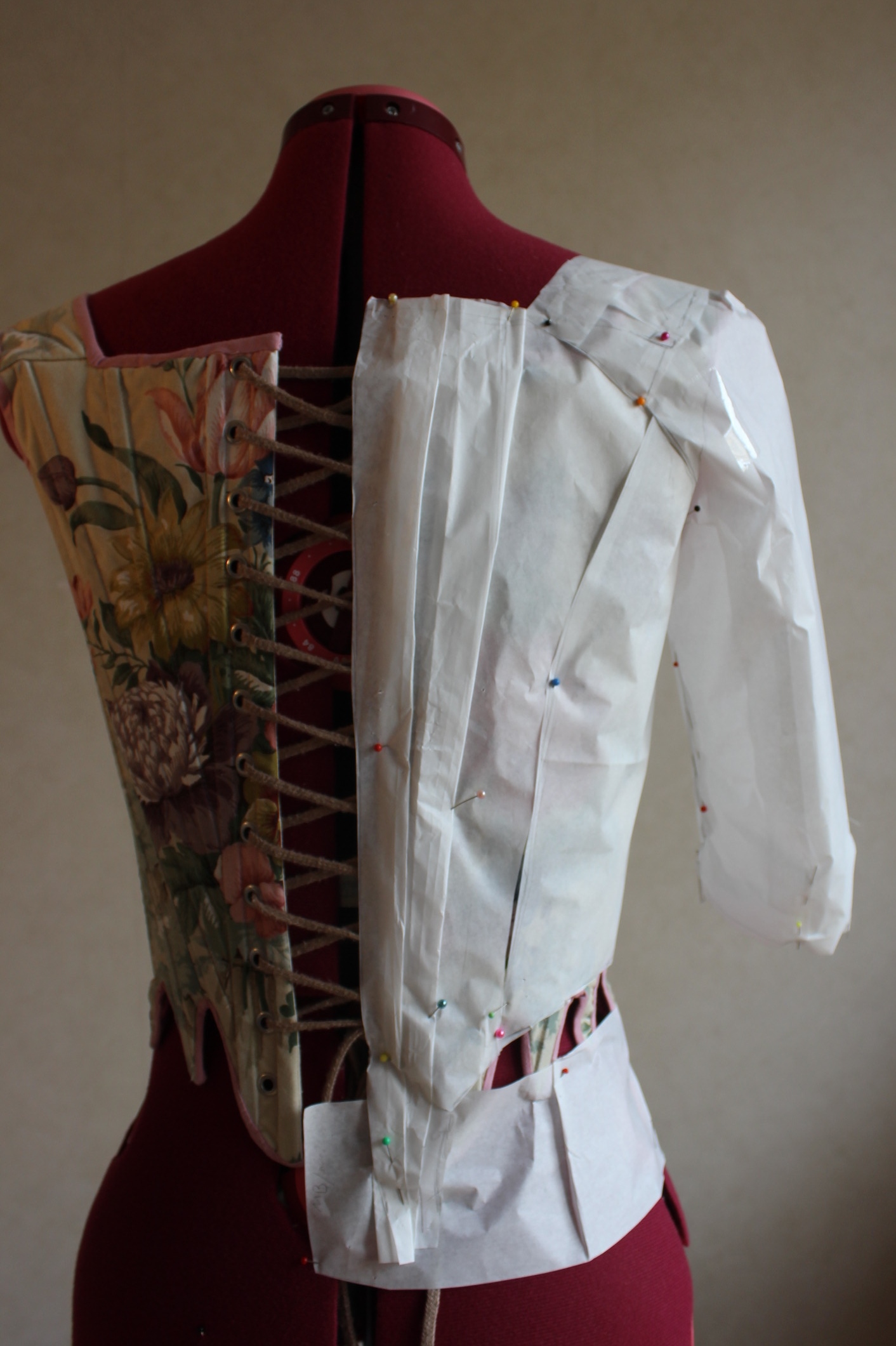
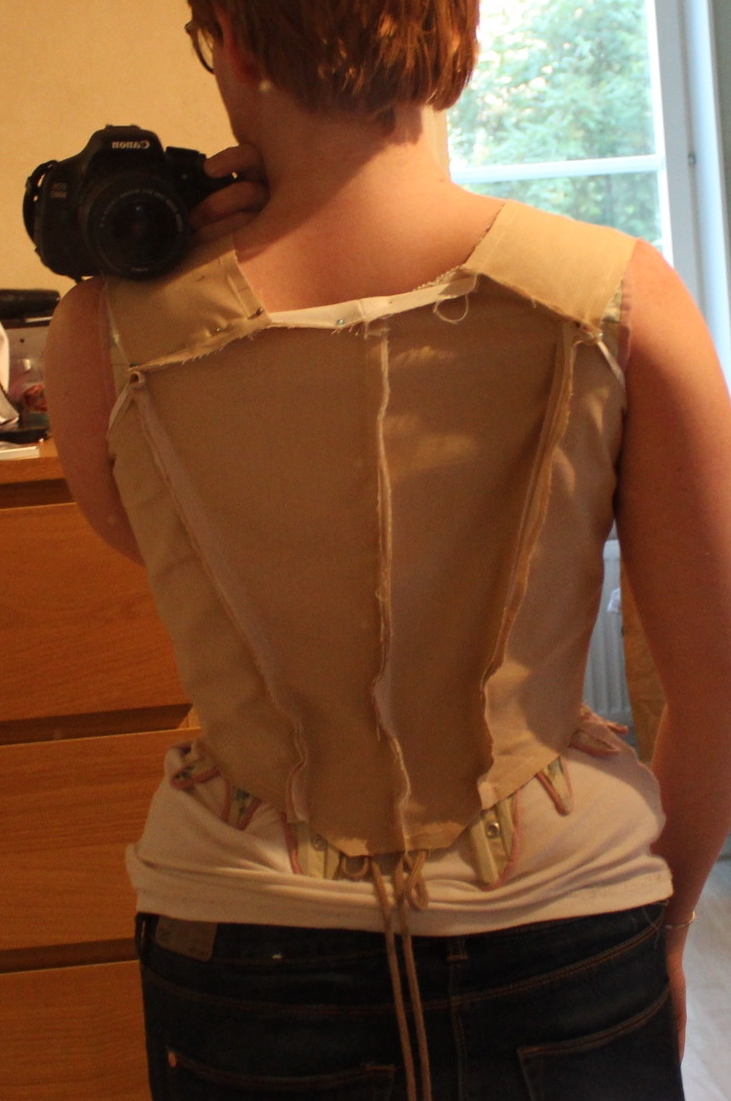
I traced the pattern and cut and stitched the mock-up.
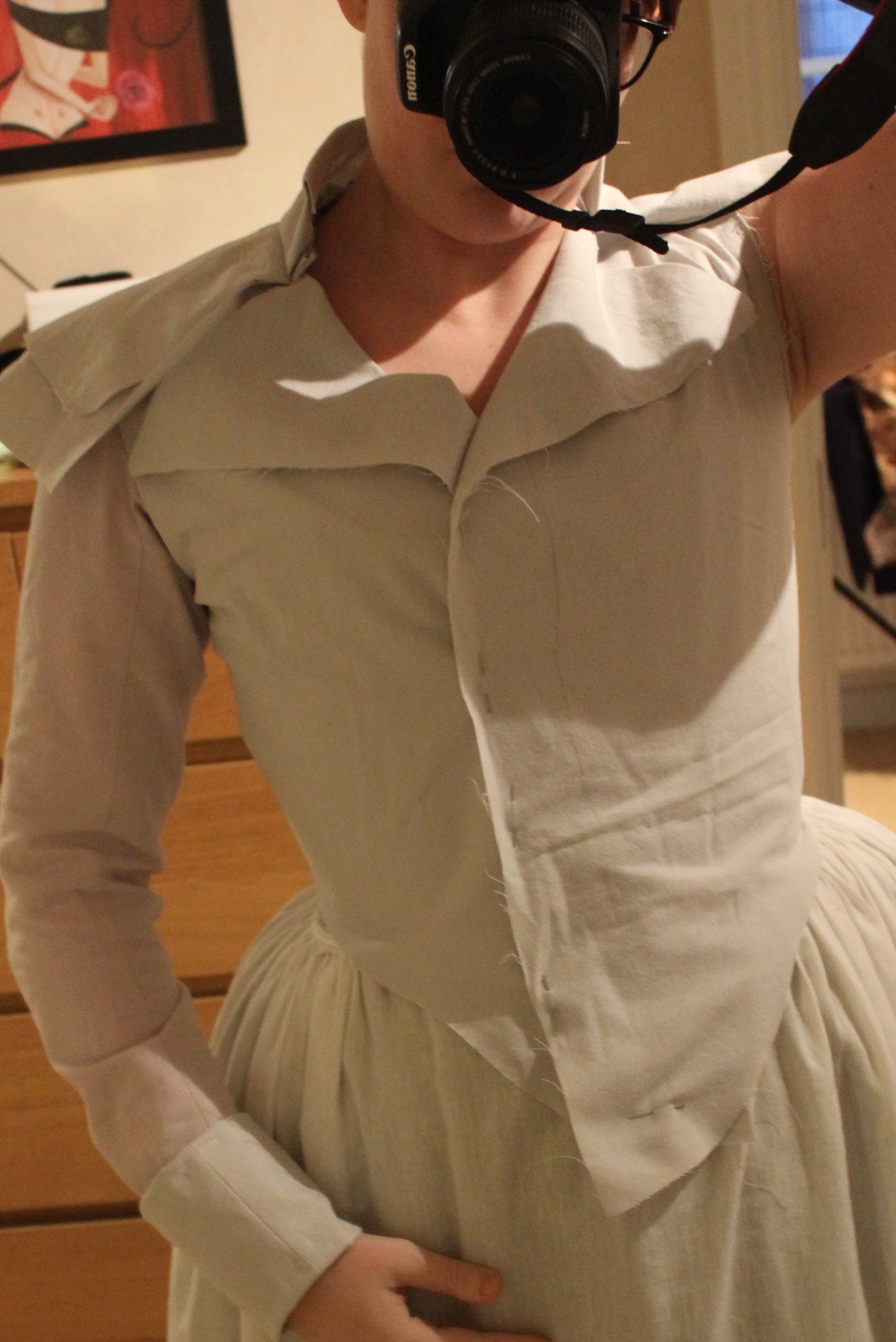
IMG_3929 IMG_3915
IMG_3912I was really surprised of how well it fit straight out of the package.
It’s not usual to get a nice back like that on the first try.

But then life once again caught up with me, and I had to take a break from sewing.
I postponed the 22 challenge completely, deciding to try to finish it on my Christmas leave.

And between working on my two Christmas dresses, I actually got the fabric cut and the interlining basted.IMG_4020My creative chaos. This is how I sitting in my chair watching series while pinning, stitching and sorting the pieces in different piles.
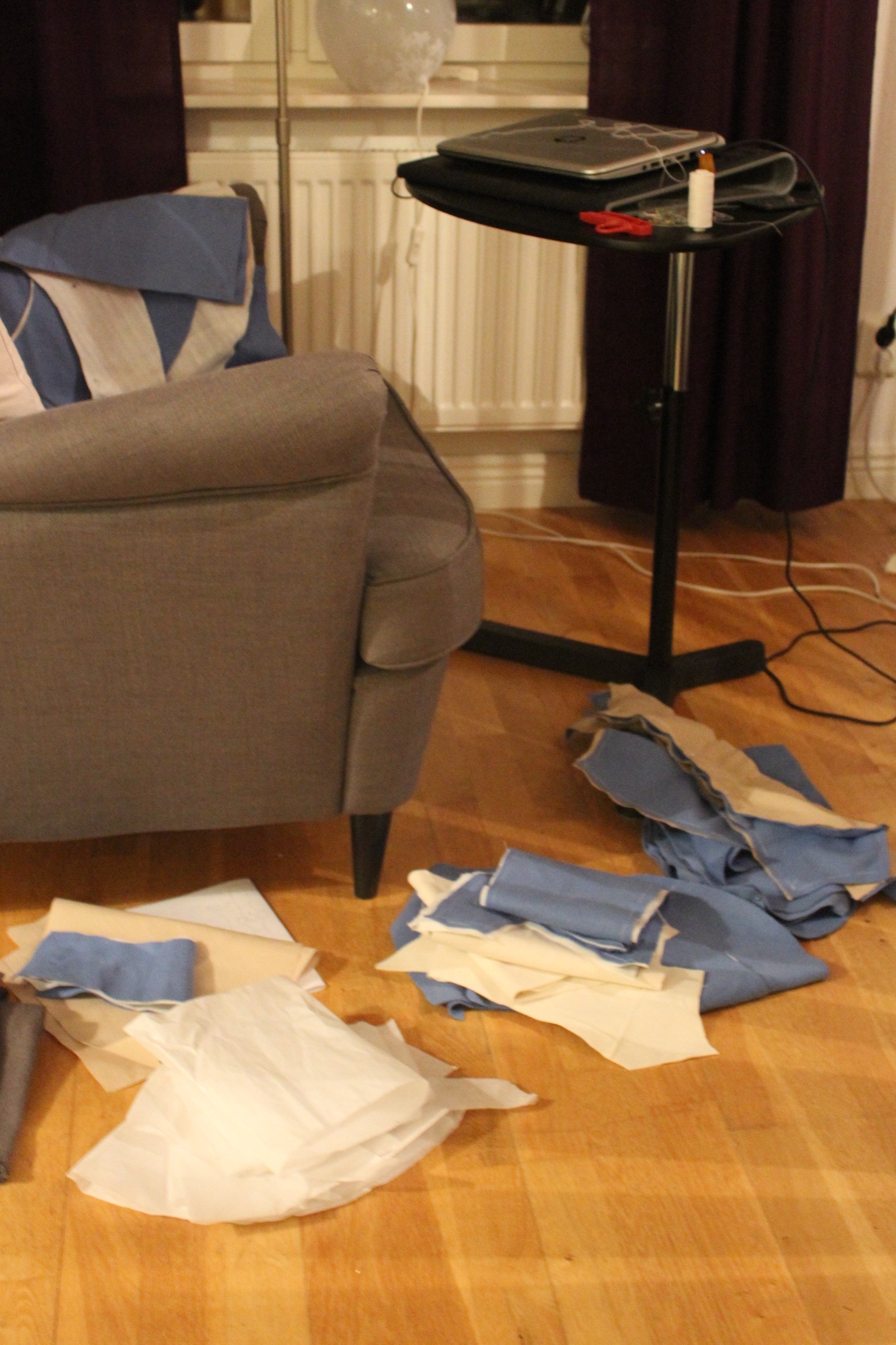
Sometimes around December 26th, I realized I would never finish within 2014 – and I had so much new stuff I wanted to make for 2015.
Bummers.
I made a 18th century hat as a late entry for the menswear challenge, and felt rater like a failure.

But then the Dreamstress revealed the challenges for The HSM15, and there it was – challenge 2/2015 – Blue!
That was exactly what I needed to finally finish the long awaited Redingote.
(even though I got distracted by the much quicker Mars entry).

Anyhow, here is what I’ve been doing on the evenings for the past month.
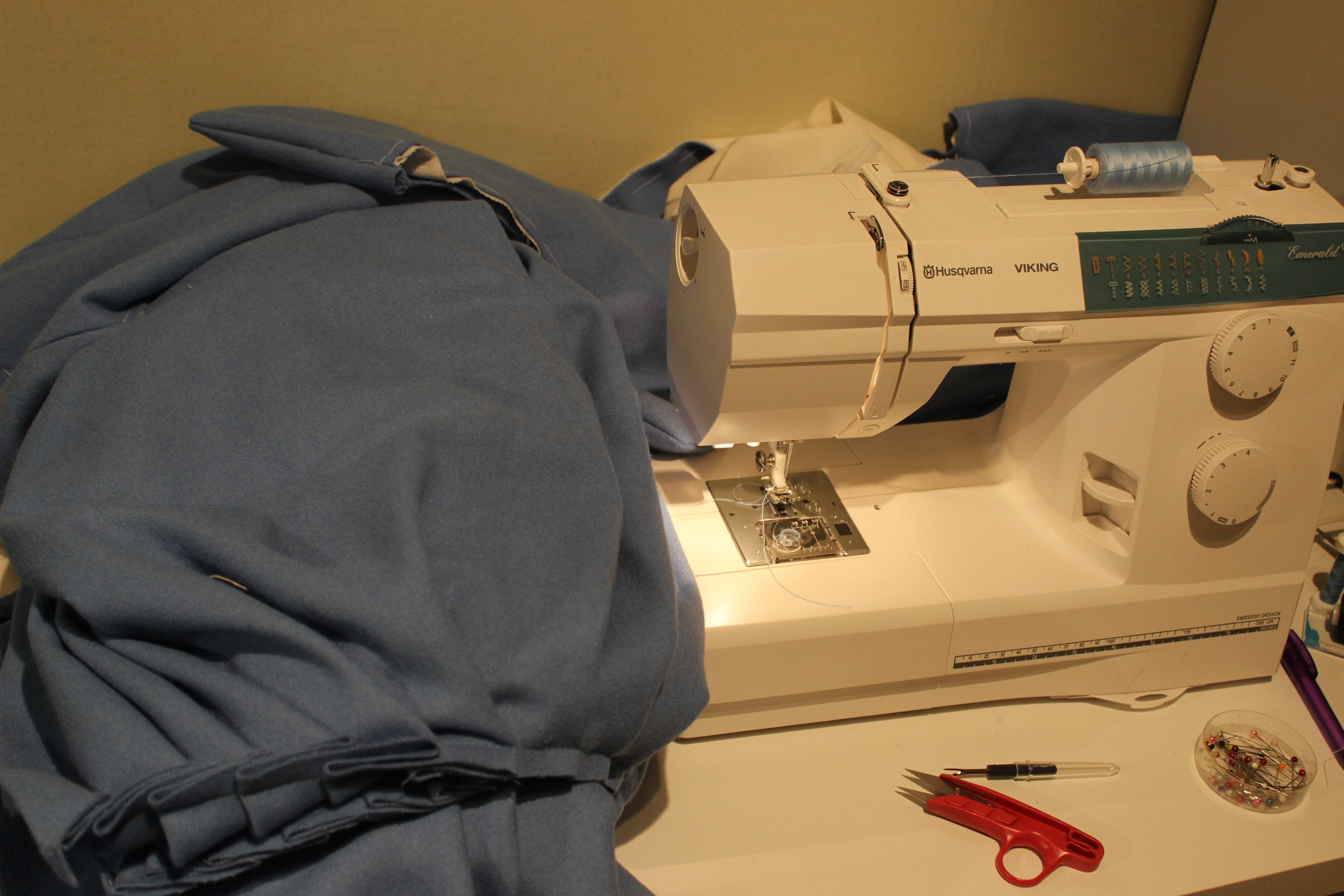
IMG_4226Stitching the long seams together using my sewing machine.

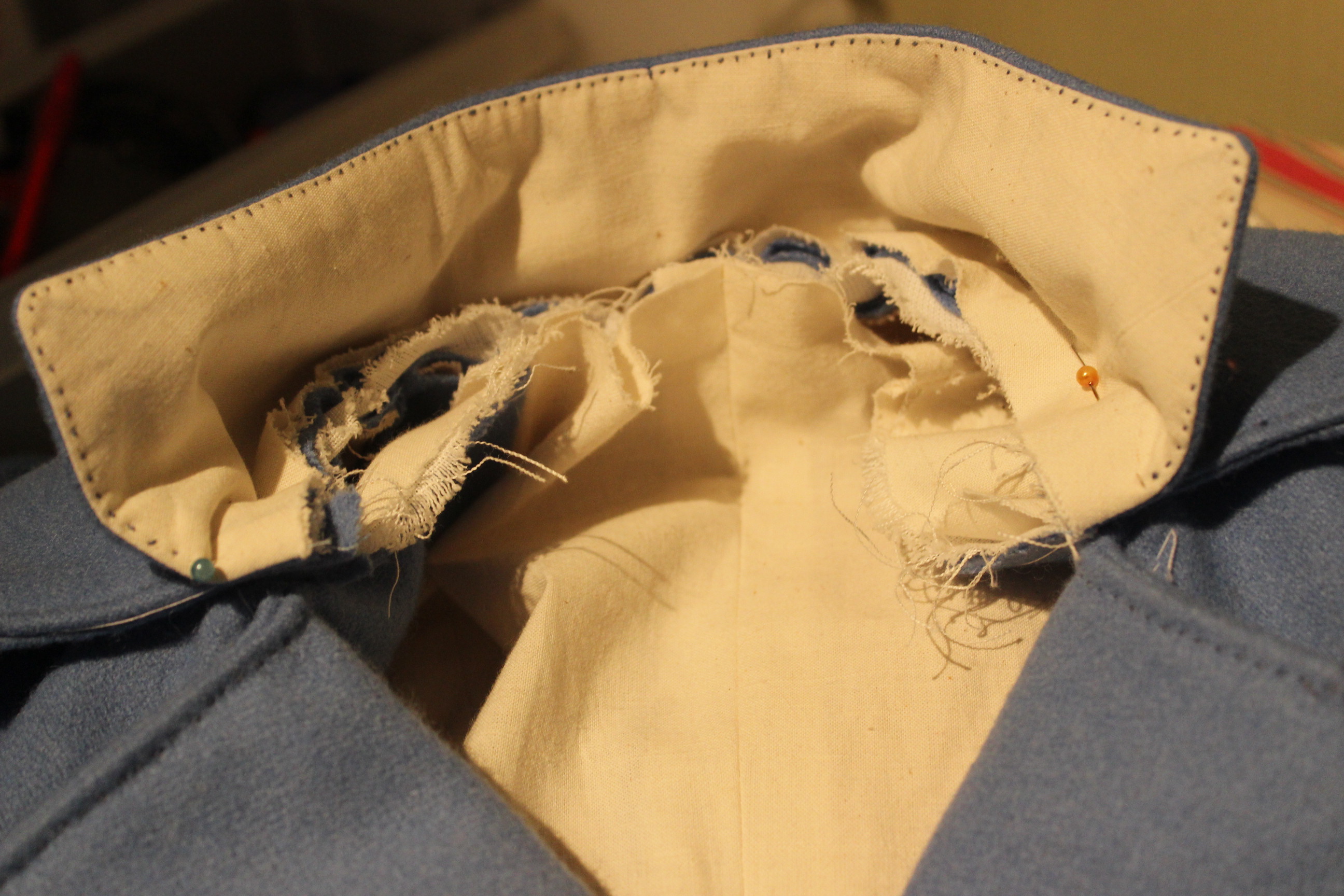
I decided to make more rounded shape for the corner on the collar instead of the patterns more square one.IMG_4228Shaping the collar.
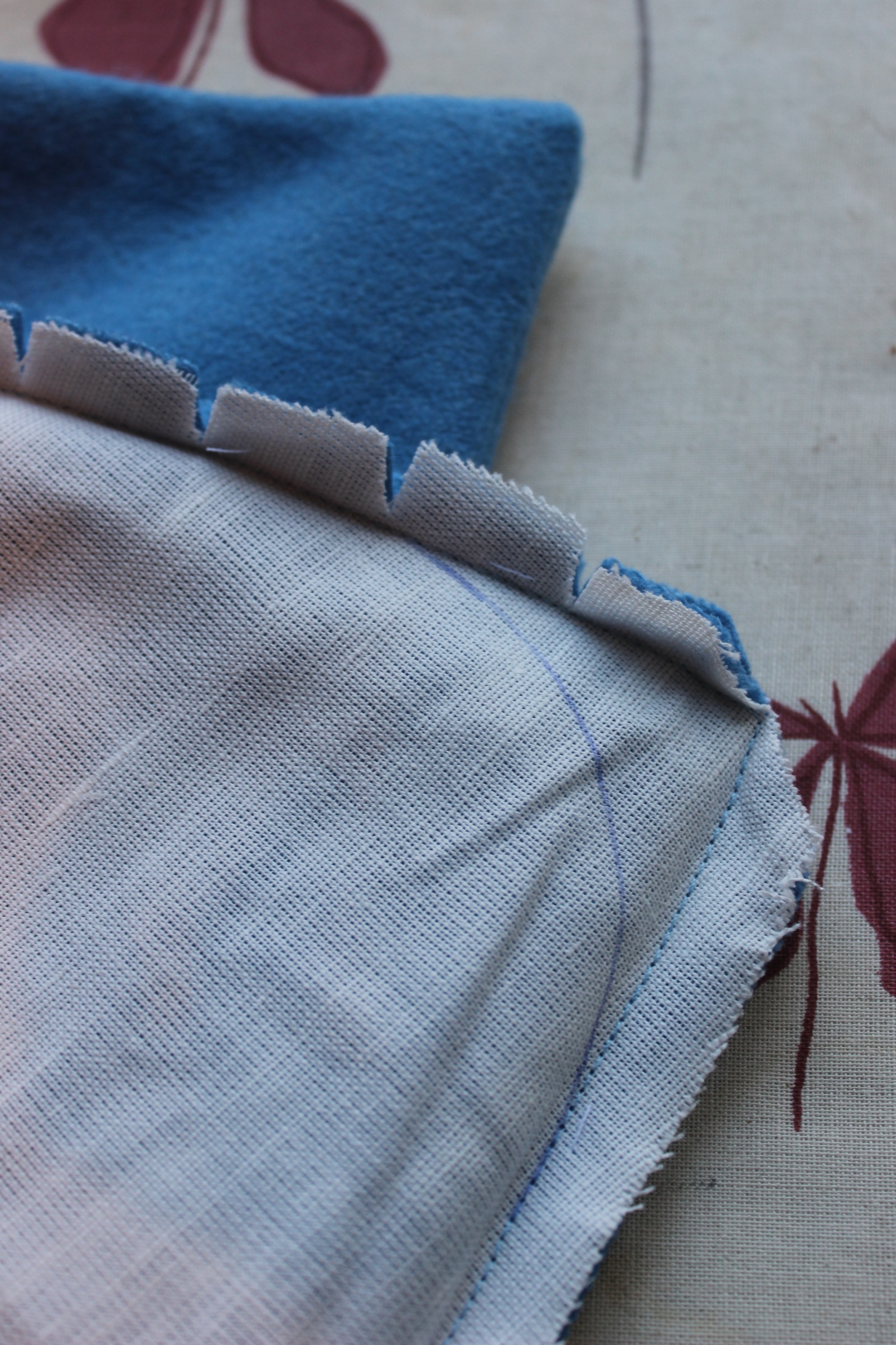
IMG_4841I also needed to lower the arm hole a bit to keep it riding up my armpit.

A first test on the dress-form
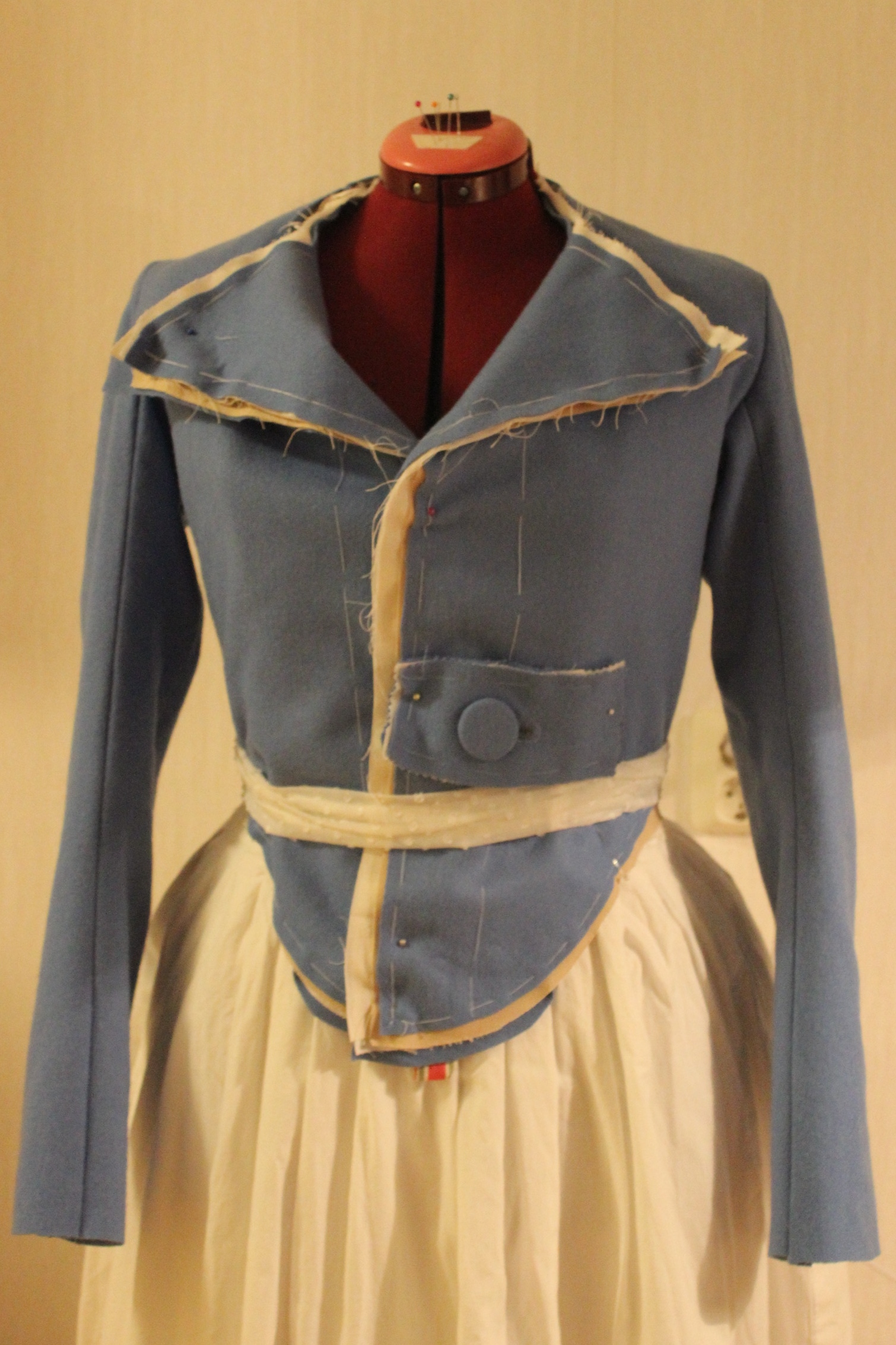
IMG_4906 IMG_4769

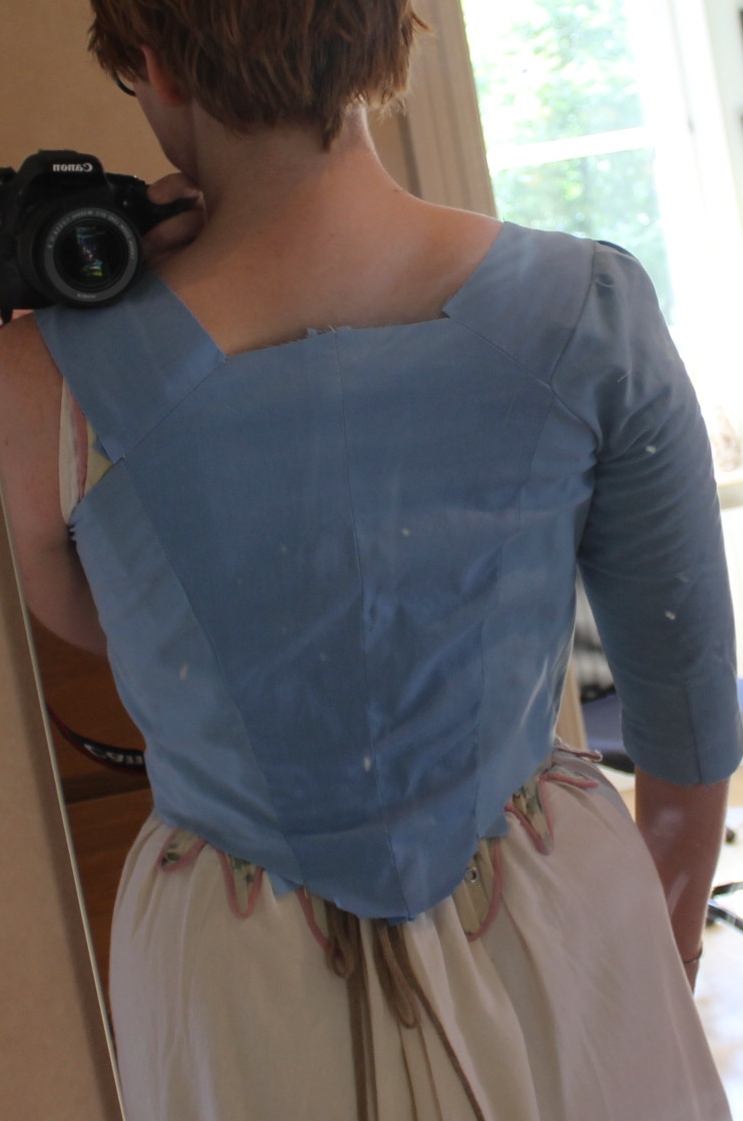
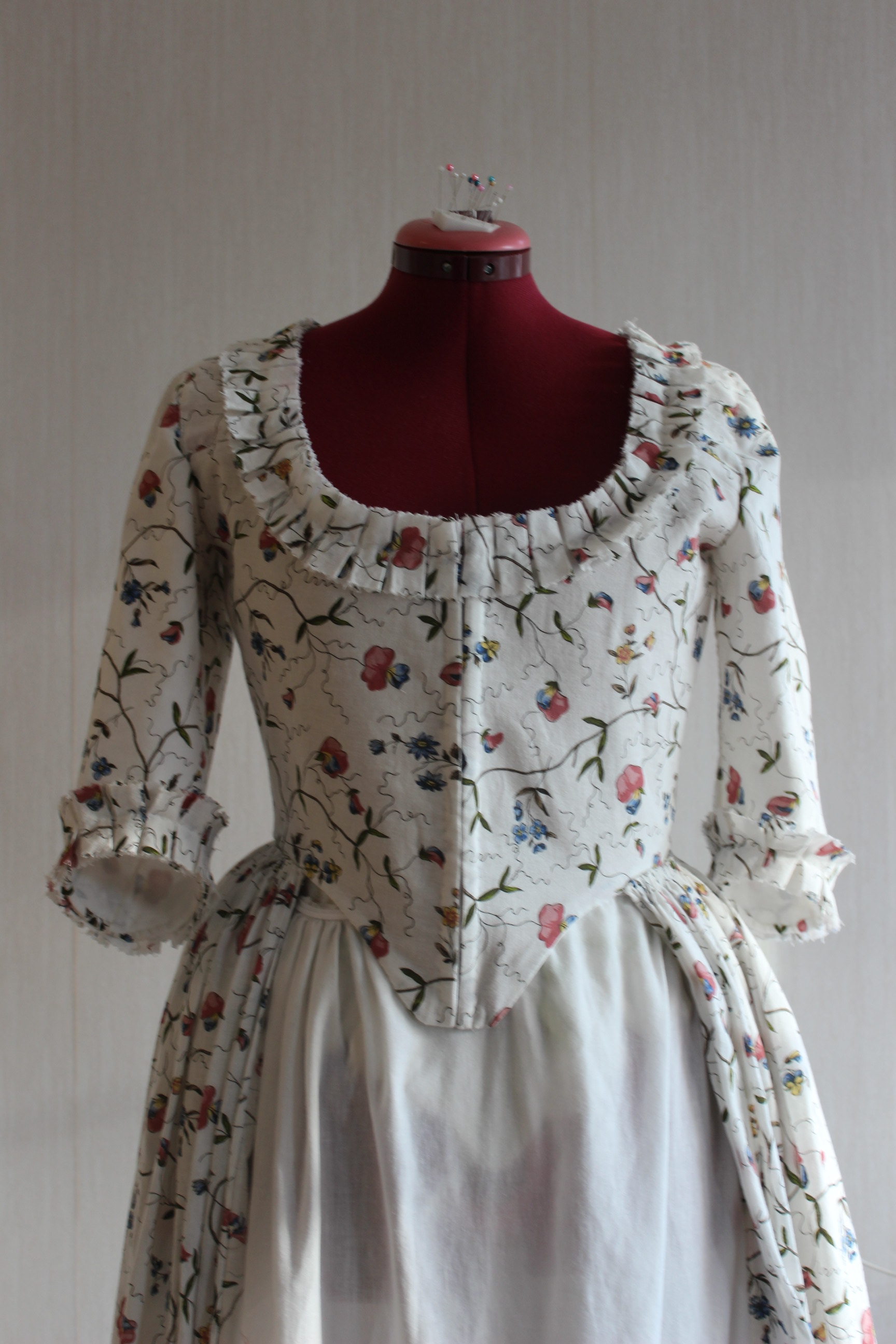
Once the lining and sleeves was attached, I put it on to try the fit.IMG_5005 I can’t say enough how pleased I an with the sizing on this pattern.
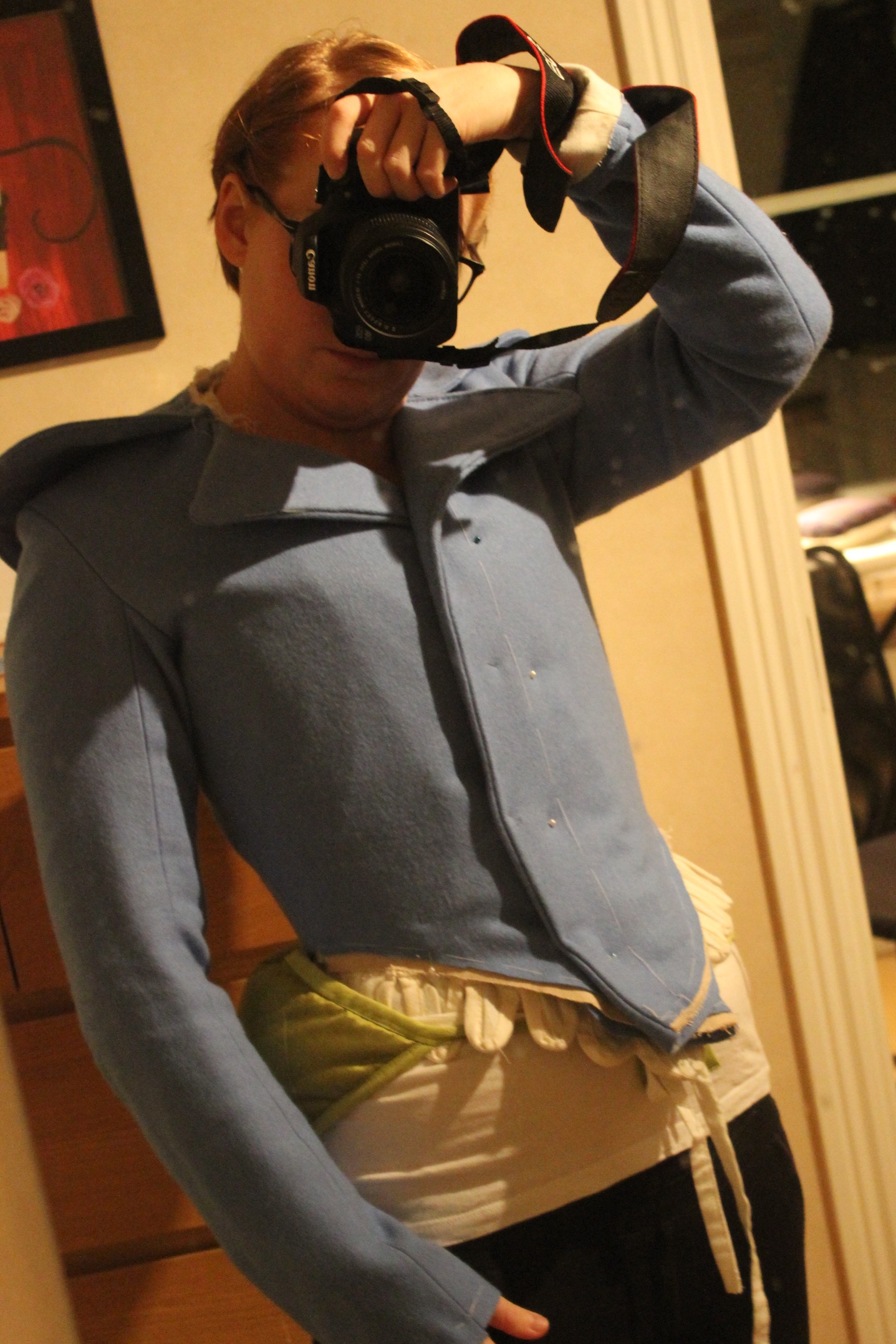
The only thing I needed to change was the length of the sleeve.

The center front marking matched up perfectly. IMG_5050
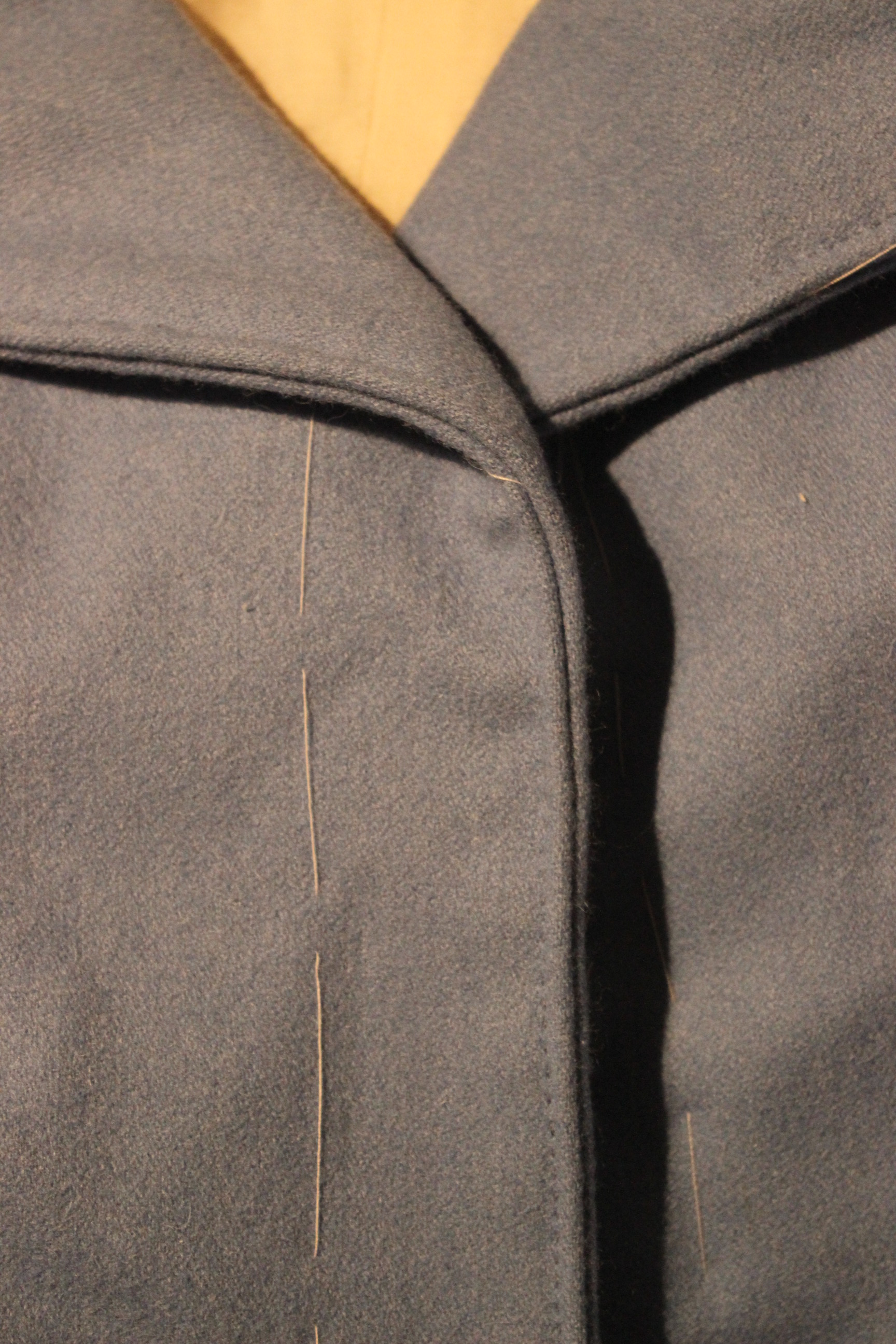
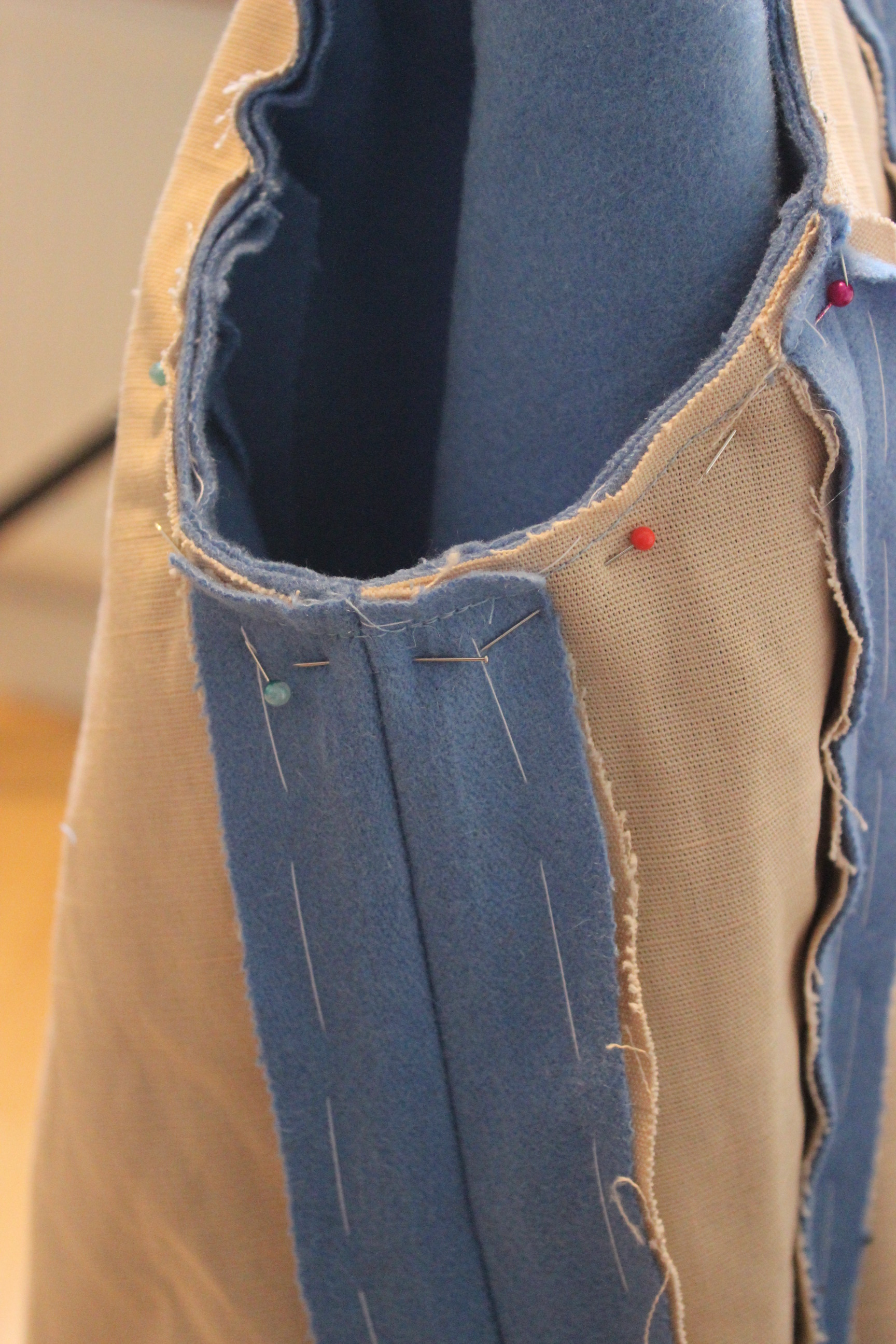
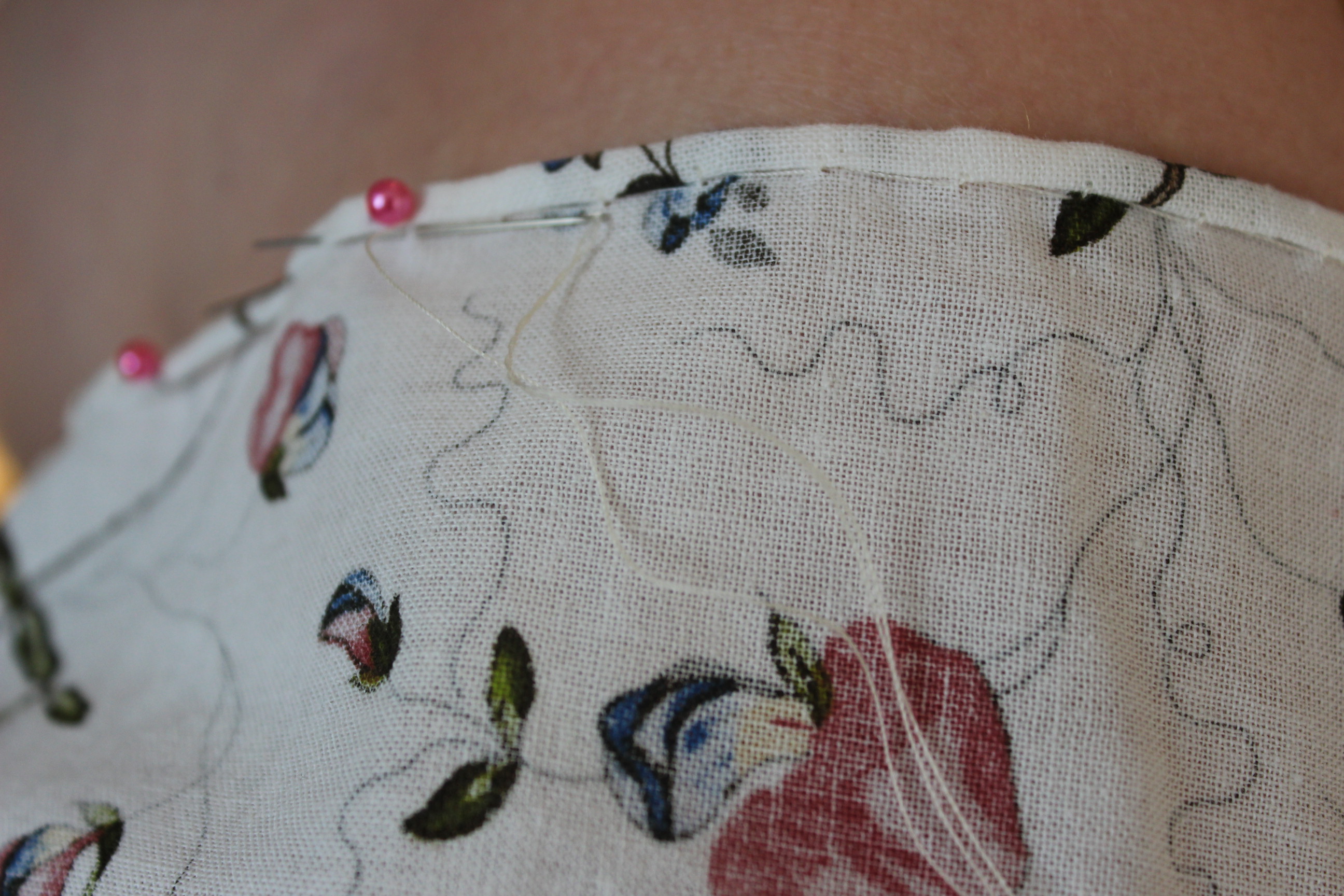
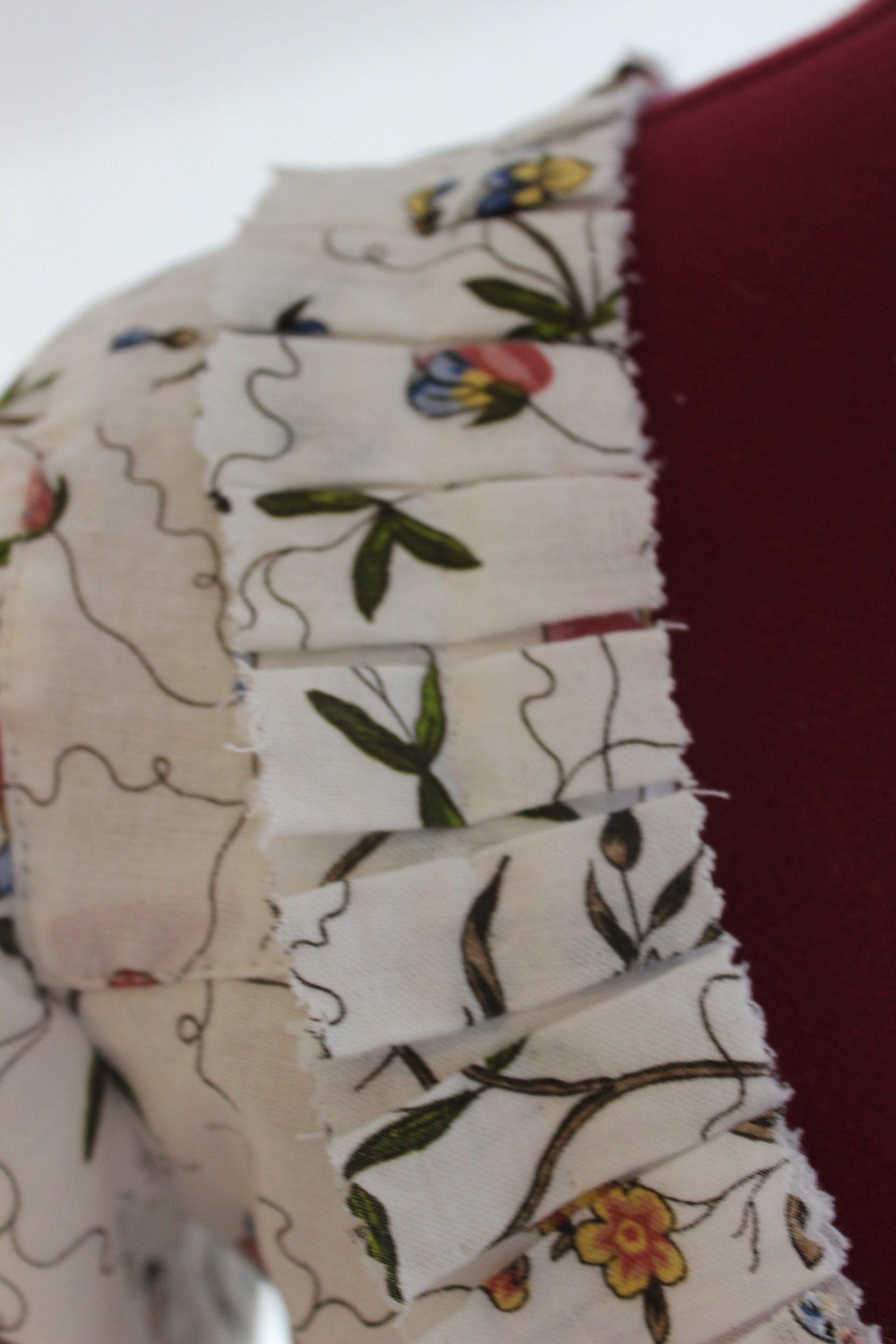
I then spent a few evenings stitching all the reinforcing/decoration on the collars and cuffs.IMG_5051
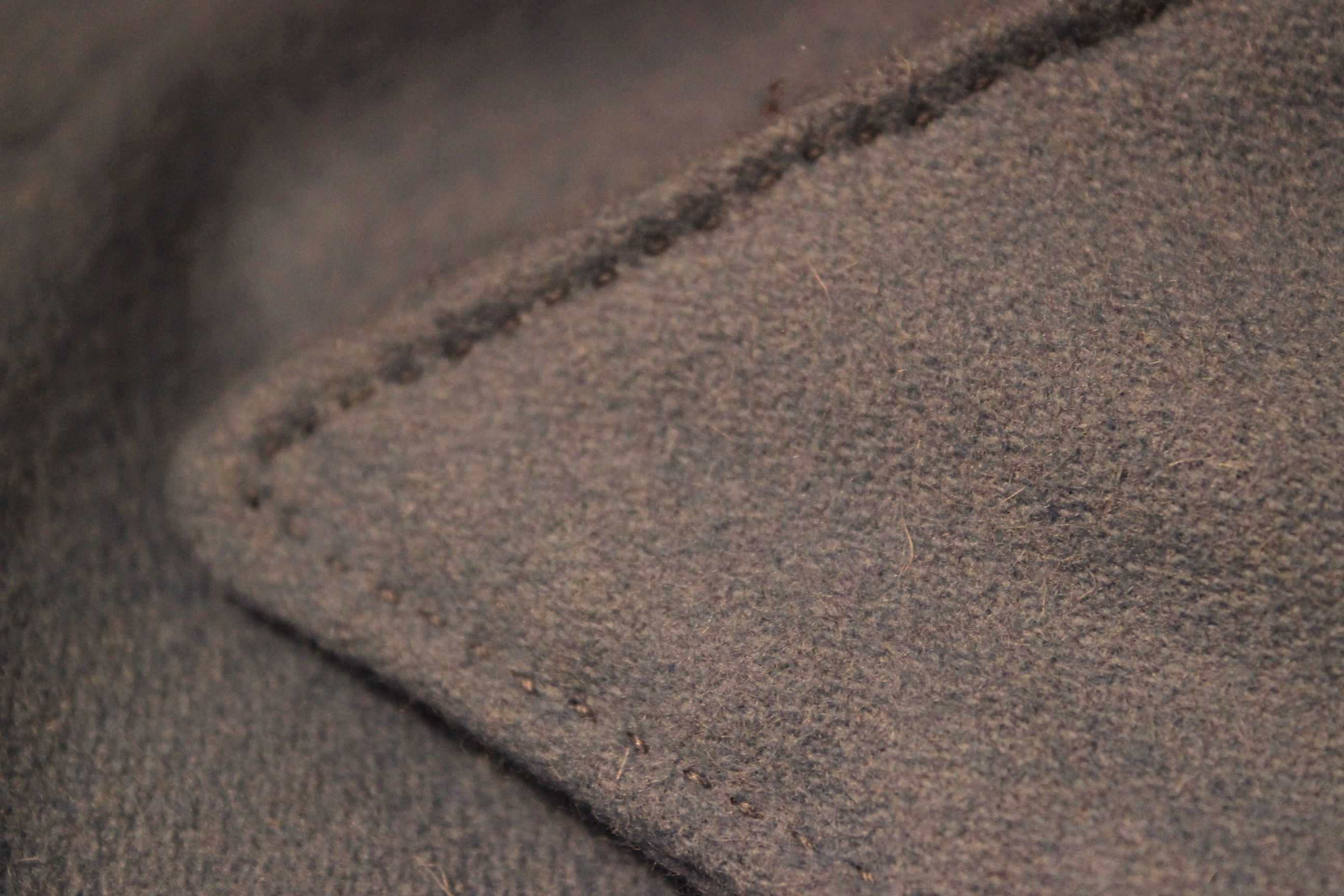
Then I stitched the ling down. IMG_5053

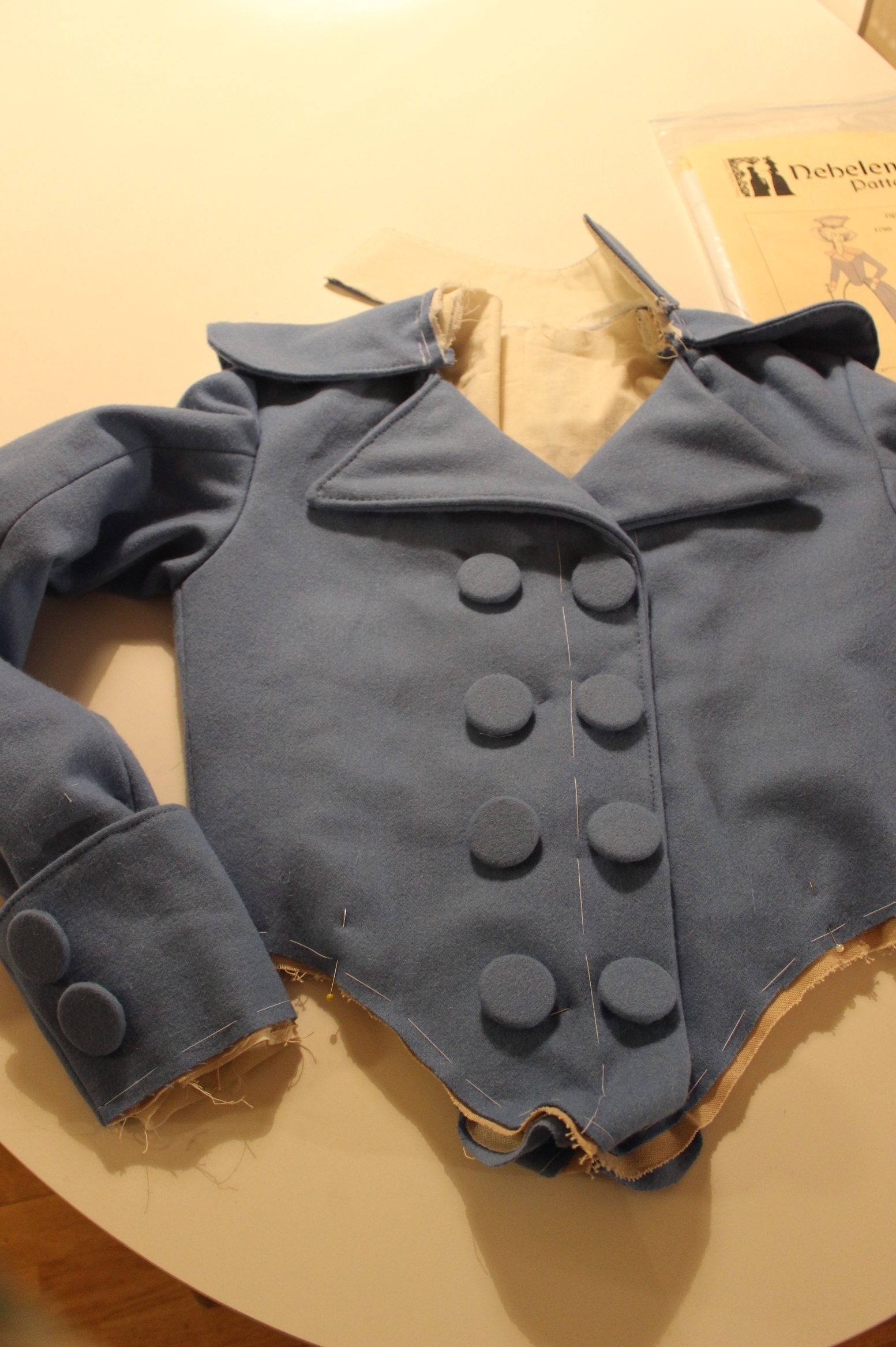
I couldn’t find any metal buttons I liked (like the ones Jen have), so I decided on fabric covered ones instead.IMG_4242Covering regular buttons in fabric.
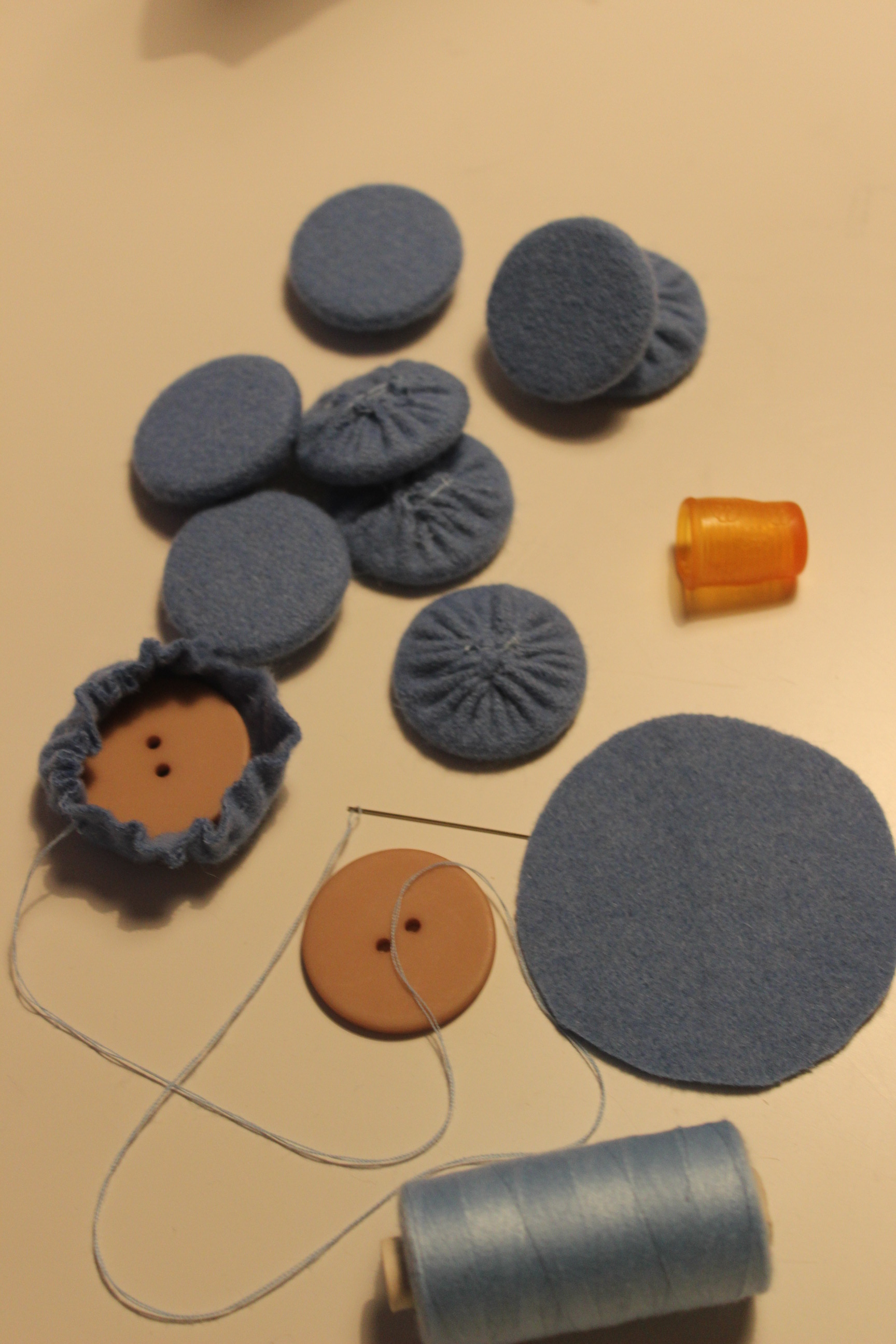
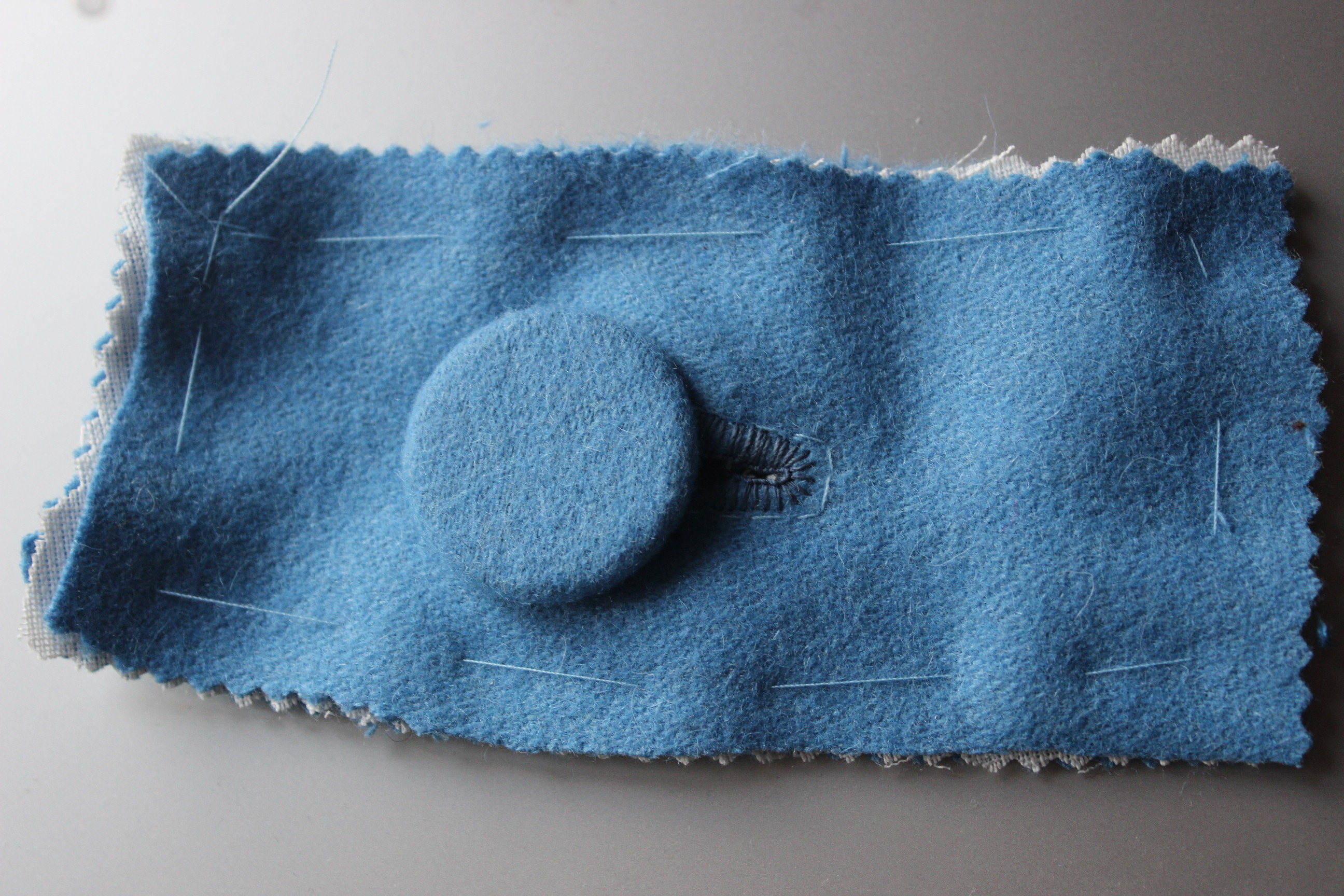
Once the buttons was finished, I needed to decide how to make the buttonholes. I tried a few ideas like, regular hand worked, piped or bound. IMG_4860Testing the hand worked button holes on a scrap piece.
And how to space the buttons
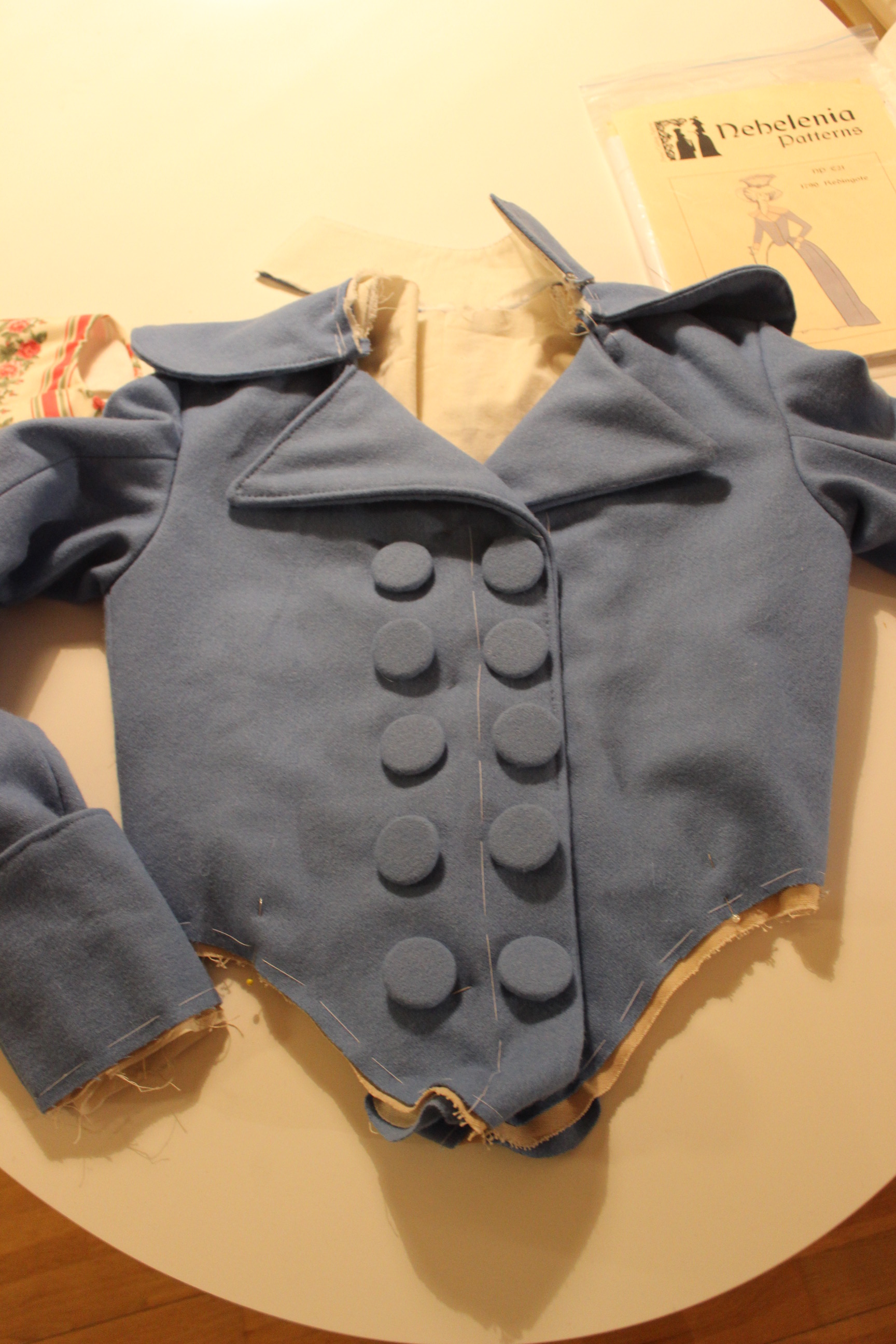
IMG_5028 IMG_5029
decisions, decisions…

To be continued…
A Skirt is a Skirt

A skirt is a skirt by any other name…

Petticoat or not to petticoat – that is the question…

Ok, enough silliness.
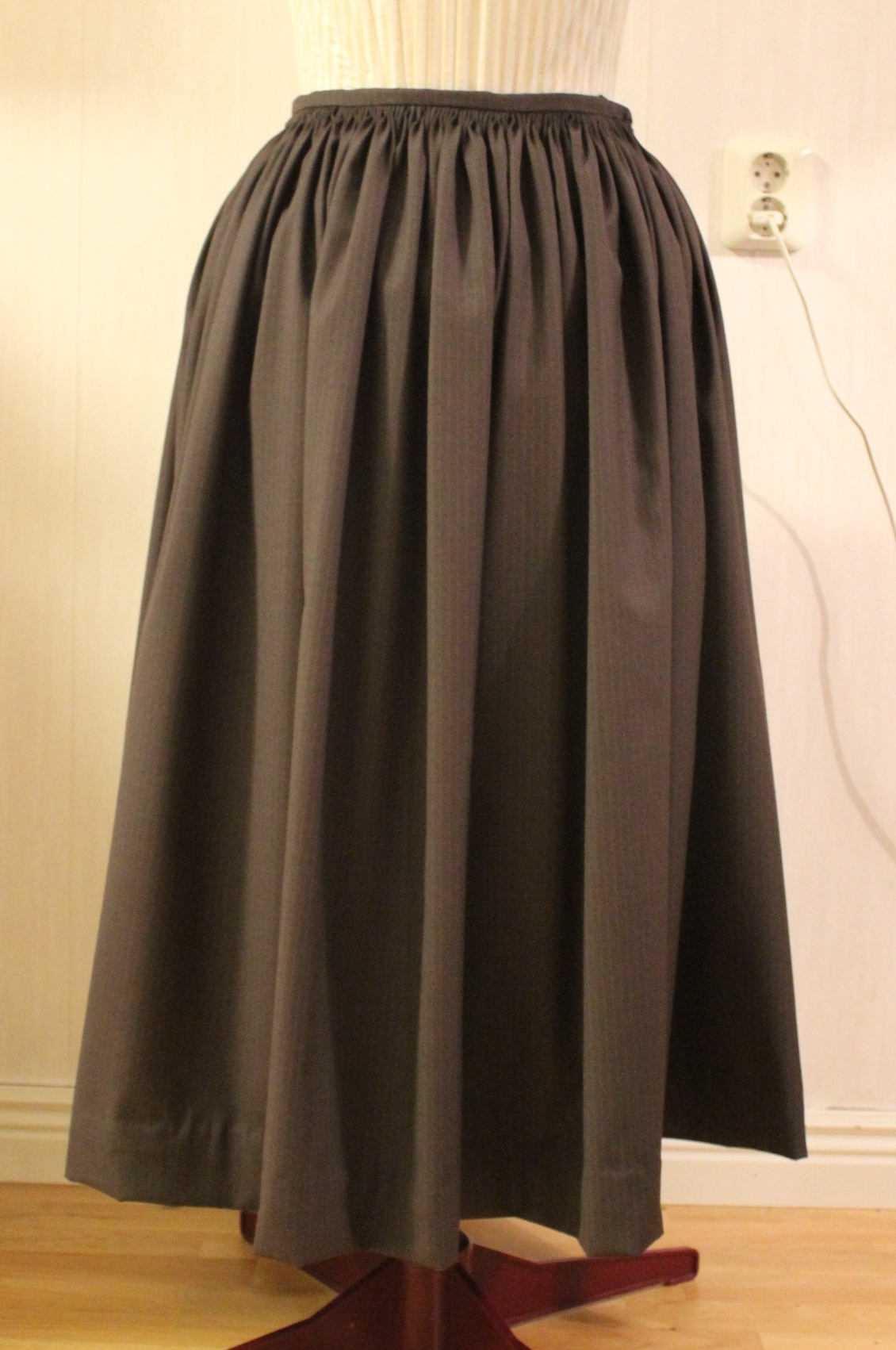
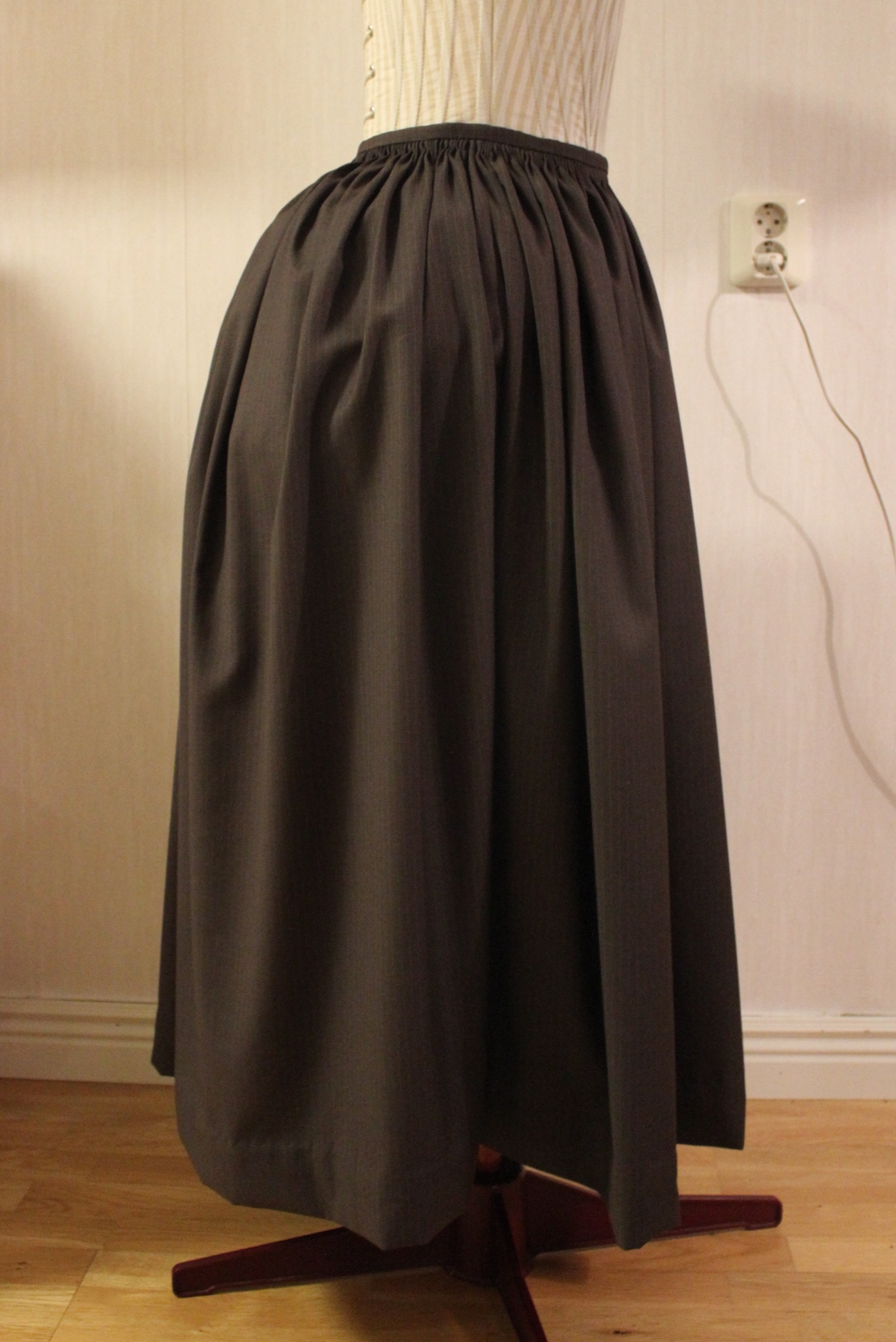
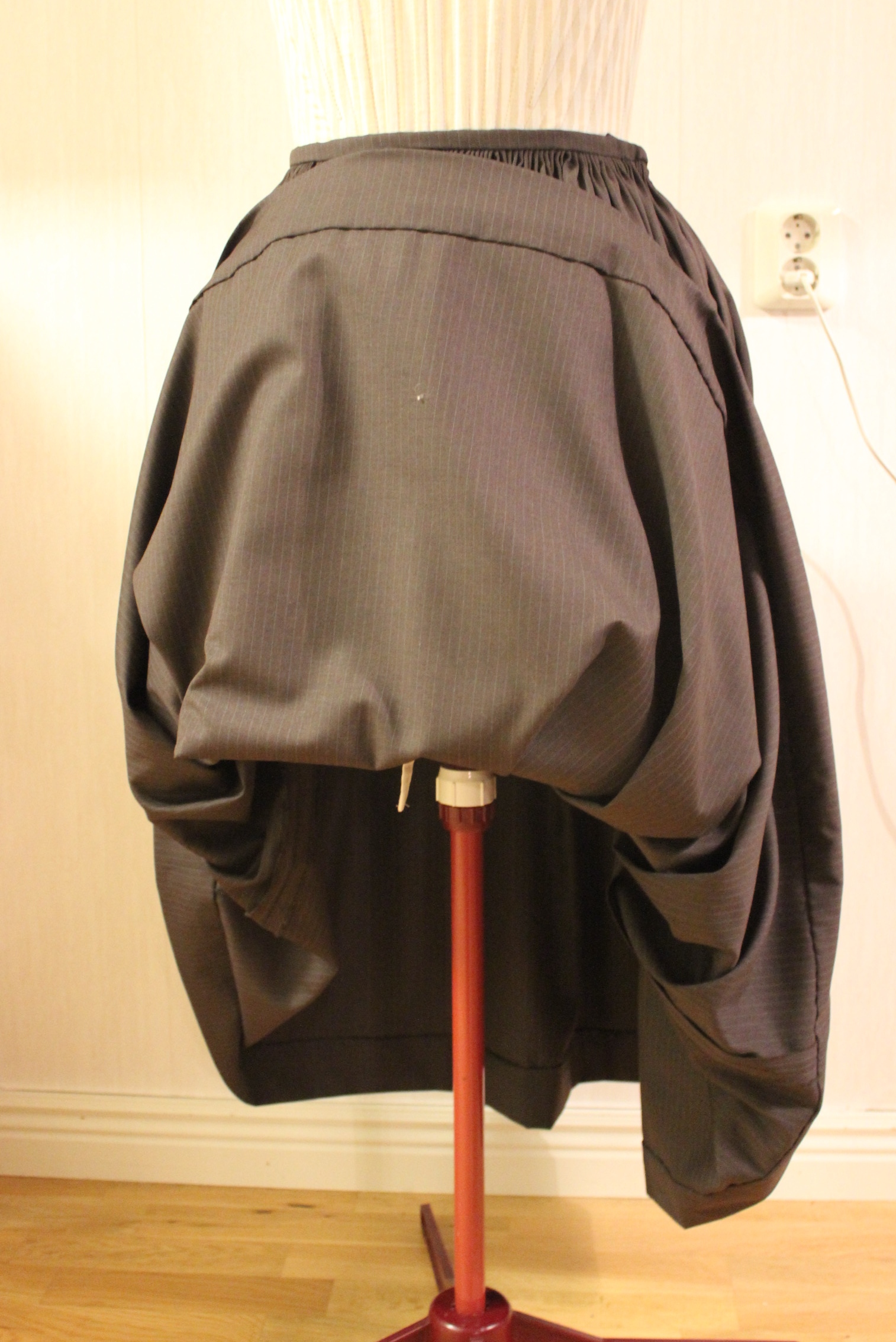
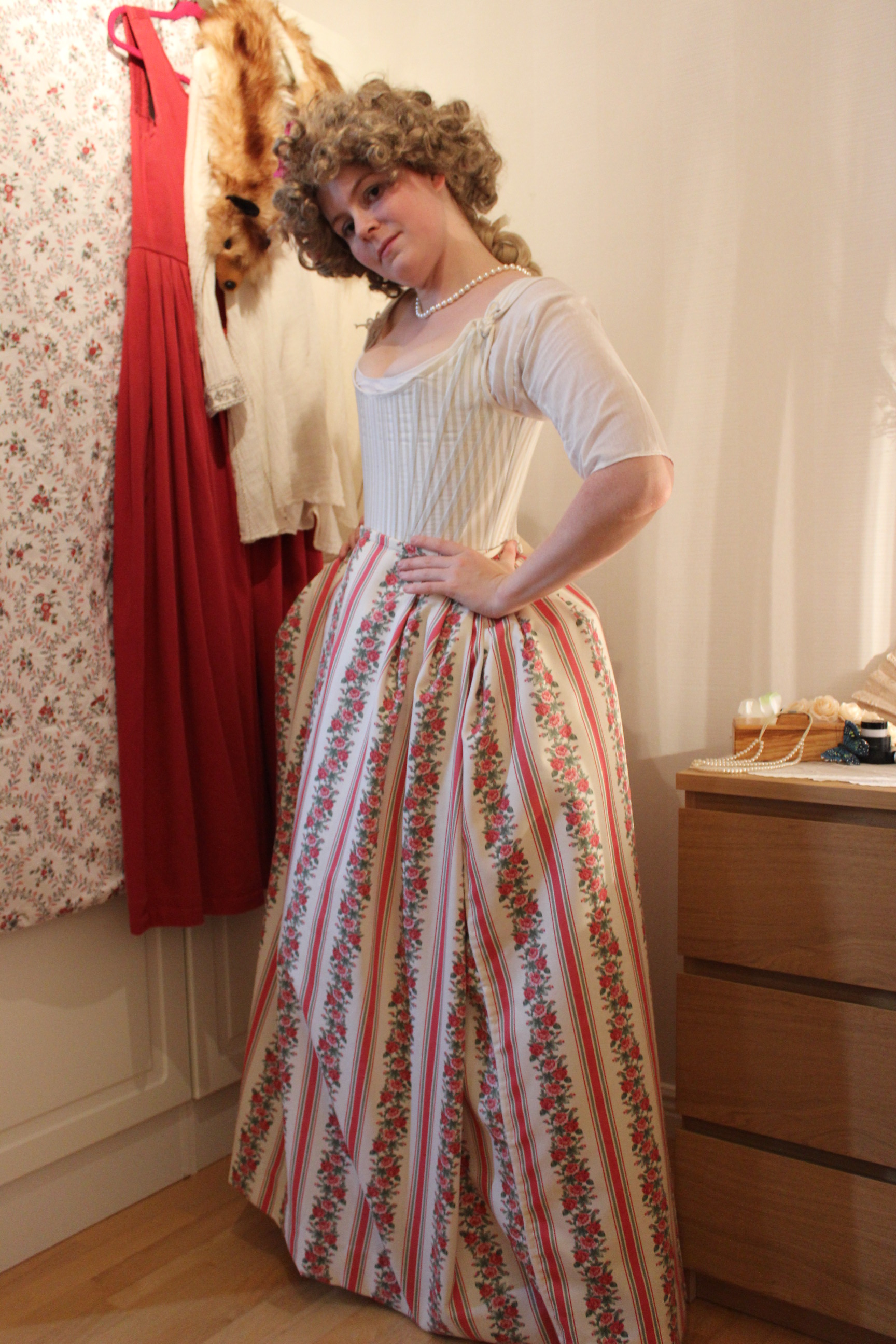
Last weekend I’ve made a 18th century petticoat/skirt.
Here in Sweden “Petticoat” means – “under skirt” or hoop-skirt if you’r talking wedding dresses, and a skirt is just a skirt – nothing else.
But in historic sentence these two seems to be interchangeable (at least to me, since I’d always had a bit trouble keeping the two apart in English).
But I then I read in “Cut of womens clothes” that after 1660s “the underskirt was always called a petticoat”.
Does that mean you can call the same garment “skirt” or “petticoat” deepening on the way it is worn at the moment?

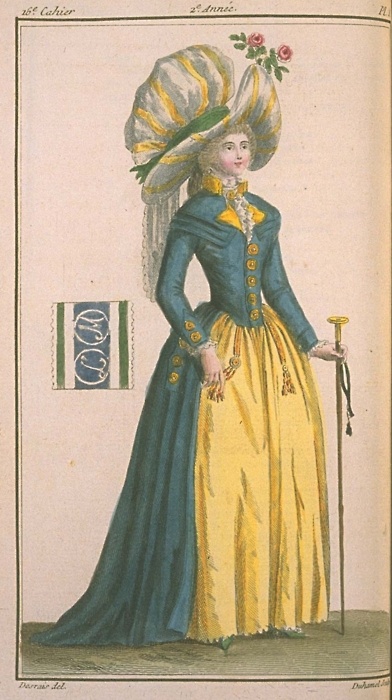
German maid, evidence of patterned jacket worn with solid skirt - kopia
Anyhow,
I’t was such an easy and quick project even though I made it by hand.
One day in front of the computer watching series, and it was done.

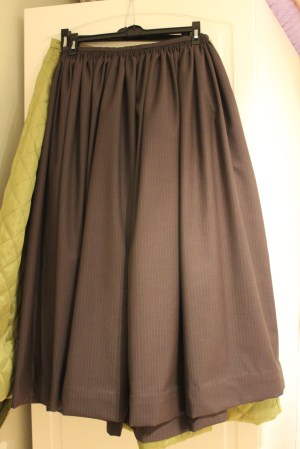
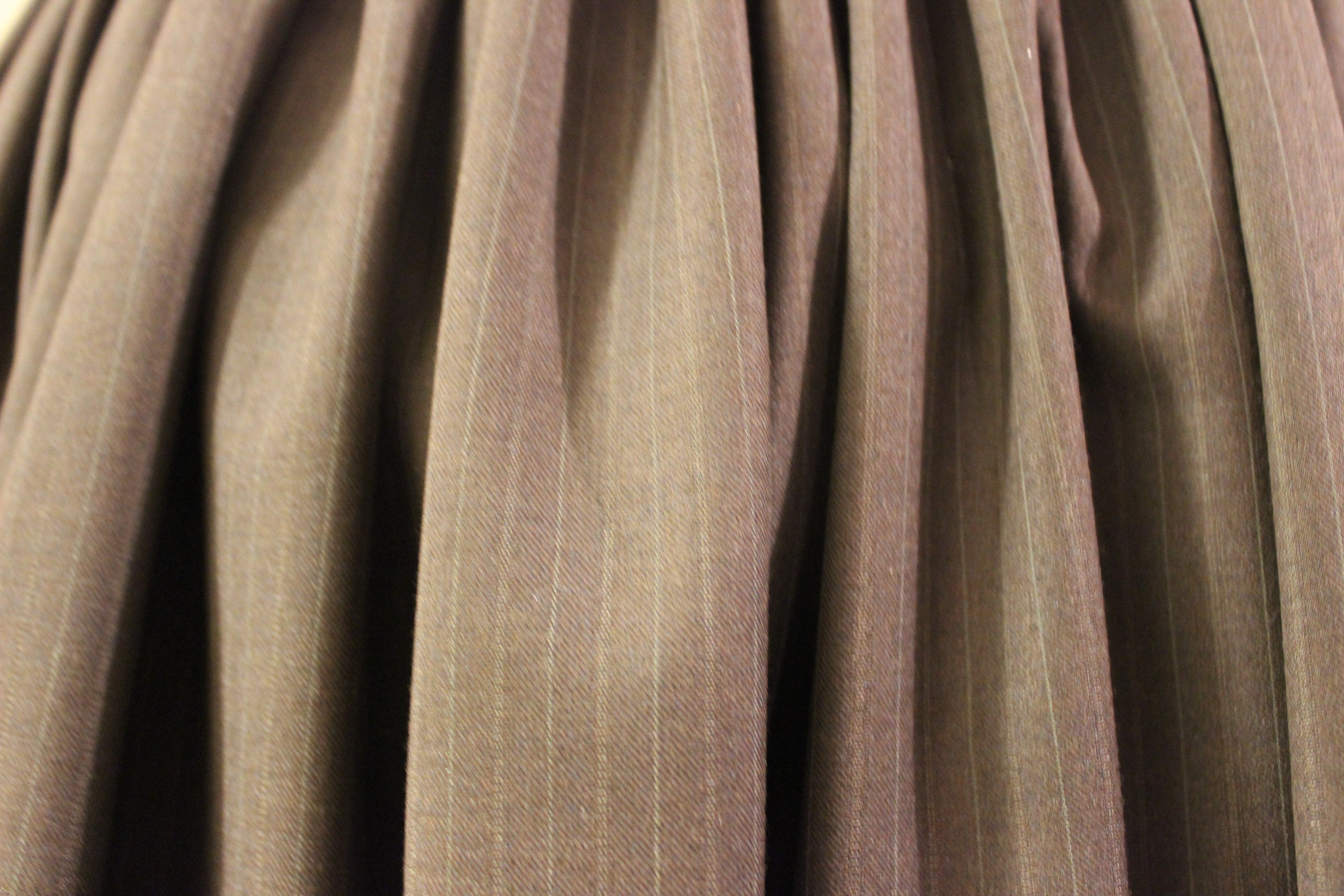
IMG_5108I bought this brown fabric for a steal from an online fabric sale – convinced it was a striped cotton twill (as the website claimed).
But once delivered it was more like a heavy polyester made for suits and pants. Darn it.
Well, the price of sending it back would be more then the fabric itself, so I decided to go ahead and make my skirt anyway.

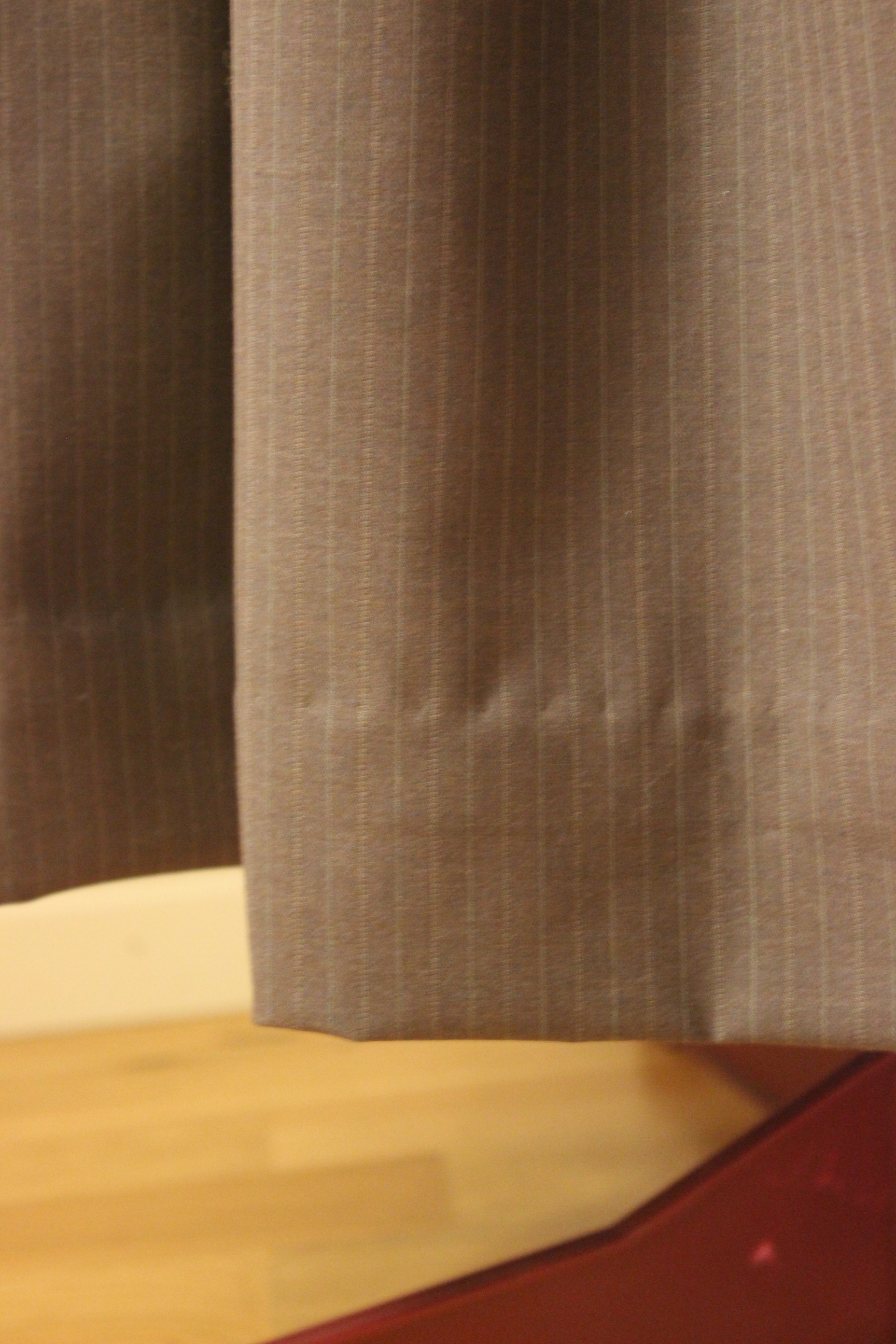
It worked surprisingly well, if you don’t count the bump in my fingers from pressing the needle through, and the heaviness of the fabric gives the skirt and hem a nice drape.
IMG_5054

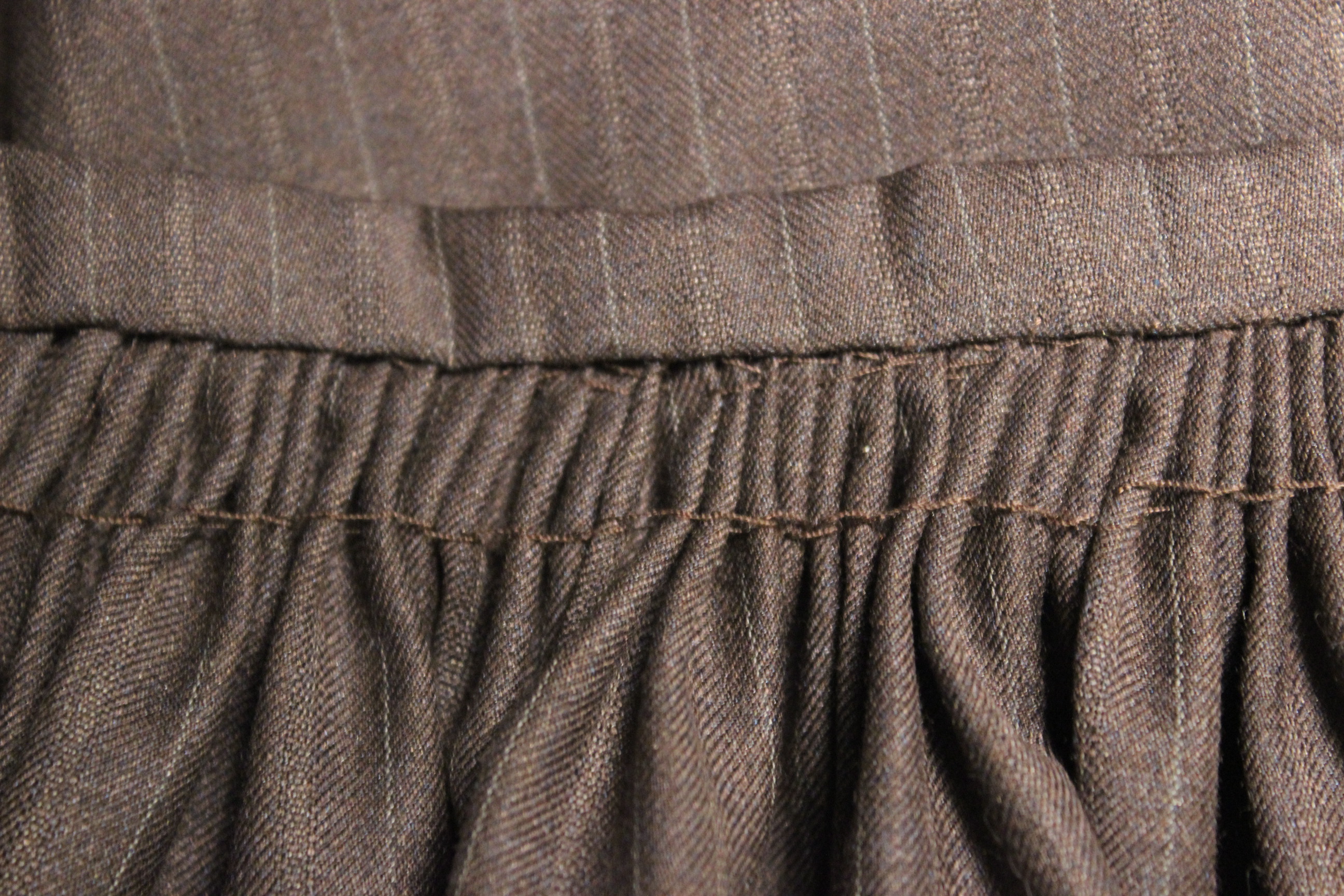
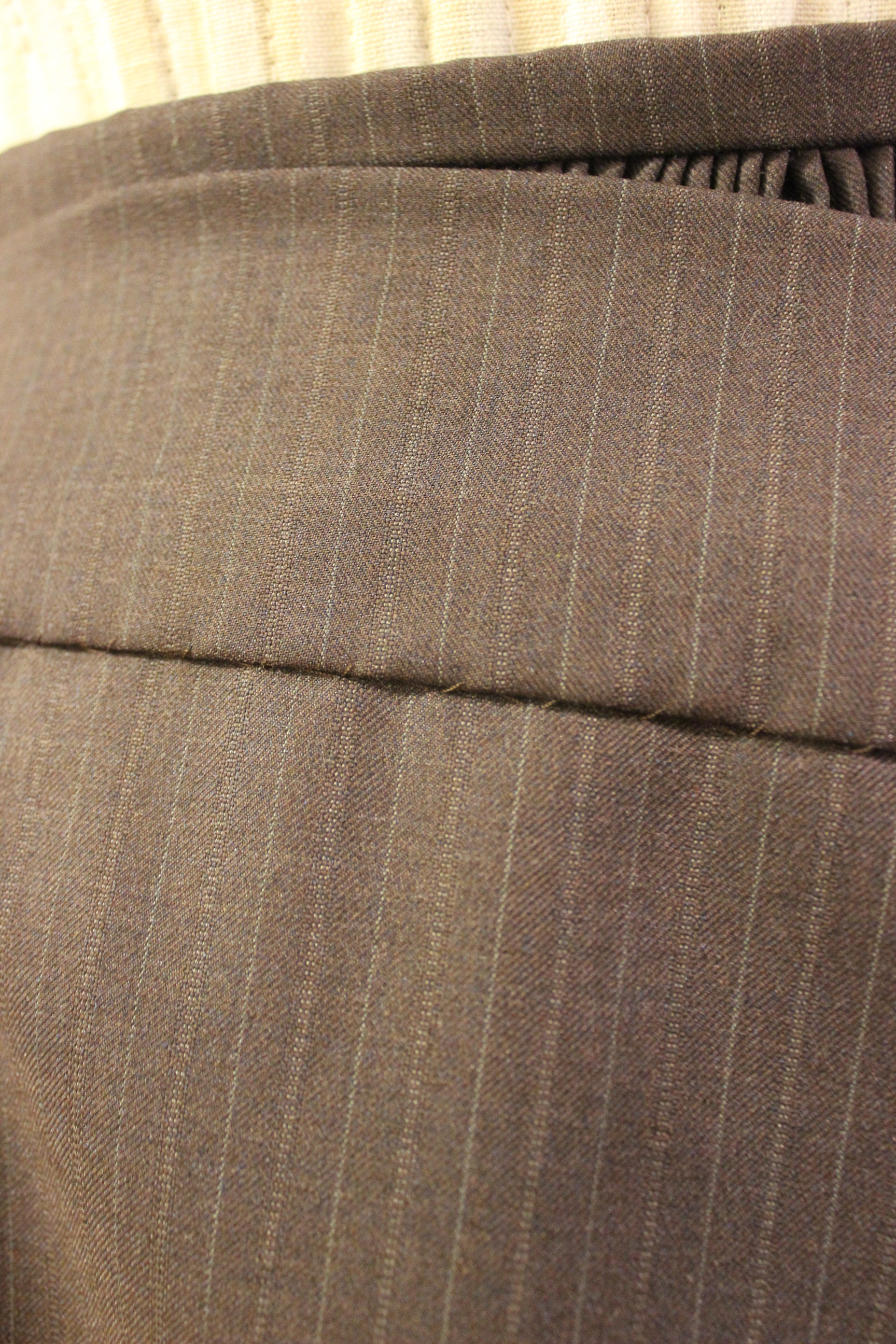
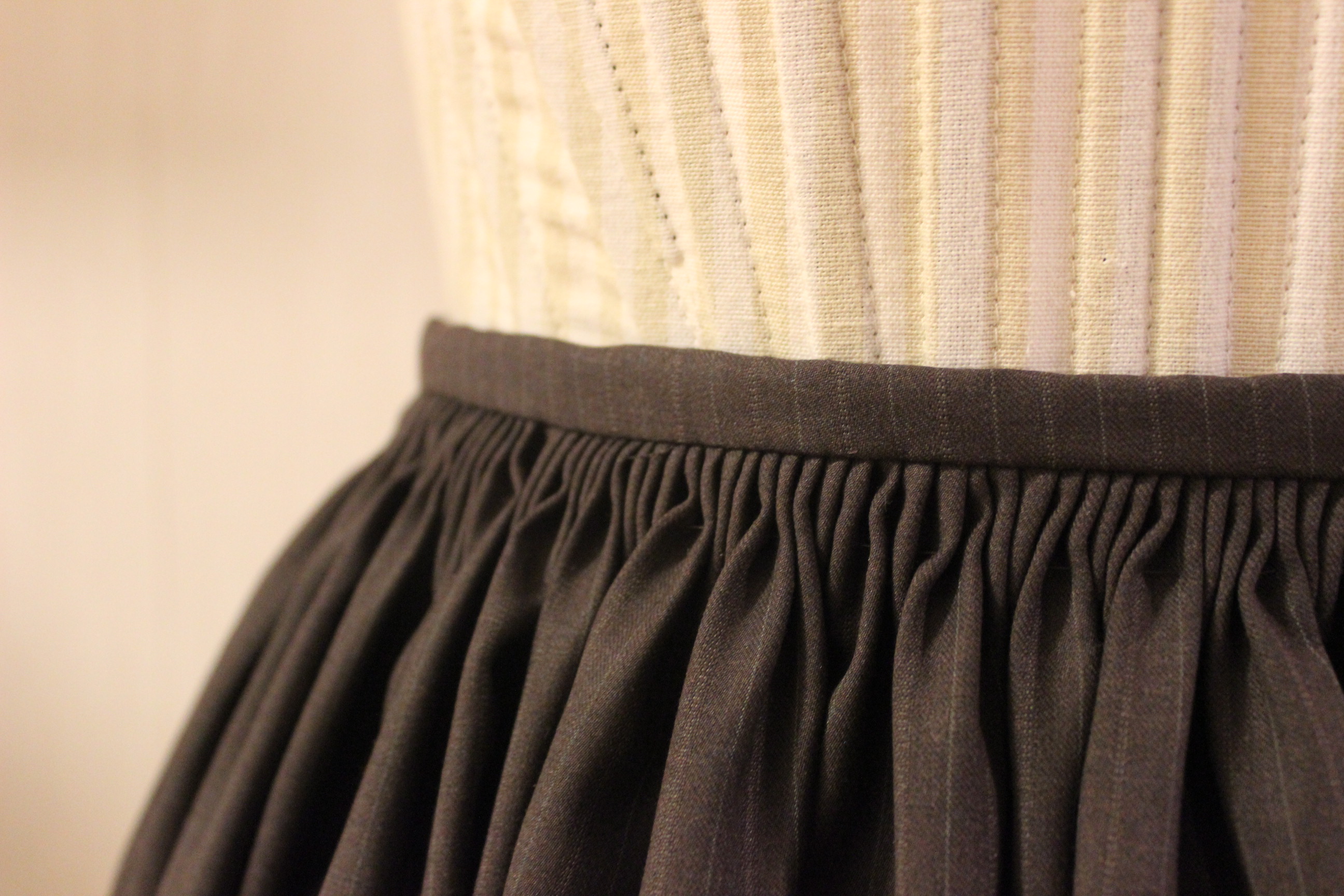
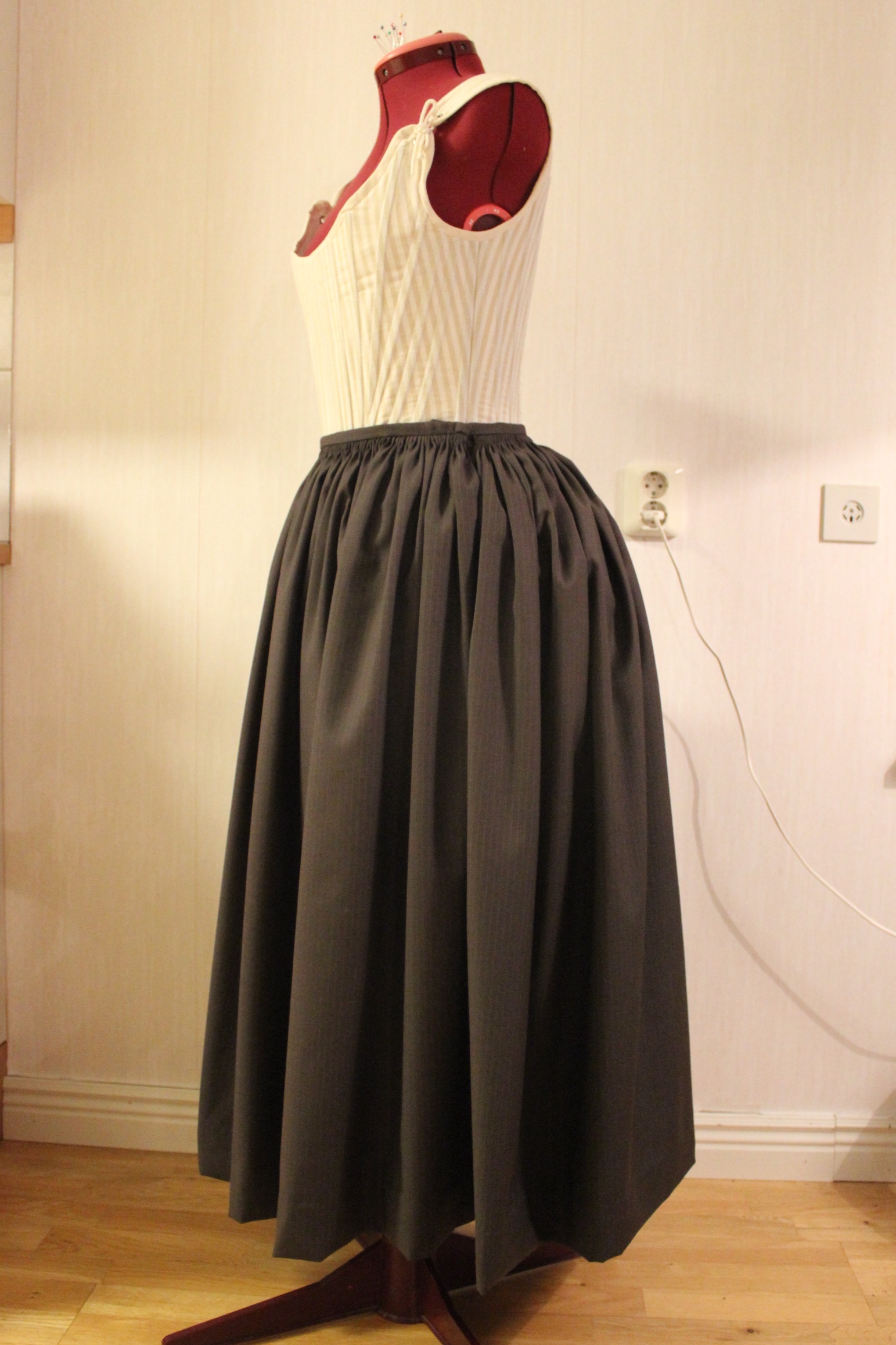
The construction is really simple using two width of fabrics and cartridge-pleating them to a narrow waistband.
IMG_5105

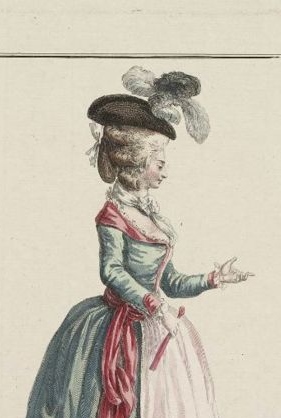
I also made sure to hem it quite short, to mimic the length of the fashion plate.IMG_5099

Finished:IMG_5087

IMG_5088

IMG_5094

IMG_5098

IMG_5103

IMG_5093

IMG_5097

IMG_5100

IMG_5091

Fabric: 2 m of brown polyester “twill”

Notions: thread, Hook and eye.

Cost: about 40Sek (6 Usd) all and all – I told you, a steal 🙂

Time: About 5 hours of hand stitching.

Final thought: I like the drape of the skirt and the pleating looks really nit, even though I would have wished for a thicker fabric.
I think the skirt will look great combined with the new bodice/jacket and accessories I’m working on, for the “peasant fiest” I’m hoping to attend in about two weeks.

18th century skirt foundation (A.k.a Panniers of pain)

For the HSM challenge 1/2015 – Foundation, I knew I wanted to make 18th century panniers to go under my in progress robe a la Franchise (more on that on a later note).

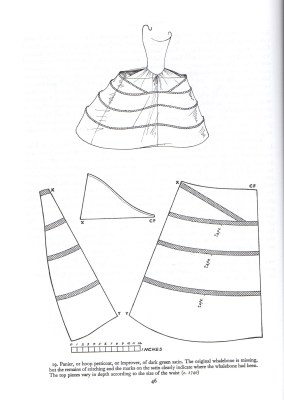
And since I already had all the material (fabric, metal boning and bias tape) in my stash I started by looking for patterns.1740 panier waughThis pattern from “Corsets and Crinolines” looked good but seemed to be much bigger then I needed.
And I’ve heard from others who made it that it is in fact huge!

I was thinking something more along the lines of this picture.be103b0e94eebfb2dae8a3a825eb33b6That seems easy enough. So I figured I didn’t need a pattern after all.

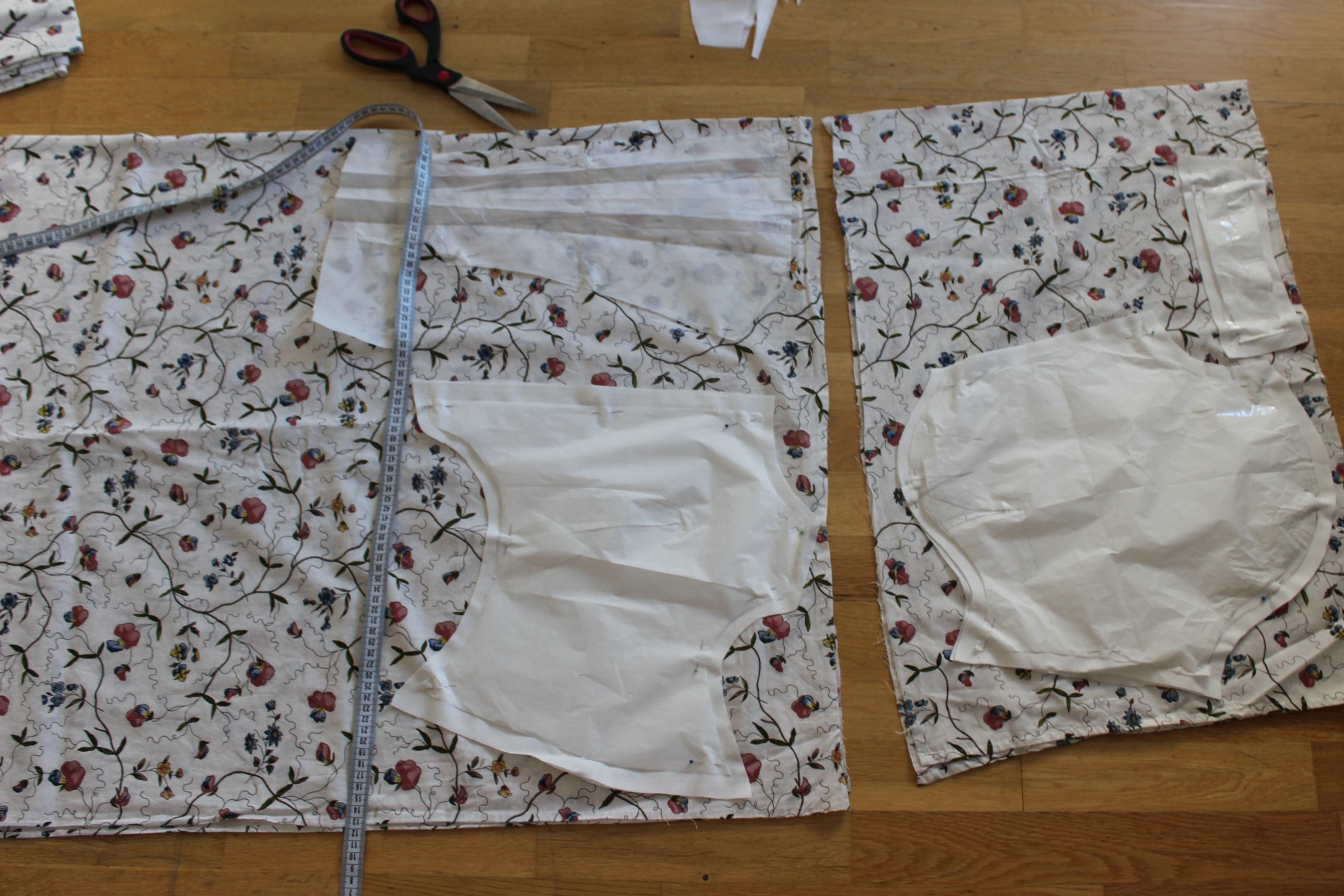
So on to the tapemeasure I whent, and started cutting the fabric.IMG_4876A green sort of linen/polyester kind of fabric, here cut in double pieces.

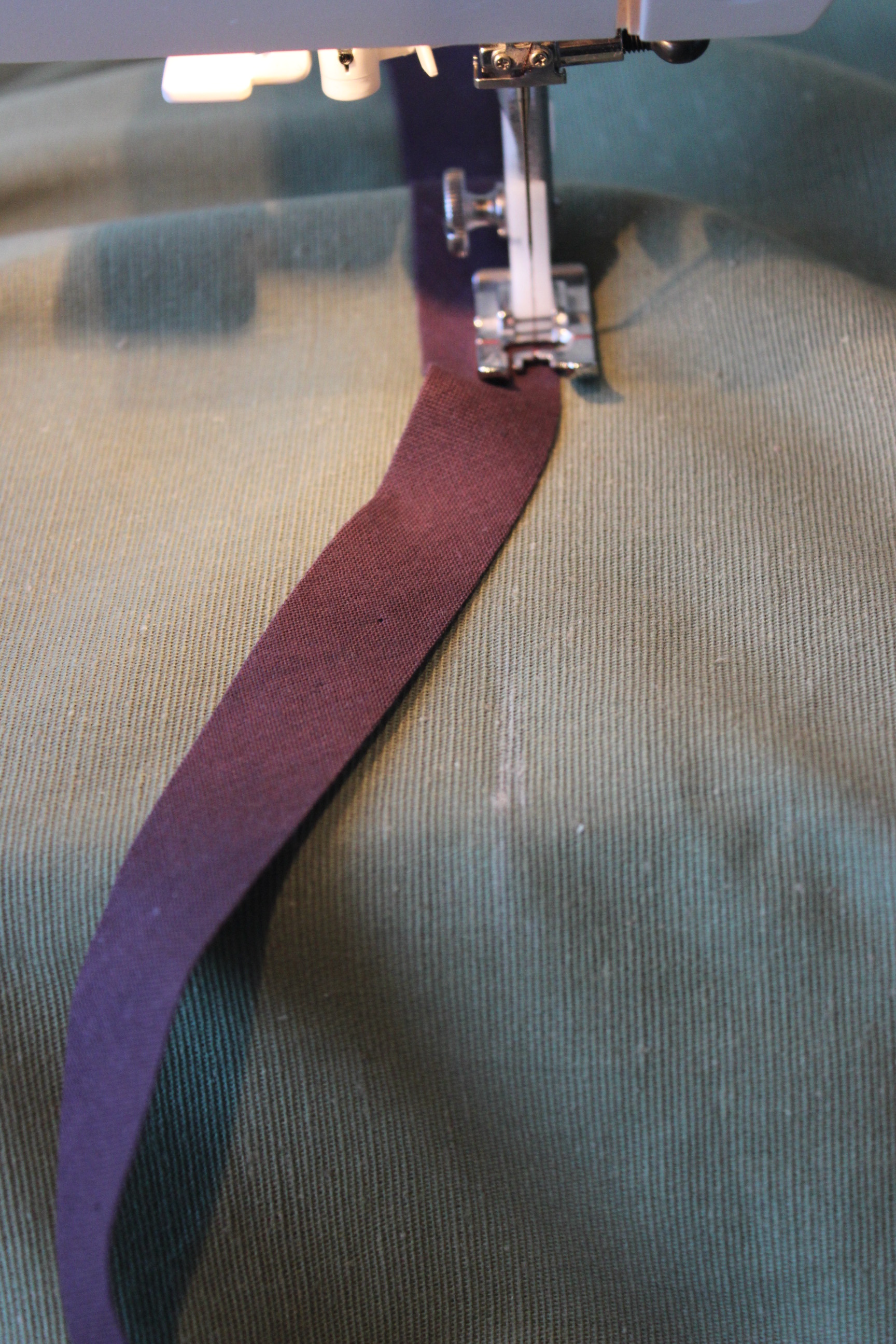
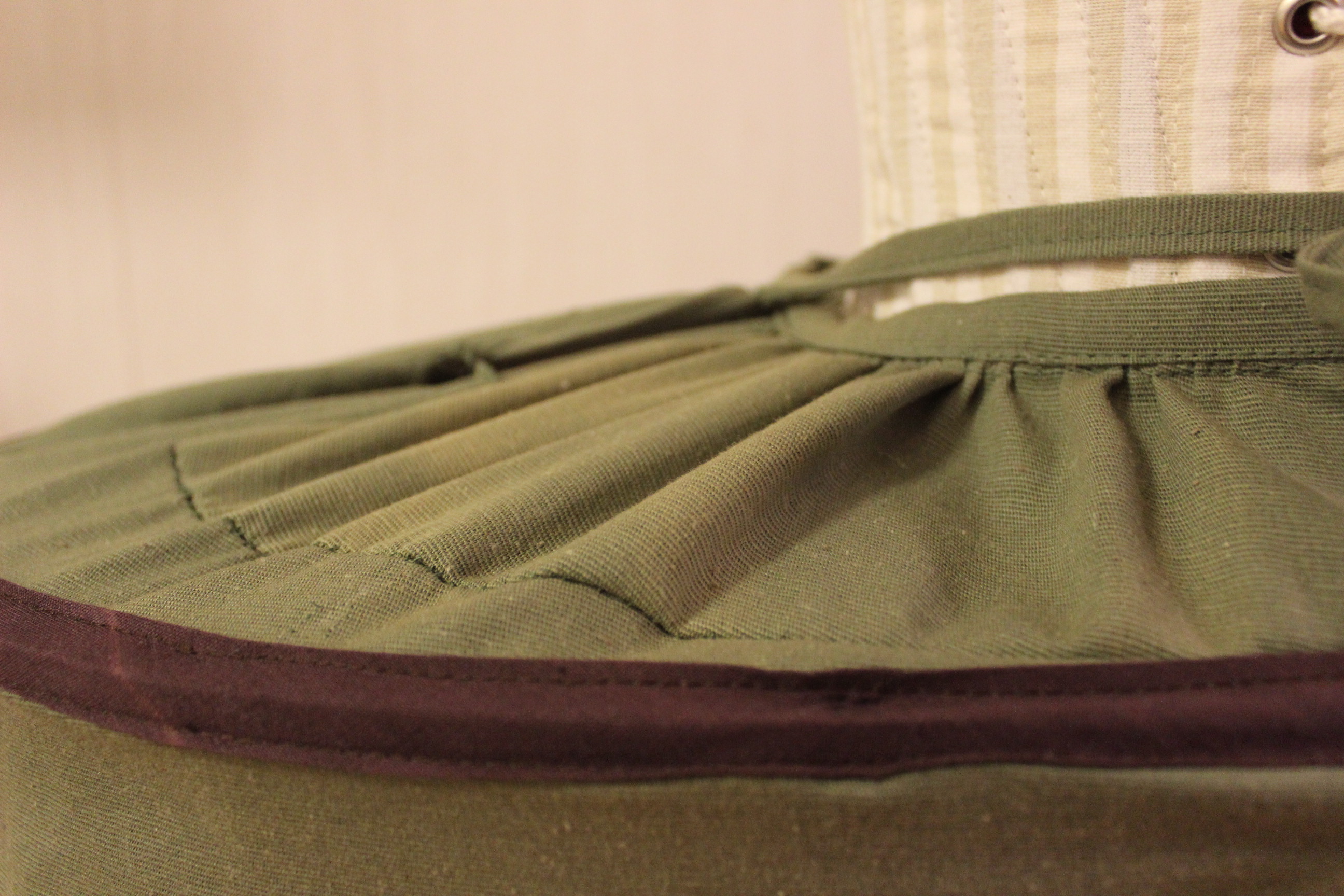
Once all seams was stitched together and felled, I started working on the boning bias tape for the channelsIMG_4884 I marked where I wanted the bones to be, and stitched the bias tape on top of the chalk lines.IMG_4888

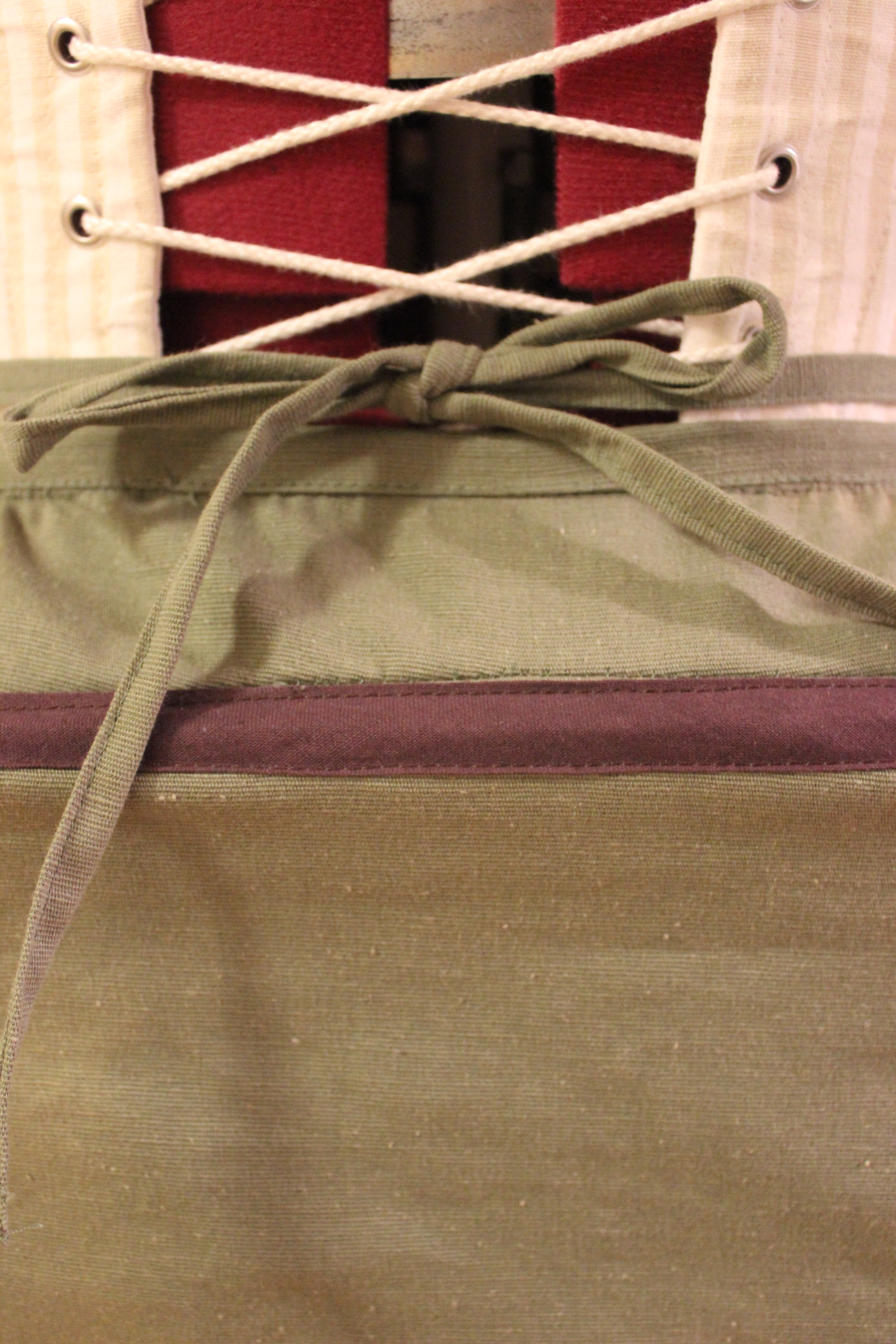
Then I made a running stitch and gathered the top to be set in the waistband.IMG_4891

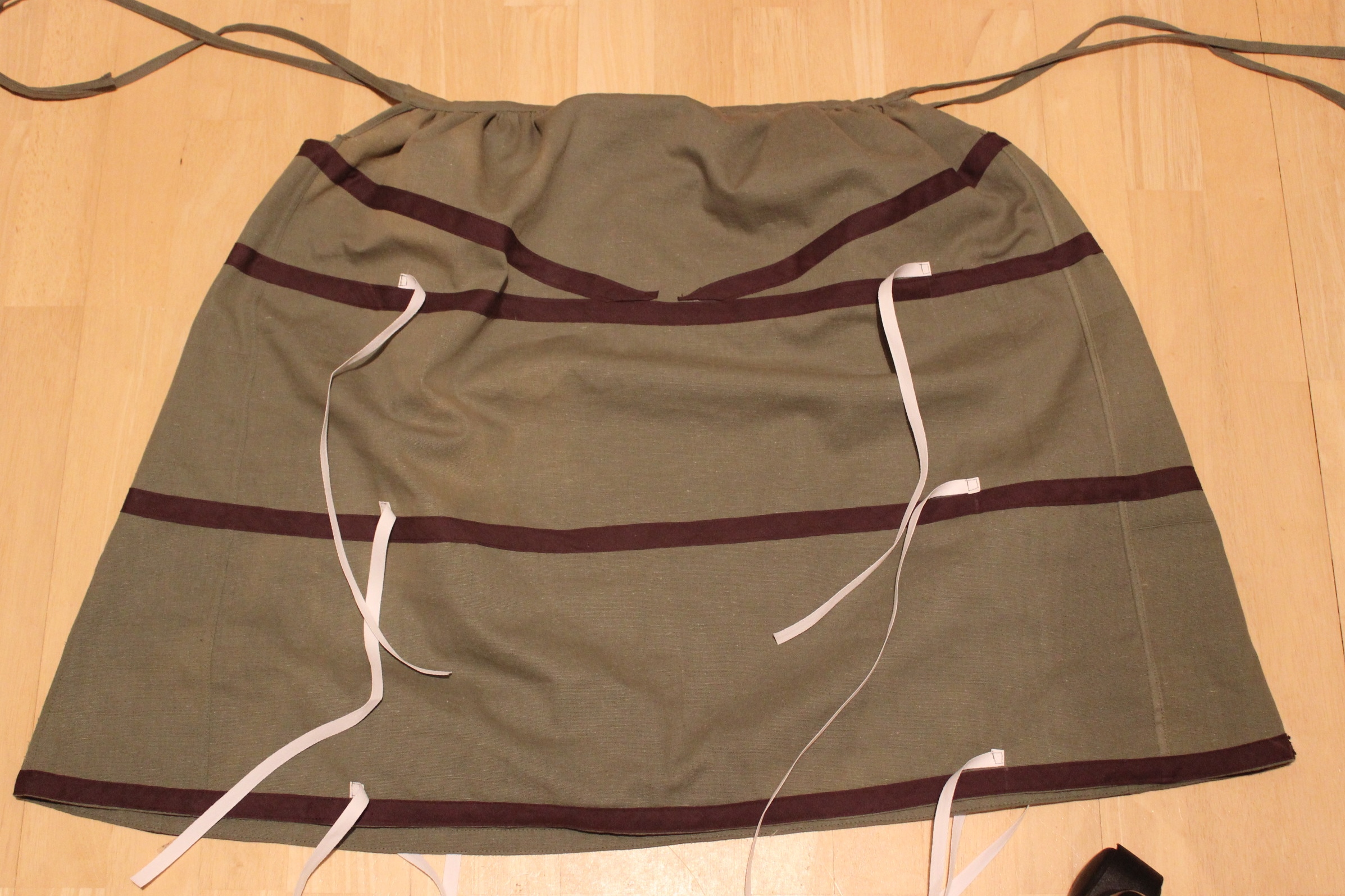
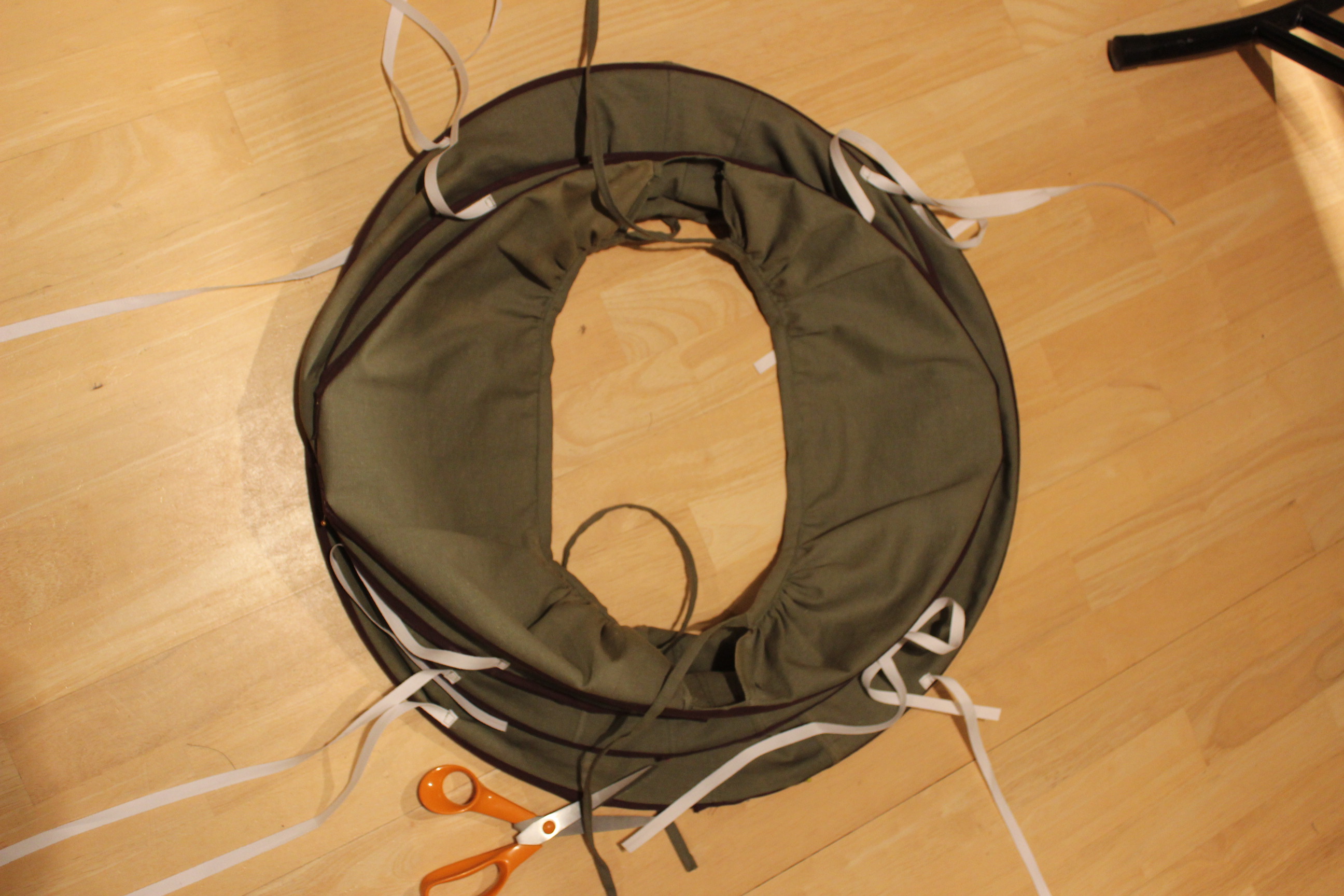
To get the oval shape on the panniers I attached rows of ribbons to be tied horizontal across the hoops.IMG_4933

IMG_4902Inside of the panniers before inserting the boning.

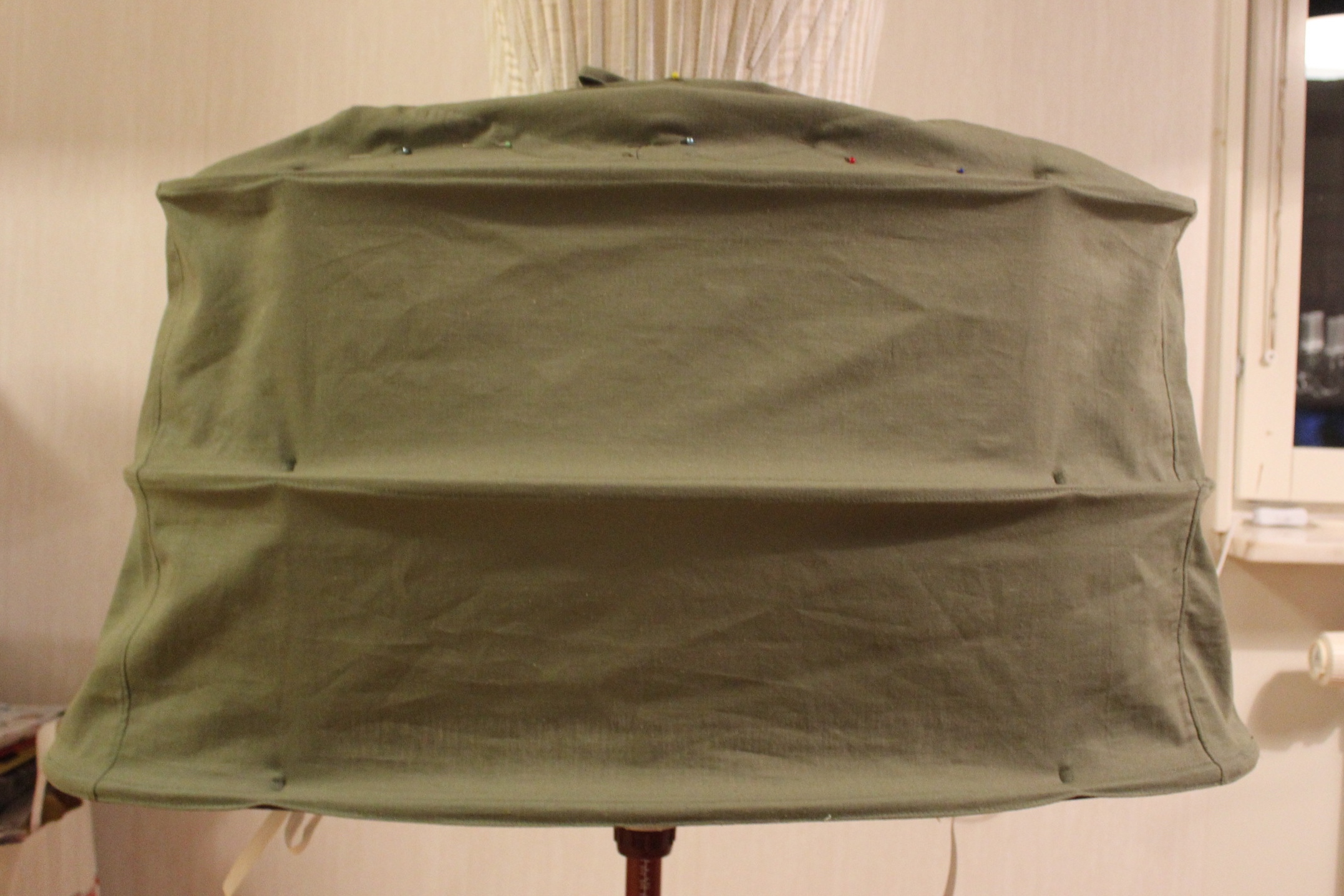
I used my regular go-to metal pipe cleaners for boning. IMG_4903 The shape of the panniers whit the bones are somewhat circular…

And the edges of the top most bones makes a slight worrisome edge.IMG_4904

Finished in one night, yay!

Eh, no….

IMG_4914IMG_4915

Once tied together the top hoop made the worst shape ever.

Darn it.
How to solve this?
I posted a quick question on my facebook page and in the HSM facebook group, and over night got lots of great suggestions.

Then I started experimenting.

I removed the diagonal bones at the top.IMG_4916 IMG_4917Better, but a long way from perfect.

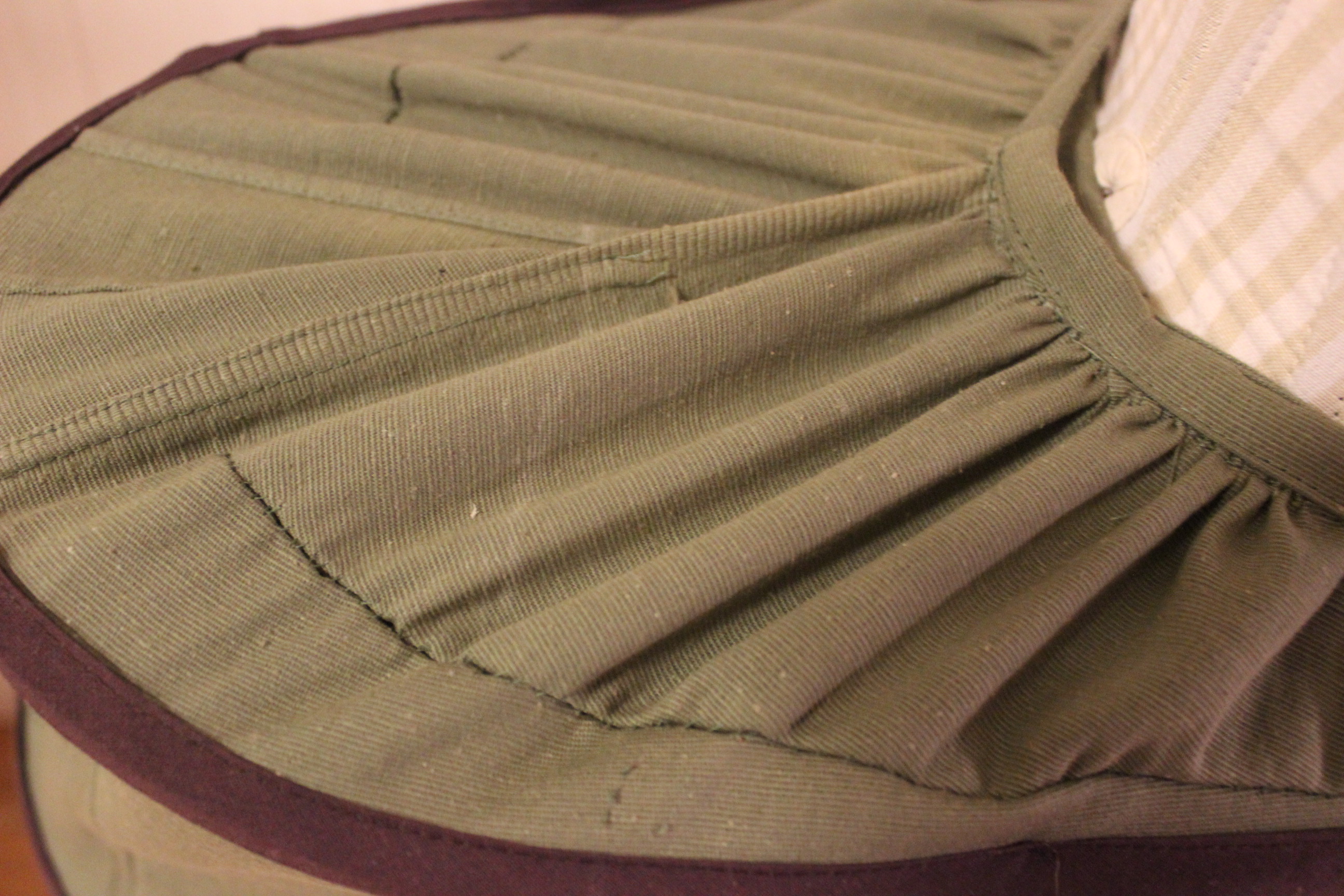
Once he bones was removed I noticed a excess of fabric at the top front and back. I played with pinning it into a giant dart thous removing the upper bones ability to push out.IMG_4920 IMG_4925There was lots of width to take out.

But once pinned in darts and tied into place the pannier keeps the desired shape.IMG_4929

The problem was I thought of the whole panniers like a big circle/crinoline tied into shape. But what I failed to grasp was that to keep the top hoop close to the body at front/back and wide at the sides I needed to shape the top of the fabric. – just like in Waughs pattern….

Once decisive on the actions on how to save and finish the panniers I also decided that the pale green color was a bot bland. So I turned it inside out and stitched the darts from the opposite side to give it a ore interesting look (including removing all the ties and re-attached them on the new inside). IMG_4930

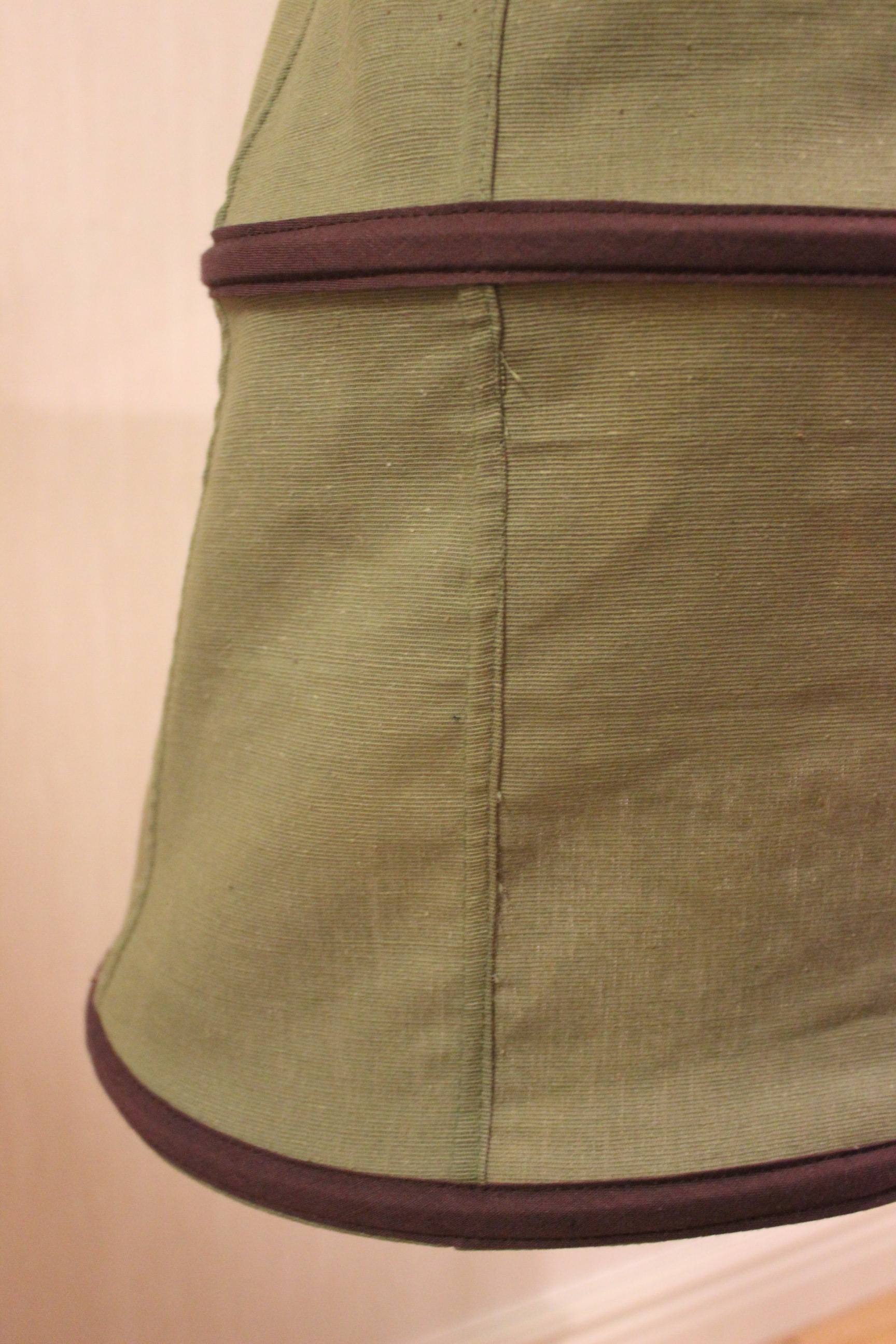
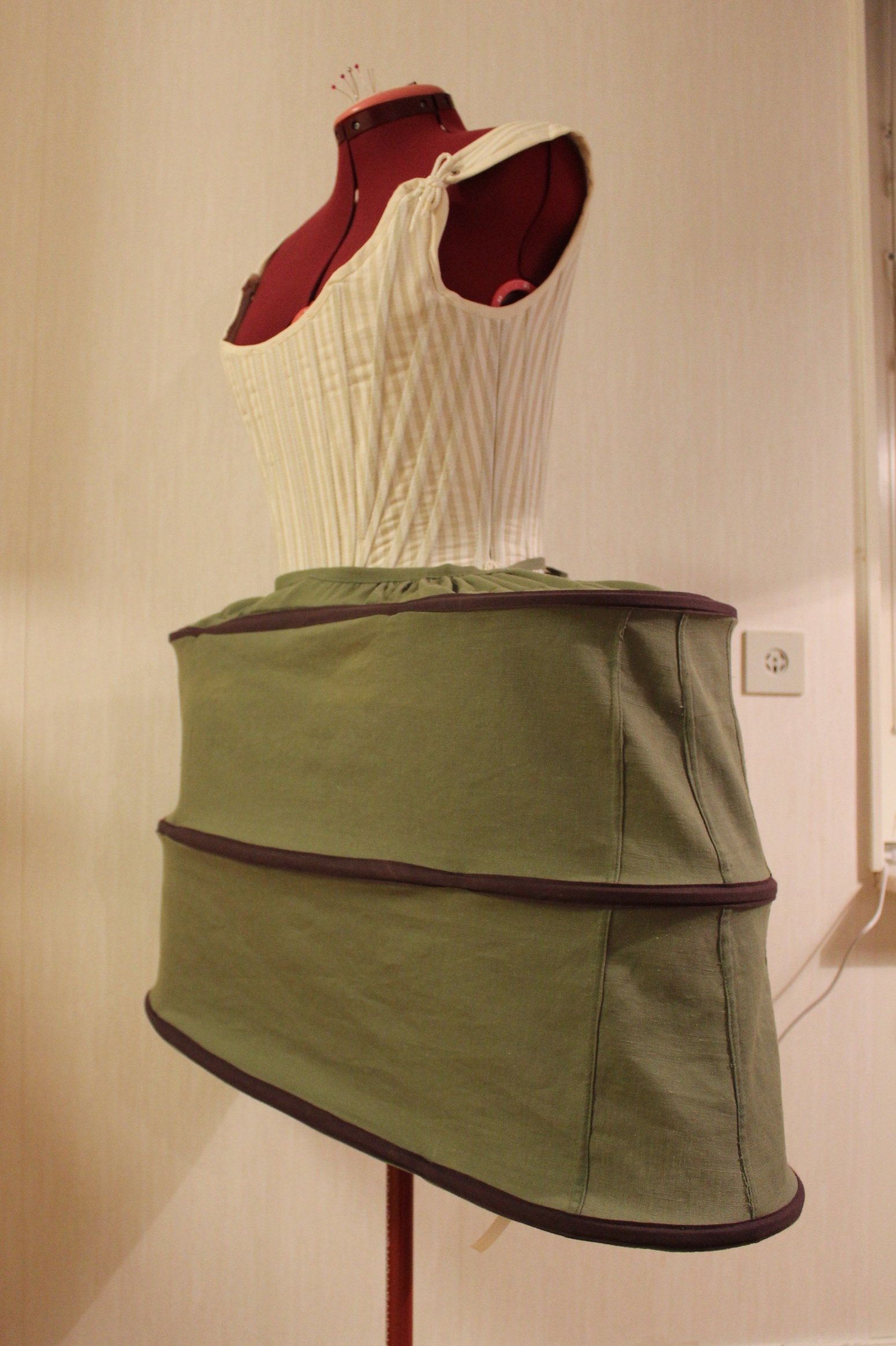
The finished panniers: (Yay)IMG_4943

IMG_4945

IMG_4948

IMG_4952

IMG_4947

IMG_4957

IMG_4950

IMG_4951

IMG_4959

IMG_4955

Just the facts:

Challenge: nr 1/2015 – Foundation

What: A pair of 18th century panniers.

Pattern: None, I just measured and cut.

Fabric: 1,5 m of green linen from stash.

Notions: Thread, 7 m of metal boning, 7 m of brown bias-tape and 5 m of white cotton ribbon.

How historical accurate: Not much. The fabric is wrong, the boning is metal and I sewed most of it on my sewing machine. It looks pretty good though.

Time: About 8 hours – 2 of which I worked on correcting the upper hoop.

Cost: I would guess about 100 Sek (16 Usd) but everything came from stash so I’m not sure.

First worn: Only around the house for photos. But I intend to wear it with my up-coming Robe a la Franchise at the first chance I get.

Final thoughts: This was meant as a quick project, and as usual those are the ones which causes most trouble. But thanks to some minor experimenting and tips from the HSM hive mind I managed to complete them without to much bad words.

Gentle(wo)mans 18th century Riding Hat

For the HSF 22 – Gentlemen, I had some grand planes, but life happened and the project has been postponed till next year.

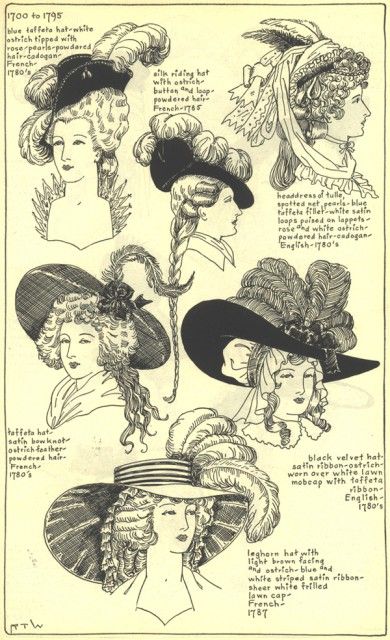
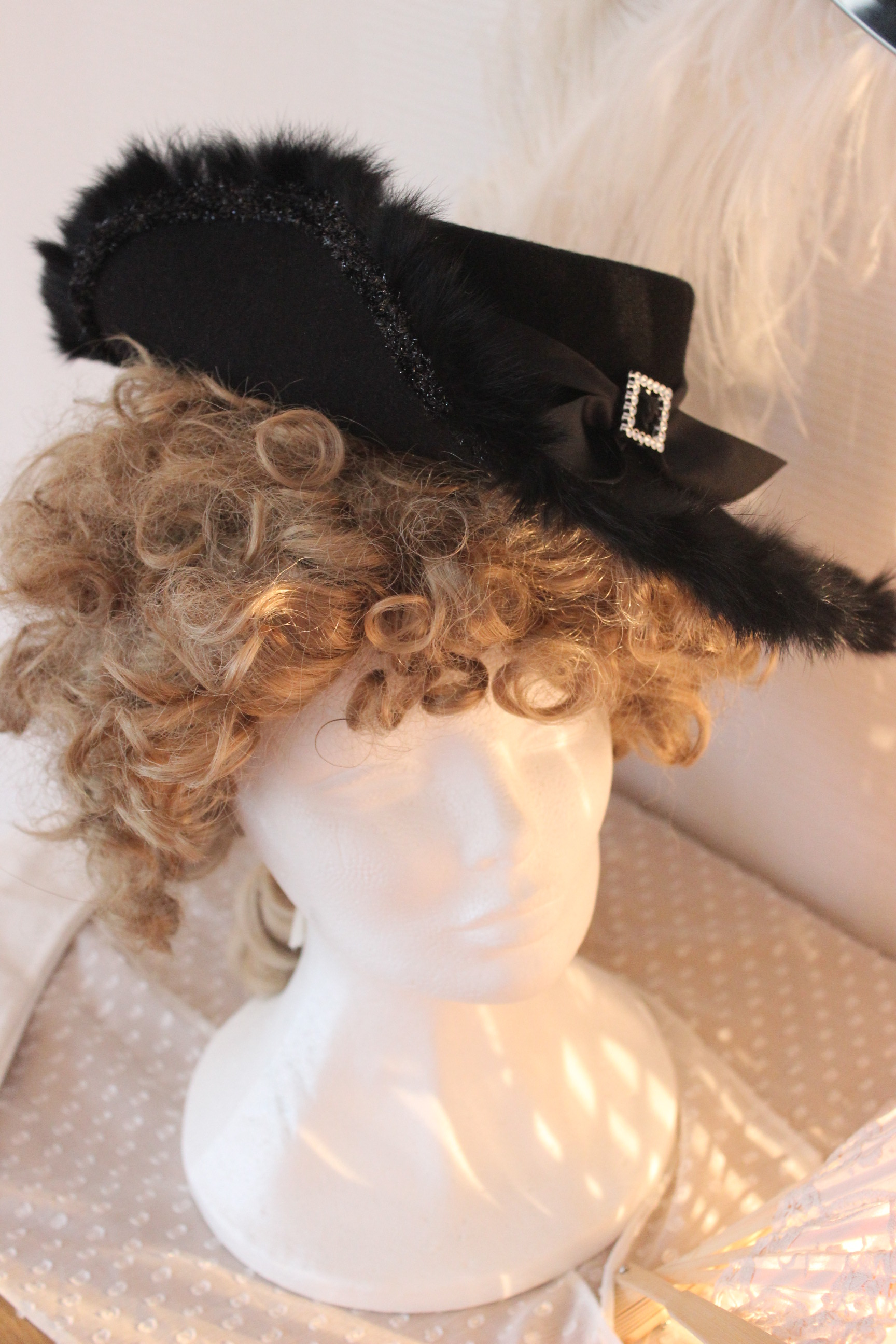
So instead I decided to make and submit the complementary accessory to the original outfit – A 18th century riding hat.

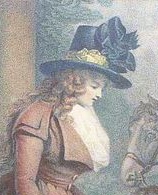
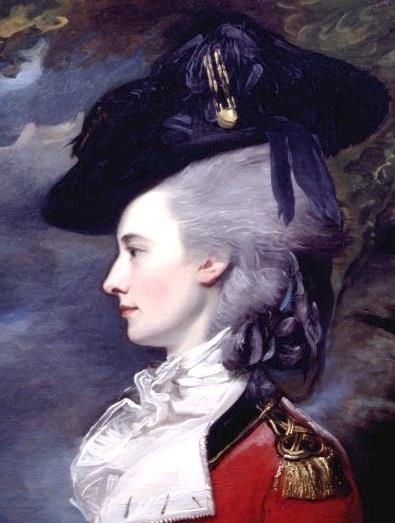
Some inspiration: tumblr_nh7flpLgEr1sivgcyo4_500

redingote-lacma2

582e28c2629b3208caf3bca9dbb2b609

b84965add3163c1da4e157c14b38cee4

30e640fa08f20f81dc54f25234910deb

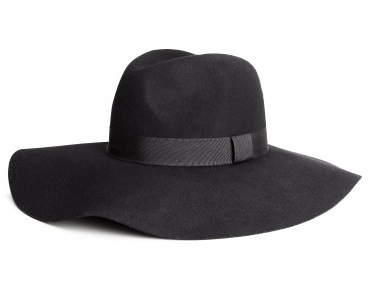
To start, I bought a simple wool/felt hat at the local fashion store.hmprod

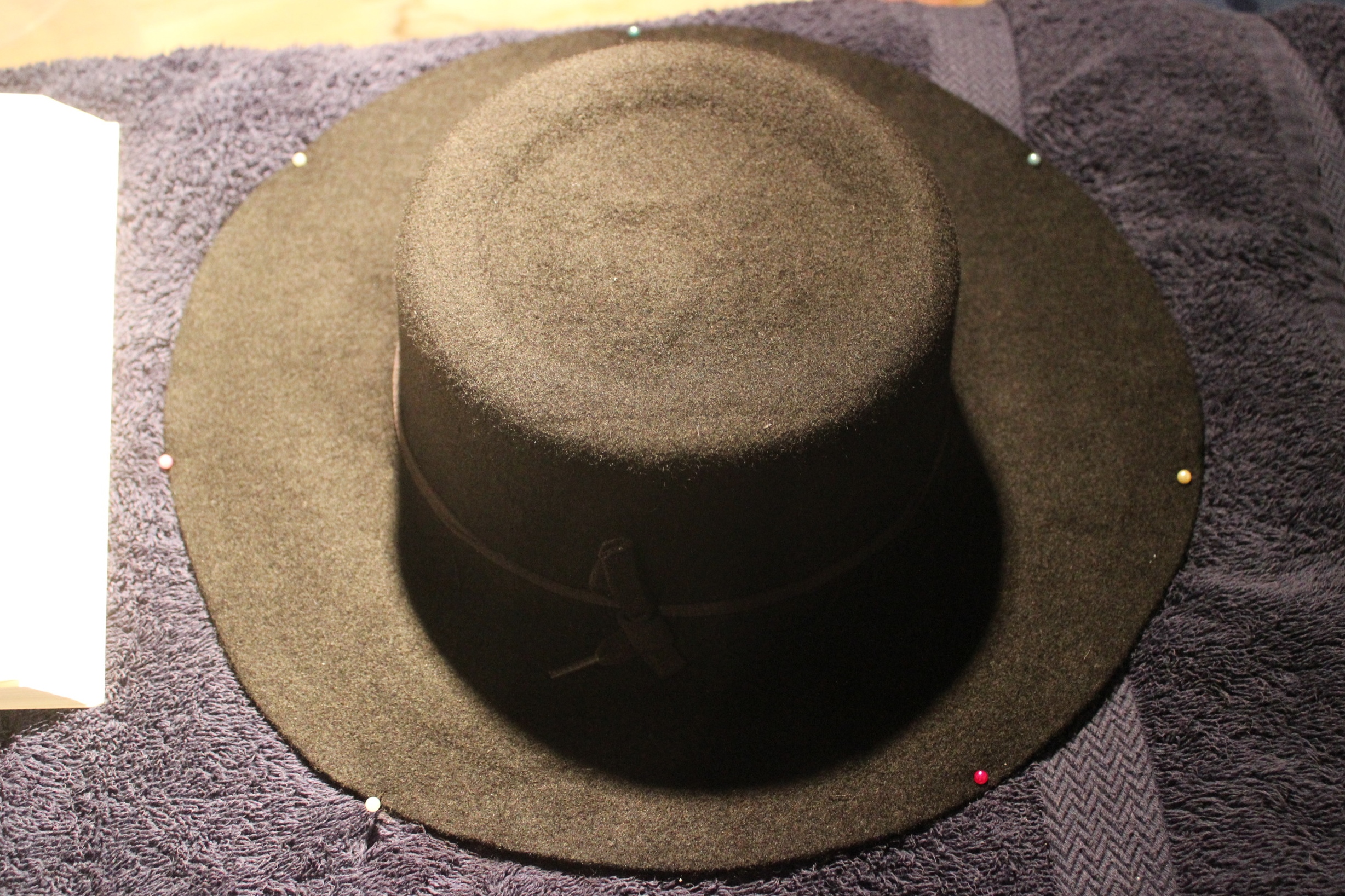
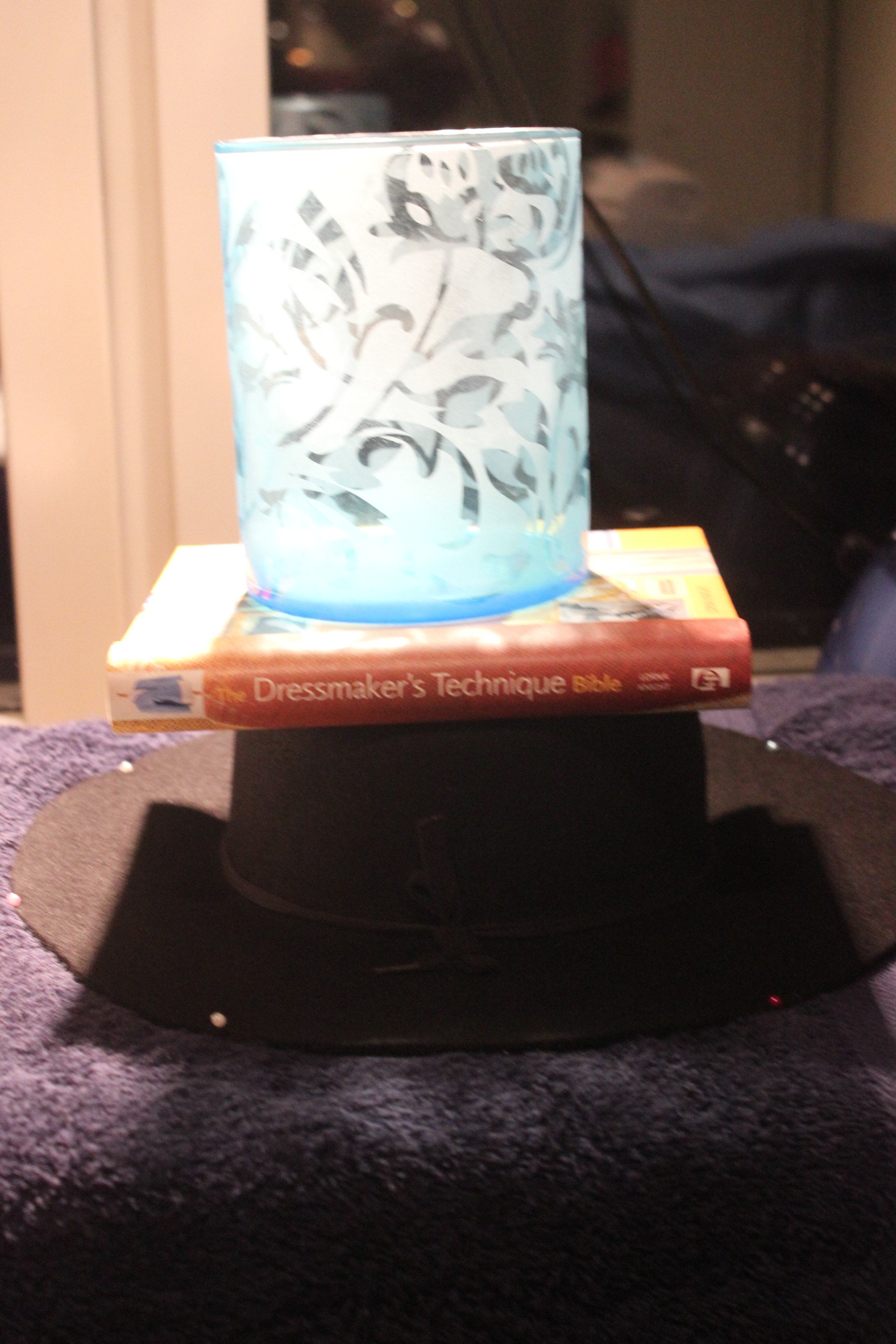
Then I drowned it completely in hot water, and forced it onto a acting hat block (a flower pot) and molded and pinned it to shape.IMG_4221 IMG_4223

I used some weights to make it hold its shape while drying over night.IMG_4224

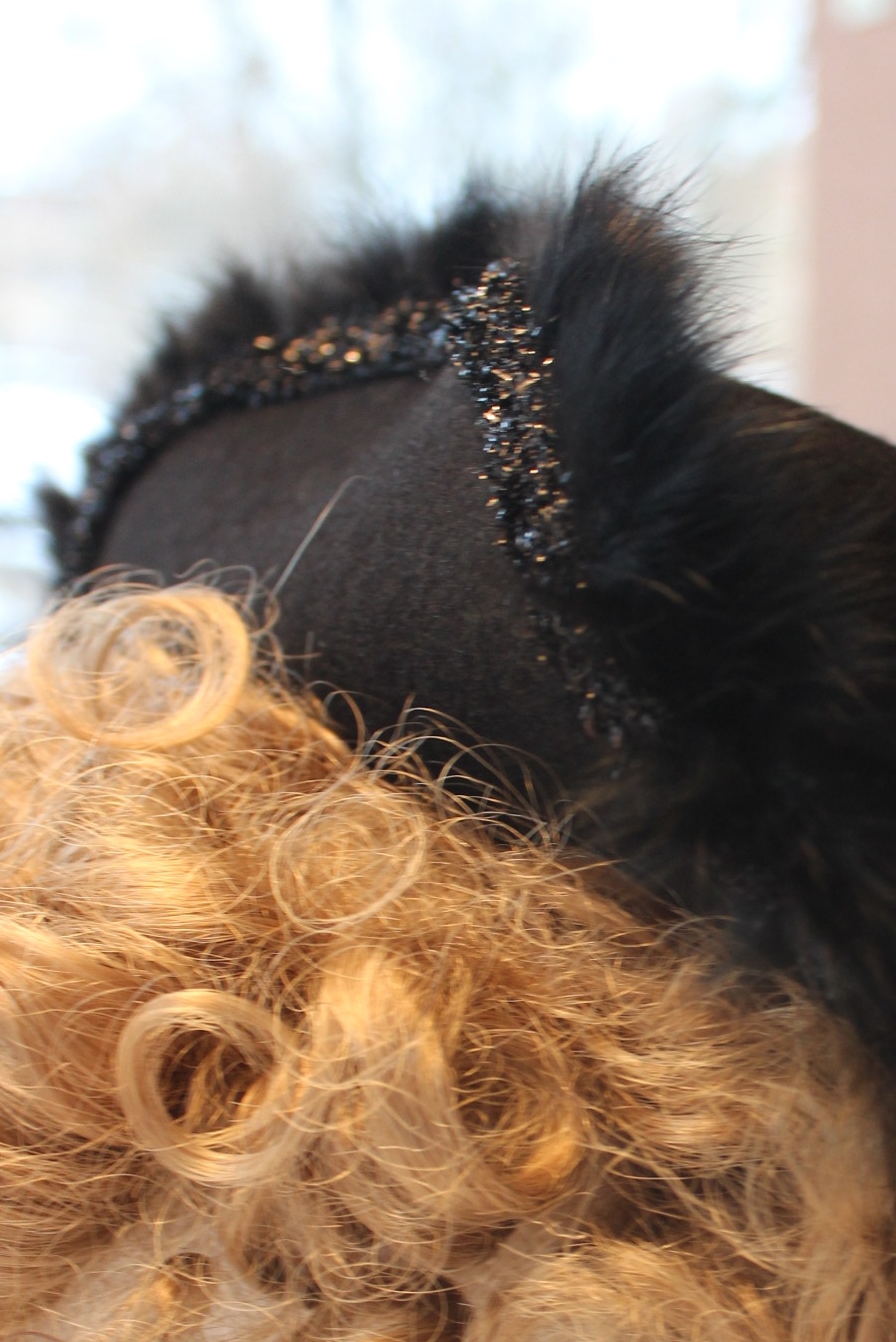
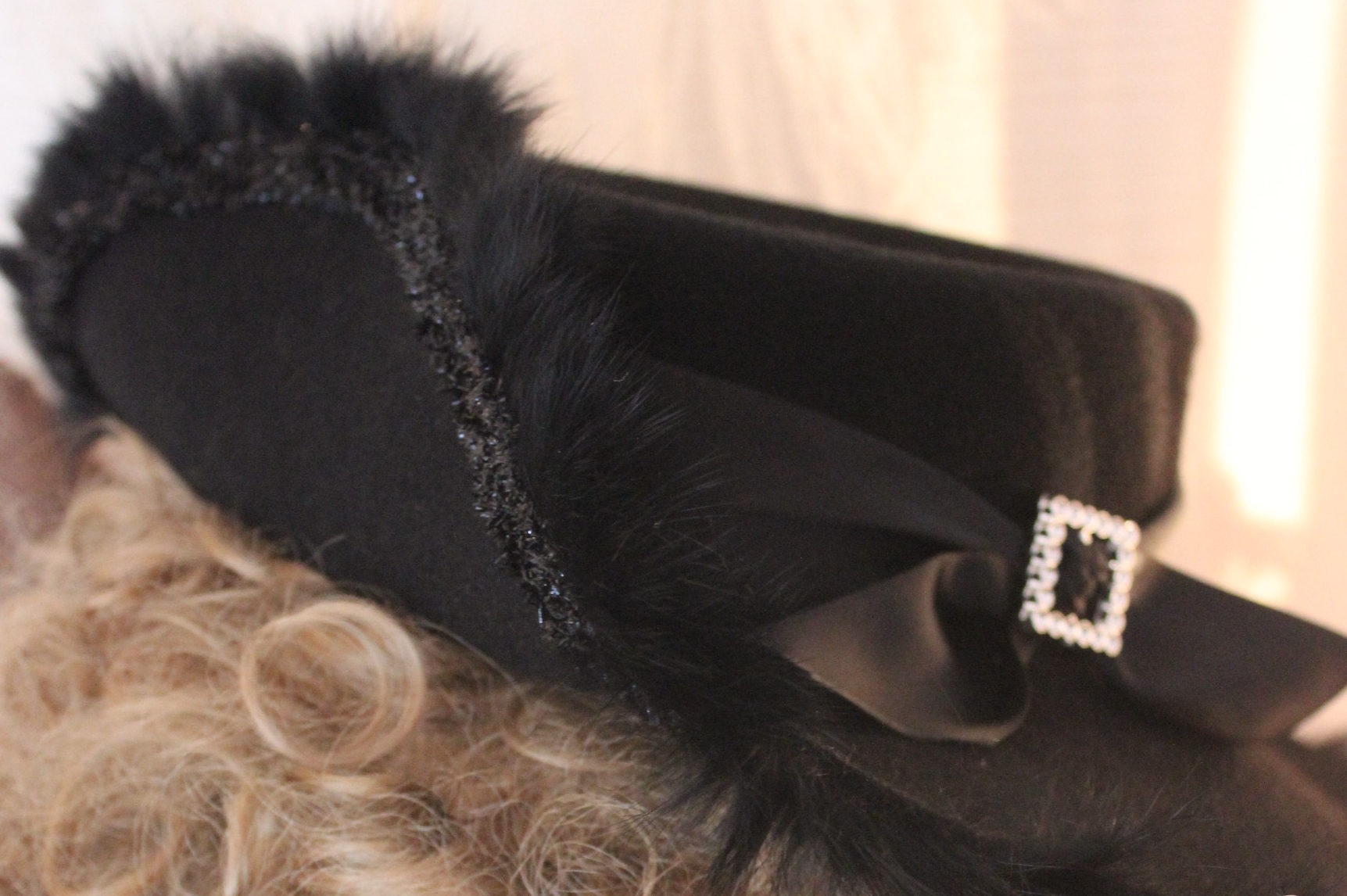
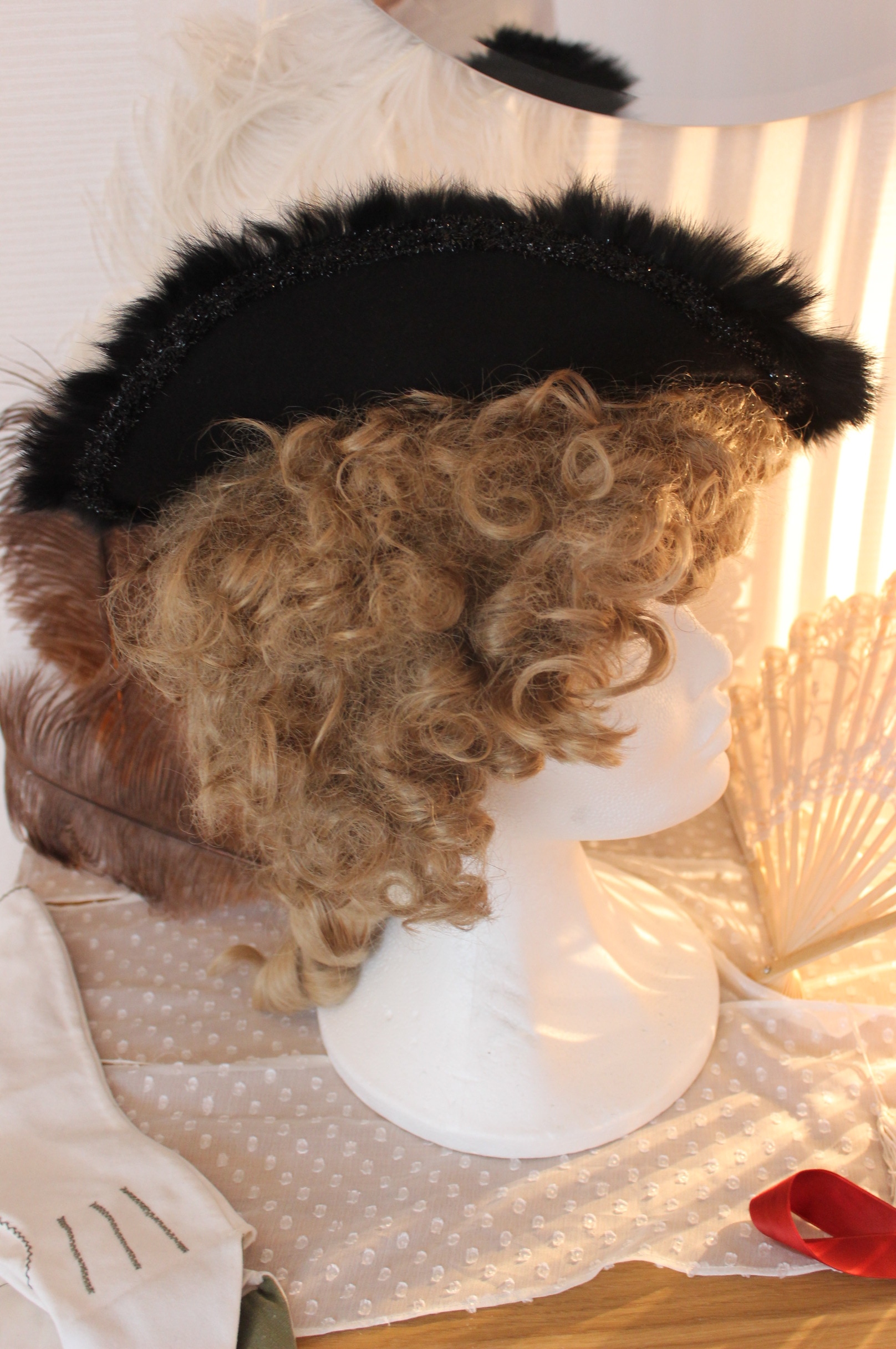
When the hat had dried and the shape was set I pinned one of the side up and stitched it on. I then added a length of feathery trim I found in my stash. IMG_4806

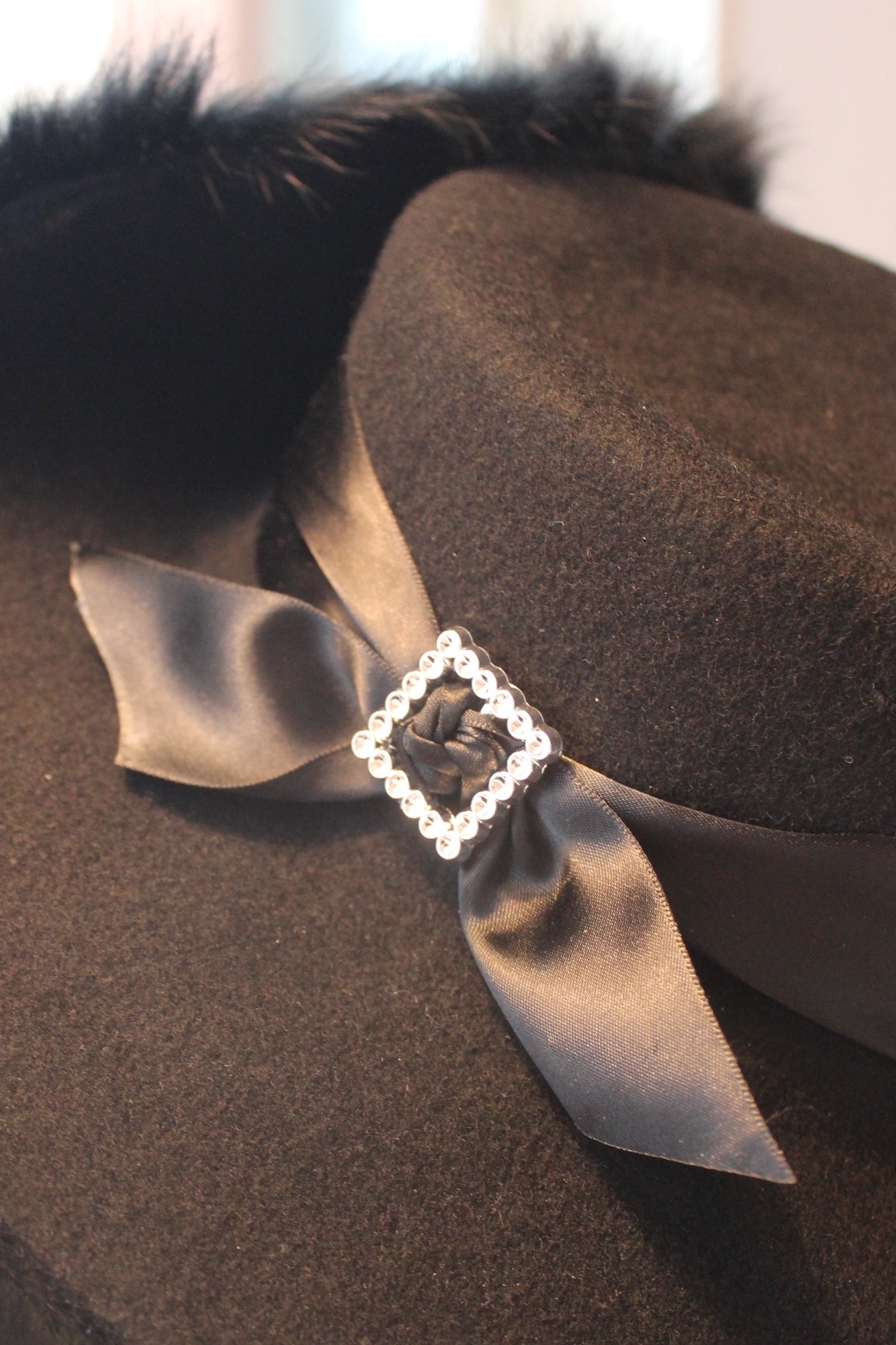
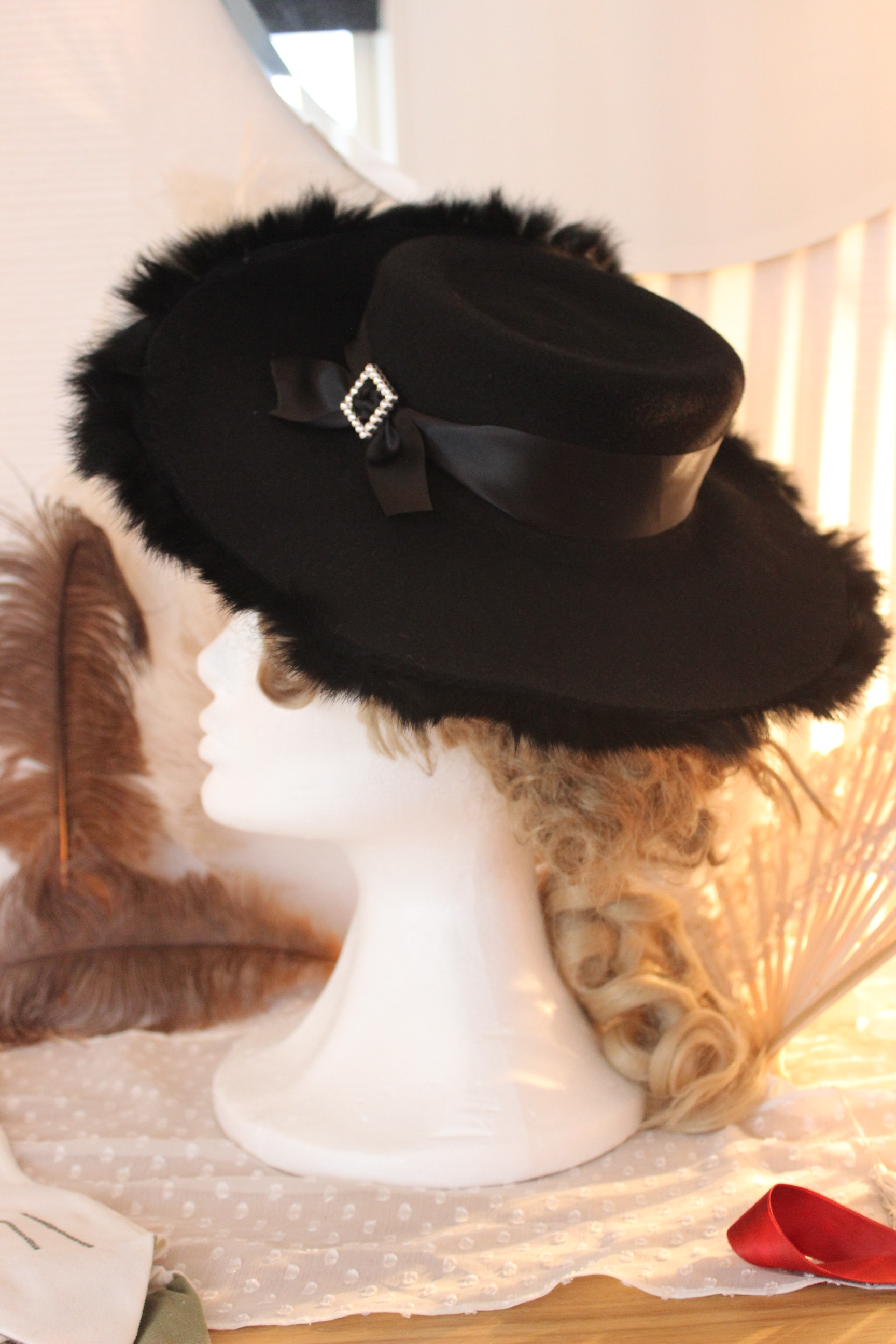
I also added a piece of black satin ribbon and a small buckle to finish it of.IMG_4802

The finished hat:IMG_4815

IMG_4830

IMG_4828

IMG_4819

IMG_4831

IMG_4834

IMG_4837

IMG_4840

Just the facts:

Challenge: nr 22 – Gentlemen

What: A 18th century riding hat made from a regular fashion wool hat.

Notions: Thread, satin sash, 1 silver buckle and 80 cm of feather ribbon.

Time: Active time, maybe 30 minutes (24 hours if you count the drying).

Cost: 100 Sek (16 Usd) – 79 Sek for the hat, and the rest of the notions came from stash.

How historical accurate: Not really. Apart from the fact that black wool hast were common for riding attire, there is noting accurate about it.

First worn: Not yet, since this is part of a whole ensemble which is not yet finished.

Final thoughts: I can’t quite decide if I like it or not. It may be that it looks to “costumy” to be any good. But I guess I can always add more feathers.

This was such a fast and easy project that I cant help feel I’m totally cheating as the HSF goes, but at this moment I don’t care, I’m just happy to have something to submit as my final item to finish this years race.

18th century Spring Anglaise En Fourreau

Here in Sweden November’s been darker then usual and it seems we just broke the record for less hours of sun, counting only 2 hours of sun during the whole past month.
No wounder we all feel and look like living dead by now. (and Winter is coming…)

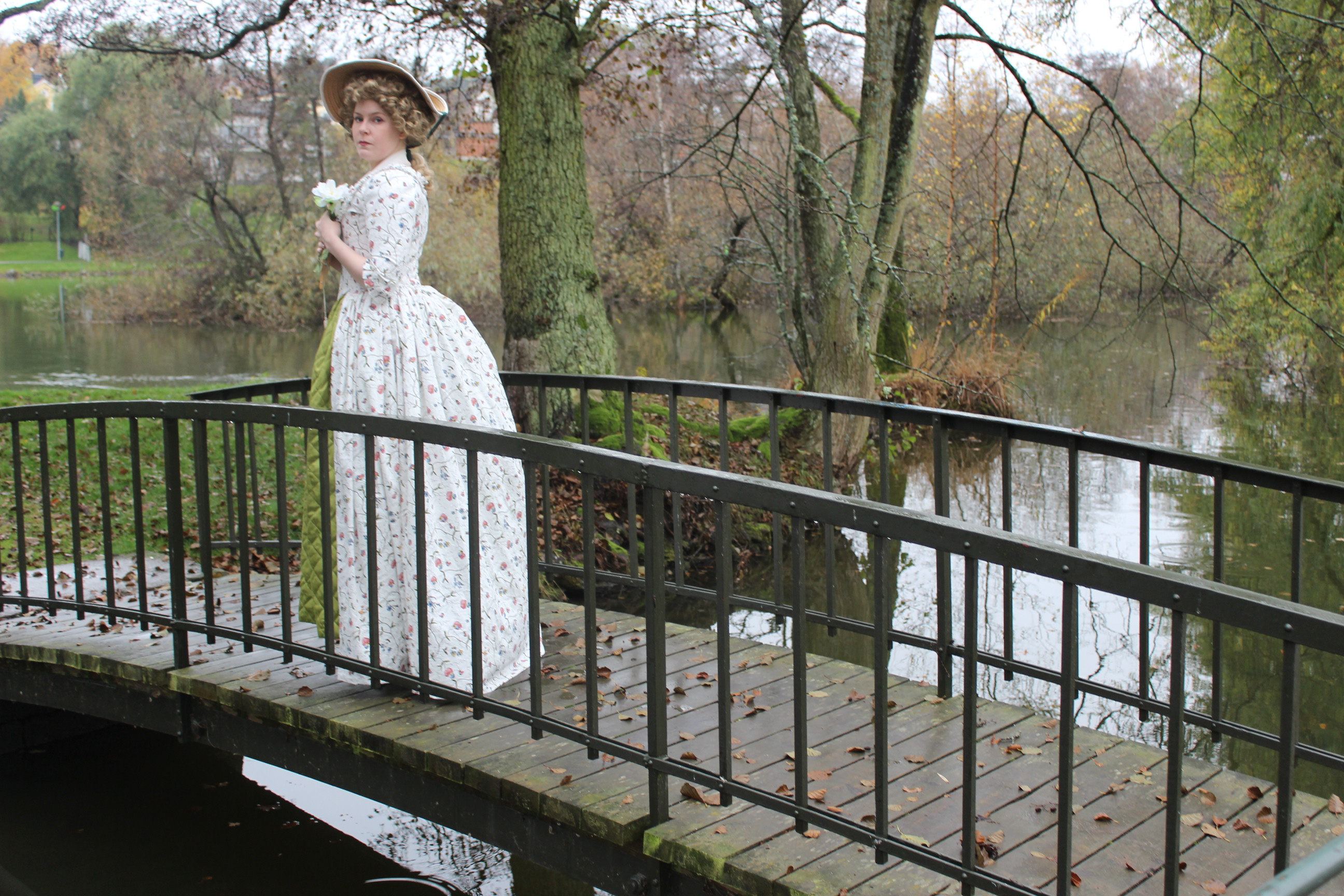
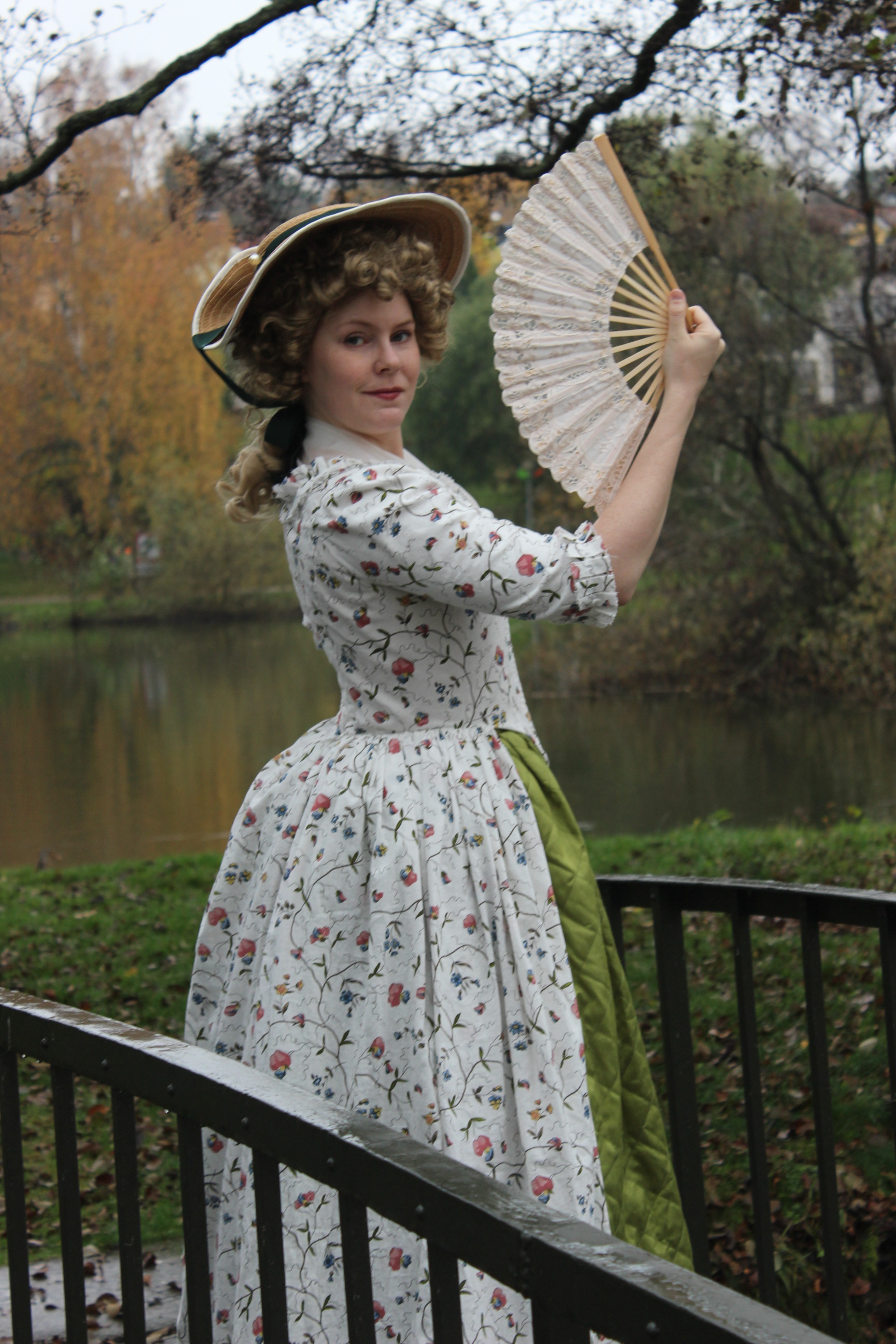
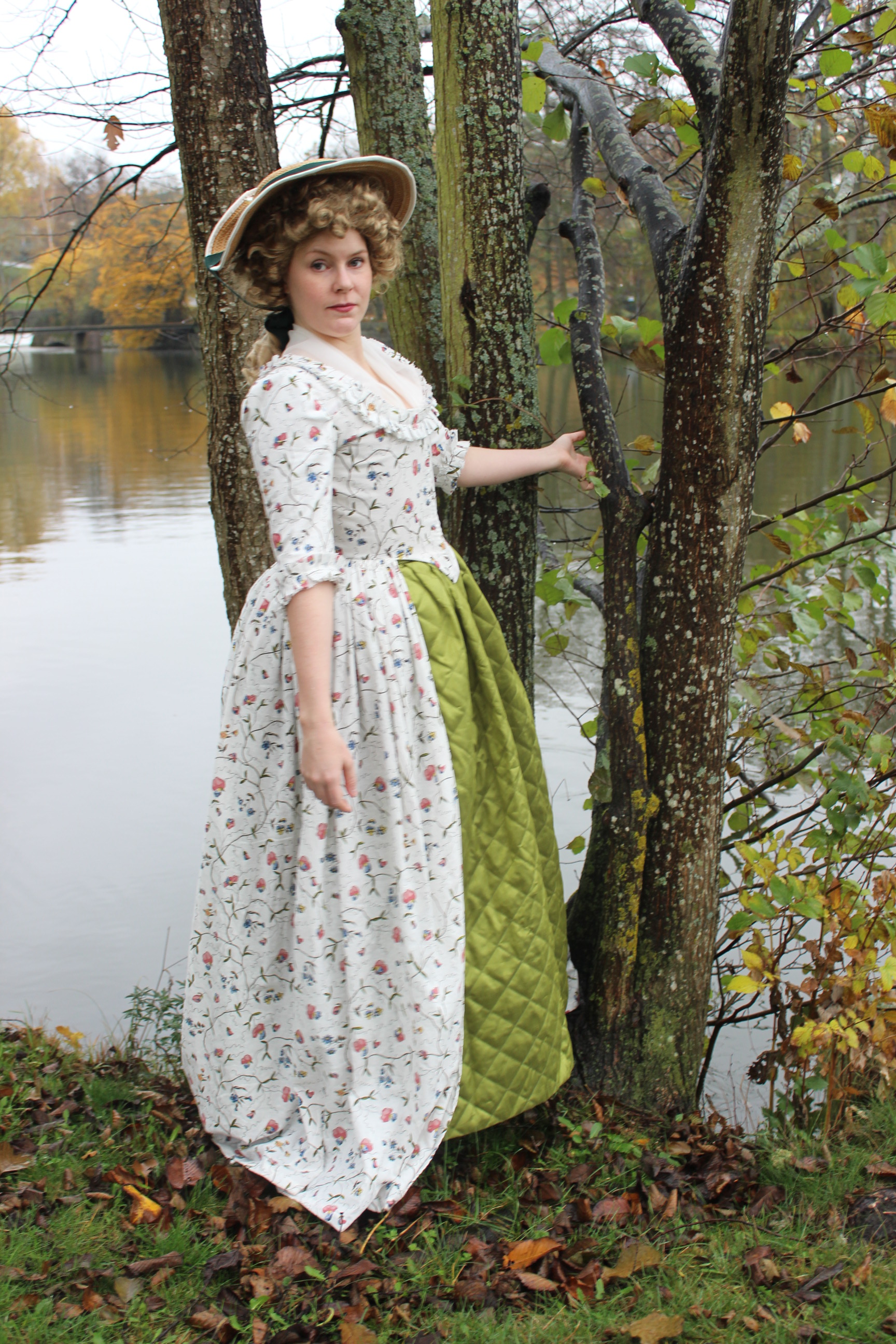
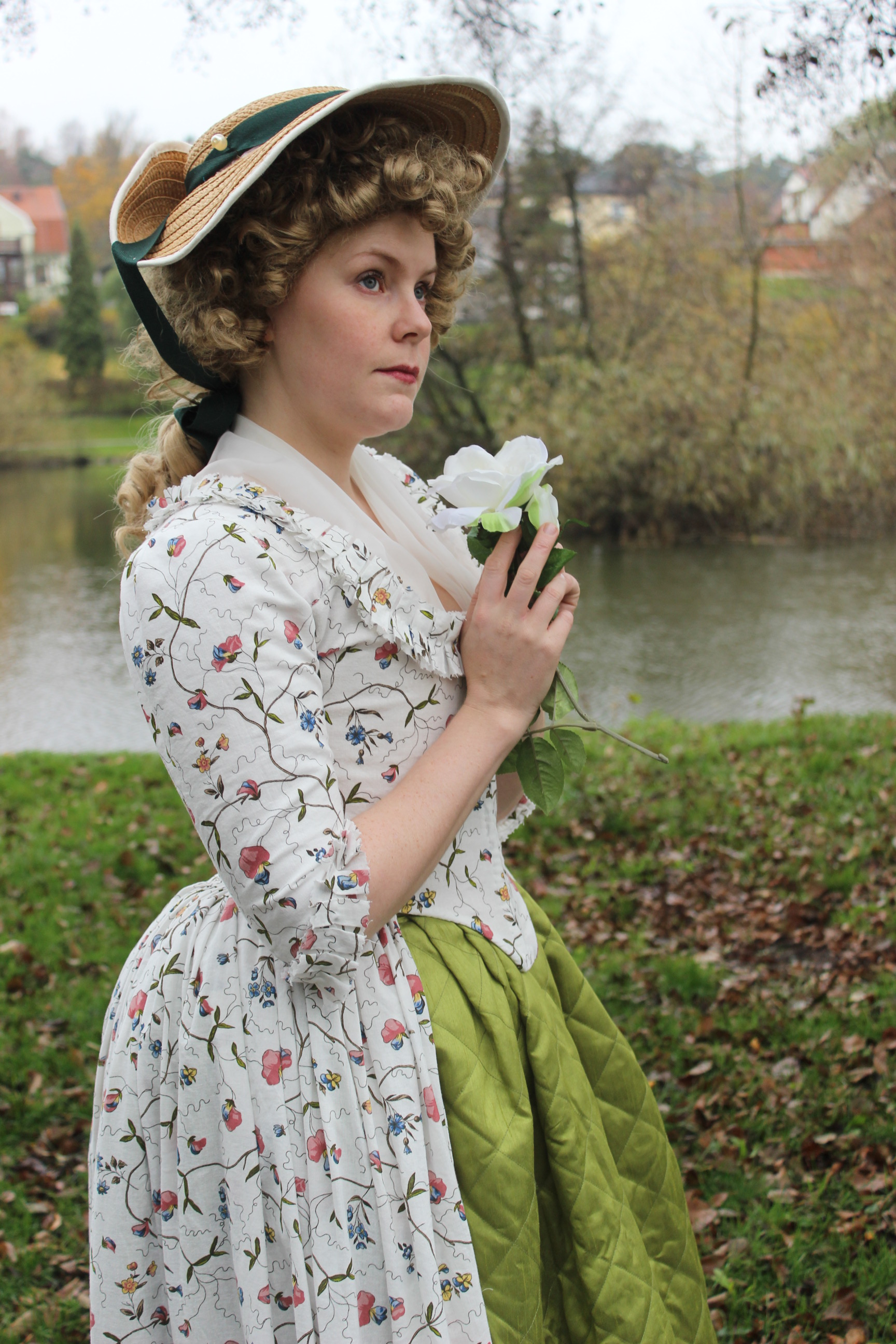
So today I decided it was time to get some costuming sun, by showing of my newest gown – inspired by fresh spring flowers…

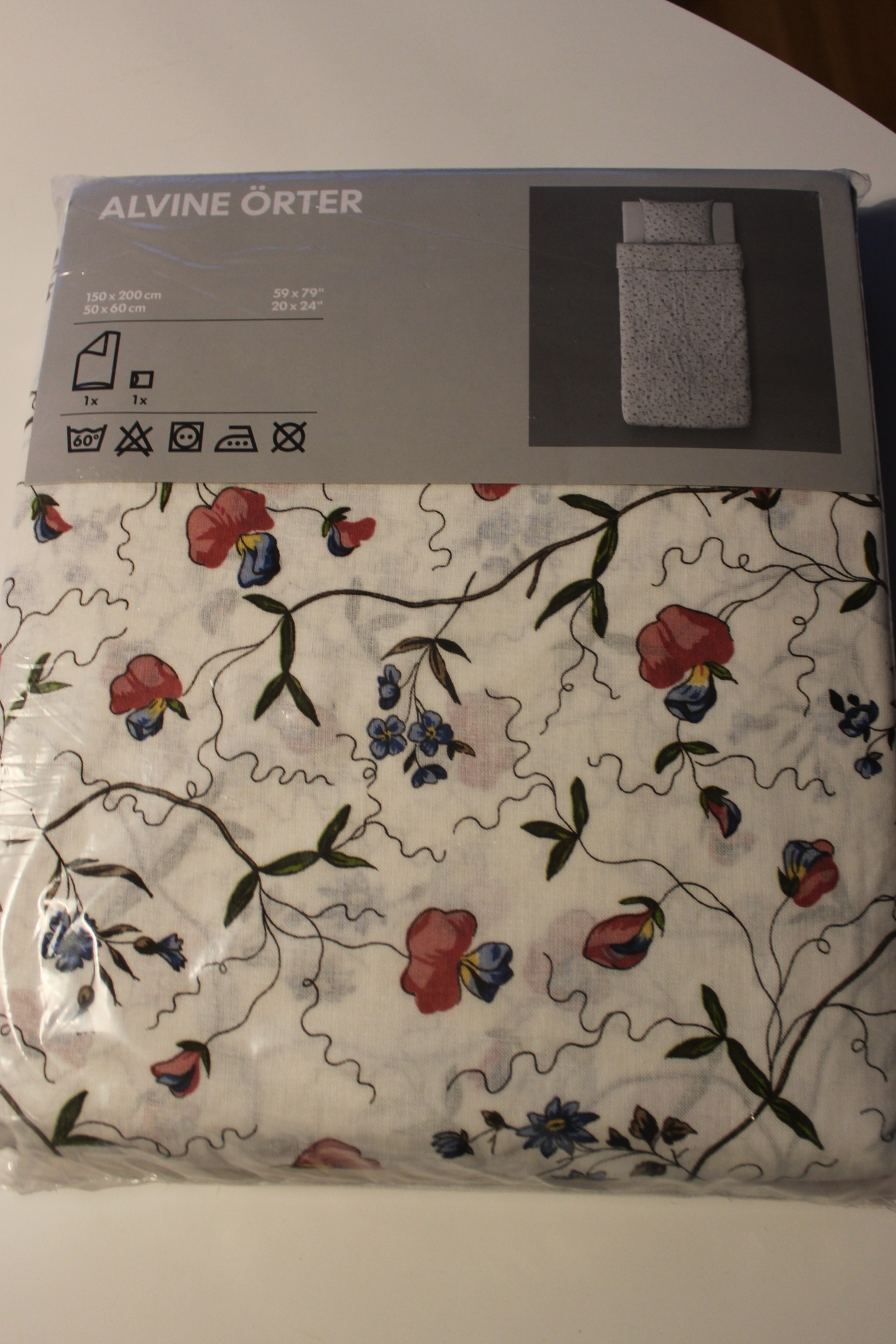
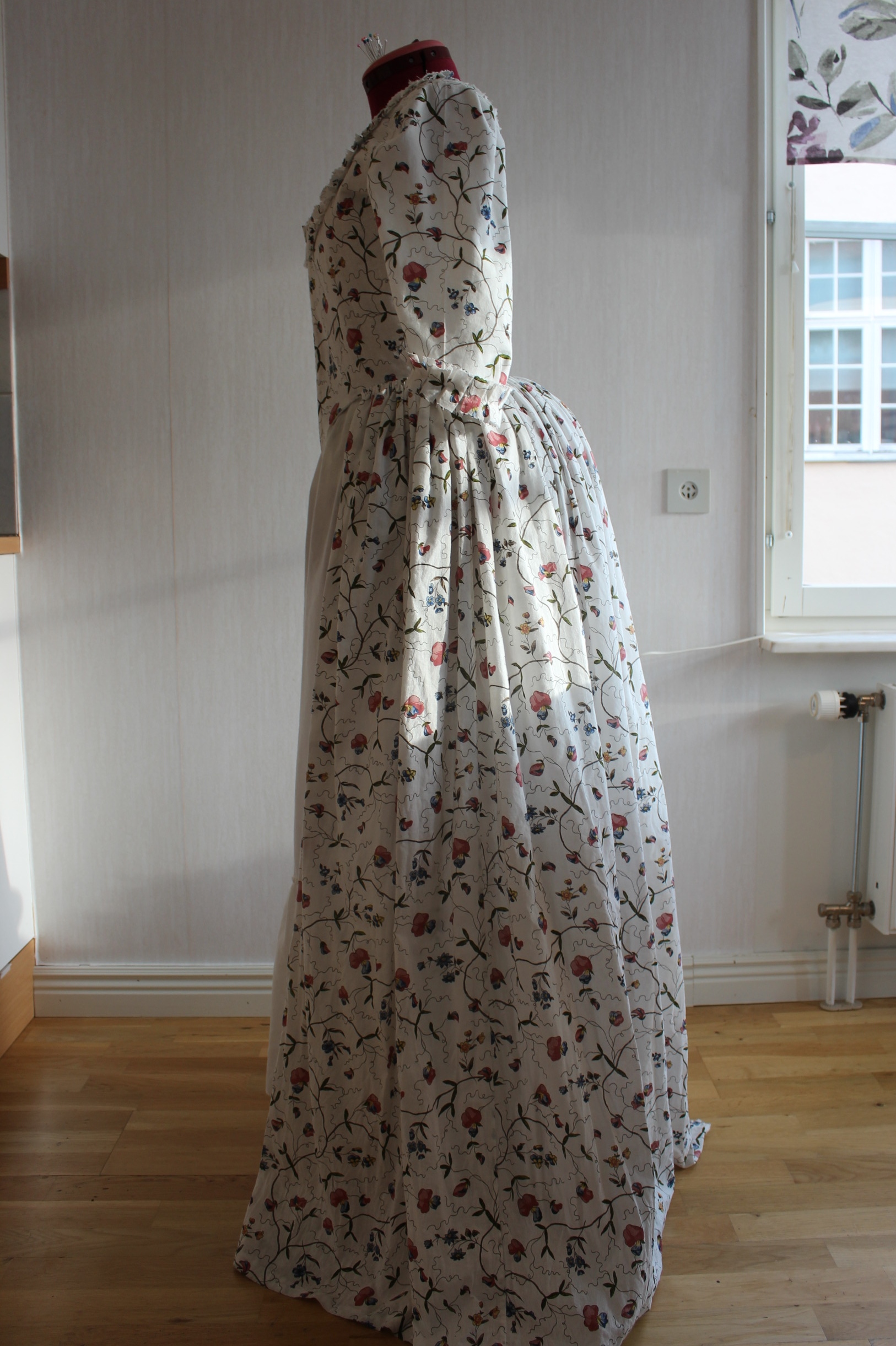
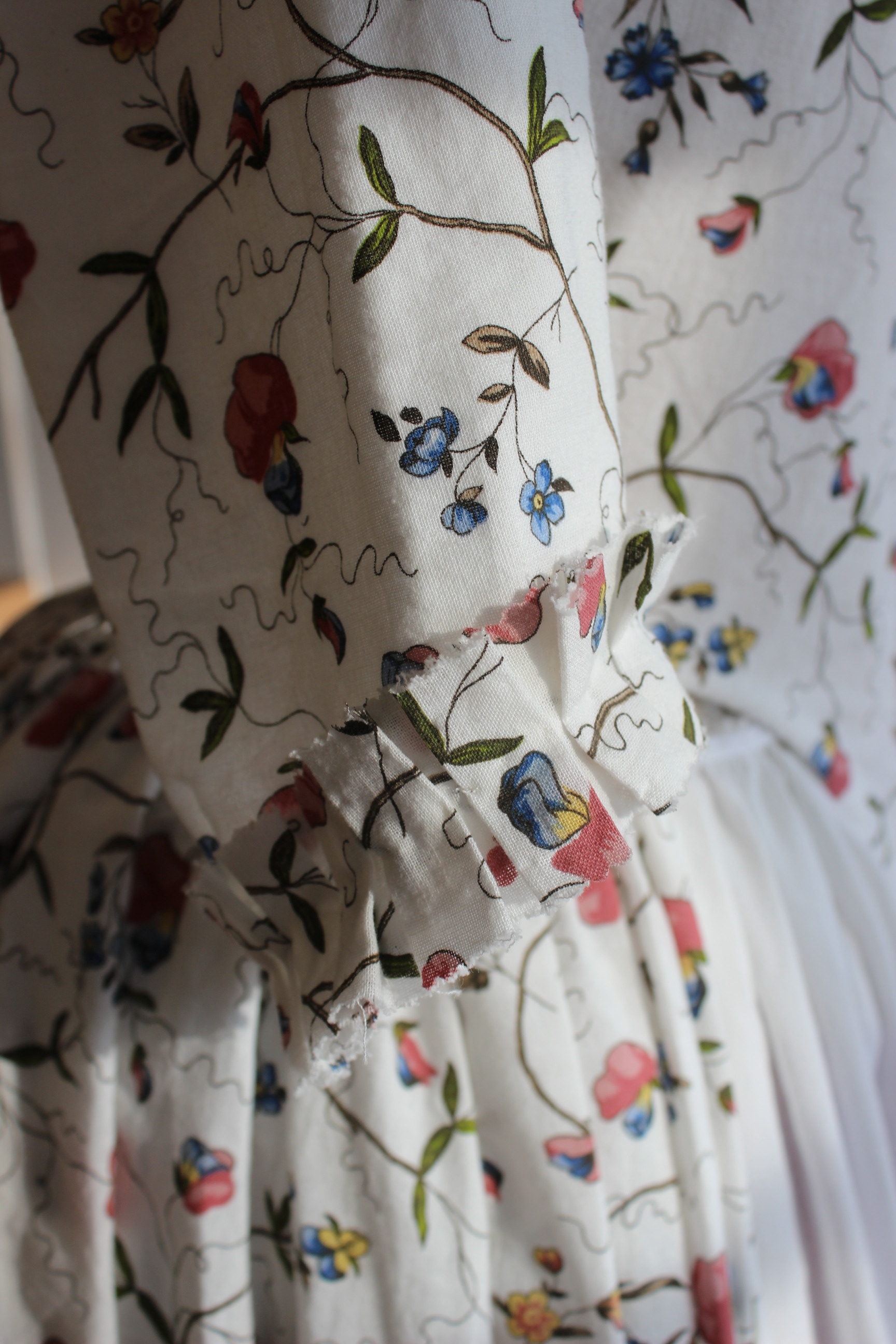
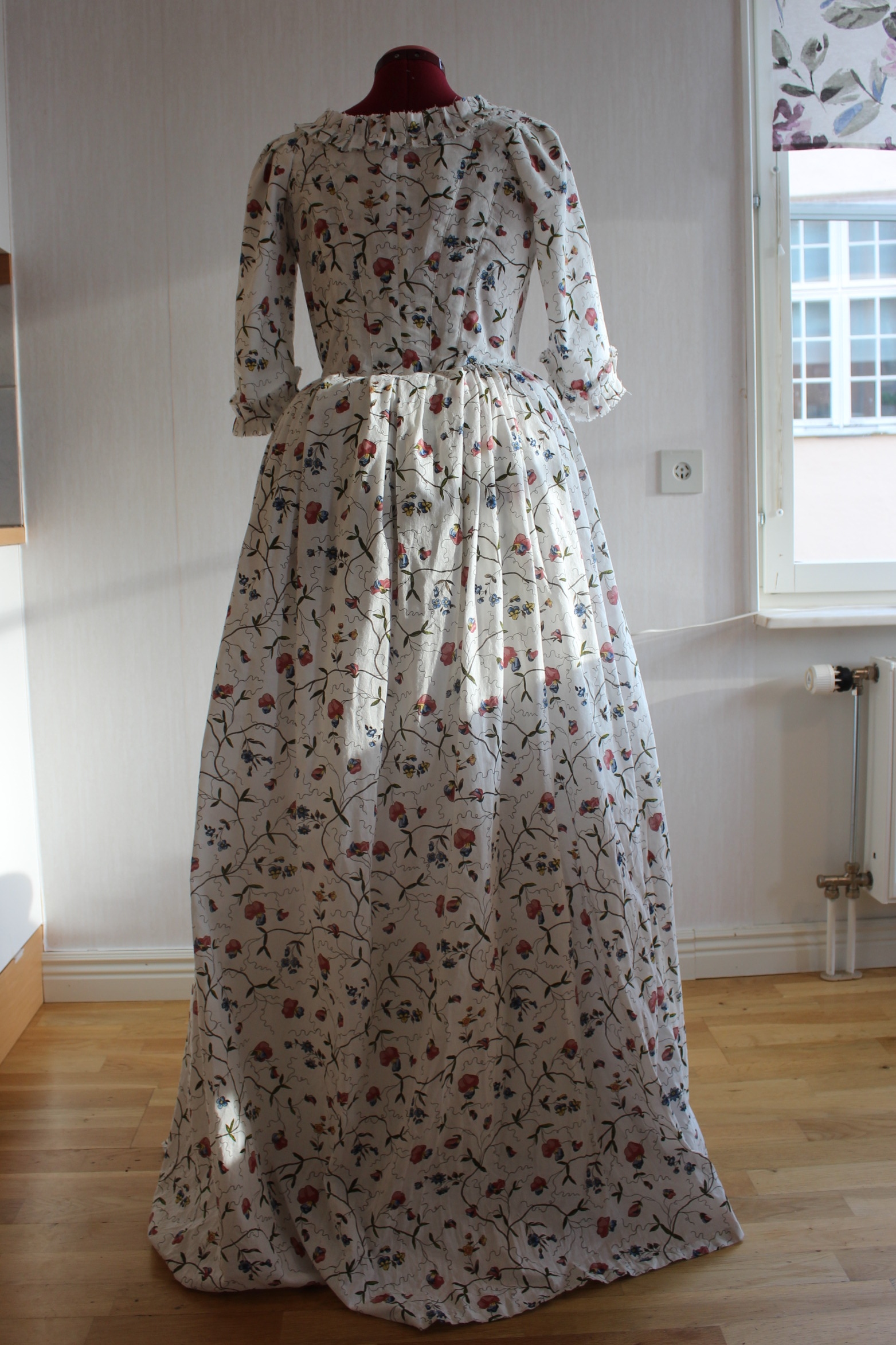
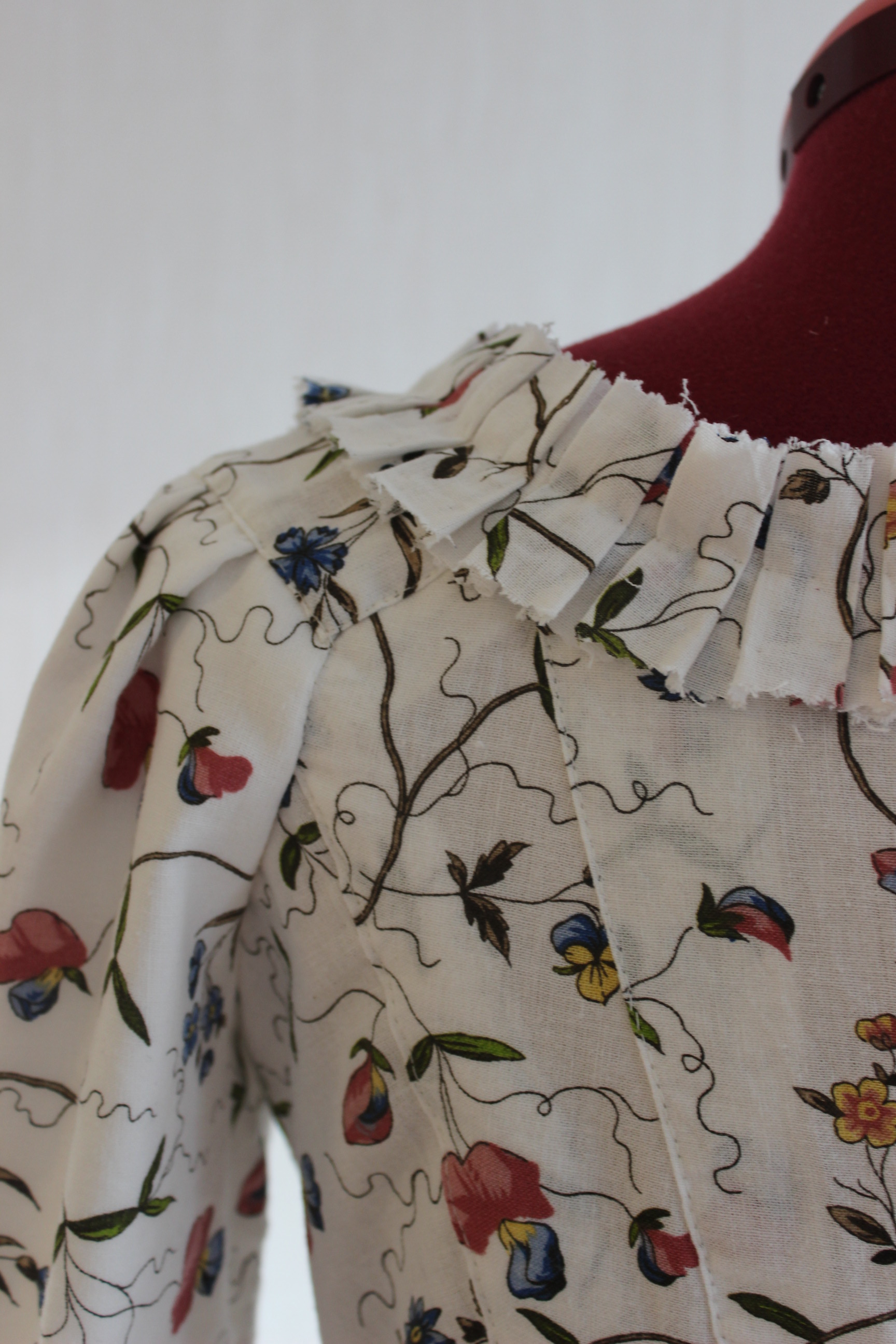
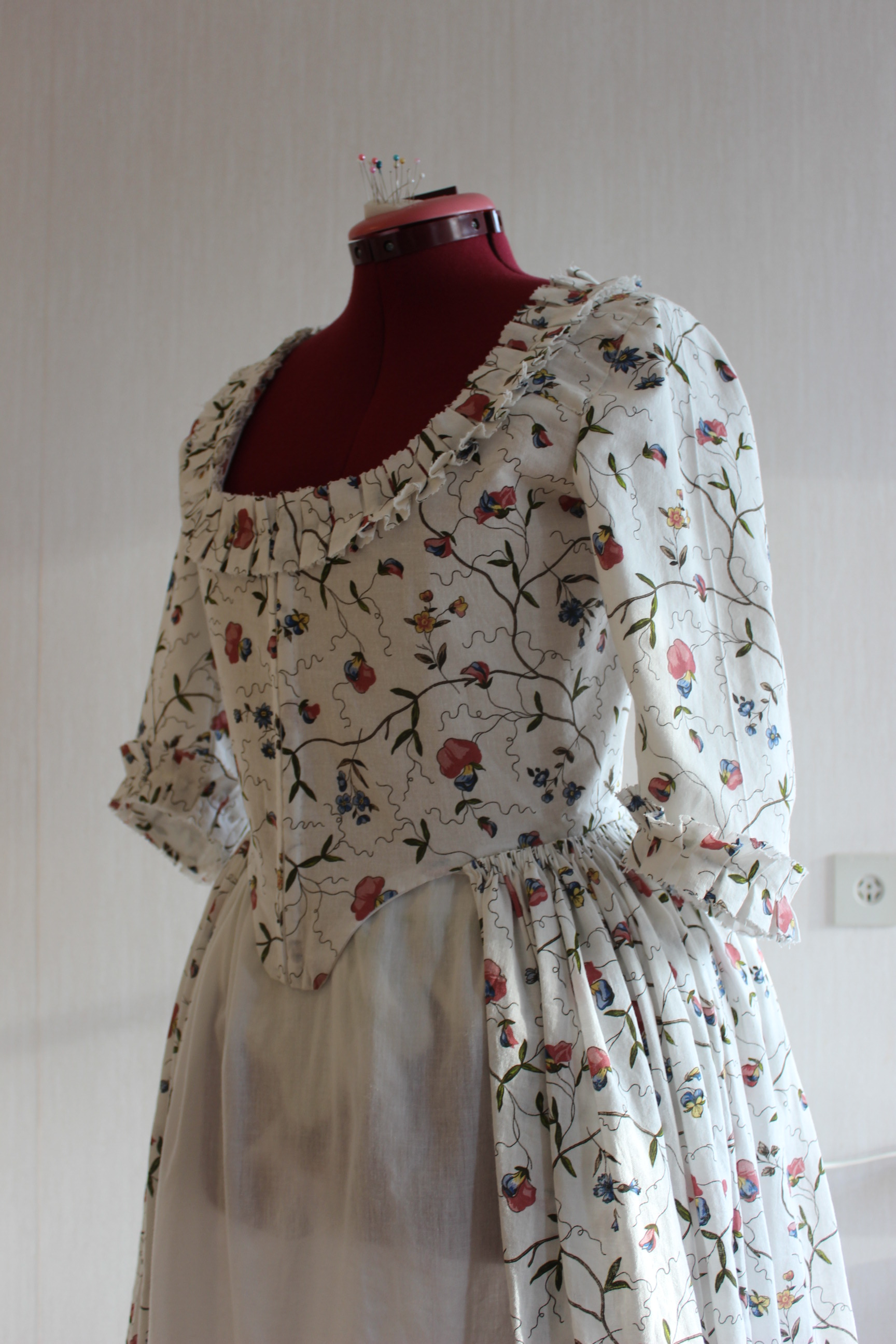
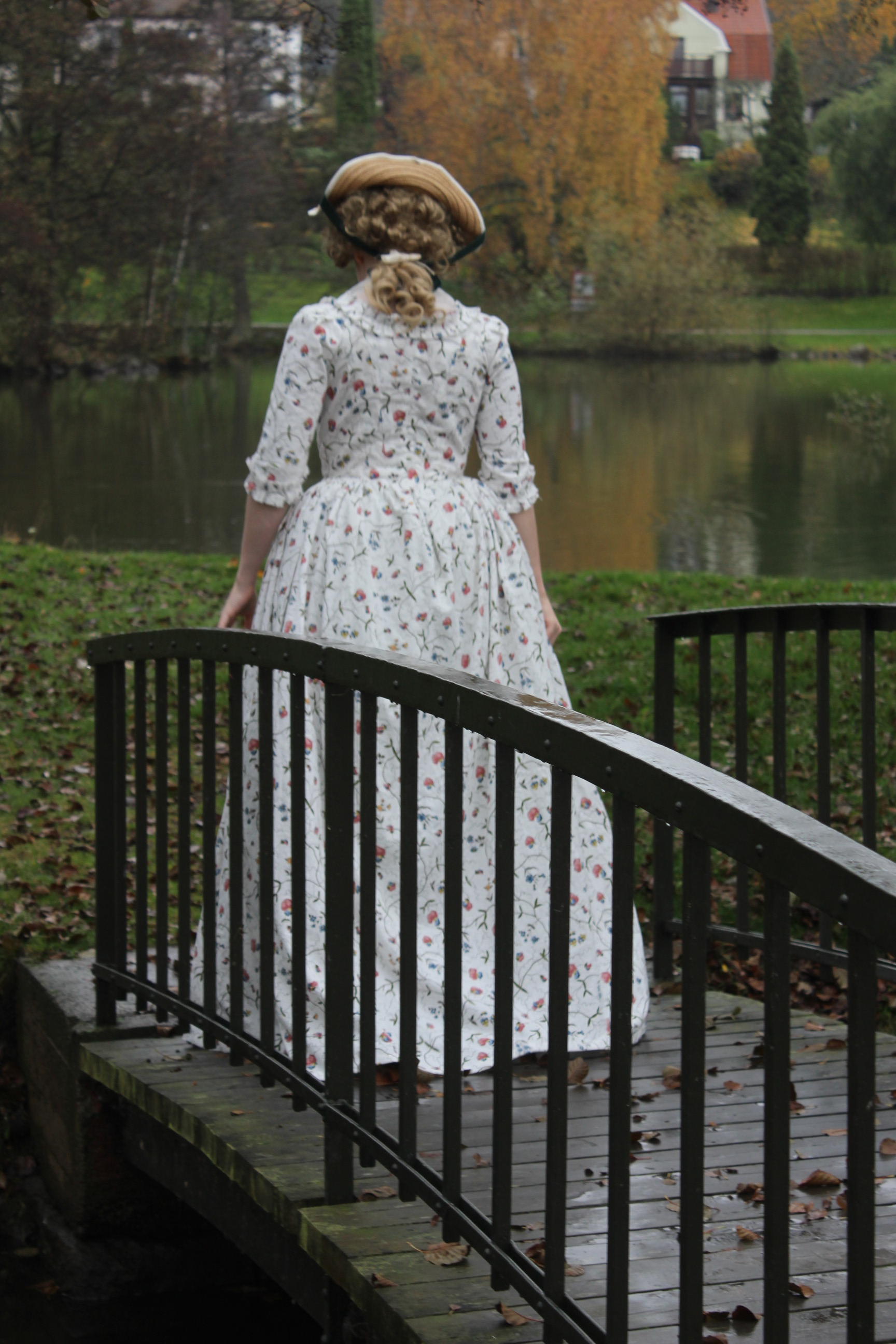
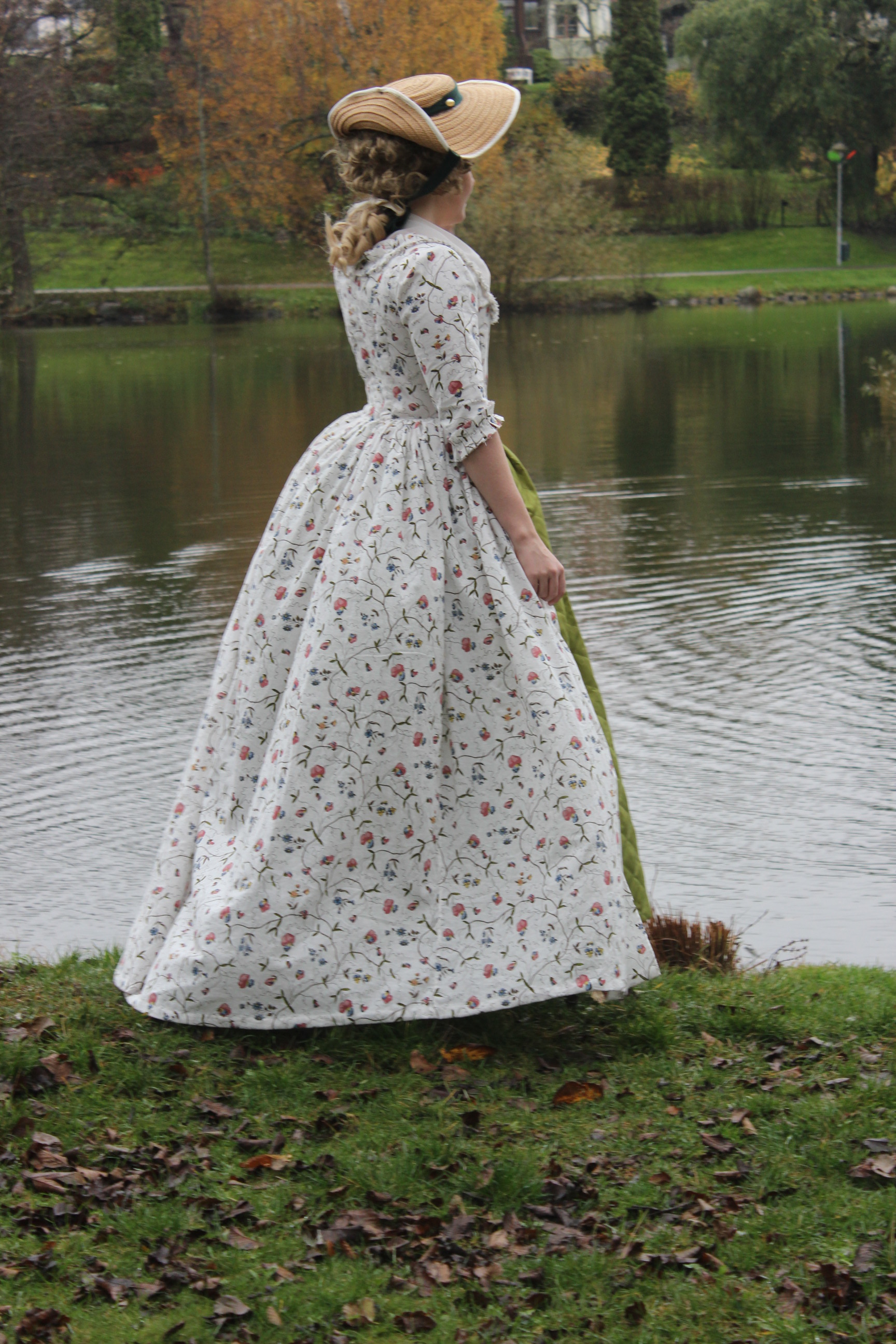
Last year I bought this fabric from IKEA (hm, must be my, 5th dress, or something made by fabric/curtains/bed-sheets from that store).IMG_0739And a month ago I dug it out from my stash determent to make it into something 18th century.

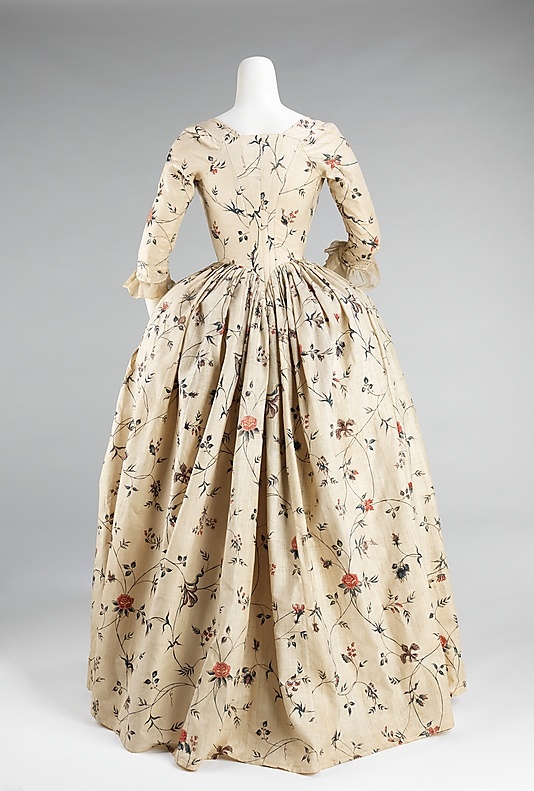
Inspiration came straight away.
a3cd1dbbf007f3e5ce37c143fe331de0 b41ea52644685efdfd24d0a21a308763

I used an old pattern and made some minor alterations like moving the shoulder seam, and remade the sleeve.

IMG_0742 IMG_0763

I tried the paper pattern on my dress-form to get a better look of how it would look.
IMG_0769 IMG_0771

Then I made and tried on the mock-up.
IMG_0856IMG_0865
After some minor alteration I was ready to cut the fabric.

IMG_0897

Since I didn’t had any deadline for this project, I decided to make the whole dress by hand.IMG_0916

I basted the lining to the interlining and stitched the bodice together for a try on.
IMG_0952 IMG_0948
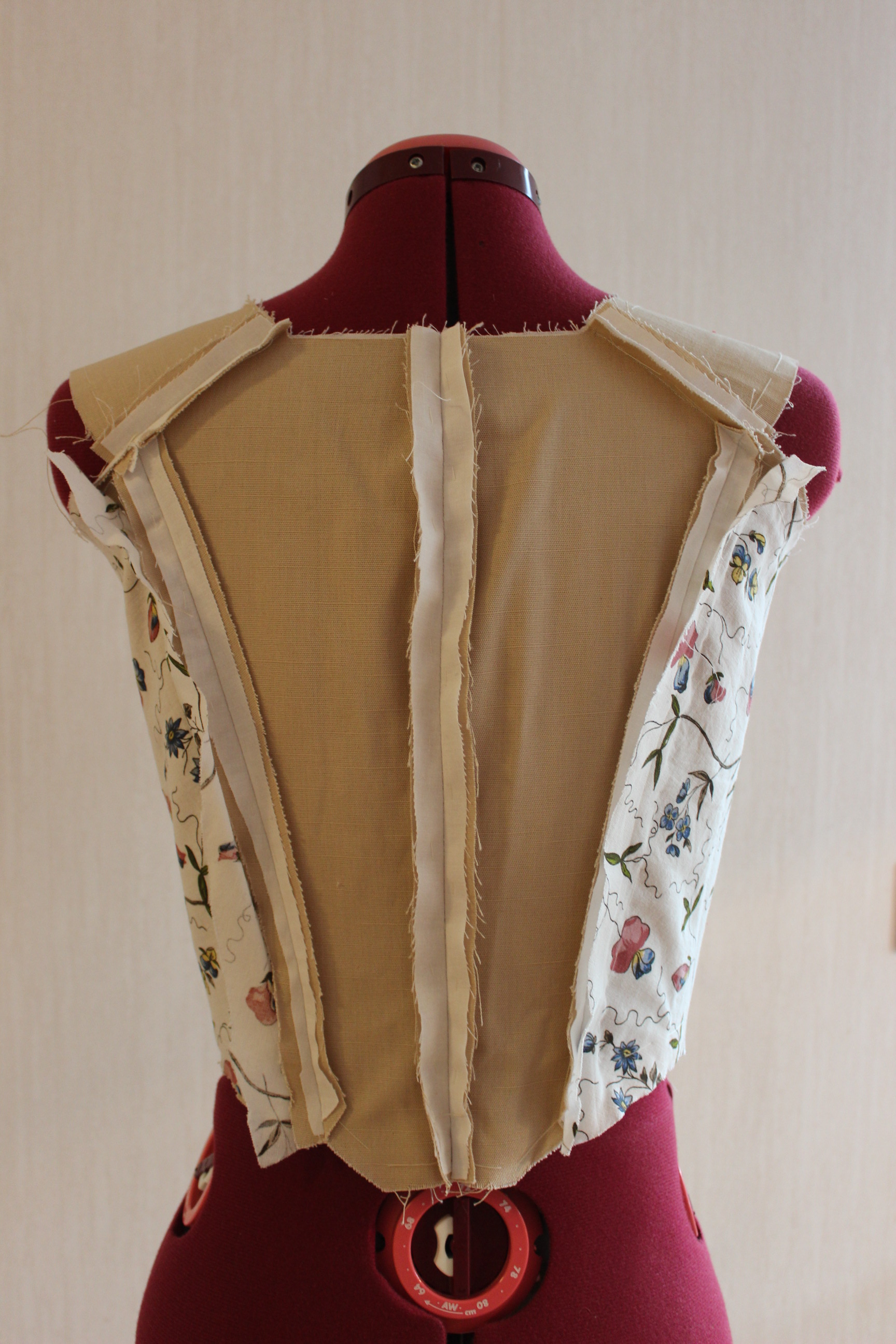
After lowering the neckline a few cm, I put the bodice on my dress-form and started covering it with the fashion fabric.
IMG_3156IMG_3157

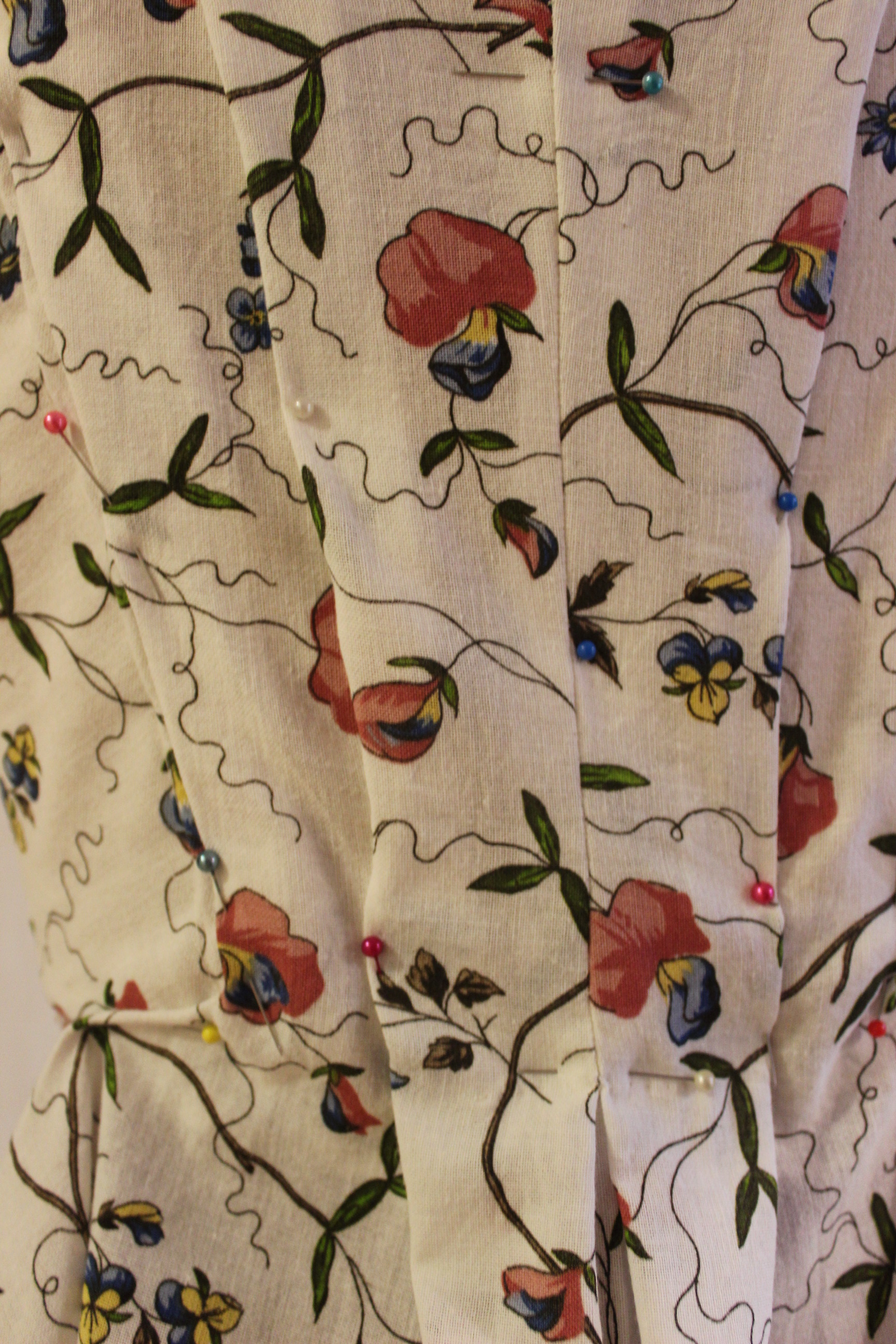
The En Fourreau pleats was a bit tricky to get to lie smooth, but after once re-pinning I stitched everything down from the outside using back-stitches.
IMG_3158 IMG_3163

Then I set the sleeves, gathered and stitched on the skirt, cut the length and hemmed it. And finished of with some pleated trim and hook and eye for closure.IMG_0912

The Finished dress:
IMG_3848

IMG_3849

IMG_3865

IMG_3869

IMG_3866

IMG_3850

IMG_3861

IMG_3862

IMG_3855

IMG_3856

IMG_3857

IMG_3858

IMG_3859

IMG_3851

IMG_3853

Facts:

What: a 1780s robe Anglaise

Pattern: I drafted my own using a old self made pattern as a starting point..

Fabric: 1 white flowery printed cotton bed sheet from IKEA (approximately 3,5 x 1,5 m), 0,5 m regular white cotton for lining and 0,5 m heavy upholster fabric for interlining.

Notions: Thread, 11 pair of hook and eyes and 1,5 m of plastic boning.

Time: Since it is completely hand stitched the amount of time is much higher then my usual projects. I will take a educated guess at 25 hours counting low.

Cost: About 200 Sek (32 Usd). Everything from stash.

Final Thoughts: I’m not thrilled about it.
The back pleating looks a bit sad, and the en fourreau back is not one of my greatest accomplishments. I think I will have to re-make the entire back of the gown before wearing it for real.
I also think the front point should be longer and more pronounced, even if that’s something I can live with for now.
I do however like the shape and setting of the newly drafted sleeves. And the fabric of this gown just look so soft and beautiful.

18th century Waik

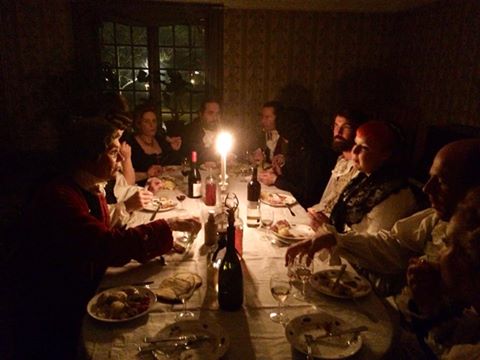
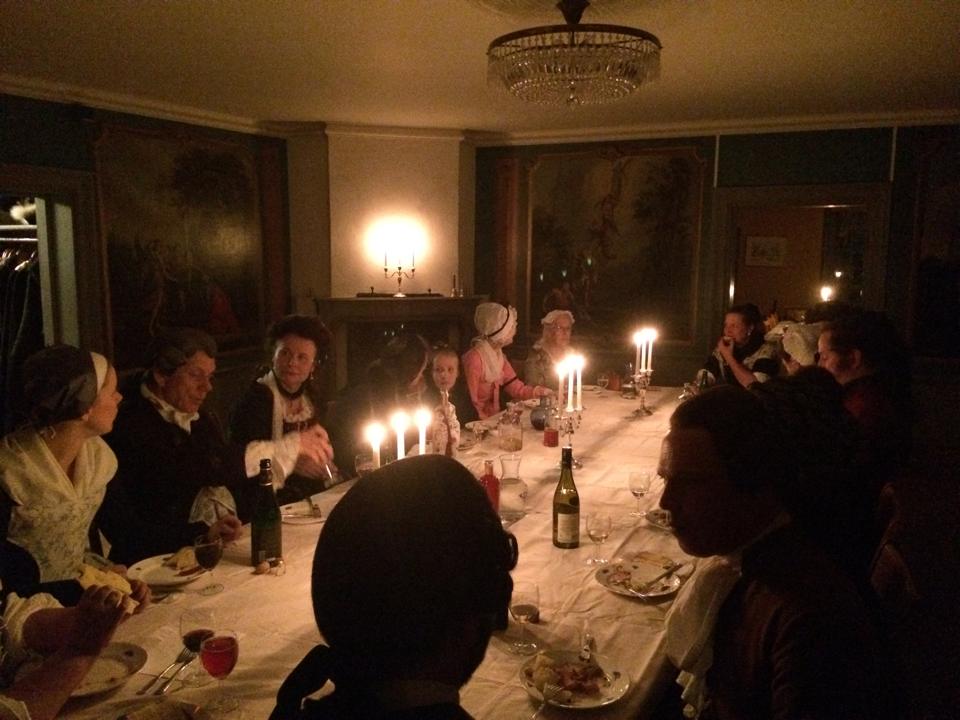
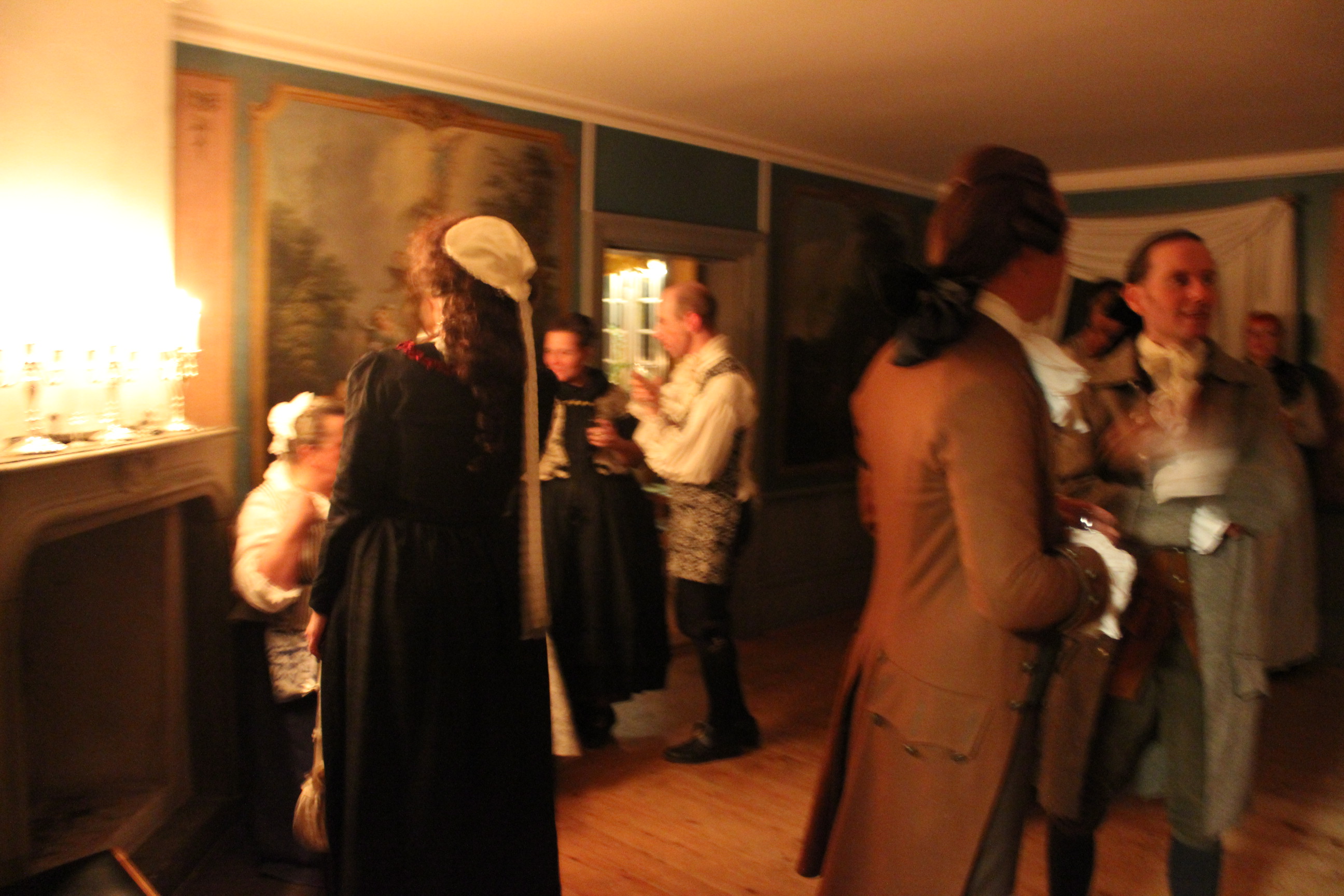
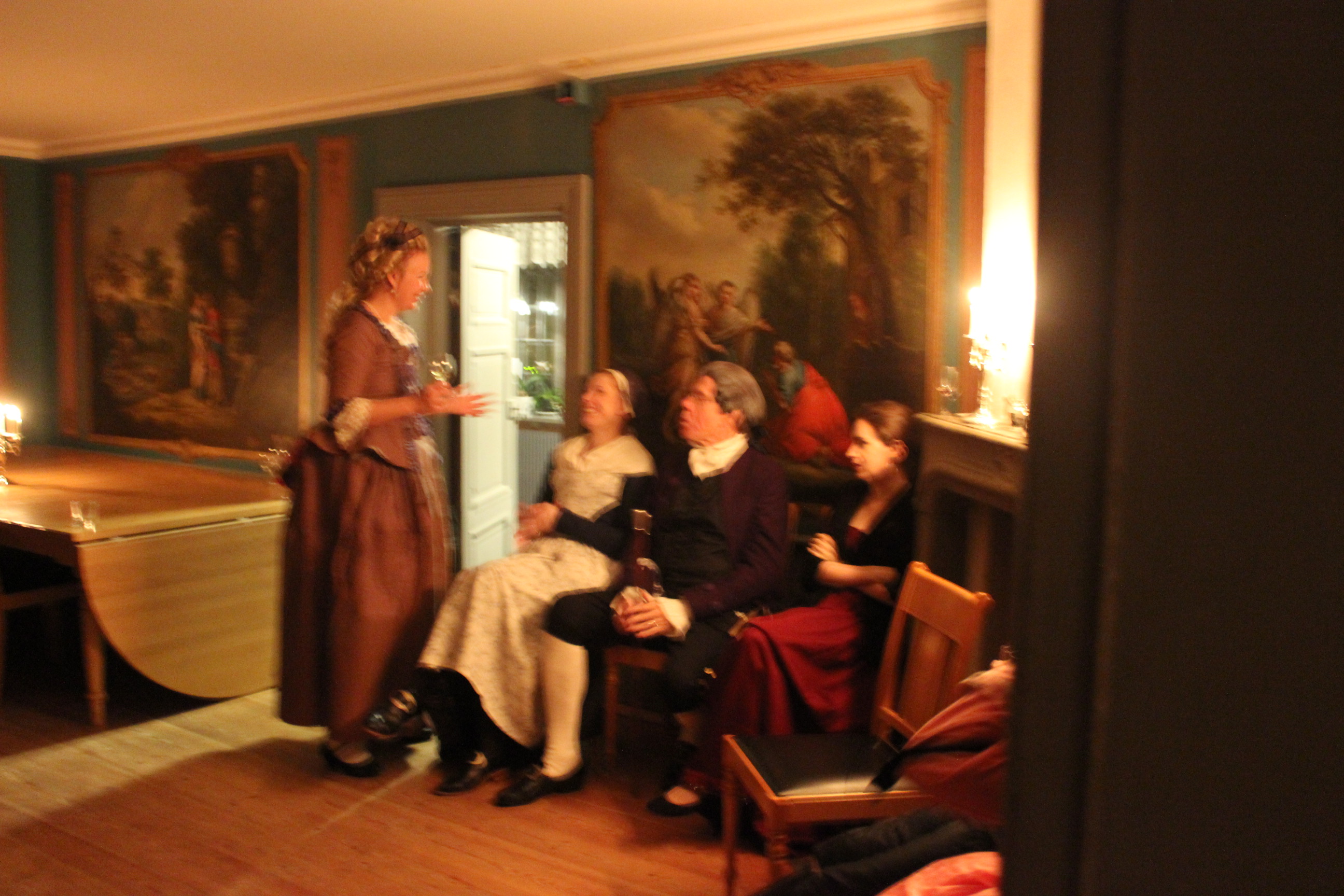
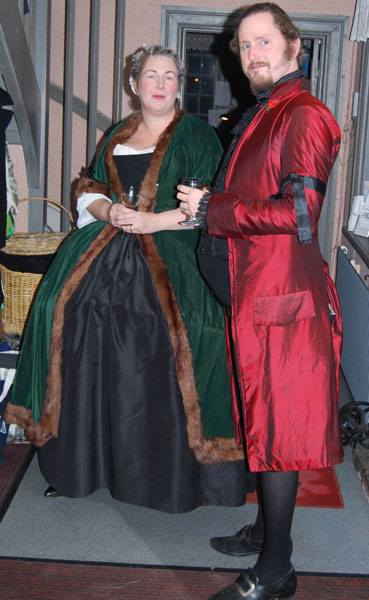
I planed to do a long write up about the 18th century Halloween party I attended two weeks ago, but now I feel more like just some quick word then on to the pictures.

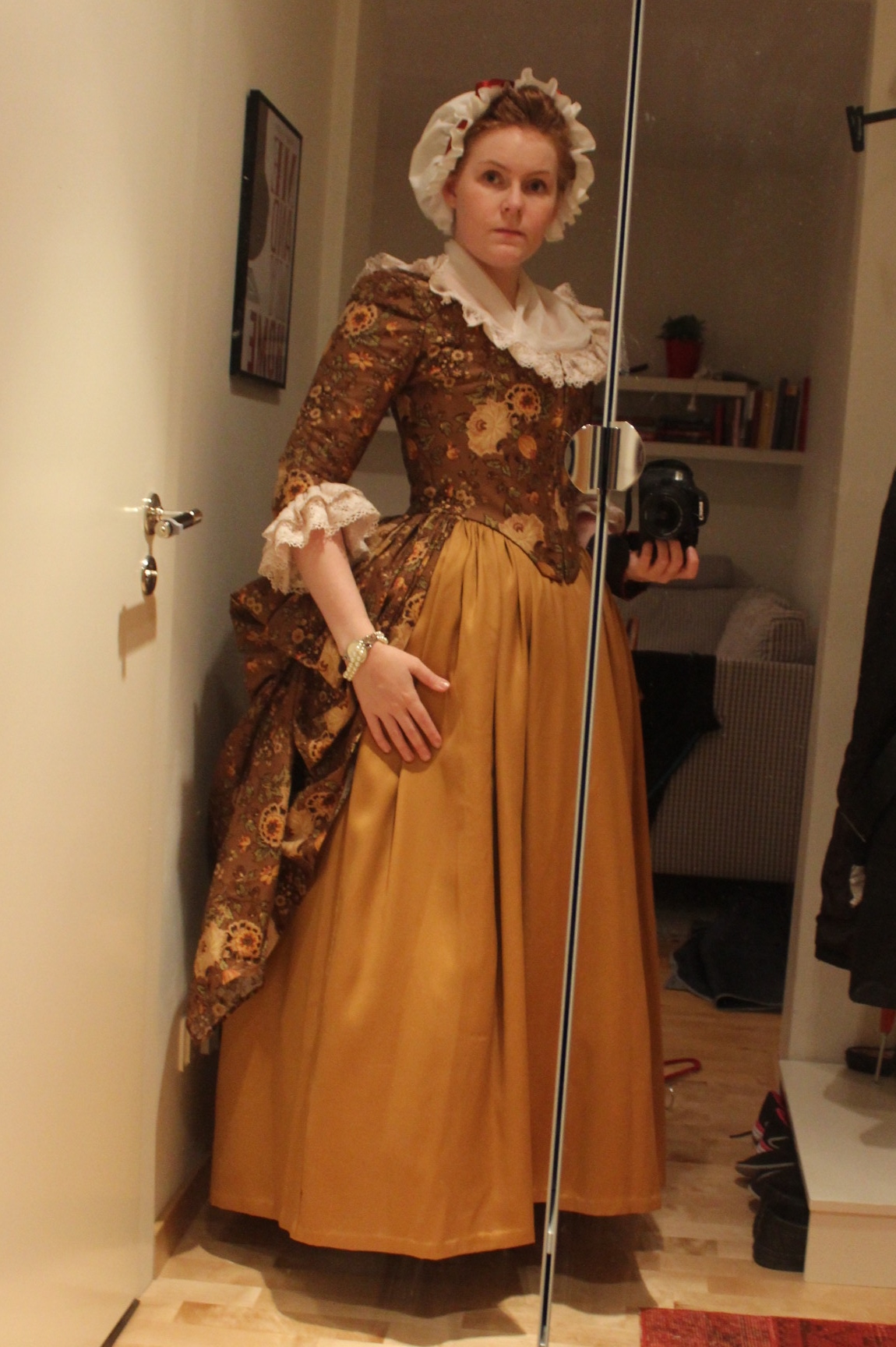
As previously mentioned I didn’t had the time to make a mourning gown for the party, (I did however take one evening to make a new cap). Instead I wore my pretty recently finished Autumn Anglaise, paired with my new lace cuffs and cap.IMG_3959A mirror selfie before leaving the house.

The location and settings for the party was perfect (even if it took me one hour to find the way to the house).

I had such a good time at the party. I danced, chatted and meet several really nice new people.jennifer garner 2Photo by Jennifer Garner

jennifer garner 3Photo by Jennifer Garner

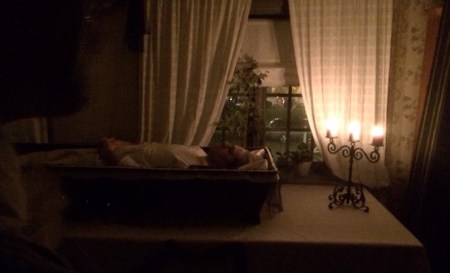
They even had a real coffin with a man laying inside.jennifer garnierPhoto by Jennifer Garner

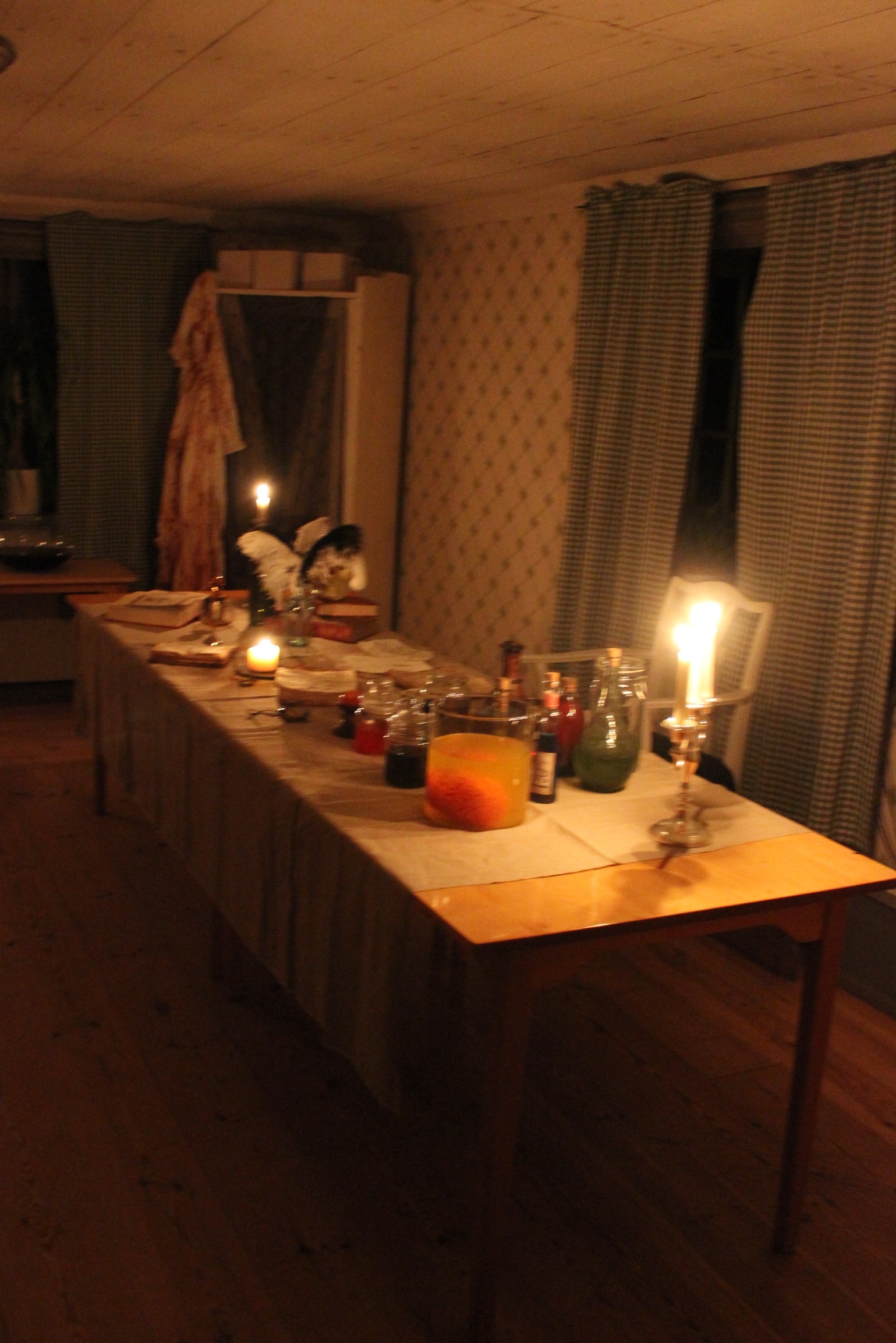
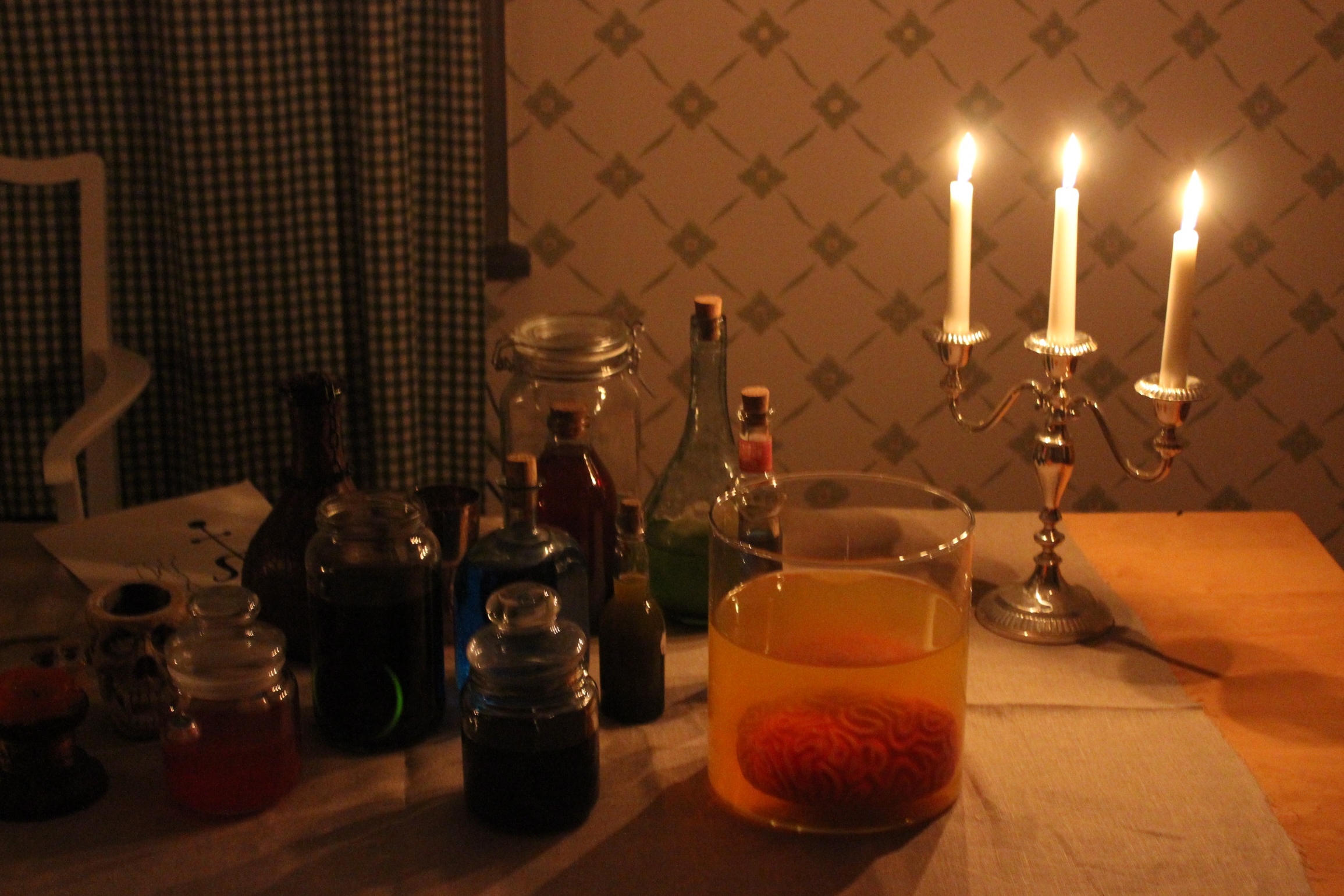
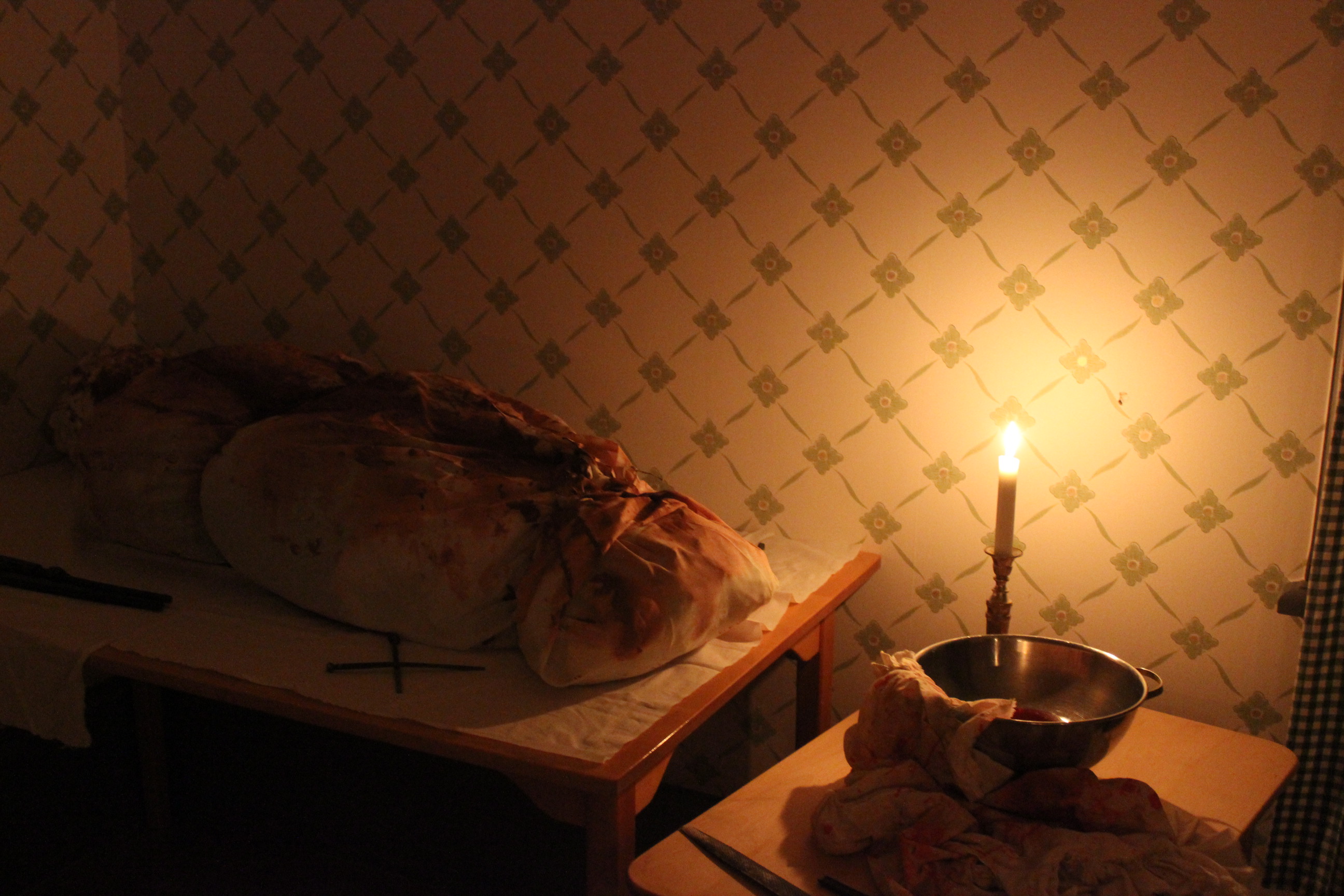
And a scary laboratory with lots of creepy and disgusting objects. IMG_3969

IMG_3973Brain in a jar anybody…?

IMG_3974We think this is whats left from the masters latest lost servant…

IMG_3976

IMG_3960

IMG_3965

IMG_3968

IMG_3978

IMG_3980

IMG_3981

IMG_3982The paintings on the walls are actual 18th century renderings.

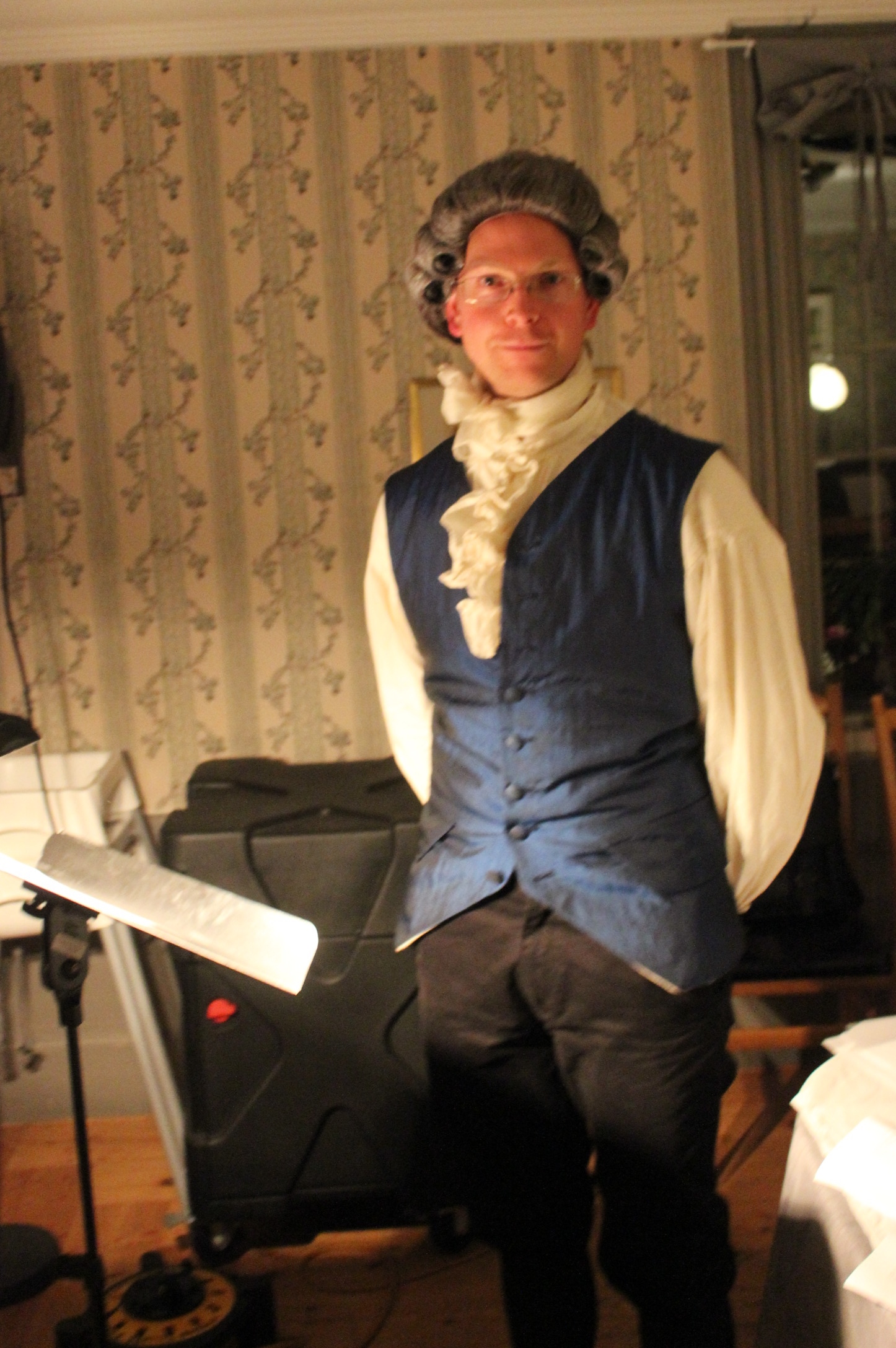
IMG_3987 One of the musicians – At least I got one sharp photo.

folke baggerElisa from “Isis Wardrobe” – If you haven’t found her blog yet, you seriously missed out…
Photo by Folke Bagger

Well at least one of the photos taken during the evening was of me…folke bagger 2Courtesy of Folke Bagger – or not, depends how you look at it :-).

I had such a good time and I’m determent to get some proper mourning gear for next years party…IMG_3941Love my “after event hairdo”, perhaps I should consider doing the Mohawk on a more regular basis…

18th century Lacy sleeve cuffs

For the HSF nr 19 – HSF-Inspiration (draw inspiration from any of your fellow HSFs items), I decided to make a pair of 18th century sleeve cuffs.

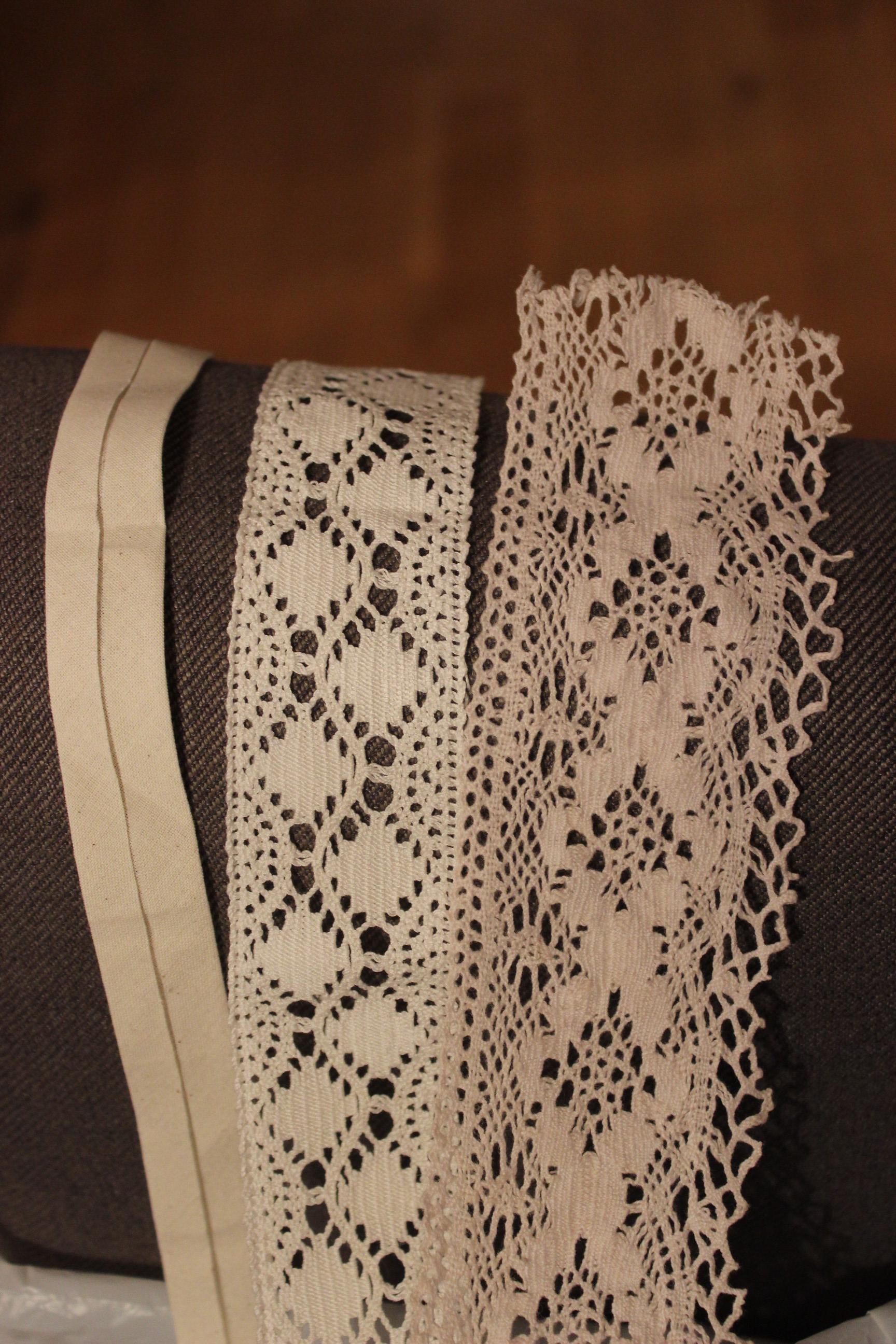
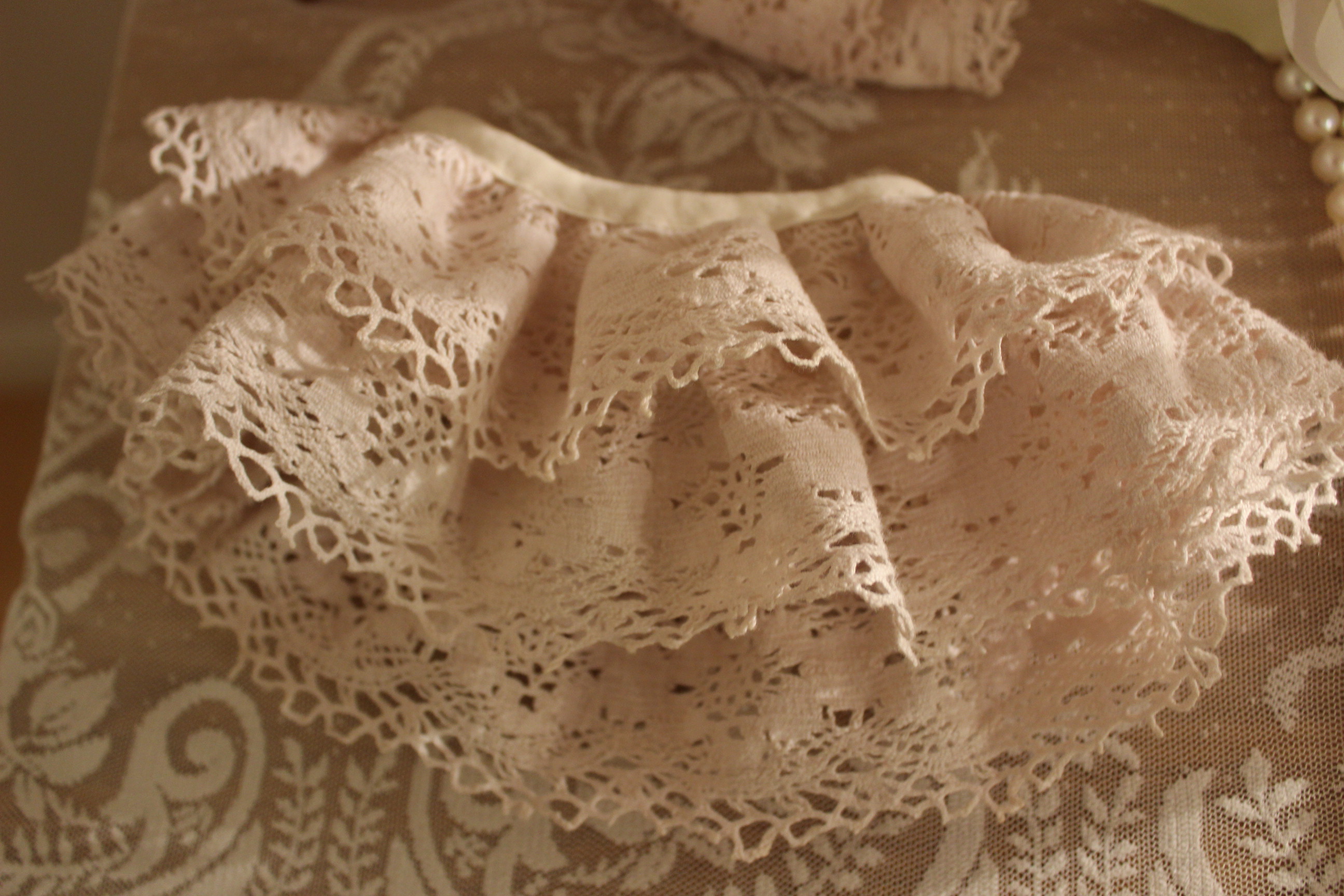
I found a 6 m long piece of lace in my stash, and decided to use it for this project. I originally had some much more delicate lace in mind for this project, but I couldn´t find any I liked in a reasonable enough price range.
So the white lace it is.

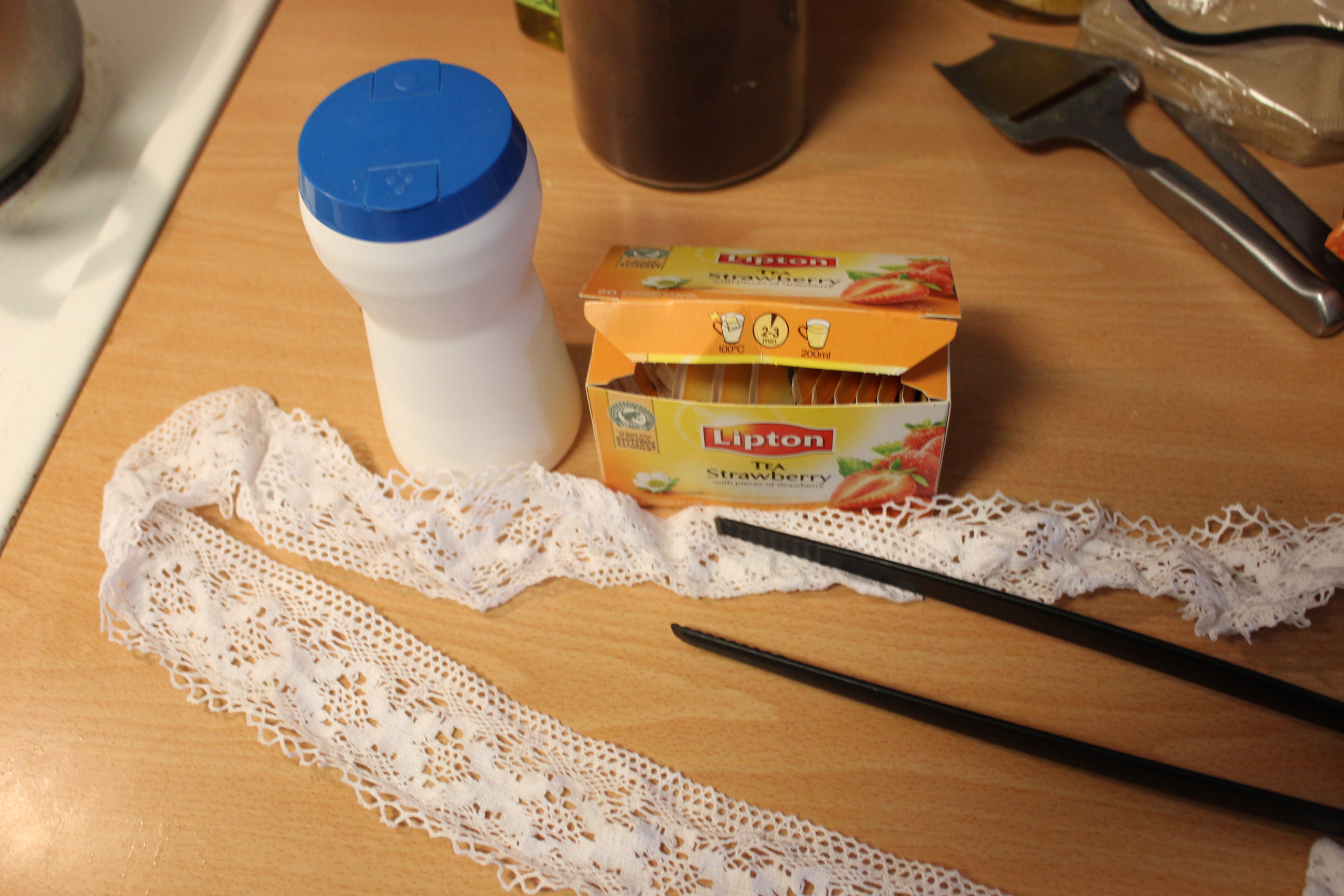
IMG_1670The only problem was, it was too white.

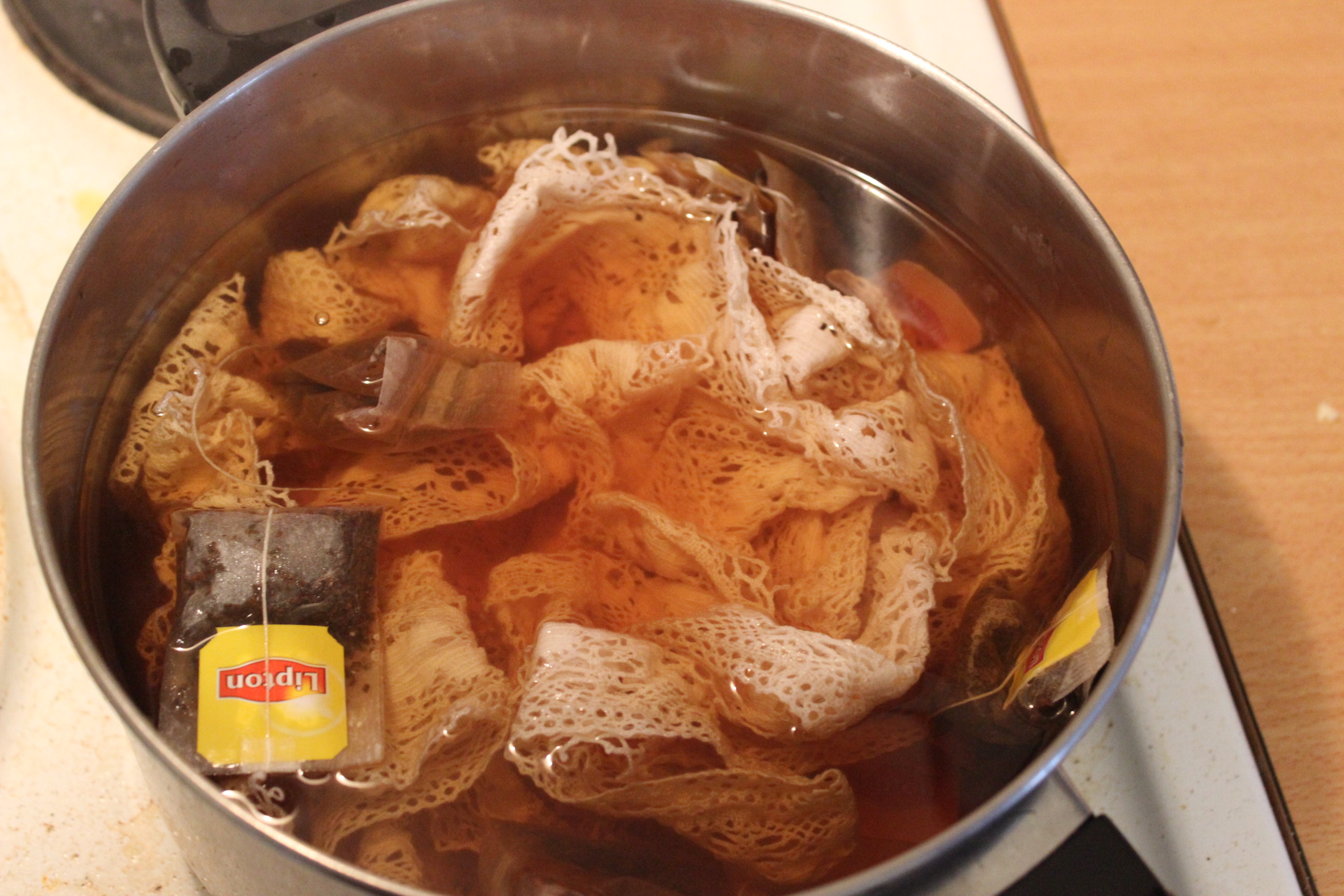
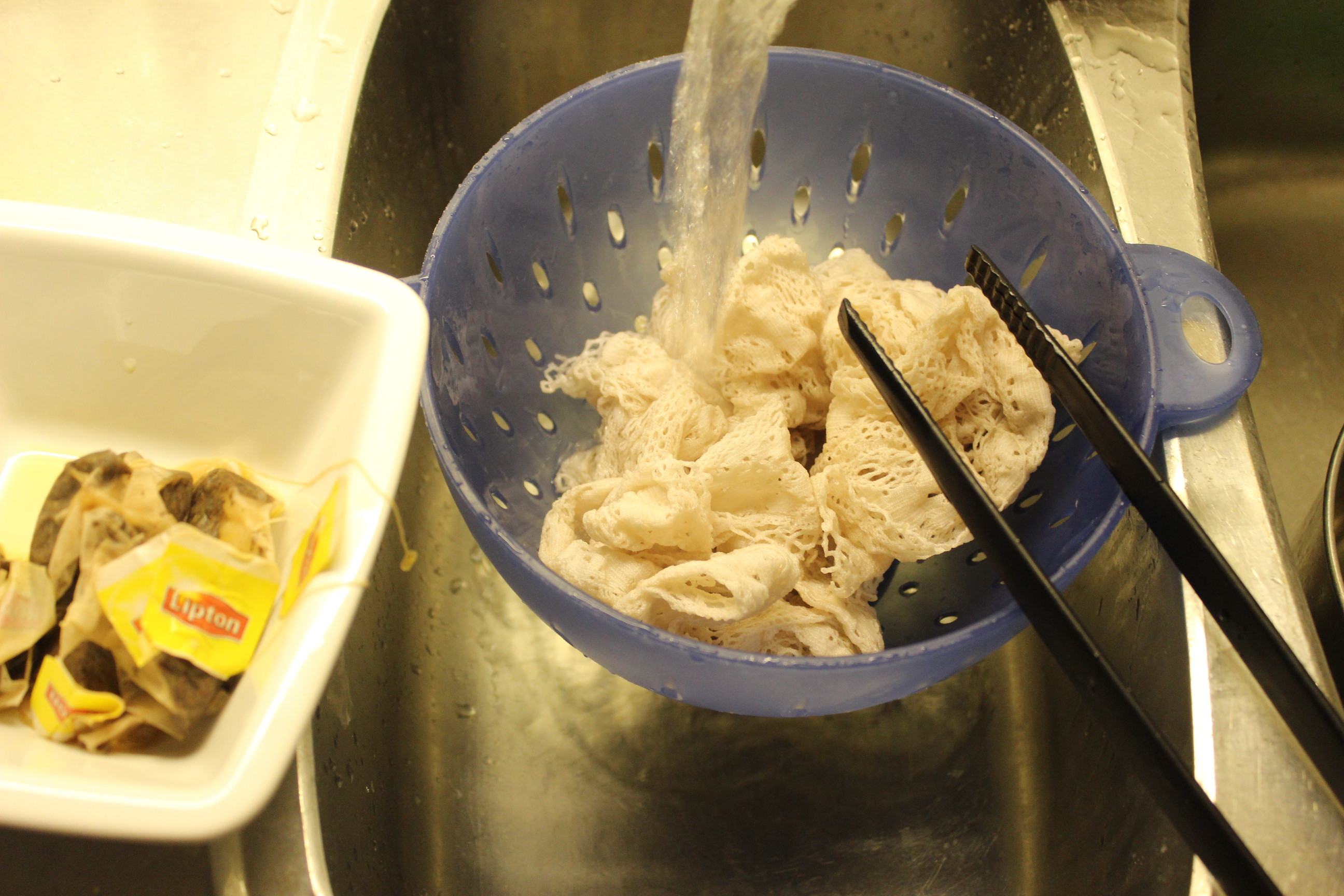
After some debating with myself, I decided to try to tea dye it.
And so I did.IMG_1669The salt´s for setting the color.

IMG_1671Cooking away on the stove. 

IMG_1675Rinsing the leftover color out.
When dry, the lace was in dire need of some ironing.IMG_1792

Then it was time to start on the cuffs.
I decided to use two different kinds of lace, using the middle one as extension on the second layer on the cuff.

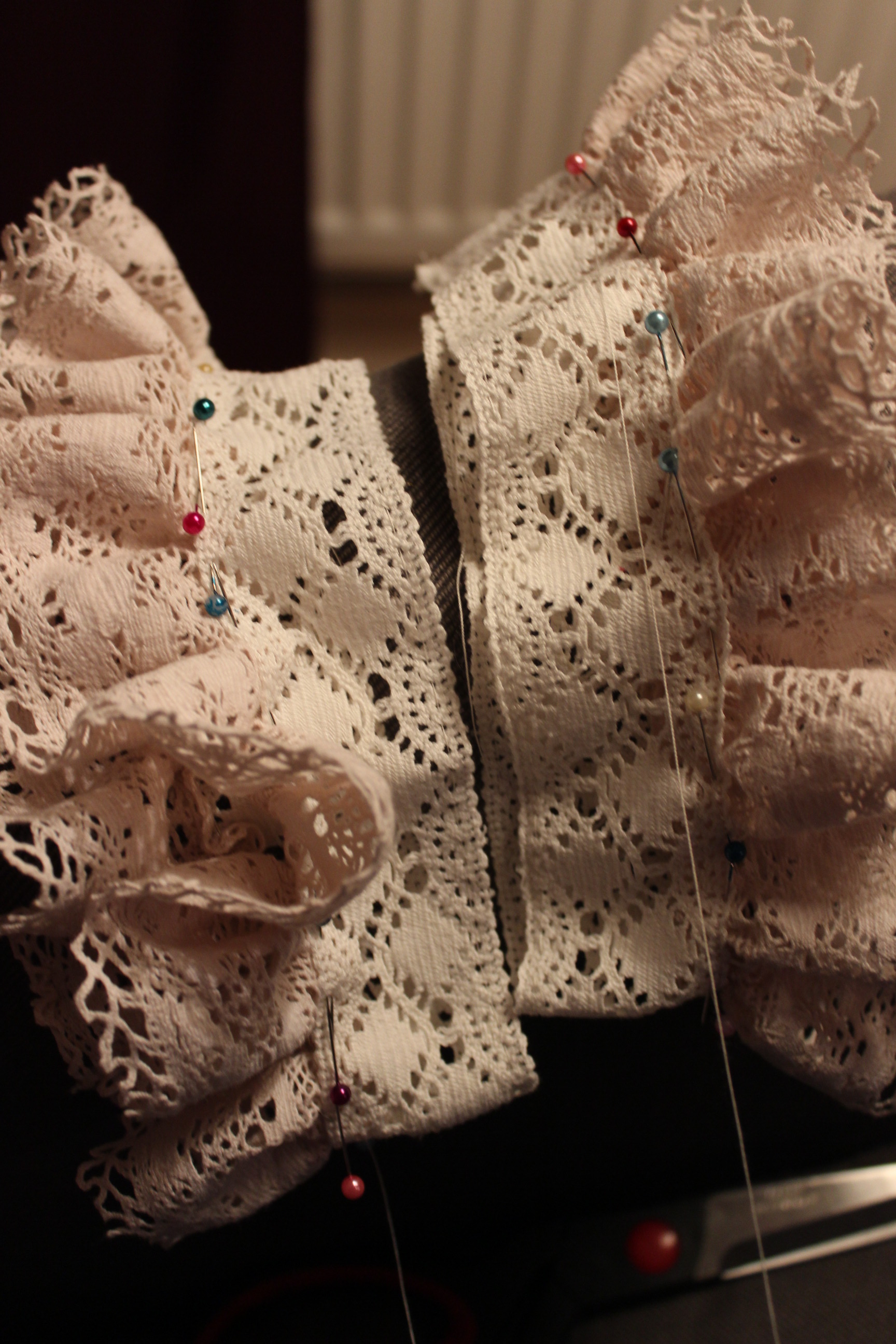
IMG_3138So I stitched the edges of the pieces together, creating different sized circles of the lace.

then I gathered and pined the pieces together.IMG_3140But then I realised that once the extension lace was gathered into the bias tape, the cuffs would be too puffy.

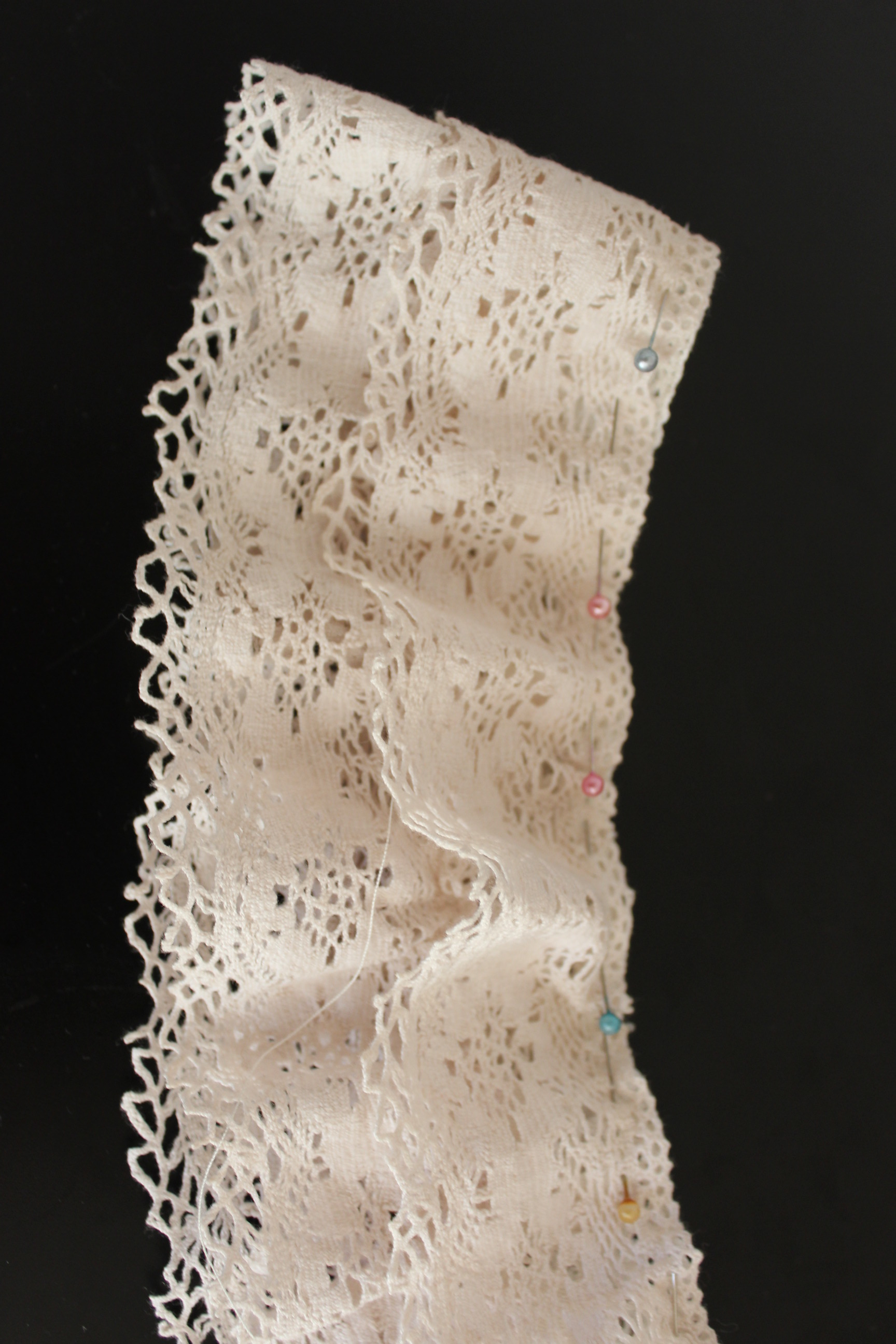
So I decided to trim a piece of the longer lace to get a more modest gather to start with.IMG_3144The bottom piece are the one cut of.

Then I pinned the second layer to it.IMG_3152

And finished of with the bias-tape.
IMG_3153IMG_3154

And Finished:IMG_3245

IMG_3249

IMG_3248

Just the facts:

Challenge: 19 – HSF Inspiration

What: 18th century lace cuffs.

Inspiration: Erin Lee´s 19th century lace cuffs.

Pattern: none, I just gathered and stitched.

Fabric: None.

Notions: a total of 3 m of cotton lace, 60 cm of bias-tape and thread.

How historical accurate: Not particularly. But I did take what I had at hand, and if that´s not period then I don’t know…
They are completely hand stitched, and hand dyed with natural material. Maybe 5/10.

Time: 4 hours including the dying.

Cost: 50 Sek (8 Usd)

First worn: I hope to wear them on an up-coming costume event this november.


Pink 18th century Flowery Francaise Petticoat

“Long petticoats to hide the feet,
Silk hose with clocks of scarlet ;
A load of perfume, sick’ning sweet,
Bought of PARISIAN VARLET.”

From Female Fashions for 1799 by Mary Darby Robinson

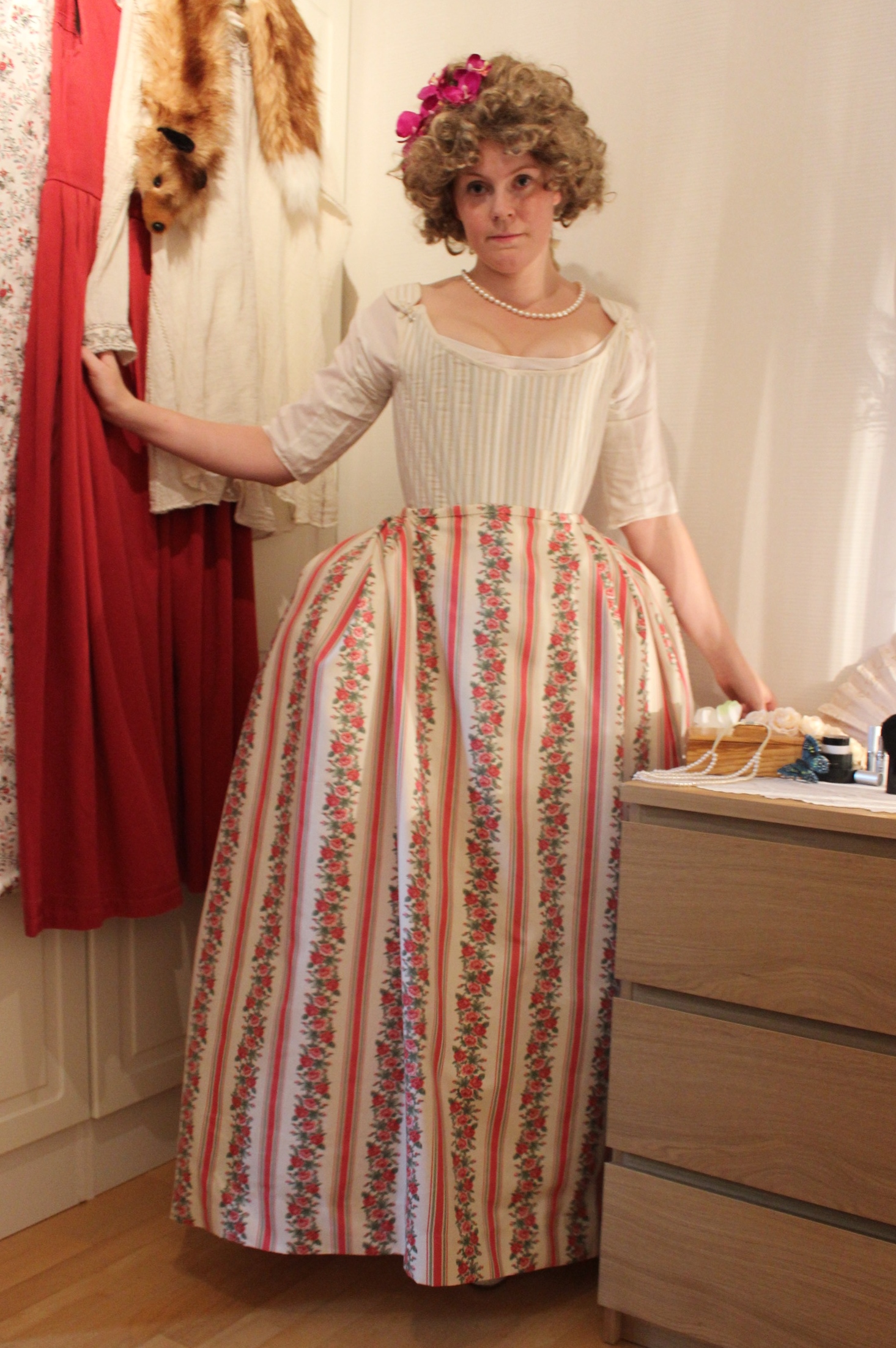
This summer, when venturing trough the local fabric store, I couldn’t resist buying this beautiful flowery satin fabric. It just screamed at me from the sales corner, and begged me to make it into a robe a la Francaise – so I bought it all.
IMG_0755

And since the this weeks HSF challenge nr 19) is “Poetry”, I figured I’ll start working on it.

I started with the petticoat (since I just needed something simple to occupie my hands and thoughts from work).
Sitting in the sofa, watching old series, I managed to finish it in a couple of nights. IMG_2832But just as I was about to put it away as finished, I noticed the huge amount of fabric at the center front.IMG_2831That didn’t look quite right.
And after some additional image searching I knew I needed to rework the pleating to get a neater  appearance under neath the dress.

So I ripped the waistband of, re-pleated the skirt and stitched it back on.IMG_2834

Unfortunately I forgot to take proper, and detailed, finishing photos of the skirt before storing it. But I did get a quick photoshoot.

The finished Skirt:

IMG_2990

IMG_3006

IMG_3028

IMG_3020

IMG_3026

IMG_3042 (2)

IMG_3052

IMG_3063

IMG_3061

IMG_3036Just the facts:

Challenge: 18, Poetry in motion

Poem: Parts of  Female Fashions for 1799 by Mary Darby Robinson.

What: a 18th century skirt/petticoat.

Pattern: None, just cut two lengths of fabric and fiddled with he pleats until it looked okay.

Fabric: 1,3 m of flowery polyester satin (yes I now, but it was Sooo pretty).

Notions: Thread and 2 m of cotton ribbon for tying at the waist.

How historical accurate: So so, the material are totally wrong, but it is all hand stitched and I think the look of it are pretty okay.

Time: About 8 hours, including the readjusting of the pleats.

Cost: 100 Sek (16 Usd).

First worn: around the house for photos.