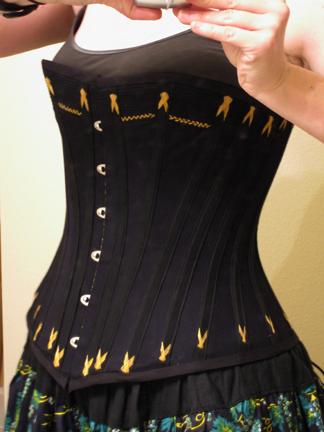
Huldra

This week I missed out on my so far perfekt score of posting something every other day. But I think I’ve got a pretty good exuse.
I’ve been working my as of as costume designer on this new movie “Huldra”, and it’s been taking every bit of my waking hours. In fact the few hours every day that I don’t work, I’m dead asleep.

It is so cool too be part of a project like this, and even though it’s really tough sometimes I love it and enjoy it soo much.

I will tell you more about the project and show some great behind the scen photos when I can get out of the woods an get too a computor. In the mean time you can google “Huldra the movie” and take a look at the trailer/pilot (which I did not have any hand in).

484075_506282039450660_166628756_n

Sewing The Addams Family

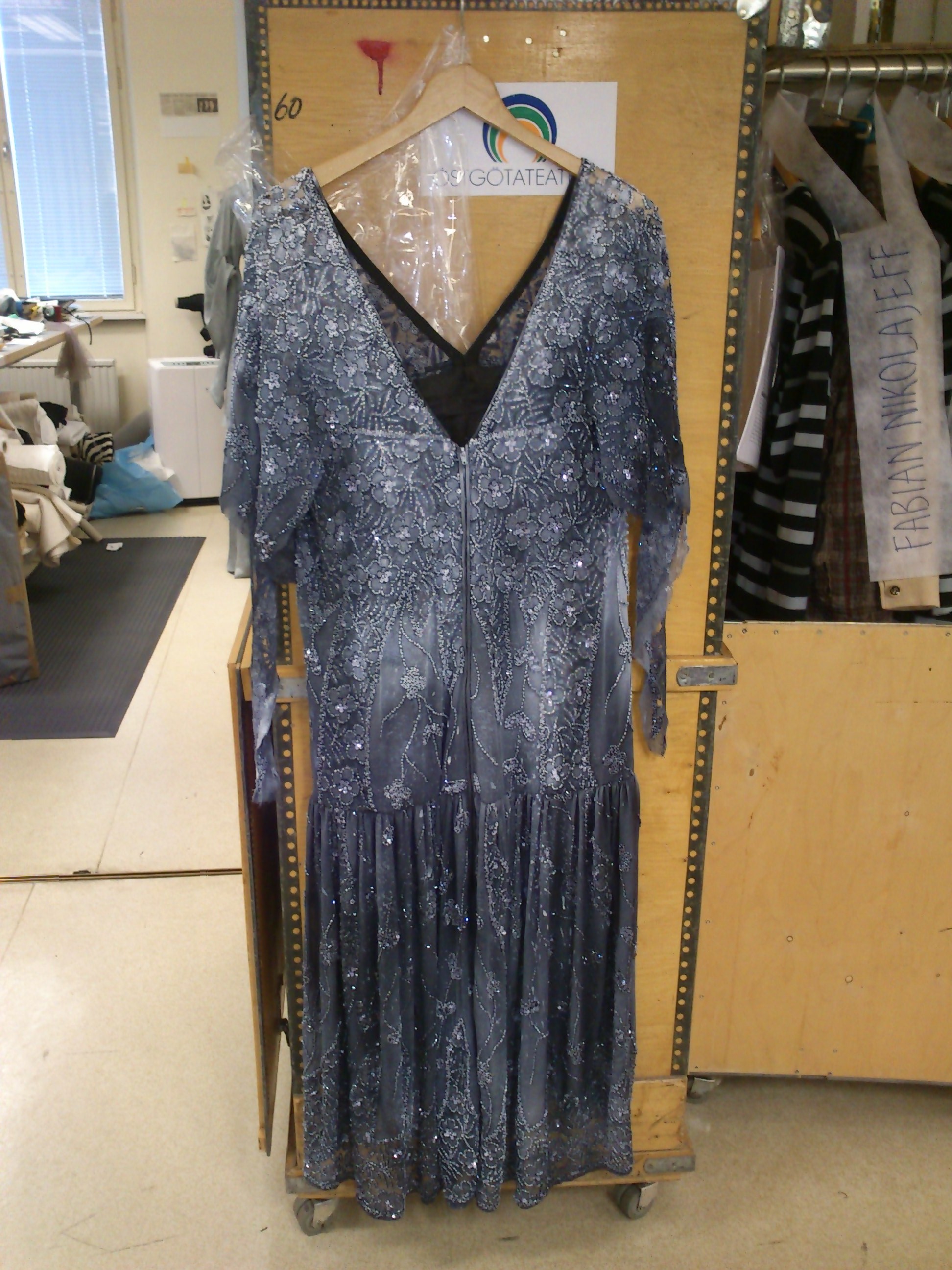
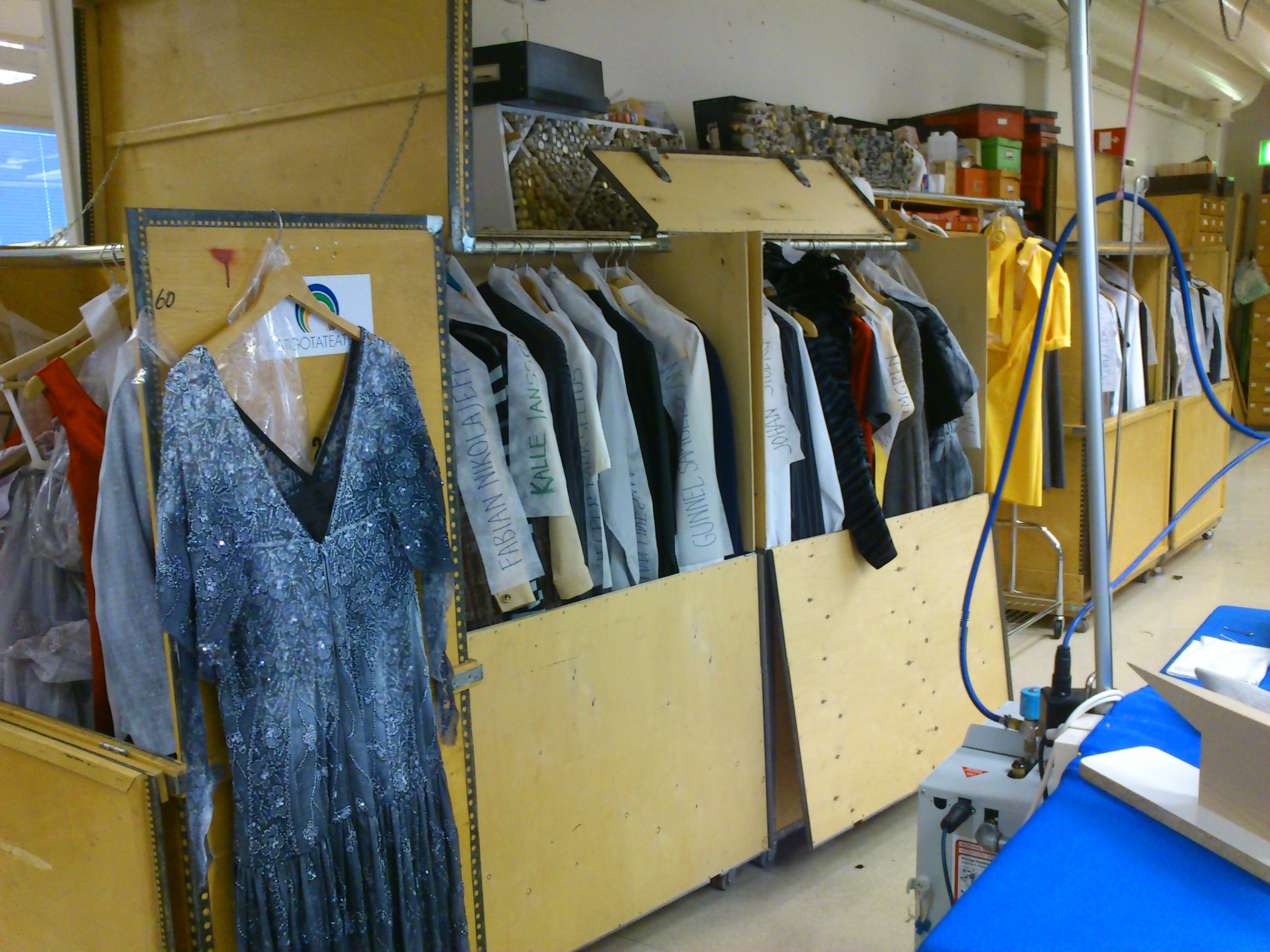
Last fall the theatre where I work decided to produce the musical “The Addams Family”, and as a trainee in the atelier I got the opportunity to be part of the making of the costumes for the show.

It was so much fun making all of these crazy costumes with lots and lots of strange special solutions and tecnhiques to them.

Here are a few shoots of what it looked like at work during this hectic couple of months.

ImageHandler jhlkjg

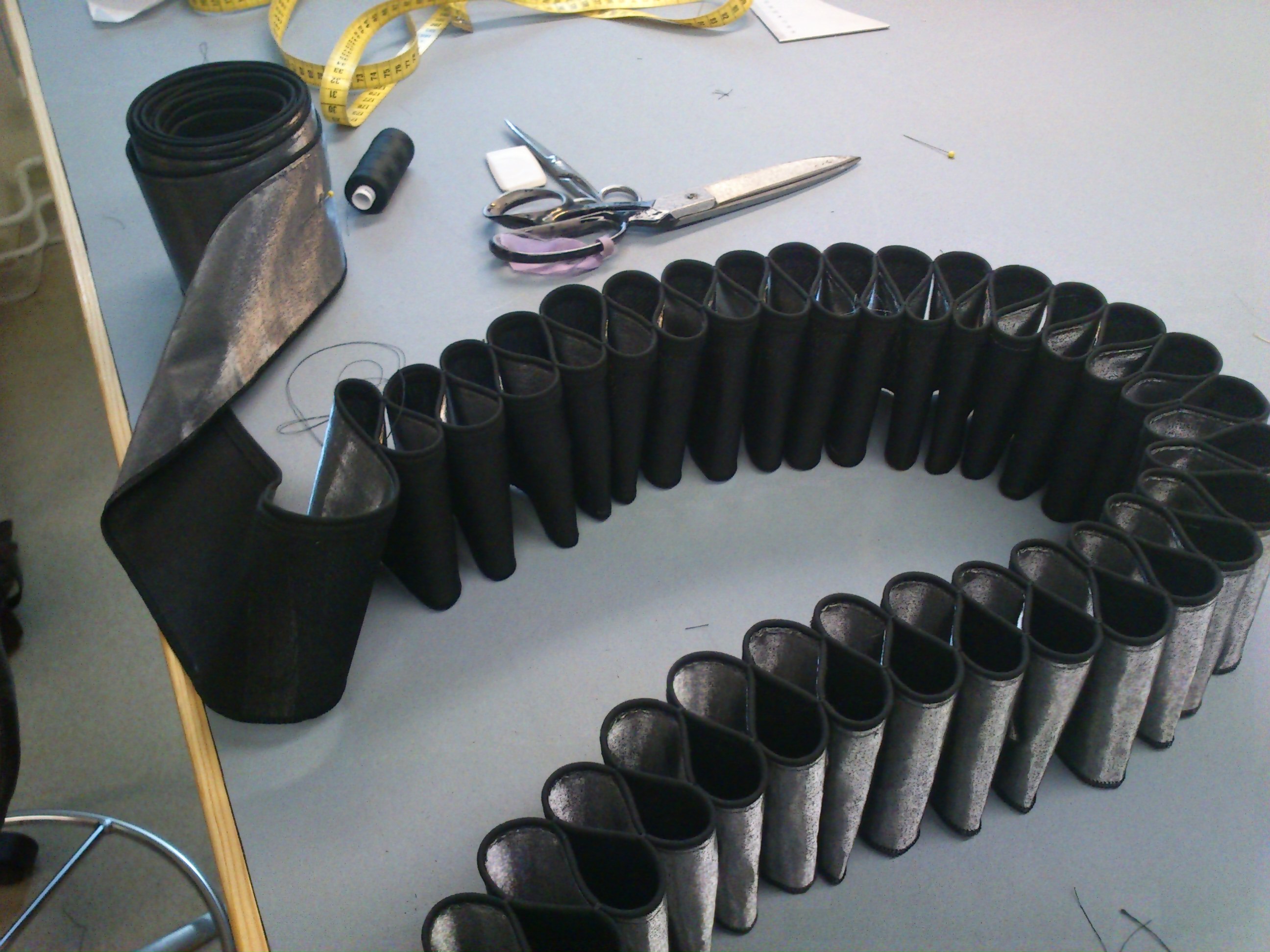
2012-05-25 11.11.37Cut stripes sewn to black satin as making of a fabric that later would turn into a pair of 16th Century breeches.

2012-05-31 15.00.25Making of a 16th Century neck-ruffle (my speciality by now).

2012-06-08 11.24.07

2012-06-20 13.19.26A newly draped collar for a 17th century colonaire.

2012-08-09 09.58.45Tap-shoes.

2012-08-29 09.41.47A plastic arm that will become “The Thing”.

2012-09-14 10.08.48

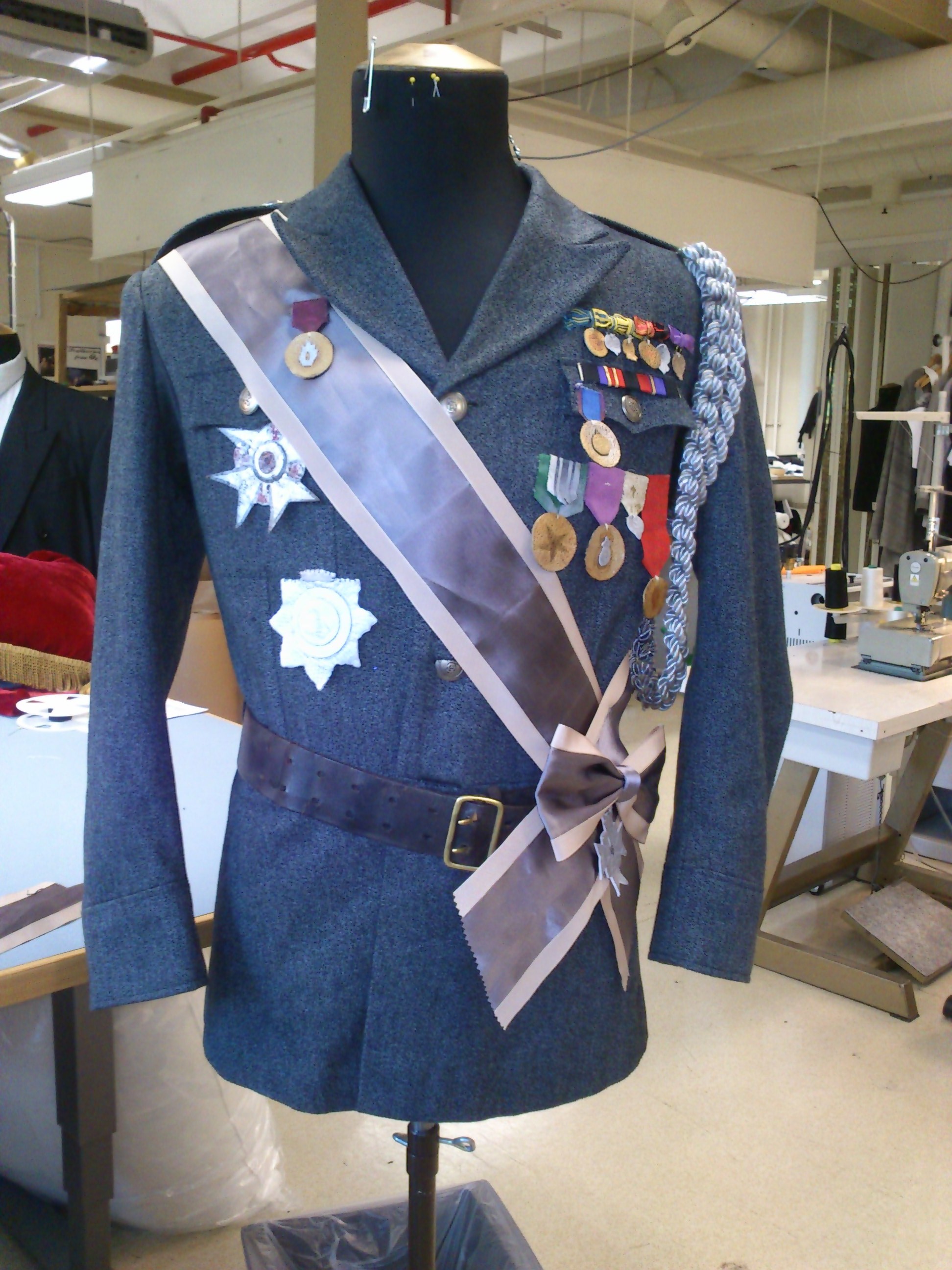
2012-09-12 10.59.19General Patton.

2012-09-07 13.06.19Skeleton body-suits.

ImageHandlerbgv

Then after you spent days on geting every seam perfect, cutting every lose thread and pressing like crazy, the costumes are taken in to the next room – and comes out totally ruined!

No, I’m kidding.

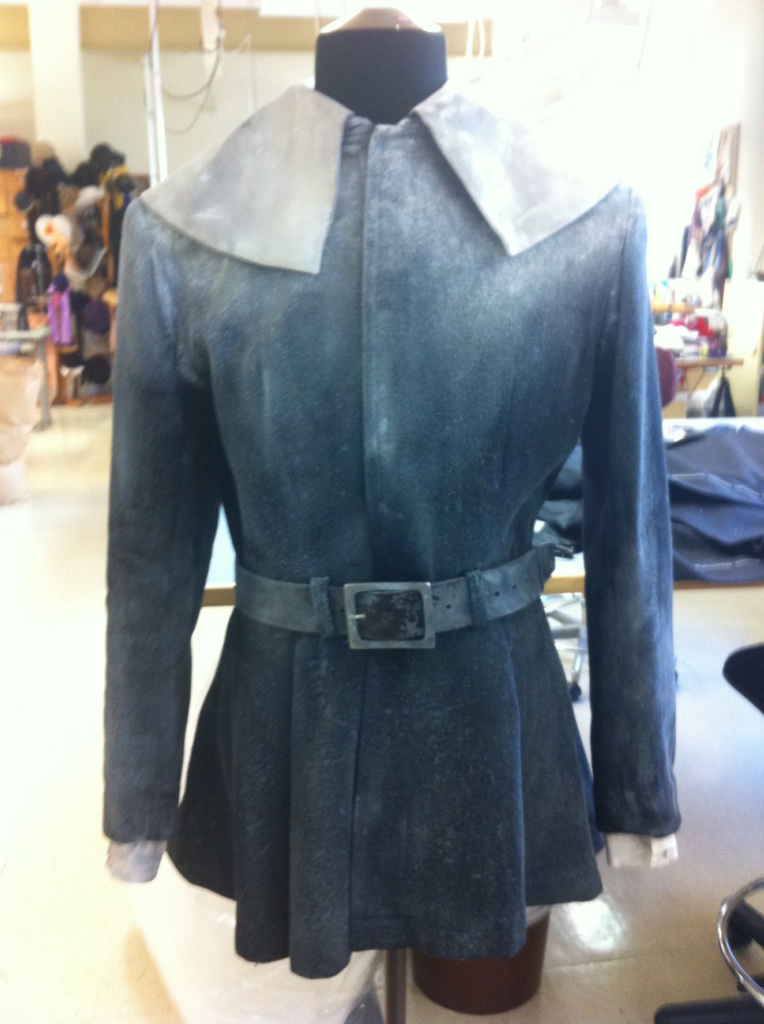
But almost every costume in theatre needs to be “distressed” in some way or another. Or else it would look like every one in town (even the poor ones) bought their clothes that same morning. And for this show no one would be wearing “new” clothes.

Here are some before and after pics of a couple of ghost costumes.

2012-09-12 11.00.192012-09-17 13.31.15

2012-06-20 13.19.11IMG_6726

2012-09-14 10.09.152012-09-21 10.45.18

ImageHandler jdf

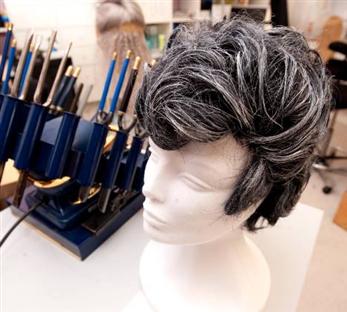
ImageHandler jhElvis lives.

2012-09-17 13.32.20Reedy for shipment to the Theatre.

2012-08-24 13.53.18Laurel and Hardy waiting for their costume fittings. Their 4 friends will drop by later for their fittngs.

2012-09-04 16.54.28This fellow scared the shit out of most of us at some point or another, as it was constantly being moved around the atelier, suddenly standing next to you or peeking round a corner.

Eastern Influences in 1914

I had some difficulties figuring out what to make for the HSF Challenge 14 – Eastern Influences. I didn’t want to start a too big project, being so busy with the Titanic dresses at this time.

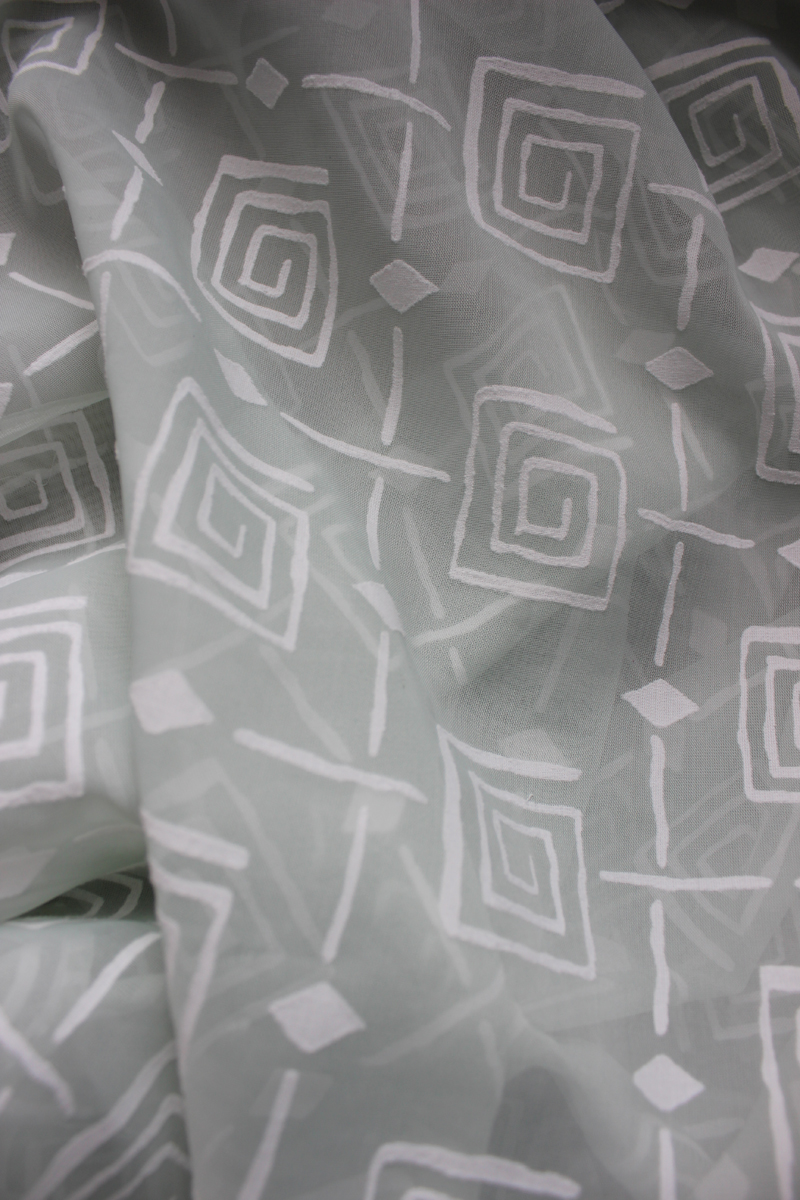
After much hesitation and changing my mind I finally decided to use the 1,5 m of light pistage-colored organdy already waiting in the stash. It is covered in a geometrical pattern in the shape of 4cm big grecian keys. So perfect for the challenge. But I’m not much of a print person, and feared that the geometrical pattern would be too obvious, too silly or just simply destroy whatever I made from it.

IMG_0302

Ok, fears aside – what exactly was I going to make with it (that wouldn’t look costumy or silly)?

I had not enough fabric for a regency-dress, and the fabric was not suitable for anything heavy like a round skirt or a stiff bodice. What to do?

The answer fell on me when searching the internet for inspiration for another project.

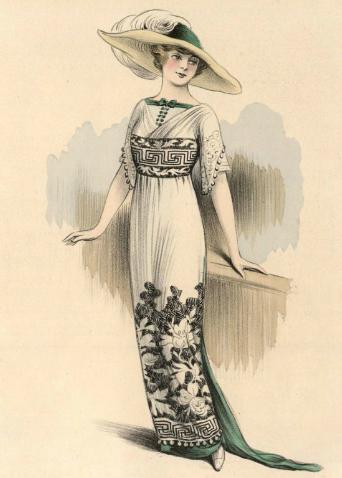
1912

A Titanic era evening-gown. It seemed perfect, and already being totally emgrossed by the early 20th century I didn’t hesitate.

I quickly made some sketches and played around a bit with the fabric on my dressform to get the basic shapes and cuts figured out.

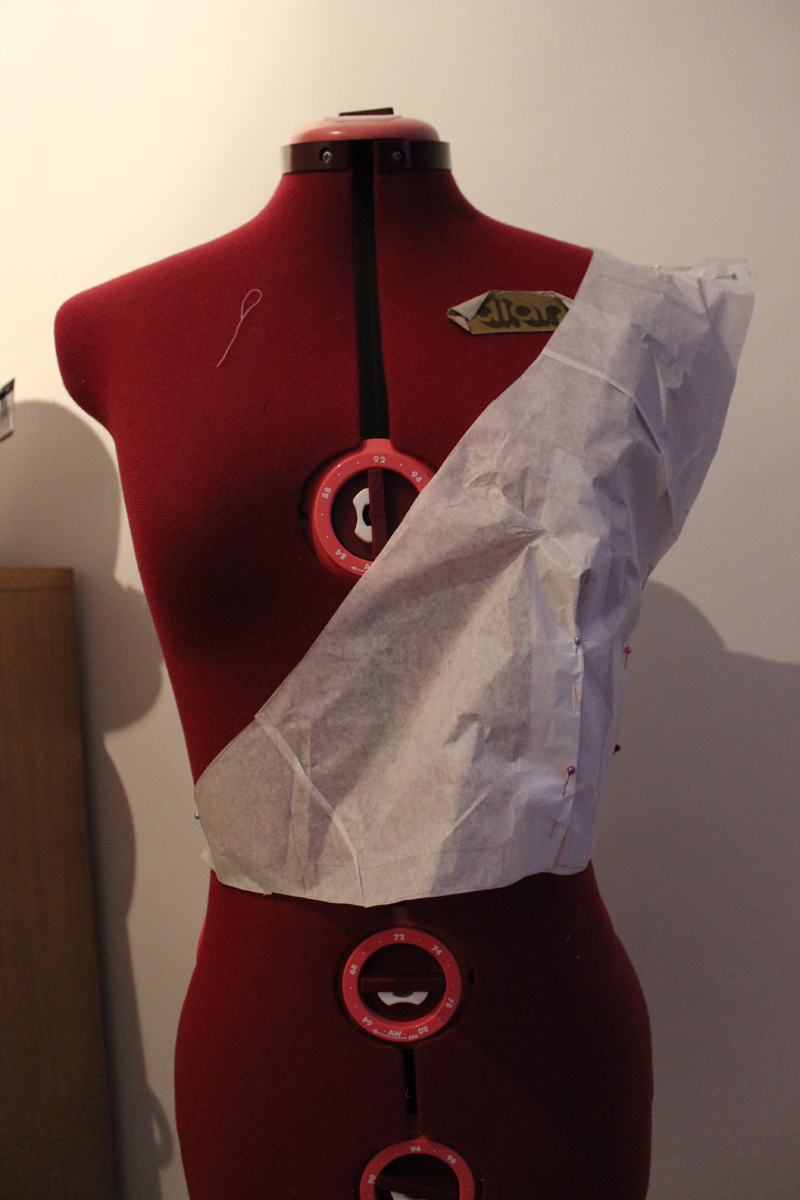
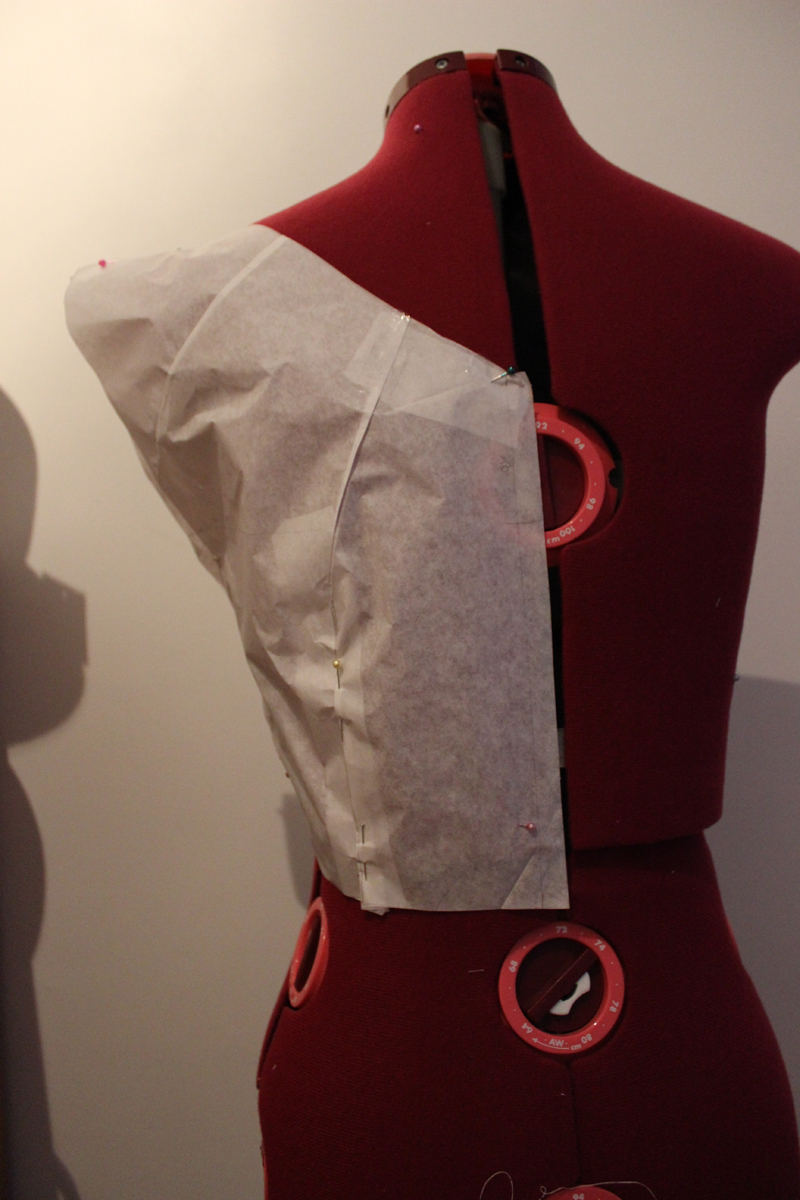
Then I started drafting the pattern. I wanted a cross-over bodice with a short kimono-sleeve attached to a draped skirt. The bodice was a bit tricky and I decided to try the paper pattern on my dressform before cutting a toile. That impuls saved me making a useless mock-up.

IMG_0266IMG_0267

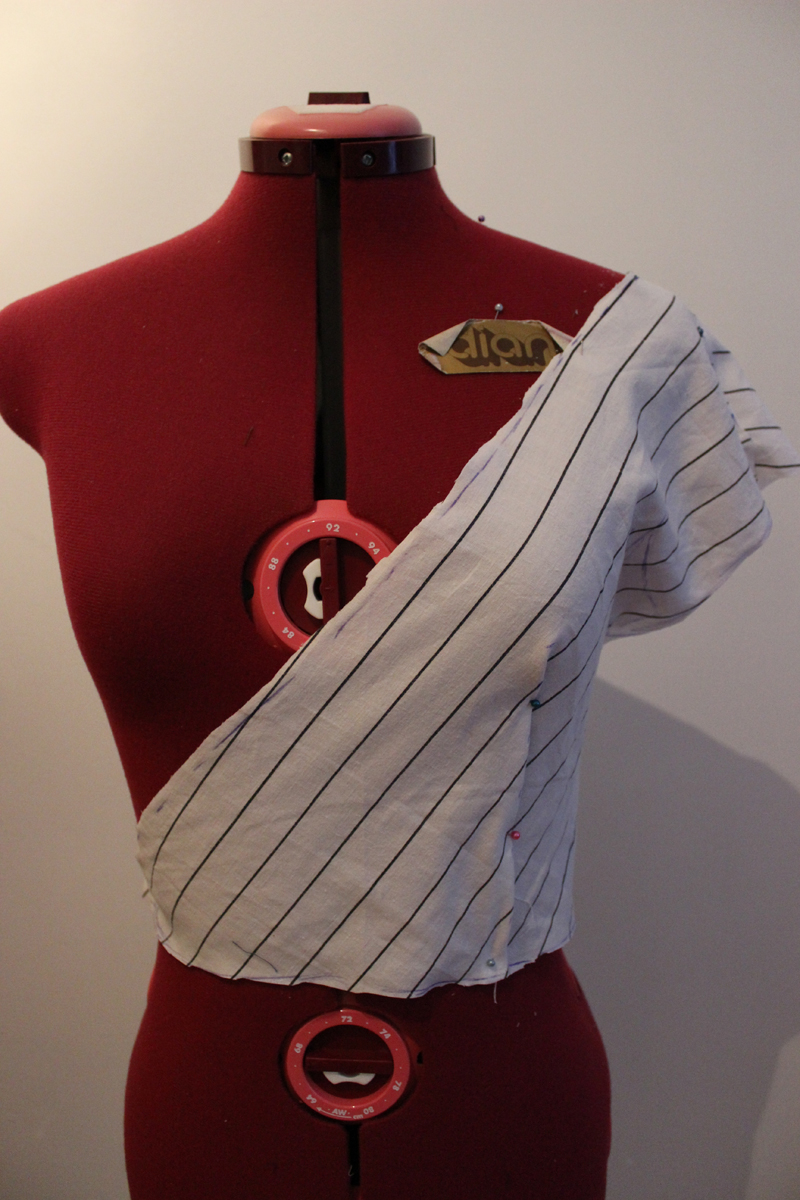
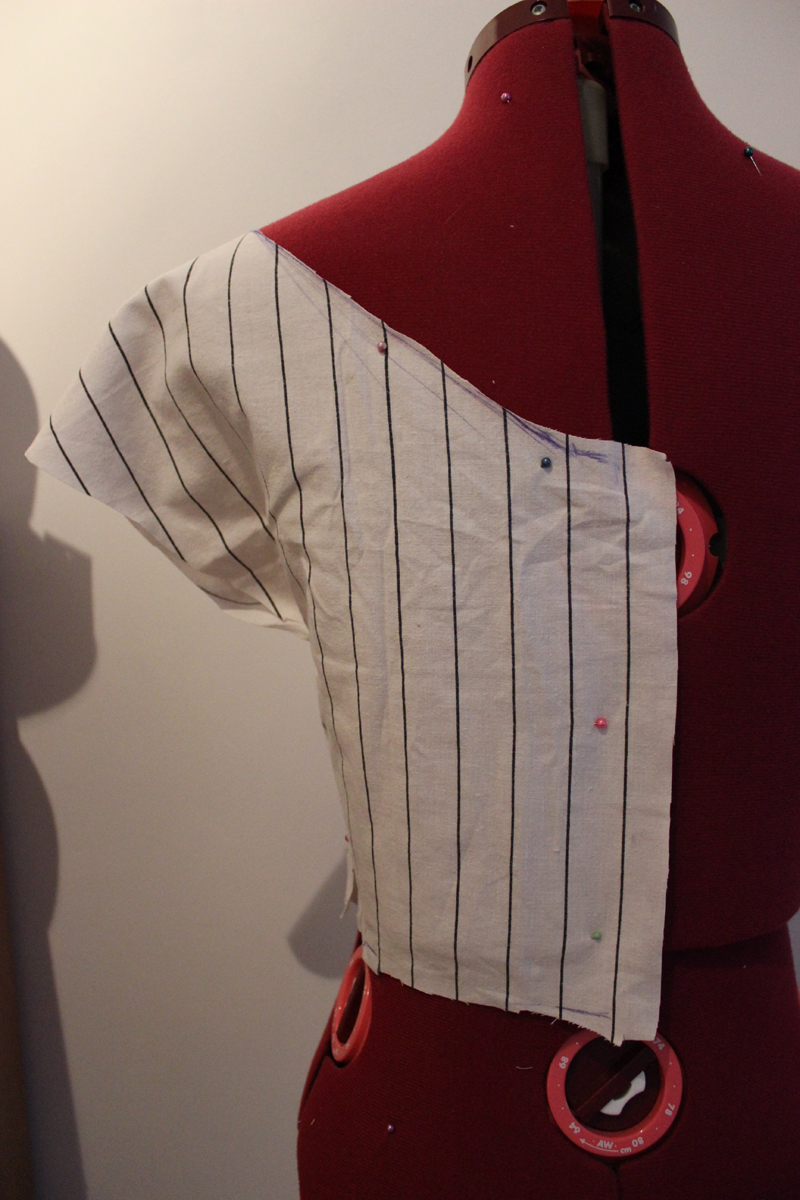
I tried but could not get the pattern and the dressform to co-operate, so I scratched the paper pattern and instead draped a bodice on the form. So much better.

IMG_0261IMG_0260

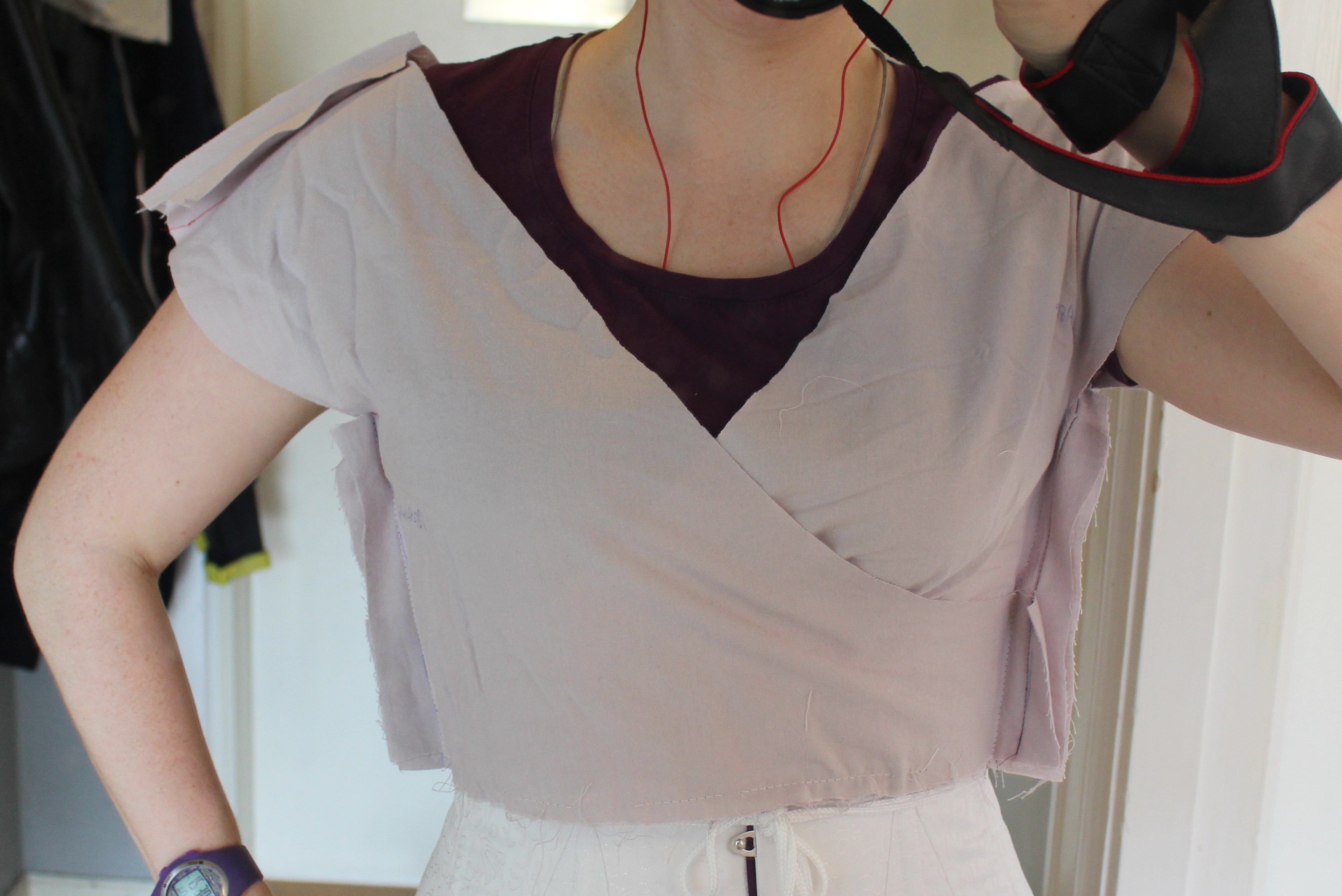
I then did the mock-up, tried it on and pinned all the necessary alterations. (It is not easy trying and fitting a back-closed mock-up by your self).

IMG_0284Ignore the huge seam allowance.

Since the organdy is so sheer I needed to make some foundation underneat – both for modesty and to get the right support and shape. I used the the same white skirt as for my late Titanic dress, and drafted a strapless dress-bodice to attach the organdy-bodice on.

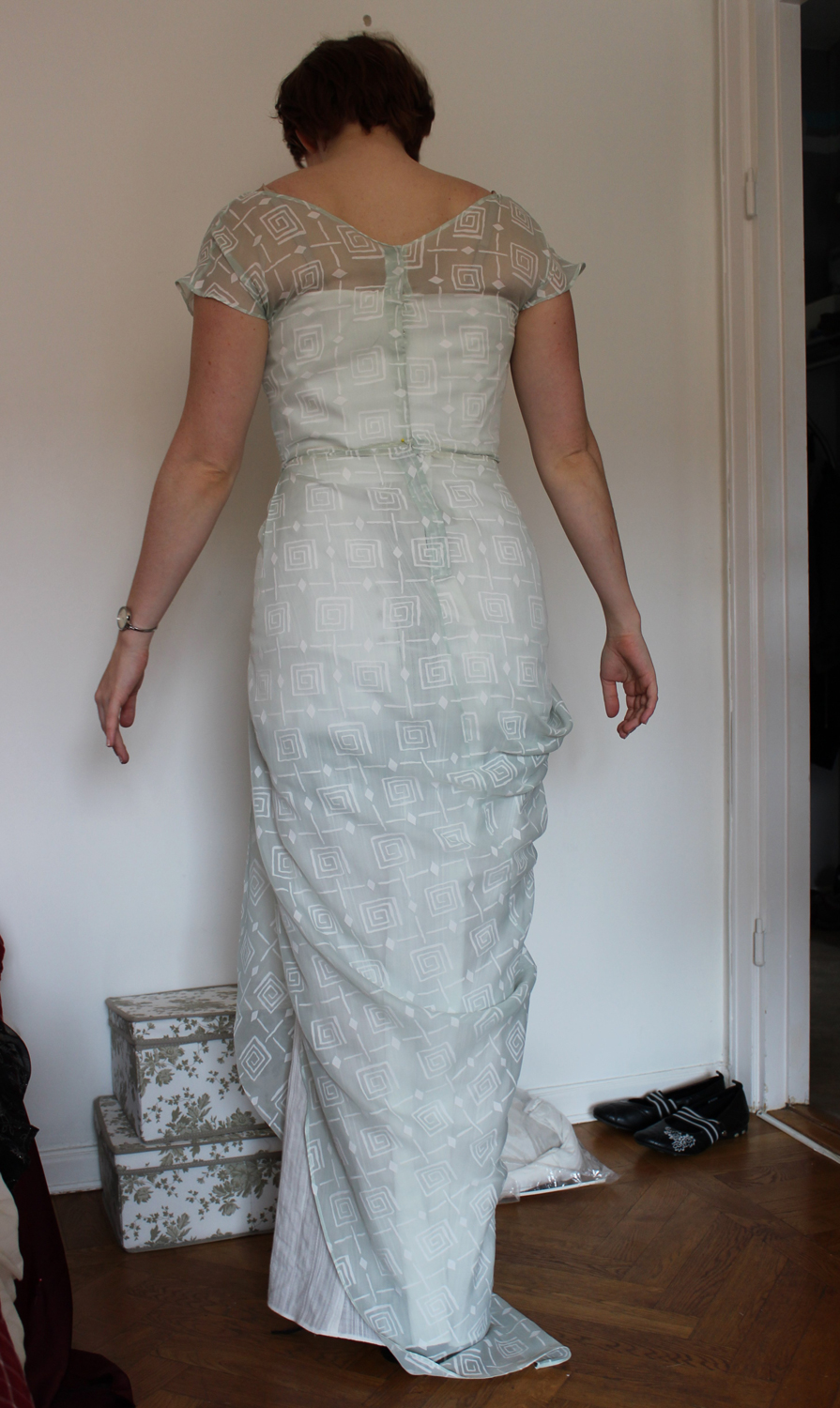
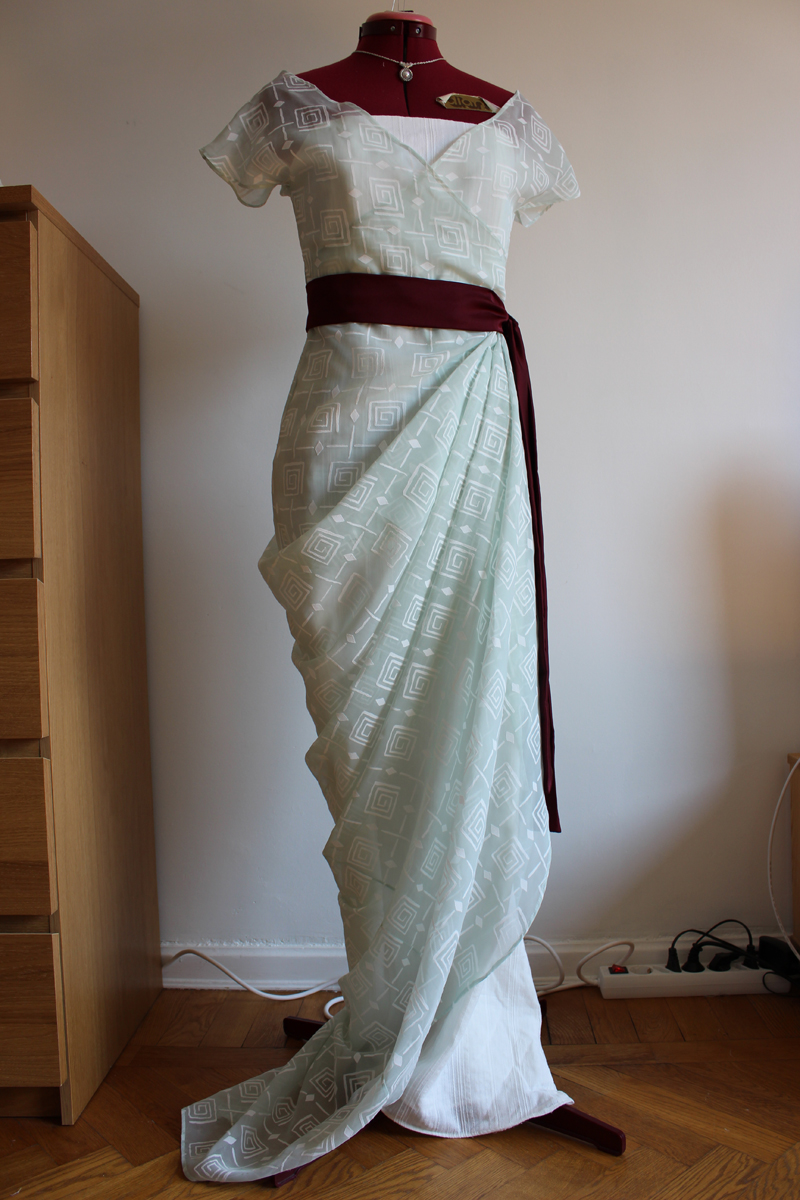
Then it was time to cut the fabric. I sewed the foundation bodice and tried it on, then I stitched the organdy and draped the skirt on the dressform.

Everything went together fine and I just needed to make some minor alterations on the waist and shoulders. I tried the dress on and really liked it, but felt like something was missing.

IMG_0311IMG_0314

IMG_0316

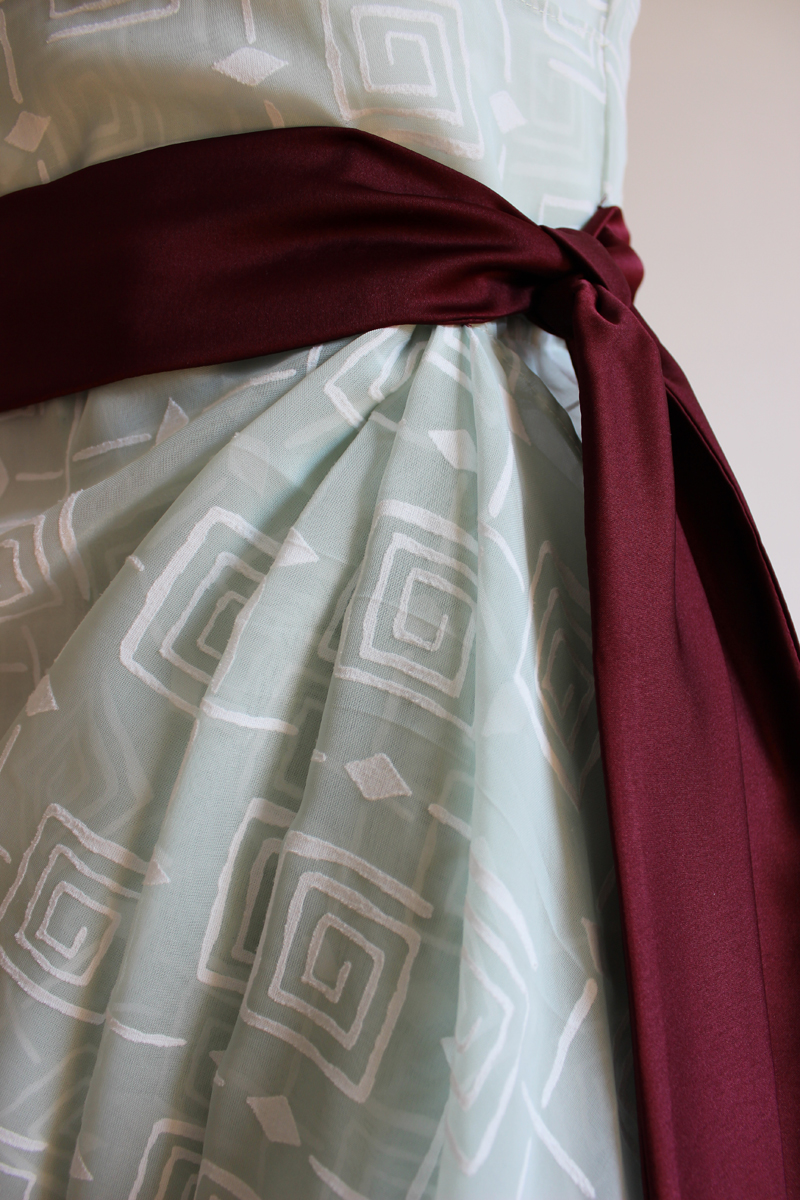
I rummaged around a bit for a suitable waist-sash, but neither white nor pistage seemed right. Then I found the vine colored sash for my sisters Titanic-rose dress, and it was perfect. So I used whatever leftovers I had and made another dark red sash.

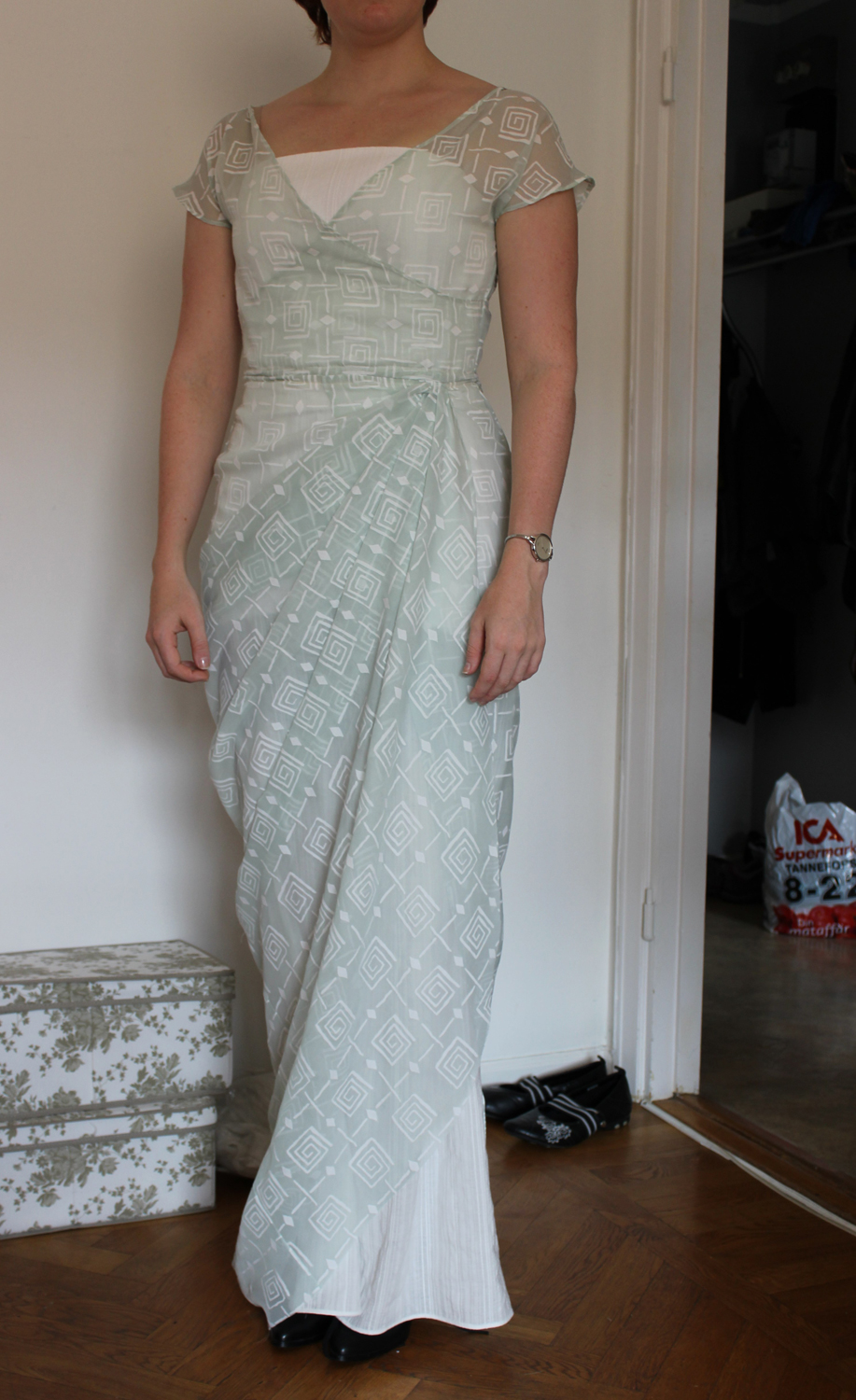
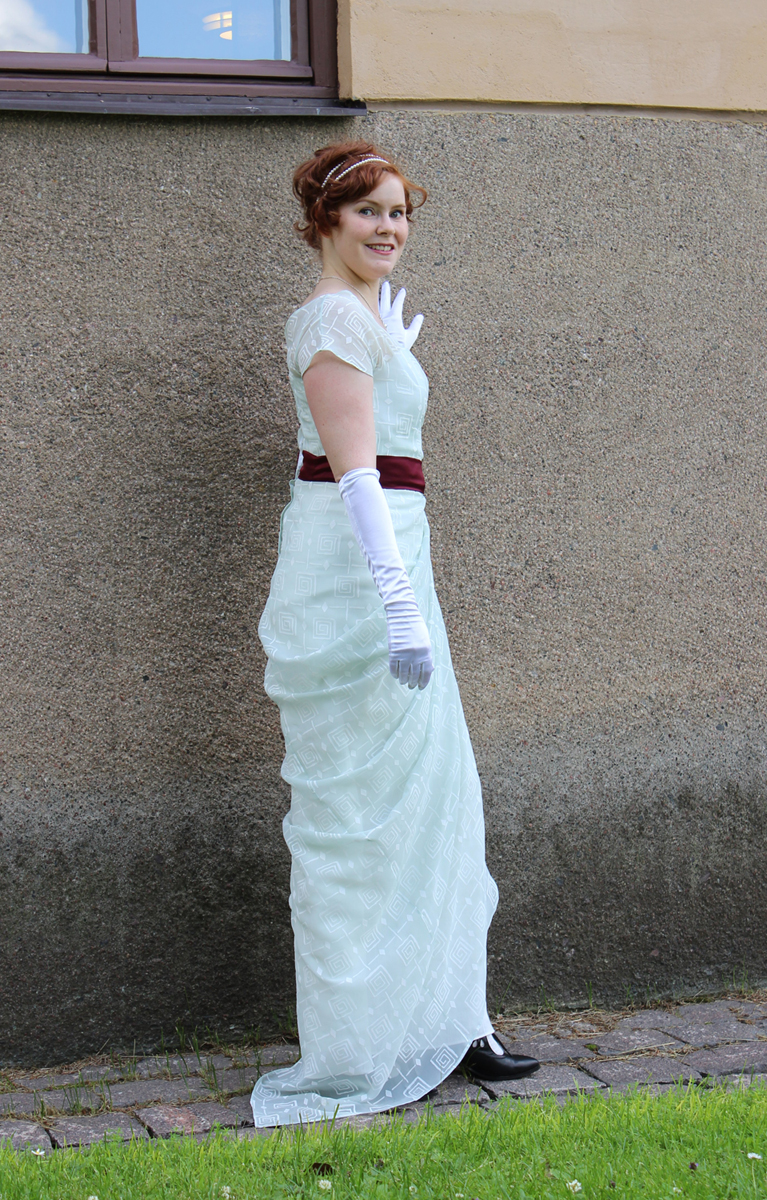
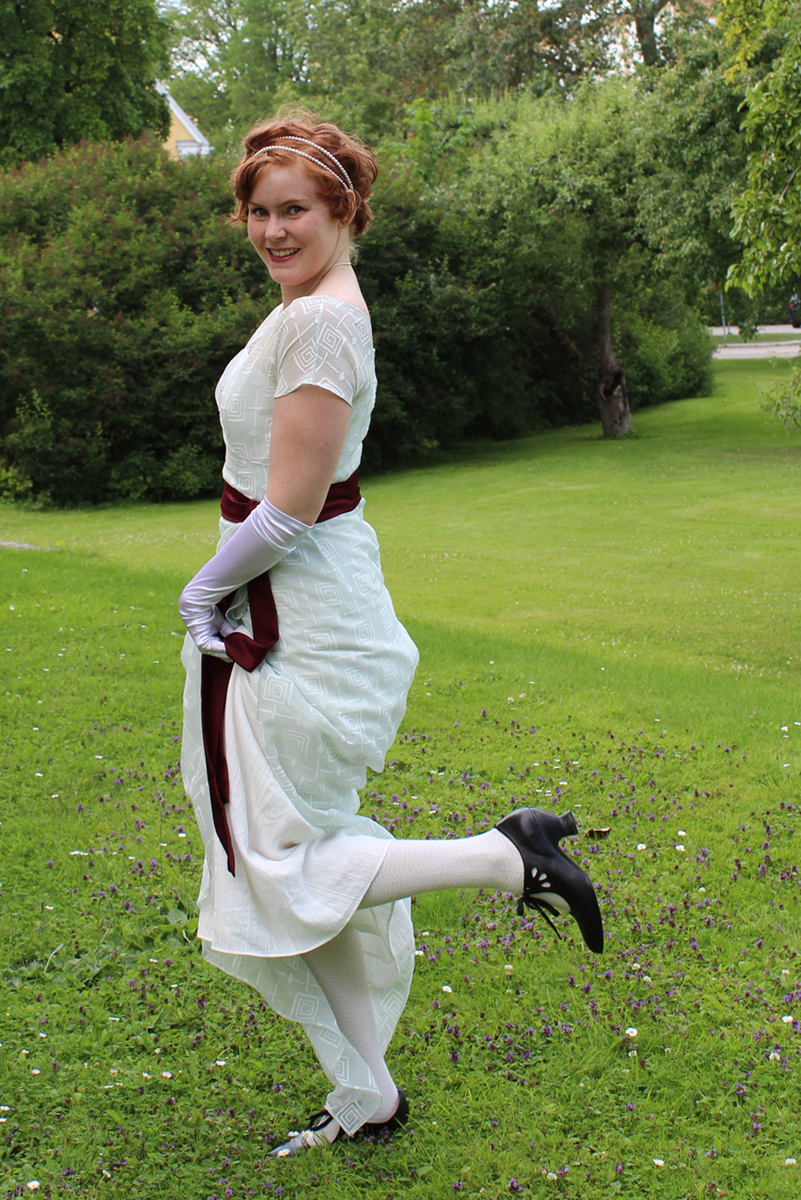
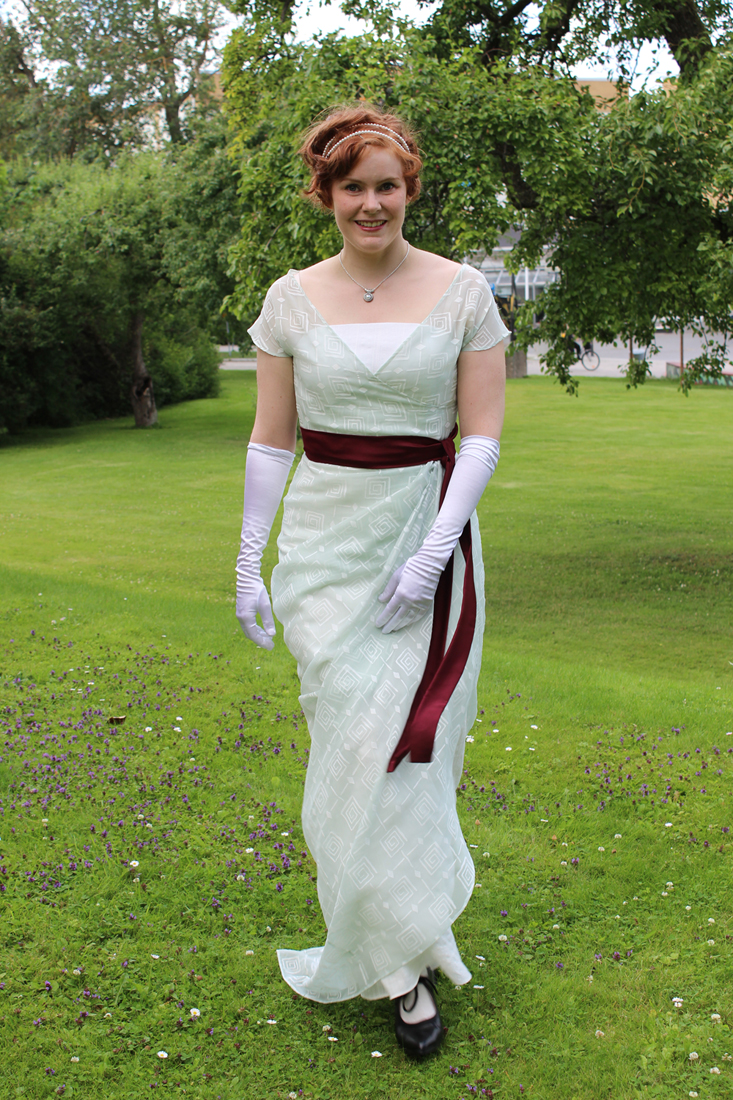
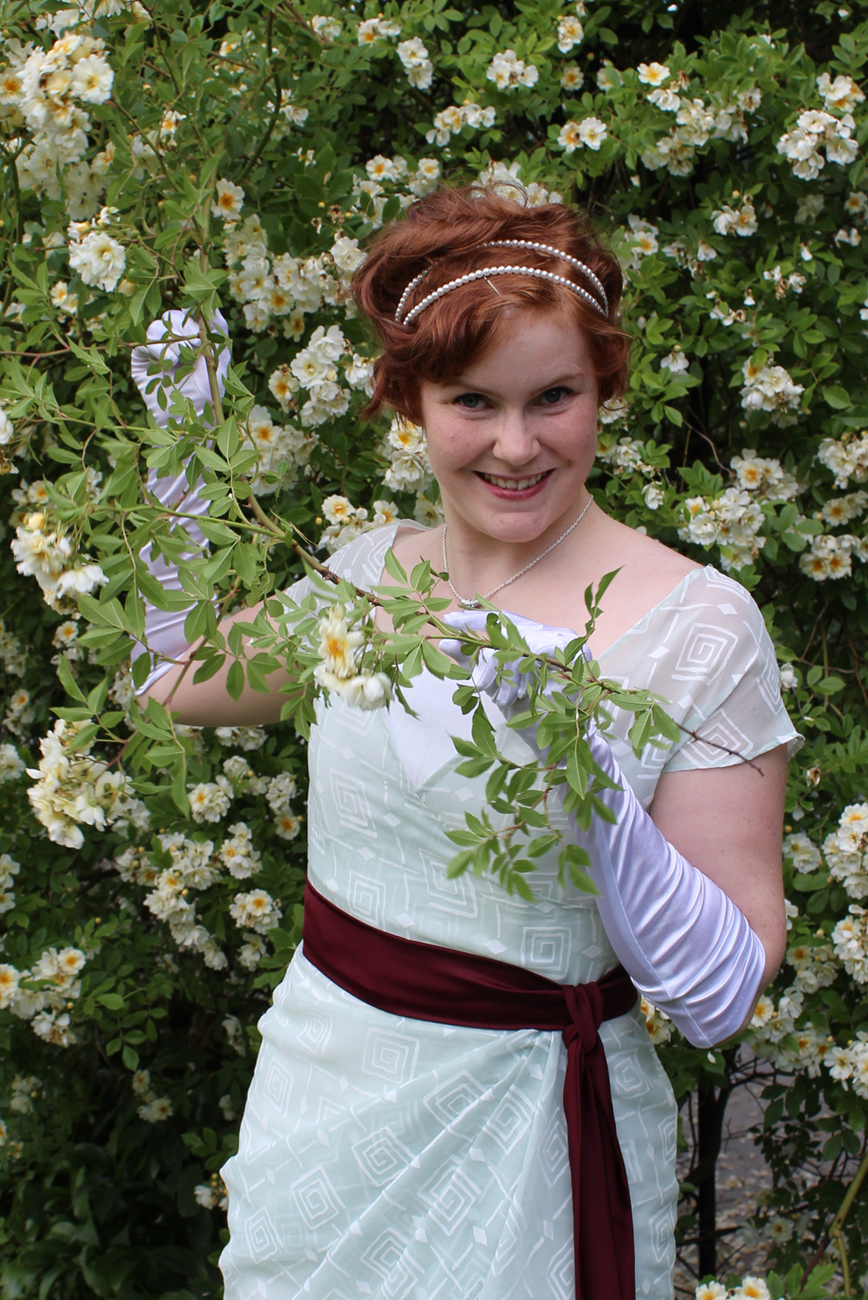
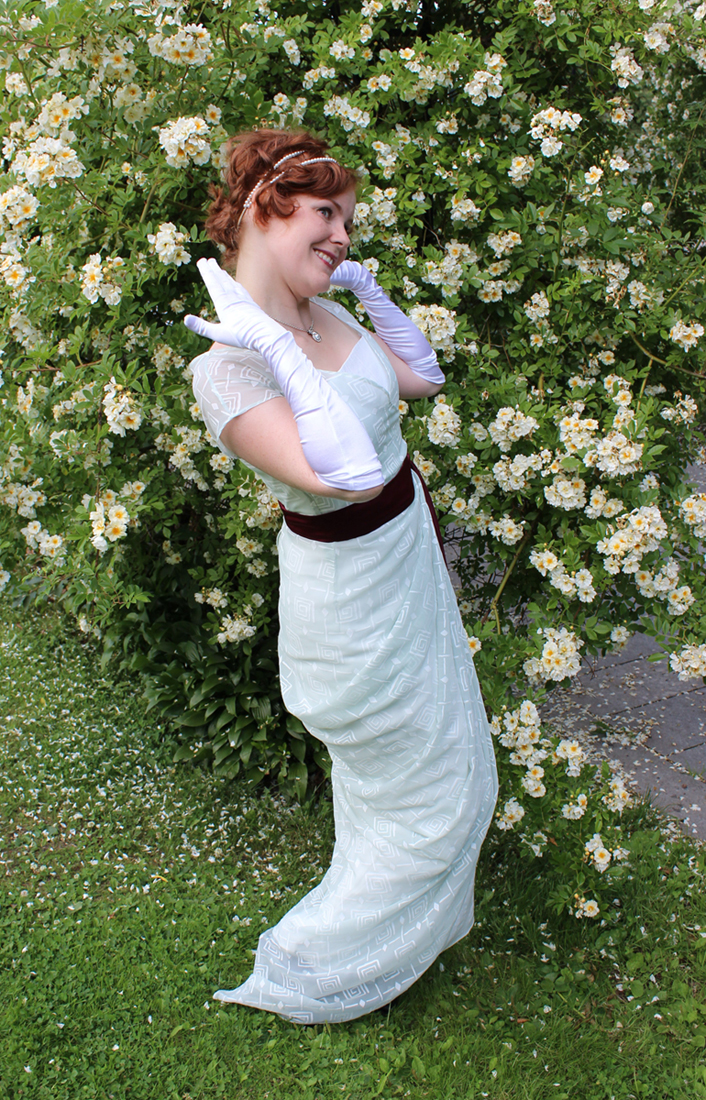
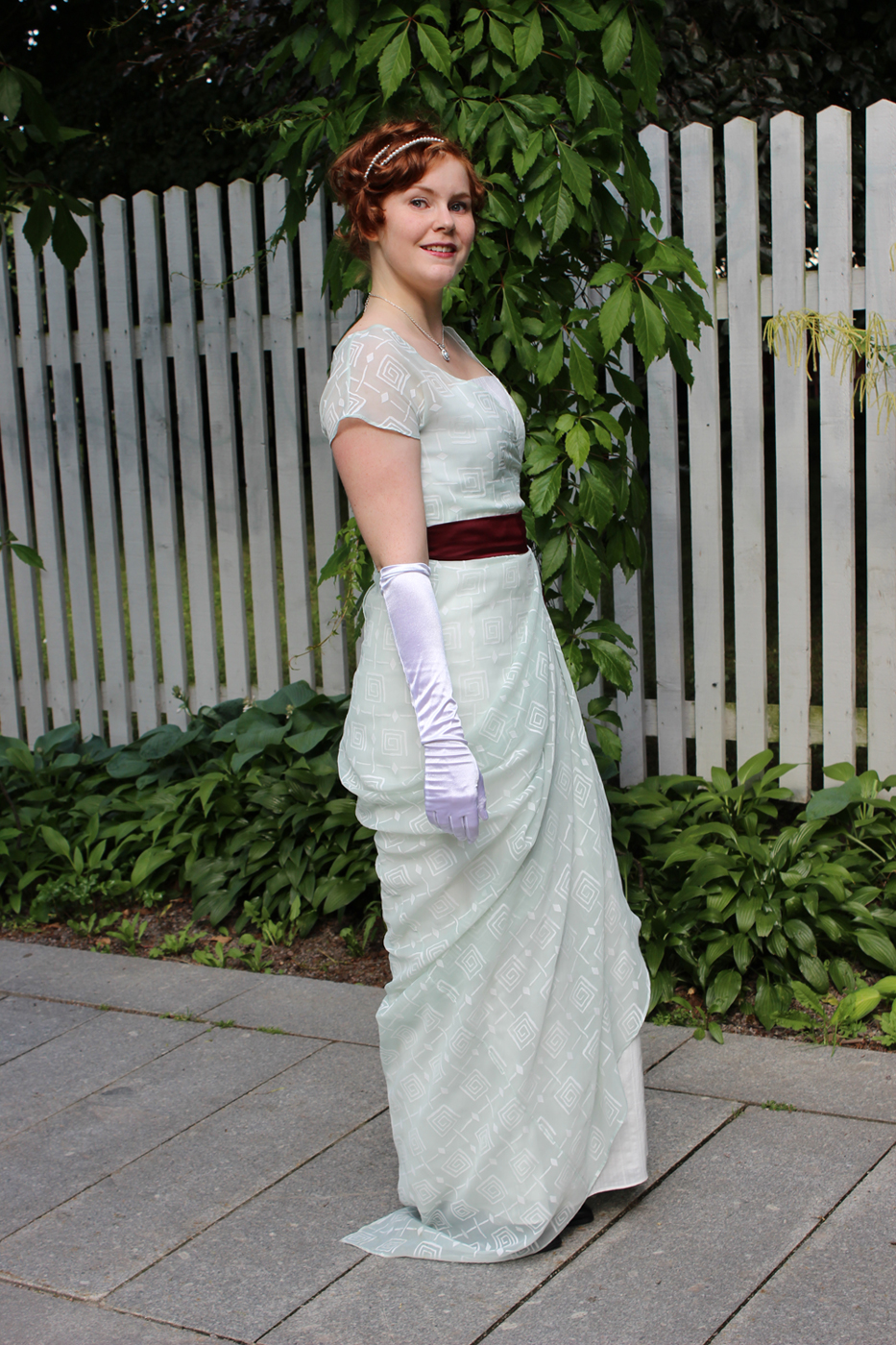
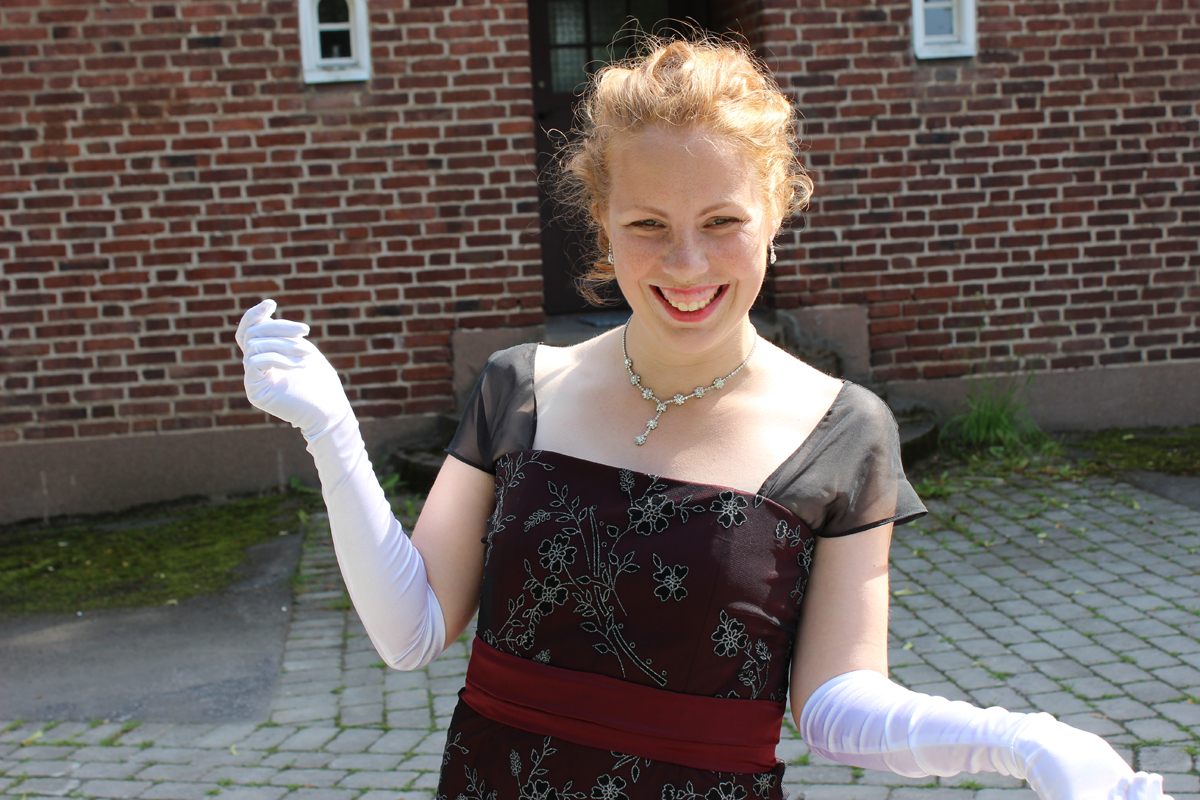
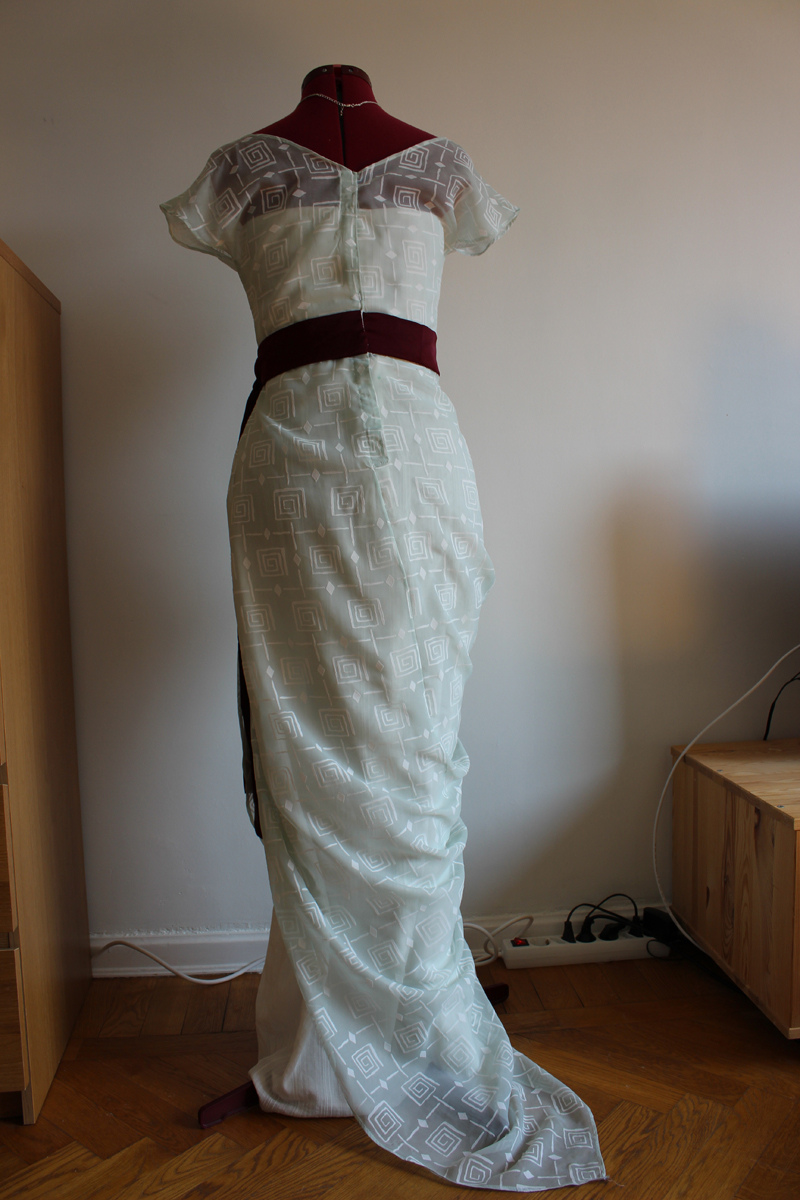
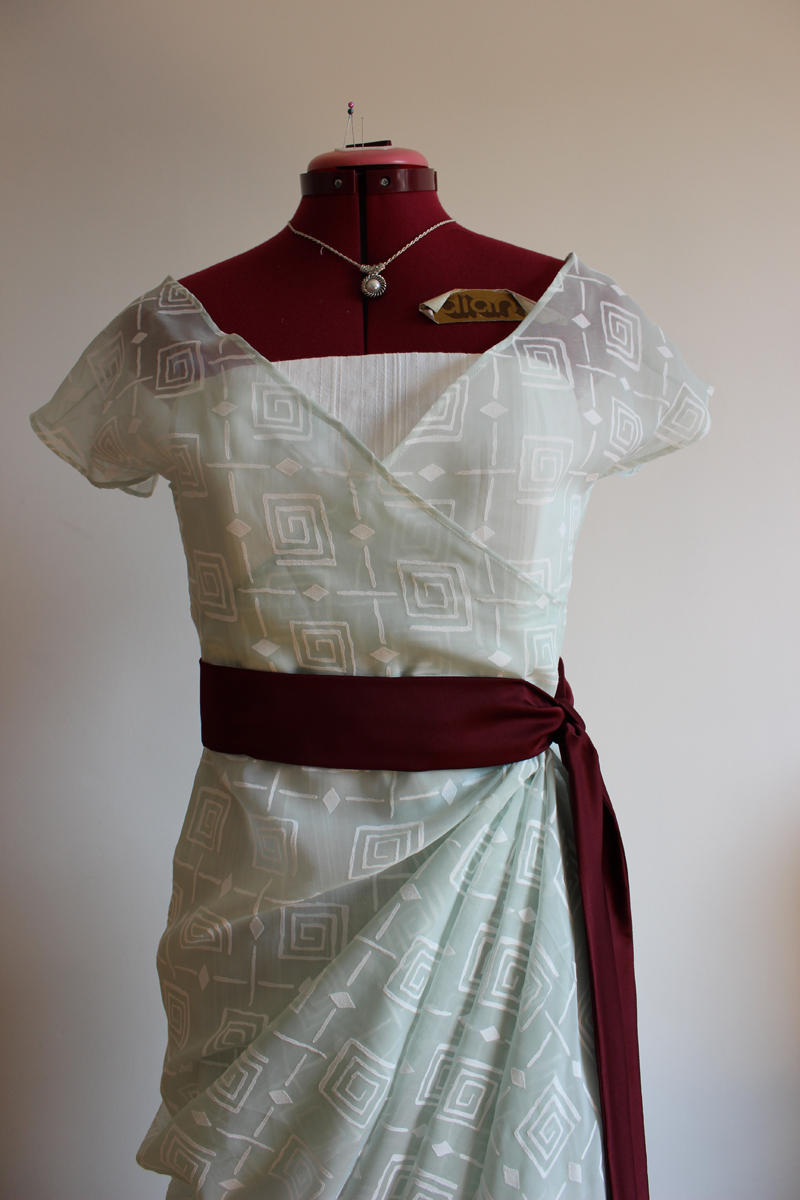
The finished dress.

IMG_0695IMG_0687

IMG_0684

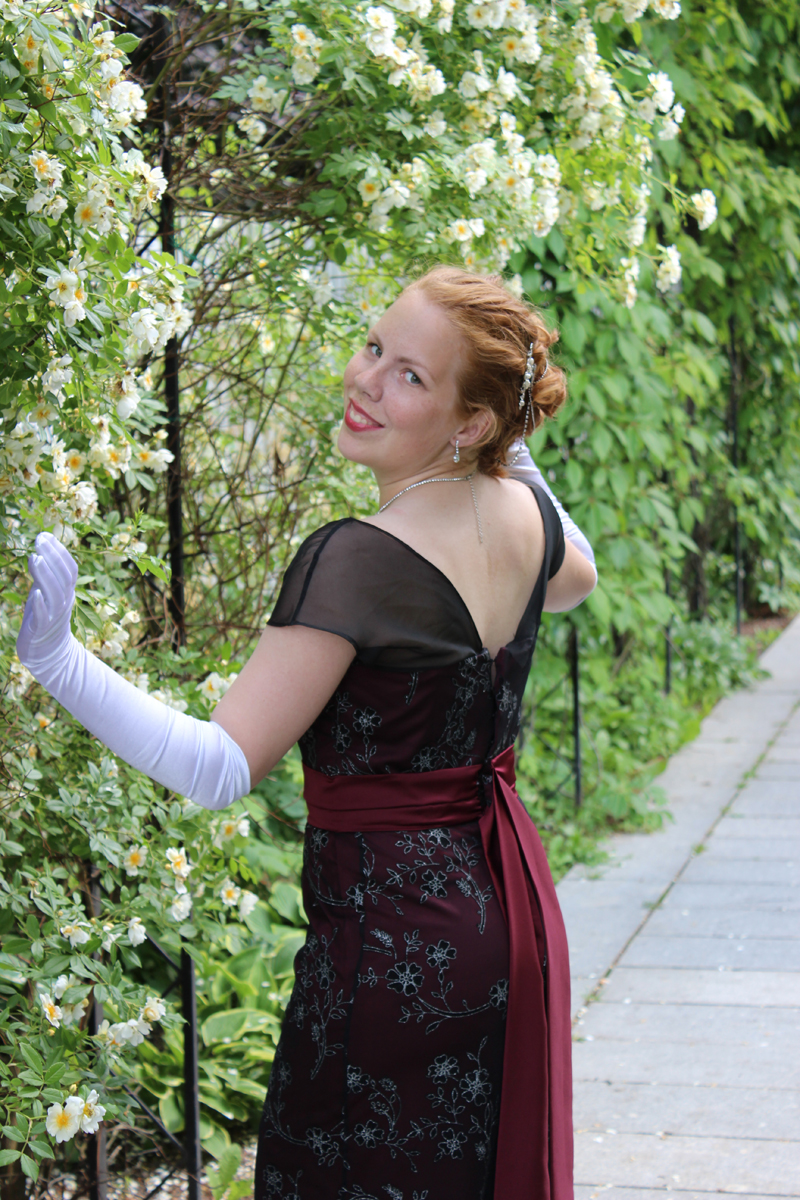
IMG_0690Detail of sash and drape.

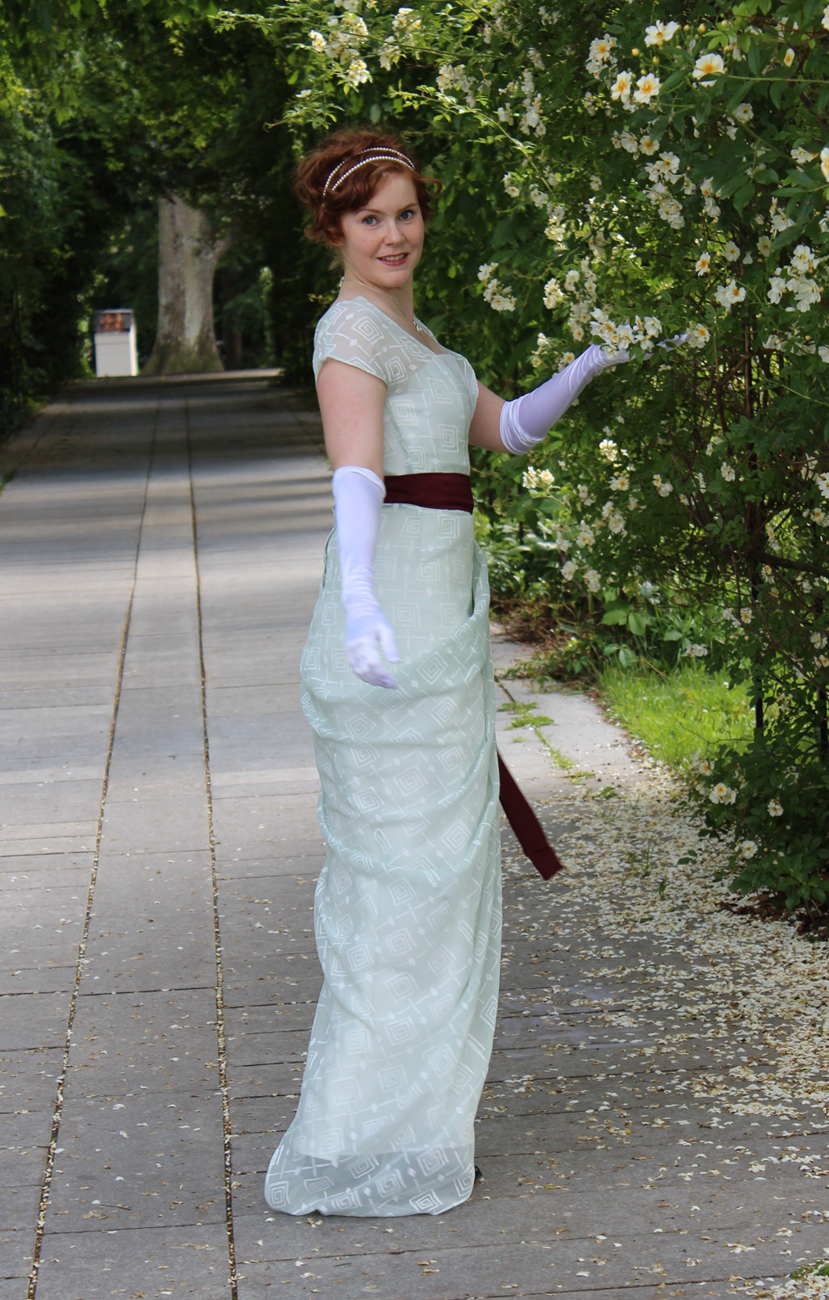
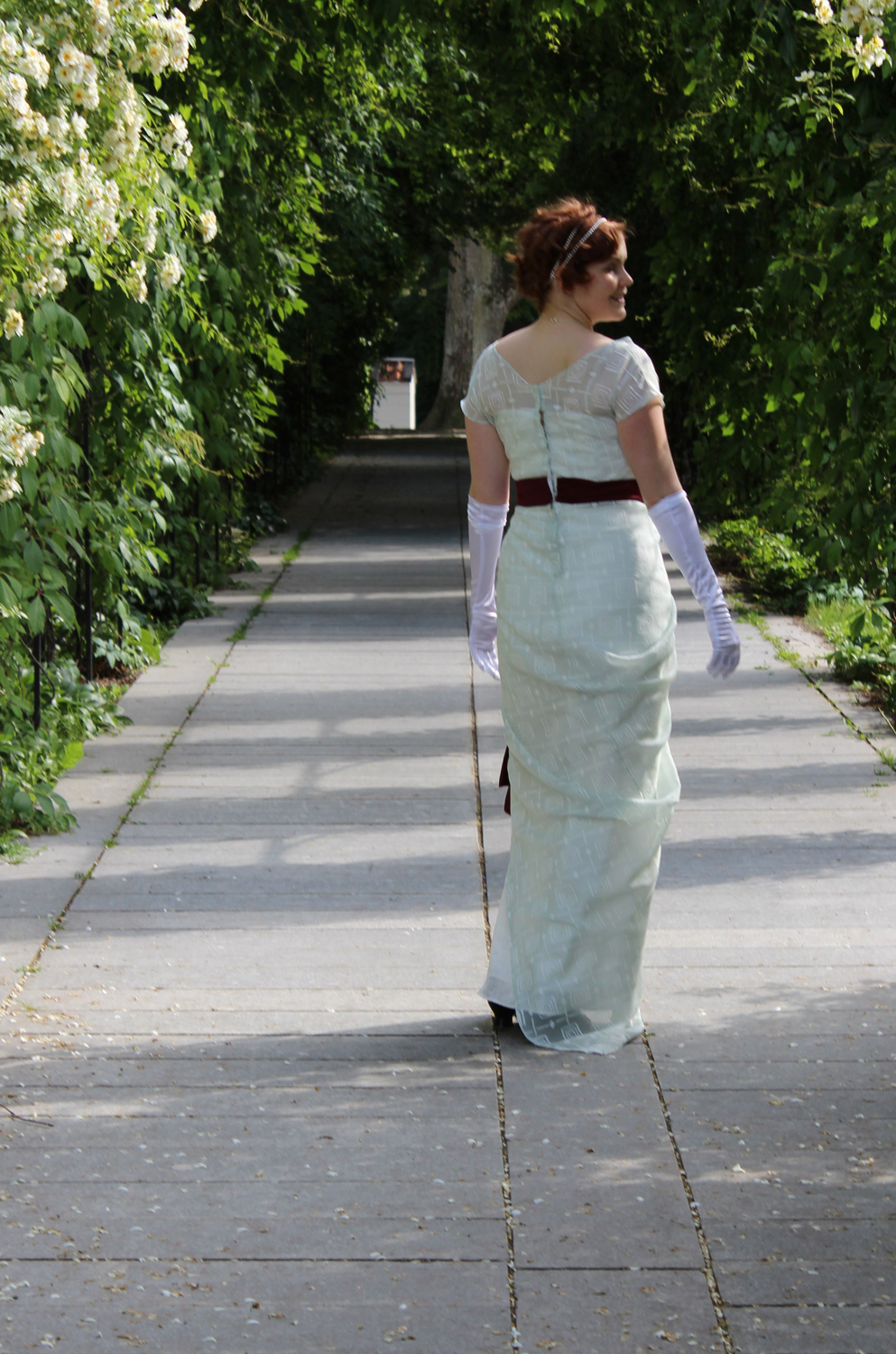
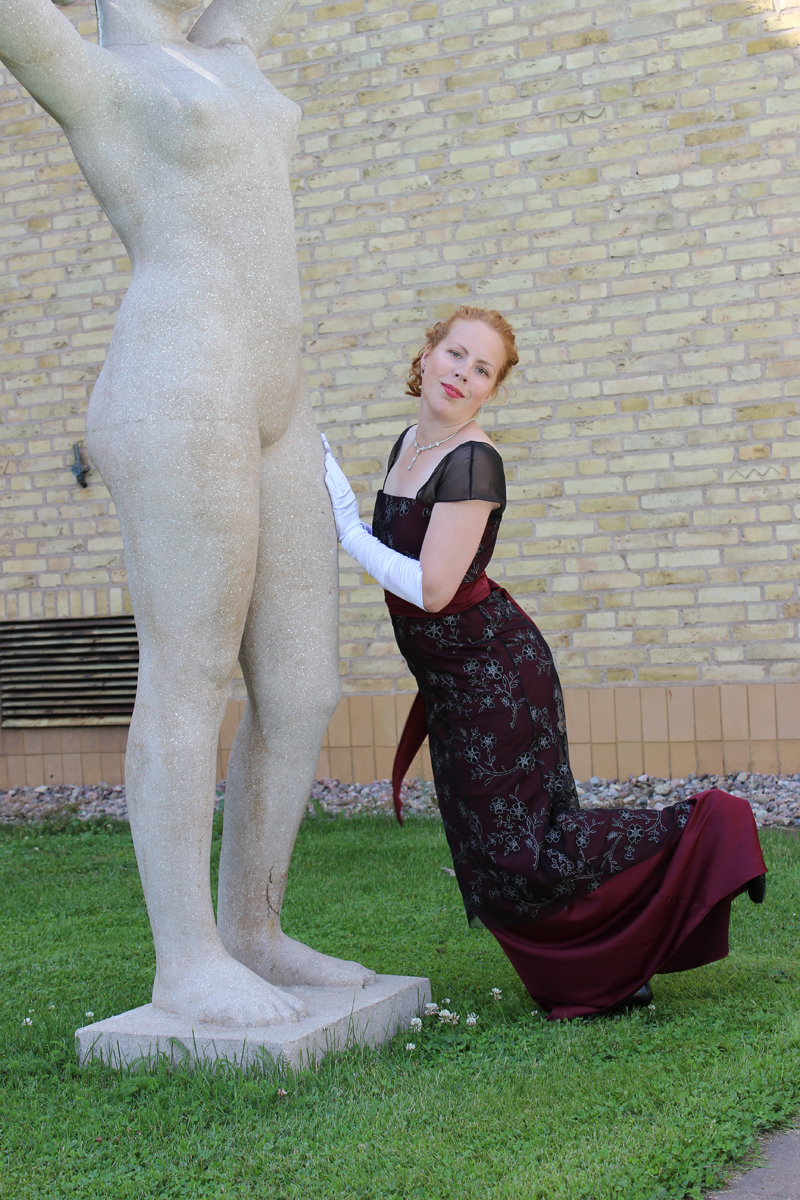
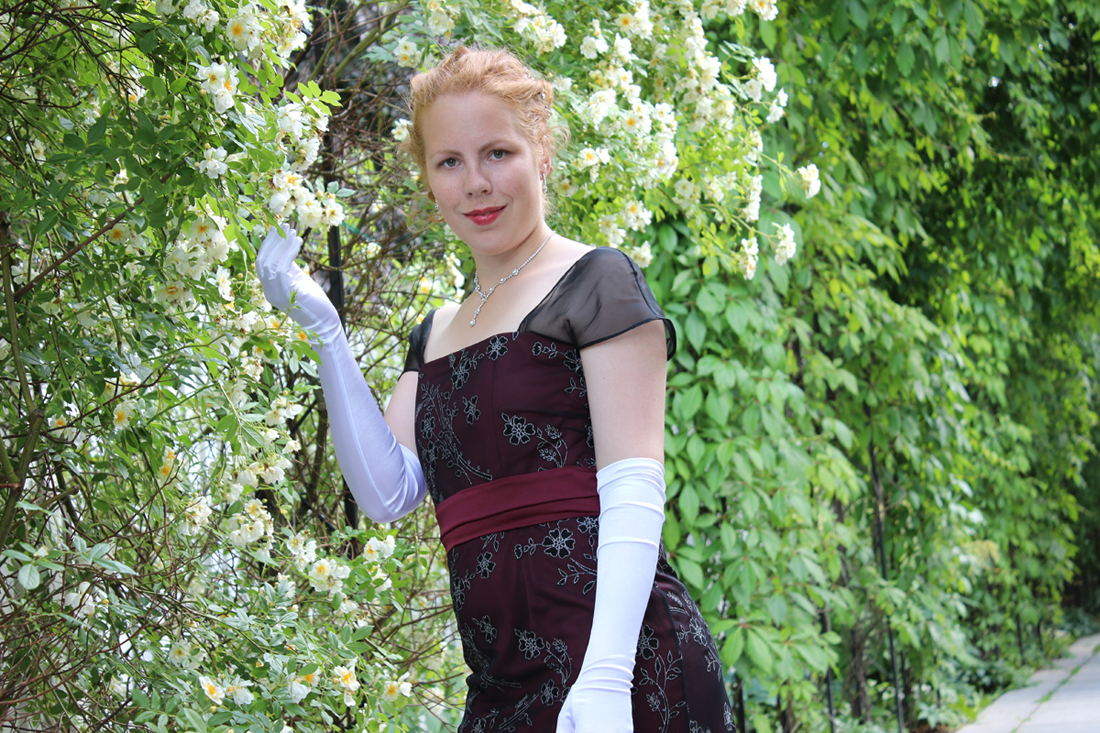
And the dress being worn.

IMG_0413

IMG_0416

IMG_0447

IMG_0450

IMG_0453

IMG_0469

IMG_0479

IMG_0485

IMG_0489

IMG_0498

IMG_0501

IMG_0522Photo: Maria Petersson

Just the facts:

Challenge 14: Eastern Influences.

What: A 1912 evening dress.

Pattern: None, I draped my own.

Fabric: 1,5 m polyester organdy, 0,3 m white cotton voile and 0,5 m white cotton sheets for lining and interlining the bodice. And 0,2 m vine colored viscose for the sash.

Notions: Thread, plastic boning, hooks and eyes and snaps.

Historical accuracy: There are way too much polyester in it to be any good. But I think the look and the overall feel of the dress is right. And according to Arnold they did use foundation-bodices beneath sheer and slippery fabrics. Maybe 6/10.

Time: 15 hours (made it in a two days speedrush).

Cost: 100 SEK (11 Euro).

First worn: On the photoshoot July 5.

1913 to late to Titanic – Pattern

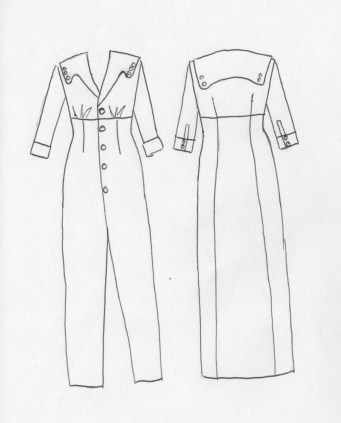
When posting about my new 1913s dress on the HSF page, I got lots of positive feedback and many ladies asked for the pattern. So I decided to to share it.

IMG_0222IMG_0229

You must keep in mind I’m no commercial patternmaker, and have only so far drafted for my own use (so don’t expect any wonders). But I’m willing to give it a try.

There are several ways to make a pattern, but here I will show you how I drafted mine.

I will show you the basic pattern blocks I used and go through the patterning process step by step. I will also show you the finished pattern-pieces (something I personally find very useful when figuring out other peoples patterns).
002

I want to begin by saying that it is a pretty easy and straight forward dress to make, and if you have a bit of experience from drafting and sewing you will probably find these instructions redundant.

And if you are quite new at this – it looks harder than it is,  just use logic and take your time to measure everything and just do it one step at a time.

Lets start:

For the basic pattern blocks you will need: A  fitted bodice block, a skirt block and a one-piece sleeve block. You can use what method you find easiest to draw up these basic blocks – I use templets from the swedish book Mönster och konstruktioner för Damkläder (pattern-making for womans wear) by Inger Öhman and Hervor Ersman. You can also draft them from scratch using your own measurments.
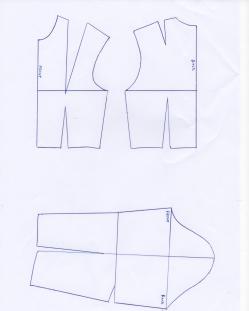
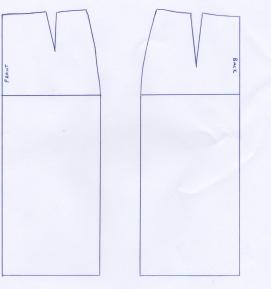
001002 Your pieces may look a bit different from mine, but that is nothing to worry about.

Start by measuring the bust, waist and hips of your pattern and make the necessary adjustments to your body measurments. Don’t forget to add some ease (but not too much, since it is a fitted dress).

When the pieces are all measured and altered I like to start with the bodice – leaving the skirt for now.
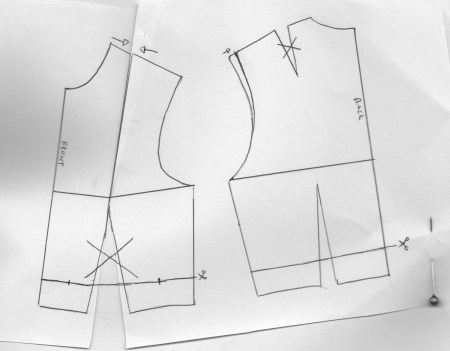
003

Start by moving the upper bust dart to the waist dart. Cutting the waist-dart through the middle and closing the upper bust dart at the same time.

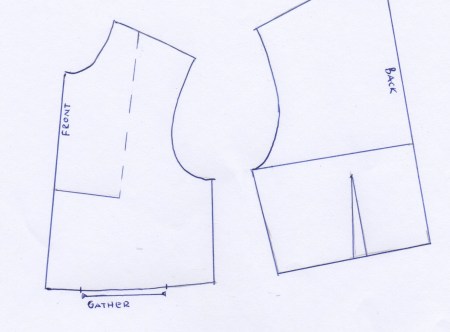
Then you can choose either to keep the waist dart as a regular sewn dart, or to take out the waist dart completely by gathering the fullnes at the bust instead. (I use the gathering alternative).

Remove the shoulder dart at the back by reducing the outer shoulder measurment.

And then raise the waist line.

Now your bodice pieces should look something like this.
004

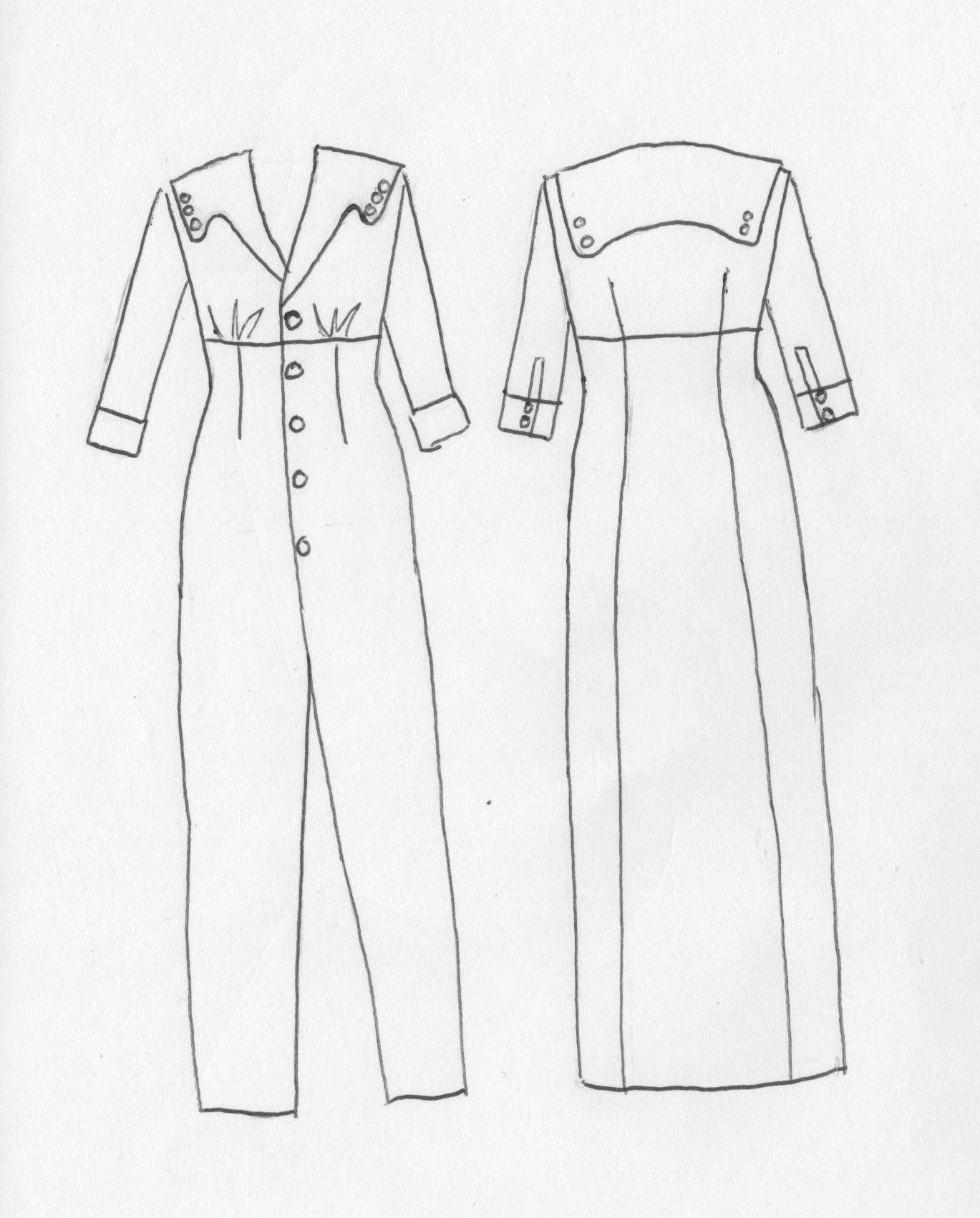
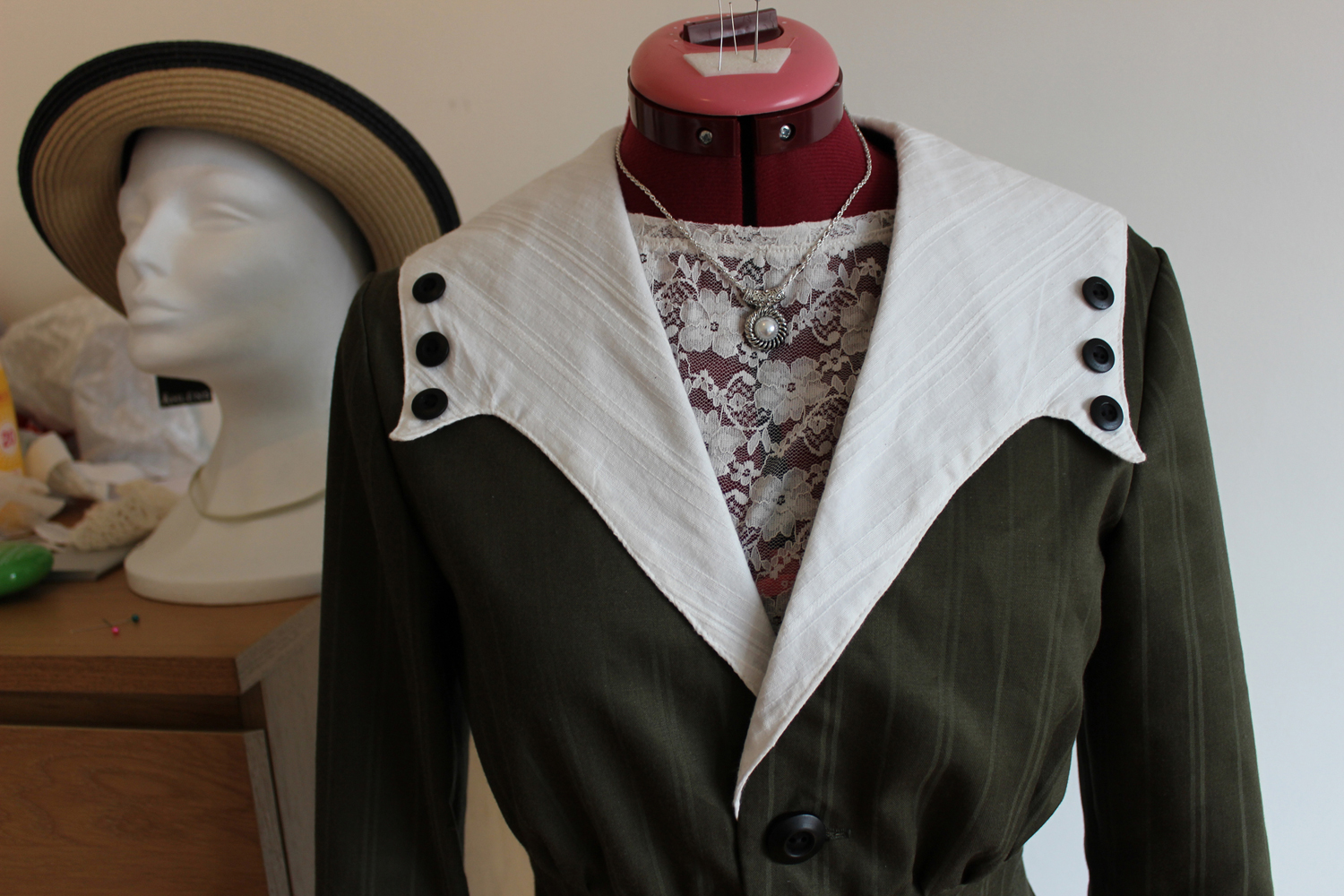
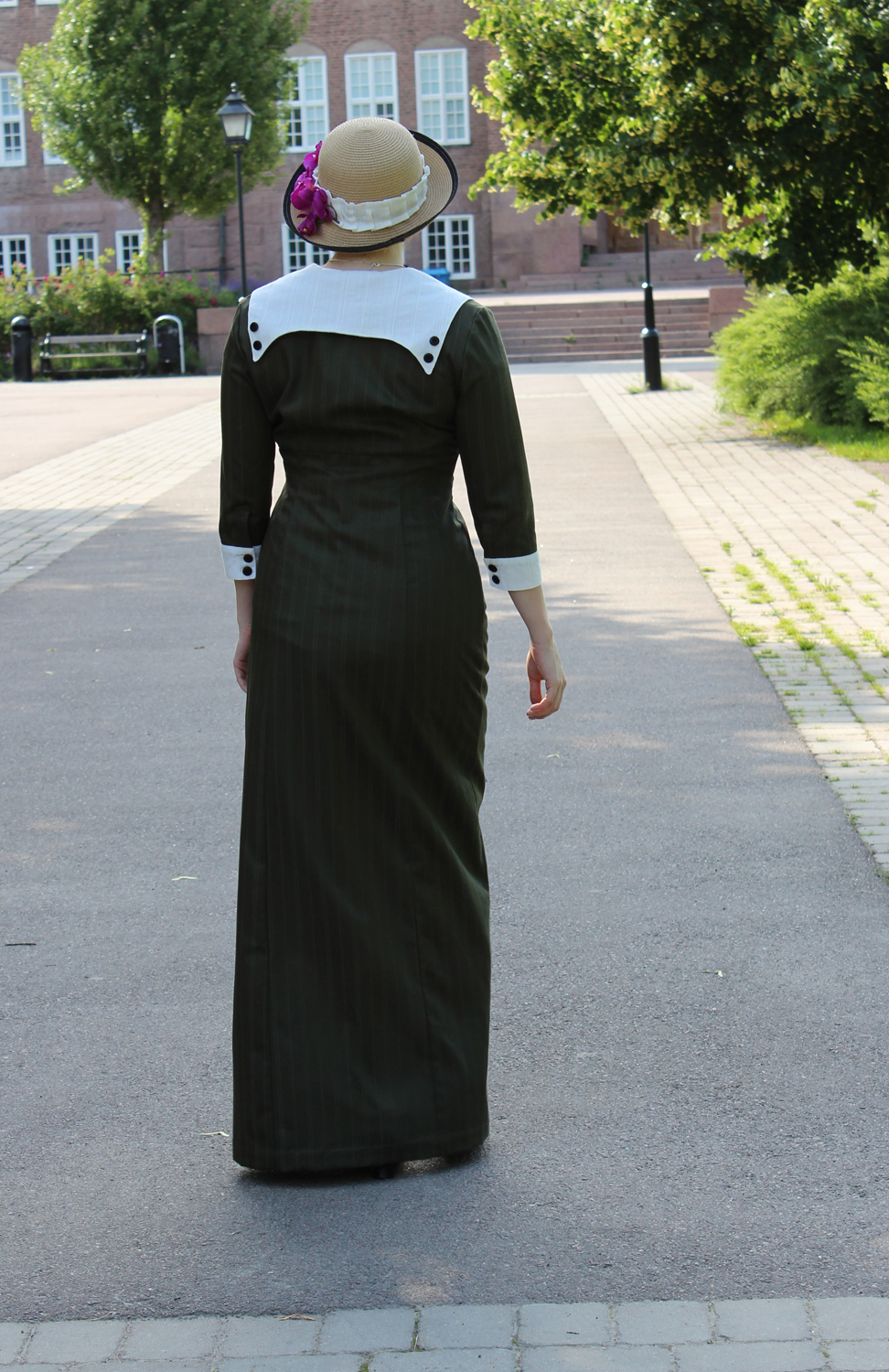
Now it is time for the collar. It is basically a combination between the “sailor collar” and the “roll collar” but with a twist.

Mark where you want your collar to cross the center front. Add for the buttonstand.

Put the front and back shoulders together and draw the collar.

005

When I made this pattern, I then made a quick mock-up for the collar to better see the proportions and curves, and to tweak it a bit. If you like you can drape the whole collar on your dressform.
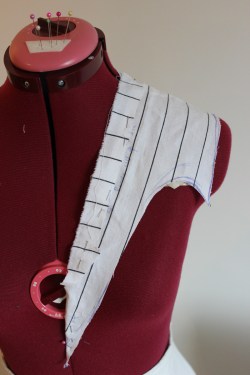
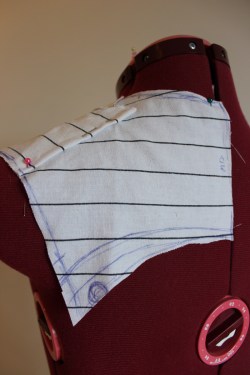
IMG_0748IMG_0755

Now it’s time for the sleeves. Cut the sleeve to the desired length (somewhere below the elbow). Measure and draw the cuff, with some extra for the overlapping closure. Mark the back opening.

007

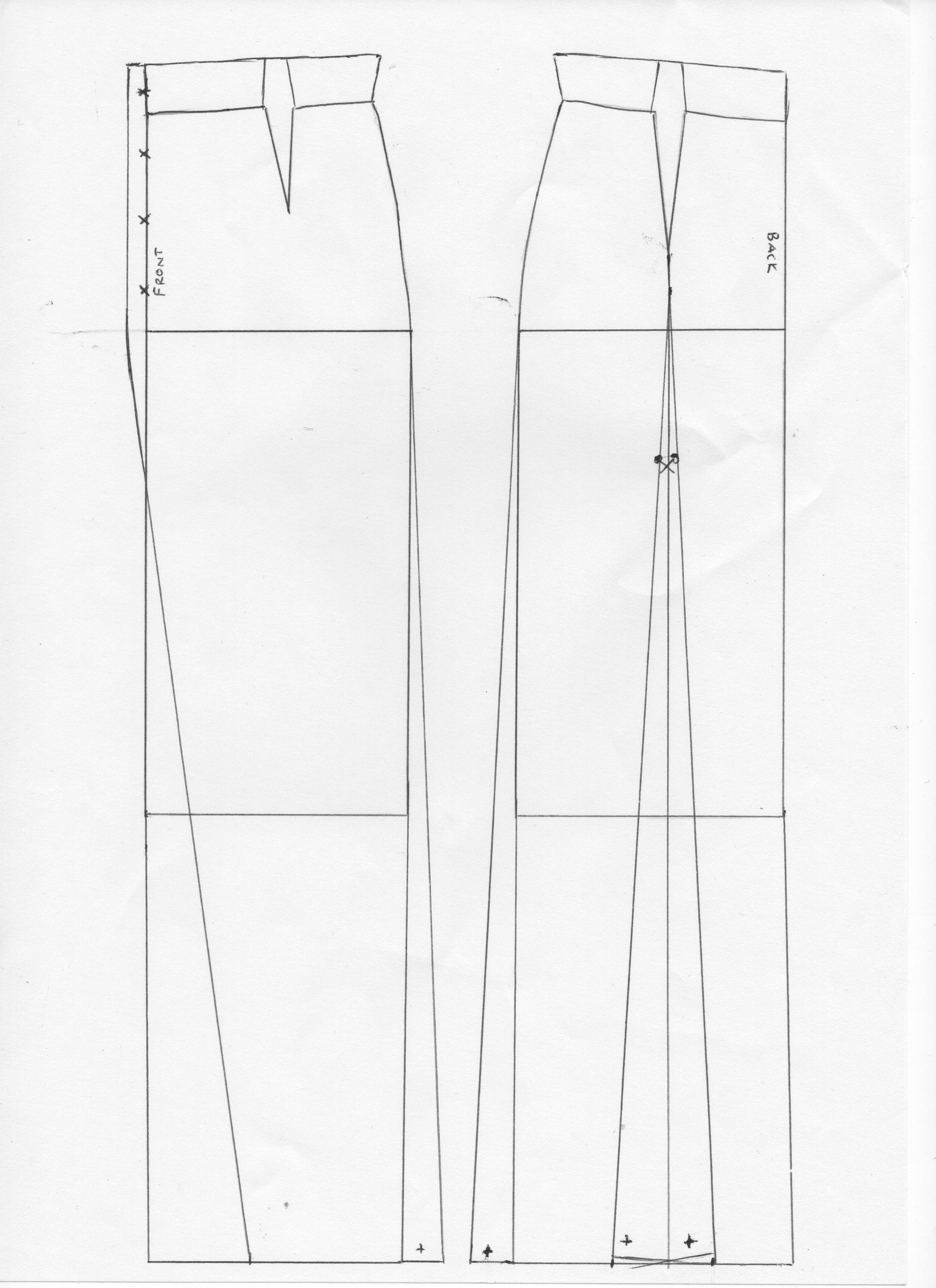
Next up is the skirt. This is a slim skirt, but you can add as much or as little width to it as you like.

Add the raised waist (which you cut off  the bodice earlier), and make sure the new waist measurments are right by adjusting the darts.

Split the back skirt down the dart, and add some extra width at the bottom. This will make the back skirt into two pattern pieces.

Add a buttonstand at the front, and draw the opening in the lower skirt panel crossing the front line. Add some extra width at the sides.
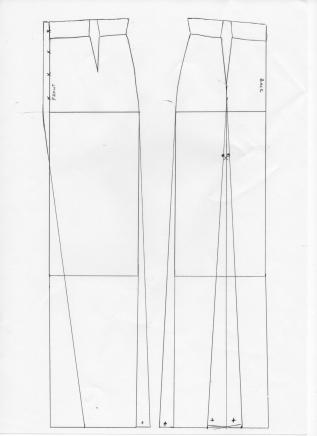
008

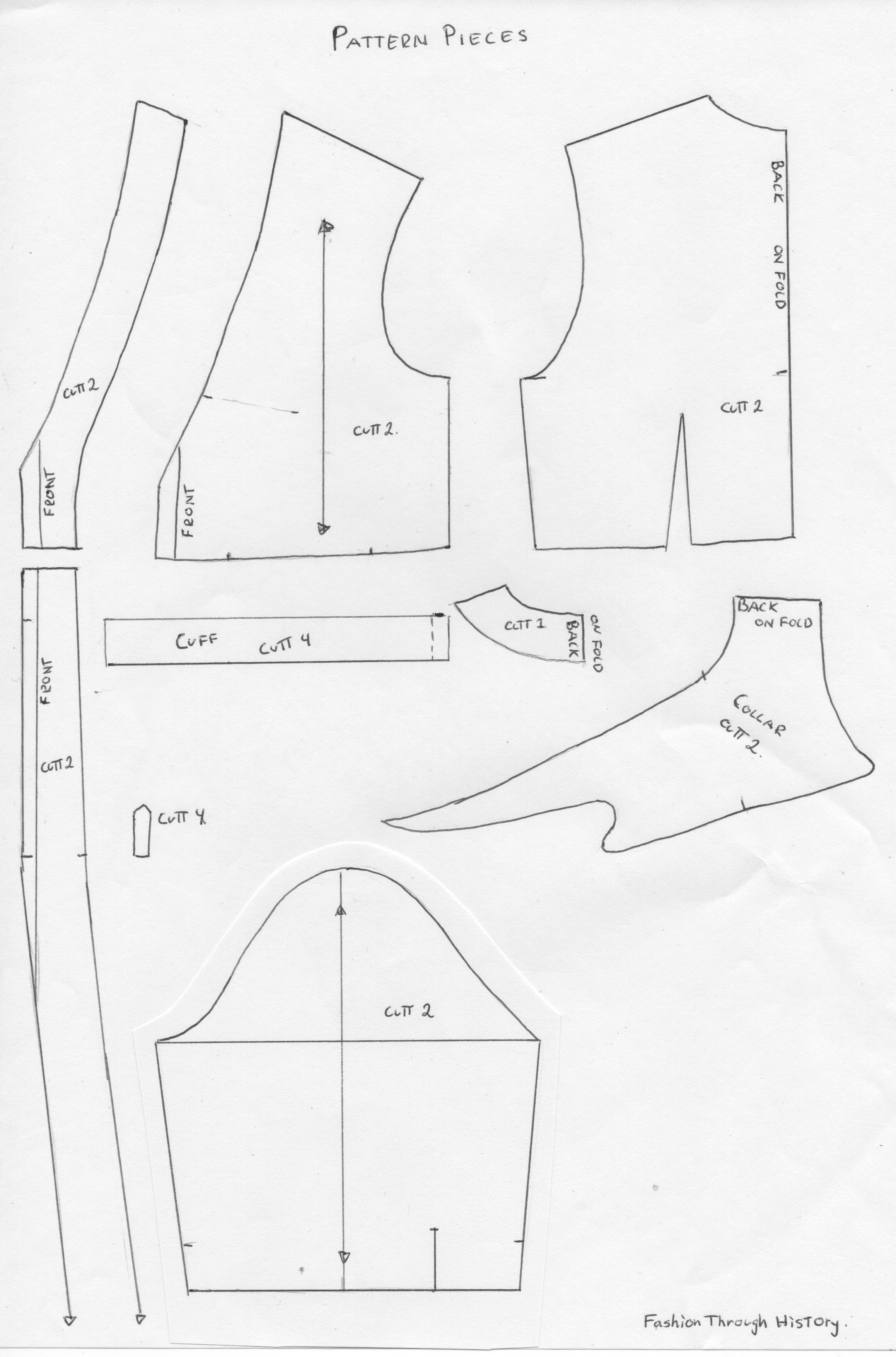
When you are done with the drafting you should have a fair amount of pattern-pieces.
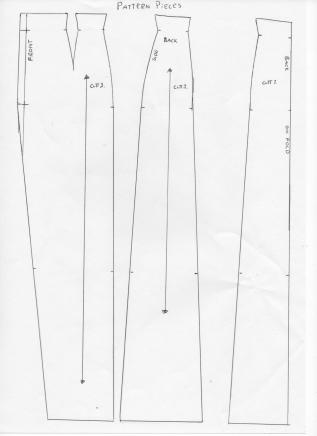
009The skirt:

Front (cut 2), Back/side (cut 2) and Back (cut 1 on fold).

The rest:010
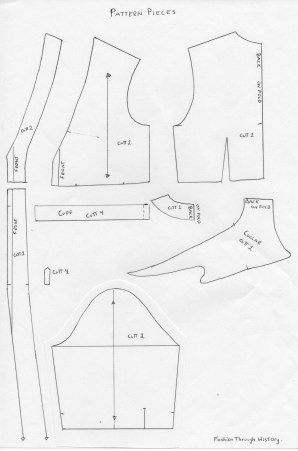
Bodice front (cut 2), Bodice back (cut 1 on fold), Collar (cut 2 on fold), Facing bodice front (cut 2), Facing bodice back (cut 1 on fold), Facing skirt front (cut 2), Sleeve (cut 2), Sleeve cuff (Cutt 4 or 2 on fold) and Sleeve placket (cutt 4).

I deliberately choosed not to put any numbers or measurments on this guide. Because different people have different taste and body types, so make sure the measurments you use are adapted to your body size and personal preferences.

Always make a mock-up when testing a new pattern. I know it is boring, but you will regret you didn’t when you put lots of work into making a garnment that doesn’t fit right.

The sewing is pretty easy, just make sure to use interfacing in all the necessary places. And don’t neglect cutting down the allowance in the rounded corners of the collar…

Then you should do just fine.

001

IMG_0578I hope you found this account useful, and I really like to know if there is anything that is unclear or overly complicated.
Titanic – A Jurney to the past.

This weekend it was finally time for my 19th century group to visit the big “Titanic Exhibition“. I’ve been pending between super stressed and super excited these past weeks, working non stop with finishing and perfecting the dresses for me and my sister to wear.

And I made it. Everything was ready in time. Although blisters on my feet did stop me from wearing my new Gibson shoes (stupid, stupid, stupid me, wearing bright new high heels the day before a big event). I will never do that mistake again.

I really enjoyed meeting some of the members from our costume group, and looking at (and envying) everyones beautiful dresses. The weather was sunny – in fact it was too sunny. We were all toasting in our corsets and petticoats.

The Exhibition was wonderful and we had such a lovely time walkig around, looking at and listening to the fascinating stories of the real people who lived and died when the Titanic sunk.

We were not allowed to take any photos inside the exhibition, so instead I will show you some which I found online.

barcelona-titanic-the-exhibition

imagesCAN4VKIJTicket please. welcome aboard.

g_vigoenfotos_3047kUnfortunately we did not get the chance to walk down the big stairway, but had to settle for just looking at a painting of it. Even though the picture was beautifully made.

first-class-hallway-the-henry-ford-titanic-the-artifact-exhibitionWe did however walk down the first class corridor to the cabins. That was amazing, you could almost feel the “boat” rock beneath your feet and I did even get the impulse to grab the rail.

Titanic_radiohytten_530090v530x800The settings of the different rooms were really detailed and nicely done. It was in a room such as this the telegraphs sent the distress code CQD and SOS out into he night, continuing all the way until their little booth was flooded.

image_galleryWhat I found most interesting was the cross-section model of Titanic, which let you see all the little rooms and corridors. I could have stayed there for hours looking at the little people walking the deck or having breakfast in their suites.

bg-slider_2Some wood working tools used to make the ship.

2811456_520_292Pictures of families and spauses travelling to the new world.

imagesCABZABXRTrinkets and letters found on the numerous dead bodies.

artifacts-titanic

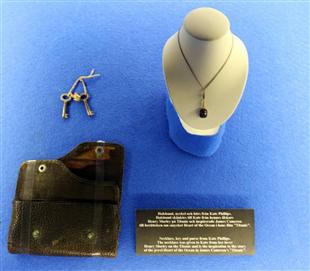
ImageHandlerThe (tiny) necklace that is said to have inspired James Camerons Movie “Titanic” (1997).

Photograph_of_a_lifeboat_carrying_TITANIC_survivors__The_following_partial_caption_appears_on_the_back_of_the____-_NARA_-_278338Photo of survivors taken from the rescuing ship “Carpathia”.

7165050206_9c2afcb36a_oBut the most moving piece in the exhibition was when you turned a corner and suddenly stood before the names of all those who lost their lifes during the sinking. Men, women and children – all died in the freezing water.

This was a beautiful and well executed exhibition and I think everyone who is the least interested should go visit it. It was much bigger than I would have thought, yet intimate and really let you get close to the objects. The voice in the headphones was interesting and informative yet left room for your own thoughts aswell. It made you really think.

Besides walking the corridors of Titanic in our time typical clothes we also had a meeting and interview with the local paper. We talked about our clothes, the costuming community and everything concerning 19th century from Napoleon to the suffragets.

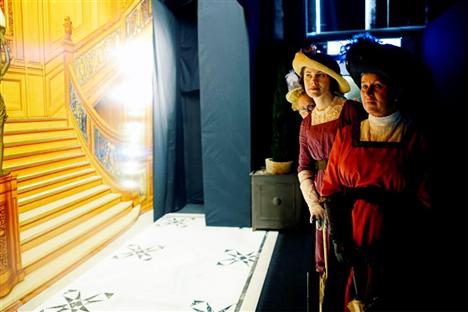
The news crew was allowed to take some photos of us inside the exhibition.

ImageHandler (4)

ImageHandler (3)By the main stairway.

ImageHandler (5)Walking down the first class corridor.

ImageHandler (2)Looking at a first class apartment.

News article (in swedish)

And then some of my own pictures from that day.

framsidabaksida

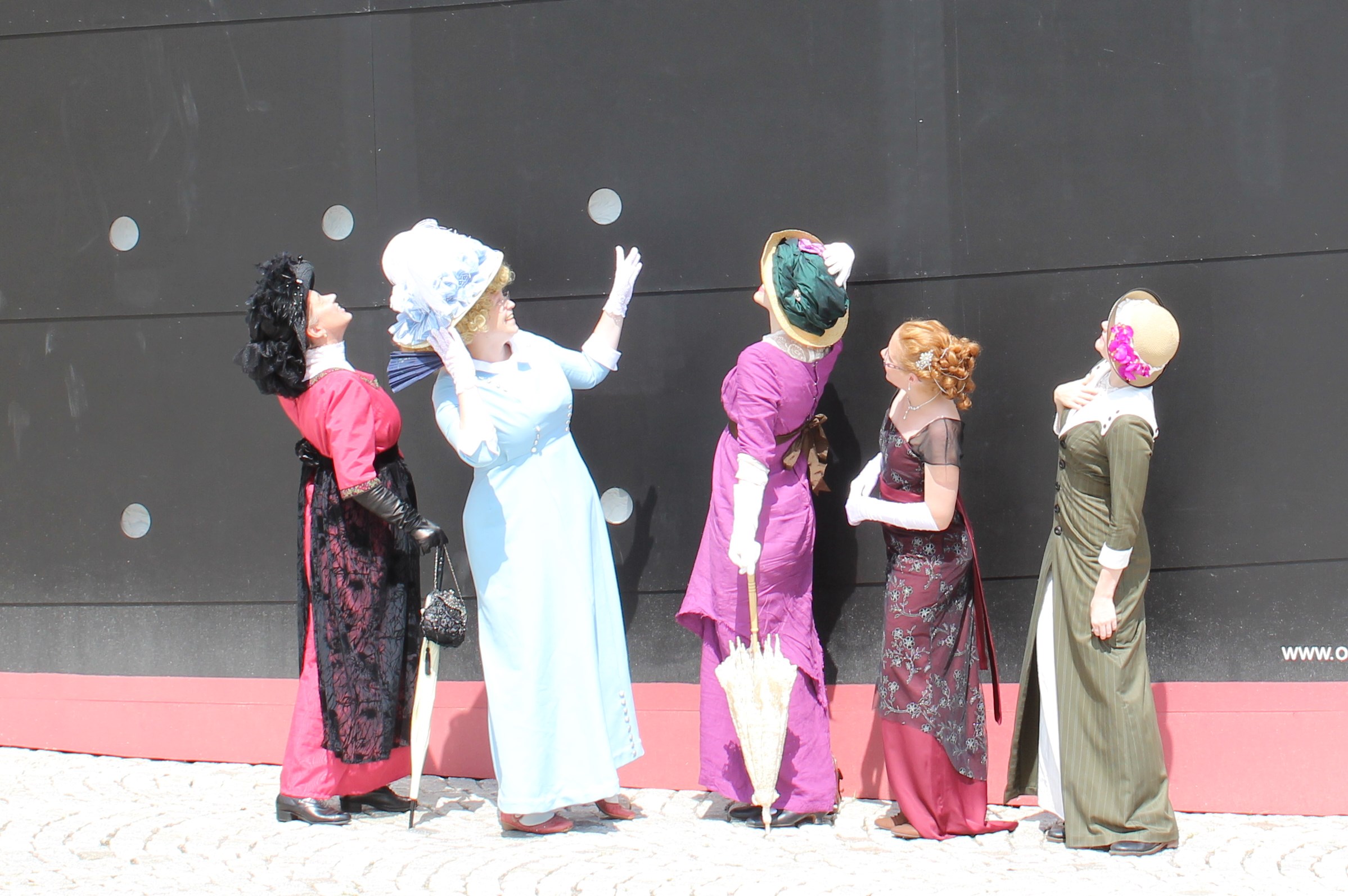
13 bildBoarding the Titanic

2Such lovely colors.

4It’s a bird, it’s a plane…

3…It’s Titanic!

7Look at those accessories. Fans, gloves and gorgeus hats.

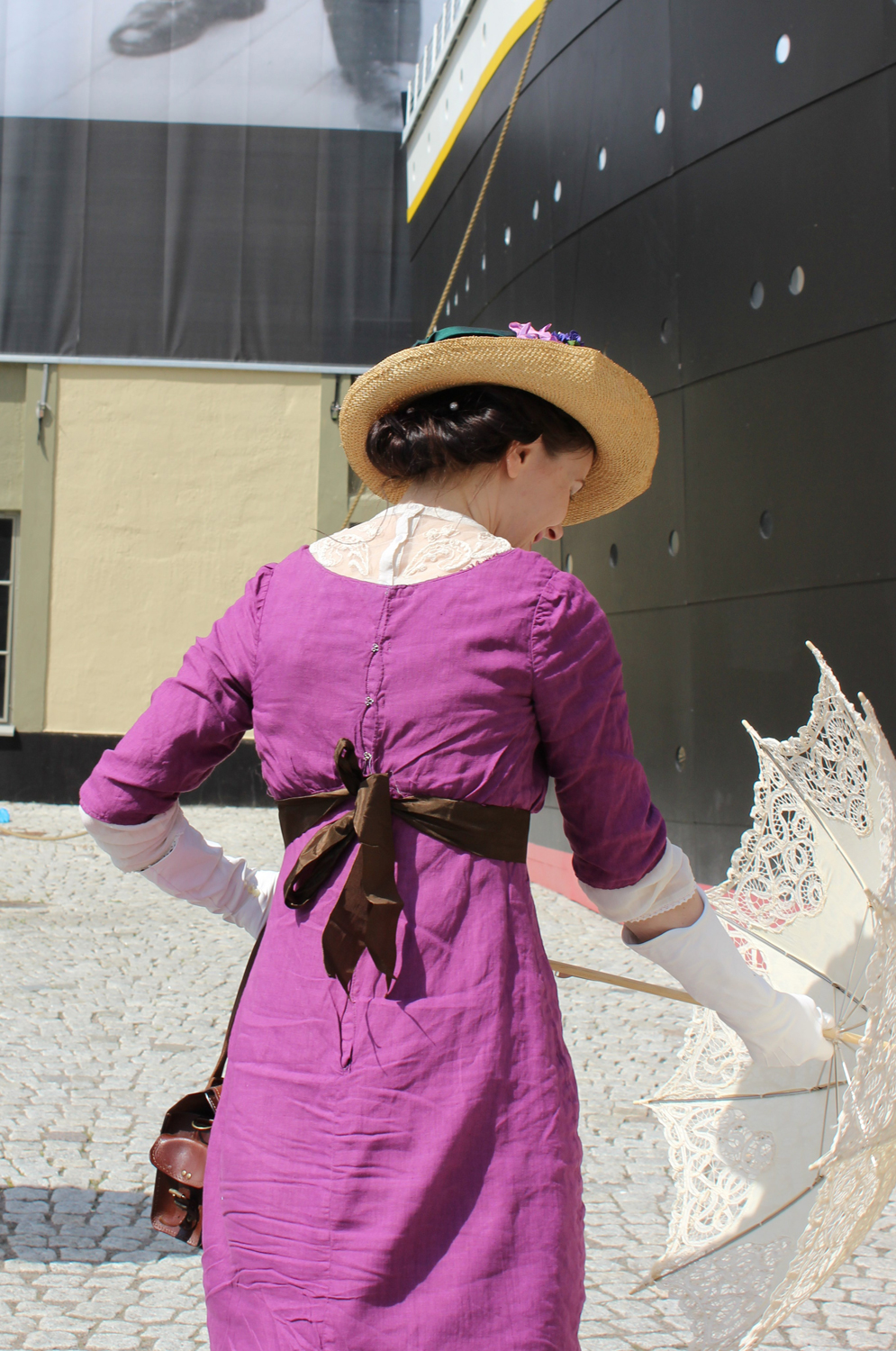
6I’m  in love with her umbrella. Damn those hobble skirts, or else I would have made a run for it….

9We did get quite the attention, and by-passers stopped to look.

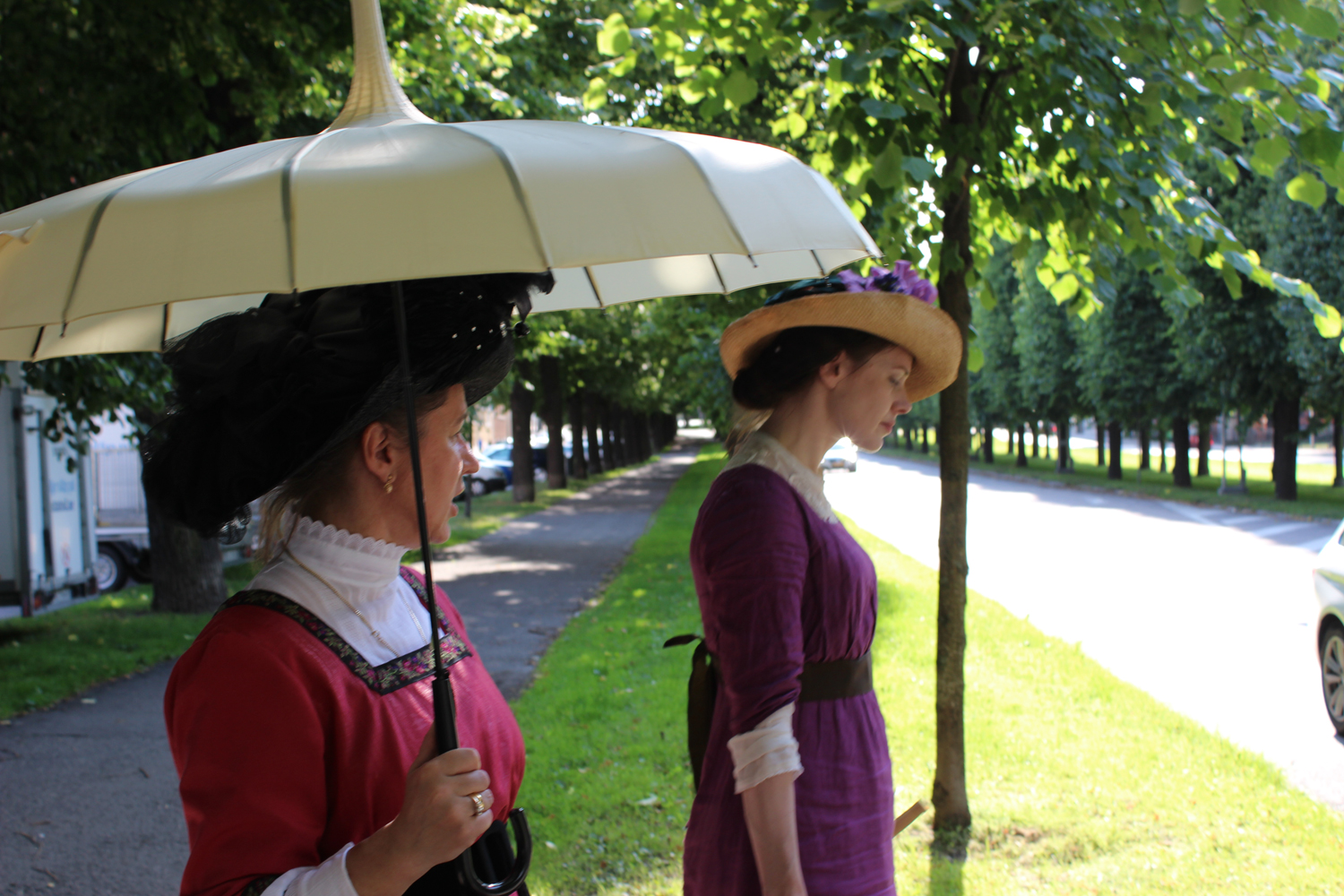
10One more lovely umbrella.

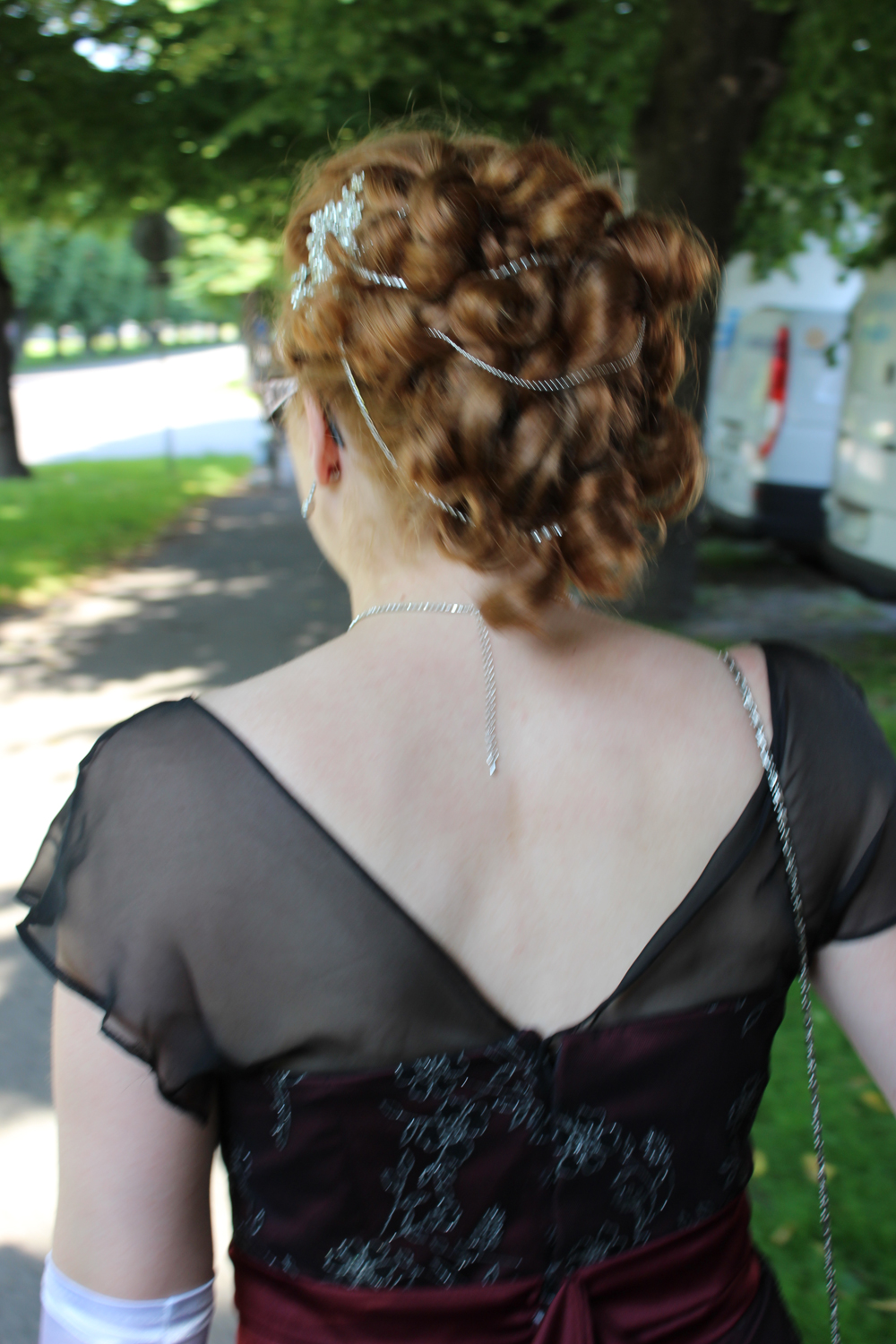
IMG_0667My sisters 15 minute hairstyle (ok, the curling took a bit longer).

IMG_0672Two happy but tired travellers on the train home.

1

A Titanic Rose

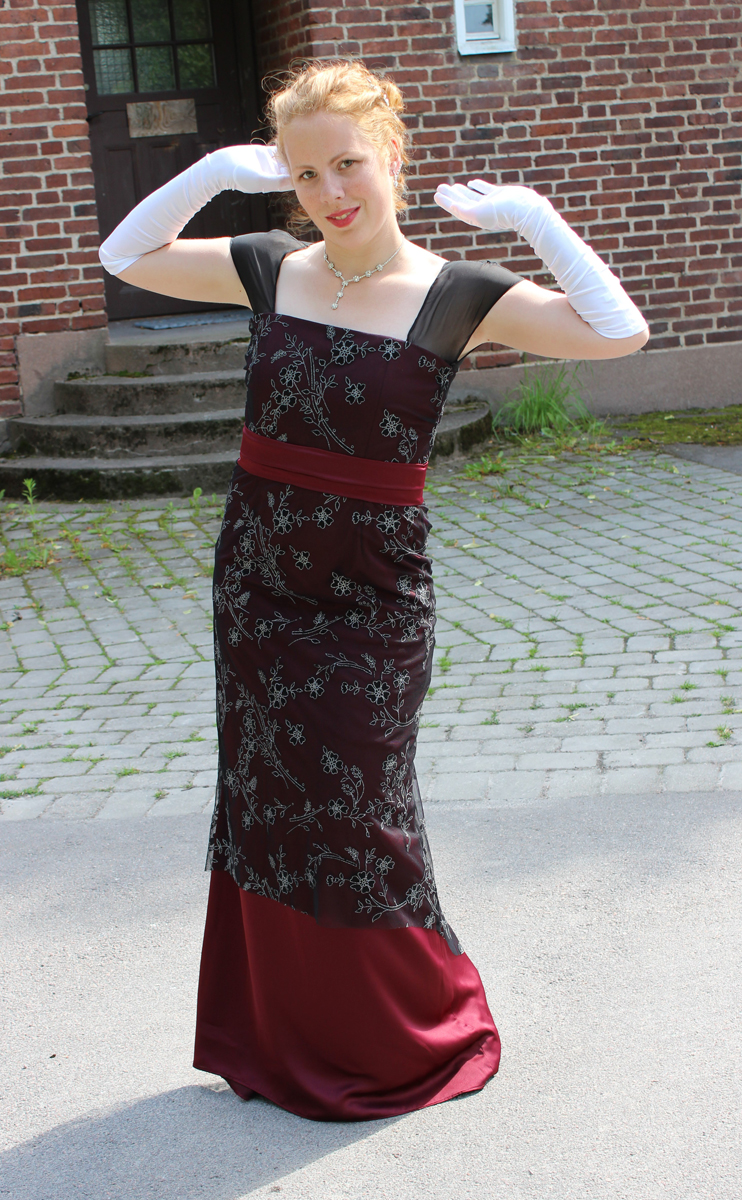
When I decided on the look of my sisters gown for the “Titanic exhibithion” I only knew that I wanted to make it simple yet beautiful. I needed to use pattern I already owned and find fabric from stash or cheap in the store. There would be no time to look for perfect fabric, or to indulge in intricate details on the garnment – quick and easy was the theme.

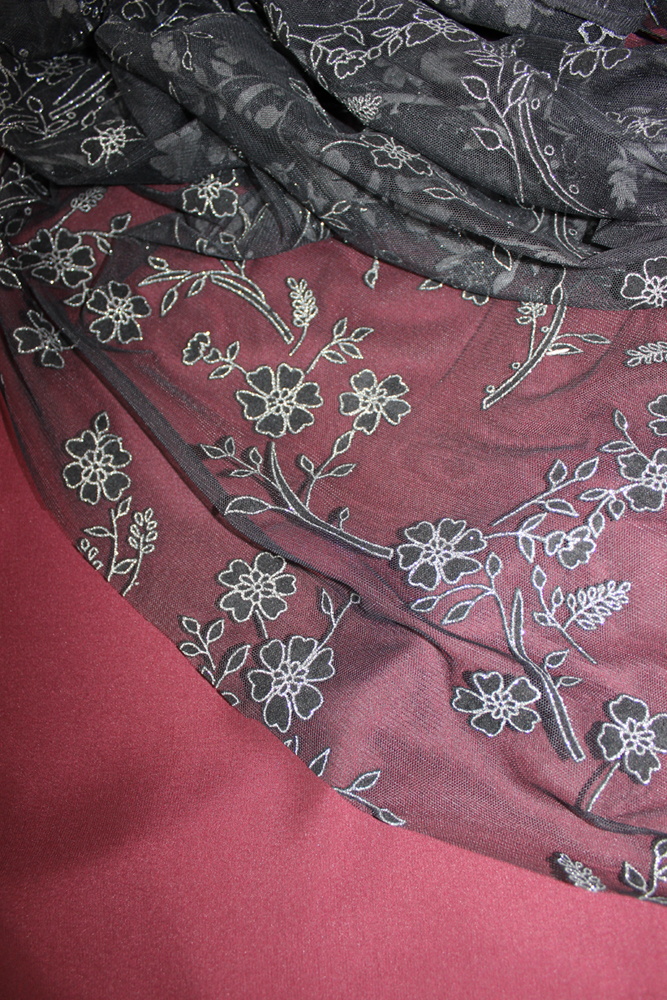
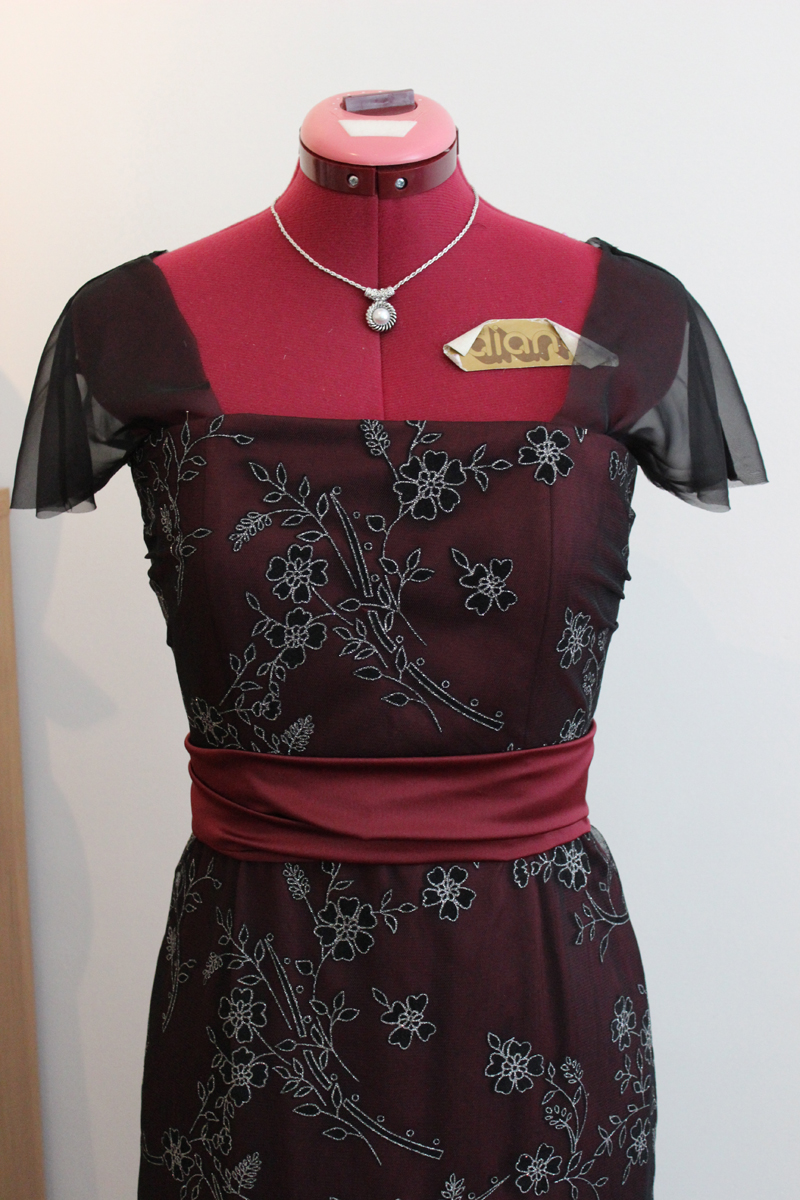
So when I found this wonderful black tuile, with black and silvery flowers on sale I bought the whole lot. I also got this wine colored viscose to match.

IMG_0013

The dress immediately appeared in my head – a Rose inspired gown from the Arnold 1909s pattern.

Rose's Dinner Dress2013-06-23 20.27.19

I knew that this dress needed to go togheter fast (only one week until deadline) and that I would not get any chance to try the dress on my sister until the night before deadline.

Within those terms there was not much to do but to start sewing, and hope everything would run smoothly.

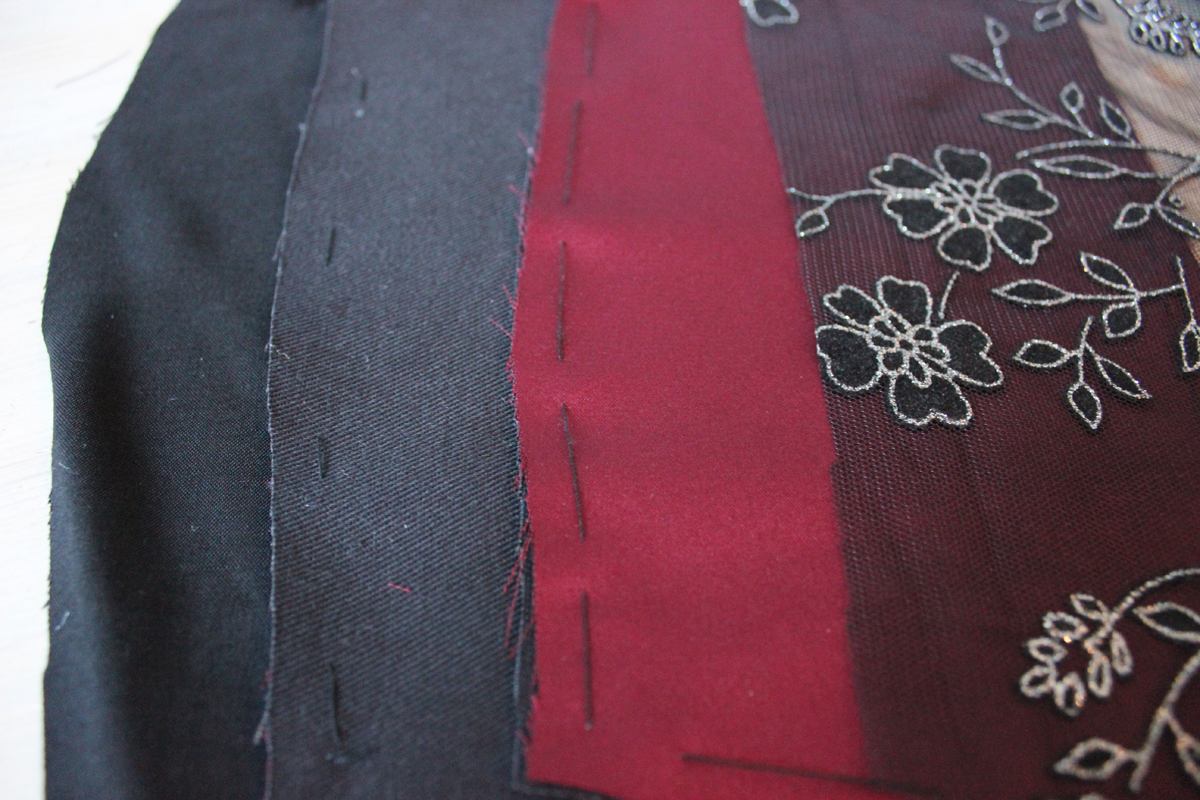
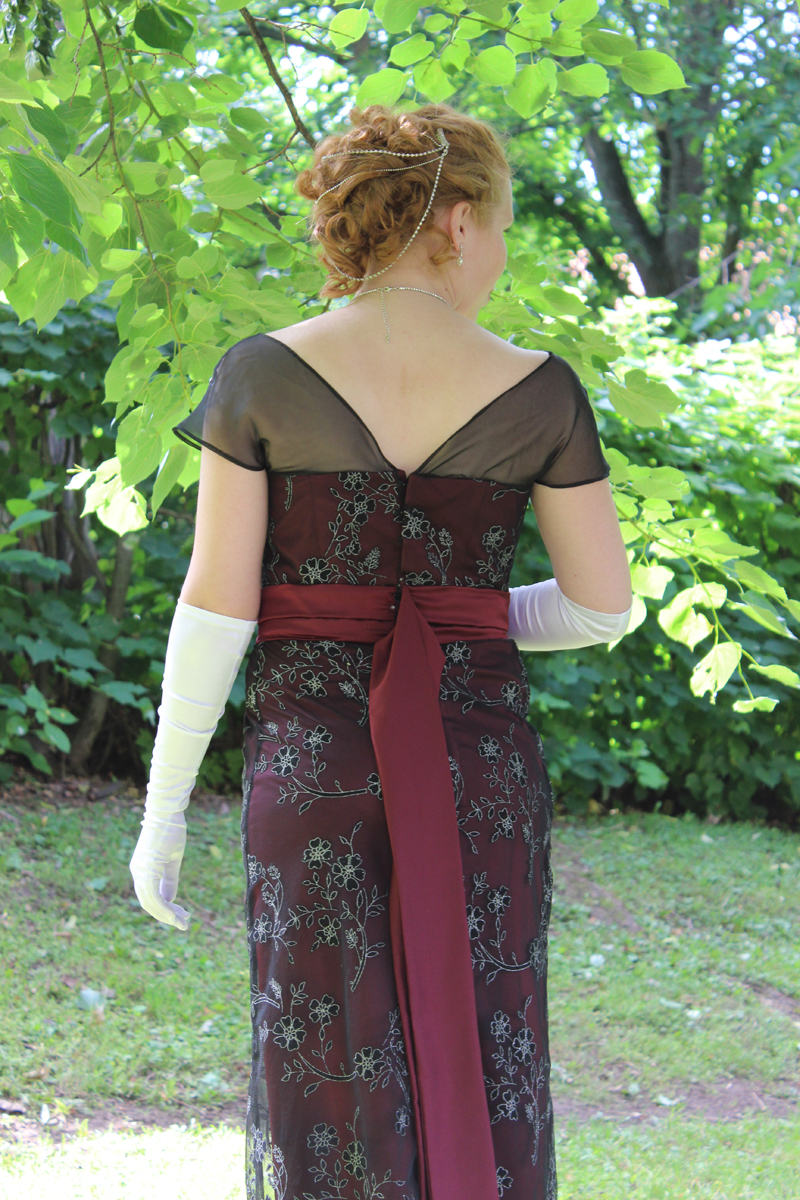
I cut the fabric for the skirts (black and red) and the bodice (just red). I then searched my stash and found a piece of black twill, leftover from the Laced corset, to interline the bodice. I also found a very small amount of soft black viscose for the bodice lining. Then I stroke luck a third time and found a piece of lightweight black chiffong for the little sleevecap. Sometimes it is good to be a maniac and save all the little pieces of leftovers.

IMG_0075This is all the fabrics for the bodice (left to right: viscose lining, twill interlining, red viscose and sheer tuile). I will also insert boning to get some extra strength and shape.

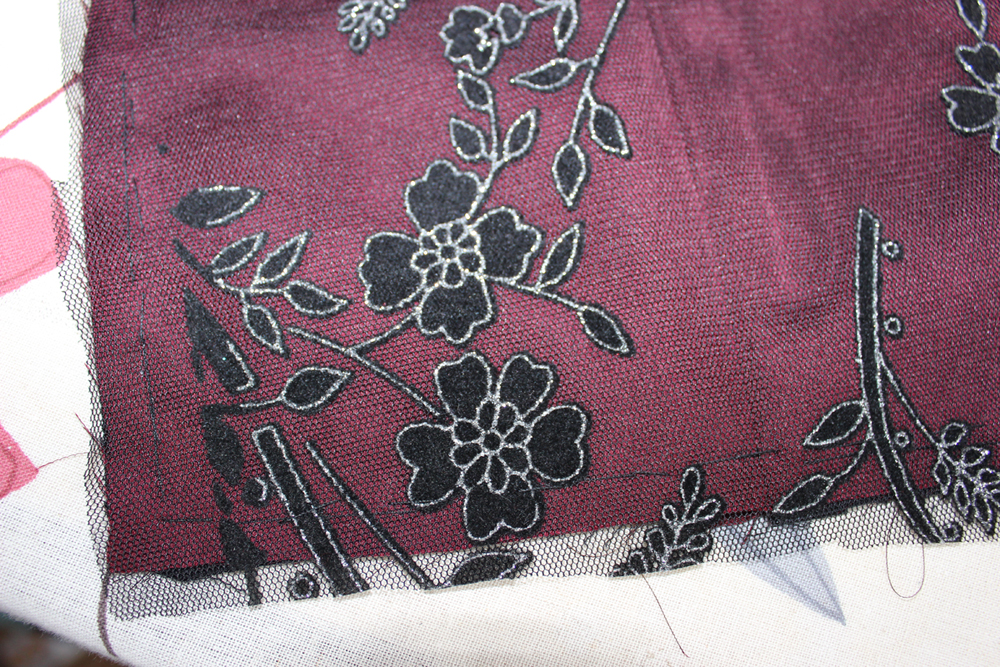
After basting all the interlining, I sewed the bodice together. I then put it on my dressform and draped the tuile over it.

IMG_0088

After a lot of needeling I took it down, cut it clean and basted it all in place.IMG_0158

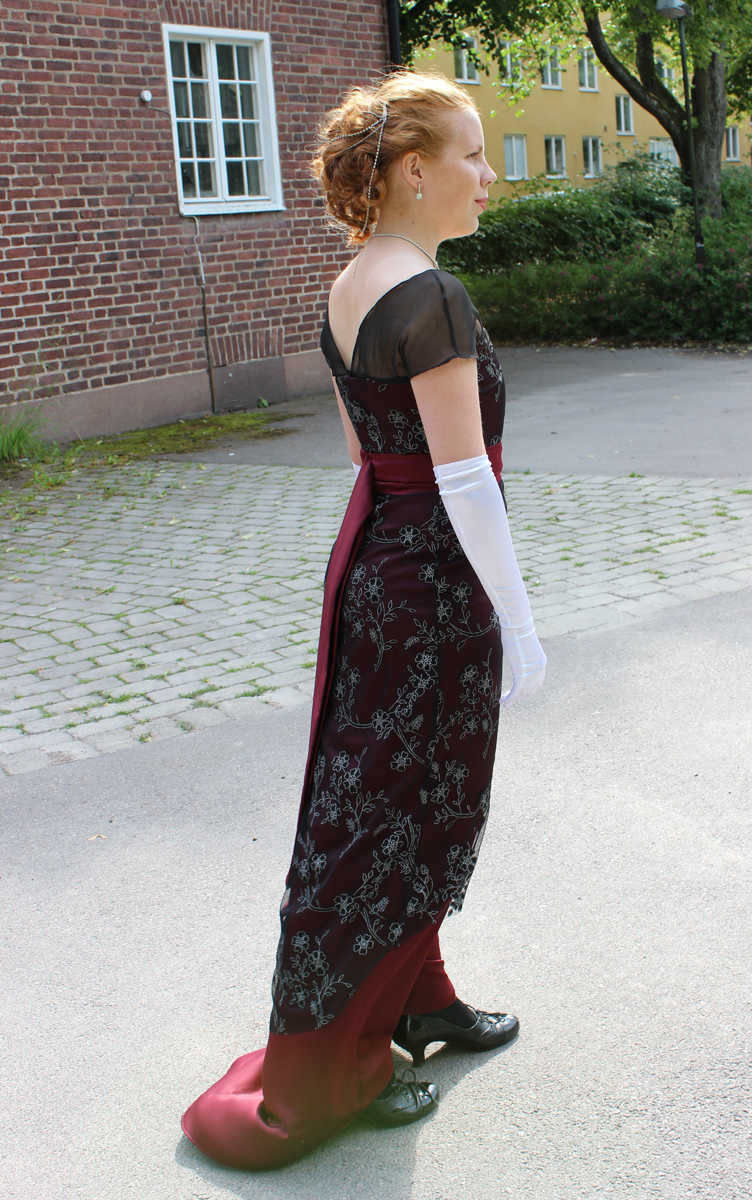
The skirts went together easy, and I used “french seams” for the flowery tuile to get a neat and clean look. Then I sewed the bodice to the skirt and attached the boning in the bodice seams.

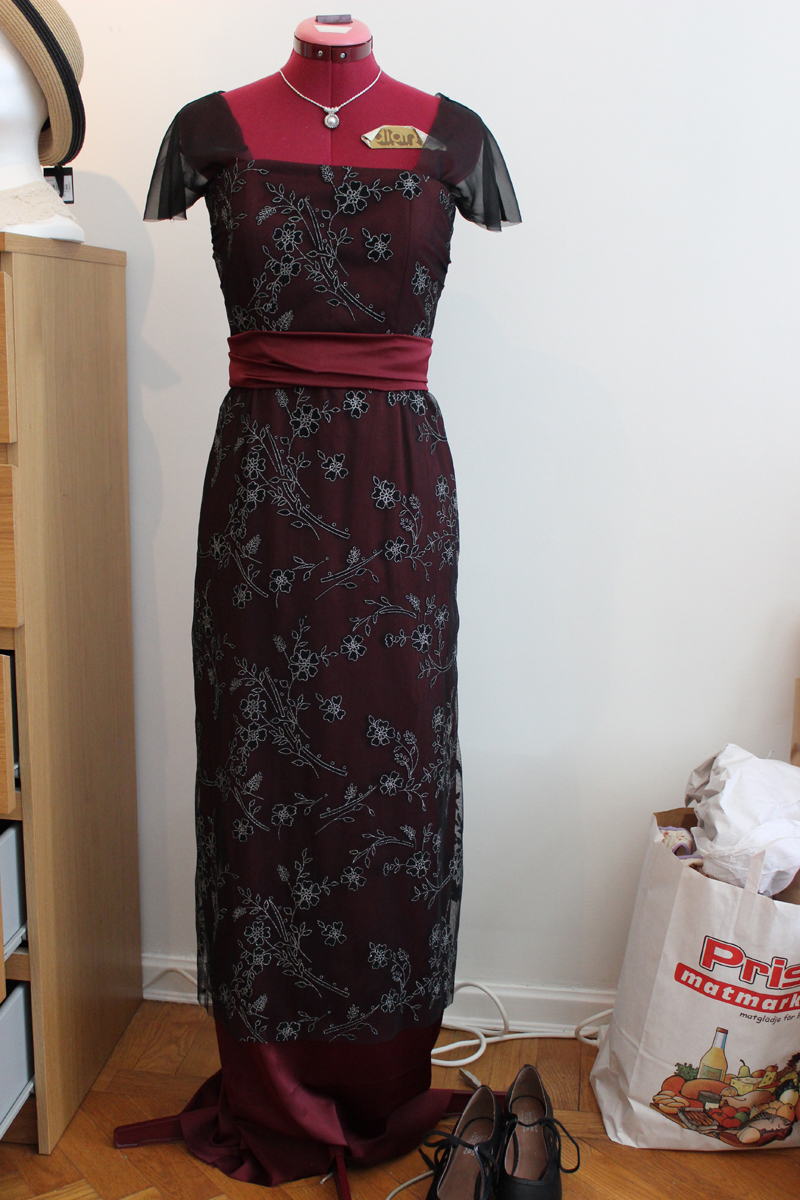
I left the length, the back closure and the decorative waistband until the dress was tied and fitted on my sister the day before deadline. I also draped the little sleeves right on her body.

I got a bit stressed and had to scramble to get the dress done in time for the photoshoot and exhibition. But I managed, and both the dress and my sister looked lovely.

IMG_0247IMG_0250

IMG_0248

And being worn.IMG_0334

IMG_0340

IMG_0350

IMG_0344

IMG_0359

IMG_0360

IMG_0361

IMG_0382

IMG_0368Hm, dirty or pretty…

IMG_0387

IMG_0391

IMG_0533

IMG_0539

IMG_0541Model: Maria Petersson

1913 – to late for Titanic

When deciding what to wear to the “Titanic exhibithion” I looked through a lot of pictures and patterns from the 1910-1912 period. Then I found this one.

fashion-plate-girls-1912

The dress has a bit more of a 1913 style to it, but nothing to apparent.

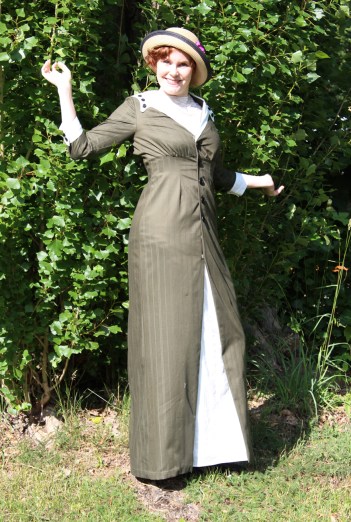
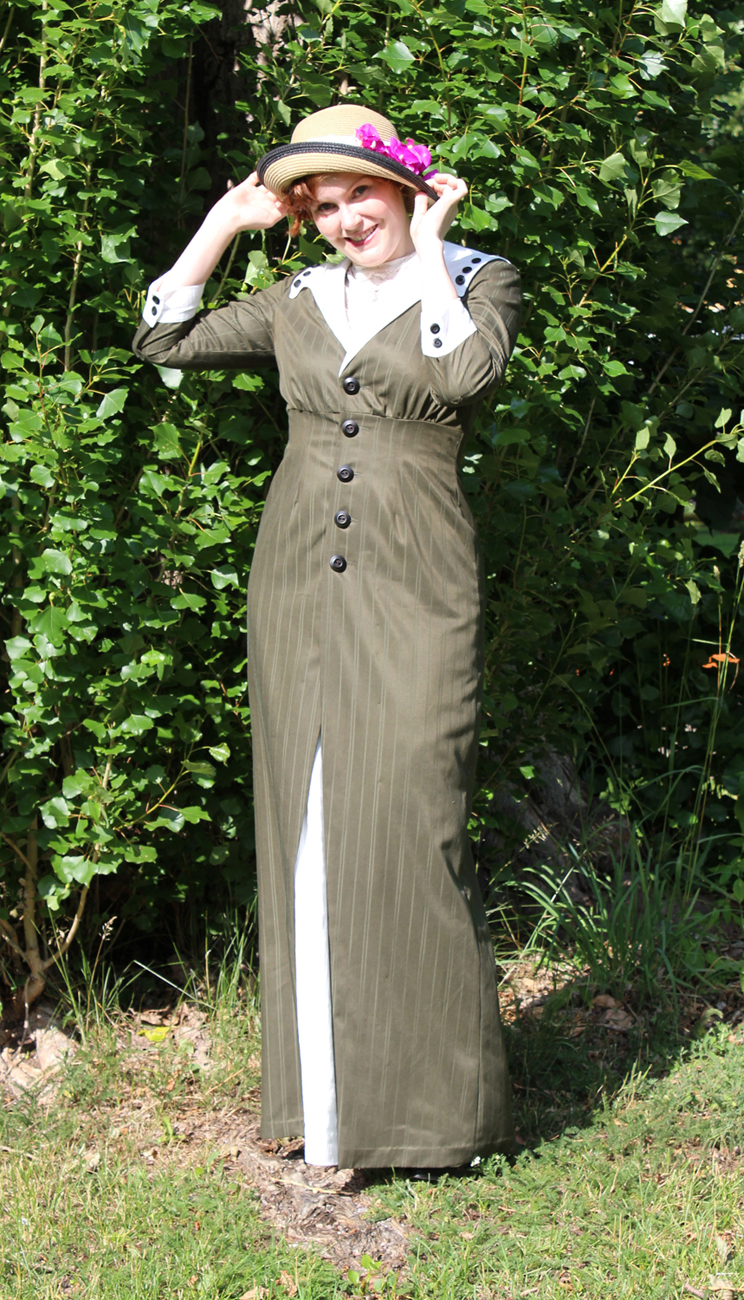
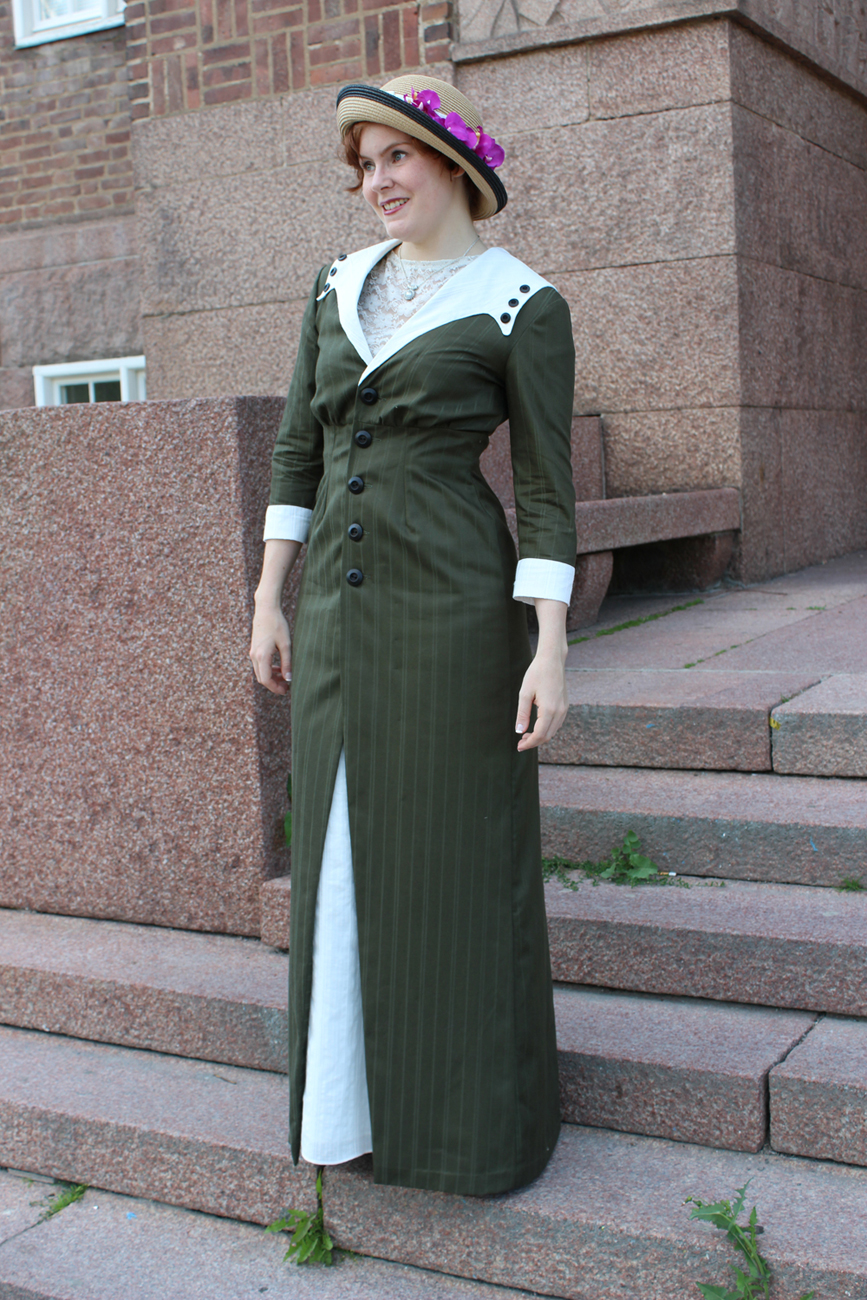
The fabric for the dress is a green striped wool that’s been in my stash for a couple of years.

2013-06-24 10.24.20

I also used  withe cotton voile left over from the “Chemise a Lamballe”

2013-05-29 17.38.05

The only thing that needed to be bought was the buttons, so it was a pretty cheap project. Even though buttons can be terribly expensive, and more often than not you will need a lot of them.

I drafted the pattern myself, using Waughs “Cut of Wlomens Clothes” as a guide to the general shape.

It wasn’t until I already begun sewing that I realised two things.

1. This dress would fit perfectly to the HSF challege 1. – ..13 (make anything from the year ..13) which is the only challenge so far that I missed out on. To my defense I didn’t know about the HSF until the second challenge  had already started. Better late then never right.
2. This dress was beginning to look a bit too much as my “By the sea” 30s dress. The silhouette, the color combination with the big white details, I even used the same fabric for the collars. Well, all the fabric was already cut – there was no use not to continue. And besides, I really did like that 30s dress.

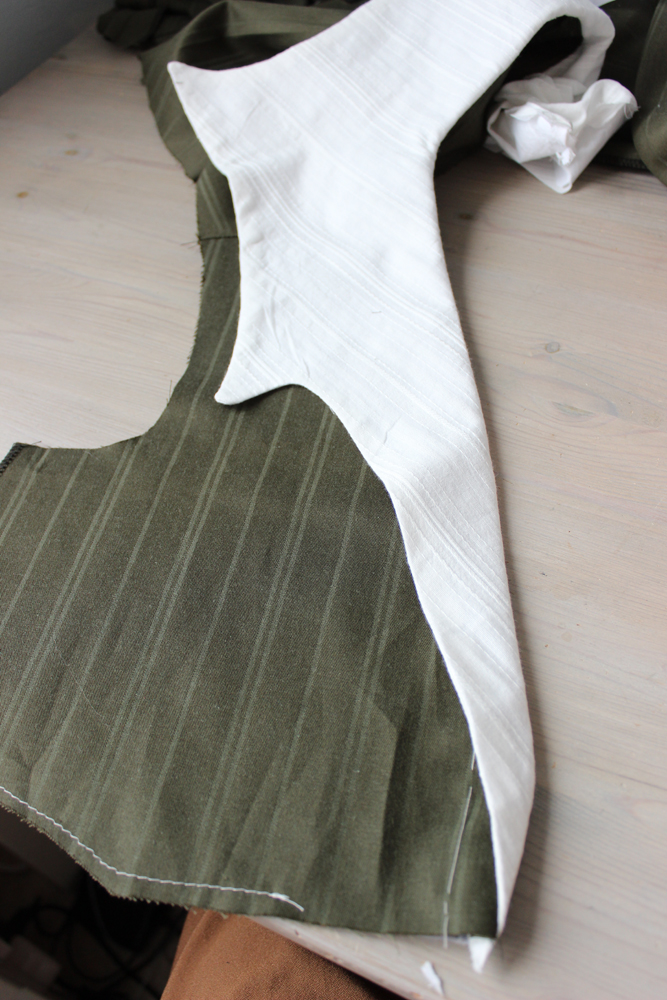
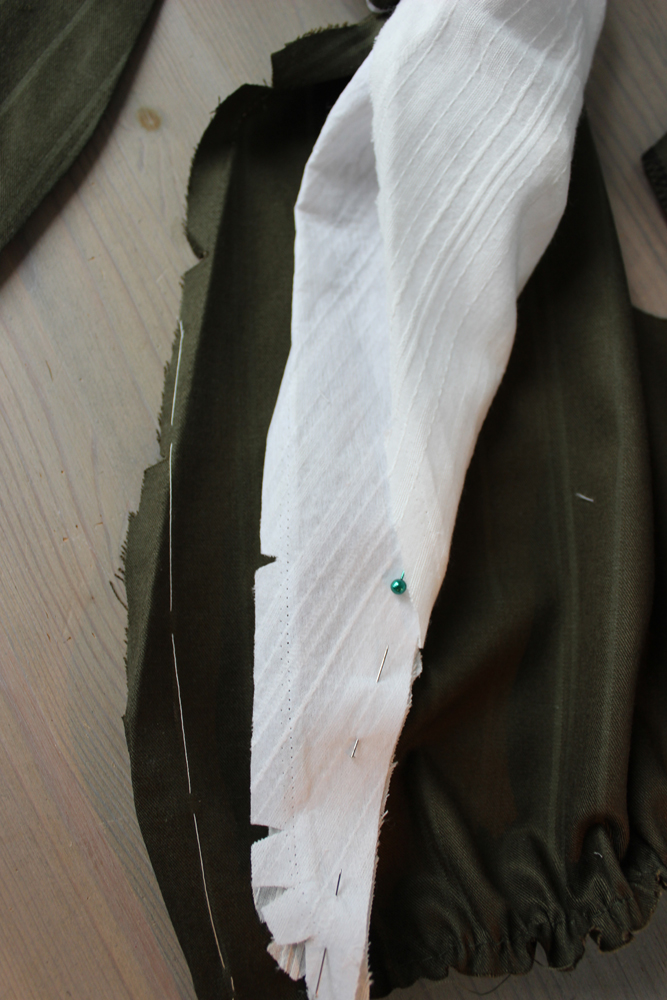
Getting the dress together went fast but I did have to reshape the collar a bit smaller – something I discovered after I had sewn it on. So I unpicked the seam and re-cut the front tabs to end a bit higher in the neck opening, and then sewed it back on.

IMG_0154IMG_0157

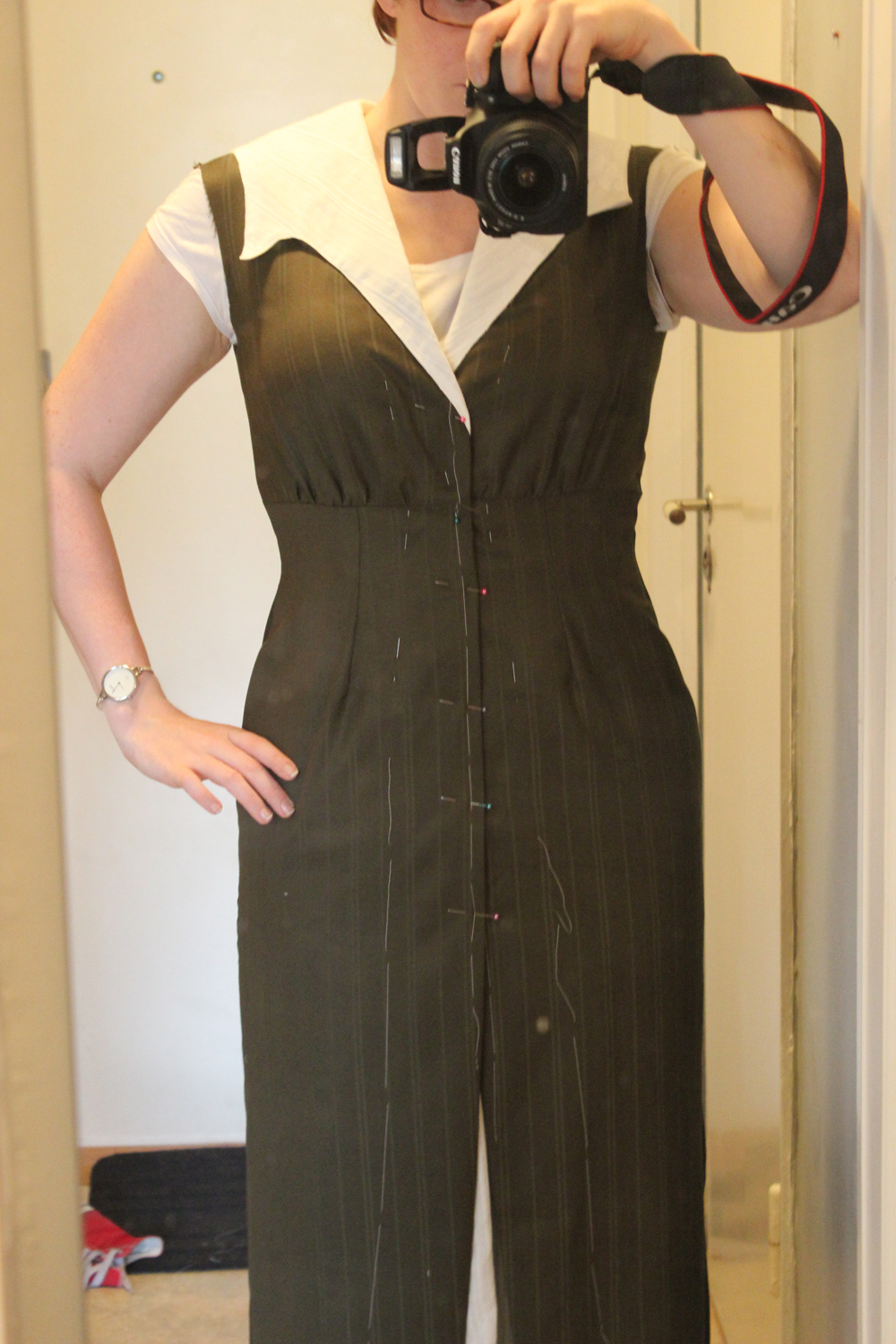
And then I tryed it on.

IMG_0175Starting to look pretty good.

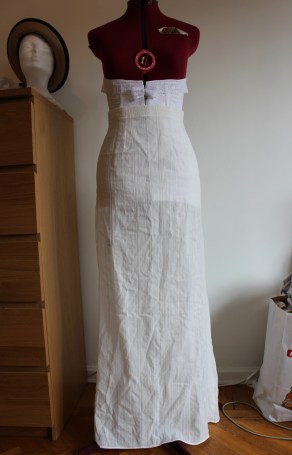
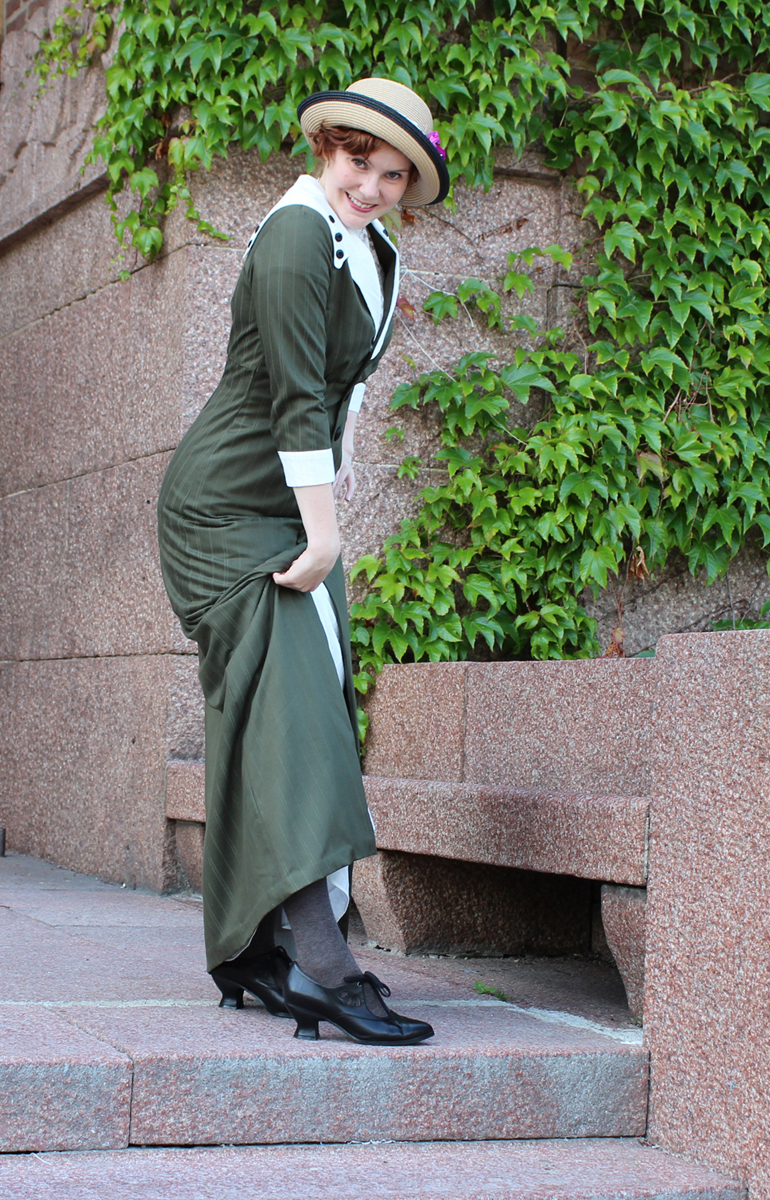
For the opening in the front of the dress I decided to make a separate skirt in the same white voile that I used for the collar and cufs. So I re-used the skirt pattern for the dress and cut a high waisted slim skirt.

IMG_0197

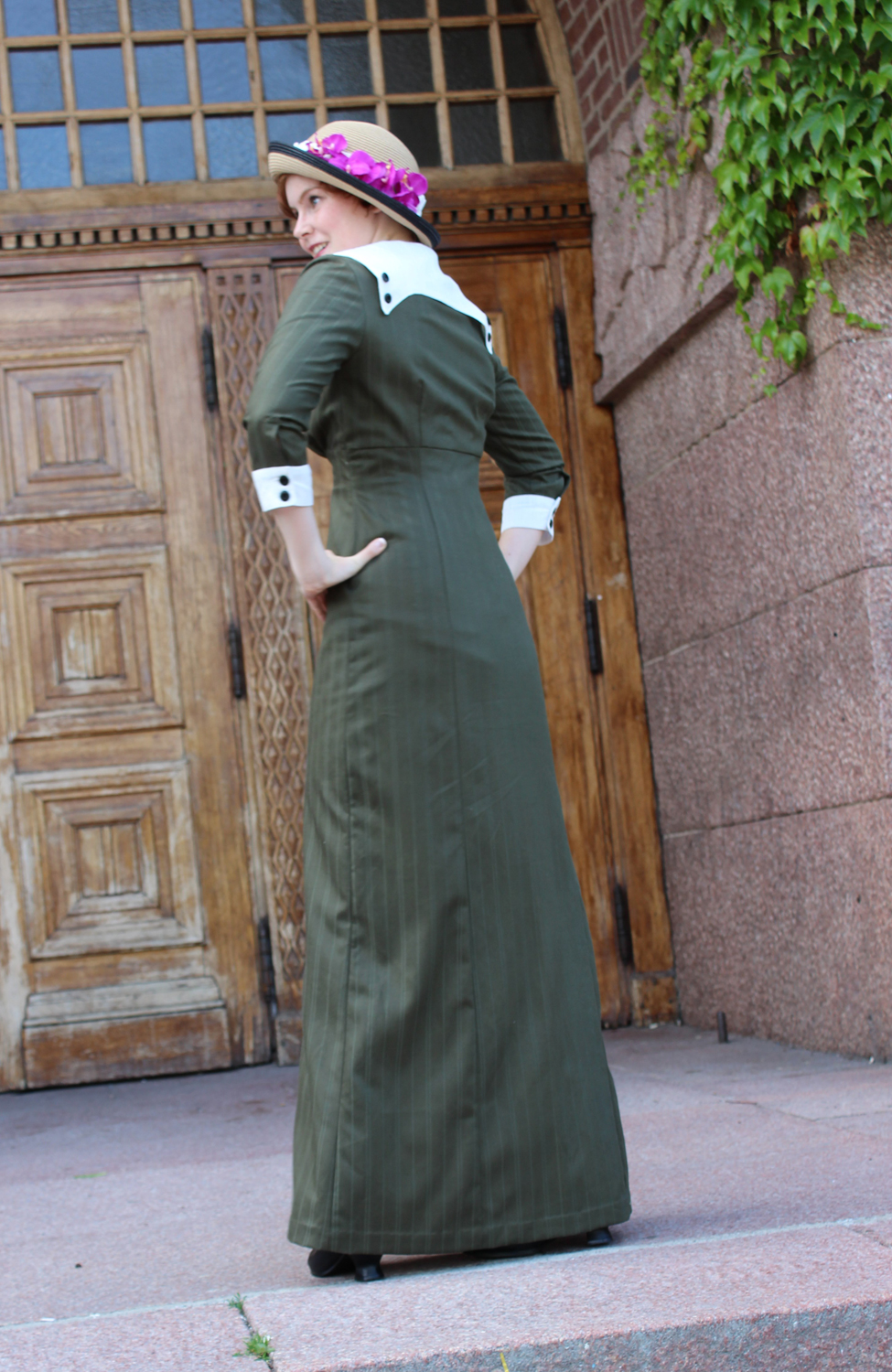
So here it is, my contribution to the HSF Challenge 1 – A 1913 dress – I’m only one year late for the Titanic.

IMG_0222

IMG_0229

IMG_0225

IMG_0232

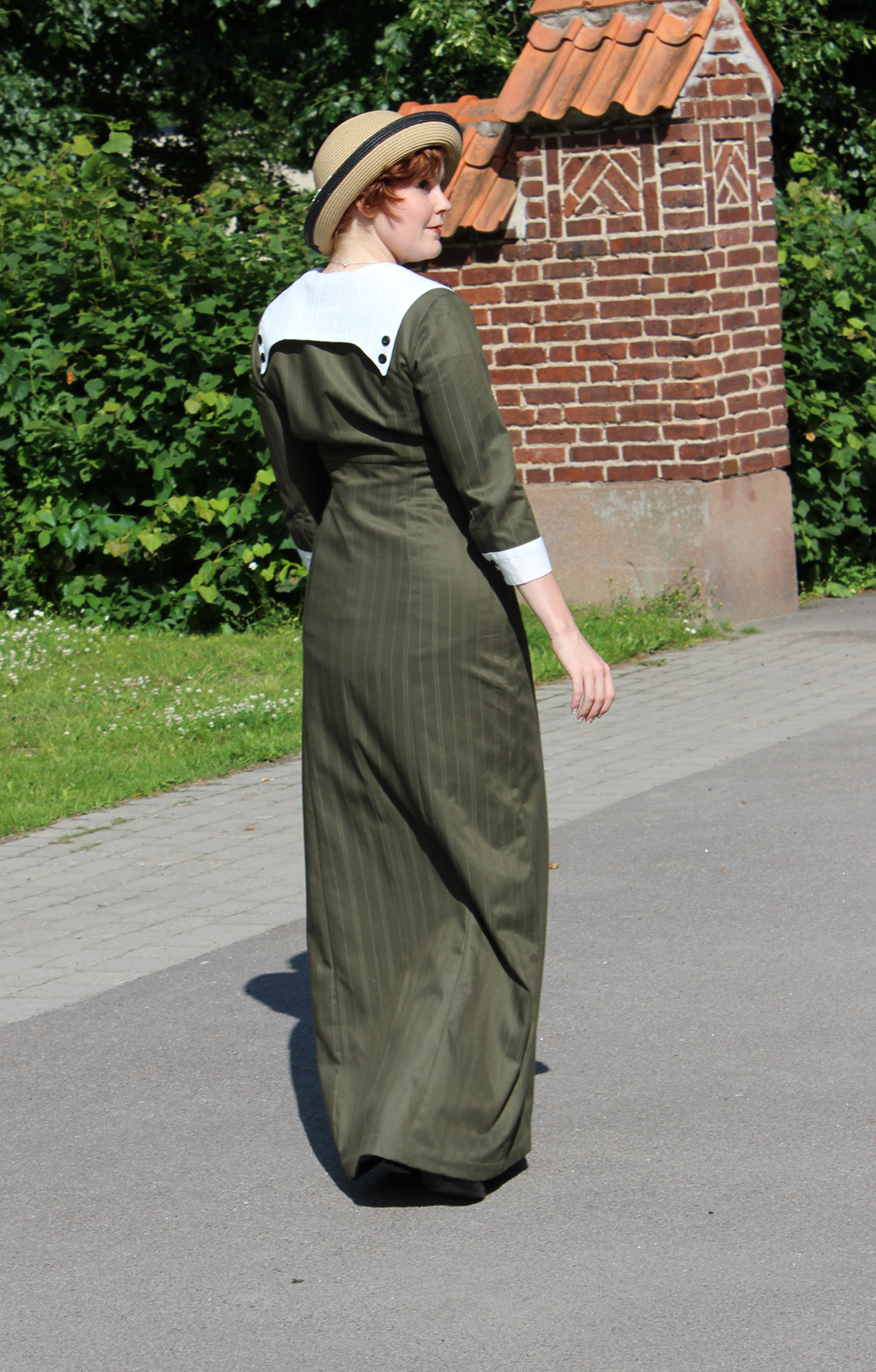
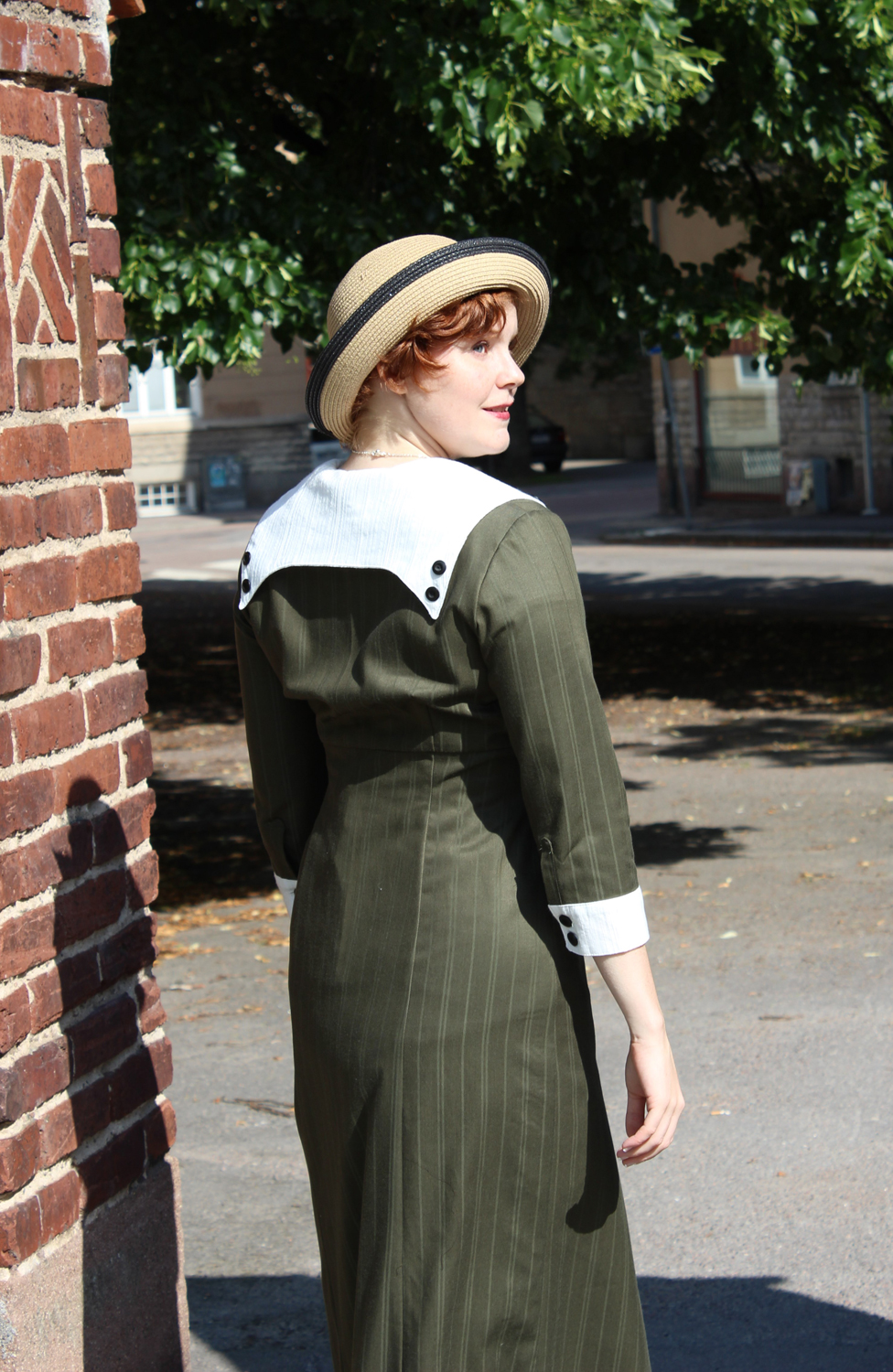
And being worn.

IMG_0553

IMG_0558

IMG_0562

IMG_0578

IMG_0582

IMG_0589

IMG_0614

IMG_0620

IMG_0600

IMG_0607

IMG_0638

IMG_0640

Just the facts:

Challenge 1. year ..13.

What: A 1913s daydress.

Fabric: 2,5 m of green wool, and 2 m of white cotton voile.

Pattern: I drafted my own, based on Waugh’s “Cut of Womens Clothes”.

Notion: Thread, interlining, buttons (5 big and 14 small ones) and snaps.

Historical accuracy: I used modern sewing and drafting techniques, but the fabric and the over all look of the garmnent are about right.

Cost: 200 SEK total (half the amount now, and the rest for stash fabric).

Hour: about 15 hour

First worn: On the Titanic exhibition on the 6th of July, and the following photoshoot.

Laced in neo-Victorian Corset

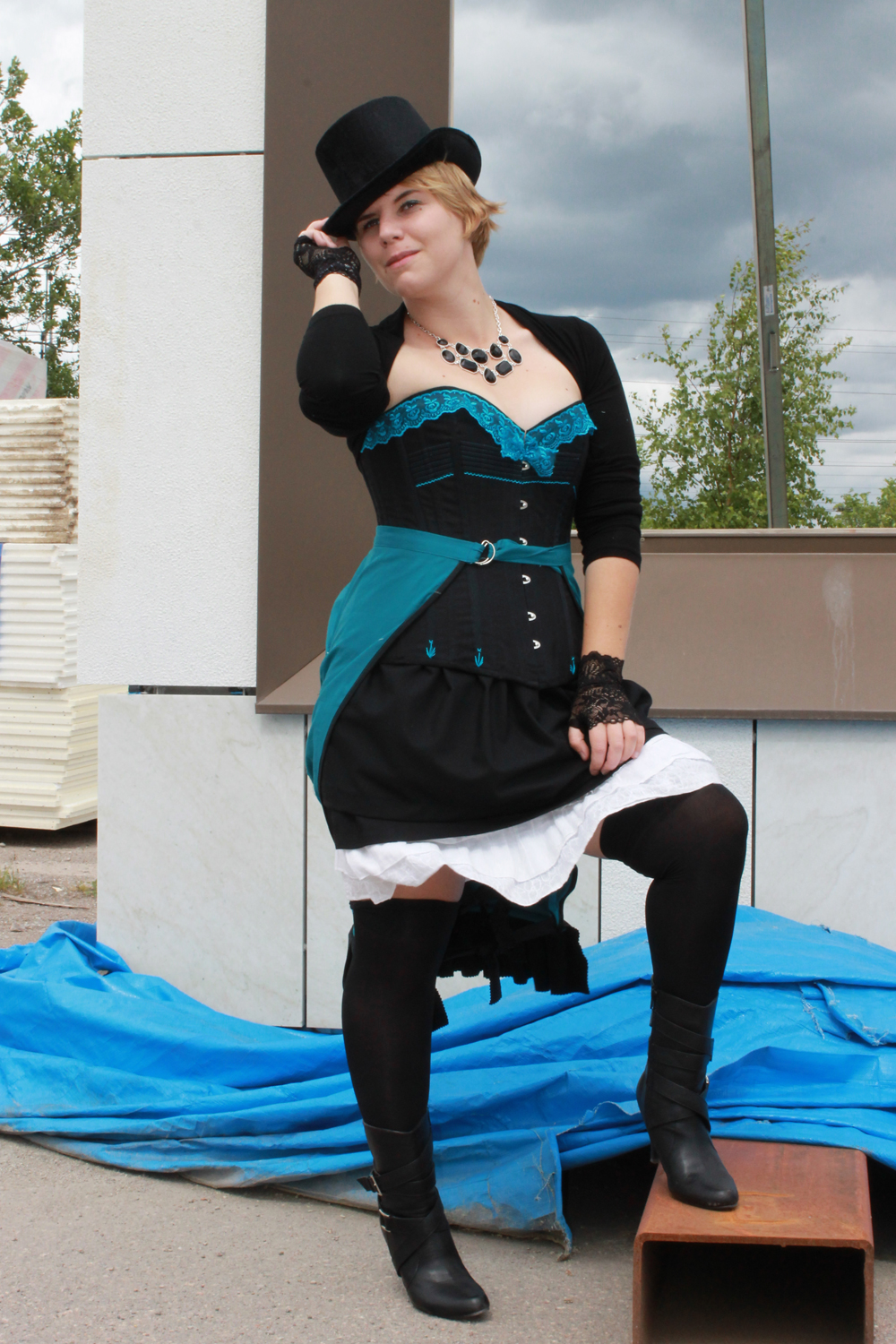
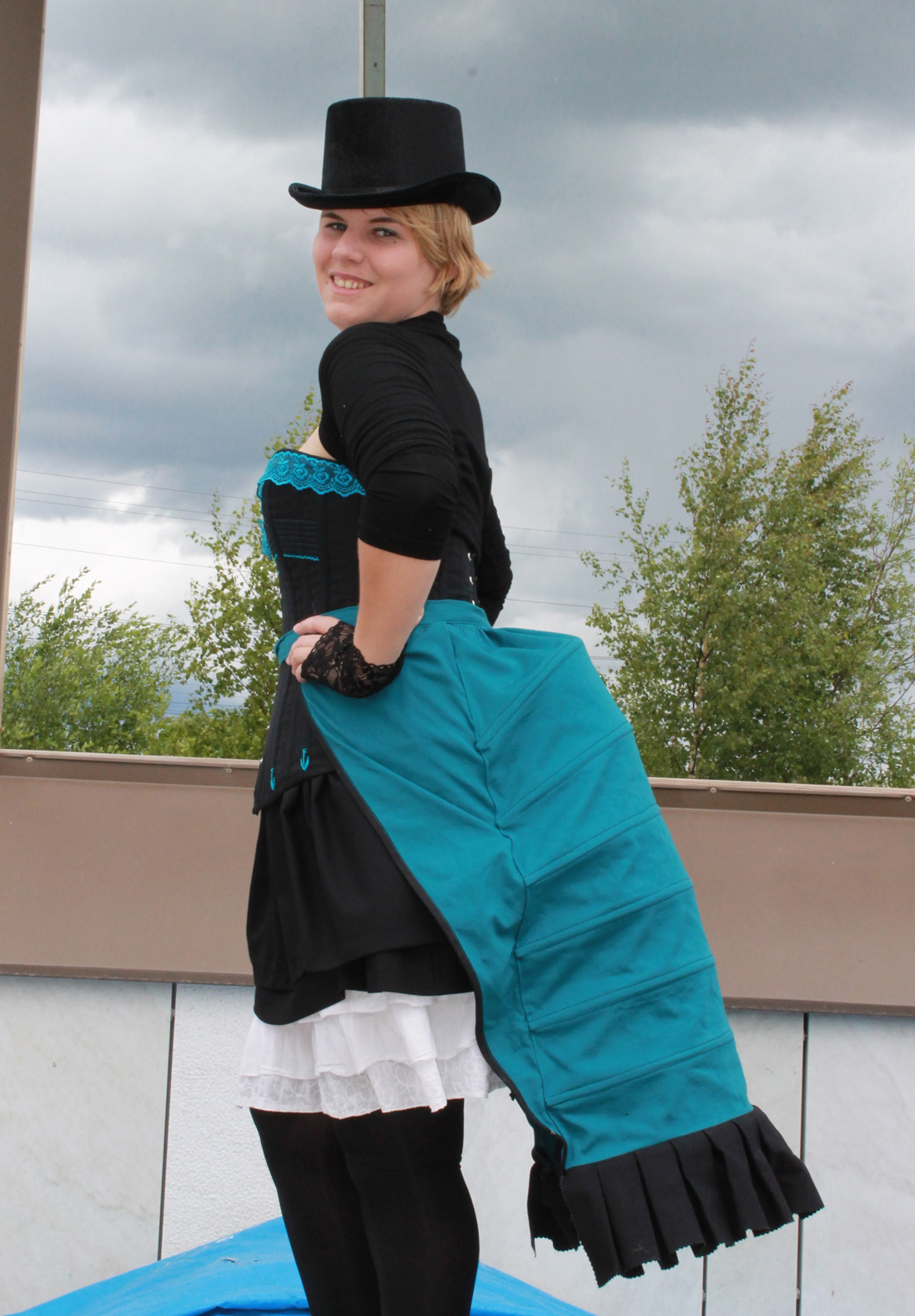
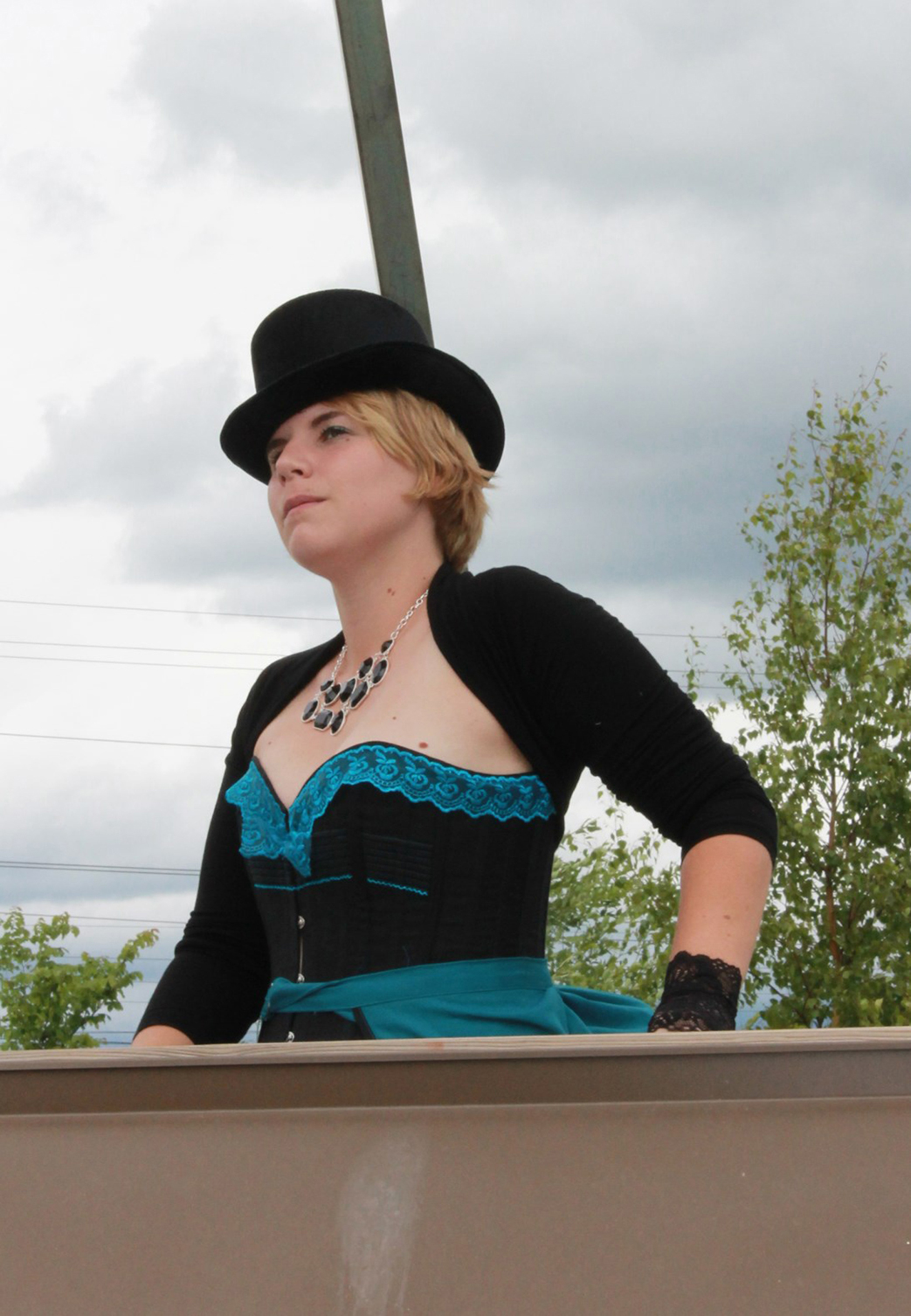
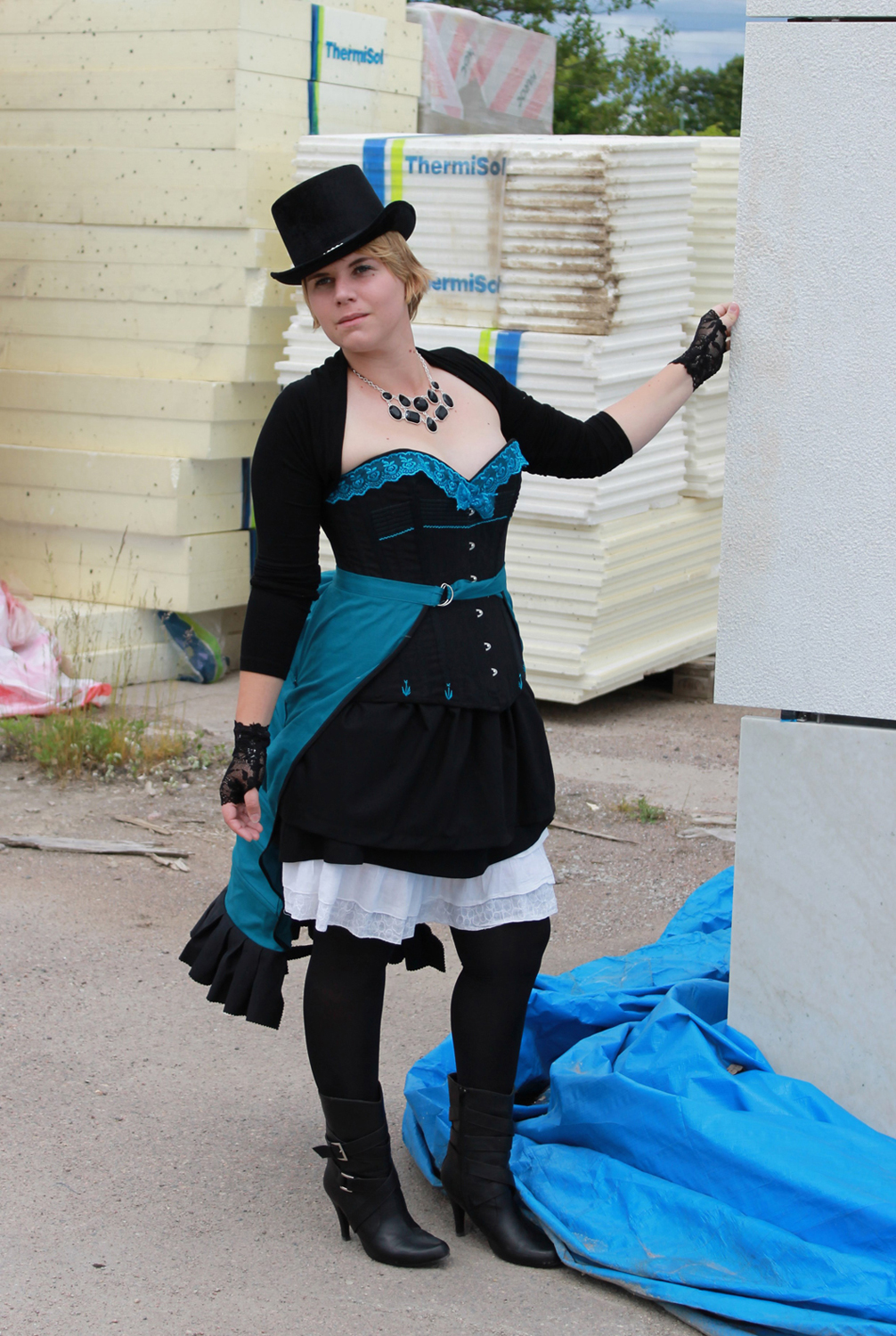
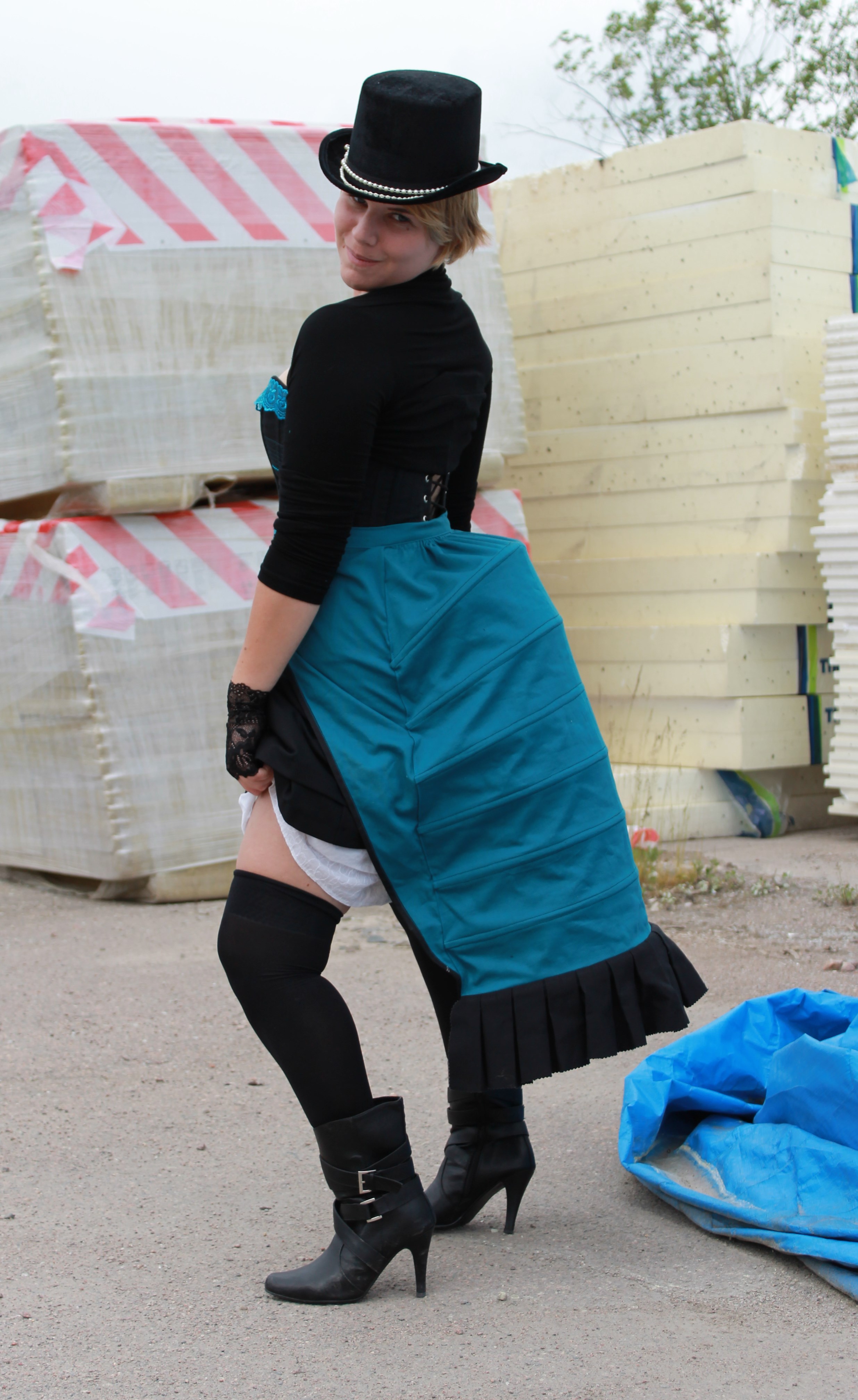
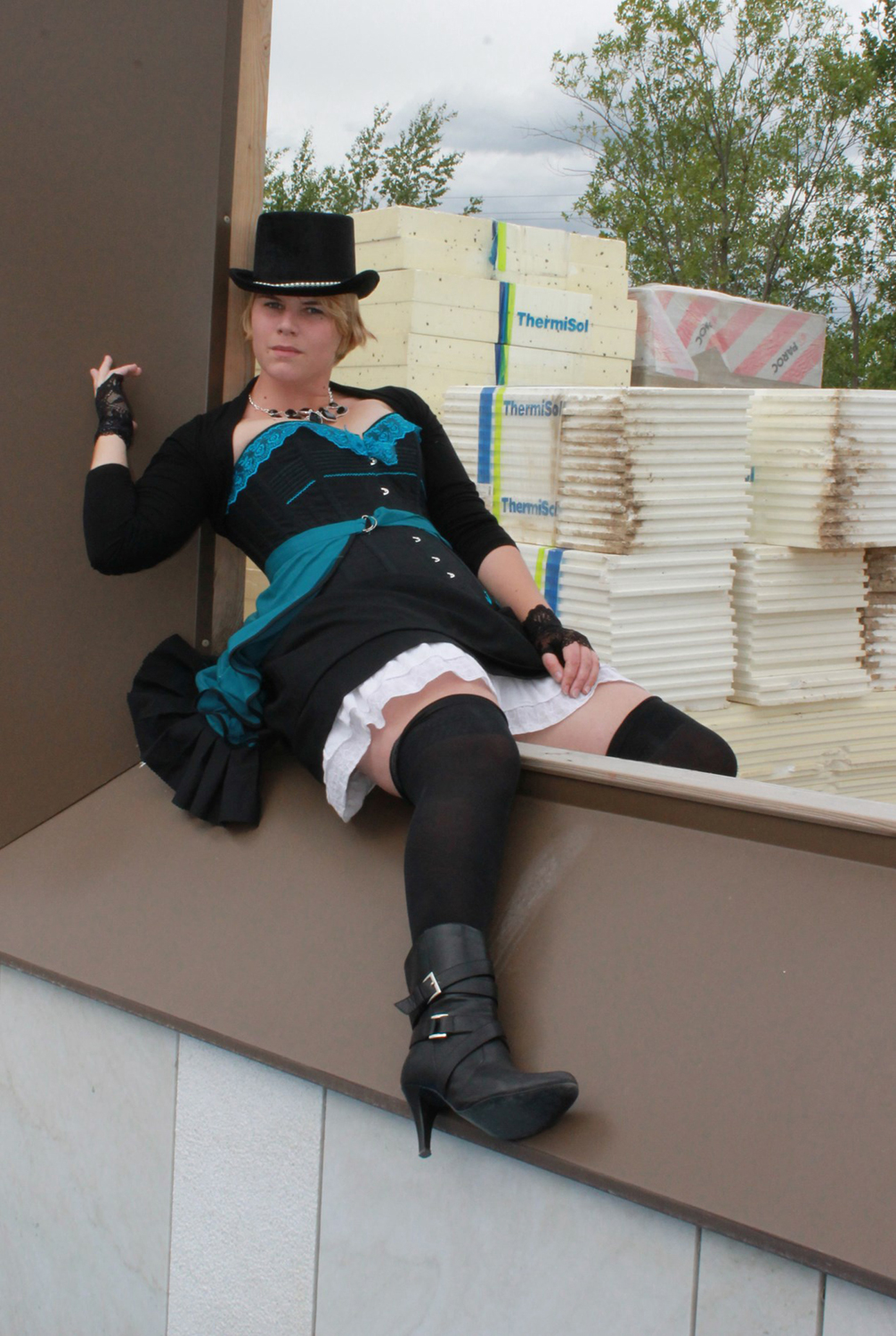
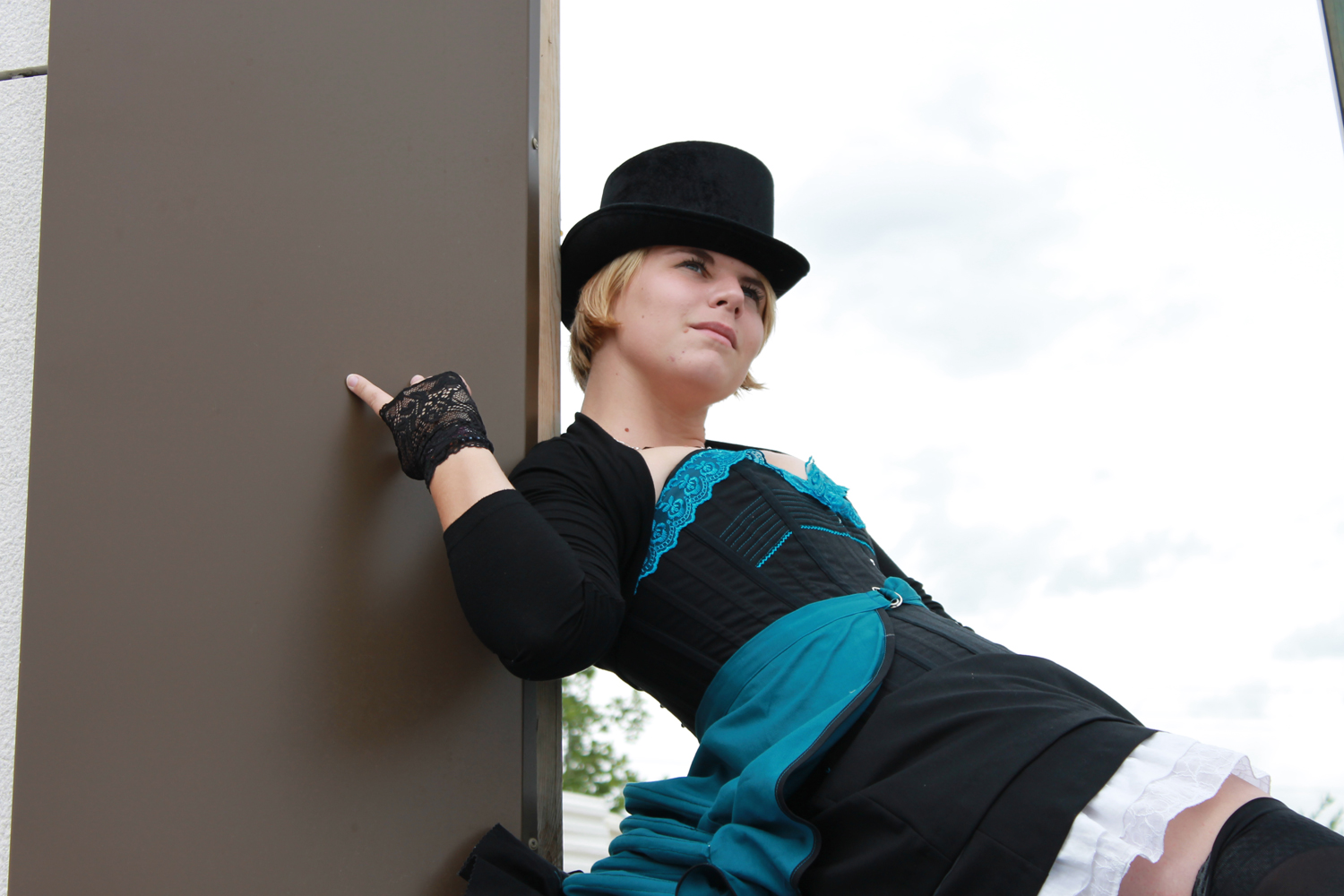
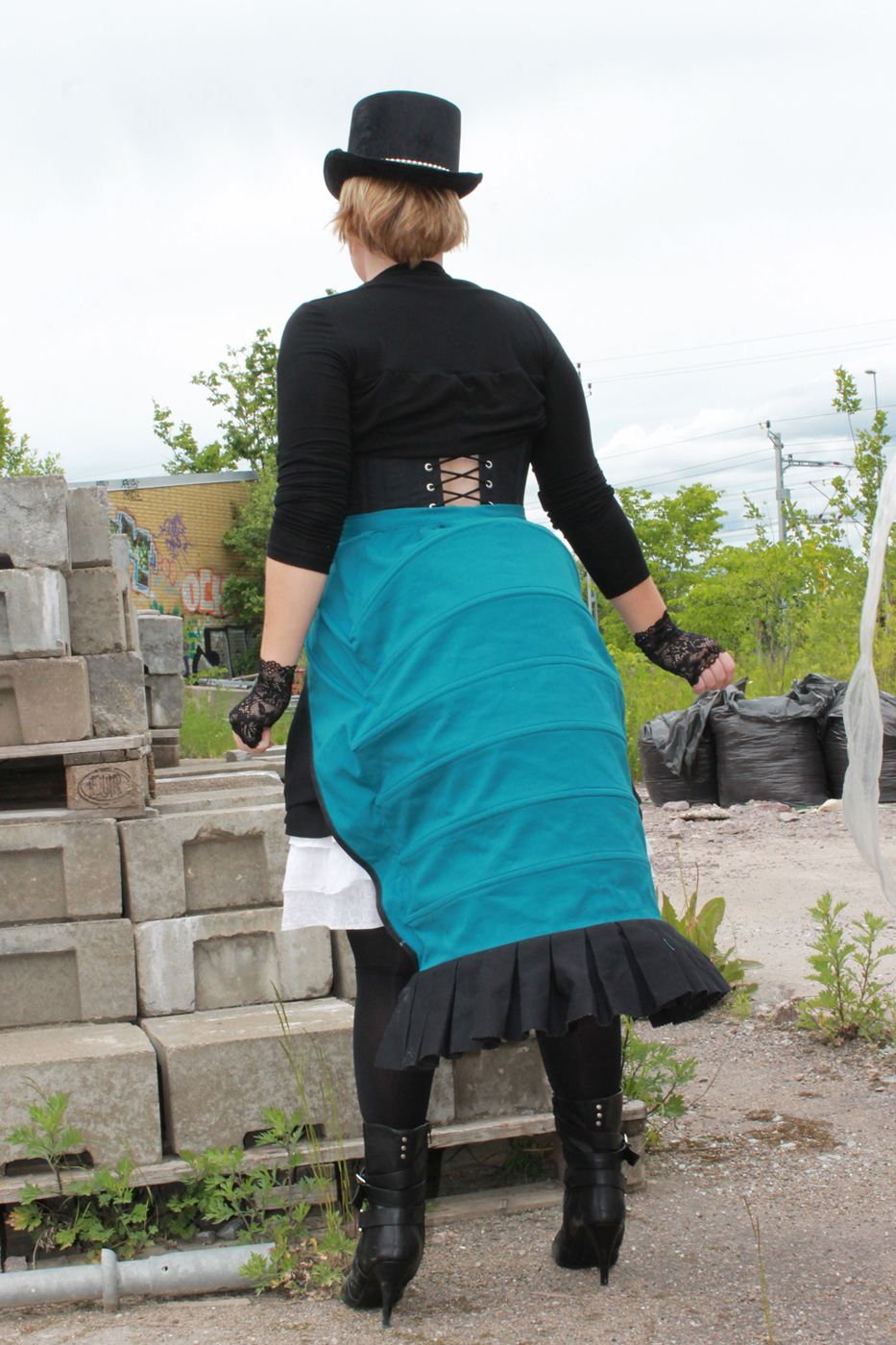
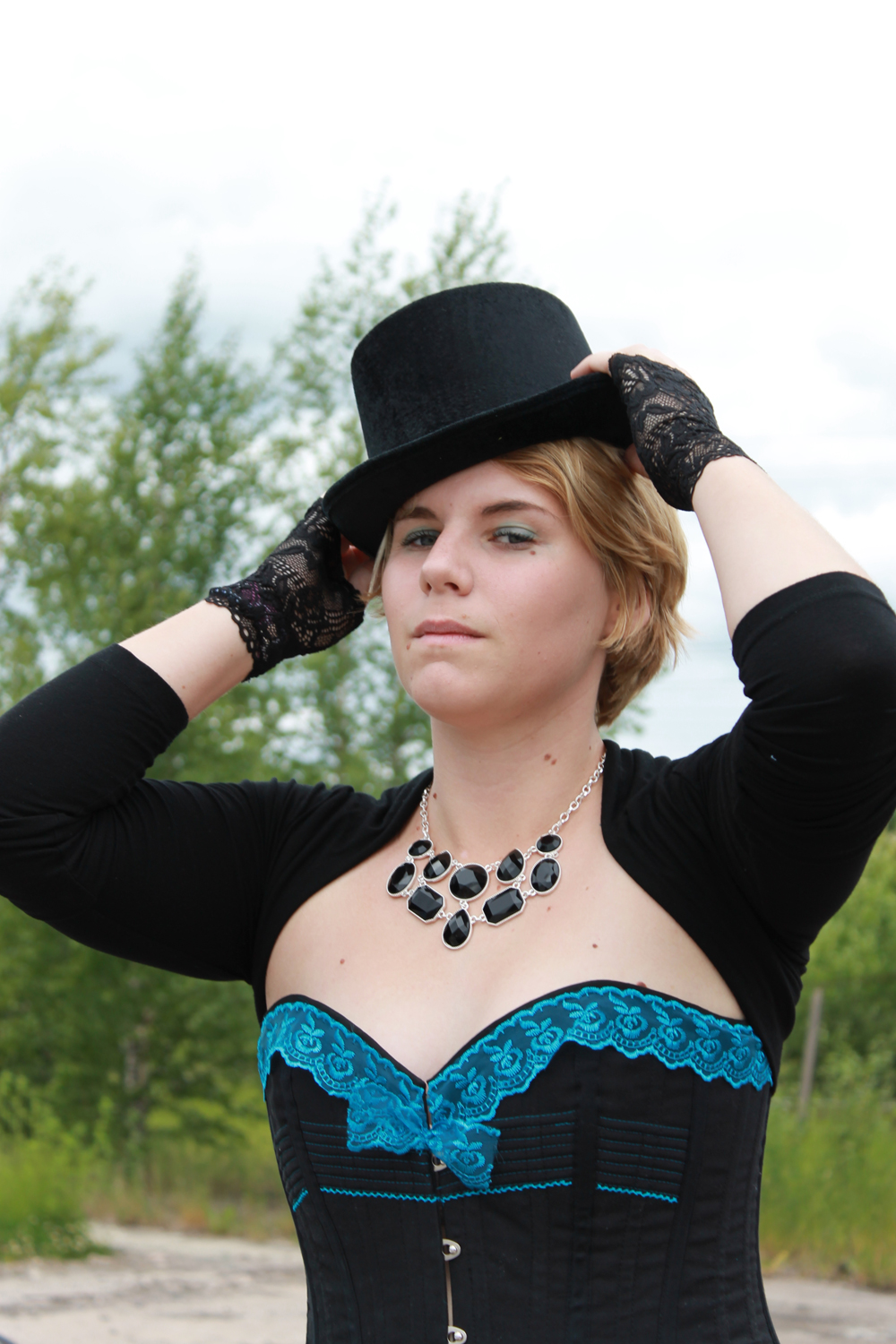
For the photoshoot of the victorian corset and bustle with my sister, we also decided to take some cooler pictures in a more neo-victorian/burlesque way.

We used the building site next to my sisters home as location, and the pictures turned out great.

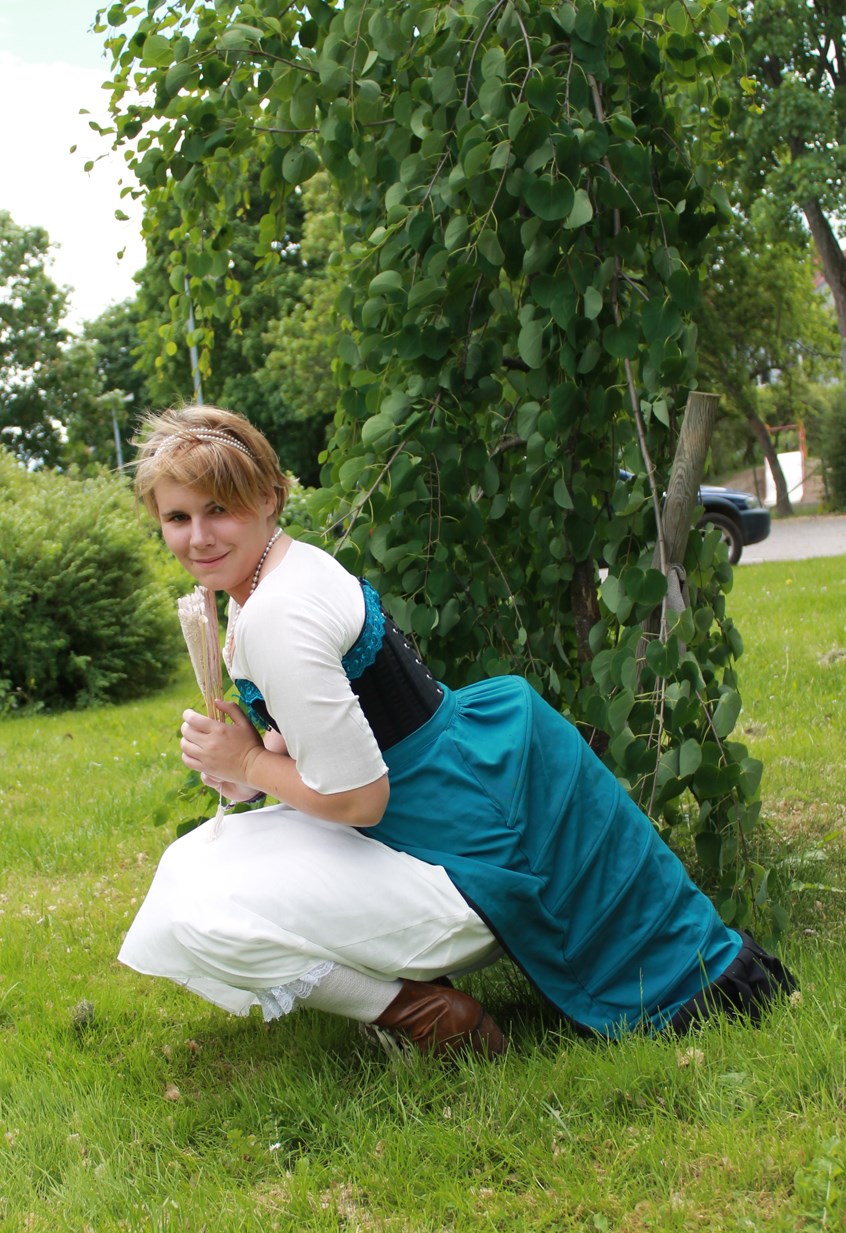
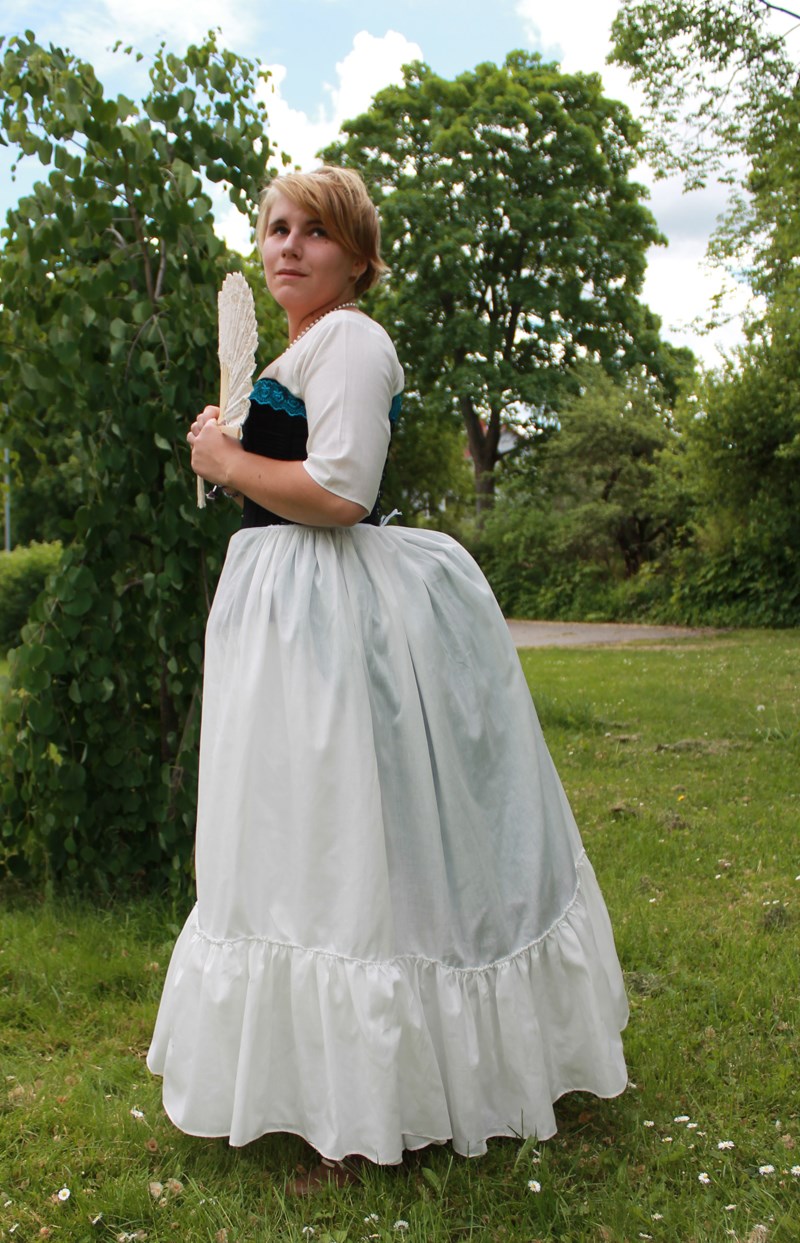
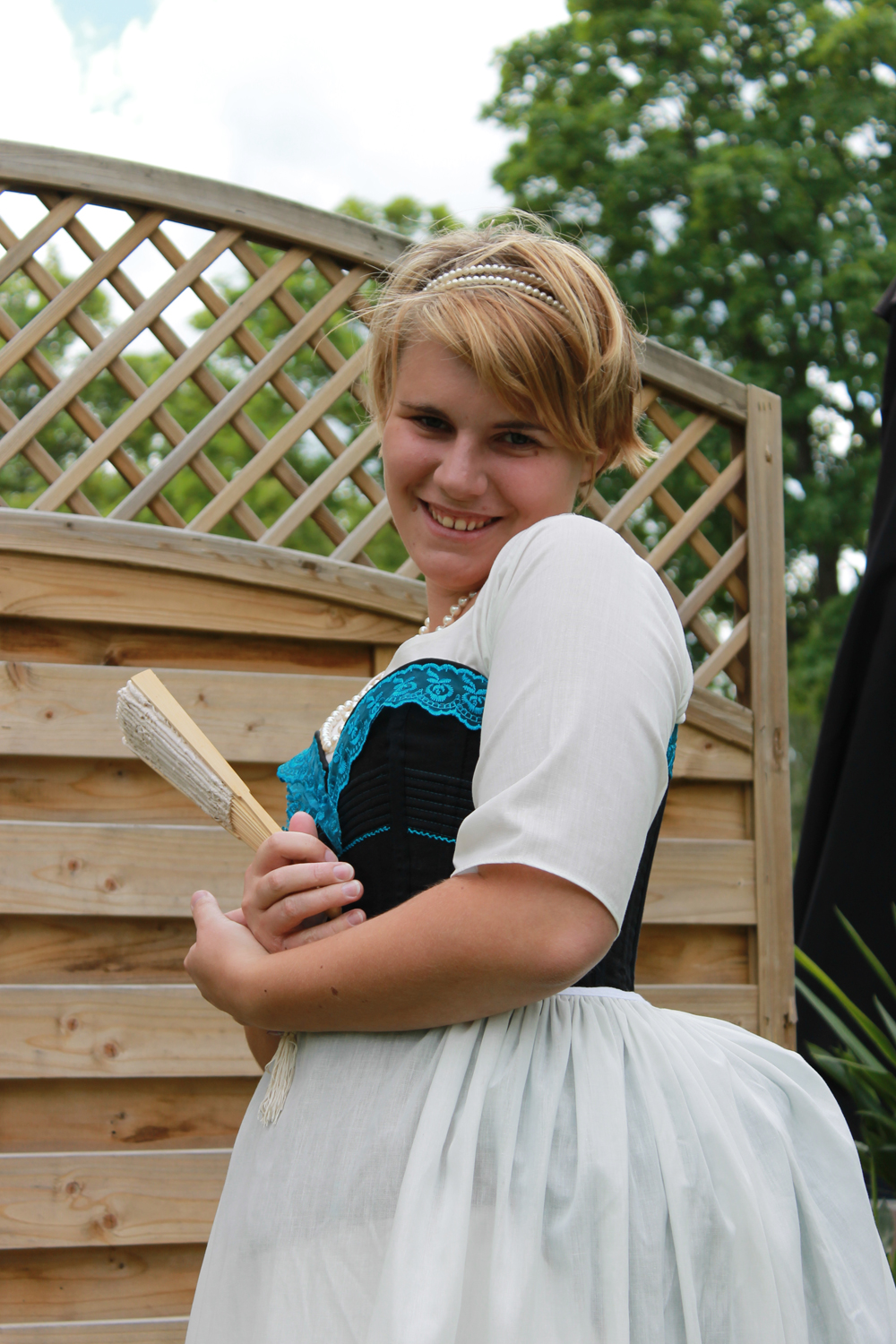
She is wearing: blommers, petticoat, skirt, stockings, corset, bustle, high heeled boots, bolero-shrug, lace mittens, necklace and a hat. All of the accesories and stylings came from our closets (except for the mits which I bought for the shoot).

IMG_3197

IMG_3187

IMG_3201

IMG_3205

IMG_3234

IMG_3217

IMG_3228

IMG_3263

IMG_3265

IMG_3273

IMG_3290Model: Elin Petersson

Laced in – Victorian corset

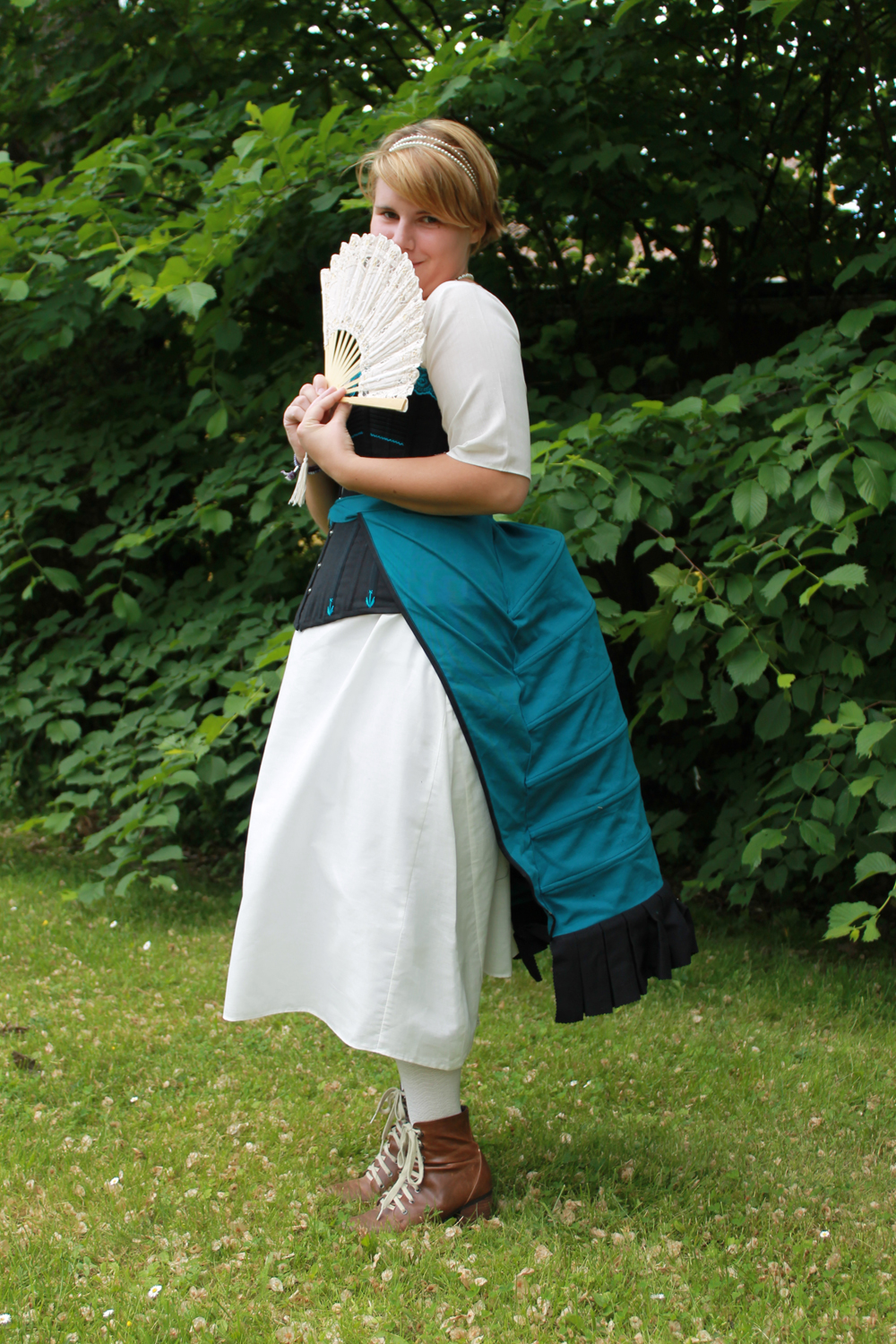
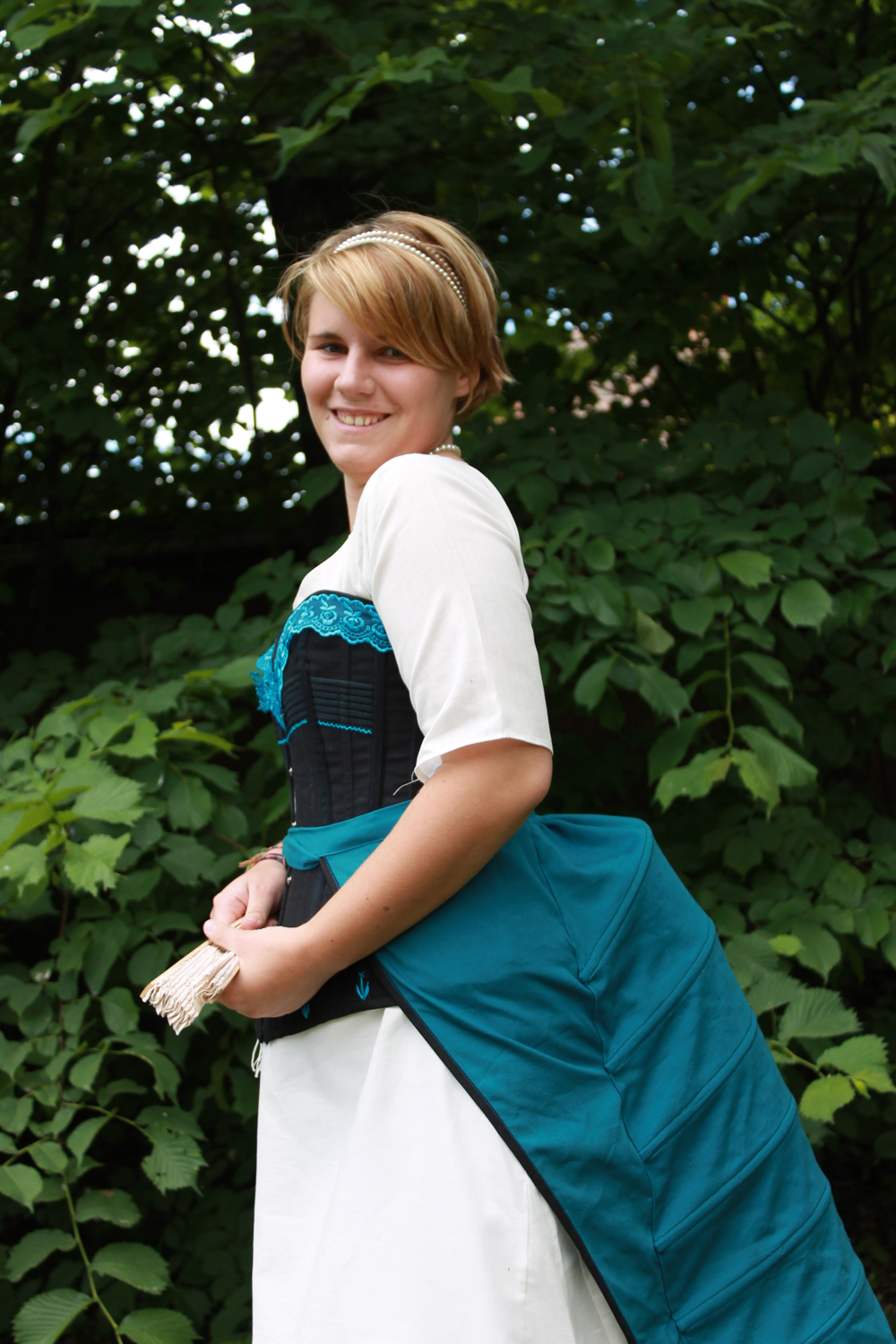
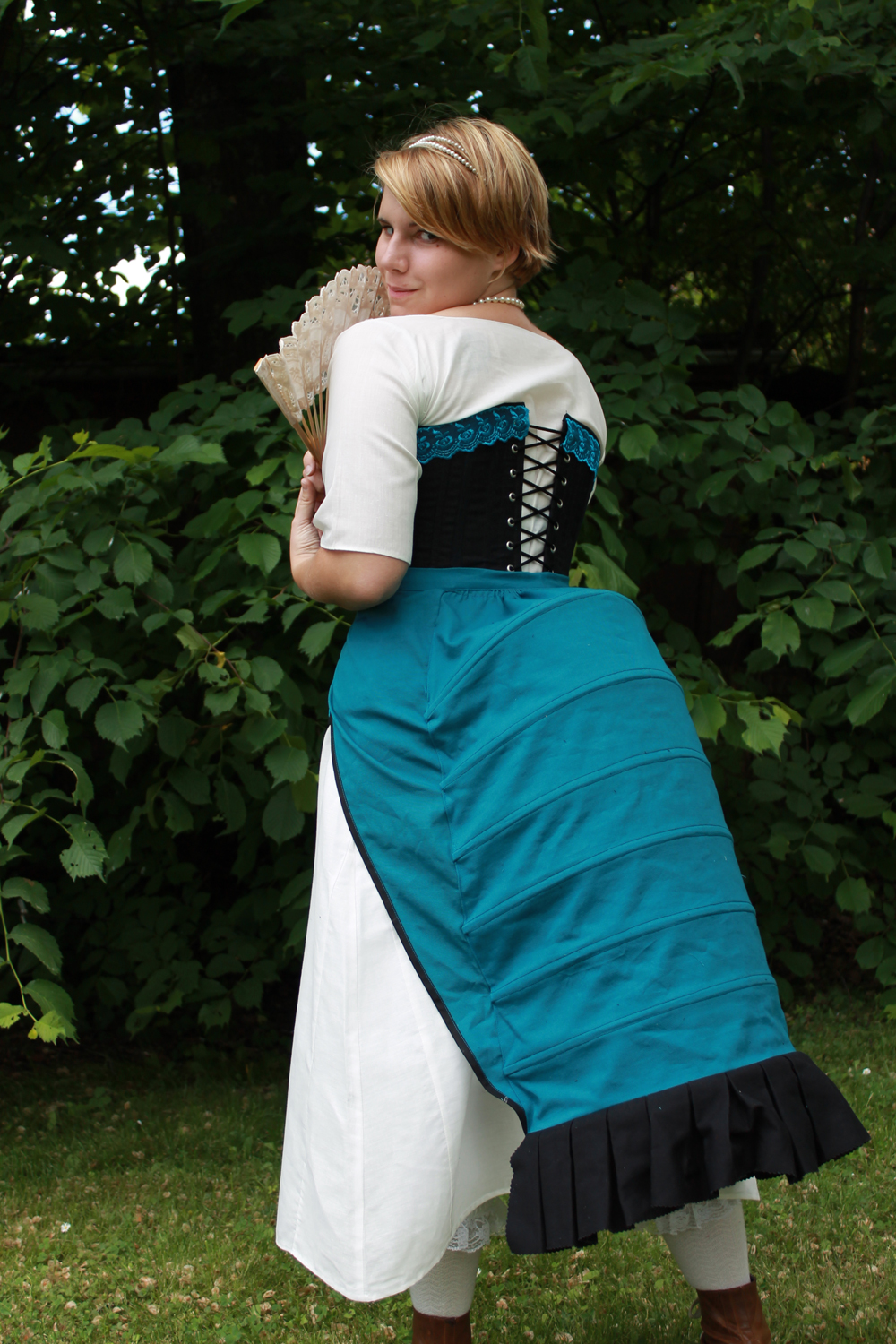
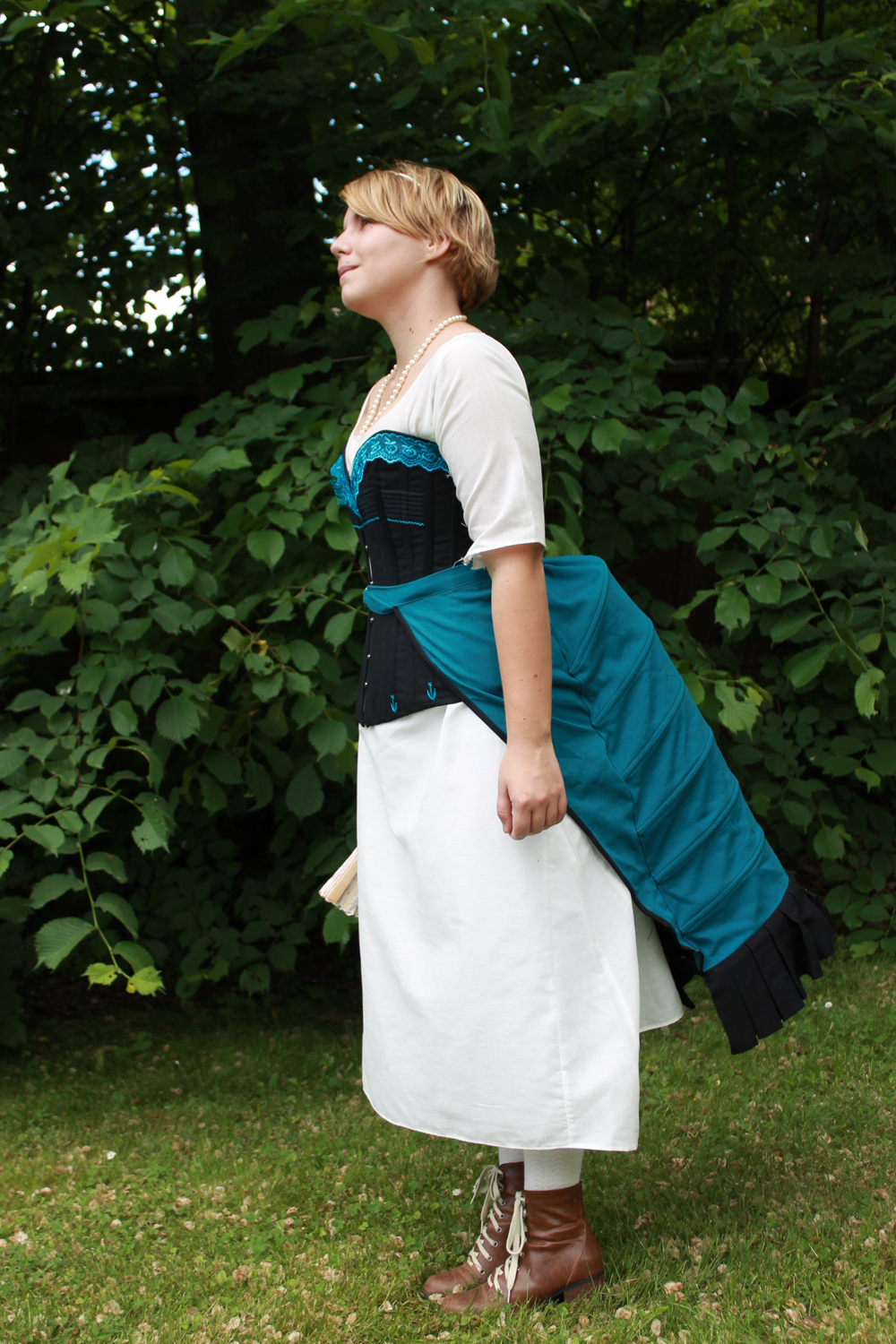
I’ve been promising a Victorian bustle dress to my youngest sister for quite some time, and when the 13th challenge in the HSF came out and read “Lace and laces” I decided it was time to start her off with some foundation garments.

Together we looked at some patterns and finished corsets, and decided on Waughs 1880s pattern from the book “Corsets and Crinolines”

1880 waugh

We used this pic for our color inspiration, and decided on black twill with trimmings in turqouise.l

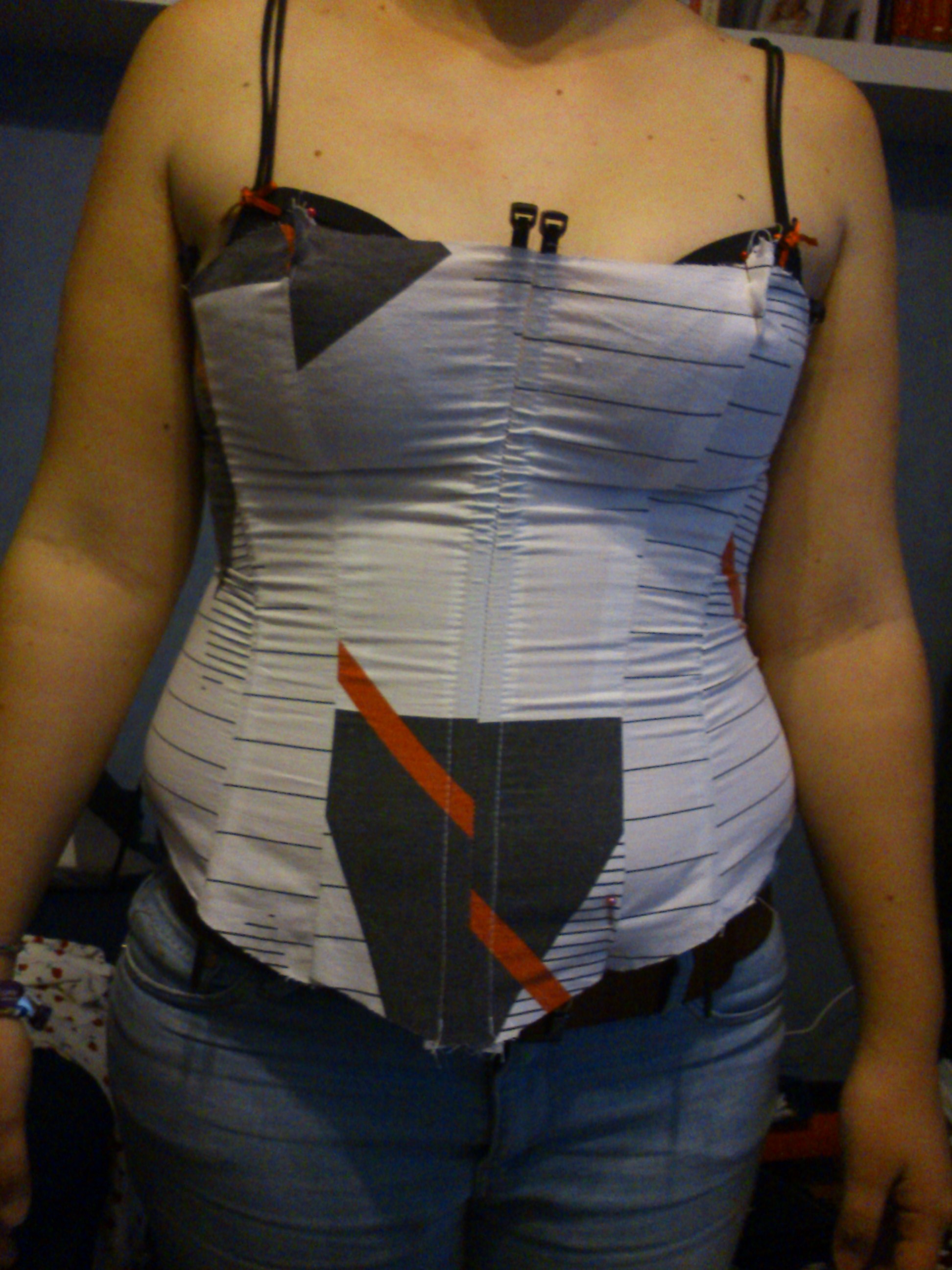
I drafted the pattern and quickly made the mock-up. It fitted her pretty well, if you don’t look at all the wrinkles which should disappear once the corset is made in a sturdier fabric and have gotten the boning inserted.
2013-05-21 18.47.572013-05-21 18.47.37

The only thing to adjust on the pattern was to make the bust and hip a bit smaller, and to reshape and add height to the bust for a more heart-shaped line.

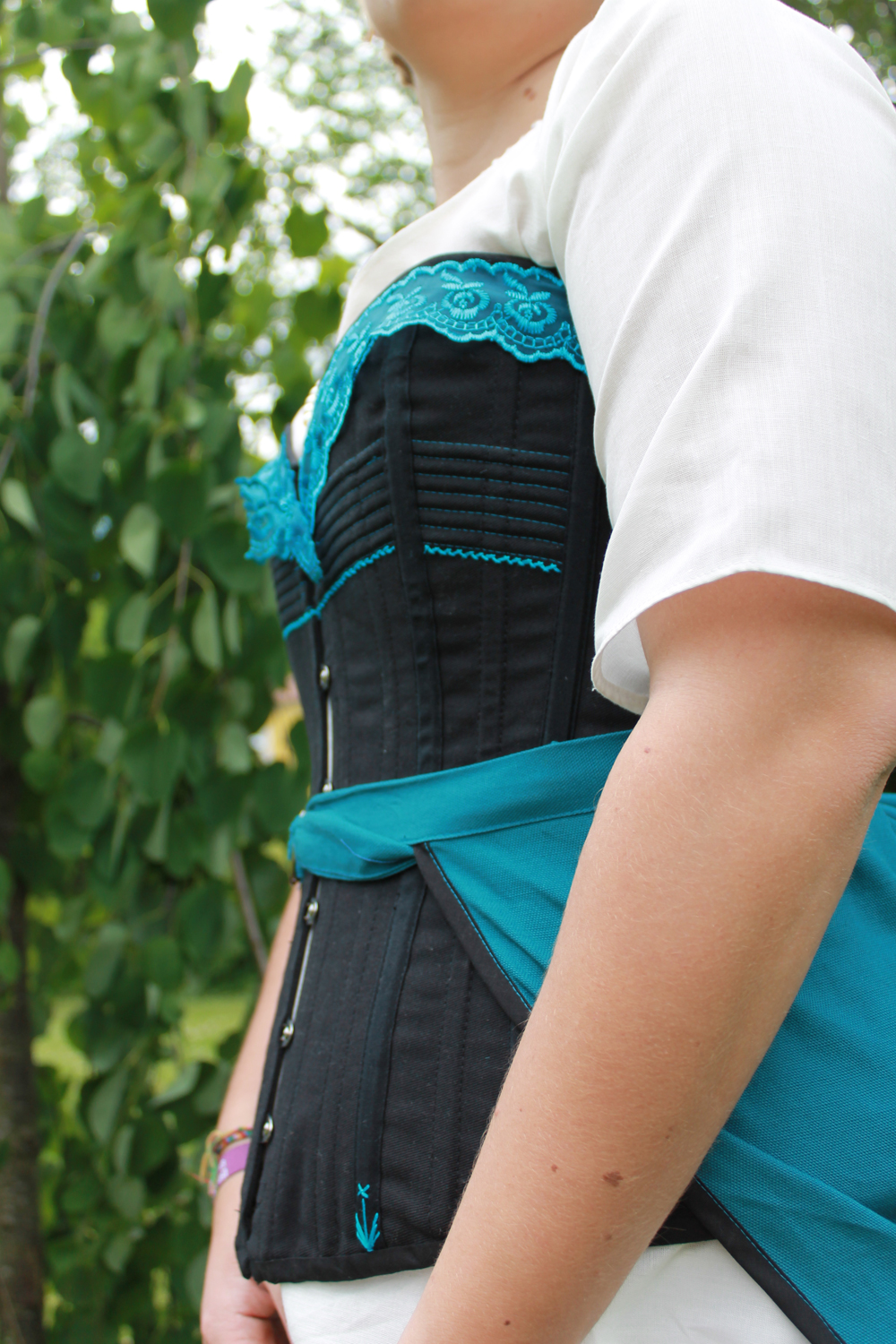
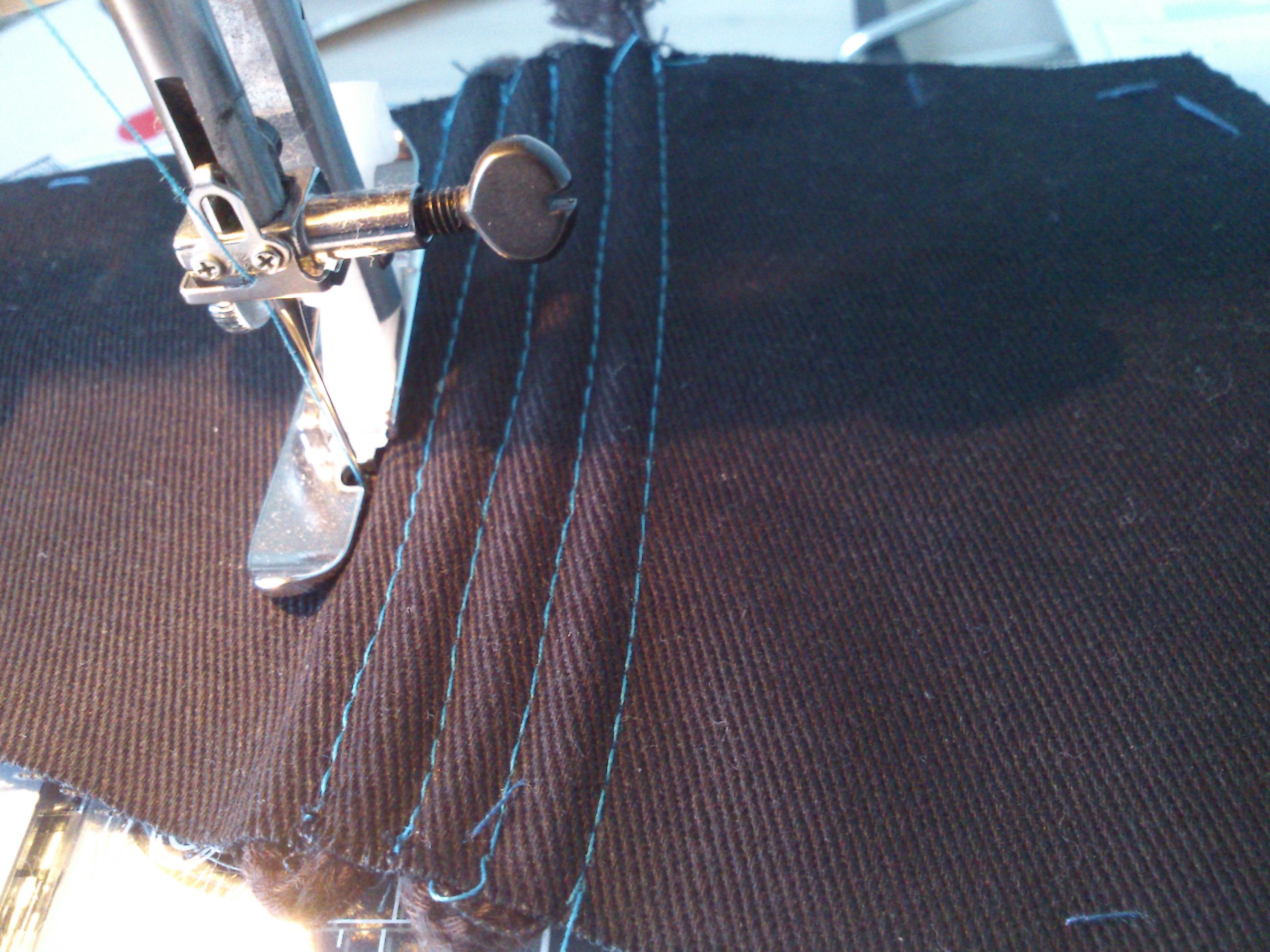
Once the pattern was done I cut the fabric, flat lined it and started on the contrasting piping for the bust.

This part was the most nerve wrecking, but it ran smoothly and ended up looking neat and good.
2013-05-30 20.44.16Piping with contrasting thread.2013-05-30 20.44.03

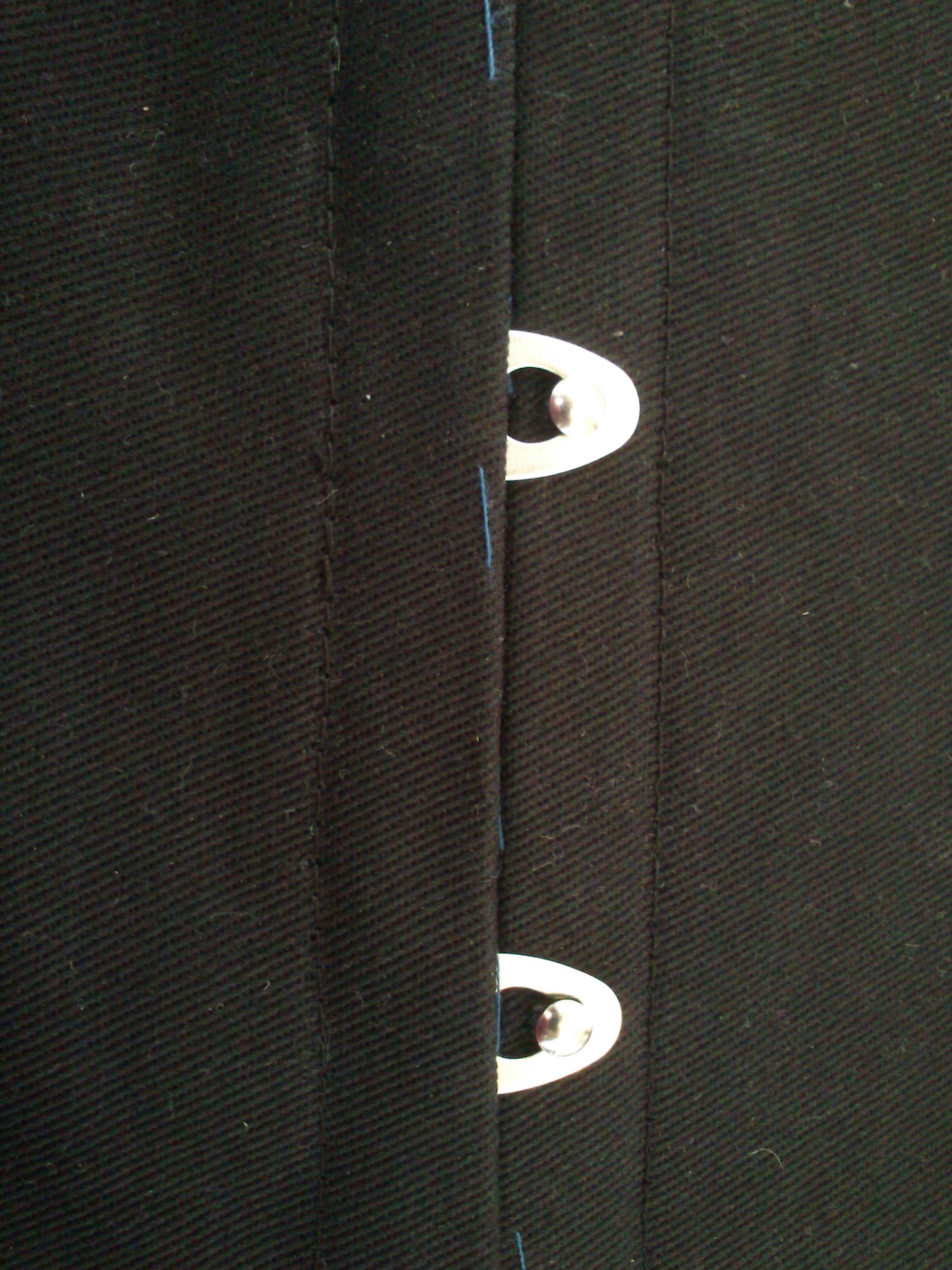
2013-06-05 16.16.212013-06-05 16.35.16Busk being inserted.

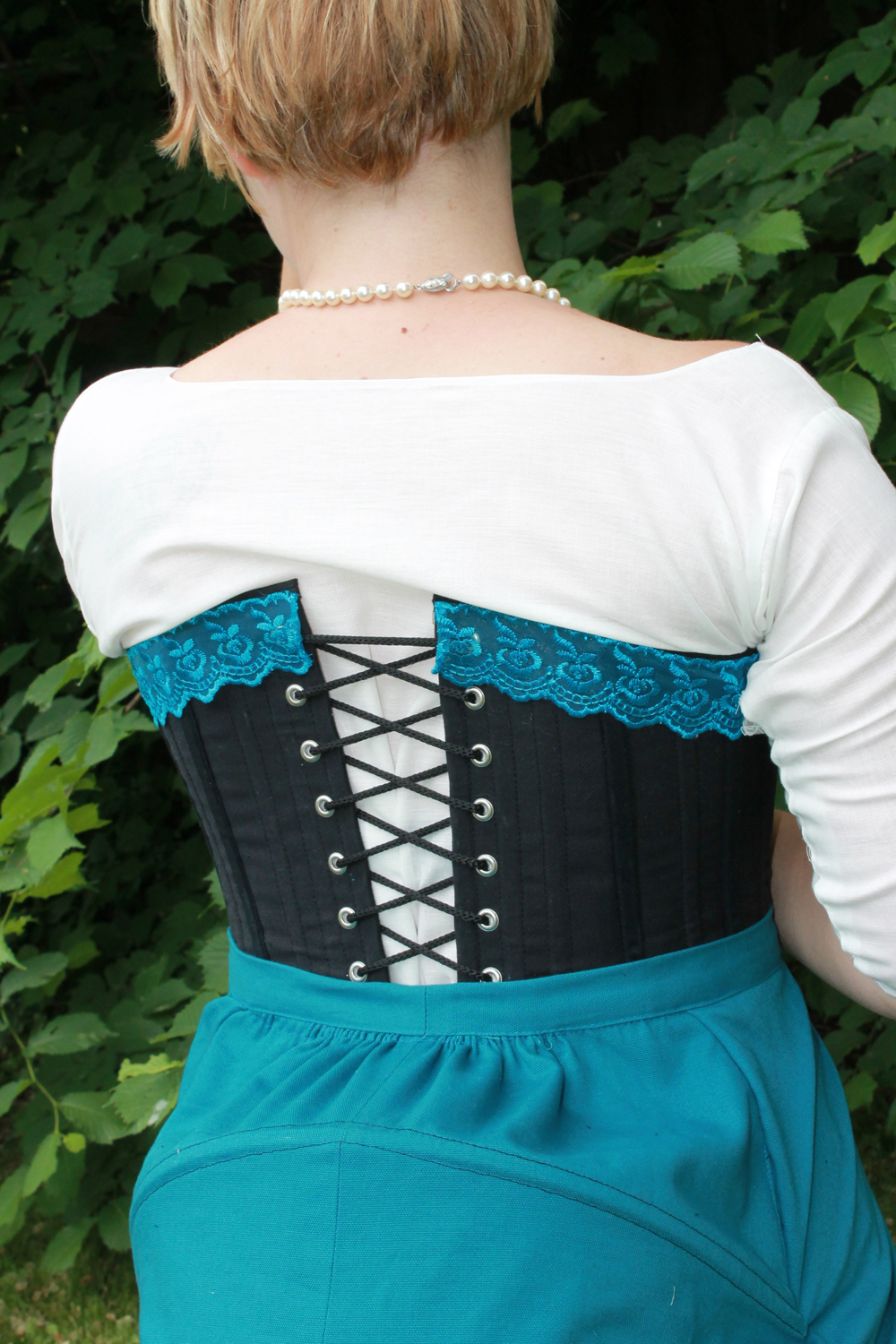
I set the gromets and the busk and then sewed it together for a try on.

2013-06-06 17.53.222013-06-06 17.53.50This time it looked pretty good – but still had a few wrinkles in the waist which needed to be dealt with. I think they would disappear when I got some heavy boning inserted in that area.

I decided to experiment with the boning, and used three different kinds of bones in this corset.

At the back – where you need the most strength to take care of the pressure from the taight lacing – I used metal pipe-cleaners from a utility store. I cut them with big pliers, then rapped the sharp ends in ducktape.

For most of the corset I used my regular boning – heavy duty cable ties. My only complaint about this kind of boning is that they are thick (0,3 mm) , and therefore steal more fabric and adds to the waist a bit more than other kinds of boning does. Which is a bad thing when you try to reduce the body measurments.

For the bust area (where the cable ties were too short) I used some synthetic whale bone. I thought it felt rather weak when inserting, but it ended up looking perfect in the end.

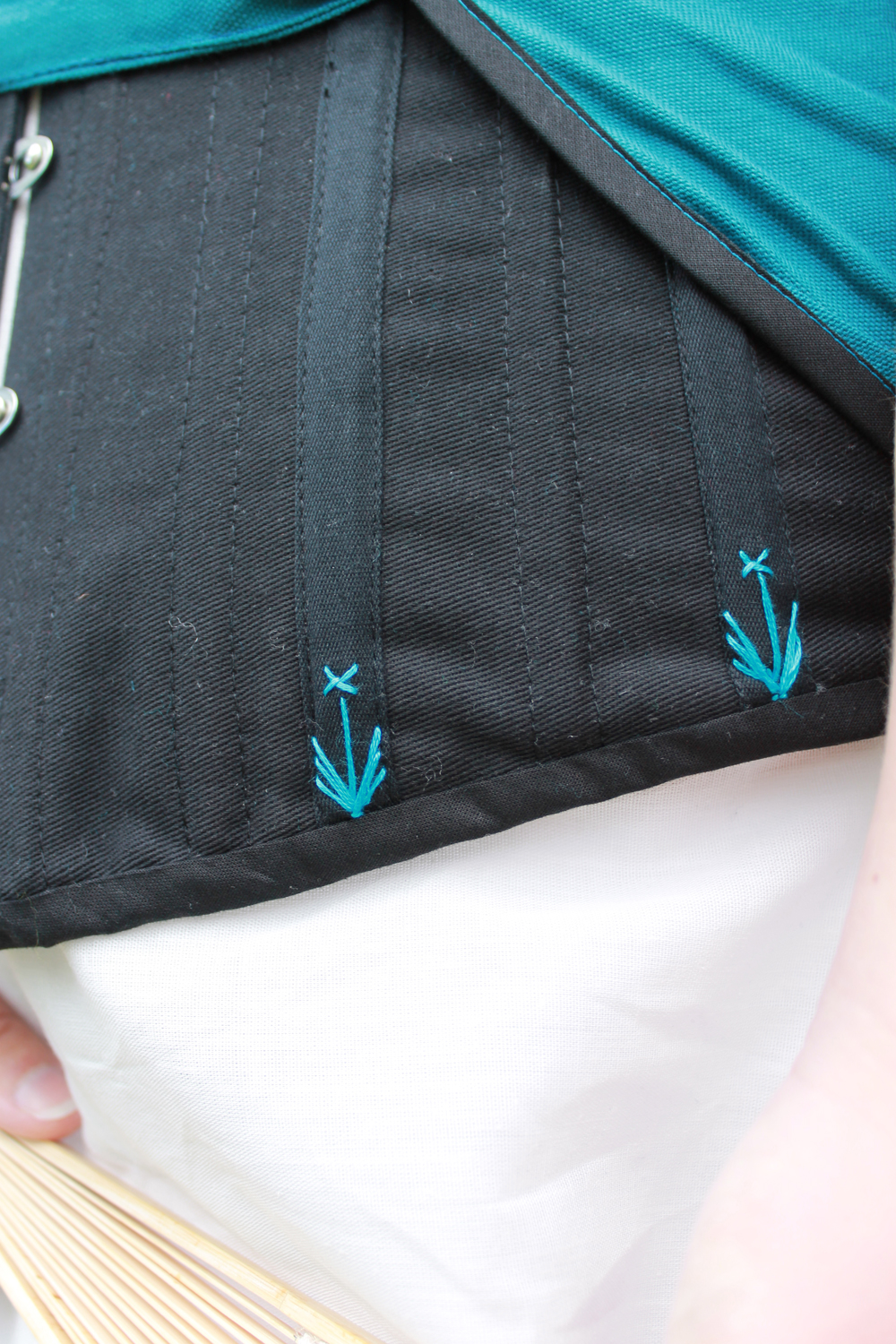
Finishing the corset went fast and I completed it in only two afternoons, sewing bone channels, bias-tape, lace and flossing, all in a crazy speed rush.

IMG_3115

Just the facts:

Challenge 13: Lace/laces.

What: A Victorian Corset.

Pattern: Waughs 1880s corset from “Corset and Crinolines”.

Year: 1880s 😉 (but I think the shape is good for 1850-1890).

Fabric: 0,5 m black twill and 1 m black cotton for flatlining and lining.

Notions: Busk, 36 gromets, 5 m of lacing cord (for lacing and piping), bones (sip-ties, metal bones and plastic whalebone), 2 m bias-tape, 1 m turqouise lace, black thread, turqouise yarn for flossing.

How historical accurate: Sewn on machine, with polyester thread. The pattern, techniques and looks of the garnment are pretty accurate though.

Cost: 300 SEK (33 euro).

Time: 15 hours

Fist worn: For the photoshoot mid june. And my sister says she will definately wear it again, and combine it with jeans or with a black skirt as part of a modern ball gown.

***

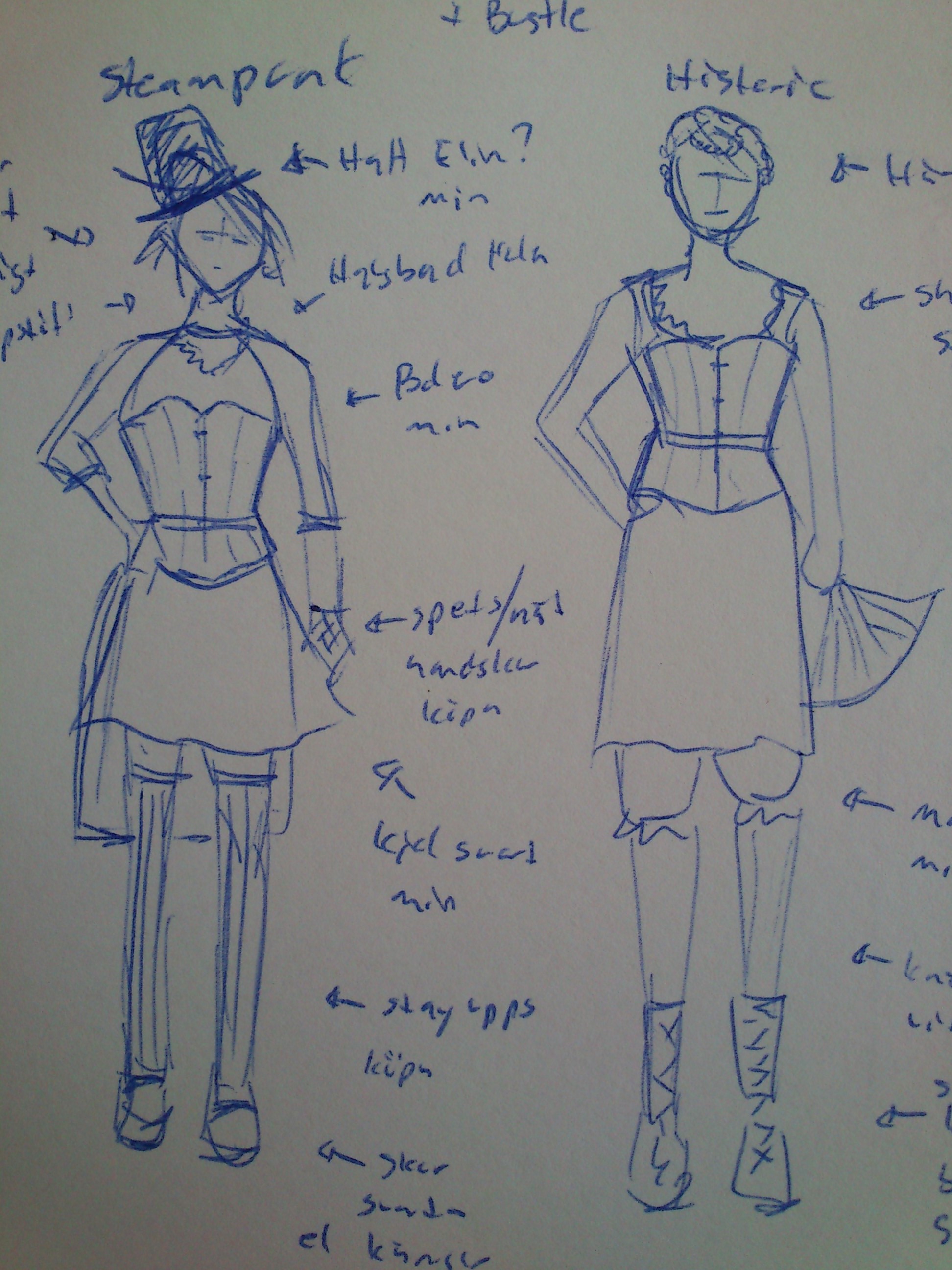
And as a teaser: Here is a quick brainstorming sketch for the awesome photoshoot we had, and which I will show you more about in my next post.

2013-06-03 11.22.34