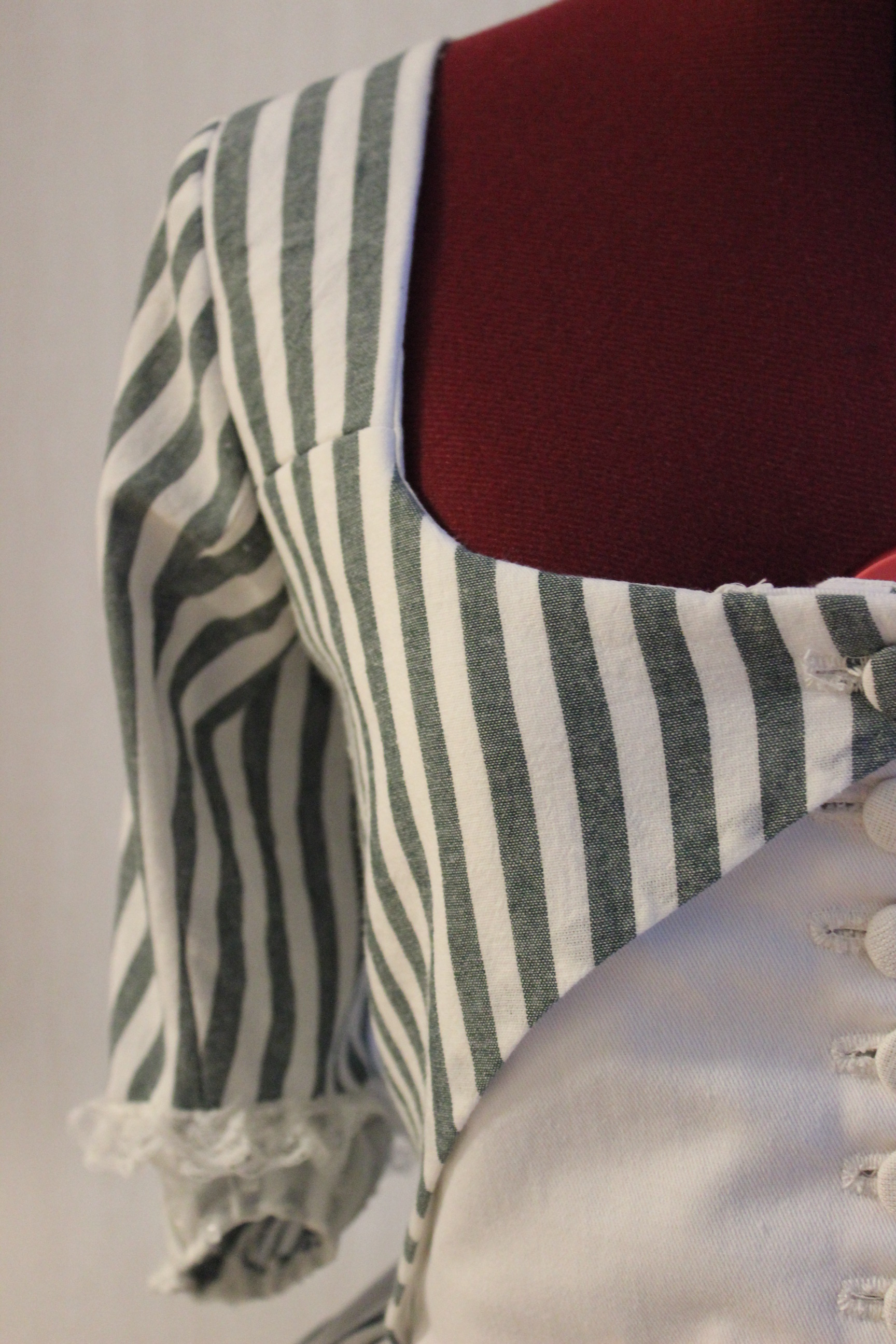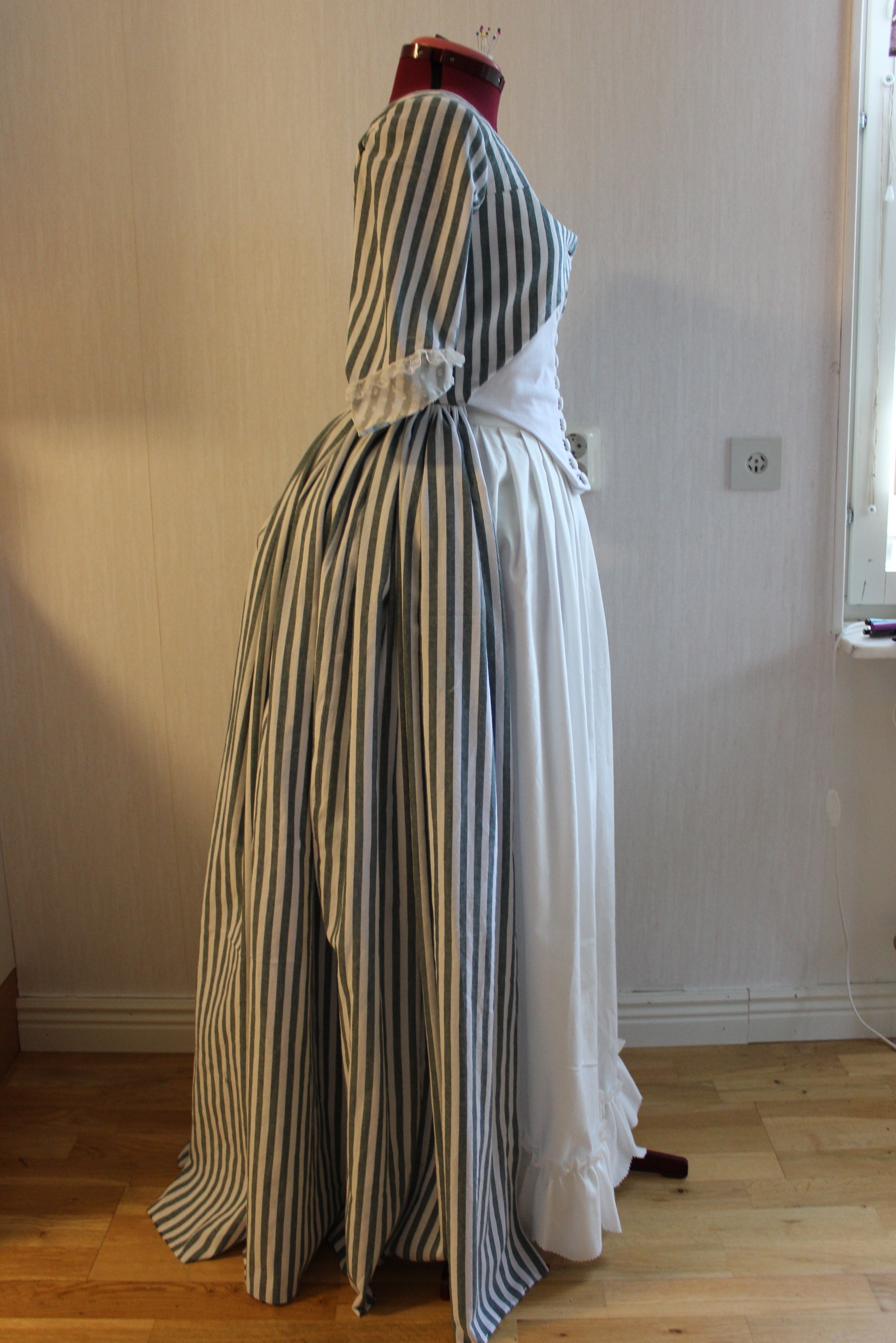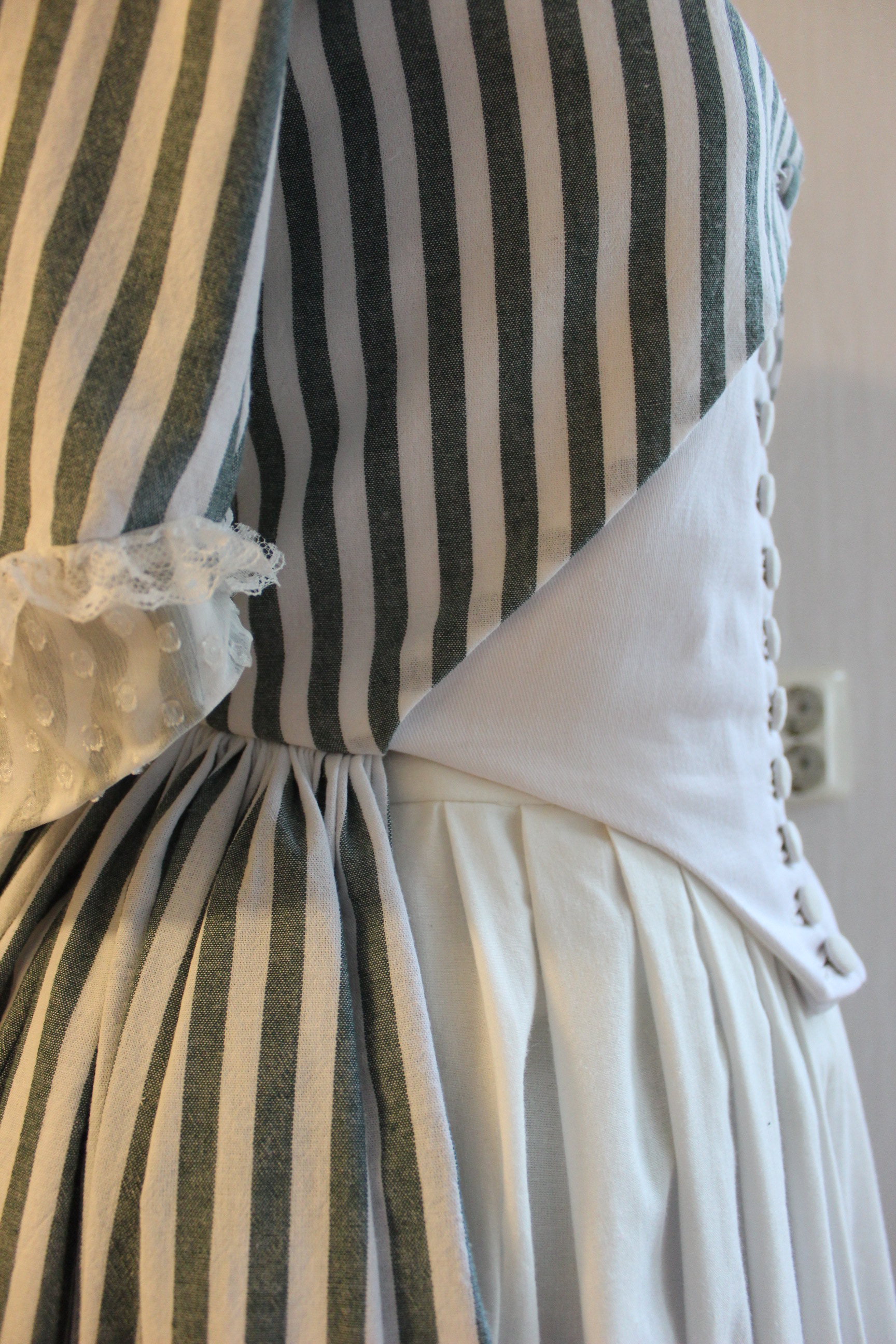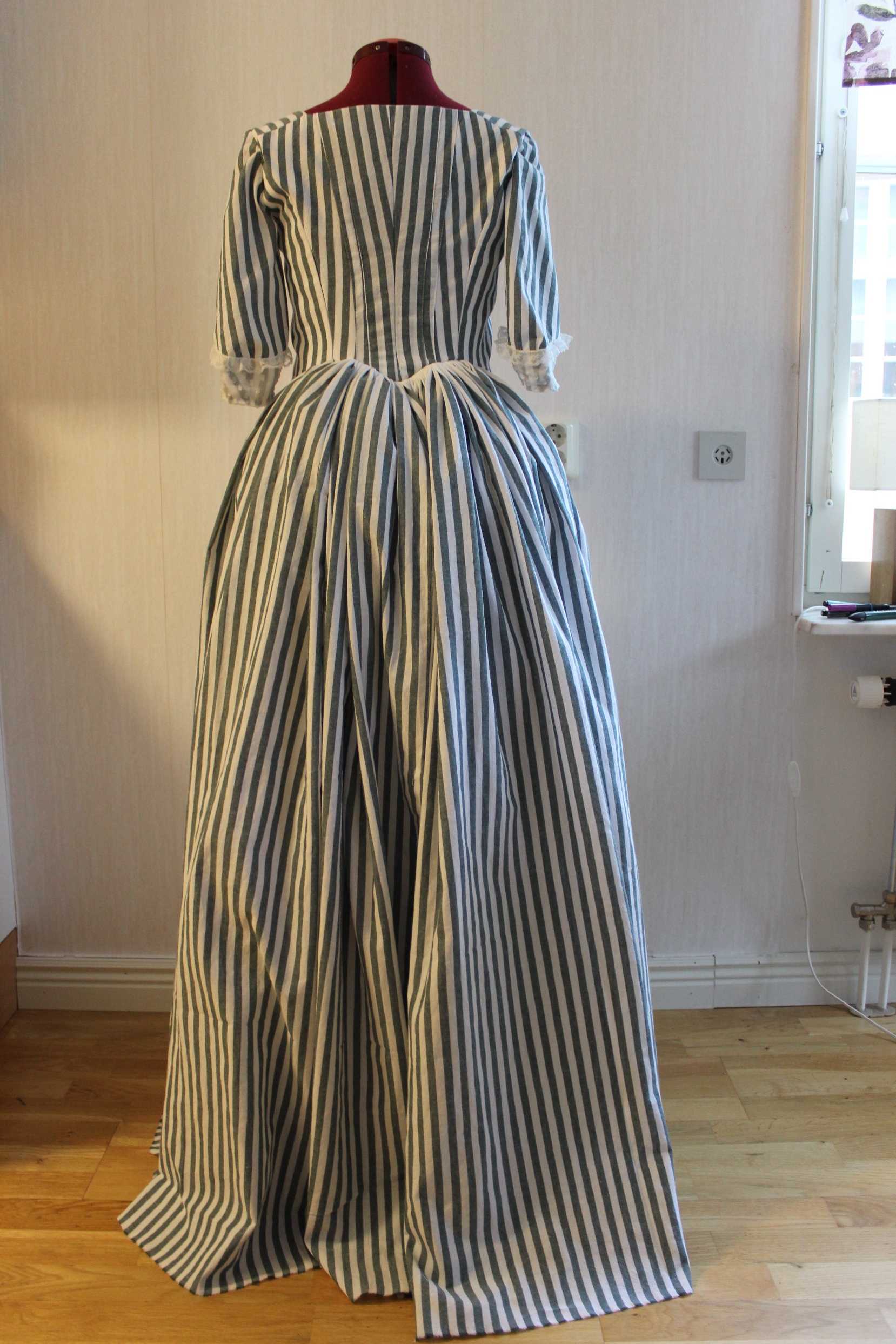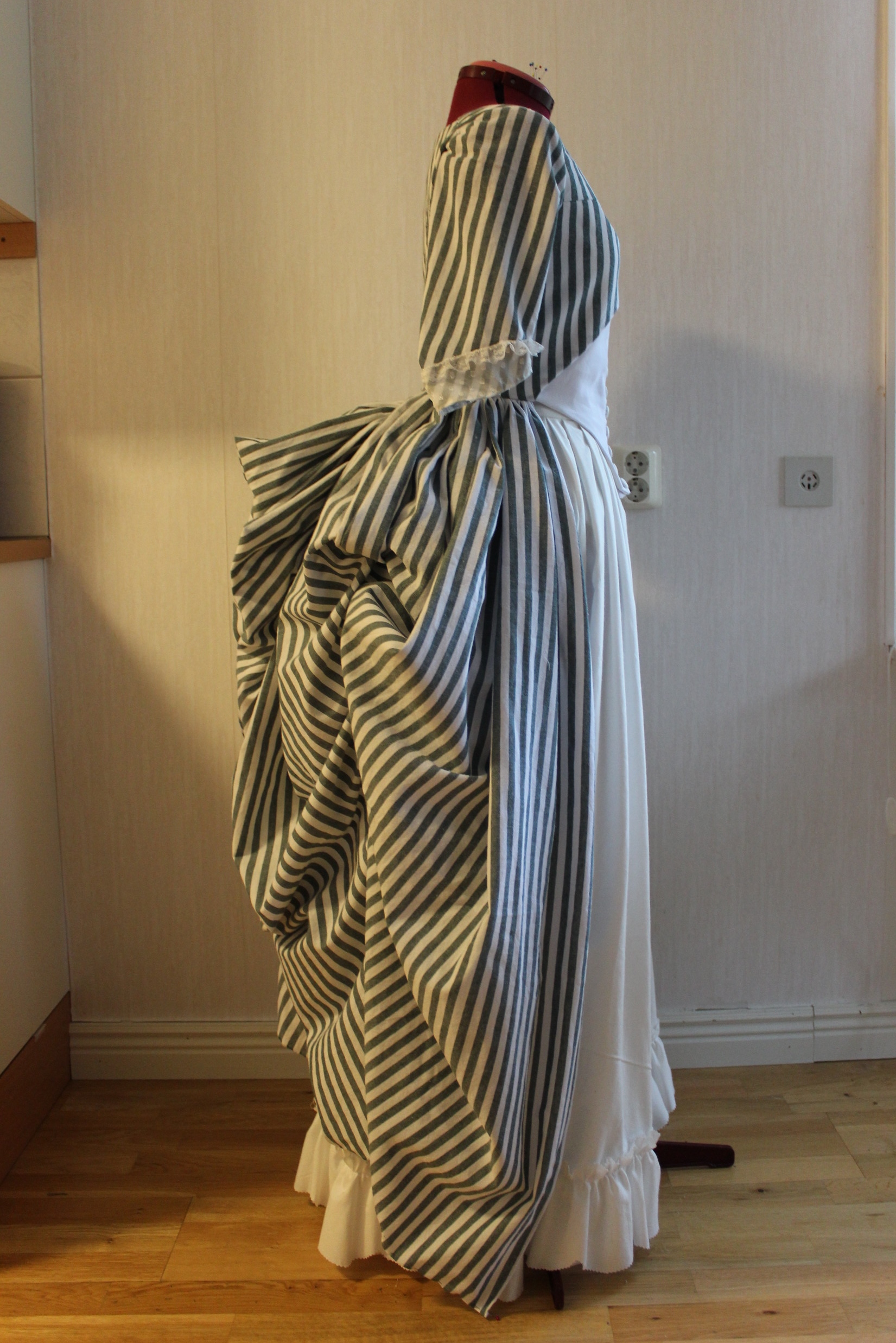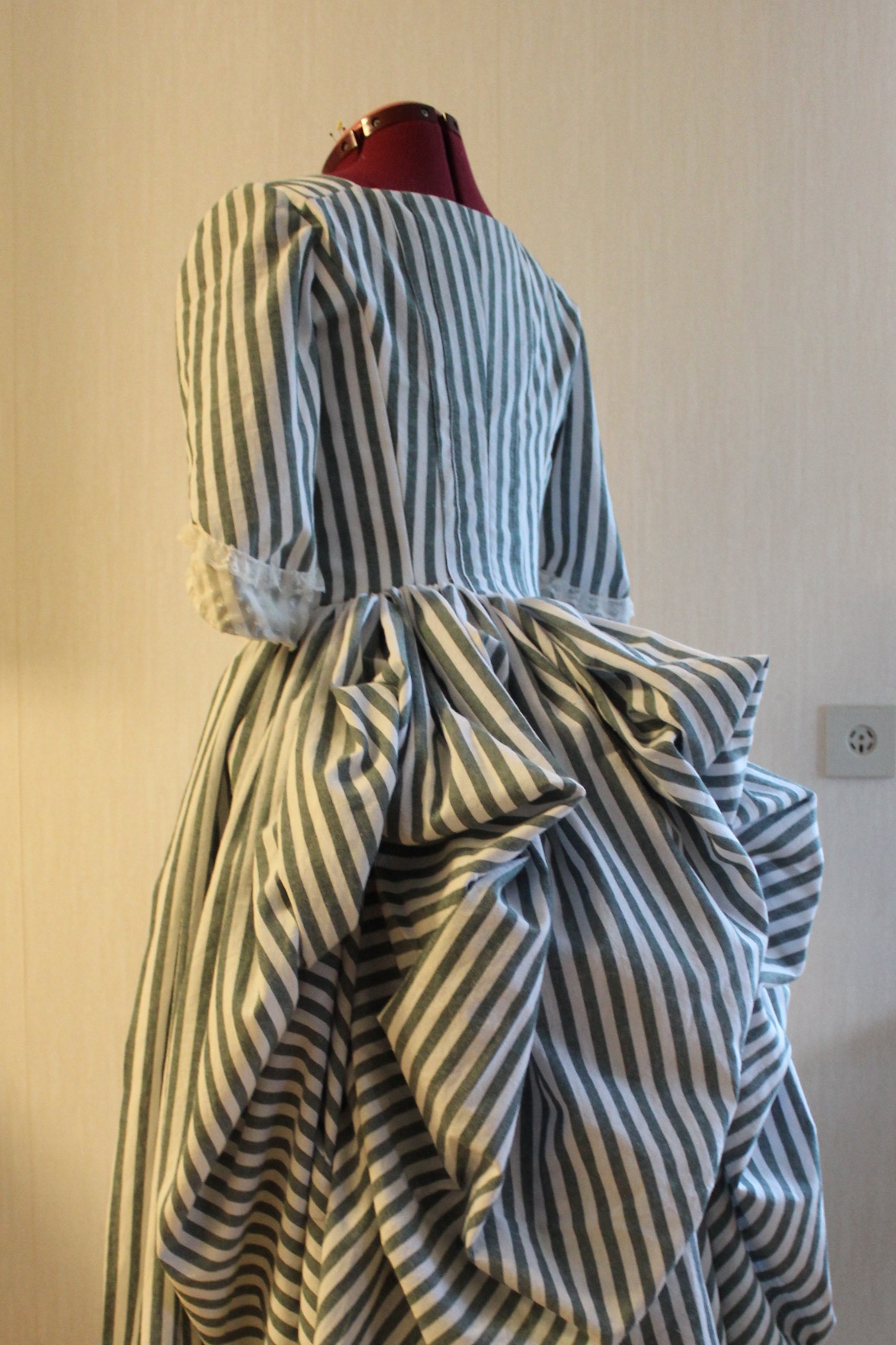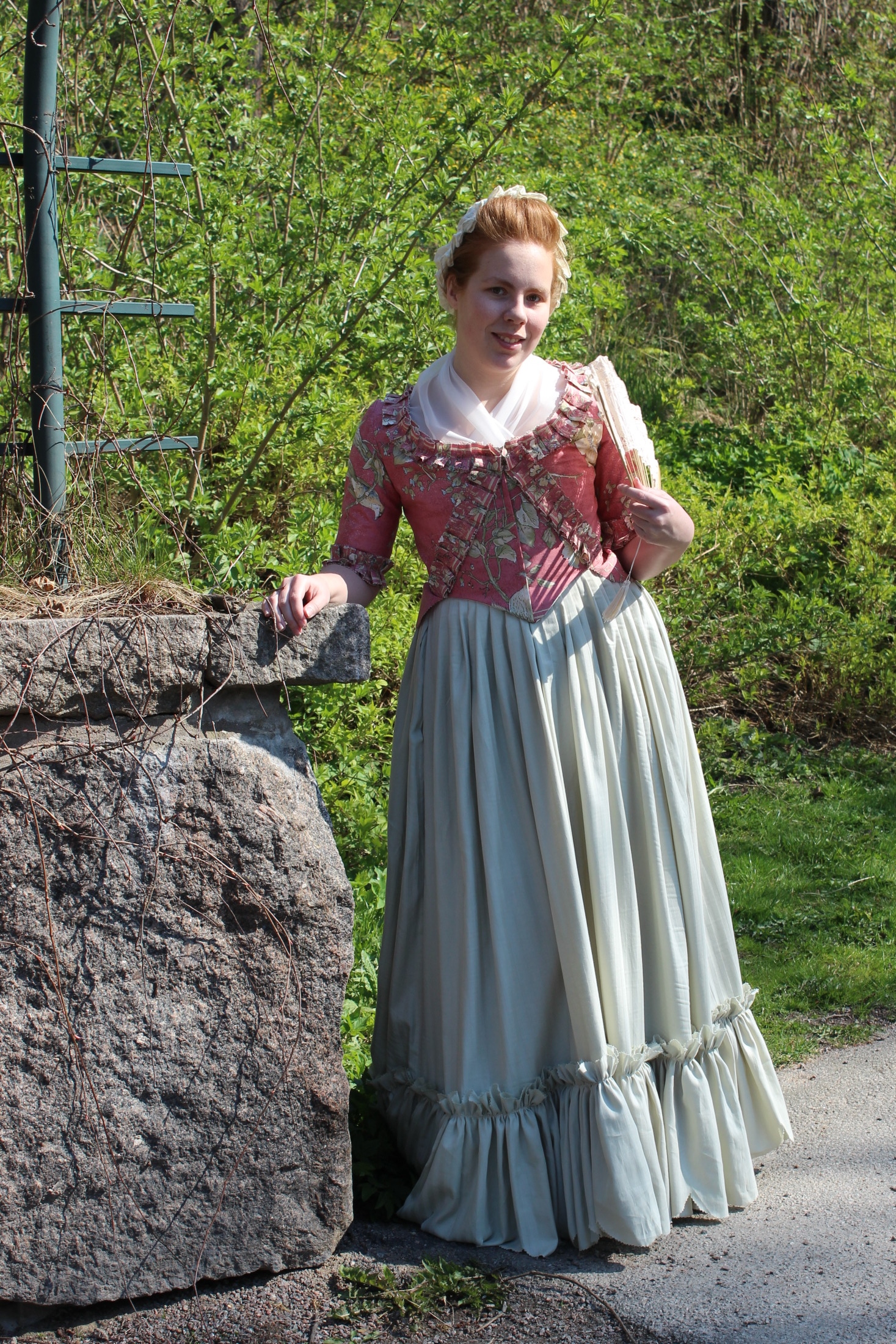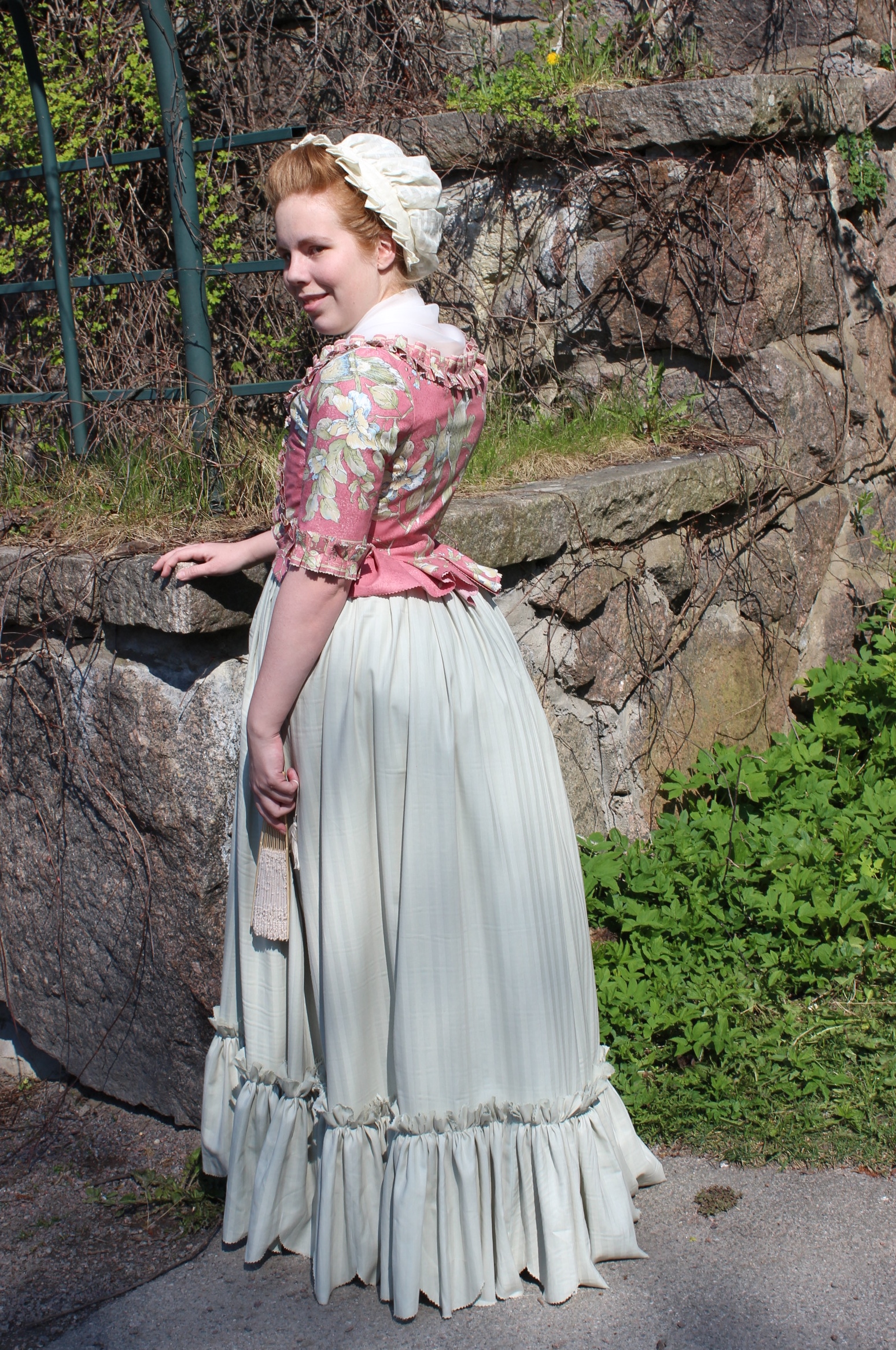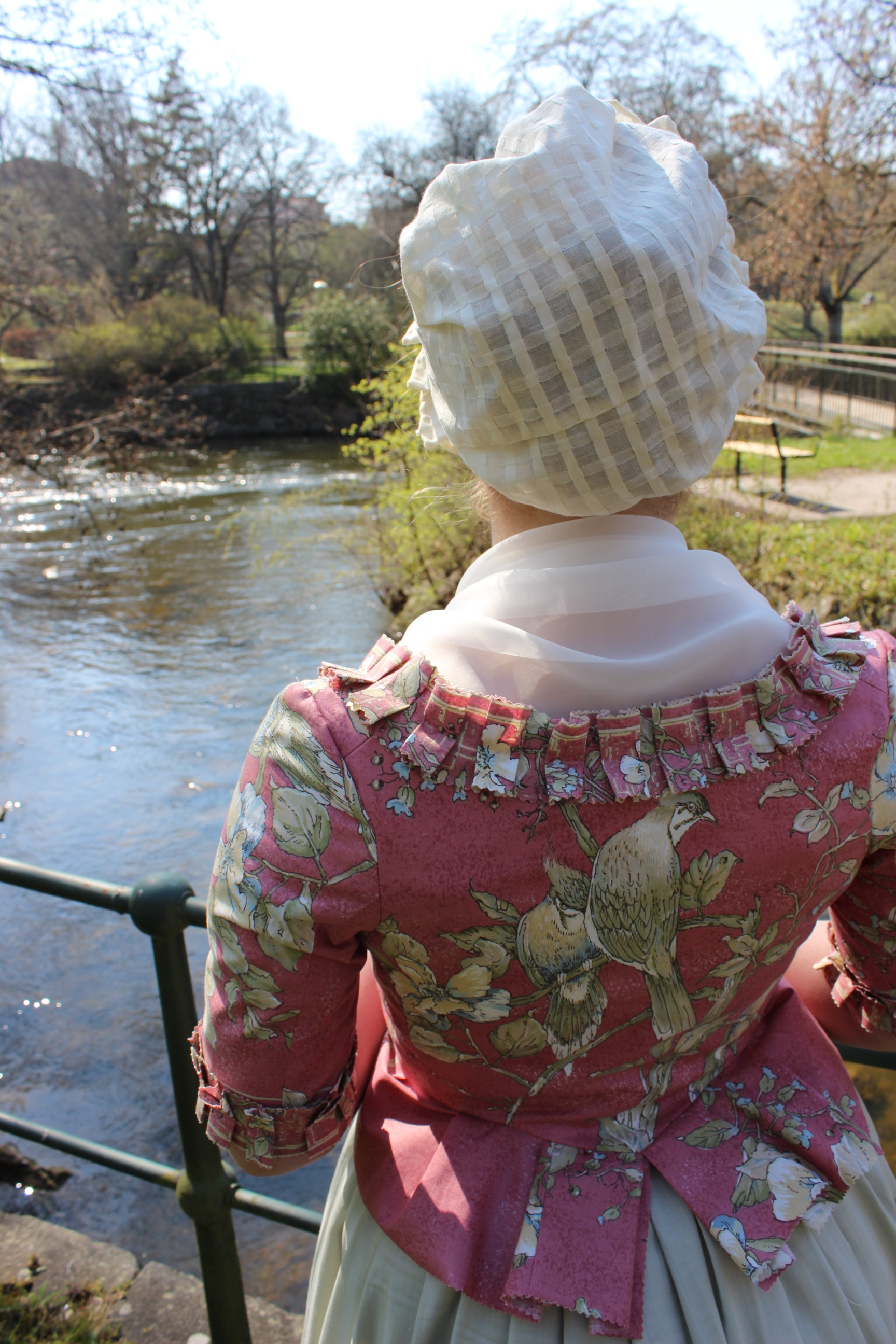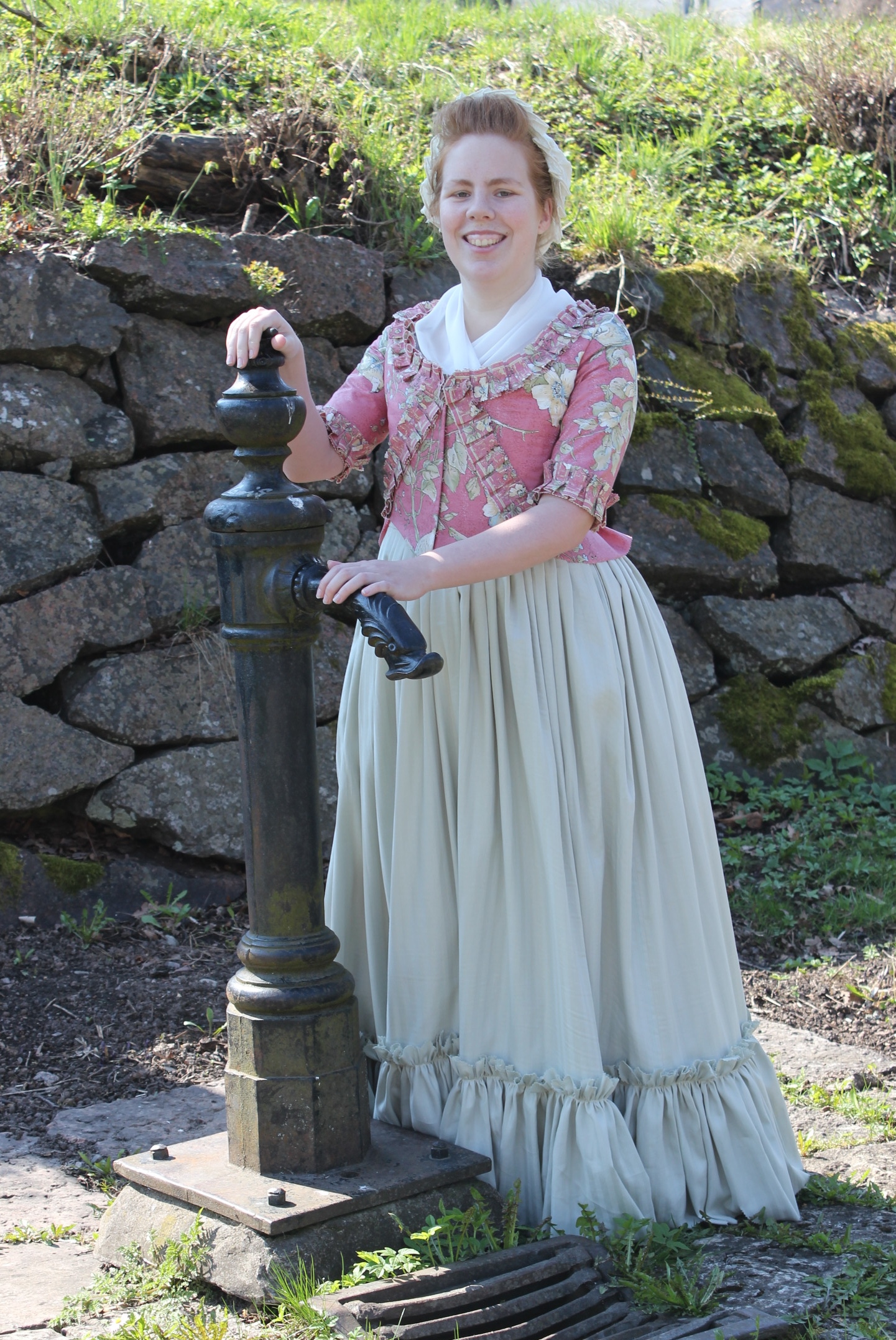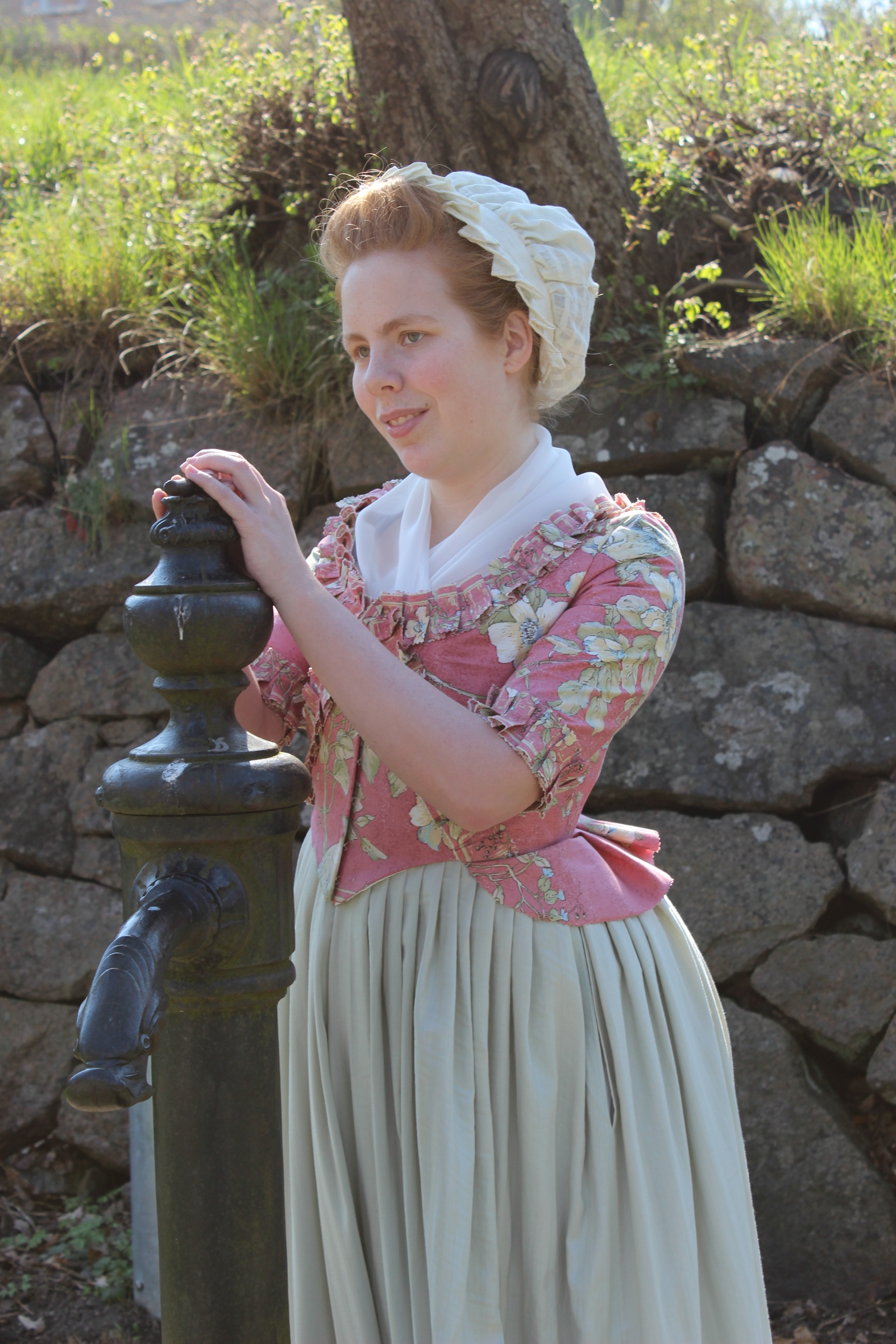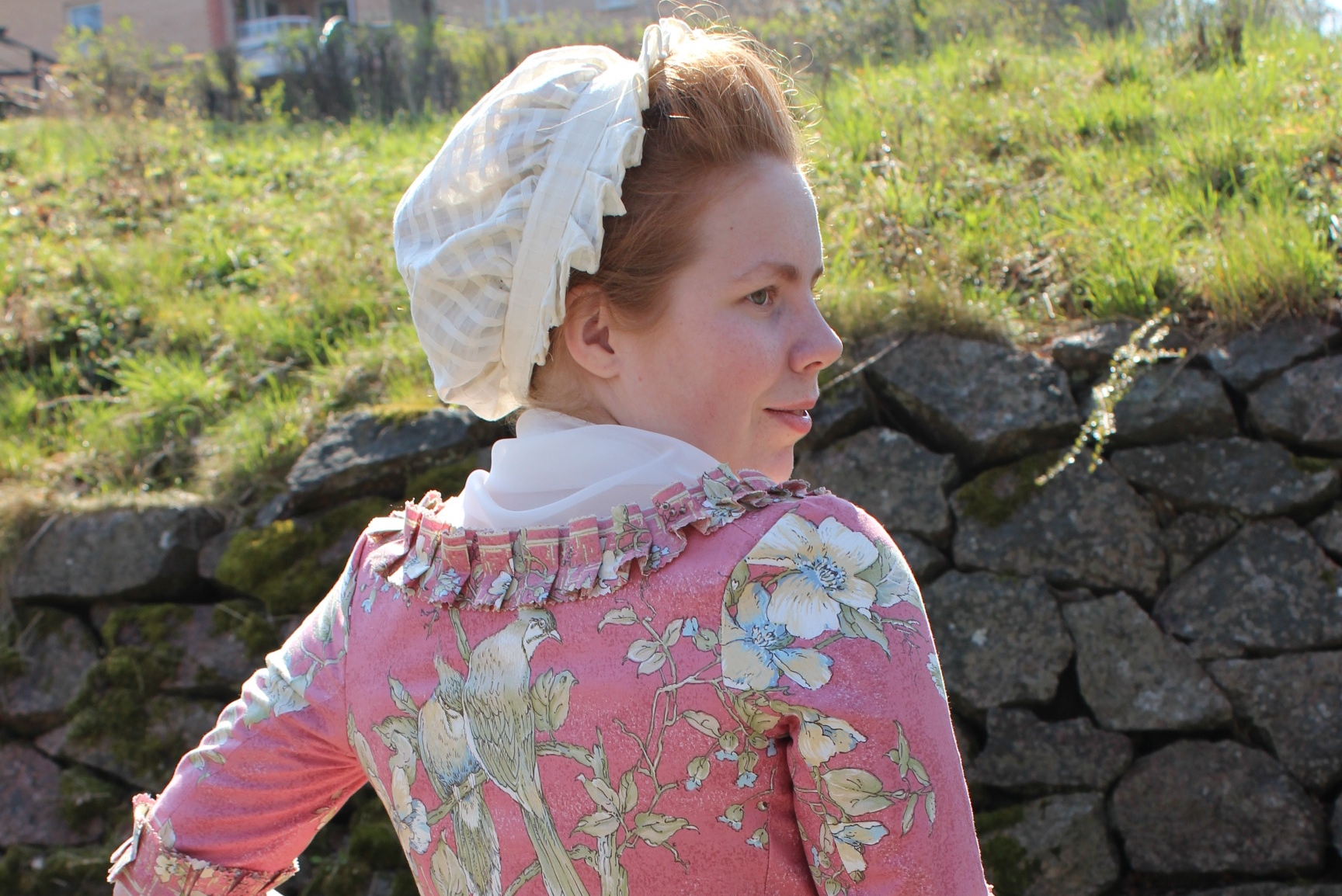
Artistic Robe Anglaise

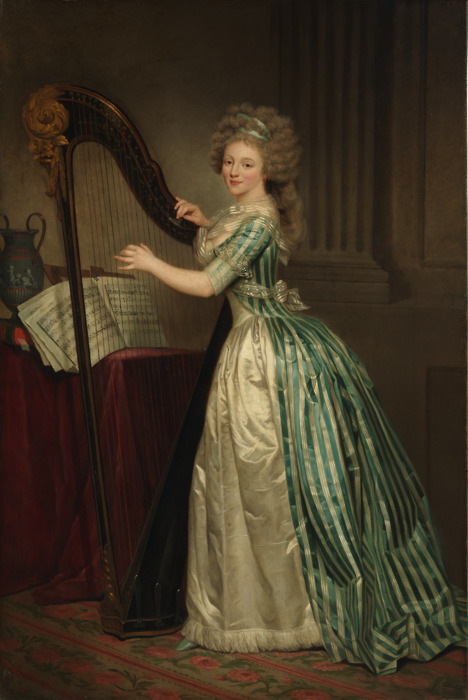
When the 10th HSF challenge – Art, was announced I didn’t need to think for long. I emetetly knew I wanted to make the Rose Adélaïde Ducreuxs dress fom her “self portraite whit a harp”.tumblr_lk71wnynCC1qbkn6io1_500I even took the opurtunity to make the skirt and fichu from the portrait for a previous challenge, to be able to only focus on the dress for this one.
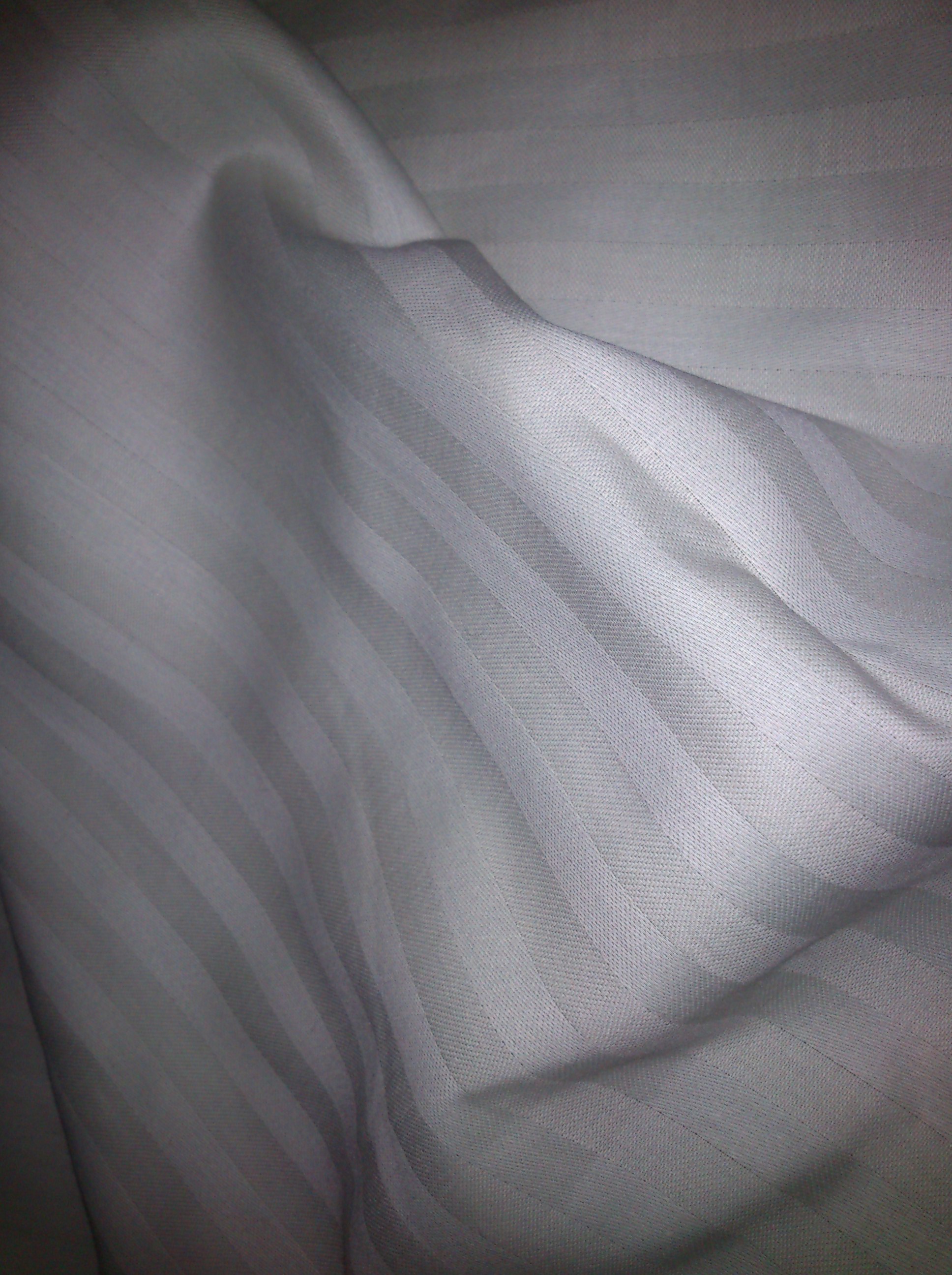
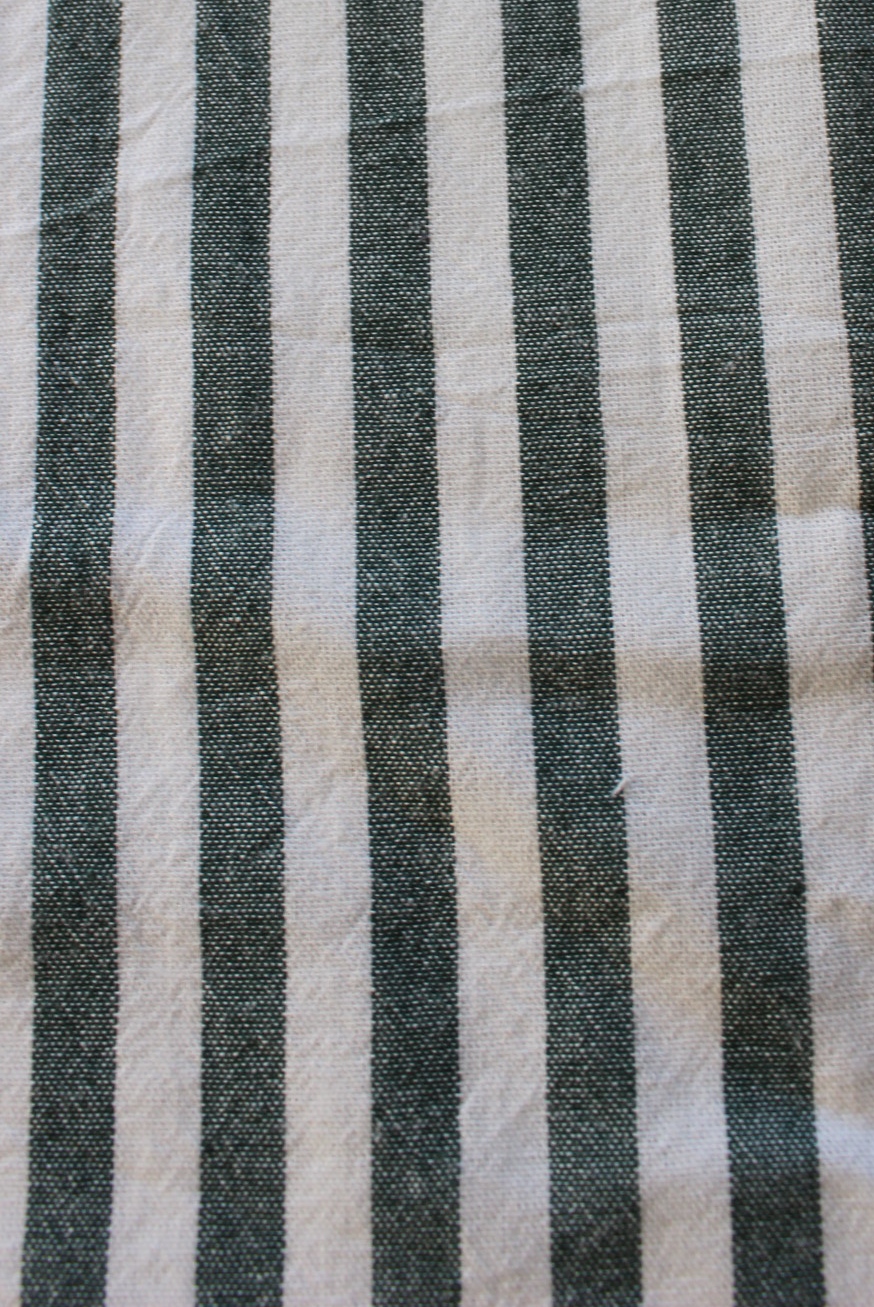
I alreay had the fabric IMG_8367 8m of striped cotton, bought on sale about a year ago.
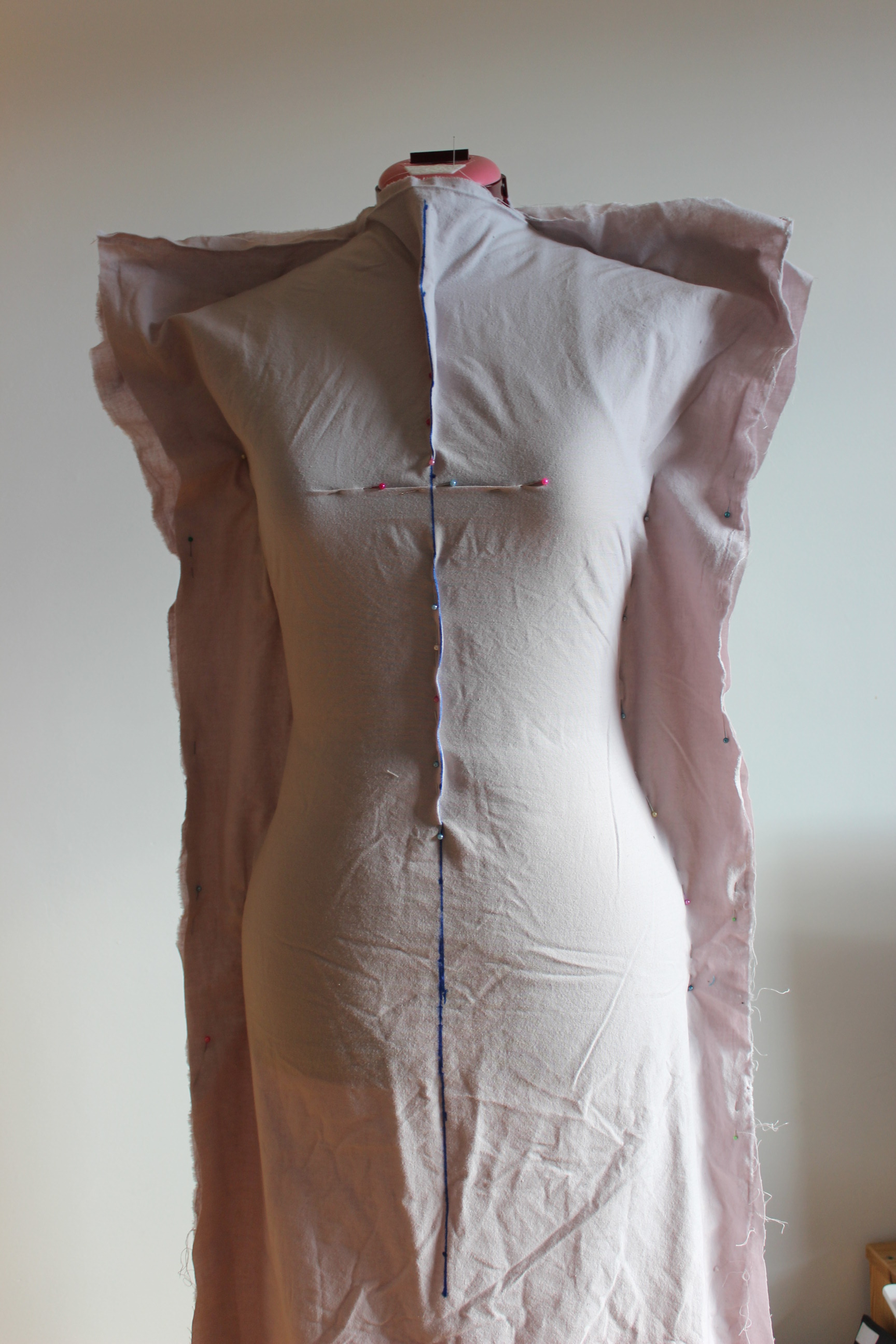
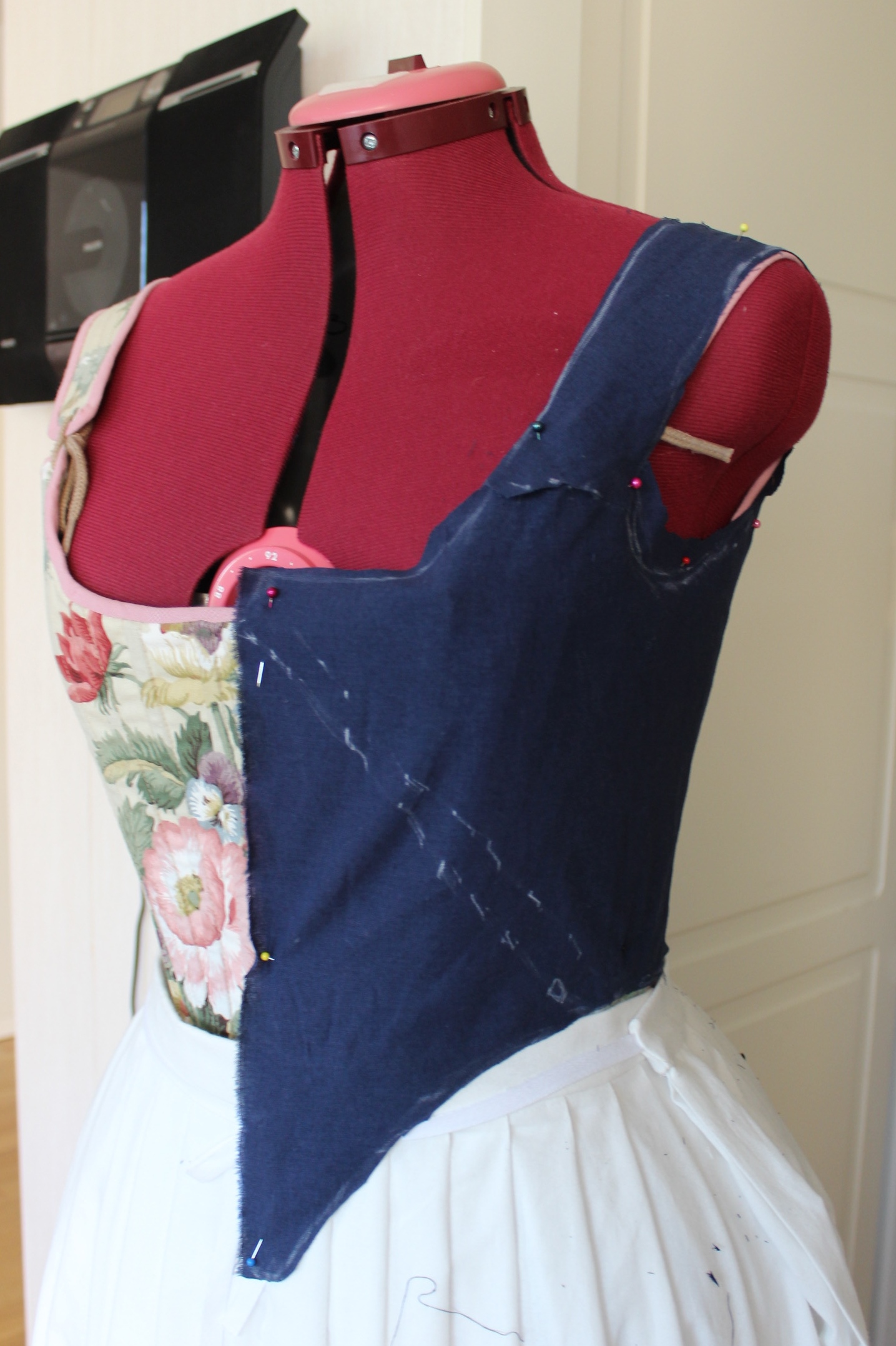
I put my corset, bumpad, and petticoat on the dressform and started to drape the bodice pattern.
IMG_8335 IMG_8331

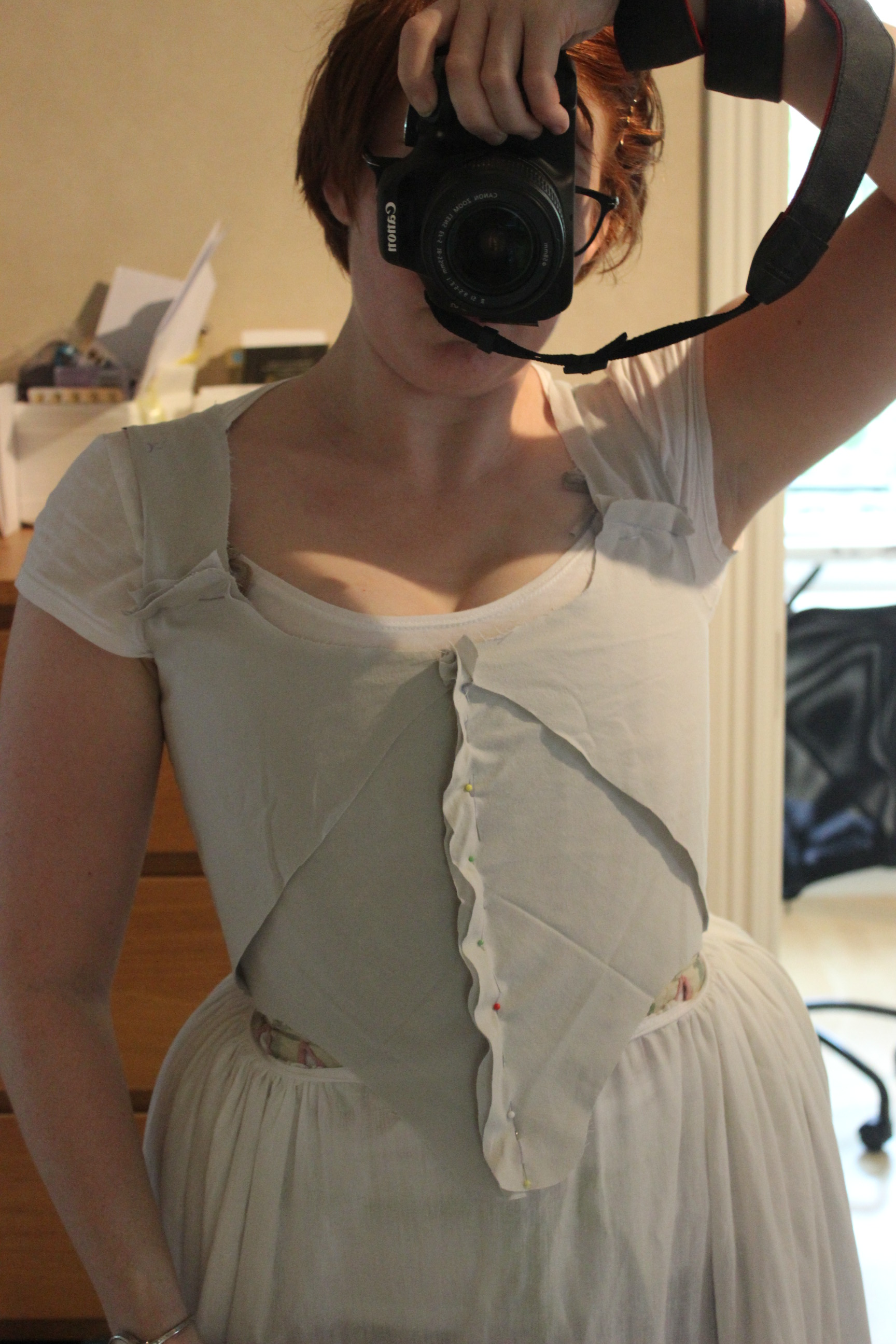
Then I cut the toile, sewed it togeter and tried it on.
IMG_8337 IMG_8341

Then it was time to cut the fabric.IMG_8361 Besides from the striped cotton, I used a bleached linnen fabric for the zone front and a white cotton twill for interlining.

My original plan was to make the gown entierly by hand, but time ran out and life interupted, and on top of that I’m starting to think it is a waist of time to hand stich a gown in the wrong material. so, after some back and fort, I decided to make it by machine. (And boy am I happy about that decision now…)

I started the sewing by basting togeter all the different layers – so yes, I did do some handsewing. IMG_8364
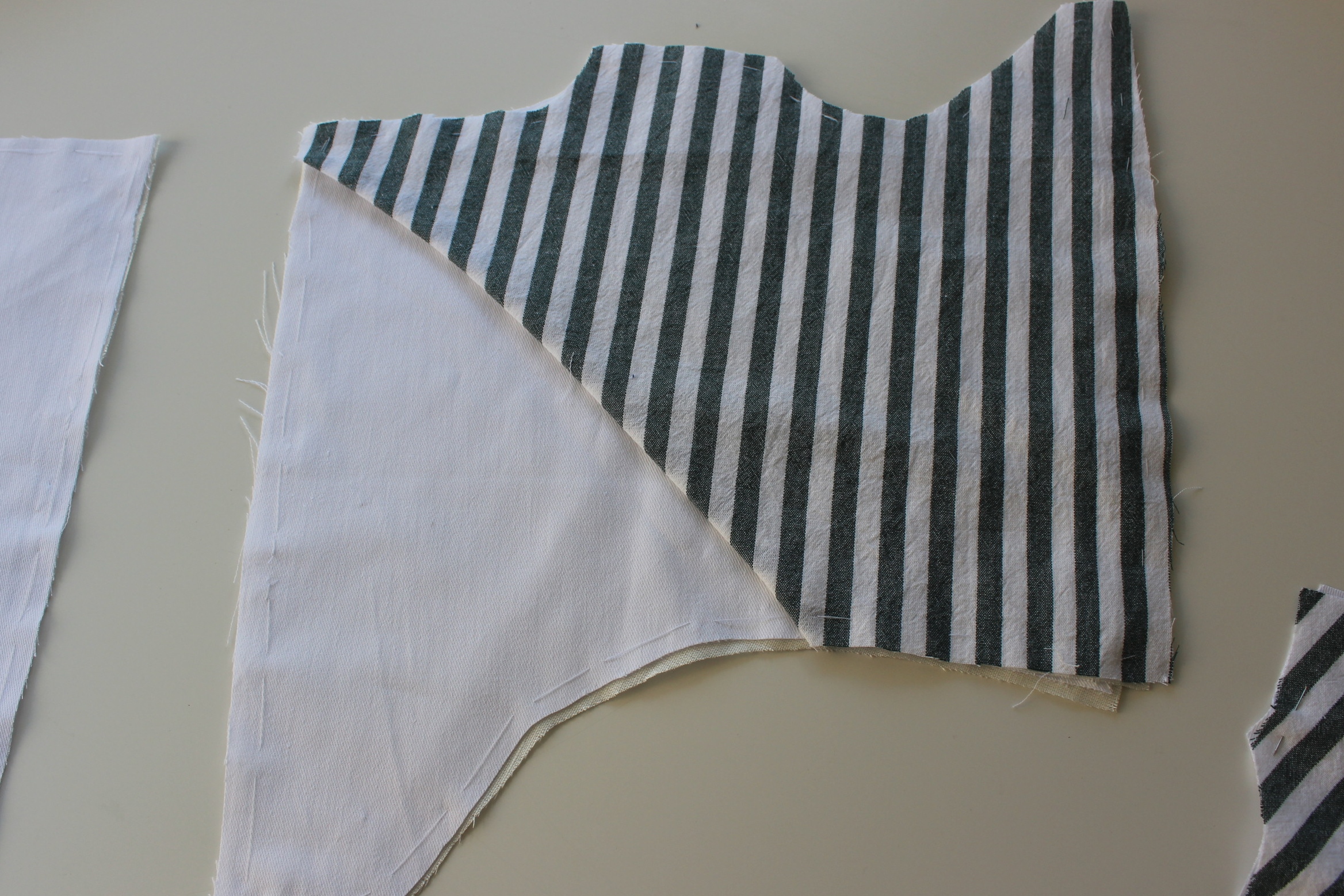
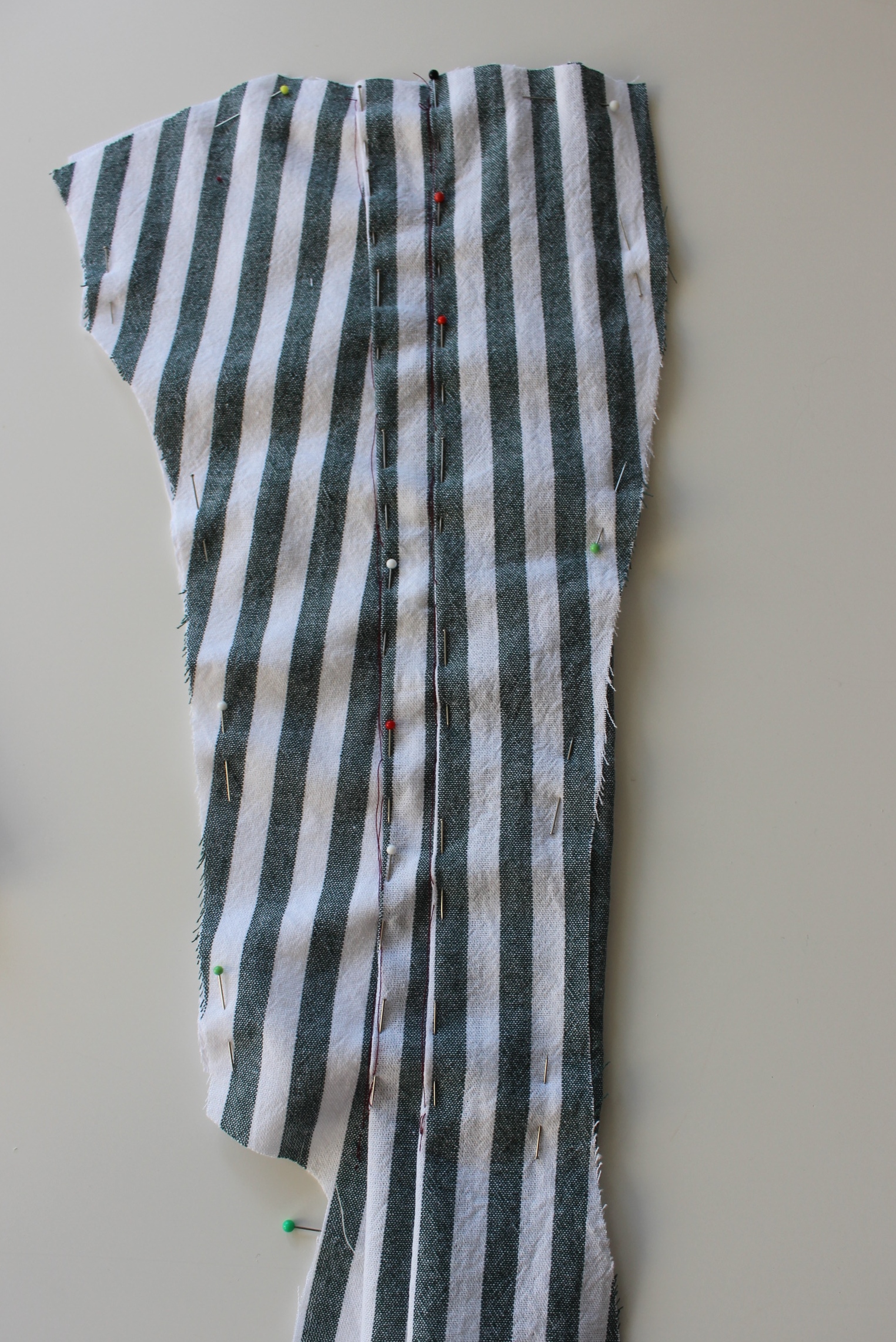
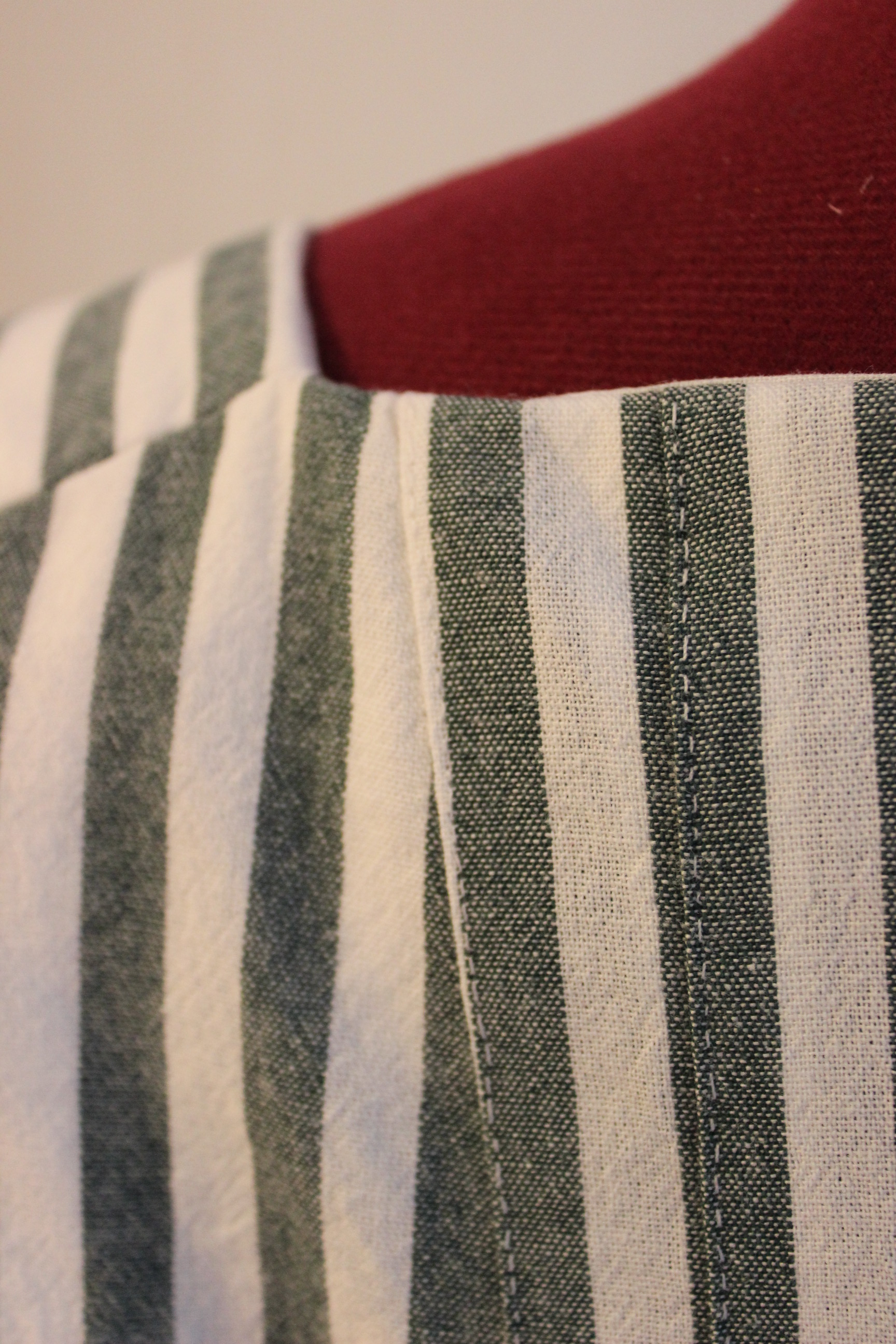
Then I shaped and stiched the back pleats in place, usin tiny backstitches. IMG_8371back piece and back lining.
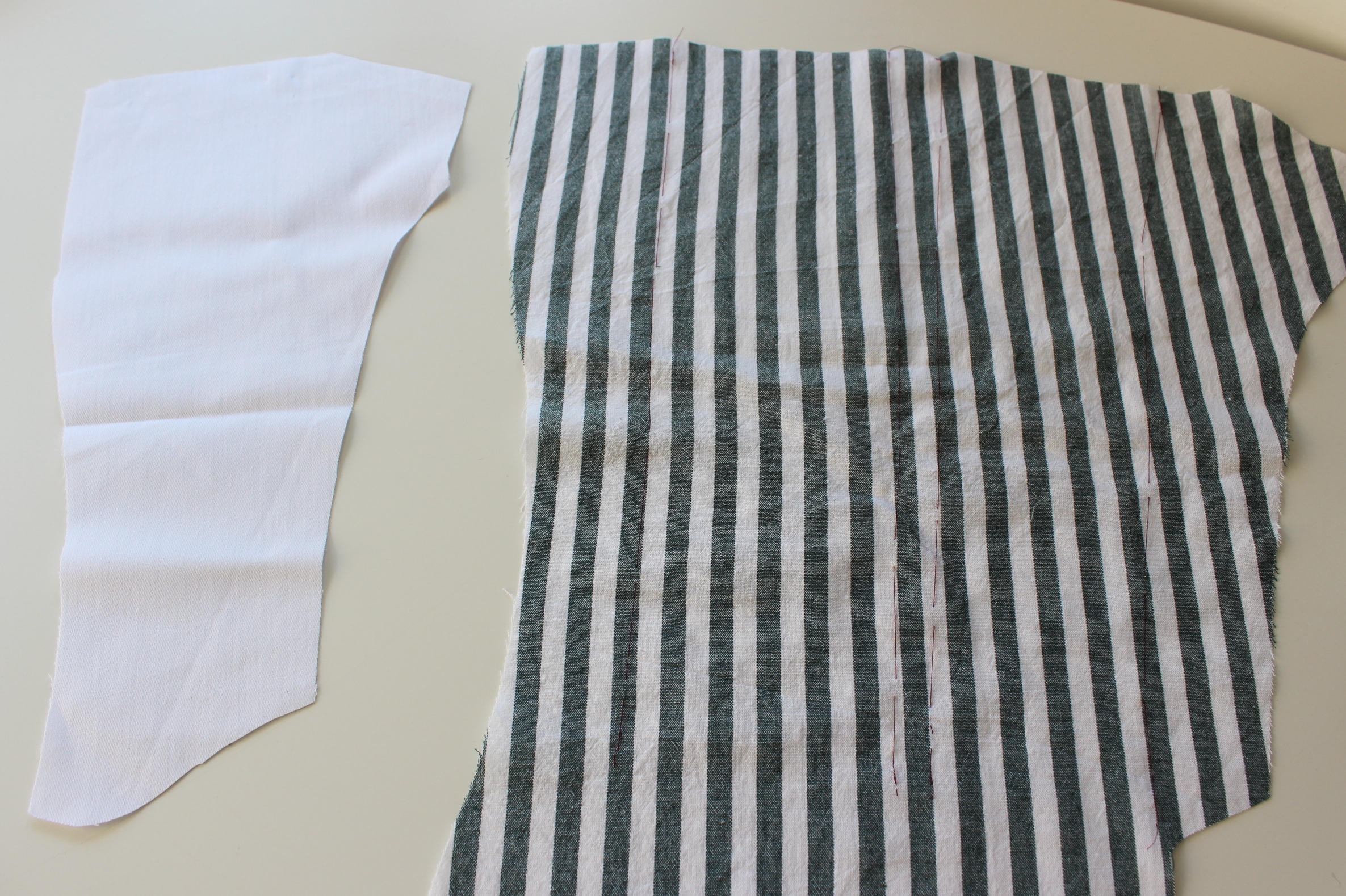
IMG_8372IMG_8378Close-up on the stiches.

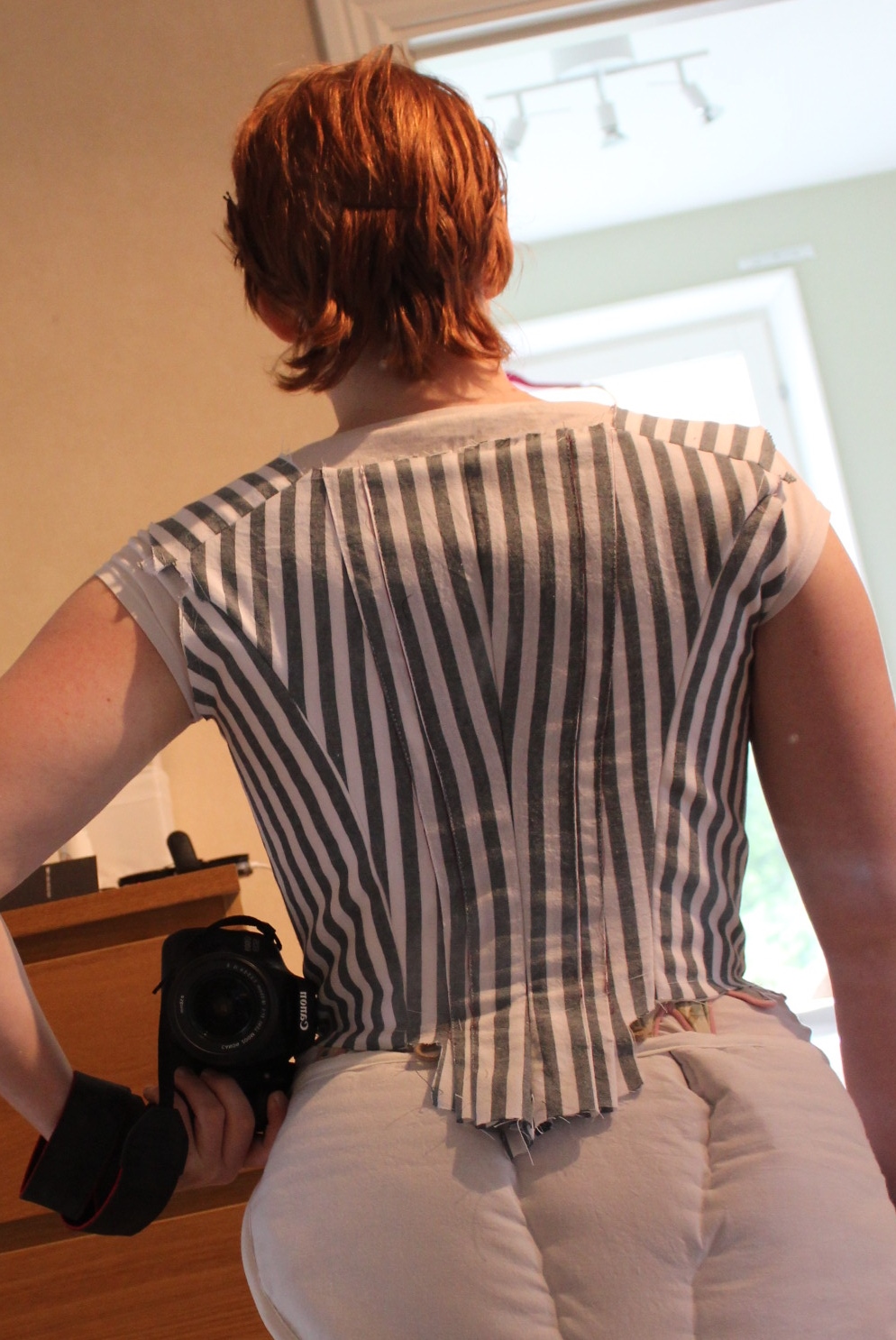
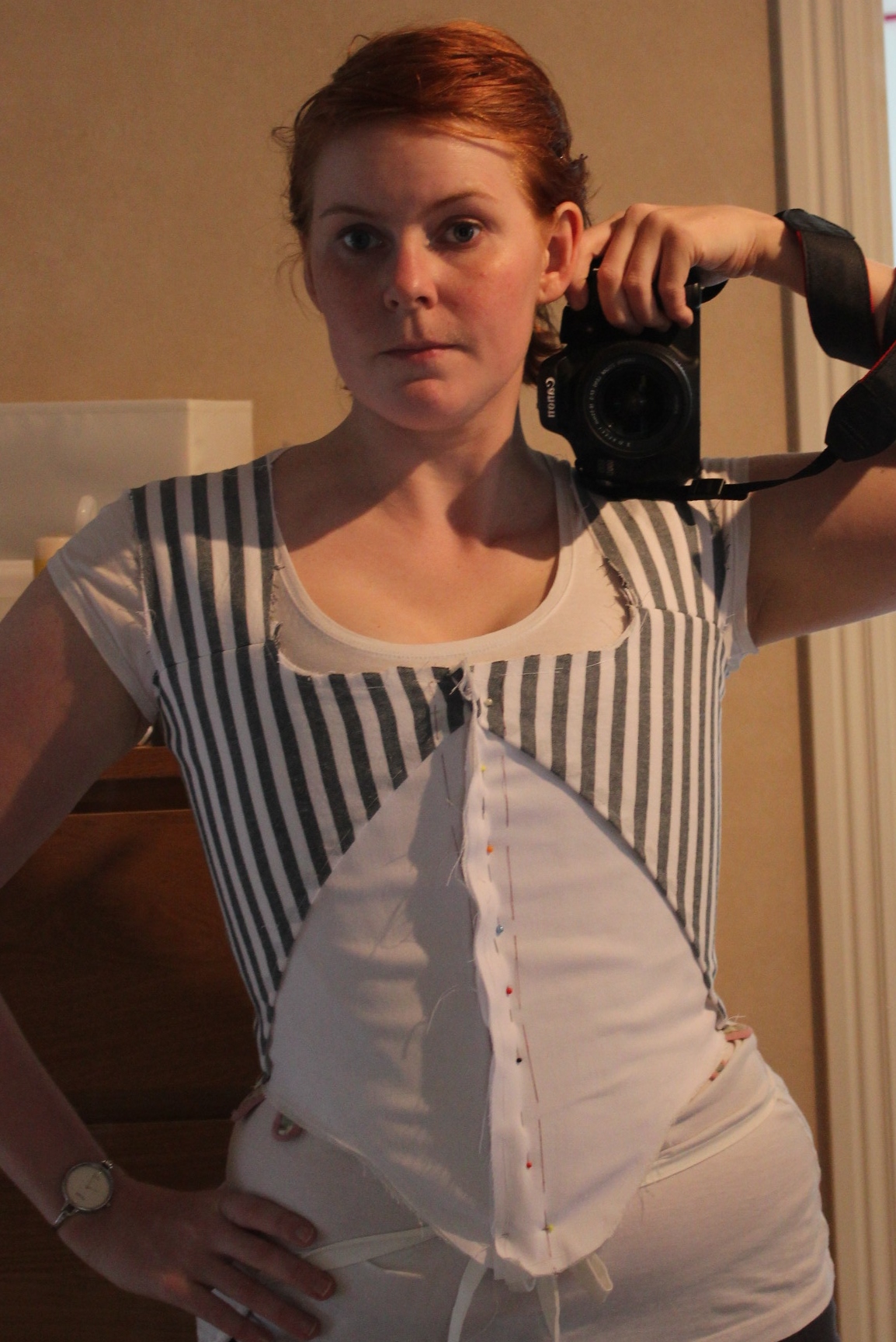
I then sewed the bodice togeter and tried it on to check the front closeur.
IMG_8524 IMG_8530
And as you can se the front lines dont match up. So to fix that I needed to adjust the center front line and make a buttonhole placket. This metod is usaly a big no no in sewing but time was sparse and I’ve already manadged to mach the stripes pretty good, so I did’nt want to adjust the side seams.

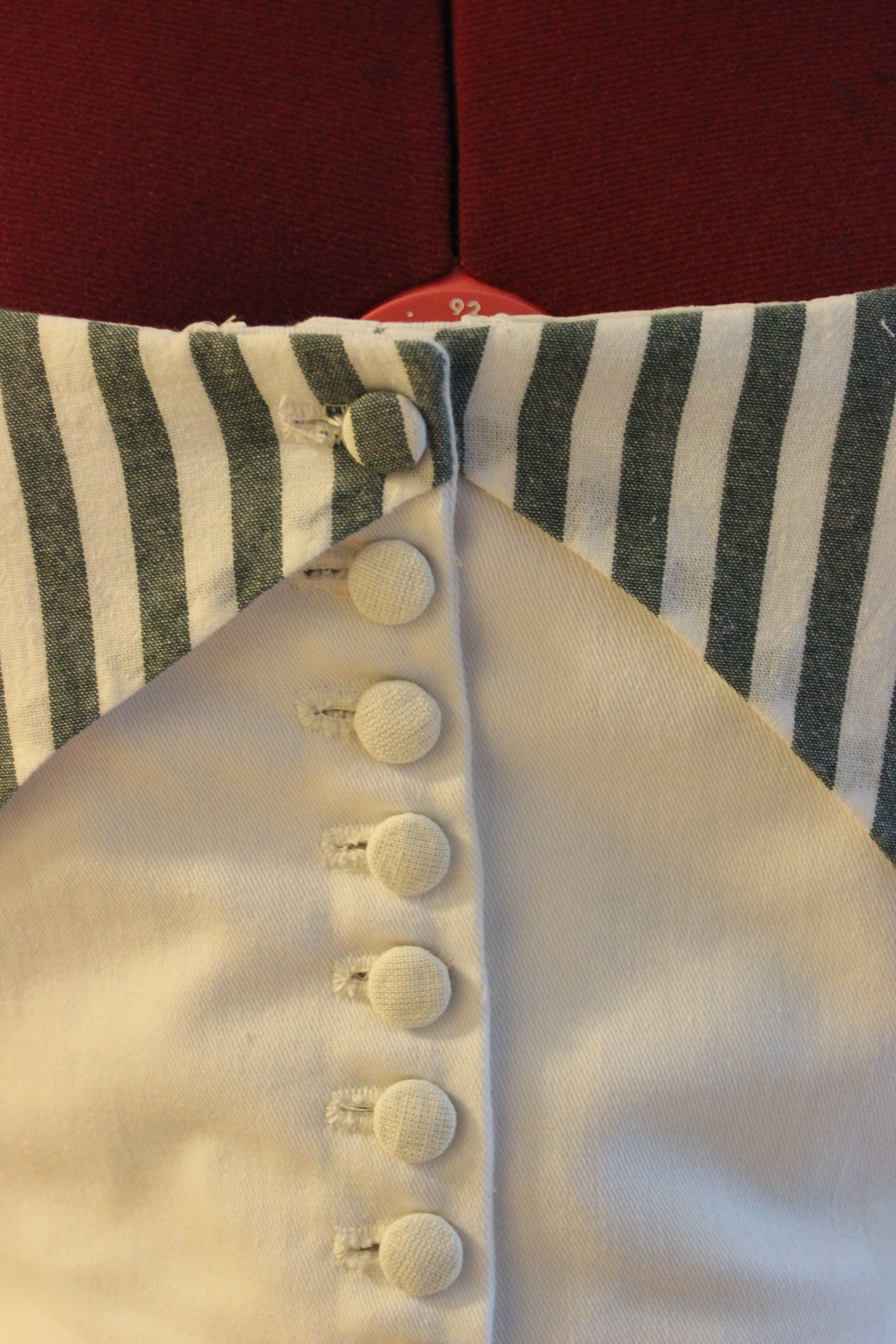
Then I started on the button and buttonholes, also hand stitched. IMG_8539 They are not as neat and pretty as I would have liked but they will have to do. And I even needed to use some fabric glue on the buttons to keep them from snapping apart.IMG_8557
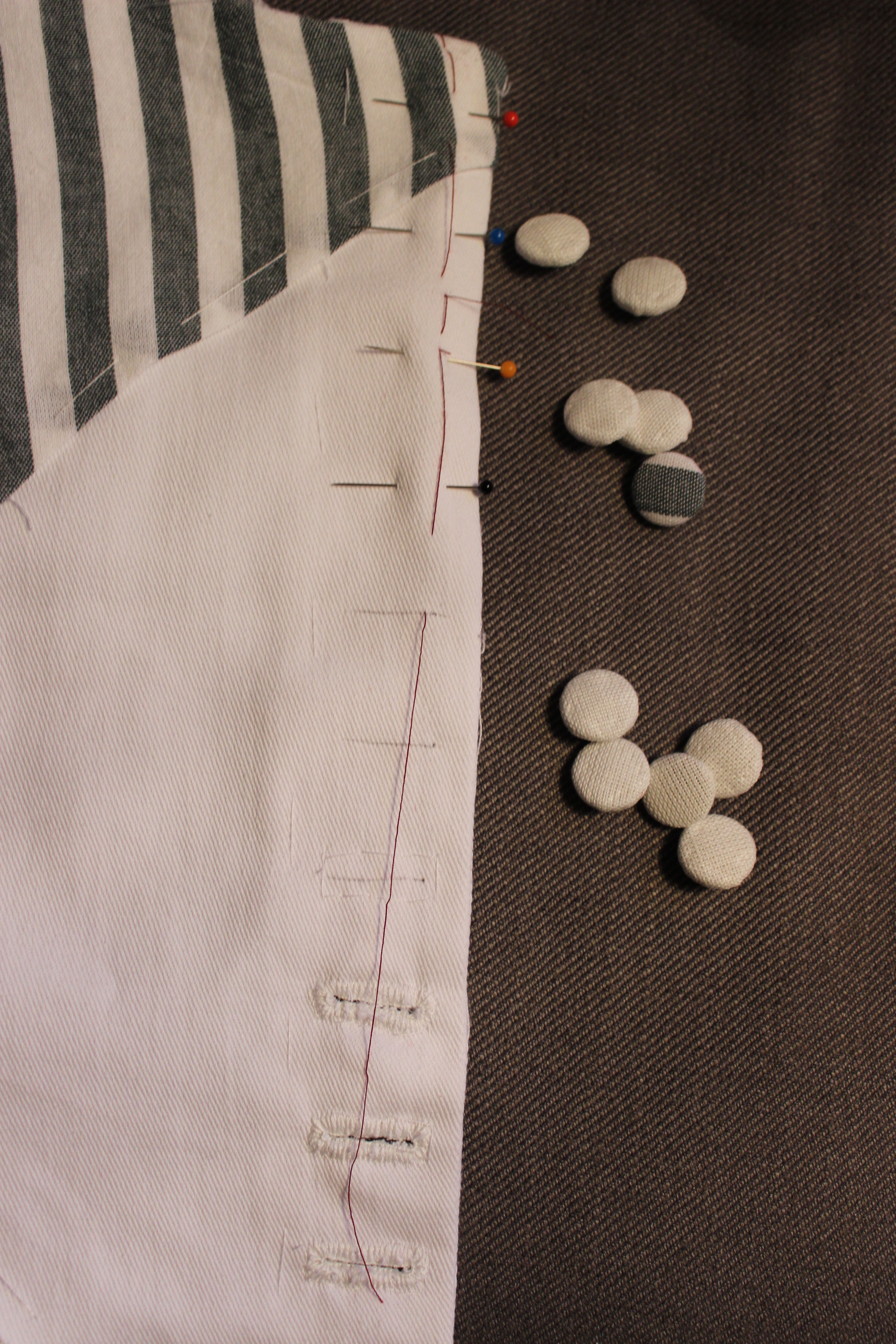
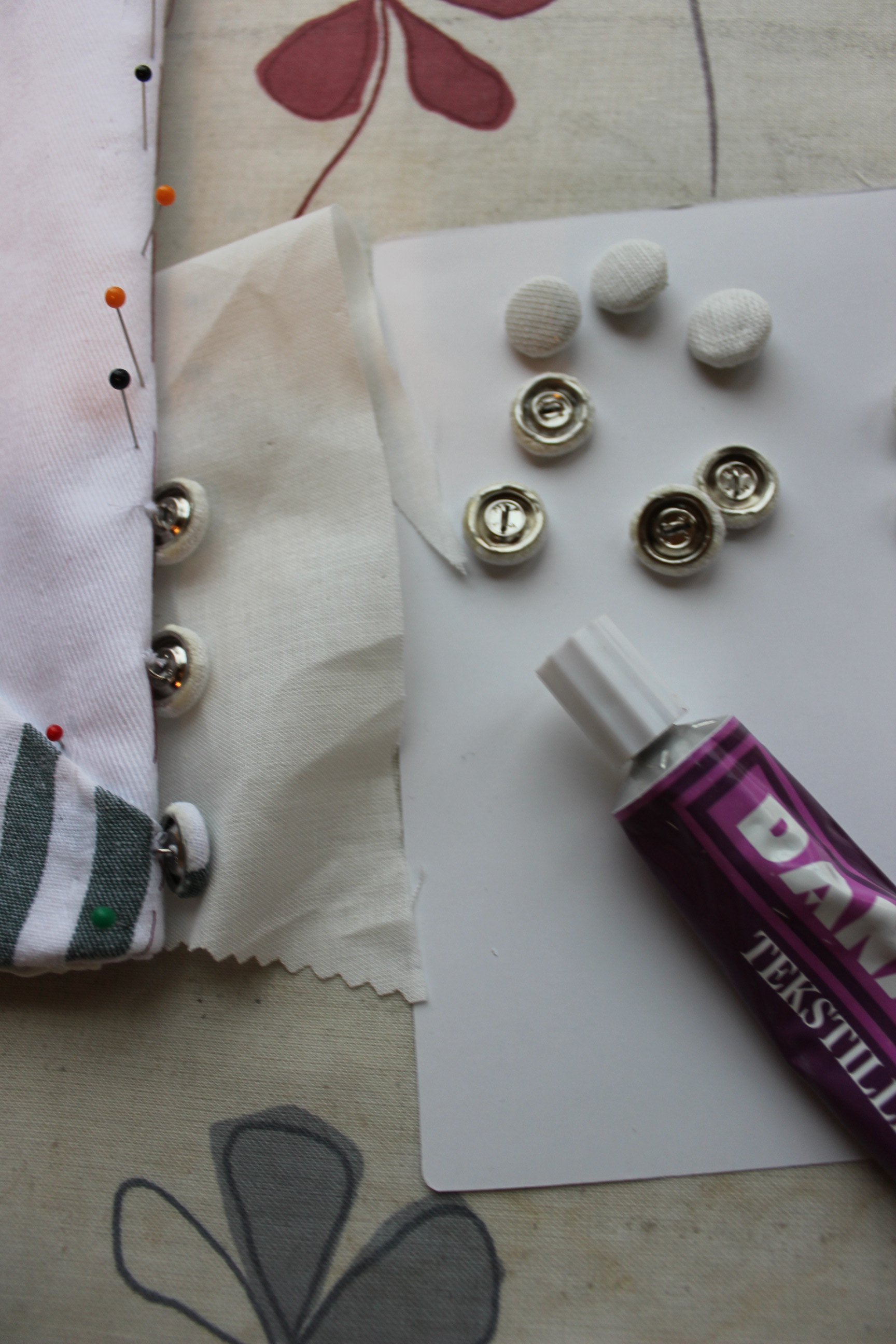
It was about here I noticed that something was of with the front piece interfacing. While basting the layers togeter I’ve manadged to put the interling as outer fabric, then stich the hole bodice up like that and on top of that make the buttonholes. Darn it.
Well there wasn’t much to do then go on pretending that the twill was supose to be the outer fabric. Fortanly, no other part of the bodice was white so the only thing revealing my mistake is the linnen covered buttons… IMG_8582
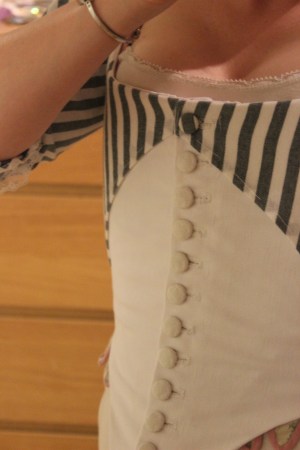
So I continued by cuting and setting the lining, using a regular white cotton fabric.

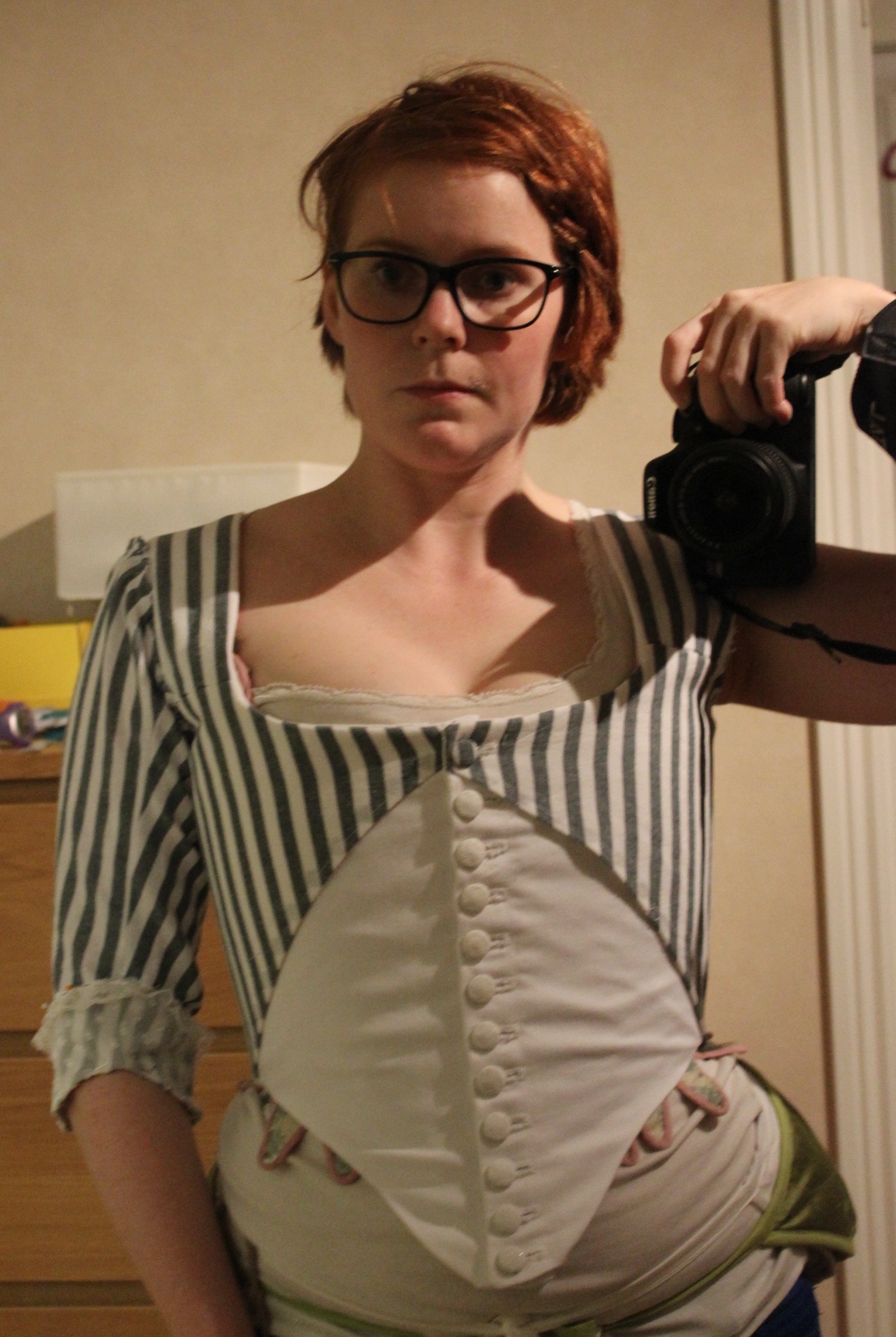
Before the next try on I pinned the sleeves on losely to get a grip on their placement.
IMG_8575 IMG_8578
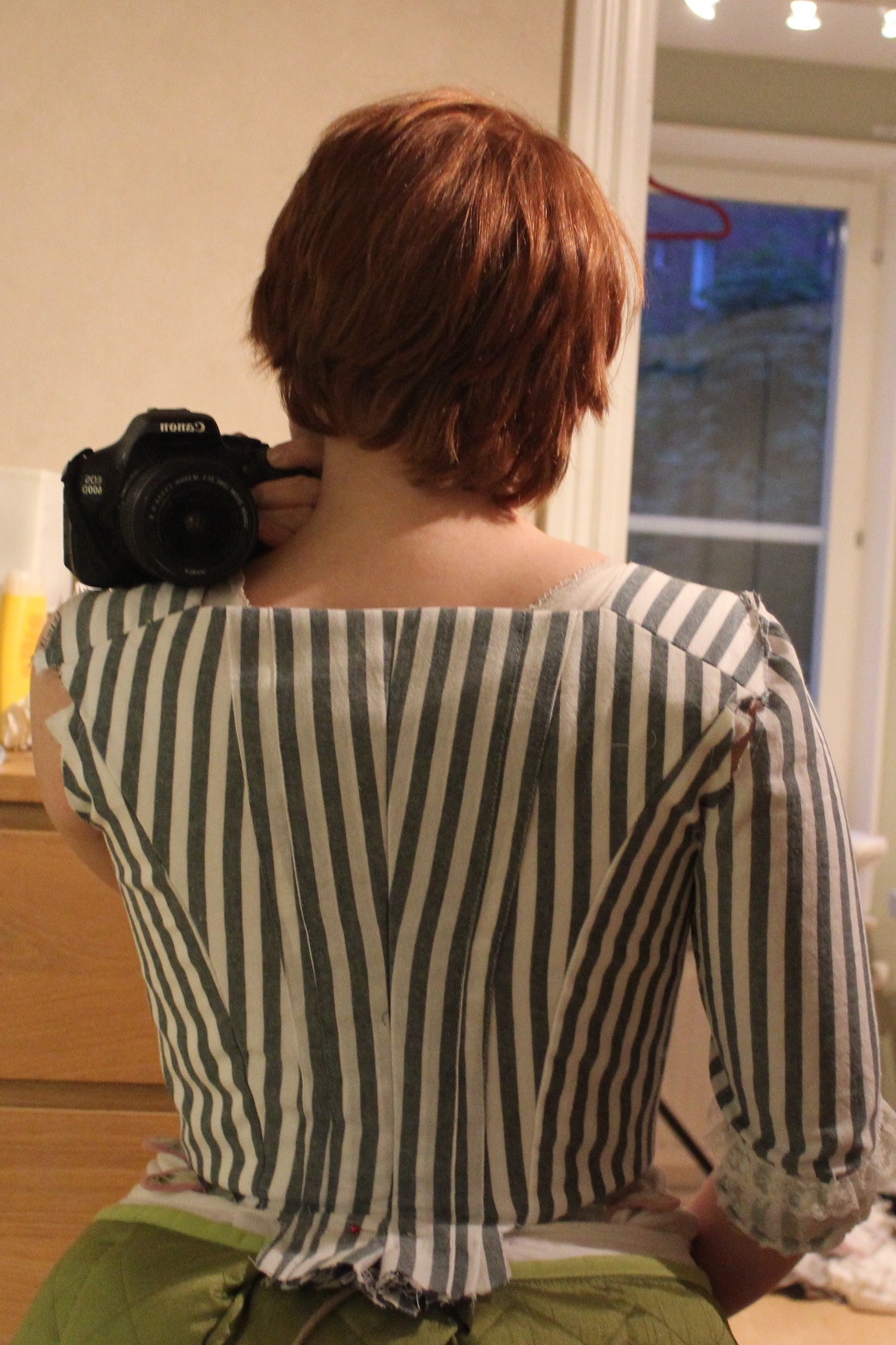
Unfortanly the sleeves were the last things I noticed when I put it on – The stupid bodice was way to smal. I tightened my corset all I could, and did manadged to close all the buttons. Only now the bodice looked horrible and the stresslines were pulling all over the front.

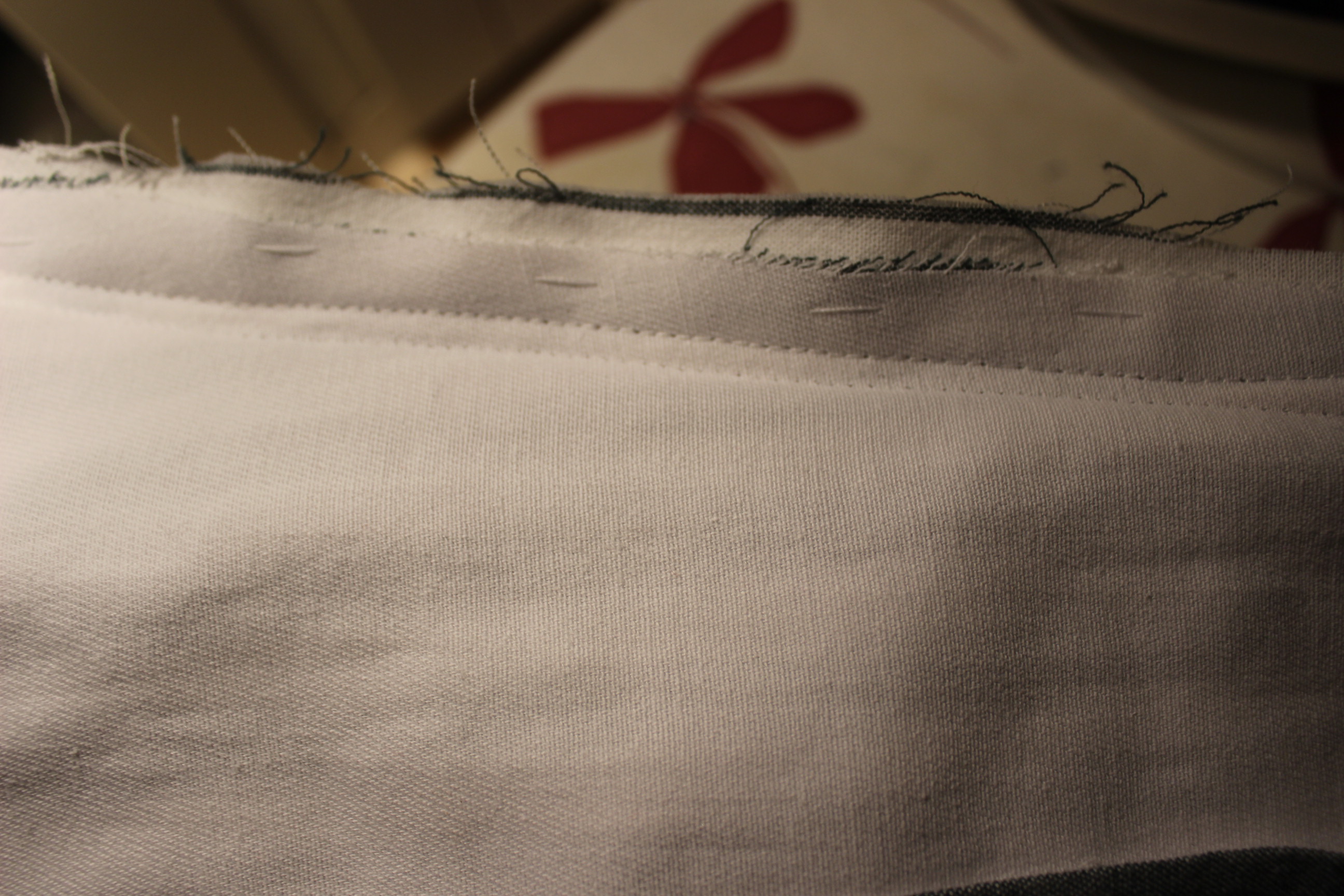
So back to the sewing machine I whent, using the alowence in the side/back seams to make the bodice a total of 2,5 cm bigger. IMG_8591
Then I pinned and sewed the sleeves. The insertion was an easy one, but the deciding on the sleeve trim was a bit harder. In the end I decided to stepp away from the inspiration and go with my guts and use a smaler design then originaly planed.

Now it was time for the skirt. I sewed the pannels together and  hand stiched lines of gatering thread, to get them nice and even al over the skirt. IMG_8542 Then I pulled the skirt waist togeter and pinned it to the bodice, using the zone front as a mark were to start the skirt.
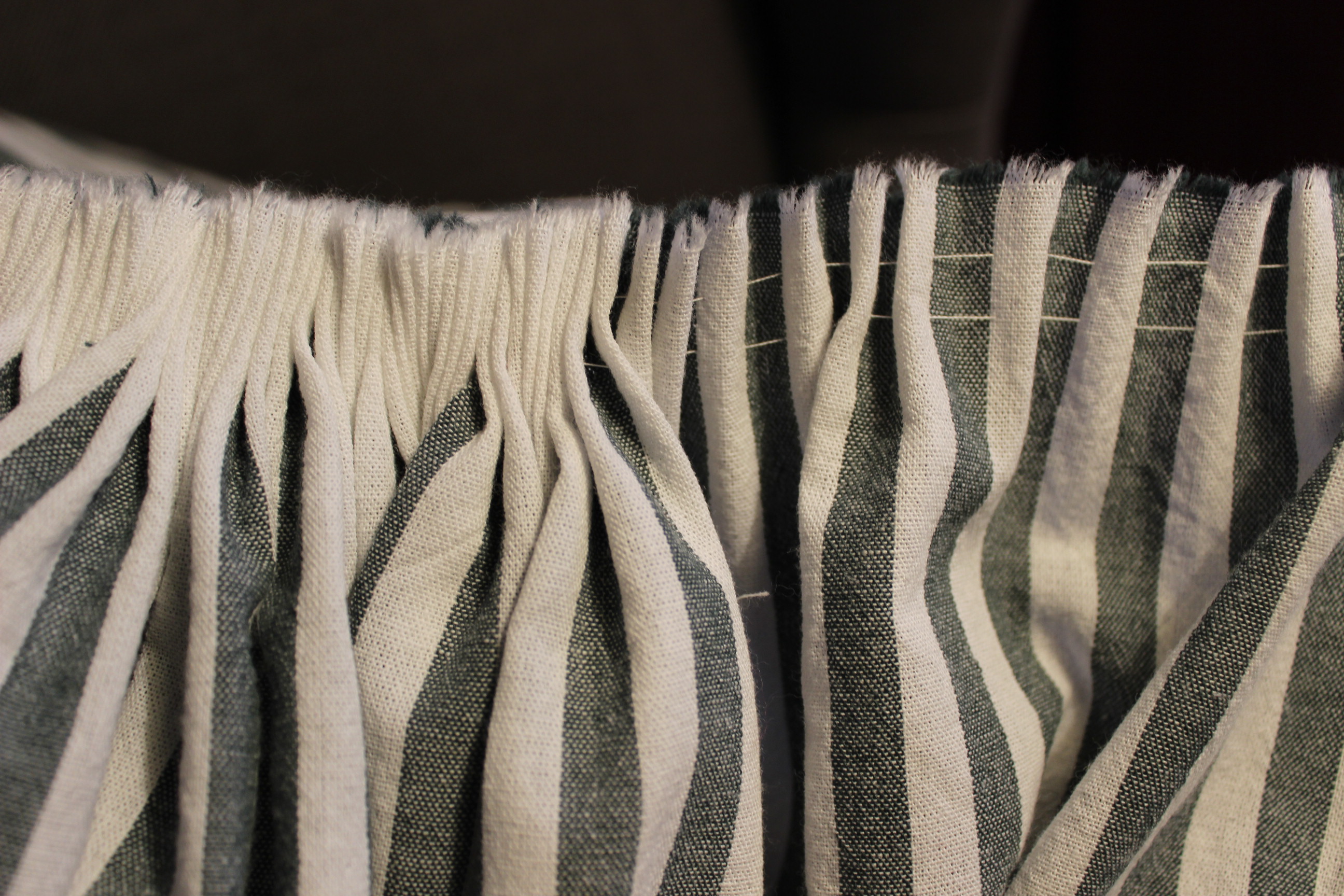
The sewing was abit tricky, geting all the fabric to lay smothly. IMG_8620
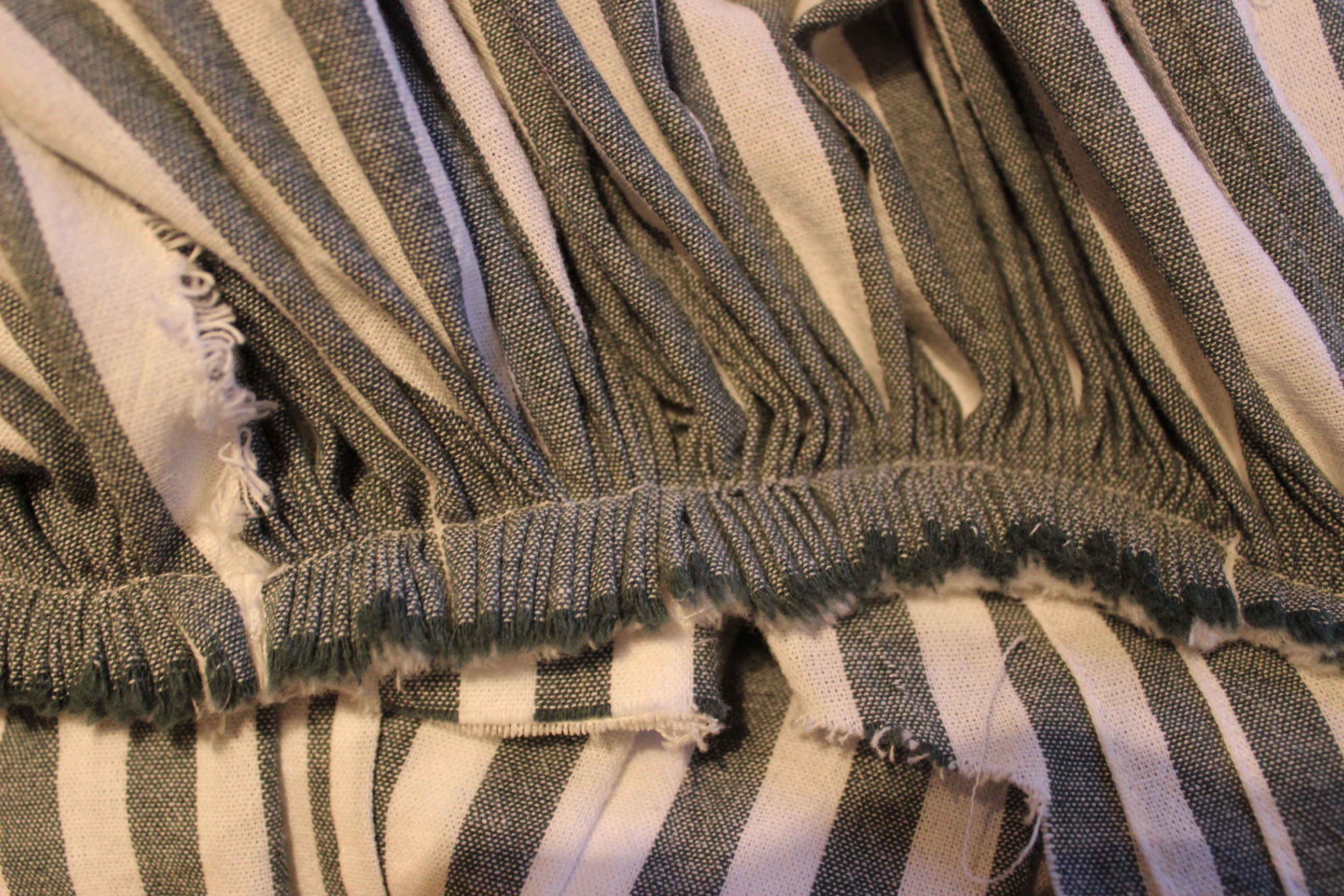
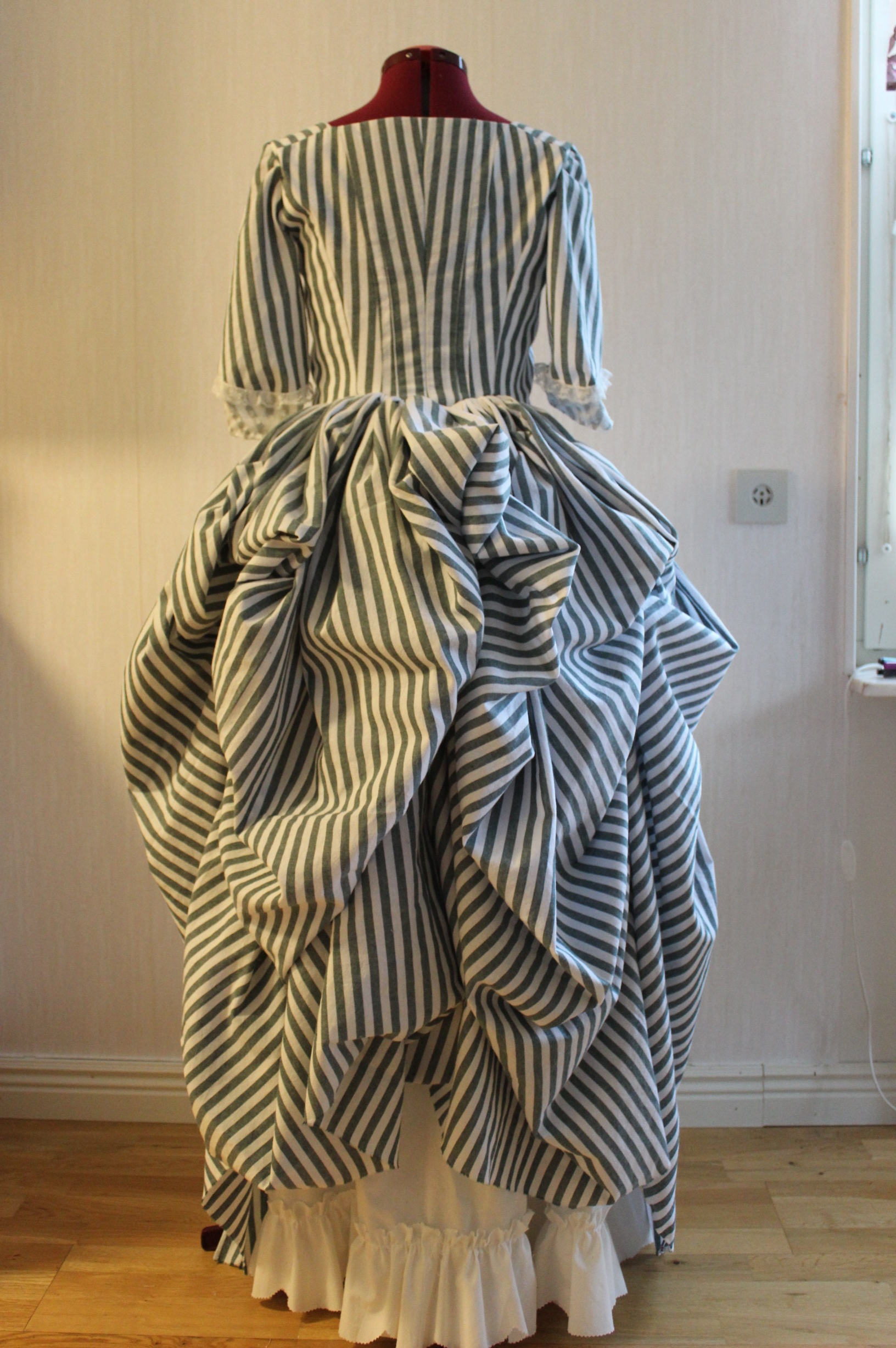
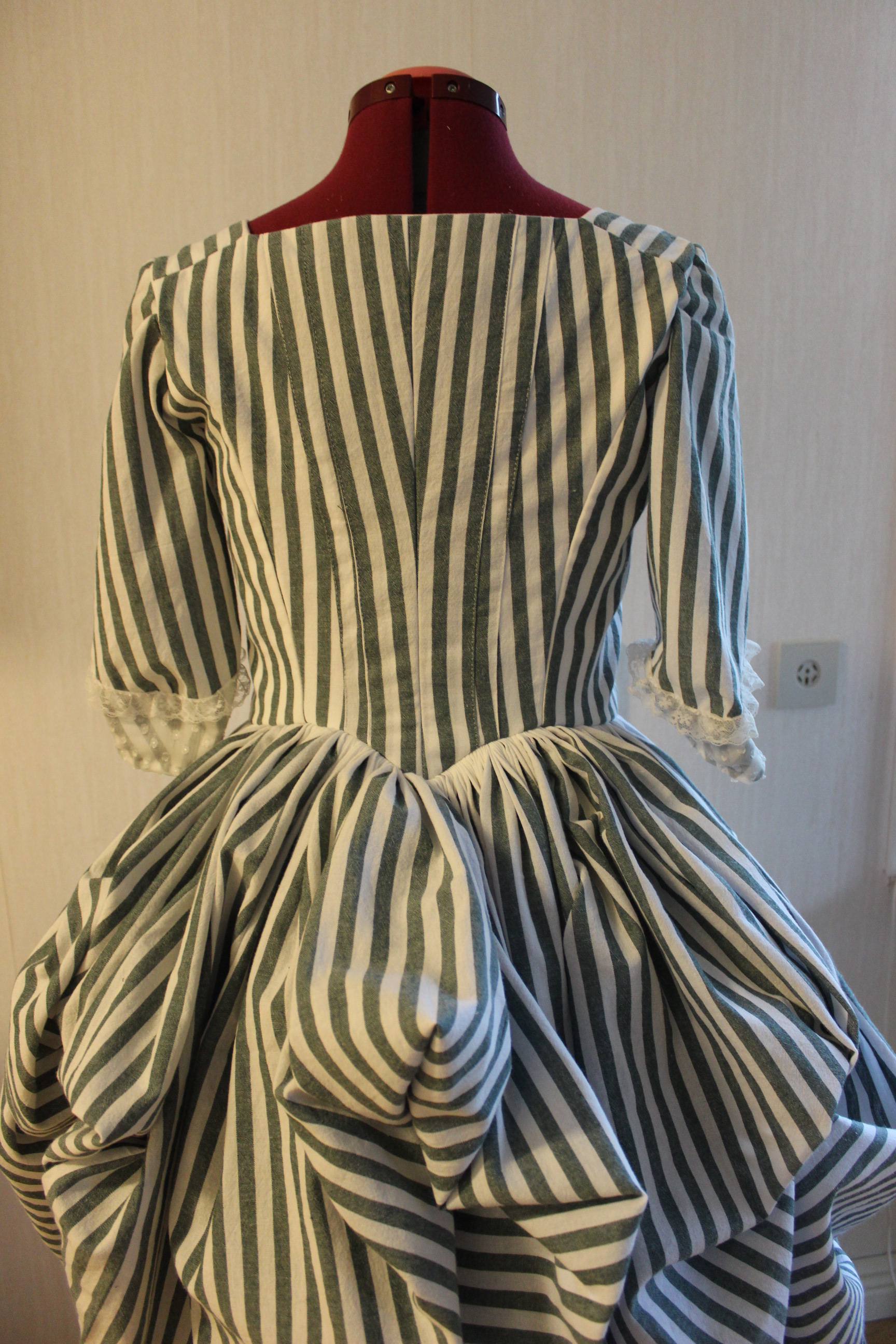
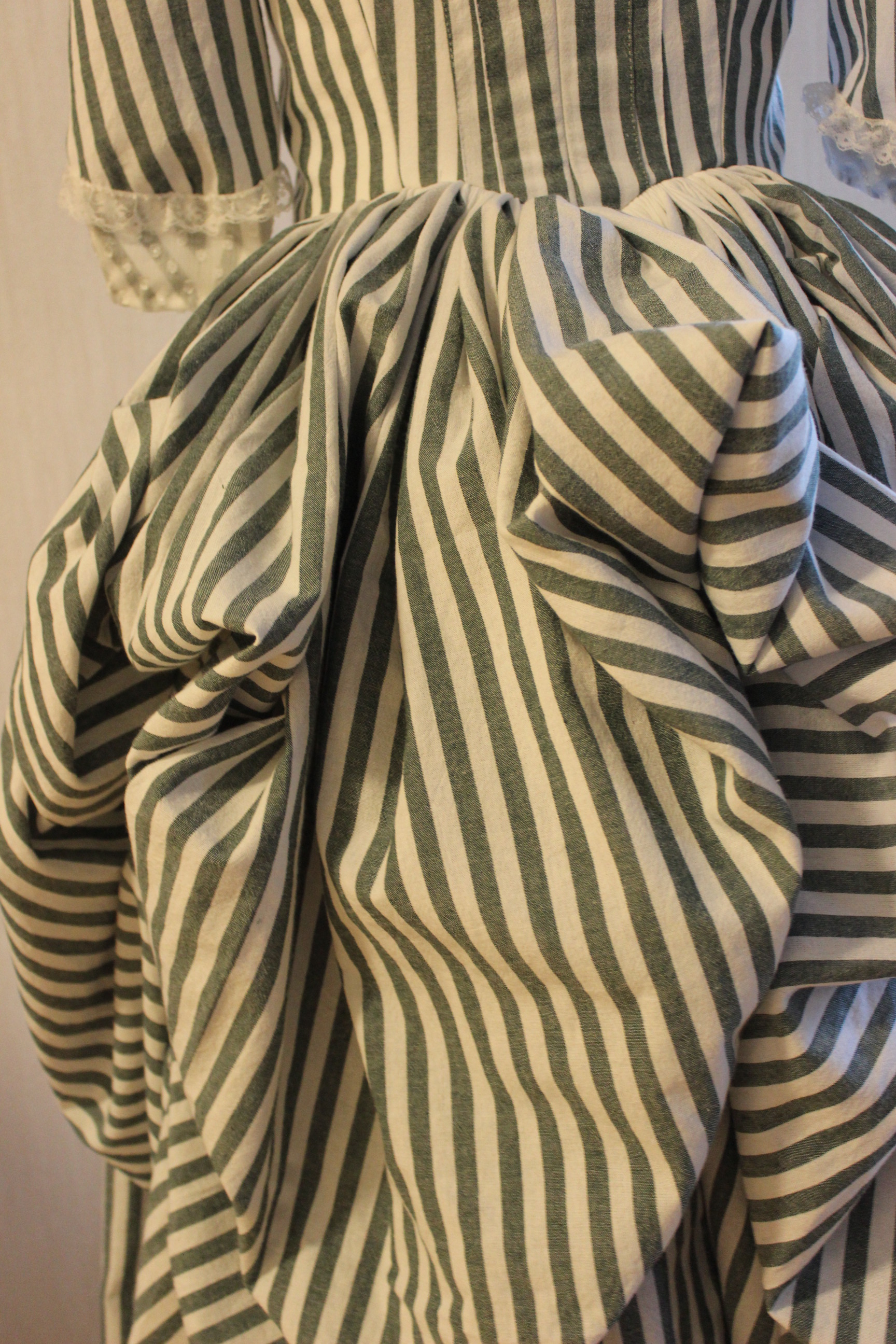
The final touches was to finish of the arm hole, tuck down the lining and stich on some Busteling-ties to make it an “Polainese”.

Finished dress:

IMG_8623

IMG_8644

IMG_8645

IMG_8625

IMG_8646

IMG_8621

IMG_8629

IMG_8628

IMG_8630

IMG_8633

IMG_8631

IMG_8632

IMG_8636

IMG_8640

IMG_8641

IMG_8637

IMG_8643

Just the Facts:

Challenge: nr 10 – Art

What: a 1780s robe Anglaise.

Inspiration: Rose Adélaïde Ducreux “self portarit with a harp”.

Pattern: I draped my own, using Arnolds “Pattern of Fashion” as a guide.

Fabric: 4 m of striped white/green cotton, 0,5 m of white linnen, 0,5 m of white twill for interlining, 0,5 m of white cotton sheet for lining and 0,3 m of white dotted organdy for sleeve cuffs.

Notions: Thread, 10 self covered buttons, 1 m plastic boning, 5 cm cottin string.

How historical accurate: The shape and look of the garment are ok, but it is compleatly machine made with modern tecniques. I dind’t had the time or the money for a compleatly hand made silk dress.

Time: On and of for two weeks – maybe 15-20 hours.

Cost: about 300 Sek (48Usd). All fabrics were stash and bought on sale.

First worn: Not yet, but will be (pared with the White entries) next weekend for the huge historical picknick i the capital.

Final thoughts: The dress are not an exact copie of the one in the portrait, but I do think it looks pretty good. I’m a bit anoyed about the stress wrinkels on the front bodice, but with the time constriant am glad I manadged to finish it of at all. Tomorrow I will give it a real try out and se if it passes the test.
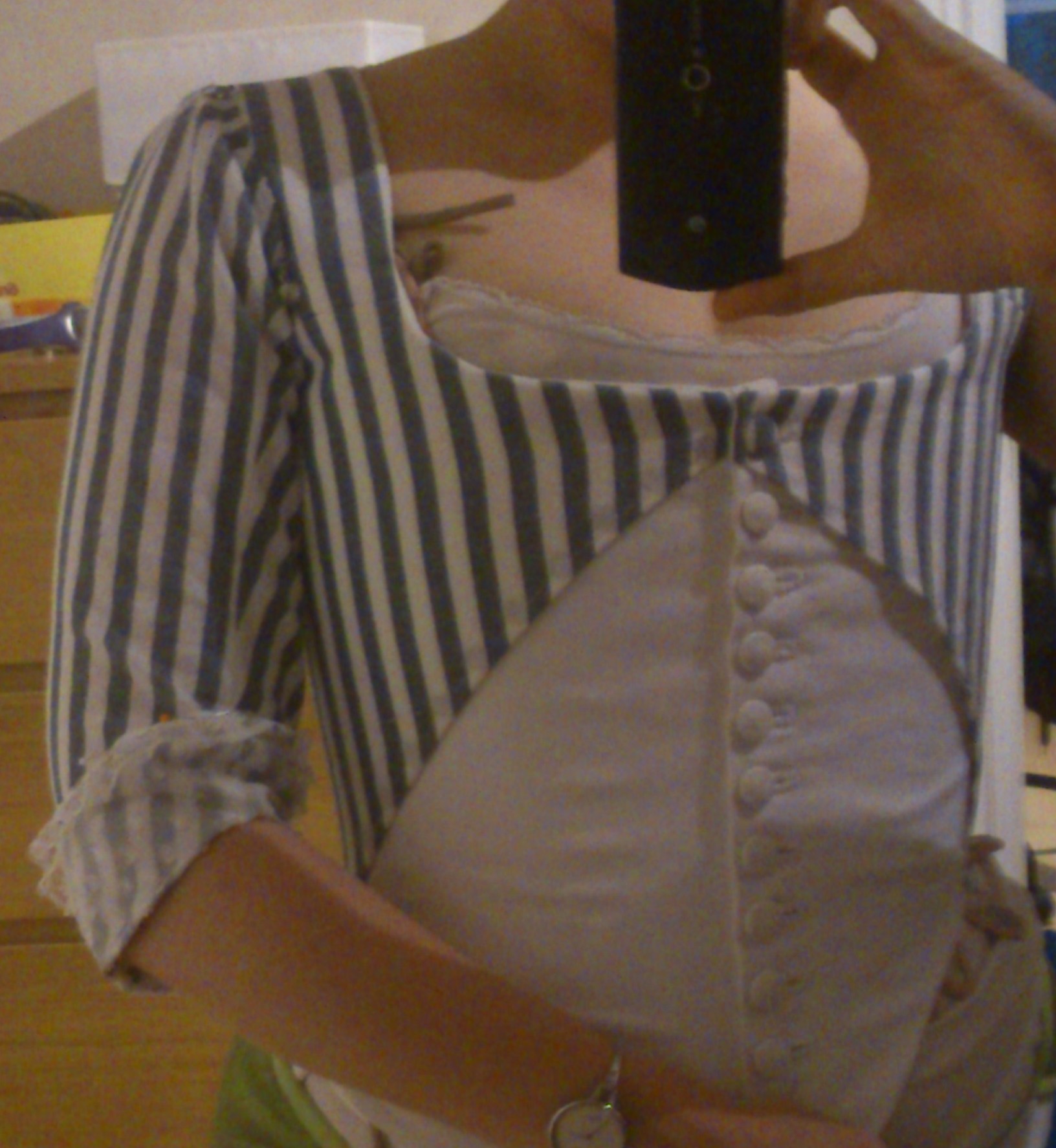
 

Preview: The Artistic Anglaise

I know I know, I’m late.

I’m late posting, I’m late sewing, I’m late entering the HSF, basicly I’m late doing anything.

“Late” seems to be my middle name lateley, but I know at least the dress will be finished before friday – when I’m going to wear it, and thats the important thing.

In the mean time, I will give you a quick sneek a peak of the dress that refuses to get finished in time.

DSC_1442

And to let you all know in what mood I’m in this evening – I’ll give you a hint: Maybe I should have taken this advice to heart instead of just ignore everything about it. Grr.

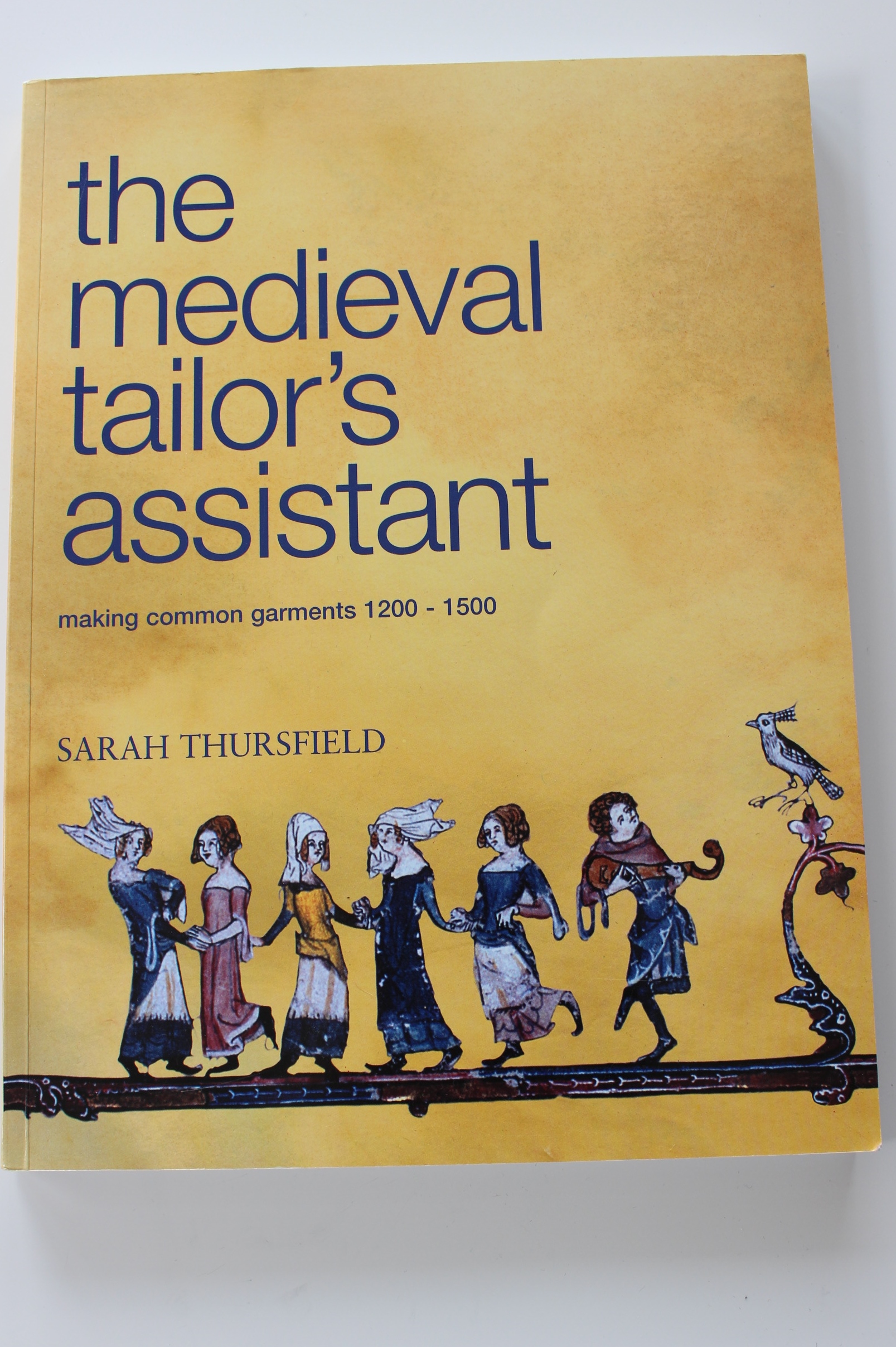
Book Review – The Medieval Tailor Assistant

I thought this might be a nice opurtunity to stay a bit longer in medieval times, even though I’m itching to show you some of the other stuff I’ve been working on latley.

So lets do a review of the only medieval costuming book I own.

I bought it last autumn when I attended a medieval sewing cours, but have not used it as much as I whould have wanted – so many time periods to sew, so litle time.

But now I thougt it a good time to do a review. I would also love to here your opinions about the book  so please coment and let me know what you think.

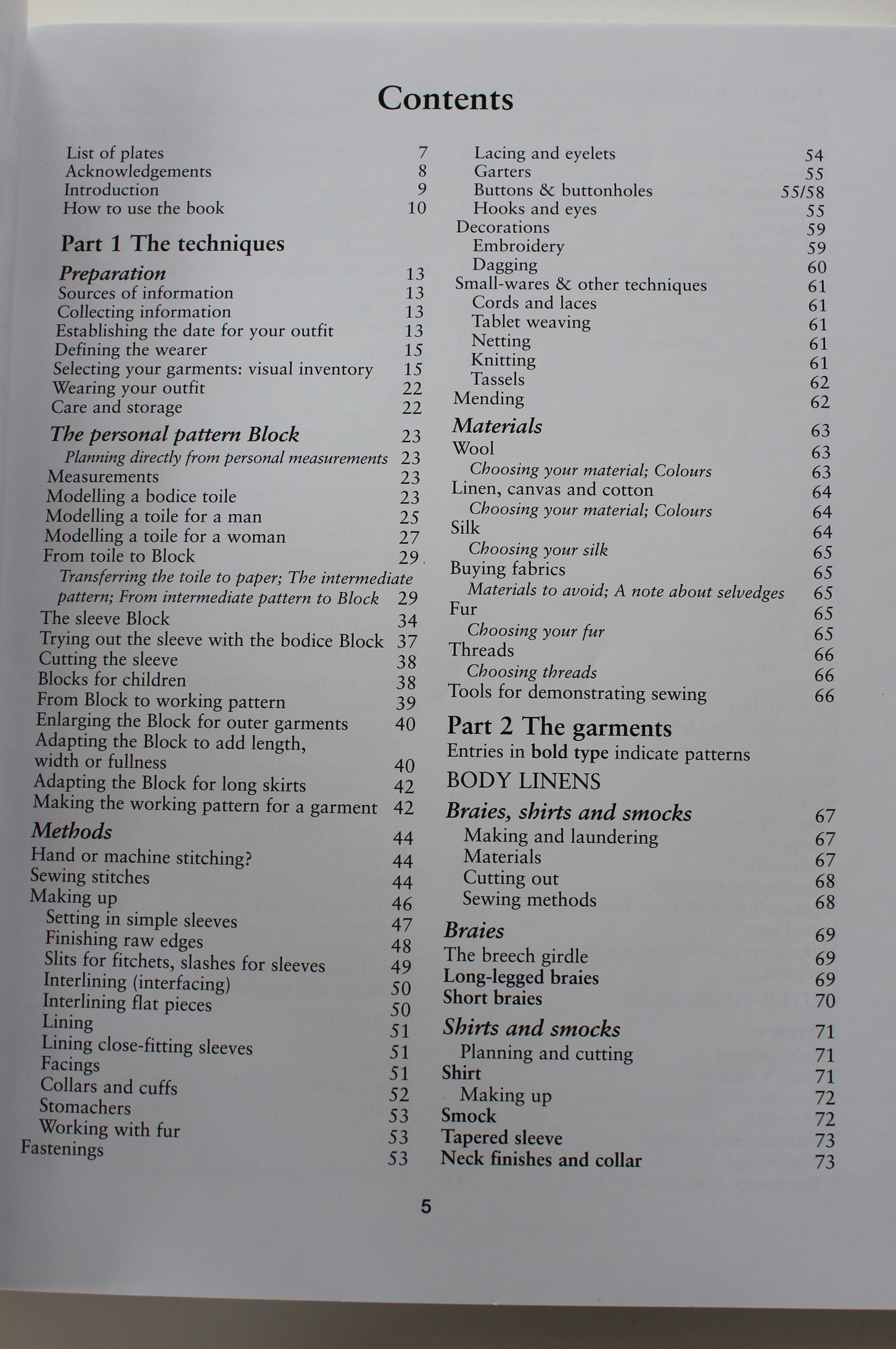
The Medieval Tailors Assistant by Sarah Thursfield.IMG_7290

About the book:

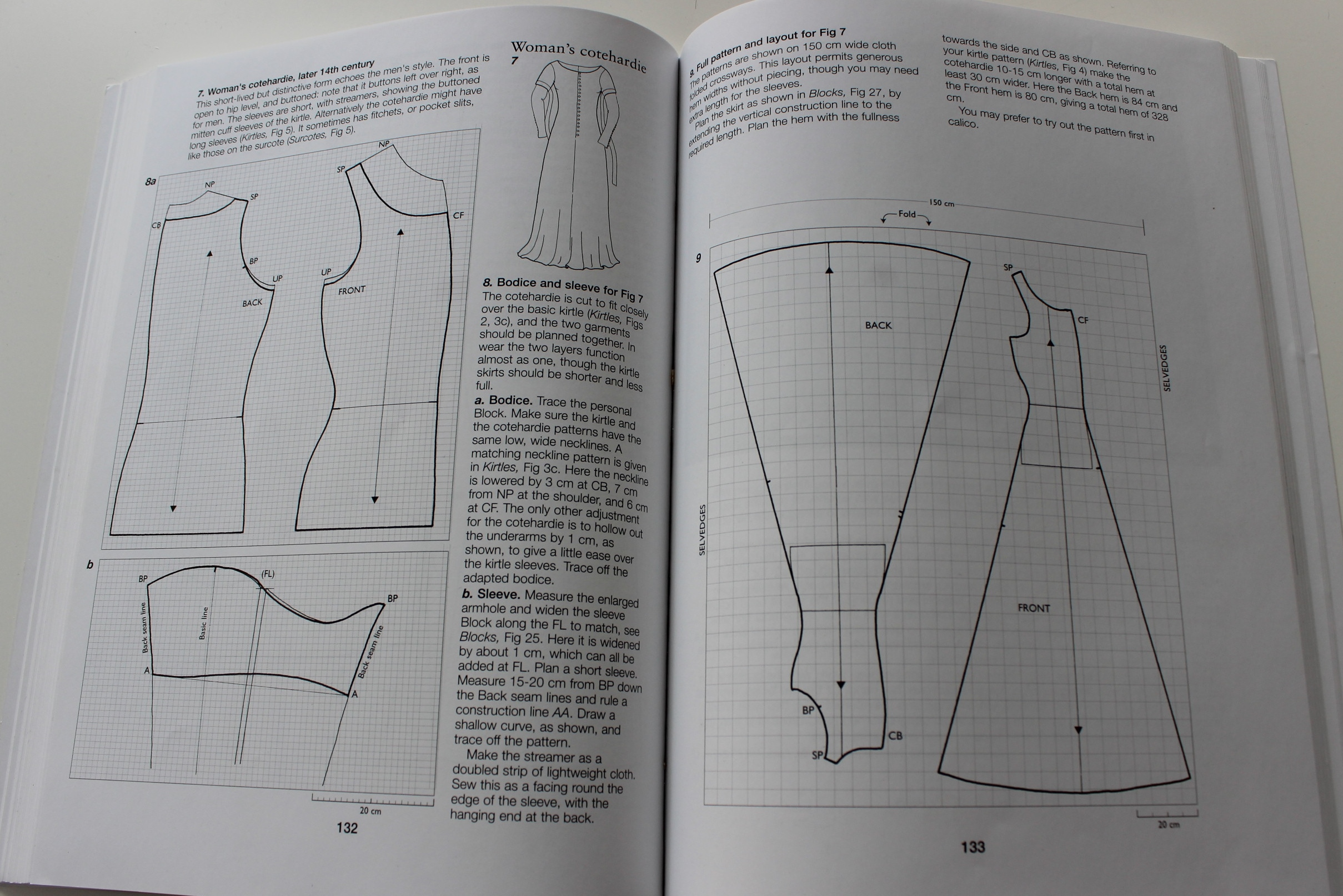
It is a ok about basic medieval pattermaking for men and women. The book does not include sewing instructions, but do however have a couple of pages about stiches, teqnicues and fabrics used at the time.

The book is about 230 pages, and contains several different costume pieces for both men and women like: Underwear, outerwear, gowns, dubblets, hoses, headwear, childrens clothes and accessories.

IMG_7292

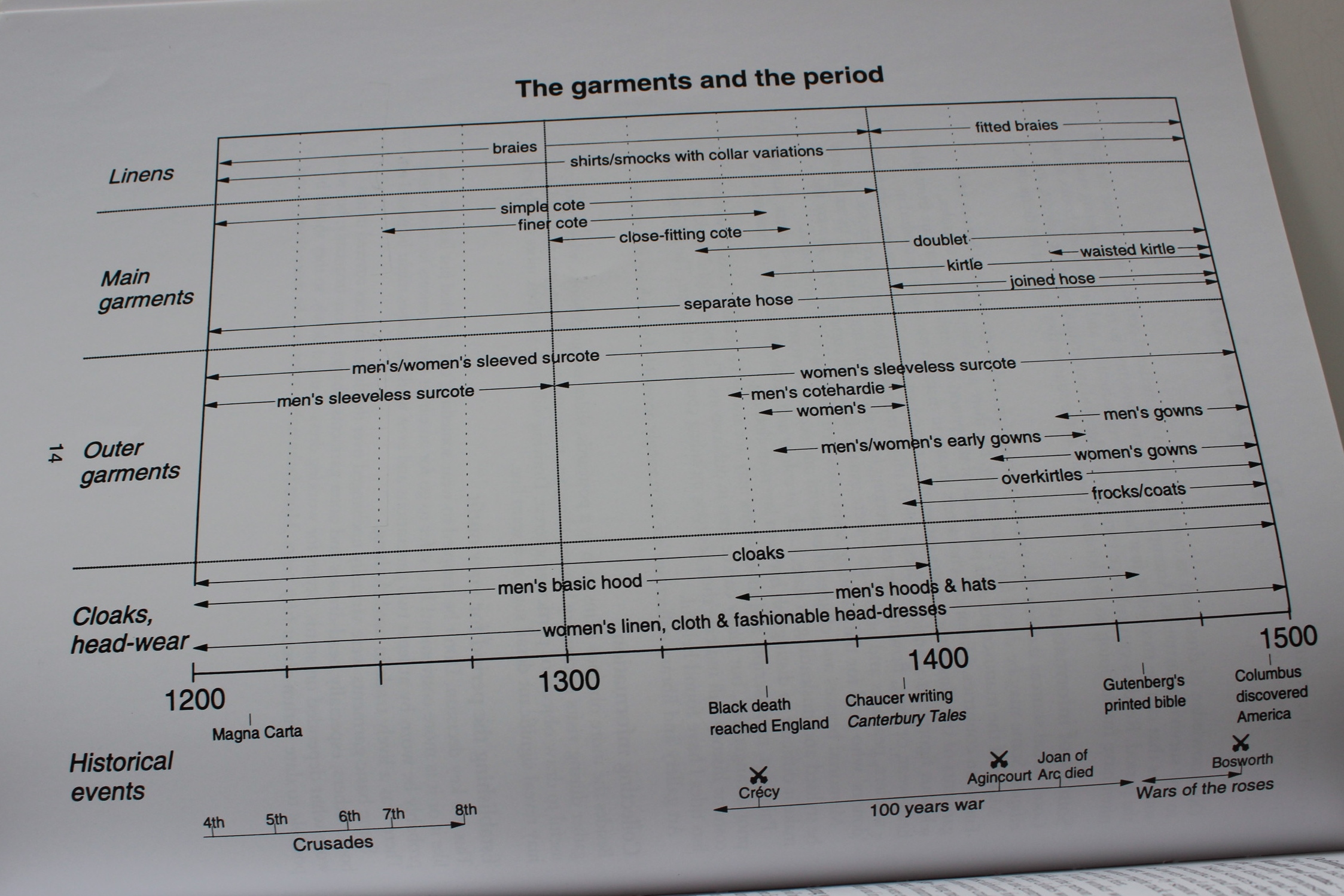
It also have a diagram which shows what clothing pieces were being used during different fashions and times during the time frame caled middle ages.IMG_7293

To get your pattern yo need to make you own “basic body blocks”, draping the pttern straight on your body.IMG_7294

The draping adapts and also workies on a dressform.IMG_2348Draping my fitted body blocks.

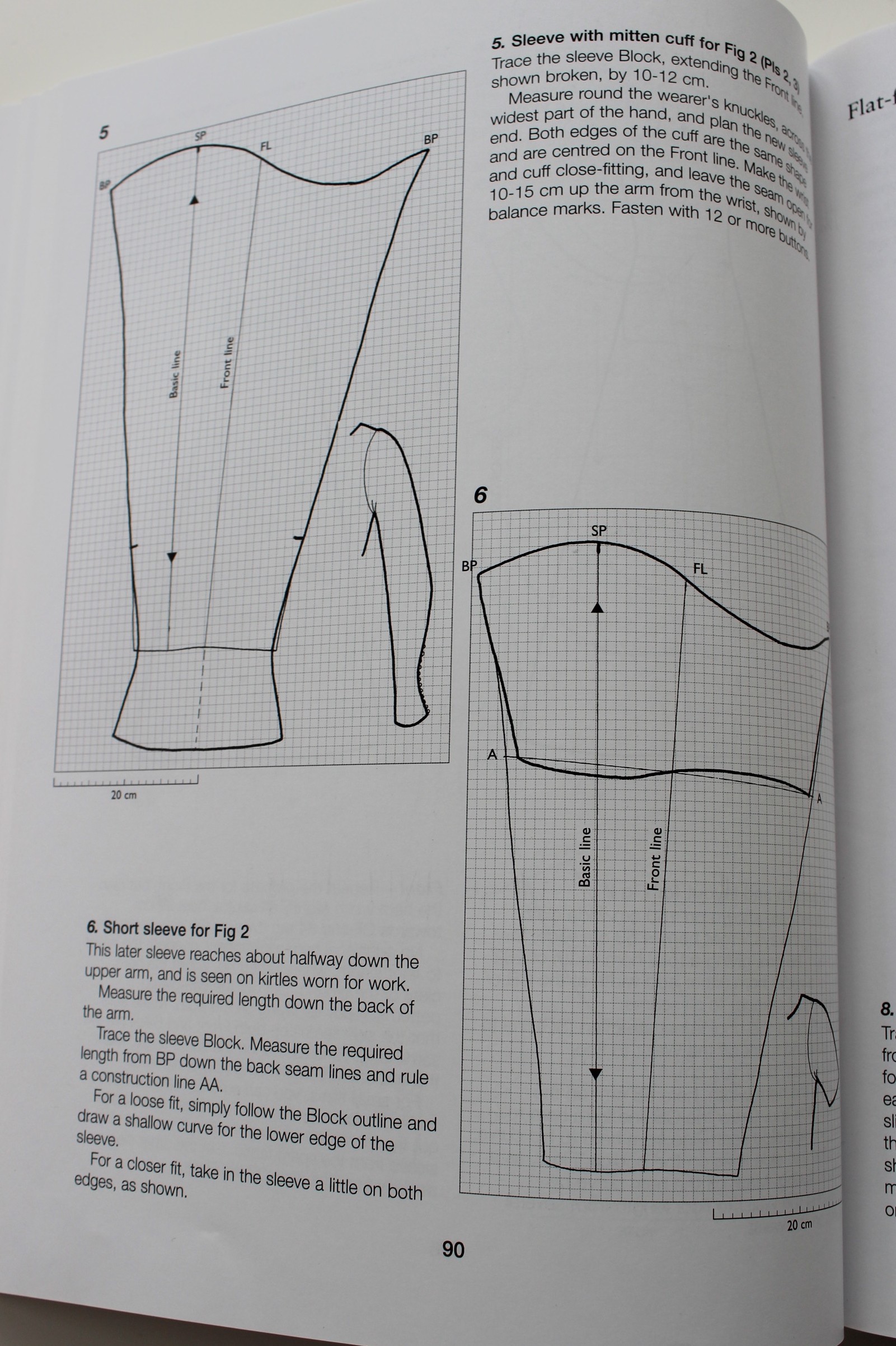
The basic sleeve needs to be drafted “on the table”, and have instructions and picture on how to do it.IMG_7295

Pros:

I like the wide range of costumes you can get out of the book. Using several different pieces of garment you can combine you own look in whatever way you like.

IMG_3287 Lots of different intrepitations of the patterns in the book.
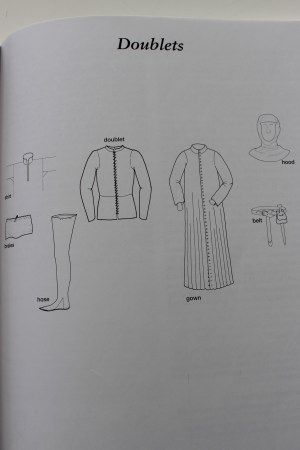
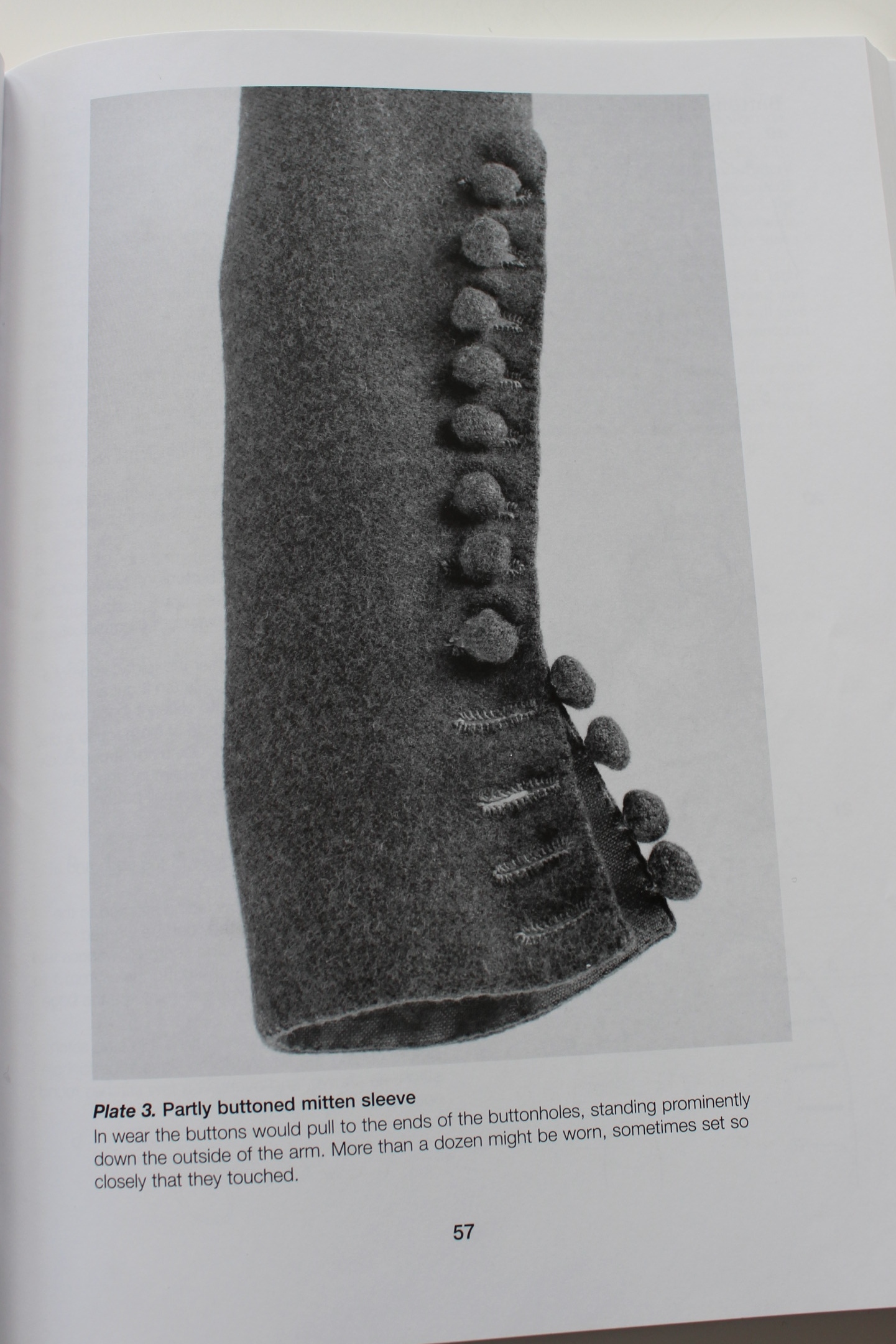
I also like the wide range between the garments – you can make male, female, child, old, rich, pore or anyone in between. and the pages showing how to combine your outfit are great.IMG_7299

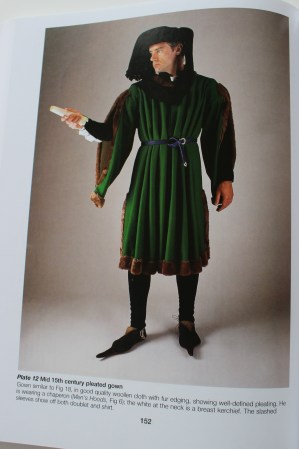
The detail pictures are great in showing how the finished piece should look.IMG_7297Love the detail of this photo.

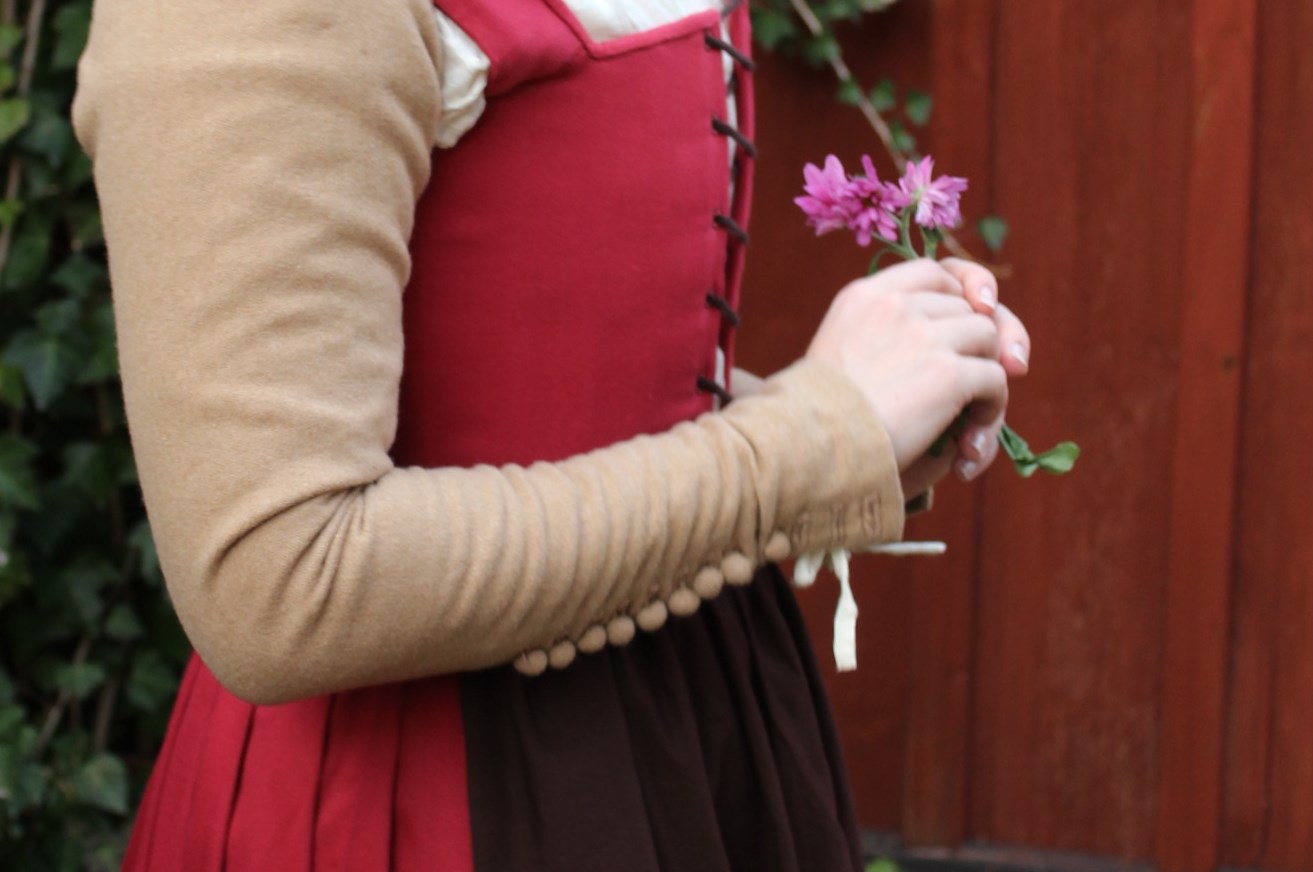
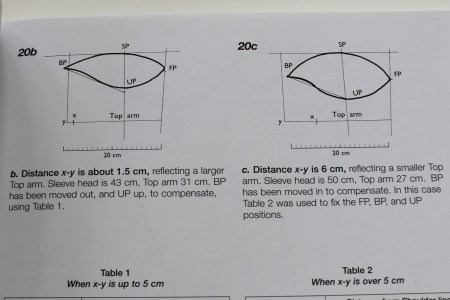
The pattern for the sleeve is adaptable to several different models but can be a bit tricky if you are new at pattern making.IMG_7298IMG_2487Detachable tight fittig sleeves.

I think the instructions for adapting the bodice blocks are good and easy to follow, and the sketch and pattern layou helped me a lot while figuring out my design and pattern. IMG_7300

IMG_3454Short sleeved Cotihardie.

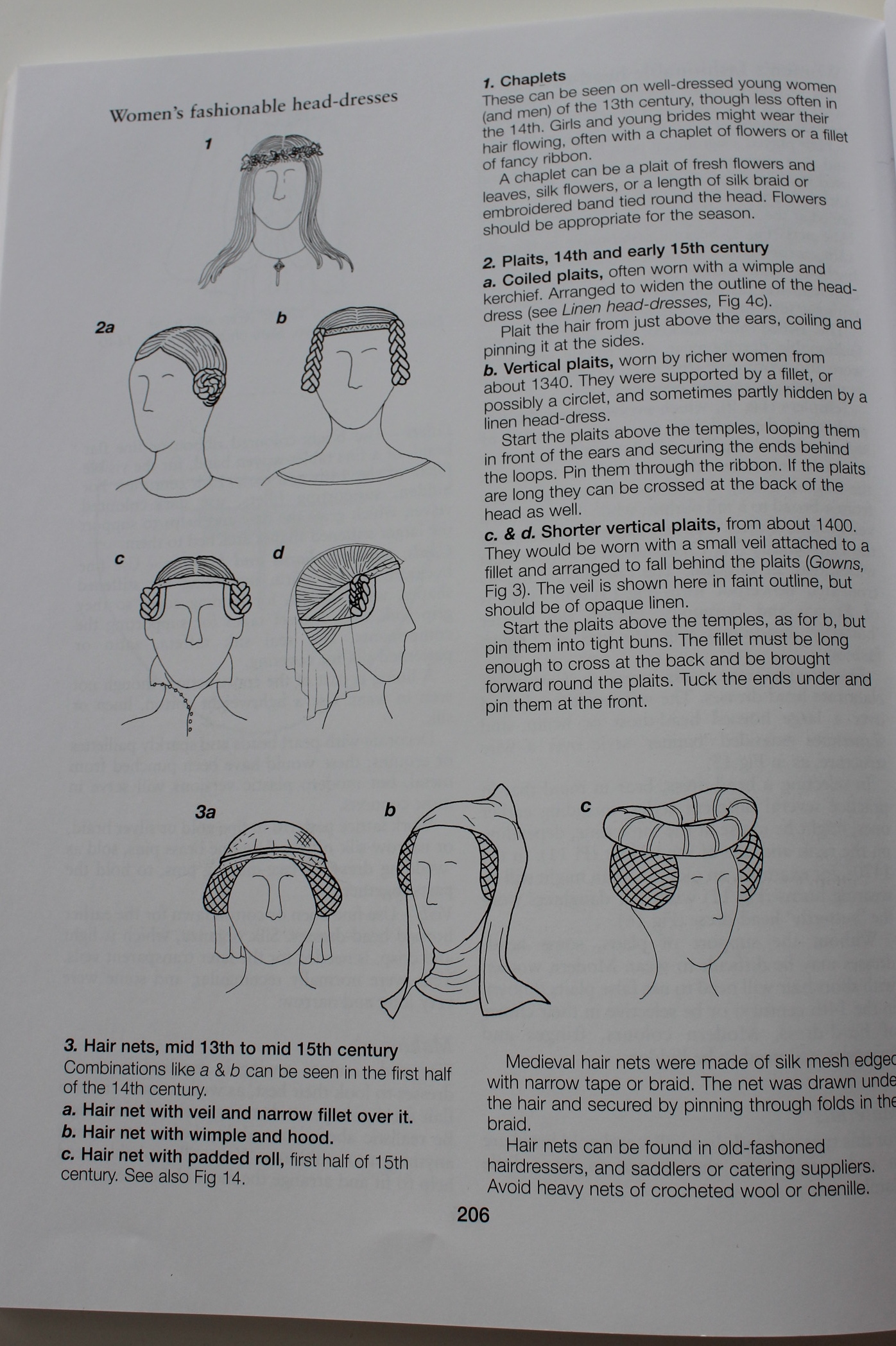
There are a wide range of headwear in the book. And I also like that they included the children, accesories and under wear chapters. IMG_7302

Cons:

I think the patterndarfting are a bit to hard for a beginner or unexperienced patternmaker.

I observed several beginners trying to figur ot the draping (and had a bit trouble doing it myself). It does take some practice to get it right.

I also think the sleeve cap are a bit of. I stuggeled trying to get it right, ending up raising it about 2 cm to get it to fit in to the arm hole. I guess this is something that happends whaen the bodice and sleeve are not drawn from the same template but one draped and the other drafted on paper.

IMG_7296

I loved the pictures in the book, my only complaint is that they were way to few. Sometimes it is hard to know how a garmnent would look like just from principle sketches or patterns, thats when you need the pictures.IMG_7301

I would have liked to get some patterns, measurments or more details on the more complex headwear in the book.IMG_7303

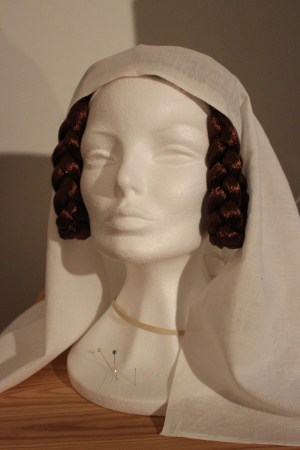
I needed to work a bit to get the shape I wanted on my headcloth. Even though it can be great to figur things out by ourself, sometimes you just want to know what/how to do it. IMG_3066 Faux braids and semi circular headcloth.
Would I recomend it:

I think the book is a defenetly must have if you are interested in medieval times or historic costume design.

I do however think the book is a bit hard for a beginner to use, but if you are willing to give it a try – go for it.

IMG_7291


Medieval Fair

Two weeks ago I attended my first medieval fair.

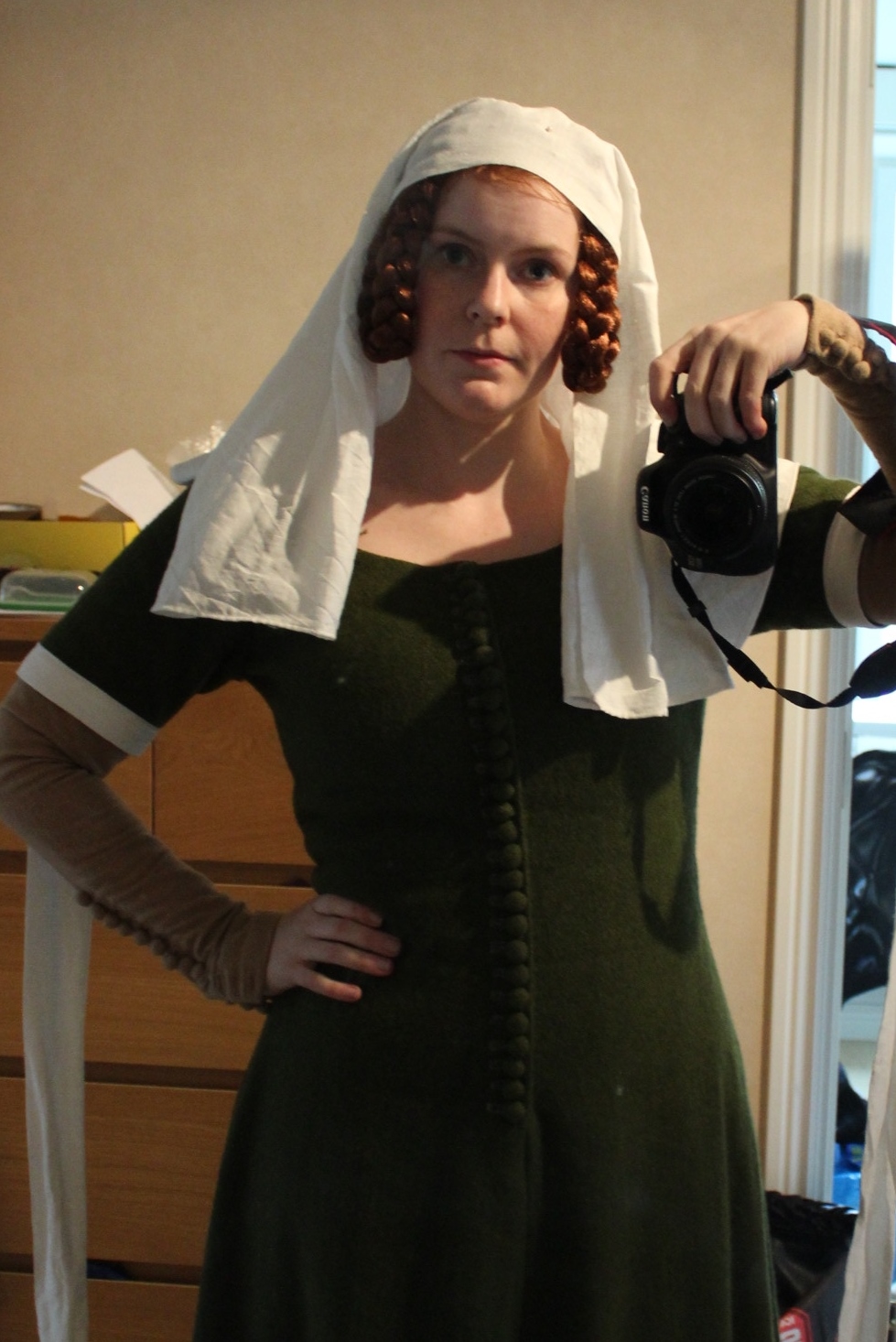
I wore my green Cotehardie paried with the separate beige sleeves, faux braids and headcloth.

IMG_8266

The weater was terrible, the rain had been goning on for days, turning the gras and gravel at the fair to a muddy brown mess. Everywere you looked people wore capes or umbrellas.IMG_8204Some stylish gentlemen.

As it was my firs time, I tried to take it all in and got very exited walking around amongst the stals, taking picures.

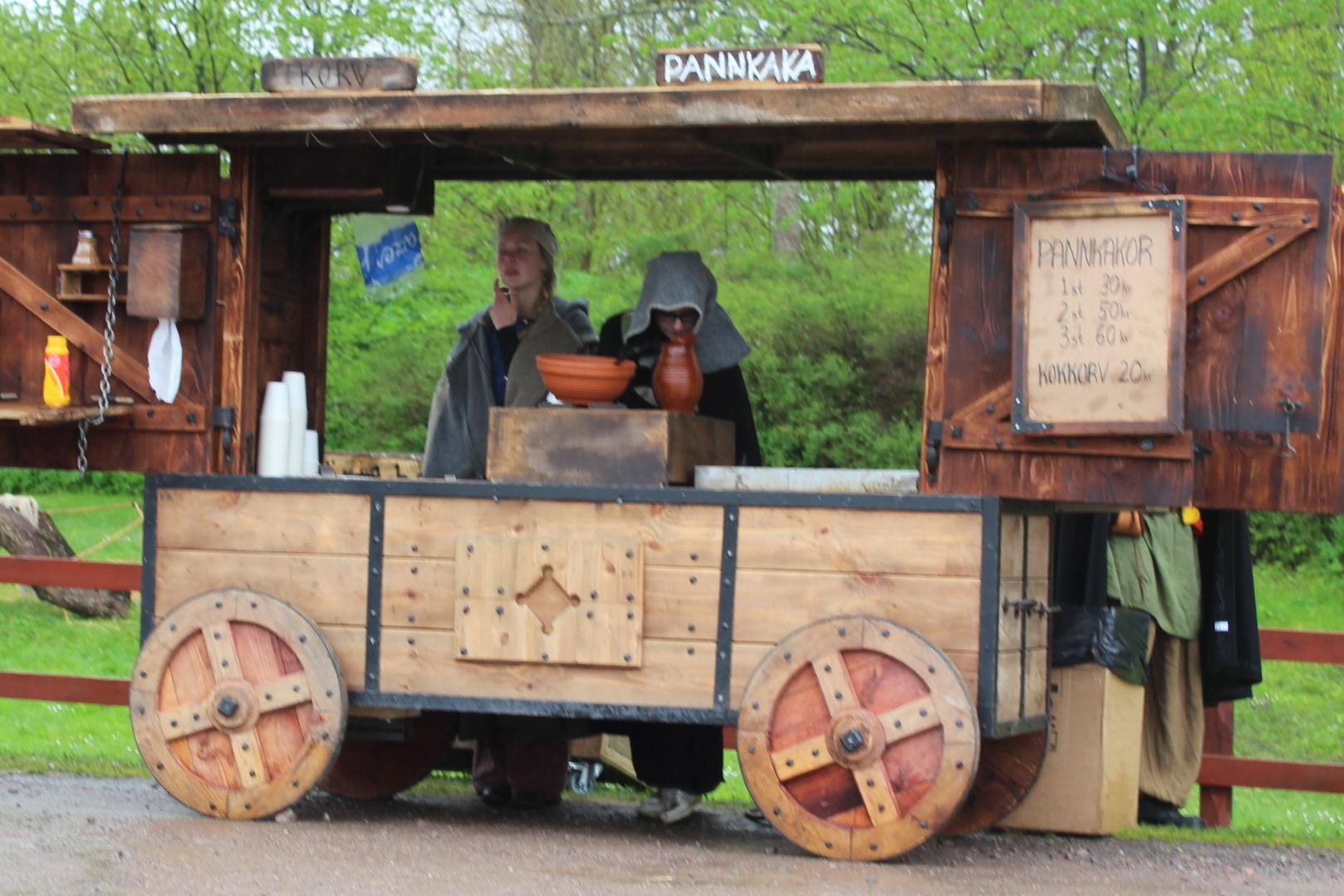
There was food…IMG_8193

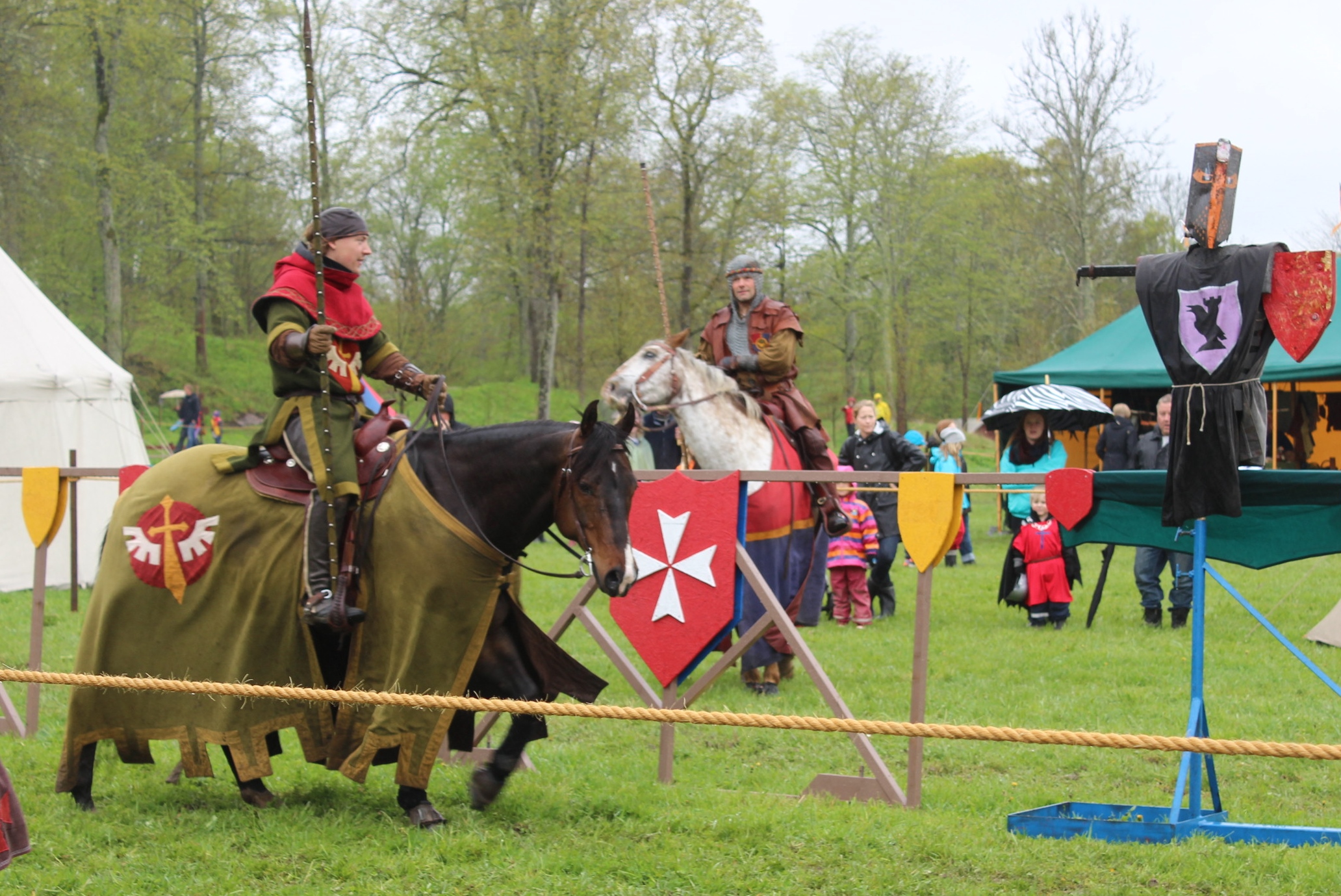
…Horses and knights…IMG_8195

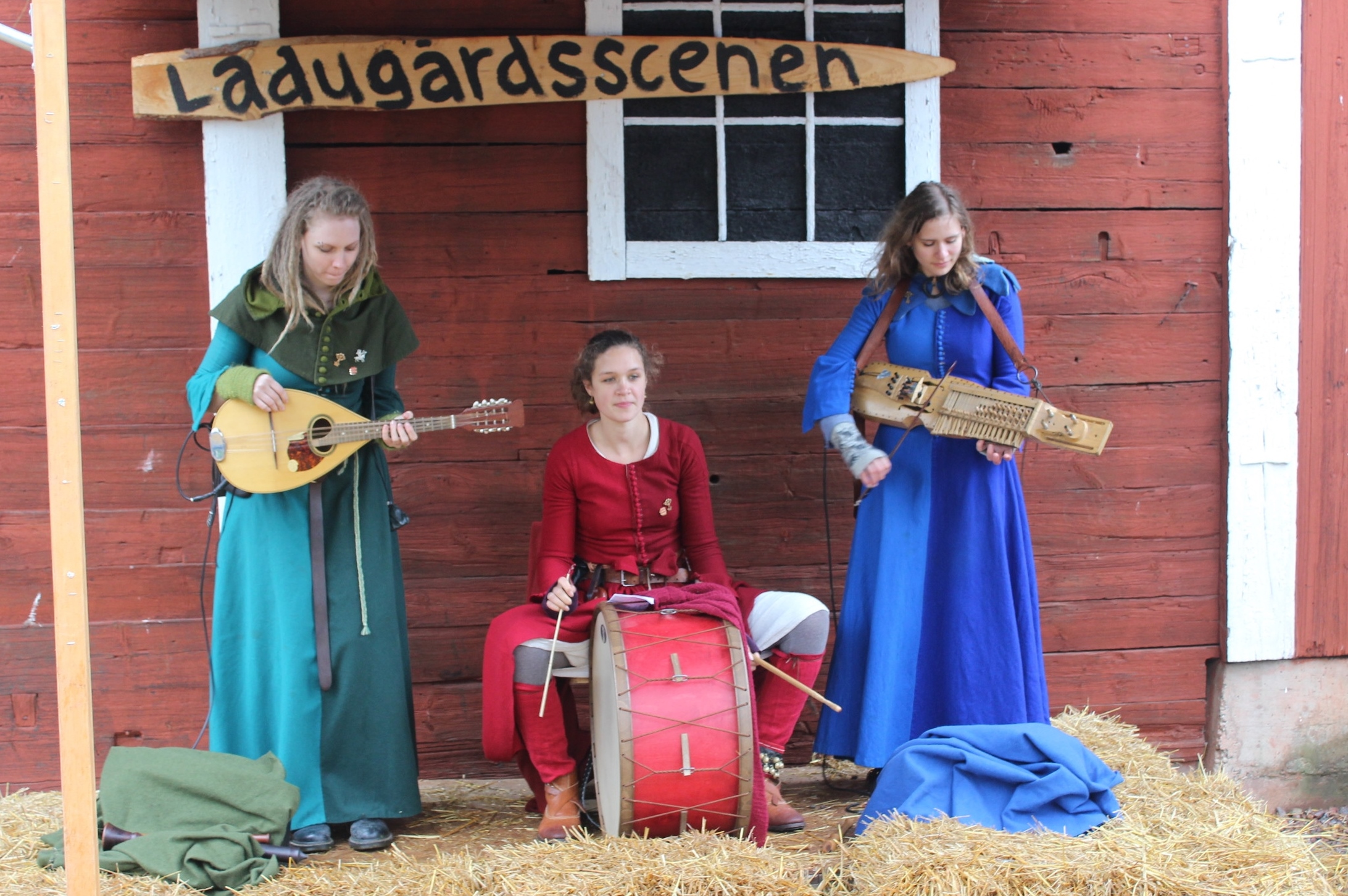
…Great music… IMG_8199

…More music…IMG_8209

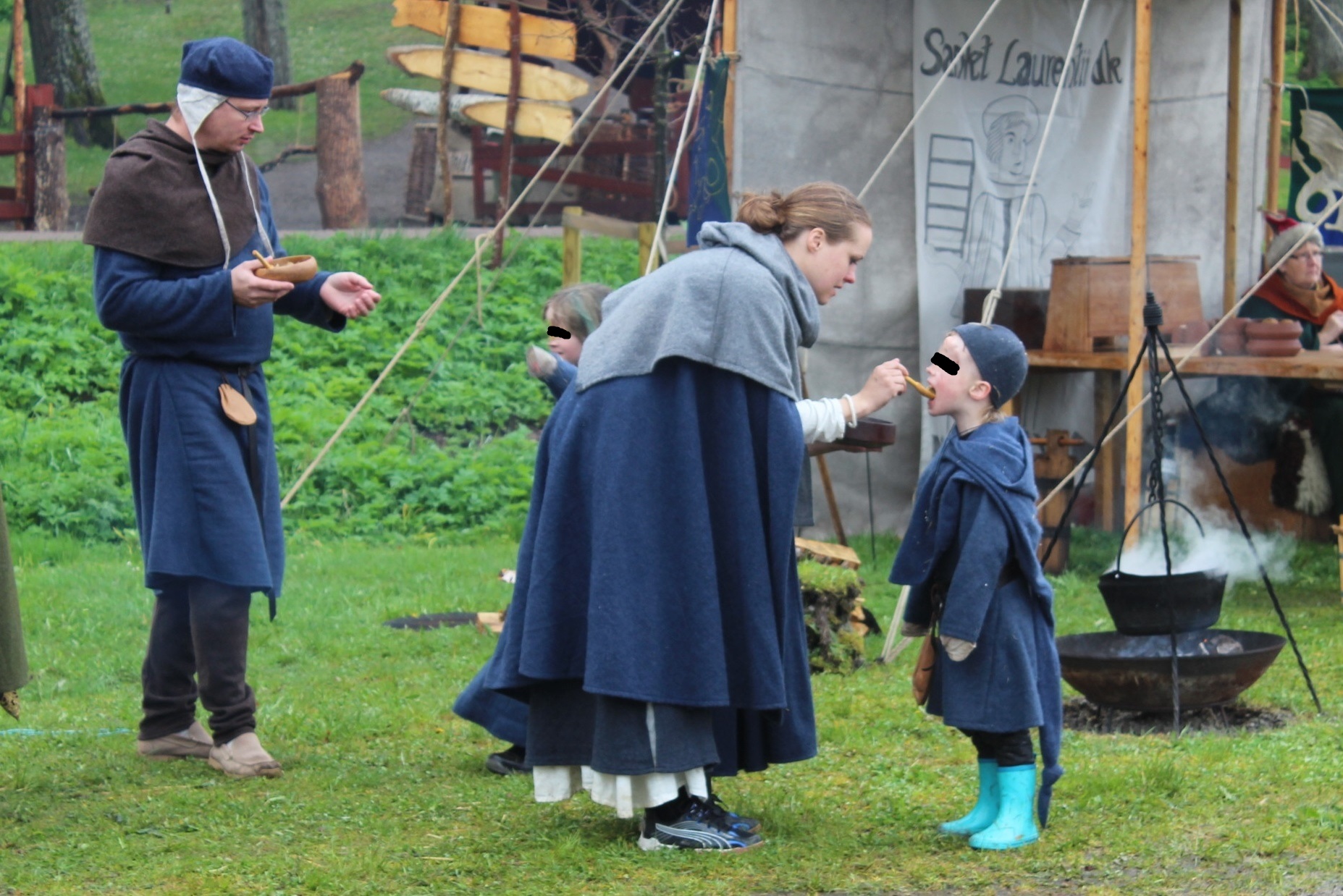
…Familys living in the camp…IMG_8191

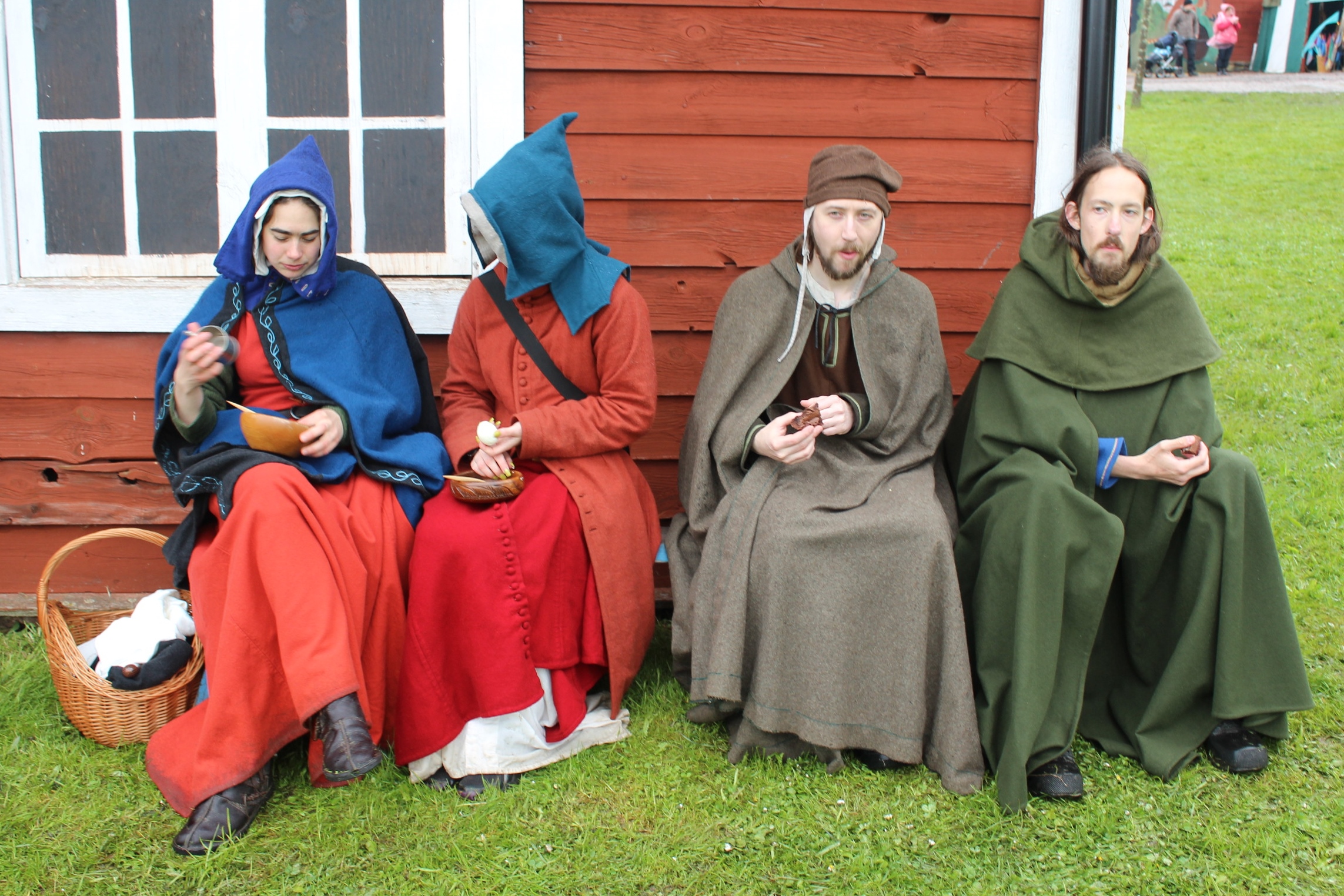
…Friends resting on a bench…IMG_8211

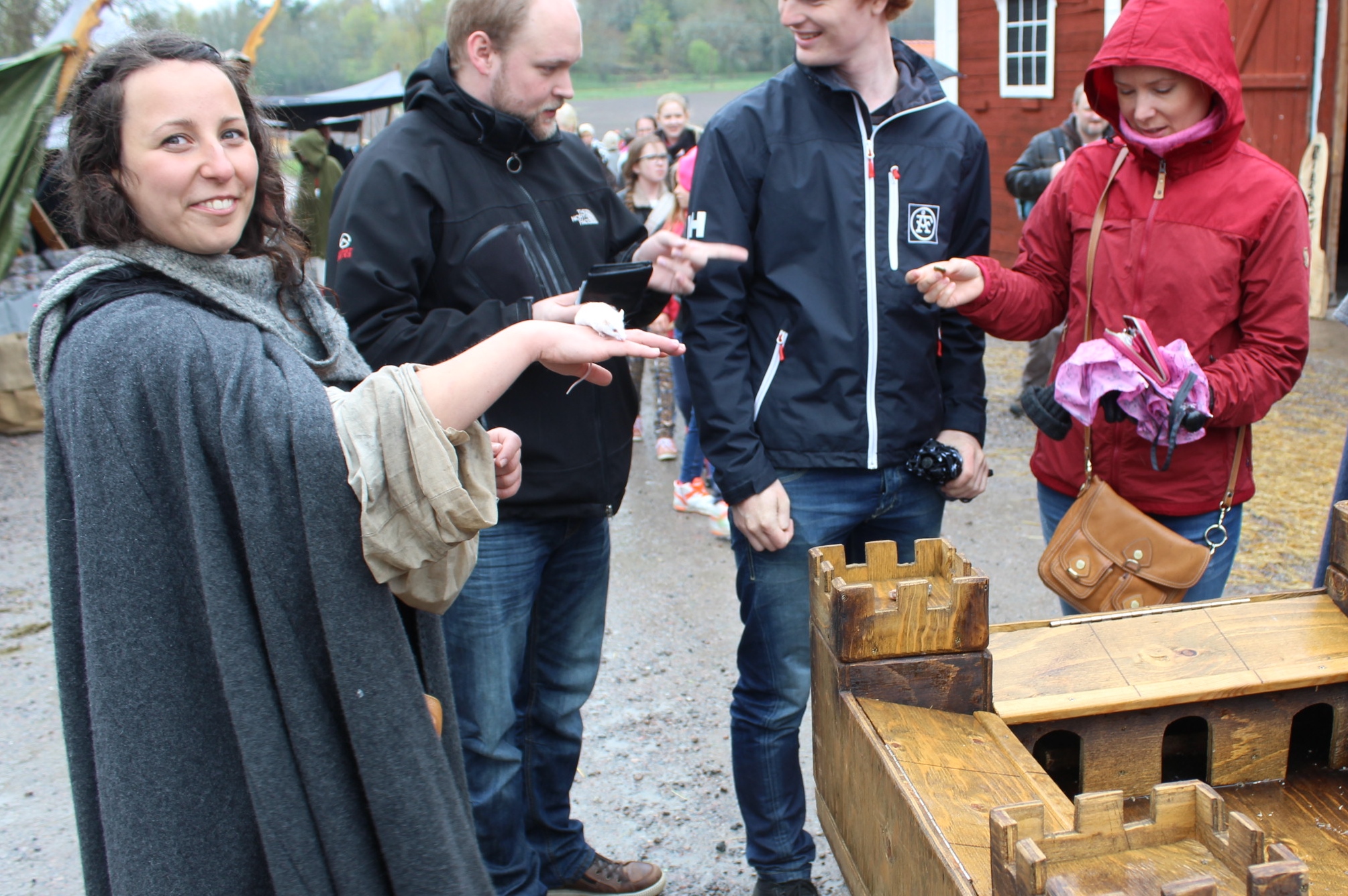
…a girl gambeling using a mouse to earn some coins…IMG_8208

And of course lots of stalls with costuming wares. Like:

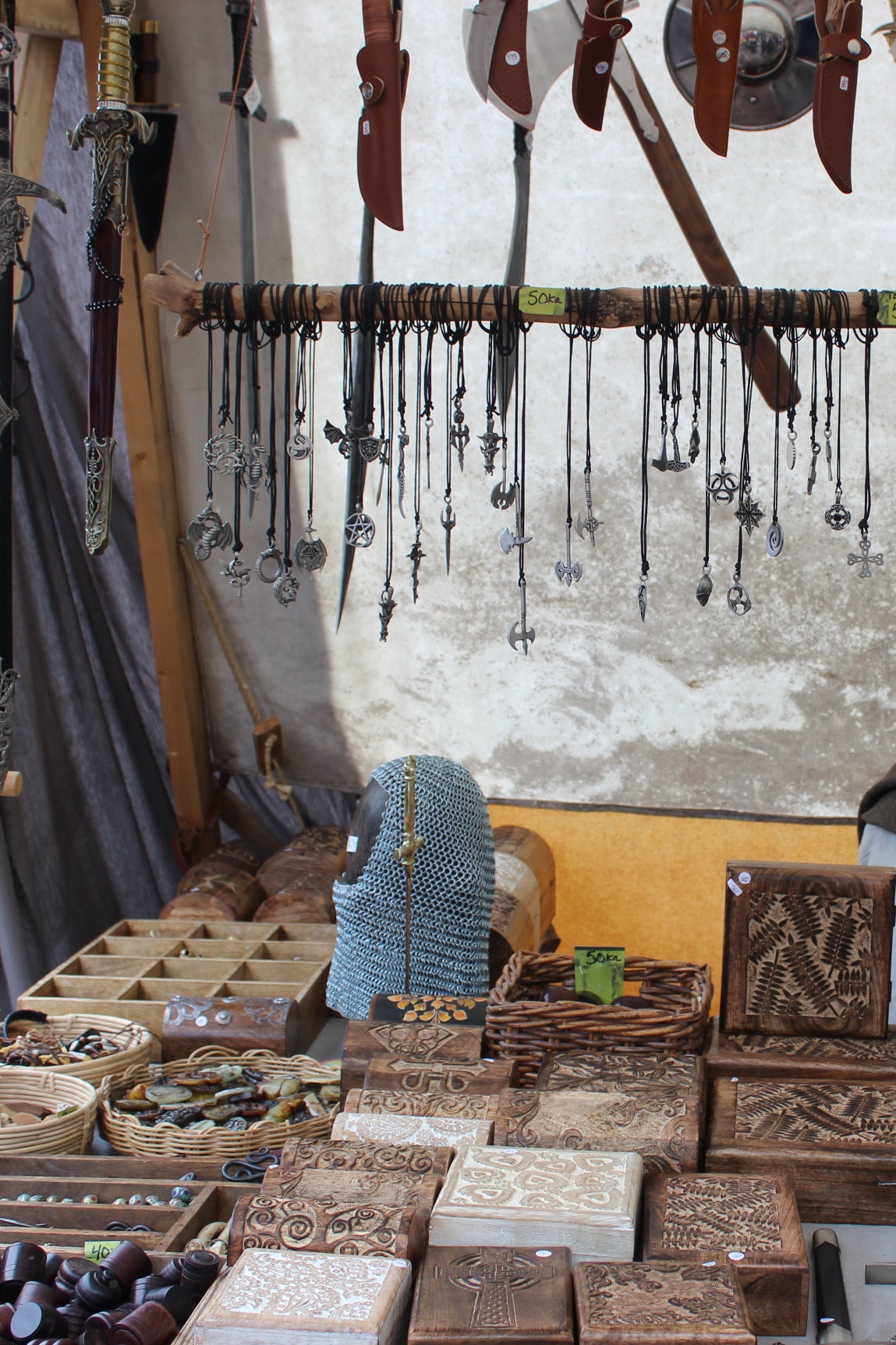
Juwelry…IMG_8207

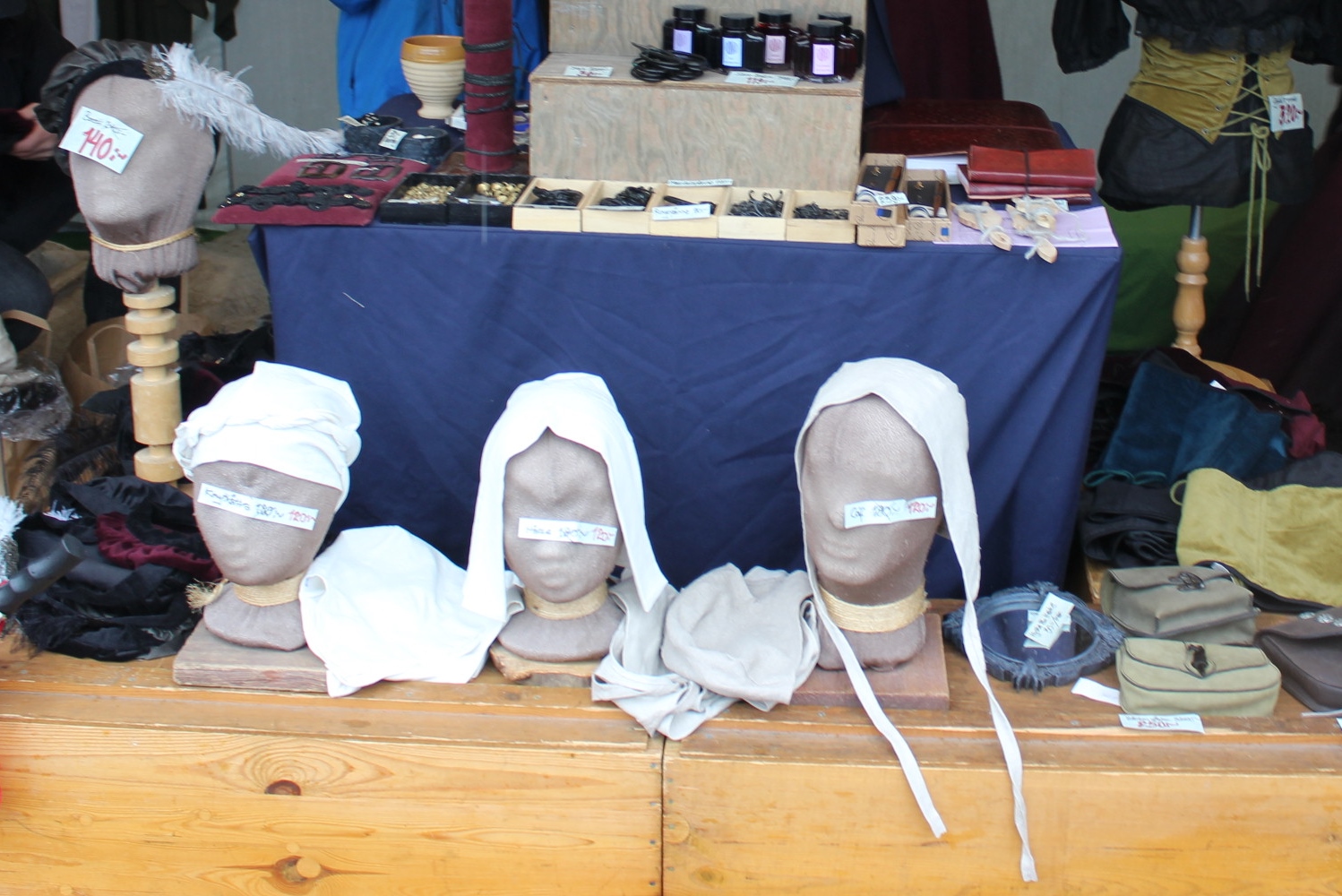
…clothing and headwear….IMG_8201

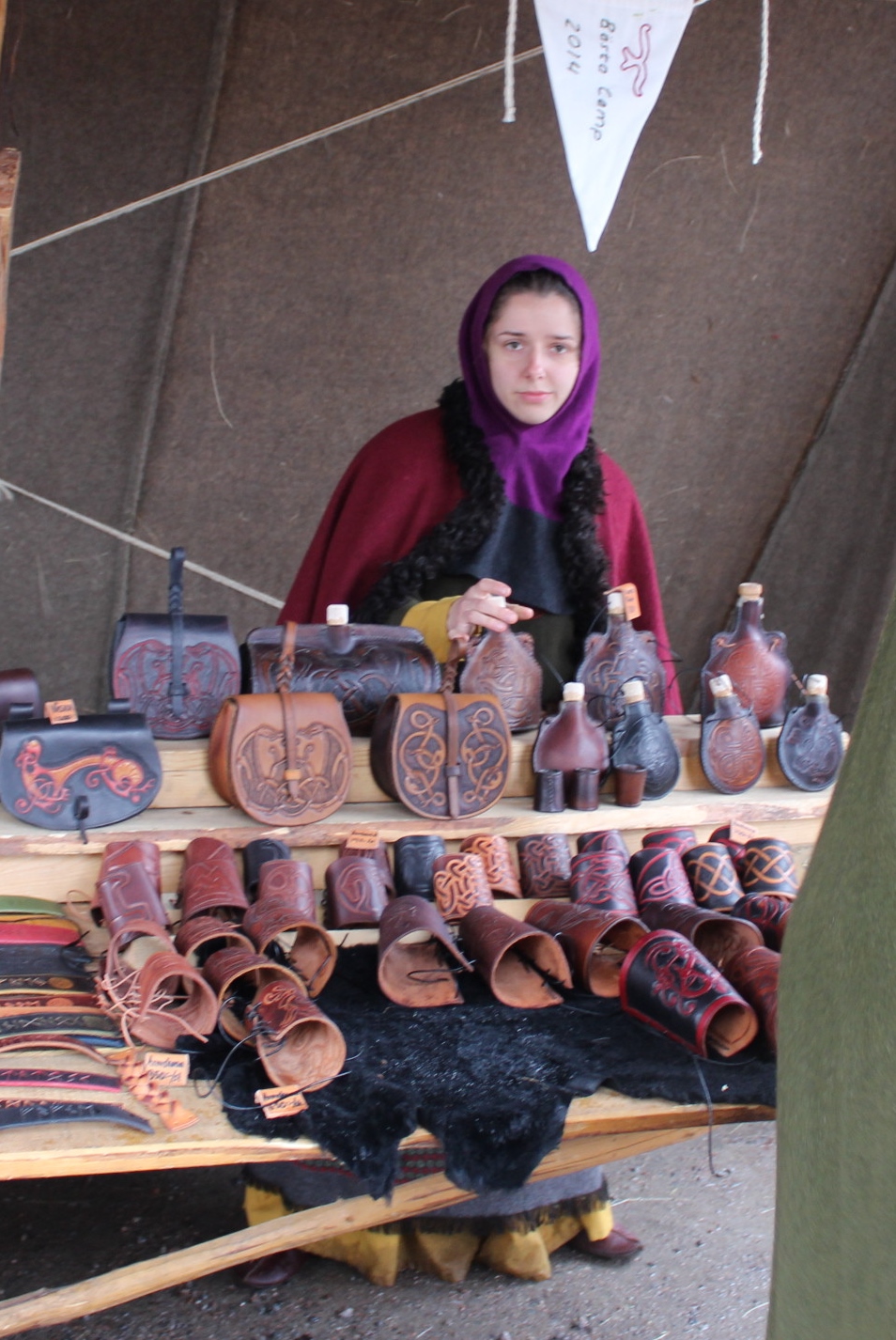
..leather items like bags, and wrist bands…IMG_8202

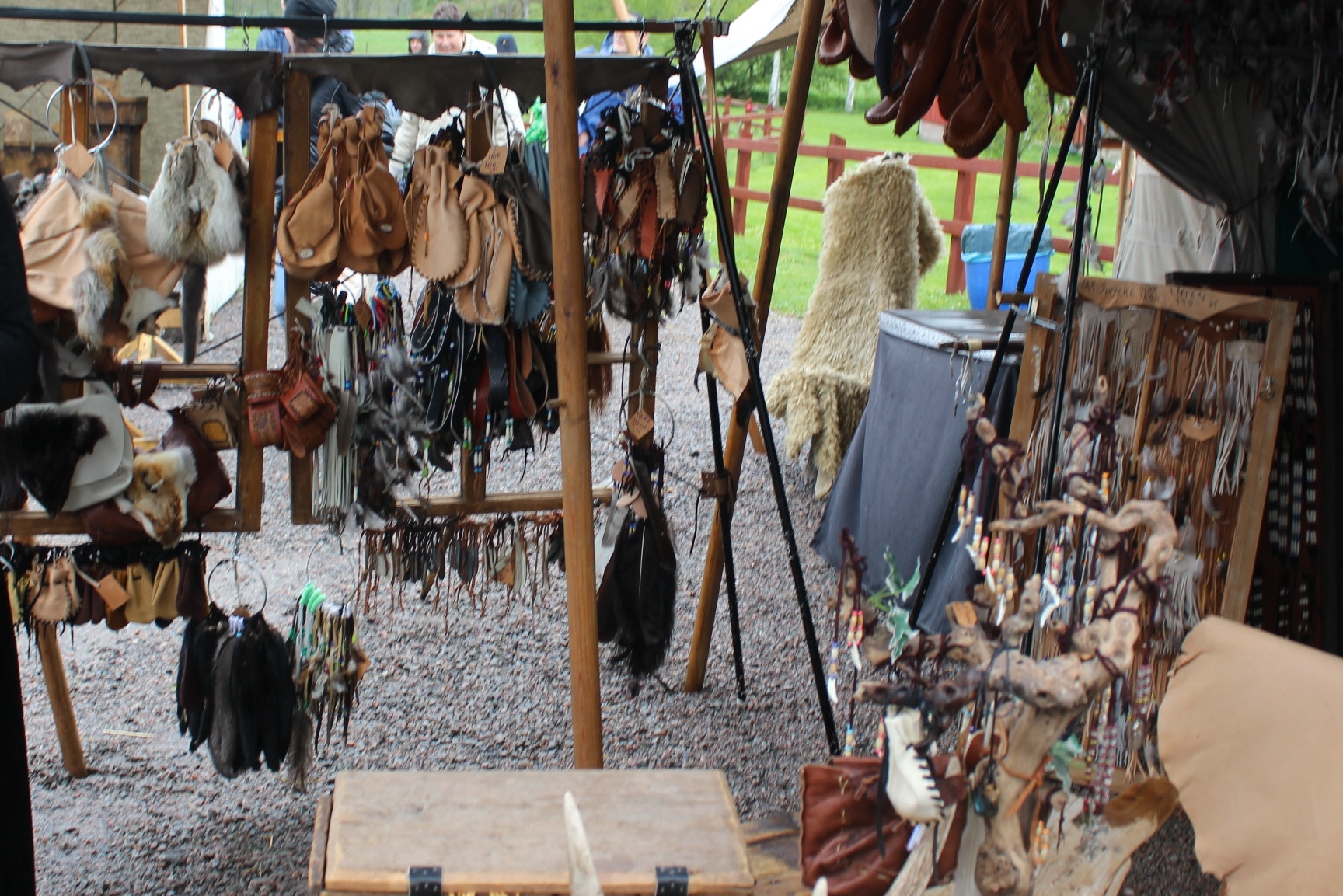
…more leather and fur items…IMG_8206

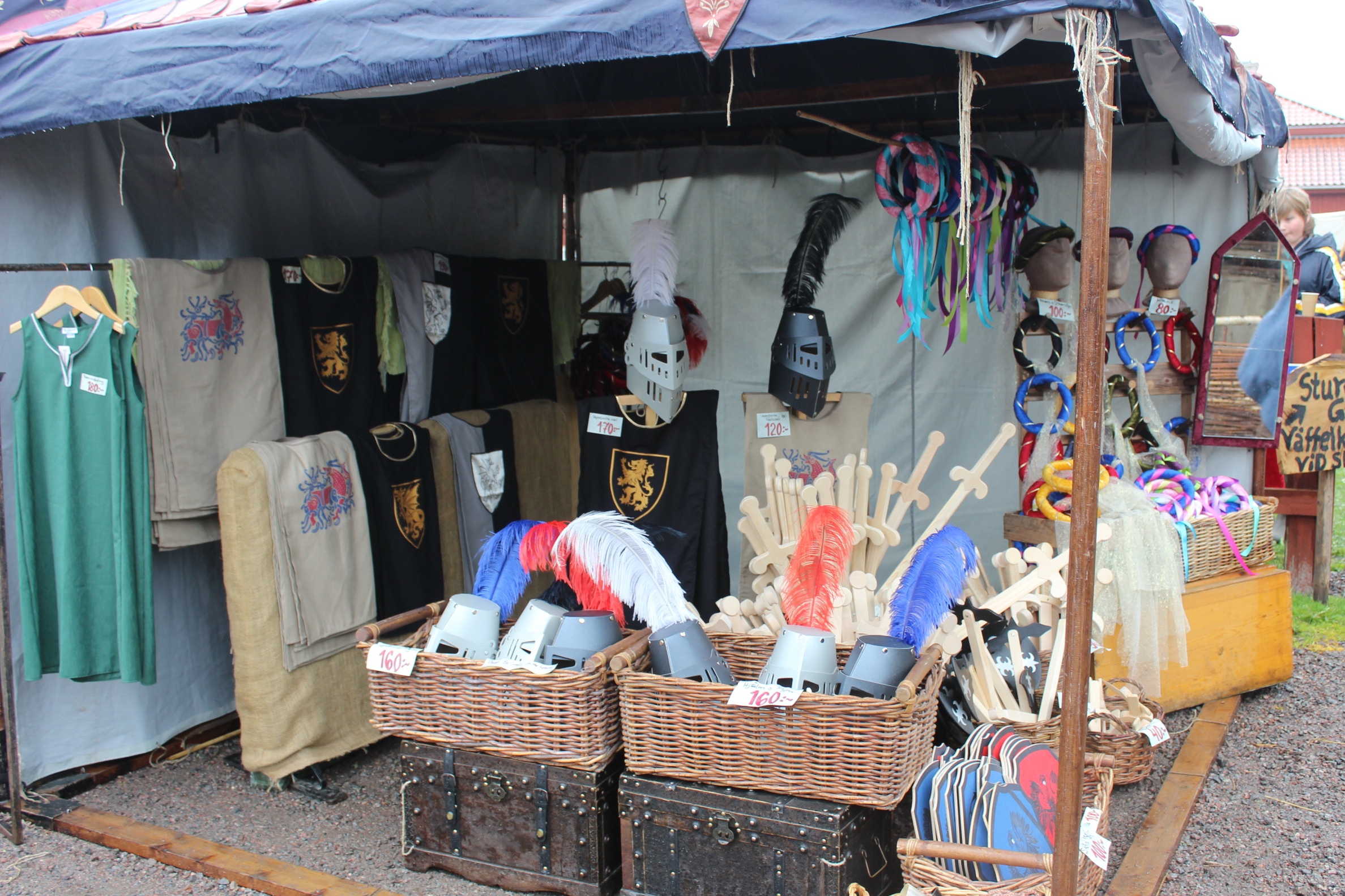
…Childrens items (helmets, swords and shirts)…IMG_8200

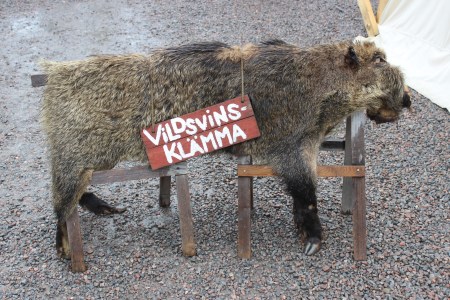
I also found this strange set. A boar posed as a sign.IMG_8203

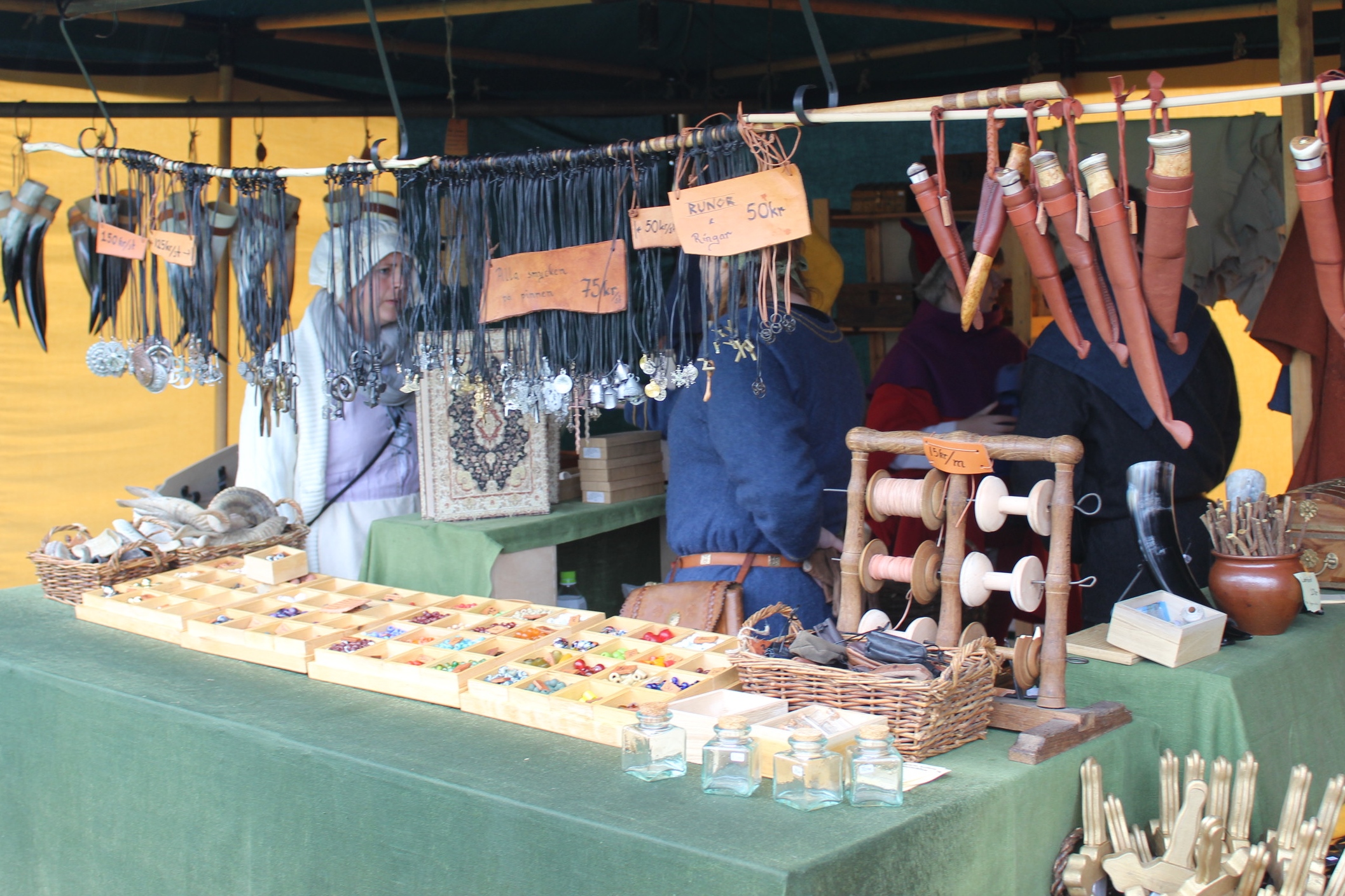
I did stop longer at some boths then other, and one I found especialy interesting was the both from “Svarta kattens handelshus“.

They sold juwelry and knifes…IMG_8212

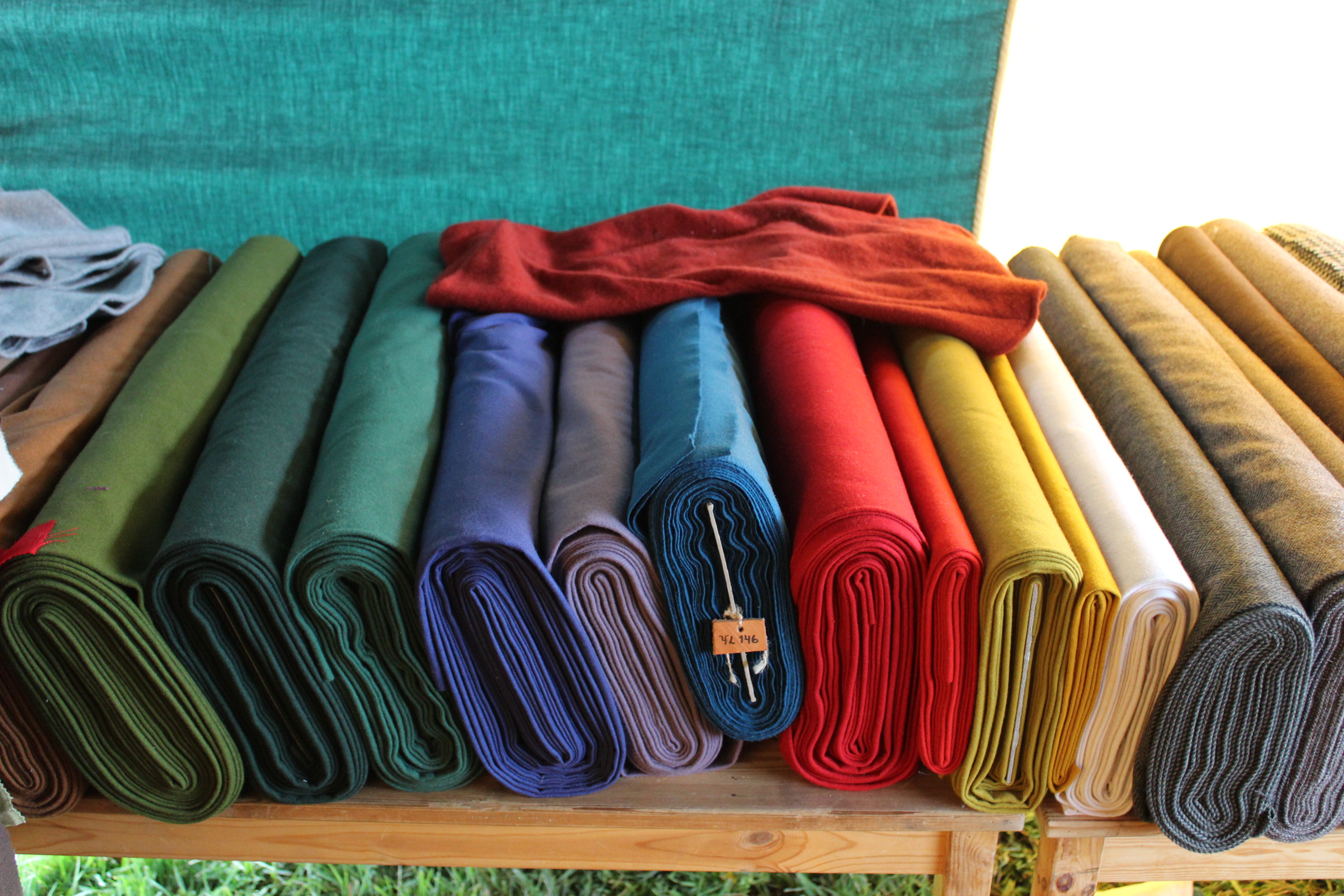
… lovely woll fabric…IMG_8213

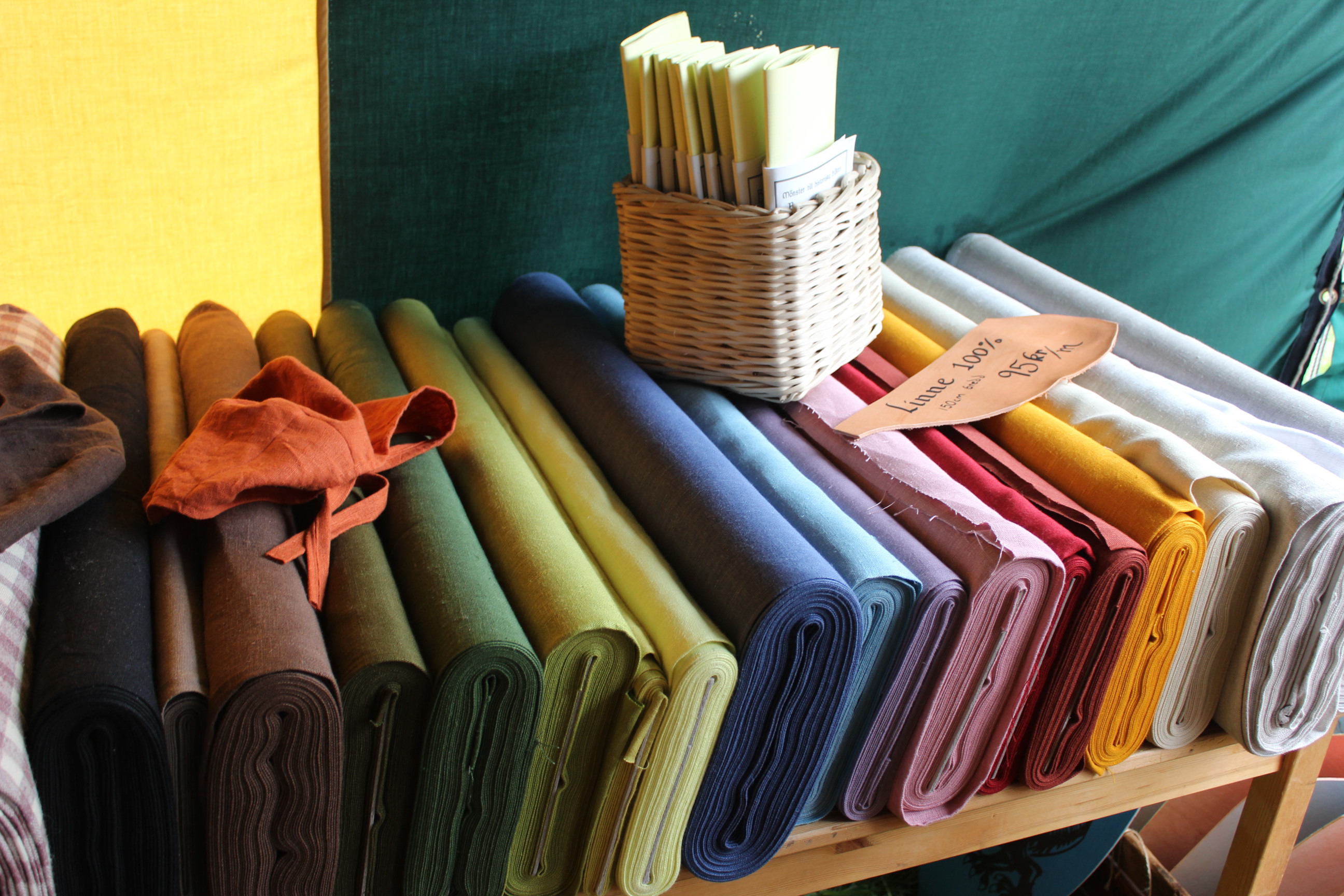
…and nice linnen fabric…IMG_8214

…medieval patterns…IMG_8215

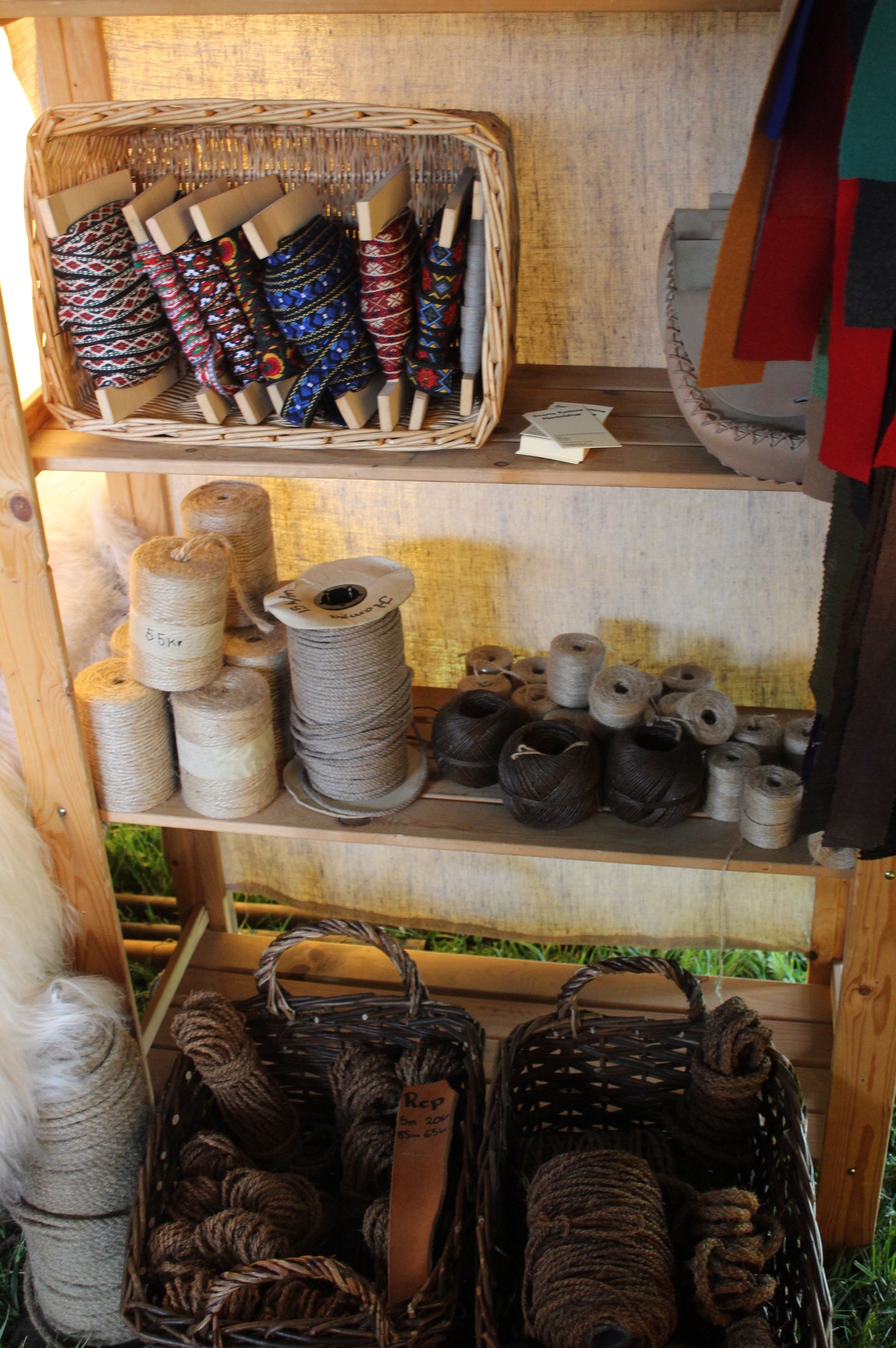
…linnen thread, ribbons and yarn…IMG_8216

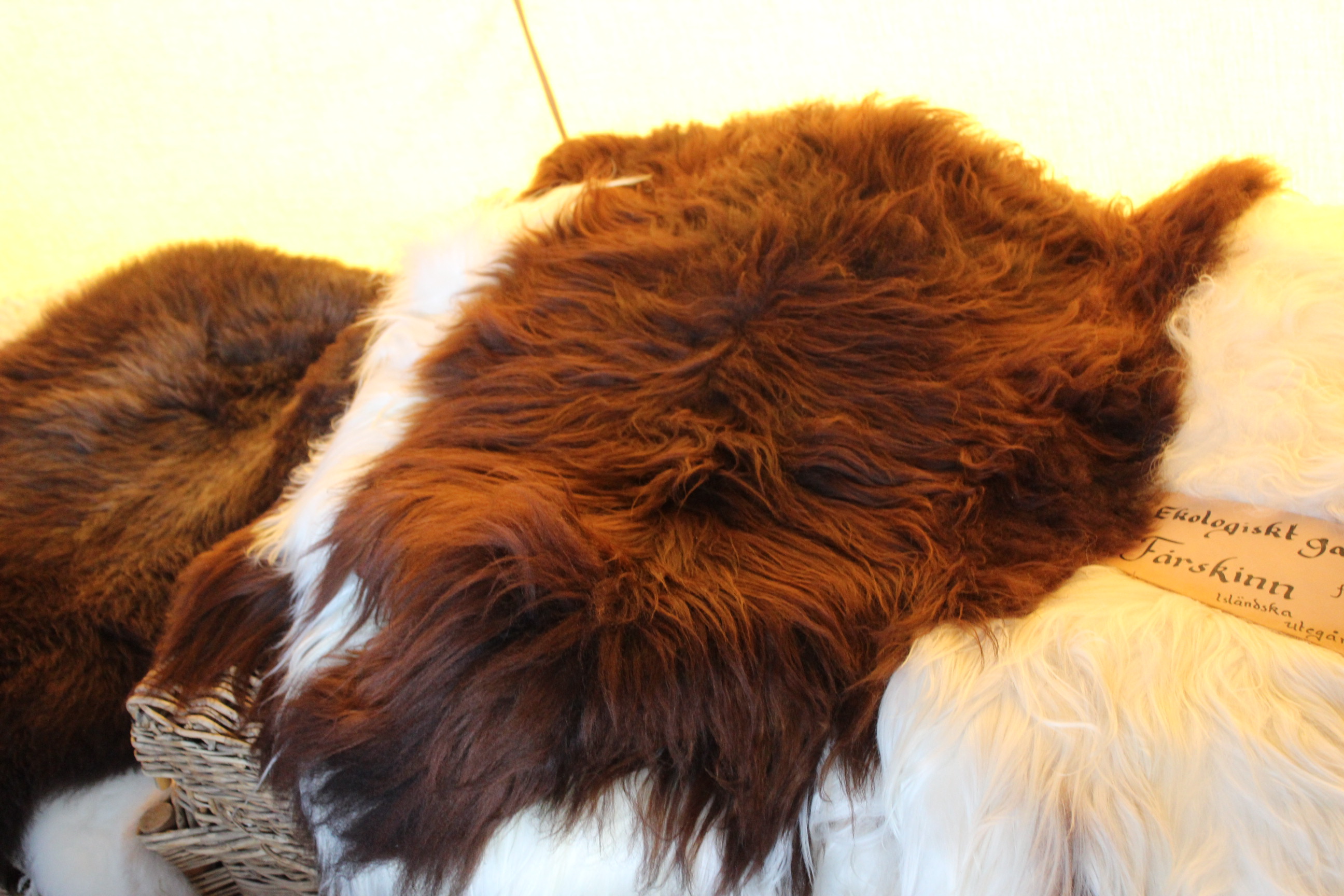
…and some realy soft furs.IMG_8217Sadly I’ve forgot to bring my purse. Or perhaps it was a good thing, since I surley would have spent a lot more then I should have, if I had had my purse.

Anyhow, I did’nt go to the fair to shop.

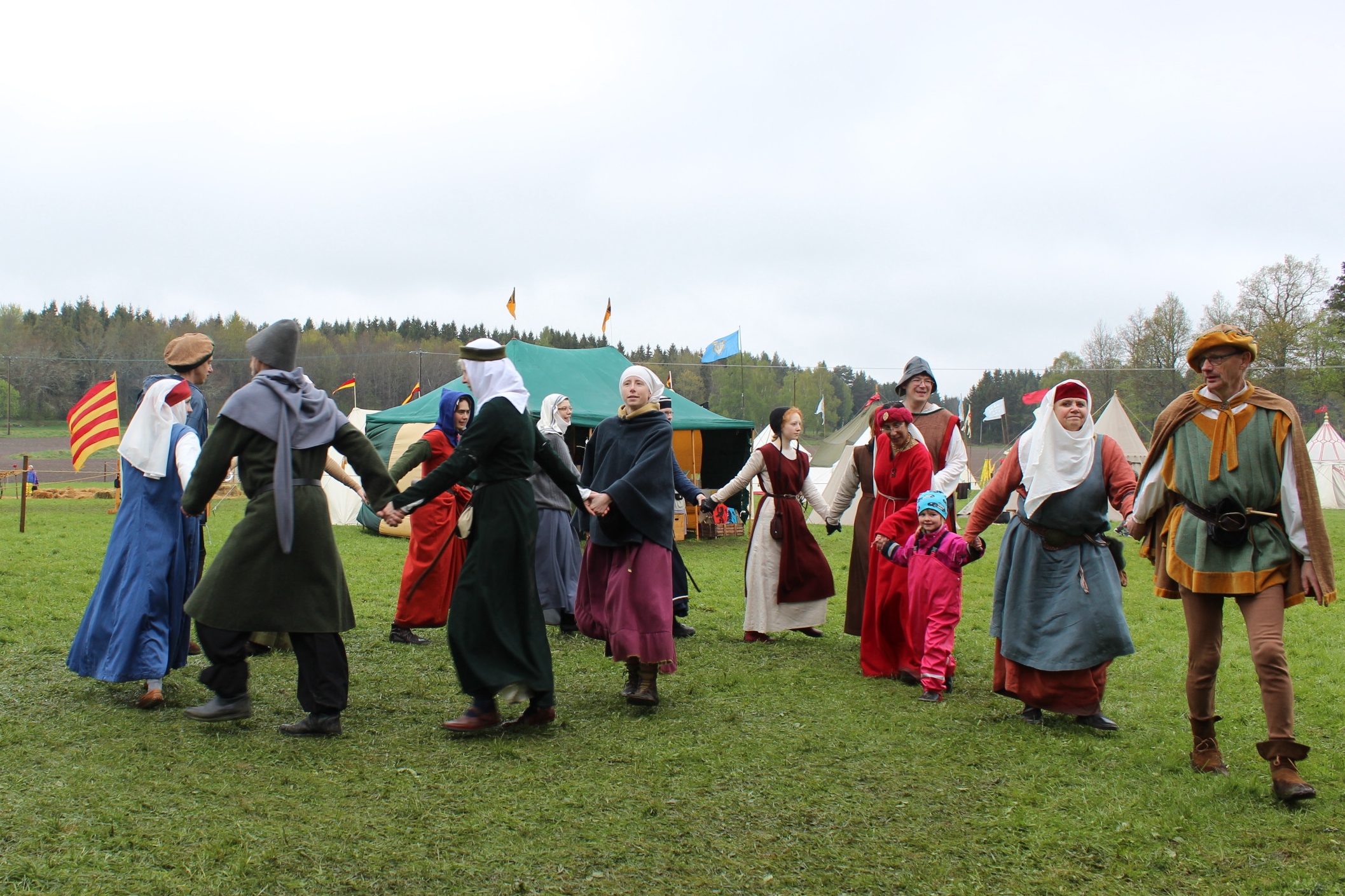
But to dance…IMG_8190Some of the members of the historical dance group.
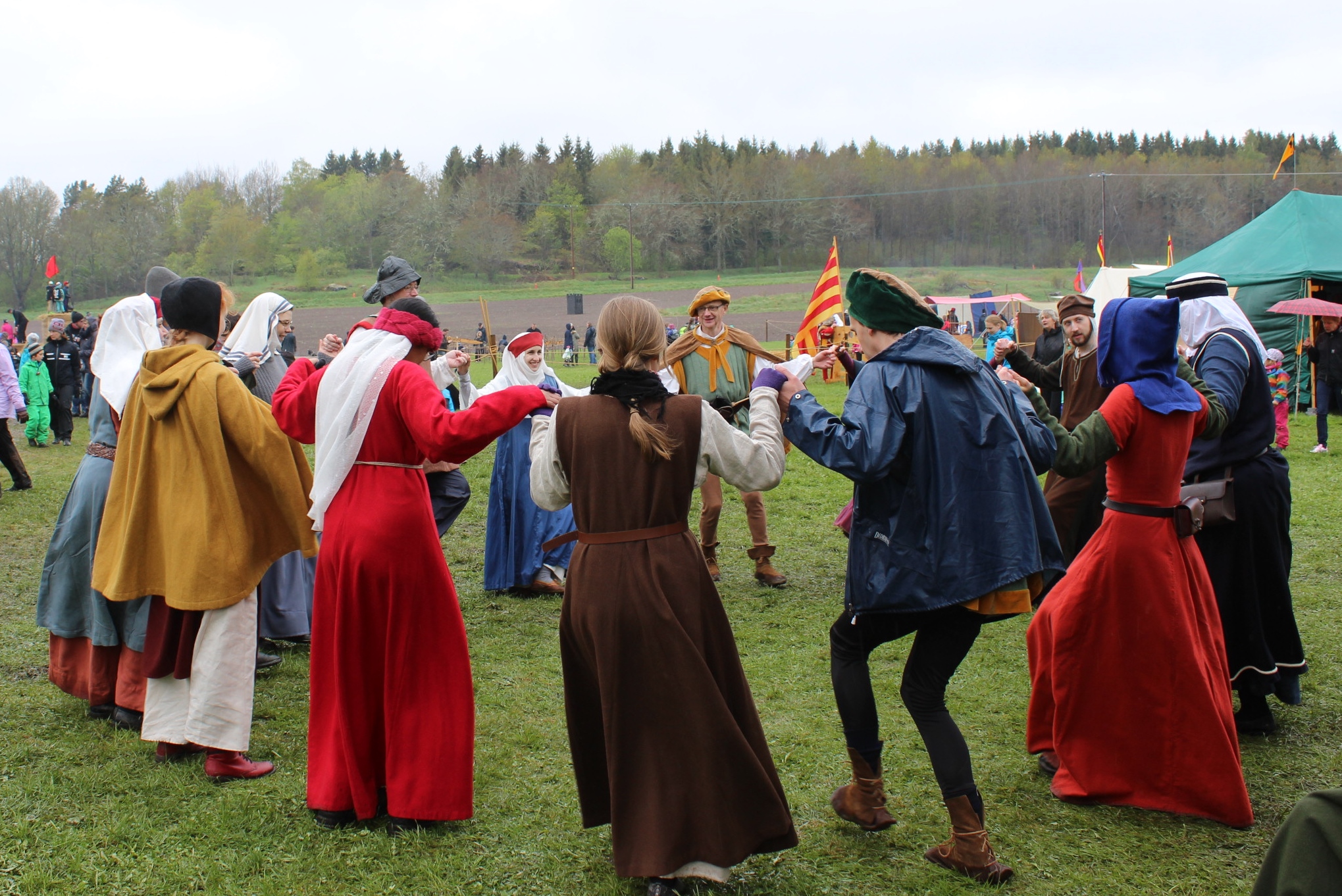
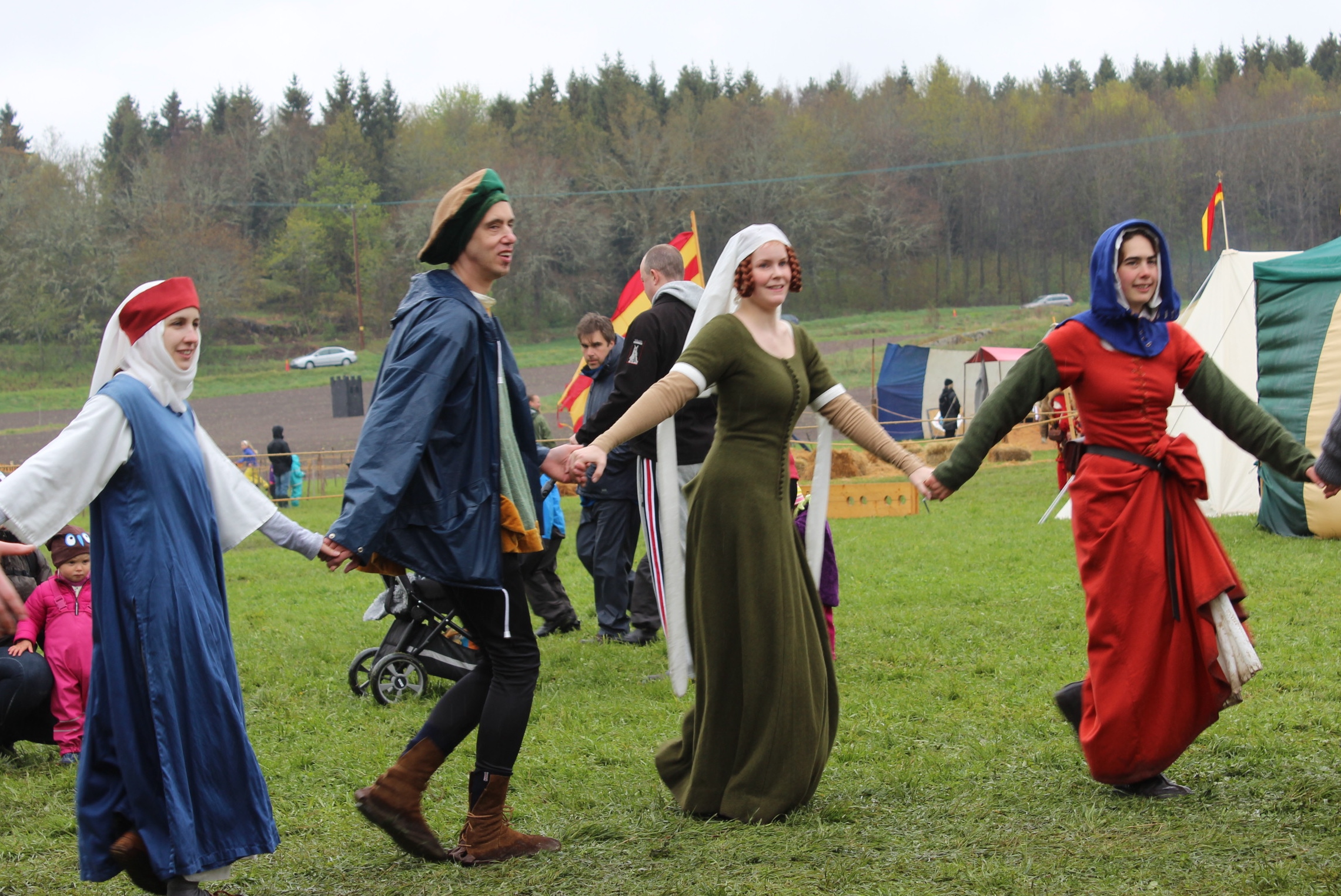
We did some of our dancing in the mudd.IMG_8221

IMG_8230The weater and location made the few on-lookers even fewer,

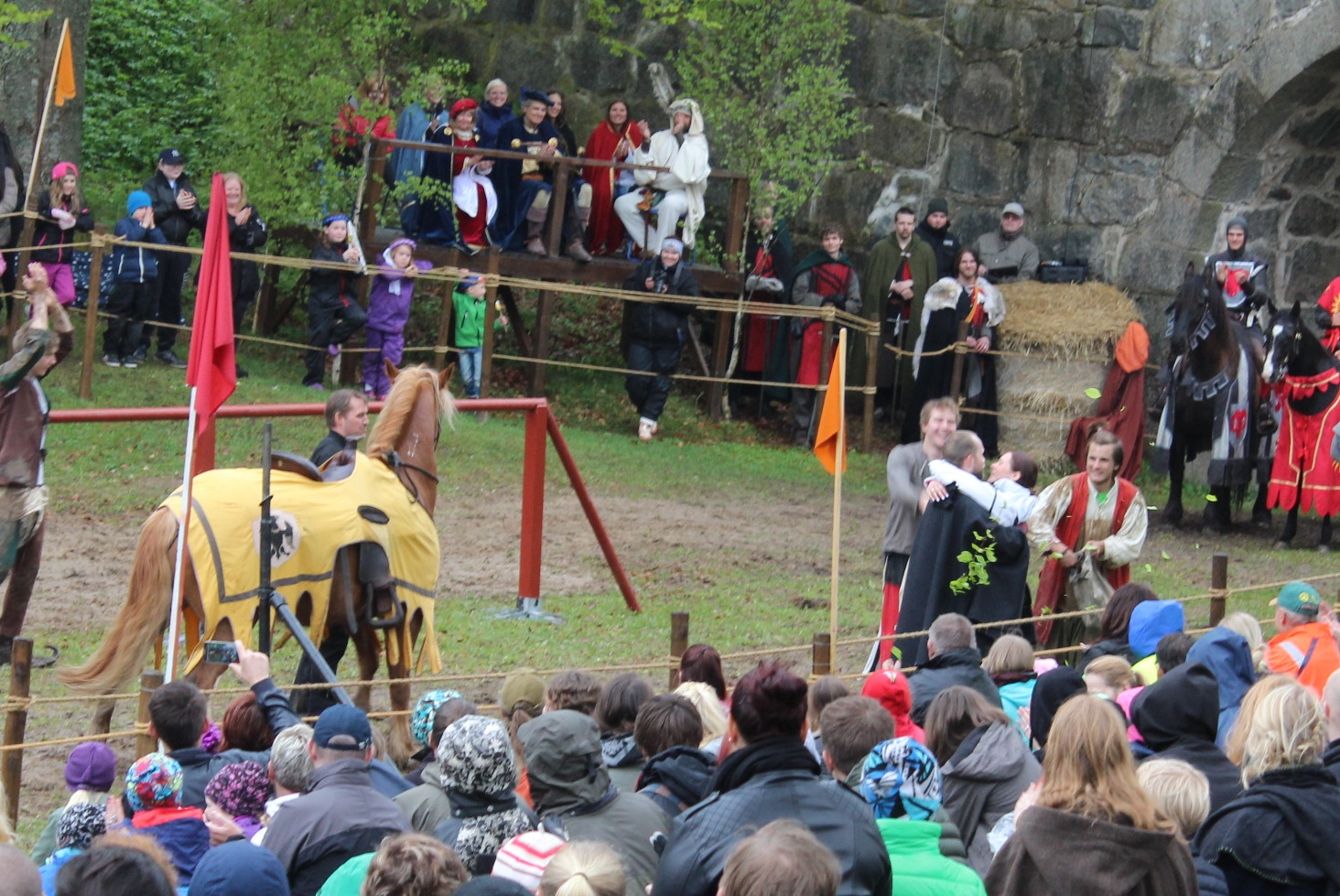
So we took our line and danced ourself onto the jousting arena. IMG_8232

Where we got company from the jesters who tried to get the wet public in good mood before the knights arrived.IMG_8249

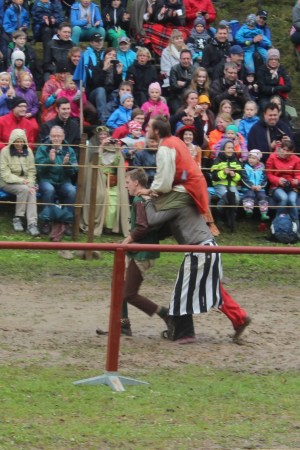
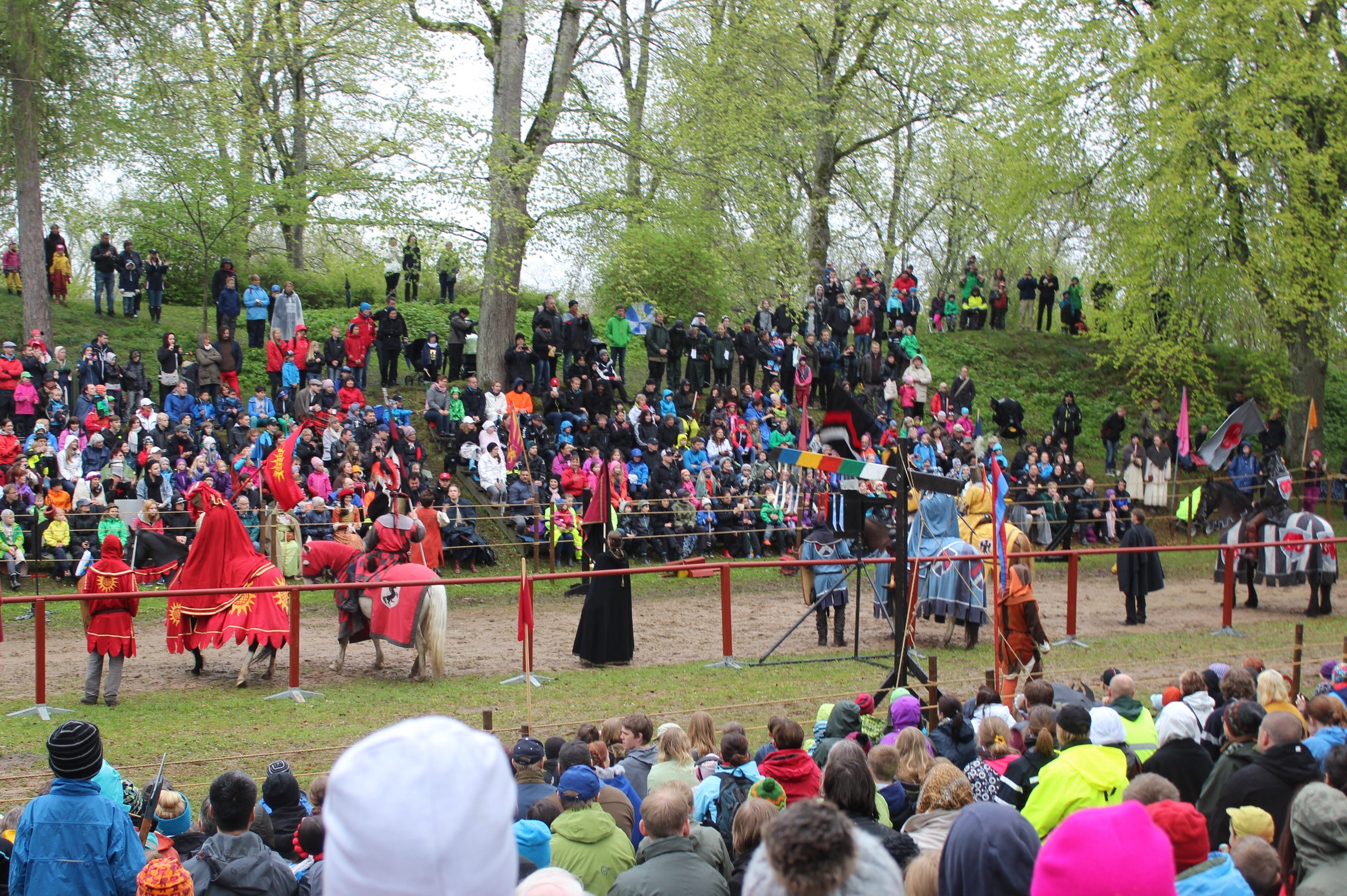
Then it was time for the high point of the day – the jousting.IMG_8245The knights saluting the audience.

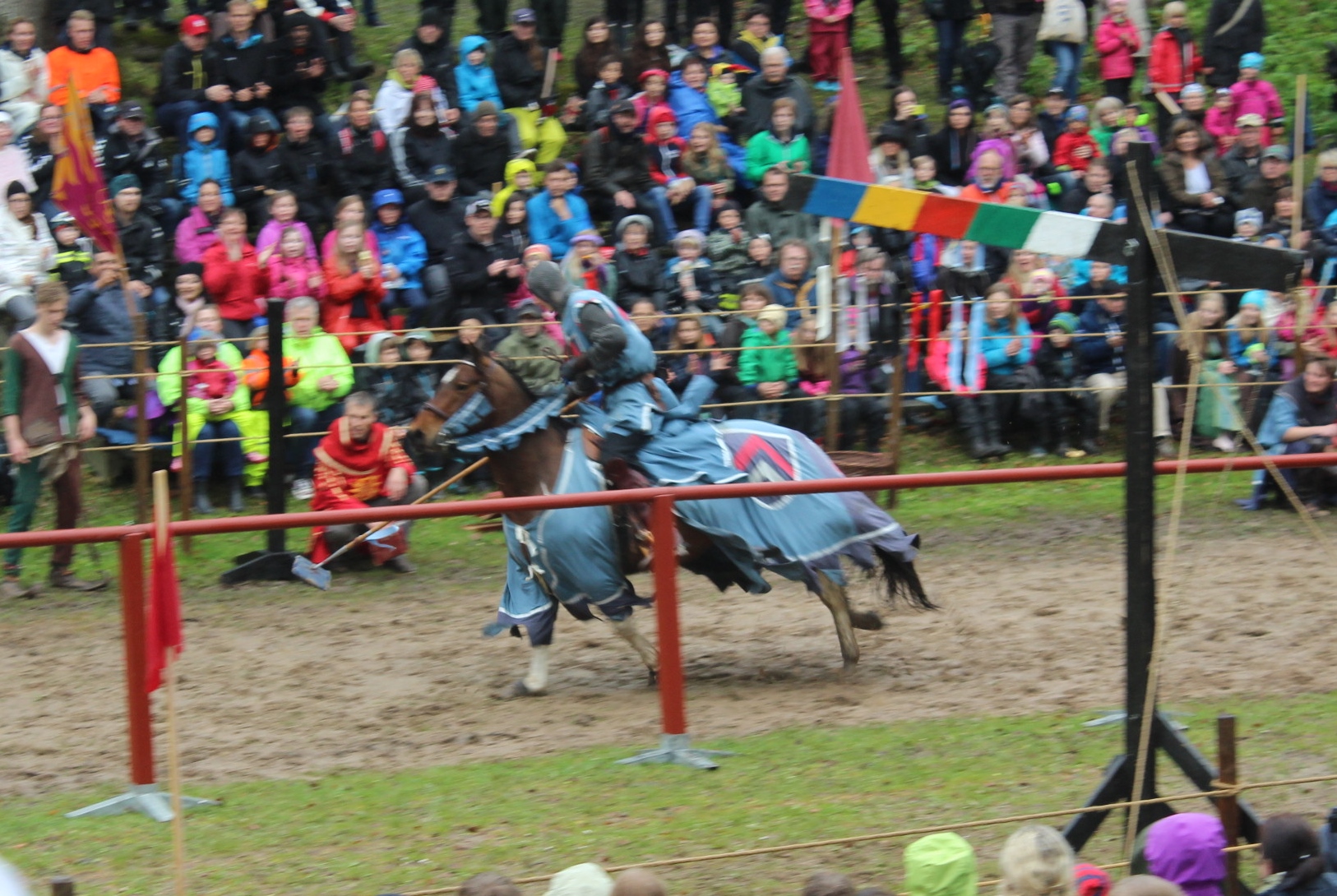
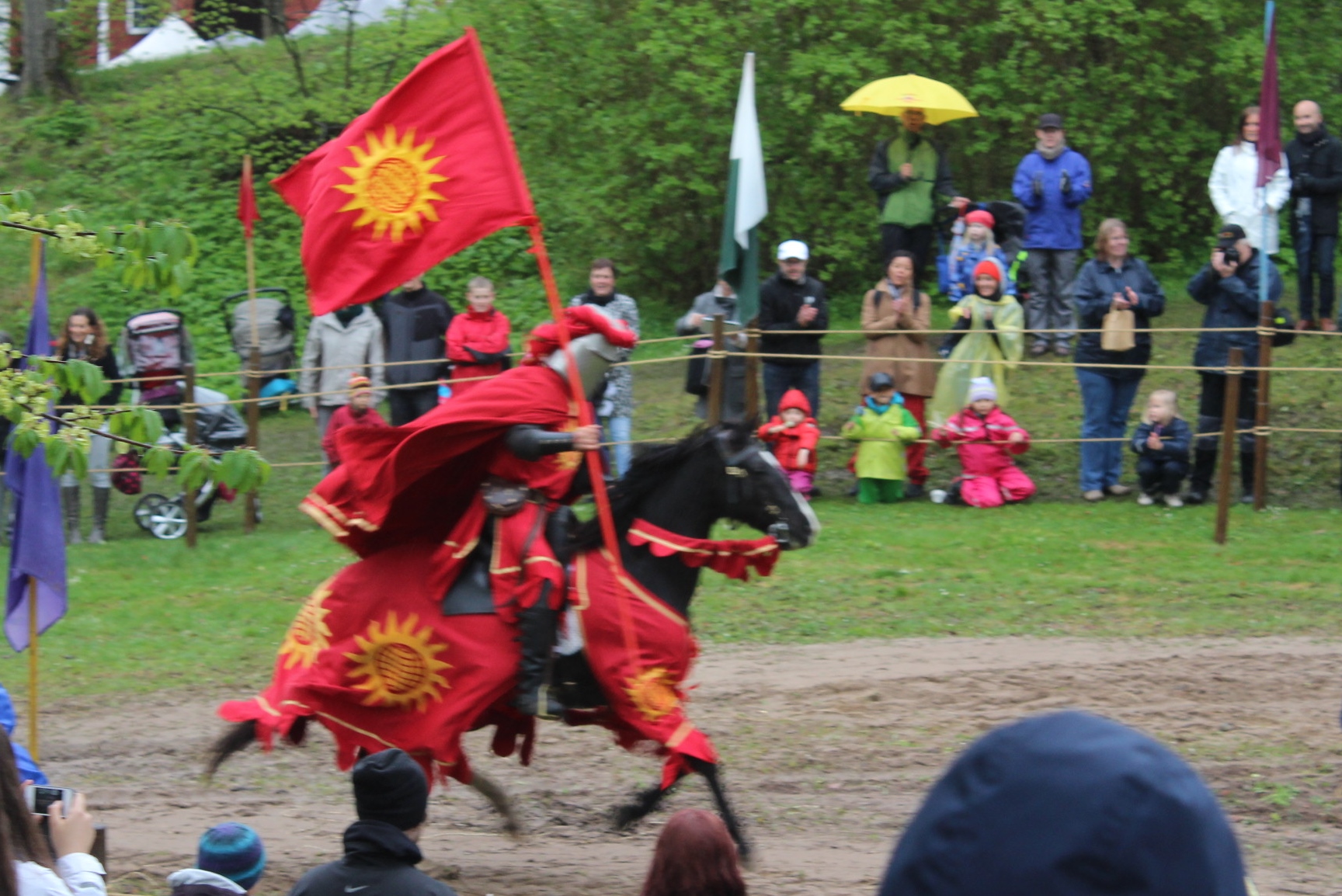
IMG_8254Full speed ahead.

IMG_8243It was realy fun to wach the talented knights and horses performing there tricks.

But the best thing must have been when the “mystery knight” rode out, picked a lady from the audiense and propsed. To think he arranged the performance and dressed as a knight to porpose in a way he knew his medivel loving girlfriend would realy appreciate. IMG_8255She sad yes.

When I got home I was cold, wet, and muddy literary up to my knees.IMG_8259Natural agenig of my costume.

White additions

For the HSF nr 9: Black & white, I decided to make some pieces I’ve needed to make my next big costuming project work.

Since my plan is to make a compleatly hand made Robe Anglaise as the next challenge (due 1 june) I needed to give myself a head start. So by making a simple piece for this one, I could save some time and make it possible to start the Anglaise earlier.

The theme of this challenge fit perfectly for some of the pieces I needed for the “Art” gown to be finished.

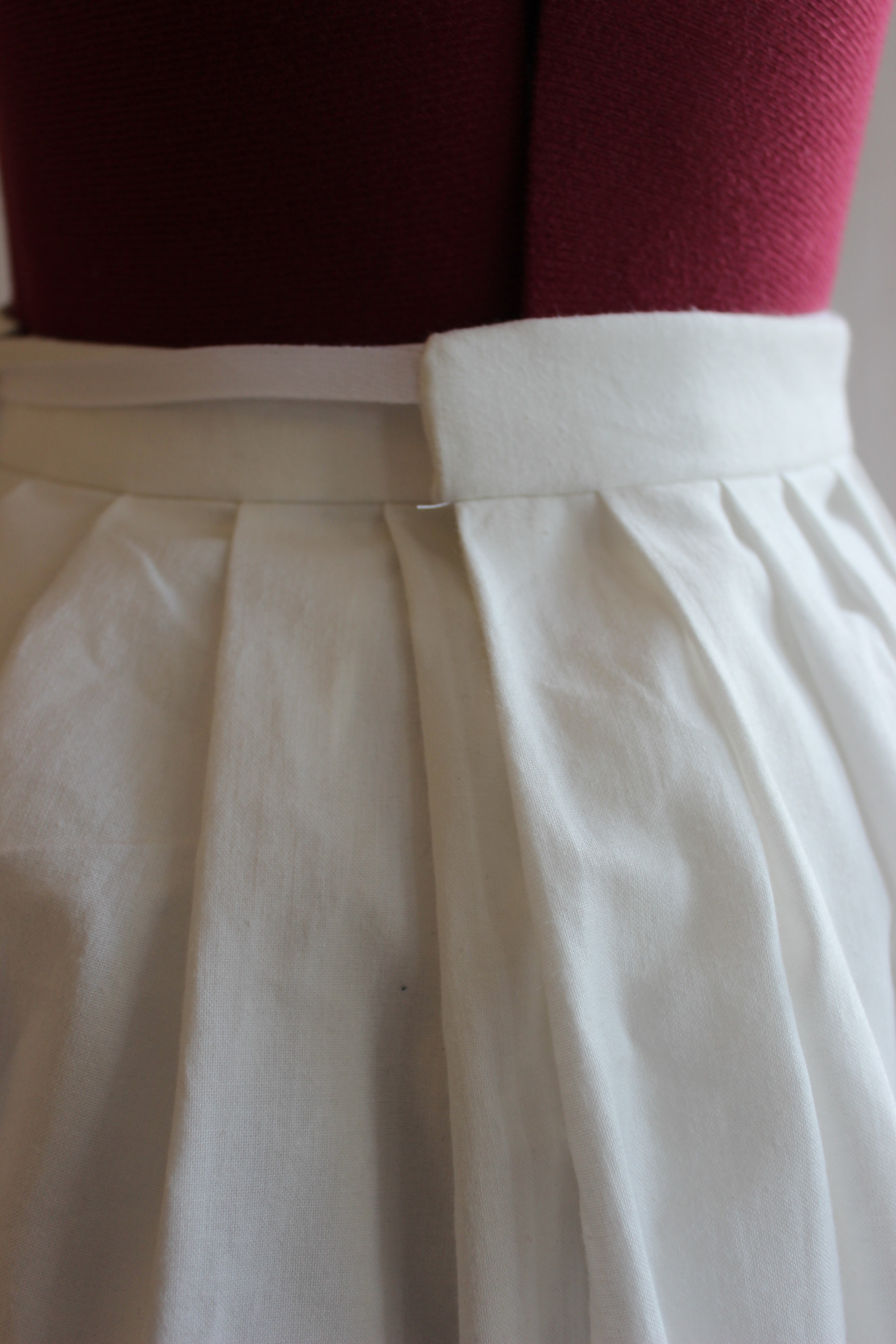
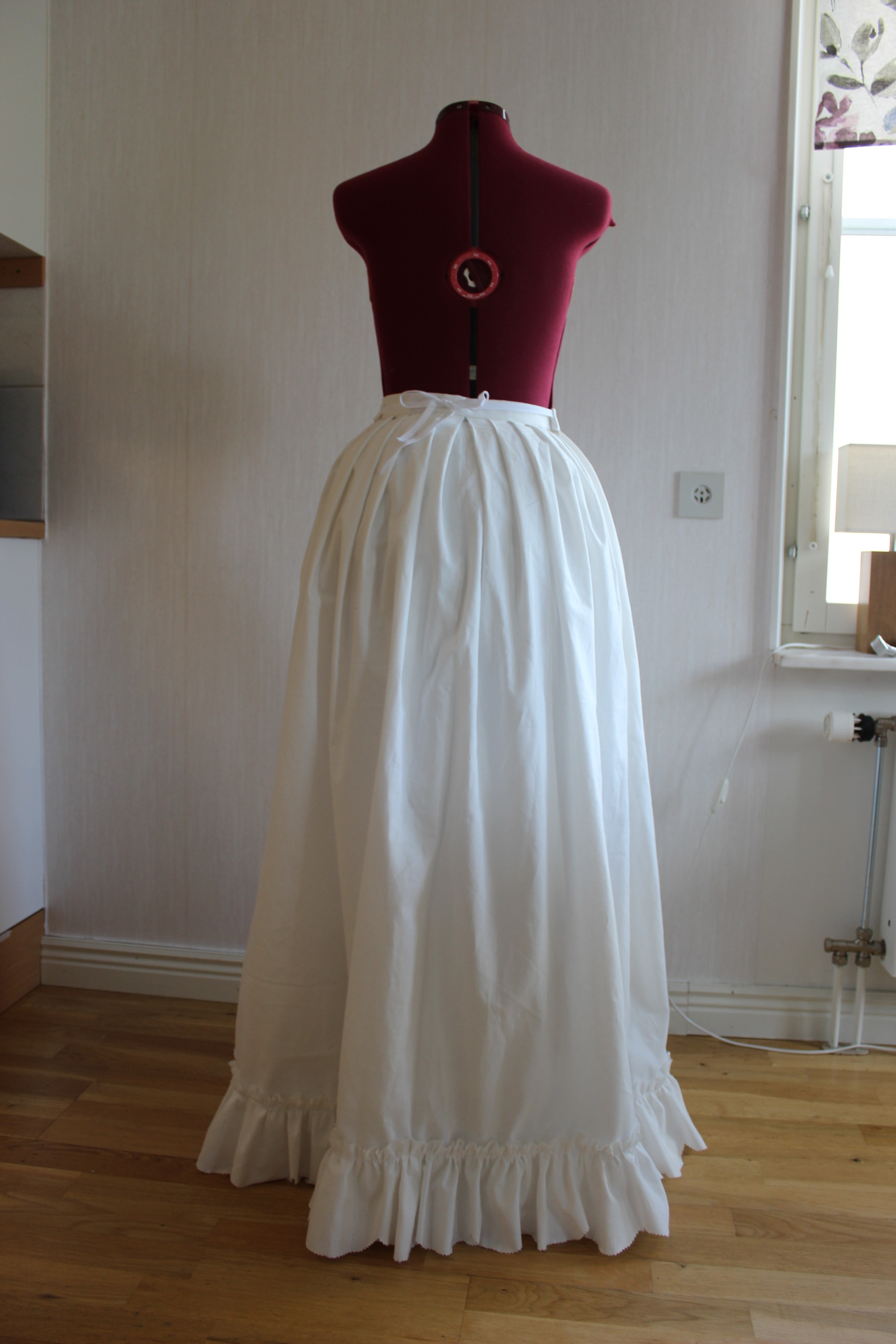
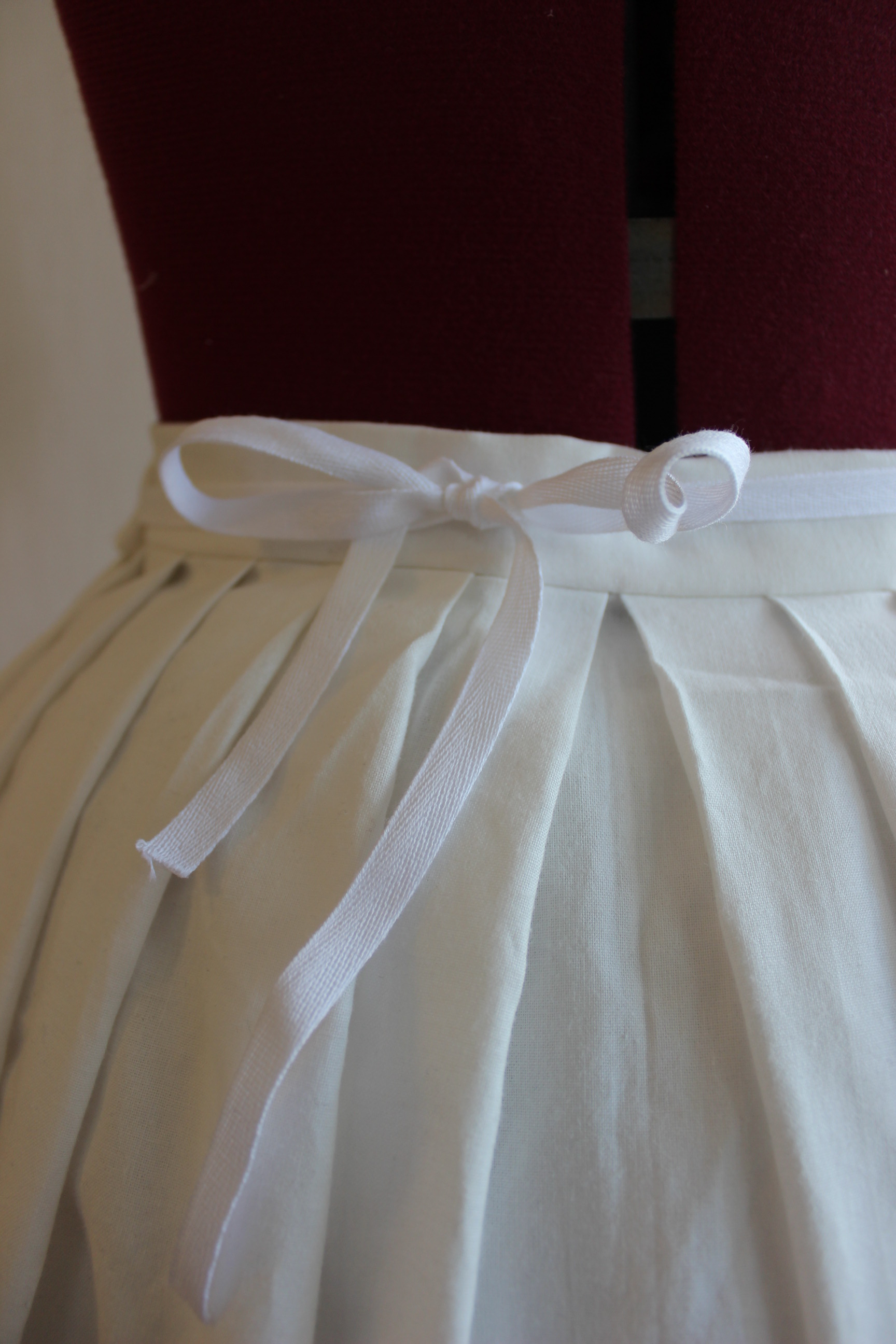
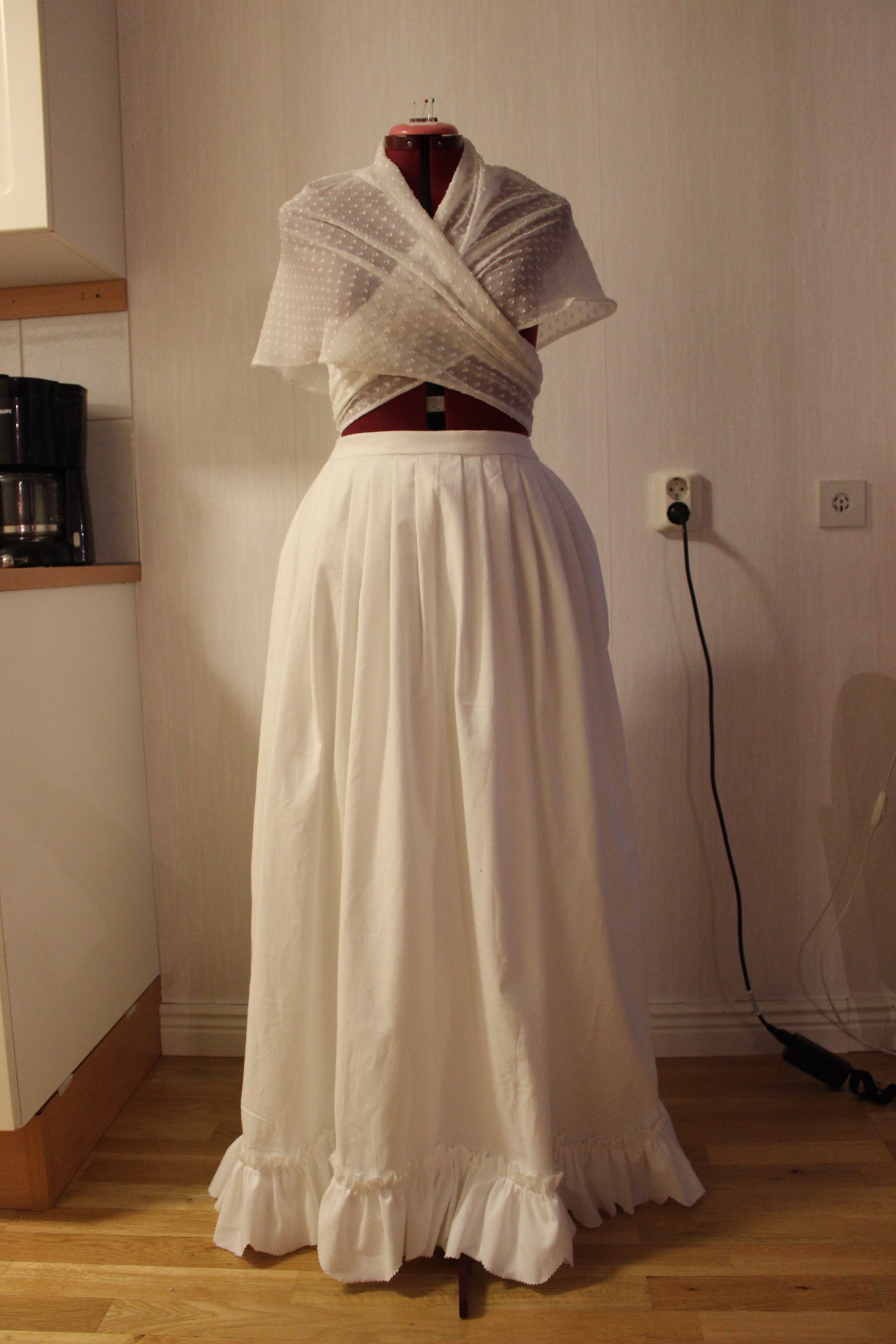
First: The skirt.

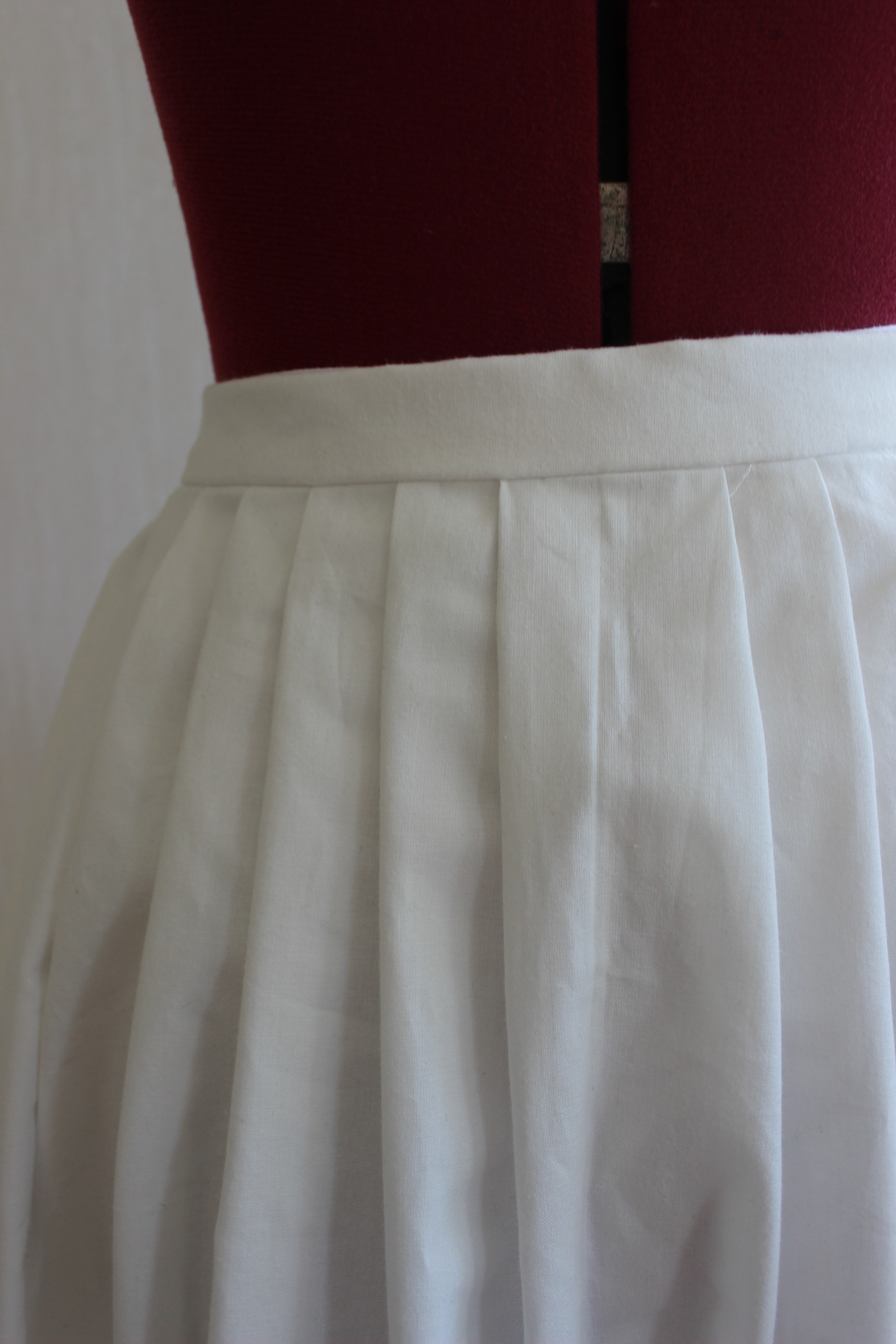
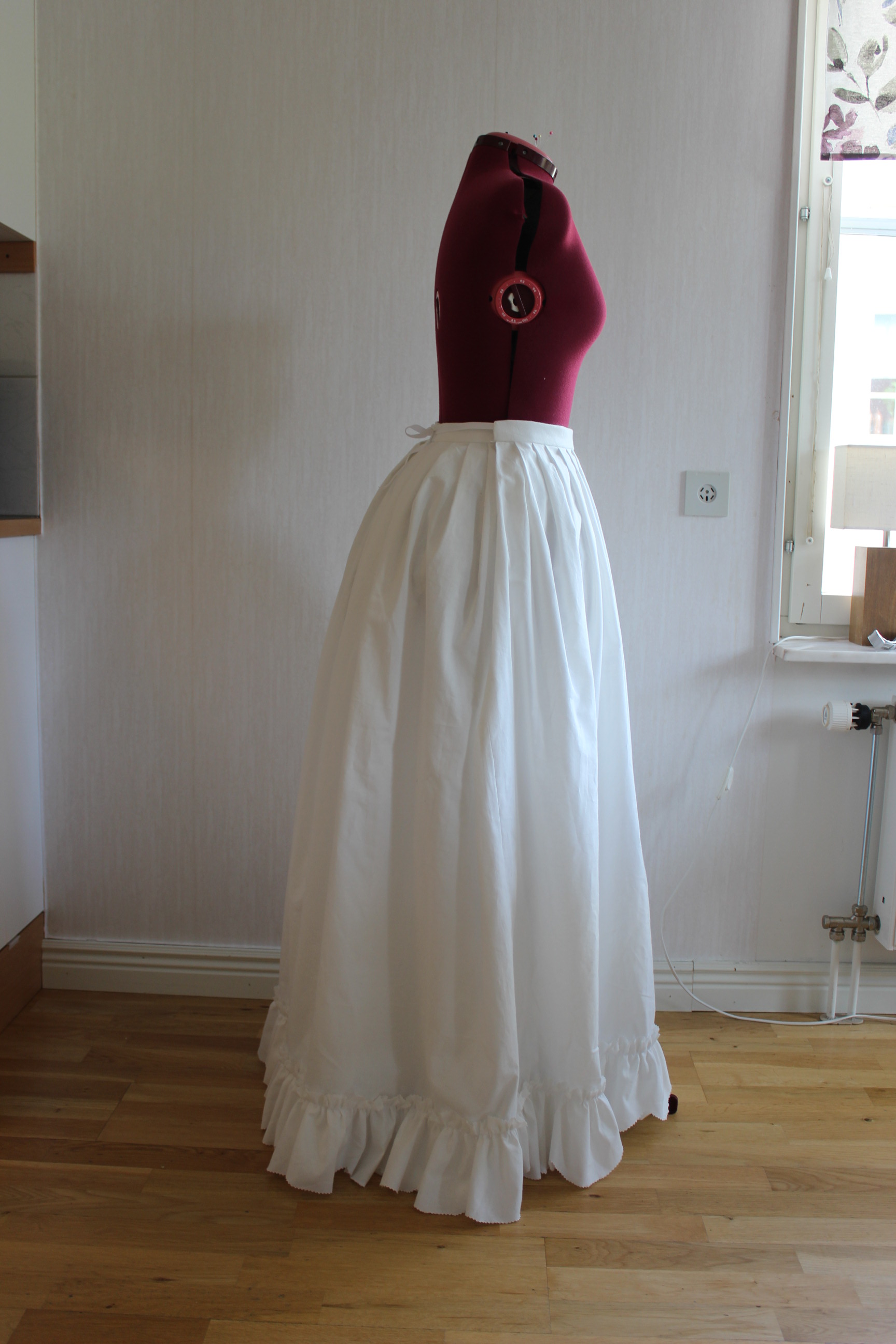
A 18th century petticoat/skirt made from regular white cotton (I needed it to be both quick and cheap).

I used a regular white cotton fabric that I found in my stash.

Since I made almost the exact skirt for the previous challenge, I won’t bore you with construction detals, but instead go straight to the Finished photos. (If you’re still want to know how I made it, take a look at my Pastell UFO skirt.

IMG_8056

IMG_8057

IMG_8060

IMG_8061

IMG_8062

IMG_8063

IMG_8066Just The Facts:

Challenge: nr 9: Black & white.

What: A 18th century skirt/petticoat.

Pattern: None, just measured and cut.

Fabric: 2,5 m of white cotton sheets.

Notions: Thread and 2 m cotton ribbon for tying at the waist.

How Historical Accurate: So so. The time constraint caused me to sew it by machine (and Ialso do think it is stupid to handsew pieces which are clearly in the wrong material). But the shape and construction are plausable.

Time: 4 hours

Cost: 60 sek (9Usd)

First worn: Not yet. But hopefully at june 6 for a huge costuming event.

Final thoughts: I had some trouble deciding on the bottom flounce.The original calles for fringes, but there was no way I was going to get hold on some cheap and sutable ones in time. I did try to make my own, but they lacked the weight neccesary to hang nicely. In the end I opted for a narrow flounce, and I’m pretty happy with the result.

 ***

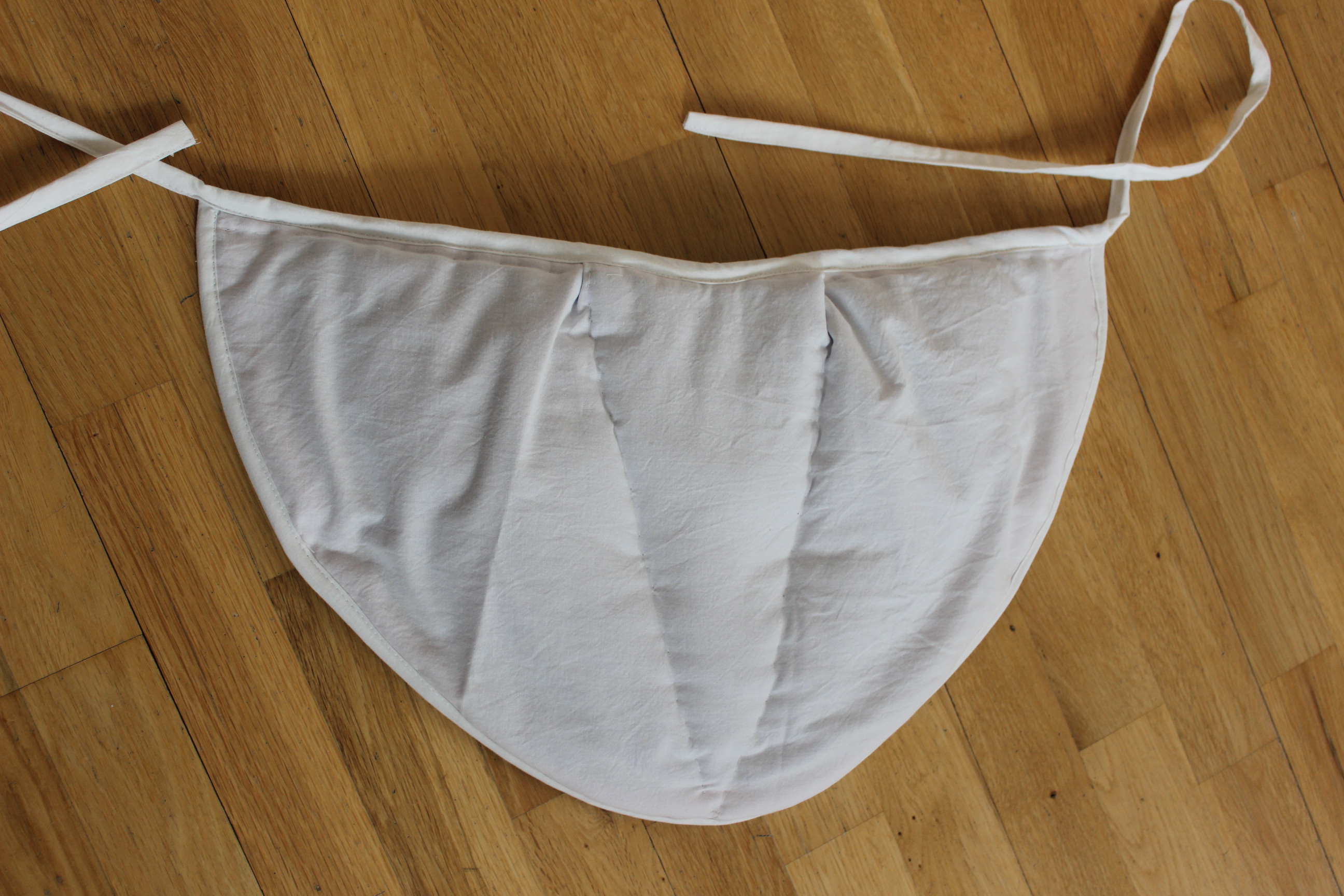
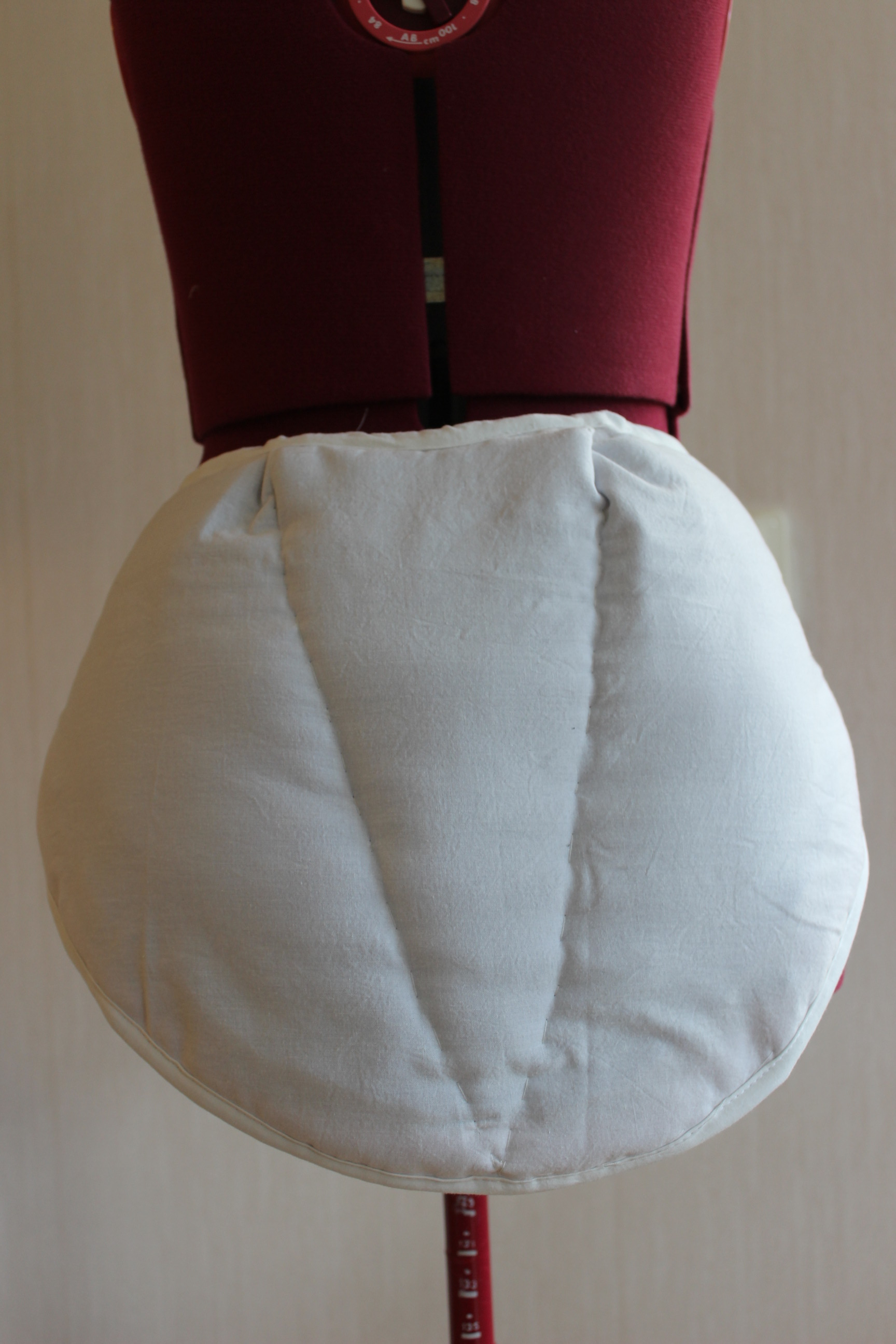
The second thing I needed was a bigger bumpad.

I’ve made a temporary one about a month ago, to wear with my Edwardian dress. However, I didn’t had the time to finish it, so last night I picked it up again.

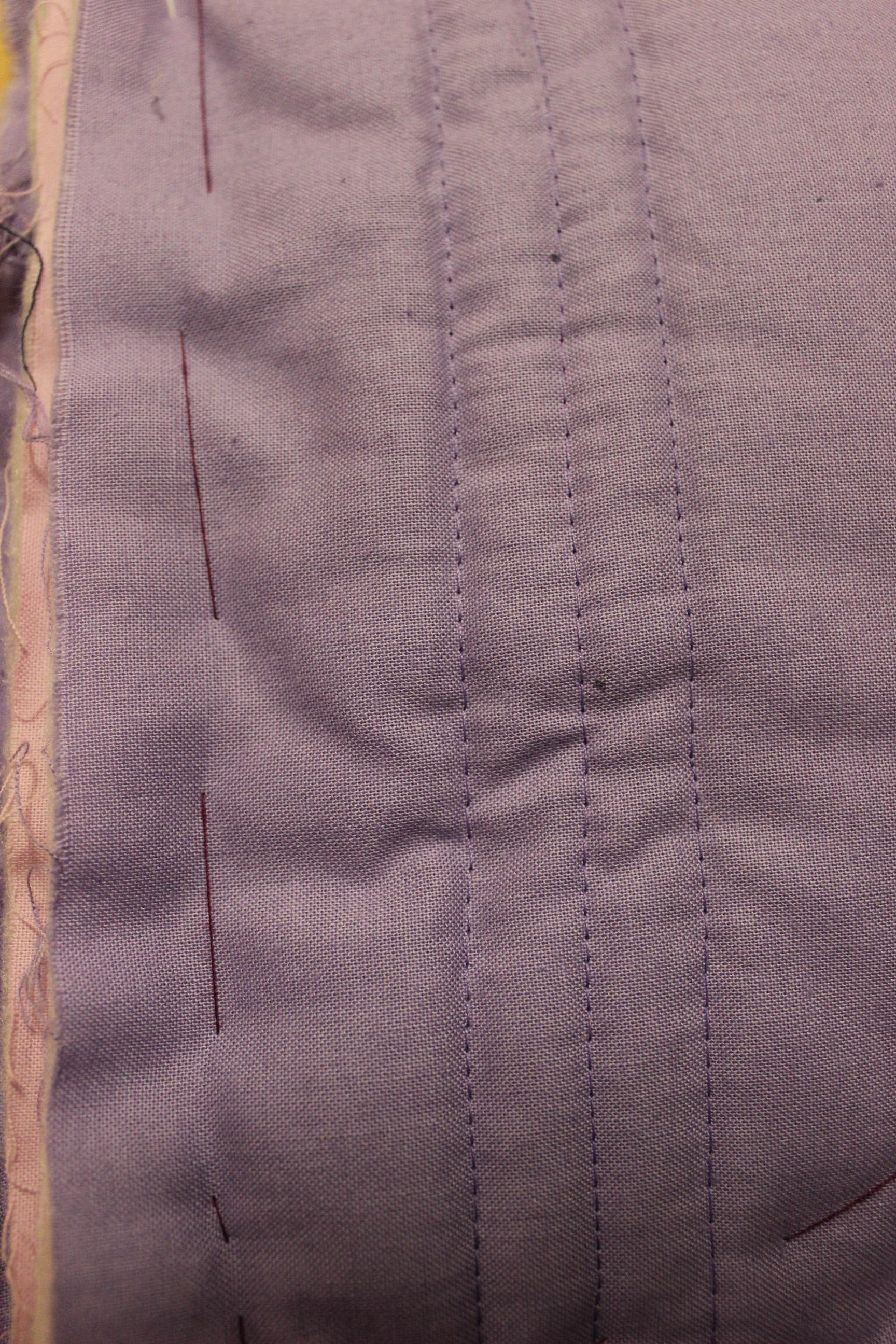
IMG_8054Pink and purple cotton basted to several layers of quilt padding.

IMG_8055It was originaly ment to be a quilted petticoat, but as you can see, I didn’t get very far.

I covered the pad in white cotton, leftover from a previous project. Making self fabric bias-tape to trim the edges and make tying ribbons.

IMG_8079It was such a quick and easy project.

Finished:IMG_8071

IMG_8074

IMG_8075

IMG_8072

Just the facts:

Challenge: 9 – Black and white

What: A bumpad – 18th century to early 20th century.

Pattern: None

Fabric: 0,5 m of white cotton (originaly 0,5 m of quilting padding and some leftover fabric scraps).

Notions: Thread.

How historical accurate: Not at all. Maybe the shape will pass, but the construction, material and look is all wrong.

Time: 1 hour (perhaps 30 min more, if it hadn’t been half finished already).

Cost: Nothing since I only used leftover scraps.

First worn: Not yet. But hopefully at june 6 for a huge costuming event.

***

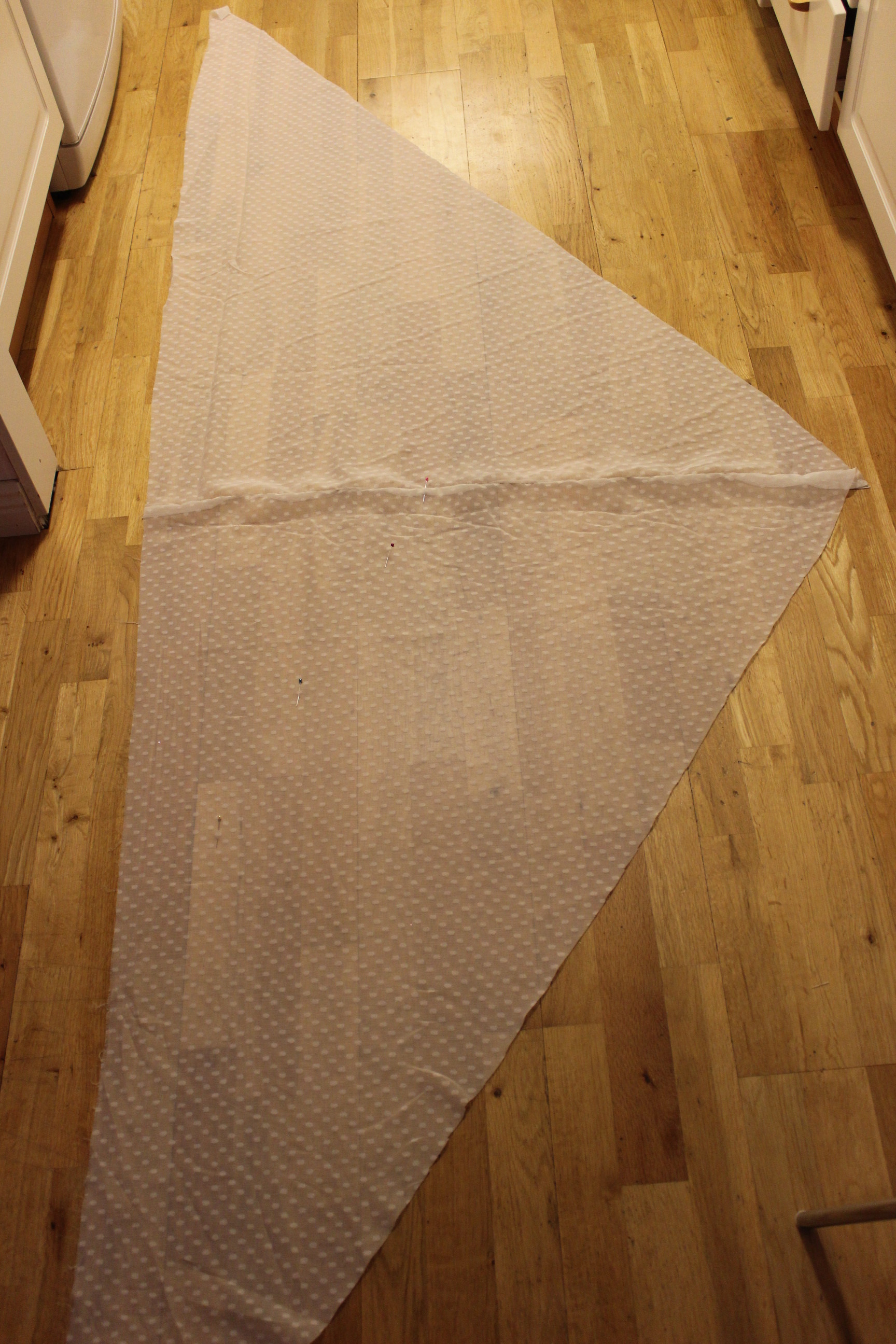
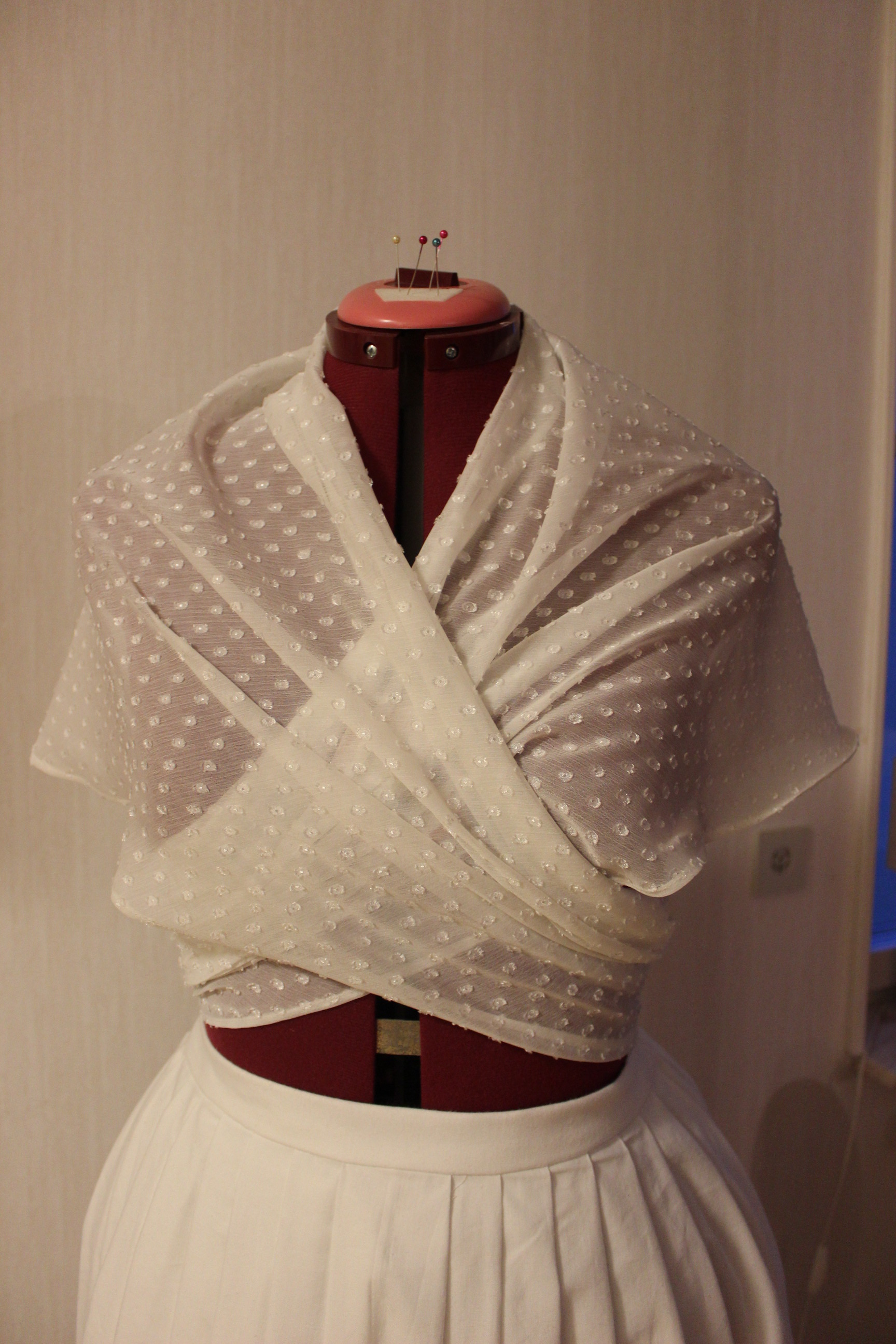
I had time to make one final item before the deadline – a fichu.

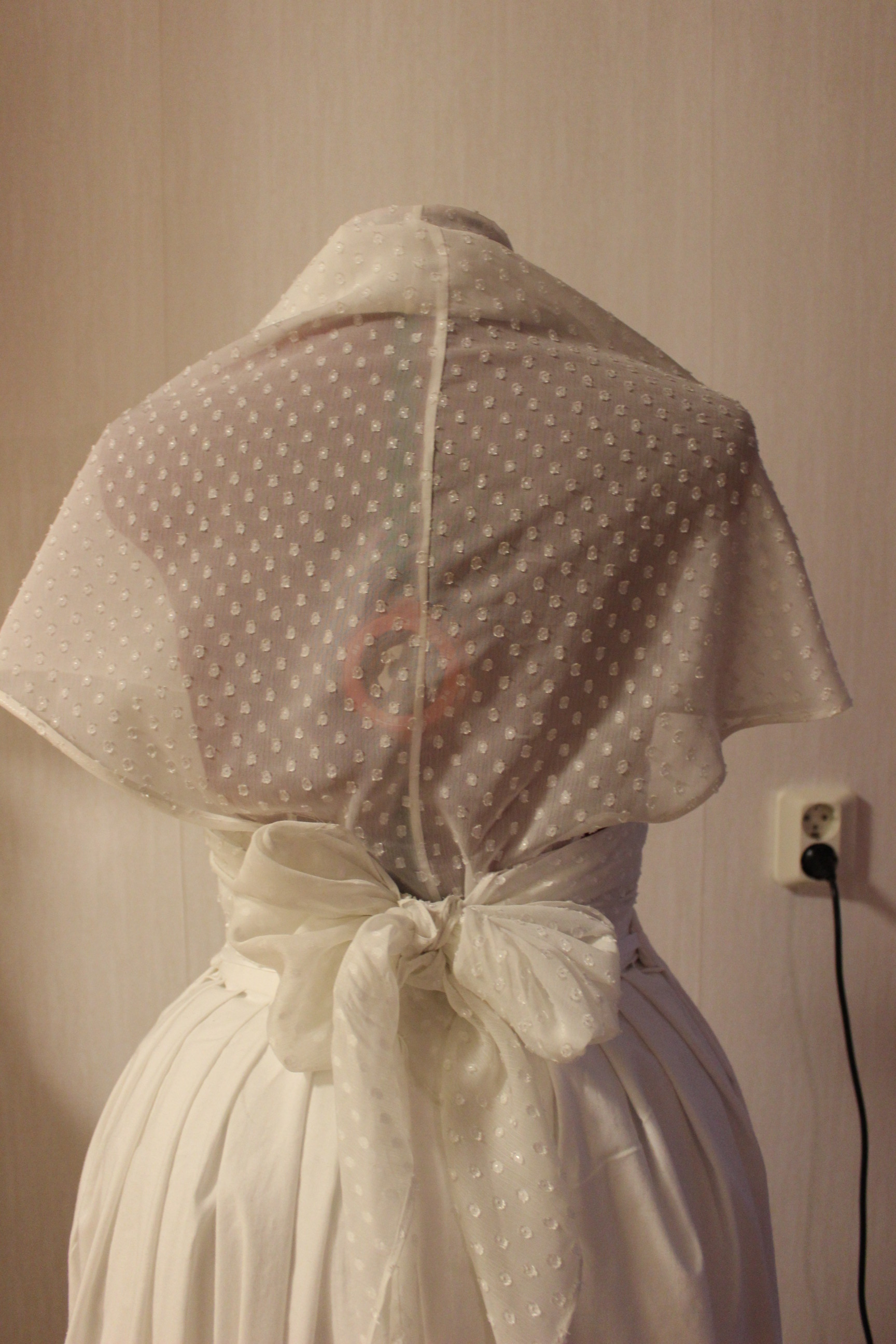
I wanted to make one large enough to wrap around the body and tie in the back, like you se in many paintings from the 1780s.

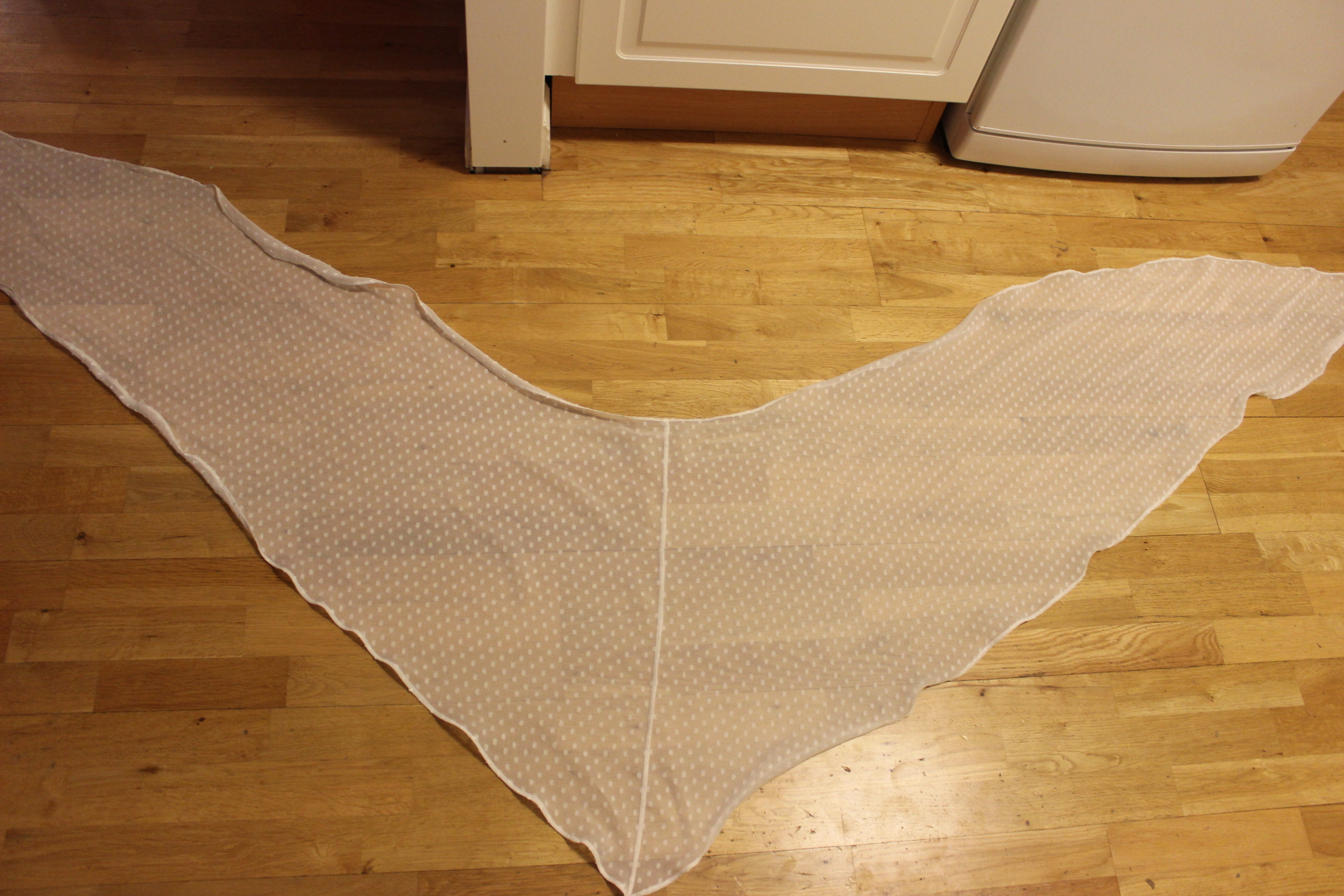
Using some adwise I got on the internet, I cut two large triangles and stiched them togeter to make one huge.IMG_8274

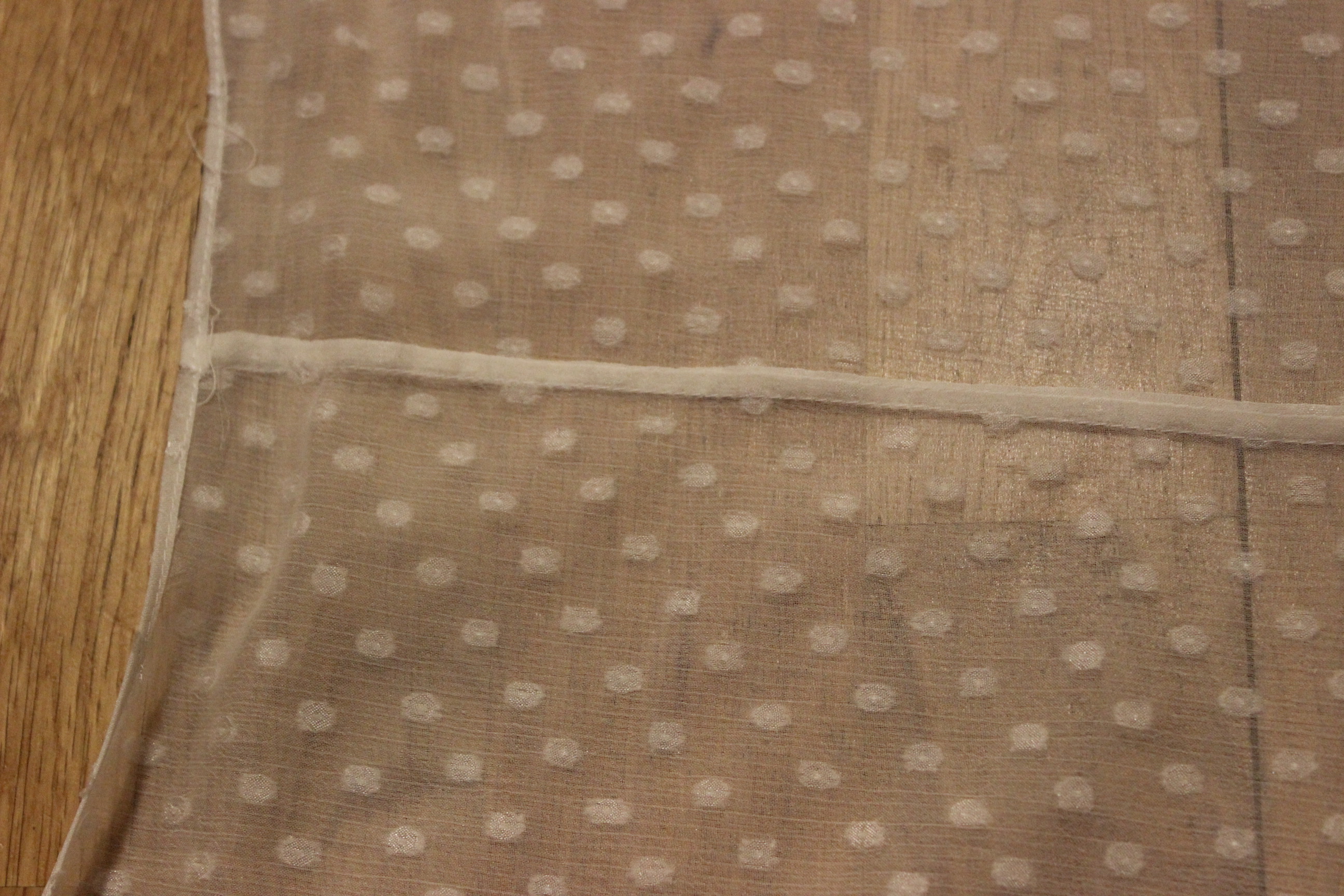
Then I shaped and rounded of the neck, to make it wrap better around the neck. I french seamed the center back, and hemmed the whole thing – everything by machine. IMG_8289

IMG_8291Close up: French seam and hem.

Finished:IMG_8284

IMG_8285

IMG_8280

IMG_8279

IMG_8287

IMG_8276All my “White” items at once.

Just the facts:

Challenge: Nr 9 – Black and white.

What: A big fichu ca 1780.

Pattern: none.

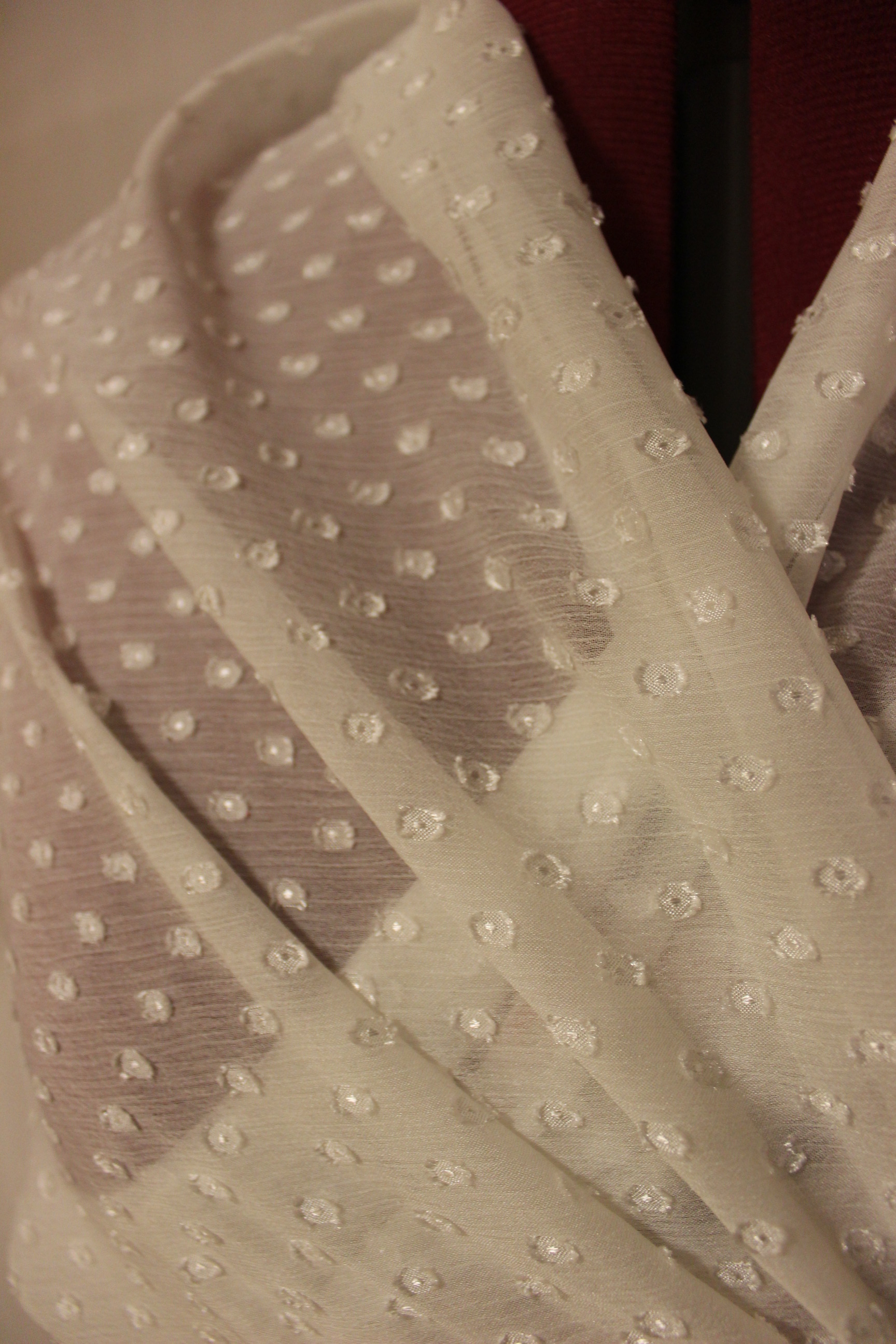
Fabric: 70 cm of dotted white polyester organza.

Notions: Thread

Historial accuracy: I think the pattern shape will suffice, but the material and use of sewing machine is all wrong.

Time: Half an hour.

Cost: Perhaps 20 Skr (1 USD)

First worn: Not yet, but hopefully at a big costuming picknic next month.

***

I had originaly planed to make all tese items compleatly by hand. But as usual life happens, and time is never enough for everything you want to do – so this time the hand sewing had to go.

But I don’t really mind. I kind of think it’s a waist of time to hand sew istorical items made from polyester fabric.

And as you probably can guess – I hadn’t even started the “Big Project” yet.


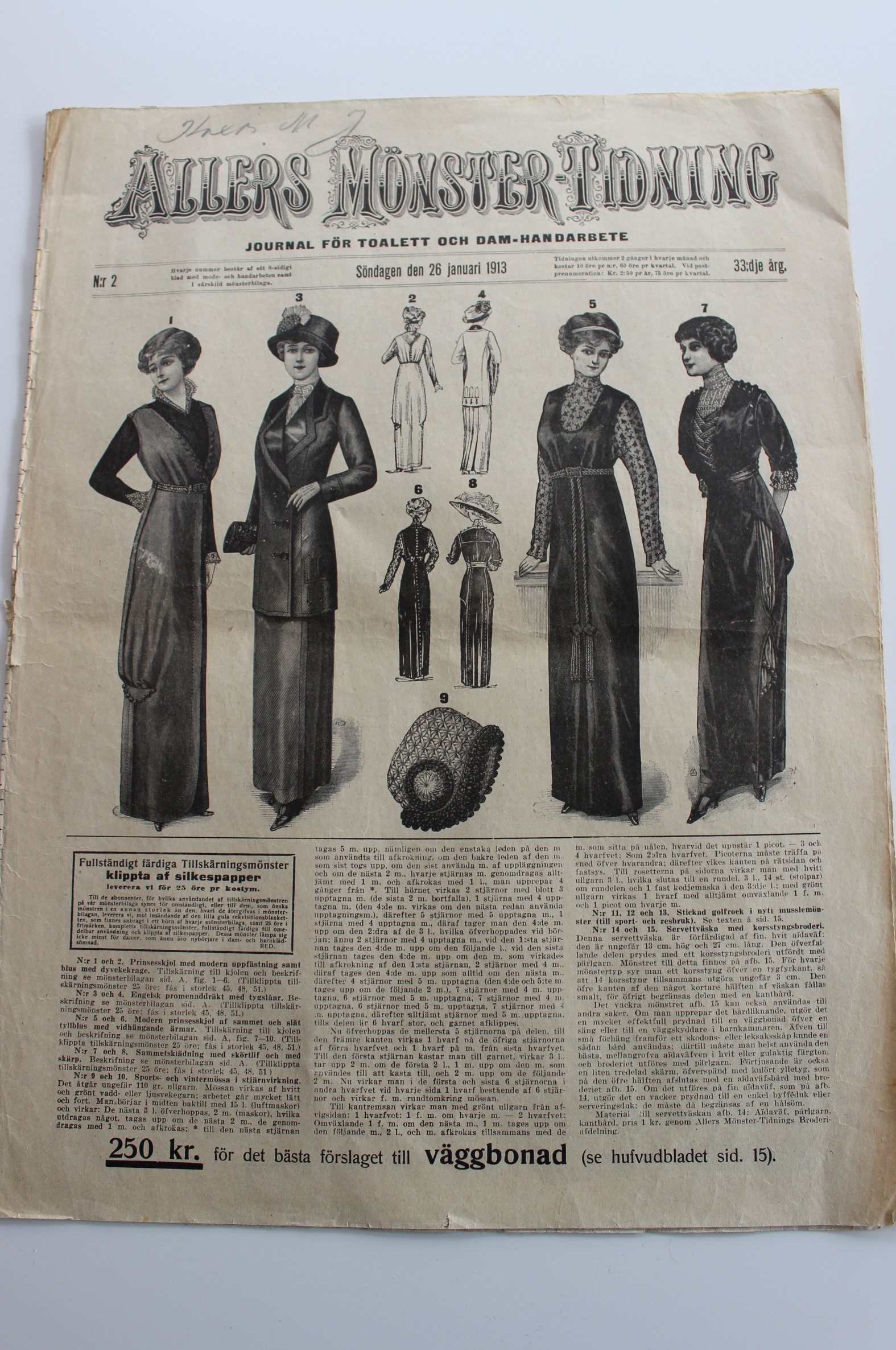
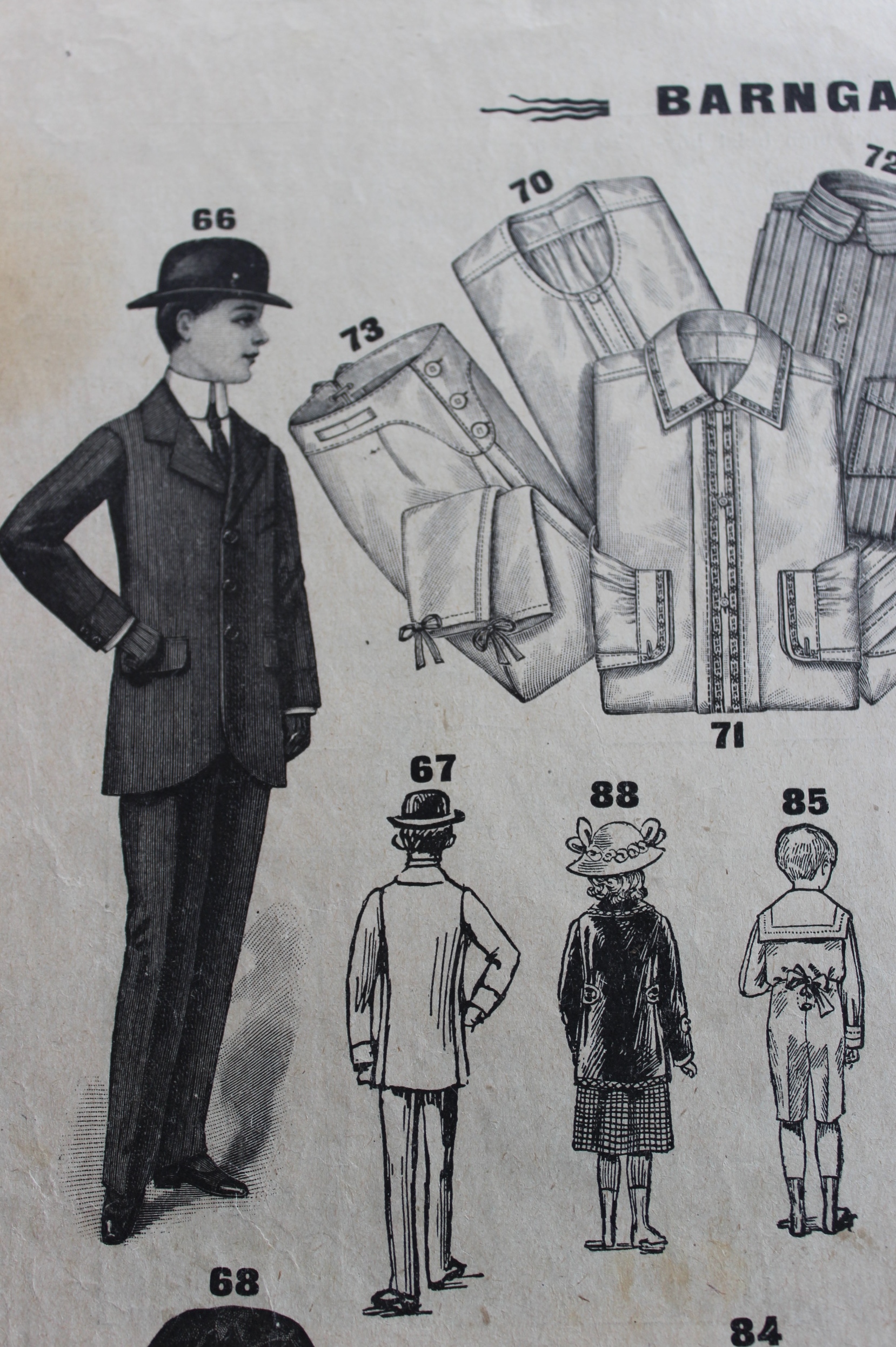
Allers Pattern Journal 26 jan 1913

and since we’re still on the subject of early 20th century: Here comes another view of my recently accuired “Allers Patterns Magzines”.

“Allers Mönster-tidning 26 jan 1913”.IMG_7643

Close up of front page.IMG_7645All of these dresses looks so comfortable. Even the coat look like it is really easy to wear.

IMG_7646Some knitting patterns and tips.

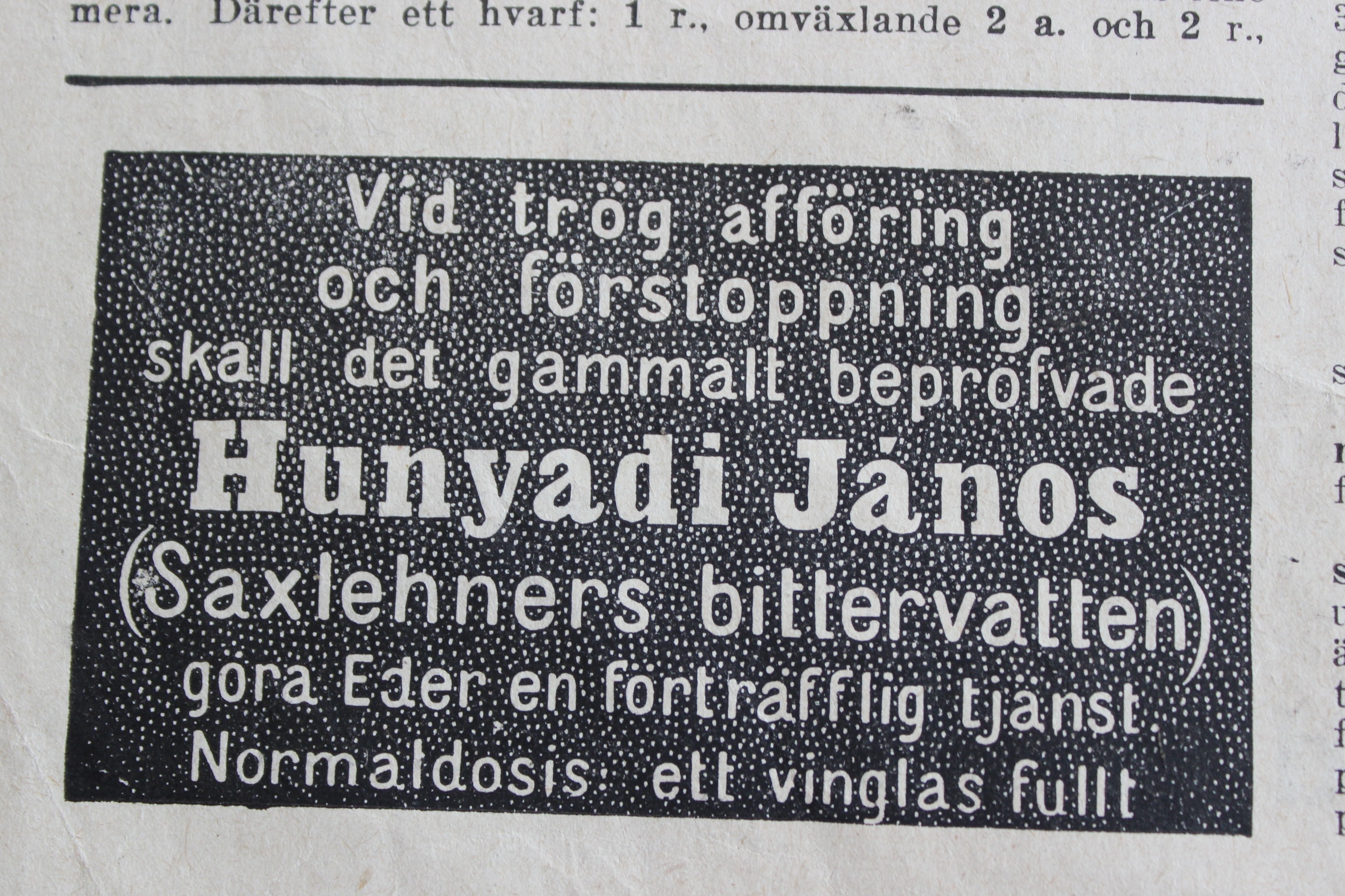
I just couldn’t resist incluing this add, its hillarious.IMG_7648It tells you about this amazing beverege called “Hunyadi Ja’nos” to get you “bowels movin”, just drink one full glas a day.

IMG_7652And some embrodery and knitting tips.

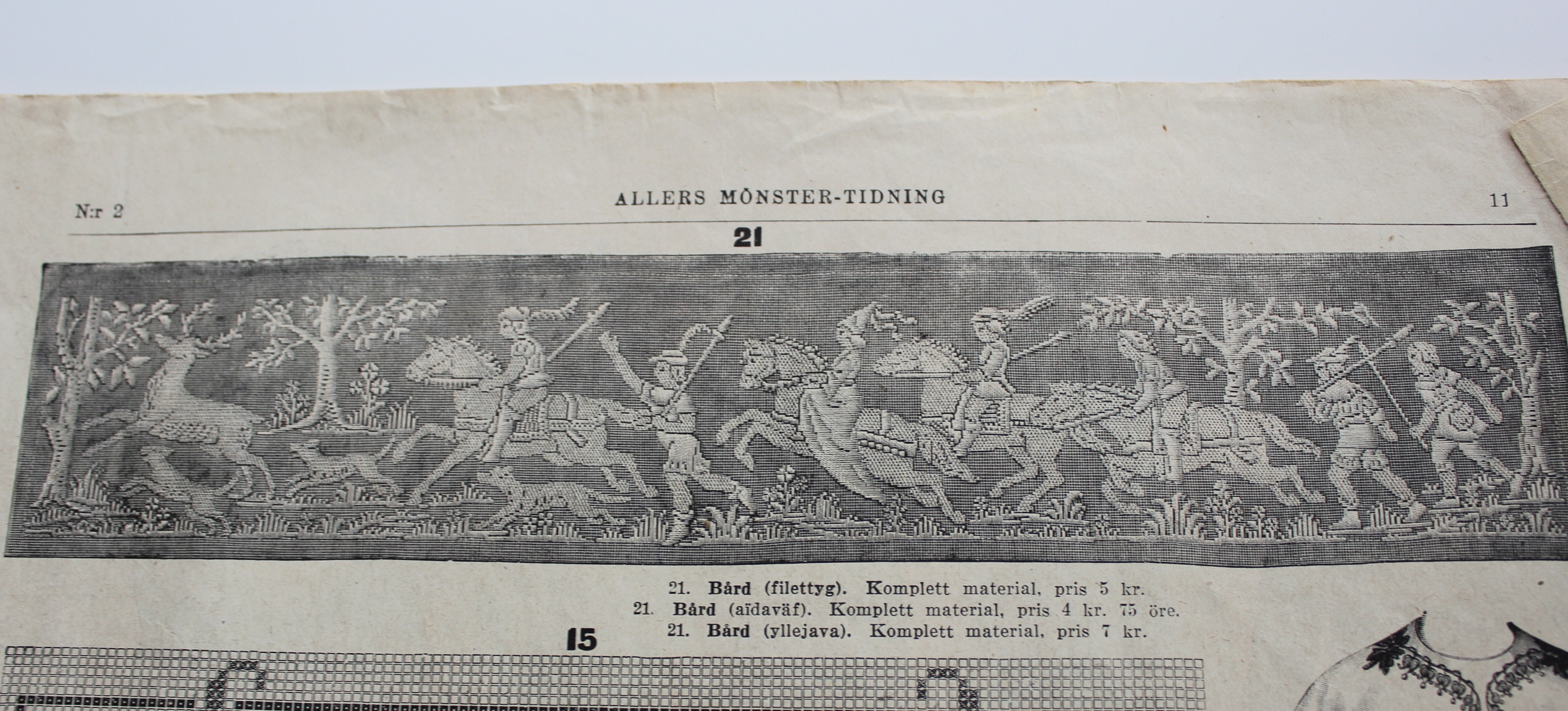
IMG_7650Take a look at this tapestry of a hunting party chasing the deer through the woods.

IMG_7653Oh those pretty dresses.

IMG_7655Love the draping on the left gowns skirt.

IMG_7654So beautiful.

IMG_7656Contrasting belts, big draping sleeves and trailing trains – heaven.

IMG_7657The right one in light creame and deep reed… drool.

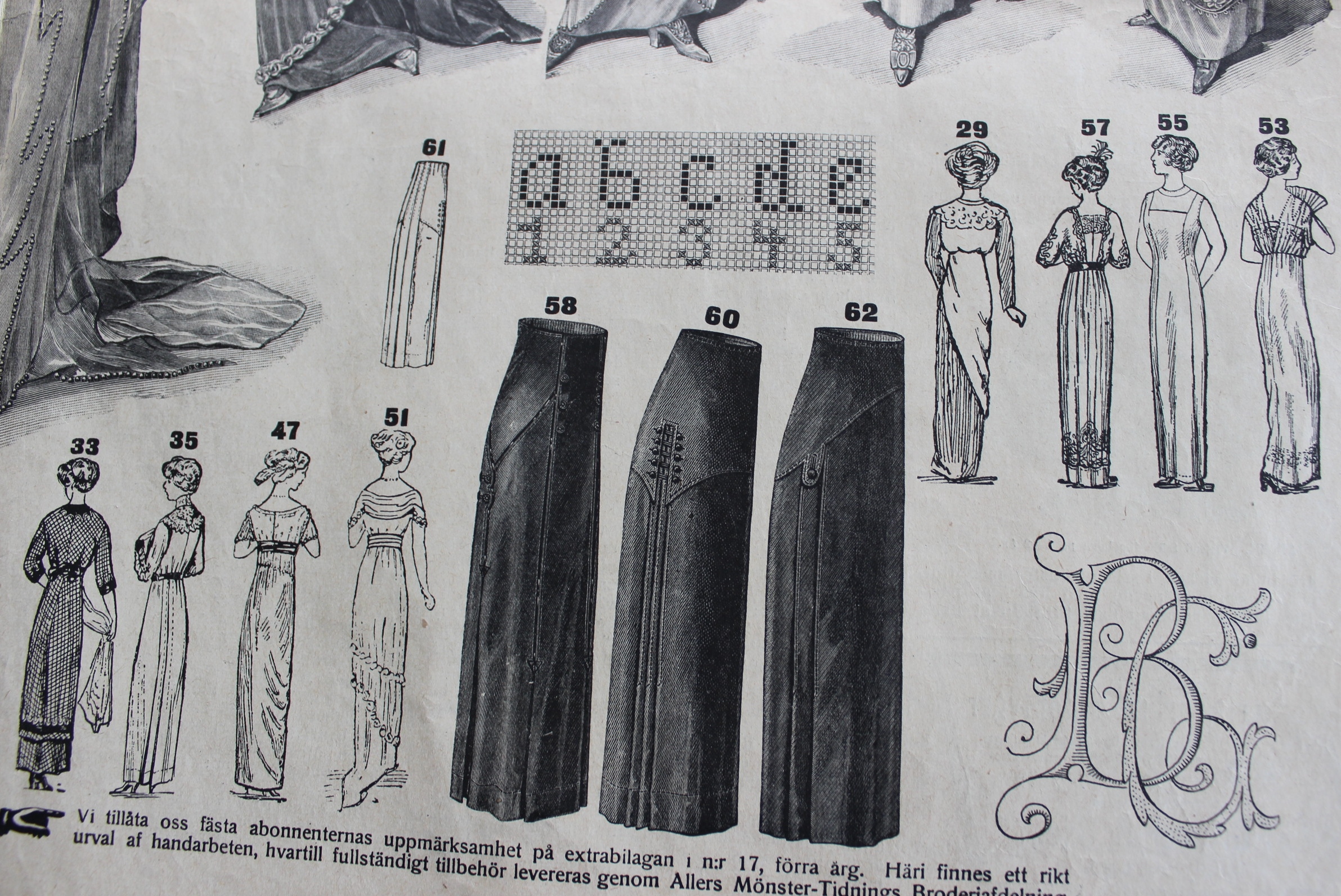
IMG_7658Great shapes on these skirts.

IMG_7660More knitting patterns.

IMG_7661“Suggestions on tapestries”

IMG_7662Childrens fashion.

IMG_7664A litle boy-man with bowler and everyting.

IMG_7665Sailor suits and sweet dresses.

IMG_7666Misses dresses.

IMG_7668Pretty collars and lacing insertins.

Suffragets in action – Luncheon

Yesterday it was finaly time for the “Suffragett luncheon” I’ve been helping to plan since february – or rather been watching while other planed.

Anyway, I got up realy early yesterday morning to get on the train taking me to the capital, were I arrived in good time before the meet-up.
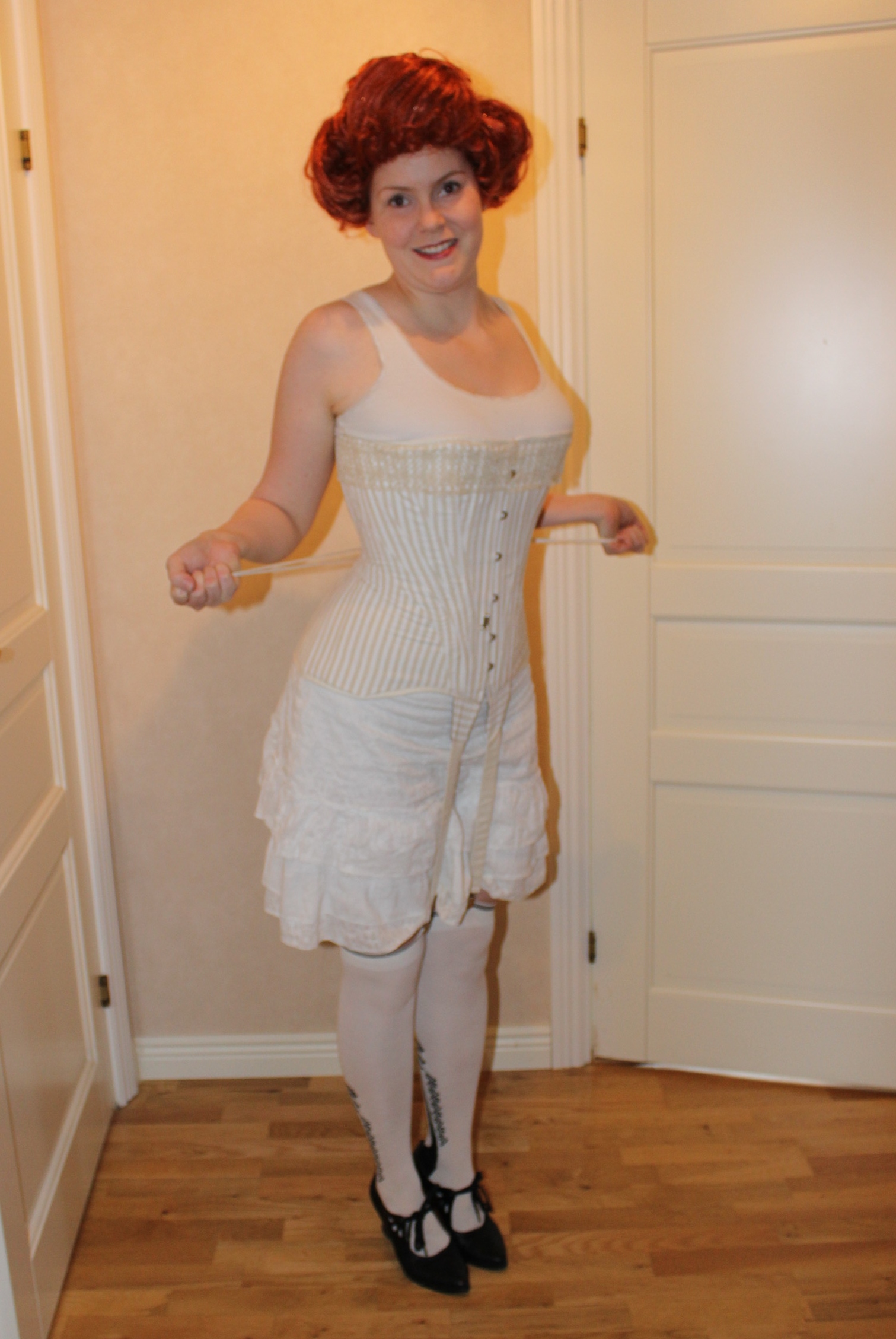
I walked the 10 min to my inlaws empty apartment, and started to get dressed.IMG_7618Underwear and huge red hair.

Using all my flexibility, I manadged to lace the corset (fairly easy), and to button the shirtwaist all the way in the back (really hard). IMG_8085The “In-door” look: Shirtwaist, walking skirt, swiss-waist and brosch.

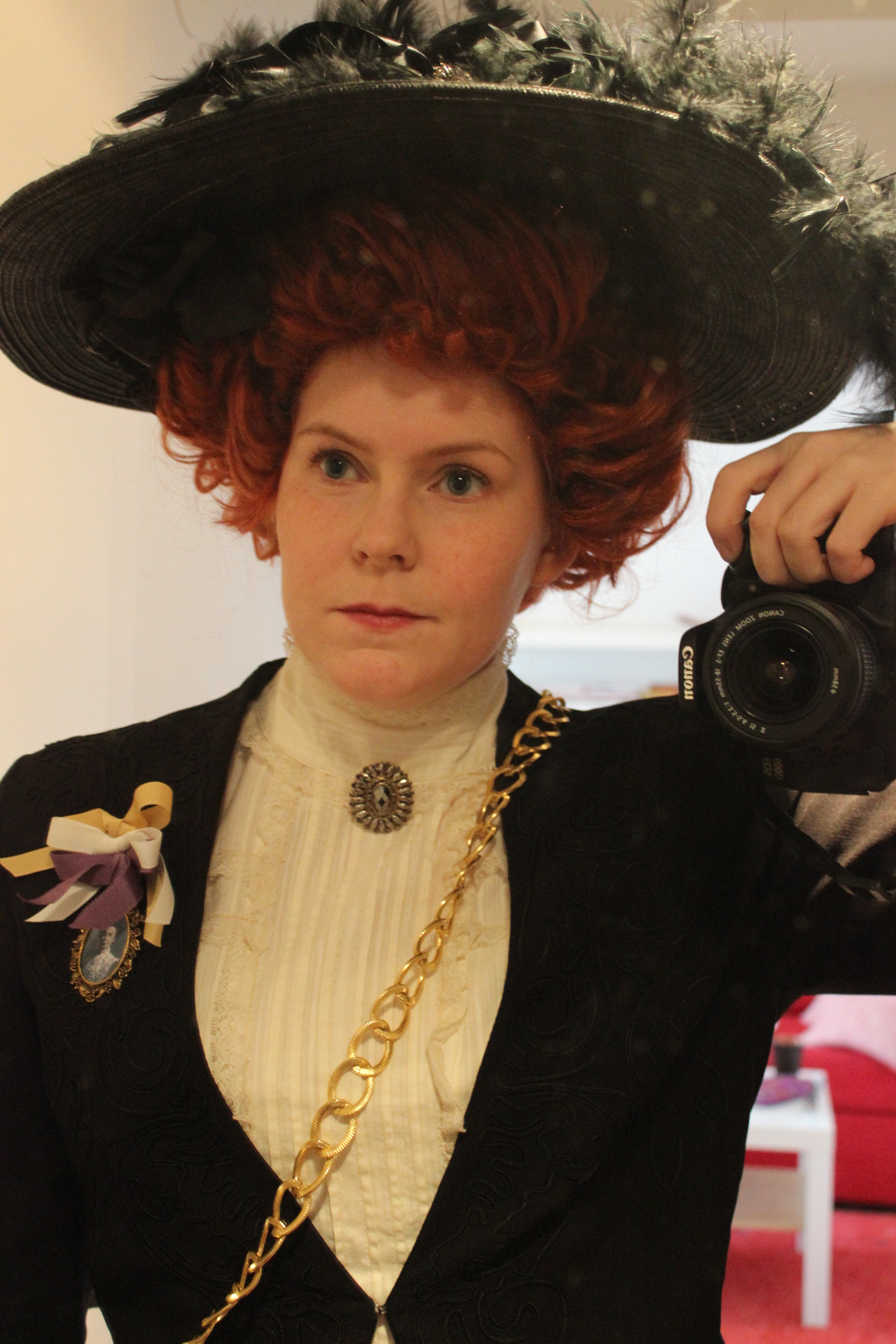
And before leaving the apartment (about 40min after I arrived) I doned the huge hat, jacket, chain and broschIMG_8098

I took the intercity train to the smal, old house were we was to hold the meeting.

The ones of us who came early, emediatly started to prepar the food and table.IMG_8105Elin and Aggi prepearing the food.

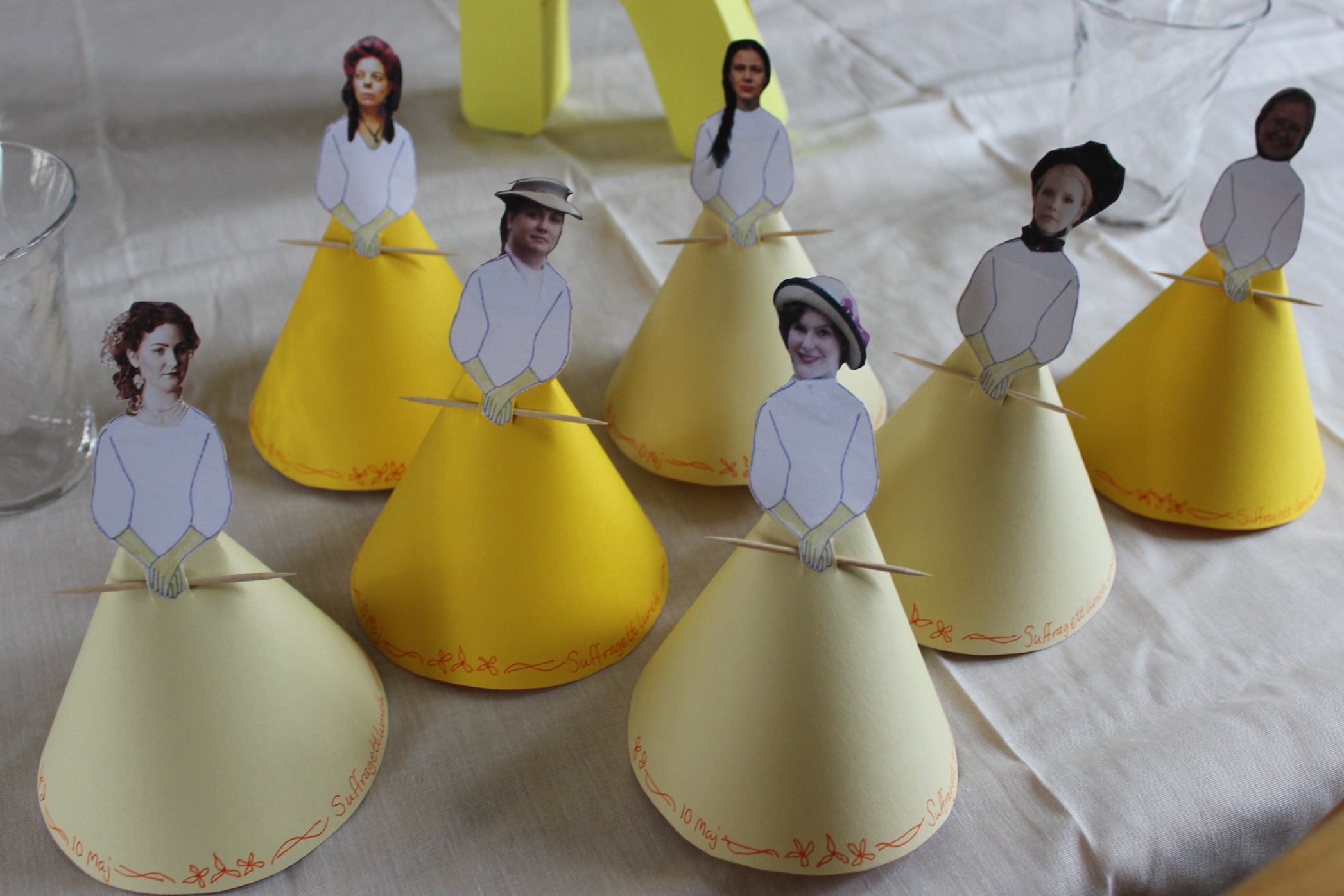
Johanna set the table with yellow napkins, flowers and these lovely place holders, which she made using costuming pictures of all of us.IMG_8103I’m the one at the front.

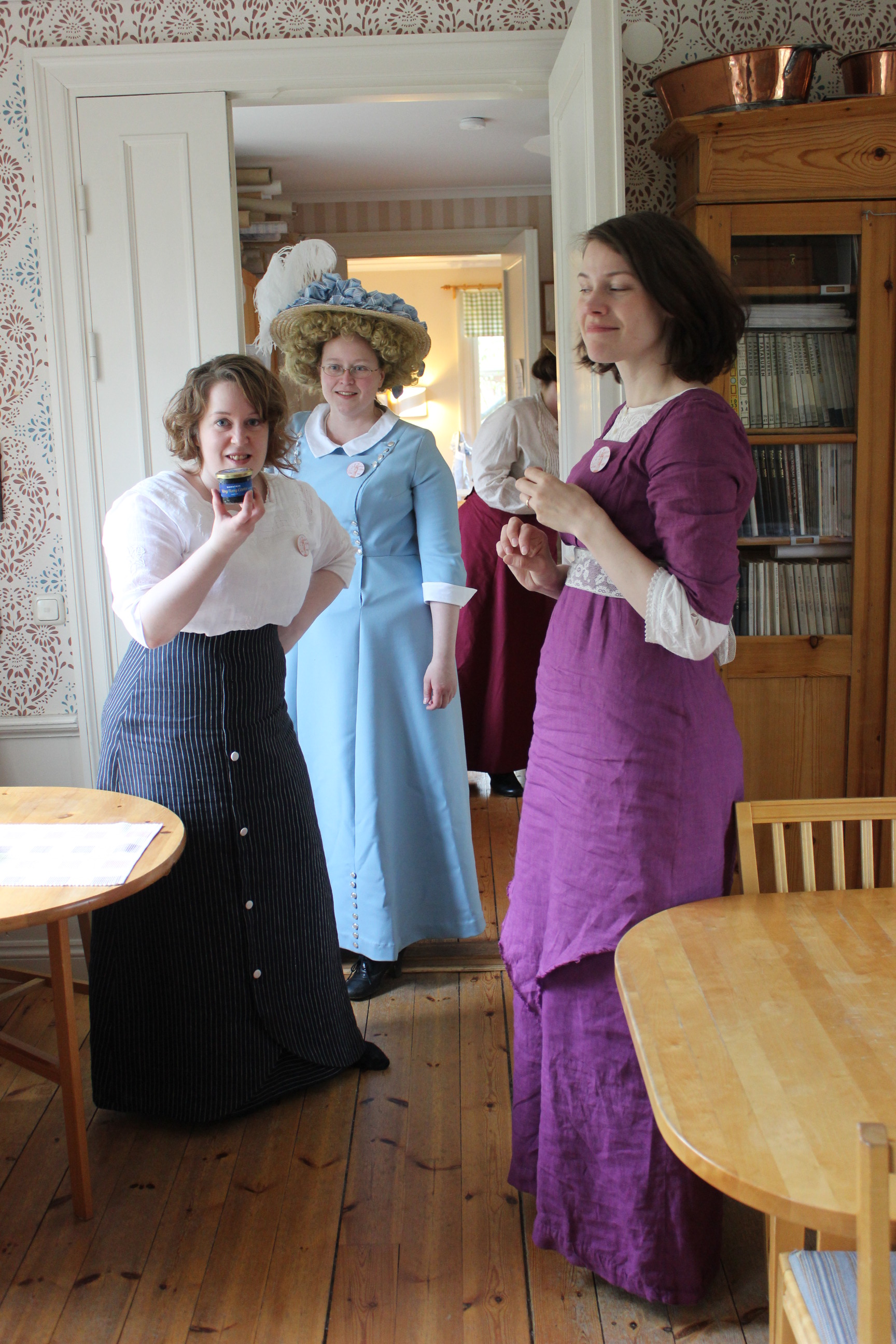
 Then the guest started to arrive.IMG_8178From left: Elin (organizer and cook) trying to sell of some caviar, Johanna (Co. organizer) in blue and Lina in a purple 1910s dress. In the backround we can also glimps Aggi.

IMG_8112Carolina and Hanna.

Hanna is known for only using original garments. And she’s an expert in finding the most faboulus, well perserved, pieces ever.IMG_8113Close up.

When everyone arrived, it was time to take place by the table to start the 4 course “Suffragett luncheon” from a 1914s recepie. (link “Good housekeping 1914” recepie).IMG_8118

And since I’m not a fan of  “food photos”, I of course forgot to photograp all the courses.

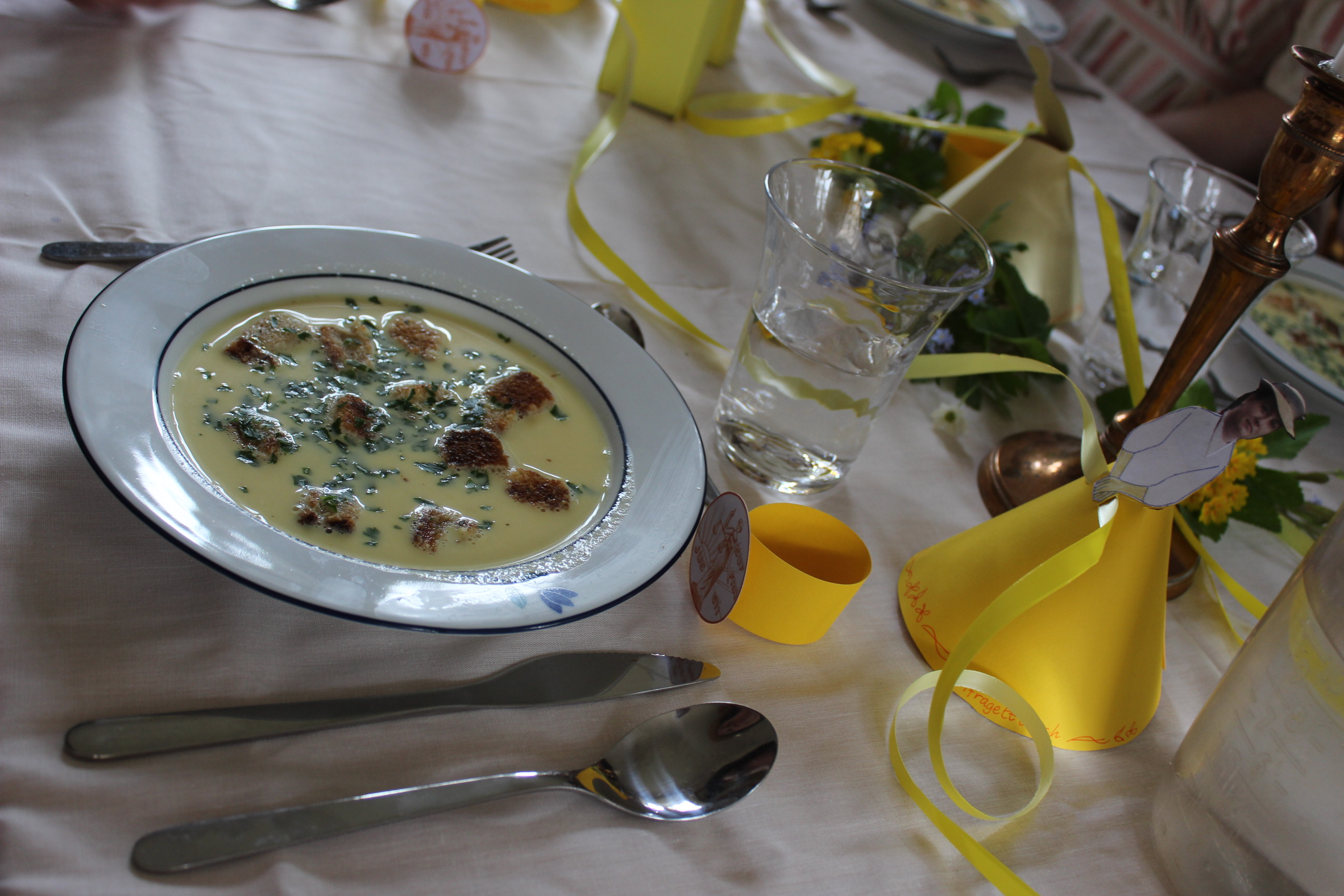
But here are a few.IMG_8122Chicken soup with croutons.

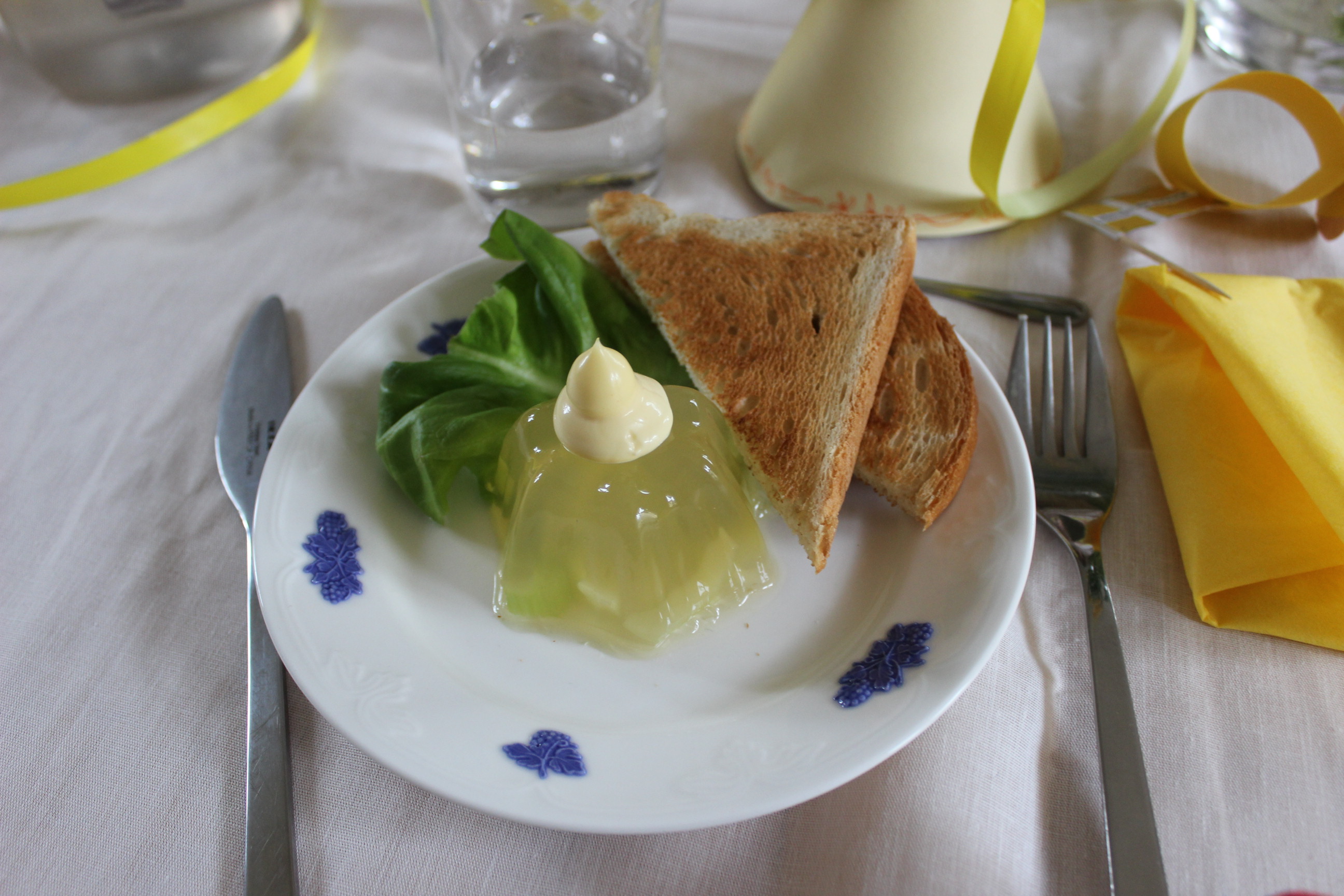
IMG_8129Celery-canapé with salad and toast.

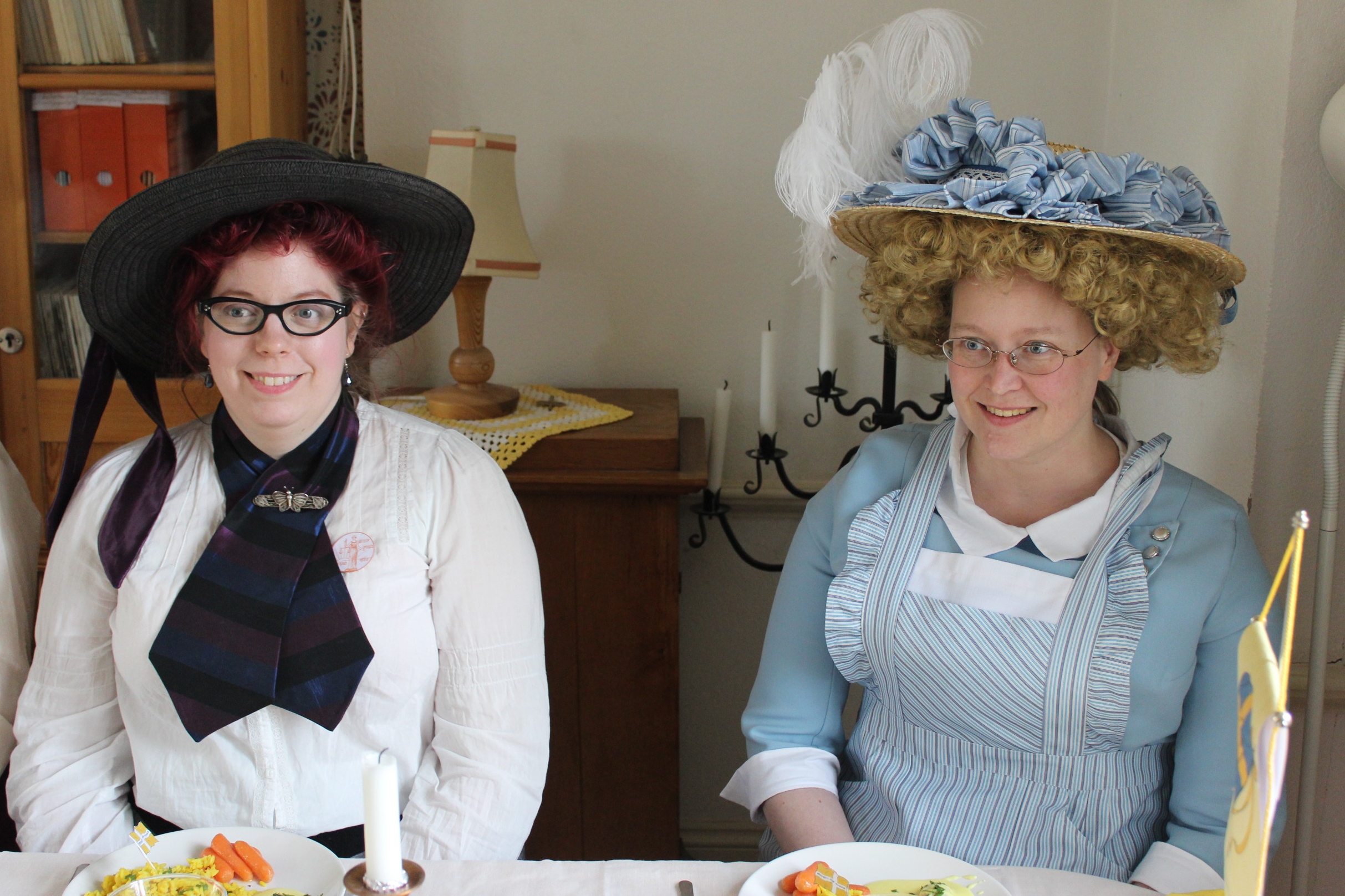
And some pics of the lovely ladies.IMG_8125Looking modelstly happy…

IMG_8126..and happily confused…

IMG_8144..and then back to modestly interested…

But after a while it got a bit crazy… No I’m kiding but Lina did pose in a rater unexpected fashion.IMG_8132A suffragett on top of a suffraget….

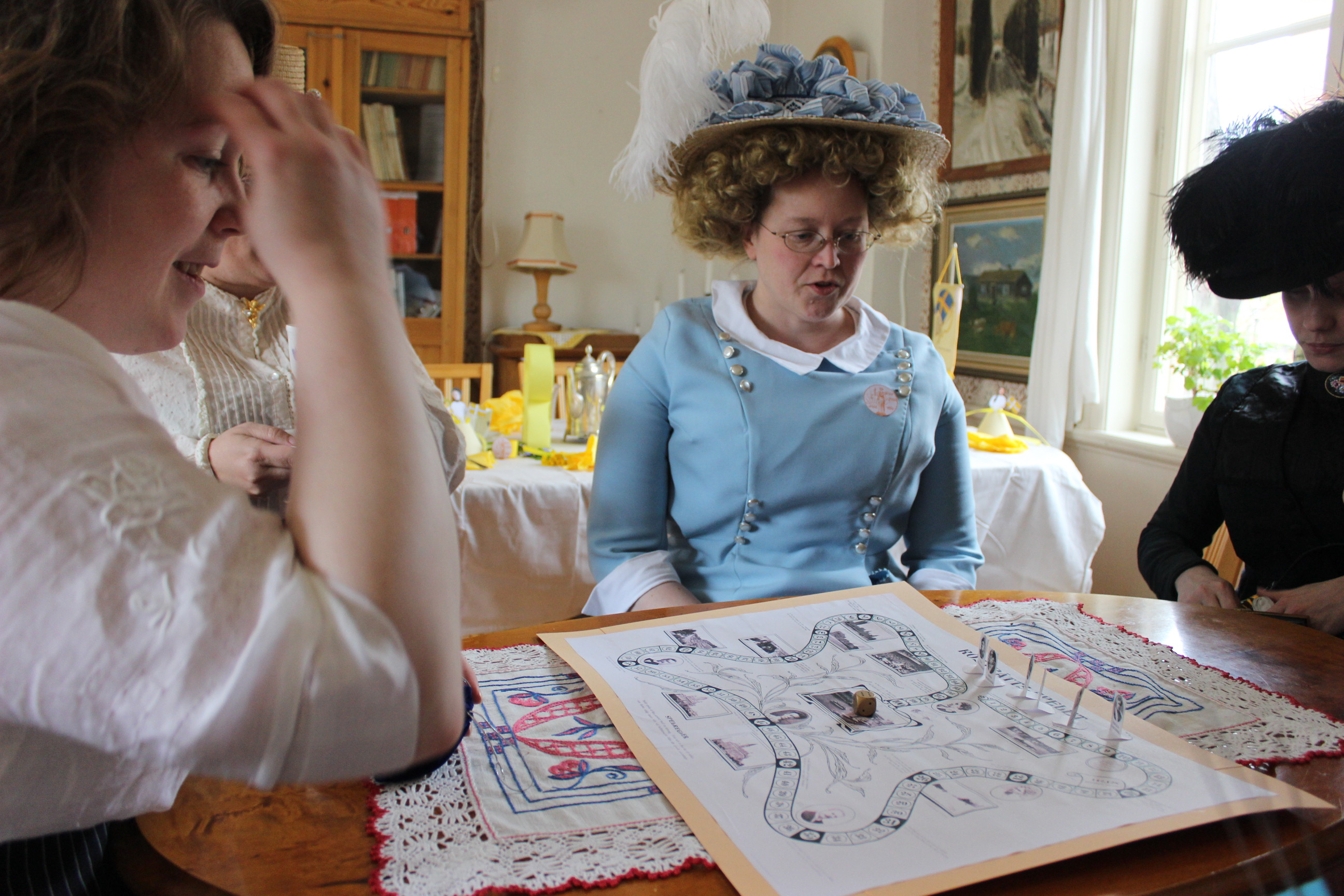
When we finished all the courses, it was time to play the original “Suffragett board game”.IMG_8146

Using famous swedish women-fighters for pieces.IMG_8150

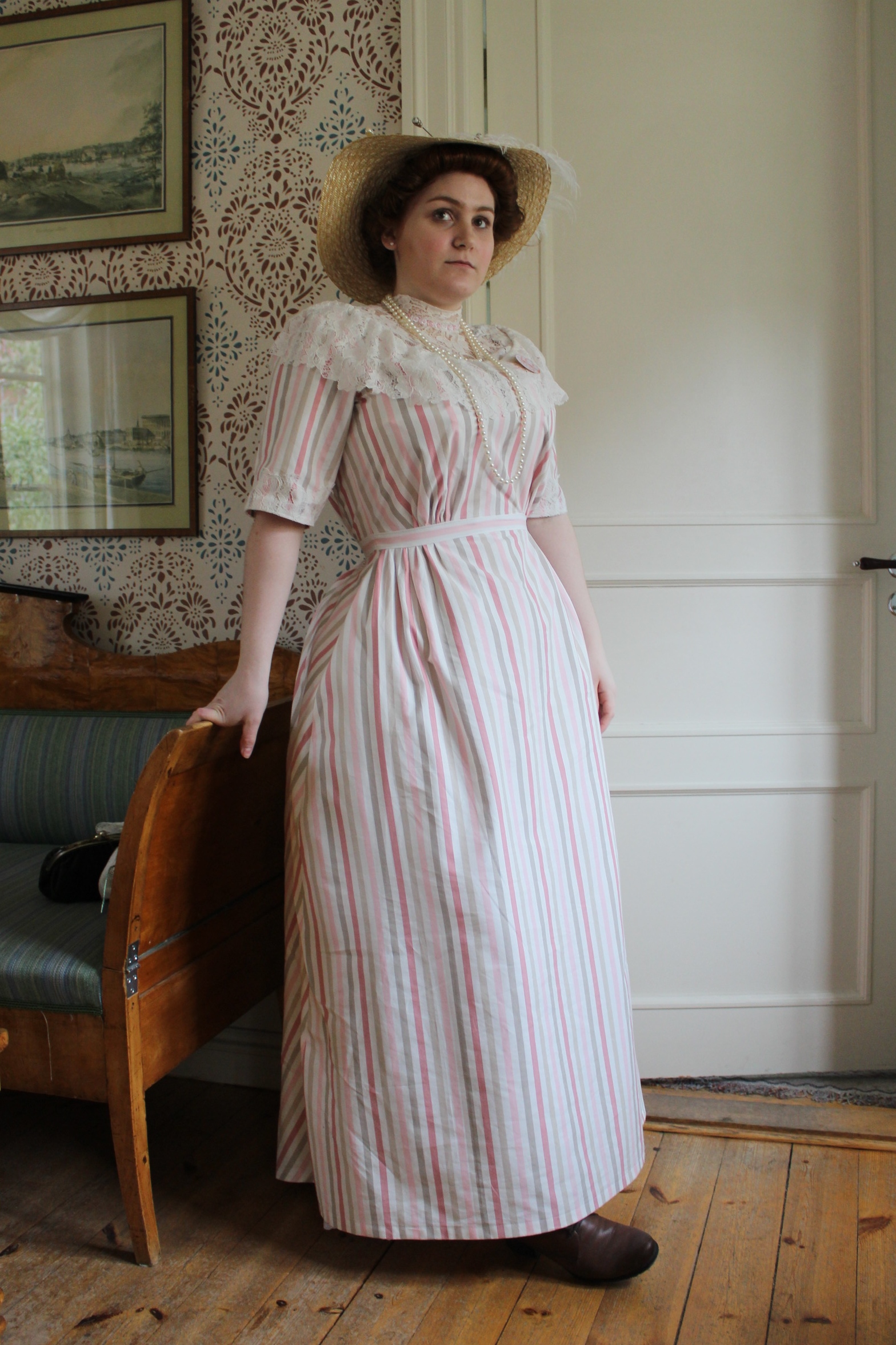
 Then some of us took the time to pose for the camera.IMG_8151Emelie in her lovely striped pink, self made gown.

IMG_8152Love this picture – So pretty.

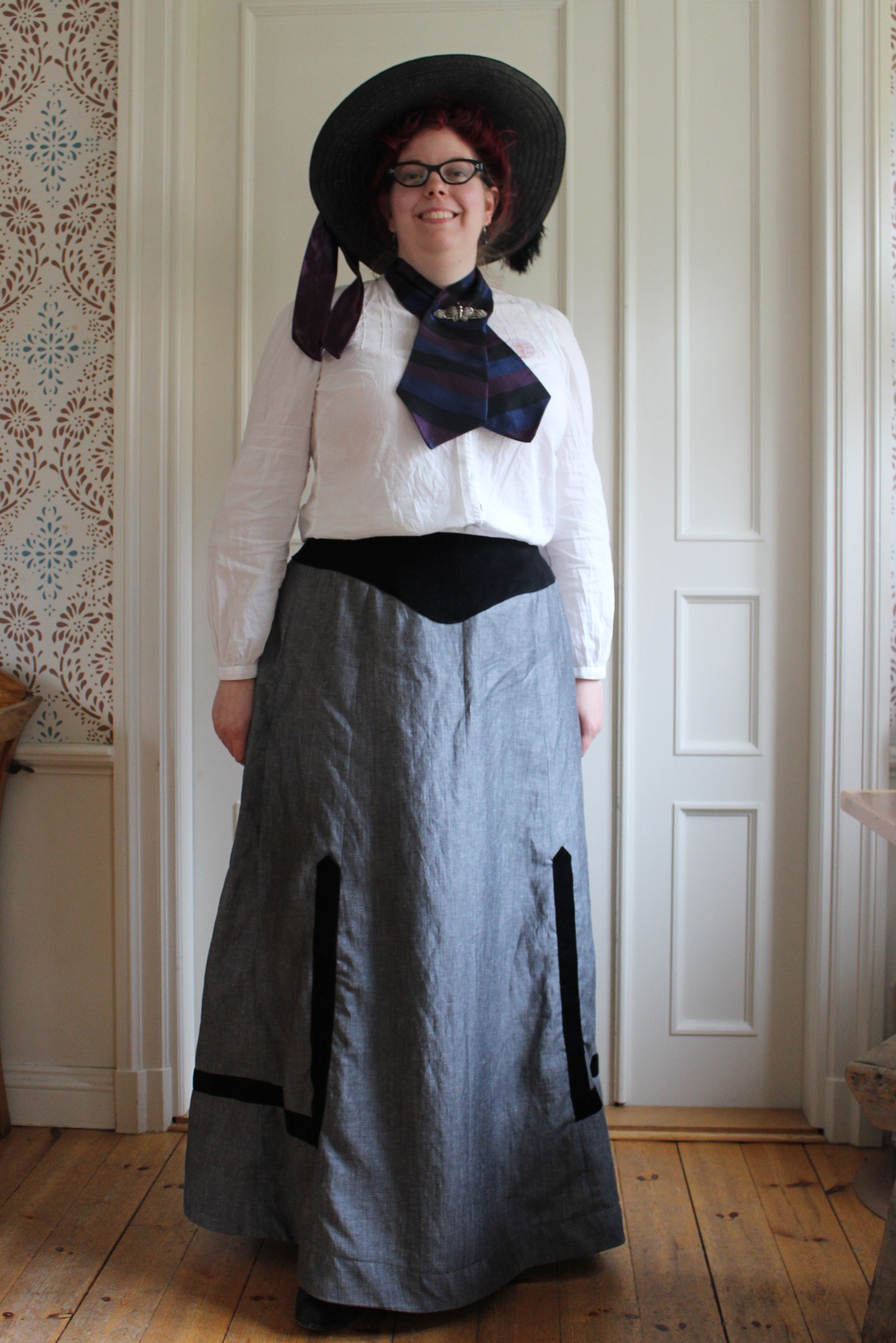
Then it was my turn.IMG_8175I think this pic is hilarious – take a look at the frisky look in the creapy manequins eyes, and you know what I mean.

IMG_8163

IMG_8141Carolina gives us a big smile in her cool, self made outfit.

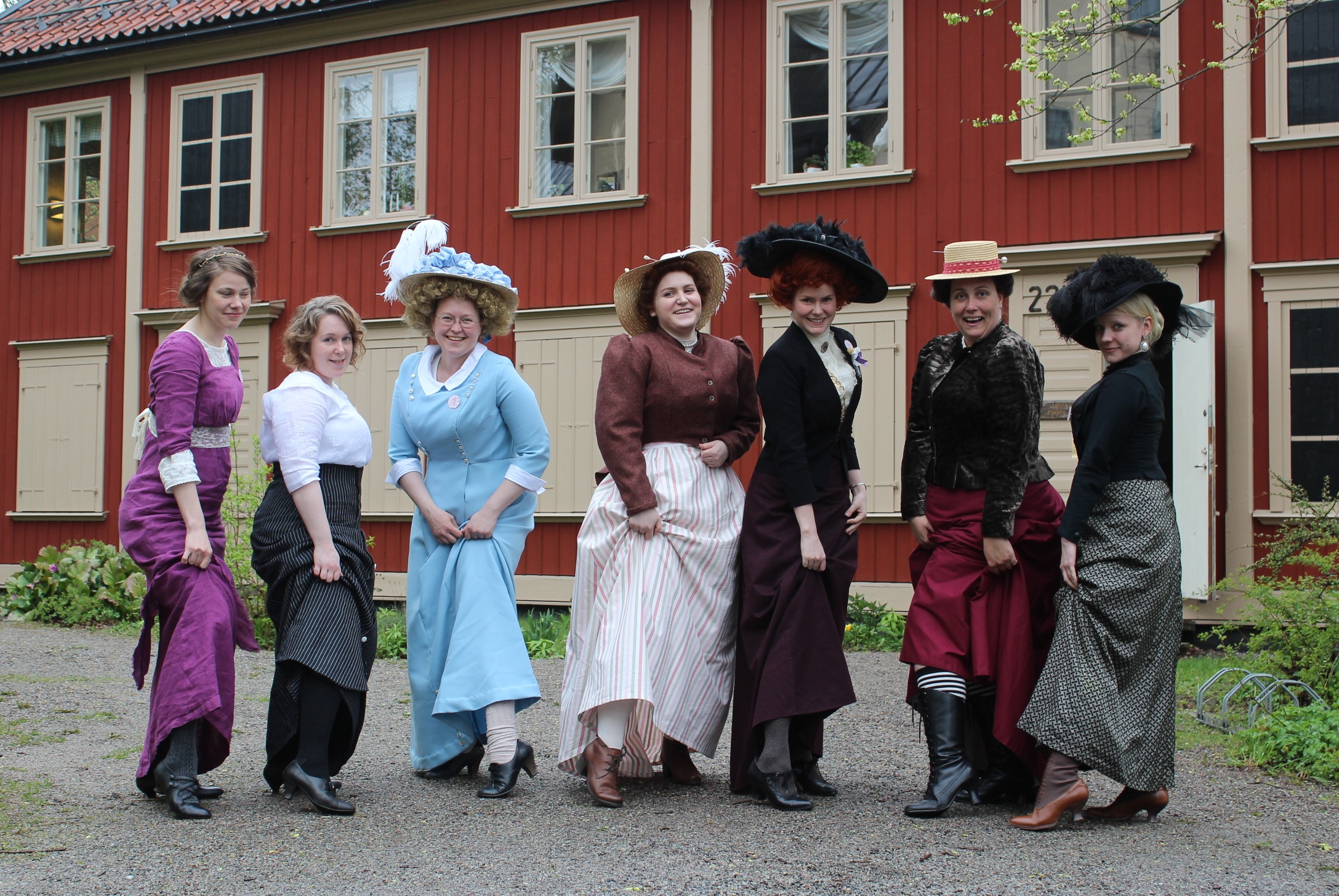
Then we went outside for some quick group pictures.

IMG_8157We manadged to get a young guy to help us photograp – he was very polite and patient, but he must have thougt we were totaly crazy.

IMG_8159“Empire but skratch”

IMG_8160And of course some shoes – oh those naughty suffragetts.

Then it was time to hurry back to the aparment to change (took me half the time taking it of), and catch the train home.

I had such a good time dressing up and spending an afternoon in the company of all these awsome ladies.

Book Review – Everyday Fashions 1909-1920

I’m currently in some kind of early 1900s mood, preparing for an up-coming event this weekend.

So I thought it would be great to tell you a bit about one of the book I own on this period.

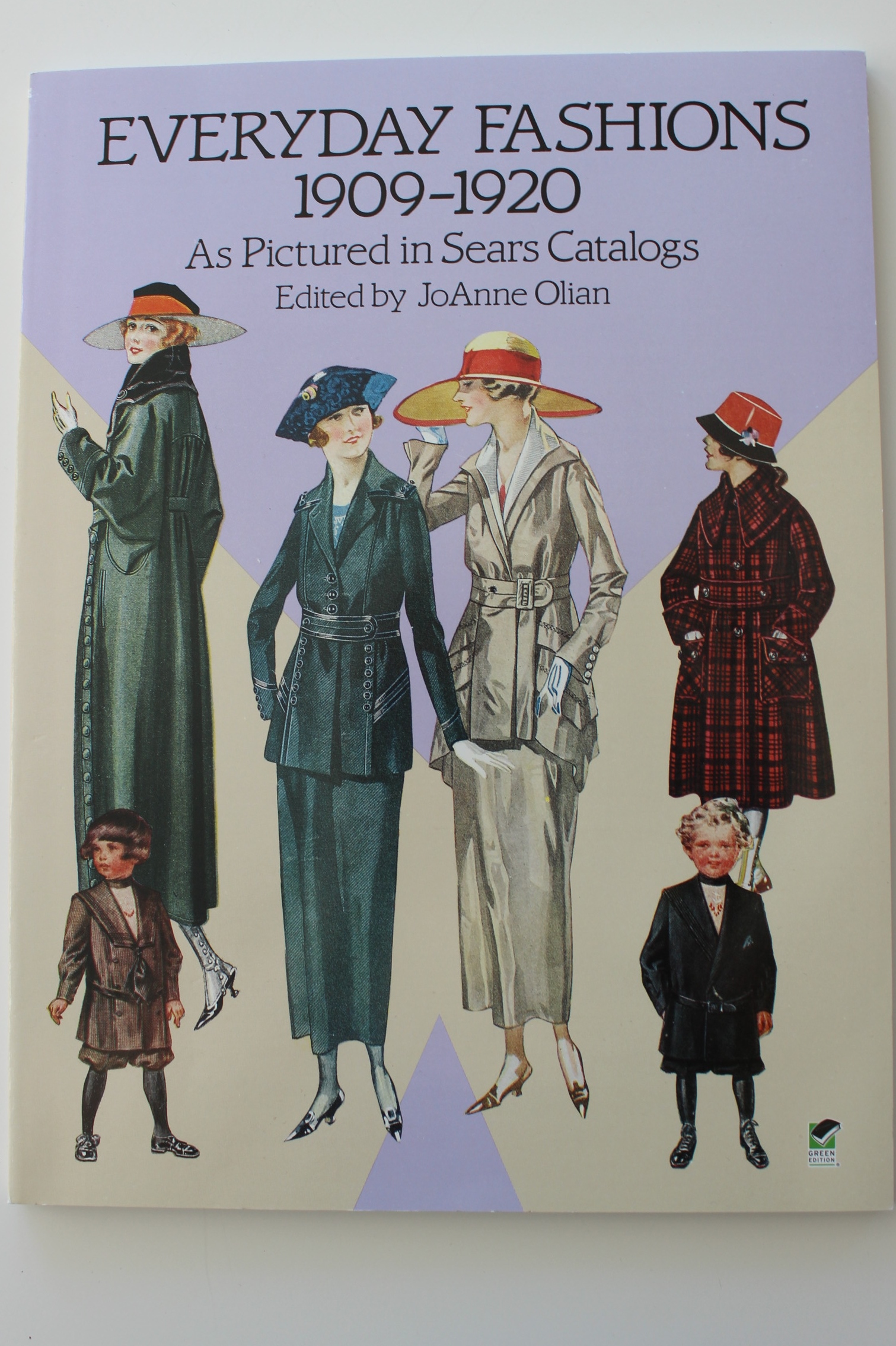
Everyday fashions 1909-1920 – As pictured in Sears Catalogs by Joanne Otan.

IMG_7927The name says it all – it’s a fashion catalouge showing some of the most promenent styles of the 1910s.

IMG_7931It contains lovely evening dresses,

IMG_7932as well as pretty separates,

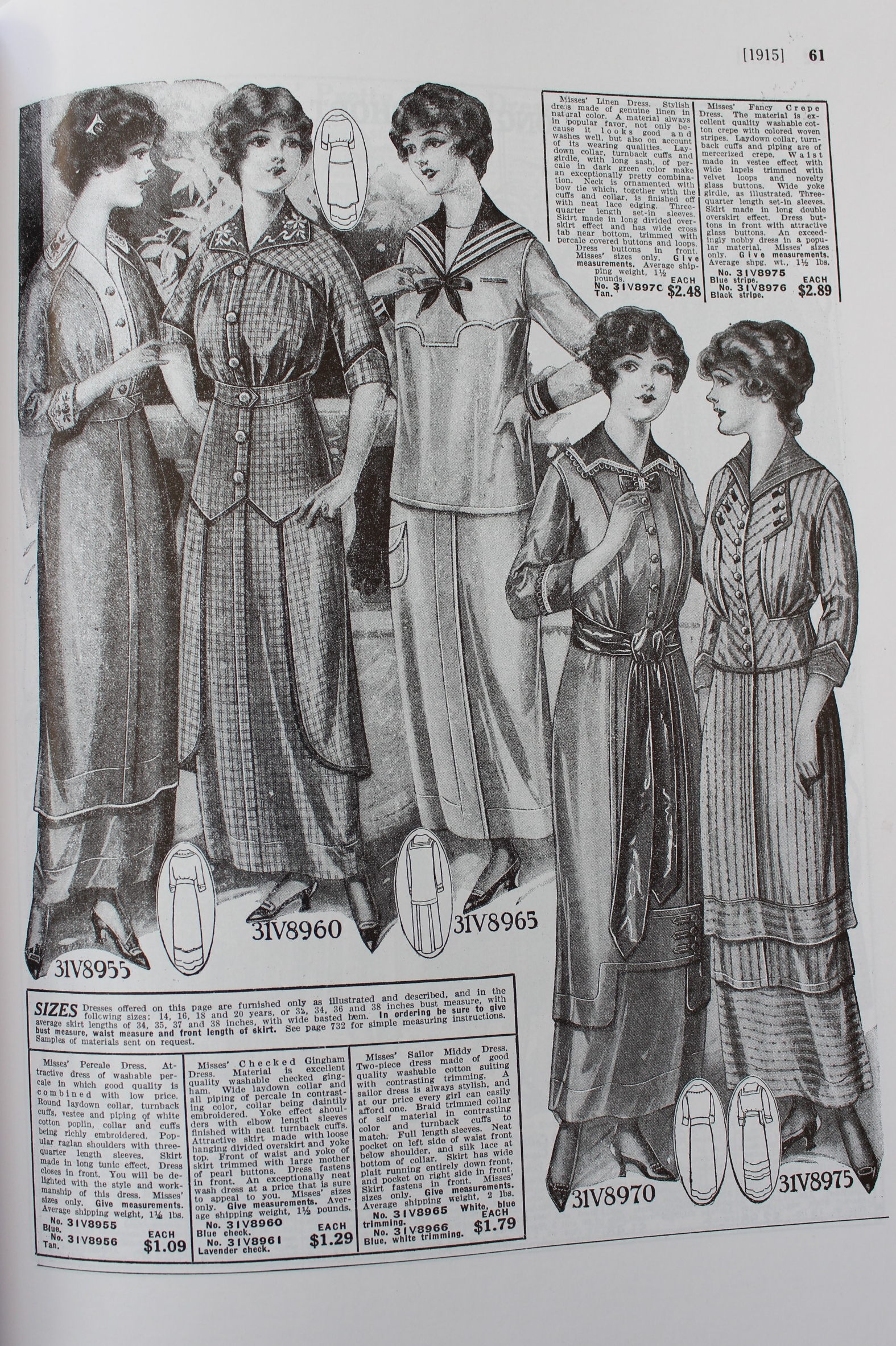
IMG_7936and of course some comfortable day-dresses for wearing around the house.

IMG_7939I love the sections on underwear, and used this pages a lot when creating my own early 1900s wardrobe.

IMG_0787Like my 1910s underbust long line corset.

IMG_7941And just recently, when making my new corset cover.

IMG_64771910s corset covers.

IMG_7930I also want to recreate on of these petticoats and bust ruffles one day.
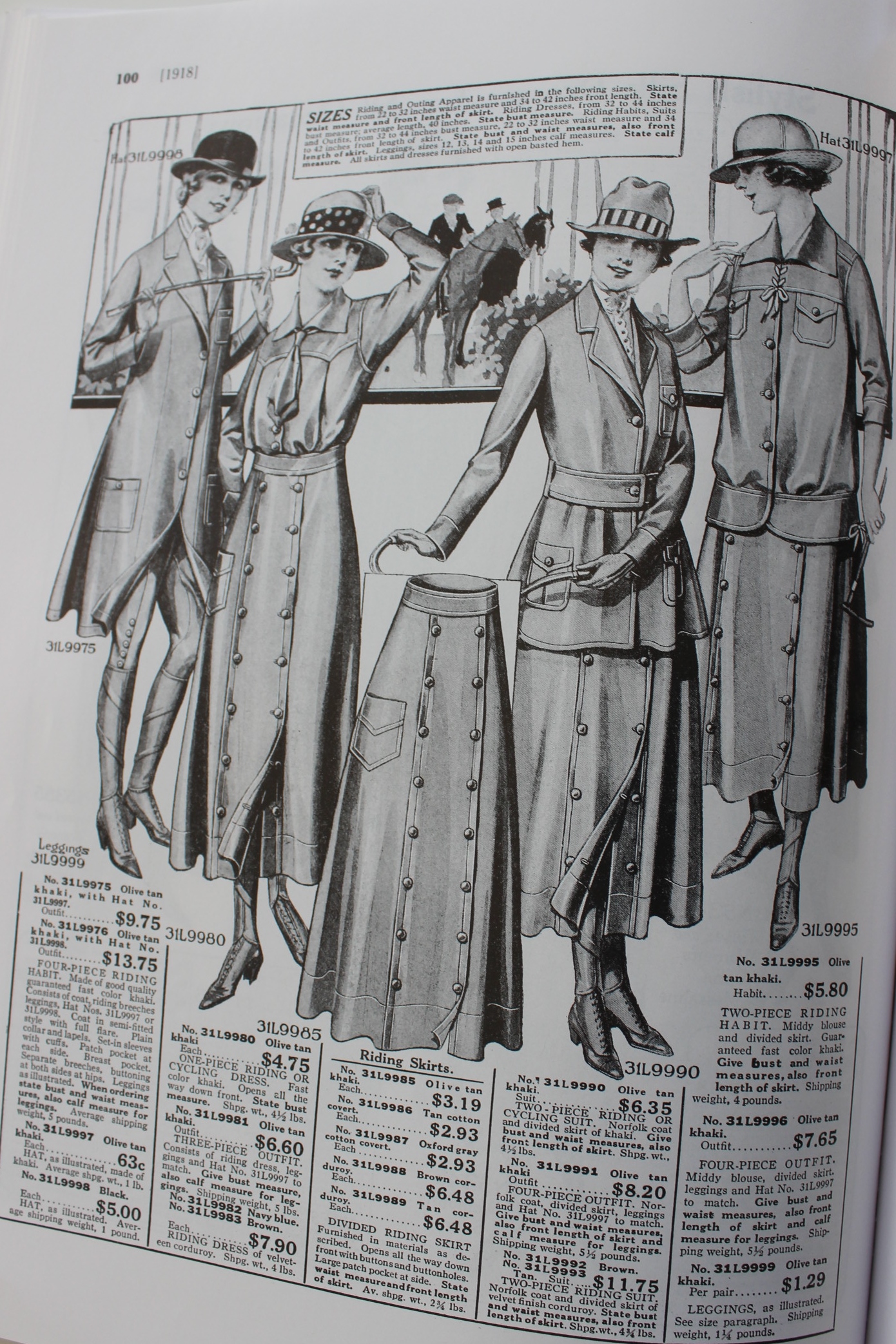
IMG_7946Thera are also several pictures of fabulous jackets and coats. Perfect for those chilly spring evenings.

IMG_7942Horse-race someone?

All the diferent kinds of dresses in this book was great inspiration and help to me, when making my 1913s walking dress.IMG_0562

I also really like the childrens sections of the book.

IMG_7937So many dresses for the girls (oh, if only I had a reason to make these).

IMG_7934And sweet sailor suits for the boys.

And we must not forgett about the gentlemen.IMG_7944

Bathing suits are big this year (at least in my part of the costuming comunity.)IMG_7943I do think I pass on this one…

IMG_7938Accessorize with belts, girdles, handbags. And for the men there are plenty to choose from regarding ties and bow-ties.

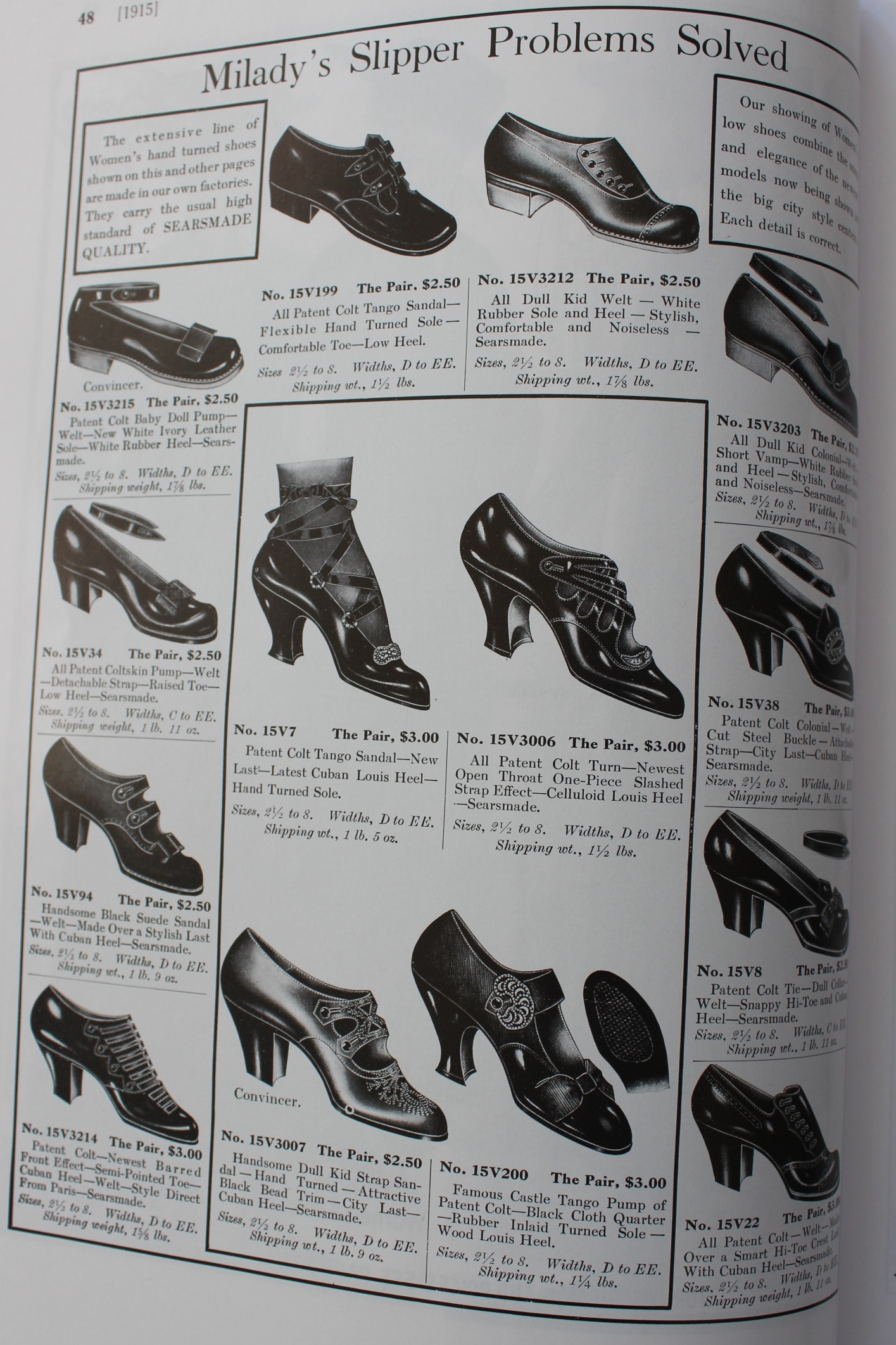
IMG_7935Lovely shoes.

IMG_7948And who do not love some fancy hats and watches.

IMG_7928


Guess this did’t turned out qute like a real review. I couldn’t even give you any cons :-).

Anyhow, I do really love this book, and thinks everyone intersting in early 20th century fashion should buy it.

It is such a good inspiration and gives such a clear visual of the transistion in fashion between edwardian curves and the new 20s flair.

It’s a great book to own and to use as reference for what people realy wore at the time, for anyone who loves historical fashion. And it’s part of a series – so you can collect them all.


A 18 century spring Photoshoot

This eastern me and my sister went outside in the beautiful weather to take some pictures of her new ensamble.

She is wearing a chemise, corset, 2 bum-pads, a fichu, a cap, the Pink jacket and the new Pastell UFO Skirt.

Do to some other circumstances we only had about 15 minutes to shoot, but manadged to get some great pictures non the les.

IMG_7724

IMG_7731

IMG_7736

IMG_7751

IMG_7773

IMG_7784

IMG_7791

IMG_7807

IMG_7814

IMG_7802

IMG_7826

IMG_7822

IMG_7825

IMG_7759

IMG_7766Model: Maria Petersson


A 18th Century Pastel UFO

Since I didn’t really had any historical UFOs worth finishing for the HSF challenge nr 8 – UFO (Un Finsihed Object), I decided to make a UFI (Un Finished Idea) instead.

And something I’ve been thinking about, but not had had the time to make, was a matching skirt to my sisters “new” Pink Caraco jacket.

So I brought out the newly re-dicovered light pistage coloured cotton, leftover from my Regency striped gown.2013-07-21 21.24.43I’ve had quite a lot of fabric left (and still do after this project) and it looked so nice together with the soft pink colour of the jacket. So there was really no discussion on what to make of it.

I started by cutting two lenghts of fabric (using the whole width), shaping the top a bit to fit over a bumpad. IMG_7701Then I sewed them together, leaving 20 cm at the top un-stitched, and cut and hemed it to the right lenght.

Then I used 6 withs of fabric, each 30cm broad, to make a ruffle.IMG_7705I sewed the together to a continious piece, and bede sure every piece was the same size.

I wanted to try something new on this ruffle, and drew round shapes on some cardboard to use as stencils when cutting/hemming the ruffle.IMG_7706Smal one for the top, and larger one for the bottom line.

IMG_7707Making a test piece, using some scrap fabric and a rick-rack scissors.

Once I’ve finished the stencils I started to cut the edges of the ruffle. IMG_7709It was a long and tedious work and I emedetly regretted the idea.

Then I stitched on a gathering thread, close to the smaler scalopes.IMG_7711

Gathered, pinned and sewed the ruffle to the skirt.IMG_7717

I placed the ruffle so to make the lower scaloped edge overlap the skirts hem by a few cm.IMG_7719

Then it was time for the wasitband.IMG_7704I cut two pieces each half the wasit measurment, and basted on some interlining.

Then I folded the pieces, putt some cotton cords between, and stiched them together at the ends.IMG_7716Two halves makes a whole wasitband.

I then measured and pinned the pleats in the skirt to mach the front and back waistband. IMG_7721I basted the pleats in place.

And pined on the wasitband.IMG_7720Then I folded the back of the band under and hand tacked it in place.

The finished skirt:IMG_7831

IMG_7832

IMG_7835

IMG_7836

IMG_7838

IMG_7843

IMG_7842

IMG_7846


Just the Facts:

Challenge: nr 8 – UFO (Un Finished Object)

What: A 1750-1780s skirt.

Pattern: None, just measured and cut.

Fabric: 3 m of soft pistage coloured cotton, and scraps of white cotton for interlining.

Notions: Thread, 2 m of cotton cord.

How historical accurate: So so. I think the shape and colour is good. But it is compleatly machine made, and cotton was not really used for this kind of skirts untill a bit later.

Time: Much more then I care to admit. If not for the scaloping on the ruffle, 3 hours, but all and all about 6 hours.

Cost: About 60 Sek (9 Usd)

First worn: On easten for photos (pictures from the shoot will be in my next post).

Final thoughts: Both me and my sister like it a lot. It is pretty, soft and moves nicely when she moves. I will have to make it shorter though – about 10 cm, to make it more of a walking skirt then the evening lenght it curently have. But once that finished I’m sure it will look really lovely and summery.