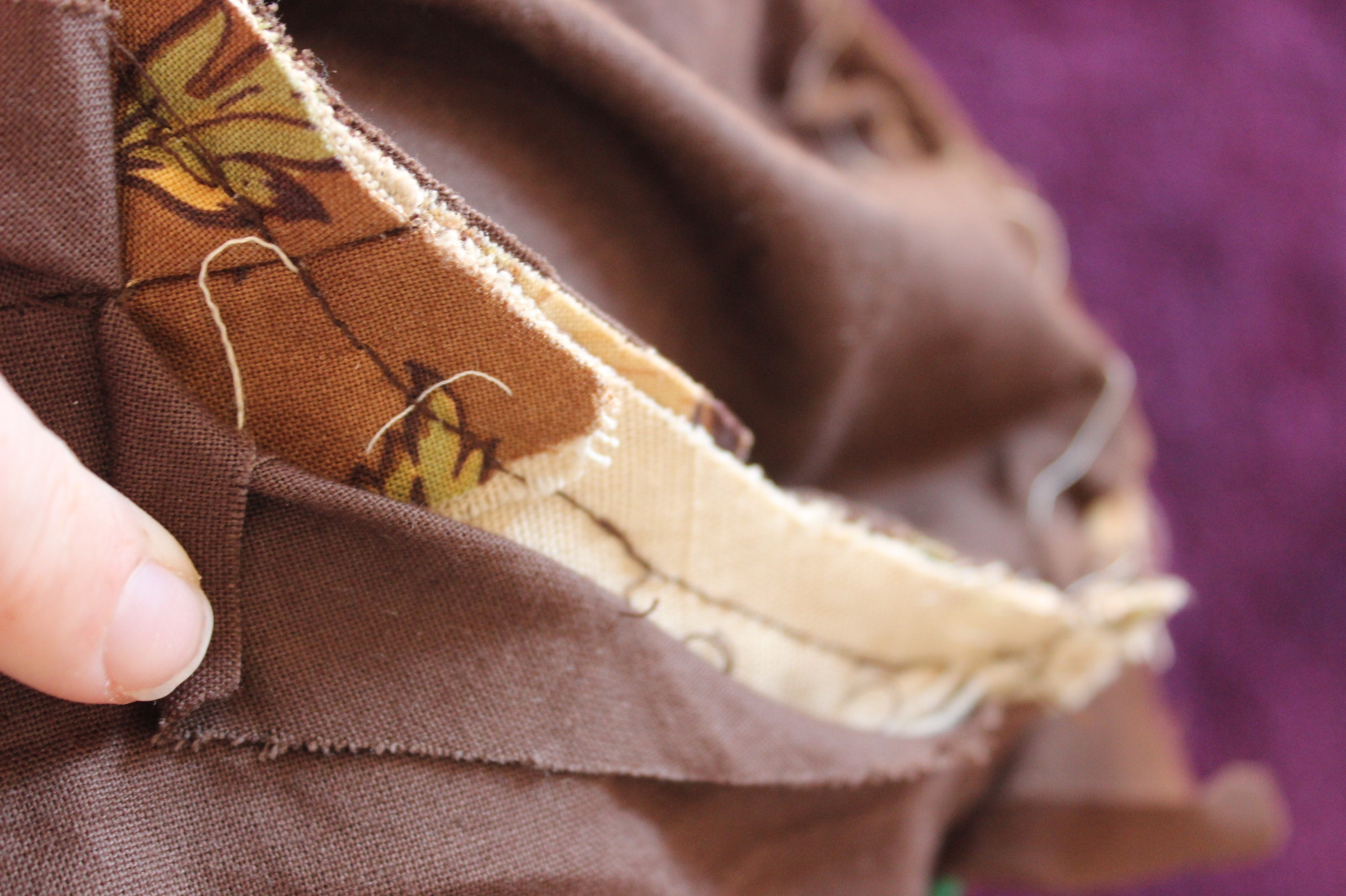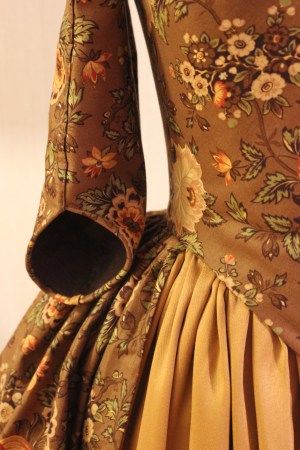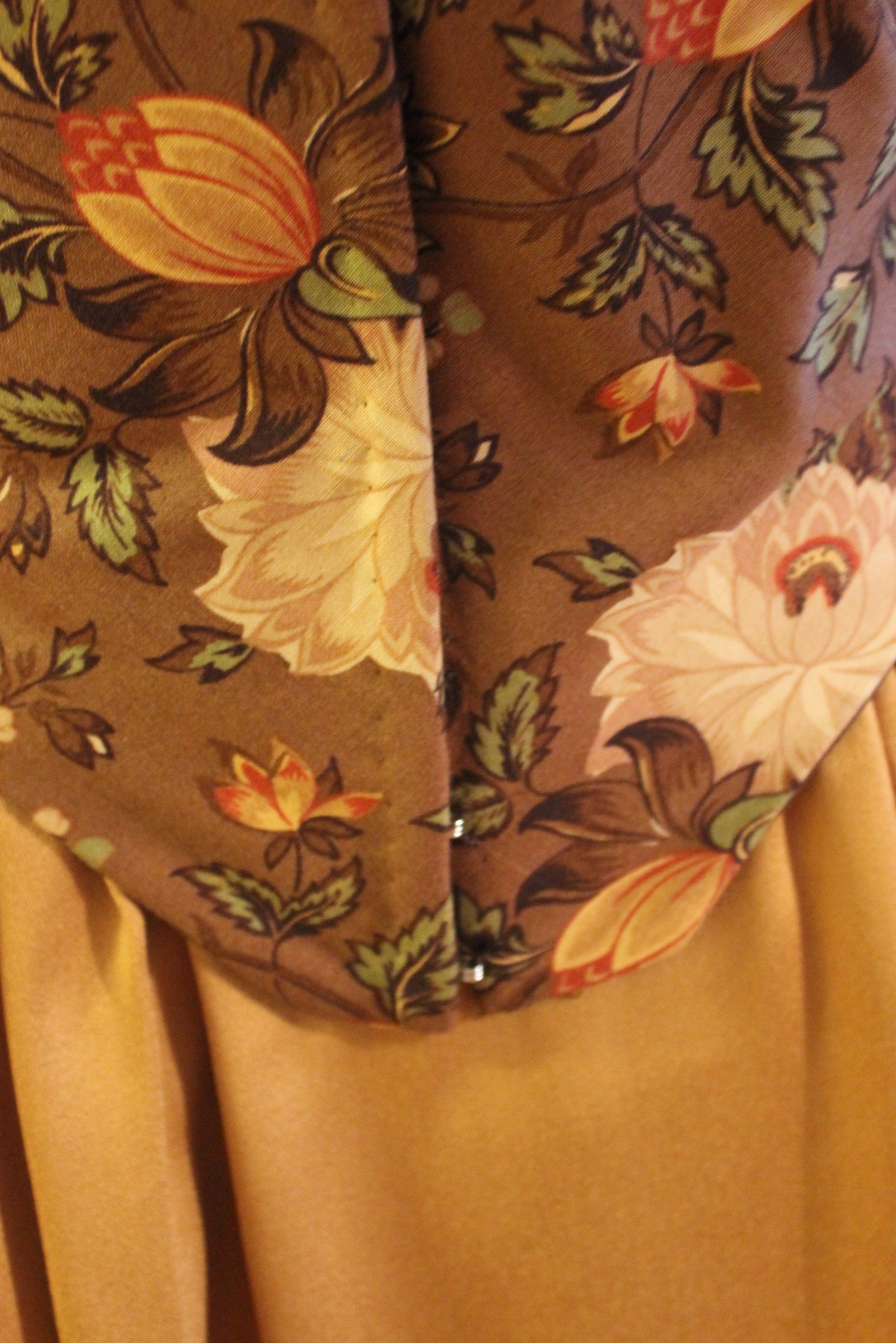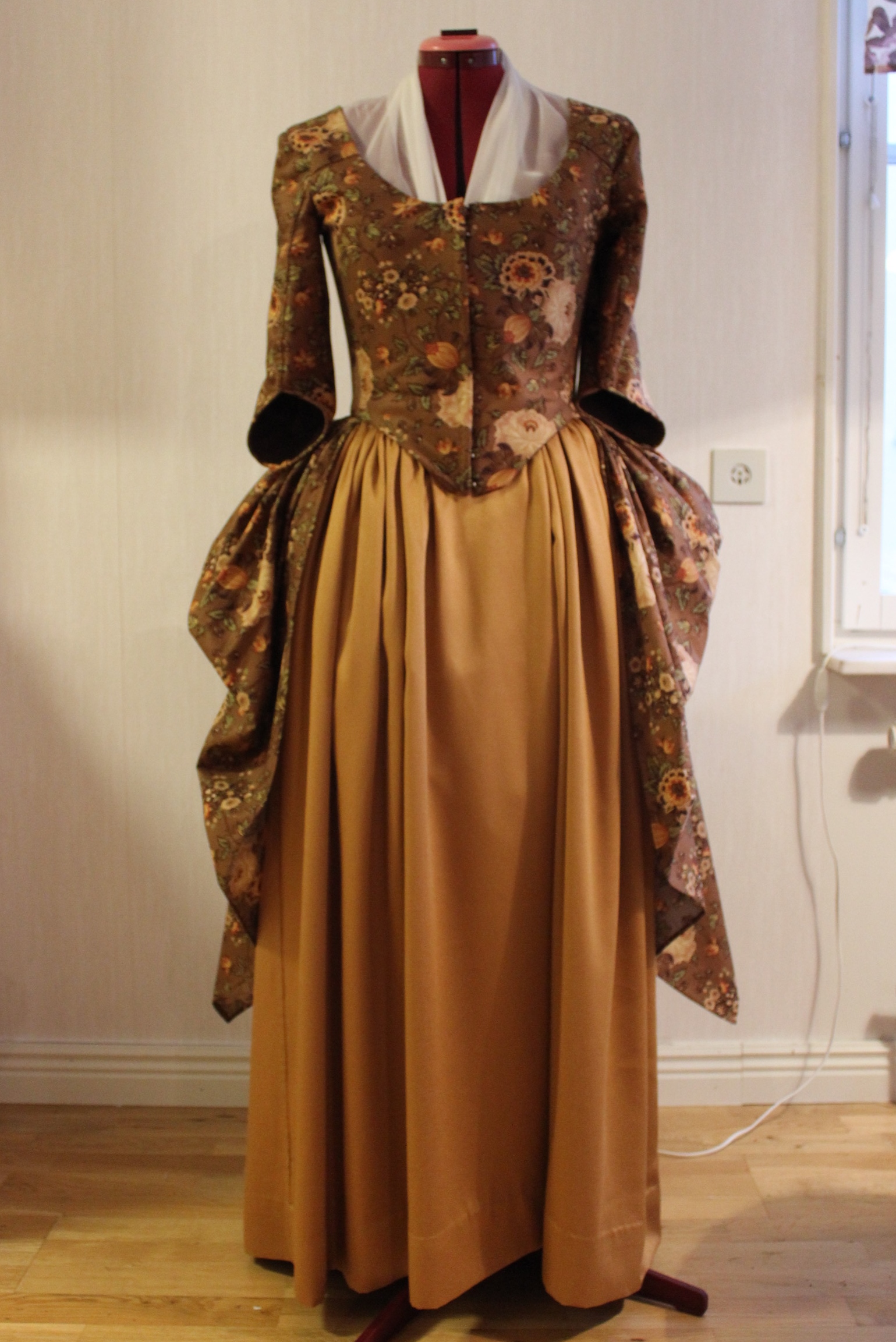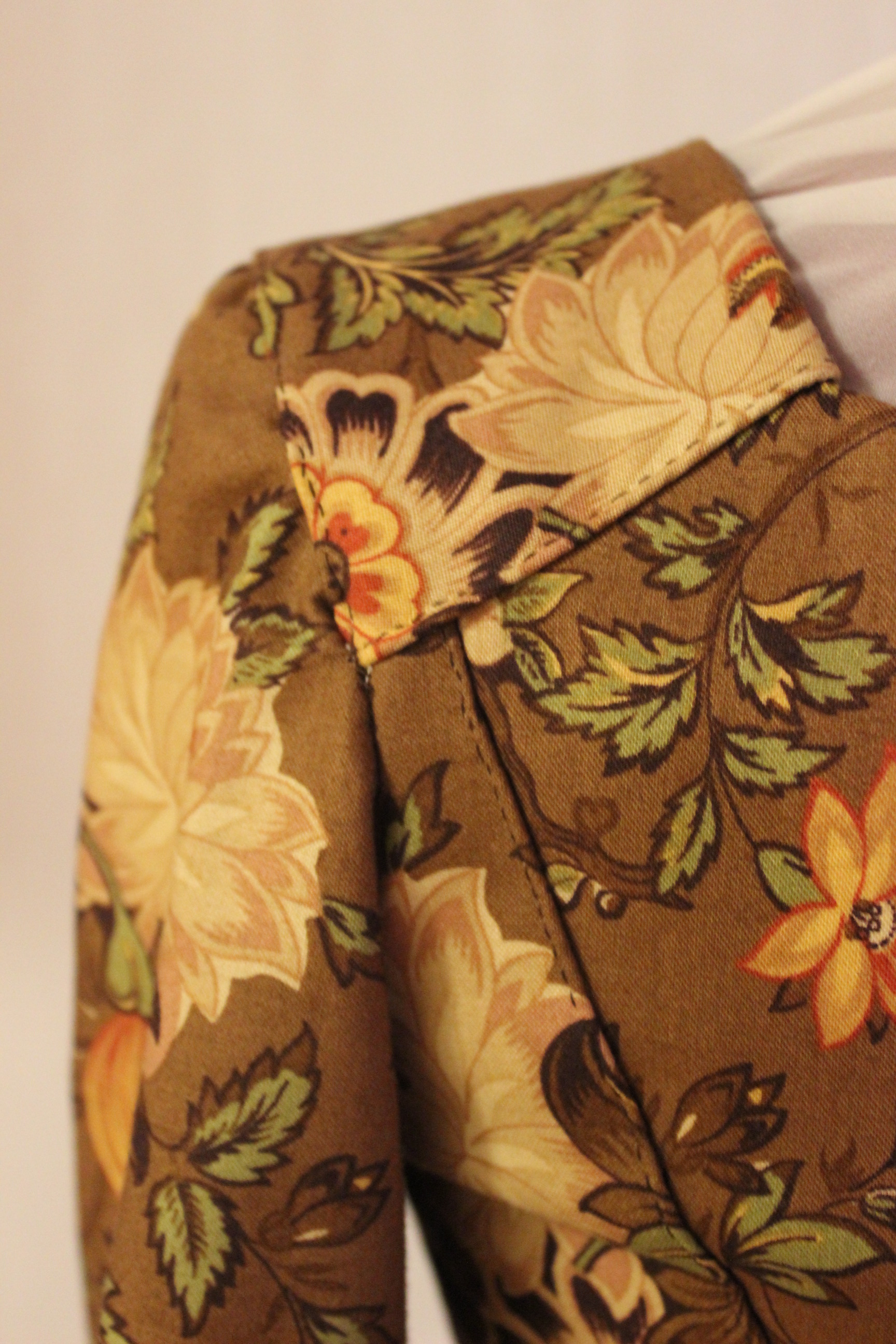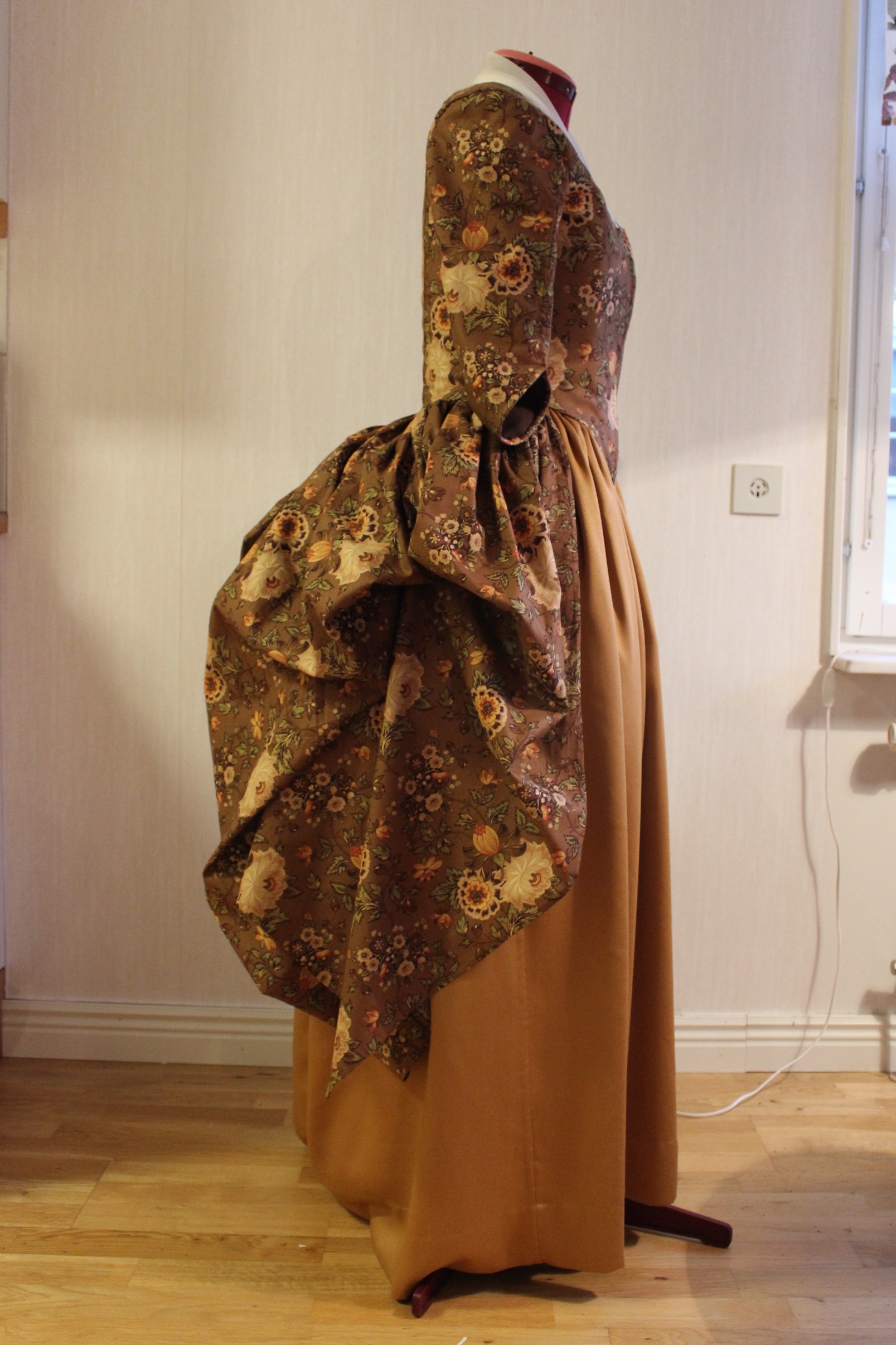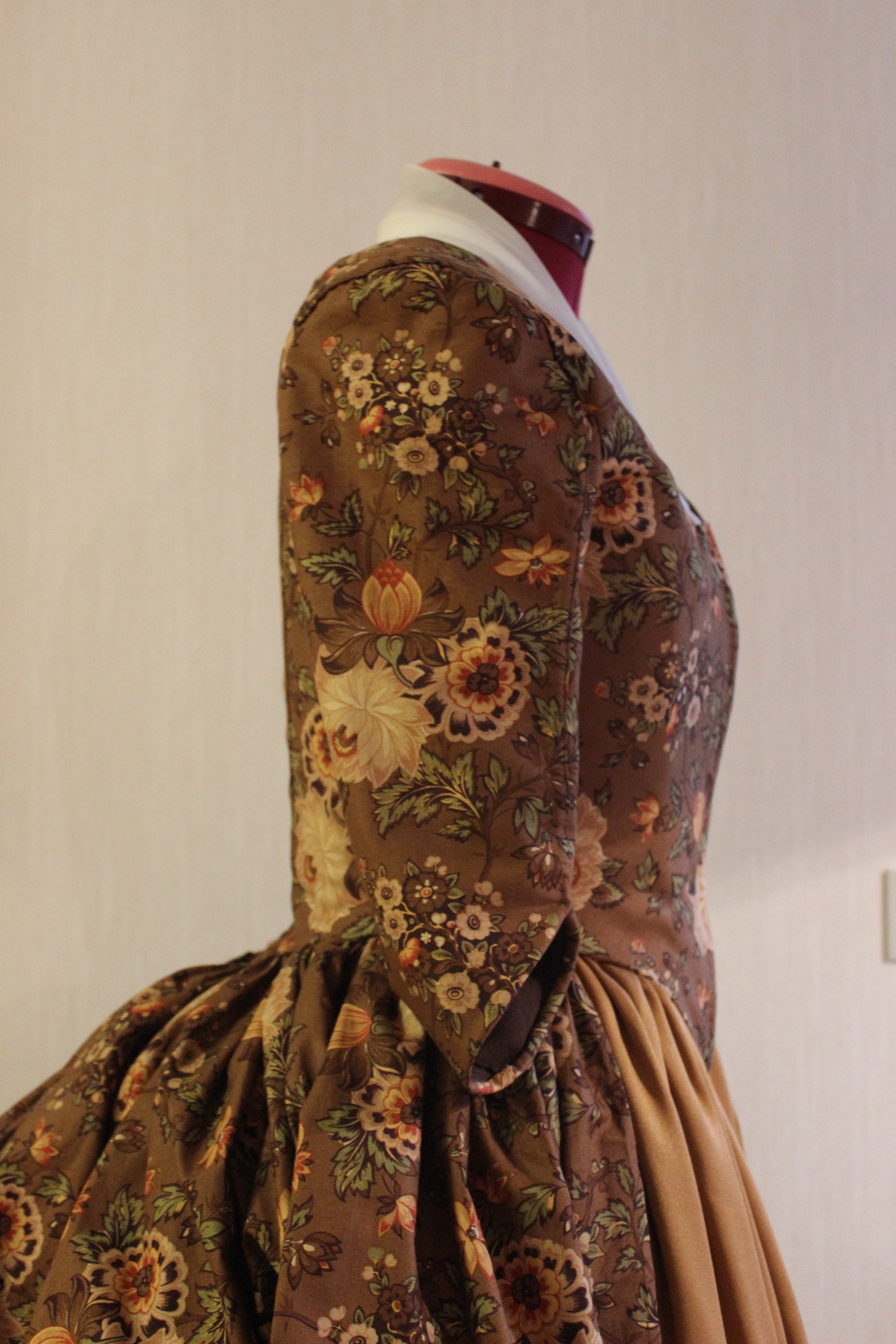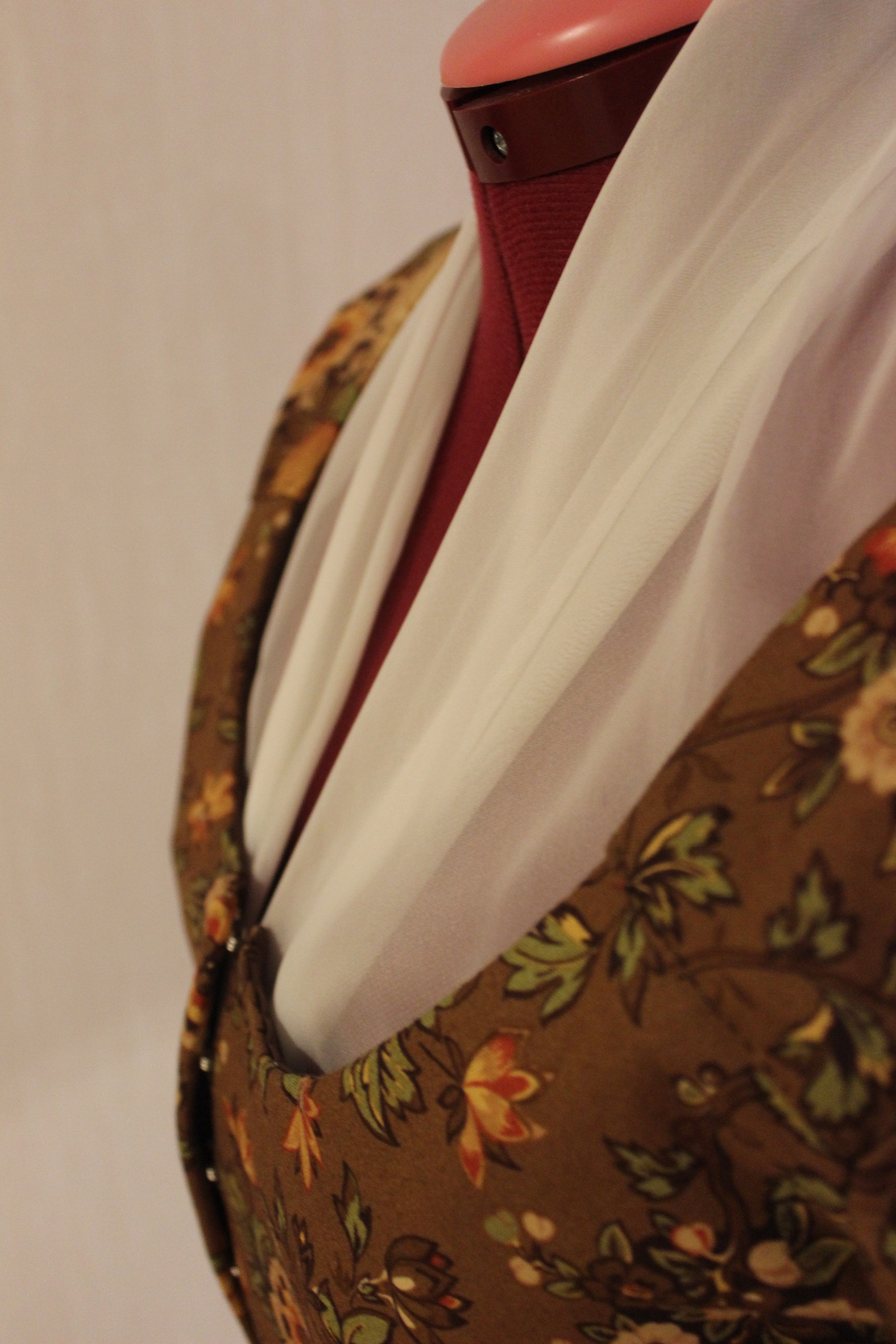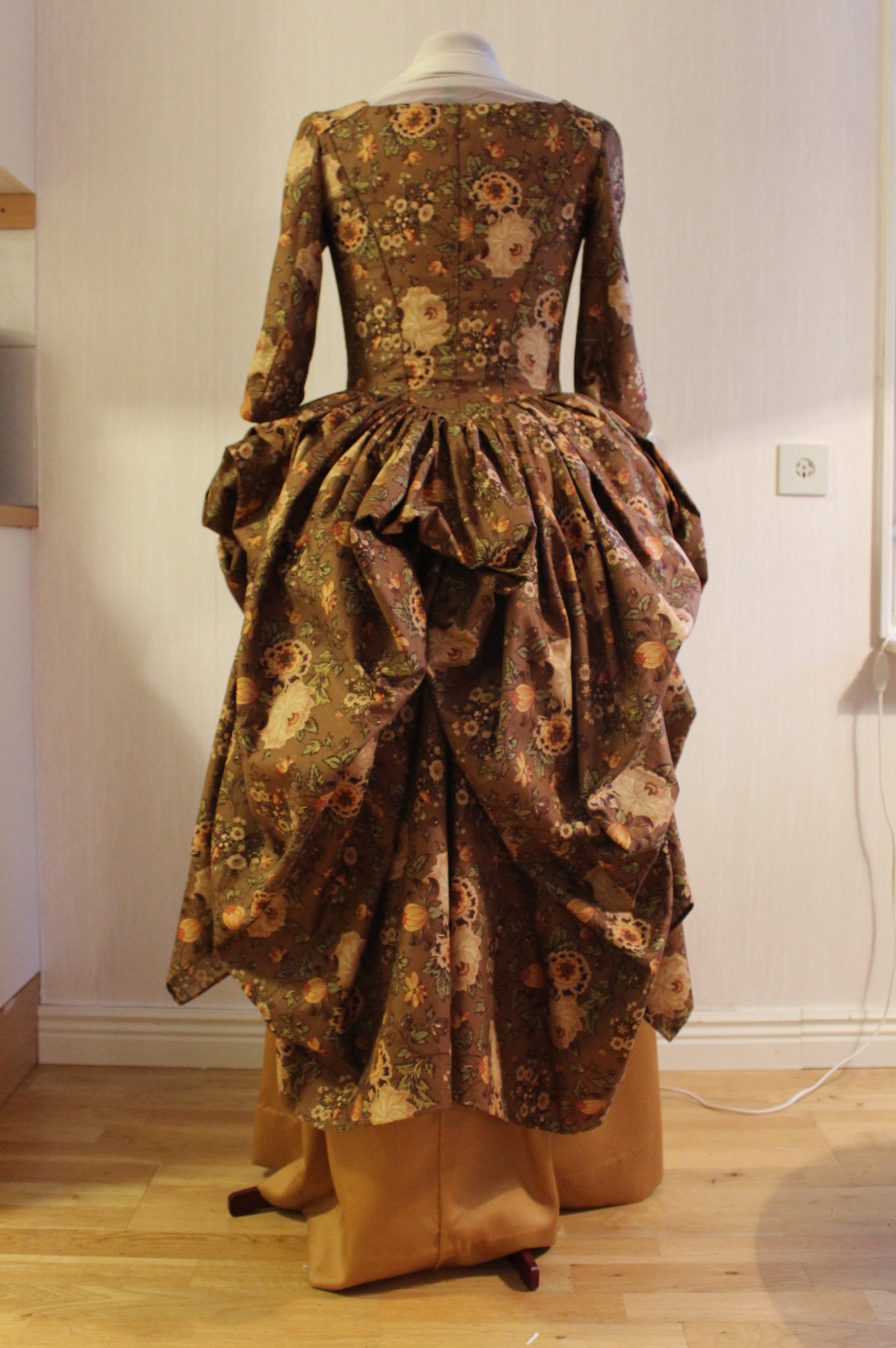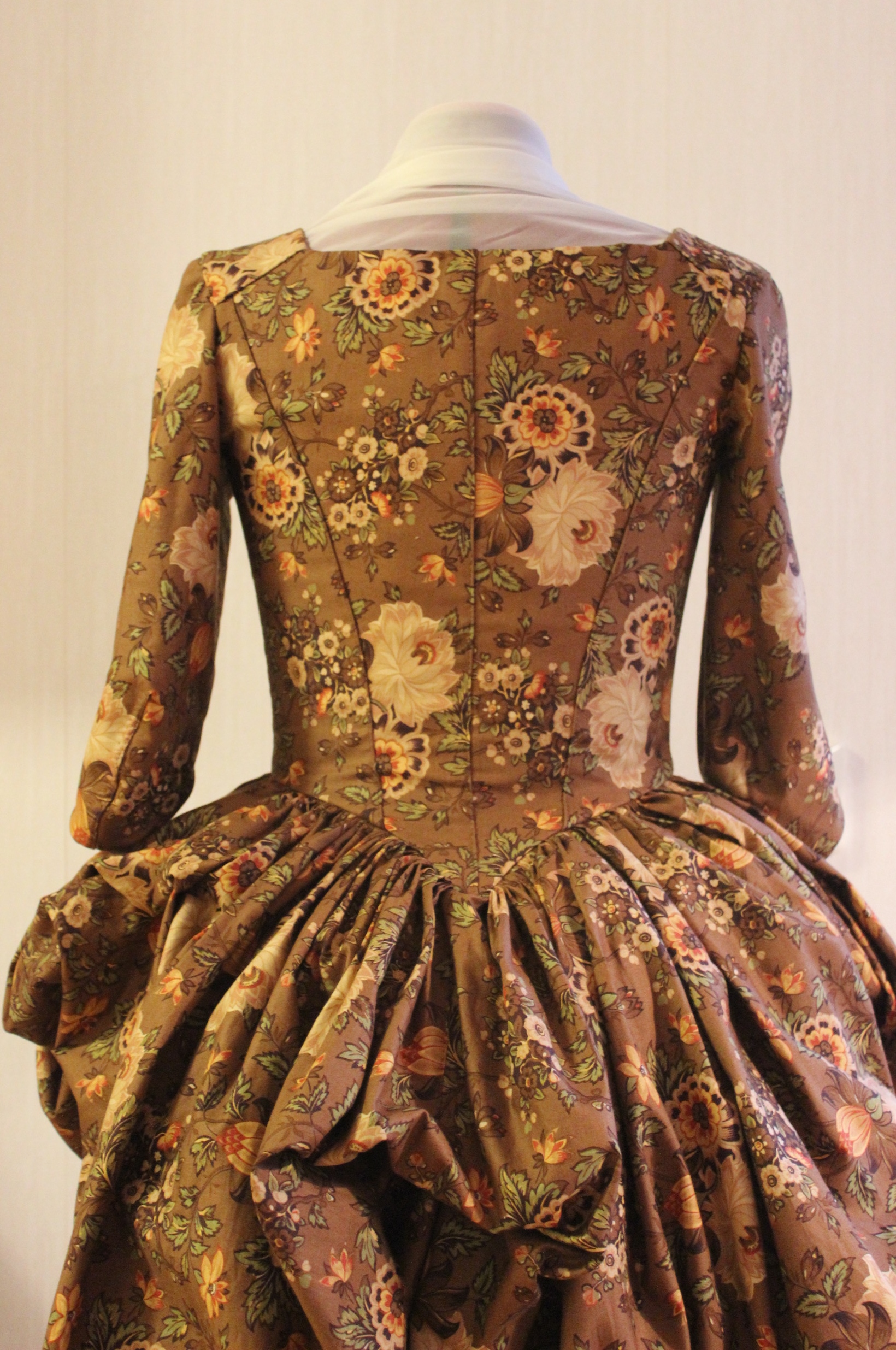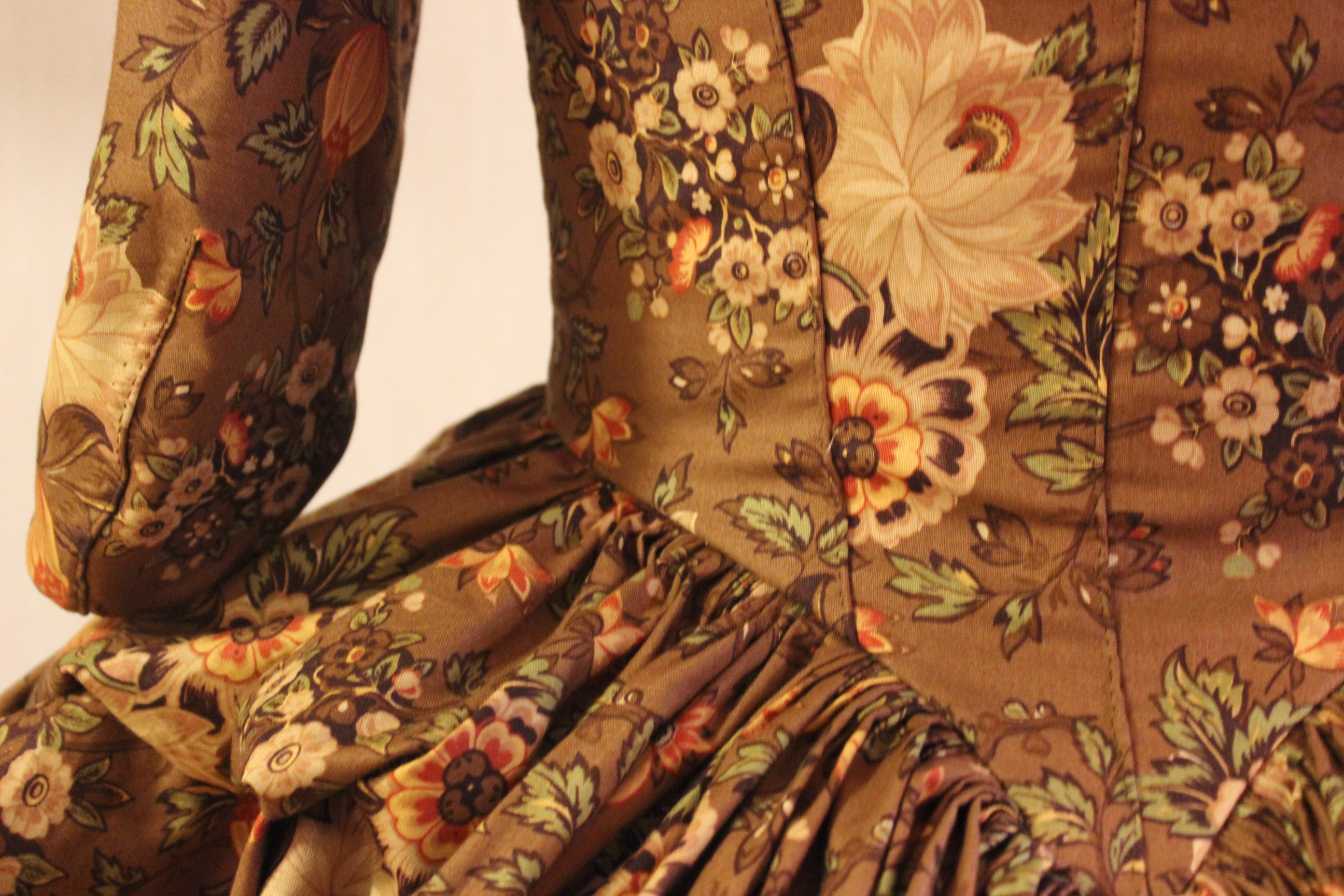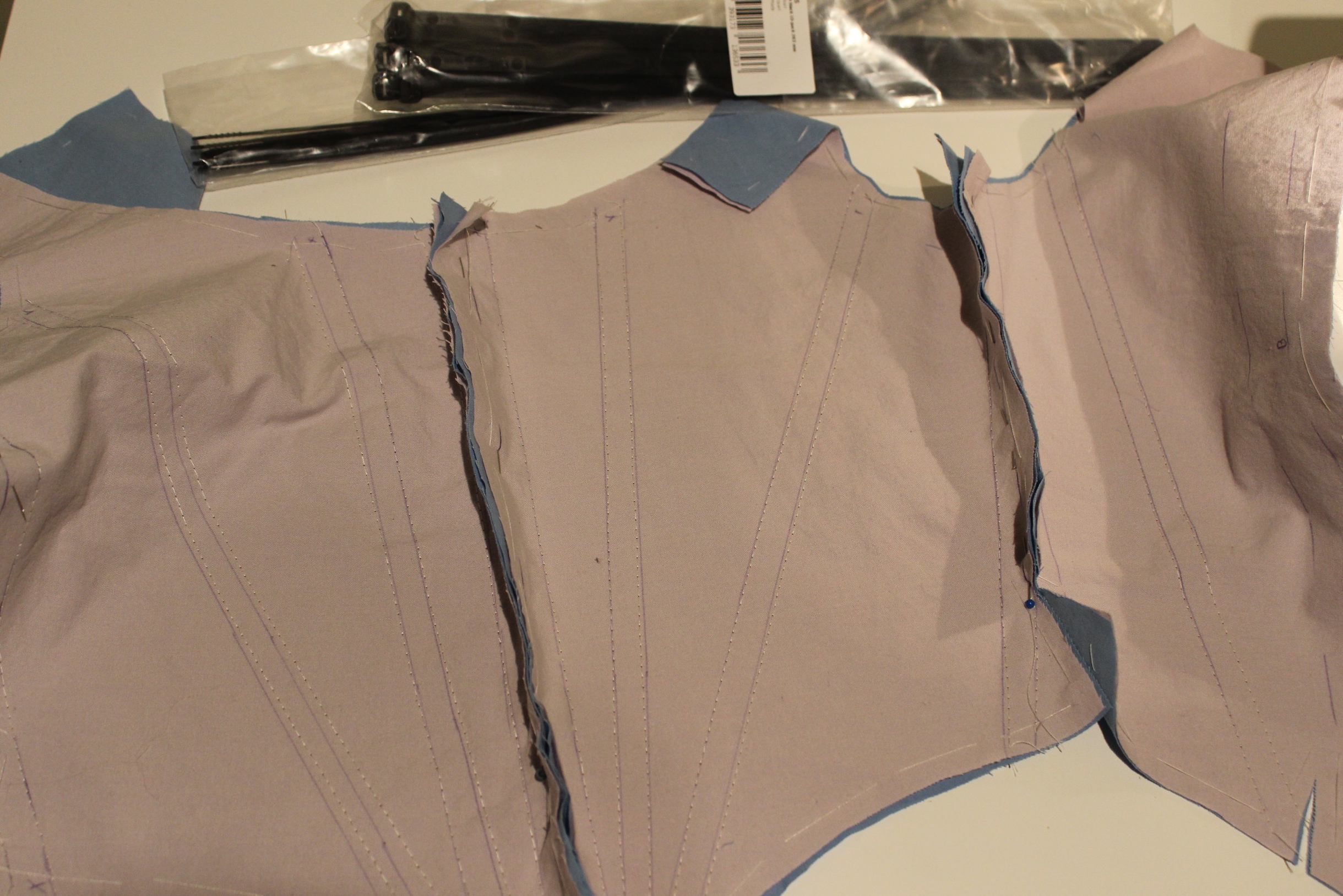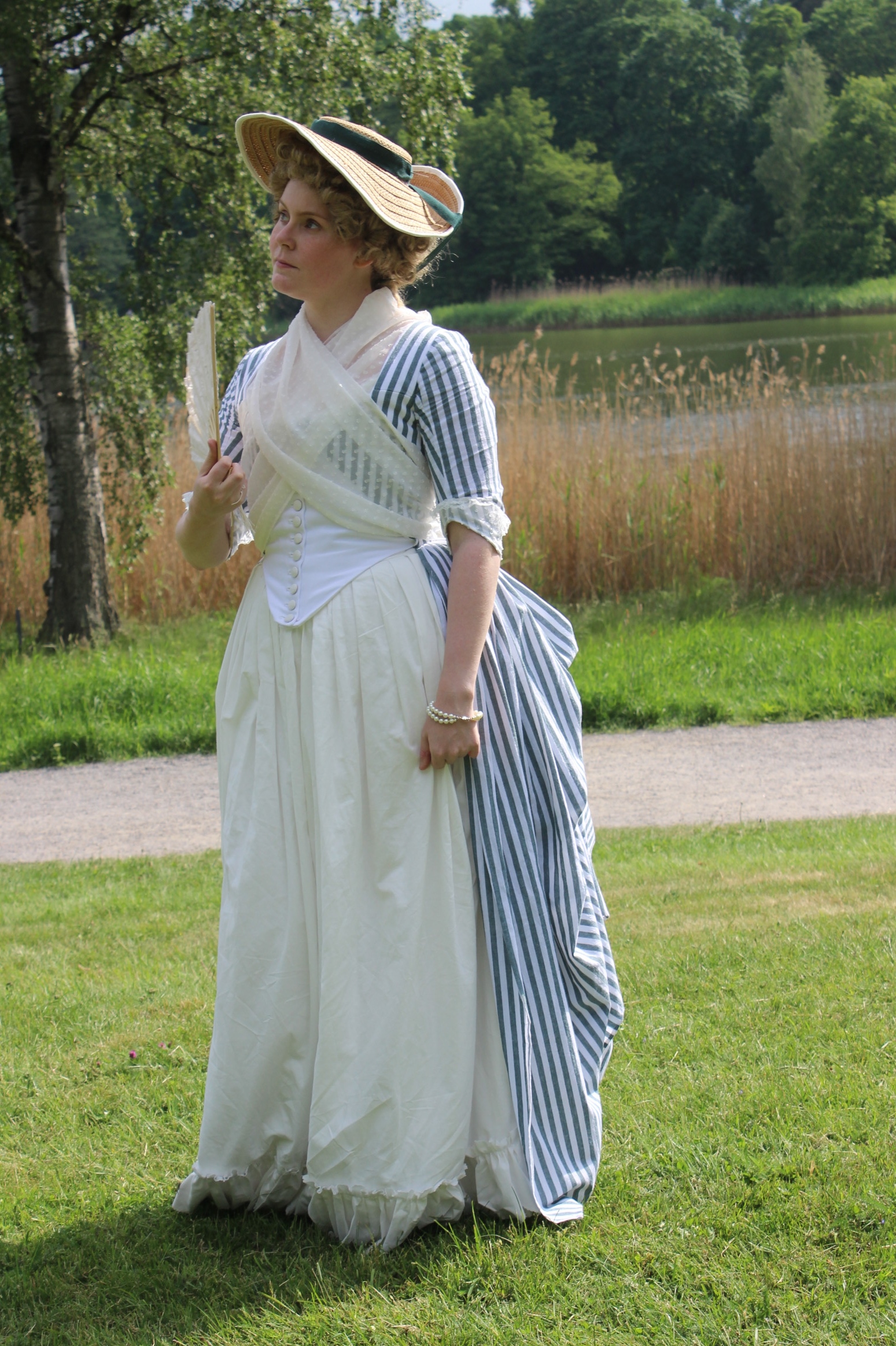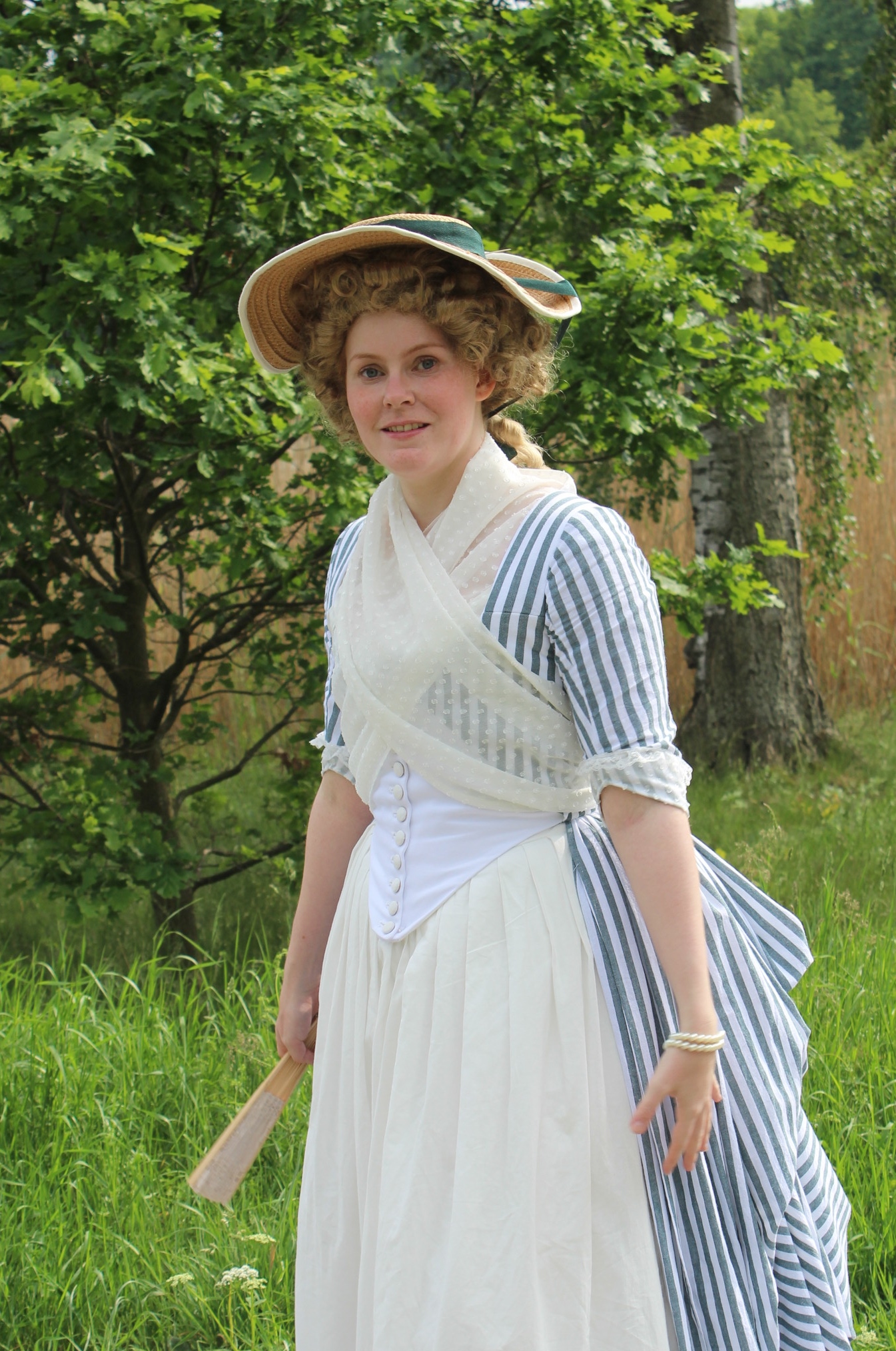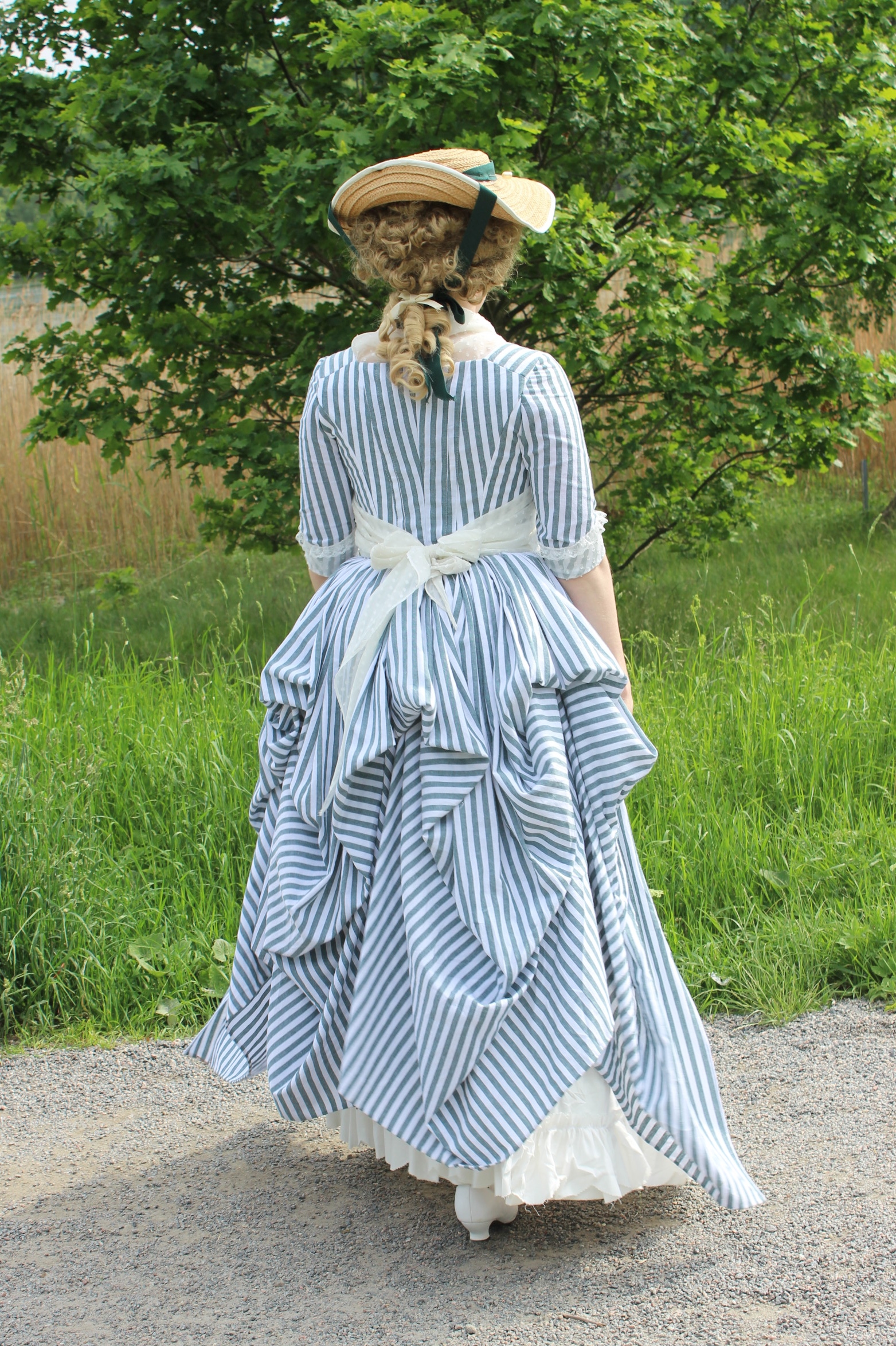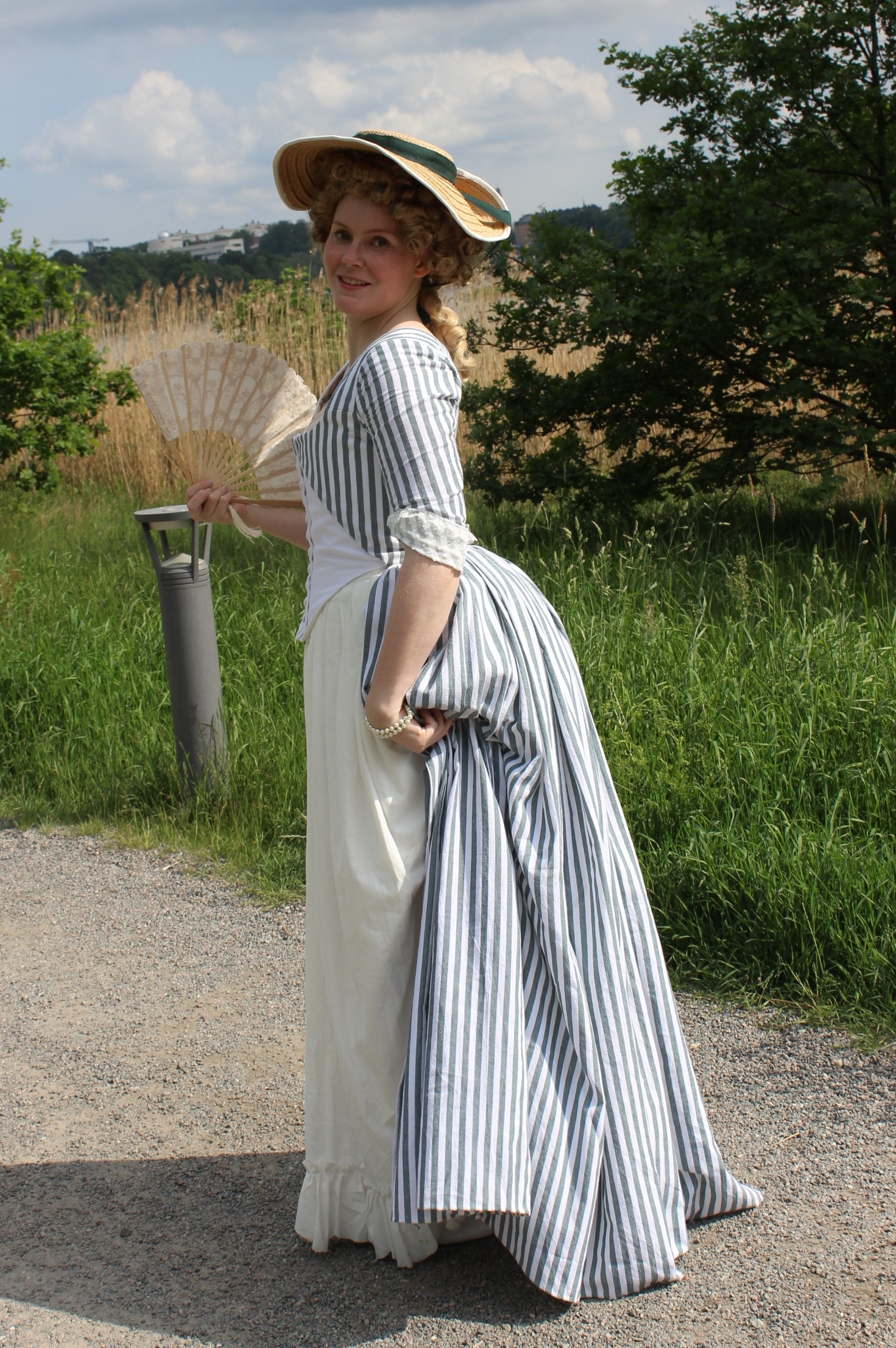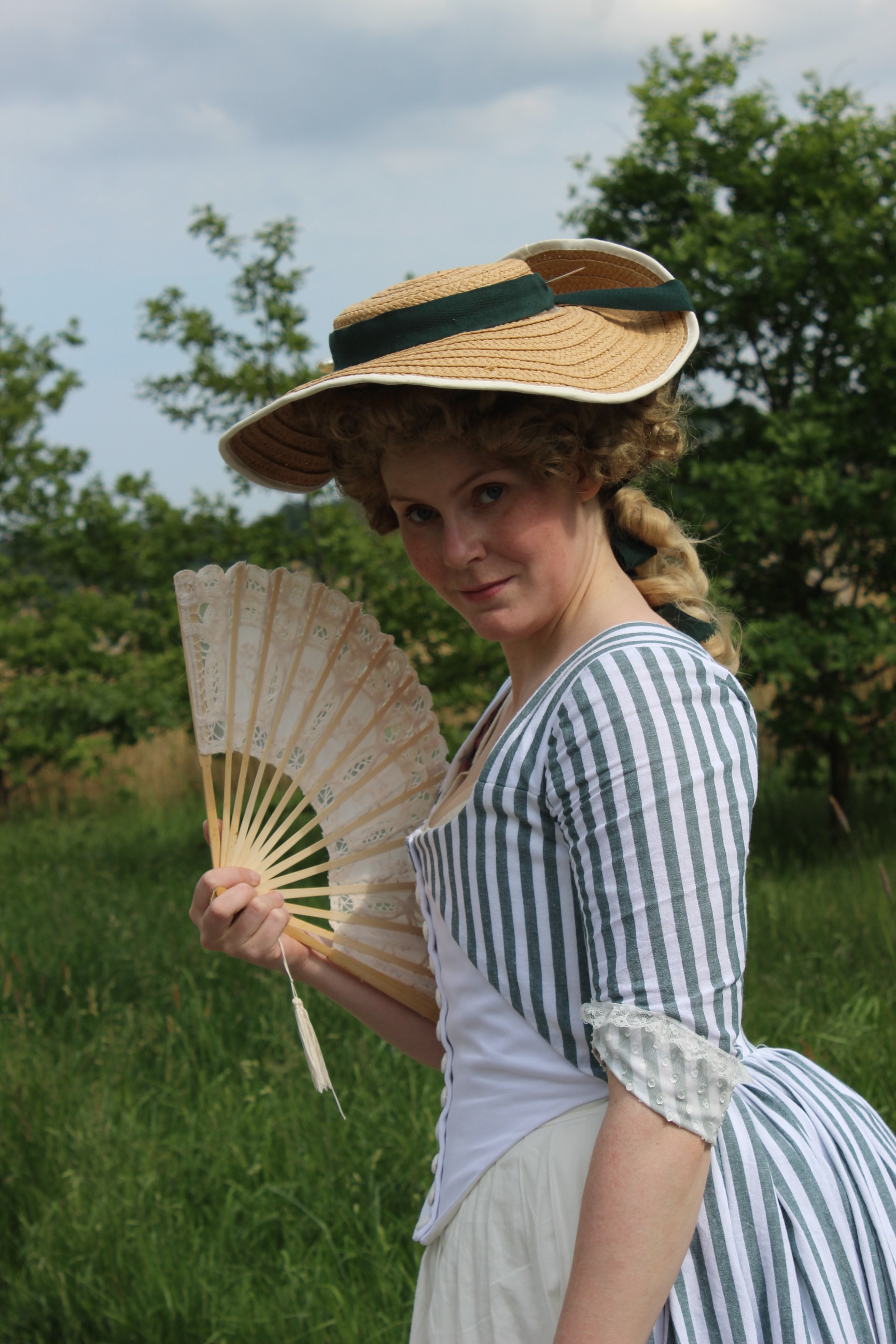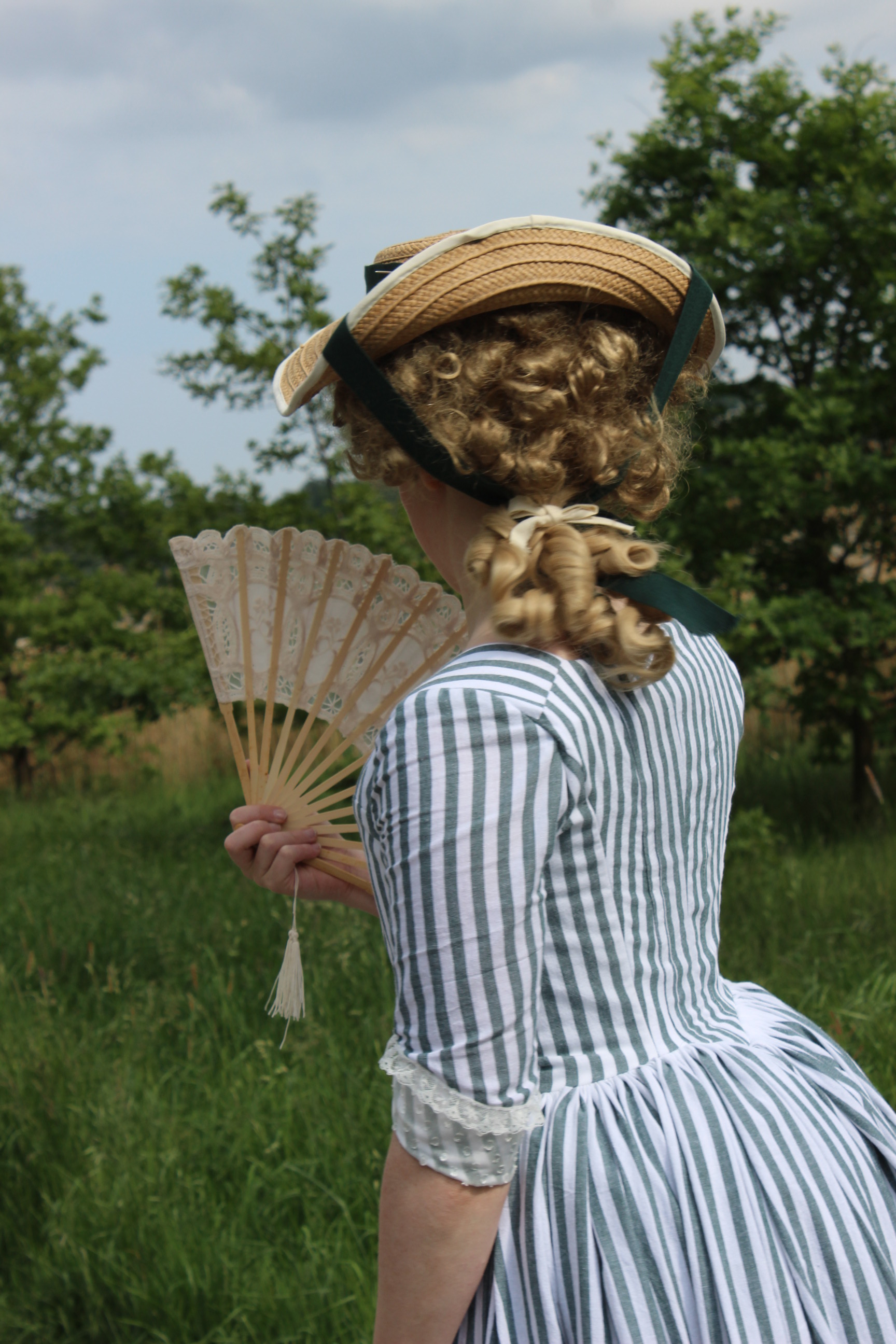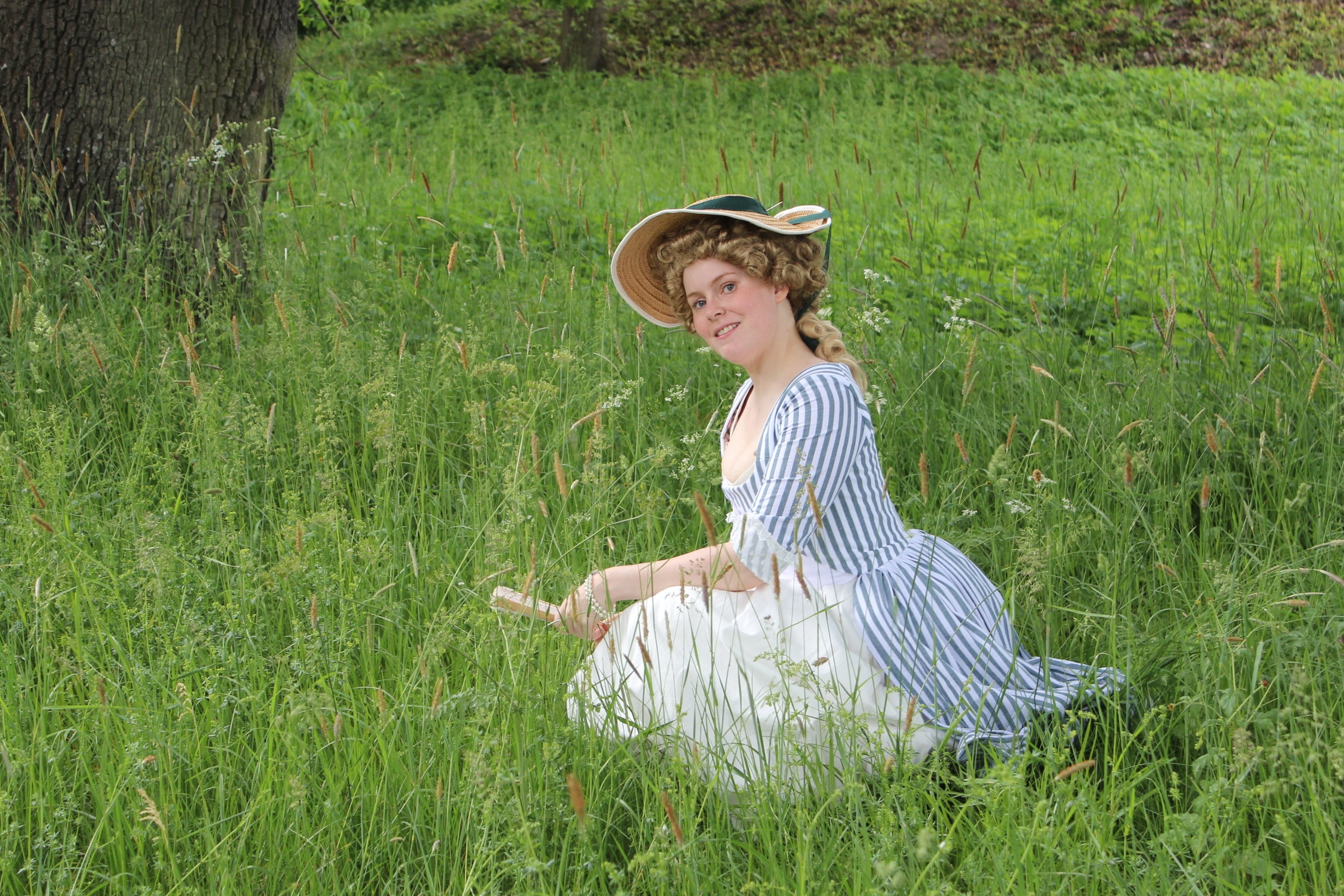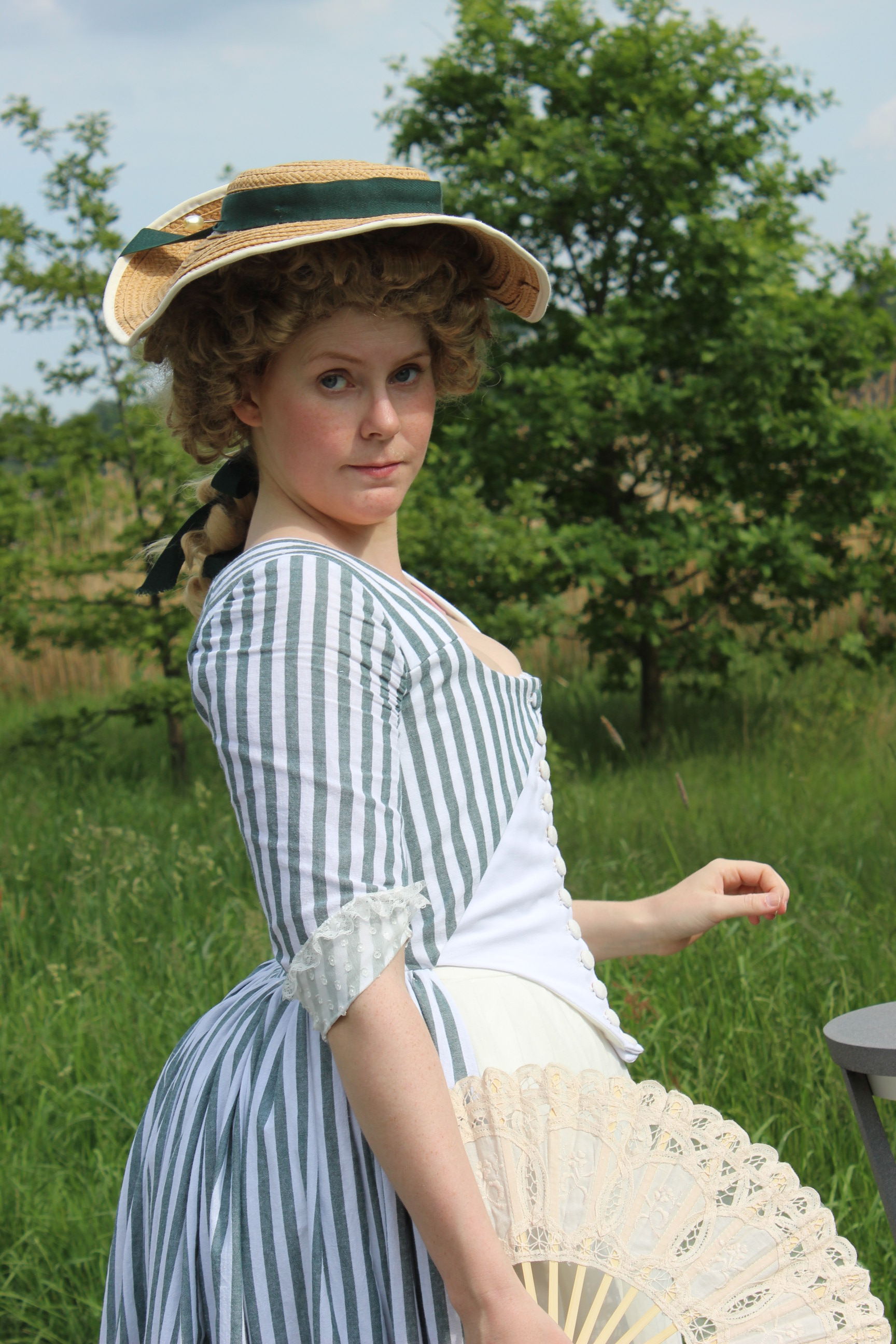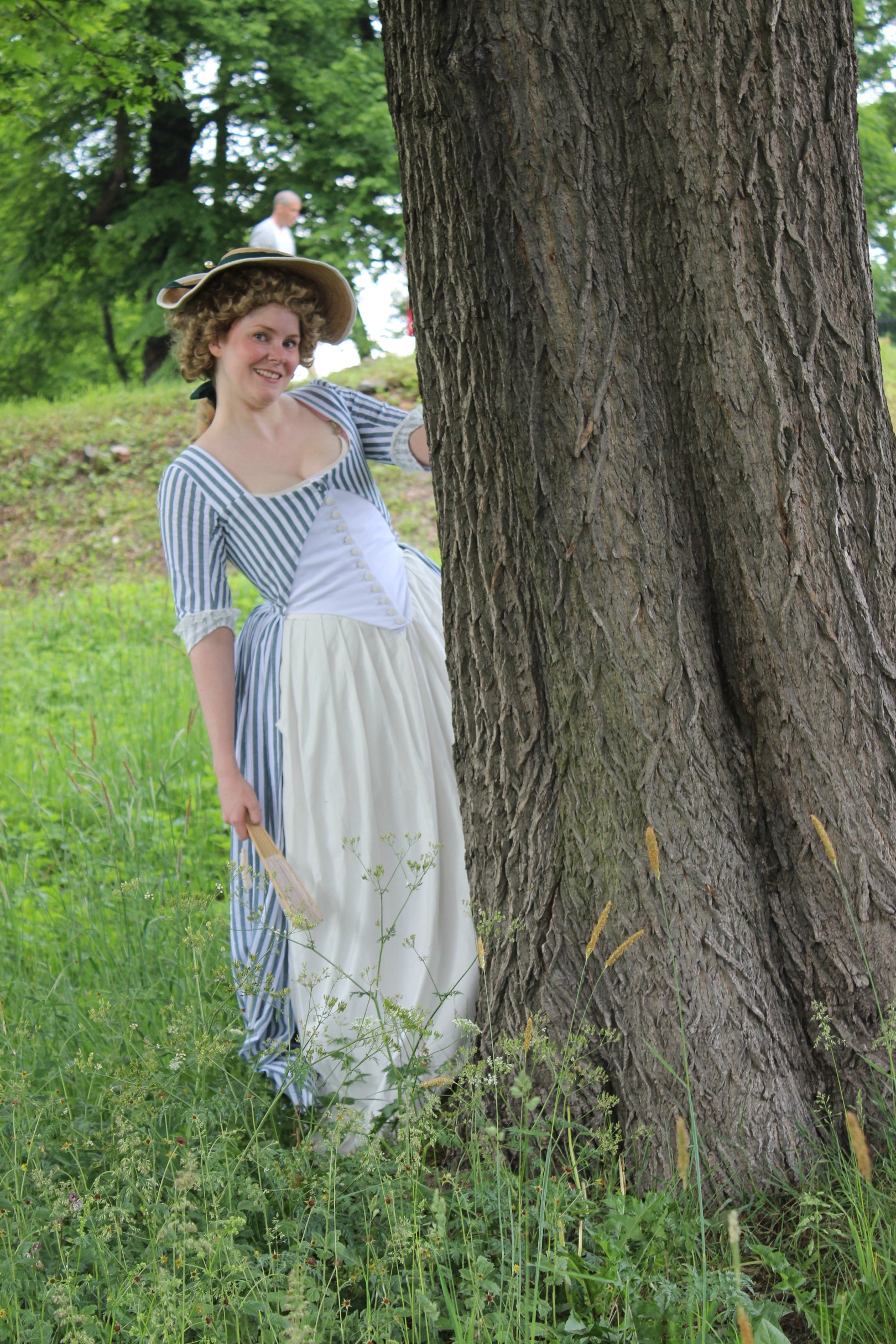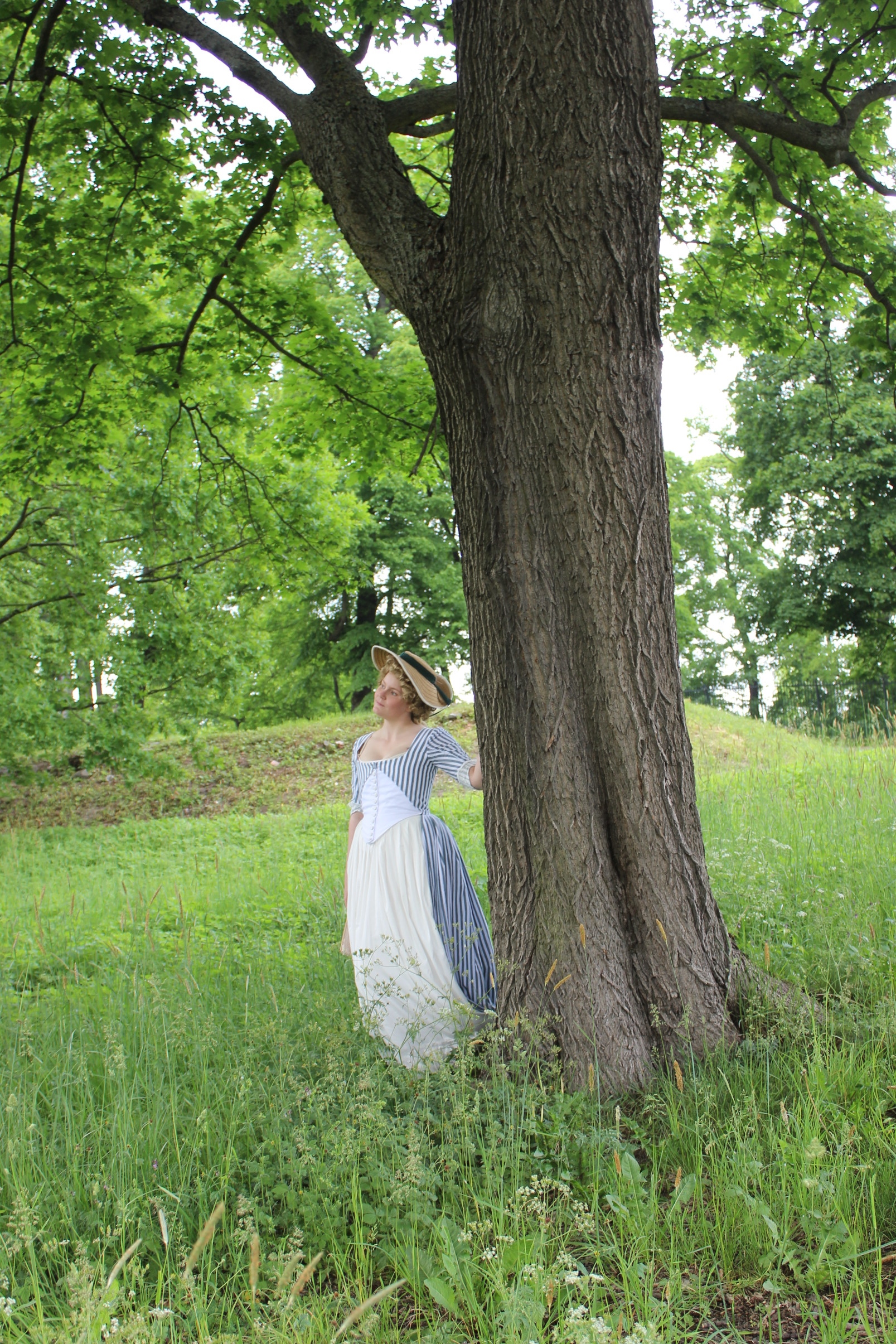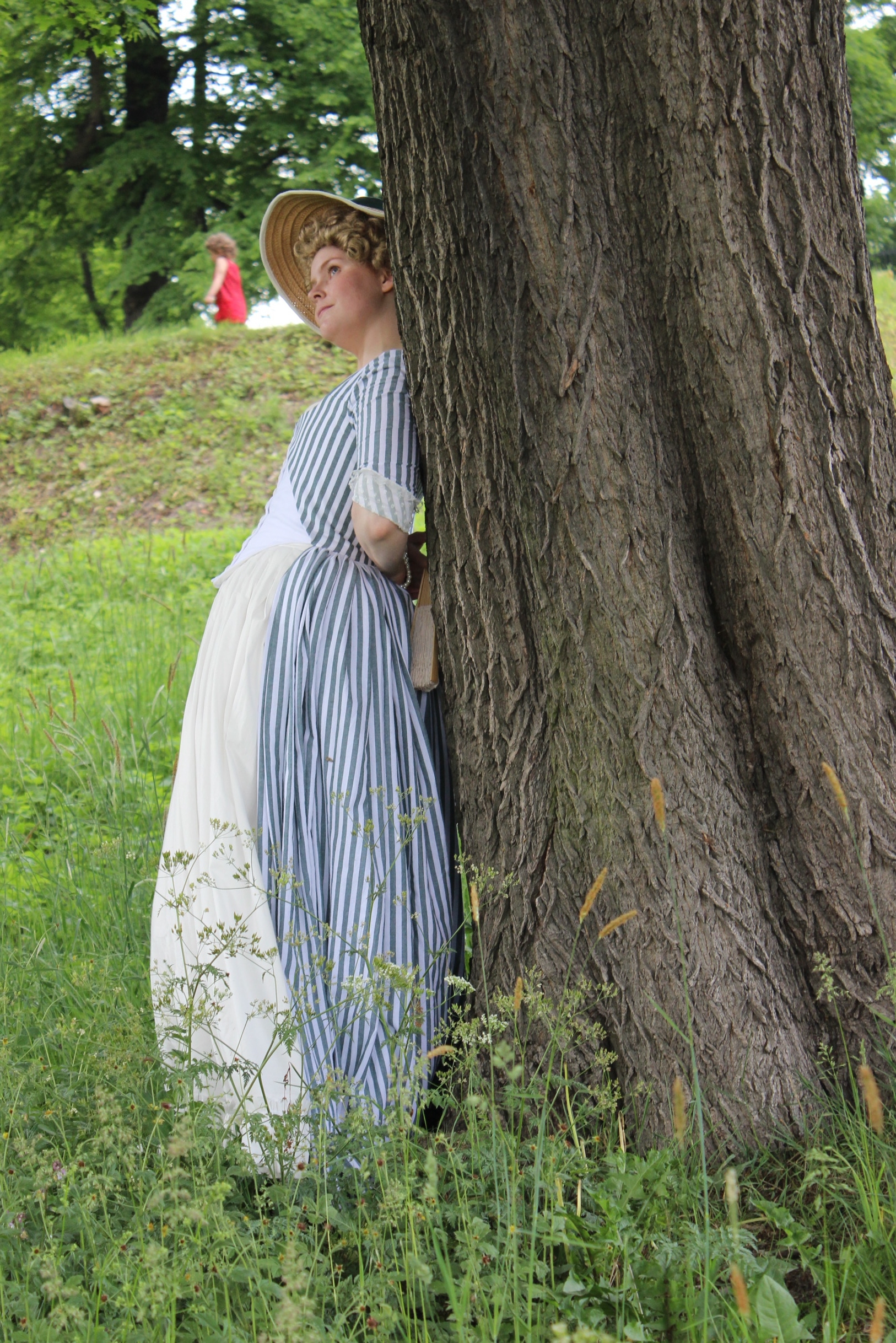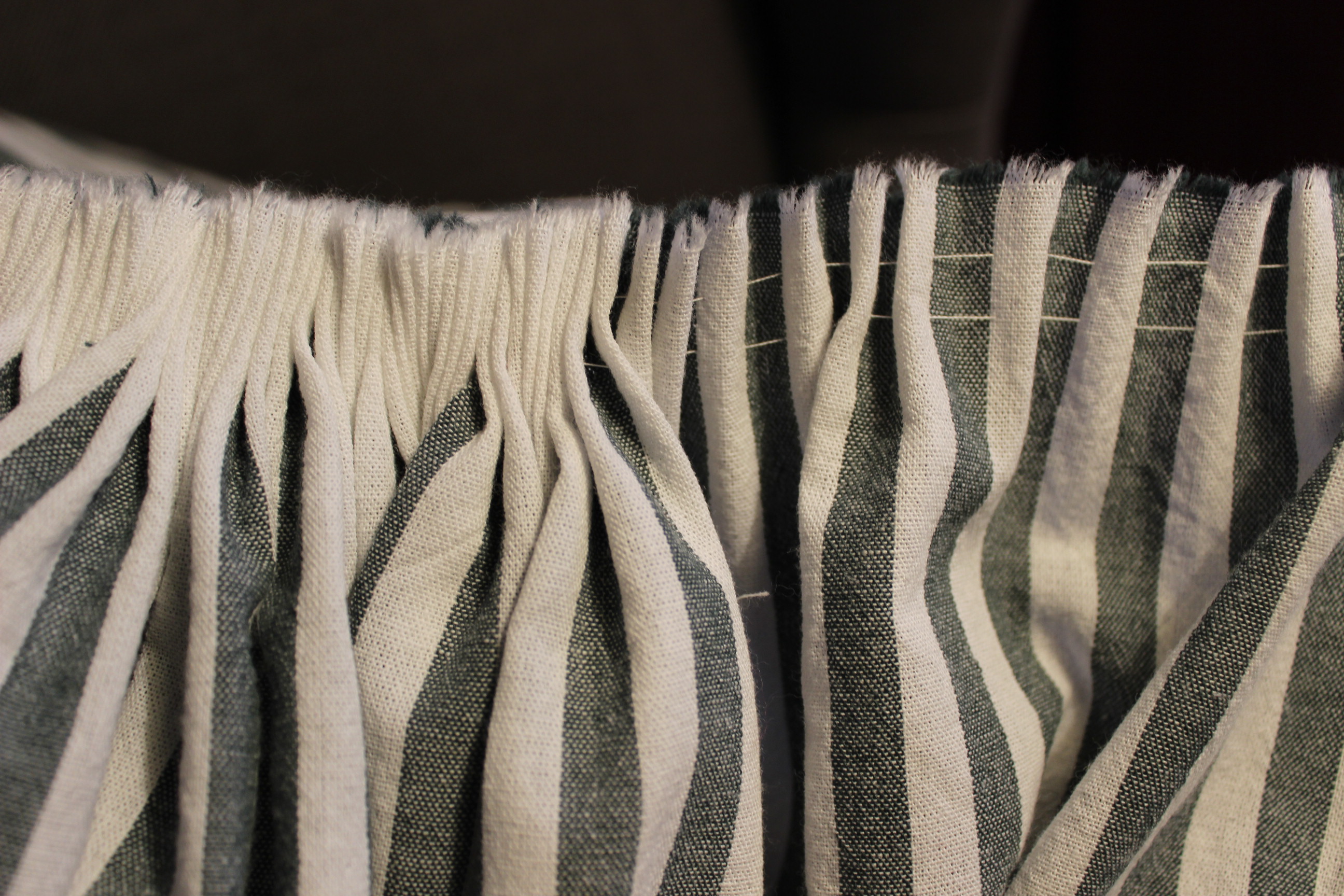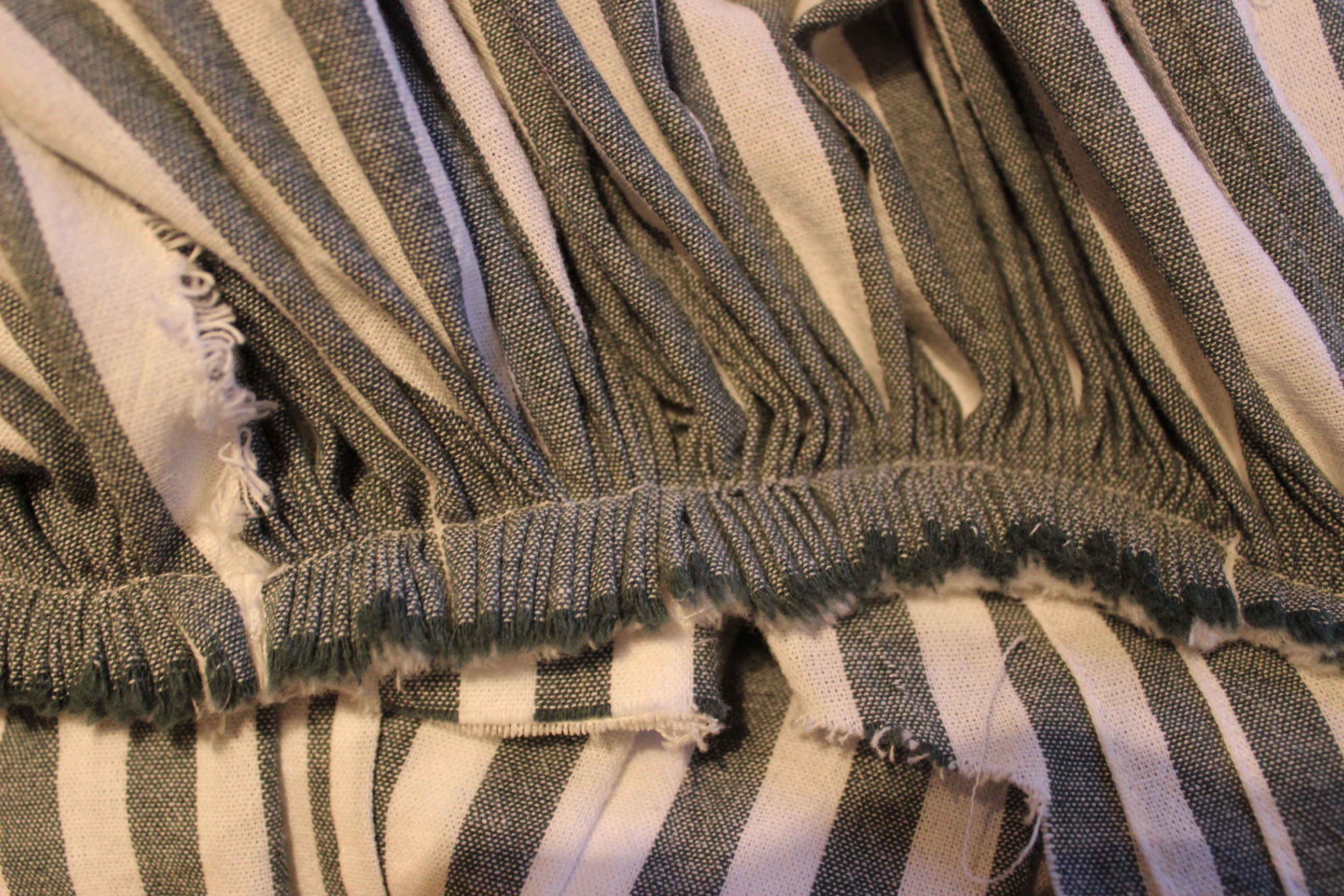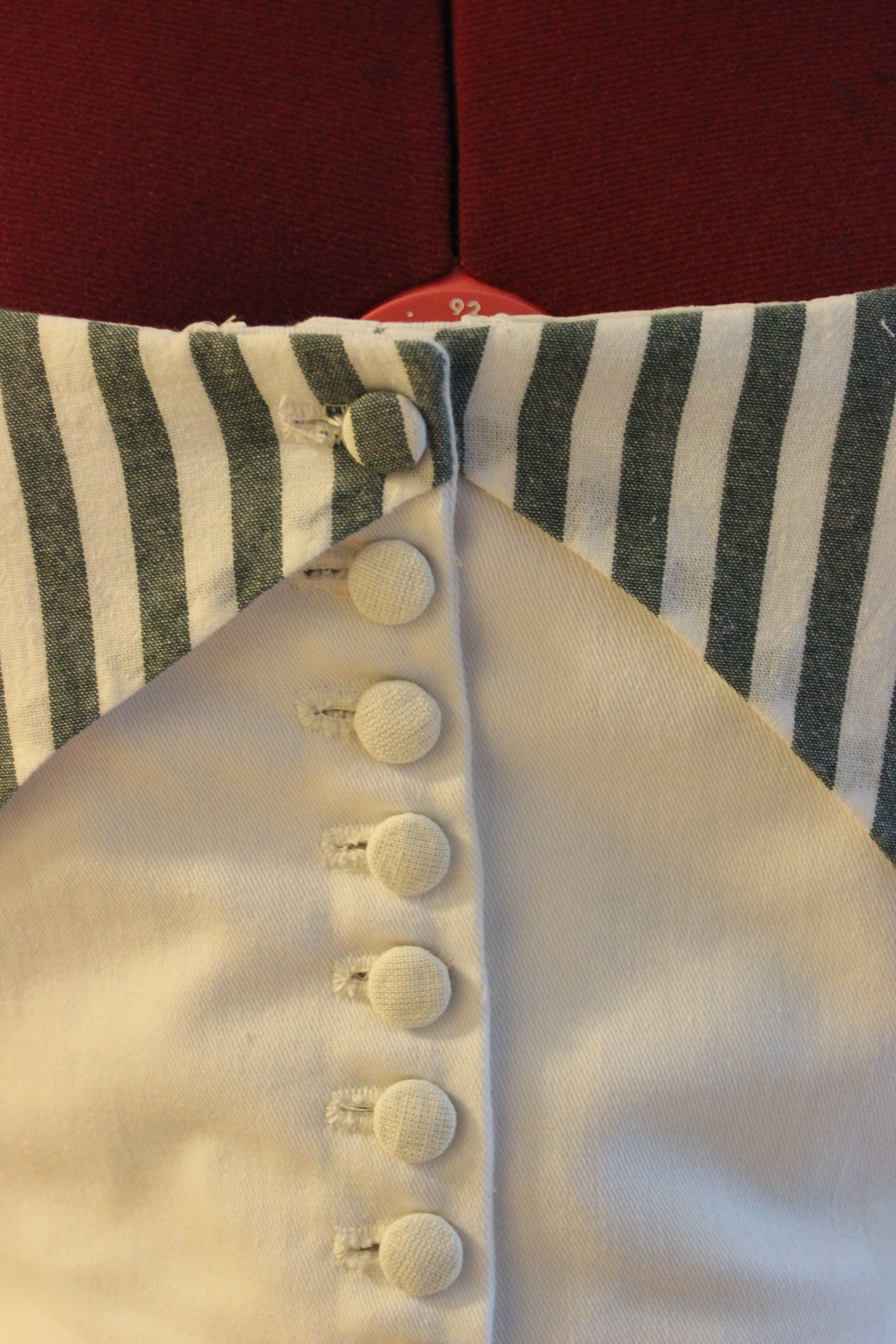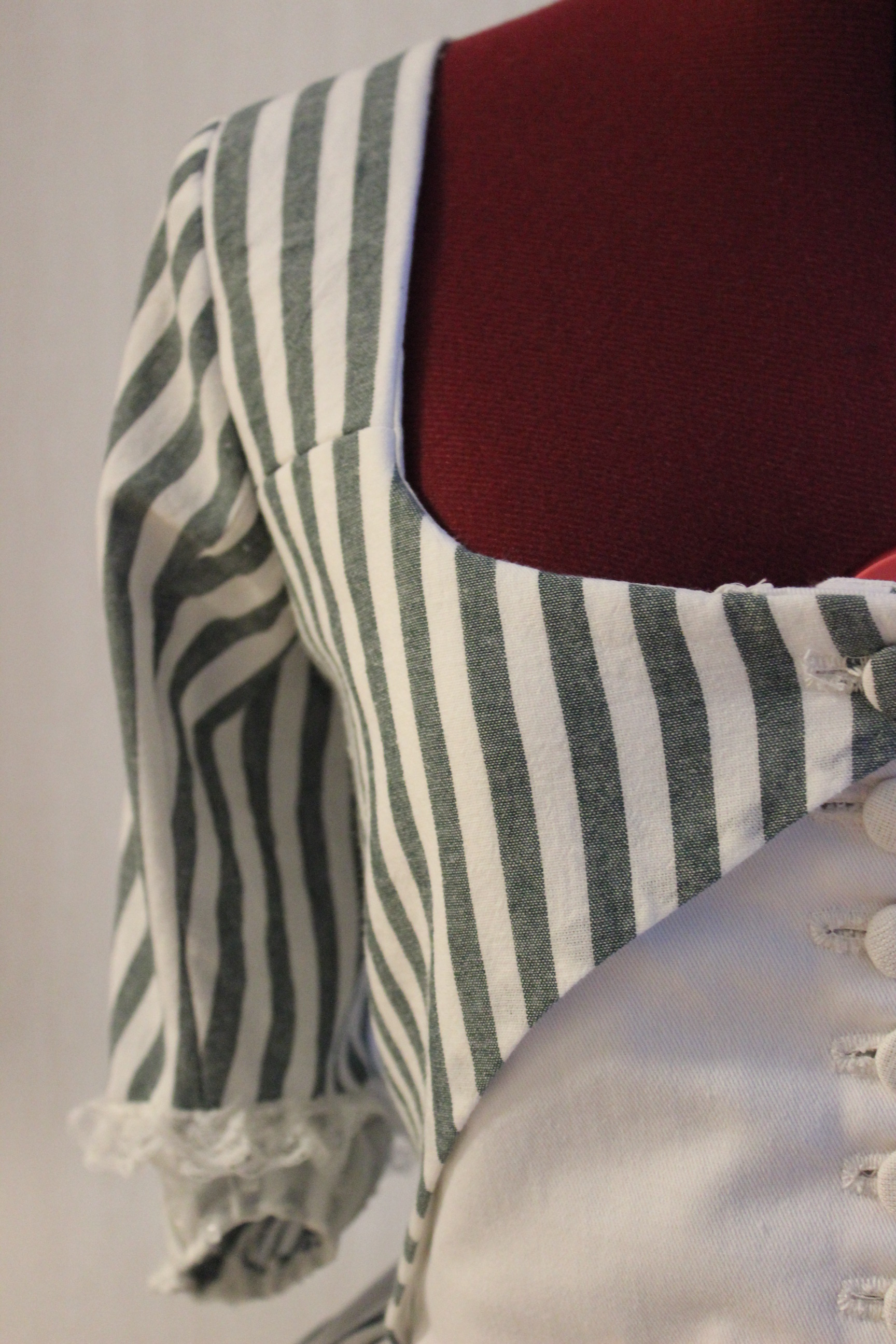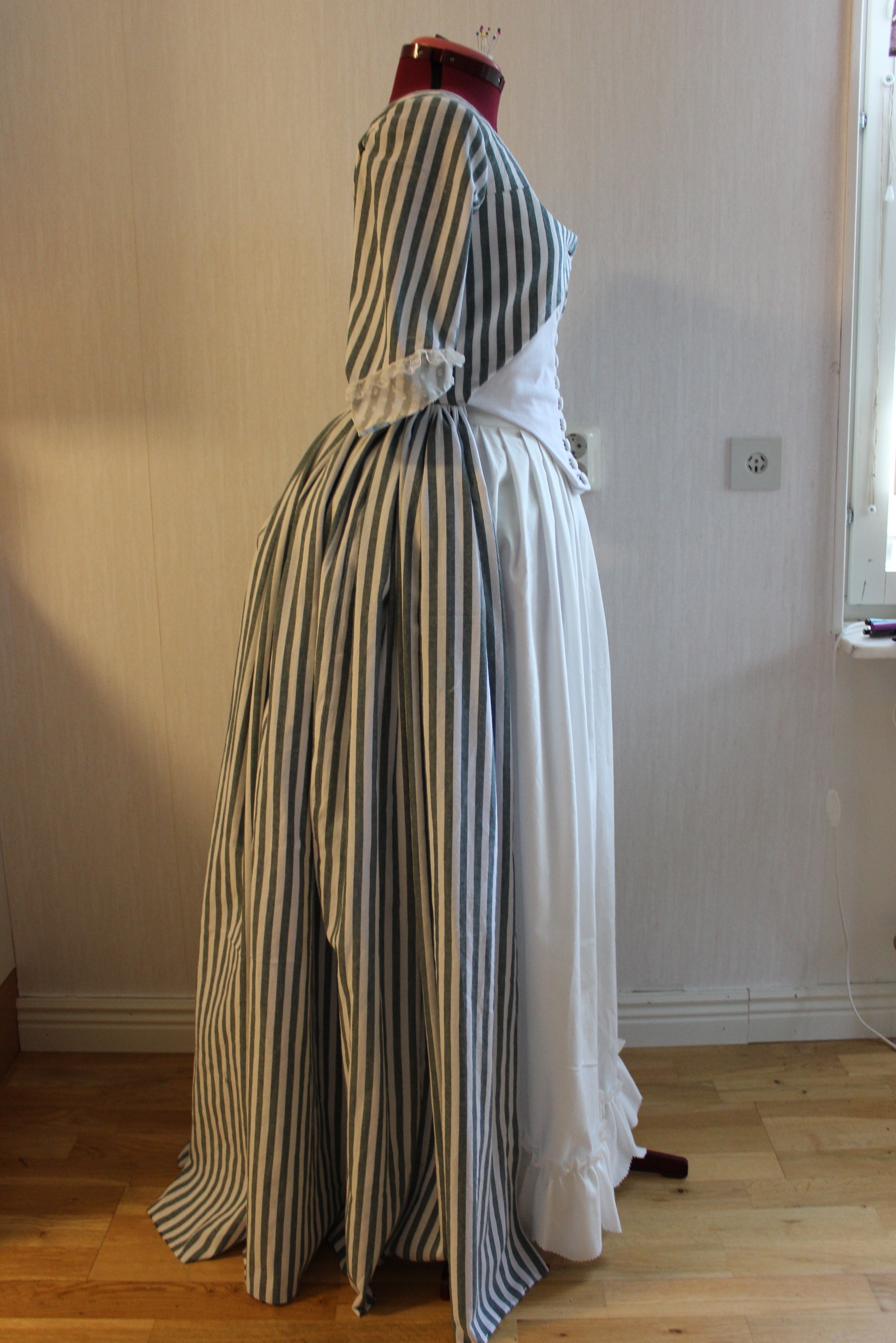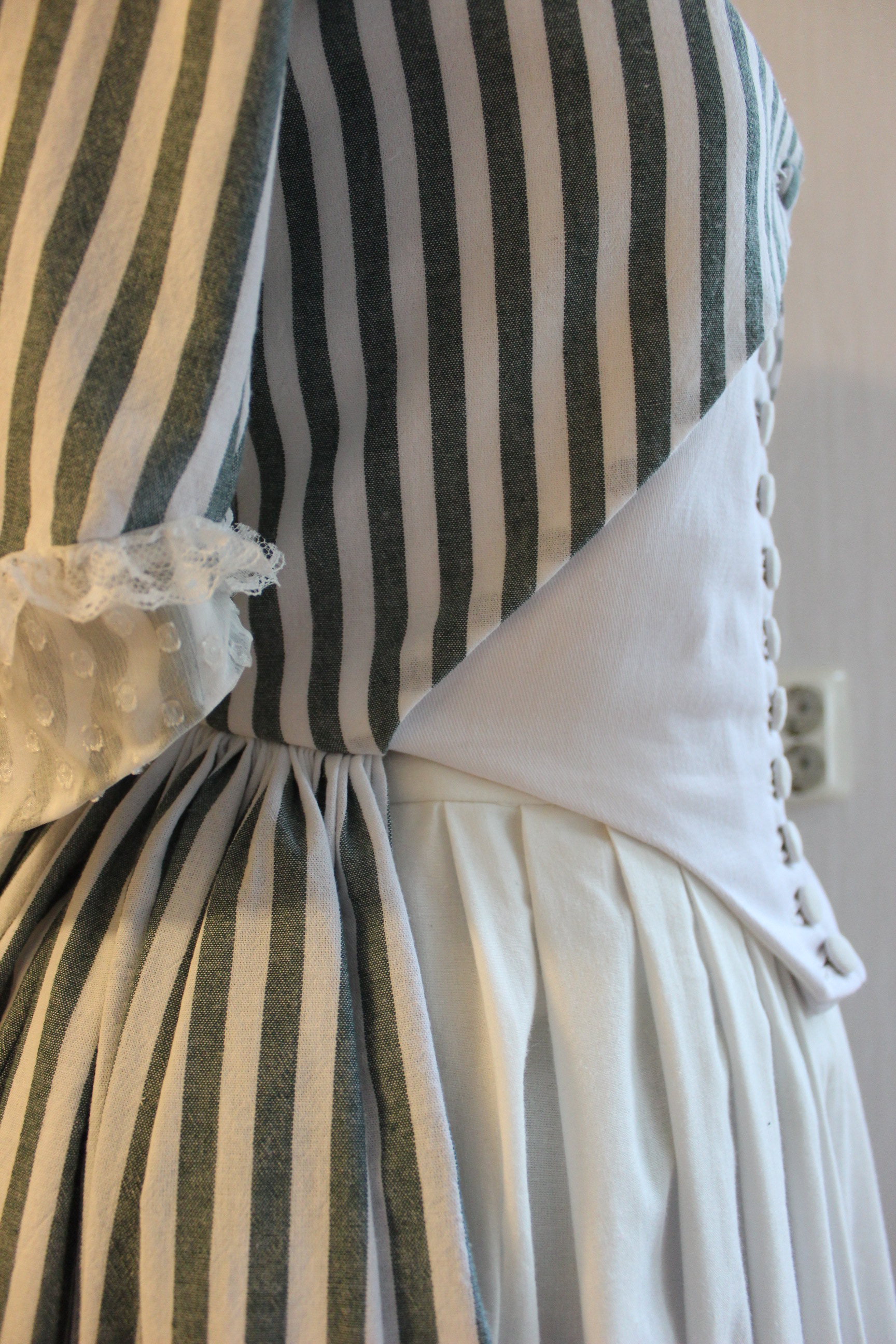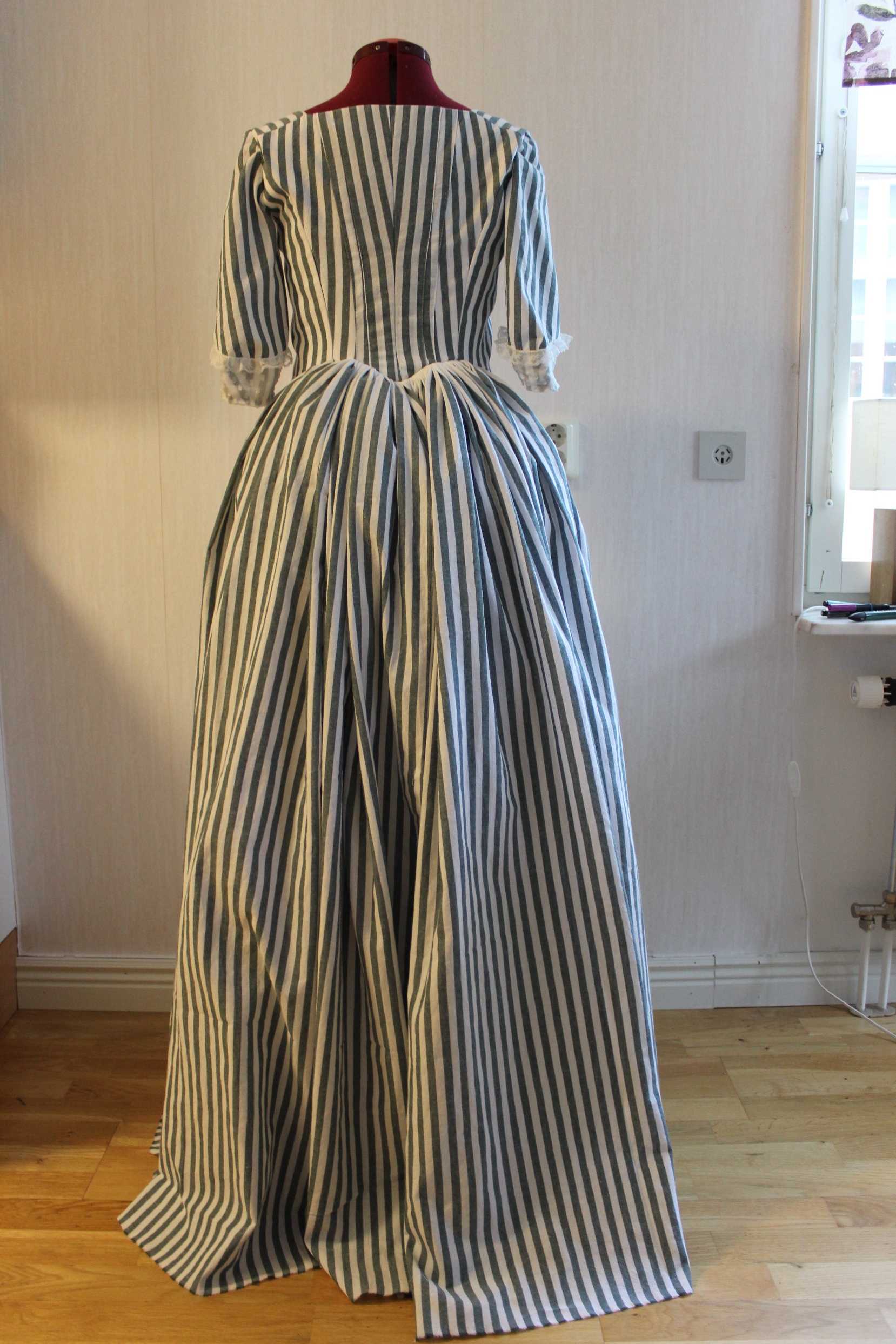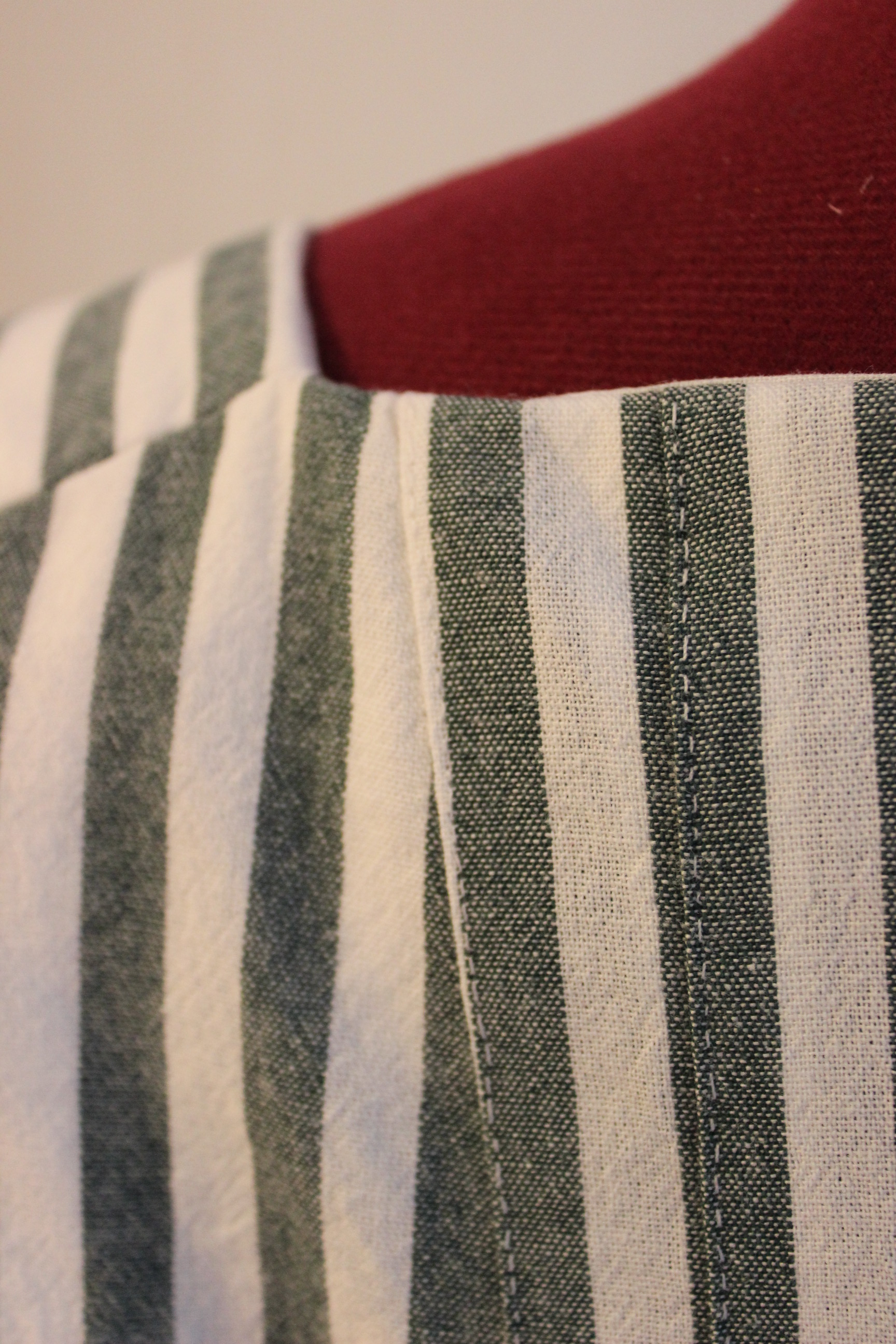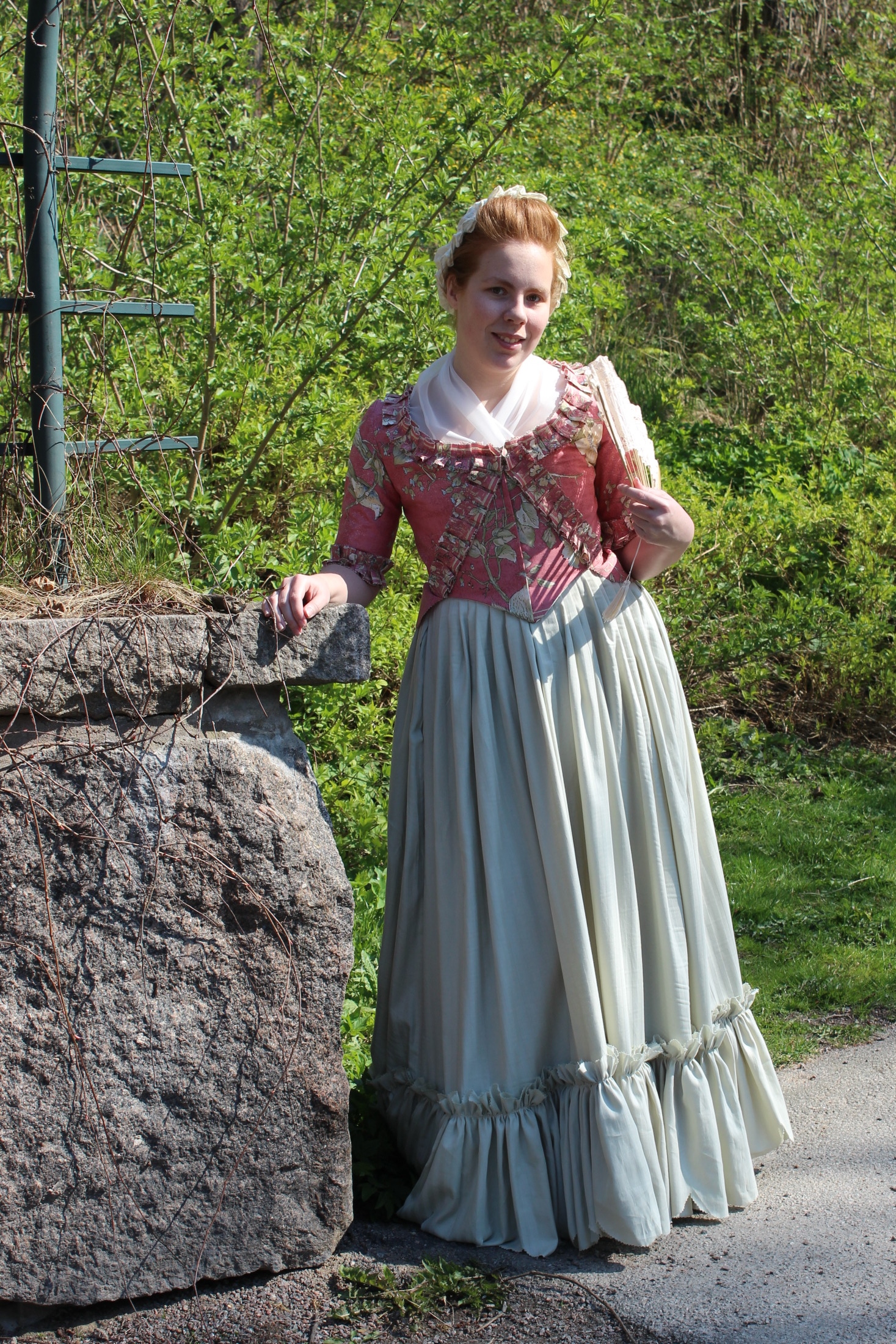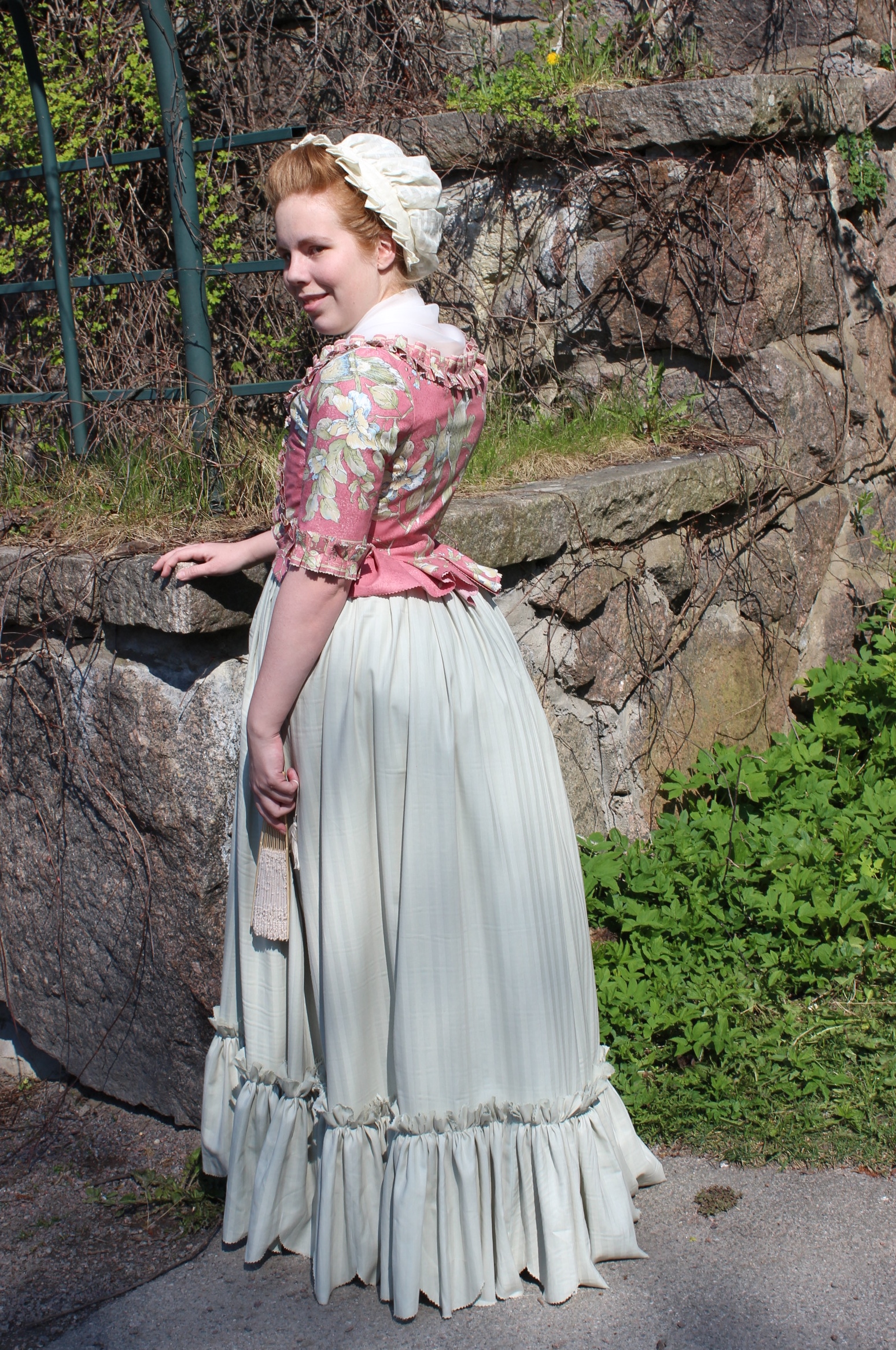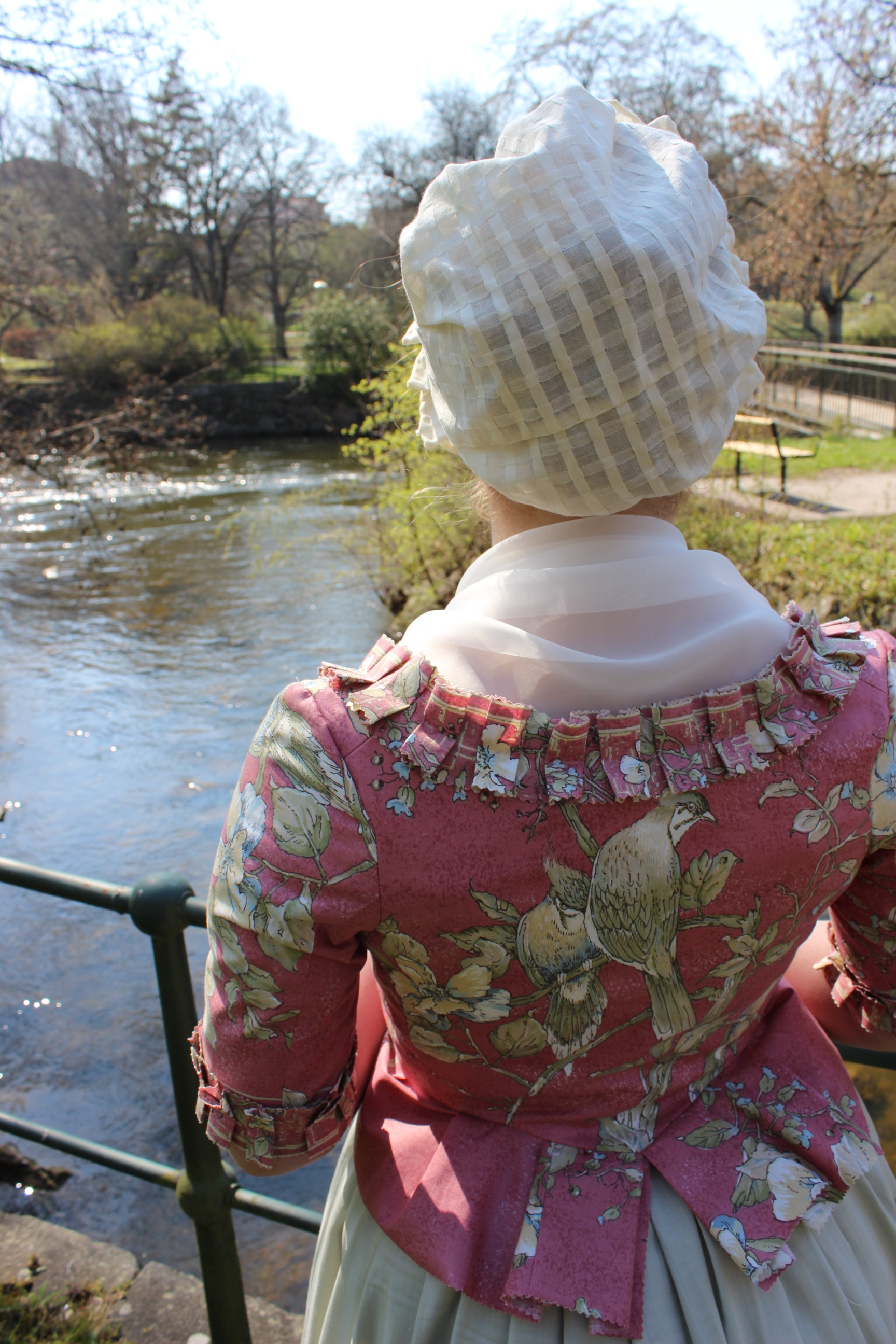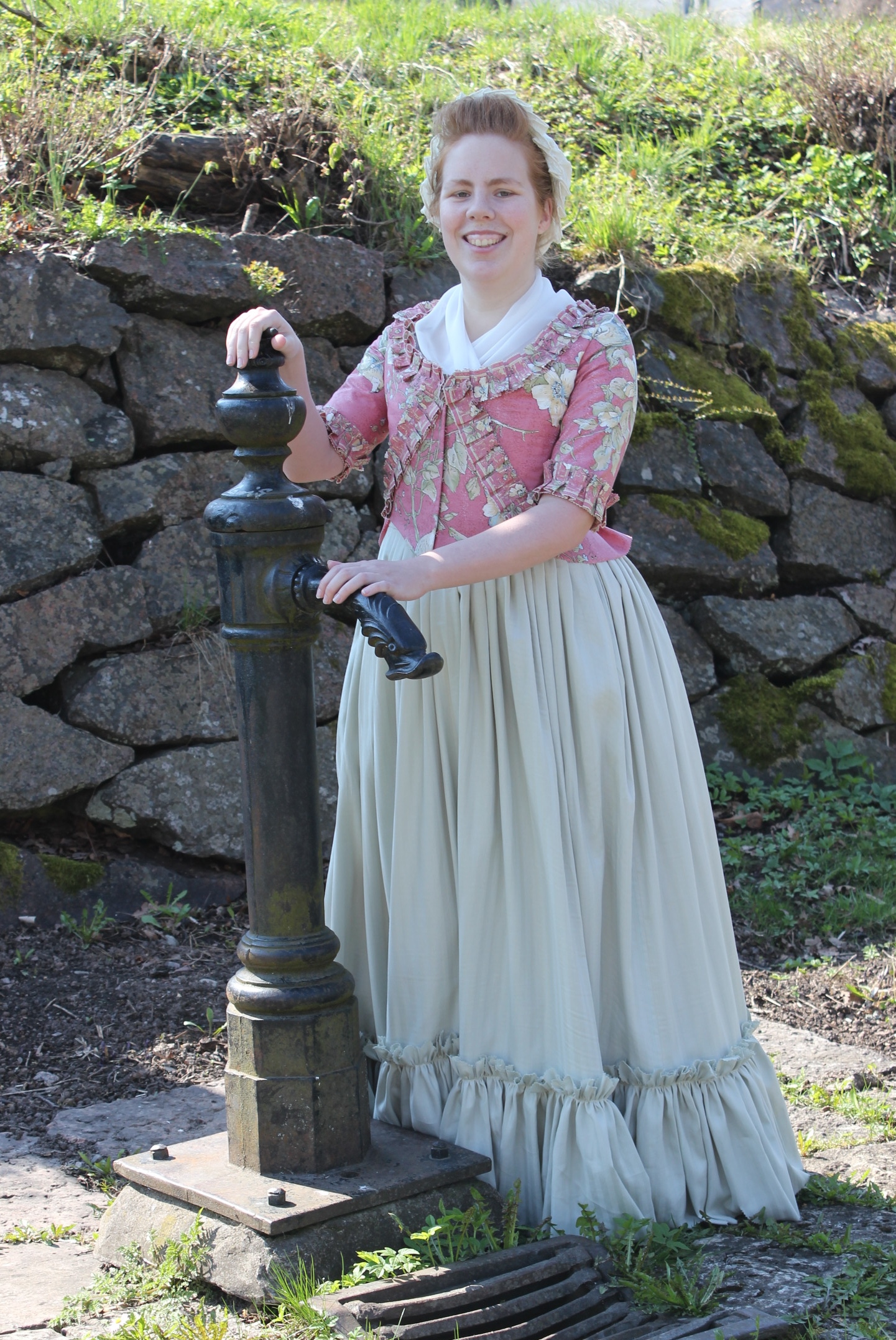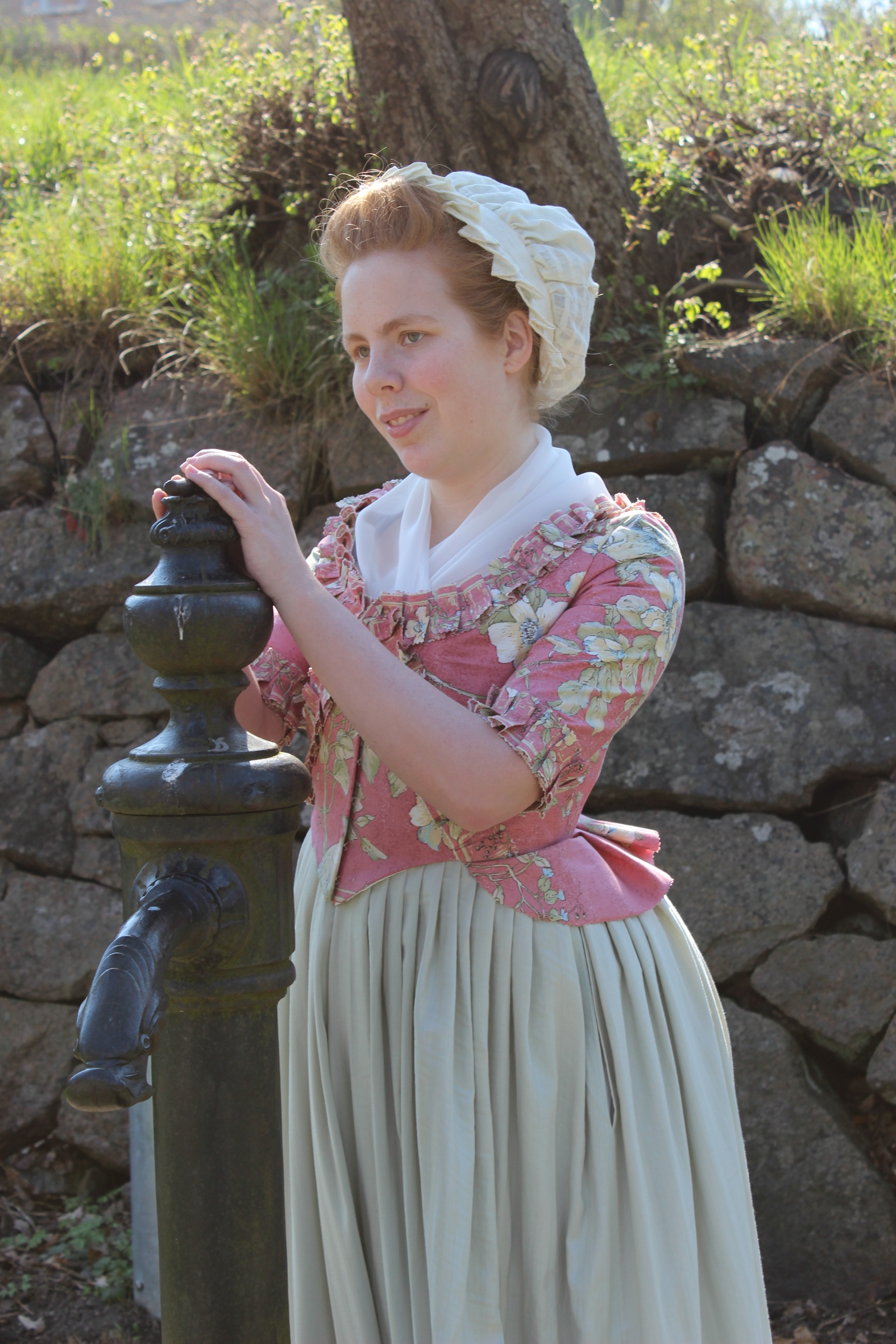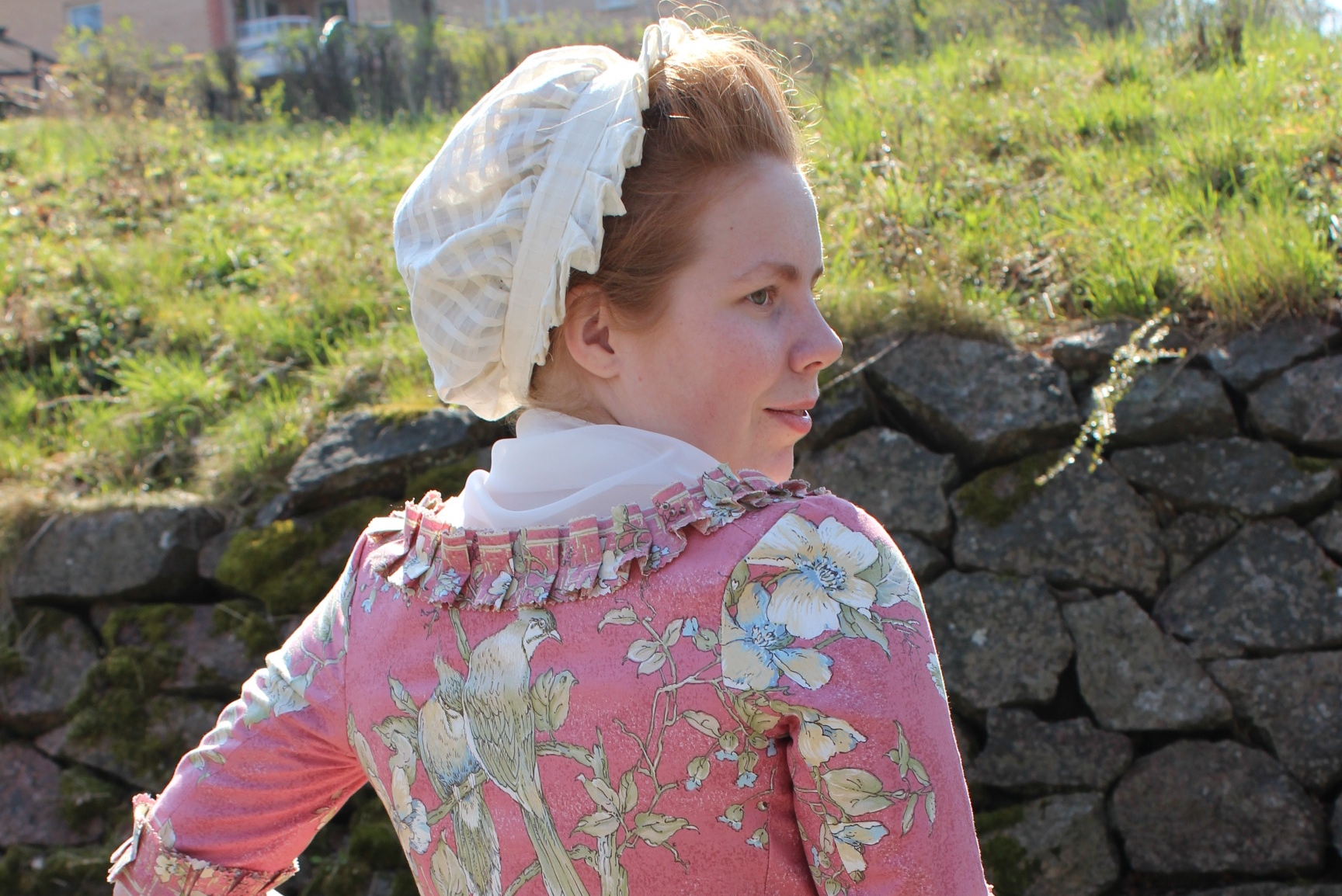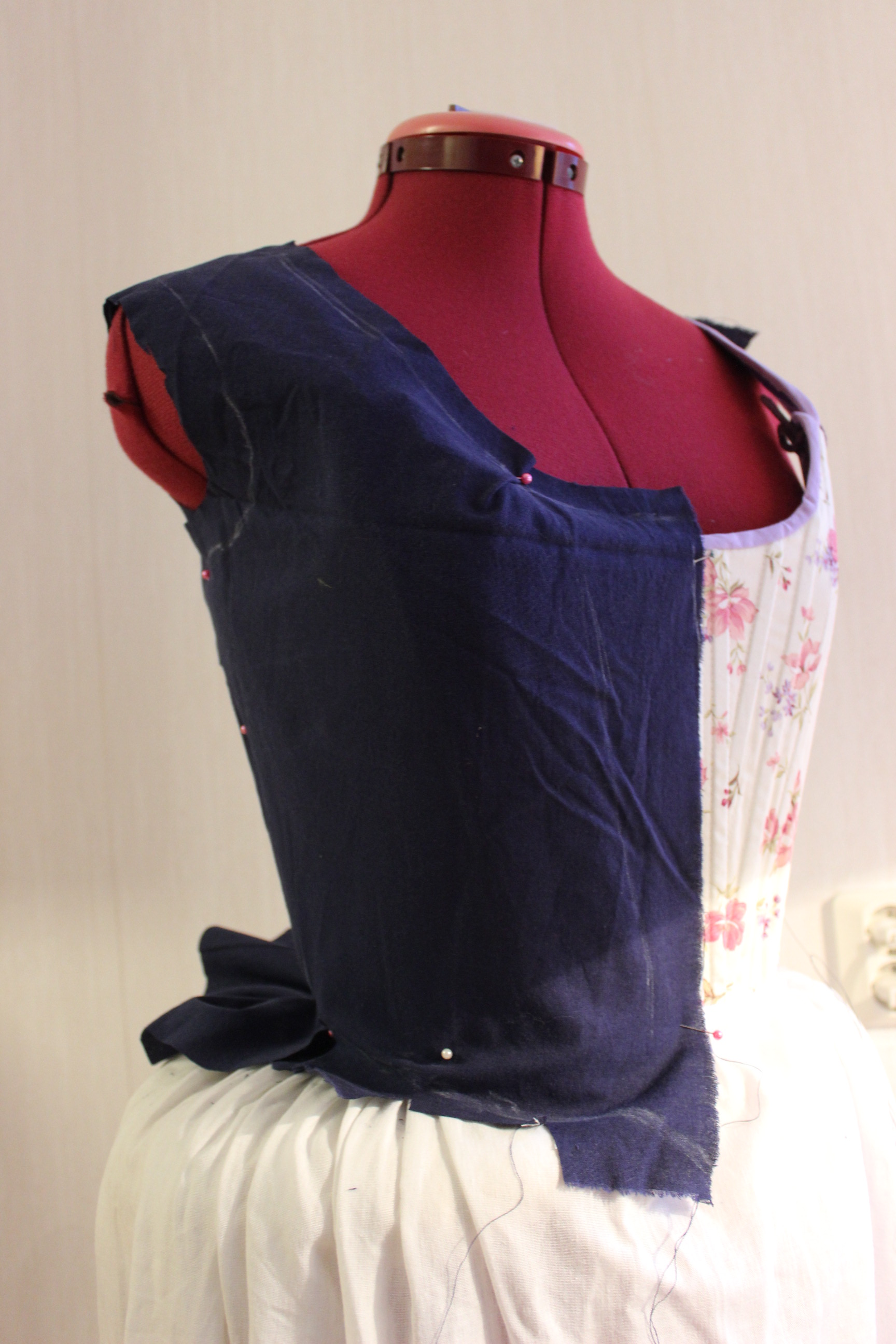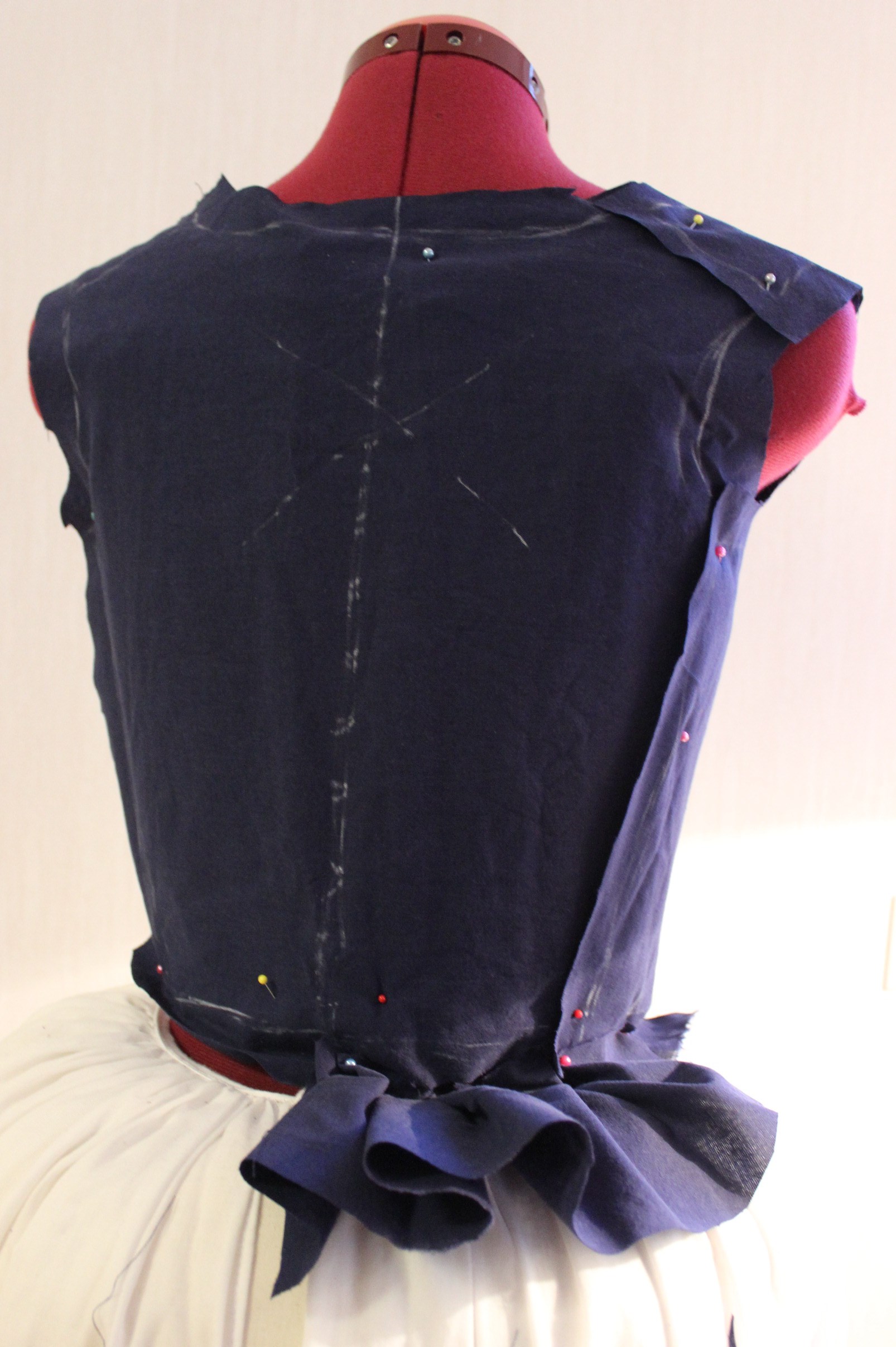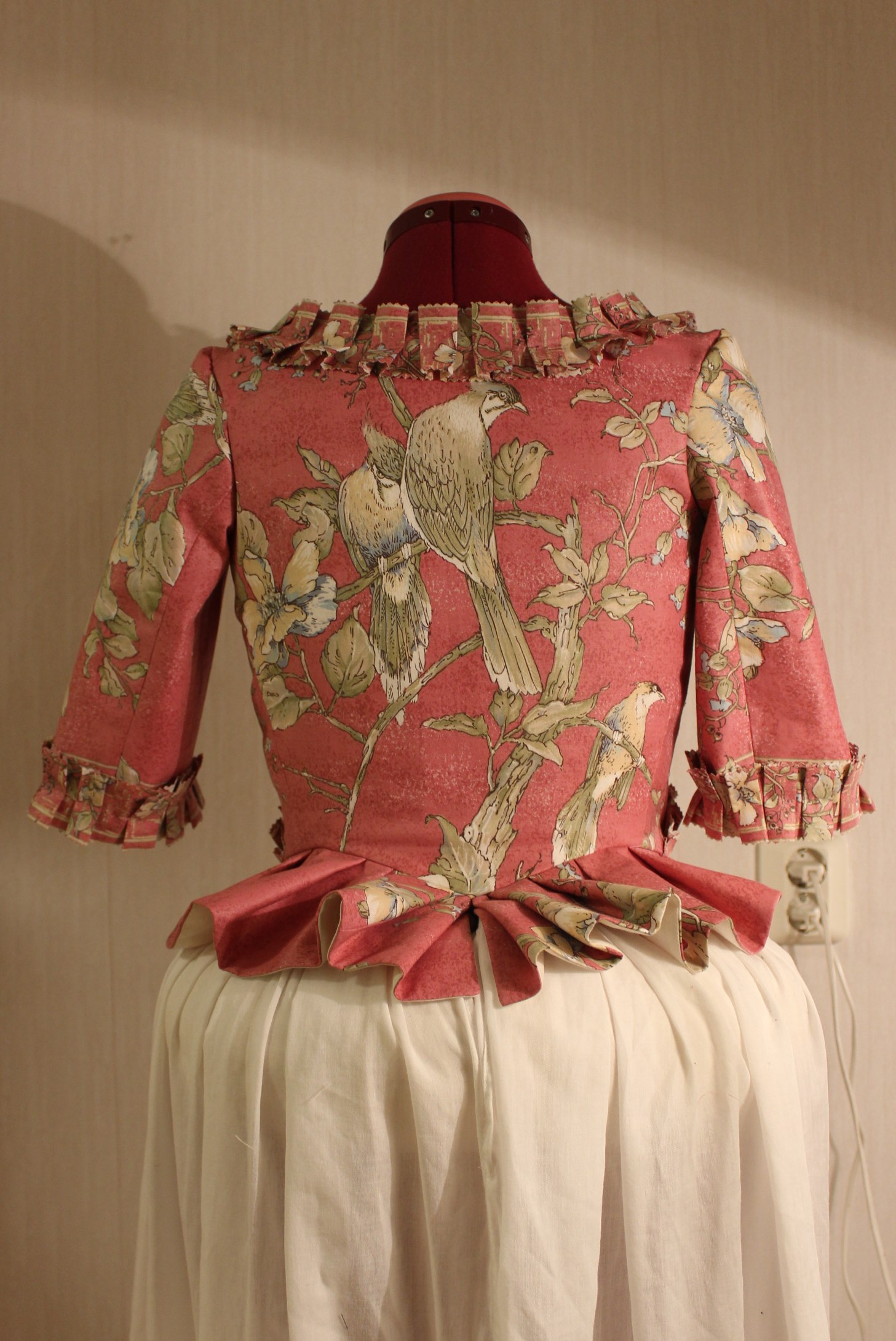
The Sport Anglaise finishing up

Iv’e been sewing a lot lately, crossing several new and a few old projects of my list.

One of those “old” projects was the “Sport- Anglaise” which I’ve started in January. Then in Mars I gave you an update, and last week I managed to finish and photograph it properly.

I stated, when first starting this project – I will only sew, while my boyfriend watches sport on our Television.
Well that didn’t last very long…
I had way to much to do during the spring, and there was no way I could set aside all the other projects just because there was some game playing in the other room.
But to my defense this year I’ve endured both an Olympics and a World Championchip in football, so I’m pretty sure the dress would have been finished long ago if I’d stucked to the plan.

Anyhow, lets take a look at my final construction notes and finished pictures:

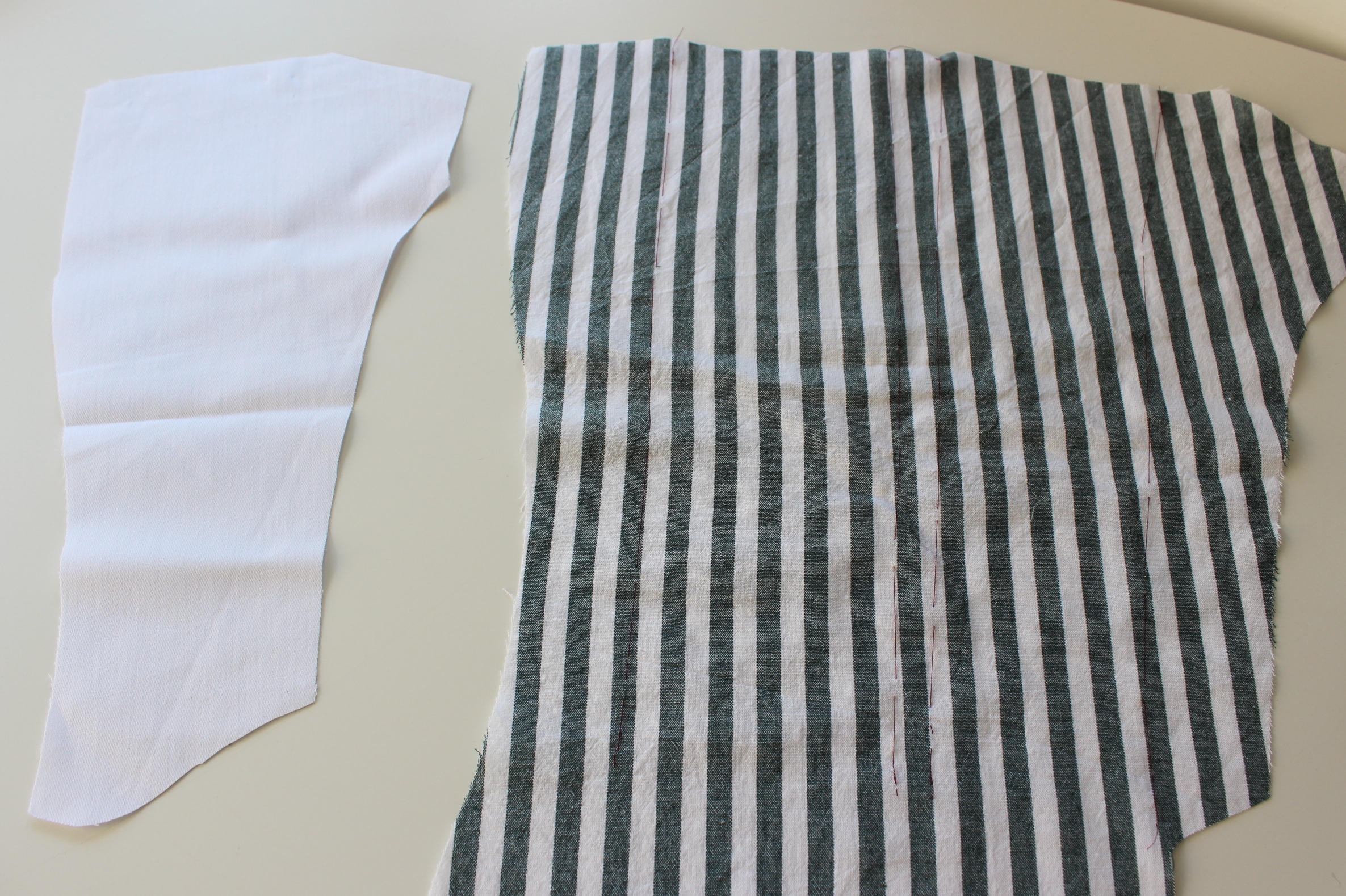
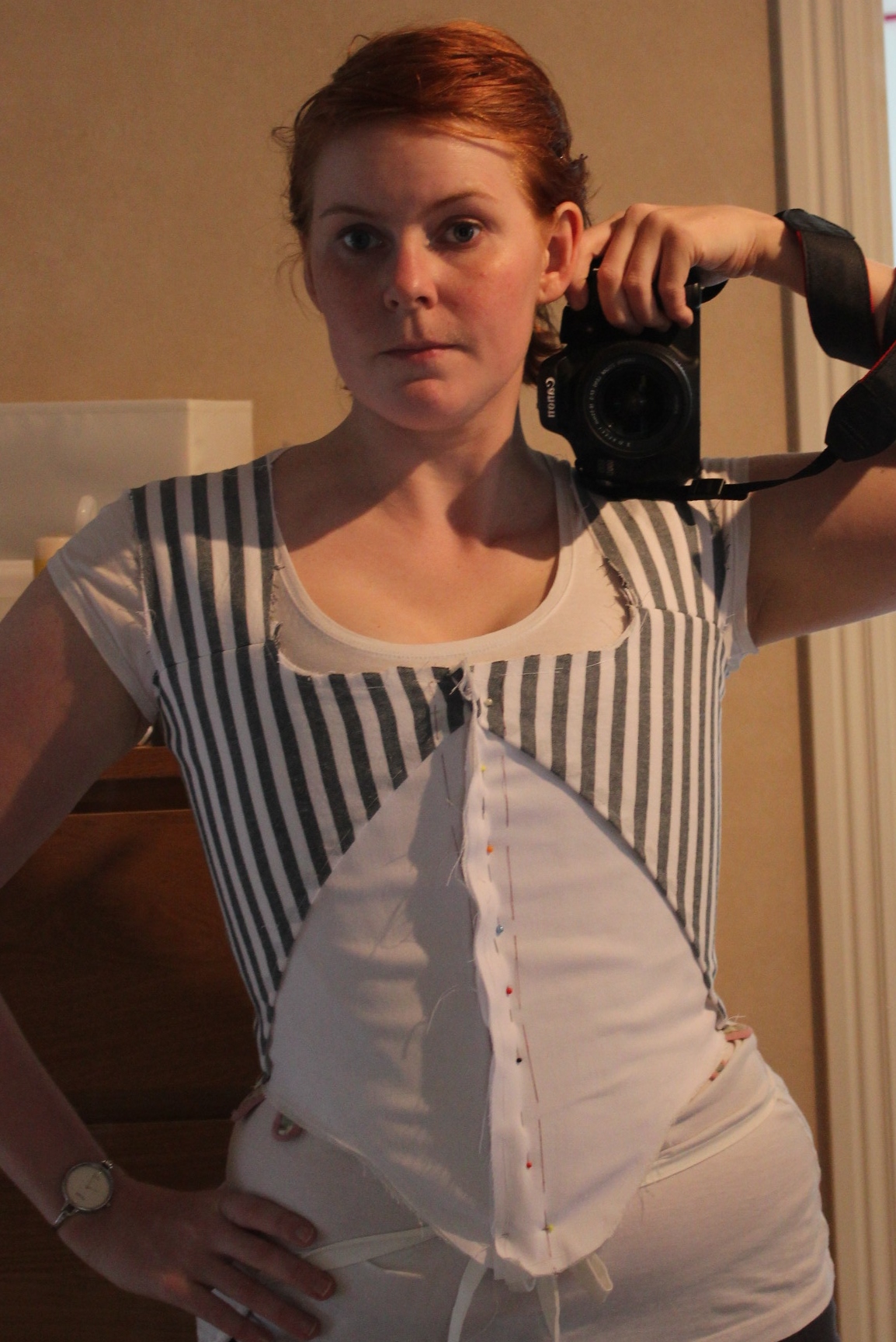
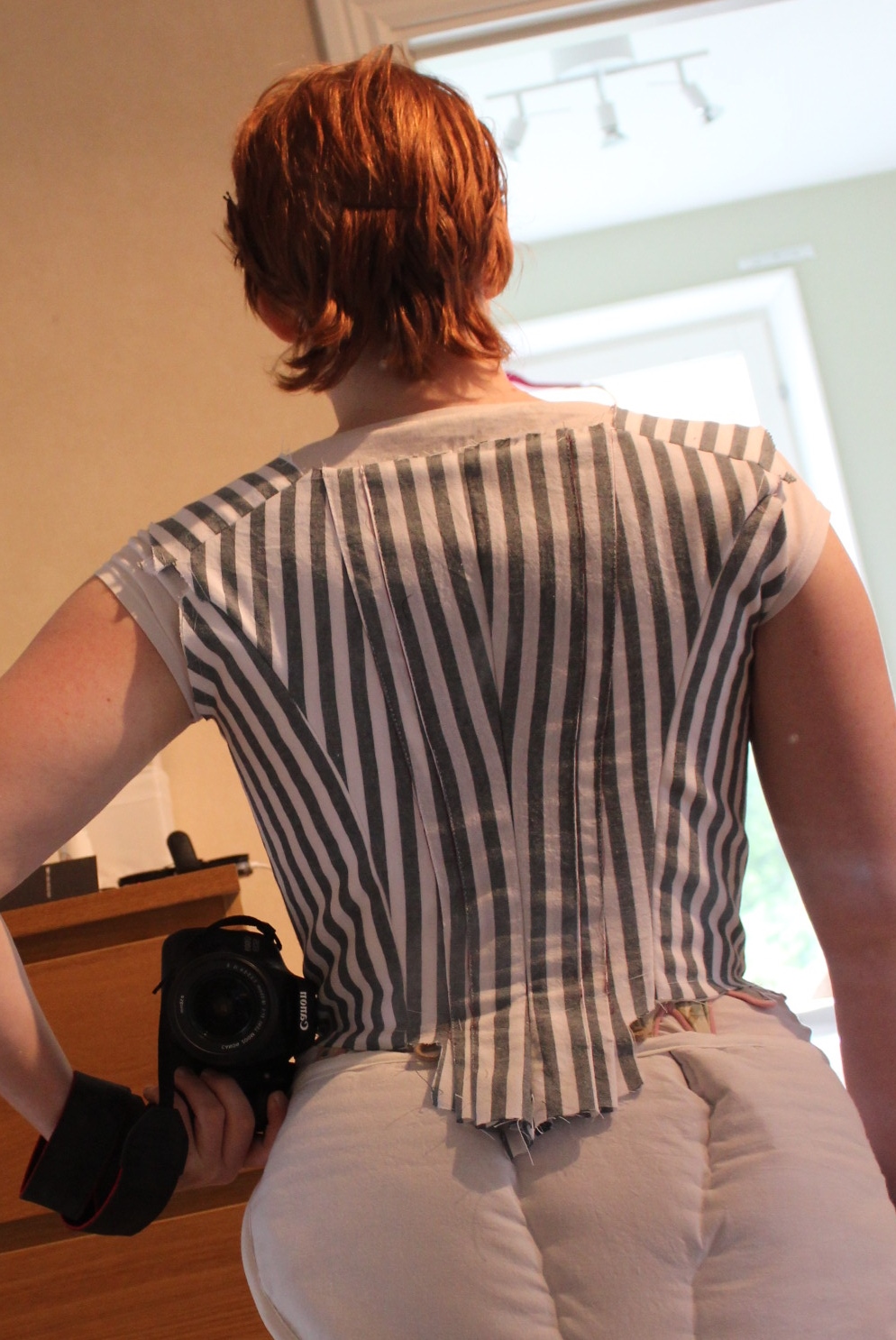
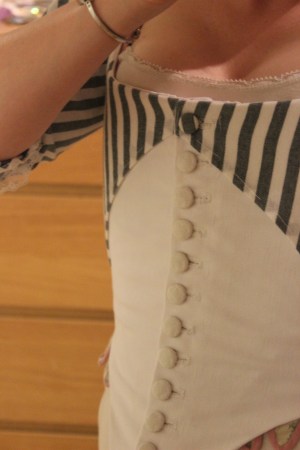
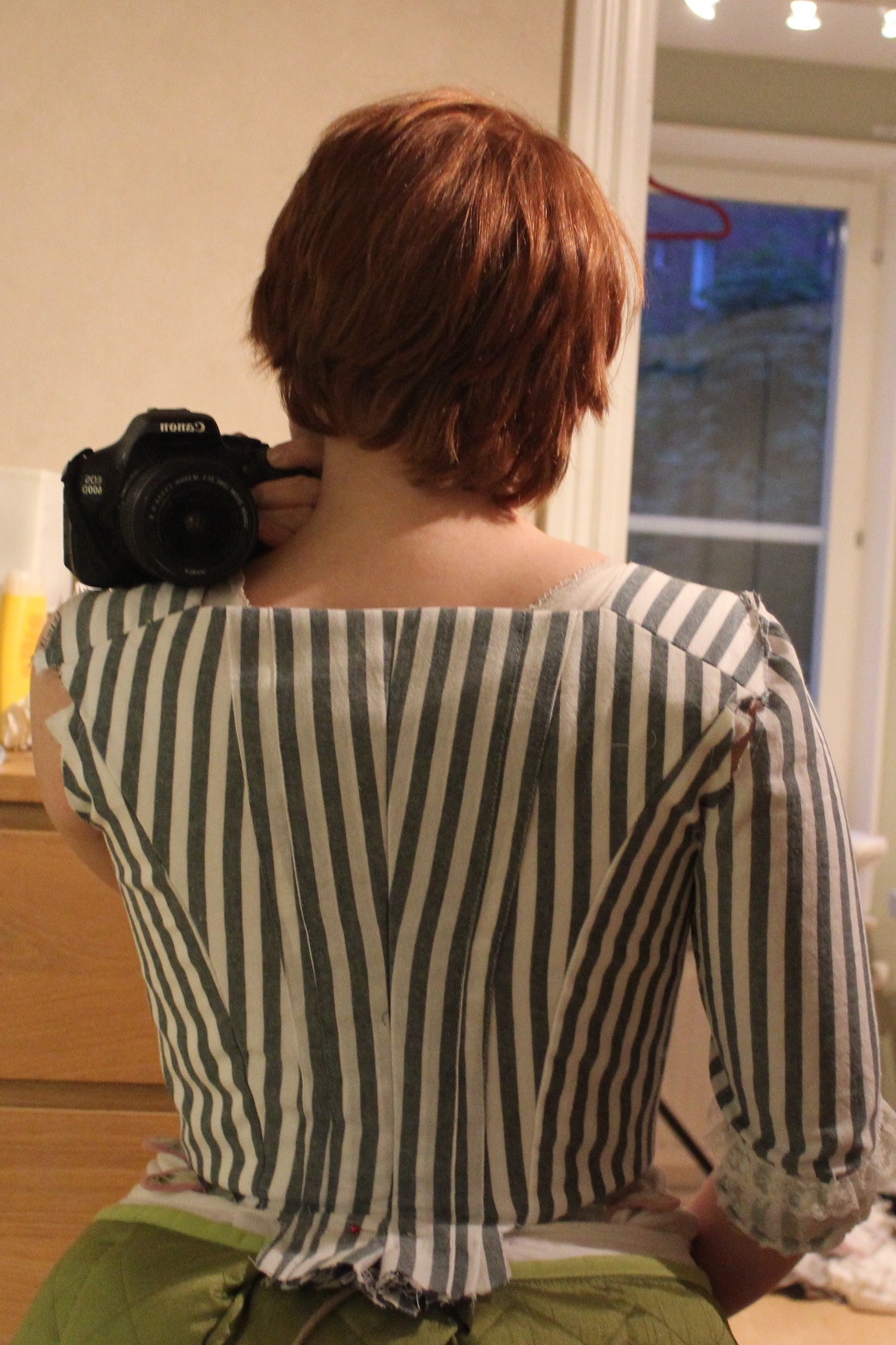
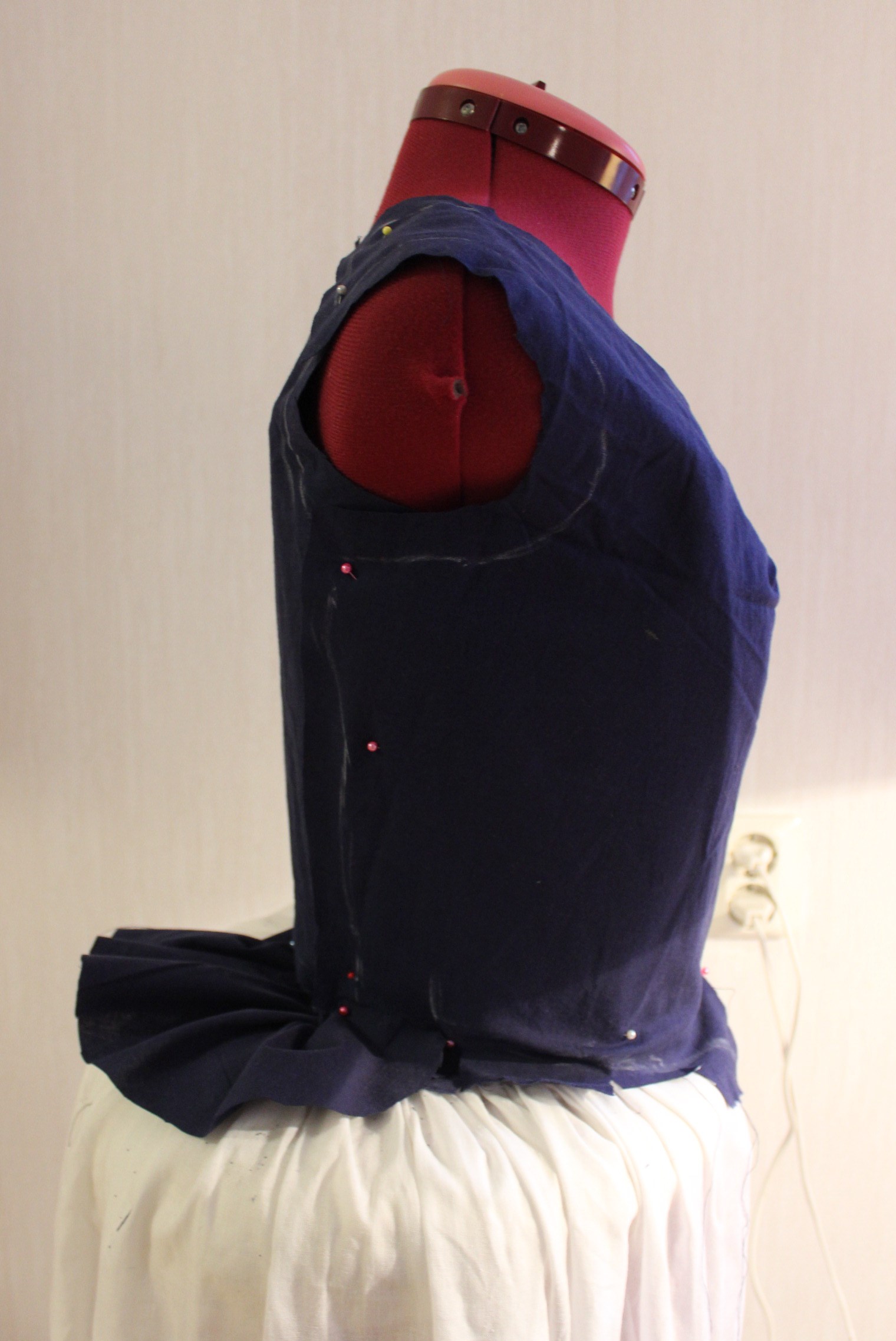
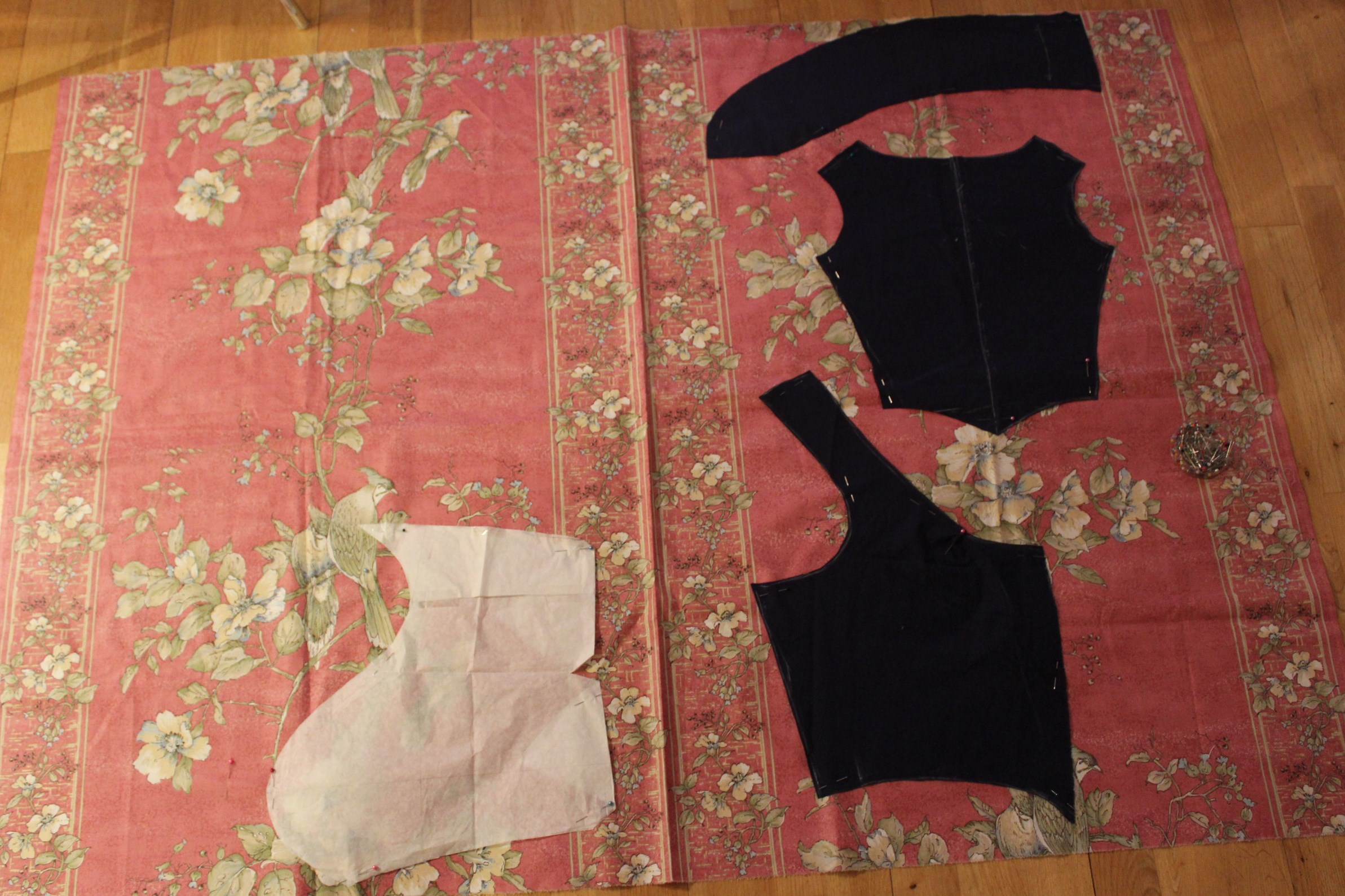
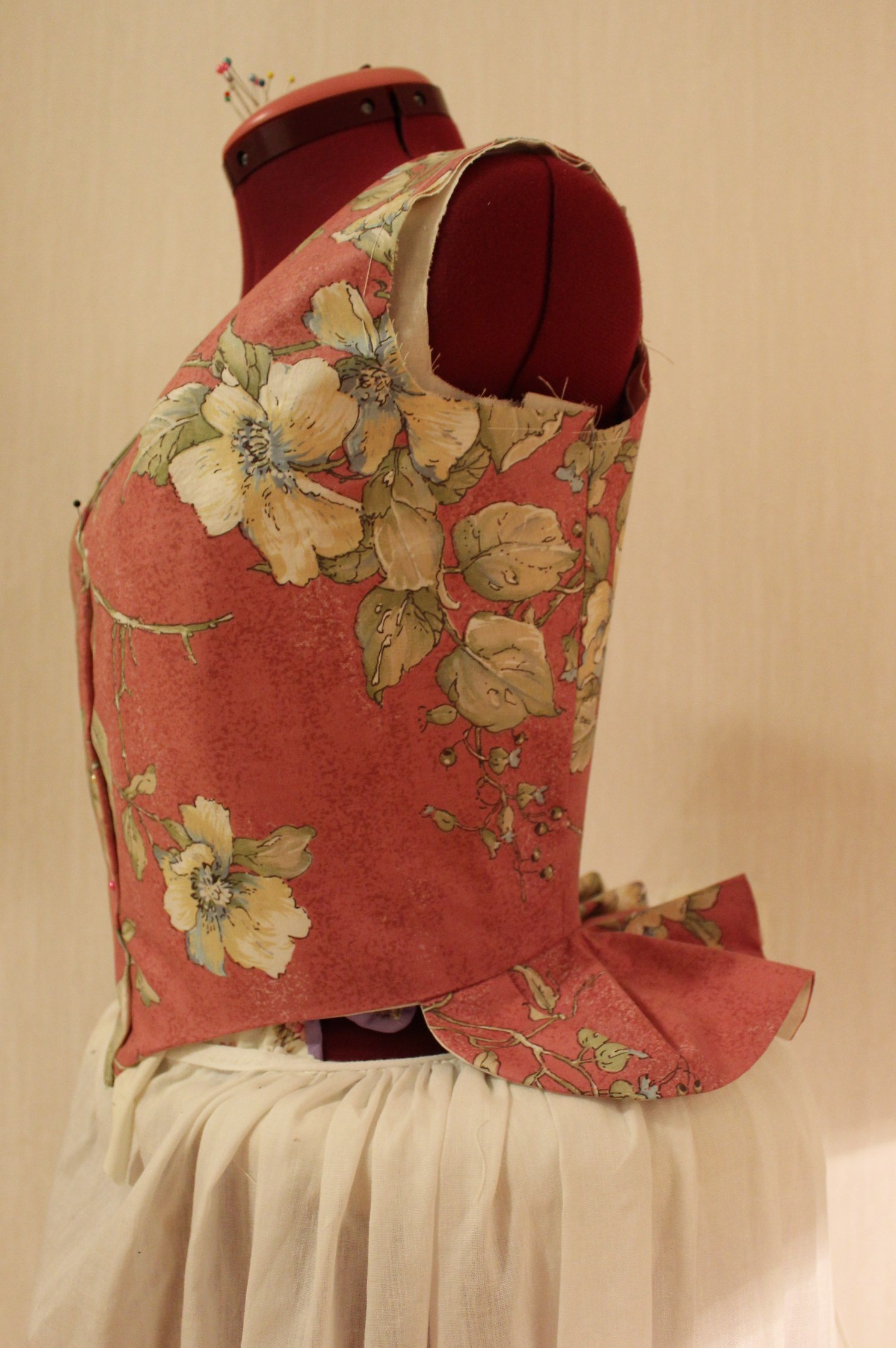
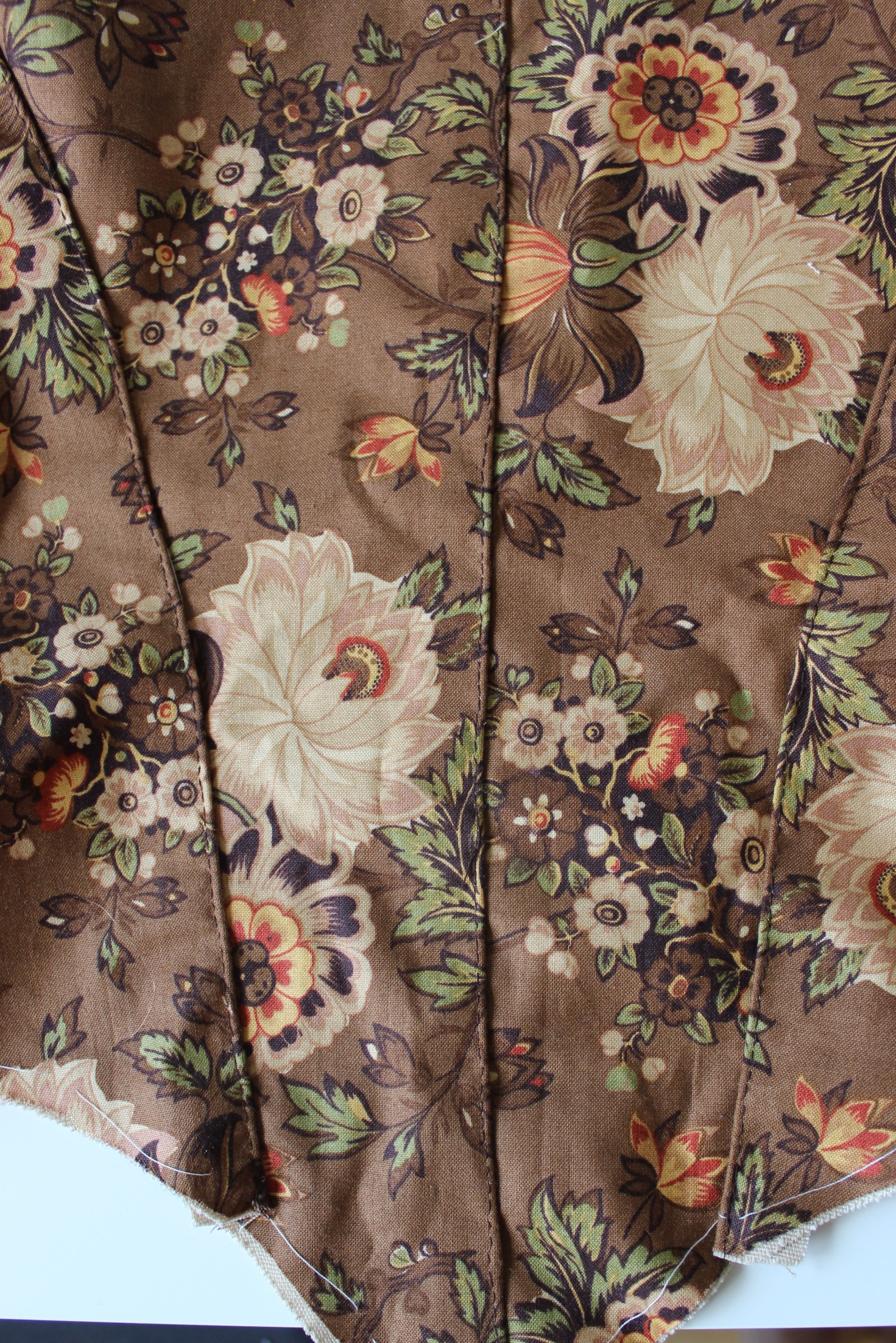
Where I left of last time I had just cut the fabric and begun to put he bodice together.IMG_0486I basted the side and shoulder seams. Stitched the three back seams down, doing small back stitches from the outside.IMG_0487The back stitched down.
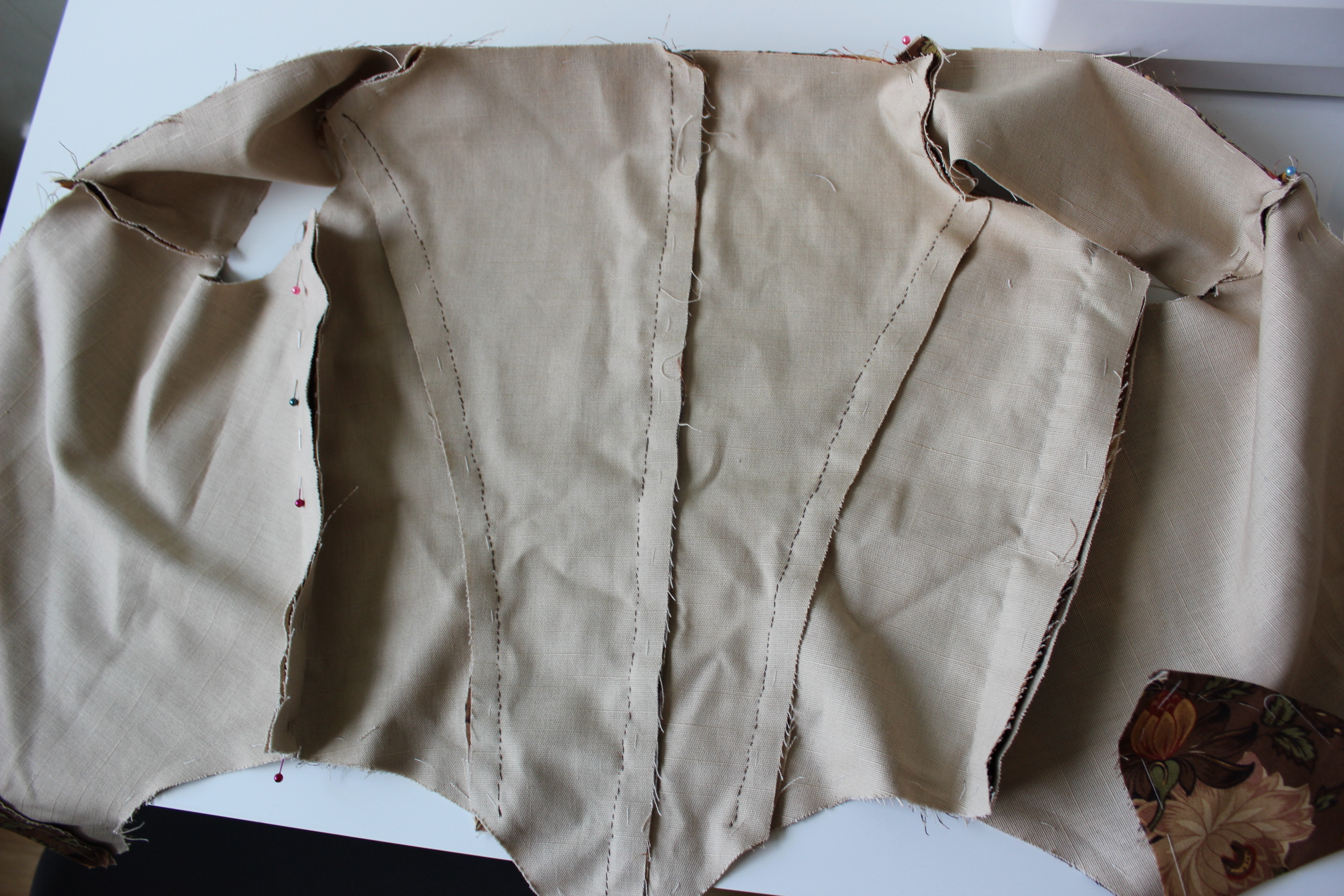
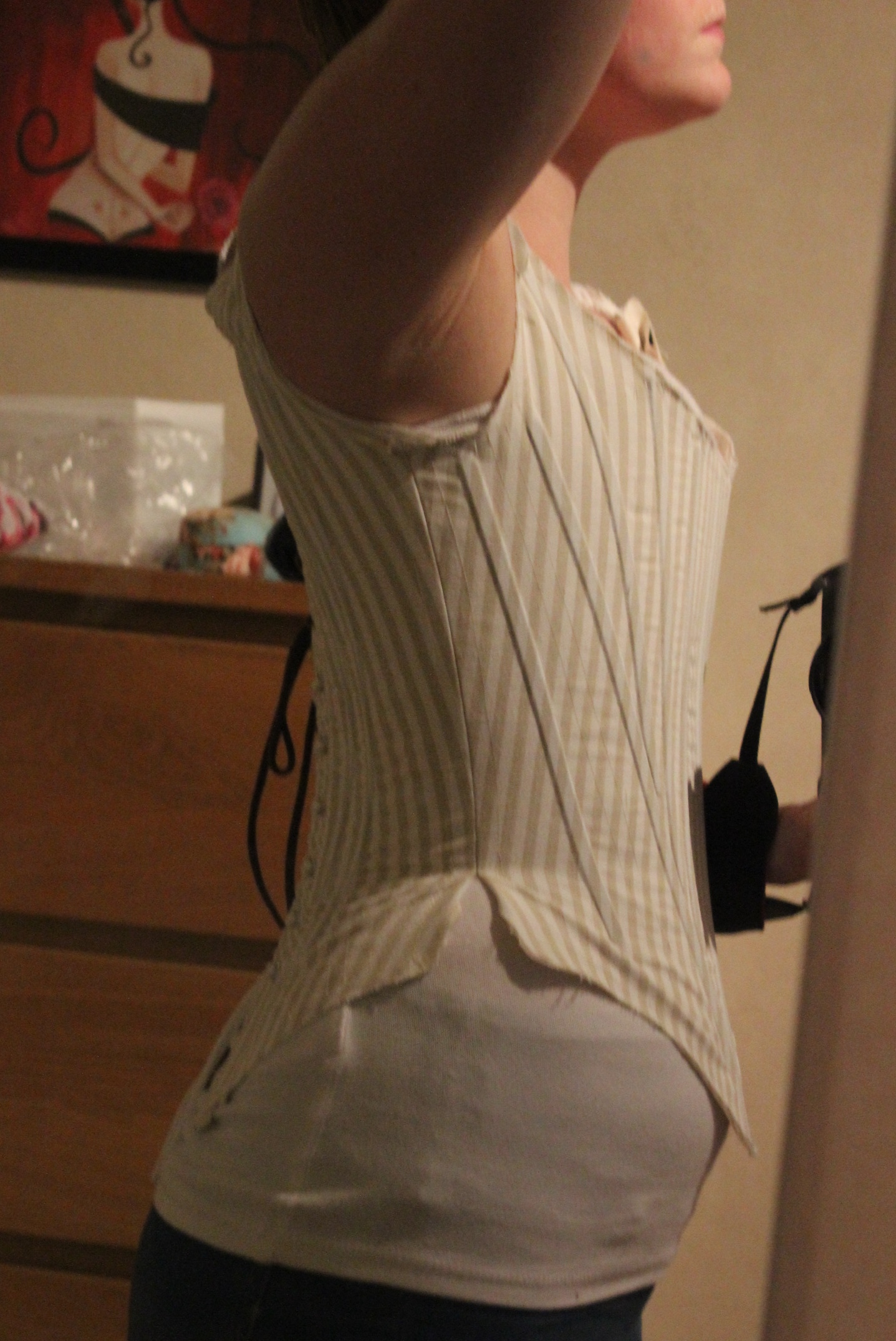
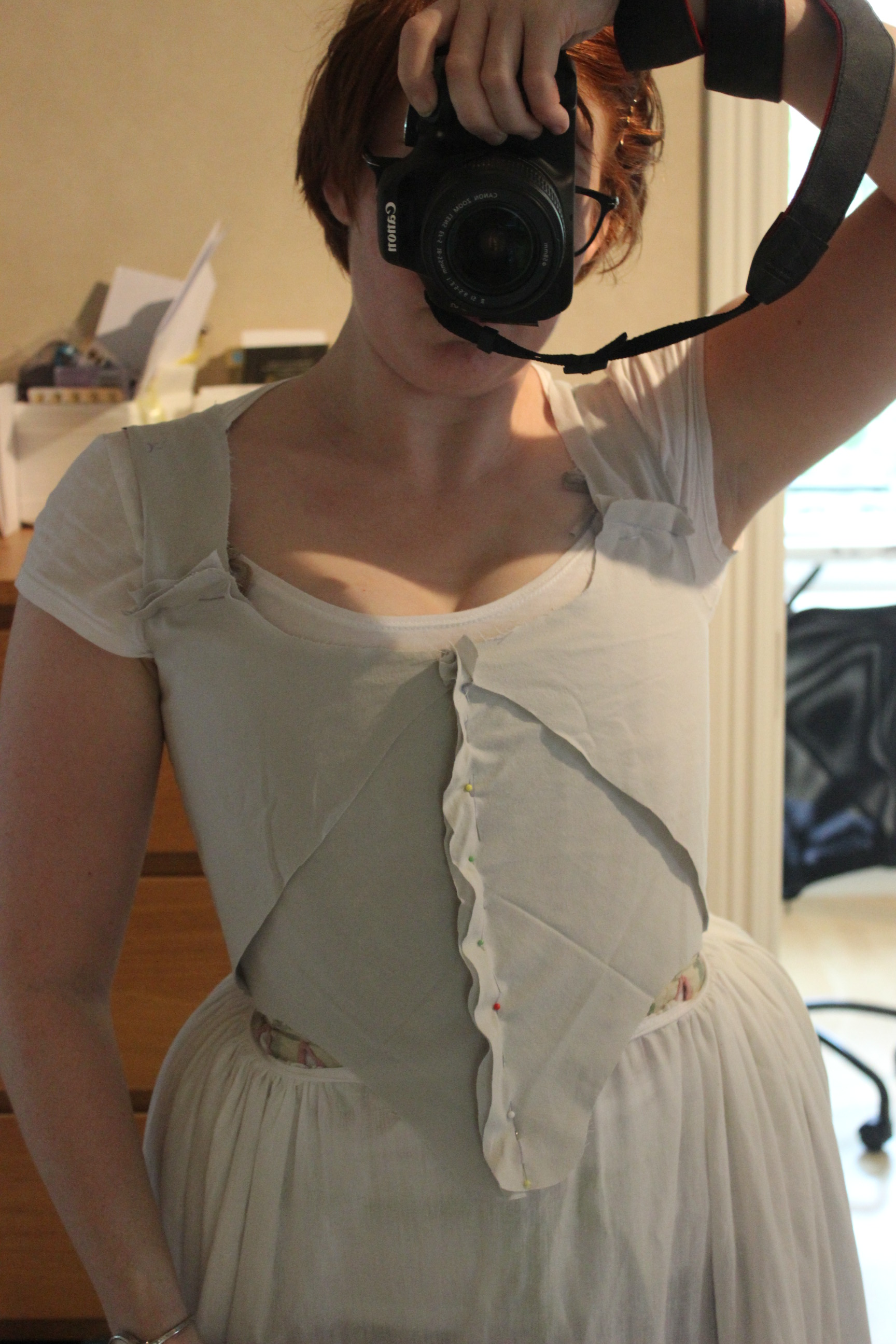
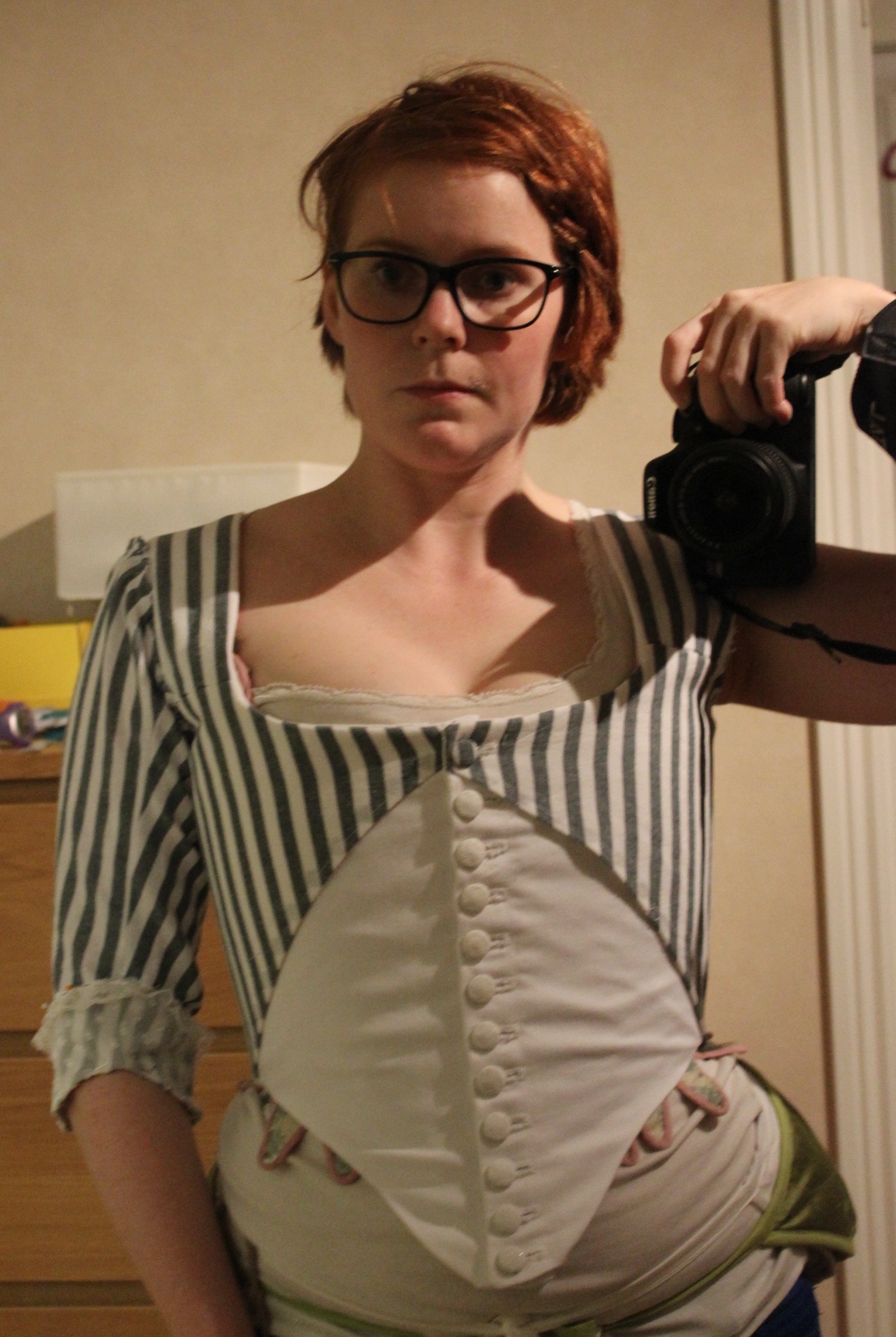
Then I laced on my corset, and pinned the bodice shut for a try on.
IMG_0468 IMG_0466
As you can see it is a bit snug at the waist, causing the fabric to buckle under the pressure. But otherwise the fit was fine.

So let the side seams out a bit at the waist to get a smooth line.IMG_0488
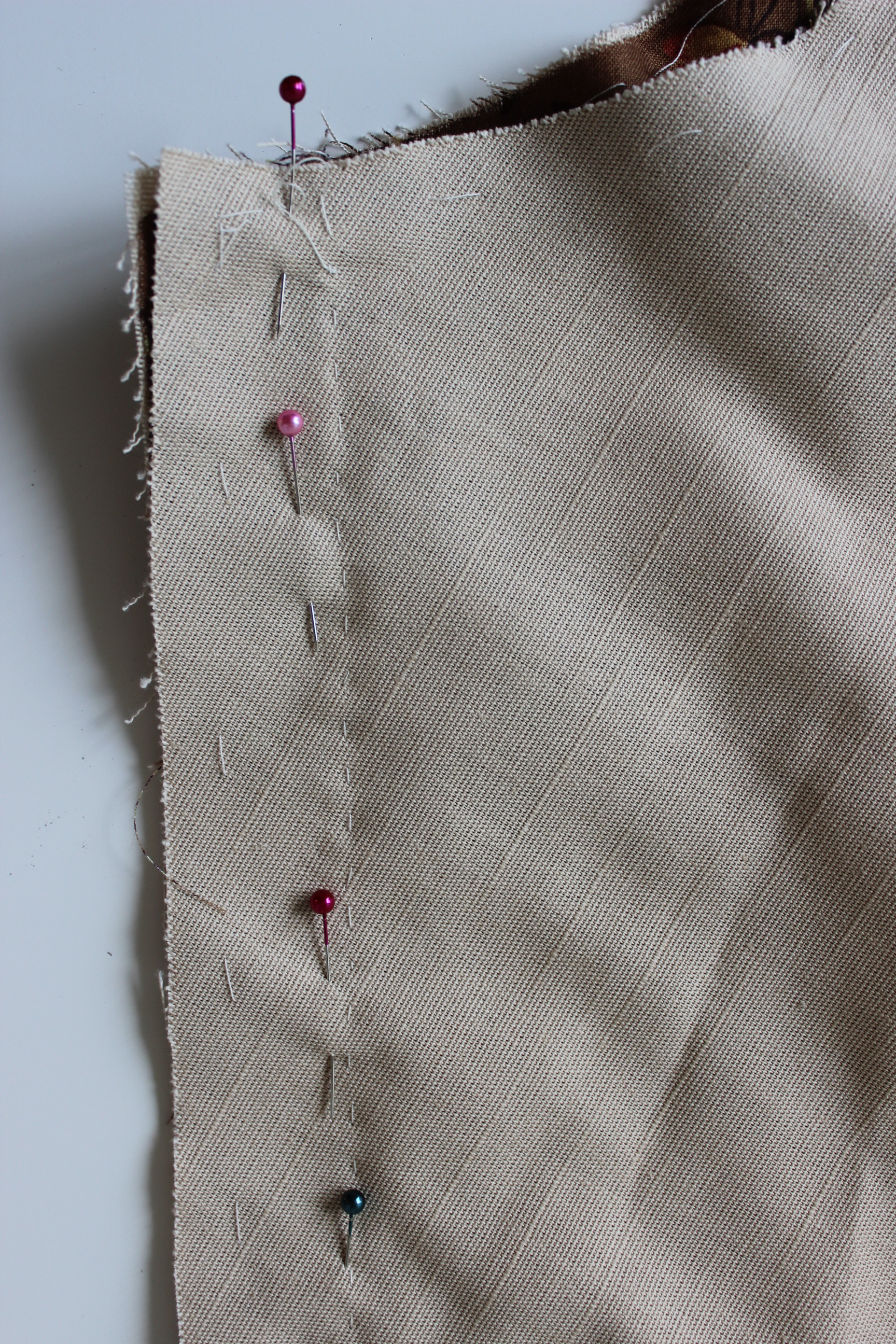
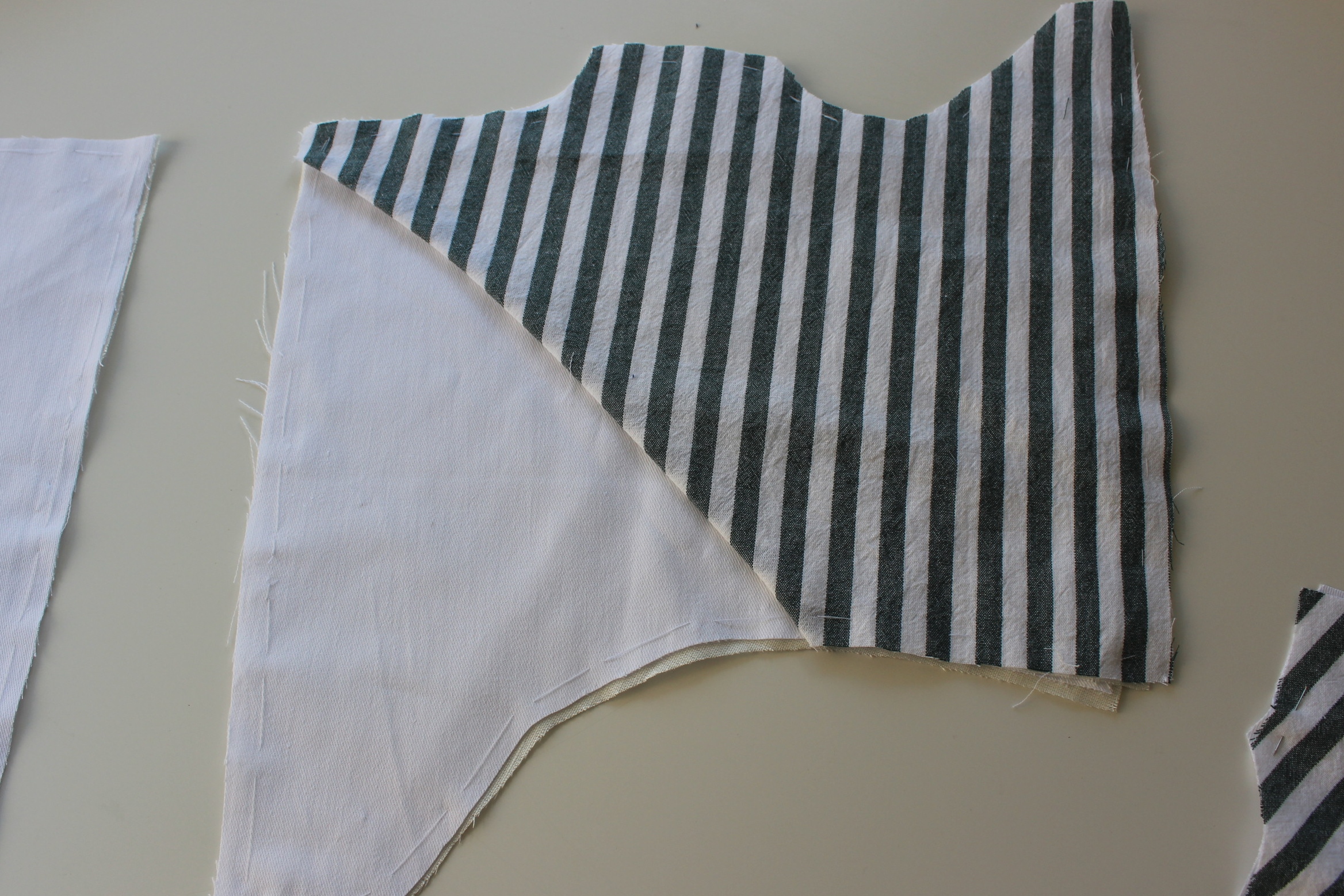
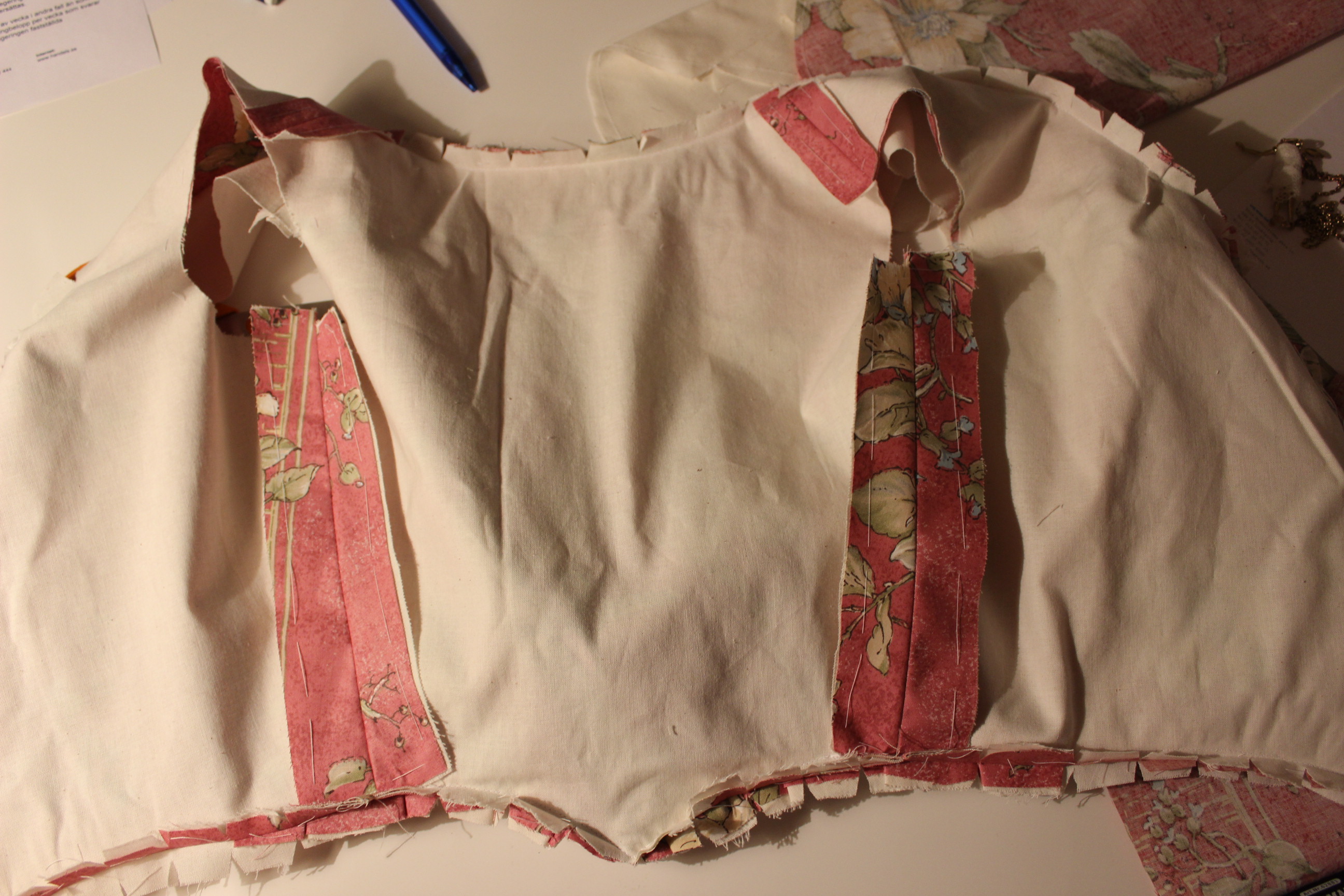
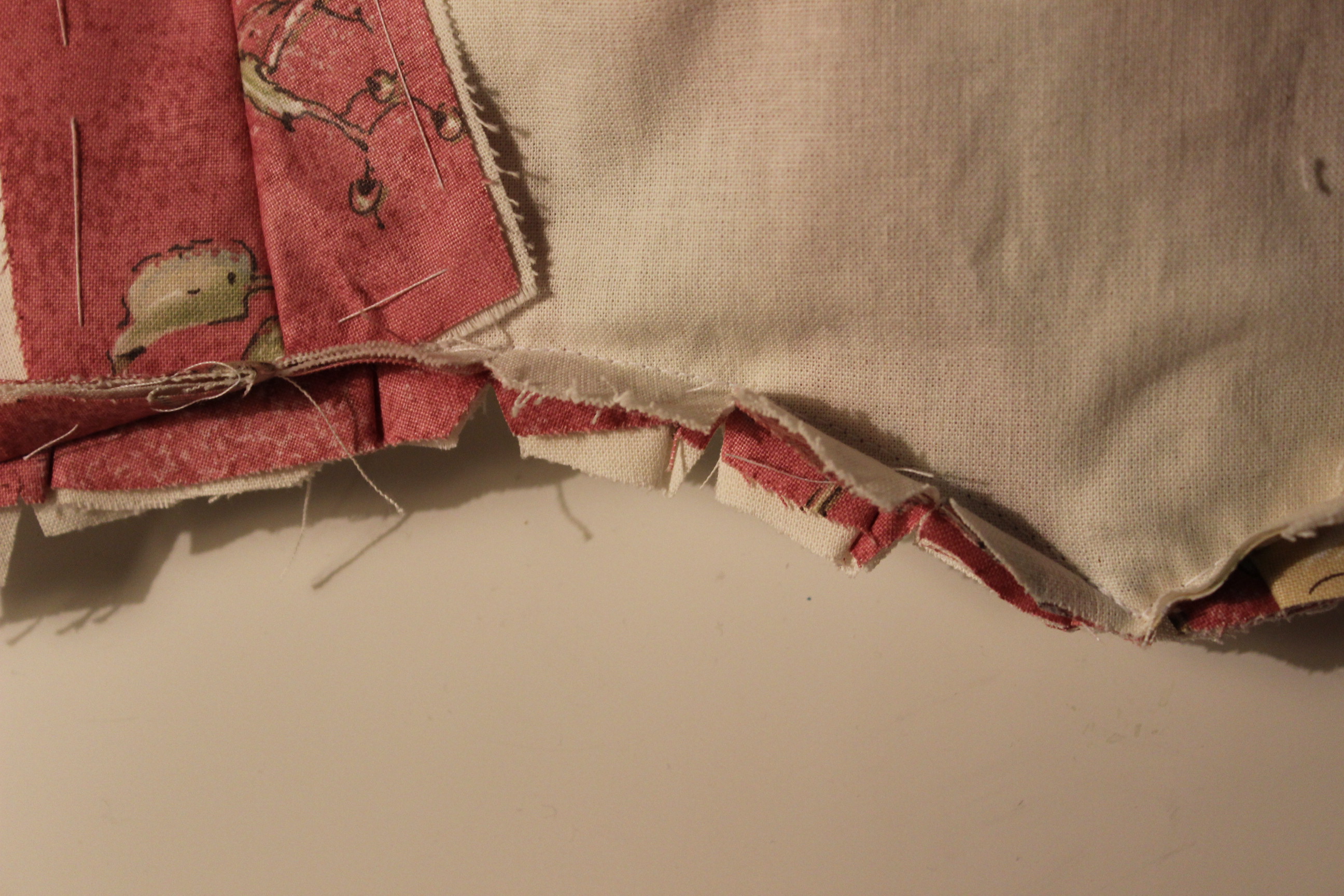
Then I stitched the lining to the front and back piece.IMG_0732
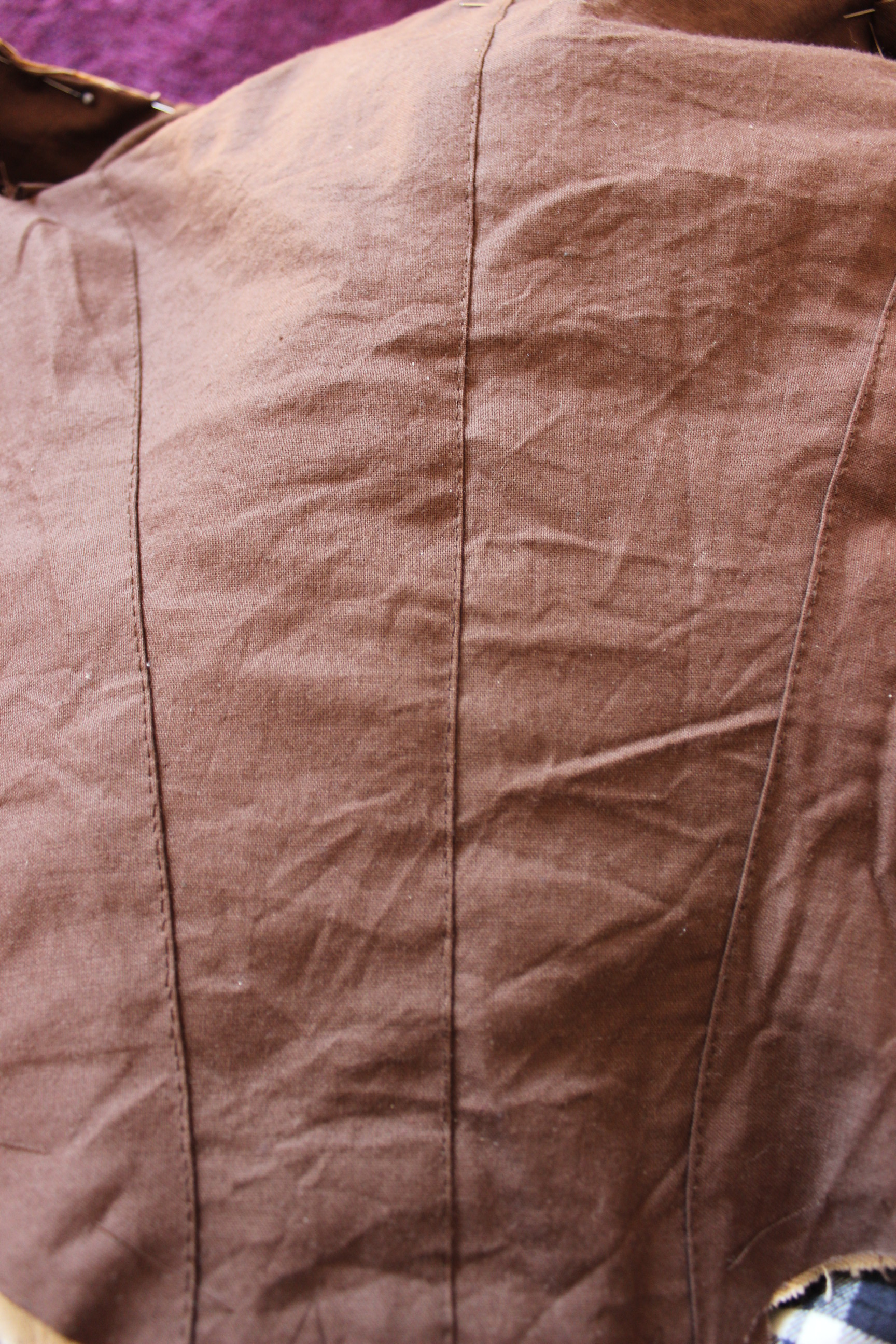
And put in the sleevesIMG_0737I stitched them right sides together under arm and, from the top over the shoulder. Attaching the shoulder strap along the way.IMG_0728
And carefully pining the lining into place.IMG_0729
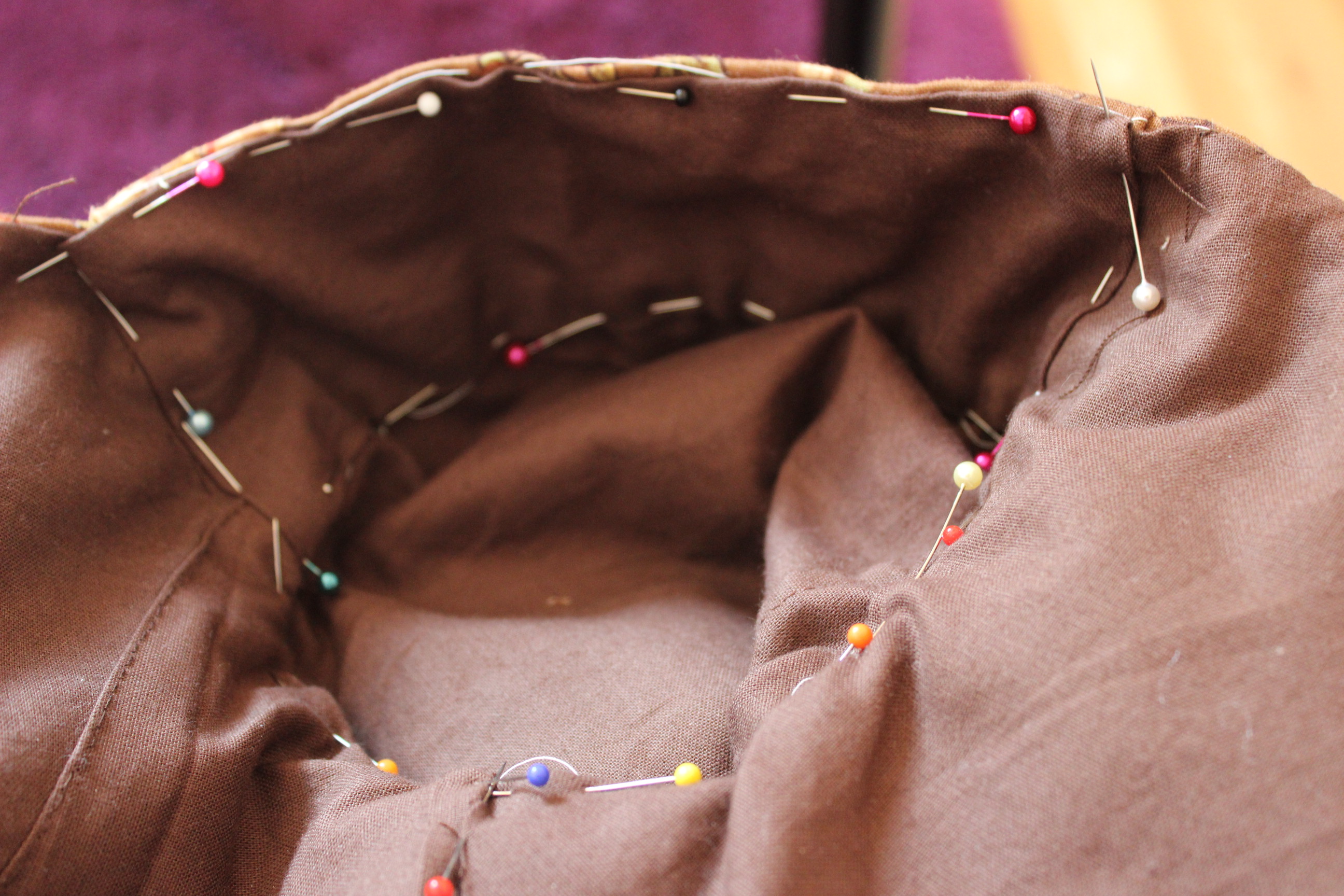
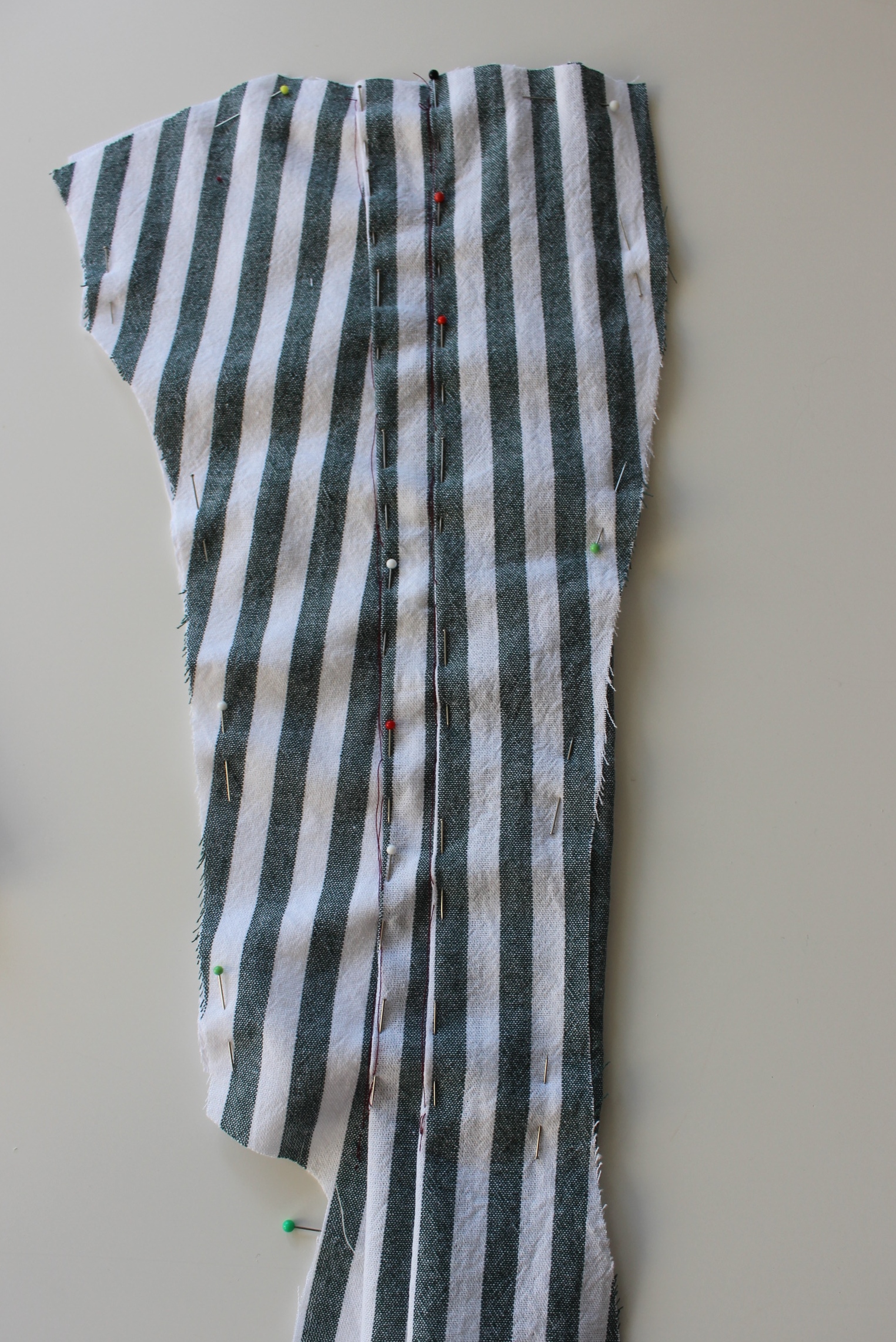
I put boning in the center back and front seams to help reduce wrinkles.IMG_0731
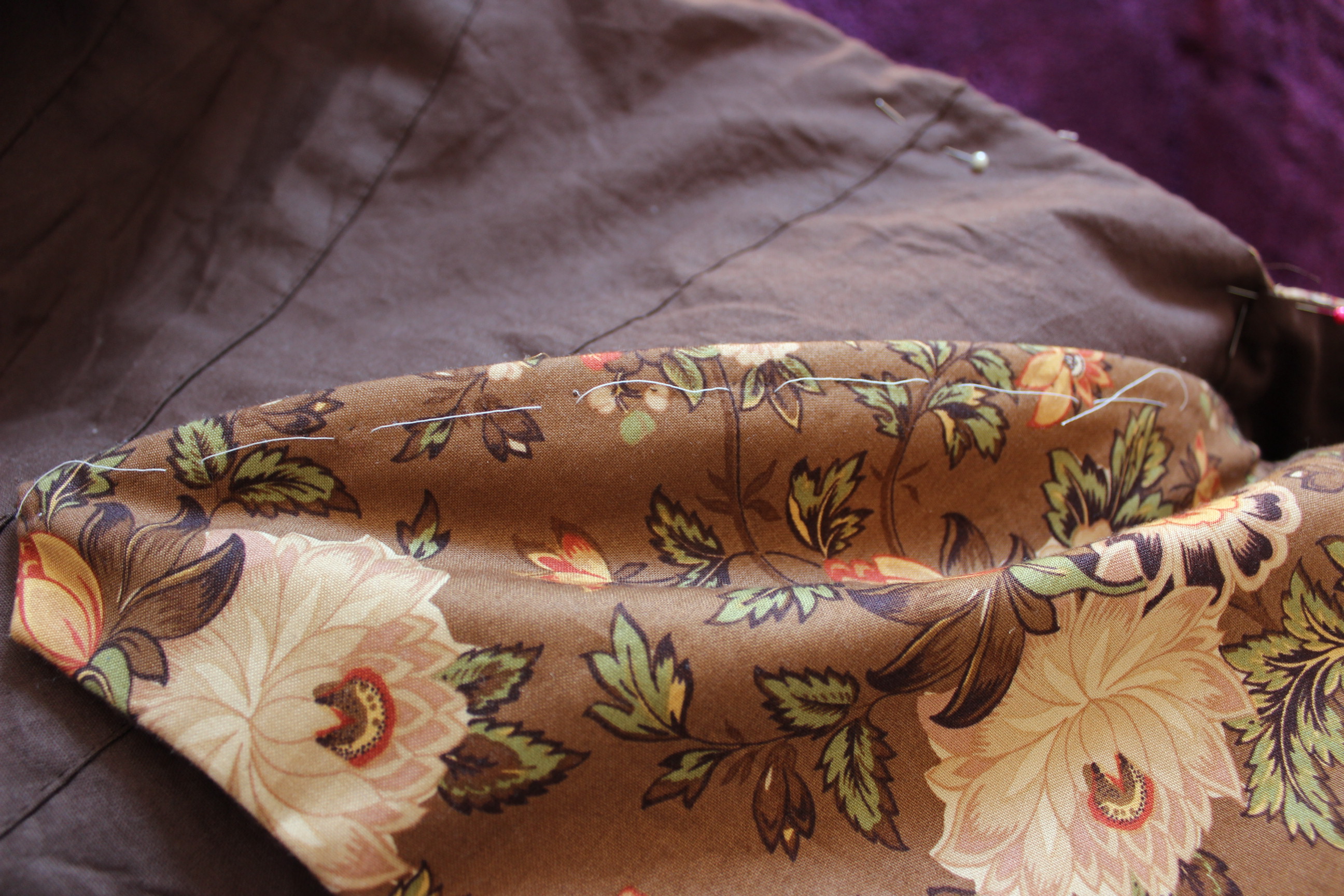
And stitched on hooks and thread bars for closure.IMG_0785
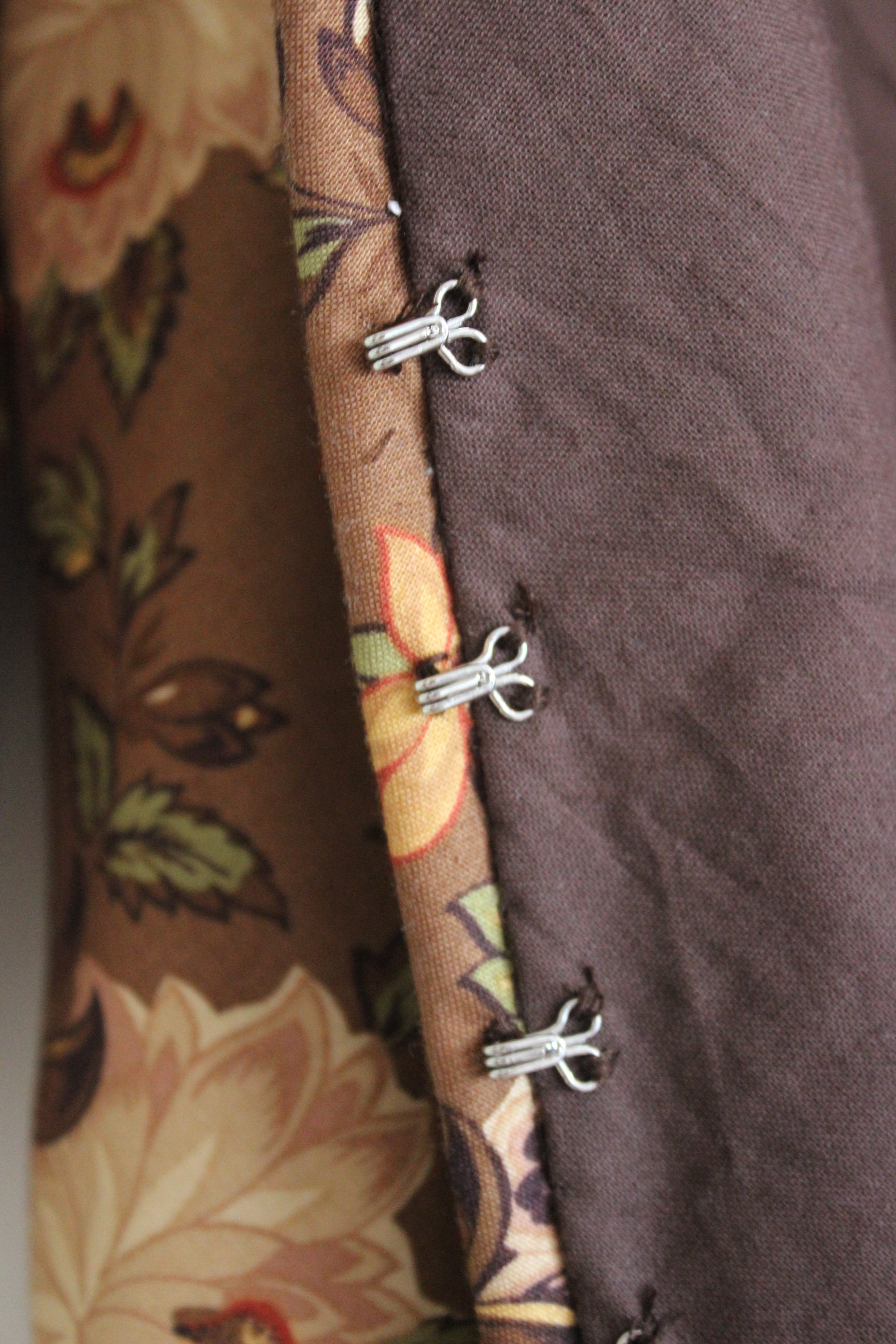
This is all that left of my 2,5 m fabric once the dress was complete.IMG_0764Thank goodness I didn’t need to make any bigger changes to it.
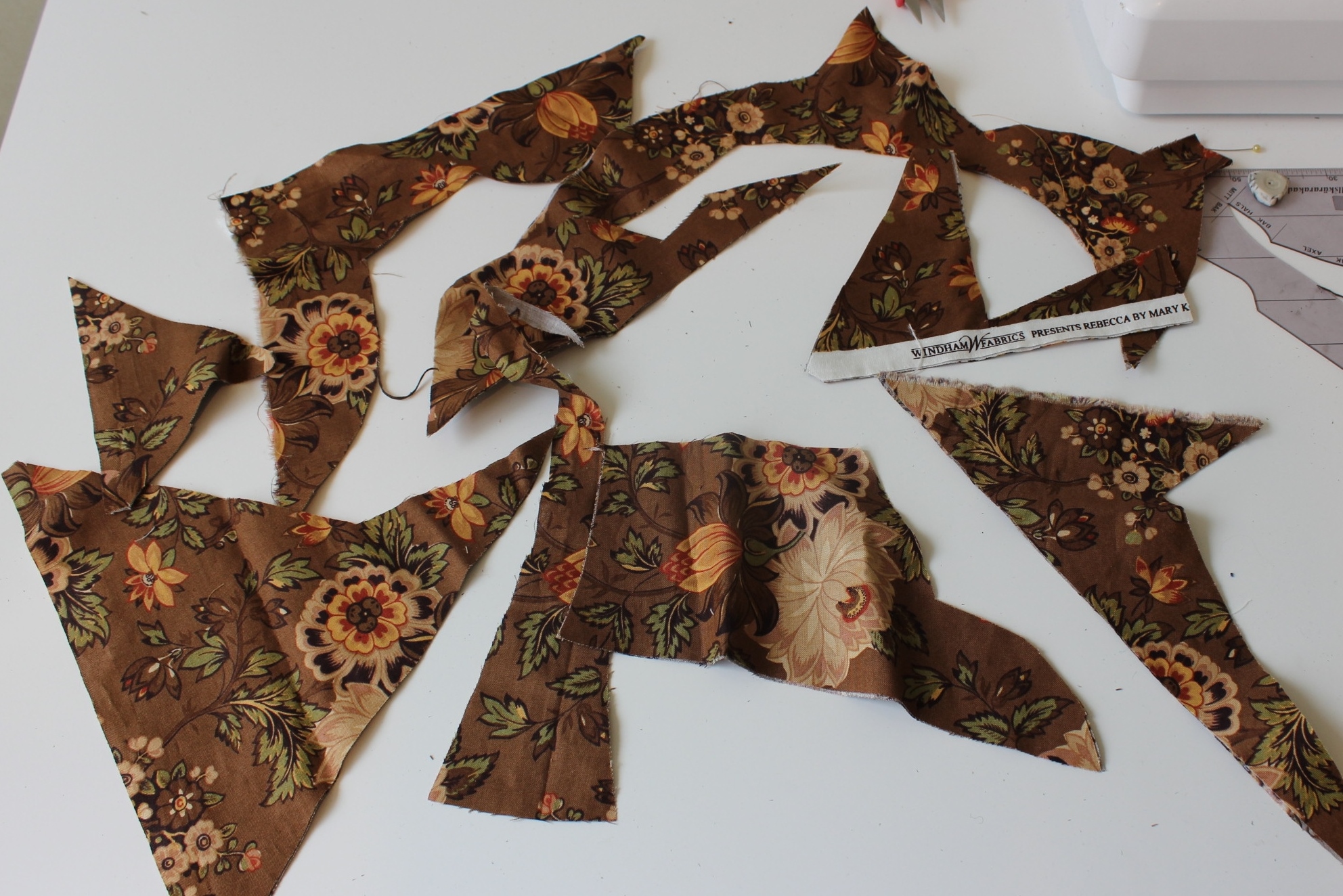
The Finished dress pared with the golden skirt:
(lots of photos, feel free to scroll down)IMG_1470

IMG_1477

IMG_1455

IMG_1454

IMG_1475

IMG_1482

IMG_1466

IMG_1468

IMG_1492

And a la polonaise:IMG_1435

IMG_1436

IMG_1451

IMG_1439

IMG_1438

IMG_1486

IMG_1442

IMG_1445

IMG_1448

And a mirror selfie of me dressed for the photoshoot:IMG_1419

Dress facts:

Pattern: None, I draped my own.

Fabric: 2,5 m of printed cotton, 0,5 m brown cotton for lining and 0,5 m thick canvas for interlining.

Notions: Thread, hooks and eyes, 0,6 m plastic boning for the front and some small pieces of ribbon for the “bustle effect”.

Time: I would guesstimate about 20 hours, but I started it in January (working on it only while my boyfriend watched some kind of sport on Tv) so I can’t be sure.

Cost: About 100 Sek (16 Usd) since the fabric was on sale.

Final thoughts: I really like this dress. I think it looks lovely and make me feel good wearing it. I’m already dreaming of going to a 18th century masked ball dressed in this gown and posing as “Autumn”.

Although looking at the pictures of me wearing it, I notice the huge amount of wrinkles occurring at the under arm/bust era, and at the back waist. I think I will have to go back and re-check the fit.

Terminology Stays

My original plan for the 16th HSF challenge – Terminology, (making something from “the-great-historical-fashion-and-textile-glossary“) was to make a regency round gown, but as the deadline approached I found an old UFO in my sewing pile causing me to changed track completely.

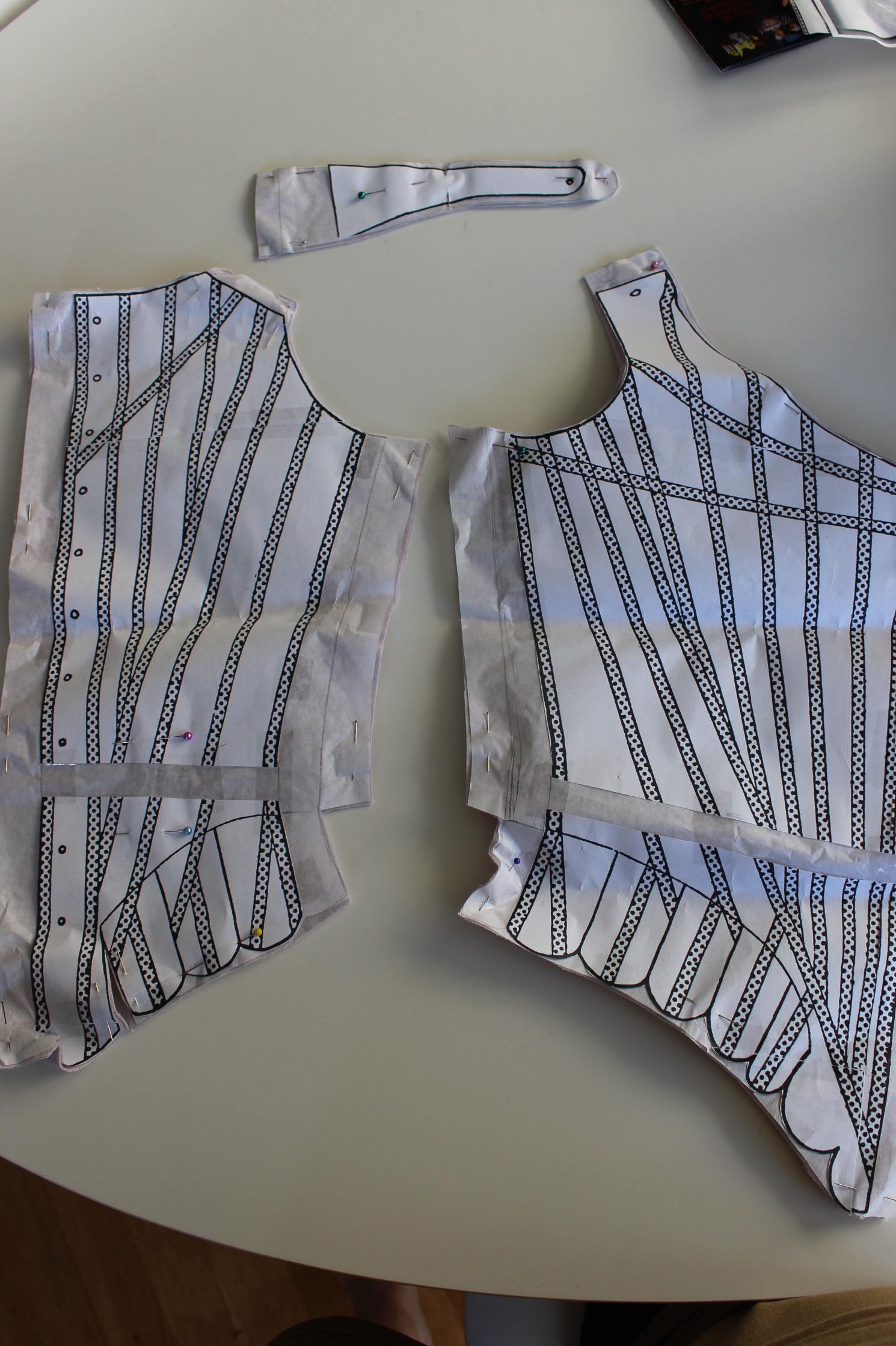
The item that now got my sewing nerve tingling was the 18th century half boned stays from Nora Waughs Corset and CrinolinesIMG_0780I’d started the project about a year ago, scaled and printed the pattern, took measurements and altered the pieces . Then I left it in favor for some other, more pressing costuming need. And that’s how I found it.

So I searched “The Glossary” for some useful article and found just the one: Stays.IMG_0782The pieces  already altered for my measurements.

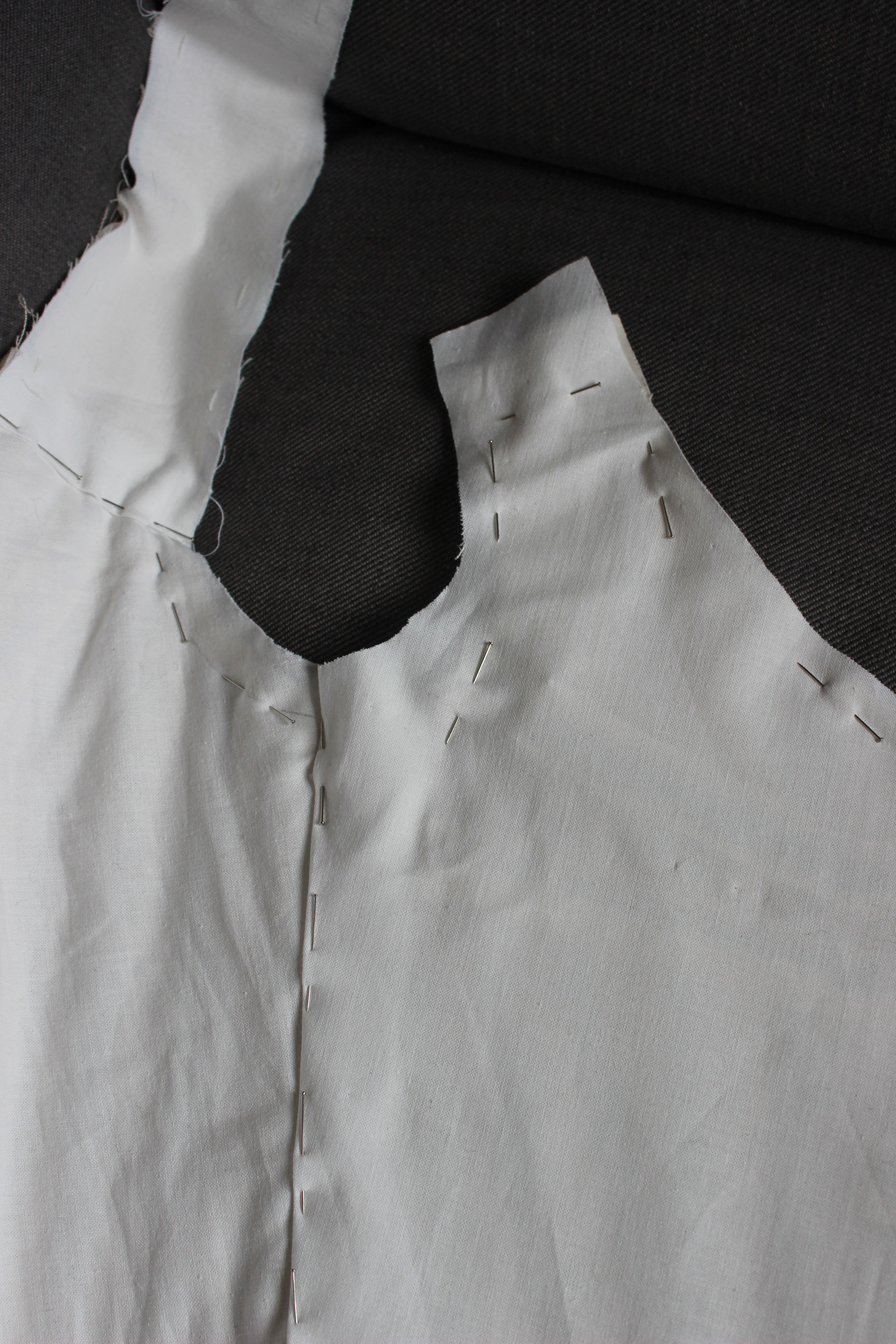
I decided to keep the pieces as they were (one year old measurements and all), and pinned them to the old cotton sheet I use for mock-ups.

I stitched the mock-up together and made some basic boning chanells down the front, sides and back.IMG_0788

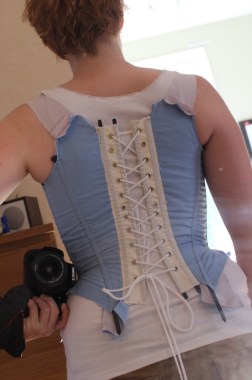
Then I put in some boning, and attached my old lacing strip to the back.IMG_0787Not very pretty, but functional.
IMG_0794 IMG_0802
The fit was pretty good, and the only alteration I made was to make the whole thing 5 cm smaller – to get some more flexibility for size in the lacing.

So, on to the fashion fabric.
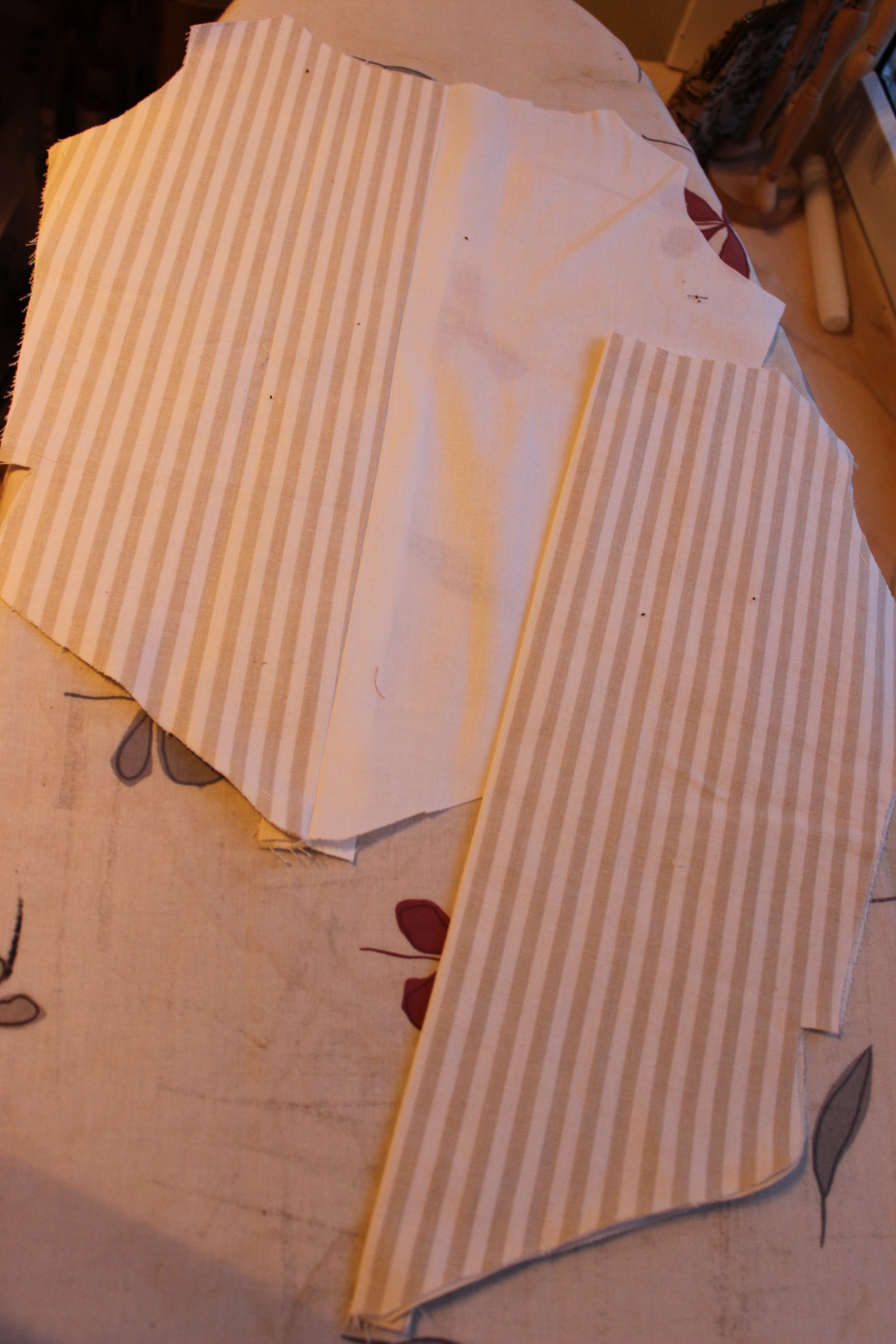
I used the leftovers from my previous corset en-devour (1900s S-shape).IMG_0892Pinning the strong sateen interlining.

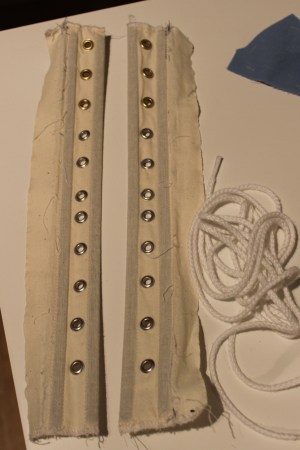
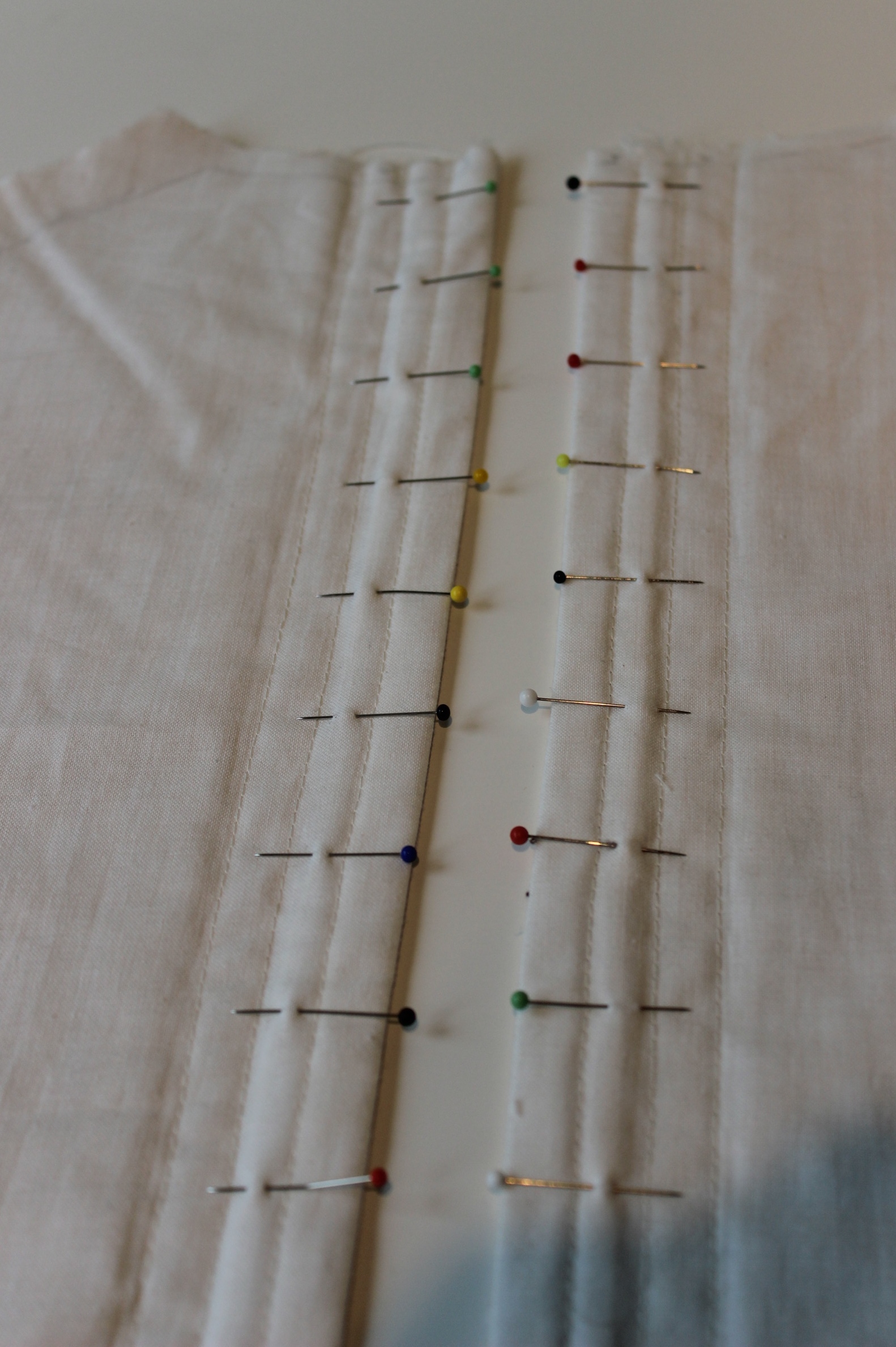
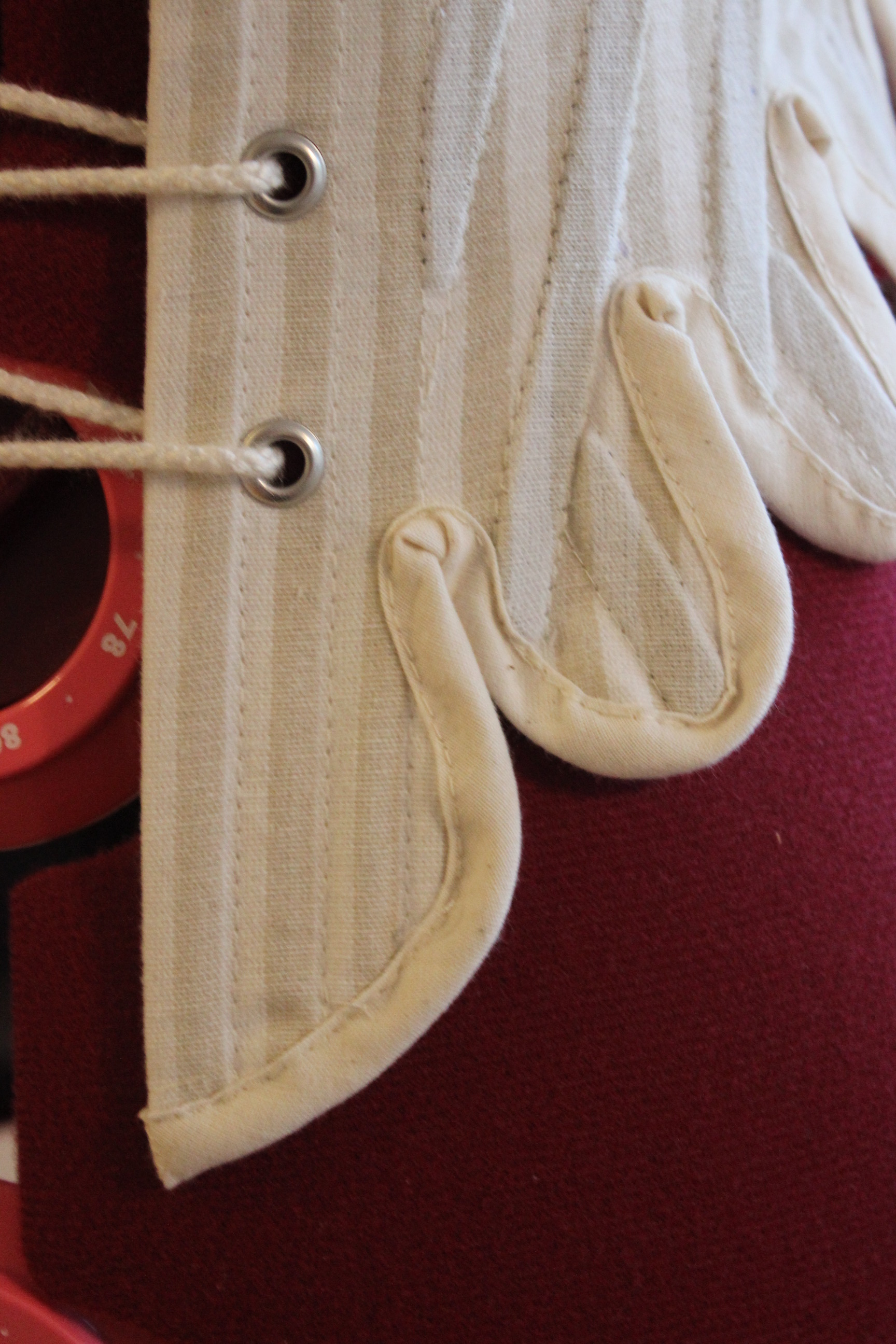
I started by sewing the lining to the back piece.IMG_1614Then I stitched the lacing channels close to the edge, making three spaces for boning and eyelets.

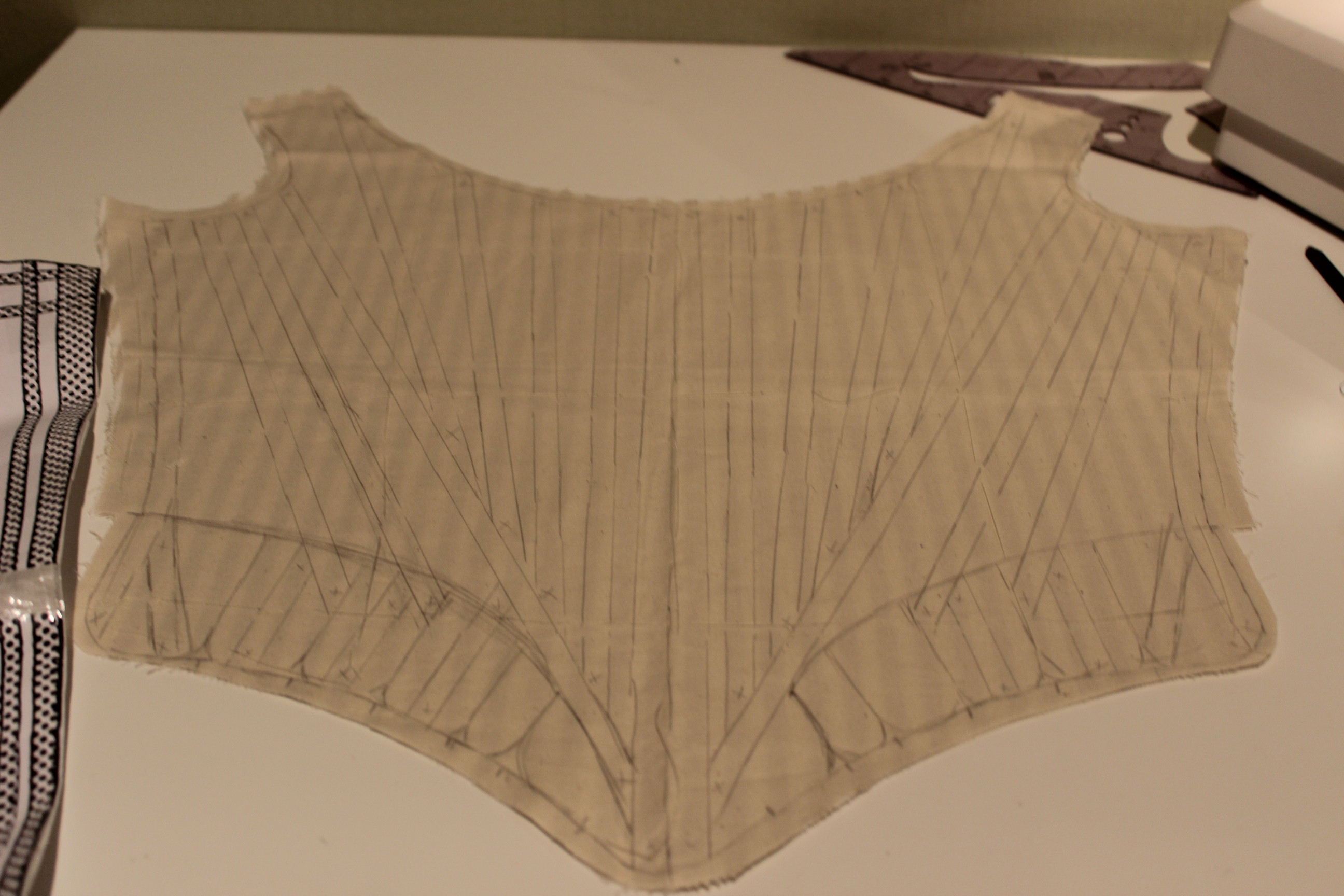
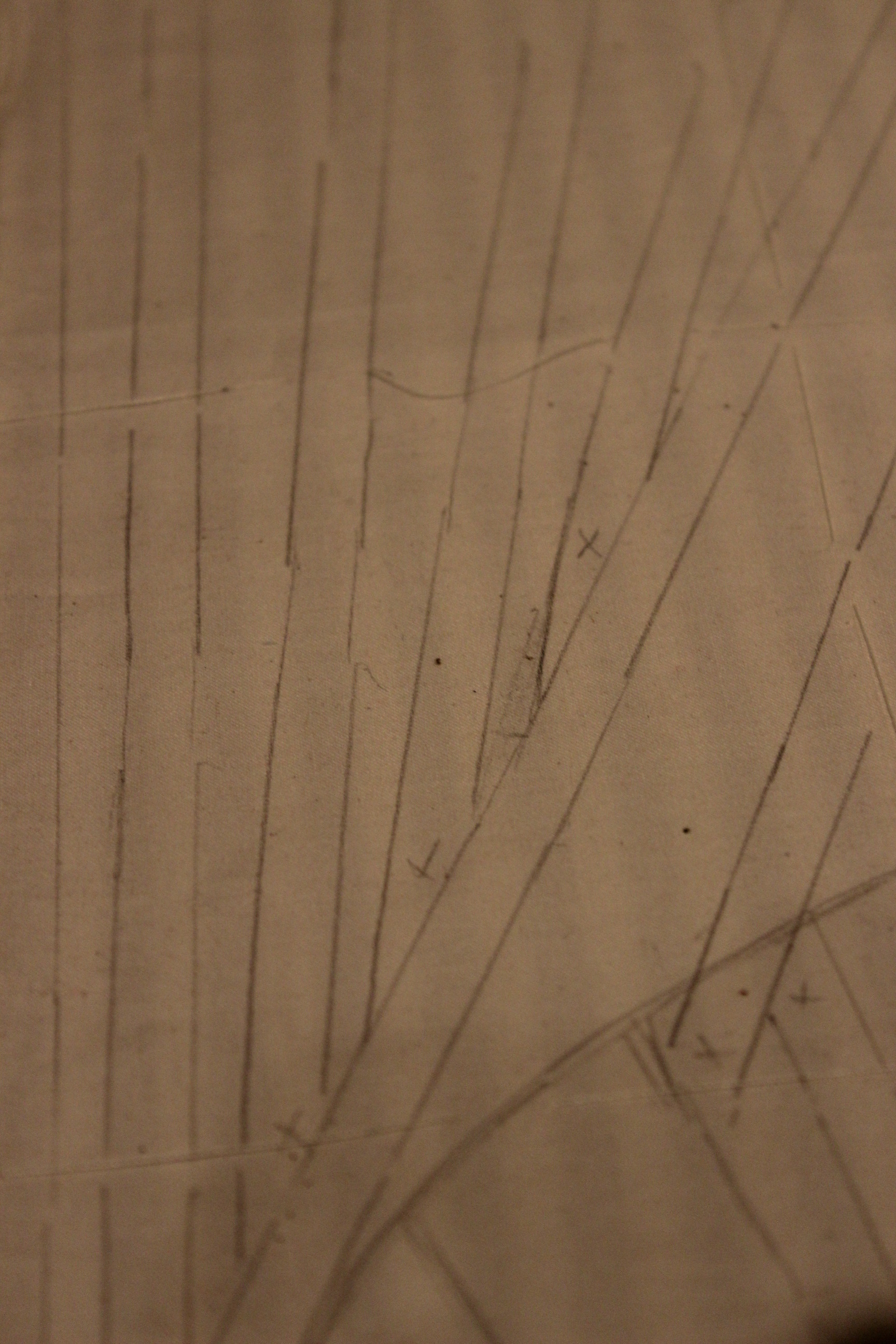
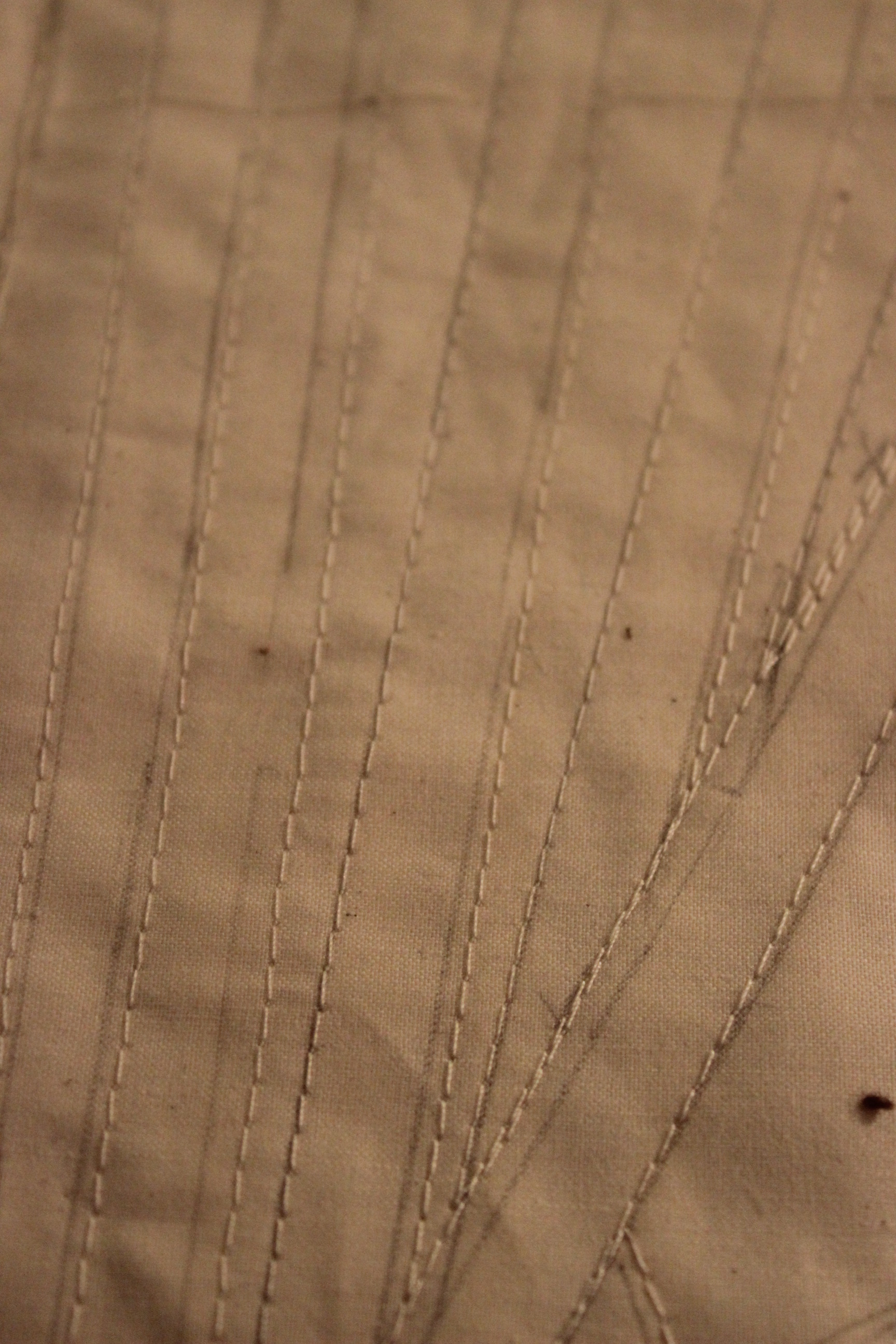
Before getting down on to sewing all the channels, I made sure to mark them with pencil to the interfacing.IMG_1627

As you can see the lines are not exactly perfect.
IMG_1628 IMG_1630
And neither are the sewing lines.
But the pencil markings was just meent as a general guide to keep the left and right sides even.

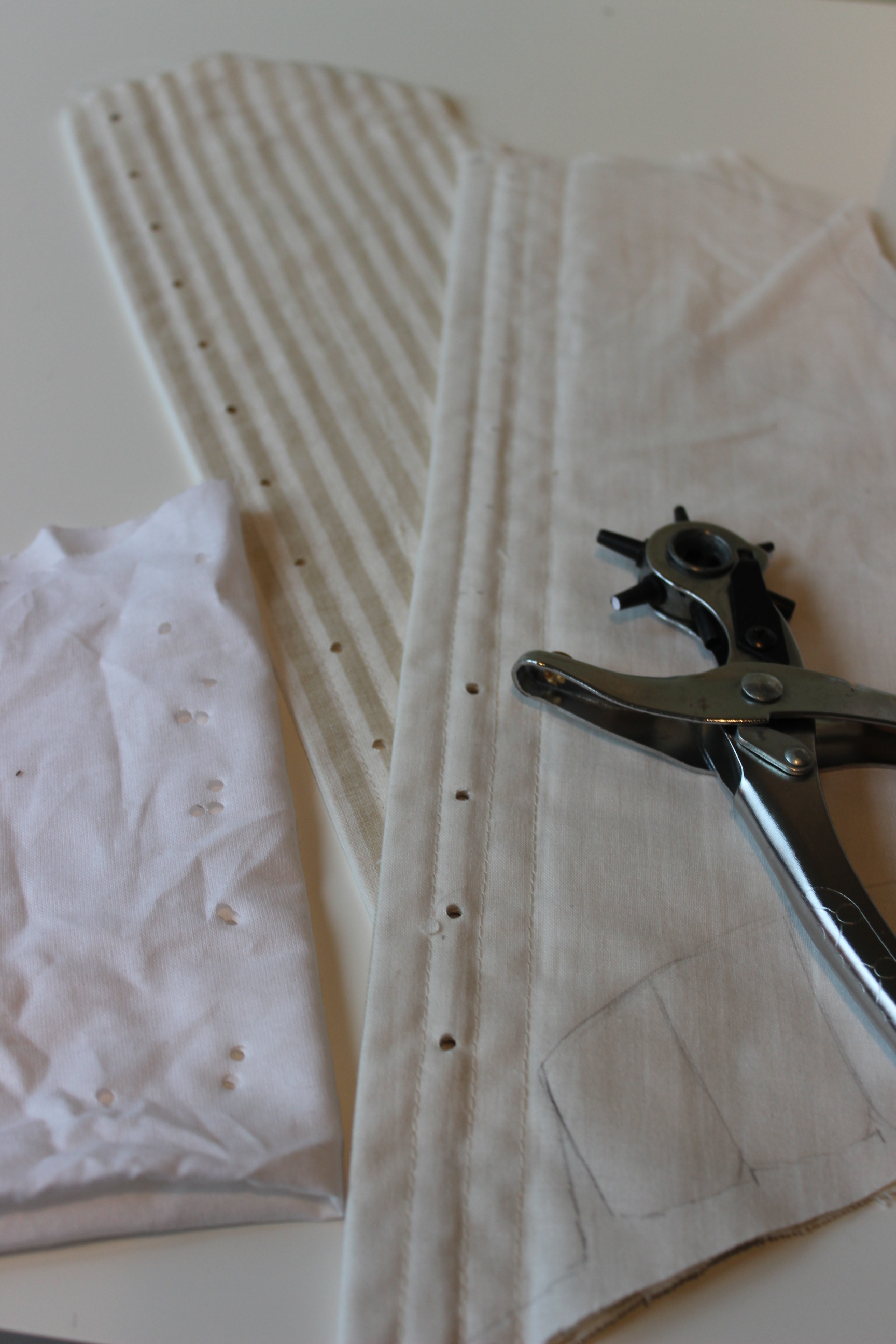
Then it was on to the eyelets.IMG_1637Marking the spaces.

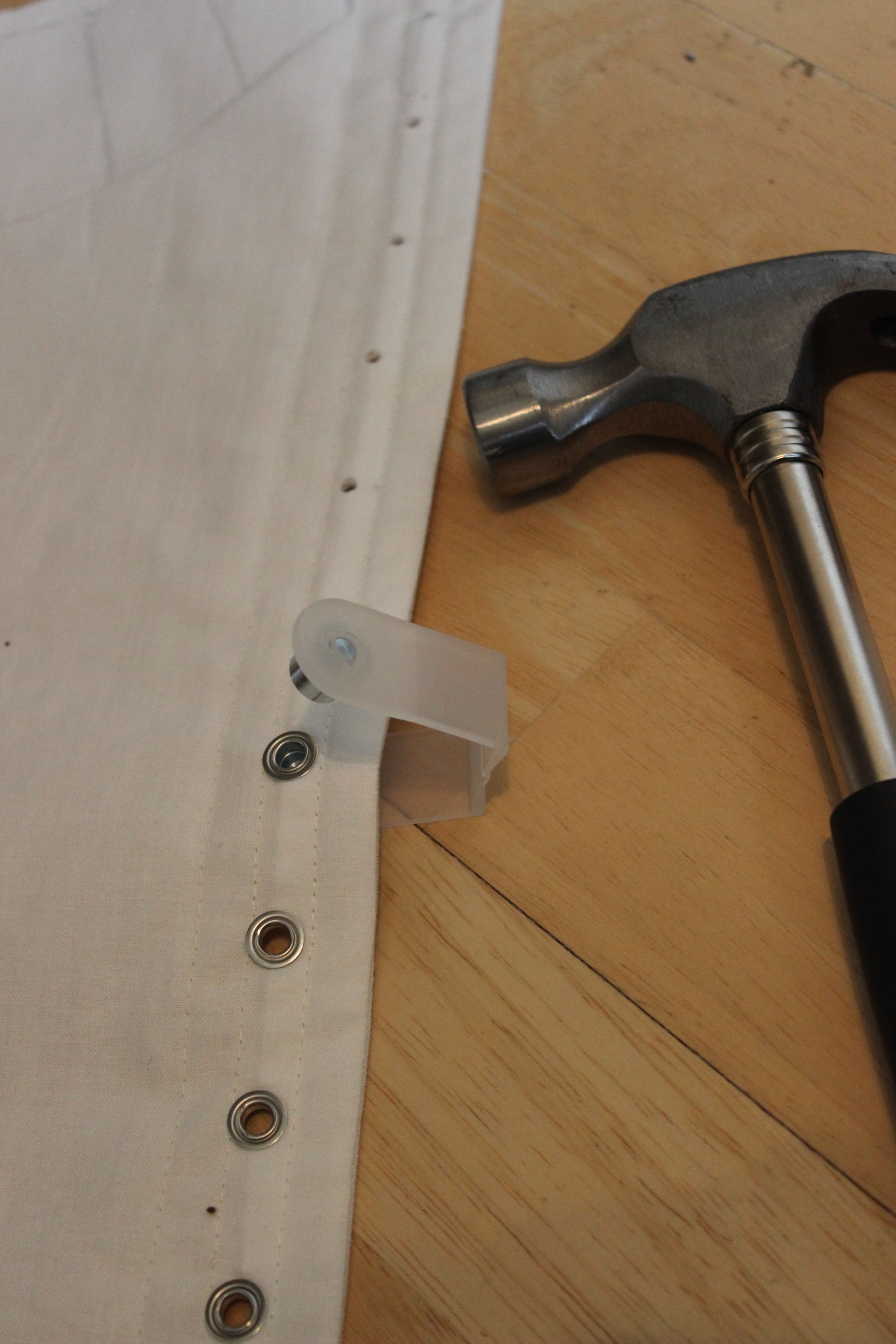
I used my hole puncher to get the get the grommets through the fabric.
IMG_1639IMG_1640
And a hammer to get them to stick.

Then it was time to stitch the pieces together.IMG_1642

And to insert some of the boning.IMG_1644

IMG_1646 IMG_1653
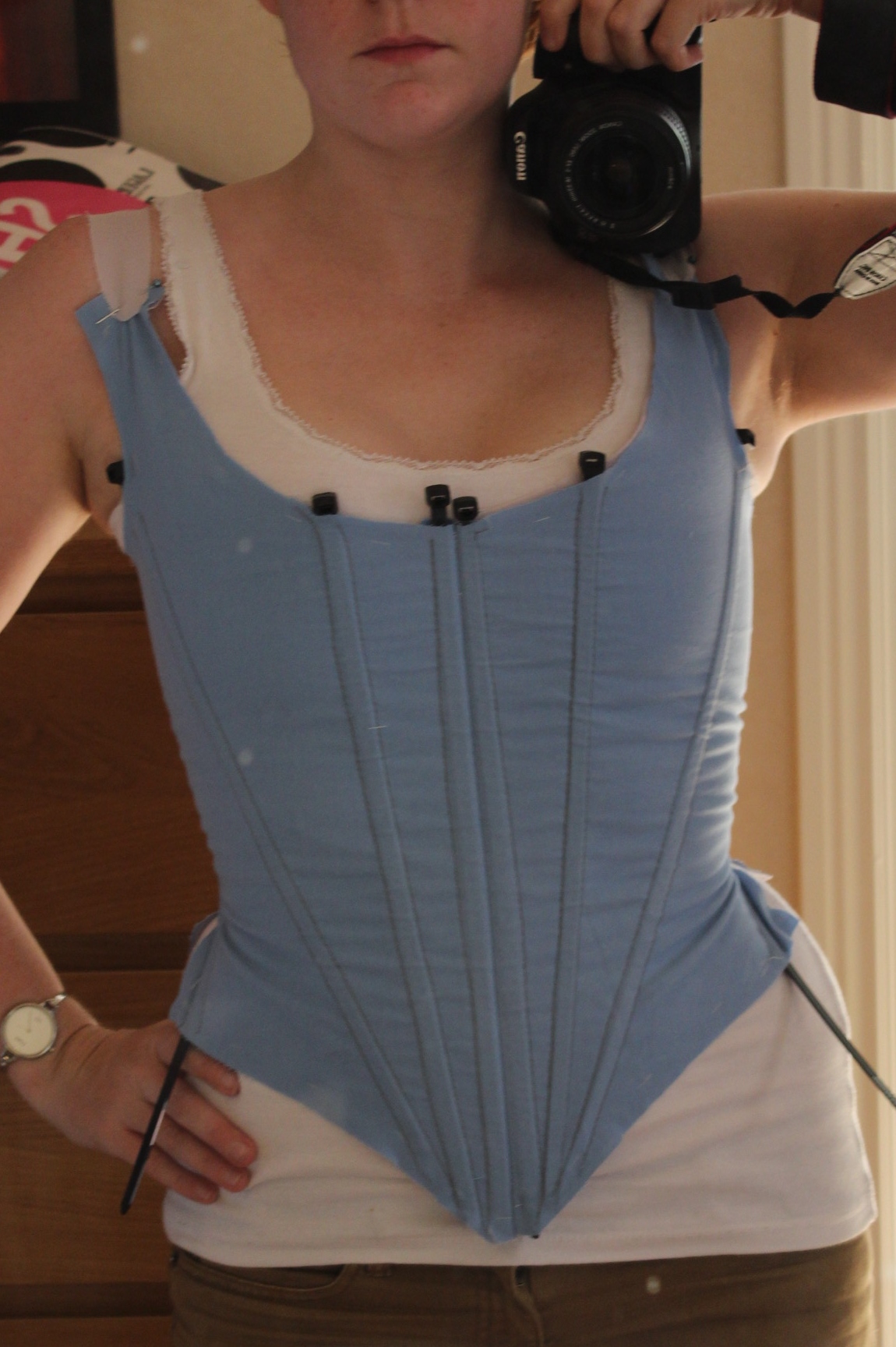
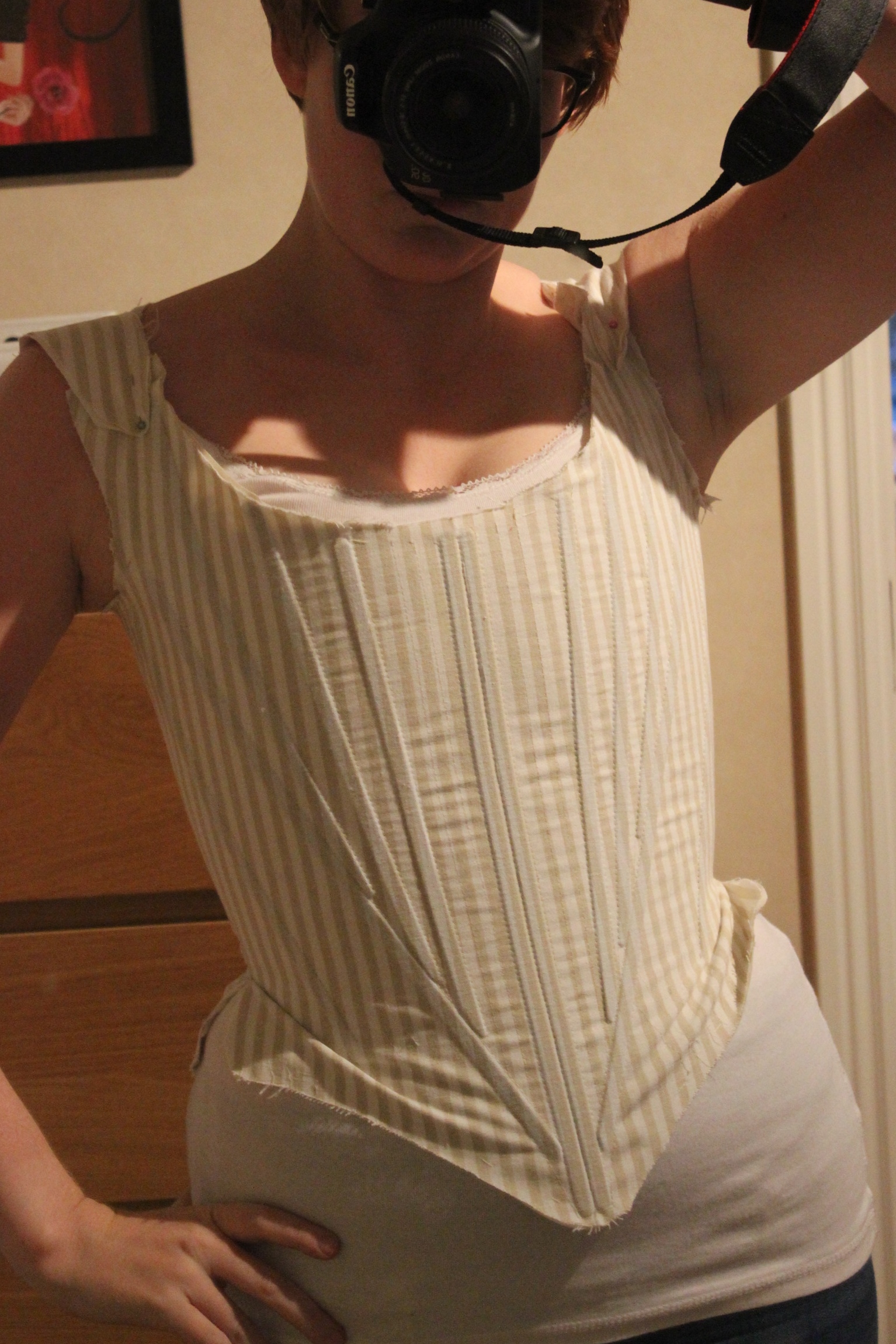
The shape and fit looks really good. The wrinkles at the waist comes from the so far uncut tabs.IMG_1658Please ignore the different color laces – I could’t find any long enough.

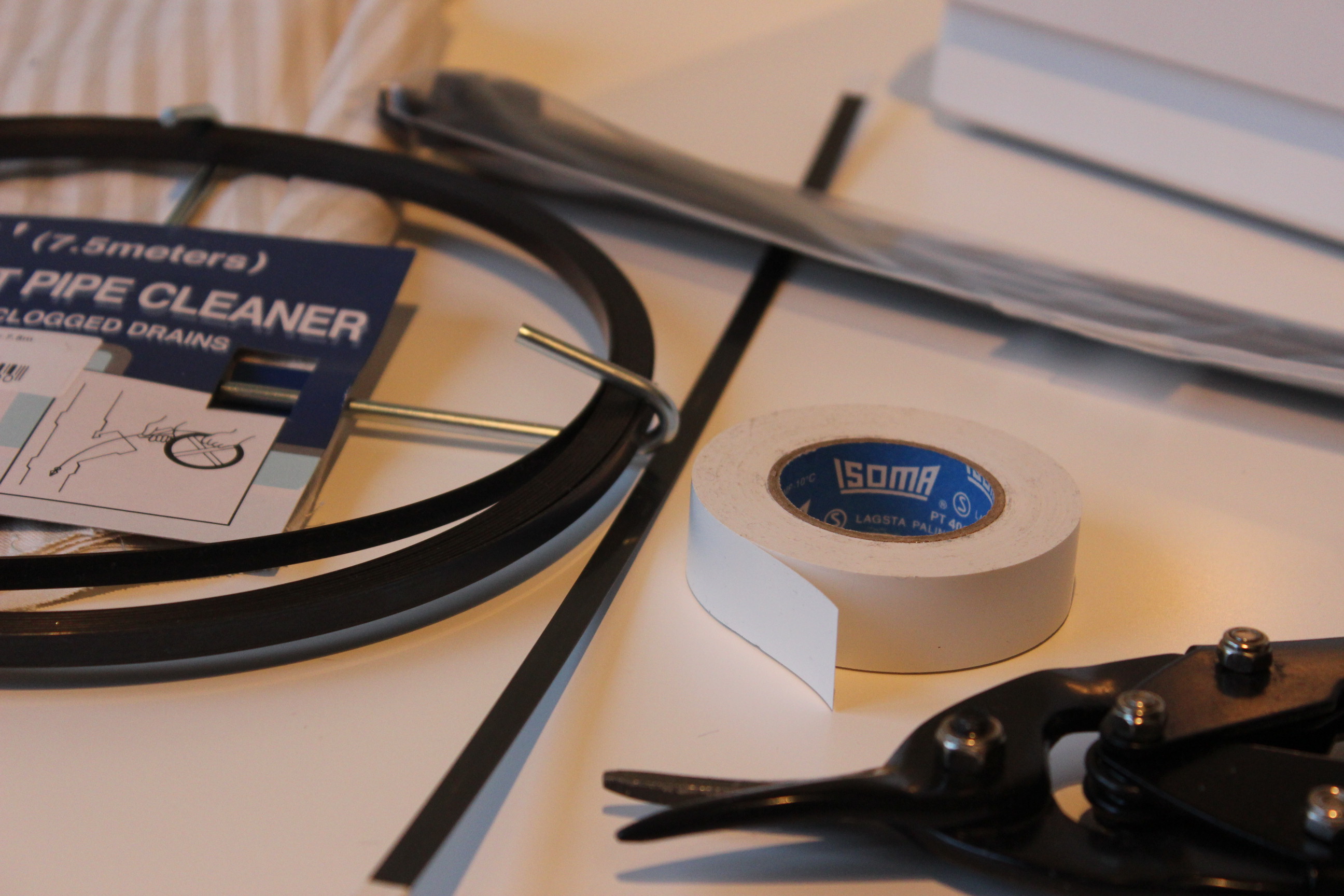
After the fitting I inserted the rest of the boning, making sure the sharp edges was cut down and rounded of.IMG_1678

I needed to use some bias tape and hand sewing to get the channels for the horizontal bones in place.IMG_1794

They show a bit from he front, but not enough to be a problem.IMG_1797

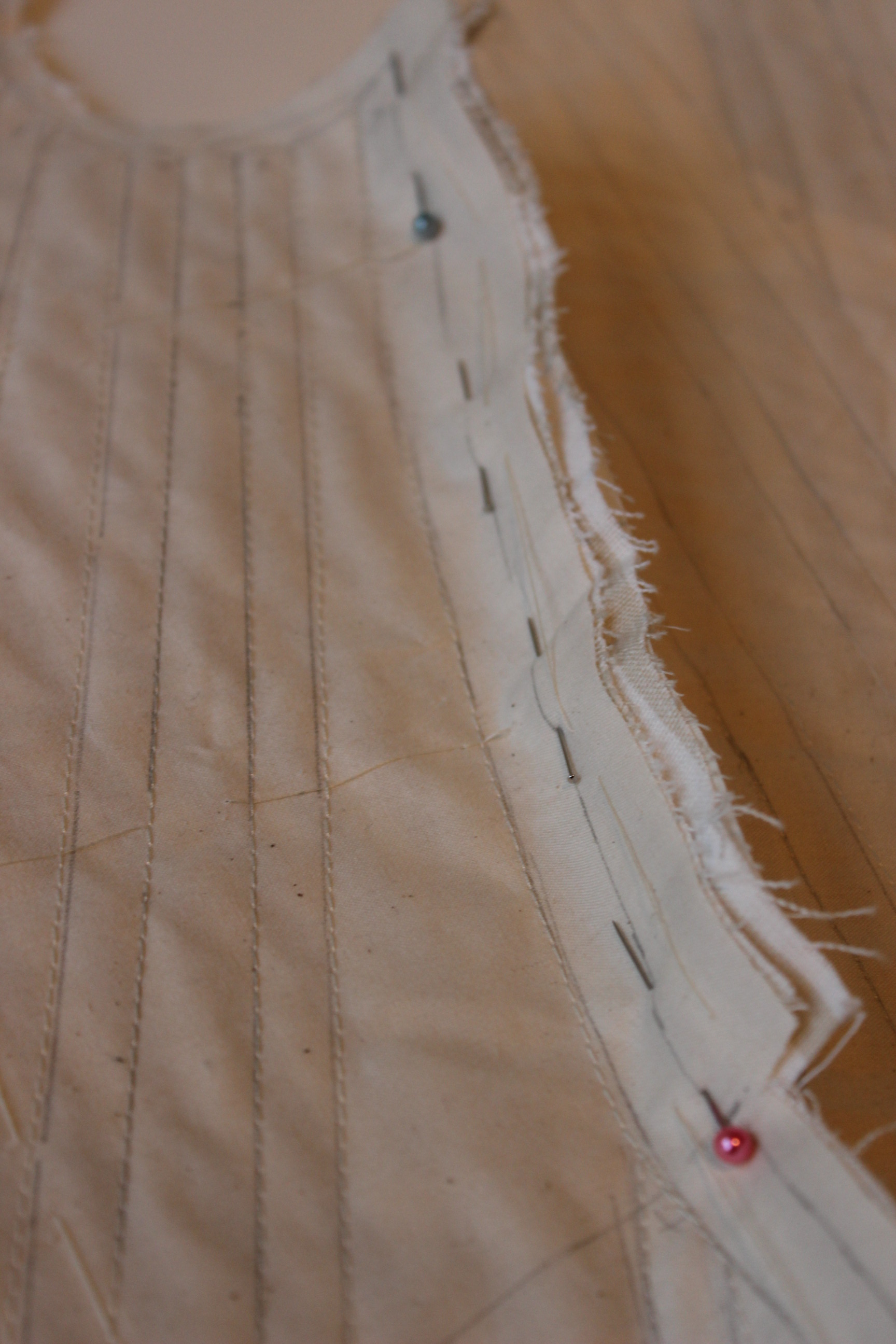
I then pinned on the lining, sewing it down to the selvages and basting it round the top and bottom. IMG_1802

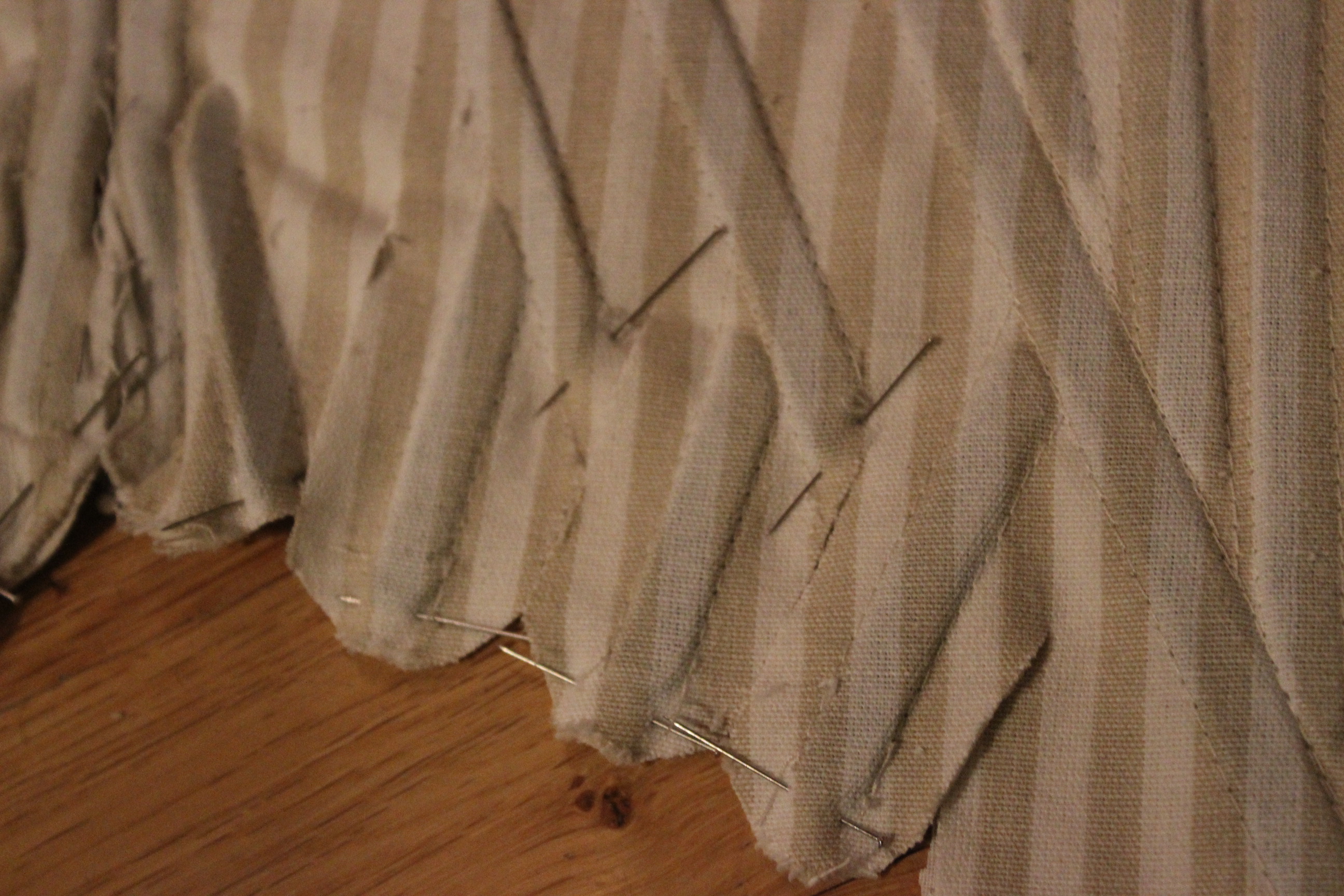
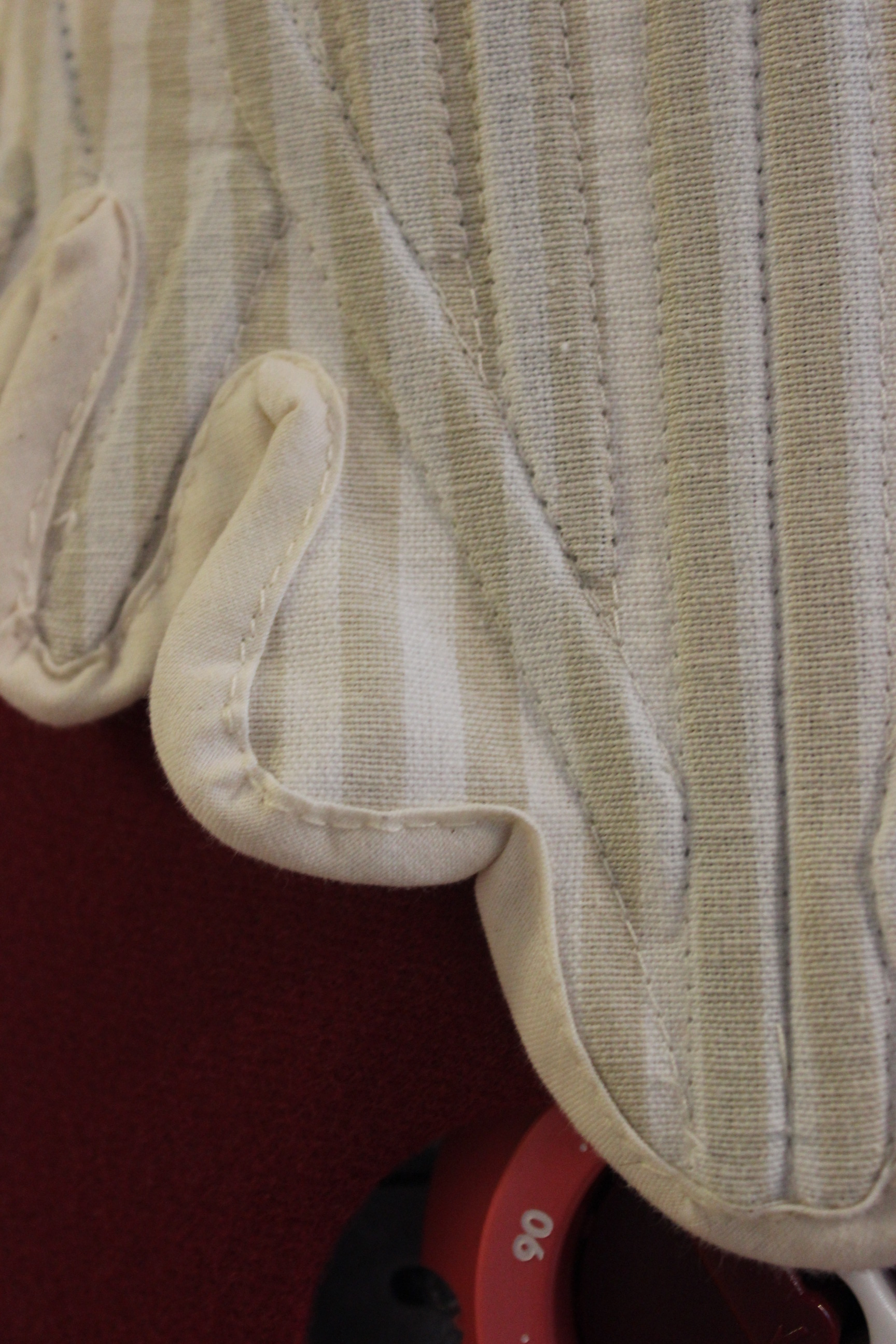
Then it was time to cut the tabs, bind the edges.
IMG_1803
IMG_1805
I put pins, to keep the bones from sliding from their places.

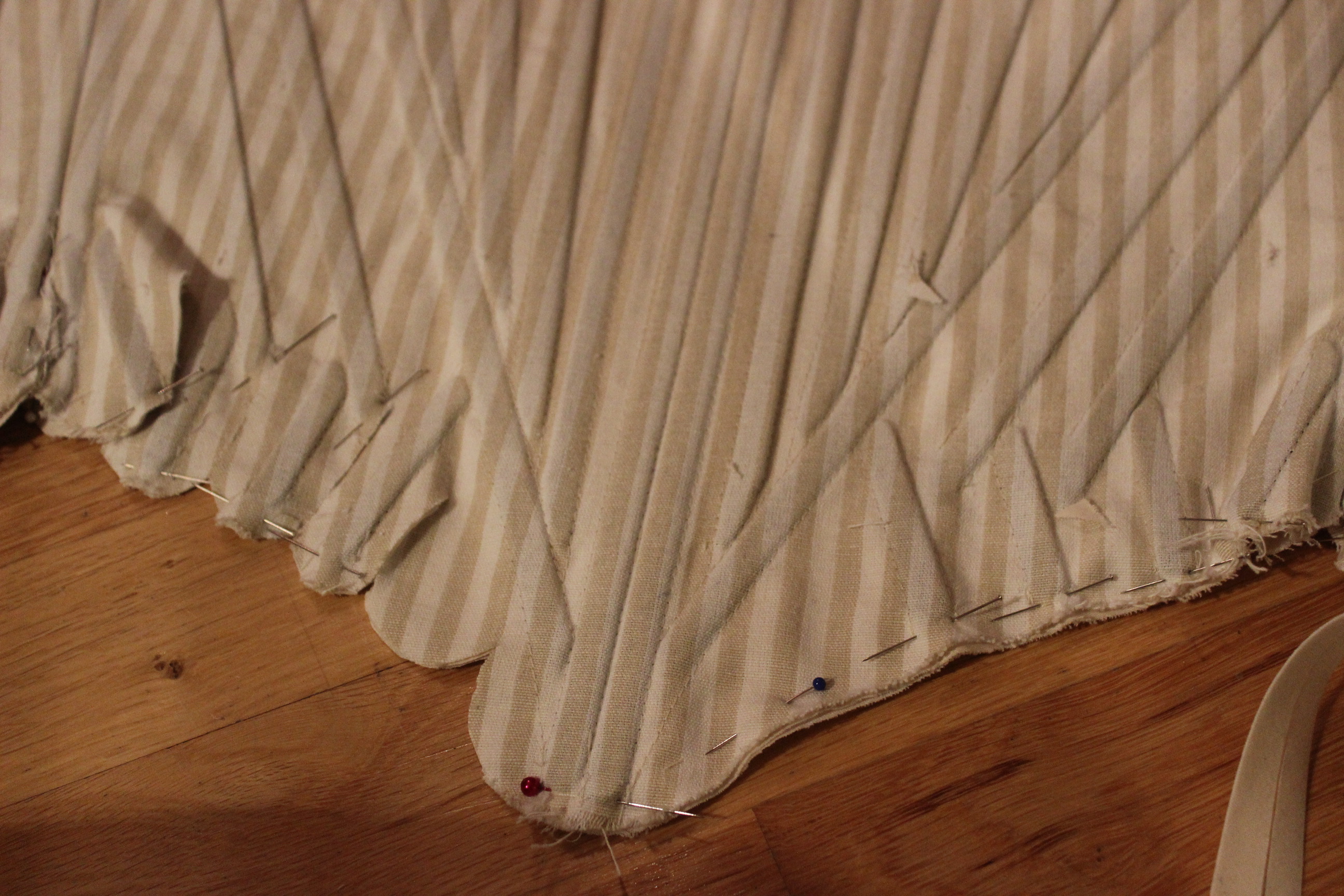
Fortunately I’d made the top edge first, because binding all those tabs were the worst part of the process. And if I hadn’t I’m not sure I wold have pulled through.IMG_1807

I stabbed myself countless times on the pins, and had lots of troubles getting the corners nice and smooth.IMG_1808

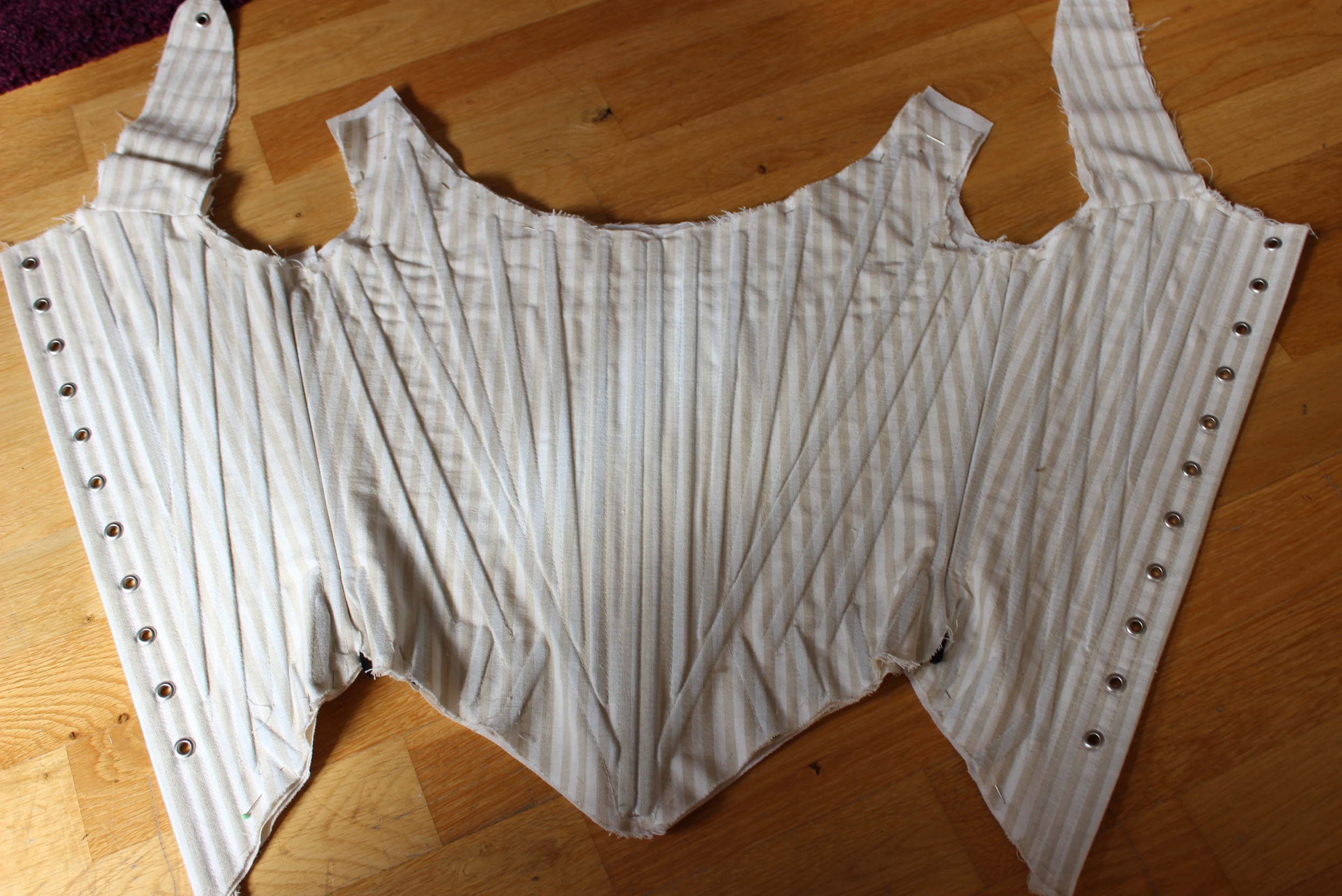
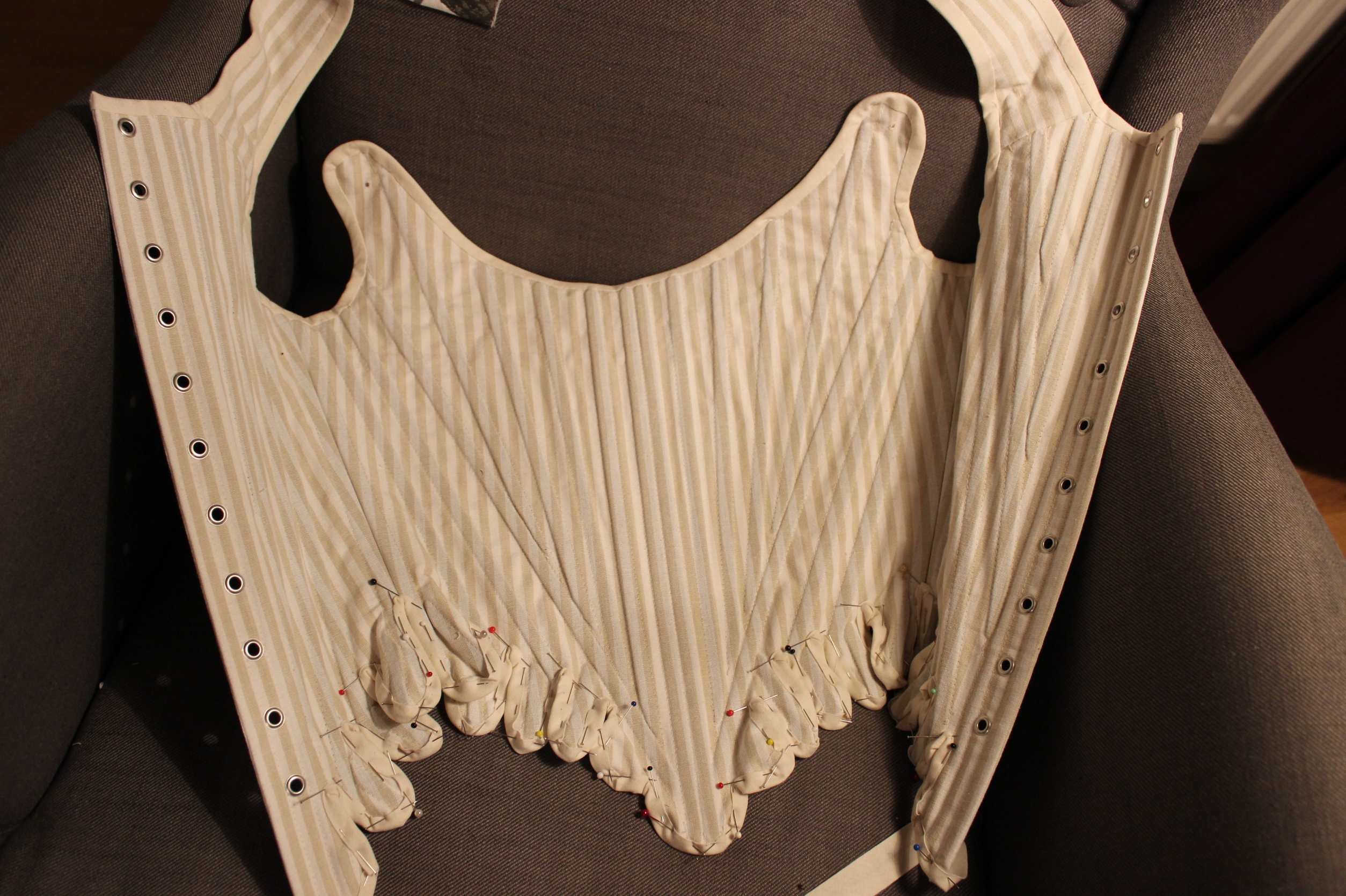
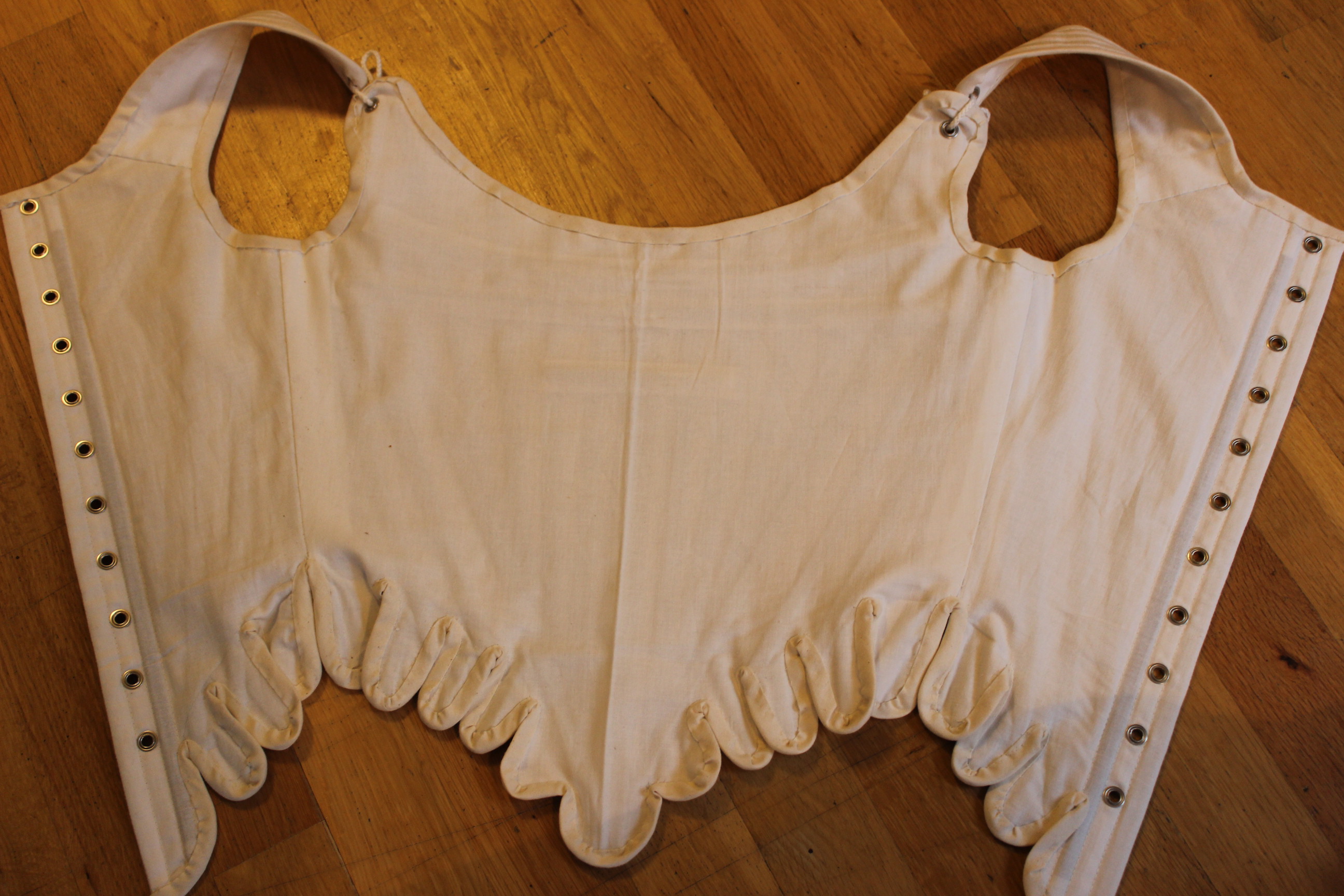
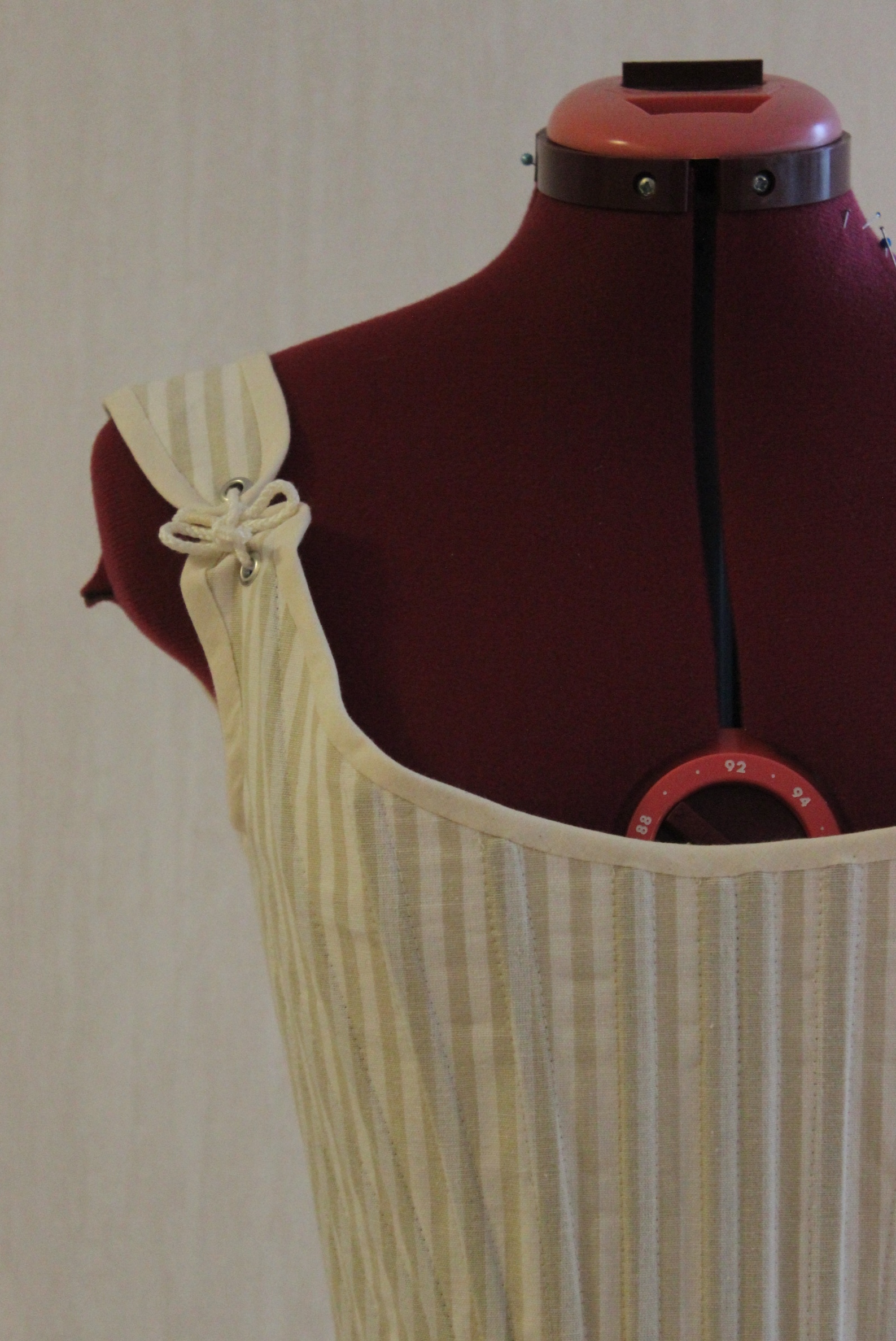
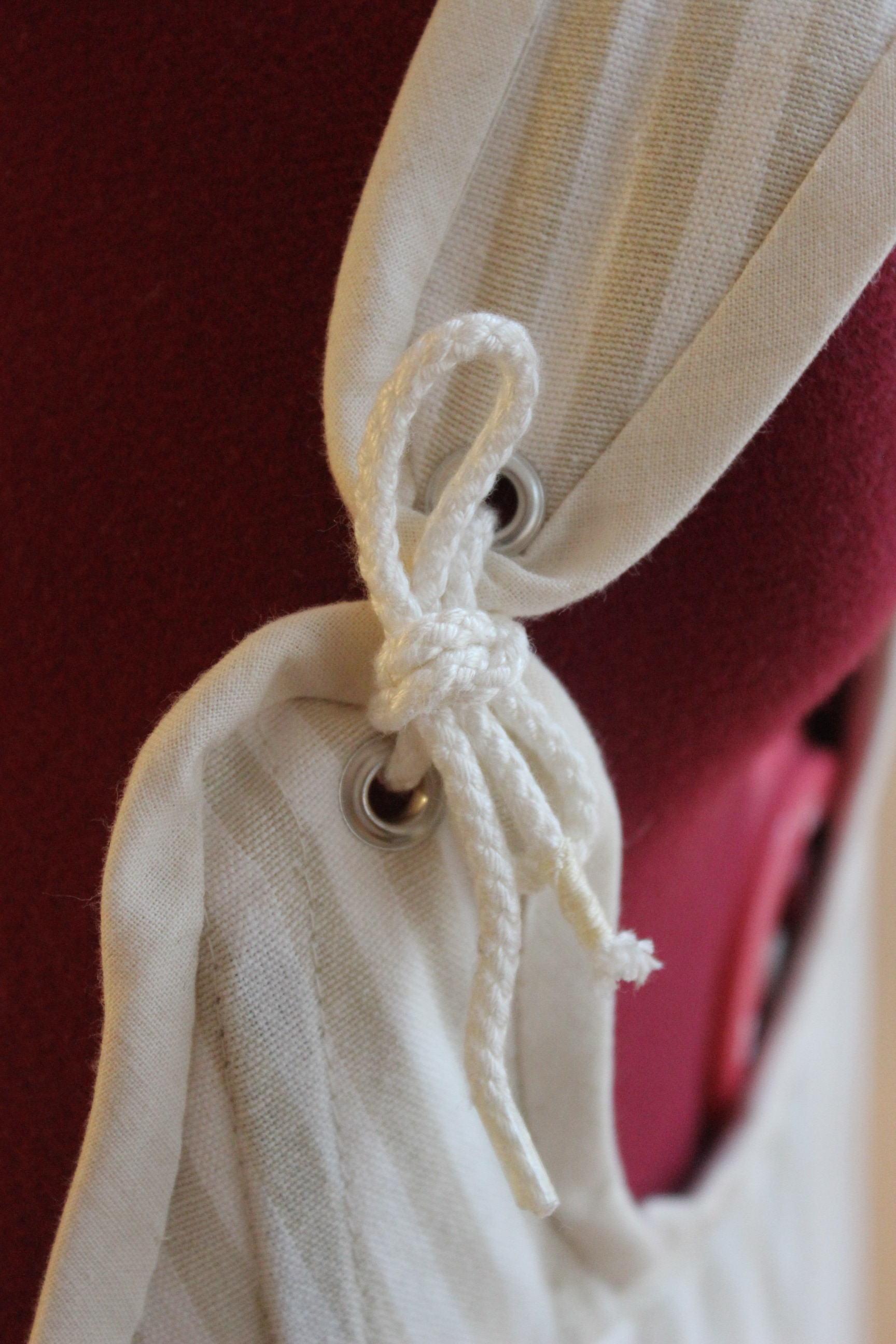
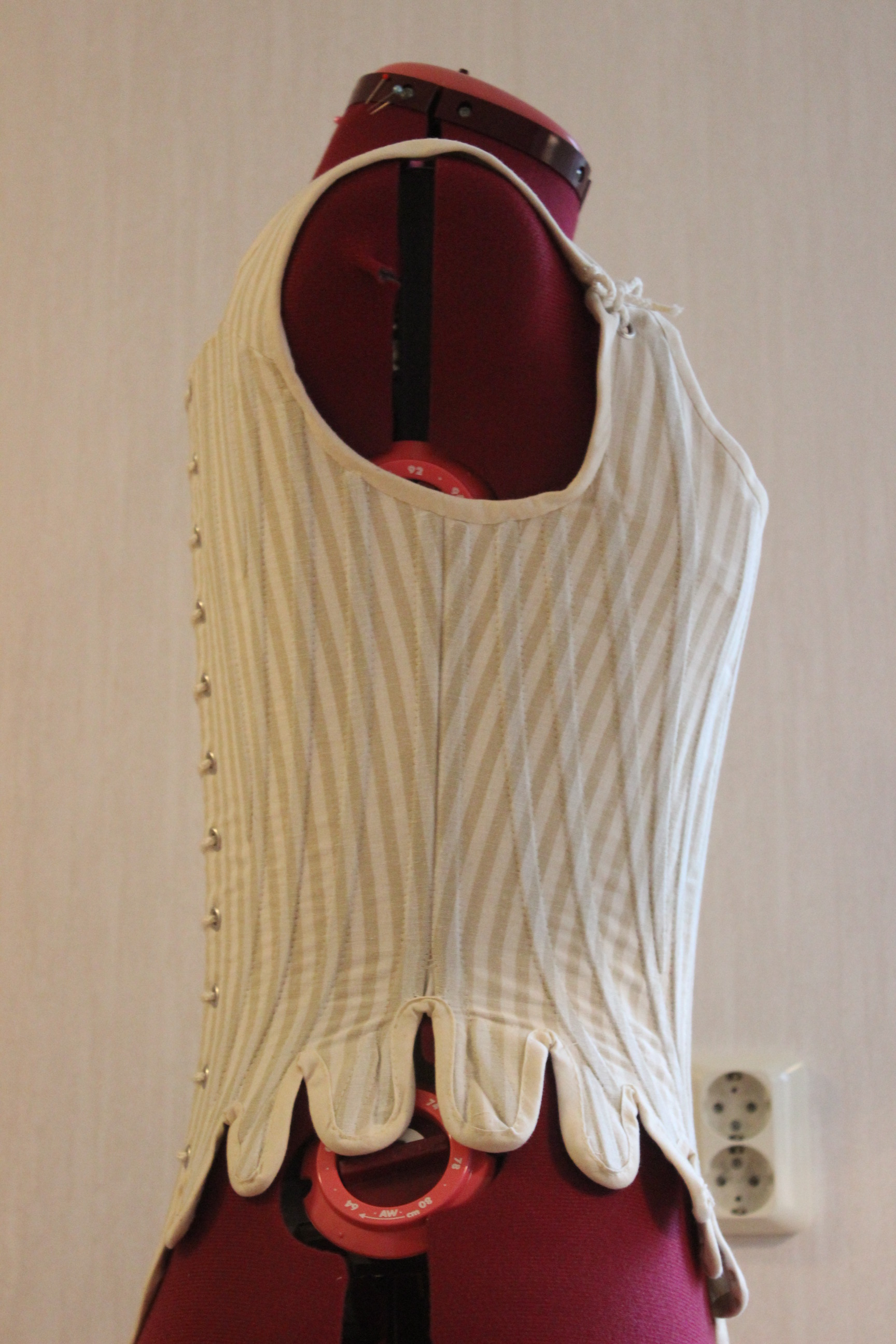
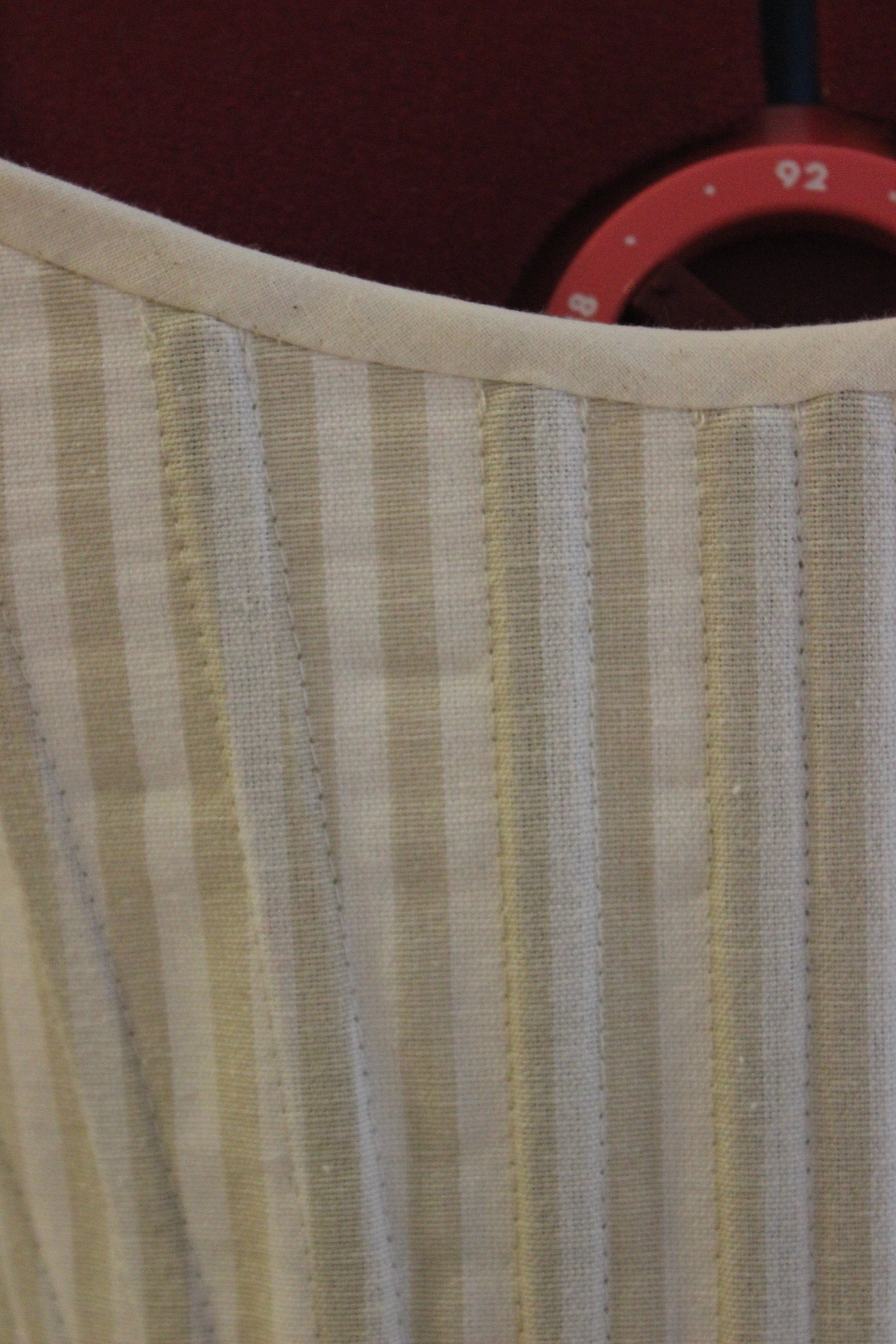
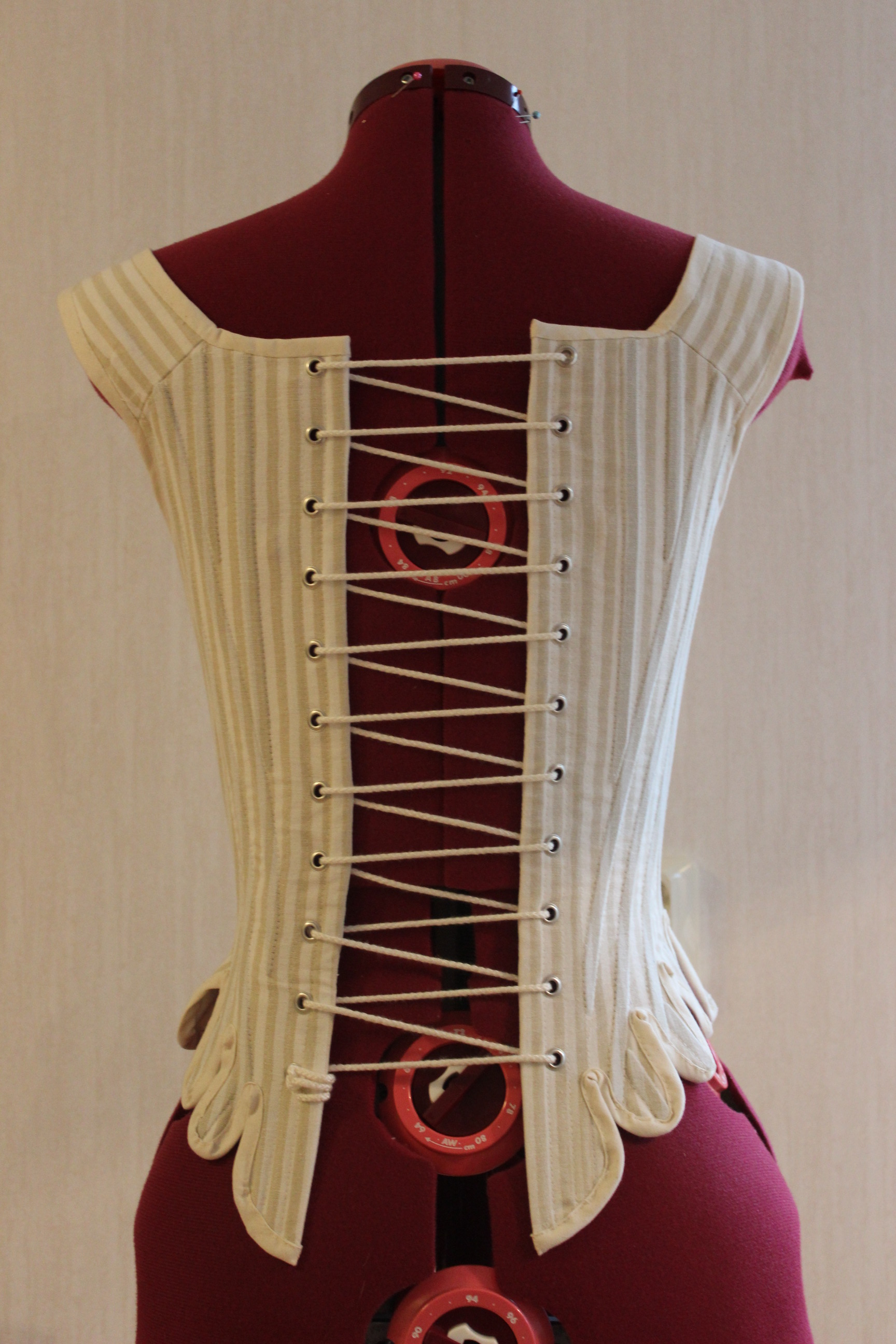
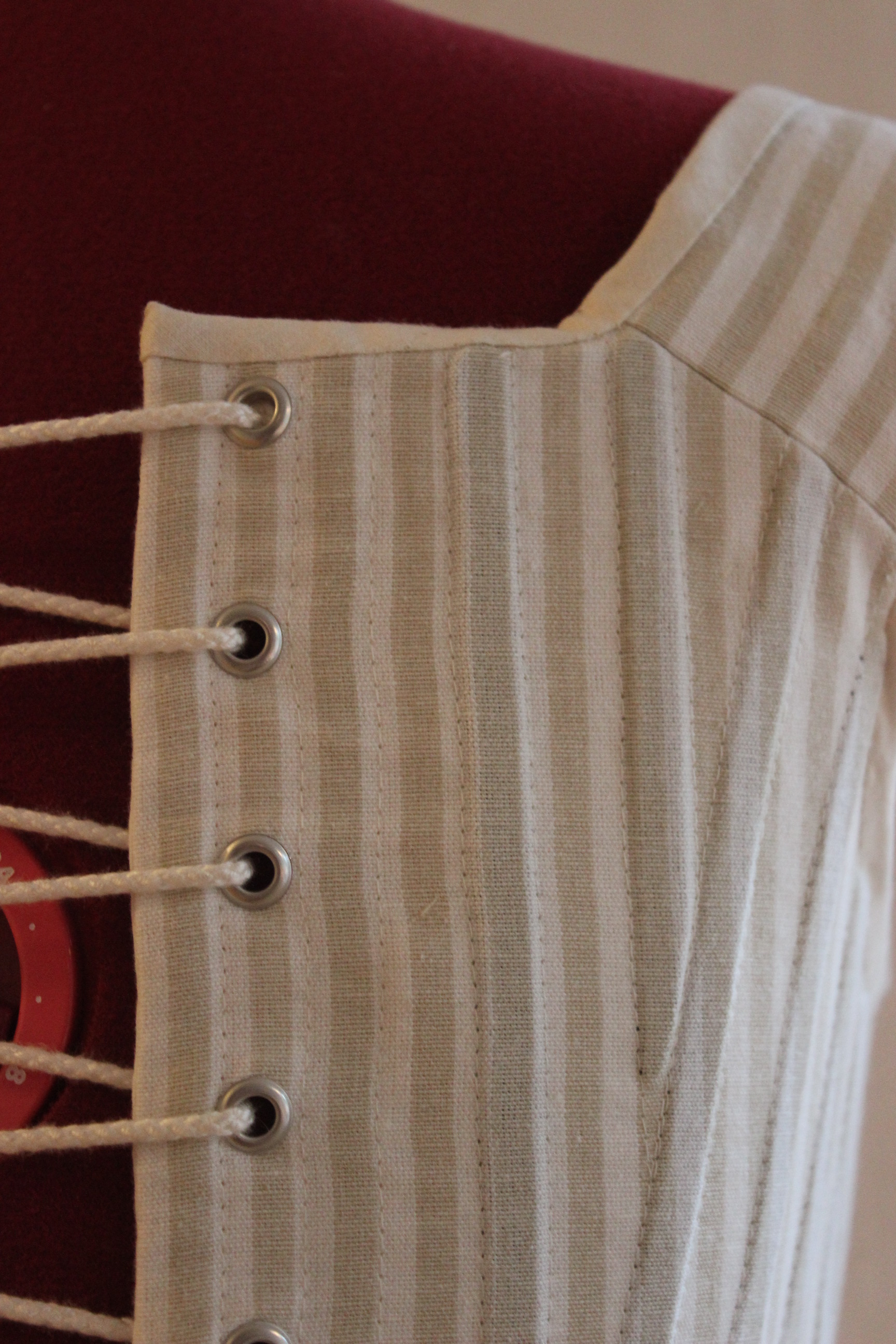
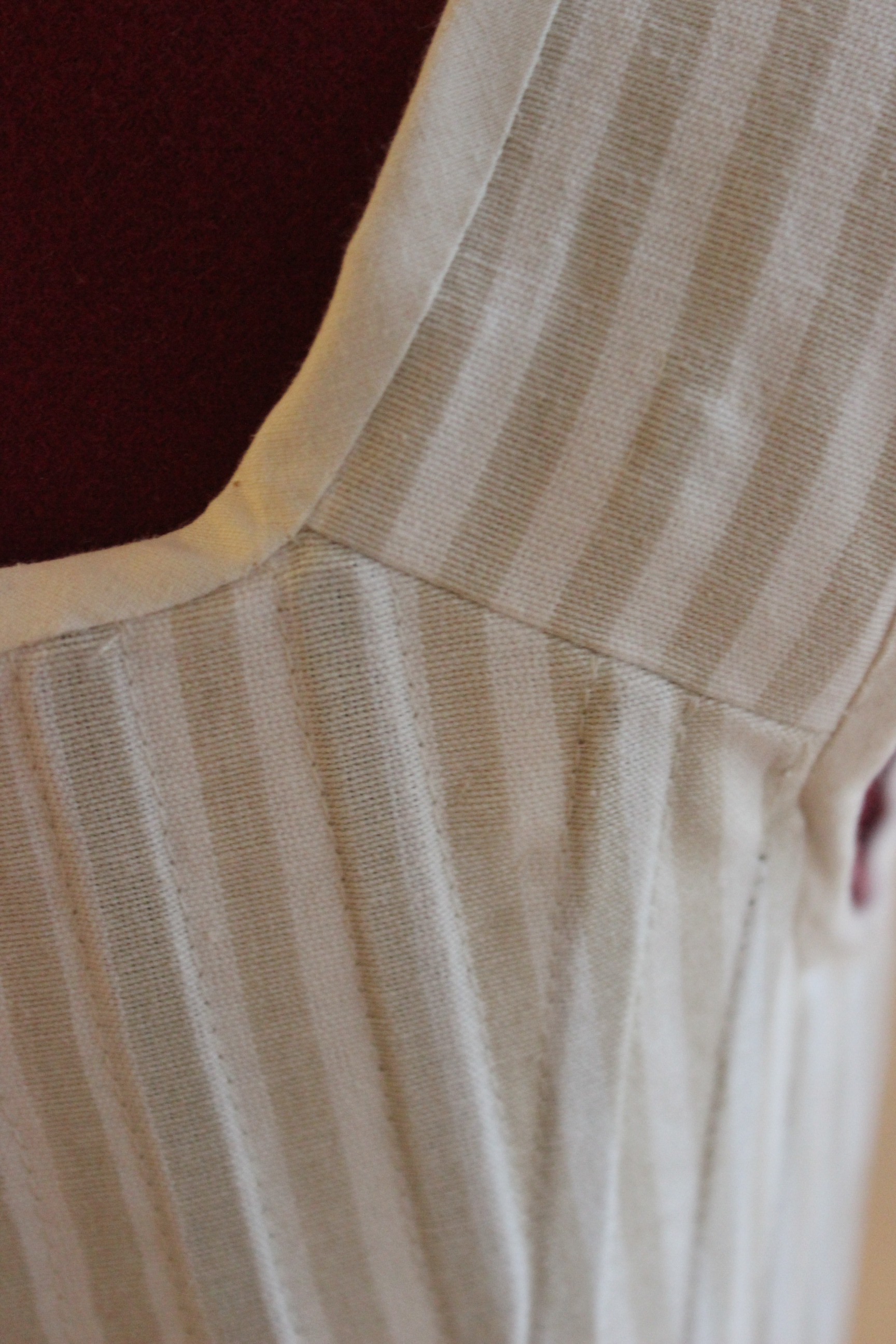
But I managed to get it done in time for deadline and photoshoot. IMG_2284The inside of the finished stays. 

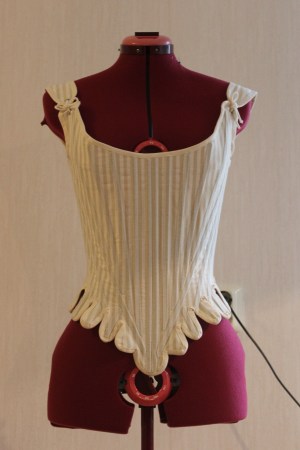
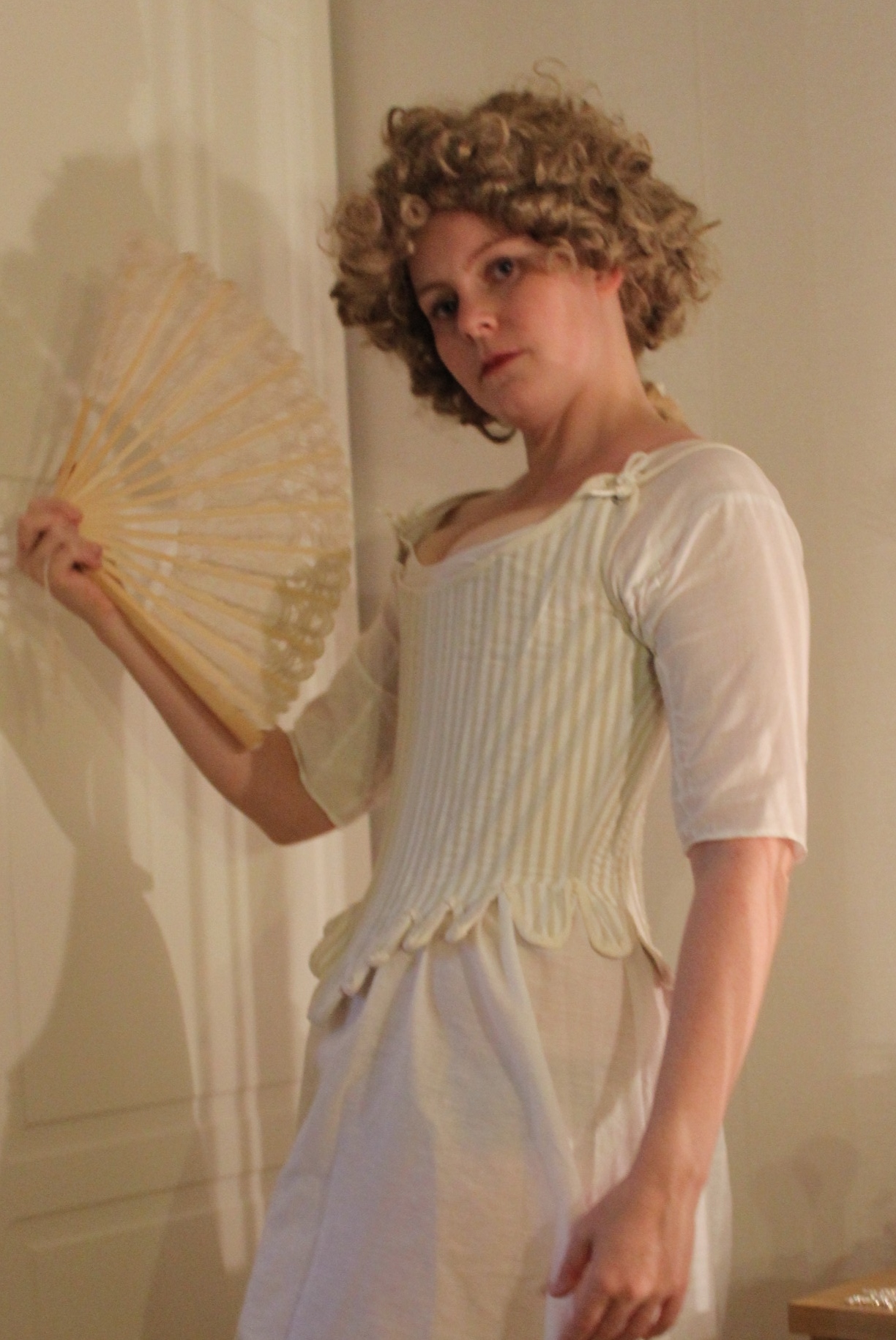
The finished Stays:IMG_2267

IMG_2268

IMG_2282

IMG_2270

IMG_2281

IMG_2272

IMG_2271

IMG_2276

IMG_2278

IMG_2283

IMG_2279

IMG_2277

Sneak a peak of the photoshoot:IMG_2197

Just the facts:

Challenge: nr 16 – Terminology

What: a pair of 18th century half boned stays. Read more about the origin of the word (and what differs Stays from Corsets on: http://thedreamstress.com/2013/08/terminology-whats-the-difference-between-stays-jumps-a-corsets/

Pattern: 1770s Stays pattern from Nora Waughs Corset and Crinolines.

Fabric: 0,5 m of striped cotton, 0,5 m of tightly woven cotton sateen and 0,5 m of white cotton sheets.

Notions: Thread, 13 pairs of gromets, 5 m lacing cord, 4 m of cotton bias tape, 1 m of metal boning and about 30 pieces of plastic cable ties.

How historical accurate: The pattern, material and shape of the stays are correct. But I sewed them on my machine and used metal grommets, plastic boning and modern construction techniques. So maybe 4/10

Time: About 15 hours – binding the tabs took like forever.

Cost: About 200 Sek (32 Usd). But since most of the material came from stash and was leftovers from previous projects I didn’t pay that much. More like 80 Sek.

First worn: For photos yesterday, and hopefully for an upcoming 18th century event n a few weeks.

Final thoughts: I really love the look of these stays, but they are really uncomfortable.
I need to make some alterations to make them fit better, and I’m not sure that will help, since I made them to long in the waist. I wore them for about 1 hour this weekend and the boning poking in to my hips and back was really noticeable.

And on top of fixing the ill fitting part, I accidentally burst one of the side seams of the stays while sneezing during the photoshoot (ups)…

Multi era National days Picknick

June 6 are Swedens national day and I usaly celebrate it either with friends barbequing, or with my dance group doing dance performances in lots of different retirement homes.

But this year I did something a bit different (even though it did contain both hanging out with friends, and making some old people happy).

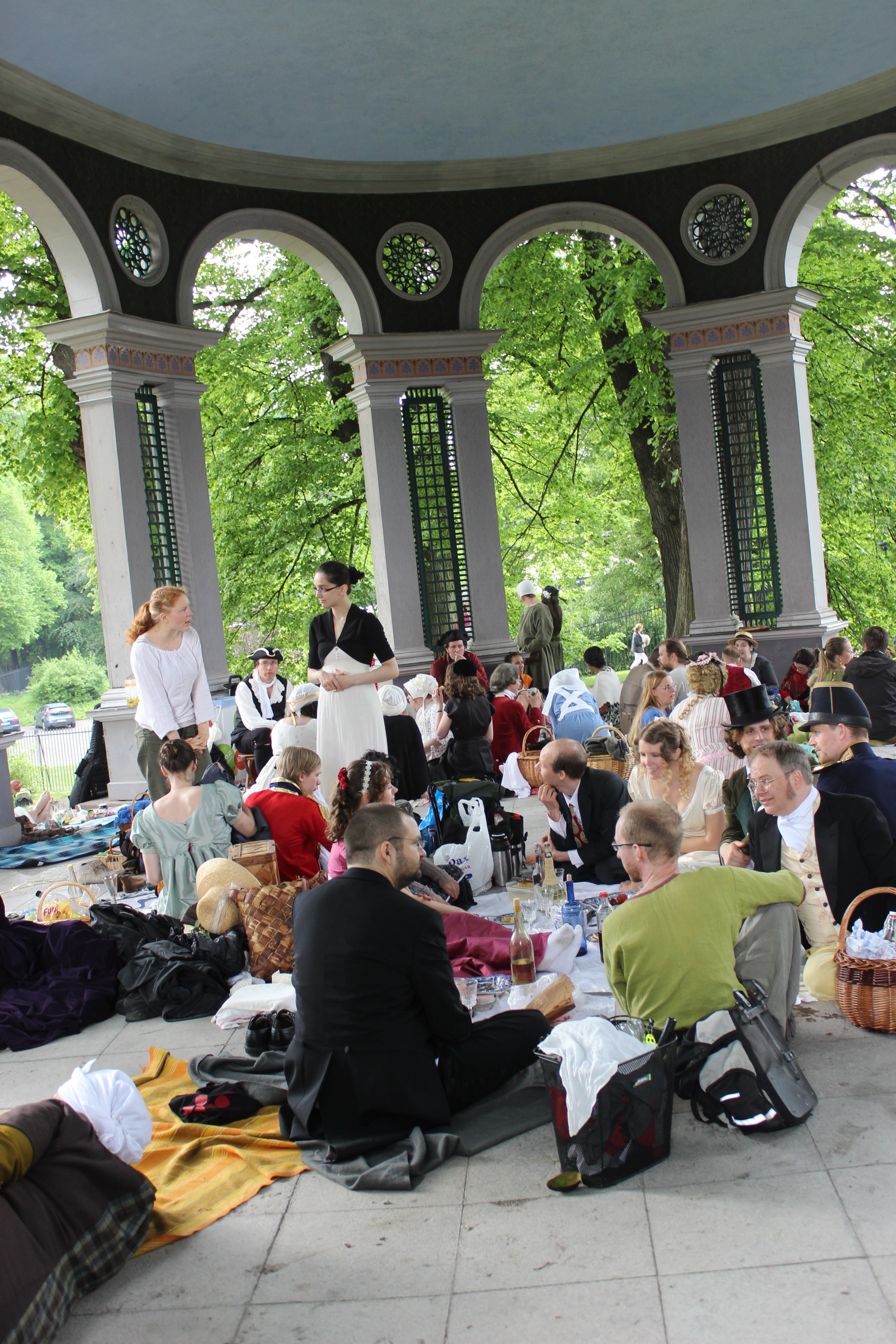
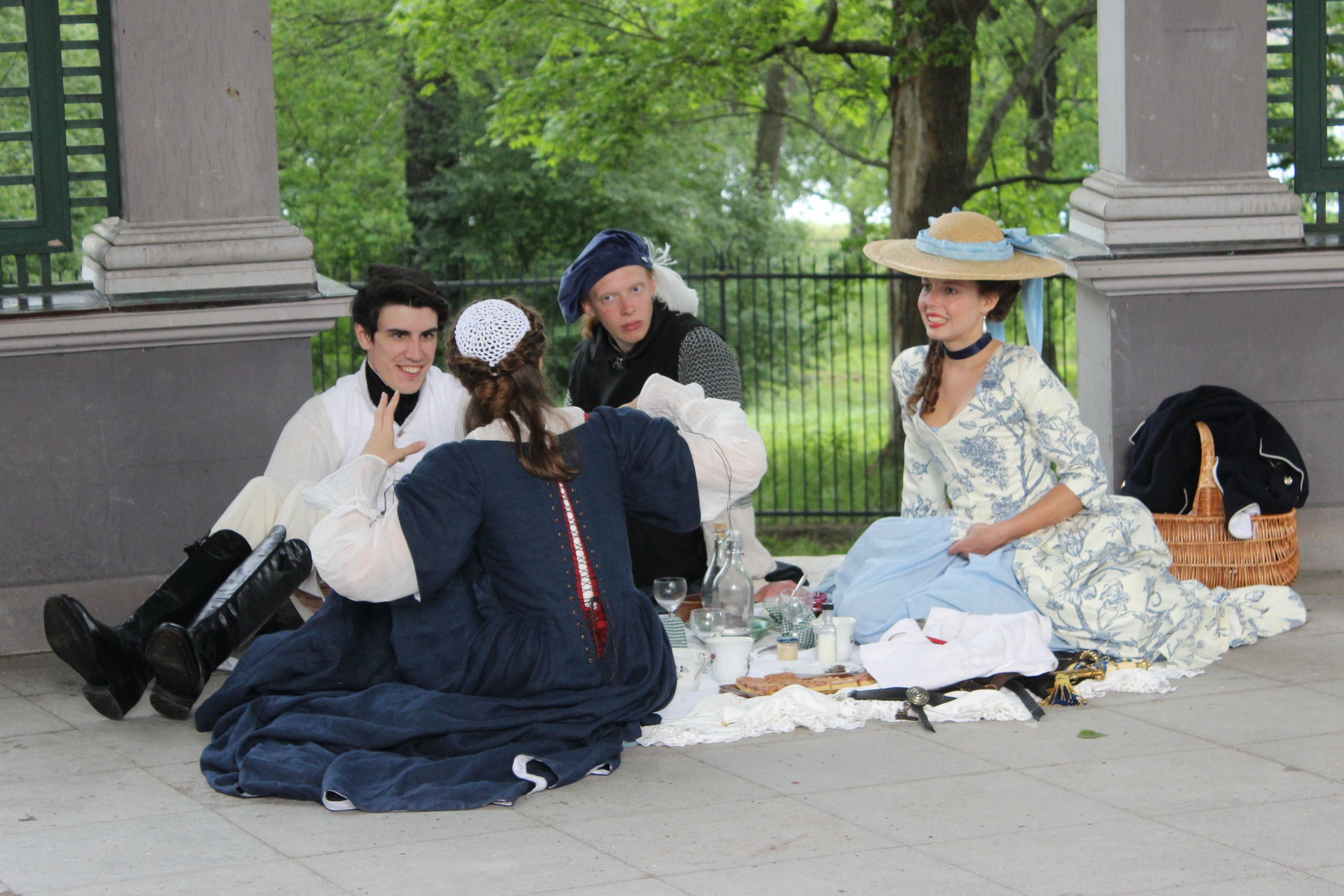
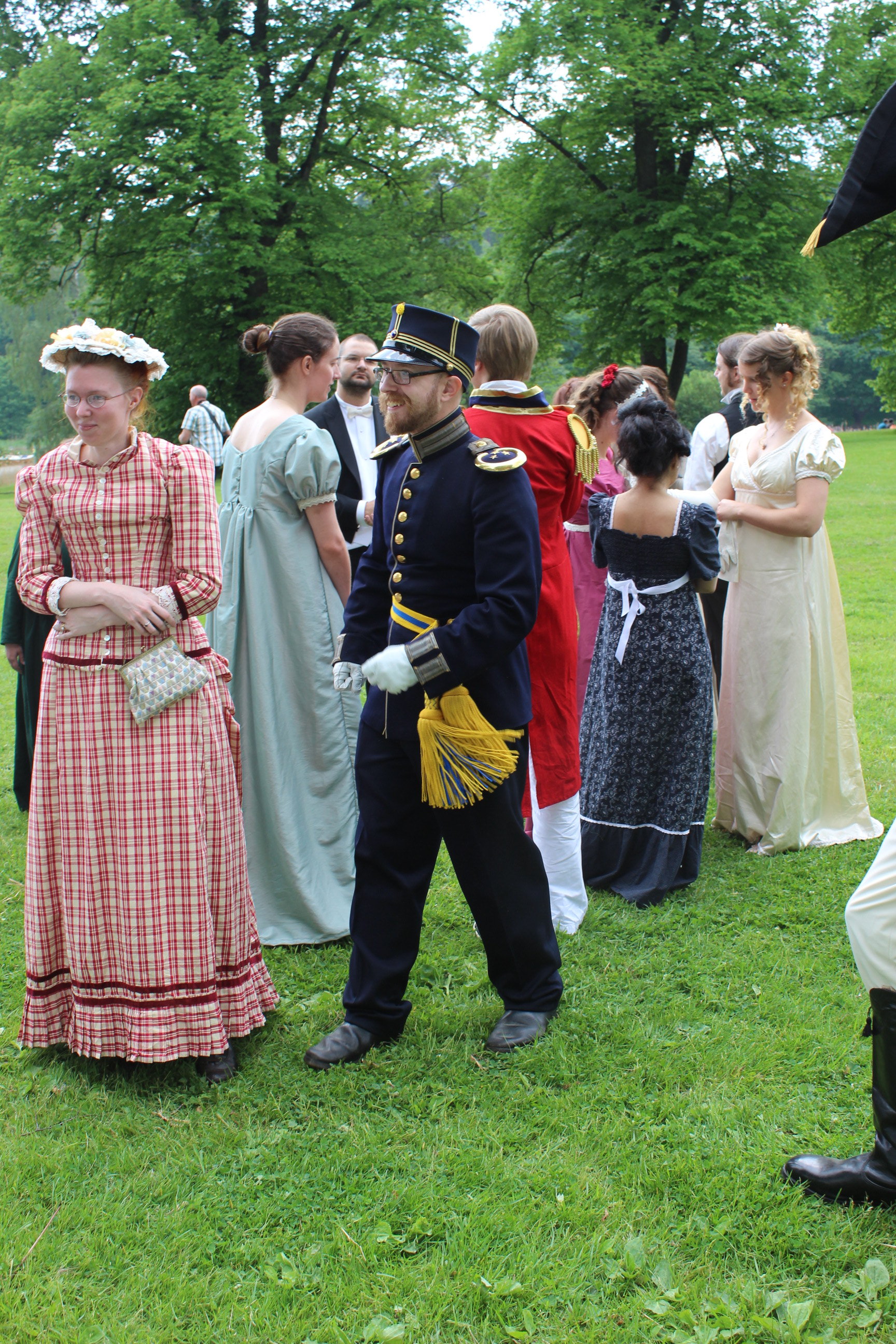
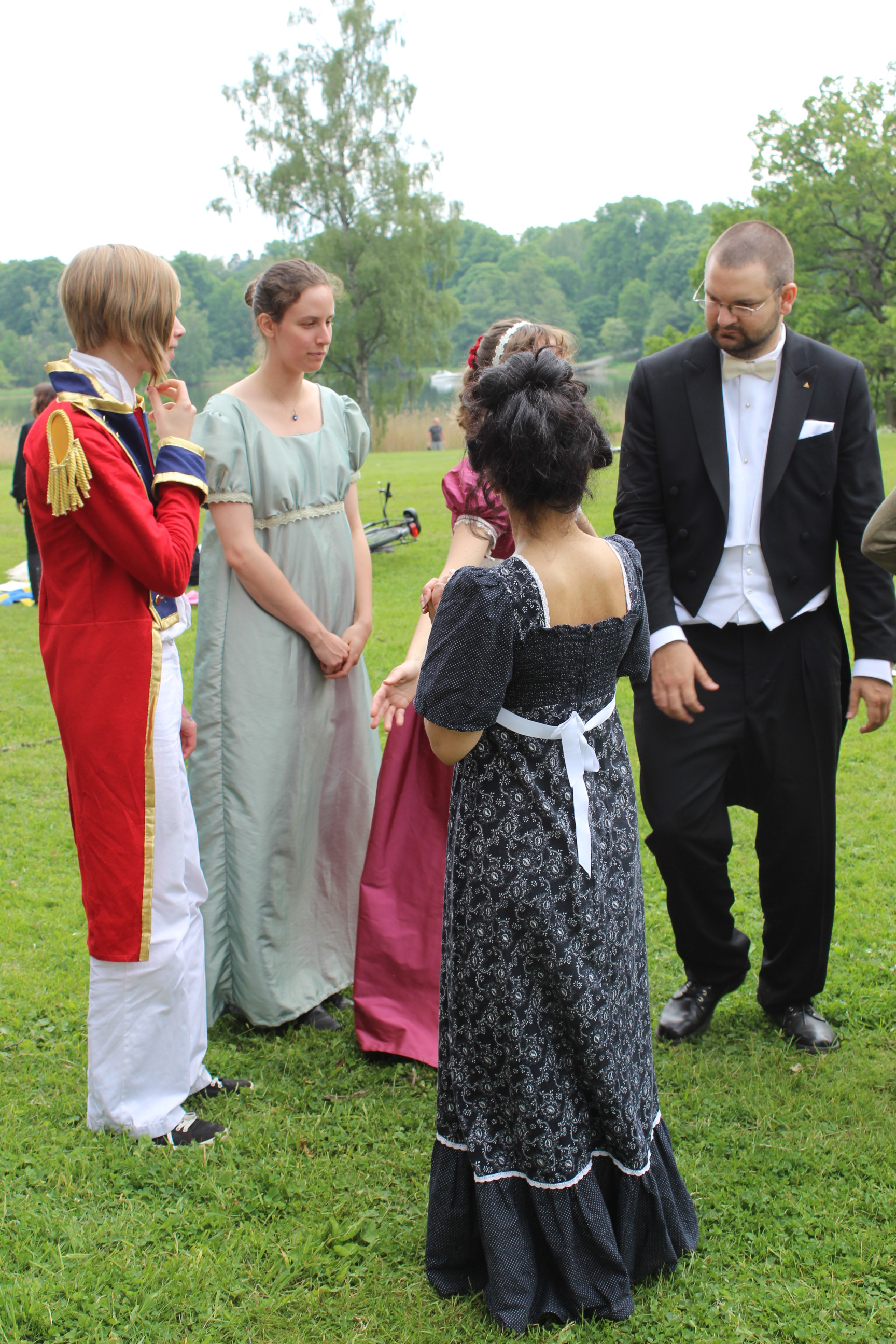
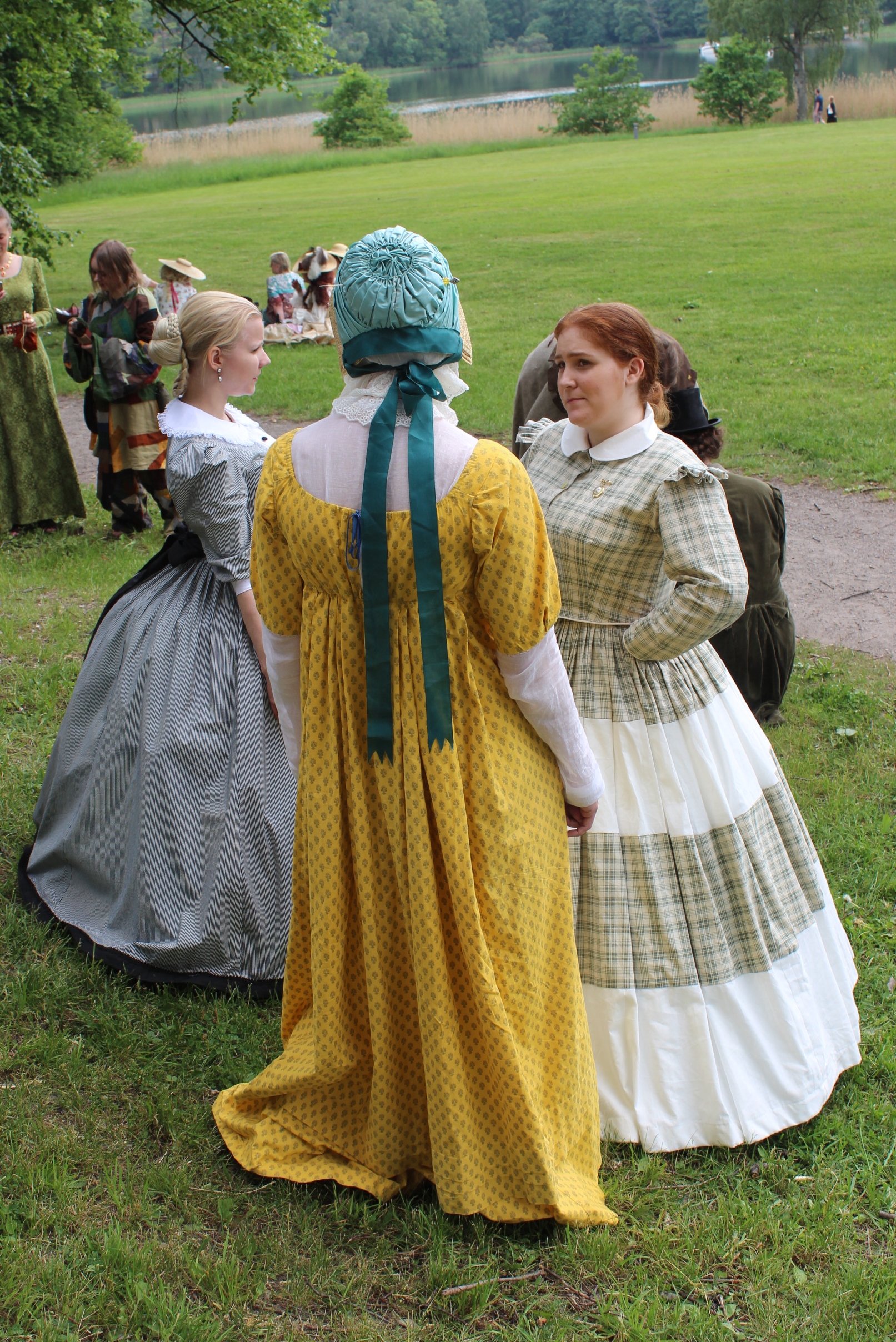
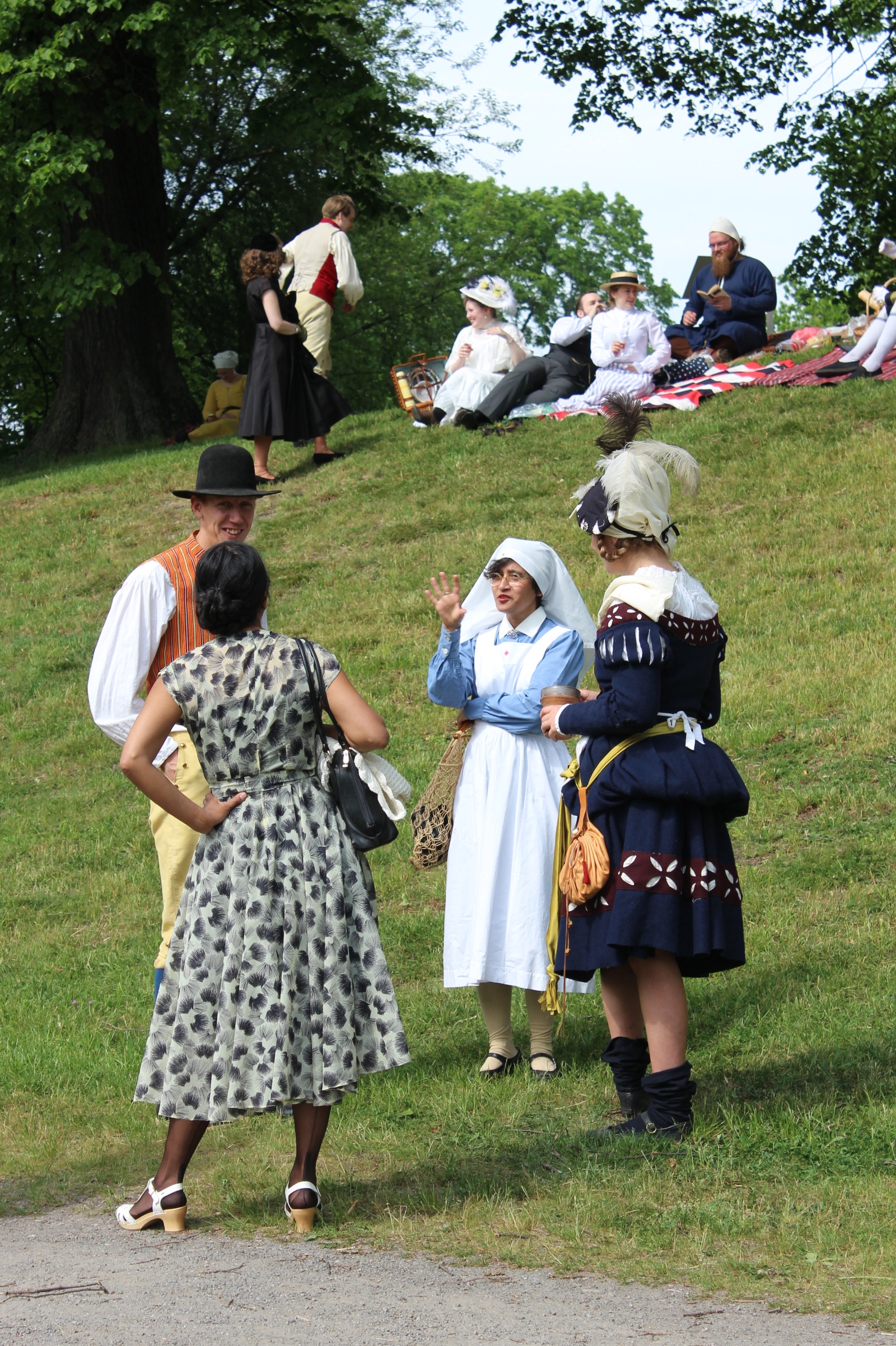
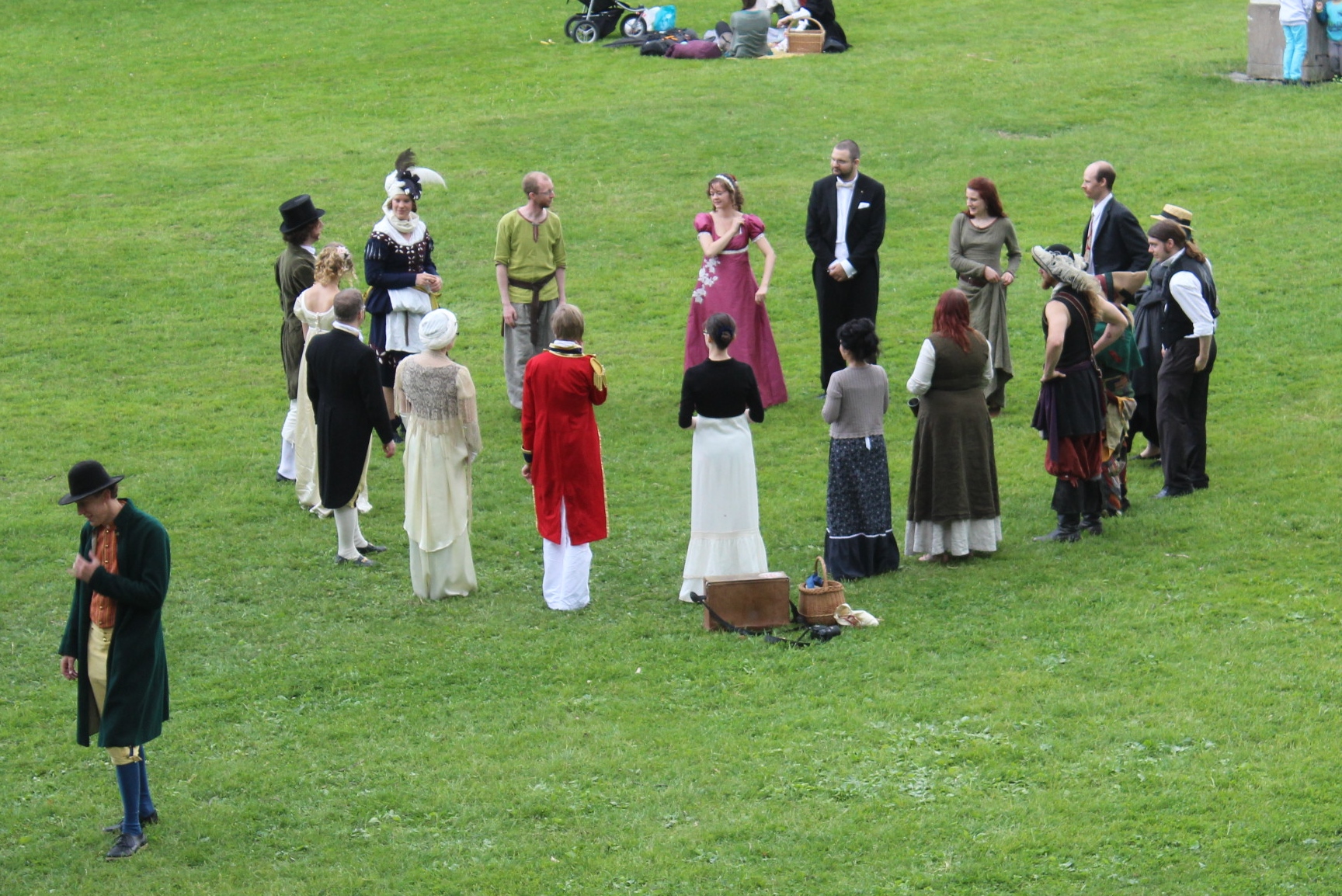
I went to the “Historic ultra picknic” in the royal park of Haga. It was the first (but hopefully not the last) event of its kind in our area, where all time periods and styles were welcome.
The idea of the picknick was to meet new interesting people, and to give the first timers a comfortable way of geting in to the comunity. There were room for everyone no mather how “good” or “bad” your costume was, and even if you didn’t knew anything about historical clothing at all.

picknick - Anna SundströmPhoto: Anna Sundsröm

We were about 2oo people gattered andiIt was so nice to see all the different styles and fashions come togeter.

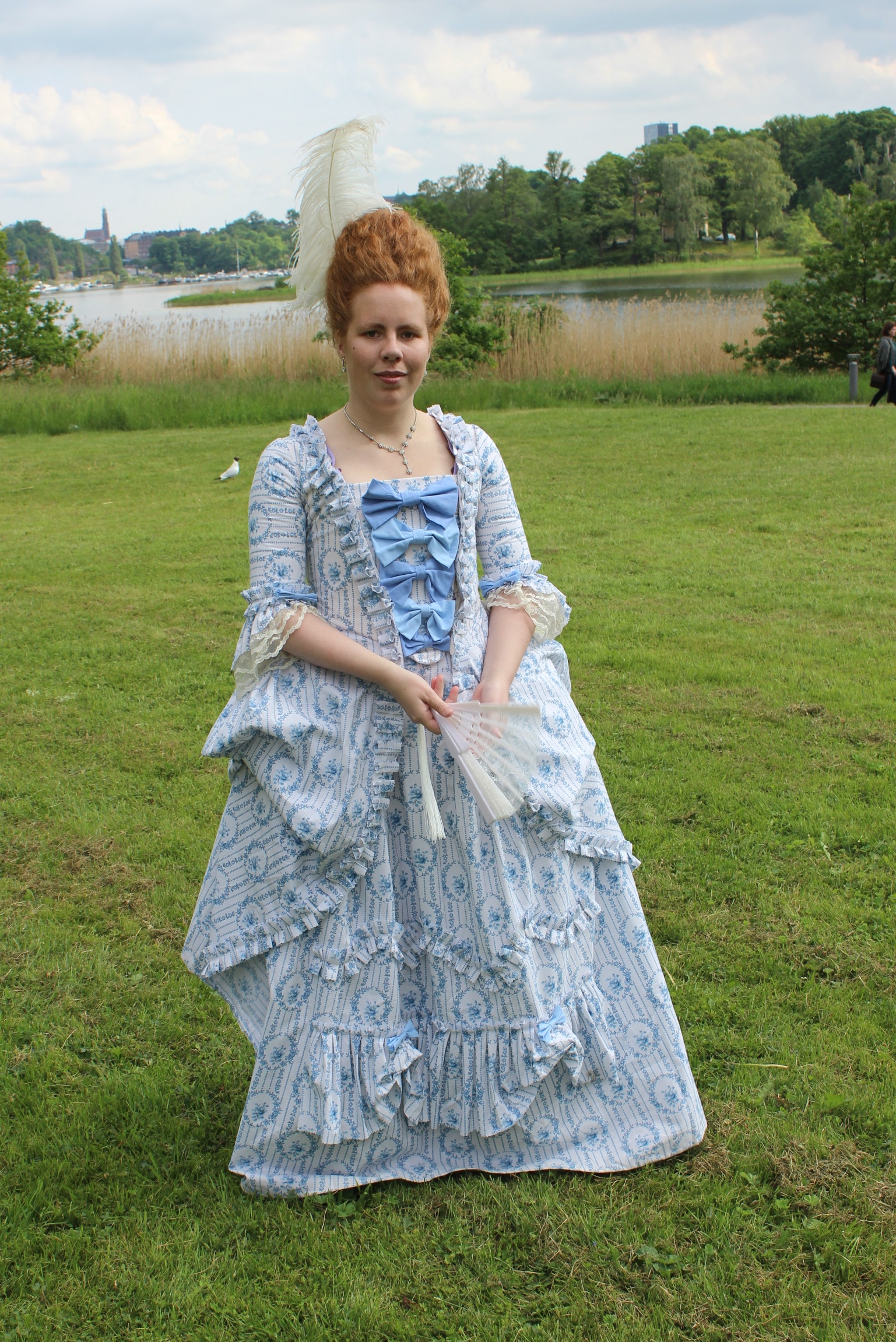
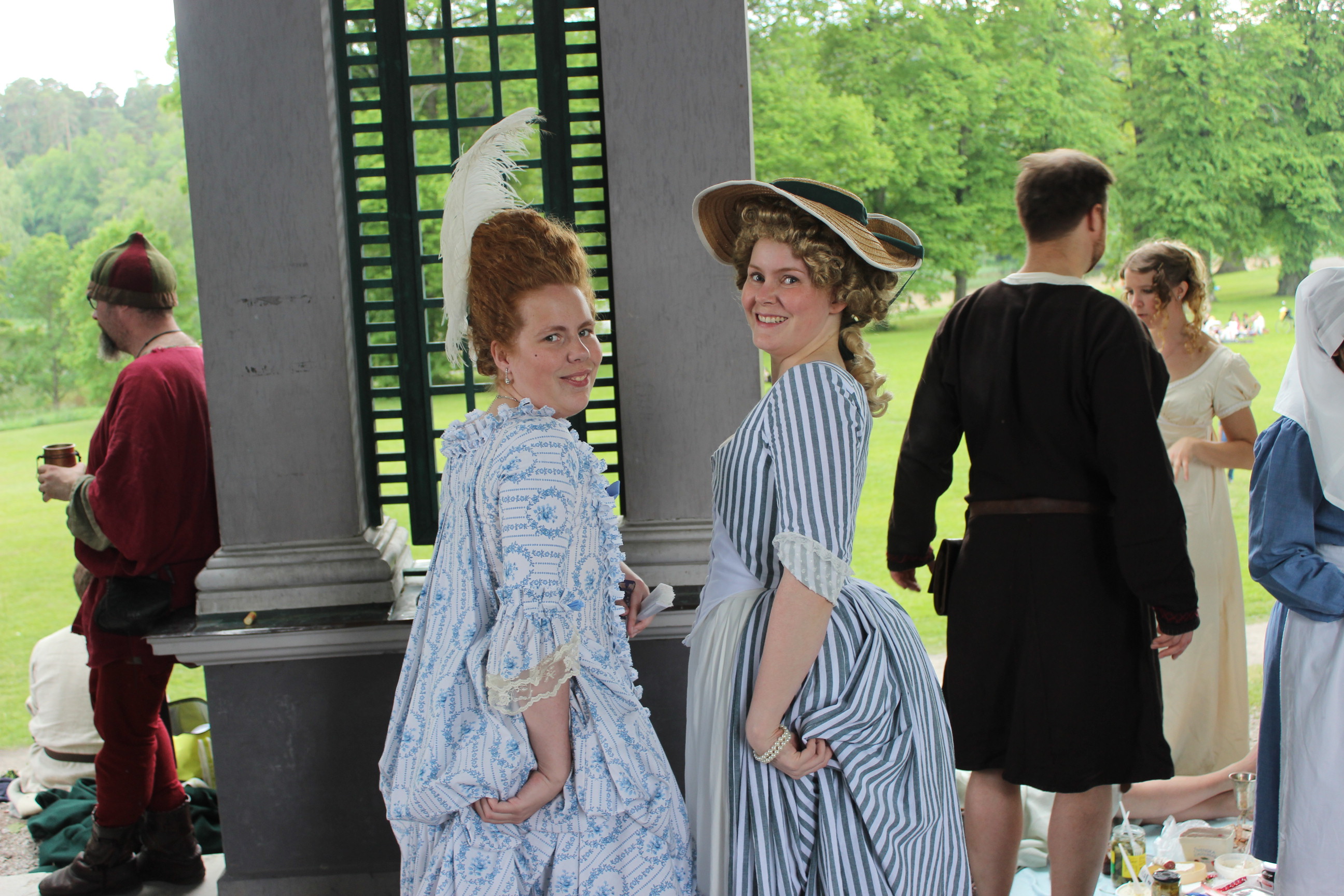
Me and my sister went as late 18th century ladies.DSC_9846_zpsbeccafb0She wore her Robe A La Francaise, and I took my new Robe anglaise out for its first try.

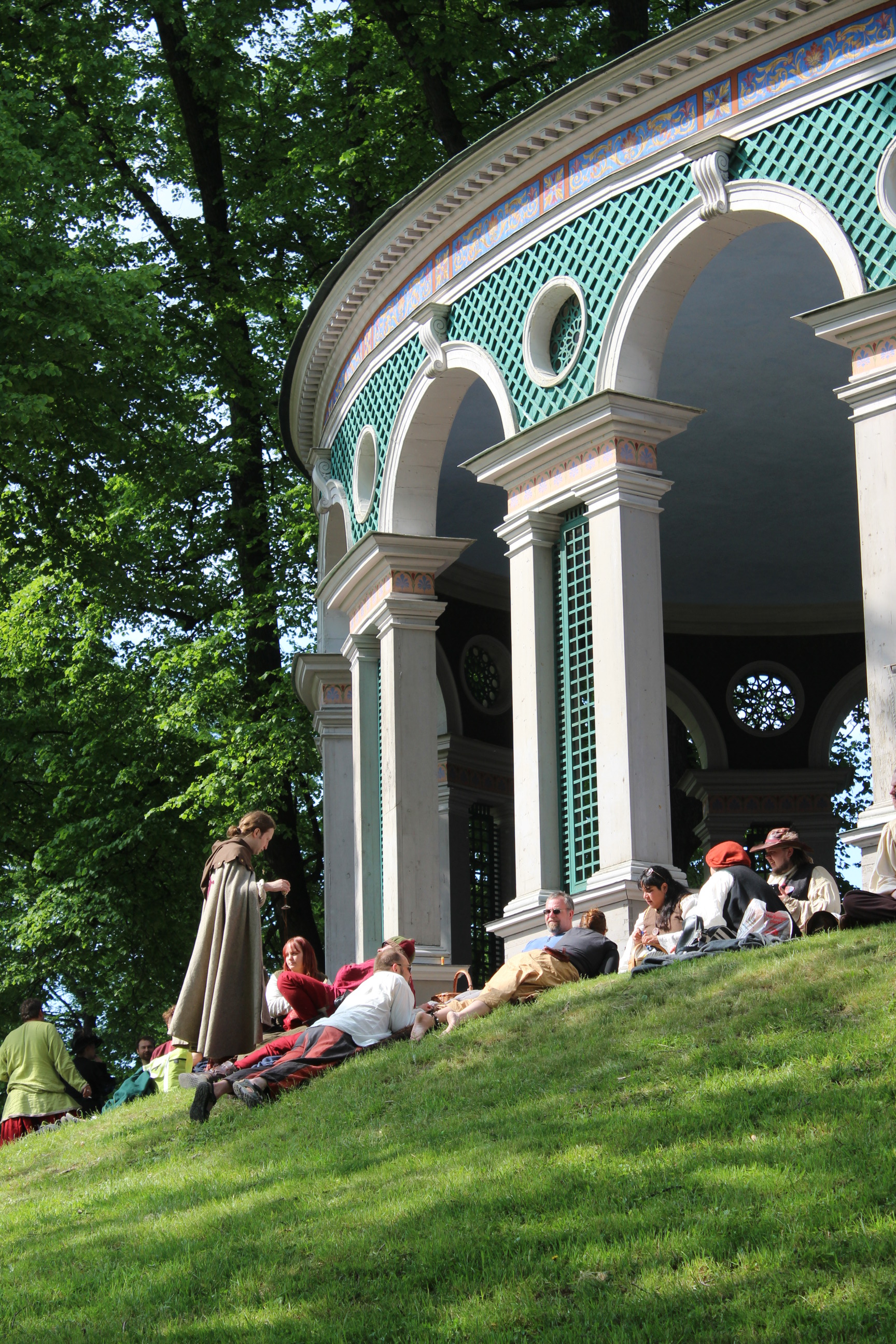
The park was beautiful, and the big old temple was just the perfect place for us all to join up.IMG_8714

IMG_8833Inside there was lots happy historicaly dressed people.

IMG_8855Me, finaly sitting down after a long walk, and even longer buss-ride to get to the temple.

IMG_8857

IMG_8835Huge 1860s purple velvet crinoline dress. It must have been so warm and heavy, but it did look great.

IMG_8691Some 18th century people having their own litle picknick.

IMG_8720We even had some (almost) nude vikings, pirates and medieval guys.

IMG_8689

IMG_8692

IMG_8686

IMG_8698

And of course there was dancing – regency style.IMG_8696

IMG_8700

IMG_8852

IMG_885818th century meet 19th century swedish national costume.

IMG_8836Is it just me, or does he look like he’s after something…

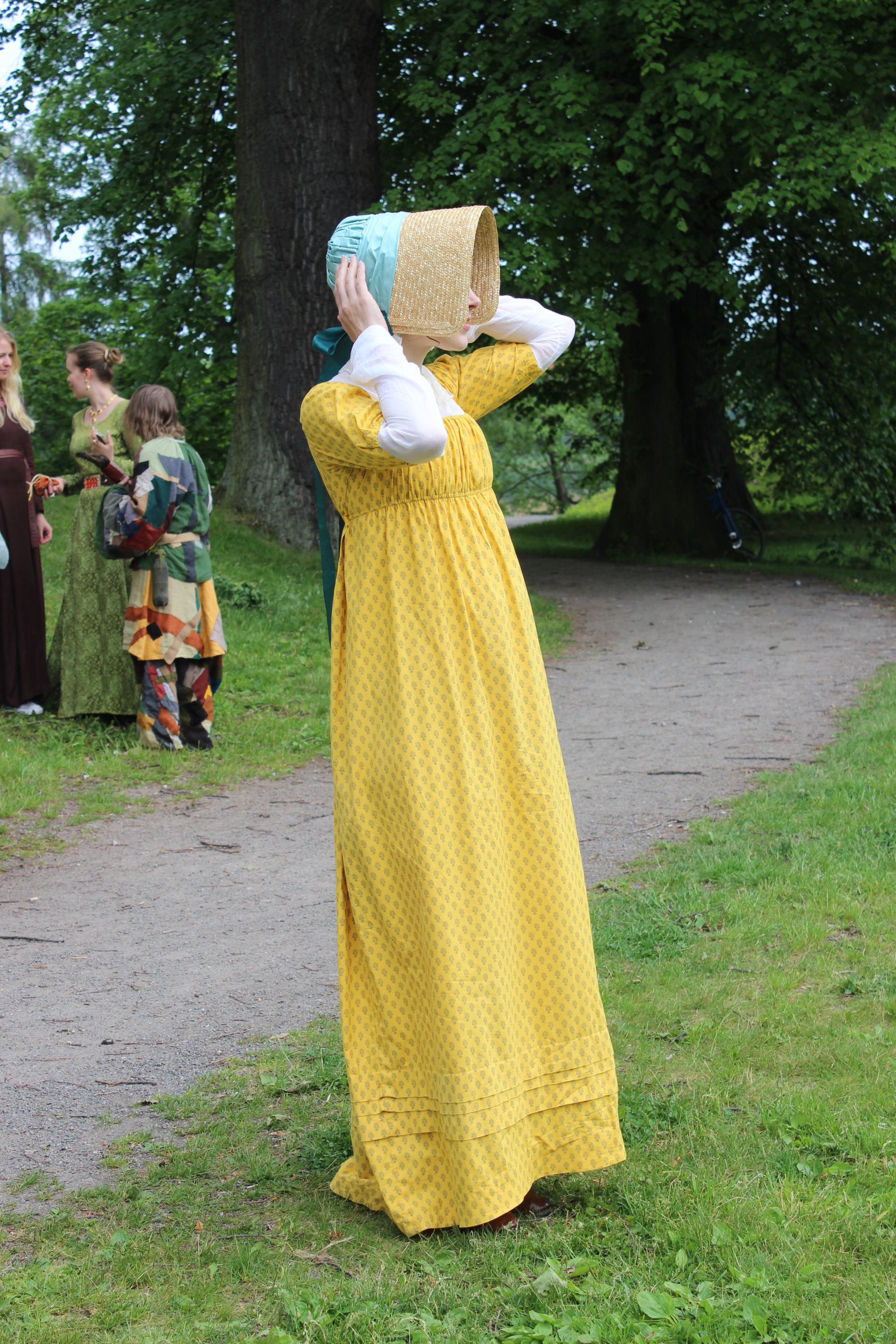
IMG_8690Lovely yellow regency.

IMG_8702Faboulus light coloured Edwardian and late regency styles. Fashions about 100 years apart.

IMG_8688Two Napolietic gentlemen.

A hundred years of fashion changes.IMG_8683Johanna in 1880s and my sister in 1780s.

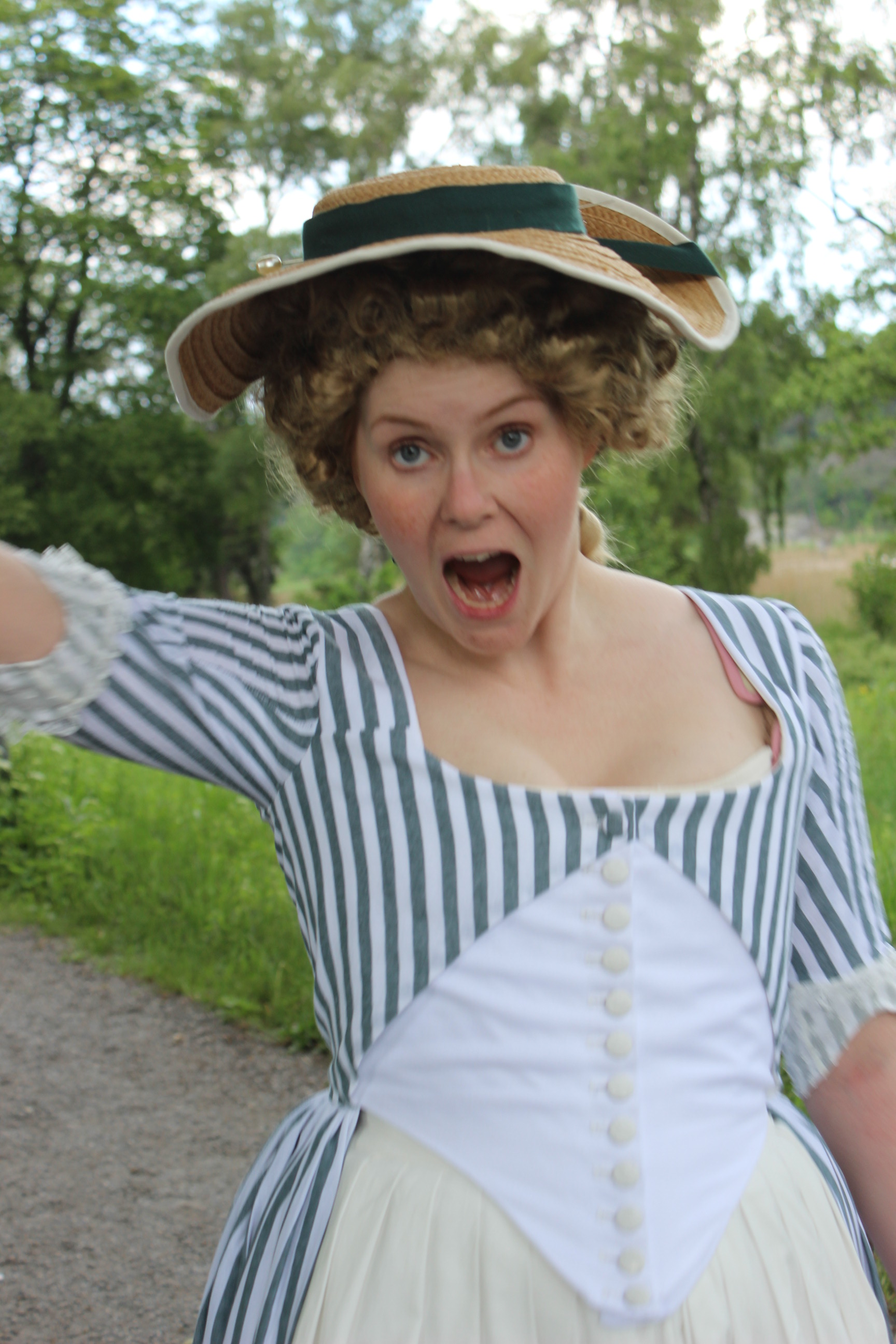
And I even found a dress twin.IMG_8675Even though they’re no exact match, they’re both green and white striped zone front 1780s gowns, worn with ruffeled petticoats and bergere hats. Pretty cool I think.

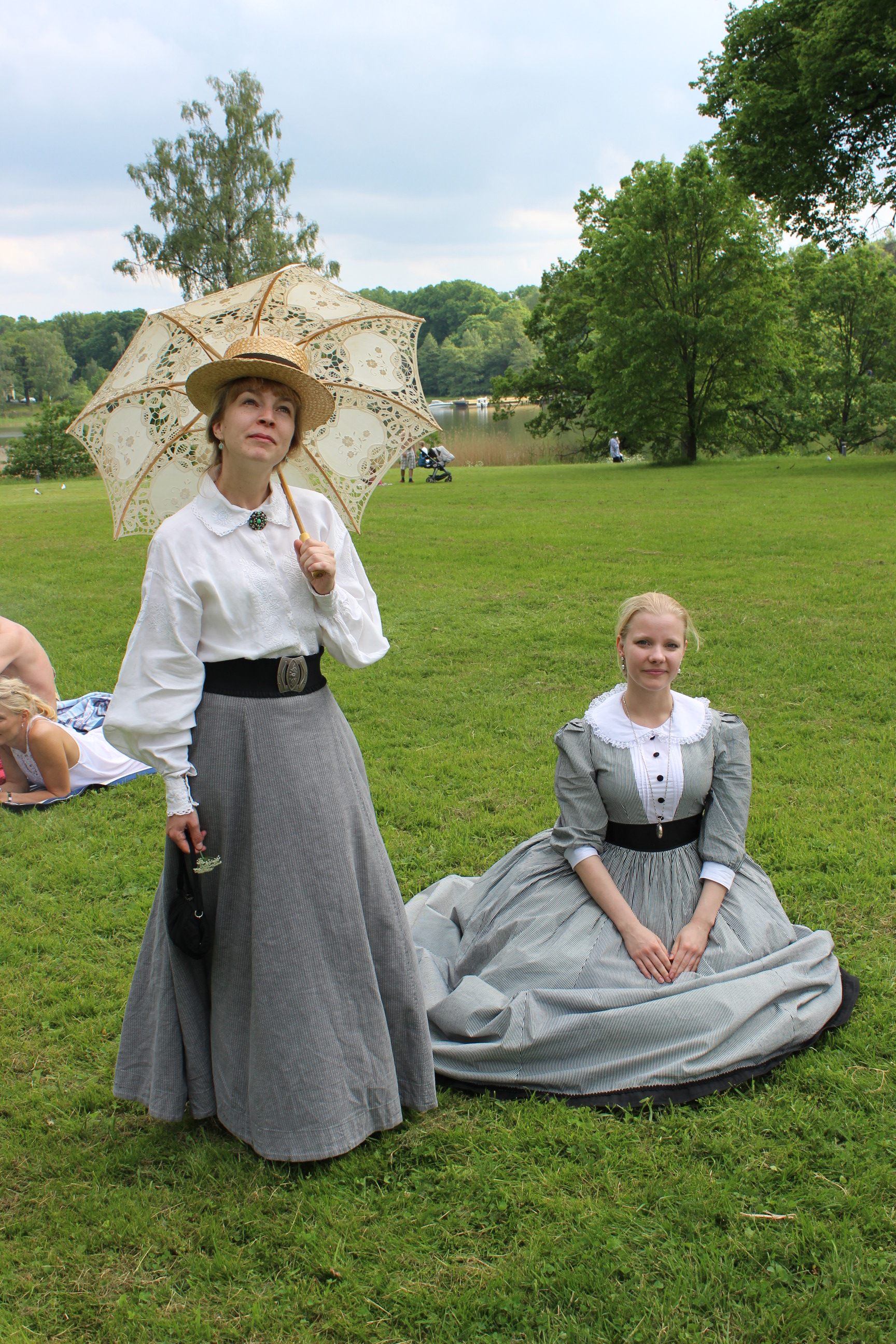
IMG_87241900s and 1850s grey and white dresses.

What secrets do you ladies hide underneath those big skirts…IMG_8717… it’s a woman!

Devine suroundingsIMG_8716

We also did a quick litle photoshot of our own dresses. I showed you mine yesterday, so now lets focus a bit on my sisters dress.IMG_8729

IMG_8727

IMG_8731

IMG_8725Big hair with flowers, butterflies and feathers – must be rococo.

IMG_8847Doing the regency but scratch (on comand I might ad).

And finaly, this is how I felt after this awesome event.IMG_8830So happy and exited, but also exhausted by all the comotions and planing to make everything about the day just right.
Hope to see some of you next year…

Artistic Anglaise – Photoshoot

Yesterday I went to the beautiful park by the castle Haga in Stockholm to attend a costuming picknic (wich I will tell you about in my next post). And as it was the first outing for my new striped Robe Anglaise I made sure to get some good photos of me wearing it.

So here you go – my newest gown beautifully depicted by my sister using the enviroment of the park as a backdrop.

Wearing the skirt bustled up, and paired with a long fichu.IMG_8733

IMG_8743

IMG_8757

IMG_8759

IMG_8760

Then I let the skirt down and removed the fichu.IMG_8763

IMG_8785

IMG_8786

IMG_8772

IMG_8799

IMG_8800

IMG_8780

IMG_8804

IMG_8806

IMG_8808

IMG_8818Trying to pose with a harp, but with a tree…

IMG_8824

IMG_8829Crazy sillyness…
My new profile picture, don’t you think….

Photo: Maria Petersson

Artistic Robe Anglaise

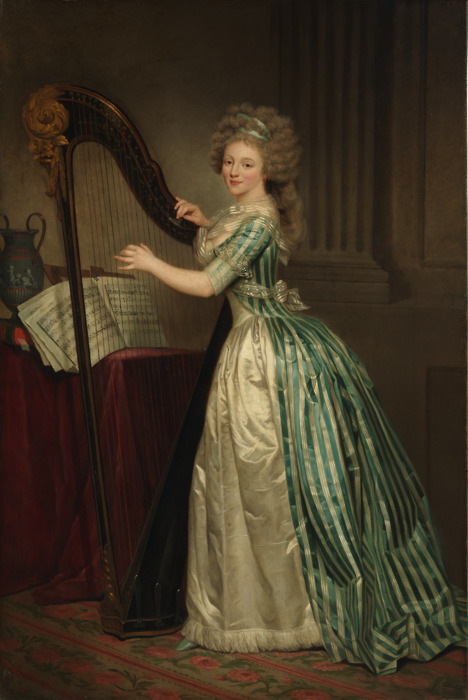
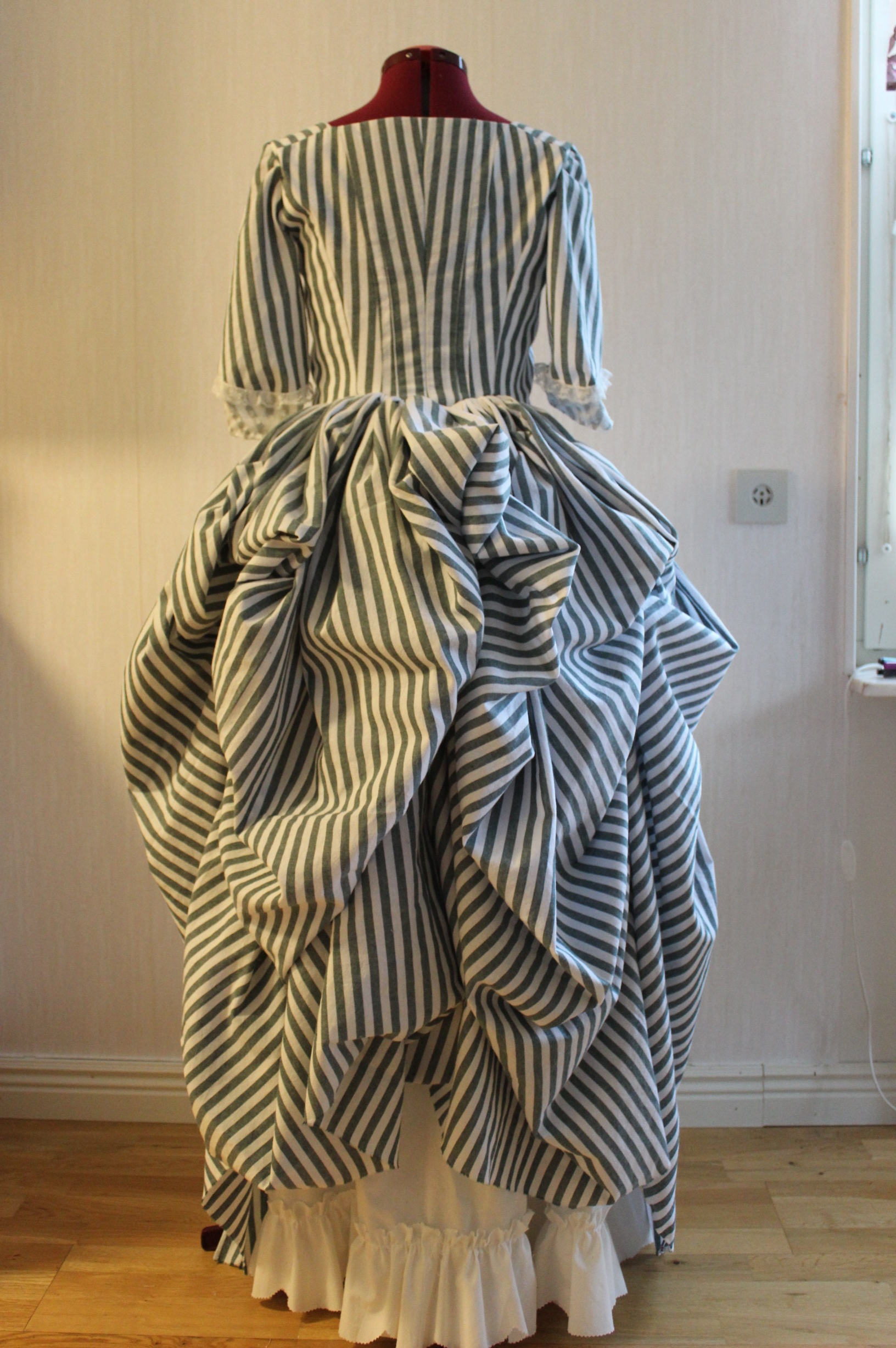
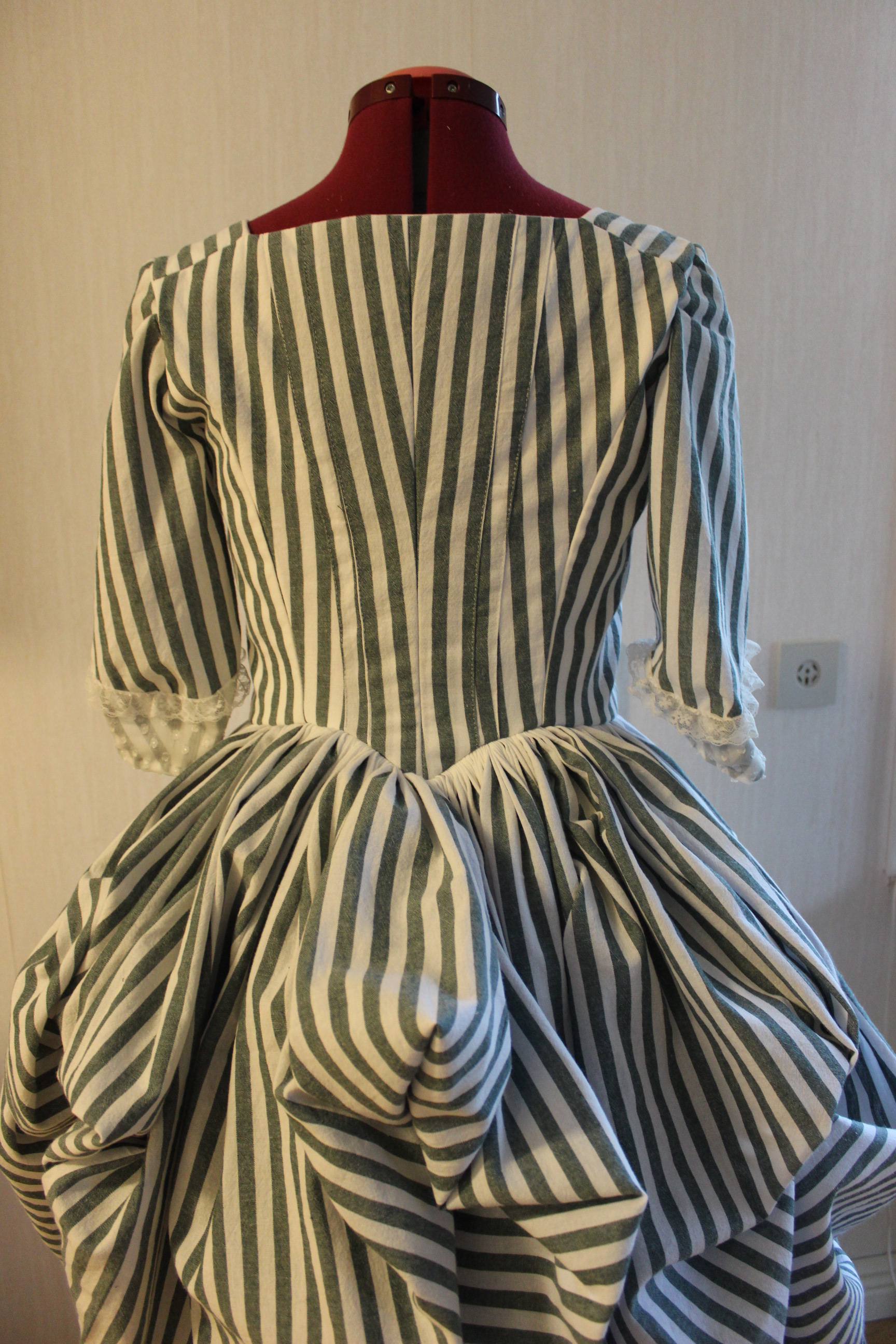
When the 10th HSF challenge – Art, was announced I didn’t need to think for long. I emetetly knew I wanted to make the Rose Adélaïde Ducreuxs dress fom her “self portraite whit a harp”.tumblr_lk71wnynCC1qbkn6io1_500I even took the opurtunity to make the skirt and fichu from the portrait for a previous challenge, to be able to only focus on the dress for this one.

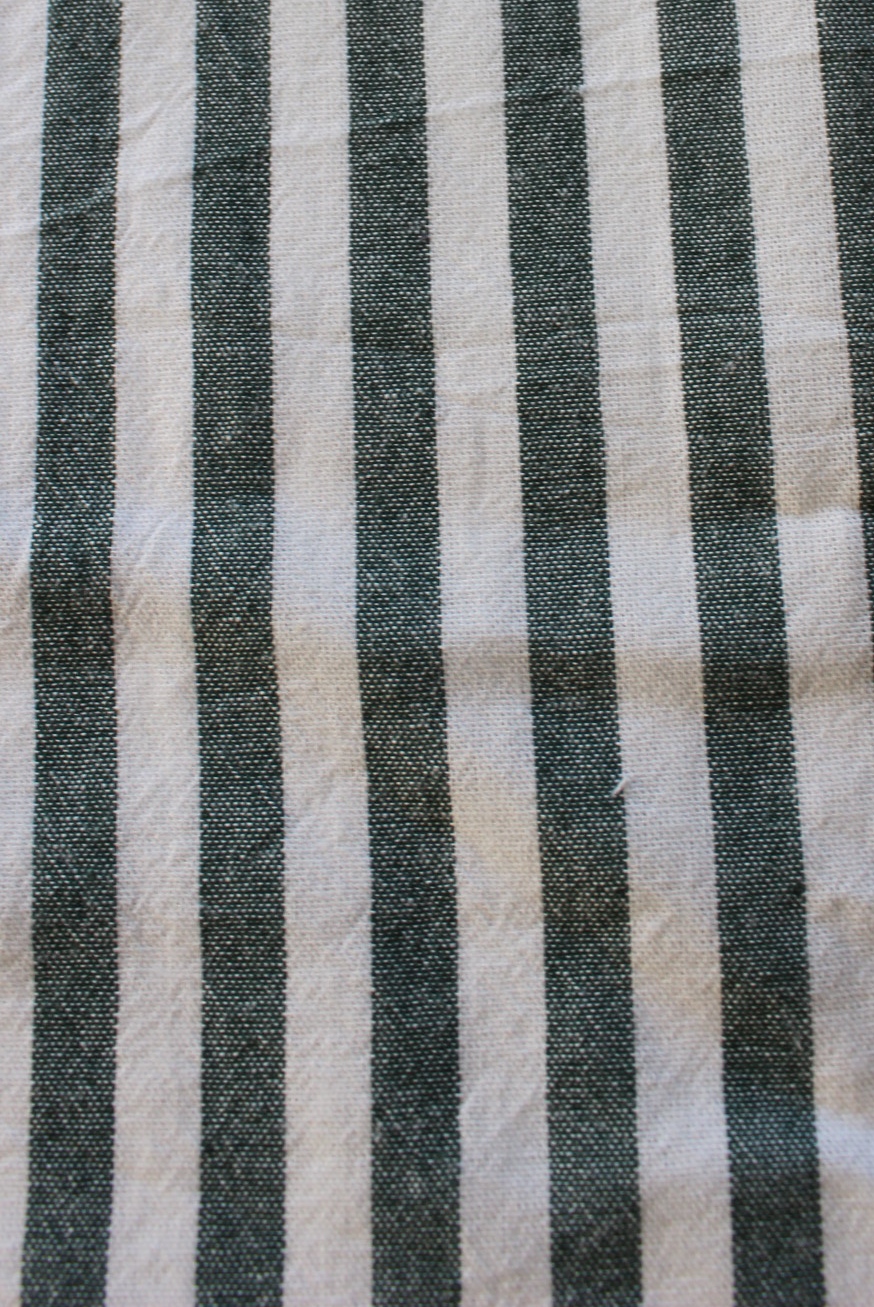
I alreay had the fabric IMG_8367 8m of striped cotton, bought on sale about a year ago.

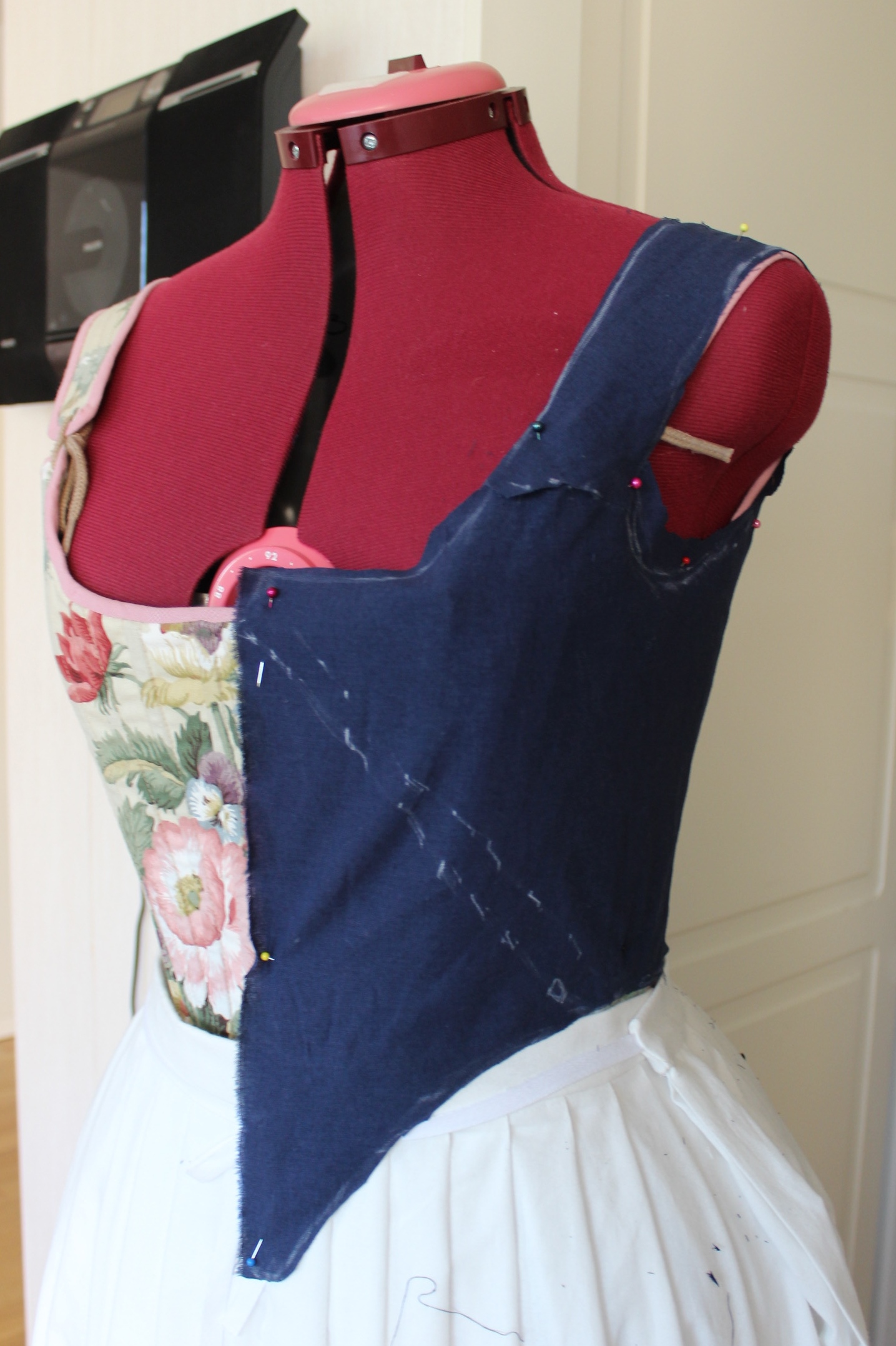
I put my corset, bumpad, and petticoat on the dressform and started to drape the bodice pattern.
IMG_8335 IMG_8331

Then I cut the toile, sewed it togeter and tried it on.
IMG_8337 IMG_8341

Then it was time to cut the fabric.IMG_8361 Besides from the striped cotton, I used a bleached linnen fabric for the zone front and a white cotton twill for interlining.

My original plan was to make the gown entierly by hand, but time ran out and life interupted, and on top of that I’m starting to think it is a waist of time to hand stich a gown in the wrong material. so, after some back and fort, I decided to make it by machine. (And boy am I happy about that decision now…)

I started the sewing by basting togeter all the different layers – so yes, I did do some handsewing. IMG_8364

Then I shaped and stiched the back pleats in place, usin tiny backstitches. IMG_8371back piece and back lining.
IMG_8372IMG_8378Close-up on the stiches.

I then sewed the bodice togeter and tried it on to check the front closeur.
IMG_8524 IMG_8530
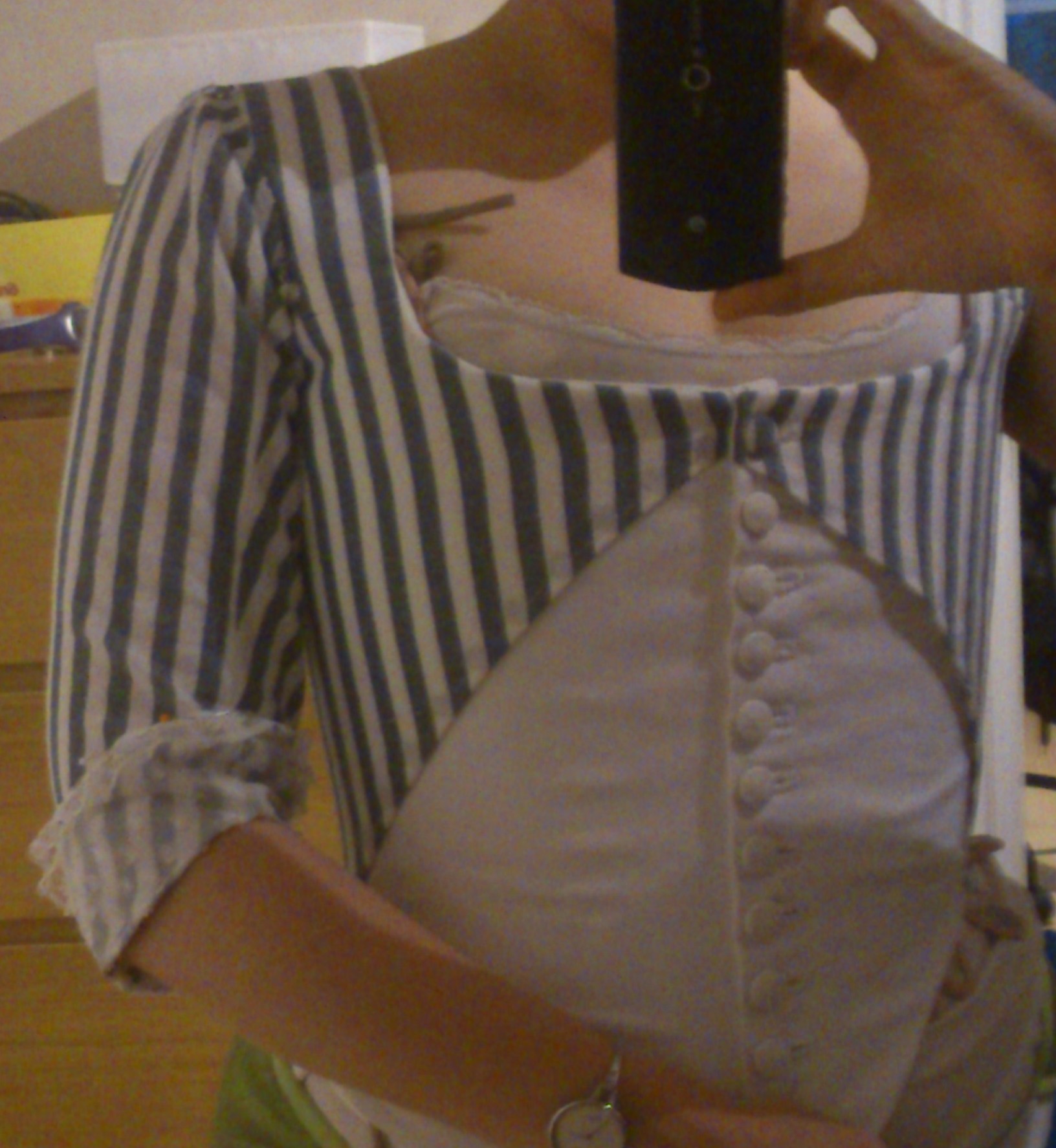
And as you can se the front lines dont match up. So to fix that I needed to adjust the center front line and make a buttonhole placket. This metod is usaly a big no no in sewing but time was sparse and I’ve already manadged to mach the stripes pretty good, so I did’nt want to adjust the side seams.

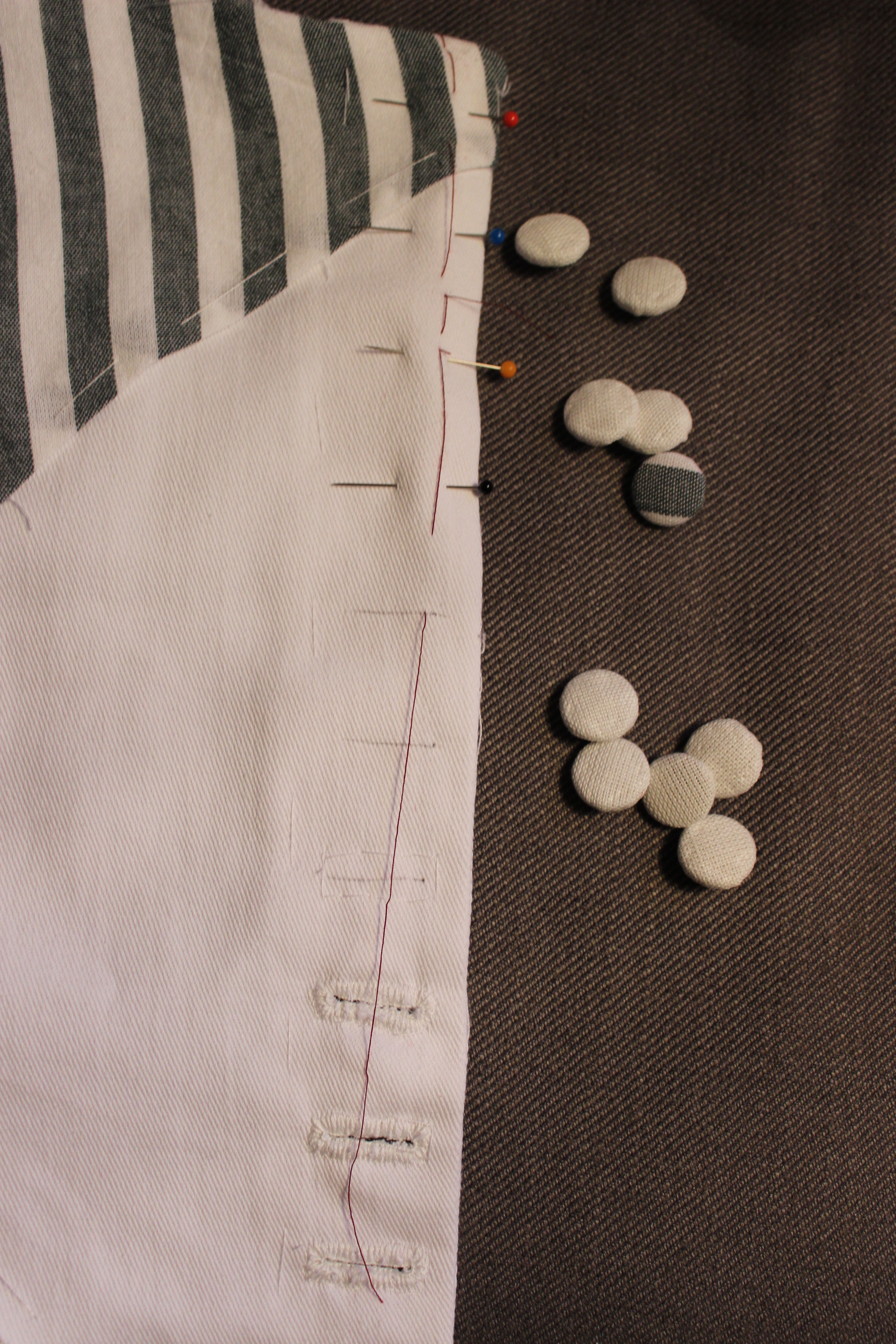
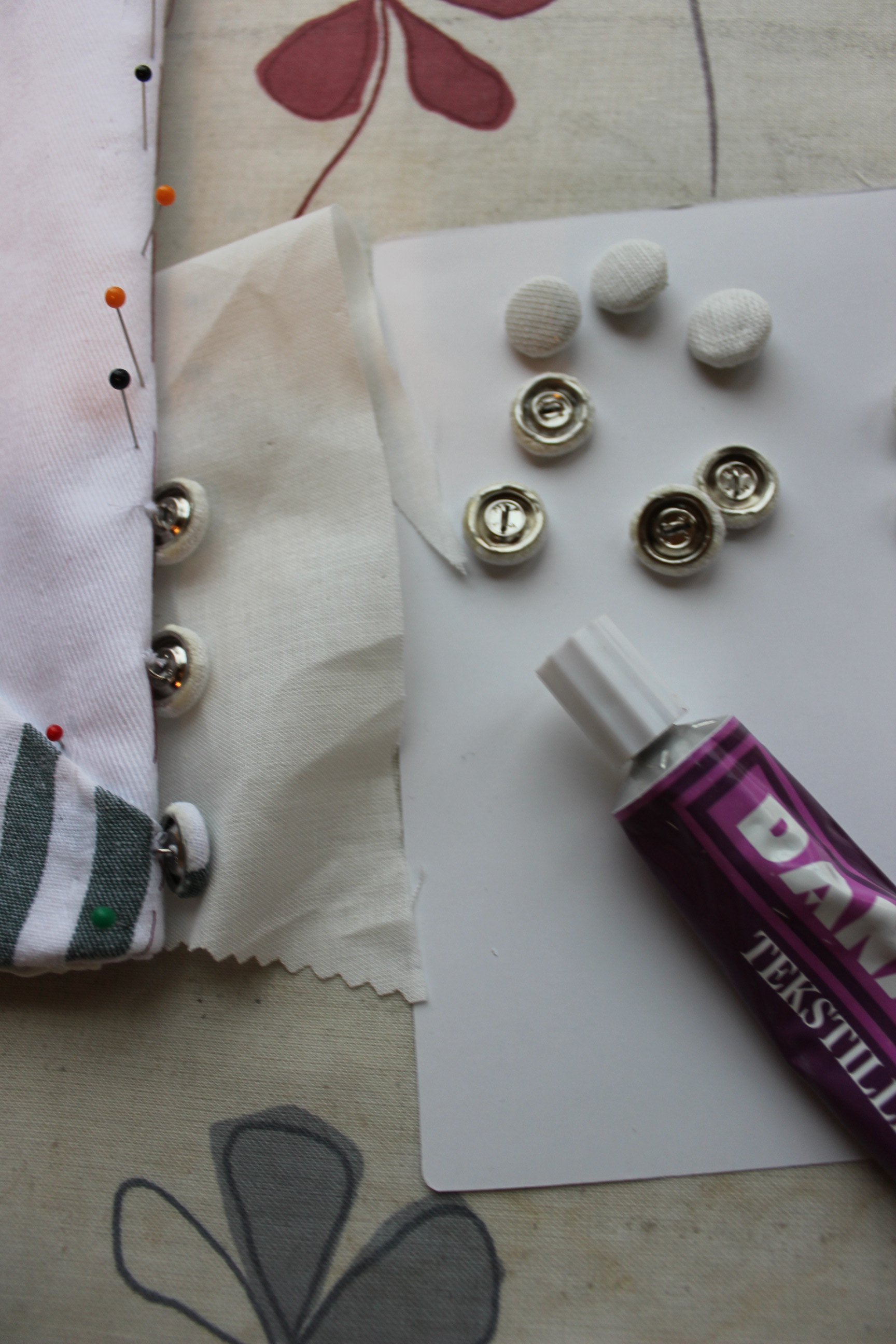
Then I started on the button and buttonholes, also hand stitched. IMG_8539 They are not as neat and pretty as I would have liked but they will have to do. And I even needed to use some fabric glue on the buttons to keep them from snapping apart.IMG_8557

It was about here I noticed that something was of with the front piece interfacing. While basting the layers togeter I’ve manadged to put the interling as outer fabric, then stich the hole bodice up like that and on top of that make the buttonholes. Darn it.
Well there wasn’t much to do then go on pretending that the twill was supose to be the outer fabric. Fortanly, no other part of the bodice was white so the only thing revealing my mistake is the linnen covered buttons… IMG_8582

So I continued by cuting and setting the lining, using a regular white cotton fabric.

Before the next try on I pinned the sleeves on losely to get a grip on their placement.
IMG_8575 IMG_8578
Unfortanly the sleeves were the last things I noticed when I put it on – The stupid bodice was way to smal. I tightened my corset all I could, and did manadged to close all the buttons. Only now the bodice looked horrible and the stresslines were pulling all over the front.
So back to the sewing machine I whent, using the alowence in the side/back seams to make the bodice a total of 2,5 cm bigger. IMG_8591

Then I pinned and sewed the sleeves. The insertion was an easy one, but the deciding on the sleeve trim was a bit harder. In the end I decided to stepp away from the inspiration and go with my guts and use a smaler design then originaly planed.

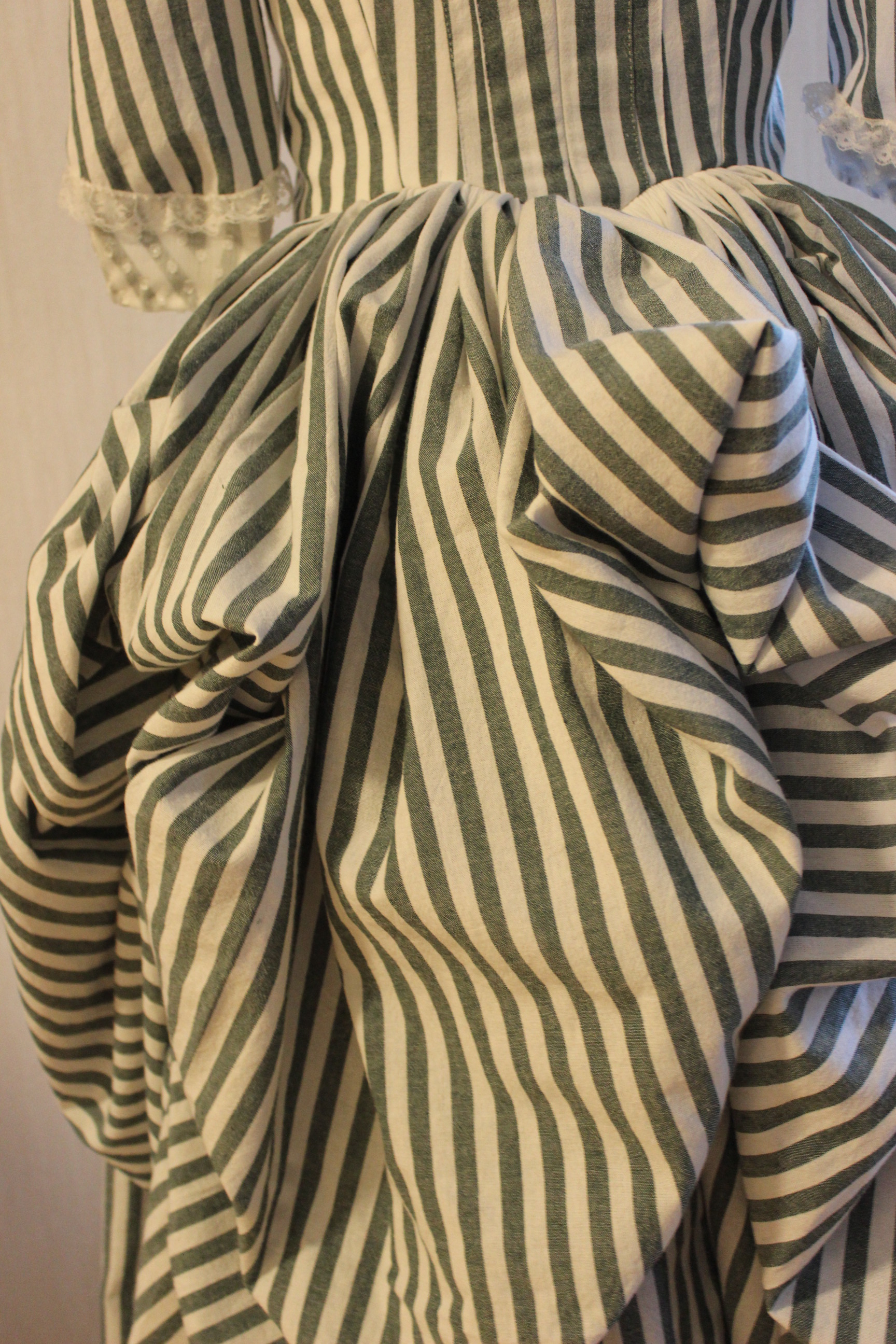
Now it was time for the skirt. I sewed the pannels together and  hand stiched lines of gatering thread, to get them nice and even al over the skirt. IMG_8542 Then I pulled the skirt waist togeter and pinned it to the bodice, using the zone front as a mark were to start the skirt.
The sewing was abit tricky, geting all the fabric to lay smothly. IMG_8620

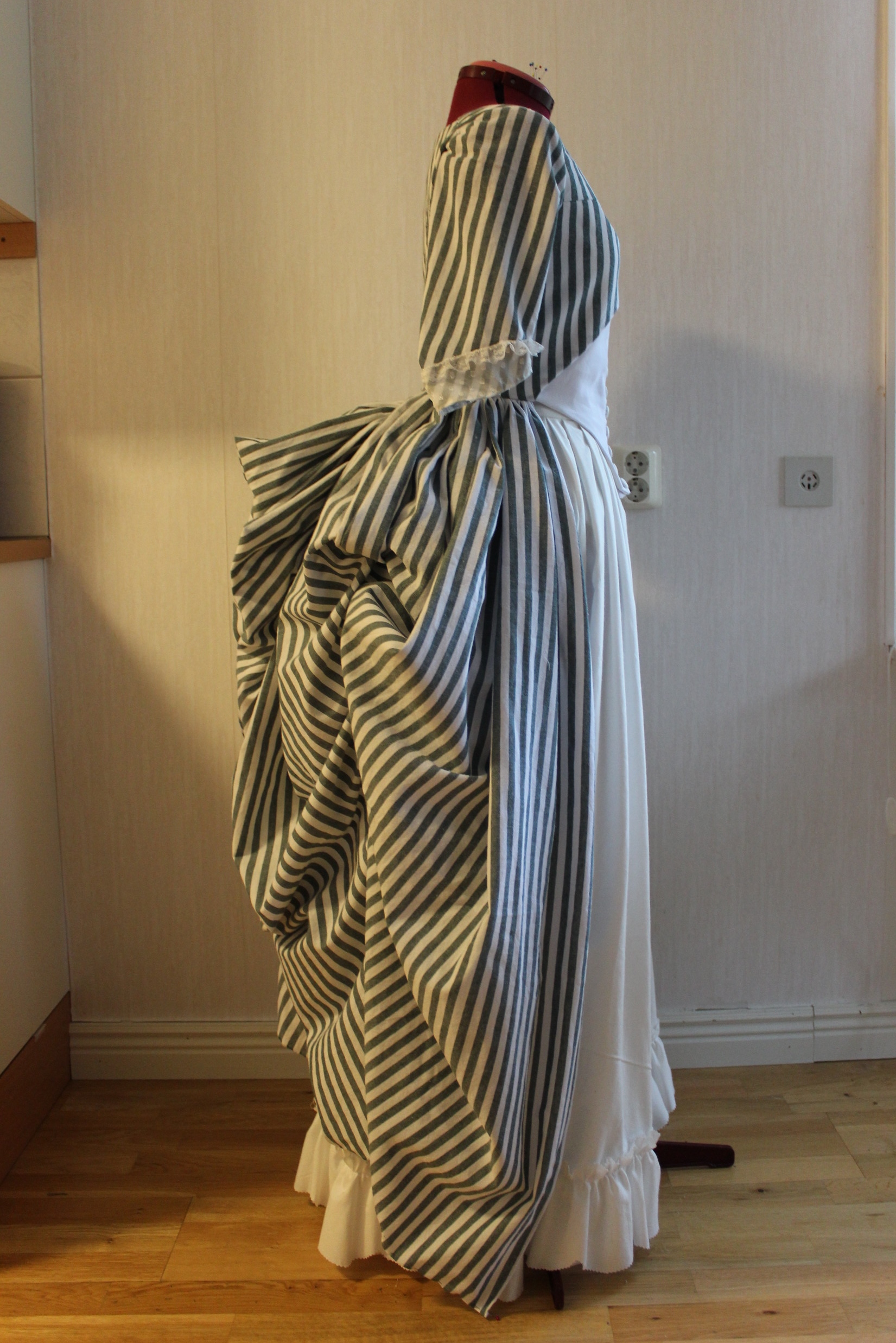
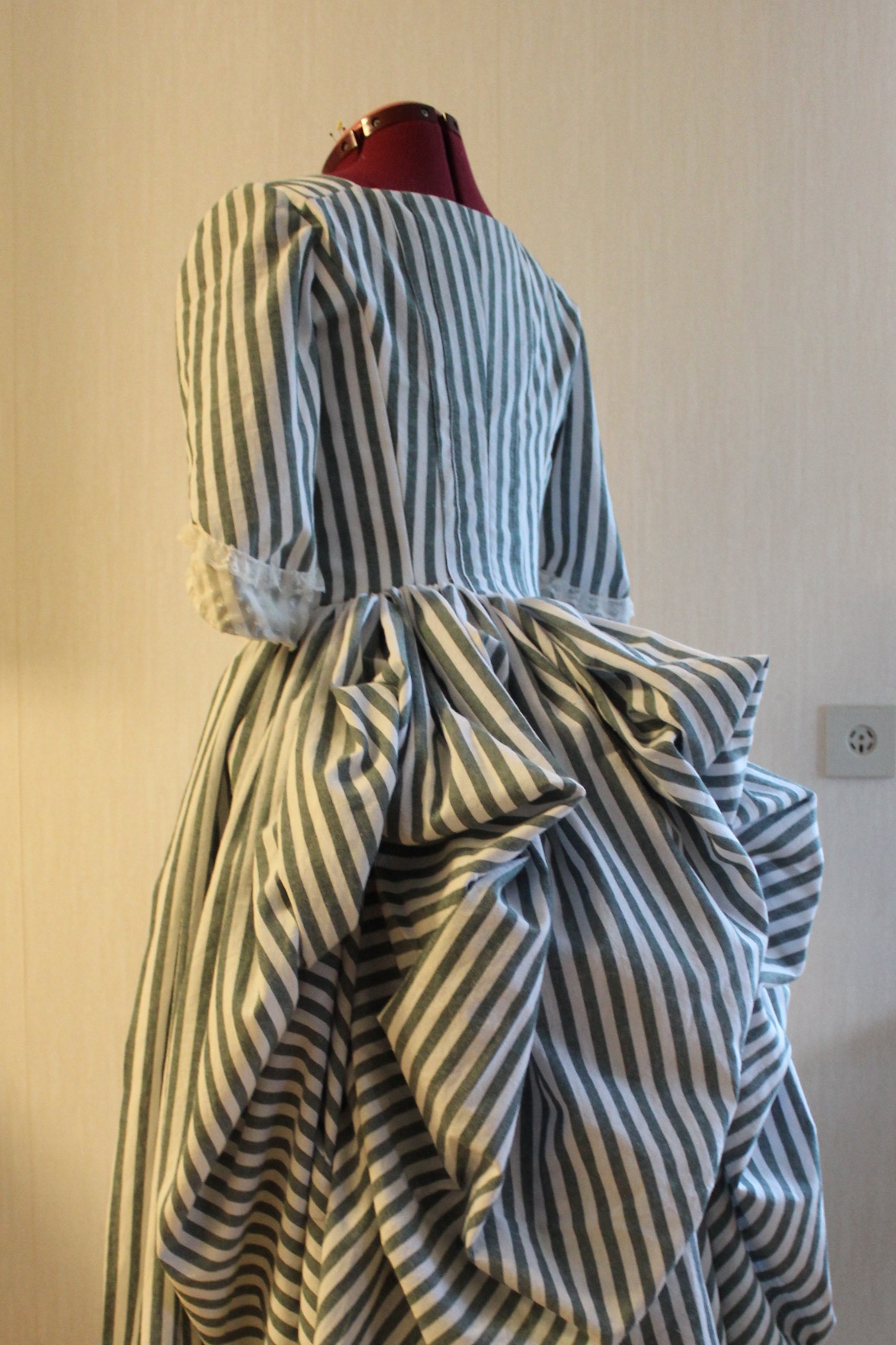
The final touches was to finish of the arm hole, tuck down the lining and stich on some Busteling-ties to make it an “Polainese”.

Finished dress:

IMG_8623

IMG_8644

IMG_8645

IMG_8625

IMG_8646

IMG_8621

IMG_8629

IMG_8628

IMG_8630

IMG_8633

IMG_8631

IMG_8632

IMG_8636

IMG_8640

IMG_8641

IMG_8637

IMG_8643

Just the Facts:

Challenge: nr 10 – Art

What: a 1780s robe Anglaise.

Inspiration: Rose Adélaïde Ducreux “self portarit with a harp”.

Pattern: I draped my own, using Arnolds “Pattern of Fashion” as a guide.

Fabric: 4 m of striped white/green cotton, 0,5 m of white linnen, 0,5 m of white twill for interlining, 0,5 m of white cotton sheet for lining and 0,3 m of white dotted organdy for sleeve cuffs.

Notions: Thread, 10 self covered buttons, 1 m plastic boning, 5 cm cottin string.

How historical accurate: The shape and look of the garment are ok, but it is compleatly machine made with modern tecniques. I dind’t had the time or the money for a compleatly hand made silk dress.

Time: On and of for two weeks – maybe 15-20 hours.

Cost: about 300 Sek (48Usd). All fabrics were stash and bought on sale.

First worn: Not yet, but will be (pared with the White entries) next weekend for the huge historical picknick i the capital.

Final thoughts: The dress are not an exact copie of the one in the portrait, but I do think it looks pretty good. I’m a bit anoyed about the stress wrinkels on the front bodice, but with the time constriant am glad I manadged to finish it of at all. Tomorrow I will give it a real try out and se if it passes the test.


Preview: The Artistic Anglaise

I know I know, I’m late.

I’m late posting, I’m late sewing, I’m late entering the HSF, basicly I’m late doing anything.

“Late” seems to be my middle name lateley, but I know at least the dress will be finished before friday – when I’m going to wear it, and thats the important thing.

In the mean time, I will give you a quick sneek a peak of the dress that refuses to get finished in time.

DSC_1442

And to let you all know in what mood I’m in this evening – I’ll give you a hint: Maybe I should have taken this advice to heart instead of just ignore everything about it. Grr.

White additions

For the HSF nr 9: Black & white, I decided to make some pieces I’ve needed to make my next big costuming project work.

Since my plan is to make a compleatly hand made Robe Anglaise as the next challenge (due 1 june) I needed to give myself a head start. So by making a simple piece for this one, I could save some time and make it possible to start the Anglaise earlier.

The theme of this challenge fit perfectly for some of the pieces I needed for the “Art” gown to be finished.

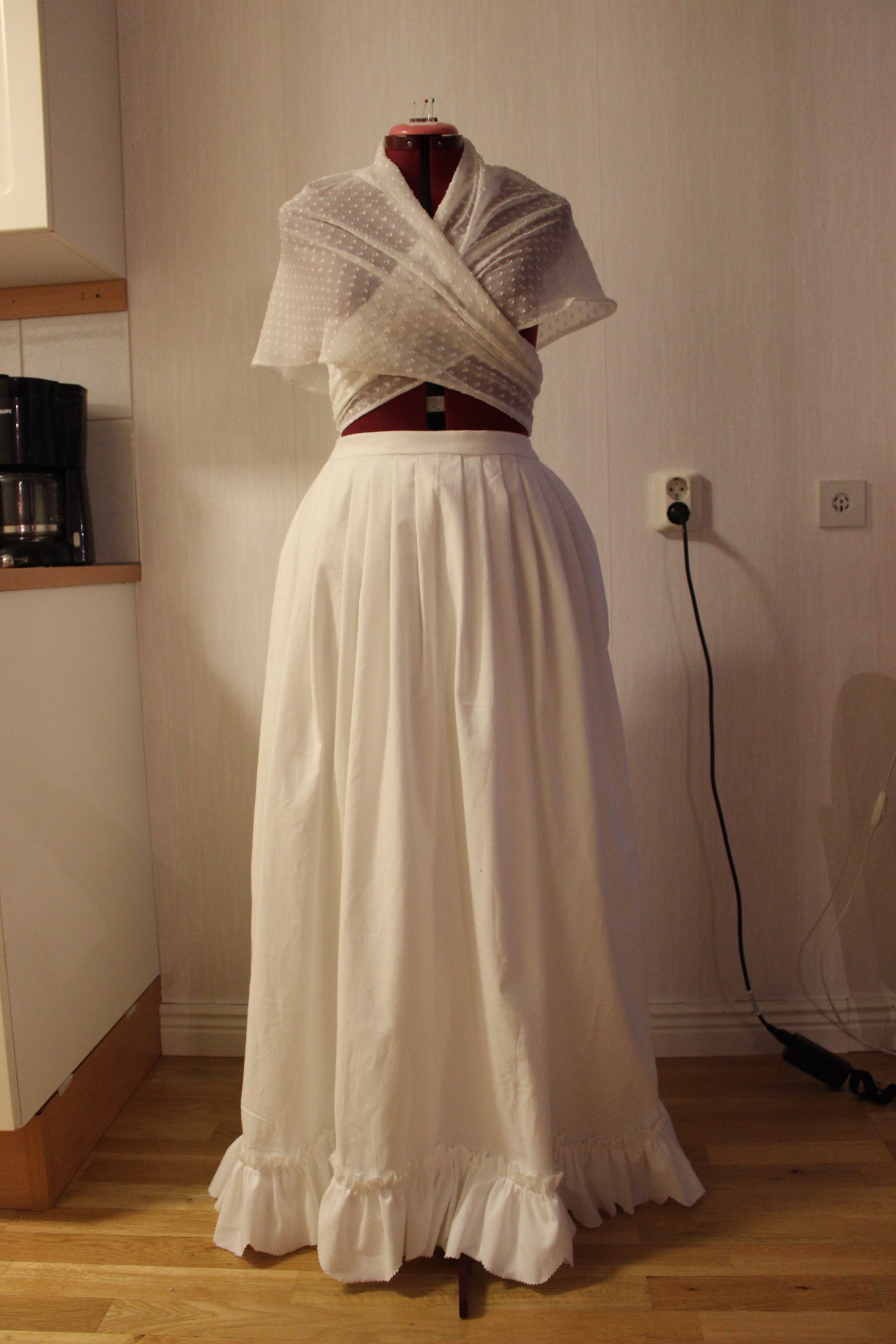
First: The skirt.

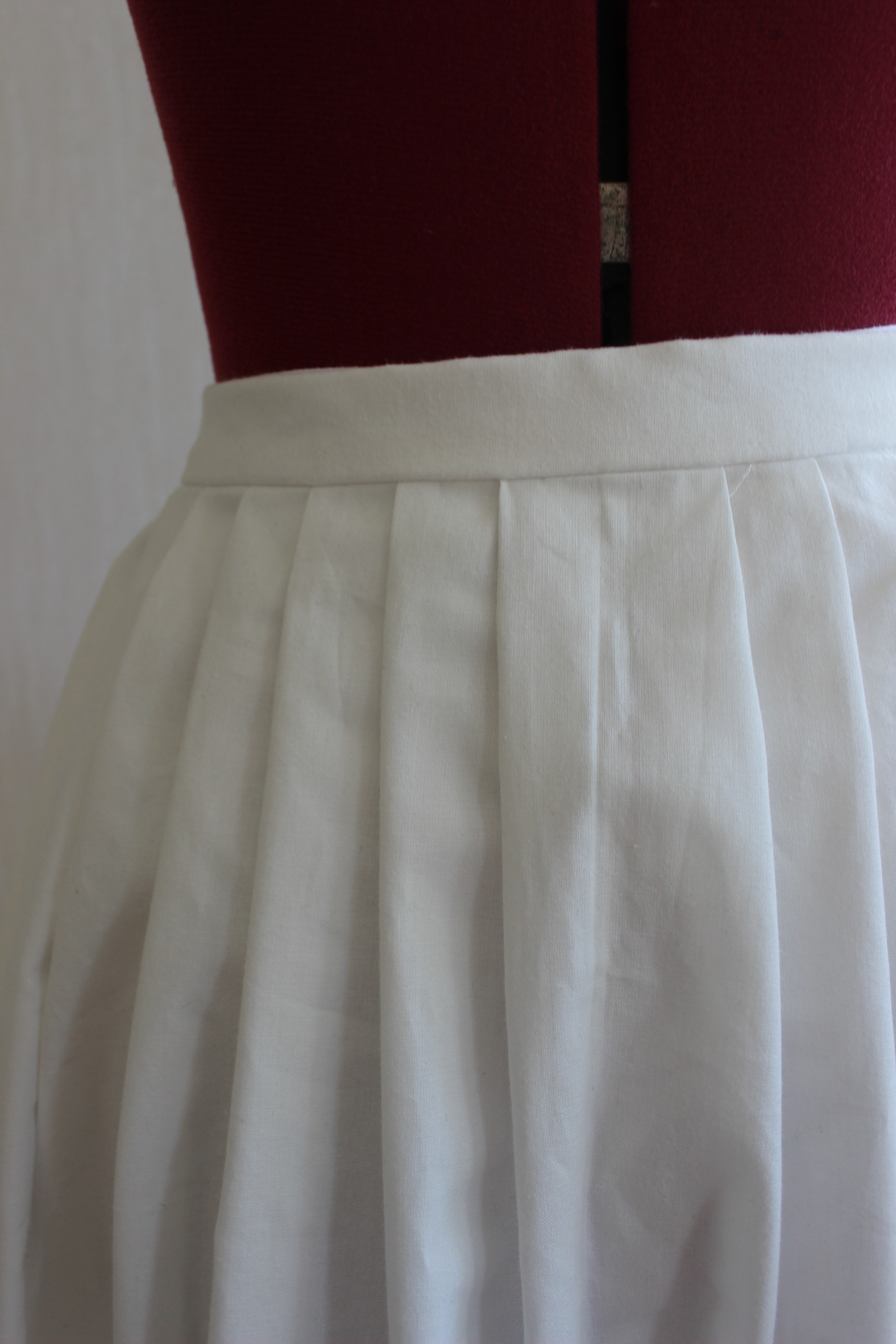
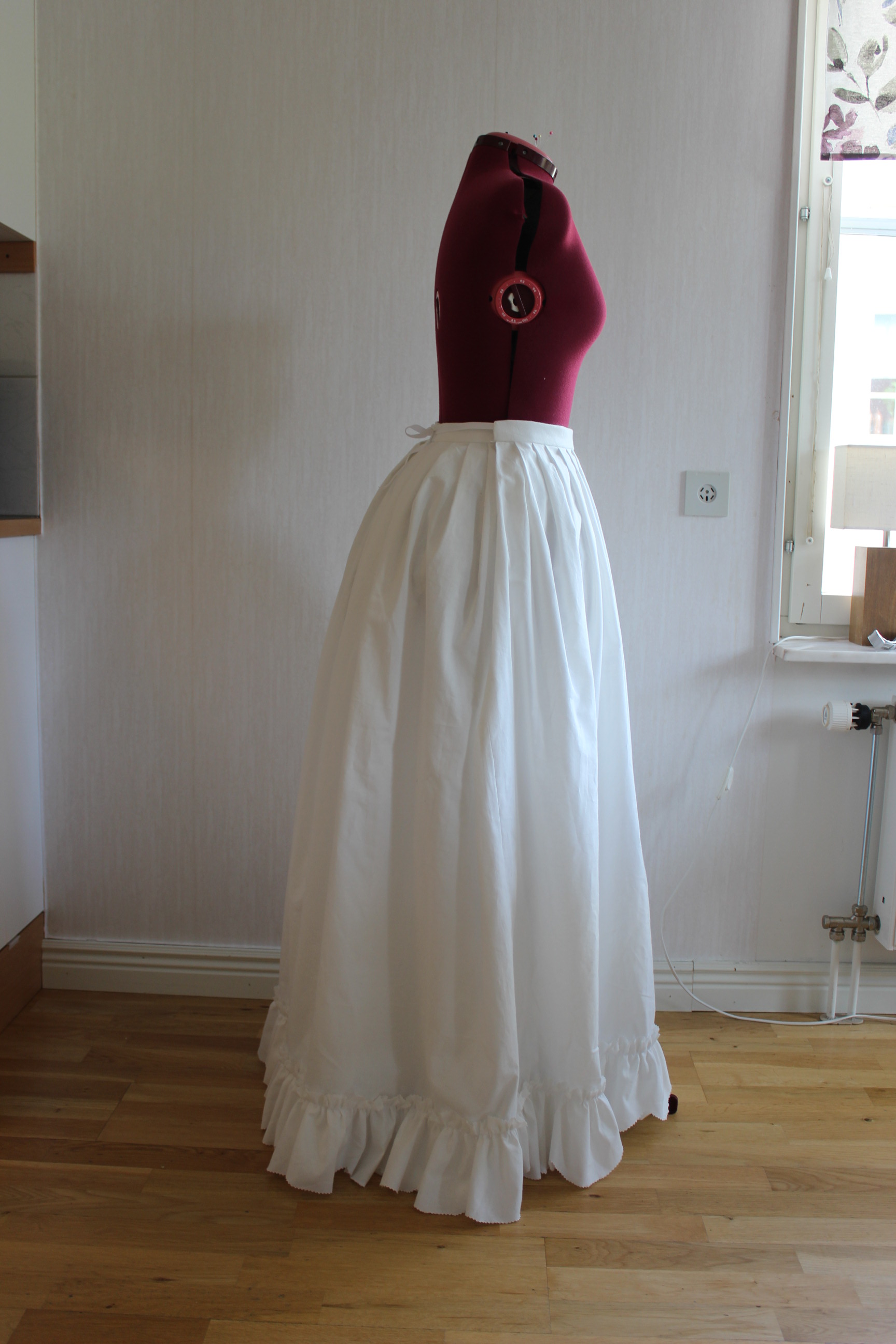
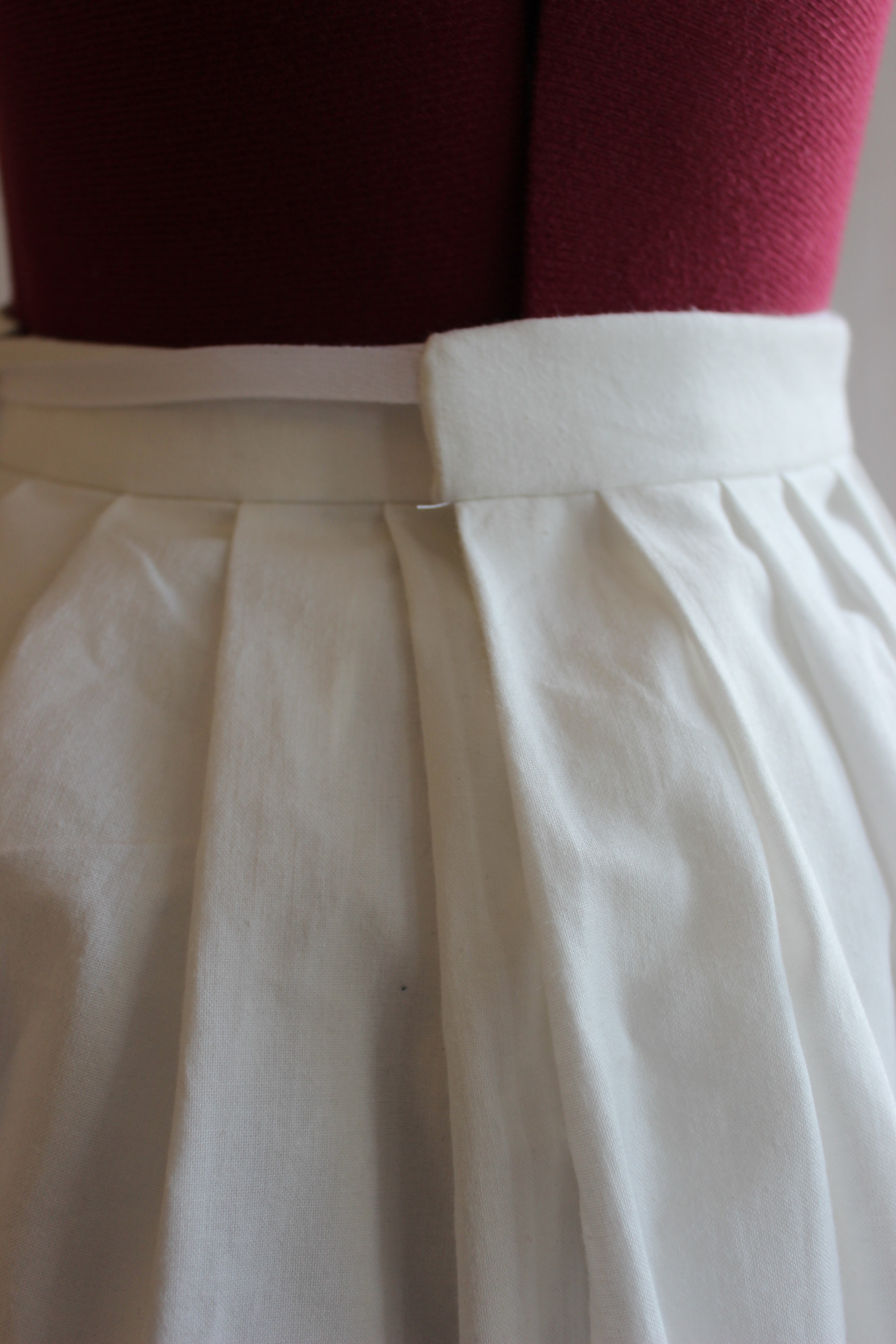
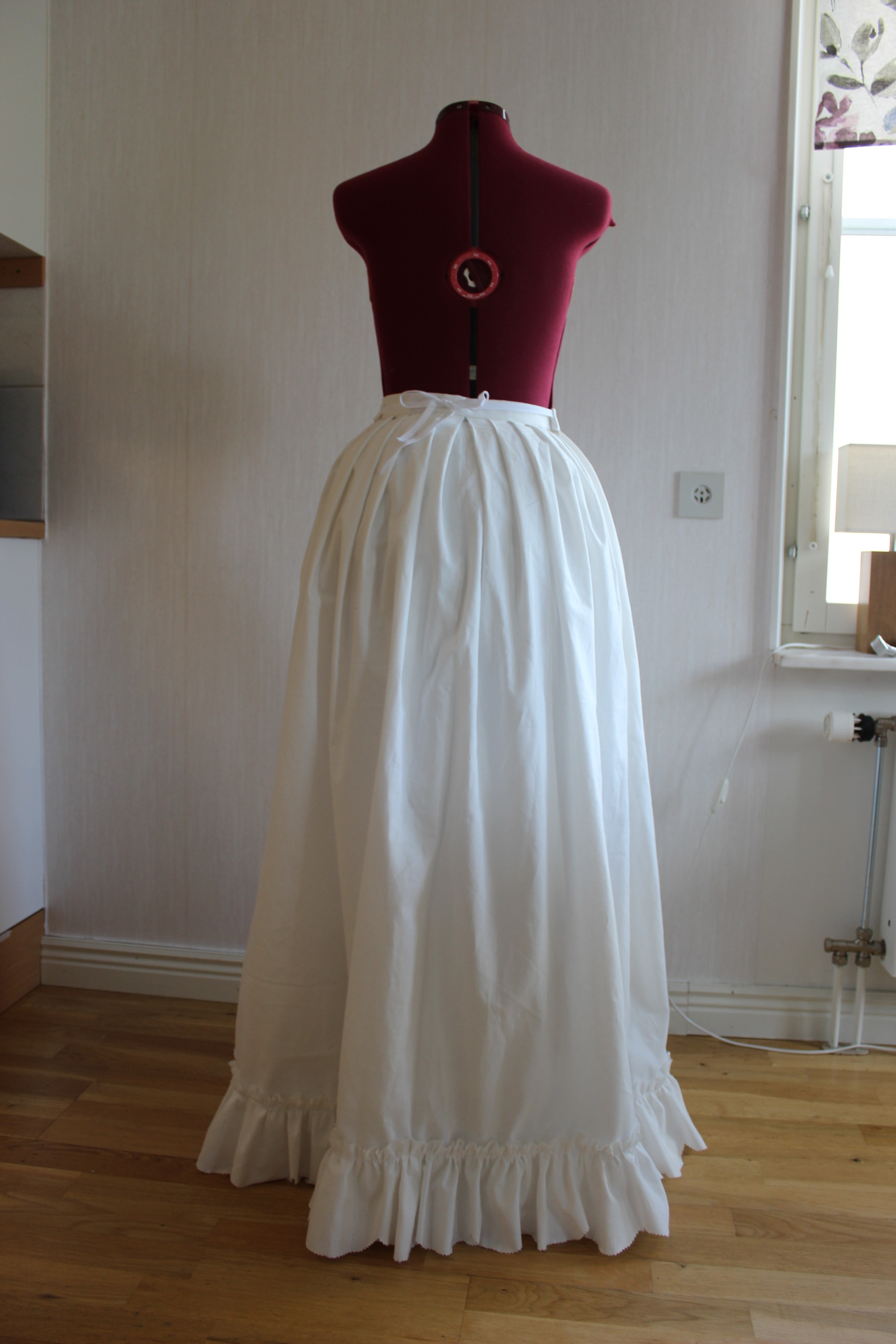
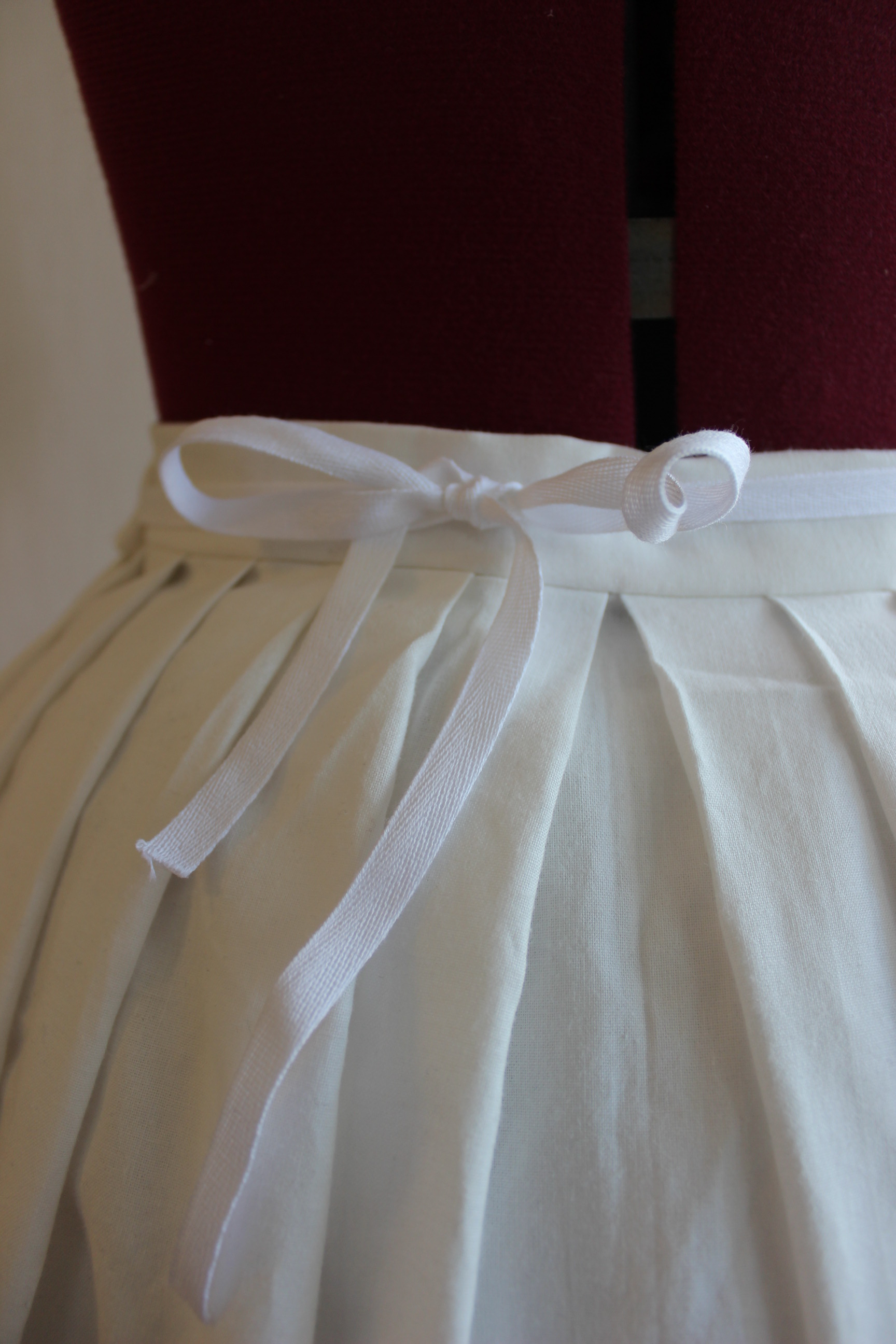
A 18th century petticoat/skirt made from regular white cotton (I needed it to be both quick and cheap).

I used a regular white cotton fabric that I found in my stash.

Since I made almost the exact skirt for the previous challenge, I won’t bore you with construction detals, but instead go straight to the Finished photos. (If you’re still want to know how I made it, take a look at my Pastell UFO skirt.

IMG_8056

IMG_8057

IMG_8060

IMG_8061

IMG_8062

IMG_8063

IMG_8066Just The Facts:

Challenge: nr 9: Black & white.

What: A 18th century skirt/petticoat.

Pattern: None, just measured and cut.

Fabric: 2,5 m of white cotton sheets.

Notions: Thread and 2 m cotton ribbon for tying at the waist.

How Historical Accurate: So so. The time constraint caused me to sew it by machine (and Ialso do think it is stupid to handsew pieces which are clearly in the wrong material). But the shape and construction are plausable.

Time: 4 hours

Cost: 60 sek (9Usd)

First worn: Not yet. But hopefully at june 6 for a huge costuming event.

Final thoughts: I had some trouble deciding on the bottom flounce.The original calles for fringes, but there was no way I was going to get hold on some cheap and sutable ones in time. I did try to make my own, but they lacked the weight neccesary to hang nicely. In the end I opted for a narrow flounce, and I’m pretty happy with the result.

 ***

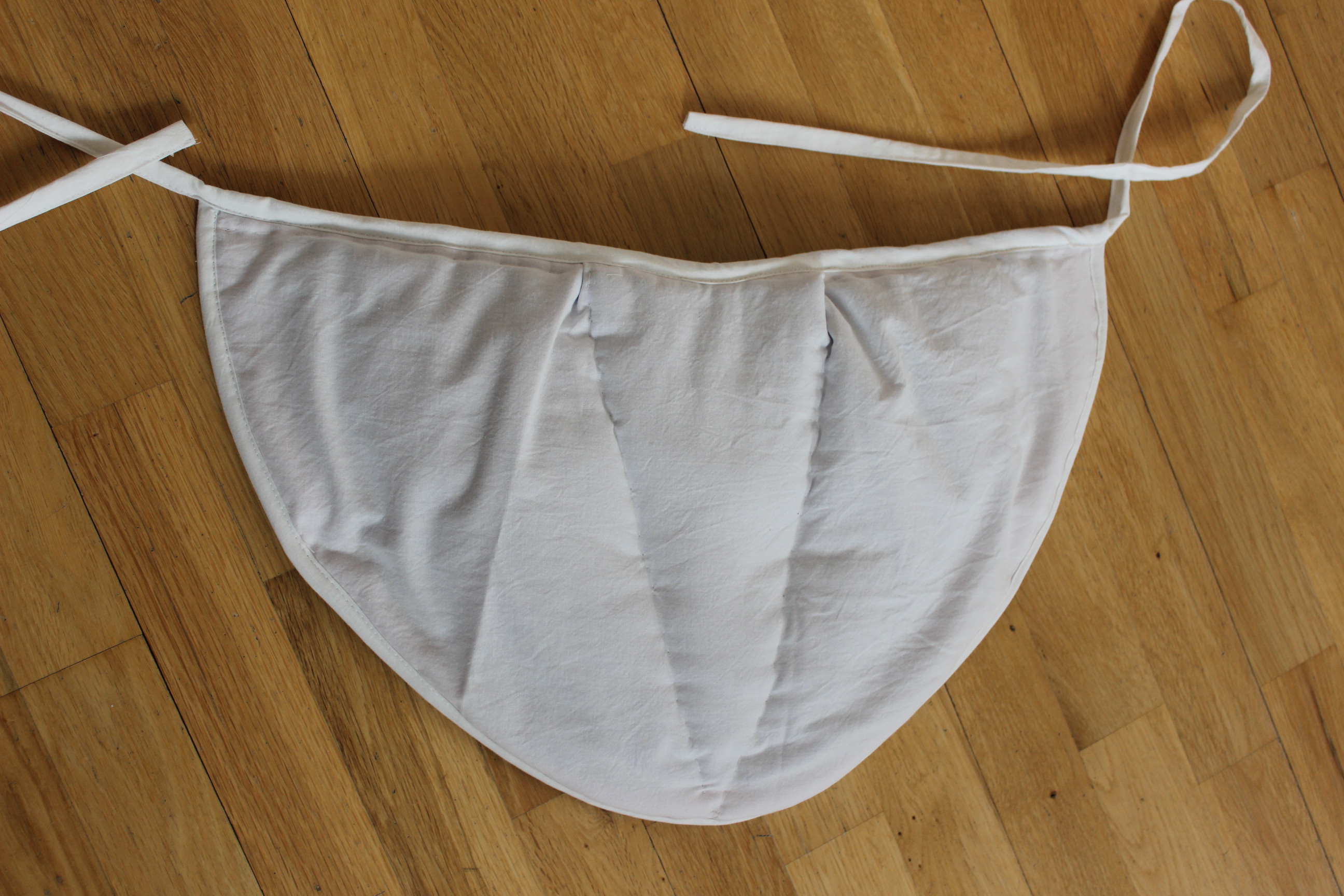
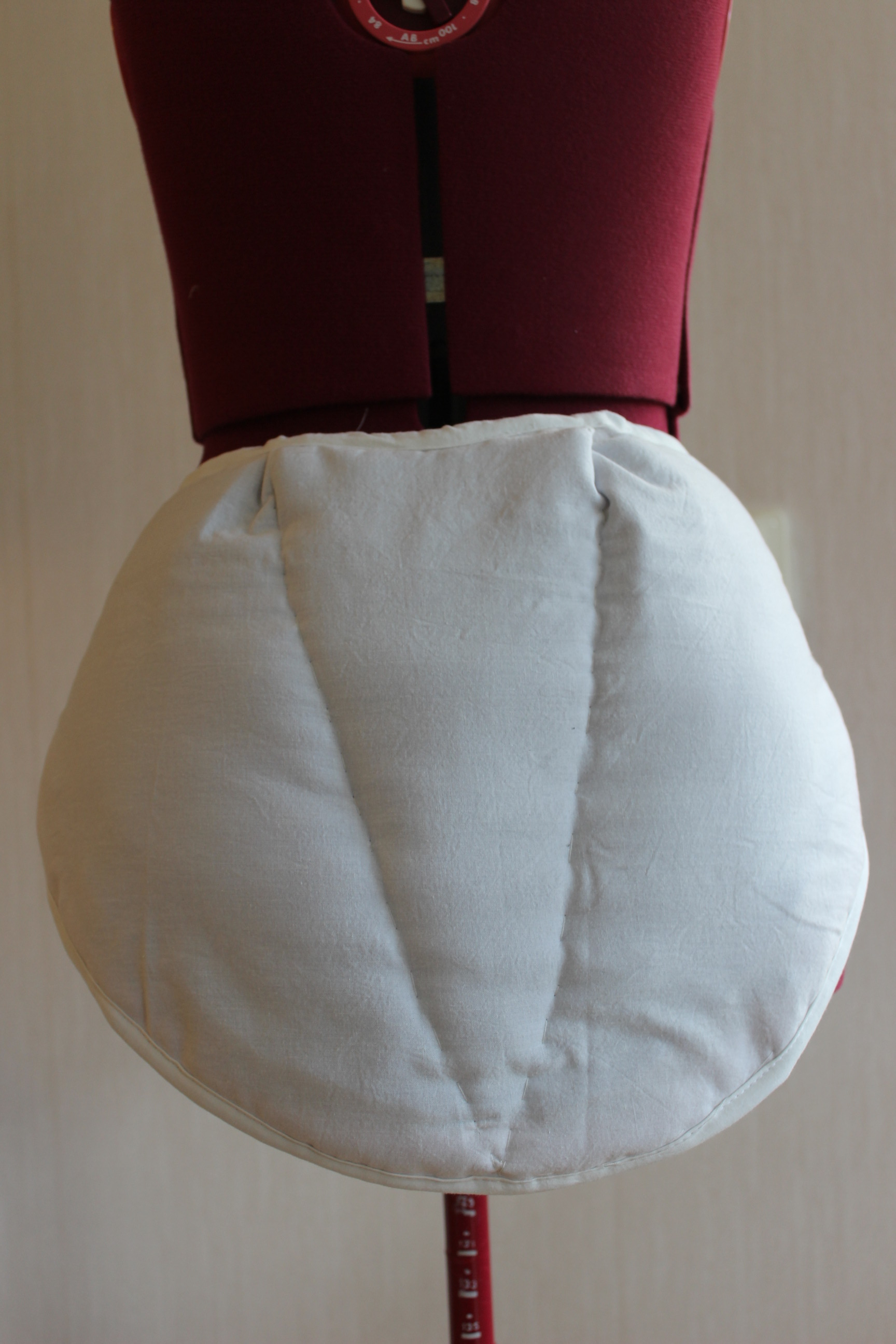
The second thing I needed was a bigger bumpad.

I’ve made a temporary one about a month ago, to wear with my Edwardian dress. However, I didn’t had the time to finish it, so last night I picked it up again.

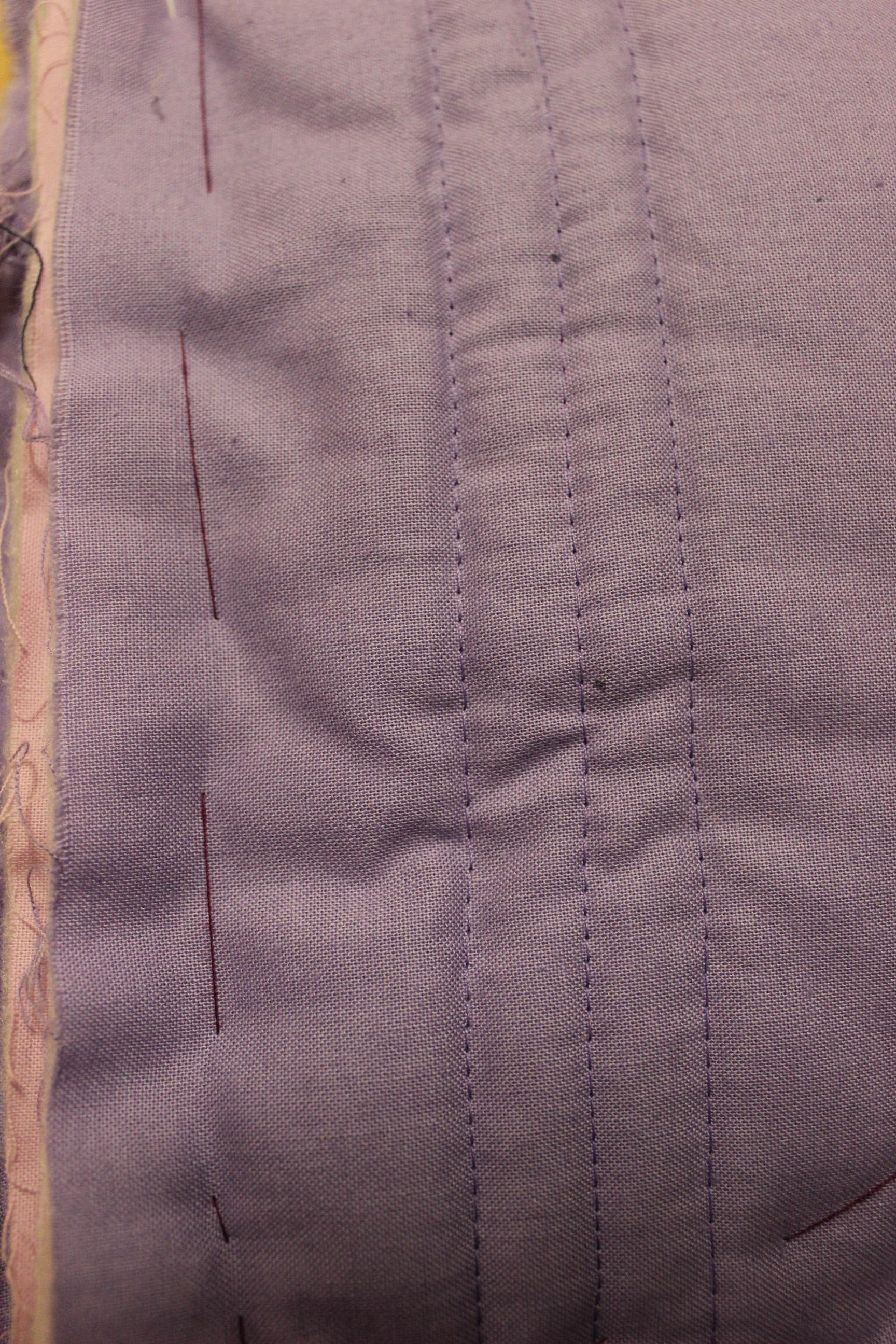
IMG_8054Pink and purple cotton basted to several layers of quilt padding.

IMG_8055It was originaly ment to be a quilted petticoat, but as you can see, I didn’t get very far.

I covered the pad in white cotton, leftover from a previous project. Making self fabric bias-tape to trim the edges and make tying ribbons.

IMG_8079It was such a quick and easy project.

Finished:IMG_8071

IMG_8074

IMG_8075

IMG_8072

Just the facts:

Challenge: 9 – Black and white

What: A bumpad – 18th century to early 20th century.

Pattern: None

Fabric: 0,5 m of white cotton (originaly 0,5 m of quilting padding and some leftover fabric scraps).

Notions: Thread.

How historical accurate: Not at all. Maybe the shape will pass, but the construction, material and look is all wrong.

Time: 1 hour (perhaps 30 min more, if it hadn’t been half finished already).

Cost: Nothing since I only used leftover scraps.

First worn: Not yet. But hopefully at june 6 for a huge costuming event.

***

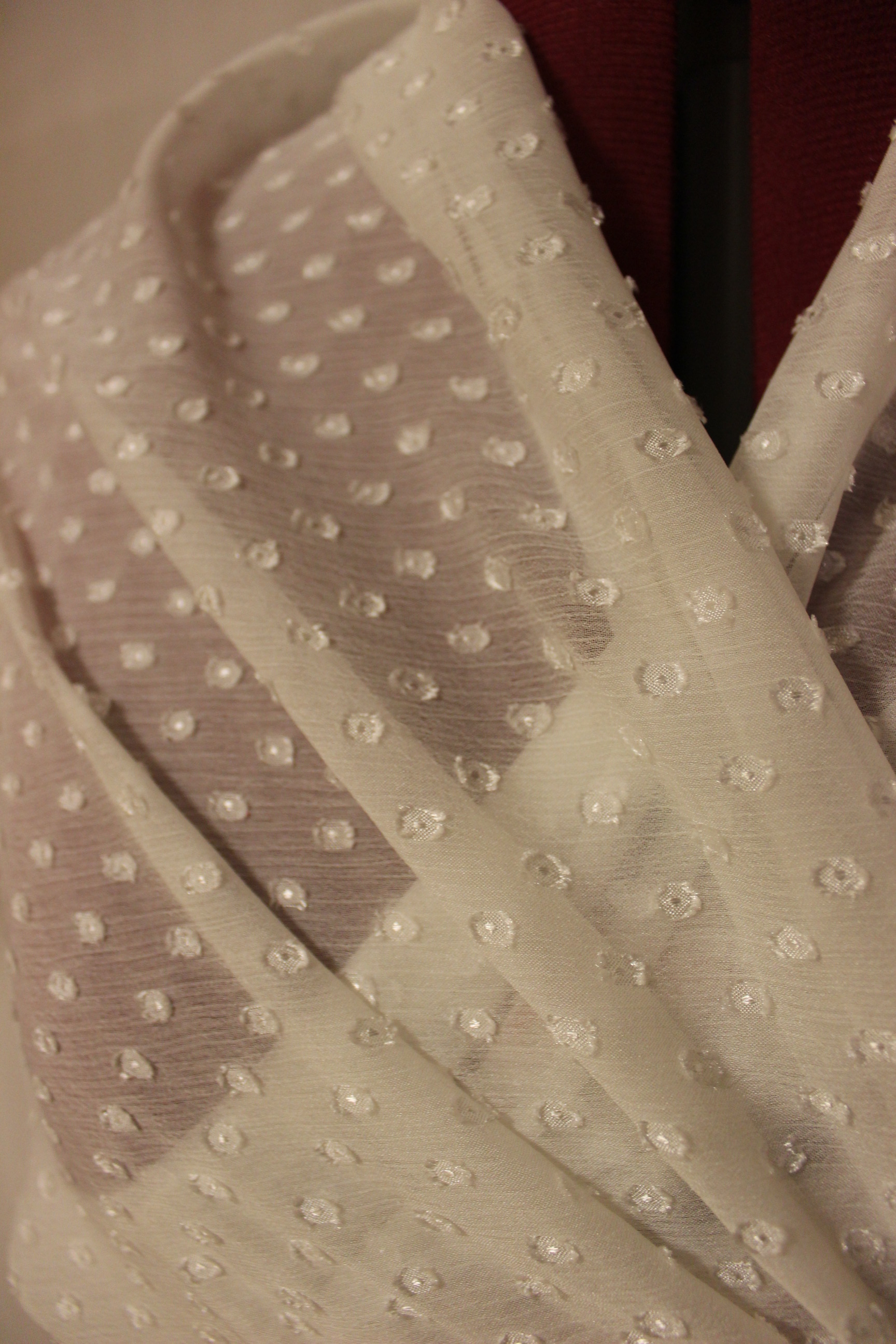
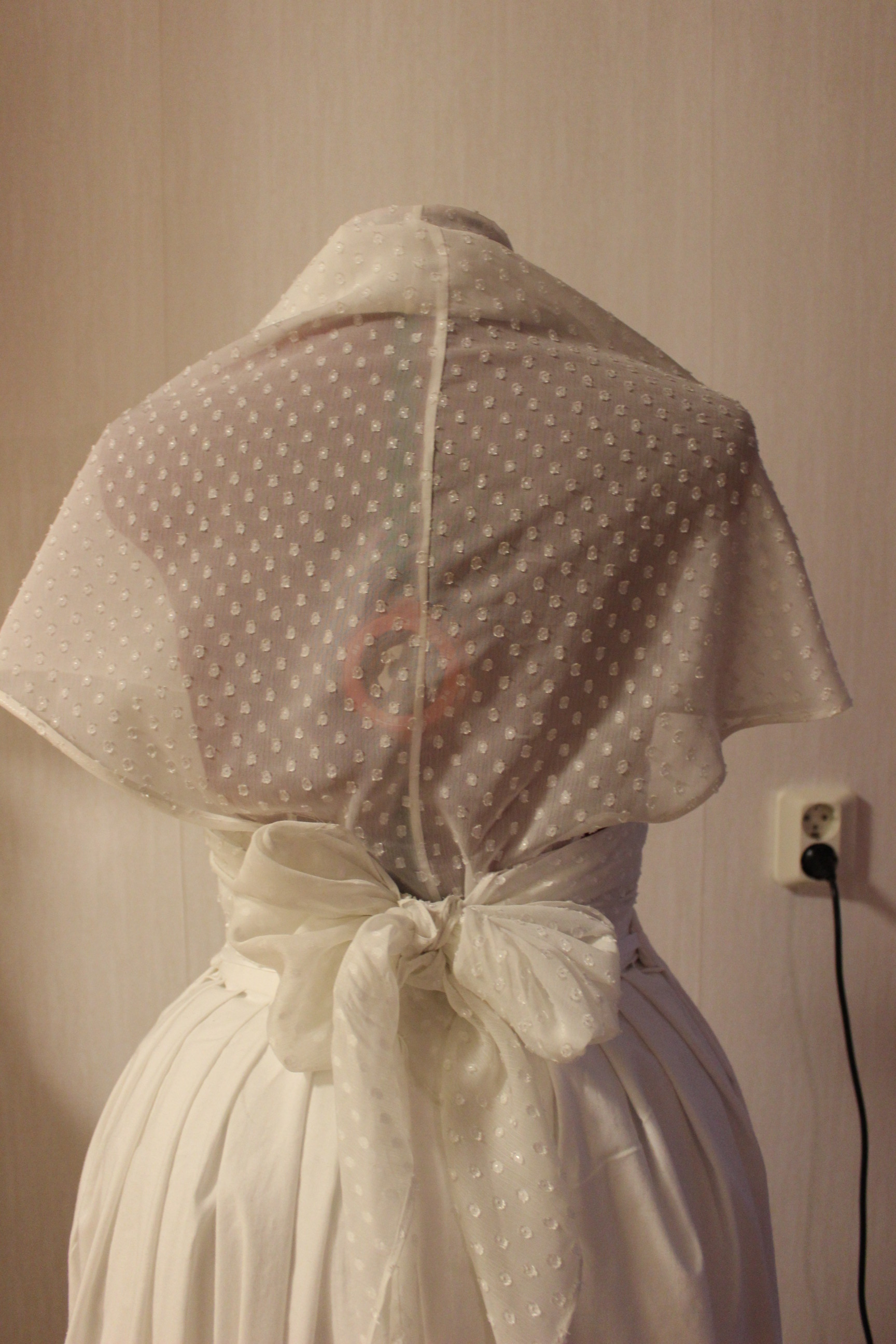
I had time to make one final item before the deadline – a fichu.

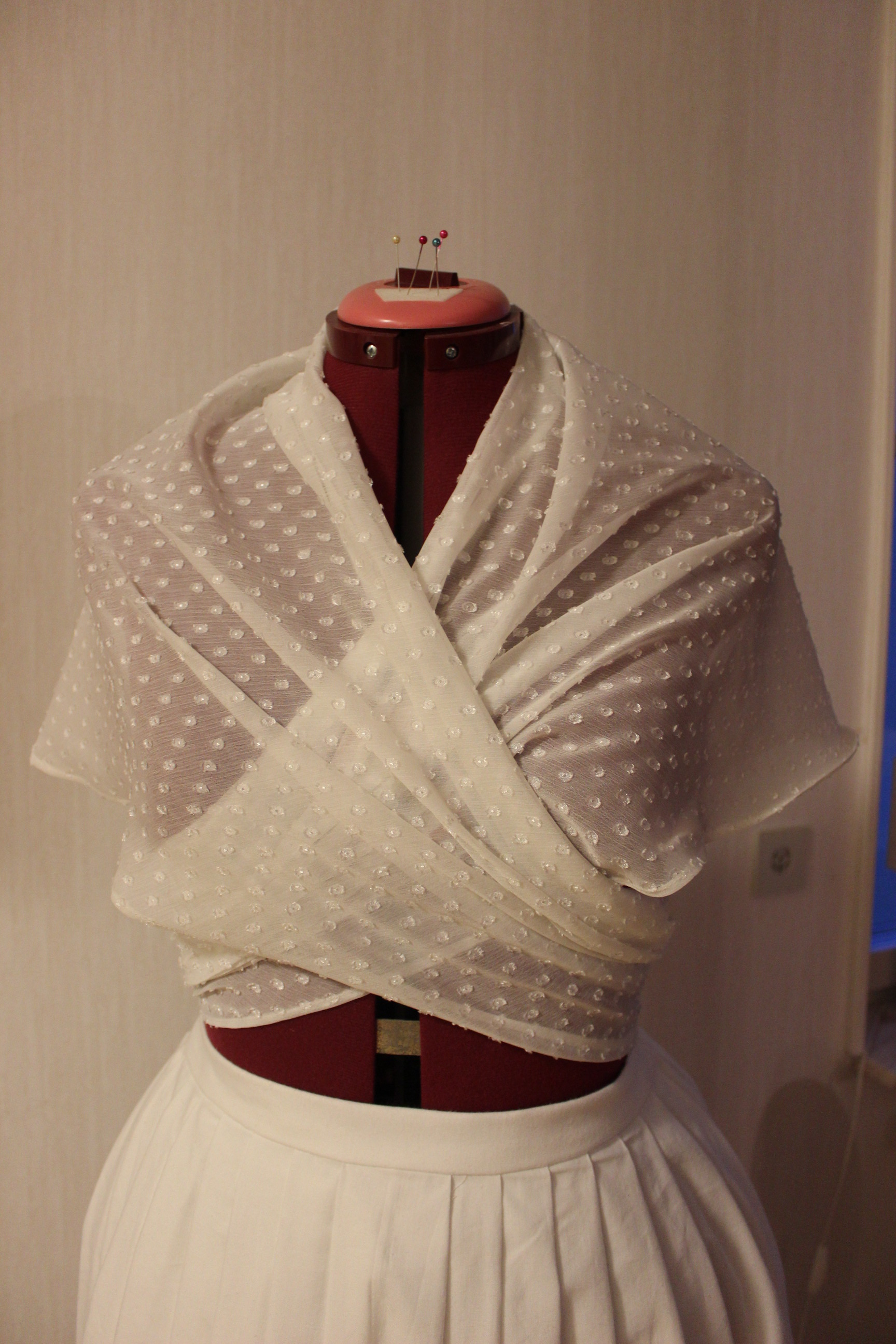
I wanted to make one large enough to wrap around the body and tie in the back, like you se in many paintings from the 1780s.

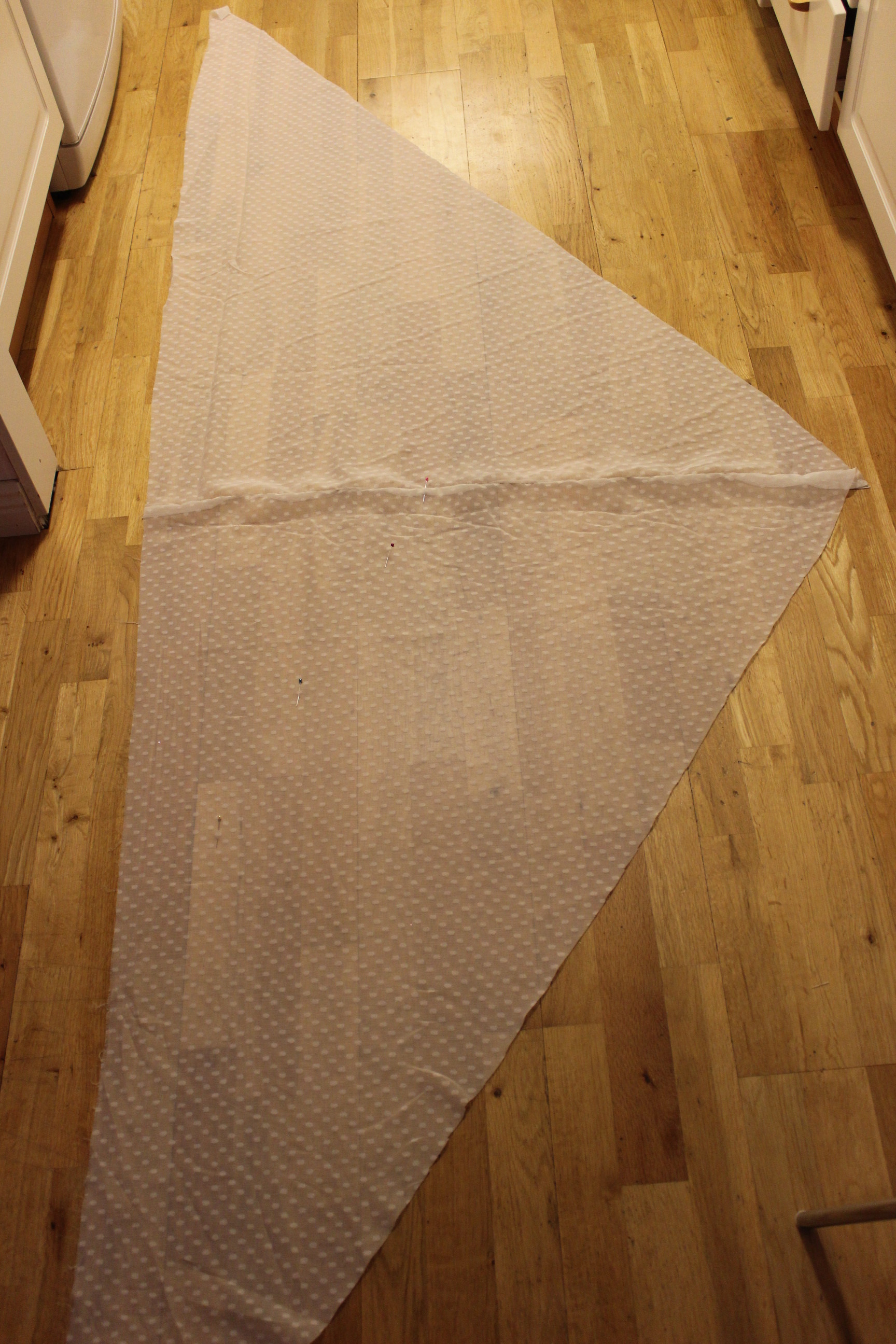
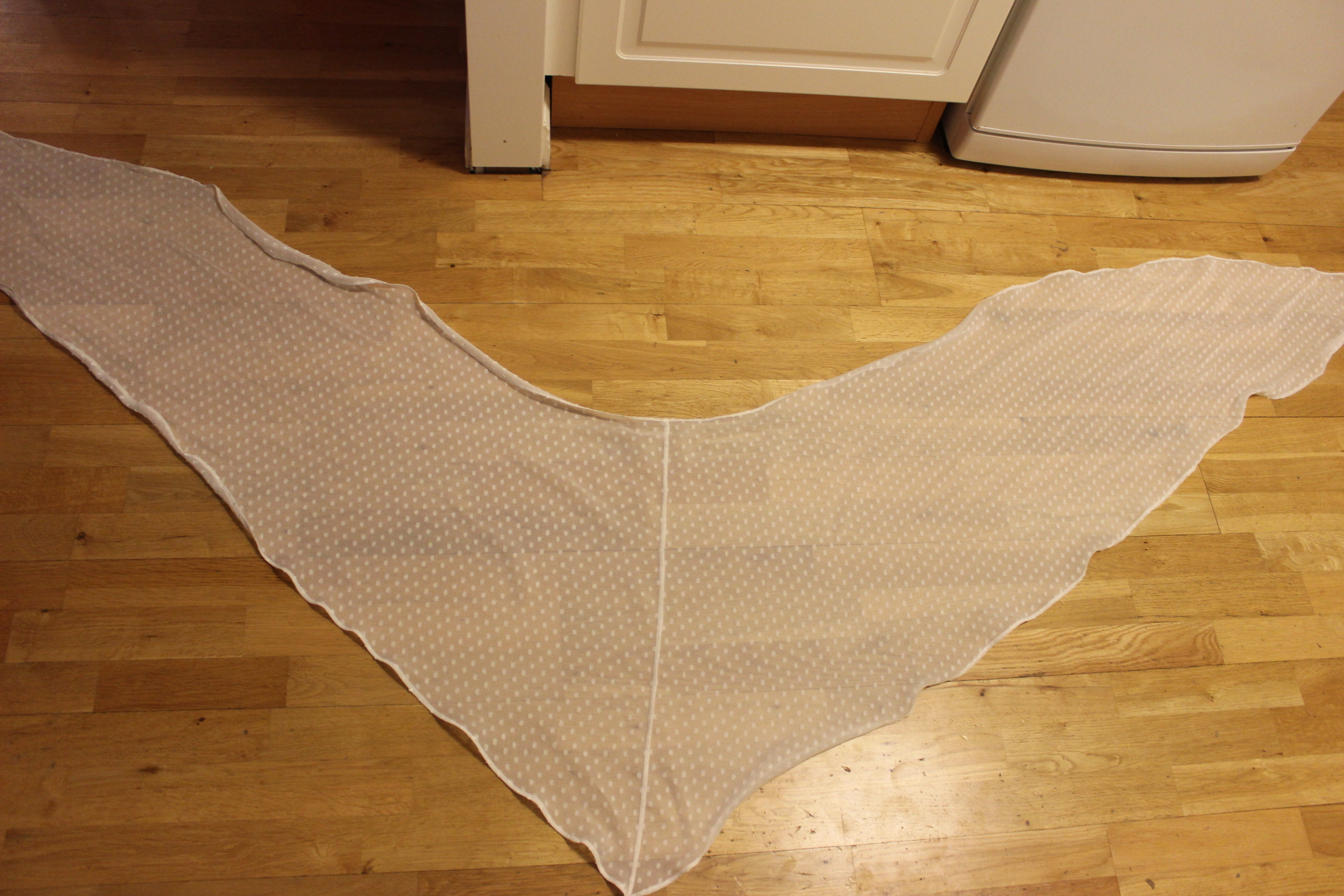
Using some adwise I got on the internet, I cut two large triangles and stiched them togeter to make one huge.IMG_8274

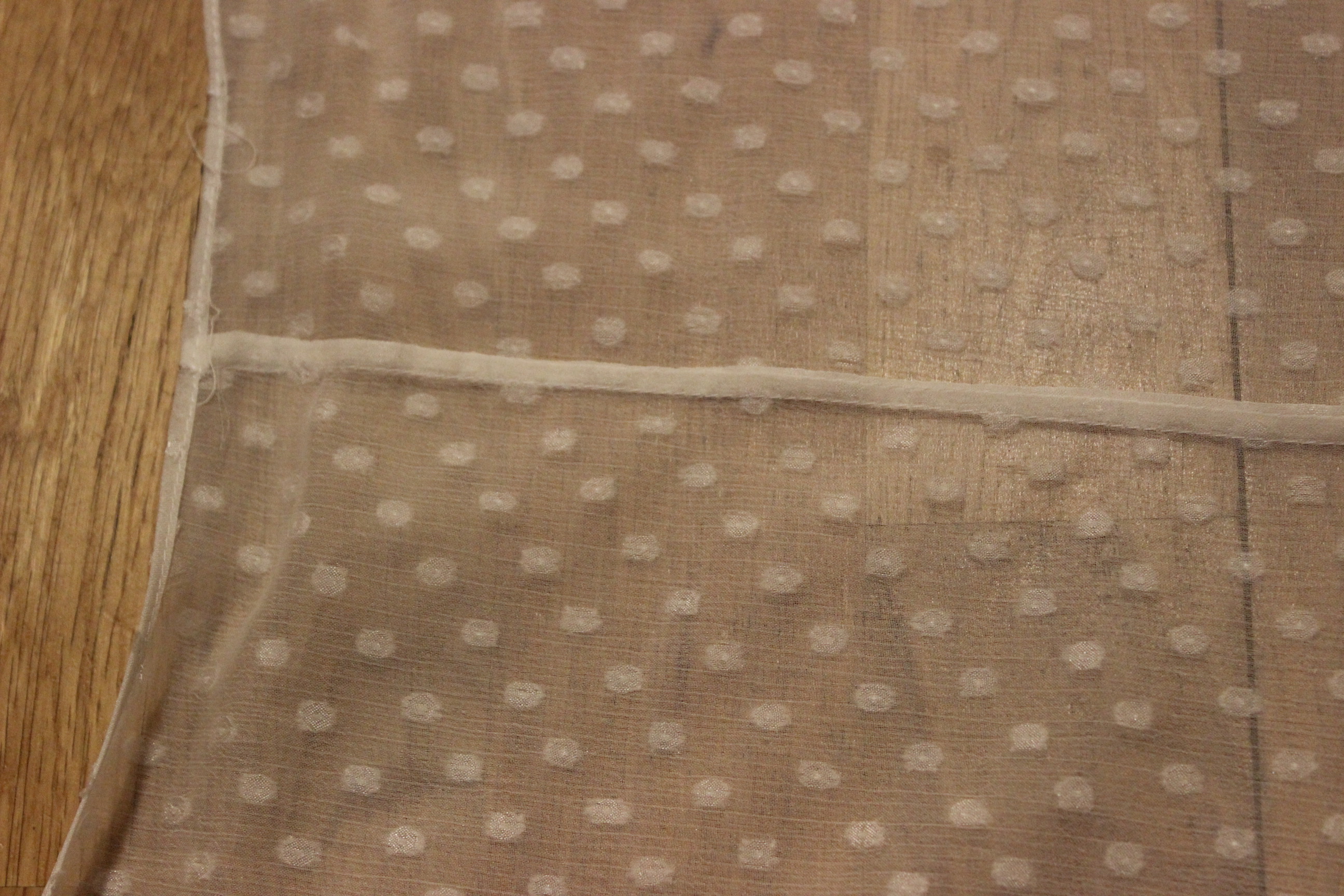
Then I shaped and rounded of the neck, to make it wrap better around the neck. I french seamed the center back, and hemmed the whole thing – everything by machine. IMG_8289

IMG_8291Close up: French seam and hem.

Finished:IMG_8284

IMG_8285

IMG_8280

IMG_8279

IMG_8287

IMG_8276All my “White” items at once.

Just the facts:

Challenge: Nr 9 – Black and white.

What: A big fichu ca 1780.

Pattern: none.

Fabric: 70 cm of dotted white polyester organza.

Notions: Thread

Historial accuracy: I think the pattern shape will suffice, but the material and use of sewing machine is all wrong.

Time: Half an hour.

Cost: Perhaps 20 Skr (1 USD)

First worn: Not yet, but hopefully at a big costuming picknic next month.

***

I had originaly planed to make all tese items compleatly by hand. But as usual life happens, and time is never enough for everything you want to do – so this time the hand sewing had to go.

But I don’t really mind. I kind of think it’s a waist of time to hand sew istorical items made from polyester fabric.

And as you probably can guess – I hadn’t even started the “Big Project” yet.


A 18 century spring Photoshoot

This eastern me and my sister went outside in the beautiful weather to take some pictures of her new ensamble.

She is wearing a chemise, corset, 2 bum-pads, a fichu, a cap, the Pink jacket and the new Pastell UFO Skirt.

Do to some other circumstances we only had about 15 minutes to shoot, but manadged to get some great pictures non the les.

IMG_7724

IMG_7731

IMG_7736

IMG_7751

IMG_7773

IMG_7784

IMG_7791

IMG_7807

IMG_7814

IMG_7802

IMG_7826

IMG_7822

IMG_7825

IMG_7759

IMG_7766Model: Maria Petersson


A 18th Century Pastel UFO

Since I didn’t really had any historical UFOs worth finishing for the HSF challenge nr 8 – UFO (Un Finsihed Object), I decided to make a UFI (Un Finished Idea) instead.

And something I’ve been thinking about, but not had had the time to make, was a matching skirt to my sisters “new” Pink Caraco jacket.

So I brought out the newly re-dicovered light pistage coloured cotton, leftover from my Regency striped gown.2013-07-21 21.24.43I’ve had quite a lot of fabric left (and still do after this project) and it looked so nice together with the soft pink colour of the jacket. So there was really no discussion on what to make of it.

I started by cutting two lenghts of fabric (using the whole width), shaping the top a bit to fit over a bumpad. IMG_7701Then I sewed them together, leaving 20 cm at the top un-stitched, and cut and hemed it to the right lenght.

Then I used 6 withs of fabric, each 30cm broad, to make a ruffle.IMG_7705I sewed the together to a continious piece, and bede sure every piece was the same size.

I wanted to try something new on this ruffle, and drew round shapes on some cardboard to use as stencils when cutting/hemming the ruffle.IMG_7706Smal one for the top, and larger one for the bottom line.

IMG_7707Making a test piece, using some scrap fabric and a rick-rack scissors.

Once I’ve finished the stencils I started to cut the edges of the ruffle. IMG_7709It was a long and tedious work and I emedetly regretted the idea.

Then I stitched on a gathering thread, close to the smaler scalopes.IMG_7711

Gathered, pinned and sewed the ruffle to the skirt.IMG_7717

I placed the ruffle so to make the lower scaloped edge overlap the skirts hem by a few cm.IMG_7719

Then it was time for the wasitband.IMG_7704I cut two pieces each half the wasit measurment, and basted on some interlining.

Then I folded the pieces, putt some cotton cords between, and stiched them together at the ends.IMG_7716Two halves makes a whole wasitband.

I then measured and pinned the pleats in the skirt to mach the front and back waistband. IMG_7721I basted the pleats in place.

And pined on the wasitband.IMG_7720Then I folded the back of the band under and hand tacked it in place.

The finished skirt:IMG_7831

IMG_7832

IMG_7835

IMG_7836

IMG_7838

IMG_7843

IMG_7842

IMG_7846


Just the Facts:

Challenge: nr 8 – UFO (Un Finished Object)

What: A 1750-1780s skirt.

Pattern: None, just measured and cut.

Fabric: 3 m of soft pistage coloured cotton, and scraps of white cotton for interlining.

Notions: Thread, 2 m of cotton cord.

How historical accurate: So so. I think the shape and colour is good. But it is compleatly machine made, and cotton was not really used for this kind of skirts untill a bit later.

Time: Much more then I care to admit. If not for the scaloping on the ruffle, 3 hours, but all and all about 6 hours.

Cost: About 60 Sek (9 Usd)

First worn: On easten for photos (pictures from the shoot will be in my next post).

Final thoughts: Both me and my sister like it a lot. It is pretty, soft and moves nicely when she moves. I will have to make it shorter though – about 10 cm, to make it more of a walking skirt then the evening lenght it curently have. But once that finished I’m sure it will look really lovely and summery.


A Pink Caraco Gift

When the HSF challenge 3- Pink, was announced in december I was more then sceptical. I am certainly not a fan of pink, I wouldn’t even think of wearing it.

But a challenge is a challenge…
And I decided to face my fears (not a fear really, more of a huge distaste) and do the challenge – and do it all the way.

So searcing my stash for something pinkish (yeah right, good luck) I actually came up with two workable fabric options. One pale pink cotton sheet, and a couple of metres of pink/white checkered linnen curtains – both fabric’s been given to me at some point.

Still not sure of what to make, thinking about something regency, 18th century or early 20th century, I decided to wait until the big opera gown was finished, in late januray, to decide.

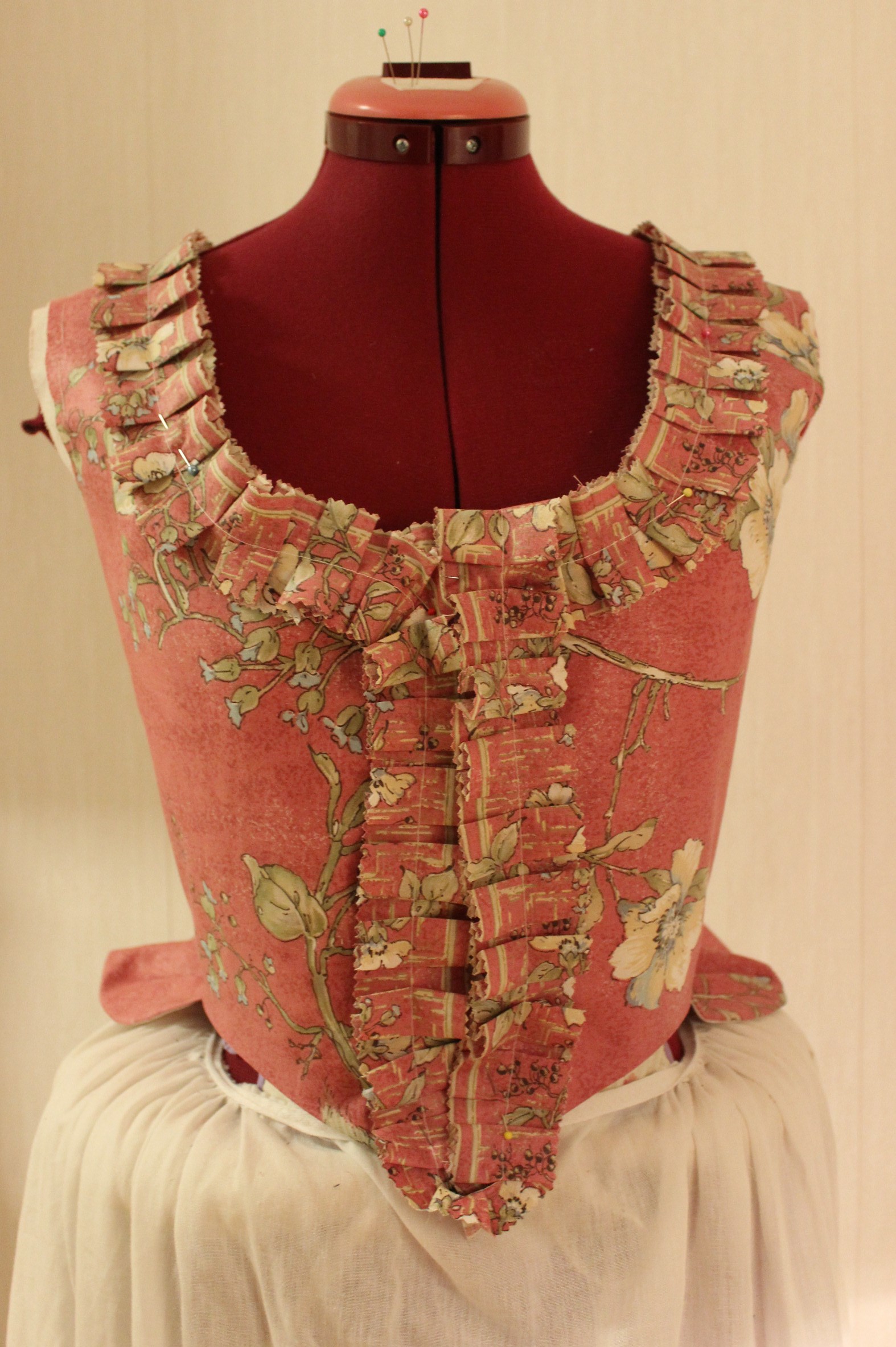
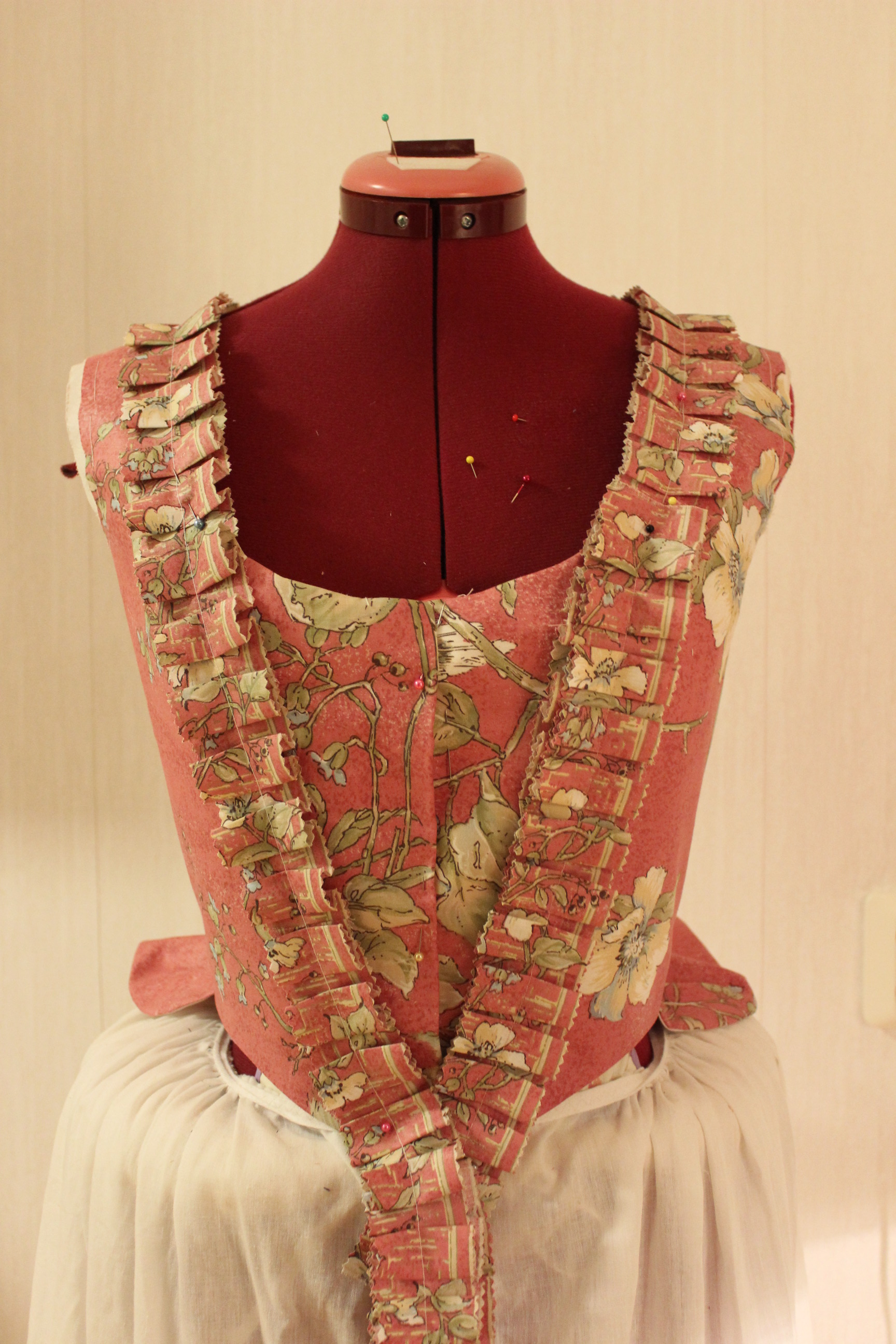
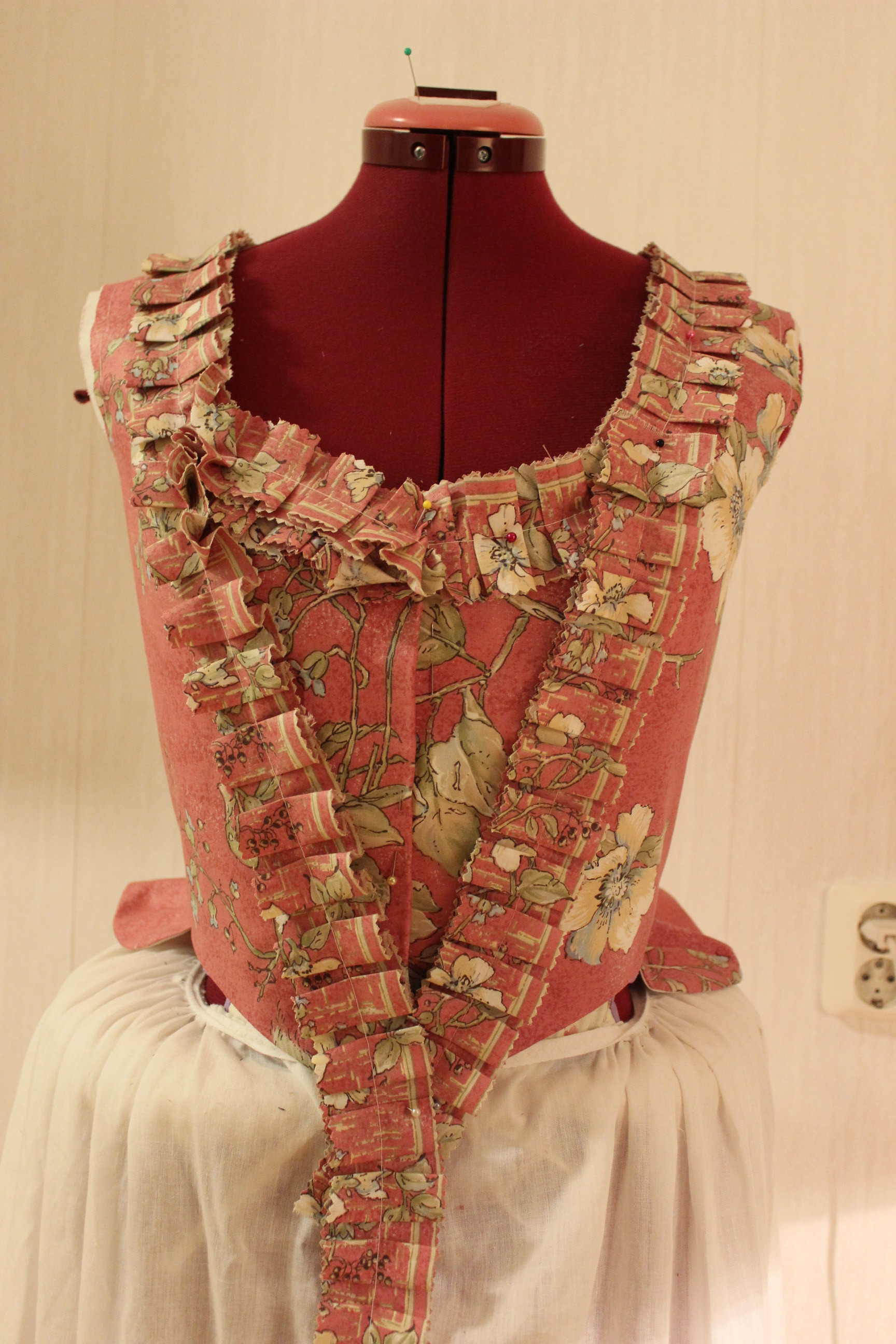
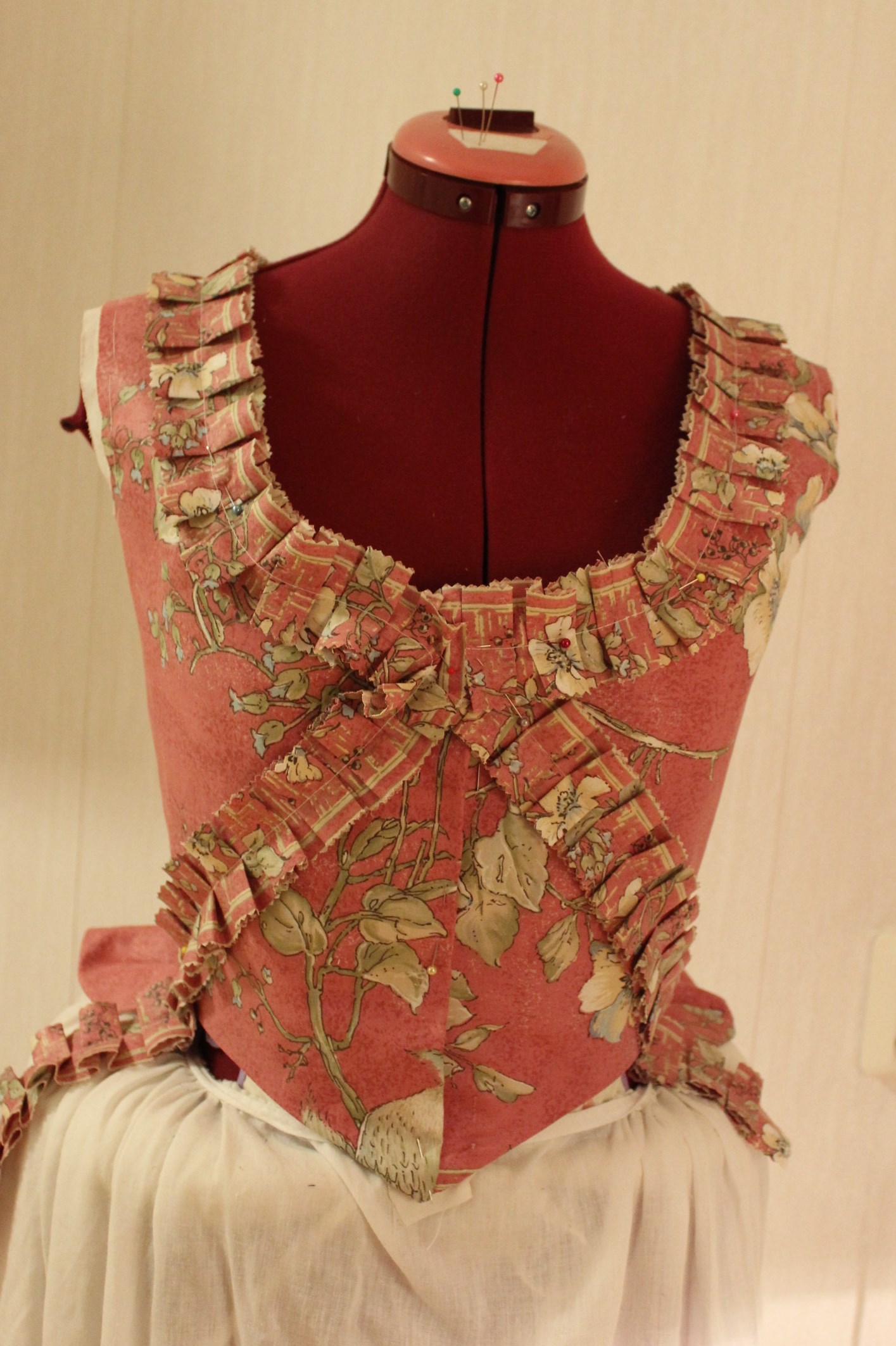
Perhaps it was faith, since I found the most wounderful fabric at an internet auction 2 weeks ago.180551824_21ee55d7-97ff-4039-a871-e3a62da1ef96 I emedetly know I needed that fabric. So I bidded on it and won. And a week ago it arrived.

Despite the fact the amount of fabic was really limited (only 1m), I decided to try to get a 18th century Caraco jacket out of it.

But since I’t will need to be a fairly smal jacket, I decided to make the jacket as a “thank you” gift to sister M. She is always so nice and wounderful and helps me with my projects, and without complaining photographs my costumes out in the freezing snow. Thank you so much for everything!

I’m thinking something like this.274015958547564766_VevBYigl_f

So I put my sisters corset on my dressform and started to drape the pattern.

IMG_6070 IMG_6067

IMG_6068

Then I used a good hour trying to get the pieces out, getting the print in the exact way I wanted.IMG_6077

I sewed it togehter using modern sewing methods.IMG_6118

Snipping the allowence to keep the curved edges nice and smooth.IMG_6120

I put the bodice back on the dressform to get a feeling for how it would look.

IMG_6122 IMG_6123

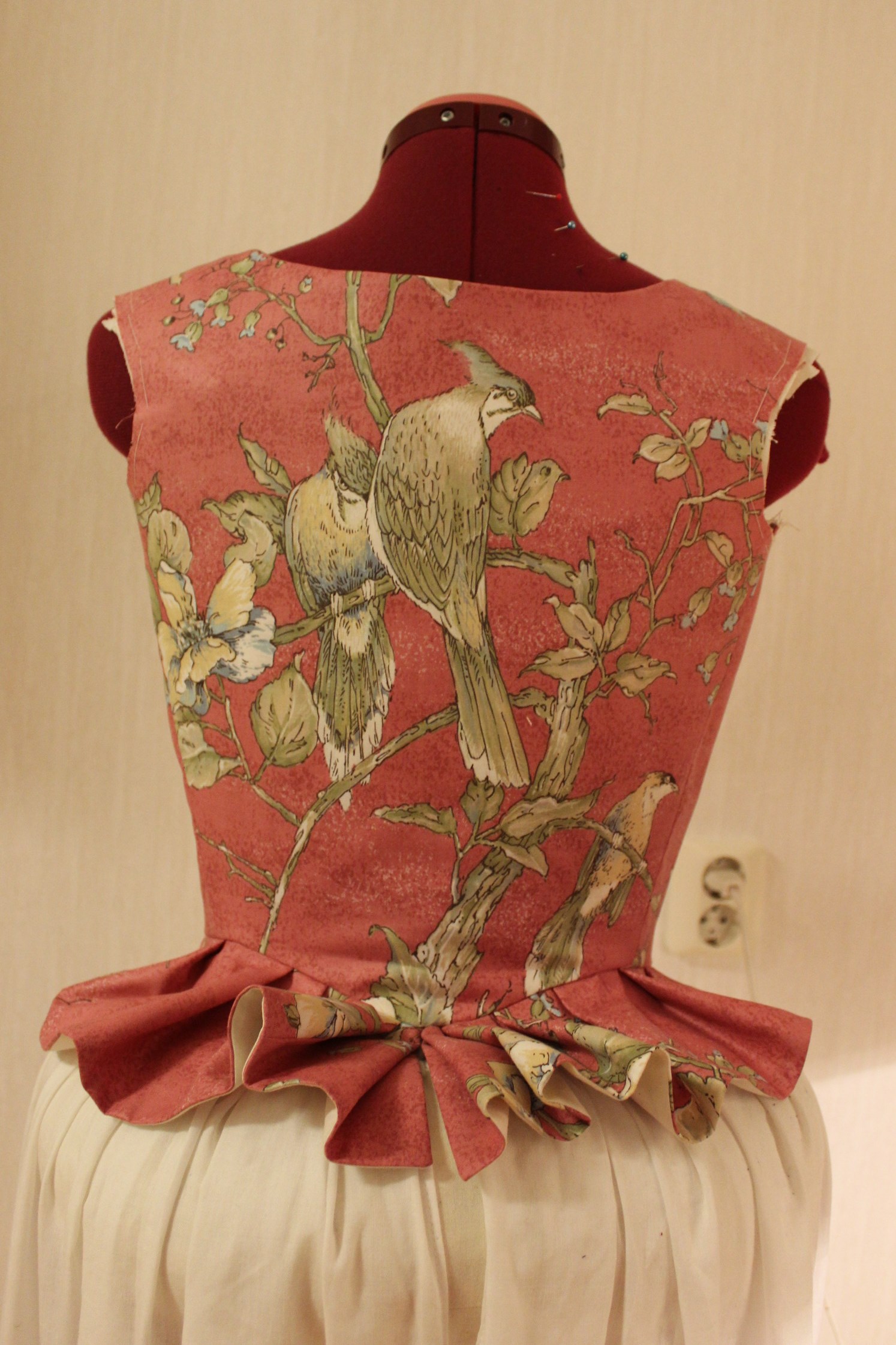
Pretty nice, and I particulary like the birds placements on the back.IMG_6125

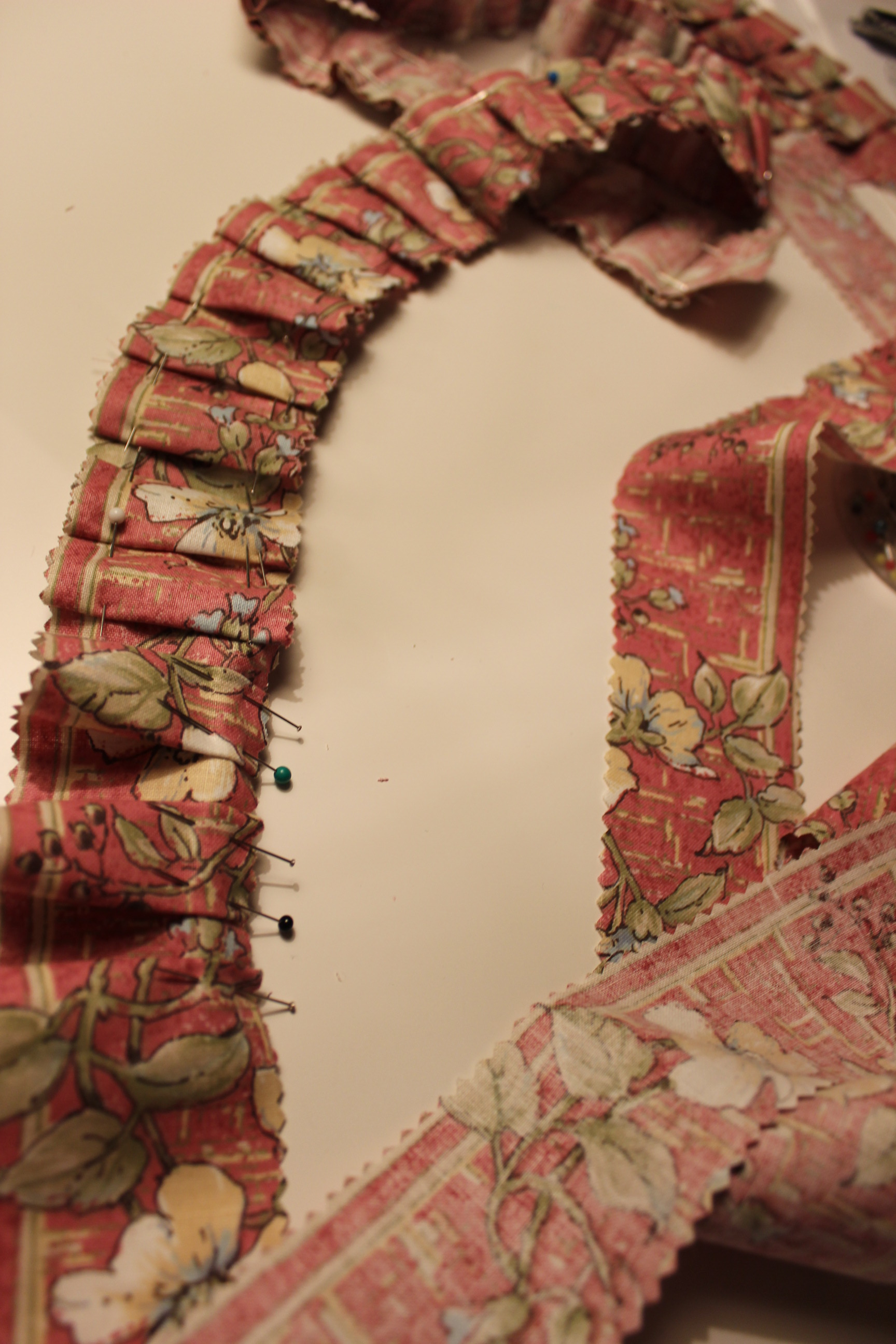
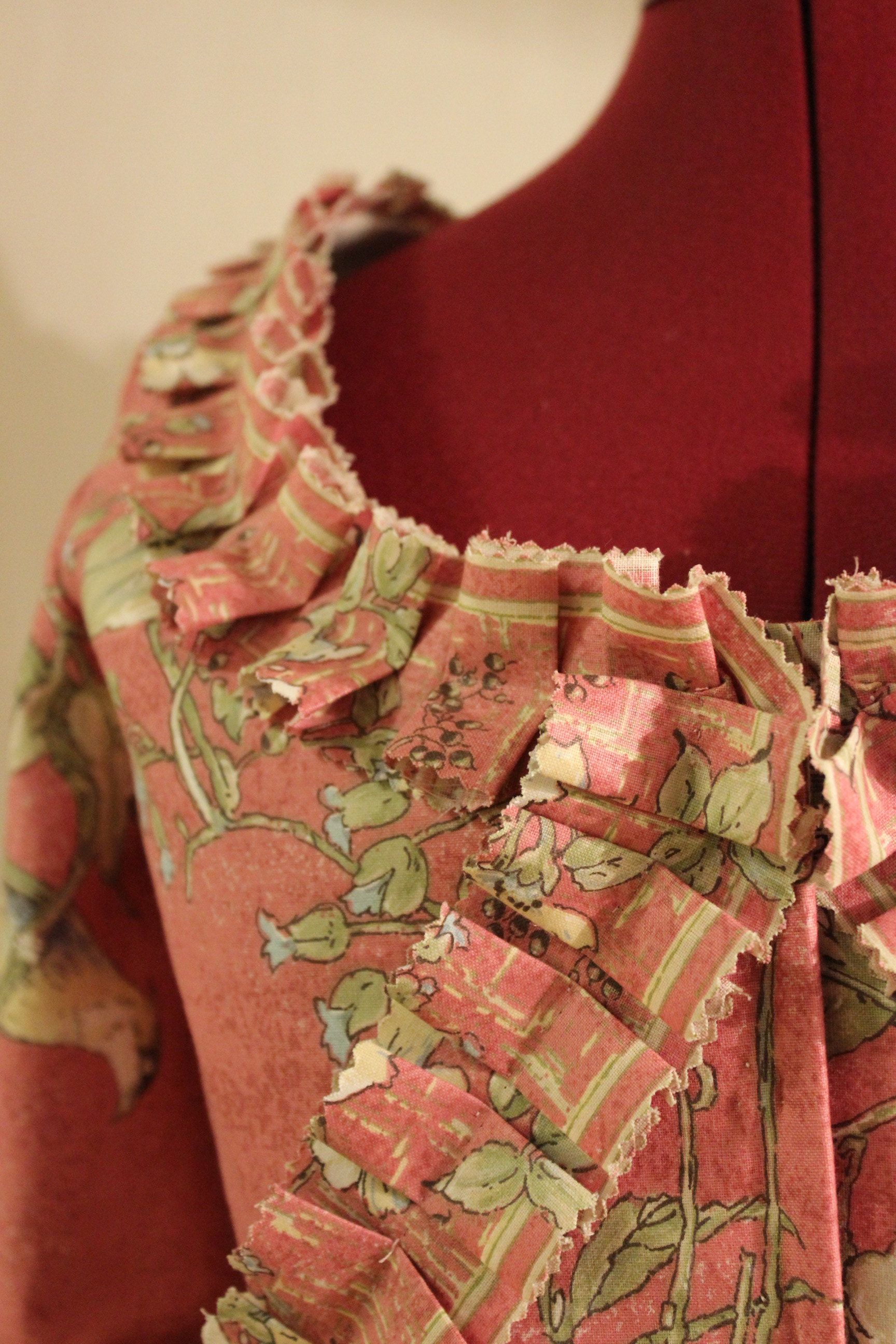
I pleated the trim which I cut from the fabric edges.IMG_6082

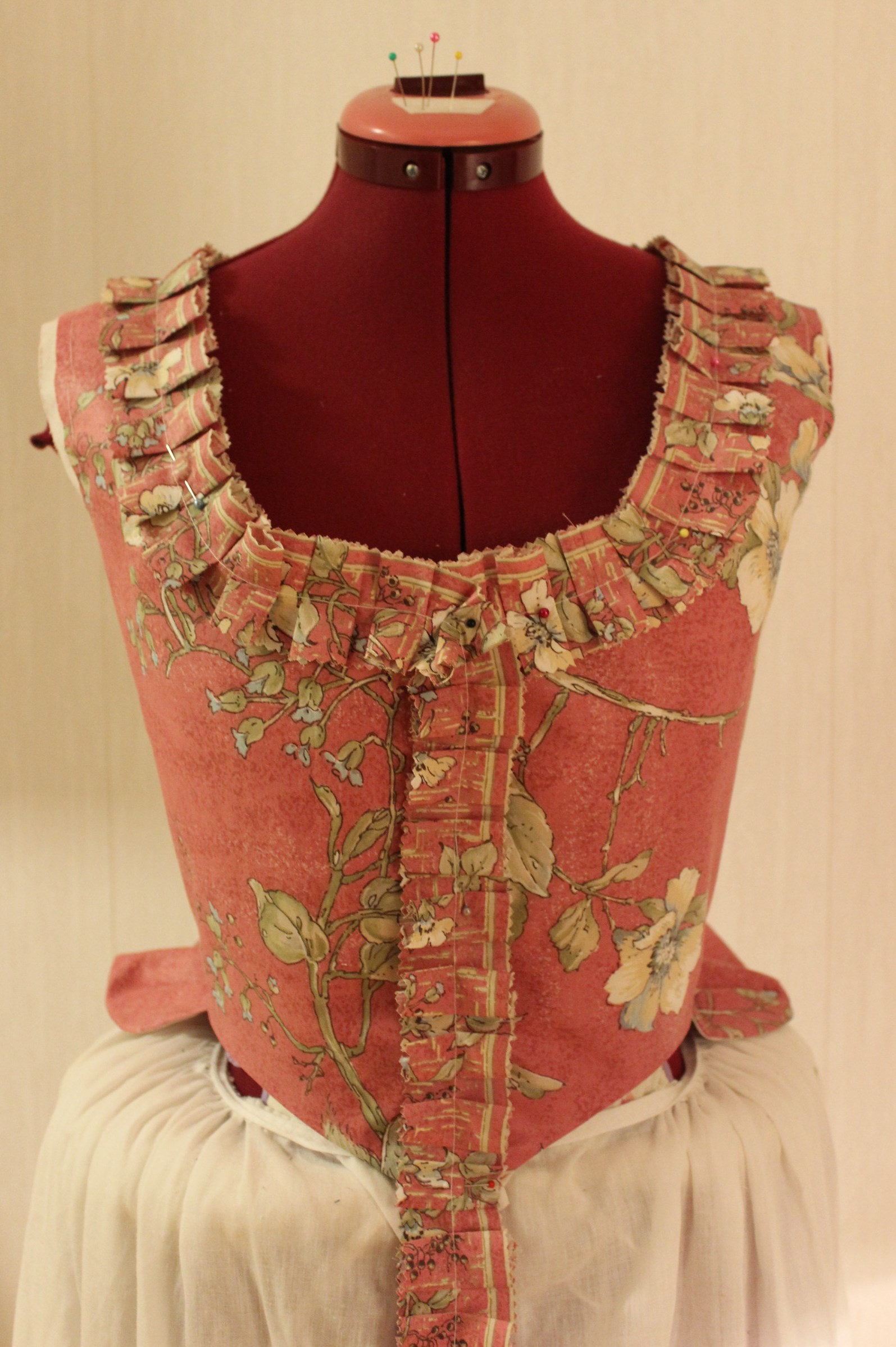
Then I needed to decide on how to place it. Playing around with it, I came up with 5 alternatives.

IMG_6134IMG_6136

IMG_6142 IMG_6139

IMG_6137I think I like this one the best (let’s just hope my sister like it aswell).

Then I put in the sleevesIMG_6144

Getting all the seam-allownces between the layers.IMG_6145

When I started to pin on the trim, I discovered something strange…IMG_6150…A hint: You will have to keep your hands behind your back…
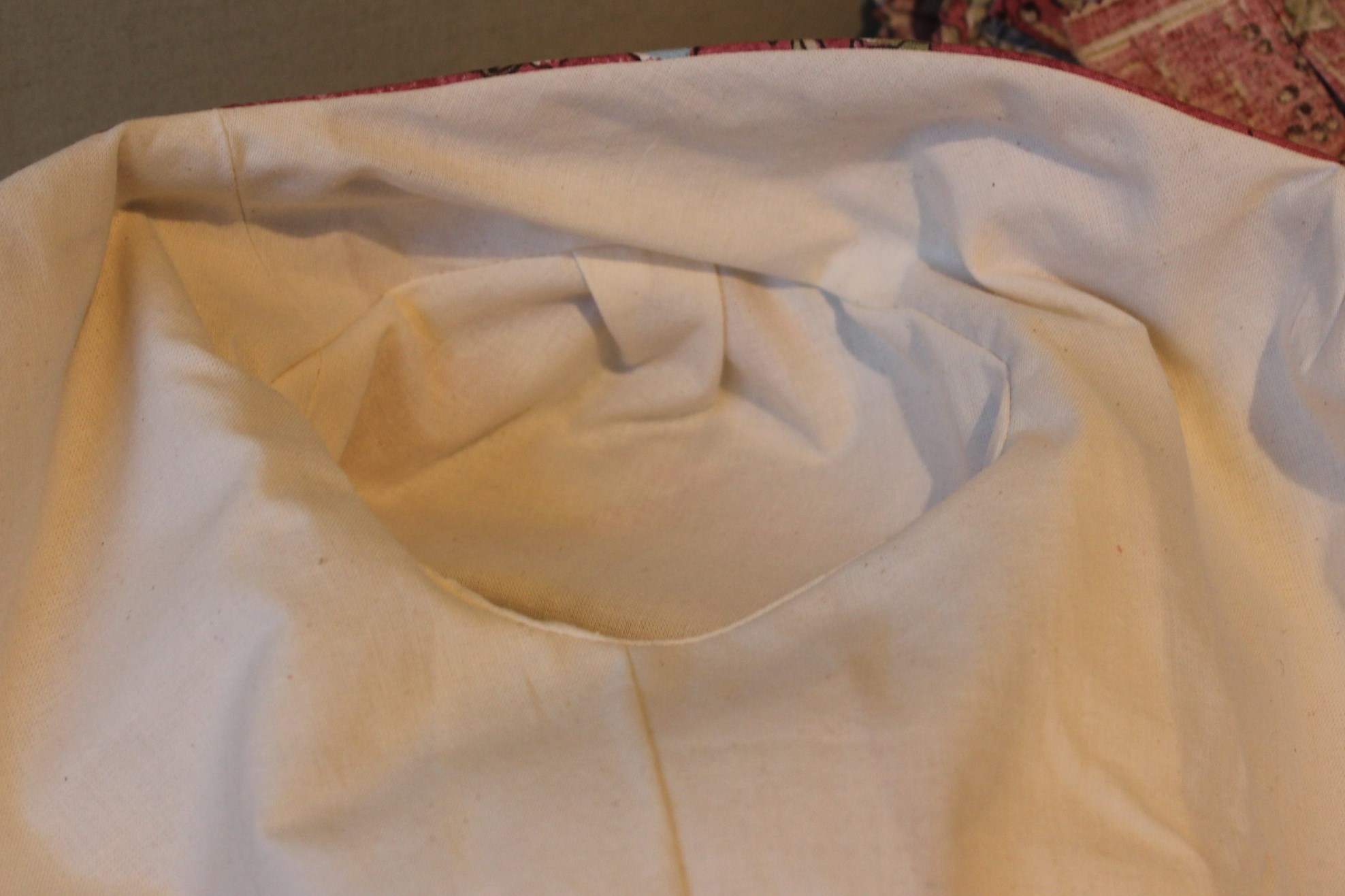
So I ripped the sleeves out (all four of them) and switched the sides. But the result was the same, only worse. So for the second time in on hour, I ripped the sleeves out. Grrr. IMG_6152I gave up the idea of a nice finished inside, and basted the lining and the outer fabric together. And stiched the sleeves in one last time (after pinning it in on the dressform).

IMG_6178

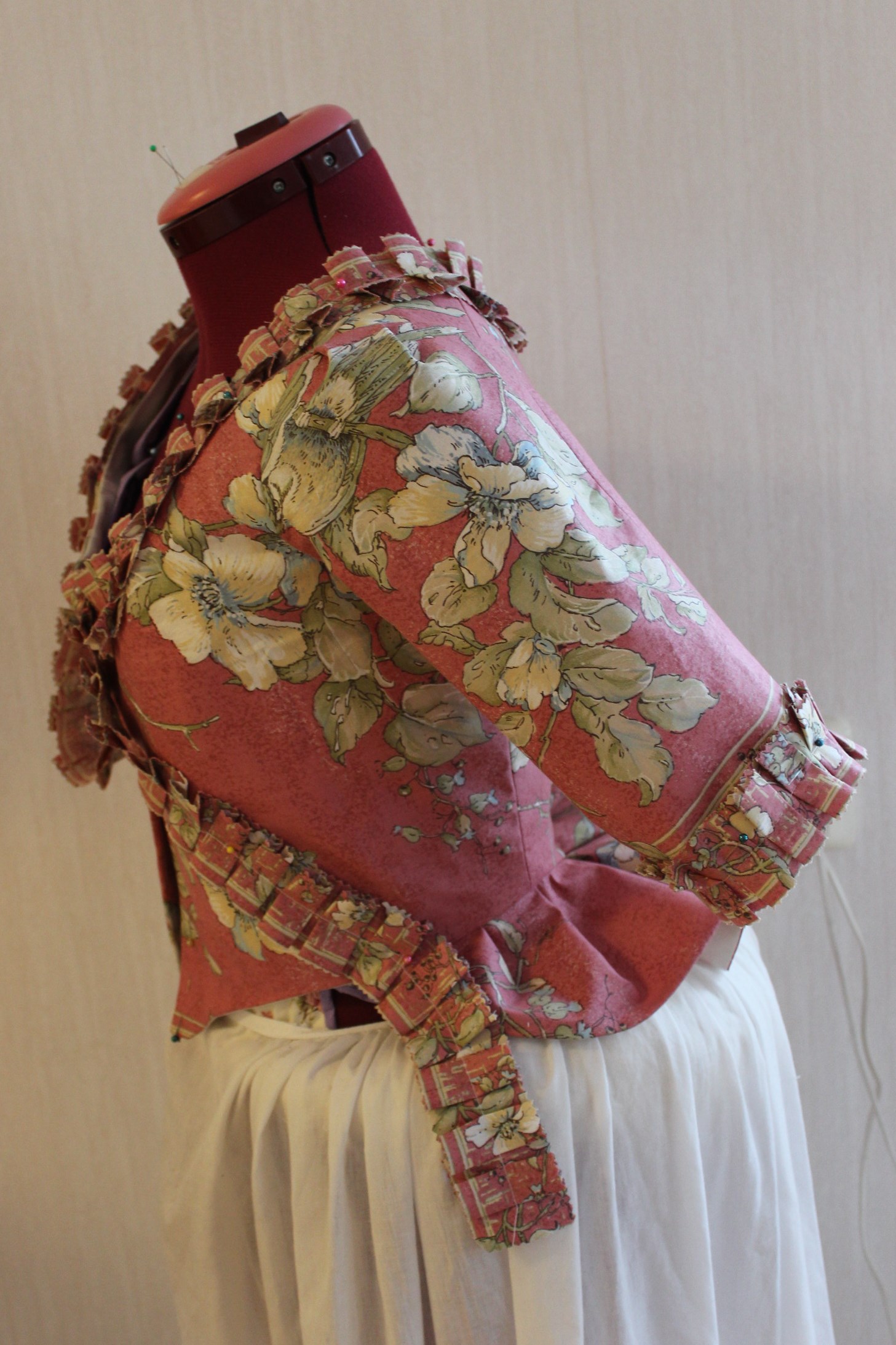
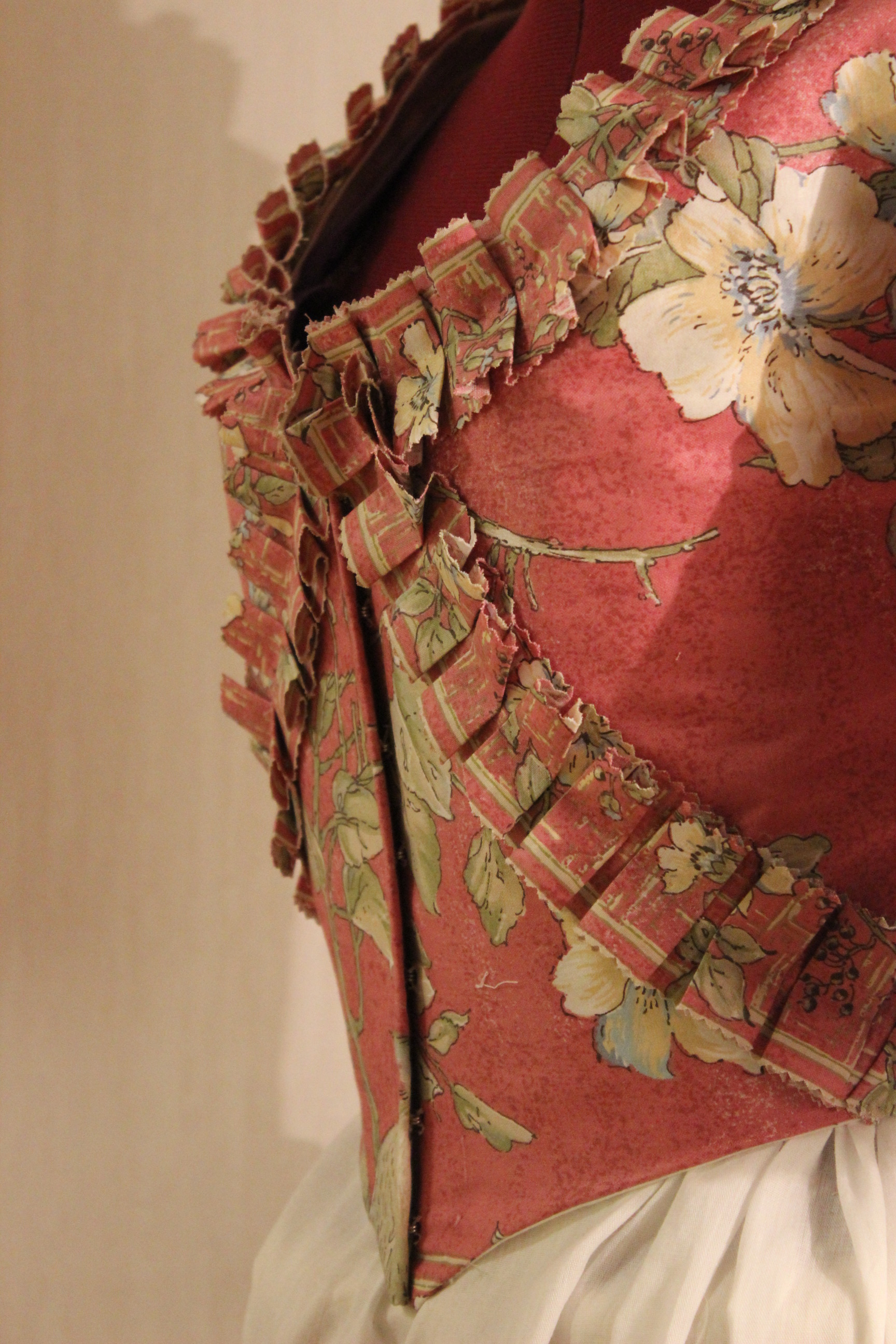
Then I pinned and hand-stiched on the trim. I used the hooks and thread eyes to lock the light bones on the outer edge of the front.

Finished:IMG_6154

IMG_6168

IMG_6163

IMG_6156

IMG_6159

IMG_6160

IMG_6161

Just the Facts:

Challenge: Nr 3 – Pink.

What: A 1770s caraco jacket.

Pattern: Draped my own using Janet Arnolds “Patterns of Fashion”.

Fabric: 1 m of printed pink qvilting cotton, 1 m of white cotton sheet.

Notion: Thread, 8 hooks and 0,6m of syntetic whale bone.

How Historical Accurate: Not at all. The general look of it is plausable, but the fabric, the print and the construction methods are all wrong and modern. But to be fair – this project was never meant to be accurate.

Time: 12 hours.

Cost: 100 Sek (16 Usd).

First Worn: Not yet (I’m not even sure it will fit her).

Final Thoughts: I like the jacket and would gladly wear it if it would have fit me. Hopefully my sister will like it as much as I do…