To Re-do a Green 1840s dress

This december I will attend a 19th century christmas party and since I don’t own anything remotley chrismasy I needed to make myself something to wear. After thinking long and hard, I decided to try my hands at mid century 1840-1860s dressmaking.

I found this image and imediatly fell in love with the simplicity and elegance of the dress. I also liked the fact that is wasn’t a “Pretty Princes dress” but something a lady of my age and income wold have worn back in the days.

107101297358915514_aCE87gwt_c

I already had the perfect fabric for it.

IMG_2832

It is a bedsheet I bougt for 50 Sek (5 Usd) at goodwill a while ago. I’ve picked it up thinking it would be perfect for some les fancy dress. And since the bedsheet was so big, when I ripped the seams open and ironed it out, I got 1,5 x 4m of soft cotton fabric. That means I pay about 12 Sek per metre. Yay!

Then I remembered the 24th HSF Challenge: Re-do. You should Re-do any of the prevous challenge from the HSF 2013. So wich one would suit my dress the best – Green of course!

Then I got to work.

Draping the bodice lining on the dressform. Pinning and cuting away the excess fabric.
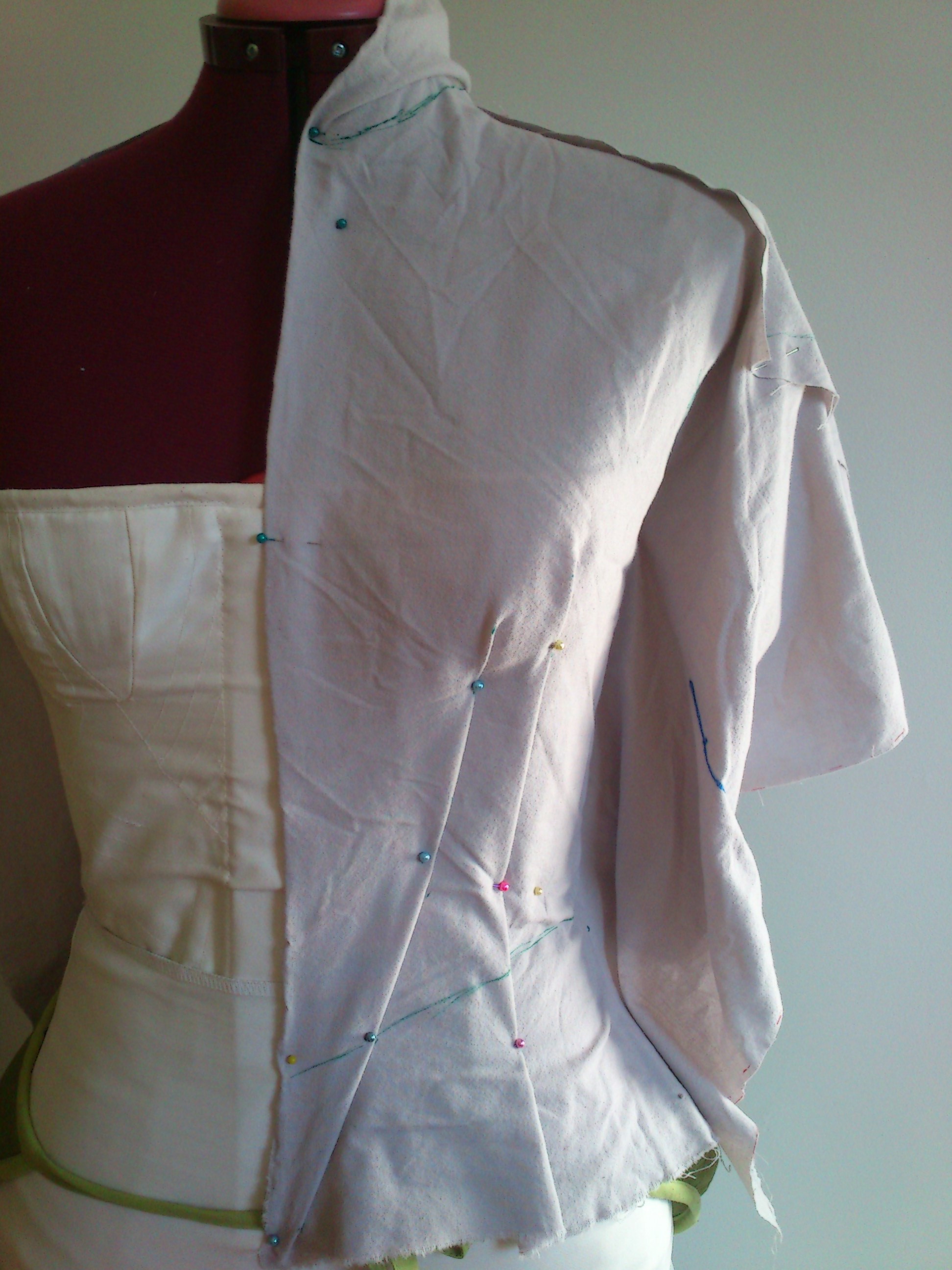
2013-10-13 15.08.502013-10-13 15.16.49

2013-10-13 15.17.052013-10-13 15.16.56

Then I draped the outer fabric of the bodice.
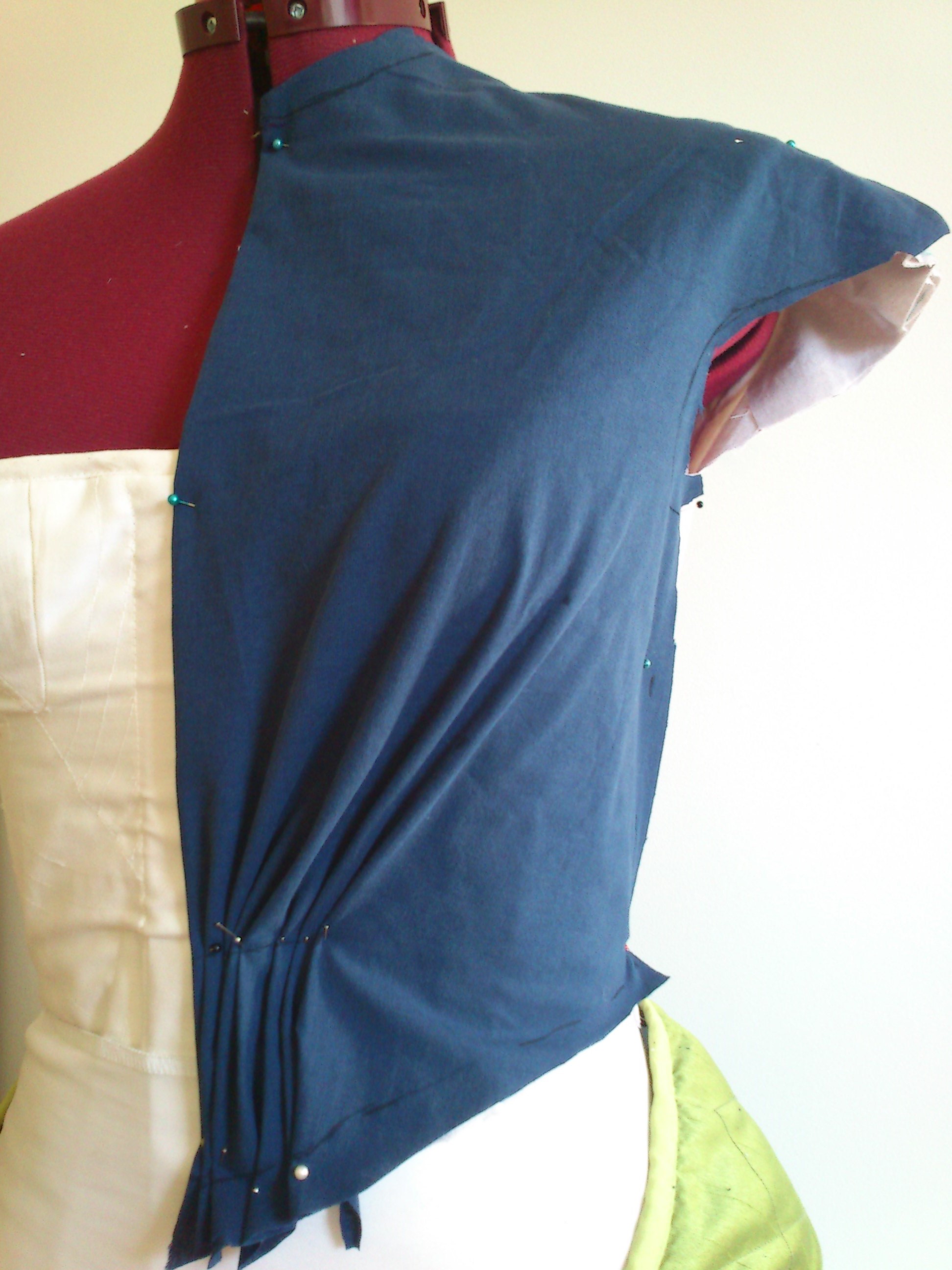
2013-10-13 15.40.30

I cut and made a mock-up, which I then tried on.

IMG_3915

It did need some alterations like moving the shoulder seam, and spreeding the front piece to get some more drape.

IMG_3921IMG_3923

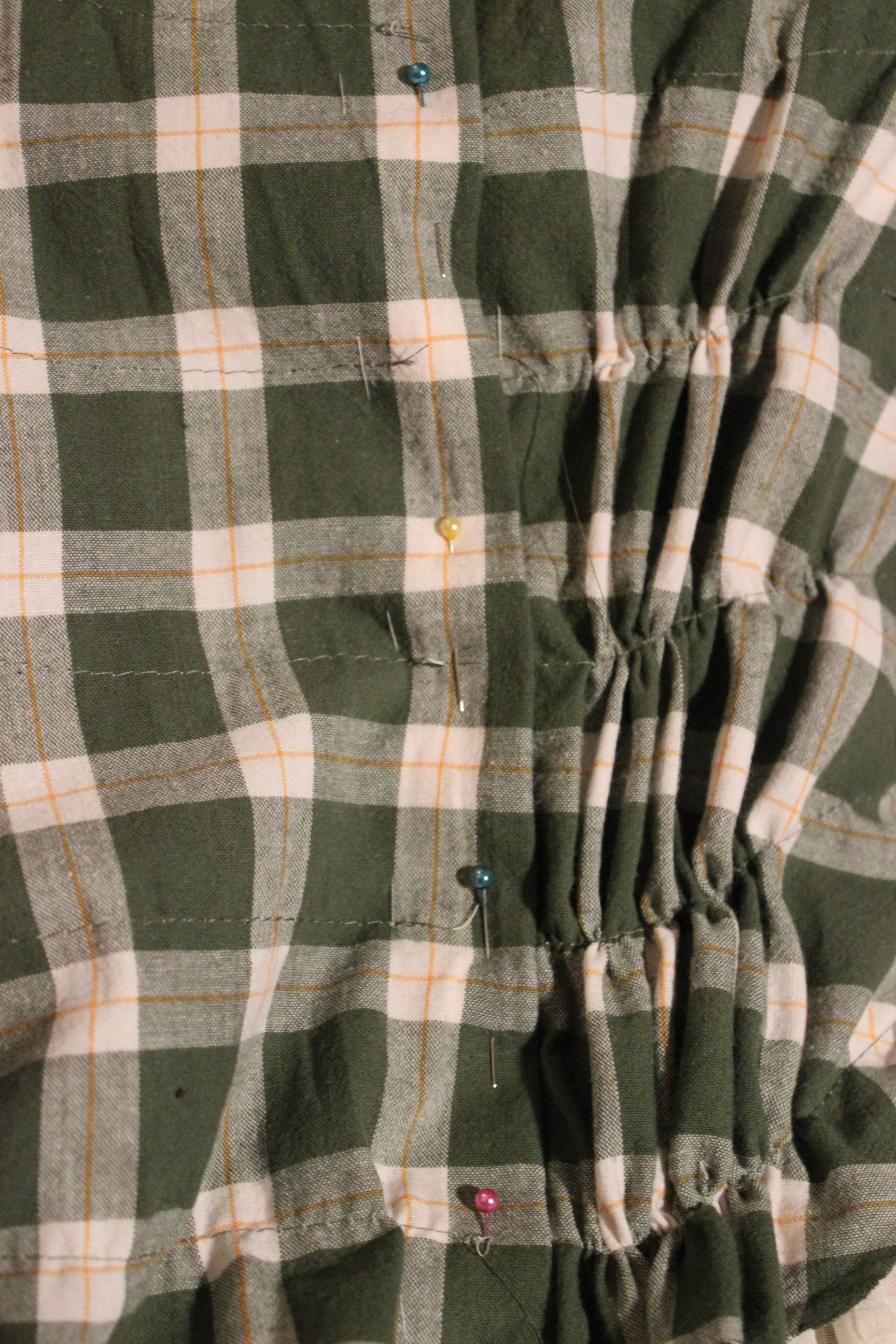
Then I cut the fashion fabric and got to work interlining and sewing boning chanels to the bodice, basting it togeter to get a idea of how the draping would look.
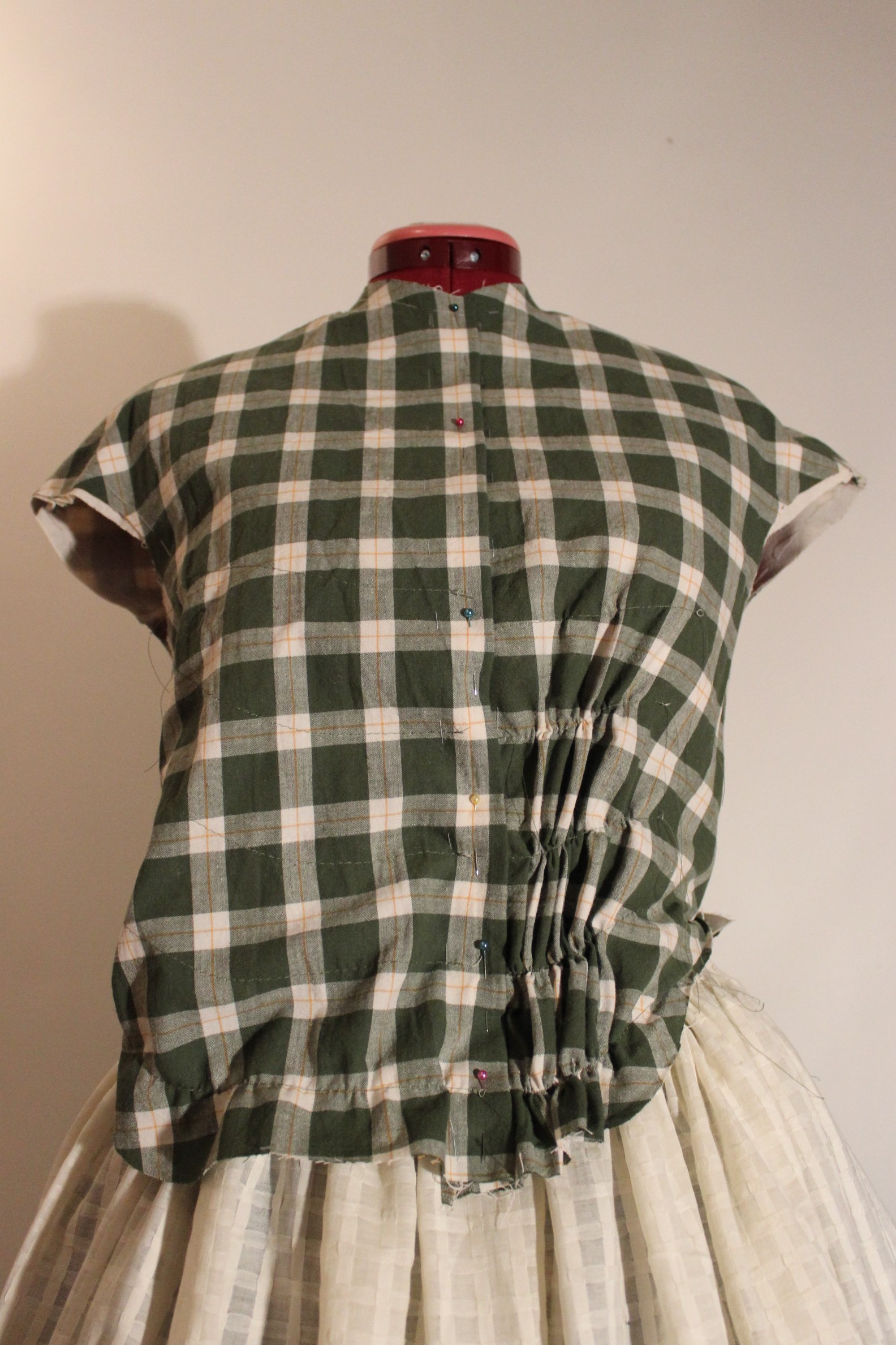
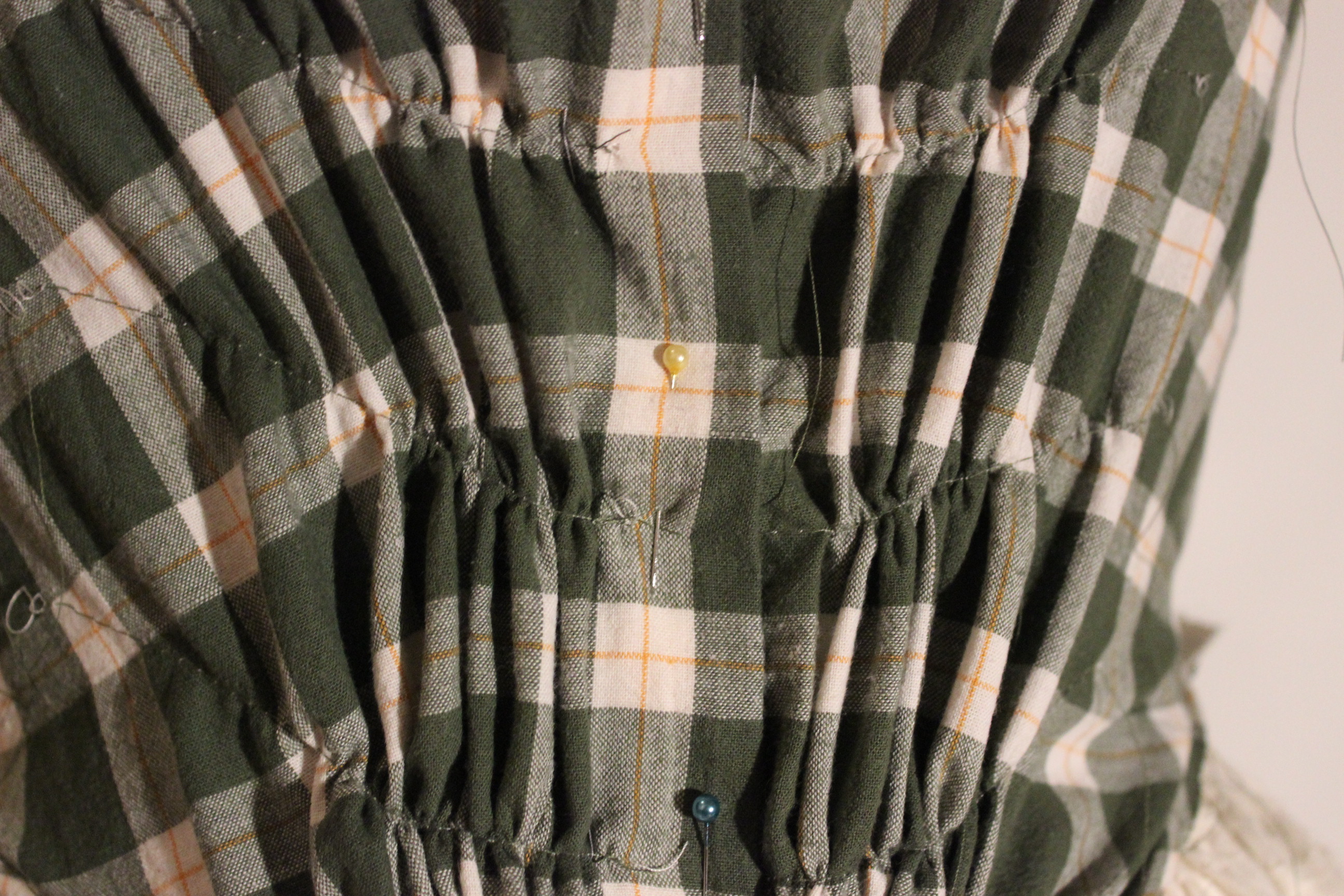
IMG_3964IMG_3972Draping left side, using 4 rows of gathered thread.

IMG_3977IMG_3978And both sides gathered.

Then I did a second fitting.

IMG_4013IMG_4011

The bodice needed some changing in the neck and shoulders. I also needed to shorten the waist a bit in the back.

After making the adjustments I continued the asembeling of the sleeves and bodice. Tucking all the raw edges and sewing on some boning channels.
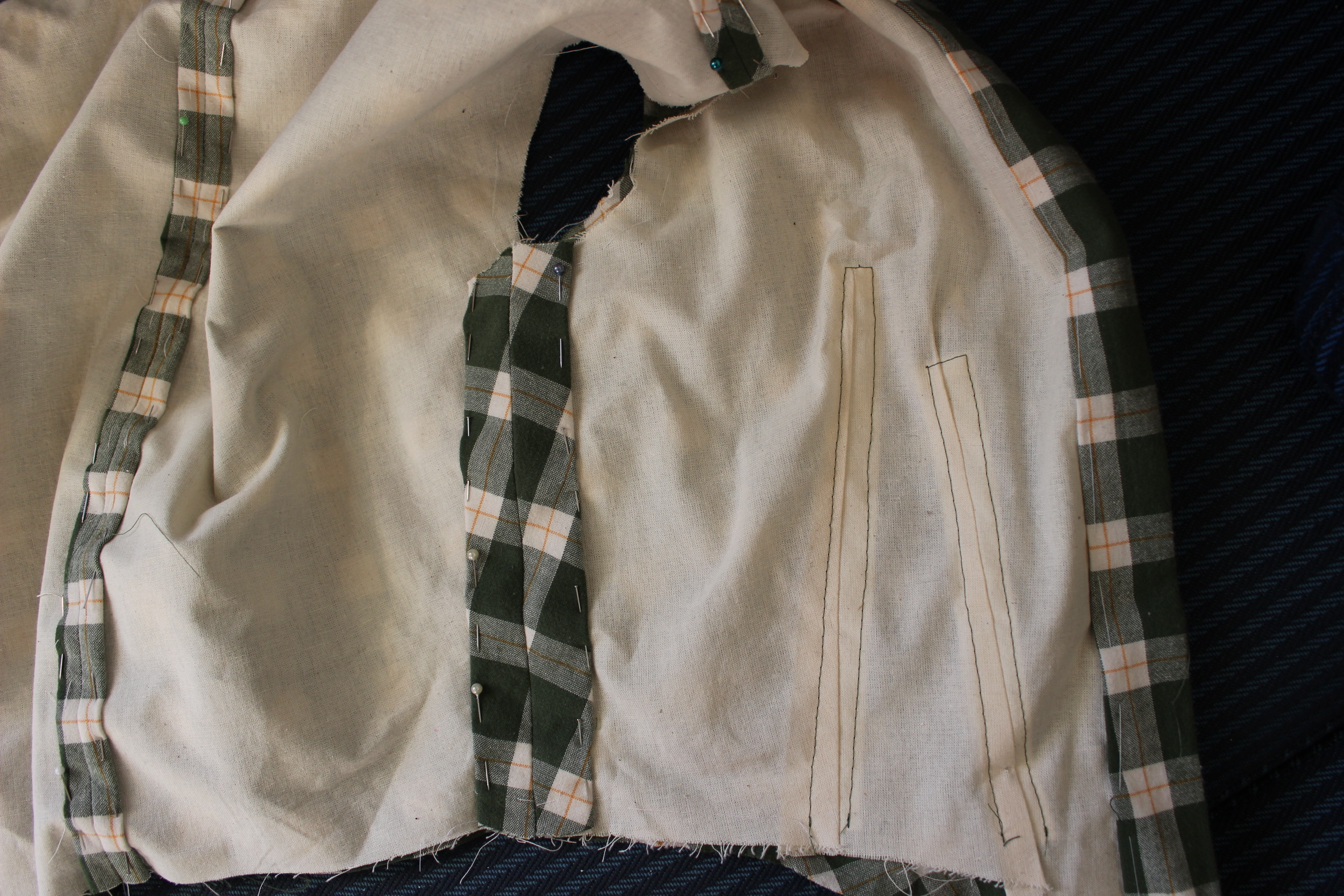
IMG_4043

IMG_4100

IMG_4108

I decided to make the skirt seperate to make the fitting and closing of the dress esier.

The skirt is made out of two widhts of fabric sewn together and gattered at the waist, closed by a hook and eye at the left side.

IMG_4094

IMG_4095

I gattered the sleeves into the sleevecap and made 3 decorative rows of gattering on each sleeve.

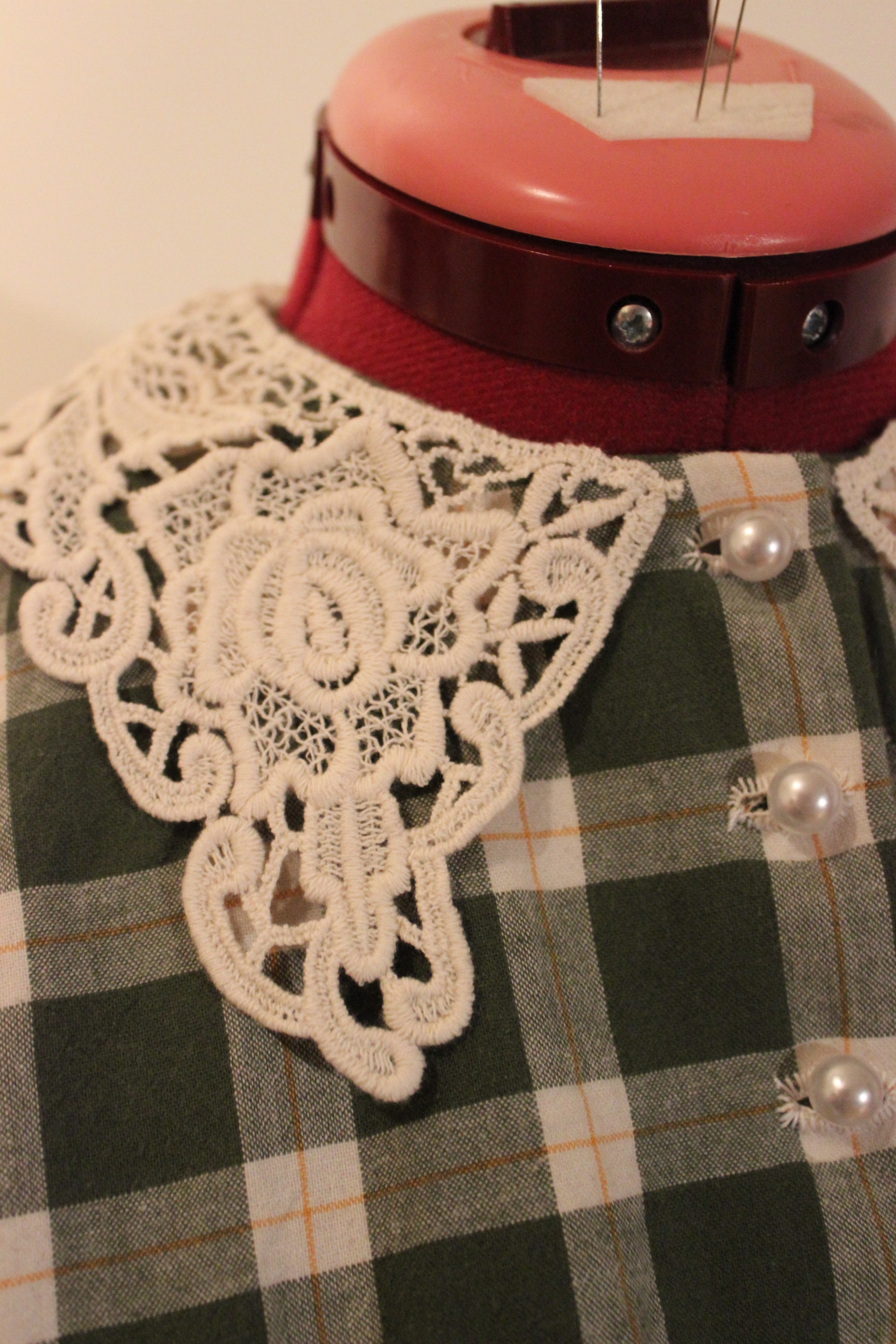
Then I bought some pearl butttons and worked the button holes by hand, placing them (as on the inspirational dress) only on the white parts of the center front.

IMG_4104

I also decided to put on a crocketed lace collar I’ve had in my stash for ages.

IMG_4116

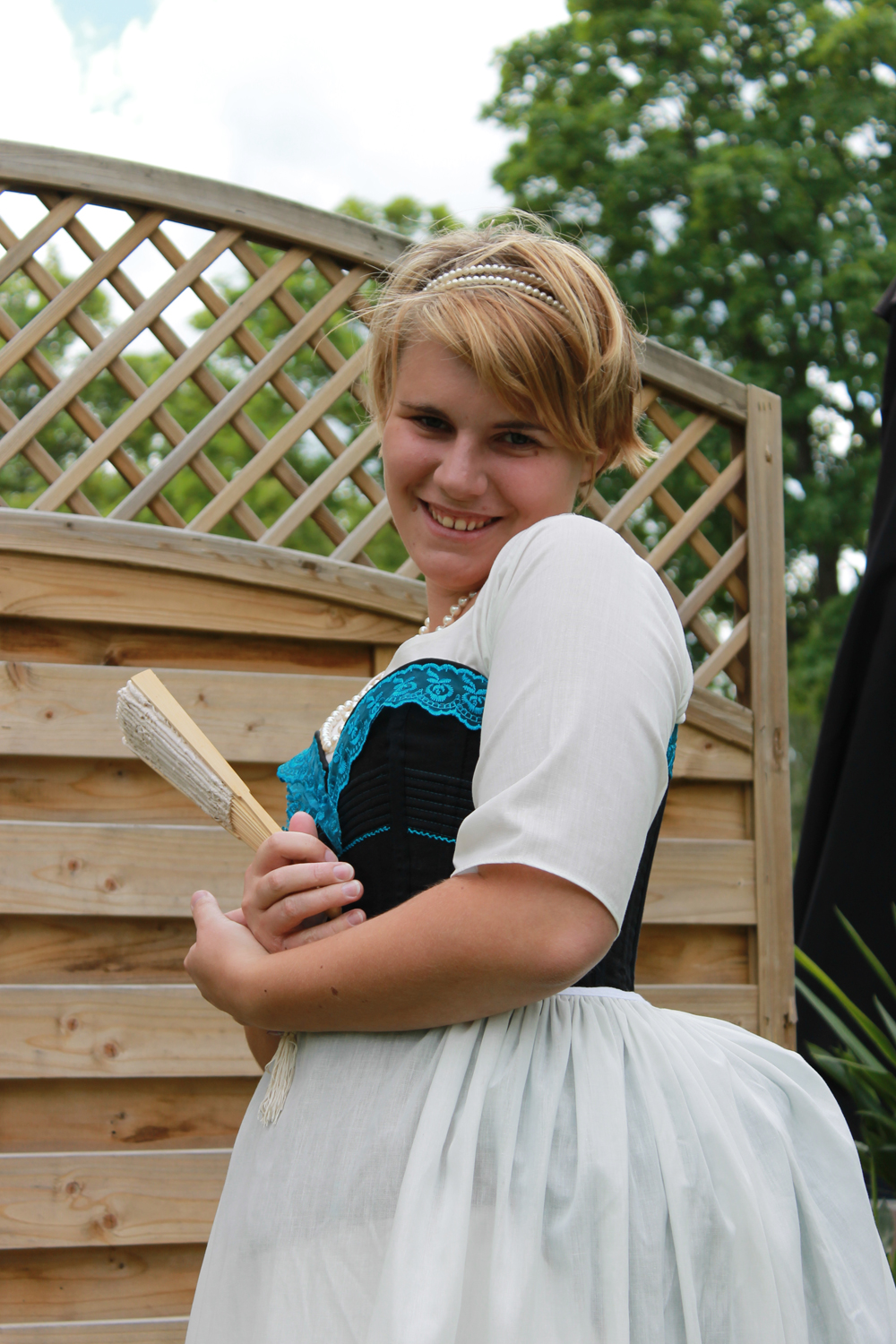
I’m so happy with how it turned out, and think I manadged to use the inspiration to its fullest yet put my own touch to it.

Can’t wait until I got to wear it…

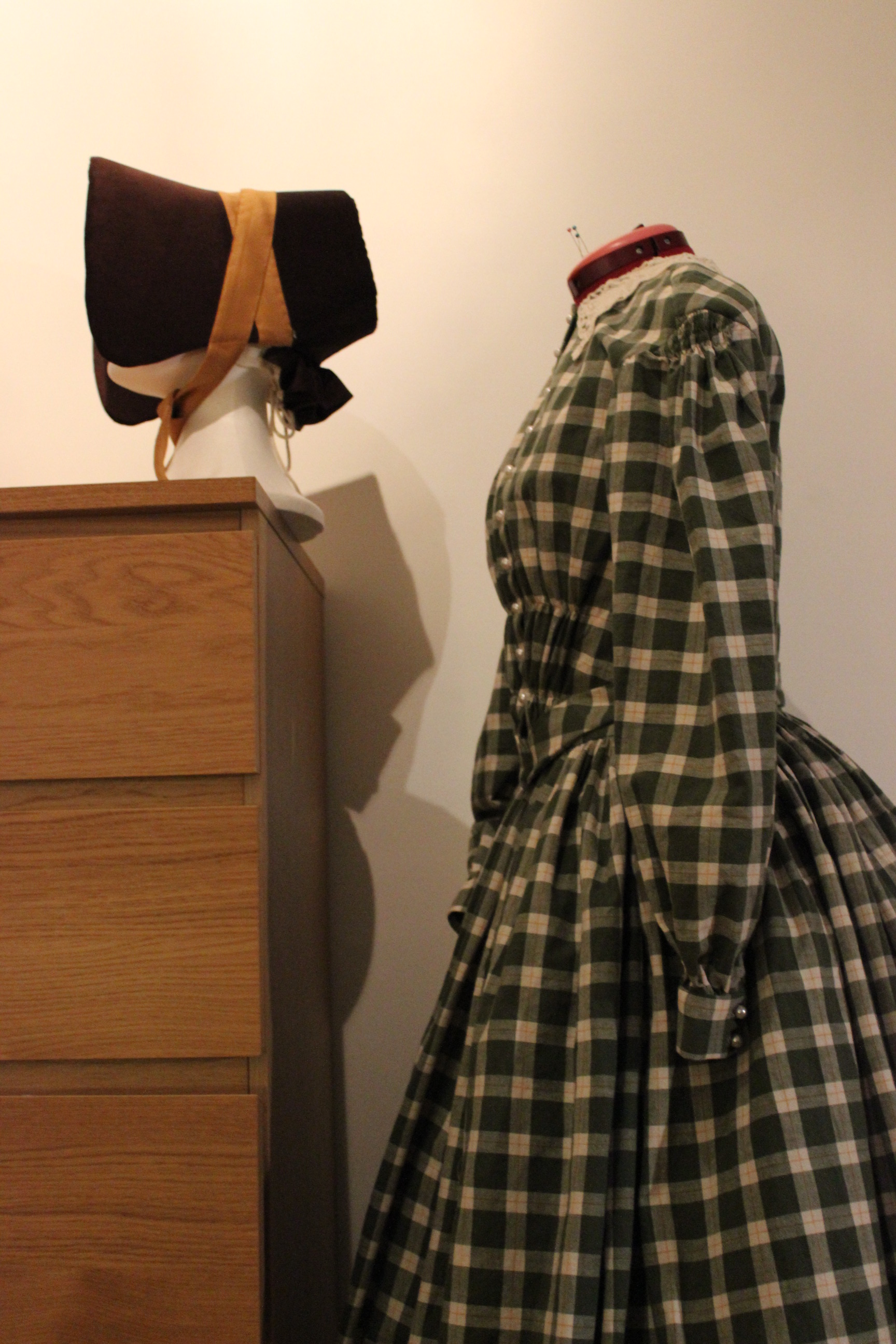
The finished dress:

IMG_4109

IMG_4118

IMG_4132

IMG_4125

IMG_4117

IMG_4131

IMG_4112

IMG_4121

Just the facts:

Challenge: nr 24 Re-do – Challenge 21 Green

What: A green/white checkerd dress

Year: 1840-1850s

Pattern: I draped my own.

Fabric: 1 checkered bed-sheet (1,5 x 4 m) and 0,5 m cotton for interlining.

Notions: Thread, 14 buttons, hooks and eyes and a lace collar.

How Historical Accurate: The dress is mostly done by machine and with modern techniques, but the fabric and the look of it is about right. Maybe 6/10

Time: About 15 hours.

Cost: 200 Sek (22 Usd) (150 for the buttons, ouch!).

First worn: Will be on dec 14th at a 19th century christmas party.

***

And as it will be worn on the event, with apron, bonnet and shawl.

IMG_4115

IMG_4133

1840s bonnet (Gratetude)

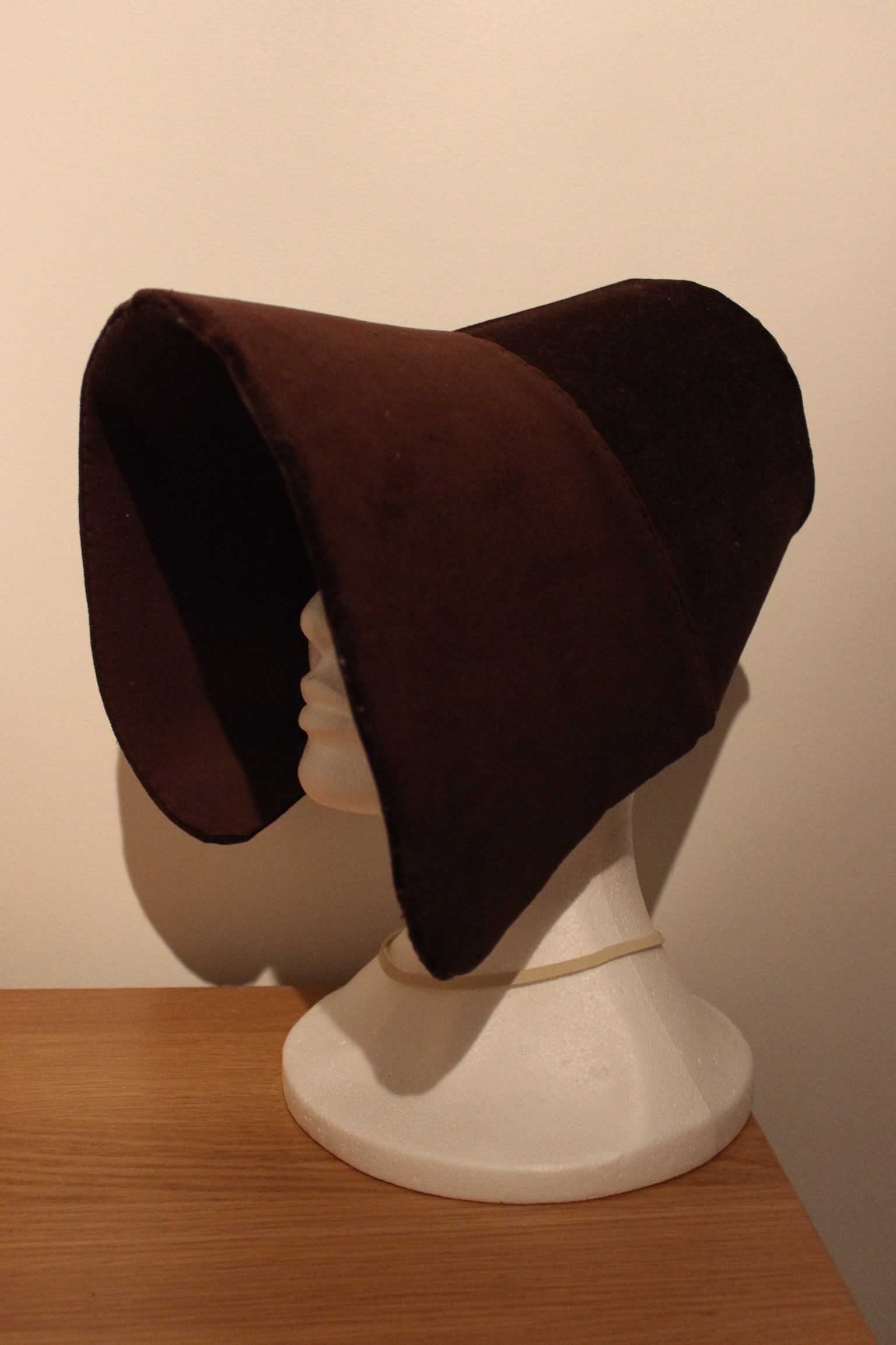
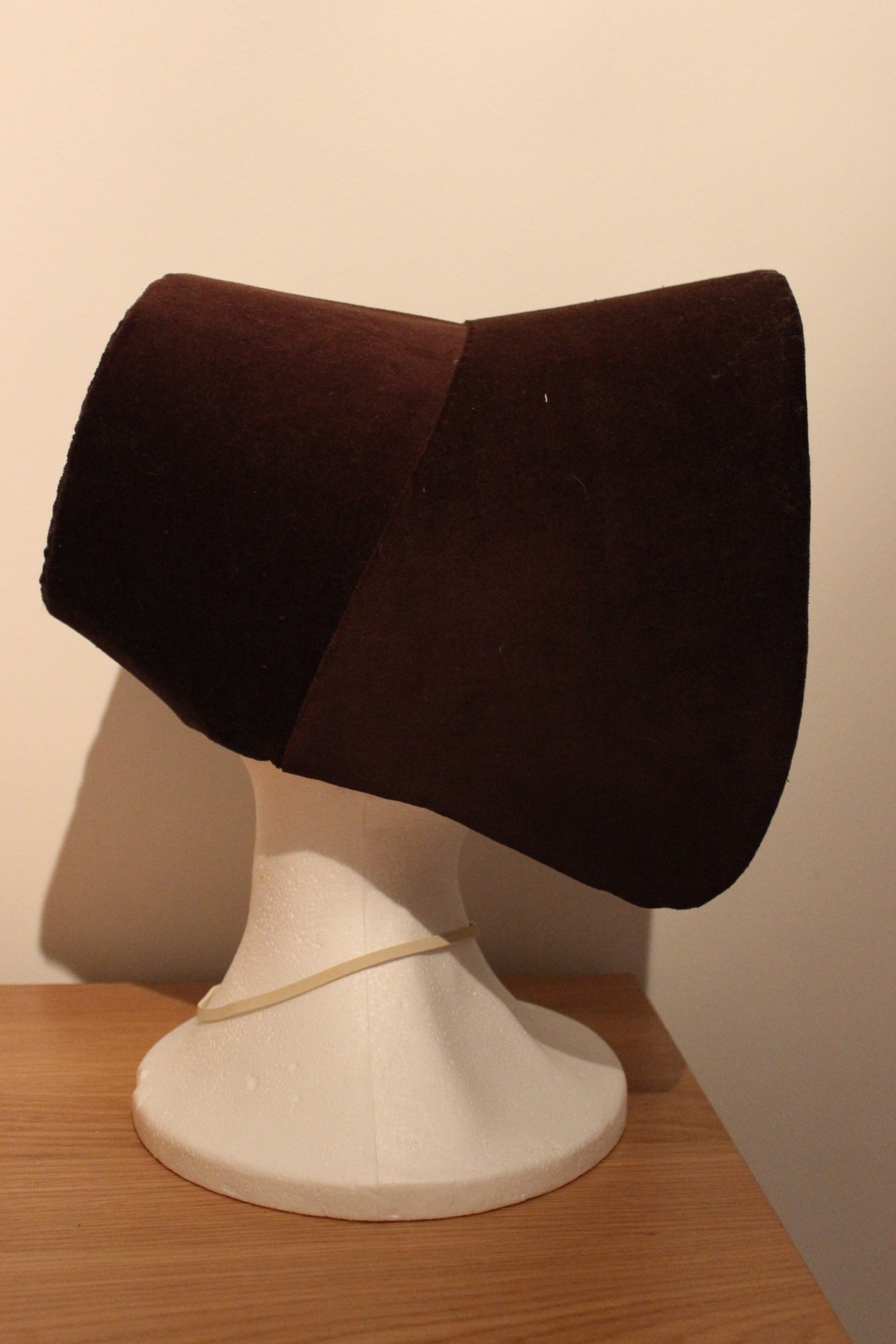
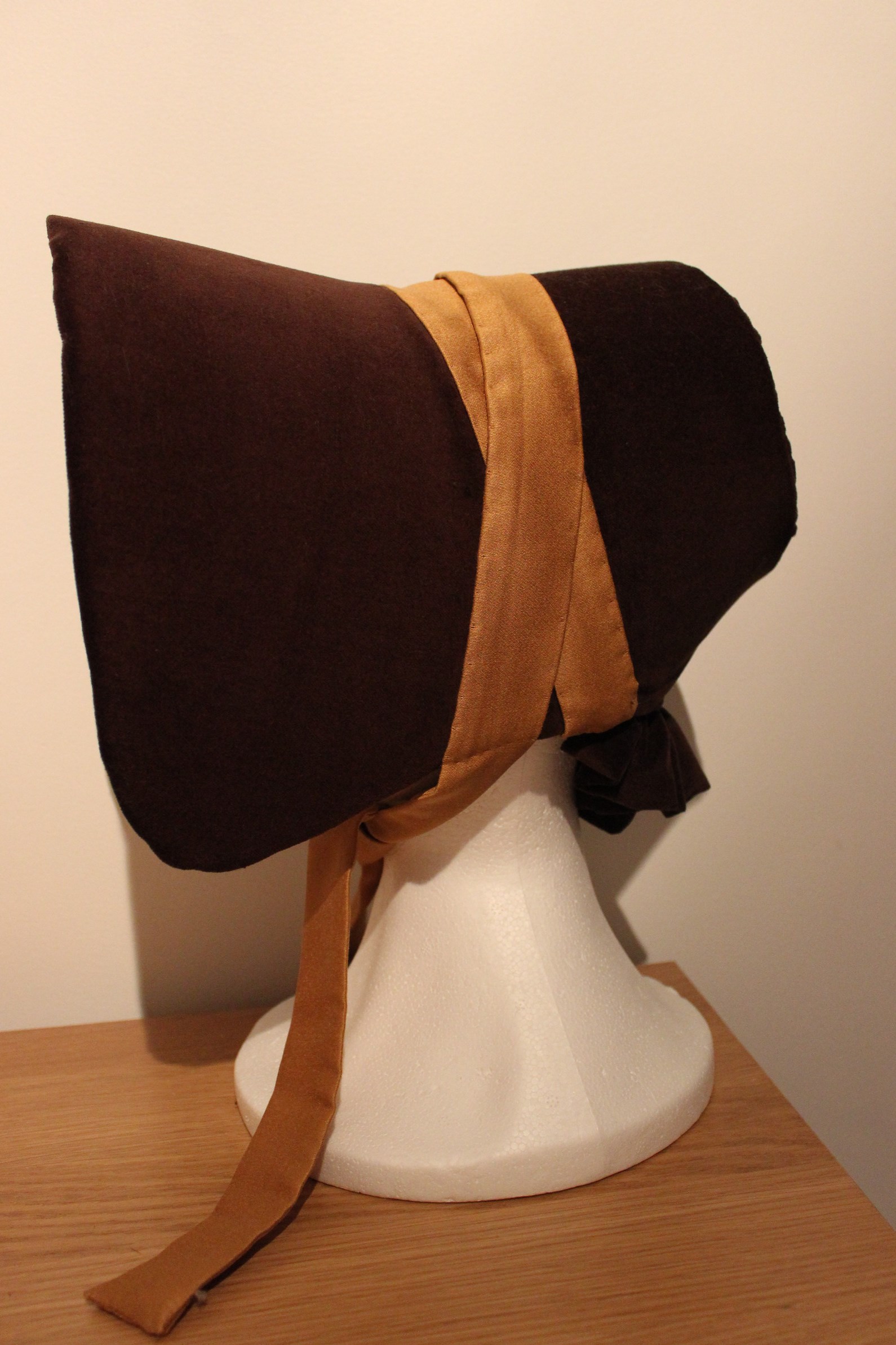
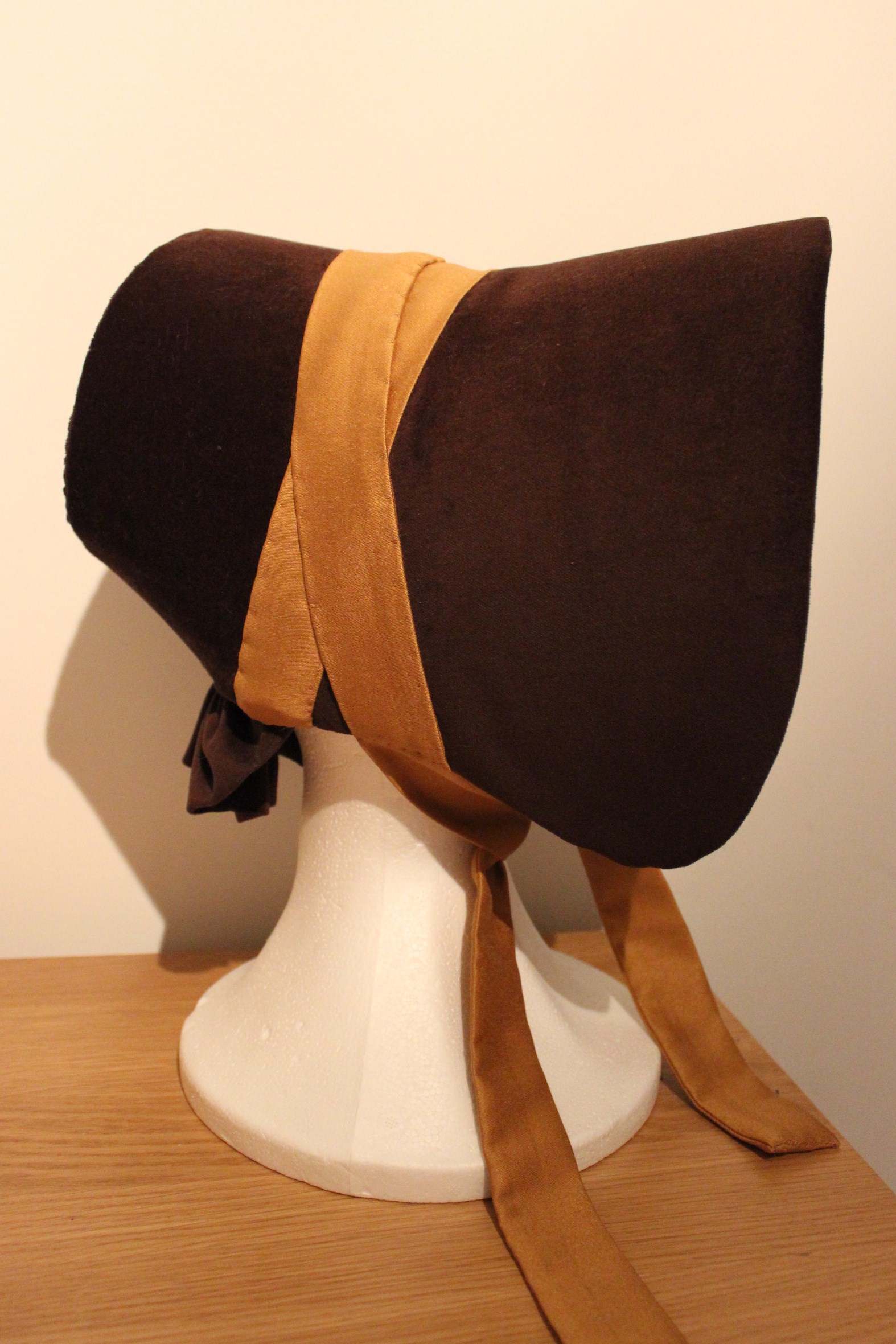
As my entry for the HSF Challenge 23 Gratetude, I decided to make a 1840s bonnet.

This desicion was made based on multiple things: I wanted to make something I never done before in a tecnique I never tried, and keeping myself outside the comfort zone.

And I think the early Victorian headwear are both pretty, interesting and would provide a suitable challenge because of the millenery parts.

I also really need to make myself some 1840-1850s headwear to wear to an upcoming event.

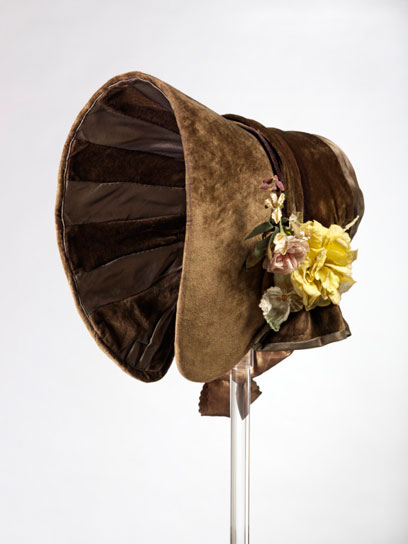
This is what I whant to accomplish.

56809-large

I found this great and informative blogpost on how to make a bonnet by Susan Biscoe. This post gave me the curage to give it a try.

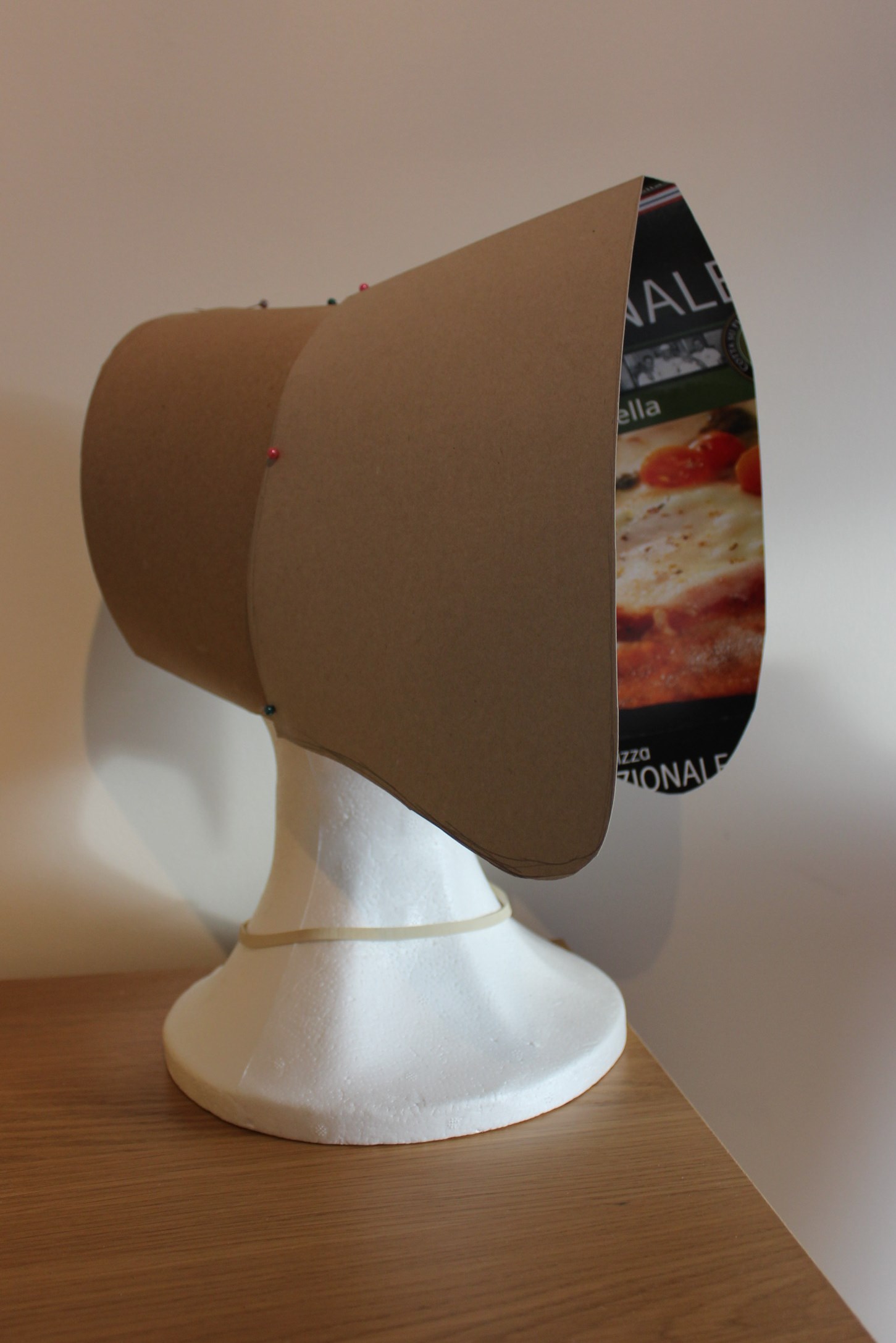
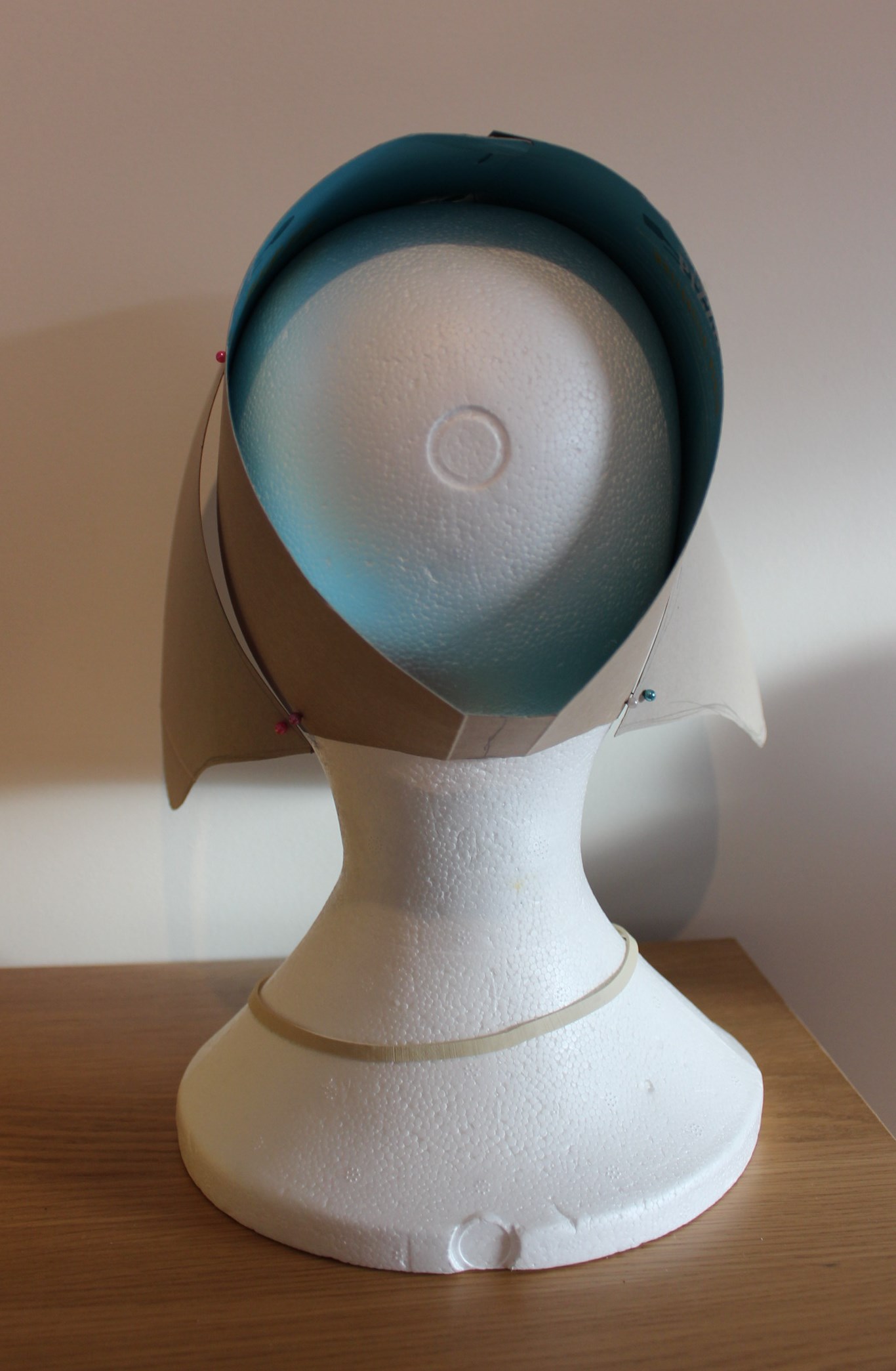
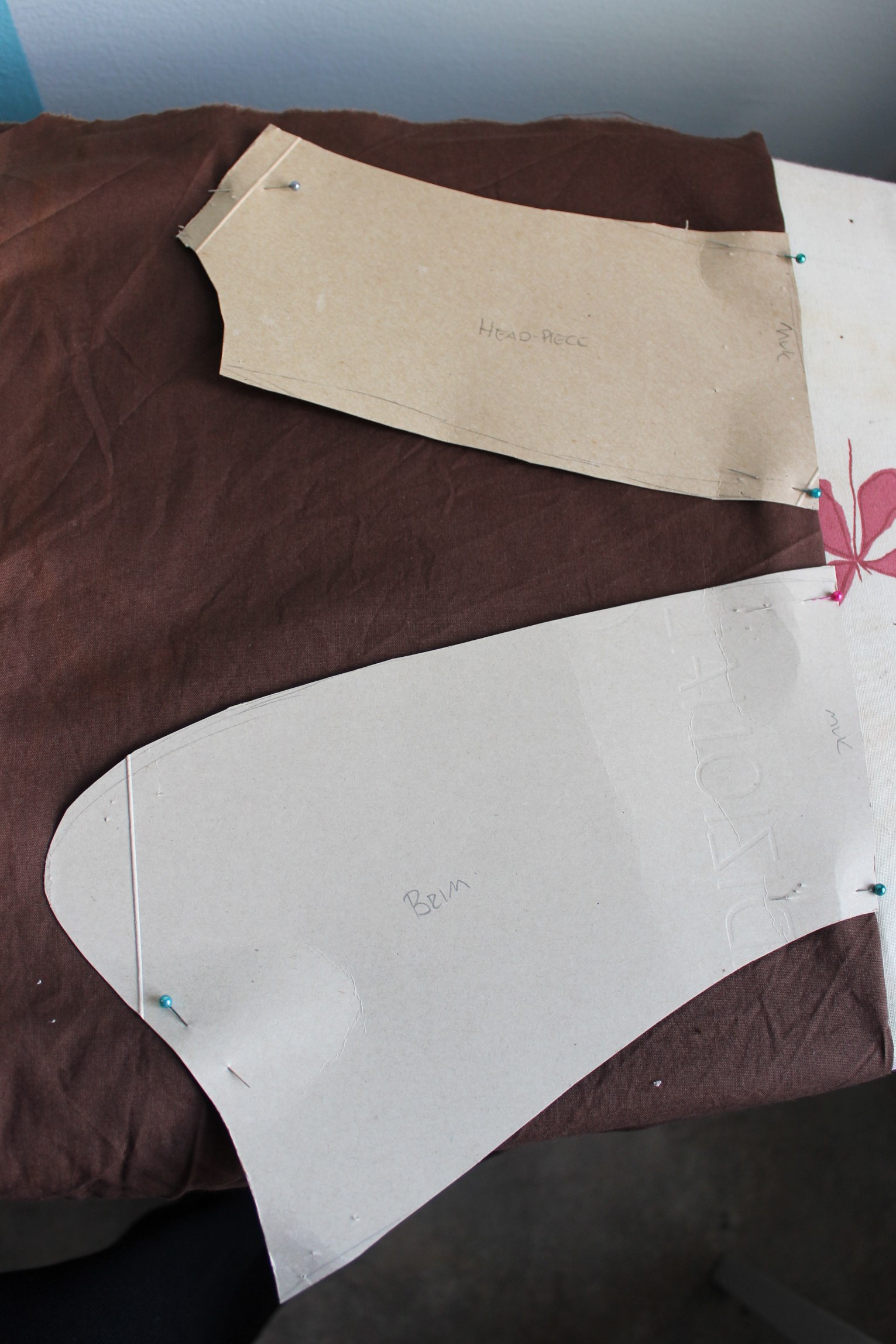
So I started by draping a pattern.

IMG_3825IMG_3822

I used the left-over velvet fabric of the Masquerade cape, and started to cut the multiple layers.

IMG_3831

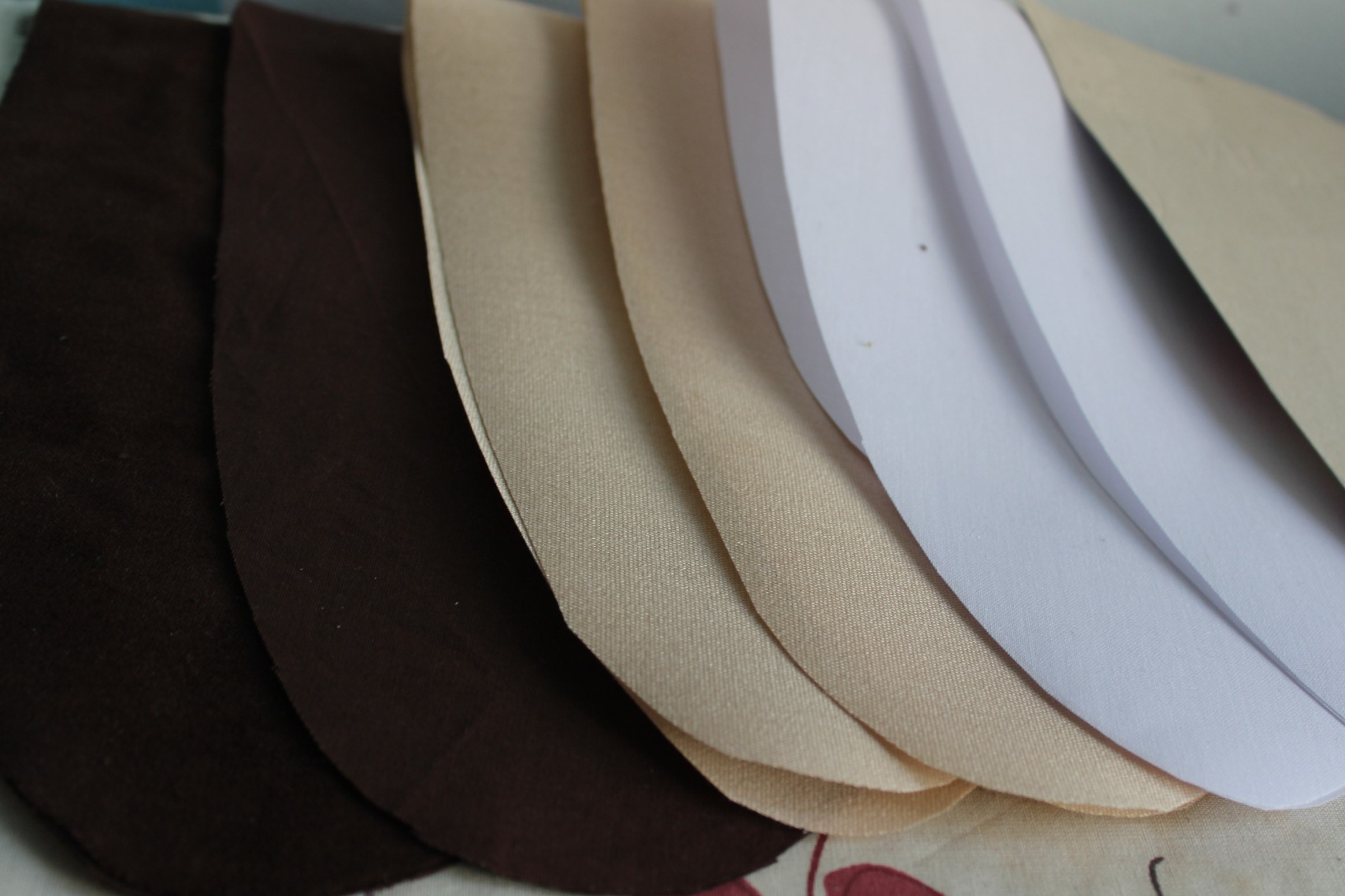
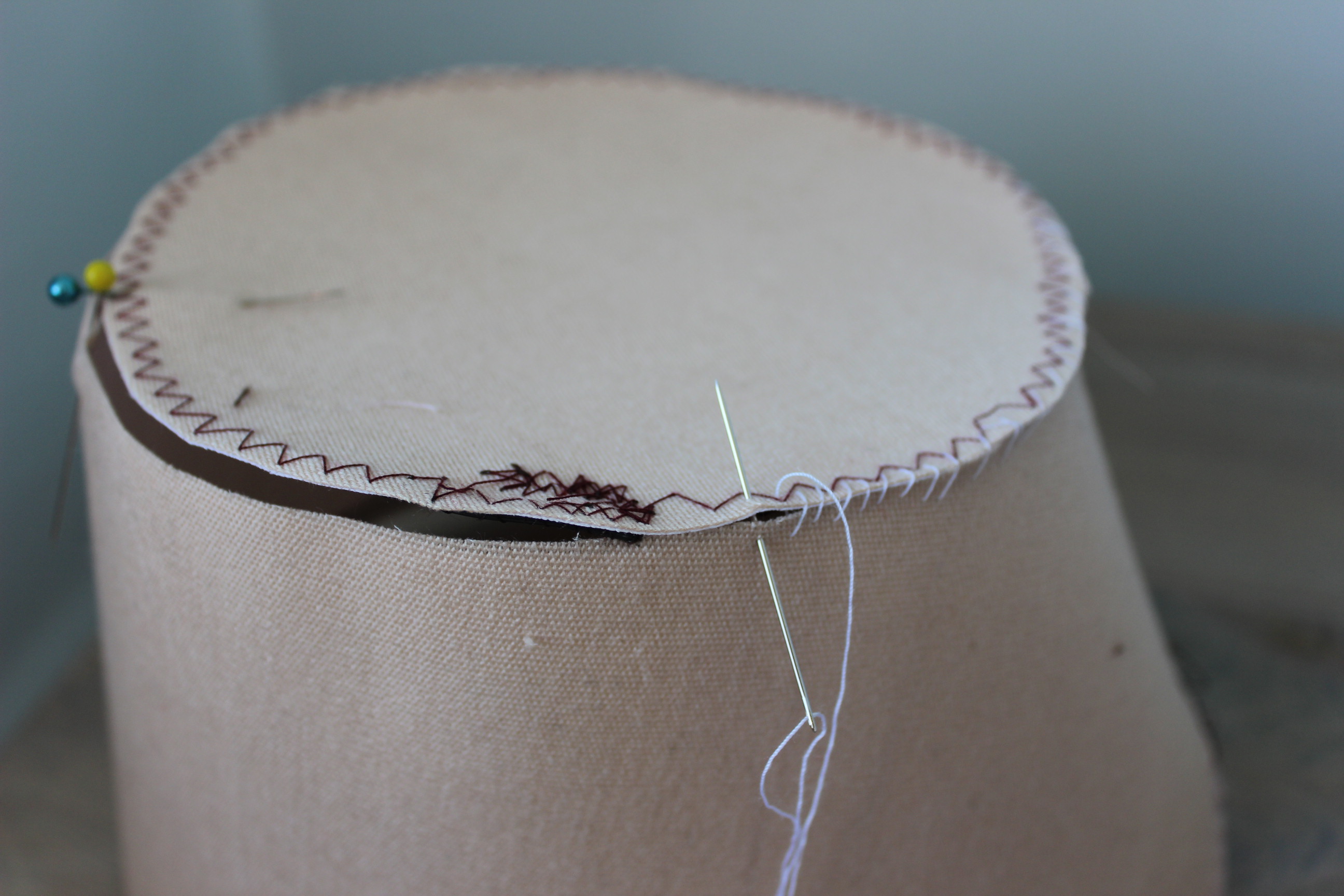
All the pieces cut out. From left to right: Velvet, cotton lining, interlining, intefacing and the pattern piece. (I later decided to only use one layers each of the interlining and interfacing).IMG_3836

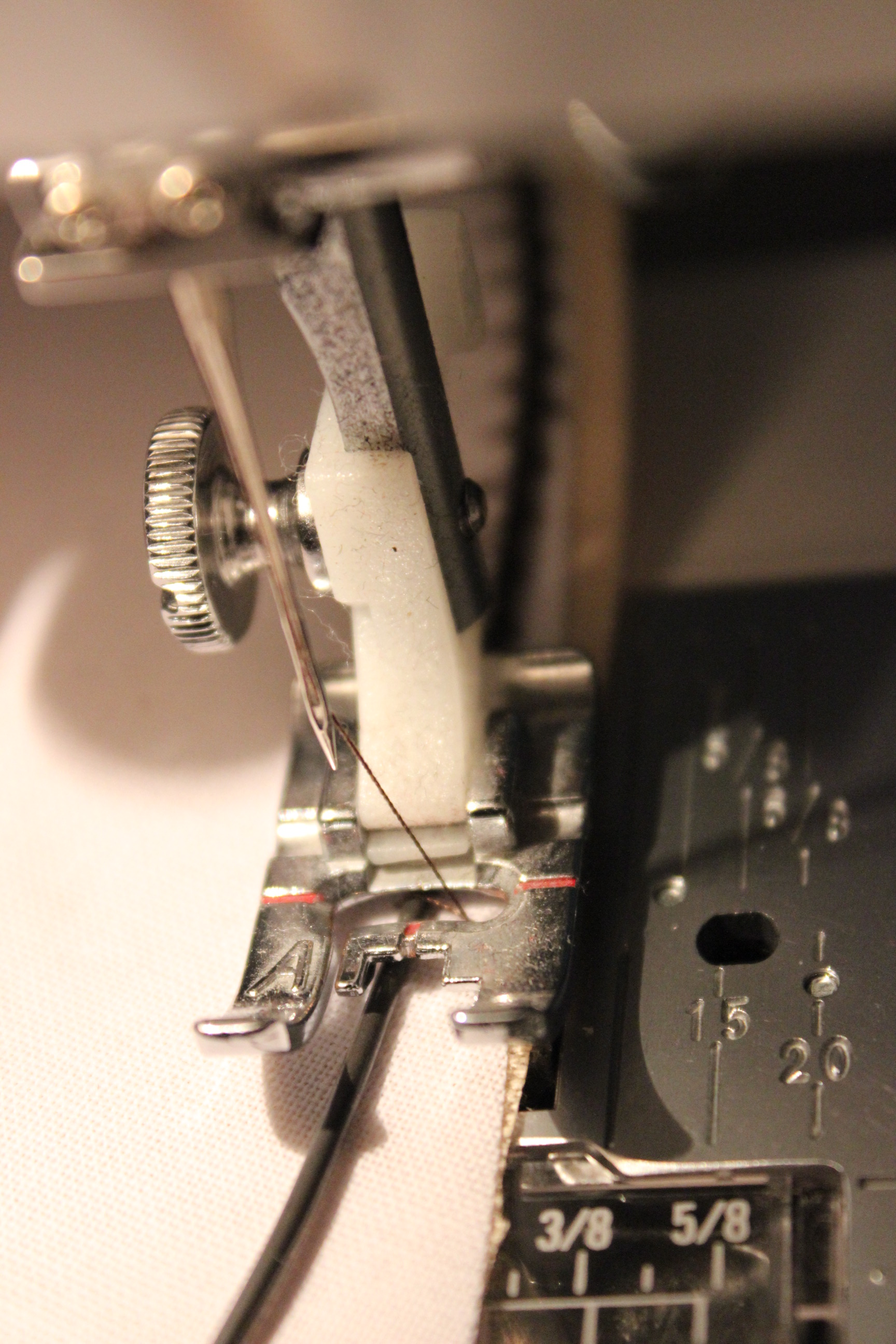
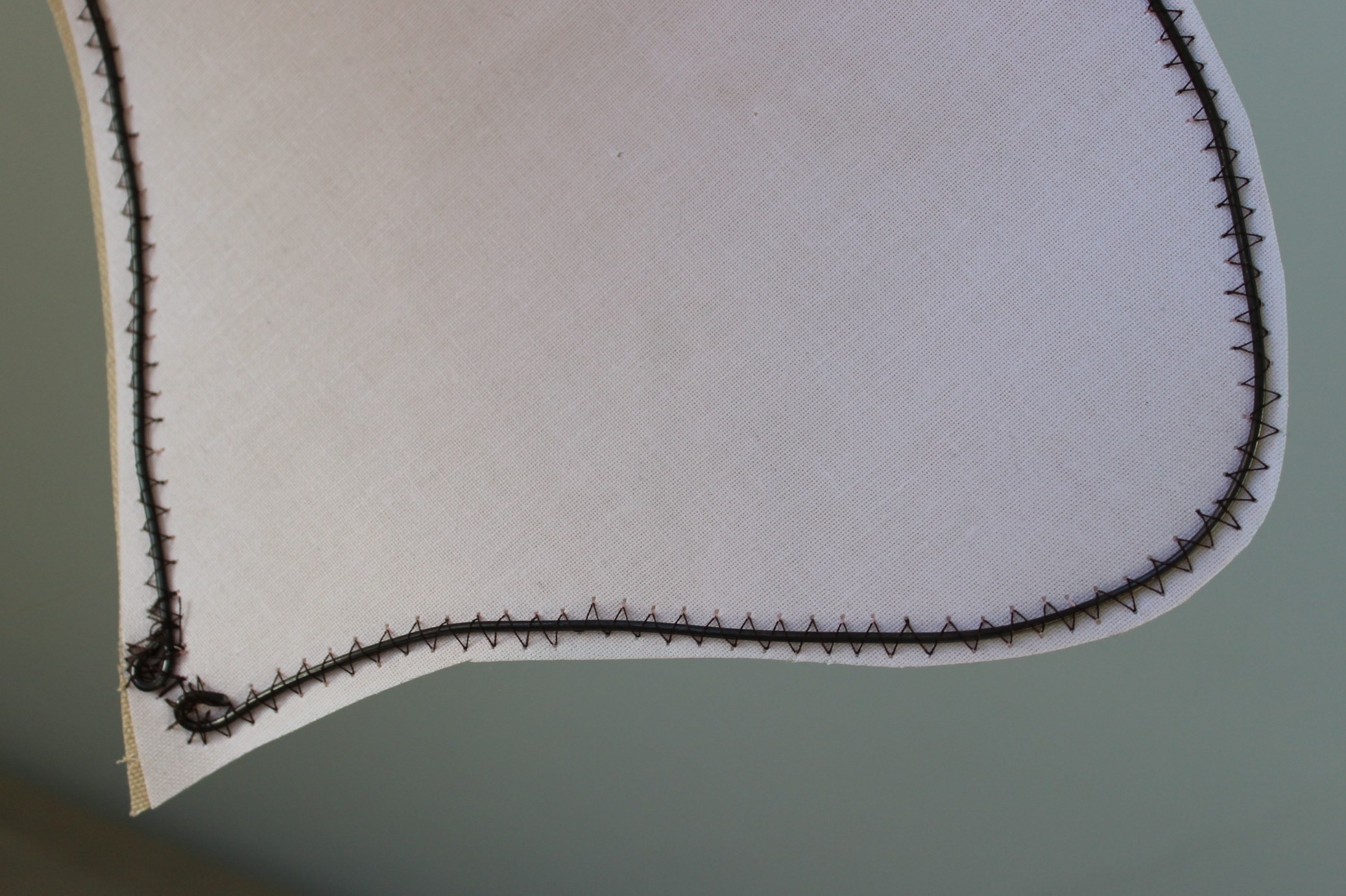
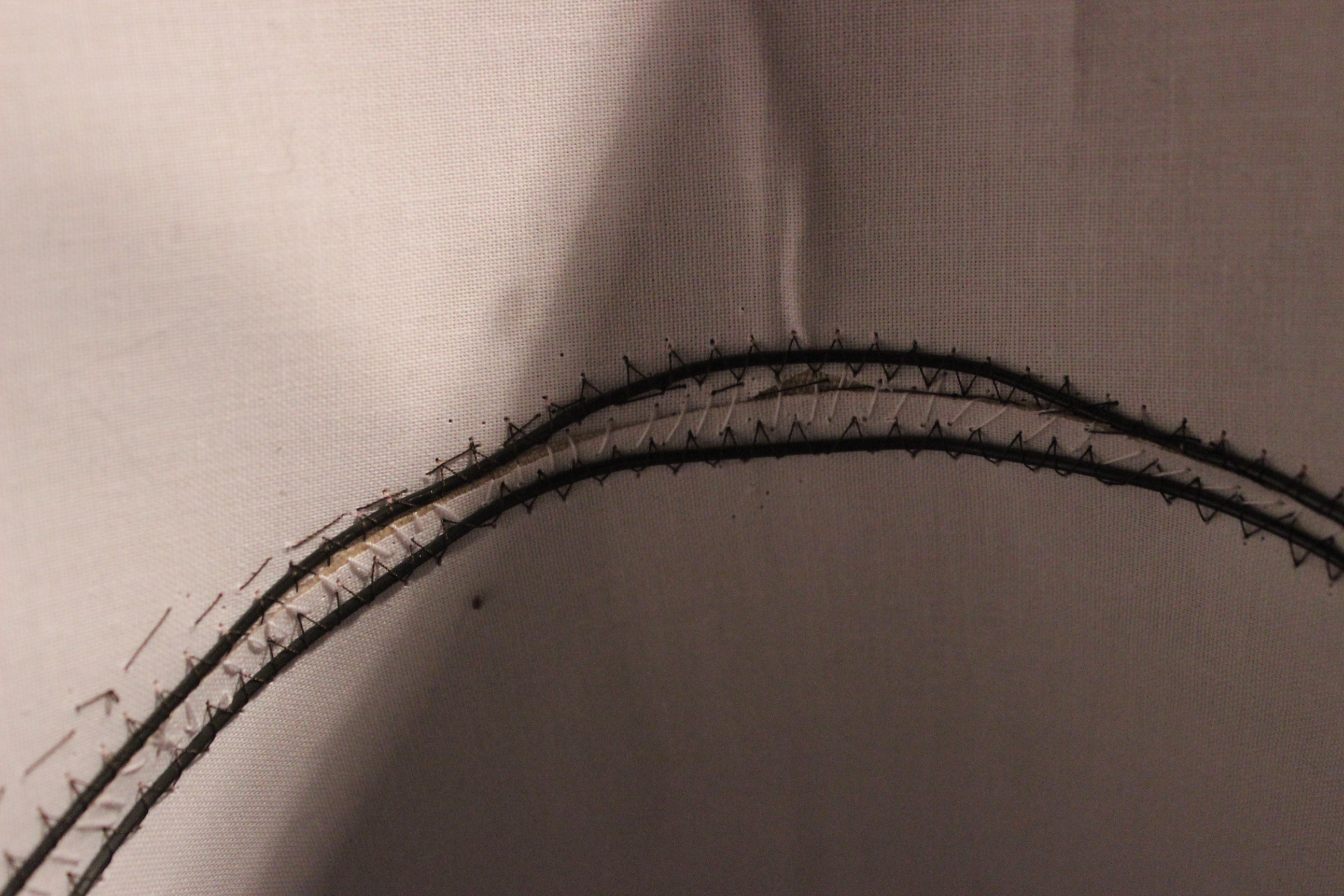
Using a sick-sack stich to attach the wire to the pattern pieces.IMG_3842

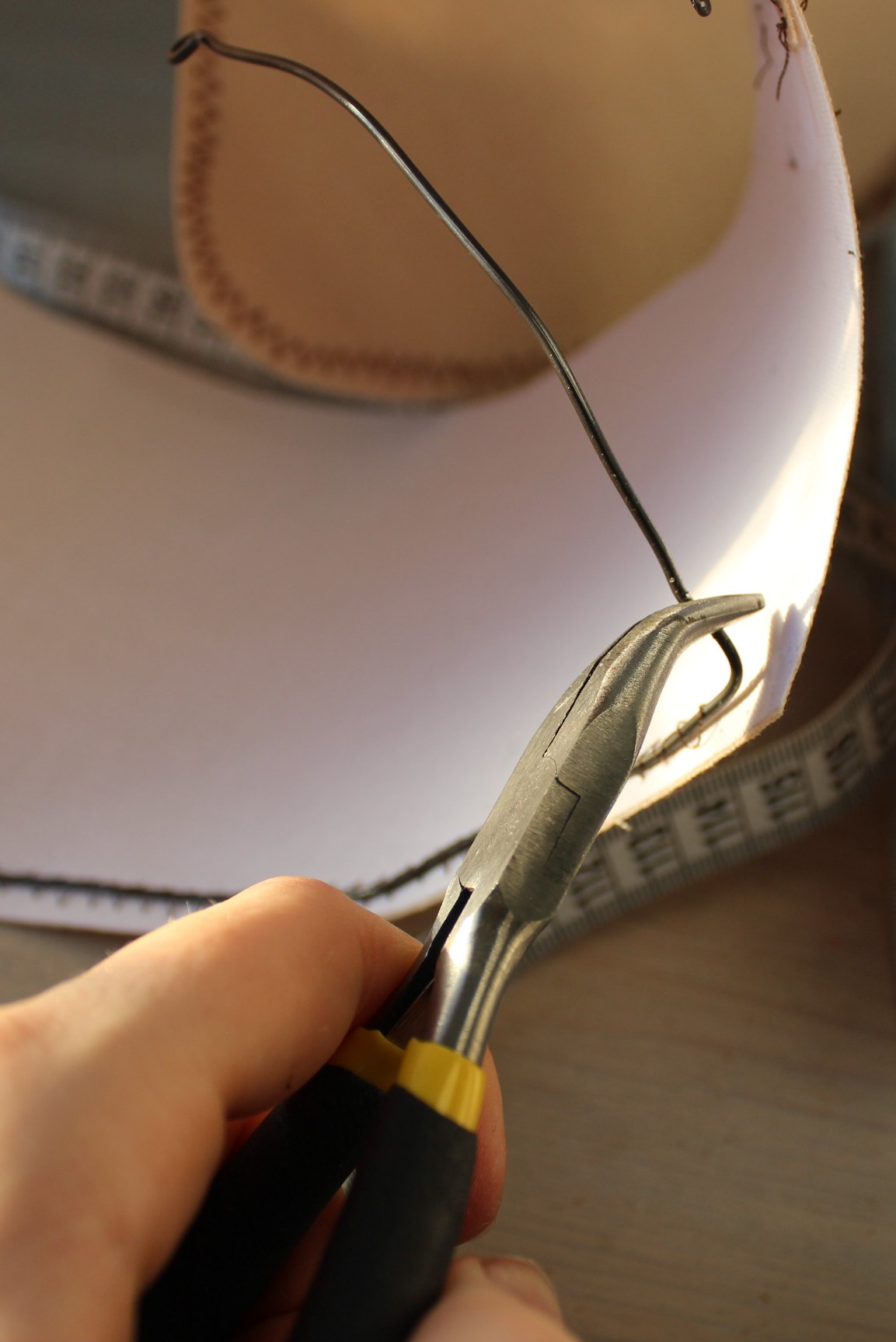
I used a plier to bend the wire into shape.IMG_3846

All wired brim piece.IMG_3851

The crown being attached.IMG_3855And the inside.IMG_3864

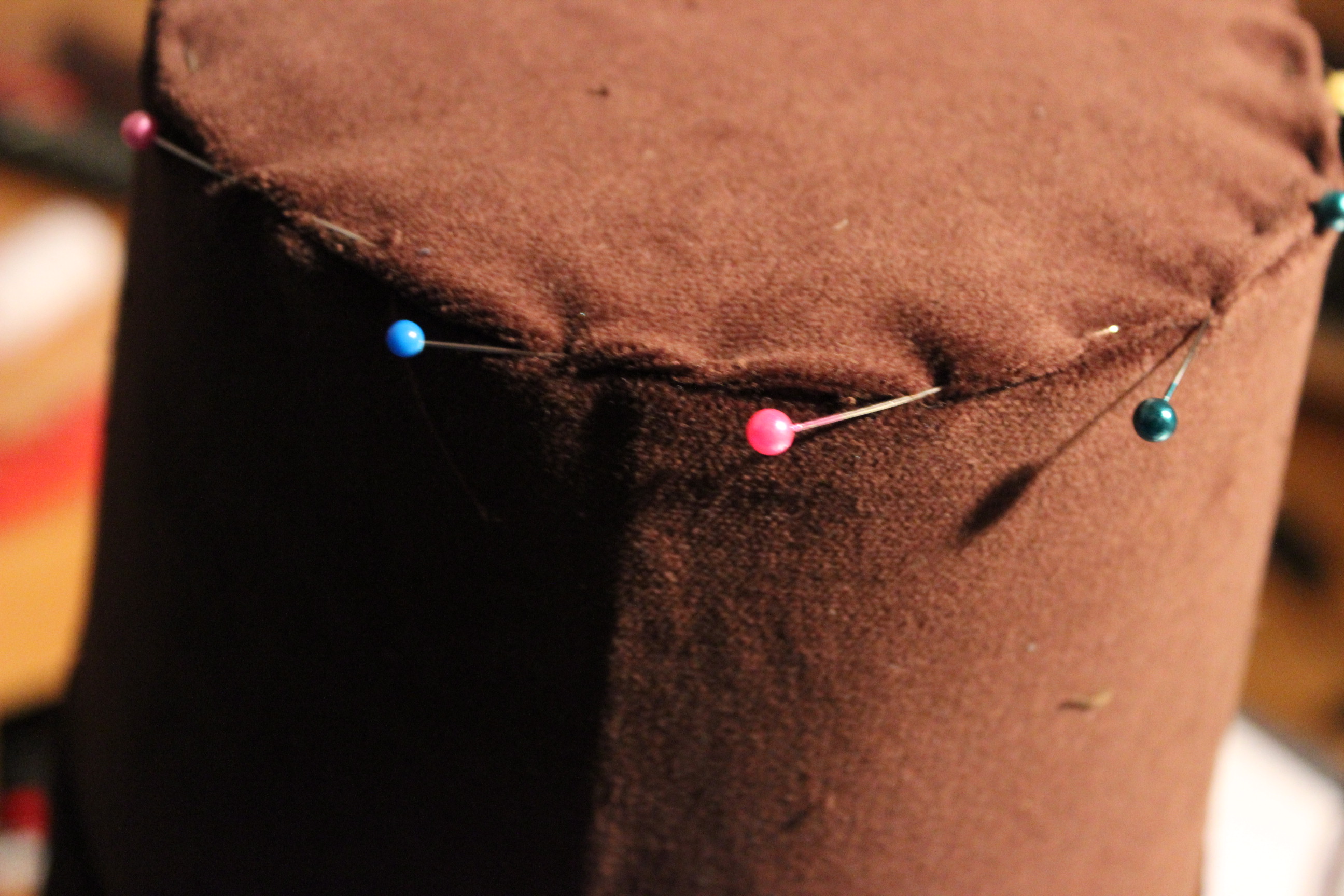
Sewing the velvet to the crown.

IMG_3867IMG_3881IMG_3877

IMG_3869

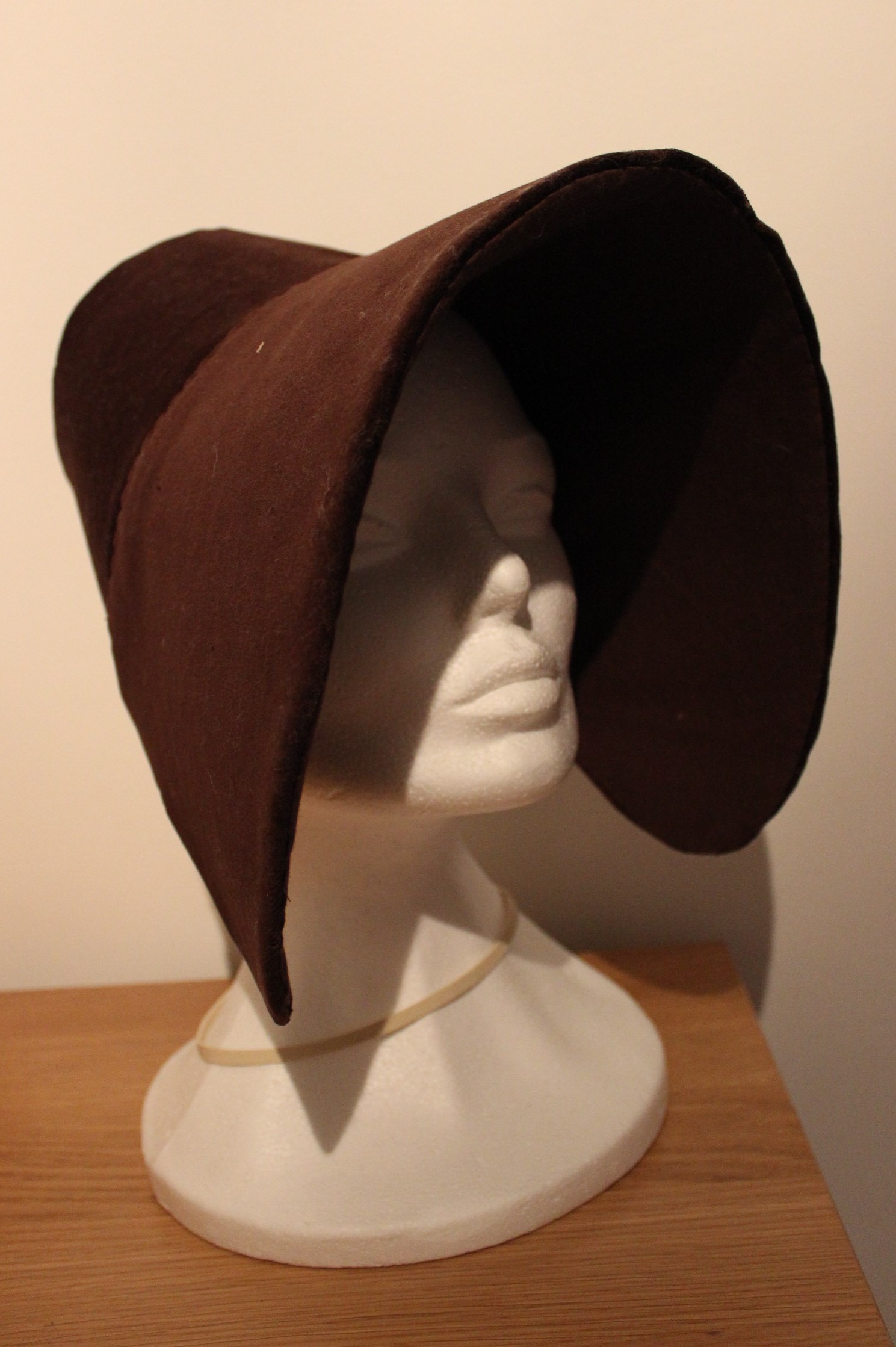
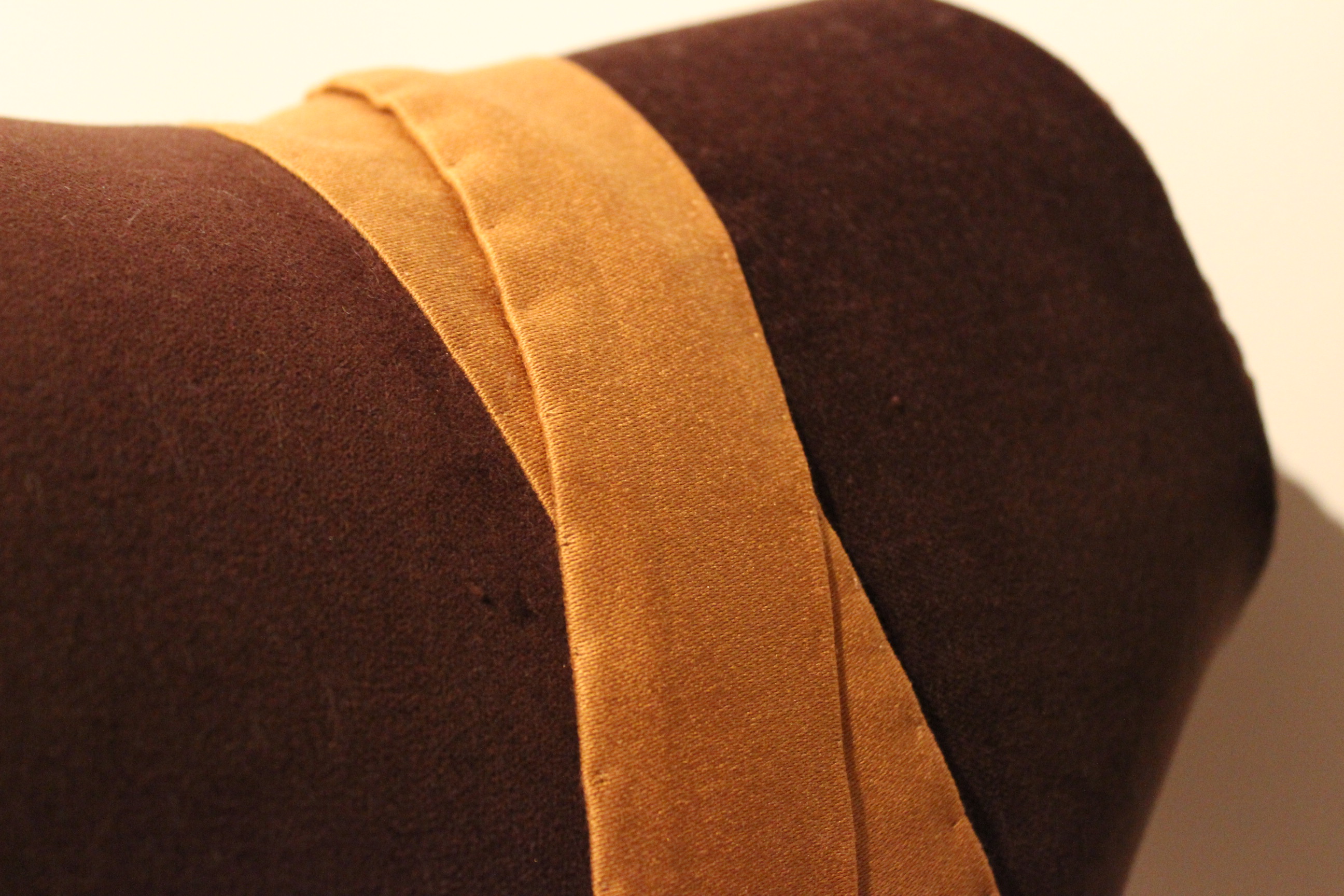
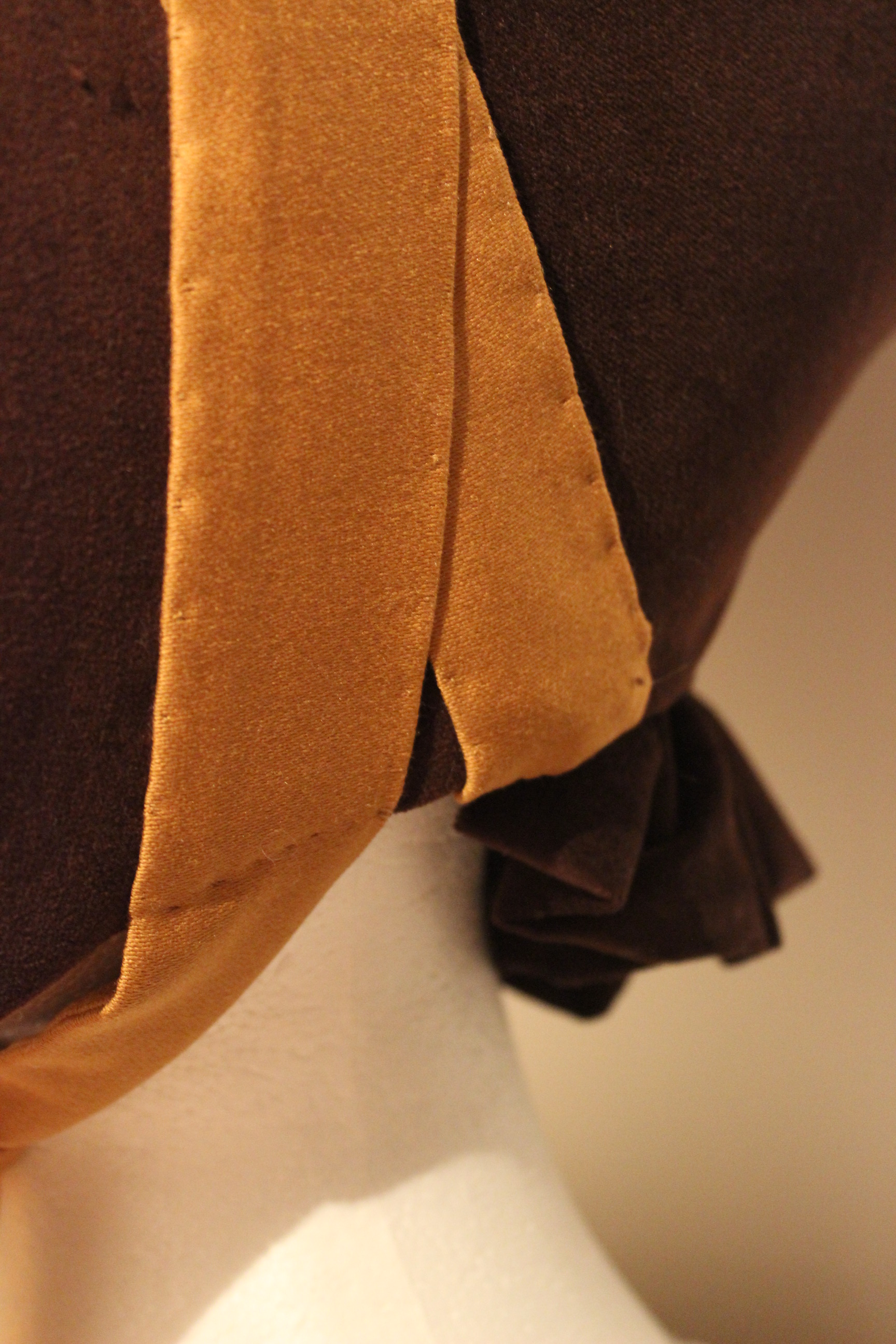
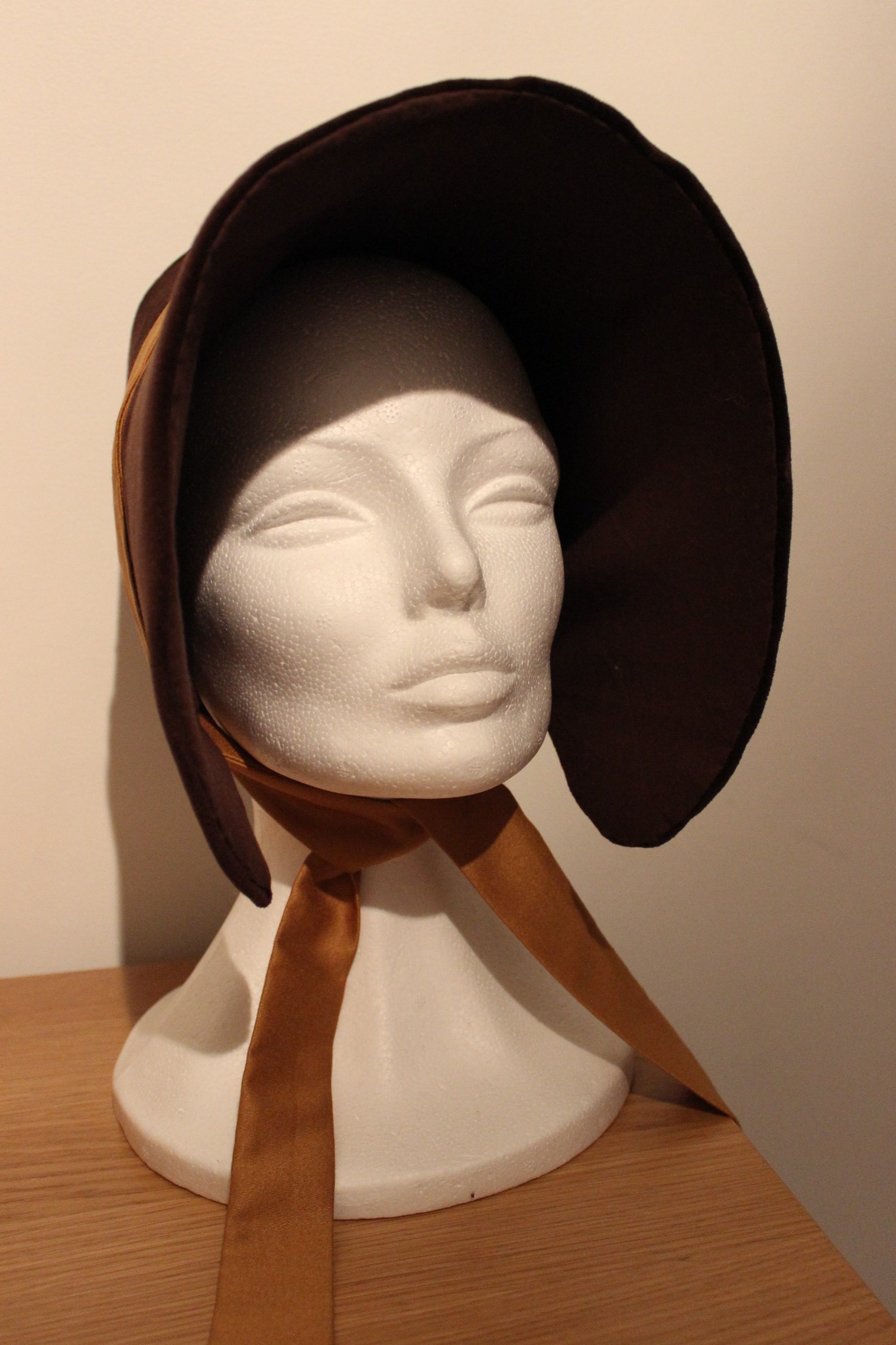
And finished with the trimings attached.

IMG_3895IMG_3885

IMG_3891

IMG_3892

IMG_3883

Just the facts:

Challenge: 23 – Gratetude

What: A 1840s bonnet

Pattern: I draped and drafted my own.

Fabric: 0,4 m of: brown cotton velvet, brown cotton lawn, heavy upholstery fabric and 0,2 m of golden satin.

Notions: Thread, heavy interfacing and steel wire.

How Historical Accurat: The shape is pretty good but the construction and sewing are modern, even though it is mostly hand sewn.

Time: 10 hours.

Cost: About 100 Sek (11 Usd)

First worn: Not yet, but will be on dec 16th for a 19th century Christmas party.

Thanks to: First of all I whant to thank the whole costuming comunity, and all the help and support you can find there. You are all great!

A special thanks goes to Leomoni of “the Dreamstress” who got me interested in historic costuming, and through the HSF made me inspired to continue to make historic clothes this past year.

Then I whant to thank Susan Briscoe for the great blogpost who made it look so simple (to make a bonnet) and thous gave me the currage to give it a try.

Last thoughts: I really loved making this bonnet and are already thinking about making an other one. Mabye I should venture deeper in to millenery…

Laced in – Victorian corset

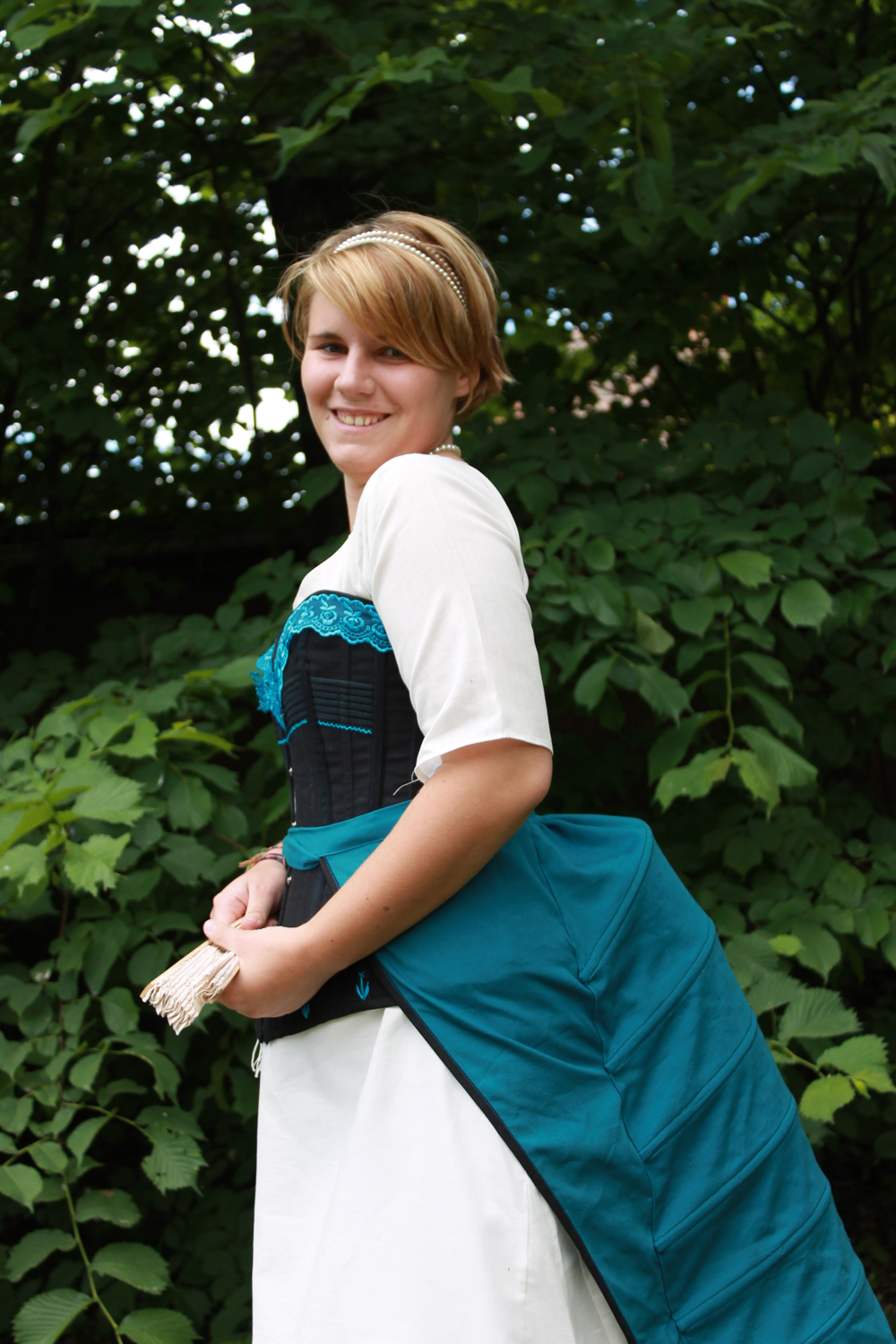
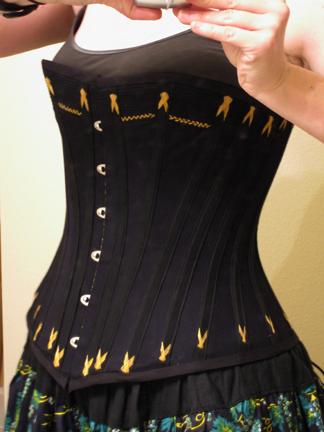
I’ve been promising a Victorian bustle dress to my youngest sister for quite some time, and when the 13th challenge in the HSF came out and read “Lace and laces” I decided it was time to start her off with some foundation garments.

Together we looked at some patterns and finished corsets, and decided on Waughs 1880s pattern from the book “Corsets and Crinolines”

1880 waugh

We used this pic for our color inspiration, and decided on black twill with trimmings in turqouise.l

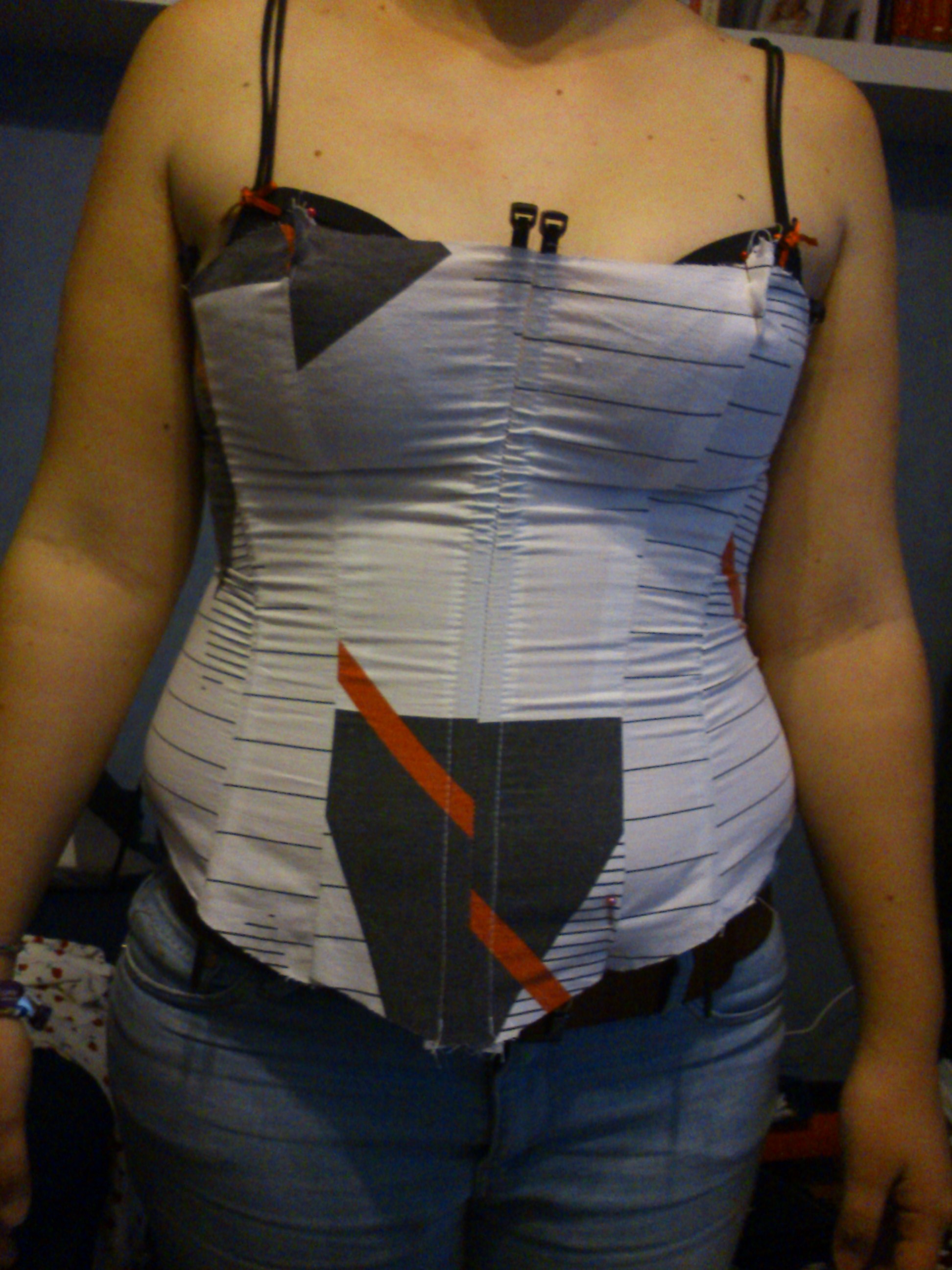
I drafted the pattern and quickly made the mock-up. It fitted her pretty well, if you don’t look at all the wrinkles which should disappear once the corset is made in a sturdier fabric and have gotten the boning inserted.

2013-05-21 18.47.572013-05-21 18.47.37

The only thing to adjust on the pattern was to make the bust and hip a bit smaller, and to reshape and add height to the bust for a more heart-shaped line.

Once the pattern was done I cut the fabric, flat lined it and started on the contrasting piping for the bust.

This part was the most nerve wrecking, but it ran smoothly and ended up looking neat and good.

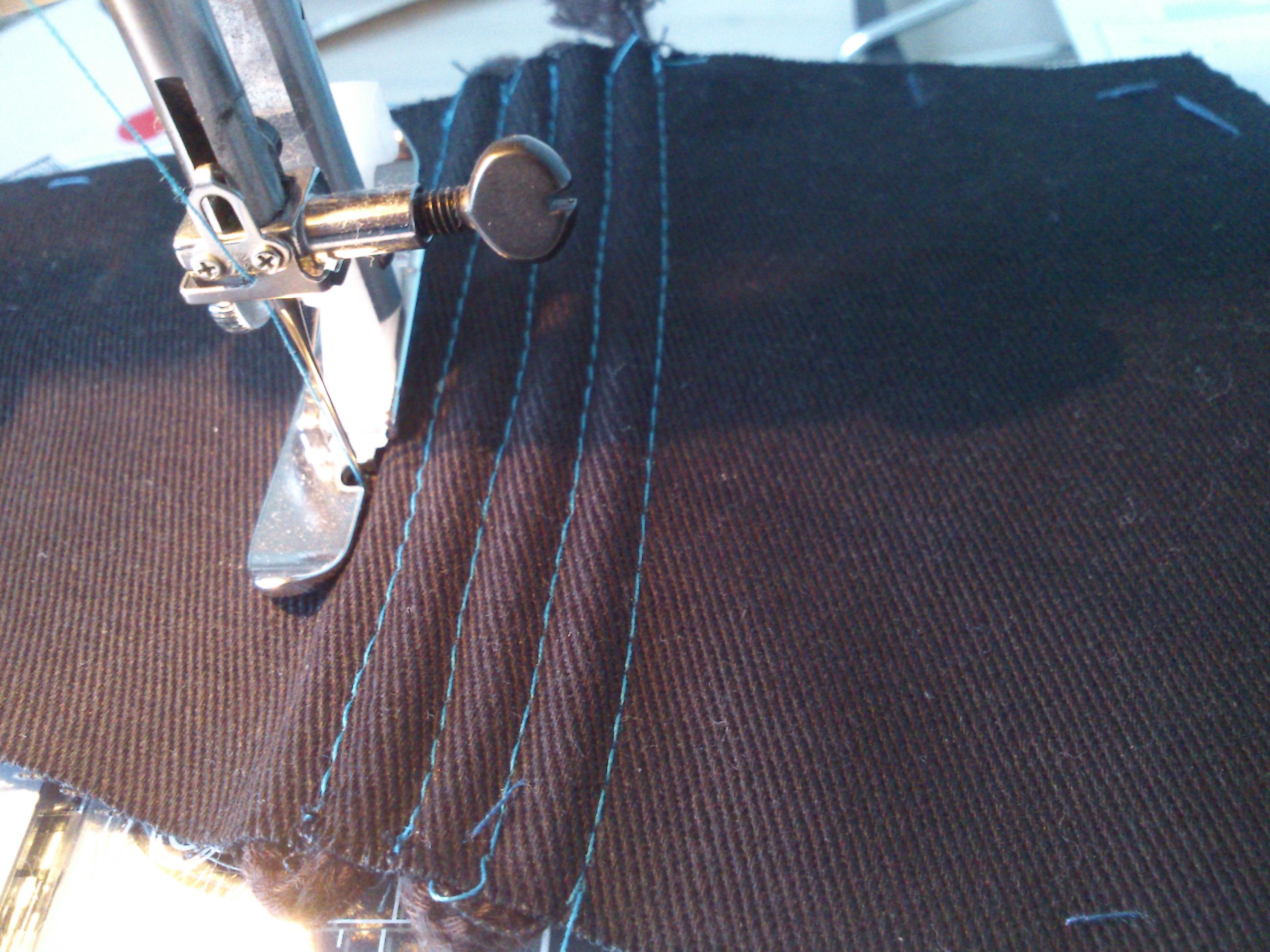
2013-05-30 20.44.16Piping with contrasting thread.2013-05-30 20.44.03

2013-06-05 16.16.212013-06-05 16.35.16Busk being inserted.

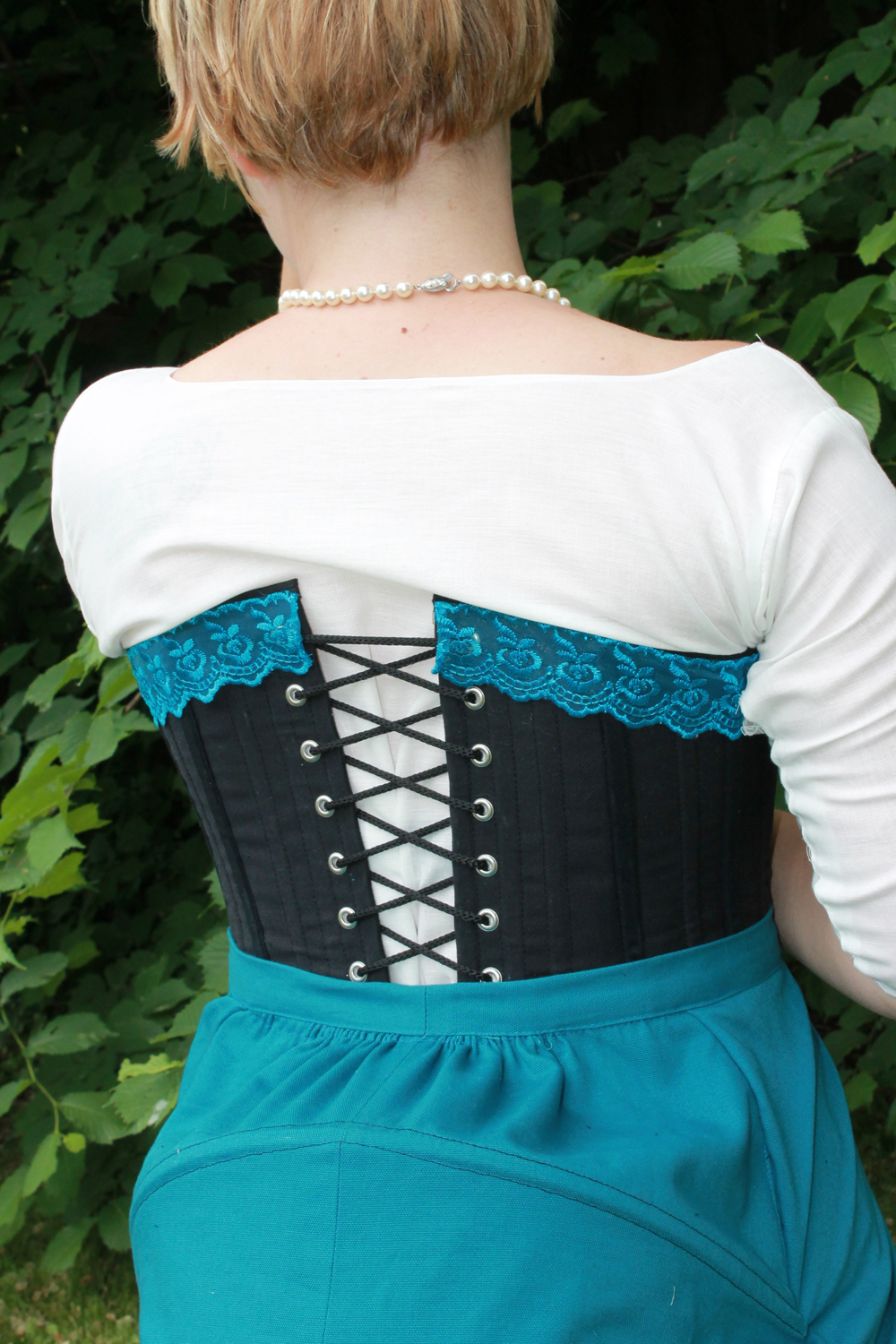
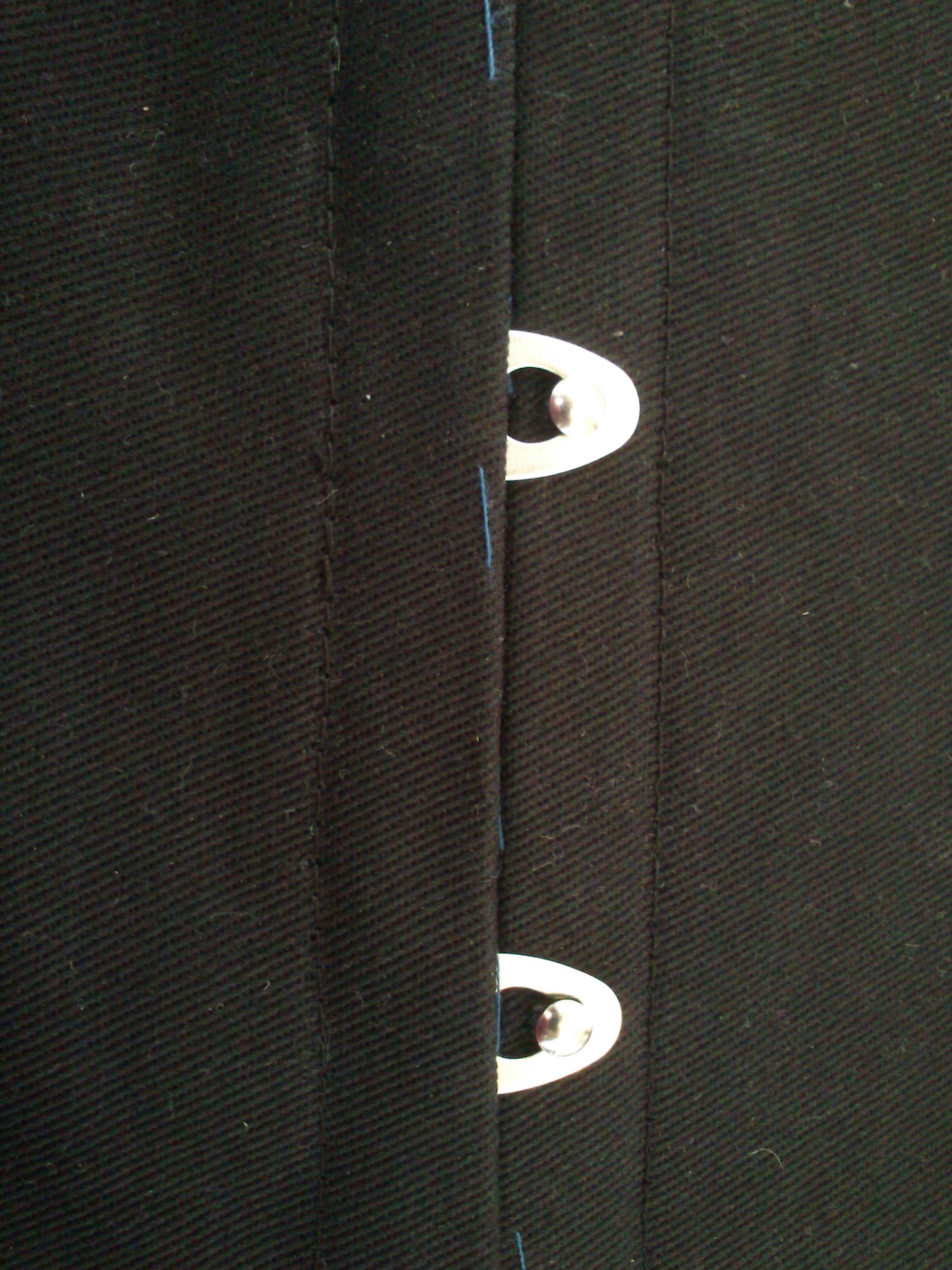
I set the gromets and the busk and then sewed it together for a try on.

2013-06-06 17.53.222013-06-06 17.53.50This time it looked pretty good – but still had a few wrinkles in the waist which needed to be dealt with. I think they would disappear when I got some heavy boning inserted in that area.

I decided to experiment with the boning, and used three different kinds of bones in this corset.

At the back – where you need the most strength to take care of the pressure from the taight lacing – I used metal pipe-cleaners from a utility store. I cut them with big pliers, then rapped the sharp ends in ducktape.

For most of the corset I used my regular boning – heavy duty cable ties. My only complaint about this kind of boning is that they are thick (0,3 mm) , and therefore steal more fabric and adds to the waist a bit more than other kinds of boning does. Which is a bad thing when you try to reduce the body measurments.

For the bust area (where the cable ties were too short) I used some synthetic whale bone. I thought it felt rather weak when inserting, but it ended up looking perfect in the end.

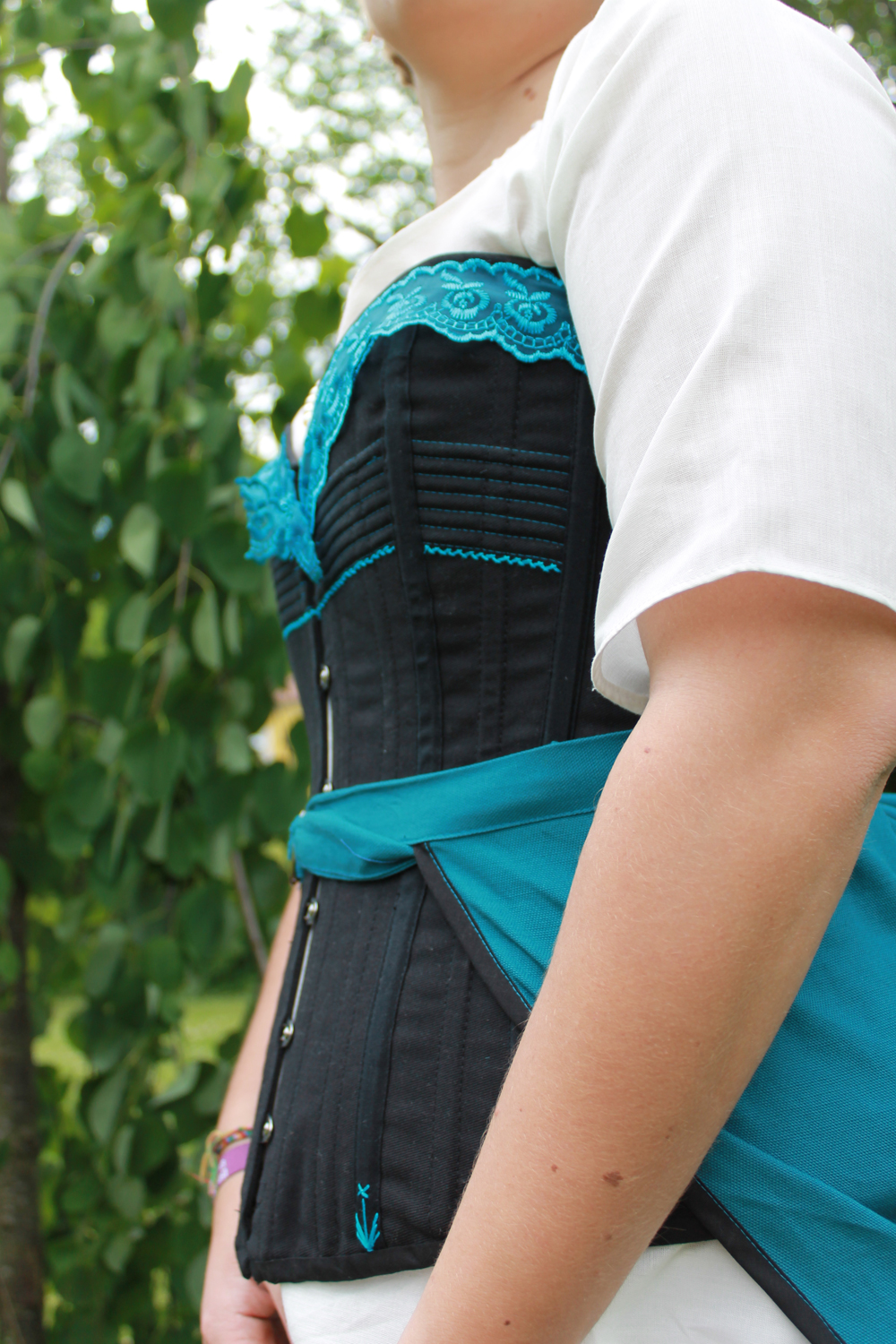
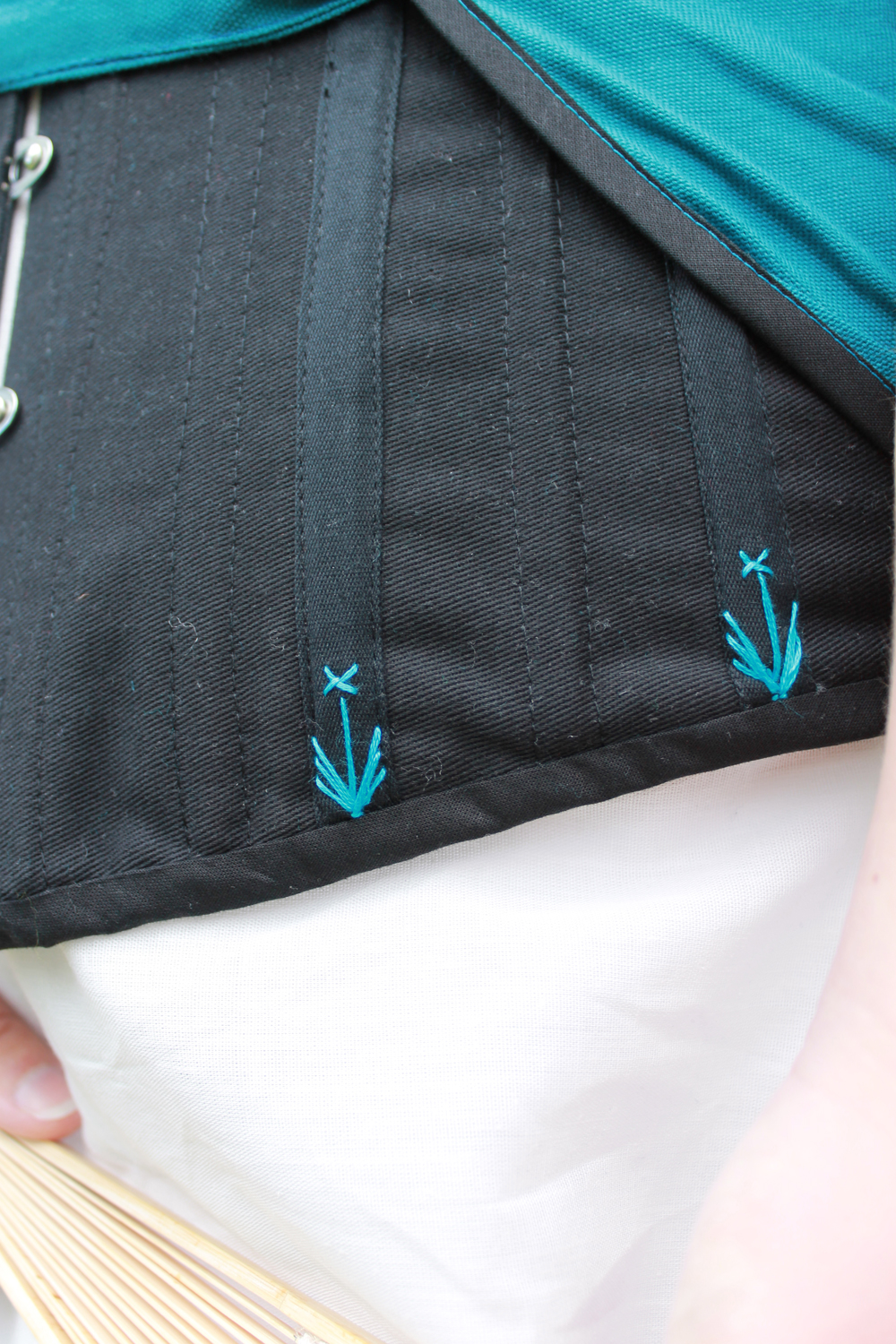
Finishing the corset went fast and I completed it in only two afternoons, sewing bone channels, bias-tape, lace and flossing, all in a crazy speed rush.

IMG_3115

Just the facts:

Challenge 13: Lace/laces.

What: A Victorian Corset.

Pattern: Waughs 1880s corset from “Corset and Crinolines”.

Year: 1880s 😉 (but I think the shape is good for 1850-1890).

Fabric: 0,5 m black twill and 1 m black cotton for flatlining and lining.

Notions: Busk, 36 gromets, 5 m of lacing cord (for lacing and piping), bones (sip-ties, metal bones and plastic whalebone), 2 m bias-tape, 1 m turqouise lace, black thread, turqouise yarn for flossing.

How historical accurate: Sewn on machine, with polyester thread. The pattern, techniques and looks of the garnment are pretty accurate though.

Cost: 300 SEK (33 euro).

Time: 15 hours

Fist worn: For the photoshoot mid june. And my sister says she will definately wear it again, and combine it with jeans or with a black skirt as part of a modern ball gown.

***

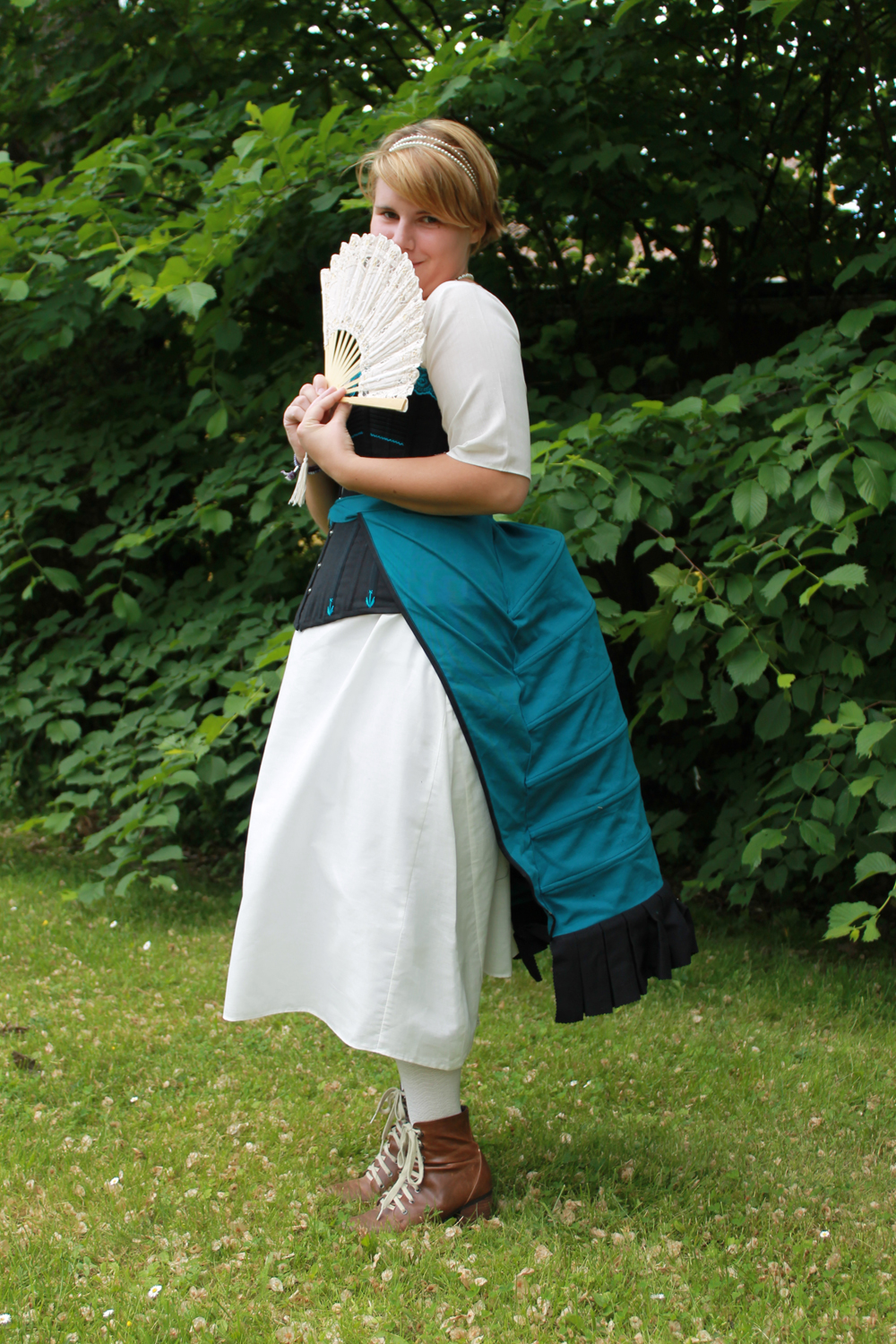
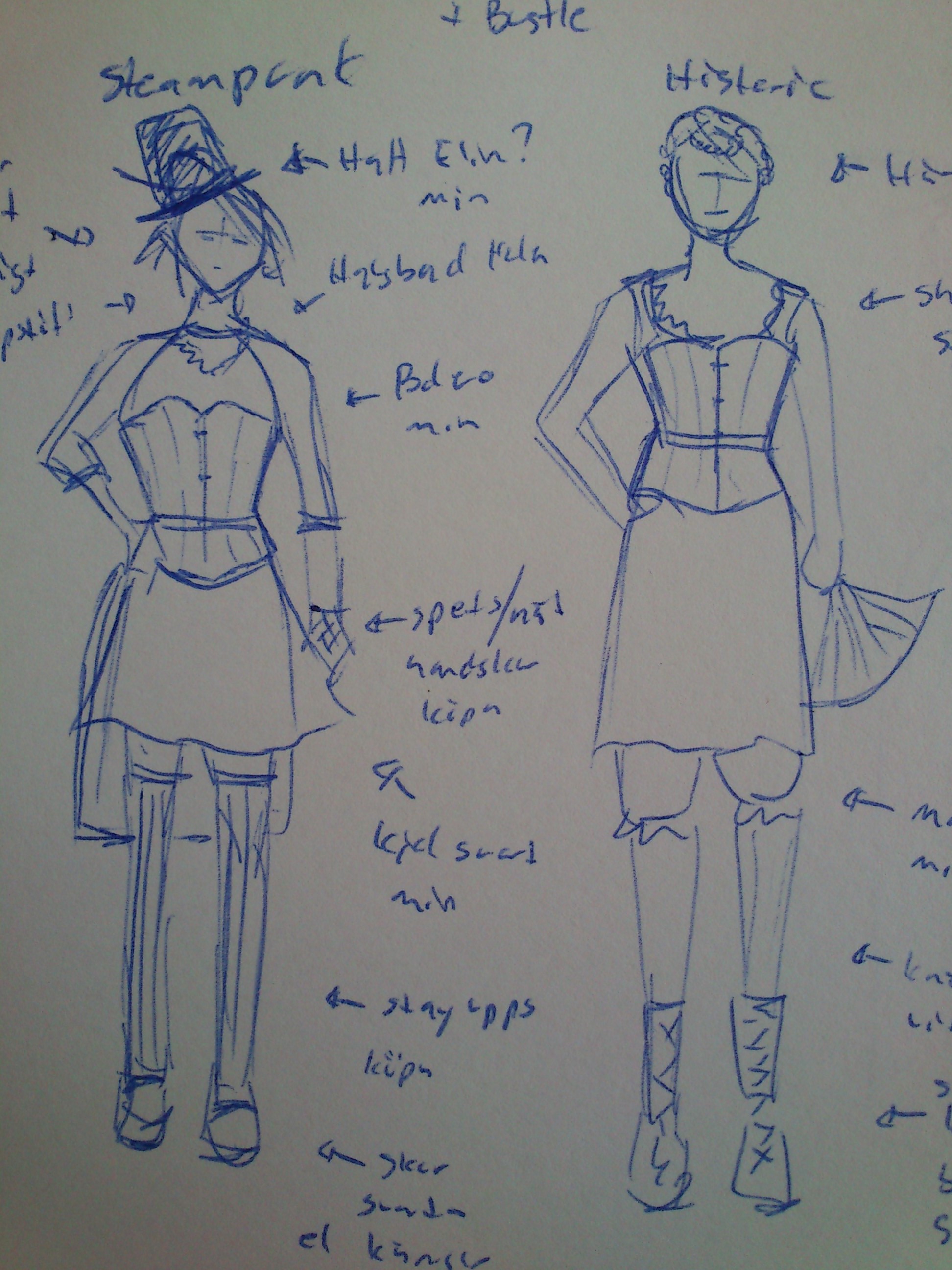
And as a teaser: Here is a quick brainstorming sketch for the awesome photoshoot we had, and which I will show you more about in my next post.

2013-06-03 11.22.34

Victorian Bustle

Combined with the HSF challenge nr 13 I decided to make a victorian bustle. After all I had about two days to complete both the bustle and the challenge piece before the photoshoot.

And in case you wonder why I’m constantly in a “last minute” rush before the photos is to be taken – it is for a purpose. I deliberately set the dates for the photoshoots a bit too tight for me to finish the intended garnment. If I didn’t, I’d just make something new up and be even more stressed out to get even this new piece finished before the shoot. So a bit stressed and one night of crazy sewing before each shoot is better than super stressed out and several nights of crazy sewing.

To get back on track – I just added a bustle to the pieces to be done in two days time (see – too much time left).

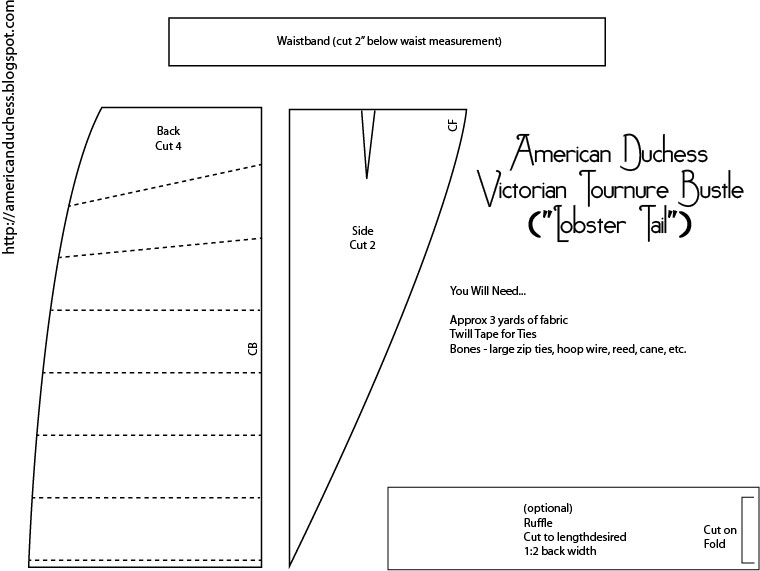
For the pattern I used The American Duchess bustle pattern and tutorial.

LTbustle basic pattern

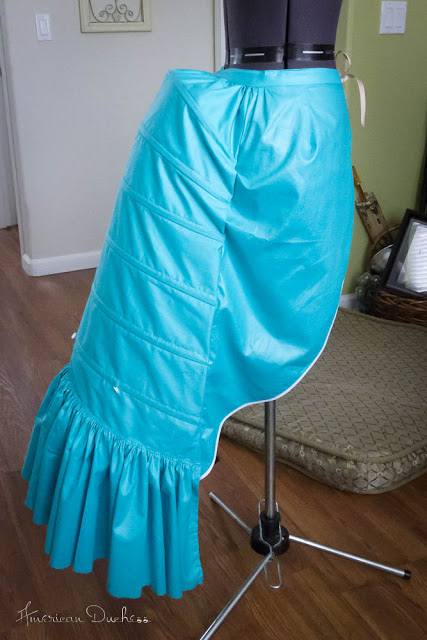
Here are the picture of her finished bustle.
lobster bustle 12-30-12 (1 of 2)

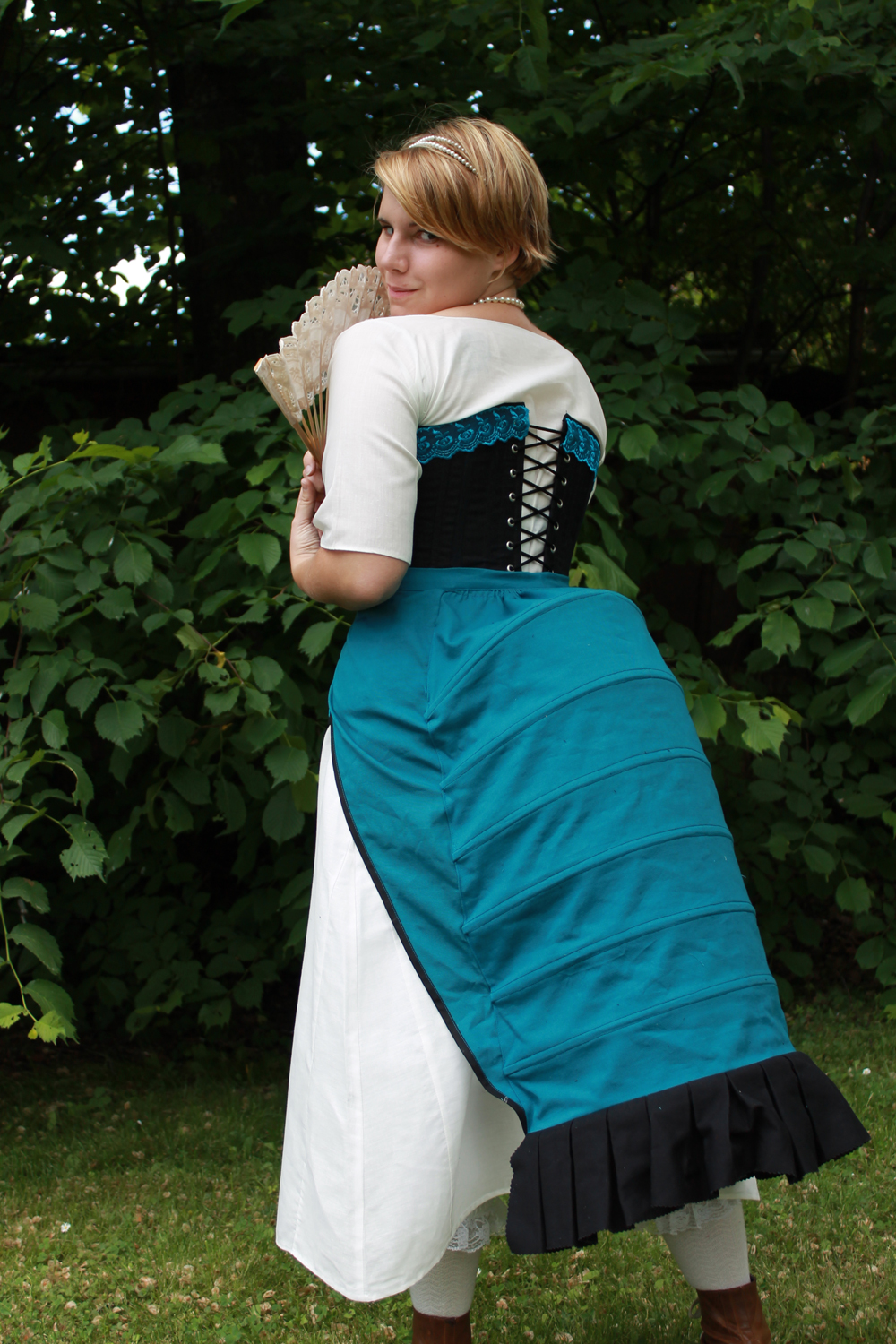
I used a “dusty turqouise” cotton twill, and some black ribbons (to match the challenge piece). I quickly sewed it up, put in the steel boning and tried it on my sister…

…and it looked horrible.

2013-06-06 17.56.21

It was way too big, and didn’t look neat and pretty at all. I tried to pin away some of the excess fabric at the sides but it didn’t help.

So I picked up my cutting tools and cut off 20 cm off all of the metal boning, then I sewed the bustle together again and made it much smaller than before.

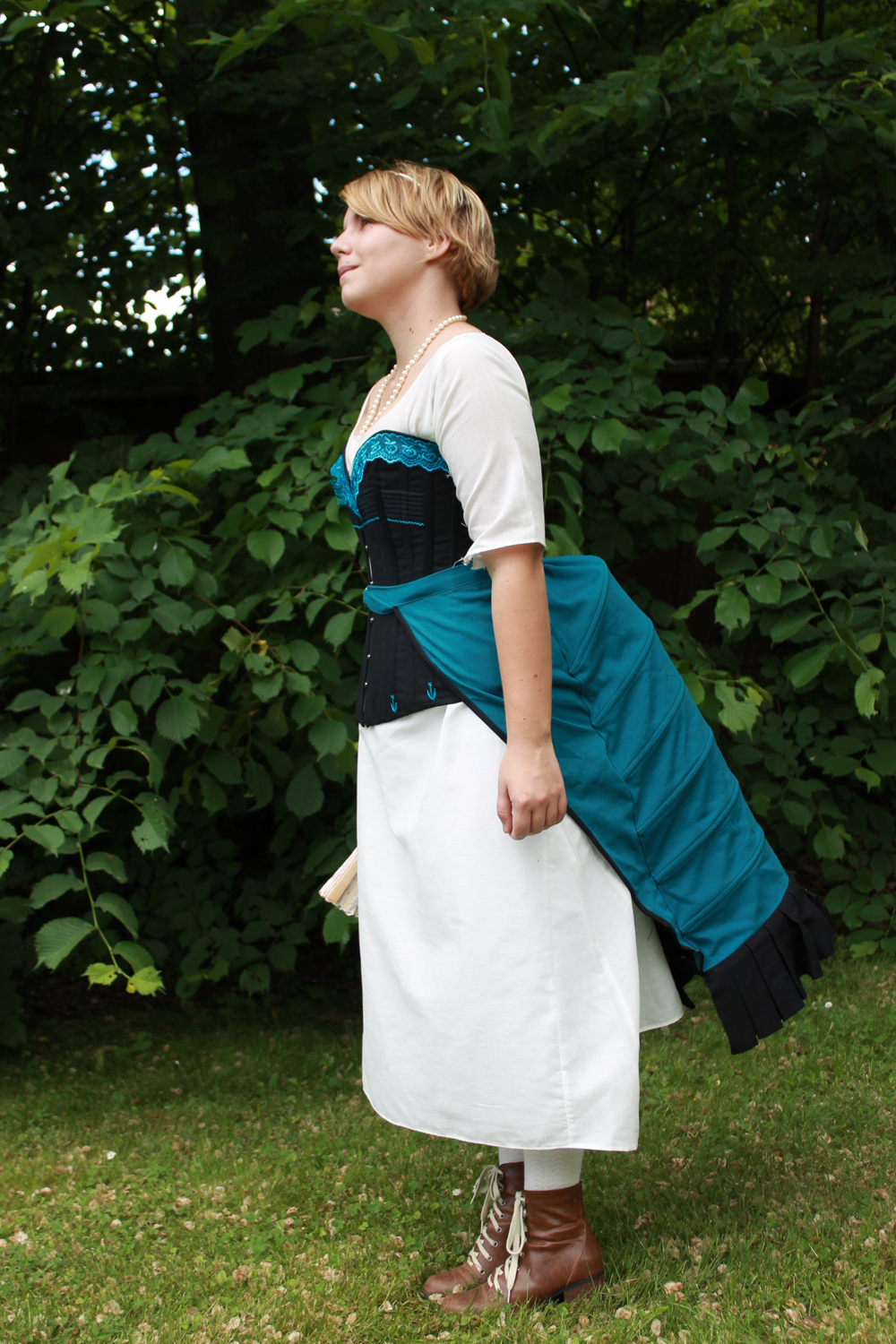
And this time it looked just right.

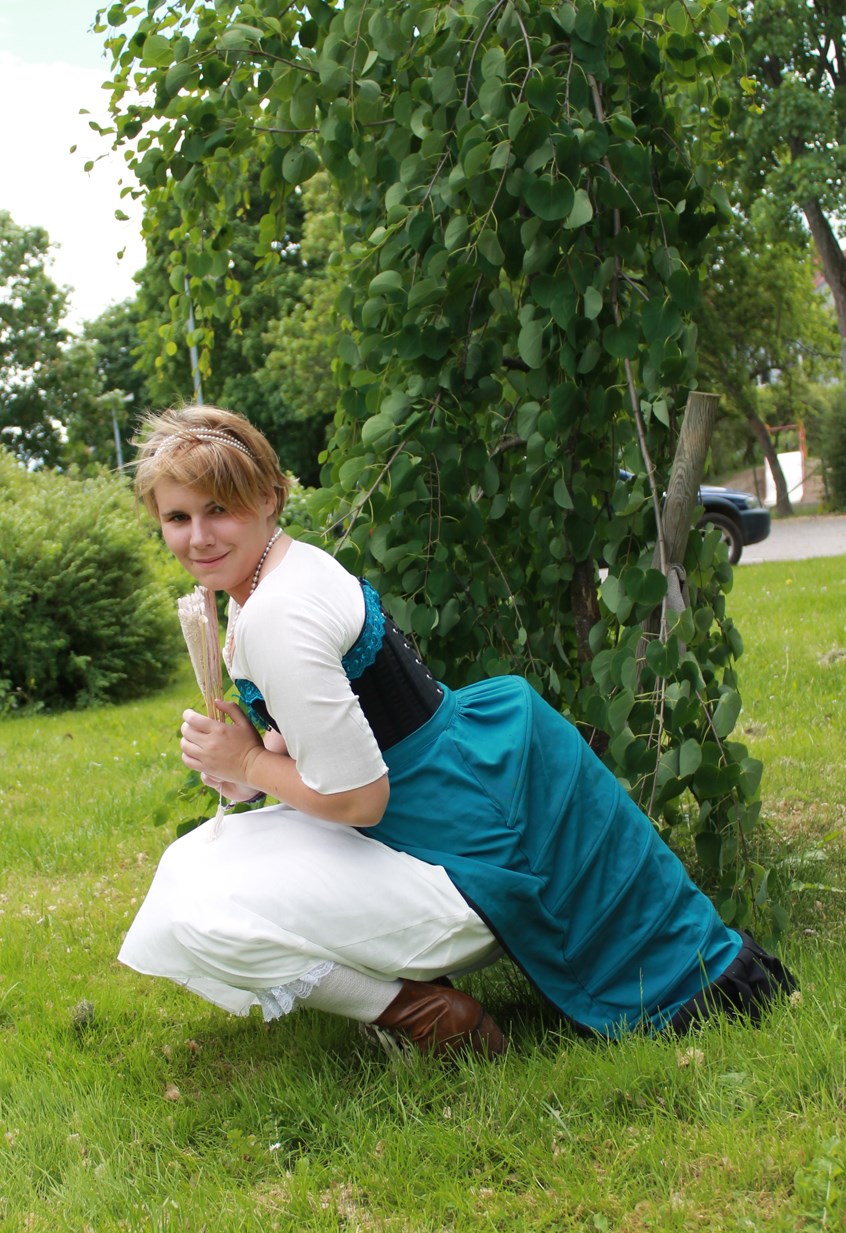
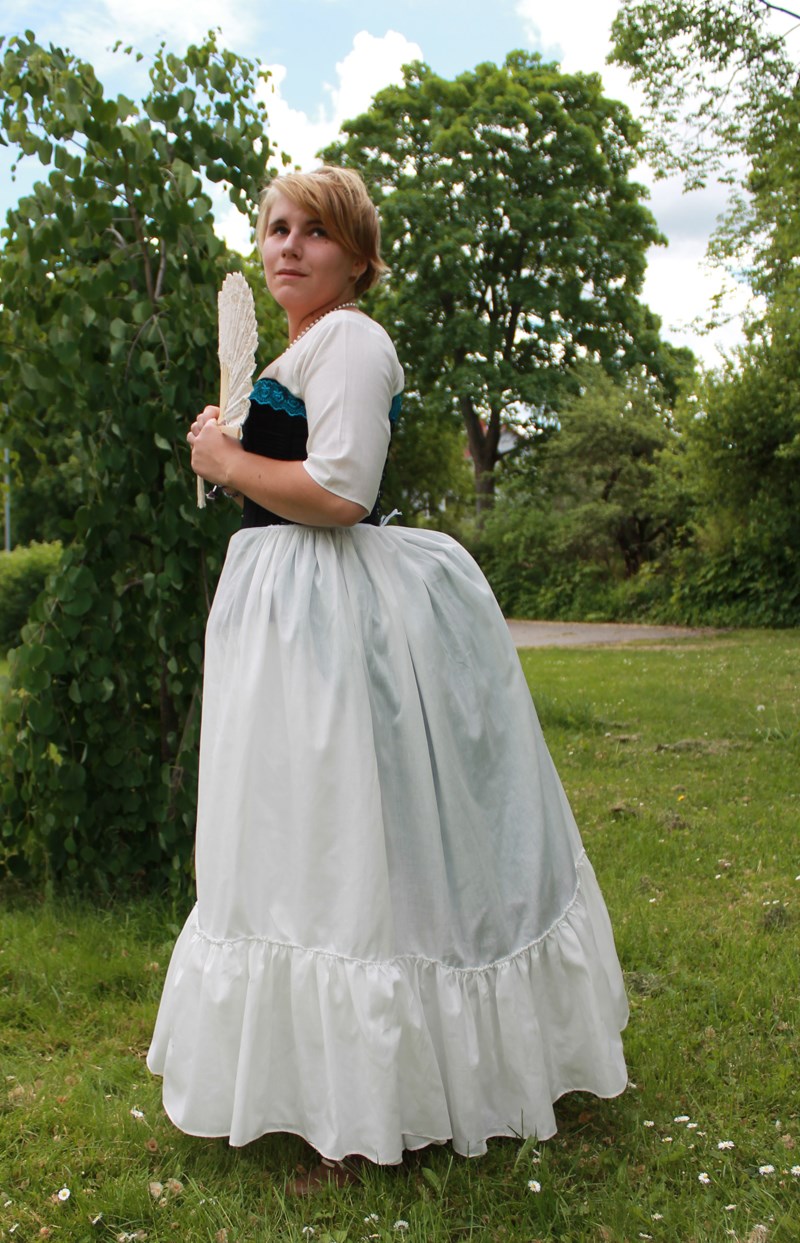
IMG_3092This picture is from the photoshoot me and my sister had of the HSF challenge 13, which I will tell you more about next time.