1880s Evening Gown – Sewing & Construction

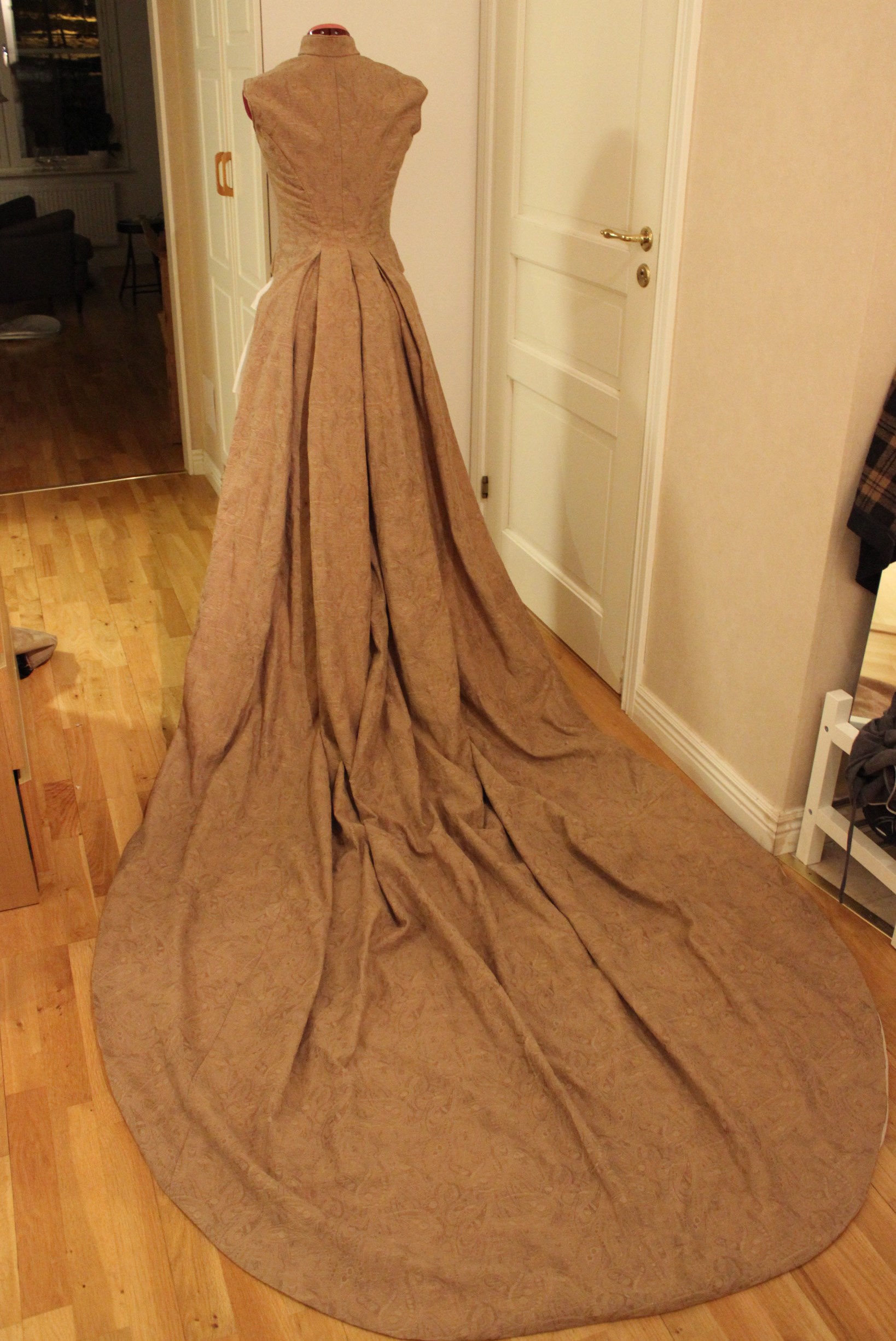
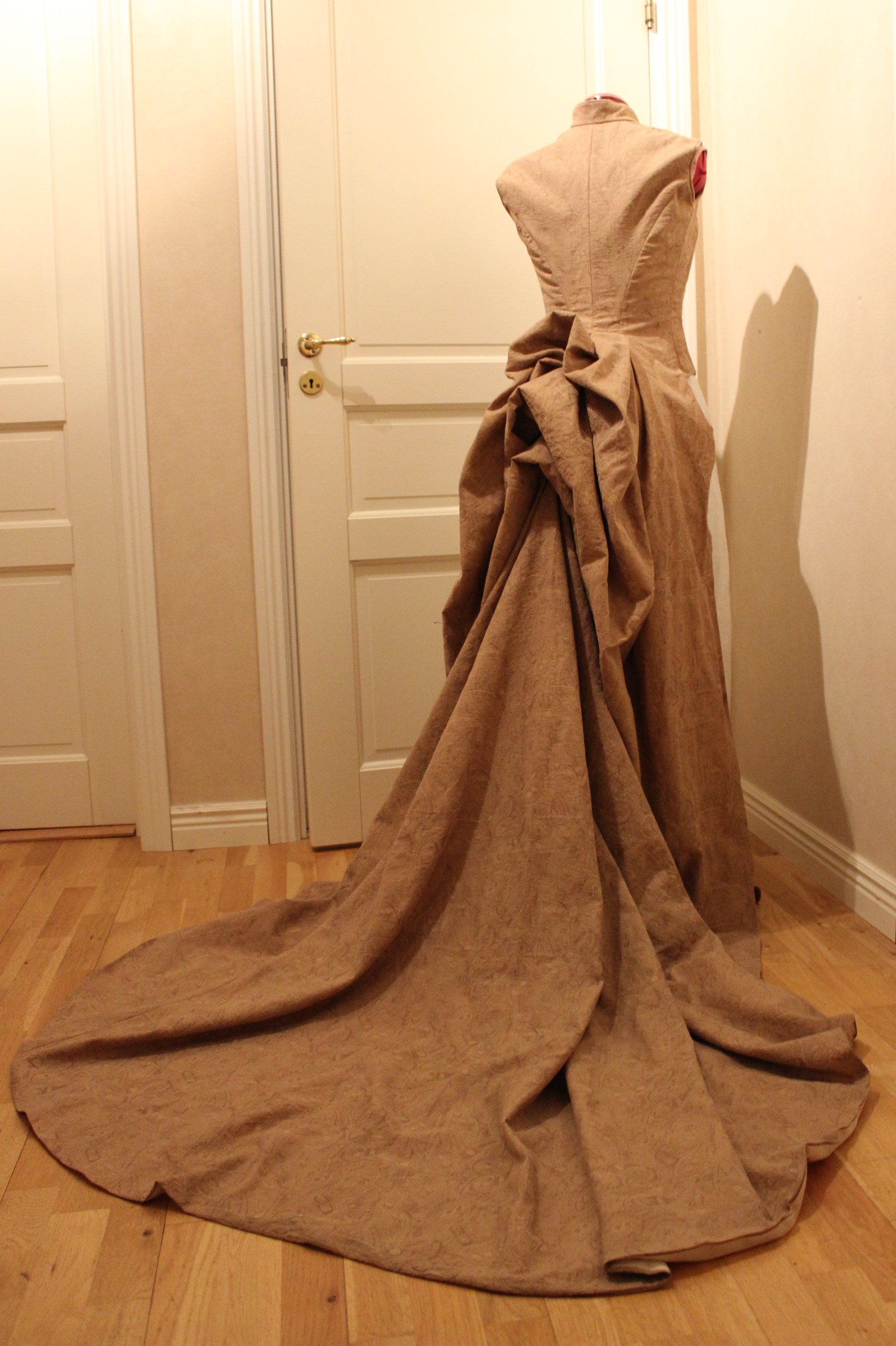
In my last post I told you about my trouble with the pattern for my opera gown. Now I will tell you about the sewing and construction of it, and also show you the finished gown (bodice and train only).IMG_5007
So after I got the mock-up to fit properly I brought out my fashion fabric. The dress is made in a polyester golden brocade, which both feels and behaves a lot like silk. IMG_5304
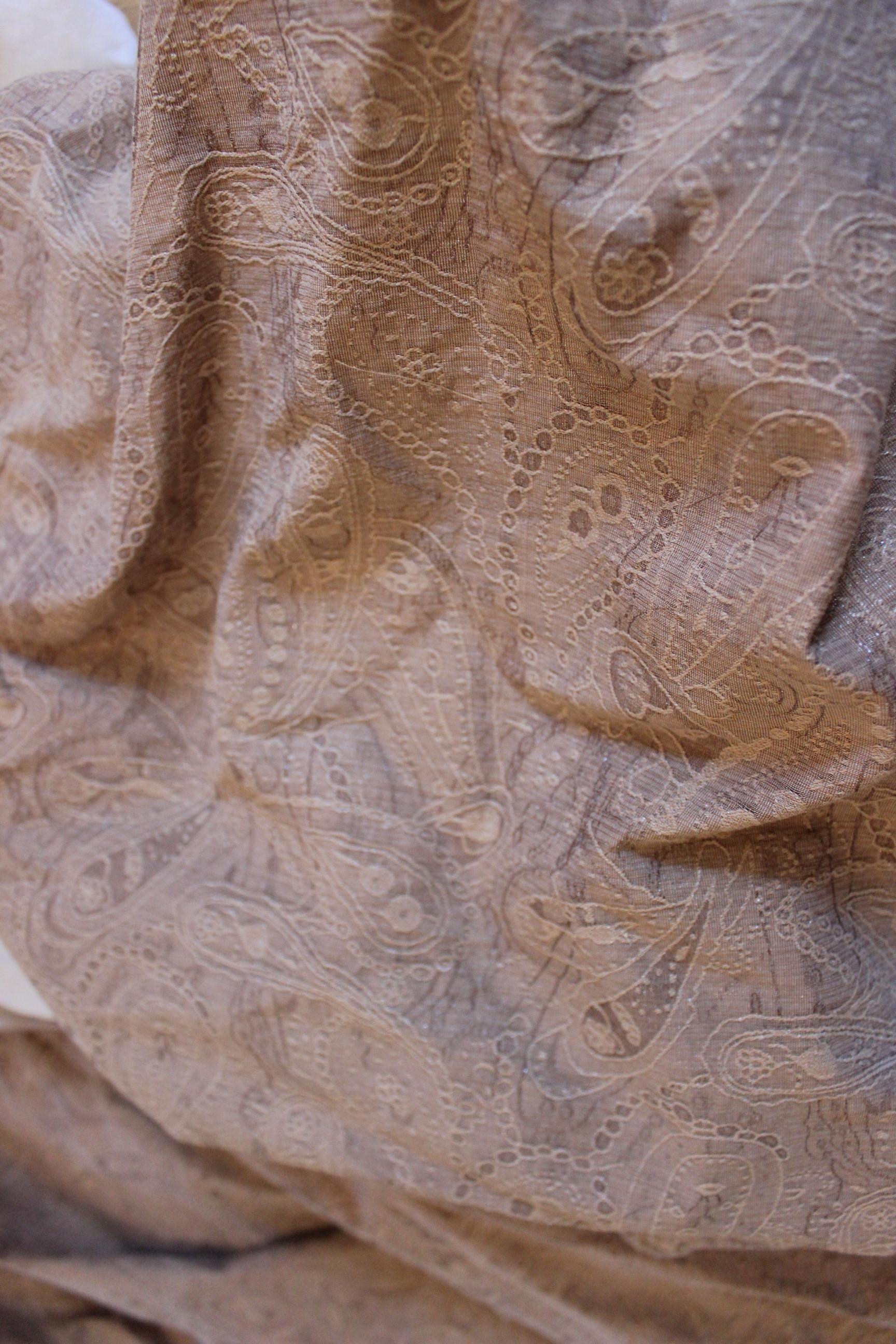
I bought 6 m of it on sale before christmas, and now it was time to lay it out on the floor. IMG_4980

I also cut the lining, adjusting the lenght of the train to the 4 m long ivory cotton. IMG_4987

The different layers (lining, fashion fabric, interlining (cotton twill) and paper pattern piece).IMG_4988
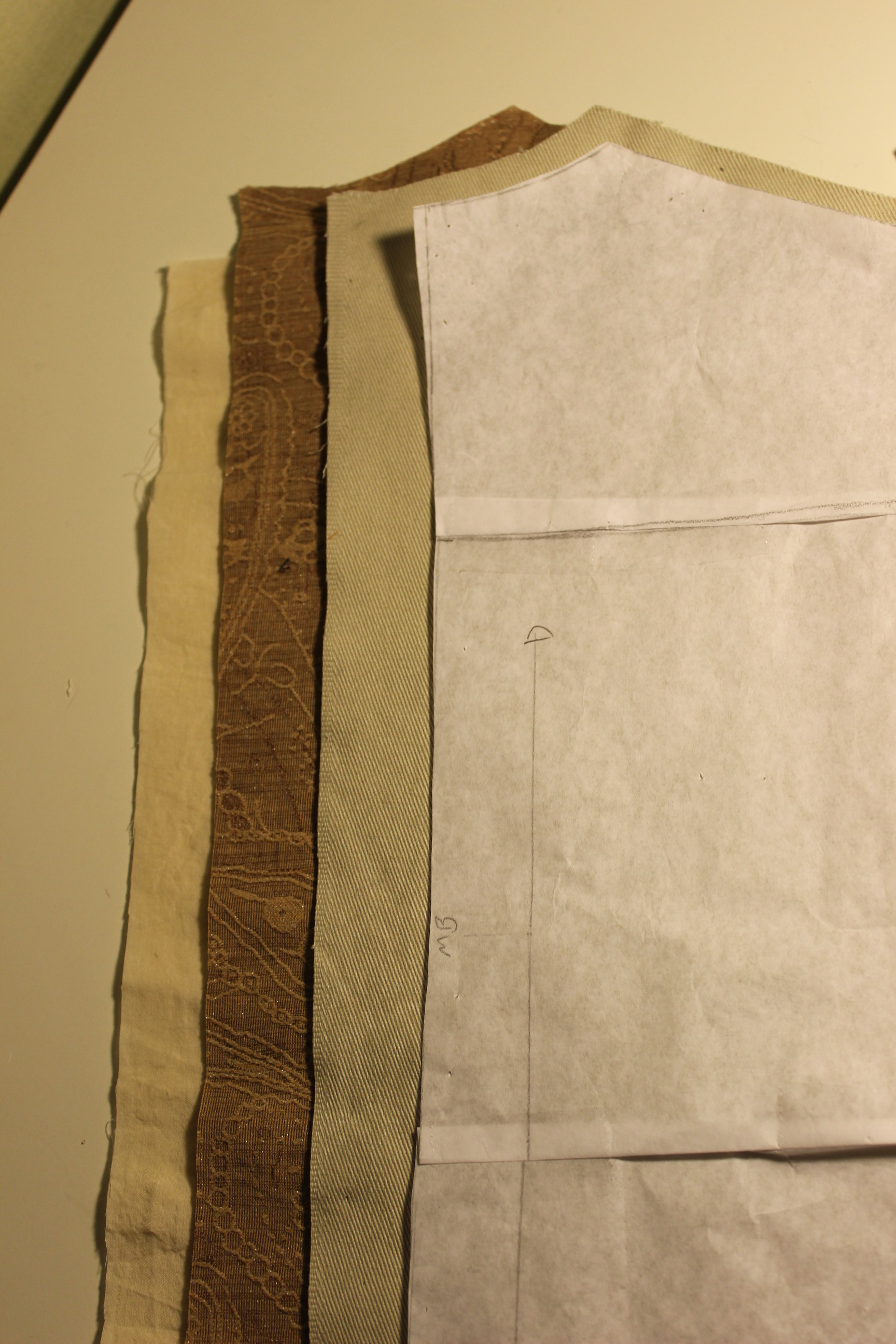
Then I marked all the darts (as usual being very bad at marking the notches), and basted al the layers together. IMG_4989
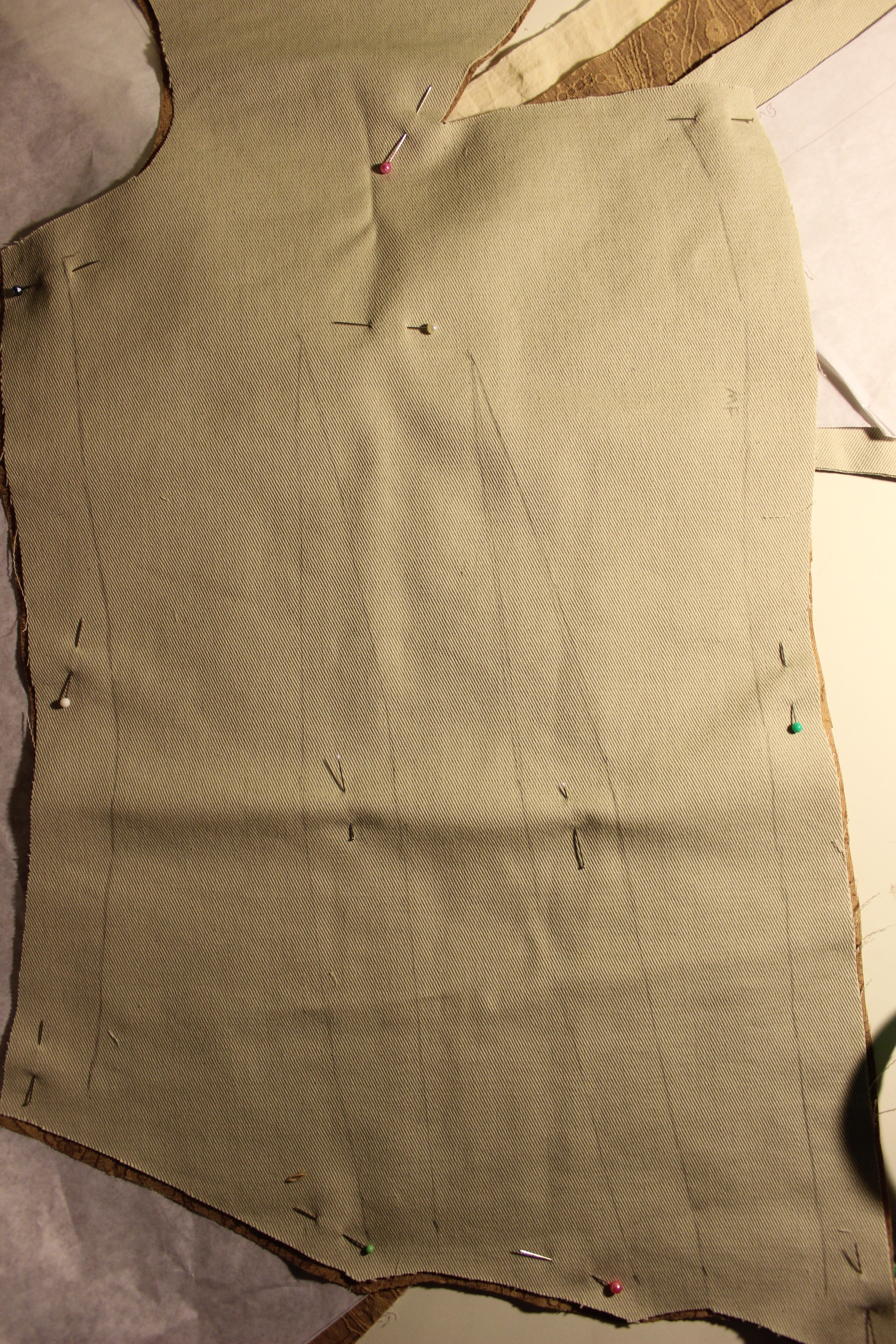
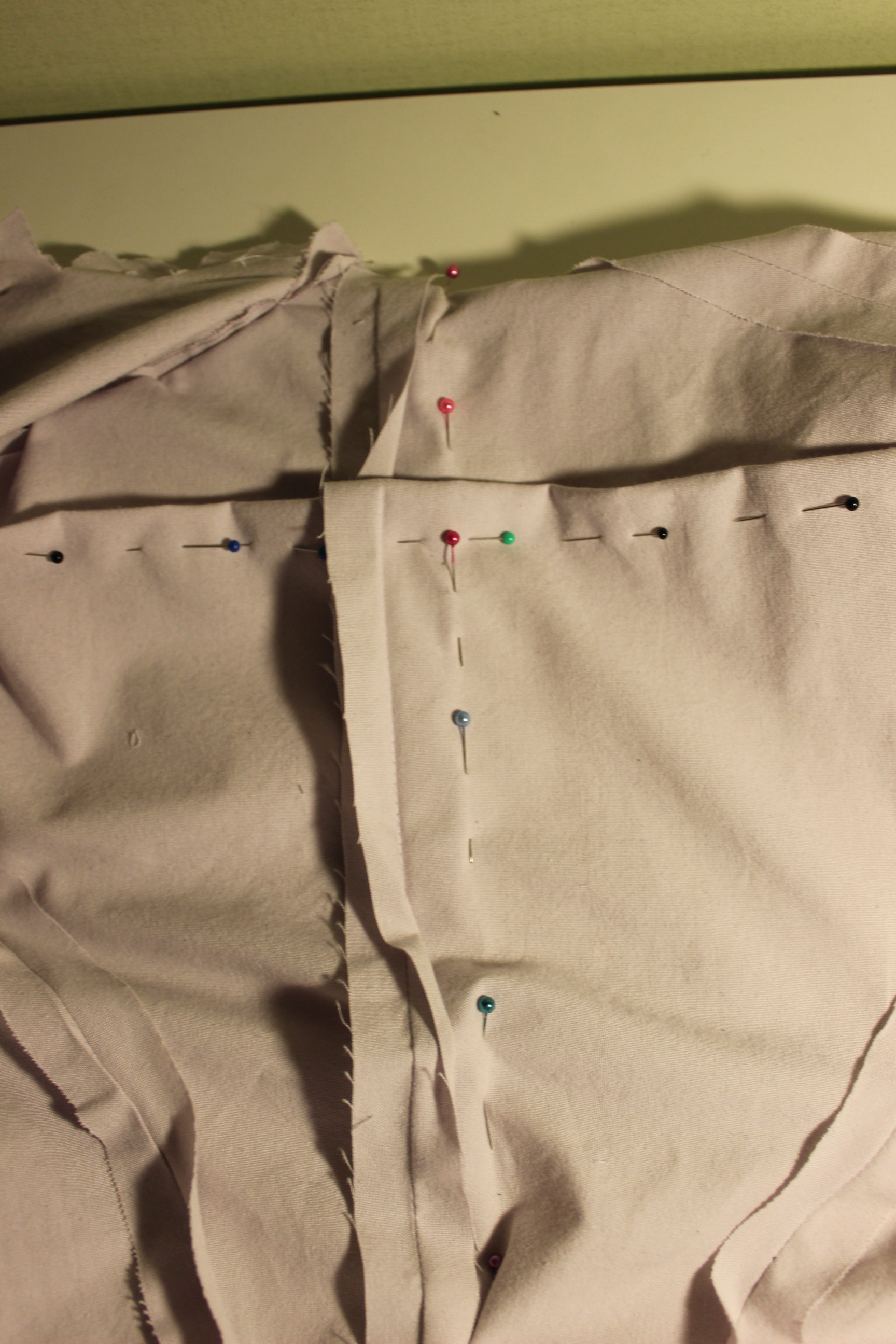
I recently learnt a new trick, on how to sew darts on fabric and interlinning which I wanted to try. You simply baste the layers close to the darts, then sew inside the dart, very close to the original sewing-line.
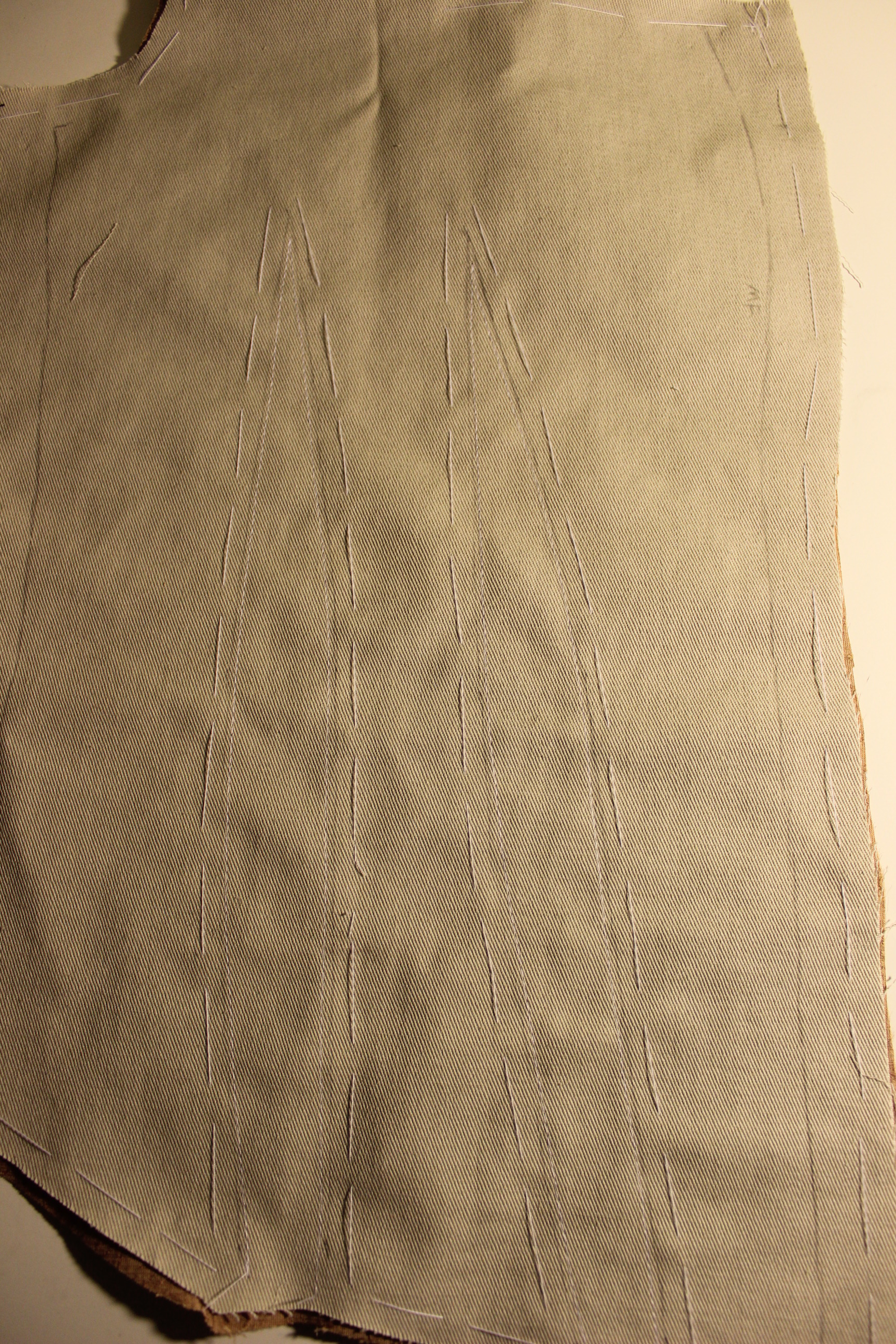
IMG_5000 IMG_5001

This way you can easy get a nice looking dart without any bulk, and the stiching won’t show once the dart is sewn.

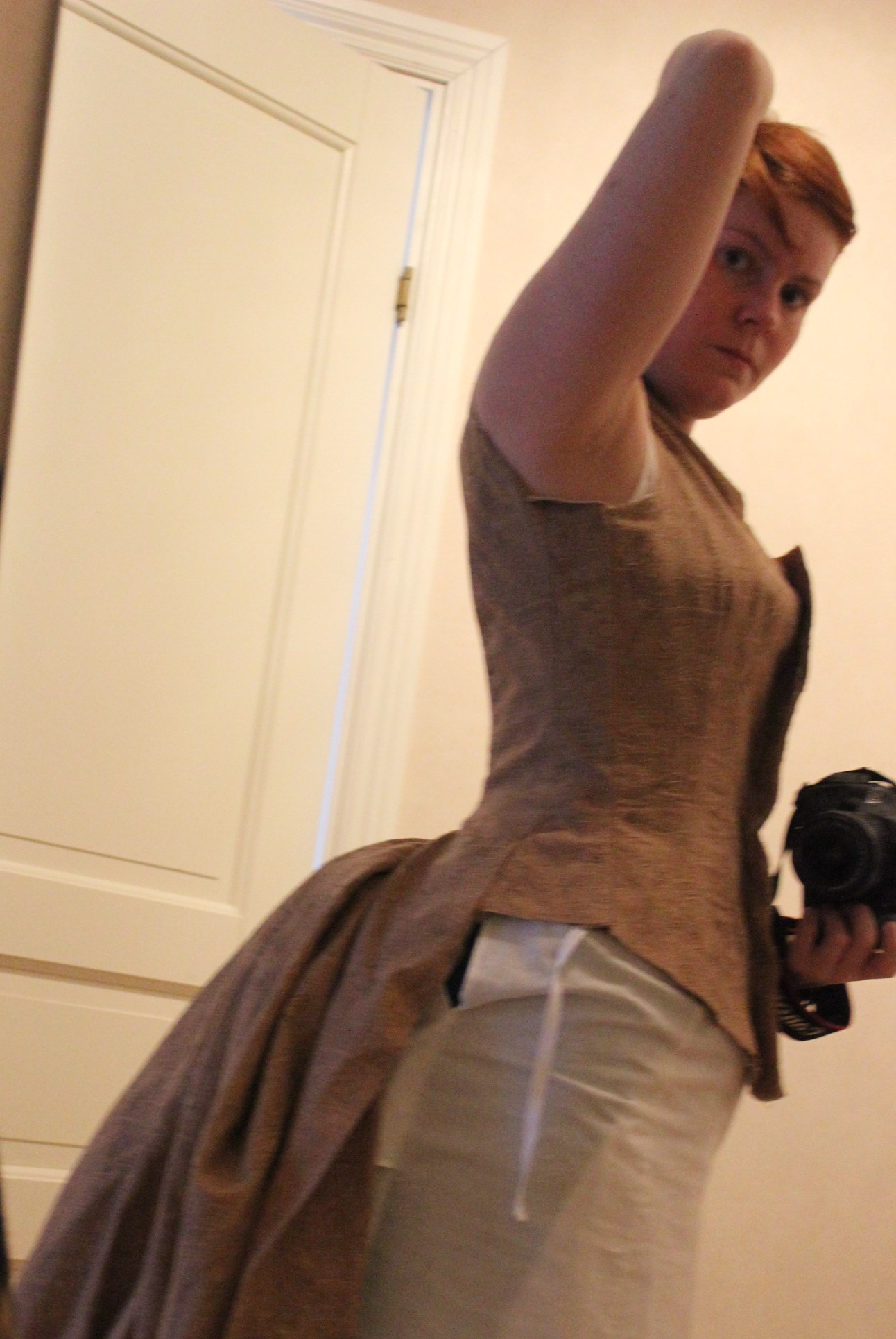
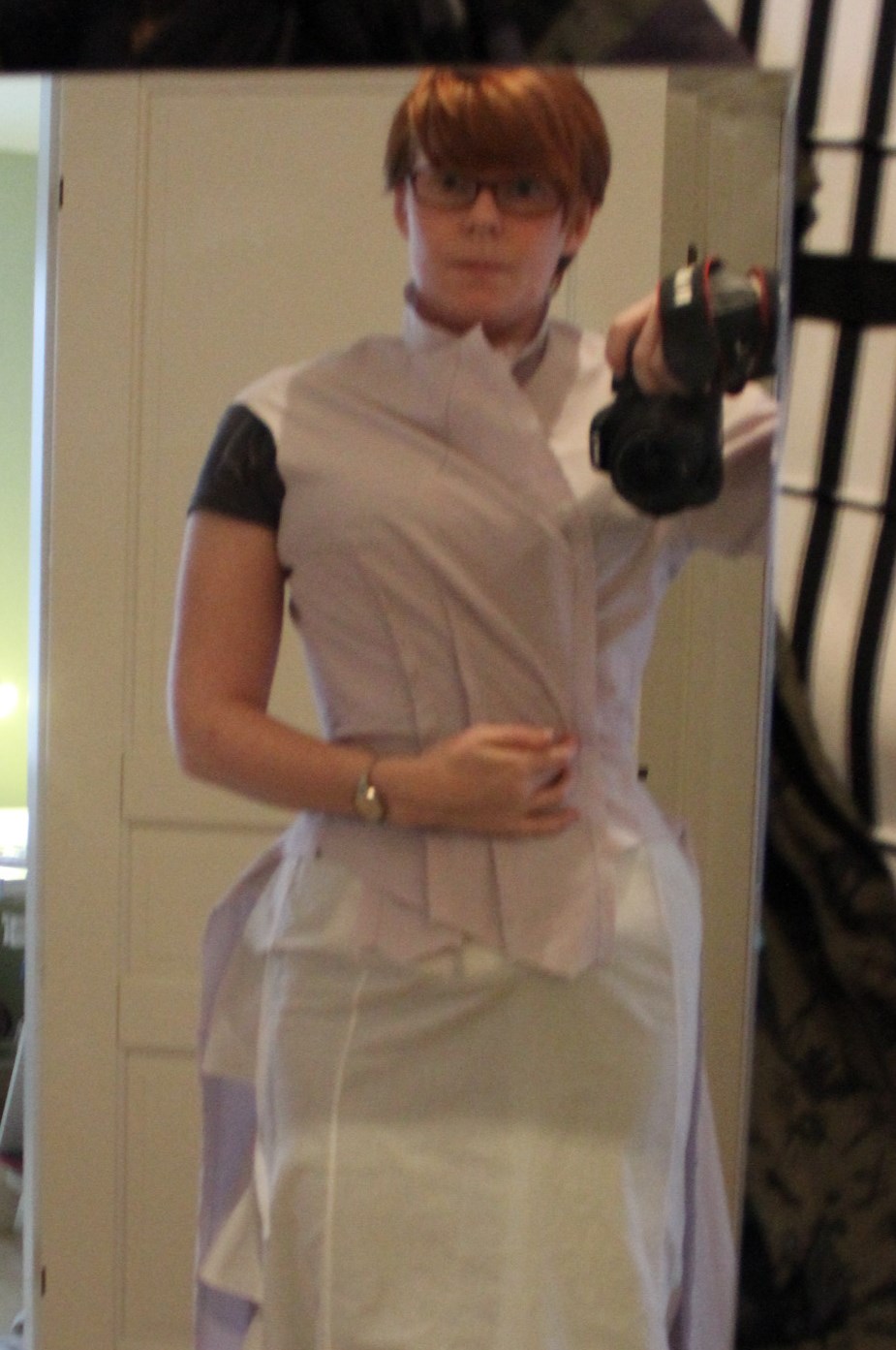
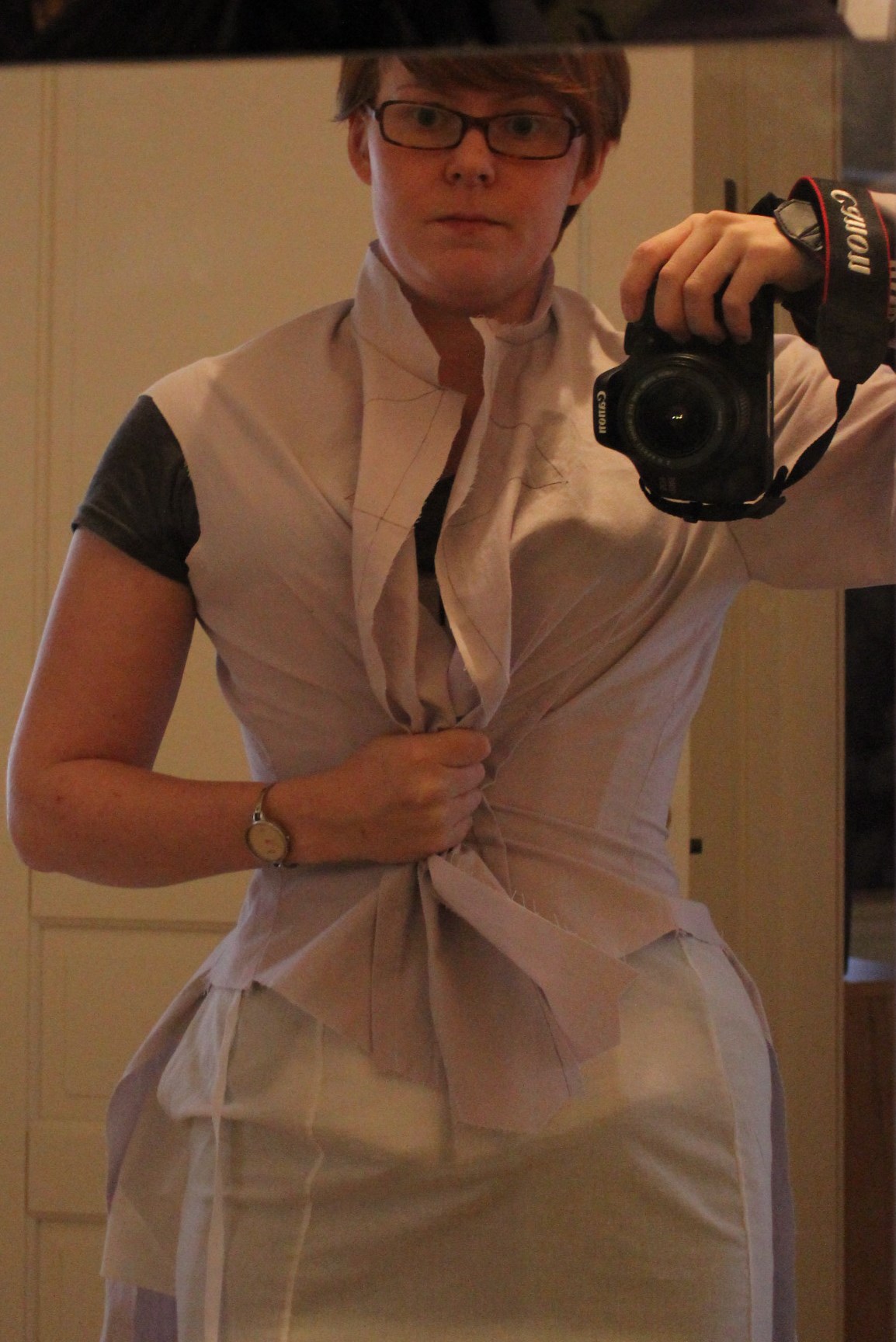
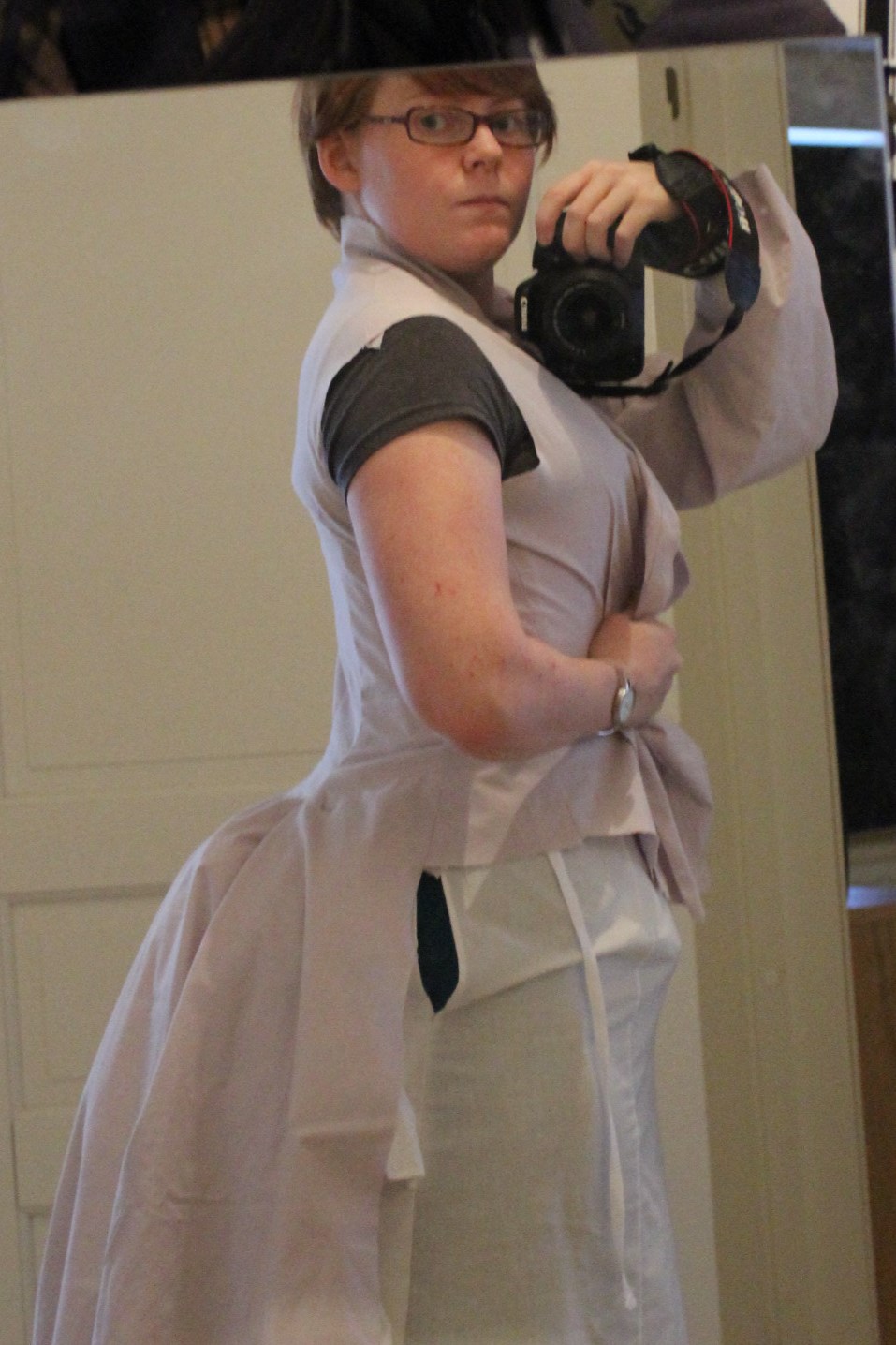
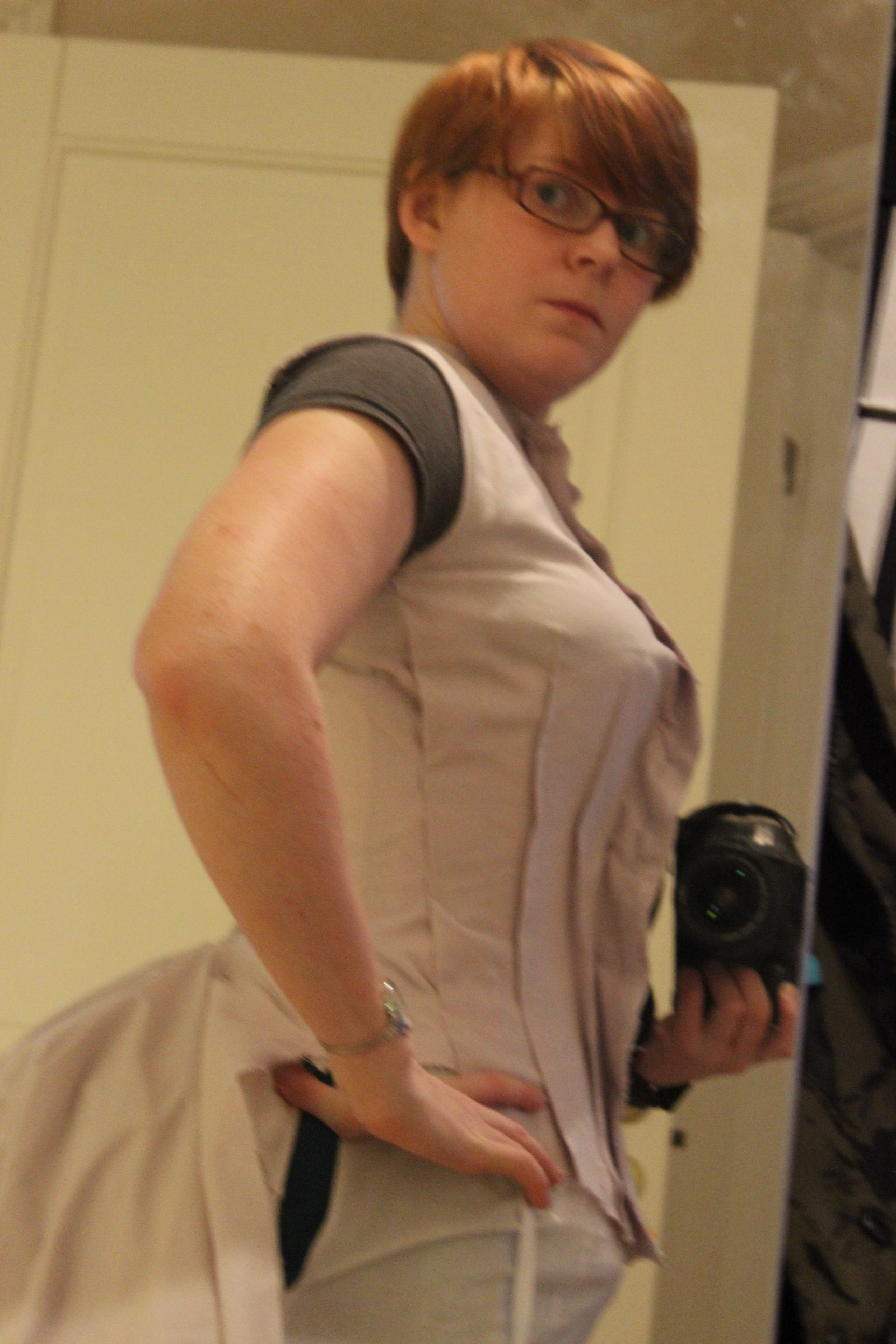
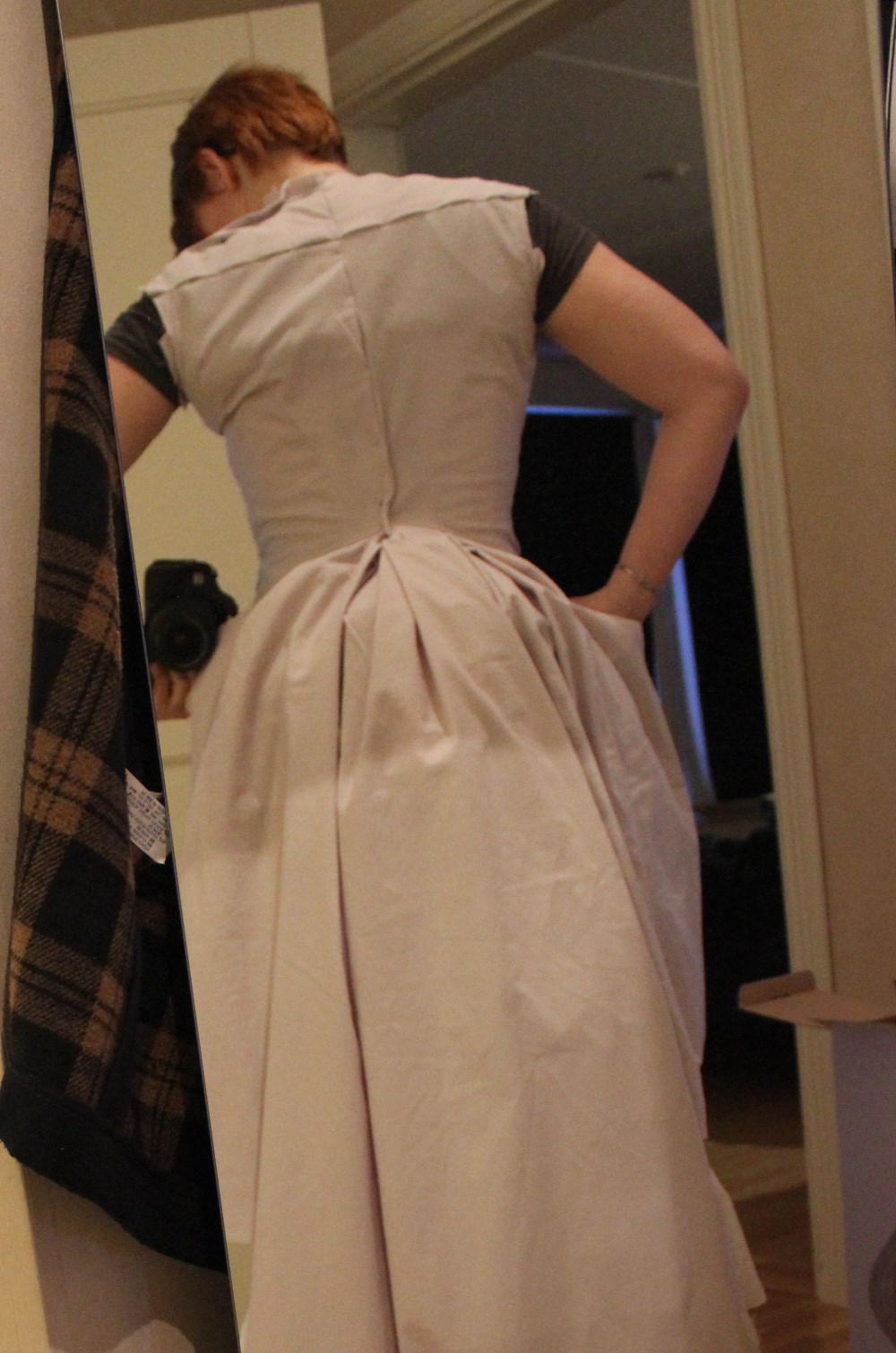
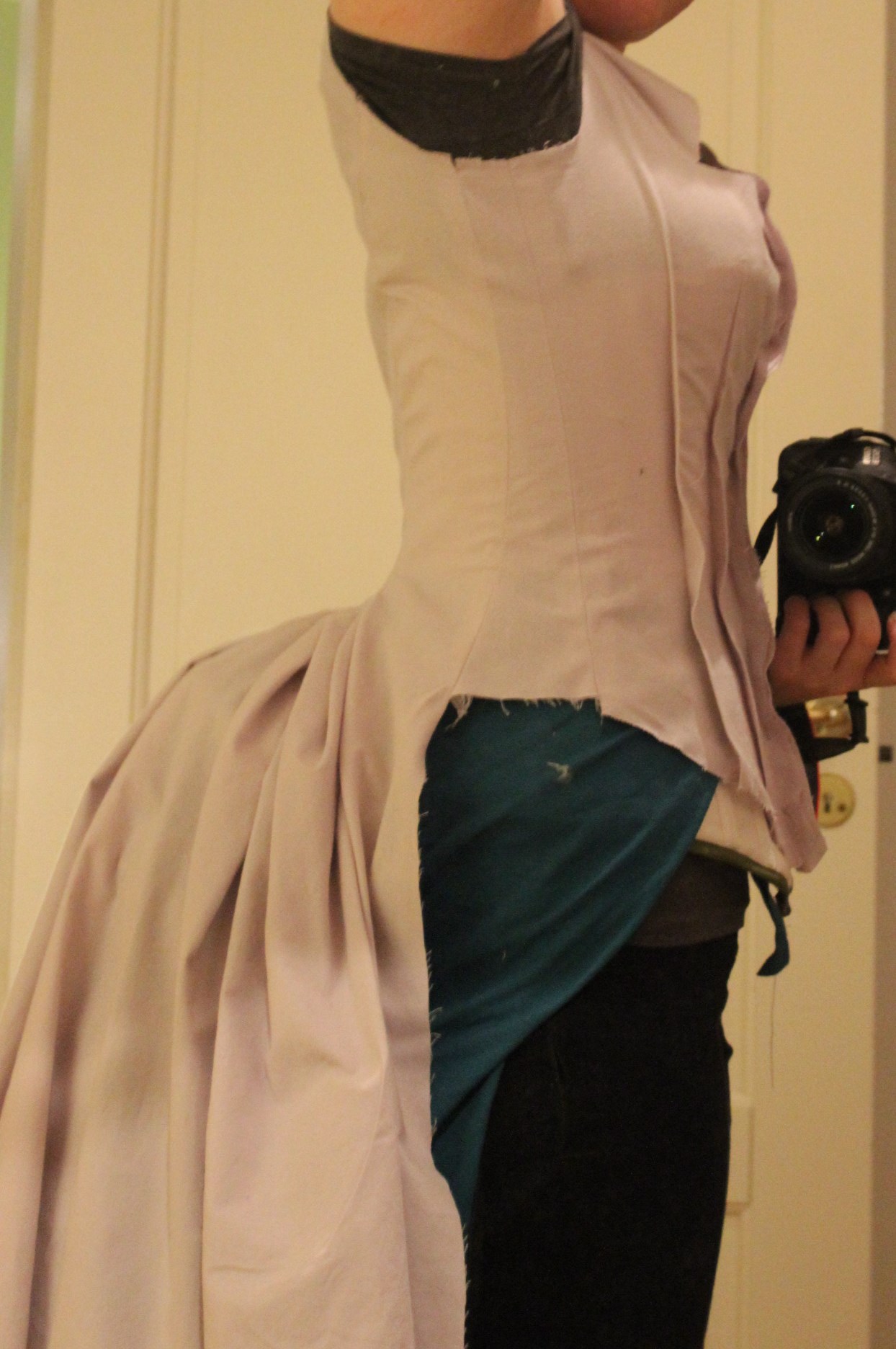
I then sewed the whole bodice together, and dressed in corset and bustle for a try on. IMG_5021
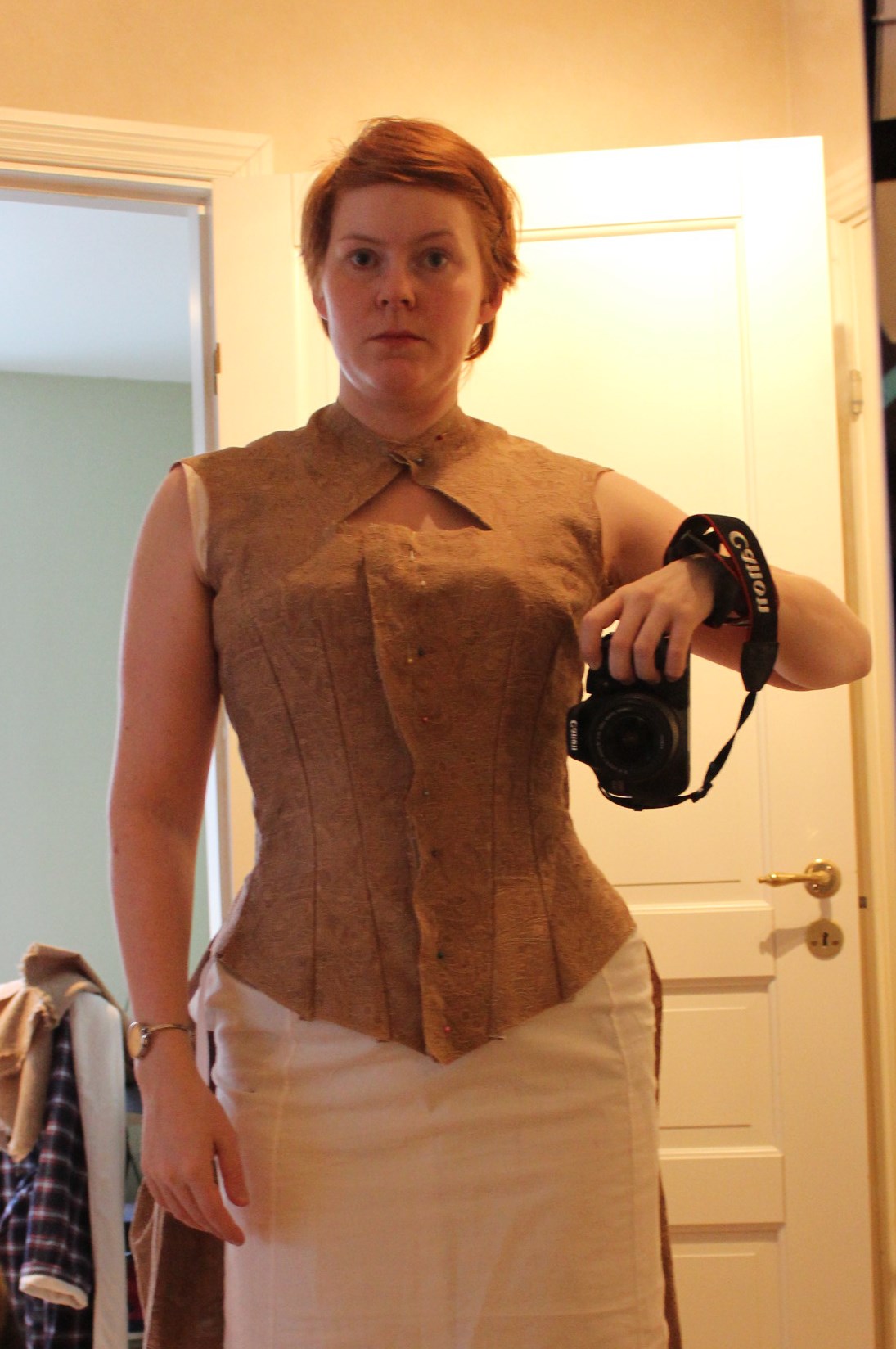
IMG_5032 IMG_5044

Hm, not great. Some changes are needed. Like taking the armhole and shoulder seams in a bit. I also need to re-shape the front a bit, and make the neck opening a bit lower and bigger.

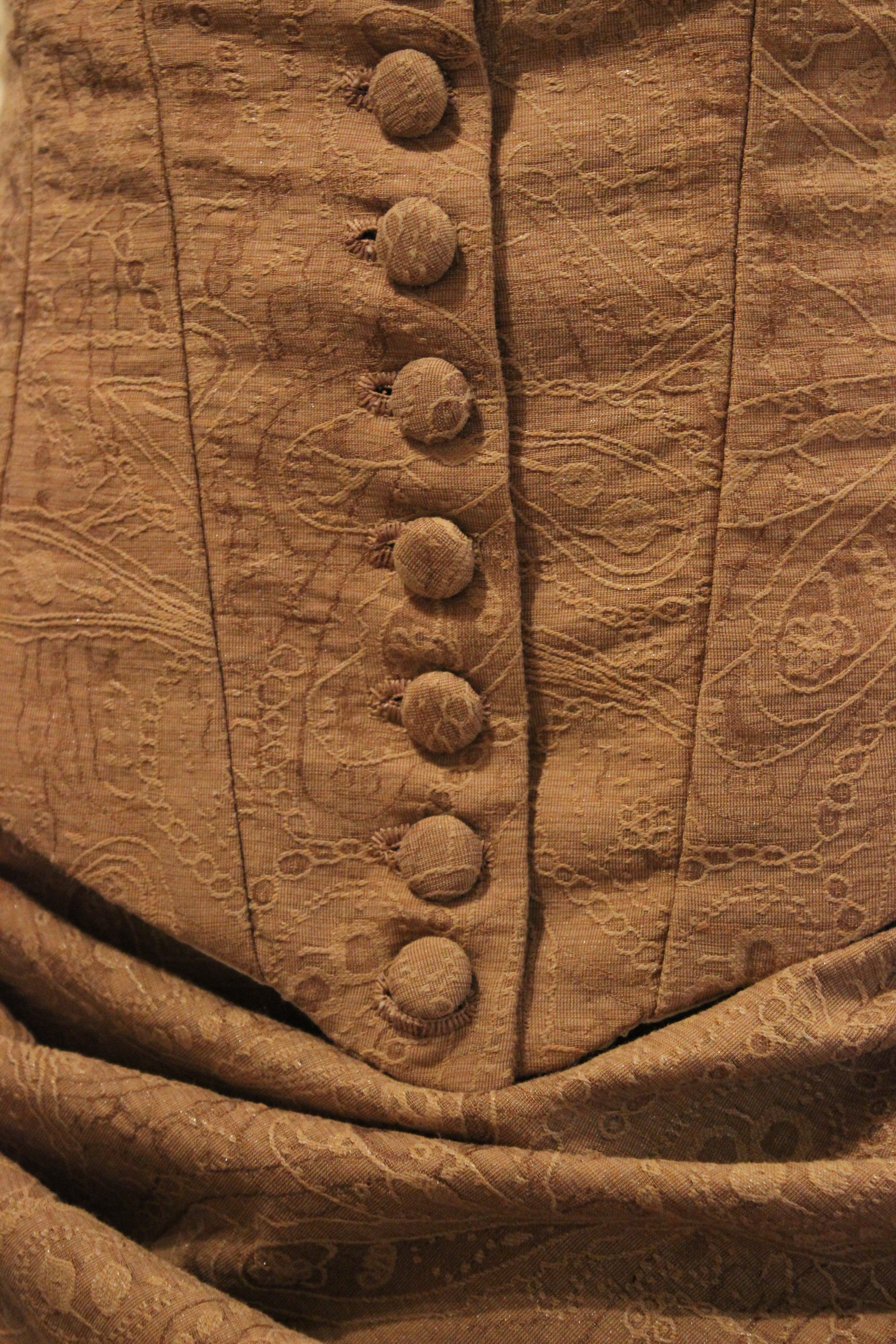
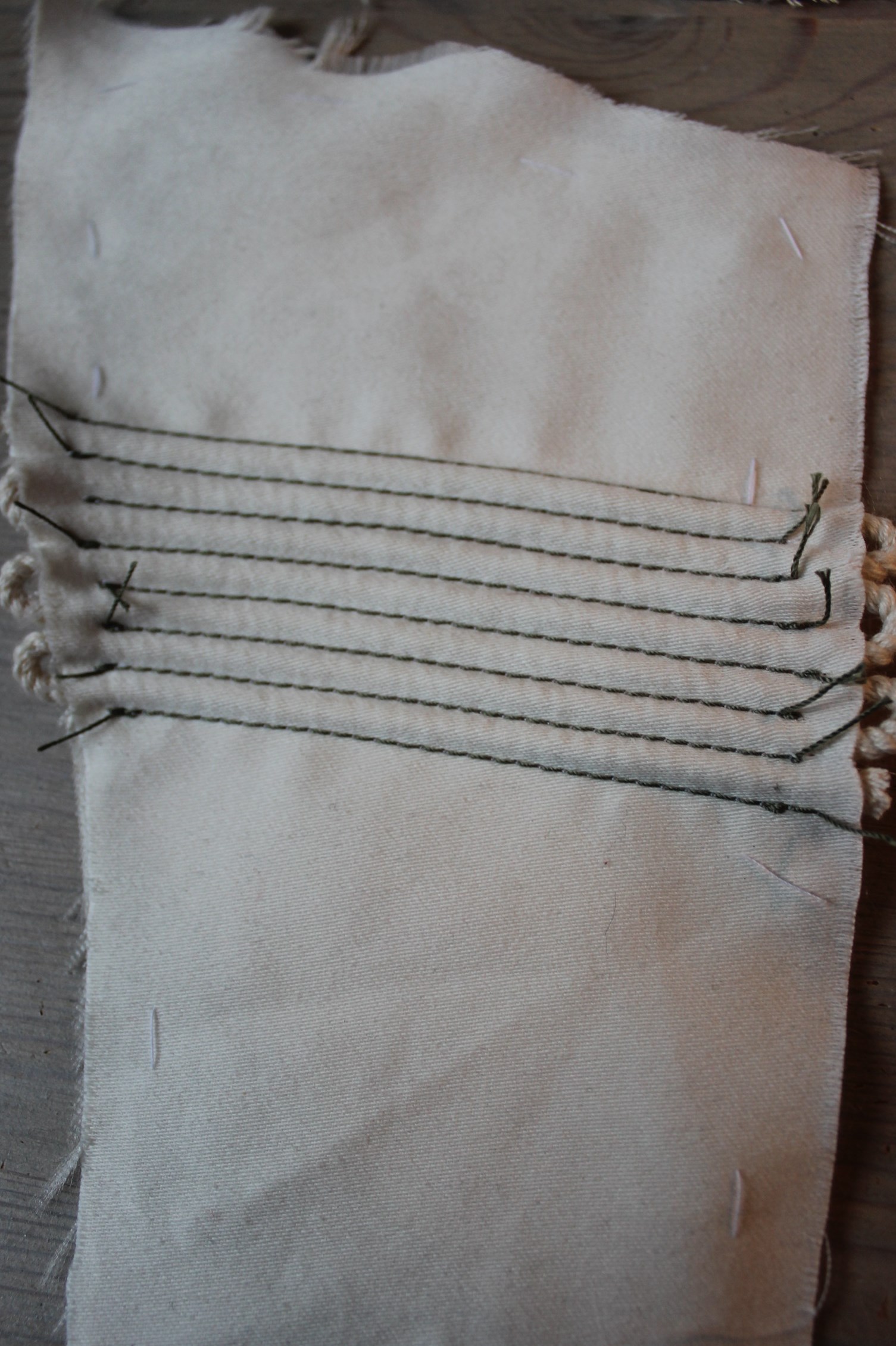
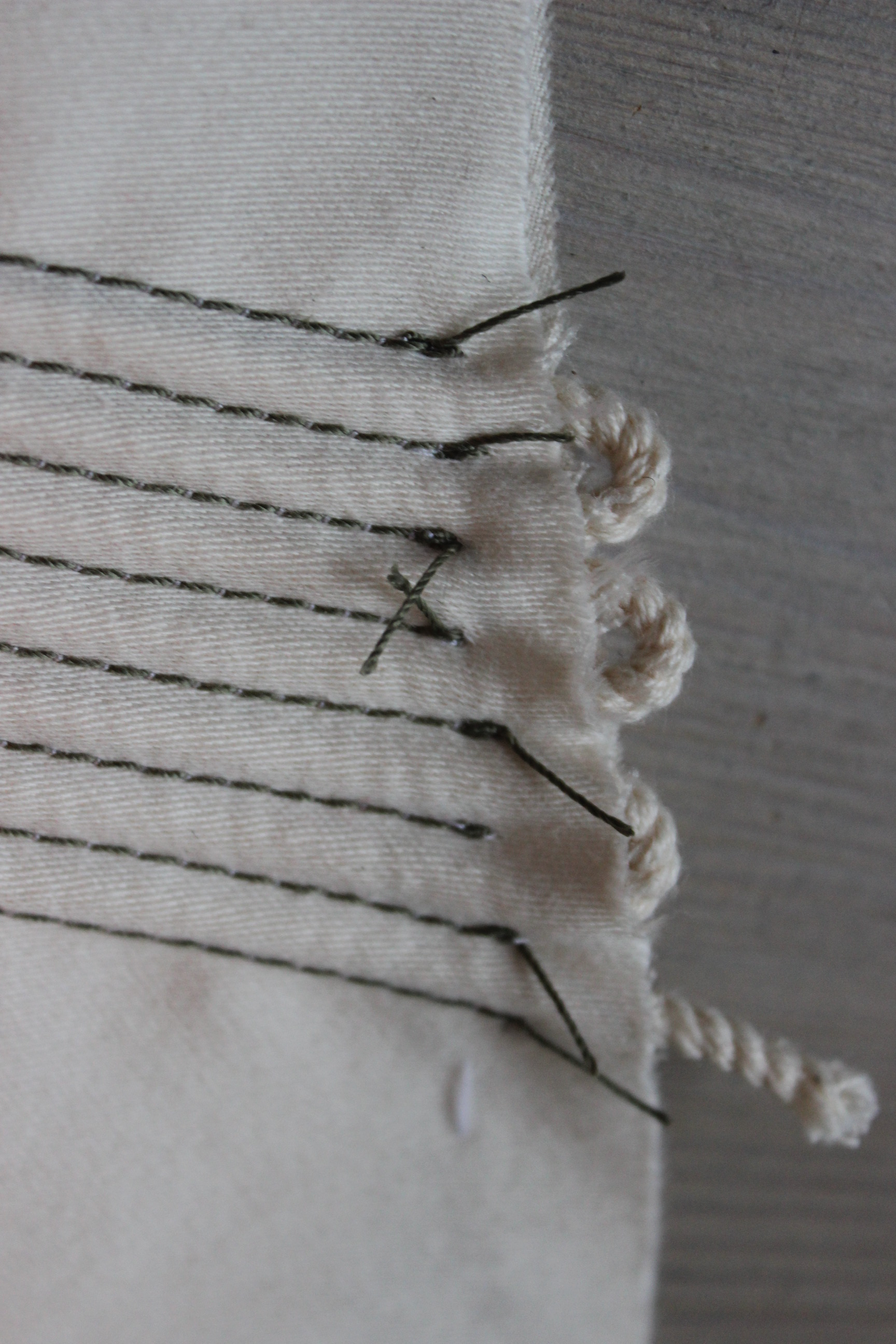
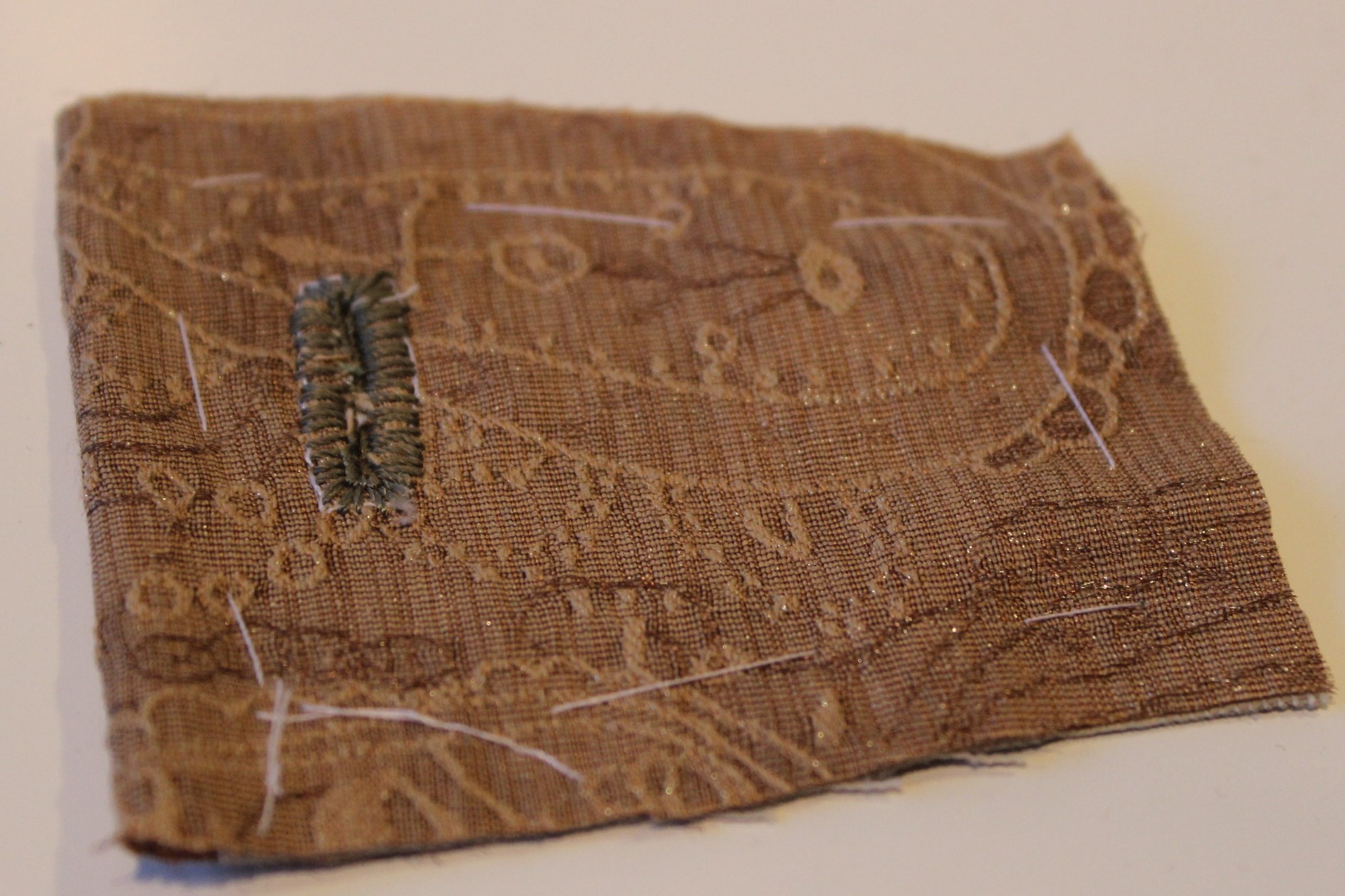
Once all the changes was made, it was time for the buttonholes. I started by practice on a piece of scrap fabric, and it looks pretty decent (if you ignore the green thread).IMG_5070
So, on to the real deal. Marking the spaces and finish covering the buttons.IMG_5076
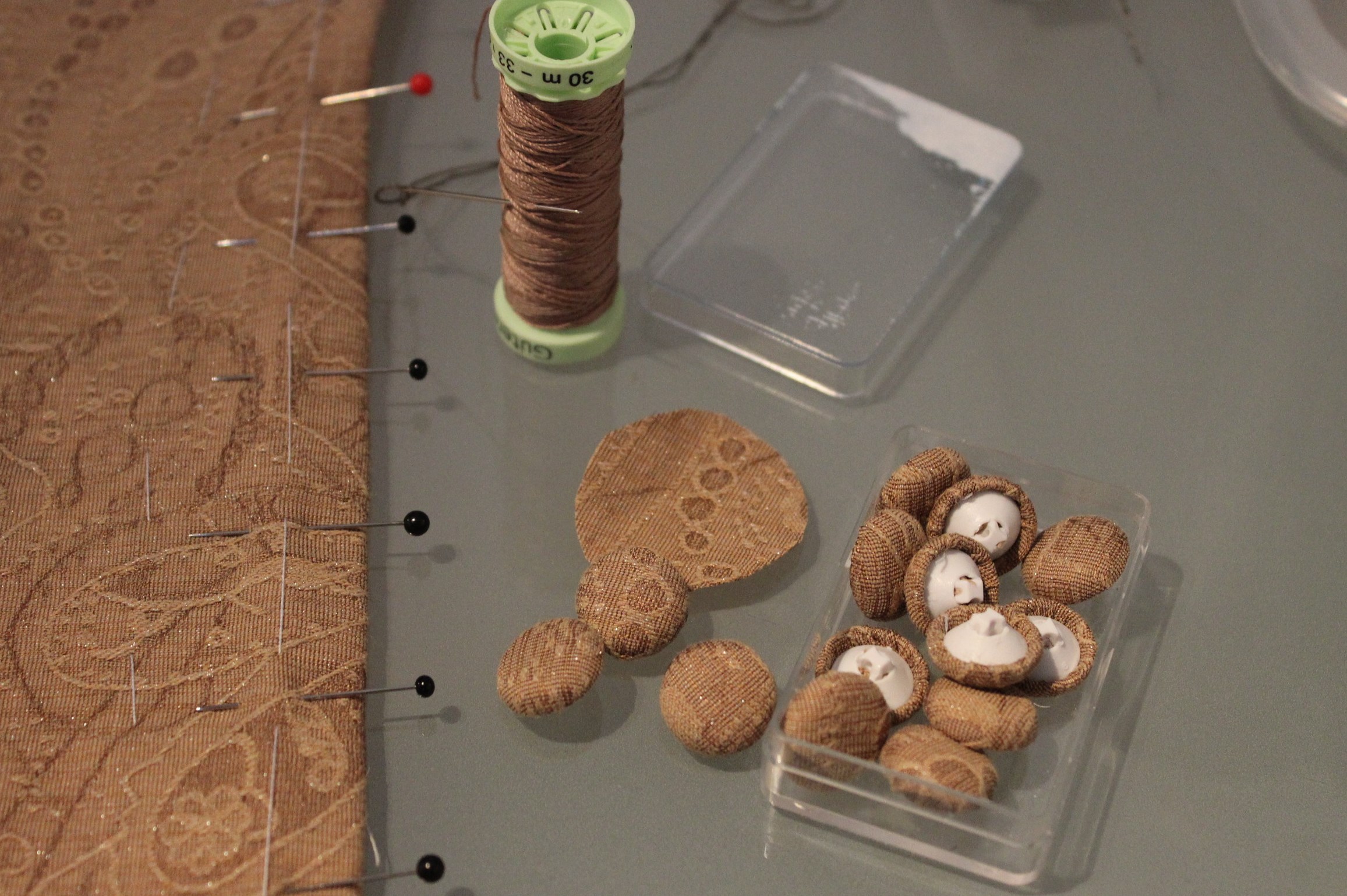
The buttonholes took about 3 hours (guess I’ve becoming faster), and when finished I sewed on the buttons. I’m really pleased with the way the front bodice looks, and are happy I took the time and money to buy 5 extra buttons. IMG_5079

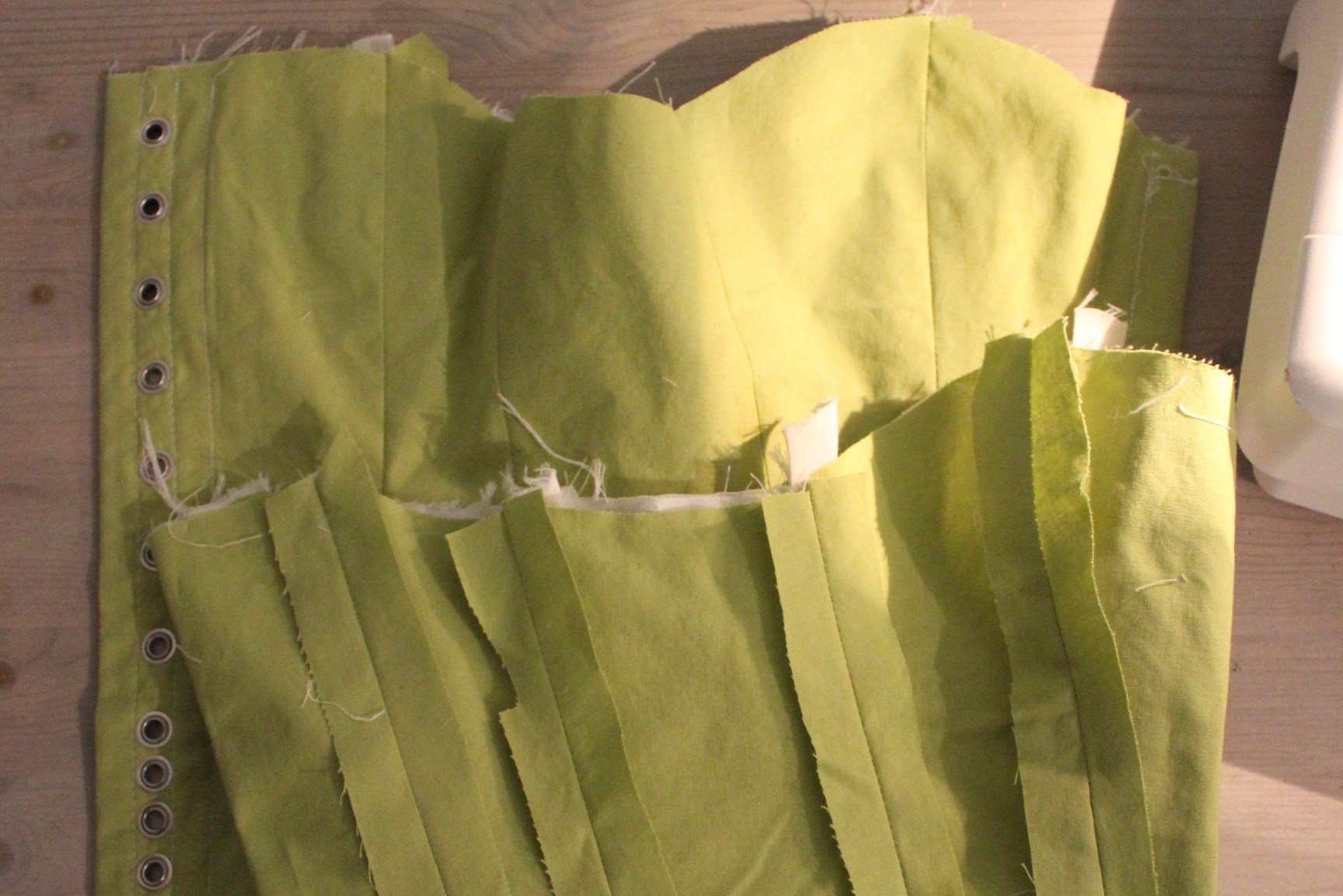
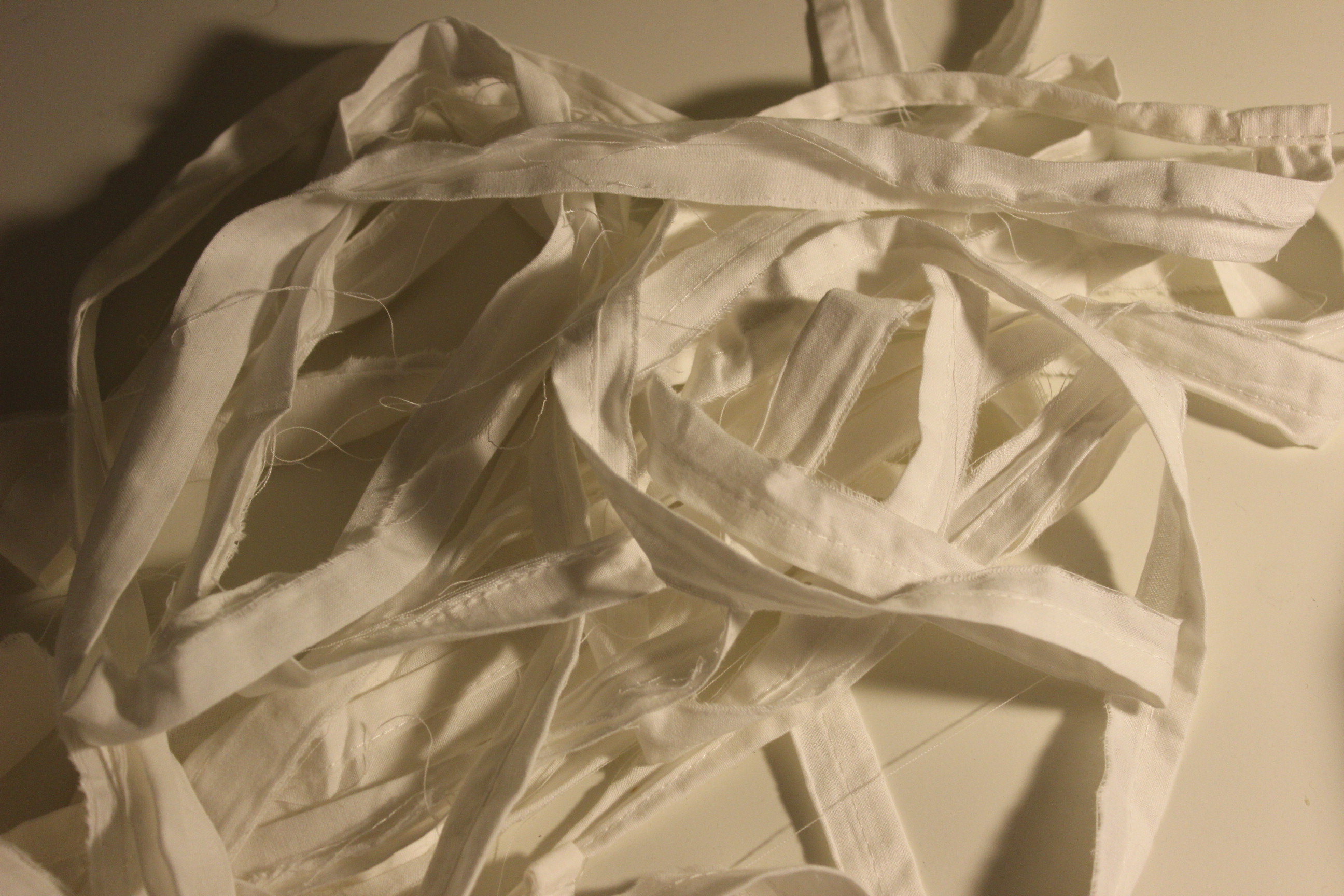
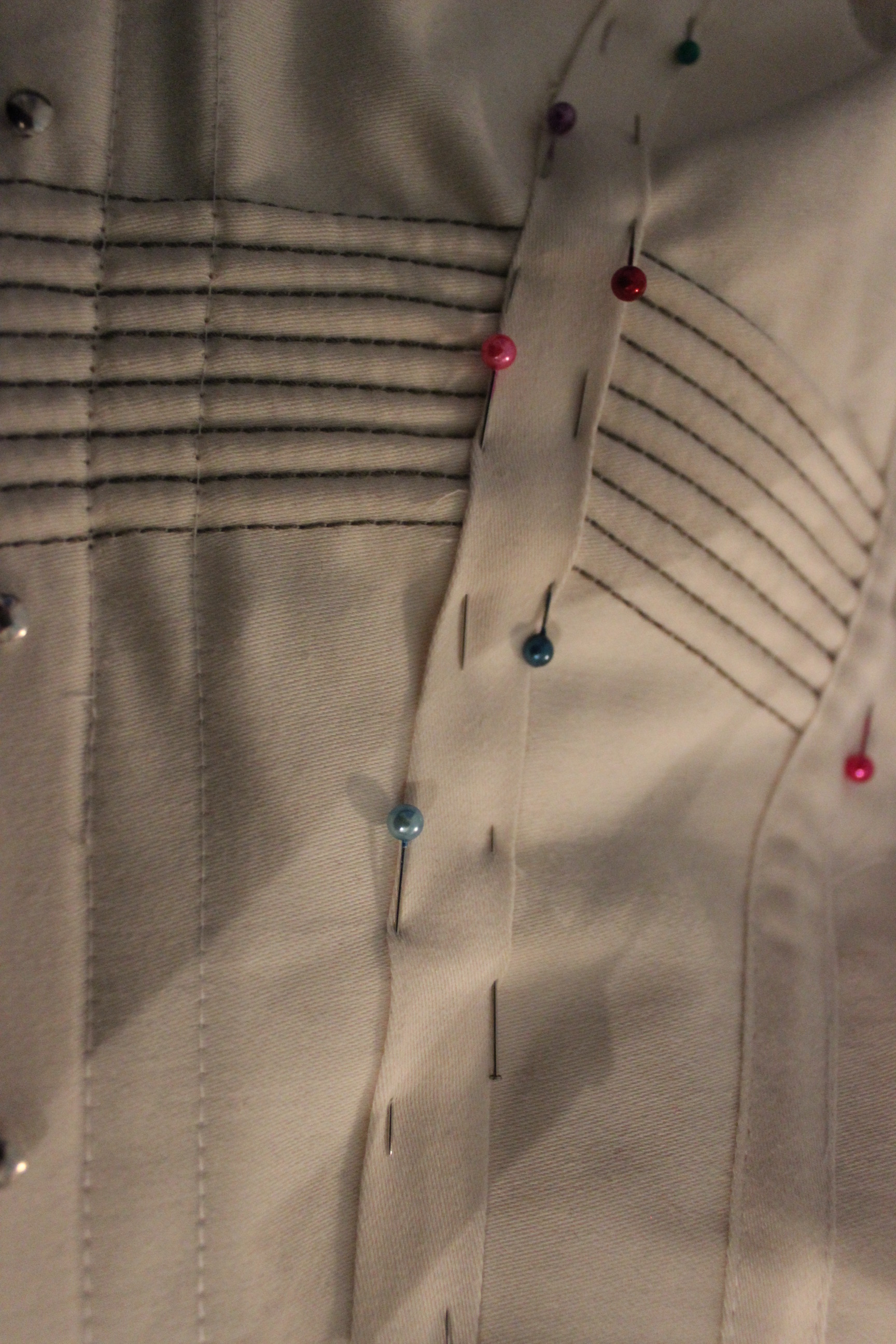
Then I pinned and sewed on some boning chanels (made from leftover cotton stripes) and put the cable ties in.IMG_5086

Then I once again got dressed to try it on.
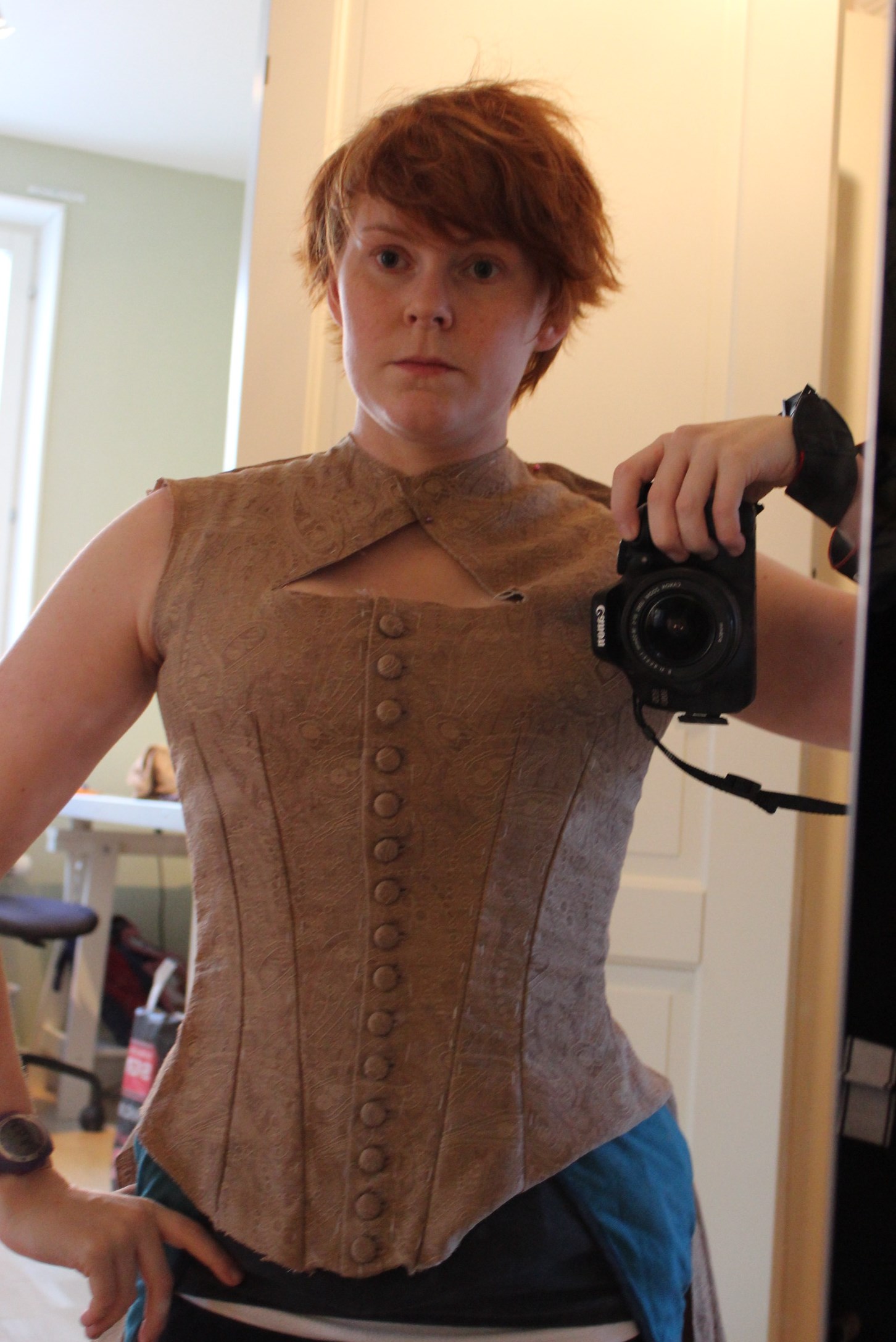
IMG_5090 IMG_5106

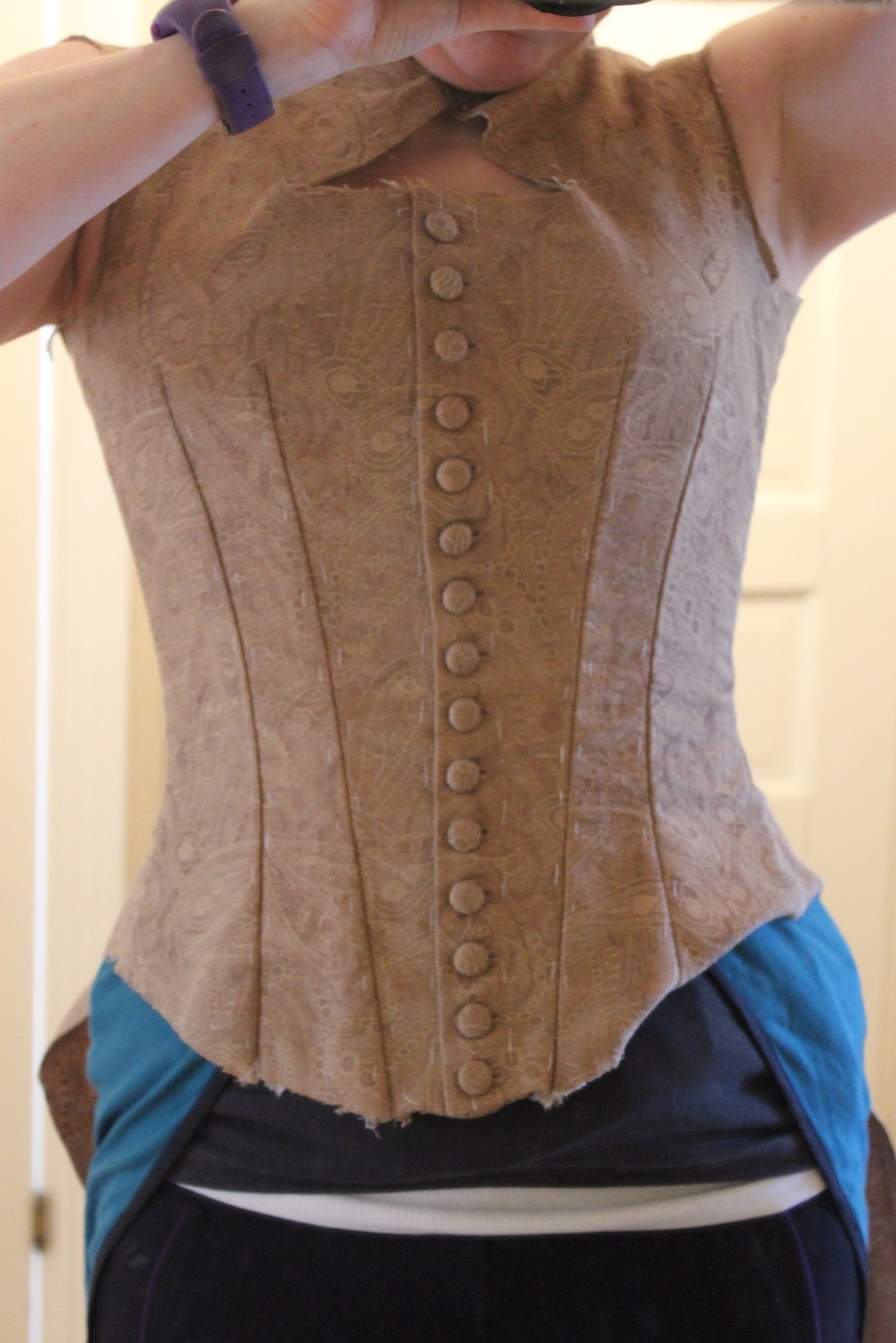
And even though it fit much better now, it still needed to be reduced a bit at the shoulders.

But the waist and the front clouser looked fantastic (if I may say so myself).IMG_5122
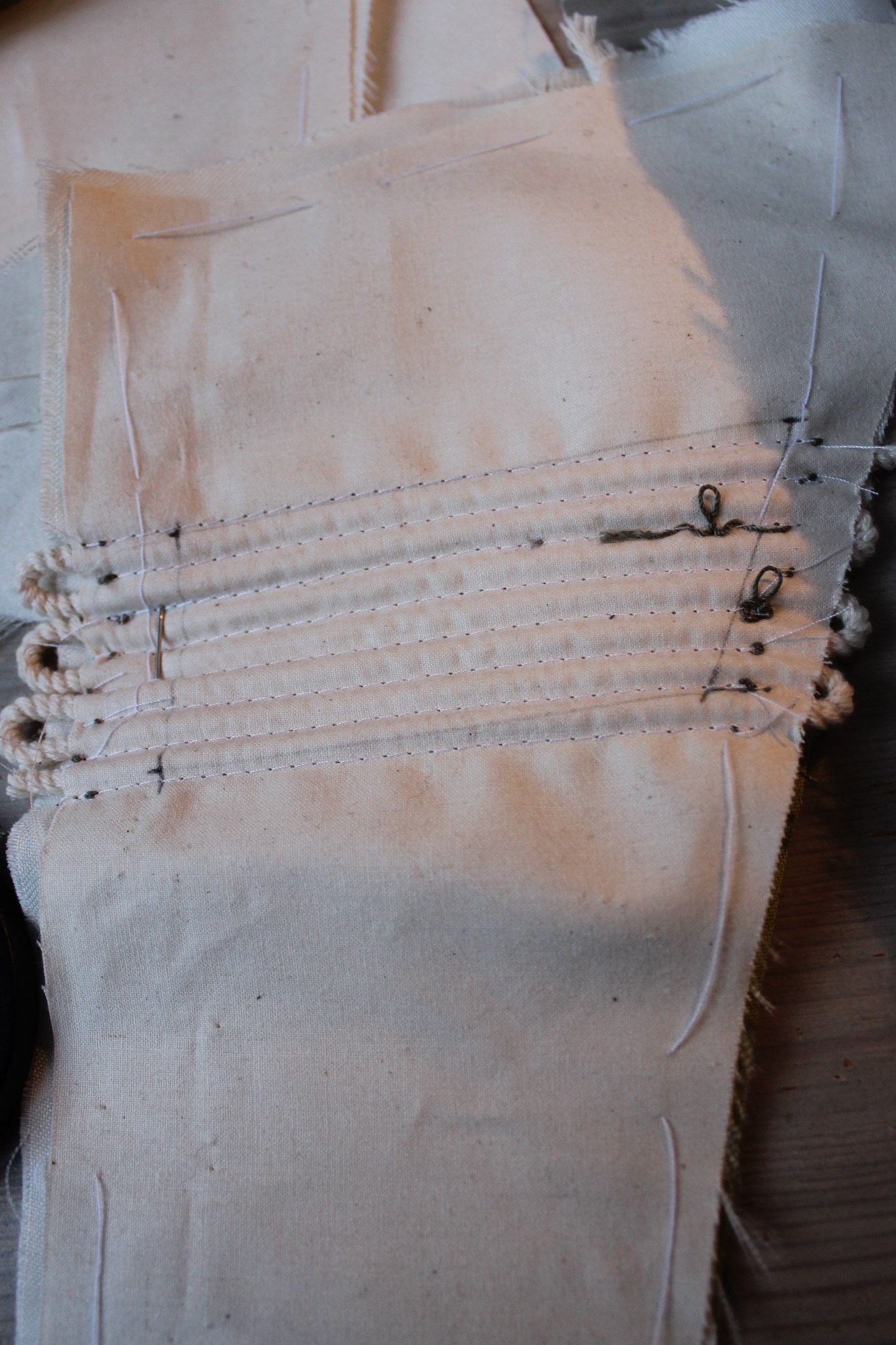
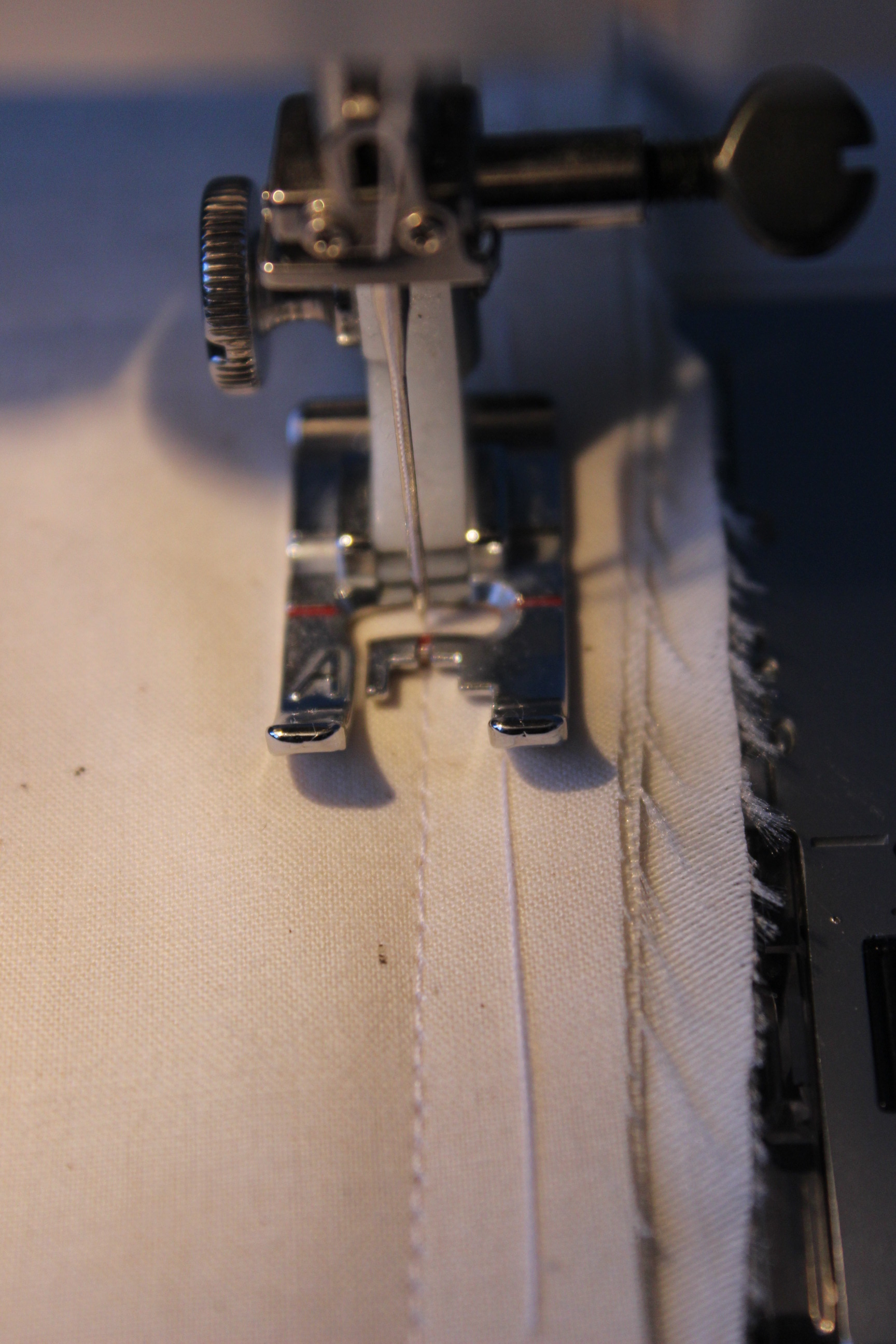
Now it was time to make the piping for the neckline. I used a cotton cord and some leftover fashion fabric (cut on the straight grain).IMG_5125
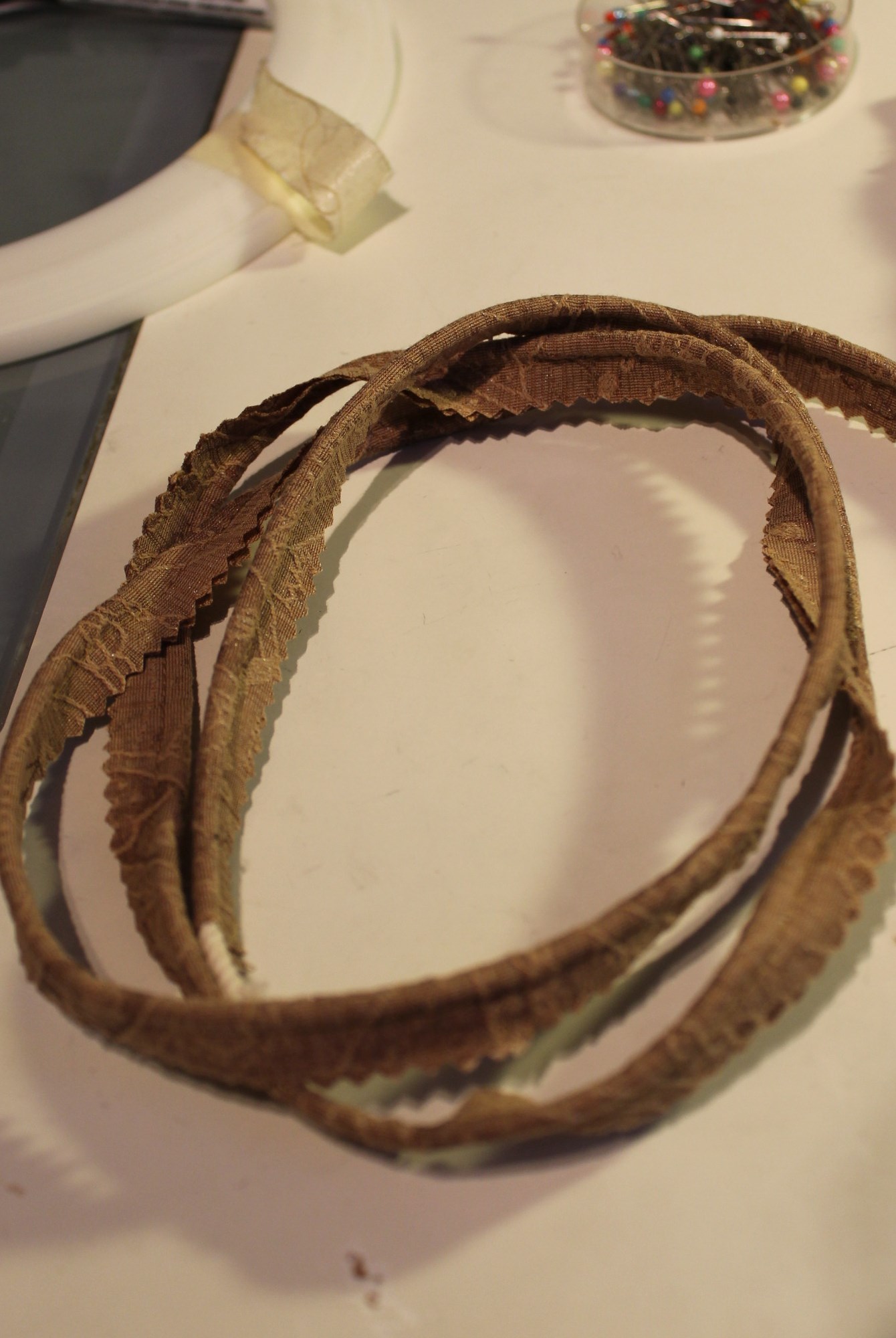
Pinning those pesky corners, making sure they look neat, and cuting the seam allowence to get the piping laying smoothly.IMG_5124
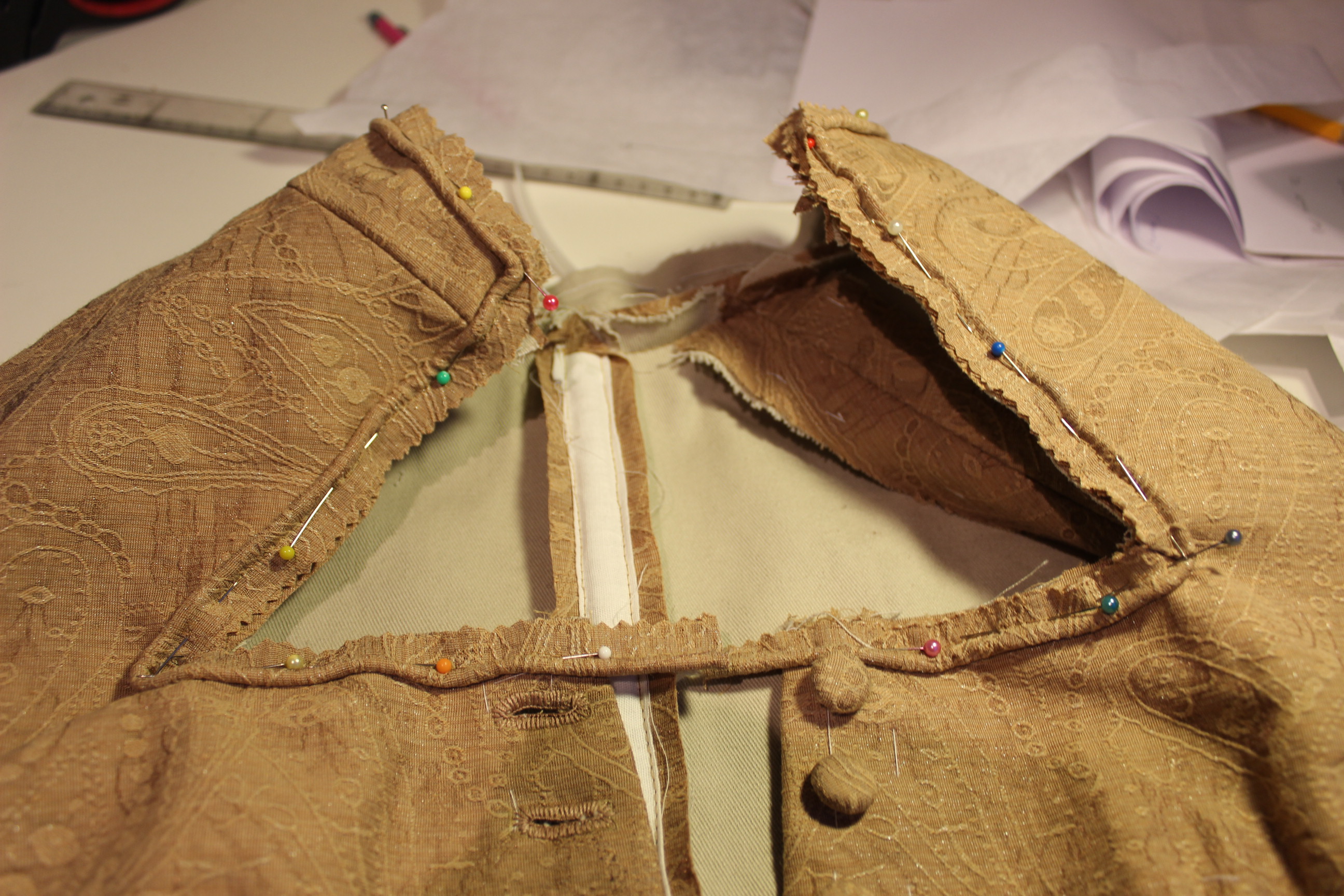
Then I sewed on the lining. I folded the allowence and sewed it on by hand at the neckline/collar and buttonhole stand.IMG_5127
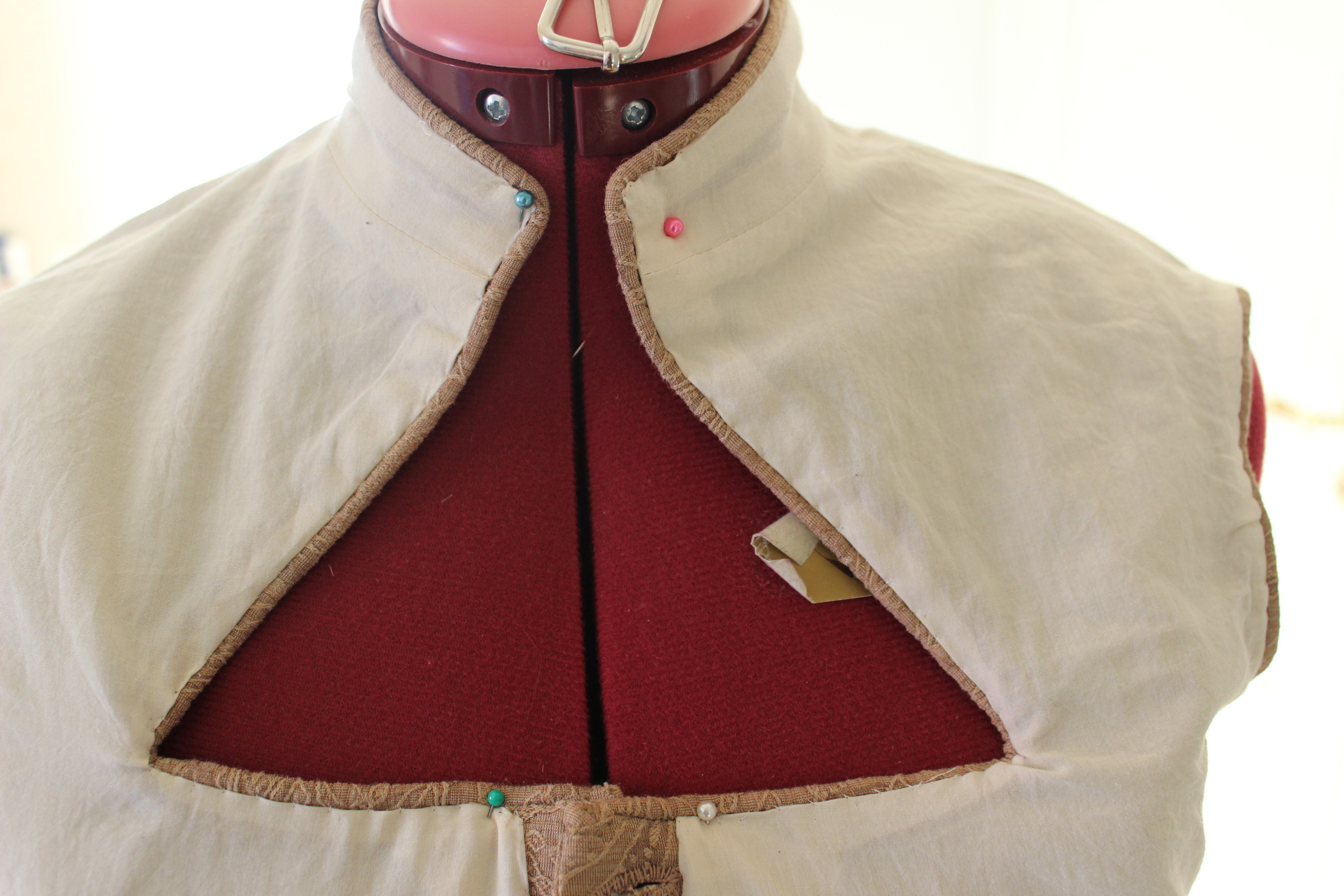
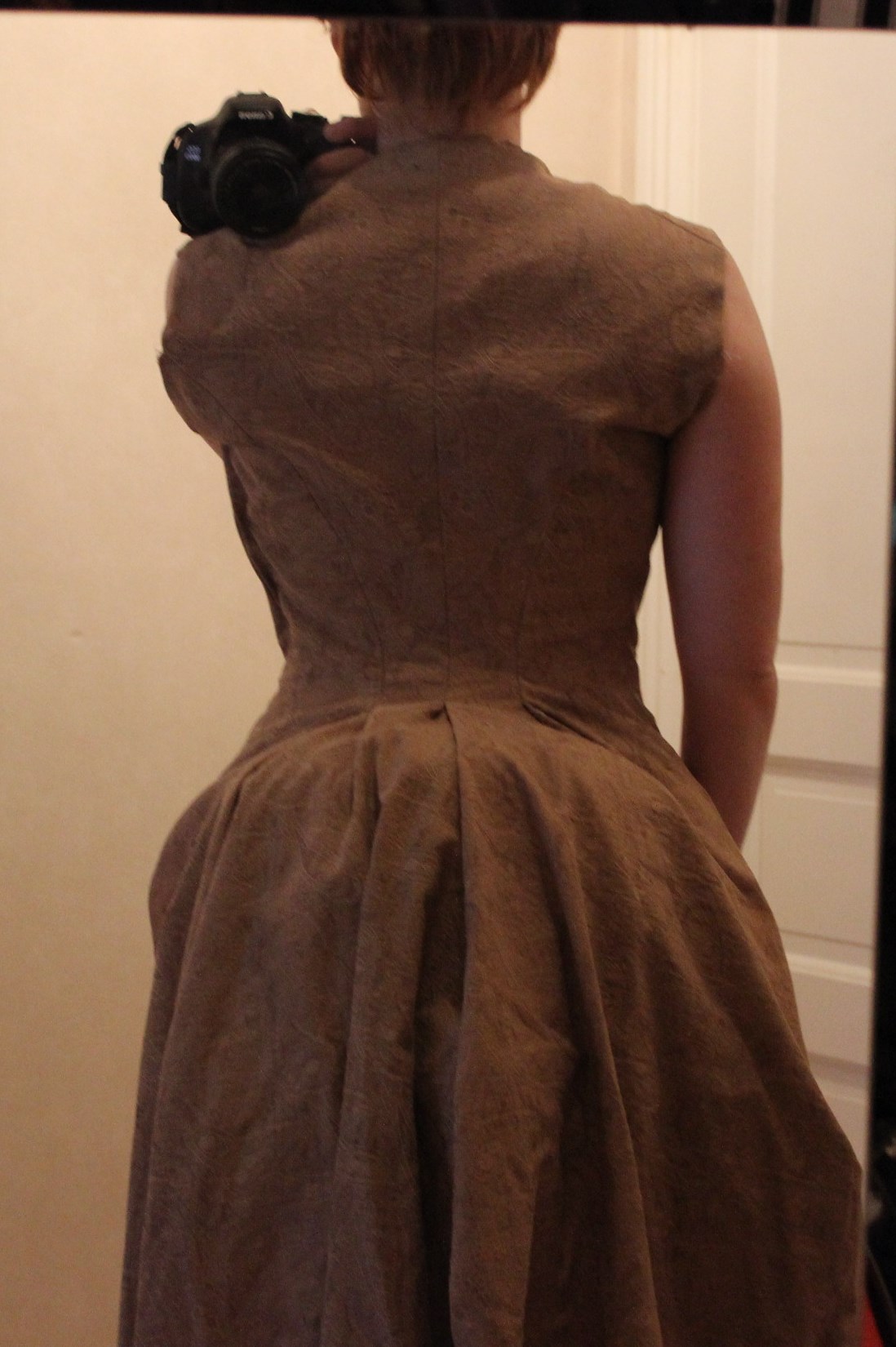
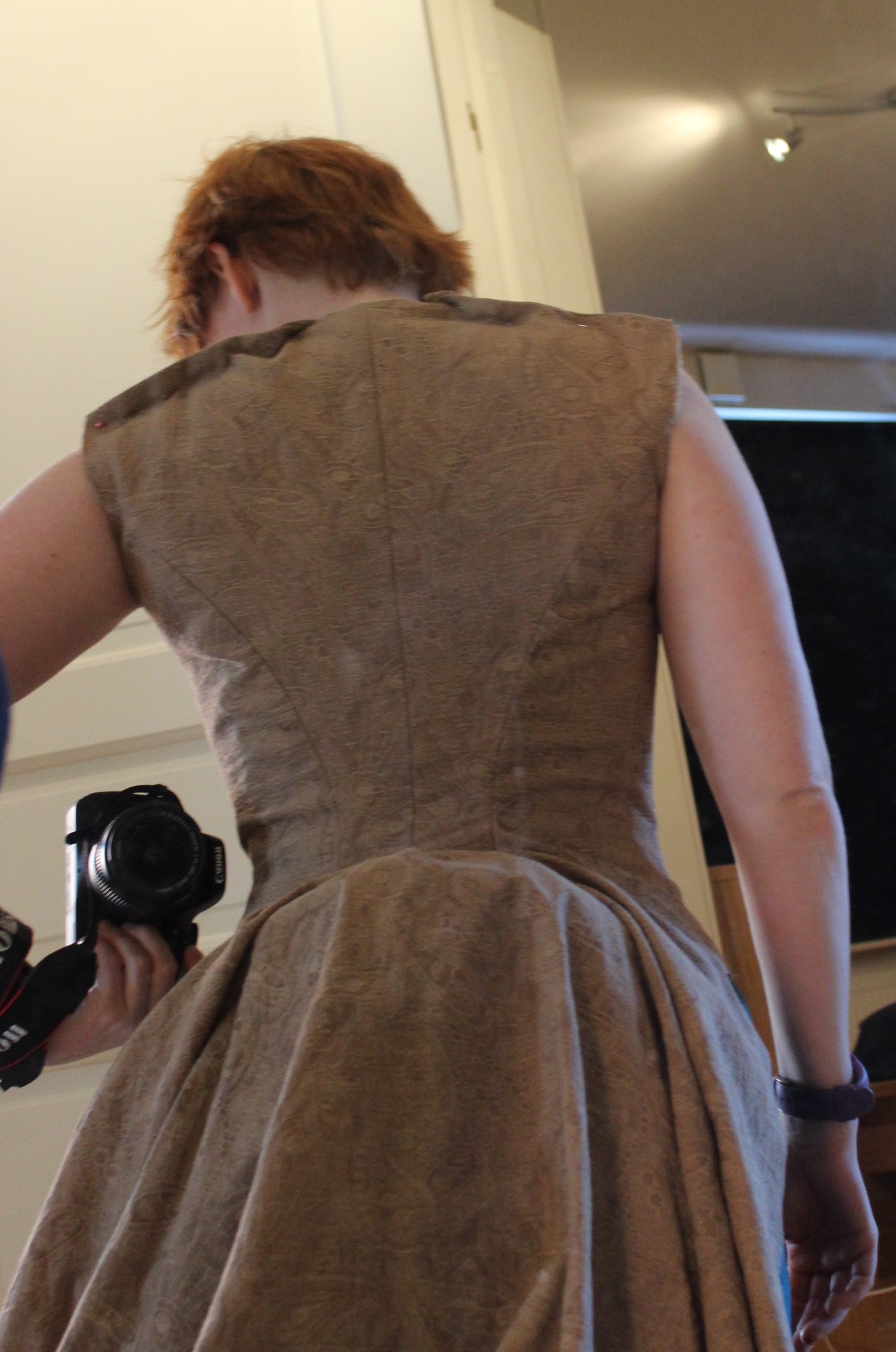
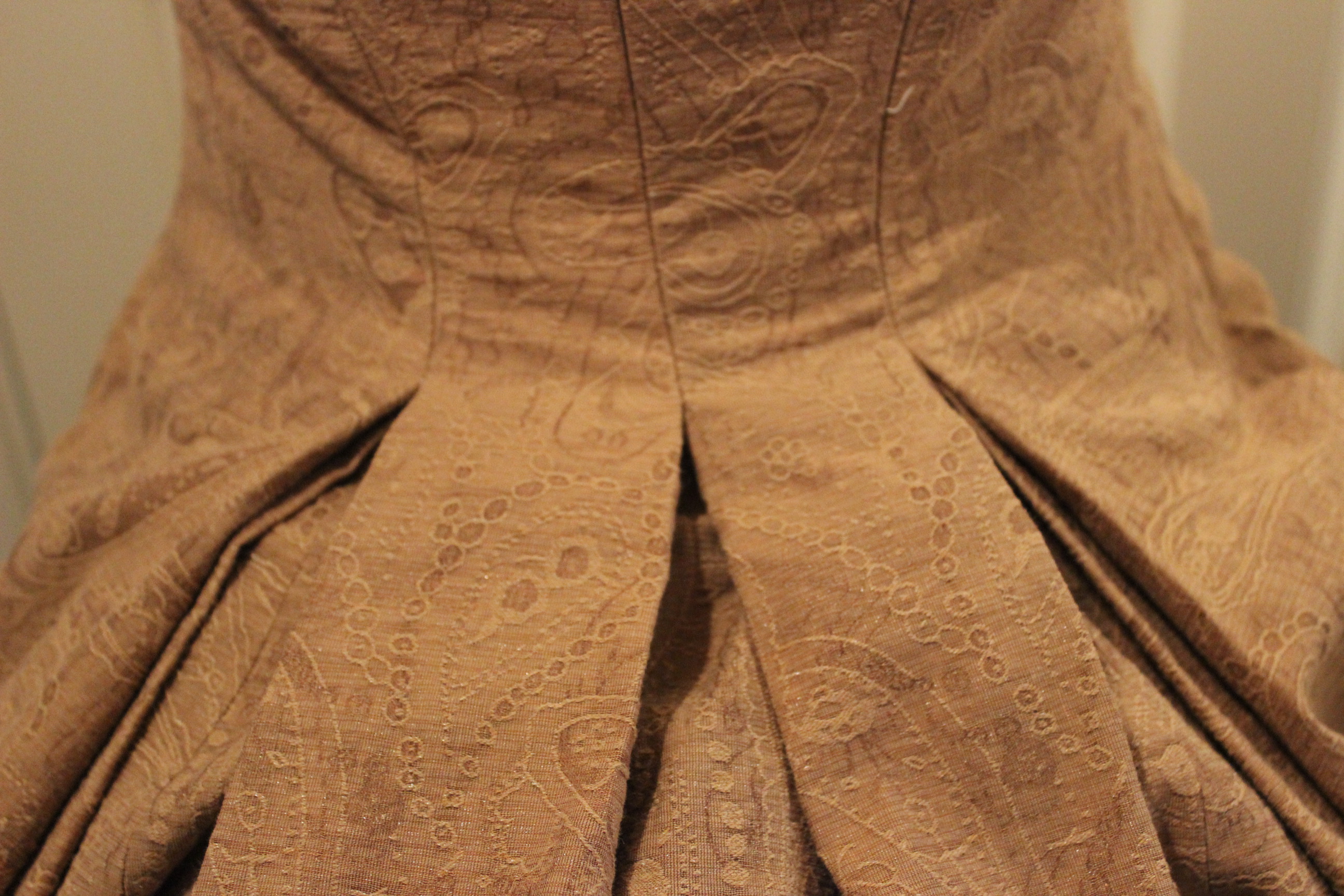
Then I started on the back pleats. Using the pattern as a guide and treating the two layers (fabric and lining) as one, box-pleating the three back seams.IMG_5128I then attached the pleats to the bodice sewing into the interling by hand.
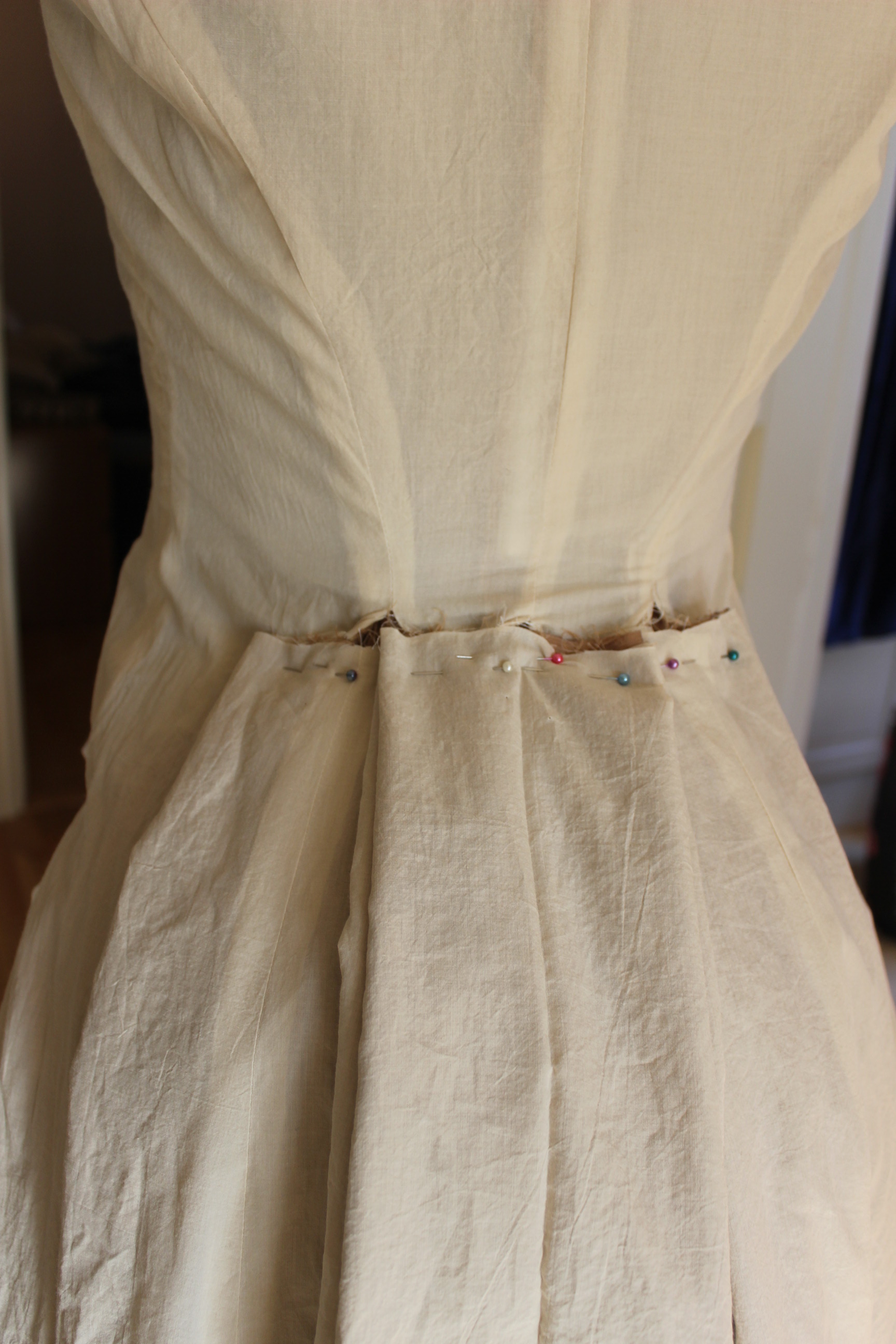
Next up was the lenght – cuting and heming the train.IMG_5145
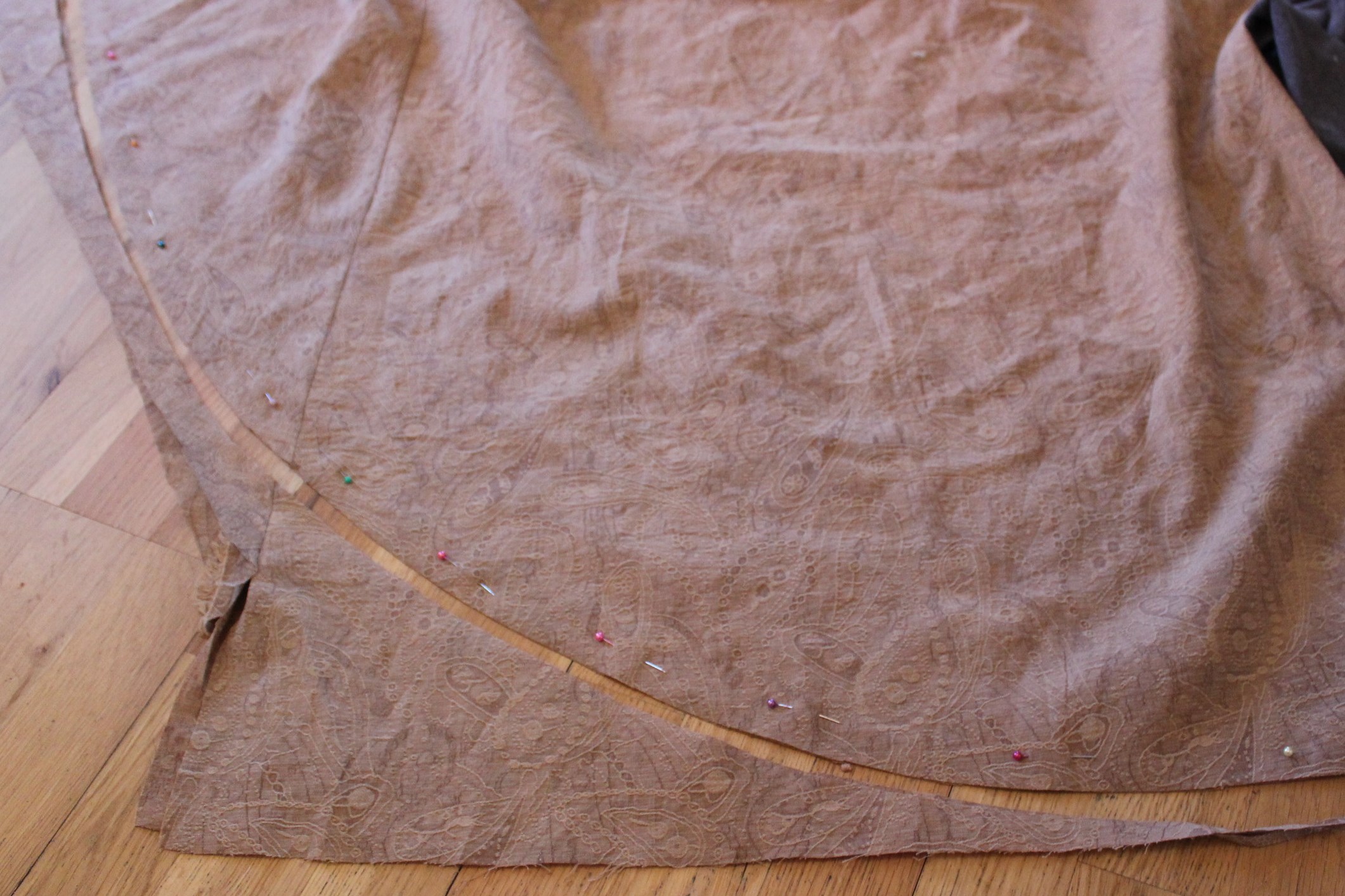
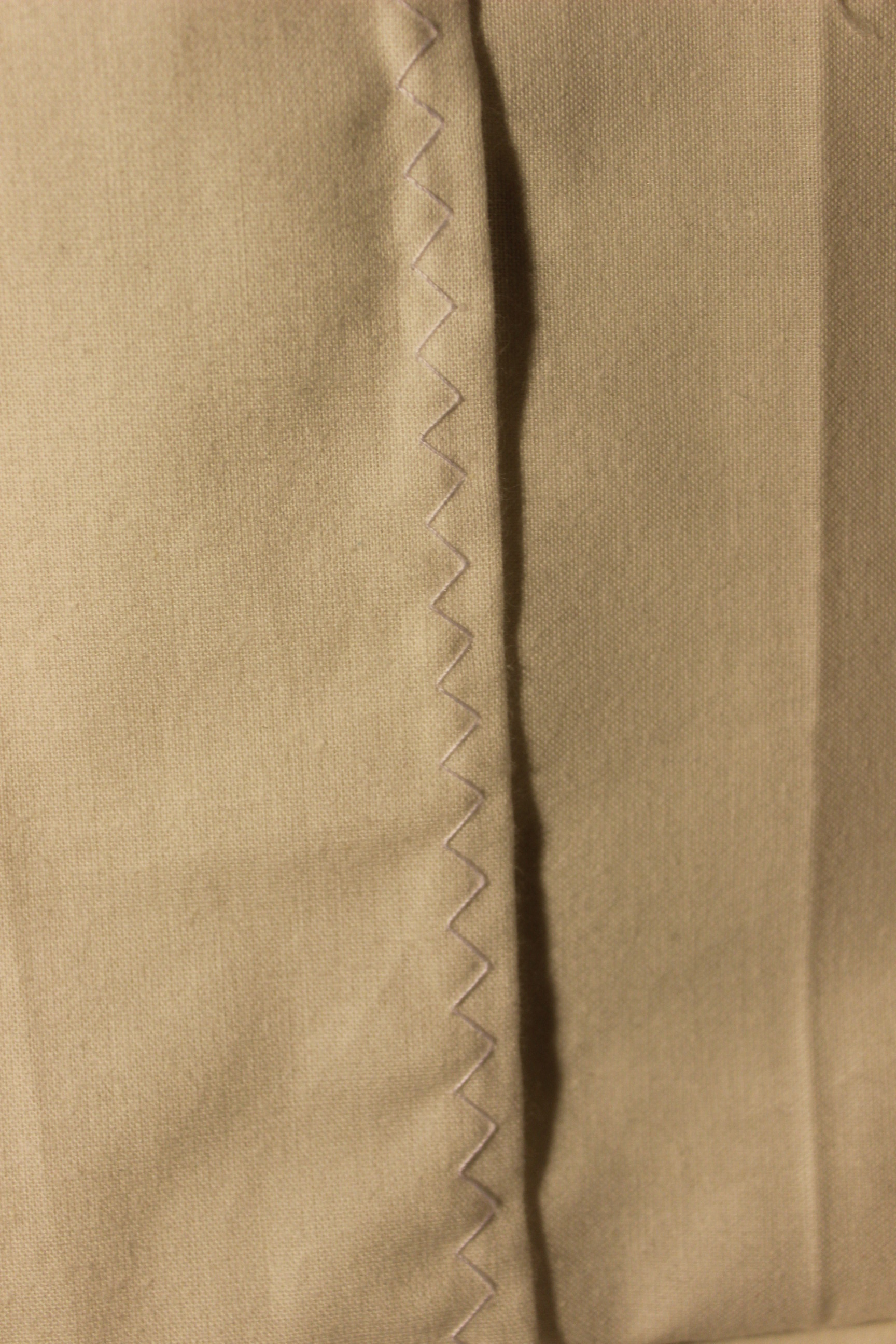
After sewing the lining to the train from the inside, I snipped the seam-allowence, IMG_5148
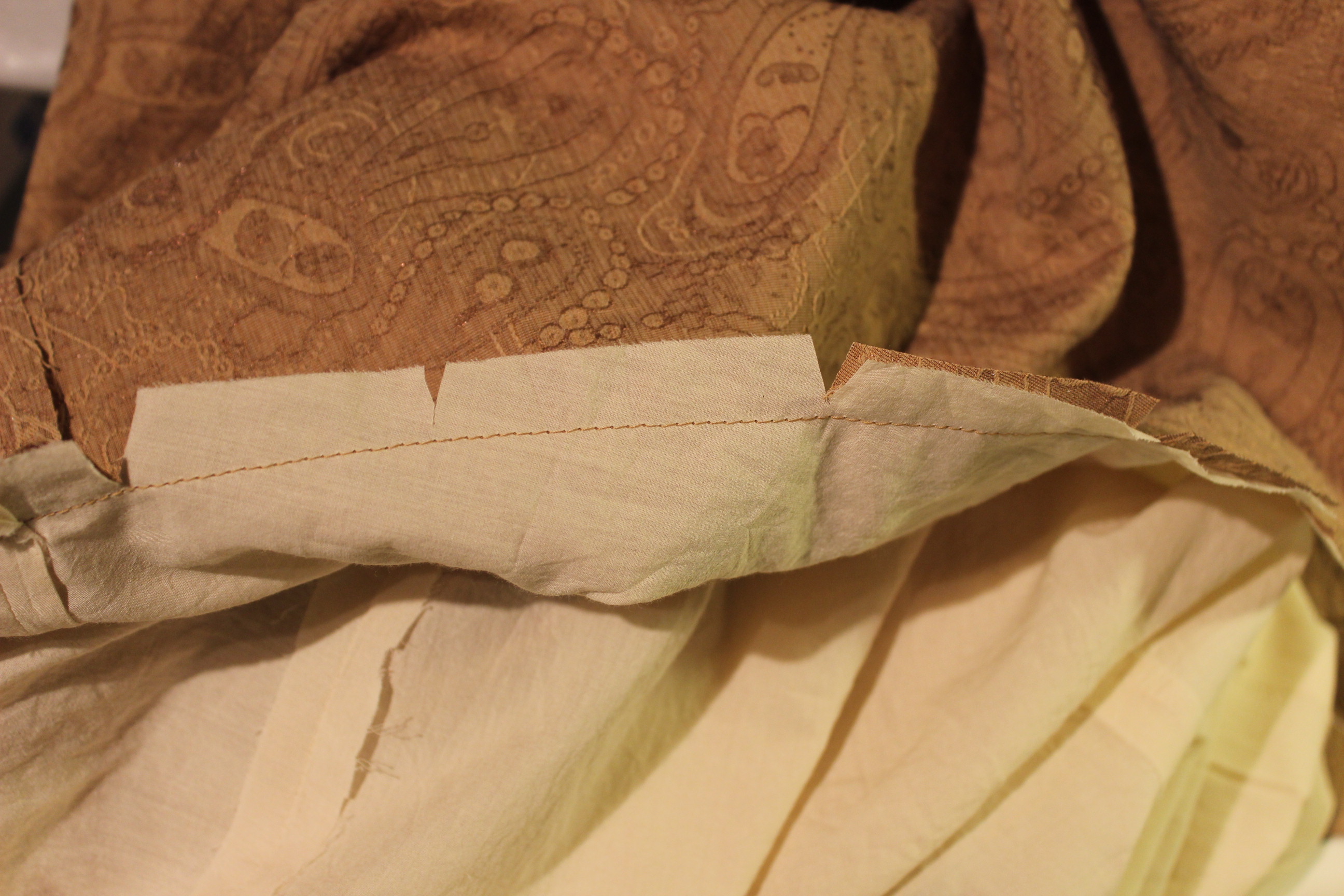
and pressed them flat, making sure the lining was a couple of mm smaler, les it would peek out.IMG_5149

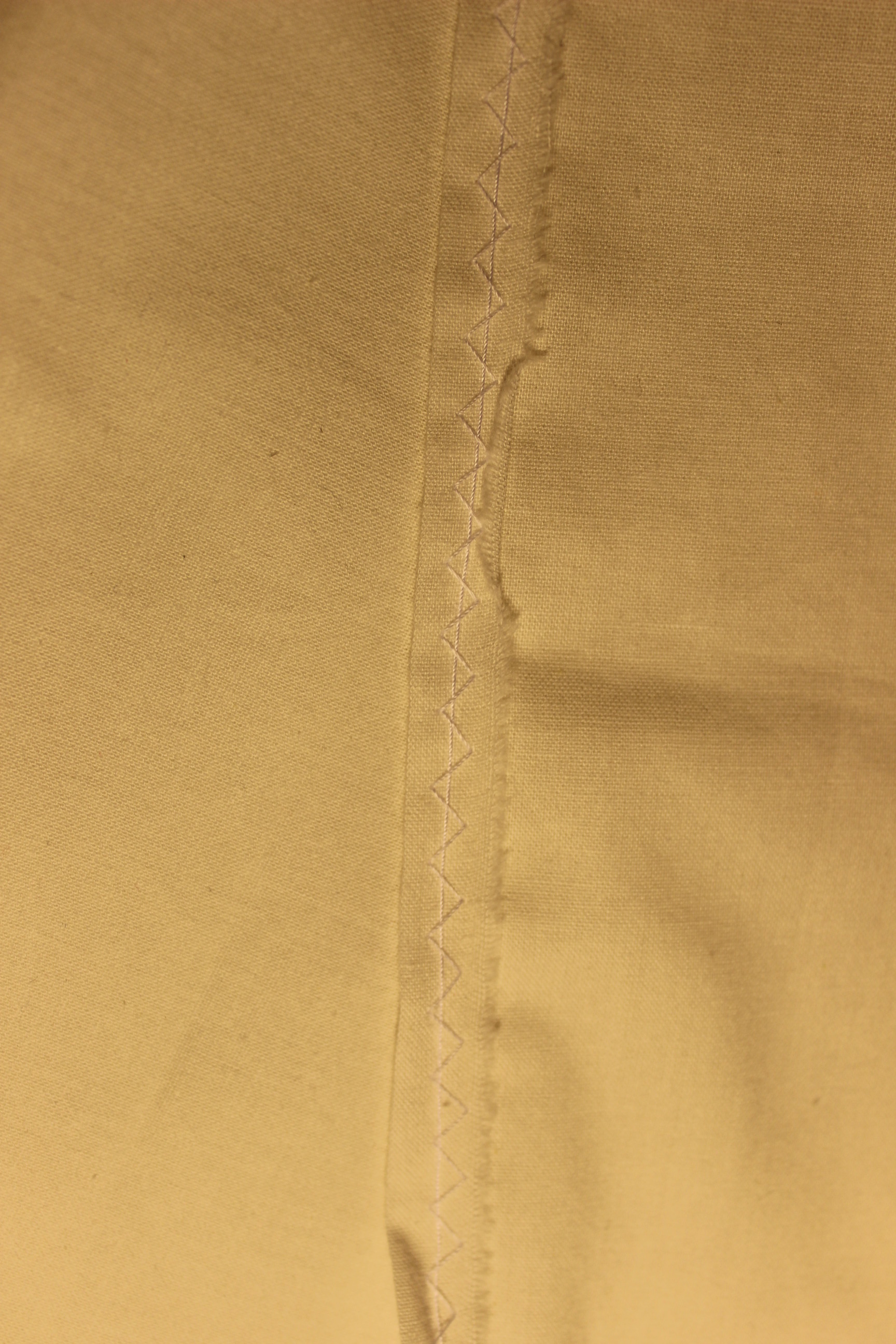
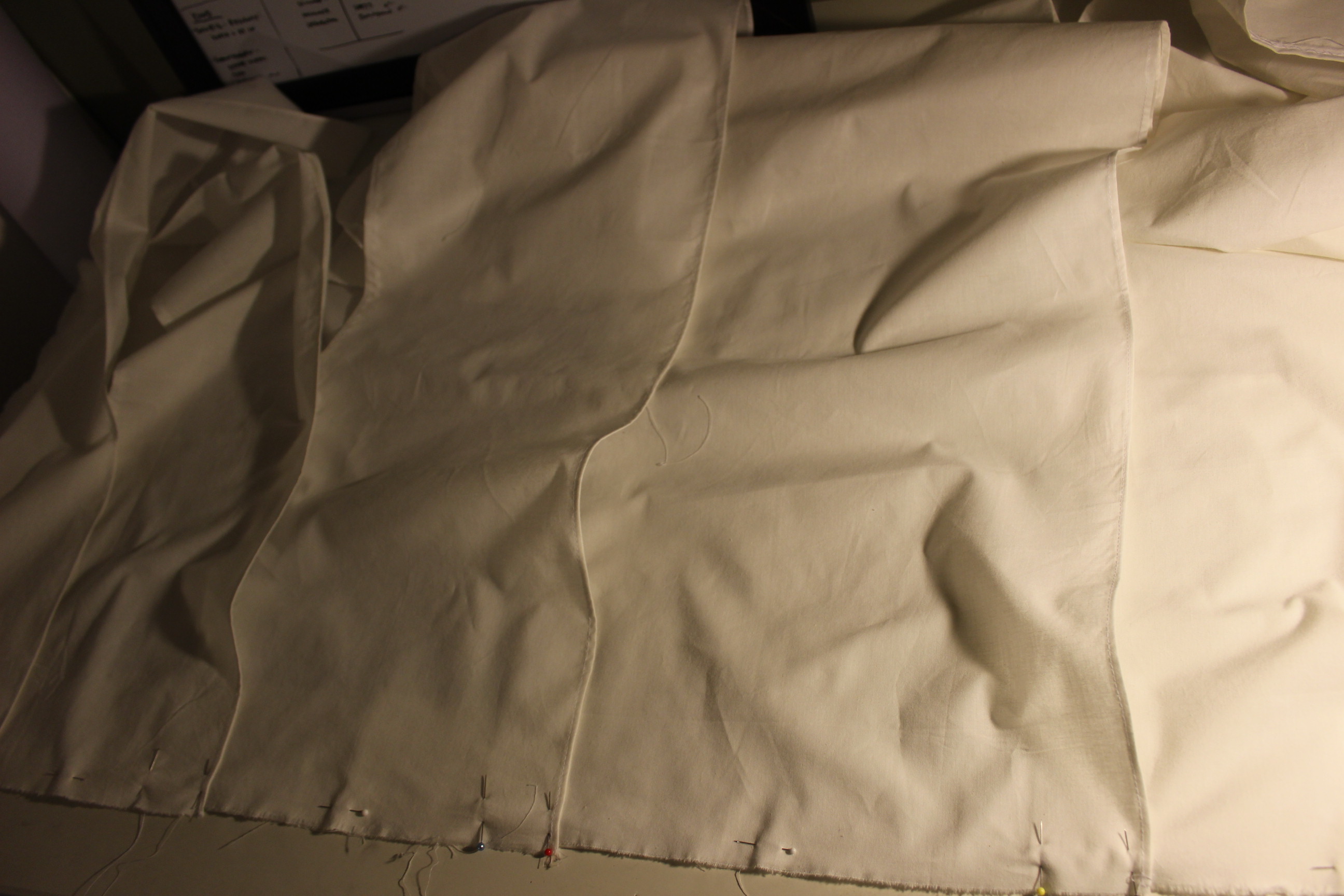
Heming the train would have been an easy step, if I’ve cut the lining long enough. But no, I had to skrimp on the fabric, leaving me no other choise but to piece the train (using scraps) to the desired lengt.IMG_5457
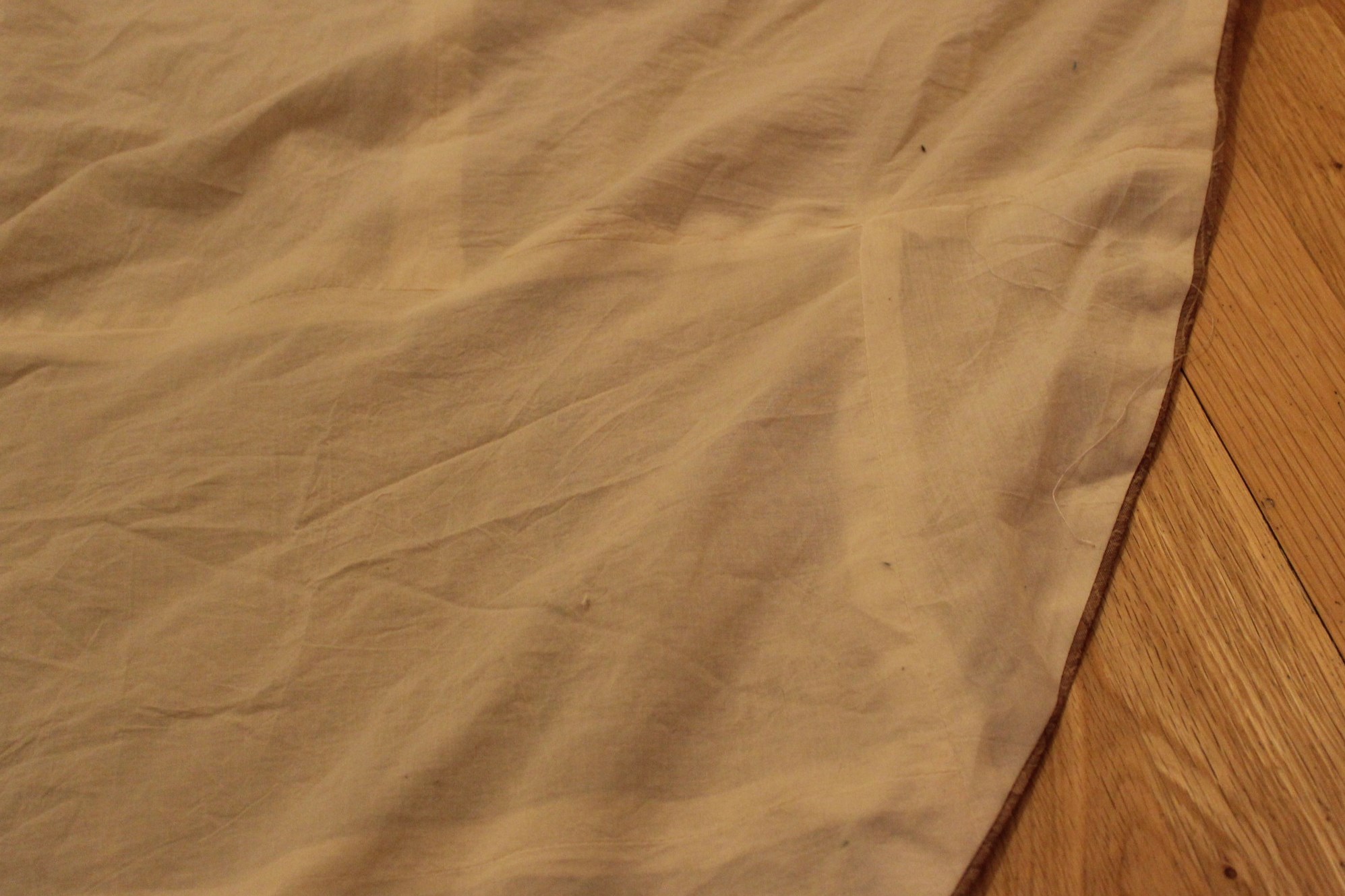
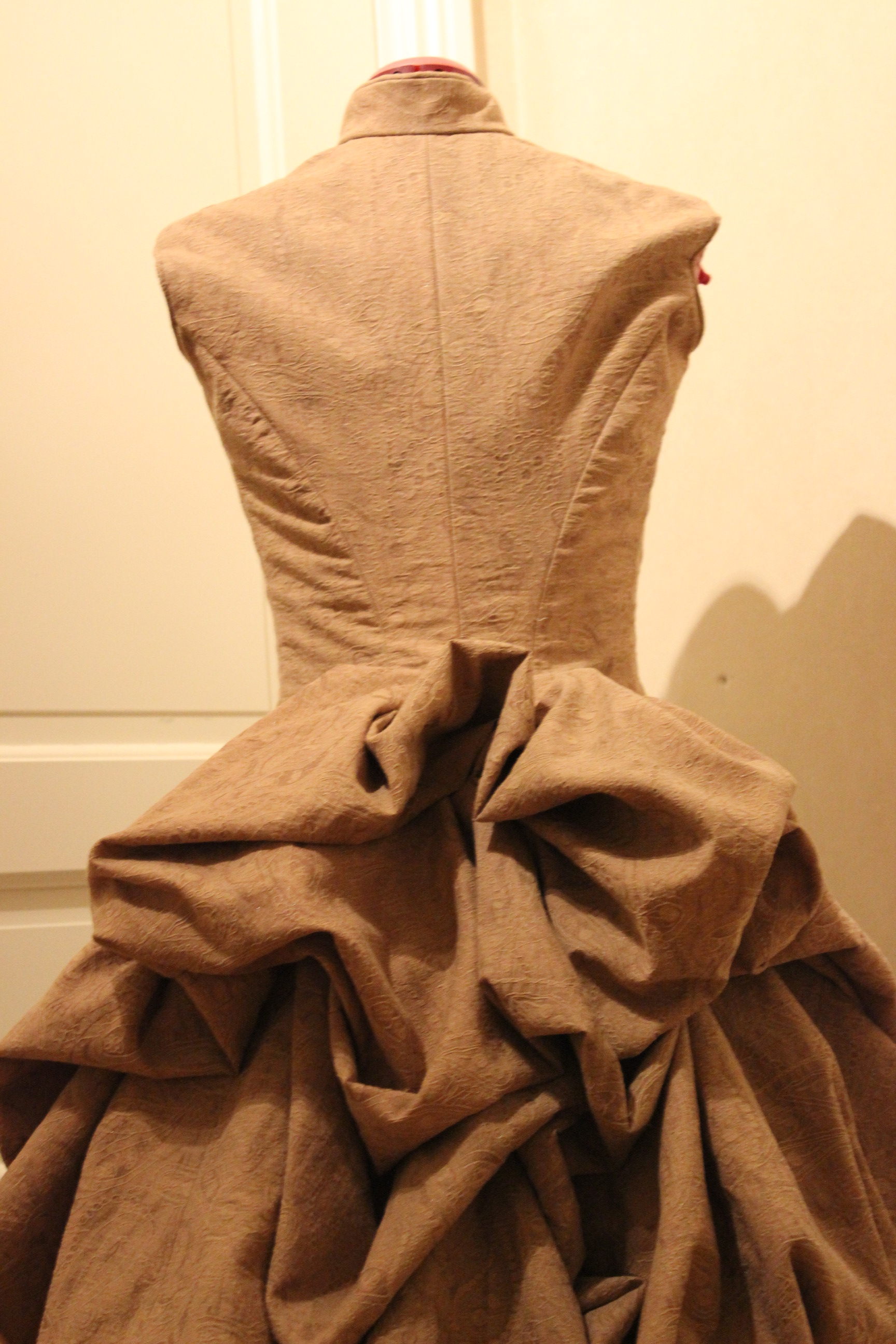
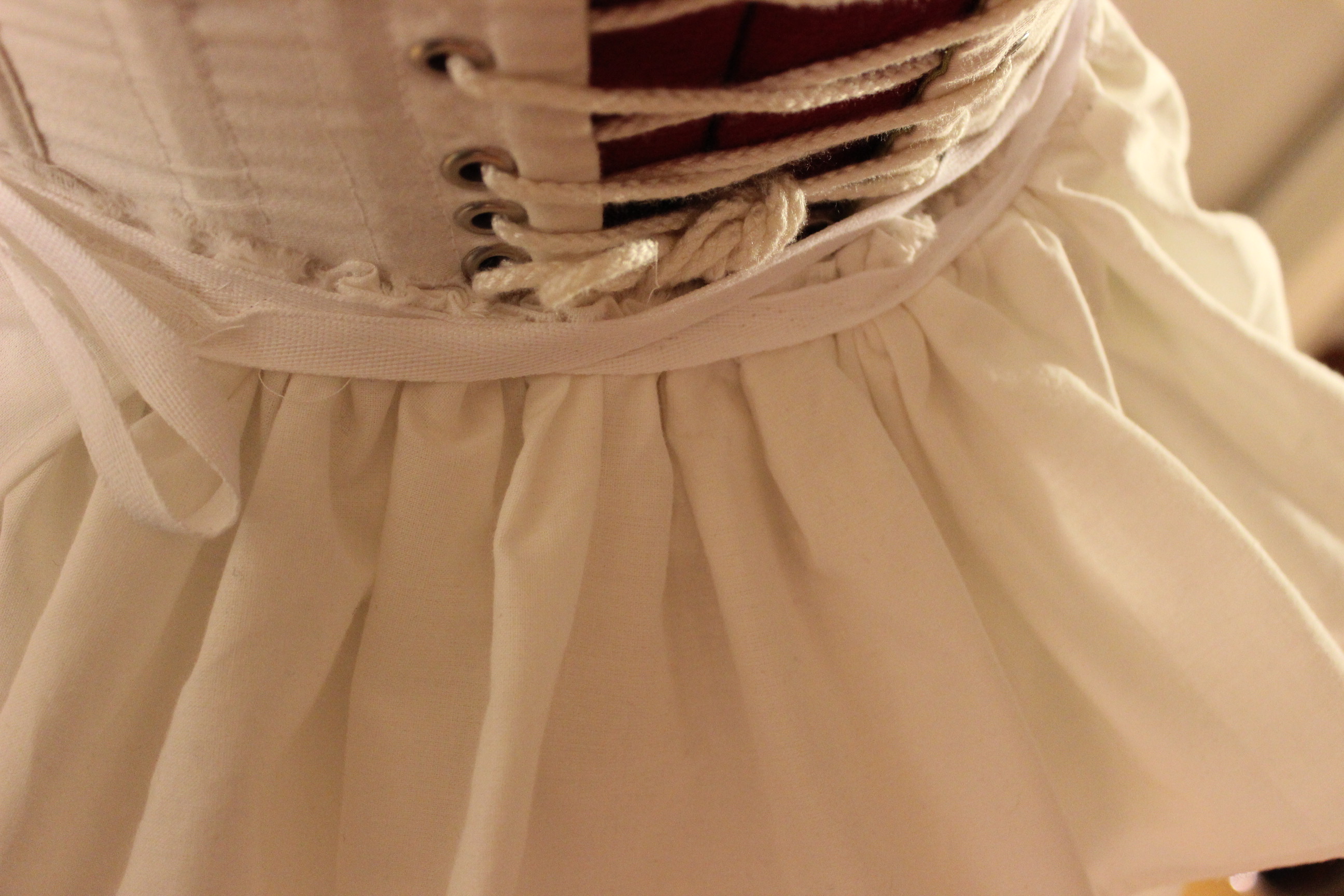
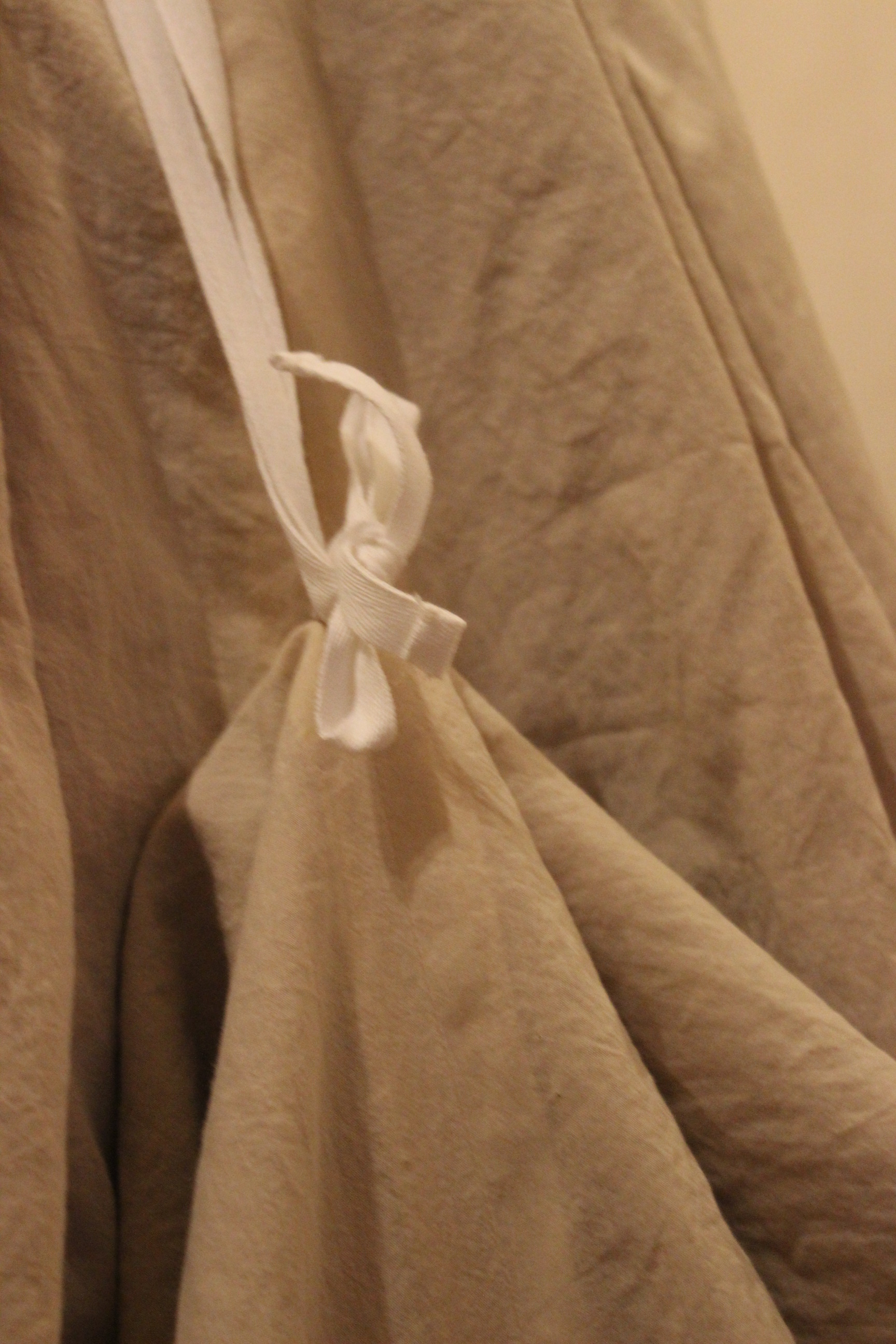
Then I mesured/draped the train to get the right placement on the laces for the “poufines” in the bustle back.IMG_5451
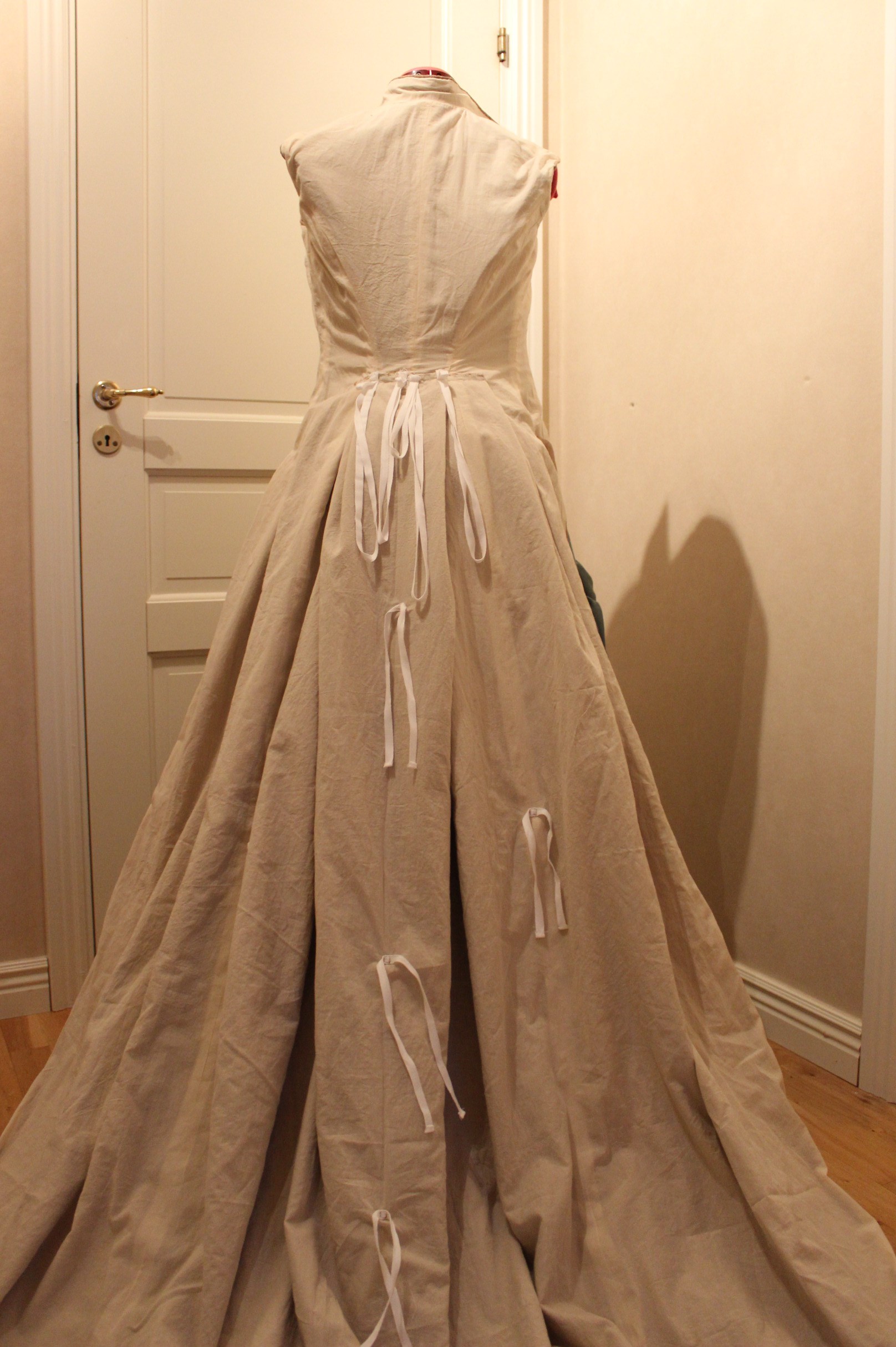
When wearing the dress you simply tie the stings together to get the right lenght on the train. IMG_5454
When the bodice was finished I brought out the fabric I saved for the apron, and got to work draping it on the dressform.
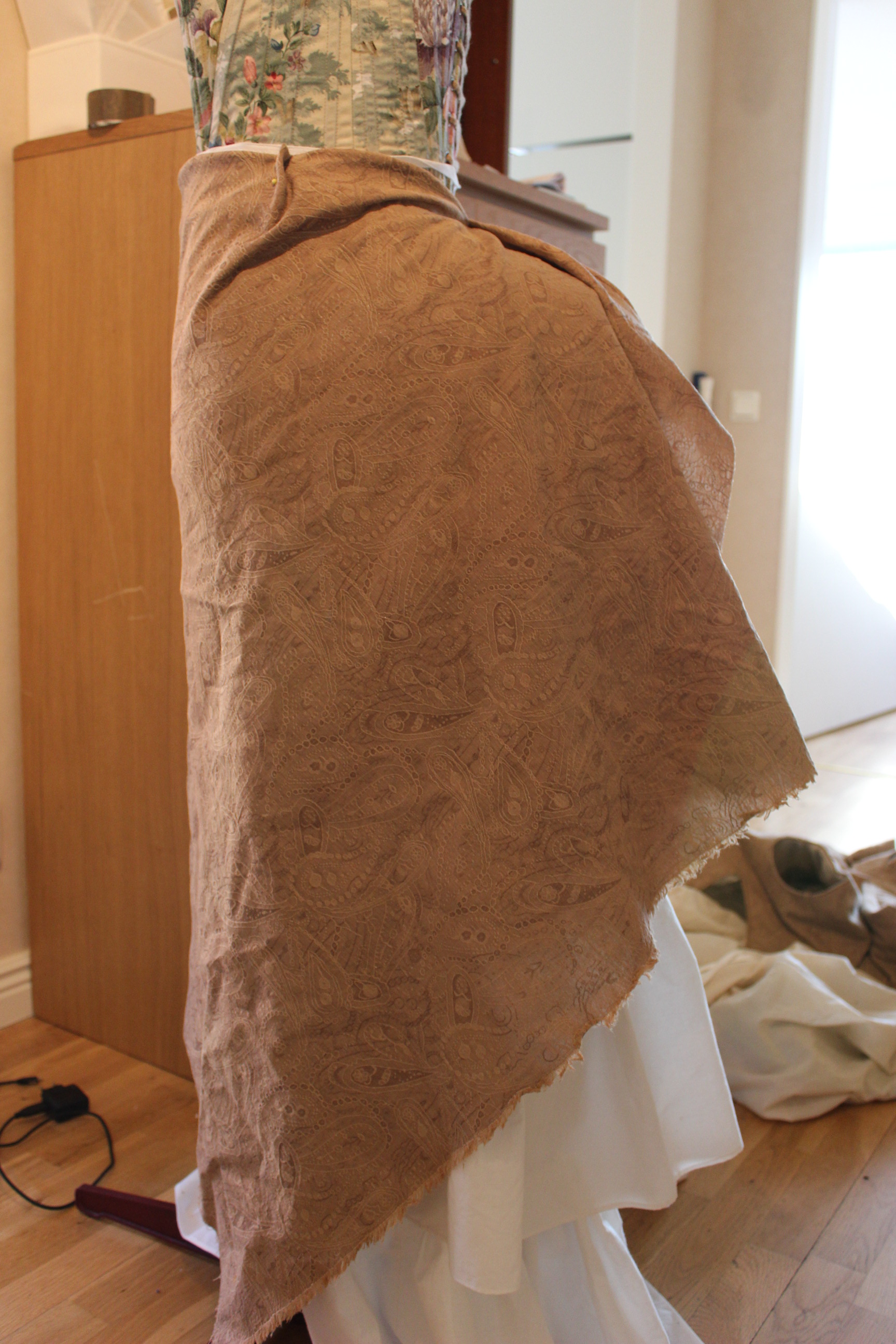
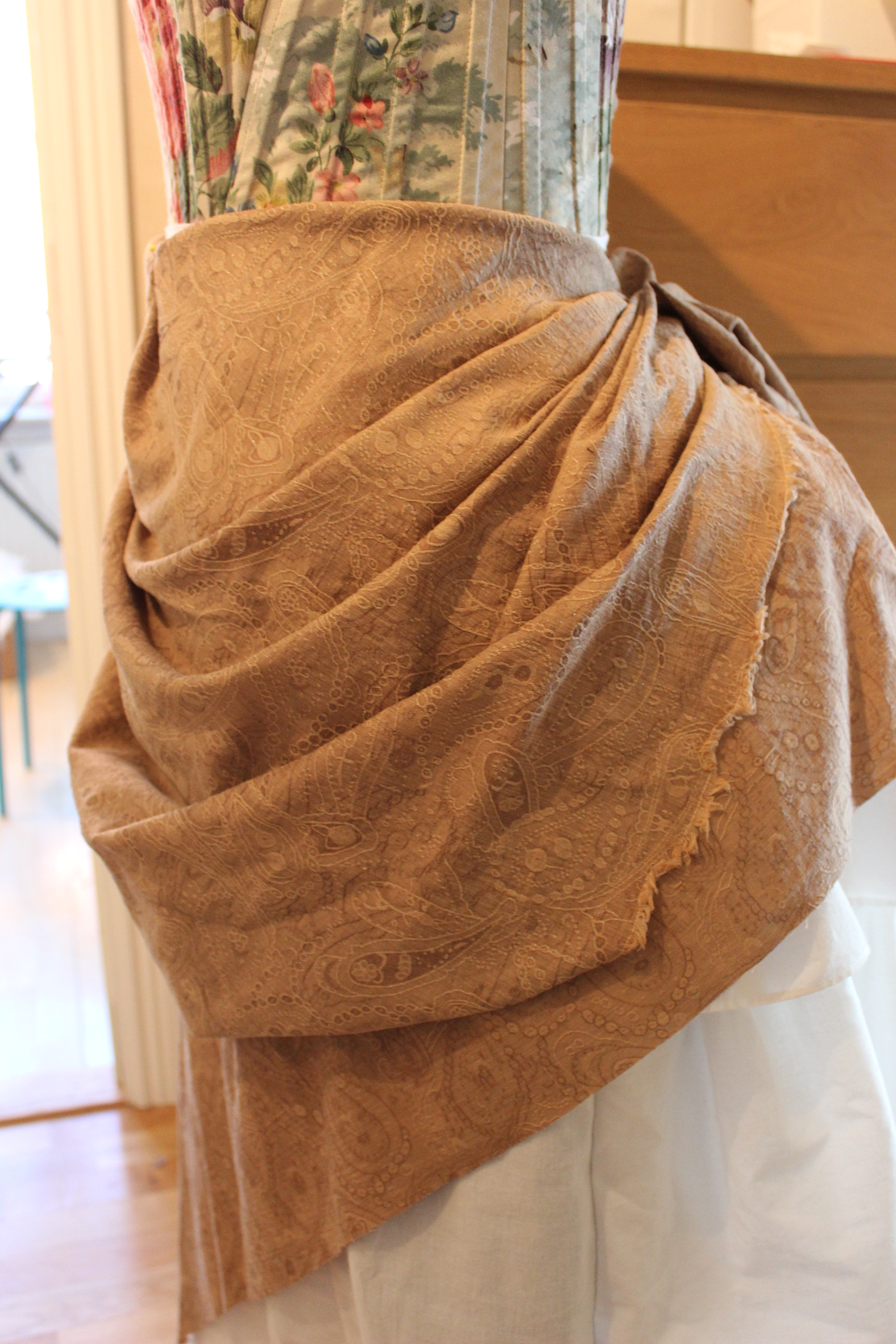
IMG_5138 IMG_5136

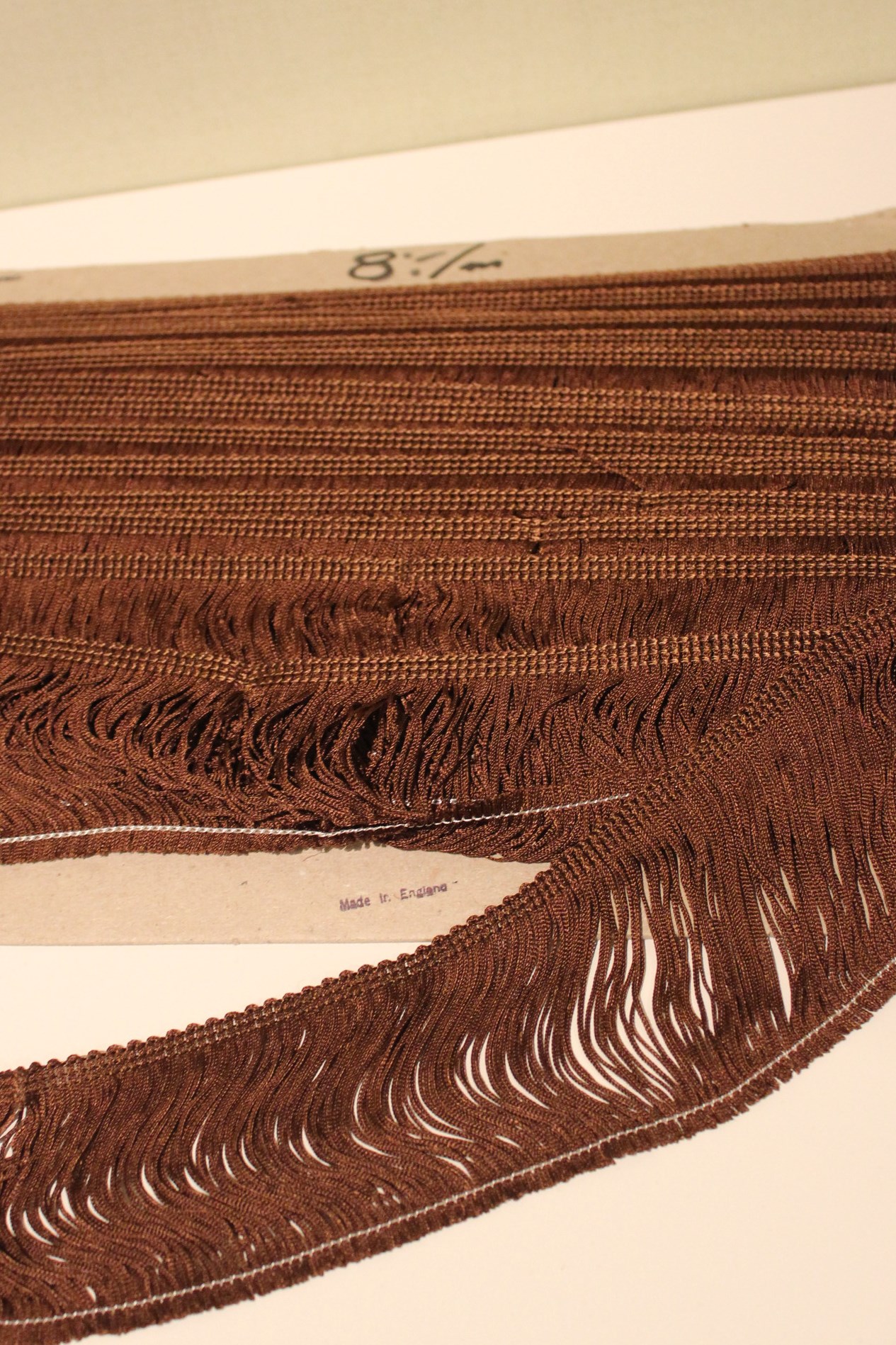
I also decided the dress needed some more decoration. And finding this fringe trim the day before the bal caused me to re-visit the sewing machine, and using 8 m of it on the hem of the bodice, train and apron. IMG_5247(And since this was a last minute change, I haven’t got any picture of the trimmed dressed).
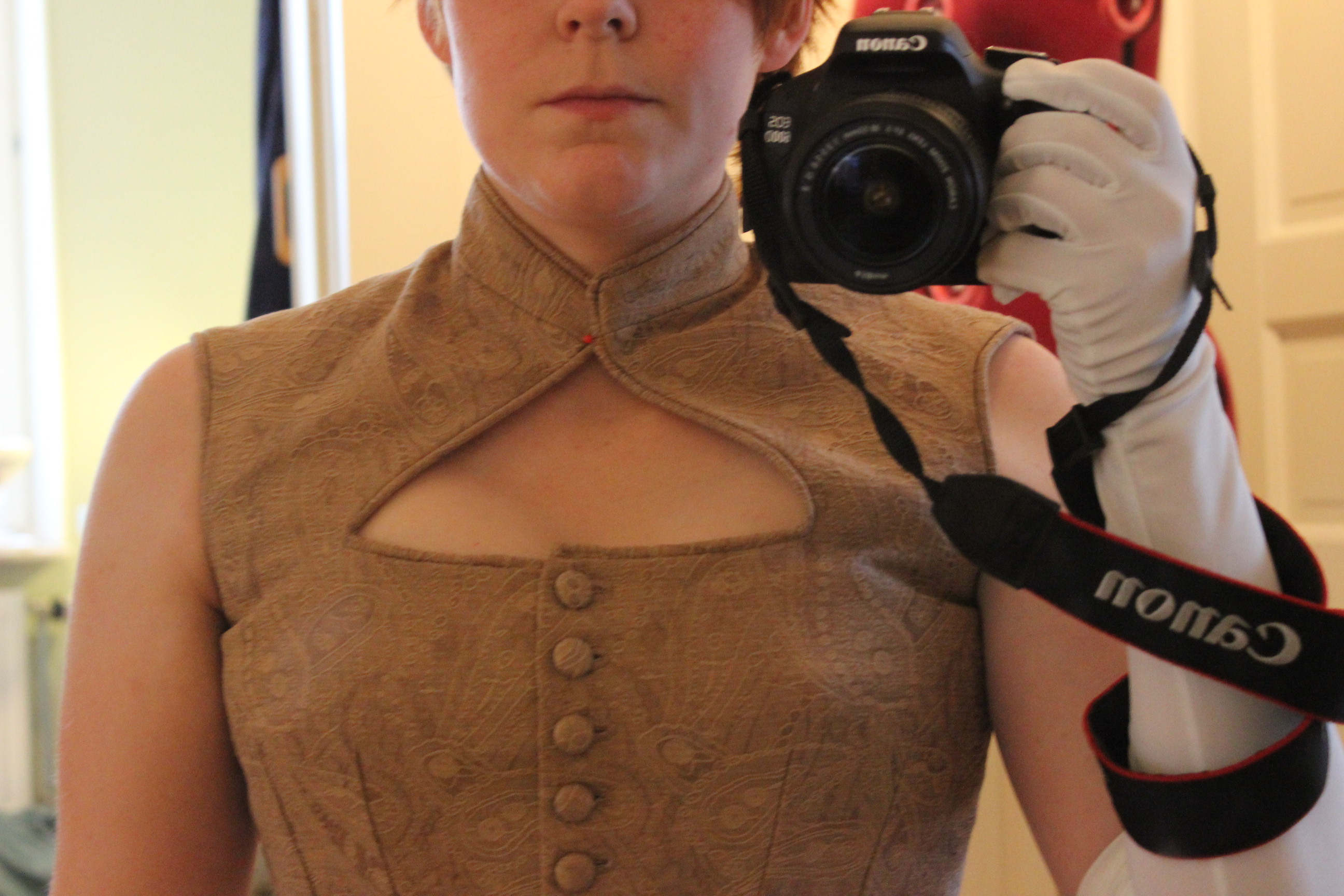
Even with the dress finished I’m not totaly happy with the neckline – the fabric is being pulled in some ugly directions at the neck, caused by some fiting trouble.IMG_5363But It is to late to do anything about it now, and the bal room will be faily dark…
So here it is, the finished dress/bodice.IMG_5412
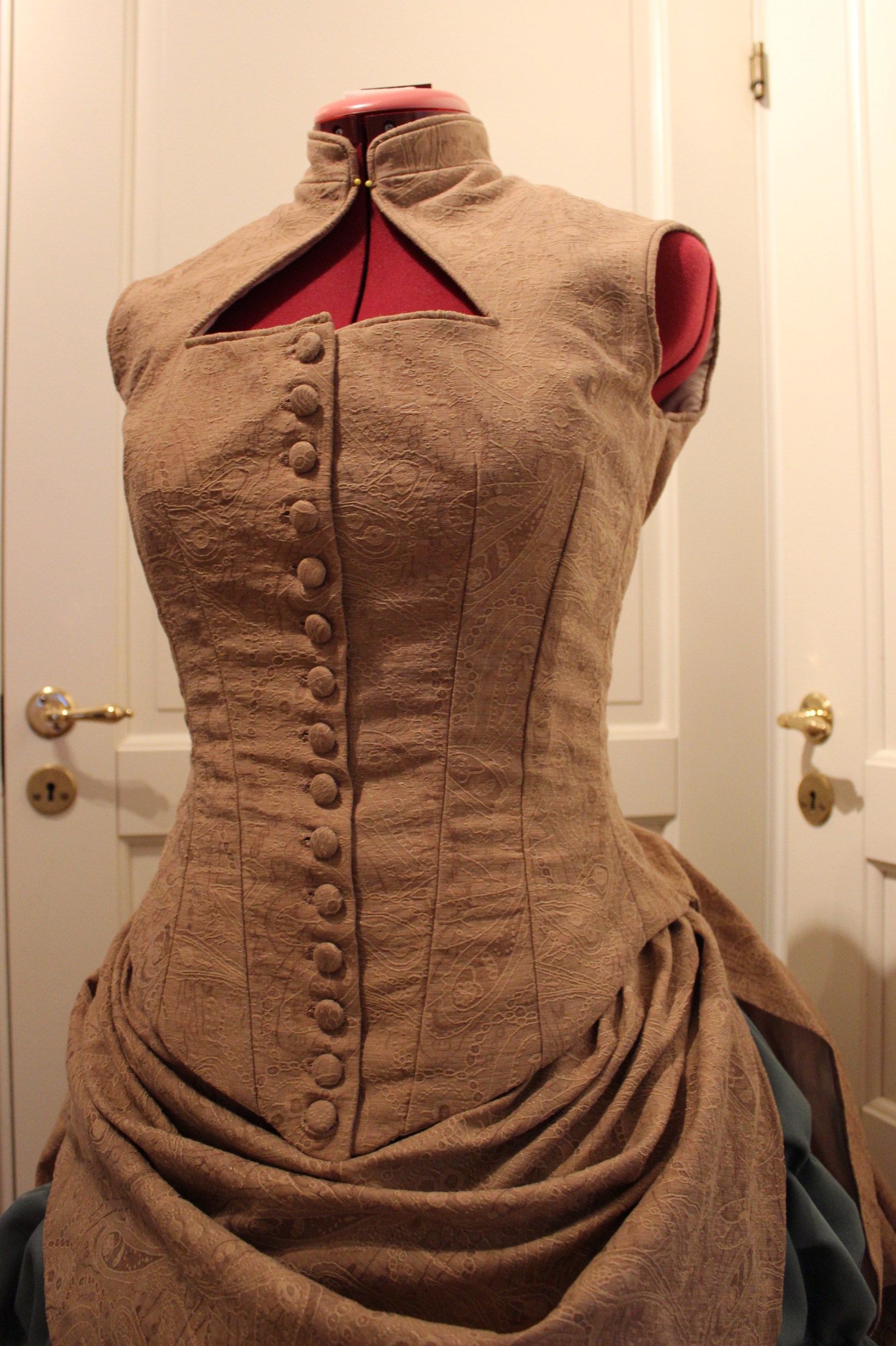
IMG_5414

IMG_5427

IMG_5152Train un-draped

IMG_5426

IMG_5156 IMG_5160

Train draped leaving the sides straight/down, and then with sides tied up.
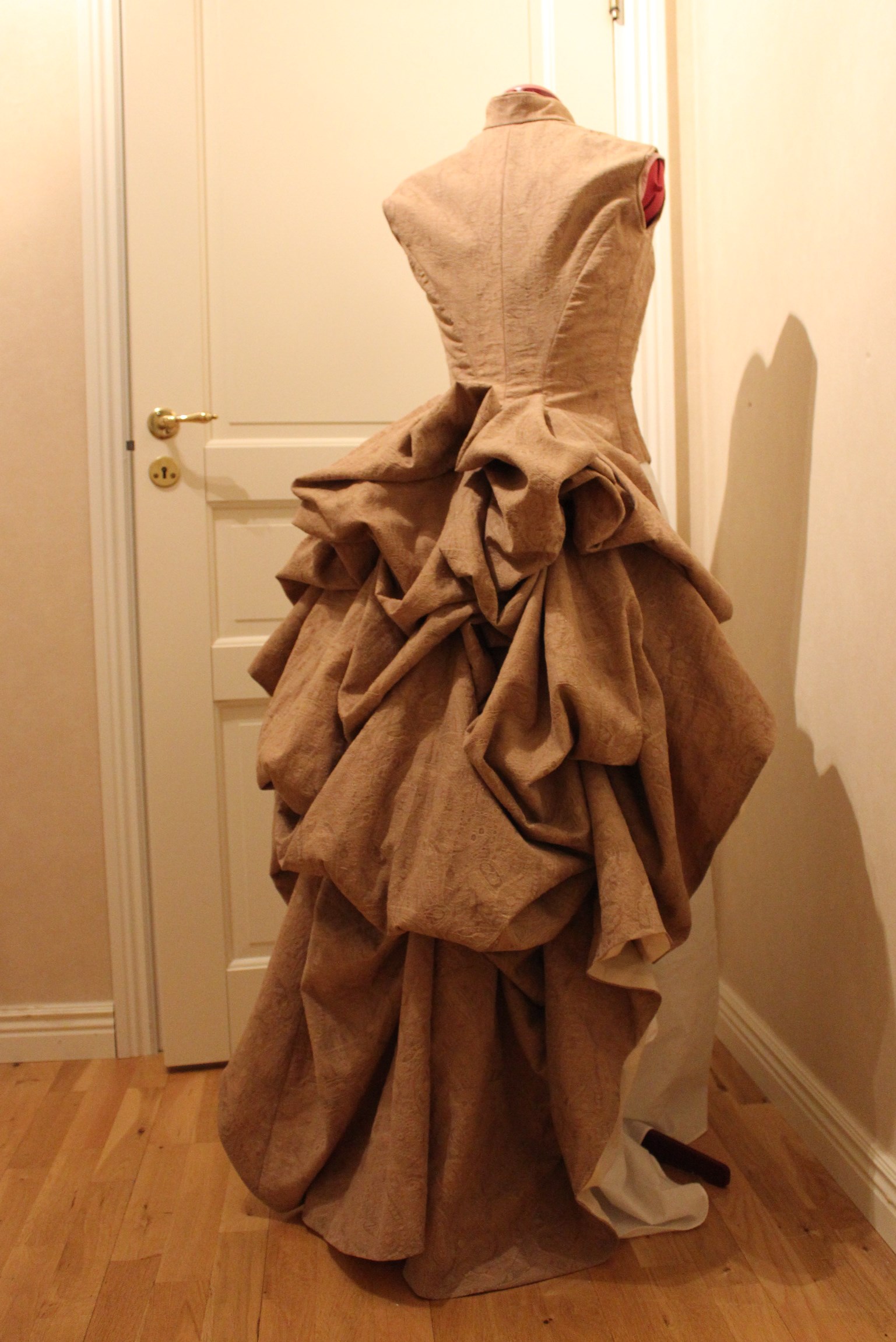
IMG_5166Train totaly draped (walking lenght).

IMG_5165

Facts:

What: A 1880s trained evening bodice.

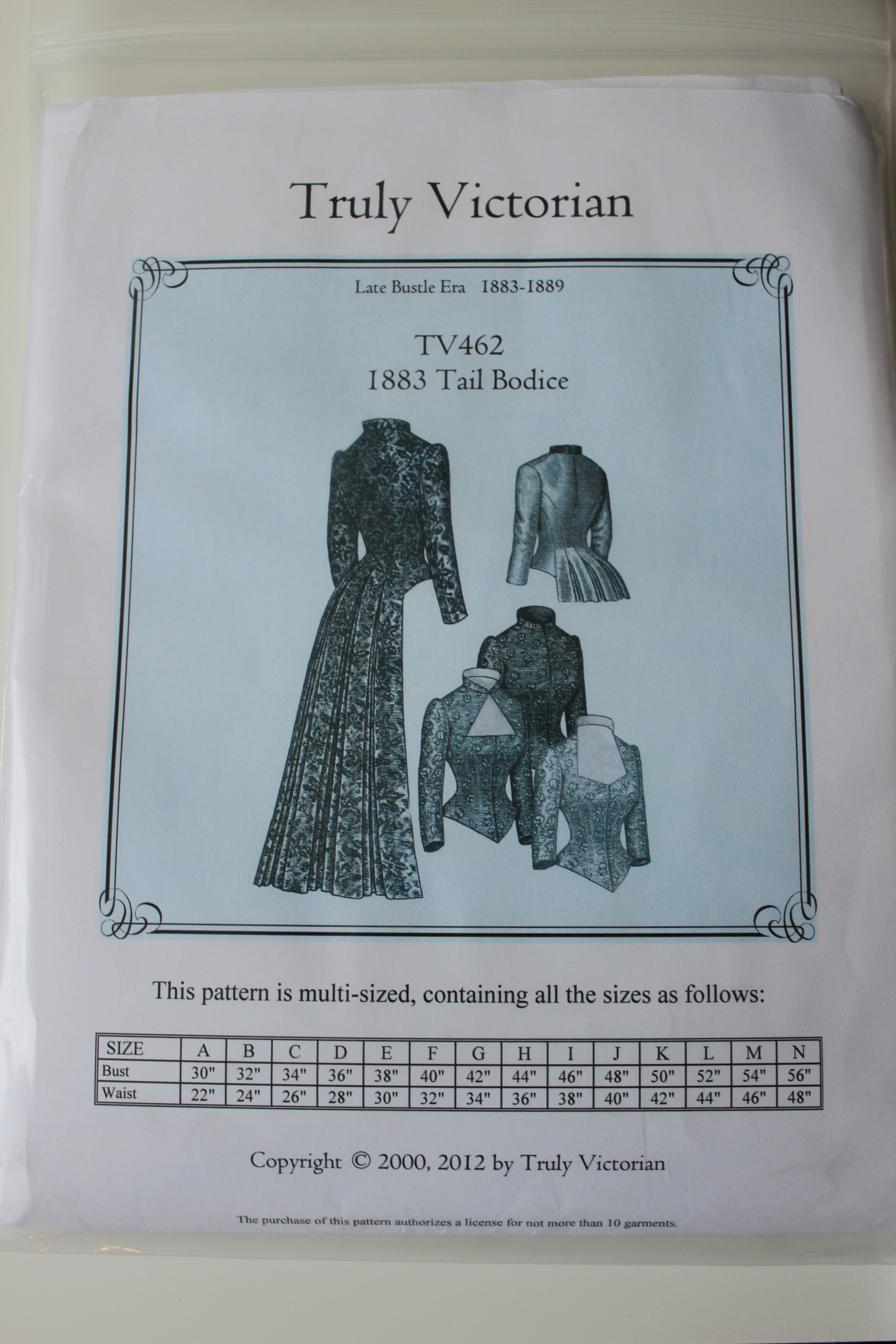
Pattern: Truly Victorian 462 (totaly re-modeled)

Fabric: 6 m golden polyester brocade, 4 m ivory cotton lining, 0,5 m ivory cotton twill for interlining.

Notions: Thread, buttonhole thread, 15 buttons (which I covered in fabric), 2 m string for piping, 3 m string for busteling/draping the train, 8 plastic cable ties for boning, 2 m self made cotton bias tape for boning chanels, 8 m brown fringe trim.

Time: 25 hours

Cost: About 800 Sek (120 Usd)

Things I would do Different: I would definitely have draped my own pattern, and taken the time to do multiple mock-ups to get the fit over the shoulders and neck just right. I will also have changed the lines of the side/back piece which curved shape now causes it to pull a bit. And re-placed the straight boning with spiral boning in the curved side/back seam, for the same puporse.

Final Thoughts: I love the dress. I think it is cool yet elegant and I did get lots of compliments on it at the bal. The unusal neckline makes it so interesting and viasualy pleasing.

I would love to wear it again – perhaps at a steampunk convention, paired with brown throusers and some cool accessories.

1880s Evening Gown – Pattern Trouble

I’ve been so busy finishing my opera gown, that there’s been no time to blog about the process – and really, I didn’t want to spoil it and show it of here (in the unlikely case someone at the bal, read this before the big night).

But now the night has past and I can tell you all about my trials and errors in the making of the gown.

As some of you might know I decided to make myself a gow similar to this one, to wear at the “Oskarsbal” late januay.39.384 000239.384_side_CP4

I almost jumped up and down finding the perfect pattern online and decided to buy it, instead of draping/drafting my own, thinking I would save some time and effort.

IMG_4854Truly Victorian 462 had the perfect neck opening, and the train extended from the bodice back piece without a seam. Exactly like my inspiration gown.

So I took my mesurments, and drafted the pattern from the pattern sheets, without any alterantion.

IMG_4851 IMG_4857

I cut and sewed a mock-up, and then I laced myself into the corset, doned the bustle and petticoat and tried it on.

IMG_4859And it was huge!

IMG_4861 IMG_4875

I mean look at that – so increadable large, not even the shoulders fitted, and that sleeve – I could get two arms down that sleeve.

IMG_4862 IMG_4866

What the heck went wrong?

I went back to the pattern, and quickly discovered that I’ve drafted the wrong size (no brainer), following the lines on the wrong side of the intended letter, thous drafting one size to big. And since I’ve wanted to stay true to the pattern, I didn’t think of controling the mesurments before cuting the mock-up (stupid).

But it seems to me there is way to much widht to acomodate only one size. I doubt there is about 30cm in differens between sizes. Ok, I don’t know, but somewhere it went wrong, and the only thing to do is to try to fix it.

Being in a bit of a rush, and not trusting the pattern anymore, I decided not to draft another pattern in the correct size, but to try to adjust the current mock-up to fitt.

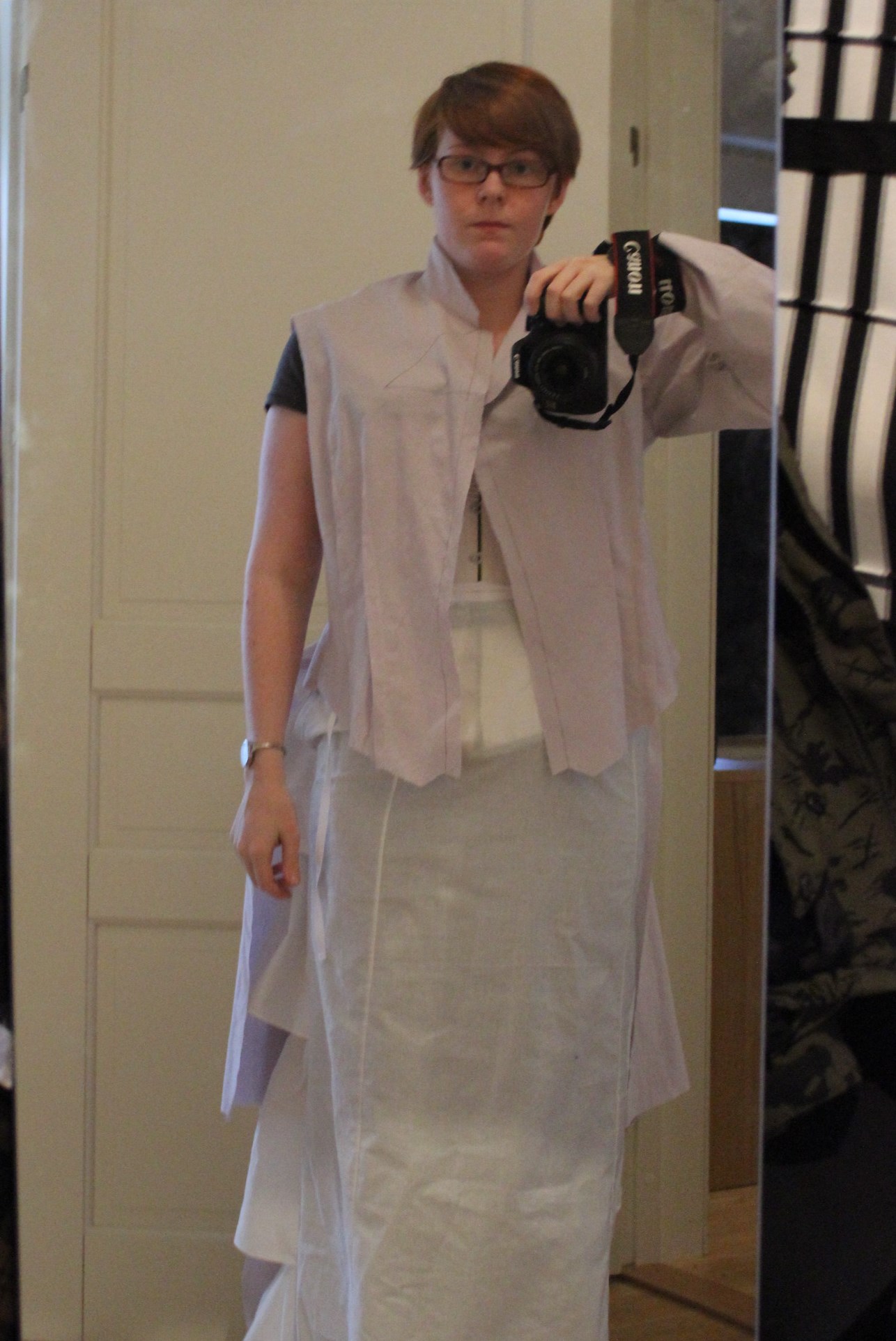
I started by pining away 6cm in each side seam, and 4 at center back. I also pinned a 3 cm vertical tuck on the backpiece to acomodate my erect posture.

IMG_4925IMG_4923

Then I put it back on. (I’ve been doing all this thinking and pinning still wearing my undergarments).

IMG_4909 IMG_4890

IMG_4899

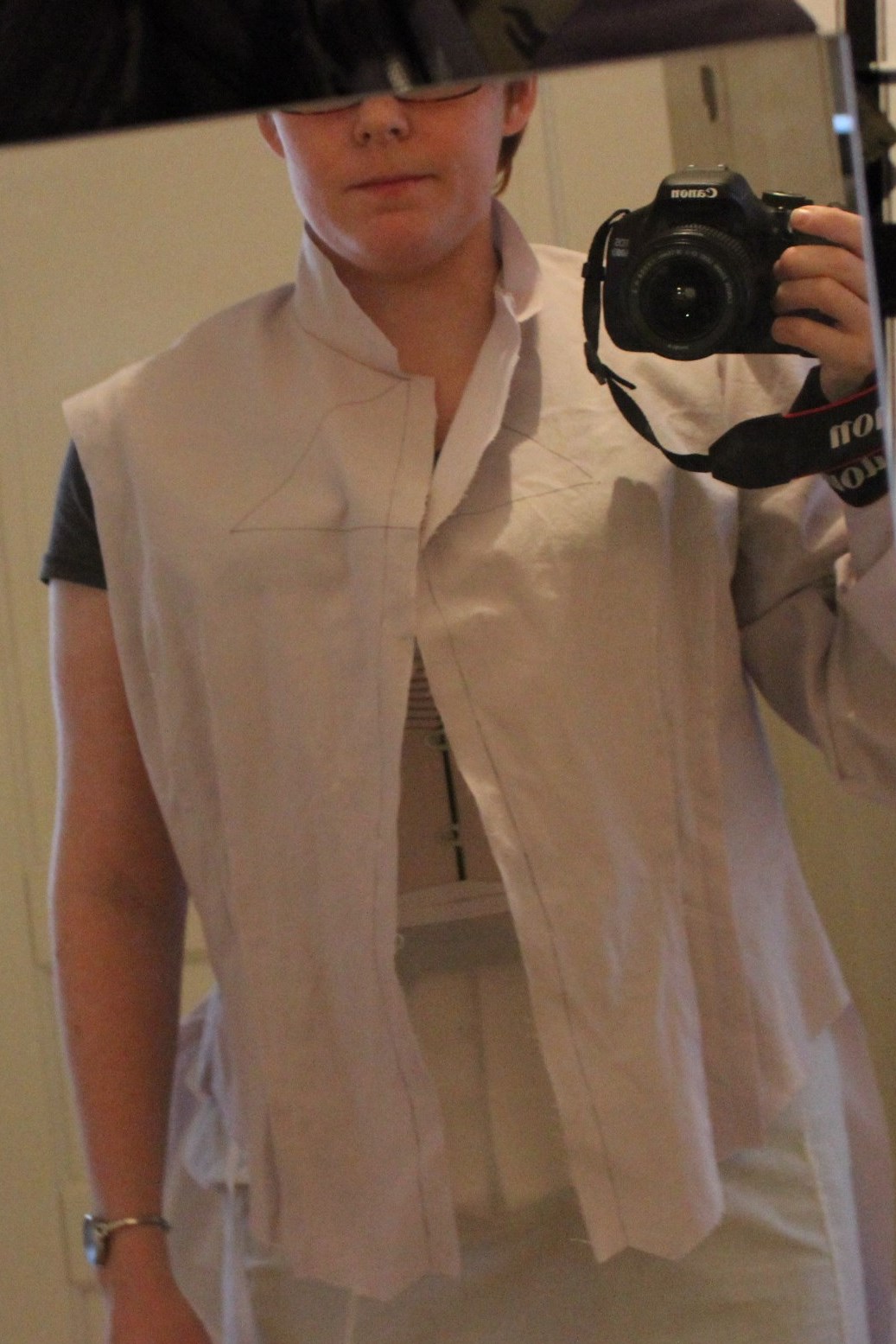
So much better. But still some thing needed to be altered. So I made the front 4cm smaler, took out a bit on the shoulders, and made the neck opening a bit bigger.

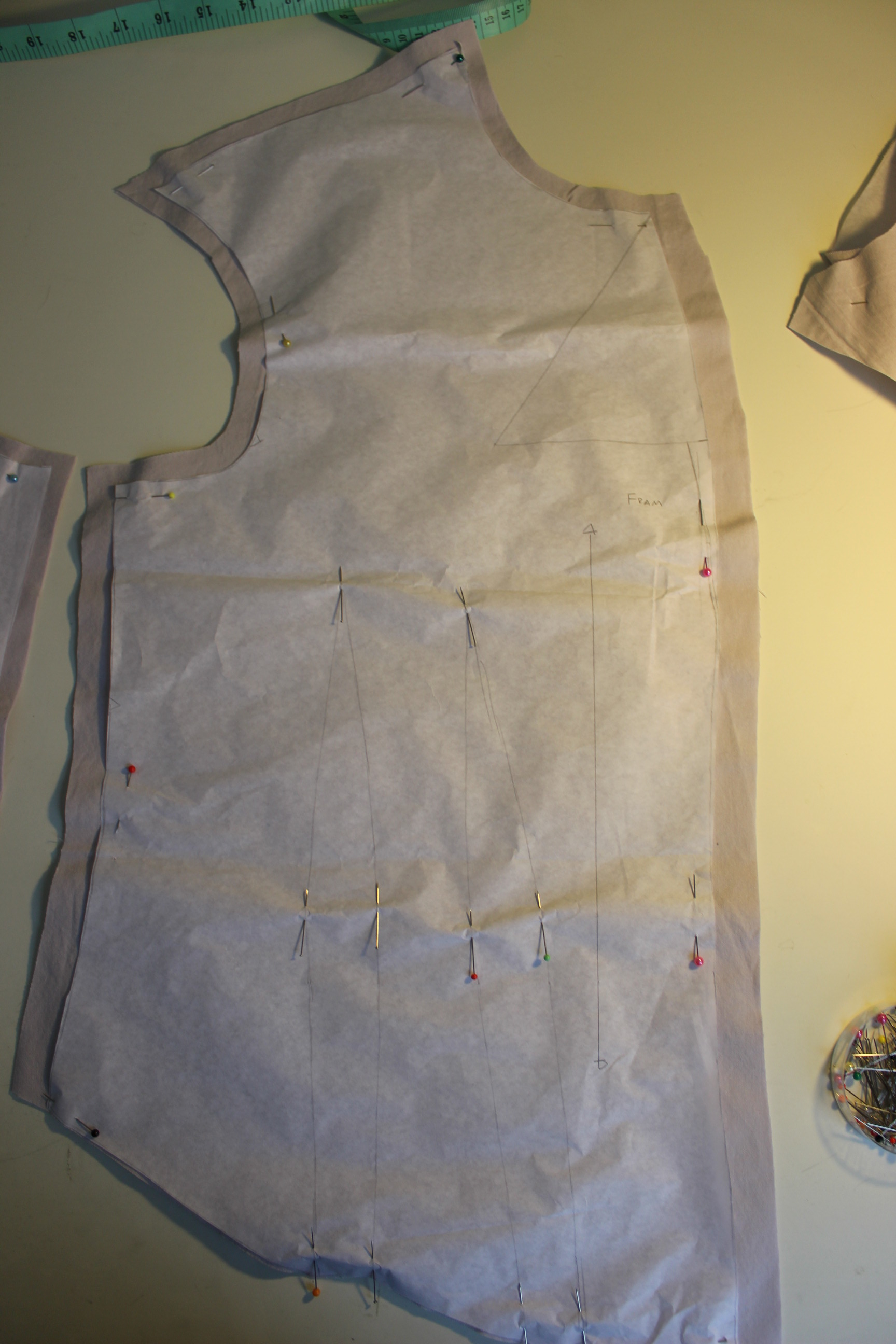
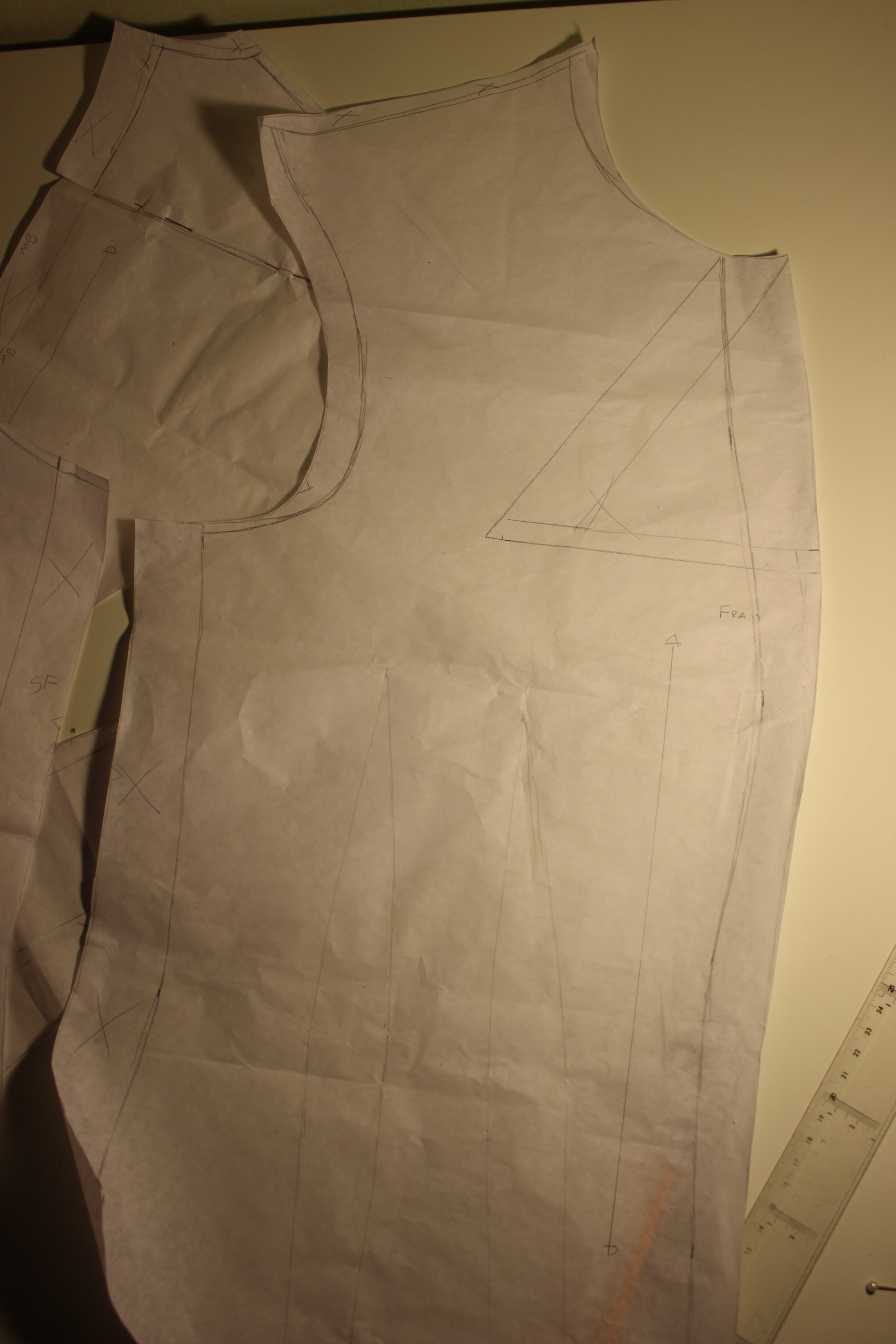
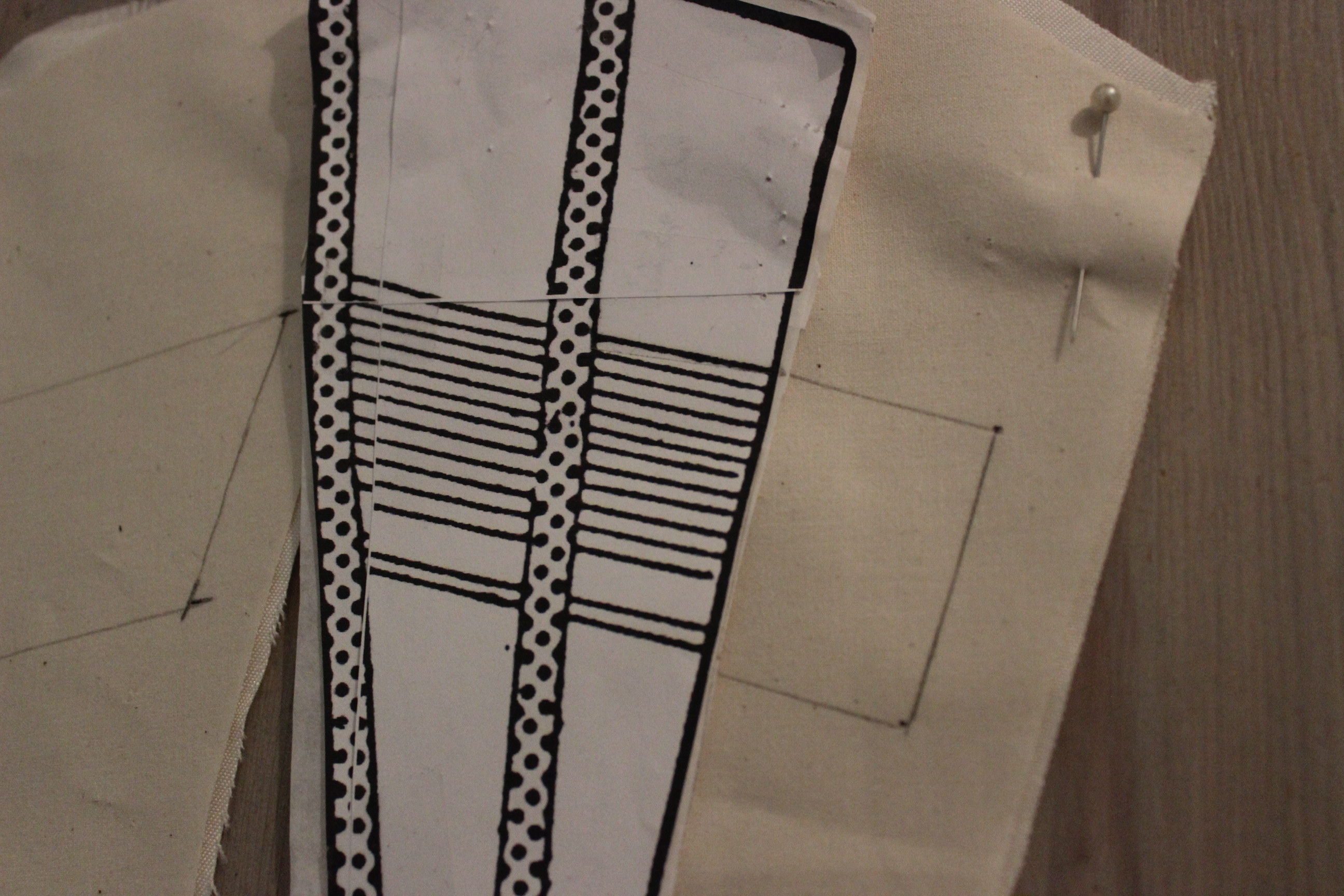
I then transfered the alterations to the pattern, moving the mesurments around a bit to get a good spread at the different seams. IMG_4929(Everything outside the lines are to be cut of)

Then I re-cut the mock-up and sewed it up again.

IMG_4935

IMG_4937 IMG_4943

Now we talking.

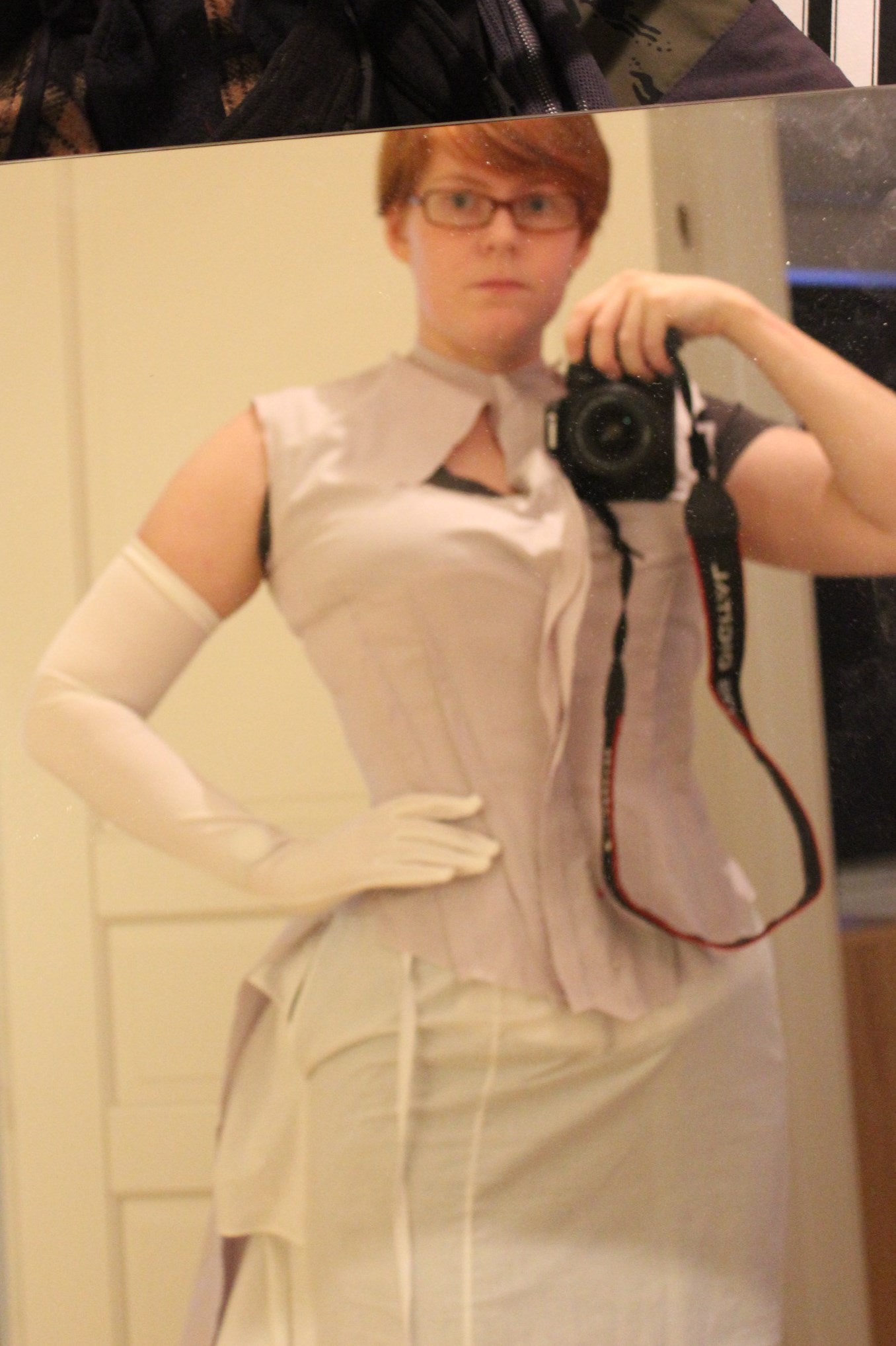
And before I took it of I cut some of the neckline and put on my long opera glowes, just to get a feel for how it would look.IMG_4921

I even tryed to drape the bustle, but I guess it’s easier to do when you’r not wearing it…IMG_4913

All this fiddeling and messing around with the pattern set me back almost a whole day. So with now only 6 days left to the bal it was time to move on to the sewing.

An Innovative Corset

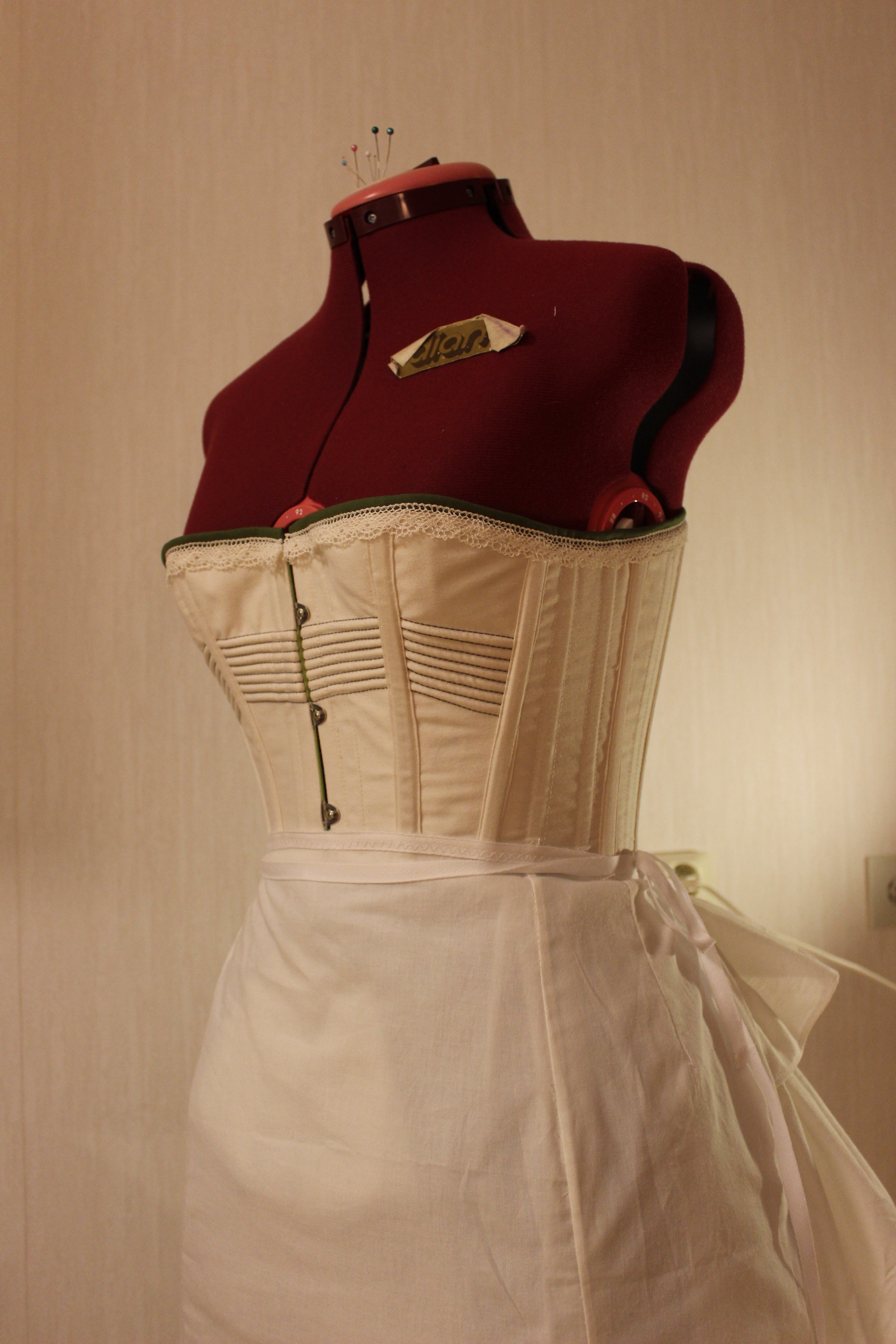
For the HSF nr 3 this year: Innovation, I knew I needed to make something usable for the up-coming bal. And since you can’t make a balgown without the right foundation wear, I decided to use this challenge to make a 1880s corset.

I re-used the 1880s corset pattern from Nora Waughs Corset and Crinolines. (I prevously made a black corset from this pattern for my sister). 1880 waugh

I started by adding some extra widht to the pattern to bring it closer to my measurments.IMG_4330

Then I cut it out in a sturdy cotton bedsheet,IMG_4335

sewed it together and tried it on.

IMG_4338 IMG_4344

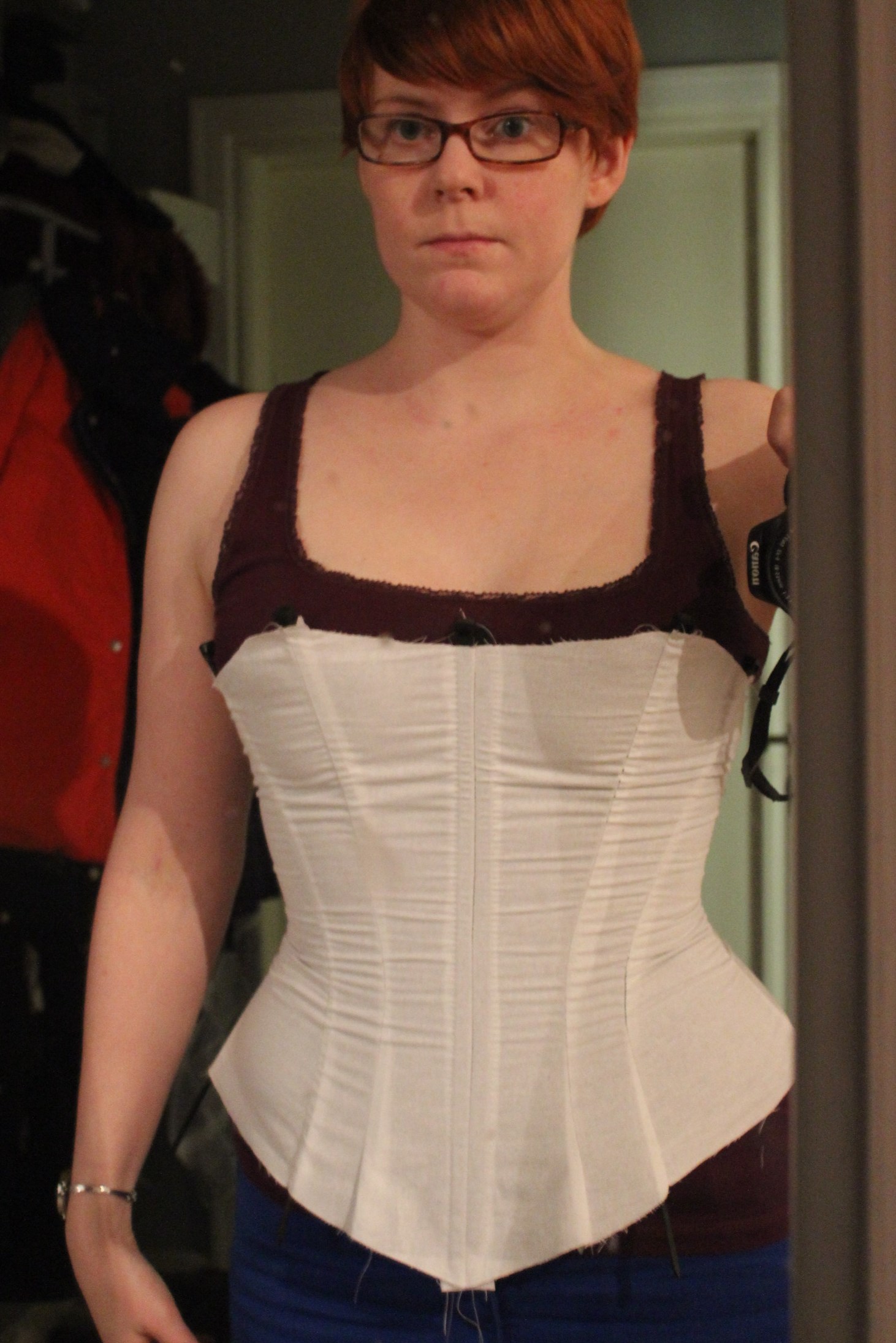
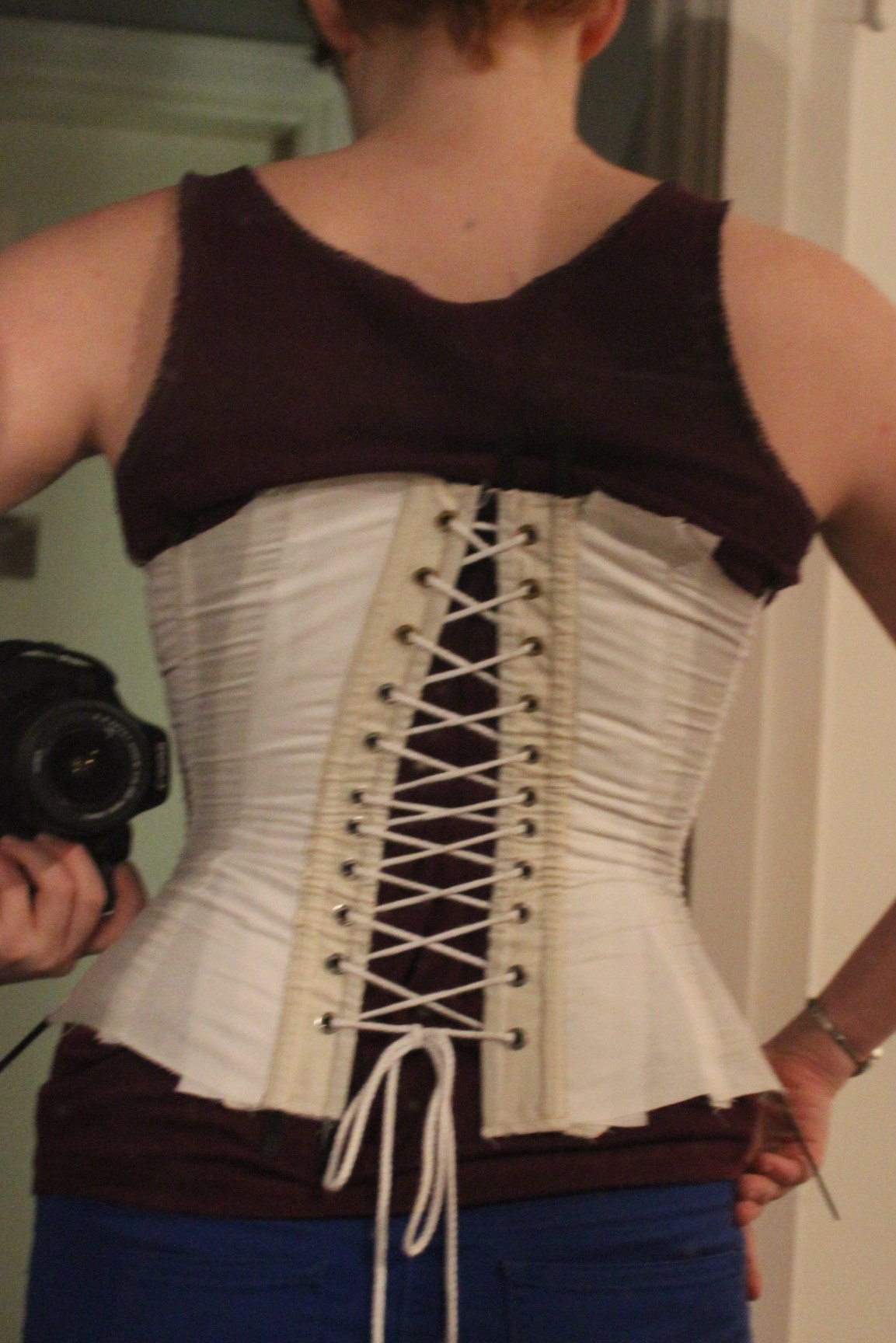
It fits suprisengly well. The only thing that needs to be changed is to take out a bit on the top back, to get a more even lacing, and to re-shape the bottom front to make the curve over the stomach nice and smoot.IMG_4359

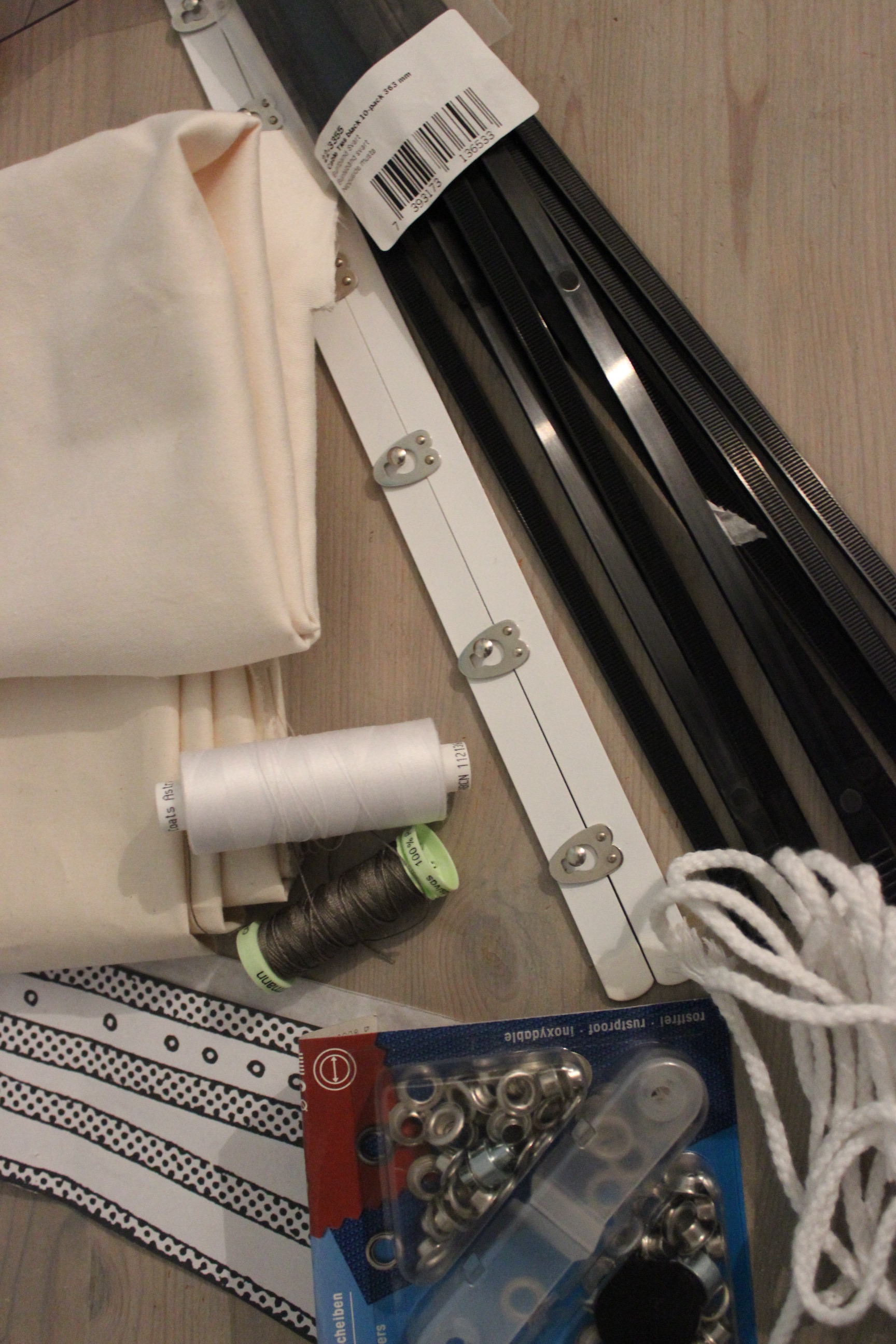
Then it was time to bring out all the fabric and notions. (here I got: a cream cotton sateen, a cream cotton interlining, a busk, lots of plastic bonning, thread, the pattern, grommets and lacing cord).IMG_4368

Then I cut the fabric, basted on the interlining and marked the space for the piping, and sewed them in.IMG_4364

IMG_4375 IMG_4373

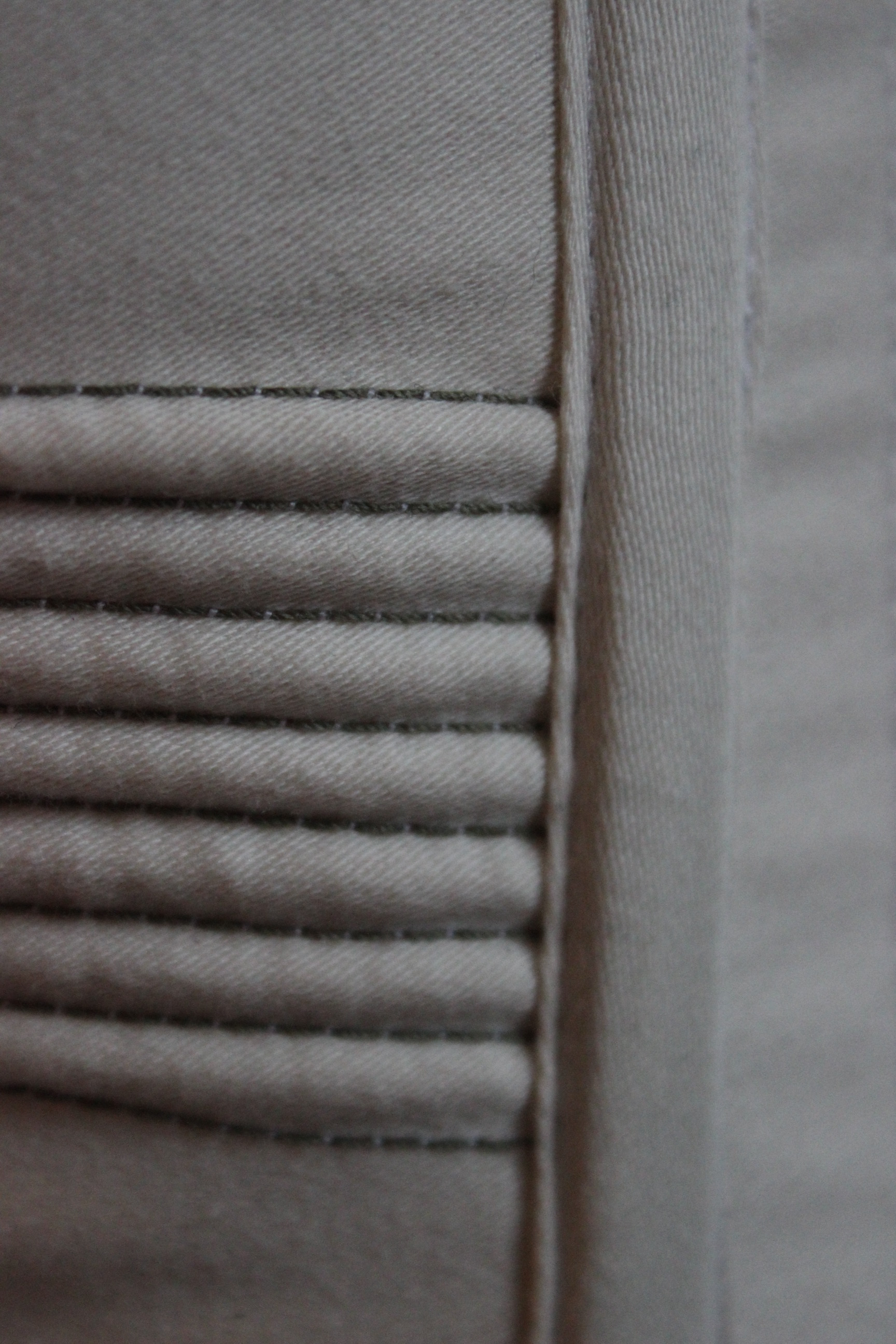
Close-up of the piping, sewn in green button-hole thread.IMG_4377

Then I sewed the pieces together twice – for strengt.IMG_4370

Setting the busk using awls to get the studds through the fabric without ripping it. IMG_4387

And leaving holes while sewing to get the eyes through.IMG_4381

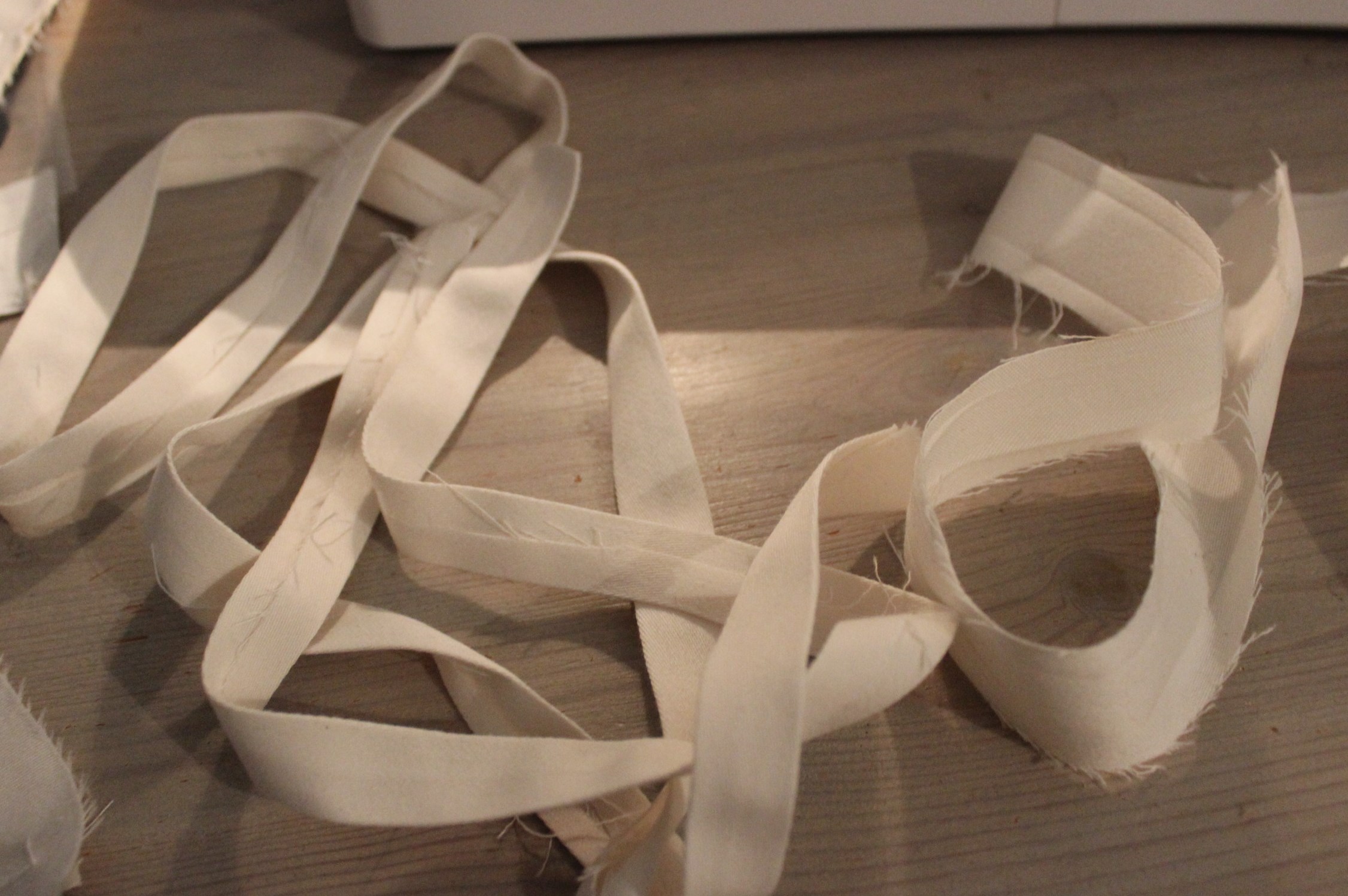
I made lots of self fabric bias trim to use as boning chanels.IMG_4397

Sewing them on from the outside.IMG_4400

And snipping the seam-allowence on the inside.IMG_4403

When the gromets, the busk and the boning chanels (no bonning yet) are done, its time for the lining. I choose a light green cotton lining from my stash.IMG_4411

Corset with lining sewn on – before turning.IMG_4416

The lining sewn in. (One side turned and pressed, and the other one still in-side-out).IMG_4422

Now it’s time for the boning. If you put them in to early you will have big trouble with lining and sewing.

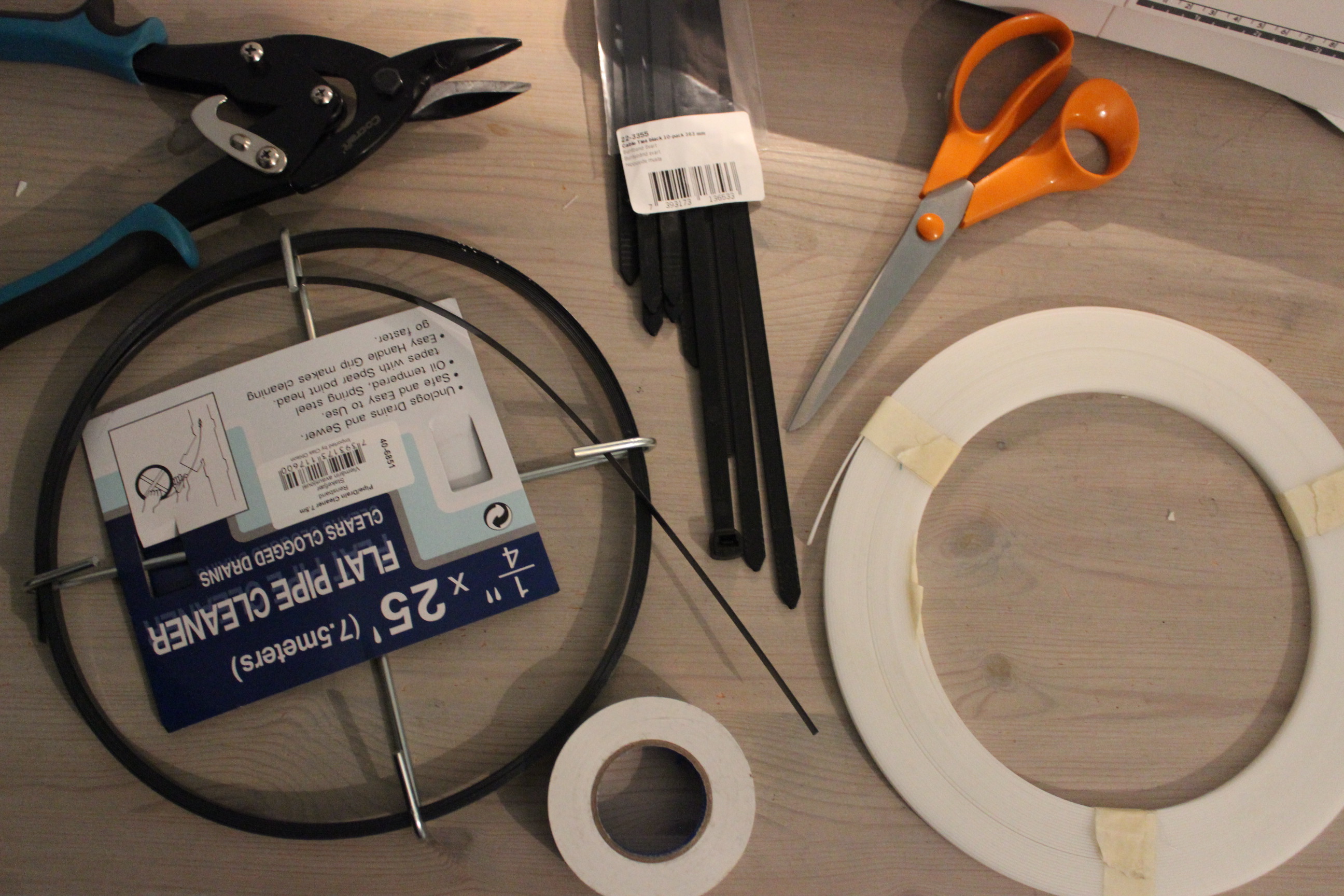
This is what I used for boning. (Left to right: Heavy pliers, methal pipe cleaners, electrical tape (to cower the sharp edges on the metal), plastic cable ties, siccor and plastic whale bone).IMG_4438

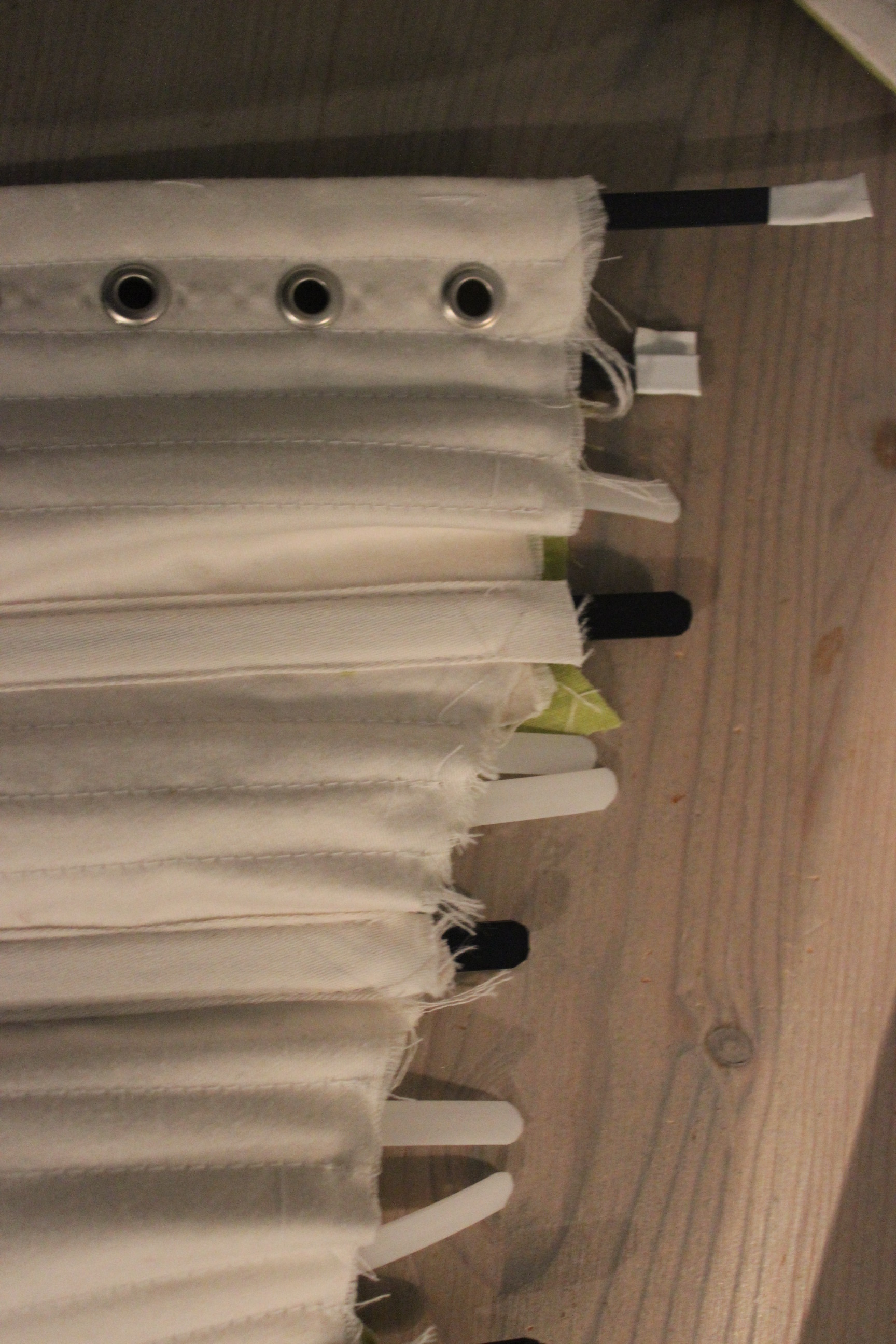
As you can se I used all of my three boning options on different parts of the corset. Using the strongest (metal) ones close to the lacing, and the regular cable ties in the boning chanels, and then using the softer syntetic whalebone in between.IMG_4444

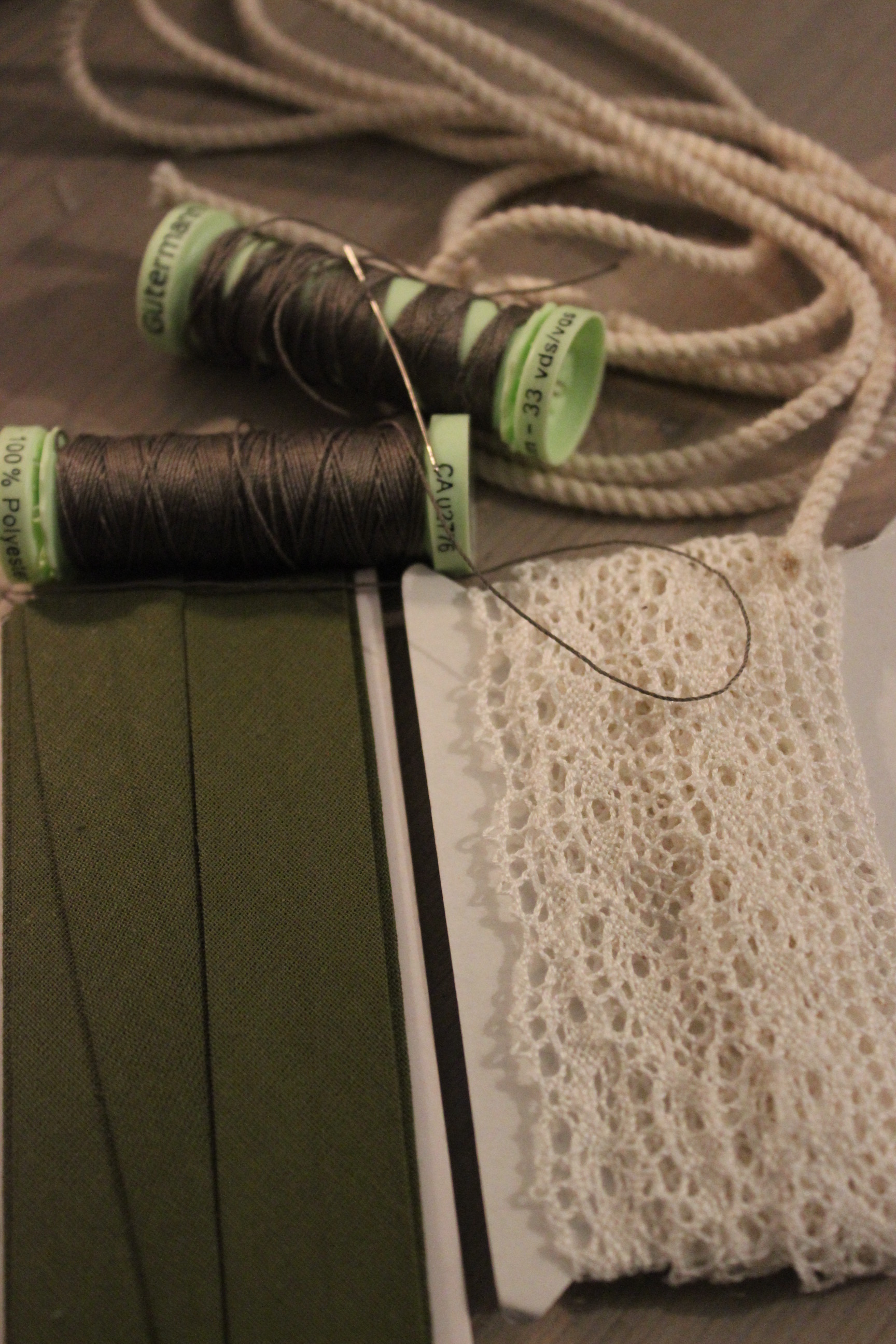
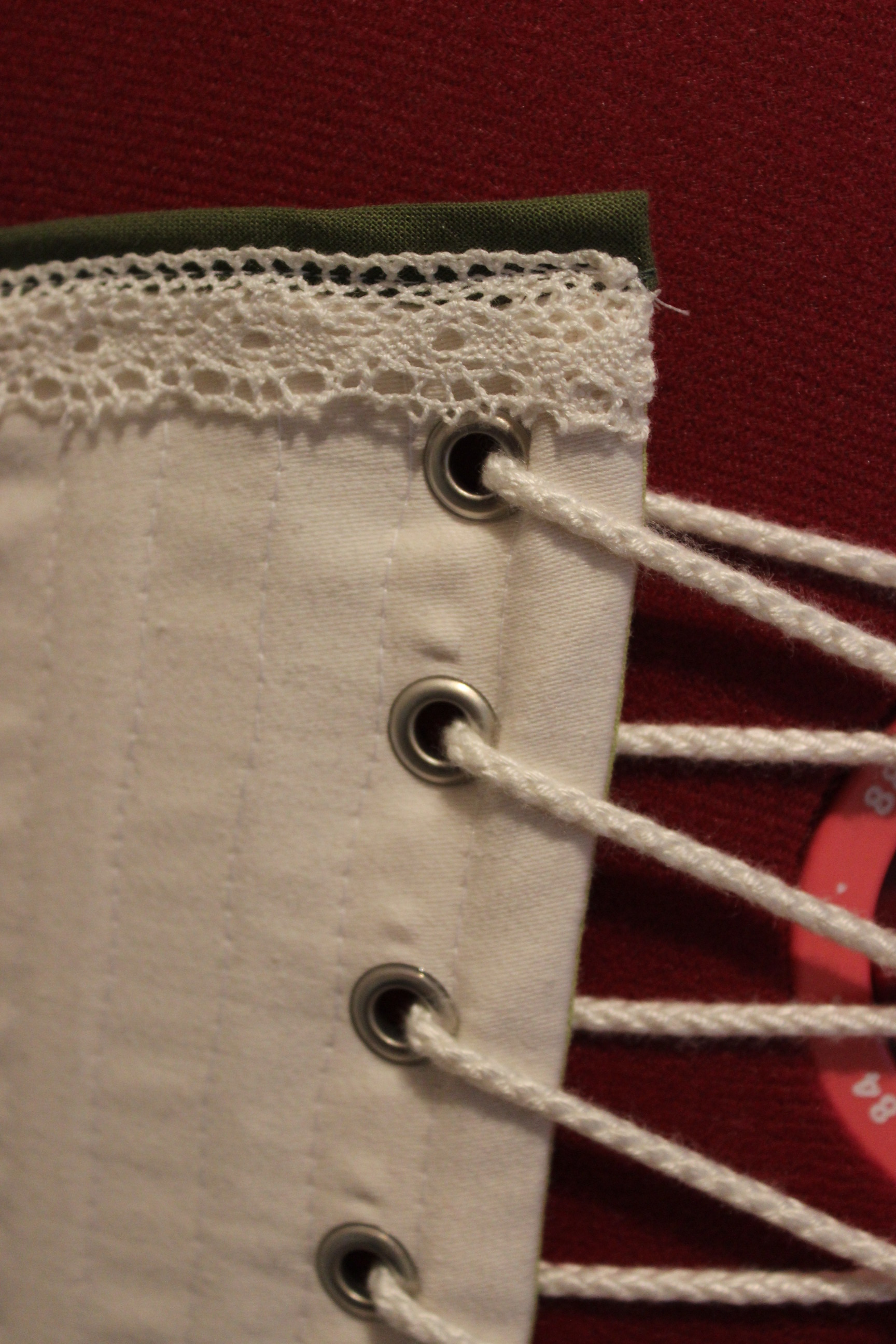
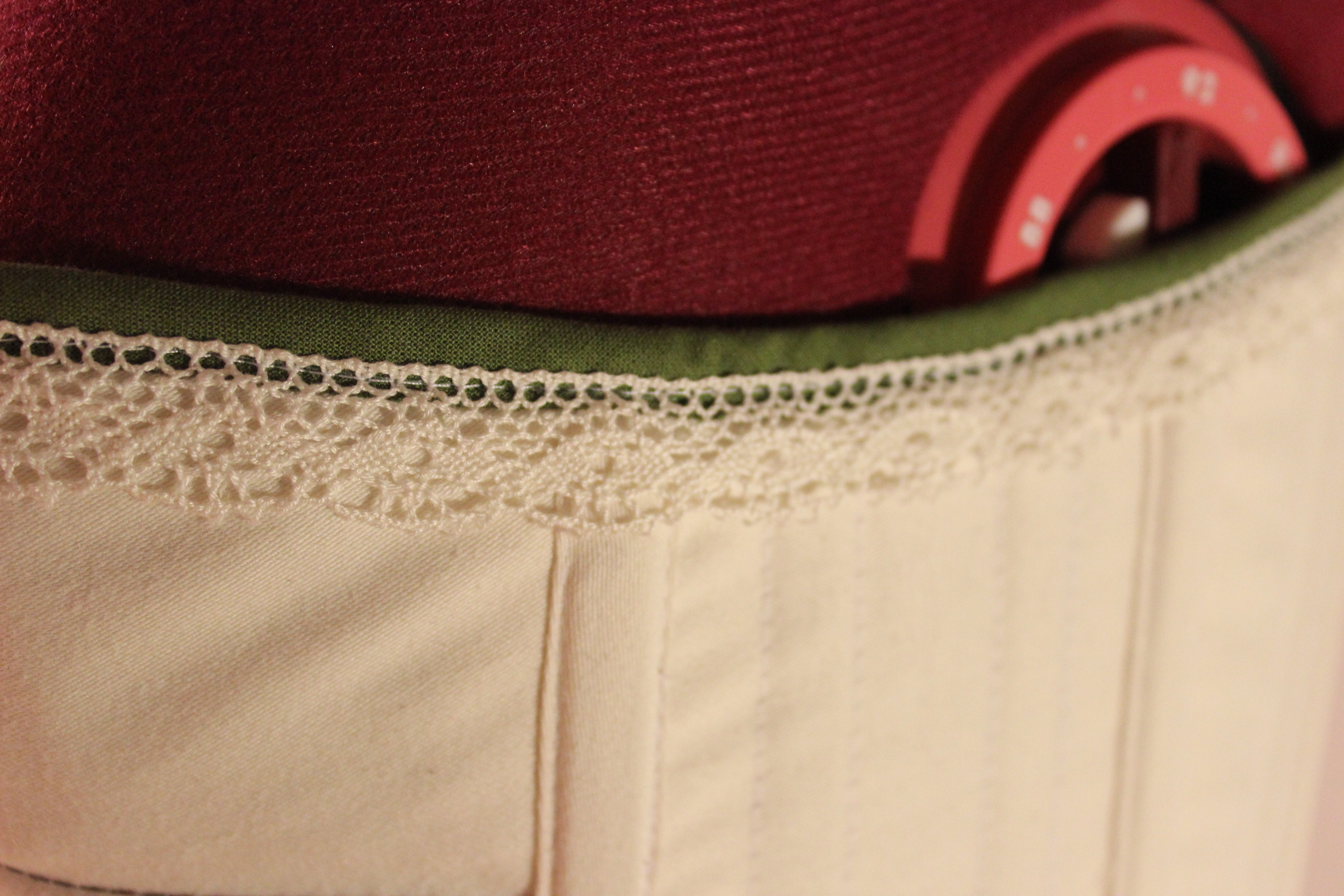
Then I grabbed my finishing/decoration kit (green cotton bias tape, white cotton lace, green button hole thread and cord for  piping (which I did in my first few steps).IMG_4436

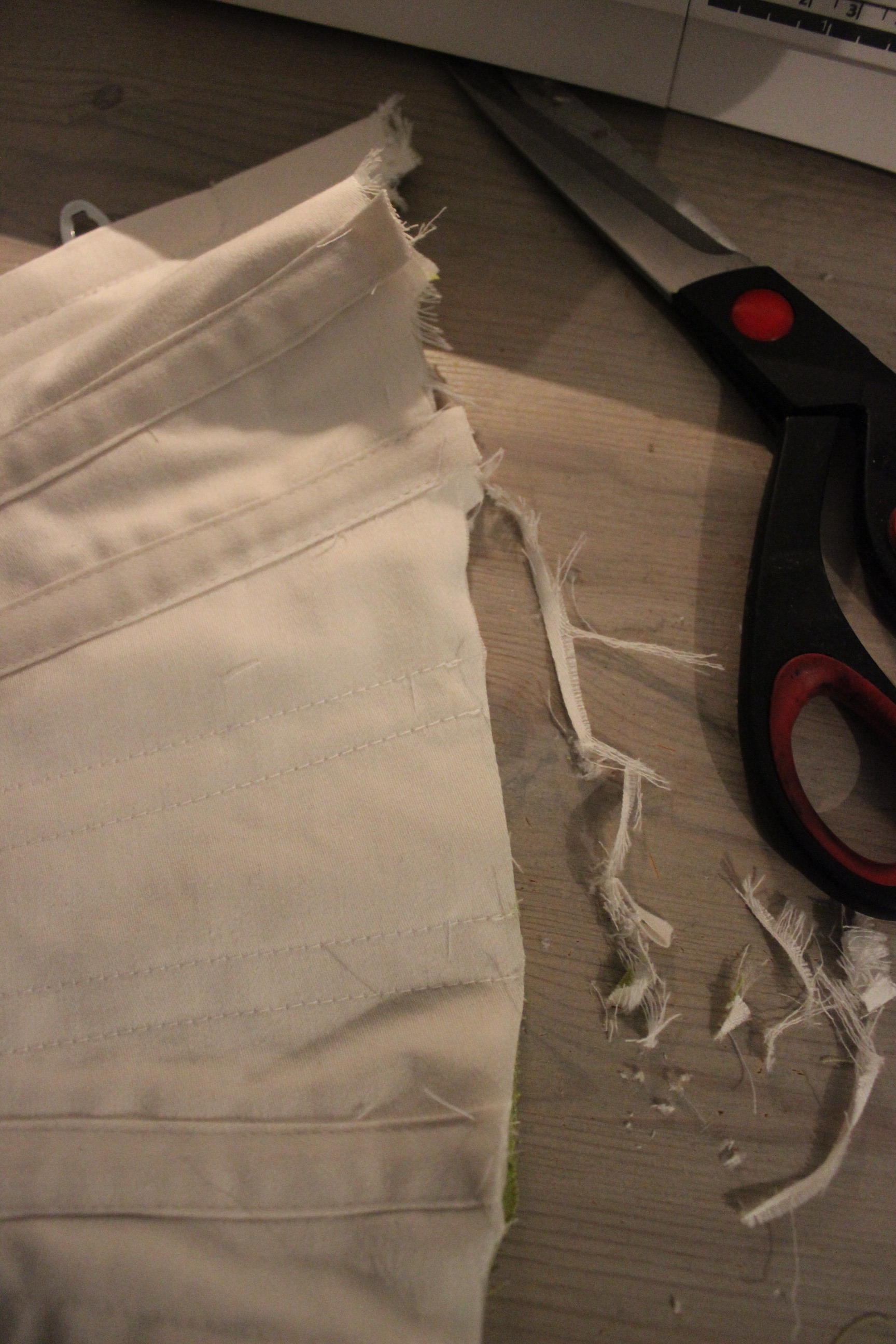
Cutting the un-even top and bottoms of the corset, IMG_4426

and then attaching the bias tape.IMG_4431

At this point it was time for me to stop working on the corset, and leave it for a couple of weeks.

You see, I started this project begining of december, since I needed to have the corset to be able to start on my opera gown. And since the HSFs rules says that no item should be finished more then 6 weeks before the challenge du date, I needed to paus sewing for a while. And since it was only the decorations left, the corset was fully functional and could still be used to build my gown upon.

IMG_4517IMG_4520

IMG_4519

IMG_4522

IMG_4526

IMG_4524

IMG_4518

IMG_4655 IMG_4667

IMG_4658

***

So, last week (3 days before the grand bal) I finaly had the time to finish it.

By now I had tried it on several times, and had realised the bust needed to be re-shaped to get a smoother look. So I ripped some of the bias tape of, re-cut the top and stiched the bias tape back on.IMG_4716

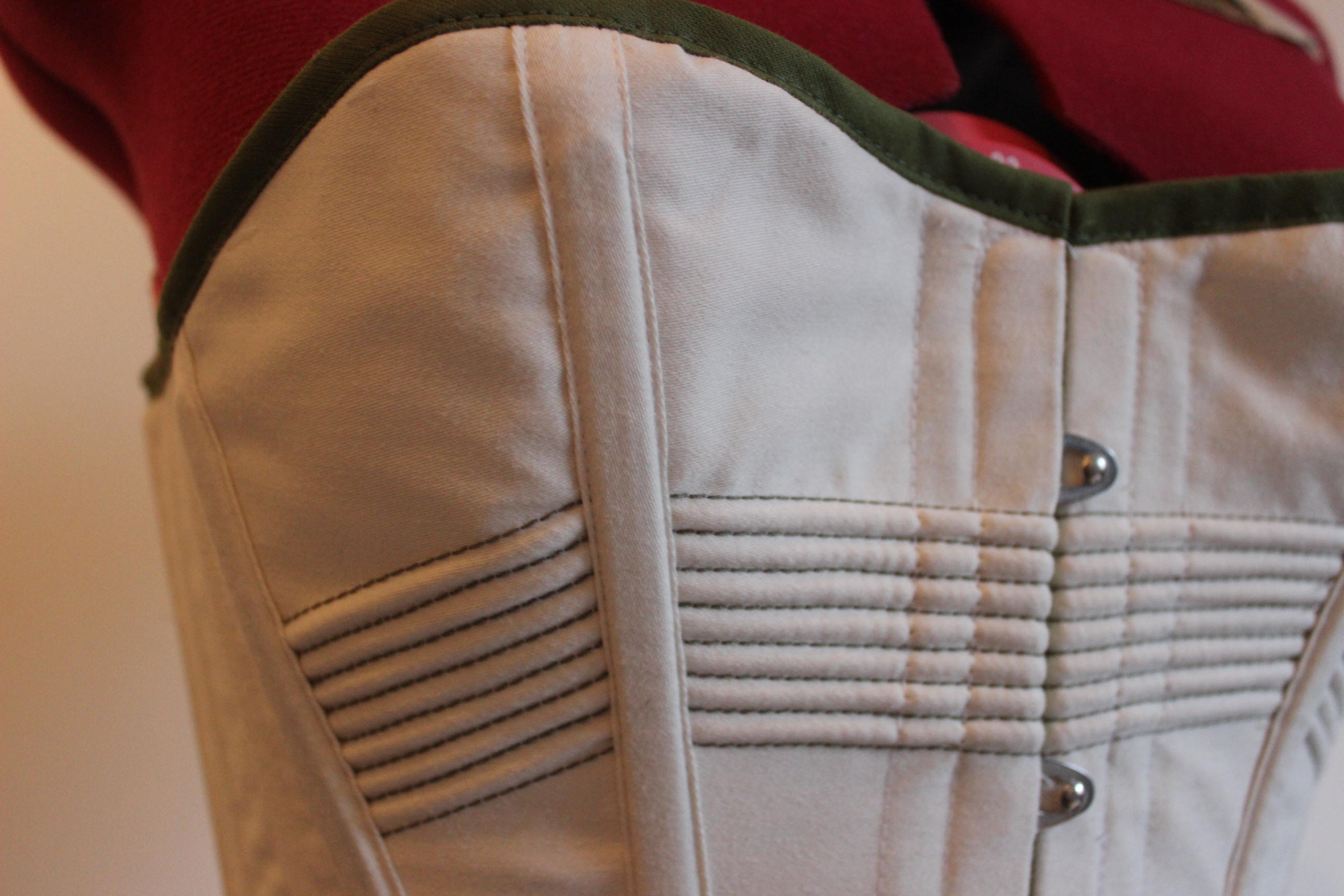
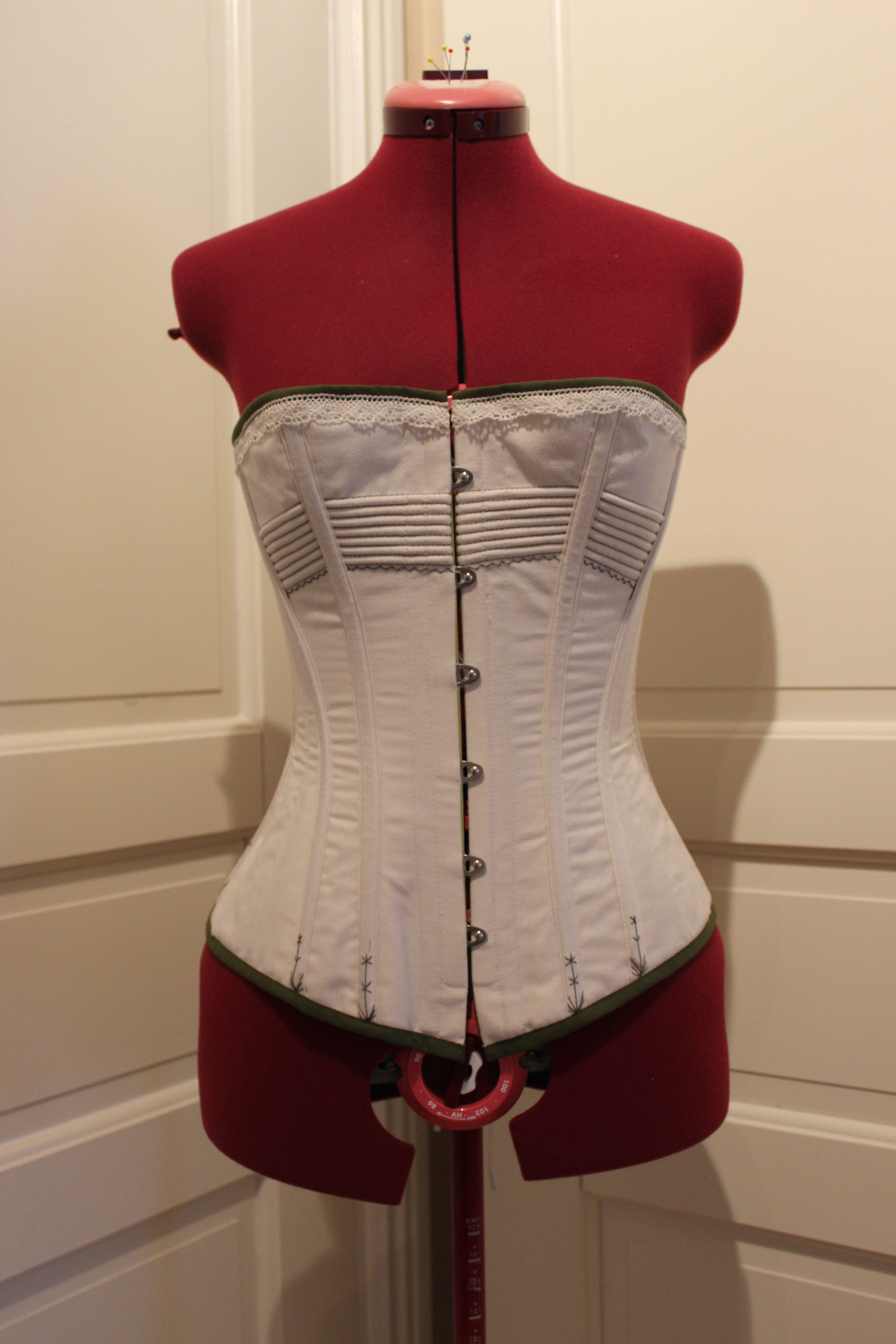
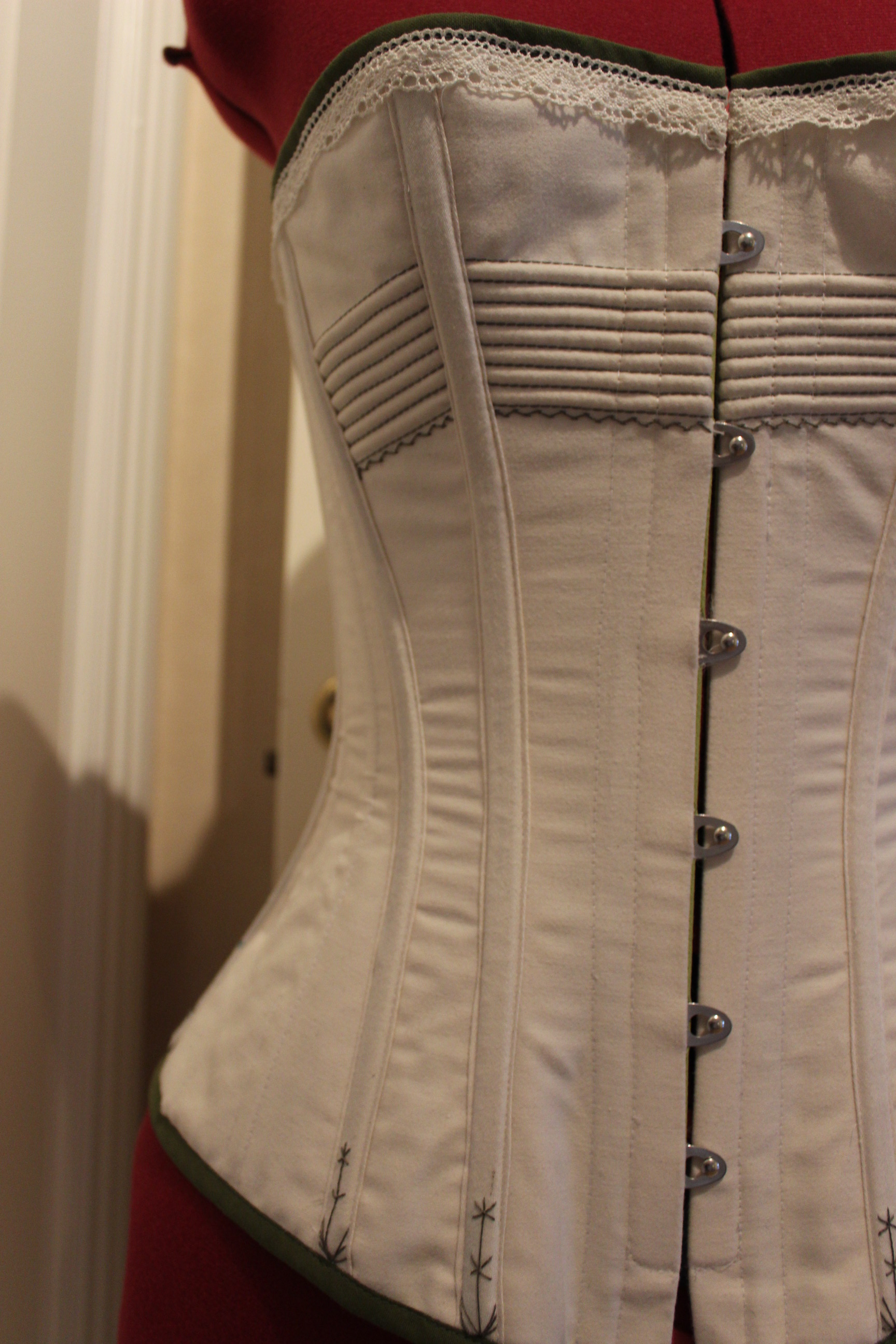
Then I decorated it with the white lace and some green flossing.

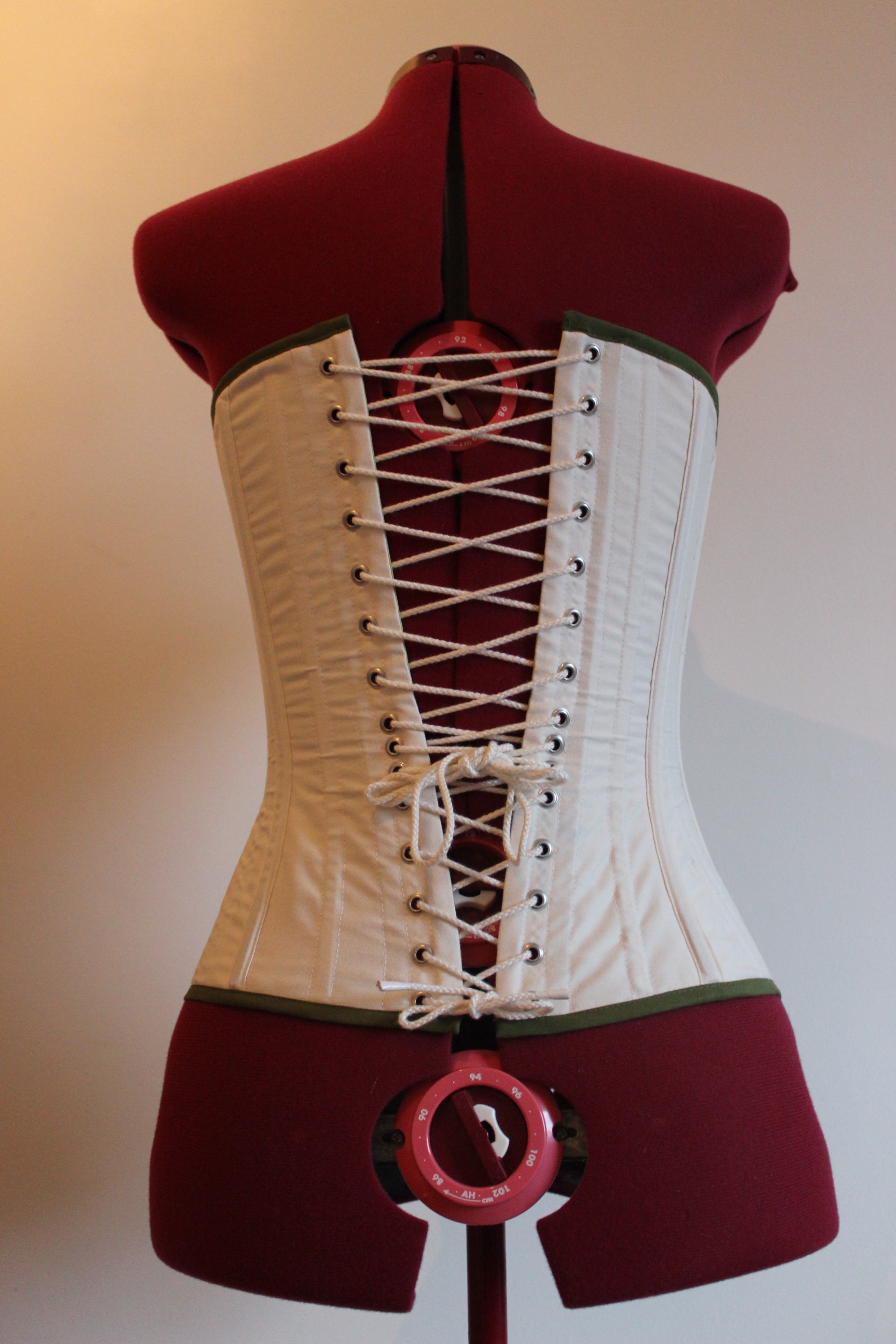
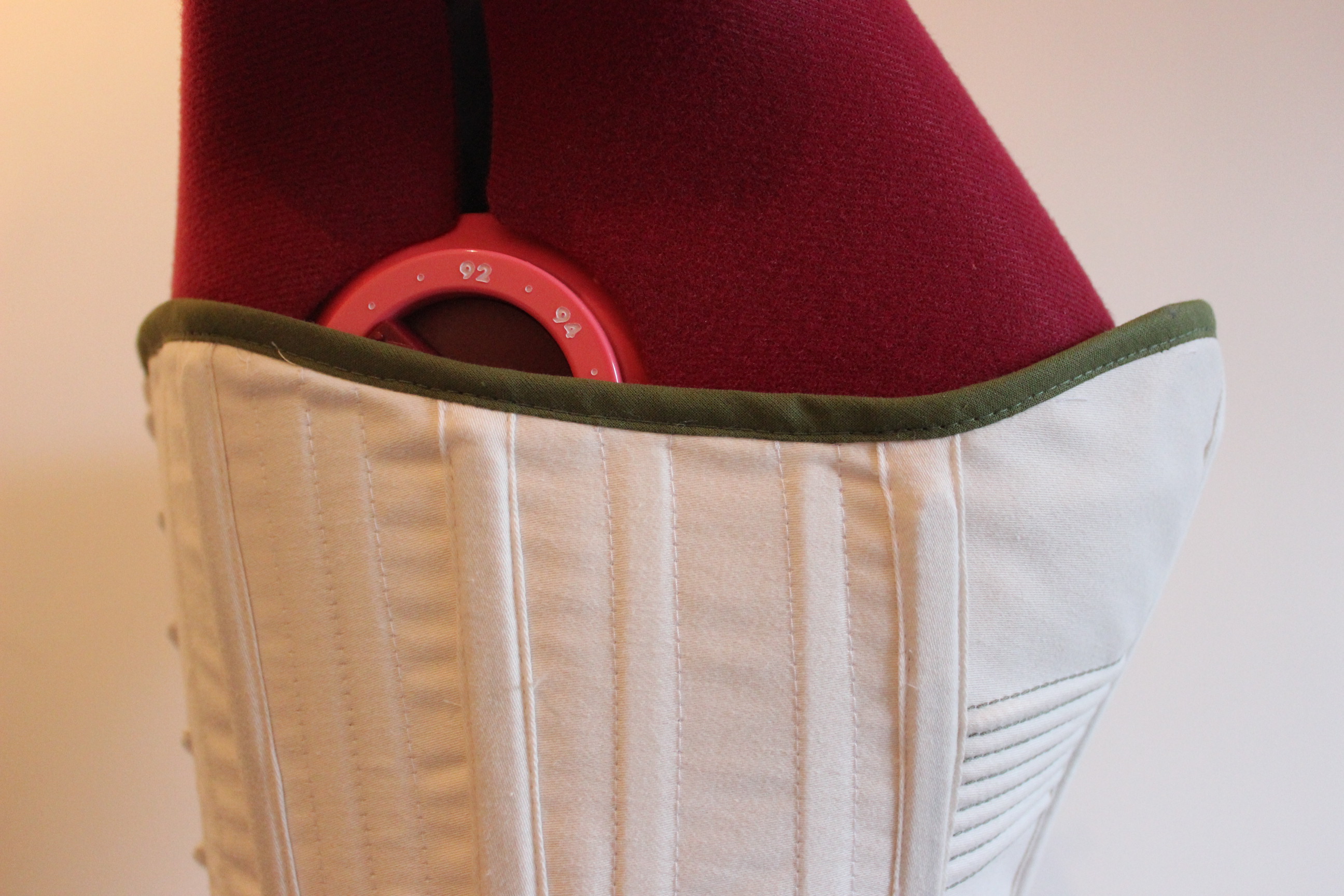
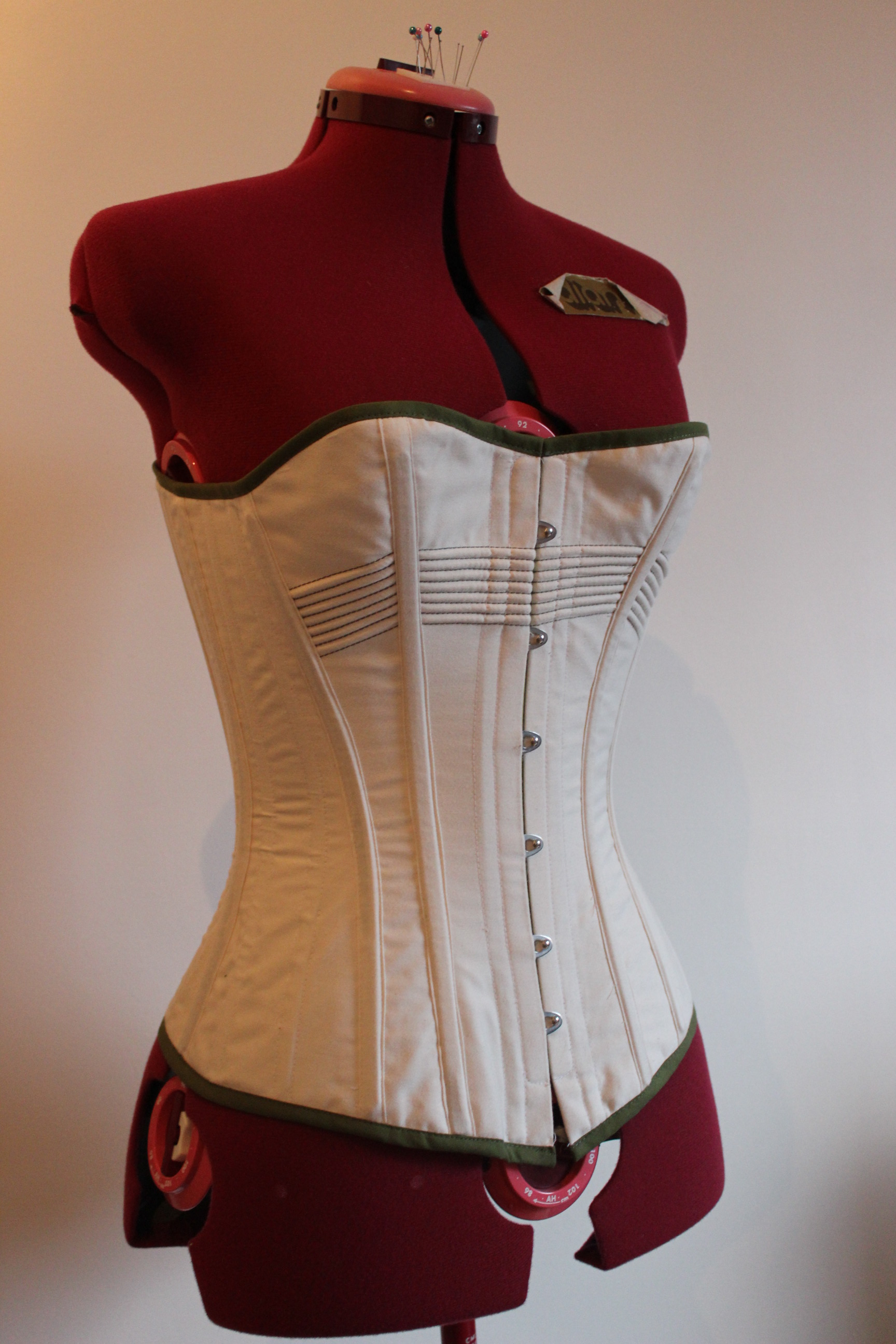
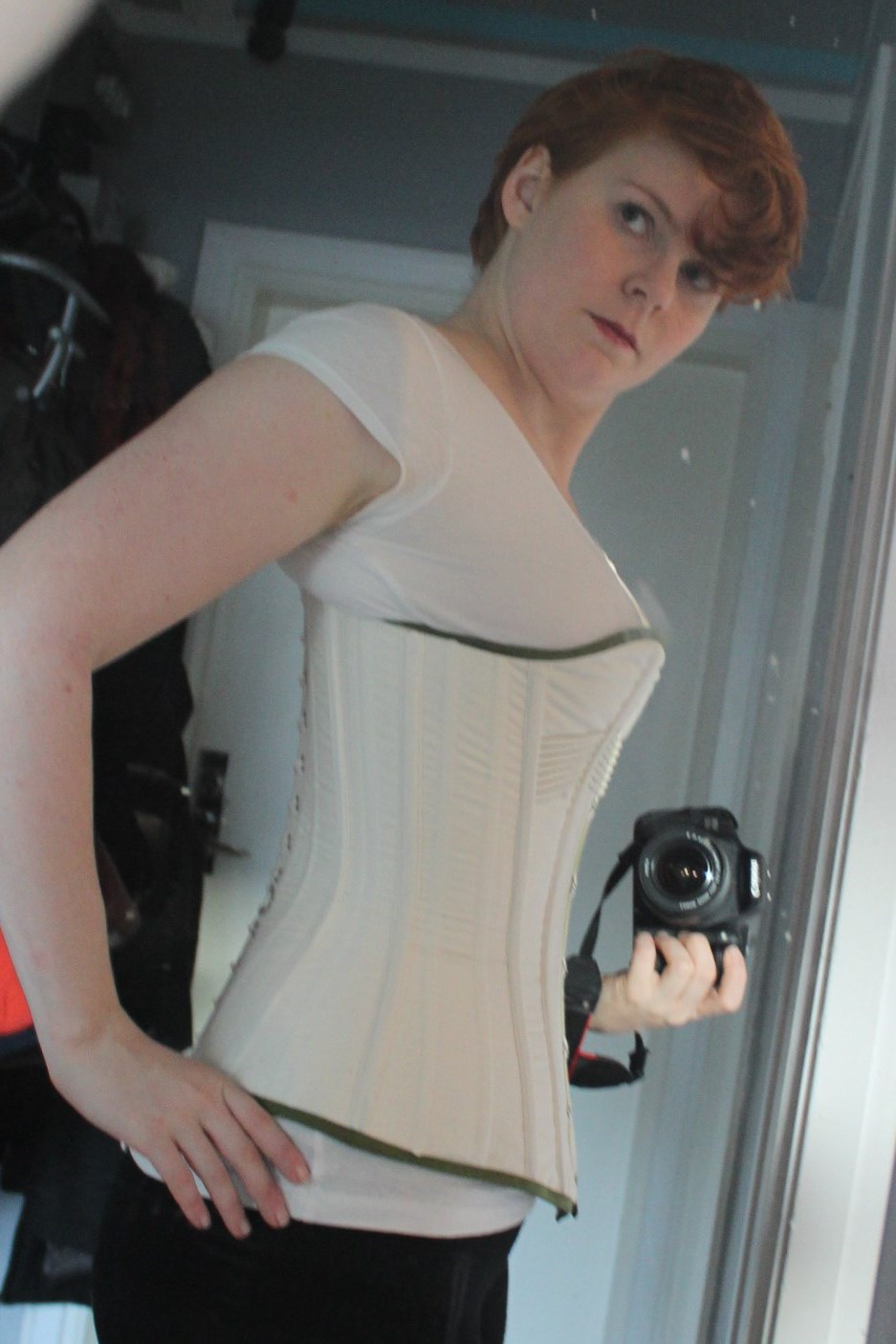
And finaly Finished:IMG_5281

IMG_5293

IMG_5287

IMG_5289

IMG_5284

IMG_5285

IMG_4760

IMG_5296

Just the Facts:

Challenge: nr 2 – Innovations

What: A 1880s Corset

Innovation: The 1880s was known for it’s innventions (actually the whole 19th century was). My item can both represent the whole era, or the new style of hourglas figure and bustled skirts made fashionable and  avalaible thue to both the steel manufacturer, and the comercial sewing factories. Some relativly new innventions in the 1880s corset was: The split busk, the metal gromets and the steel boning – all innvented during the 19th century.

Pattern: Nora Waugh “1880s corset” from Corset and Crinolines.
Fabric: 0,5 m ivory cotton sateen, 0,5 m ivory cotton lawn and 0,5 m light green cotton.

Notions: A 33 cm planchett, ivory thread, green buttonhole thread, 30 silver gromets, 4m cotton string for piping, 4 m ivory cotton laces, ca 10 m of boning (2,5 m steel, 8 heavy duty cable ties and 3 m syntetic whalebone), 2 m green biastape and 1 m ivory lace.

How Historical Accurate: Pretty good. The pattern’s correct and the sewing machine was widly used by this time, even though I’m not sure of the right assebly tecniques. The material used are accurate, part from the plastic bonning. So maybe 7/10.

Time: About 10 hours

Cost: 400kr (44Usd) (all those notions make it so expensive).

First worn: On January 25 for a grand bal (Oskarsbalen), and then a few days later for a photoshoot.

Final Thoughts: It tured out great. It’s quite comfortable (even after a couple of dancing hours) and stil gives me the desired hourglas figure. I think this will be my “go to” corset for many costumes.

1880s Evening Hairstyle

The “accessory” for my 1880s evening gown which caused my head to hurt most was the head itself. Who the h-l do you get a lovely opera style hairdo with my short and klingy hair.

This was what I wantedvictorian-hairstyles

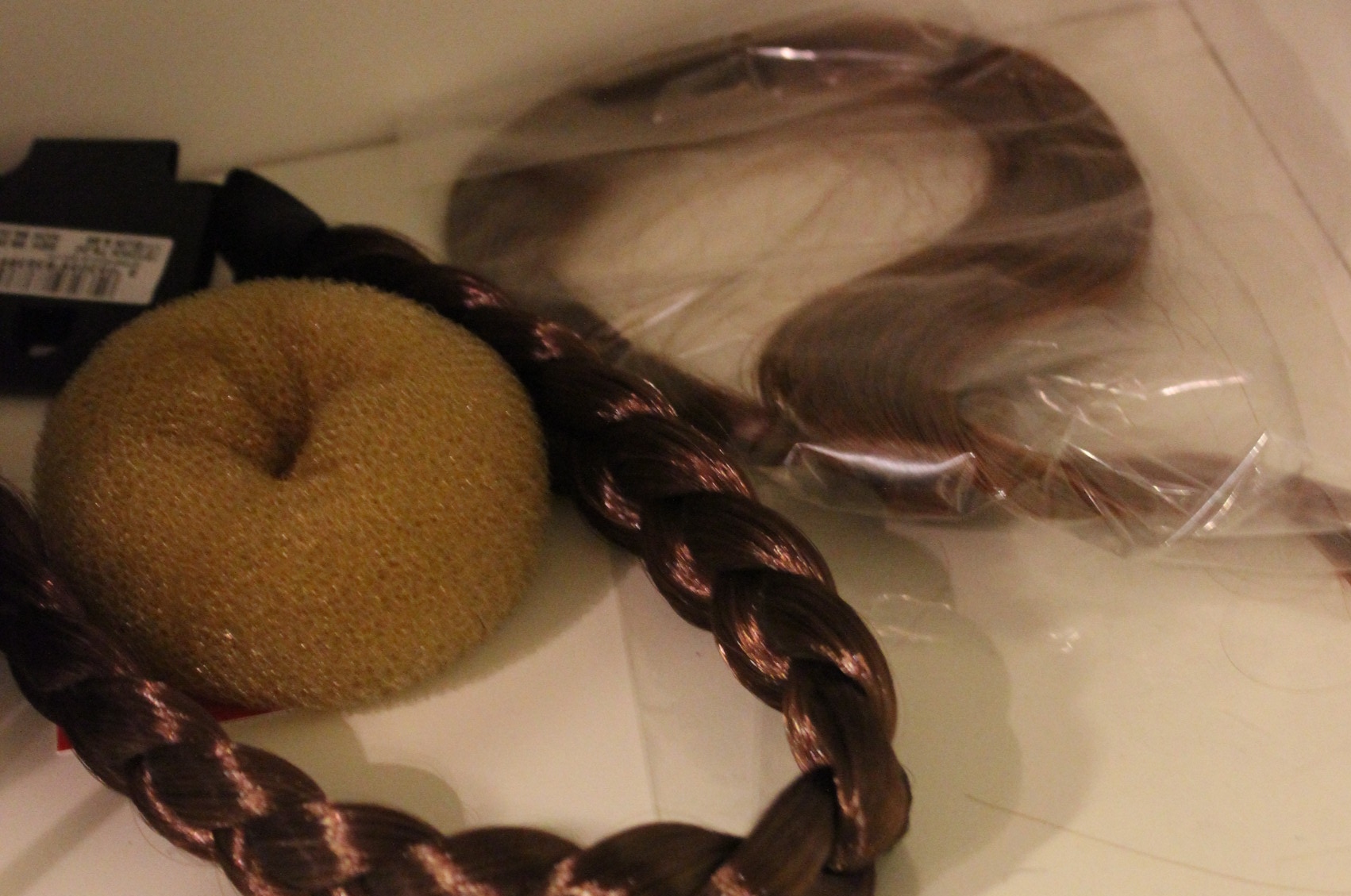
I tried a lots of different alternatives. Like faux hair and braids, curling and twisting but nothing got me even close to what I needed to achive. IMG_5244

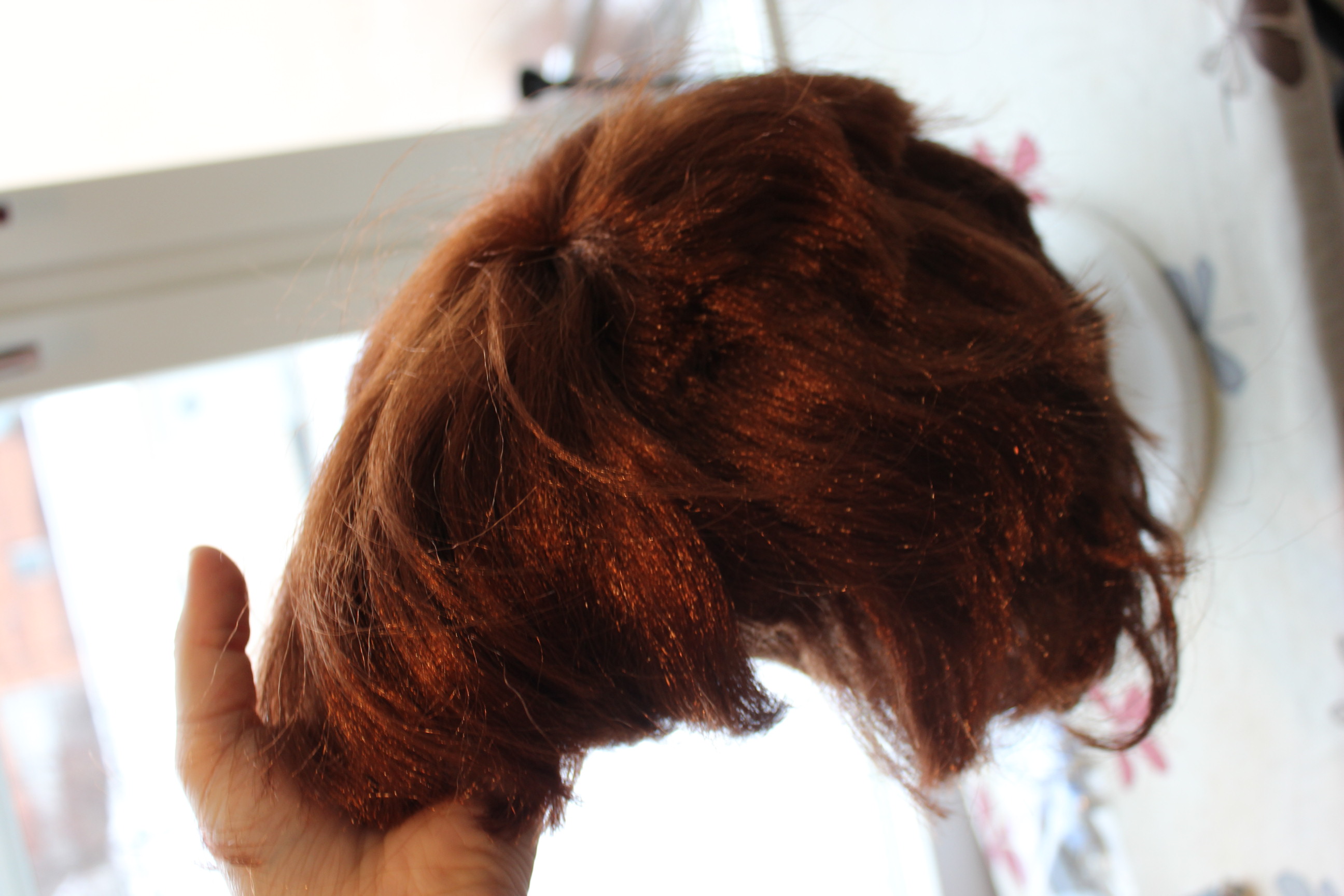
So I reluctantly pulled out my “new” wig. It is from the same company where I bought a lovely long haired wig for my medieval hairdo, but this one is just horrid.

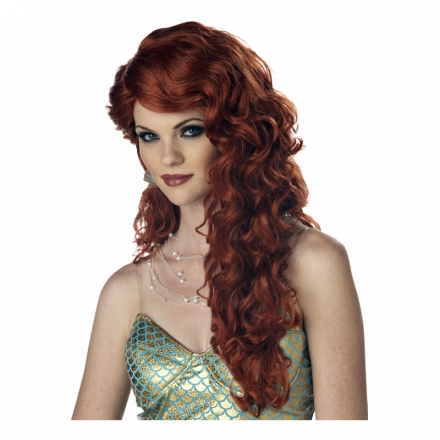
Promo pic. sjojungfru-rodbrun-peruk-1

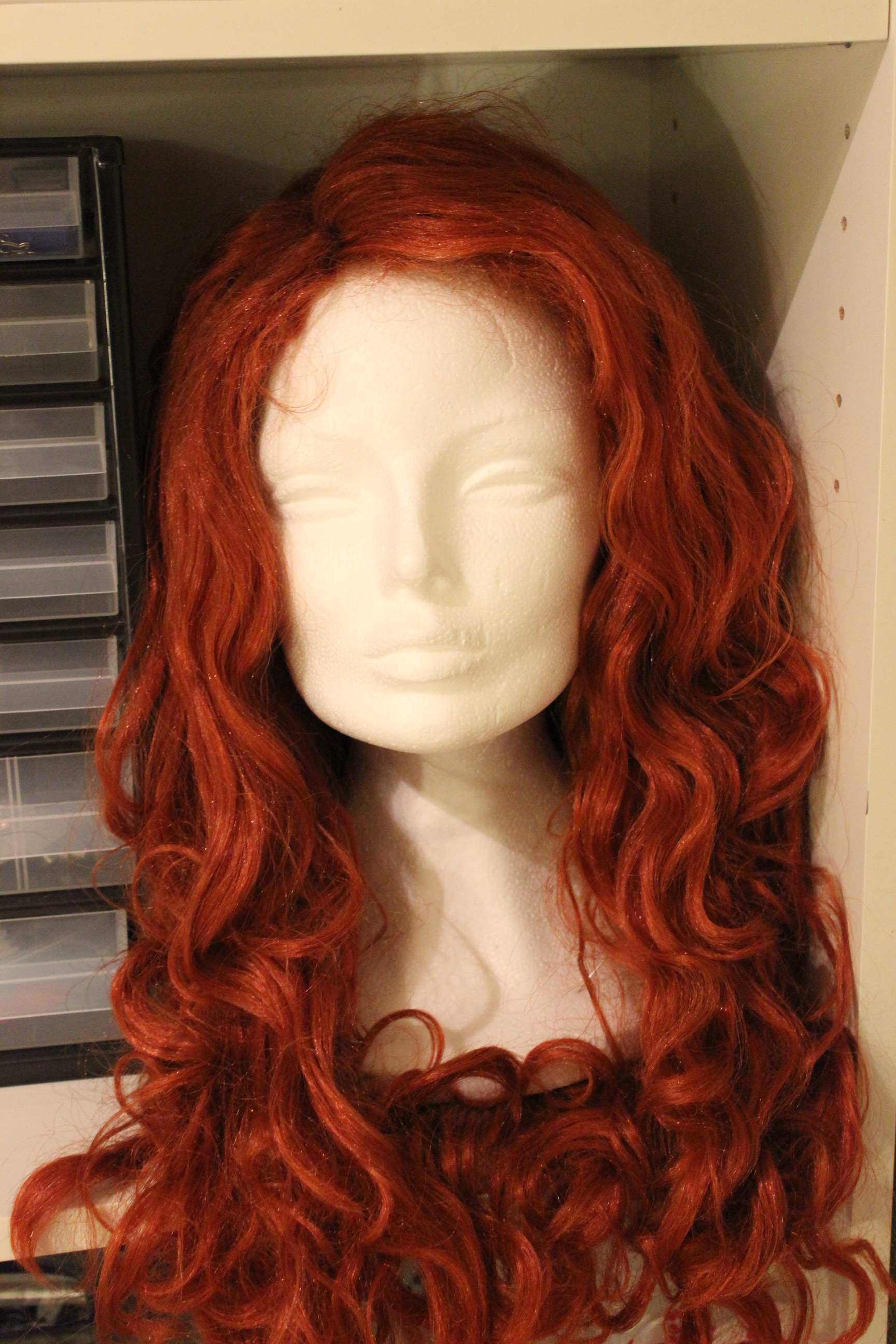
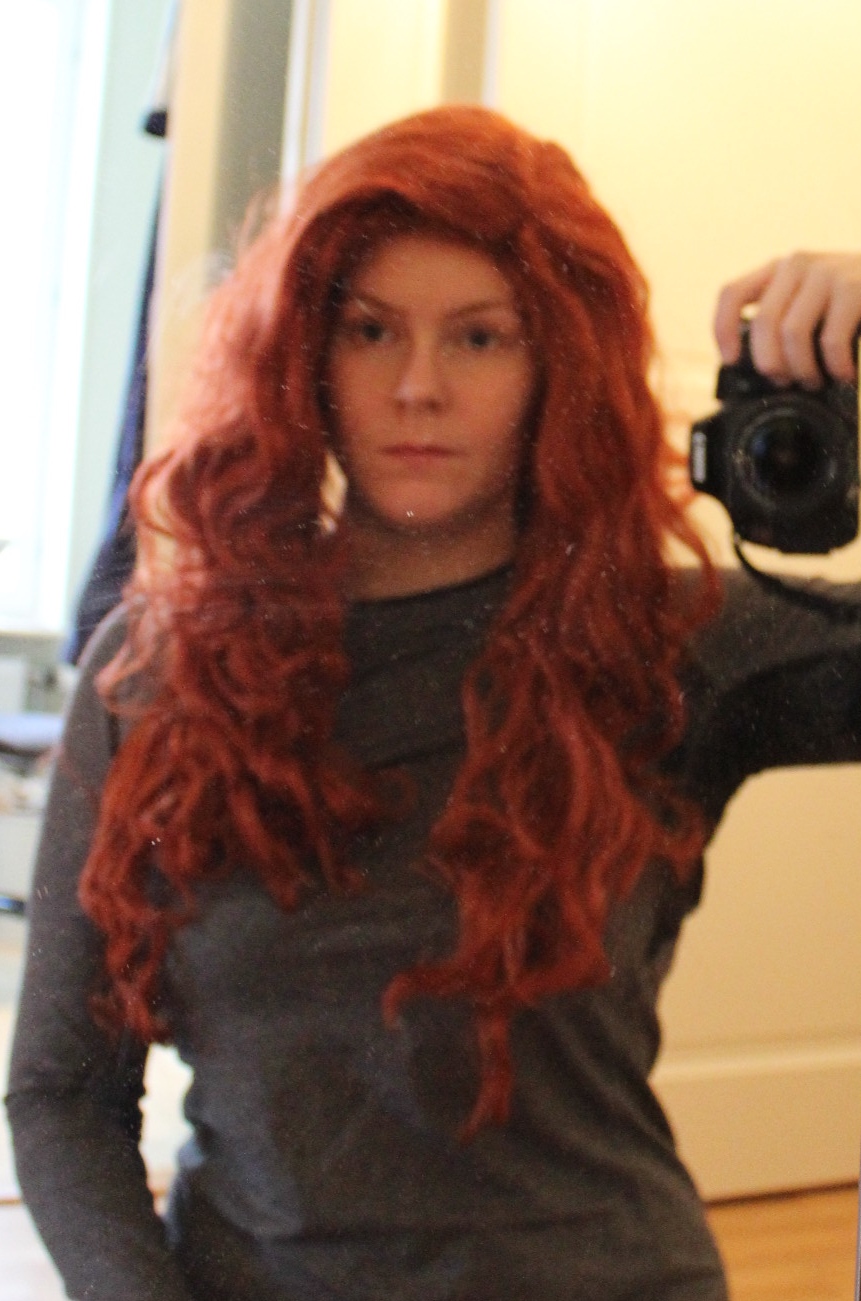
And in real life.IMG_5175

IMG_5057It is so plasic looking in both the colour and the shine, it feels realy “costumy”. And besides it is way to big. The only “good” thing about it is the fact that it don’t have bangs. But with two days left to the bal, I needed to give it a try.

So I re-read the chapter on “late victorian hairstyles” in Historical Wigstyling, and got to work, testing the methods on a smal piece of the wig first.

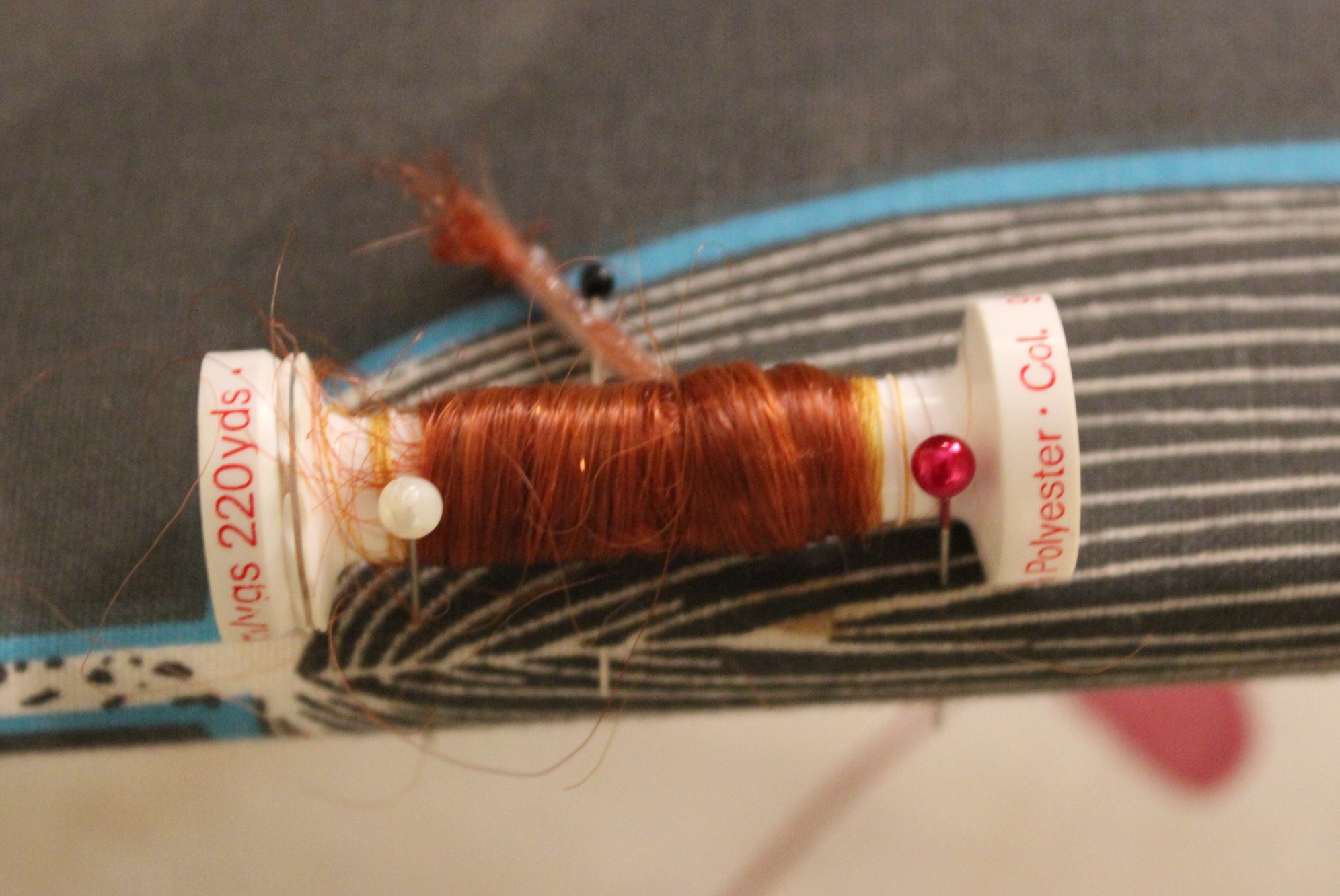
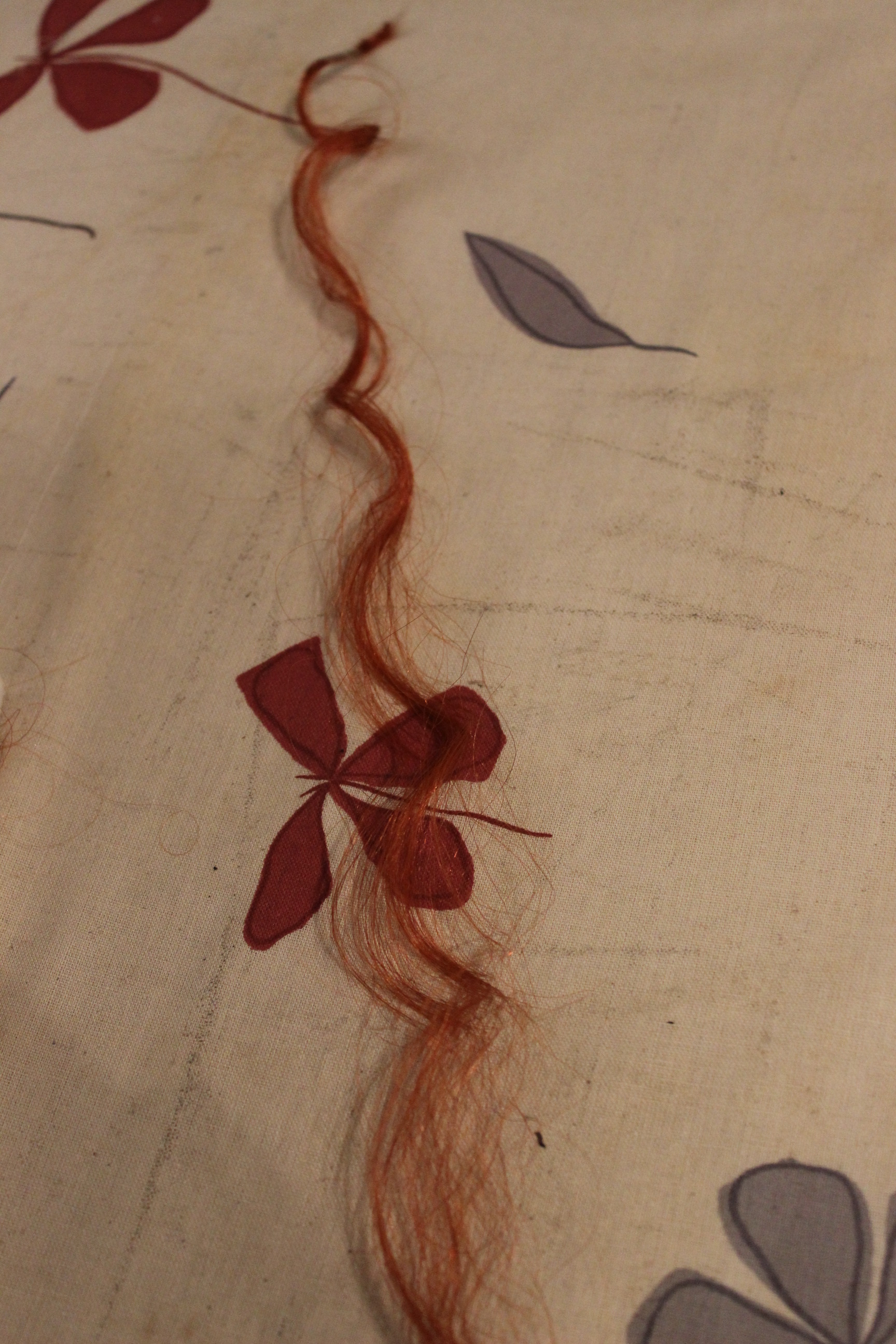
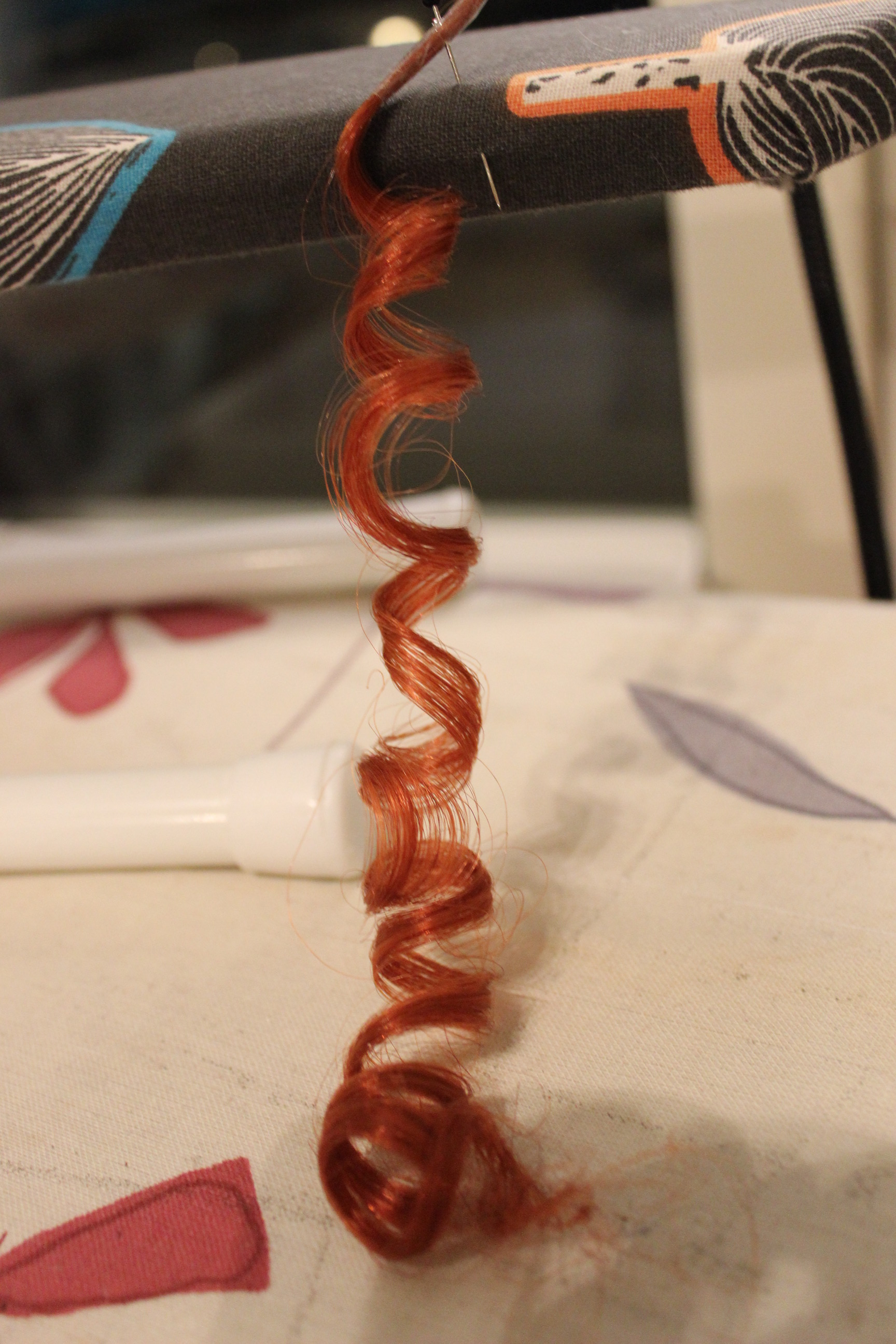
IMG_5198Roling a piece of “hair” to a thread spool (I curently don’t own real hair curlers), then setting it, using steam from my steam-iron.

IMG_5196 IMG_5195

The result looked perfect.

Time to move on to the actual wig.

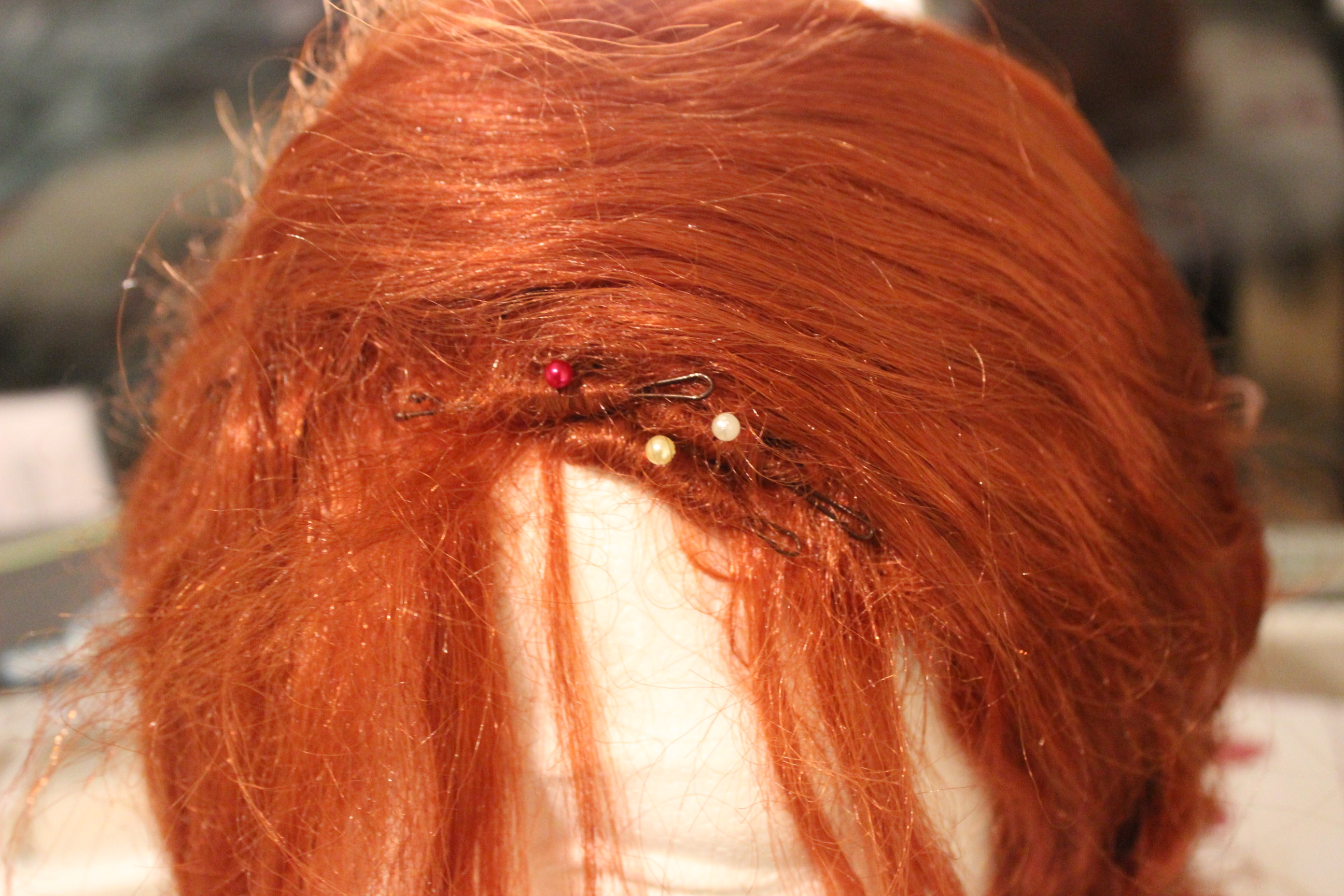
I started by separding and creating some bangs,IMG_5199 which I curled on hairpins and and more spools of thread, and then secured with pins. IMG_5205

Then I covered the rest of the wig with a cotton sheat and steamed the bangs, letting it sett over night.  IMG_5210

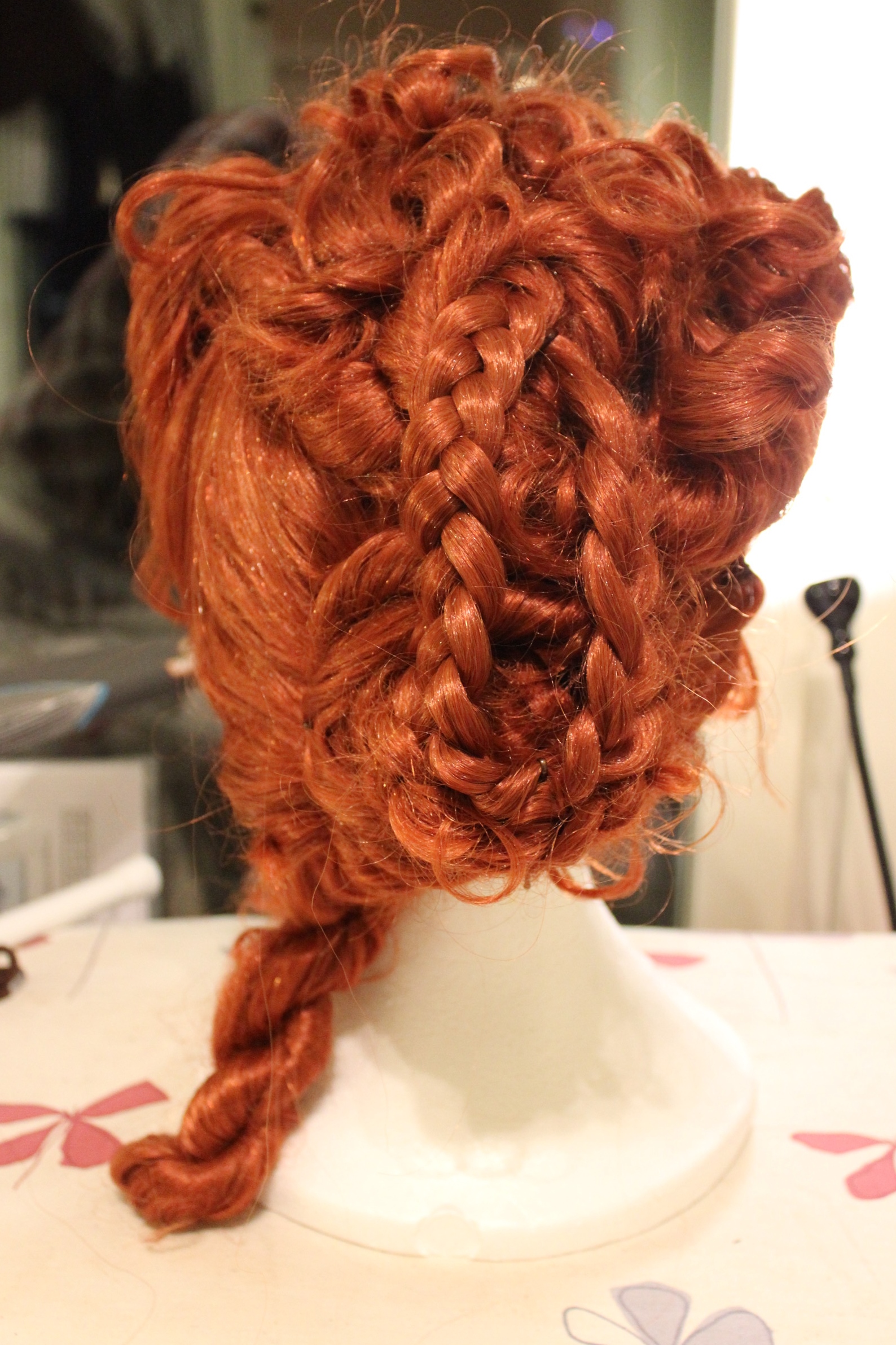
Then I just grabed pieces of hair, twisted, pinned and braided until I got a cool looking hairstyle.

IMG_5251 IMG_5249

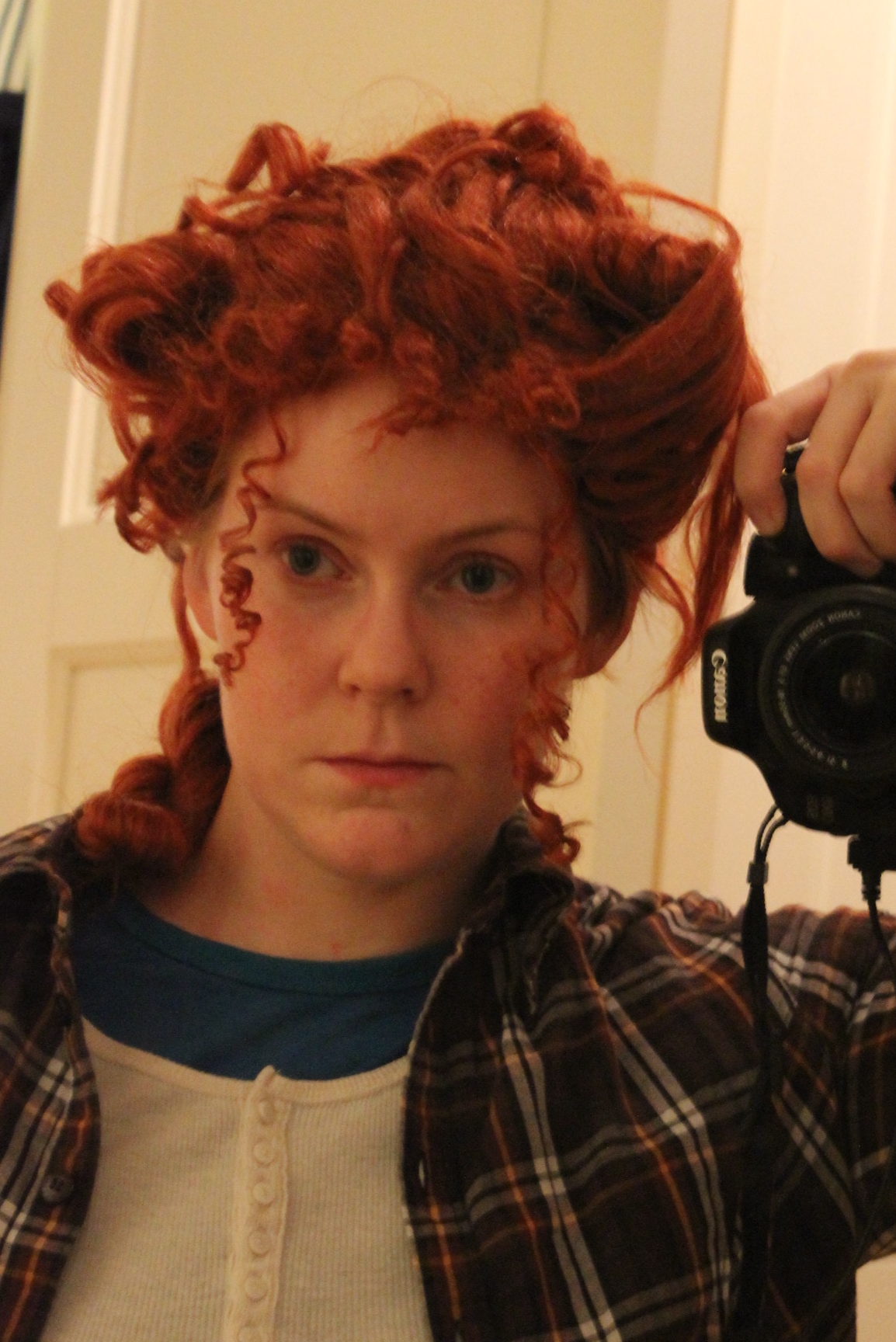
But when I put it on my head it looked ridiculus.IMG_5253Like something from a Tim Burton movie.

No! Lets try again.

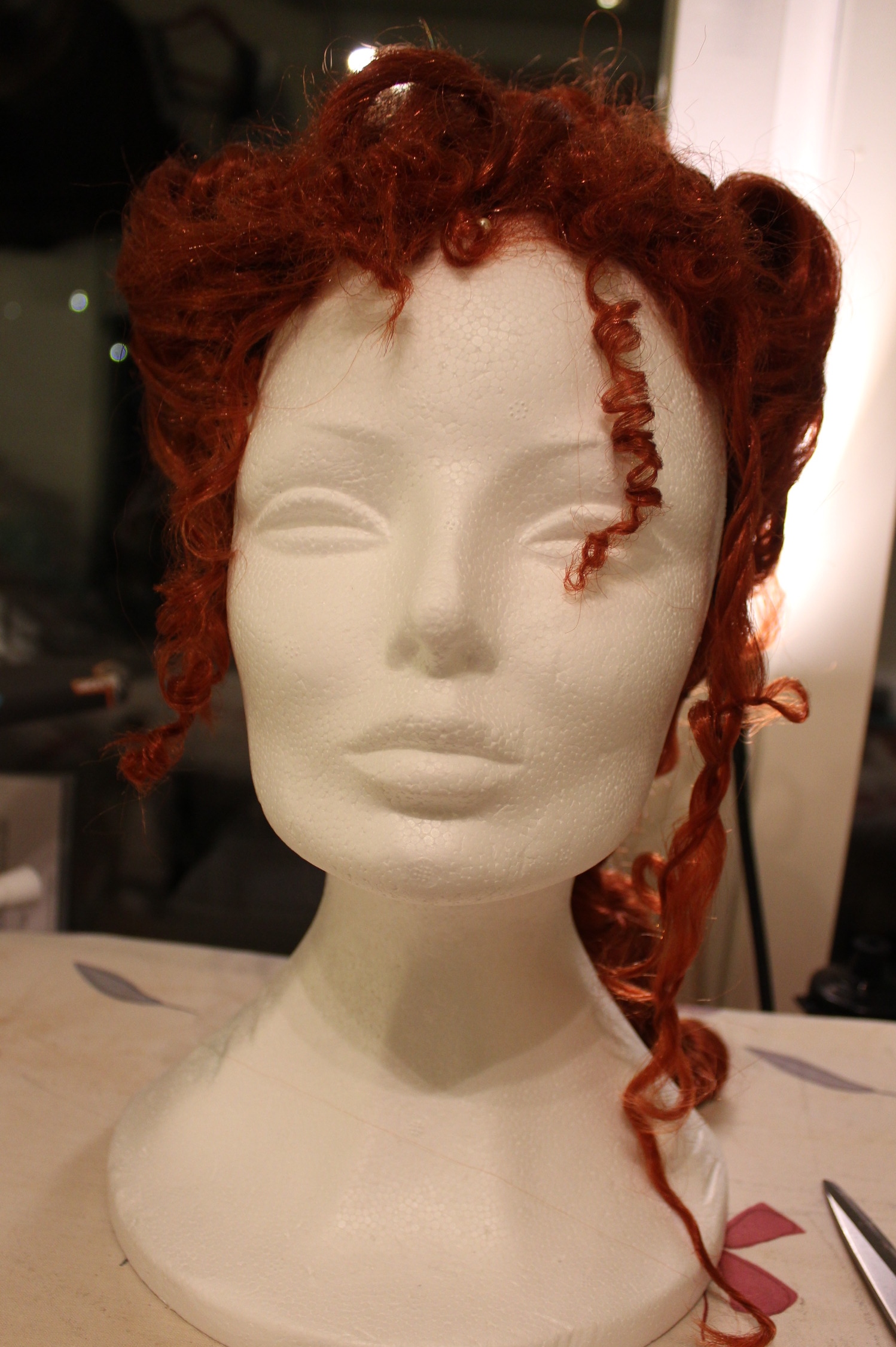
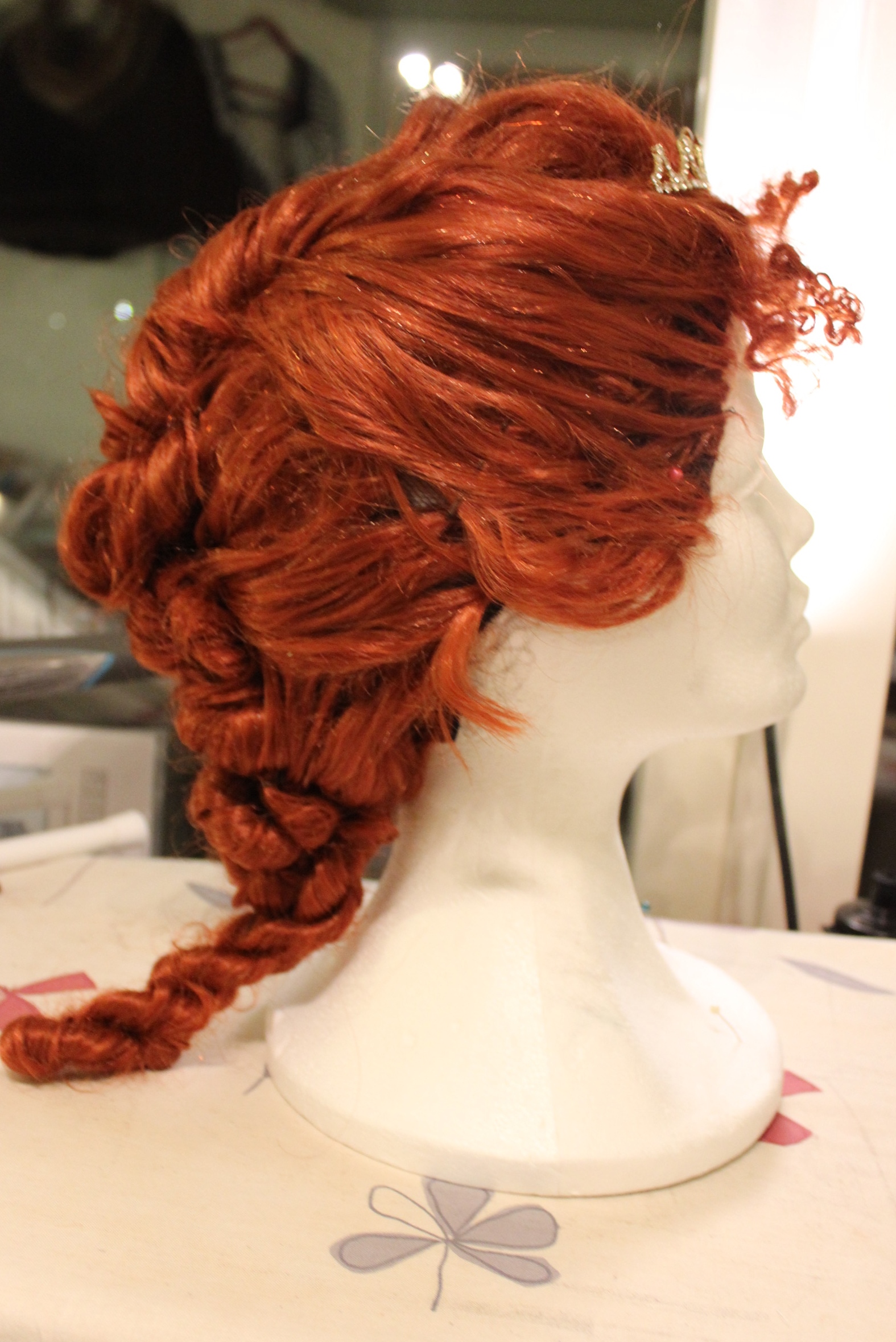
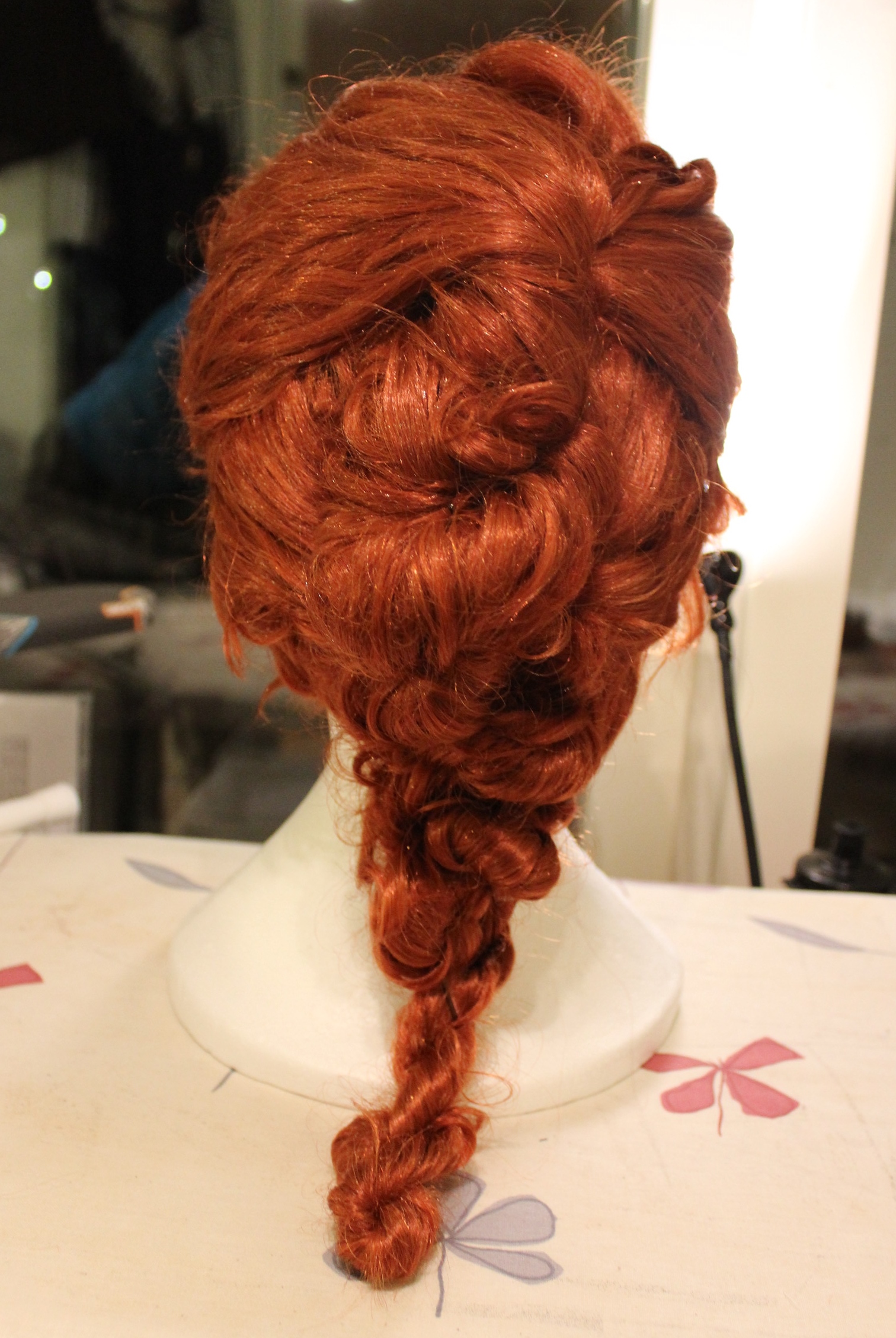
Trying to keep the hair a bit more to the back of the head, and not so much upwards proved to be a lot easier. So now I got a nice, elegant hairdo.

IMG_5263

IMG_5264 IMG_5265

But once again: Nice on the dummy – Stupid on me.

IMG_5267 IMG_5269

I feelt like a ginger prostitute in some movie about Sparta. Not good.

Right about now I started to panic.

It was the evening before the bal and I was totaly lost.

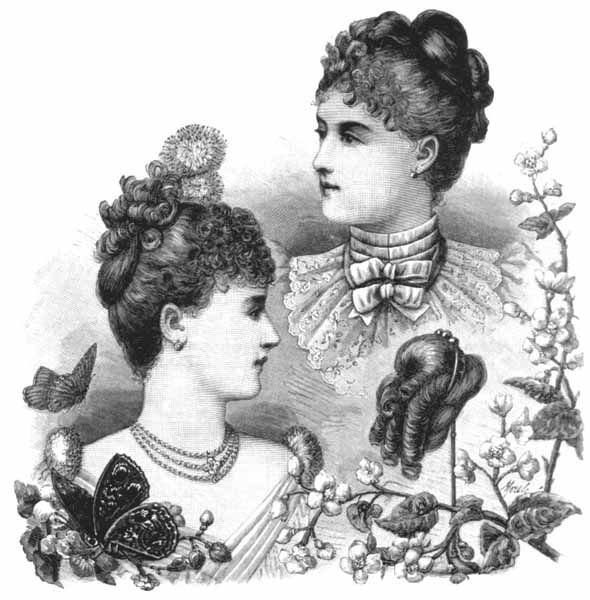
Thank good for internet, and lovely helpful people, who told me the hairstyle I was trying to build was not really 1880s (more 1870s) and that this is what I should be trying for instead.hb_jan_16_92So after studing a few more pictures of simular hairstyles, I feelt it would be do-able using my own hair and some false hairpeces.

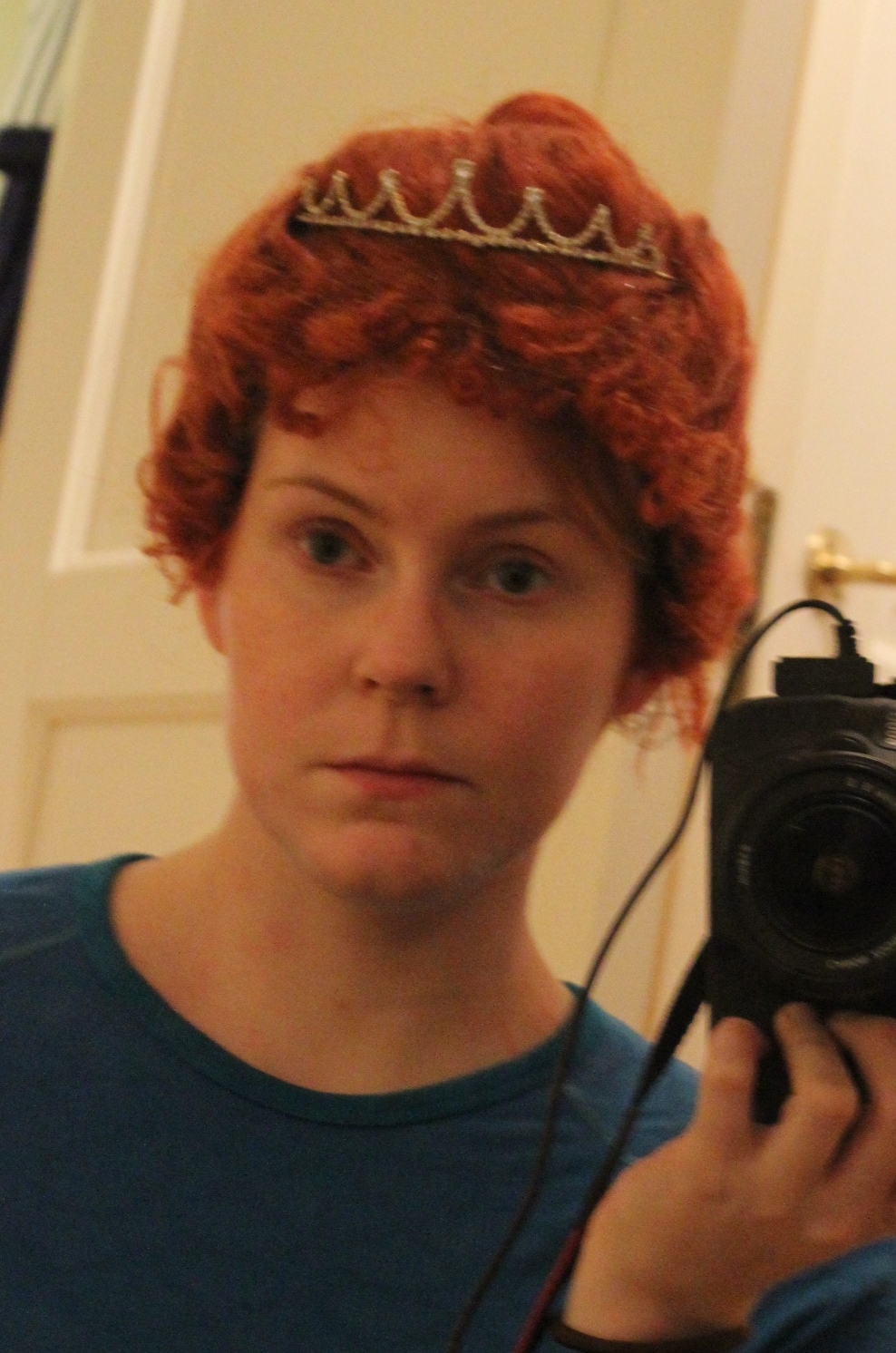
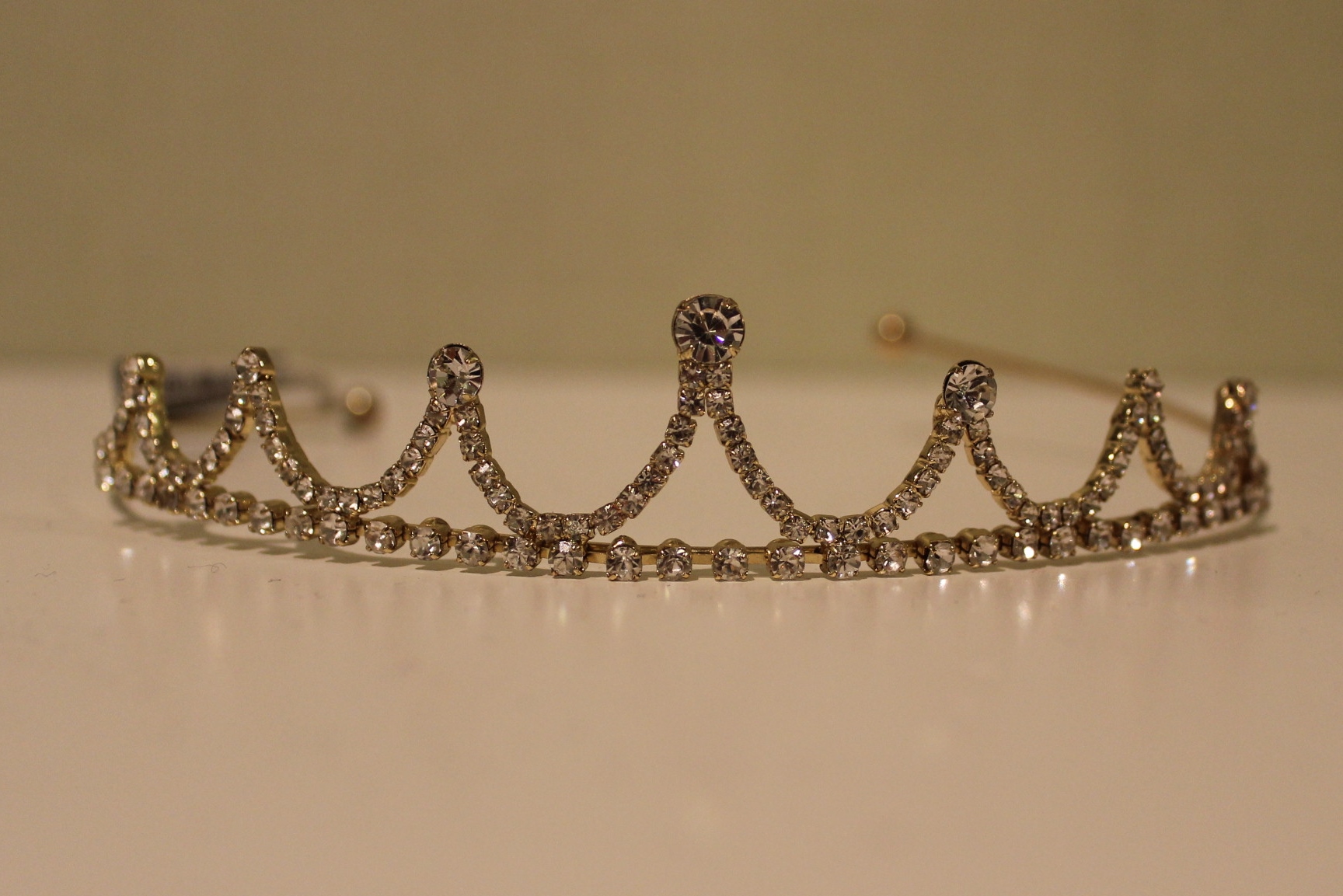
I also wanted to wear this tiara, since I wouldn’t wear any other juwelery.IMG_5226

So, I grabbed my siccors and cut all the remaining hair of my old (lovey) wig.IMG_5460

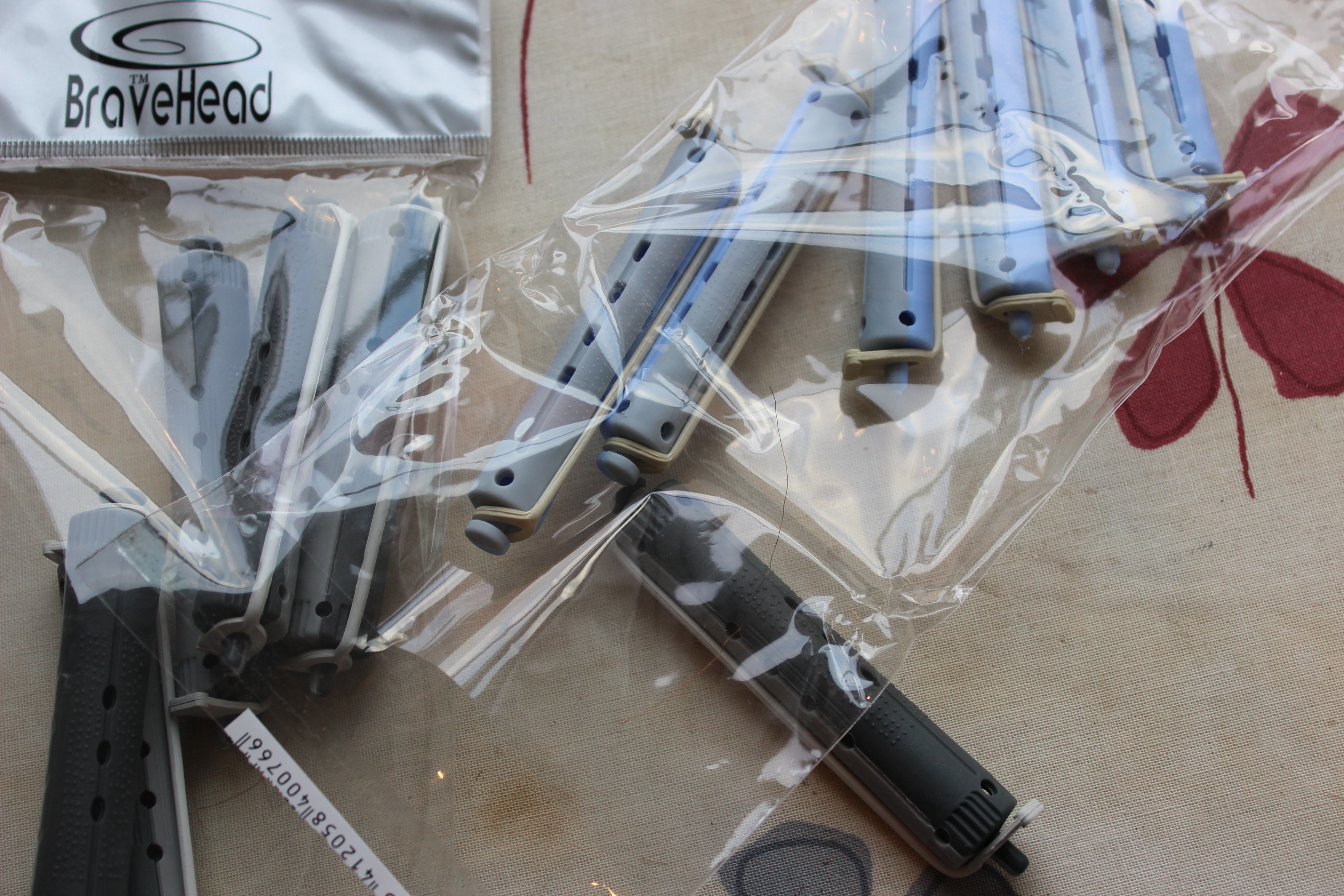
Buying some proper haircurlers. IMG_5461

And got to work curling and steaming again.IMG_5459

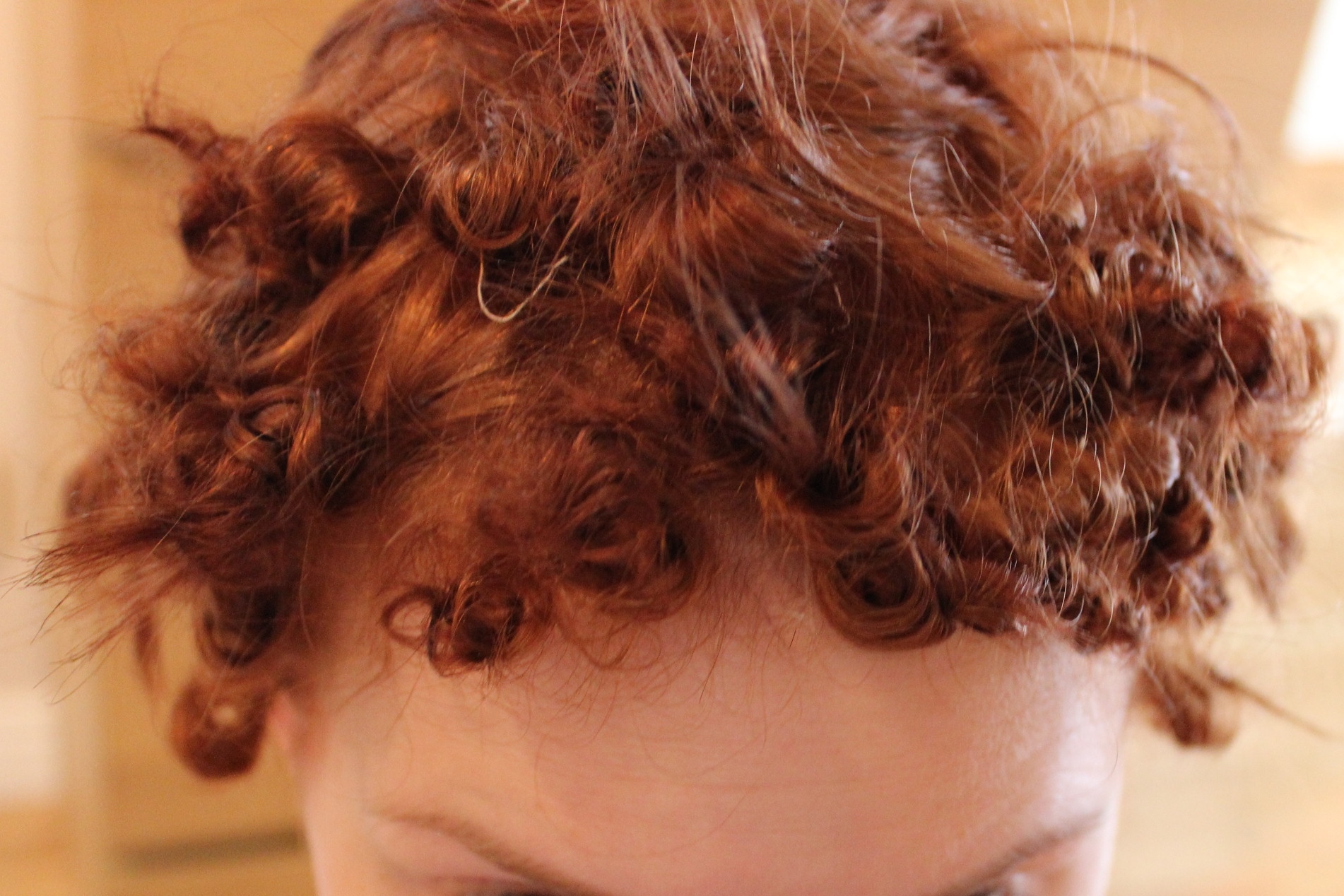
I then curled my own bangs on smal stripes of fabric, soaked them in wather and sleept on it.IMG_5470

The next morning I removed the curling strips.IMG_5477Then I put a cap on and got on the train to the capital, and the bal.

When arriving at my hotel I emedetly started working.

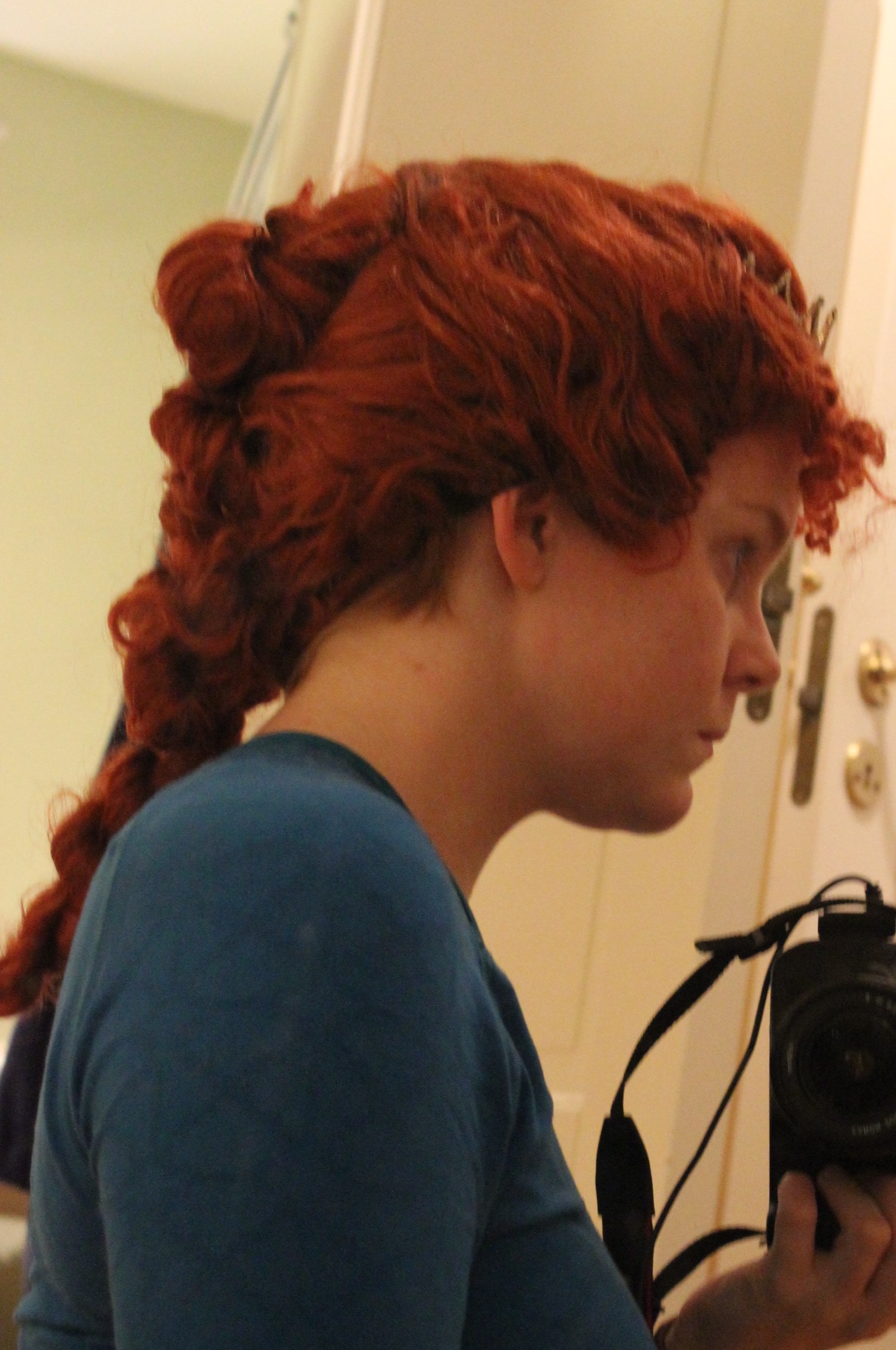
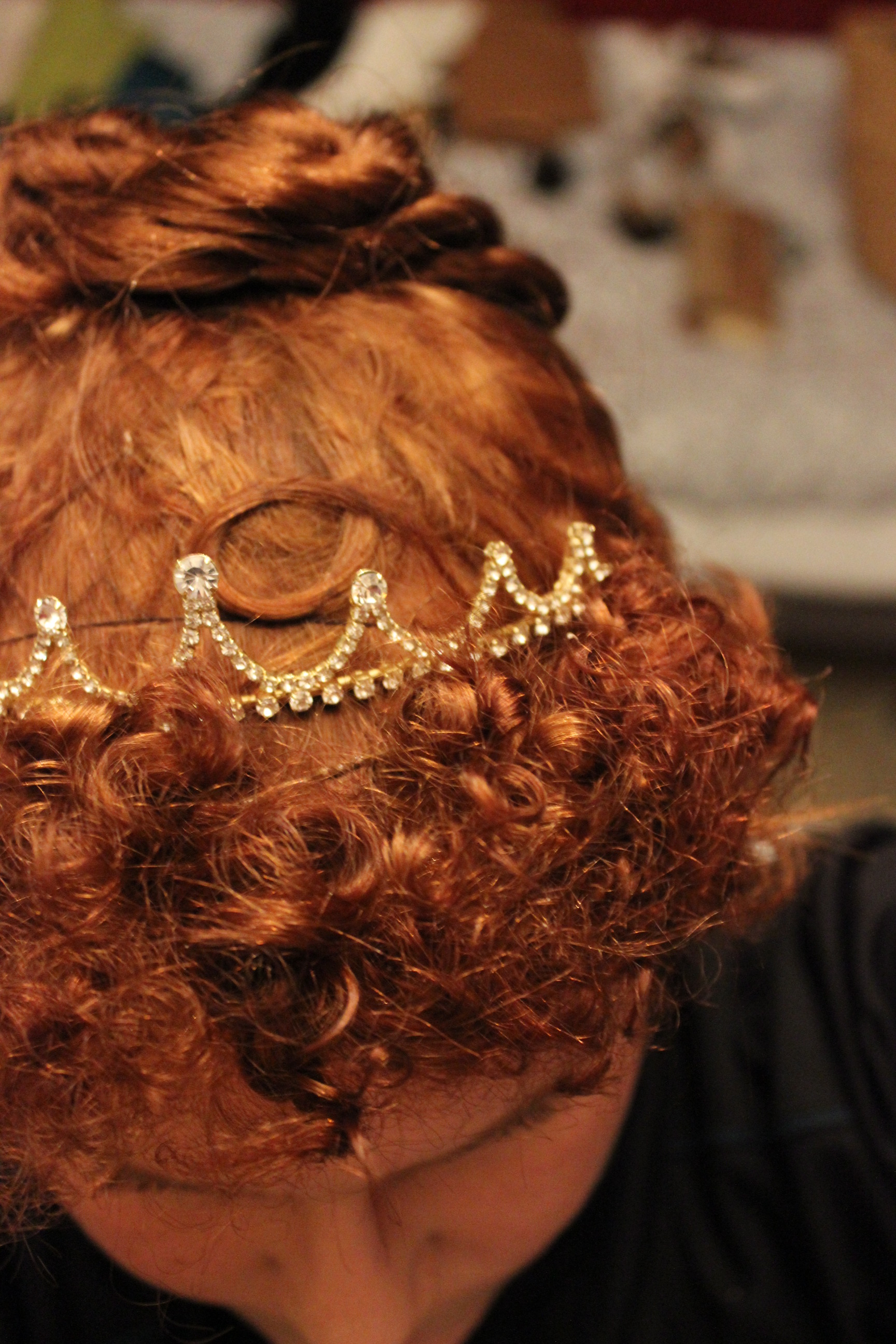
Begining to make smal tufts, in my own hair, to secure the faux bun onto. Cowering the back of my head with a hair net, to keep all the short flying hairs in place. Then I loosened the faux hair from the curlers and started pinning and winding them into a bun on the back of my head. I then frizzed the bangs some more, and attached the tiara with bobypins. The last step was to attach a few hanging curls on the back of the bun.

And the finished hairdoIMG_5486

IMG_5498

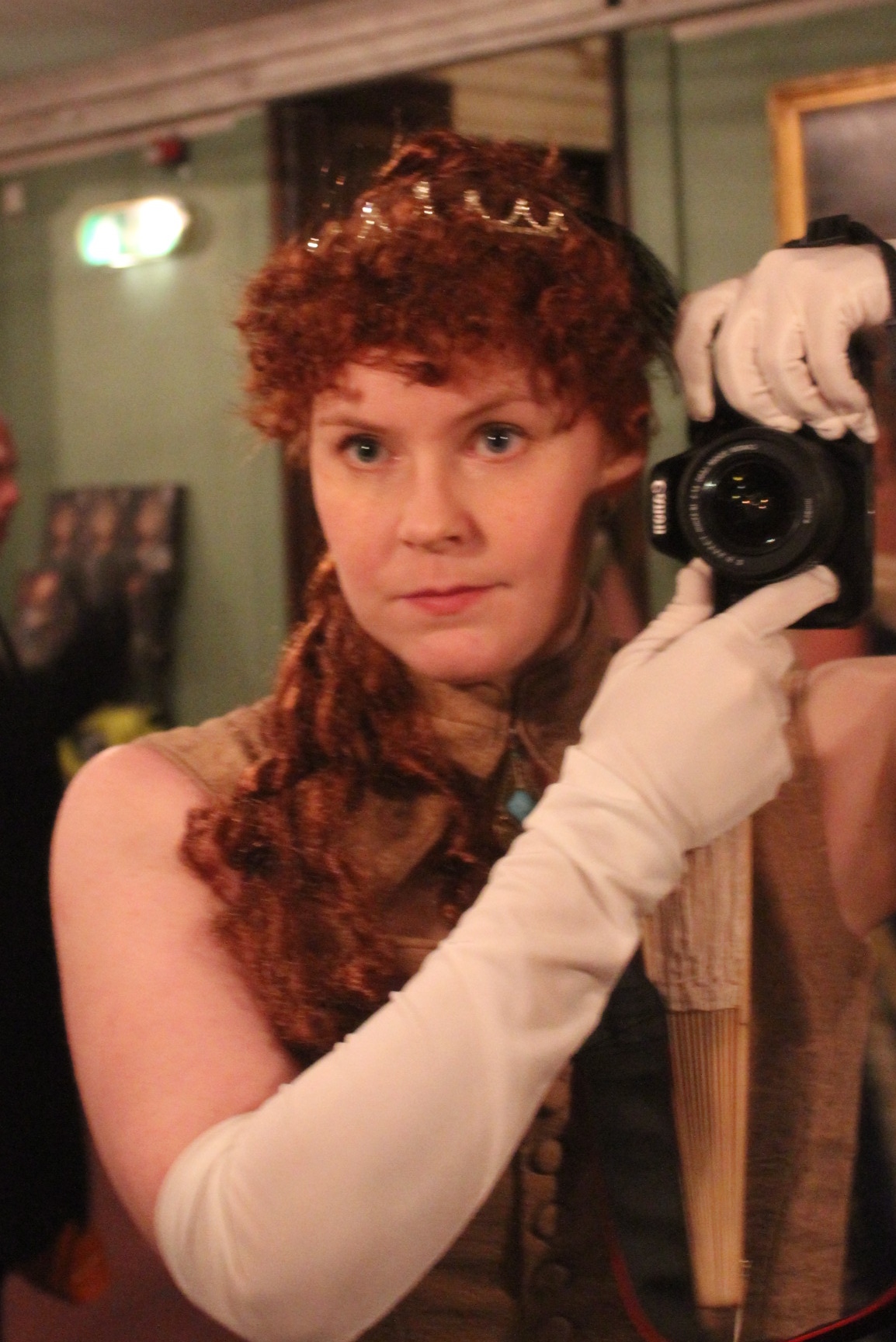
And it still looked pretty hours later.IMG_5566I’m so happy with how it turned out, and even got some nice copliments on it. Maybe next time I don’t have to worry so much.

1880s Evening Accessories

When attending a grand bal you do need some more stuff then a beautiful dress.

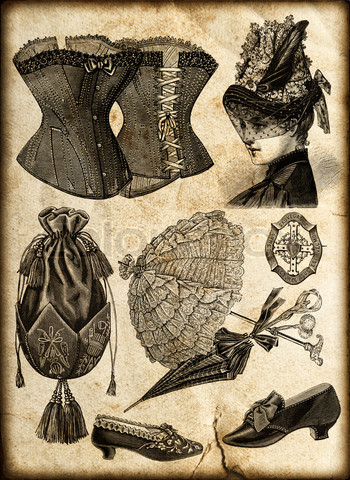
Yes, today we will discuss accessories.vintage fashion accessories for lady

This is what I will be wearing (besides from the gown).

A pair of ivory opera glowes. They really should be made of leather but what do you do, atleast they are in a nice syntetic style which don’t look to shiney and plastic.IMG_5231

The mandetory fan. I was looking at big feathery ones,but they where either in the wrong colour or way outside my pricerange. So I will get yet another use out of my ivory lace one. IMG_5221

The shoes will be my American Duchess Kensingtons, decorated with some leftover fabric. They are about 100 years to early, but they are both comfortable and in the right colour so they will have to do. Besides, I will be wearing long skirts.IMG_5218

As a bag I plan on making my own “reticule” out of some leftover fabric from the bodice, but I haven’t started on it yet. I’m thinking something like this. prd1780-633669255943370361

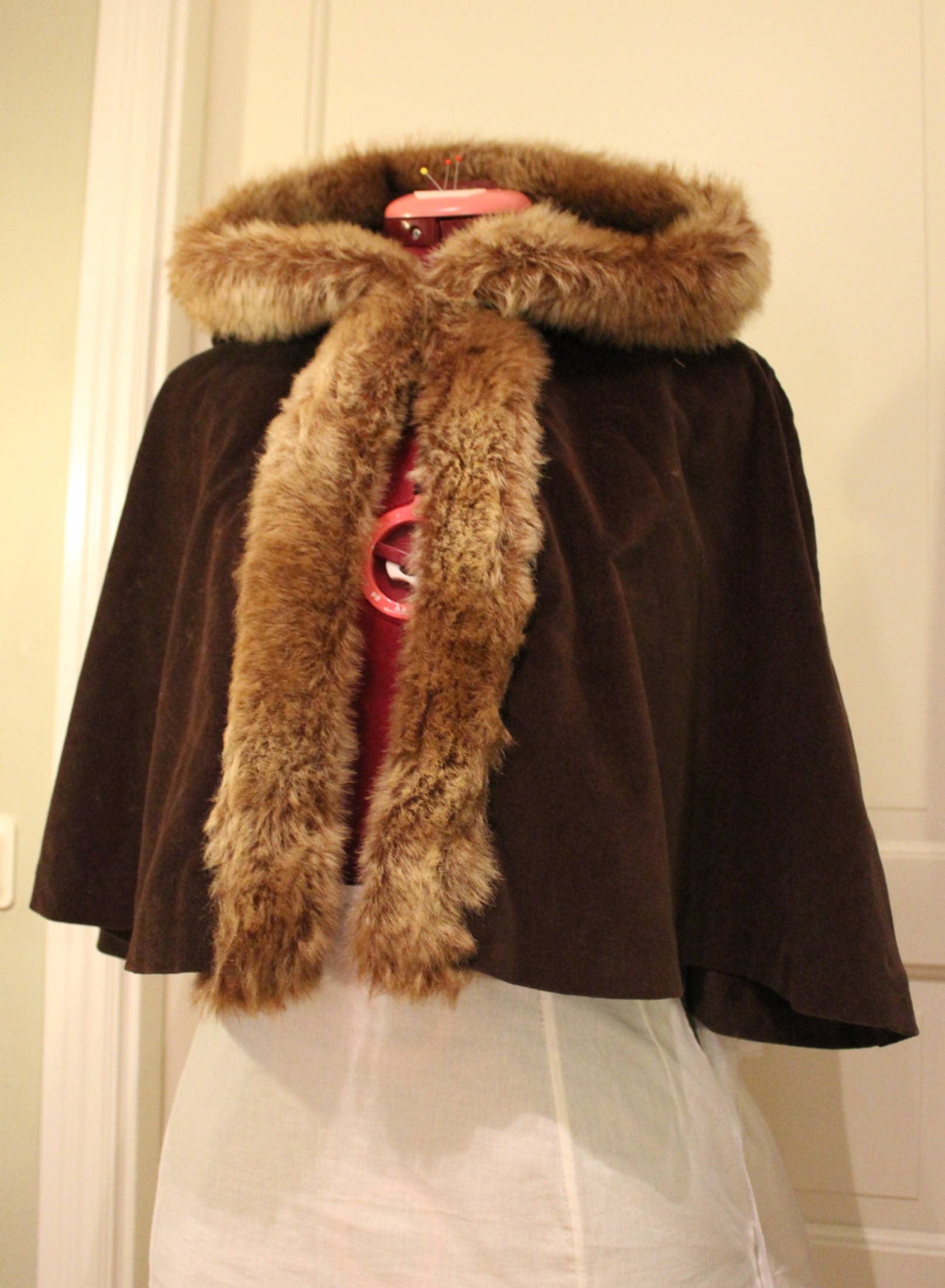
As outerwear I will be re-using my brown velvet cape (it will be the 3 outing). IMG_5212

And maybe some shawls, and neckpieces depending on the weather.

IMG_5238

I have decided not to wear a necklace (because of the style on my dress neckline) , but are thinking about some earings and maybe a brosch in the front neck.

Hm, I need to think a bit on this. But the victorian motto is “More is More”, so I may just have to take some time tomorrow away from my busy sewing schedule for shopping.

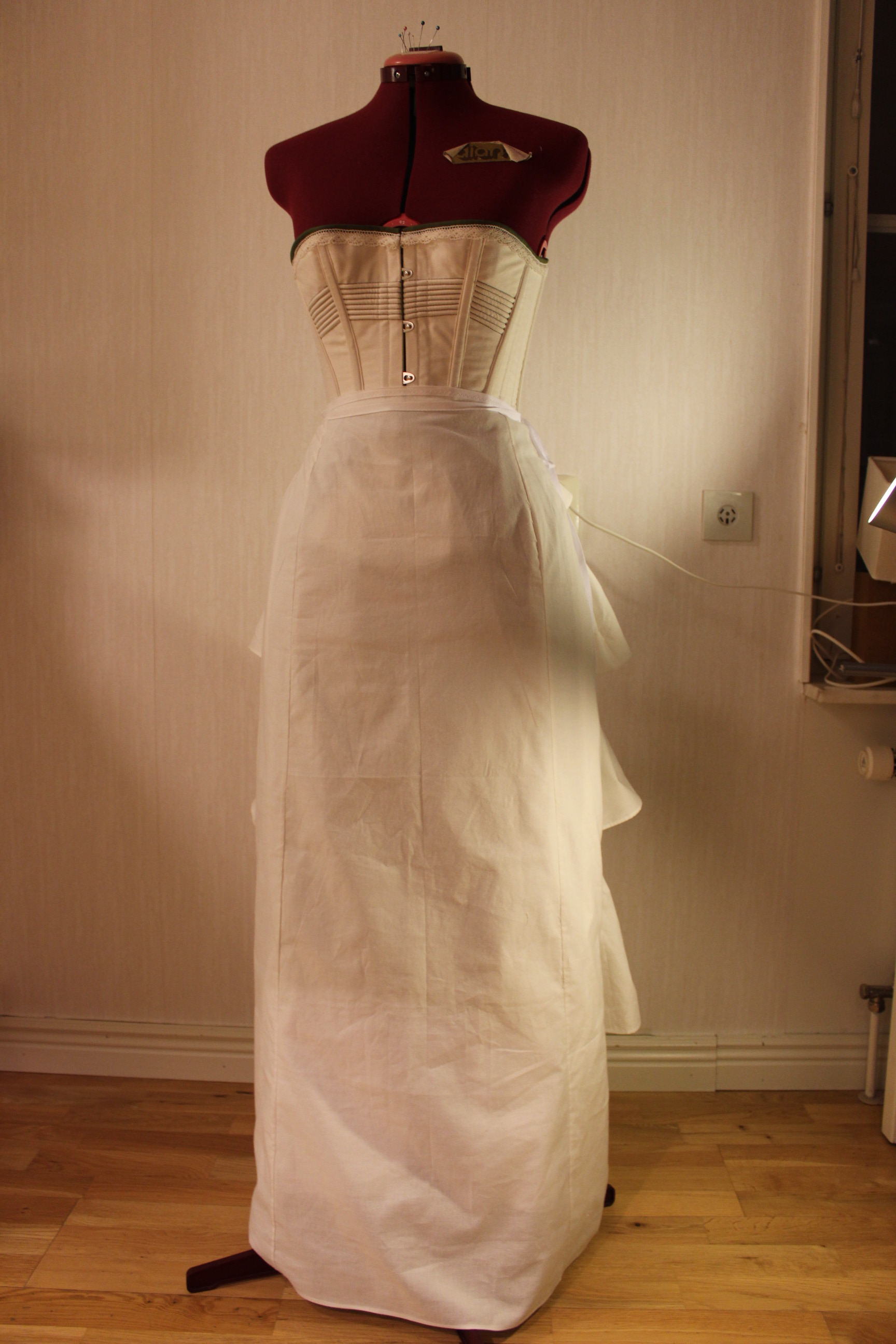
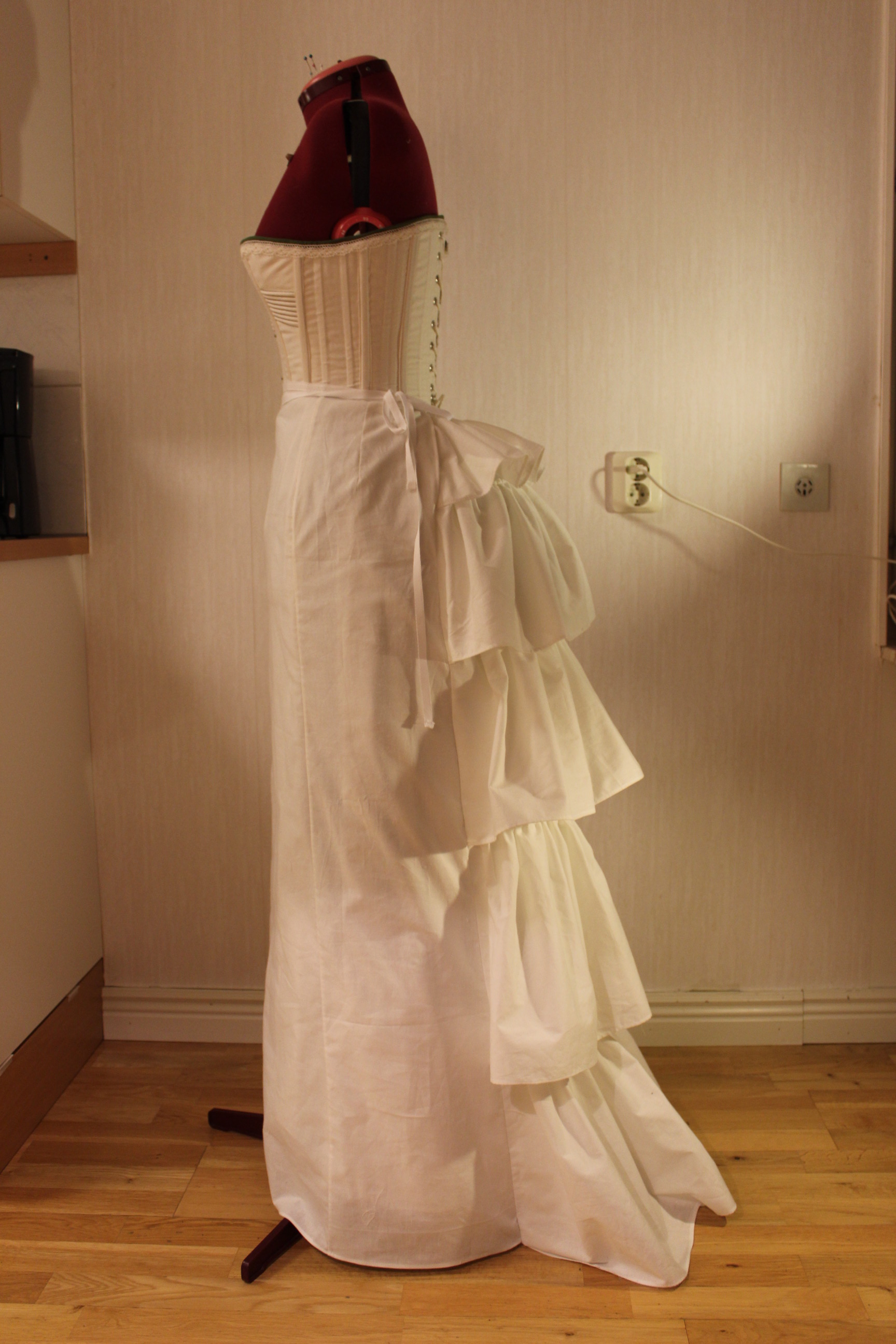
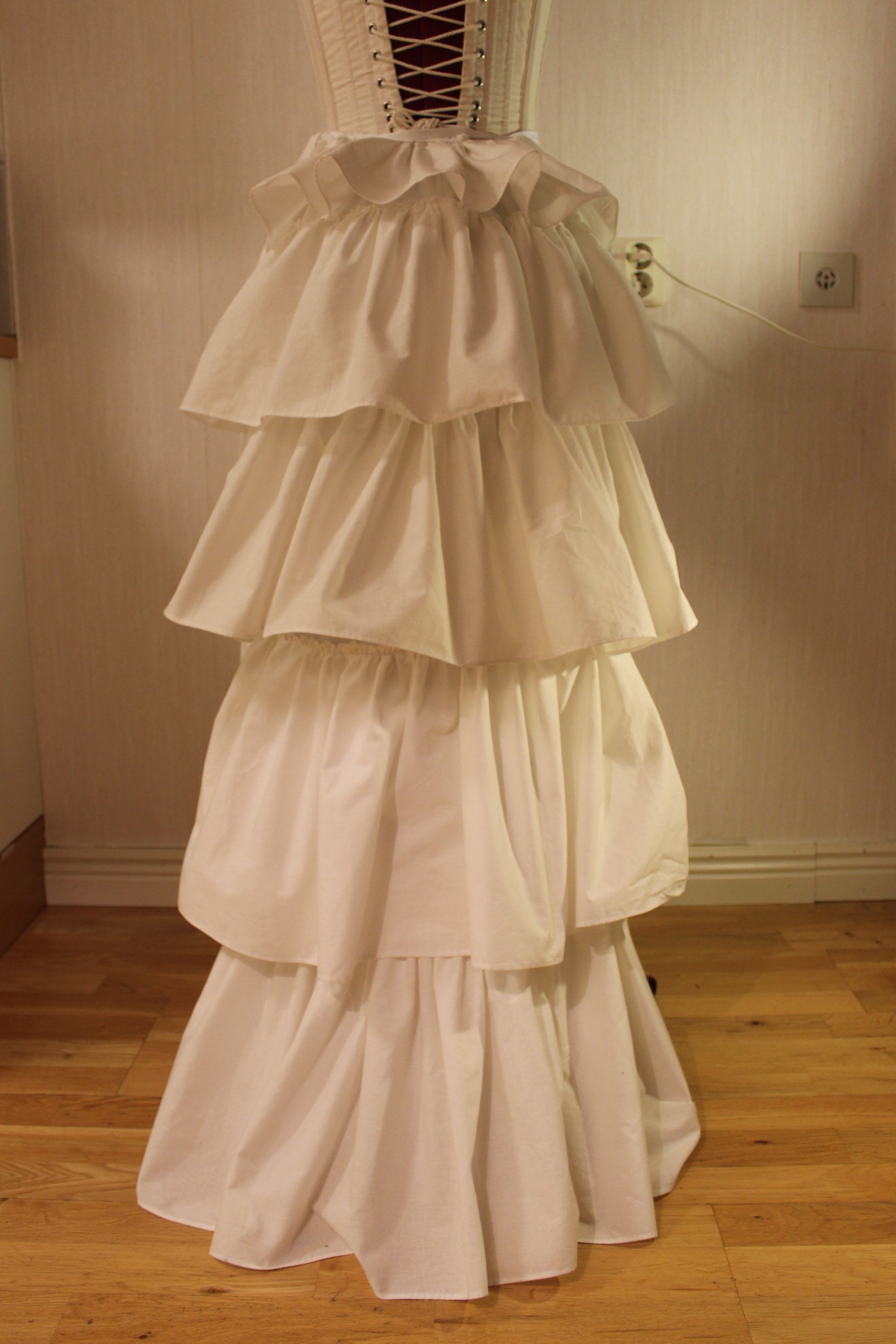
To make-do a 1880s Petticoat

And so we start of the new sewing year with HSF14 Challenge nr 1: Make-do/Mend.

As I stated before, I’m determend to try to fit the challenges this year in to my list of items which needs to be made. So with a bit of bending the rules on this challenge, I got to use it for that 1880s ruffled petticoat I desperetly need for my up-coming balgown.

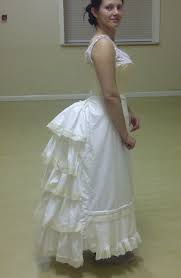
untitledJGI’m thinking something along these line. (pic from Iza of http://adamselindisdress.wordpress.com/ you should check her out to.)

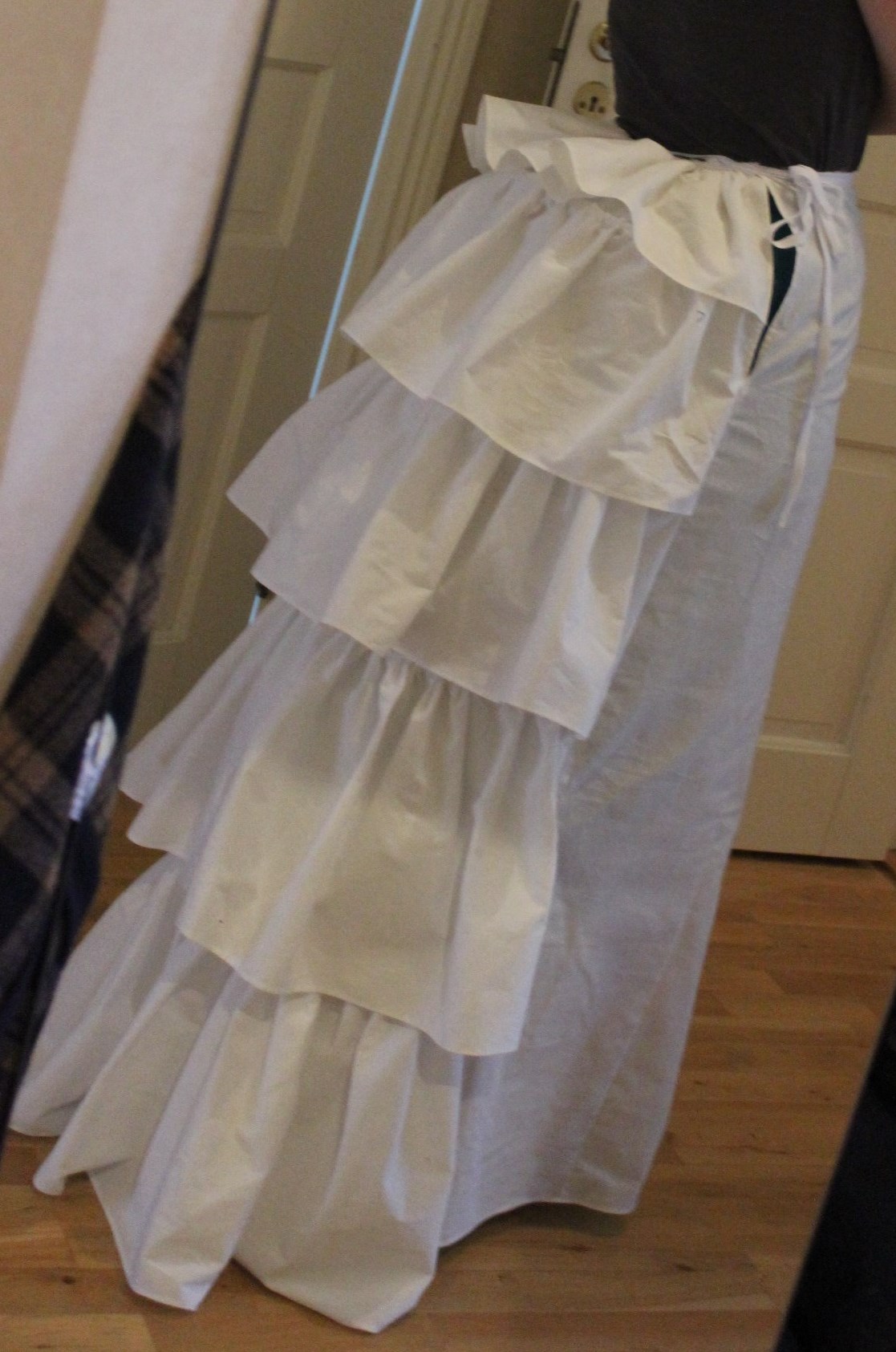
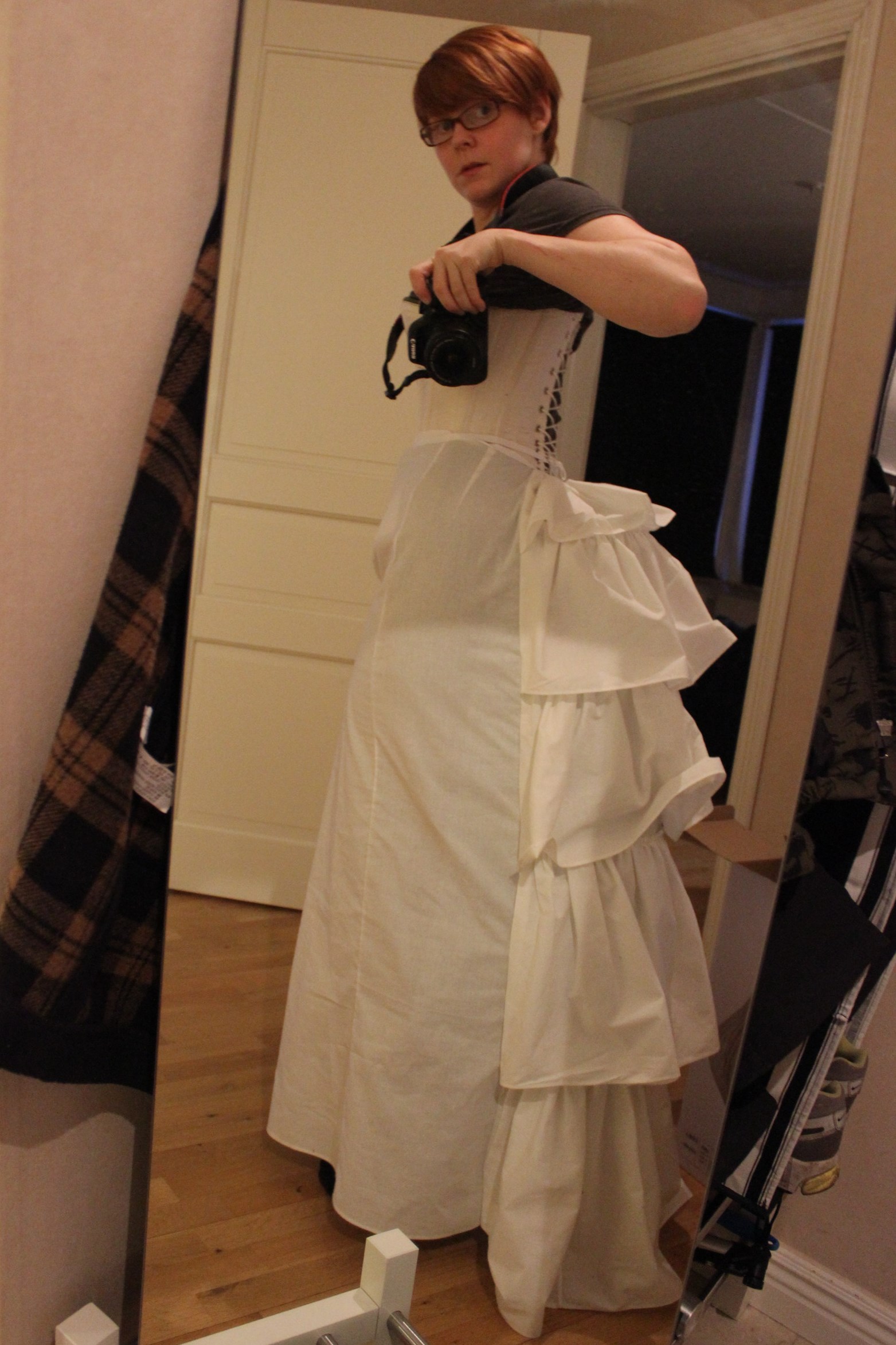
For this challenge I made a petticoat out of a bedsheet.

I started by ripping the sewn hems of it, and throw it into the washer.IMG_4728

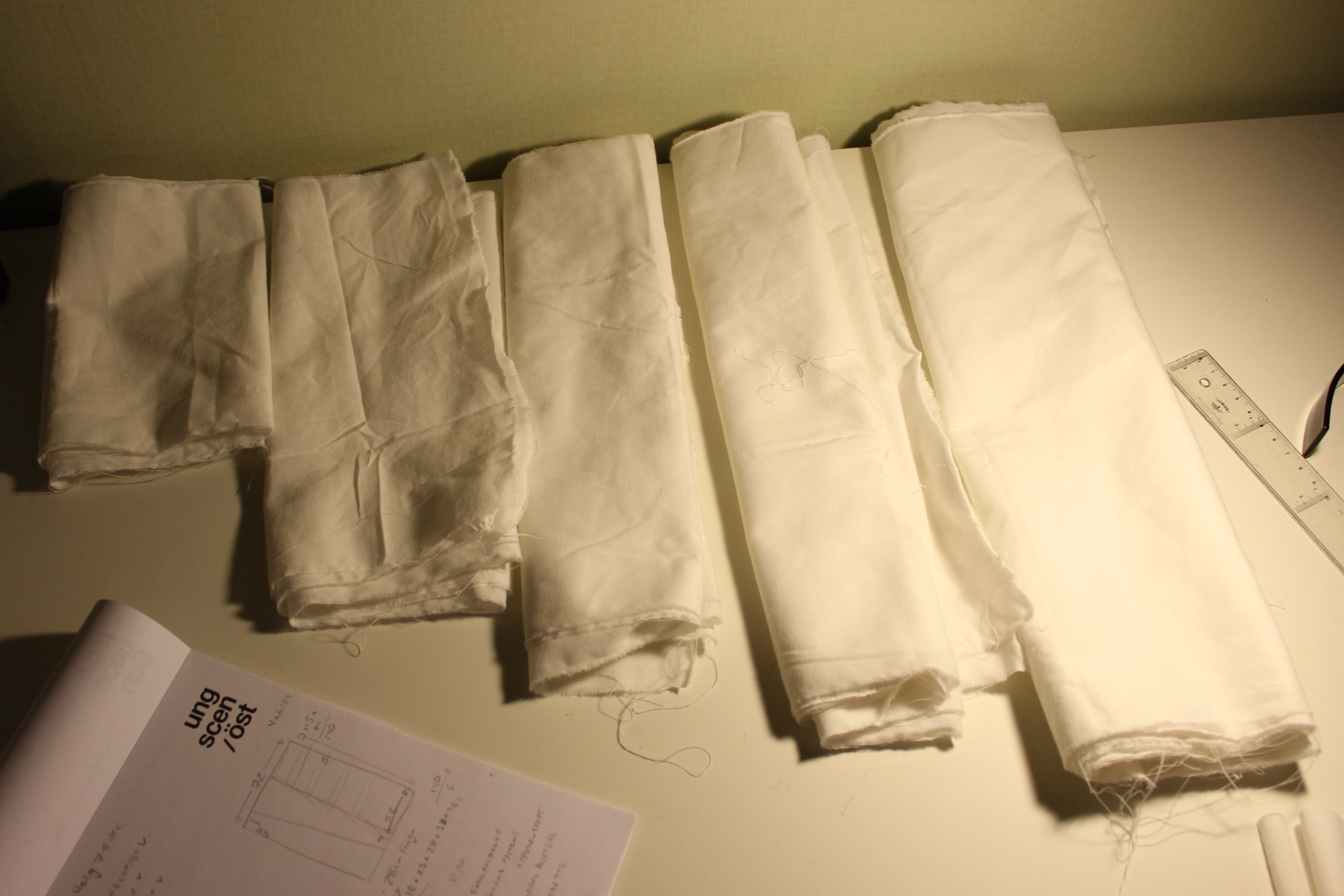
I used no pattern – only some diagrams and pictures for reference. IMG_4736And cut the skirt pieces out of half the sheet.

And the ruffeling pieces from the rest, making them bigger and longer further down the skirt.IMG_4740

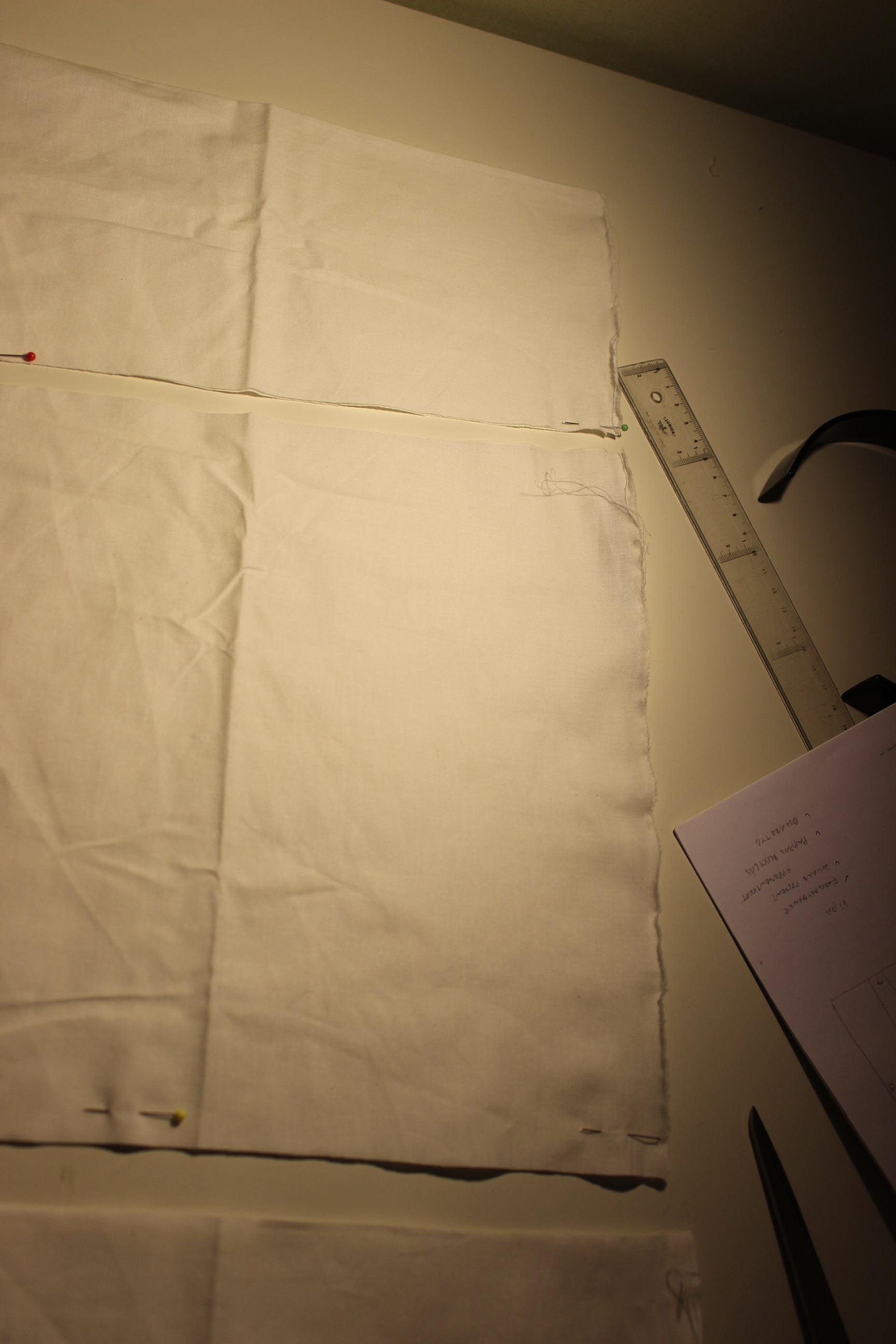
I sewed gathering thread on all the ruffels using a strong button-hole thread and sick sack stitch, hemming them at the same time.

IMG_4743IMG_4744

This technique makes it very easy to gather the ruffels later on.

Then I hemmed and measured the spacings of all the ruffels.

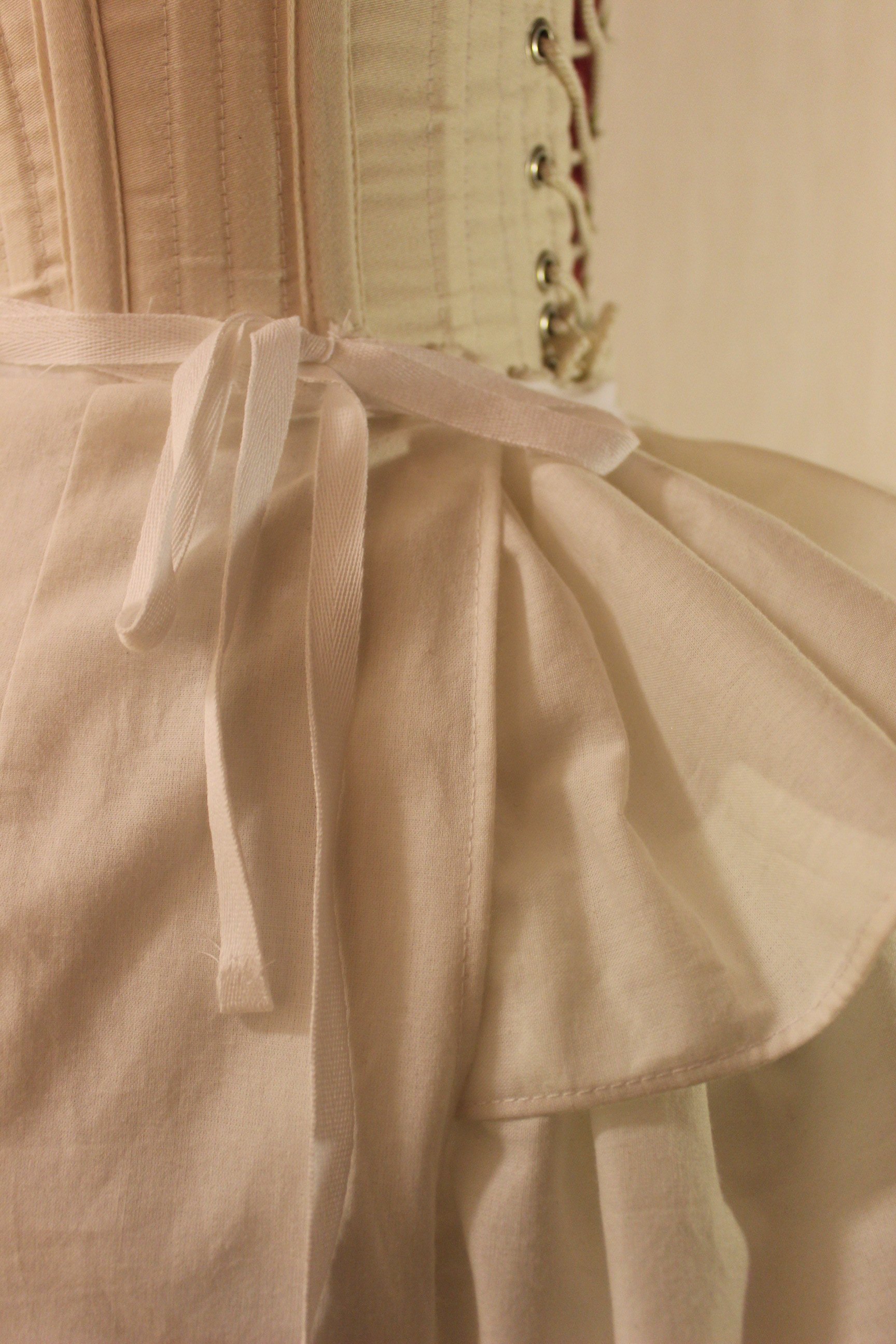
IMG_4742Then I gathered all the fabric and stiched it down on the back piece of the skirt. And lastly I Sewed the front skirt to the back and stiched on a cotton twill tape as a waistband.

And then I tried it on – and I hated it.

IMG_4808IMG_4817

It is way to narrow in the front (making me look huge) and the ruffels need to be at least twice as fluffy.

IMG_4829And I do think something is of in the lenght proportions of the ruffels.

Well here it is on the dressform looking a bit better but still way to slim in the pouf department.

IMG_4758

IMG_4747

IMG_4746

IMG_4752

IMG_4749

IMG_4765

IMG_4756

IMG_4748

IMG_4927With a night to sleep on it, I do think it will work for my purpose, but I know it will probably go straight into the re-make pile once the present event has past.

Just the Facts:

Challenge: 1 (2014) Re-Make.

What: A ruffeled bustled petticoat made out of a bedsheet.

Year: About 1870 – 1890s.

Pattern: None

Fabric: One white cotton bedsheet – 1,5 x 2 m.

Notions: Thread, strong thread (björntråd) and 2 m of 1 cm wide cotton twill tape.

Historical Accuracy: So so. The style and siluett is about right, but I’m sure the ladies of the day knew not to scrimp on the fabric in this kind of grmnent. Maybe 4/10.

Time: 4 hours.

Cost: 90 Sek (10 Usd).

First worn: Around the house for photos (and testing the toile for the gown…) But it will get a proper outing on january 25, for the gran bal at the opera.

Final Thoughts: I think this petticoat was to much of a rush job to begin with. I wish I had taken the time to make it proper and use enough fabric to get a nice ruffeled bustle. Instead I spread the ruffels to whide and gathered them to losely. It’s a good thing it will be hidden beneath the skirts.

“Oskarsbal”

As I metioned in my prevous post I just recently decided to go to the grand bal at the Opera in the end of january.

images

But what is it?

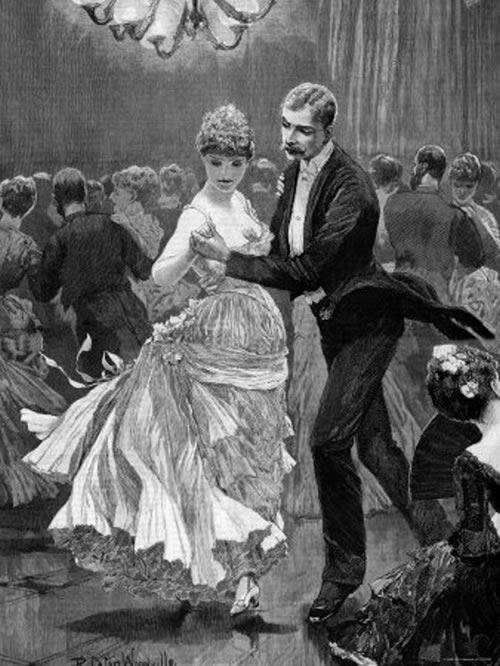
It will be a night at the Opera in 1880s style, with white tie, evening gowns and loots of fans and juwelry. Lots of the people I know from erlier costuming events will be there and they tell me it’s the event of the year.

There will be food, music, dancing and loot and lots of people in glorius evening wear.

1880 dance

The offical website of the bal (In Swedish).

The_Woman_of_FashionHonestly I have no idea what to expect, but I will tell you all about it afterwards.

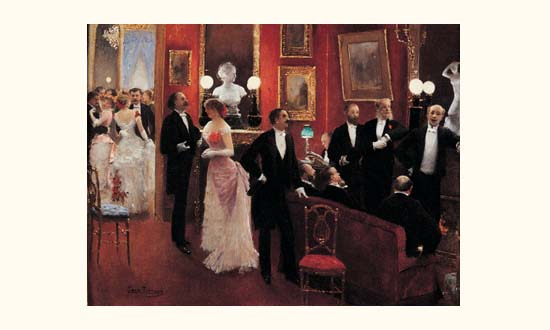
too-early

005-2353

images (1)

b9140567ec32a734a09d816a92bc78a5 (1)

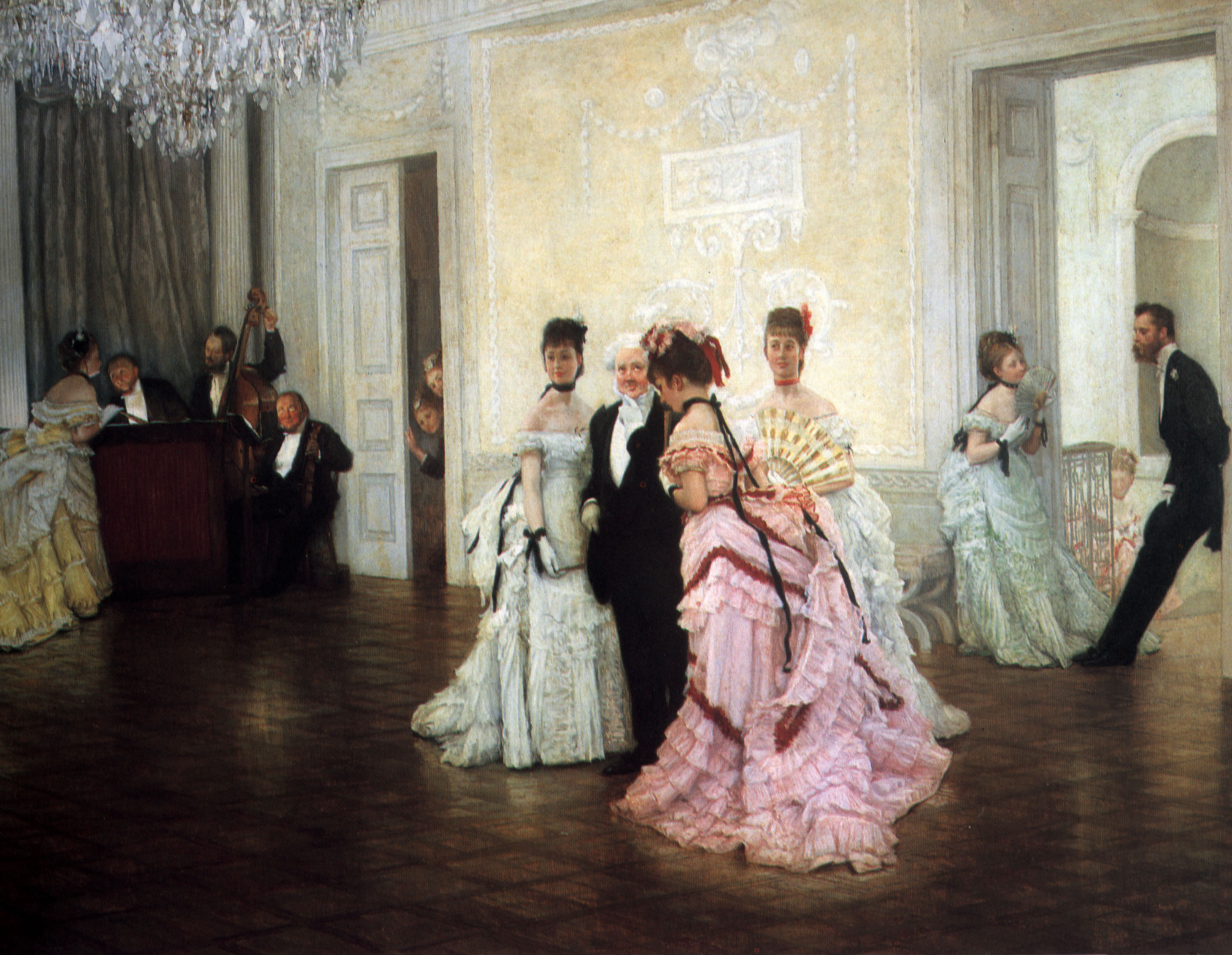
James_Tissot_-_The_Ball

This will be my first grand costuming event and I so looking forward to it. (Now back to the sewing room).

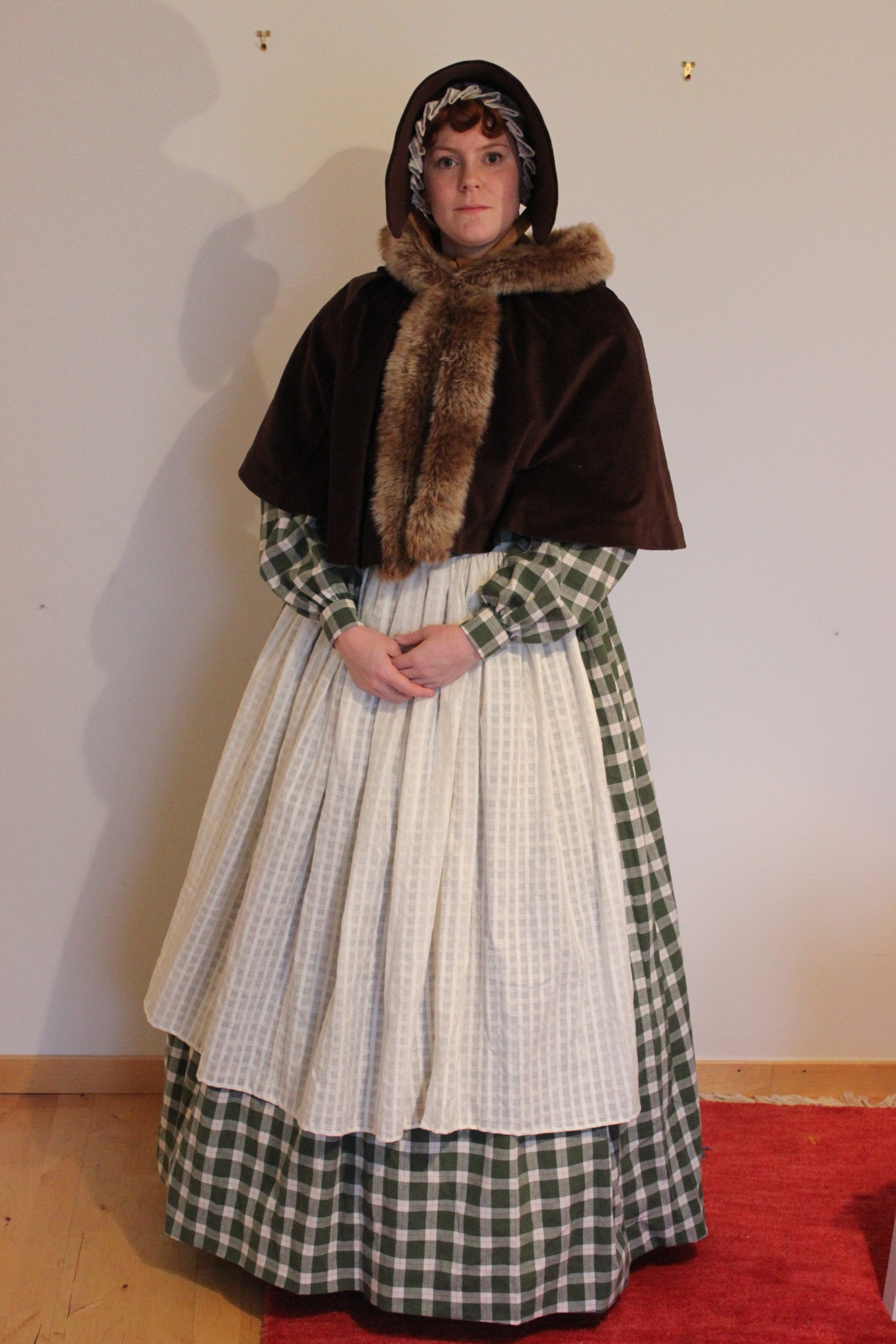
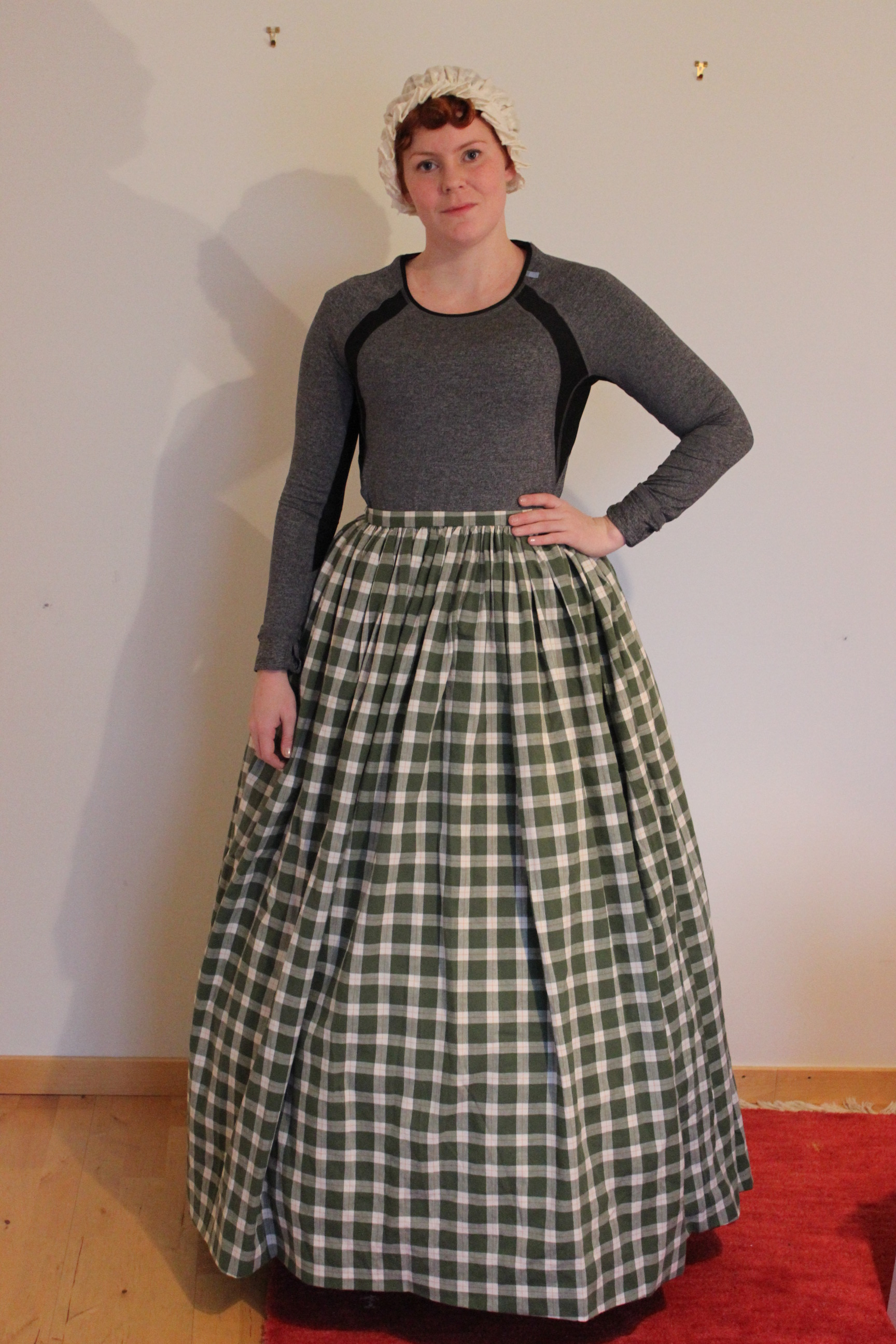
1840s layering

This is beginning to become a series, but I think it is good to show the amount of clothes and layers there is to most historic costumes.

Often you only se the gown and can only guess there are some foundation underneath, but exactly how many petticoats do it take to get that special silhuet, and how do you keep warm during coold winter weather.

So this time I will show you the different layers of a mid 19th century woman of everage wealth.

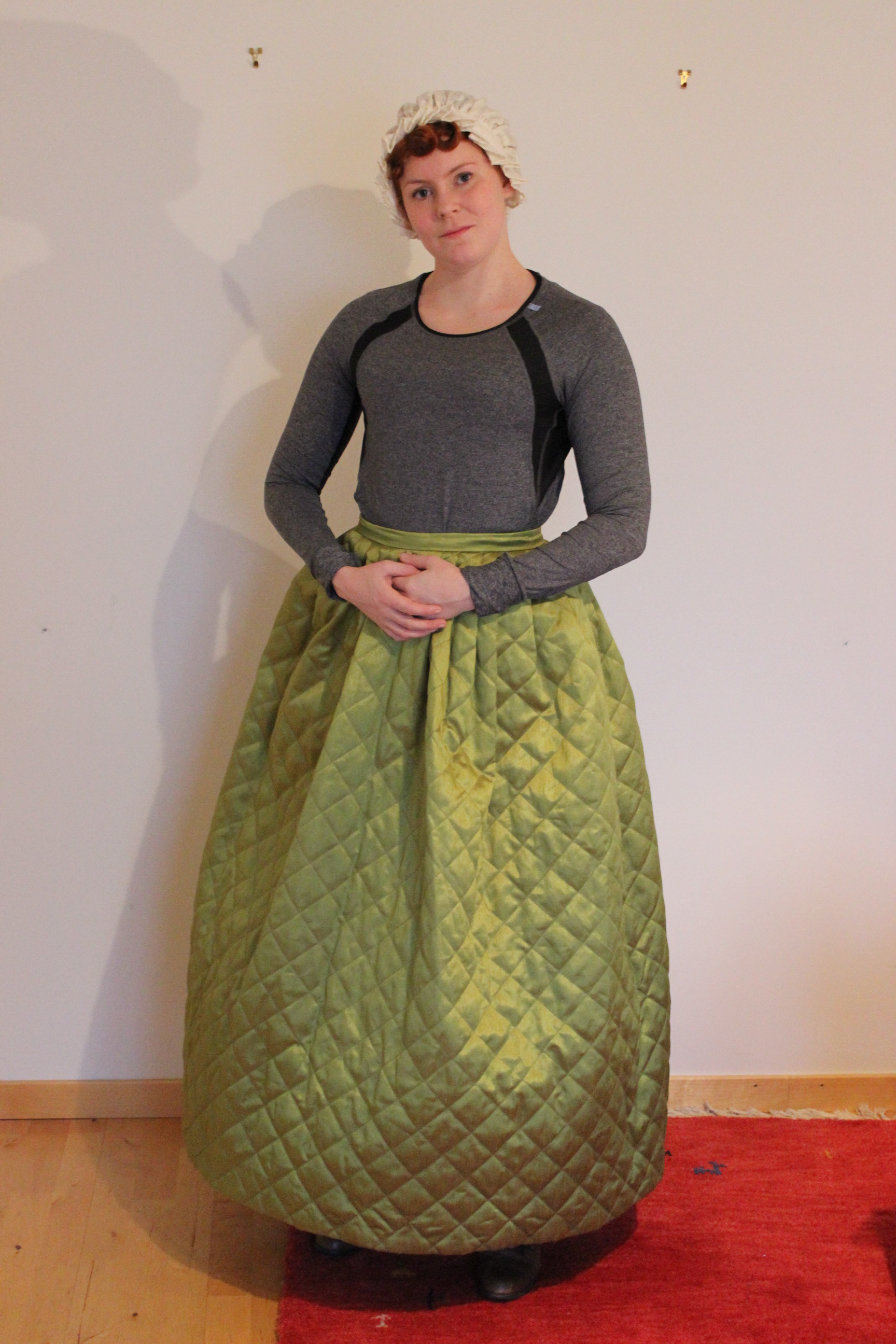
IMG_4294Let’s start fully dressed in: Gown, bonnet, cape and apron.

IMG_4286When you remove the outerwear we got more of a indor look in: Gown, apron and coif.

IMG_4283Then we remove the apron and bodice to find a warming undershirt (should be woolen but I make do with ordenary sporting clothes).

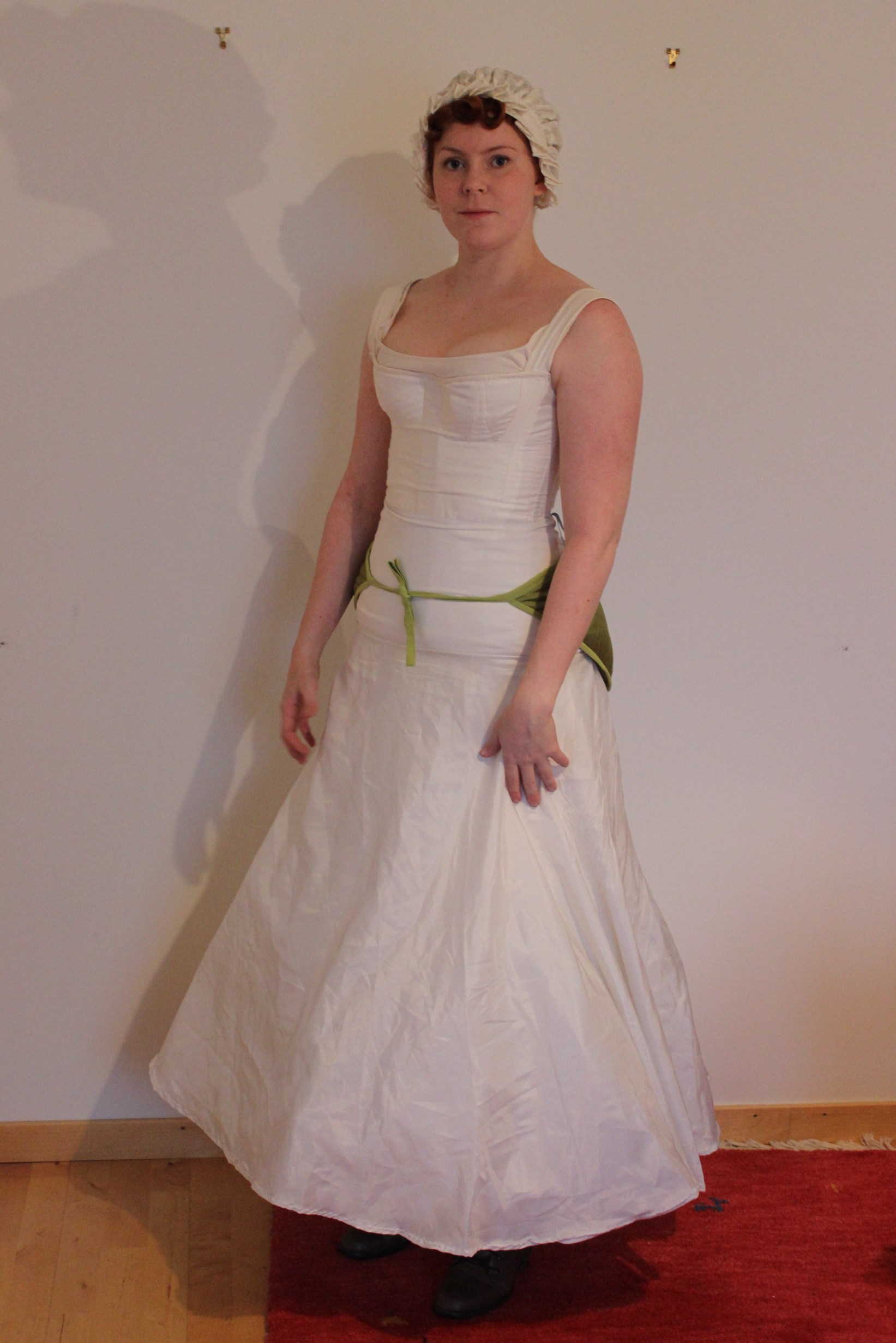
IMG_4277And under the skirt there is a warming quilted petticoat. You can also wear additional petticoats on top of the quilted one for warmth and to ad more widht to the skirt.

IMG_4272Beneath the petticoats there are a hoopskirt and a bumpad – which both helps the skirt to get the desired shape. (I use a modern bridal hoopskirt, but you should really use one made for this purpose).

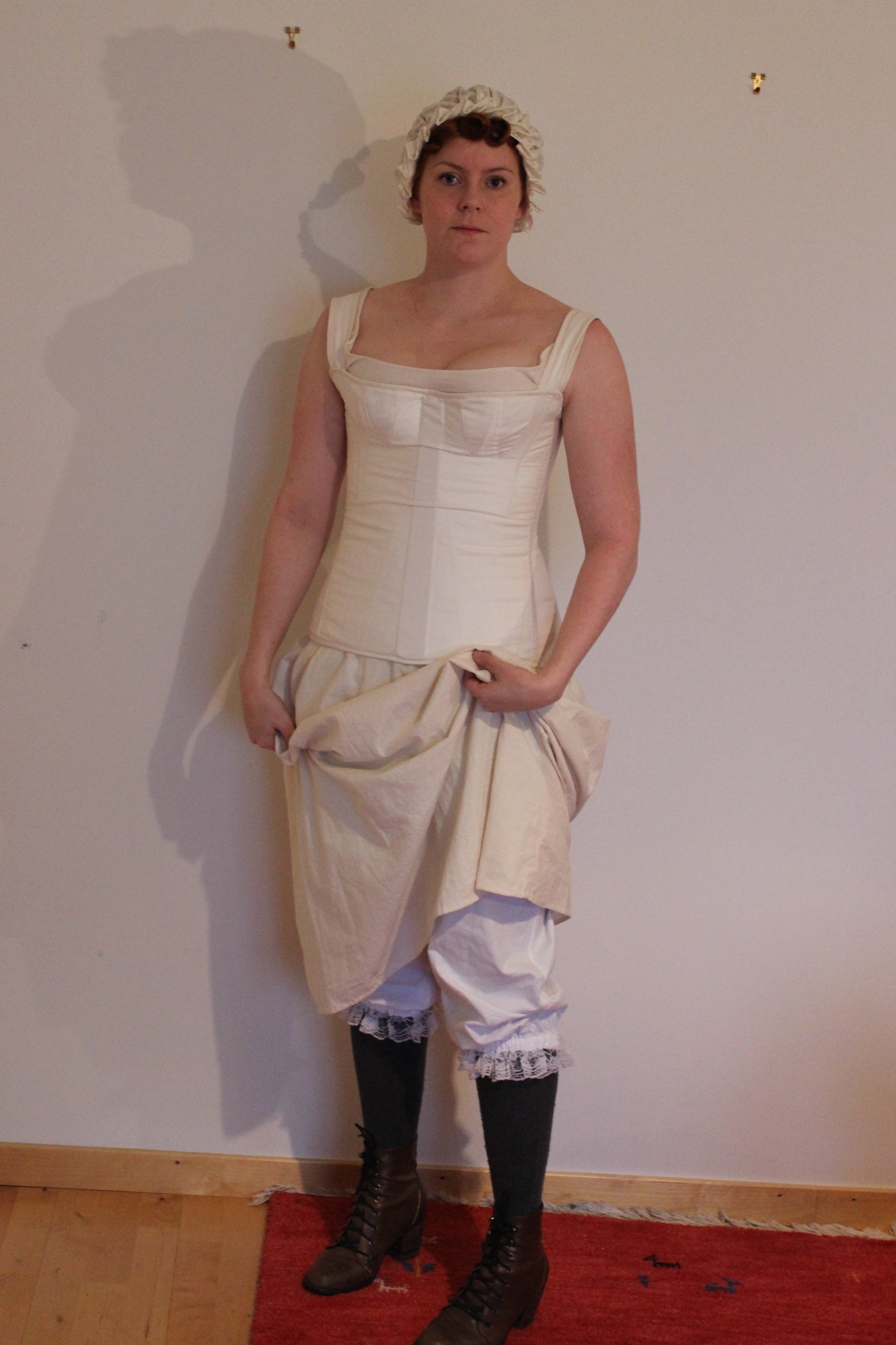
IMG_4269And as the layer closest to the body we find the chemise, the corset, blomers, stockings and lacing boots.

Because the mid 1800s are a relativly new era to me, I’m still in need of the proper corset and chemsie. But for now, the late Regency (1820-1830) undergarments I do have works just fine.

19th Century Christmas Party

On the 14th of december I went to a chrismas party in Stockholm.

The dresscode was – whatever you like from the 19th century.

And as you might know Iv’e been working on my 1840s dress to wear to the event. And it was acctualy done in time, even though I needed to both let it out some and shorten it a bit after wearing it outside for a photoshoot, (good thing I did the shoot before the party). I also had the underwear, bonnet and outerwear finished and waiting.

I’ve been so looking forward to this.

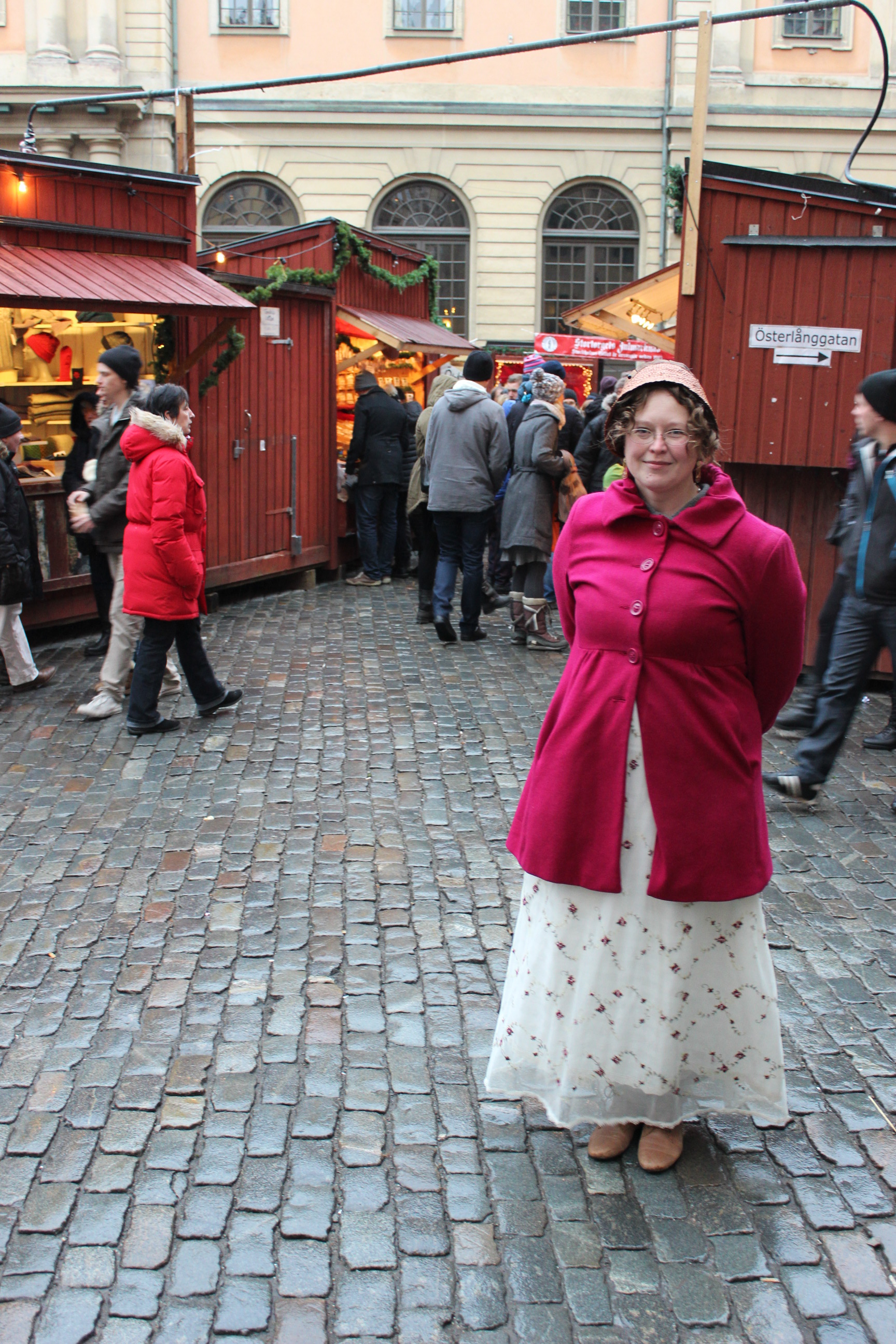
But before the party me and Johanna took a tour to the christmas market.

IMG_4295

But there was not much to se and it was raining a bit to much so we decided to go early to the party instead.

A sneak a peak.1472110_10151826920548027_1688710678_n

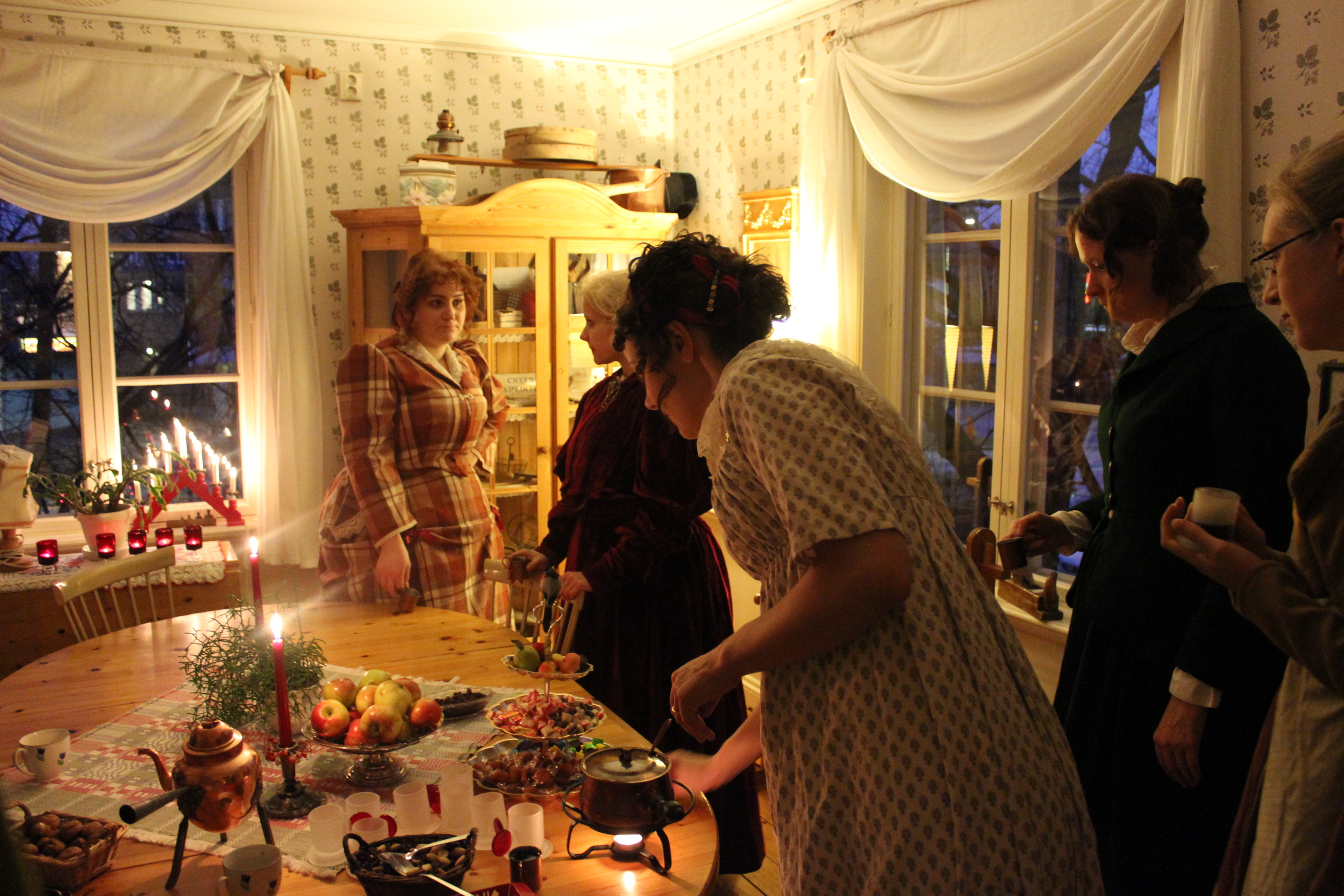
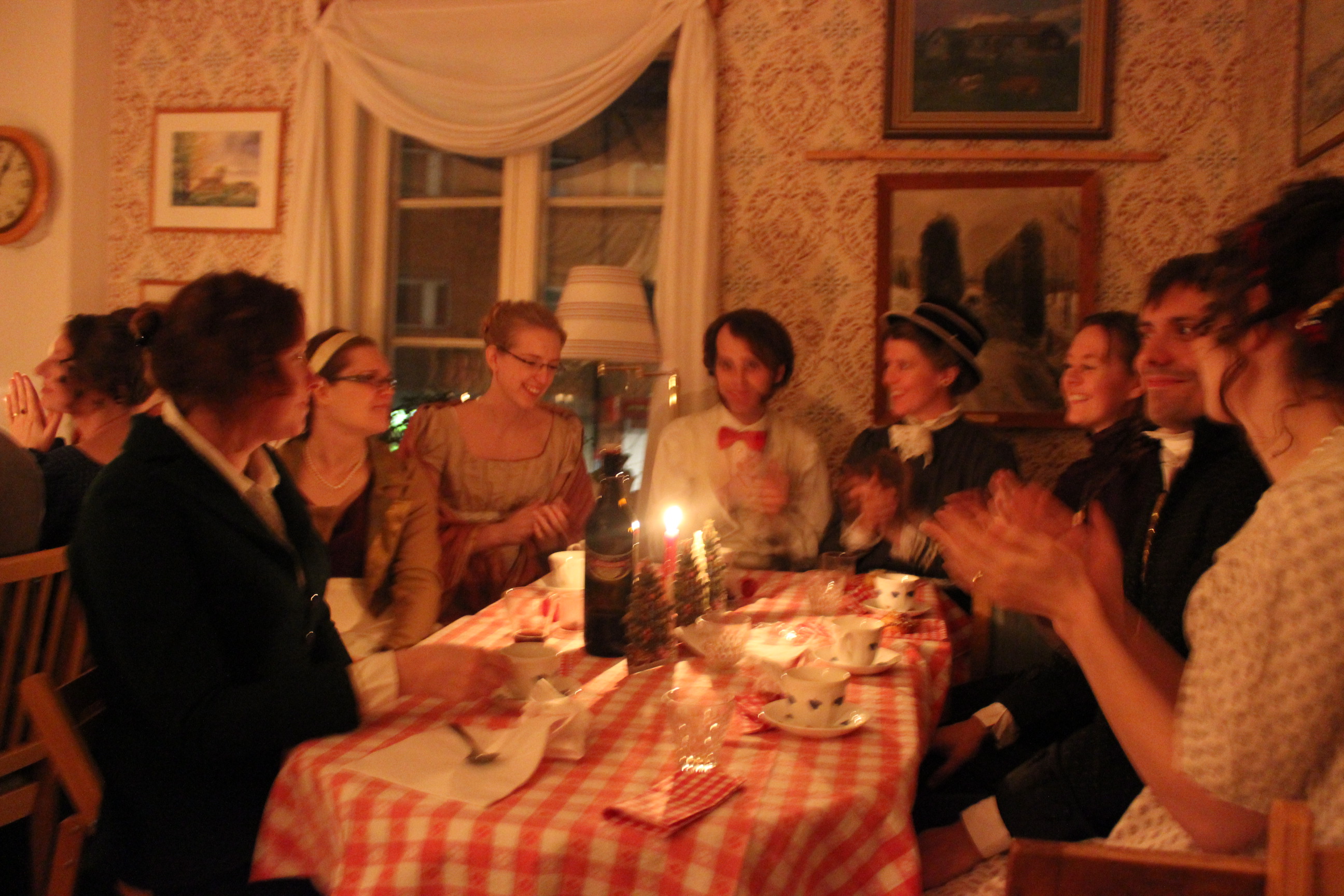
The party started of with some smal talk while drinking “glögg” (hot wine(?)), and admiring all the lovely clothes.IMG_4310

IMG_4300

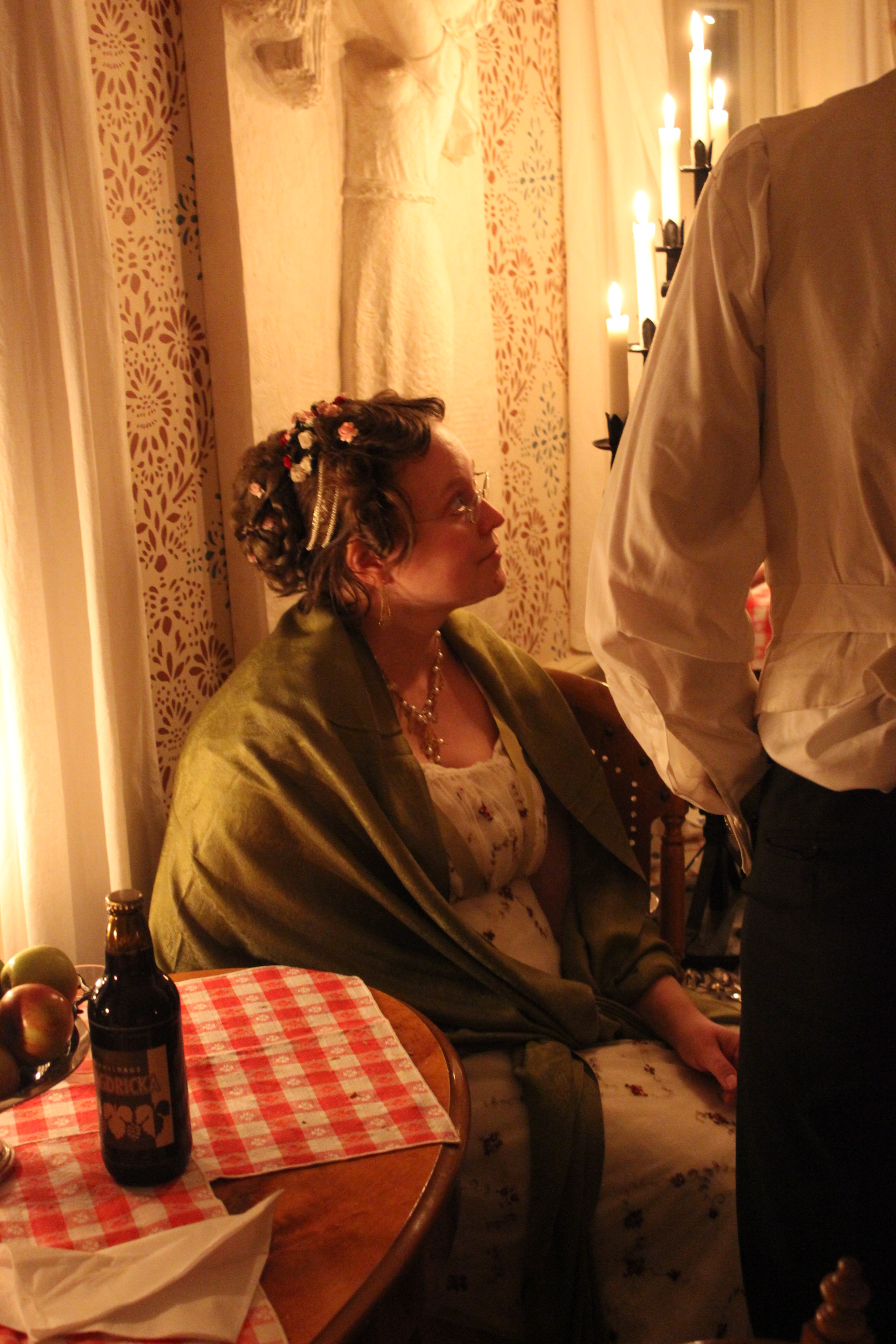
Empire style meets late 19th century.IMG_4304

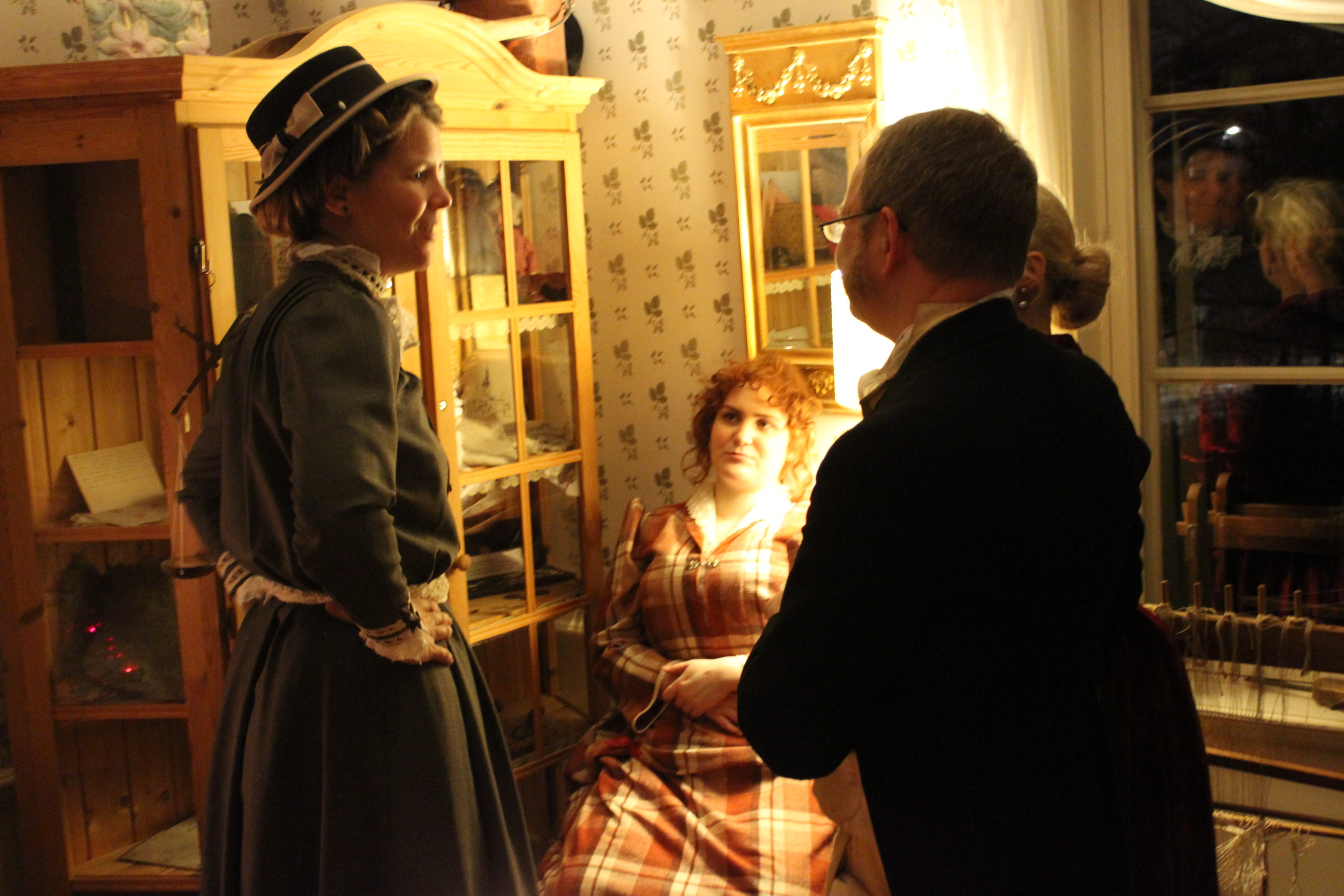
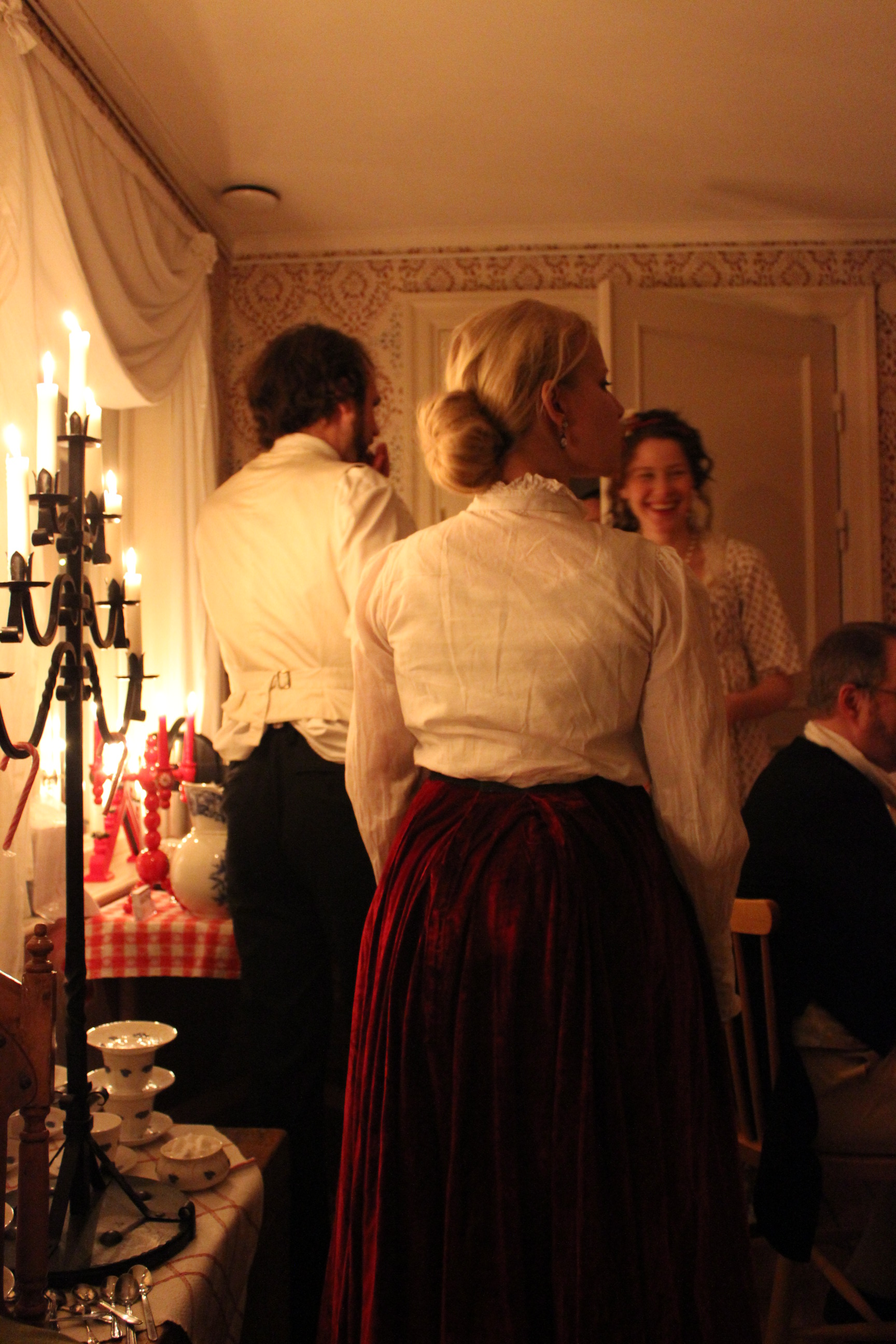
Some gentlemen in there finery.IMG_4305

IMG_4309

IMG_4311

Elin in 1930s dress.1471260_791044537578773_1704836460_n

1477728_10151826919138027_1540641172_n

Johanna in a lovely empire gown and hairdo.IMG_4316

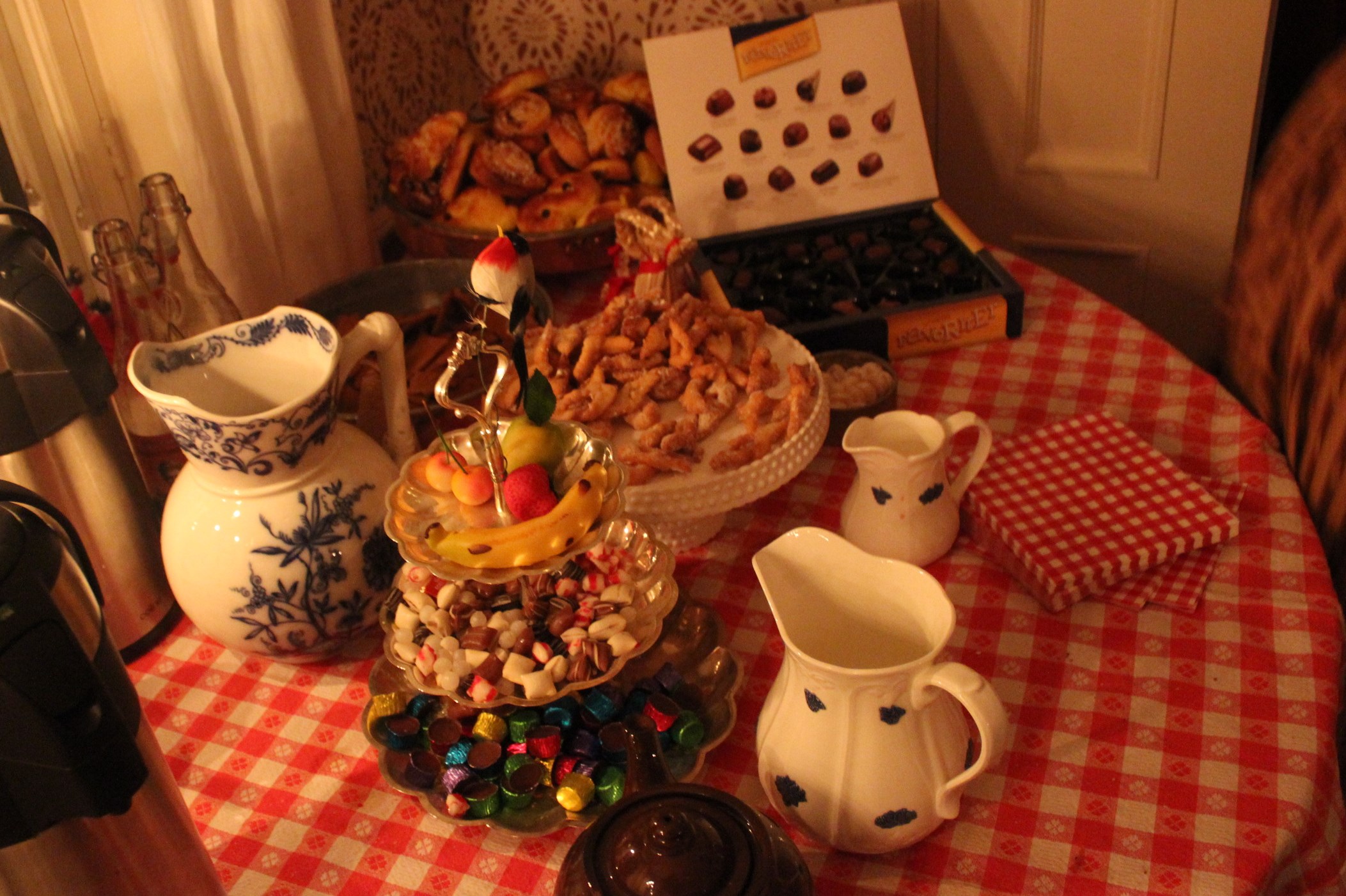
Chrismas candy and cockies.IMG_4326

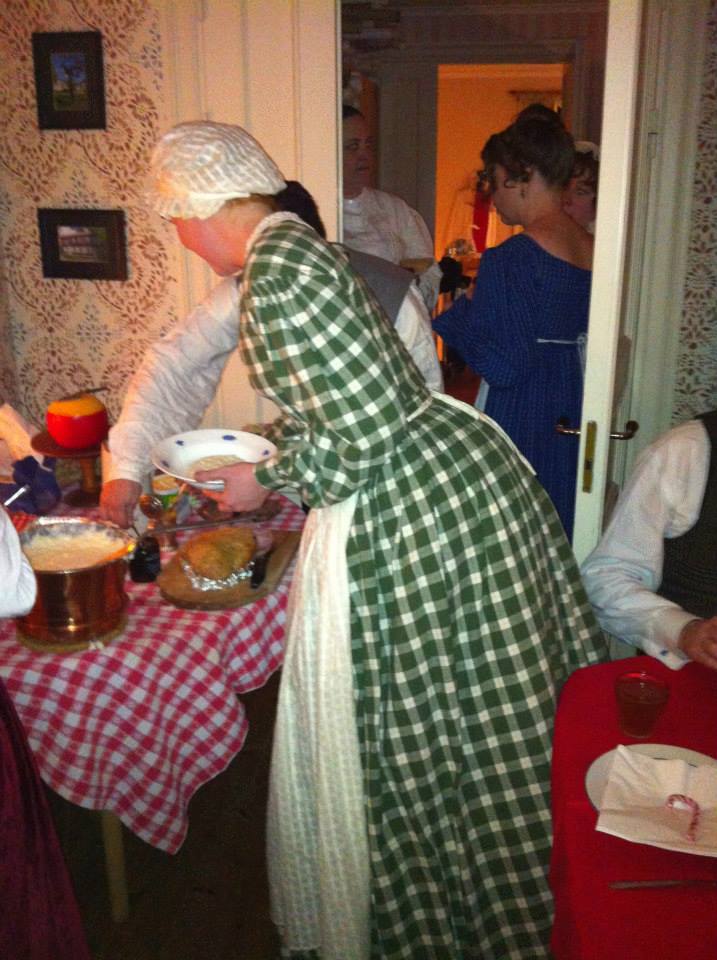
The line to the coffee table ran long (especialy since many of us women where a bit wide on the backside).IMG_4318

1504062_791044534245440_68987502_n

We also got to listen to some lovely singing from Hilewi as “Lucia”.IMG_4321

The evening was very nice and the house really helped setting the “old times” mood. IMG_4323

And then the old fashioned “Julbock” came to give us gifts. Sadly I had to leave before, and didn’t get the chanse to meet him. 13579_791044504245443_701170361_n

A glimps of me in my 1940s dress, which I really enjoyed wearing.

IMG_4320(Most of the pictures in this post are my own, but some are borrowed from other members of the 19th century group.)